Posted on 13 Comments

French 75 Cocktail Recipe: 7 Easy Variations

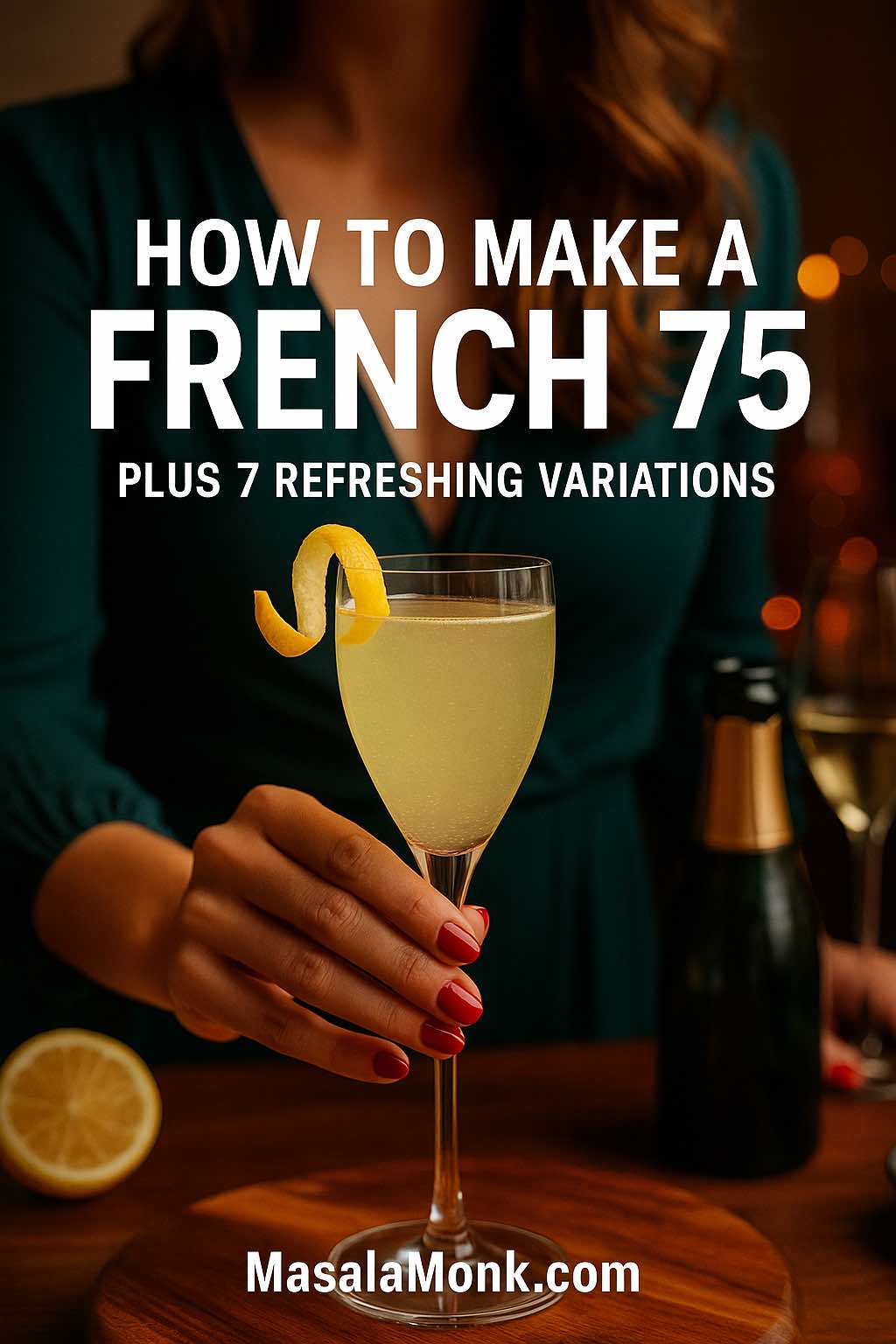
Woman in a green dress holding a French 75 cocktail in a champagne flute with a lemon twist, with text overlay reading ‘How to Make a French 75 Plus 7 Refreshing Variations’ above MasalaMonk.com.

There’s something wonderfully sneaky about a French 75. It looks delicate in the glass, but it drinks like a tiny, sparkling cannon. Gin, lemon, sugar, Champagne: that’s it. This French 75 cocktail recipe is your base. From there, we’ll walk through the most-loved variations people actually look for—vodka French 76, Mexican 75 with tequila, bourbon French 95, cognac, elderflower, lavender, Prosecco/Italian 75, batch versions and a mocktail—so you can pour exactly the kind of 75 you’re in the mood for.


What Is a French 75?

At its core, a French 75 is a classic sour (spirit + citrus + sugar) lengthened with Champagne. In most modern bars that means:

  • Gin
  • Fresh lemon juice
  • Simple syrup
  • Dry sparkling wine (usually Champagne or another Brut)

Served in a flute or coupe, garnished with a lemon twist, it’s bright, bubbly and deceptively easy to drink.

The drink’s name comes from the French 75mm field gun used during World War I. According to Wikipedia’s French 75 entry, the idea was that this pretty little cocktail hits with the power of artillery when you aren’t paying attention. Meanwhile, the International Bartenders Association recognises it as an official contemporary classic, listing a stripped-back recipe of gin, lemon, sugar and Champagne.

You’ll see slight differences in ratios from one book to the next, and some early recipes even used cognac instead of gin. That’s actually good news for home bartenders: once you understand the pattern, you can comfortably switch spirits, bubbles and flavours without losing the soul of this French 75 cocktail recipe.


Classic French 75 Cocktail Recipe (Gin, Lemon & Champagne)

Let’s start with the template every other riff builds on.

Ingredients

Makes one drink

  • 1½ oz (45 ml) gin
  • ¾ oz (22 ml) fresh lemon juice
  • ½–¾ oz (15–22 ml) simple syrup (1:1 sugar and water)
  • 3 oz (90 ml) Brut Champagne or other dry sparkling wine
  • Ice, for shaking
  • Lemon twist or thin lemon wheel, for garnish

A juniper-forward London Dry gin like Beefeater or Tanqueray gives the most classic profile, although softer, more aromatic gins absolutely work. If you enjoy exploring gin in general, you might also like the ideas in these creative gin cocktail recipes, which use similar sour-style ratios in very different ways.

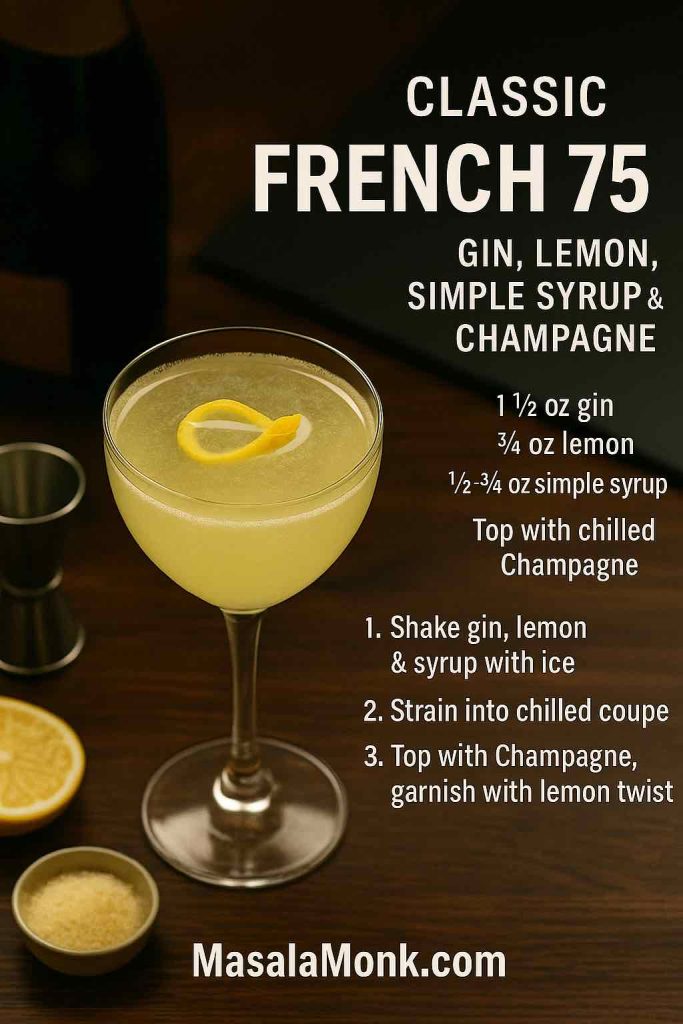
Classic French 75 cocktail recipe card showing a coupe glass with a lemon-twist garnish on a wooden bar, surrounded by lemon, sugar and jigger, with text listing gin, lemon, simple syrup, Champagne and three simple preparation steps.
Classic French 75 at a glance – gin, lemon, simple syrup and Champagne with quick step-by-step instructions so you can mix this bubbly favourite in seconds.

Step-by-step French 75 Cocktail Recipe

  1. Chill your glass
    Slide a Champagne flute or coupe into the freezer for a few minutes. Cold glass, cold drink, happy you.
  2. Build the sour base
    In a cocktail shaker, combine the gin, fresh lemon juice and simple syrup.
  3. Shake with ice
    Fill the shaker with ice and shake for about 10–15 seconds. You want the metal to frost over and the contents to be very cold, with just enough dilution to soften the lemon’s sharpness.
  4. Strain into your chilled glass
    Fine-strain the mixture into the flute or coupe. A fine strainer catches ice shards and pulp so the drink stays silky and elegant.
  5. Add the bubbles
    Gently top with Champagne or another dry sparkling wine. Pour slowly, letting the foam settle as you go—you don’t want to lose half the drink in a fizzy overflow.
  6. Garnish and serve
    Express a strip of lemon peel over the surface to release the oils, rake it around the rim, then drop it in or curl it along the edge. Serve straight away, while the drink is icy and effervescent.

The Liquor.com French 75 recipe follows almost this exact pattern: gin and lemon balanced with sugar, brought to life by Champagne. It’s a simple combination, but when everything is fresh and cold it feels like you’ve stepped into a classic hotel bar.


Choosing Ingredients for the Best French 75 Cocktail Recipe

The French 75 is incredibly sensitive to ingredient quality. Small tweaks make a big difference, so this section walks through the main choices and how they change the drink.

Picking a gin

For a classic French 75 cocktail recipe, start with:

  • London Dry gin – crisp, juniper-led, slightly peppery. Tanqueray, Beefeater or similar will give you that familiar structure.
  • Softer, floral gins – brands like Hendrick’s can work beautifully if you like cucumber and rose notes playing with the lemon.

If this drink becomes a favourite, you’ll probably enjoy branching out into gin-forward recipes like the Negroni and its variations, which show how the same bottle behaves when stirred with vermouth and bitters instead of shaken with citrus.

Champagne vs Prosecco vs other bubbles

The IBA specifies Champagne for the official build, but in a home kitchen your options are broader:

  • Champagne (Brut) – toasty, bready, layered. Ideal when you want the drink to feel extra special.
  • Cava – usually very dry, clean and great value; perfect for parties and batch servings.
  • Prosecco – slightly fruitier and often a touch sweeter; we’ll lean into this in the Italian/Prosecco variations later.

Whichever you use, stay in the Brut or Extra Brut range. If the sparkling wine is sweeter (often labelled “Extra Dry” in Prosecco), you might want to reduce the simple syrup slightly so the French 75 doesn’t become cloying.

For inspiration on how sparkling wine behaves in bigger, party-ready bowls, have a look at the pineapple punch recipes that add prosecco or Champagne right at the end; the same timing works brilliantly when you batch French 75s, too.

Balancing lemon and sweetness in French 75 Cocktail Recipe

Lemon juice is non-negotiable here. Bottled lemon tends to taste flat and harsh; fresh juice brightens the drink without turning it sour for the wrong reasons.

As for sugar, think of the simple syrup range like this:

  • ½ oz (15 ml) – sharp, spritzy, more “adult”.
  • ¾ oz (22 ml) – rounder, more approachable, likely to please a mixed crowd.

You can use that same idea in other lemon-based cocktails. A good example is the lemon drop martini recipe: it leans a little sweeter because there’s no sparkling wine to help with balance, so the sugar has to do more work.


A Quick Look at the French 75’s History

The story behind the French 75 is messy in a charming way. Different books claim different origins, and arguments rage about whether the “real” drink uses gin or cognac.

Early printed recipes in the early 20th century show the drink appearing in Paris around World War I. The Wikipedia article on the French 75 mentions Harry’s New York Bar in Paris as an important early home, and notes that some of the earliest written versions were brandy-based, with champagne and lemon added. Later, gin versions became far more widespread, and today those are what most people recognise.

Writers at Difford’s Guide dig into old bar manuals and argue that cognac versions (sometimes called French 125s) have a strong claim to authenticity as well. Meanwhile, Jeffrey Morgenthaler’s essay on the French 75 walks through a tangle of recipes that includes gin, apple brandy, orgeat, grenadine and more. The takeaway? The drink has always been more like a family of Champagne cocktails than a single fixed formula.

Even Ultimate Mai Tai’s discussion of gin vs cognac in the French 75 concludes that while the IBA gives the modern gin-based template its stamp of approval, cognac versions are arguably more “French” and luxuriously dessert-friendly.

All of that means you have permission to treat this French 75 cocktail recipe as a flexible sketch. Gin is the starting point, not a prison.


French 75 Cocktail Recipe Variations

Once you’ve made a few classic French 75s, it becomes very natural to bend the recipe. Swap the spirit, change the sweetener, or alter the bubbles and you have something new that still feels like part of the family.

The pattern stays the same:

  • Around 1½ oz spirit
  • Around ¾ oz citrus
  • ½–¾ oz sweetener (syrup or liqueur)
  • 2½–3 oz sparkling wine

From here on, we’ll walk through seven prominent variations, plus a few bonus twists that are worth trying at least once.


1. Cognac French 75 (French 125) Cocktail Recipe

This variation sits closest to some of the earliest printed versions of the drink. Cognac brings warmth, dried-fruit notes and a plush mouthfeel that make the French 75 lean toward dessert.

Ingredients

  • 1½ oz cognac (VS or VSOP)
  • ¾ oz fresh lemon juice
  • ½–¾ oz simple syrup
  • 3 oz Brut Champagne or dry sparkling wine
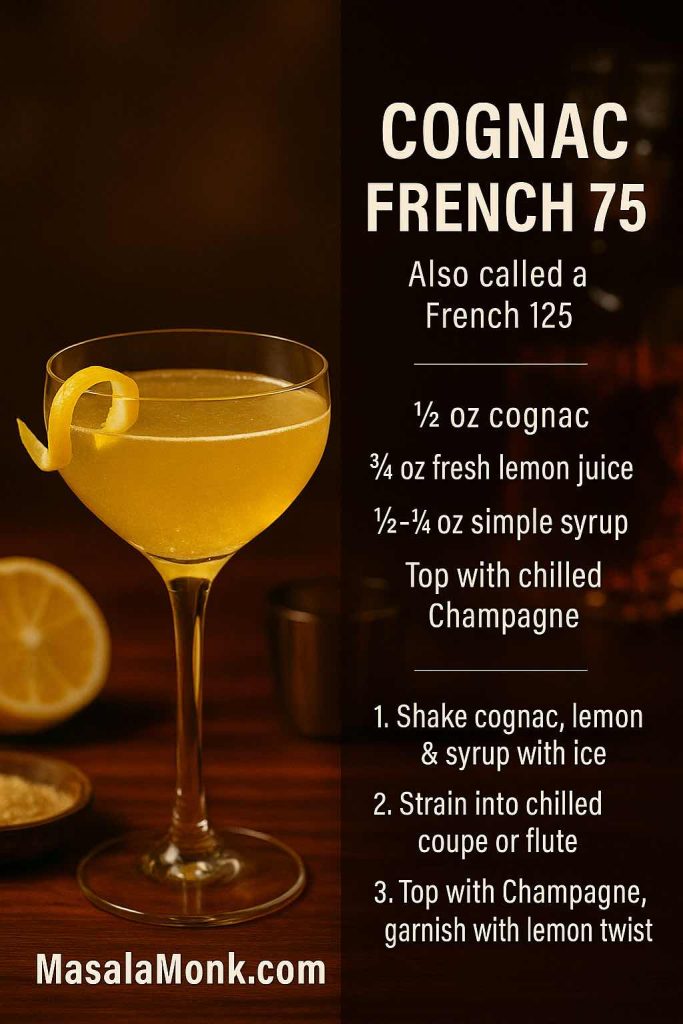
Recipe card for a Cognac French 75, also called a French 125, showing a golden cocktail in a coupe glass with lemon twist on a dark wooden bar, plus text listing cognac, lemon, simple syrup, Champagne and three simple preparation steps.
Cognac French 75 (French 125): a richer take on the classic, made with cognac, fresh lemon, simple syrup and Champagne for a silky, dessert-worthy sparkle.

Method

Shake the cognac, lemon and syrup with ice. Fine-strain into a chilled flute or coupe, top with Champagne and garnish with a lemon twist or even a thin orange peel if you want a slightly richer aroma.

The cognac version works beautifully with after-dinner desserts. Pair it with something creamy like tres leches cake or even a plate of authentic churros dusted with cinnamon sugar for an indulgent end to the evening.


2. Vodka French 75 (French 76) Cocktail Recipe

Replace the gin with vodka and you have a French 76. The structure is identical, but the flavour shifts: cleaner, more neutral, less herbal. This is a great choice when you want the lemon and Champagne to shine without the botanical kick of gin.

Several mainstream recipes, such as the ones from Simple Joy or Southern Living, keep the ratios almost identical to the gin-based French 75. You can follow that same logic at home.

Ingredients

  • 1½ oz vodka
  • ¾ oz fresh lemon juice
  • ¾ oz simple syrup
  • 3 oz dry sparkling wine
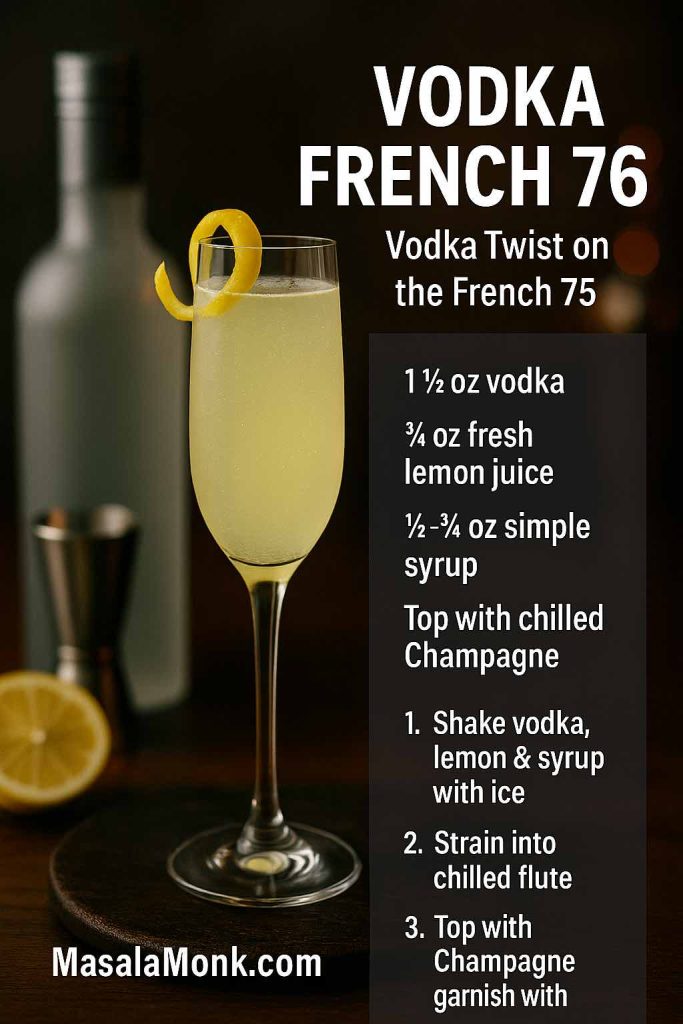
Vodka French 76 cocktail recipe card showing a tall champagne flute with a pale yellow vodka French 76 garnished with a lemon twist, next to a frosted vodka bottle and jigger, with text listing vodka, lemon, simple syrup, Champagne and three simple preparation steps.
Vodka French 76: a clean, citrusy twist on the French 75 made with vodka, fresh lemon, simple syrup and a Champagne top-up for easy sparkle.

Method

Shake vodka, lemon juice and syrup with ice until well chilled. Strain into a cold flute, top with Champagne or another dry sparkling and garnish with a lemon twist.

If you like this direction, you’ll probably also enjoy other vodka–lemon combinations, such as the drinks in this guide to vodka with lemon cocktails and infusions, which stretches that pairing into everything from martinis to long, refreshing highballs.


3. Tequila French 75 (Mexican 75) Cocktail Recipe

When tequila joins the party, you get a Mexican 75—essentially a sparkling margarita. Tequila, lime or lemon, a touch of agave, and bubbly on top. Several recipes online, including those from tequila brands themselves, stick to that pattern.

Ingredients

  • 1½ oz tequila blanco (or a gentle reposado)
  • ¾ oz fresh lime or lemon juice
  • ½–¾ oz agave syrup (or simple syrup)
  • 3 oz sparkling wine
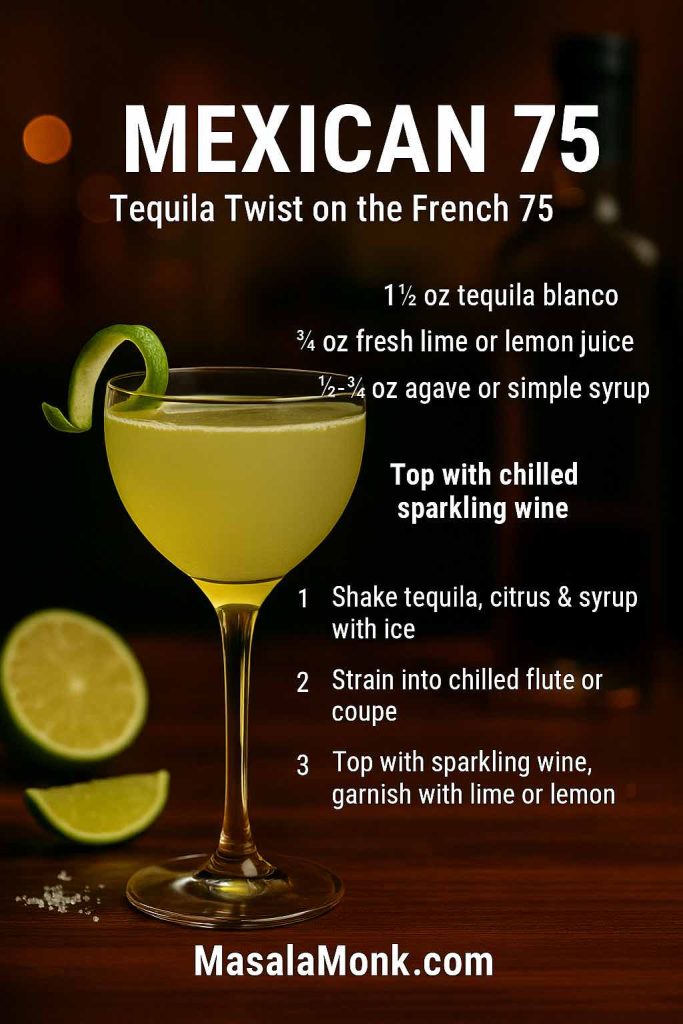
Recipe card for a Mexican 75 cocktail showing a pale yellow-green tequila French 75 in a coupe glass with a lime twist, set on a wooden bar with lime wedges and salt, plus text listing tequila, lime or lemon juice, agave or simple syrup, sparkling wine and three easy preparation steps.
Mexican 75: a lively tequila twist on the French 75, shaken with citrus and agave, then topped with sparkling wine for a bright, bubbly fiesta in a coupe.

Method

Add tequila, citrus and syrup to your shaker, fill with ice and shake until properly cold. Strain into a flute or coupe, then top with prosecco, cava or Champagne. Garnish with a lime wheel or a thin strip of lime peel.

For a summer party, you might serve Mexican 75s alongside something more relaxed and fruity such as these watermelon margarita variations. Together they give your guests a choice between sparkling and on-the-rocks tequila drinks.

And if some of those guests prefer to skip alcohol, it’s very easy to offer a zero-proof but equally zesty option using the margarita mocktail guide.


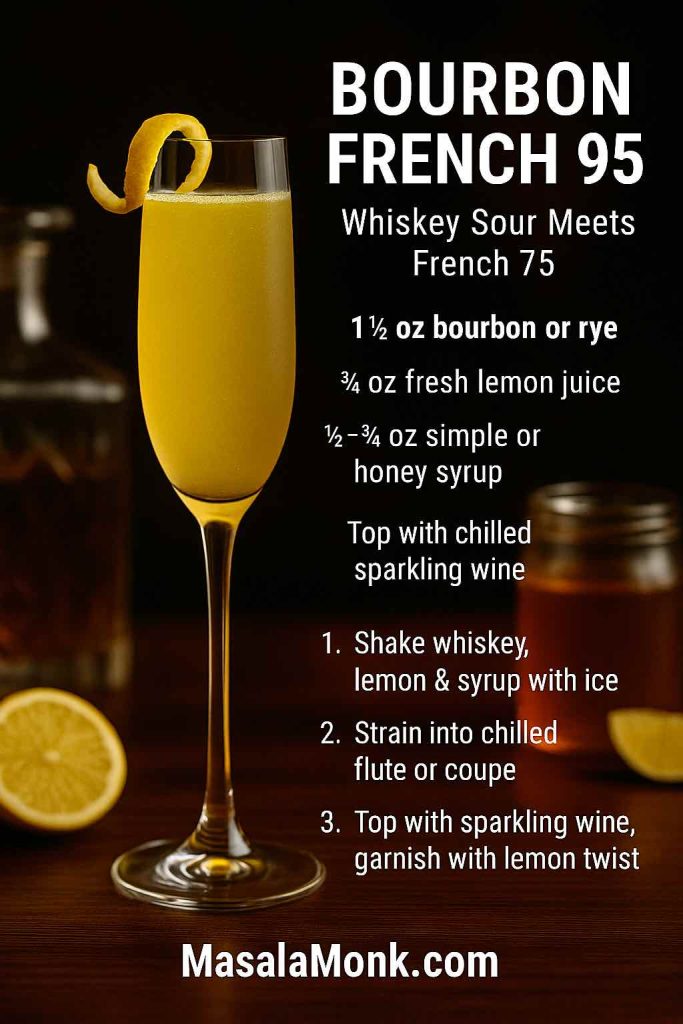
4. Bourbon or Whiskey French 75 (French 95) Cocktail Recipe

Swap in bourbon or rye and you’ll arrive at a French 95. Think of it as a whiskey sour in a party dress: lemon, sweetness and whiskey lengthened with sparkling wine.

Ingredients

  • 1½ oz bourbon or rye whiskey
  • ¾ oz fresh lemon juice
  • ½–¾ oz simple syrup or honey syrup
  • 3 oz sparkling wine
Bourbon French 95 cocktail recipe card showing a golden whiskey French 75 in a champagne flute with a lemon twist, set on a dark wooden bar with whiskey decanter, honey jar and lemon, plus text listing bourbon or rye, lemon juice, simple or honey syrup, sparkling wine and three simple preparation steps.
Bourbon French 95: a whiskey sour–style French 75 made with bourbon or rye, fresh lemon, a touch of simple or honey syrup and a sparkling wine top for rich, bubbly comfort.

Method

Combine the whiskey, lemon and syrup in your shaker with ice. Shake until chilled, strain into a flute and finish with Champagne or similar. A lemon twist is classic, though an orange twist can complement the caramel and vanilla notes in bourbon.

Honey syrup (one part honey to one part hot water) makes this feel cosy and comforting, almost like a festive, sparkling hot toddy—just cold. For a look at how those flavours play without bubbles, you can refer to the classic whiskey sour recipe, which uses a very similar balance of whiskey, lemon and sweetness.


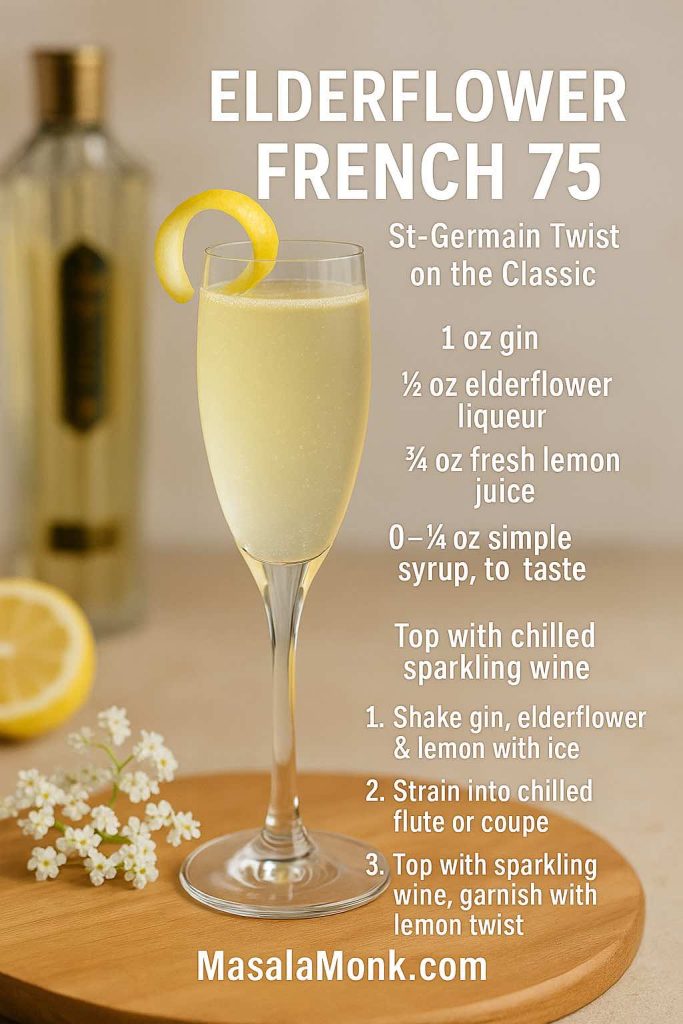
5. Elderflower French 75 (St-Germain / “Saint 75”) Cocktail Recipe

Elderflower liqueur, such as St-Germain, slips easily into the French 75 template, adding floral, lychee-like sweetness. This riff is often nicknamed a “Saint 75”.

Ingredients

  • 1 oz gin
  • ½ oz elderflower liqueur (St-Germain or similar)
  • ¾ oz fresh lemon juice
  • ¼–½ oz simple syrup (optional, to taste)
  • 3 oz sparkling wine
Elderflower French 75 cocktail recipe card showing a pale golden drink in a slender champagne flute with lemon twist and white blossoms, plus text listing gin, elderflower liqueur, lemon juice, optional simple syrup, sparkling wine and three simple preparation steps.
Elderflower French 75: a soft, floral twist on the classic French 75 with gin, St-Germain, fresh lemon and sparkling wine for a brunch-ready sparkle.

Method

Shake the gin, elderflower liqueur, lemon and any additional syrup with ice. Strain into your glass and top with chilled sparkling wine. A thin lemon twist or even a few edible flowers make beautiful garnishes.

Because this variation is so brunch-friendly, it’s a smart one to batch. You can pre-mix the still ingredients in a jug, keep it chilled, then pour individual servings and top with bubbles as guests arrive—similar to how some of the coconut water cocktail recipes approach batching.


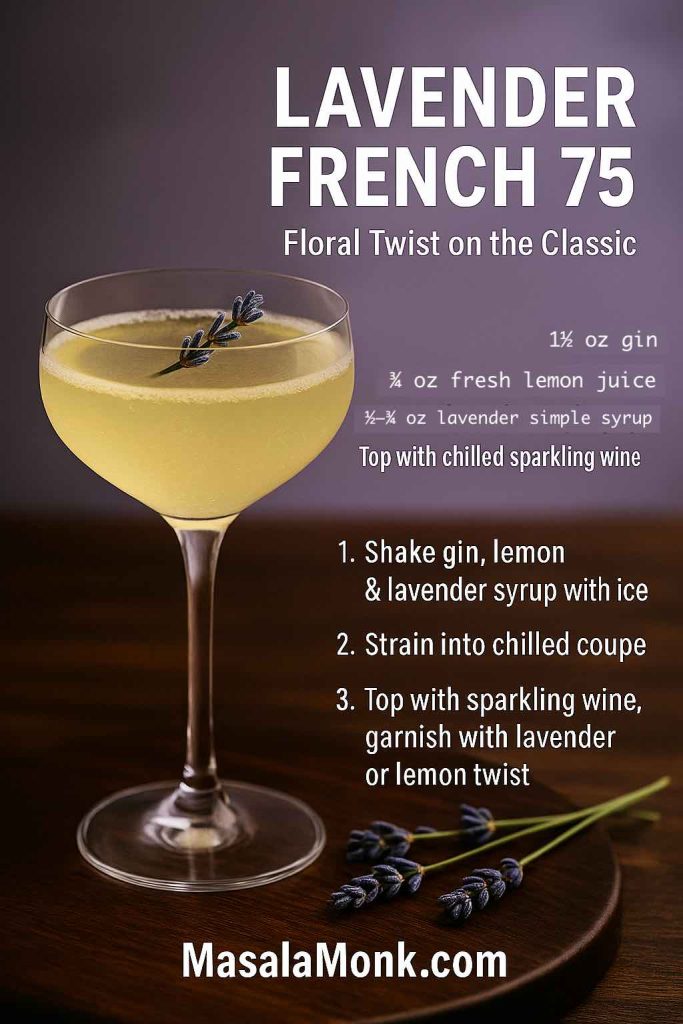
6. Lavender French 75 Cocktail Recipe

Lavender plays beautifully with gin’s botanicals, but it’s potent, so a little goes a long way. The safest way to bring it into a French 75 is via lavender simple syrup.

Lavender syrup

  • Combine equal parts sugar and water in a small saucepan.
  • Add a small spoonful of culinary lavender.
  • Warm gently until the sugar dissolves, then switch off the heat and let it steep.
  • Strain when it smells fragrant and cool before using.

Ingredients

  • 1½ oz gin
  • ¾ oz fresh lemon juice
  • ½–¾ oz lavender simple syrup
  • 3 oz sparkling wine
Lavender French 75 cocktail recipe card showing a pale golden drink in a coupe glass with a lavender sprig garnish on a wooden bar, soft purple background, and text listing gin, lemon juice, lavender simple syrup, sparkling wine and three simple preparation steps.
Lavender French 75: a soft, floral riff on the classic French 75, shaken with lavender syrup and lemon, then topped with sparkling wine for a romantic, spring-ready sip.

Method

Shake gin, lemon and lavender syrup with ice, strain, top with bubbles and garnish with a small lavender sprig or lemon twist.

If colour is your thing, you might enjoy going even further with vibrant drinks like the ones in this collection of purple cocktails and mocktails, many of which play the same visual tricks that Empress 1908 gin does.


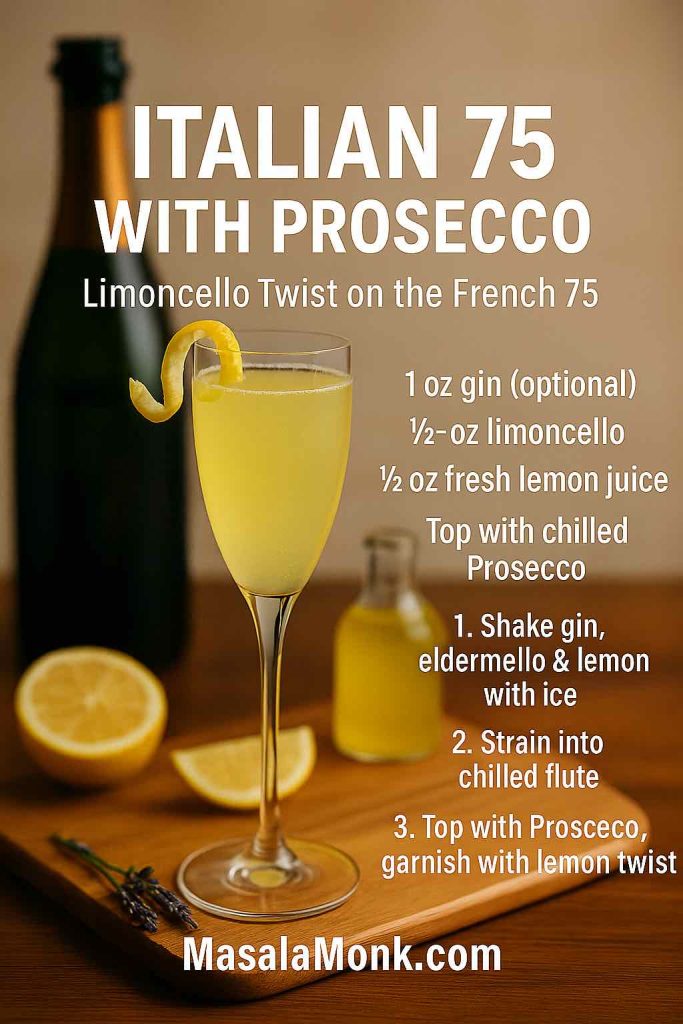
7. Prosecco / Italian 75 (with Limoncello Option) Cocktail Recipe

The easiest Prosecco version simply substitutes Champagne for Prosecco in the classic French 75 cocktail recipe. That alone gives you a slightly more fruit-driven, often more affordable drink.

Simple Prosecco French 75

  • Classic French 75 specs
  • Swap Champagne for a dry Prosecco

If your Prosecco label reads “Extra Dry” (which paradoxically means a little sweeter than Brut), you may want to reduce the simple syrup to ½ oz so the drink still tastes bright.

To push things further into Italian territory, add limoncello.

Italian 75 cocktail recipe card showing a tall flute filled with a bright yellow Prosecco French 75 garnished with a lemon twist, set on a wooden board with Prosecco bottle, limoncello bottle and lemon slices, plus text listing gin, limoncello, lemon juice, Prosecco and simple preparation steps.
Italian 75 with Prosecco: a sunny limoncello twist on the French 75, shaken with gin and fresh lemon, then topped with chilled Prosecco for a zesty, sparkling aperitivo.

Italian 75 with limoncello

  • 1 oz gin (optional, for extra backbone)
  • ½–1 oz limoncello (taste yours and adjust)
  • ½ oz fresh lemon juice (or less, if the limoncello is very tart)
  • Top with Prosecco

Shake the still ingredients with ice, strain into a flute and complete with Prosecco. The result sits somewhere between a French 75 and a sparkling lemon dessert. It pairs nicely with creamy cakes and citrus sweets, especially if you already enjoy the flavours in a lemon drop martini.


Bonus Twists: Fruit, Colour & Seasonality

Beyond the core seven, there are a few other ways to personalise this French 75 cocktail recipe without much extra effort.

Strawberry French 75

Muddle one or two ripe strawberries in your shaker before adding the classic gin, lemon and syrup. Shake, fine-strain (to catch the seeds) and top with sparkling wine. The colour becomes a soft blush pink, and the flavour leans toward strawberry lemonade with bubbles.

Cranberry French 75

Replace part of the lemon juice and syrup with unsweetened cranberry juice:

  • 1¼ oz gin
  • ½ oz lemon juice
  • ½ oz cranberry juice
  • ½ oz simple syrup
  • 3 oz sparkling wine

Shake the still ingredients, strain, top and garnish with a few floating cranberries. For more ideas on colourful, fizzy non-alcoholic drinks in this style, you might like the mocktails in this overview of grenadine-based mocktails, which often use the same flute-and-bubbles presentation.

Fall spice and honey

In cooler months, a “fall 75” can be as simple as switching the gin to bourbon, the syrup to honey syrup, and adding a very small pinch of ground cinnamon or a dash of spiced bitters before you shake. It still feels like a French 75; it just leans into sweater weather.


Batch French 75 for a Crowd

When you’re making French 75s for more than a couple of people, shaking each one individually can turn you into a full-time bartender. Fortunately, this recipe scales neatly.

Here’s a starting point for about 8 drinks:

  • 1½ cups (360 ml) gin (or another base spirit)
  • ¾ cup (180 ml) fresh lemon juice
  • ¾ cup (180 ml) simple syrup
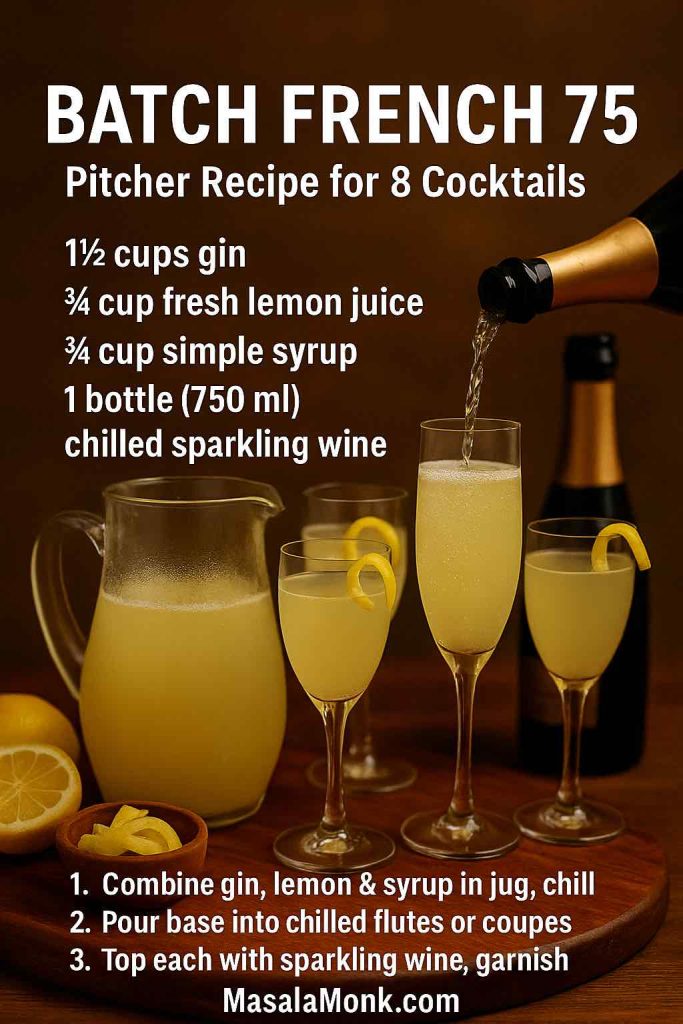
  • 1 bottle (750 ml) chilled Champagne, Cava or Prosecco
Batch French 75 cocktail recipe card showing a frosty pitcher of French 75 base on a wooden table with several champagne flutes being filled and garnished with lemon twists, along with text listing gin, lemon juice, simple syrup, a bottle of sparkling wine and three simple steps to serve eight cocktails.
Batch French 75: an easy pitcher recipe for about eight cocktails—mix gin, lemon and syrup in advance, then top each glass with chilled sparkling wine and a lemon twist when guests arrive.

How to batch

  1. In a large jug, combine gin, lemon juice and syrup. Stir and refrigerate until very cold.
  2. Just before serving, pour the base into flutes or coupes, filling each glass about one-third full.
  3. Top each serving with sparkling wine, then garnish with lemon twists.

The key is to add the bubbles at the last moment, just as you would with prosecco-based punches like the ones in these pineapple punch recipes. That way the carbonation doesn’t fade while the jug sits on the table.


Virgin French 75 Mocktail

Not everyone at the table will want alcohol, but it’s easy to make a French 75–style drink that looks and feels just as celebratory.

Option 1: With non-alcoholic gin

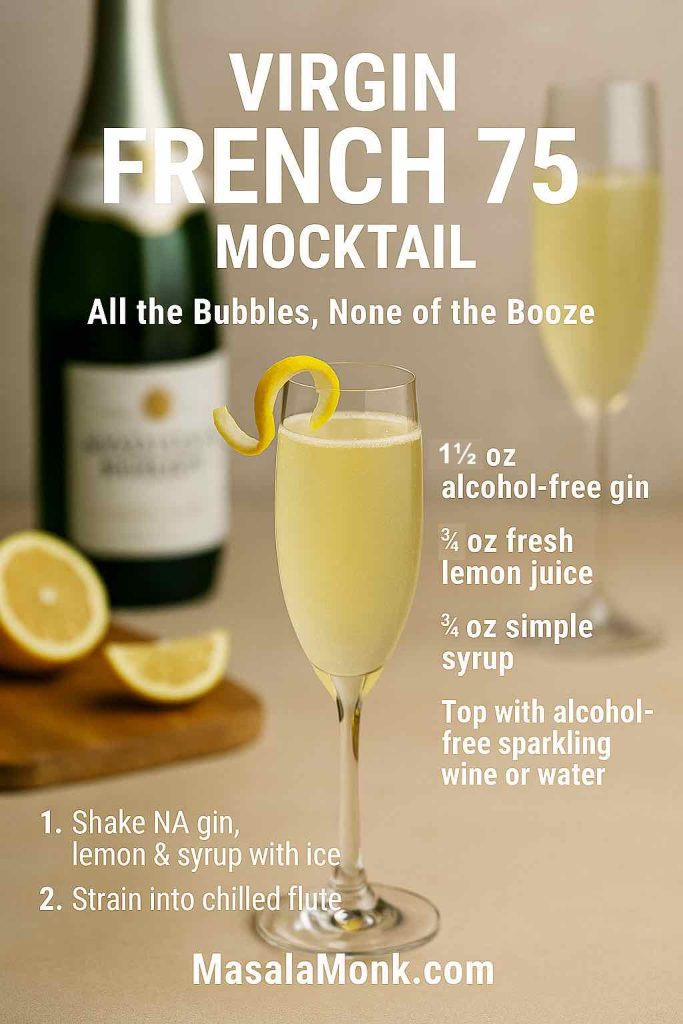
  • 1½ oz alcohol-free gin
  • ¾ oz fresh lemon juice
  • ½–¾ oz simple syrup
  • 3 oz alcohol-free sparkling wine or sparkling water

Shake the non-alcoholic gin, lemon and syrup with ice. Strain into a flute or coupe, then top with your chosen bubbles. Garnish with a lemon twist so it visually matches the alcoholic version.

Virgin French 75 mocktail recipe card showing a pale yellow non-alcoholic French 75 in a champagne flute with a lemon twist, alcohol-free sparkling bottle and lemon halves in the background, plus text listing alcohol-free gin, lemon juice, simple syrup, alcohol-free sparkling wine and simple preparation steps.
Virgin French 75 Mocktail: all the bubbles and citrusy sparkle of a French 75, made with alcohol-free gin, fresh lemon and fizzy zero-proof bubbles so everyone gets a celebratory glass.

Option 2: Simple citrus sparkle

If you don’t have non-alcoholic gin to hand:

  • 1 oz lemon juice
  • 1 oz simple syrup
  • Chilled sparkling water or alcohol-free prosecco

Add lemon and syrup to a flute, stir gently, then top with sparkling water. A twist of lemon peel on top keeps the same look and aroma.

From there, it’s easy to suggest other zero-proof options so guests don’t feel restricted to just one style. The margarita mocktail guide offers another citrus-forward, salt-friendly choice, while these keto mocktails show how to keep sugar lower without sacrificing flavour.


What to Serve with a French 75

A French 75 has three main traits that drive food pairing: acidity from the lemon, bubbles from the Champagne, and a hint of sweetness from the syrup. Together they make it incredibly forgiving with snacks and starters.

Savoury snacks

Anything salty and a bit fatty will sing next to this French 75 cocktail recipe:

Charcuterie and cheese

French 75s are naturals alongside a small cheese and charcuterie spread. The acidity cuts through creamy brie and cured meats, while the bubbles keep everything feeling light. If you’d like a simple rule for arranging the board, you can follow the “3-3-3-3” framework in this guide to building a charcuterie board.

To add a touch of sweetness, a good fig preserve or marmalade is lovely next to blue cheese and goat’s cheese. It works as a bridge between savoury bites and your French 75, echoing both the citrus and the softness.

Desserts

Because a French 75 cocktail recipe leans bright rather than heavy, it’s particularly good with:

  • Citrus desserts (lemon tarts, lemon drizzle cake, key lime bars)
  • Light sponge cakes soaked in milk or syrup, such as tres leches cake
  • Crisp fried sweets like homemade churros that like having their richness cut by acid and bubbles

Glassware and Presentation

Most recipes serve a French 75 in a Champagne flute, but coupes and even stemmed wine glasses are perfectly acceptable. Each option comes with trade-offs:

  • Flute – preserves bubbles longer, very classic look.
  • Coupe – feels more vintage, but the wider surface means the bubbles escape a bit faster.
  • Stemmed wine glass – ideal for bigger, more relaxed servings or when you’re pouring a batch for a crowd.

If you’re curious about how different glass shapes affect aroma and bubble retention, you might enjoy this broader guide to choosing the right wine glass. The same principles apply to sparkling cocktails: taller, narrower bowls keep carbonation around longer; wider bowls emphasise aroma and feel a touch more glamorous.

Regardless of the glass you pick, a well-cut lemon twist and icy cold temperature will do as much for the drink’s appeal as any fancy stemware.


After the French 75: Where to Go Next

Once you’re comfortable making this French 75 cocktail recipe and a few of its variations, you’ve essentially learned a reusable template:

  • Sour structure – spirit, citrus, sweetener
  • Sparkling lengthener – Champagne, Cava, Prosecco or alcohol-free bubbles
  • Aromatic garnish – usually a simple twist of lemon or lime

From there, you can branch into other families:

In the end, that’s the real charm of the French 75. It’s not just a single drink; it’s a doorway into a whole world of sparkling, citrusy cocktails. Master this French 75 cocktail recipe once, and you’ll have a reliable party starter, a flexible template for experimentation, and an easy way to make any gathering feel just a bit more celebratory.

FAQs

1. What is a French 75, and how is it different from other Champagne cocktails?

A French 75 is a classic Champagne cocktail made with gin, fresh lemon juice, simple syrup, and dry sparkling wine. Unlike a plain glass of Champagne, this drink starts with a sour-style base—spirit, citrus, and sugar—then is lengthened with bubbles. Compared with cocktails like a Bellini or Mimosa, a French 75 is stronger, more citrus-forward, and built around a clear spirit rather than fruit purée or juice alone. This is why a good French 75 cocktail recipe feels both refreshing and surprisingly potent.


2. What are the main ingredients in a French 75 cocktail recipe?

A traditional French 75 cocktail recipe uses four core ingredients: gin, lemon juice, simple syrup, and Champagne (or another dry sparkling wine). Typically, the drink is shaken with ice using the gin, lemon, and syrup, then strained into a chilled flute or coupe before topping with bubbles. A lemon twist finishes it off. Because there are so few elements, using fresh lemon juice and decent sparkling wine makes a noticeable difference.


3. What is the best gin for a French 75?

For a classic French 75 cocktail recipe, a London Dry gin is usually the best choice. Brands with a clear juniper backbone and crisp profile help the drink taste structured rather than vague. However, you can also choose a more floral gin if you’d like softer botanicals or cucumber and rose notes. As a rule, avoid heavily flavoured or very sweet gins, since they can clash with the lemon and Champagne.


4. Do I have to use Champagne, or can I make a French 75 with Prosecco or other sparkling wine?

You absolutely can use other sparkling wines. While Champagne is traditional, many home bartenders make a French 75 with Cava or Prosecco instead. Dry (Brut) styles keep the drink bright and balanced. If the sparkling wine is slightly sweeter, you might reduce the simple syrup a little so the cocktail doesn’t end up too sugary. Consequently, choosing a good but affordable bottle is often more important than insisting on Champagne every time.


5. Is gin or cognac the “original” spirit in a French 75 cocktail recipe?

The answer depends on which historical recipe you look at. Some early versions used cognac with lemon, sugar, and Champagne, while others called for gin. Over time, the gin-based build became dominant and is now the standard in most bars. Nevertheless, a cognac French 75 (often called a French 125) is still very much part of the same family. In practice, think of gin as the modern default and cognac as a richer, more luxurious variant rather than a completely different drink.


6. What is a French 76, and how does it differ from a French 75?

A French 76 swaps the gin for vodka. The rest of the structure is identical: lemon juice, simple syrup, and sparkling wine on top. As a result, a French 76 tastes cleaner and less botanical, with the citrus and bubbles standing out more clearly. If you have guests who aren’t fond of gin but still want a sparkling cocktail, offering the vodka-based version alongside your main French 75 cocktail recipe is a simple solution.


7. What is a Mexican 75, and how do I make it?

A Mexican 75 is essentially a French 75 made with tequila instead of gin. Usually, tequila blanco pairs with fresh lime or lemon, a touch of agave or simple syrup, and sparkling wine. The build is shaken and then topped with bubbles just like the original. Because of the agave and citrus, it feels a bit like a sparkling margarita, which makes it especially suited to summer parties or taco nights.


8. What is a French 95, and what other “French number” cocktails exist?

A French 95 substitutes bourbon or rye for gin and keeps the rest of the blueprint: lemon, sweetener, and sparkling wine. It tastes like a whiskey sour that has been extended with Champagne, making it rounder and more comforting. Beyond that, you may come across names like French 45, 55, 57, 65, 74, 76, and 85; these typically indicate different spirit bases or subtle ratio tweaks. Instead of memorising every number, it’s easier to remember the core French 75 cocktail recipe and view those cocktails as variations on the same sparkling sour theme.


9. Can I make a French 75 with bourbon, whiskey, or brandy?

Yes. Bourbon and rye are the base spirits in a French 95, which is a recognised variant and a favourite among whiskey drinkers. Similarly, using cognac or another brandy gives a French 125-style drink that feels richer and more dessert-friendly. In each case, the process remains the same: shake the spirit with lemon and sugar, then add sparkling wine. Therefore, you can adapt the drink to the bottles you already have without learning an entirely new method.


10. How do I make an elderflower or St-Germain French 75?

To make an elderflower French 75, you simply replace part of the simple syrup with elderflower liqueur such as St-Germain. For instance, you can use gin, lemon juice, a small amount of syrup, and a splash of elderflower liqueur, then finish with sparkling wine. The result is a French 75 cocktail recipe that tastes softer, more floral, and very brunch-friendly. Just be mindful of sweetness; elderflower liqueur is already sugary, so you may not need much extra syrup.


11. What about a lavender French 75 or other floral versions?

A lavender French 75 usually relies on lavender-infused simple syrup. You keep the typical gin and lemon base but swap plain syrup for one that has been gently steeped with culinary lavender. The key is moderation, since too much lavender can make the drink taste perfumed. Beyond lavender and elderflower, you can also experiment with rose, hibiscus, or other floral syrups, always starting with small amounts and adjusting gradually.


12. Can I use Prosecco instead of Champagne in my French 75 cocktail recipe?

Prosecco works very well in a French 75, especially in casual settings or when you’re making several cocktails at once. To keep everything balanced, look for a Brut style and consider reducing the simple syrup slightly if the wine tastes notably sweet. Interestingly, combining Prosecco with limoncello and a little gin creates an Italian-inspired twist that still follows the French 75 pattern but leans even more into lemon and fruitiness.


13. How strong is a French 75 compared with a glass of wine or a typical cocktail?

A French 75 is stronger than it looks. It contains a full measure of spirit plus sparkling wine, so its alcohol content sits somewhere between a standard cocktail and a large glass of wine. Because the lemon and bubbles make it taste very refreshing, people sometimes underestimate its strength. Consequently, it’s wise to treat a French 75 as you would any other mixed drink: enjoy slowly, sip water between rounds, and keep track of how many you’ve had.


14. Can I batch French 75s for a party?

You absolutely can batch them. To do so, mix the spirit, lemon juice, and simple syrup in a large jug and chill this base thoroughly. Then pour individual portions into glasses and top each one with sparkling wine just before serving. In this way, the carbonation stays lively, and you avoid shaking every single drink to order. As a bonus, batching lets you offer several versions—gin-based, vodka-based, or tequila-based—while keeping the workflow simple.


15. Is there a way to make a non-alcoholic or low-alcohol French 75?

A non-alcoholic French 75 is easy to create. You can shake alcohol-free gin (or simply lemon juice and syrup) with ice, then strain into a flute and top with alcohol-free sparkling wine or fizzy water. The look, aroma, and basic flavour profile stay similar, but the drink is safe for anyone avoiding alcohol. For a low-alcohol route, you can reduce the amount of base spirit and rely more on the sparkling wine, or choose a lower-ABV sparkling option and keep the rest of the French 75 cocktail recipe unchanged.


16. What glass should I use for a French 75?

Traditionally, a French 75 is served in a Champagne flute, which preserves bubbles and gives that tall, elegant silhouette. Nevertheless, many people prefer coupes for a more vintage feel, especially at home. Stemmed wine glasses work as well, particularly when you’re pouring batch cocktails or larger servings. Whatever glass you choose, chilling it beforehand and adding a neat lemon twist will make the drink feel polished.


17. Can I prepare a French 75 in advance?

You can prepare the still components in advance but not the finished cocktail. For best results, mix and chill the spirit, lemon juice and simple syrup together in the refrigerator. Then, when it’s time to serve, shake with ice if you want extra aeration, strain into glasses, and top with sparkling wine. If you were to add the bubbles too early, they would lose their fizz and the French 75 would taste flat by the time you pour it.


18. Why is this drink called a French 75 if I’m using gin instead of cognac?

The name references the French 75mm field gun rather than a specific spirit, so it doesn’t actually depend on cognac being the base. Early recipes used both brandy and gin at different times, and the drink shifted shape as it travelled and evolved. Now, the gin-based build is widely accepted as the standard French 75 cocktail recipe, while cognac versions sit alongside it as legitimate, closely related variations.

Posted on 2 Comments

10 Creative Gin Cocktail Recipes

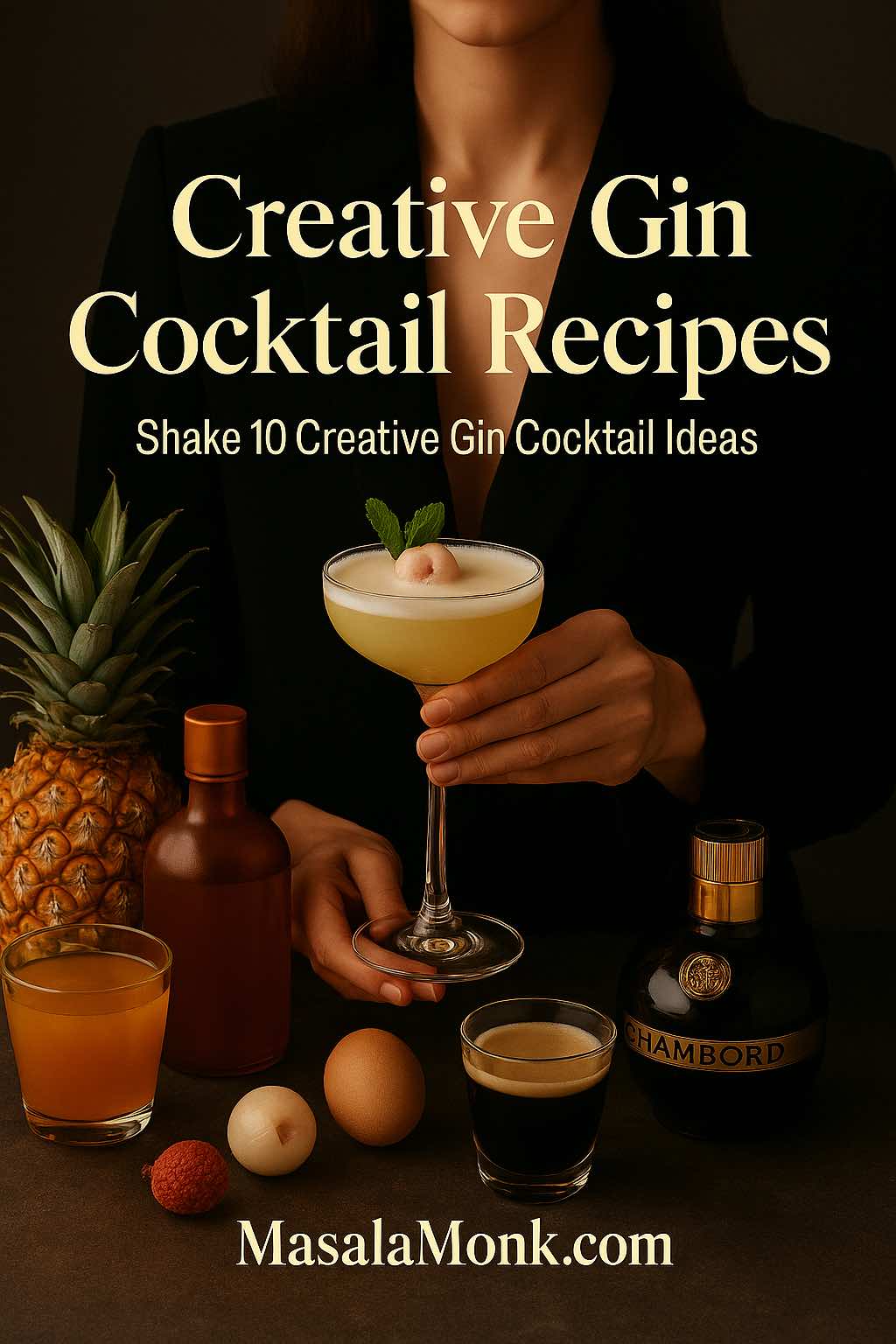
Woman in a black blazer holding a frothy gin cocktail garnished with lychee and mint, surrounded by pineapple, Chambord, egg and espresso on a dark bar, with the text "Creative Gin Cocktail Recipes – Shake 10 Creative Gin Cocktail Ideas" for MasalaMonk.com

There’s something wonderfully satisfying about having one reliable gin cocktail recipe in your back pocket and then learning how to twist it a dozen different ways. Instead of memorising endless specs, you understand the structure, then play with flavours: egg white, pineapple, Chambord, Aperol, lychee, tea, coffee, amaro, vermouth… the good stuff you already love.

This post does exactly that. It starts with a simple sour-style gin cocktail recipe and then spins it into ten creative drinks that still feel approachable at home. You’ll also find a few natural links to more in-depth cocktail reading and some food ideas for when you want to turn drinks into a proper evening.


The Simple Gin Cocktail Recipe Everything Is Built On

Before diving into the fun variations, it helps to know the basic template they share. Most of the drinks here are built on a classic sour structure:

  • 2 parts gin
  • 1 part citrus (usually lemon or lime juice)
  • 1 part sweetness (simple syrup, honey, liqueur, or fruit juice)

Shake that with ice and strain, and you’ve made a simple sour-style gin cocktail recipe. Top it with soda water and you’ve turned it into a fizz or a Collins. Add egg white and suddenly it looks like something from a high-end cocktail bar, all silky and cloud-topped.

One of the most famous examples of this structure is the White Lady – a mixture of gin, Cointreau and lemon juice. If you’d like a reference point, Liquor.com has a clear White Lady cocktail recipe that follows the same logic, just with orange liqueur doing the sweetening.

Think of this base like a blank canvas. From here, each of the ten ideas below simply tweaks the spirit, citrus, sweetener and texture, while still feeling like part of the same family.


1. Foamy Egg White Gin Sour – A Silky Gin Cocktail Recipe

Let’s begin with texture. If you’ve ever admired that thick, cappuccino-style foam on a drink, chances are it’s courtesy of egg white. It doesn’t make the drink taste “eggy”; instead, it softens the edges, adds body and gives you that beautiful pillowy head.

Ingredients

  • 60 ml (2 oz) gin
  • 25 ml (¾ oz) freshly squeezed lemon juice
  • 20–25 ml (⅔–¾ oz) simple syrup
  • 1 fresh egg white, or 25–30 ml pasteurised egg white
  • Ice
  • Lemon peel or a few drops of aromatic bitters for garnish
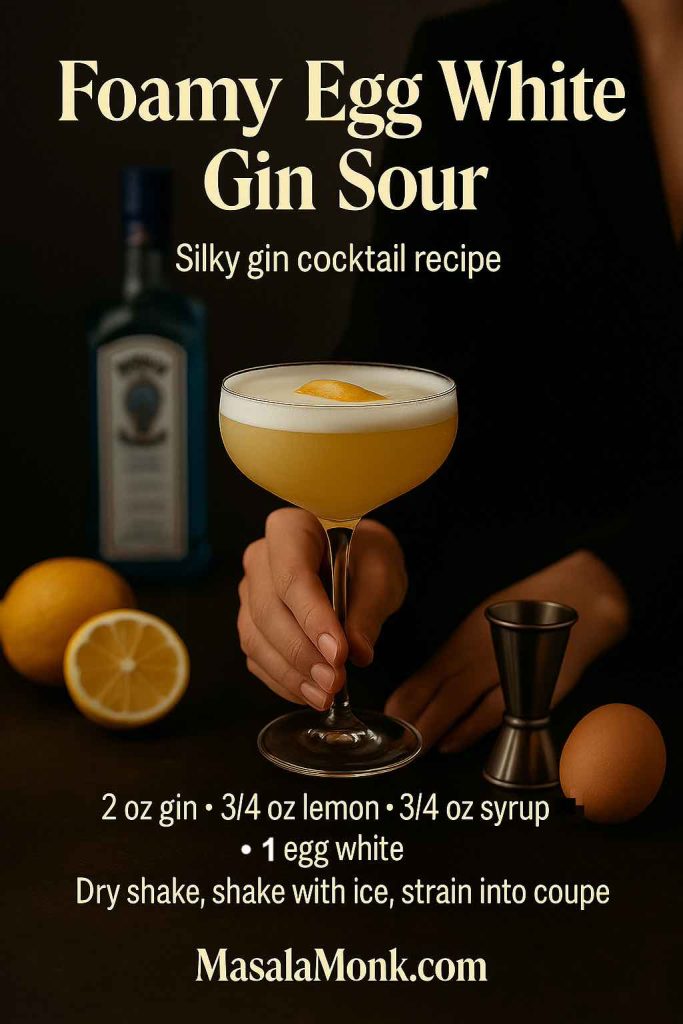
Foamy egg white gin sour cocktail in a coupe glass with lemon garnish, bartender’s hand holding the stem, lemons, egg and jigger on a dark bar, with mini gin cocktail recipe text and MasalaMonk.com branding
Foamy Egg White Gin Sour – a silky gin cocktail recipe card from MasalaMonk.com showing the simple 2 oz gin, 3/4 oz lemon, 3/4 oz syrup and egg white formula for a perfect dry-shaken sour.

Method

  1. Add the gin, lemon juice, simple syrup and egg white to a shaker without ice.
  2. Seal the shaker and shake vigorously for 10–15 seconds. This is the “dry shake” that whips air into the egg white.
  3. Open the shaker, add ice, then shake again until the metal feels properly frosty.
  4. Fine-strain into a chilled coupe or Nick & Nora glass.
  5. Garnish with a lemon twist or dot a few drops of bitters on the foam and drag a cocktail stick through for a simple pattern.

If you’re at all uneasy about using raw eggs, it’s worth reading a proper breakdown from a trusted food site. Serious Eats has a detailed piece on egg safety in cocktails that explains the risks and how to minimise them.

For a good comparison of how this structure behaves with a different spirit, MasalaMonk’s whiskey sour cocktail recipe is a useful side-by-side: same idea, different base, equally satisfying.


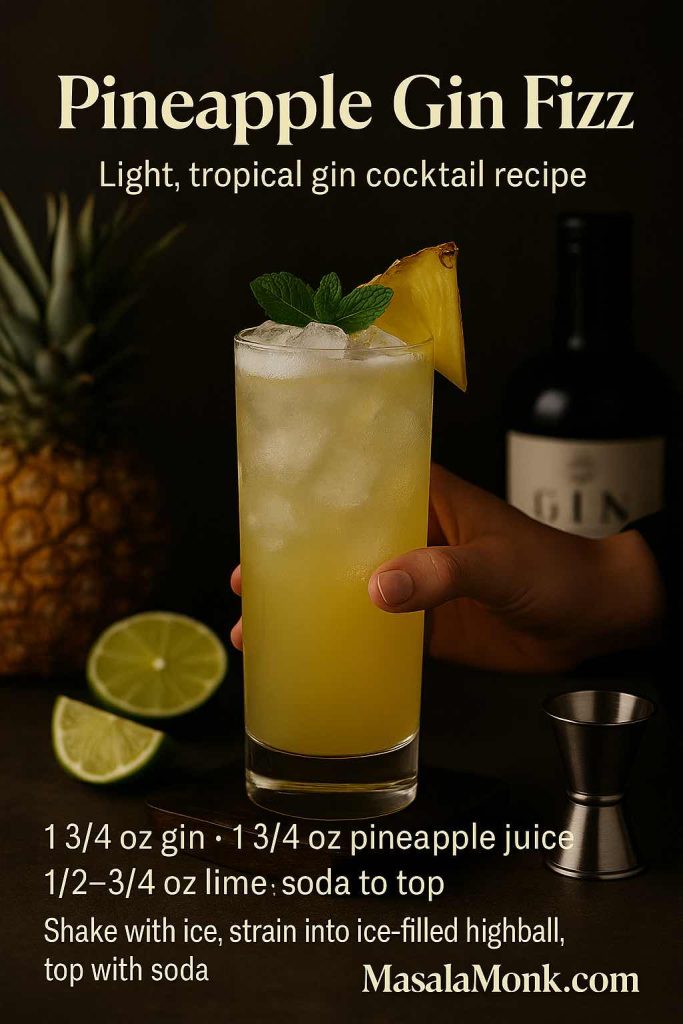
2. Pineapple Gin Fizz – A Tropical Take on a Gin Cocktail Recipe

Once you’ve mastered the egg white sour, it’s fun to add a holiday mood. Pineapple brings sunshine to the glass, especially when you lighten the drink with bubbles. This pineapple gin fizz is bright, slightly tangy and dangerously refreshing.

Ingredients

  • 50 ml (1¾ oz) gin
  • 50 ml (1¾ oz) pineapple juice
  • 15–20 ml (½–⅔ oz) lime juice
  • 10–15 ml (⅓–½ oz) simple syrup (optional, adjust to taste)
  • Soda water to top
  • Ice
  • Pineapple wedge or lime wheel for garnish
Pineapple Gin Fizz – a light, tropical gin cocktail recipe card from MasalaMonk.com featuring a simple 1 3/4 oz gin, 1 3/4 oz pineapple juice and lime formula topped with soda for easy summer sipping.

Method

  1. Fill a shaker with ice, then add gin, pineapple juice, lime juice and simple syrup if using.
  2. Shake briefly, just until nicely chilled.
  3. Strain into a tall glass filled with fresh ice.
  4. Top with soda water and give it a gentle stir to combine.
  5. Garnish with a slice of pineapple or a lime wheel.

Here again, the same gin cocktail recipe skeleton appears: spirit, citrus, sweetness, topped with fizz. Only now the sweetness comes primarily from pineapple juice, which also brings its own tropical aroma.

If you enjoy this style, you might also like lighter long drinks built around coconut water. MasalaMonk’s roundup of coconut water cocktails shows how easily you can turn hydrating ingredients into party-ready sippers that sit comfortably next to pineapple-gin combinations.


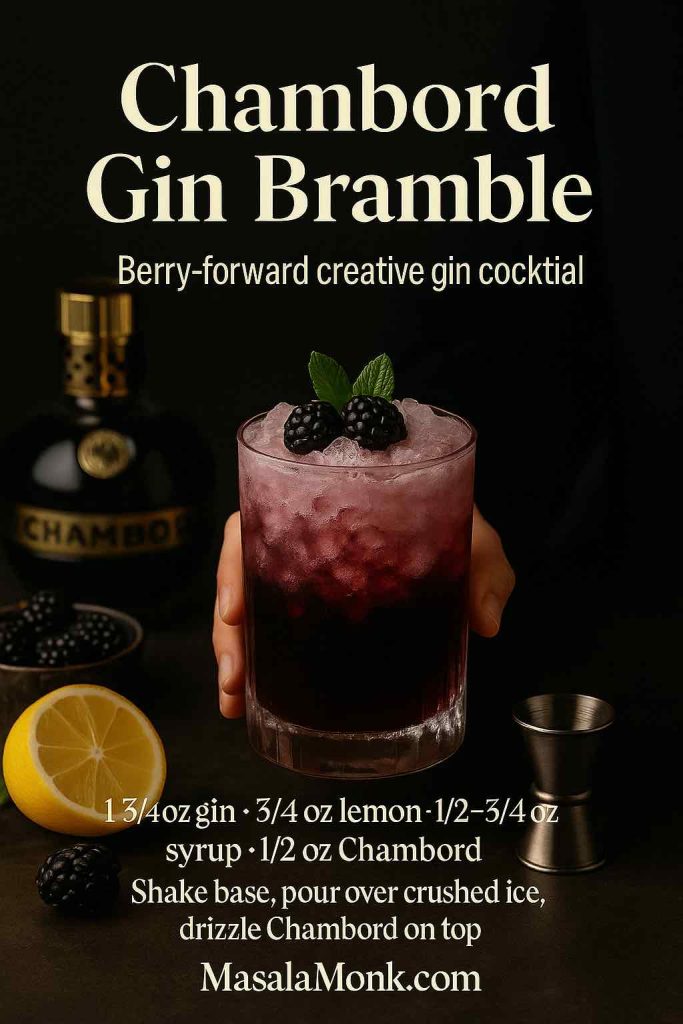
3. Chambord Gin Bramble – Berry-Forward Gin Cocktail Recipe

From sunshine tropics, it’s a short step into deep berry territory. Chambord, with its black raspberry flavour, is a natural fit for gin. Pair it with lemon juice and crushed ice and you’re essentially making a modern bramble-style drink: tart, fruity and extremely drinkable.

Ingredients

  • 50 ml (1¾ oz) gin
  • 25 ml (¾ oz) fresh lemon juice
  • 15–20 ml (½–⅔ oz) simple syrup
  • 15 ml (½ oz) Chambord or another black raspberry liqueur
  • Crushed ice
  • Fresh berries or a lemon slice for garnish
Chambord gin bramble cocktail in a short glass filled with crushed ice, deep purple hue, topped with blackberries and mint, with lemon, berries and a Chambord bottle in the background and a mini gin cocktail recipe overlaid, MasalaMonk.com branding at the bottom
Chambord Gin Bramble – a berry-forward gin cocktail recipe card from MasalaMonk.com, showing the 1 3/4 oz gin, 3/4 oz lemon, 1/2–3/4 oz syrup and 1/2 oz Chambord formula poured over crushed ice for a rich, bramble-style drink.

Method

  1. Add the gin, lemon juice and simple syrup to a shaker filled with ice.
  2. Shake until cold, then strain into a rocks glass packed with crushed ice.
  3. Slowly drizzle the Chambord over the top. It will sink and streak through the ice, creating that pretty “bled ink” effect.
  4. Garnish with fresh berries or a simple lemon wedge.

The base gin cocktail recipe here is the same sour format, but the use of Chambord as a finishing liqueur changes the mood completely. You can keep it bright and lemony, or ease up on the citrus and let the raspberries play centre stage.

For more deeply coloured, dramatic cocktails that tap into purple and berry tones, MasalaMonk’s various fruit-forward recipes pair nicely with this style, especially if you’re planning a menu that moves from light spritzes to darker, dessert-leaning drinks.

Also Read: Mango Martini + 5 Variants of Classic Cocktail


4. Aperol Gin Spritz and Negroni Riff – Bitter-Sweet Gin Cocktail Recipe

Bitterness can be incredibly refreshing, particularly in warm weather. Aperol offers a softer, more approachable bitterness than many other amari, and it loves gin. There are two easy ways to use it here: as a spritz and as a Negroni-style stirred drink.

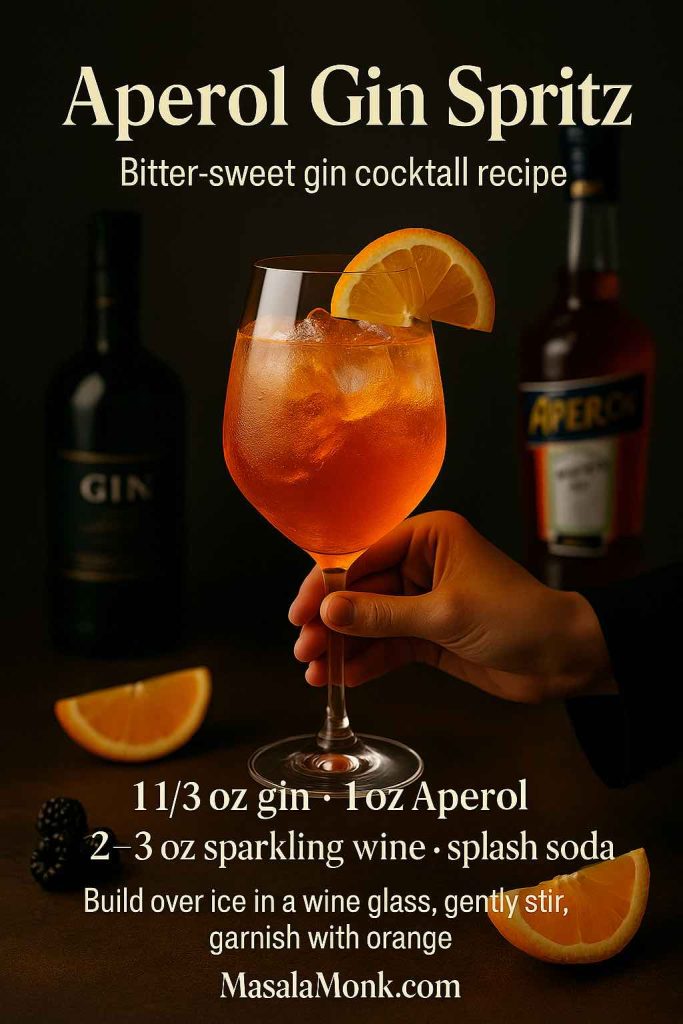
Aperol Gin Spritz

This is the laid-back afternoon version—bubbly, citrusy and lower in alcohol.

You’ll need

  • 40 ml gin
  • 30 ml Aperol
  • 60–90 ml Prosecco or any dry sparkling wine
  • A splash of soda water
  • Orange slice for garnish
Aperol Gin Spritz cocktail in a stemmed wine glass filled with ice and garnished with an orange slice, held by a person in a dark blazer, with Aperol bottle, gin bottle and jigger on a moody bar surface, plus mini gin cocktail recipe text and MasalaMonk.com branding
Aperol Gin Spritz – a bitter-sweet gin cocktail recipe card from MasalaMonk.com, showing the simple mix of gin, Aperol, sparkling wine and a splash of soda built over ice and finished with a fresh orange slice.

How to make it

  1. Fill a large wine glass with ice.
  2. Pour in gin and Aperol.
  3. Add sparkling wine, then a splash of soda.
  4. Give everything a slow, gentle stir.
  5. Garnish with an orange slice.

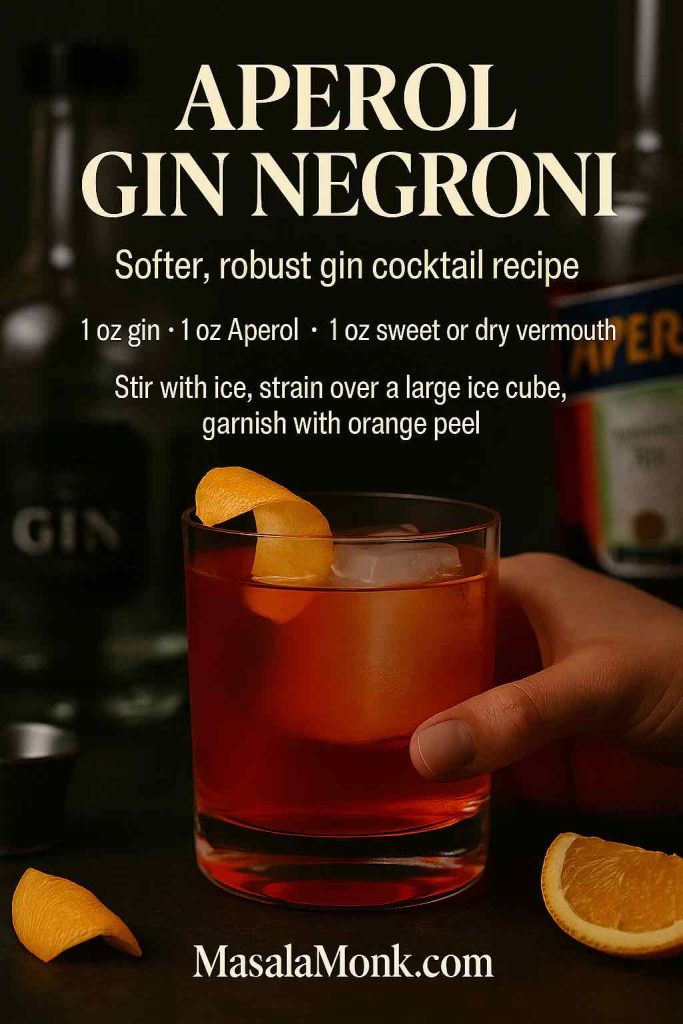
Aperol Gin Negroni

When you’d like something more robust, you can use Aperol in place of Campari for a slightly softer Negroni variation.

You’ll need

  • 30 ml gin
  • 30 ml Aperol
  • 30 ml sweet or dry vermouth
Aperol Gin Negroni cocktail in a short rocks glass with a large clear ice cube and orange peel garnish, held by a hand on a dark bar with blurred gin and Aperol bottles in the background, overlaid with mini gin cocktail recipe text and MasalaMonk.com branding
Aperol Gin Negroni – a softer, robust gin cocktail recipe card from MasalaMonk.com showing the simple 1 oz gin, 1 oz Aperol and 1 oz sweet or dry vermouth mix, stirred over ice and finished with a bright orange twist.

How to make it

  1. Add all three ingredients to a mixing glass filled with ice.
  2. Stir for about 20–25 seconds until chilled and diluted.
  3. Strain over a large ice cube in a rocks glass.
  4. Express an orange peel over the top and drop it into the glass.

For a deeper dive into the whole Negroni family—including white, dry and sparkling variations—MasalaMonk’s Negroni recipe and variations guide is a great rabbit hole to explore once this gin cocktail recipe is under your belt.


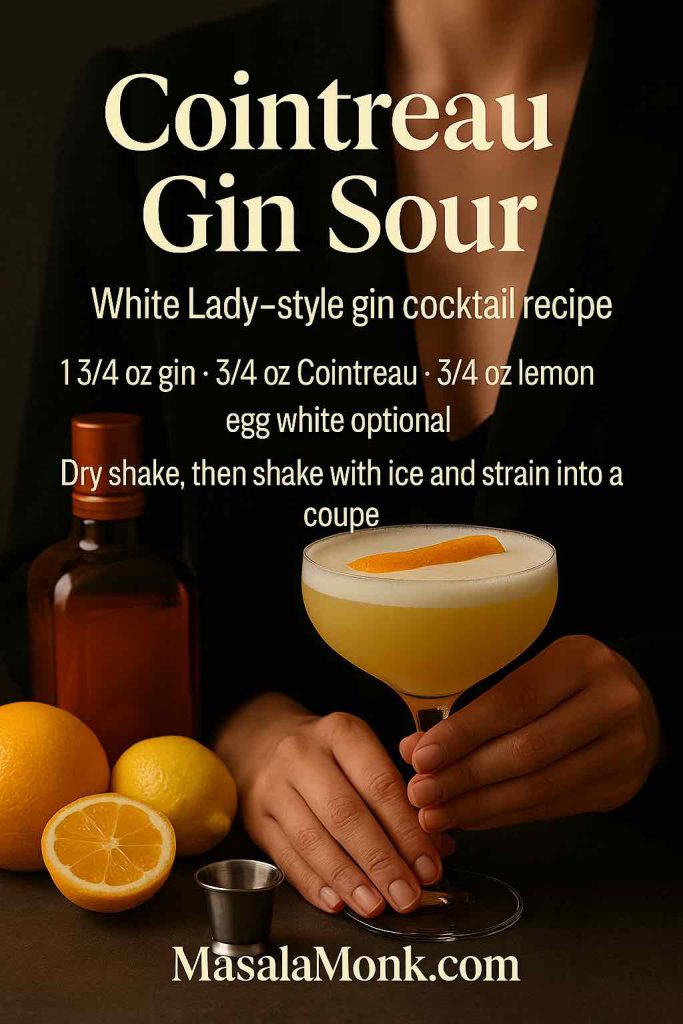
5. Cointreau Gin Sour – White Lady-Style Gin Cocktail Recipe

Orange and gin are a timeless pair, and Cointreau is one of the neatest ways to bring that flavour in. It’s bright, clean and strong enough to stand up to citrus juice, which is why the White Lady has stuck around for so long.

Ingredients

  • 50 ml gin
  • 25 ml Cointreau (or another good triple sec)
  • 20–25 ml fresh lemon juice
  • Optional: 10 ml simple syrup if you prefer a slightly softer edge
  • Optional: egg white for a foamy variation
  • Ice
Cointreau Gin Sour cocktail in a coupe glass with a foamy top and orange peel garnish, held by a person in a black blazer, with lemons, an orange liqueur bottle and a jigger on a dark bar, plus mini gin cocktail recipe text and MasalaMonk.com branding
Cointreau Gin Sour – a White Lady–style gin cocktail recipe card from MasalaMonk.com, showing the 1 3/4 oz gin, 3/4 oz Cointreau, 3/4 oz lemon and optional egg white formula, dry-shaken then shaken with ice and strained into a coupe.

Method

  1. Add gin, Cointreau, lemon juice and optional syrup to a shaker.
  2. If you’re using egg white, add it now and dry-shake before adding ice.
  3. Add ice and shake again until properly chilled.
  4. Fine-strain into a chilled coupe glass.
  5. Garnish with a thin strip of orange peel or a twist of lemon.

If you’d like to see how different bartenders balance this style of gin cocktail recipe, it’s worth glancing at the White Lady recipe on Liquor.com and comparing their ratios to your own preference. Some versions lean sharper and drier, while others go a touch sweeter and richer.

Also Read: Tres Leches – Mexican 3 Milk Cake Recipe


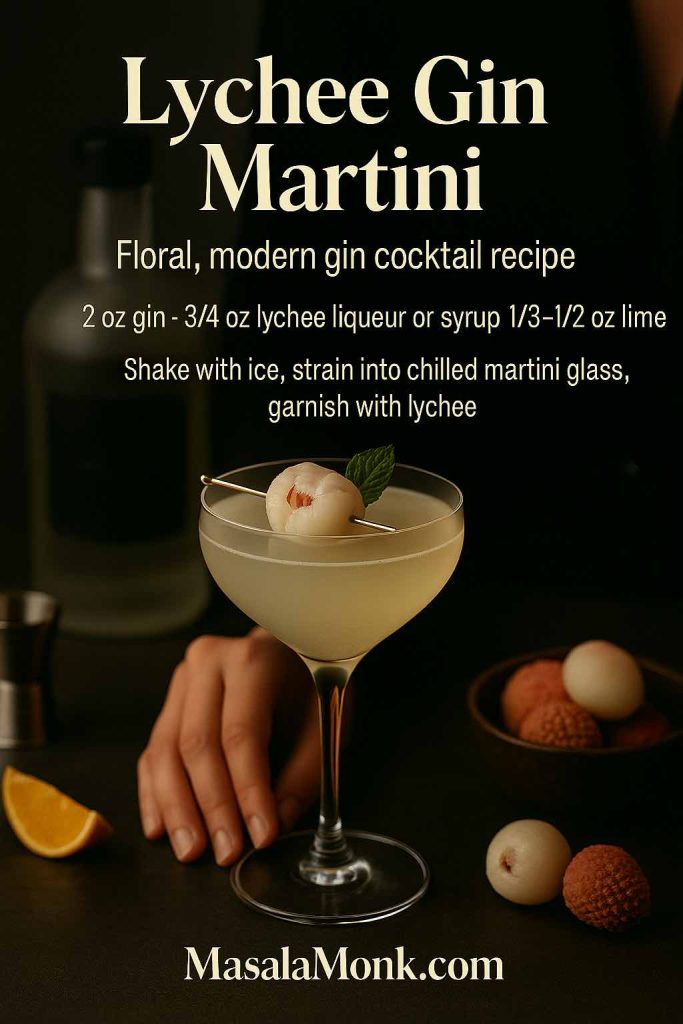
6. Lychee Gin Martini – Floral, Elegant Gin Cocktail Recipe

Lychee martinis had a moment years ago, then quietly slipped off many menus. Lately, they’ve been enjoying a gentle comeback, especially when made less sugary and more gin-forward.

Ingredients

  • 50 ml gin (a floral or citrus-driven gin works especially well)
  • 20–25 ml lychee liqueur or syrup from canned lychees
  • 10–15 ml fresh lime or lemon juice (optional but highly recommended)
  • 1–2 lychees for garnish
  • Ice
Lychee Gin Martini cocktail in a chilled coupe glass garnished with a lychee and mint leaf on a skewer, bartender’s hand resting on a dark bar beside fresh lychees and an orange wedge, with mini gin cocktail recipe text and MasalaMonk.com branding
Lychee Gin Martini – a floral, modern gin cocktail recipe card from MasalaMonk.com, highlighting the simple mix of 2 oz gin, 3/4 oz lychee liqueur or syrup and a splash of lime, shaken cold and served with a lychee garnish.

Method

  1. Add gin, lychee liqueur or syrup, and citrus juice (if using) to a shaker filled with ice.
  2. Shake until very cold; lychee drinks are lovelier when properly frosty.
  3. Strain into a chilled martini or coupe glass.
  4. Garnish with a lychee on a cocktail pick.

This gin cocktail recipe is an excellent example of how a single flavour can shift the entire personality of a drink. Suddenly the gin feels delicate and exotic rather than bracing.

If you enjoy this combination, you might also like exploring non-gin takes on lychee. MasalaMonk has several lychee-focused mocktails and summer drinks that echo the same fruit notes without the alcohol, which can be handy when you’re entertaining a mixed crowd.


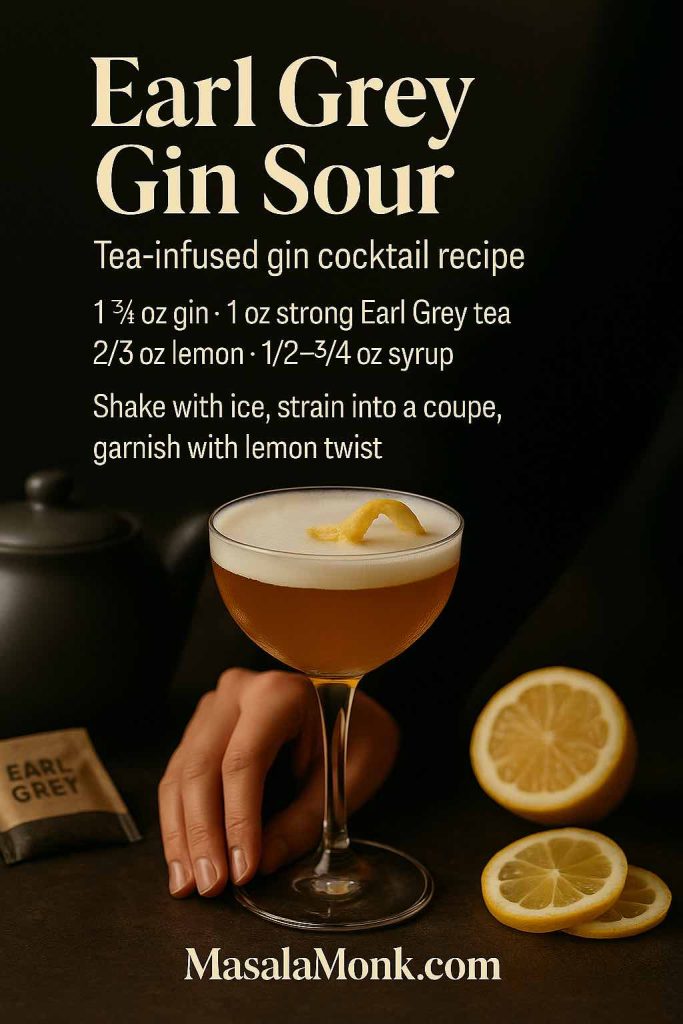
7. Earl Grey Gin Sour – Tea-Infused Gin Cocktail Recipe

Tea and gin share a lot of botanical territory, so Earl Grey is a particularly natural match. Its bergamot twist gives a classic sour something quietly sophisticated, and the technique is almost as simple as making strong tea.

Ingredients

  • 50 ml gin
  • 25–30 ml cooled, strong Earl Grey tea
  • 20 ml fresh lemon juice
  • 15–20 ml simple syrup or honey syrup
  • Optional: egg white for a cloudier, richer texture
  • Ice
  • Lemon wheel or twist for garnish
Earl Grey Gin Sour cocktail in a coupe glass with frothy top and lemon twist, bartender’s hand on a dark bar beside lemon slices, teapot and Earl Grey tea bag, with mini tea-infused gin cocktail recipe text and MasalaMonk.com branding
Earl Grey Gin Sour – a tea-infused gin cocktail recipe card from MasalaMonk.com, showing the 1 3/4 oz gin, 1 oz strong Earl Grey tea, 2/3 oz lemon and 1/2–3/4 oz syrup mix, shaken with ice and served in a coupe with a bright lemon twist.

Method

  1. Brew a small amount of Earl Grey tea and let it cool to at least room temperature. You want it strong, as it will be diluted by ice.
  2. Add gin, tea, lemon juice and syrup to a shaker.
  3. If using egg white, dry-shake first, then add ice; otherwise, add ice straight away.
  4. Shake until chilled and strain into a coupe or small wine glass.
  5. Garnish with a lemon twist or wheel.

For more tea-driven ideas beyond this single gin cocktail recipe, have a look at MasalaMonk’s collection of Earl Grey iced tea cocktails. You’ll find several combinations of tea, citrus and spirits that can easily sit alongside your gin sour experiments.


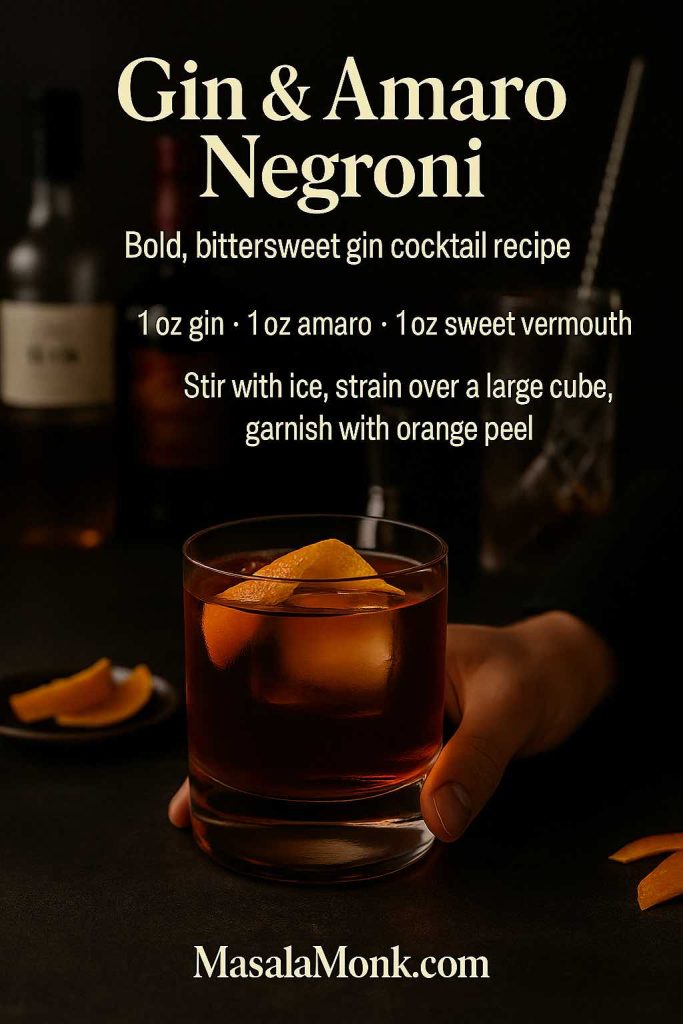
8. Gin & Amaro Negroni – Spirit-Forward Gin Cocktail Recipe

Not everyone wants their drinks light and fluffy. When you’re in the mood for something darker, more complex and sippable, amaro steps up. Combining gin, amaro and sweet vermouth gives a moody cousin of the Negroni that is bitter without being aggressive and herbal without being medicinal.

Ingredients

  • 30 ml gin
  • 30 ml amaro of your choice (try Montenegro, Cynar or another favourite)
  • 30 ml sweet vermouth
  • Orange peel for garnish
Gin & Amaro Negroni cocktail in a short rocks glass over a large clear ice cube with orange peel garnish, hand holding the glass on a dark bar with blurred bottles in the background and mini bittersweet gin cocktail recipe text plus MasalaMonk.com branding
Gin & Amaro Negroni – a bold, bittersweet gin cocktail recipe card from MasalaMonk.com, built from 1 oz gin, 1 oz amaro and 1 oz sweet vermouth, stirred with ice and served over a single large cube with a bright orange twist.

Method

  1. Add gin, amaro and sweet vermouth to a mixing glass filled with ice.
  2. Stir for about 20–25 seconds until the outside of the glass is very cold.
  3. Strain into a rocks glass over a large ice cube.
  4. Express an orange peel over the top, then drop it into the drink.

The proportions look familiar because they’re the same structure used in many stirred classics, especially the Negroni. If you’re curious how far this family can stretch just by swapping one ingredient at a time, MasalaMonk’s Negroni recipe guide explores multiple variations, all built from this same general idea.


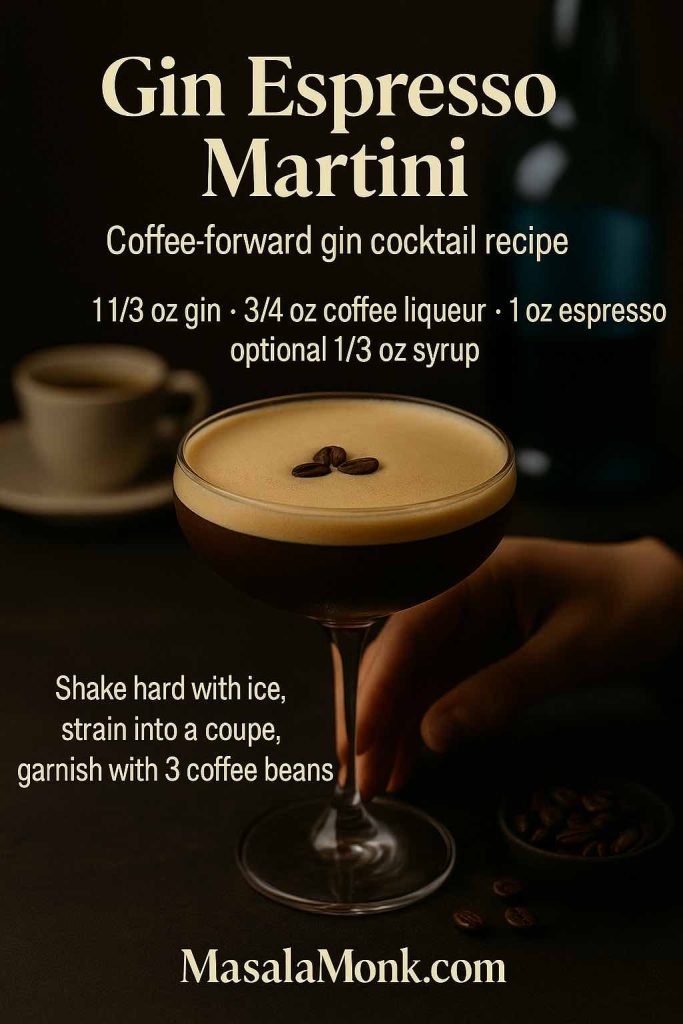
9. Gin Espresso Martini – Dessert-Ready Gin Cocktail Recipe

Dessert in a glass has never really gone out of style, and the espresso martini is proof. Swapping the usual vodka for gin in this drink brings a subtle botanical finish under the espresso and coffee liqueur, especially if your gin has chocolate, citrus or nutty notes.

Ingredients

  • 40 ml gin
  • 25 ml coffee liqueur
  • 25–30 ml fresh espresso or very strong coffee, cooled slightly
  • 10–15 ml simple syrup (optional, depending on your coffee and liqueur)
  • Ice
  • Coffee beans for garnish
Gin Espresso Martini cocktail in a coupe glass with thick crema and three coffee beans on top, held by a hand on a dark bar with an espresso cup and coffee beans in the background, overlaid with mini gin cocktail recipe text and MasalaMonk.com branding
Gin Espresso Martini – a coffee-forward gin cocktail recipe card from MasalaMonk.com, built from 1 1/3 oz gin, 3/4 oz coffee liqueur, 1 oz espresso and optional 1/3 oz syrup, shaken hard with ice and served in a coupe with three coffee beans on the foam.

Method

  1. Pull a shot of espresso and let it cool for a minute or two so it doesn’t melt the ice instantly.
  2. Add gin, coffee liqueur, espresso and optional syrup to a shaker filled with ice.
  3. Shake vigorously for 10–15 seconds; the goal is both chilling and building a thick, foamy crema layer on top.
  4. Fine-strain into a chilled coupe or martini glass.
  5. Garnish with three coffee beans floated on the surface.

If you’re curious about how many different ways one drink can be bent, MasalaMonk’s espresso martini riff article show a whole range of tweaks—salted caramel, hazelnut, orange and more—that can just as easily start from this gin cocktail recipe instead of the usual vodka base.


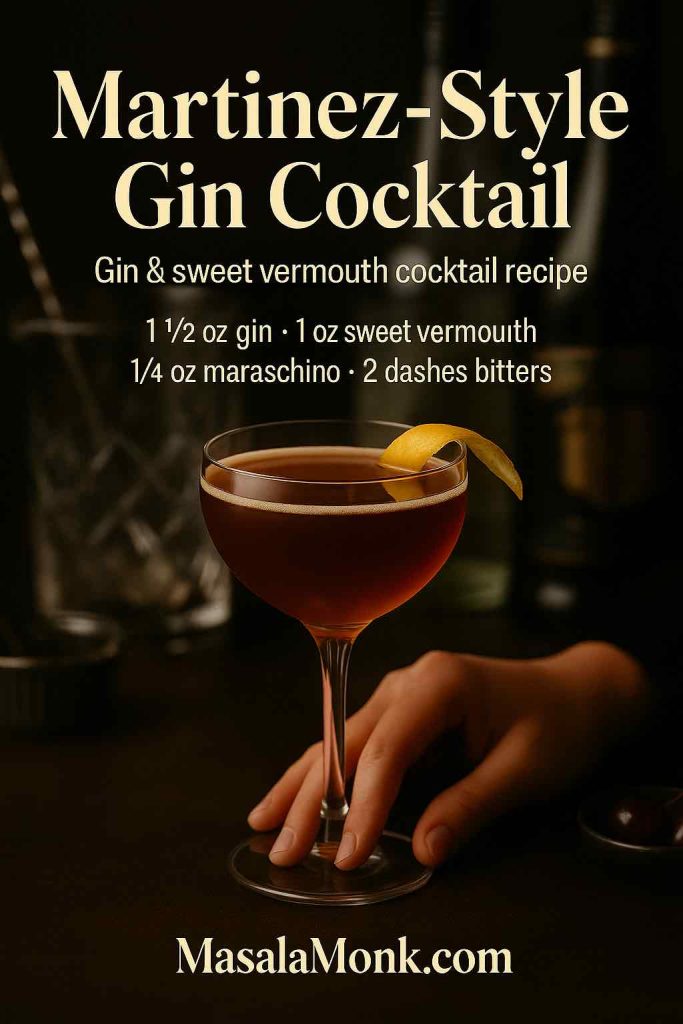
10. Martinez-Style Gin & Sweet Vermouth – Vintage-Feeling Gin Cocktail Recipe

To finish, it’s nice to go back to something a little old-fashioned in the best possible way. The Martinez is often described as a bridge between the Manhattan and the martini—a stirred mixture of gin, sweet vermouth and a touch of liqueur.

Ingredients

  • 45 ml gin
  • 25–30 ml sweet vermouth
  • 5–10 ml maraschino liqueur (optional but classic)
  • 1–2 dashes orange or aromatic bitters
  • Lemon twist or cherry for garnish
Martinez-style gin cocktail in a coupe glass with amber liquid and lemon twist garnish, hand holding the stem on a dark bar with mixing glass and bottles blurred in the background, overlaid with mini gin and sweet vermouth cocktail recipe text and MasalaMonk.com branding
Martinez-Style Gin Cocktail – a vintage-feeling gin and sweet vermouth cocktail recipe card from MasalaMonk.com, combining 1 1/2 oz gin, 1 oz sweet vermouth, 1/4 oz maraschino liqueur and 2 dashes bitters, stirred with ice and served in a coupe with a classic lemon twist.

Method

  1. Add gin, sweet vermouth, maraschino liqueur and bitters to a mixing glass with plenty of ice.
  2. Stir until everything is cold and the drink has taken on a gentle, silky texture.
  3. Strain into a chilled coupe or Nick & Nora glass.
  4. Garnish with a lemon twist or a cherry.

Here, the gin cocktail recipe structure shifts from sour to spirit-forward, but the idea remains the same: a balance between strong, sweet and aromatic elements. Once you’re comfortable, you can nudge the ratio more towards dry martini territory (more gin, less vermouth), or closer to a Manhattan (more vermouth, heavier bitters) and see where your own preference lies.

Also Read: Homemade Hot Chocolate with Cocoa Powder Recipe


What to Serve with These Gin Cocktail Recipe Ideas

Cocktails are great on their own, yet they really shine when paired with the right food. Since many of these gin drinks lean bright, fruity or slightly bitter, they love snacks that are salty, creamy or just a little bit spicy.

A few easy options to round out the evening:

  • Potato-based bites: crispy, cheesy potato snacks are practically made for aperitivo-style drinks. MasalaMonk has a fun roundup of potato appetizer ideas that includes several options perfect for nibbling between sips.
  • Spicy, crunchy finger food: baked jalapeño poppers with a creamy filling and a crisp top are an ideal match for the pineapple gin fizz or the Aperol spritz variant. You can find a step-by-step version in their recipe for oven-baked jalapeño poppers.
  • Cheesy, shareable bites: cheese balls are classic party food and work beautifully with gin sour–style drinks. For inspiration with an Indian twist, have a look at MasalaMonk’s cheese ball variations.
  • Egg-based snacks: since one of the stars of this gin cocktail recipe collection is an egg white sour, serving actual eggs on the side feels almost poetic. A platter of deviled eggs pairs perfectly with martinis, Negroni riffs and just about any drink on this list.

Alongside these savoury options, you might want a fresh, fruity drink without alcohol for balance. MasalaMonk’s summer cocktail and mocktail collections—think mango vodka bases that can be turned alcohol-free, or watermelon margarita variations adapted as mocktails—fit neatly into the same flavour world.


Bringing It All Together

From a single gin cocktail recipe template, you’ve now got ten distinct directions to explore:

  • turning foam and texture into a feature with egg white
  • taking gin on holiday with pineapple and soda
  • diving into ripe black raspberry flavours with Chambord
  • leaning into aperitivo territory with Aperol spritzes and Negroni riffs
  • shining a light on citrus and orange liqueur in a White Lady-style sour
  • bringing back the lychee martini with a fresher, more gin-forward twist
  • weaving tea into your drinks with an Earl Grey sour
  • exploring herbal depth with amaro and sweet vermouth
  • channelling dessert with a gin espresso martini
  • finishing with a vintage-feeling Martinez riff

Once this structure clicks, it becomes very easy to invent more. Swap pineapple for passionfruit, Chambord for pomegranate syrup, Earl Grey for jasmine, espresso for cold brew, or Cointreau for another citrus liqueur. Each time, you’re still working within the same balanced pattern.

The next time you stare at a bottle of gin and a handful of ingredients, you won’t be stuck wondering what to make. You’ll have a whole map of possibilities, all anchored in one flexible gin cocktail recipe and all ready to shake, stir and share.

FAQs

1. What is the simplest gin cocktail recipe I can start with at home?

A great beginner-friendly gin cocktail recipe follows a basic sour formula: two parts gin, one part fresh citrus juice and one part sweetener. For example, you might use 60 ml gin, 30 ml lemon or lime juice and 30 ml simple syrup. Shake everything with ice and strain into a chilled glass. From there, you can turn the same build into dozens of variations by swapping the sweetener (for pineapple juice, Chambord, honey, etc.) or topping with soda water.


2. How do I turn a basic gin cocktail recipe into a foamy egg white drink?

To transform a standard gin cocktail into a foamy sour, you simply add one egg white (or about 25–30 ml of pasteurised egg white) to your shaker along with the gin, citrus and sweetener. First, shake everything without ice to whip air into the mixture. This “dry shake” creates the foam. Then add ice and shake again until thoroughly chilled. Strain into a coupe and you’ll get that silky, cloud-like layer on top that makes an egg white gin cocktail recipe look and feel luxurious.


3. Can I make a gin cocktail recipe without egg white but still get some foam?

Yes, you absolutely can. If you’d rather avoid egg white, you can use alternatives like aquafaba (the liquid from a can of chickpeas) in the same way—dry shake first, then shake with ice. Another option is to rely on ingredients that naturally create some froth, such as pineapple juice, though the foam will be lighter and less stable. Even without any foaming agent, a well-shaken gin cocktail recipe will have a pleasant texture, so you can choose whatever suits your taste and comfort level.


4. What is the best gin to use in a gin cocktail recipe with egg white, pineapple or lychee?

There’s no single “best” gin, yet certain styles work particularly well with specific flavours. For egg white sours, a classic London Dry gin with strong juniper and citrus holds its own against the lemon and sugar. For pineapple or other tropical twists, gins with bright citrus or subtle spice can keep the drink lively instead of cloying. Meanwhile, a lychee gin cocktail recipe usually shines with more floral or delicate gins, since they complement the fruit rather than fighting it. Ultimately, the ideal choice is the gin whose flavour you already enjoy neat or in a simple G&T.


5. How can I adjust a gin cocktail recipe if it tastes too sour or too sweet?

Tuning the balance is straightforward once you know what to look for. If your drink tastes too sharp or acidic, add a little more sweetener—start with 5 ml at a time and taste again. On the other hand, if the gin cocktail recipe feels too sweet or heavy, add a few extra drops of lemon or lime juice and shake once more. Sometimes even a tiny extra splash of gin will help if the flavour seems muted. Over time, you’ll learn your own preferred ratio, which might be slightly different from the classic 2:1:1 formula.


6. Can I batch a gin cocktail recipe for a party?

Definitely. To batch, first scale your favourite gin cocktail recipe up to the number of servings you want. Combine the gin, citrus and sweetener in a jug or bottle and keep it chilled. For shaken drinks without egg white, you can add water in advance to mimic the dilution you’d normally get from shaking—usually about 20–25% of the total volume. Then you just pour over ice and garnish to order. For recipes that rely on egg white foam, it’s better to shake individual portions, but you can still pre-mix the non-egg components so service is much quicker.


7. What’s the difference between a sour, a fizz, a Collins and a martini-style gin cocktail recipe?

These names describe drink “families” that share the same building blocks but use them in slightly different ways. A sour is the core mix of spirit, citrus and sweetener, shaken and served either up or on the rocks. A fizz usually follows the same formula but is topped with soda water, often in a smaller glass. A Collins is very similar to a fizz, although it’s typically served in a taller glass with more ice and a longer, thirst-quenching profile. A martini-style gin cocktail recipe, by contrast, is spirit-forward and stirred, using gin and vermouth (and sometimes liqueurs) instead of lemon or lime. Understanding these families makes it easier to recognise how each of the ten ideas in the post is related.


8. How do fruity flavours like pineapple, Chambord or lychee fit into a gin cocktail recipe?

Fruity elements almost always replace or support the sweetener in your drink. Pineapple juice brings both sweetness and acidity, so you might reduce the simple syrup and lime juice slightly to keep the gin cocktail recipe balanced. Chambord, being a liqueur, acts purely as a sweet, intensely flavoured component, ideal for drizzling over a bramble-style drink or shaking directly into the mix. Lychee, whether as syrup or liqueur, tends to be fairly sweet, so it usually stands in for most of the sugar, with a little citrus added to keep everything bright. In each case, you’re still working from the same basic template.


9. Is a gin espresso martini just a vodka espresso martini with gin instead?

In essence, yes, although the final flavour is noticeably different. A traditional espresso martini is built from vodka, coffee liqueur and fresh espresso, sometimes with a touch of sugar syrup. When you swap the base spirit to gin, you’re replacing neutral alcohol with something aromatic. A gin espresso martini still uses the same structure, but the botanicals in the gin add subtle layers under the coffee—herbal, citrus or spice notes, depending on the brand. So it follows the same core gin cocktail recipe idea while giving a more complex finish than the original.


10. Can I make a non-alcoholic version of a gin cocktail recipe?

Yes, you can create alcohol-free versions of almost every style in this collection. Start by using a good-quality alcohol-free “gin” or a botanical spirit alternative. Then keep the citrus and sweetener ratios similar to your usual gin cocktail recipe. For a non-alcoholic pineapple fizz, for instance, you would mix the zero-proof spirit with pineapple juice, lime juice and soda water. For a mock lychee martini, combine the alcohol-free base with lychee syrup and a squeeze of lemon. Egg white, aquafaba and fruit juices work just as well in zero-proof drinks, so you still get the same foam, freshness and colourful presentation—just without the alcohol.

Posted on 5 Comments

What mixes well with Baileys? Mixology by Masala Monk

What Mixes Well with Baileys?

Baileys Irish Cream — that velvety, indulgent blend of cream, whiskey, and cocoa — is more than just a liqueur. It’s a mood. A memory. A master key to thousands of cozy evenings and celebration toasts. And when it comes to mixology, Baileys is not just a solo act — it’s a charismatic team player.

So if you’ve ever asked, “What can I mix with Baileys to elevate it beyond the rocks?” — welcome to the Mixology by Masala Monk guide to Baileys. Let’s shake, stir, and sip our way through some of the most delightful combinations Baileys has to offer.


🍸 Why Baileys Works So Well in Cocktails

Baileys is a rare triple-threat in the mixology world:

  1. Texture: That luscious creaminess makes it an ideal base or accent for both hot and cold drinks.
  2. Flavor: Subtle notes of cocoa and vanilla, balanced with Irish whiskey, give Baileys a rich, dessert-like profile.
  3. Versatility: It plays beautifully with coffee, chocolate, nuts, fruit, and even some surprising savory elements.

The result? Endless opportunities for innovation — and indulgence.


☕ Baileys Meets Coffee: A Match Made in Heaven

Let’s face it — Baileys and coffee are soulmates. Together, they’re the grown-up version of cookies and milk.

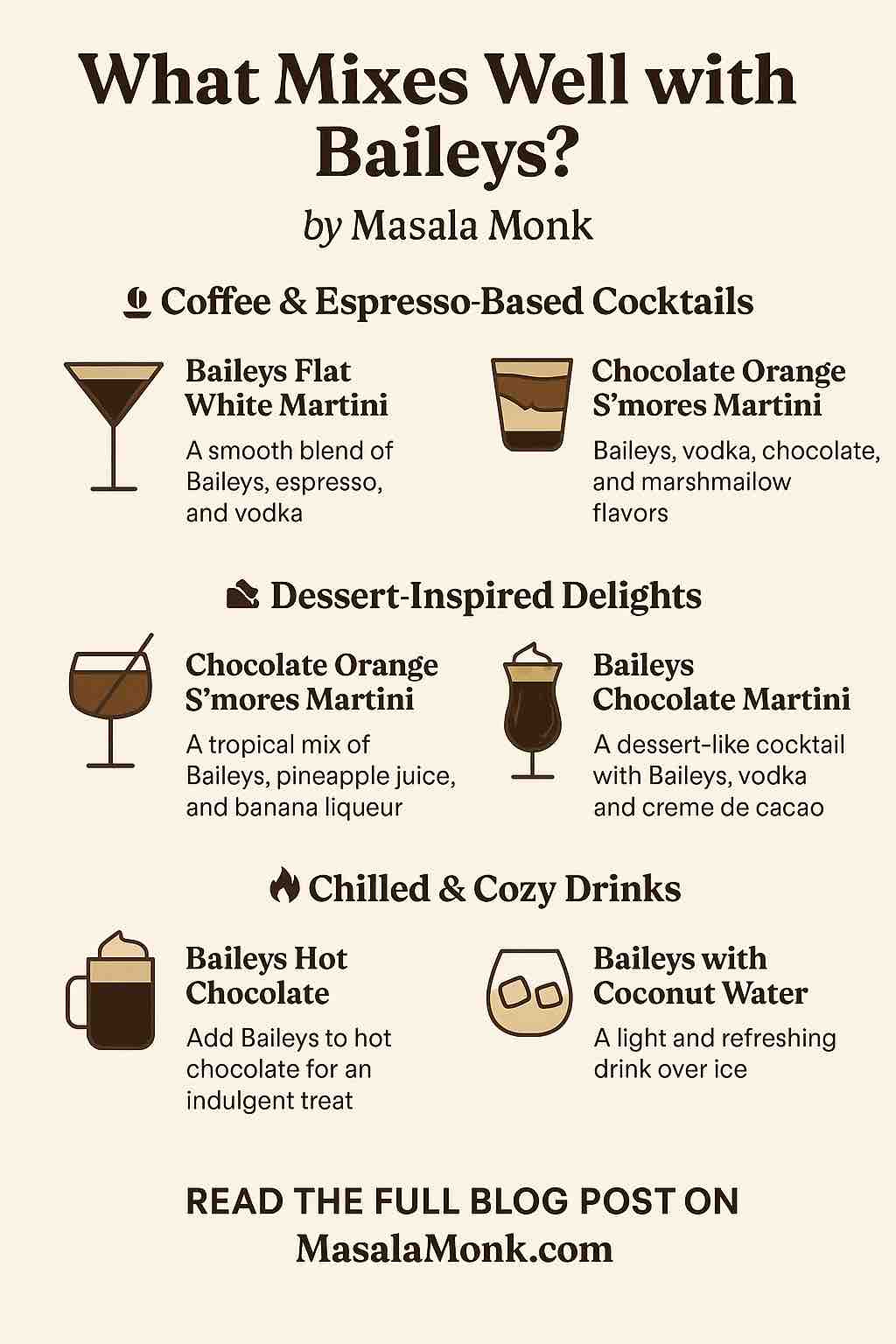
1. Baileys Flat White Martini

Espresso meets elegance.

  • Ingredients: Baileys, espresso, vodka
  • Flavor profile: Bold, creamy, slightly bitter with sweet undertones
  • Why it works: The vodka sharpens the edges, the espresso brings depth, and the Baileys rounds everything out into one smooth finish.

2. Baileys Irish Coffee (with a twist)

Forget the usual cream — swap it out for Baileys.

  • Pro tip: Use freshly brewed dark roast and a cinnamon stick for a spicy lift.
  • Perfect for: Cold evenings, festive mornings, or mid-week indulgence.

🍫 Dessert Cocktails: When Baileys is the Treat

Baileys practically is dessert. So why not go all in?

3. Chocolate Orange S’mores Martini

Your favorite campfire treat, all grown up.

  • Baileys, vodka, orange liqueur, crème de cacao
  • Rim the glass with crushed graham crackers and torch a marshmallow on top.
  • Perfect for: Date nights, cozy fireside evenings, or just a Tuesday pick-me-up.

4. Baileys Tiramisu Cocktail

Why eat tiramisu when you can drink it?

  • Baileys, coffee liqueur, mascarpone cream, espresso
  • Layered in a glass with a dusting of cocoa powder
  • Ideal for: Dinner parties, Italian-themed nights, or an impressive treat for guests

❄️ Refreshing Summer Cocktails with Baileys

Yes, Baileys can be refreshing too — it’s not all about warmth and winter.

5. Baileys Banana Colada

A tropical daydream with a creamy twist.

  • Baileys, banana liqueur, pineapple juice, coconut rum
  • Serve it over crushed ice with a pineapple wedge
  • Why it works: The tropical fruit acidity cuts through the creaminess — creating a perfectly balanced, unexpected cocktail.

6. Baileys & Coconut Water

  • Simple, clean, light.
  • Add a few mint leaves and crushed ice for extra freshness.
  • Surprisingly hydrating and low effort, yet delicious.

🔥 Warm and Cozy: Winter Cocktails with Baileys

When the chill hits, Baileys becomes your best friend.

7. Baileys Hot Chocolate

  • Add a shot of Baileys to your hot cocoa
  • Top with whipped cream, chocolate shavings, or even chili powder for a spicy edge
  • Optional: Add a splash of hazelnut syrup for Nutella-like flavor

8. Baileys Spiced Chai Latte

An Indian twist — courtesy of Masala Monk flair.

  • Brew a strong masala chai
  • Add Baileys (classic or almond)
  • Garnish with a star anise and a pinch of nutmeg

🥃 Reinventing Classic Cocktails with Baileys

9. Baileys White Russian

Move over Kahlúa. There’s a new sheriff in town.

  • Vodka, Baileys, and a splash of milk
  • Optional: Add coffee liqueur for extra depth
  • Serve over ice in a rocks glass — swirl slowly and enjoy the marbled magic.

10. B-52 Shot

  • Kahlúa (bottom), Baileys (middle), Grand Marnier (top)
  • Layered with a spoon for a stunning visual effect
  • Sweet, creamy, and citrusy all at once — a party favorite.

🧪 Masala Monk’s Mixology Tips for Working with Baileys

  1. Don’t over-shake: Cream-based liqueurs can curdle if over-shaken or mixed with high-acid juices like lemon or lime.
  2. Glass matters: Serve Baileys cocktails in elegant coupe glasses, rocks glasses, or layered shot glasses for visual appeal.
  3. Use flavored Baileys: Salted caramel, espresso crème, and almond variants can add new dimensions.
  4. Garnish wisely: Nutmeg, cinnamon, cocoa, mint, or even edible flowers can elevate the experience.

💡 Pro-Level Pairings & Unexpected Twists

  • Baileys + Matcha: Earthy meets creamy. Add matcha powder to hot milk, then blend with Baileys.
  • Baileys + Peanut Butter Whiskey: Dessert bomb in a glass.
  • Baileys + Amaretto: Almond and cream for an Italian-style after-dinner drink.

📝 Final Sip: Baileys is Your Blank Canvas

Whether you’re a casual sipper or an experimental mixologist, Baileys offers a base that can adapt to your mood, season, or occasion. It’s indulgent, yes — but also incredibly flexible. You don’t need to be a trained bartender to make something beautiful with it. Just a few ingredients and a little inspiration from the Masala Monk mindset — where global flavors meet homegrown charm.


📸 Share Your Creations!

Tried one of these recipes or invented your own Baileys-based cocktail? Tag @MasalaMonk and use #BaileysByMasalaMonk — we’d love to see your mixology magic!

📌 FAQs: Baileys Mixology by Masala Monk

1. Can Baileys be mixed with citrus or acidic juices?

Not recommended. Baileys contains dairy, which can curdle when mixed with acidic ingredients like lemon or orange juice. Stick to low-acid mixers like coffee, chocolate, or cream-based liqueurs.


2. Can I mix Baileys with soda or tonic water?

It’s not ideal. Carbonated mixers, especially tonic or citrus sodas, may cause curdling. If you want something bubbly, use cream soda or root beer — but mix gently and serve immediately.


3. Is Baileys gluten-free or dairy-free?

Classic Baileys contains dairy and is not dairy-free. However, they do offer a Baileys Almande variant made with almond milk, which is suitable for vegans and dairy-sensitive drinkers.


4. How should I store Baileys after opening?

Store Baileys in a cool, dark place, preferably in the fridge. It does not require refrigeration but keeping it chilled helps maintain flavor and texture. Consume within 6 months after opening.


5. Can I use Baileys in baking or desserts?

Absolutely! Baileys is fantastic in desserts — think Baileys cheesecake, truffles, tiramisu, or even drizzled over ice cream. It adds a creamy, slightly boozy twist to sweet dishes.


6. Can I drink Baileys straight or should I always mix it?

Baileys is delicious on its own, served over ice. It’s also a great base for cocktails. Whether you sip it neat or mix it into drinks or desserts, it’s all about preference.


7. What’s the alcohol content of Baileys?

Classic Baileys has an ABV (alcohol by volume) of 17%, making it relatively low in alcohol compared to spirits like vodka or whiskey — but stronger than wine or beer.


8. What flavors of Baileys are available?

Besides the original, Baileys offers exciting variants like:

  • Salted Caramel
  • Espresso Crème
  • Strawberries & Cream
  • Almande (dairy-free)
  • Red Velvet
  • Apple Pie (limited edition)

Each brings unique cocktail possibilities.


9. Can I mix Baileys with whiskey or vodka?

Yes! Baileys works well with spirits like vodka, whiskey, and coffee liqueurs. Use it in drinks like the Flat White Martini or Baileys White Russian for richer depth and body.


10. Is Baileys suitable for vegans or lactose-intolerant people?

The original Baileys contains dairy and is not vegan. However, the Baileys Almande variant is plant-based and dairy-free, made from almond milk — suitable for vegans and many lactose-intolerant individuals.