
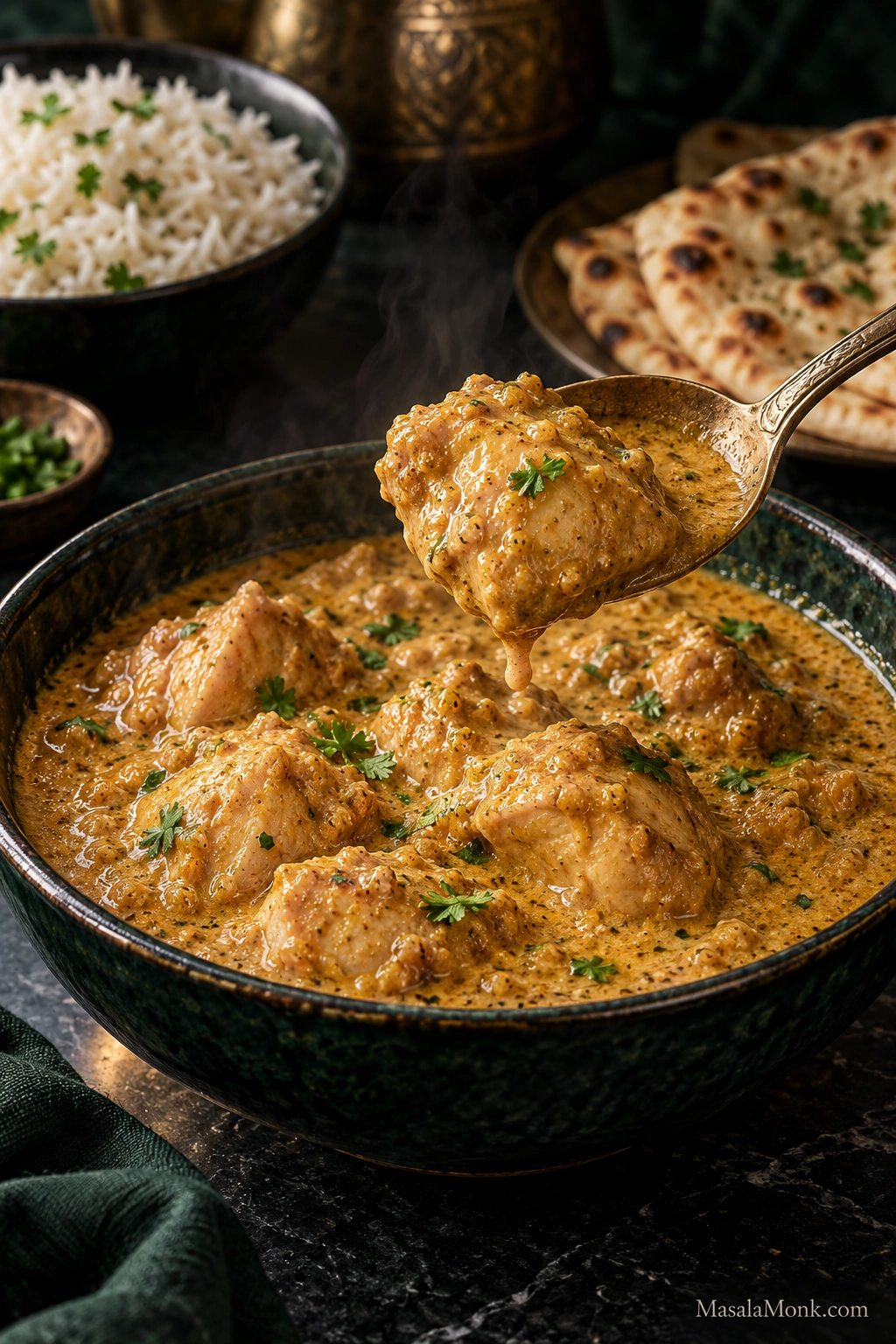
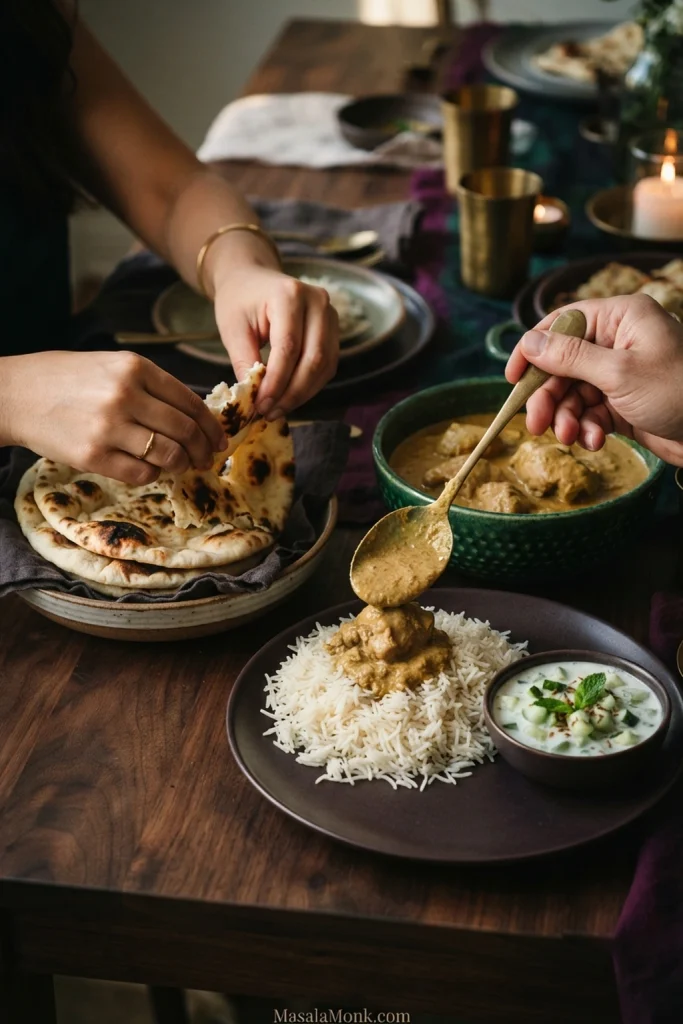
There is a point when a good chicken korma stops looking like chicken sitting in sauce and starts looking like one finished dish. The gravy clings to the meat, browned onion gives it quiet sweetness, and cardamom reaches you before any real chilli heat does. Spoon it over basmati rice or tear through it with naan and the gravy should come with the chicken—not run away from it like thin curry broth.
Korma is easy to make creamy. The harder part is getting that creaminess without ending up with something bland, sugary or watery. Most of the body here comes from browned onions, full-fat yogurt and nuts. Cream, if you use it at all, comes right at the end.
This is a from-scratch chicken korma with a golden, aromatic gravy. There is no jarred korma paste, restaurant curry base, tomato, added sugar or coconut milk in the main recipe. The heat stays mild, but the finished gravy should still smell deeply of cardamom and warm spice.
Jump to: Ingredients · Cook the Korma · Get the Gravy Right · Fix a Problem · Variations · Serve · Store & Reheat
What Kind of Chicken Korma Is This?
Korma is a family of dishes rather than one fixed formula. This version sits in the golden, aromatic North Indian and Mughlai-associated style in which browned onion, yogurt and nuts give the gravy much of its character. British curry-house korma often moves in a paler, sweeter and more coconut-forward direction; there is a variation for that later.
Unlike tomato-forward butter chicken, this korma builds its gravy around onion, yogurt and nuts.
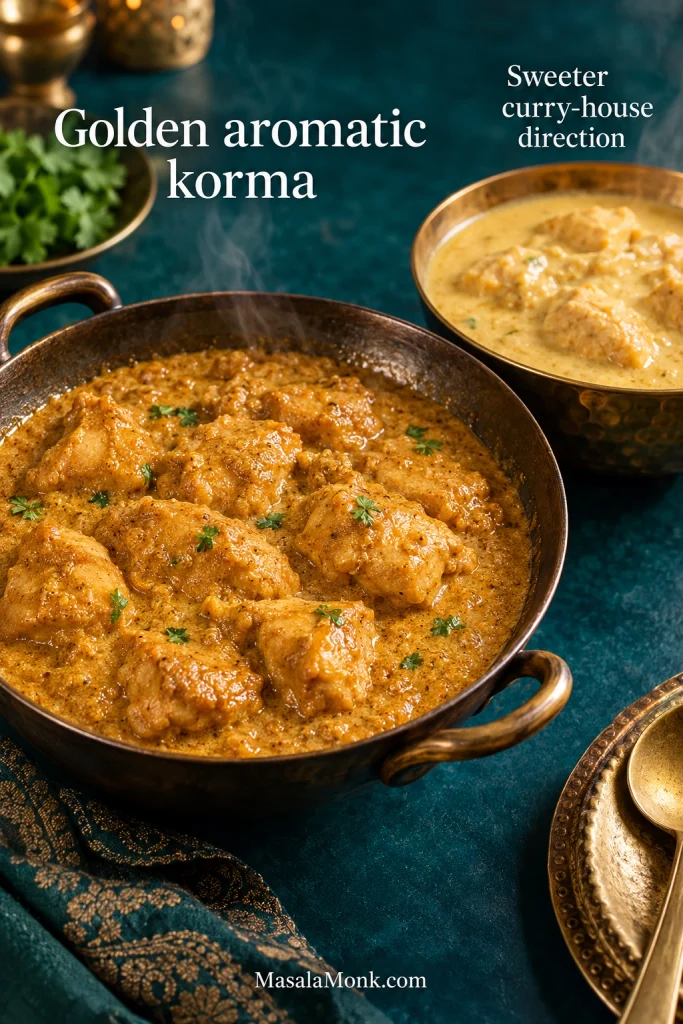
The rule for this pot: brown the onions, keep the yogurt gentle, and stop the gravy slightly loose.
How to Make Chicken Korma
| Serves | 4 generously |
| Active prep | 20 minutes |
| Marinate | 20–30 minutes, overlapping with prep |
| Cook | About 40 minutes (typically 35–45 minutes) |
| Total | About 1 hour 10 minutes (typically 60–75 minutes) |
| Heat level | Mild |
There is no need to deep-fry the onions, make a separate restaurant curry base or use specialist restaurant techniques. Much of the time is simply onions browning, chicken simmering and the finished korma resting. A wide heavy-bottomed pan and a small blender or mini food processor are the main pieces of equipment.
Chicken Korma Ingredients
Chicken and marinade
- 700 g / 1½ lb boneless skinless chicken thighs, cut into 4 cm / 1½-inch pieces
- 180 g / about ¾ cup full-fat plain yogurt
- 1 level tablespoon finely grated ginger or smooth ginger paste
- 1 level tablespoon finely grated garlic or smooth garlic paste
- ¾ teaspoon fine sea salt
For the gravy
- 300 g / about 2 medium-large onions, thinly sliced
- 45 g / 1½ oz raw cashews, or 45 g blanched almonds
- 2 tablespoons neutral cooking oil
- 1 tablespoon ghee, plus another teaspoon only if the pan becomes dry
- 4 green cardamom pods, lightly cracked
- 4 cloves
- 1 cinnamon stick, about 5 cm / 2 inches
- 2 teaspoons ground coriander
- 1 teaspoon ground cumin
- ½ teaspoon ground turmeric
- ½ teaspoon Kashmiri chilli powder, mostly for colour and gentle warmth
- ¾ teaspoon fine sea salt, plus more to taste
- 180 ml / ¾ cup water, divided — 60 ml / ¼ cup for the onion-nut mixture and 120 ml / ½ cup kept hot for the gravy
For finishing
- ½ teaspoon garam masala
- 60 ml / ¼ cup heavy cream or double cream, optional, for a richer finish
- Choose one optional aromatic finish: ¼ teaspoon kewra water for a floral note, or a tiny pinch of ground mace or nutmeg for a warmer-spiced finish
- 1 lemon wedge, as needed for final balancing
- Fresh coriander/cilantro, optional, for serving
You can leave out the optional cream and aromatic finish and still make the intended korma. Concentrated kewra essence is much stronger than kewra water; if that is what you have, begin with just 1 drop.
Cook the Korma
Prepare the Chicken and Onions
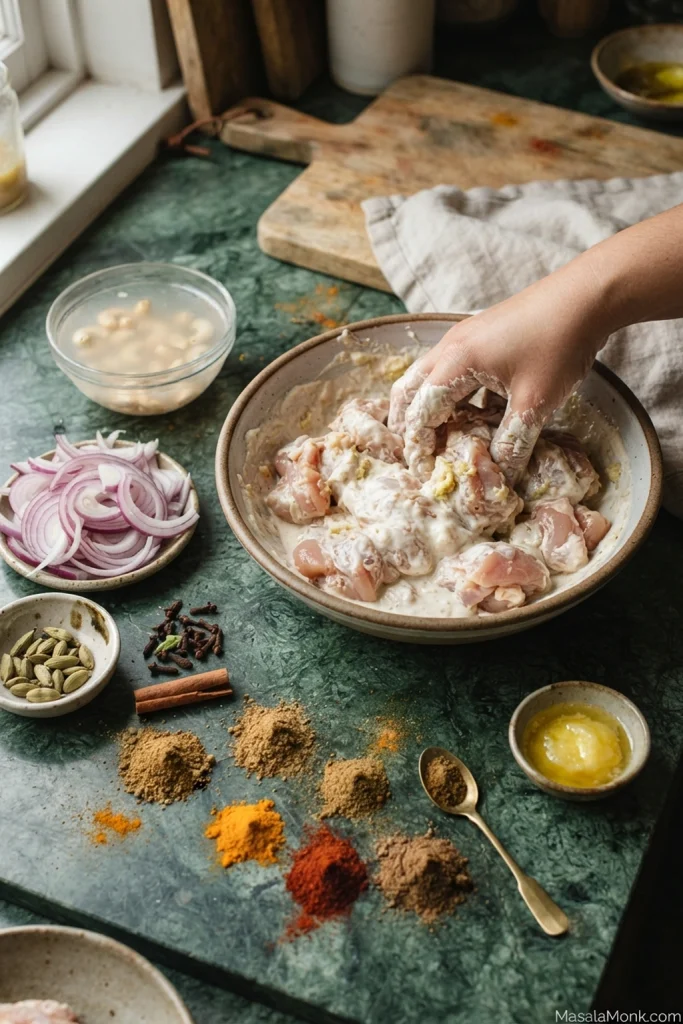
- Marinate the chicken and soak the nuts. Mix the chicken with the yogurt, ginger, garlic and ¾ teaspoon salt. Cover and refrigerate for 20–30 minutes while you prepare the rest of the recipe. Cover the cashews with hot water for 10–15 minutes, then drain. Blanched almonds may need a longer hot soak; blend them once they have noticeably softened. Take the chicken from the refrigerator when you are ready to add it to the pan.
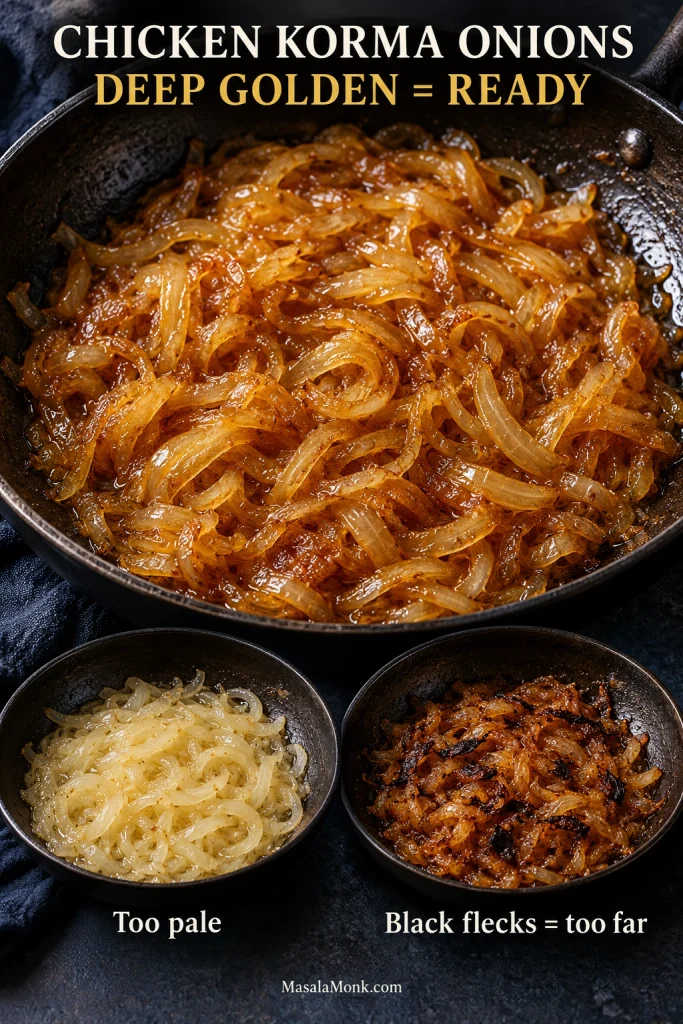
- Brown the onions by colour, not by clock. Heat the oil and 1 tablespoon ghee over medium heat. Add the onions and cook, stirring regularly, until soft, much smaller in volume and evenly deep golden, 12–20 minutes depending on your pan and stove. Once the edges start colouring quickly, lower the heat and stir more often. You want a sweet toasted-onion smell and no black specks. Black flecks are not extra flavour. For the no-blender route below, let the onions become especially soft as well as golden.
Blend the Base and Bloom the Spices
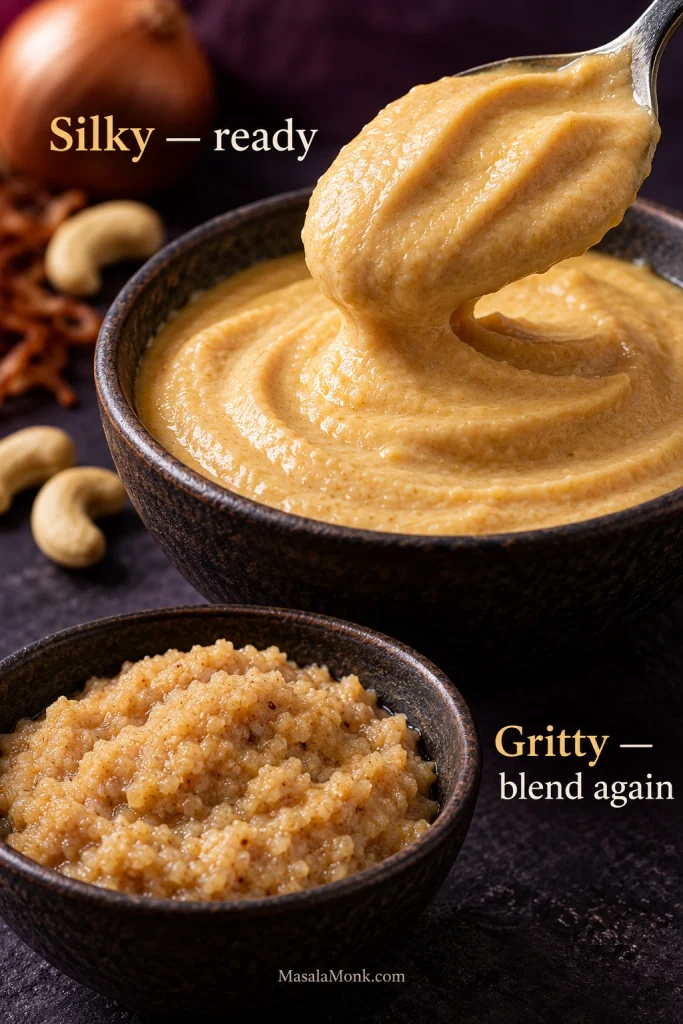
- Make the onion-nut mixture. Transfer the browned onions to a small blender, leaving as much fat as practical in the pan. Add the drained nuts and 60 ml / ¼ cup room-temperature or warm water. Blend until silky. Rub a tiny amount between two fingers; obvious grit means it needs another blend. For a sealed blender that is not designed for hot food, let the onions cool before closing the jar.
No blender? Chop or mash the very soft browned onions as finely as possible. Mix 45 g / roughly 3 tablespoons smooth unsweetened cashew butter—or almond butter if using almonds—with the 60 ml / ¼ cup water until smooth. Set both aside. The finished gravy will have a little more texture.
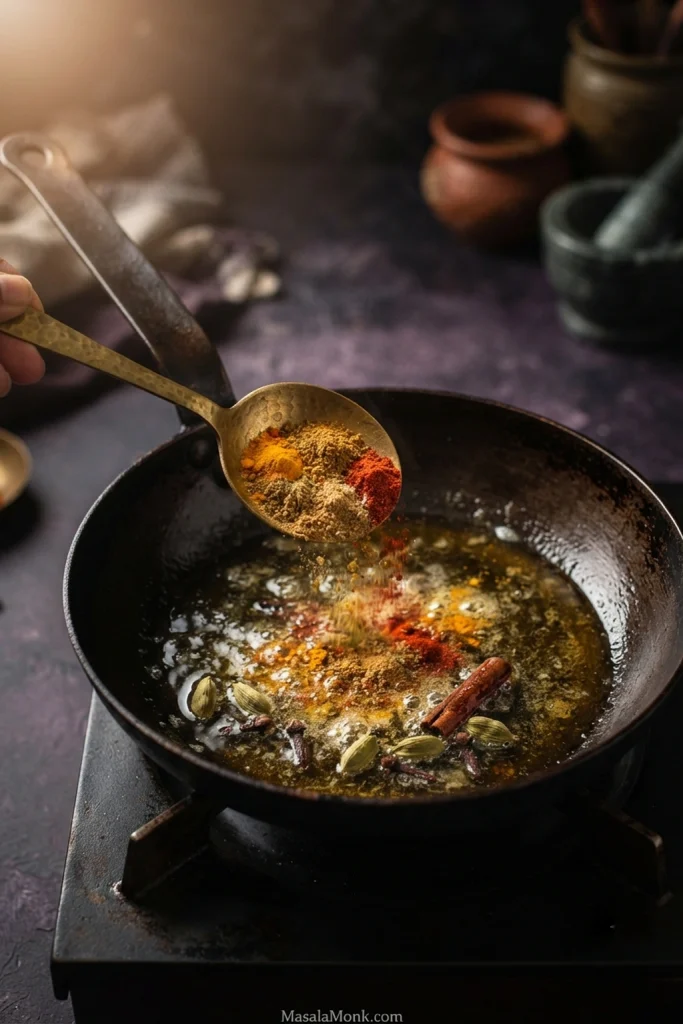
- Toast the spices briefly. Return the pan to medium-low heat. Add another teaspoon of ghee only if it looks dry. Stir in the cardamom, cloves and cinnamon for 20–30 seconds, then add the coriander, cumin, turmeric and Kashmiri chilli for another 20–30 seconds. A tablespoon of water will stop the ground spices catching if the pan becomes too dry.
Add the Chicken and Build the Gravy
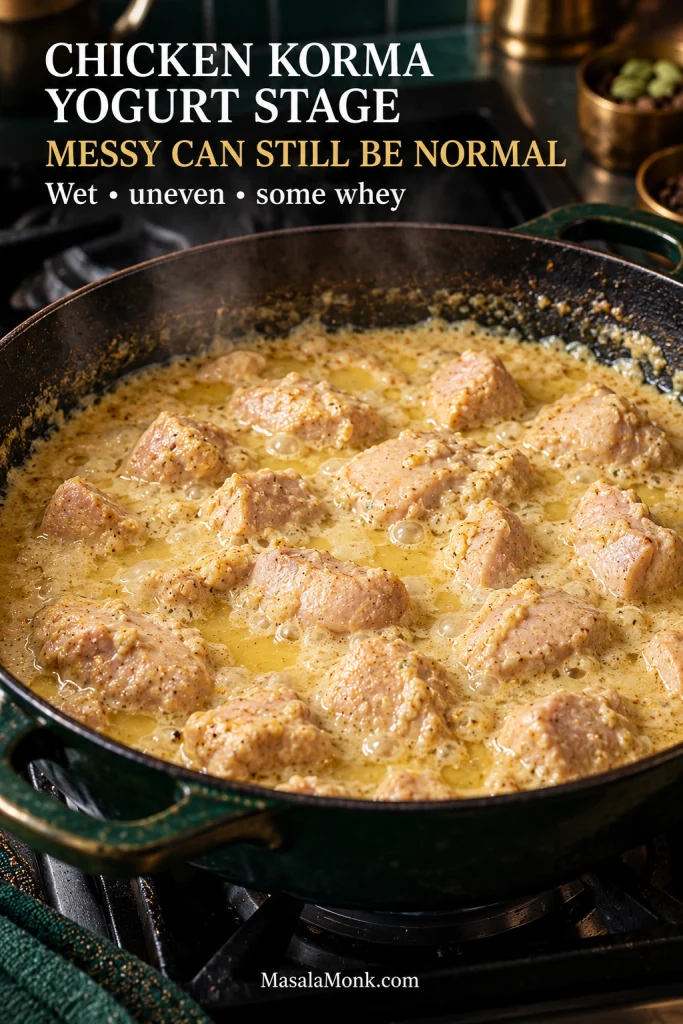
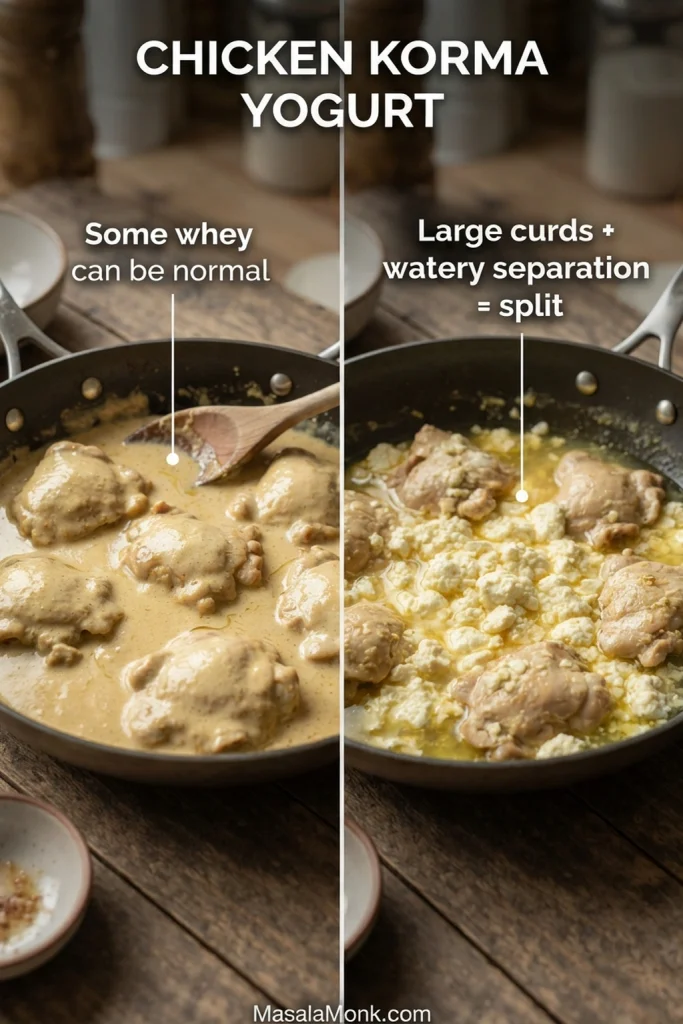
- Add the chicken with all of its yogurt marinade. Keep the heat around medium and stir frequently for 5–6 minutes, until the raw exterior of the chicken has disappeared. This is usually the least reassuring-looking part of the recipe. The pan gets wetter, the yogurt may look uneven and a little whey can pool around the meat. That is normal. Large cottage-cheese-like curds floating separately in clear liquid are a different problem. Keep the heat steady instead of trying to boil the moisture away as fast as possible.
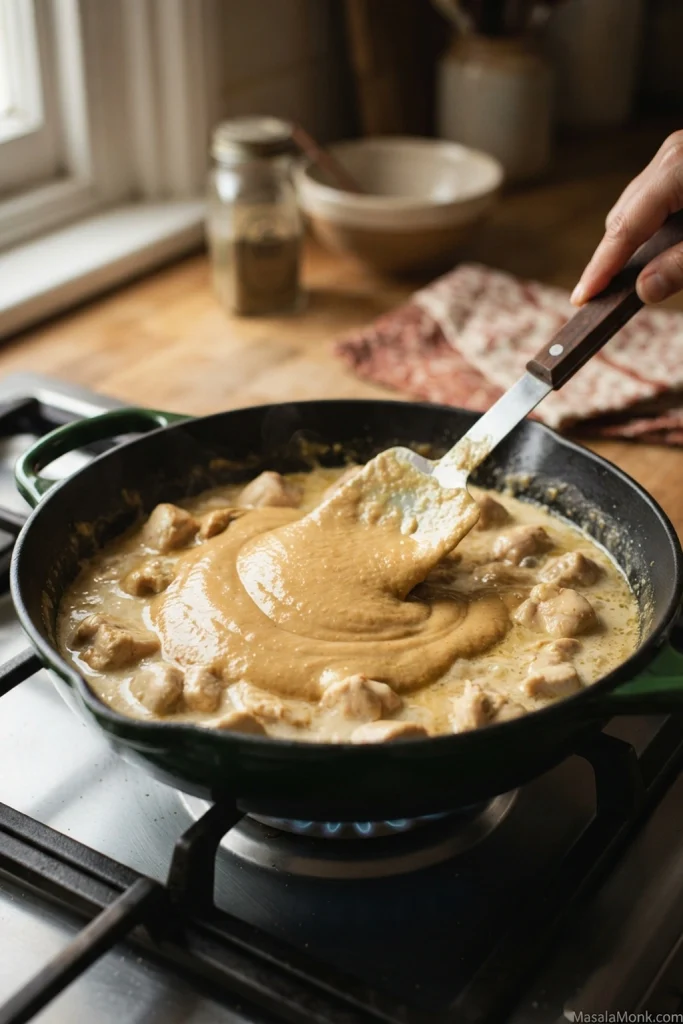
- Build the gravy. Stir in the blended onion-nut mixture and the remaining ¾ teaspoon salt. For the no-blender version, add the finely chopped or mashed onions and thinned nut butter instead. Cook for 2–3 minutes, stirring, until the gravy turns pale golden and begins to sit more smoothly and fully around the chicken. Pour in the remaining 120 ml / ½ cup hot water.
Simmer, Finish and Serve
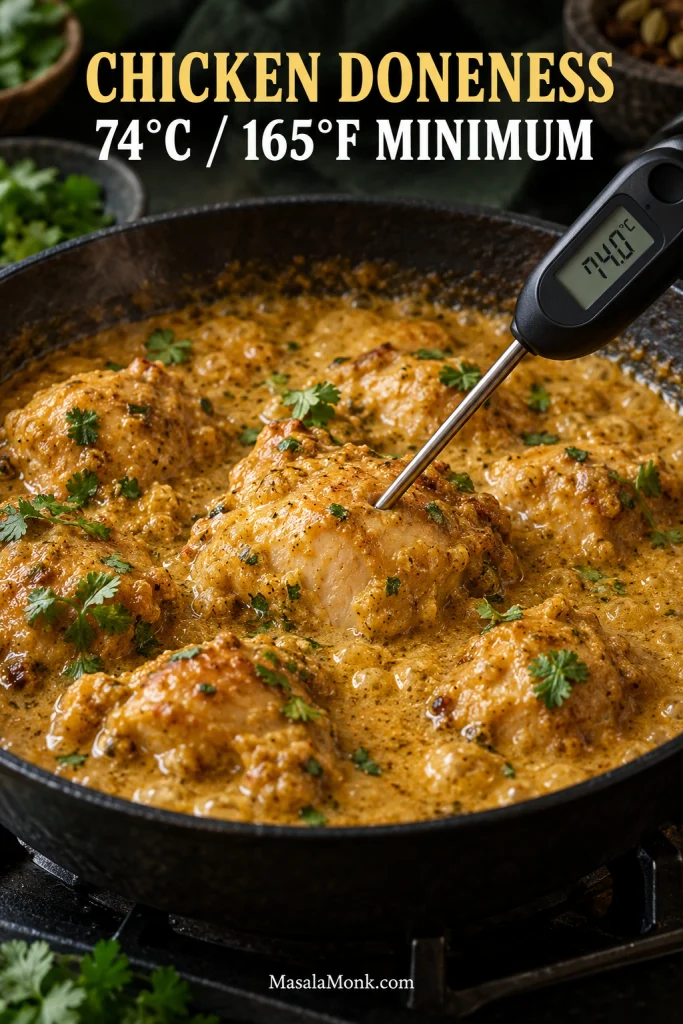
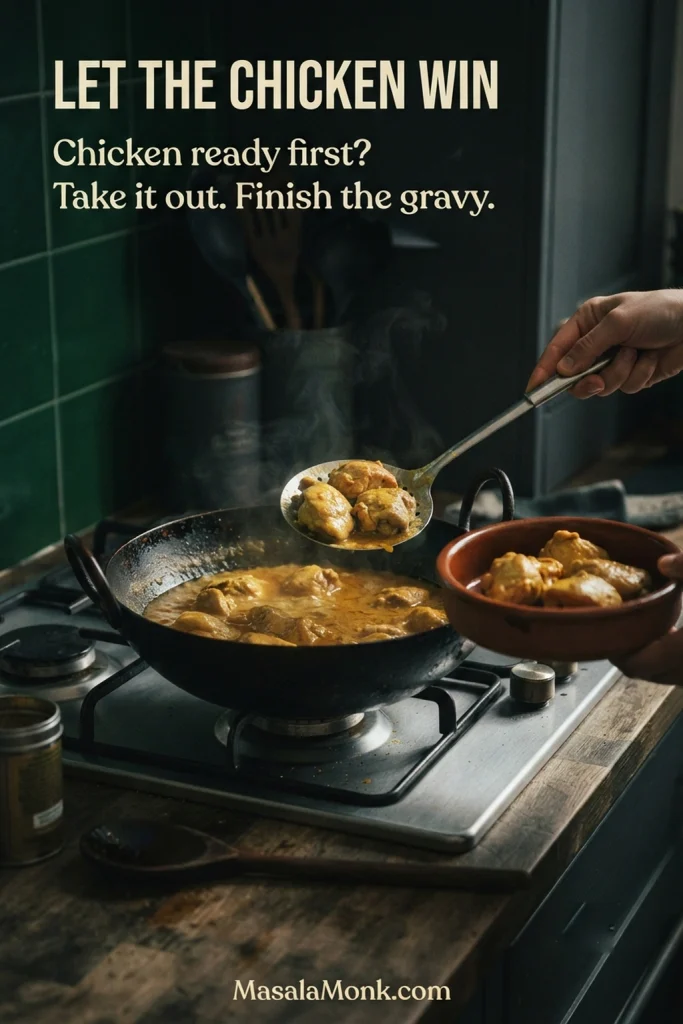
- Simmer until the chicken is tender. Partially cover, lower the heat and simmer for 10–15 minutes, beginning to check around the 10-minute mark. The thickest pieces should reach at least 74°C / 165°F. Thighs can remain juicy above that safe minimum, so tenderness matters too. When the chicken is ready but the gravy is still thin, let the chicken win: reduce briefly with the lid off, or remove the chicken if the gravy needs longer.
- Finish the korma. Stop reducing while the gravy is still a touch looser than you ultimately want. Stir in the garam masala and cream, if using, over low heat and warm for a minute. Turn off the heat before adding your chosen aromatic finish. You should notice cardamom first, with warm spice behind it and no finishing note dominating the gravy.
- Rest, taste and serve. Leave the korma for 5–10 minutes. Drag a spoon through the gravy; the trail should remain visible for a moment before slowly filling back in. Spoon some over a piece of chicken—it should cling instead of immediately sliding away. Taste for salt. When the seasoning is right but the gravy still feels heavy or dull, add a few drops of lemon. Remove the cinnamon stick. Whole cardamom pods and cloves flavour the gravy but aren’t meant to be eaten, so leave any that reach a plate to the side. Scatter with coriander if using.

Get the Gravy Right
Where the Creaminess Comes From
Browning drives moisture from the onions and concentrates their sweetness. Once blended with the soaked nuts, the onions become part of the gravy’s body. Yogurt adds tang and richness; the optional cream softens and enriches the finish rather than creating the creaminess on its own.
Keep the Yogurt Smooth
Full-fat plain yogurt gives you the easiest margin for error. Very sour yogurt can make the curry sharper than intended, while lower-fat yogurt is less forgiving over heat.
A hard boil is the bigger danger because it can encourage obvious curdling and separation. Full-fat Greek yogurt also works; loosen a very thick one with a tablespoon or two of water before coating the chicken.
Cooking now? Return to the yogurt-and-chicken stage →
Korma Spices: Fragrant, Not Hot
Cardamom should be the first aroma you notice, with cinnamon and clove sitting behind it rather than announcing themselves separately. Coriander and cumin give the gravy its warmer base, while turmeric and Kashmiri chilli bring colour and gentle warmth.
Garam masala goes in near the end so more of its aroma survives. Kewra needs even more restraint: it should lift the fragrance, not become the fragrance. That same cardamom-cinnamon family appears very differently in our chicken biryani.
Cooking now? Return to Toast the Spices →
Fix Your Chicken Korma
Final Taste Check
Before reaching for more spice, taste the gravy itself. Many apparently complicated flavour problems are really questions of salt or balance.
- Flat: check the salt first. Once the salt is right, a few drops of lemon can lift a gravy that still feels heavy.
- Too spicy: add cream 1 tablespoon at a time, if using, then taste again.
- Sourer than intended: try cream 1 tablespoon at a time or a little extra smooth nut butter if you already have some.
- Overly sweet: check the salt, then add a very small squeeze of lemon if needed.
- Kewra too floral: wait a couple of minutes and taste again; kewra often seems strongest immediately after addition. If it still dominates, use a little cream if the gravy can take more richness, or hot water if it can take a little loosening.
- Bitter: think back to the onions and spices. Mild bitterness can sometimes be diluted, but genuinely burnt flavour is difficult to hide.
Texture and Cooking Problems
The gravy is watery. There is usually too much liquid left in the pan. Once the chicken is cooked, reduce the gravy uncovered.
The gravy is too thick. Stir in hot water 1 tablespoon at a time, giving each addition a moment to disappear before deciding it needs more.
The gravy looks grainy. A rough nut paste will remain somewhat textured; mild dairy graininess can settle down as the gravy cooks gently. Next time, blend the soaked nuts until you can no longer feel grit between your fingers.
There is oil sitting on top. A few beads of fat are normal. A thick slick can simply be spooned off.
The seasoning is right but the flavour still feels weak. Look next at the onions and concentration of the gravy. Pale onions give you less sweetness and depth, while an under-reduced gravy can dilute everything already there. Aromatic spices can make the kitchen smell impressive while the food itself remains quiet. Taste the sauce, not the kitchen.
Chicken and Yogurt Problems
The chicken is dry but the gravy is still thin. The meat and gravy do not have to finish at exactly the same moment. Take the chicken out and let the gravy reduce on its own.
The yogurt really did split. High heat, hard boiling and lower-fat yogurt make this more likely. A slightly rough gravy can still improve once the onion-nut mixture is stirred through. Large curds sitting in watery whey are harder to bring back.
Problem sorted? Return to Rest, Taste and Serve →
Chicken Korma Variations
Chicken breast: use 650–700 g / about 1½ lb and cut it into generous pieces. Begin checking earlier than you would with thighs. Once the breast is safely cooked, let the gravy finish without continuing to cook the meat.
Bone-in chicken: use around 900 g / 2 lb bone-in chicken pieces. Begin checking after 20 minutes of gentle simmering; larger pieces may take longer. Use 74°C / 165°F as the safety minimum and judge tenderness as well. Add hot water a tablespoon or two at a time if the gravy becomes too thick before the chicken is ready.
Nut-free korma: leave the nuts out and blend the browned onions with only enough water to keep the blades moving. Add the remaining hot water gradually when you build the gravy rather than pouring it all in at once. The finished korma will be lighter and less velvety. For a nut allergy, only substitute seeds or similar products if you know they are safe for that person.
Coconut / sweeter British curry-house direction: keep the yogurt as written and replace the optional cream with about 120 ml / ½ cup full-fat coconut milk. Use the 60 ml / ¼ cup blending water as written, then begin with only another 60 ml / ¼ cup hot water in the gravy. Add more only if needed. Stop there for a more coconut-forward korma. For the sweeter curry-house direction, add sugar or mango chutney in ½-teaspoon additions, tasting after each one. It takes seconds to make korma sweeter and considerably more effort to rescue one that has started tasting like dessert.
Using one of these variations? Apply the change above, then follow the main cooking method →
What to Serve with Chicken Korma
For an ordinary dinner, I like one starch to catch the gravy and something cool or sharp alongside.

- Rice: plain basmati is all you need for a clean pairing; jeera rice or pilau adds another layer of aroma.
- Bread: naan is ideal when scooping up the gravy is half the point; roti or chapati keeps the plate a little lighter.
- Something cool or sharp: cucumber raita, kachumber, a crisp cucumber salad or pickled onions all work.
Make Ahead, Store and Reheat
You can cook the korma completely a day ahead, cool it promptly and refrigerate it, then reheat it gently before serving. The warm spice flavours become more integrated as it rests.
Cooked chicken can be kept refrigerated for 3–4 days. Keep it covered and chilled.
For longer storage, freeze in an airtight container and use within about 4 months for best quality. A yogurt-and-nut gravy may look slightly separated after thawing; gentle reheating usually helps it come back together.
How to Reheat Chicken Korma
Reheat over low to medium-low heat, stirring regularly and adding a splash of water as needed. Reheated leftovers should reach 74°C / 165°F throughout. Loosen the gravy before making any final seasoning adjustment because a more concentrated sauce can taste stronger than it did on day one.
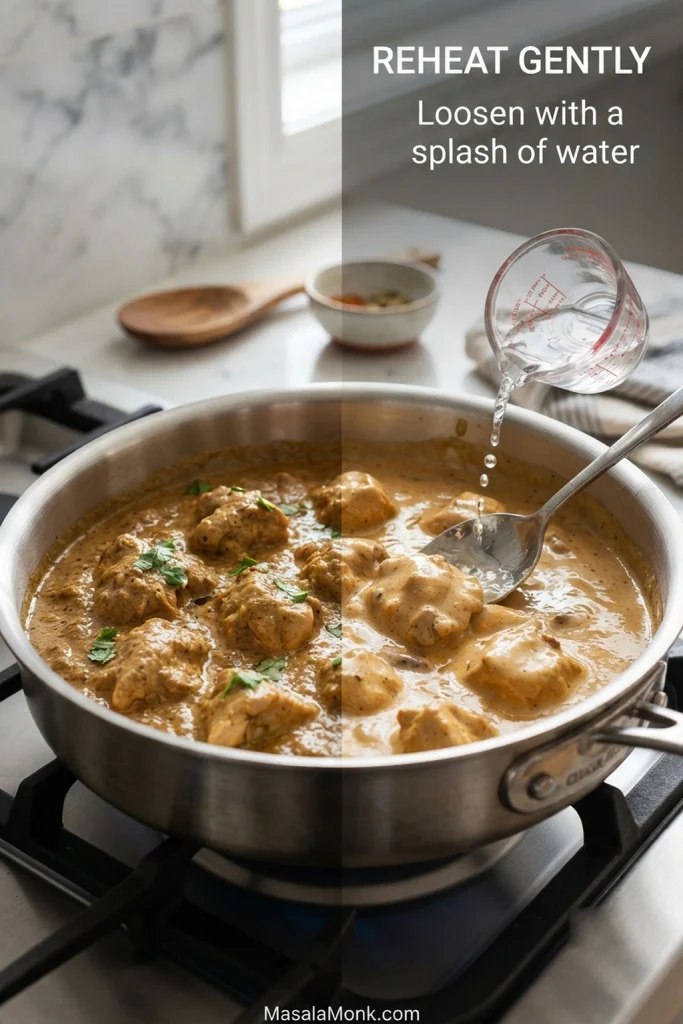
By the time it reaches the table, the gravy should settle softly around the chicken instead of puddling underneath it. Then the only serious decision left is rice or naan—and how much gravy you can get onto either one.
If you make it, tell me whether you used thighs or breast, how long your onions actually took to reach that deep-golden stage, and whether rice or naan won at your table.








