
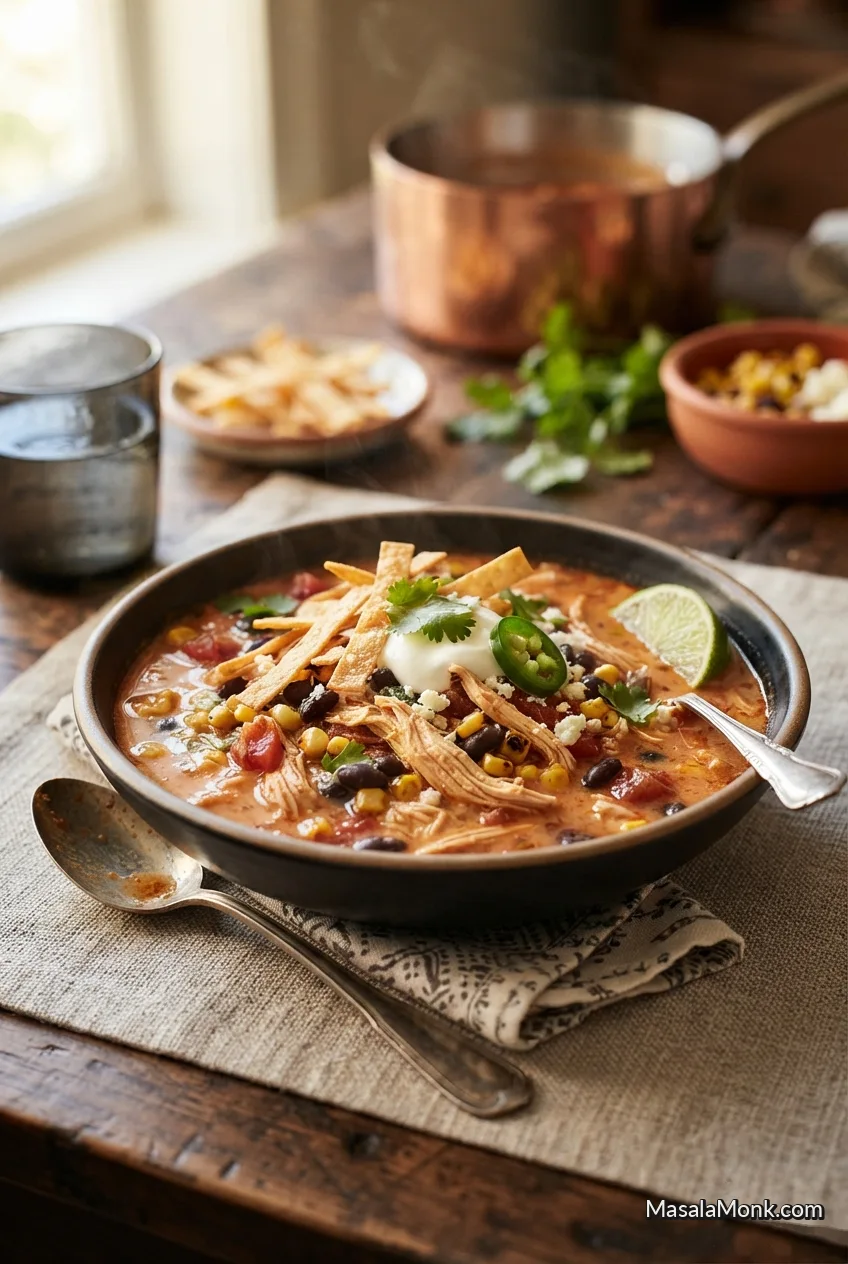
A good chicken enchilada soup should still move when you tilt the ladle. This creamy red soup brings together shredded chicken, red enchilada sauce, black beans, corn and masa harina, then finishes with cream cheese, cheddar and Monterey Jack. The goal is a broth that clings to everything in the bowl without turning into queso or enchilada filling.
The first spoonful should bring red chile and cumin, followed by tender chicken, sweet corn and beans in a creamy broth. A squeeze of lime lifts the richness, while crisp tortilla strips add a crunch that gradually softens around the edges.
The order is what keeps this soup creamy rather than heavy: build the seasoned red base, cook raw chicken gently if using it, thicken with masa, and melt the cheeses over low heat. Already-cooked rotisserie chicken joins after the masa thickens, making it a useful shortcut.
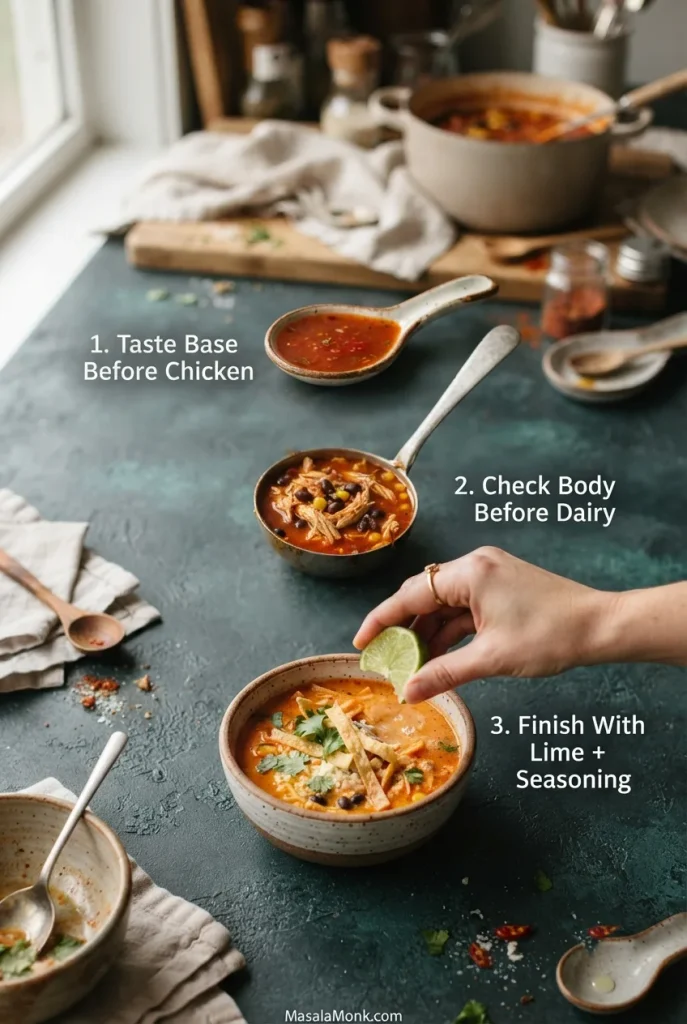
Three Moments That Decide the Soup
- Before the raw chicken goes in: Taste the chile and enchilada flavor, not the final salt level. The base can be a little stronger than you want because the remaining ingredients will soften it.
- Before the dairy: Look for a lightly thickened broth that coats a spoon without becoming heavy. This is the easiest moment to adjust it.
- Before serving: Check that the chicken is tender, the cheese is smooth, and the lime and seasoning have brought the flavors together.
Chicken Enchilada Soup Recipe
Jump to instructions if your ingredients are already prepared.
Equipment
- 5- to 6-quart / 4.7- to 5.7-liter heavy pot or Dutch oven
- Small bowl or measuring jug
- Whisk
- Instant-read thermometer
Ingredients
Aromatics and Spices
- 2 tablespoons / 30 ml neutral oil or olive oil
- 1 medium yellow onion, finely diced, about 6 oz / 170 g
- 4 garlic cloves, minced
- 1 small jalapeño, finely diced, with most of the pale inner ribs and seeds removed for milder heat, optional
- 2 teaspoons mild American-style chili powder seasoning blend, not pure ground red chilli or cayenne
- 1½ teaspoons ground cumin
- 1 teaspoon smoked paprika
- ½ teaspoon dried oregano
Enchilada Base and Chicken
- 2½ cups / about 590 ml red enchilada sauce, measured
- 1 can (14–14.5 oz / 400–410 g) fire-roasted diced tomatoes, with juices
- 1 can (4 oz / 113 g) diced green chiles, with juices
- 3 cups / 710 ml low-sodium chicken broth, divided, plus up to 1 cup / 240 ml more as needed
- Chicken — choose one: 1½ lb / 680 g raw boneless, skinless chicken breast, or approximately 450–500 g / 3–3½ cups cooked shredded rotisserie or leftover chicken. See how the cooking routes differ.
Thickening and Add-ins
- ⅓ cup / about 40–45 g masa harina
- 1 can (15 oz / 425 g) black beans, drained and rinsed
- 1 cup / about 160 g corn kernels, frozen or drained canned
Creamy Finish
- 4 oz / 113 g full-fat cream cheese, cut into small cubes and softened
- 4 oz / 113 g mild or medium cheddar, freshly grated
- 2 oz / 57 g Monterey Jack, freshly grated
- 1–2 tablespoons / 15–30 ml fresh lime juice, to taste
- Freshly ground black pepper, to taste
- Salt, as needed after the cheese has been added
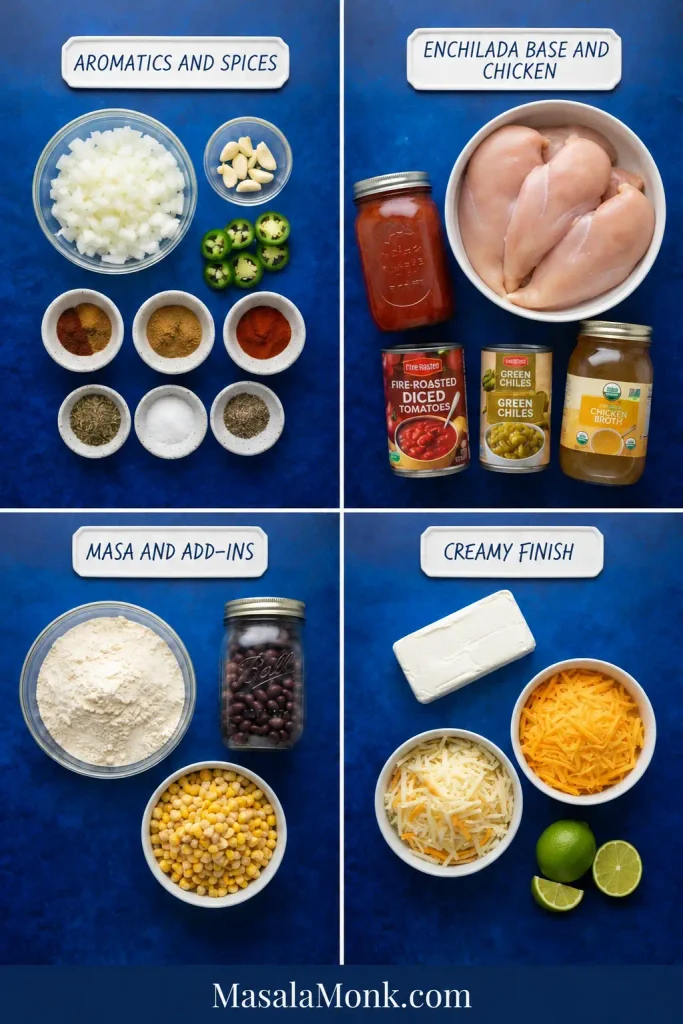
Here is the ingredient overview arranged by cooking stage. Use the measured list above for exact quantities.
Ingredient Notes Before Cooking
Before you start: Cube the cream cheese when you begin preparing the ingredients so it has time to soften. Don’t leave perishable dairy unrefrigerated longer than two hours, or one hour above 90°F / 32°C. In a very hot kitchen, keep it refrigerated until needed and use the hot-broth whisking method below to help it blend. Why the dairy needs gentle heat.
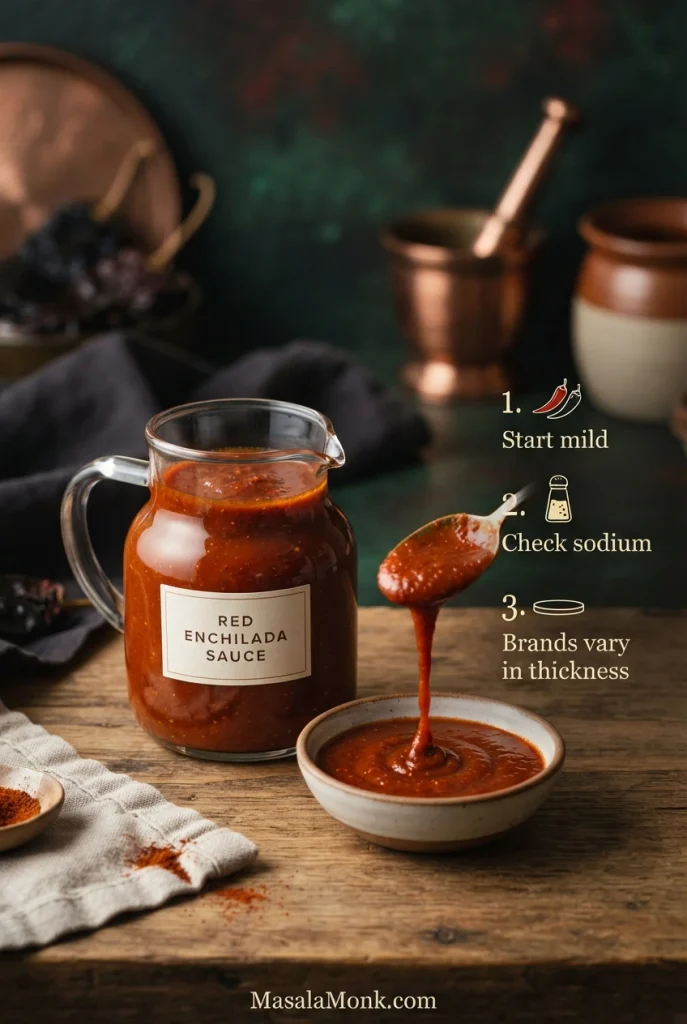
Choosing your sauce: Start with a mild red enchilada sauce if you’re unsure about the heat, and check its sodium content. Measure the full 2½ cups rather than assuming two standard 10-oz cans will provide exactly that amount. For more buying advice, see choosing your enchilada sauce.
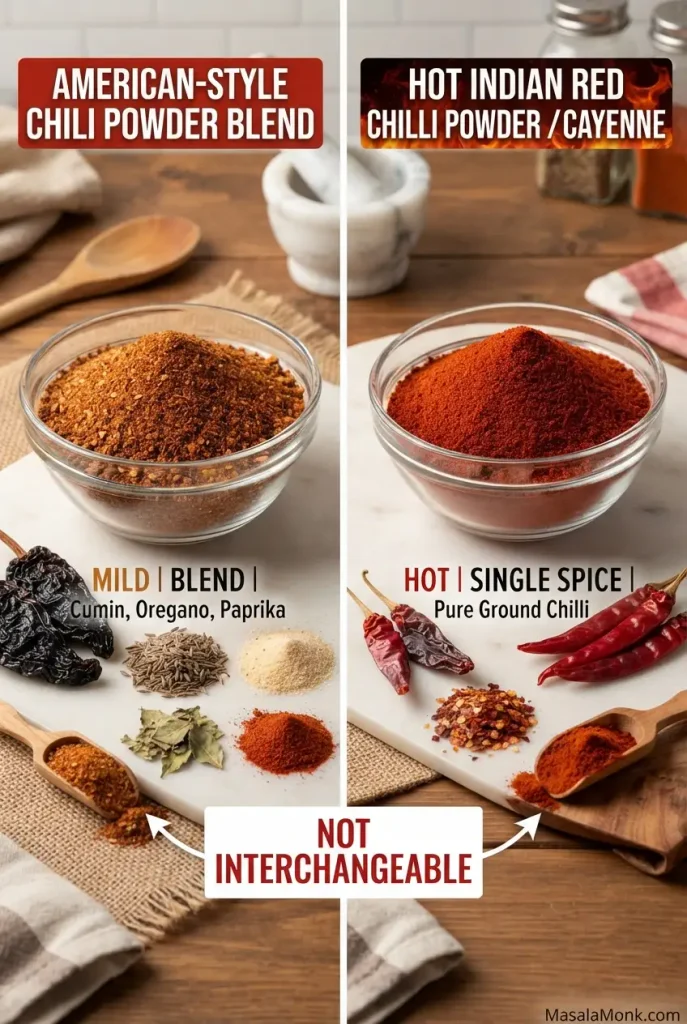
A note on chili powder: American-style chili powder is generally a mild seasoning blend. Hot Indian red chilli powder and cayenne are much stronger and are not spoon-for-spoon substitutes. For the gentlest version, use mild enchilada sauce and omit the optional jalapeño.
No fire-roasted tomatoes? Regular canned diced tomatoes are fine. Fire-roasted tomatoes add a slightly deeper roasted flavor, but they’re not essential.
For Serving
- Crispy corn tortilla strips
- Lime wedges
- Fresh cilantro
- Diced avocado
- Pico de gallo
- Sour cream, optional
- Sliced jalapeño, optional
Ready-made crispy tortilla strips work well. You can also cut corn tortillas into thin strips and bake or shallow-fry them until crisp before serving.
Instructions
Build the Enchilada Base and Cook Chicken
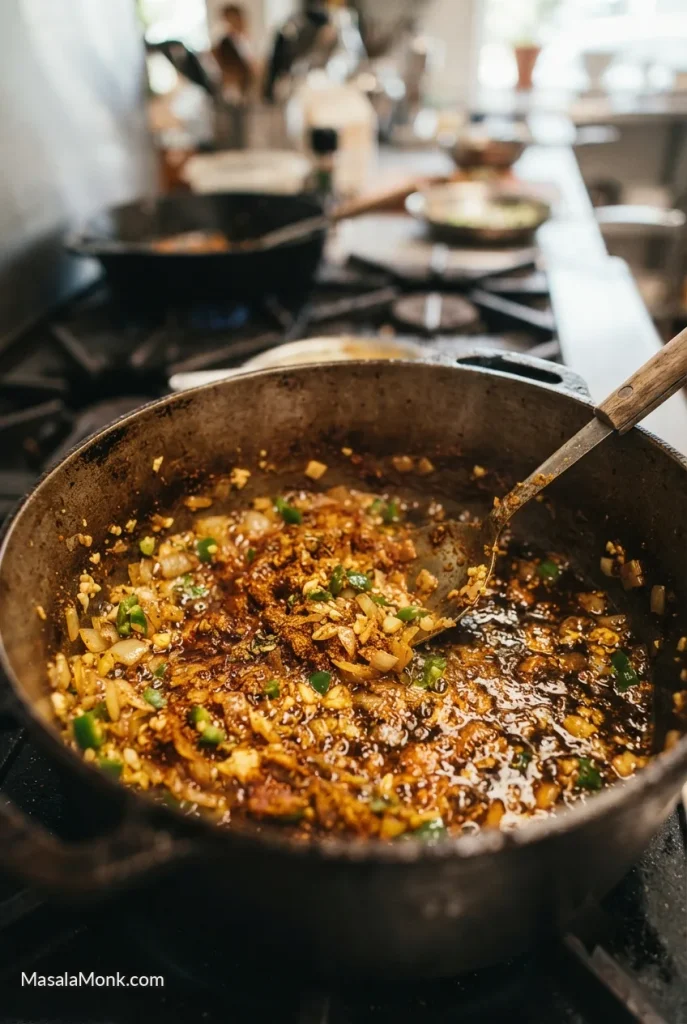
- Cook the onion and spices. Heat oil in a heavy pot over medium heat. Cook the onion for 4–6 minutes until soft and translucent. Add garlic and optional jalapeño; stir for about 30 seconds. Add the chili powder blend, cumin, smoked paprika and oregano; stir another 30 seconds until fragrant.
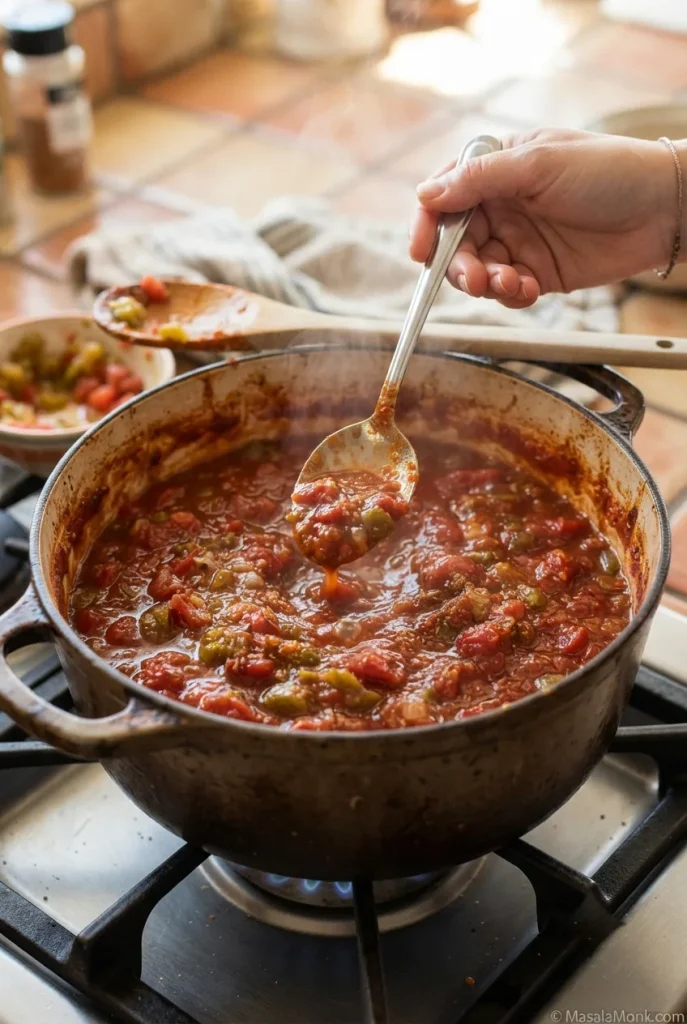
- Build the enchilada base. Add the red enchilada sauce, diced tomatoes and green chiles, including their juices. Stir, scraping the bottom of the pot, and let everything bubble gently for 2–3 minutes.
- Add the broth and taste. Reserve ½ cup / 120 ml broth for the masa. Pour the remaining 2½ cups / 590 ml into the pot and bring it to a gentle simmer. Taste before adding raw chicken. The enchilada flavor and heat can be slightly stronger than you want in the finished soup. Leave the final salt adjustment until after the cheese.
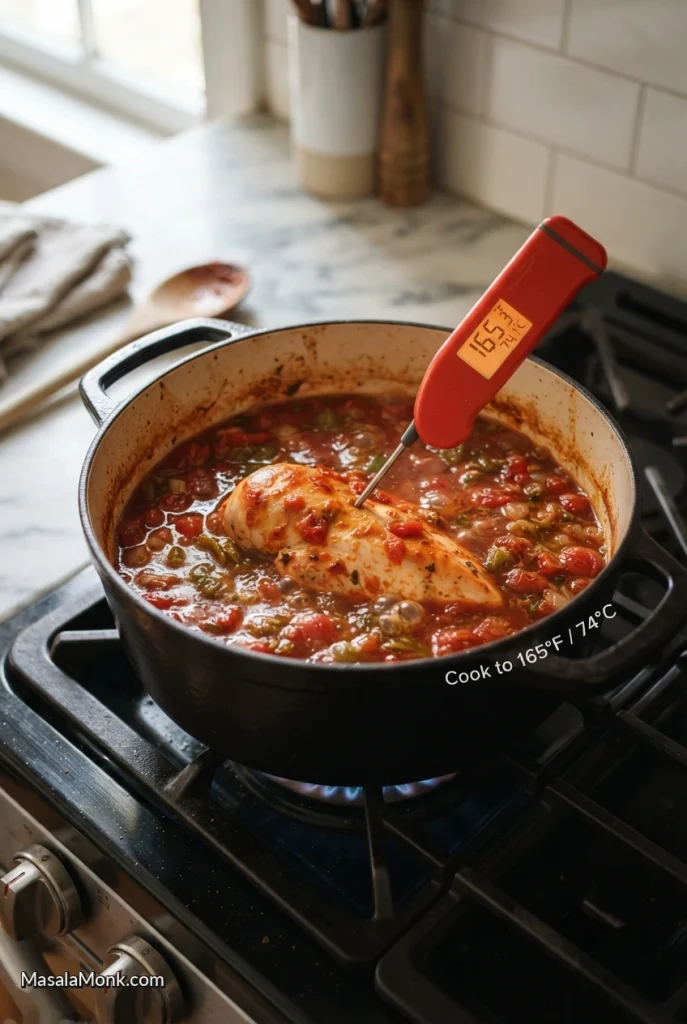
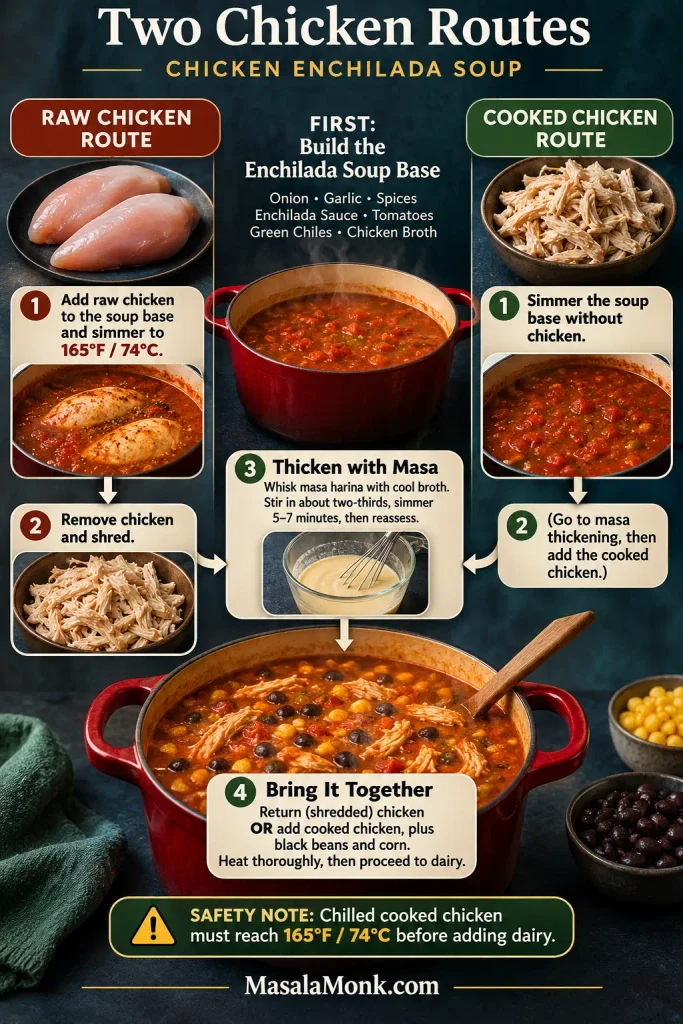
- Cook the chicken, if starting raw. Submerge the chicken breasts in the gently simmering base, turning if needed. Begin checking after about 12 minutes; cook each breast until its thickest part reaches 165°F / 74°C. Thick breasts may need more than 18 minutes. Remove, rest briefly and shred. Using cooked chicken? Simmer the base alone for several minutes, then proceed to masa. Add the cooked shreds with beans and corn in step 7.
Thicken and Fill the Soup
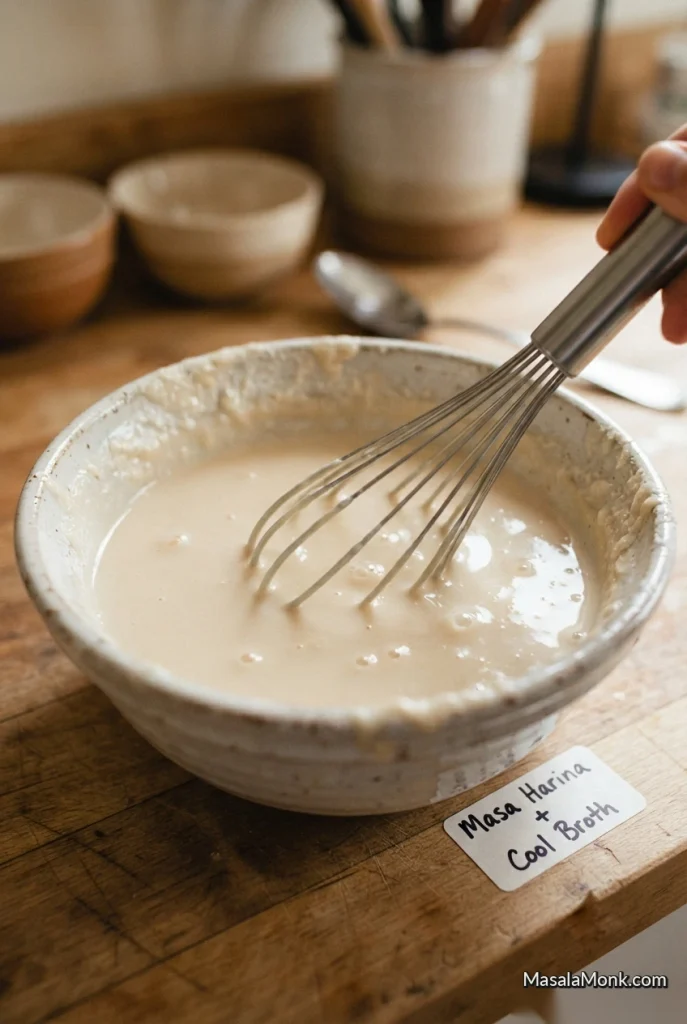
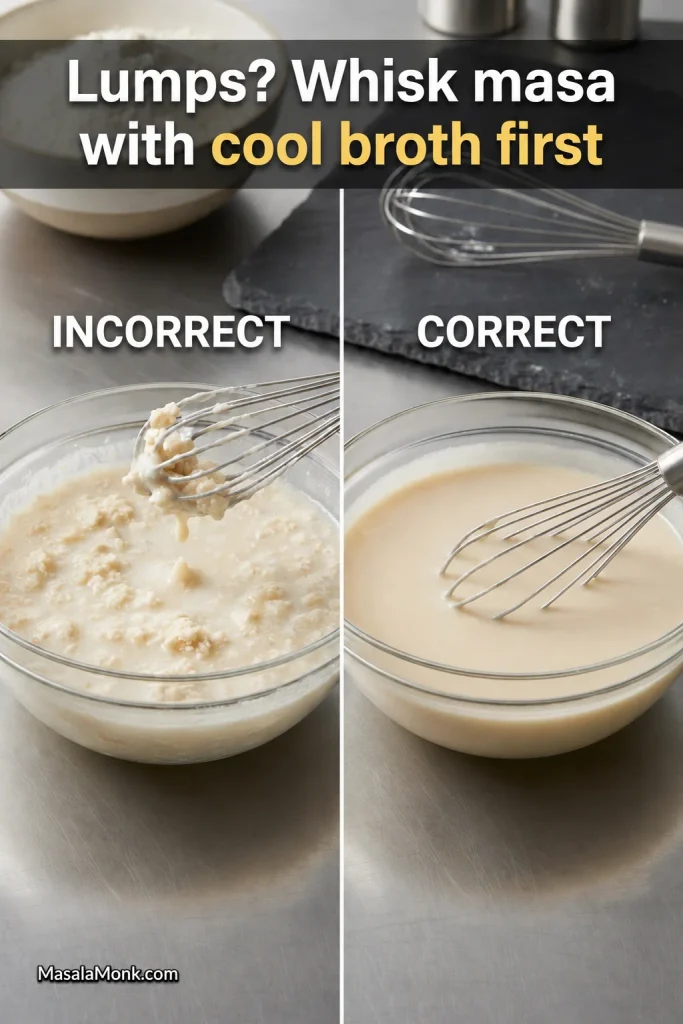
- Make the masa slurry. Whisk the masa harina with the reserved cool broth until smooth. Add another splash of cool broth if the slurry is too thick to pour. See what the slurry should look like.
- Thicken the soup. Stir about two-thirds of the slurry into the gently simmering broth. Cook for 5–7 minutes, stirring occasionally. Check the consistency, then re-whisk and add more of the reserved slurry only if needed. Let any additional masa simmer for several minutes before checking again. Stop when the broth lightly coats a spoon but still pours easily.
- Add the chicken, beans and corn. Return the freshly cooked shredded chicken, or add the prepared cooked chicken, along with the black beans and corn. For the fresh-chicken route: simmer gently for about 3–5 minutes, until everything is hot. Using refrigerated cooked chicken? Bring the soup back to a boil, stirring, and verify that the chicken reaches 165°F / 74°C throughout before lowering the heat for the dairy.
- Make the final thickness adjustment. Give a thin soup a little more uncovered simmering time. If it’s thicker than you like, stir in warm broth ¼ cup / 60 ml at a time. This check accounts for the chicken, beans and corn now in the pot.
Melt the Cheeses and Serve
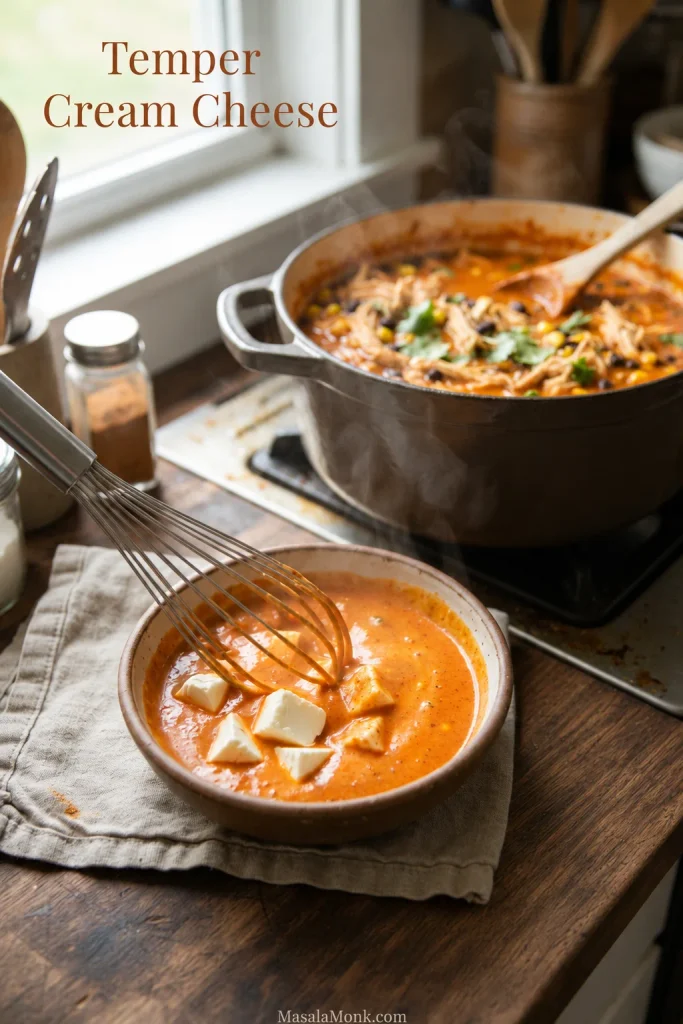
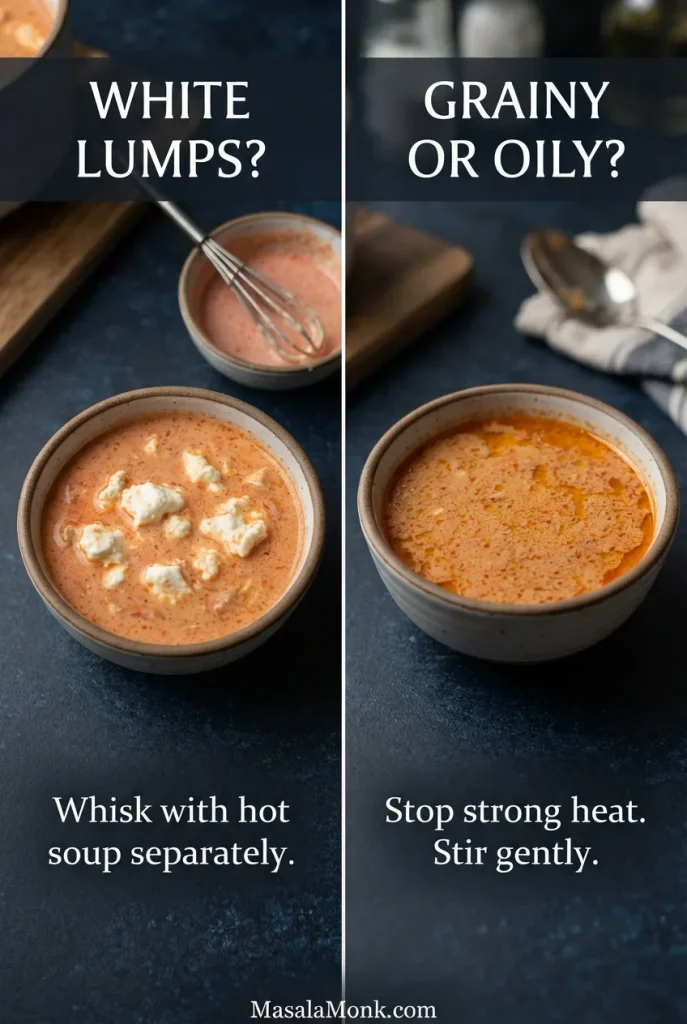
- Add the dairy. Reduce the heat to low. Put the softened cream cheese in a bowl. Add a ladle of mostly-liquid hot broth from the pot, avoiding the chicken, beans and corn, and whisk until smooth. Stir the mixture back into the pot. Add the cheddar and Monterey Jack a handful at a time, stirring gently until melted. Avoid boiling during this initial cheese-melting stage. See the tempering technique.
- Season and serve. Stir in 1 tablespoon / 15 ml lime juice. Taste, then adjust the lime, black pepper and salt. Ladle into bowls and finish with your favorite toppings.
Chicken Enchilada Soup: Step-by-Step Photos
Follow the changes in the pot as the red base becomes a pourable, creamy soup. The photos highlight the cues that are hardest to judge from cooking times alone.
Build the Red Base and Check Chicken Doneness
Aromatics should glisten, not scorch. The softened onion and spices should look glossy before the sauce goes in.
The red base starts thick. Once the tomatoes, green chiles and enchilada sauce are stirred together, it will look more like a chunky sauce than a finished soup.
Check the thickest center. A thermometer confirms 165°F / 74°C more reliably than the cooking clock, especially with unevenly sized breasts.
Make the Masa Slurry and Thicken the Broth
Look for a smooth, pourable slurry. No dry masa should remain on the bottom of the bowl.
Add the masa gradually. The hot red broth should stay fluid as the slurry is stirred in. Let it thicken before using the rest.
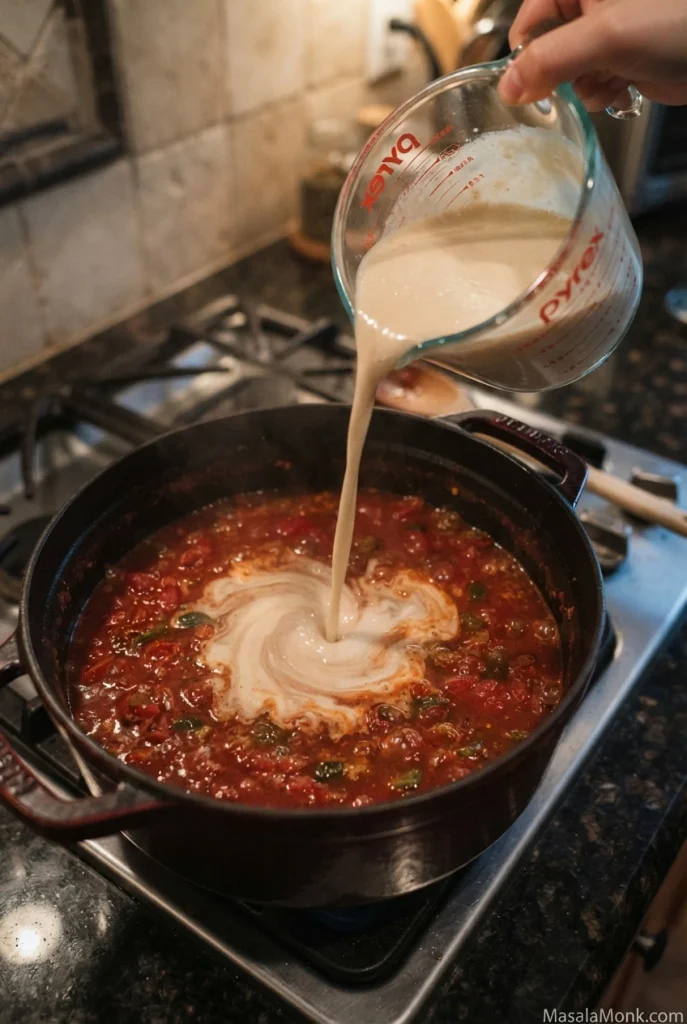
Before adding cheese: Return the shredded chicken to the thickened broth, or add your cooked rotisserie chicken, then stir in the black beans and corn. Heat everything through (to 165°F / 74°C if the cooked chicken was refrigerated), adjust the thickness, and only then lower the heat for the cheese.
Incorporate the Cheeses Gently
Whisk the cream cheese in a separate bowl. Use mostly-liquid hot broth from the pot, leaving the chicken, beans and corn behind in the ladle.
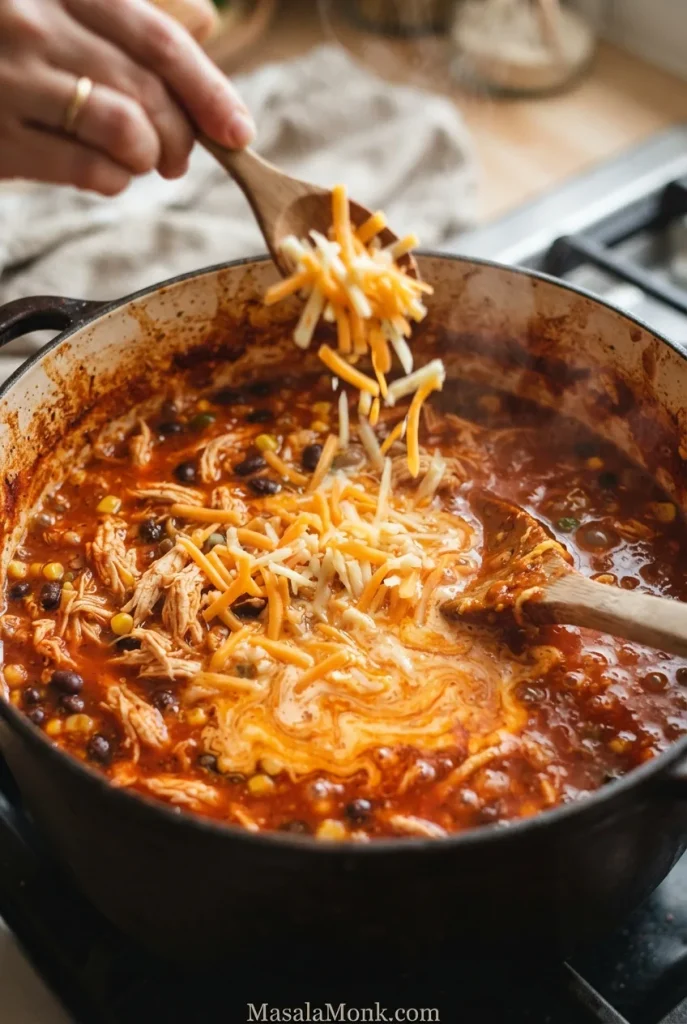
Watch the surface as the cheese melts. Keep the heat low and stir in small handfuls rather than letting the pot boil.
Check the Finished Soup and Spoonful
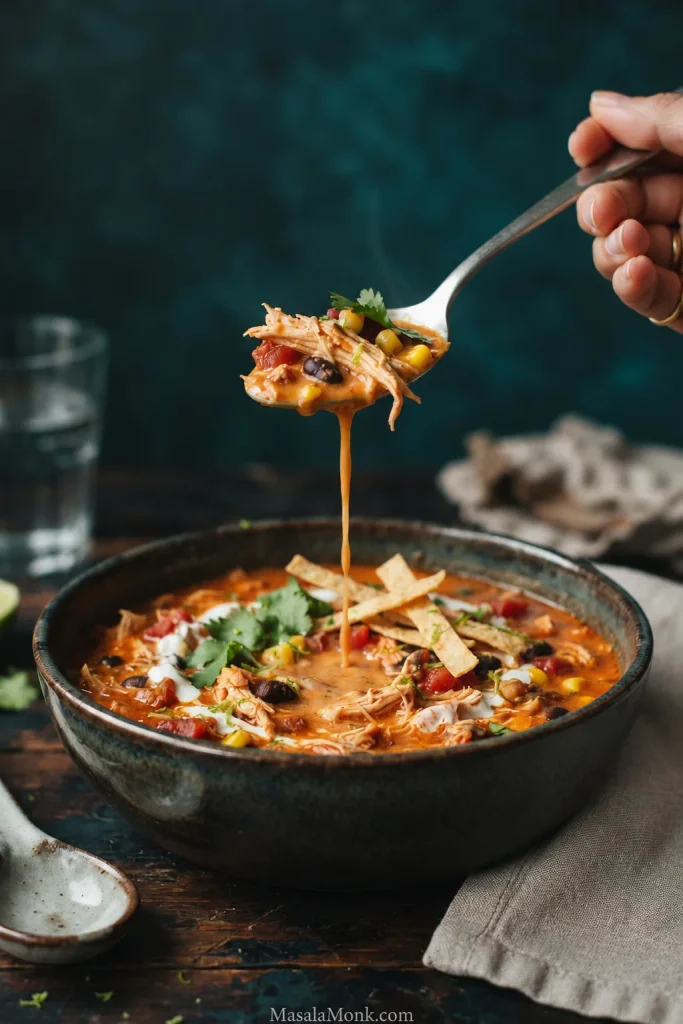
Look for creamy broth with distinct pieces. You should still recognize chicken shreds, black beans and corn; the liquid should not be a thick cheese sauce.
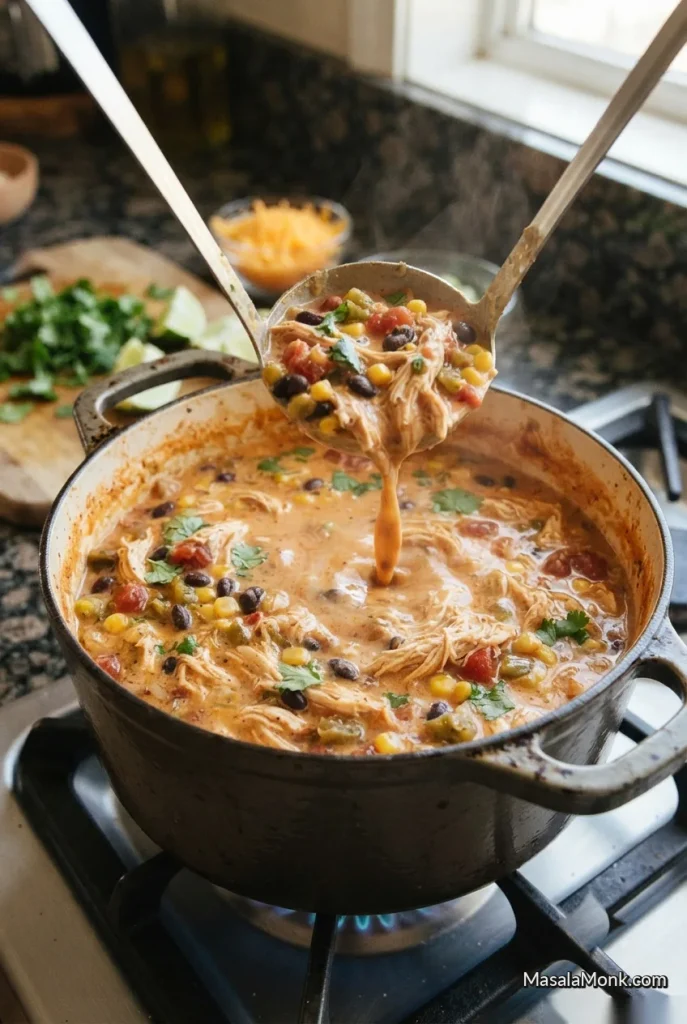
Lift a spoonful before serving. The broth should drip easily between the chicken, beans and corn—not hang from the spoon in heavy strands.
Ready to cook from the measurements? Back to the recipe card · Back to top
Choosing the Enchilada Sauce
Red enchilada sauce does most of the flavor work in this recipe. One brand may be mild and tomato-forward, another smokier, saltier or noticeably hotter. For a first batch, choose a mild red sauce with a sodium level you’re comfortable with; you can adjust the seasoning at the end. If your sauce is especially thick, check the masa texture guide before using all the slurry.
What About Green Enchilada Sauce?
Green enchilada sauce usually leans on green chiles and often tomatillos, giving it a brighter, tangier flavor than the red chile-forward sauce used here. It can make a good soup, but changing the sauce changes the flavor balance, so treat it as a separate variation rather than expecting the same result.
Raw Chicken, Rotisserie Chicken or Thighs?
Boneless chicken breast is the default for the main recipe. Its mild flavor works well with the red enchilada base, and it shreds easily once cooked. The thermometer matters more than the clock, especially when the breasts are thick.
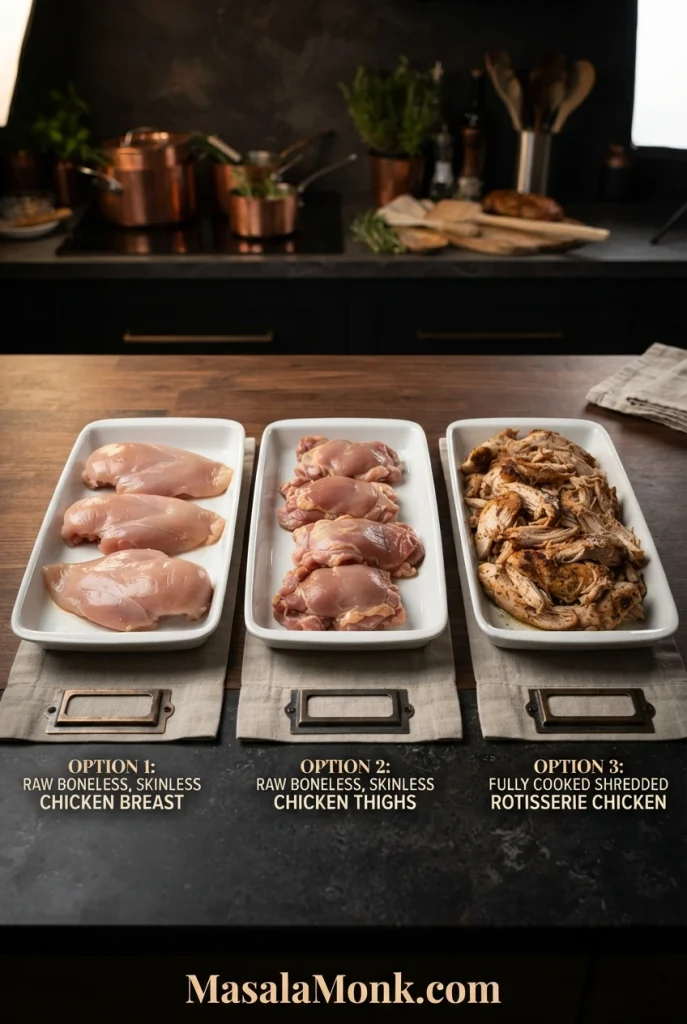
If dinner is already running late, cooked chicken is the shortcut worth taking. Rotisserie chicken works well, or you can prepare a baked chicken breast ahead of time and shred it after resting.
Boneless, skinless chicken thighs are another option. Use approximately the same raw weight as the breasts, check for the safe minimum of 165°F / 74°C, and allow additional cooking if needed for tenderness. Thighs are more forgiving when cooking time runs long and make the broth a little richer.
Two chicken routes share the same masa and dairy stages. Whole raw breast must simmer safely before shredding; already-cooked rotisserie chicken skips that step and joins after the masa thickens. If the cooked chicken was chilled, reheat it thoroughly to 165°F / 74°C before adding dairy.
Get the Texture Right With Masa Harina
Masa harina gives chicken enchilada soup body and a mild corn-tortilla flavor. It thickens the broth before the cheeses go in. Commercial enchilada sauces vary in thickness, and some already contain starch, so a thick sauce may need less masa than a thin one. That’s why the slurry is added in stages. If the soup is already too thin or thick, skip to the consistency fixes.
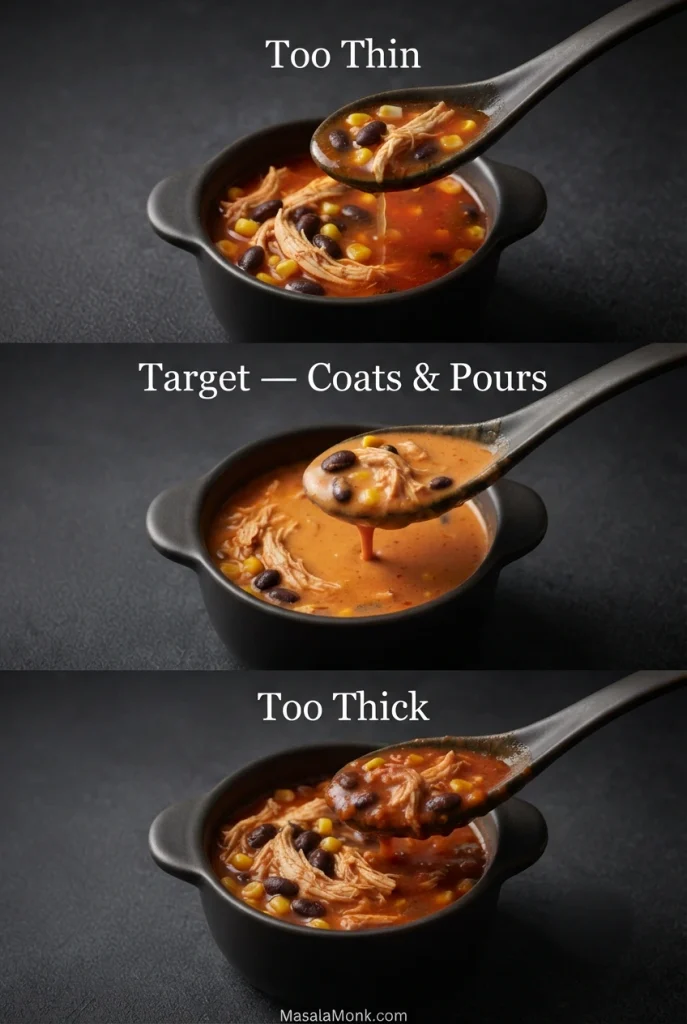
Allow the masa time to hydrate before adding more. The result should be creamy and substantial but easy to spoon; if you want a brothier bowl, use less of the slurry.
What Masa Harina Adds to the Soup
Masa harina is made from nixtamalized corn and is commonly used for homemade corn tortillas. Its flavor and finely milled texture are different from ordinary coarse cornmeal.
Brands can absorb different amounts of liquid. Whisking masa with cool broth helps it disperse, and simmering gives it time to hydrate. Re-whisk any reserved slurry before adding it to the pot.
Masa-thickened soups may become noticeably thicker as they cool or sit overnight. A splash of broth during reheating can bring back a looser consistency.
No Masa Harina?
For a practical starting alternative, whisk 1 tablespoon cornstarch with 2 tablespoons cool water or broth. Stir it into the simmering soup and let it thicken before deciding whether you need more. Cornstarch thickens without giving the broth the same corn-tortilla flavor as masa harina.
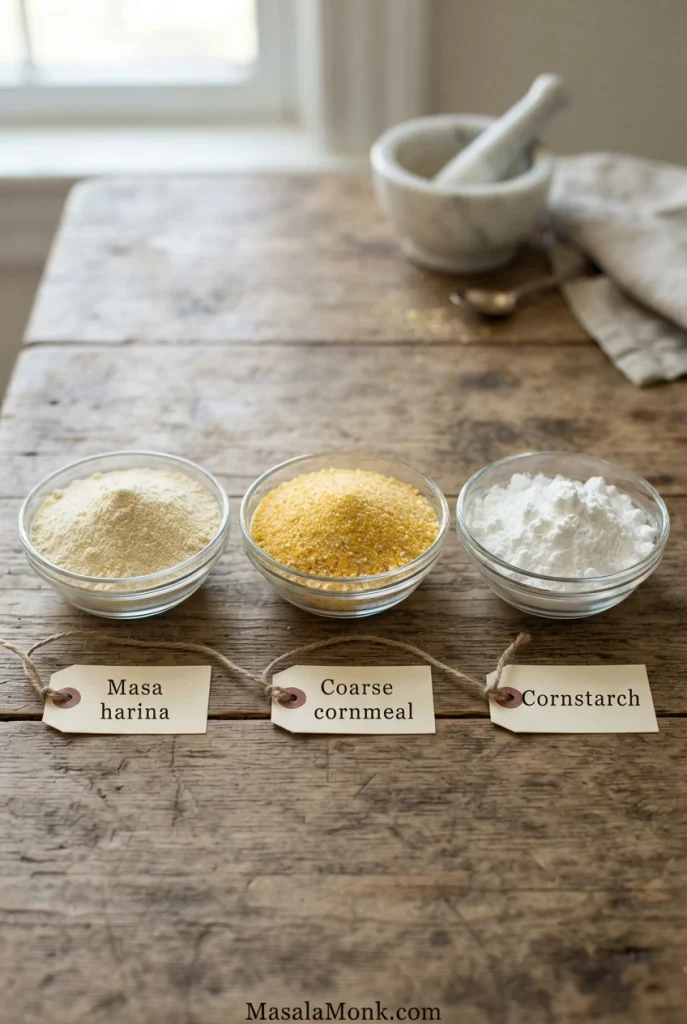
Other ways to add body include a few crushed corn tortillas or tortilla chips that soften into the base, or a little refried beans for a heartier finish. Each changes the flavor or texture, so start with a small amount and reassess.
Keep the Dairy Smooth
Cream cheese rounds out the enchilada broth, cheddar brings most of the stronger cheese flavor, and Monterey Jack helps the mixture melt smoothly.
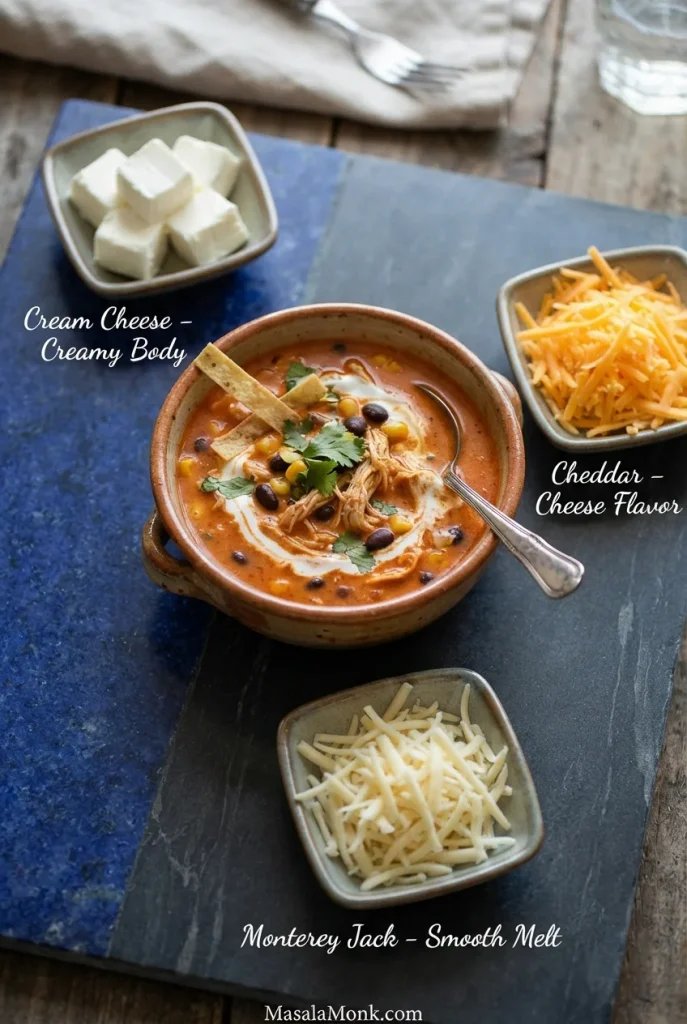
The cream cheese is easiest to incorporate when softened and cut into small pieces. A block may feel soft on the outside while remaining firm in the center. Whisking it with a little hot soup first makes the final mixing easier.
The grated cheese needs even less drama. Lower heat gives it time to melt without encouraging graininess or fat separation. Freshly grated cheese is preferable because some packaged shredded cheeses contain anti-caking ingredients that can affect smoothness. If the cheese has already turned grainy or oily, use the cheese troubleshooting steps rather than raising the heat.
Fix My Chicken Enchilada Soup
Soup doesn’t always follow the plan, especially when enchilada sauces and masa brands vary. Start with what you can see in the pot. Some problems are easy to correct; others can at least be made less noticeable before serving.
Too thin or too thick
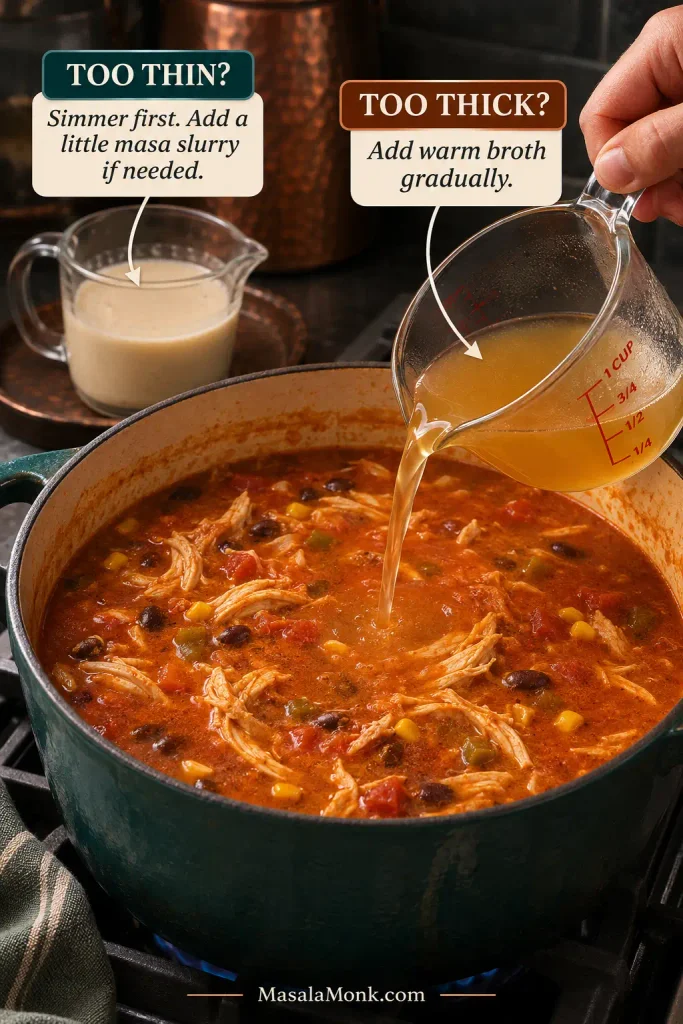
For thin soup, simmer uncovered for a few minutes and stir occasionally. Masa needs time to hydrate, so don’t rush to add more. If the broth remains watery, whisk a little additional masa with cool broth, stir it in and let it cook before checking again.
For overly thick soup, add warm broth a little at a time until you reach the consistency you prefer.
Gritty masa or masa lumps
Small masa lumps may loosen with careful whisking and a little additional simmering. A fine-mesh strainer can help remove isolated stubborn lumps, although it’s less practical once chicken and beans have been added. For prevention next time, compare with the smooth cool-broth slurry example.
Graininess throughout the pot is harder to correct. Coarse cornmeal, excessive masa or poorly dispersed masa can all contribute. Adding broth may reduce a heavy, chalky texture, but won’t necessarily eliminate the grit.
Lumpy cream cheese or grainy cheese
White cream-cheese pieces usually mean the cheese didn’t soften or disperse fully. Keep the heat low. Remove a little hot soup with the stubborn pieces, whisk them smooth in a bowl and return the mixture to the pot.
Tiny grains or a slick of oil may indicate that grated cheese has overheated and begun separating. Take the pot off strong heat and whisk gently. Slight separation may become less noticeable, but badly split cheese may not return to its original smoothness.
Dry chicken
Already overcooked the chicken? Shred it more finely and let it sit briefly in the warm broth before serving. That can make the meat feel less dry in each spoonful, although it can’t undo overcooking.
Next time, begin checking with a thermometer rather than relying on a fixed time. Large chicken breasts may need longer than thin ones, but either can dry out when left simmering after they’re cooked. The chicken-doneness photo shows where to check the thickest part.
The flavor is off
Bland: taste before adding more chili powder. A little lime or salt may be enough. When the enchilada flavor itself is weak, some extra red sauce may help more than simply increasing the heat.
Too spicy: unsalted broth can reduce the overall intensity. More dairy may soften the perception of heat, though it will also change the richness and thickness.
Too salty: add unsalted broth gradually. Depending on how much dilution is needed, you may also have to adjust the thickness afterward.
Ready to try the corrections? Return to the recipe card · Back to top
Toppings That Make the Bowl Better
The soup already has plenty of richness, so the toppings work best when they bring something fresh or crisp. Cool pico de gallo adds tomato and onion, avocado gives you a buttery contrast, and fresh cilantro or sliced jalapeño lets you adjust each bowl at the table.
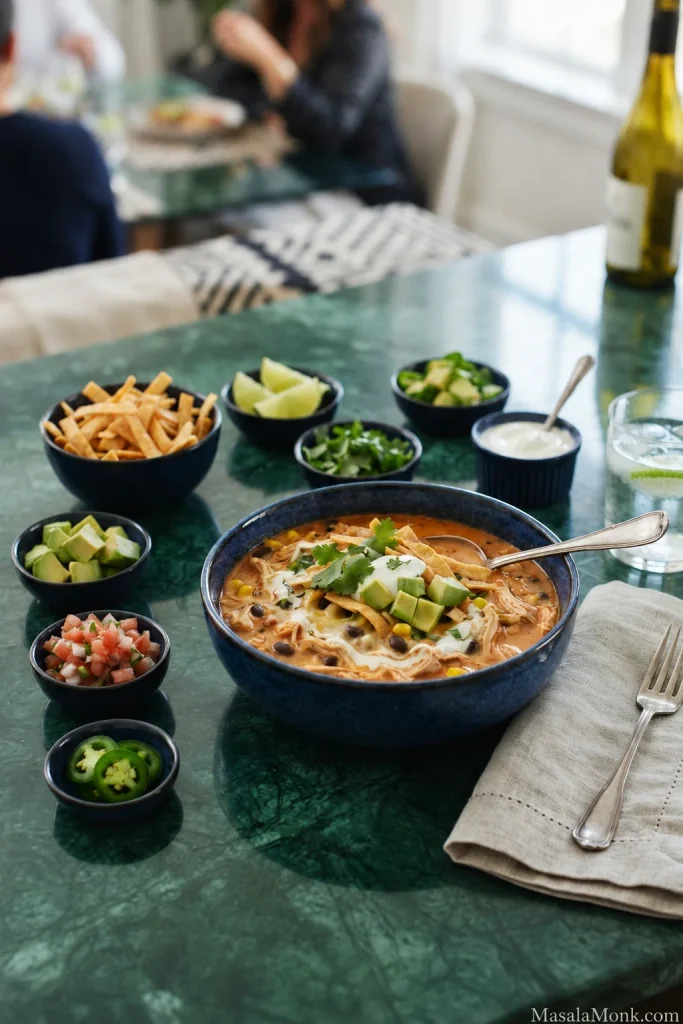
Some ready-made tortilla strips are already salty, so taste a dressed spoonful before adding more salt at the table. Keep the soup hot and add crunchy toppings just before serving.
Three Ways to Finish and Serve
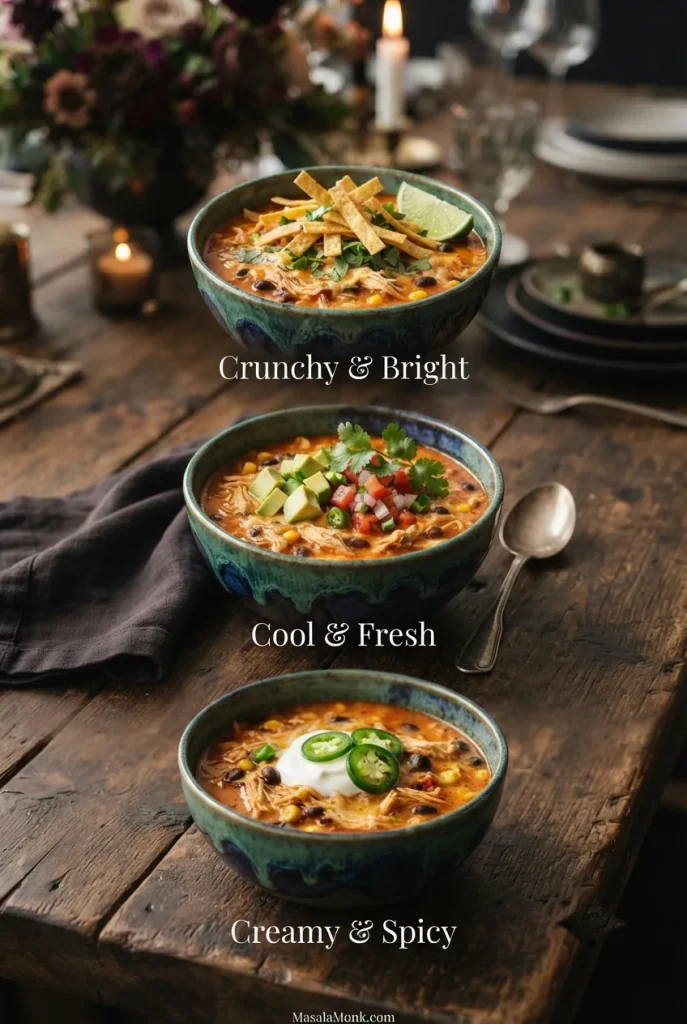
Use the same chicken-and-bean soup for every bowl, then add crunchy tortilla strips, cool avocado and pico, or sour cream with sliced jalapeño. Keep toppings separate until the bowls reach the table.
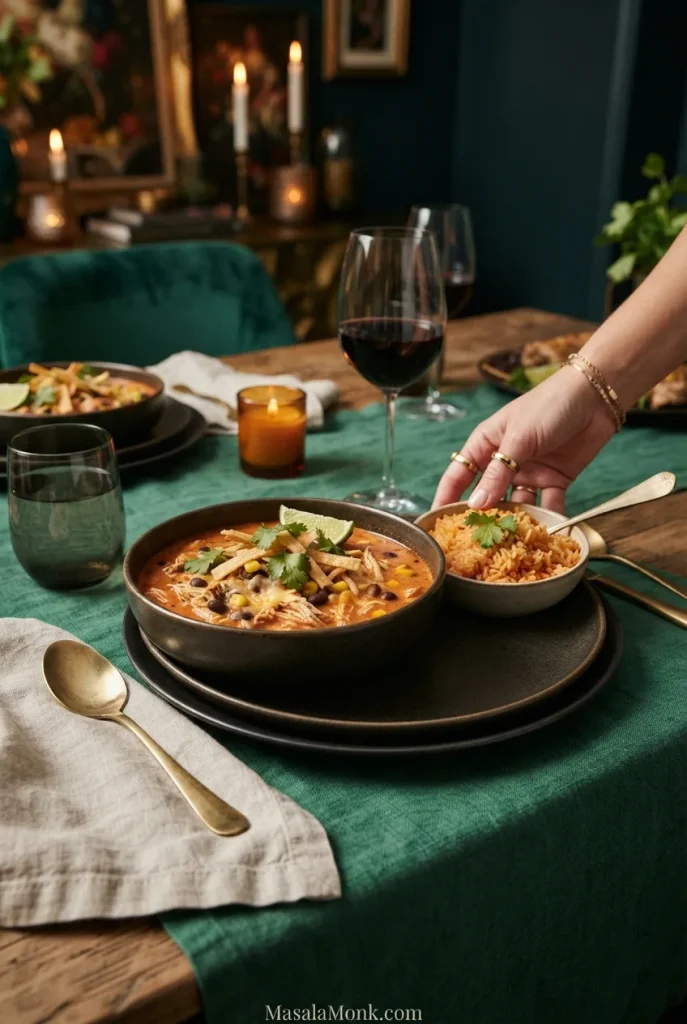
Serve chicken enchilada soup as a complete dinner. A small bowl of Mexican rice makes the meal more filling without changing the soup itself. Offer the rice separately so diners can choose their own portion.
Make Ahead, Store, Freeze and Reheat
Make ahead
For the smoothest make-ahead result, prepare the soup through the chicken, masa, beans and corn, then refrigerate the base before adding cream cheese or grated cheese. Use the cooling and storage guidance below.
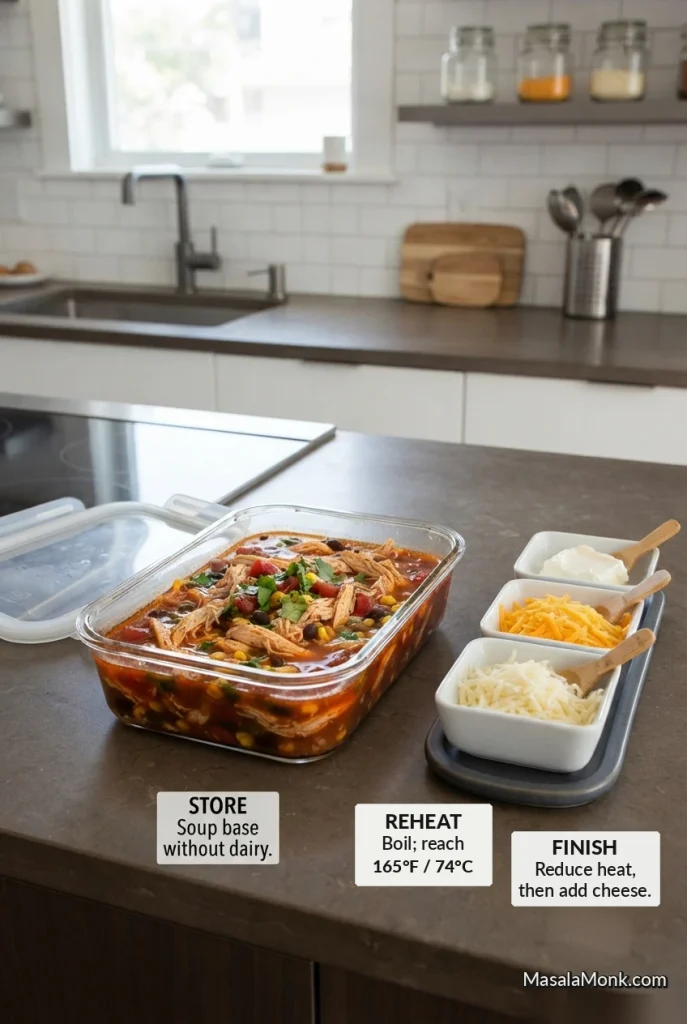
When you’re ready to serve, bring the refrigerated base to a boil and ensure it reaches at least 165°F / 74°C throughout. Stir so the chicken and thickened broth heat evenly. Then lower the heat and add the cream cheese and grated cheese as directed in the recipe.
Refrigerating and reheating
Divide leftovers into smaller, shallow containers so they cool quickly. Refrigerate within two hours of cooking, or within one hour if the surrounding temperature is above 90°F / 32°C. Don’t leave a large pot of hot soup sitting on the counter until it cools completely.
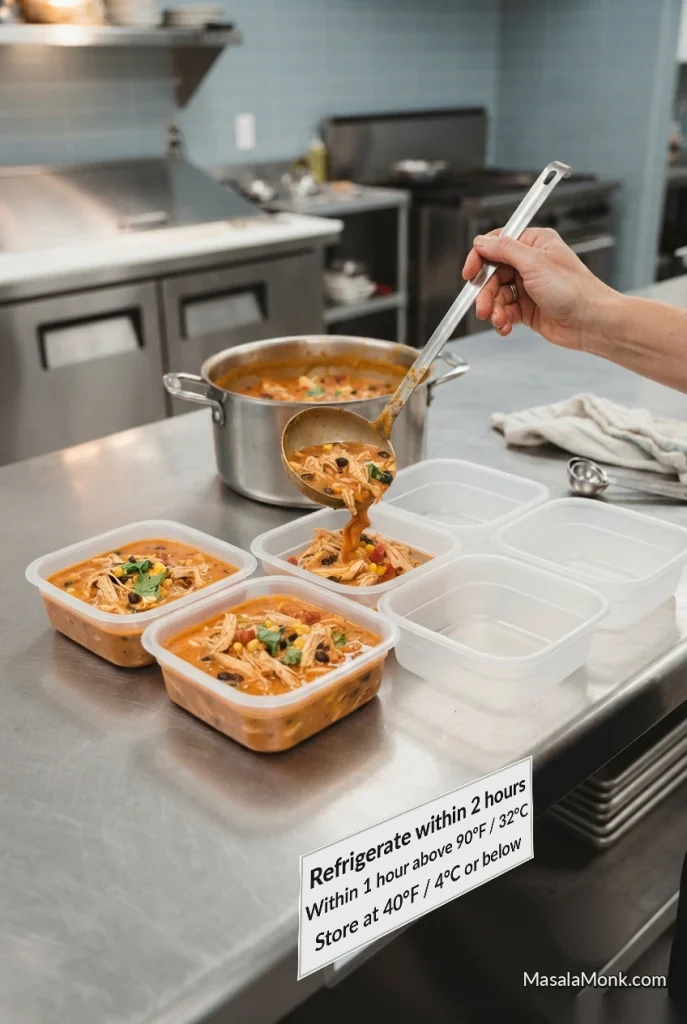
Store refrigerated leftovers at 40°F / 4°C or below and use them within 3–4 days.
Reheat leftover soup thoroughly to 165°F / 74°C throughout. USDA guidance also calls for reheated soups to be brought to a boil. Stir frequently to avoid cold spots and scorching. A fully finished dairy-based soup may lose some smoothness during reheating, but food safety takes priority over preserving the original texture.
Add fresh lime, avocado and tortilla strips after reheating rather than storing them in the soup.
Freezing
Freeze the soup before adding dairy if you can. Thaw it in the refrigerator, bring the base to a boil and reheat thoroughly, then lower the heat and add the cheeses.
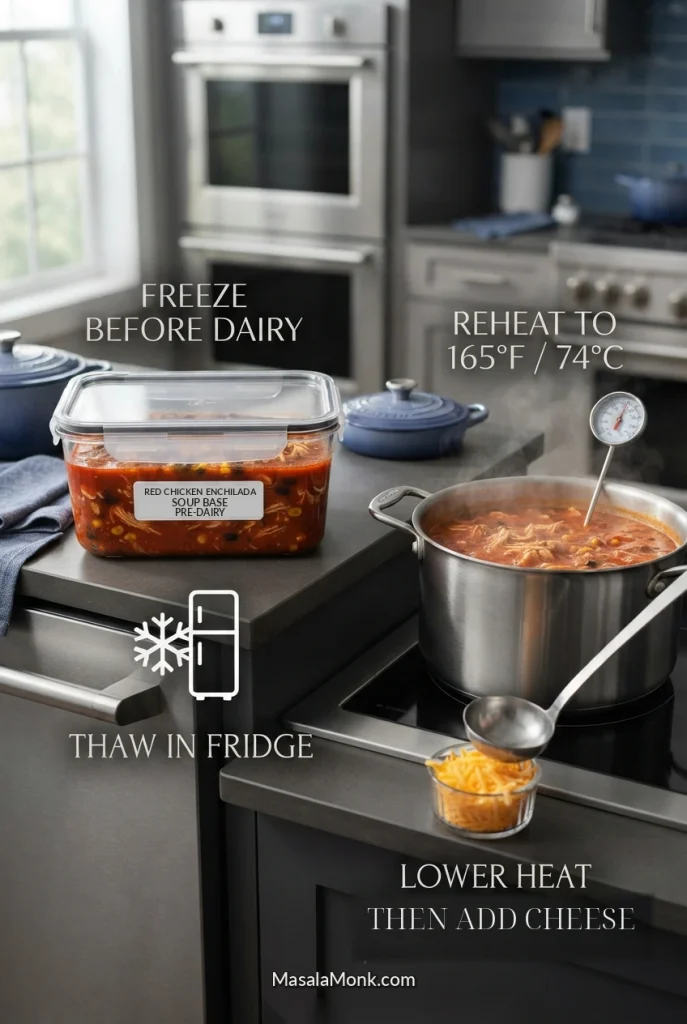
For best quality, use frozen meat-containing soups within 2–3 months. This is a quality guideline for food kept continuously frozen at 0°F / −18°C or below, not an absolute safety deadline. Fully finished dairy-based soup can also be frozen, but may be grainier after thawing and reheating.
Home canning: This recipe has not been validated for safe home canning. Freeze it instead.
How This Chicken Enchilada Soup Compares
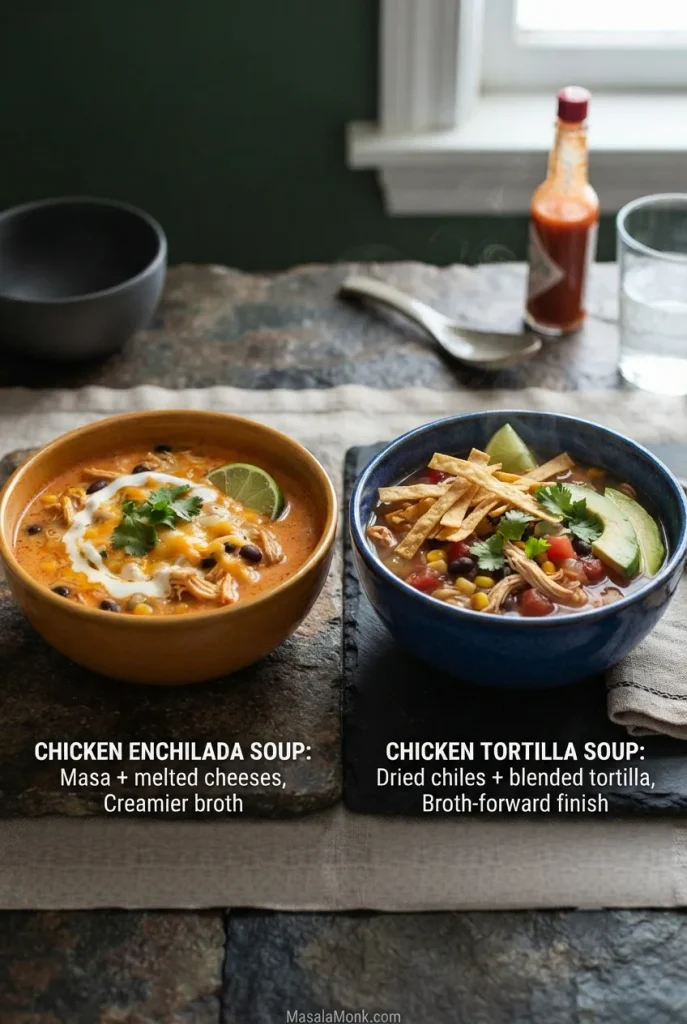
Chicken Enchilada Soup vs Chicken Tortilla Soup
Chicken enchilada soup is generally thicker, creamier and more cheese-forward, while chicken tortilla soup usually puts more emphasis on broth and tortillas. Our Chicken Tortilla Soup is more broth-forward; this enchilada soup gets its richer body from masa harina and the cheeses added to the pot.
Is This Like Chili’s Chicken Enchilada Soup?
This is not a Chili’s copycat. Chili’s-style versions tend to have a thicker, smoother masa-and-cheese body. This homemade version keeps recognizable chicken, black beans and corn in the broth and finishes with cream cheese, cheddar and Monterey Jack.
Made it? Tell us in the comments which enchilada sauce you used and whether you liked the soup thick and creamy or a little brothier. If you changed the masa or chicken, we’d love to know how it worked. Those details can help the next person cooking with the same ingredients.








