
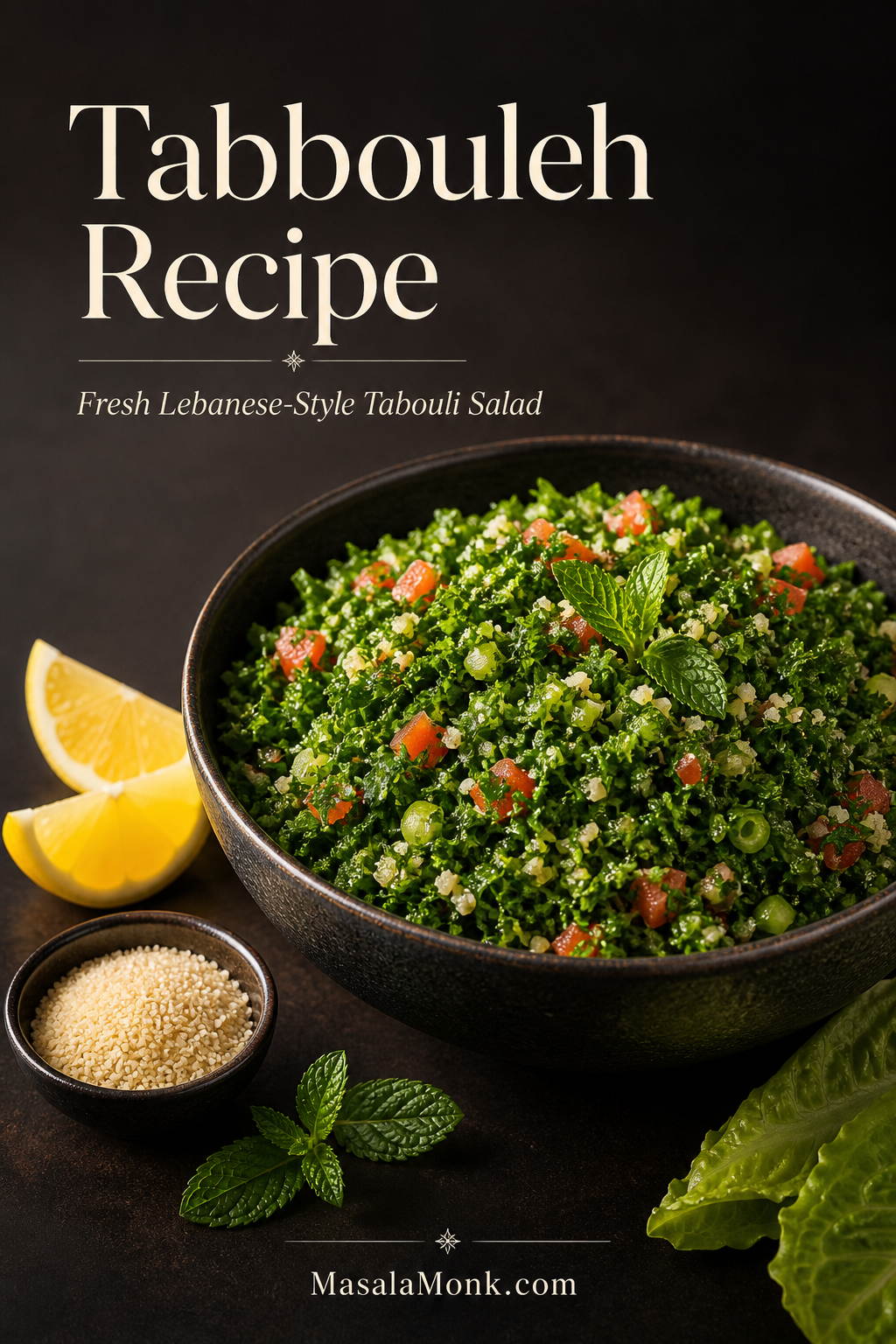
This tabbouleh recipe is fresh, lemony, parsley-heavy, and built around the detail that matters most: tabbouleh should taste like a chopped herb salad, not a bowl of bulgur with a few herbs mixed in.
Also spelled tabouli, this Lebanese-style salad is made with finely chopped parsley, tomato, mint, green onion, fine bulgur, lemon juice, olive oil, salt, and pepper. Although the bulgur adds texture, parsley is the star.
To keep the recipe no-cook, the method below soaks fine bulgur directly in the lemon-olive oil dressing while you chop the herbs. As a result, the bulgur gets more flavor, the salad stays bright, and you avoid the watery, grain-heavy tabbouleh that often happens at home.
Table of Contents
Use this guide to make fresh tabbouleh, choose the right bulgur, keep it from turning watery, and adapt it for quinoa, cauliflower, or couscous versions.
Start Here
Ingredients & Method
Serving & Variations
Quick Answer: What Is Tabbouleh?
Tabbouleh is a fresh Middle Eastern parsley salad made with finely chopped parsley, tomato, mint, green onion, fine bulgur wheat, lemon juice, olive oil, salt, and pepper. In a good tabbouleh recipe, the herbs should lead and the bulgur should support.
Classic tabbouleh is usually served as part of a mezze spread with pita, hummus, falafel, grilled meats, or lettuce leaves. It is naturally vegan and dairy-free, though it is not gluten-free because bulgur is made from wheat.
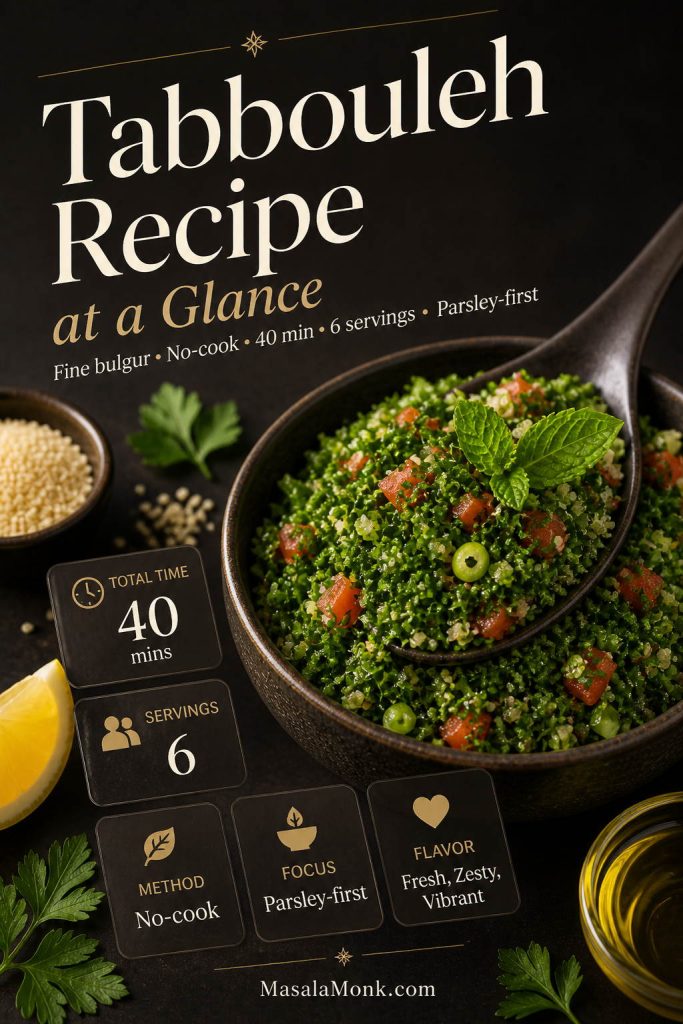
Tabbouleh Recipe at a Glance
This tabbouleh recipe is built for a fresh, parsley-heavy texture with fine bulgur, bright lemon dressing, and no cooking required when you use the right grain.
| Best bulgur | Fine #1 bulgur wheat |
|---|---|
| Cook time | 0 minutes for fine bulgur |
| Total time | About 40 minutes |
| Yield | 6 servings, about 5–6 cups |
| Flavor | Fresh, lemony, herb-heavy, lightly juicy |
| Best texture | Finely chopped herbs, tender bulgur, no puddle of dressing |
| Make-ahead | Best same day; leftovers keep 2–3 days |
Tabbouleh vs Tabouli: Same Salad, Different Spelling
Tabbouleh and tabouli usually refer to the same salad. The spelling changes because the Arabic word is transliterated into English in different ways.
You may see it written as tabbouleh, tabouli, tabouleh, tabouli salad, or tabbouleh salad. The spellings vary by region, family tradition, and how the Arabic word is transliterated into English.
Here, the salad follows a Lebanese-style direction: finely chopped parsley, tomato, mint, green onion, fine bulgur, lemon juice, and olive oil.
Why This Tabbouleh Recipe Works
Homemade tabbouleh usually goes wrong in a few predictable ways: too much bulgur, wet herbs, bland dressing, hard grains, or a watery bowl after 20 minutes. To avoid those problems, this version uses a parsley-first ratio, fine bulgur, careful draining, and a simple dressing that seasons the grain as it softens.
- It is parsley-first. The salad tastes fresh and green, not heavy or grainy.
- Fine bulgur keeps it no-cook. Fine #1 bulgur softens in lemon juice and olive oil while you chop the herbs.
- The tomatoes are drained if needed. That keeps the salad juicy without turning soupy.
- The dressing is simple. Lemon juice, olive oil, salt, and pepper are enough when the herbs are fresh.
- The amounts are precise. Cups, grams, and milliliters are included so the parsley-to-bulgur balance stays right.
Best Parsley-to-Bulgur Ratio for Tabbouleh
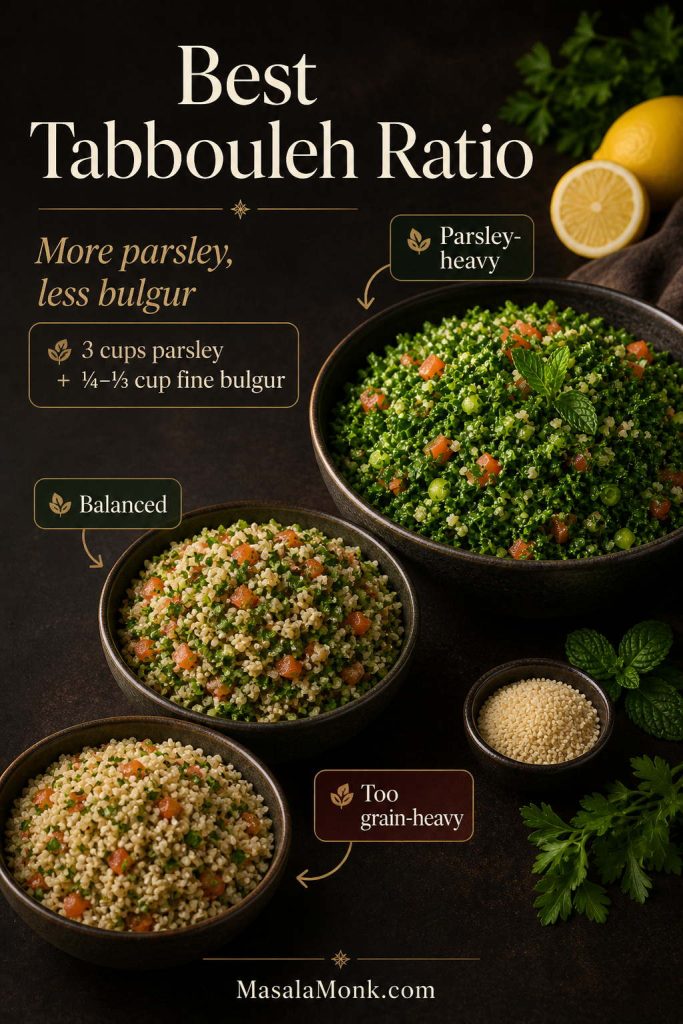
The easiest way to keep tabbouleh fresh is to use a lot of parsley and only a small amount of bulgur. The bulgur should soften the bite and absorb flavor, but it should not make the salad heavy.
| Style | Parsley | Bulgur | Result |
|---|---|---|---|
| Parsley-heavy Lebanese-style | 3 packed cups | 1/4 to 1/3 cup fine bulgur | Fresh, green, herb-led tabbouleh |
| Balanced everyday style | 3 packed cups | 1/2 cup fine bulgur | Still fresh, but slightly more filling |
| Grain-heavy style | 2–3 cups | 3/4 cup or more | More like bulgur salad than classic tabbouleh |
Tabbouleh Ingredients
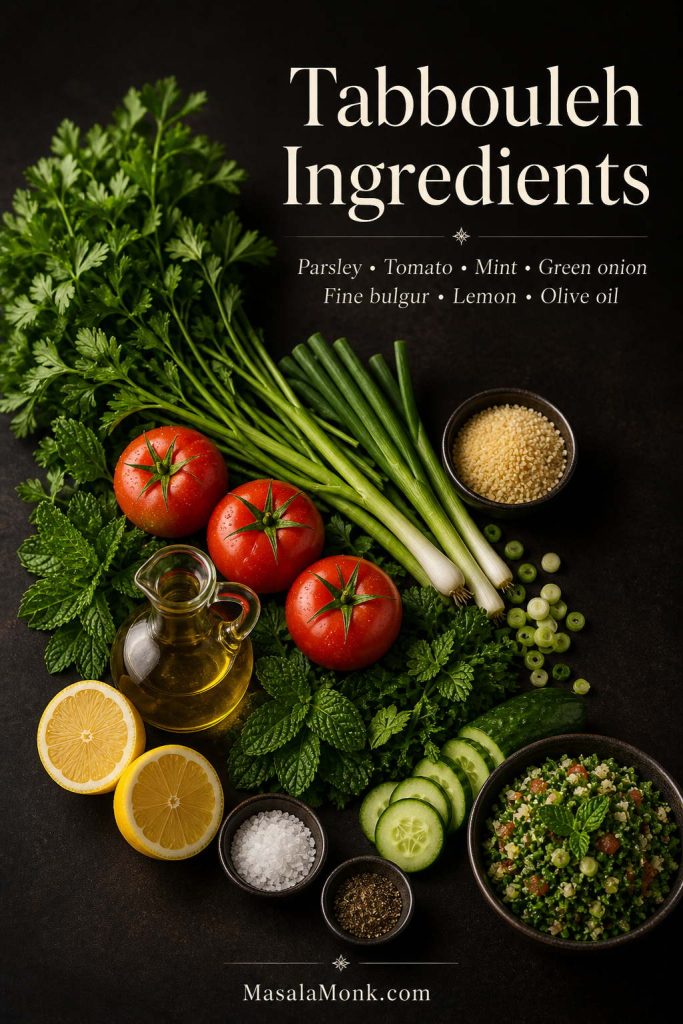
For tabbouleh, this recipe keeps the ingredient list simple but pays close attention to texture: dry herbs, firm tomatoes, fine bulgur, fresh lemon, and enough olive oil to round everything out.
Parsley
Because parsley is the main ingredient, its texture matters. You can use curly parsley or flat-leaf parsley, but the leaves need to be very dry before chopping. Wet parsley is one of the main reasons tabbouleh becomes watery.
Chop the parsley finely with a sharp knife. A food processor can bruise the herbs and turn them wet or pasty if you overdo it.
Tomatoes
Use firm Roma tomatoes or another firm, meaty tomato. Chop them small, then drain off extra liquid if they are very juicy. You want tomato freshness, not a pool of tomato water at the bottom of the bowl.
Mint
Fresh mint gives tabbouleh its cooling lift. Do not use dried mint as a full replacement here; it will not give the same fresh, bright finish.
Green Onions or Scallions
Green onions add mild onion flavor without overpowering the herbs. Slice them finely so they disappear into the salad rather than standing out in large pieces.
Fine Bulgur
Fine #1 bulgur is best for Lebanese-style tabbouleh. It softens quickly and blends into the herbs without making the salad feel heavy.
Lemon Juice and Olive Oil
Fresh lemon juice gives tabbouleh its sharp, clean brightness. Extra-virgin olive oil rounds out the dressing and helps soften the bulgur. Bottled lemon juice is not ideal because the salad depends on a fresh citrus flavor.
Cucumber, Optional
Cucumber is optional. It adds crunch and freshness, especially in modern tabouli salad versions, but the salad still works beautifully without it. If you use cucumber, dice it small and drain it if it is watery.
If cucumber is the part you love most, you may also like this crisp cucumber salad recipe with vinegar, dill, and onion.
Tabbouleh Dressing
In this tabbouleh recipe, the dressing is simple: fresh lemon juice, extra-virgin olive oil, salt, and black pepper. It should lightly coat the herbs, season the tomatoes, and soften the fine bulgur without drowning the salad.
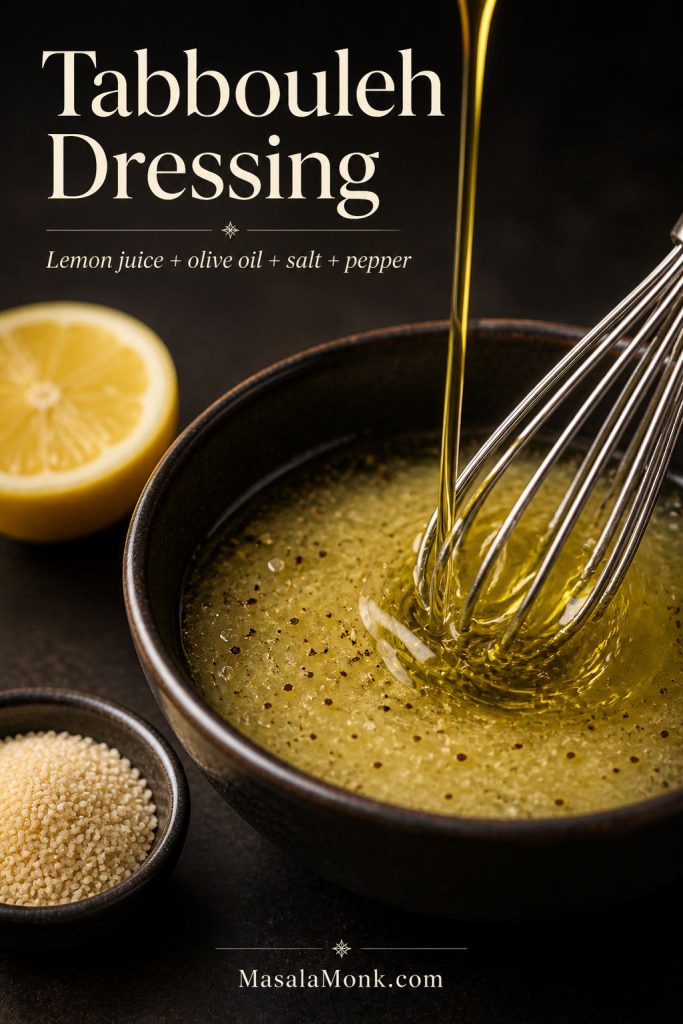
Here, the fine bulgur sits in the lemon-olive oil dressing while you chop the parsley, mint, tomatoes, and green onions. That gives the bulgur better flavor than soaking it in plain water.
Once the salad rests, taste before adding anything else. A pinch of salt usually fixes flat flavor, extra lemon brings brightness, and a small drizzle of olive oil softens a sharp edge.
Best Bulgur for Tabbouleh
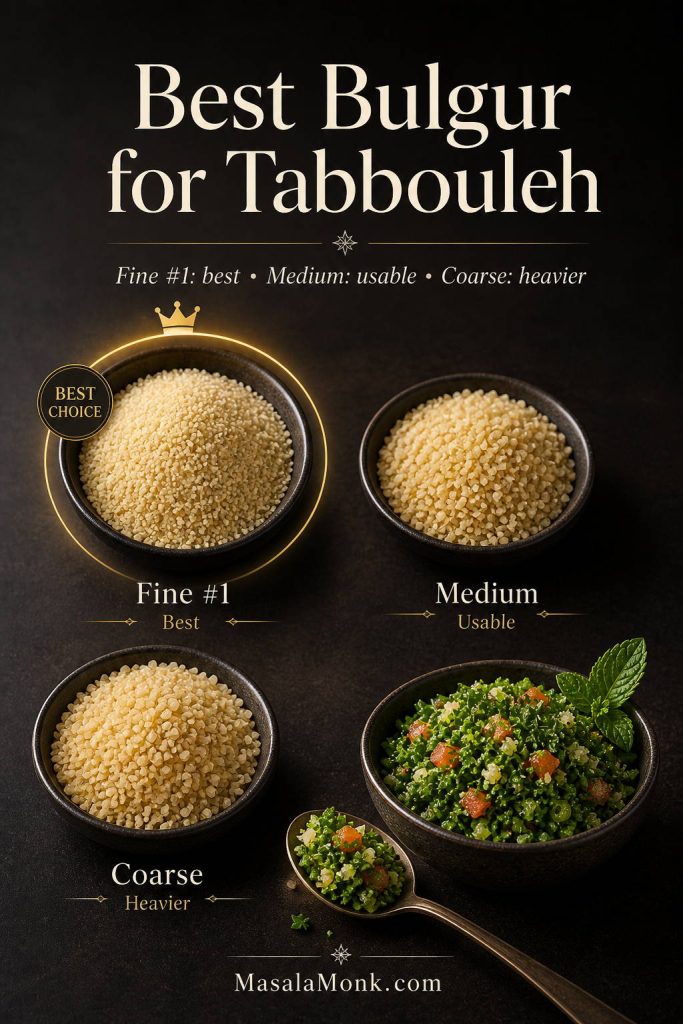
The best bulgur for tabbouleh is fine #1 bulgur. It is small enough to soften without boiling and delicate enough to stay in the background. That matters because tabbouleh should taste like a fresh herb salad, not a bulgur bowl.
Bulgur is wheat that has already been parboiled, dried, cracked, and sorted by size. That is why fine bulgur can soften quickly in dressing instead of needing a full boil. For more background, see the Whole Grains Council guide to bulgur and freekeh.
If your bulgur is medium or coarse, you can still use it, but the texture will be different and it usually needs hot water before mixing.
| Bulgur or Swap | Best For | How to Prepare It |
|---|---|---|
| Extra-fine / #1 bulgur | Best choice for Lebanese-style tabbouleh | Soak in the lemon-olive oil dressing for 20–30 minutes. No cooking needed. |
| Fine bulgur | Good everyday choice | Soak until tender. Drain if you use water. |
| Medium bulgur | Usable, but less delicate | Soak in hot water, drain well, and cool before mixing. |
| Coarse bulgur | More of a grain-salad texture | Cook or hot-soak until tender, then cool completely. Use less than you would in a grain salad. |
| Cracked wheat | Depends on grind and processing | Usually needs longer soaking or cooking. Check texture before adding. |
| Quinoa | Gluten-free tabbouleh variation | Cook, cool completely, then mix with the herbs and dressing. |
| Cauliflower rice | Grain-free variation | Use raw or lightly salted and drained. Keep the pieces small and dry. |
| Couscous | Quick variation, not classic tabbouleh | Steam or soak, fluff, cool completely, then mix. |
What If You Only Have Medium or Coarse Bulgur?
If you only have medium or coarse bulgur, you can still make tabbouleh, but the texture will be less delicate. Put the medium or coarse bulgur in a bowl, cover it with hot water, and let it sit until tender. Drain it very well, press out excess moisture, and cool it completely before adding it to the herbs.
Use a smaller amount than you would in a grain salad. The goal is still a parsley-forward tabbouleh, not a heavy bulgur salad.
How to Buy Bulgur for Tabbouleh
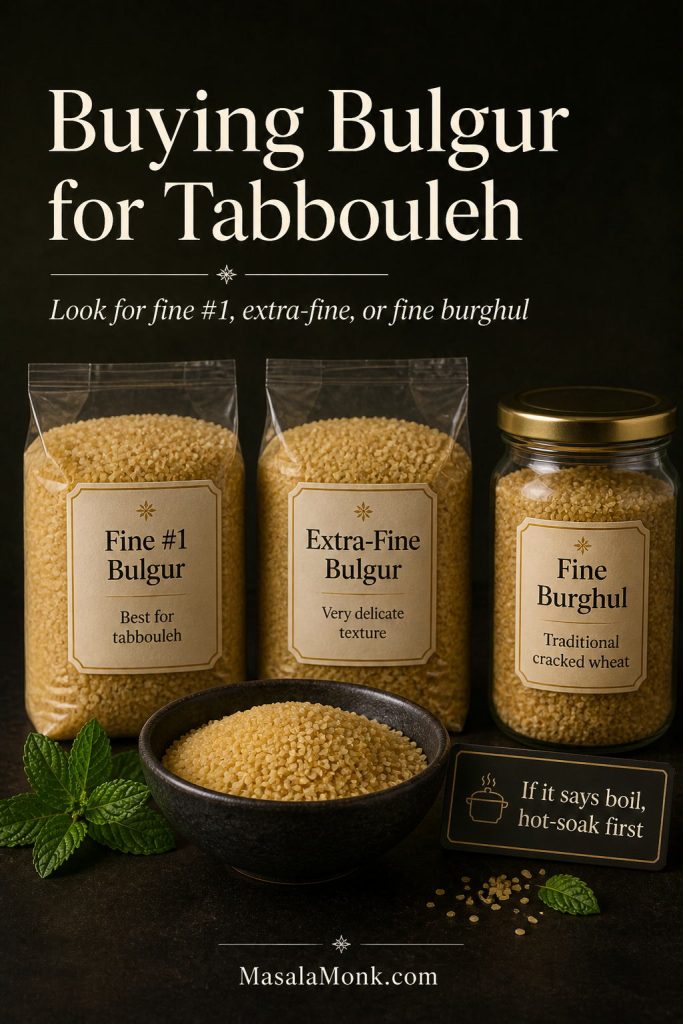
When shopping, look for fine #1 bulgur, extra-fine bulgur, or fine burghul. It is often easier to find in Middle Eastern grocery stores, international aisles, or natural-food stores than in the regular grain aisle. If the package says it must be boiled, treat it like medium or coarse bulgur and cool it before mixing.
Equipment You’ll Need
You do not need special equipment, but a few basic tools make a big difference in the final texture.
- Sharp chef’s knife: for finely chopping parsley without bruising it.
- Large cutting board: tabbouleh uses a lot of herbs, so space helps.
- Salad spinner or clean towels: for drying parsley and mint thoroughly.
- Large mixing bowl: gives you room to toss without crushing the herbs.
- Small bowl or measuring jug: for the lemon-olive oil dressing.
- Fine-mesh strainer or colander: useful for draining tomatoes, cucumber, or soaked bulgur.
How to Make Tabbouleh
Good tabbouleh is mostly about prep. Although the ingredients are simple, the herbs need to be dry, the chopping needs to be fine, and the bulgur needs enough time to soften.
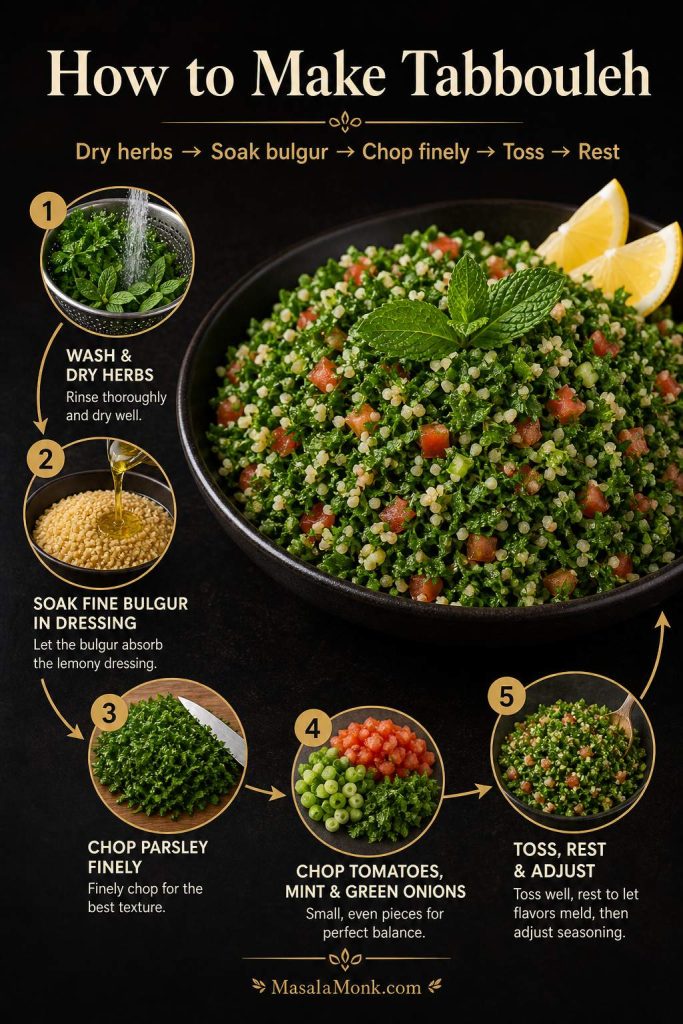
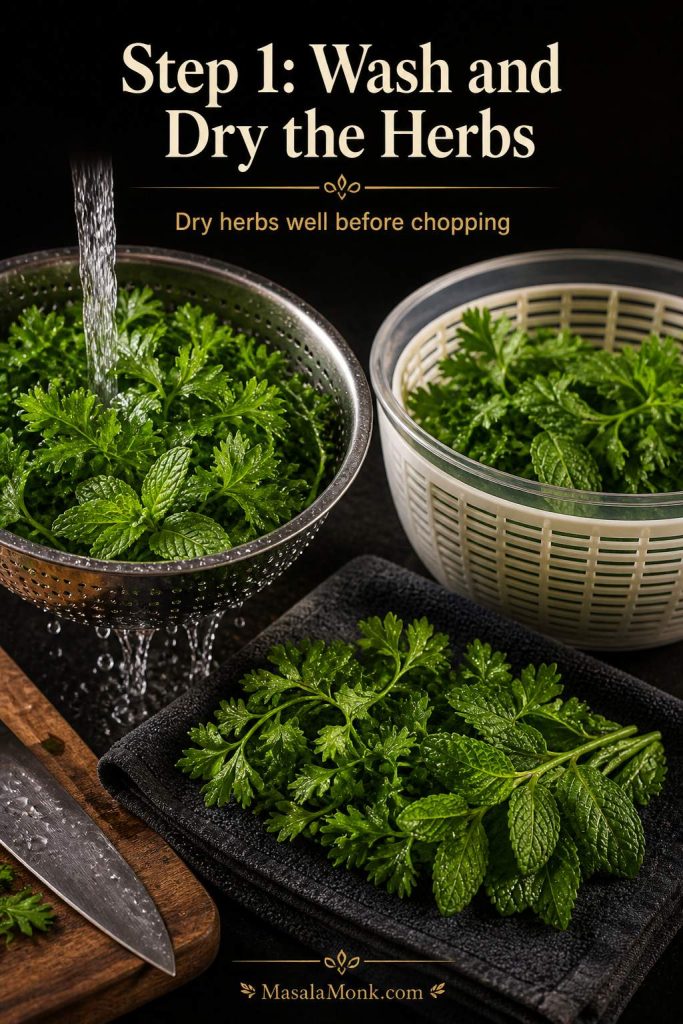
Step 1: Wash and Dry the Herbs
Wash the parsley and mint, then dry them very well. A salad spinner is helpful, but you can also spread the herbs on clean towels and pat them dry.
This step matters because wet herbs dilute the dressing and make the salad watery faster.
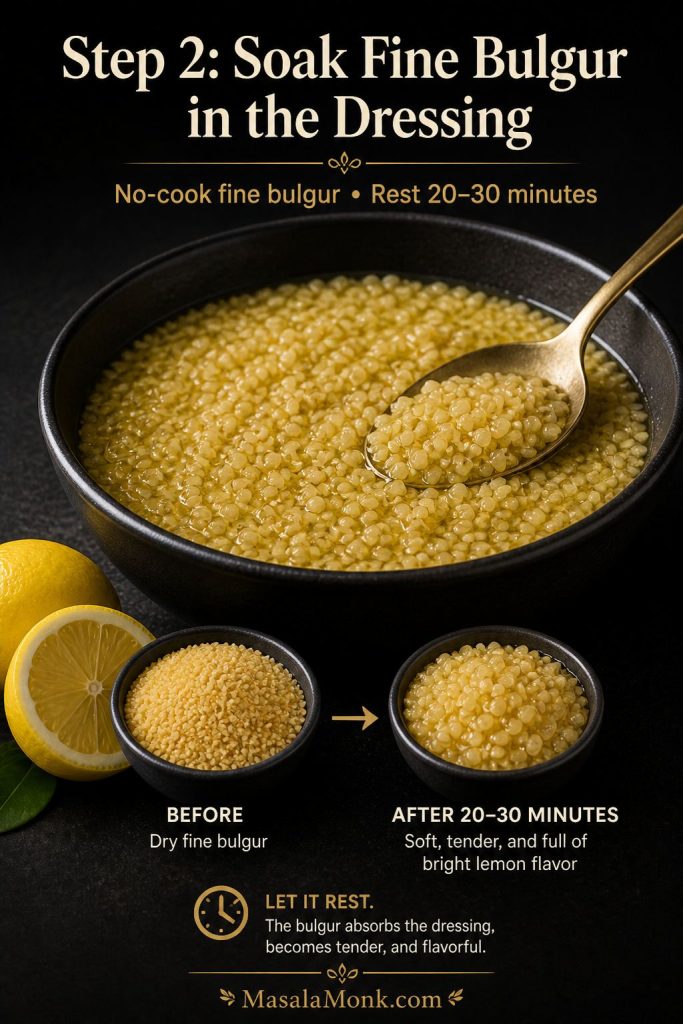
Step 2: Soak the Fine Bulgur in the Dressing
In a large mixing bowl, whisk together the lemon juice, 1/4 cup olive oil, salt, and pepper. Stir in the fine bulgur and let it sit for 20–30 minutes while you chop the herbs and vegetables.
The bulgur should soften but not become mushy. If it still tastes hard after resting, add 1 tablespoon of warm water or lemon juice, stir, and wait another 10 minutes.
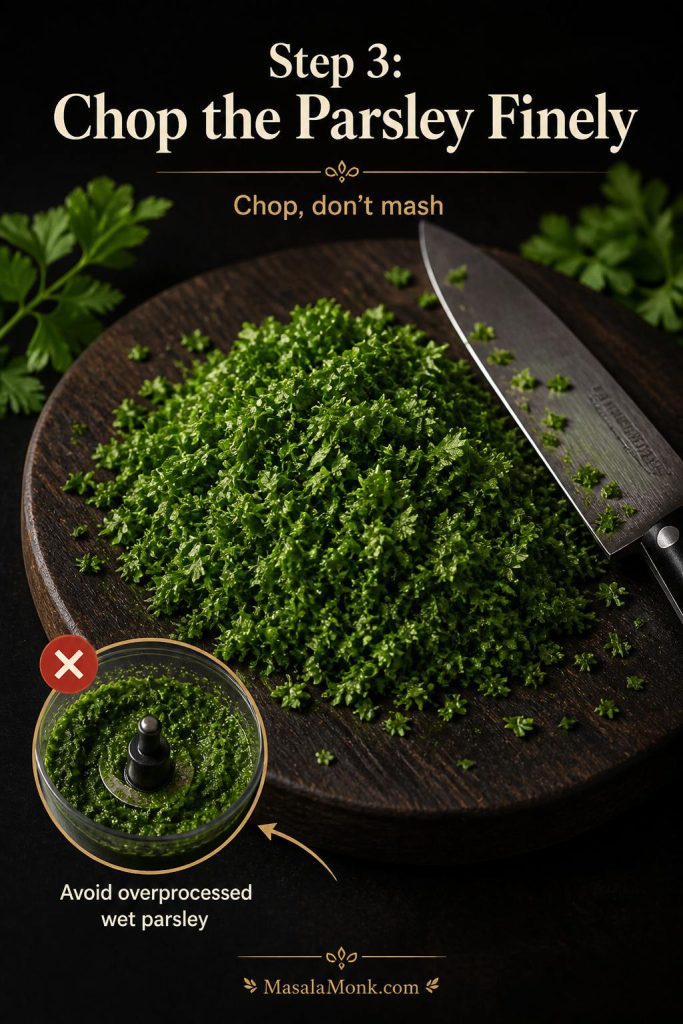
Step 3: Chop the Parsley Finely
Gather the dry parsley into small bunches and chop it finely with a sharp knife. You want small, even pieces, not large leaves and not a wet green paste.
Tender stems are fine if they are chopped very small. Thick stems should be removed.
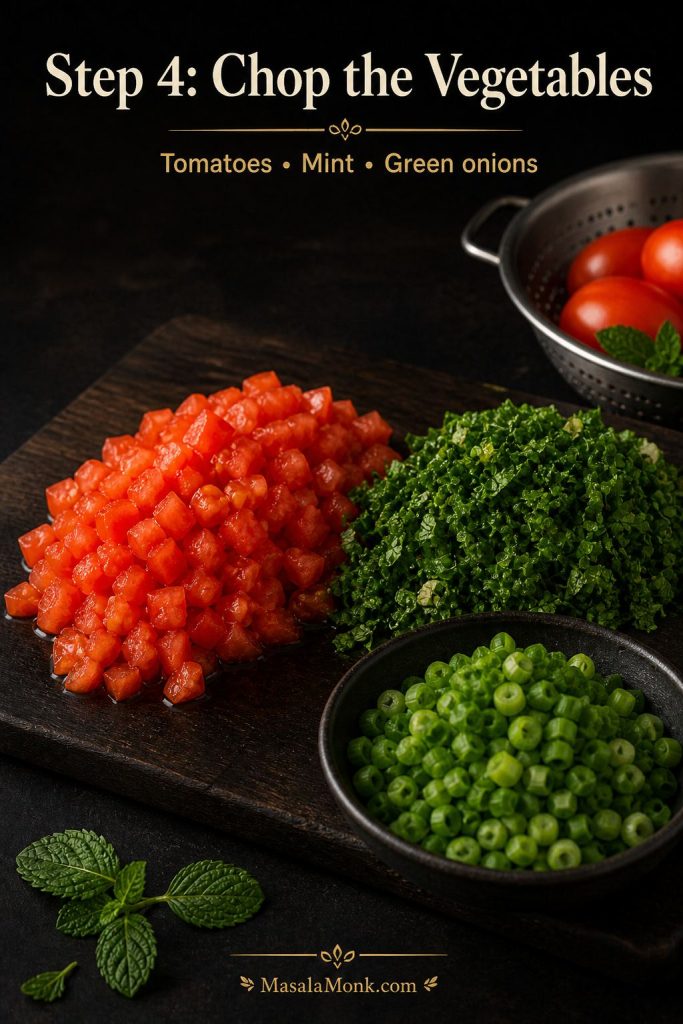
Step 4: Chop the Tomatoes, Mint, and Green Onions
Finely chop the tomatoes, mint, and green onions. If the tomatoes release a lot of juice, drain them briefly before adding them to the bowl. If using cucumber, dice it small and drain it too.
Step 5: Toss, Rest, and Adjust
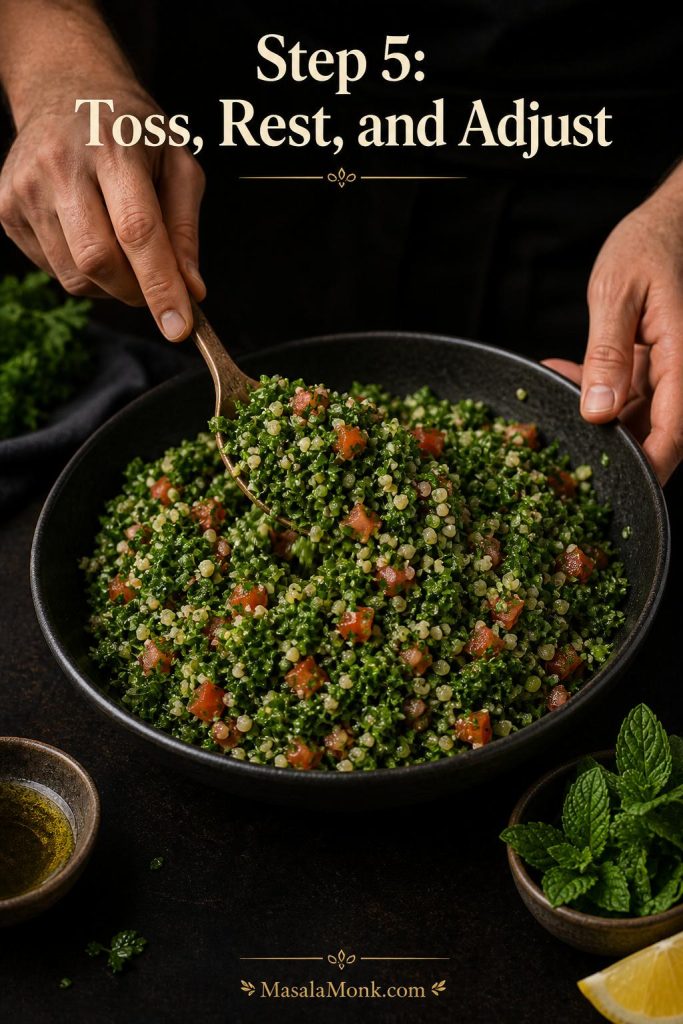
Add the parsley, mint, tomatoes, green onions, and optional cucumber to the soaked bulgur. Toss gently until everything is evenly coated, but do not crush the herbs.
Let the tabbouleh rest for 10 minutes, then taste and adjust. Start with salt if the flavor feels flat, brighten it with lemon if needed, or round it out with a little olive oil if the salad tastes too sharp. Add the remaining olive oil only if the salad needs a softer finish.
How to Keep Tabbouleh from Getting Watery
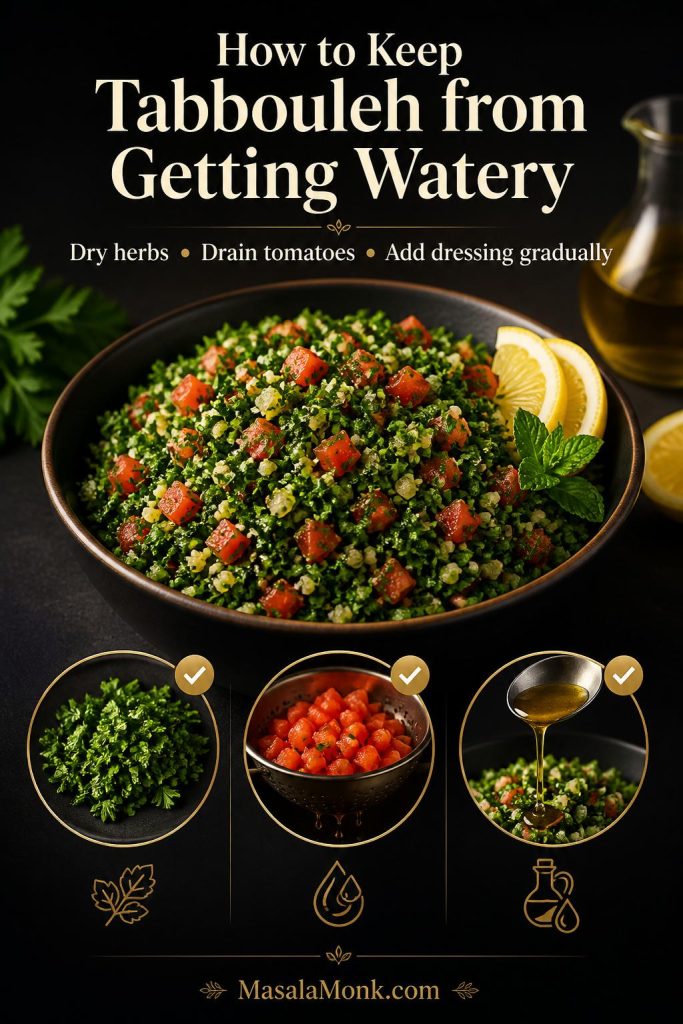
Watery tabbouleh usually comes from wet herbs, juicy tomatoes, too much dressing, or bulgur that has not been drained properly. The best fix is to control moisture before everything goes into the bowl.
Drain Juicy Tomatoes and Cucumber First
If your tomatoes or cucumber are very juicy, sprinkle them with a small pinch of salt and let them sit in a strainer for 10 minutes while you chop the herbs. After 10 minutes, drain the liquid before mixing. This keeps the salad fresh and juicy without creating a puddle at the bottom of the bowl.
Quick Fixes for Watery Tabbouleh
| Problem | Likely Cause | Best Fix |
|---|---|---|
| Tabbouleh is watery | Wet parsley, juicy tomatoes, or too much dressing | Dry herbs thoroughly, drain tomatoes, and add dressing gradually. |
| Bulgur is hard | Bulgur is too coarse or under-soaked | Add 1–2 tablespoons warm water or lemon juice and rest 10–15 minutes. |
| Bulgur is soggy | Too much soaking liquid | Drain or blot if possible, then add more parsley, mint, or tomato. |
| Salad tastes flat | Not enough salt or lemon | Add salt first, then lemon juice in small amounts. |
| Salad tastes too sharp | Too much lemon juice | Add a little olive oil and extra tomato to round it out. |
| Parsley tastes harsh | Pieces are too large or salad has not rested | Chop finer next time and let the salad rest 10–20 minutes before serving. |
| Herbs look mushy | Food processor overuse or wet herbs | Chop by hand and dry herbs well before cutting. |
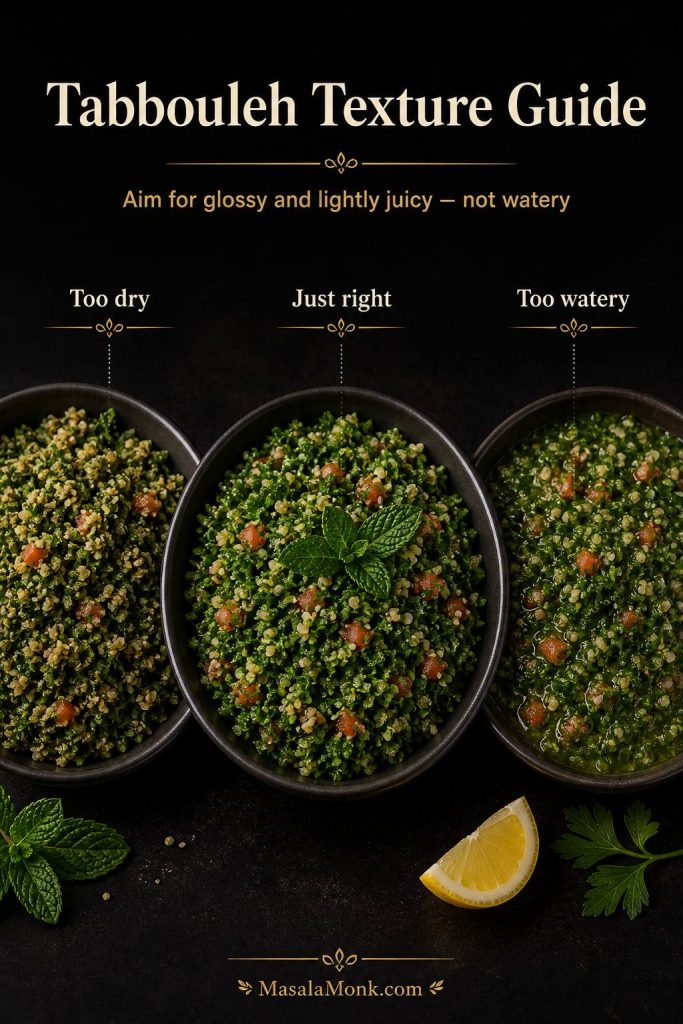
What the Finished Tabbouleh Should Look Like
For the best texture, serve tabbouleh the same day it is made. Although it keeps well for a couple of days, the herbs soften as they sit.
Do not worry if the herbs darken slightly after dressing. Proper tabbouleh should look moist and glossy, not dry and fluffy. The warning sign is excess liquid pooling underneath, not a lightly dressed herb texture.
Authentic Lebanese-Style Tabbouleh Tips
Lebanese-style tabbouleh is usually much more herb-heavy than many restaurant or grocery-store versions. Parsley should be the main ingredient, while the bulgur should add texture in the background rather than making the salad feel like a grain bowl.
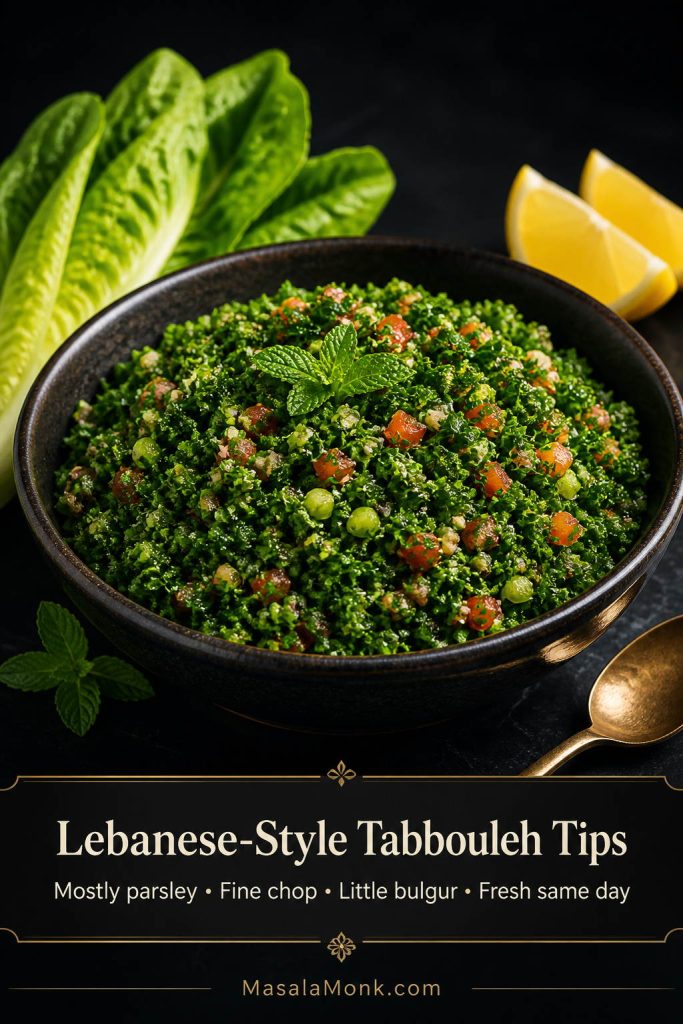
- Use more parsley than bulgur. A small amount of fine bulgur is enough to give texture without taking over.
- Chop everything finely. The parsley, tomatoes, mint, and green onions should feel evenly mixed in every bite.
- Use fine bulgur if possible. Fine #1 bulgur gives the most delicate texture and does not need boiling.
- Keep cucumber optional. Cucumber is common in many modern tabouli salad versions, but the salad still works beautifully without it.
- Serve it fresh. Tabbouleh can be stored, but the brightest flavor and best herb texture are usually the same day.
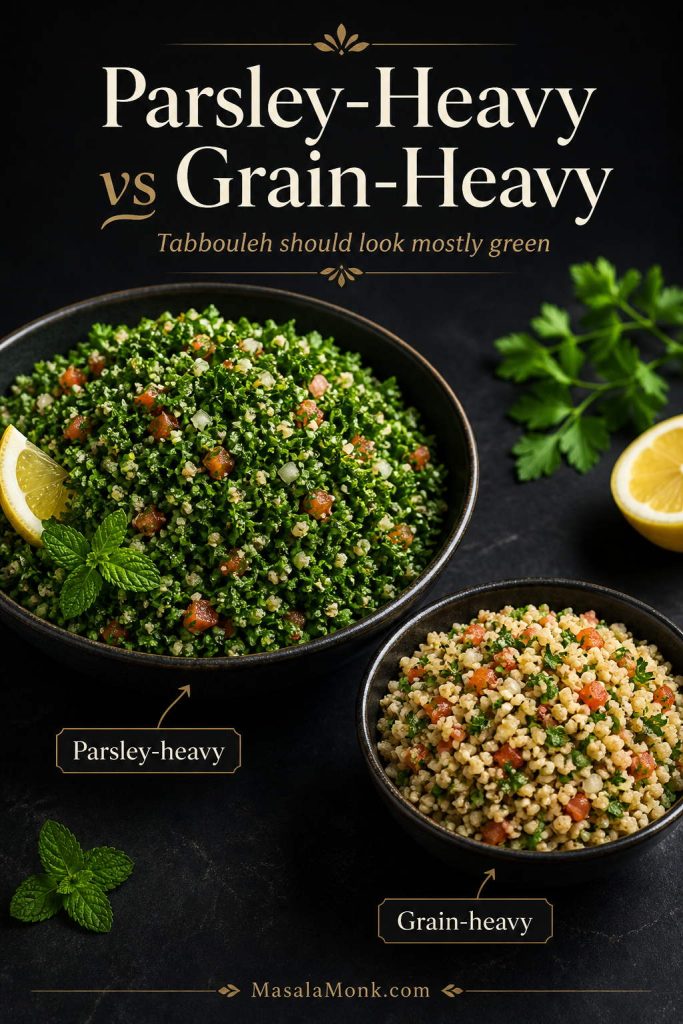
Tabbouleh Recipe Card
Tabbouleh Recipe: Fresh Lebanese Tabouli Salad with Bulgur
This fresh tabbouleh recipe is parsley-first, lemony, and no-cook. Fine bulgur softens in the lemon-olive oil dressing while you chop the herbs, keeping the salad bright instead of watery.
Ingredients
- 1/3 cup fine #1 bulgur wheat, about 50g
- 1/4 cup fresh lemon juice, 60ml
- 1/4 to 1/3 cup extra-virgin olive oil, 60–80ml
- 3/4 teaspoon fine salt, plus more to taste
- 1/4 teaspoon black pepper
- 3 packed cups finely chopped parsley, about 90–120g chopped leaves and tender stems
- 2–3 firm Roma tomatoes, finely chopped and drained, about 250–300g
- 3–4 green onions or scallions, finely chopped, about 45–60g
- 1/4 to 1/3 cup finely chopped fresh mint, about 10–15g
- 1 cup finely diced English cucumber, about 120–150g, optional
- Romaine lettuce leaves, optional, for serving
Instructions
- Wash and dry the herbs. Wash the parsley and mint, then dry very well in a salad spinner or with clean kitchen towels.
- Soak the bulgur. In a large bowl, whisk lemon juice, 1/4 cup olive oil, salt, and pepper. Stir in the fine bulgur and let it sit for 20–30 minutes while you chop the herbs and vegetables.
- Chop the parsley. Finely chop the parsley by hand. Remove thick stems, but tender stems are fine if chopped small.
- Prepare the vegetables. Finely chop the tomatoes, green onions, mint, and optional cucumber. Drain tomatoes and cucumber if they release a lot of liquid.
- Mix the tabbouleh. Add the parsley, tomatoes, green onions, mint, and cucumber to the soaked bulgur. Toss gently until evenly combined.
- Rest and adjust. Let the salad rest for 10 minutes. Taste and adjust with more salt, lemon juice, or olive oil as needed. Use the remaining olive oil only if the salad needs a softer finish.
- Serve. Serve chilled or at room temperature, with romaine leaves, pita, hummus, falafel, or grilled dishes.
Notes
- Fine #1 bulgur gives the best no-cook texture for tabbouleh.
- If using medium or coarse bulgur, soak it separately in hot water, drain very well, and cool completely before mixing.
- Dry the parsley thoroughly before chopping. Wet herbs make watery tabbouleh.
- Drain juicy tomatoes and cucumber before adding them to the bowl.
- For a stricter parsley-heavy version, skip the cucumber.
- For gluten-free tabbouleh, use cooked and cooled quinoa or finely riced cauliflower instead of bulgur.
- Best texture is the same day, but leftovers keep 2–3 days in the fridge.
Make-Ahead and Storage
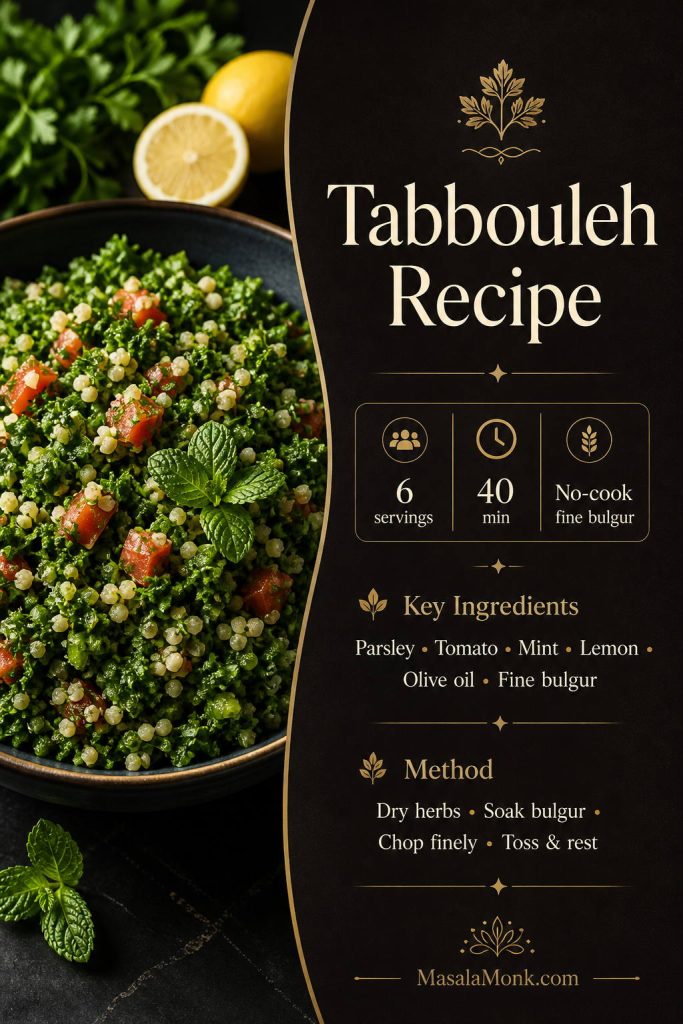
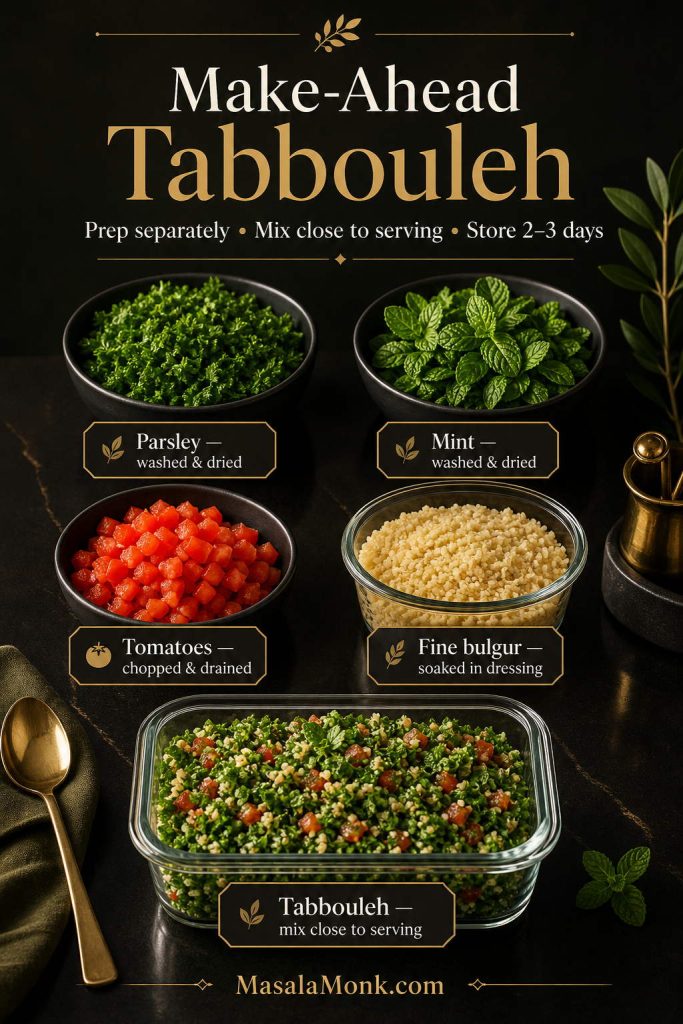
Although tabbouleh can be made ahead, it is best when the herbs still taste fresh and lively. If you want to prepare it early, wash and dry the herbs first, then chop and mix closer to serving.
For the freshest texture, keep the chopped herbs, drained tomatoes, and soaked bulgur separate until close to serving, then toss and adjust the seasoning. This is especially helpful if you are making tabbouleh for guests.
- Best same day: Tabbouleh has the brightest texture and flavor within a few hours of mixing.
- Best for guests: Mix the salad within 30–60 minutes of serving for the freshest herb texture.
- Best for leftovers: Store dressed tabbouleh in an airtight container for 2–3 days, knowing the herbs will soften over time.
- Make-ahead tip: Wash and dry parsley up to 1 day ahead. Keep it wrapped in towels in the fridge.
- Do not freeze: The tomatoes and herbs turn limp and watery after thawing.
If the salad tastes dull after sitting, refresh it with a small squeeze of lemon juice, a pinch of salt, and a drizzle of olive oil before serving. This brings back brightness without needing a full new batch of dressing.
What to Serve with Tabbouleh
Tabbouleh works as a salad, side dish, or part of a mezze spread. Its bright lemon and herb flavor makes it especially good beside richer dishes.
- Hummus and warm pita
- Falafel
- Grilled chicken, kebabs, or kofta
- Lentil soup
- Stuffed pita wraps
- Roasted eggplant or grilled vegetables
- Romaine lettuce leaves for scooping
- Rice bowls or grain bowls
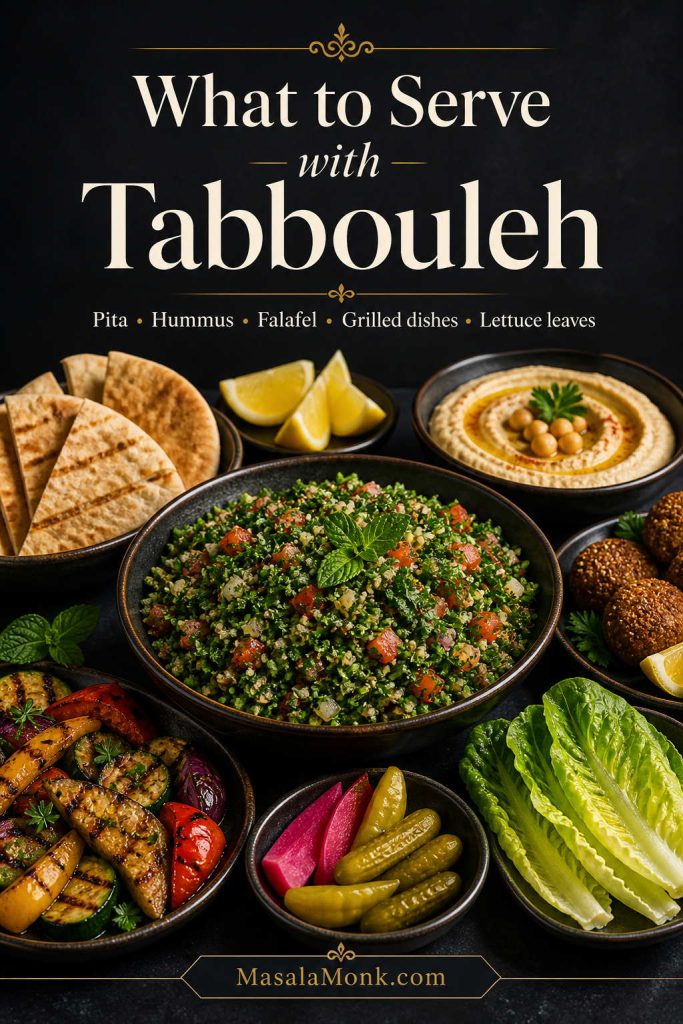
For a full mezze-style meal, serve tabbouleh with warm pita, hummus, pickles, and homemade falafel. If you are building a falafel, shawarma, or pita spread, a spoon of amba sauce adds a sharp, tangy contrast beside the fresh herbs.
For grilled chicken, wraps, or pita plates, tabbouleh also works well with a cooling tzatziki sauce. You can also spoon it into pita pockets with hummus, cucumber, and crisp vegetables, similar to this hummus veggie sandwich.
For a lighter plate, serve tabbouleh with hummus, raw vegetables, olives, and pita. For a fuller dinner, pair it with grilled chicken or lamb and a creamy yogurt sauce.
Tabbouleh Variations
Once you understand the base recipe for tabbouleh, the variations are easy. For example, you can swap bulgur for quinoa, cauliflower rice, or couscous while keeping the herbs generous, the pieces small, and the lemon-olive oil balance bright.
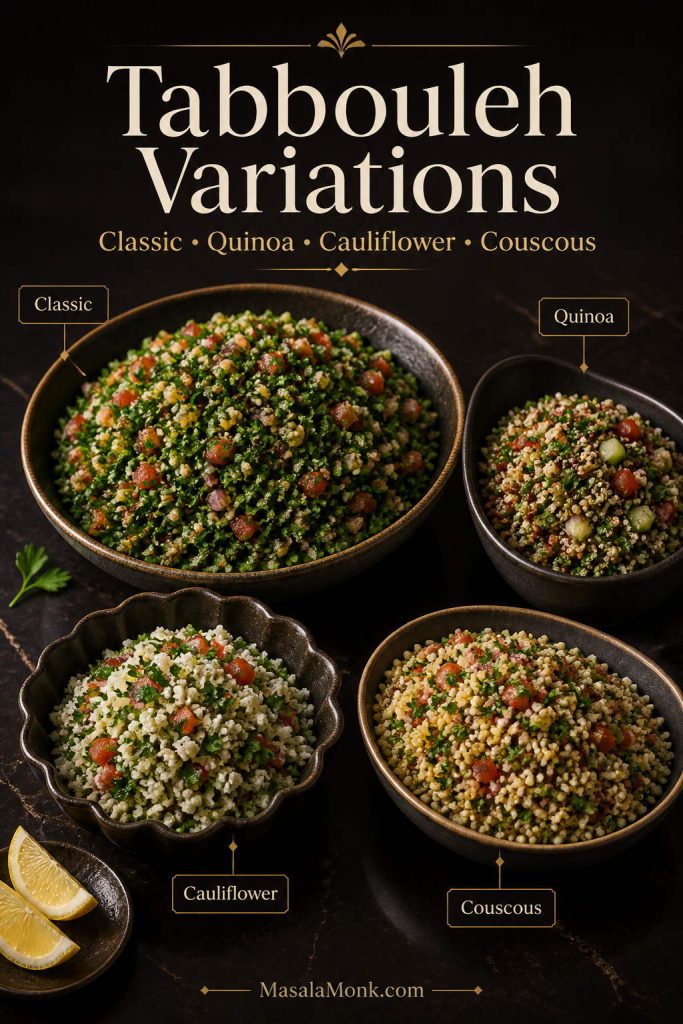
Quinoa Tabbouleh
Use cooked and fully cooled quinoa instead of bulgur. Quinoa tabbouleh is the best gluten-free version because quinoa has a small grain size and absorbs lemon dressing well. Keep the parsley generous so it still tastes like tabbouleh, not just quinoa salad.
If you are using quinoa for meal prep, this quinoa and chickpea salad idea shows how well quinoa works with cucumber, tomatoes, red onion, and lemon-tahini dressing.
Cauliflower Tabbouleh
Use finely riced cauliflower instead of bulgur for a grain-free version. Raw cauliflower rice works well if it is chopped small and not watery. For a softer texture, salt it lightly, let it sit for a few minutes, then squeeze out extra moisture before mixing.
Couscous Tabbouleh
Couscous tabbouleh is a quick variation, but it is not the traditional version. Cook or soak the couscous, fluff it, cool it completely, then mix with the herbs, tomato, lemon, and olive oil.
No-Bulgur Tabbouleh
You can skip the bulgur for a lighter herb salad. The texture will be less traditional, but it works if you want a very fresh salad with parsley, tomato, mint, lemon, and olive oil.
Extra-Lemony Tabbouleh
If you like a sharper salad, add another tablespoon of lemon juice after the salad rests. Add it gradually because too much lemon can overpower the herbs.
Tabbouleh FAQs
Is tabbouleh the same as tabouli?
Yes. Tabbouleh and tabouli usually mean the same parsley, tomato, mint, bulgur, lemon, and olive oil salad. The difference is mostly spelling.
What is tabbouleh made of?
Tabbouleh is made with parsley, tomatoes, mint, green onions, fine bulgur, lemon juice, olive oil, salt, and pepper. Some versions also include cucumber.
What kind of bulgur is best for tabbouleh?
Fine #1 bulgur is best for tabbouleh because it softens quickly and does not overpower the parsley. Medium or coarse bulgur can work, but it usually needs hot water and gives the salad a heavier texture.
Do you cook bulgur for tabbouleh?
You do not need to cook fine bulgur for tabbouleh. In this recipe, it softens in the lemon-olive oil dressing while you chop the herbs and vegetables. Medium or coarse bulgur should be hot-soaked or cooked, then cooled before mixing.
Can I make tabbouleh without bulgur?
Yes. You can leave out the bulgur for a lighter parsley salad, but the texture will be less traditional. If you want a gluten-free version with a similar small-grain feel, cooked and cooled quinoa is the best swap.
Is tabbouleh gluten-free?
Classic tabbouleh is not gluten-free because bulgur is made from wheat. For a gluten-free version, use cooked quinoa or cauliflower rice instead of bulgur.
Is tabbouleh vegan?
Yes. Traditional tabbouleh ingredients are plant-based, so the salad is naturally vegan and dairy-free.
Is tabbouleh healthy?
Tabbouleh is a fresh, herb- and vegetable-heavy salad made with parsley, tomatoes, mint, lemon juice, olive oil, and a small amount of bulgur. It can fit well into a balanced Mediterranean-style meal with vegetables, legumes, whole grains, and olive oil. For broader context, Harvard’s Nutrition Source has a useful overview of the Mediterranean diet pattern.
Why is my tabbouleh watery?
Tabbouleh becomes watery when the parsley is wet, the tomatoes are too juicy, the cucumber is not drained, or too much dressing is added. Dry the herbs well, drain juicy vegetables, and let the salad rest before adjusting the final seasoning.
Should tabbouleh be served cold?
Tabbouleh can be served chilled or at room temperature. It tastes best after a short rest, but it should not sit out for too long because the herbs soften and the tomatoes release more liquid.
How long should tabbouleh rest before serving?
Let tabbouleh rest for about 10–30 minutes after mixing. That gives the bulgur time to finish softening and lets the lemon, olive oil, herbs, and tomatoes settle into a brighter flavor.
Can I make tabbouleh ahead of time?
Yes, but it tastes freshest the same day. You can wash and dry the herbs ahead of time, then chop and mix the salad closer to serving. Leftovers keep 2–3 days in the fridge.
Can I freeze tabbouleh?
No. Tabbouleh does not freeze well because the herbs and tomatoes become limp and watery after thawing.
Can I use quinoa instead of bulgur?
Yes. Use cooked and cooled quinoa instead of bulgur for a gluten-free quinoa tabbouleh. Keep the herbs generous so the salad still tastes fresh and parsley-forward.
Can I use couscous instead of bulgur?
Yes, but couscous tabbouleh is a quick variation rather than the classic version. Cook or soak the couscous, cool it completely, then mix with the herbs, tomatoes, lemon, and olive oil.
Can I use cauliflower rice instead of bulgur?
Yes. Finely riced cauliflower makes a grain-free tabbouleh variation. Use it raw for crunch or salt and drain it lightly for a softer texture.
Should I use curly parsley or flat-leaf parsley?
Both can work. Curly parsley gives a fluffy, traditional-looking texture, while flat-leaf parsley has a stronger flavor and is easier to chop. Whichever you use, dry it very well before chopping.
Can I chop parsley in a food processor?
You can, but hand-chopping gives better texture. If using a food processor, pulse carefully and stop before the parsley becomes wet or pasty.
Tabbouleh Recipe Tips to Remember
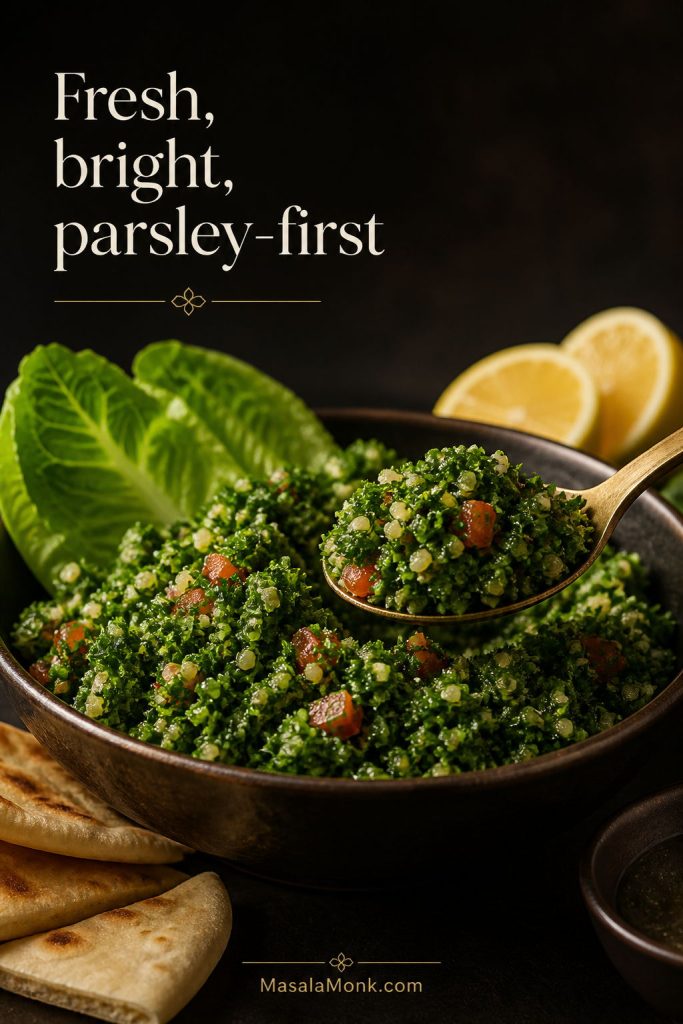
For the best tabbouleh, keep the salad parsley-first, use fine bulgur, dry the herbs thoroughly, drain juicy tomatoes, and taste after the salad rests. Those small details make the difference between a fresh, bright herb salad and a watery, grain-heavy bowl.








