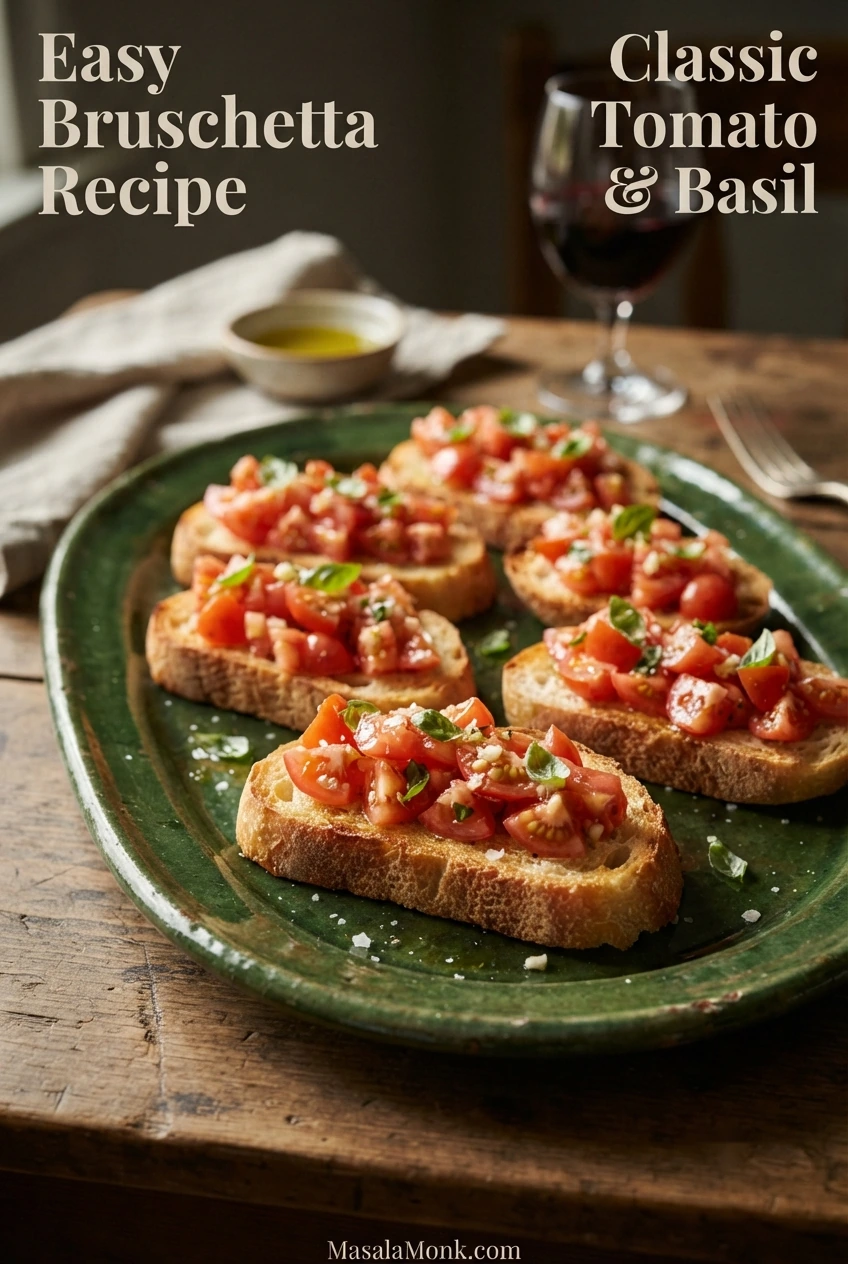
Tomato bruschetta is at its best when the contrast is just right: warm garlic-rubbed bread, juicy ripe tomatoes, fresh basil, and good olive oil. The bread should crunch when you bite into it, while the tomatoes stay bright and full of flavor.
This easy bruschetta recipe follows the Italian bruschetta al pomodoro tradition of toasted bread topped with fresh tomatoes. Choose ripe, flavorful tomatoes, toast the bread until crisp but not hard, and assemble everything close to serving. Balsamic glaze, pesto, and cheese are optional variations rather than essentials.
You’ll make approximately 12 medium appetizer toasts in 25–30 minutes, with tomato preparation happening while the oven heats. Serve them as a starter, use smaller baguette rounds for parties, or choose broader country-bread slices for a more substantial appetizer.
Jump to the bruschetta recipe · Quick recipe reference
On This Page
- Easy Bruschetta Recipe: Ingredients and Method
- Best Tomatoes, Bread, and Seasonings
- How to Keep Bruschetta Crisp
- Alternative Bread-Toasting Methods
- Balsamic, Cheese, Pesto, and Roasted Tomato Variations
- Make-Ahead Bruschetta and Party Planning
- Troubleshooting and Quick Fixes
- Frequently Asked Questions
Easy Bruschetta Recipe: Ingredients and Method
Prep: 15 minutes | Cook: 8–10 minutes | Total: About 25–30 minutes | Yield: Approximately 12 medium appetizer toasts | Serves: 4–6 as a starter.
Equipment: Knife, cutting board, serrated bread knife, mixing bowl, baking sheet, measuring spoons, and pastry brush. A kitchen scale is useful for weighing the ingredients.
Ingredients
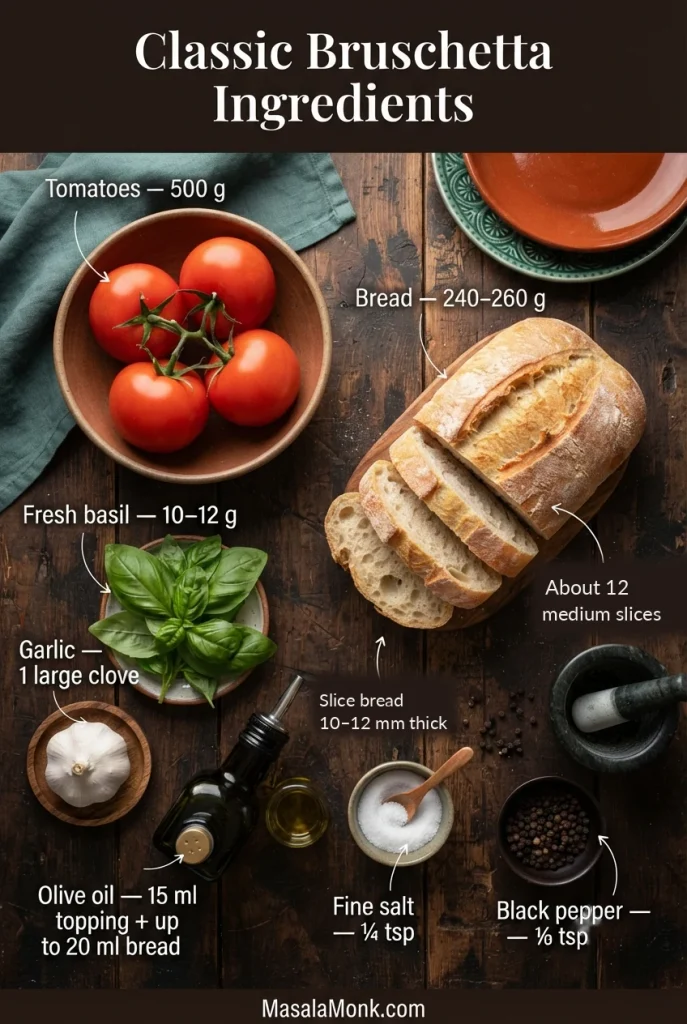
Classic tomato bruschetta uses a short ingredient list. The two olive-oil quantities serve different purposes: one dresses the tomatoes, while the other lightly coats the bread.
For the tomato and basil topping:
- 500 g (about 1.1 lb) ripe tomatoes — Roma, plum, cherry, grape, or another flavorful variety; weigh before trimming.
- 1 tablespoon (15 ml) extra-virgin olive oil
- 10–12 g fresh basil leaves — approximately ½ cup loosely packed whole leaves, although weight is more reliable.
- ¼ teaspoon fine sea salt — approximately 1.5 g, depending on the salt, plus more to taste.
- ⅛ teaspoon freshly ground black pepper — or to taste.
For the garlic toast:
- 240–260 g (8½–9 oz) crusty Italian country bread or ciabatta — enough for approximately 12 medium appetizer slices.
- Up to 1 tablespoon plus 1 teaspoon (20 ml) extra-virgin olive oil — for lightly brushing the bread.
- 1 large garlic clove — halved for rubbing on the toast; keep another handy if needed.
Portions: Plan on roughly 2–3 tablespoons of tomato topping per medium slice. Smaller baguette rounds need less, while broader rustic toasts can hold more.
How to Make Tomato Bruschetta
Prepare the tomatoes while the oven heats, then toast and season the bread. Add the basil and assemble the bruschetta shortly before eating so the topping stays fresh and the bread retains its crunch.
Heat the Oven
Preheat a conventional oven to 220°C / 425°F, with a rack in the middle. For a fan-assisted oven, use approximately 200°C / 390°F. Prepare the tomatoes while the oven heats.
Dice the Tomatoes
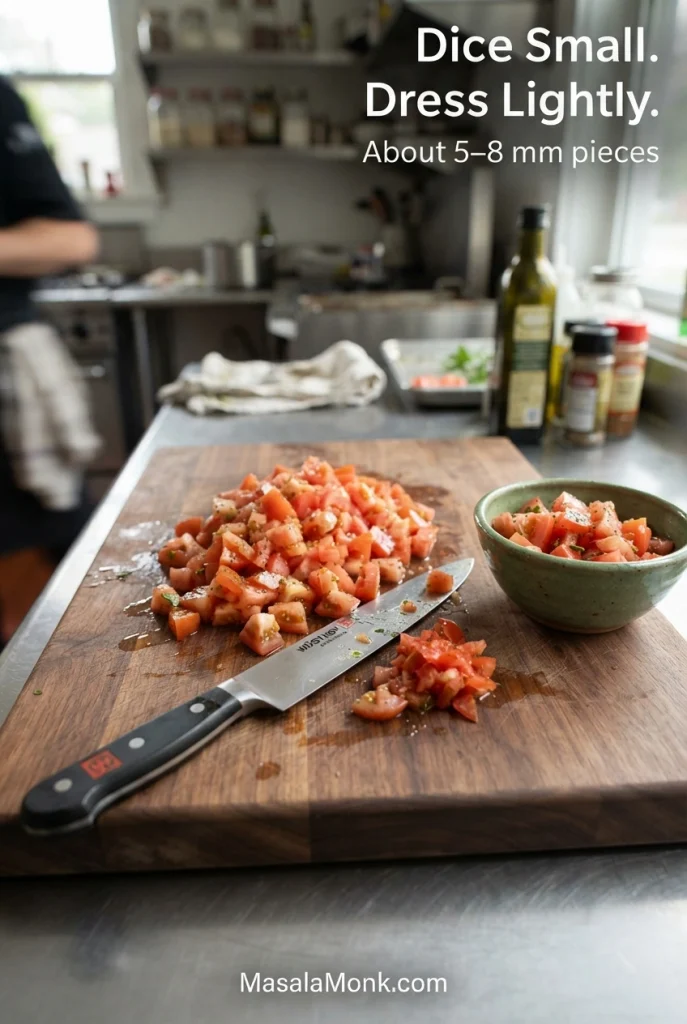
Wash and dry the tomatoes, remove tough cores, and cut them into fairly even pieces, approximately 5–8 mm across. Keep the skins, flesh, and seeds. If the tomatoes are exceptionally watery, leave behind some loose liquid rather than removing the flavorful interiors.
Season the Tomato Topping
Gently combine the chopped tomatoes with 1 tablespoon (15 ml) olive oil, ¼ teaspoon fine sea salt, and black pepper. Set the mixture aside while the bread toasts. Save the basil until just before serving to preserve its aroma and color.
Slice and Oil the Bread
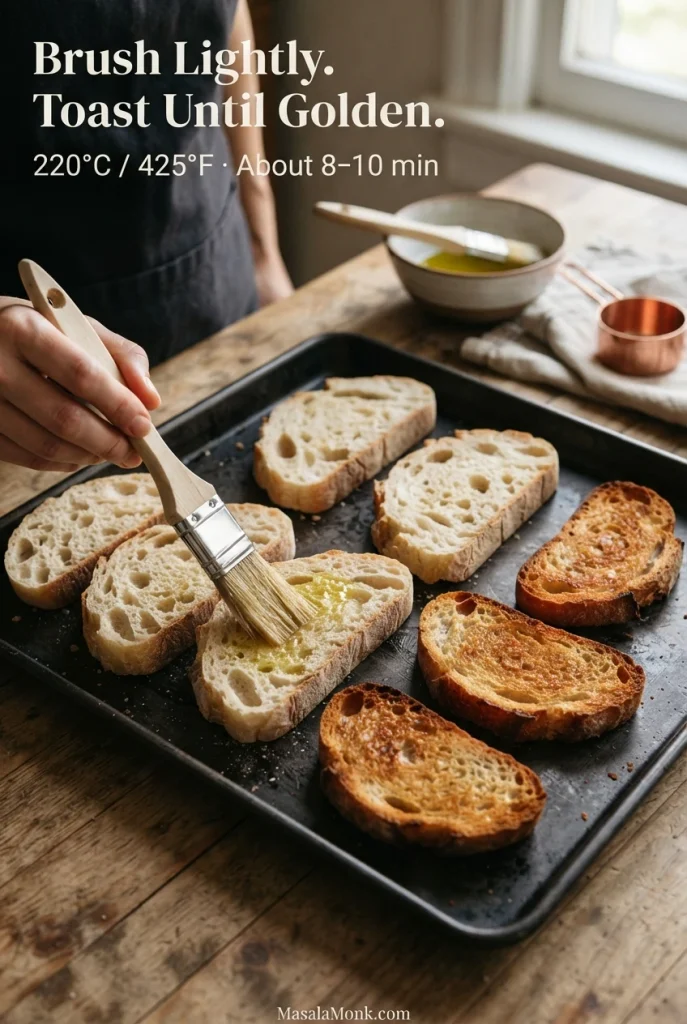
Cut approximately 12 medium slices, about 10–12 mm (⅜–½ inch) thick. Arrange them in a single layer on a baking sheet, then brush both sides lightly with olive oil, using up to 20 ml in total. The surfaces should have a thin, even coating without oily patches.
Toast Until Golden
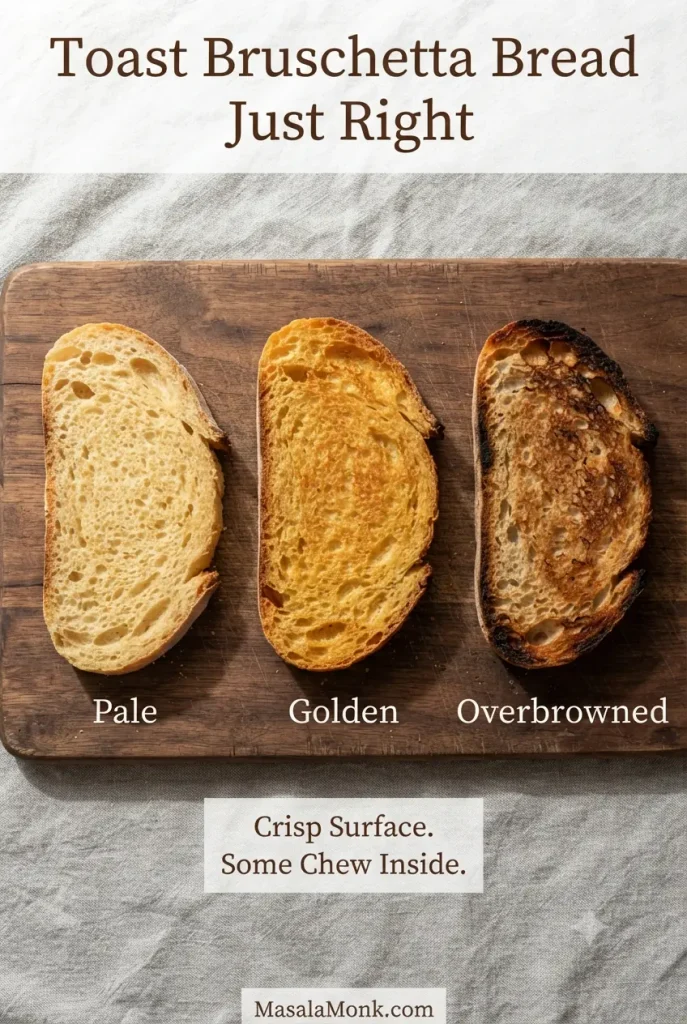
Bake for approximately 8–10 minutes, checking after five. Turn the slices once for even browning, and rotate the tray if your oven has hot spots. The bread should become golden and crisp at the surface while retaining a little chew inside.
Rub the Warm Toast with Garlic
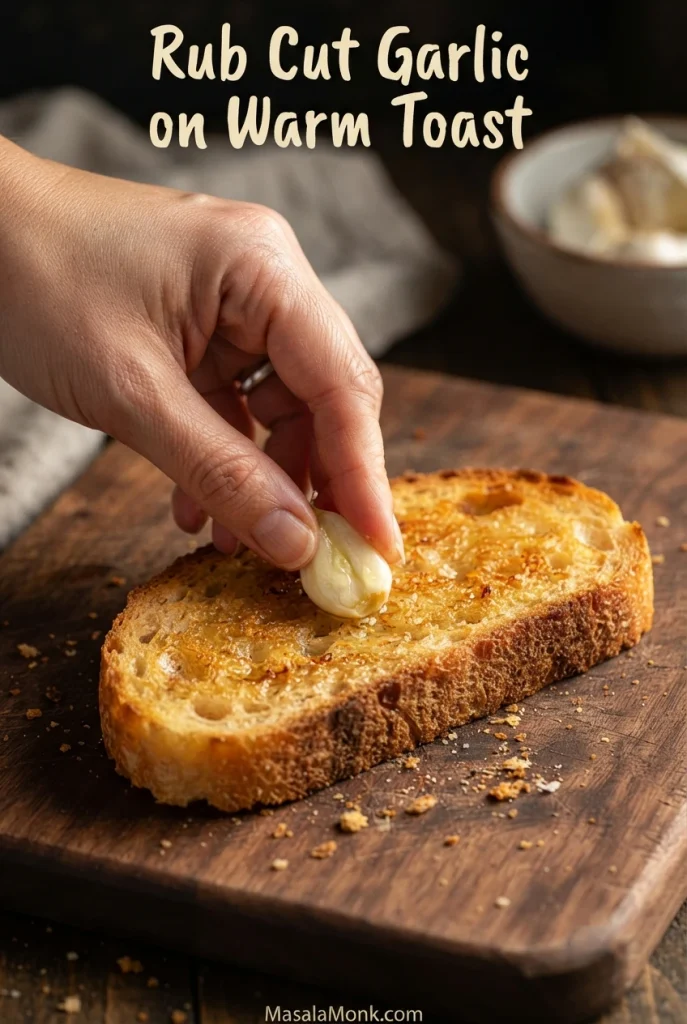
While the toast is still warm, gently rub its upper cut surface with the halved garlic clove. The rough bread catches a little garlic with each pass. Start lightly, since the intensity increases with repeated rubbing.
Add Basil and Finish the Tomatoes
Tear or thinly slice the fresh basil, then fold it gently through the tomato mixture. Taste and adjust the salt if necessary. The finished topping should contain distinct tomato pieces, scattered basil, and a light sheen of olive oil. Leave most pooled liquid behind when spooning it onto the toast.
Assemble and Serve
Spoon approximately 2–3 tablespoons of topping onto each medium toast. Adjust for bread size and serve promptly, while the crust is crisp and the tomatoes remain juicy.
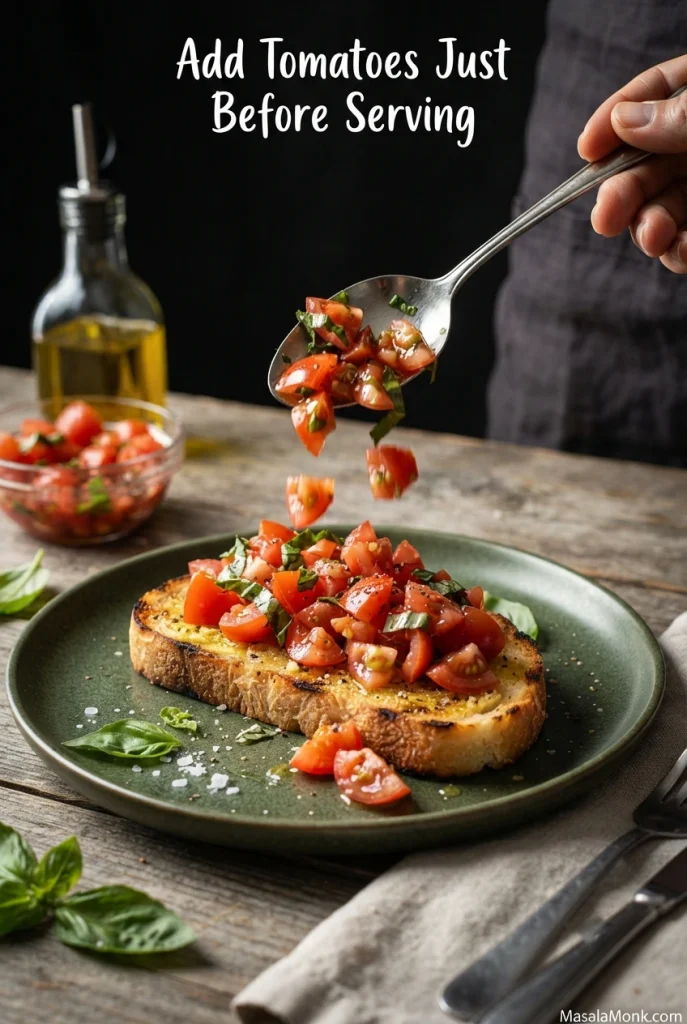
Taste the first piece before assembling the whole platter. The bread should crunch without being difficult to bite. Tomatoes should lead the flavor, followed by basil, olive oil, and a hint of garlic. If the topping falls off, use slightly less on the remaining slices.
Quick Bruschetta Recipe Reference
Cooking from your phone? This visual reference brings the basic quantities and preparation sequence into one view. Use the complete instructions above whenever you need precise measurements, temperatures, or guidance on doneness.
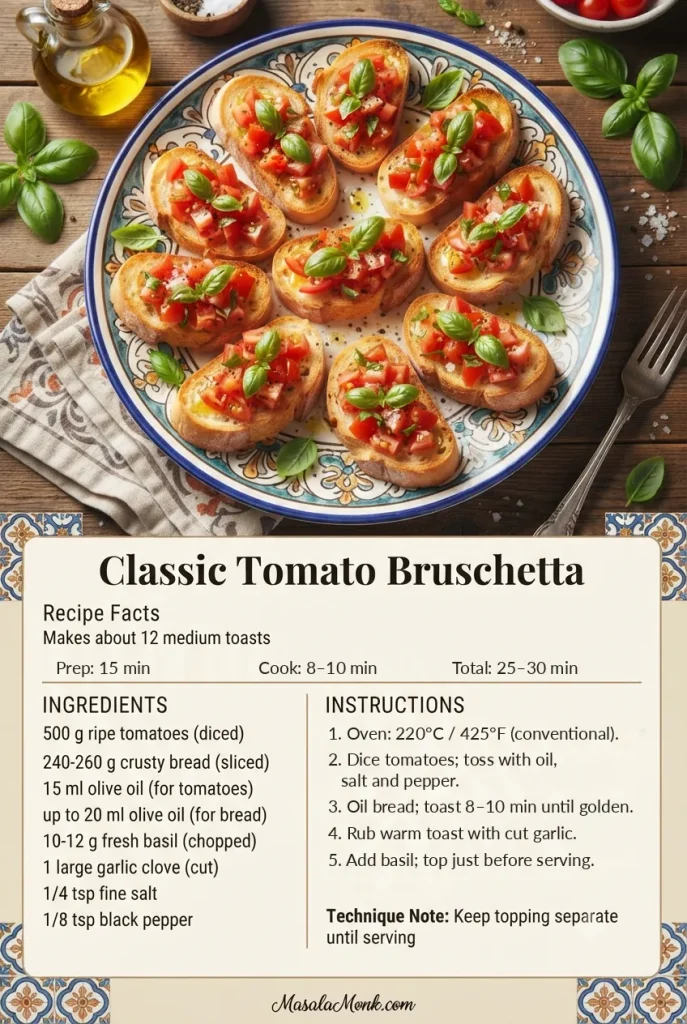
If something went wrong with the first batch, consult the bruschetta troubleshooting guide. Preparing for guests? The make-ahead timeline explains which tasks can be completed earlier.
Best Tomatoes, Bread, and Seasonings for Bruschetta
The classic topping is uncooked, so a tomato’s natural flavor cannot hide behind a long cooking process. Bread selection matters just as much: a crust that is too tough or a slice that cannot carry the tomatoes makes an otherwise good bruschetta harder to enjoy.
What Are the Best Tomatoes for Bruschetta?
Don’t get too attached to the word “Roma.” The best tomatoes for bruschetta are the ones that taste good. Sweet, ripe cherry tomatoes can outperform bland plum tomatoes, even though the latter are often easier to dice.
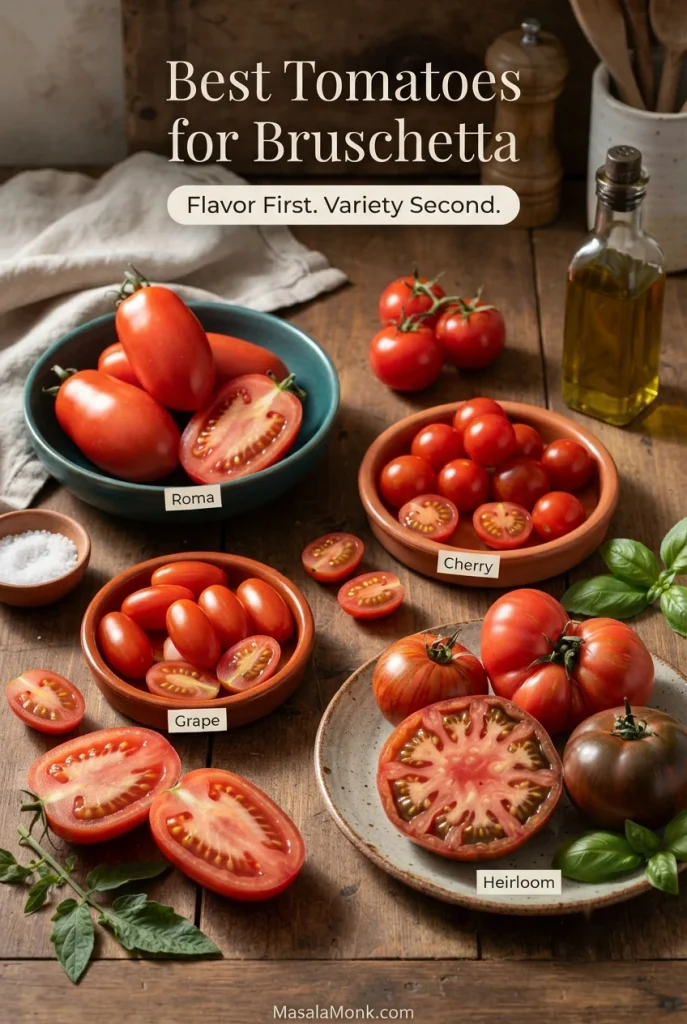
Roma and plum tomatoes have relatively firm flesh that holds its shape. Cherry and grape tomatoes can bring excellent sweetness, particularly when larger tomatoes are underripe. Heirloom and vine-ripened tomatoes also work well in season, although some are exceptionally juicy.
Choose tomatoes with a fresh aroma and flesh that yields slightly without feeling mushy. Keep the skins and most of the juicy interior. The seed gel carries flavor, so removing it all sacrifices part of what makes ripe tomatoes taste good.
Tomatoes that are too soft for neat bruschetta pieces are better suited to a cooked dish, such as our fresh tomato soup recipe.
Working with particularly juicy tomatoes? See how much liquid to leave behind without losing their flavor.
What Is the Best Bread for Bruschetta?
Italian country bread is an excellent first choice for rustic bruschetta. Broad slices hold chopped tomatoes comfortably, while a good loaf develops a crisp exterior without becoming hard all the way through.
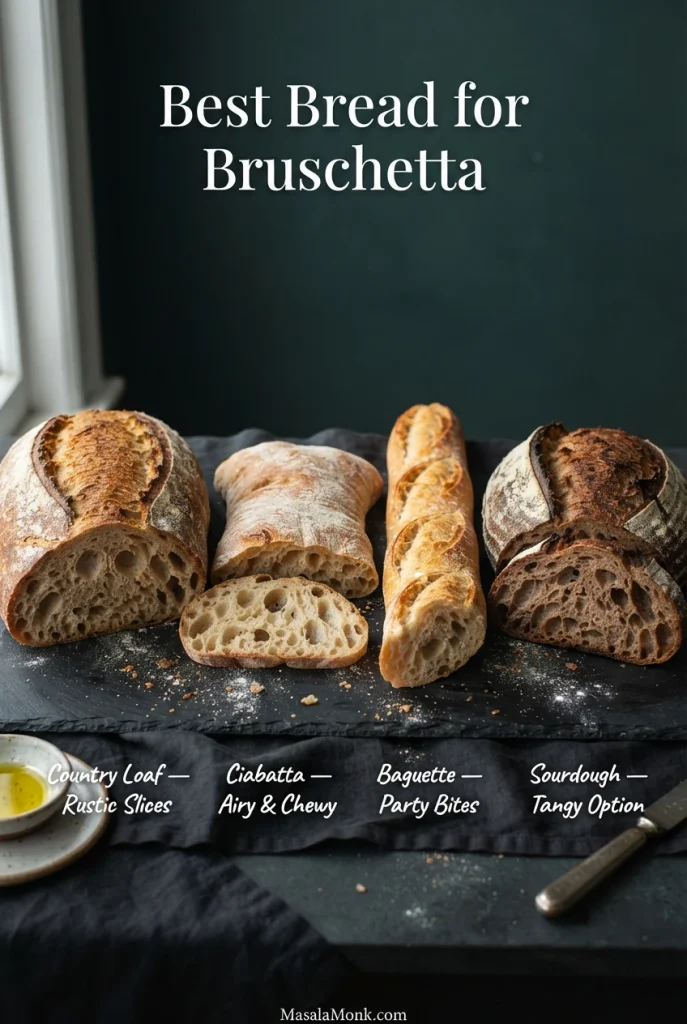
- Ciabatta: Airier than many country loaves, with a chewy interior. It works well for medium or larger bruschetta pieces.
- Baguette: Ideal for small party bites. Slice diagonally to provide more topping space, and watch carefully during toasting.
- Sourdough: Adds a pleasant tang. Choose a loaf with a crust that’s comfortable to bite.
For larger rustic bruschetta, cut slices approximately 1.5 cm thick and toast until crisp outside with some chew inside. Slightly day-old bread works well, provided it hasn’t become completely dry. Small baguette rounds may yield more pieces from the same quantity of topping.
Homemade focaccia offers a softer, olive-oil-rich alternative. Cut it into sturdy portions and toast the cut surface before adding tomatoes.
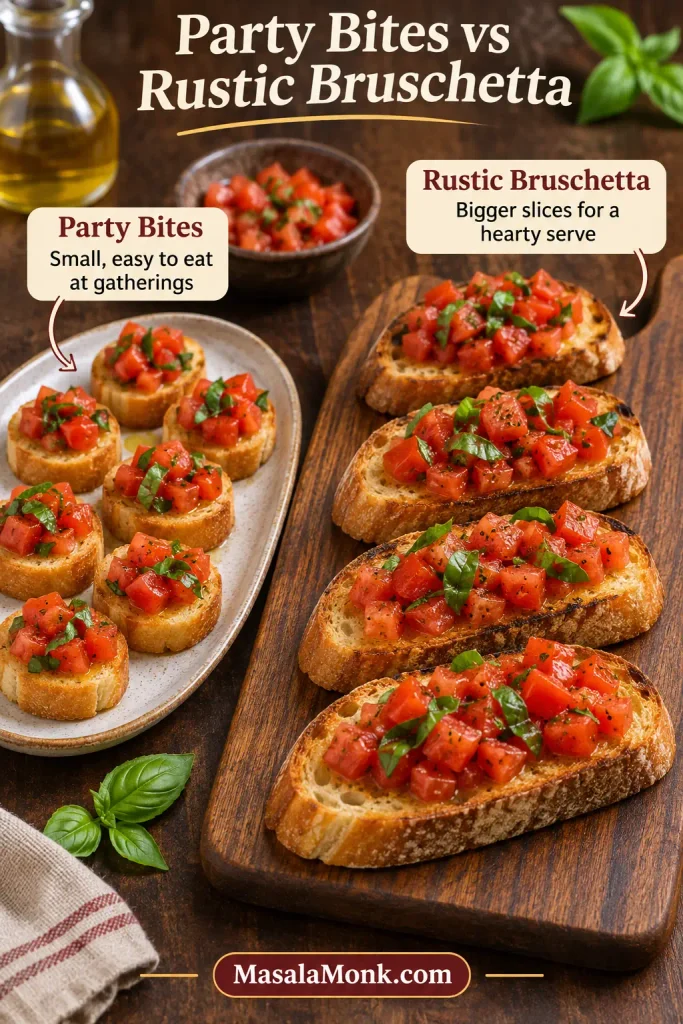
If you’re choosing bread for entertaining, compare small party bites and larger rustic bruschetta to see how the serving format changes.
Garlic, Olive Oil, Basil, and Salt
Choose extra-virgin olive oil that tastes good on its own. It coats the tomatoes and rounds out their acidity without making the mixture greasy.
Warm, rough toast catches a little garlic when you rub the cut clove over it, almost like a fine grater. This gives the bread its savory aroma without mixing raw minced garlic into the classic tomato topping. Replace the clove if its cut surface becomes too small to use comfortably.
Fresh basil has a lively, slightly peppery fragrance. Tear it near serving time to preserve that aroma. Taste the seasoned tomatoes too: salt should make their flavor more pronounced, not become the dominant taste.
How to Keep Bruschetta Crisp Without Drying Out the Tomatoes
Crisp bruschetta depends on two different textures: a well-toasted bread surface and tomatoes that retain their juicy flesh without releasing too much loose liquid. The following comparisons show how to judge both.
What Crisp Bruschetta Bread Should Look Like
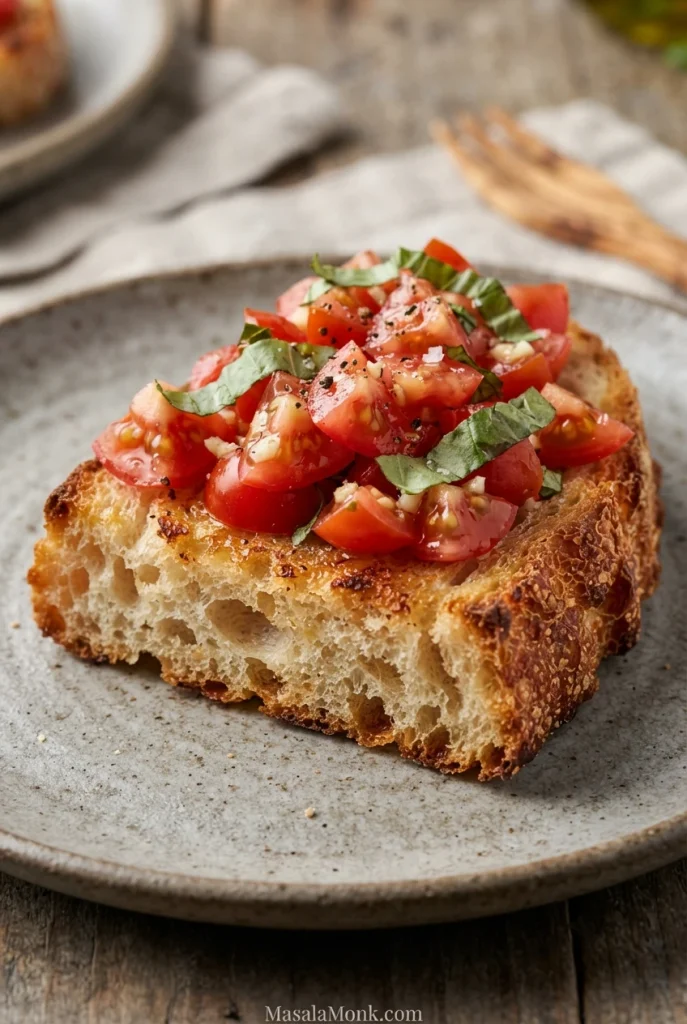
Look for a golden surface, a crisp crust, and an interior that still has some chew. You don’t want to dry the entire slice into a cracker. A little softness inside makes rustic bruschetta easier to bite while the outer surface carries the tomatoes.
Small Party Bites or Larger Rustic Slices?
Small baguette rounds need a modest spoonful of finely diced tomatoes so guests can pick them up easily. By contrast, broad rustic slices hold more topping and are better suited to plated appetizers. Neither style is automatically better; choose according to how people will eat them.
Should You Drain the Tomato Topping?
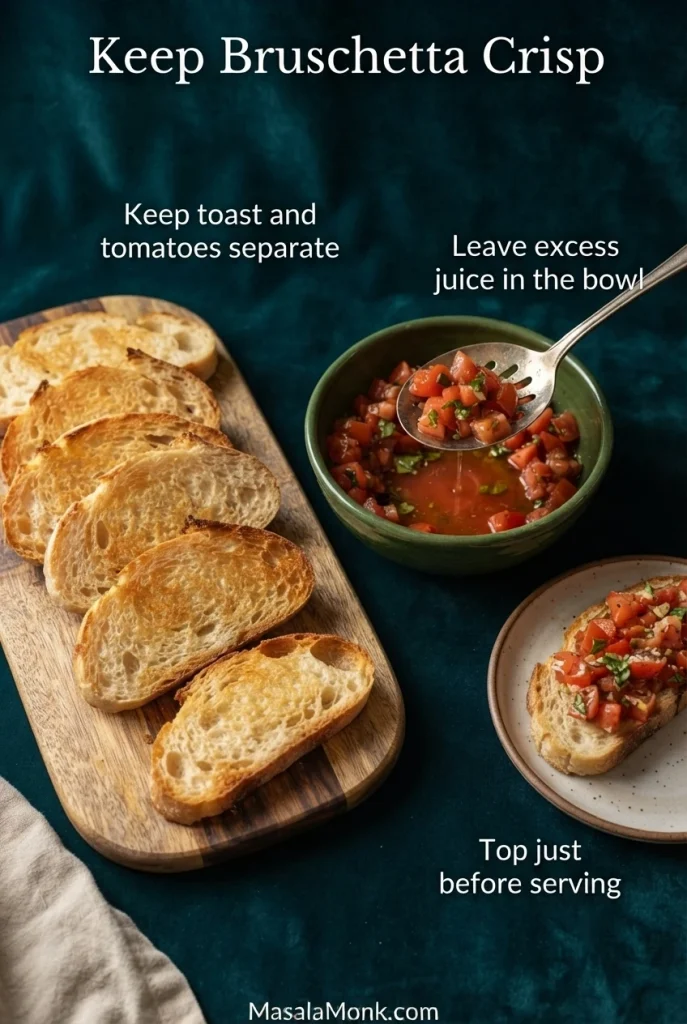
Remove only the excess loose juice. Salted tomatoes release liquid as they stand, so a little may collect at the bottom of the bowl. Use a regular or slotted spoon to lift out the diced pieces without pouring all that liquid over the toast. Keep the flavorful flesh and seed gel rather than squeezing the tomatoes dry.
Other Ways to Toast Bruschetta Bread
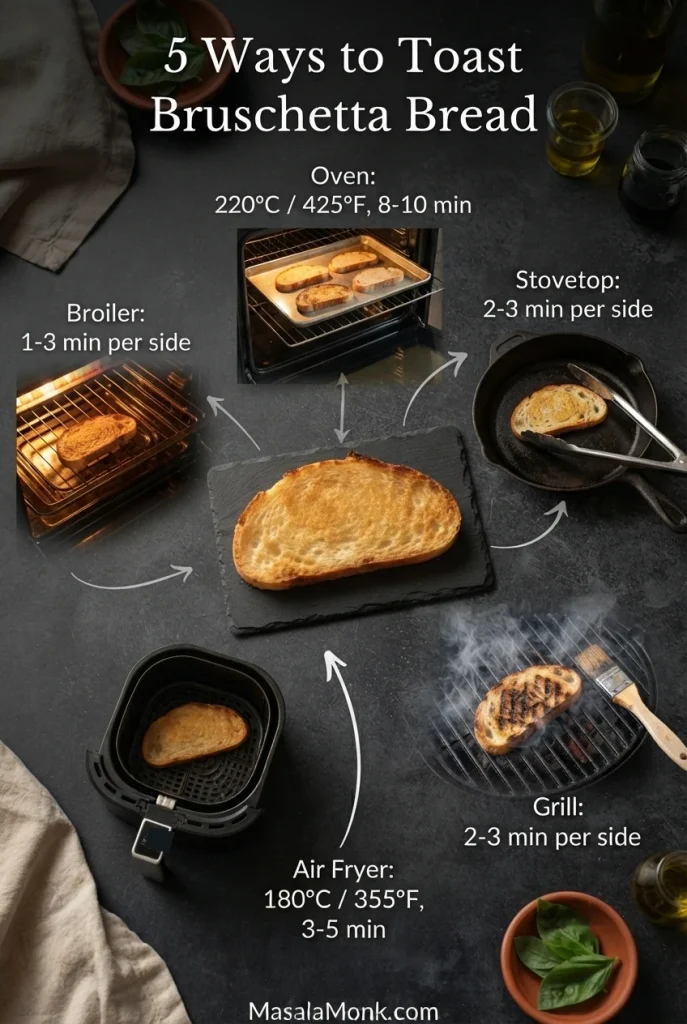
The oven works well for a full tray, but it isn’t the only way to toast bruschetta bread. A skillet offers direct control, a grill develops smoky edges, an air fryer suits smaller batches, and a broiler browns bread rapidly. Regardless of the method, aim for a crisp surface with some chew inside.
Stovetop Skillet
Heat a heavy skillet over medium to medium-high heat. Lightly oil the bread, then toast for approximately 2–3 minutes per side until golden patches appear and the surface becomes crisp. Reduce the heat if the bread darkens too quickly.
Grill or Griddle
Place lightly oiled bread slices on a clean grill or griddle over medium-high heat. Toast for approximately 2–3 minutes per side, until crisp with a little char. This method works particularly well with thicker rustic bread.
Air Fryer
Arrange the slices in a single layer and air-fry at approximately 180°C / 355°F for 3–5 minutes. Check early and turn if needed. Thin baguette slices may finish faster than country bread.
Broiler or Oven Grill
Place the bread on a baking sheet at a safe distance from the heating element. Broil for approximately 1–3 minutes per side, turning as necessary and watching continuously. Direct heat can burn bread quickly.
Whichever cooking method you choose, rub the toast with garlic while warm. Then follow the final assembly step to add the fresh tomato topping.
Bruschetta Variations: Balsamic, Cheese, and More
Classic bruschetta al pomodoro needs no balsamic or cheese, but variations can be excellent. Balsamic changes the acidity and sweetness, cheese adds richness, pesto concentrates the herb flavor, and roasting transforms the tomatoes’ texture. Choose one approach according to the result you want.
Bruschetta with Balsamic Vinegar or Glaze
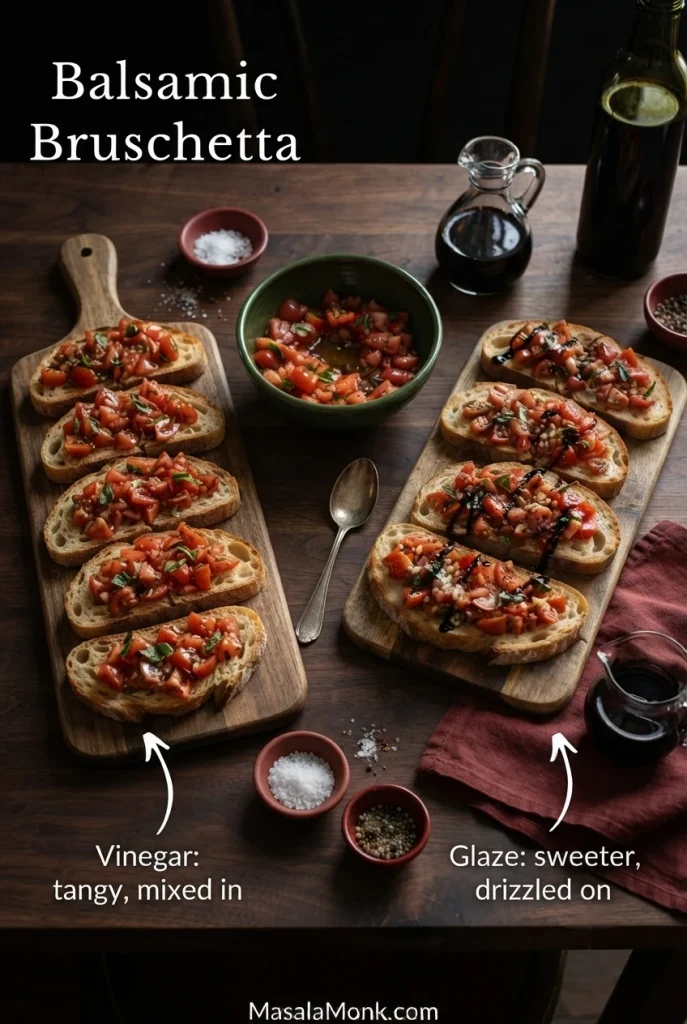
Balsamic vinegar adds acidity and depth. Stir ½ teaspoon (2.5 ml) into the full tomato batch, taste, and increase to 1 teaspoon (5 ml) if preferred. Balsamic glaze is thicker and usually sweeter, so use only a few drops over the assembled bruschetta. Neither is essential to the classic version.
Bruschetta with Mozzarella, Burrata, or Ricotta
Fresh mozzarella holds in soft pieces, burrata releases a creamy center, and ricotta provides a spreadable base beneath the tomatoes. Choose mozzarella for neater hand-held appetizers; burrata works better on a plate.
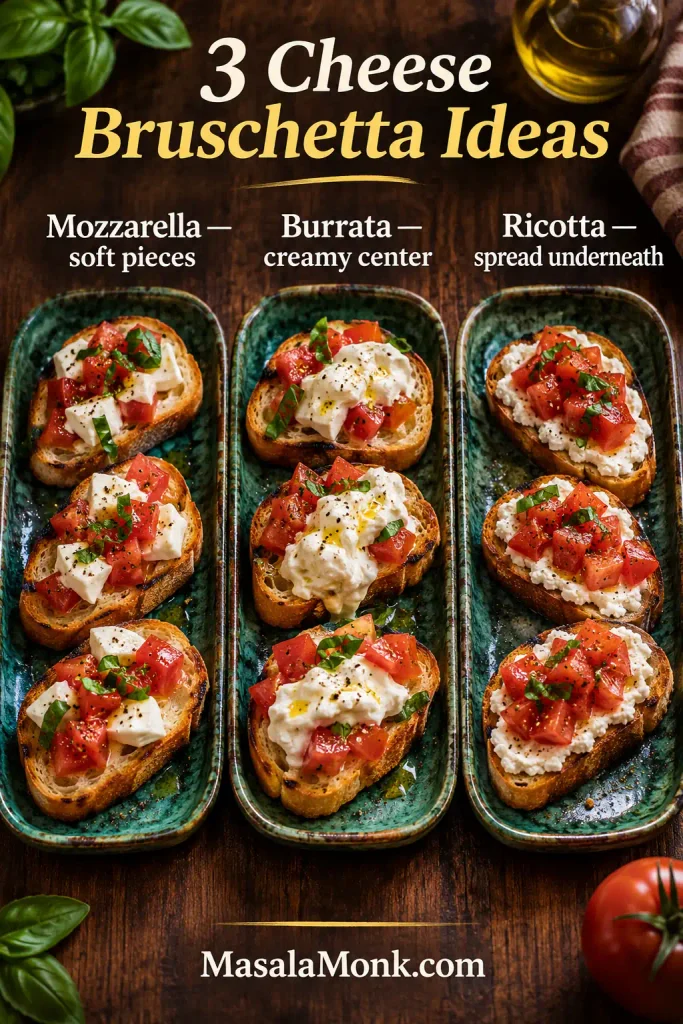
- Fresh mozzarella: Divide 100–125 g (3½–4½ oz) of well-drained, torn or diced mozzarella across the batch for a mild, more substantial topping.
- Burrata: Use approximately 125 g (4½ oz) across larger rustic slices. Its creamy center works best on a plated appetizer.
- Ricotta: Spread 1–2 teaspoons of well-drained ricotta on each toast before adding tomatoes.
Pesto, Extra Garlic, and Roasted Tomato Bruschetta
For stronger garlic flavor, stir ½ small finely minced garlic clove into the tomatoes and rub the toast more lightly. This is a more assertive garlic variation than the classic cut-clove technique.
Pesto Bruschetta
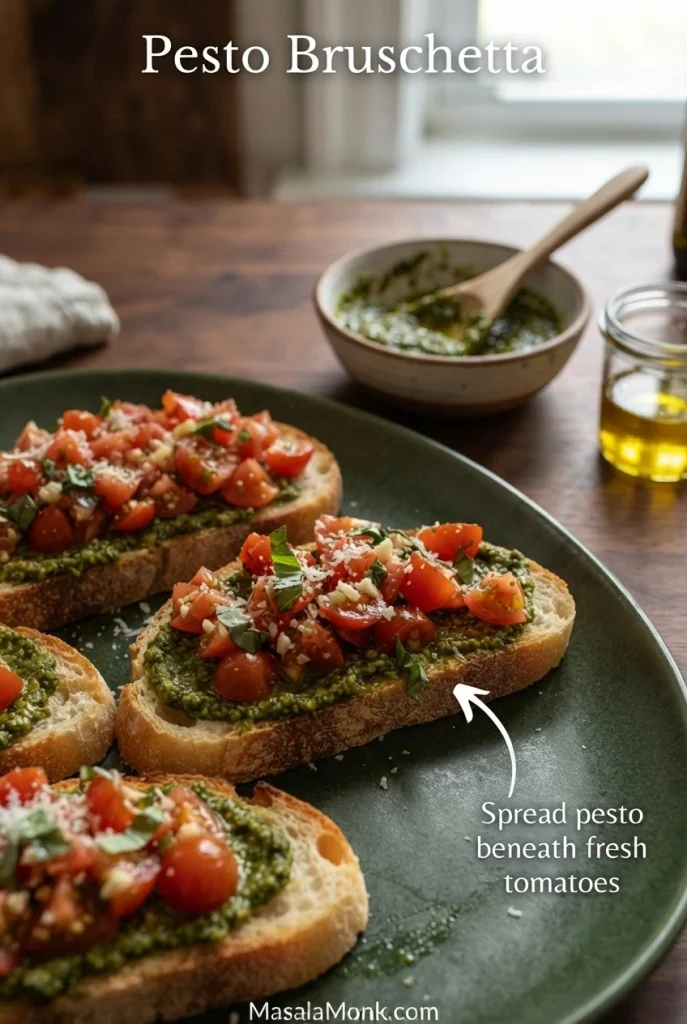
Pesto brings concentrated basil flavor and richness. Spread ½–1 teaspoon of pesto onto each larger toast before adding tomatoes. Our basil pesto recipes and variations offer other ways to use the sauce. Check ingredients when serving people with nut or dairy allergies.
Roasted Tomato Bruschetta
Roasted tomatoes make a sweeter-tasting, softer topping, especially when flavorful fresh tomatoes are difficult to find. Halve small tomatoes, toss with a little olive oil and salt, and roast at 200°C / 390°F for approximately 20–30 minutes. Look for softened flesh, wrinkled skins, thickened juices, and lightly caramelized edges. Cool slightly before adding to toast. This is a cooked variation, not the main fresh-tomato recipe.

Other useful substitutions:
- Without fresh basil: Leave it out for tomato-and-garlic bruschetta or add a small pinch of dried basil, which has a more muted flavor.
- Without garlic: Skip the garlic rub and let the tomatoes, olive oil, and basil provide the flavor.
- Gluten-free: Use sturdy gluten-free bread and prevent cross-contact when cooking for someone with celiac disease.
- Canned tomatoes: Reserve them for a cooked topping instead of substituting directly in this fresh recipe.
Making Bruschetta Ahead for a Party
You don’t want to spend the evening balancing tomatoes on toast while everyone else is enjoying themselves. Instead, prepare the ingredients separately and assemble a small platter when guests are ready. For larger gatherings, a self-serve station lets people top their own bread while it remains crisp.
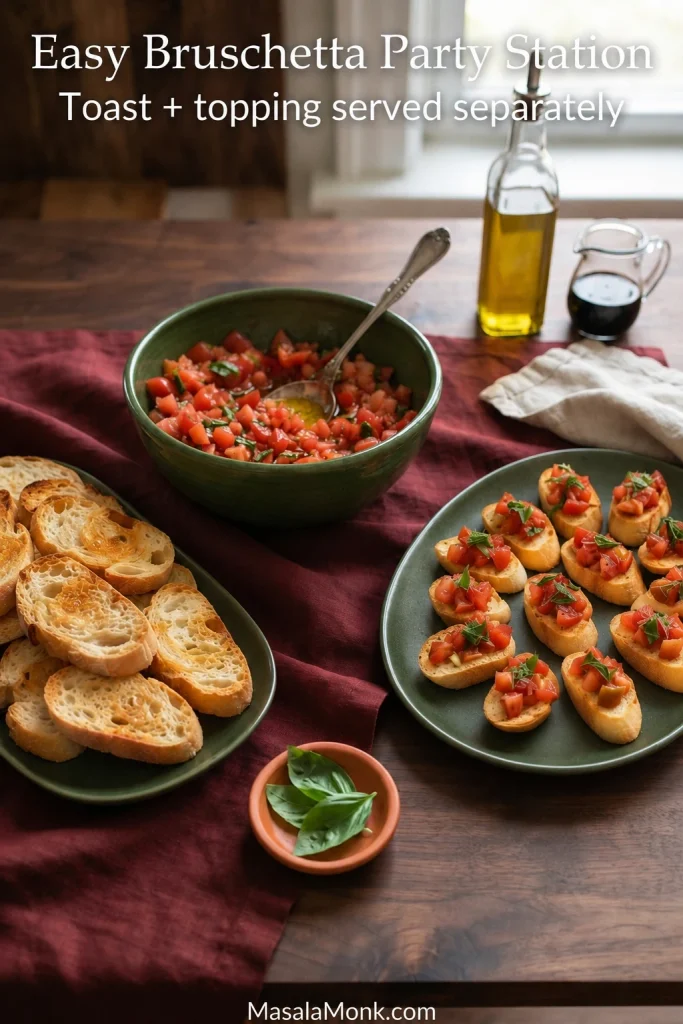
A Simple Make-Ahead Bruschetta Timeline
Preparing bruschetta ahead works best when the tomato topping, toast, and basil remain separate until the appropriate stage. The timeline below shows what to prepare in advance and what to finish just before serving.
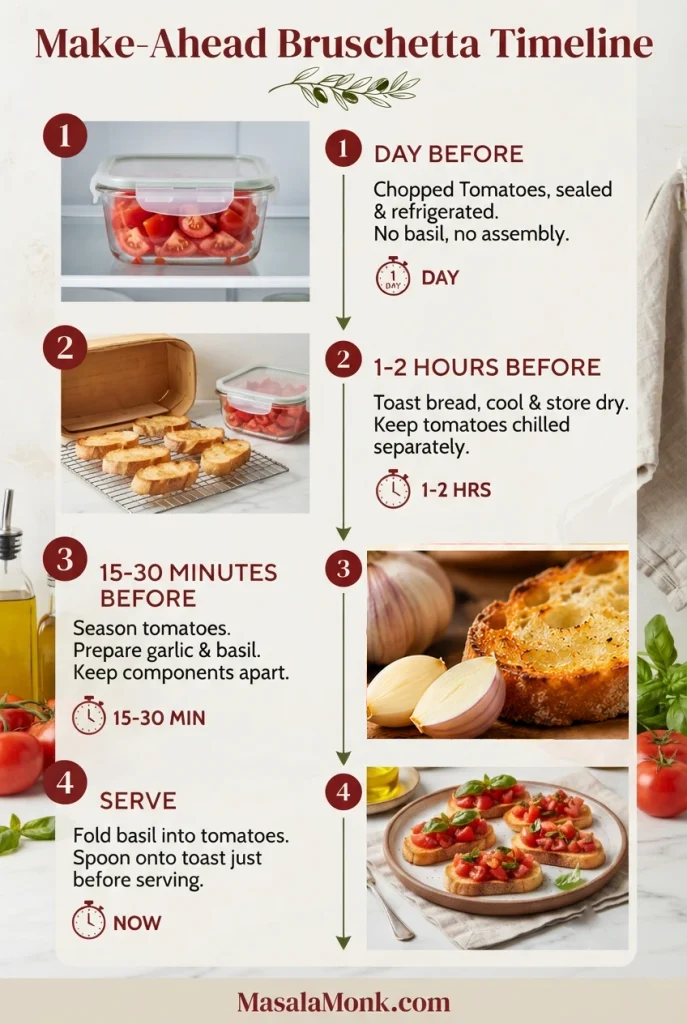
| When | What to Do |
|---|---|
| The day before | Buy ingredients and prepare serving dishes. If necessary, chop the tomatoes and refrigerate promptly in a covered container without seasoning. Freshly chopped tomatoes generally provide the best texture. |
| 1–2 hours before | Slice and toast the bread if convenient. Cool it completely, then store in a dry, airtight container. Keep the tomatoes refrigerated separately. |
| 15–30 minutes before | Season tomatoes with olive oil, salt, and pepper. Taste and adjust. Briefly refresh softened toast, then rub it with garlic while warm. Prepare the basil. |
| At serving time | Fold the basil into the tomatoes. Assemble a small platter or let guests top their own toast. |
A chilled pasta salad can also be prepared ahead, leaving you free to finish the bruschetta just before guests eat.
How Much Bruschetta Should You Make for a Crowd?
Allow approximately 2–3 small appetizer pieces per person when serving other starters. Larger rustic slices are more substantial, so adjust portions accordingly. The quantities below scale the standard recipe for roughly 12, 24, or 36 medium pieces; smaller baguette rounds may produce more.
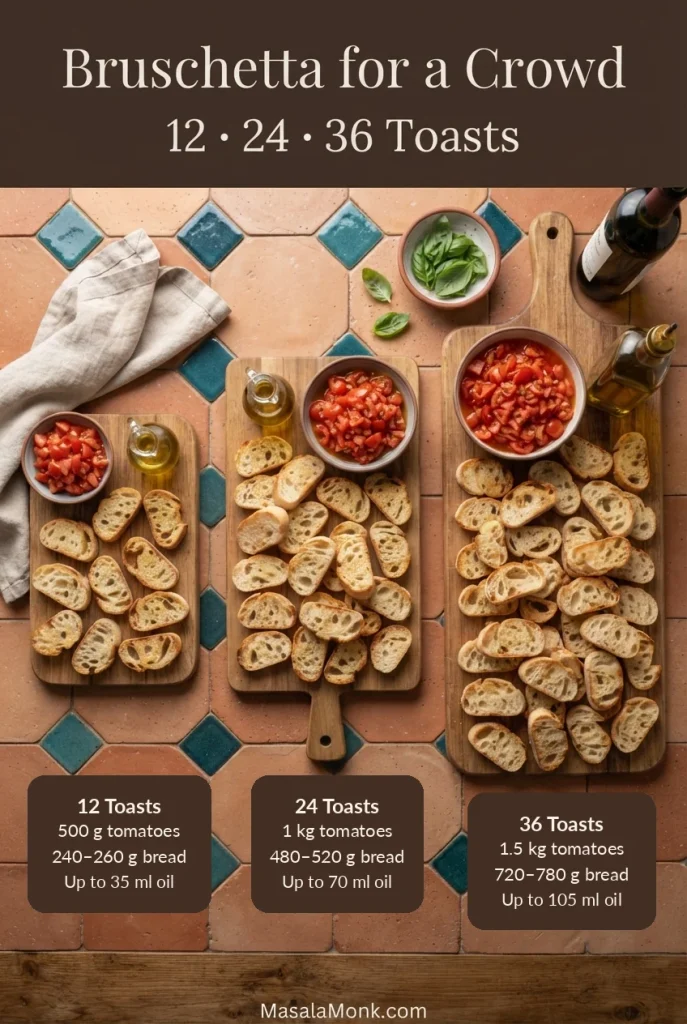
| Ingredient | 12 Pieces | 24 Pieces | 36 Pieces |
|---|---|---|---|
| Tomatoes, whole weight | 500 g | 1 kg | 1.5 kg |
| Bread | 240–260 g | 480–520 g | 720–780 g |
| Olive oil, total allowance | Up to 35 ml | Up to 70 ml | Up to 105 ml |
| Fresh basil | 10–12 g | 20–24 g | 30–36 g |
| Garlic for rubbing | 1 large clove* | 2 large cloves* | 3 large cloves* |
| Fine salt, starting amount | ¼ tsp | ½ tsp | ¾ tsp |
*Garlic amounts are starting points; have another clove handy if needed. The olive oil allowance includes 15 ml per standard batch for the tomatoes and up to 20 ml for brushing the bread.
Serving and Holding Bruschetta for Guests
For a small dinner, serve freshly assembled bruschetta. At longer gatherings, offer the topping in smaller bowls and replenish it from the refrigerator using clean containers and utensils. Avoid adding fresh food to a serving bowl that has been sitting out. Keep extra plain toast available for guests who want another piece.
Storing Leftover Bruschetta
Refrigerate unused tomato topping promptly in a covered container at 4°C / 40°F or below. For the best fresh flavor and texture, aim to use it within approximately 24 hours. That is a quality recommendation, not a universal food-safety expiration time.
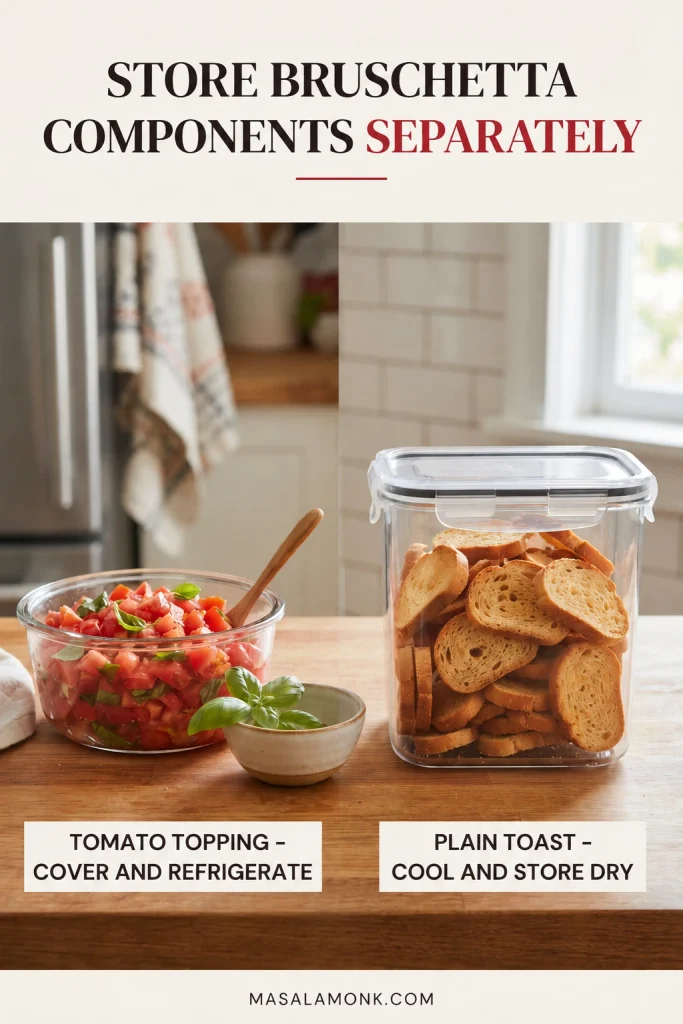
Cut tomatoes and other perishable toppings should not remain at room temperature for more than two hours, or more than one hour when temperatures exceed 32°C / 90°F. Follow FoodSafety.gov’s safe food-handling guidance, and discard food left beyond safe holding limits.
Cool unused plain toast completely and store it separately in a dry container. If necessary, refresh it briefly in an oven or skillet before serving. Properly refrigerated leftover tomato topping can also be used on fresh toast or in a salad.
Bruschetta Troubleshooting: What to Fix Now and Next Time
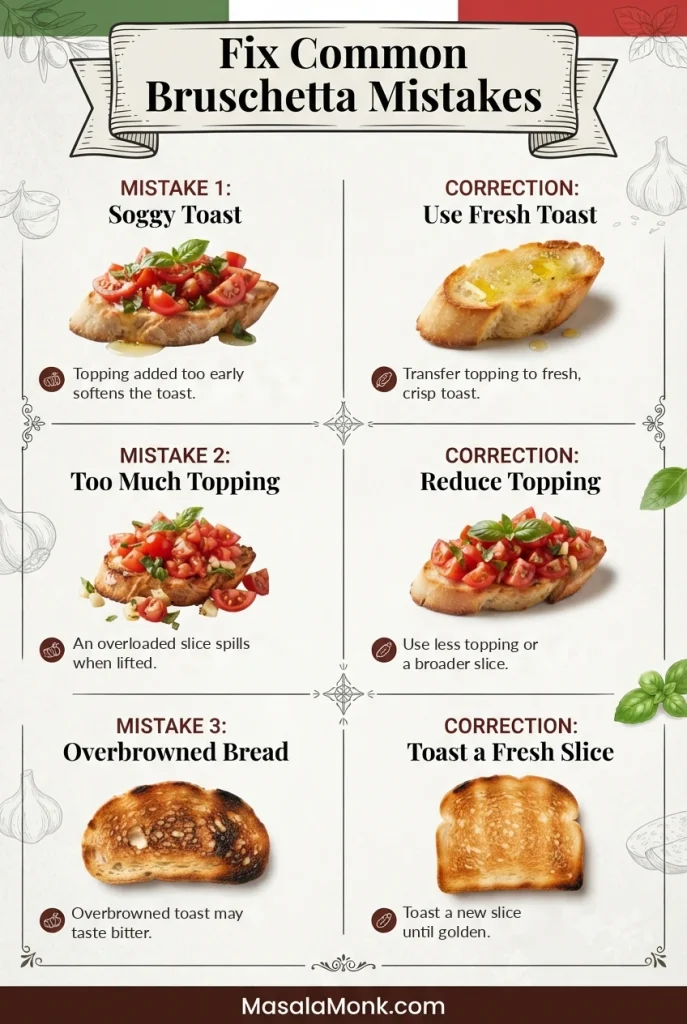
If your first batch isn’t quite right, check the bread, tomato flavor, and moisture separately. Some problems have immediate fixes, while others are easier to prevent on the next batch. The guide below helps you distinguish between the two.
| Problem | What to Do Now | Next Time |
|---|---|---|
| Soggy bread | Move the topping onto fresh, crisp toast if available. | Assemble closer to serving time. |
| Rock-hard toast | Replace severely overbaked slices. | Choose a manageable crust and reduce toasting time. |
| Tomatoes falling off | Reduce the topping per piece. | Dice smaller or choose wider bread. |
| Bland tomatoes | If the tomatoes are ripe but underseasoned, add a little salt and taste. Underripe tomatoes may not improve sufficiently for fresh bruschetta. | Choose tomatoes for flavor and ripeness rather than variety alone. |
| Too much oil | Lift tomatoes from pooled dressing or add more diced tomato. | Dress the topping lightly. |
| Too much garlic | Switch to plain or more lightly rubbed toast. | Rub gently and reduce minced garlic in optional variations. |
| Too much balsamic | Additional plain tomatoes may dilute excess vinegar, but they cannot fully undo too much glaze. | Add vinegar gradually and use glaze sparingly. |
| Not enough topping | Make fewer pieces or use smaller spoonfuls. | Match the number of toasts to the tomato quantity. |
| Uneven browning | Remove finished slices and toast pale ones a little longer. | Turn the bread and rotate the tray. |
| Watery topping | Leave pooled liquid behind when serving. | Keep the seed gel without adding unnecessary free liquid. |
Ready to try again? Return to the easy bruschetta recipe or go back to the article contents.
Frequently Asked Questions About Bruschetta
What Is Bruschetta Traditionally Made Of?
Bruschetta is an Italian preparation of grilled or toasted bread, often rubbed with garlic and dressed with olive oil. Bruschetta al pomodoro adds fresh tomatoes, commonly with basil. It’s pronounced roughly broo-SKEH-tah, with a hard “k.” You can read more in La Cucina Italiana’s bruschetta al pomodoro guide.
Is Bruschetta Served Hot or Cold?
Serve tomato bruschetta on warm or freshly toasted bread with an uncooked tomato topping. The tomatoes can be cool or closer to room temperature, provided they’ve been handled safely.
Can I Prepare the Tomatoes the Night Before?
Yes. Refrigerate chopped tomatoes promptly in a covered container without seasoning. Add olive oil, salt, pepper, and basil close to serving. Freshly chopped tomatoes generally have a better texture.
Do Tomatoes Need to Be Peeled or Deseeded?
No. Remove tough cores, but retain the skins and flavorful interiors. Leave behind only excess loose liquid when necessary.
Can I Make Bruschetta Without Fresh Basil?
Yes. Leave it out for tomato-and-garlic bruschetta, or use a small pinch of dried basil. Dried basil has a more muted flavor than fresh leaves.
What’s the Difference Between Bruschetta and Crostini?
Bruschetta usually uses larger rustic slices of grilled or toasted bread, often rubbed with garlic. Crostini are generally smaller toasted slices with various toppings. The distinction can overlap when tomato bruschetta is served on baguette rounds.
What Should I Serve with Tomato Bruschetta?
Tomato bruschetta works well before pasta, grilled vegetables, soup, or a fresh salad. For an Italian-inspired meal, try our pesto pasta recipe, or serve it with tomato basil soup.
Did you serve your bruschetta on rustic country bread or smaller baguette rounds? Tell us which worked best for you in the comments.
Cooking now? Back to the recipe · Quick recipe reference · Back to contents