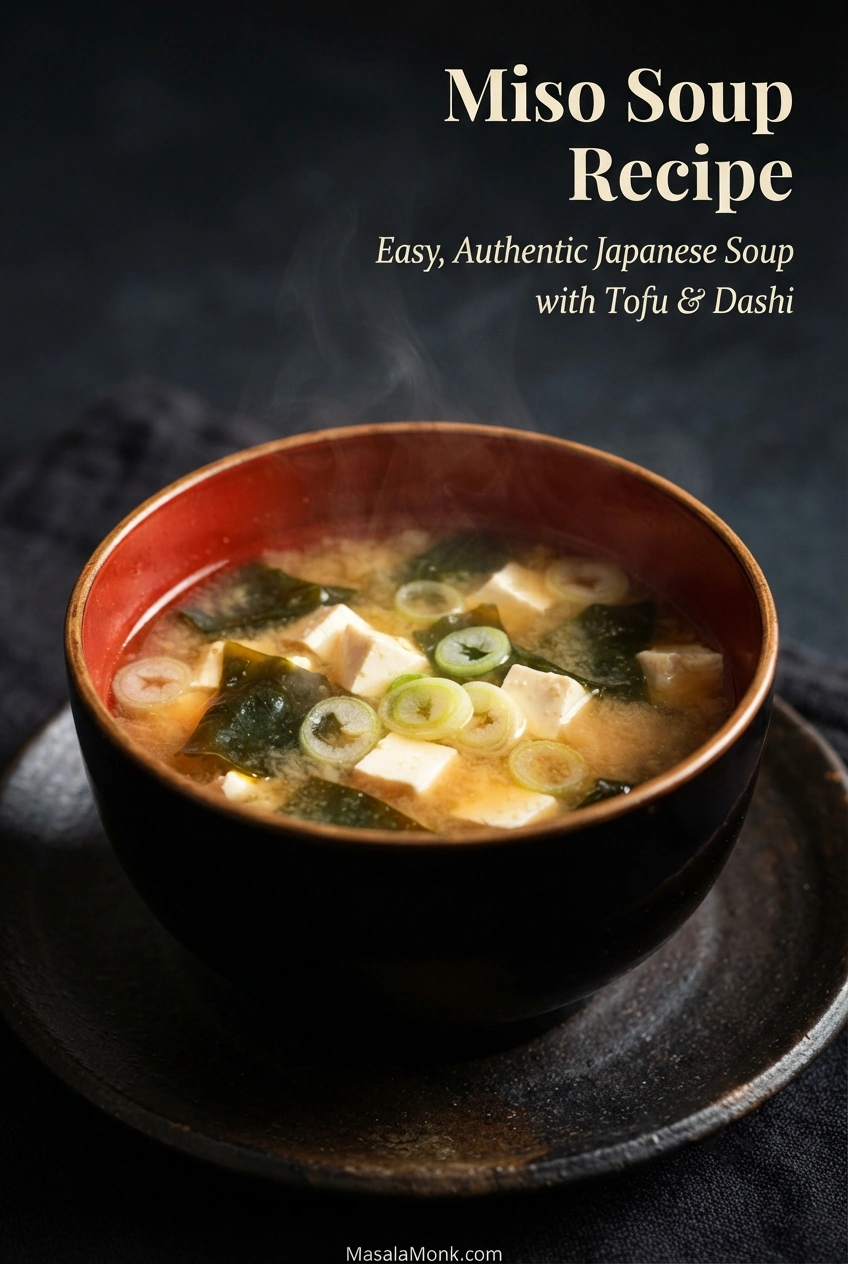
A small bowl of Japanese miso soup can bring a meal together. Warm dashi carries the savory flavor, while tender tofu and soft wakame add texture to every spoonful. A little sliced scallion adds freshness. Traditionally served alongside rice and other dishes, miso soup is surprisingly straightforward once you understand the ingredients and the order of preparation.
This miso soup recipe covers the traditional Japanese method using homemade kombu-and-bonito dashi, a separate 10-minute version using instant dashi, and a complete vegan alternative. You’ll also learn how to choose miso paste, prepare seaweed and tofu, adjust the broth, troubleshoot common mistakes, and store leftovers safely.
At a glance, for four small bowls: 800 ml prepared dashi, 50–60 g plain awase miso, 200 g soft tofu, 3 g dried soup-cut wakame, and 1–2 scallions. The stock supplies much of the savory depth; miso provides seasoning and fermented flavor. Start with less paste and adjust by tasting.
Choose Your Miso Soup Method
| Method | Preparation | Total time |
|---|---|---|
| Traditional Japanese miso soup | Homemade kombu-and-bonito dashi, including an unattended soak | About 45–60 minutes |
| Easy miso soup | Instant dashi with tofu, wakame, and miso | About 10 minutes |
| Vegan miso soup | Fish-free kombu-and-shiitake dashi | About 45–85 minutes with thin dried shiitake |
Both the traditional and shortcut recipes produce a familiar tofu-and-wakame bowl. The main difference is how you prepare the dashi. Making stock from kombu and bonito takes longer but gives you direct control over its flavor. Instant dashi is useful when time matters, although its salt content needs attention.

Looking for a particular answer? Jump to ingredient buying advice, flavor adjustments, vegan and vegetable variations, troubleshooting, nutrition, or storage and serving.
Traditional Japanese Miso Soup Recipe with Tofu & Wakame
This method begins with kombu (dried kelp) and katsuobushi (dried bonito flakes). Together, they produce awase dashi, a combined Japanese stock with savory depth and a distinctive bonito aroma. Once the stock is ready, the actual soup comes together quickly.
Classic tofu-and-wakame miso soup is broth-forward rather than heavily filled. Small cubes of tofu, hydrated wakame, and sliced scallions provide contrasting textures without overwhelming the dashi.
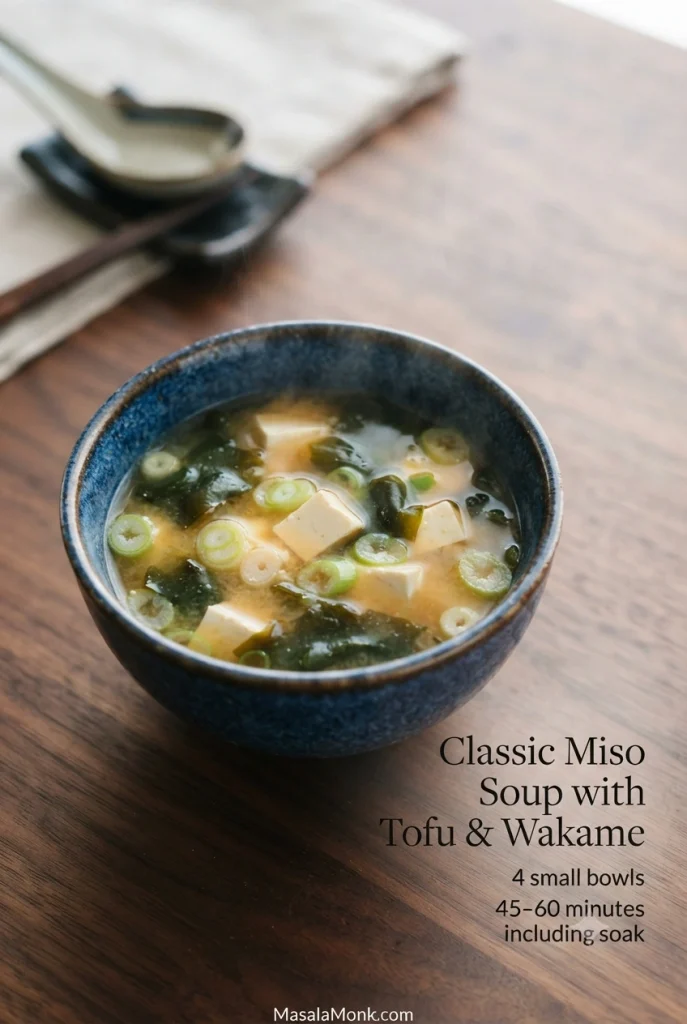
Yield: Four small side bowls, each with approximately 200 ml (6.8 US fl oz) broth plus toppings. Choose bowls holding at least 250–300 ml. Total time: Approximately 45–60 minutes, including a 30-minute unattended kombu soak and roughly 15–25 minutes for stock extraction and finishing. Prepare the toppings during the soak.
Equipment: A 1.5–2 litre saucepan, fine-mesh sieve, measuring jug, chopping board, knife, spoon, and small bowl or ladle. A kitchen scale is particularly helpful for miso paste and dried seaweed.
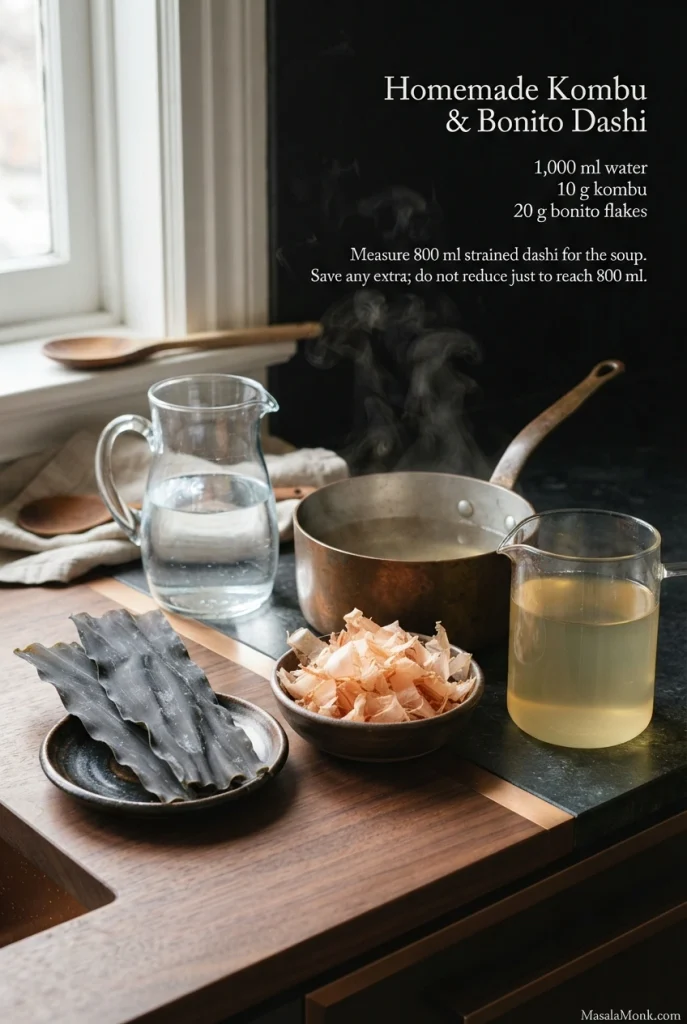
Ingredients for Homemade Dashi
- 1,000 ml water (about 4¼ US cups)
- 10 g kombu (0.35 oz), dried kelp for stock
- 20 g katsuobushi (0.7 oz), dried bonito flakes
After straining, measure 800 ml dashi for the finished soup. Save any extra stock. If you’re only slightly short, add a little water to reach 800 ml; however, don’t use dilution to compensate for stock that already tastes weak.
Ingredients for the Finished Miso Soup
- 800 ml prepared dashi (27 US fl oz; about 3⅓ US cups)
- 50–60 g plain awase miso paste (1.8–2.1 oz; roughly 3–4 tablespoons depending on density)
- 200 g soft tofu (7 oz), cut into 1–1.5 cm (⅜–⅝ inch) cubes
- 3 g dried pre-cut wakame, preferably small pieces intended for soup
- 1–2 scallions (green onions), thinly sliced
Before you begin: Use plain miso paste rather than a complete instant soup mix. Spoon measurements vary with the paste’s density, so weighing is more reliable. The wakame timing below applies to small soup-cut pieces; larger dried or salt-preserved varieties may require separate soaking or rinsing according to their packaging.
How to Make Miso Soup Step by Step
The traditional method has seven stages. First extract the dashi, then warm the toppings, and finally dissolve the miso after switching off the heat. Each step has its own linkable instruction, while the complete visual method provides an overview after Step 7.
Step 1: Soak the Kombu
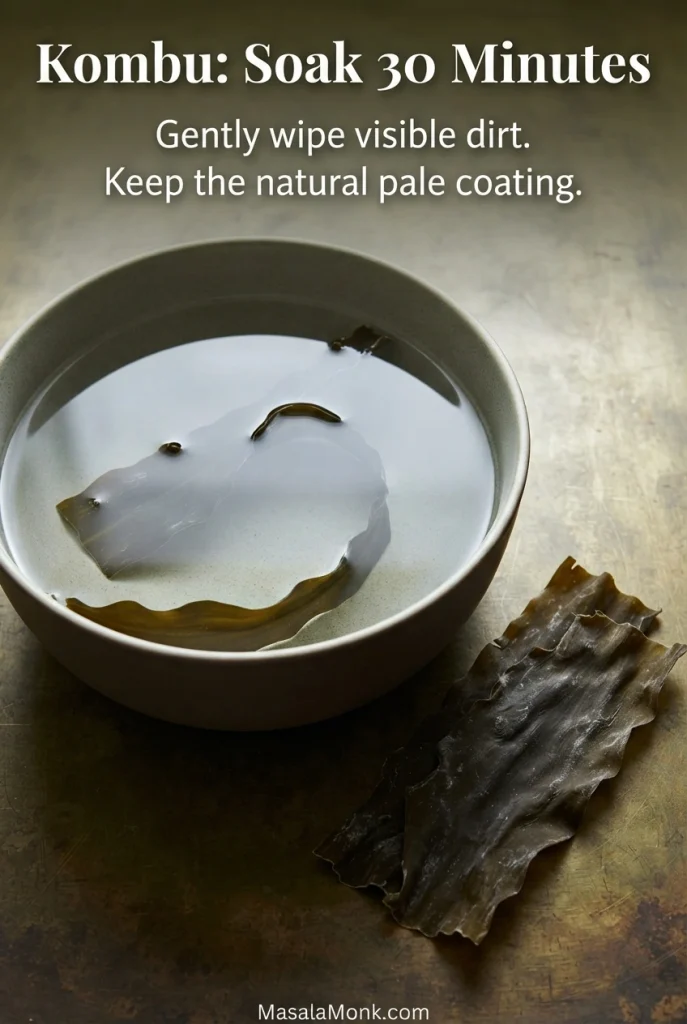
Gently wipe away visible dirt with a lightly dampened cloth, leaving the kombu’s natural pale coating intact. Place the kelp in 1,000 ml cold water and soak for 30 minutes. Meanwhile, prepare the tofu, scallions, and strainer.
As the kombu hydrates, its stiff dried sheet becomes flexible. Use a vessel large enough to accommodate the softened kelp without folding it tightly or forcing it beneath the water.
Step 2: Heat the Stock and Remove Kombu
Place the saucepan over medium-low heat. Remove the kombu when the water is steaming and small bubbles appear around the edges, before a vigorous boil. This may take around 8–12 minutes, although the visual cue matters more than the exact time.

Step 3: Steep and Strain the Bonito
Switch off the heat and allow the liquid to settle for a few minutes. Add the bonito flakes and steep for about 2 minutes. Strain through a fine-mesh sieve lined with a damp paper towel or suitable fine cloth. Avoid squeezing the spent flakes hard.

Step 4: Measure and Taste the Dashi
Measure 800 ml strained stock. Save any extra or correct a minor shortfall with a little water. Taste a spoonful before seasoning: dashi can seem delicate on its own, but it should have recognizable savory flavor.
If the dashi is mildly flavored, continue and adjust the miso carefully. However, if it tastes almost indistinguishable from hot water, review the ingredients and extraction. Extra miso increases saltiness without fully replacing missing stock flavor. Where possible, prepare stronger dashi rather than trying to disguise a seriously weak batch.
Step 5: Warm the Tofu and Wakame
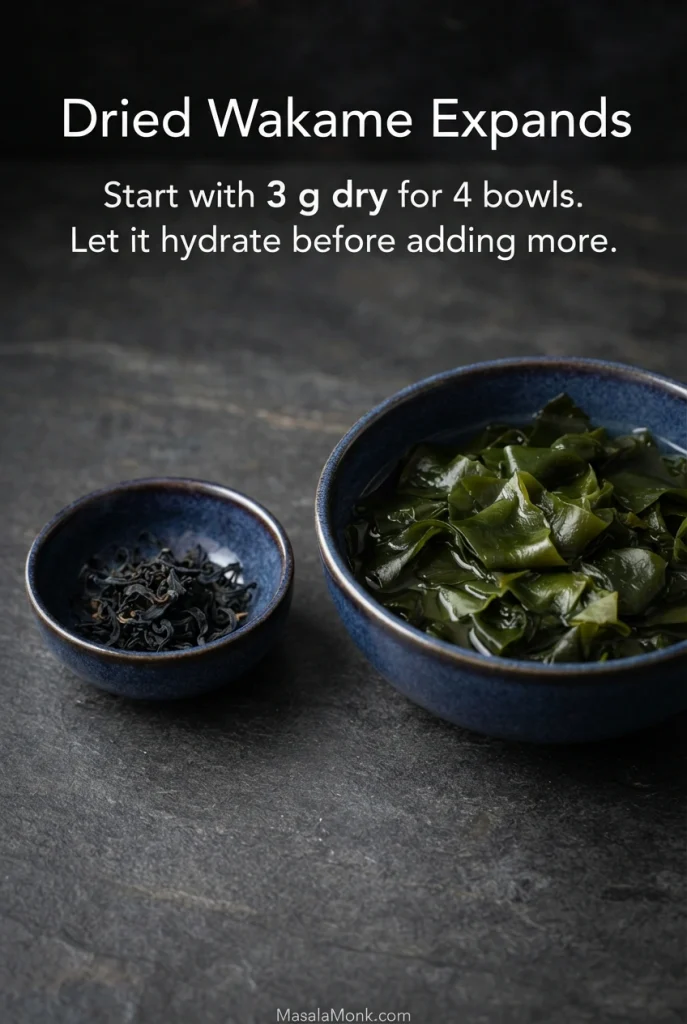
Return 800 ml dashi to the pan and warm gently. Add the tofu for approximately 1–3 minutes, until heated through. Then add the small dried wakame pieces during the last 1–2 minutes. Allow them to expand and become tender before deciding whether the soup needs more seaweed. Stir carefully to protect the tofu.
Cut the tofu into 1–1.5 cm cubes before transferring it to the soup. Particularly fragile silken tofu is often easier to portion inside its drained container, while slightly firmer soft tofu can be cubed on a board.

Wakame needs particular restraint when measured dry. A small quantity of dried pieces becomes a surprisingly generous portion after hydration, making the expanded seaweed a more useful guide to how much each bowl should contain.
Step 6: Dissolve Miso Off the Heat
Turn off the burner. Loosen 50 g miso paste in a ladle or small bowl with a little hot dashi until smooth. Stir the mixture into the saucepan and taste. Add more dissolved miso gradually, up to 60 g total, until the broth tastes balanced without overwhelming the dashi.
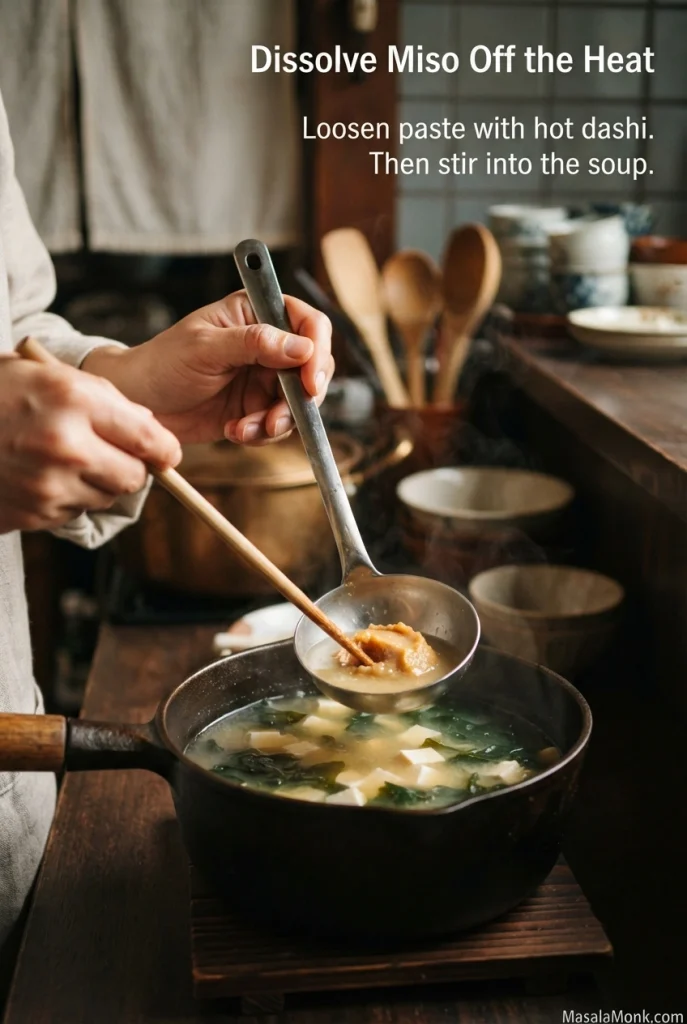
Notice the broth’s appearance after the miso disperses. Freshly strained dashi is usually comparatively clear, while the finished soup becomes cloudy because fine miso particles remain suspended in the liquid. That appearance change is normal, not a sign of failed straining.

Step 7: Serve the Japanese Miso Soup
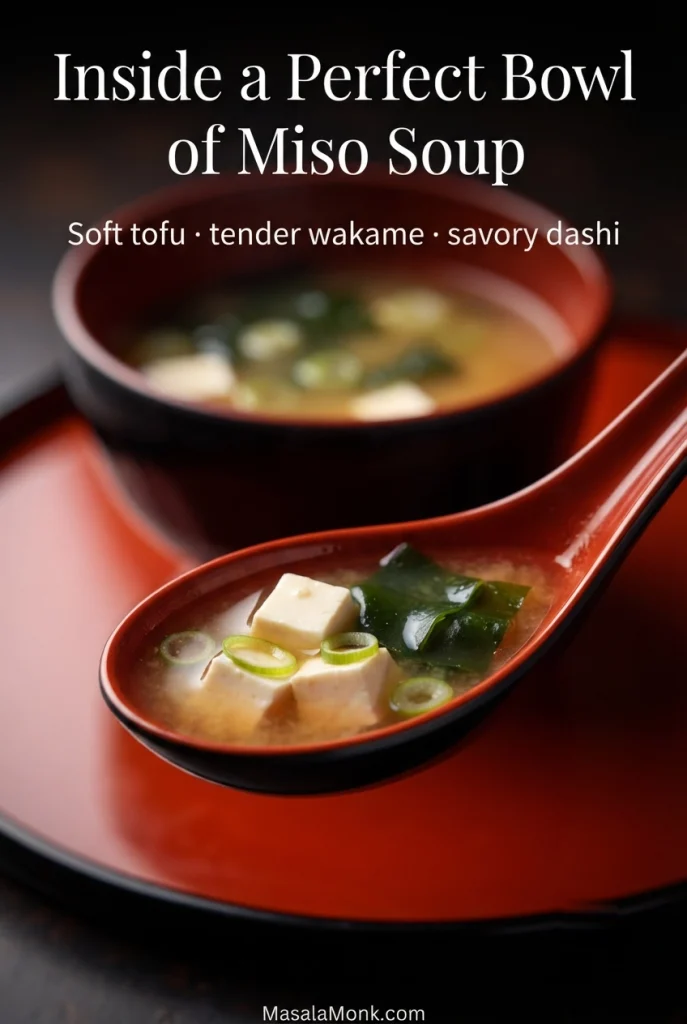
Divide the warmed tofu and wakame among four small bowls. Ladle over the hot miso broth and finish with thinly sliced scallions. Stir gently if the miso has begun settling. A few broken tofu cubes will not affect the flavor.
The finished soup should be easy to eat with a spoon, with tofu cubes small enough to accompany the wakame and broth in the same mouthful. Oversized pieces can make a modest side bowl awkward to serve.
Traditional Miso Soup: Complete Visual Method
The photographic overview brings the seven stages into one reference. It can be useful when returning to the recipe while cooking. For exact measurements, temperatures, timing, and seasoning decisions, follow the detailed steps above.
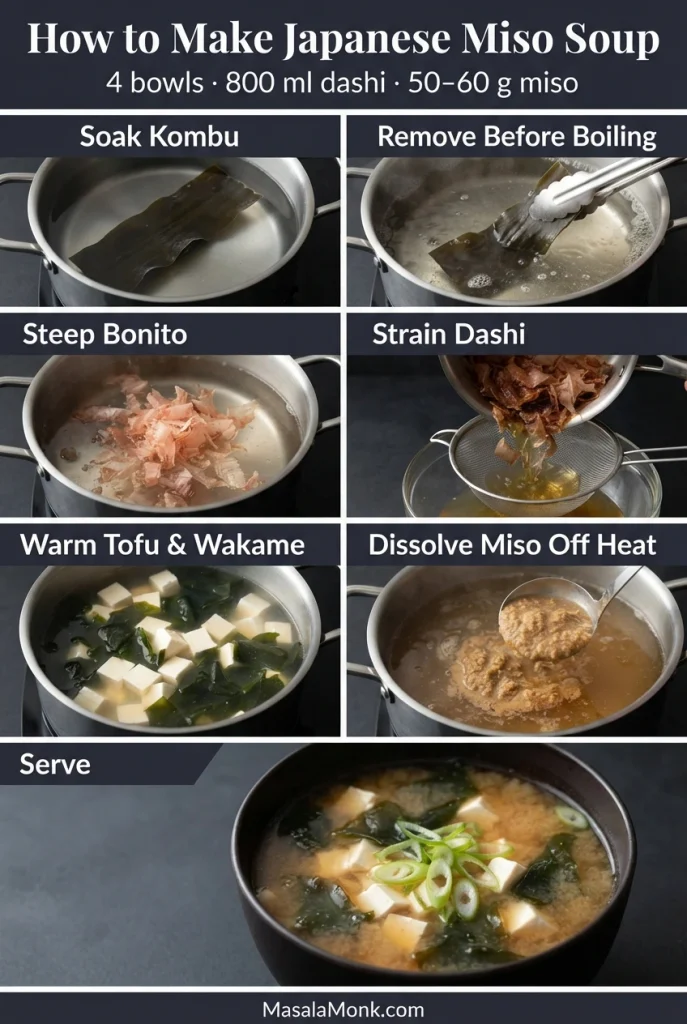
This dashi preparation follows the kombu-and-bonito approach described in Kikkoman’s Japanese dashi guide.
If the finished soup tastes unbalanced, consult the troubleshooting section to distinguish insufficient seasoning from weak stock or excessive salt.
How Much Miso Paste per Bowl?
For one small bowl, start with 200 ml prepared dashi, 12.5 g awase miso, and 50 g soft tofu. Increase the miso toward 15 g if necessary. A proportional serving of dried wakame is approximately 0.75 g, though a tiny pinch of soup-cut pieces is easier to manage if your scale cannot measure fractions of a gram.
| Servings | Prepared dashi | Awase miso | Soft tofu |
|---|---|---|---|
| 1 bowl | 200 ml | 12.5–15 g | 50 g |
| 2 bowls | 400 ml | 25–30 g | 100 g |
| 4 bowls | 800 ml | 50–60 g | 200 g |
| 6 bowls | 1,200 ml | 75–90 g | 300 g |
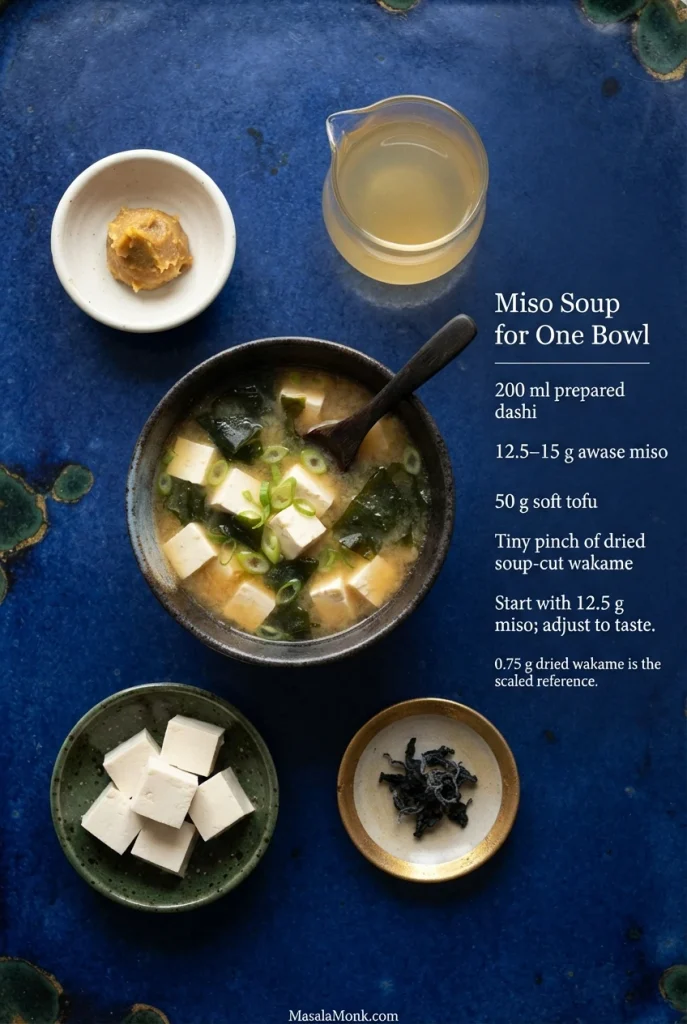
For six bowls: When preparing homemade dashi, begin with 1,500 ml water, 15 g kombu, and 30 g bonito flakes. Strain and measure 1,200 ml stock for the soup. Use about 4.5 g dried wakame and 2–3 scallions. If the stock yield is short, prepare more rather than heavily diluting weak dashi.
Easy 10-Minute Miso Soup with Instant Dashi
Instant dashi powder or granules eliminate the kombu soak and bonito extraction. With toppings prepared, the soup takes approximately 10 minutes. Products supplied as steeping packets may require a little longer.
The quick version uses the same familiar combination of tofu, wakame, miso, and scallions. Prepare the toppings first, then make the required quantity of dashi according to the product’s directions.

Yield: Four small bowls. Total time: Approximately 10 minutes when using quick-dissolving dashi and soup-cut wakame.
Ingredients for Quick Miso Soup
- 800 ml prepared instant Japanese dashi (27 US fl oz), prepared according to its packaging
- Plain awase miso paste: up to 50–60 g for lightly seasoned stock; potentially considerably less for salty prepared dashi
- 200 g soft tofu (7 oz), cubed
- 3 g dried pre-cut wakame
- 1–2 scallions, thinly sliced
Quick Miso Soup Method
- Prepare the dashi. Make 800 ml stock from instant granules, concentrate, or a stock packet according to the package. Taste the prepared liquid before seasoning.
- Warm the toppings. Heat the dashi in a saucepan. Add tofu for approximately 1–3 minutes, then soup-cut wakame during the final 1–2 minutes until hydrated.
- Season gradually. Switch off the heat. If the stock is lightly seasoned, begin by dissolving approximately 50 g plain miso in a little hot broth. Use less if the prepared stock already tastes salty. Stir, taste, and add more dissolved miso only as needed.
- Serve. Divide into four bowls and garnish with sliced scallions.
Using dashi-iri miso? This is miso paste with added dashi ingredients, sometimes including bonito. Follow its package directions and account for the existing seasoning instead of automatically combining full quantities of separate stock mix and prepared miso.
How to Read Instant Dashi Labels
Before cooking, check the product’s form, dilution instructions, salt content, and fish ingredients. Granules, concentrates, and steeping packets do not necessarily produce the same amount or strength of stock. For vegetarian or vegan cooking, check the actual ingredient list rather than relying on the word “dashi” alone.
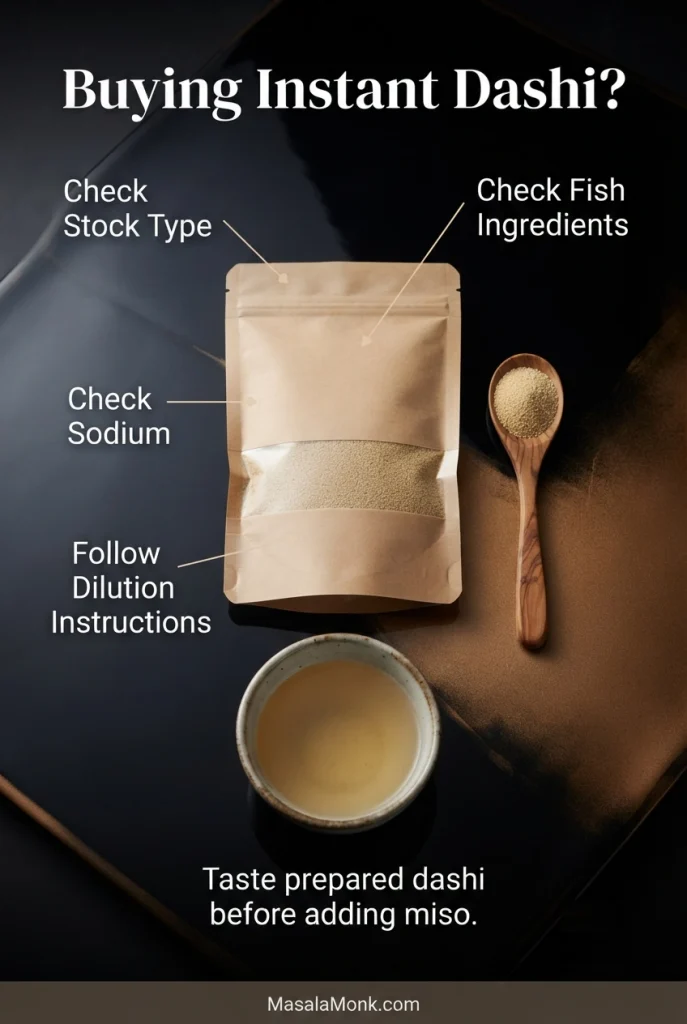
Taste Instant Dashi Before Adding Miso
Prepared instant dashi may already contain substantial seasoning. Taste the diluted stock first; then dissolve a smaller portion of miso if it is noticeably salty. Add more only after reassessing the broth.

For a fish-free shortcut, use vegan dashi and miso without fish-derived seasoning. The vegan miso soup method also explains how to prepare stock from kombu and dried shiitake.
Miso Soup Ingredients: What to Buy and Why
Plain miso paste, dashi seasoning, and ready-made miso soup can appear similar on store shelves. However, they do different jobs. Understanding what each package contains prevents accidental double-seasoning and helps you choose the appropriate ingredients.
Plain Miso Paste, Dashi-Iri Miso, or Instant Soup?
| Product | What it contains | How to use it |
|---|---|---|
| Plain miso paste | Fermented miso without added dashi | Combine with separately prepared stock |
| Dashi-iri miso | Miso with added stock ingredients | Follow the manufacturer’s preparation directions |
| Instant dashi | Concentrated Japanese stock seasoning | Dilute or steep as directed |
| Instant miso soup | Ready-seasoned soup mix, sometimes containing toppings | Prepare according to the packet |
For your first traditional batch, plain awase miso is a useful choice. It allows you to prepare the dashi independently and control the final seasoning.
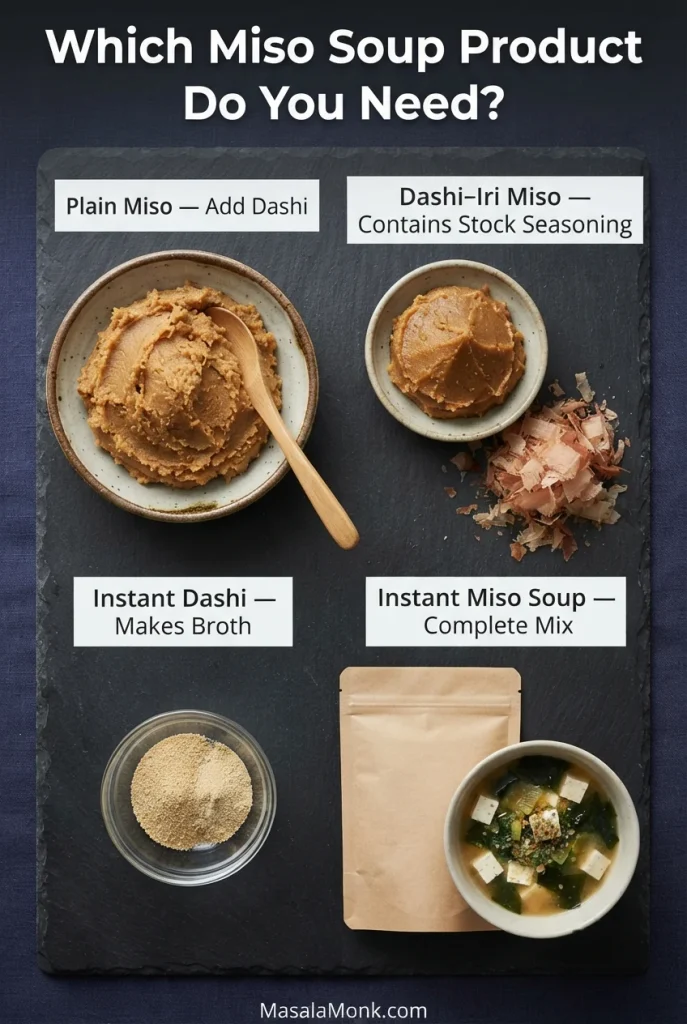
White, Red, or Awase Miso?
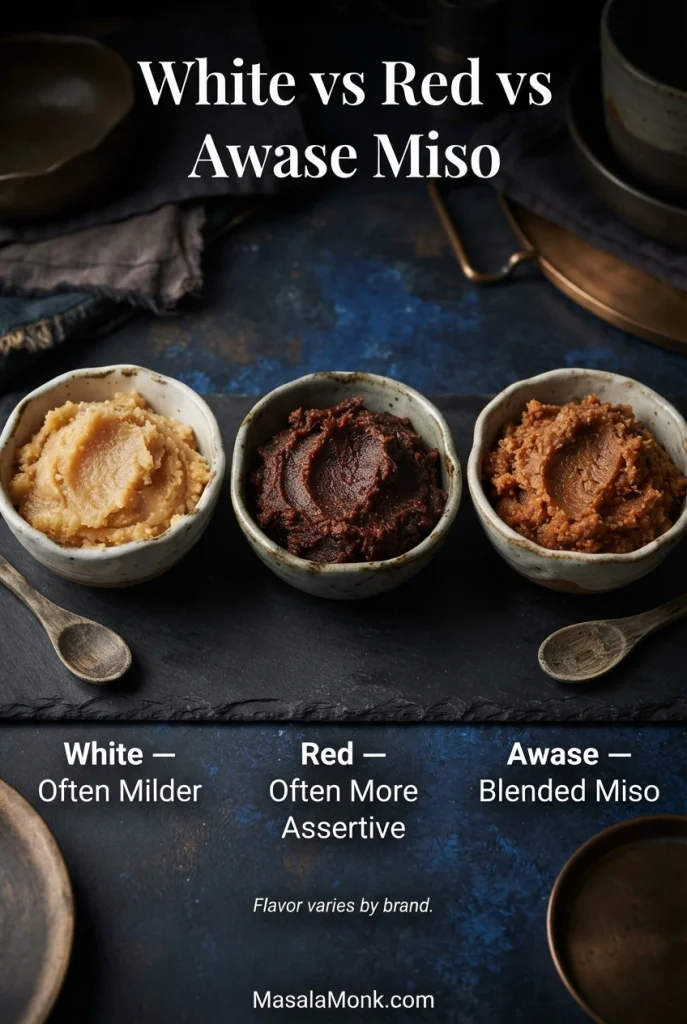
Awase miso blends different styles of miso. White miso generally has a milder, sometimes sweeter character, while red miso often tastes more intense and fermented. All three can be used for Japanese miso soup. Because saltiness varies by product, taste the broth instead of assuming one measurement suits every paste.
Opened miso can also season sauces and glazes, including the variation in our homemade teriyaki sauce recipe. Keep the paste sealed according to its manufacturer’s storage instructions and use clean utensils.
Which Dashi Should You Use?
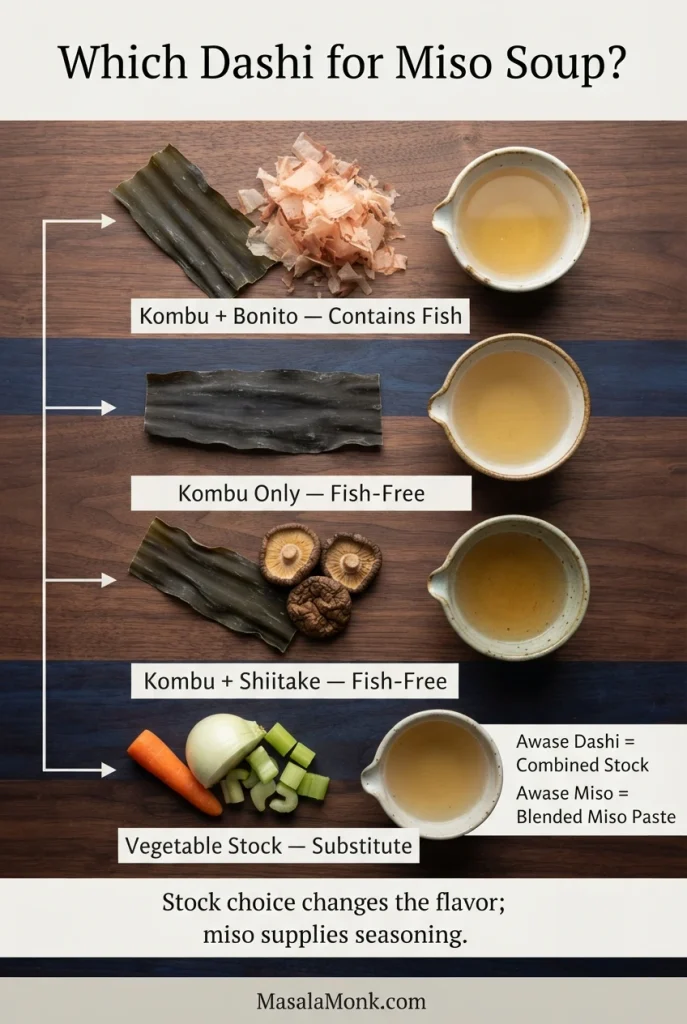
Awase dashi refers to a combined stock, such as kombu and bonito. Awase miso, by contrast, refers to blended miso paste. One creates the savory base, while the other seasons the finished soup.
For the main recipe, use kombu-and-bonito dashi. Kombu-only stock creates a lighter result, while kombu with dried shiitake produces a fish-free version with mushroom flavor. Instant dashi is convenient, although the finished stock’s salt concentration depends on the brand.
Kombu, Wakame, and Nori: What’s the Difference?
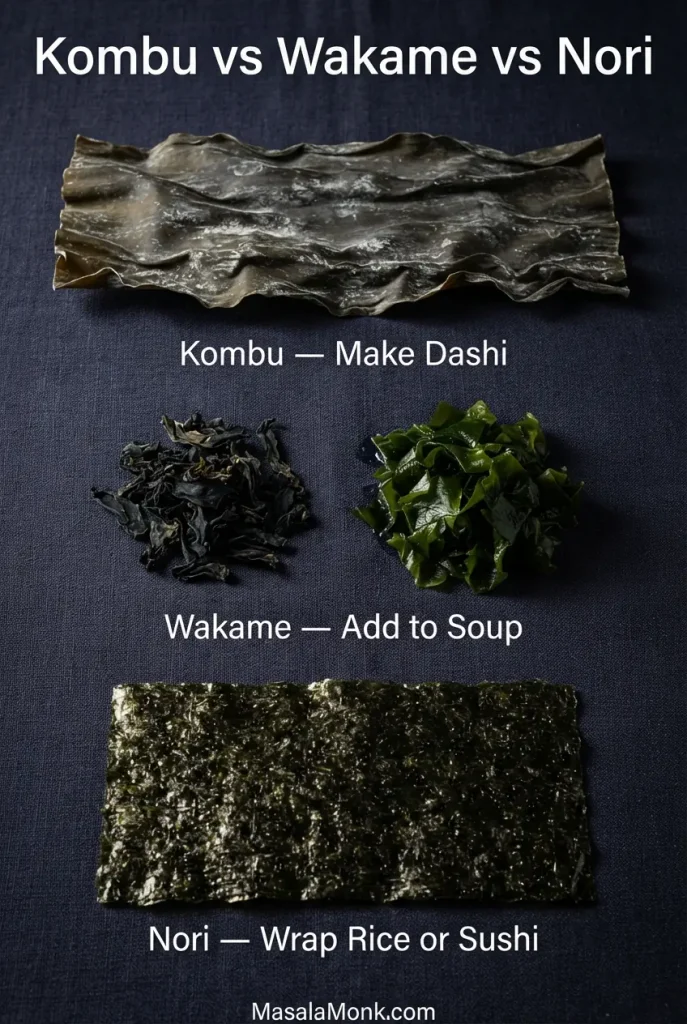
- Kombu: Thick dried kelp used for extracting stock, usually removed after preparation.
- Wakame: Leafy seaweed that expands and softens in hot liquid.
- Nori: Thin seaweed sheets commonly used for sushi and rice dishes.
Choose small dried wakame pieces intended for soup when following the quick hydration times in this recipe. Larger dried or salt-preserved varieties may require rinsing or separate soaking. Nori does not provide the same leafy texture.
Which Tofu Is Best for Miso Soup?
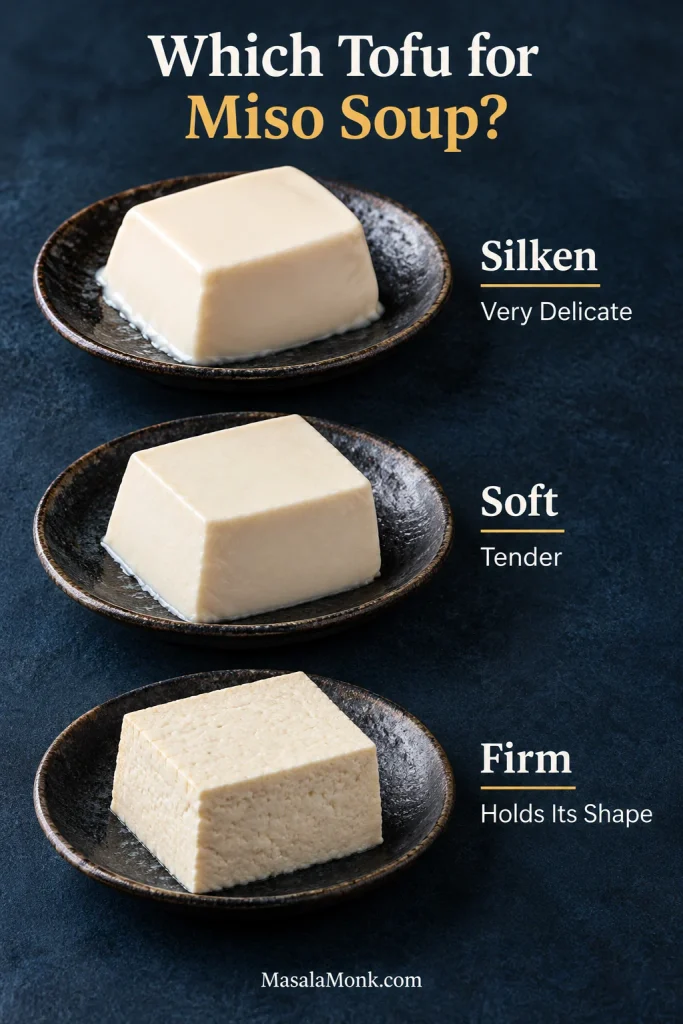
Soft or silken tofu suits a delicate Japanese miso soup. Silken tofu is particularly fragile, so transfer it carefully. Medium or firm tofu also works and holds its shape more easily, especially alongside vegetables. Choose based on your preferred texture rather than a rigid rule about authenticity. Pressing is unnecessary; simply drain and cube the tofu.
Ready to cook? Return to the traditional Japanese miso soup recipe or the 10-minute version.
How to Adjust Your Next Bowl of Miso Soup
Use what you noticed about the first bowl to decide which ingredient to adjust next time. Changing one element at a time makes the result easier to understand than increasing stock ingredients, miso, and toppings together.
| What you noticed | What to try next time |
|---|---|
| The soup tasted salty before it tasted savory | Improve the unsalted dashi and begin with less miso. |
| The miso overwhelmed the stock | Reduce the paste or choose a milder miso. |
| The broth was good, but the bowl felt sparse | Add tofu, cooked mushrooms, or vegetables while retaining enough broth. |
| You wanted less bonito aroma | Try kombu-and-shiitake stock or a lighter kombu-and-bonito preparation. |
| You wanted a lighter side soup | Use fewer toppings without diluting a balanced broth. |
Vegan Miso Soup and Japanese Home-Style Variations
Vegan Miso Soup with Kombu and Shiitake Dashi
Kombu and dried shiitake produce a fish-free stock suitable for tofu-and-wakame miso soup. Thin dried shiitake slices are especially convenient when you do not want a prolonged soak, while larger whole dried mushrooms may require several hours.
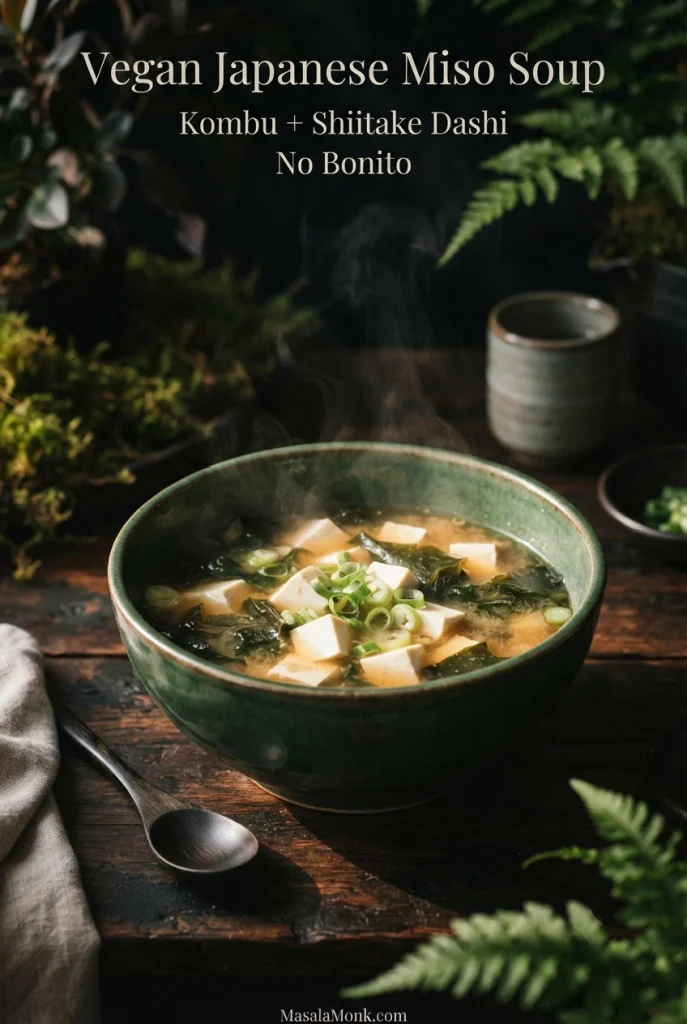
Quick vegan version: Use 800 ml prepared fish-free dashi, up to 50–60 g plain vegan-suitable miso (less for salty stock), 200 g tofu, 3 g soup-cut wakame, and scallions. Follow the quick miso soup method, confirming that the stock and paste contain no fish-derived seasoning.
Homemade version: Makes four small bowls. Allow approximately 45–85 minutes with thin dried shiitake, depending on soaking and heating. Large whole mushrooms may need an extended or overnight covered soak in the refrigerator.
Choosing Dried Shiitake for Vegan Dashi
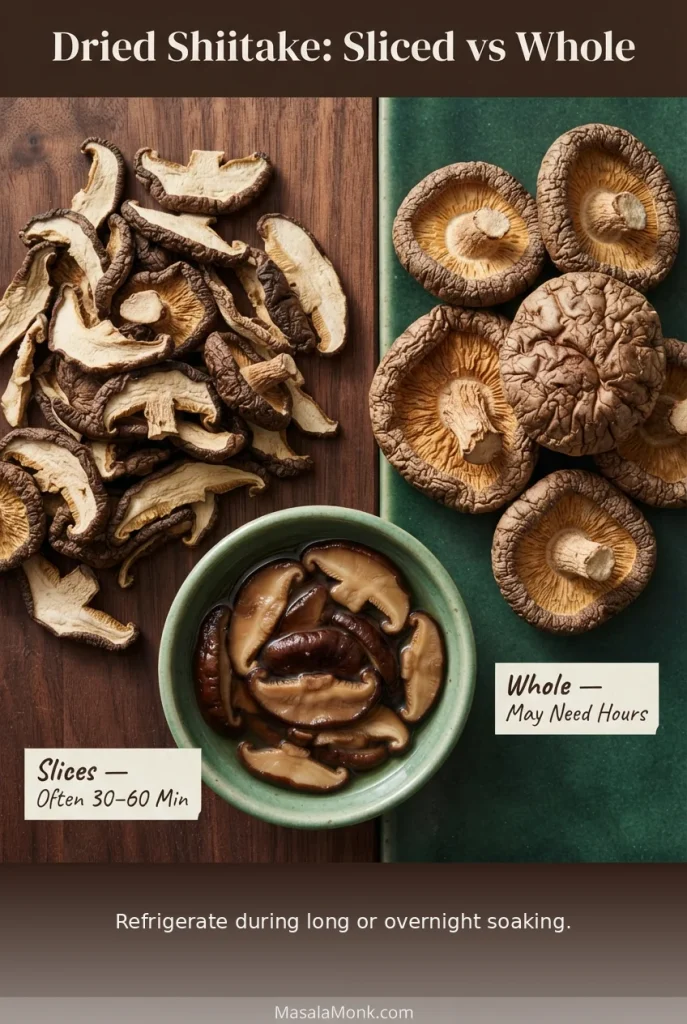
Thin dried shiitake slices can rehydrate relatively quickly because water reaches the interior more readily. Whole dried caps may need considerably longer before the centers become pliable. For extended soaking, keep the mushrooms covered in the refrigerator.
Ingredients for Homemade Vegan Dashi and Miso Soup
- 1,000 ml water (about 4¼ US cups)
- 10 g kombu
- 10 g dried shiitake mushrooms, preferably thinly sliced for faster hydration
- 50–60 g plain vegan-suitable miso paste, adjusted to taste
- 200 g soft tofu, cubed
- 3 g dried pre-cut wakame
- 1–2 scallions, sliced
How to Make Kombu-Shiitake Dashi
- Soak. Place kombu and dried shiitake in the cold water. Thin shiitake slices may soften in 30–60 minutes; whole dried mushrooms often require several hours or an overnight covered soak in the refrigerator.
- Cook the stock. Heat the soaking liquid gradually and remove kombu before vigorous boiling. Gently cook the shiitake for approximately 10–15 minutes or until tender. Whole caps may require longer because soaking alone does not guarantee they are cooked through.
- Strain and measure. Remove the mushrooms and strain the liquid. Measure 800 ml for the soup, reserving any extra or correcting a minor shortfall with water. Slice the cooked mushroom caps if using them as toppings.
- Finish the soup. Warm tofu, soup-cut wakame, and any cooked sliced mushrooms in the stock. Switch off the heat. Loosen approximately 50 g miso with a little hot broth, stir it into the pan, taste, and add more if necessary. Garnish with scallions.

Mushroom Miso Soup
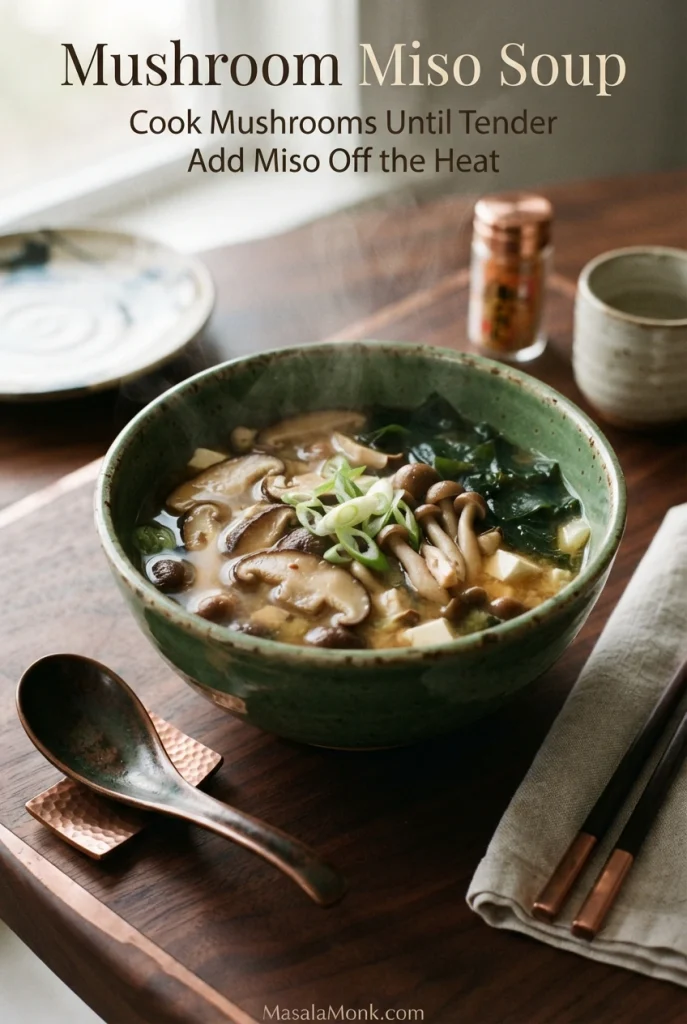
For 800 ml dashi, add 100–150 g (3.5–5.3 oz) fresh shiitake, shimeji, or other suitable cultivated mushrooms. Thinly slice shiitake or separate shimeji clusters, then simmer until tender and cooked through. Use the mushrooms alongside tofu or instead of part of the tofu and wakame. Add tofu after the mushrooms have cooked and dissolve the miso off the heat.
Potato and Onion Miso Soup
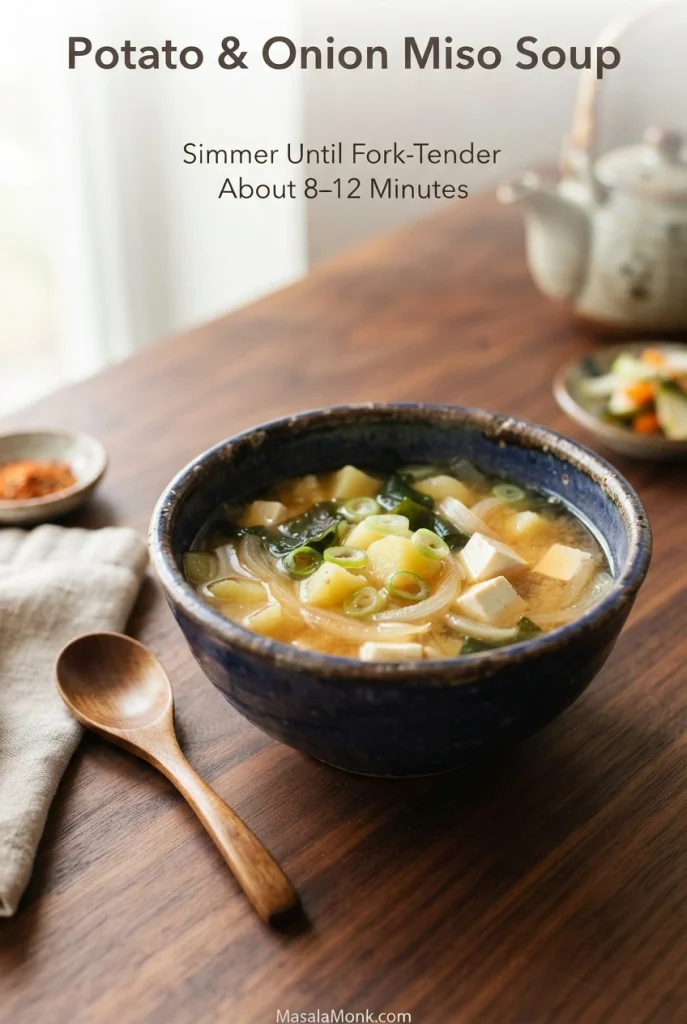
Simmer 150 g (5.3 oz) thinly sliced potatoes and 80 g (2.8 oz) onion in 800 ml dashi. Allow approximately 8–12 minutes, until the potatoes are tender and the onions have softened. Use them in place of tofu, or add a smaller amount of tofu if preferred. Turn off the heat before dissolving in the miso.
Miso Soup with Spinach or Greens
Add 40–60 g (1.4–2.1 oz) tender spinach or similar greens near the end of cooking. Tender leaves need only enough time to wilt, while tougher stems require longer. Use the greens alongside tofu or in place of wakame. A crisp cucumber salad with vinegar and sesame makes a refreshing accompaniment.
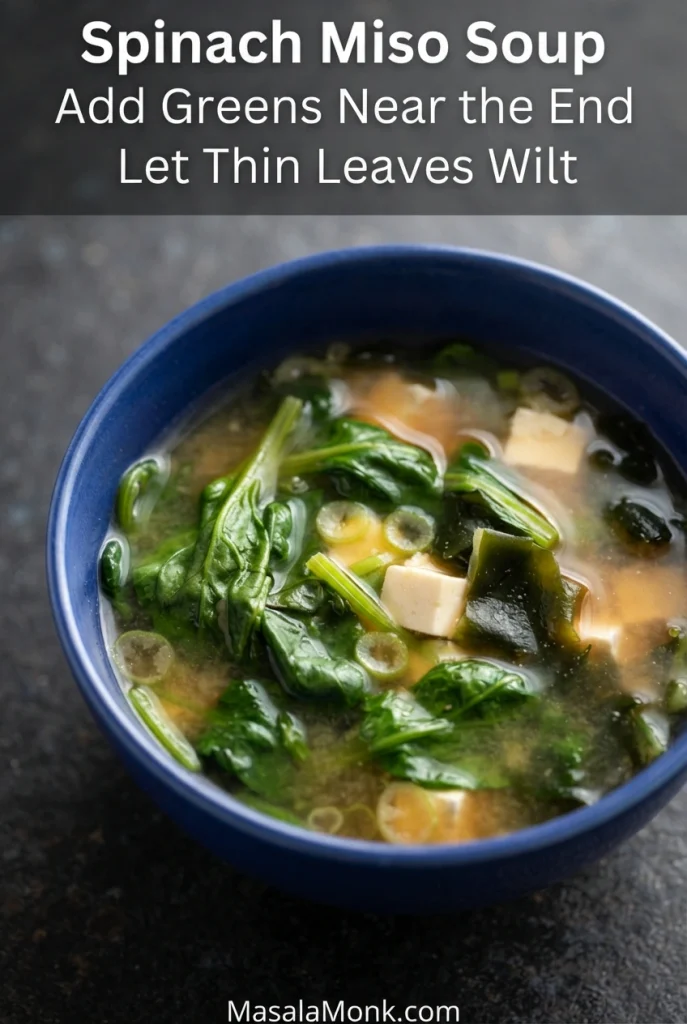
Without dashi, tofu, or wakame? Miso dissolved in hot water creates a very simple soup but lacks much of dashi’s savory depth. Alternatively, use 800 ml mild unsalted vegetable stock and adjust the paste gradually. Cooked mushrooms, vegetables, or fried tofu can replace the usual toppings, provided firm or starchy ingredients become tender before seasoning.
Miso Soup Troubleshooting: Bland, Salty, Bitter or Fishy?
Start by deciding whether the soup lacks seasoning, lacks savory stock flavor, or contains an ingredient whose flavor is too prominent. Identifying the problem is important because adding more miso cannot correct every disappointing broth.
Bland Miso Soup or Weak Dashi?
When the finished soup tastes flat, try a spoonful of broth without toppings. If the stock has recognizable savory flavor but needs seasoning, a little more dissolved miso may help. However, if the broth is already salty yet lacks depth, improve the dashi rather than adding more paste.

Common Miso Soup Problems and Solutions
| Problem | What to do |
|---|---|
| Bland or underseasoned | If the stock tastes savory but the soup lacks seasoning, dissolve another 5 g miso into a four-serving batch and taste again. |
| Salty but flat | Add flavorful unsalted dashi if available. Plain water reduces saltiness but cannot restore missing umami. Prepare more flavorful stock next time. |
| Too salty | Dilute with warm unsalted dashi or water, approximately 50 ml at a time for four servings. Taste between additions. |
| Too fishy | Add a little mild fish-free dashi if available, then reassess seasoning. Reduce bonito or use kombu-and-shiitake stock next time. |
| Miso lumps | Remove the lumps and dissolve them separately in a little hot broth before returning the mixture to the soup. |
| Too much wakame | Remove excess hydrated seaweed. Measure a smaller dried quantity next time and allow it to expand before adding more. |
| Broken tofu | The soup is still suitable to serve. Stir more gently or select slightly firmer tofu next time. |
| Cloudiness or settling | Usually normal for miso soup. Stir gently to redistribute fine miso particles. |
How to Fix Miso Soup That’s Too Salty
Warm unsalted dashi is useful because it reduces excessive saltiness without weakening savory flavor as much as plain water. Add small quantities and taste between additions. Dilution increases the finished volume, so you may have more soup than originally planned.

How to Fix Undissolved Miso Paste Lumps
Remove any stubborn paste lumps with a spoon or ladle and loosen them separately in a little hot broth. Return the smooth mixture to the saucepan. Avoid adding further miso before the existing paste has dispersed, because concentrated lumps can make the final soup unexpectedly salty.

Why Does My Dashi Taste Bitter?
Bitterness may be related to the kombu, its storage condition, or the extraction. If strained stock tastes distinctly bitter or stale, preparing a fresh batch is preferable to covering the flavor with extra miso. Gentle heating and removing kombu before vigorous boiling provide better control.
Did I Ruin Miso Soup by Boiling It?
No, not necessarily. A brief accidental boil after adding miso does not make the soup unusable. Some delicate aroma may be lost, but the broth can still taste good. Adding miso off the heat remains preferable for fresh preparation.
For another attempt, return to the traditional method or the quick method. Both explain when to dissolve the miso.
Is Miso Soup Healthy? Calories, Protein & Sodium
A small bowl of this tofu-and-wakame miso soup provides approximately 60–75 calories and 5–7 g protein with representative ingredients. These are estimates rather than guaranteed values for every brand. Sodium may be substantial, especially when the soup contains salty miso or seasoned instant dashi.
Approximate Nutrition per Bowl
| Nutrient | Approximate amount |
|---|---|
| Calories | 60–75 kcal |
| Protein | 5–7 g |
| Carbohydrates | 4–6 g |
| Fat | 2–4 g |
| Sodium from miso alone | About 466–559 mg from 12.5–15 g reference miso; add sodium from the stock for the total |
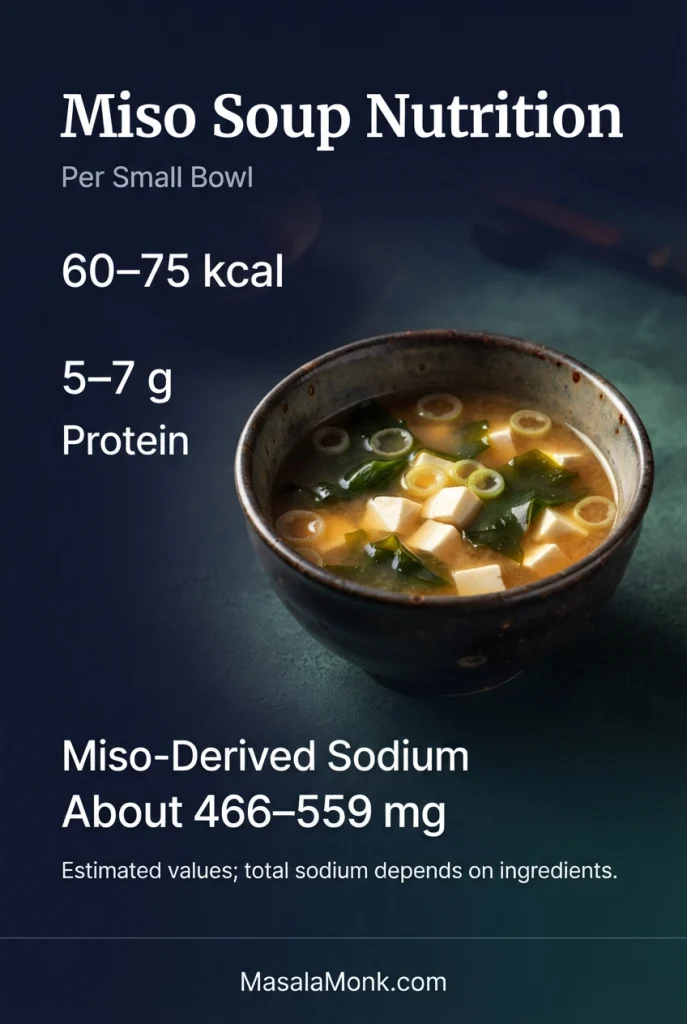
The estimate assumes 200 ml dashi, 12.5–15 g miso, 50 g soft tofu, a little wakame, and scallions per bowl. USDA FoodData Central SR Legacy records 172442 (miso) and 172449 (soft tofu prepared with calcium sulfate and magnesium chloride) provide representative values of approximately 198 kcal/12.8 g protein and 61 kcal/7.17 g protein per 100 g, respectively.
Using 15 g miso and 50 g tofu gives approximately 60 kcal and 5.5 g protein before stock and toppings. The completed bowl varies with the specific miso, tofu, and dashi used.
How Much Sodium Is in Miso Soup?
The representative miso record contains approximately 3,728 mg sodium per 100 g. That is roughly 466 mg from 12.5 g miso or 559 mg from 15 g miso, before counting the dashi and toppings.
To estimate sodium with your own product, divide the sodium listed on the package by its stated serving weight, multiply by the grams of miso used, and divide by the number of bowls. Add the sodium contributed by the other ingredients. If the label provides sodium per 100 g, use 100 as the denominator.
For a lower-sodium bowl, begin with less miso and use flavorful unsalted dashi. Diluting an already seasoned soup may reduce saltiness but also weakens the overall flavor.
Does Hot Miso Soup Contain Probiotics?
Miso is fermented, but that does not guarantee a meaningful quantity of live probiotic microorganisms in a hot bowl. Some products are pasteurized or processed, while heating can reduce the survival of microorganisms that remain. Our guide to foods for gut health discusses fermented foods alongside fiber and broader dietary habits.
Is Miso Soup Vegetarian, Vegan, or Gluten-Free?
The traditional recipe contains fish from bonito and soy from miso and tofu. For vegetarian or vegan soup, choose fish-free stock and check prepared miso products for fish-derived seasoning. Gluten-free miso soup is possible, but some pastes contain barley or other gluten-containing grains, and instant dashi may include wheat-derived ingredients.
Use appropriately labeled products and consider cross-contact when preparing food for someone with celiac disease.
What About Iodine in Kombu?
Kombu can contain substantial iodine, with considerable variation between products and preparation methods. The iodine level of finished dashi cannot be reliably calculated from the starting weight of dry kombu alone. Anyone advised to monitor iodine intake, particularly for a thyroid condition, should follow individualized dietary guidance.
Health note: This article provides general educational information, not individualized medical advice. Ingredient labels and appropriate professional guidance are important for allergies, sodium restrictions, gluten avoidance, thyroid conditions, and other dietary needs.
How to Store, Reheat & Serve Miso Soup
Can You Make Miso Soup Ahead?
Yes. Prepare dashi in advance and refrigerate or freeze it in portions. When ready to serve, warm the amount of stock needed, add tofu and wakame, and dissolve miso just before serving.
How Long Does Miso Soup Last in the Fridge?
Refrigerate finished miso soup promptly at or below 4°C (40°F). For the best tofu and wakame texture, aim to eat it within 2–3 days. General food-safety guidance permits many properly refrigerated cooked leftovers for 3–4 days, although quality may decline sooner.
Cool the soup promptly in shallow containers. Do not leave it at room temperature for longer than two hours, or longer than one hour when temperatures exceed 32°C (90°F). The USDA’s leftovers and food-safety guidance covers cooling, refrigeration, and reheating. Finished miso soup remains perishable even though the paste itself is fermented.
How to Reheat Miso Soup
Reheat refrigerated leftovers thoroughly to 74°C (165°F), stirring to distribute heat evenly. When reheating soup on the stovetop, bring it to a boil. This safety rule for leftovers differs from the preference for adding miso off the heat when preparing fresh soup.
Plain dashi freezes well. Finished tofu soup can also be frozen, but tofu may develop a spongier texture and wakame may soften after thawing.

Discard questionable leftovers. Do not taste soup to determine whether it has spoiled. Harmful contamination is not always detectable through appearance or smell.
What to Serve with Japanese Miso Soup
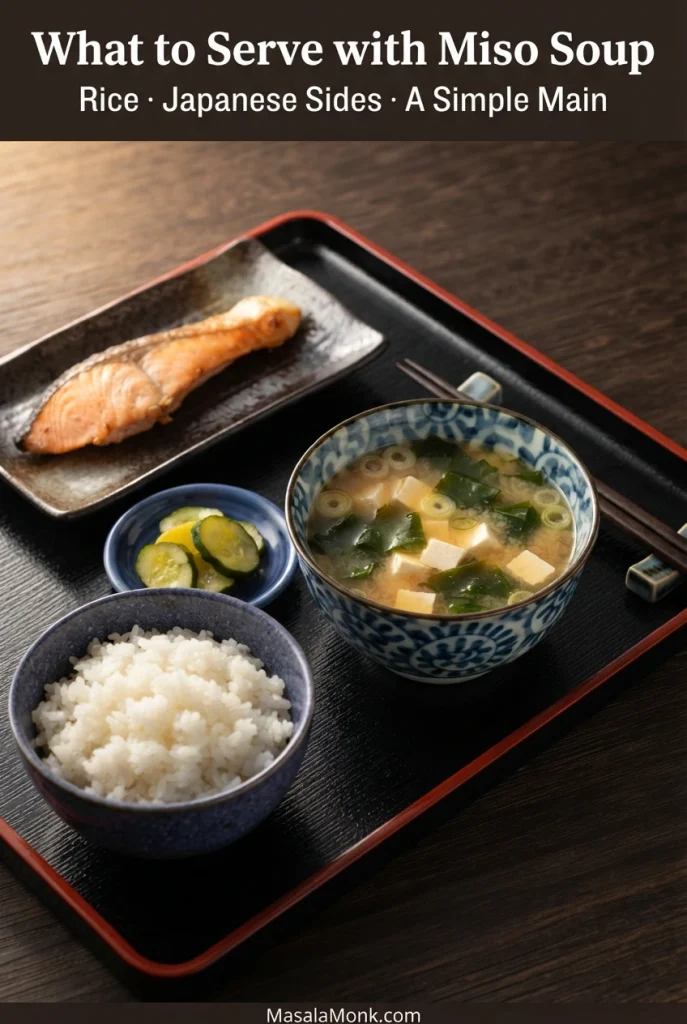
Japanese miso soup, or misoshiru, commonly accompanies rice and other dishes as part of a meal. Its ingredients vary across households and seasons. Grilled fish, tamagoyaki (rolled omelet), pickled vegetables, and lightly cooked greens are natural partners. Our guide to cooking rice covers the everyday accompaniment.
For a fuller meal, pair miso soup with Japanese yakitori chicken skewers, a salmon bowl with rice and vegetables, or crispy Japanese shrimp and vegetable tempura. The warm broth is particularly pleasant between bites of fried food.