Posted on Leave a comment

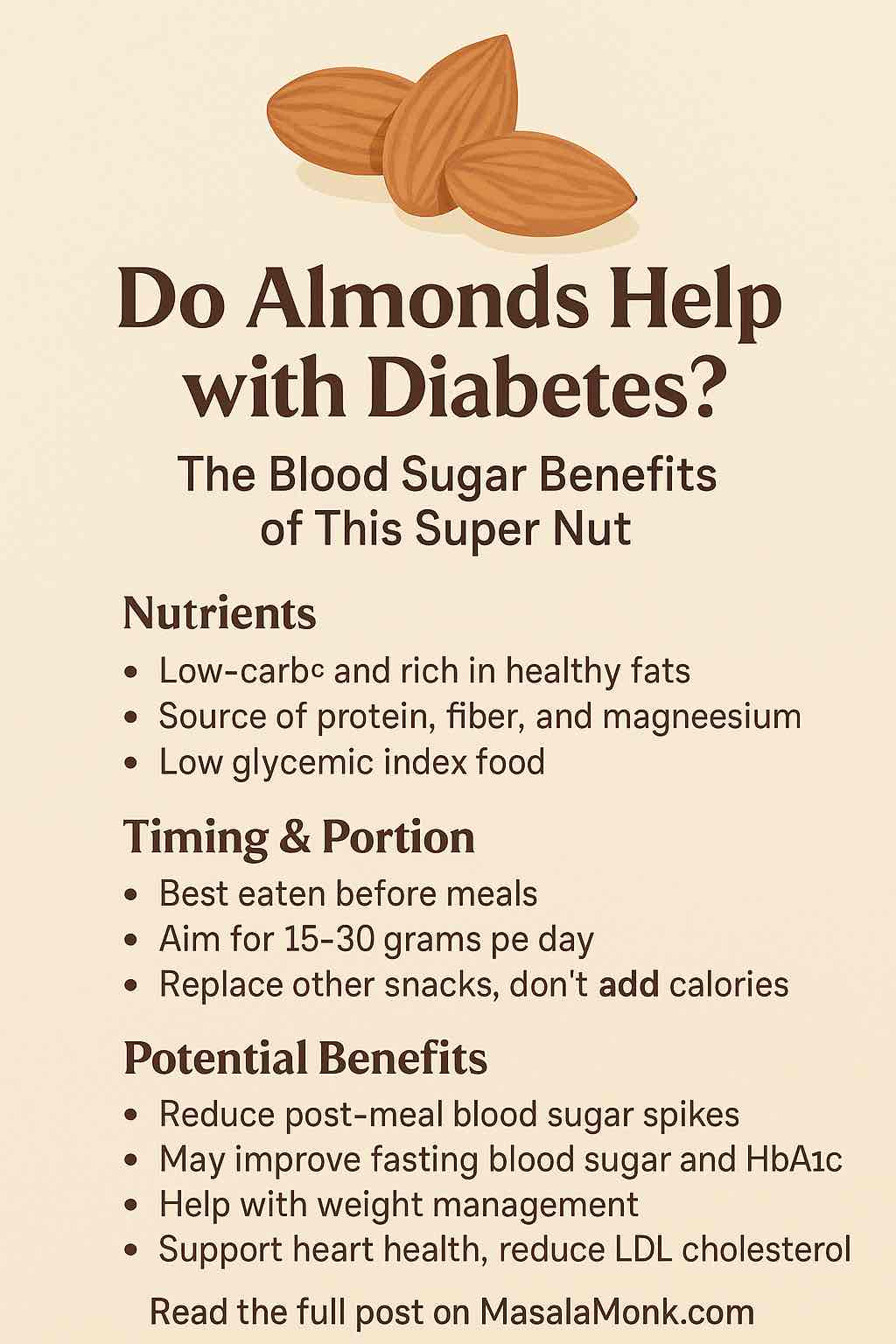
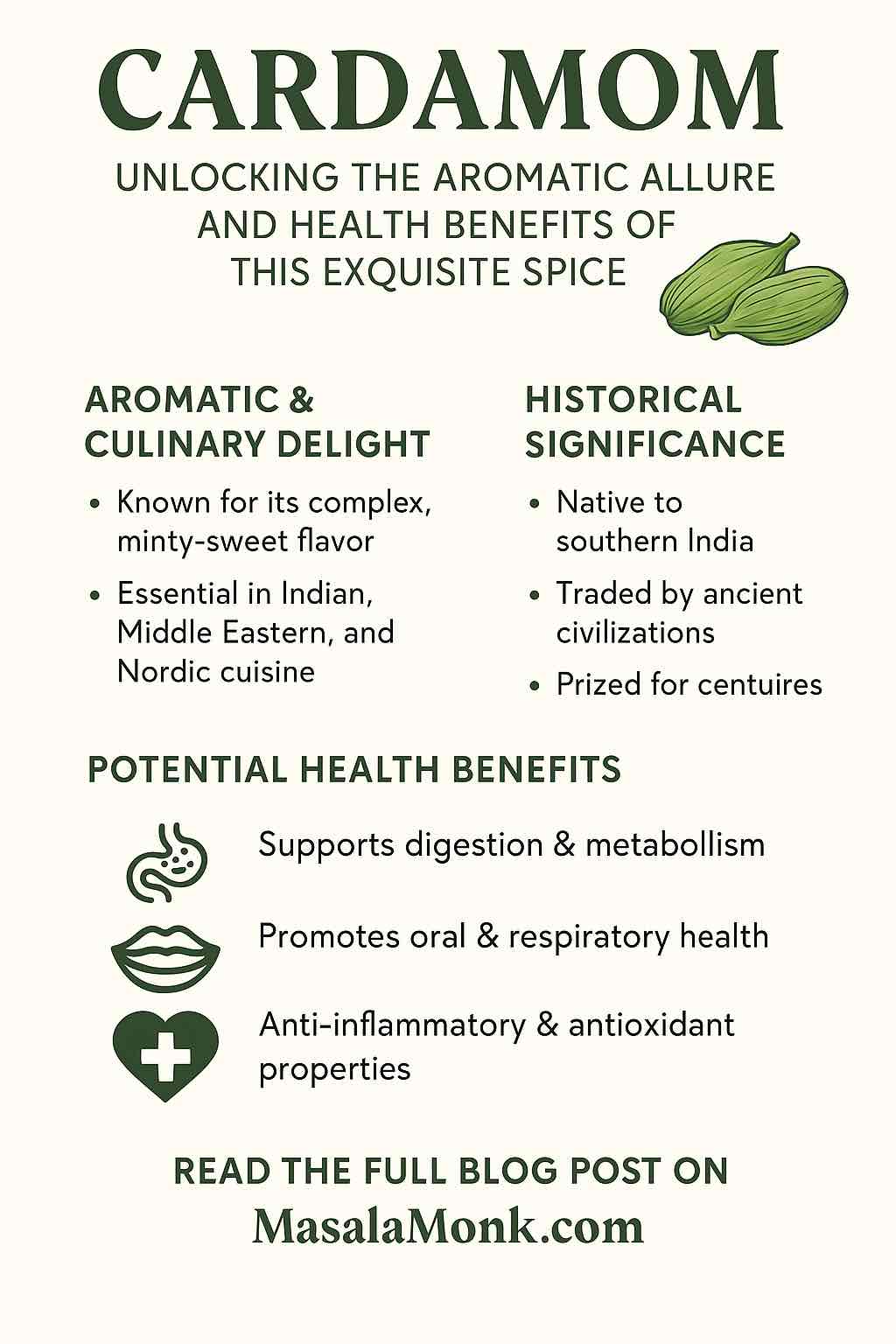
Cardamom: Unlocking the Aromatic Allure and Health Benefits of this Exquisite Spice

CARDAMOM AND HEALTH BENEFITS

A deep dive into the Queen of Spices, from ancient traditions to cutting-edge science—and how to make it part of your everyday life.


🌿 A Whiff of Wonder: What Makes Cardamom So Special?

Take a deep breath. That sharp, sweet, floral aroma you just imagined? That’s cardamom.

Often referred to as the Queen of Spices, cardamom is a tiny pod that packs a powerful punch. Known for its unique fragrance—a blend of mint, citrus, and warm spice—it’s been cherished for thousands of years, not only in the kitchens of India and the Middle East but also in ancient medical systems like Ayurveda and Traditional Chinese Medicine.

But what makes this small pod so intriguing is that it’s more than just flavor. Modern science is finally catching up with traditional wisdom, revealing cardamom’s impressive range of health-supporting benefits—from metabolic support to antimicrobial action.


🧭 A Journey Through Time: Cardamom’s Storied Past

Cardamom’s origin traces back to the lush rainforests of the Western Ghats in southern India, where wild varieties still grow today. It was a prized commodity in ancient Greek and Roman trade routes, and later became a mainstay of Arabian perfumery and Indian medicine.

By the 20th century, cardamom cultivation had spread to Guatemala, now the largest exporter globally. Yet it’s still Alleppey Green Cardamom, grown in Kerala, India, that holds Geographical Indication (GI) status for its quality and aroma.


🔬 The Science Behind the Spice: Health Benefits of Cardamom

Cardamom isn’t just delicious—it’s a phytochemical powerhouse. Let’s break down the research by benefit area:

1. ❤️ Cardiovascular and Metabolic Health

Recent trials show:

  • Improved lipid profiles – Lower triglycerides, higher HDL cholesterol
  • Inflammation reduction – Decreased CRP and IL-6 levels, especially in individuals with metabolic syndrome and PCOS
  • Possible blood pressure-lowering effects, though evidence is mixed

Tip: In studies, doses of 1.5–3g/day of cardamom powder showed the most benefits. That’s roughly 1 teaspoon.

2. 🧘 Digestive & Gut Health

Traditional use meets science here:

  • Stimulates bile production, aiding digestion
  • Reduces bloating, gas, and indigestion
  • Its essential oils (e.g., cineole) exhibit antimicrobial effects against common gut pathogens

Practical Use: Steep a few crushed pods in hot water after a meal for a calming digestive tea.

3. 🦷 Oral & Respiratory Health

Chewing cardamom pods isn’t just an old habit—it’s effective:

  • Fights oral bacteria, improves breath
  • Soothes the throat and respiratory tract
  • Used in traditional remedies for cough and congestion

Try This: Add cardamom to warm water with honey for sore throat relief.

4. 🧠 Mental Clarity & Emotional Balance

Cardamom is used in aromatherapy for:

  • Mood enhancement and stress relief
  • Mild anxiolytic effects in herbal preparations
  • Its aroma may stimulate dopaminergic pathways (still under study)

Use It Like This: Add 1 drop of cardamom essential oil to a diffuser, or mix with a carrier oil for calming massage.

5. ⚖️ Weight and Metabolic Regulation

Animal studies (2023) suggest:

  • Cardamom increases energy expenditure
  • Reduces fat accumulation
  • May modulate neuroendocrine metabolism

🚨 But: Human trials are early-stage and inconclusive. Think of cardamom as a supportive agent, not a miracle fix.


🍽️ How to Use Cardamom in Everyday Life

FormUses
Whole podsInfuse in rice, tea, stews, or desserts (crack before using)
Ground powderSprinkle into oatmeal, coffee, smoothies, or baking mixes
Essential oilUse in aromatherapy or dilute for skin application
Tinctures/CapsulesUsed in clinical settings or herbal protocols (consult a professional)

🔄 Easy Ways to Add It to Your Day

  • Add a pinch to your morning coffee or chai
  • Mix into granola or yogurt for a warm, spicy note
  • Include it in homemade spice blends (garam masala, pumpkin spice)
  • Brew cardamom tea with ginger and cinnamon

🛑 Safety and Side Notes

  • Safe in culinary amounts – Few side effects unless consumed in high doses
  • Pregnancy caution – Avoid therapeutic doses unless advised
  • Drug interaction – May interact with anticoagulants; check with your doctor if on medications

📚 Final Thoughts: Cardamom as a Daily Ally

Cardamom is a beautiful example of a spice that bridges pleasure and wellness. Whether you’re savoring its scent in Nordic pastries, its zing in Middle Eastern coffee, or its comforting hug in a cup of chai, you’re also receiving a bouquet of plant-based wellness compounds.

While modern medicine continues to explore its depths, cardamom remains a trusted favorite in kitchens and medicine cabinets alike.


💡 Want to Try? Start Here:

3-Day Cardamom Ritual Challenge:

  • Day 1: Add it to your tea or coffee
  • Day 2: Use it in your cooking (e.g., rice, lentils, or soup)
  • Day 3: Try it as a digestive tea after dinner

Let your senses lead the way—this spice is as healing to the spirit as it is to the body.

📘 Frequently Asked Questions (FAQs)

1. What is the difference between green and black cardamom?

Green cardamom (Elettaria cardamomum) has a sweet, floral, and citrusy flavor, ideal for desserts and drinks.
Black cardamom (Amomum subulatum) has a smoky, earthy flavor, used in savory dishes like curries and stews.


2. How much cardamom should I consume daily for health benefits?

Most clinical studies used 1.5–3 grams/day of ground cardamom (roughly ½–1 teaspoon). This is safe for most people when consumed as part of food.


3. Can cardamom help with weight loss?

Animal studies suggest that cardamom may increase fat metabolism and energy expenditure, but human studies are still early. It may support weight goals when combined with diet and exercise.


4. Is cardamom safe during pregnancy?

Yes, in culinary amounts. However, avoid concentrated extracts or supplements unless prescribed, as safety data is limited.


5. Can I chew cardamom pods directly?

Yes. Chewing cardamom pods freshens breath, supports digestion, and may help oral health due to its antibacterial compounds.


6. How do I store cardamom to preserve its aroma and potency?

Keep it in an airtight container in a cool, dark, dry place. Whole pods last longer than ground powder.


7. Does cardamom interact with medications?

Possibly. Cardamom may enhance blood-thinning effects or interfere with certain medications. Consult a healthcare provider if you’re on prescription drugs.


8. Can I use cardamom in coffee or smoothies?

Absolutely! Add a pinch of cardamom powder to coffee, lattes, or smoothies for a flavorful and healthful twist.


9. Are there any side effects of eating too much cardamom?

High doses (above 5g/day) may cause mild nausea, dry mouth, or allergic reactions in sensitive individuals. Stick to culinary or moderate therapeutic amounts.


10. Is there scientific proof that cardamom helps with inflammation or cholesterol?

Yes—multiple human trials have shown that cardamom reduces inflammatory markers and improves HDL/triglyceride ratios, especially in those with metabolic disorders.
Posted on 2 Comments

Almond Flour and Diabetes: A Low-Carb, High-Impact Swap for Better Blood Sugar

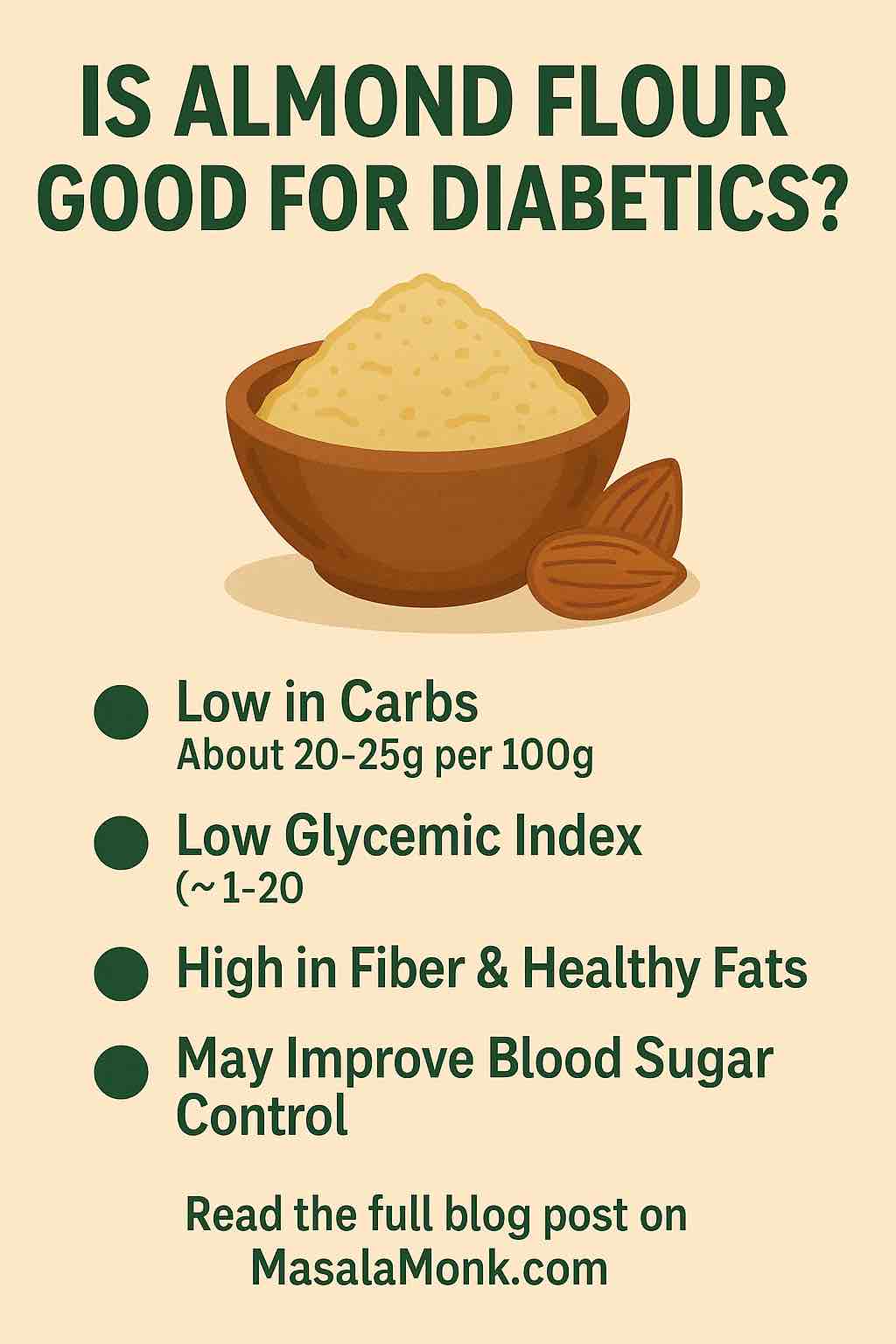
IS ALMOND FLOUR GOOD FOR DIABETICS?

If you’re living with diabetes or managing prediabetes, you’ve probably heard that refined flour and high-carb grains can spike blood sugar. But what if there was a better way to bake?

Meet almond flour—the nutty, nutrient-dense, low-carb powerhouse that’s making its way into diabetic kitchens across the world.

But is almond flour just another health trend? Or is it truly a game-changer for glycemic control?

Let’s dig deep into what science says, how it compares to traditional flour, and practical ways to use it in your everyday meals without compromising flavor or blood sugar balance.


🧬 Why Almond Flour Is Diabetic-Friendly

Almond flour is made from finely ground blanched almonds. That’s it—no additives, no starches, no fillers. Here’s why that’s great news for blood sugar management:

Nutrient (per 100 g)Almond FlourAll-Purpose Flour
Carbs20–25 g~76 g
Sugar2 g0.3–0.5 g
Fiber~6–7 g2–3 g
Protein12–14 g~10 g
Fat (mostly healthy MUFA)50–55 g<1 g
Glycemic Index (GI)~1–20~70–85

📌 Key Insight: Almond flour is low-carb, high-fiber, low-GI, and rich in healthy fats and protein—a nutritional formula that slows digestion and prevents sugar spikes.


🔬 What the Science Says

✅ 1. Almonds Improve Post-Meal Glucose

Multiple studies have shown that when whole almonds or almond-derived products (butter/flour) are eaten before or with meals, they reduce postprandial blood glucose levels—especially in those with prediabetes or type 2 diabetes.

✅ 2. 2023 Indian Prediabetes Study

A randomized trial using 20g of almonds before meals for 3 months showed:

  • Reduced fasting glucose, HbA1c, and HOMA‑IR
  • Improved lipid profile
  • 23% of subjects returned to normoglycemia

📌 Almond flour offers similar benefits when used as a wheat flour replacement, especially in carbohydrate-heavy meals like rotis, pancakes, or baked snacks.


🛠️ How Almond Flour Supports Blood Sugar Control

  • Low Glycemic Index (GI): Slows the release of glucose into the bloodstream
  • High Fiber: Improves satiety, slows digestion, supports gut health
  • Healthy Fats: MUFAs and vitamin E help reduce inflammation and oxidative stress
  • Magnesium: Supports insulin sensitivity and nerve health

When combined, these nutrients improve both post-meal and fasting glucose levels over time.


🍞 Baking & Cooking with Almond Flour

Almond flour isn’t a 1:1 replacement for every recipe, but with a few adjustments, it fits beautifully into most baked goods and meals.

✅ What Works Well

  • Pancakes, muffins, cookies, banana bread
  • Low-carb rotis or parathas
  • Breading for veggies or proteins
  • Almond-based granola or crackers

🧁 Tips for Best Results

  • Use more eggs or flaxseed meal to bind, since almond flour has no gluten
  • Combine with coconut flour to balance texture
  • Bake at a slightly lower temperature to avoid burning
  • Store in the fridge or freezer to maintain freshness

🧂 Real-Life Recipe Ideas

1. Almond Flour Roti (Gluten-Free Flatbread)

  • 1 cup almond flour
  • 2 tbsp psyllium husk
  • 1/4 tsp salt
  • Warm water to form dough
  • Roll and toast lightly on skillet

2. Keto Almond Flour Muffins

  • Almond flour + eggs + baking soda + cinnamon
  • Add grated zucchini, carrots, or berries for fiber
  • Sweeten with stevia or monk fruit

3. Savory Almond-Crusted Paneer

  • Use almond flour as a crunchy, low-carb coating for grilled paneer or tofu
  • Season with turmeric, pepper, cumin, and roast until golden

⚠️ Health Considerations

ConcernTip
High calorie densityStick to ¼–½ cup portions per meal
Not nut allergy friendlySubstitute with sunflower seed flour
Texture can be crumblyUse eggs or binders for structure
CostBuy in bulk or grind your own almonds

📋 When Should Diabetics Use Almond Flour?

ScenarioAlmond Flour Advantage
Baking low-carb treatsLow GI, satiating, delicious
Replacing roti or breadLow in carbs, high in healthy fats
Making snacks more fillingProtein + fat = better satiety
Reducing blood sugar spikesSlows carb absorption

✅ Final Takeaways

  • Almond flour is a diabetes-friendly flour substitute with a rich nutrient profile, low glycemic impact, and culinary versatility.
  • Ideal for baking, coating, and cooking, it supports stable blood sugar and satiety when used smartly.
  • Mind your portion sizes and balance with protein to get the best results.

🔗 Bonus Reads: Almond Power, Three Ways

❓ Frequently Asked Questions: Almond Flour & Diabetes

1. Is almond flour good for diabetics?

Yes. Almond flour is low in carbohydrates, high in healthy fats and fiber, and has a very low glycemic index, making it ideal for people managing type 2 diabetes or prediabetes.


2. Does almond flour raise blood sugar?

No, not significantly. Almond flour has a glycemic index between 1–20, meaning it causes minimal impact on blood glucose compared to wheat or rice flour.


3. What is the difference between almond flour and regular flour for diabetics?

Almond flour has 80% fewer carbs, significantly more fiber and healthy fats, and a much lower glycemic index than white or whole wheat flour—making it better for blood sugar control.


4. Can almond flour be used to make roti or paratha for diabetics?

Yes! Almond flour can be mixed with psyllium husk or flaxseed meal to make low-carb, gluten-free rotis that are diabetic-friendly.


5. Is almond flour gluten-free?

Yes. Almond flour is naturally gluten-free, which is helpful for diabetics with gluten intolerance or celiac disease.


6. Can almond flour help with weight loss in diabetes?

Yes. Its fiber, protein, and healthy fat content increase satiety and reduce cravings—important for weight management, which in turn improves insulin sensitivity.


7. Are there any downsides to almond flour?

It is calorie-dense and may not be suitable for those with nut allergies. Also, its texture is different from wheat flour, requiring recipe adjustments.


8. How much almond flour can I eat per day as a diabetic?

Use almond flour as a replacement, not an addition. A typical serving is ¼–½ cup per recipe, balanced with proteins and vegetables to keep calories and carbs in check.


9. Can almond flour be used in desserts for diabetics?

Absolutely. Almond flour works great in low-carb muffins, cookies, pancakes, and bars. Sweeten naturally with stevia or monk fruit for best results.


10. How should I store almond flour?

Keep almond flour in an airtight container in the fridge or freezer to maintain freshness and prevent it from turning rancid. It can last up to a year when frozen.

Posted on 3 Comments

Is Almond Milk Good for Diabetics? Here’s What the Science Says

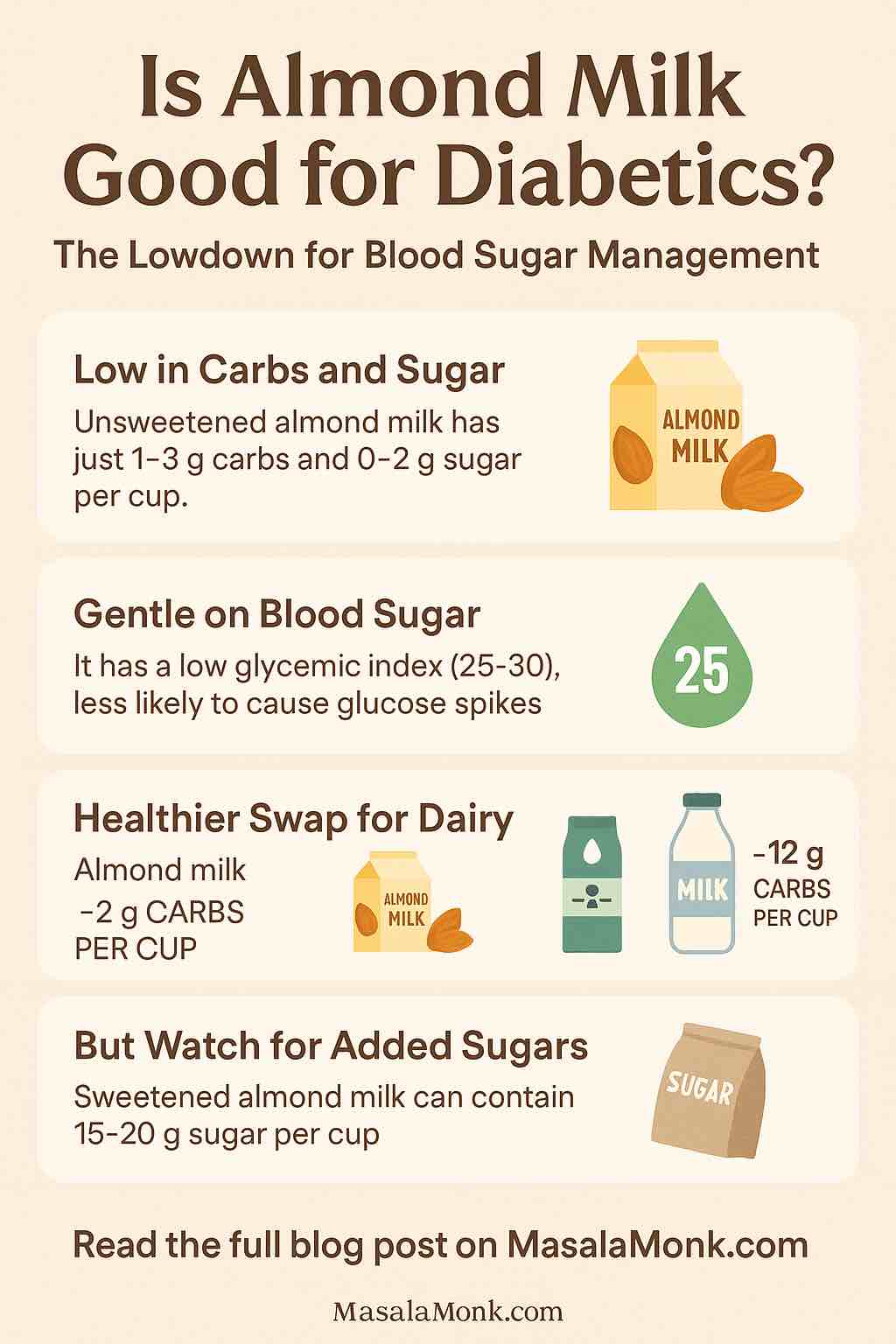
Is Almond Milk Good for Diabetics?

For people managing diabetes, every sip counts—especially when it comes to milk and milk alternatives. If you’re wondering whether almond milk is a smart swap for your chai, smoothie, or cereal bowl, the answer is: yes, but it depends on the type.

Almond milk is low in carbs, naturally lactose-free, and—when unsweetened—offers a creamy, blood-sugar-friendly alternative to dairy. But as with most things in nutrition, the devil is in the details.

Let’s explore the latest science, practical tips, and smart ways to use almond milk to help manage blood sugar and support your overall health.


🧬 Why Almond Milk is Diabetic-Friendly

Here’s a quick comparison of unsweetened almond milk versus traditional cow’s milk:

Nutrient (per 1 cup)Unsweetened Almond Milk2% Cow’s Milk
Calories~35–40 kcal~120 kcal
Carbs1–3 g~12 g
Sugars0–2 g~12 g (natural lactose)
Protein1 g8 g
Fat2.5–3 g (mostly MUFA)5 g (some saturated)
GI (Glycemic Index)~25–30~47–55

📌 Key takeaway: Almond milk is lower in calories, carbs, and sugars than cow’s milk—ideal for managing blood sugar.


🔬 What Research Says: Almond Milk vs Cow’s Milk

✅ Latest Study (2025, RCT in T2D Patients)

Researchers gave adults with type 2 diabetes almond milk or cow’s milk matched for calories or carbs, alongside oatmeal.

Result:

  • Similar blood glucose curves in both groups.
  • However, cow’s milk caused higher insulin and glucagon levels, meaning more demand on the pancreas.

📌 Almond milk provided a more insulin-sparing effect, helpful for those with insulin resistance.


🧠 Additional Benefits of Almond Milk for Diabetics

1. Low Glycemic Impact

  • Unsweetened almond milk has a glycemic index of ~25, well below the threshold that causes sharp glucose spikes.
  • Sweetened versions? That’s a different story.

2. Heart Health Support

  • Rich in monounsaturated fats (MUFA) and vitamin E, almond milk may help reduce LDL cholesterol and inflammation—both key concerns for diabetics.

3. Fortification Benefits

Most almond milks are fortified with:

  • Calcium – for bone strength
  • Vitamin D – supports insulin sensitivity
  • Vitamin E – antioxidant; supports heart and skin health

⚠️ What to Watch Out For

❌ 1. Sweetened and Flavored Varieties

Some almond milk brands add up to 20 grams of sugar per cup—a blood sugar disaster.

🔍 Look for labels that say:

  • “Unsweetened”
  • “No added sugars”
  • “0g added sugar”

❌ 2. Low Protein Content

While almond milk is light on sugar, it’s also light on protein (~1g/cup). If you’re using it as a milk substitute, make sure to pair it with protein-rich foods:

✅ Try pairing with:

  • Greek yogurt
  • Eggs
  • Nut butter toast
  • Protein smoothies

❌ 3. Gum & Additive Sensitivity

Some people may be sensitive to gums or stabilizers (e.g., carrageenan) found in commercial almond milk. Choose clean-label brands with minimal ingredients.


🛠️ How to Use Almond Milk in a Diabetes-Friendly Diet

☕ 1. In Your Tea or Coffee

Unsweetened almond milk works great in:

  • Black tea
  • Green tea
  • Herbal blends
  • Coffee (froths well too!)

🥣 2. In Smoothies

A low-carb base that blends well with:

  • Leafy greens
  • Berries (low-GI)
  • Nut butter or seeds
  • Unsweetened protein powders

🍚 3. With Oats or Chia Pudding

Almond milk adds creaminess without the carb load of dairy.

🍲 4. In Cooking

Use it in place of dairy milk in:

  • Curries
  • Soups
  • Healthy desserts

🧾 Pro Tips for Smart Almond Milk Use

  • Always buy unsweetened
  • Check for fortification with calcium, D, and E
  • Pair with protein for balanced meals
  • Use in place of, not in addition to, other milks
  • Test your blood sugar when trying new brands or recipes

✅ Final Takeaways

✅ What’s Great⚠️ What to Avoid
Low in carbs and sugarSweetened/flavored varieties
Low glycemic indexBrands with gums/additives
Fortified with nutrientsThinking it replaces protein
Good in smoothies and chaiOverconsumption (empty cals)

💬 So, Is Almond Milk Good for Diabetics?

Yes—especially if it’s unsweetened and used strategically.
It’s a low-carb, low-calorie, blood-sugar-friendly option that can support your diabetes journey. Just remember: read labels, pair wisely, and don’t forget the protein.


🔗 Related Reads: Almonds in All Forms for Blood Sugar Control

If almond milk caught your attention, you’ll love learning about its equally powerful siblings:

🥜 Whole Almonds: The Blood Sugar Buffer

In our first post, we explored how eating raw almonds before meals can reduce post-meal glucose spikes, improve insulin response, and even support satiety.
🔗 Read here: Do Almonds Help with Diabetes?

🥄 Almond Butter: Creamy, Clean, and Diabetes-Friendly

Almond butter brings the same benefits—packed in a spreadable form. Especially effective when eaten at breakfast or with fiber-rich meals.
🔗 Read here: Almond Butter for Diabetes

Together, these almond-based foods offer a powerful toolkit for blood sugar management, from snacks to smoothies to sips. 🌿

❓ 10 FAQs: Almond Milk and Diabetes

1. Is almond milk safe for diabetics?

Yes, especially unsweetened almond milk. It has low carbohydrates, no added sugar, and a low glycemic index—making it ideal for blood sugar control.


2. Does almond milk raise blood sugar?

Unsweetened almond milk does not significantly raise blood sugar due to its low glycemic load. However, sweetened varieties can spike glucose levels.


3. Which is better for diabetics: almond milk or cow’s milk?

Almond milk is lower in carbs and sugars, making it better for those watching their blood sugar. Cow’s milk contains natural lactose (sugar), which may affect glucose more strongly.


4. Can almond milk replace regular milk in all recipes?

Yes, almond milk works well in smoothies, chai, oats, baking, and curries. Just keep in mind it is lower in protein, so consider adding a protein source.


5. What should I look for on almond milk labels?

Choose options labeled:

  • Unsweetened
  • No added sugar
  • Fortified with calcium, vitamin D, and vitamin E

6. How much almond milk can a diabetic drink per day?

Most people can enjoy 1–2 cups daily as part of a balanced diet. Always monitor your individual response, especially when combining with other carbs.


7. Is almond milk OK for type 2 diabetes?

Yes. In fact, studies show almond milk produces lower insulin demand than cow’s milk and can support better glycemic balance in people with type 2 diabetes.


8. What’s the best time to drink almond milk?

Any time, but it’s especially useful:

  • In the morning for smoothies or oats
  • As a snack base
  • Before or after workouts when paired with protein

9. Can almond milk help with weight management?

Yes. It’s low in calories and promotes fullness when combined with other healthy fats and proteins—helpful for weight control in diabetes management.


10. Can I make almond milk at home for diabetes?

Absolutely! Homemade almond milk can be 100% free of added sugar and additives. Use soaked almonds, blend with water, and strain. Flavor with cinnamon or vanilla (no sugar).

Posted on 1 Comment

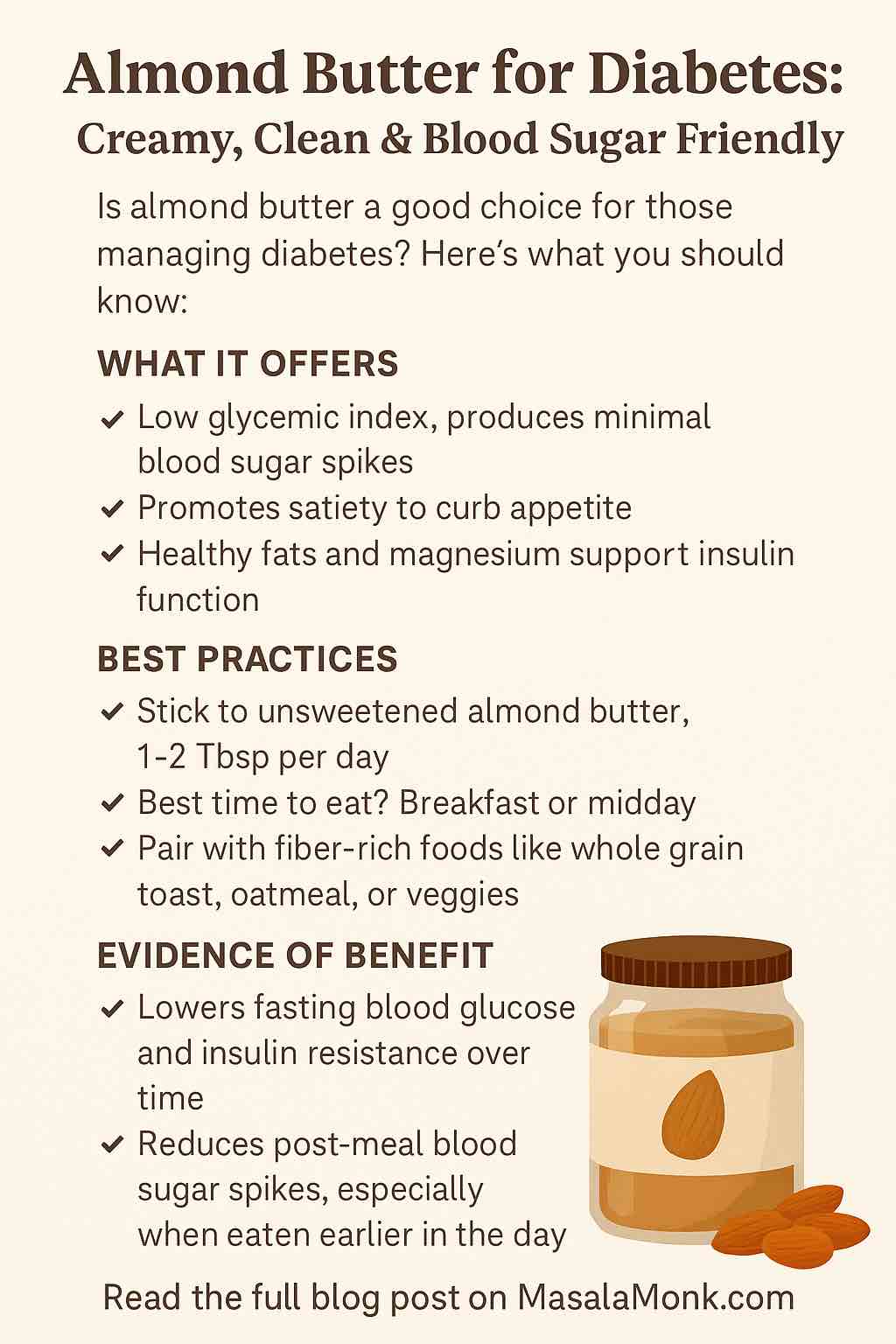
Almond Butter for Diabetes: Creamy, Clean & Blood Sugar Friendly

Almond Butter for Diabetes

Managing diabetes doesn’t mean giving up flavor—or healthy fats. If you’re looking for a delicious, nutrient-rich addition to your diabetes-friendly diet, almond butter might be your perfect match.

But is almond butter truly diabetic-friendly? Or is it just another trendy health food?

Let’s dig deep into the science, timing, benefits, and smart ways to enjoy almond butter for blood sugar control—without overdoing it.


🧬 What Makes Almond Butter a Good Fit for Diabetics?

Almond butter is simply ground almonds turned into a rich, creamy paste—without the sugar spike that many conventional spreads (like jam or chocolate spreads) bring to the table.

Here’s why it earns a gold star for diabetes:

Nutrient (per 1 Tbsp)Benefit
Protein (3.5g)Slows digestion, supports satiety
Healthy Fats (9g)Mostly monounsaturated; stabilizes glucose
Fiber (~1.5g)Slows glucose absorption
Magnesium (~45mg)Helps insulin sensitivity
Low GI (~15)Minimal impact on blood sugar

And—when it’s unsweetened—it contains no added sugars or refined carbs.


🔬 What the Science Says: Almond Butter & Blood Sugar

Morning Wins for Glucose Control

A controlled study found that adding almond butter to breakfast improved post-meal glucose and reduced hunger at lunch. The healthy fats and protein slowed glucose absorption and improved fullness—key for avoiding blood sugar dips and cravings.

📌 Best used early in the day for maximum effect.


⚠️ Evening Use? Still Under Study

In a 2-week pilot study, people with type 2 diabetes ate 2 tablespoons of almond butter at night. The result? No major change in overnight or fasting glucose—but researchers noticed interesting trends in blood sugar stability.

📌 Conclusion: Evening use isn’t harmful, but benefits are less clear vs. morning use.


🩺 Long-Term Use May Improve Insulin Resistance

When 20% of daily calories came from almonds (whole or butter), participants with type 2 diabetes saw improvements in:

  • Fasting blood glucose
  • Fasting insulin
  • HOMA-IR (insulin resistance marker)

📌 Longer-term almond inclusion may support deeper metabolic changes.


⚙️ How Almond Butter Works in Your Body

It’s all about slowing things down. Almond butter’s fiber + protein + fat combo:

  • Delays carb breakdown in the stomach
  • Promotes fullness (via hormones like GLP-1 and peptide YY)
  • Supports smoother glucose uptake
  • Reduces cravings for high-GI foods later

👉 This helps maintain stable blood sugar, especially after meals.


⏱️ Best Time to Eat Almond Butter for Diabetics

Time of DayEffectPro Tip
Morning (Breakfast)Best for reducing glucose spikesAdd to oats or toast
Mid-Morning/Afternoon SnackCurbs hunger and stabilizes energyPair with apple or cucumber
Evening (before bed)No proven blood sugar benefit yetTry if you’re prone to night cravings

🎯 Ideal portion: 1–2 tablespoons (15–30g)


🚫 What to Avoid: Almond Butter Pitfalls

Not all almond butters are created equal. Here’s what to watch out for:

Bad IngredientWhy Avoid
Added sugarSpikes blood sugar, reduces benefit
Palm or hydrogenated oilsMay increase inflammation
Salt (in excess)Risky for diabetics with hypertension

Best choice: “Ingredients: Almonds.” That’s it.


🥄 Smart & Delicious Ways to Use Almond Butter

Here’s how to make almond butter part of your diabetes-friendly routine:

1. Almond Butter + Oats

  • 1/4 cup steel-cut oats
  • 1 Tbsp almond butter
  • Cinnamon, chia seeds, water/milk
    📈 Slow-digesting combo perfect for breakfast

2. Veggie Dip

  • Use as a dip for carrot or cucumber sticks
  • Add lemon or crushed garlic for flavor
    🥕 Great low-carb, high-fiber snack

3. Almond Butter Smoothie

  • 1 Tbsp almond butter
  • 1/2 cup unsweetened almond milk
  • 1/4 cup Greek yogurt
  • 1/4 banana (optional)
    🥤 Filling, protein-rich, and smooth

4. Stuffed Dates (Occasional treat)

  • 1 date (optional for those with stable sugar)
  • Fill with 1/2 tsp almond butter
    🥄 Use rarely; good for controlled cravings

✅ Final Takeaways

Is almond butter good for diabetics? Yes—but with the right approach.

🟢 Do:

  • Choose unsweetened, natural almond butter
  • Eat 1–2 Tbsp/day, ideally at breakfast or midday
  • Pair with fiber-rich carbs or veggies
  • Use as a replacement, not an addition, to calorie-dense foods

🔴 Don’t:

  • Choose sugary or flavored varieties
  • Eat mindlessly straight from the jar
  • Assume it’s a free food—it’s still calorie-dense

💬 Real Talk

Almond butter isn’t a miracle cure—but when used smartly, it’s a tasty, nutrient-dense ally in your diabetes journey. Whether you’re managing type 2 diabetes or watching your blood sugar, this creamy spread can play a big role in stabilizing your day.


📣 Want More?

👉 Head over to MasalaMonk.com for the full post with FAQs, product tips, and recipes!
Read Now:
🔗 https://masalamonk.com/do-almonds-help-with-diabetes-the-blood-sugar-benefits-of-this-super-nut

🔍 FAQs – Almond Butter & Diabetes

1. Is almond butter safe for diabetics?

Yes, almond butter is safe and beneficial for diabetics when it’s unsweetened and consumed in controlled portions. Its low glycemic index and healthy fat profile help stabilize blood sugar.


2. How much almond butter can a diabetic eat per day?

Most people with diabetes can safely consume 1–2 tablespoons (15–30g) of almond butter per day as part of a balanced diet. Portion control is key due to its calorie density.


3. Does almond butter raise blood sugar levels?

Not significantly. Almond butter has a low glycemic index (~15) and tends to slow glucose absorption when paired with carbohydrates. However, flavored or sweetened varieties may spike sugar levels.


4. What’s the best time to eat almond butter for blood sugar control?

Morning or midday is ideal. Studies show almond butter eaten with or before breakfast can help lower post-meal blood glucose and improve satiety.


5. Can almond butter help with insulin resistance?

Yes. Long-term studies suggest that incorporating almond-based foods like almond butter may improve fasting insulin levels and HOMA-IR, particularly in people with type 2 diabetes.


6. Is almond butter better than peanut butter for diabetics?

Both are good options if unsweetened. However, almond butter tends to have more magnesium, less saturated fat, and a lower glycemic load, making it a slightly better choice for diabetes.


7. Can I eat almond butter at night?

You can, but studies show limited glucose-lowering benefit at night. Stick to a small portion if using almond butter as an evening snack to avoid unnecessary calorie load.


8. What ingredients should I avoid in almond butter?

Avoid almond butters with added sugar, salt, palm oil, or hydrogenated fats. The label should ideally list only “almonds” as the ingredient.


9. Can almond butter be part of a weight loss plan for diabetics?

Yes, when eaten in moderation. Almond butter promotes satiety, which can help control appetite and prevent overeating—supporting healthy weight loss, which is key in managing type 2 diabetes.


10. How can I include almond butter in a diabetes-friendly diet?

Use almond butter as a spread on whole grain toast, mix into oats or smoothies, or dip veggies into it. Just be mindful of portion size and added calories.

Posted on 3 Comments

Do Almonds Help with Diabetes? The Blood Sugar Benefits of This Super Nut

almonds and diabetes

Managing blood sugar can feel like walking a tightrope—but what if a simple, delicious snack could make the balance easier?

Enter almonds: the crunchy little nuts that are making a big impact in diabetes management. From controlling post-meal sugar spikes to improving heart health, almonds might just be the super snack every diabetic and prediabetic person should consider.

But is it hype or hard science?

In this deep dive, we’ll unpack the latest clinical research, how almonds affect blood sugar, and the right way to incorporate them into your diet.


🧬 What Makes Almonds Special?

Almonds are not just low-carb—they’re nutrient powerhouses. A 28-gram serving (about 23 almonds) offers:

  • 6g protein
  • 3.5g fiber
  • 14g fat (mostly monounsaturated)
  • 75mg magnesium (helps insulin sensitivity)
  • 0g sugar

They also have a low glycemic index, meaning they won’t cause major blood sugar spikes like refined carbs do.


🔬 The Science: What Studies Really Say

Let’s look at the evidence—both encouraging and nuanced.

Short-Term Wins: Lower Post-Meal Spikes

Several studies confirm that almonds blunt the rise in blood sugar after eating a carbohydrate-rich meal:

  • A 2022 study showed that eating just 15g of almonds before a meal reduced post-meal glucose by 14%.
  • Another study from India (2024) found that a daily almond intake in prediabetics significantly improved fasting blood sugar and HbA1c.

These effects are likely due to the fat, fiber, and protein content in almonds, which slow digestion and buffer carb absorption.

⚠️ Long-Term Results: Not Always Straightforward

A 5-month trial in prediabetics (2023) revealed worsened insulin sensitivity and higher fasting glucose when participants added almonds without adjusting other foods—meaning they consumed more calories overall.

💡 Lesson: Almonds work best when they replace less healthy options—not when simply added on top.


🧠 How Almonds Work Their Magic

Here’s what makes almonds effective:

MechanismBenefit for Diabetics
Slow gastric emptyingReduces speed of glucose absorption
Increased satiety hormonesTriggers GLP‑1 and peptide YY (appetite control)
Magnesium & healthy fatsImprove insulin function
Low glycemic loadMinimal direct impact on blood sugar

🕒 Timing is Everything: When to Eat Almonds

Studies show the timing of almond consumption significantly affects blood sugar:

  • Before Meals: Eating almonds 30 minutes before a high-carb meal reduces glucose spikes.
  • With Breakfast: May help reduce morning hyperglycemia.
  • ⚠️ Mindless Snacking: Can lead to weight gain if not accounted for in total calorie intake.

Suggested Dosage:
Start with 15–20 grams (10–15 almonds) before lunch or dinner. This delivers benefits without adding too many extra calories.


🥗 Smart Ways to Add Almonds to Your Diet

Here are practical, diabetes-friendly ways to use almonds:

🍽️ As a Snack

  • 15 raw almonds + 1 boiled egg
  • Almonds + a small apple (for fiber and balance)

🥣 In Meals

  • Crushed almonds on salads or sautéed vegetables
  • Blend into oats with cinnamon (no sugar!)

🍵 In Smoothies

  • Add almond butter (unsweetened!) to your morning smoothie for a protein-fat boost

🚫 Watch Out For…

Not all almond products are created equal. Avoid:

ProductWhy to Avoid
Sweetened almond milkHigh added sugar can spike blood glucose
Almond snacks with salt/honeyAdds sodium and simple carbs
OvereatingExcess calories can increase insulin resistance

❤️ Bonus Benefits: More Than Just Blood Sugar

Adding almonds to your diabetes plan also supports:

  • Heart health: Lowers LDL cholesterol
  • Weight management: Increases satiety
  • Inflammation control: Rich in antioxidants and vitamin E

These are all critical factors for long-term diabetes management.


🧾 Real-Life Almond Plan for a Day

TimeAlmond Use
7:30 AMAlmond butter in chia smoothie (1 tbsp)
11:30 AM10 raw almonds 30 min before lunch
4:00 PMHandful of almonds + sliced cucumber
7:00 PMCrushed almonds over stir-fried veggies

🧠 TL;DR — Should You Eat Almonds If You Have Diabetes?

Yes—with strategy.

Almonds can help reduce blood sugar spikes, especially when eaten before meals and in place of other snacks. But overconsumption or just “adding them in” can backfire.

Follow these principles:

  • ✅ Keep it to 15–30g/day
  • ✅ Replace—not stack—your snacks
  • ✅ Eat before meals for best results
  • ❌ Avoid sweetened or flavored almond products

📣 Final Thoughts

Almonds aren’t a magic bullet—but they are a smart, tasty, and scientifically supported ally in your fight against high blood sugar. Like all powerful tools, it’s about how you use them.

Ready to make almonds a regular part of your diabetes plan? Start with 10–15 almonds before your next carb-rich meal and feel the difference.

🔍 Frequently Asked Questions (FAQs)

1. Can almonds help control blood sugar levels?

Yes. Almonds can reduce post-meal glucose spikes when consumed before or with carbohydrate-rich meals. Their fiber, fat, and protein content slows glucose absorption.


2. How many almonds should a diabetic eat per day?

A typical recommendation is 15–30 grams per day (about 10–23 almonds), ideally spread across meals or snacks. Portion control is key to avoid excess calories.


3. Should I eat almonds before or after a meal?

For blood sugar benefits, eat almonds 30 minutes before a high-carb meal. This timing has been shown to reduce post-meal glucose spikes.


4. Are raw almonds better than roasted or salted ones?

Raw or dry-roasted unsalted almonds are best. Salted almonds may raise blood pressure, and flavored varieties may contain added sugars.


5. Can eating too many almonds raise blood sugar?

Not directly, but excessive almond consumption can lead to weight gain, which may worsen insulin resistance over time. Stick to recommended portions.


6. Is almond butter good for diabetics?

Yes, unsweetened almond butter retains the same benefits as whole almonds. Just ensure it contains no added sugars or hydrogenated oils.


7. What about almond milk—is it safe for diabetics?

Yes, but choose unsweetened almond milk only. Sweetened versions can contain enough sugar to spike blood glucose.


8. Can almonds replace carbs in my meal plan?

Almonds can be a low-carb replacement for snacks like chips or cookies. However, they should not replace essential carbs like whole grains or vegetables entirely.


9. Do almonds help with type 2 diabetes specifically?

Yes. Some studies show improved fasting blood sugar, HbA1c, and insulin sensitivity in people with type 2 diabetes who consumed almonds regularly as part of a calorie-balanced diet.


10. Can prediabetics benefit from eating almonds?

Yes, though results are mixed. When used to replace other foods, almonds may improve glucose and insulin levels. Simply adding them to the diet without calorie adjustment may not help.