Posted on 3 Comments

Cinnamon & Clove Spiced Iced Tea: 5 Benefits for a Revitalizing Afternoon

CINNAMON & CLOVE SPICED ICED TEA

When the post-lunch slump hits and your mind starts to fog, most of us reach for coffee or energy drinks to push through the rest of the day. But what if there were a more natural, calming yet revitalizing alternative that doesn’t come with the caffeine crash? Enter the Cinnamon & Clove Spiced Iced Tea—an ancient combination reimagined for the modern afternoon pick-me-up.

This aromatic, spiced herbal infusion isn’t just a flavorful refreshment. Backed by traditional wisdom and modern scientific research, cinnamon and clove are a dynamic duo that offer a range of health benefits. Let’s dive into the five science-supported reasons why this tea might just become your new go-to afternoon tonic.


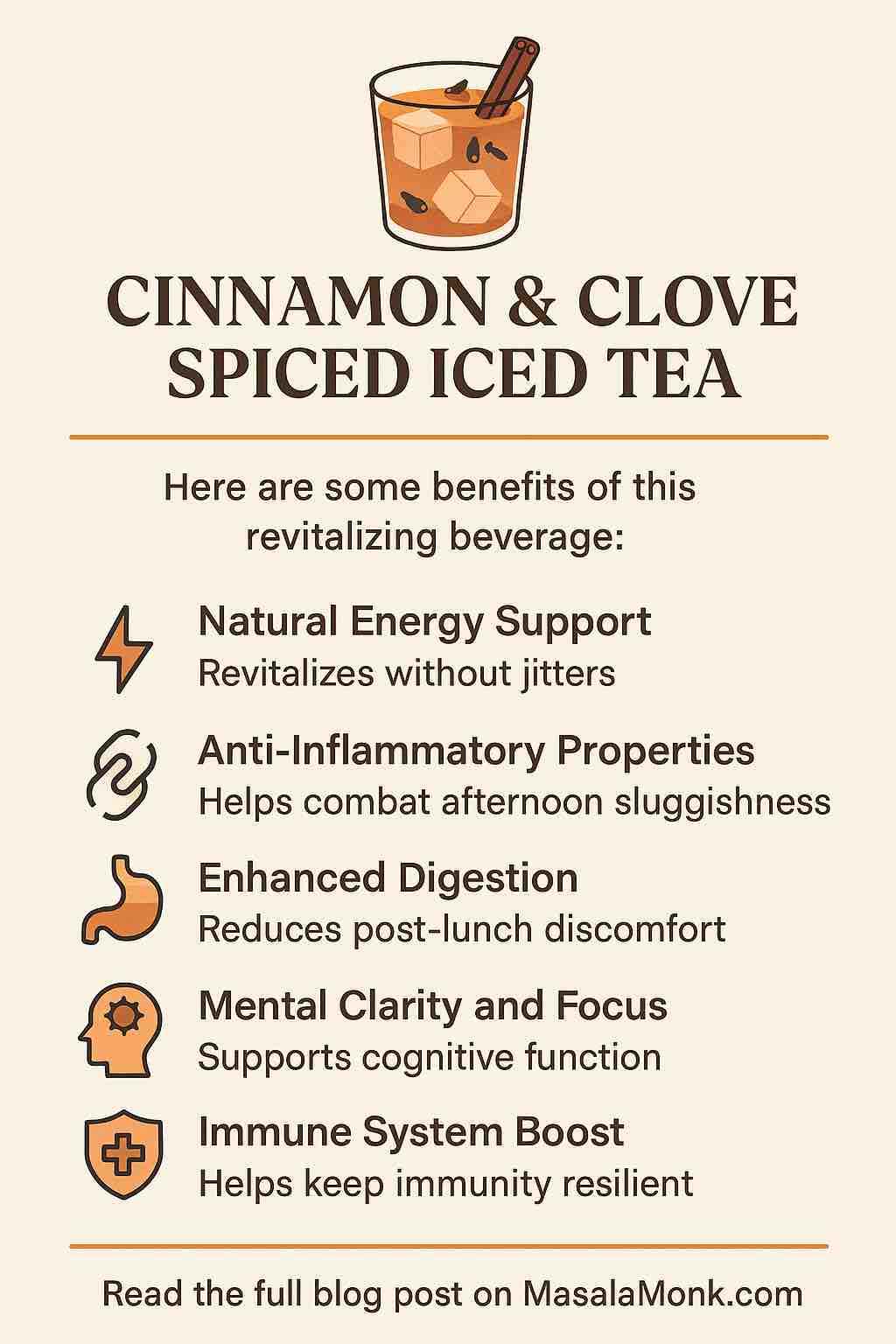
1. Natural Energy Boost Without the Jitters

Unlike caffeine-based drinks that give you a quick spike followed by a crash, cinnamon and clove work at a more subtle, metabolic level.

Cinnamon helps regulate blood sugar levels, preventing the post-lunch crash and keeping your energy stable throughout the afternoon. In fact, research has shown that cinnamon may improve glucose metabolism and increase insulin sensitivity.

Clove, on the other hand, may enhance circulation and oxygen flow to the brain due to its high eugenol content, leading to a gentle feeling of revitalization. It doesn’t overstimulate your nervous system but supports your body in finding a natural rhythm.

Together, they provide a calm yet effective lift in energy, minus the jitters and sleep disruptions.


2. Anti-Inflammatory Allies

Chronic low-grade inflammation is increasingly recognized as a culprit behind fatigue, brain fog, and a host of chronic illnesses. Fortunately, cinnamon and clove are packed with powerful anti-inflammatory compounds.

A study published in BMC Complementary Medicine and Therapies highlighted that both cinnamon (particularly cinnamaldehyde) and clove (rich in eugenol) significantly reduce markers of inflammation like COX-2 and nitric oxide.

This makes them excellent companions for soothing the body in the middle of a hectic day, helping you feel more centered and less weighed down by stress or inflammation.


3. Digestive Support to Avoid the “Food Coma”

Post-lunch drowsiness often results from poor digestion or blood sugar dips. Fortunately, this spiced iced tea has natural digestive benefits.

Cinnamon is known to reduce bloating and enhance gastric emptying, while clove acts as a carminative—reducing gas and soothing the digestive tract. The antimicrobial properties of both spices also help maintain a healthy gut microbiome.

By sipping this tea after lunch, you may ease digestive discomfort and avoid that sluggish, heavy feeling that tempts you to nap at your desk.


4. Brain Health and Mental Clarity

Need a brain boost to tackle your afternoon workload? Emerging research suggests that cinnamon and clove can enhance mental clarity and even offer neuroprotective effects.

A 2023 systematic review from PubMed found that cinnamon compounds improved cognitive functions, memory, and attention in both human and animal models. Clove, too, has shown neuroprotective benefits by reducing oxidative stress and inflammation in the brain.

Even the aroma of cinnamon has been shown to enhance alertness and improve task performance. Imagine combining both in a chilled, spiced tea that keeps your mind sharp and your focus steady.


5. Immunity and Antioxidant Boost

Afternoon energy dips often coincide with minor immune system lulls due to our natural circadian rhythms. The good news? Cinnamon and clove come armed with immune-boosting antioxidants.

Clove extract has demonstrated antimicrobial activity against common pathogens like E. coli and K. pneumoniae. Cinnamon ranks among the top antioxidant-rich spices, packed with polyphenols that help combat oxidative stress.

These protective effects not only boost immunity but also support long-term wellness when consumed regularly.


How to Brew Cinnamon & Clove Spiced Iced Tea

Creating this revitalizing tea is simple and rewarding:

Ingredients:

  • 1 cinnamon stick
  • 3–4 whole cloves
  • 2 cups water
  • Optional: black tea, rooibos, lemon, or a dash of raw honey (added after cooling)

Instructions:

  1. Bring the water to a boil.
  2. Add the cinnamon stick and cloves. Simmer for 10 minutes.
  3. Strain and let cool to room temperature.
  4. Pour over ice and enjoy!

This tea can be stored in the refrigerator for up to 3 days, making it a convenient grab-and-go option.


Final Thoughts

In a world of overstimulation and synthetic solutions, the humble blend of cinnamon and clove offers a grounded, nourishing alternative. Whether you’re powering through emails or planning your next big project, this iced tea brings clarity, calm, and vitality in every sip.

Why not make your afternoons a little more flavorful and a lot more functional?

Try it, and let your senses (and science) be your guide.

FAQs

1. Can I drink cinnamon and clove iced tea every day?
Yes, moderate daily consumption (1–2 cups) is generally safe and beneficial for most people. However, individuals on medication for diabetes or blood thinning should consult a doctor due to potential interactions.

2. Does this tea contain caffeine?
Not inherently. The base recipe is caffeine-free. However, if you choose to add black tea or green tea to the brew, it will introduce a mild caffeine content.

3. Can cinnamon and clove help with weight loss?
While not a magic solution, both spices may support weight loss indirectly by stabilizing blood sugar, improving digestion, and enhancing metabolism.

4. Is this tea safe during pregnancy?
In small culinary amounts, cinnamon and clove are usually safe. However, high doses or concentrated extracts should be avoided during pregnancy. Always consult a healthcare provider first.

5. How long can I store the brewed tea?
You can store it in the refrigerator for up to 3 days in an airtight container. For best flavor and potency, consume within 48 hours.

6. What kind of cinnamon should I use?
Ceylon cinnamon (“true cinnamon”) is preferred over cassia for regular use, as it contains lower levels of coumarin, which can be harmful in large amounts.

7. Can I sweeten this tea?
Yes. Add natural sweeteners like raw honey (after cooling), stevia, or a touch of maple syrup. Avoid adding sugar while it’s hot to preserve its antioxidant benefits.

8. Does clove have any side effects?
Excessive consumption of clove can lead to gastrointestinal discomfort or interact with blood-thinning medication. In tea form, the dose is low and generally safe.

9. Can I drink it hot instead of iced?
Absolutely! It makes an excellent hot spiced tea during colder months. Just follow the same brewing method and enjoy it warm.

10. Is this tea good for immunity?
Yes, both cinnamon and clove have strong antimicrobial and antioxidant properties, which can help bolster your immune defenses when consumed regularly.
Posted on Leave a comment

Zucchini vs Cucumber 🥒

ZUCCHINI VS. CUCUMBER

At first glance, zucchinis and cucumbers may seem like twins separated at birth—long, green, and often occupying neighboring bins at the grocery store. But are they really the same? Can they be used interchangeably in recipes? And what about their nutrition—who wins the health crown?

If you’ve ever wondered “Is zucchini a cucumber?” or searched for “difference between zucchini and cucumber,” you’re not alone. Thousands of people every month look up variations of this question. This comprehensive guide will walk you through every major difference—from appearance and taste to nutritional value and culinary use. Let’s settle the zucchini vs. cucumber debate once and for all.


🧬 Are Zucchini and Cucumber the Same?

Short answer: No, they’re not the same.

While both belong to the Cucurbitaceae family (commonly known as the gourd family), cucumbers and zucchinis are different species, with unique textures, flavors, and culinary applications.

  • Cucumber (Cucumis sativus) is a fruit (yes, botanically!) often eaten raw.
  • Zucchini (Cucurbita pepo) is also a fruit, but one that’s commonly cooked and referred to as a vegetable.

🌿 Visual & Botanical Differences

FeatureCucumberZucchini
SpeciesCucumis sativusCucurbita pepo
OriginSouth AsiaItaly (as a summer squash)
Growth HabitClimbs on vinesGrows in bushy plants
Skin TextureSmooth to bumpy, waxySmooth, sometimes speckled
ColorUniform deep green or stripedDark green, light green, or yellow
SeedsMore visible, largerFiner, softer, less noticeable

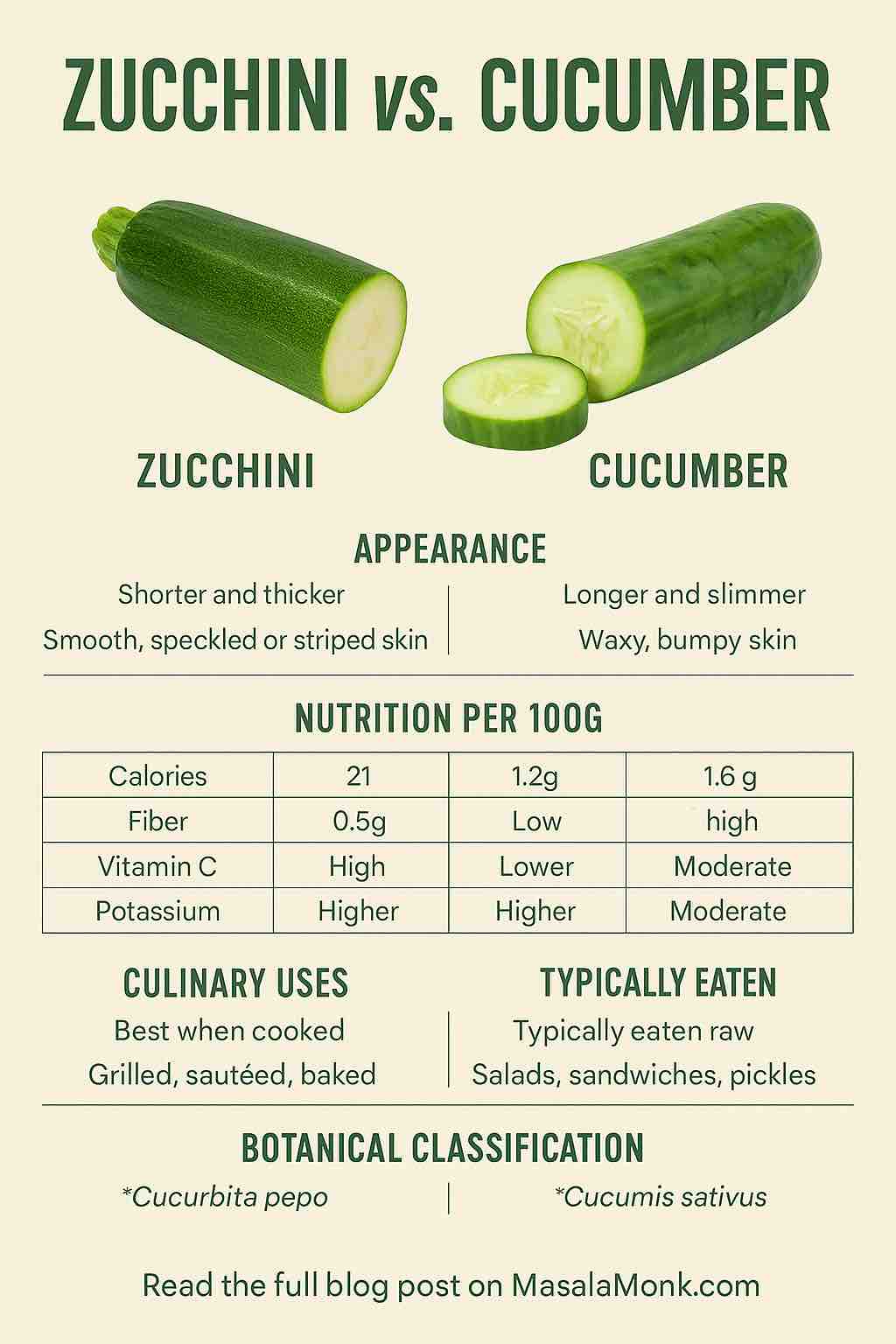
While they both look similar at a glance, cucumbers tend to be longer and thinner with a glossy, sometimes waxy coating. Zucchinis, on the other hand, are more matte and have a slightly thicker, firmer appearance.


🧊 Texture, Taste & When to Use Each

🥒 Cucumber: Crisp, Cool, and Refreshing

  • Taste: Mild, watery, slightly sweet
  • Texture: Crunchy and refreshing
  • Best Used For: Raw dishes like salads, sandwiches, and pickles
  • Common Types: English (seedless), Persian (mini), Slicing (common grocery-store type)

🥗 Zucchini: Mild, Tender, and Versatile

  • Taste: Mild, earthy, slightly sweet when cooked
  • Texture: Softens when cooked, slightly spongy raw
  • Best Used For: Grilling, sautéing, roasting, baking, spiralizing
  • Common Types: Green zucchini, golden zucchini, costata romanesco

Pro Tip: Never use cucumber in a stir-fry—its high water content and delicate texture make it unsuitable for heat. Zucchini, however, thrives in the pan or oven.


🍽️ Zucchini vs. Cucumber in the Kitchen

Use CaseCucumberZucchini
Raw Salads✔️ Crisp and refreshing⚠️ Slightly chewy raw
Grilled Dishes❌ Too watery✔️ Excellent when grilled
Pickling✔️ Classic use⚠️ Not commonly pickled
Baking (e.g., bread)❌ Doesn’t bake well✔️ Moist and perfect for baking
Spiralized “noodles”❌ Breaks easily✔️ Ideal zoodle material

🥗 Nutritional Comparison: Zucchini vs. Cucumber

Both are low-calorie, hydrating options, but zucchinis have a slight edge in terms of nutrient density.

Nutrient (per 100g)CucumberZucchini
Calories15 kcal21 kcal
Water Content95%92%
Fiber0.5 g1.2 g
Vitamin CLowHigher
Vitamin KHighLower
Potassium147 mg261 mg
Carbs3.6 g3.9 g
Protein0.65 g1 g
  • Zucchini: Higher in potassium, fiber, and vitamins like C and B6. Better choice if you’re aiming for more nutrients.
  • Cucumber: Great for hydration and weight loss diets due to ultra-high water content.

❄️ Storage & Shelf Life

  • Cucumbers: Best stored wrapped in plastic or in a produce bag in the crisper drawer. Avoid high humidity to prevent soft spots.
  • Zucchinis: Store unwashed in a paper bag in the refrigerator’s crisper drawer. Avoid airtight containers—they trap moisture and lead to rot.

🇬🇧 Courgette vs. Zucchini: Are They Different?

Nope! They’re exactly the same. “Courgette” is simply the British English term for what Americans call “zucchini.”

So if you see “courgette vs cucumber” or “difference between courgette and cucumber,” you’re really just revisiting the zucchini vs. cucumber discussion with UK spelling.


🔄 Can You Substitute One for the Other?

In some raw dishes—like salads—you can swap cucumber and zucchini, especially if the zucchini is very young and tender. But for most recipes, they serve different purposes.

  • Acceptable Swaps:
    • Raw spiralized zucchini in a cucumber salad
    • Raw zucchini slices in sandwiches
  • Bad Swaps:
    • Grilled cucumber (becomes mushy)
    • Pickled zucchini (not a classic flavor or texture)
    • Baked cucumber bread (won’t work!)

🧾 Final Thoughts: Which One Should You Use?

Choose cucumber if you’re making:

  • Crisp, cold dishes
  • Summer salads or sandwiches
  • Pickles or infused water

Choose zucchini if you’re making:

  • Stir-fries or roasted vegetables
  • Low-carb pasta alternatives
  • Savory baked goods like muffins or bread

📌 Bottom Line

Zucchini and cucumber might be cousins in the plant kingdom, but they live in totally different culinary worlds. Knowing which to use—and when—will not only elevate your recipes but also prevent soggy stir-fries or dry sandwiches.

Next time you’re at the grocery store and caught in the zucchini vs. cucumber conundrum, remember: one’s made for the skillet, the other for the salad bowl.

FAQs: Zucchini vs. Cucumber


1. Are zucchini and cucumber the same?
No. While they may look similar, zucchini and cucumber are different species with distinct textures, flavors, and culinary uses. Zucchini is typically cooked, while cucumber is eaten raw.


2. Can I substitute cucumber with zucchini in recipes?
Only in some cases. You can use raw zucchini in salads or sandwiches in place of cucumber, but cucumber doesn’t hold up well to cooking, so it can’t replace zucchini in hot dishes.


3. What is the nutritional difference between zucchini and cucumber?
Zucchini is higher in fiber, potassium, and vitamin C, making it more nutrient-dense. Cucumber has a higher water content and fewer calories, ideal for hydration and weight loss.


4. Which is better for weight loss: zucchini or cucumber?
Both are excellent low-calorie options. However, cucumber has slightly fewer calories and more water, making it especially effective for hydration and appetite control.


5. Is it safe to eat raw zucchini like cucumber?
Yes, raw zucchini is safe to eat and often used in salads or as spiralized “zoodles.” Just note that its texture is firmer and flavor more neutral than cucumber.


6. Why do cucumbers taste different from zucchinis?
Cucumbers are crisp and watery with a subtle sweetness. Zucchinis are denser and more neutral or earthy in taste, especially when cooked.


7. Is courgette the same as zucchini or cucumber?
“Courgette” is simply the British English term for zucchini. It is not another name for cucumber.


8. Can you pickle zucchini like cucumber?
Technically yes, but the texture and flavor are not the same. Zucchini doesn’t have the same crunch or acidity balance that cucumbers offer when pickled.


9. How can you tell zucchini and cucumber apart visually?
Cucumbers usually have a waxy, bumpy skin and a cooler touch due to high water content. Zucchinis have smoother, sometimes speckled skin and are more matte in appearance.


10. Which plant grows better in home gardens—zucchini or cucumber?
Both grow well, but cucumbers need support (they vine), while zucchini grows as a bush. Zucchini is often easier for beginners due to fewer pest issues and simpler harvesting.

Posted on Leave a comment

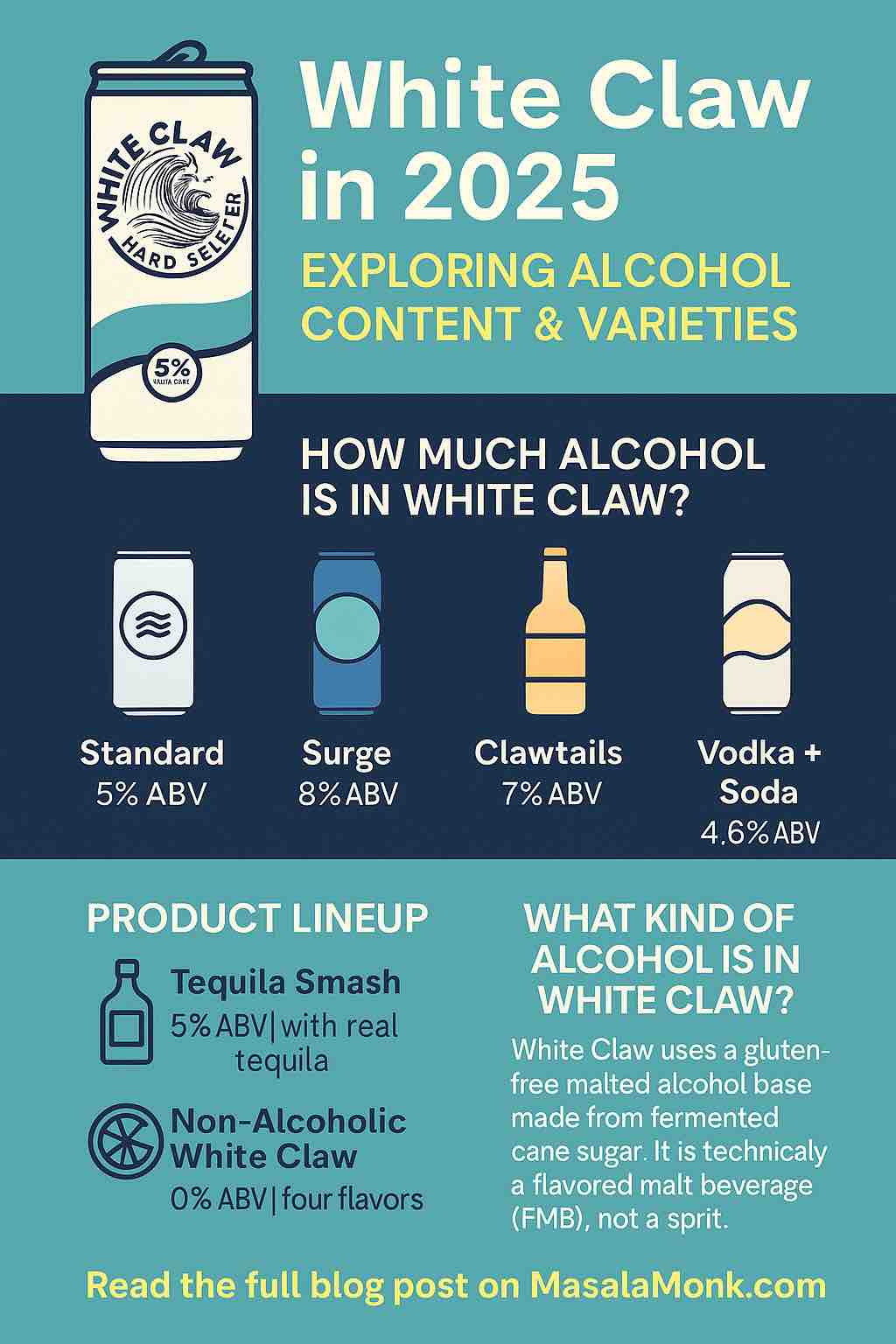
What Percent of Alcohol is in White Claw? And What type is it?

Alcohol in White Claw

When White Claw first splashed onto the beverage scene in 2016, few could have predicted the cultural wave it would unleash. Today, White Claw is more than a drink—it’s a movement. Whether you’re sipping poolside, tailgating, or unwinding after work, White Claw has become a go-to choice for those craving flavor, fizz, and just the right buzz. But despite its popularity, there’s still a lot of confusion about how much alcohol is in White Claw, what type of alcohol it actually contains, and how it compares to other drinks like beer or cocktails.

In this blog post, we’ll deep-dive into everything you need to know about White Claw’s alcohol content in 2025, the evolving product lineup, and what makes this hard seltzer a staple in fridges across the country.


🍺 What Kind of Alcohol Is in White Claw?

Let’s settle one of the most asked questions once and for all: What kind of alcohol does White Claw use?

Unlike beer, which is brewed from malted barley, or vodka, which is distilled, White Claw is made from fermented sugar—specifically, cane sugar. This process results in a clear, gluten-free, flavor-neutral alcohol base, which is then infused with carbonated water and fruit flavors. Officially, White Claw is classified as a Flavored Malt Beverage (FMB), not a spirit.

Despite some misconceptions, there’s no vodka, rum, or tequila in the original White Claw formula. Instead, think of it as closer to a very clean, alcohol-infused sparkling water.


🧪 How Much Alcohol Is in White Claw? (By Product Line)

1. White Claw Hard Seltzer (Original) – 5% ABV

This is the classic that started it all. A 12 oz can contains:

  • Alcohol: 5% ABV (about the same as a standard beer)
  • Calories: ~100
  • Carbs: 2–3 grams
  • Sugars: Often 1 gram or less
  • Gluten-Free: Yes

✅ Popular Flavors: Black Cherry, Watermelon, Mango, Lime, Raspberry

Perfect for: Day drinking, brunches, beach days—anywhere you want something light and sessionable.


2. White Claw Surge – 8% ABV

Looking for a stronger buzz? Surge is White Claw’s high-ABV version, designed for those who want to feel the effects a little faster.

  • Alcohol: 8% ABV
  • Calories: 220 per 16 oz can
  • Carbs/Sugar: Slightly higher than original

✅ Popular Flavors: Blood Orange, Blackberry, Cranberry

Perfect for: Pre-gaming, parties, or when one can is all you need.


3. White Claw Clawtails – 7% ABV

One of White Claw’s newer innovations in 2025, Clawtails are flavored malt cocktails that blend real juice and exotic flavors.

  • Alcohol: 7% ABV
  • Profile: Sweeter and more cocktail-like
  • Vibe: Margarita meets seltzer

✅ Flavors: Strawberry Cosmo, Tropical Mai Tai, Mango Margarita

Perfect for: Cocktail lovers who don’t want to mix drinks themselves.


4. White Claw Vodka + Soda – 4.5% ABV

Yes, White Claw now offers real spirits too. This line features vodka-based seltzers that are crisp, clean, and lightly flavored.

  • Alcohol: 4.5% ABV
  • Base: Premium distilled vodka
  • Calories: ~100

✅ Flavors: Peach, Wild Cherry, Pineapple

Perfect for: Fans of vodka sodas looking for convenience and portability.


5. White Claw Tequila Smash – 5% ABV

Riding the tequila wave, this newer release includes real tequila and fresh, tropical flavors.

  • Alcohol: 5% ABV
  • Taste: A bolder, zestier option with south-of-the-border vibes

✅ Flavors: Strawberry Guava, Lime Prickly Pear, Mango Tamarind

Perfect for: Taco nights, poolside lounging, Cinco de Mayo


6. White Claw 0% – Non-Alcoholic Seltzer

Yes, even White Claw has gone booze-free. The 0% line caters to the sober-curious or those who just want the taste and vibe without the alcohol.

  • Alcohol: 0% ABV
  • Flavors: Black Cherry Cranberry, Mango Passion Fruit, Peach Orange Blossom

Perfect for: Weekday lunches, designated drivers, or anyone going dry.


⚖️ White Claw vs. Beer: Alcohol Comparison

BeverageABVCaloriesGluten-Free
White Claw Original5%~100Yes
Bud Light4.2%110No
IPA (average)6–7%180–220No
White Claw Surge8%220Yes

Takeaway: White Claw matches or exceeds the alcohol of many beers, with fewer calories and a gluten-free tag.


🍹 How Many White Claws to Get Tipsy?

This depends on your body weight, alcohol tolerance, and time frame, but here’s a rough estimate:

  • One 5% White Claw = ~1 standard drink
  • Most people report feeling tipsy after 2–3 cans
  • Surge or Clawtails can bring you to that point with fewer cans

➡️ Remember: effects vary by individual, and it’s always best to pace yourself and stay hydrated.


📈 The Trend: Why White Claw Isn’t Fizzling Out in 2025

  • Diversification: From Surge to non-alcoholic options, White Claw continues to innovate.
  • Health-Conscious Appeal: Lower sugar, lower calorie, and gluten-free makes it attractive to modern drinkers.
  • Flavor Variety: There’s truly something for everyone, from tropical to classic citrus.
  • Cultural Cachet: White Claw remains a meme-worthy, Instagrammable staple.

Fun fact: According to recent market research, White Claw still leads the U.S. hard seltzer market, commanding over 50% share, with spiked seltzer drinkers averaging 2.8 cans per occasion.


🎯 Final Thoughts: Should You Drink White Claw?

If you’re after a light, refreshing, flavorful alcoholic beverage that won’t leave you bloated or buzzed too quickly, White Claw remains a top-tier choice in 2025. Whether you’re a die-hard fan of the original or curious to try the tequila-infused Smash or the non-alcoholic line, there’s never been a better time to explore the Claw lineup.

Just remember the golden rule: “Ain’t no laws when you’re drinking Claws”—unless you’re driving. Then it’s 100% laws. 🚓

📚 Frequently Asked Questions (FAQs)

1. What is the alcohol percentage in regular White Claw?

Regular White Claw hard seltzer contains 5% ABV (Alcohol by Volume), similar to a standard light beer.


2. What kind of alcohol is used in White Claw?

White Claw uses a fermented cane sugar base, making it a flavored malt beverage, not a spirit-based drink like vodka or rum.


3. Does White Claw get you drunk?

Yes, like any alcoholic beverage, White Claw can cause intoxication. The number of cans needed varies by person, but most feel tipsy after 2–3 regular cans (5% ABV).


4. Is White Claw stronger than beer?

White Claw’s 5% ABV is on par with most beers. However, its Surge line (8% ABV) is stronger than the average beer.


5. Is White Claw gluten-free?

Yes, all White Claw products are gluten-free, including the original, Surge, Clawtails, and non-alcoholic lines.


6. What’s the difference between White Claw Surge and regular White Claw?

Surge has 8% ABV, making it significantly stronger than the 5% regular version. It also comes in 16 oz cans and has more calories.


7. Is there a non-alcoholic version of White Claw?

Yes, in 2025, White Claw launched a 0% ABV line with flavors like Mango Passion Fruit and Black Cherry Cranberry.


8. How many calories are in a White Claw?

A standard 12 oz White Claw contains about 100 calories, while Surge versions have around 220 calories per 16 oz can.


9. Can you mix White Claw with other drinks?

Absolutely! White Claw can be used as a mixer with spirits like vodka or tequila, or as a base for creative cocktails.


10. How is White Claw different from vodka soda?

Original White Claw uses a fermented sugar base, while vodka soda is made with distilled spirits. However, White Claw Vodka + Soda (4.5% ABV) is a newer line made with real vodka for a more classic taste.

Posted on 5 Comments

What mixes well with Baileys? Mixology by Masala Monk

What Mixes Well with Baileys?

Baileys Irish Cream — that velvety, indulgent blend of cream, whiskey, and cocoa — is more than just a liqueur. It’s a mood. A memory. A master key to thousands of cozy evenings and celebration toasts. And when it comes to mixology, Baileys is not just a solo act — it’s a charismatic team player.

So if you’ve ever asked, “What can I mix with Baileys to elevate it beyond the rocks?” — welcome to the Mixology by Masala Monk guide to Baileys. Let’s shake, stir, and sip our way through some of the most delightful combinations Baileys has to offer.


🍸 Why Baileys Works So Well in Cocktails

Baileys is a rare triple-threat in the mixology world:

  1. Texture: That luscious creaminess makes it an ideal base or accent for both hot and cold drinks.
  2. Flavor: Subtle notes of cocoa and vanilla, balanced with Irish whiskey, give Baileys a rich, dessert-like profile.
  3. Versatility: It plays beautifully with coffee, chocolate, nuts, fruit, and even some surprising savory elements.

The result? Endless opportunities for innovation — and indulgence.


☕ Baileys Meets Coffee: A Match Made in Heaven

Let’s face it — Baileys and coffee are soulmates. Together, they’re the grown-up version of cookies and milk.

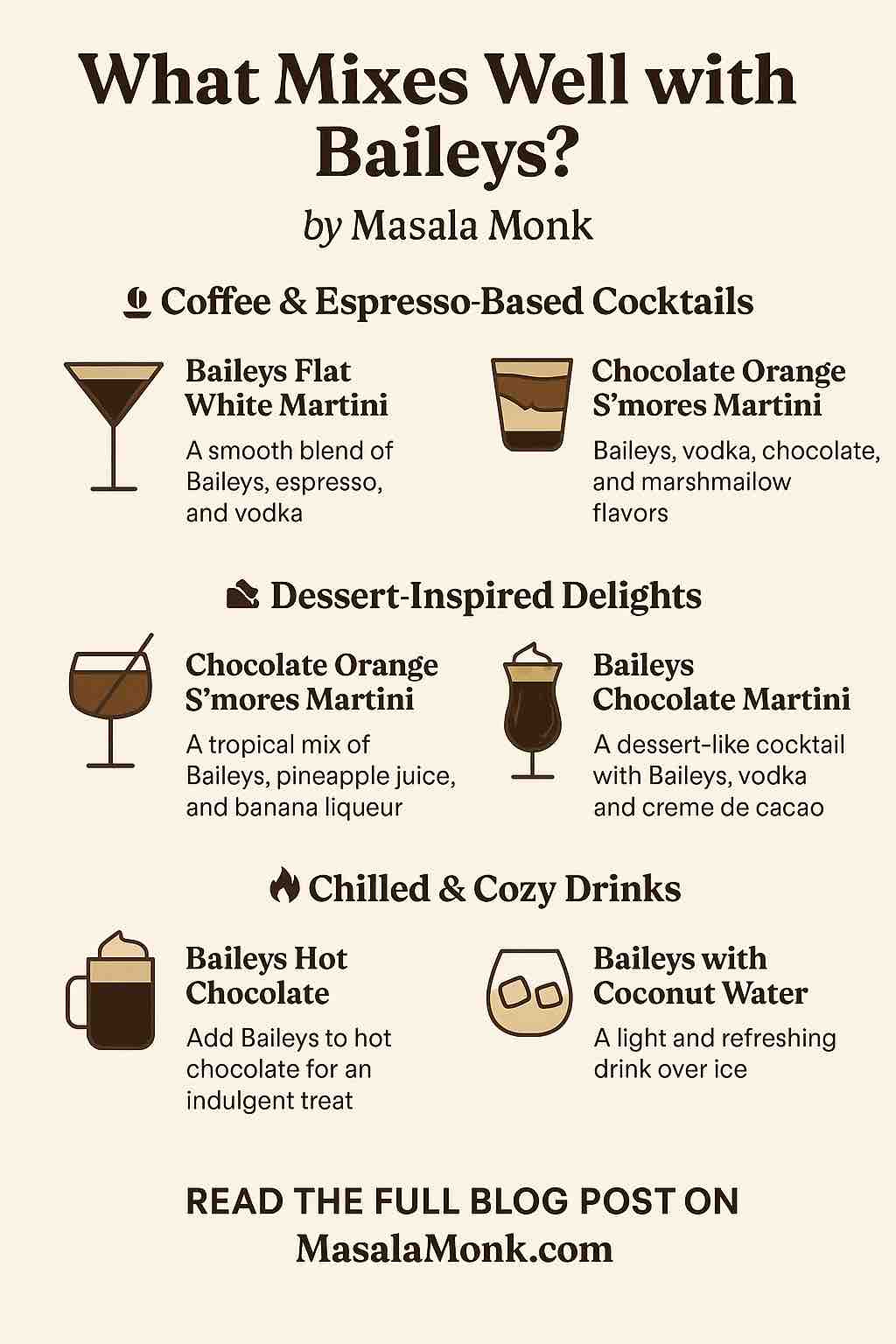
1. Baileys Flat White Martini

Espresso meets elegance.

  • Ingredients: Baileys, espresso, vodka
  • Flavor profile: Bold, creamy, slightly bitter with sweet undertones
  • Why it works: The vodka sharpens the edges, the espresso brings depth, and the Baileys rounds everything out into one smooth finish.

2. Baileys Irish Coffee (with a twist)

Forget the usual cream — swap it out for Baileys.

  • Pro tip: Use freshly brewed dark roast and a cinnamon stick for a spicy lift.
  • Perfect for: Cold evenings, festive mornings, or mid-week indulgence.

🍫 Dessert Cocktails: When Baileys is the Treat

Baileys practically is dessert. So why not go all in?

3. Chocolate Orange S’mores Martini

Your favorite campfire treat, all grown up.

  • Baileys, vodka, orange liqueur, crème de cacao
  • Rim the glass with crushed graham crackers and torch a marshmallow on top.
  • Perfect for: Date nights, cozy fireside evenings, or just a Tuesday pick-me-up.

4. Baileys Tiramisu Cocktail

Why eat tiramisu when you can drink it?

  • Baileys, coffee liqueur, mascarpone cream, espresso
  • Layered in a glass with a dusting of cocoa powder
  • Ideal for: Dinner parties, Italian-themed nights, or an impressive treat for guests

❄️ Refreshing Summer Cocktails with Baileys

Yes, Baileys can be refreshing too — it’s not all about warmth and winter.

5. Baileys Banana Colada

A tropical daydream with a creamy twist.

  • Baileys, banana liqueur, pineapple juice, coconut rum
  • Serve it over crushed ice with a pineapple wedge
  • Why it works: The tropical fruit acidity cuts through the creaminess — creating a perfectly balanced, unexpected cocktail.

6. Baileys & Coconut Water

  • Simple, clean, light.
  • Add a few mint leaves and crushed ice for extra freshness.
  • Surprisingly hydrating and low effort, yet delicious.

🔥 Warm and Cozy: Winter Cocktails with Baileys

When the chill hits, Baileys becomes your best friend.

7. Baileys Hot Chocolate

  • Add a shot of Baileys to your hot cocoa
  • Top with whipped cream, chocolate shavings, or even chili powder for a spicy edge
  • Optional: Add a splash of hazelnut syrup for Nutella-like flavor

8. Baileys Spiced Chai Latte

An Indian twist — courtesy of Masala Monk flair.

  • Brew a strong masala chai
  • Add Baileys (classic or almond)
  • Garnish with a star anise and a pinch of nutmeg

🥃 Reinventing Classic Cocktails with Baileys

9. Baileys White Russian

Move over Kahlúa. There’s a new sheriff in town.

  • Vodka, Baileys, and a splash of milk
  • Optional: Add coffee liqueur for extra depth
  • Serve over ice in a rocks glass — swirl slowly and enjoy the marbled magic.

10. B-52 Shot

  • Kahlúa (bottom), Baileys (middle), Grand Marnier (top)
  • Layered with a spoon for a stunning visual effect
  • Sweet, creamy, and citrusy all at once — a party favorite.

🧪 Masala Monk’s Mixology Tips for Working with Baileys

  1. Don’t over-shake: Cream-based liqueurs can curdle if over-shaken or mixed with high-acid juices like lemon or lime.
  2. Glass matters: Serve Baileys cocktails in elegant coupe glasses, rocks glasses, or layered shot glasses for visual appeal.
  3. Use flavored Baileys: Salted caramel, espresso crème, and almond variants can add new dimensions.
  4. Garnish wisely: Nutmeg, cinnamon, cocoa, mint, or even edible flowers can elevate the experience.

💡 Pro-Level Pairings & Unexpected Twists

  • Baileys + Matcha: Earthy meets creamy. Add matcha powder to hot milk, then blend with Baileys.
  • Baileys + Peanut Butter Whiskey: Dessert bomb in a glass.
  • Baileys + Amaretto: Almond and cream for an Italian-style after-dinner drink.

📝 Final Sip: Baileys is Your Blank Canvas

Whether you’re a casual sipper or an experimental mixologist, Baileys offers a base that can adapt to your mood, season, or occasion. It’s indulgent, yes — but also incredibly flexible. You don’t need to be a trained bartender to make something beautiful with it. Just a few ingredients and a little inspiration from the Masala Monk mindset — where global flavors meet homegrown charm.


📸 Share Your Creations!

Tried one of these recipes or invented your own Baileys-based cocktail? Tag @MasalaMonk and use #BaileysByMasalaMonk — we’d love to see your mixology magic!

📌 FAQs: Baileys Mixology by Masala Monk

1. Can Baileys be mixed with citrus or acidic juices?

Not recommended. Baileys contains dairy, which can curdle when mixed with acidic ingredients like lemon or orange juice. Stick to low-acid mixers like coffee, chocolate, or cream-based liqueurs.


2. Can I mix Baileys with soda or tonic water?

It’s not ideal. Carbonated mixers, especially tonic or citrus sodas, may cause curdling. If you want something bubbly, use cream soda or root beer — but mix gently and serve immediately.


3. Is Baileys gluten-free or dairy-free?

Classic Baileys contains dairy and is not dairy-free. However, they do offer a Baileys Almande variant made with almond milk, which is suitable for vegans and dairy-sensitive drinkers.


4. How should I store Baileys after opening?

Store Baileys in a cool, dark place, preferably in the fridge. It does not require refrigeration but keeping it chilled helps maintain flavor and texture. Consume within 6 months after opening.


5. Can I use Baileys in baking or desserts?

Absolutely! Baileys is fantastic in desserts — think Baileys cheesecake, truffles, tiramisu, or even drizzled over ice cream. It adds a creamy, slightly boozy twist to sweet dishes.


6. Can I drink Baileys straight or should I always mix it?

Baileys is delicious on its own, served over ice. It’s also a great base for cocktails. Whether you sip it neat or mix it into drinks or desserts, it’s all about preference.


7. What’s the alcohol content of Baileys?

Classic Baileys has an ABV (alcohol by volume) of 17%, making it relatively low in alcohol compared to spirits like vodka or whiskey — but stronger than wine or beer.


8. What flavors of Baileys are available?

Besides the original, Baileys offers exciting variants like:

  • Salted Caramel
  • Espresso Crème
  • Strawberries & Cream
  • Almande (dairy-free)
  • Red Velvet
  • Apple Pie (limited edition)

Each brings unique cocktail possibilities.


9. Can I mix Baileys with whiskey or vodka?

Yes! Baileys works well with spirits like vodka, whiskey, and coffee liqueurs. Use it in drinks like the Flat White Martini or Baileys White Russian for richer depth and body.


10. Is Baileys suitable for vegans or lactose-intolerant people?

The original Baileys contains dairy and is not vegan. However, the Baileys Almande variant is plant-based and dairy-free, made from almond milk — suitable for vegans and many lactose-intolerant individuals.

Posted on Leave a comment

Side Effects of Dupixent (Dupilumab)

SIDE EFFECTS OF DUPIXENT (DUPILUMAB)

Dupixent (dupilumab) has been hailed as a game-changer for people suffering from severe eczema, asthma, and other chronic inflammatory diseases. Approved by the FDA in 2017, it’s given hope to millions—often where steroids and other immunosuppressants failed. But like any powerful medication, Dupixent doesn’t come without its side effects.

In this post, we’ll explore not just the textbook side effects from clinical trials, but the raw, real-world experiences shared by actual users on forums like Reddit and Drugs.com. Whether you’re just considering Dupixent or already on it and wondering what’s “normal,” this post is for you.


What Is Dupixent, and How Does It Work?

Dupixent is a monoclonal antibody that targets interleukin-4 (IL-4) and interleukin-13 (IL-13)—key drivers in the type 2 inflammatory response seen in conditions like:

  • Atopic dermatitis (eczema)
  • Asthma
  • Chronic rhinosinusitis with nasal polyps (CRSwNP)
  • Eosinophilic esophagitis (EoE)
  • Prurigo nodularis
  • COPD (in select patients)

By blocking these signals, Dupixent calms inflammation and restores skin and respiratory function without broadly suppressing the immune system.


Common Side Effects: What Clinical Trials Reveal

According to prescribing data and post-marketing surveillance, these side effects show up most often:

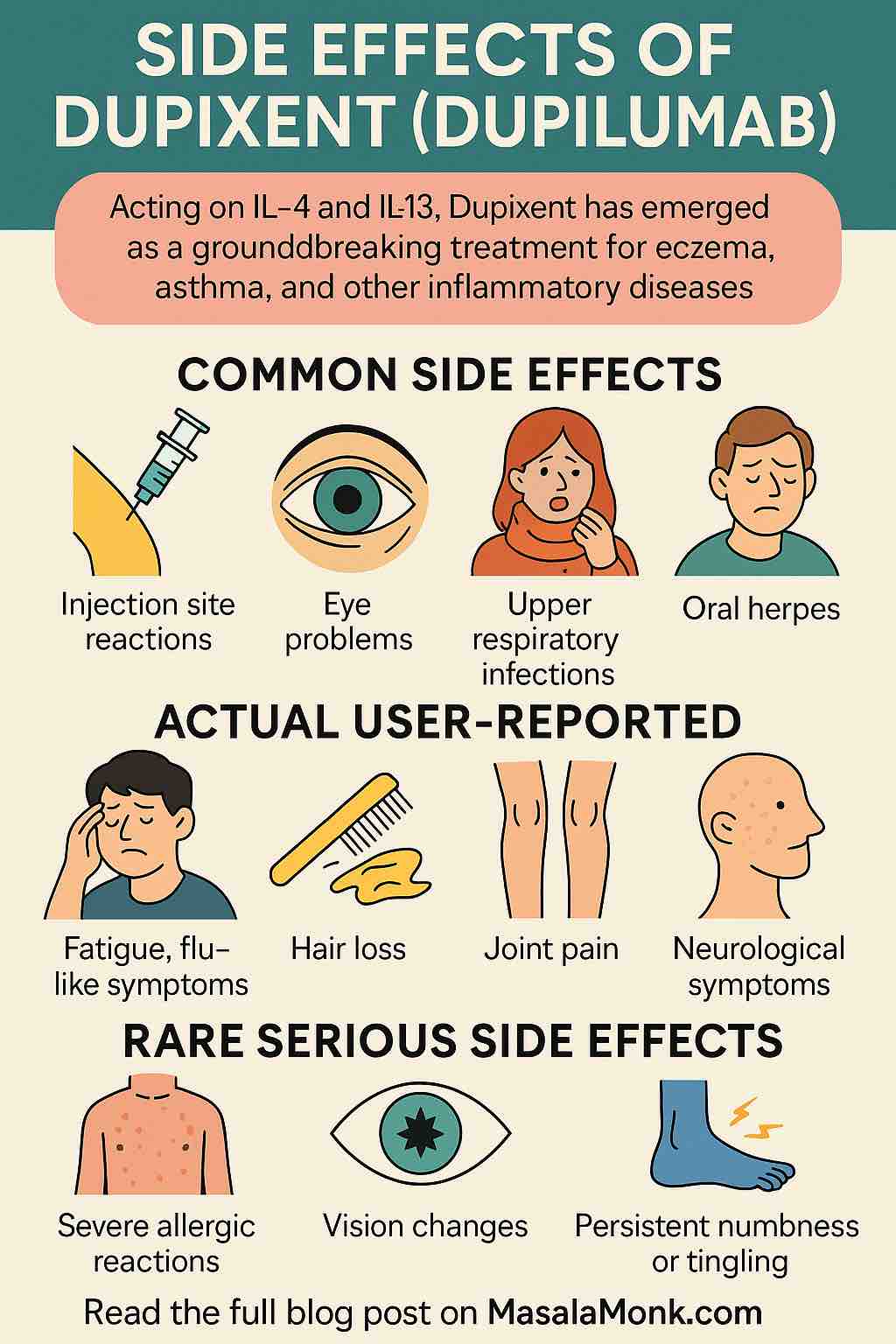
🔹 Injection Site Reactions

  • Redness, swelling, or itching at the injection site
  • Tip: Users often rotate sites or use cold packs before/after injections to minimize this.

🔹 Eye Problems

  • Conjunctivitis (pink eye), dry eyes, and eyelid inflammation (blepharitis)
  • This is especially common in eczema patients—up to 28% in some studies.

🔹 Upper Respiratory Infections

  • Includes sore throat, congestion, and cough
  • Often mild and resolves on its own

🔹 Oral Herpes Reactivation

  • Cold sores may return or worsen in frequency

🔹 Elevated Eosinophils

  • Increased white blood cells that can cause joint or lung symptoms in rare cases

🔹 Joint Pain and Muscle Aches

  • More commonly reported in asthma and EoE patients

What the Internet Is Saying: Real User Experiences

Let’s go beyond the data sheet and listen to real users on platforms like Reddit’s r/eczeMABs, Drugs.com, and health forums.

👁️ “My Eyes Were on Fire”

“Dupixent cleared my skin like a miracle, but my eyes? Constant burning and crusting. I had to stop after 3 months.” – Reddit user

Commentary: Eye side effects are the #1 complaint across the board. Some find relief with over-the-counter drops, while others require prescription anti-inflammatory eye meds.


🩺 “It’s a Miracle… and a Curse?”

“I’ve never breathed this clearly. My eczema is gone. But I get these deep muscle aches and fatigue for a day or two after each shot.” – Drugs.com reviewer

Commentary: Some report post-injection fatigue or flu-like symptoms, likely due to immune system modulation.


😰 “My Anxiety Got Worse”

“I started having weird neurological symptoms—dizziness, pins and needles. My doctor isn’t sure if it’s Dupixent, but I didn’t have this before.” – Reddit user

Commentary: These symptoms are rare but not unheard of. It’s unclear whether Dupixent is directly to blame or if it unmasks underlying issues.


💇 “My Hair Fell Out”

“No one warned me about the hair loss. It started thinning around the temples after 6 months.” – Reddit user

Commentary: Hair thinning or texture changes have surfaced in anecdotal reports, but this is not yet a widely recognized clinical side effect.


Rare But Serious: When to Call Your Doctor

These are not common, but need immediate medical attention if they occur:

  • Severe allergic reactions: hives, swelling of the face/throat, difficulty breathing
  • Vision changes, eye pain, or loss of sight
  • Severe joint pain or swelling
  • Persistent numbness or tingling

Coping With the Side Effects

If you’re dealing with side effects but still benefiting from Dupixent, here are some ways to strike a balance:

  • Work closely with your doctor: They may adjust dosing or recommend supportive treatments.
  • See an ophthalmologist: Especially for recurring eye issues.
  • Use a journal: Track symptoms weekly to identify patterns or triggers.
  • Seek community support: Reddit, Facebook groups, and nationaleczema.org all have active, helpful communities.

Final Thoughts: Is Dupixent Worth It?

The overwhelming sentiment among users is this:

🟢 “It changed my life.”
🔴 “But it wasn’t without a price.”

Dupixent is not a casual medication. It’s a long-term commitment with potential trade-offs. For many, it offers dramatic relief that outweighs side effects. For others, especially those with eye issues or neurological symptoms, the cost may be too high.

Ultimately, the decision to start or stay on Dupixent is deeply personal—and best made in partnership with a healthcare provider who understands your condition and goals.


✍️ We Want to Hear From You!

Are you currently taking Dupixent? What’s your experience been like? Share in the comments.

Frequently Asked Questions (FAQs)

1. How long does it take for Dupixent to start working?

Most users begin seeing improvement in symptoms within 2 to 4 weeks, especially for eczema and asthma. However, for full therapeutic benefit, it may take 3 to 6 months of consistent use.


2. Are eye problems from Dupixent permanent?

Usually no. Most eye-related side effects (dryness, conjunctivitis, blepharitis) are temporary and manageable with eye drops or by consulting an ophthalmologist. In rare cases, symptoms may persist and require stopping the drug.


3. What should I do if I miss a dose of Dupixent?

Take the missed dose as soon as possible within 7 days of the scheduled date. If more than 7 days have passed, skip the missed dose and take the next one at your regular time. Never double dose.


4. Can Dupixent cause fatigue or flu-like symptoms?

Yes, some users report mild fatigue, headaches, or body aches, especially after injection days. These are typically short-lived but worth discussing with your doctor if persistent.


5. Is hair loss a known side effect of Dupixent?

Hair loss is not listed as an official side effect, but anecdotal reports from users suggest that it can occur. More research is needed to establish a direct link.


6. Does Dupixent affect the immune system?

Dupixent modulates part of the immune response (IL-4 and IL-13) but does not suppress the entire immune system like steroids or biologics used for rheumatoid arthritis. It’s considered relatively targeted and safe in that regard.


7. Can I take Dupixent during pregnancy?

Animal studies suggest no major risk, but human data is limited. If you are pregnant or planning to become pregnant, consult your healthcare provider to assess the risk/benefit ratio.


8. Are there any foods or medications I should avoid while on Dupixent?

There are no known major food or drug interactions with Dupixent. However, always inform your doctor about any new medications or supplements you are taking.


9. How long can I stay on Dupixent?

Dupixent is designed for long-term maintenance therapy, and some patients have used it for years. Regular check-ins with your healthcare provider help assess whether continued use is appropriate.


10. What should I do if I experience side effects?

Start by documenting the symptoms and discussing them with your doctor. For mild effects (e.g., dry eyes or rash), supportive care may help. For severe symptoms (e.g., vision loss, allergic reactions), seek medical attention immediately and consider discontinuing the medication under supervision.