Posted on 2 Comments

Vitamin B12 Side Effects

Vitamin B12 Side Effects

The Other Side of Vitamin B12: Side Effects, User Experiences & What You Should Know

Vitamin B12, often hailed as a vital nutrient for energy, nerve function, and red blood cell production, has gained immense popularity in recent years. With shelves full of B12 supplements and wellness influencers promoting high-dose injections, it’s easy to assume this water-soluble vitamin is universally safe and side-effect-free. But as with anything we put in our bodies, there is nuance—and in this case, growing awareness of side effects, both clinical and anecdotal.

In this comprehensive post, we’ll break down everything you need to know about Vitamin B12 side effects—from established medical research to real-world user stories—and what that means for you practically. Whether you’re supplementing due to a deficiency or looking for a cognitive boost, this is your deep dive into the other side of B12.


Quick Overview: What is Vitamin B12?

Vitamin B12 (cobalamin) is a water-soluble vitamin crucial for:

  • DNA synthesis
  • Energy metabolism
  • Red blood cell production
  • Neurological function

It’s naturally found in animal products like meat, eggs, dairy, and fish. Many people—especially vegetarians, vegans, older adults, and those with absorption issues—take supplements in the form of oral pills, sublingual tablets, nasal sprays, or intramuscular injections.


The Standard View: Safe and Beneficial

In clinical practice, B12 is considered extremely safe—even at high doses. Being water-soluble, excess B12 is typically excreted through urine. For example, dosages of 1,000 mcg or more are routinely used to treat deficiencies without major concern for toxicity. The Institute of Medicine has not established an upper limit for B12 intake, reflecting its low toxicity profile.

However, safety doesn’t mean no effects. Let’s unpack what current science and users are saying.


Common Side Effects: What Clinical Literature Says

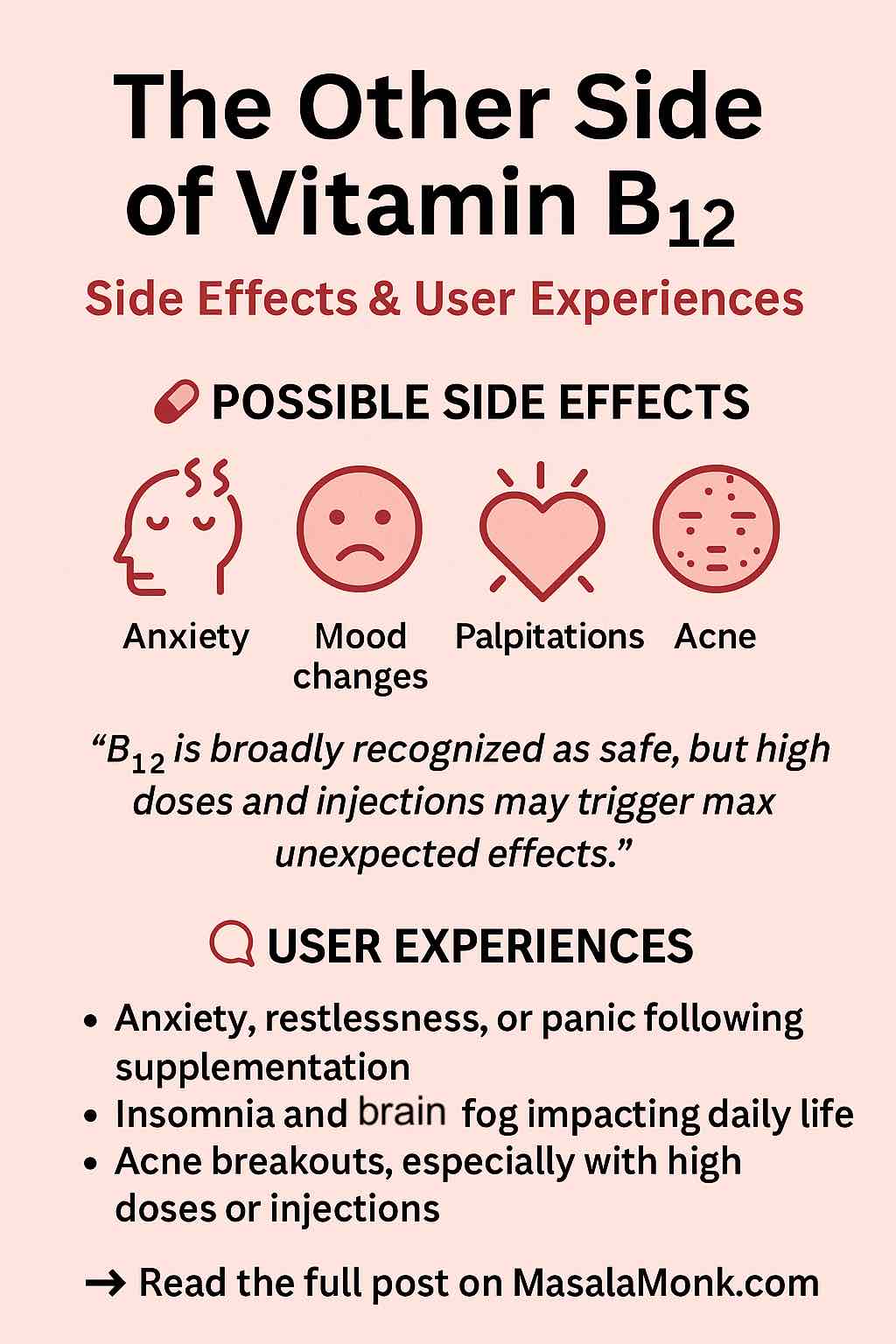
According to sources like Drugs.com and the Mayo Clinic, the following side effects are rare but possible:

Mild to Moderate Side Effects:

  • Headache
  • Nausea or upset stomach
  • Mild diarrhea
  • Skin rash or itching
  • Pain or redness at injection site

More Serious (but Rare) Side Effects:

  • Dizziness or confusion
  • Hypokalemia (low potassium) in cases of rapid red blood cell production
  • Allergic reactions (especially with injectable cyanocobalamin), including swelling, shortness of breath, or anaphylaxis

Real-World User Experiences: Reddit, Forums & Case Studies

While official data suggest B12 is benign, thousands of personal stories online tell a more complex tale.

1. Neurological and Psychiatric Effects

Some users report experiencing:

  • Brain fog
  • Anxiety or panic attacks
  • Insomnia
  • Restlessness
  • Palpitations
  • Feelings of dissociation or derealization

These effects are usually associated with high-dose supplementation (500 mcg to 5000 mcg daily) or B12 injections. In some Reddit threads, users describe feeling overstimulated or mentally “off” after starting B12—symptoms sometimes lasting days or even weeks after stopping.

2. Dermatological Issues

A subset of people report:

  • Acne flare-ups (particularly cystic acne)
  • Itchy skin or rashes
    These reactions appear more commonly with the cyanocobalamin form of B12.

3. Gastrointestinal Distress

Despite its role in metabolism, B12 can sometimes irritate the stomach:

  • Nausea
  • Abdominal discomfort
  • Loss of appetite

4. Individual Case Reports

A 2024 case study published in The Parker Journal of Health Science described a woman who developed anxiety, palpitations, acne, and insomnia after taking 1,000 mcg of cyanocobalamin daily for 12 days. Her symptoms resolved after discontinuation.

Another study from Frontiers in Hematology detailed three elderly women whose severe B12 deficiencies caused hemolytic anemia. While supplementation improved their health, it highlighted how B12 therapy must be monitored—especially during the initial correction phase.


Why Do These Effects Happen?

Several possible explanations include:

  • Cobalt sensitivity: B12 contains cobalt, which may cause allergic or histamine reactions in sensitive individuals.
  • Rapid red blood cell turnover: Can cause electrolyte shifts (especially low potassium), leading to dizziness or fatigue.
  • Metabolic effects: B12 influences methylation pathways, which affect neurotransmitter production. Imbalances may lead to anxiety, irritability, or overstimulation.
  • Genetic factors: Variants in genes like MTHFR or COMT may alter how your body processes B12 and related nutrients.

Practical Guidelines: How to Use B12 Safely

1. Start Low and Go Slow

If you’re supplementing preventively (not correcting a deficiency), start with low doses (e.g., 100–250 mcg/day). Increase only if needed and tolerated.

2. Choose the Right Form

  • Cyanocobalamin: Most common but more likely to cause reactions.
  • Methylcobalamin: Active form; generally better tolerated.
  • Hydroxocobalamin: Often used for injections; longer-lasting in the body.

3. Watch for Symptoms

Track your mood, sleep, energy, skin, and digestion. Discontinue or adjust if you experience negative effects.

4. Balance with Other Nutrients

Ensure adequate intake of folate, B6, magnesium, and potassium, especially if you’re correcting a deficiency.

5. Consult a Healthcare Provider

Particularly if you:

  • Are pregnant or breastfeeding
  • Have kidney or liver disease
  • Are taking medications like metformin, PPIs, or antipsychotics
  • Experience unusual or severe symptoms

Conclusion: Respecting the Nuance

Vitamin B12 is undoubtedly essential—and often life-changing—for people with true deficiencies. But as the trend of high-dose supplementation grows, so does the importance of understanding potential side effects.

While many people tolerate B12 perfectly well, others may experience unexpected physical, neurological, or psychological symptoms. Whether due to dose, form, or individual biology, these effects deserve attention, not dismissal.

Approach B12 with the same respect you’d give any potent nutrient: stay informed, start cautiously, and listen to your body.


Have you experienced side effects from B12? Share your story in the comments below or let us know what worked for you!

Disclaimer: This article is for informational purposes only and is not a substitute for professional medical advice.

šŸ” Frequently Asked Questions (FAQs)

1. Is it possible to have side effects from Vitamin B12?

Yes, although Vitamin B12 is generally safe, some people—especially when taking high doses or injections—report side effects like anxiety, insomnia, acne, or palpitations. Most are mild and reversible.


2. What’s the most common side effect of B12 supplementation?

Mild digestive upset (like nausea or diarrhea), headache, and skin reactions are among the most frequently reported. Injection-site discomfort is common if using B12 shots.


3. Can B12 supplements cause anxiety or mood swings?

Yes, some users report increased anxiety, restlessness, or even panic attacks after starting high-dose B12, likely due to overstimulation of the nervous system or changes in neurotransmitter activity.


4. How long do B12 side effects last?

Most side effects subside within a few days to two weeks after stopping or adjusting the dosage. However, in rare cases, symptoms like insomnia or anxiety may linger longer.


5. Which form of B12 is least likely to cause side effects?

Methylcobalamin and hydroxocobalamin tend to be better tolerated than cyanocobalamin, which may cause more allergic or dermatological reactions in sensitive individuals.


6. Can you overdose on B12?

It’s very difficult to overdose on B12, especially orally, because excess is excreted in urine. However, high doses can still trigger unwanted symptoms in sensitive individuals.


7. What should I do if I feel worse after taking B12?

Stop supplementation temporarily and monitor your symptoms. Consider switching forms (e.g., from cyanocobalamin to methylcobalamin) or lowering the dose. Always consult your healthcare provider if symptoms are significant.


8. Are side effects more common with B12 injections?

Yes. Injections can deliver a large dose rapidly, which may trigger more noticeable side effects like flushing, dizziness, or anxiety—especially in first-time users.


9. Can B12 affect skin or cause acne?

Yes, acneiform eruptions—especially cystic acne—have been reported, particularly with high doses or injections of cyanocobalamin.


10. Should I take B12 daily or weekly?

It depends on your needs. Daily low-dose B12 is usually sufficient for maintenance. If you’re correcting a deficiency, your doctor may recommend high-dose daily or weekly doses, often via injection.
Posted on Leave a comment

Can Eating too much Fruit cause diabetes?

CAN EATING TOO MUCH FRUIT CAUSE DIABETES?

Fruit is nature’s candy: colorful, sweet, and packed with nutrients. But in the era of rising diabetes and insulin resistance, the question often arises: Can eating too much fruit actually cause diabetes? This blog post takes a detailed, science-backed look at the relationship between fruit consumption and diabetes risk—including what forms of fruit are helpful or harmful, how much is too much, and how to make the healthiest choices.


🌐 Understanding the Diabetes Landscape

Diabetes, particularly Type 2 diabetes, is a metabolic disorder where the body either resists insulin or doesn’t produce enough of it. It is driven primarily by:

  • Chronic overnutrition (especially from processed foods)
  • Sedentary lifestyles
  • Genetics
  • Hormonal imbalances

Rising rates of obesity and insulin resistance are strongly tied to excess calorie consumption, especially from refined carbohydrates and added sugars.


šŸ Fruit: What Makes It Unique?

Fruits contain natural sugars (mainly fructose and glucose), but they’re also rich in:

  • Dietary fiber
  • Vitamins and minerals (like vitamin C, potassium)
  • Phytochemicals and antioxidants (like flavonoids and anthocyanins)

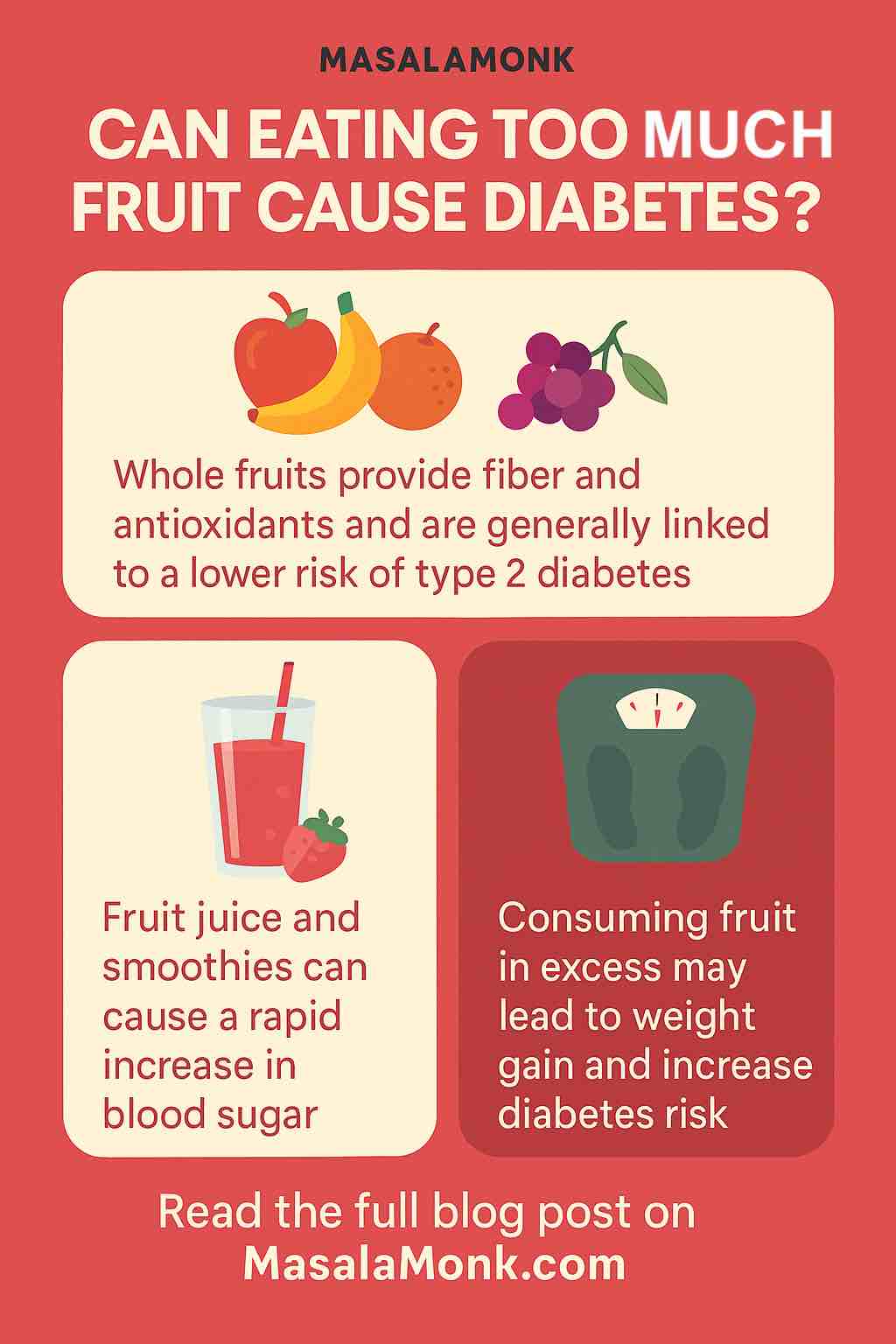
These compounds work synergistically to slow sugar absorption, reduce inflammation, and improve overall metabolic health. That makes fruit fundamentally different from added sugars or sugar-sweetened beverages.


āš”ļø What the Science Says: Whole Fruit and Diabetes Risk

The Protective Power of Whole Fruit

  • A 2022 Chinese cohort study of 76,000+ adults showed that consuming fresh fruit ≄ 7 times per week was linked to a 16% lower risk of Type 2 diabetes.
  • A meta-analysis from Harvard found that people who ate 3 or more servings per week of blueberries, grapes, and apples had a significantly lower diabetes risk.
  • Whole fruit improves insulin sensitivity and supports healthy weight management due to its fiber and nutrient content.

But What About Too Much?

While moderate fruit consumption is beneficial, extremely high intake (think 8-10+ servings per day) could become problematic if:

  • It leads to excess calorie intake and weight gain
  • You already have insulin resistance or prediabetes

That said, there’s little evidence that even high fruit intake directly causes diabetes—but calorie balance still matters.


šŸ½ļø The Real Villains: Juice, Smoothies & Dried Fruits

āŒ Fruit Juice

Even 100% fruit juice lacks fiber and delivers concentrated sugar. Studies show:

  • Regular juice consumption is associated with a 15% increased diabetes risk.
  • Replacing juice with whole fruit reduces diabetes risk.

āŒ Smoothies

Often loaded with bananas, dates, or juice, many smoothies pack a sugary punch. Without the chewing and fiber content of whole fruit, they can spike blood glucose quickly.

āŒ Dried Fruits

While rich in nutrients, they’re calorie-dense and easy to overconsume. A handful of raisins equals the sugar of a whole bunch of grapes.

Bottom line: It’s not fruit that’s the issue—it’s how it’s consumed.


🫰 Who Should Be More Cautious?

If you have prediabetes, insulin resistance, or are managing type 2 diabetes, you can still enjoy fruit—but with mindfulness:

  • Prioritize low-glycemic fruits: berries, apples, pears, kiwi, citrus
  • Limit high-sugar fruits: grapes, mangoes, bananas (especially overripe)
  • Pair fruit with protein or healthy fat to slow absorption (e.g., apple + almond butter)
  • Stick to 1 serving per sitting, spaced across the day

Consult with a registered dietitian if you’re managing blood sugar.


šŸ”„ Practical Tips: Enjoying Fruit the Right Way

  1. Stick to 2–4 servings per day (1 serving = 1 medium apple or ½ cup berries)
  2. Avoid fruit juice; opt for infused water or whole fruit instead
  3. Blend smartly: Use fiber-rich fruit (like berries) and add protein (e.g., Greek yogurt)
  4. Be portion-wise with dried fruit; combine with nuts to blunt sugar spikes
  5. Eat fruit with meals, not alone, to slow glucose release

šŸ“– Conclusion: Nature’s Sweetness in Balance

Eating fruit doesn’t cause diabetes. On the contrary, whole fruits are protective when eaten in moderation. The real concern lies in how much, what type, and what form you eat.

So go ahead—enjoy that crisp apple, bowl of blueberries, or juicy orange. Just skip the juice bar, watch your portions, and savor fruit as part of a balanced, whole-food lifestyle.


Key Takeaway: Fruit is not the enemy. Ultra-processed food, sugary beverages, and overconsumption are.

Stay sweet—the natural way.


Sources: WHO dietary guidelines, PMC meta-analyses (2022-2024), Harvard School of Public Health, Nutrition & Metabolism Journal (2024)

āœ… FAQs

1. Can eating too much fruit cause diabetes?
Answer: Not directly. Whole fruit contains fiber and antioxidants that generally help prevent diabetes. However, excessive intake—especially if it leads to excess calories and weight gain—can indirectly increase risk, particularly in people with prediabetes or insulin resistance.


2. Is fruit sugar (fructose) bad for you?
Answer: Naturally occurring fructose in whole fruits is not harmful due to the fiber, water, and nutrients that slow sugar absorption. The problem arises with added fructose in sweetened beverages and processed foods, which can increase insulin resistance and fat buildup in the liver.


3. How many servings of fruit per day are safe and healthy?
Answer: Most health organizations recommend 2–4 servings per day. One serving equals about 1 medium apple, ½ cup of berries, or 1 small banana.


4. Which fruits are best for people with prediabetes or diabetes?
Answer: Choose low-glycemic fruits like berries, apples, pears, citrus fruits, and kiwi. Avoid high-glycemic or very ripe fruits like bananas, mangoes, and grapes in large amounts.


5. Should I avoid fruit juice completely?
Answer: Yes, in most cases. Even 100% fruit juice lacks fiber and causes a rapid blood sugar spike. Studies show it increases the risk of Type 2 diabetes when consumed regularly.


6. Are smoothies healthy or risky for blood sugar?
Answer: It depends on ingredients. Smoothies with multiple fruits, juice, and sweeteners can spike blood sugar. Choose recipes with whole fruits, fiber (e.g., chia, oats), and protein (e.g., Greek yogurt) to balance blood sugar response.


7. Is dried fruit bad for you?
Answer: Not inherently, but it’s very calorie-dense and easy to overeat. A small handful of raisins has the same sugar as a bunch of grapes. If you eat dried fruit, watch portions and pair it with healthy fats like nuts.


8. Can fruit help prevent diabetes?
Answer: Yes. Numerous studies show that eating moderate amounts of whole fruit, especially blueberries, apples, and grapes, is associated with reduced risk of developing Type 2 diabetes—up to 26% lower risk for some fruits.


9. What’s the best time of day to eat fruit for blood sugar control?
Answer: Eat fruit with meals, not on an empty stomach, to slow sugar absorption. Combining fruit with protein or fat (e.g., apple + peanut butter) can also reduce blood glucose spikes.


10. Is it safe for diabetics to eat fruit every day?
Answer: Yes, if chosen and portioned wisely. Diabetics can safely eat 1–3 servings of whole fruit per day, focusing on lower-sugar options and avoiding juices and dried fruits unless medically advised.

Posted on 1 Comment

Insulin Resistance and its Symptoms

INSULIN RESISTANCE

Insulin resistance (IR) is often a silent disruptor. It doesn’t knock on the door with loud alarms. Instead, it tiptoes in, masked as fatigue, stubborn belly fat, cravings, or skin changes. Before you know it, it’s wreaking havoc on your metabolism, hormones, and energy levels. But here’s the good news: insulin resistance is manageable, reversible, and you are not alone. This post blends science, real-world experiences, and actionable strategies to help you understand, detect, and fight back against IR.


Section 1: What is Insulin Resistance? Insulin is a hormone produced by the pancreas that helps glucose (sugar) enter your cells for energy. When cells stop responding properly to insulin, the body compensates by producing more. This is insulin resistance. Over time, elevated insulin can lead to prediabetes, type 2 diabetes, PCOS, non-alcoholic fatty liver disease (NAFLD), and even cardiovascular issues.

Think of it like a broken lock: insulin is the key, and your cells are the door. If the lock is rusty (insulin resistant), you need more keys (insulin) to get in.

How It Progresses:

  • Phase 1: The body compensates by producing more insulin. Blood sugar stays normal.
  • Phase 2: Pancreas can’t keep up. Blood sugar starts to rise (prediabetes).
  • Phase 3: Chronic high glucose leads to type 2 diabetes and systemic inflammation.

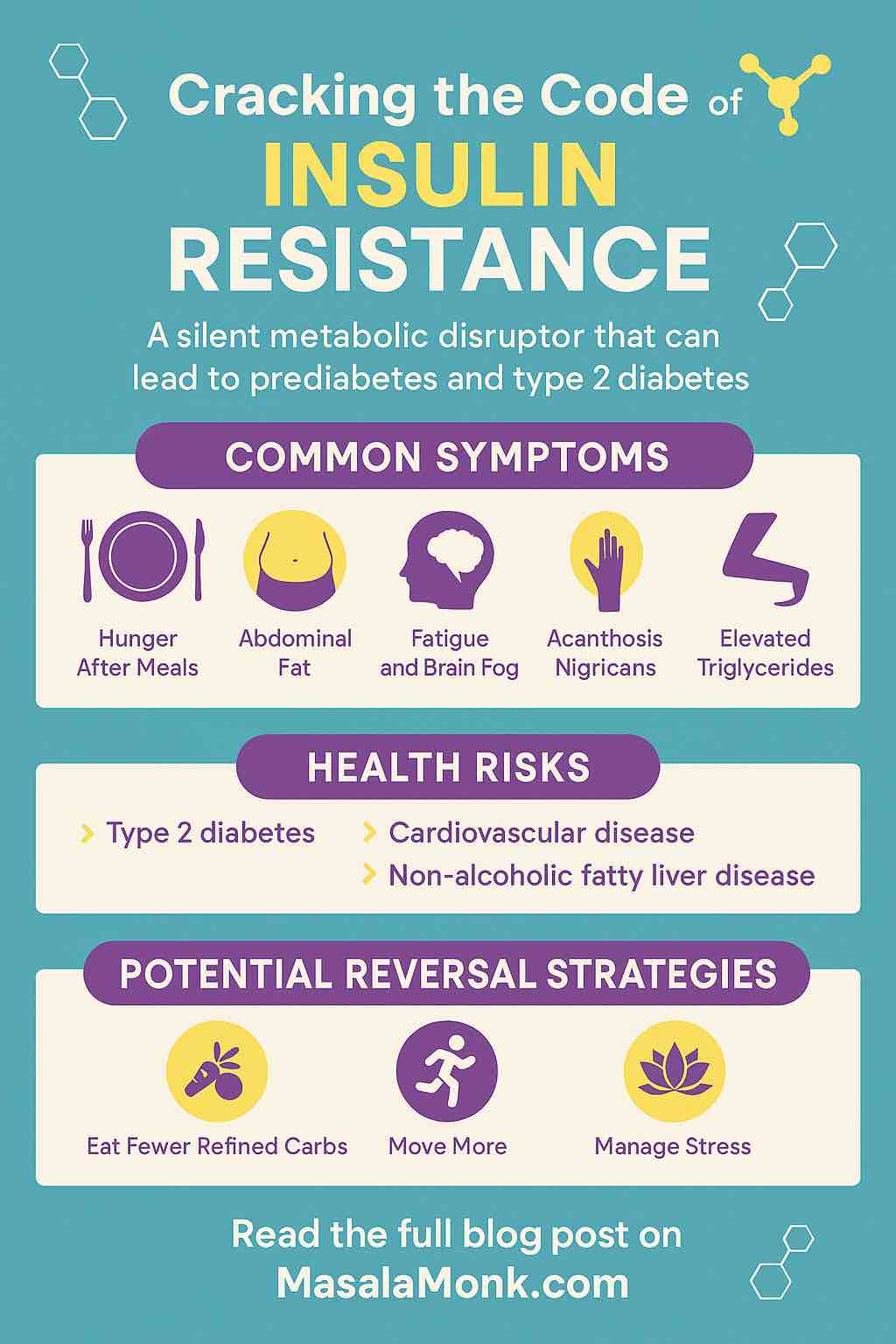
Symptoms to Watch For:

  • Constant fatigue or energy crashes, especially after meals
  • Intense cravings (especially for carbs or sugar)
  • Abdominal weight gain that won’t budge
  • Brain fog and difficulty concentrating
  • Skin tags or dark patches (acanthosis nigricans)
  • Frequent hunger, even after eating
  • Irregular periods or PCOS symptoms in women
  • Erectile dysfunction in men
  • High triglycerides or low HDL (“good”) cholesterol
  • Increased urination and thirst
  • Blurred vision and slow wound healing

Section 2: Real Stories, Real Struggles

Bekind123456789 shared on Reddit: “I completely reversed my insulin resistance over six months. I wore a continuous glucose monitor (CGM), gave up added sugars, ate three balanced meals a day, and did strength training twice a week. I lost 63 pounds and dropped my HOMA-IR from 6.2 to 1.9.”

Another user, battling PCOS, described eating as little as 1000 calories a day with no weight loss, extreme fatigue, cravings, and skin tags. Her turnaround came with myo-inositol supplements, a Mediterranean-style diet, and daily 30-minute walks.

A third user, frustrated by slow progress with Mounjaro (a GLP-1 drug), opted for bariatric surgery, citing insulin resistance as the major blocker to fat loss and energy restoration.

Others shared how IR was misdiagnosed as chronic fatigue syndrome or depression, delaying proper treatment. Many described the emotional toll of feeling dismissed by doctors despite obvious metabolic dysfunction.

These stories share a common theme: frustration, self-discovery, persistence, and ultimate improvement through lifestyle change.


Section 3: Diagnosis and Labs

While symptoms give you clues, labs confirm the story. Ask your doctor for:

  • Fasting insulin and glucose (calculate HOMA-IR: Insulin x Glucose / 405)
  • A1C (reflects 3-month average glucose)
  • Lipid profile (check triglycerides, HDL, LDL)
  • High-sensitivity CRP (inflammation marker)
  • Liver enzymes (for fatty liver assessment)
  • Fasting C-peptide (insulin production indicator)

Interpreting Results:

  • Fasting insulin > 10 uIU/mL: potential IR
  • HOMA-IR > 2.0: insulin resistance likely
  • Triglyceride/HDL ratio > 2.0: metabolic dysfunction risk
  • Elevated ALT/AST: possible fatty liver

Even with a “normal” A1C or glucose, IR can exist. Always consider insulin levels and inflammation.


Section 4: Practical Recovery Framework

1. Nutrition: Prioritize Protein and Fiber

  • Build meals around protein: eggs, fish, tofu, lean meats, legumes
  • Add fiber-rich vegetables: leafy greens, broccoli, cauliflower
  • Swap refined carbs for whole grains and root vegetables
  • Reduce added sugars and sweetened beverages
  • Include healthy fats: olive oil, avocado, nuts, seeds

Sample Day of Eating:

  • Breakfast: Omelet with spinach and mushrooms, side of berries
  • Lunch: Grilled salmon salad with olive oil vinaigrette
  • Snack: Greek yogurt with chia seeds
  • Dinner: Stir-fry with chicken, broccoli, and cauliflower rice

2. Time Your Eating: Intermittent Fasting (IF)

  • Start simple: 12:12 or 14:10 eating windows
  • Avoid constant snacking, especially at night
  • Give your insulin levels time to reset between meals
  • Consider early time-restricted feeding (eating earlier in the day)

3. Movement: Walk, Lift, Repeat

  • Aim for 7,000–10,000 steps daily
  • Strength training 2–3x per week builds muscle and improves insulin sensitivity
  • Post-meal walks (even 10 minutes) reduce glucose spikes
  • Include mobility work and stretching to reduce cortisol

4. Track and Reflect

  • Use CGMs or glucometers to learn your body’s response to food
  • Track meals, symptoms, energy levels, and sleep
  • Celebrate non-scale victories: energy, mood, cravings, sleep
  • Monitor progress every 3–6 months with lab work

5. Sleep and Stress

  • Aim for 7–9 hours of quality sleep
  • Reduce blue light at night, follow a consistent sleep schedule
  • Practice mindfulness: breathwork, journaling, yoga, nature walks
  • Chronic stress raises cortisol, which worsens IR and cravings

6. Supplements and Medications (when needed)

  • Metformin: helps reduce glucose production in the liver
  • Berberine: natural supplement with similar effects to metformin
  • Myo-inositol and D-chiro-inositol: helpful for PCOS-related IR
  • Magnesium, vitamin D, omega-3s: support glucose metabolism
  • Always consult a professional before starting supplements

Section 5: The Mindset Shift This journey is not about perfection. It’s about awareness, experimentation, and consistency. Expect plateaus, setbacks, and learning curves. Listen to your body, seek community support, and stay curious.

Break free from diet culture traps. This isn’t about punishment or restriction. It’s about nourishing your body, managing stress, and choosing long-term health over short-term comfort.

As one Redditor put it: “At first, I felt betrayed by my body. Now, I see IR as a teacher. It forced me to care for myself.”


Conclusion: Reclaiming Your Health Insulin resistance doesn’t have to define your life. Armed with knowledge, support, and practical tools, you can rewrite your metabolic story. This isn’t a sprint. It’s a lifelong relationship with your body.

Track your progress. Stay consistent. Celebrate every small win. And remember: reversal is not only possible—it’s already happening for thousands. You can be next.


Have questions or a story to share? Drop a comment. Let’s heal together.

FAQs

1. What causes insulin resistance in the first place?
Insulin resistance is often caused by a combination of poor diet (especially excess sugar and refined carbs), sedentary lifestyle, chronic stress, poor sleep, excess visceral fat, and genetic predisposition. Hormonal conditions like PCOS can also contribute.

2. Can insulin resistance occur if my blood sugar levels are normal?
Yes. Many people have normal fasting glucose or A1C but elevated insulin levels. This is why checking fasting insulin and calculating HOMA-IR is critical for early detection.

3. Is weight gain inevitable with insulin resistance?
No, but weight gain—especially around the abdomen—is common. Insulin is a storage hormone, and when levels remain high, it encourages fat storage. However, with lifestyle changes, this trend can be reversed.

4. How long does it take to reverse insulin resistance?
Recovery varies. Some people see improvements in 3–6 months, while others may need longer depending on severity, consistency, and coexisting conditions like PCOS or NAFLD.

5. Do I need to follow a strict keto diet to improve IR?
Not necessarily. While some benefit from keto or low-carb, others improve with moderate carbs, high fiber, and prioritizing whole foods, protein, and healthy fats. Personalization is key.

6. What’s the difference between insulin resistance and type 2 diabetes?
Insulin resistance is a precursor to type 2 diabetes. In IR, insulin is high but blood glucose is often still normal. In diabetes, the pancreas can no longer keep up, and blood glucose rises significantly.

7. Should I use a continuous glucose monitor (CGM)?
If accessible, CGMs can be a powerful tool to learn how your body responds to specific meals, sleep, and stress. They’re especially helpful for biofeedback and meal timing strategies.

8. Are supplements enough to reverse insulin resistance?
Supplements like berberine or inositol can help, especially for PCOS. But they work best when paired with lifestyle changes such as movement, diet, sleep, and stress reduction.

9. Is insulin resistance reversible at any age?
Yes. While IR becomes more common with age, people in their 30s, 40s, 50s, and beyond have successfully reversed it through consistent lifestyle changes.

10. What’s the first thing I should do if I suspect I have IR?
Start by getting tested: request fasting insulin, glucose, and lipid profile from your doctor. Begin walking daily, reduce added sugars, and build meals around protein and fiber while you wait for results.

Posted on Leave a comment

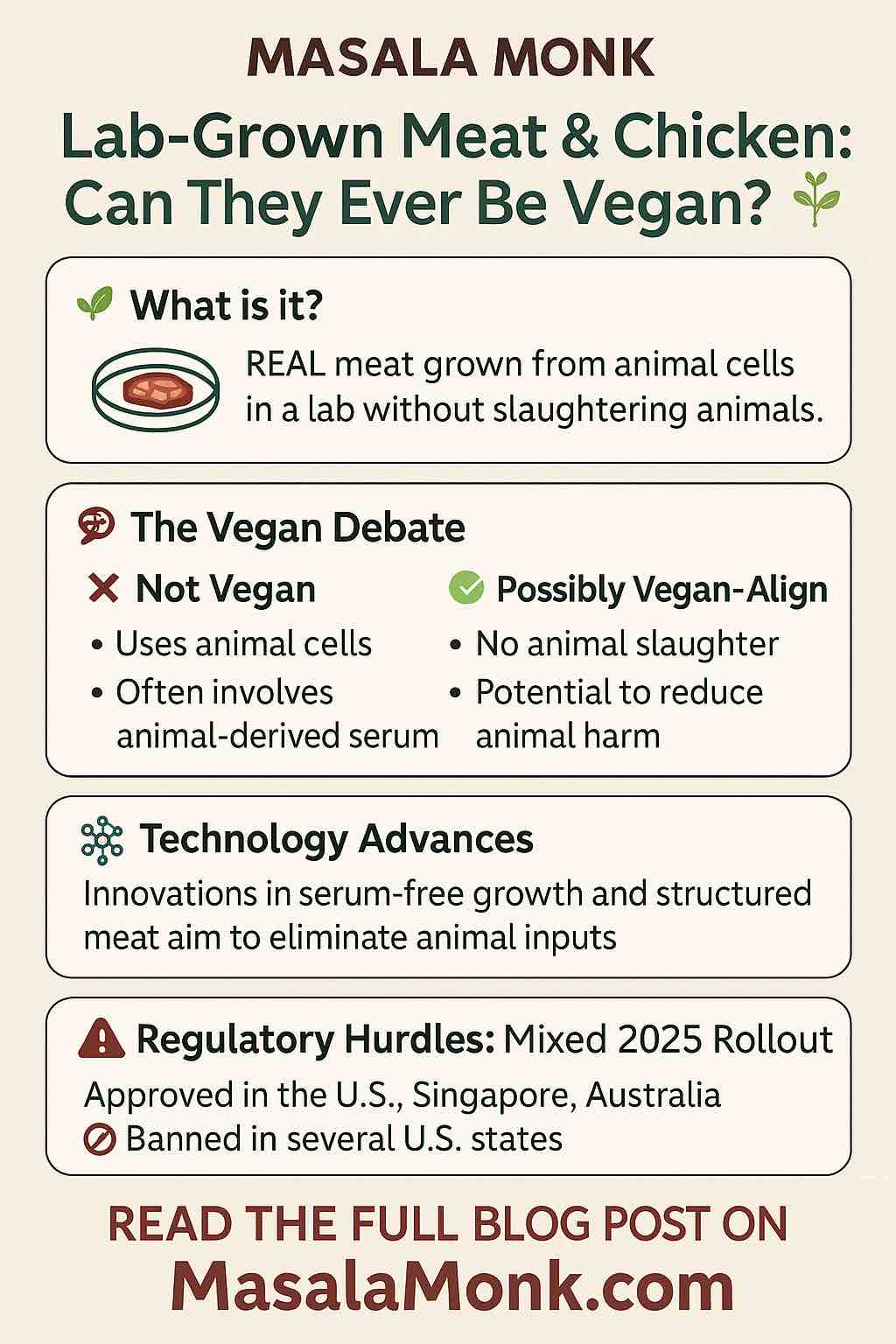
Lab-Grown Meat & Chicken: Are They Vegan?

Lab-Grown Meat & Chicken: Can They Ever Be Vegan?

Imagine biting into a tender chicken nugget or sizzling steak—without ever harming an animal. That’s not science fiction anymore.

Welcome to the world of lab-grown meat—also known as cultured, cell-based, or cultivated meat. Grown in bioreactors from animal cells, this cutting-edge innovation promises to revolutionize food, reduce carbon footprints, and eliminate animal slaughter. But it also raises a heated ethical question:

Is lab-grown meat actually vegan?

In this blog post, we’ll explore:

  • What lab-grown meat really is and how it’s made
  • Why it excites scientists, startups, and some vegans
  • Where the Vegan Society and other purists stand
  • Where the industry is headed—and what would make it truly ā€œveganā€

šŸ”¬ What Exactly Is Lab-Grown Meat?

Lab-grown meat is real animal flesh, just not sourced from a slaughtered body. Here’s how it works:

🧫 The 5-Step Process:

  1. Cell Collection – A biopsy is taken from a live animal.
  2. Cell Cultivation – Cells are fed in nutrient-rich ā€œgrowth mediaā€ to multiply.
  3. Scaffold Building – Cells attach to a structure to form texture.
  4. Maturation in Bioreactors – The cells grow into muscle fibers.
  5. Harvest & Processing – The tissue is shaped into products like nuggets or burgers.

Products already approved:

  • Chicken from GOOD Meat and UPSIDE Foods (USA & Singapore)
  • Quail from Vow (Australia)
  • Salmon from Wildtype (awaiting US clearance)
  • Foie gras from Gourmey (Europe, pending distribution)

🧠 The Big Question: Is It Vegan?

Let’s get to the philosophical heart of the matter.

🟄 The Case Against: Not Vegan

According to the Vegan Society and other ethical purists, lab-grown meat is not vegan. Here’s why:

ReasonExplanation
šŸ„ Animal CellsEven though the animal isn’t killed, the product starts with a biopsy—thus still exploiting animals.
🩸 Fetal Bovine Serum (FBS)Many cell cultures still rely on FBS—extracted from calf fetuses. A major ethical red flag.
🧪 Corporate Co-optionCultivated meat is often backed by meat industry giants, raising concerns about greenwashing.
🧠 SpeciesismCritics argue it still normalizes the use of animals for food, even in a sanitized form.

From this angle, lab-grown meat might reduce cruelty but doesn’t eliminate exploitation.


🟩 The Case For: Possibly Vegan-Aligned

Others—particularly utilitarian vegans—argue lab-grown meat is a massive step forward.

ArgumentBenefit
šŸ’€ No SlaughterNo animals are killed. That alone could save billions of lives annually.
šŸŒ Environmentally SustainableCultured meat can cut land, water, and emissions by up to 96%.
šŸ‘„ Ethical Bridge for OmnivoresIt could convert meat-lovers without asking them to change taste habits.
āš™ļø Improving TechThe industry is moving toward serum-free, animal-free processes. If those succeed, the ethical objections could disappear.

As one Reddit user put it:
“If it harms no animals and saves millions, what’s more vegan than that?”


šŸŒ The Current Landscape (As of Mid‑2025)

Let’s map where lab-grown meat stands today—technologically, politically, and ethically.

🧪 Tech Advances

  • Serum-Free Growth: Companies like Mosa Meat and Bene Meat are pioneering serum-free media—crucial for vegan alignment.
  • Structured Meat: Japan’s researchers have built circulatory systems into lab-grown cuts, allowing steak-style textures.
  • AI Optimization: ā€œDigital twinsā€ model ideal growth pathways—already in use by Gourmey (France) and Mirai Foods (Switzerland).

šŸ›ļø Regulations & Approvals

  • āœ… Approved in: Singapore, USA, Australia, Israel
  • ā›” Banned or restricted in 10 U.S. states: Florida, Nebraska, Iowa, etc.
  • 🐾 In pet food: UK startup Meatly launched cultured chicken for pets (Feb 2025).

🌱 Vegan Labels, Ethics & Community Sentiment

🟔 Emerging Certifications

  • C‑Label (Switzerland) – Tracks sustainability and cruelty metrics.
  • Halal-certified lab meat – In development by Korean firm Simple Planet (serum-free).

šŸ’¬ Vegan Community Views

GroupView
Vegan SocietyStrong NO—animal involvement and FBS use are incompatible with veganism.
Pragmatist VegansYES (conditionally)—if animal harm is eliminated or minimized, it aligns with vegan goals.
Plant-Based TraditionalistsPrefer plant proteins like tempeh, seitan, and mycoprotein (Quorn), which are inherently vegan.

Online forums (e.g. Reddit’s r/vegan) are split but trending toward “ethical pragmatism”—supporting lab meat if it helps animals.


šŸ”® The Future: Could It Ever Be Vegan?

Yes—conditionally. Here’s what needs to happen:

āœ… Checklist for Vegan Alignment

  • 🧫 No animal biopsies – Use immortalized cell lines or synthetic biology.
  • 🩸 No animal-derived serum – Switch to fully synthetic or plant-based media.
  • 🧪 Transparent ethics – Remove ties to factory farming; seek cruelty-free certifications.
  • 🌱 Clear labeling – Avoid misleading terms; empower consumer choice.

If the industry meets these goals, future lab-grown meat could potentially earn a ā€œcruelty-freeā€ or even ā€œvegan-certifiedā€ badge.


šŸ„— So, What Should You Do Today?

Here’s a practical decision tree for the ethically conscious eater:

Do you identify as a strict ethical vegan?
→ āŒ Skip lab-grown meat for now.

Are you plant-based for sustainability or animal welfare?
→ āš ļø Consider supporting the transition.

Are you a meat eater trying to reduce animal harm?
→ āœ… Lab-grown meat is a great next step.

In short: Your decision depends on your ethical framework. For some, lab-grown meat is a compromise. For others, it’s a bridge to a more humane food system.


šŸ’” Final Thoughts: Progress, Not Perfection

Lab-grown meat isn’t perfect. It still has hurdles—technical, ethical, and political. But it may be one of the most powerful tools we have to reduce animal suffering on a global scale.

It’s not about being purist. It’s about being practical.

Whether you’re vegan, vegetarian, flexitarian, or omnivore—the choices we make today shape the food system of tomorrow.


🌱 Your Turn:

  • Would you eat lab-grown meat?
  • Does it align with your values?
  • What changes would you need to see to consider it ā€œvegan enoughā€?

Let us know in the comments. Let’s spark a thoughtful, respectful discussion. šŸ’¬

šŸ“š 10 FAQs on Lab-Grown Meat & Veganism


1. What exactly is lab-grown (cultivated) meat?
Lab-grown meat is real animal meat grown from cells in a lab—without raising or slaughtering animals. It uses animal cells placed in nutrient media to grow muscle tissue in bioreactors, mimicking conventional meat in taste and texture.


2. Is lab-grown meat currently vegan?
No. Most cultivated meat still uses animal-derived inputs such as fetal bovine serum (FBS) and originates from animal biopsies. This violates core vegan principles, which oppose all forms of animal exploitation.


3. Why do some vegans support lab-grown meat?
Utilitarian or pragmatic vegans support it because it can drastically reduce animal suffering, slaughter, and environmental harm—viewing it as a transition technology even if it’s not technically vegan.


4. What does the Vegan Society say about it?
The Vegan Society officially states that lab-grown meat is not vegan, primarily due to its origin in animal cells and the continued use of animal-derived growth media.


5. Are companies working on vegan-compatible lab-grown meat?
Yes. Companies like Mosa Meat, Upside Foods, and Bene Meat Technologies are developing serum-free, animal-free growth media. If successful, these products may align more closely with vegan ethics in the future.


6. Is there any cultured meat product certified as vegan?
No. As of mid-2025, no lab-grown meat has received a vegan certification. However, new labeling systems like Switzerland’s ā€œC-Labelā€ and efforts to certify serum-free products are in progress.


7. Can I eat lab-grown meat if I’m plant-based for environmental reasons?
Yes, many environmentally motivated consumers choose lab-grown meat for its lower carbon footprint, land use, and water consumption—even if it’s not vegan by strict ethical standards.


8. What’s the difference between lab-grown meat and plant-based meat?
Plant-based meats (e.g., Beyond, Impossible) are made entirely from plants and are vegan. Lab-grown meat is real meat made from animal cells and is not currently vegan, though it avoids slaughter.


9. When will lab-grown meat become truly vegan?
That depends on the development and commercialization of:

  • Animal-free cell lines
  • Serum-free, synthetic or plant-based growth media
  • Full decoupling from animal inputs
    If achieved, vegan certifications could follow within a few years.

10. Is lab-grown meat safe to eat?
Yes. Regulatory bodies in the U.S., Singapore, Australia, and Israel have approved certain lab-grown meat products after rigorous safety reviews. Serum-free products are also being evaluated for food safety.

Posted on Leave a comment

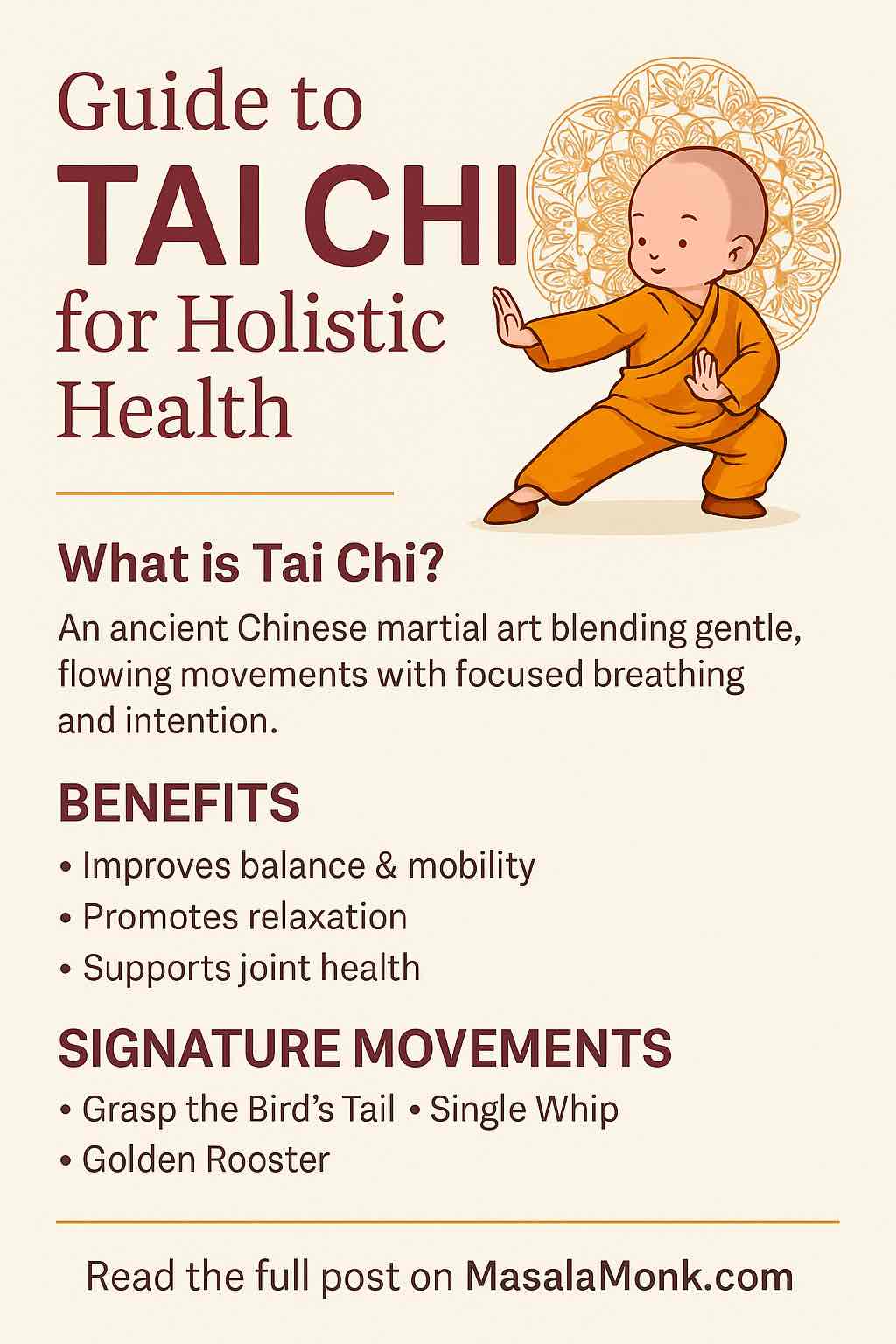
Guide to Tai Chi for Holistic Health

Guide to TAI CHI for Holistic Health

Tai Chi, often referred to as “meditation in motion,” is a centuries-old Chinese practice rooted in martial arts and traditional medicine. Characterized by slow, flowing movements and deep, mindful breathing, Tai Chi is much more than a gentle exercise—it’s a powerful path to cultivating holistic health. From enhancing physical stability to nurturing inner peace, Tai Chi offers a comprehensive approach to wellness for people of all ages and fitness levels.

Whether you’re seeking to reduce stress, improve mobility, or simply reconnect with your body and breath, Tai Chi is an accessible, transformative practice. At Masala Monk, we believe in making ancient wisdom approachable and enjoyable. That’s why we created a beautifully illustrated 9-step Tai Chi sequence to guide you through your journey, posture by posture.


🌿 Why Practice Tai Chi?

The benefits of Tai Chi extend far beyond the mat. Here’s why you might want to embrace this timeless discipline:

1. Stress Reduction & Mindfulness

The slow, deliberate pace of Tai Chi helps calm the nervous system, reduce cortisol levels, and bring attention to the present moment.

2. Improved Balance & Strength

Each posture requires controlled weight shifting and intentional core engagement, making Tai Chi excellent for leg strength, stability, and fall prevention.

3. Joint Mobility & Flexibility

Unlike high-impact workouts, Tai Chi gently moves every joint through its full range of motion, improving circulation and reducing stiffness.

4. Enhanced Respiratory Function

Deep, diaphragmatic breathing improves lung capacity, supports cardiovascular health, and promotes relaxation.

5. Energy Flow (Qi)

Tai Chi is rooted in the concept of Qi (life force energy). Its movements are designed to open meridian lines, allowing energy to circulate more freely.

6. Cognitive Clarity & Emotional Balance

Regular practice helps sharpen focus, improve memory, and reduce anxiety or depressive symptoms.


šŸŒ€ The 9 Essential Tai Chi Postures

We’ve designed a sequence of 9 postures that are easy to follow and effective for cultivating holistic well-being. Each illustration features our signature cartoon monk and includes detailed explanations of each movement’s purpose and benefit.


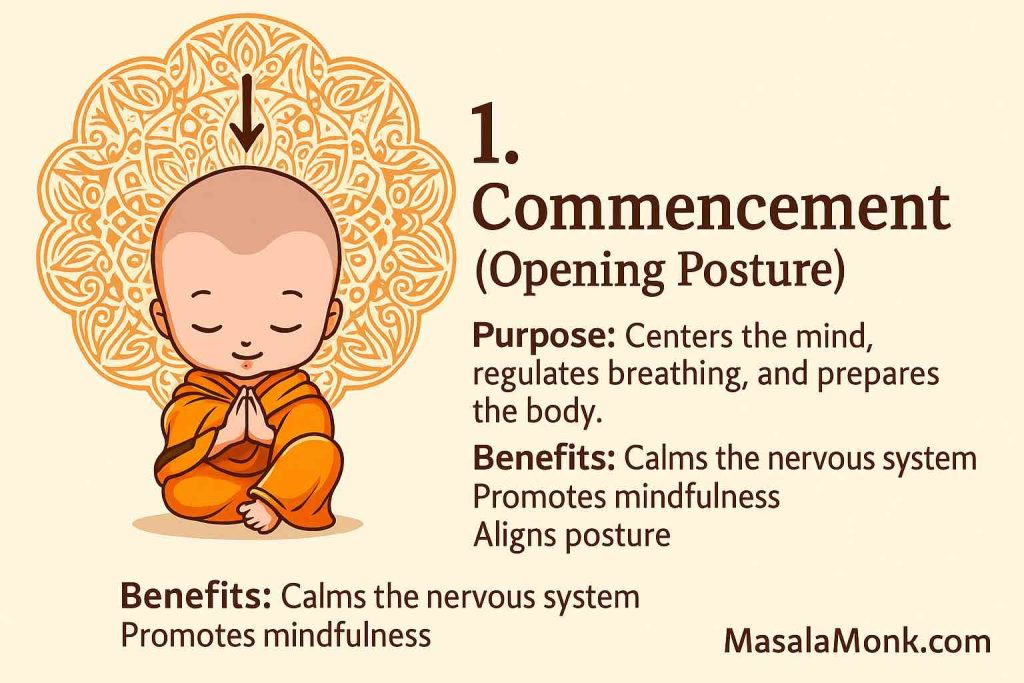
1. Commencement (Opening Posture)

Commencement (Opening Posture) Tai Chi Guide

Purpose:
To ground and center the body, align posture, and regulate breath. This is the meditative “starting point” for your Tai Chi journey.

Benefits:

  • Calms the mind and nervous system
  • Enhances body awareness and mindfulness
  • Sets a steady breathing rhythm
  • Prepares the body for movement

2. Grasp the Bird’s Tail

Grasp the Bird's Tail Tai Chi Guide

Purpose:
A signature movement in Tai Chi, this posture embodies four essential energies: ward off, roll back, press, and push.

Benefits:

  • Develops sensitivity and flow
  • Strengthens internal energy pathways
  • Improves spinal alignment and shoulder flexibility
  • Encourages grace and rhythm in motion

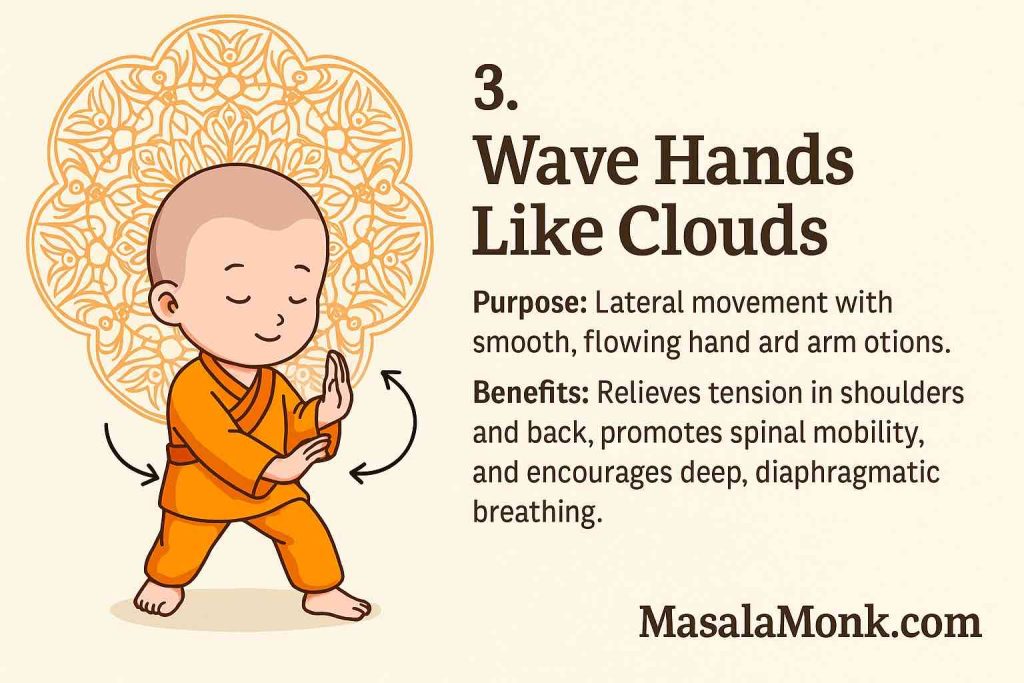
3. Wave Hands Like Clouds

Wave Hands like Clouds Tai Chi Guide

Purpose:
Lateral movement combining hip shifting and coordinated arm sways that mimic cloud movements.

Benefits:

  • Encourages fluidity in motion
  • Loosens shoulder and back tension
  • Improves coordination between upper and lower body
  • Aids in breathing and mental clarity

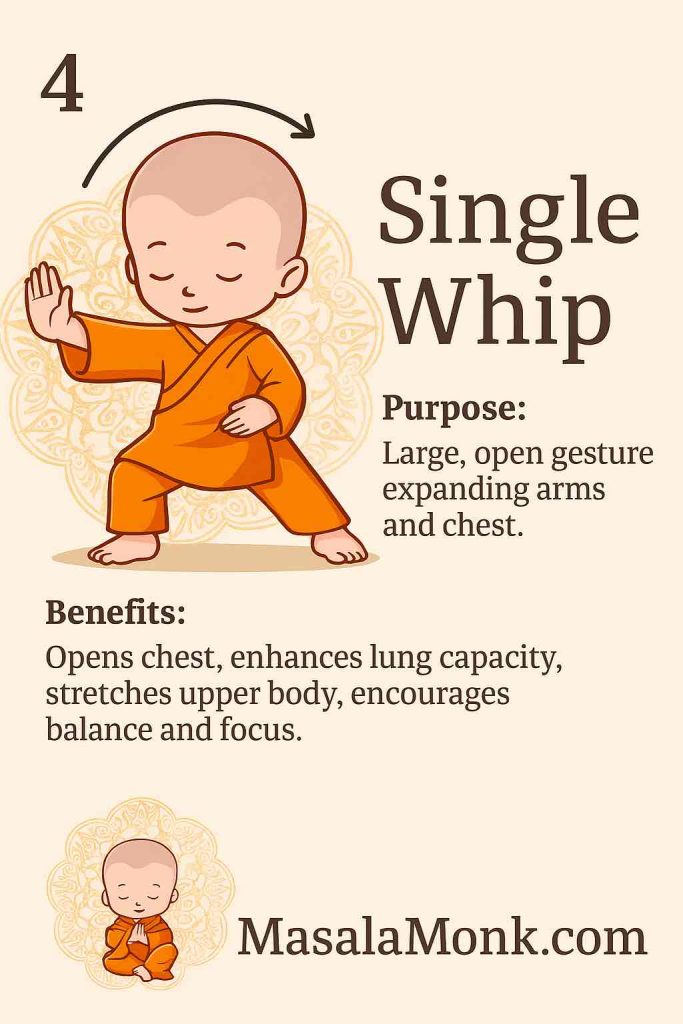
4. Single Whip

Single Whip Tai Chi Guide

Purpose:
A wide, expansive gesture that opens the chest, engages both arms, and deepens the breath.

Benefits:

  • Enhances lung capacity
  • Improves shoulder, chest, and spine flexibility
  • Boosts posture and poise
  • Refines focus and single-mindedness

5. Golden Rooster Stands on One Leg

Golden Rooster Stands on One Leg

Purpose:
A balancing exercise that involves raising one leg and aligning arms in a defensive posture.

Benefits:

  • Builds lower body strength and core stability
  • Improves proprioception (body awareness)
  • Helps with balance and fall prevention
  • Trains the mind to stay centered

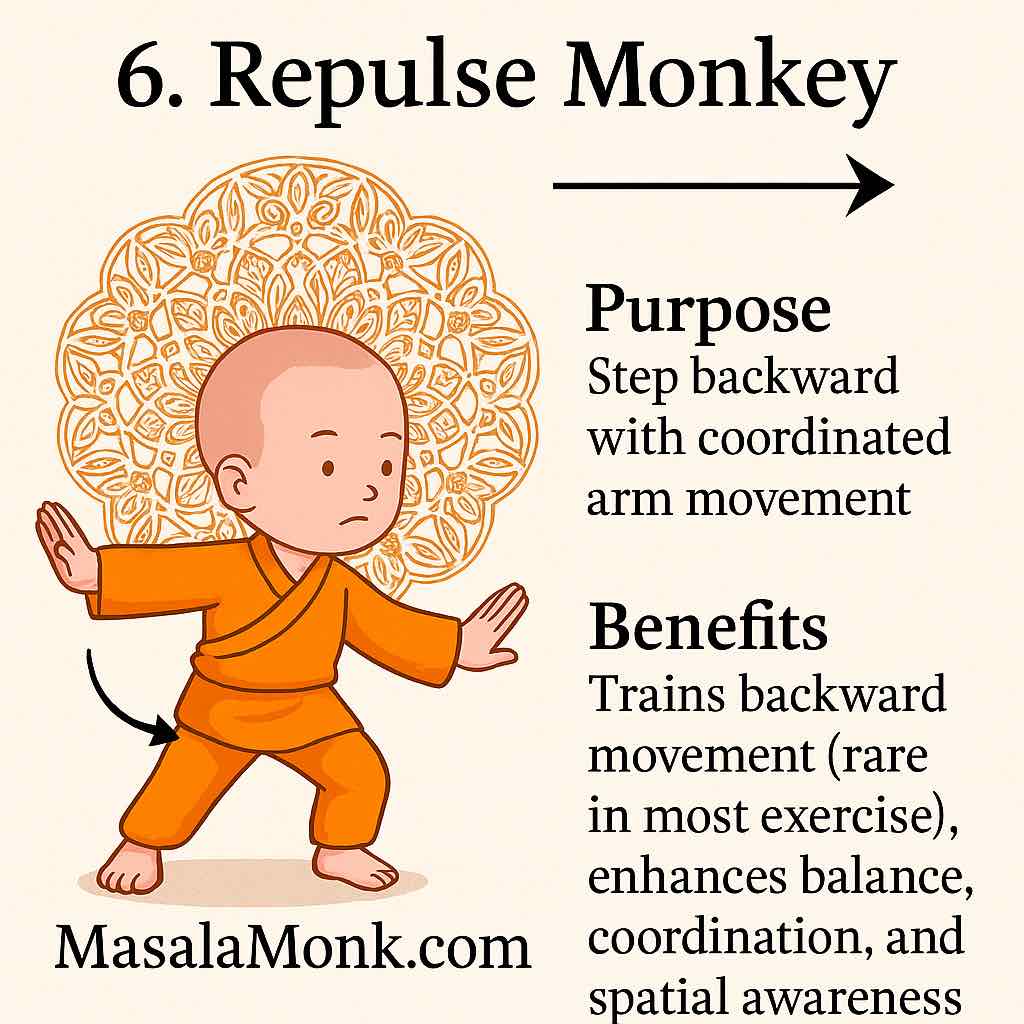
6. Repulse Monkey

Repulse Monkey

Purpose: Backward stepping posture with alternating arm motions, mimicking pushing away.

Benefits:

  • Reinforces backward movement rarely used in daily life
  • Sharpens spatial awareness and reaction time
  • Increases coordination between hands and feet
  • Improves confidence in changing directions

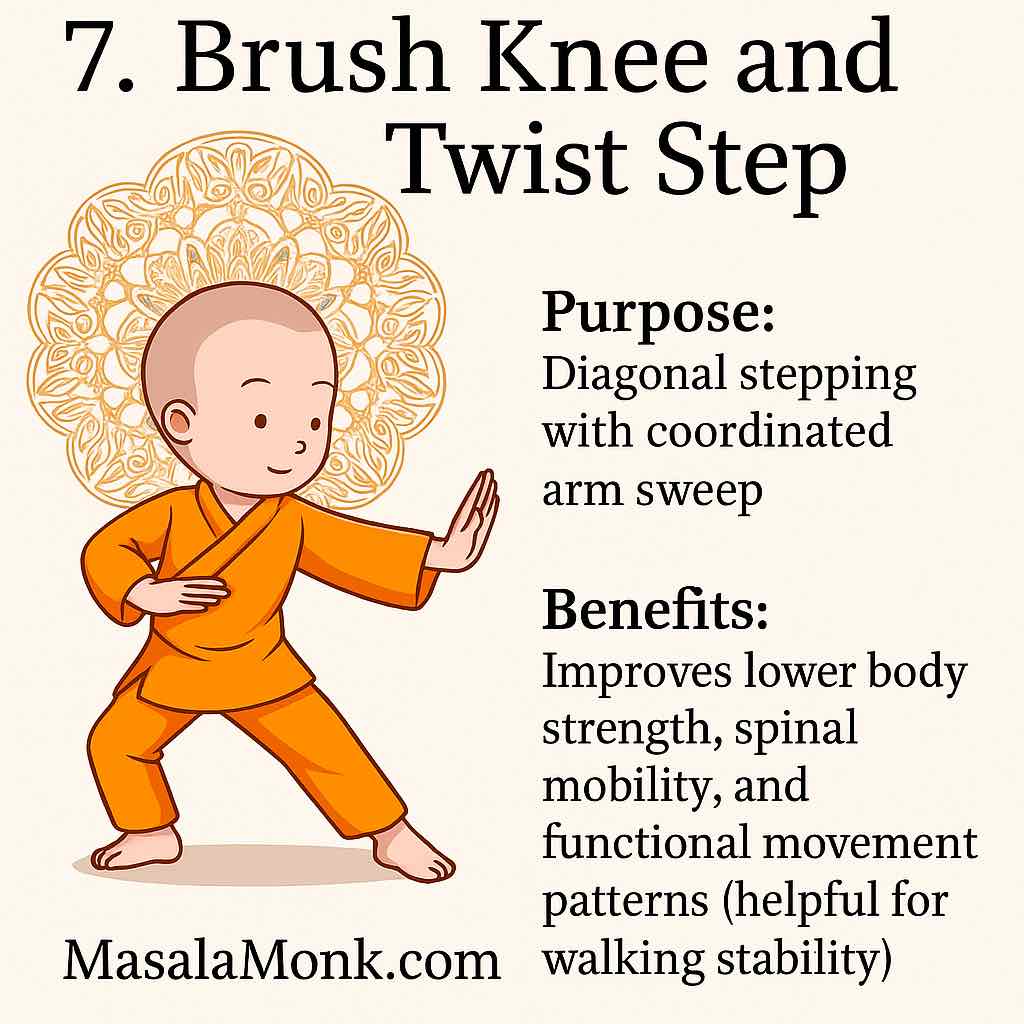
7. Brush Knee and Twist Step

Brush Knee and Twist Step - Tai Chi Guide

Purpose: Diagonal movement combining a sweeping arm motion with a forward step.

Benefits:

  • Strengthens legs and hips
  • Supports spinal rotation and elasticity
  • Enhances gait and functional walking patterns
  • Trains multitasking (arms and legs working independently)

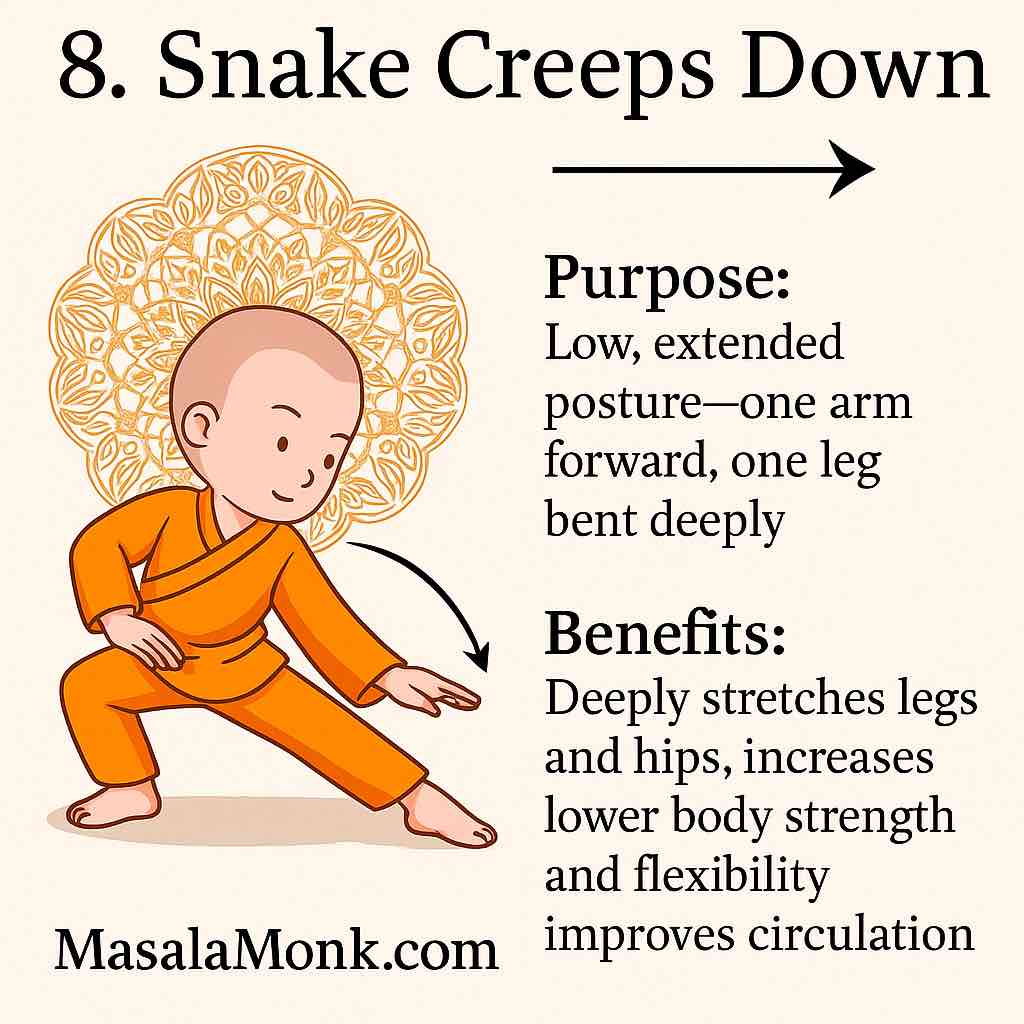
8. Snake Creeps Down

Snake Creeps Down

Purpose: A low, grounded movement that stretches one leg while extending one arm forward.

Benefits:

  • Deepens lower body flexibility
  • Strengthens knees, thighs, and ankles
  • Opens hips and promotes joint health
  • Improves blood flow and energy flow in the legs

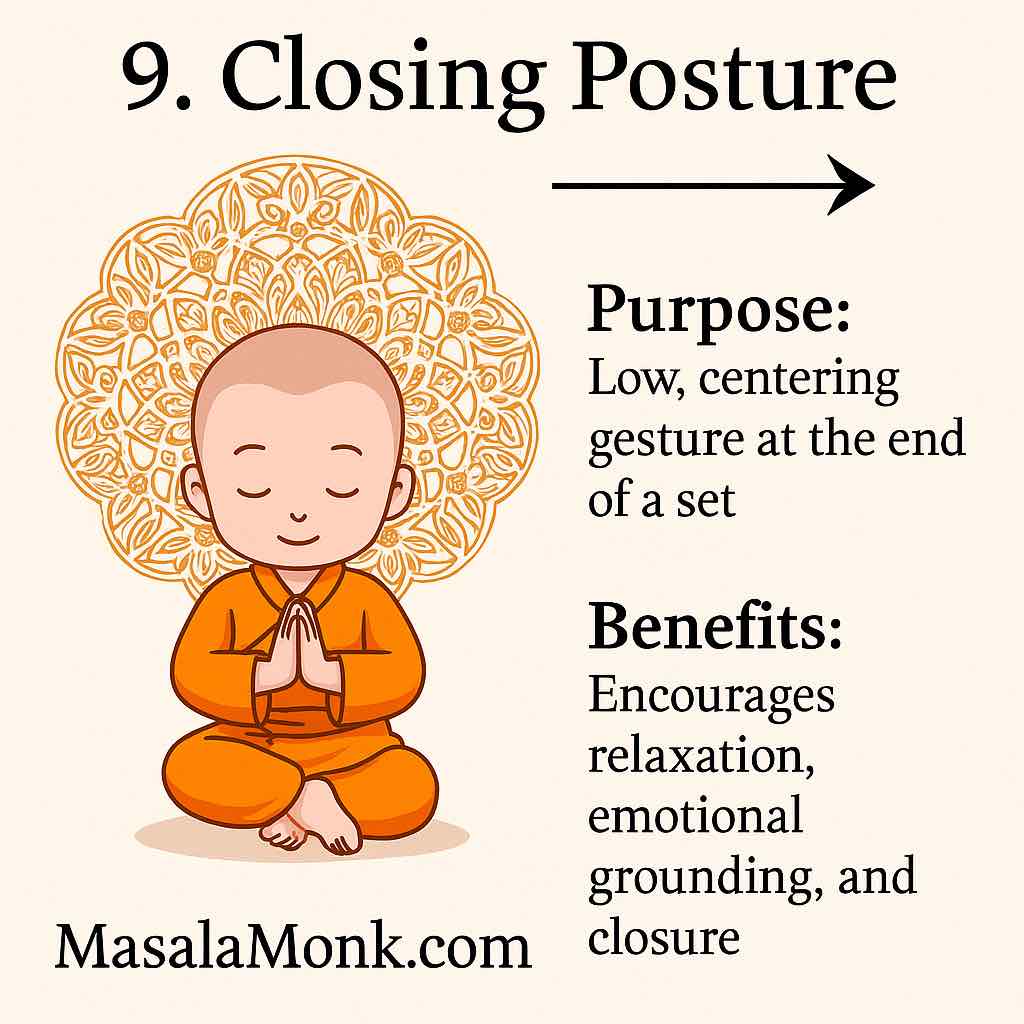
9. Closing Posture

Close Posture Tai Chi

Purpose: A gentle return to stillness, sealing the practice with mindfulness and calm.

Benefits:

  • Grounds emotional energy
  • Encourages integration of the practice
  • Offers a moment of reflection and gratitude
  • Prepares the body for rest or next activity

šŸ§˜ā€ā™‚ļø How to Practice This Flow

  • Environment: Choose a quiet, open space with minimal distractions.
  • Frequency: Begin with 10–20 minutes a day. Progress at your own pace.
  • Mindset: Focus on breath, body awareness, and intentional movement.
  • Footwear: Practice barefoot or in soft, flexible shoes.
  • Progression: Repeat the sequence slowly 2–3 times for deeper benefit.

🌺 Final Thoughts from Masala Monk

Tai Chi is not about perfection. It’s about presence. With consistent practice, these gentle yet powerful movements will infuse your day with clarity, balance, and inner peace. From strengthening your body to calming your mind, the benefits are cumulative and life-enhancing.

We invite you to take this 9-step journey daily and notice how it transforms not just your health but your relationship with yourself.

Move gently. Breathe deeply. Live mindfully.
With love and light,
The Masala Monk Team
MasalaMonk.com

šŸ“Œ Frequently Asked Questions (FAQs)

1. What is Tai Chi and where does it come from?

Answer: Tai Chi is a Chinese internal martial art that dates back centuries. Originally developed for self-defense, it has evolved into a mind-body practice combining slow movements, breath work, and meditation for health, longevity, and balance.


2. Do I need any equipment to start Tai Chi?

Answer: No special equipment is required. You just need comfortable clothing, flat-soled shoes (or bare feet), and enough space to move freely. A quiet environment is ideal for focus and relaxation.


3. Can beginners practice this 9-step Tai Chi sequence?

Answer: Absolutely. The 9-posture flow curated by Masala Monk is beginner-friendly and designed to build body awareness, coordination, and calmness progressively.


4. How often should I practice Tai Chi to see benefits?

Answer: Practicing for 15–30 minutes a day, 3–5 times per week can yield noticeable benefits in balance, flexibility, and mental clarity. Consistency matters more than intensity.


5. Is Tai Chi a good form of exercise for seniors or people with limited mobility?

Answer: Yes! Tai Chi is often recommended for seniors and individuals recovering from injury because of its low-impact, joint-friendly movements that improve stability and circulation.


6. How is Tai Chi different from yoga or meditation?

Answer: While yoga emphasizes stretching and static poses, Tai Chi focuses on continuous, flowing motion. Unlike seated meditation, Tai Chi is a form of moving meditation that combines breath with motion.


7. Can Tai Chi help with anxiety or stress?

Answer: Yes. Tai Chi encourages slow breathing and rhythmic movement, which activate the parasympathetic nervous system, helping reduce stress hormones and improve mood and mental focus.


8. Do I need a teacher or can I learn Tai Chi online?

Answer: While a teacher can help with alignment and flow, many people successfully learn Tai Chi through illustrated guides, videos, and structured flows like the one provided by Masala Monk. Always move at your own pace.


9. Is Tai Chi considered a spiritual practice?

Answer: While Tai Chi has philosophical roots in Taoism and Chinese medicine, it is not inherently religious. Many practice it purely for physical and mental health benefits, while others incorporate it into spiritual routines.


10. Can I combine Tai Chi with other forms of exercise or wellness practices?

Answer: Absolutely. Tai Chi complements activities like yoga, walking, strength training, and breathwork. It can be a gentle warm-up, cool-down, or standalone mindfulness practice.