Posted on 1 Comment

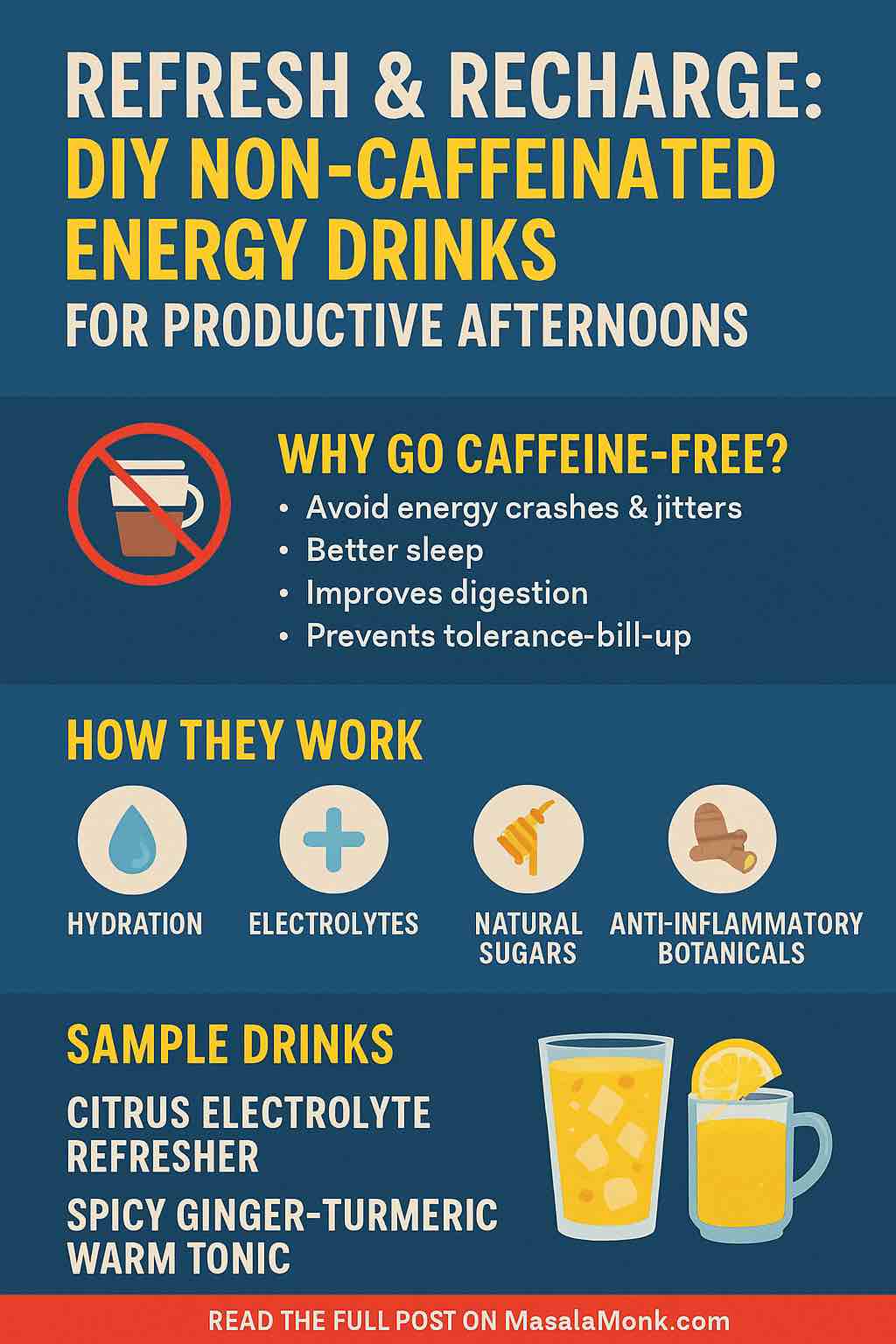
Refresh and Recharge: DIY Non-Caffeinated Energy Drinks for Productive Afternoons

NON-CAFFEINATED ENERGY DRINKS

We’ve all hit that dreaded afternoon slump. It’s 2:37 PM. Your eyes blur, your focus drifts, and your energy seems to vanish. The go-to fix? For many, it’s a shot of espresso or another iced coffee. But what if there’s a smarter, gentler, and more nourishing way to recharge without caffeine?

Welcome to the world of DIY non-caffeinated energy drinks—hydrating, plant-powered, and surprisingly effective. This guide will not only give you easy-to-make recipes but also help you understand why they work, when to use them, and how to adapt them for your specific needs.


🌿 Why Go Caffeine-Free in the Afternoon?

While caffeine is a powerful stimulant, it has its drawbacks:

  • Disrupted sleep if consumed after 2–3 PM.
  • Energy crashes due to cortisol-spiking effects.
  • Tolerance buildup, requiring more to get the same effect.
  • Digestive strain (especially from acidic or dairy-laden drinks).

Instead of relying on that 3rd cup of coffee, you can support your body’s natural rhythm by turning to drinks that:

  • Hydrate
  • Replenish electrolytes
  • Offer natural glucose
  • Reduce inflammation
  • Support sustained energy

🧪 The Science of Energy Without Stimulants

Energy is more than a buzz—it’s about cellular efficiency. To maintain steady energy through your afternoon, your body needs:

NeedWhy It MattersWhat Solves It
HydrationPrevents fatigue, brain fogWater, electrolytes
GlucoseFuels brain + musclesHoney, fruit sugars, chia
ElectrolytesMaintain cellular hydration and nerve signalsSea salt, coconut water, citrus
Anti-inflammationReduces sluggishnessGinger, turmeric, cayenne
Adaptogenic balanceSupports cortisol regulationLemon balm, tulsi, ashwagandha

🥤 5 Proven DIY Non-Caffeinated Energy Drinks

Each of these recipes is designed to be:
Easy to make
Low-cost
Nutritionally effective
Flexible & customizable


1. Citrus Electrolyte Refresher

A light, crisp hydration drink that mimics natural sports drinks—minus the synthetic stuff.

Ingredients:

  • 1 liter cold water
  • Juice of 1 lemon
  • Juice of 1 lime
  • ¼ tsp sea salt (unrefined if possible)
  • 1 tbsp raw honey (or maple syrup)
  • Optional: ½ cup coconut water for potassium

Instructions:
Mix everything and shake well. Keep chilled. Sip slowly during afternoon work sessions or after walks.

Why It Works:
Combines hydration with sodium, potassium, and glucose. Keeps your cells happy and your brain alert.


2. Spicy Ginger-Turmeric Warm Tonic

For cooler days or post-lunch digestion aid. Think of this as a gentle fire to rekindle your inner energy.

Ingredients:

  • 2 cups hot water
  • 1 tsp freshly grated ginger
  • ¼ tsp turmeric powder (or 1 tsp fresh turmeric)
  • 1 tbsp lemon juice
  • 1 tsp honey
  • Pinch of cayenne pepper
  • Pinch of black pepper (enhances turmeric absorption)

Instructions:
Simmer ginger and turmeric for 5–10 minutes, then strain. Add lemon, honey, and spices. Sip warm.

Why It Works:
Boosts circulation, curbs inflammation, aids digestion, and lifts mood.


3. Chia Lemon Energy Gel Drink

A fiber-rich energy bomb for long working stretches.

Ingredients:

  • 1 cup water or coconut water
  • Juice of ½ lemon
  • 1 tbsp chia seeds
  • Optional: ½ tsp maple syrup or raw honey

Instructions:
Stir everything and let sit 10–15 minutes until chia swells. Shake before drinking.

Why It Works:
Chia offers protein, fiber, omega-3s, and stabilizes glucose for sustained energy release.


4. The Cocoa Calm Booster

Great for when you’re feeling mentally tired but overstimulated.

Ingredients:

  • 1 cup hot water or oat milk
  • 1 tbsp raw cacao powder (not Dutch-processed)
  • 1 tsp honey or date syrup
  • Optional: pinch cinnamon or maca powder

Instructions:
Whisk all ingredients until smooth. Drink slowly as a warm, calming ritual.

Why It Works:
Cacao contains theobromine, a gentler cousin of caffeine, which stimulates without jitters. It also supports dopamine production and mood.


5. Fruit & Herb Infused Water (Low-Glycemic Option)

Ideal for those watching sugar but still want a refreshing pick-me-up.

Ingredients:

  • 1 liter cold water
  • Slices of cucumber, orange, or strawberries
  • A few sprigs of mint, basil, or lemon balm
  • Optional: splash of apple cider vinegar

Instructions:
Let the ingredients infuse in the fridge for at least 2 hours. Drink as needed.

Why It Works:
Hydrating, refreshing, and rich in antioxidants. Mint and lemon balm promote mental clarity and calm.


🧠 When to Drink for Maximum Benefit

TimeIdeal DrinkWhy
1–2 PMCitrus electrolyte refresherReplaces post-lunch fluid loss
3–4 PMChia lemon or cocoa drinkBoosts energy without crash
Before workoutGinger-turmeric or citrusPreps muscles & focus
Post-work slumpFruit-herb infusionLight and uplifting

🔄 Customize Your Drink Like a Pro

  • Need more fuel? Add a teaspoon of nut butter to cacao drinks.
  • Keto-friendly? Skip honey/maple and use monk fruit or stevia.
  • Stressful afternoon ahead? Add a few drops of lemon balm or tulsi tincture.
  • Post-workout hydration? Prioritize coconut water and salt-based drinks.

⚠️ A Few Cautions

  • Sea salt dosage: Don’t exceed 1 tsp daily unless exercising heavily.
  • Allergies: Ginger and citrus can irritate some guts—adjust accordingly.
  • Blood sugar: Monitor effects if diabetic—use lower glycemic sweeteners.
  • Adaptogens/herbs: Check for interactions if on medication.

✅ Your Afternoon Energy Routine (5-Minute Prep)

  1. Morning: Mix your chosen tonic and store it in a glass bottle.
  2. Post-lunch: Sip slowly to prevent post-meal dip.
  3. 3:30 PM: Reach for chia or cacao blend to finish the day strong.
  4. Evening: Skip caffeine entirely—your sleep will thank you.

🌟 Final Thought

Reclaiming your energy doesn’t have to involve another coffee or sugary soda. With these simple, powerful DIY drinks, you can nourish your body, sharpen your mind, and sail through your afternoon with clarity and calm.

So next time you feel the slump coming on, ask yourself:
“Do I need a stimulant… or do I just need to hydrate, balance, and breathe?”

🔍 Frequently Asked Questions (FAQs)

1. Can non-caffeinated energy drinks really help fight afternoon fatigue?

Yes. Fatigue is often caused by dehydration, low blood sugar, or inflammation—not just lack of caffeine. The DIY drinks in this post target those root causes with water, electrolytes, and nutrient-dense ingredients to support natural energy.


2. What’s the best time to drink these energy tonics?

Typically between 1 PM and 4 PM, when natural energy dips occur. You can also have them before a workout, post-lunch, or whenever you’re tempted to reach for coffee.


3. Can I prep these drinks in advance?

Absolutely. Most recipes can be prepped in the morning or the night before. Store in a sealed glass bottle or mason jar in the fridge and give a quick shake before drinking.


4. Are these drinks safe for kids or teens?

Yes—especially options like the fruit-infused water, chia lemon drink, or citrus electrolyte blend. Just be mindful of added spices (like cayenne) and adjust for their palate.


5. Will these drinks spike my blood sugar?

Not significantly. They’re lightly sweetened with natural sugars (like honey or fruit) and balanced by fiber (chia), fat (if using nut milk), or protein. You can always adjust the sweetener or opt for low-glycemic options like stevia or monk fruit.


6. Can I substitute ingredients if I’m allergic or don’t have them on hand?

Yes. These recipes are flexible:

  • Lemon → lime or orange
  • Honey → maple syrup or agave
  • Coconut water → filtered water + extra pinch of salt
  • Ginger → omit or try mint for refreshment

7. What if I’m on a low-sodium diet?

Use less salt or omit entirely and focus on potassium-rich additions like coconut water, cucumber, or banana smoothies. Always consult with your doctor if you’re managing a medical condition.


8. How long will the drinks last in the fridge?

Most will stay fresh for 24–48 hours if sealed properly. Avoid letting chia-based drinks sit too long (beyond 2 days), as the texture can get overly gelatinous.


9. Can I use these drinks to replace my afternoon snack?

They’re great as a light, low-calorie alternative, but if you’re truly hungry, pair them with a small whole food snack like nuts, boiled eggs, or yogurt to stay satisfied and energized.


10. Do these drinks help with focus or just physical energy?

They support both. Ingredients like ginger, lemon, mint, and cacao enhance mental clarity and blood flow to the brain, while hydration and glucose help you maintain steady concentration.
Posted on 1 Comment

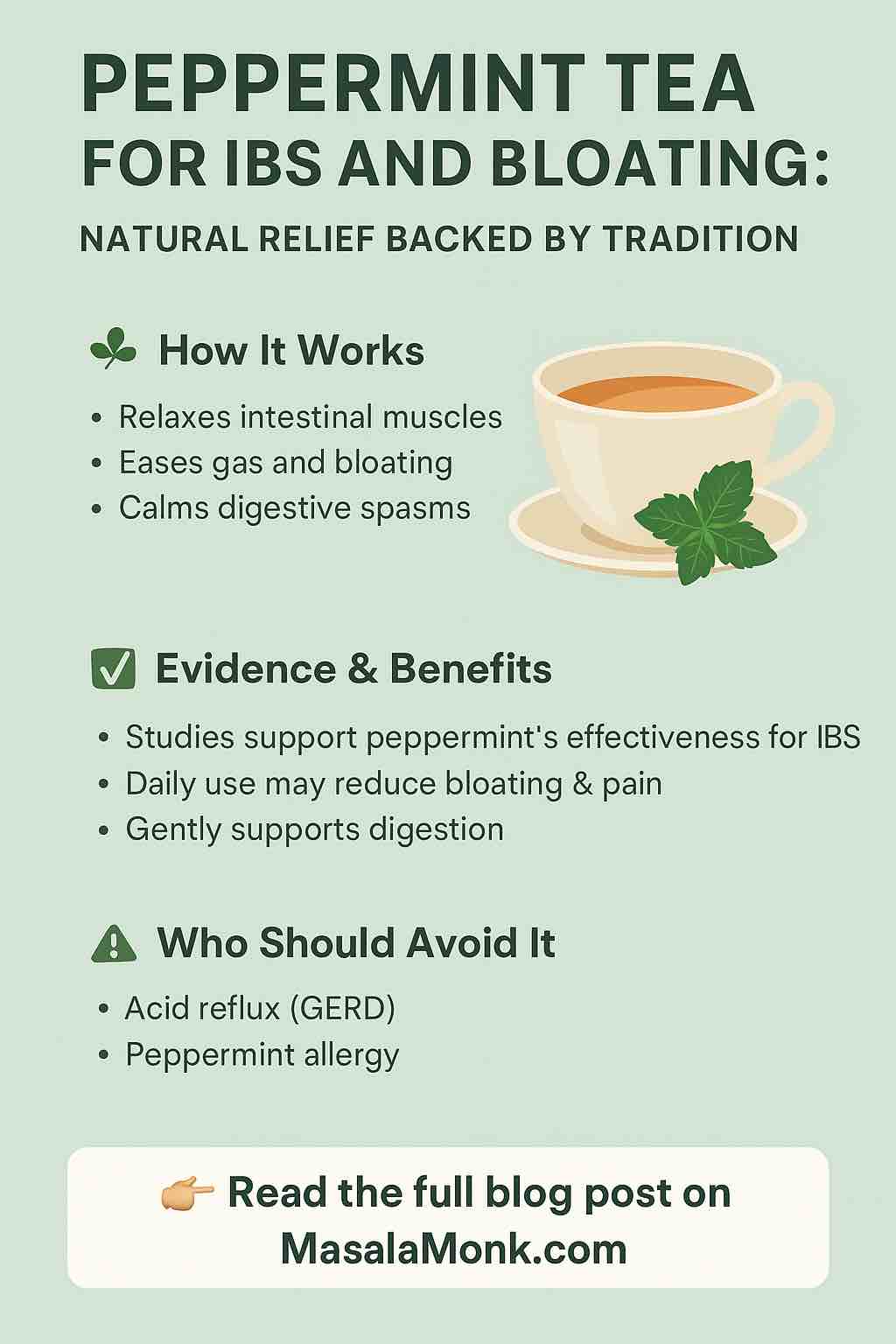
Peppermint Tea for IBS and Bloating: Natural Relief Backed by Tradition

PEPPERMINT TEA FOR IBS AND BLOATING

If you’re tired of bloating, stomach discomfort, or battling IBS symptoms, peppermint tea might be the gentle herbal ally your gut has been waiting for. Backed by ancient wisdom and now validated by modern science, peppermint isn’t just a refreshing flavor—it’s a natural digestive soother.

In this guide, we’ll unpack:

  • The science behind peppermint’s gut-calming powers
  • How it’s been used for centuries in traditional medicine
  • Practical tips to brew the perfect cup
  • Why peppermint tea (not just oil capsules) deserves a spot in your daily wellness ritual

Try it yourself with this premium Himalayan Peppermint Herbal Tea – organically grown, hand-harvested, and rich in soothing menthol.


🌿 Why Peppermint for Digestion?

✅ What Makes Peppermint Special?

Peppermint (Mentha × piperita) is a natural hybrid of spearmint and watermint. Its leaves are rich in menthol, a compound known for its cooling, antispasmodic, and anti-inflammatory properties. These effects are exactly what make peppermint such a popular choice for:

  • Bloating
  • Gas
  • Indigestion
  • IBS (Irritable Bowel Syndrome)
  • Cramping

✅ How Does It Work?

Peppermint’s therapeutic powers come from:

  • Smooth muscle relaxation: Menthol helps relax the muscles of the gastrointestinal tract, reducing spasms that cause cramping and discomfort.
  • Antimicrobial activity: Peppermint has mild antimicrobial effects that help keep gut flora in balance.
  • Carminative action: It helps dispel gas from the stomach and intestines, relieving bloating.

🔬 What Does Science Say About Peppermint for IBS?

Most clinical studies have focused on peppermint oil capsules, especially enteric-coated ones, due to their higher concentration. But even peppermint tea—while gentler—shares the same core compounds and has shown promise in everyday digestive care.

📊 Highlights from Research:

  • A 2025 review from the Tea Advisory Panel affirmed that 1–2 cups of peppermint tea daily can relieve bloating and digestive discomfort, thanks to menthol’s action on gut muscles.
  • A 2018 meta-analysis found peppermint oil significantly more effective than placebo for treating IBS symptoms—including pain, bloating, and urgency. While oil is more potent, tea offers similar action with a milder delivery.
  • A 2020 guideline from the American College of Gastroenterology includes peppermint oil as a first-line therapy for IBS relief.

Bottom line? If capsules are the concentrated solution for flare-ups, tea is the daily tonic to support your gut—gently and naturally.


🧘‍♀️ Benefits of Peppermint Tea for IBS & Bloating

Symptom/ConcernHow Peppermint Tea Helps
Bloating & GasCarminative action helps expel trapped gas
IBS Pain/CrampingRelaxes gut muscles to reduce spasms
Post-meal heavinessAids digestion, especially after heavy meals
Nausea or queasinessPeppermint’s aroma can ease nausea
Stress-related IBSHerbal teas promote relaxation, reduce anxiety

🫖 How to Brew Peppermint Tea for Maximum Benefit

You don’t need anything fancy—just good-quality loose leaf peppermint (like Himalayan Peppermint) and a few quiet minutes.

🍵 Brewing Guide:

  • Tea type: Loose leaf peppermint (dried)
  • Water temperature: ~95°C (just below boiling)
  • Amount: 1 teaspoon per cup
  • Steep time: 5 to 10 minutes
  • Optional: Add a slice of ginger, a touch of honey, or fennel seeds

💡 Pro Tips:

  • Drink 1–2 cups per day, ideally after meals.
  • For bloating, a stronger brew (8–10 minutes steep) can be more effective.
  • Avoid adding dairy or milk—it can reduce the soothing properties.

⚠️ Who Should Be Cautious?

While peppermint tea is generally very safe, a few people should use it cautiously:

  • Those with acid reflux or GERD: Peppermint may relax the lower esophageal sphincter, worsening reflux symptoms.
  • People with allergies to mint family plants should avoid it.
  • Pregnant or breastfeeding women should consult a healthcare provider before using any herbal teas regularly.


🏔️ Why Choose Himalayan Peppermint Tea?

At Masala Monk, we offer Himalayan Peppermint Tea made from pure, sun-dried leaves grown at high altitudes. Here’s why it’s different:

  • 🌱 Organic and chemical-free
  • 🧺 Hand-harvested in small batches
  • 🌬️ Air-dried for full aroma and menthol potency
  • ♻️ Loose-leaf format for maximum infusion strength

🍃 Experience the clean, cooling calm of mountain-grown peppermintOrder yours here


✅ Final Thoughts

Peppermint tea is more than a pleasant drink—it’s a tried and true digestive remedy with deep roots in tradition and growing modern validation. Whether you’re managing IBS, dealing with bloating, or simply want a clean herbal drink to support digestion, a cup of peppermint tea is a simple, natural solution.

Make it a ritual. Steep. Sip. Soothe.


Ready to feel lighter, calmer, and less bloated?
👉 Get your Himalayan Peppermint Tea now

🔟 Frequently Asked Questions (FAQs)

1. Does peppermint tea really help with IBS?

Yes. While most studies focus on peppermint oil capsules, peppermint tea also contains menthol, which helps relax intestinal muscles and reduce spasms, easing IBS symptoms like cramping and bloating.


2. How often should I drink peppermint tea for bloating?

You can drink 1–2 cups daily, ideally after meals. For acute bloating, a stronger brew steeped for 8–10 minutes may offer better relief.


3. Is peppermint tea safe to drink every day?

Yes, peppermint tea is generally safe for daily consumption. It’s caffeine-free, soothing, and well-tolerated by most people when consumed in moderate amounts (1–3 cups/day).


4. Can peppermint tea cause any side effects?

In rare cases, it may cause mild heartburn, especially if you have acid reflux (GERD). People with mint allergies should avoid it. Always consult a doctor if you’re pregnant, breastfeeding, or on medication.


5. Is peppermint tea as effective as peppermint oil capsules?

Capsules offer higher, concentrated doses ideal for severe IBS symptoms. Tea is milder but great for daily, gentle relief—and it offers hydration and calming benefits.


6. When is the best time to drink peppermint tea for digestion?

The best time is after meals to support digestion and reduce gas or bloating. Some people also enjoy it before bed to unwind and ease nighttime digestive discomfort.


7. Can I mix peppermint tea with other herbs?

Absolutely! Popular combinations include:

  • Peppermint + fennel (for gas)
  • Peppermint + chamomile (for relaxation)
  • Peppermint + ginger (for nausea)

8. Is Himalayan peppermint tea different from regular peppermint tea?

Yes. Himalayan peppermint is often hand-harvested, organically grown, and air-dried at high altitudes—preserving aroma and therapeutic oils better than mass-produced tea.


9. Can children drink peppermint tea?

Yes, in small amounts and mild strength (1–2 minute steep). It can help ease occasional tummy aches. Avoid in very young children or without medical advice.


10. Where can I buy high-quality loose-leaf peppermint tea?

You can find premium-grade Himalayan peppermint tea here at Masala Monk—organically grown, loose-leaf, and perfect for daily sipping.

Posted on 4 Comments

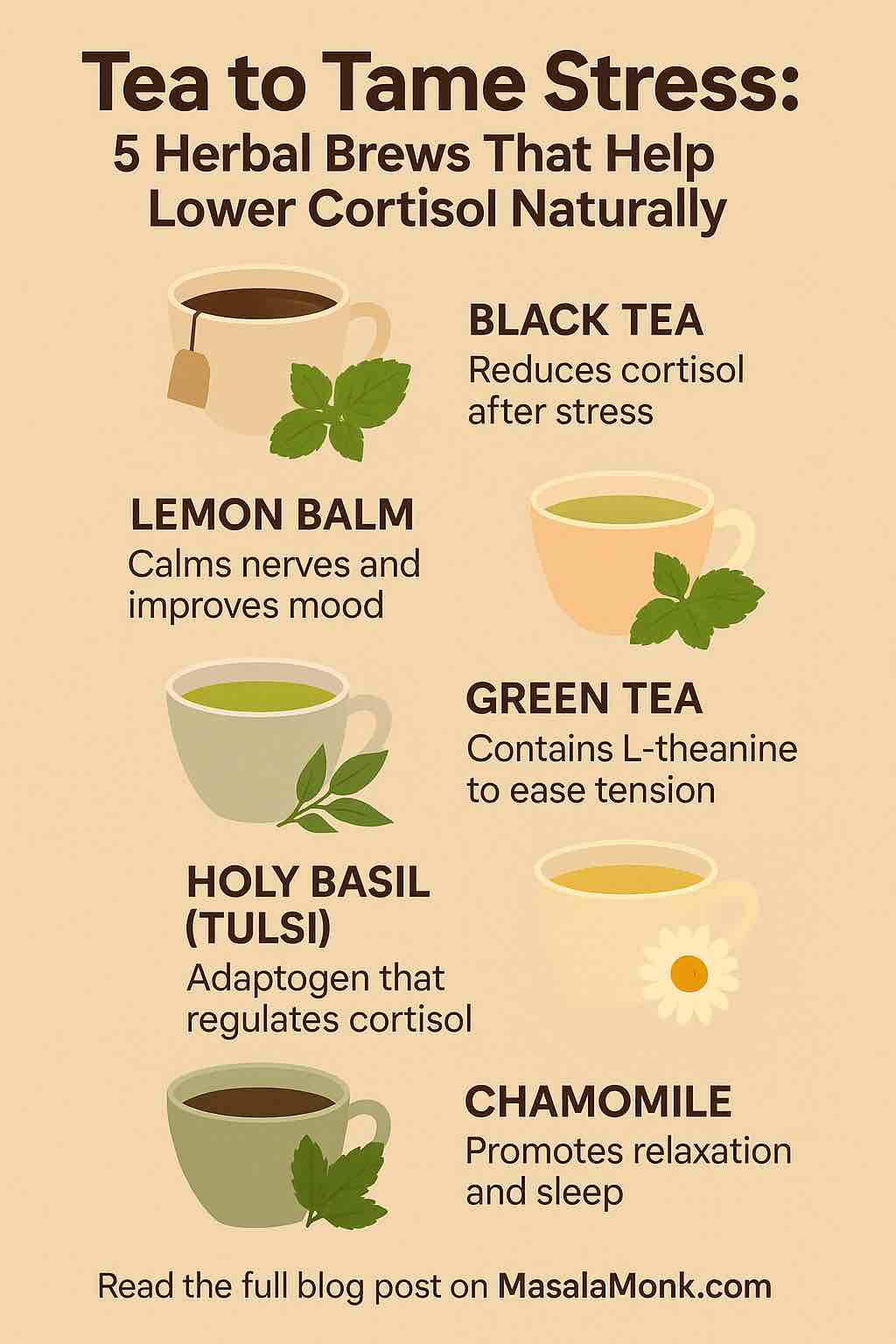
5 Herbal Teas & Brews That Help Lower Cortisol Naturally

Herbal Brews That Help Lower Cortisol

Feeling wired but tired? Struggling with anxiety, poor sleep, or stubborn belly fat?
Your cortisol levels might be out of balance—and the simplest remedy might already be in your kitchen: a warm, calming cup of herbal tea.

Modern life pushes our stress hormones into overdrive. But before reaching for supplements or prescriptions, it’s worth exploring one of the oldest (and most soothing) remedies: tea. Specifically, herbal and functional teas that help lower cortisol—the body’s primary stress hormone.

In this post, we’ll dive into the science-backed brews that help your body unwind, regulate hormones, and restore calm—plus how to make tea part of your daily stress-reducing ritual.


🧠 Why Cortisol Matters

Cortisol is your body’s built-in alarm system. It helps you respond to stress, balance energy, and regulate inflammation. But when cortisol stays chronically high—due to poor sleep, anxiety, blood sugar dips, or lifestyle stress—it can lead to:

  • Belly fat that won’t budge
  • Mood swings and irritability
  • Poor sleep quality
  • Cravings and fatigue
  • Hormonal imbalances

If that sounds familiar, it’s time to support your body’s natural cortisol rhythm. Herbal teas can play a powerful role—calming your nervous system, supporting adrenal function, and creating rituals that signal safety to your brain.

📝 Already struggling with cortisol symptoms? Start here:
👉 10 Symptoms of High Cortisol Levels in Females
👉 5 Foods That Naturally Decrease Cortisol


🍵 The 5 Best Teas to Lower Cortisol Naturally

1. Black Tea – The Everyday Stress Soother

You might think only herbal teas help, but research shows black tea reduces cortisol significantly after acute stress. A landmark study found black tea drinkers had up to 47% lower cortisol levels post-stress compared to non-tea drinkers.

Why it works:

  • Contains L-theanine – a natural compound that promotes alpha brainwaves (relaxation)
  • Moderate caffeine (~40 mg) boosts energy gently, without spiking cortisol like coffee does

☕ Related: Coffee and Cortisol — How Your Brew Affects Stress, Weight and Well-Being

Best time to drink: Morning or early afternoon
Pair with: Protein-rich breakfast or a calming morning ritual


2. Lemon Balm (Melissa officinalis) – The Gentle Nervine

This mild, lemony herb is clinically shown to reduce anxiety and improve mood, even in single doses. It works by supporting GABA activity—a neurotransmitter that calms the brain.

Why it works:

  • Contains rosmarinic acid and other compounds that reduce cortisol-like stress signals
  • Improves sleep, digestion, and nervous system tone

Best time to drink: Late afternoon or evening
Try this blend: Lemon balm + chamomile for deep relaxation


3. Green Tea / Matcha – Calm Focus in a Cup

Unlike coffee, green tea gives you alertness without the jitters. That’s thanks to L-theanine, which moderates the stimulating effects of caffeine and helps lower cortisol.

Why it works:

  • Supports alpha brainwave production
  • Lowers stress-related cortisol and alpha-amylase
  • Enhances calm clarity — ideal for work or study

🍵 Want a more alert alternative to coffee?
👉 Tea and Cortisol: How Your Favorite Brew Can Help Manage Stress

Best time to drink: Mid-morning or early afternoon
Pro tip: Try matcha with oat milk and cinnamon for a cortisol-friendly latte.


4. Holy Basil (Tulsi) – The Adrenal Adaptogen

Tulsi is a revered herb in Ayurvedic medicine known for its ability to balance cortisol, support mood, and improve resilience to stress. Modern studies confirm its adaptogenic benefits.

Why it works:

  • Regulates the HPA axis (your stress-response system)
  • Helps reduce inflammation, balance blood sugar, and improve sleep

🍽️ Related: Diet Strategies to Lower Cortisol Levels

Best time to drink: Morning or after lunch
Flavor profile: Earthy, slightly spicy — delicious with ginger or cardamom


5. Chamomile – The Bedtime Favorite

Chamomile is one of the most well-known herbs for relaxation and better sleep. Its compound apigenin binds to GABA receptors and helps calm the nervous system—gently supporting nighttime cortisol reduction.

Why it works:

  • Reduces symptoms of anxiety
  • Helps regulate sleep-wake rhythms
  • Supports digestion and menstrual comfort

💤 Want to create a sleep-supporting routine?
👉 5 Soothing Drinks to Help Lower Cortisol and Calm Your Mind

Best time to drink: One hour before bed
Pair with: Magnesium-rich snack (like pumpkin seeds or banana)


🔄 Tea & Ritual: Why It Works Beyond the Herbs

Beyond the plants themselves, the act of making tea is powerful. Boiling water, steeping leaves, inhaling the aroma—it slows you down and sends a “safe” signal to your body.

Daily rituals like tea drinking are part of a broader strategy for managing stress and hormonal balance. They pair beautifully with:

  • Balanced meals that don’t spike blood sugar
  • Mindful morning routines (like journaling or walking)
  • Adaptogen support when needed

🧘‍♀️ Struggling with cortisol rhythms in the morning?
👉 Morning Anxiety? Your Cortisol Might Be to Blame — Here’s How to Fix It Naturally


✅ Practical Tea Routines to Lower Cortisol

Time of DayTeaPurpose
🌞 MorningBlack tea or TulsiGentle alertness + stress protection
☕ MiddayGreen tea or MatchaCalm focus without the crash
🌇 EveningLemon balm + ChamomileWind-down blend to lower cortisol before bed
💤 BedtimeChamomile or RooibosDeep sleep and cortisol reset

💬 Final Thoughts: Steep Your Way to Stress Relief

Cortisol balance isn’t about doing one big thing—it’s about small, repeated choices that calm your system every day.

Herbal tea is simple, nourishing, and time-tested. Start with one blend you love. Make it a ritual. Sip slowly. Breathe.

You’ll be amazed what happens when your body gets the message:

“You are safe. You can rest now.”


🔗 Related Reads from Masala Monk

🙋‍♀️ FAQs: Herbal Teas for Cortisol & Stress Relief

1. Can drinking tea really lower cortisol levels?

Yes. Several studies show that certain teas—especially black tea, green tea, lemon balm, chamomile, and tulsi—can help reduce cortisol levels or promote a calmer stress response by supporting the nervous system and hormonal regulation.


2. What is the best tea for high cortisol?

There’s no one-size-fits-all, but black tea has been shown to reduce cortisol after stress, while chamomile, tulsi, and lemon balm offer gentle, natural stress relief that supports cortisol balance over time.


3. When is the best time to drink cortisol-lowering tea?

It depends on the tea:

  • Morning: Black tea, green tea, tulsi (for energy + calm)
  • Evening: Chamomile, lemon balm, rooibos (for relaxation + sleep support)

4. Does green tea reduce cortisol like chamomile or lemon balm?

Green tea contains L-theanine, which promotes calm alertness and has been shown to reduce stress-related cortisol and anxiety. It’s ideal for mid-morning or early afternoon.


5. Is tulsi (holy basil) good for adrenal fatigue?

Yes. Tulsi is an adaptogenic herb that supports the adrenal glands, helps regulate cortisol, and builds stress resilience over time.


6. Can I drink more than one type of tea in a day?

Absolutely. Many people benefit from rotating teas based on time of day—for example, green tea in the morning, lemon balm in the afternoon, and chamomile at night.


7. Will herbal teas help with anxiety as well as cortisol?

Yes. Teas like chamomile, lemon balm, and tulsi not only support cortisol regulation but also reduce anxiety by calming the nervous system and supporting GABA activity in the brain.


8. How long does it take to see results from herbal teas?

Some teas (like lemon balm) can reduce stress within an hour. Others (like tulsi) may need a few weeks of consistent use to see full cortisol-balancing benefits.


9. Are there any side effects or risks with these teas?

Most are safe when consumed in moderate amounts. However, pregnant or breastfeeding women and those on medications should consult a healthcare provider before using herbs like tulsi or high-dose chamomile regularly.


10. What other lifestyle tips help lower cortisol naturally?

In addition to tea, focus on:

  • Balanced meals
  • Gentle movement
  • Good sleep
  • Limiting caffeine and sugar
  • Mindfulness or breathwork

For more, read: Diet Strategies to Lower Cortisol Levels

Posted on 1 Comment

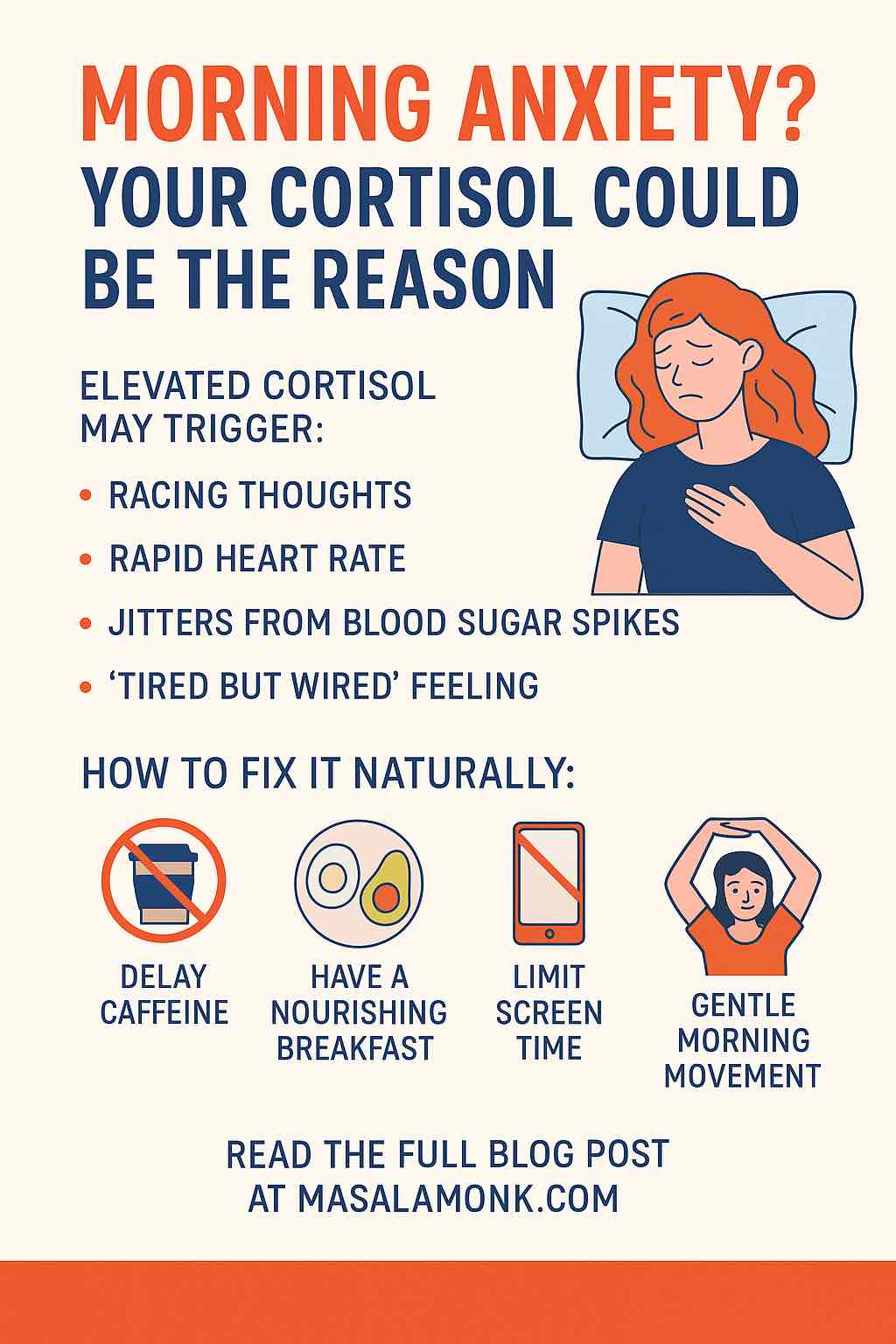
Morning Anxiety? Your Cortisol Might Be to Blame — Here’s How to Fix It Naturally

MORNING ANXIETY and CORTISOL

Ever wake up feeling like your heart is racing, your mind’s in overdrive, and you’re already behind—before your feet even hit the floor?
That, right there, could be morning anxiety, and cortisol—your body’s primary stress hormone—may be playing a major role.

In this post, we’ll break down why cortisol rises in the morning, how it connects to your anxiety, and most importantly, natural strategies to rebalance your mornings and reset your nervous system.


☀️ First, What Is Cortisol and Why Is It High in the Morning?

Cortisol follows a natural circadian rhythm. It begins to rise while you’re still sleeping, peaking around 30–45 minutes after waking in what’s called the Cortisol Awakening Response (CAR). This isn’t a bad thing—it’s designed to:

  • Wake you up
  • Get your brain alert
  • Mobilize energy for the day ahead

But in today’s fast-paced, overstimulated world, this normal rise can become amplified, especially if you’re already stressed, underslept, or anxious about the day ahead. That’s when morning anxiety kicks in.


😰 How Does Cortisol Cause Morning Anxiety?

When cortisol rises too much or too quickly, it can lead to:

  • Racing thoughts
  • Increased heart rate
  • Muscle tension
  • Digestive discomfort
  • Feelings of dread, panic, or urgency

And because cortisol can also raise blood sugar, you may feel jittery, lightheaded, or hungry—fueling the anxiety loop even more.

But here’s the twist: it’s not just cortisol’s fault.

Morning anxiety is usually the result of multiple overlapping triggers, including:

  • Poor sleep
  • Skipping meals (especially breakfast)
  • Checking your phone immediately after waking
  • Caffeine too early
  • Generalized stress or “anticipatory worry”

Let’s unpack how to fix it naturally.


🛠️ 6 Practical Ways to Fix Morning Anxiety (Naturally)

✅ 1. Delay Your Caffeine Intake

Coffee right after waking may feel like survival—but it’s not ideal for your stress hormones. Since your cortisol is naturally peaking in the first hour after waking, adding caffeine can cause it to spike even higher, worsening anxiety.

💡 Related: Coffee and Cortisol: How Your Daily Brew Impacts Stress, Weight, and Well-Being

Try this instead:

  • Drink water or herbal tea (like tulsi or chamomile) first thing.
  • Wait at least 60–90 minutes before your first cup of coffee.

✅ 2. Eat a Cortisol-Calming Breakfast

Many people skip breakfast while juggling busy mornings—or follow intermittent fasting. But doing so can prolong cortisol elevation and leave you feeling wired but tired.

💡 Related: Fasting and Cortisol: Is Intermittent Fasting Stressing Your Hormones?

Instead, aim for a balanced breakfast with:

  • Protein (e.g., eggs, Greek yogurt, nut butter)
  • Healthy fats (e.g., avocado, seeds)
  • Slow carbs or fiber (e.g., oats, fruit, whole grains)

This helps stabilize blood sugar and reduces cortisol-driven crashes later in the day.


✅ 3. Avoid Screens for the First 30 Minutes

Your phone is a cortisol trigger. When you check emails, texts, or news feeds immediately upon waking, you tell your nervous system, “The world is on fire 🔥 — react!”

Try this instead:

  • Leave your phone in another room overnight
  • Start your day with 5–10 minutes of deep breathing, journaling, or a short walk
  • Use a real alarm clock if needed

This small boundary can dramatically lower morning anxiety over time.


✅ 4. Move Your Body Gently

Light movement helps your cortisol follow its natural rhythm and signals your body that you’re safe. This can shift your nervous system out of fight or flight and into rest and digest.

Try:

  • A 10-minute morning walk
  • Gentle yoga or stretching
  • Dancing to your favorite song

Bonus: Sunlight exposure in the morning helps regulate cortisol and improves sleep quality at night.


✅ 5. Incorporate Cortisol-Calming Drinks

What you drink in the morning matters.

Instead of defaulting to coffee or sugary energy drinks, try these stress-reducing options:

💡 Related: 5 Soothing Drinks to Help Lower Cortisol and Calm Your Mind

Great choices include:

  • Chamomile or tulsi tea
  • Lemon water with sea salt
  • Ashwagandha or reishi mushroom tea

✅ 6. Use Food, Not Willpower, to Balance Stress Hormones

Cortisol can stay elevated if your body feels starved or deprived—even if you’re eating clean.

Use functional foods to help lower baseline cortisol over time:

💡 Related:

Top cortisol-lowering foods include:

  • Dark leafy greens
  • Fatty fish (like salmon or sardines)
  • Nuts and seeds
  • Fermented foods for gut health
  • Magnesium-rich foods (banana, cacao, avocado)

🚨 Signs You Might Be Experiencing Cortisol-Driven Morning Anxiety

Not sure if cortisol is behind your anxiety? Look for these signs:

  • You wake up anxious without any specific reason
  • You feel better after eating or moving
  • You get tired but wired at night
  • You sleep 7+ hours but still feel unrested
  • You have mid-section weight gain, even with diet/exercise

💡 Related: 10 Symptoms of High Cortisol Levels in Females


🧘‍♀️ You Don’t Have to Wake Up Anxious Anymore

Morning anxiety doesn’t mean you’re broken or weak—it often means your cortisol rhythm is out of sync with your lifestyle. The good news? You can absolutely reset it with small, consistent changes.

Remember, your morning doesn’t have to start with panic.
It can start with calm, clarity, and control.


🔗 More Cortisol Resources You’ll Love


🙋‍♀️ FAQs: Morning Anxiety & Cortisol — What You Need to Know

1. Why do I feel anxious as soon as I wake up?

This may be due to your natural cortisol awakening response (CAR), which peaks 30–45 minutes after waking. If your stress levels are already high, this cortisol spike can feel like anxiety or panic.


2. Is cortisol the only reason for morning anxiety?

Not always. While cortisol contributes, other factors like poor sleep, low blood sugar, high anticipatory stress, or excessive phone use upon waking also play key roles.


3. How can I tell if cortisol is causing my morning anxiety?

You might notice you feel:

  • Jittery or wired before eating
  • Calmer after breakfast or light movement
  • Anxious without clear emotional triggers

These may point to a cortisol-driven response.


4. Can coffee make morning anxiety worse?

Yes. Drinking caffeine right after waking (when cortisol is naturally highest) can amplify the stress response. Waiting 60–90 minutes to drink coffee may reduce this effect.


5. What’s the best breakfast for managing morning anxiety?

A breakfast rich in protein, healthy fats, and fiber can stabilize blood sugar and help blunt cortisol spikes. Avoid high-sugar or carb-heavy meals on their own.


6. Does intermittent fasting cause or worsen morning anxiety?

In some people, yes. Skipping breakfast or fasting too long can keep cortisol elevated and trigger anxiety. A gentler fasting window or including breakfast may help.


7. What are natural ways to lower cortisol in the morning?

Try:

  • Gentle stretching or a short walk
  • Drinking herbal tea like tulsi or chamomile
  • Practicing deep breathing or mindfulness
  • Eating a grounding, nutrient-rich meal

8. Can supplements help reduce morning cortisol and anxiety?

Yes. Magnesium, vitamin D, ashwagandha, and L-theanine are known to help regulate stress responses. Always consult a healthcare provider before starting supplements.


9. Should I avoid screens in the morning?

Definitely. Checking your phone or emails immediately upon waking can spike mental stress and elevate cortisol. Give yourself a screen-free buffer for at least 30 minutes.


10. How long does it take to reset my morning cortisol pattern?

Most people notice improvements within 2–4 weeks of consistent lifestyle changes. Focus on sleep, morning nutrition, light exposure, and stress reduction daily.

Posted on 1 Comment

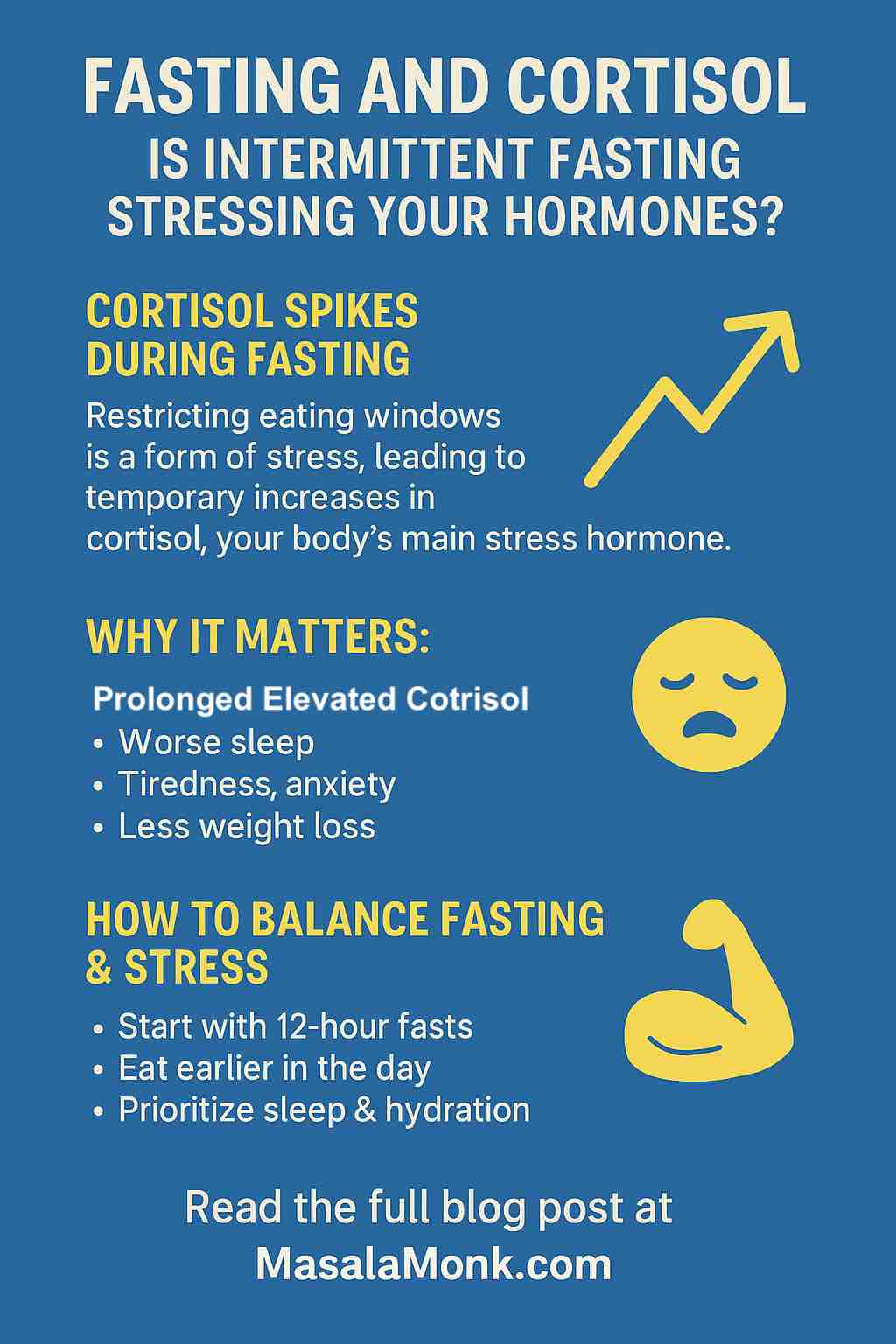
Fasting and Cortisol: Is Intermittent Fasting Stressing Your Hormones?


Intermittent fasting (IF) has become a popular wellness trend — praised for weight loss, improved insulin sensitivity, and even longevity. But here’s the lesser-discussed truth: fasting isn’t just about food — it’s a hormonal event. And cortisol, your body’s primary stress hormone, plays a starring role in that story.

So, is your intermittent fasting routine helping or hurting your hormone balance? Let’s unpack the science, real-world impact, and smart ways to fast without overloading your stress system.


🧬 What is Cortisol — and Why It Matters When You Fast

Cortisol is produced by your adrenal glands and released in a daily rhythm — peaking in the morning to wake you up, then tapering off by bedtime to let your body wind down.

But cortisol is also your “fight or flight” hormone. It spikes in response to:

  • Fasting or calorie restriction
  • Emotional stress
  • Poor sleep
  • Blood sugar dips

In small bursts, cortisol is helpful. It keeps you alert and mobilizes energy when you need it.

But when it’s chronically elevated, it can lead to:

  • Anxiety and poor sleep
  • Weight gain (especially belly fat)
  • Hormonal imbalances (like low progesterone or testosterone)
  • Insulin resistance
  • Fatigue or burnout

So how does intermittent fasting fit in?


🧪 The Research: What Fasting Does to Cortisol

🔹 1. Fasting Can Elevate Cortisol — Especially at the Start

A recent 2025 study published in Scientific Reports found that participants on an 8-day water-only fast had consistently elevated cortisol levels from day one through day seven. Their stress hormones didn’t start to normalize until several days after resuming eating.

Even shorter fasts (like 16:8) can cause temporary cortisol spikes, especially during the fasting window. That’s because your body sees fasting as a form of stress.

💡 Key point: Fasting stresses the body — and cortisol helps it cope. But too much fasting, too often, can lead to chronically high cortisol.


🔹 2. Cortisol Timing Shifts With Meal Skipping

Fasting can disrupt the normal circadian rhythm of cortisol. Instead of peaking naturally in the early morning and falling throughout the day, some studies show:

  • Skipping breakfast can suppress morning cortisol (which may make you feel sluggish)
  • Skipping dinner may lead to elevated evening cortisol, interfering with sleep and repair

🔹 3. Women May Be More Sensitive to Cortisol Spikes from Fasting

Women’s bodies are more hormonally sensitive to stress. Extended fasting can:

  • Disrupt menstrual cycles
  • Affect fertility
  • Trigger anxiety, fatigue, or brain fog

A 2024 review in Frontiers in Nutrition found that time-restricted eating in women increased cortisol rhythm disruption and delayed hormonal recovery compared to men.


⚖️ Cortisol and Weight Loss: Friend or Foe?

Here’s the paradox: cortisol can help with fat burning in the short term. It mobilizes energy and stimulates fat breakdown.

But if cortisol stays high:

  • Your body stores more belly fat, especially around the midsection
  • You may feel more hungry or experience sugar cravings after breaking your fast
  • Sleep disturbances caused by cortisol interfere with fat loss and muscle repair

🔁 So while intermittent fasting can support weight loss, high cortisol might cancel out those benefits — especially if you’re not supporting your body holistically.


✅ How to Fast Without Wrecking Your Hormones

🌞 1. Choose Early Time-Restricted Eating (eTRE)

Try eating between 7 AM and 3 PM or 8 AM to 4 PM — and avoid eating late at night.

✔️ Skipping dinner tends to support cortisol balance better than skipping breakfast.


💧 2. Start Gently with 12–14 Hour Fasts

Instead of jumping to 16:8, start with 12:12 or 14:10. Allow your body to adapt slowly.

✔️ Women, in particular, may benefit from shorter fasting windows — especially during the luteal phase of their menstrual cycle.


🧠 3. Support Stress with Sleep, Hydration, and Movement

Cortisol is highly influenced by:

  • Poor sleep (raises cortisol)
  • Dehydration (triggers cortisol release)
  • Overtraining (especially with fasting)

✔️ Get at least 7–8 hours of sleep and stay well hydrated during fasting windows.


🥗 4. Break Your Fast With Protein + Healthy Fats

Avoid high-carb or sugar-rich meals immediately after fasting. They can cause a blood sugar crash and spike cortisol.

✔️ Opt for eggs, nuts, seeds, avocados, or oily fish when breaking your fast.


🌿 5. Add Cortisol-Calming Foods and Herbs

  • Ashwagandha – helps regulate cortisol
  • Holy Basil (Tulsi) – supports adrenal function
  • L-theanine (green tea) – promotes calm focus
  • Magnesium-rich foods – leafy greens, seeds, nuts

✔️ Try herbal teas like tulsi or chamomile during fasting windows.


⚠️ Should You Be Fasting?

Fasting isn’t for everyone — especially if you:

  • Have anxiety, burnout, or adrenal fatigue
  • Are pregnant, breastfeeding, or trying to conceive
  • Struggle with disordered eating
  • Have sleep issues or thyroid conditions

If you notice more fatigue, mood swings, poor sleep, or stalled weight loss, your fasting routine may be too stressful.

🔁 In that case, consider switching to a nourishing, regular meal rhythm with cortisol-calming foods instead.


🧠 Final Thoughts: Balance Over Biohacking

Fasting can be a powerful tool — but like any tool, it must be used with context.

If done too aggressively or without supporting your sleep, stress, and nutrition, it may backfire — spiking cortisol, slowing metabolism, and harming hormones.

The goal isn’t to fast harder. It’s to fast smarter, with balance, personalization, and restorative practices at the core.


🔗 Related Reads You’ll Love:

🙋‍♀️ FAQs: Fasting & Cortisol – What You Need to Know

1. Does intermittent fasting increase cortisol levels?

Yes, intermittent fasting can temporarily raise cortisol levels, especially during the fasting window. Cortisol helps the body mobilize energy in a fasted state, but chronically elevated cortisol can be harmful if fasting is too extreme or poorly supported.


2. Is high cortisol bad for weight loss?

Chronically high cortisol can hinder weight loss by increasing belly fat storage, disrupting sleep, and causing sugar cravings. While fasting can promote fat loss, unmanaged cortisol can slow or reverse those benefits.


3. What is the best fasting window to support healthy cortisol levels?

An early time-restricted eating (eTRE) window, such as 7 AM–3 PM or 8 AM–4 PM, tends to be less disruptive to cortisol rhythms compared to skipping breakfast or eating late at night.


4. Can fasting cause anxiety or poor sleep?

Yes. If fasting raises cortisol too much, it can lead to symptoms like anxiety, restlessness, or waking in the middle of the night — especially if paired with stress, caffeine, or poor hydration.


5. Is intermittent fasting safe for women with hormonal imbalances?

Women tend to be more sensitive to cortisol shifts. Shorter fasts (12–14 hours) may be safer for those with hormone imbalances, irregular cycles, or thyroid issues. Always monitor how your body responds.


6. How can I tell if fasting is increasing my cortisol too much?

Warning signs include: disrupted sleep, mood swings, fatigue, cravings, increased belly fat, or worsened PMS. These may indicate that fasting is stressing your body more than helping.


7. What can I do to reduce cortisol while fasting?

Support your body with good sleep, stress management (like meditation or light movement), proper hydration, and nutrient-dense meals when you break your fast. Herbal teas like tulsi or chamomile can also help.


8. Is it better to skip breakfast or dinner when fasting for hormone balance?

Research suggests skipping dinner (and finishing meals earlier in the day) may be more supportive of cortisol balance and metabolic health than skipping breakfast.


9. Can intermittent fasting lead to adrenal fatigue?

Fasting alone doesn’t cause adrenal fatigue, but fasting plus high life stress, poor sleep, and overexercising can contribute to burnout and hormone dysregulation. Listen to your body and adjust accordingly.


10. What are better alternatives if fasting doesn’t work for me?

If fasting causes issues, consider a regular, nutrient-dense meal routine focused on blood sugar balance: protein, healthy fats, fiber, and cortisol-supportive foods (like leafy greens, nuts, and adaptogens).