
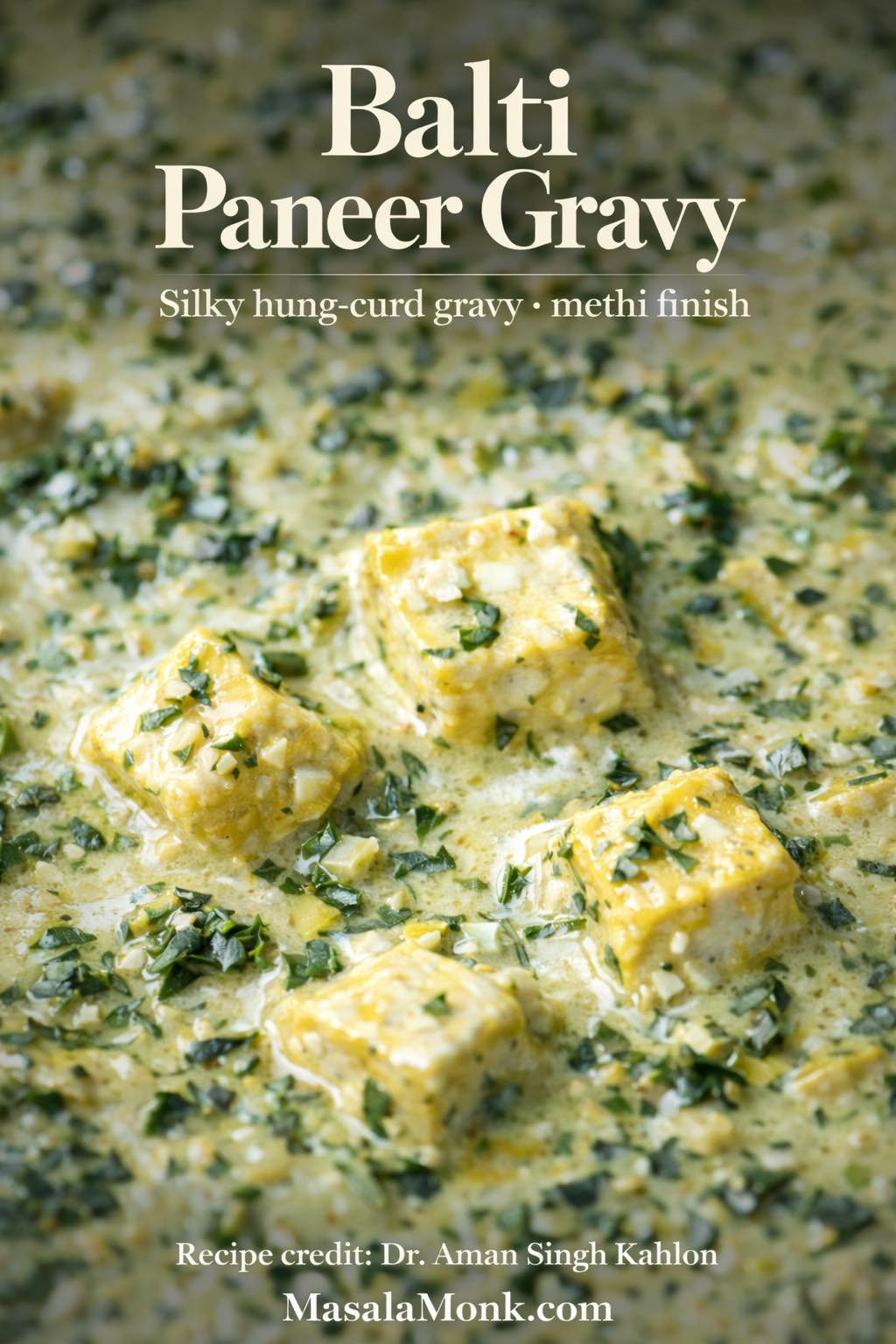
There are certain paneer gravies that feel comforting in a familiar way, and then there are the ones that taste like they came straight off a restaurant menu—glossy, aromatic, and strangely addictive. This Balti Paneer Gravy belongs firmly in the second group. From the first spoonful, it’s clear you’re not dealing with a thin, hurried curry. Instead, you get a sauce that’s rich without being heavy, spicy without being harsh, and creamy without turning sweet.
What makes it especially satisfying is the balance: onions browned to the right shade, nuts blended into silk, hung curd adding body and tang, and a final creamy finish that rounds everything out. Even better, the paneer itself stays tender because the method respects it. It’s marinated briefly, sautéed just enough, and then soaked so it doesn’t go rubbery the moment it meets heat again.
This recipe is shared with due credit to Dr. Aman Singh Kahlon, who originally posted it on Facebook after it became a small hit in a restaurant context. A friend wanted new vegetarian gravies for his menu, and this balti-style paneer was suggested alongside another paneer gravy. Both did remarkably well for months, and the balti version in particular earned that rare compliment people reserve for truly satisfying curries: finger-licking good. I’ve only refined the wording and formatted it for a smooth home-cook flow—ingredients and method remain faithful to the original.
If you love restaurant-style paneer gravies, you may also enjoy the peppery, elegant comfort of Kali Mirch Paneer (Black Pepper Paneer), which sits in a different lane yet scratches a similar itch.
Balti Paneer Gravy — what “balti” means here
“Balti” has an interesting identity because it’s often defined more by approach than by a rigid list of ingredients. Historically, balti is closely linked to Birmingham and the idea of fast-cooked curry served in the same wok-like steel bowl. If you’re curious about how that story took shape, this piece on the origins of balti in Birmingham gives a clear, readable overview, while this deeper look at how balti is method-first (quick, hot, oil-driven) is also worth a skim: Birmingham balti and why it’s disappearing.
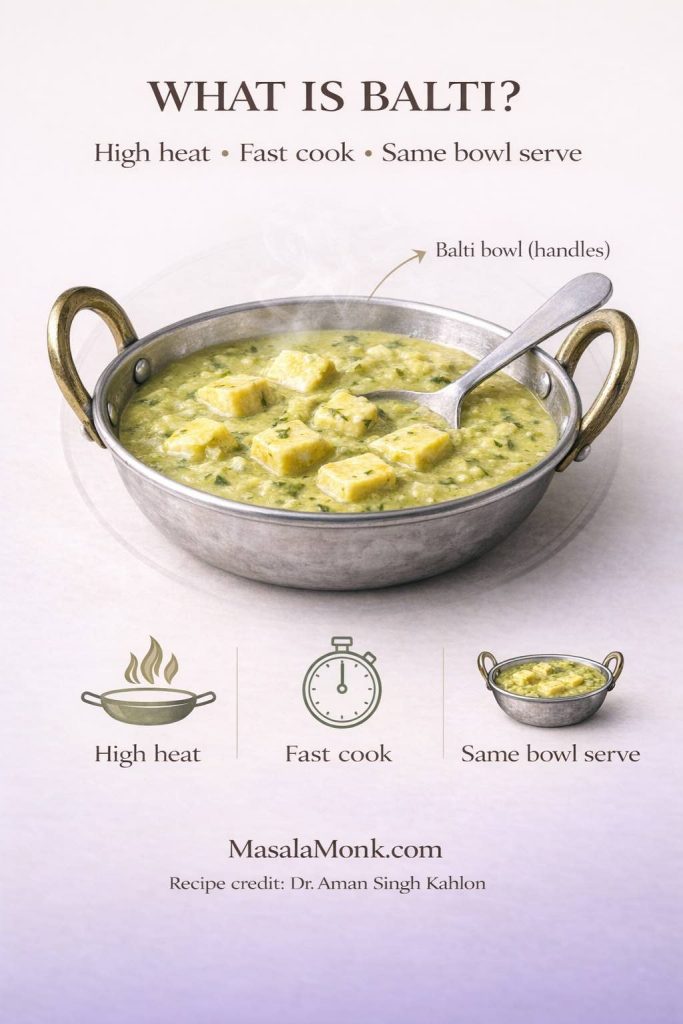
Now, in real-world Indian kitchens (and plenty of restaurant kitchens), “balti paneer” can also mean something slightly broader: a curry that’s brisk, bold, fragrant, and finished in a way that feels immediate—like it was cooked with intention rather than assembled. That’s the spirit this recipe captures.
What you’ll notice in this balti paneer gravy is that it’s not trying to imitate paneer butter masala, nor is it leaning fully into the tomato-forward snap of kadai paneer. Instead, it lands in a confident middle: onion depth, nutty silk, gentle tang from hung curd, a capsicum note that lifts the aroma, and a finishing creaminess that makes it taste “complete.”
Also Read: Mojito Recipe (Classic) + Ratios, Pitcher, Mocktail & Easy Variations
Paneer marination for Balti Paneer Gravy
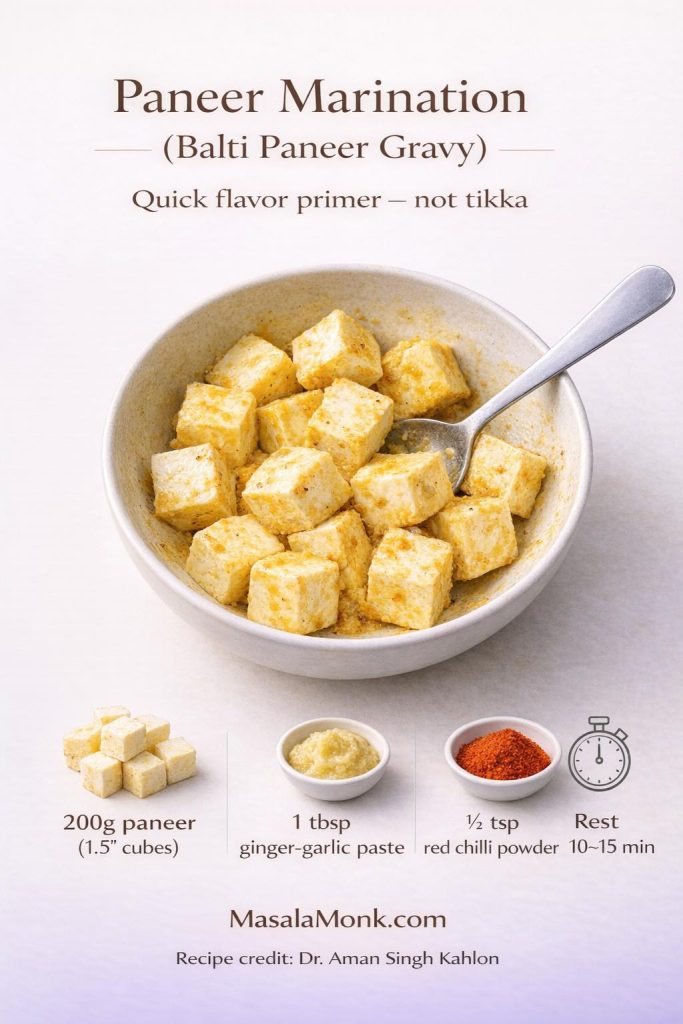
Marination here isn’t about turning paneer or indian cottage cheese into tikka. Instead, it’s a quick flavor primer that prevents the cubes from tasting plain once they hit a rich sauce.
You’ll need
- 200 g paneer, cut into 1.5-inch cubes
- 1 tbsp ginger-garlic paste, fine
- ½ tsp red chilli powder
Toss the paneer (indian cottage cheese) with ginger-garlic paste and chilli powder until each cube is lightly coated. Then set it aside while you prepare your pan.
Although the marinade is short and simple, it matters. Ginger-garlic starts building the “cooked curry” aroma early, while chilli powder gives the paneer a faint warmth that carries into the final bite rather than staying trapped in the gravy.
Also Read: Paloma Recipe: 12 Paloma Cocktail Drinks
Ingredients for Balti Paneer Gravy (hung curd + nuts + aromatics)
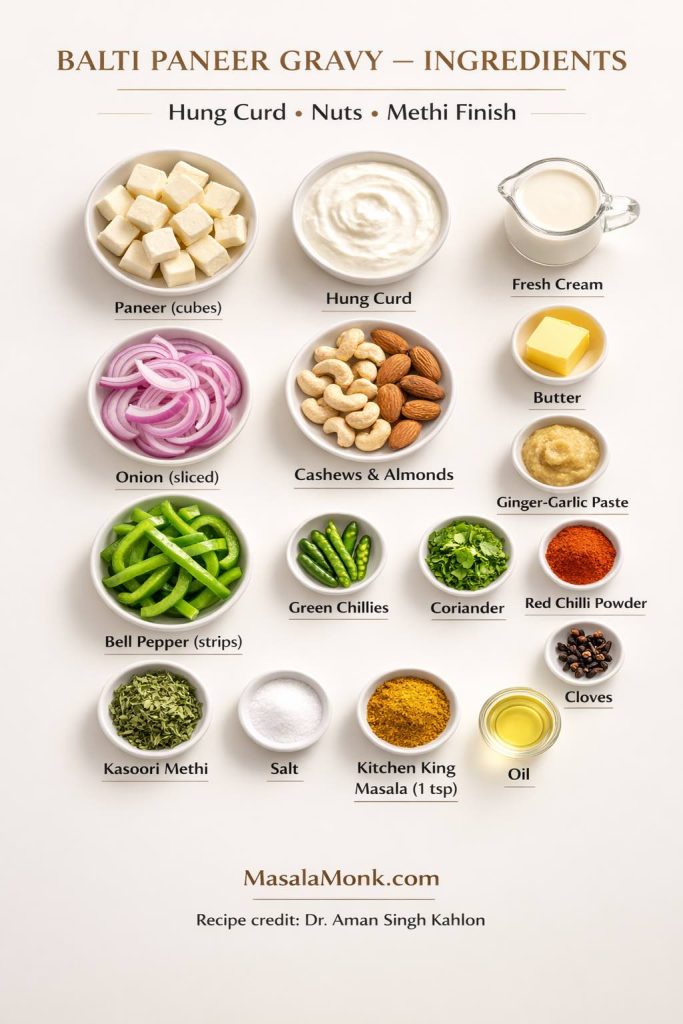
This gravy gets its restaurant-style texture from a combination of browned onions, nuts, and hung curd. Each element contributes something different, and together they build that velvety mouthfeel you expect from a serious paneer curry.
Gravy base ingredients
- 2 onions, finely sliced
- 8 cashews
- 8 almonds
- 3–4 green chillies
- A handful of coriander leaves, chopped
- 2 tbsp kasoori methi
- 4 whole cloves
- 1 yellow or red bell pepper, sliced
- 1 tsp Kitchen King masala (any brand)
- 4 tbsp hung curd (thick, hung overnight)
- Butter, for finishing the paste in the pan
- 2 tbsp fresh cream, to finish
Kasoori methi is one of those ingredients that seems small until you leave it out, and then the whole gravy feels slightly incomplete. If you’ve ever wondered what it actually does and how to use it without turning a dish bitter, this guide on kasuri methi and how to use it explains it in a way that’s easy to apply.
Also Read: Air Fryer Donuts Recipe (2 Ways): Glazed Homemade Donuts + Biscuit Donuts
How to make Balti Paneer Gravy (step-by-step)
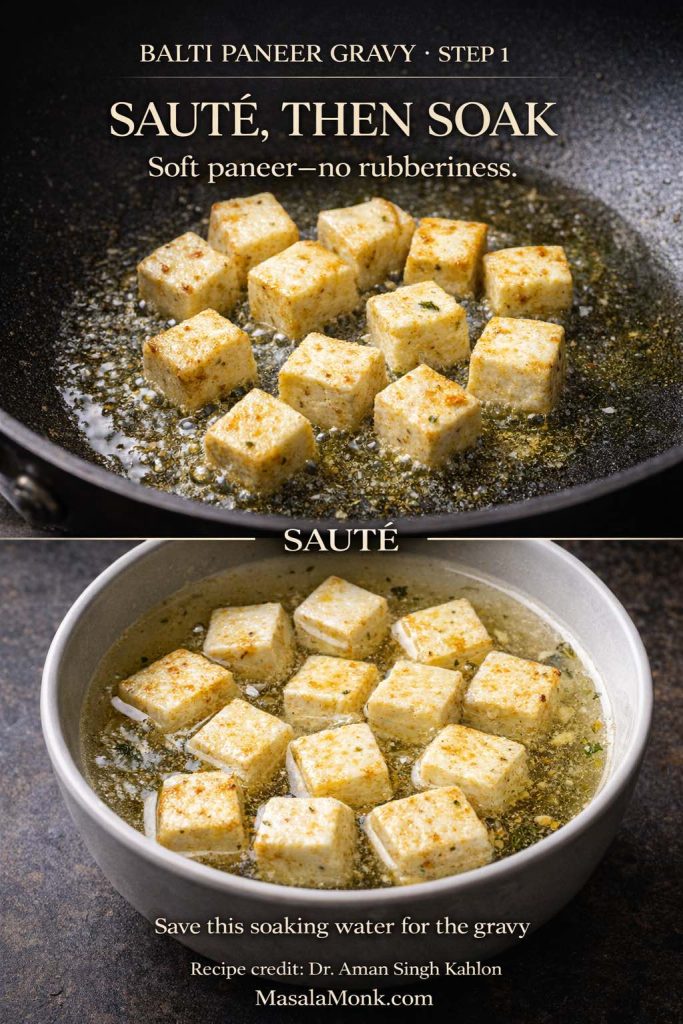
Step 1: Sauté the paneer briefly, then soak it
Heat a non-stick pan and add a little oil. Once the pan is warm, add the marinated paneer cubes and sauté them gently. You’re not aiming for a hard crust; rather, you want a light sear and a slight change in surface color.
As soon as the paneer looks lightly sautéed, remove it into a bowl and add enough water so the cubes are fully submerged.
Important: do not discard this soaking water. You will add it back into the gravy later.
This step looks modest, yet it has a real payoff. Many people soak paneer in water and hope for softness, but the combination of light frying and soaking works better because it creates tiny pathways inside the paneer that let it reabsorb moisture quickly. Serious Eats breaks down exactly why this works so well for store-bought paneer in their guide to softening store-bought paneer. Even if you never read another technique article, that one is genuinely useful.
Step 2: Fry onions until golden brown
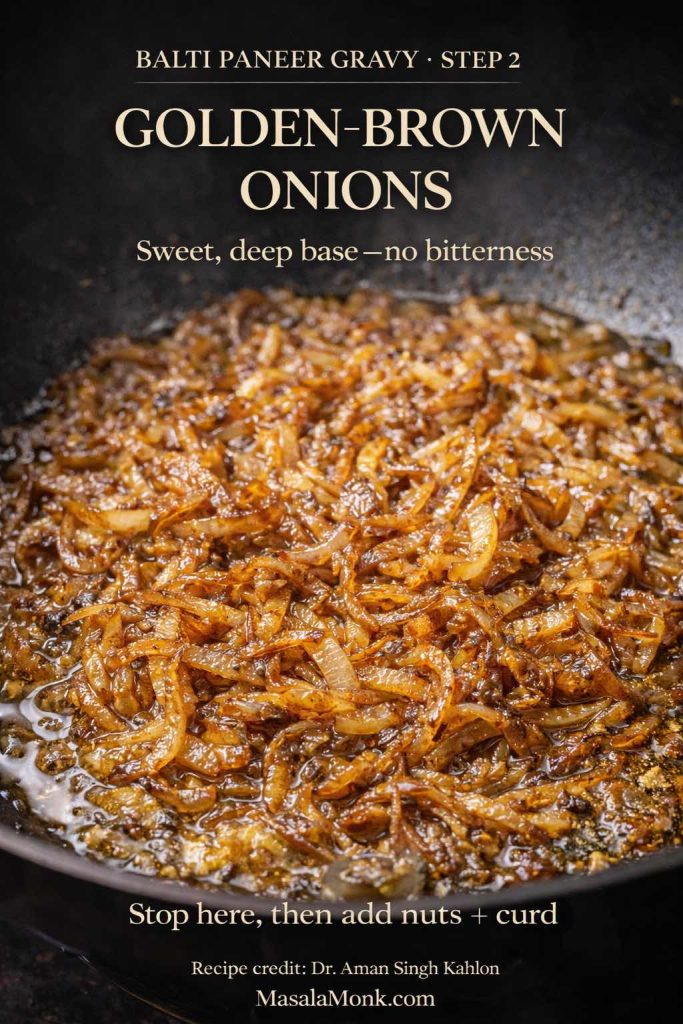
In the same pan, using the same fat, add a little more ghee or oil if needed. Add the finely sliced onions and fry them until golden brown.
This stage sets the base tone of your curry. If the onions are pale, the gravy can taste thin. On the other hand, if they’re burnt, the bitterness shows up later and refuses to leave. Aim for a confident golden-brown, where the onions smell sweet and deep rather than sharp.
Step 3: Add the aromatics and build the balti-style masala
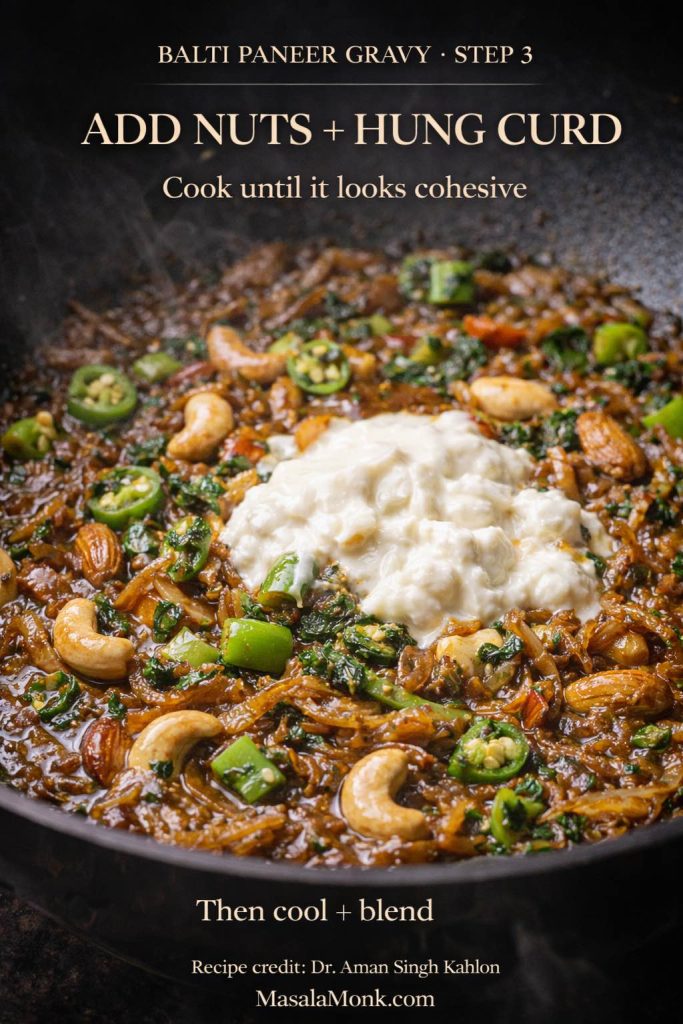
Once the onions are golden, add:
- cashews
- almonds
- green chillies
- coriander leaves
- kasoori methi
- cloves
- sliced bell pepper
- Kitchen King masala
- hung curd
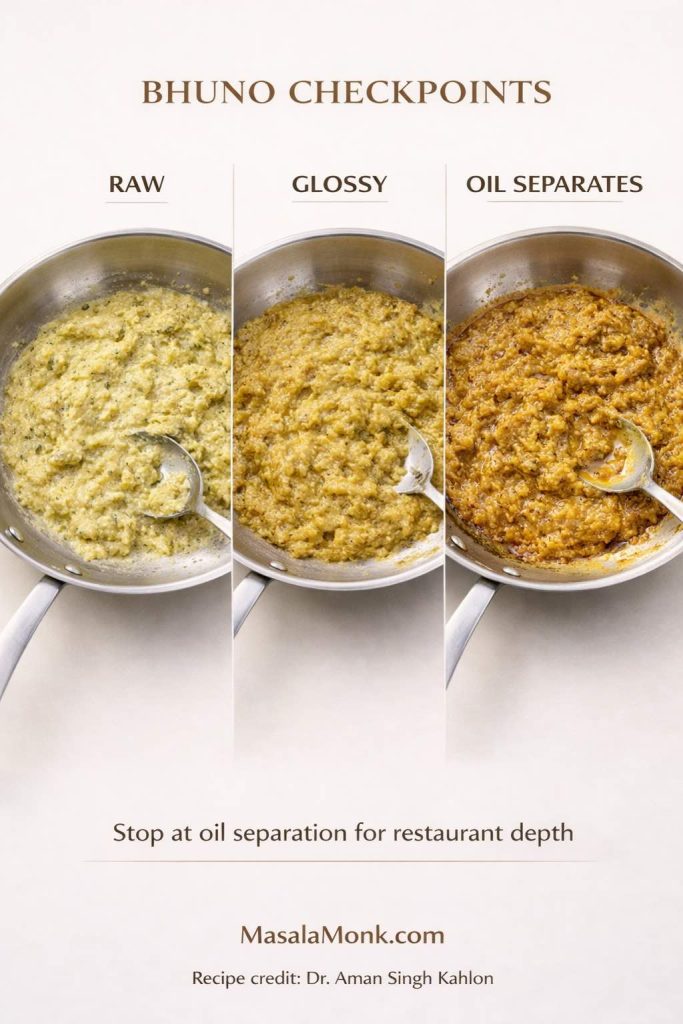
Now cook this mixture for a few minutes, stirring steadily. The goal is to “bhuno” it—let it cook until the raw smell disappears and the mixture looks cohesive.
At first, the curd may look like it’s just sitting in the pan. However, as it warms and meets the onion base, it starts to integrate. Meanwhile, the nuts toast slightly, the cloves bloom, and the capsicum releases that sweet aroma that makes the whole kitchen smell like a curry section in a restaurant.
Once it’s aromatic and unified, remove the pan from heat and let the mixture cool.
Step 4: Blend into a smooth paste
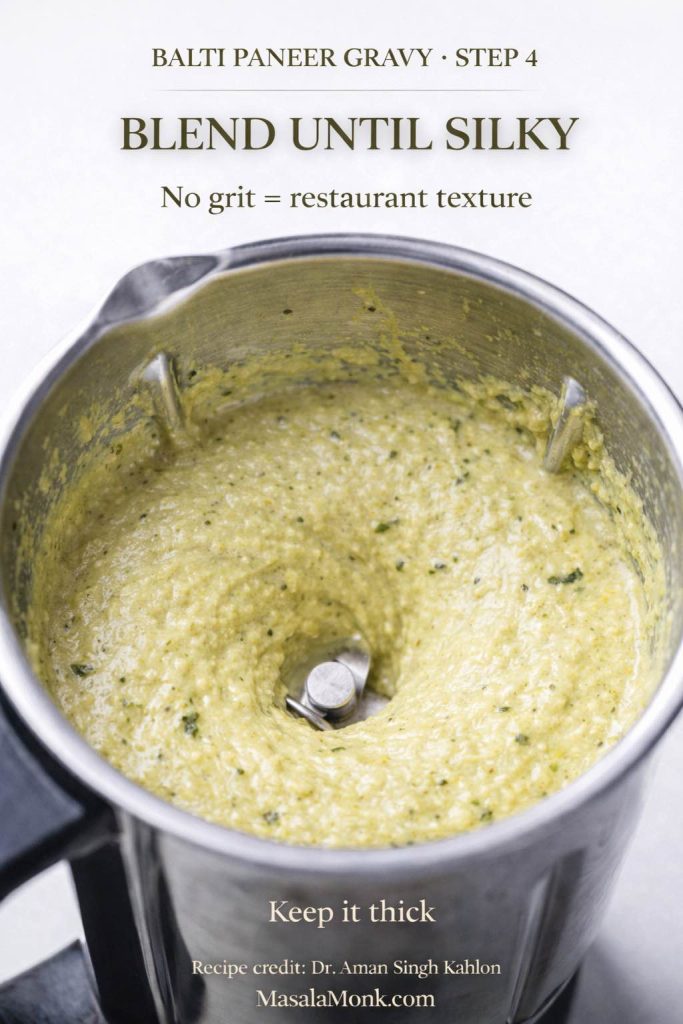
Transfer the cooled mixture to a blender and blend it into a smooth paste. If needed, add a tiny splash of water to help it move, but keep it thick. The richness comes from concentration, so you don’t want to dilute it too early.
Set the paste aside.
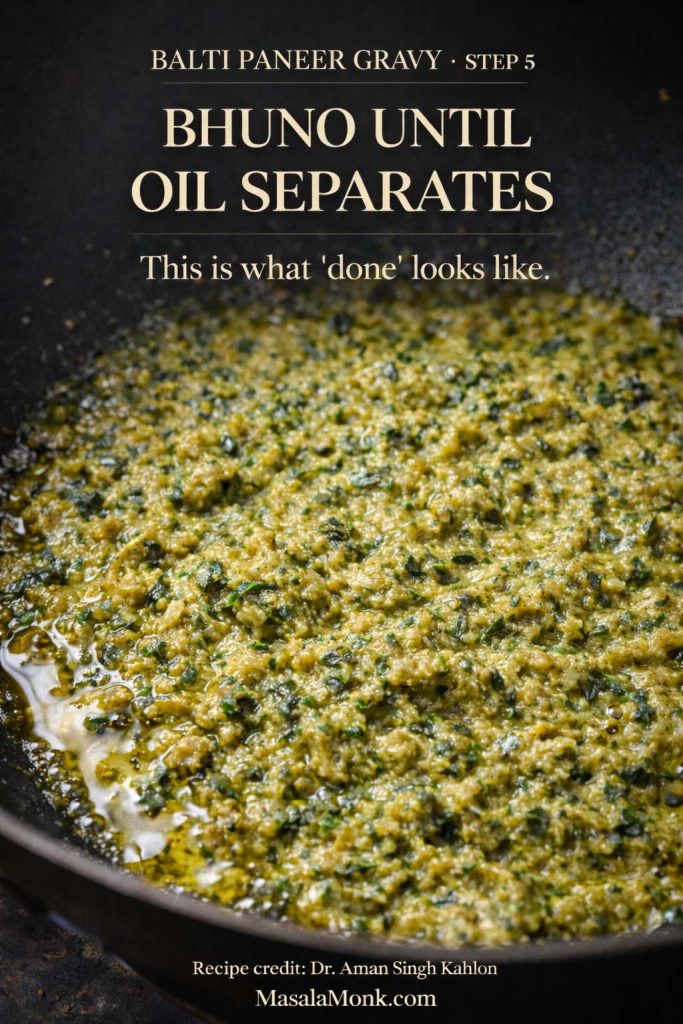
Step 5: Cook the paste again until the oil separates
Return the pan to medium heat and add a little butter. Once the butter melts, add the blended paste and cook it again.
This second bhuno is where the dish begins to taste like restaurant style balti paneer rather than “homemade curry paste.” Stir patiently until the paste thickens and you see oil separating at the edges.
This stage also smooths out any roughness from onion or curd. Gradually, the paste becomes glossy, darker, and more rounded.
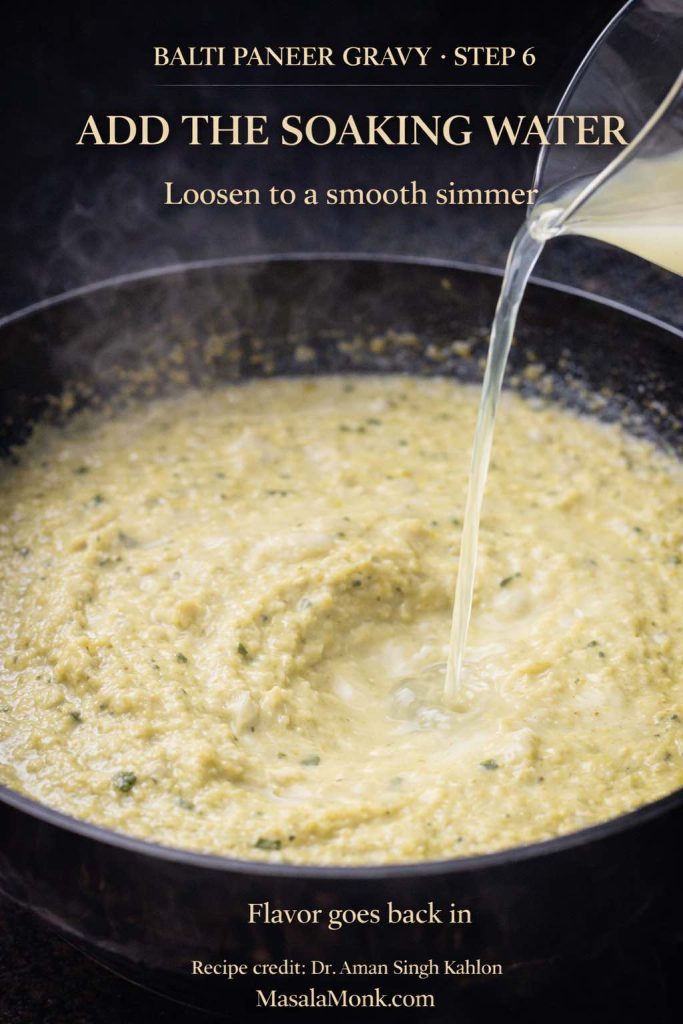
Step 6: Loosen with the paneer soaking water, then simmer
Now add the water you used to soak the paneer. Start with a moderate amount and stir well. Bring the gravy to a boil.
Because the soaking water already carries a little flavor from the paneer and marinade, it folds into the gravy naturally. It’s a small detail, but it makes the final sauce taste cohesive rather than “diluted.”
Once the gravy is boiling, add the paneer cubes and simmer for a few minutes.
Step 7: Finish with cream, then rest
Stir in 2 tbsp fresh cream, then turn off the heat.
Finally, let the balti paneer gravy rest for about 10 minutes before serving.
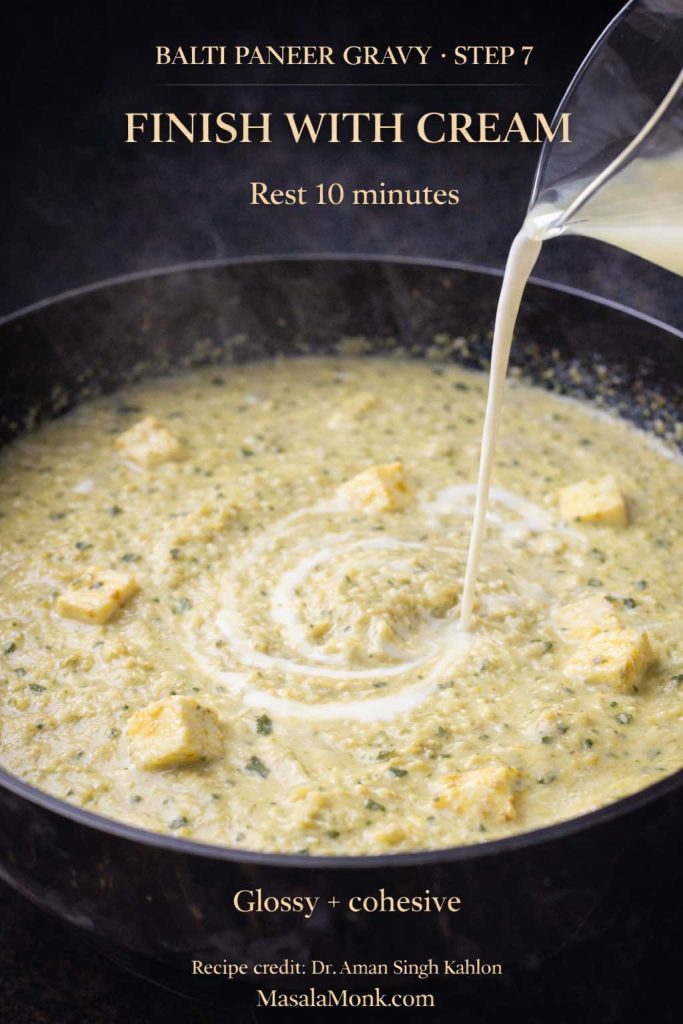
That resting time is where everything settles into place. The gravy thickens slightly, the flavor edges soften, and the paneer absorbs a little of the sauce without turning tough. If you’ve ever had a curry that tasted better after sitting, this is the reason: fats emulsify, spices relax, and the whole dish becomes more harmonious.
Also Read: Tapas Recipe With a Twist: 5 Indian-Inspired Small Plates
Balti Paneer Gravy texture: what you should see and smell
A lot of paneer gravies taste “almost right,” yet they miss that last 10% that makes a dish feel restaurant-level. Here, the final texture is your best clue.
You want a gravy that:
- coats the back of a spoon without feeling like paste
- looks glossy rather than chalky
- smells layered—onion sweetness, spice warmth, methi perfume—without one ingredient shouting over the others
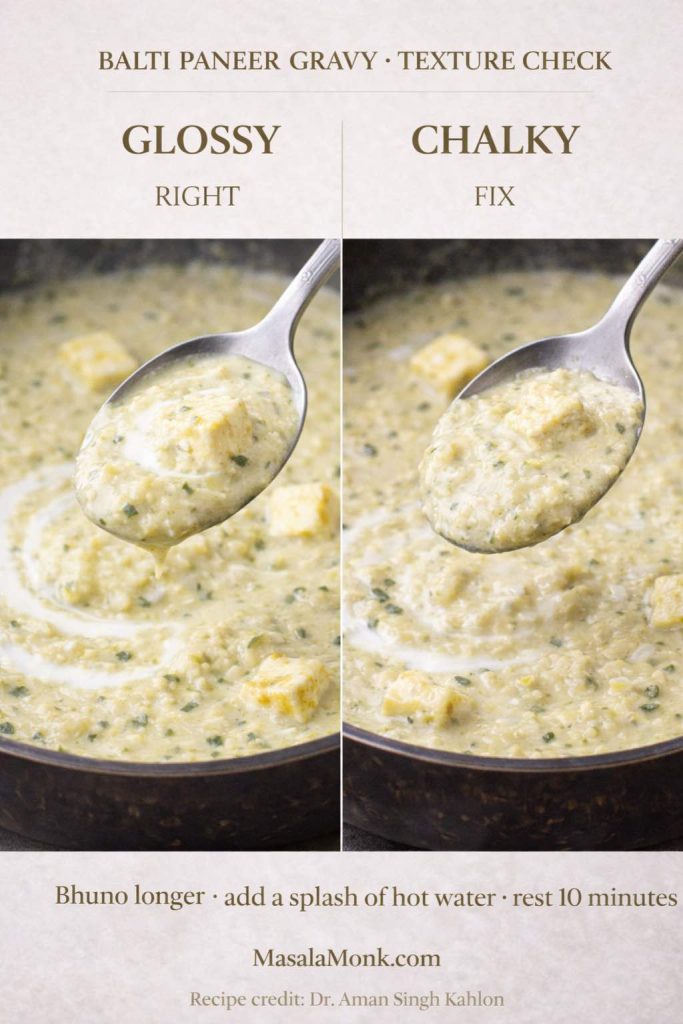
If it looks slightly too thick, add a splash of hot water and simmer gently for a minute or two. Conversely, if it looks thin, cook it uncovered a little longer and allow the moisture to evaporate. Because nuts and curd provide body, it will thicken naturally as it cooks.
Also Read: Air Fryer Salmon Recipe (Time, Temp, and Tips for Perfect Fillets)
Balti paneer gravy vs kadai paneer vs paneer butter masala
Sometimes the easiest way to understand a curry is to see what it’s not.
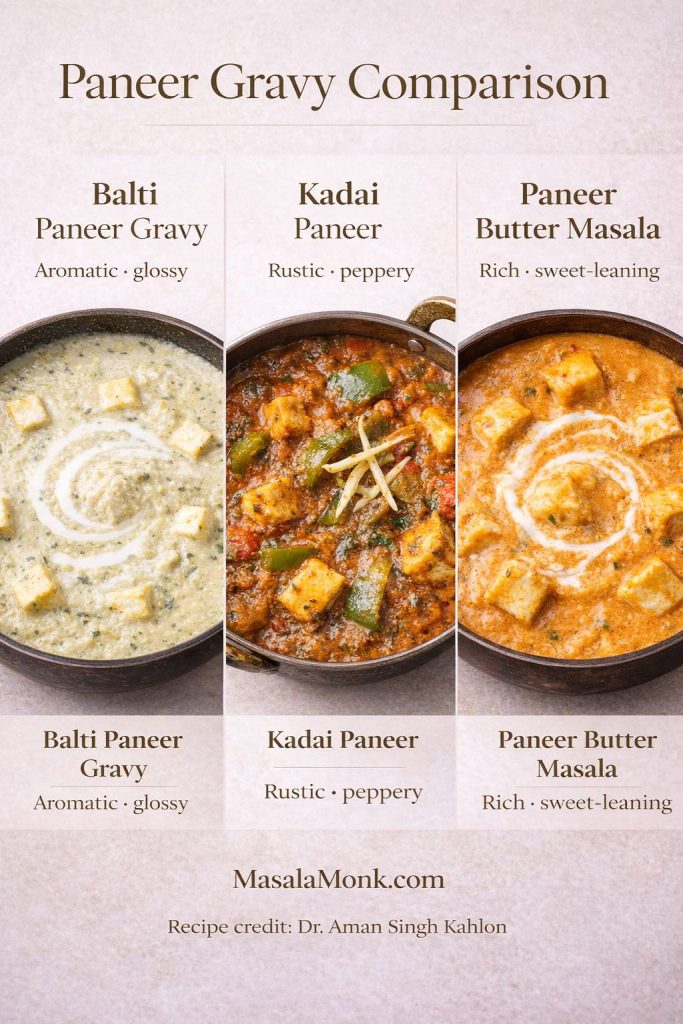
Balti paneer gravy
This version is bold, aromatic, and bhuno-driven. It has richness from nuts and cream, yet it stays lively because capsicum, methi, and green chilli keep it bright.
Kadai paneer
Kadai paneer often leans into a tomato-and-capsicum base with kadai masala notes—more direct, more rustic, and typically sharper.
Paneer butter masala
Paneer butter masala usually goes smoother and sweeter, with tomato richness, butter, and cream taking center stage.
So, if you want the silkiness of a creamy gravy but still prefer a curry that feels punchy and restaurant-like, paneer balti is a satisfying lane to cook in.
Also Read: Masterclass in Chai: How to Make the Perfect Masala Chai (Recipe)
Hung curd: why it works so well in Balti Paneer Gravy
Hung curd is one of the quiet heroes here. It adds:
- thickness without needing flour or heavy cream upfront
- tang that keeps the gravy from tasting flat
- a “cooked dairy” richness that feels more complex than plain cream
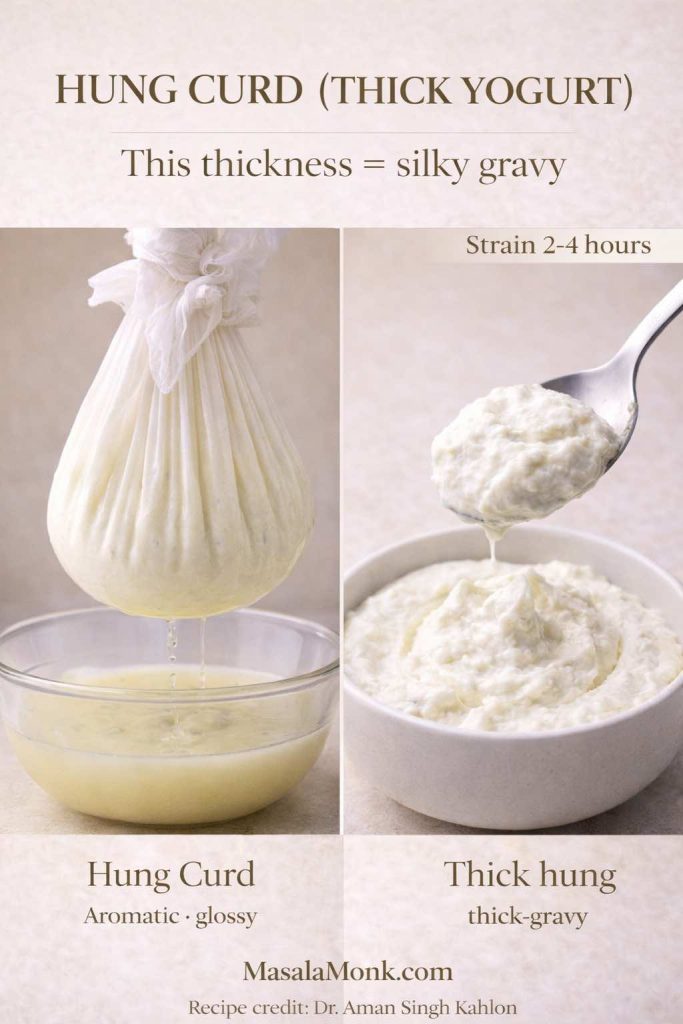
If you don’t have hung curd, you can thicken regular curd by straining it for a couple of hours in a cloth. Another option is to use thick Greek yogurt, although the flavor will be slightly different.
Because this recipe already relies on a nut base, you don’t need to overdo substitutions. As long as your dairy is thick and your bhuno stage is patient, the gravy holds.
Also Read: Keto Mocktails: 10 Low Carb, Sugar Free Recipes
Paneer softness: how this method prevents rubbery cubes
Paneer becomes rubbery for two common reasons:
- it’s cooked too long at high heat
- it’s added to the gravy too early and left boiling
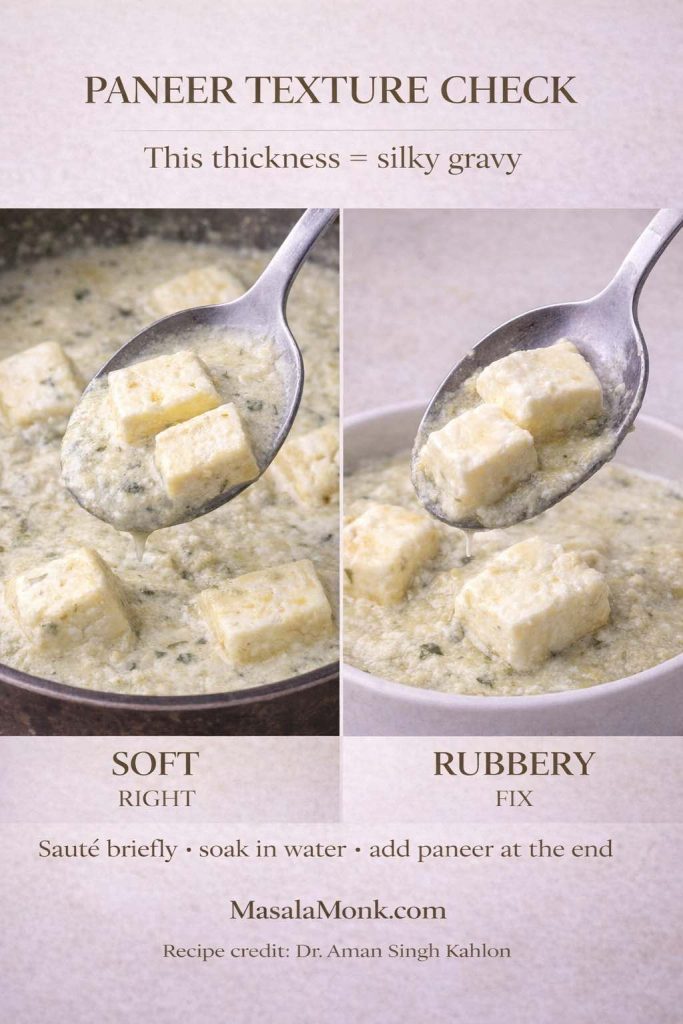
This method sidesteps both problems. First, the paneer is lightly sautéed rather than aggressively fried. Then it’s soaked so it rehydrates. Finally, it’s simmered briefly at the end and allowed to rest off heat.
If you’re using very firm paneer, you can also soak it in warm water for a few minutes before marinating, then proceed as written. Still, the fry-then-soak approach remains one of the most reliable ways to fix store-bought texture, as explained in this guide on softening paneer effectively.
If you ever feel like making paneer from scratch for a special dinner, BBC Good Food’s method for how to make paneer at home is clear and approachable. Fresh paneer tends to be softer and milkier, which makes a creamy gravy taste even more luxurious.
Also Read: Crock Pot Pork Chops and Sauerkraut (No Dry Chops Recipe)
Kitchen King masala in paneer balti recipe: what it adds
Kitchen King masala is used in many Indian restaurant kitchens because it’s a “shortcut” blend that gives you immediate complexity—warm spices, slight sweetness, and a familiar curry-house aroma. In this paneer balti recipe, it plays well with onion sweetness, nuts, and dairy.
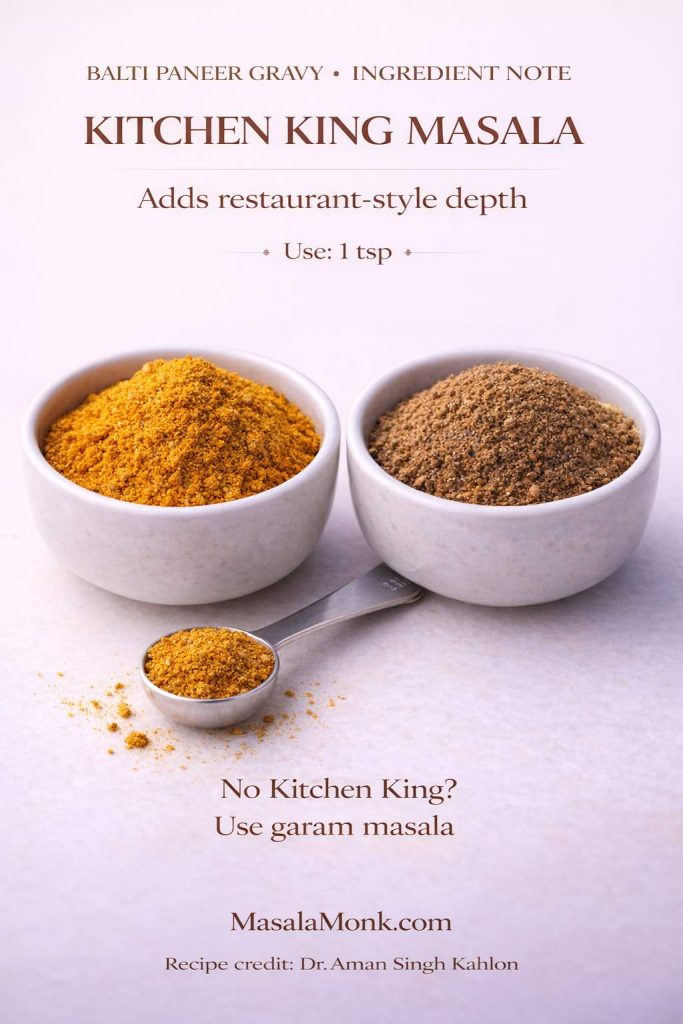
If you don’t have it, you can substitute a balanced garam masala. That said, the dish will shift slightly. Kitchen King tends to push the flavor toward that classic restaurant palate, which is exactly what this recipe aims for.
Also Read: Slow Cooker Pork Tenderloin (Crock Pot Recipe) — 3 Easy Ways
Kasoori methi: the finish that makes it smell like a menu dish
Kasoori methi (dried fenugreek leaves) is one of those ingredients that feels almost invisible until it’s missing. It adds a fragrant, slightly bitter edge that keeps creamy gravies from tasting one-dimensional.
To use it well:
- rub it between your palms before adding, so it releases aroma
- keep the amount controlled
- treat it like a finishing herb rather than a bulk ingredient
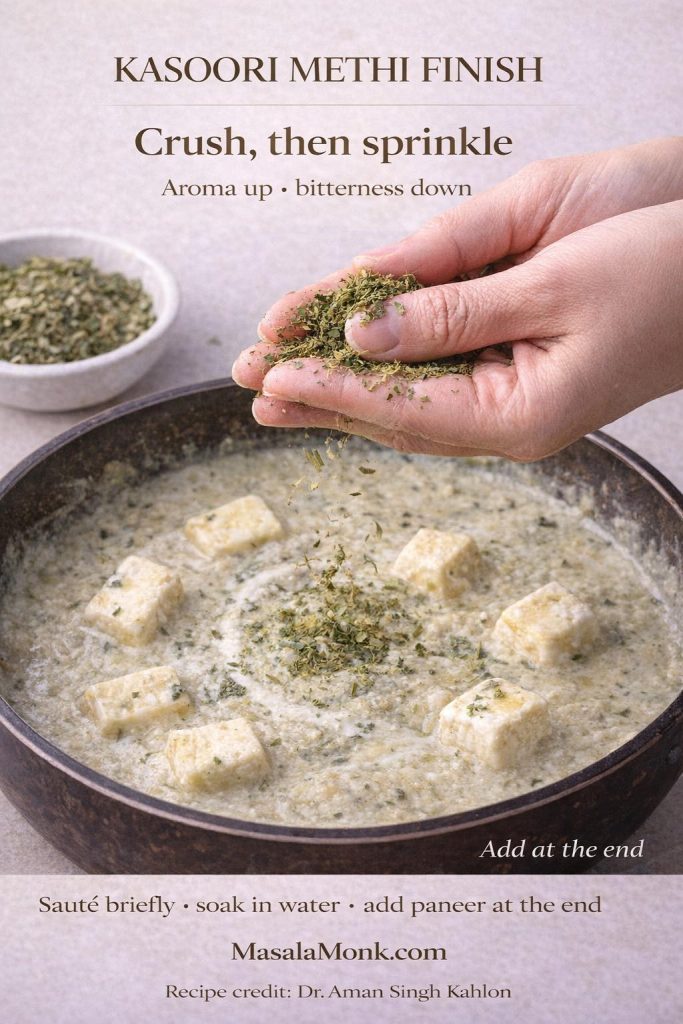
If you want a simple explanation of what it is, what it tastes like, and how to avoid bitterness, this guide to kasuri methi uses and substitutes is genuinely practical.
Also Read: Chicken Pesto Pasta (Easy Base Recipe + Creamy, One-Pot, Baked & More)
Serving ideas: what to eat with Balti Paneer Gravy
This is the kind of gravy that makes bread feel like a necessary tool rather than a side option. Even so, it also works beautifully with rice.
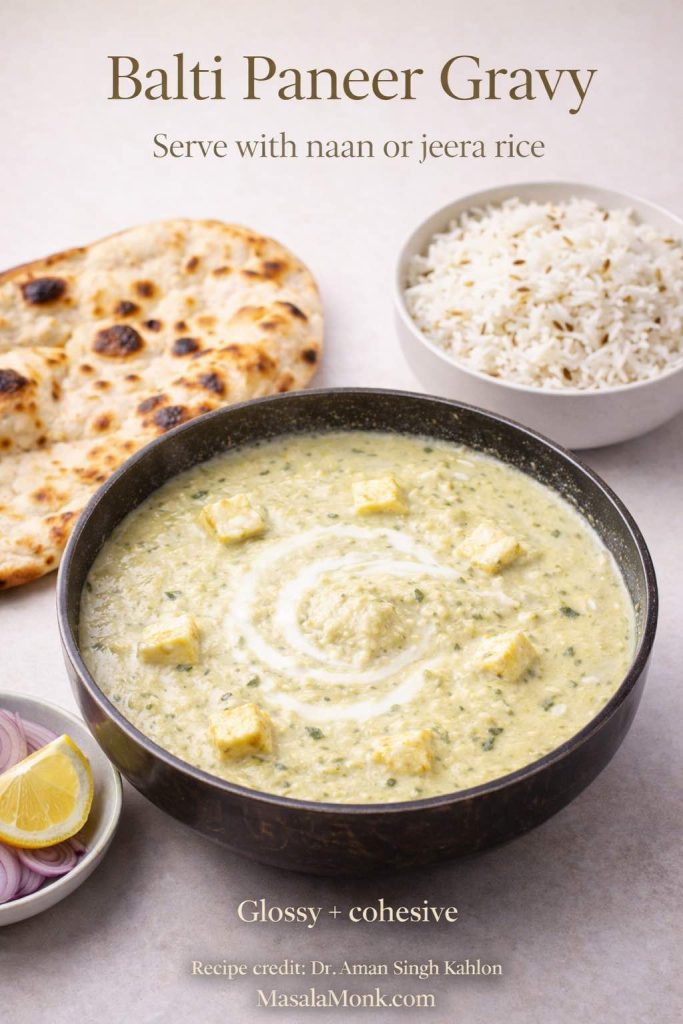
Best bread pairings
- butter naan
- tandoori roti
- kulcha
- laccha paratha
Because the gravy is creamy and glossy, breads that have a bit of chew or char give the best contrast.
Rice pairings
- jeera rice
- simple basmati
- light pulao
If you want to build a full, satisfying vegetarian meal around it, you can pair it with Authentic Punjabi Style Rajma Curry for a comforting, menu-like spread, or keep things lighter with Easy Aloo Gobi.
For a different style of comfort altogether—subtler spices, coconut fragrance, and a soothing pour-over feel—this Kerala Style Coconut Vegetable Stew is a lovely counterpoint on another day.
Also Read: Eggless Yorkshire Pudding (No Milk) Recipe
Restaurant-style Balti Paneer Gravy at home: small choices that change everything
A curry like this isn’t complicated, yet it rewards attention. The difference between “good” and “why does this taste like a restaurant?” often comes down to a few practical choices.
Let the onions earn their color
Golden onions are the backbone. If you rush this stage, the gravy can taste hollow later, even if your spice levels are perfect.
Toast the nuts in the masala
Cashews and almonds don’t just thicken; they add sweetness and roundness. When they warm and toast slightly in the onion base, the flavor becomes deeper and more integrated.
Cook the blended paste again
This is the step many people skip when they’re tired. Nevertheless, the second bhuno is where the sauce develops its restaurant-style finish. As the paste cooks, it becomes glossy, loses raw edges, and turns cohesive.
Rest before serving
Serving immediately is tempting, yet the 10-minute rest transforms the gravy. The spice settles, the cream integrates more smoothly, and the whole dish becomes calmer and richer at the same time.
Also Read: Garlic & Paprika Cabbage Rolls (Keto-Friendly Recipes) – 5 Bold Savory Twists
Variations that still feel like balti paneer
Once you’ve made the base recipe once, it becomes easy to adjust to your mood without losing the core identity of the dish.
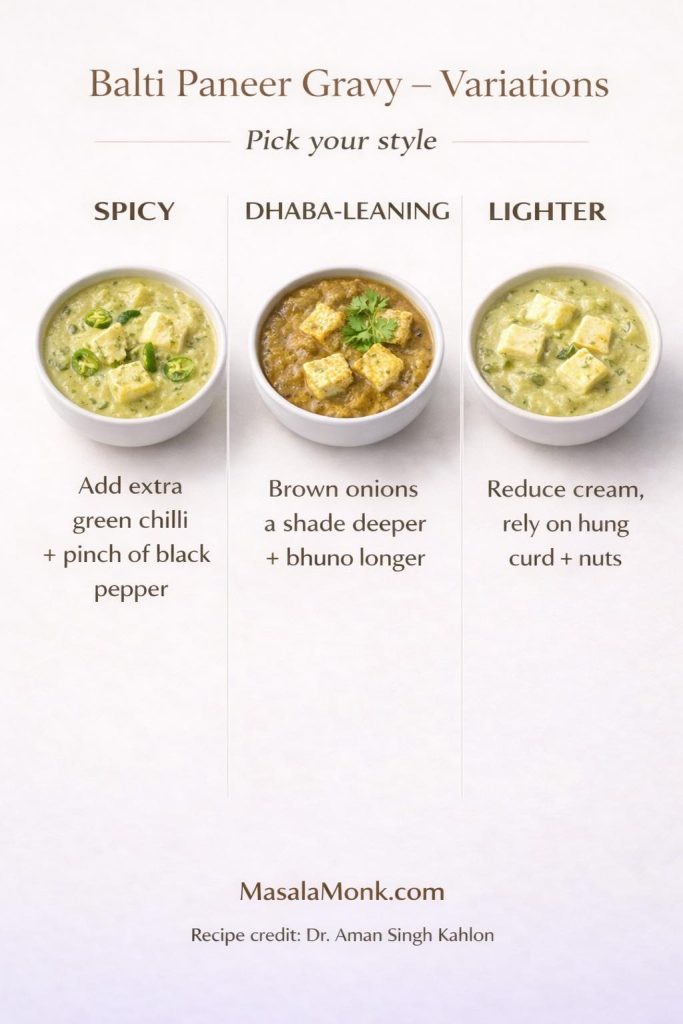
Spicier balti paneer gravy
If you want more heat, increase green chillies or add a little extra red chilli powder to the paneer marinade. You can also finish with a pinch of crushed black pepper for a sharper kick.
Dhaba-leaning paneer balti
For a more dhaba-style push, keep the onions slightly more browned and let the gravy cook a touch longer after adding the soaking water. That deeper “fried masala” tone comes through more strongly.
Slightly lighter, still restaurant-like
Use a little less cream at the end, and rely on the nuts and hung curd for richness. The gravy will still feel silky, just less indulgent.
Party starter pairing
If you’re planning a menu night and want a snack that matches the same “rich, spiced, restaurant” mood, these Cheese Balls with Indian-inspired variations make a fun companion—especially because they also use thick yogurt and spice in a way that feels familiar.
Also Read: 10 Low Carb Chia Pudding Recipes for Weight Loss (Keto, High-Protein, Dairy-Free)
Storage, reheating, and leftovers (Balti Paneer Gravy gets even better)
This curry is one of those rare gravies that often tastes better the next day. The spices have time to settle, the sauce thickens slightly, and the overall flavor becomes more rounded.
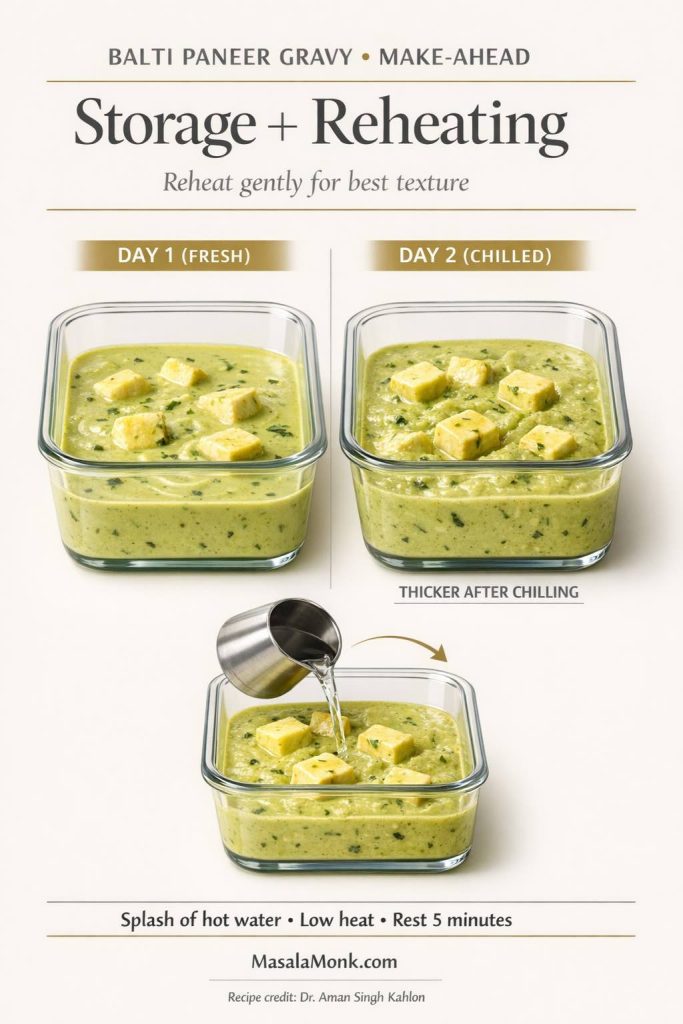
Cool it down, refrigerate it, and reheat gently on the stove. If it thickens too much overnight, add a splash of water and stir patiently.
For general safety guidance on how long cooked leftovers keep in the refrigerator, USDA FSIS provides a clear reference in their official page on leftovers and food safety. That’s especially useful if you’re meal-prepping or cooking for guests and want a reliable baseline.
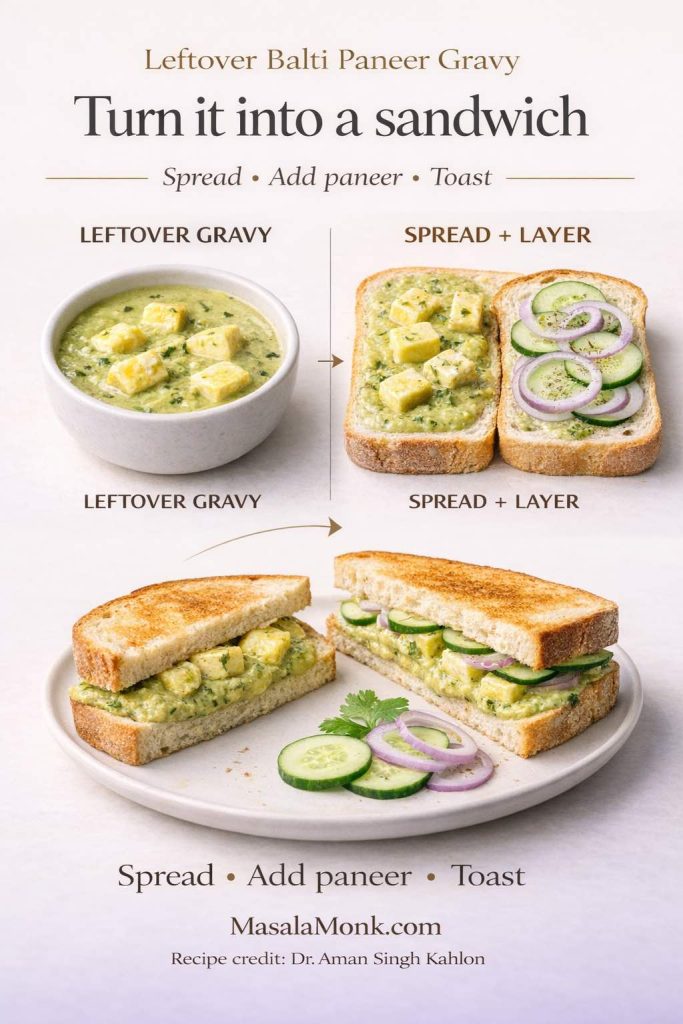
Leftovers can also become something entirely new. If you have paneer gravy or a dry-ish paneer sabji left over, you can turn it into an unexpectedly satisfying lunch—this Paneer Sabji Sandwich idea is a simple way to stretch the dish into the next day without feeling like you’re repeating dinner.
If you’re building a week that leans protein-forward, you may also enjoy this collection of vegetarian high-protein Indian meal prep ideas, which complements this gravy nicely in the same “cook once, enjoy twice” rhythm.
A short note on the “balti” story (for the curious cook)
Even if you’re cooking this as a straightforward home curry, it’s fun to know that balti carries a real cultural thread. It’s widely associated with Birmingham and the Pakistani community’s influence on British curry culture, where speed, high heat, and serving-in-the-same-bowl helped balti become iconic. If that background interests you, the National Geographic piece on the story behind balti is a great starting point, and Adventure.com’s write-up on balti as a method-first curry adds more detail.
That history doesn’t change your dinner, of course, but it does make the word “balti” feel less like a label and more like a living style of cooking—fast, aromatic, and satisfying.
Also Read: How to Make a Flax Egg (Recipe & Ratio for Vegan Baking)
Balti Paneer Gravy — final serve and closing
When you finally bring the pot to the table, this gravy has a particular kind of charm: it looks rich, it smells layered, and it has enough depth to make a simple meal feel celebratory. Whether you scoop it with naan, spoon it over jeera rice, or serve it as part of a bigger vegetarian spread, it holds its own without demanding extra fuss.
Most of all, it’s the kind of curry that makes people pause mid-bite and say, “Wait—what’s in this?” Not because it’s strange, but because it tastes thoughtfully built.
Recipe credit, with gratitude: This Balti Paneer Gravy is shared with due credit to Dr. Aman Singh Kahlon (originally shared on Facebook). The recipe became popular in a restaurant setting and has been enjoyed by many; it’s shared here so more home cooks can bring that same restaurant-style comfort to their own tables.
Also Read: Dirty Martini Recipe (Classic, Extra Dirty, No Vermouth, Spicy, Blue Cheese, Tequila + Batched)
FAQs
1) What is Balti Paneer Gravy?
Balti Paneer Gravy is a bold, restaurant-style paneer curry where the sauce is cooked “fast and fragrant” with a bhuno-style base. In practice, it’s a glossy paneer gravy with deep onion flavor, warm spices, and a creamy finish—often brighter and more aromatic than heavier paneer curries.
2) Is Balti Paneer the same as Paneer Balti?
Yes—most people use “Balti Paneer” and “Paneer Balti” interchangeably. Both refer to a balti-style paneer curry, and the wording usually depends on regional preference rather than a meaningful recipe difference.
3) Balti Paneer Gravy vs Kadai Paneer—what’s the difference?
Balti paneer gravy is typically smoother and more sauce-forward, with a rounded spice profile and a glossy finish. Kadai paneer, in contrast, leans more rustic and capsicum-heavy, often with a sharper, kadai-masala character and a more textured gravy.
4) Balti Paneer Gravy vs Paneer Butter Masala—what should I expect?
Balti paneer gravy usually tastes more aromatic and spice-led, while paneer butter masala is generally richer, sweeter, and more buttery. If you want a creamy paneer curry that still feels punchy and restaurant-like, balti paneer is a great middle path.
5) How spicy is this paneer balti recipe?
It can be mild to medium, depending on the number of green chillies and the chilli powder used. If you prefer a gentler curry, reduce the green chillies and use a mild chilli powder; the gravy will still taste full-bodied because the base carries plenty of flavor.
6) Why do you marinate paneer for balti paneer gravy?
Marinating paneer helps it taste seasoned all the way through, rather than relying only on the sauce. Even a short marinade with ginger-garlic and chilli makes the cubes more flavorful once they simmer in the gravy.
7) How do I keep paneer soft in restaurant style balti paneer?
To keep paneer tender, avoid over-frying it and don’t boil it aggressively in the sauce. Brief sautéing followed by soaking (then a short simmer at the end) helps maintain a softer texture and prevents rubbery cubes.
8) Can I skip the nuts in balti paneer gravy?
You can, although the gravy will be less silky and less restaurant-like. If you need a substitute, use a bit more thick curd or finish with slightly more cream; however, the nutty depth and smooth body will be reduced.
9) What can I use instead of hung curd?
If hung curd isn’t available, strain regular curd for a couple of hours to thicken it. Greek yogurt can also work, provided it’s thick and not overly tangy. Either way, gentle heat helps keep the gravy smooth.
10) How do I prevent curd from splitting in balti paneer gravy?
Use thick curd, keep the heat moderate, and cook the base patiently. Additionally, once the blended paste returns to the pan, bhuno it steadily rather than rushing—this encourages a more stable, cohesive sauce.
11) What is the best “balti paneer masala” substitute for Kitchen King masala?
A balanced garam masala is the simplest substitute. For a closer restaurant-style effect, you can combine garam masala with a small pinch of cumin-coriander powder; still, the final flavor will shift slightly.
12) Can I make balti paneer gravy without cream?
Certainly. The gravy can still be rich from nuts and thick curd alone. If you skip cream, let the curry rest a little longer so the sauce settles and tastes rounded.
13) Can I make this balti paneer recipe ahead of time?
Absolutely. In fact, the gravy often tastes even better after it sits because the spices mellow and integrate. Make the sauce in advance, then add paneer close to serving so the cubes stay soft.
14) How long does balti paneer gravy last in the fridge?
Typically, it keeps well for 2–3 days when stored properly in a sealed container. Reheat gently and add a splash of water if the gravy thickens after chilling.
15) Can I freeze balti paneer gravy?
You can freeze the gravy base, although paneer texture may change after thawing. For best results, freeze only the sauce, then add fresh paneer when reheating and finishing the dish.
16) What should I serve with Balti Paneer Gravy?
It pairs beautifully with naan, tandoori roti, kulcha, or jeera rice. For a complete meal, add a crisp onion salad, lemon wedges, and a simple raita on the side.
17) Why does my balti paneer gravy taste bitter?
Bitterness usually comes from over-browned onions, too much kasoori methi, or spices cooked too aggressively. Next time, aim for golden onions (not dark), keep methi measured, and cook the paste patiently over steady heat.
18) Why is my balti paneer gravy too thick or too thin?
If it’s too thick, loosen it gradually with hot water and simmer briefly. If it’s too thin, cook it uncovered until it reduces; since the base contains nuts and dairy, it will naturally thicken as moisture evaporates.
19) Can I make a vegan balti-style tofu gravy using this method?
Yes. Replace paneer with firm tofu and use plant-based yogurt and cream alternatives. While the flavor profile will shift slightly, the same bhuno-and-finish approach still delivers a rich, balti-inspired gravy.
20) What makes this a restaurant style balti paneer gravy at home?
It’s the combination of a properly cooked onion base, the nut-and-curd body, and the second bhuno after blending—plus a short rest at the end. Together, those steps create the glossy texture and layered flavor people associate with restaurant paneer gravies.








