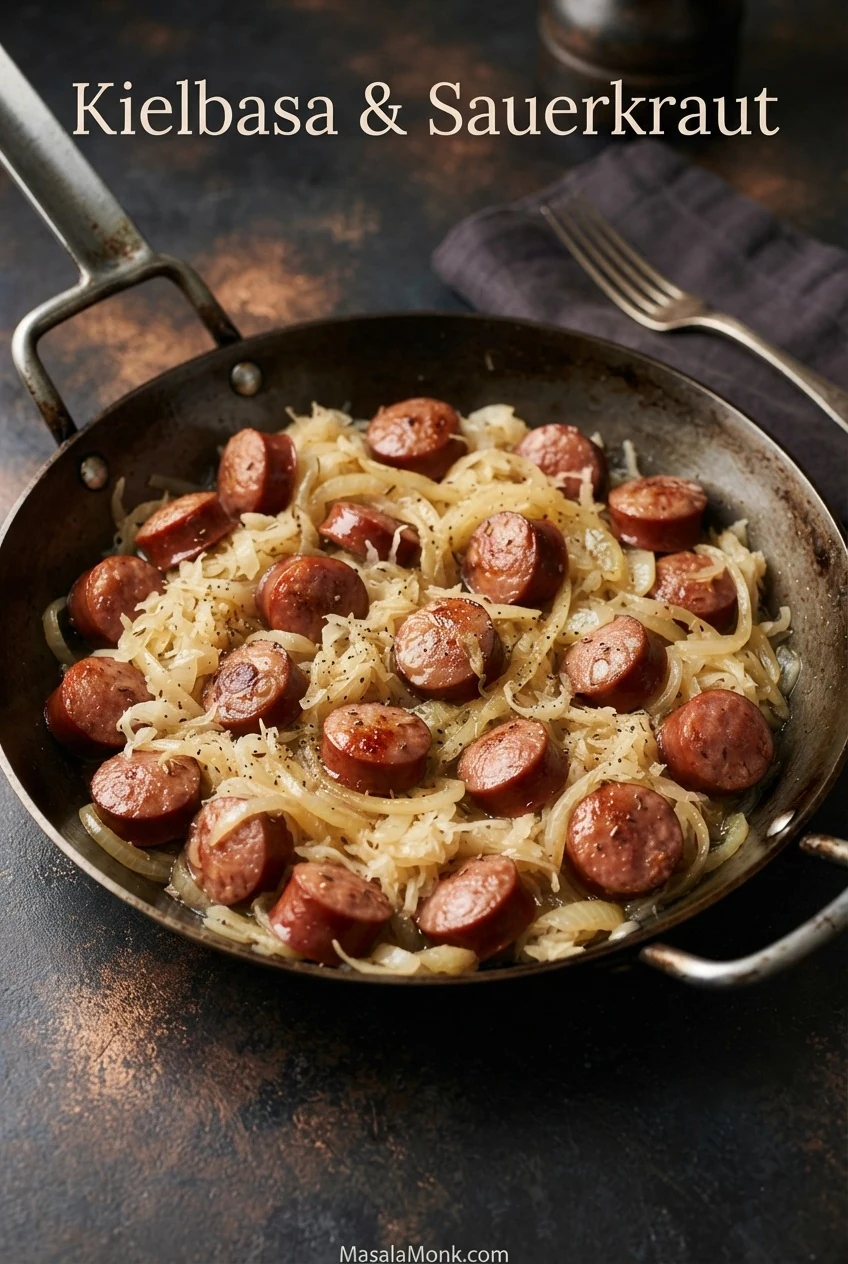
Kielbasa and sauerkraut doesn’t need much: smoked sausage, an onion, and a package of tangy cabbage. Brown the sausage first, and you get golden edges that contrast with the soft onions and sharp sauerkraut. This kielbasa and sauerkraut recipe takes about 30–35 minutes in a skillet and makes four portions, especially satisfying with potatoes or rye bread.
The quick method: Brown 1 lb (454 g) fully cooked smoked kielbasa in a skillet and remove it. Soften one sliced onion in the same pan, add a drained 16 oz (454 g) package of sauerkraut, and cook until hot and no longer watery. Return the sausage for 2–3 minutes, then serve with mustard if you like. No sugar required.
Cooking now? Jump to skillet ingredients · Follow the cooking steps · View the visual recipe summary.
Find Your Recipe
- Easy Skillet Kielbasa and Sauerkraut — browned sausage, 30–35 minutes
- Choosing Kielbasa and Sauerkraut — sausage types, raw versus cooked, draining and rinsing
- Crock Pot Kielbasa and Sauerkraut — tender cabbage, little hands-on work
- Oven-Baked Kielbasa and Sauerkraut — moist casserole at 375°F
- Kielbasa, Sauerkraut and Potatoes — heartier skillet dinner and appliance adaptations
- Apples, Beer, Brown Sugar and Mushrooms — change the flavor, not just the equipment
- Troubleshooting and Cooking Fixes
- What to Serve with Kielbasa and Sauerkraut
- Make-Ahead, Storage and Reheating
- Common Questions
Kielbasa and Sauerkraut Recipe: Easy Skillet Method
The skillet is the best choice when you want browned kielbasa, softened onion, and sauerkraut that still has some texture. Keep the cabbage moist without drowning it; that way the sausage retains its appealing golden edges.
Servings: 4 portions; add potatoes, bread, or vegetables for a fuller dinner
Prep time: 10 minutes
Cook time: 20–25 minutes
Total time: 30–35 minutes
Equipment: 12-inch (30 cm) skillet or sauté pan, colander, knife, cutting board, spatula or tongs.
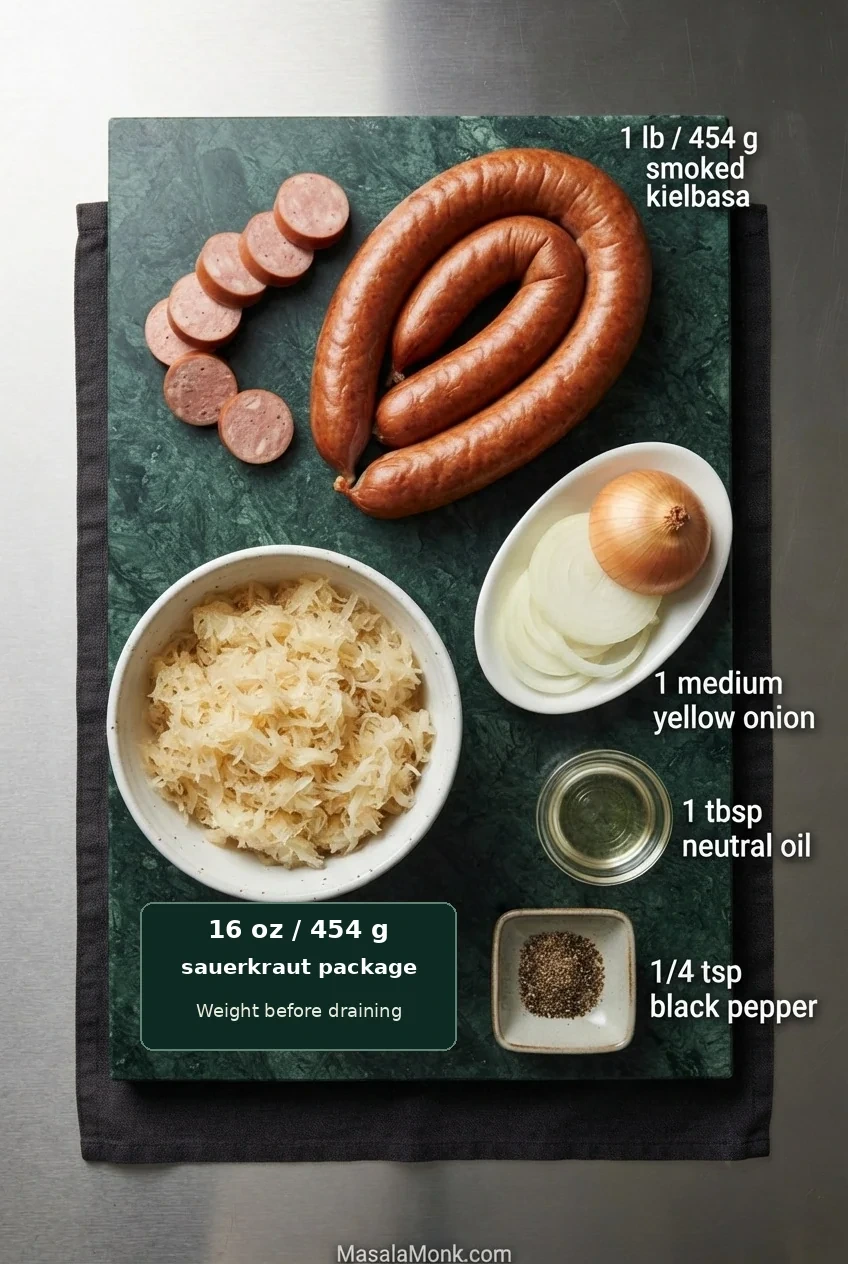
Ingredients
- 1 lb (454 g) fully cooked smoked kielbasa, sliced into ½-inch (1.25 cm) rounds
- 16 oz (454 g) sauerkraut, package weight before draining
- 1 medium yellow onion (about 150 g), thinly sliced
- 1 tbsp (15 ml) neutral cooking oil
- ¼ tsp freshly ground black pepper
Keep handy if needed: Up to 1 tbsp (14 g) unsalted butter if the onions need more fat, and up to ¼ cup (60 ml) water or low-sodium broth if the skillet gets dry.
Optional flavors: ¼ tsp caraway seeds, 1–2 tsp (5–10 ml) Dijon or spicy brown mustard, a little reserved sauerkraut brine, or 1 tsp (about 4 g) brown sugar for a sweeter finish.
The sauerkraut amount refers to the package before draining, including its brine. Use the whole 16 oz (454 g) package; you do not need to weigh the drained cabbage. Taste before adding salt because sausage and sauerkraut can already be quite salty.
How to Cook Kielbasa and Sauerkraut in a Skillet
Before cooking, decide whether you want a sharp, assertively tangy skillet or a gentler one. The draining step below lets you make that choice before the cabbage reaches the pan.
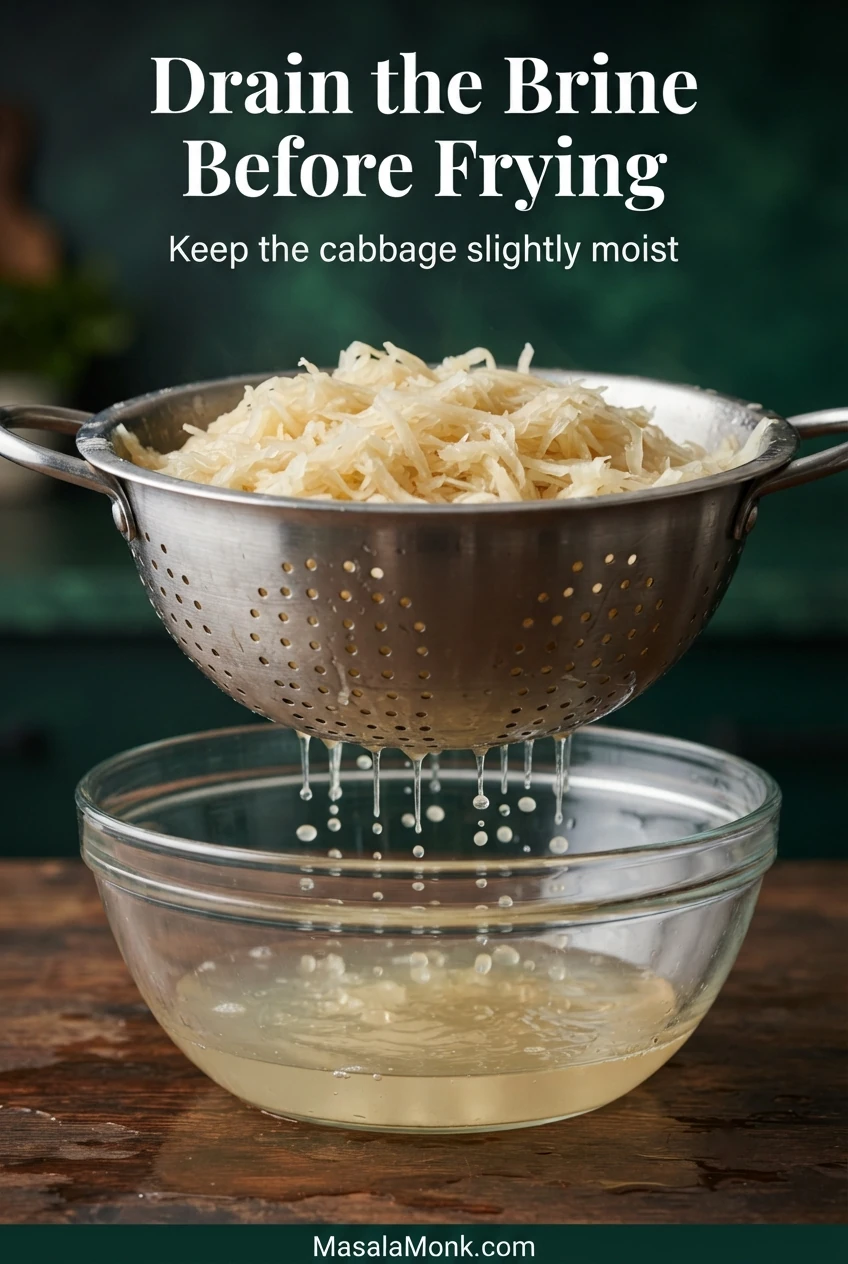
- Drain the sauerkraut. If you may want extra tang at the end, reserve 1–2 tbsp (15–30 ml) of clean brine before draining. Tip the cabbage into a colander. Taste a little with a clean utensil; if it is much sourer or saltier than you like, rinse briefly under cool water and drain again.
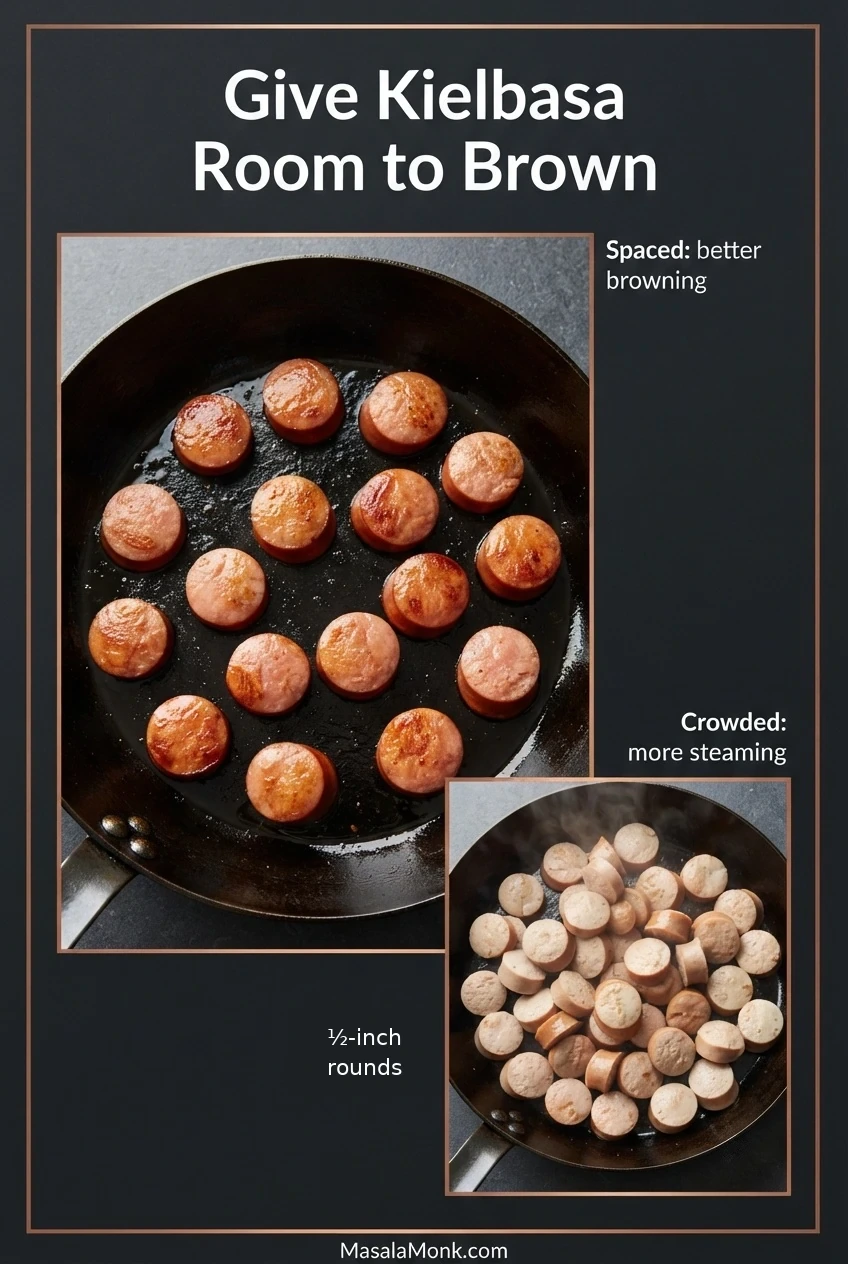
Give Kielbasa Room to Brown
Arrange the kielbasa rounds in a single layer with a little space between them. If the pan is too small, brown in batches; let it regain heat before adding another batch so steam does not replace browning.
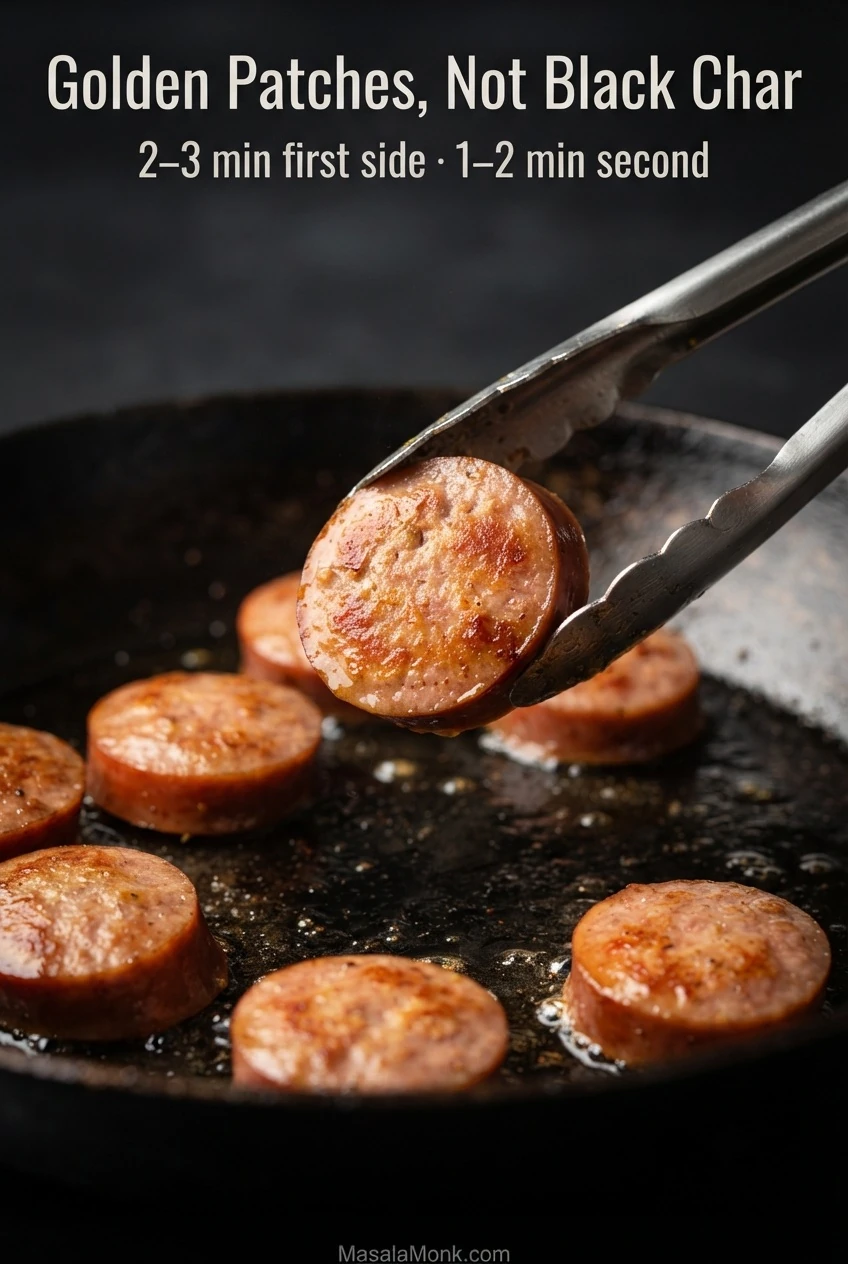
Brown Kielbasa Until Golden
Searing works best when heat reaches the sausage directly instead of evaporating surface water. The next two steps prepare the cut faces and develop the golden edges that distinguish the skillet method.
- Prepare the sausage. Slice fully cooked smoked kielbasa into ½-inch (1.25 cm) rounds. Pat the cut surfaces dry if needed; moisture makes browning harder.
- Brown the kielbasa. Heat the oil over medium to medium-high heat. Arrange the slices in one layer and cook 2–3 minutes on the first side and 1–2 minutes on the second, until golden in patches. Work in batches rather than crowding the skillet. Transfer to a plate.
Soften the Onion and Heat the Sauerkraut
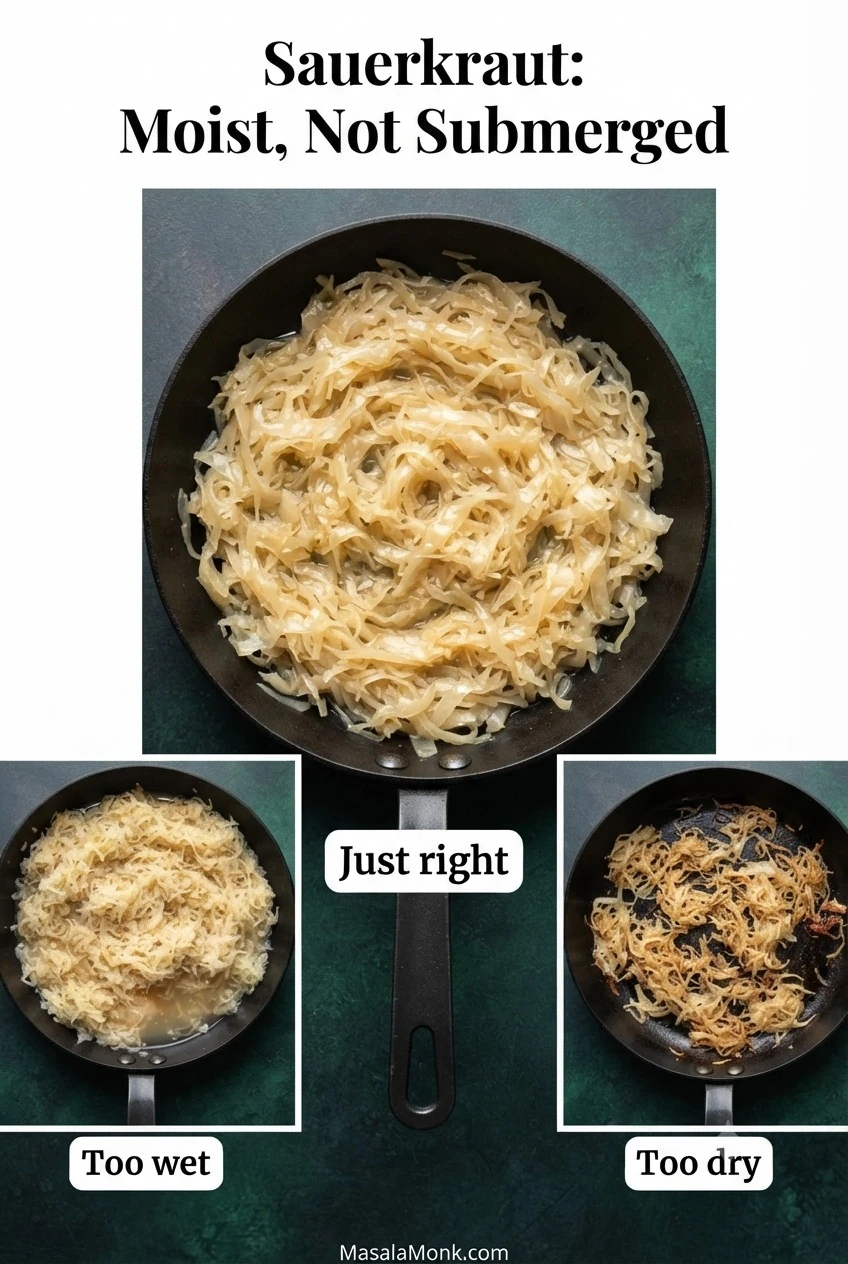
Once the onions soften, moisture control becomes the priority. The sauerkraut needs enough moisture to stay supple, but not enough liquid to wash the browned flavors from the skillet.
- Soften the onion. Pour off excess rendered fat, leaving just a light coating. Add a little butter if the skillet is dry. Reduce to medium heat and cook the onion 5–6 minutes, stirring occasionally, until soft and lightly golden. Loosen sticking browned bits with 1 tbsp (15 ml) water if necessary.
- Cook the sauerkraut. Add the drained cabbage, pepper, and optional caraway. Cook uncovered for 6–8 minutes, turning occasionally, until hot. Keep it moist, not submerged; add water or low-sodium broth 1 tbsp (15 ml) at a time if it sticks, using no more than ¼ cup (60 ml) total.
Finish the Kielbasa and Check the Cabbage
At the finish, keep the skillet over moderate heat. The cabbage is already cooked, so the returning kielbasa only needs to warm through without sitting in pooled liquid.
- Finish and taste. Return the kielbasa and its plate juices. Toss gently for 2–3 minutes until thoroughly heated. Add mustard at serving, a little reserved brine for more tang, or optional brown sugar if you specifically prefer sweet-and-sour cabbage.
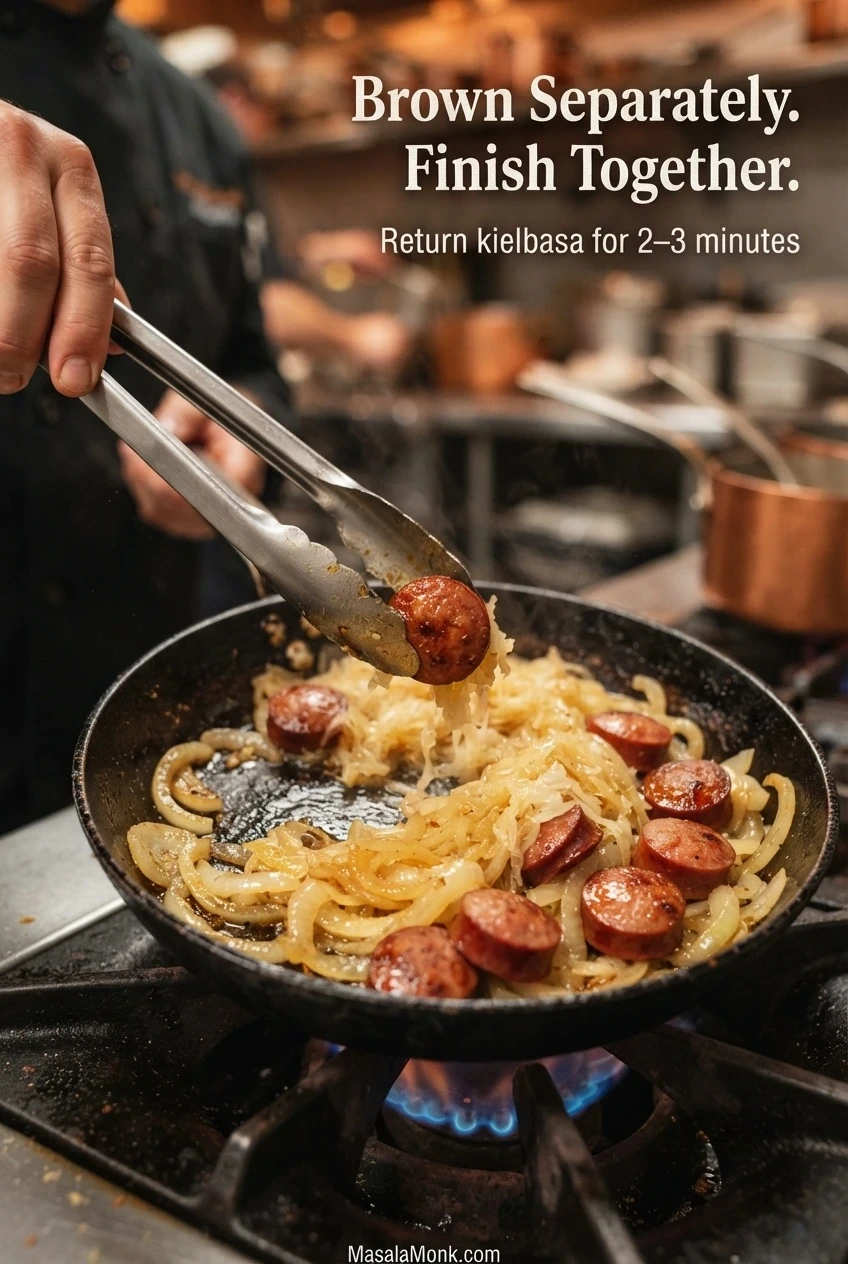
Check the finished skillet: The sausage has browned cut sides, the onion is soft, and the sauerkraut glistens without sitting in a puddle. A few darker cabbage strands are fine. If excess liquid remains, lift out the sausage and reduce the cabbage uncovered for another minute or two.
Cook the cabbage, onion, seasoning, butter, and liquid first, leaving the fully cooked sausage out. Allow roughly 2½–3 hours on LOW or 1½–2 hours on HIGH until the cabbage is nearly tender. Then add the kielbasa and cook on HIGH until heated through, often another 45–60 minutes. That finishing time is in addition to the cabbage-only stage; use tenderness and heating rather than the clock as the final test.
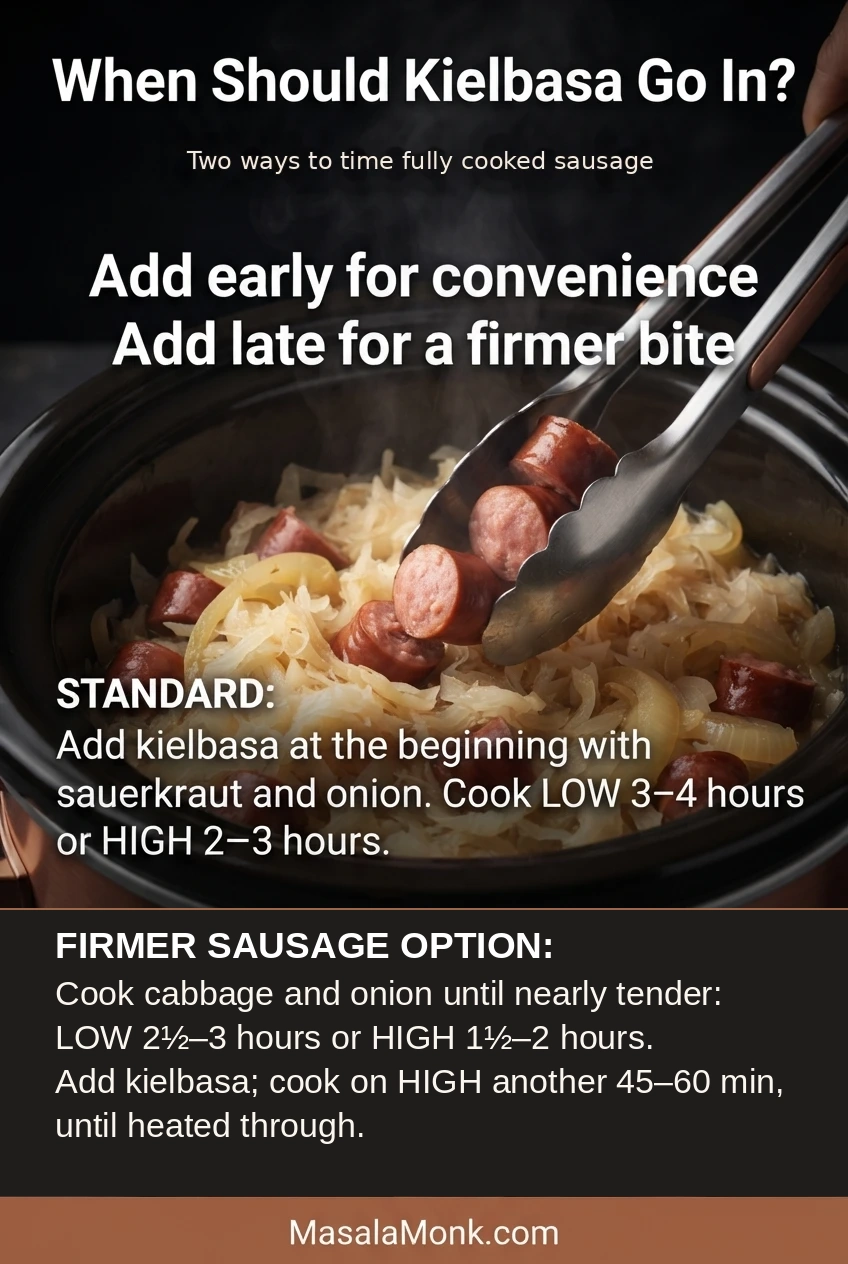
A brief sear before adding the kielbasa brings browned flavor, although its crust will soften in the cooker. Adding potatoes? Follow the late-addition potato method so they become tender without overcooking the sausage. For another pork-and-cabbage meal, see our Crock Pot pork chops and sauerkraut; raw pork chops require their own cooking method.
Oven-Baked Kielbasa and Sauerkraut
The oven version is for bringing one hot casserole dish to the table. Bake covered so the onion and cabbage soften in a little liquid, then uncover near the end. Some exposed kielbasa may develop color, but do not expect the crisp edges of skillet frying.
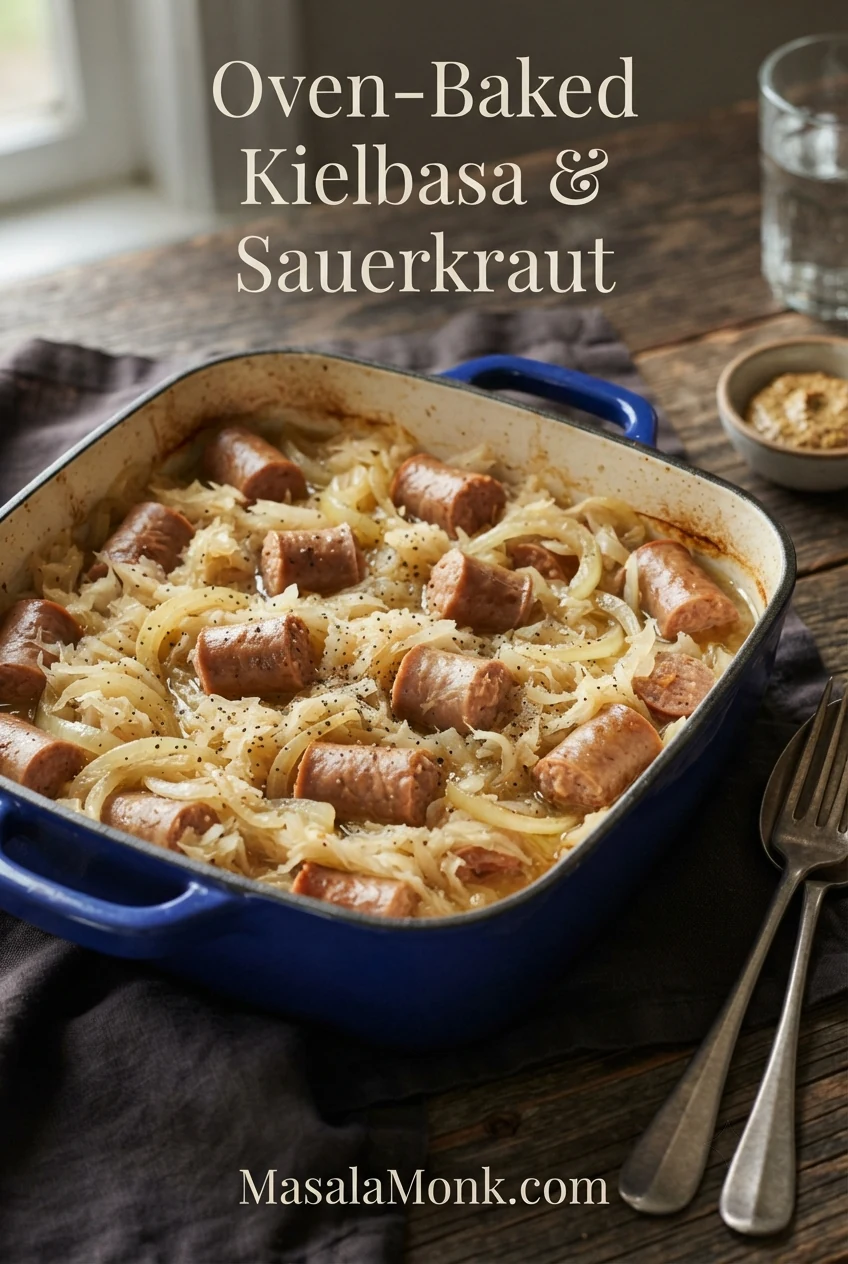
Servings: 4 portions, with sides for a fuller meal
Prep: 10 minutes
Bake: 35–45 minutes
Rest: 5 minutes
Total: Approximately 50–60 minutes
Equipment: Approximately 8-inch (20 cm) square, 2-quart oven-safe baking dish with foil or a suitable lid.
Oven Ingredients
- 1 lb (454 g) fully cooked smoked kielbasa, cut into 1-inch (2.5 cm) pieces
- 16 oz (454 g) sauerkraut, package weight before draining
- 1 medium yellow onion (about 150 g), sliced thinly to about ⅛ inch (3 mm)
- ¼ cup (60 ml) water or low-sodium broth
- 1 tbsp (14 g) unsalted butter, melted
- ¼ tsp black pepper
- ¼ tsp caraway seeds, optional
- 1 tsp (5 ml) Dijon or brown mustard, optional
How to Bake Kielbasa and Sauerkraut
An even layer of cabbage and onion helps the casserole heat consistently. The instructions below position the sausage above the vegetables so some pieces can be exposed during the uncovered finish.
- Heat the oven. Preheat to 375°F (190°C). Lightly grease the dish if needed.
- Arrange the vegetables. Drain the sauerkraut. Spread it in the dish with the thinly sliced onion.
- Arrange the kielbasa. Set fully cooked sausage pieces over the cabbage, leaving a few exposed on top.
- Add the liquid and seasonings. Mix broth, melted butter, pepper, optional caraway, and mustard if using. Pour the mixture over and around the cabbage and sausage, keeping a few sausage pieces exposed on top.

Cover, Uncover and Check Tenderness
The baking dish and depth of the food can affect how quickly the onion becomes tender. Check the vegetables before moving from the covered stage to the uncovered finish.
- Bake covered. Cover tightly for 25–30 minutes, until the mixture is steaming and the onion has softened noticeably. Give firm onion a few more minutes.
- Finish uncovered. Bake another 10–15 minutes until the sausage is thoroughly hot and the onion tender. Add 1–2 tbsp (15–30 ml) water if the cabbage starts drying out.
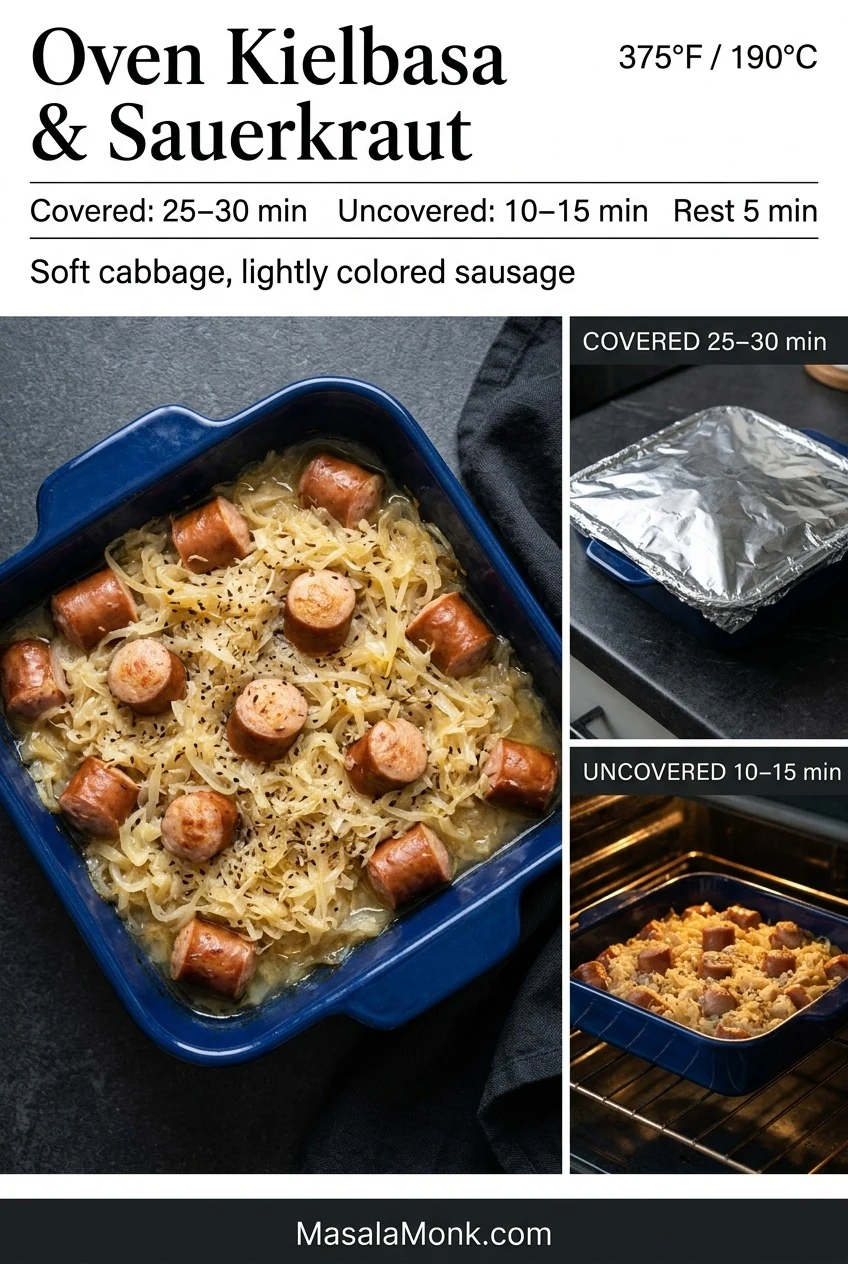
- Rest and serve. Let stand for 5 minutes and spoon the warm cabbage and sausage onto plates with some of the juices.
For a darker finish, keep more sausage exposed in the last stage. A very brief broiler finish is possible only if your baking dish is broiler-safe; watch closely so the cabbage does not scorch. To make it heartier, see how to add potatoes to this casserole. For a drier sausage-and-vegetable roast, see our sheet-pan sausage and peppers recipe.
Kielbasa, Sauerkraut and Potatoes
Potatoes make this a fuller meal. Their golden edges contrast with the smoked sausage, soft onion, and sharp sauerkraut; if you use fattier kielbasa, they can also pick up some flavorful pan drippings. Parboil potatoes before adding acidic sauerkraut: acid can slow softening, and the sausage should not have to overcook while you wait for the potatoes.
Skillet Kielbasa, Sauerkraut and Potatoes
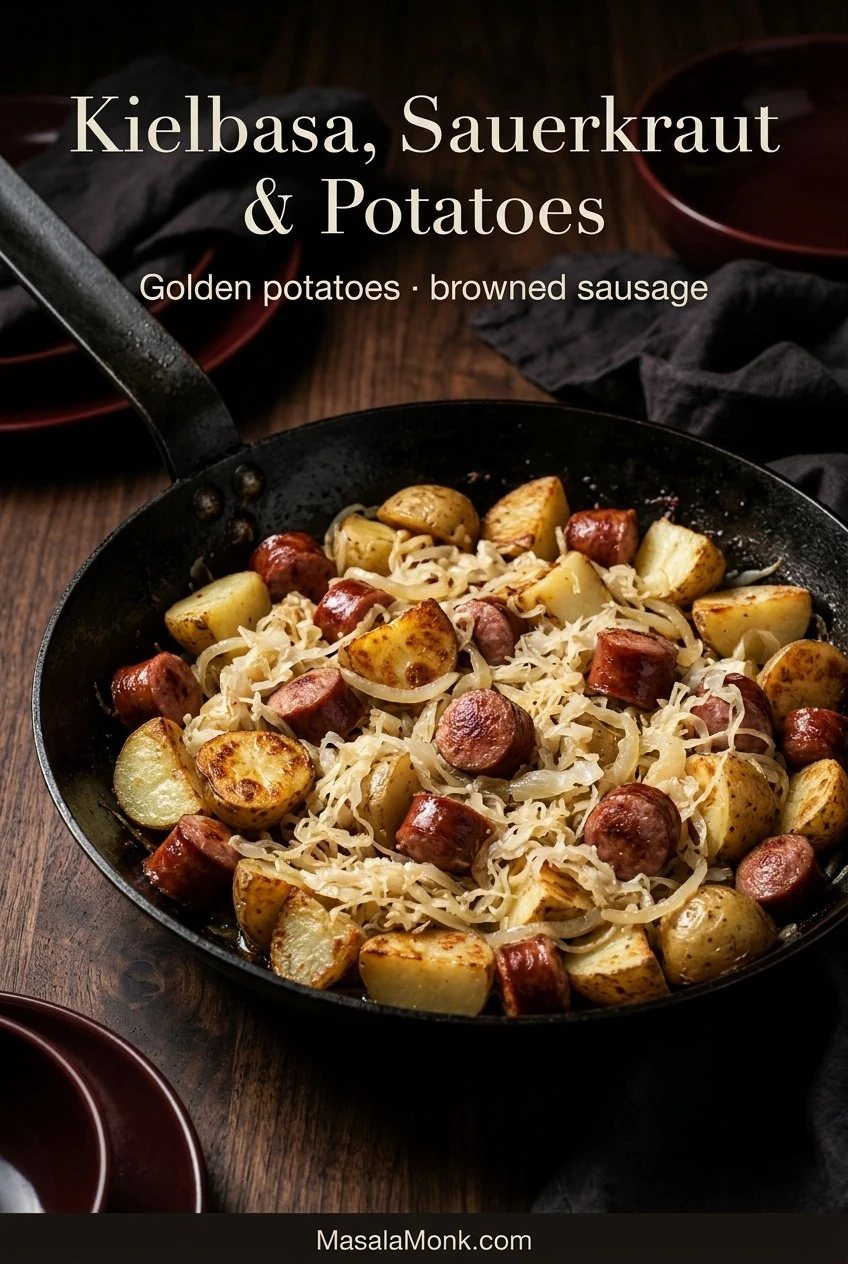
Servings: 4 hearty portions
Prep: About 15 minutes
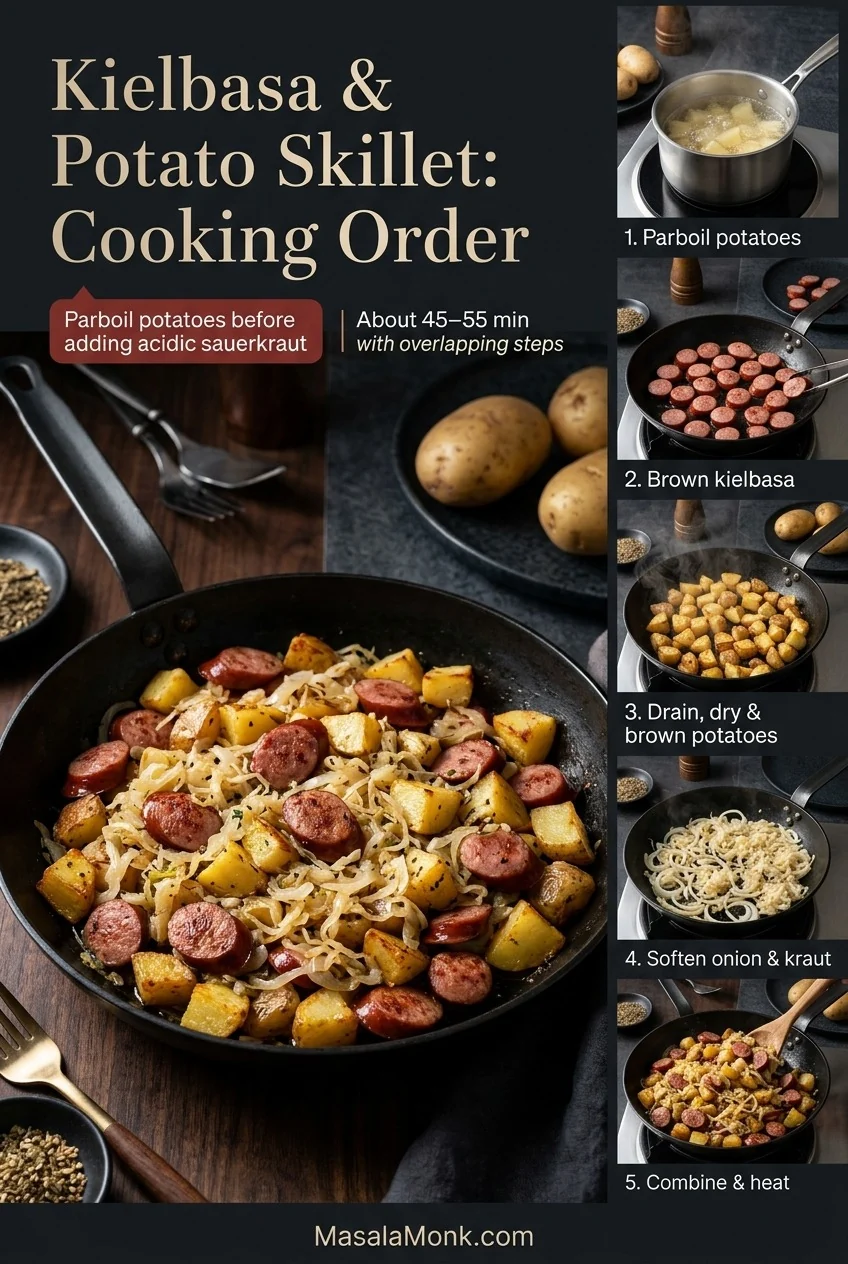
Total: Approximately 45–55 minutes with overlapping tasks; longer when completed one at a time
Equipment: Large skillet, saucepan, colander, knife, spatula.
Cooking order: You can brown the sausage while the potatoes simmer. For a more relaxed pace, finish parboiling first; the meal will simply take longer. This skillet dinner uses a saucepan as well as a skillet, so it is not a one-pot recipe.
Ingredients
- 1 lb (454 g) fully cooked smoked kielbasa, cut into ½-inch (1.25 cm) rounds
- 16 oz (454 g) sauerkraut, package weight before draining
- 1 lb (454 g) Yukon Gold or red potatoes, cut into even ¾-inch (2 cm) pieces
- 1 medium yellow onion (about 150 g), thinly sliced
- 1 tbsp (15 ml) neutral cooking oil, plus up to 1 additional tbsp (15 ml) for potatoes
- ¼ tsp black pepper
- Water to parboil potatoes
Optional: A little unsalted butter if the onion needs fat, ¼ tsp caraway, mustard to serve, or a splash of water or low-sodium broth if the cabbage is drying out.
Cut and Parboil the Potatoes
For the potato variation, preparation affects the final texture as much as pan heat. Evenly cut pieces are more likely to become nearly tender together before the browning stage.
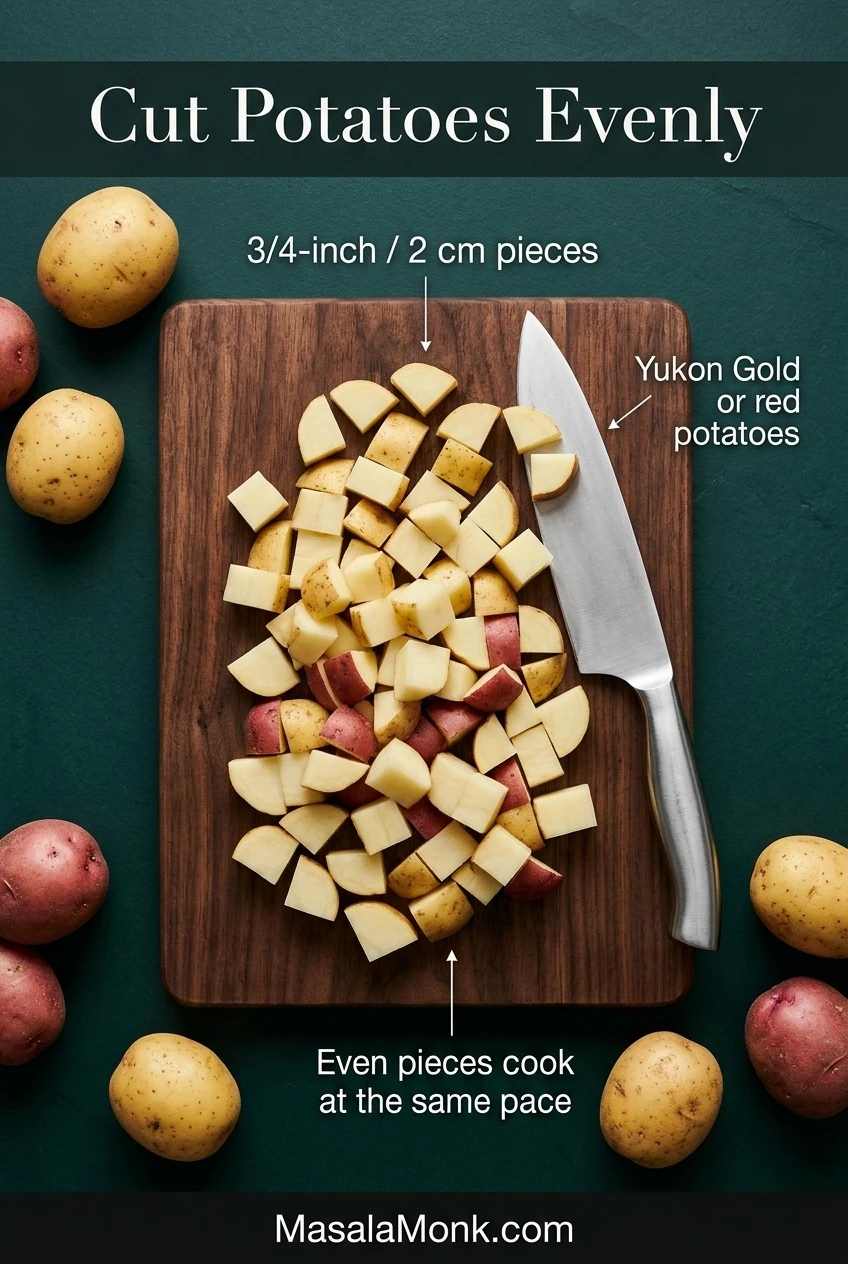
- Start the potatoes. Place cut pieces in a saucepan, cover with water, and bring to a boil. Slice kielbasa and onion, and drain sauerkraut while the water heats.
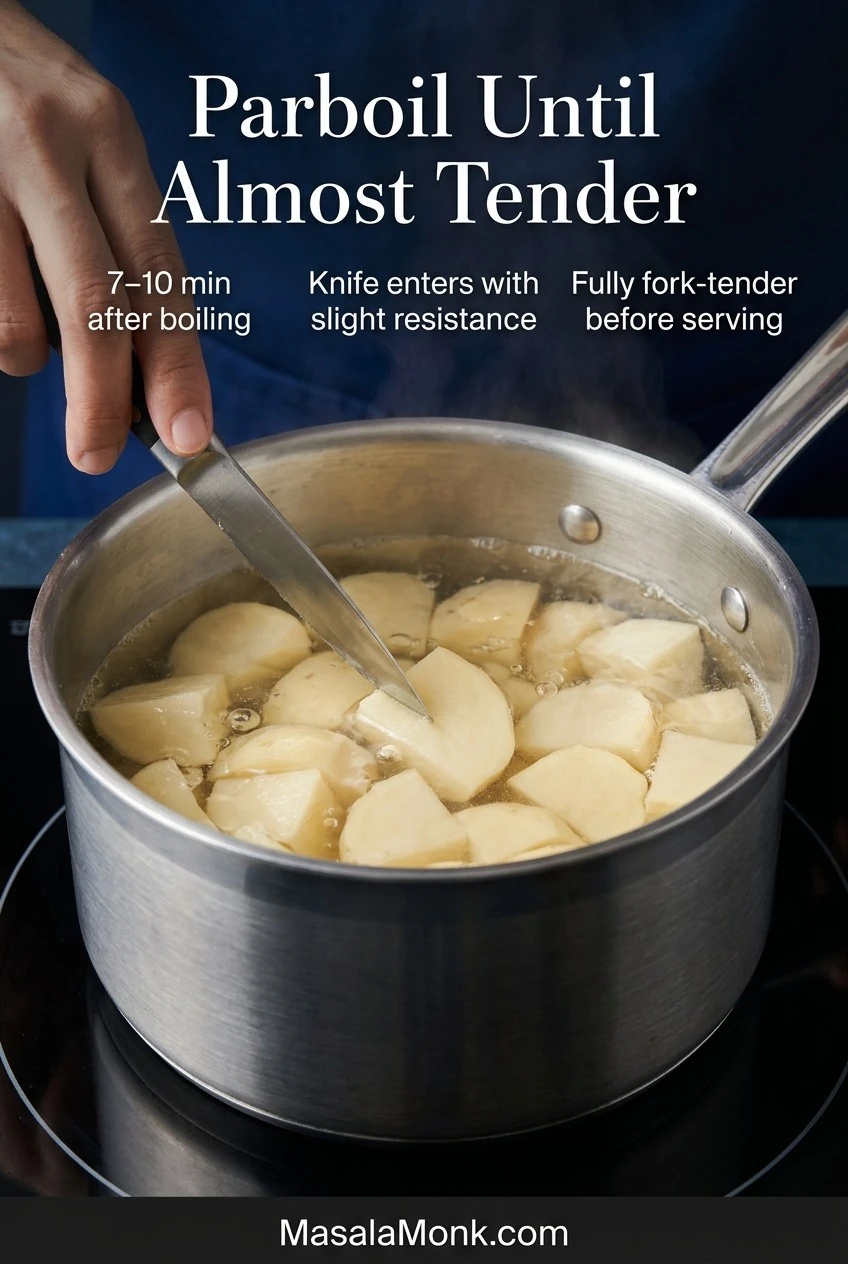
Parboiling prepares the potatoes for a second cooking stage rather than finishing them completely. The aim is a center that has begun to soften while the pieces still hold their shape.
- Parboil. Once boiling, simmer the potatoes about 7–10 minutes, until almost tender but with slight resistance when pierced by a knife.
Brown the Sausage, Then the Potatoes
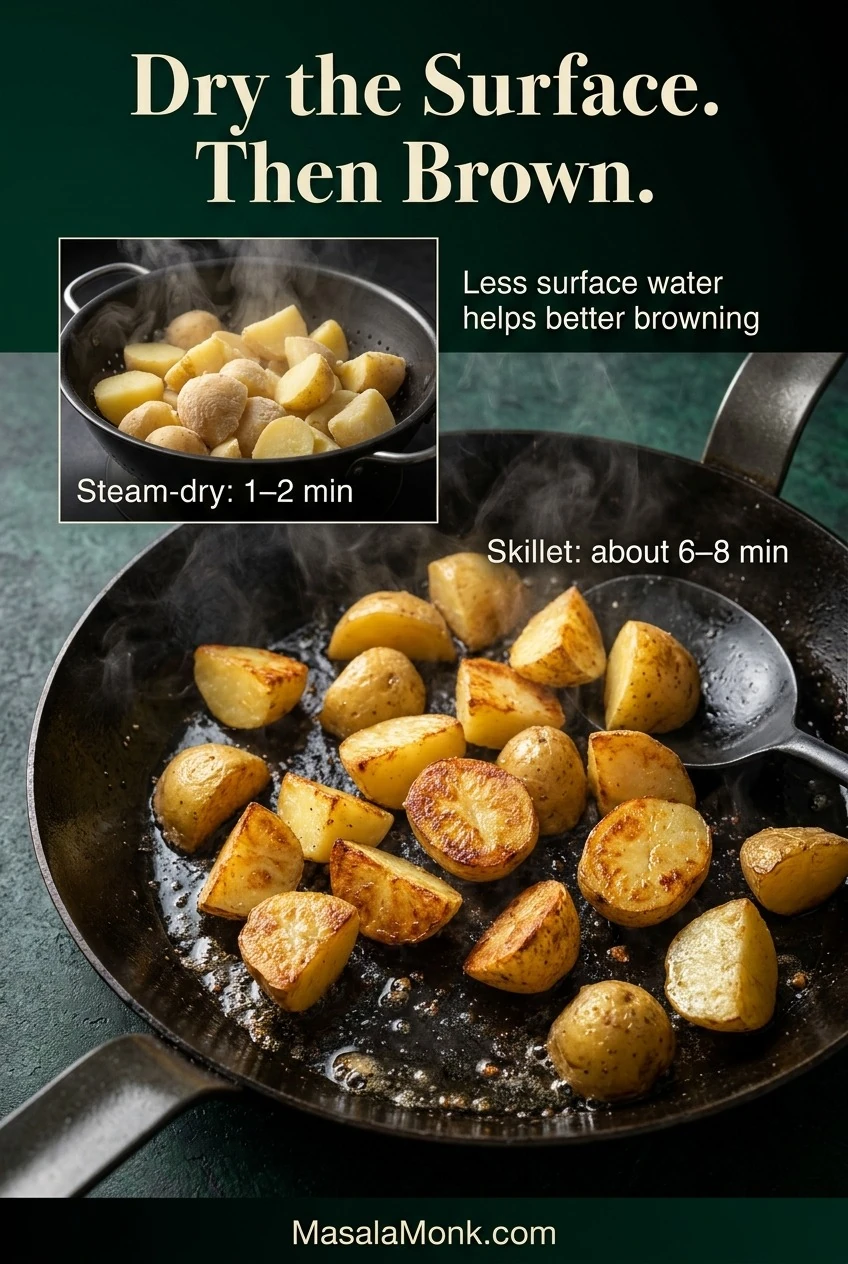
After boiling, surface water is the main obstacle to golden potatoes. The next steps give the pieces time to dry before they meet the sausage-flavored skillet.
- Brown the sausage. While potatoes simmer—or after draining them if you prefer one task at a time—heat 1 tbsp (15 ml) oil in the skillet over medium to medium-high heat. Brown kielbasa 2–3 minutes on one side and 1–2 on the other. Transfer to a plate.
- Brown the potatoes. Drain and steam-dry for 1–2 minutes. Add a little more oil if needed and cook in the sausage skillet for about 6–8 minutes, turning occasionally, until golden on several sides and fork-tender throughout. Work in batches if crowded, then set aside.
- Soften the onion. Leave just enough fat to coat the skillet; add a little butter if needed. Cook over medium heat for 5–6 minutes until soft and starting to brown.
- Cook the sauerkraut. Add drained cabbage, pepper, and optional caraway. Cook uncovered for 6–8 minutes until hot and no longer watery. Splash in 1 tbsp (15 ml) water or broth if it sticks.
- Bring it together. Return the sausage and potatoes to the pan, toss gently, and heat 2–3 minutes. Serve with mustard if desired.
Potato Skillet Cooking Sequence at a Glance
Before the final toss, check a potato: a fork should slide through the center. If it is still firm, finish the potatoes separately instead of overcooking the kielbasa. For more potato-centered ideas, see our kielbasa and potatoes recipe.
Adding Potatoes to the Crock Pot
This adaptation needs an extra saucepan. It is a reliable way to get tender potatoes in acidic sauerkraut, but it is not a completely hands-off, one-pot meal. If convenience matters more than fresh potato texture, already-cooked canned potatoes can simply be heated through near the end.
For fresh potatoes, cut 1 lb (454 g) into ¾-inch (2 cm) pieces and simmer in water for about 8–12 minutes after boiling, until nearly fork-tender. Drain, then add to the hot slow-cooker sauerkraut toward the end. Switch to HIGH and start checking after 20–30 minutes. Depending on the appliance and how far the potatoes were parboiled, heating may take roughly 30–60 minutes. Stop as soon as the potatoes are fully tender and hot throughout. If using the late-addition kielbasa variation, the fully cooked sausage can heat during this stage; check it separately before serving.
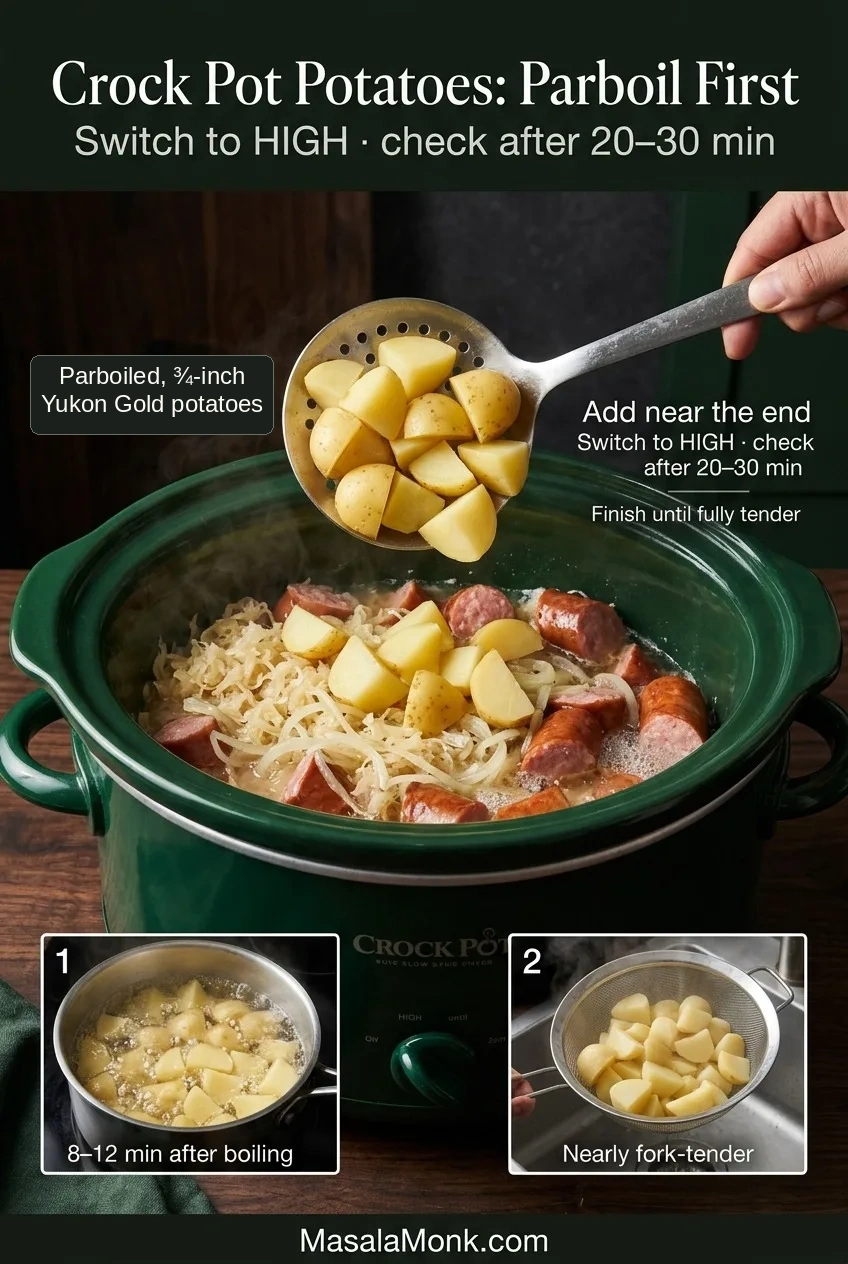
Raw potatoes added at the beginning require a different cooking schedule. Do not assume the sausage-and-cabbage timings above will cook them adequately.
Adding Potatoes to the Oven Recipe
Parboil 1 lb (454 g) of ¾-inch (2 cm) potato pieces until nearly tender. Drain and mix into the sauerkraut before the covered baking stage. Bake at 375°F (190°C), checking the potatoes during the covered stage; once fork-tender, finish uncovered for 10–15 minutes to heat and lightly color the sausage.
If the potato pieces are still firm after cooking, see how to fix hard potatoes. Back to recipe contents.
Kielbasa and Sauerkraut with Apples, Beer, Brown Sugar or Mushrooms
Start with the savory version, then change the flavor for the people at your table. If sauerkraut tastes too sharp, a sweet apple makes the combination rounder; a tart apple adds fruitiness without much sweetness. Mild lager brings malty depth, brown sugar moves the dish toward sweet-and-sour, and dried mushrooms create a richer, longer-braised cabbage dish.
Kielbasa and Sauerkraut with Apples

Add 1 small firm apple (about 150 g), cored and cut into ½-inch (1.25 cm) pieces, to a four-serving recipe. Honeycrisp or another sweet, firm apple is better if the goal is to soften the flavor contrast. Granny Smith adds tart apple character and may leave the dish tasting just as sharp.
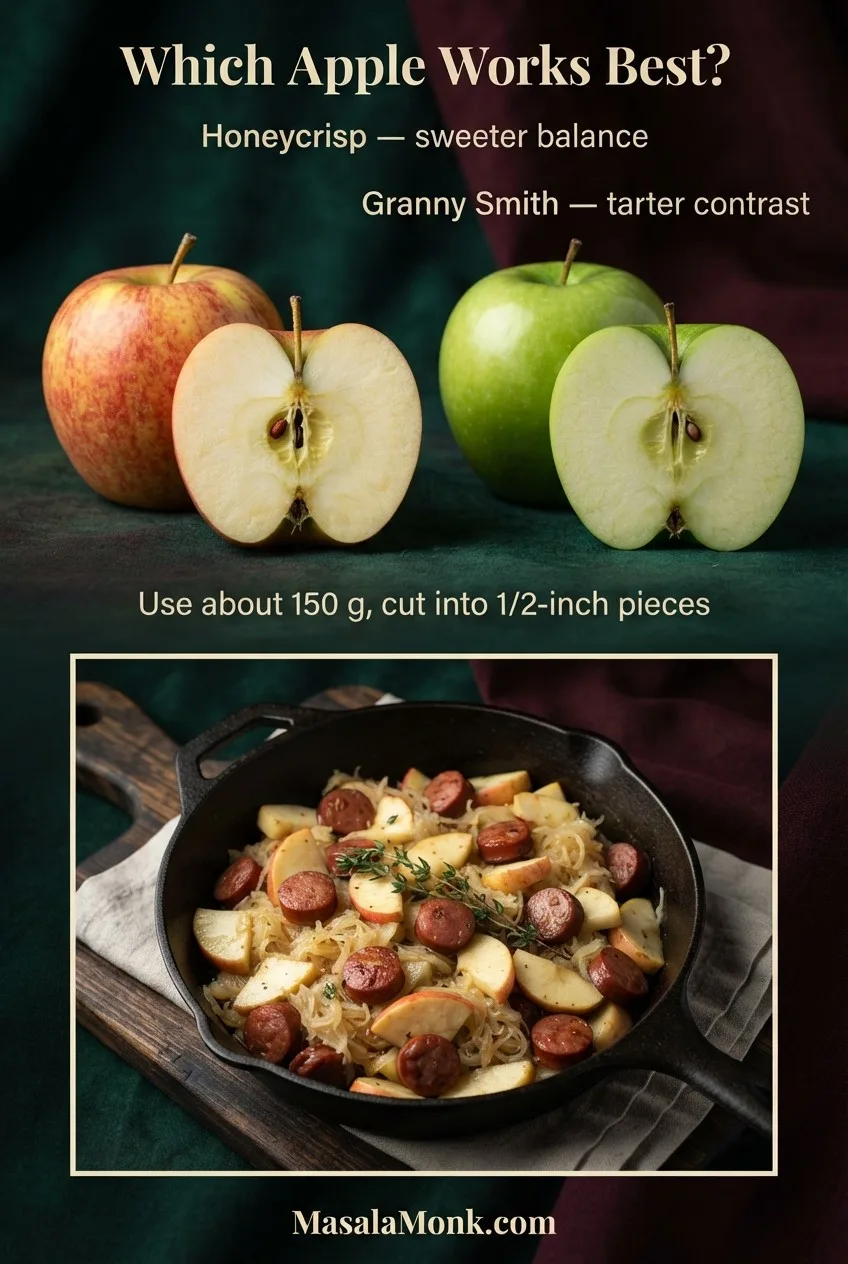
Skillet: Cook the apple with the onion before adding the sauerkraut. Slow cooker: Add at the beginning for soft pieces or in the final 45–60 minutes for more distinct pieces; cook until tender. Oven: Scatter among the sauerkraut and onion before baking. Once the apples soften, taste the sauerkraut before deciding whether any extra sweetness is necessary.
Beer-Braised Kielbasa and Sauerkraut
For the Crock Pot or oven method, replace the ¼ cup (60 ml) broth with the same amount of mild lager. This makes the cabbage lightly malty without overpowering the smoky sausage. For a stronger effect, use up to ½ cup (120 ml) lager in total, omitting the broth, and expect a wetter result.

Mild lager is usually a better starting point than a strongly bitter beer. For a beer-free version, use water, broth, or nonalcoholic apple cider for some sweetness. Hard cider contains alcohol; cooking does not reliably remove it all. Apple cider vinegar is too acidic to substitute cup-for-cup.
Brown Sugar Kielbasa and Sauerkraut
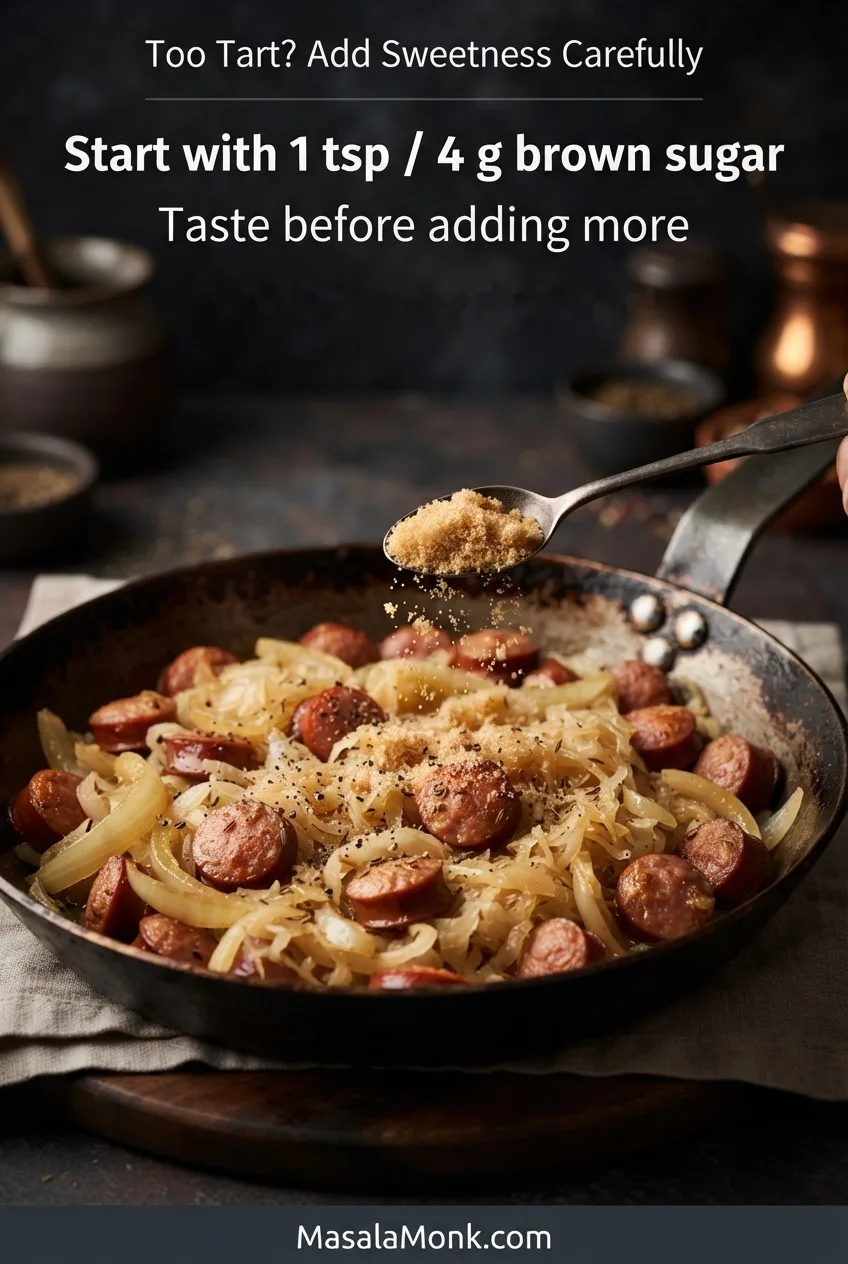
For a sweeter American-style version, stir 1 tsp (about 4 g) packed brown sugar into the hot sauerkraut for four servings. Let dissolve, taste, and add one more teaspoon only if wanted. If your cabbage already contains apples or sweeteners, begin without sugar. Sweetness changes the perception of sourness; it does not remove the acid.
Polish-Style Sauerkraut with Mushrooms and Smoked Kielbasa
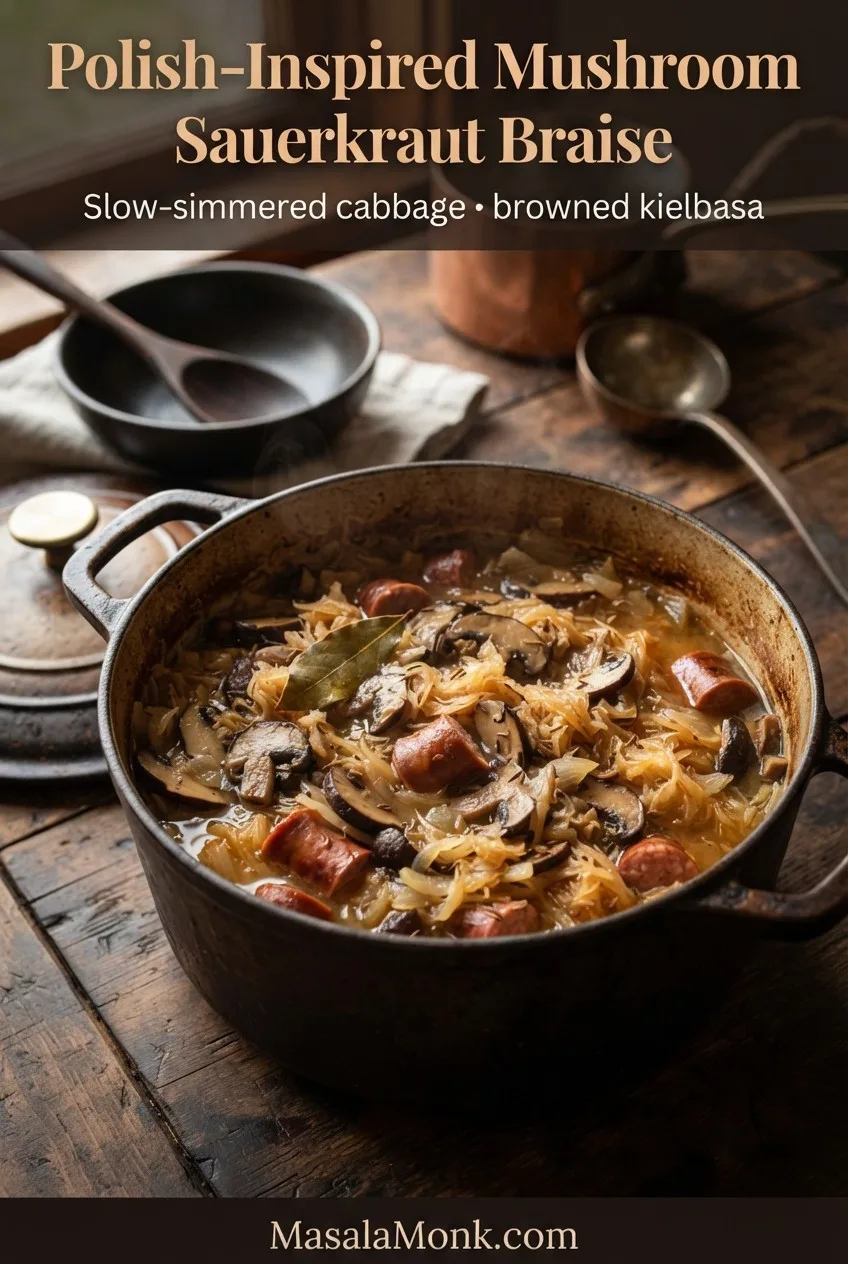
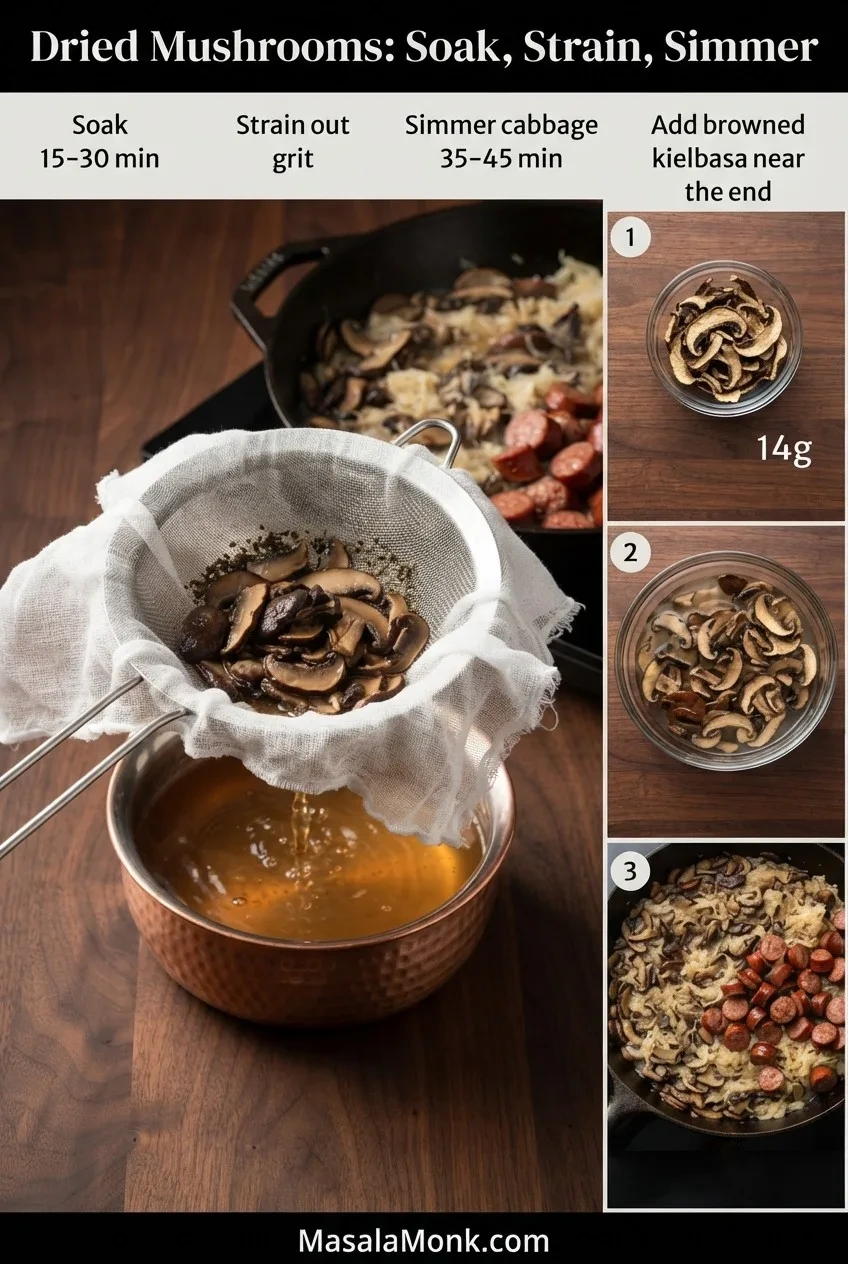
Dried mushrooms turn the cabbage into a slower, deeper braise, with bay leaf and caraway adding aromatic notes. Brown the kielbasa separately near the end so it does not spend the whole simmer in the pot. This version suits a leisurely meal with boiled potatoes or rye bread.
Servings: 4
Preparation and mushroom soaking: Approximately 20–35 minutes
Cooking: Approximately 50–65 minutes
Total: Roughly 70–100 minutes, allowing for overlap.
Ingredients
- 1 lb (454 g) fully cooked smoked kielbasa
- 16 oz (454 g) sauerkraut, packaged weight before draining
- 1 medium yellow onion (about 150 g), sliced
- ½ oz (14 g) commercially sourced dried edible mushrooms
- 1 bay leaf
- ¼ tsp caraway seeds
- ½ cup (120 ml) unsalted broth or carefully strained mushroom-soaking liquid
- 1 tbsp (14 g) unsalted butter or 1 tbsp (15 ml) neutral oil
- Black pepper to taste
How to Make the Mushroom Sauerkraut Braise
Dried mushrooms need two different preparations: softening the pieces and keeping sediment out of any liquid used for the braise. Complete both before starting the longer cabbage simmer.
- Rehydrate mushrooms. Follow package instructions, commonly 15–30 minutes in hot water. Chop and strain soaking liquid carefully to remove grit.
- Soften the onion. Cook in the butter or oil in a deep skillet or saucepan over medium heat for 5–7 minutes.
- Braise the cabbage. Add drained sauerkraut, mushrooms, bay leaf, caraway, black pepper, and ½ cup (120 ml) broth or strained mushroom liquid. Cover and simmer gently for about 35–45 minutes, stirring and adding water as needed to prevent drying.
- Brown the kielbasa. Slice the fully cooked sausage and brown briefly in another skillet near the end of the cabbage cooking.
- Finish. Add kielbasa to the cabbage, simmer gently for 5–10 minutes until hot throughout, and discard the bay leaf.
This Polish-inspired braise is not the same as bigos, an often more elaborate preparation involving combinations of meats, sauerkraut, fresh cabbage, mushrooms, and longer cooking.
Troubleshooting Kielbasa and Sauerkraut
Stop cooking the sausage while you fix the cabbage. Lift out cooked kielbasa before reducing extra liquid or adjusting the sauerkraut. This prevents a simple cabbage correction from drying out the meat.
| Problem | What to Do Now | Next Time |
|---|---|---|
| Too sour | Add a little mild cooked cabbage or softened onion, tasting as you go. | Rinse especially sharp sauerkraut briefly before cooking. |
| Too sweet | Add unsweetened sauerkraut gradually and serve with mustard. | Use less sugar, especially with sweet apples or cider. |
| Too salty | Dilute with unsalted ingredients; severe oversalting may not be fully reversible. | Use low-sodium broth and hold extra salt until tasting. |
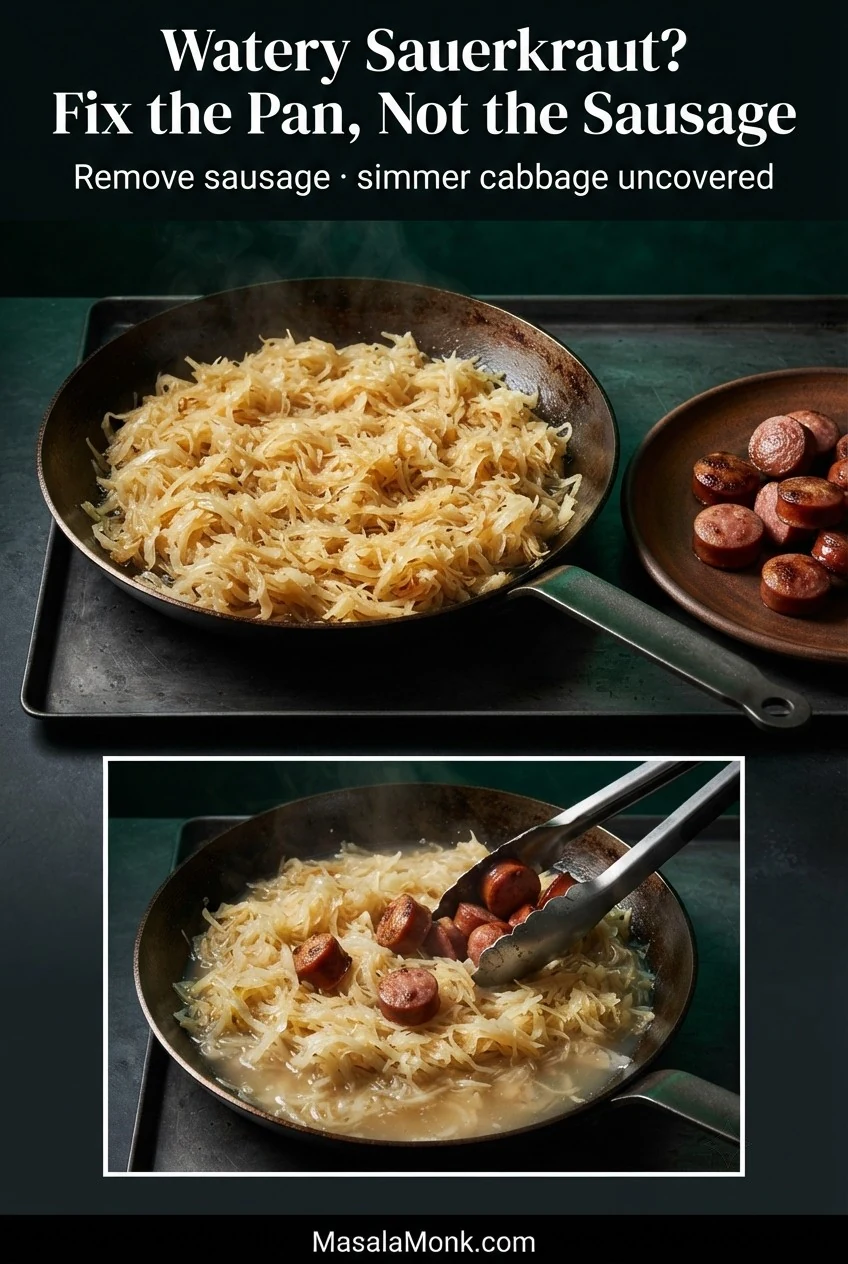
| Watery cabbage | Remove sausage; simmer cabbage uncovered or carefully drain excess liquid. | Drain sauerkraut well and measure added liquid. |
| Dry sausage | Serve with moist cabbage; lost juices cannot be fully restored. | Brown briefly and avoid prolonged heating. |
| Very soft sausage | Stop cooking and serve. | Add fully cooked kielbasa late in a braise. |
| Tough casing | Check whether the casing is removable and non-edible. | Choose a casing texture you enjoy. |
| Hard potatoes | Lift out and simmer separately in water or broth until tender. | Parboil before combining with acidic cabbage. |
| Bland cabbage | Add browned onion, pepper, mustard, caraway or saved brine to taste. | Rinse less and use browning for flavor. |
How Do You Make Sauerkraut Less Sour?
For a cooked four-serving batch, mix in softened onion or mild cooked cabbage a few spoonfuls at a time, tasting between additions. Boiled potatoes or bread on the side can make the meal feel more balanced. Brown sugar may taste pleasant, but it does not neutralize acidity.
Why Are the Potatoes Still Hard?
Remove the firm pieces and simmer them separately in water or broth until a fork slides through easily. Return them to the finished dish. This is faster and more reliable than overcooking the kielbasa while waiting.
How Do You Fix Watery Sauerkraut?
Remove the sausage and simmer the cabbage uncovered until the liquid reduces. With slow-cooker sauerkraut, you can carefully remove extra liquid or reduce it in a saucepan before mixing it back in. Return the kielbasa only when ready to serve.
Food safety: Sourness and saltiness by themselves do not mean sauerkraut is spoiled. However, sausage or cabbage with spoilage signs or an unsafe storage history should be discarded rather than treated as something seasoning or extra cooking can fix.
Ready to cook after troubleshooting? Return to the skillet instructions, or choose the recipe contents if you prefer another method.
What to Serve with Kielbasa and Sauerkraut
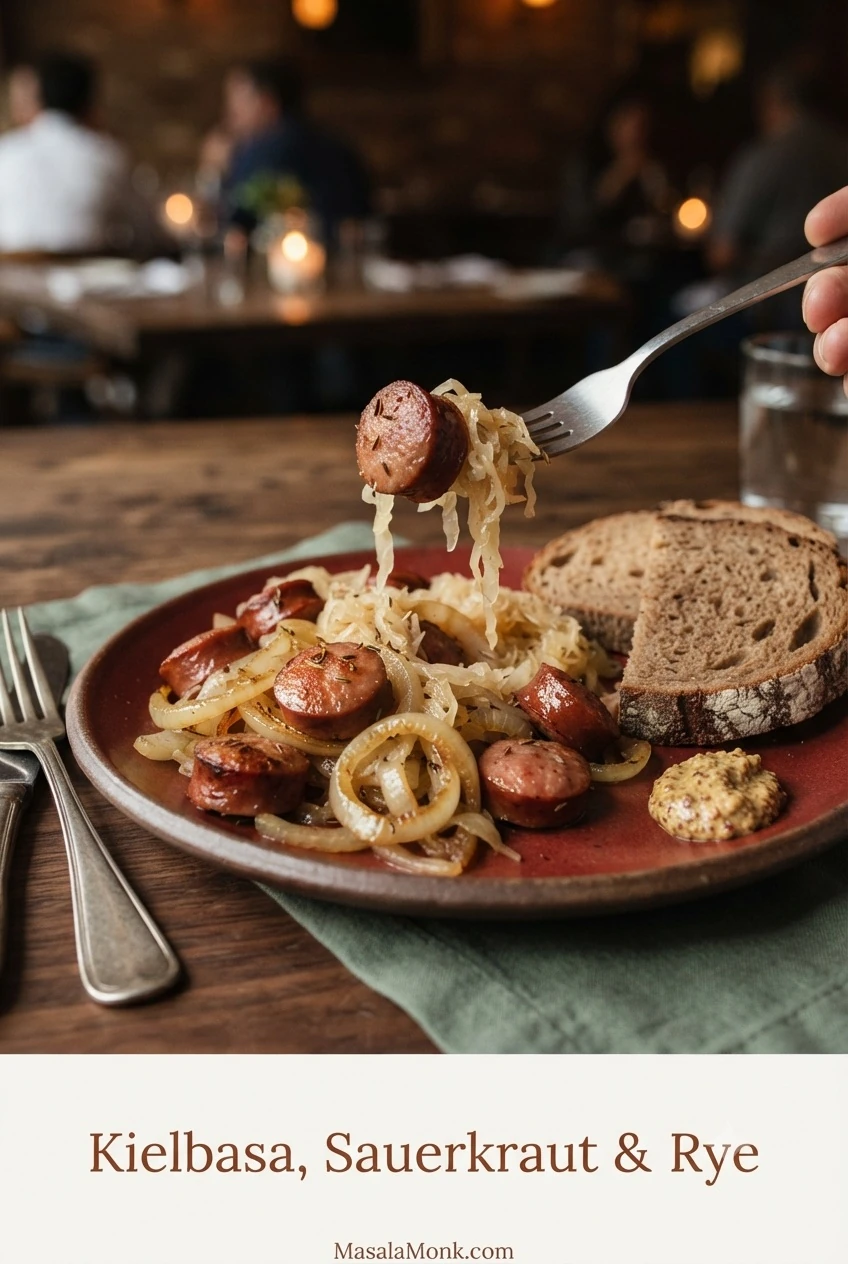
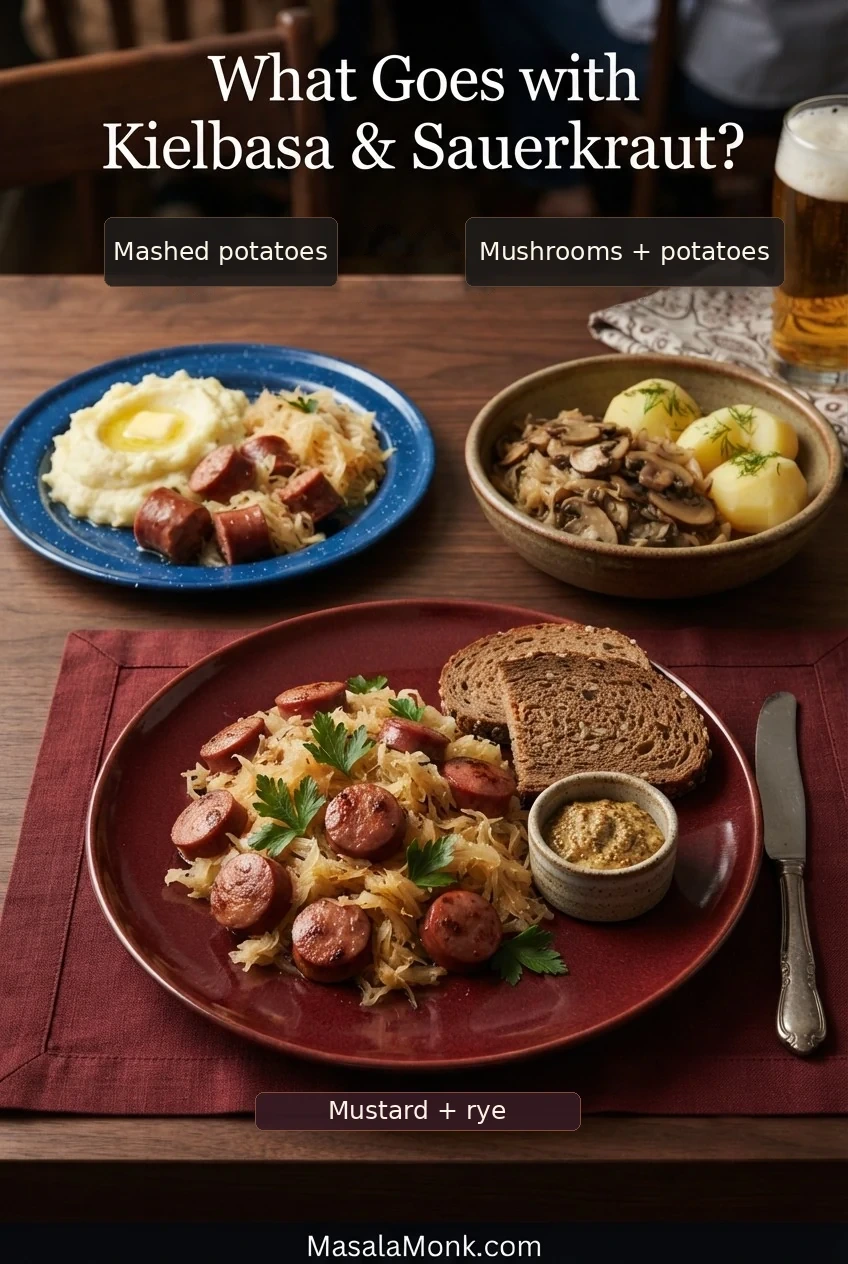
Sharp mustard cuts through rich smoked sausage, and rye bread makes a natural companion to tangy cabbage. Choose mild potatoes to catch the cooking juices from the Crock Pot and oven versions; the drier skillet preparation needs less of a saucy side. Prefer potatoes cooked with the sausage? Follow the kielbasa, sauerkraut and potatoes skillet.
Choosing Sides for Kielbasa and Sauerkraut
- Boiled potatoes: Buttery and mild beside boldly sour sauerkraut or the mushroom braise.
- Mashed potatoes: Particularly useful under the Crock Pot or oven version; our mashed potatoes recipe explains how to avoid a gluey texture.
- Potato-and-cheese pierogies: Cook separately and serve alongside; see our Polish pierogi recipe for homemade dumplings.
- Rye bread or crusty rolls: Good with a dab of mustard and browned kielbasa.
- Green vegetables: Simple steamed beans or green beans almondine add a fresh and slightly crisp contrast.
Cook frozen pierogies according to their package instructions, rather than leaving them in the Crock Pot for hours where their wrappers can turn soft and split.
Cooking for Two or a Crowd
For two: Halve the skillet recipe: ½ lb (227 g) kielbasa, 8 oz (227 g) packaged sauerkraut, and half a medium onion, with oil and seasoning adjusted proportionally. Use a smaller skillet if possible.
For eight: Begin with 2 lb (907 g) kielbasa, two 16 oz (454 g) packages sauerkraut and two onions. Scale other ingredients proportionally, but add fat and cooking liquid as the pan actually needs them. Brown the sausage in batches; choose a slow cooker that fits the larger batch safely.
For an informal spread, a mustard-based selection from our potato salad recipes is another make-ahead side. Do not simply double slow-cooker timings for double the food; use the cooker fill guidelines and judge when the food is ready.
Make-Ahead, Storage and Reheating
Can You Make Kielbasa and Sauerkraut Ahead?
Yes. Cook it a day ahead, refrigerate promptly, and reheat thoroughly. The cabbage softens further during storage and the browned sausage loses some crispness. For a fresher skillet texture, prepare the onion and sauerkraut ahead and brown the fully cooked kielbasa just before serving.
How Long Does Kielbasa and Sauerkraut Last in the Fridge?
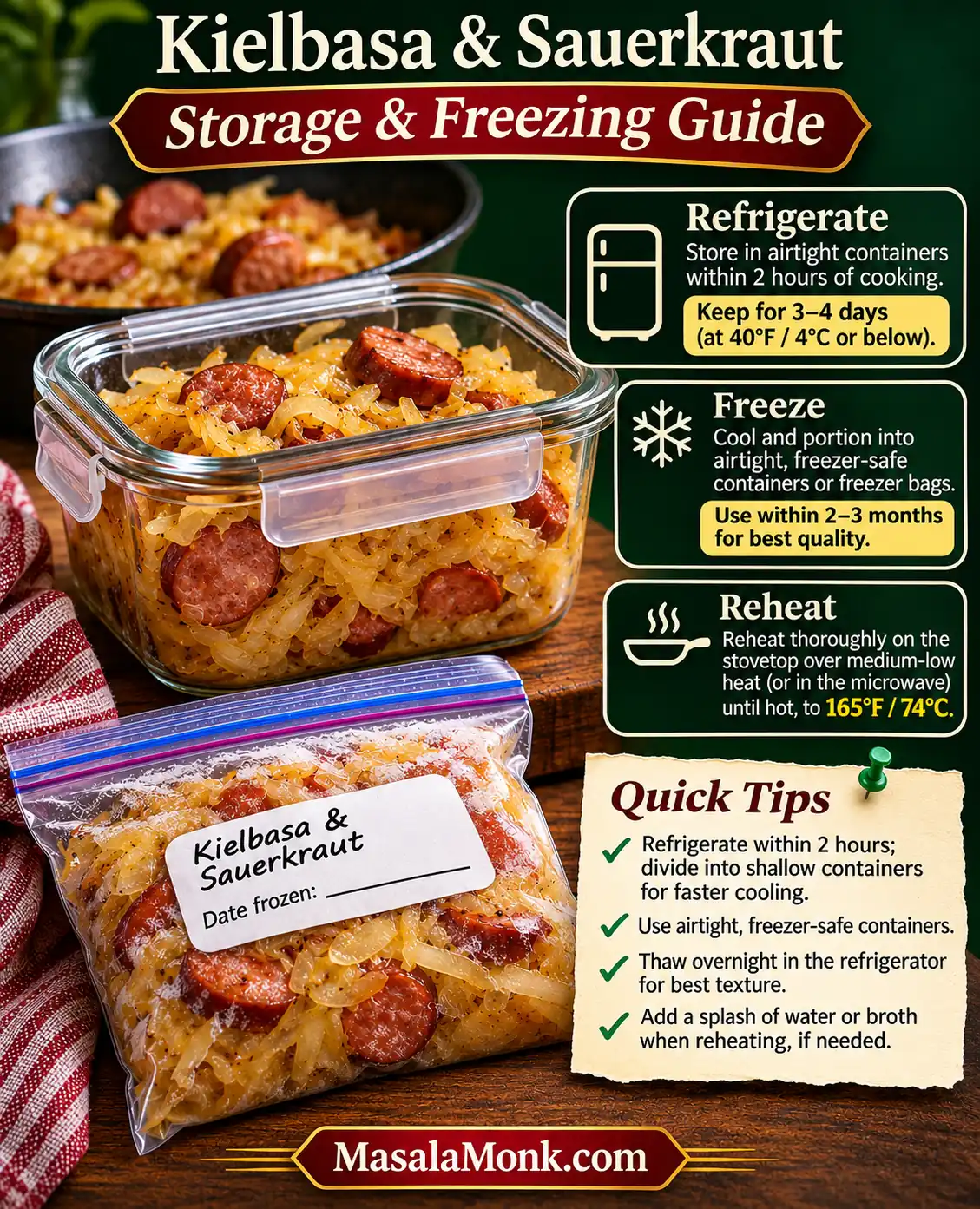
Refrigerate cooked kielbasa and sauerkraut for up to 3–4 days at 40°F (4°C) or below. Store it in shallow covered containers within 2 hours after cooking, or within 1 hour if the surrounding temperature is above 90°F (32°C).
Can You Freeze It?
Yes. Freeze in suitable containers at 0°F (-18°C) or below. For best quality, use within roughly 2–3 months; continuously frozen food may stay safe longer. Sauerkraut softens after thawing, and potatoes may become grainy.
How to Reheat Kielbasa and Sauerkraut
Skillet: Heat covered over medium-low heat with 1–2 tbsp (15–30 ml) water if needed, stirring occasionally, until the food reaches 165°F (74°C) throughout.
Oven: Cover in an oven-safe dish and heat at 350°F (175°C) until the center reaches 165°F (74°C).
Microwave: Cover loosely, rotate or stir during heating, allow standing time, and check that the food reaches 165°F (74°C) throughout.
Do not reheat refrigerator-cold leftovers in a slow cooker, which can warm them too slowly. Properly reheated food may be transferred to a preheated slow cooker for hot holding at 140°F (60°C) or above. See the USDA guidance on leftovers and food safety.
Common Questions About Kielbasa and Sauerkraut
Can You Use Fresh Cabbage Instead of Sauerkraut?
Yes, but it becomes a different dish. Fresh cabbage lacks sauerkraut’s fermented acidity and has different moisture and cooking needs, so adjust the liquid and seasonings rather than replacing it in exactly the same way.
Is Kielbasa and Sauerkraut a Polish Dish?
Polish cooking has a long tradition of pairing sausage with fermented cabbage, but preparations vary among regions and households. Many American skillet and Crock Pot versions simplify the ingredients or add more sweetness. Longer Polish cabbage braises may also include mushrooms, fresh cabbage, or several meats.
Does Cooking Sauerkraut Destroy Its Live Cultures?
Cooking unpasteurized sauerkraut to normal hot-serving temperatures greatly reduces or eliminates its live microorganisms. Cooked sauerkraut is therefore not a reliable source of live probiotic cultures, though it still offers fermented flavor, cabbage, and some fiber. Shelf-stable sauerkraut may already be heat-treated before purchase.
Ready to cook? Skillet ingredients · Step-by-step recipe · Recipe contents · Back to top.