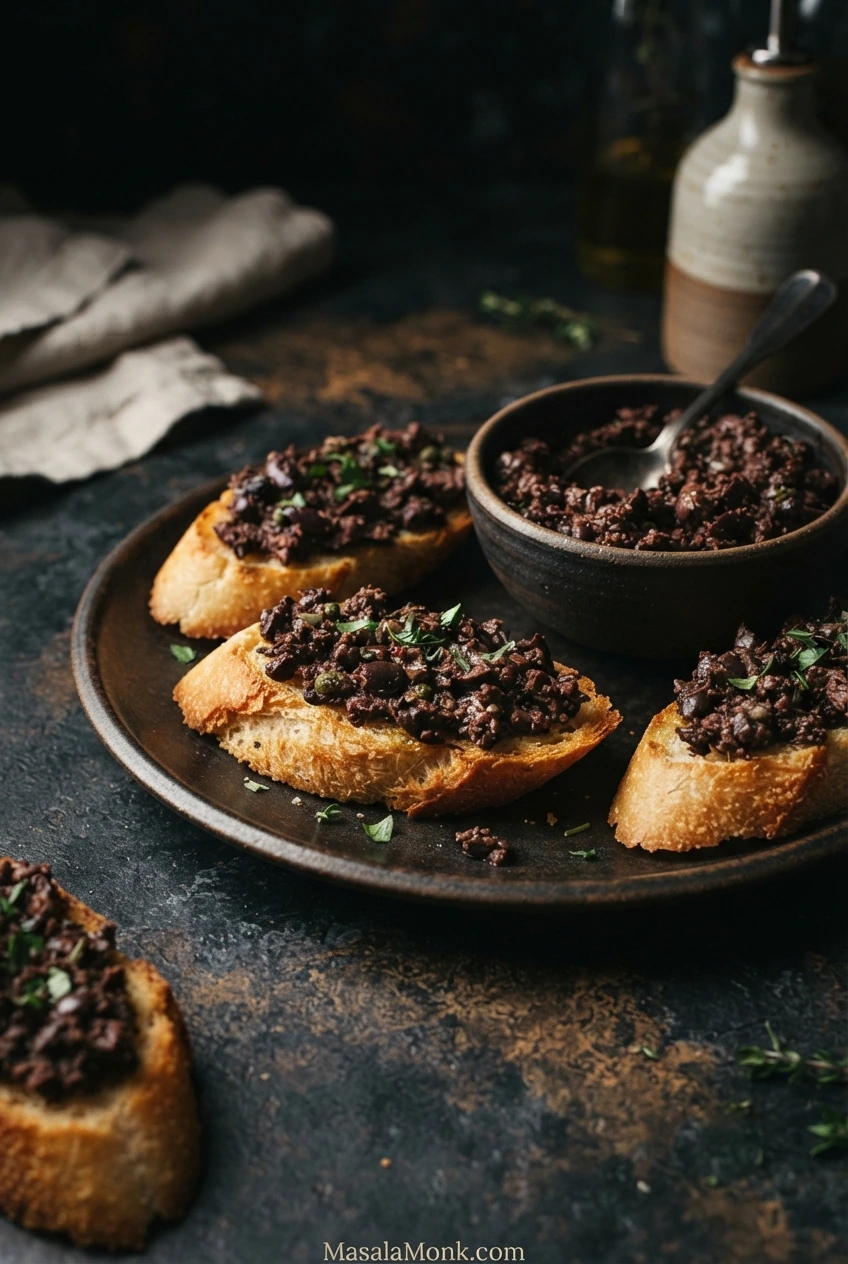
Olive tapenade is a savory spread from Provence in southern France, traditionally made with olives, capers, anchovies, and olive oil. Spoon a little onto crisp baguette and you get the appeal immediately: finely chopped olives, the sharp bite of capers, and a rich spread against the crunch of toasted bread.
You don’t need expensive olives. A supermarket jar can make excellent tapenade, provided you enjoy the olives themselves. Taste one before you begin. Some are intensely salty; others are mild enough to let capers, garlic, and herbs take a bigger role. That first taste tells you more about how to season the spread than its color alone.
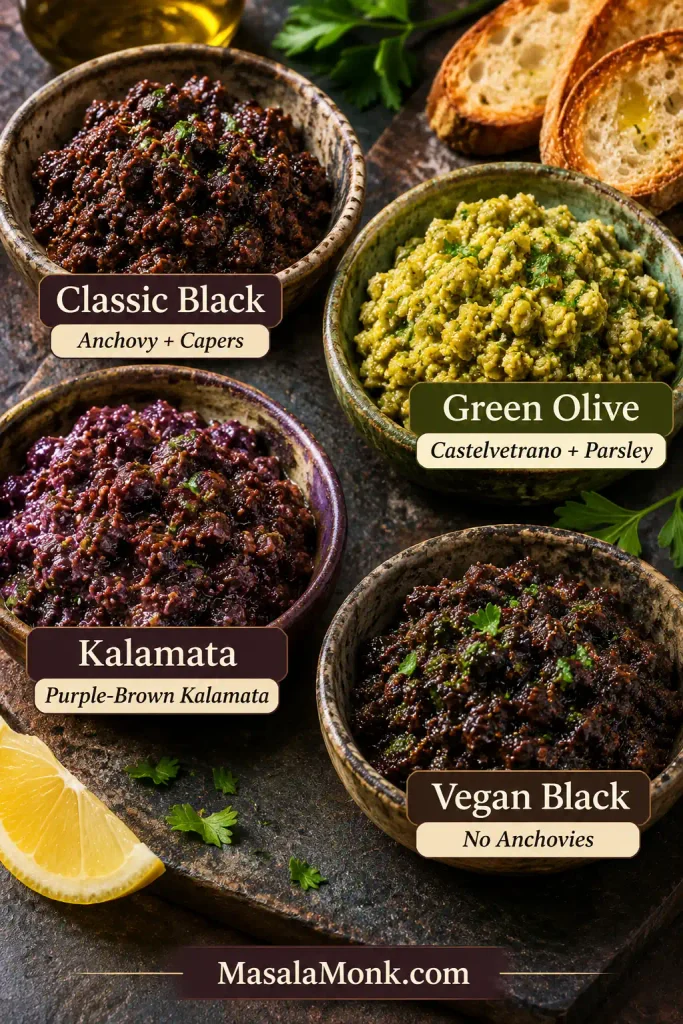
Choose your recipe: Classic black · Green olive · Kalamata · Vegan black
Or find help with: Choosing olives · Serving ideas · Fixing a batch
This olive tapenade recipe takes about 15 minutes, with no cooking. Start with the classic French black olive version, or choose the green olive, Kalamata, or vegan black olive recipes below. A mini food processor makes preparation quick, but a sharp knife works well too.
Classic French Olive Tapenade Recipe
The classic black version brings olives, capers, and anchovies together in a spread with a distinctly Provençal character. Finely chopped anchovies disappear into the mixture: you get their savory depth without finding pieces of fish on your toast. Keep a little olive texture, especially if you’re serving it on crostini.
Prep time: 15 minutes with ready-pitted olives · Cook time: 0 minutes · Total time: 15 minutes
Yield: Approximately 240–260 g (8.5–9.2 oz) for the standard recipe · Servings: About 12 small portions of 20 g · Equipment: Mini food processor or sharp knife, chopping board, bowl, measuring spoons, and optionally a kitchen scale
Ingredients for Black Olive Tapenade
- 200 g (7.1 oz) black olives, pitted and drained. Niçoise or Cailletier olives are excellent, although other flavorful cured black olives work well.
- 10 g (0.35 oz) capers, drained. Roughly 1 generously filled tablespoon, depending on their size.
- 6–8 g (0.21–0.28 oz) oil-packed anchovy fillets, drained. Approximately 2–4 fillets, depending on size.
- 1 small garlic clove, approximately 3 g (0.1 oz), peeled.
- 15–30 ml (1–2 tbsp) extra-virgin olive oil. Begin with 1 tablespoon.
- 5–10 ml (1–2 tsp) fresh lemon juice. Begin with 1 teaspoon.
- ½ tsp fresh thyme leaves, optional.
- Freshly ground black pepper, to taste.
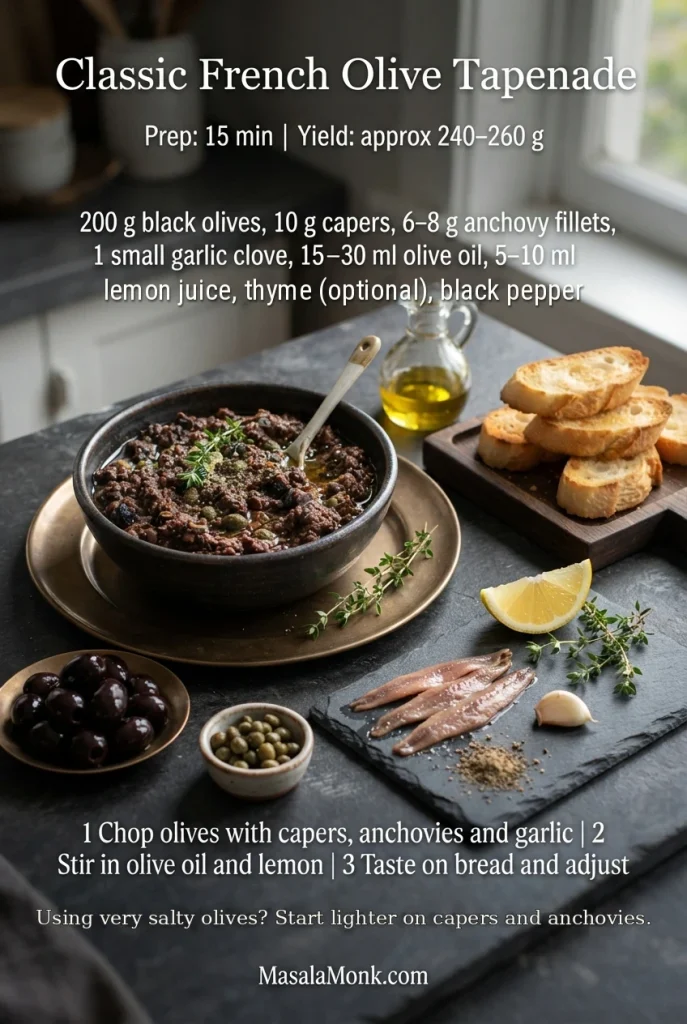
Using very salty olives? Begin with 5 g capers (roughly ½ tablespoon) and 3–4 g anchovies (approximately 1–2 fillets). You can add more after tasting, but you can’t take them out once everything is chopped together. There’s usually no need for extra salt. If a completed batch is still overpowering, see how to fix salty olive tapenade.
How to Make Olive Tapenade
Chop the olives with capers, anchovies, and garlic. Stir in just enough olive oil to make the mixture spreadable, then taste it on bread before serving.
Prepare, Chop and Season the Olives
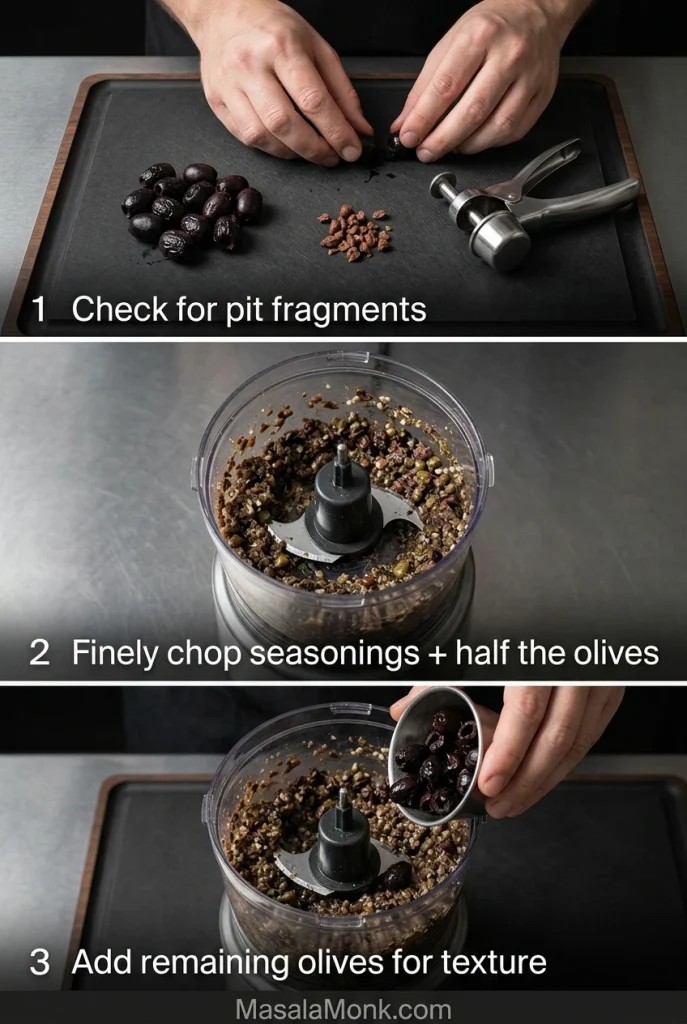
- Prepare the olives. Drain them and check for pit fragments, even if they’re sold as pitted. Taste one. If it’s coated in especially salty brine, rinse briefly under cool water, drain thoroughly, and pat dry. Weigh out 200 g of olive flesh.
- Prepare the seasonings. Drain the capers and anchovies. Rinse salt-packed capers thoroughly to remove their loose salt coating. Finely mince the garlic.
- Chop the first half. Put the garlic, capers, anchovies, thyme, and half the olives into a mini food processor. Pulse until finely chopped, scraping down the sides when necessary.
- Add the remaining olives. Pulse again until the mixture begins holding together. For crostini, stop while small olive pieces remain. Process a little longer if you prefer a smoother paste for sandwiches.
- Add olive oil and lemon. Transfer to a bowl and stir in 15 ml (1 tbsp) olive oil and 5 ml (1 tsp) lemon juice. If the mixture crumbles when pressed with a spoon, add another teaspoon of oil. Continue gradually, using up to 30 ml in total.
- Taste on bread. Spread a little tapenade on plain bread or an unsalted cracker. Add more lemon if it needs brightness. With mild olives, a little more caper or anchovy may give it a fuller savory finish. Add black pepper if desired.
- Serve. Spoon into a shallow bowl with toasted baguette, crackers, or fresh vegetables. Serve immediately, or cover and refrigerate for about 15 minutes if you prefer it chilled.
Check the Finished Tapenade and Adjust Its Texture
The finishing test: Tapenade should lift in a soft mound on a spoon and spread comfortably over bread. It shouldn’t crumble or leave a puddle of oil behind. You’re making a spread, not a sauce.
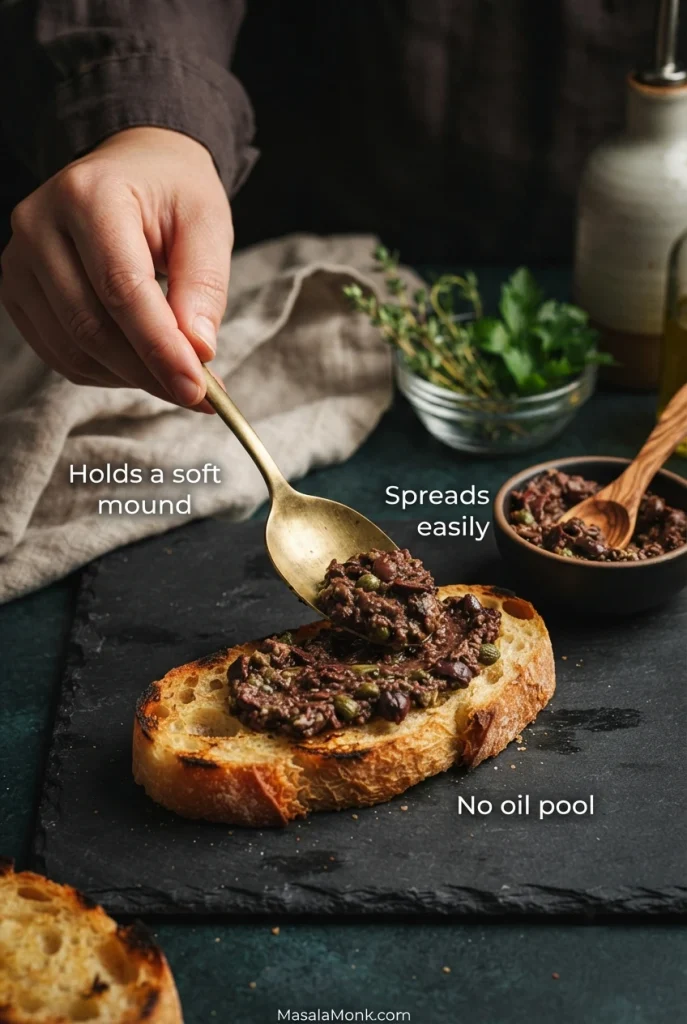
No food processor? Mince the garlic, capers, and anchovies finely. Chop half the olives quite small and leave the rest a little coarser. Combine everything in a bowl, then stir in the oil and lemon. This takes longer but works particularly well for a rustic, hand-chopped spread. For other serving textures, compare coarse, fine and smooth tapenade.
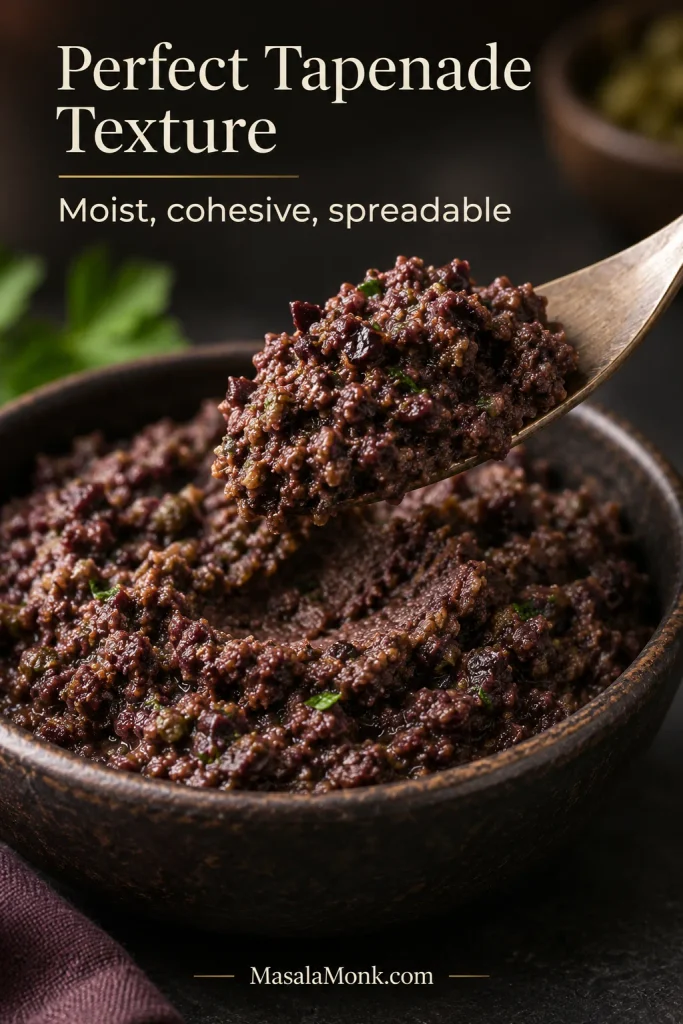
The oil’s flavor remains noticeable because nothing is cooked. Choose one you enjoy tasting rather than automatically reaching for the most expensive bottle. Our guide to virgin and extra-virgin olive oil explains the differences if you’re comparing options.
Best Olives for Tapenade: Black, Green, Kalamata & More
For classic Provençal-style tapenade, choose Niçoise or another flavorful cured black olive. Castelvetrano is an excellent choice for a mild green version, while Kalamata makes a fruitier, tangier spread. Ordinary canned black olives are a useful budget option when you want something gentler. Already using Kalamata olives? Follow the Kalamata olive tapenade recipe.
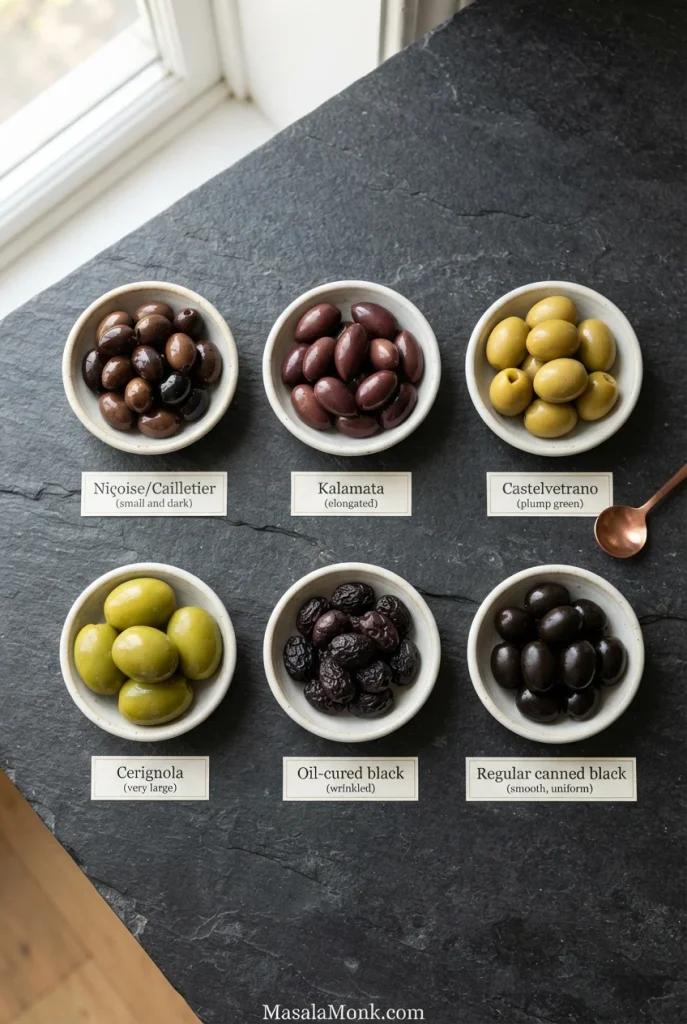
| Olive type | Flavor and texture | Best use |
|---|---|---|
| Niçoise / Cailletier | Small, dark, deeply savory, sometimes fruity | Classic black tapenade |
| Kalamata | Fleshy, fruity, tangy, often strongly brined | Bold black-olive spread |
| Castelvetrano | Firm, green, buttery, relatively mild-tasting | Green tapenade with herbs |
| Cerignola | Large, firm, often gently flavored | Green tapenade with more olive texture |
| Oil-cured black | Wrinkled, concentrated, sometimes bitter | Rich spreads or mixed-olive batches |
| Regular canned black | Soft, mild, less intense | Everyday olive spread |
Can You Use Regular Jarred or Canned Olives?
Absolutely. Plain supermarket olives work well, and mixing varieties is often more useful than searching for one perfect jar. Try 100 g Kalamata with 100 g mild black olives when you want some fruity tang without the full intensity of Kalamata on its own.
Stuffed and marinated olives need a little more thought. Pimento-stuffed olives change the flavor and color, while cheese-stuffed varieties introduce dairy and a softer filling. Garlic- or herb-marinated olives may already contain enough seasoning, so taste them before adding more.
How to Pit Olives for Tapenade
All four recipes use 200 g of drained, pitted olive flesh. Depending on their size and variety, you may need approximately 250–300 g of whole olives to get that amount. Weigh the flesh after removing the pits.
A handheld olive pitter is convenient for a large batch. Otherwise, place an olive on a stable chopping board and press gently with the flat base of a sturdy cup. Once the flesh splits, remove the pit with your fingers. Work one olive at a time, keeping the cup steady so it doesn’t slip. Check for remaining pit fragments before chopping.
Brined, Sliced or Oil-Cured Olives
Drain brined olives well. A brief rinse can remove harsh surface brine, but pat them dry afterward so the spread doesn’t become watery.
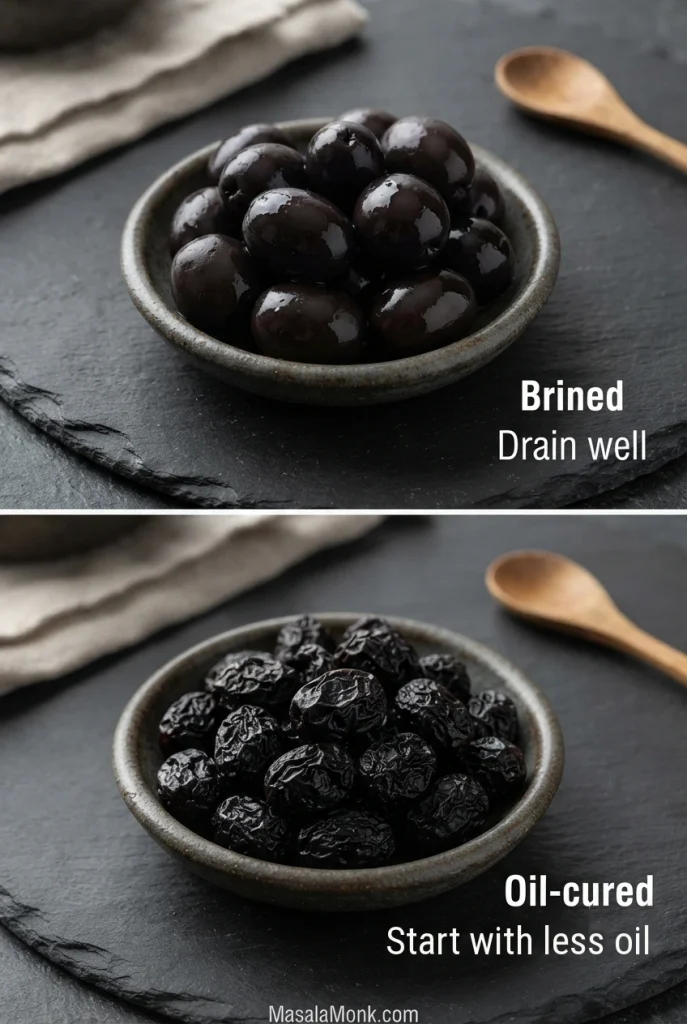
Sliced canned olives need fewer processor pulses because they’re already small. Oil-cured olives may need less added oil.
Green, Kalamata & Vegan Olive Tapenade Recipes
Each variation starts with 200 g of pitted, drained olives. Choose whichever suits what you have and the flavor you’re after.
Green Olive Tapenade Recipe
Green olive tapenade is particularly good when you want a lighter appetizer beside crisp vegetables or warm pita. Buttery Castelvetrano olives and parsley make a gentle combination. Start with less raw garlic if the olives are especially mild; you should still taste the olives and herbs, not only the seasonings. This recipe is vegan as written.
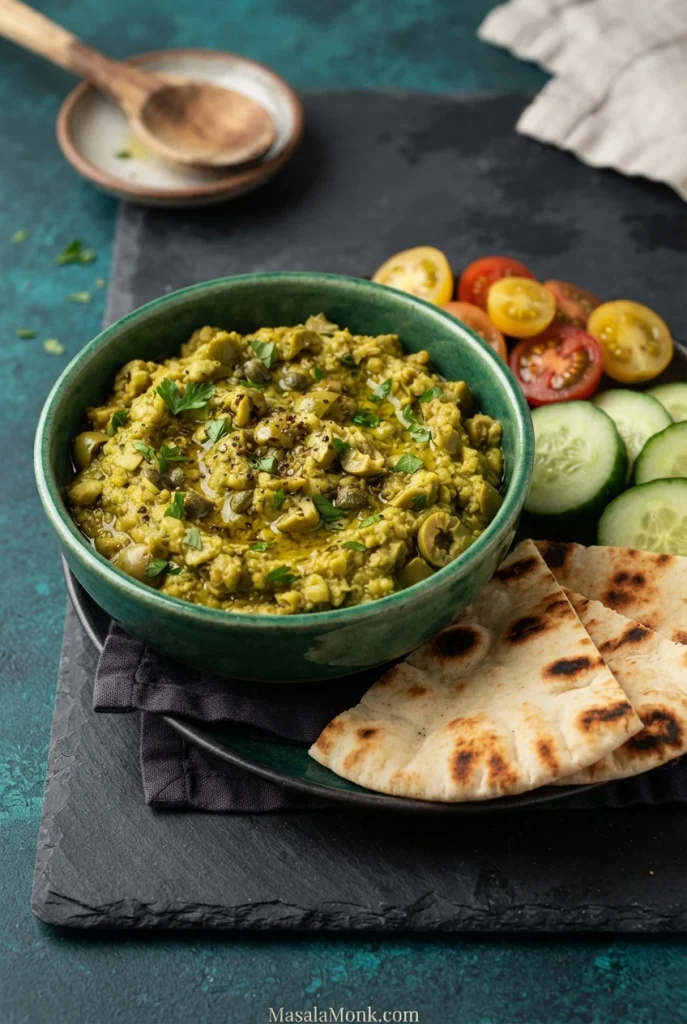
Prep: 15 minutes · Cook: None · Yield: Approximately 235–260 g (8.3–9.2 oz)
Green Tapenade Ingredients
- 200 g (7.1 oz) pitted, drained green olives, preferably Castelvetrano
- 10 g (0.35 oz) drained capers, roughly 1 generously filled tablespoon
- 1 small garlic clove, or ½ clove to start for very mild olives
- 15–30 ml (1–2 tbsp) extra-virgin olive oil
- 5–10 ml (1–2 tsp) fresh lemon juice
- 5 g (0.18 oz) fresh parsley leaves
- ½ tsp finely grated lemon zest, optional
- Freshly ground black pepper, to taste
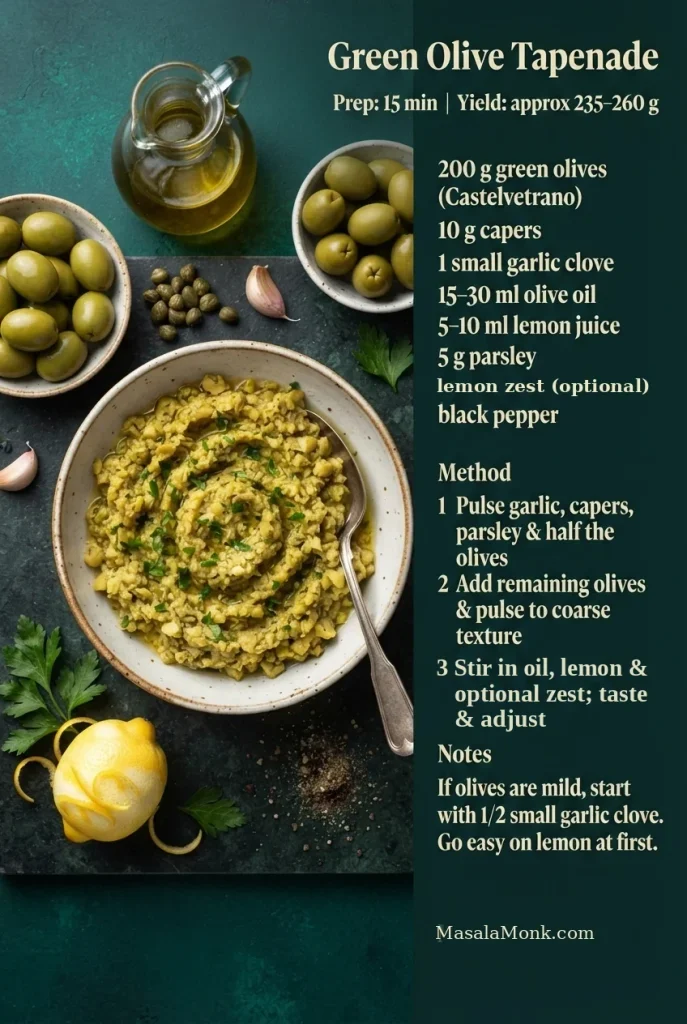
How to Make Green Olive Tapenade
- Drain the olives and capers, pat dry, and mince the garlic. For very mild olives, set aside half the minced garlic to adjust after tasting.
- Pulse the capers, parsley, garlic you’re using initially, and half the olives in a mini food processor until finely chopped.
- Add the remaining olives and pulse briefly, leaving small pieces for texture.
- Transfer to a bowl and stir in 15 ml olive oil, 5 ml lemon juice, and the optional zest.
- Taste on bread. Add the reserved garlic only if you want a stronger garlic note. Add oil a teaspoon at a time if dry, or a little more lemon if it needs brightness. Finish with black pepper.
For an anchovy-containing green tapenade, add 3–6 g drained fillets (roughly 1–3 small fillets) while chopping. This makes the spread more intensely savory, but it will no longer be vegan.
Serve with homemade pita bread, cucumber, and cherry tomatoes. Their gentle flavors are a good match for the green olives and parsley.
Kalamata Olive Tapenade Recipe
Already have Kalamata olives in the fridge? Their fruity, wine-like tang makes a bold tapenade, especially good with creamy cheese. The main thing to watch is salt. Kalamata olives are often strongly brined, so begin with fewer capers and anchovies. You can always add more; taking them out after chopping is another matter.
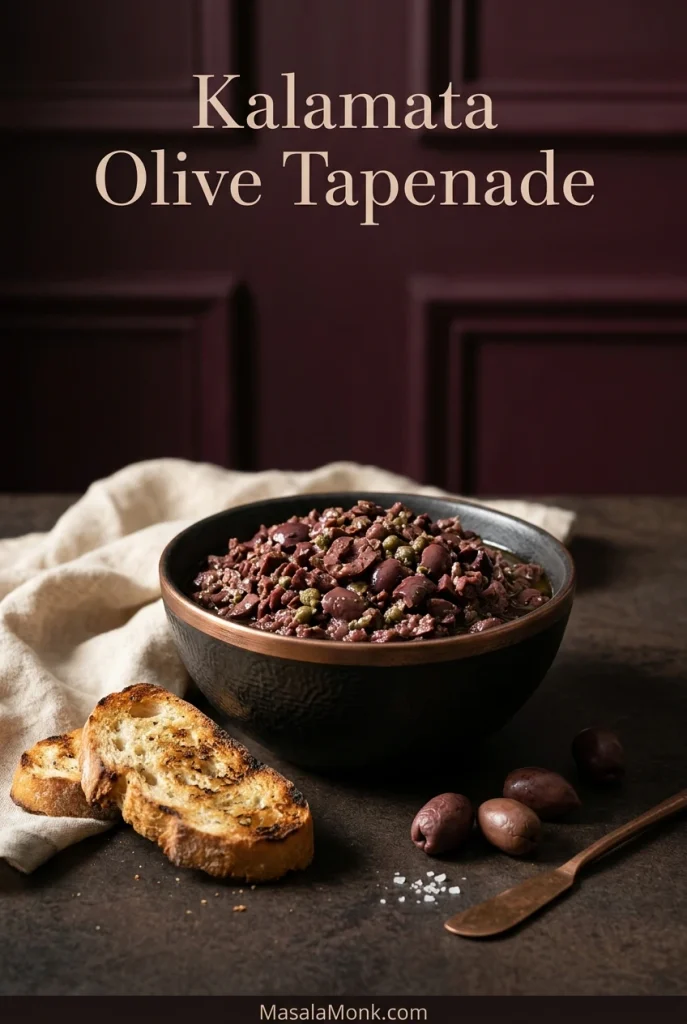
Prep: 10–15 minutes · Cook: None · Yield: Approximately 230–250 g (8.1–8.8 oz)
Kalamata Tapenade Ingredients
- 200 g (7.1 oz) pitted, drained Kalamata olives
- 5–10 g (0.18–0.35 oz) drained capers, roughly ½–1 generously filled tablespoon
- 4–6 g (0.14–0.21 oz) drained oil-packed anchovy fillets, approximately 1–3 fillets
- 1 small garlic clove
- 15–25 ml (1 tbsp to 1 tbsp plus 2 tsp) extra-virgin olive oil
- 5 ml (1 tsp) fresh lemon juice
- ½ tsp fresh thyme leaves or 1 tsp chopped fresh oregano
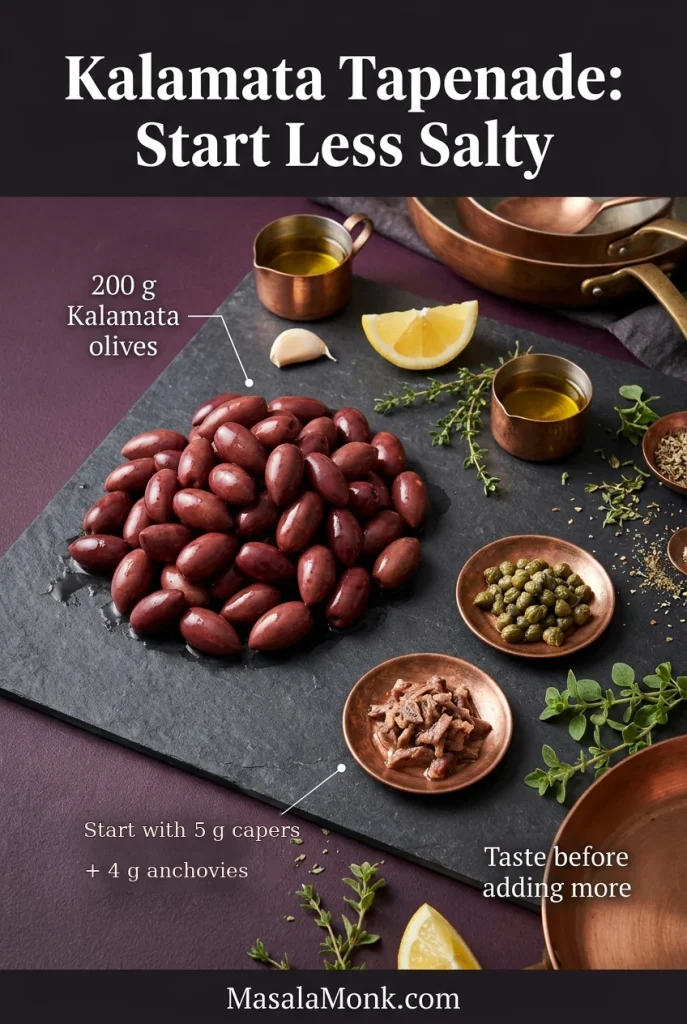
How to Make Kalamata Tapenade
- Drain the olives. If they’re strongly brined, start with 5 g capers and 4 g anchovies.
- Finely chop the garlic, capers, anchovies, herbs, and half the olives using a mini processor or sharp knife.
- Add the remaining olives and chop until the mixture holds together, keeping small pieces if you prefer a rustic spread.
- Stir in 15 ml olive oil and 5 ml lemon juice. Add more oil only if the mixture needs moisture.
- Taste on plain bread. Add more capers or anchovies only if you want a stronger savory finish.
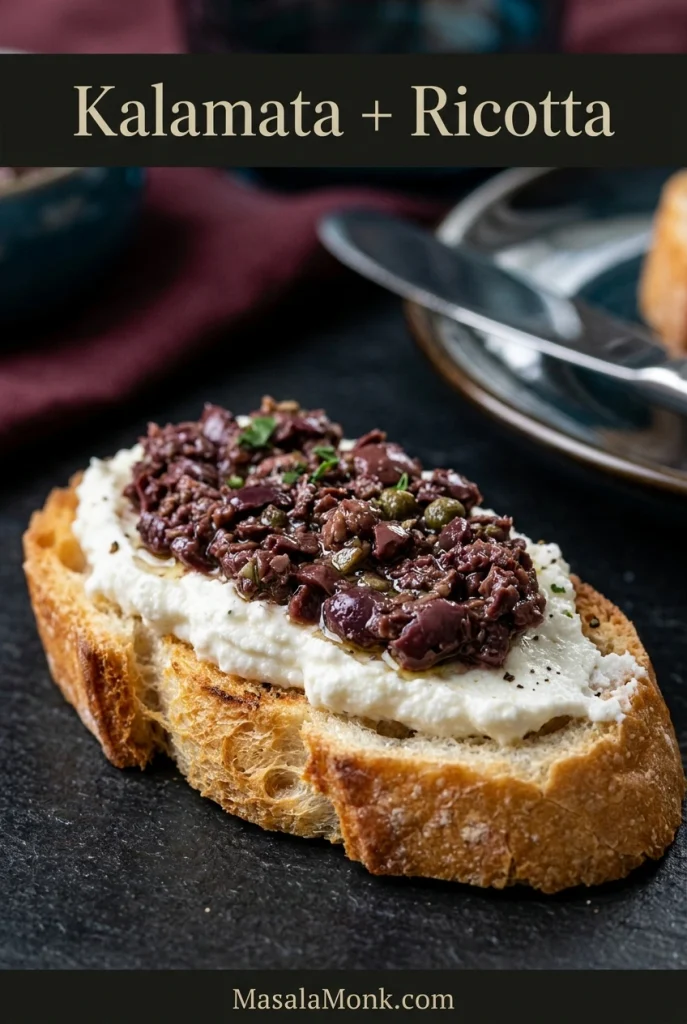
Kalamata tapenade is usually purple-brown, not jet black. That’s the olives’ natural color. Serve it with ricotta or fresh mozzarella: the creamy cheese softens the olives’ tang without covering it up. For additional pairings, browse what to serve with tapenade.
Vegan Black Olive Tapenade Without Anchovies
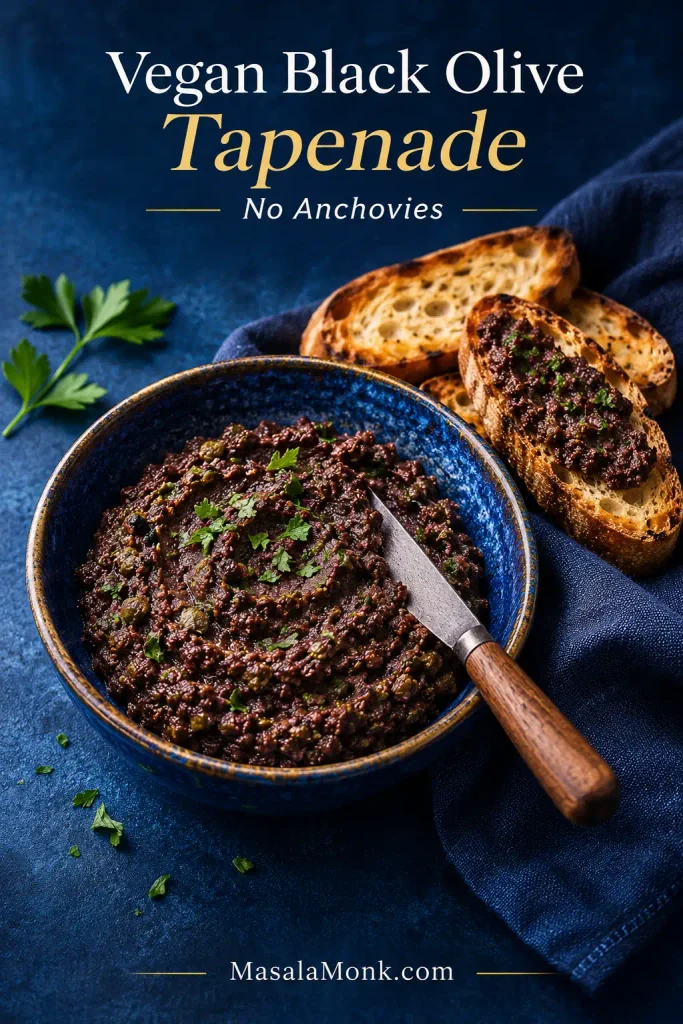
There’s no need to find a specialty anchovy replacement to make vegan black olive tapenade. Start with flavorful black olives and capers; they’re enough to make a satisfying spread. Garlic, parsley, and lemon add contrast, while a few sun-dried tomatoes can give mild olives more depth. The tomatoes are optional, not something the recipe depends on.
Prep: 15 minutes with ready-to-use ingredients · Cook: None · Yield: Approximately 235–255 g (8.3–9 oz), without optional tomatoes
Vegan Tapenade Ingredients
- 200 g (7.1 oz) pitted, drained black olives
- 10 g (0.35 oz) drained capers, roughly 1 generously filled tablespoon
- 1 small garlic clove
- 15–30 ml (1–2 tbsp) extra-virgin olive oil
- 5–10 ml (1–2 tsp) fresh lemon juice
- 3–5 g (0.1–0.18 oz) fresh parsley, chopped
- Freshly ground black pepper, to taste
- Optional: 15–20 g (0.53–0.7 oz) softened, well-drained sun-dried tomatoes
How to Make Vegan Black Olive Tapenade
- Drain the olives and capers, pat dry, and mince the garlic.
- Pulse or finely chop the garlic, capers, parsley, and half the olives. Include the optional tomatoes at this stage.
- Add the remaining olives and chop until the mixture holds together, retaining small pieces if you want a rustic texture.
- Stir in 15 ml olive oil and 5 ml lemon juice. Taste, then adjust with more oil or lemon if needed. Add black pepper.
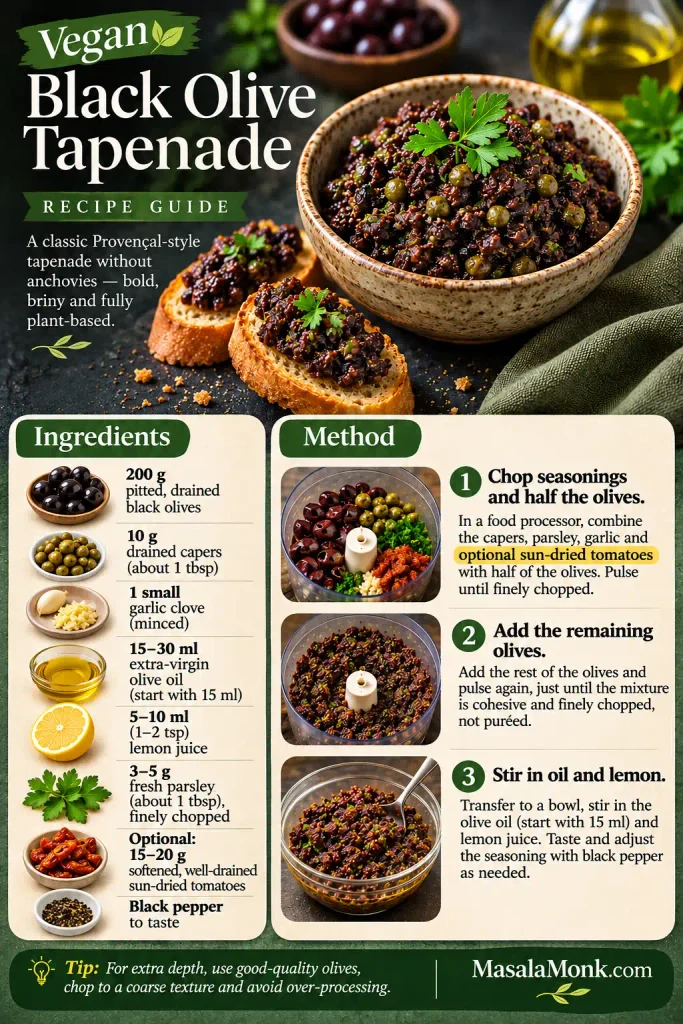
Dry-packed sun-dried tomatoes may need softening in warm water until pliable; drain and pat them dry before chopping. Oil-packed tomatoes can be used after draining.
Serve this tapenade with extra-creamy homemade hummus, cucumber, and warm flatbread. The hummus softens the tapenade’s salty punch, while the bread makes it easy to scoop a little of each.
Back to the four olive tapenade recipes
Olive Tapenade Ingredient Substitutions
Olives form the base, and capers give tapenade much of its distinctive Provençal character. Anchovies are traditional but can be omitted. If you’re missing several ingredients, you can still make a good olive spread, even if it tastes different from classic tapenade.
Without Capers, Anchovies, Garlic or Added Oil
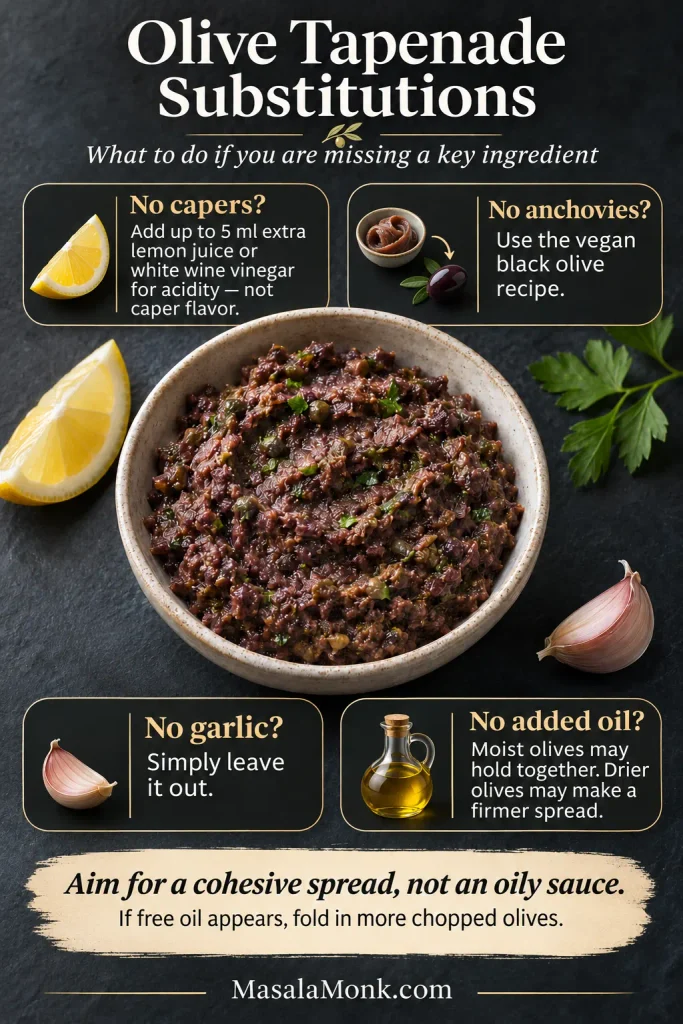
- No capers: Omit them. Up to 5 ml (1 tsp) extra lemon juice or white wine vinegar can provide acidity, though it won’t reproduce capers’ distinctive pungency.
- No anchovies: Use the vegan black olive recipe. It remains savory without the particular flavor anchovies contribute.
- No garlic: Leave it out. For a gentler onion note, try 5–10 g finely minced, cooked and cooled shallot if alliums are suitable for you.
- No added oil: Chop and combine the remaining ingredients. Moist, naturally oily olives may hold together well; drier varieties will produce a firmer, more crumbly spread.
- Less sodium: Choose lower-sodium olives and capers when available and reduce or omit anchovies. Check labels rather than assuming rinsing makes olives low in sodium.
An Easy Three-Ingredient Olive Spread
Have only olives, garlic, and olive oil? Finely chop 200 g (7.1 oz) drained, pitted olives with one small garlic clove. Stir in 15 ml (1 tbsp) olive oil, adding up to another tablespoon if the mixture needs more moisture.
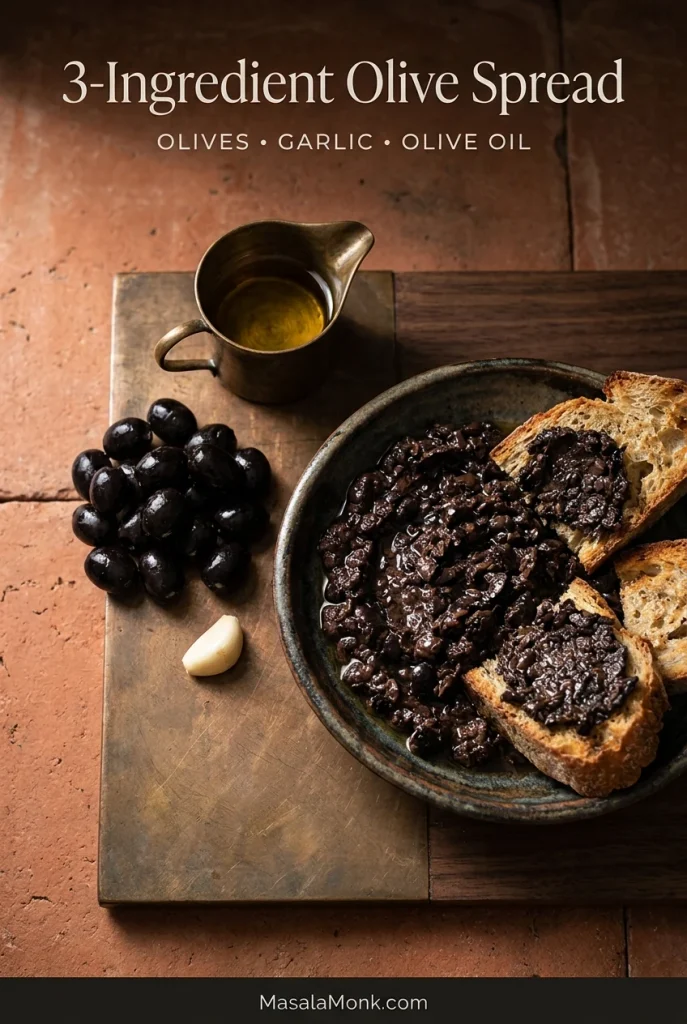
Without capers and anchovies, it won’t have the full character of classic tapenade. But it makes a useful everyday olive spread for toast, sandwiches, or fresh vegetables.
Sun-Dried Tomato, Roasted Pepper, Nut & Herb Variations
Keep additions modest if you want the olives to remain the main flavor. For a 200 g olive base, try:
- Sun-dried tomatoes: Add 15–20 g softened, well-drained tomatoes for concentrated savory flavor and gentle sweetness.
- Roasted red pepper: Fold in 20–30 g finely chopped, well-drained pepper for a sweeter, softer spread.
- Walnuts or almonds: Add 10–15 g finely chopped toasted nuts for more body and a nutty bite. These introduce tree-nut allergens.
- Fresh herbs: Parsley suits green olives particularly well; thyme and oregano work with darker, more assertive varieties. A little basil is another option.
If you’d rather make roasted peppers and walnuts the main event, try Syrian muhammara. Its peppers, walnuts, and pomegranate molasses create a sweet-tart dip that’s quite different from an olive spread.
Should Olive Tapenade Be Smooth or Chunky?
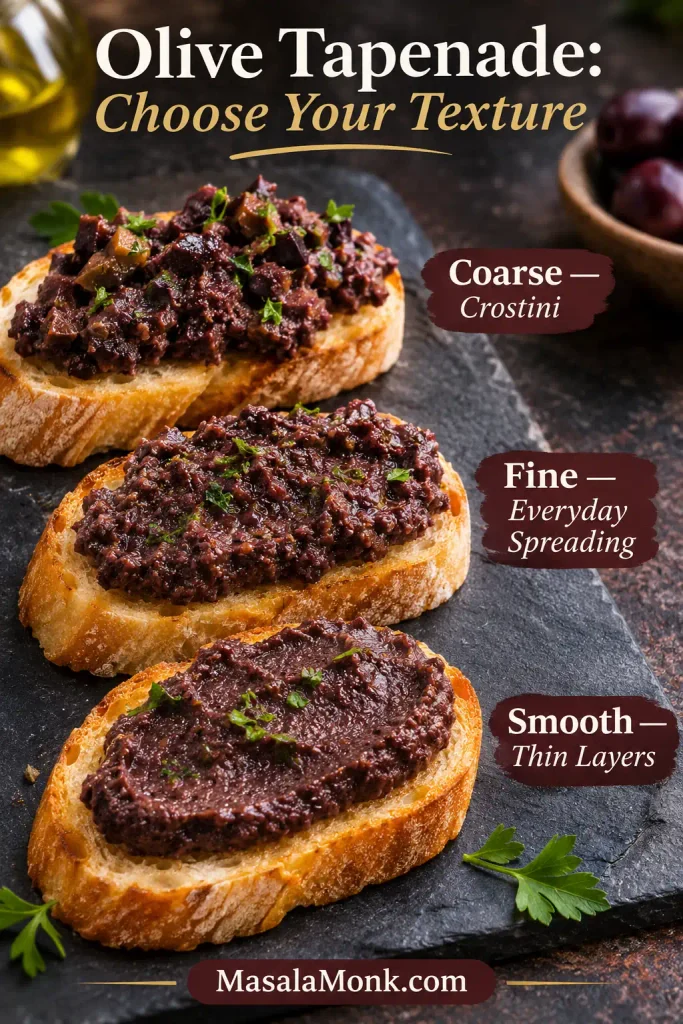
For crostini, aim for slightly coarse tapenade. Small olive pieces give the topping a pleasant bite, while enough finely chopped olive holds it together on the bread. A smoother paste works better when you want a thin layer inside a sandwich or an even spread on crackers. A traditionally pounded tapenade can be cohesive while still retaining some texture.
Food Processor, Knife or Mortar?
For most small batches, use a mini food processor. It chops the olives quickly, and short pulses help you stop before the mixture becomes too fine. Choose a sharp knife when you want more visible olive pieces. A mortar and pestle is useful when you prefer a pounded paste: work the capers, garlic, and anchovies first, then gradually incorporate the olives.
For a much chunkier olive preparation, compare the olive salad in our muffuletta sandwich recipe. Its larger olive pieces and pickled vegetables create a noticeably different texture.
Why a Blender Sometimes Produces an Oily Purée
A large blender is awkward for a small batch of tapenade. The olives may sit below the blades, tempting you to pour in more oil just to get things moving. That’s how a thick olive spread can turn loose and greasy. Use a mini processor or chop the olives by hand instead. If separation has already occurred, consult the olive tapenade troubleshooting guide.
Stirring the oil into the chopped olives also avoids unnecessarily vigorous processing, which can make the bitterness of some olive oils more noticeable.
What to Eat With Olive Tapenade
Olive tapenade is especially good with toasted baguette, crostini, crackers, mild cheese, fresh vegetables, and simply cooked fish or chicken. Its concentrated flavor is usually more enjoyable in a thin layer than a heavy topping. Give the olives something creamy, crisp, or mild to play against.
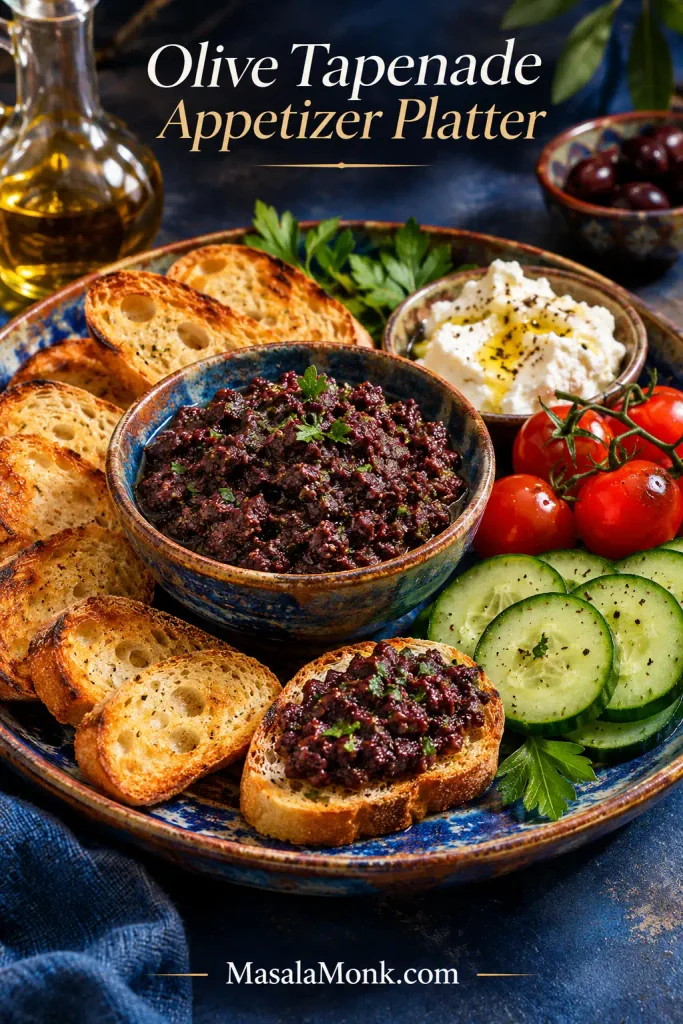
For an easy first bite, try classic black tapenade over ricotta-topped baguette. The cool, creamy cheese balances the concentrated olives, while toasted bread adds a contrasting crunch.
How to Assemble Olive Tapenade Crostini
For a stable topping, spread a thin layer of chopped olive tapenade into the toast’s rough surface before spooning on the rest. This helps the larger pieces cling to the bread, so guests can lift each crostini without losing most of the topping.
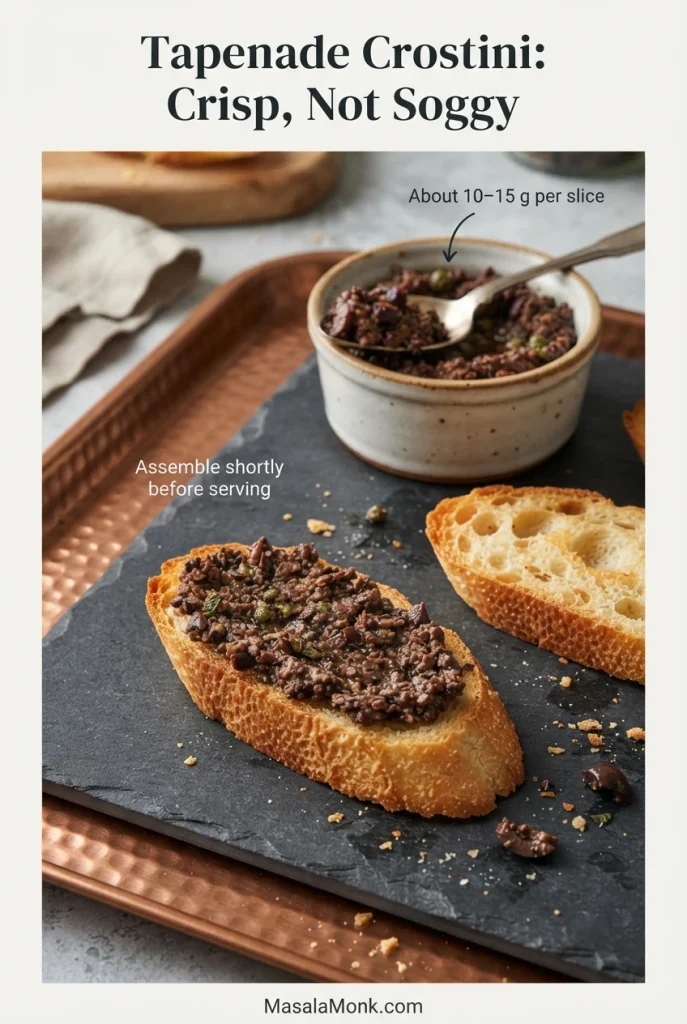
- Crostini and toasted baguette: Use about 10–15 g tapenade per slice, depending on bread size. Toast the bread well and add the spread shortly before serving so it stays crisp. Our easy bruschetta recipe explains how to prepare bread for moist toppings.
- Crackers and vegetables: Cucumber, celery, carrots, and sweet bell peppers offer a fresh contrast. Plain or lightly salted crackers work particularly well with strong tapenade.
- Mild cheeses: Ricotta and fresh mozzarella soften the impact of salty olives, while goat cheese adds a tangier contrast.
- Sandwiches and bagels: Spread a thin layer alongside tomatoes, roasted vegetables, or mild cheese. For other combinations, see our bagel toppings and spreads guide.
- Roasted vegetables, chicken, or fish: Finish with a small spoonful after cooking, taking the tapenade’s saltiness into account when seasoning the dish.
Can You Use Tapenade as Pasta Sauce?
Yes, but treat tapenade as a concentrated seasoning rather than a sauce you’d ladle over pasta. Begin with a spoonful, loosen it with starchy pasta water, and add more only after tasting. Too much can make the pasta salty or grainy.
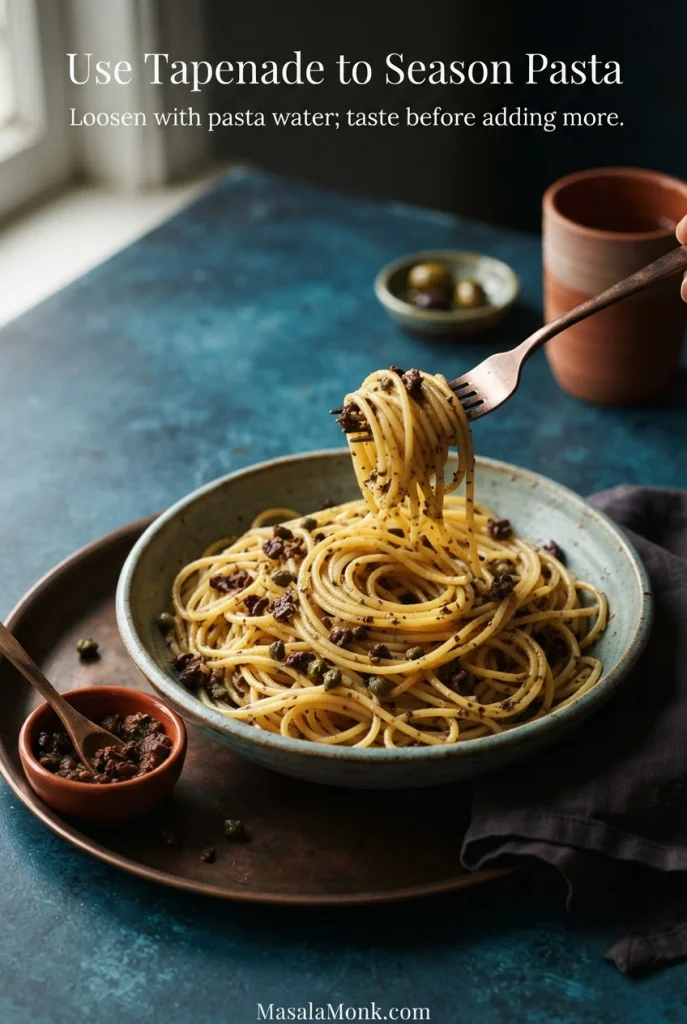
Our pesto pasta recipe explains how pasta water helps a sauce coat noodles. The principle is useful here too, although tapenade needs different proportions.
How Much Tapenade Do You Need for a Party?
Allow approximately 10–15 g per crostini, adjusting for the size of the bread. A 250 g batch makes enough for about 16 generously topped pieces or 25 lighter ones. With other appetizers on the table, guests may take smaller portions. For preparing platters ahead, see how to store and make tapenade ahead.
You can also spoon a little tapenade into small roasted potatoes. Our potato appetizer ideas include an olive-tapenade-and-herb filling for something more substantial than bread.
How to Fix Salty, Bitter, Oily or Watery Olive Tapenade
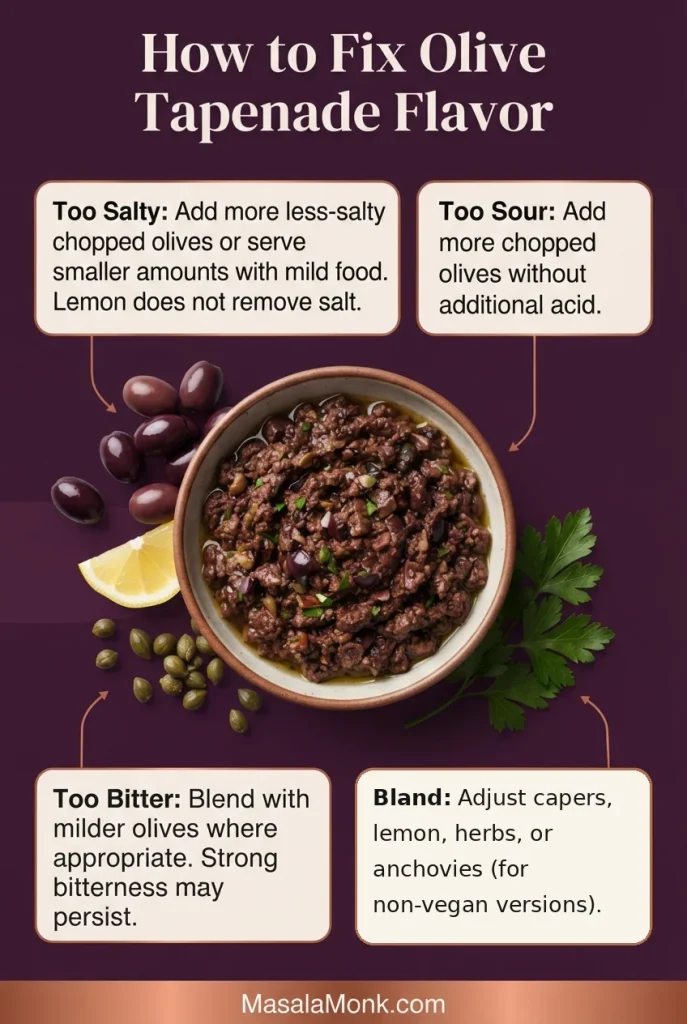
If your first bite is overwhelmingly salty, don’t reach for the lemon yet. A squeeze may make the flavor seem brighter, but the salt is still there. Chop in some less-salty olives instead. For other problems, identify what’s causing them before changing the mixture.
| Problem | Likely cause | What helps |
|---|---|---|
| Too salty | Strongly brined olives, capers, or anchovies | Add less-salty olives; serve smaller portions with plain foods. |
| Too bitter | Bitter olives or strongly flavored oil | Mix with milder olives; severe bitterness may remain. |
| Too sour | Too much lemon or vinegar | Add more chopped olives without additional acid. |
| Too garlicky | Excess raw garlic | Increase the olive base to dilute it. |
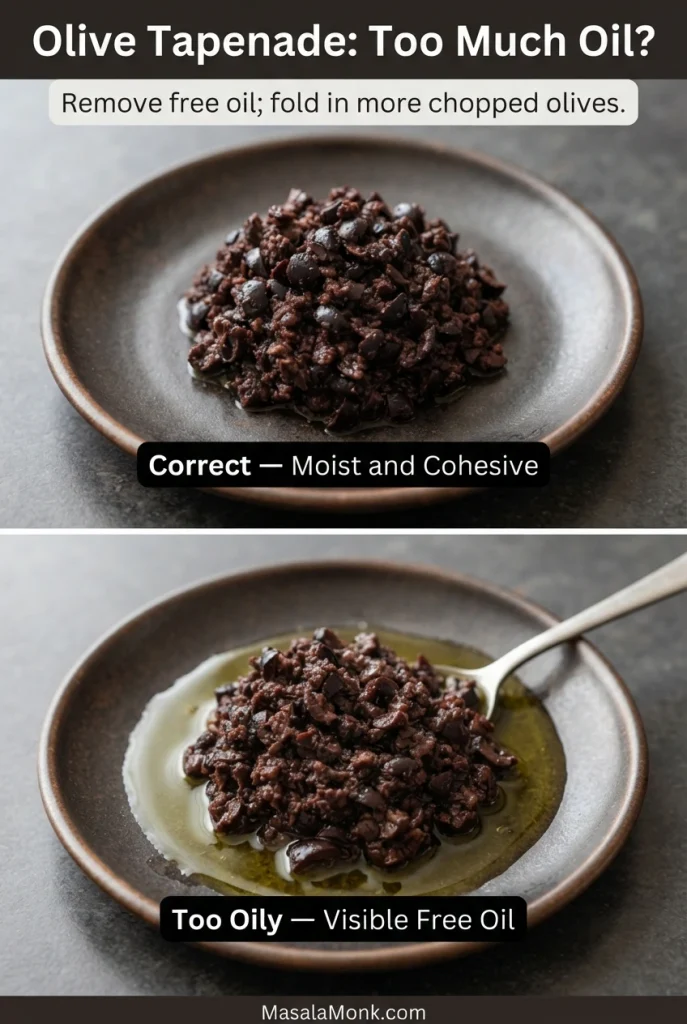
| Oil pooling | Too much olive oil | Remove free oil and fold in more chopped olives. |
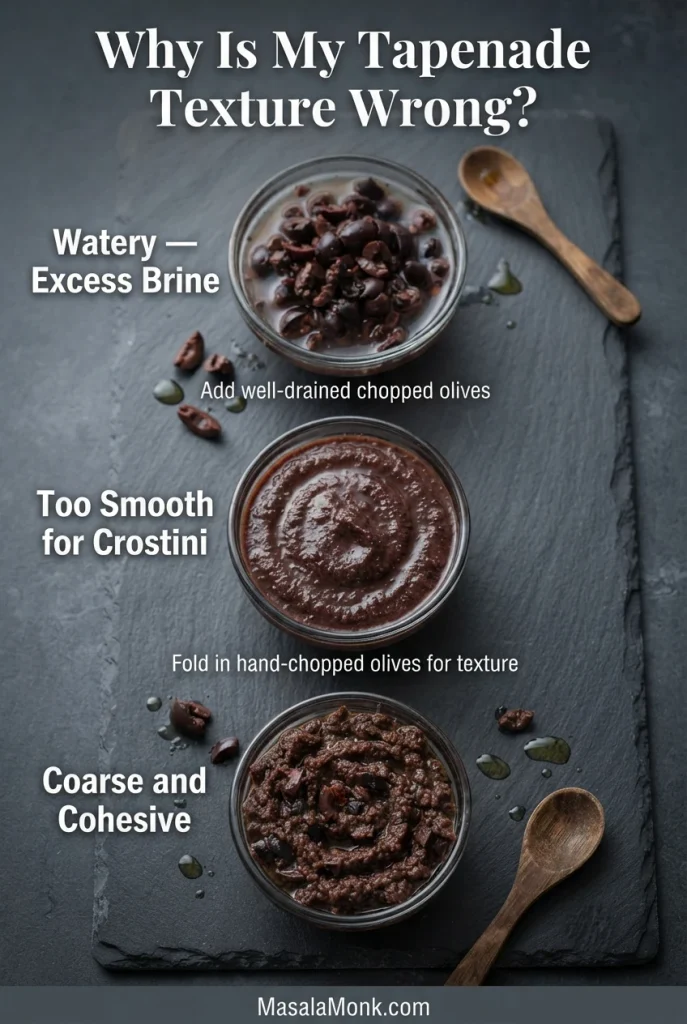
| Watery | Retained brine or rinse water | Fold in well-drained chopped olives. |
| Dry or crumbly | Firm olives or insufficient oil | Stir in oil 5 ml (1 tsp) at a time. |
| Too smooth | Overprocessing for the desired style | Fold in hand-chopped olives to restore texture. |
| Bland | Mild olives or weak seasoning | Adjust capers, anchovies, lemon, or herbs. |
| Purple-brown color | Natural Kalamata pigments | Normal for Kalamata; no correction needed. |
How Do You Recognize Watery or Overprocessed Tapenade?
Compare the amount of free liquid with the size of the olive pieces. Olives still sitting in brine need draining before chopping; a finished purée that is too smooth for crostini needs some freshly chopped olives folded through it. The images below distinguish those states from a cohesive, slightly coarse spread.
Why Is Tapenade Salty Even After Rinsing?
Olives absorb salt during curing. Rinsing may remove some surface brine, but it cannot take the salt already absorbed into the flesh out of the olives. That’s why even thoroughly drained olives can still make a salty tapenade.
What Makes Olive Tapenade Bitter?
Some olives have a naturally bitter edge, while certain extra-virgin olive oils are peppery or bitter. Taste the ingredients separately before combining them. Mixing stronger olives with milder ones can soften an overly intense flavor, but rancid or spoiled ingredients should be discarded.
Back to the four olive tapenade recipes
How to Store, Freeze & Make Olive Tapenade Ahead
Make the tapenade the evening before and refrigerate it. On the day, toast the bread and arrange the platter shortly before serving. Keep the bread separate from the tapenade until guests are ready to eat so it stays crisp.
How Long Does Homemade Tapenade Last in the Fridge?
Store homemade tapenade in a clean, airtight container at 4°C (40°F) or colder. For these recipes containing fresh garlic and olive oil, use within 3–4 days as a conservative precaution.
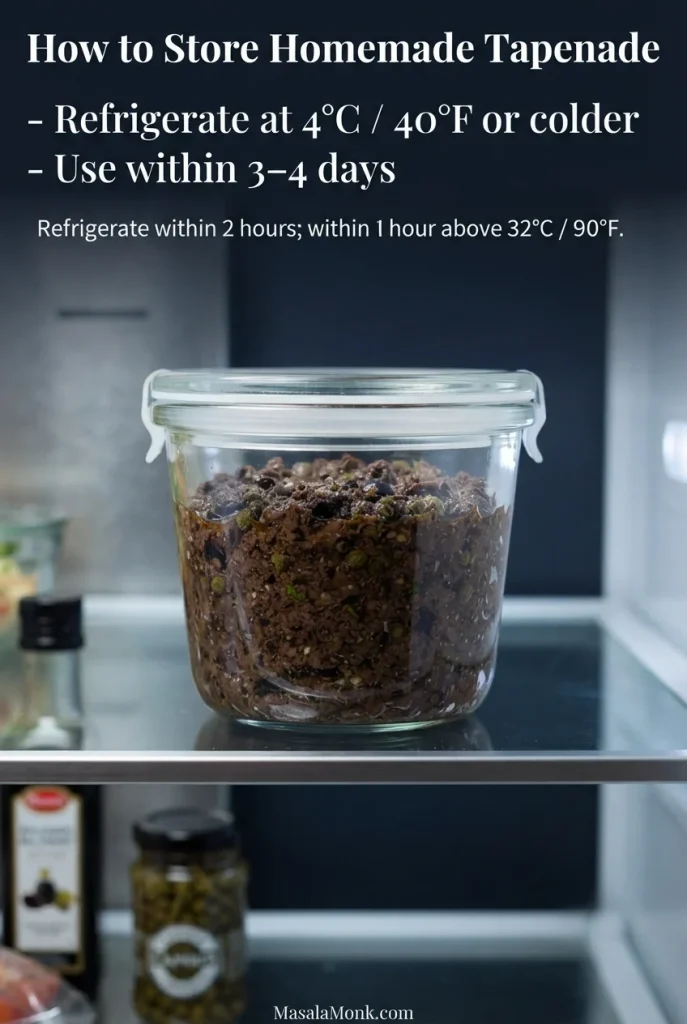
The National Center for Home Food Preservation’s garlic-in-oil guidance recommends refrigeration for no more than four days, or freezing for longer storage. This informs the precaution here; it isn’t a laboratory-validated shelf life for these exact tapenade recipes.
At gatherings, serve a small bowl and keep the remainder chilled. Refrigerate perishable food within two hours, or within one hour when the surrounding temperature is above 32°C (90°F).
Can You Freeze Olive Tapenade?
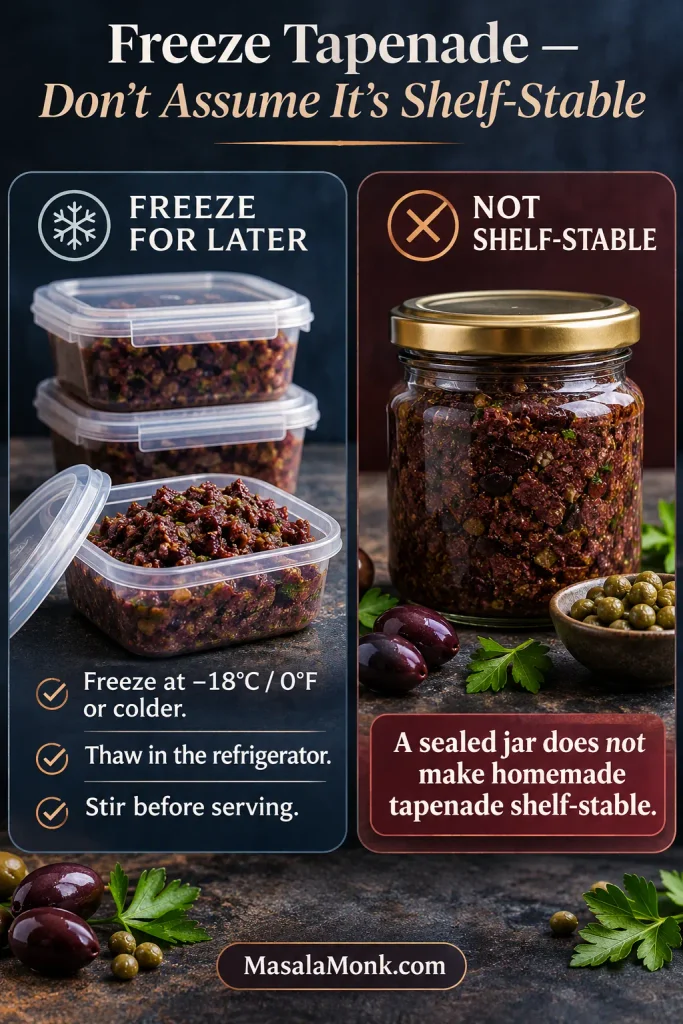
Yes. Divide into small freezer-safe containers or covered portion trays, label, and freeze promptly at −18°C (0°F) or colder. Thaw in the refrigerator and stir before serving. Some oil separation or changes in the flavor of fresh herbs may occur.
Can You Can Tapenade or Gift It in Jars?
Homemade tapenade should not be treated as shelf-stable. Fresh garlic and other ingredients in oil can create preservation risks. Adding lemon juice or covering the surface with extra olive oil does not make an untested canning method safe.
For gifting, use a clean food-safe container, keep it chilled during transport, and tell the recipient to refrigerate it immediately and use it promptly.
Back to the four olive tapenade recipes
Olive Tapenade Nutrition & Serving Sizes
Tapenade provides fats from olives and olive oil, including monounsaturated fats. Sodium can also be substantial because olives, capers, and anchovies are commonly preserved with salt.
The table gives a reference estimate per 20 g serving for a batch made with 200 g canned ripe black olives, 10 g canned capers, 7 g drained anchovies, 15 ml olive oil, 5 ml lemon juice, one small garlic clove, and thyme. It assumes approximately 240 g of finished tapenade, divided into 12 portions.
| Nutrient | Approximate amount per 20 g |
|---|---|
| Calories | 31 kcal |
| Total fat | 3.0 g |
| Saturated fat | 0.5–0.6 g |
| Carbohydrates | 1.1 g |
| Fiber | 0.3 g |
| Protein | 0.3 g |
| Sodium | Approximately 175 mg |
These are estimates based on representative ingredient-composition data, not laboratory analysis. The reference uses canned ripe black olives; Niçoise, Kalamata, green, and oil-cured olives can differ substantially, especially in fat and sodium. Using more than the reference 15 ml of olive oil also raises calories and fat. For dietary tracking, use your actual ingredient labels and the finished batch weight.
The classic and Kalamata recipes contain fish from anchovies. Variations with walnuts or almonds contain tree nuts. The green and vegan black recipes are fish-free as written; always check packaged ingredients for specific allergy requirements.
What Is Traditional French Tapenade?
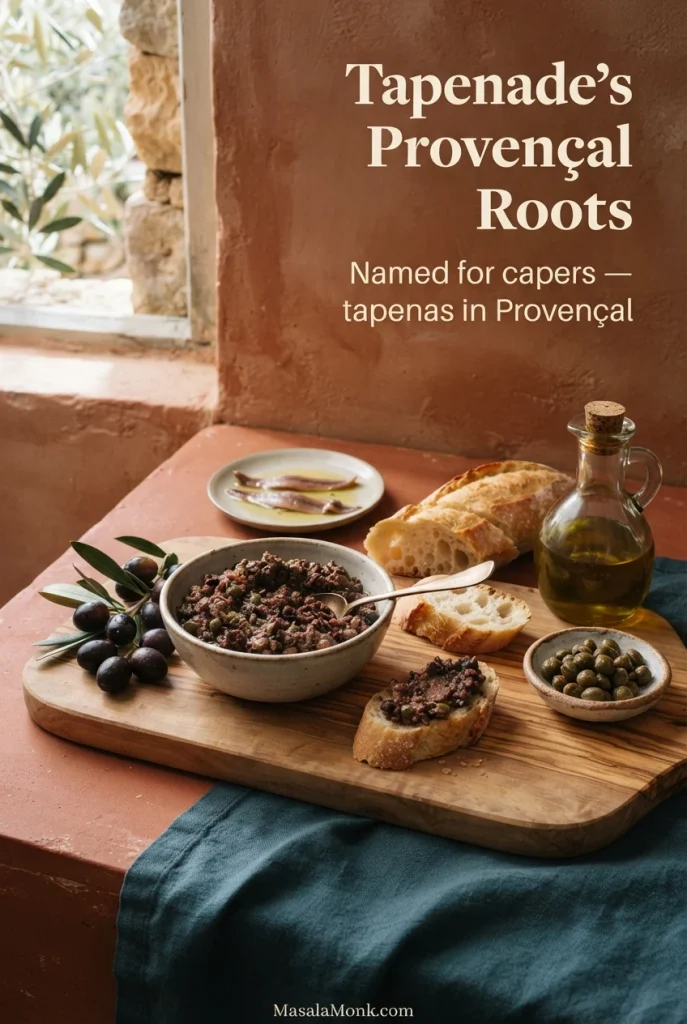
Tapenade comes from Provence in southern France. Its name is linked to the Provençal word for capers, which contribute much of the spread’s pungent character. Modern traditional-style black tapenade usually combines olives, capers, anchovies, and olive oil, sometimes with garlic or herbs.
The earlier Marseille preparation associated with chef Meynier in the late nineteenth century was more elaborate. It included tuna, mustard, cognac, anchovies, capers, and olives. Saveur’s account of the original tapenade explains how that historical recipe differs from the simpler olive spreads commonly made today. Capers remain the link between the historical preparation and the olive-forward versions now familiar on appetizer tables.