
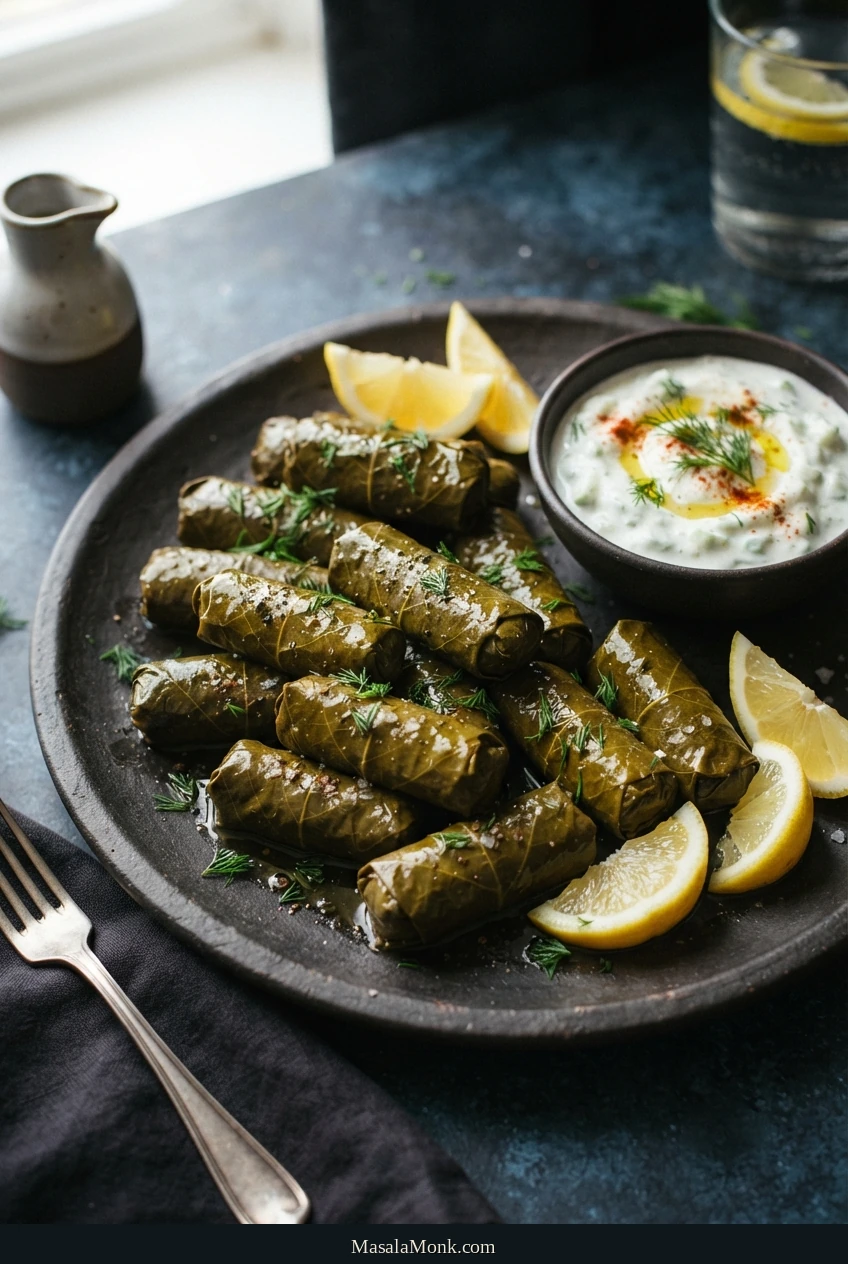
Bite through a tender grape leaf and you’ll find the heart of this dolmas recipe: soft rice scented with dill, mint, and sweet onion. Olive oil gives the filling richness, while lemon brightens the herbs and the gentle tang of the leaf. Greek dolmades are lovely warm from the pot or cooled on a platter with lemon wedges, salads, and a bowl of tzatziki.
This recipe makes dolmadakia yalantzi, the meat-free Greek preparation of stuffed grape leaves. It uses medium-grain rice, fresh herbs, and a brief pre-cooking step before rolling. The goal is tender leaves around soft, distinct grains, with enough lemon to lift the dill and mint without overwhelming them.
Rolling takes the most time, especially when the leaves come in different shapes and sizes. The first few may feel awkward. Once you discover how much filling each leaf can hold, the folding becomes easier. The rolls don’t need to look identical.
Jump to the dolmas recipe to start cooking, or browse the guide for leaf preparation, rolling tips, and troubleshooting.
In This Guide
- Greek Dolmas Recipe
- What Are Dolmas?
- Choosing Grape Leaves
- Rice and Herb Filling
- How to Roll Dolmas
- Cooking and Doneness
- Troubleshooting
- Variations and Regional Styles
- Serving Ideas
- Storage and Make-Ahead
- FAQs
Greek Dolmas Recipe: Stuffed Grape Leaves with Rice and Herbs
| Preparation and rolling | 50–70 minutes |
|---|---|
| Cooking, including filling preparation | 60–85 minutes |
| Covered simmer (included in cooking) | 45–65 minutes |
| Resting | 20 minutes |
| Total time | Approximately 2 hours 10 minutes to 2 hours 55 minutes |
| Yield | About 45–60 small to medium rolls, depending on leaf size |
| Servings | 8–10 appetizer portions |
| Method | Covered stovetop simmer |
| Diet | Vegan and vegetarian; gluten-free when made with suitable ingredients |
Grape Leaves and Rice Filling Ingredients
Gather the grape leaves, medium-grain rice, onions, fresh herbs, and lemon. Measure the oil and lemon for the filling separately from the portions reserved for simmering and finishing; their totals are summarized below.
Grape leaves
- 60–80 tender grape leaves, fresh or jarred; reserve about 10–15, or enough to line the pot and cover the rolls
Rice and herb filling
- 250 g (8.8 oz) dry medium-grain white rice, approximately 1¼ US cups depending on the variety
- 180 g (6.3 oz) yellow onion, finely chopped, about 1 large onion
- 60 g (2.1 oz) spring onions, finely chopped, about 3–4 small spring onions
- 25 g (0.9 oz) fresh dill, finely chopped
- 25 g (0.9 oz) flat-leaf parsley, finely chopped
- 10 g (0.35 oz) fresh mint leaves, finely chopped
- 60 ml (4 US tablespoons) extra-virgin olive oil
- 120 ml (½ US cup) hot water
- 20 ml (4 US teaspoons) fresh lemon juice
- ½ teaspoon fine salt to start, adjusted for the saltiness of the grape leaves
- ½ teaspoon freshly ground black pepper
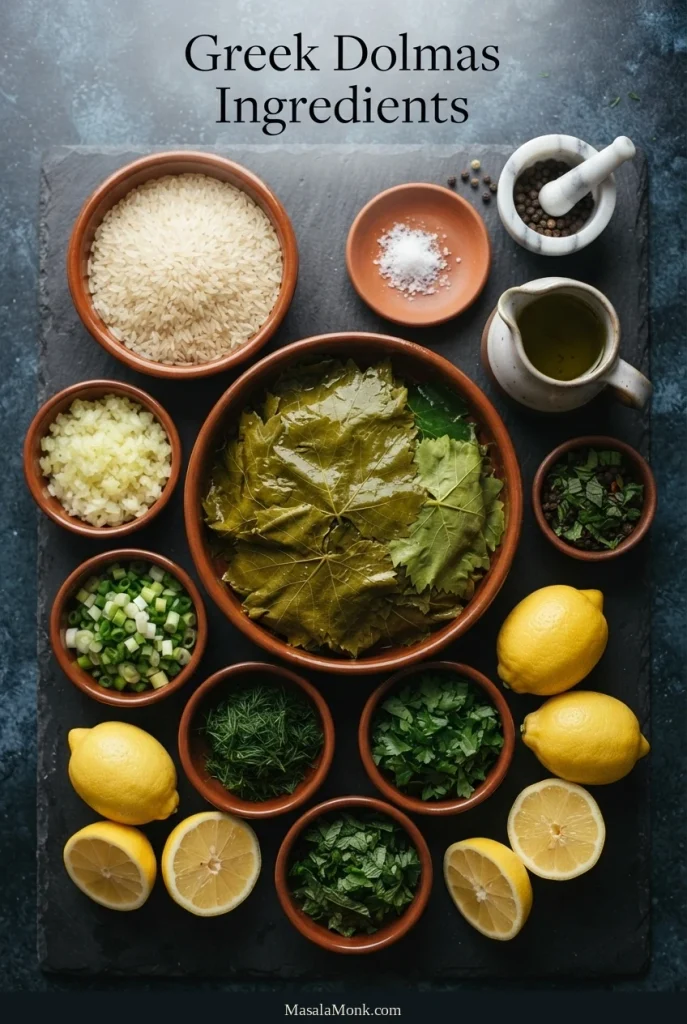
The photograph below brings together the main filling ingredients listed above. Use it to recognize the herb balance and finely chopped onions; the exact amounts are in the list, not measured from the picture.
Simmering and Finishing Ingredients
For simmering
- 75 ml (5 US tablespoons) extra-virgin olive oil
- 25 ml (5 US teaspoons) fresh lemon juice
- About 600 ml (2½ US cups) hot water or unsalted vegetable stock to have ready; pour only enough to reach the top layer of rolls, with extra hot water if needed
For finishing
- 15 ml (1 US tablespoon) extra-virgin olive oil
- Up to 15 ml (1 US tablespoon) fresh lemon juice
- Lemon wedges, optional
Ingredient totals: The recipe allocates 150 ml olive oil and up to 60 ml lemon juice across the filling, simmering, and finishing. Taste a cooked dolma before using the optional finishing lemon; jarred leaves may already be quite tangy.
About the yield: Leaf size and the amount of usable filling determine the final number of rolls. Keep extra wrappers nearby; if filling remains after you’ve rolled the leaves, cook it separately until the rice is tender instead of squeezing more into the parcels.
Equipment
You’ll need a saucepan for the filling, a fine-mesh strainer, a knife, chopping board, and measuring tools. Cook the dolmas in a wide, heavy-bottomed pot with a close-fitting lid, preferably around 24–26 cm (9½–10¼ inches) across.
Choose a heatproof plate or cooking weight designed for use inside a simmering pot. It should sit freely over the rolls, slightly smaller than the pot’s interior, so you can lift it out safely with heat-resistant utensils. Don’t use decorative or fragile tableware that isn’t intended for cooking.
How to Make Dolmas: Prepare the Leaves and Rice
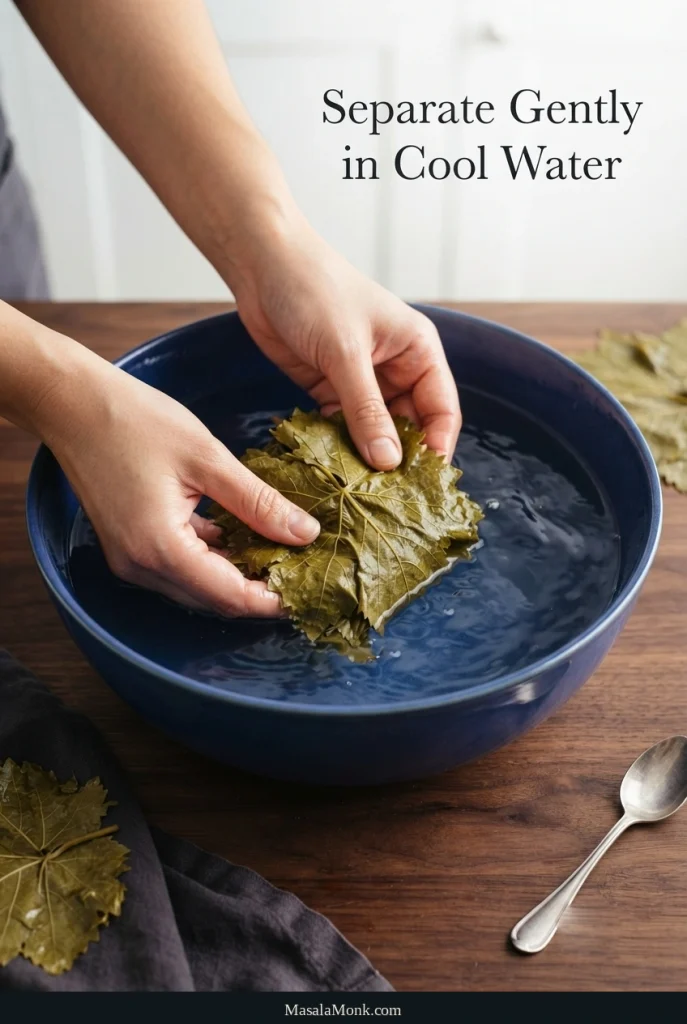
- Prepare the grape leaves. Separate jarred leaves gently in cool water, rinse away the brine, and taste a small piece. Soak in fresh water if very salty. For fresh leaves, wash, trim, and blanch until they fold easily. Drain. Set aside enough spare leaves to line the pot and cover the upper layer, usually about 10–15.
- Soften the onions. Heat 60 ml olive oil in a saucepan over medium heat. Add the yellow onion and spring onions. Stir occasionally for 6–8 minutes until soft and translucent, with a mellow, sweet aroma rather than deep browning.
- Partially hydrate the rice. Rinse the dry rice and drain thoroughly. Stir it into the onions for about 1 minute. Add 120 ml hot water, 20 ml lemon juice, the pepper, and the initial ½ teaspoon salt. Cook gently for about 4–6 minutes, stirring occasionally. Stop when the mixture is moist but not soupy and the grains are still distinct and firm at the center. If the liquid disappears sooner, take the pan off the heat rather than cooking the rice dry.
- Add the herbs and cool. Remove the pan from the heat and fold in the dill, parsley, and mint. Spread the mixture in a shallow dish to cool until it’s easy to handle. Roll the dolmas and begin cooking without unnecessary delay. If you need to pause for an extended period, cool and refrigerate the filling promptly rather than leaving partly cooked rice at room temperature.
Fill and Roll the Grape Leaves
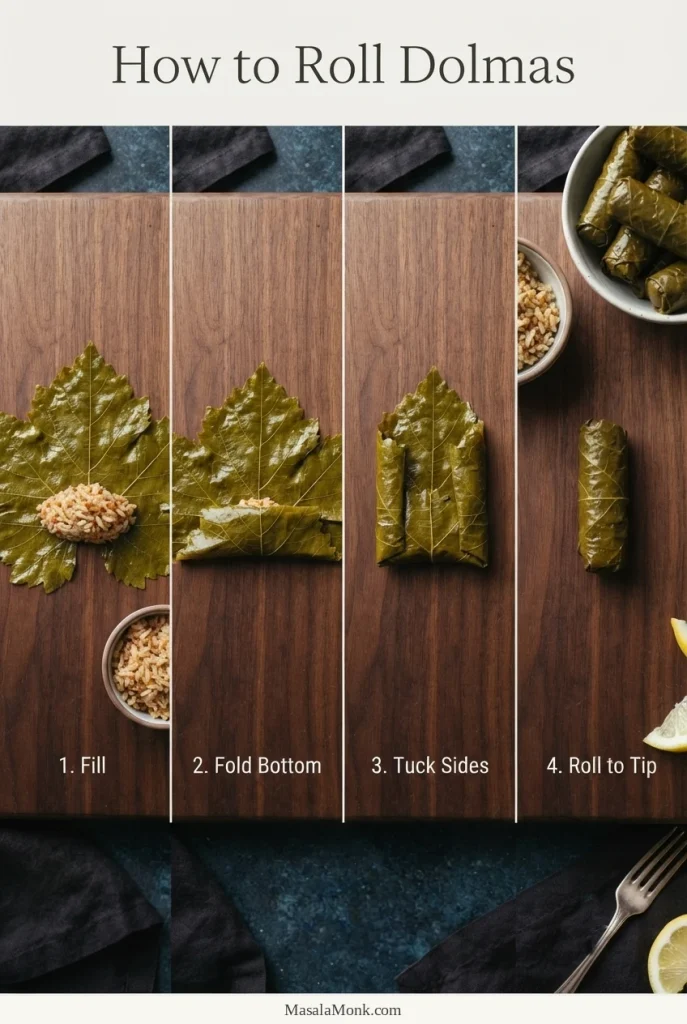
- Fill and roll. Set a grape leaf shiny-side down with the raised veins facing up and the stem end toward you. Put about 1 level tablespoon of filling near the base of a medium leaf. Fold the lower edge over the rice, tuck the sides inward, and roll toward the tip. Keep it secure without packing it tightly. Set seam-side down.
The rolling guide below follows one grape leaf through four stages: filling at the stem end, folding the lower flap, tucking both side lobes, and rolling toward the tip. The side folds close the ends; leave enough slack for the rice to expand.
Arrange the Pot and Add Cooking Liquid
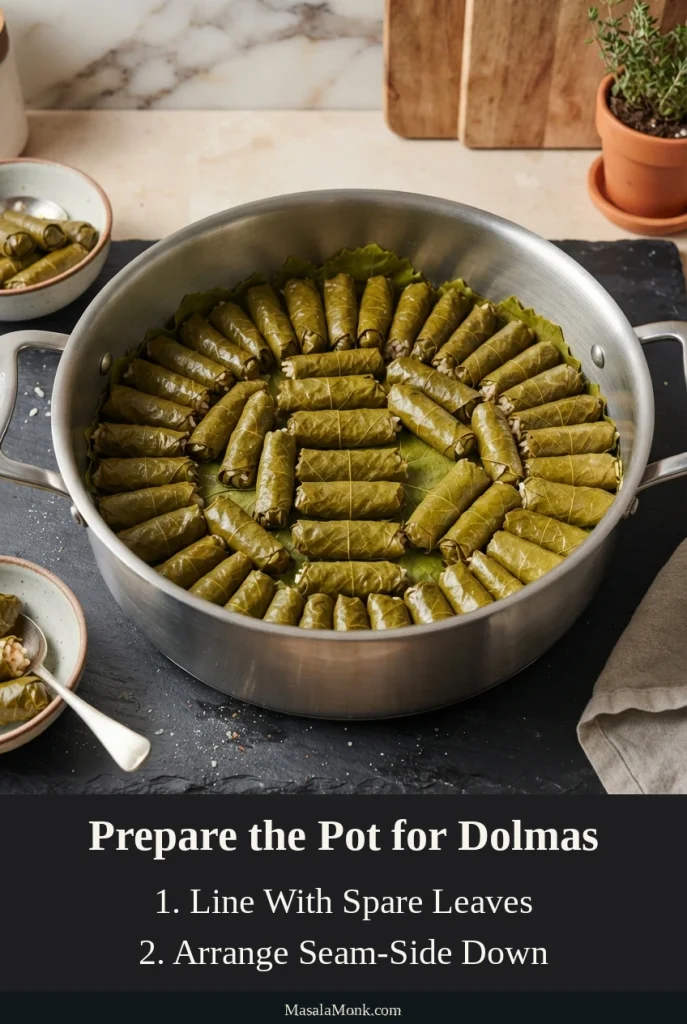
- Arrange the pot. Cover the base with spare grape leaves. Arrange the rolls seam-side down in even layers, close enough to touch without squeezing them together. Cover the upper layer with the remaining spare leaves.
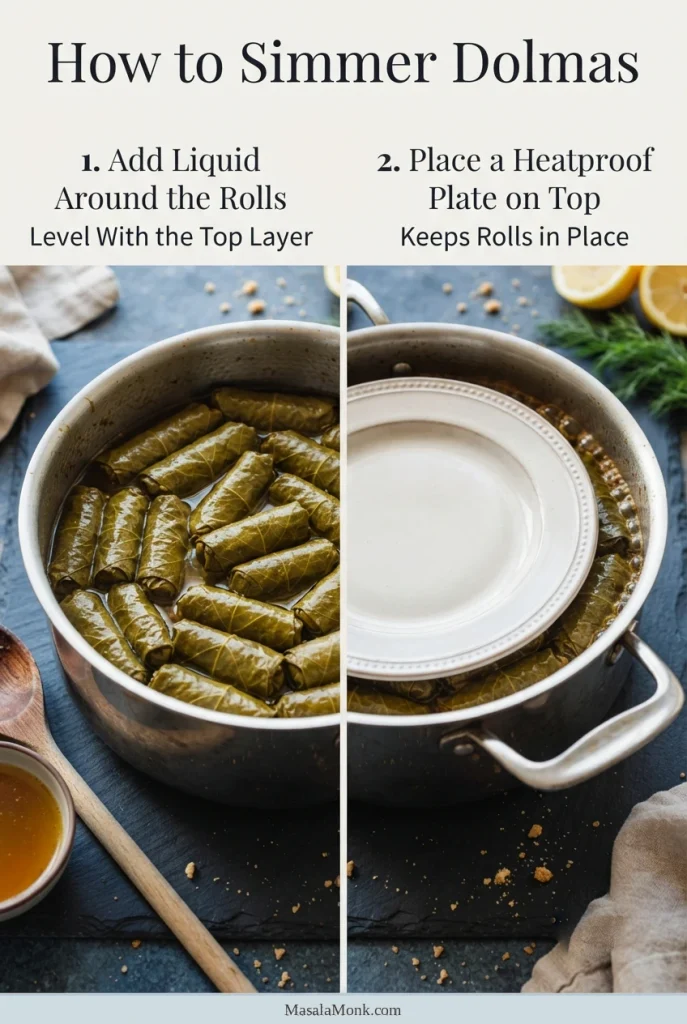
- Add oil, lemon, and water. Pour all 75 ml simmering olive oil and 25 ml lemon juice over the rolls. Have about 600 ml hot water or stock ready. Add it slowly around the inside edge until the liquid reaches roughly the top layer of dolmas. Use less if the level is reached sooner, or more hot water if needed. Place the heatproof plate over the rolls, then cover the pot. The photo immediately after this step illustrates the liquid level and the order of placing the plate.
The two-stage cooking guide below shows hot water reaching roughly the upper layer of rolled grape leaves, followed by a heatproof plate resting on top. Add liquid around the inside edge of the pot; the correct level matters more than pouring an exact number of milliliters.
Simmer, Test and Serve the Dolmas
- Simmer gently. Bring the cooking liquid just to a boil, then lower the heat to a quiet simmer for roughly 45–65 minutes. Do not stir. If the liquid boils vigorously or the rolls begin moving, reduce the heat further. Check at the edge of the pot; if it’s nearly dry while the rice is still firm, add about 60 ml (¼ US cup) hot water and continue cooking, covered.
- Check a center roll. Start after about 45 minutes. Turn off the heat briefly and remove the hot plate carefully using heat-resistant utensils. Lift a roll from near the center and let it cool enough to handle before cutting it open. The rice must be tender all the way through, without a hard or chalky center; the leaf should be easy to bite through. If the rice is firm, check the liquid, replace the plate and lid, and simmer another 5–10 minutes before checking again. If the rice is tender but the wrapper remains thick and fibrous, more cooking may not correct the leaf.
- Rest and serve, or cool for later. Remove the pot from the heat and rest the dolmas for about 20 minutes. For immediate serving, move them gently to a platter and finish with 15 ml olive oil and up to 15 ml lemon juice to taste. If storing them, transfer promptly to shallow containers rather than leaving the whole batch packed in the heavy pot. The 20-minute rest counts within the one-hour cooling-and-refrigeration window explained below.
Finished Dolmas: Check the Rice and Wrapper
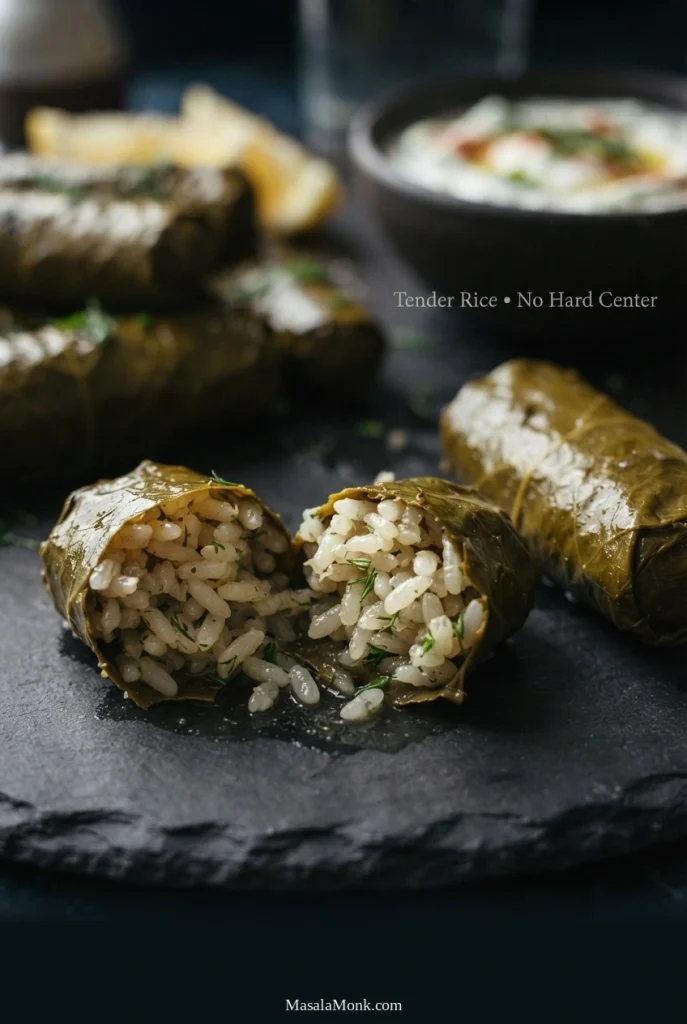
The cut-open dolma below shows the finished result to aim for: individual, tender rice grains held by a thin grape-leaf wrapper, with finely chopped herbs throughout. Its appearance is a useful guide, but only tasting a center roll confirms that the rice has no hard or chalky core.
What Are Dolmas?
Dolmas belong to a broad family of stuffed foods found across Greece, Turkey, the Middle East, the Balkans, and neighboring regions. Fillings may be wrapped in grape leaves or cabbage, or tucked inside vegetables such as peppers, tomatoes, and zucchini.
In Greece, stuffed grape leaves are commonly called dolmades. Smaller rolls are known as dolmadakia, while the meat-free rice-and-herb preparation is often called dolmadakia yalantzi. These olive-oil-rich parcels are often served cooled, with lemon and herbs.
For another take on stuffed vegetables, try our baked stuffed red peppers with beef and rice. Peppers hold their filling inside a hollow shell, while grape leaves wrap around the rice.
For a traditional Greek reference, see Argiro Barbarigou’s dolmadakia yialantzi recipe. Her proportions and cooking method differ from the version above.
Choosing Grape Leaves: Fresh, Jarred, Tender or Tough?
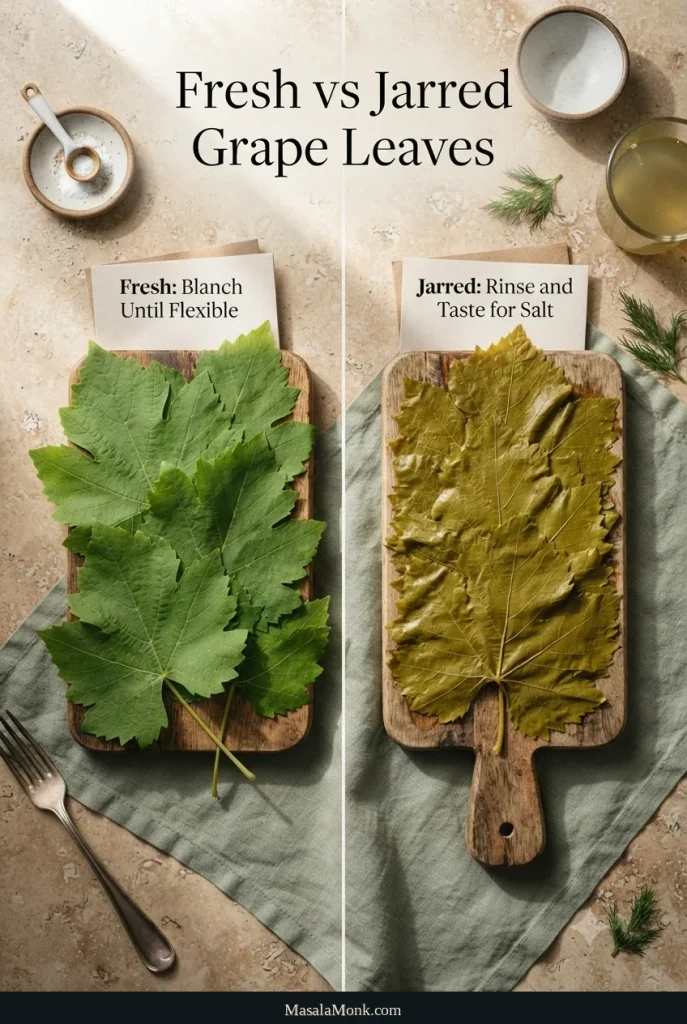
Jarred grape leaves are a convenient choice, especially for a first batch. They often come tightly folded in brine, and a few may be torn or smaller than expected. Put the bundle in cool water and gently separate the layers rather than pulling at the edges.
Choose grape leaves sold for stuffing. A jar’s drained weight won’t tell you exactly how many usable wrappers it contains, so keep some extras available. If you’re uncertain whether the leaves will fold properly, use the grape-leaf flexibility check before filling them.
Preparing Jarred Grape Leaves
Rinse the leaves and taste a small piece. If it’s very salty, soak in fresh water for 15–20 minutes, then drain and taste again. Repeat if necessary.
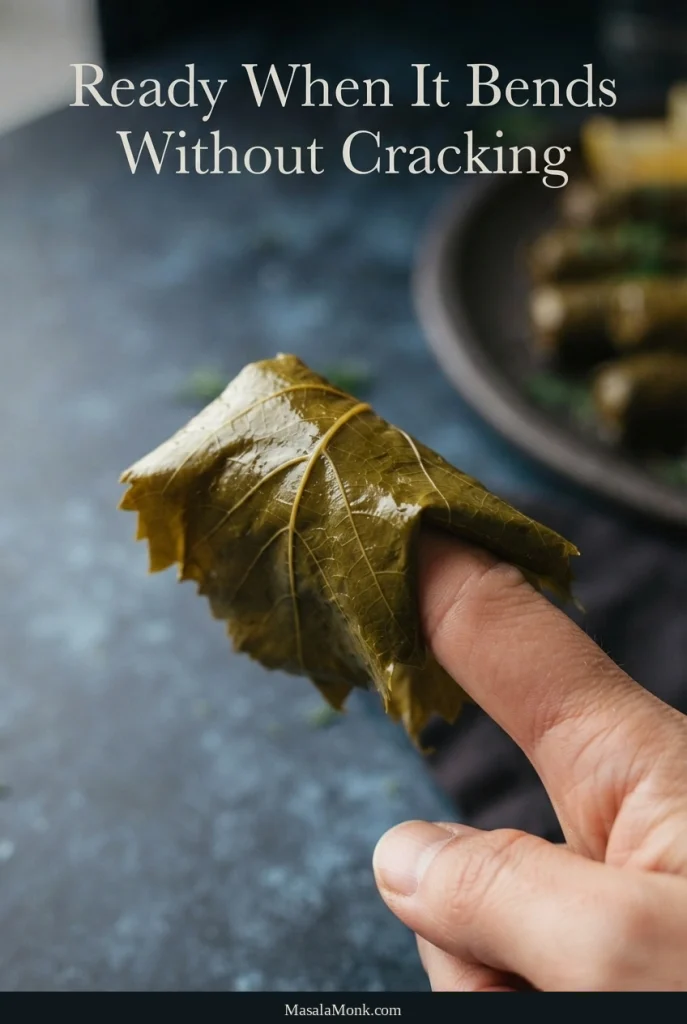
Fold a leaf over your finger. If it bends without cracking, it’s ready to roll. Many preserved leaves need no further boiling. For unusually firm leaves, briefly soften one in hot water to judge whether the rest need the same treatment.
Preparing Fresh Grape Leaves
Pick young leaves with fine veins from a correctly identified, food-safe grapevine. Avoid leaves exposed to unsuitable chemical treatments and mature leaves with thick, woody veins.
Wash thoroughly, trim the stems, and blanch in small batches in boiling water. Check after about 30–90 seconds and continue briefly if the leaves still resist folding. Transfer to cold water, drain, and spread them flat.
Fresh leaves often turn from bright green to muted olive as they cook. This color change is normal.
The Grape-Leaf Readiness Check
Before rolling, bend a prepared leaf across its central vein as shown below. The wrapper should curve without cracking or pulling apart at the lobe edges. If it remains thick and stiff after preparation, use a different leaf rather than forcing the fold.
- Flexible and mildly salty: Drain, trim the stem, and use for rolling.
- Very salty or sharply briny: Soak in fresh water and taste again.
- Fresh leaf that cracks when folded: Blanch a little longer until pliable.
- Torn but tender: Use to line the pot or patch a small tear.
- Thick, woody, or fibrous: Choose another leaf. Longer simmering may not make it tender.
Choosing Rice and Preparing the Herb Filling
Medium-grain white rice suits this recipe. Greek Carolina rice is a traditional choice, but other medium-grain white rice varieties work too. The filling becomes soft while the grains retain some definition.
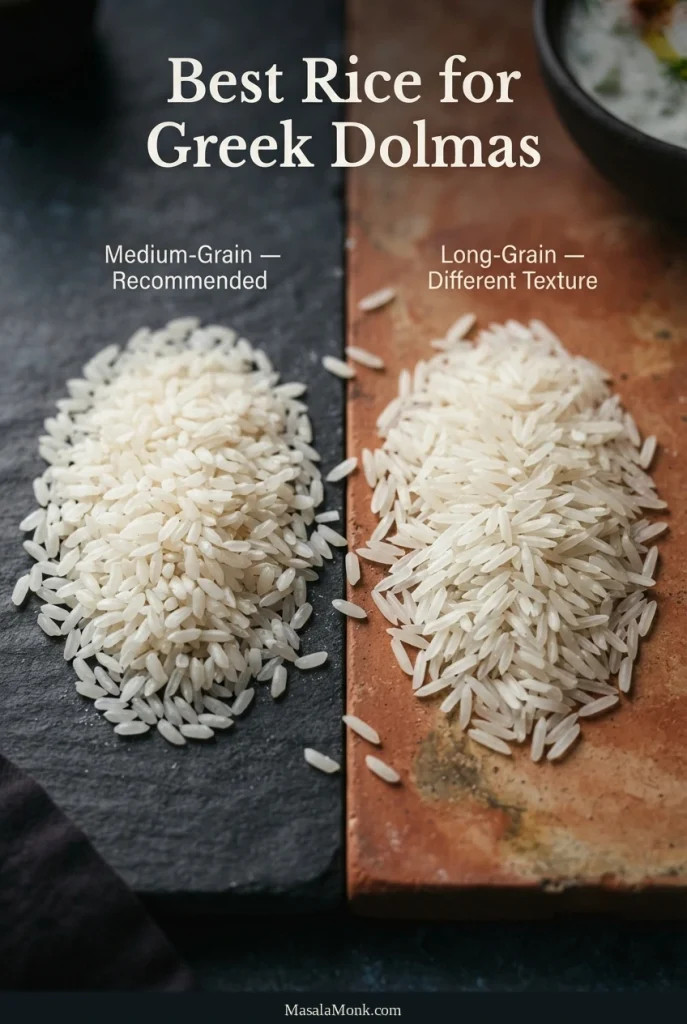
Short-grain rice can give a stickier filling; long-grain rice, including basmati, makes a looser one and may cook differently. Our guide to cooking different types of rice covers those differences. For these dolmas, follow the liquid instructions above instead of standard rice-cooking ratios.
Recognizing the Right Filling Texture
The rice gets only a brief head start in the pan; it should not be fully cooked before rolling. First, let the measured water partly hydrate the grains, then remove the pan from the heat and fold in the dill, parsley, and mint. The photograph below shows the mixture after the herbs have been added off the heat: moist, not soupy, with individual grains still visible.
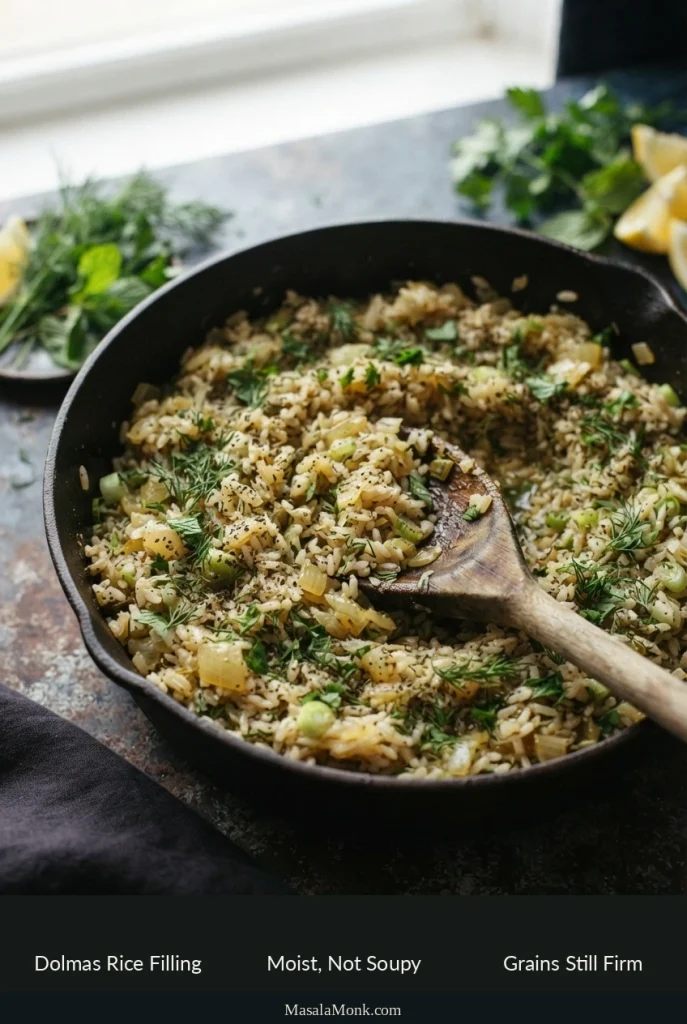
Dill leads the aroma, with parsley adding freshness and a smaller quantity of mint in the background. After simmering, the lemon should brighten these herbs rather than cover them up.
Use leftover parsley and mint in Lebanese tabbouleh with tomatoes, fresh herbs, and lemon.
Some Greek dolmades methods start with raw rice, while others partly hydrate it before stuffing. This recipe uses the latter approach; fully cooked leftover rice and instant rice aren’t direct substitutes.
How to Roll Dolmas Without Overfilling Them
Spread out a few leaves and look at their shapes. Broad leaves are usually easier to fold, while deeply lobed ones leave less usable space for the filling.
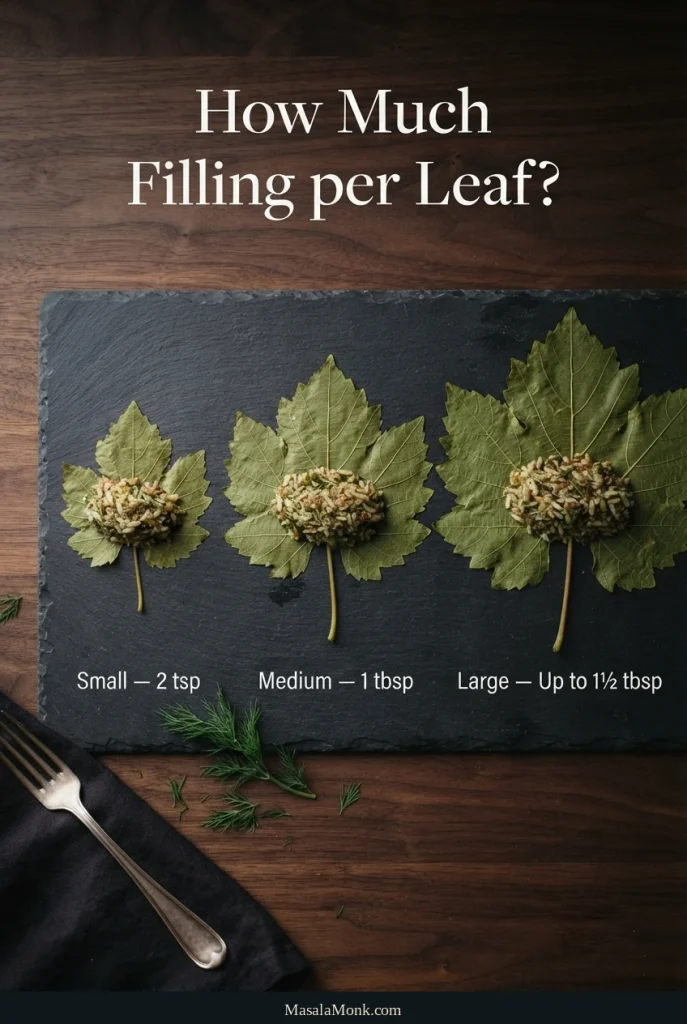
For a small leaf, begin with about 2 level teaspoons of filling. Use around 1 level tablespoon for a medium leaf, or up to 1½ tablespoons for a large, flexible leaf. These amounts are guides, not targets to force into every wrapper.
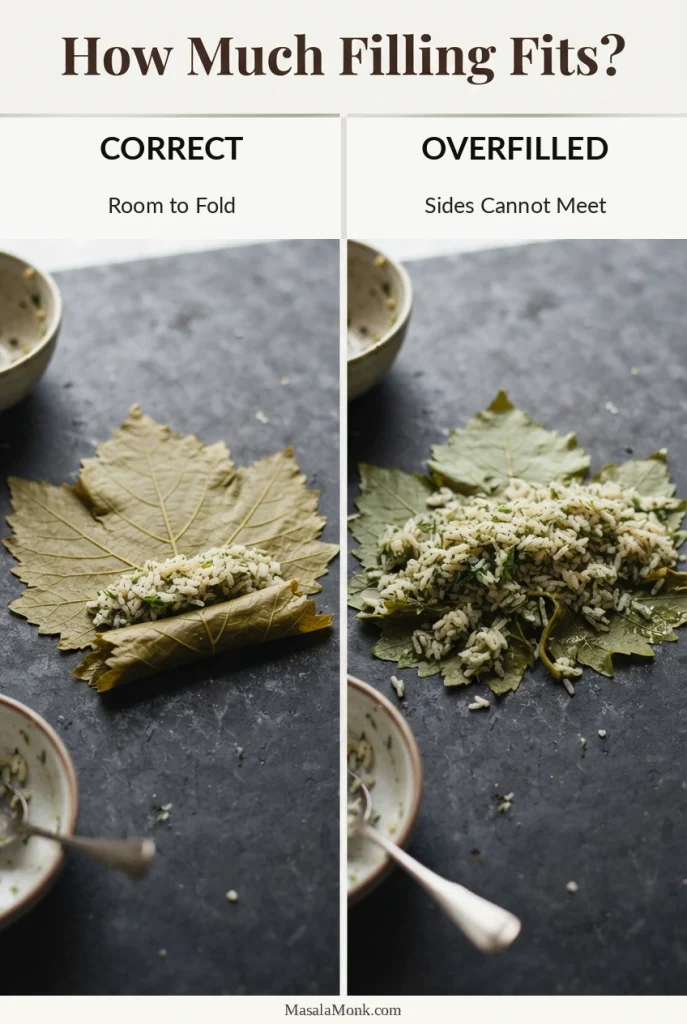
Judge the filling by the fold, not just the spoon. Bring both sides inward over the rice. They should meet or overlap without stretching the leaf or pushing filling out of the ends. If they don’t, remove a little rice.
Set the finished rolls seam-side down. Patch a small tear with another tender piece of leaf; use badly damaged wrappers for pot lining.
Once you’ve rolled a few, lay out several leaves at a time, portion the rice, and fold them in batches.
Cooking Dolmas: Pot Arrangement, Liquid and Doneness
Before adding liquid, line the pot with spare tender grape leaves and arrange the stuffed rolls seam-side down, close enough to support one another without squeezing. The image below shows this snug pot arrangement. Keep the rolls undisturbed while they simmer; the earlier cooking-liquid illustration shows how the heatproof plate holds them in place.
How Much Water Do Dolmas Need?
Add the measured simmering olive oil and lemon juice first, then pour hot water or stock around the inside edge until it reaches roughly the top layer of rolls. Your pot width, number of layers, and roll size determine how much liquid you need. The illustrated liquid-level and plate guide beside Step 7 shows the correct sequence.
A wide pot with two layers may require a different volume from a narrower pot with three. If the rice needs longer but the liquid is almost gone, add about 60 ml (¼ US cup) hot water and continue cooking with the lid on.
How Do You Know Dolmas Are Cooked?
After all that rolling, the first dolma you cut open tells you whether the batch is ready. Lift one from near the center after about 45 minutes of simmering, taking care when removing the hot plate. Let it cool briefly before opening it.
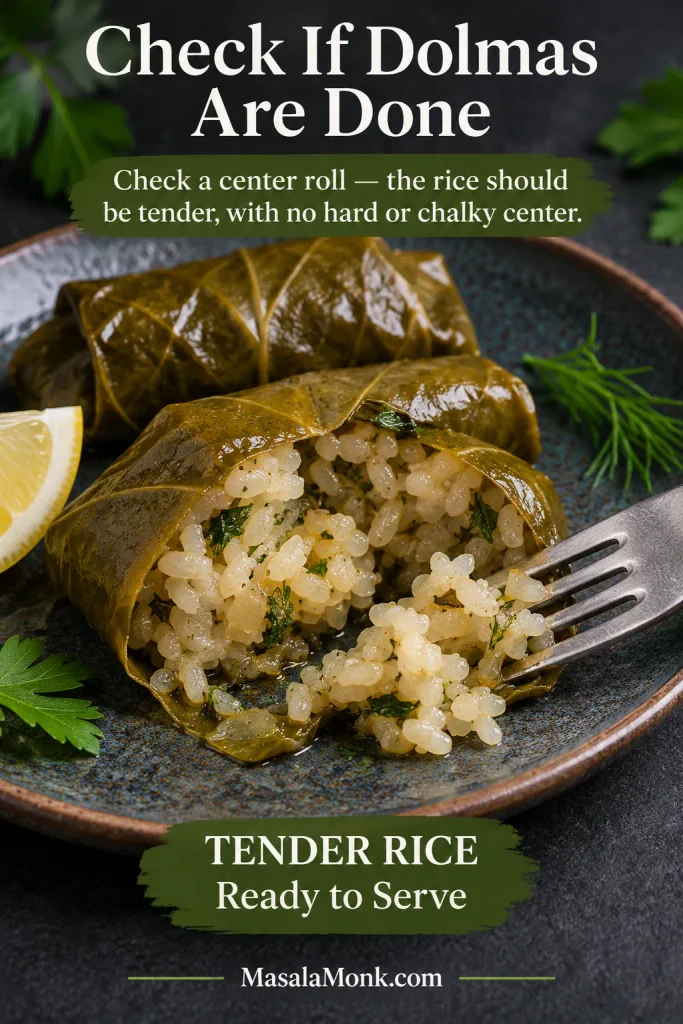
- Rice: Tender throughout, without a firm or chalky core; the grains should still be recognizable.
- Leaf: Soft enough to bite through without thick, woody resistance.
If the rice is still firm, check the remaining liquid and simmer for another 5–10 minutes. If the rice is ready but the leaf remains thick and fibrous, extended cooking may soften the filling further without fixing the wrapper.
Dolmas Troubleshooting: How to Fix Common Problems
Problems You Can Often Rescue
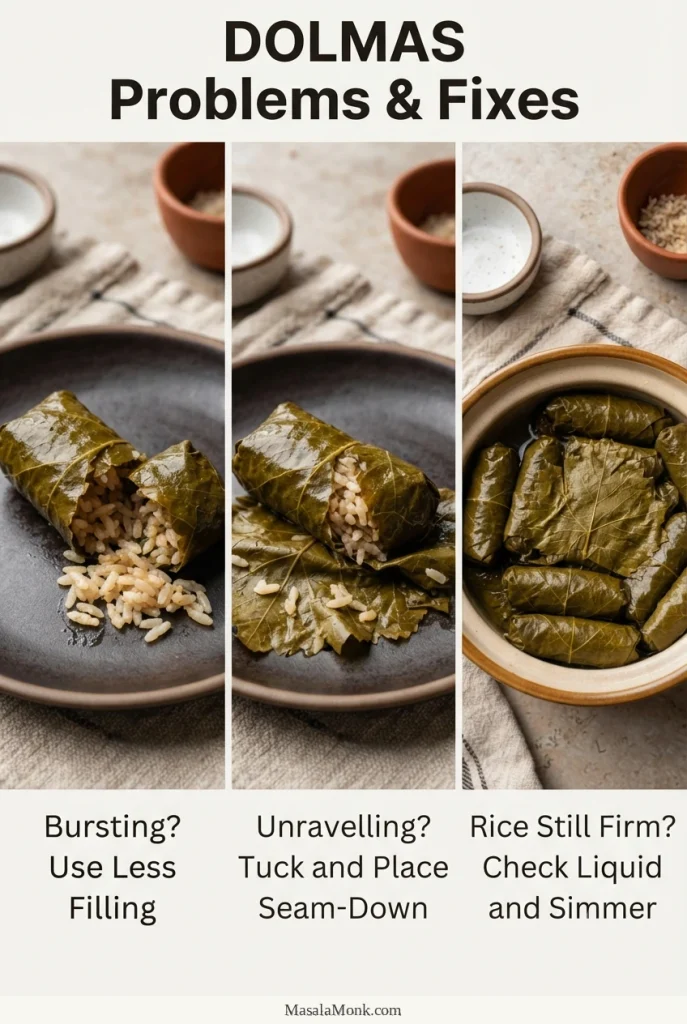
- Rice still hard: If the pot is drying out, add about 60 ml hot water, cover, and simmer another 5–10 minutes. Check a center roll again.
- Upper layer drying out: Add a little hot water around the inside edge and replace the lid.
- Rolls unravelling: Lower the heat, keep the rolls undisturbed, and leave the plate in place. Next time, tuck the sides more securely.
- Scorched bottom: Remove from the heat. If more cooking is needed, carefully move unaffected rolls to another pot without scraping in burnt material.
- Too salty or sour: Omit the final lemon juice and pair with a mild, unsalted accompaniment. Next time, rinse and taste the jarred leaves before seasoning.
Problems to Prevent Next Time
- Mushy rice: Too much moisture or prolonged cooking can break down the grains; once mushy, they cannot be made firm again.
- Woody leaves: Mature, thick-veined leaves may stay chewy. Choose younger, more flexible wrappers.
- Burst wrappers: Use less filling so the sides close easily and the rice has space to expand.
What If You Have Filling Left Over?
Don’t squeeze extra rice into the remaining leaves. Put leftover filling in a covered saucepan with enough water or vegetable stock to finish cooking the rice; simmer until completely tender, adding liquid as needed.
The mixture was only partly cooked before rolling, so finish cooking any remainder promptly rather than leaving it at room temperature.
If you need to start again with the standard method, return to the complete dolmas recipe.
Greek Dolmas Variations and Other Stuffed Grape Leaves
This recipe focuses on Greek meat-free dolmadakia. Stuffed grape leaves also appear in other regional traditions, often with different seasonings and cooking methods.
- Greek dolmas with pine nuts: Add 25–30 g (about 1 oz) lightly toasted pine nuts to the rice filling, accounting for their extra volume.
- Greek meat-filled dolmades: These may contain minced beef or lamb and can be served with avgolemono, an egg-lemon sauce. Use a recipe intended for the meat-filled version.
- Turkish sarma: Some olive-oil variations include rice, pine nuts, currants, cinnamon, or allspice. Recipes differ across regions and households.
- Lebanese warak enab: Grape leaves may be filled with meat and rice or prepared without meat, using their own flavorings and pot arrangements.
For a Greek-inspired meze table, you could also make spanakopita with spinach, feta, and phyllo pastry.
What to Serve with Dolmas
For a meze lunch, arrange the dolmas with lemon wedges, olives, ripe tomatoes, cucumber, and Greek tzatziki with cucumber, garlic, and dill. The cool yogurt and crisp vegetables work beautifully with the olive-oil-rich rice.
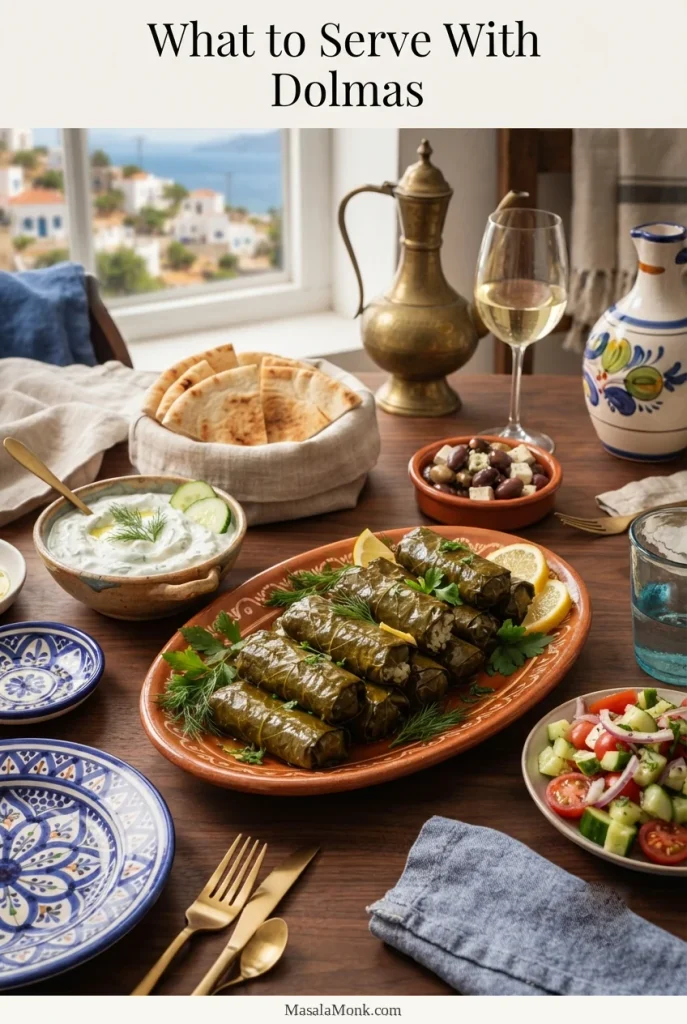
Add roasted peppers or eggplant, a little feta, and warm homemade pita bread for scooping up dips. For a larger Greek-inspired dinner, serve a few dolmades before Greek moussaka with eggplant, potatoes, lamb, and béchamel.
Are Dolmas Better Warm or Cold?
Warm dolmas have a particularly soft, fragrant rice filling. Once cooled, the rolls settle and become easier to pick up, while the lemon and herbs still come through. Greek meat-free dolmadakia are often enjoyed cooled or at room temperature, but they’re good warm too.
For a gathering, keep the dolmas refrigerated until serving and put out smaller portions as needed instead of leaving the whole batch unrefrigerated for hours.
How to Store, Freeze and Make Dolmas Ahead
For make-ahead dolmas, cook the batch fully, then cool and refrigerate or freeze it promptly. Avoid storing partly cooked rice filling overnight.
Cooling and Refrigerating Dolmas
If you’re saving the dolmas, start cooling them promptly when cooking finishes. The 20-minute rest counts toward the one-hour cooling period. Transfer the rolls into shallow containers rather than leaving them packed together in the heavy cooking pot, and refrigerate within one hour of finishing the cooking.
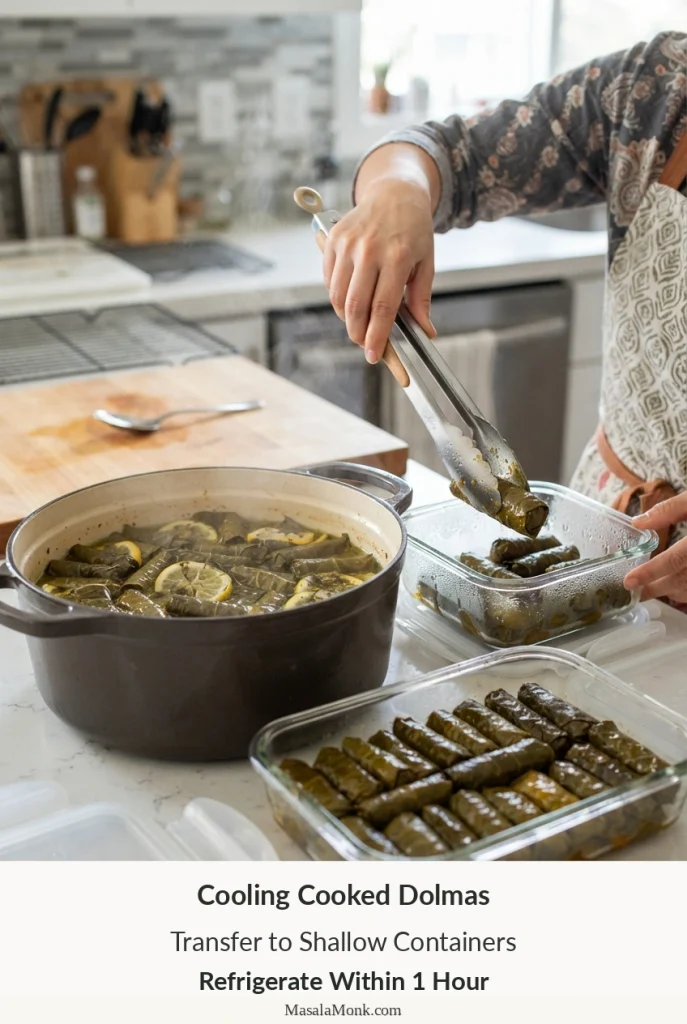
Keep the dolmas covered at 4°C (40°F) or below. Following conservative cooked-rice guidance, use refrigerated dolmas within 24 hours.
Cooked rice requires care because of Bacillus cereus. The NHS guidance on cooling, storing, and reheating rice recommends cooling within an hour, eating refrigerated rice within 24 hours, and reheating no more than once. Reheating cannot reliably make rice safe after improper storage.
Can You Freeze Stuffed Grape Leaves?
Yes. Cool the cooked dolmas promptly, arrange them in freezer-safe containers with layers separated to prevent sticking, and freeze without delay.
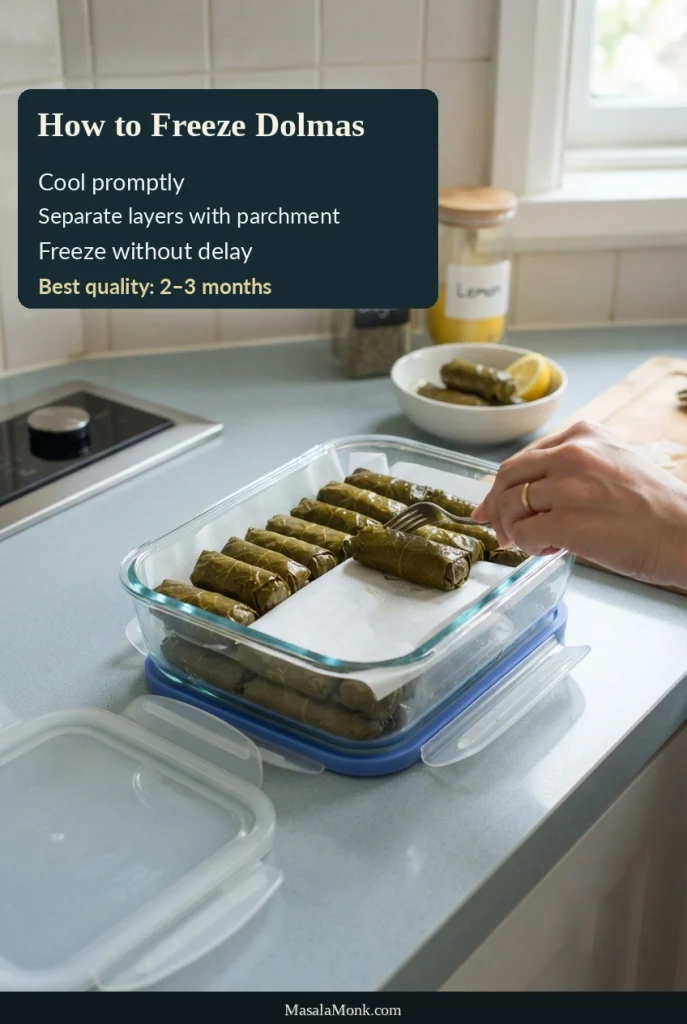
For best quality, use frozen dolmas within about 2–3 months. Thaw in the refrigerator. The rice and leaves may be slightly softer afterward.
How to Reheat Dolmas
Reheat refrigerated or thawed dolmas only once, until steaming hot throughout. Use a covered saucepan with a splash of water or reserved cooking liquid, or a covered microwave-safe dish. Avoid stirring, which can tear the leaves.
For serving chilled, use dolmas that were cooked fully, cooled promptly, and kept refrigerated.
Making a Smaller Batch
Halve the rice, onions, herbs, olive oil, lemon, and seasonings. Have roughly 30–40 grape leaves available, including extras for the pot. Use a smaller pot and add water to the correct liquid level rather than automatically using half the full-batch amount.
For longer storage, freeze the cooked dolmas. Don’t use an untested water-bath canning method for homemade rice-filled grape leaves; the lemon juice in this recipe doesn’t make that preservation method safe.
Back to the dolmas recipe · Back to top.
Dolmas Recipe FAQs
Do You Eat the Grape Leaves?
Yes. Grape leaves are the edible wrapper. Young, properly prepared leaves become tender enough to eat with the rice filling.
Are Dolmas Always Vegetarian?
No. Some preparations contain meat and rice, while others use grains, vegetables, and herbs. This Greek dolmadakia recipe is meat-free and vegan when prepared with water or suitable vegetable stock.
Can I Use Basmati Rice for Dolmas?
Basmati can work in a method adapted for long-grain rice, but it creates a looser filling and cooks differently. Medium-grain white rice is the better match for the quantities above.
What Goes with Vegan Dolmas?
Try olives, tomatoes, cucumber, roasted vegetables, and homemade hummus with chickpeas and tahini. Choose a dairy-free dip instead of traditional yogurt-based tzatziki for an entirely vegan spread.
Arrange the rested dolmas on a platter with lemon wedges and a bowl of tzatziki or another favorite dip. Some will be a little smaller than others, as handmade rolls often are. Serve them warm or cooled, and let the soft rice, dill, mint, and tangy leaves speak for themselves.
Have you made stuffed grape leaves at home? Do you prefer fresh or jarred leaves, and what helped you get them tender? Share your experience in the comments.








