
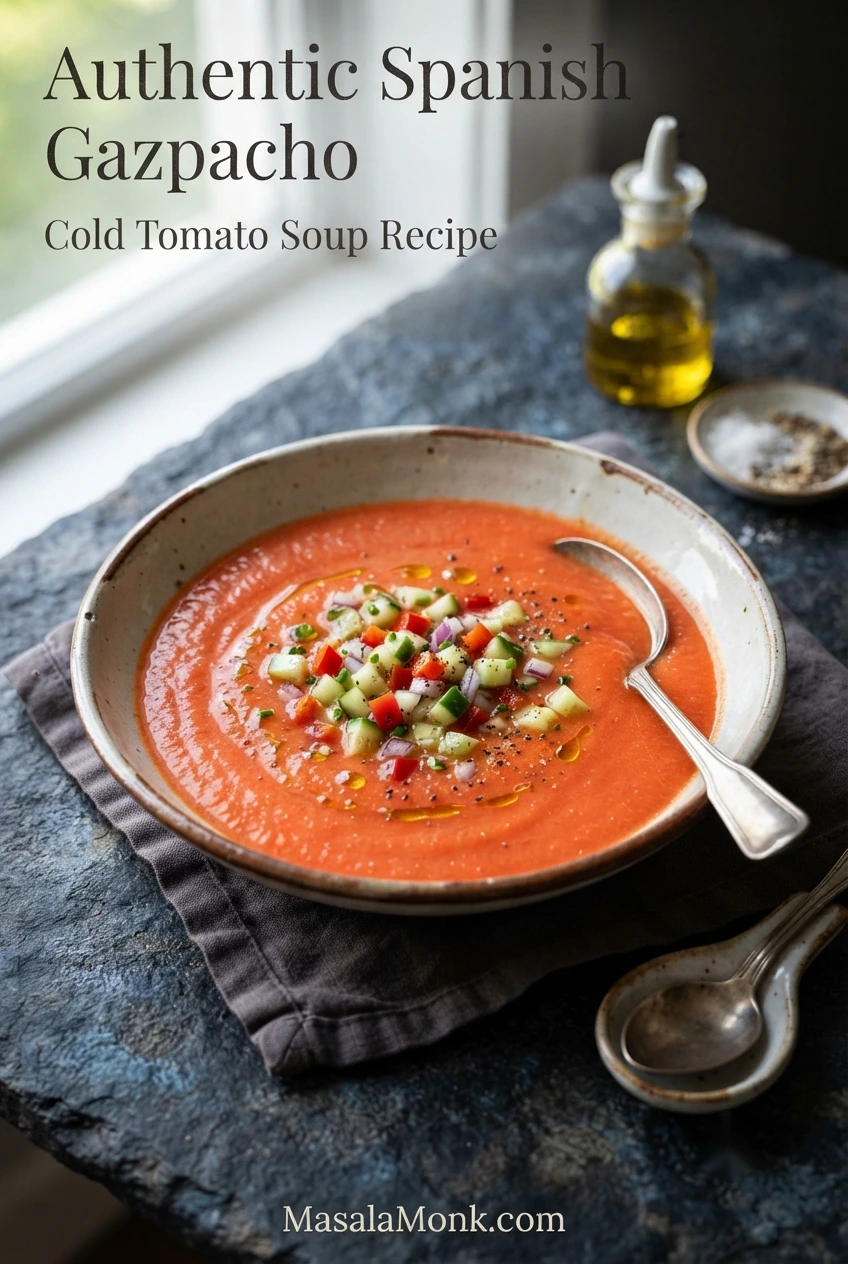
Ripe tomatoes, a little bread, and olive oil become something quite different when blended together: a smooth, refreshing cold soup with the freshness of raw vegetables and a richness you wouldn’t expect without cream. Sherry vinegar adds brightness, while the tomatoes remain the star. Served thoroughly chilled, Spanish gazpacho is especially welcome on a hot day.
This gazpacho recipe follows the Andalusian tradition, combining ripe tomatoes, cucumber, mild green pepper, garlic, white bread, extra-virgin olive oil, and sherry vinegar. There’s no cooking involved. Allow approximately 20 minutes for preparation and another 2 hours for chilling. The secret is choosing flavorful tomatoes, blending in the right order, and adjusting the seasoning after the soup has chilled.
In This Guide
- Classic Spanish Gazpacho Recipe
- What Is Gazpacho?
- Choosing the Right Ingredients
- Getting the Texture Right
- Common Problems and Fixes
- Substitutions and Variations
- Serving, Make-Ahead, and Storage
- Gazpacho FAQs
Classic Spanish Gazpacho Recipe
This Andalusian-style gazpacho is smooth, pourable, and full of fresh tomato flavor. Blending the vegetables and softened bread before incorporating the olive oil creates a lightly creamy texture without adding dairy.
Recipe Details
- Yield: 4 generous starter portions or approximately 8–10 small appetizer glasses
- Preparation time: Approximately 20 minutes
- Cooking time: None
- Chilling time: Approximately 2 hours, or until thoroughly cold
- Total time: Approximately 2 hours 20 minutes
- Optional salted vegetable rest: An additional 15–20 minutes
Equipment: A countertop blender, knife, cutting board, kitchen scale, measuring spoons, mixing bowl, and covered container for chilling. A fine-mesh sieve is optional for an especially smooth finish.
Gazpacho Ingredients
- 1,000 g (2 lb 3 oz) ripe tomatoes, weighed after coring, with all their juices
- 150 g (5.3 oz) cucumber, weighed after any necessary peeling and seed removal
- 75 g (2.6 oz) mild green pepper, weighed after removing seeds and white ribs
- 3 g garlic, approximately 1 small peeled clove
- 50 g (1.8 oz) plain white bread, weighed after removing hard crust, preferably day-old
- 60 ml (4 US tbsp) extra-virgin olive oil, preferably mild or medium-fruity
- 20 ml (4 US tsp) sherry vinegar, plus more to taste after chilling
- 5 g fine salt initially, plus more only if needed
- Up to 100 ml (6 tbsp plus 2 tsp) cold water, only if needed
Garnishes and Measuring Notes
Optional garnishes: Finely diced tomato, cucumber, or mild green pepper; toasted bread cubes; and a few drops of olive oil. Use additional vegetables for garnish rather than removing them from the measured soup ingredients.
Measure prepared ingredients: Buy slightly more than 1 kg of tomatoes to allow for coring. Similarly, cucumber and pepper weights refer to the prepared portions that actually enter the blender. Their sizes vary, so use the measured weights rather than relying on approximate counts.
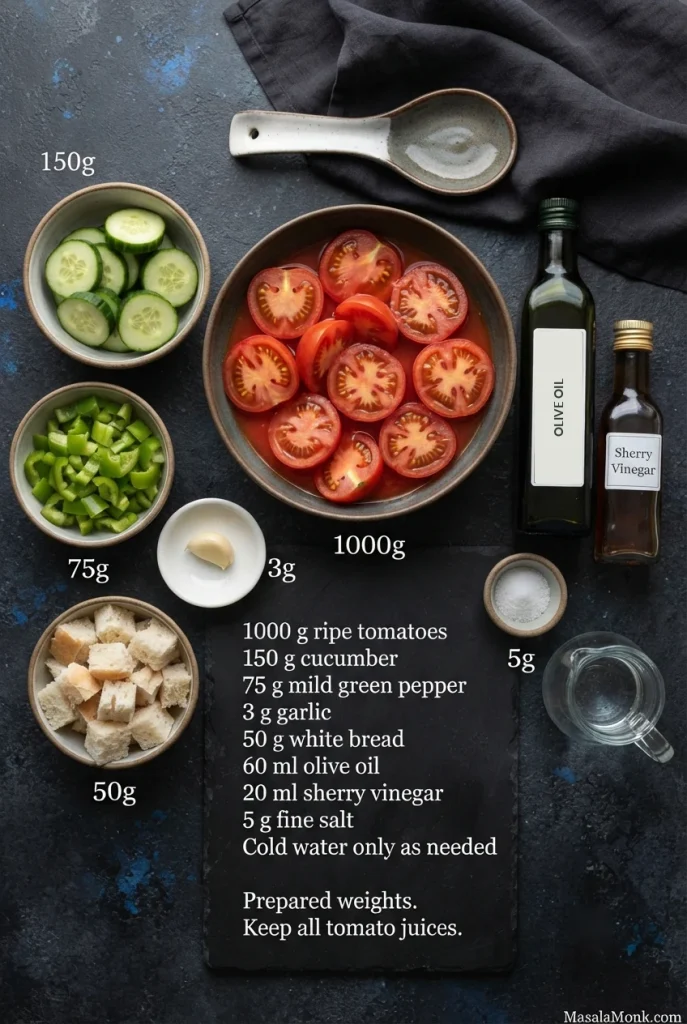
Water and salt: The 100 ml maximum includes any water used to soften the bread, help the blender circulate, or thin the finished soup. Don’t add it automatically. Weigh the initial 5 g salt if possible because spoon measurements vary with crystal size.
How to Make Gazpacho
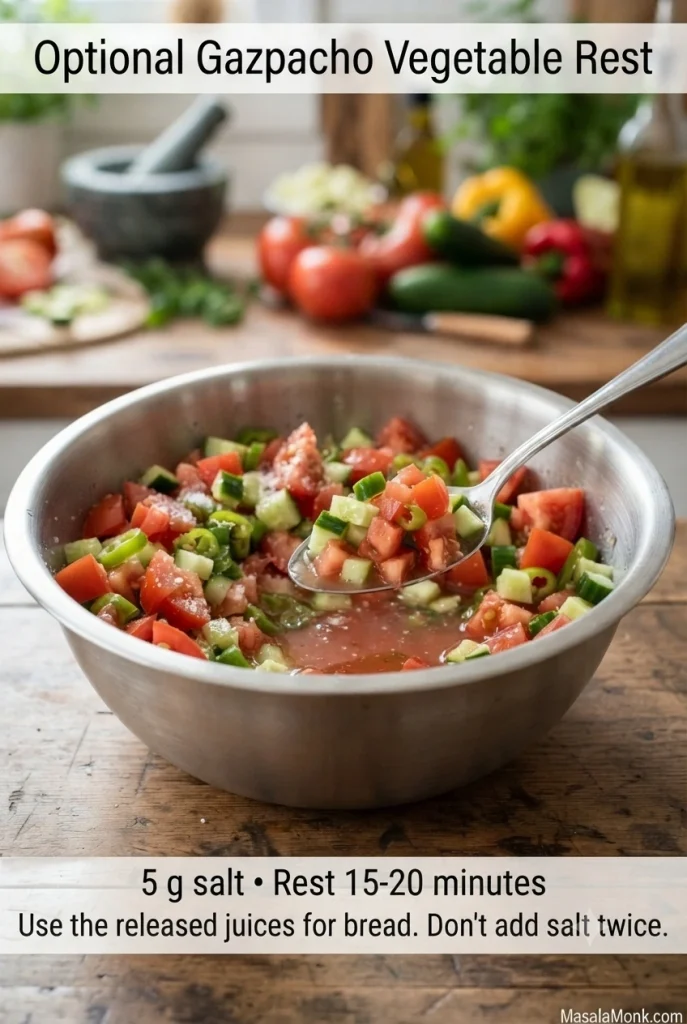
Optional 15–20-minute vegetable rest: After chopping the vegetables, toss them with the recipe’s measured 5 g salt and let them release their juices. Use that liquid to soften the bread. If you do this, don’t add the salt again in Step 3.
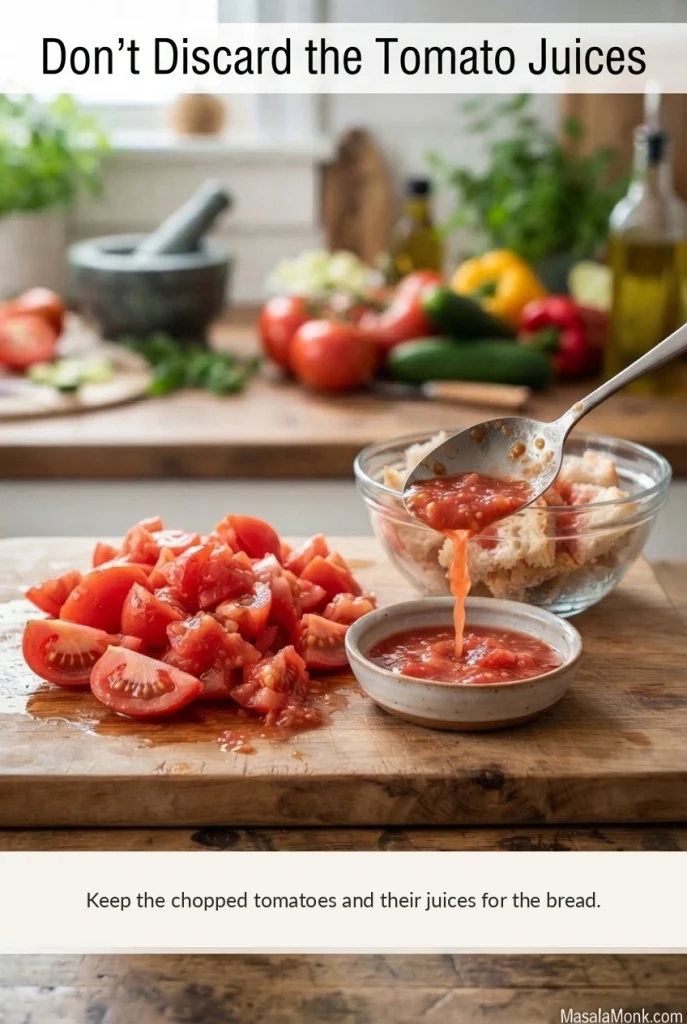
Keep the tomato juices: Collect the juice and soft seed gel along with the tomato flesh. All of it belongs in the gazpacho, where it contributes flavor and natural liquid.
Prepare and Blend
- Prepare the vegetables. Wash the tomatoes, cucumber, and pepper under running water. Core the tomatoes, remove the pepper seeds and white ribs, and peel the garlic. Cut the tomatoes, cucumber, and pepper into roughly 1–1½-inch (2.5–4 cm) pieces. Keep the tomato flesh, juice, and soft seed gel together. Taste a little tomato, cucumber, pepper, and olive oil before blending. Discard any distinctly bitter cucumber.
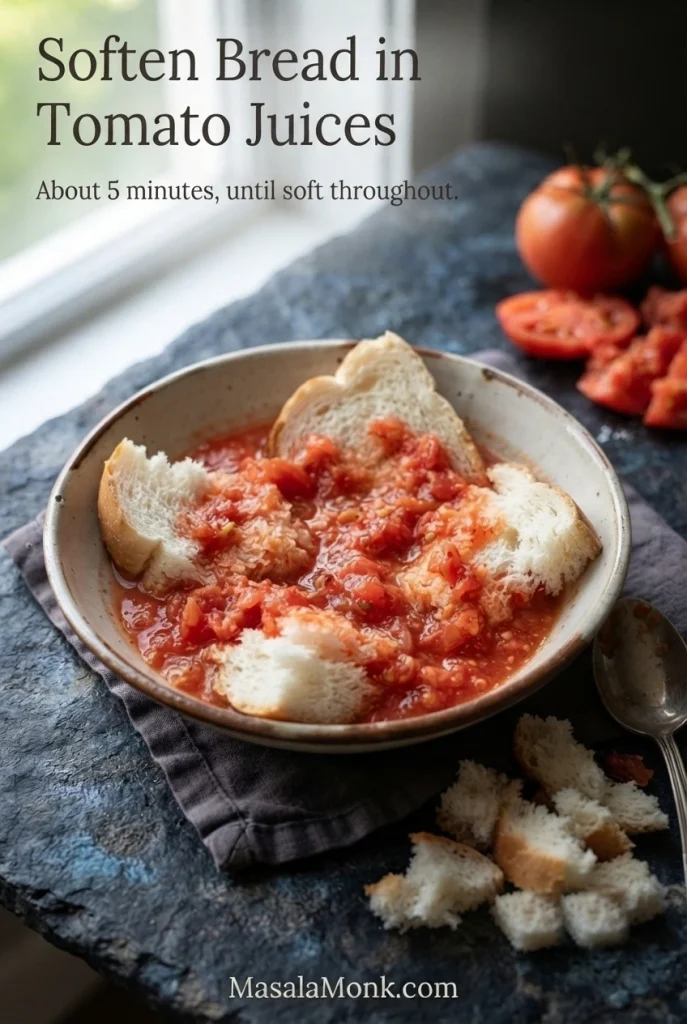
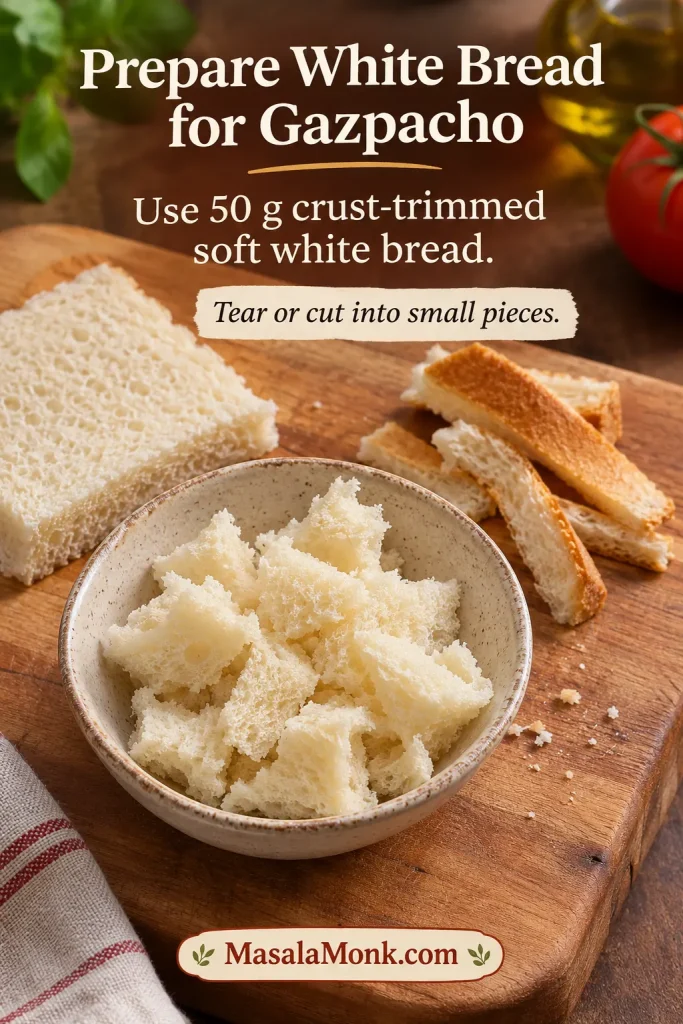
- Soften the bread. Tear the prepared white bread into small pieces. Spoon some chopped tomato and its collected juice over the bread, pressing lightly to moisten it. After approximately 5 minutes, the bread should be soft throughout. Add a splash of cold water only if the center remains dry.
- Blend the vegetables. Add the tomatoes and all their juices to the blender, followed by cucumber, green pepper, garlic, softened bread, and sherry vinegar. Add the measured salt unless it was used during the optional vegetable rest. Begin at low speed, then increase until no obvious vegetable chunks remain, generally 30–90 seconds. If the mixture does not circulate, stop the blender, redistribute the contents safely, and add a little cold water if necessary.
Finish and Chill
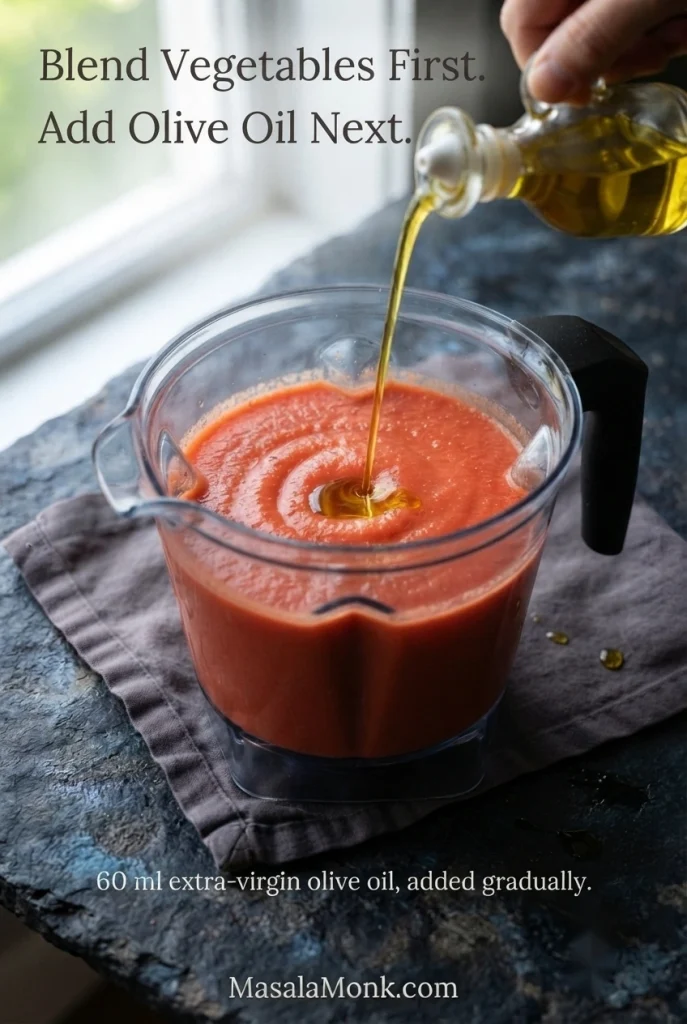
- Incorporate the olive oil. Reduce the blender to moderate speed. Gradually add the oil through the manufacturer’s designated opening, if permitted. Otherwise, stop the blender and add it in two or three portions, blending briefly after each. The mixture should become uniform, slightly more opaque, and lightly creamy. Stop once the oil is incorporated.
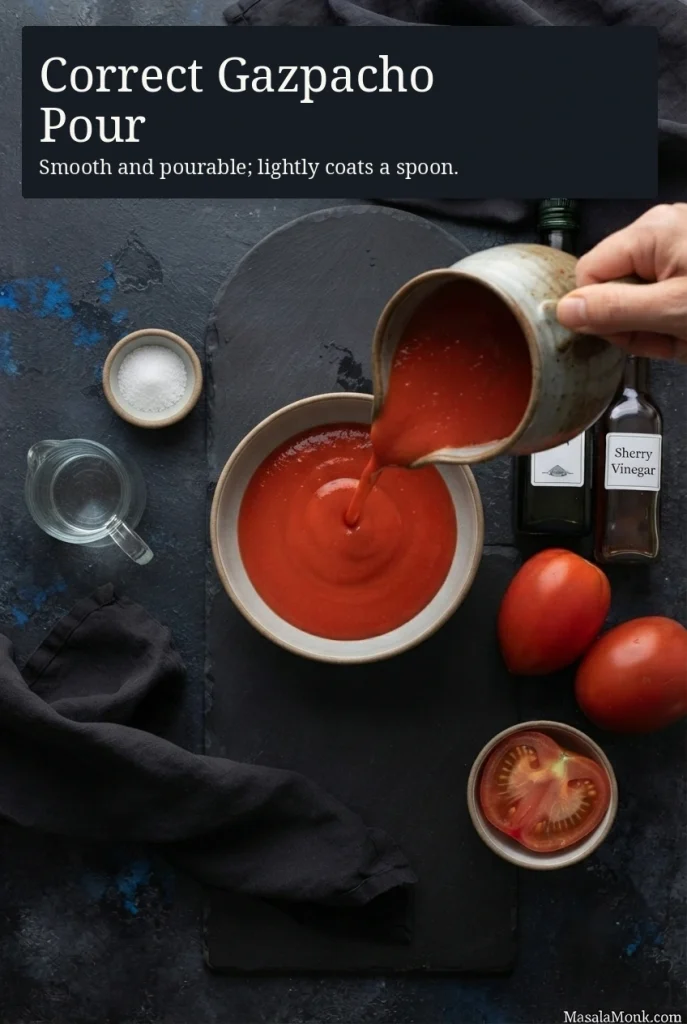
- Adjust the texture. Pour a little gazpacho into a glass. It should flow freely and leave a light coating on the sides. If the soup is too thick, add cold water 1 tablespoon (15 ml) at a time. For an especially fine texture, pass it through a fine-mesh sieve; otherwise, leave it unstrained.
- Chill and season. Transfer the gazpacho to a clean, covered container and refrigerate until thoroughly cold, allowing approximately 2 hours. Stir gently and taste. If the tomato flavor seems muted, check the salt first. Add more sherry vinegar by the teaspoon only if additional acidity is needed. Serve in chilled glasses or bowls with your preferred garnish.
Visual Checks for the Gazpacho Method
Check the Bread Before Blending
Before blending, press a thicker piece of bread gently to check that its center has softened.
Watch the Olive Oil Incorporate
Add the olive oil only after the vegetable base is smooth. This helps it disperse evenly through the soup.
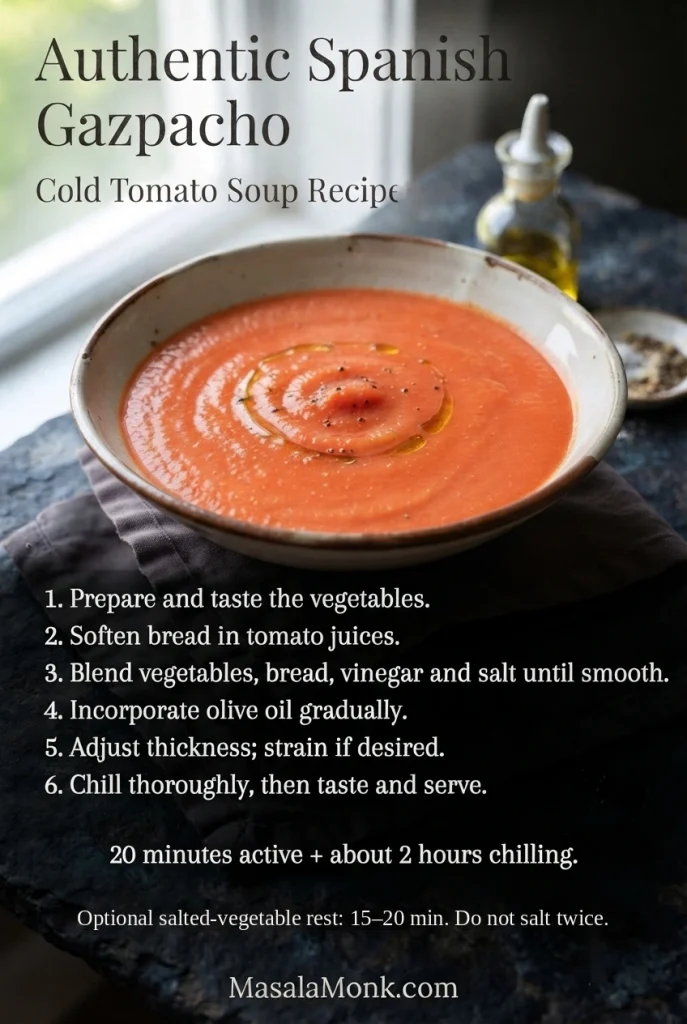
Six-Step Gazpacho Visual Guide
How should gazpacho taste? Ripe tomatoes should come through first, followed by a gentle edge of vinegar. Garlic stays in the background, while olive oil adds richness without leaving a greasy finish. Once the soup tastes balanced, stop adjusting it.
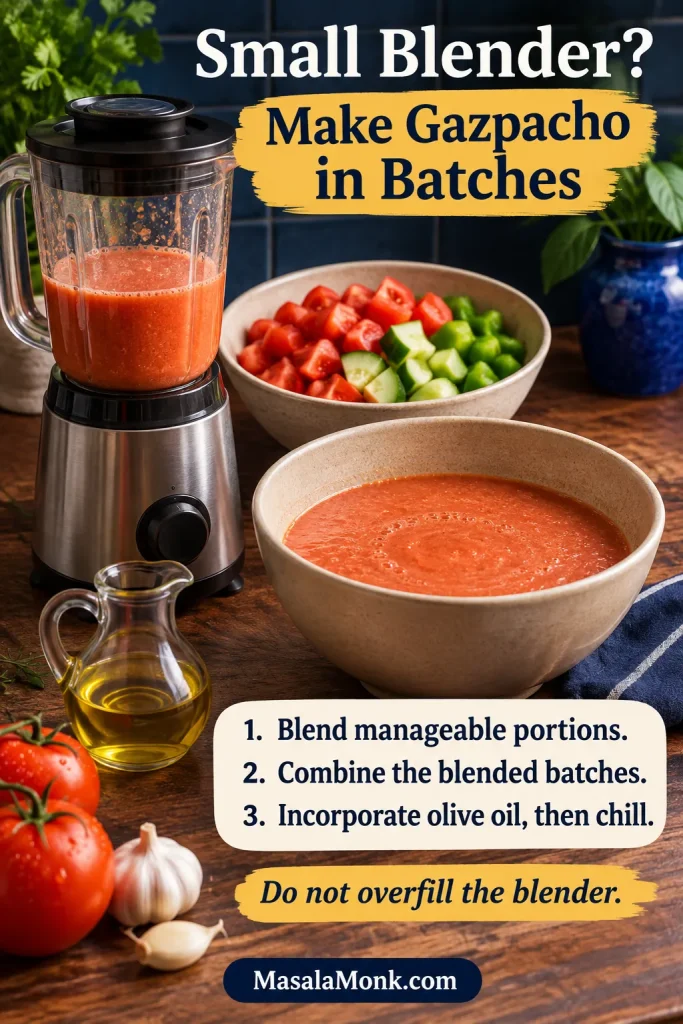
Using a small blender? Work in batches below its safe working-fill limit. Divide the ingredients proportionately, then combine the blended portions before the final seasoning. Incorporate the olive oil into the combined base where practical for a consistent texture.
Making a smaller batch? Halve every ingredient, including bread, olive oil, vinegar, and salt, for approximately two generous starter portions.
What Is Gazpacho?
Gazpacho is a traditional cold Spanish soup associated with Andalusia in southern Spain. Tomato-based versions generally combine raw tomatoes, olive oil, vinegar, garlic, and vegetables such as cucumber and green pepper. Bread is common, although not universal.
Unlike homemade fresh tomato soup, where cooking changes the vegetables’ flavor and texture, gazpacho preserves their fresh, uncooked character. Depending on its consistency, it can be served in glasses as a drink or in bowls with finely chopped vegetable garnish.
Traditional recipes vary between regions and households. Spain’s traditional gazpacho recipe includes tomatoes, green pepper, garlic, bread, olive oil, and sherry vinegar. Other versions add cucumber or onion, adjust the bread quantity, or include more water for a thinner soup.
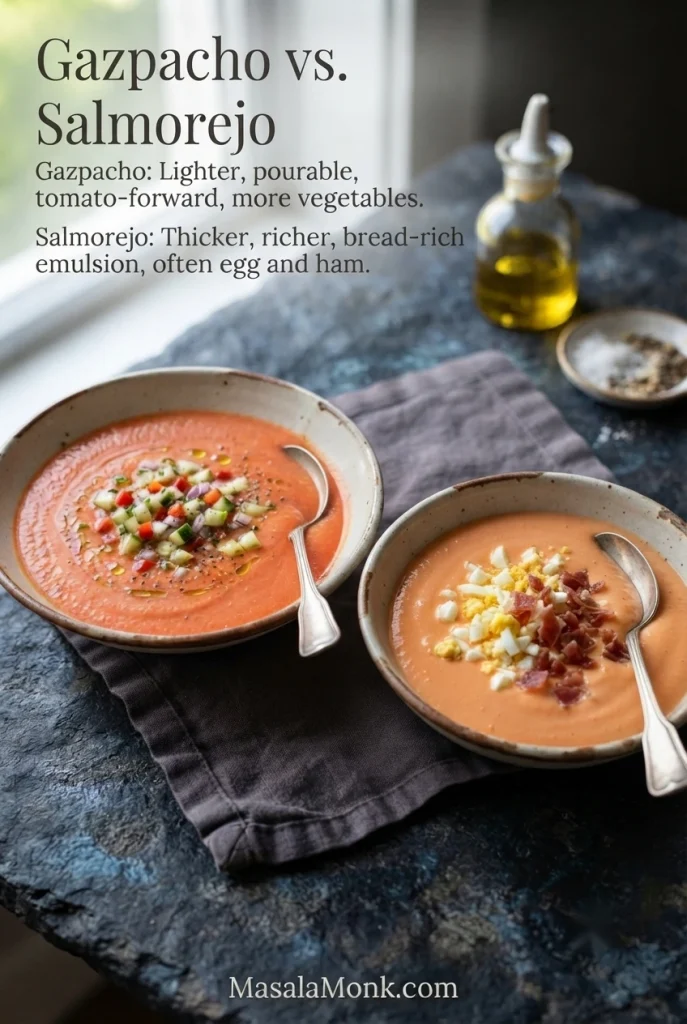
Gazpacho vs. Salmorejo
Salmorejo, associated with Córdoba, is another Spanish cold tomato preparation. It is generally thicker and richer, relying primarily on tomatoes, bread, olive oil, and garlic. Chopped hard-boiled egg and cured ham are familiar traditional toppings.
Gazpacho usually contains more vegetables and is often thin enough to drink. Both dishes can contain bread, but their proportions and intended consistency distinguish them more reliably than color.
Choosing the Right Gazpacho Ingredients
Good tomatoes matter here because nothing is cooked. A bland tomato will not become flavorful simply because it has been blended. Choose ripe, aromatic produce and taste the ingredients before combining them.
Which Tomatoes Are Best for Gazpacho?
Spanish pear tomatoes, ripe plum tomatoes, round tomatoes, and flavorful heirloom varieties can all make excellent gazpacho. Choose tomatoes that smell ripe and give slightly when pressed. Juicy tomatoes supply more liquid, while fleshier varieties usually produce greater body. Mixing varieties works well when the available tomatoes differ in texture.
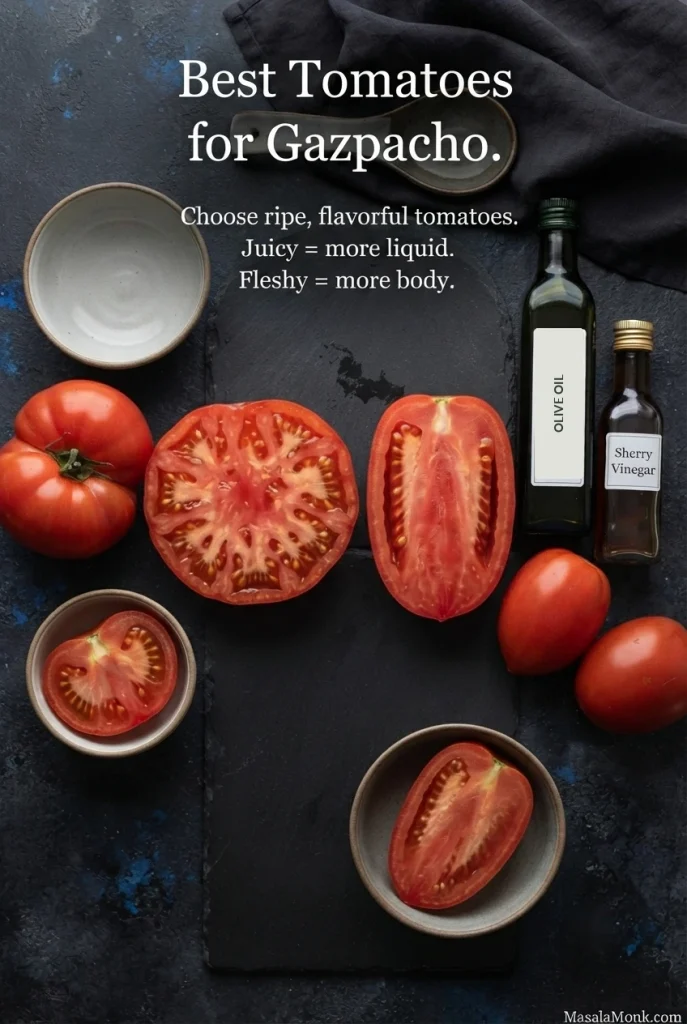
In the US, Roma tomatoes are convenient, although particularly firm ones can be relatively dry. In India, ripe local desi tomatoes can taste excellent but sometimes lean tart. Taste your tomatoes before deciding whether additional sherry vinegar is necessary.
Allow underripe tomatoes to ripen before making gazpacho. If fully ripe tomatoes are bland or mealy, choose another batch or consider plain canned whole peeled tomatoes. Always discard produce showing mold or rot.
If good fresh tomatoes are unavailable, see how to substitute canned tomatoes without losing control of the vinegar and seasoning.
Cucumber and Green Pepper
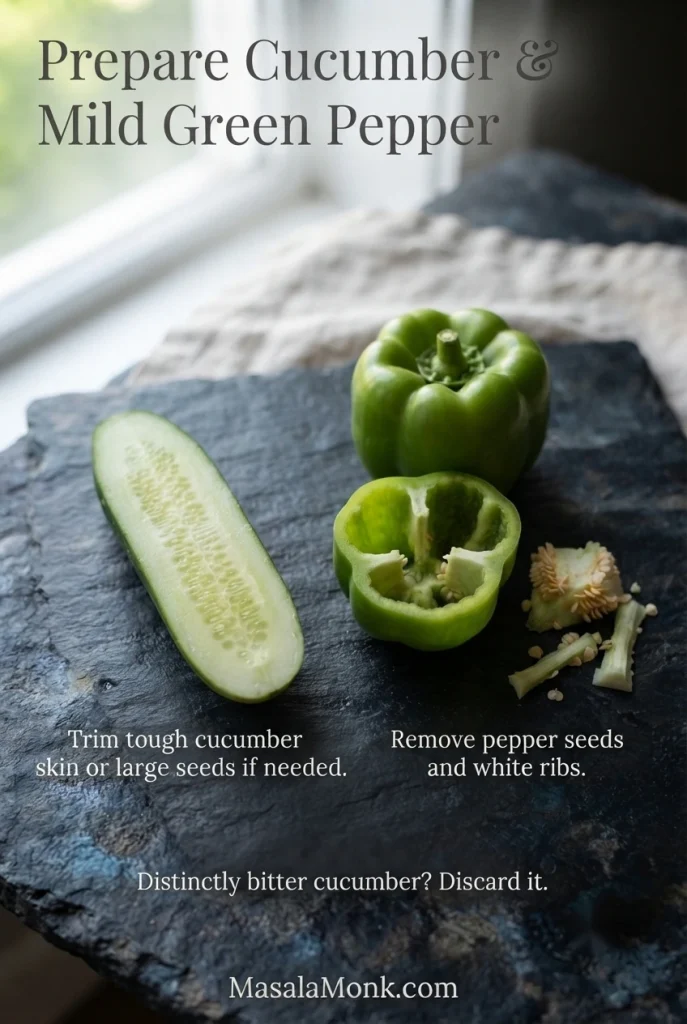
English cucumber is convenient because its skin is generally tender and its seeds are small. Other mild cucumbers work too. Remove tough skin or large mature seeds when necessary rather than peeling and deseeding automatically.
Never use a distinctly bitter cucumber. It may contain elevated levels of naturally occurring cucurbitacins, which can cause illness. Spit out a bitter-tasting sample and discard the cucumber. If it has already been blended into gazpacho, discard the entire batch rather than attempting to dilute it. Read Poison Control’s guidance on bitter cucumbers and squash for more information.
For green pepper, choose a mild Italian-style frying pepper or green bell pepper. Remove its seeds and white ribs, then taste a small piece before blending. Green bell pepper can be more assertive, while hot green chilli is not a direct substitute for the mild pepper used here.
Have cucumber left over? Try it in a cucumber salad with vinegar and dill, another refreshing dish for warm weather.
Does Authentic Gazpacho Contain Bread?
Many traditional gazpacho recipes contain bread, although not all do. Once soaked and thoroughly blended, it adds body without leaving obvious pieces behind. It also contributes to the soup’s smooth mouthfeel.
For this recipe, 50 g of prepared white bread provides substance without making the soup particularly thick. Plain white bread, a mild rustic loaf, or the soft interior of a baguette works well. Day-old bread is useful, but fresh bread can also be used.
Prefer a lighter version? See how to make gazpacho without bread and what changes in the finished texture.
Olive Oil, Sherry Vinegar, and Garlic
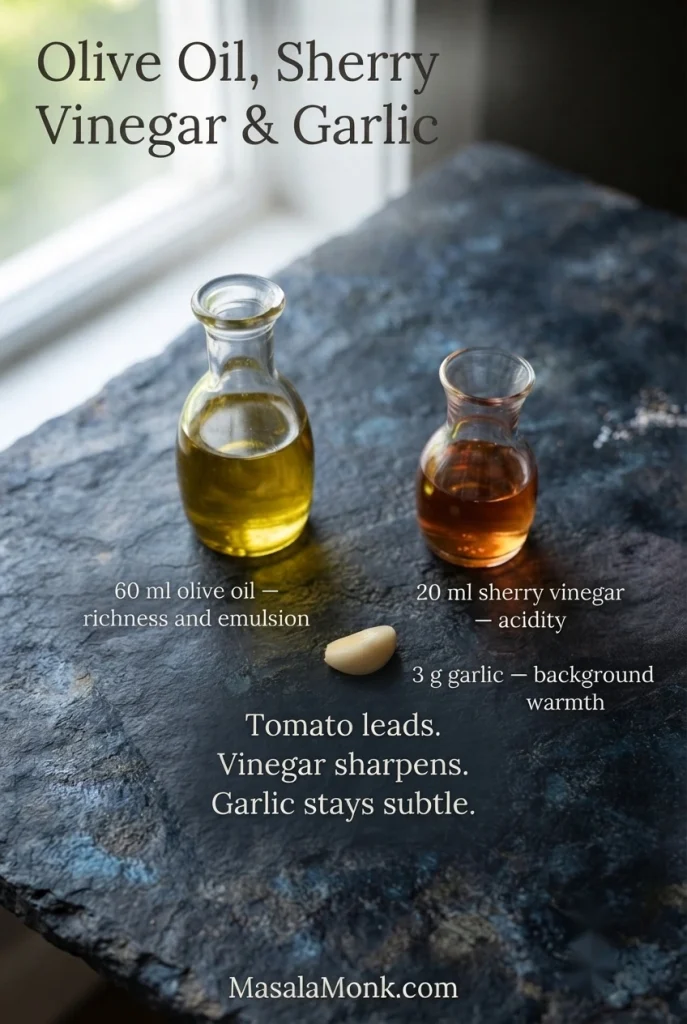
Choose extra-virgin olive oil that tastes pleasant on its own. The 60 ml in this recipe contributes richness and helps create the finished texture. Mild or medium-fruity varieties are reliable because strongly bitter oil can overwhelm the raw vegetables.
Sherry vinegar should brighten the tomatoes rather than make the soup sharply sour. Begin with the measured quantity and adjust only after chilling. Red wine vinegar is a practical alternative, although particularly sharp varieties may require less.
Start with one small raw garlic clove. Garlic is difficult to tone down once blended, and its flavor should support the tomatoes rather than dominate them. Some Spanish gazpacho variations include onion, but this particular recipe does not.
How to Get Smooth, Creamy Gazpacho
Properly blended gazpacho should be pourable but retain enough body to lightly coat a glass. If the soup is too thin, extra blending will not necessarily help; more ripe tomato purée or softened bread may restore body. Conversely, a thick batch may need a little cold water.
Let the Tomatoes Supply the Liquid
Ripe tomatoes and cucumber naturally release liquid during blending. Start with the juices already present in the vegetables. Particularly juicy tomatoes may require no additional water, while denser varieties sometimes need a little to help the mixture circulate.
Water changes both consistency and flavor. Add it gradually, approximately one tablespoon at a time, and reassess between additions. Once the soup pours easily while retaining a little body, stop thinning it.
Why Does Gazpacho Turn Orange?
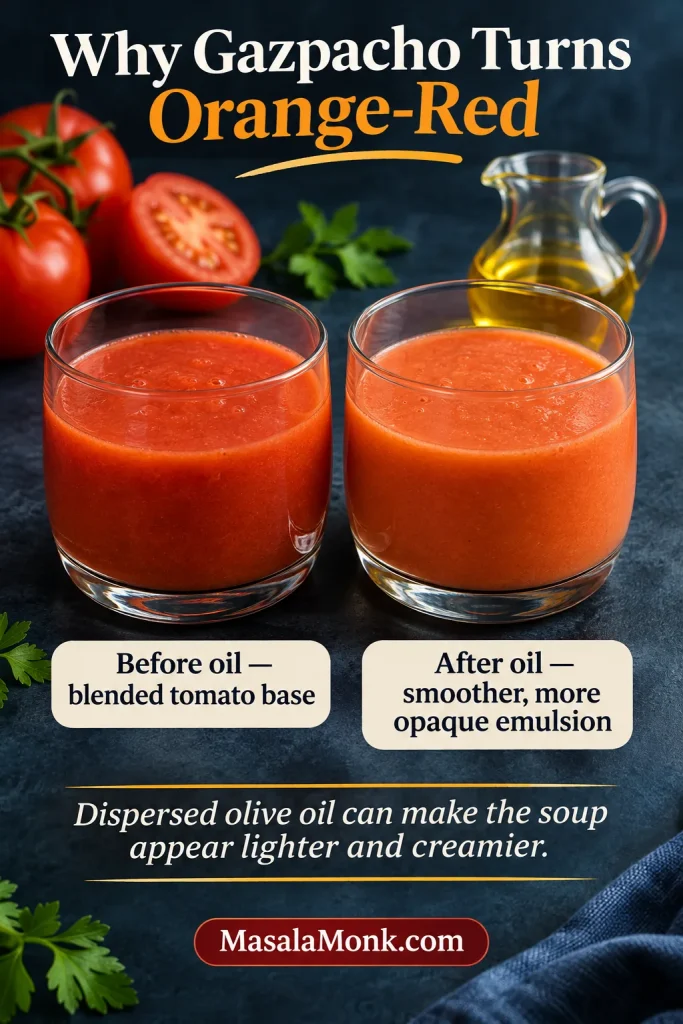
Gazpacho can turn orange-red when olive oil disperses into tiny droplets throughout the blended tomato mixture. This process, called emulsification, increases opacity and contributes to the soup’s creamy appearance. Tomato variety, vegetable proportions, and blending intensity also affect the color.
Unlike tomato bisque, which commonly involves cooked tomatoes and may contain cream, traditional gazpacho develops its body through blended vegetables, bread, and olive oil.
Once the oil is incorporated, stop blending. Extended high-speed processing can introduce too much air, producing foam. With some strongly flavored olive oils, prolonged processing may also make bitterness more noticeable.
Should You Strain Gazpacho?
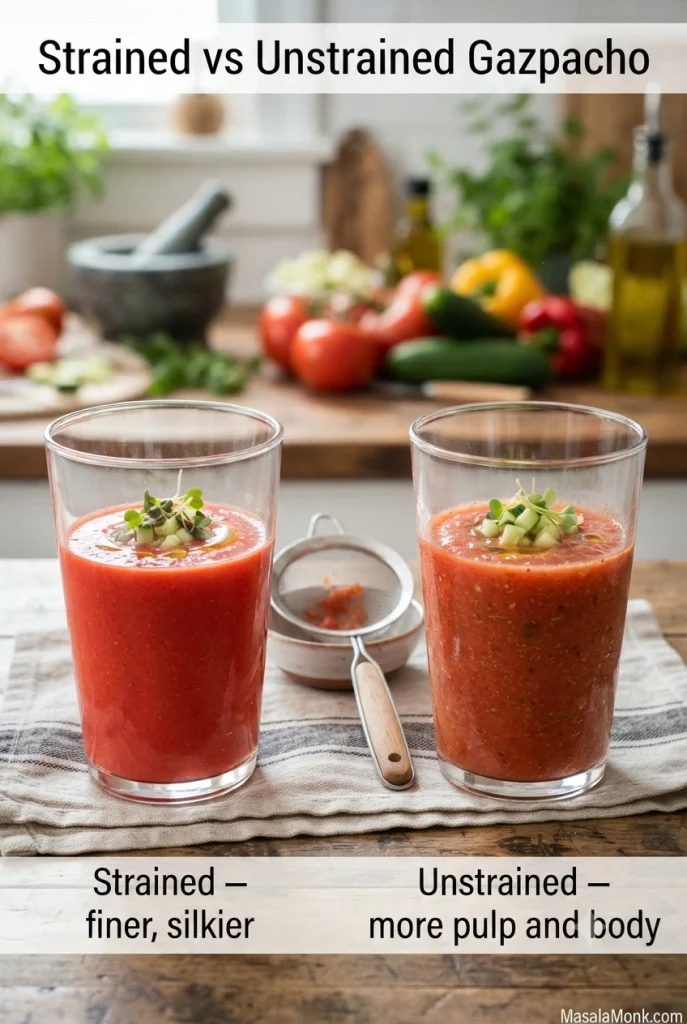
Straining is optional. If your blended gazpacho is already smooth, leave it unstrained. A fine-mesh sieve can remove remaining skin particles, seeds, and vegetable fibers for a more delicate finish, particularly when serving the soup in drinking glasses.
An immersion blender or food processor may leave more noticeable vegetable particles than a powerful countertop blender. That rustic texture can be pleasant in a bowl. For a finer finish, strain after blending rather than repeatedly processing the soup at high speed.
Gazpacho Troubleshooting: Common Problems and Fixes
Before correcting an entire batch, transfer a little gazpacho to a separate bowl. Make one adjustment and compare it with an unchanged sample. This lets you judge whether a correction genuinely improves the soup without risking the rest.
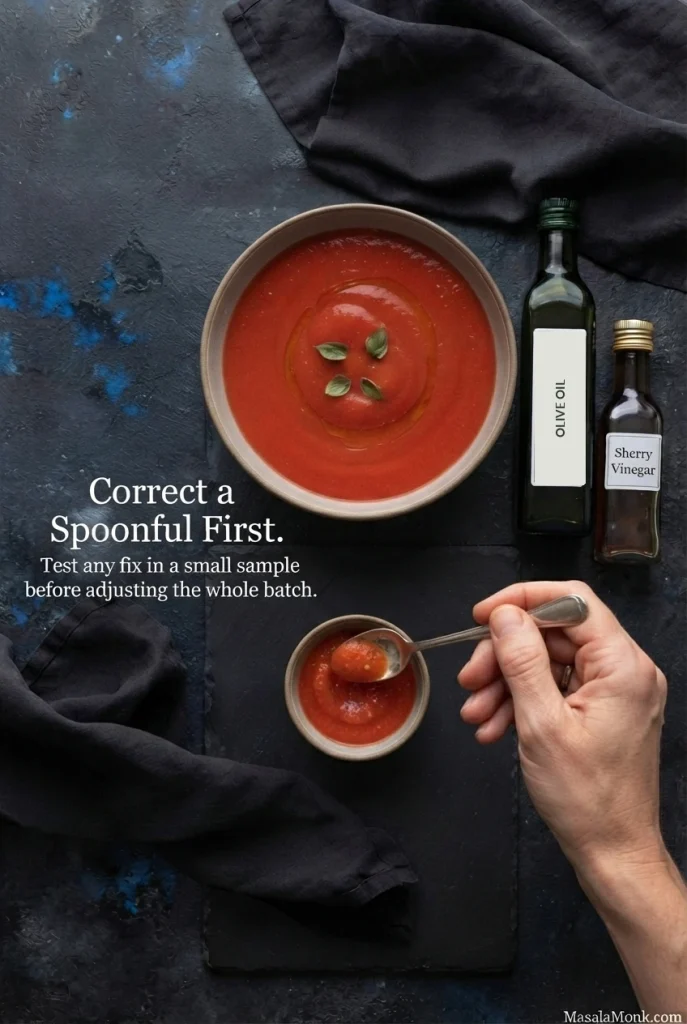
Identify the Problem Before Adjusting
| Problem | Possible cause | What to try |
|---|---|---|
| Bland | Weak tomatoes, excess water, or insufficient seasoning | Check salt first. Add vinegar 1 tsp (5 ml) at a time only if more acidity is needed. |
| Too sour | Tart tomatoes or excessive vinegar | Test adding ripe tomato purée without additional vinegar, then taste again. |
| Too garlicky or onion-heavy | Excess raw garlic or onion | Try diluting a small sample with blended tomato and mild vegetables. |
| Distinctly bitter cucumber | Potentially elevated cucurbitacins | Discard the entire batch if distinctly bitter cucumber was blended into it. Do not attempt dilution. |
| Harsh or bitter olive oil | Strong oil flavor or processing effects | Test a small portion with additional ripe tomato purée. The problem may not be fully correctable. |
| Watery | Excess water or substantial pulp removed during straining | Blend in softened bread or thicker ripe tomato purée. |
| Too thick | Dense tomatoes or excessive bread | Add cold water 1 tbsp (15 ml) at a time. |
| Too oily | Excess oil relative to the vegetables | Blend in additional tomato and mild vegetables without more oil. |
| Too salty | Excess salt | Dilute with unsalted blended vegetables, then reassess the seasoning. |
| Grainy | Vegetable fibers, skins, or incompletely softened bread | Strain residual fibers. If bread is responsible, allow more hydration and blend briefly. |
| Foamy | Excess air introduced during blending | Chill covered and skim remaining surface foam if necessary. |
| Tastes like salsa | Coarse texture or overpowering raw aromatics | Strain for a finer finish; test plain tomato purée if garlic or onion dominates. |
| Separates after chilling | Natural settling of vegetable solids | Stir gently if the soup was properly refrigerated and is otherwise fresh. |
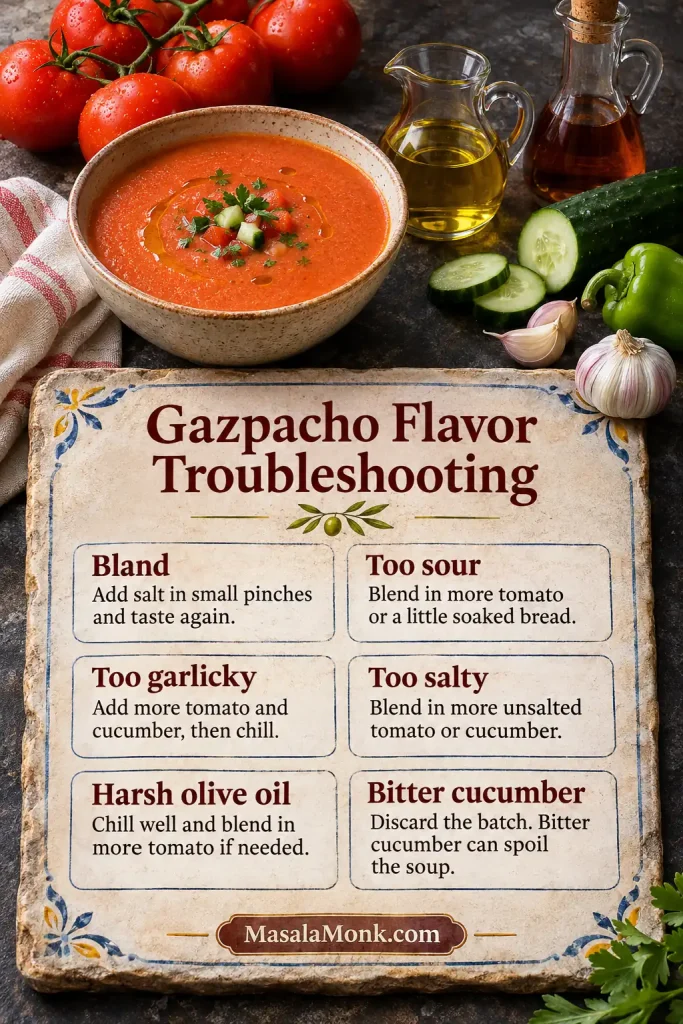
Diagnose the Flavor First
A bland soup, an overly acidic one, and a batch dominated by garlic require different corrections. Identify which flavor is out of balance before adding anything.
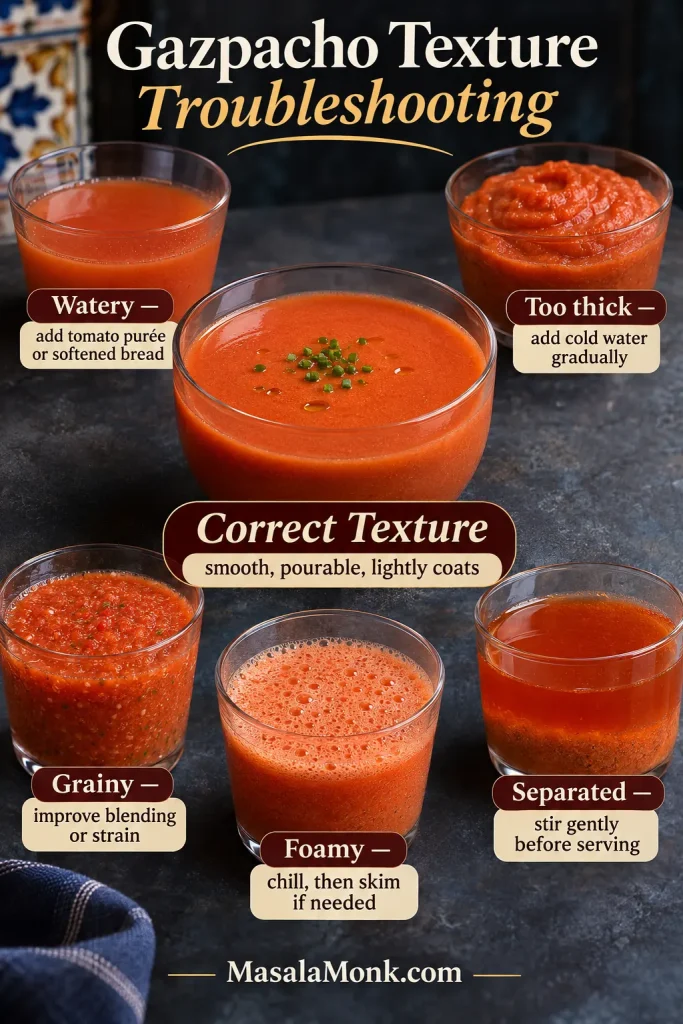
Recognize the Texture Problem
Surface bubbles indicate foam, visible coarse particles suggest graininess, and distinct layers show separation. Adding water will not correct all three.
Adding tomatoes, bread, or other vegetables changes the overall yield and seasoning. After a substantial correction, chill the soup again if necessary and taste it before serving. Stubborn vegetable fibers are often better removed with a sieve than prolonged high-speed blending.
Gazpacho Substitutions and Variations
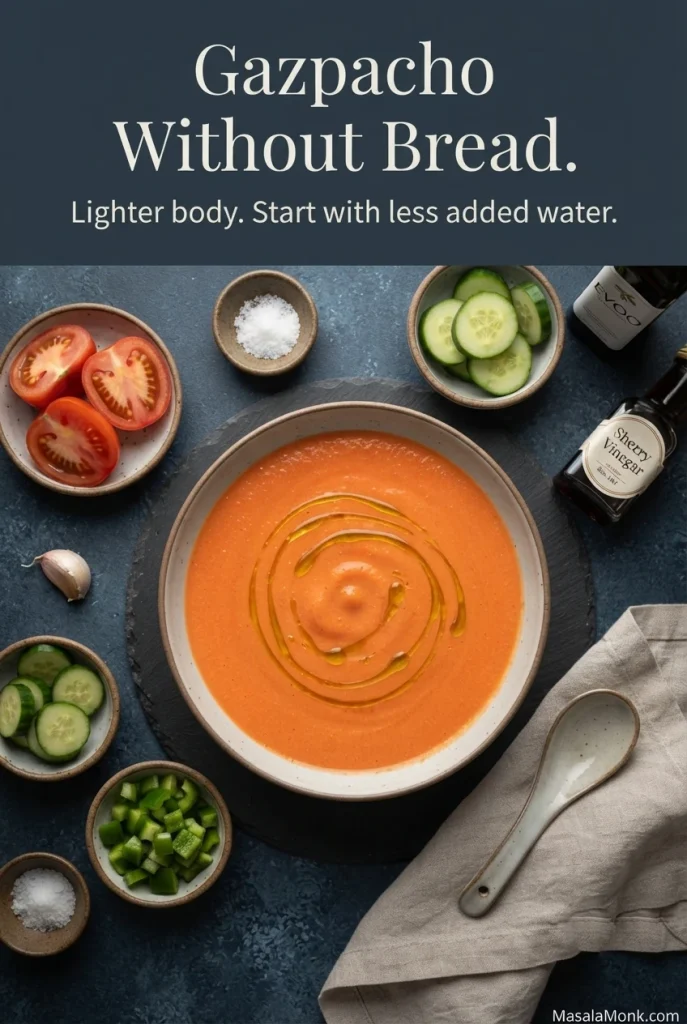
Gazpacho Without Bread
For bread-free gazpacho, omit the 50 g white bread and use the remaining ingredients as directed. Begin without added water because the soup will have less body. Blend the vegetables thoroughly, then incorporate the olive oil gradually. The result will generally feel lighter than the bread-based version.
Gazpacho Without Cucumber or Green Pepper
For cucumber-free gazpacho, replace the omitted 150 g cucumber with 150 g prepared ripe tomatoes. To omit green pepper, replace its 75 g with the same prepared weight of tomatoes. If you omit both, add 225 g more tomatoes in total. Red bell pepper is another option if you prefer a sweeter flavor.
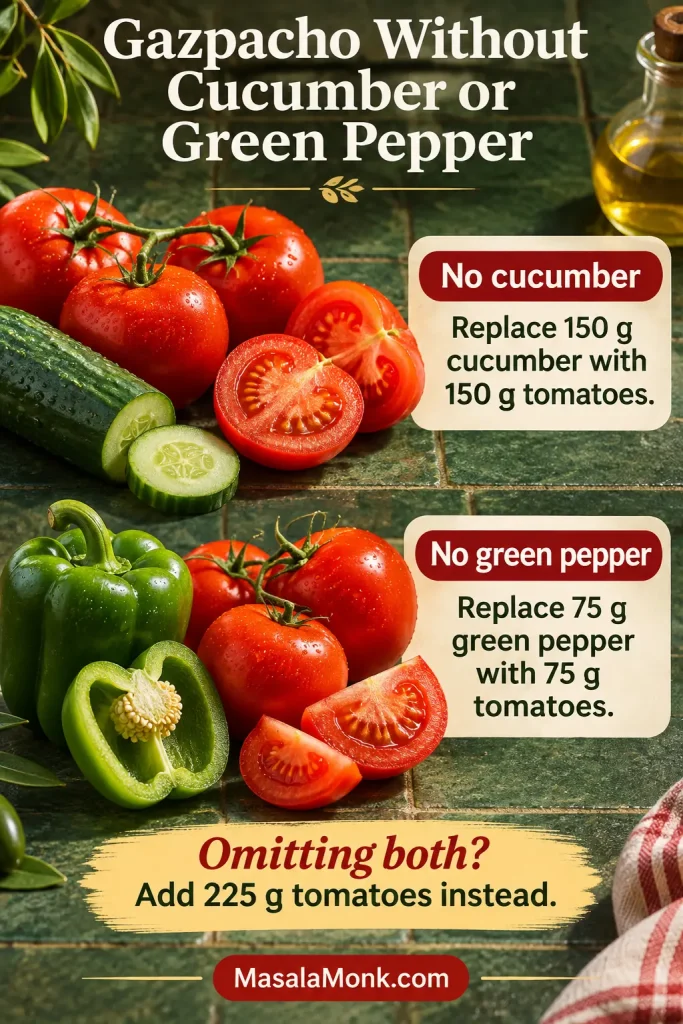
These substitutions preserve the total prepared vegetable weight but produce a different flavor balance. Taste the chilled soup before making further adjustments.
Can You Make Gazpacho With Canned Tomatoes?
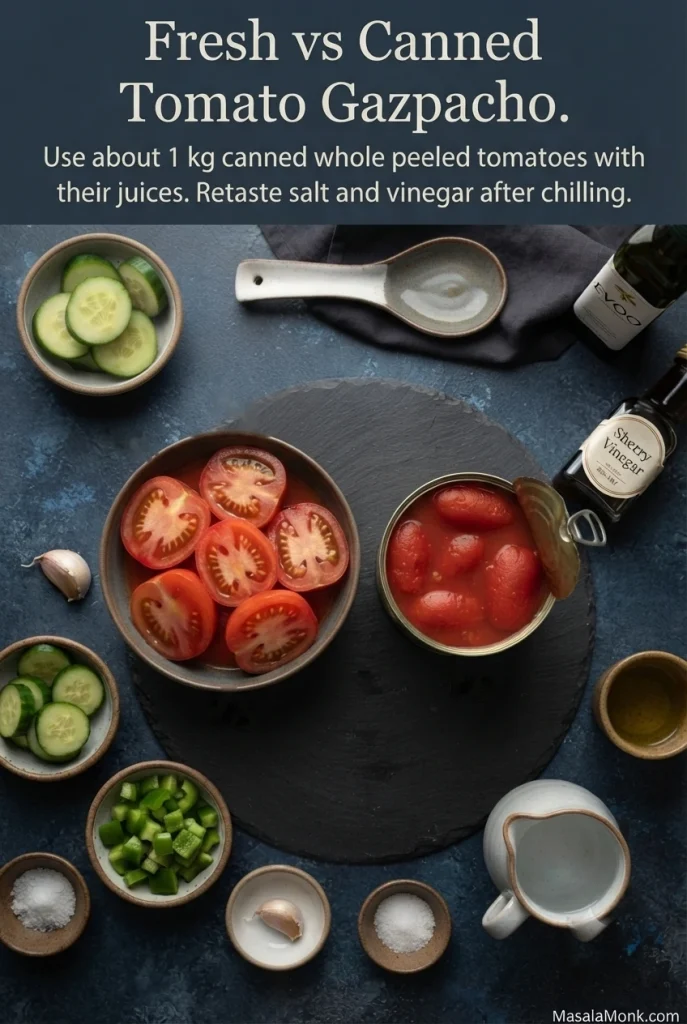
Yes. Replace the 1,000 g prepared fresh tomatoes with approximately 1 kg plain canned whole peeled tomatoes, including their packing juices. Choose unseasoned tomatoes without added herbs, garlic, or chilli.
Canned tomatoes may contain added salt and can taste more acidic than ripe fresh tomatoes. Reduce the starting salt when appropriate and begin with approximately 10 ml (2 tsp) sherry vinegar. Taste after chilling, then increase the seasoning gradually if needed.
Interested in watermelon gazpacho? Watermelon creates a sweeter, juicier variation that needs its own balance of tomatoes, vinegar, and salt. It is not a direct one-for-one substitute here. For related flavor ideas, explore our salted watermelon combinations.
Other Ingredient Swaps
- Red wine vinegar: Substitute for sherry vinegar, beginning with up to 20 ml (4 tsp). Start lower if the vinegar is particularly sharp.
- No garlic: Omit it for a milder soup.
- Prefer onion: Begin with 15–20 g mild onion. Its raw flavor can quickly become dominant.
Making Gazpacho Without a Countertop Blender
An immersion blender can make gazpacho in a deep, suitable container. Keep the blending head submerged to limit splashing, and move it gradually through the mixture until the vegetables are finely processed. A food processor also works, although smaller batches or optional straining may be needed for a smooth result.
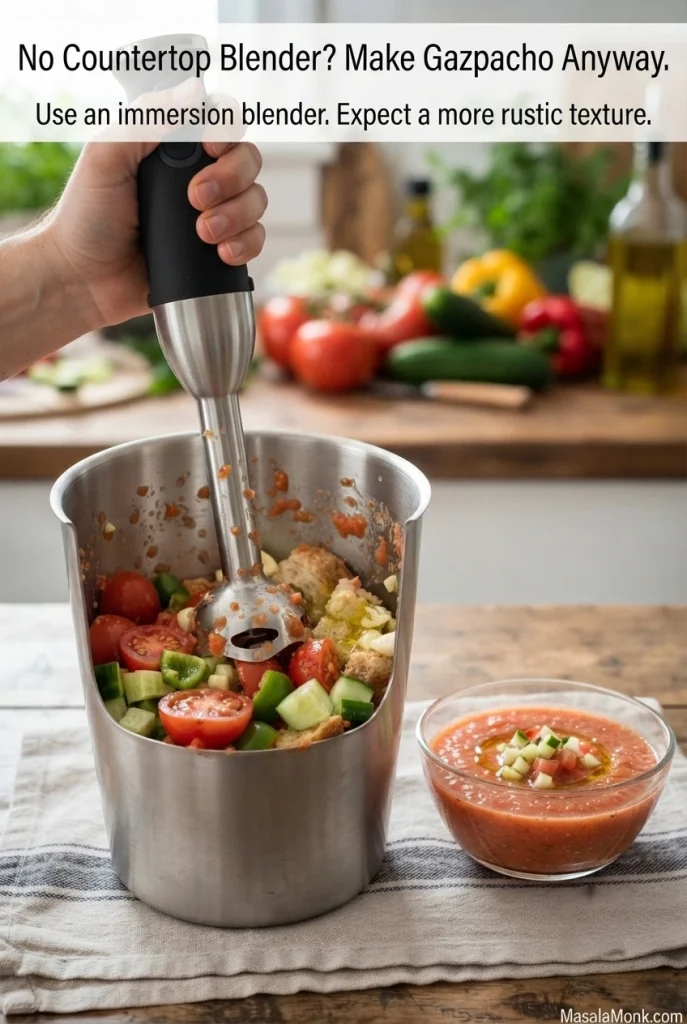
Without an electric blender, grate the tomatoes, finely chop or pound the other vegetables, and mash the softened bread and garlic. Mix in the vinegar, salt, and olive oil. Expect a rustic soup rather than a silky purée.
How to Serve, Make Ahead, and Store Gazpacho
What Goes With Gazpacho?
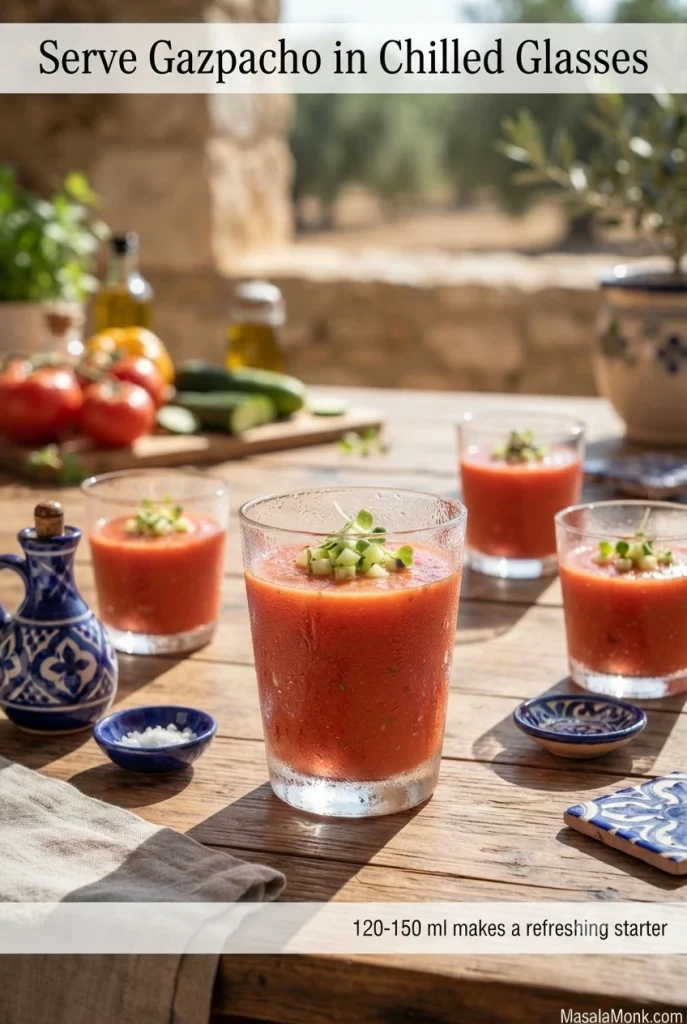
For a refreshing starter, pour approximately 120–150 ml (4–5 US fl oz) of thoroughly chilled gazpacho into each small glass. Finish with a few drops of olive oil or finely diced vegetables. These portions work particularly well before Indian-inspired tapas and savory small plates or other appetizers.
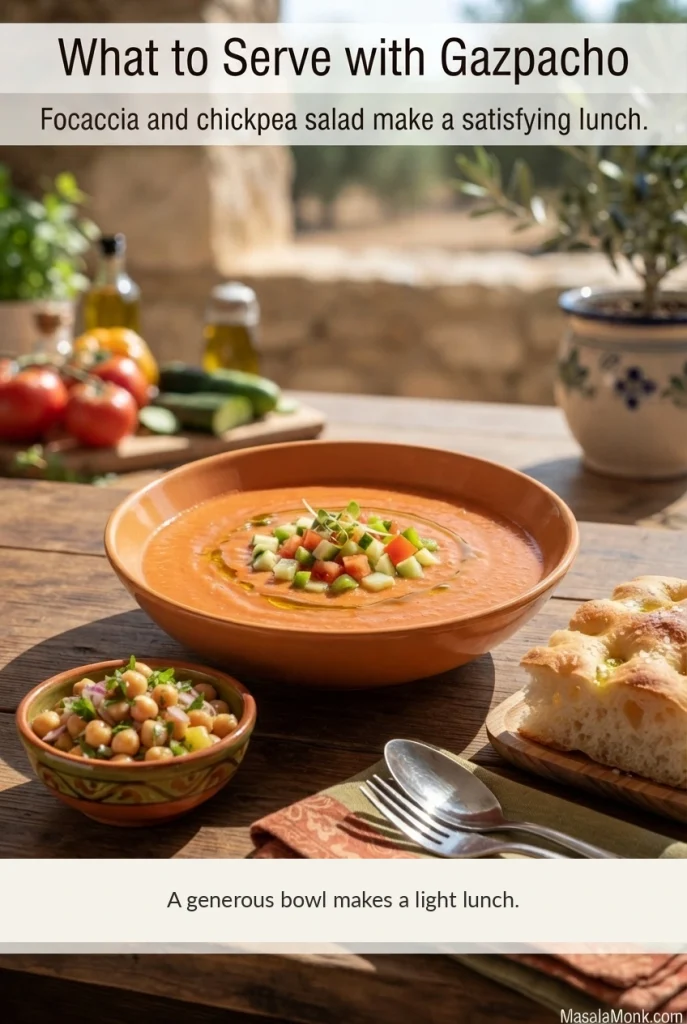
For lunch, divide the gazpacho among four bowls and add extra finely diced tomatoes, cucumber, and mild green pepper. The crisp vegetables contrast with the smooth soup. Serve crusty bread or homemade focaccia alongside for dipping. Actual yield varies with added water and straining.
Chill serving bowls or glasses beforehand when possible. That helps keep gazpacho cold without adding ice cubes that gradually dilute it.
Can You Make Gazpacho Ahead?
Yes. Prepare the gazpacho the evening before, cover it, and refrigerate. Its flavors may seem more integrated after resting. Before serving, stir gently and check the salt and vinegar balance.
For a more substantial lunch, pair the soup with a Mediterranean chickpea salad. Chickpeas add protein and fiber, while the vegetables provide contrasting textures. Keep the soup and salad refrigerated separately until serving.
How Long Does Homemade Gazpacho Last?
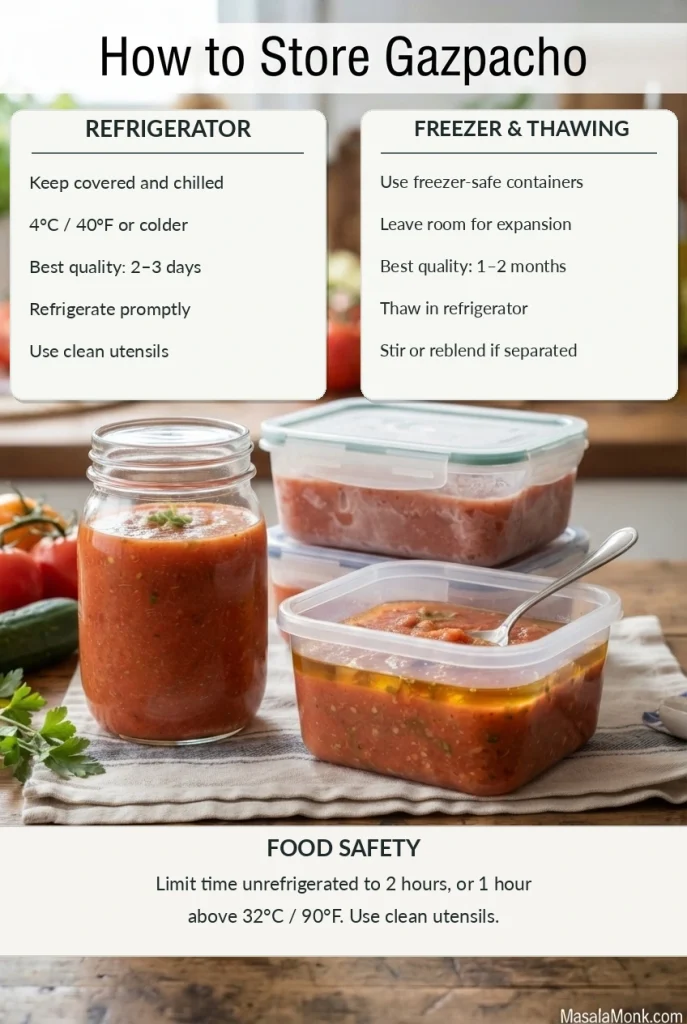
For the freshest flavor and texture, aim to enjoy homemade gazpacho within 2–3 days. Store it in a clean, covered container at 4°C (40°F) or colder. This is a quality guideline; proper refrigeration throughout storage is essential.
Refrigerate gazpacho promptly. FoodSafety.gov’s food-safety guidance recommends refrigerating perishable foods within two hours, or within one hour when the surrounding temperature exceeds 32°C (90°F). Shallow containers can help larger batches cool efficiently.
Some separation is normal as blended vegetable solids settle. Stir a properly refrigerated batch before serving. However, unexpected fizzing, gas pressure, mold, or suspicious changes are reasons to discard the soup. Food can be unsafe without visible spoilage, so never taste questionable leftovers to determine whether they are safe.
Can You Freeze Gazpacho?
Yes, although freezing can affect the texture. The vegetable purée may separate during thawing, and the olive-oil emulsion can lose some of its smoothness.
Freeze gazpacho promptly in small, airtight freezer-safe containers, leaving room for expansion. For best eating quality, aim to use it within approximately 1–2 months. Thaw in the refrigerator, then stir or briefly reblend before serving.
Gazpacho Recipe FAQs
Can I Use Tomato Juice Instead of Fresh Tomatoes?
Tomato juice can work in a quick cold-soup variation, but it lacks the fresh vegetable body of this recipe. Plain canned whole peeled tomatoes are a closer substitute because they contain both tomato flesh and liquid.
Do You Need to Peel and Deseed Tomatoes for Gazpacho?
No. A capable blender generally breaks down ripe tomato skins and small seeds sufficiently for homemade gazpacho. If the soup remains noticeably fibrous, strain it through a fine-mesh sieve for a smoother finish.
Is Gazpacho a Starter or a Full Meal?
Gazpacho is commonly served as a starter or cold vegetable drink. A larger bowl with bread, chickpea salad, sandwiches, or another substantial accompaniment can make it part of a light lunch.
Does Gazpacho Have to Be Served Cold?
Traditional Andalusian tomato gazpacho is served chilled. Let it become thoroughly cold rather than relying only on a fixed refrigeration time. Taste and adjust the seasoning at the temperature at which the soup will be served.
Is Gazpacho Vegan and Gluten-Free?
This gazpacho recipe is vegan when the bread and optional garnishes contain no animal-derived ingredients. However, it is not gluten-free as written because the white bread generally contains wheat. For a gluten-free variation, omit the bread and check all packaged ingredients and cross-contact precautions, especially when preparing food for someone with celiac disease.
Once the ripe tomato flavor comes through, the vinegar provides a pleasant brightness, and the soup pours with the consistency you prefer, your gazpacho is ready to serve. Keep it thoroughly chilled, garnish lightly, and enjoy the fresh flavors of this classic Spanish cold soup.








