
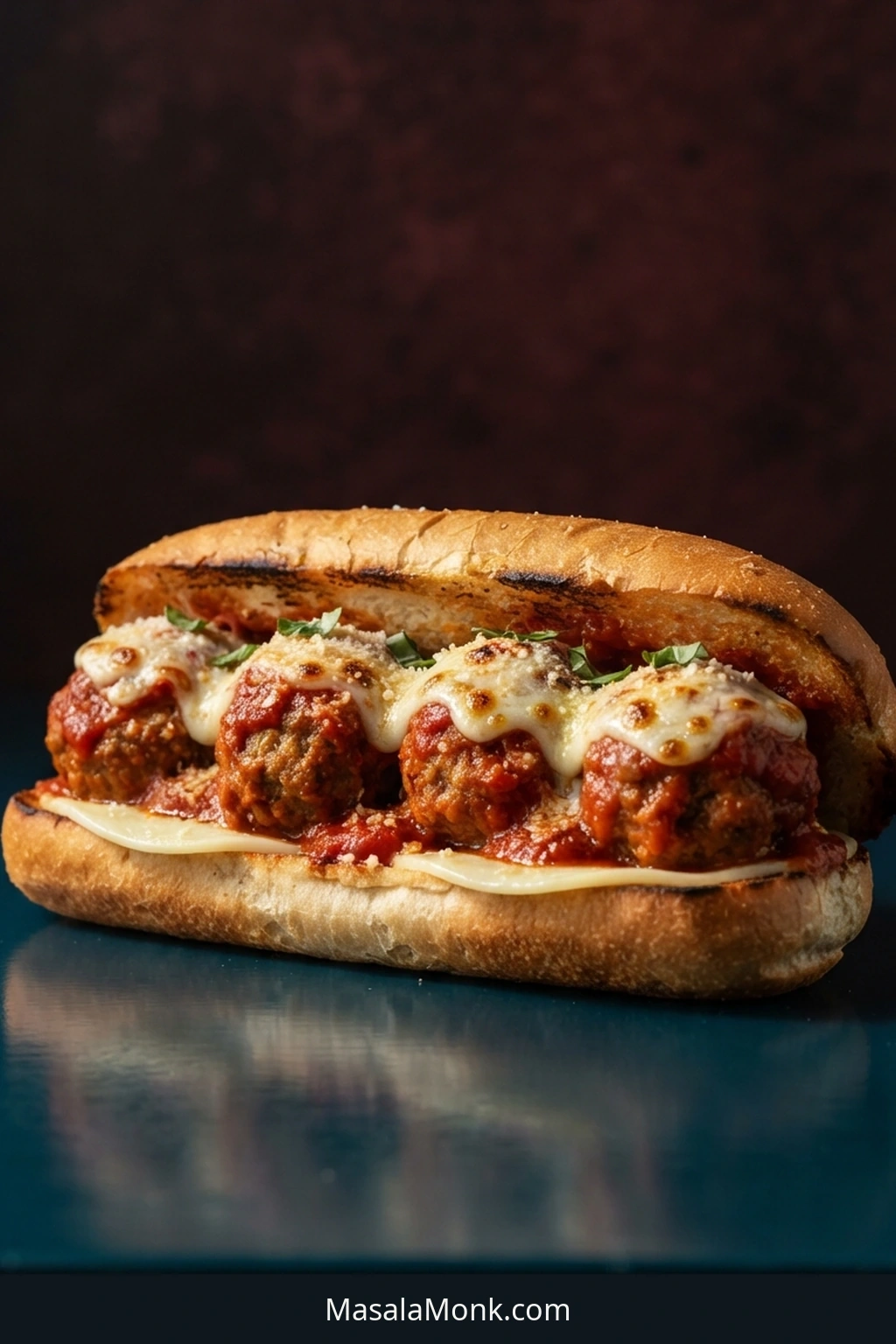
A good meatball sub should be messy in the right way. The mozzarella stretches, the marinara comes with the meatball, and maybe a little sauce reaches your fingers. What should not happen is the filling shooting out the back, the bottom of the roll turning to mush, or a hard crust making every bite a wrestling match.
This version treats the sub as a sandwich first, with every part chosen around what happens when you actually pick it up and bite it.
Meatball sub, sandwich, hoagie, grinder or hero—the regional name changes; the eating problem doesn’t. You still need plenty of meat, marinara and melted cheese in a roll that holds together when you bite it.
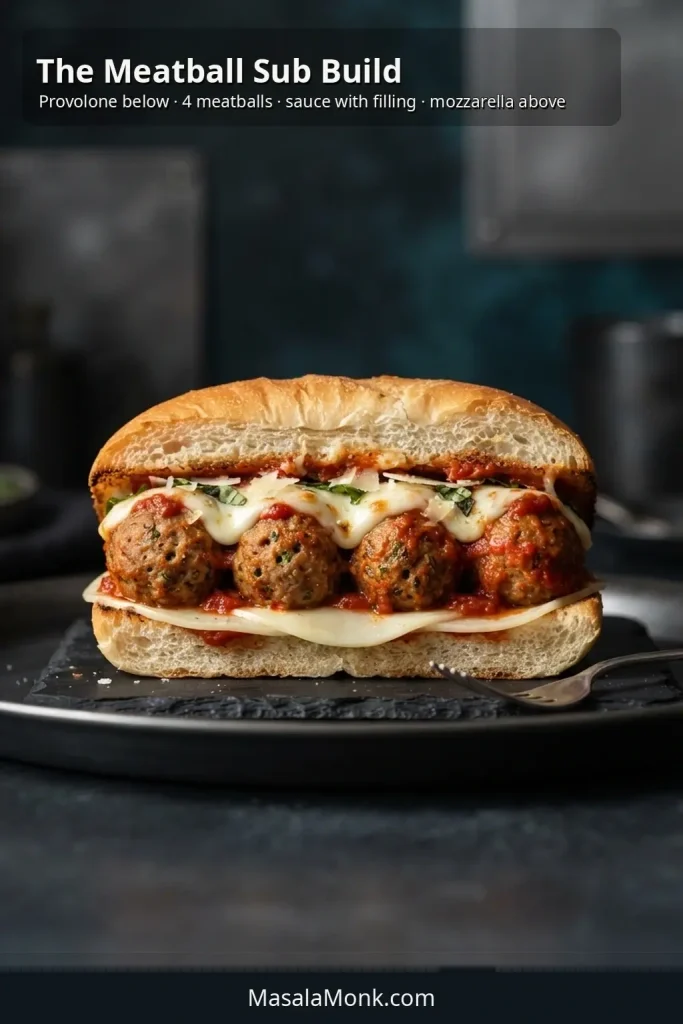
The Meatball Sub Build
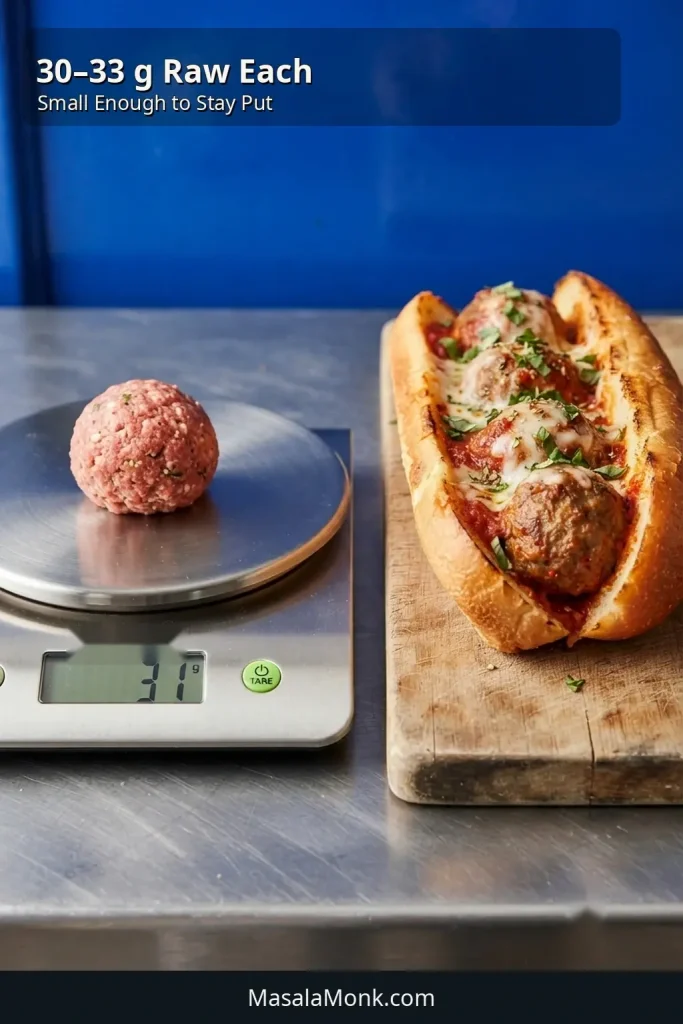
20 small meatballs → 4 per sub. Shape them at about 30–33 g (roughly 1–1¼ oz) each so they sit in one row.
Marinara with some body. It should stay on the meatballs instead of draining straight into the roll.
A hinged, tender roll. You want enough structure for the filling and a crust that gives easily when you bite.
Provolone below, mozzarella above. One brings savory flavor against the bread; the other gives you the bubbling, stretchy top.
The rule worth remembering: sauce the meatballs generously; sauce the bread sparingly.
Meatball Sub Recipe
Yield: 5 meatball subs
Prep: about 25 minutes
Cook: about 30 minutes
Total: about 55–60 minutes
Especially useful: a kitchen scale for 30–33 g meatballs, or a roughly 2-tablespoon scoop for portioning, plus an instant-read thermometer.
For the Meatballs
- 12 oz (340 g) 85/15 ground beef
- 4 oz (113 g) ground pork
- 30 g plain panko breadcrumbs (about ½ cup)
- ¼ cup (60 ml / 2 fl oz) whole milk
- 1 large egg
- 35–40 g finely grated Parmesan (about ⅓ cup)
- 2 garlic cloves, finely grated or minced
- 2 tablespoons finely chopped fresh parsley
- 1 teaspoon dried oregano
- 5 g fine sea salt (roughly a scant teaspoon)
- ½ teaspoon freshly ground black pepper
For the Marinara
- 2 tablespoons (30 ml / 1 fl oz) olive oil
- 3 garlic cloves, finely minced
- 2 tablespoons (30 g) tomato paste
- 1 can (28 oz / 794 g) crushed tomatoes or smooth passata
- 1 teaspoon dried oregano
- ½ teaspoon fine sea salt to start, plus more as needed
- ¼ teaspoon crushed red pepper flakes, optional
- ¼ cup loosely packed fresh basil leaves, torn or sliced
For the Rolls
- 5 hoagie or Italian rolls, 6–8 inches (15–20 cm) each
- 3 tablespoons (42 g) softened unsalted butter
- 1 garlic clove, finely grated
- 1 tablespoon finely chopped parsley, optional
For Assembly
- 90–100 g sliced provolone, enough to cover the lower cut faces of all 5 rolls; depending on slice size, use about 1–2 slices per sub
- 1 to 1¼ cups (125–150 g) freshly shredded low-moisture mozzarella
- 2 tablespoons finely grated Parmesan, plus more if desired
- Fresh basil or parsley for finishing, optional
Make the Meatballs
- Heat the oven. Preheat to 425°F (218°C). Line a rimmed baking sheet with foil, or with parchment paper rated for 425°F.
- Hydrate the panko. Combine the panko and milk in a large bowl. Stir and leave for about 5 minutes, until the crumbs are evenly softened.
- Season the panade. Add the egg, Parmesan, garlic, parsley, oregano, salt and black pepper. Mix well before adding the meat.
- Add the beef and pork. Fold gently until no obvious streaks remain and a small handful holds together when squeezed. Stop before the mixture becomes sticky or paste-like.
- Check the seasoning if you like. Fully cook a teaspoon-sized piece in a small skillet, taste it, then adjust the seasoning before shaping the whole batch.
- Shape 20 meatballs. Portion about 30–33 g (roughly 1–1¼ oz) of raw mixture for each one. Damp hands help smooth the surface without packing the meat tightly.
- Bake until done. Arrange the meatballs with space between them. Start checking around 10–11 minutes. Small meatballs this size may finish around 11–15 minutes, but use the thermometer as the endpoint: one of the largest should reach 160°F (71°C) in the center.
Build the Marinara
- Cook the tomato paste and garlic. While the meatballs bake, warm the olive oil in a wide saucepan or deep skillet over medium heat. Stir in the tomato paste and cook for 1–2 minutes, until it darkens slightly. Then add the garlic and cook for about 30 seconds, just until fragrant.
- Add the tomatoes. Pour in the crushed tomatoes or passata, then stir in the oregano, salt and optional red pepper flakes. Bring to a gentle simmer.
- Reduce to the right texture. Simmer uncovered for about 15–20 minutes, stirring occasionally. Stir in the basil near the end. Stop when the sauce is juicy and spoonable but leaves a substantial coating on a spoon, then taste and adjust the salt.
- Coat the meatballs. Add the cooked meatballs to the hot marinara and turn them gently until well covered. Lower the heat as far as it will go, or take the pan off the heat while you prepare the rolls.
Prepare the Rolls
- Make the garlic butter. Mix the softened butter, grated garlic and optional parsley.
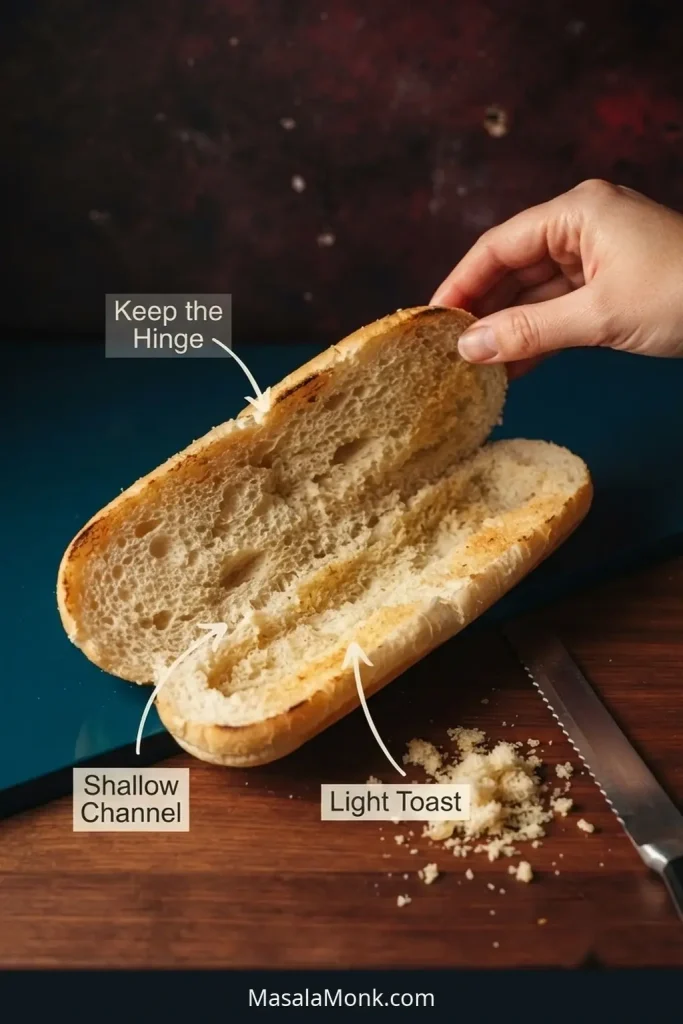
- Keep the hinge. Slice each roll lengthwise without cutting through the opposite side. If the roll is narrow or dense, pull out some crumb to make a shallow channel for the meatballs.
- Toast the cut faces lightly. Spread with a thin layer of garlic butter.
Broiler: Transfer the rolls to an unlined or foil-lined broiler-safe sheet pan; do not put parchment paper under the broiler. Start checking after about 1 minute; they may need roughly 1–2 minutes.
425°F (218°C) oven: Allow roughly 3–5 minutes.
For either method: Stop when the cut faces are dry and lightly golden while the outer crust bends easily.
Assemble and Broil
- Start with provolone. Cover most of the lower cut face of each warm roll.
- Add four meatballs. Lift them from the sauce with tongs or a slotted spoon. They should be well coated without carrying a pool of loose marinara into the roll.
- Add more sauce. Spoon about 2–4 tablespoons (30–60 ml) over the meatballs, adjusting for the width and absorbency of your bread.
- Add mozzarella and Parmesan. Divide the mozzarella between the five subs and finish with Parmesan.
- Broil open-faced. Keep the rolls open on the unlined or foil-lined broiler-safe pan and watch continuously. Pull them once the mozzarella has melted over the meatballs and picked up its first golden spots. Depending on the broiler, that may take only 1–3 minutes.
- Serve immediately. Put extra warm marinara alongside for dipping or spooning over individual bites.
Recipe Notes
- All beef: replace the pork with another 4 oz (113 g) ground beef.
- Frozen meatballs: use about 20 fully cooked meatballs if they are close to the homemade size. If they are much larger, use fewer and halve them so they sit securely in the rolls. See the full frozen-meatball shortcut below.
- Jarred marinara: use about 24–28 oz (680–794 g). Reduce a particularly thin sauce before adding the meatballs.
- Chicken or turkey meatballs: if using poultry meatballs, cook them to 165°F (74°C).
- Make ahead: prepare the meatballs and sauce in advance, but leave the bread dry until shortly before serving. Jump to make-ahead, freezing and crowd guidance.
Food safety: Ground beef-and-pork meatballs should reach 160°F (71°C); meatballs made with ground poultry should reach 165°F (74°C). Check with an instant-read thermometer instead of relying on color alone. See the USDA safe internal temperature guidance.
About this recipe: This is a research-led synthesis of established cooking techniques, published recipe methods and food-safety guidance.
Meatball Sub Guide
The Build
- Why These Meatballs Are Smaller
- The Sauce Should Stay on the Meatball
- Choosing the Right Roll
- How to Assemble a Meatball Sub
Fixes, Shortcuts & Planning
Why These Meatballs Are Smaller
There is nothing wrong with a large meatball on a plate. Inside a roll, geometry matters more.
A big round meatball sits high above the bread. Bite down and the crust presses against a curved, saucy surface. When the bread resists, the filling may move before your teeth get through it, pushing the next meatball farther down the roll—or straight out the other side.
At about 30–33 g of raw mixture each, these meatballs stay substantial while fitting naturally in one row. The smaller size also gives each bite more sauce-coated surface. These are smaller than oversized restaurant-style meatballs, not tiny cocktail meatballs.
Keeping the Meatballs Tender
A sub asks more of a meatball than a plate of pasta does: it has to survive baking, sauce, tongs and the pressure of a bite.
The milk-and-panko panade keeps the interior moist, while the egg and Parmesan give the mixture enough structure to hold together. Mix until the meat becomes cohesive, then stop. Barely combining it can leave weak spots; kneading it aggressively can make the texture dense. The target is a meatball firm enough for tongs but tender enough to yield instead of bounce when you bite through it.
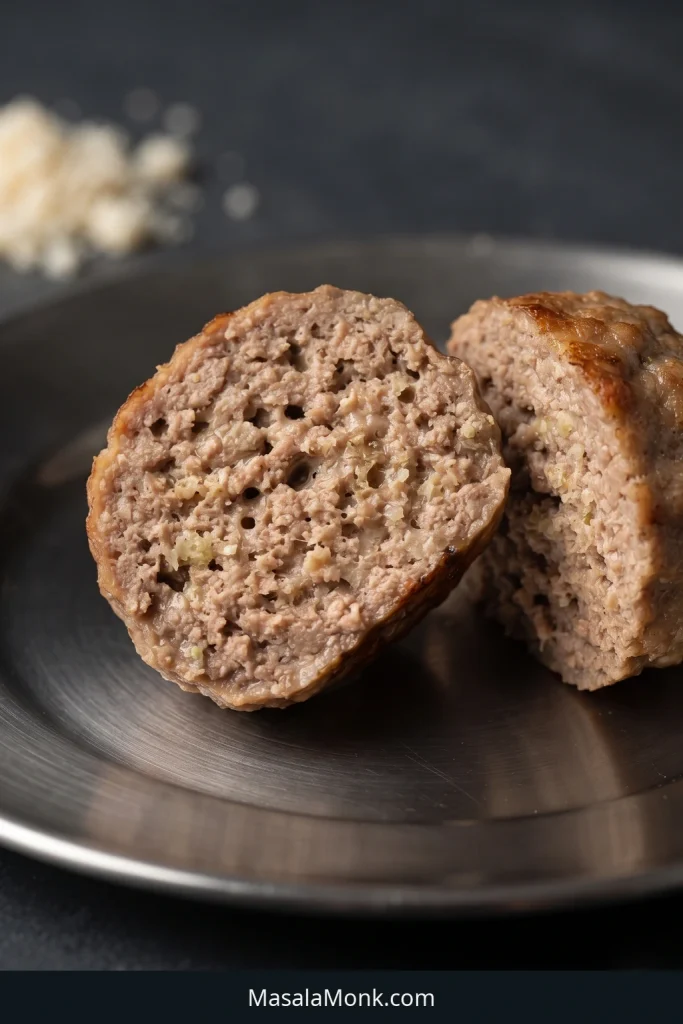
That is also why these meatballs bake on a sheet pan before they meet the marinara. The oven sets the exterior first, giving them more structure so they stay intact through saucing, assembly and the first bite.
For doneness, check one of the largest meatballs with an instant-read thermometer and look for 160°F (71°C) in the center.
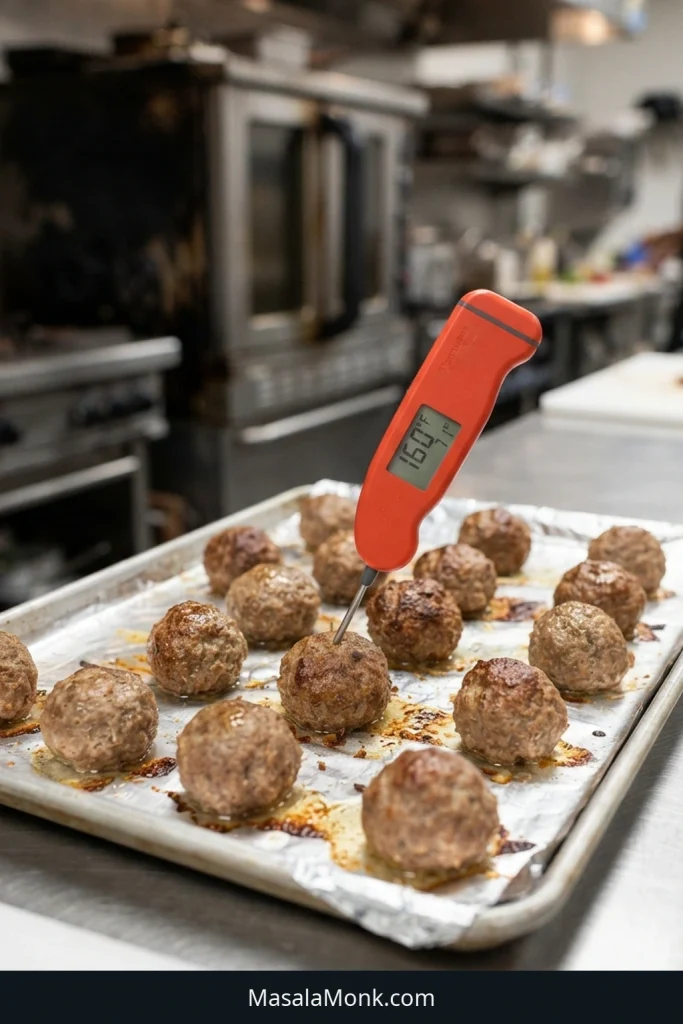
The optional test patty is the easiest way to catch a seasoning problem before the whole batch is baked. For a deeper look at mixing, shaping, texture and doneness, see our Meatball Recipe: Juicy, Tender & Easy.
The Sauce Should Stay on the Meatball
A meatball sub can be dry and soggy at the same time. That usually happens when the meatballs carry very little marinara while loose sauce soaks directly into the bread.
Coat the meatballs properly first. A smaller amount of extra sauce can then fill the spaces around them without turning the lower roll into a sponge.
What “Thick Enough” Looks Like
The marinara should flow from a spoon. When you lift a meatball, though, a visible layer should stay attached instead of immediately draining away.
Tomato paste adds body and concentrated flavor; an uncovered simmer removes excess water. Tomato brands vary, so watch the texture more closely than the clock. It may be ready before 20 minutes. Still watery at that point? Give it longer.
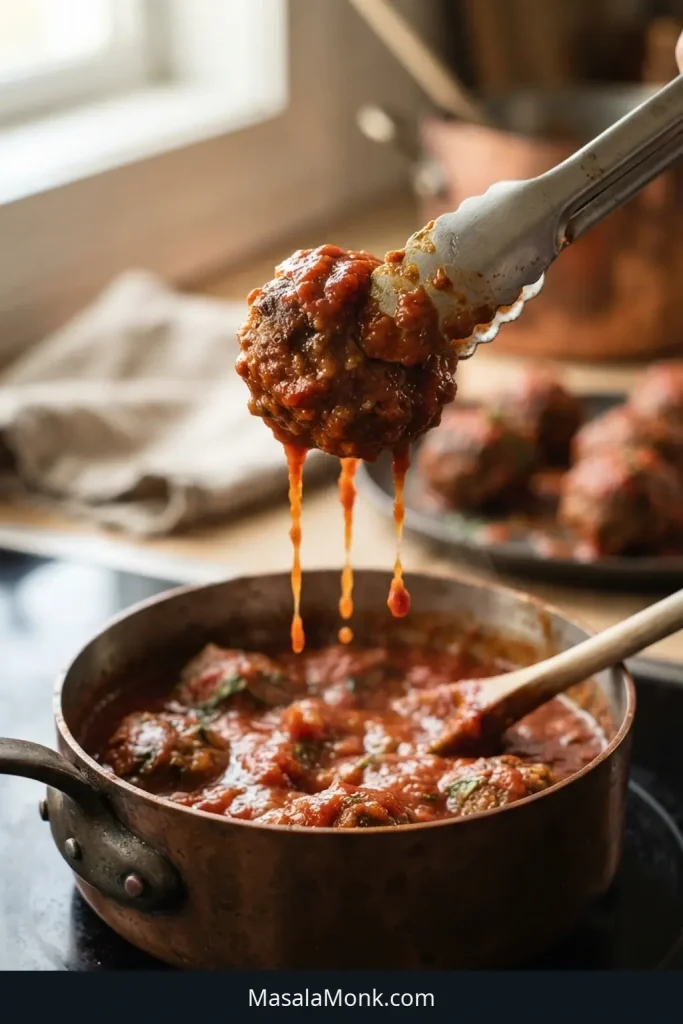
Stirring in fresh basil near the end keeps that concentrated tomato flavor from feeling heavy. Each baked meatball picks up a glossy layer of marinara while the garlic, Parmesan and savory beef-and-pork filling come through underneath.
You get the saucy first bite you came for without finding a puddle underneath it. The bread simply gets a fighting chance.
If you already make our classic homemade marinara, simmer it a bit farther when necessary so it coats the meatballs.
With jarred marinara, consistency matters more here than whether it came from a jar. Simmer a thin one uncovered; brighten a flat-tasting sauce with salt, basil, garlic or Parmesan. A jar that is already thick and well seasoned needs very little attention.
How Much Extra Sauce?
Once the meatballs are well coated, another 2–4 tablespoons (30–60 ml) per sub is usually enough. A wide bakery hoagie can handle more than an airy or narrow roll, so use the bread in front of you as the guide.
Keep extra warm marinara on the table. Anyone who wants a wetter sandwich can add it bite by bite.
Choosing the Right Roll
A 6–8 inch (15–20 cm) Italian or hoagie roll is the safest starting point.
“Use crusty bread” sounds sensible for a saucy sandwich, but a very hard crust creates its own problem. A tough baguette takes more bite pressure. Add round meatballs and slippery marinara, and that pressure can push the filling along the roll before the crust finally gives way.
The best roll gives when you bite, while the rest of it stays intact around the meatballs.
- A reasonably close crumb rather than large open holes
- A tender crust that bends before it cracks
- Enough depth to cradle the filling inside a hinged roll
Italian rolls, hoagie rolls and softer French-style rolls all fit that brief. Ciabatta is often too chewy. A flimsy hot-dog bun tends to fail in the opposite direction.
Keep the Hinge
Leaving one long side attached cups the filling from one direction and keeps the meatballs sitting lower in the roll. With particularly narrow bread, a shallow channel gives them more room. Don’t hollow the roll like a canoe; a small groove is enough.
Lightly toast the cut face, but keep the outside flexible. The interior should offer some resistance while the outer crust yields instead of shattering when you bite.
How to Assemble a Meatball Sub
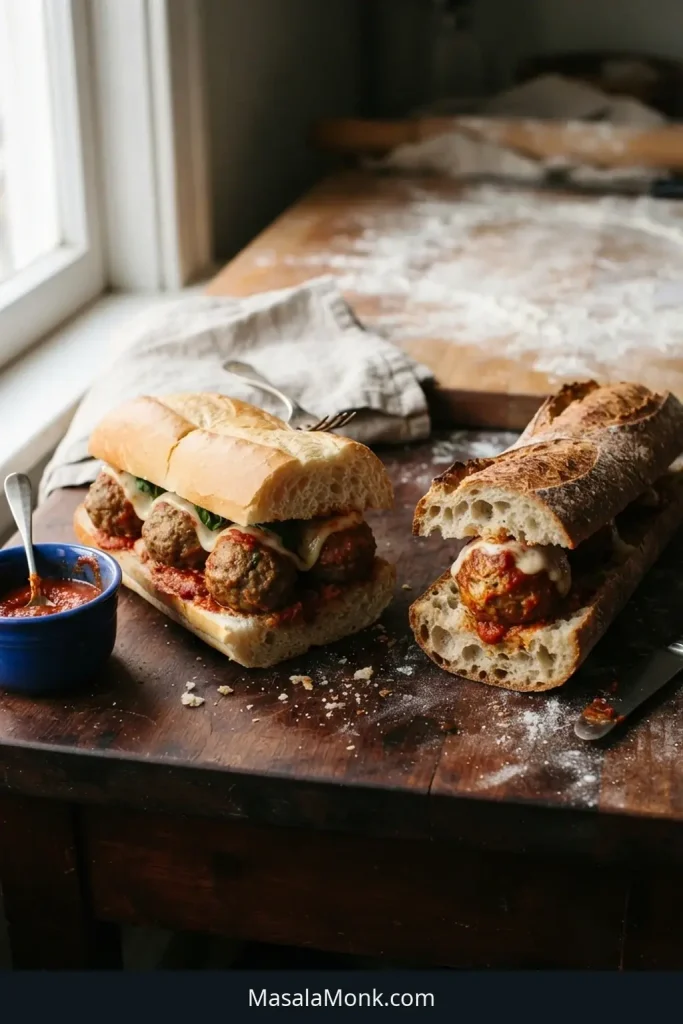
Start with provolone. Cover most of the lower half of the warm roll. It brings a savory, salty layer against the garlic-toasted bread and slows direct contact between the crumb and the wet filling.
Add the meatballs and sauce. Four of the smaller meatballs fill a typical roll without needing a second layer. Spoon any additional marinara over the meatballs, not underneath them.
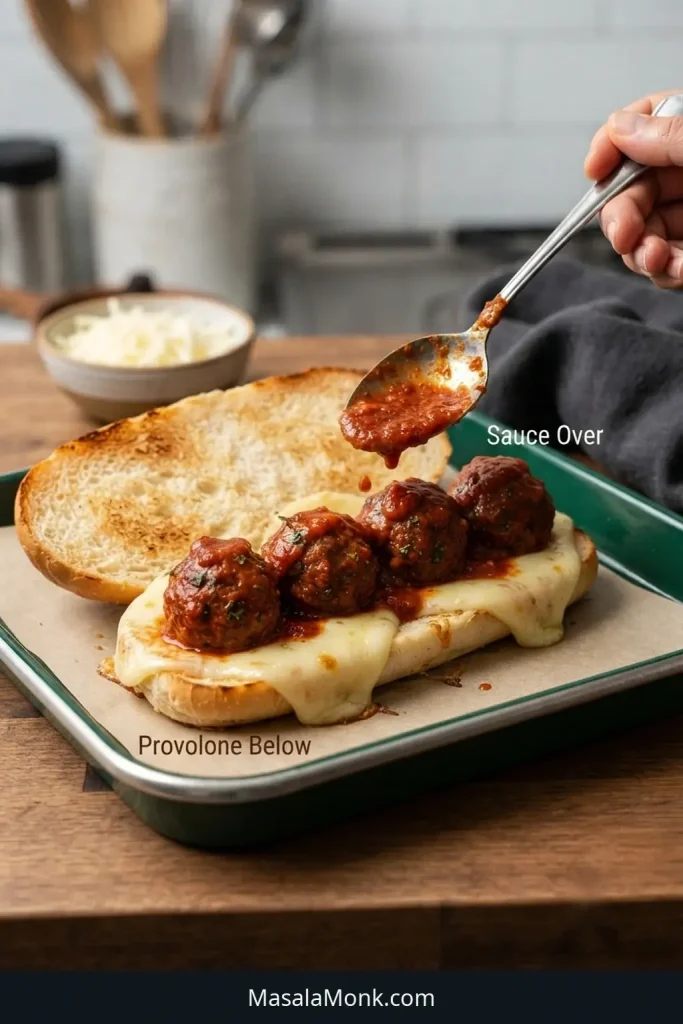
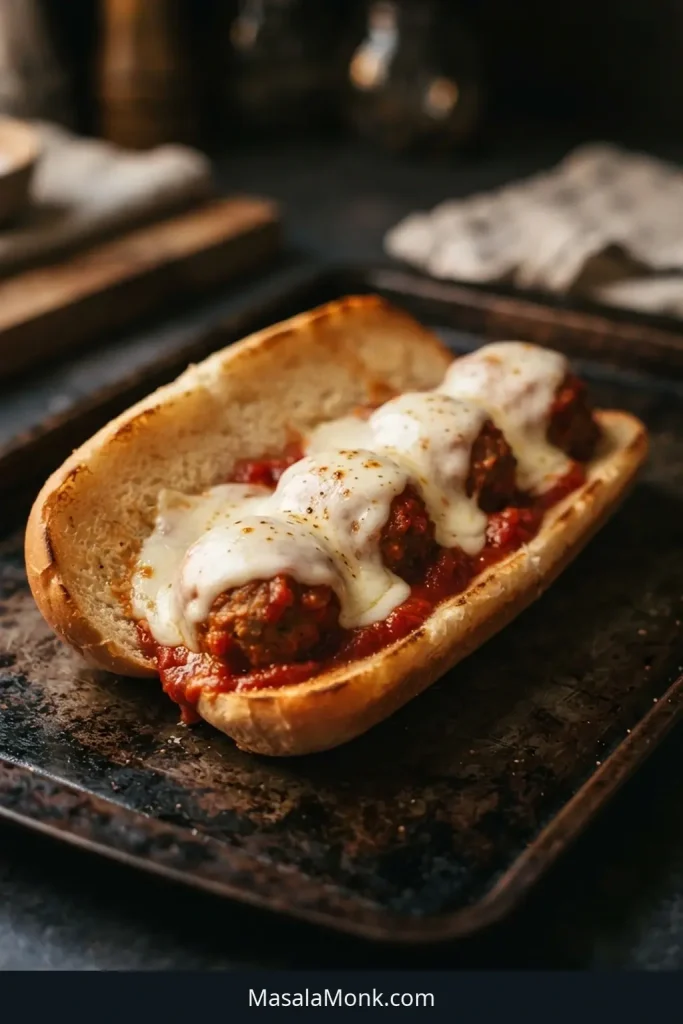
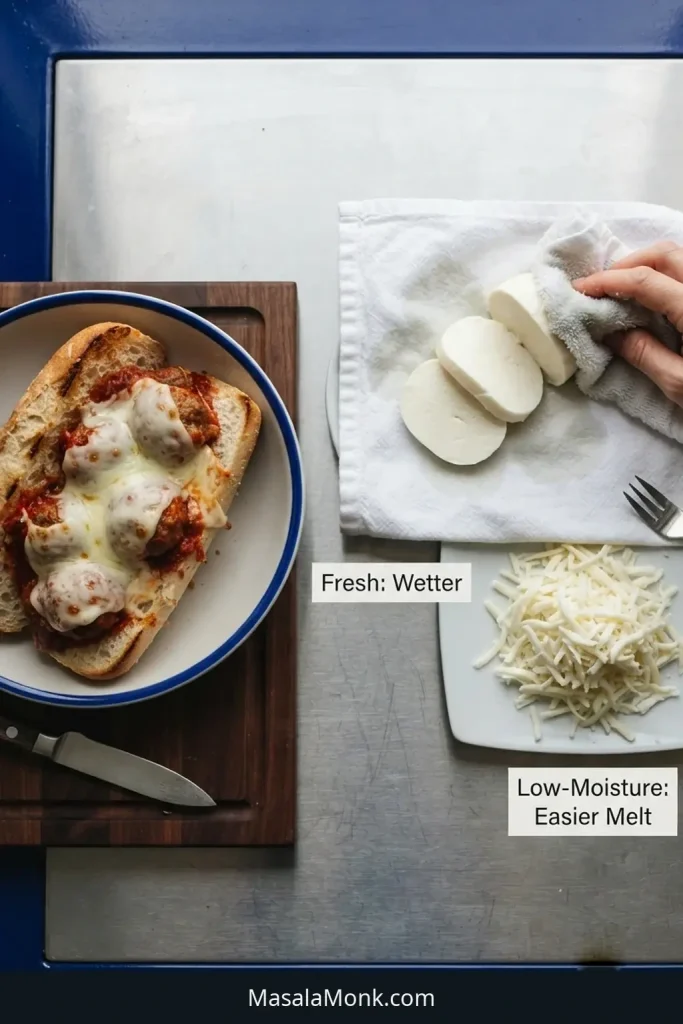
Finish with low-moisture mozzarella. It melts and browns more predictably than fresh mozzarella in an already saucy sandwich. As it melts, the provolone settles against the toasted bread while the mozzarella drapes over the meatballs and browns at the exposed edges.
Add Parmesan, then pull the sub once those first golden spots appear. Don’t sacrifice the bread chasing a darker cheese crust.
How to Keep a Meatball Sub from Getting Soggy
Think moisture + time. Reduce thin marinara, lightly toast the cut faces of the roll, put provolone against the lower bread and assemble close to serving time.
- Move sauce-coated meatballs into the roll instead of pouring loose marinara into empty bread.
- Add extra sauce according to what the particular roll can handle.
The sandwich can be properly saucy. The goal is simply to keep most of that marinara around the filling until you take the bite.

Meatball Sub Troubleshooting
Sogginess is only one way a meatball sub can go sideways. The rest are usually easy to diagnose.
| Problem | Likely Cause | Fix |
|---|---|---|
| Meatballs escape | Too large, too many or bread too hard | Use smaller meatballs; halve large ones; choose a tender roll |
| Dense meatballs | Overmixed or dry crumbs | Hydrate the panko and stop mixing once cohesive |
| Meatballs crumble | Mixture undercombined | Mix until the meat holds together cleanly |
| Hard bread | Wrong roll or too much toasting | Choose a tender crust and toast mainly the cut face |
| Dry sandwich | Meatballs are under-sauced | Coat them well and serve extra marinara alongside |
| Sauce runs out | Marinara is too thin | Simmer uncovered until it coats the filling |
| Mushy meatballs | Prolonged simmering in sauce or overly long hot holding | Coat cooked meatballs briefly and keep the heat gentle |
| Watery cheese layer | High-moisture cheese | Use low-moisture mozzarella for the main melt |
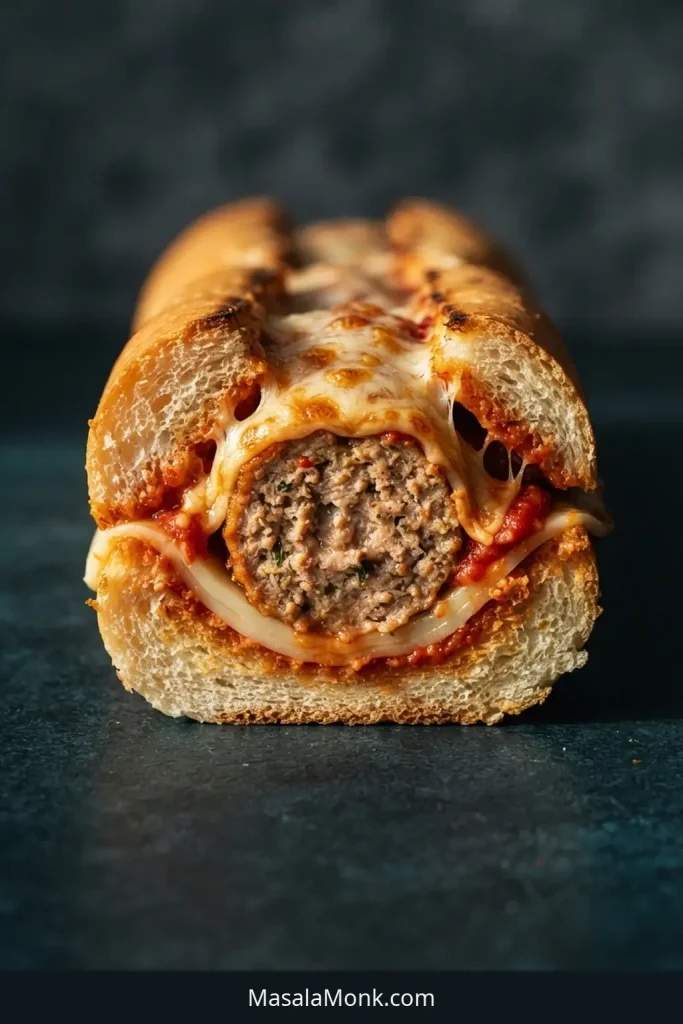
Once you have ruled out the obvious failures, a finished cross-section can show whether the whole meatball sub is balanced.
Fast Version: Frozen Meatballs + Jarred Marinara
This is the version for a night when you want a meatball sub more than you want a meatball project.
For five sandwiches, use about 20 frozen meatballs if they are close to the homemade 30–33 g size. For much larger meatballs, use fewer and halve them after heating so they sit securely in the rolls.
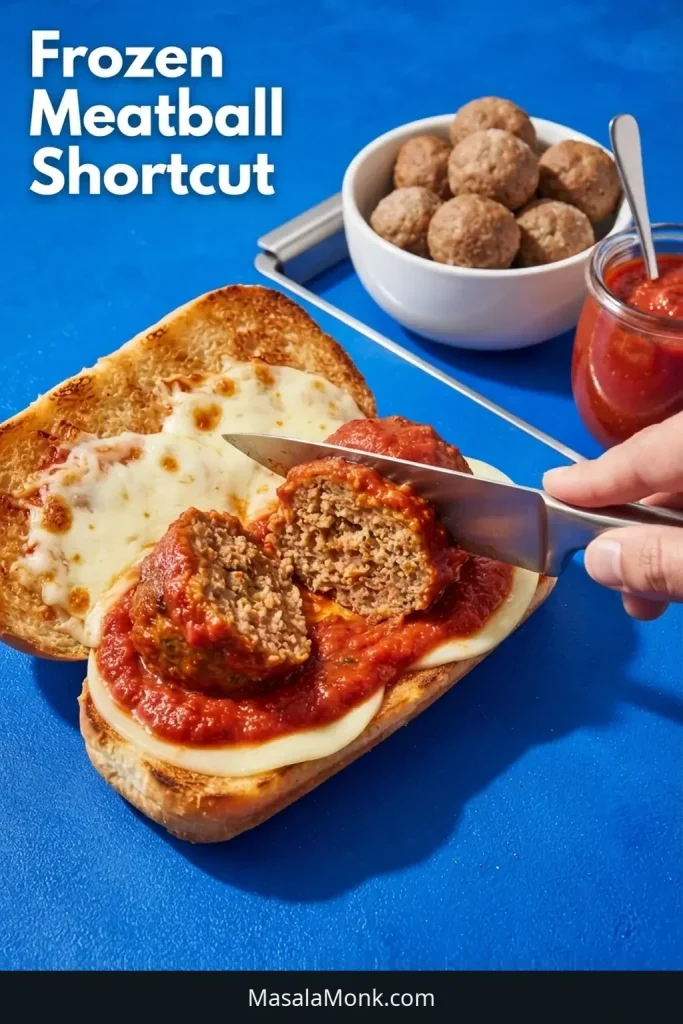
Start with 24–28 oz (680–794 g) jarred marinara. Simmer a thin sauce uncovered first until it coats a spoon. Heat the meatballs according to their package directions, then add them to the hot reduced sauce and turn gently to coat.
Hinge-cut and lightly garlic-toast the rolls, add provolone, fill with the hot sauce-coated meatballs, spoon over extra marinara, add mozzarella and Parmesan, then broil open-faced just until the cheese melts and lightly browns.
Shortcut the meatballs, not the assembly.
Make Ahead, Freeze & Feed a Crowd
Meatballs and sauce wait well; assembled bread does not.
For Tomorrow’s Dinner
Cook the meatballs and marinara ahead, then refrigerate the cooked filling within 2 hours. Refrigerate the cheeses and garlic butter as well; keep the rolls dry and separate until assembly. Refrigerated cooked leftovers are best used within 3–4 days.
When dinner comes around, reheat the meatballs and sauce to 165°F (74°C), then toast and assemble the rolls. Most of the work is already behind you, and the bread reaches the table freshly toasted.
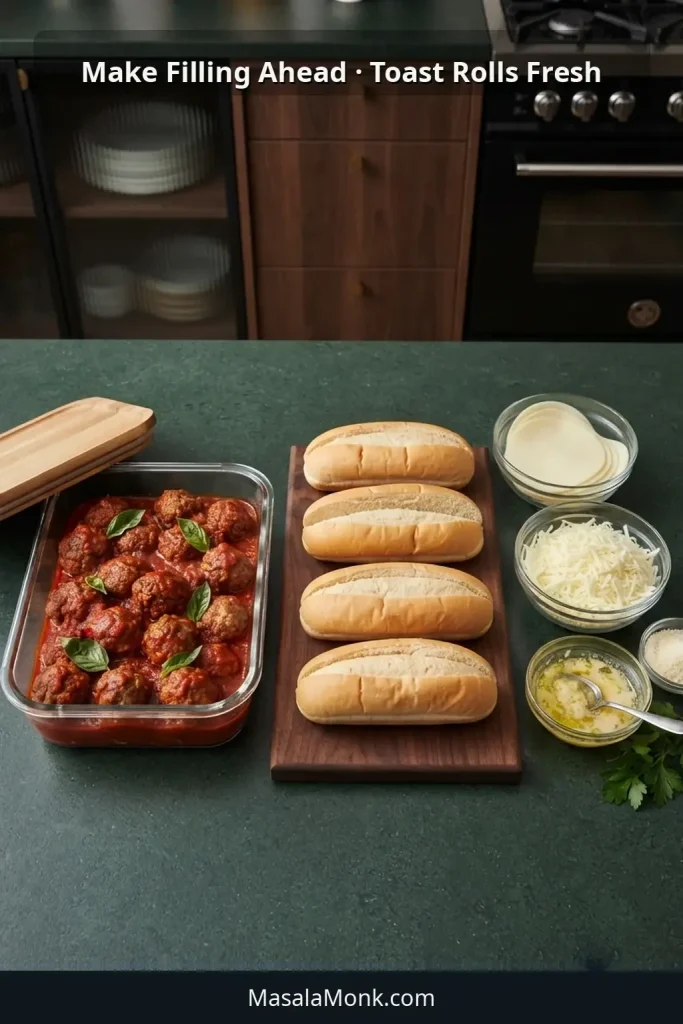
Freeze the Filling, Not the Finished Sub
Freeze cooked meatballs with their marinara in a freezer-safe container and keep the bread and cheese separate. For best quality, use frozen leftovers within about 3–4 months. Thaw the filling in the refrigerator, reheat it to 165°F (74°C), then build the sandwiches normally.
Game Day or a Crowd
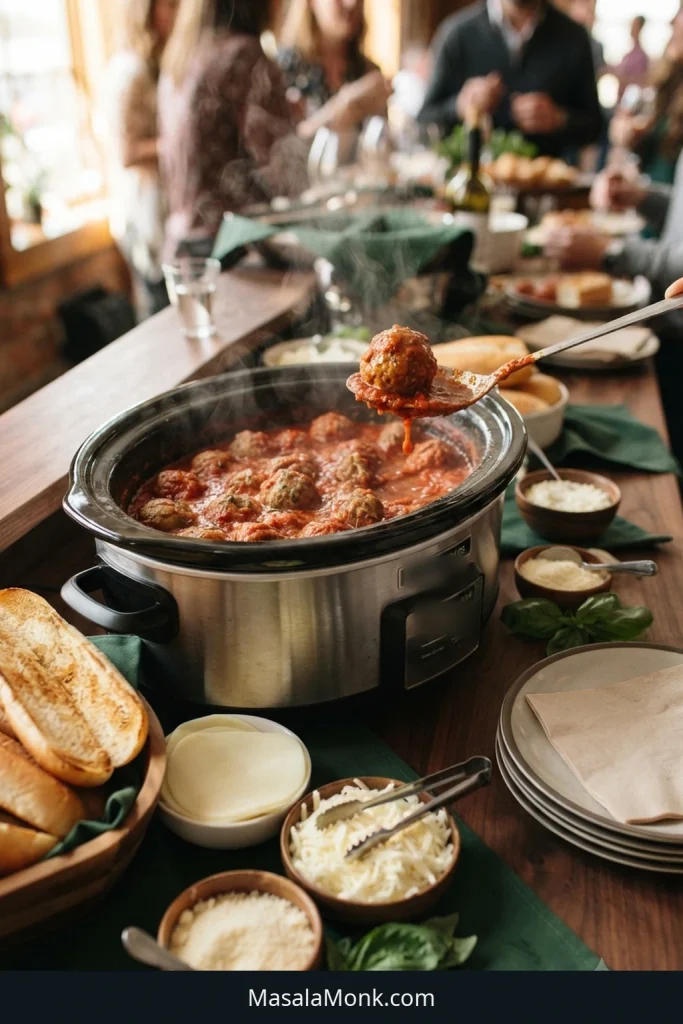
A slow cooker is useful for holding meatballs that are already hot; don’t use it to reheat cold leftovers. Reheat refrigerated meatballs and marinara to 165°F (74°C) first. Transfer them to a preheated slow cooker and keep the filling at 140°F (60°C) or warmer. USDA advises reheating cold leftovers before using a slow cooker for hot holding; see its hot-holding guidance.
This setup is especially useful when people are eating at different times: keep the filling hot and let the bread wait its turn. Feeding about 10 people? Double the recipe and divide the meatballs between two sheet pans. If your oven bakes unevenly, swap the pans between racks and rotate them front-to-back halfway through.
A cold side that can wait makes the setup easier. Our zesty pasta salad can be made ahead and kept chilled while the sandwiches are built to order.
Use Leftovers for Another Dinner
Store unused meatballs in their sauce and keep any remaining rolls separately. Reheat the filling first, then toast fresh bread.
No good rolls left? The meatball version in our baked ziti guide turns leftover meatballs, marinara and mozzarella into a completely different dinner.
An already assembled sub will soften in the refrigerator, but it can be reheated. Loosely cover it with foil and warm it in a 350°F (177°C) oven until the center reaches 165°F (74°C). Uncover for the last few minutes if the bread needs to crisp again.
A Few Useful Variations
Spicy: add red pepper flakes to the marinara for direct heat, or finish the subs with sliced pepperoncini or other pickled peppers when you also want acidity to cut through the rich meat and cheese.
Peppers and onions: sauté thinly sliced bell pepper and onion until tender, then keep cooking until their released moisture has evaporated. Add a modest layer before the mozzarella; a wet pile of vegetables can undo the moisture control you’ve built into the rest of the sandwich.
Fontina: use it in place of the mozzarella for a creamier, softer melt. It will not give quite the same stretchy pull as low-moisture mozzarella.
What to Serve With Meatball Subs
Cold, crisp or acidic sides are especially good beside a hot, cheesy sandwich. Our crisp homemade coleslaw brings cabbage crunch and tangy dressing; a simple green salad, Caesar salad or pickled vegetables do a similar job.
For something hot, crispy roasted potatoes give you browned edges and creamy centers without another frying project. Fries, potato wedges and crunchy chips fit the classic meatball-sub-and-fries kind of dinner just as naturally.
A Few Last Questions
What If I Don’t Have a Broiler?
Return the assembled subs to a 425°F (218°C) oven just until the cheese melts. You may get less browning, but the cheese will melt properly. Pull the subs before the exposed bread dries out.
Can I Use Fresh Mozzarella?
You can, but fresh mozzarella carries more water. Blot it thoroughly and use it sparingly; low-moisture mozzarella is more predictable on an already saucy sandwich.
The First-Bite Test
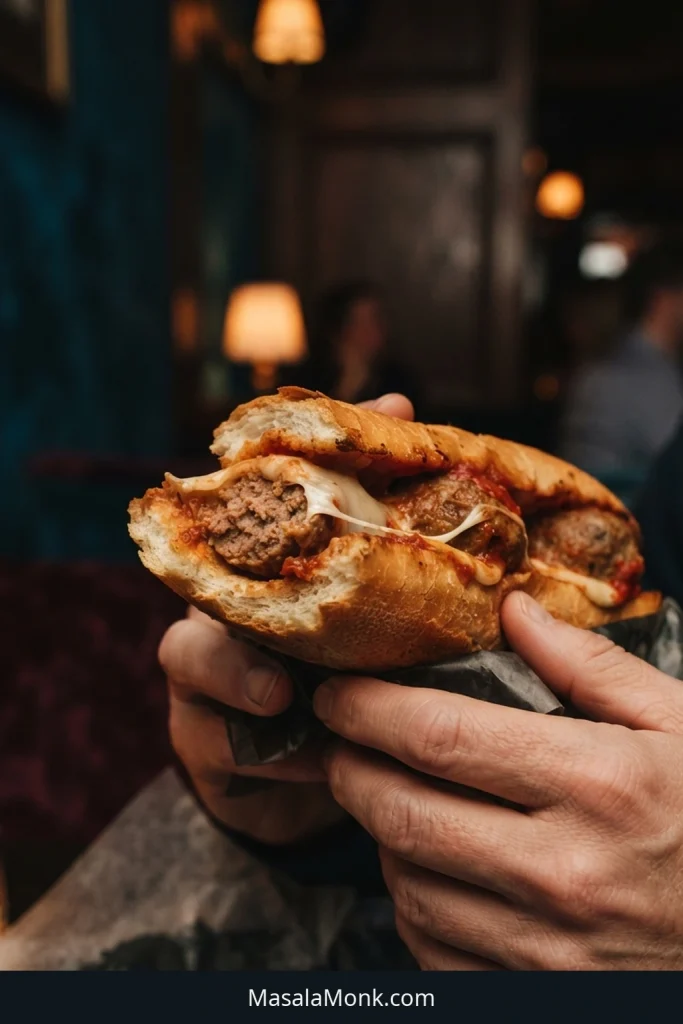
Your roll should yield without cracking, and the meatballs should stay where you put them. Marinara should come with the filling instead of pooling underneath, while the cheese stretches without dragging half the sandwich out of the bread. Get those pieces right and you get the meatball sub you wanted in the first place: generous, saucy and properly messy, but still together when you reach the last bite.








