
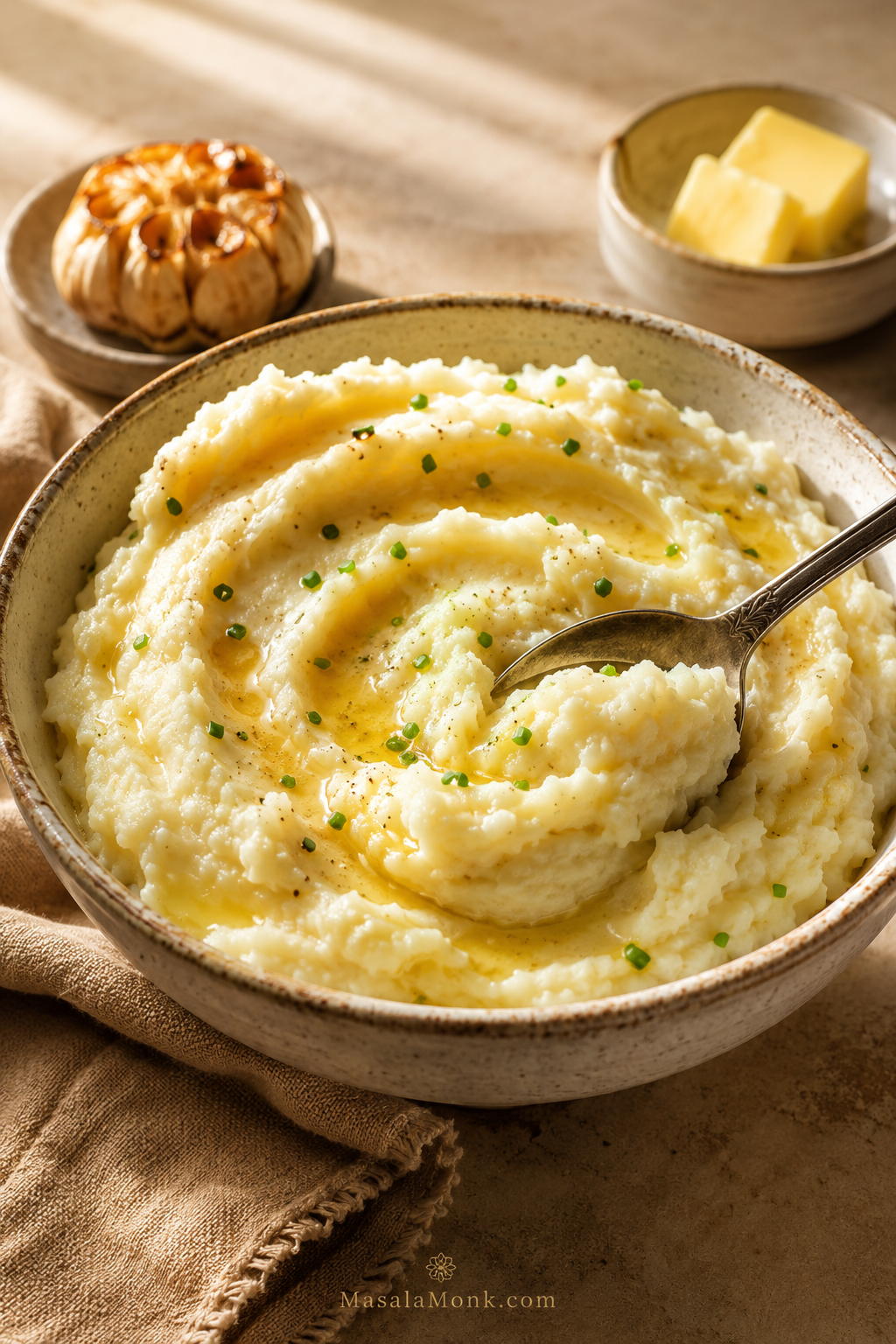
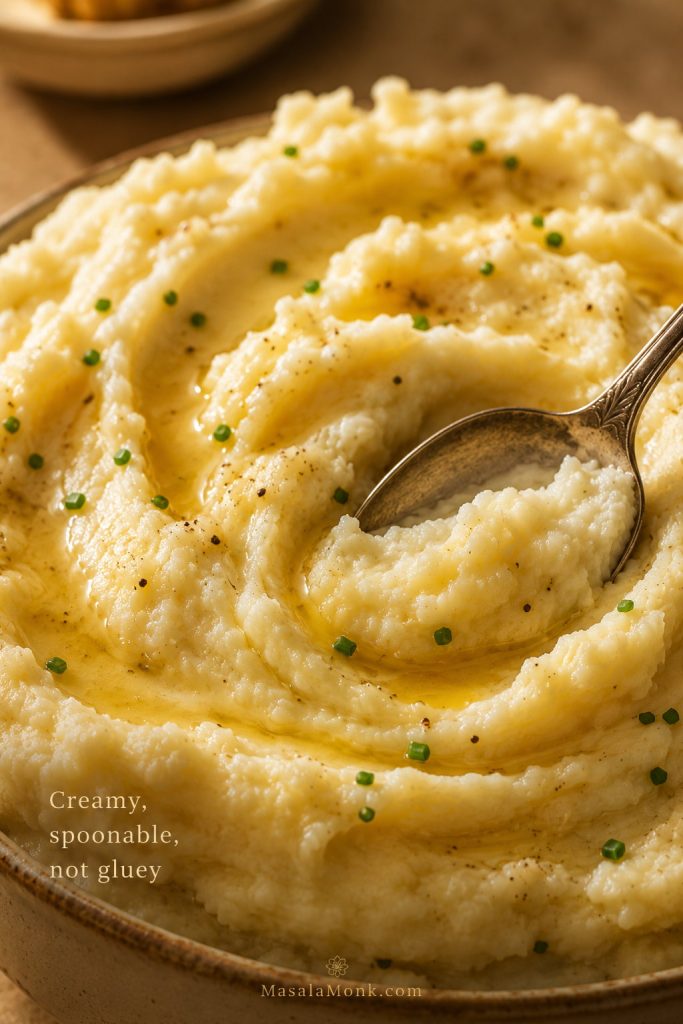
These garlic mashed potatoes are the kind you want under a spoonful of gravy: soft buttery ridges, mellow garlic in every bite, and enough body to hold melted butter without turning stiff, sticky, or gluey.
The secret is simple. Start with good potatoes, cook them until they are truly tender, let the extra steam escape after draining, then fold in warm garlic butter and milk while the potatoes are still hot. That gives you creamy spoonfuls, fluffy edges, and garlic flavor that runs through the whole bowl instead of sitting in sharp little pockets.
The goal is not restaurant-perfect smoothness at any cost. Instead, it is a warm, spoonable bowl that tastes buttery, garlicky, and comforting from the first bite to the last — the kind of mashed potatoes that make gravy, roast chicken, steak, or mushrooms feel like a complete meal.
Serve them with roast chicken, steak, meatloaf, mushrooms, turkey, gravy, or a holiday table. They are especially good beside a slow cooker roast chicken because the soft potatoes catch all those garlic-herb juices.
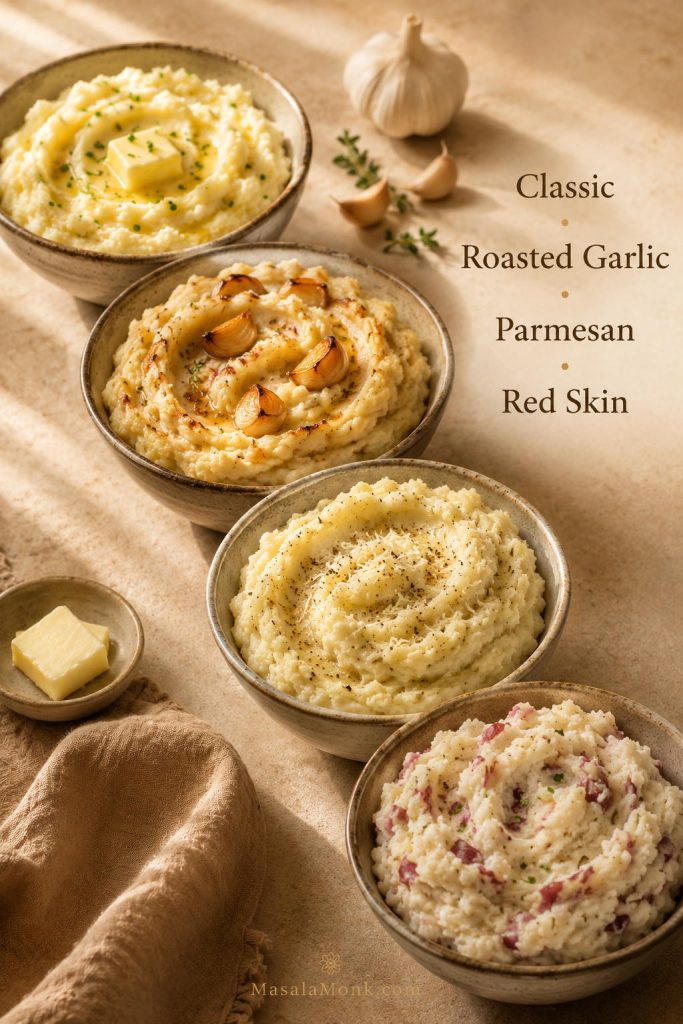
Make the classic version first, then use the variations below for roasted garlic mashed potatoes, garlic parmesan mashed potatoes, red skin mashed potatoes, no-milk mashed potatoes, dairy-free mashed potatoes, or a richer sour cream and cream cheese version.
In This Garlic Mashed Potatoes Recipe
Start with the classic creamy method, then adjust the potato, garlic, dairy, batch size, and make-ahead details to fit your meal.
Make the Recipe
Quick Answer: How to Make Garlic Mashed Potatoes
To make creamy garlic mashed potatoes, boil 2½ lb / 1.1 kg Yukon Gold potatoes in salted water until very tender. Drain them well, return them to the warm pot for a minute so excess moisture can steam off, then mash gently with warm garlic butter and milk.
For the garlic butter mixture, warm 6 smashed garlic cloves with 6 tbsp / 85 g butter and ¾ cup / 180 ml whole milk or half-and-half. Strain the garlic out for a smooth, rounded flavor, or mash the softened cloves into the potatoes if you want a deeper garlic taste. Finish with salt, pepper, and optional sour cream.
The full recipe takes about 35 minutes. For the best texture, use hot potatoes, warm dairy, enough salt, and a masher or ricer instead of a blender or food processor.
Garlic Mashed Potatoes at a Glance
- Best potato: Yukon Gold for creamy and buttery, russet for lighter and fluffier, red potatoes only for rustic skin-on mash.
- Best garlic method: Warm smashed garlic in butter and milk for smooth everyday flavor.
- Best texture rule: Drain well, steam-dry briefly, use warm dairy, and stop mixing once creamy.
- Best tool: Potato masher for homestyle texture, ricer for smoother potatoes.
- Make-ahead: Best within 2 days, with leftovers refrigerated for 3–4 days.
Which Version Should You Make?
The classic recipe is the best place to start, but different meals call for different mashed potatoes. Use this quick guide if you already know the flavor or texture you want.
| If You Want… | Make This Version | Best For |
|---|---|---|
| Classic creamy mashed potatoes | Main recipe | Weeknights, holidays, gravy |
| Sweeter, softer garlic flavor | Roasted garlic version | Turkey, roast beef, dinner parties |
| Bigger garlic flavor | Mash in the softened garlic cloves, add roasted garlic, or finish with a little garlic powder | Garlic lovers, steak dinners, bold savory sides |
| Steakhouse-style flavor | Garlic parmesan version | Steak, chicken, mushrooms |
| No peeling | Red skin version | Rustic weeknight dinners |
| Tangier, richer potatoes | Sour cream or cream cheese version | Make-ahead meals, holiday sides |
| No milk or dairy-free | Broth, olive oil, or dairy-free butter version | Dairy-free guests, lighter sides |
| A smaller dinner batch | Small batch version | Steak night, dinner for two or three |
| A bigger holiday bowl | Double batch | Thanksgiving, Christmas, Easter, potlucks |
Why This Garlic Mashed Potatoes Recipe Works
Good mashed potatoes should feel generous before you even add gravy. They should be warm, soft, buttery, and seasoned all the way through. In this recipe, each step protects that texture.
The method works because it avoids the three things that ruin mashed potatoes: raw garlic, wet potatoes, and overmixing. The garlic is warmed so it tastes smooth instead of sharp. After draining, the potatoes are dried briefly so they do not water down the butter. Everything is folded together gently, so the mash stays silky instead of tightening into paste.
Cooking the potatoes until completely tender also matters. If the potatoes are still firm in the center, you will have to keep mashing to chase out lumps, and that extra work can make the potatoes heavy. When they are cooked properly, they mash easily and absorb the warm dairy without a fight.
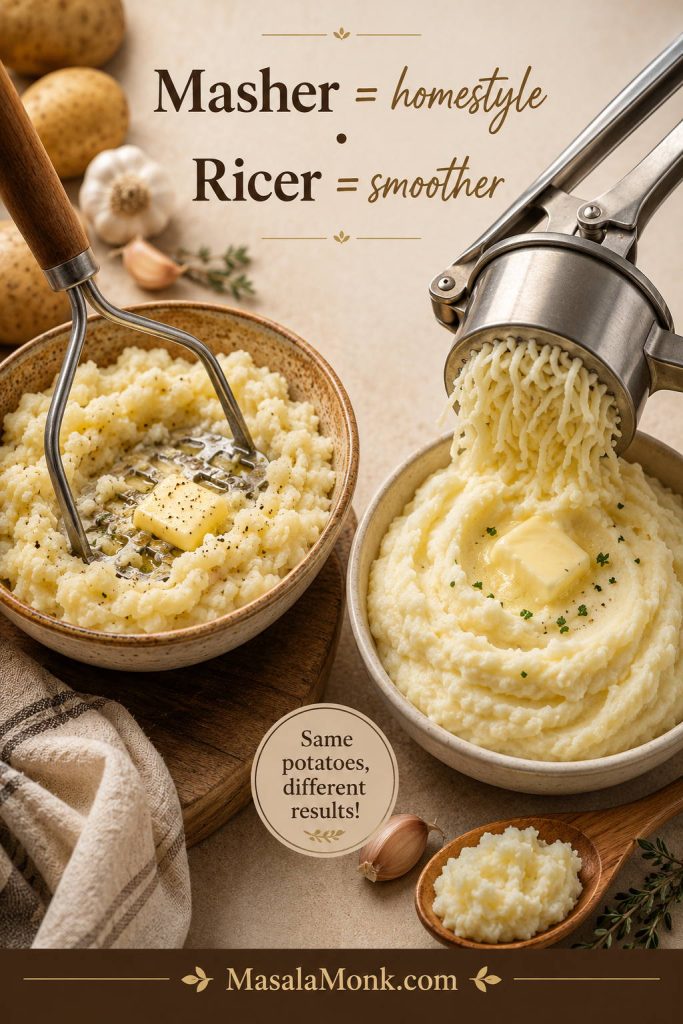
A potato masher gives you a cozy homemade texture, while a ricer gives you a smoother, fluffier bowl. Either way, the goal is the same: stop once the potatoes are spoonable, soft, and able to hold gentle swirls.
Ingredients for Garlic Mashed Potatoes
You do not need many ingredients, but small choices make a big difference. Warm dairy blends better than cold milk, enough butter carries the garlic flavor, and the right potato keeps the mash creamy instead of pasty.
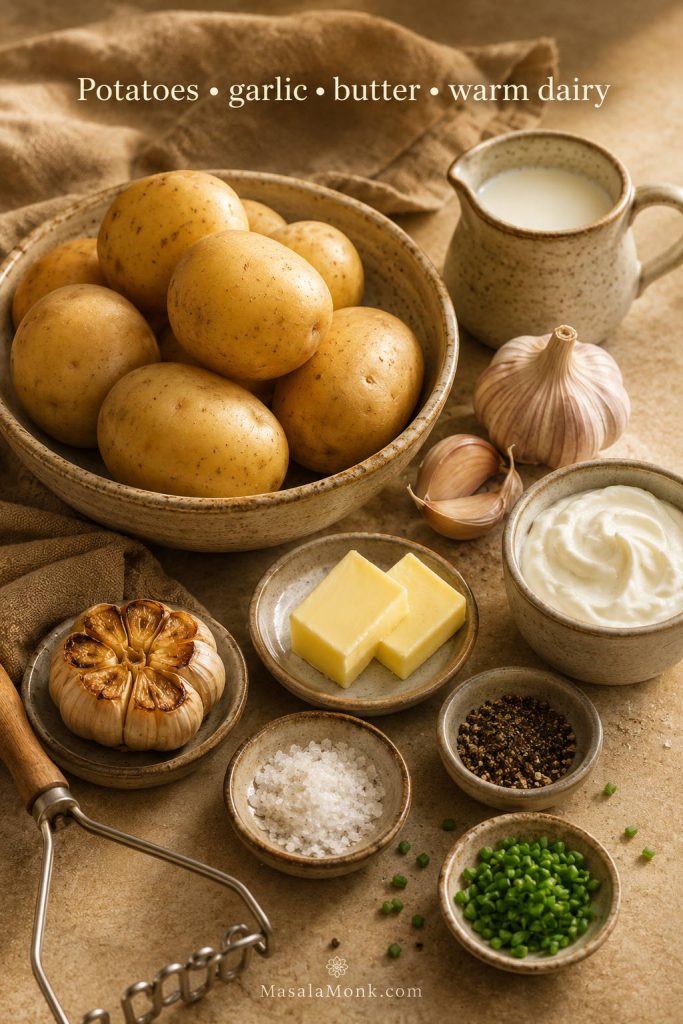
Potatoes
Yukon Gold potatoes are the best default. They have a naturally creamy texture and a buttery flavor, so they make the recipe taste rich without needing a huge amount of cream.
Russets make a lighter, fluffier mash. Red potatoes work well when you want a rustic, skin-on version, but they should be mashed gently because they are waxier.
Garlic
Use 6 garlic cloves for the main batch. Smashed cloves warmed in butter and milk give the potatoes a mellow garlic flavor. If you love a stronger garlic note, mash the softened cloves into the potatoes instead of straining them out.
Butter
Use 6 tbsp / 85 g unsalted butter. Butter gives the potatoes richness and helps carry the garlic into every bite. If you use salted butter, season carefully at the end.
Milk or Half-and-Half
Use ¾ cup / 180 ml whole milk or half-and-half. Whole milk keeps the potatoes lighter. Half-and-half makes them richer and more holiday-worthy. Warm it before adding it to the potatoes.
Sour Cream
Sour cream is optional, but it adds a gentle tang and a fuller texture. Use ¼ cup / 60 g for balance, or up to ½ cup / 120 g if you want a tangier, richer mash.
Salt, Pepper, and Herbs
Salt the cooking water, then season again after mashing. Potatoes need salt in layers; otherwise, they can taste flat. Black pepper, white pepper, chives, parsley, and a little melted butter are all good finishing touches.
Best Potatoes for Garlic Mashed Potatoes
Because texture is the goal, the best potato depends on whether you want creamy, fluffy, or rustic mashed potatoes. Yukon Gold is the easiest choice for a smooth, buttery bowl. Russet is better for a lighter texture. Red potatoes are best when you want skins and a little more bite.
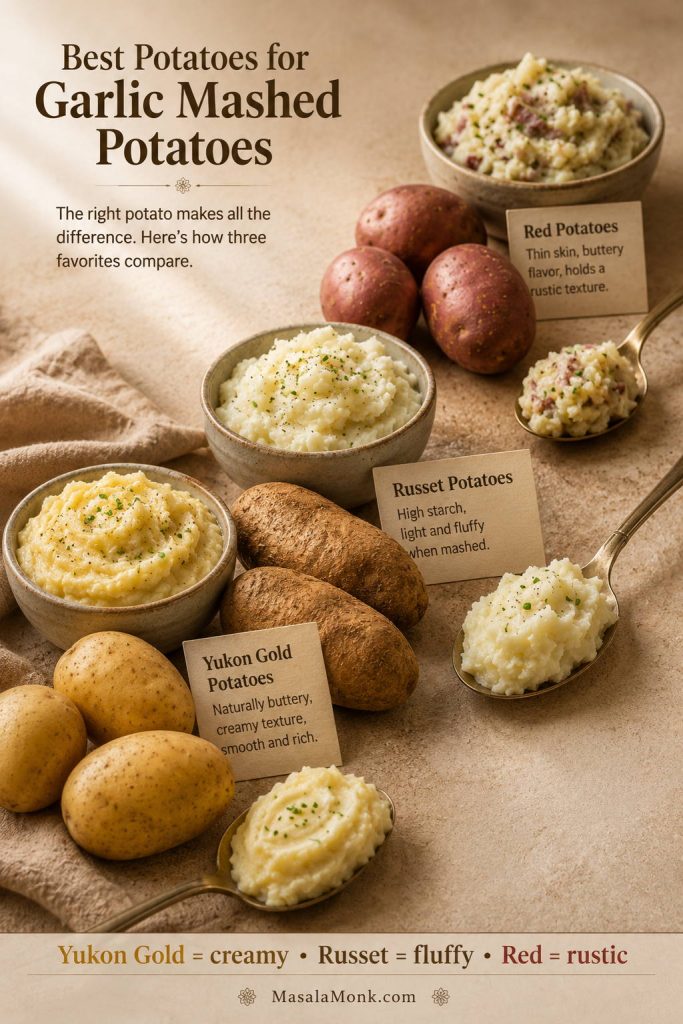
| Potato | Best For | Texture | How to Use It |
|---|---|---|---|
| Yukon Gold | Classic creamy mashed potatoes | Buttery, smooth, rich | Use as the default for this recipe. |
| Russet | Fluffy mashed potatoes | Light, airy, absorbent | Use alone or mix with Yukon Gold. |
| Yukon + Russet | Balanced texture | Creamy with fluffy edges | Use half and half for a very reliable batch. |
| Red Potatoes | Red skin mashed potatoes | Rustic, slightly chunky, skin-on | Mash gently and avoid electric mixing. |
Think of the potato choice as a texture choice, not a strict rule. Yukon Gold gives the creamiest, most buttery everyday mash. Russet gives you a lighter, fluffier bowl that absorbs butter and milk easily. Red potatoes work when you want skins and a rustic texture, but they are not the best choice for perfectly smooth garlic mashed potatoes.
Yukon Gold vs Russet: Creamy or Fluffy?
If you are choosing between Yukon Gold and russet potatoes, pick by texture first. Yukon Gold gives a creamier bowl, while russets make the mash lighter and more absorbent.
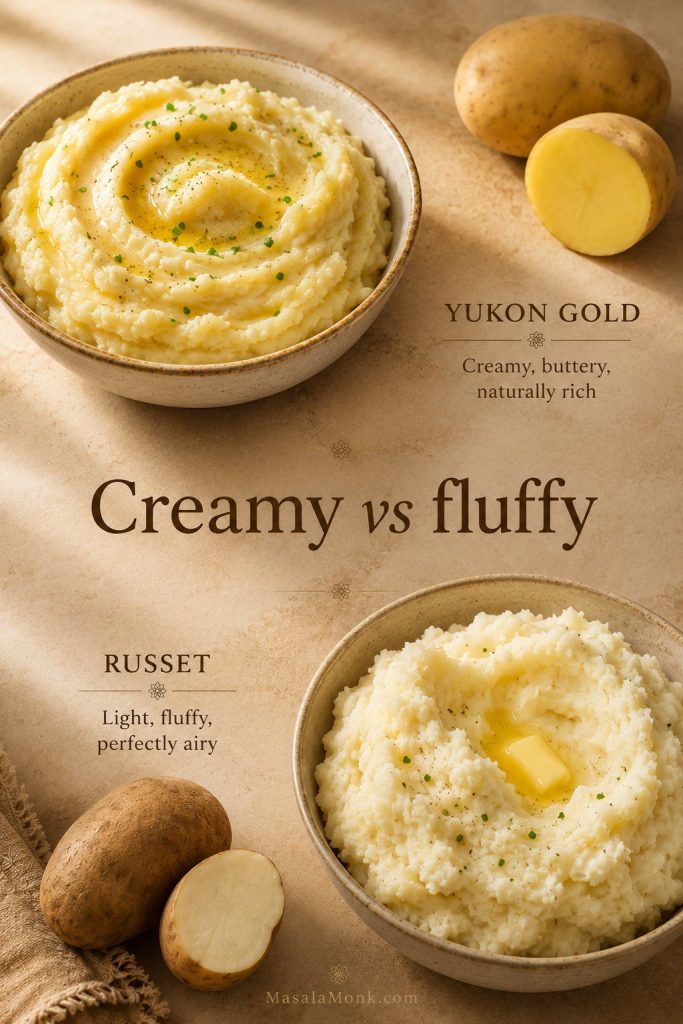
For potato choice, higher-starch potatoes such as russets and Yukon Golds are usually better for a smooth, fluffy mash, while waxier red potatoes are better kept rustic. Better Homes & Gardens explains why chefs often prefer russets and Yukon Golds for creamy mashed potatoes.
Fresh Garlic vs Roasted Garlic vs Garlic Powder
Garlic can taste sweet, sharp, mellow, or bold depending on how it is added. That is why one garlic mashed potatoes recipe can taste completely different from another.
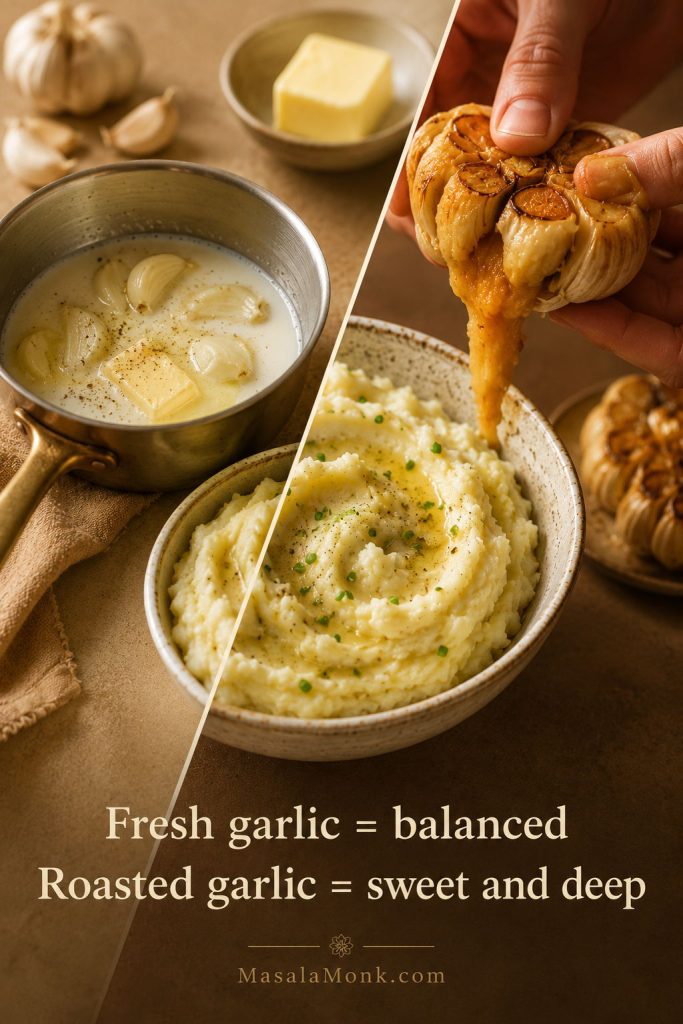
| Garlic Method | Flavor | Best Use | How Much to Use |
|---|---|---|---|
| Garlic warmed in butter and milk | Smooth, rounded, balanced | Best everyday method | 6 cloves for 2½ lb potatoes |
| Garlic boiled with potatoes | Soft and simple | Quick shortcut | 5–6 cloves |
| Roasted garlic | Sweet, deep, mellow | Holiday or special version | 1 whole head garlic |
| Garlic powder | Bold, familiar garlic flavor | Flavor boost or backup | ¼–½ tsp |
| Raw minced garlic | Sharp and harsh | Usually best avoided | Sauté first if using |
The main method uses garlic warmed in butter and milk because it gives the best balance of speed and flavor. Roasted garlic is deeper and sweeter, but it adds extra time. Garlic powder is useful when the finished potatoes taste good but need a little more punch.
How to Build More Garlic Flavor Without Raw Bite
If you want the garlic to stand out more, layer it instead of only adding more raw garlic. Warm smashed cloves in the butter and milk, mash in the softened cloves, and add a tiny pinch of garlic powder only if the finished potatoes still taste too mild. That gives you deeper garlic flavor without the harsh bite of raw minced garlic.
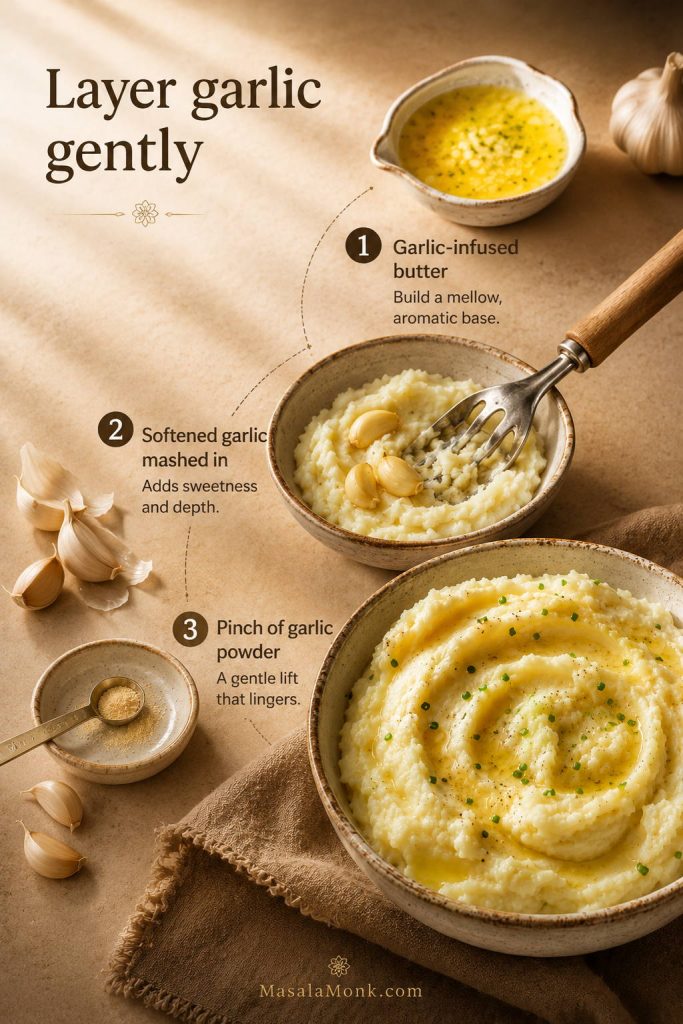
Avoid stirring raw minced garlic straight into mashed potatoes. It can taste hot and harsh, especially if the potatoes are mild. If you want to use minced garlic, cook it gently in the butter first.
How to Make Garlic Mashed Potatoes
This method keeps the potatoes creamy and the garlic smooth. The steps are simple, but the little details make the bowl taste much better.
Step 1: Cut the potatoes evenly
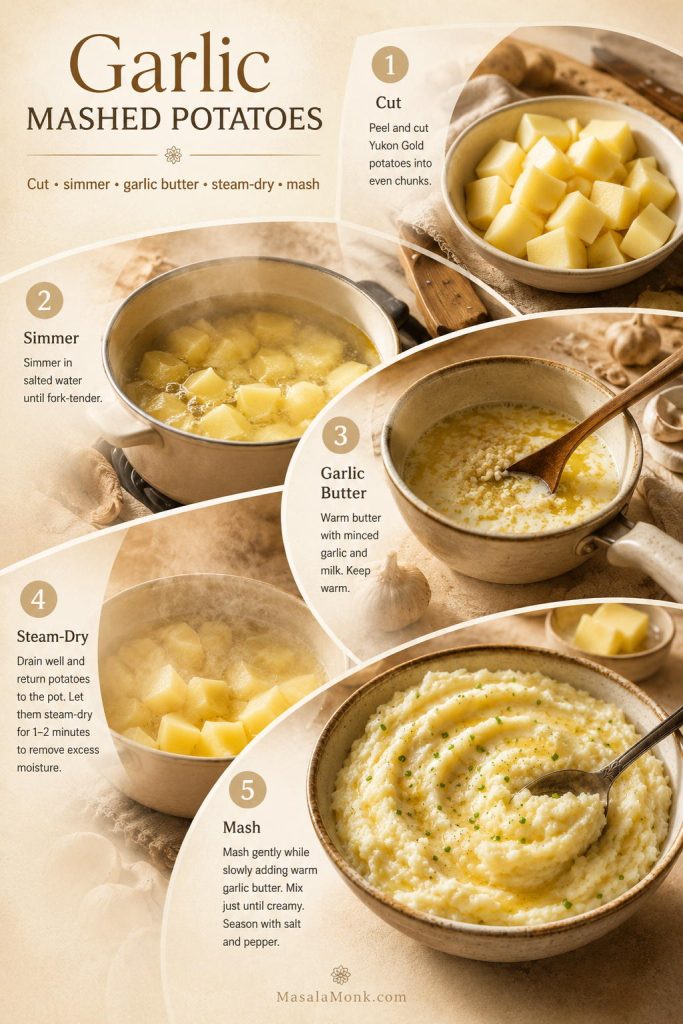
Peel the potatoes and cut them into 1 to 1½-inch chunks. Even pieces cook at the same pace, which helps you avoid hard centers and lumpy mashed potatoes.
Step 2: Start in cold salted water
Put the potatoes in a large pot and cover them with cold water by about 1 inch. Add a generous spoonful of salt. Starting cold helps the potatoes cook evenly from edge to center.
Step 3: Simmer until very tender
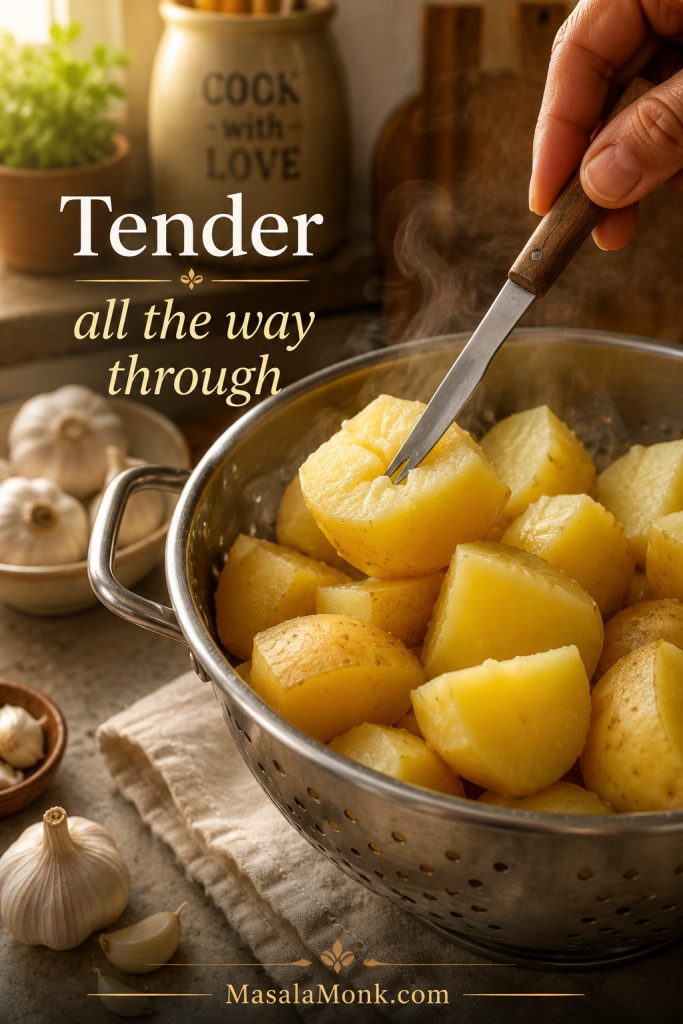
Bring the water to a boil, then reduce to a steady simmer. Cook for 15–20 minutes, or until a knife slides through the potatoes with no resistance. If the potatoes are undercooked, the mash will stay lumpy no matter how much you stir.
Step 4: Warm the garlic, butter, and milk
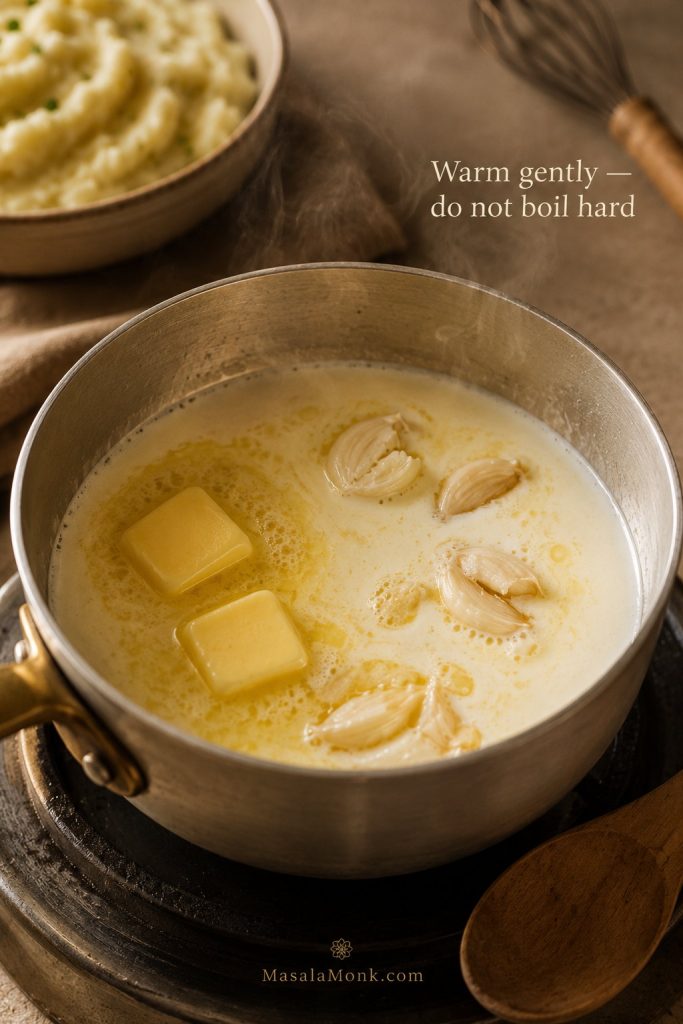
While the potatoes cook, add the butter, milk or half-and-half, and smashed garlic cloves to a small saucepan. Warm over low heat until the butter melts and the garlic smells mellow. Keep the mixture warm and fragrant, but do not let it boil hard or scorch.
Step 5: Drain and steam-dry
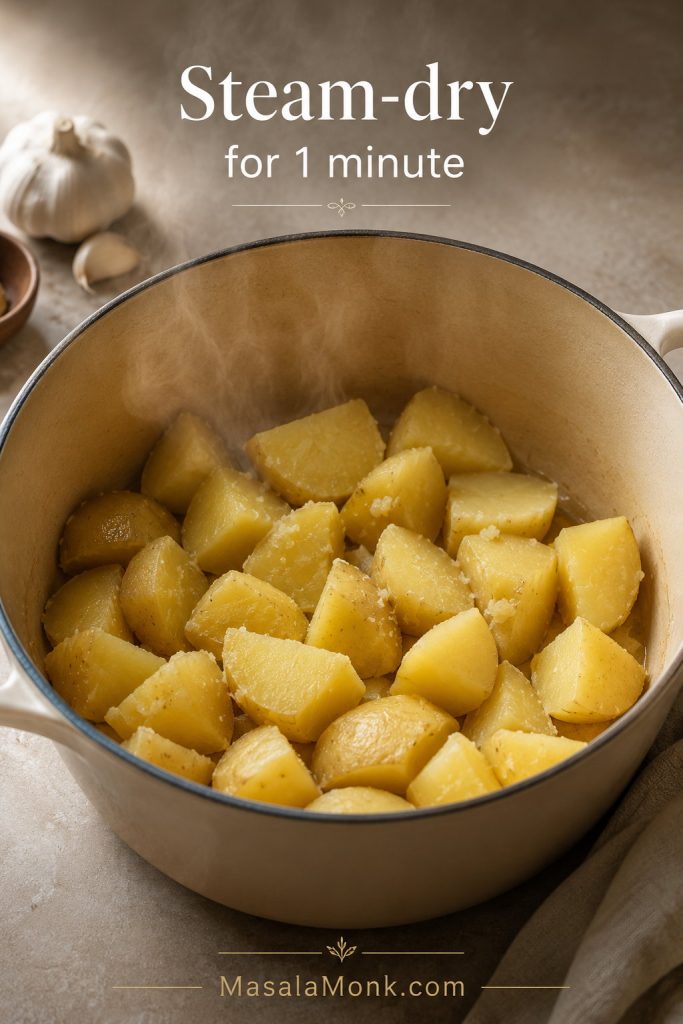
Drain the potatoes well, then return them to the warm empty pot for about 1 minute. Gently shake the pot or stir once so extra moisture can evaporate. This keeps the finished potatoes from tasting loose or watery.
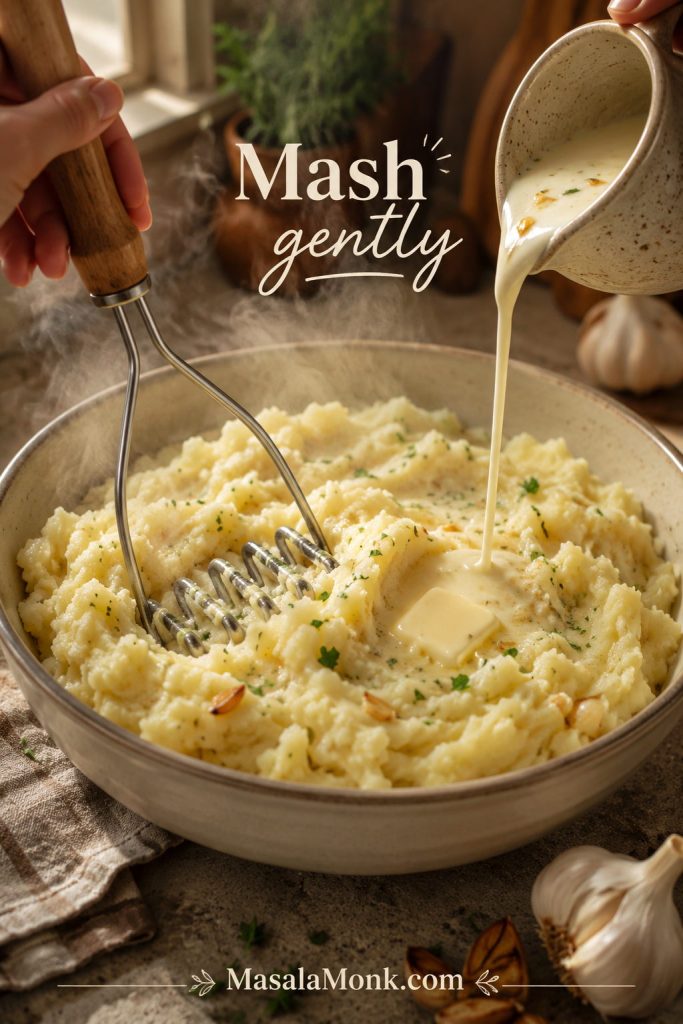
Step 6: Mash gently
Mash the hot potatoes with a potato masher, or pass them through a ricer. Add the infused butter-milk mixture gradually, then strain out the garlic for a smoother background flavor or mash the softened cloves in for a deeper garlic taste.
Step 7: Finish and serve
Fold in sour cream if using, then season with salt and pepper. Taste before serving. The finished potatoes should hold soft swirls but still spoon easily. Transfer them to a warm bowl and finish with melted butter, chives, parsley, or extra pepper.
Common Garlic Mashed Potato Mistakes
Often, mashed potato problems happen before the bowl reaches the table. Avoid these mistakes and the final texture will be much easier to control.
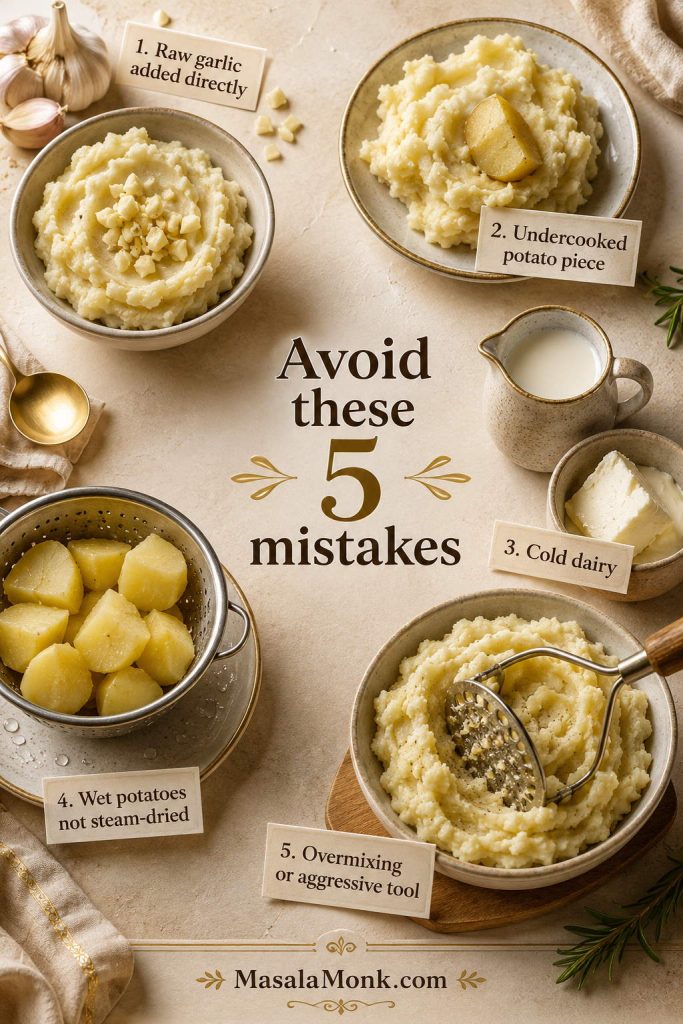
- Using raw garlic: It can taste sharp and harsh. Warm it gently in butter or roast it first.
- Undercooking the potatoes: Firm centers lead to lumps and extra mashing.
- Adding cold dairy: Cold milk or cream cools the potatoes and makes blending harder.
- Skipping the steam-dry step: Wet potatoes can taste watery and loose.
- Overmixing: Too much stirring, blending, or whipping can make potatoes gluey.
How to Make Them Creamy, Not Gluey
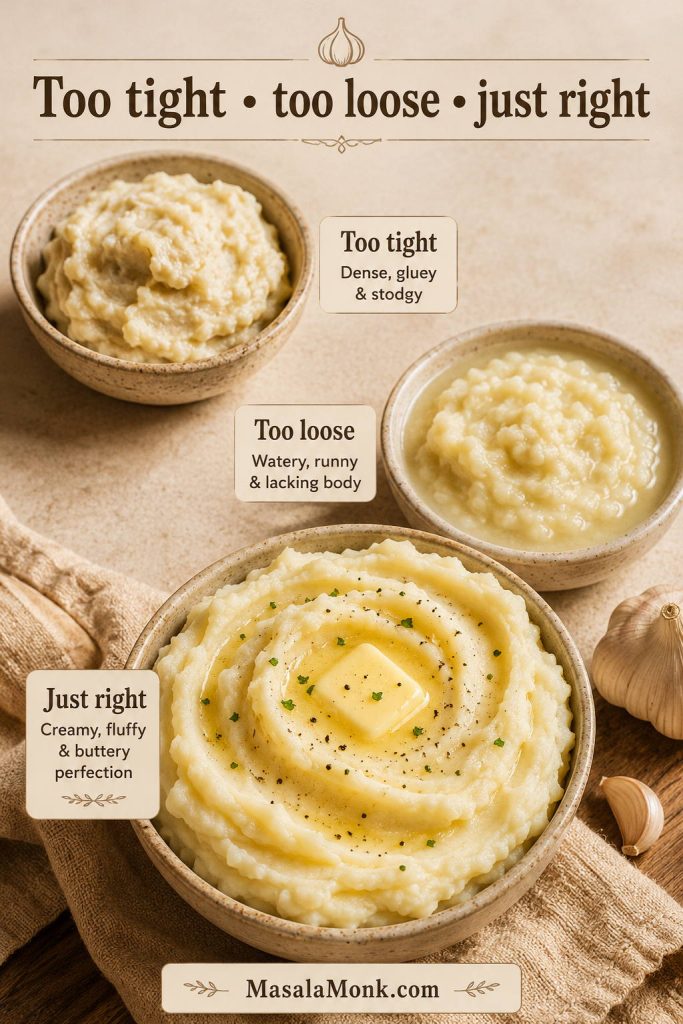
Because gluey mashed potatoes usually come from overmixing, aggressive blending, or wet potatoes, a silky bowl needs a gentler touch.
Cook them all the way through
Potatoes should be tender enough to mash easily. If they are still firm in the center, you will have to work them too much, and that extra mixing can make the texture heavy.
Let extra moisture escape
After draining, return the potatoes to the warm pot for a minute. This tiny step makes the mash taste more concentrated and helps the butter and milk blend in properly.
Use warm dairy
Warm milk, cream, or half-and-half folds into hot potatoes more smoothly than cold dairy. It also keeps the potatoes from cooling too quickly while you mash.
Choose the right tool
A potato masher gives a cozy homemade texture. A ricer makes the smoothest, fluffiest potatoes. A blender or food processor can turn potatoes sticky, so leave those tools for soups and sauces.
Stop once they look right
When the potatoes are creamy and the dairy has disappeared into the mash, stop stirring. Extra mixing rarely makes mashed potatoes better; it usually makes them tighter.
Garlic Parmesan Mashed Potatoes
Garlic parmesan mashed potatoes are savory, salty, and a little more steakhouse-style. Make the main recipe, then fold in ½ to ¾ cup finely grated parmesan while the potatoes are still hot.
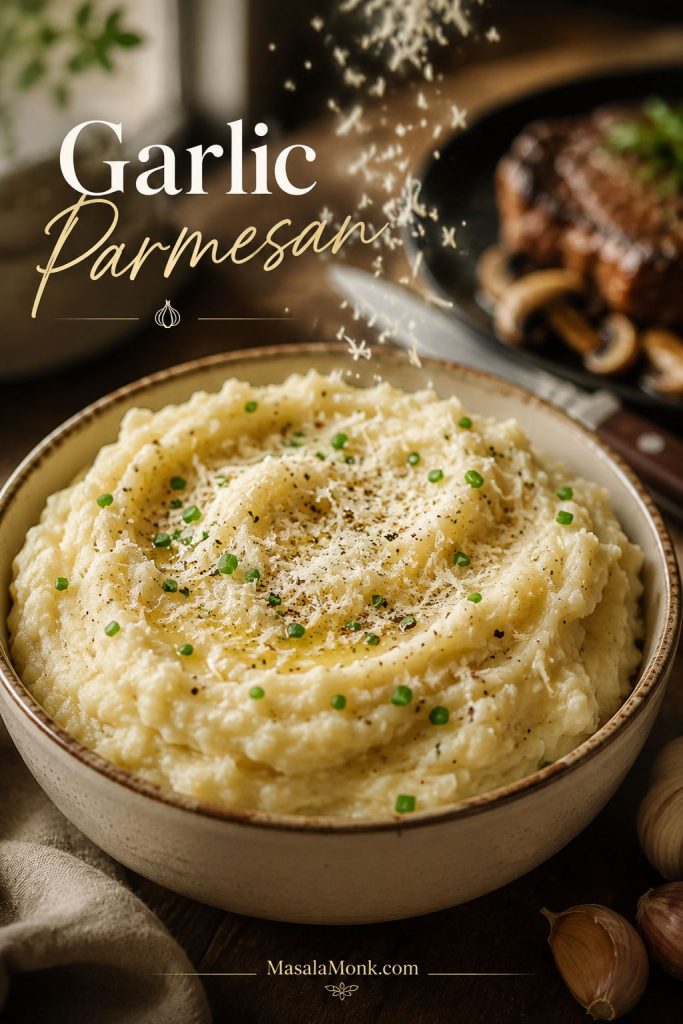
Add the cheese after mashing so it melts smoothly into the potatoes. Since parmesan brings salt, season lightly at first and adjust after the cheese is fully mixed in. For a bolder garlic-parmesan flavor, add ¼ tsp garlic powder with the warm butter and milk.
This version is especially good with steak, roast chicken, meatballs, mushrooms, or a simple pan sauce. It gives the potatoes a deeper savory finish without making them feel like a completely different dish.
Roasted Garlic Mashed Potatoes
Roasted garlic mashed potatoes taste deeper, sweeter, and more holiday-worthy than the classic version. The garlic loses its sharp edge in the oven, turns soft and golden, then melts into the potatoes like a savory spread.
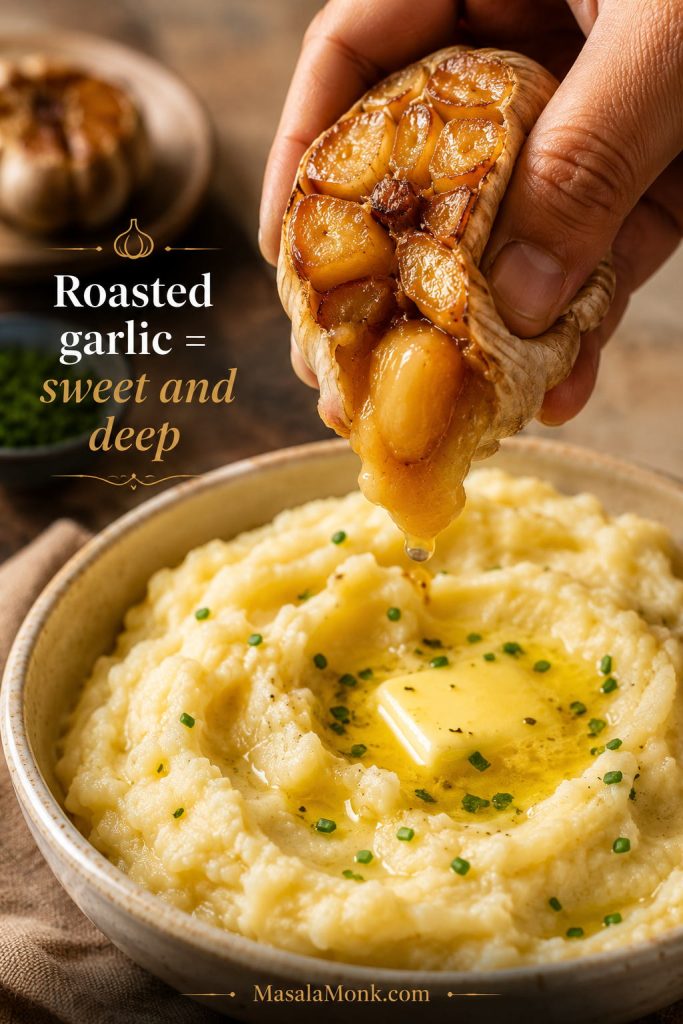
To make roasted garlic mashed potatoes, slice the top off 1 whole head of garlic, drizzle with a little olive oil, wrap in foil, and roast at 400°F / 200°C for 40–45 minutes, until the cloves are soft and golden. Squeeze the roasted cloves into the hot potatoes and mash them in with the warm butter and milk.
One whole head of roasted garlic sounds like a lot, but roasted garlic is much softer than fresh garlic. It melts into the potatoes and gives them a round, almost sweet savory flavor.
How Much Roasted Garlic Should You Use?
Use one roasted garlic head for a balanced batch. Go down to half a head for a gentler family-style bowl, or use two heads only when you want roasted garlic to be the main flavor.
| Roasted Garlic Amount | Flavor Level | Best For |
|---|---|---|
| ½ head | Gentle and mellow | Family dinners or lighter garlic flavor |
| 1 whole head | Balanced roasted garlic flavor | Classic roasted garlic mashed potatoes |
| 2 heads | Deep garlic-lover flavor | People who want roasted garlic to be the main flavor |
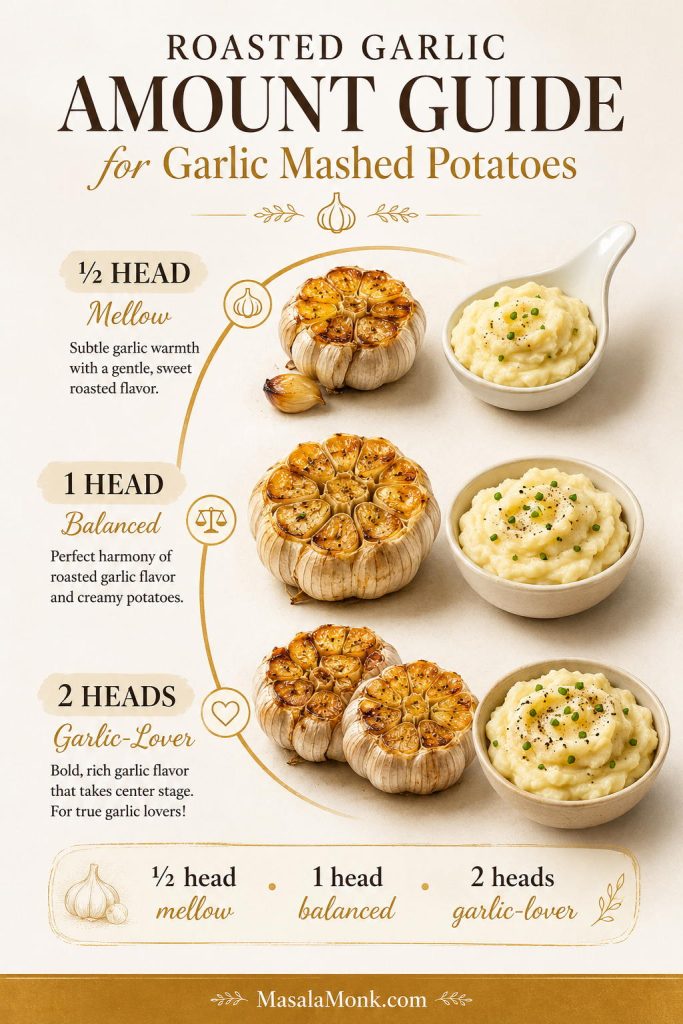
For the best flavor, mash the roasted cloves while the potatoes are still hot, then taste before adding garlic powder. Roasted garlic brings sweetness and depth, while garlic powder brings sharper garlic punch. Used together carefully, they make the potatoes taste fuller without turning harsh.
Red Skin Garlic Mashed Potatoes
Red skin garlic mashed potatoes are more rustic than the classic Yukon Gold version. They are slightly chunky, a little more textured, and lovely when you want a no-peel side dish.
Red potatoes are not wrong for mashed potatoes; they are just a different style. Use them when you want a skin-on, homestyle bowl, not when you want the smoothest, fluffiest mash.
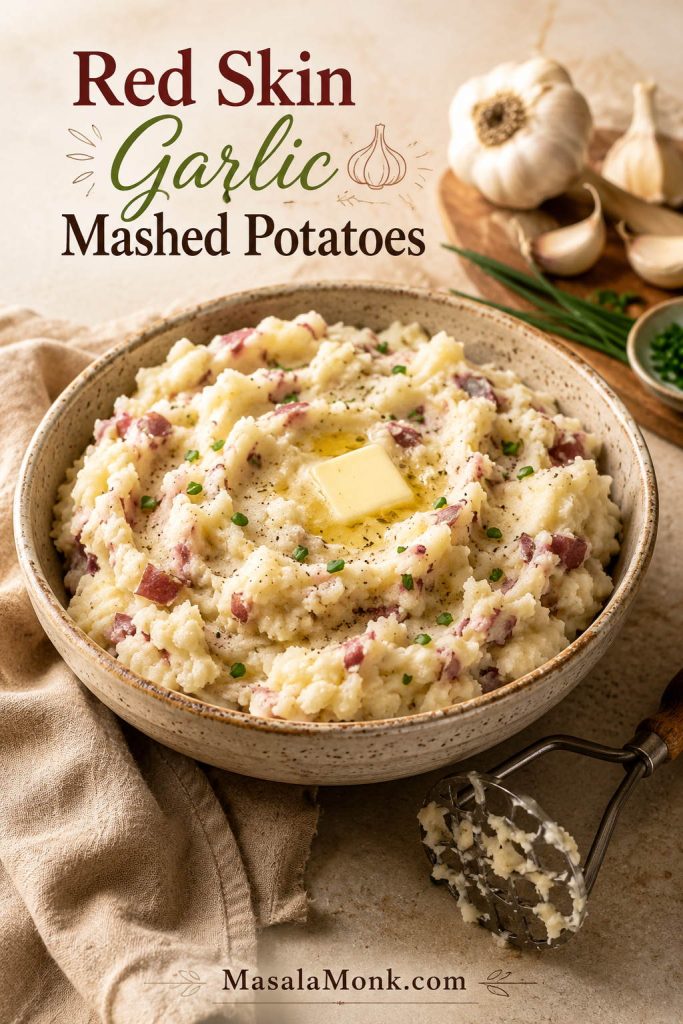
Use 2 lb / 900 g red potatoes, scrubbed well. Leave the skins on if they are thin and tender. Mash with 5–7 garlic cloves, 6 tbsp / 85 g butter, ½ cup / 120 ml milk or half-and-half, and optional ¼ cup / 60 g sour cream.
Keep this version gently mashed rather than perfectly smooth. Red potatoes can get sticky if they are overworked, so use a hand masher and stop while there is still a little texture.
Sour Cream, Cream Cheese, and Heavy Cream Versions
These add-ins change the mood of the bowl: sour cream makes it tangier, cream cheese makes it thicker and richer, and heavy cream gives it more of a holiday-table feel. Add them after the potatoes have been mashed with the warm garlic butter and milk.
Choose sour cream when you want brightness, cream cheese when you want a thicker make-ahead mash, and heavy cream when you want a richer holiday bowl. For everyday garlic mashed potatoes, half-and-half is usually the easiest middle ground.
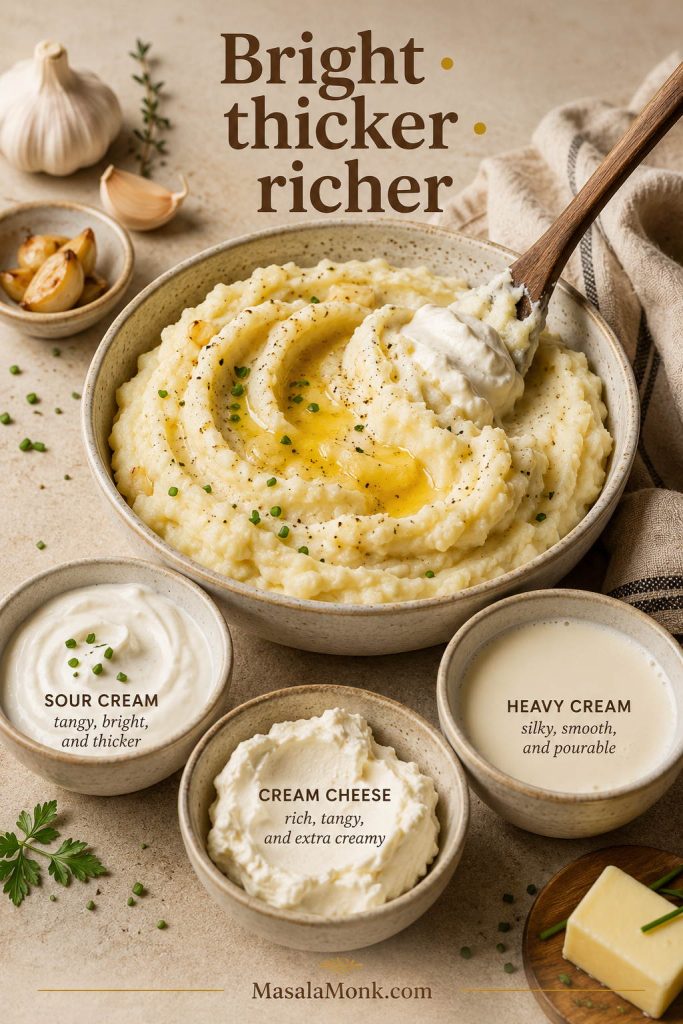
| Add-In | Amount for 2½ lb Potatoes | What It Does |
|---|---|---|
| Sour Cream | ¼–½ cup / 60–120 g | Adds tang and creaminess |
| Cream Cheese | 4 oz / 115 g, softened | Makes the mash thicker and richer |
| Heavy Cream | Use instead of milk | Creates a denser holiday-style texture |
| Half-and-Half | Use instead of milk | Gives a balanced creamy finish |
| Garlic Herb Cheese | 3–5 oz / 85–140 g | Adds rich, herby flavor |
If you are making the potatoes ahead, cream cheese is especially useful because it helps the mash reheat with a thicker, smoother body. If you want a lighter everyday version, stick with milk or half-and-half and use sour cream only as a small finishing touch.
Garlic Mashed Potatoes Without Milk
You can make garlic mashed potatoes without milk. They will not taste exactly the same, but they can still be rich, smooth, and flavorful if you use warm liquid and enough fat.
The important thing is not milk itself; it is moisture plus fat. Broth or potato water loosens the mash, while butter, olive oil, or dairy-free butter keeps it from tasting dry.
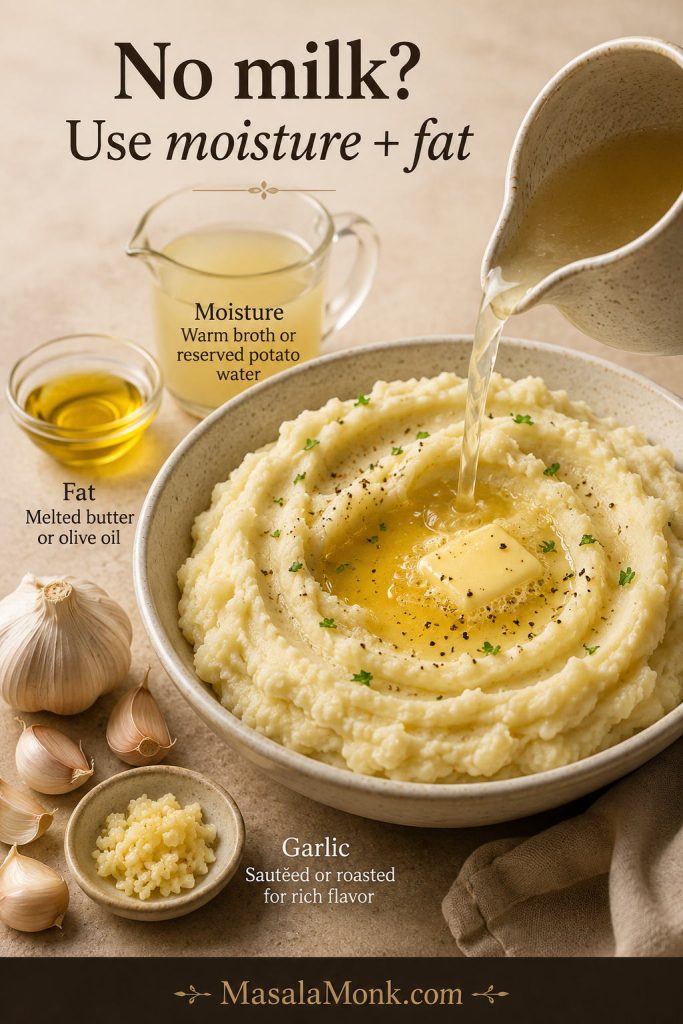
| No-Milk Option | Use This | Result |
|---|---|---|
| Butter + potato water | 6 tbsp butter + ½ cup reserved cooking water | Simple, rich, potato-forward |
| Broth + olive oil | ½ cup warm broth + 3–4 tbsp olive oil | Savory and lighter |
| Dairy-free butter + plant milk | Dairy-free butter + unsweetened oat or almond milk | Creamier vegan-style mash |
For the best no-milk flavor, warm the garlic in butter, olive oil, or dairy-free butter before adding it to the potatoes. If you are using broth, add it gradually. You can always loosen thick potatoes, but it is harder to fix a watery bowl.
Dairy-Free or Vegan Garlic Mashed Potatoes
For a dairy-free version, use Yukon Gold potatoes, roasted or sautéed garlic, olive oil or dairy-free butter, warm vegetable broth, and optional unsweetened plant milk. Oat milk works well when it is plain and unsweetened. Almond milk can also work, but avoid anything sweetened or vanilla-flavored.
A good dairy-free formula for 2½ lb potatoes is 5–6 garlic cloves, 4 tbsp olive oil or dairy-free butter, and ½ to ¾ cup warm vegetable broth or unsweetened plant milk. Add the liquid slowly and stop when the potatoes are spoonable.
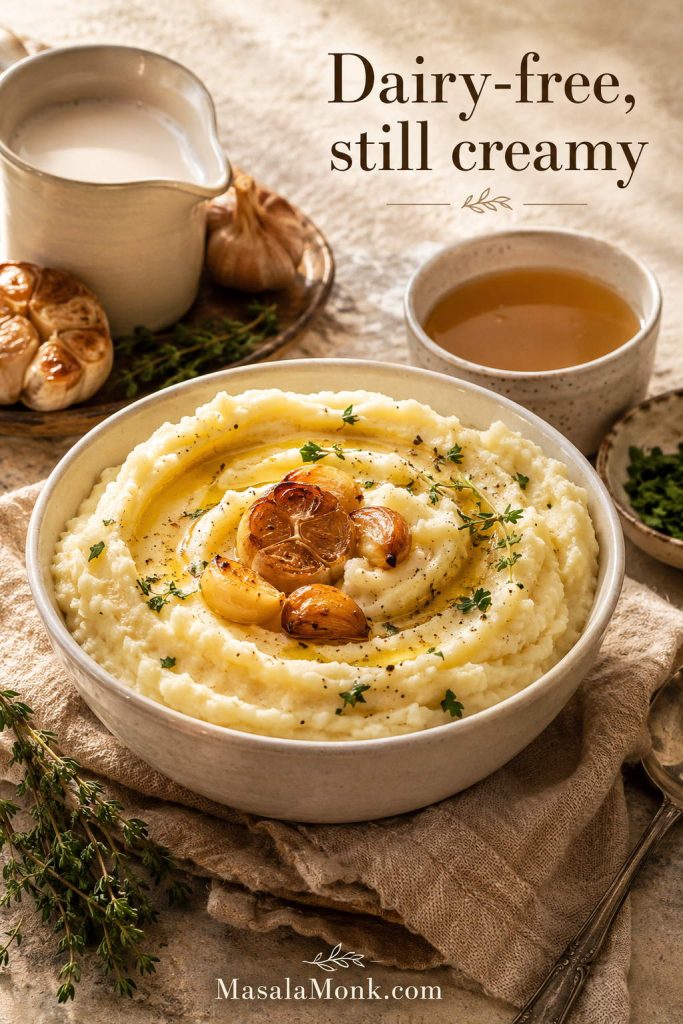
Roasted garlic is especially good here because it adds sweetness and depth without needing cream. Finish with chives, parsley, black pepper, and a small drizzle of olive oil.
If you are looking for a lower-carb mash instead of a potato-based dairy-free version, you may also like MasalaMonk’s keto cauliflower mashed potatoes.
Small Batch and Holiday Scaling
The main recipe makes 6 servings, which works well for a family dinner or a modest holiday side. For a smaller dinner or a bigger table, scale the recipe with the same basic ratio and adjust the warm liquid at the end.
Small Batch Garlic Mashed Potatoes
For 2–3 servings, make a half batch. This is the right size for steak night, roast chicken for two, or a smaller dinner where you do not want a refrigerator full of leftovers.
| Ingredient | Small Batch Amount |
|---|---|
| Yukon Gold potatoes | 1¼ lb / 565 g |
| Garlic cloves | 3 cloves |
| Butter | 3 tbsp / 42 g |
| Milk or half-and-half | ⅓ cup / 80 ml, plus more if needed |
| Sour cream | 2 tbsp, optional |
| Salt and pepper | To taste |
How to Scale for a Holiday Table
For 10–12 servings, double the main recipe: use 5 lb / 2.25 kg potatoes, 12 garlic cloves, 12 tbsp / 170 g butter, and 1½ cups / 360 ml milk or half-and-half. Start with slightly less liquid, then add more after mashing until the potatoes are soft enough to spoon but still hold gentle swirls.
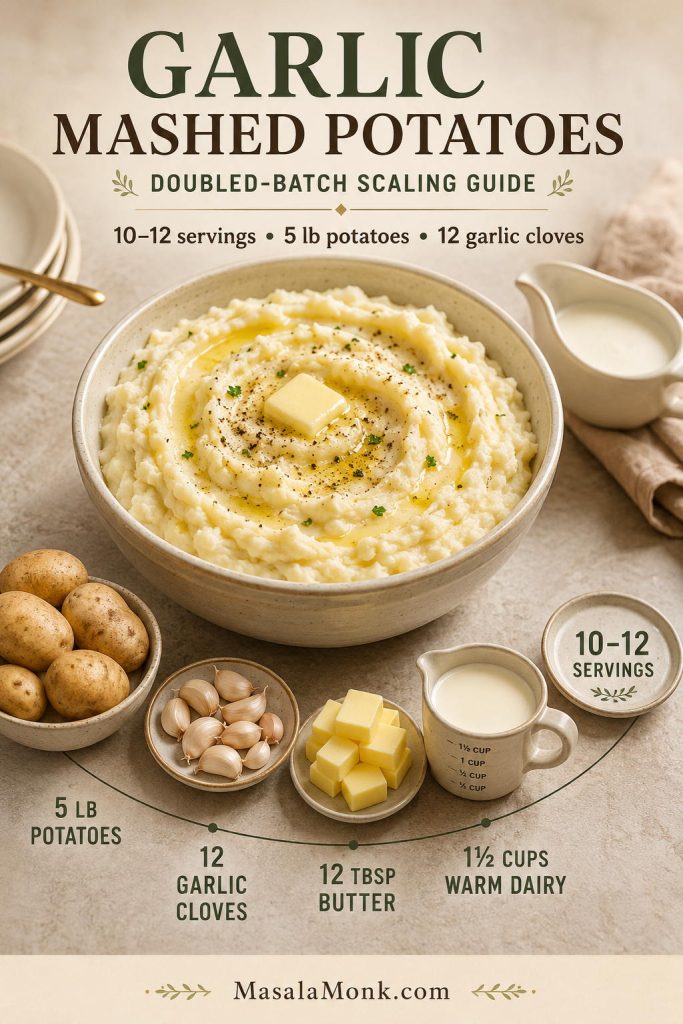
When scaling up, use a large enough pot so the potato pieces cook evenly. If the pot is crowded, the potatoes may cook unevenly and the bottom pieces can soften before the top pieces are ready.
For a fuller holiday plate, these potatoes pair naturally with a creamy green vegetable side like MasalaMonk’s green bean casserole.
Make-Ahead Garlic Mashed Potatoes
Garlic mashed potatoes can be made ahead, which is helpful for holidays, dinner parties, and busy evenings. Since mashed potatoes firm up as they cool, make them slightly softer than you want them at serving time.
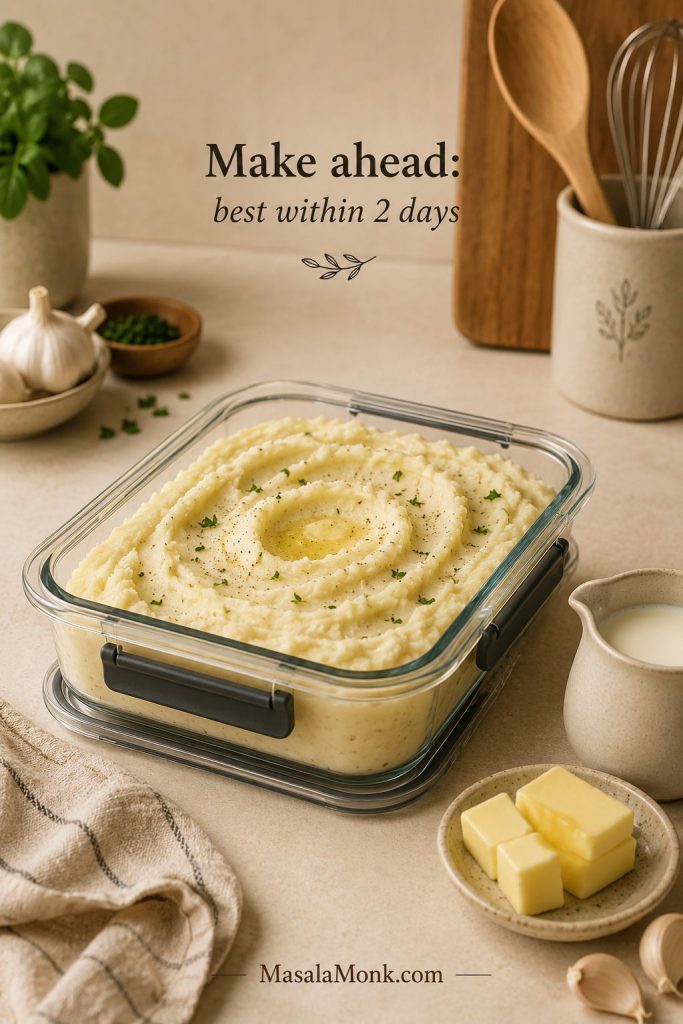
How far ahead can you make them?
For the best texture, make them up to 2 days ahead. They can be refrigerated for 3–4 days, but they are creamiest when reheated within the first couple of days. For general leftover safety, the USDA recommends refrigerating leftovers for 3–4 days and reheating them to 165°F.
How to store them
Let the potatoes cool, then transfer them to an airtight container. If you want to reduce drying, press a piece of parchment or plastic wrap against the surface before covering.
How to reheat them
Reheat gently with extra butter and a splash of warm milk, cream, broth, or half-and-half. Stir slowly and avoid whipping. For oven reheating, place the potatoes in a covered baking dish and warm at 325°F / 160°C, stirring once or twice and adding more liquid as needed.
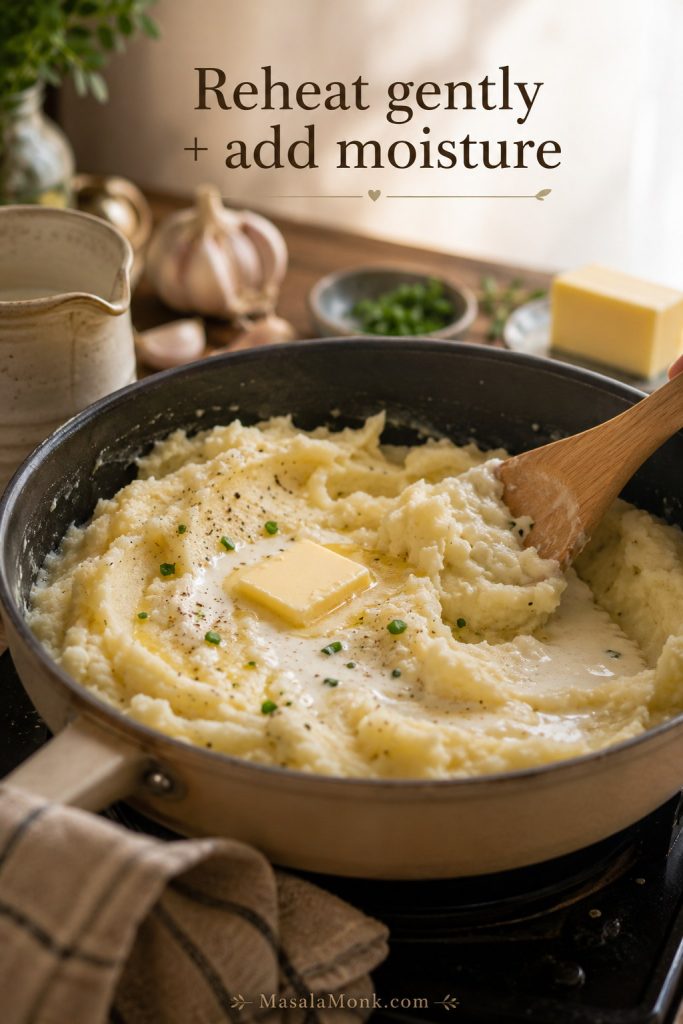
The gentlest way to revive cold mashed potatoes is to warm a little milk, cream, or broth first, then fold the chilled potatoes into it slowly. This loosens the mash without forcing you to whip it, which helps protect the texture.
How to keep them warm
For a holiday meal, transfer hot mashed potatoes to a buttered slow cooker and hold on the warm setting. Stir occasionally and add a splash of warm milk or broth if they thicken too much. Avoid holding them on high heat, because the edges can dry out.
Can you freeze garlic mashed potatoes?
You can freeze them, although the texture may change after thawing. Mashed potatoes with enough butter, cream, sour cream, or cream cheese freeze better than lean versions. Reheat slowly and stir in extra warm dairy or broth to bring back creaminess.
If you end up with extra mashed potatoes, turn them into something crisp the next day. MasalaMonk’s croquettes recipe includes a potato croquette method that works beautifully with leftover mash.
Slow Cooker and Instant Pot Garlic Mashed Potatoes
The stovetop method gives the most control, while slow cooker and Instant Pot notes are useful when the stove is full or you are cooking for a crowd.
| Method | Best Use | Texture |
|---|---|---|
| Stovetop, then hold warm | Best overall method for holidays and company | Creamiest and easiest to control |
| Cook fully in slow cooker | When the stove is full | Useful, but usually denser |
| Instant Pot | Fast cooking | Soft and convenient, but less controlled than stovetop |
Slow Cooker Method
The slow cooker is most useful for keeping finished mashed potatoes warm. For the best texture, make the potatoes on the stovetop first, then hold them warm in a buttered slow cooker.
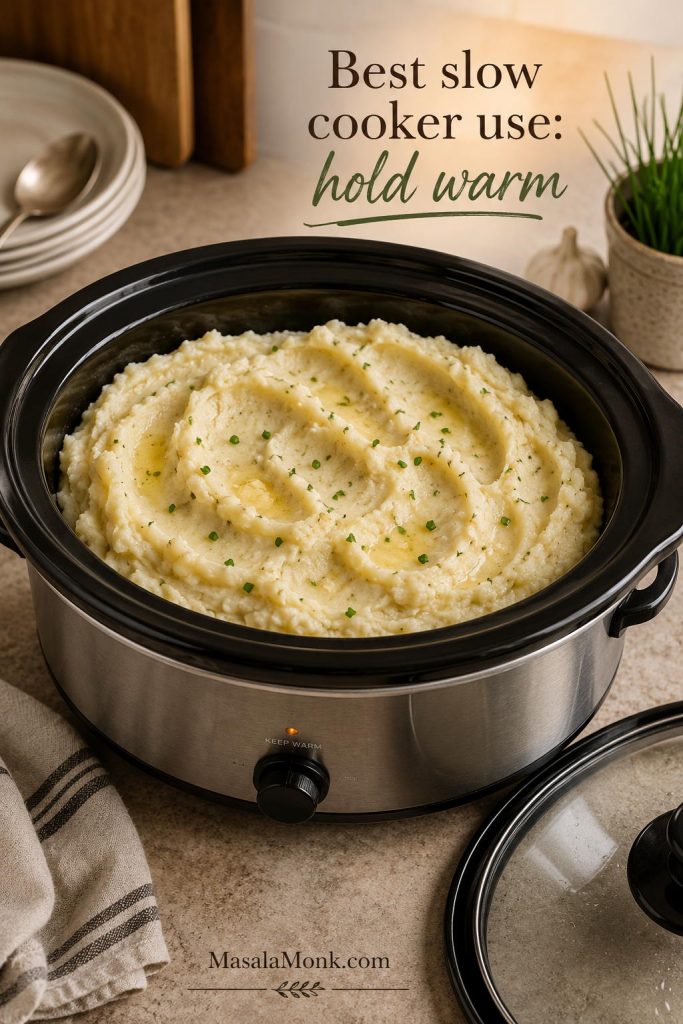
Add the hot mash to the buttered insert, cover, and keep on warm. Stir gently before serving and add a splash of warm milk, cream, or broth if the potatoes thicken while they sit.
If you want to cook the potatoes fully in the slow cooker, use peeled potato chunks, garlic, salt, butter, and a small amount of broth or water. Cook until the potatoes are fully tender, then mash with warm dairy. The texture is usually denser than stovetop mashed potatoes, but the method is useful when the stove is full.
If the slow cooker is already out for dinner, these potatoes are a natural side for a saucy main like MasalaMonk’s slow cooker pork loin. Make the potatoes on the stovetop, then hold them warm while the rest of the meal finishes.
Instant Pot Method
For Instant Pot garlic mashed potatoes, use about 2 lb / 900 g potatoes, 5–6 garlic cloves, 1 cup water or broth, and salt. Cook on high pressure for about 8 minutes, then quick release. Drain if needed, or mash in the remaining liquid if only a small amount is left. Add butter and warm milk or half-and-half after cooking.
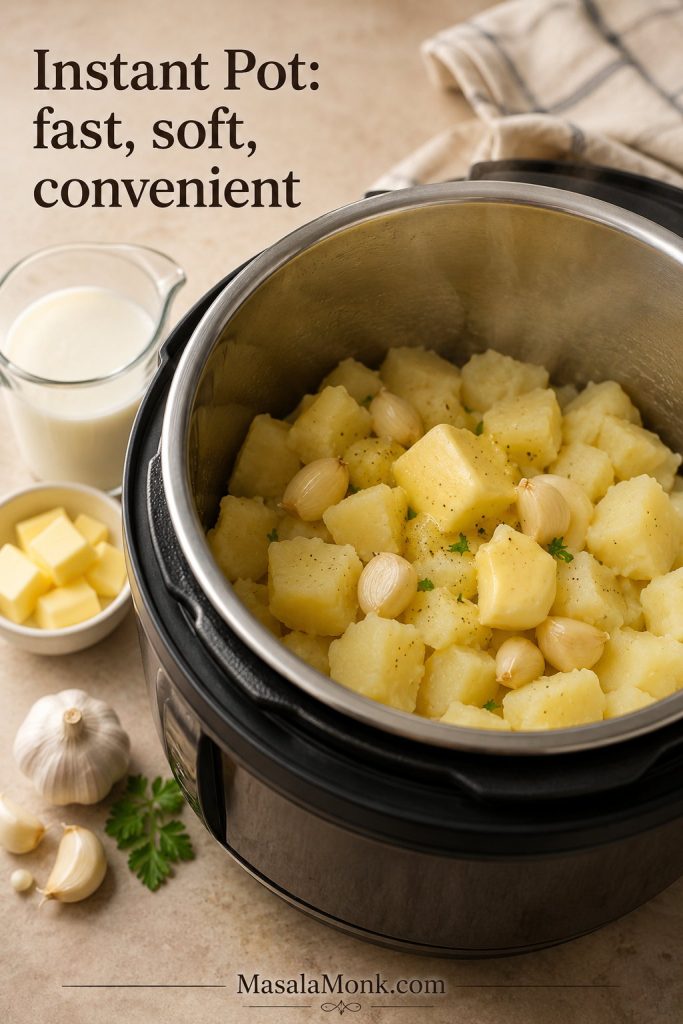
Pressure cooker timing can vary depending on potato size, so cut the potatoes evenly and check that they are fully tender before mashing.
Troubleshooting Garlic Mashed Potatoes
If the bowl is not perfect, do not panic and do not keep whipping. Most mashed potato problems get worse with more mixing. Instead, first decide what is wrong: texture, moisture, seasoning, or garlic strength. Then fix that one thing gently.
Check the Texture Before You Add More
Before adding anything, taste and check the texture separately. A bowl can be bland but perfectly creamy, or well-seasoned but too thick, so fix only the problem you actually have.
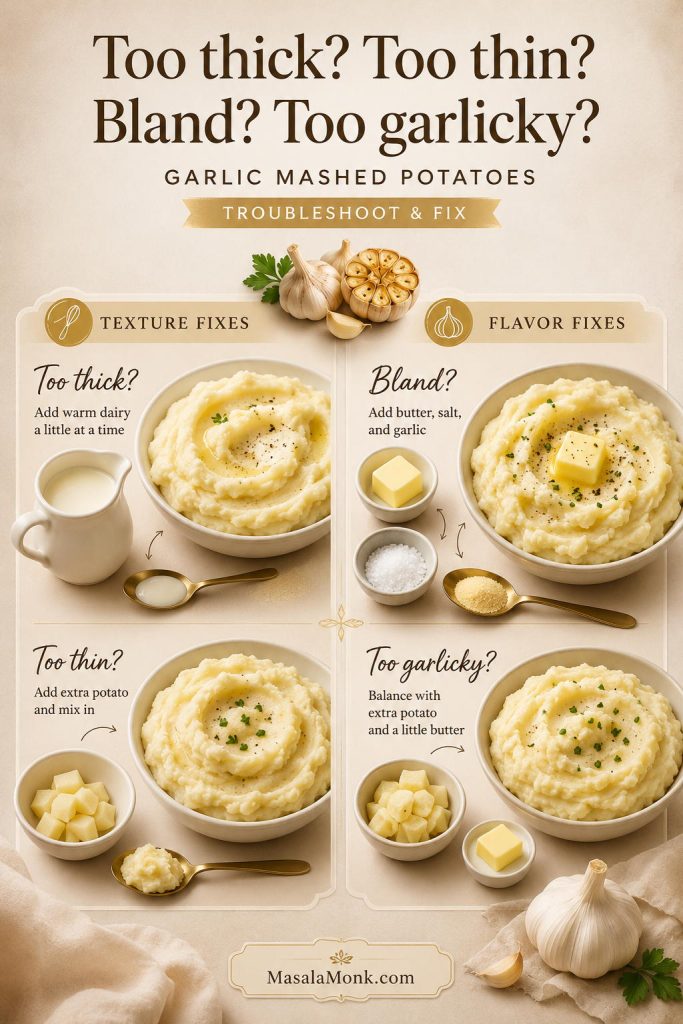
Texture and Moisture Fixes
| Problem | Likely Cause | How to Fix It |
|---|---|---|
| Gluey | Overmixed, blended, or processed too hard | Stop mixing. Then fold in warm butter or cream and serve as a rustic mash. |
| Lumpy | Potatoes were undercooked | Next time, cook until a knife slides through easily. For small lumps, a ricer can help. |
| Too thick | Not enough warm liquid | Add warm milk, cream, or broth 1–2 tbsp at a time. After each addition, stir gently and check again. |
| Too thin | Too much liquid or potatoes were not dried | Warm gently uncovered to evaporate moisture. If available, add more mashed potato to bring back body. |
| Watery | Potatoes were not drained or steam-dried well | Warm gently in the pot and stir carefully. Next time, steam-dry after draining. |
Flavor and Garlic Fixes
| Problem | Likely Cause | How to Fix It |
|---|---|---|
| Bland | Not enough salt, butter, or garlic | Add salt gradually first. Then add more butter, parmesan, garlic butter, or herbs if needed. |
| Too garlicky | Garlic was raw or harsh | Add more potato, butter, cream, sour cream, or parmesan to soften the flavor. |
| Not garlicky enough | Garlic was too soft or strained out | Add garlic powder, roasted garlic, or extra garlic butter in small amounts. However, taste after each addition because garlic powder gets strong quickly. |
| Bitter or harsh garlic | Garlic scorched, was old, or was added raw | Use fresh cloves, warm them gently over low heat, or switch to roasted garlic next time. |
Once mashed potatoes turn gluey, there is no perfect way to reverse the texture. At that point, stop mixing, add flavor, and serve them as a thicker homestyle mash. Leftovers can also become potato cakes, mashed potato pancakes, or a casserole topping.
What to Serve with Garlic Mashed Potatoes
A bowl of garlic mashed potatoes can carry a simple dinner, so you do not need much else on the plate. They are soft enough for gravy, rich enough for steak, and comforting enough to sit beside roast chicken, mushrooms, or green beans.
They are especially good with anything rich enough to drag through the potatoes: roast chicken drippings, mushroom pan sauce, turkey gravy, steak juices, garlicky butter, or extra melted butter settling into the ridges.
Weeknight dinners
- Roast chicken
- Grilled chicken
- Meatloaf
- Pork tenderloin in the oven or pan-seared pork chops
- Sautéed mushrooms
- Green beans
Holiday mains
- Roast turkey
- Roast beef
- Baked ham
- Turkey gravy
- Green bean casserole
- Roasted carrots or Brussels sprouts
Steakhouse-style dinner
- Steak with pan sauce or chimichurri
- Garlic butter mushrooms
- Roasted asparagus
- Creamed spinach
- Red wine gravy
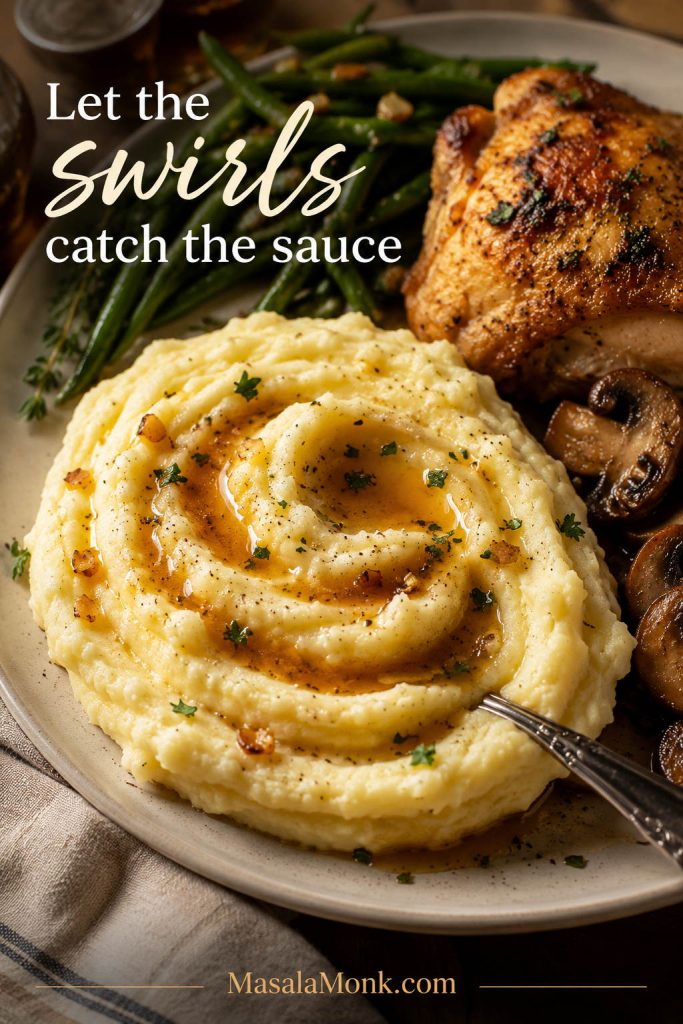
For a cozy everyday plate, serve them with roast chicken, a spoonful of pan juices, and something green. For a richer dinner, add steak, mushrooms, or gravy, then let the soft swirls catch the butter, sauce, and juices. That is where these garlic mashed potatoes do their best work.
Garlic Mashed Potatoes Recipe
Creamy, buttery garlic mashed potatoes made with Yukon Gold potatoes, warm garlic butter, milk or half-and-half, and optional sour cream. The method keeps the potatoes smooth, flavorful, and not gluey.
Equipment
- Large pot or Dutch oven
- Colander
- Small saucepan
- Potato masher or potato ricer
- Spatula or wooden spoon
Ingredients
- 2½ lb / 1.1 kg Yukon Gold potatoes, peeled and cut into 1 to 1½-inch chunks
- 6 garlic cloves, smashed and peeled
- 6 tbsp / 85 g unsalted butter
- ¾ cup / 180 ml whole milk or half-and-half
- ¼ cup / 60 g sour cream, optional
- 1½–2 tsp fine salt, plus more for the cooking water
- ¼ tsp black pepper or white pepper
- Chives or parsley, optional
- Extra melted butter, optional for serving
Instructions
- Cook the potatoes. Add the potato chunks to a large pot and cover with cold water by about 1 inch. Salt the water generously. Bring to a boil, then reduce to a steady simmer and cook for 15–20 minutes, until the potatoes are very tender. The potatoes are ready when a knife slides through the center with no resistance.
- Warm the garlic butter and milk. While the potatoes cook, combine the butter, milk or half-and-half, and smashed garlic cloves in a small saucepan. Warm over low heat until the butter melts and the garlic smells mellow. The mixture should smell fragrant and garlicky, not scorched or boiled.
- Drain and dry. Drain the potatoes well. Return them to the warm empty pot for about 1 minute so excess moisture can steam off.
- Mash. Mash the hot potatoes with a potato masher, or pass them through a ricer. Add the warm garlic butter and milk gradually. For a softer garlic flavor, strain out the garlic. For stronger flavor, mash the softened garlic into the potatoes.
- Finish. Fold in sour cream if using. Season with salt and pepper. Taste and adjust until the potatoes are creamy, buttery, and well seasoned. The finished potatoes should hold soft swirls but still spoon easily.
- Serve. Spoon into a warm bowl and finish with melted butter, chives, parsley, or extra black pepper.
Notes
- Use Yukon Gold potatoes for the creamiest texture.
- Use a ricer for smoother, fluffier mashed potatoes.
- Avoid a blender, food processor, or aggressive electric mixing.
- For garlic parmesan mashed potatoes, fold in ½–¾ cup finely grated parmesan after mashing.
- For roasted garlic mashed potatoes, use 1 whole head roasted garlic for balanced flavor, or 2 heads only if you want roasted garlic to be the main flavor.
- For red skin mashed potatoes, use red potatoes, leave the skins on, and keep the texture rustic rather than perfectly smooth.
- Serve hot. Mashed potatoes thicken as they sit, so loosen with a splash of warm milk or broth before serving if needed.
- For the most inviting bowl, make shallow swirls on top and let melted butter settle into the ridges before serving.
- Store leftovers in an airtight container in the refrigerator for 3–4 days.
- Reheat gently with extra butter and a splash of warm milk, cream, or broth.
- Freezing is possible, but the texture may change after thawing.
FAQs About Garlic Mashed Potatoes
What is the best potato for garlic mashed potatoes?
Yukon Gold potatoes are the best default because they are creamy, buttery, and forgiving. Russets make a fluffier mash, while red potatoes are better for rustic red skin mashed potatoes.
Fresh garlic or roasted garlic: which tastes better?
Fresh garlic warmed in butter and milk gives a balanced everyday flavor. Roasted garlic tastes sweeter, deeper, and more mellow. Use fresh garlic when you want speed, and roasted garlic when you want a richer holiday-style side dish.
How much garlic should I use?
Use 6 garlic cloves for 2½ lb / 1.1 kg potatoes. If using roasted garlic, use 1 whole head because the flavor is softer. If the finished potatoes need more punch, add ¼–½ tsp garlic powder.
Are garlic mashed potatoes and garlic whipped potatoes the same?
People often use the names loosely, but garlic whipped potatoes are usually smoother and lighter. For a whipped-style texture, use a ricer or mash very well by hand, then fold in warm dairy. If you use a hand mixer, keep it on low and stop quickly so the potatoes do not become gummy.
Why did my mashed potatoes turn gluey?
They were probably overmixed or blended too aggressively. Potatoes release starch when worked too much. Use a masher or ricer, add warm dairy gradually, and stop once the potatoes are creamy.
How do you make garlic mashed potatoes creamier?
Use Yukon Gold potatoes, warm milk or half-and-half, enough butter, and optional sour cream. Also make sure the potatoes are fully cooked and steam-dried before mashing.
Do garlic mashed potatoes need sour cream?
Not necessarily. Butter and warm milk or half-and-half are enough for a creamy batch. Sour cream adds tang and body, so use it when you want a richer flavor.
Can I make garlic mashed potatoes with cream cheese?
For a thicker, richer batch, add 4 oz / 115 g softened cream cheese after mashing. It is especially useful for make-ahead garlic mashed potatoes because it helps the texture reheat with more body.
Can I boil garlic with the potatoes?
Boiling garlic with the potatoes gives a soft, simple garlic flavor. For a smoother and more rounded taste, warm smashed garlic in butter and milk. For a sweeter holiday-style version, use roasted garlic.
What should I do if my mashed potatoes are not garlicky enough?
Add garlic flavor gradually. Mash in the softened garlic cloves if you strained them out, add a little roasted garlic, or stir in ¼ tsp garlic powder. Taste before adding more because garlic powder gets strong quickly.
What can I use instead of milk?
You can use half-and-half, heavy cream, warm broth, reserved potato cooking water, unsweetened plant milk, or a mix of broth and olive oil. Add any liquid gradually so the potatoes do not become too loose.
Are red potatoes good for this recipe?
Red potatoes are good for rustic, skin-on mashed potatoes. They are not the best choice for an ultra-smooth mash because they are waxier. Mash them gently and avoid electric mixing.
How far ahead can I make them?
For the best texture, make them up to 2 days ahead. Store in an airtight container in the refrigerator, then reheat gently with extra butter and a splash of warm milk, cream, or broth.
How do I reheat garlic mashed potatoes without drying them out?
Reheat slowly and add moisture back in. Use a splash of warm milk, cream, broth, or half-and-half, plus a little butter. Stir gently and avoid whipping them aggressively.
Back to top








[…] mashed potatoes are the plan, these garlic mashed potatoes are the kind of soft, buttery base that makes onion gravy feel like the whole point of […]
[…] a deeper guide to creamy potatoes that stay fluffy instead of gluey, use our garlic mashed potatoes recipe; the same steam-dry step helps this topping sit neatly on the […]