
This post was last updated on
· Originally published
· By MasalaMonk.com
Four sturdy mains, a few good finishes, and protein math you can actually see.
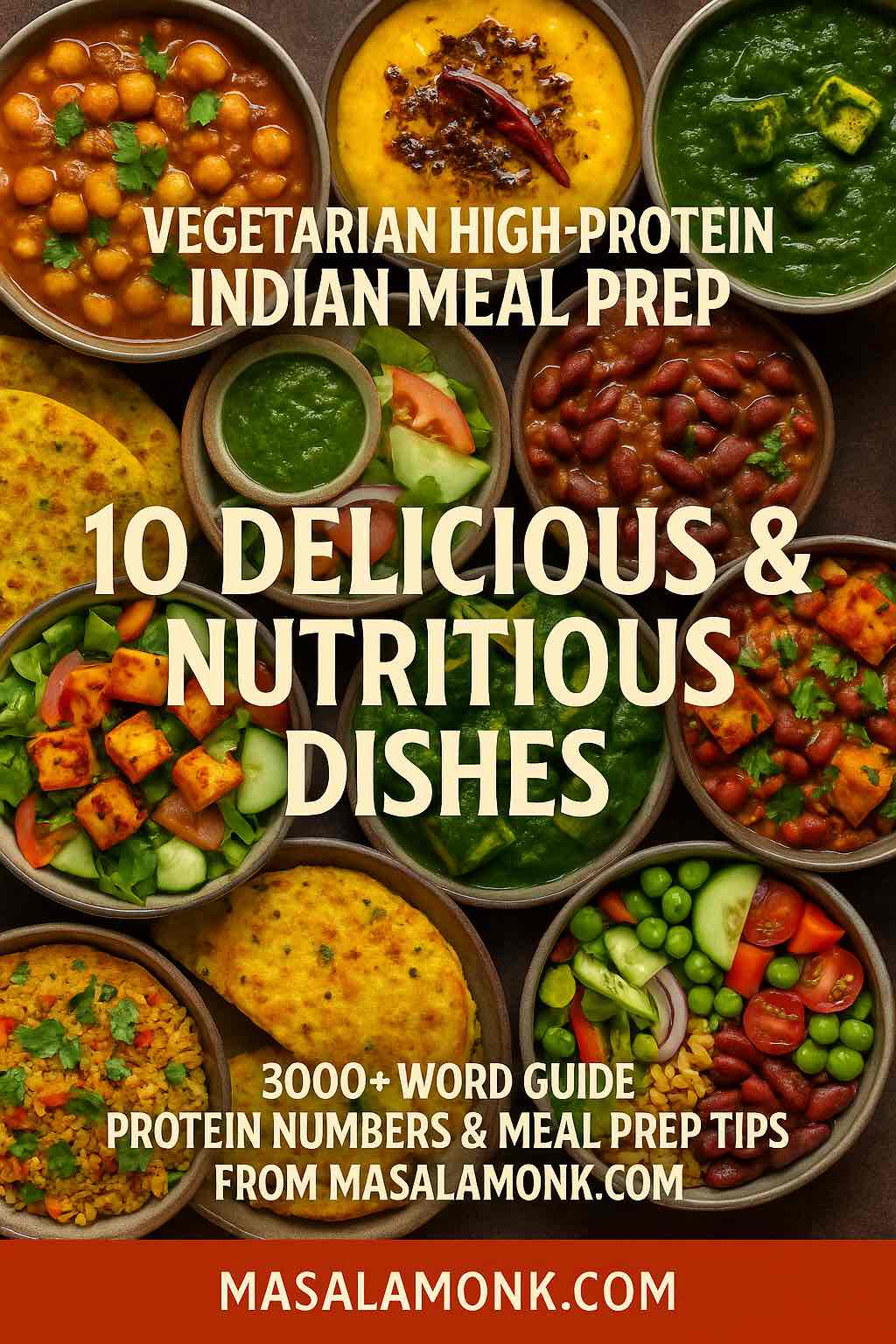
High-protein Indian meal prep is easy to feel enthusiastic about on Sunday, when the fridge is full and the containers are clean. The real test is Thursday, when what you packed has to look better than ordering lunch. Indian food is unusually good at that problem: dal, chickpeas and rajma reheat gracefully; tofu and paneer can be portioned deliberately; grains pack cleanly; and lemon, coriander, chutney, pickle or a fresh tadka can wake up yesterday’s curry.
You’ll use those ingredients across ten dishes, then turn a handful of them into a workable week. When protein matters, the portions and arithmetic are shown instead of hidden behind a badge. The numbers are planning estimates: brands, serving sizes, moisture levels and the amount of dal, beans, tofu or paneer on the plate all change the final total.
The weekly rotations cover lunch and dinner, not every meal and snack of the day. Breakfast and snacks can stay flexible. If you track a daily target, use the meal-builder here for the meals you want to quantify and add the rest of your day separately.
On This Page
- Choose your meal-prep style
- Build a 30g, 40g, or 50g protein meal
- 10 dishes for high-protein meal prep
- One-week vegan meal-prep plan
- Meal-prep workflow
- Storage & reheating
- Gluten-free meal prep
- Portions for weight loss, maintenance & muscle gain
- 7-day vegetarian meal plan
- One-week shopping list
- FAQs
Jump straight to a dish: Chana Masala · Dal Tadka · Rajma Masala · Palak Paneer · Tofu Tikka Masala · Moong Dal Chilla · Paneer Tikka Salad · Quinoa Biryani · Soya Keema · Tofu–Rajma Bowl
Choose Your Meal Prep Style (Vegetarian, Vegan, Gluten-Free + High Protein)
Some weeks the priority is protein. Other weeks it is a vegan fridge, a gluten-free lunchbox, or simply getting food to work without everything going soggy. Choose the constraint that matters this week; the same dal, beans, tofu, paneer, grains and vegetables can move between several lanes.
- High-protein vegetarian: center meals on dal, chickpeas, rajma, paneer, tofu, yogurt, soy, quinoa, and millets.
- Fully vegan: lean on tofu, soya keema, chickpeas, rajma and dal; use soy yogurt or another plant yogurt where you want a creamy finish.
- Gluten-free: use rice, quinoa and millets in place of wheat roti; check packaged hing, spice mixes and sauces if cross-contact matters to you.
- Work lunches: favor bowls, curries and salads that can be packed in components; keep chutney, dressing and crunchy toppings separate.
- Weight-loss focused: keep the protein component generous, vegetables abundant, grain portions deliberate, and cooking fat measured with a spoon instead of poured by eye.

Most of the protein here comes from legumes, tofu, soy, paneer and yogurt. Quinoa, millets, rice and roti contribute some protein too, but in these meals they are primarily the base. For more options beyond the ten dishes here, see MasalaMonk’s plant-based protein sources for meal prep.
How to Build a 30g, 40g, or 50g Protein Meal — With the Math Visible
The 30g, 40g and 50g numbers here are planning examples, not universal targets. What matters is seeing where the protein comes from. Legumes and grains are fairly easy to estimate; tofu, paneer and yogurt vary enough by brand and moisture that the package label should win when you are counting closely.
If you want the bigger nutrition context first, MasalaMonk’s guide to protein covers the basics, and Harvard’s Protein guide explains why total needs, source quality and dietary variety matter alongside the number.
The rounded reference values below are based on common cooked-food entries in USDA FoodData Central. They are deliberately approximate because cup weights and cooking methods vary.
| Reference portion | Approx. protein |
|---|---|
| 1 cup cooked chickpeas | ~14–15g |
| 1 cup cooked kidney beans (rajma) | ~15g |
| 1 cup cooked lentils | ~18g |
| 1 cup cooked quinoa | ~8g |
| 1 cup cooked brown rice | ~5g |
| Tofu, paneer, yogurt | Use the label |
Three Example Plates, With the Arithmetic Shown
| Planning target | Example plate | Approximate math |
|---|---|---|
| ~30g | Dal + quinoa + pumpkin seeds | 1 cup cooked lentils (~18g) + 1 cup cooked quinoa (~8g) + 2 tbsp pumpkin seeds (~5g) = ~31g |
| ~40g | Paneer + chickpeas + vegetables | 150g paneer from an example label of 18g/100g (~27g) + 1 cup cooked chickpeas (~14–15g) = ~41–42g |
| ~50g | Tofu–rajma quinoa bowl + seeds | 200g tofu from an example label of 12g/100g (~24g) + 1 cup rajma (~15g) + 1 cup quinoa (~8g) + 1 tbsp pumpkin seeds (~3g) = ~50g |
This is also why a meal can look “high protein” and still miss the number you had in mind. A spoonful of dal, a few paneer cubes or a small tofu garnish does not contribute the same protein as a measured serving. Build from the protein first, then fit the grain and vegetables around it.
Easy vegan swaps: paneer → tofu; dairy yogurt → soy yogurt; ghee → neutral oil. Coconut milk can add richness, but it is not a meaningful protein substitute.
For a full-day view, MasalaMonk’s 100 grams of protein a day guide shows how several meals and snacks can add up without forcing every plate into the same target.

10 Vegetarian Indian Dishes That Work for High-Protein Meal Prep
These ten do different jobs in the fridge. Chana and rajma freeze well. Dal comes back quickly with water and a fresh tadka. Tofu carries sauce, paneer makes a cold lunch feel substantial, chilla gives you a fresh-cooked option from stored batter, and soya keema stretches a budget without feeling like an afterthought.
Packing These for Work? Protect the Texture
- Keep rice, quinoa and millet separate from wet curries until you are ready to eat.
- Pack chutney, raita and salad dressing in a small leakproof container.
- Loosen dal, rajma and chana with a little water before reheating so a thick curry does not dry out.
- Keep cucumber, onion, roasted chana, papad or seeds away from steam.
- Put the most perishable meals earlier in the week and freeze later portions once you have covered the first 3–4 refrigerator days.
Storage shorthand: unless a dish says otherwise, use the general 3–4 day refrigerator window explained in the storage guide below. The notes here focus on what changes with freezing, texture and reheating.
1) Chana Masala — A Batch That Keeps Its Shape
Chana Masala is unusually forgiving in a meal-prep week. Chickpeas keep their bite, the tomato gravy reheats without splitting, and the same batch can sit beside rice one day, quinoa the next, then become a wrap filling when bowls start to feel repetitive.

Why Chickpeas Carry a Meal So Well
A cooked cup of chickpeas contains roughly 14–15g protein plus plenty of fiber. Give the chickpeas enough room in the bowl; a token scoop under a pile of rice will not do the same job.
Cook Once, Use It Three Ways
- Bowl: chana + rice or quinoa + cucumber + lemon.
- Wrap: mash a few chickpeas into the gravy so it stays put, then add onions and greens.
- Freezer portion: freeze curry without fresh coriander or raw onion; add those after reheating.
Storage, Reheating & a Fresh Finish
- Fridge: 3–4 days in a covered container.
- Freezer: about 1–2 months for best quality.
- Reheat: add a small splash of water and simmer until hot throughout.
For a different second meal, add spinach during the final minute of reheating, finish with roasted cumin and lemon, or move the same chana into a wrap or salad bowl.
2) Dal Tadka — Reheat the Dal, Refresh the Tadka
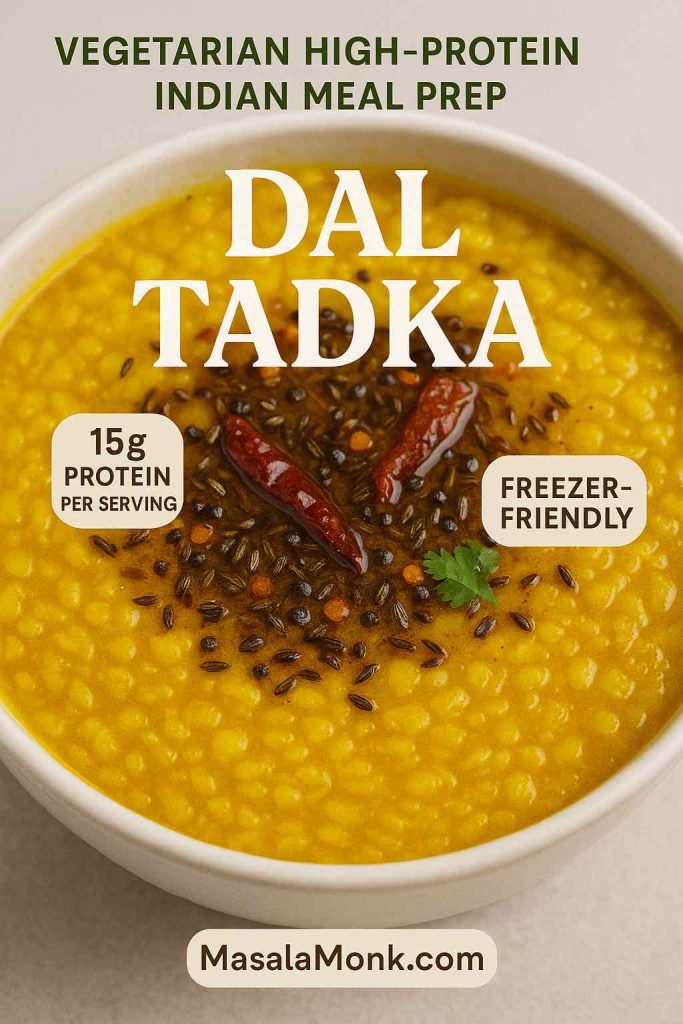
Dal has one meal-prep quirk worth knowing: it thickens as it sits. That is not a failure. Refrigerated dal may look almost too dense the next day; a little hot water and a fresh tadka can bring it straight back.
Pick the Lentil by Texture
Toor dal gives a fuller, familiar body; yellow moong turns softer and lighter; masoor cooks quickly and becomes creamy. Protein varies by lentil and portion, so treat a cooked cup as a rough mid-teens contribution rather than a fixed number.
For measured quantities, pressure-cooker timing and the final garlic-cumin tempering, use MasalaMonk’s Dal Tadka recipe.
Make Ahead, Then Reheat Gently
- Cook the lentils and onion-tomato base in a larger batch.
- Store the dal slightly looser than you want to eat it, because refrigeration thickens it.
- For the freshest flavor, make a small cumin-garlic-chilli tadka when serving; reheating the original tempering repeatedly dulls its aroma.
Freezing & reheating: Dal freezes well; portion later meals after it has cooled and aim to use them within about 1–2 months for best quality. Reheat over low to medium heat, adding hot water a little at a time until it loosens and falls from the spoon.
Pair it simply: roti with a dry sabzi, rice or millet with cucumber and pickle, or a smaller bowl beside tofu or paneer when you want a two-protein meal.
3) Rajma Masala — One of the Best Curries for Day Two
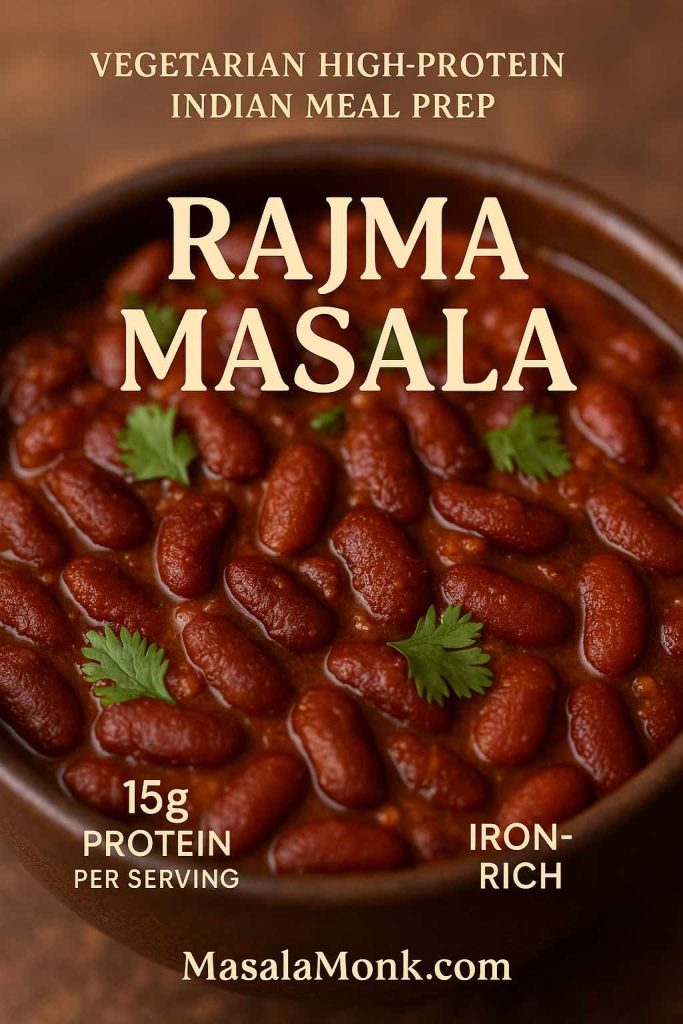
Rajma has an unfair advantage on Wednesday: the gravy is often better than it was when you first cooked it. The beans keep their structure, the sauce thickens pleasantly, and a long simmer after the kidney beans are tender gives the curry the body that reheats so well.
Protein, Fiber & Why the Portion Matters
One cooked cup of kidney beans contributes roughly 13–15g protein along with substantial fiber. Rice is the classic partner, but quinoa or millet changes the texture without changing the basic meal-prep logic.
The Meal-Prep Trick: Leave the Gravy a Little Loose
- Soak dried kidney beans overnight and pressure-cook until fully tender; undercooked kidney beans are not a shortcut worth taking.
- Cook the onion-tomato masala until it loses its raw, watery edge.
- Store the curry a touch looser than serving consistency; the fridge will thicken it.
Freeze It Well, Then Change the Second Serving
- Fridge: 3–4 days.
- Freezer: about 1–2 months for best texture.
- Reheat: thaw in the refrigerator if frozen, then simmer with a splash of water until bubbling and hot throughout.
Serve the first portion with jeera rice, turn the next into a bowl with roasted vegetables and lemon, then mash some beans into the final portion if you want a thicker wrap filling.
4) Palak Paneer — Keep the Sauce Gentle and the Paneer Soft
Palak paneer needs gentler handling than chana or rajma. The spinach gravy wants low heat; the paneer wants as little punishment as possible. Store them separately when you can, then bring them together near the end.

Paneer Does Most of the Protein Work
Paneer is a complete dairy protein, but its exact protein content varies widely by milk, moisture and brand. A generous 150g portion can contribute roughly the high-20s grams of protein in some paneers; check the label when the number matters to your plan.
If you make your own, MasalaMonk’s homemade paneer guide explains why pressing time should change for soft curry cubes versus firmer tikka.
Keep the Spinach Gravy Fresh-Tasting
- Cook or blanch the spinach just until tender before blending; overcooking dulls both color and flavor.
- Cool the gravy promptly before refrigerating.
- Warm the gravy gently, then fold in paneer near the end so the cubes do not sit through another long simmer.
Freezing, Serving & Finishing
- Fridge: keeping sauce and paneer separate gives you more control over texture.
- Freezer: the spinach gravy freezes better than paneer; freeze the sauce and add fresh or refrigerated paneer later.
- Serve with: roti, rice, or a millet; use cucumber or a simple salad to add contrast.
A little lemon at the table can brighten the spinach; cashew cream softens a sharper gravy. For a vegan version, tofu works best with the same “sauce first, cubes last” reheating logic.
5) Tofu Tikka Masala — Browned Tofu, Sauce on the Side
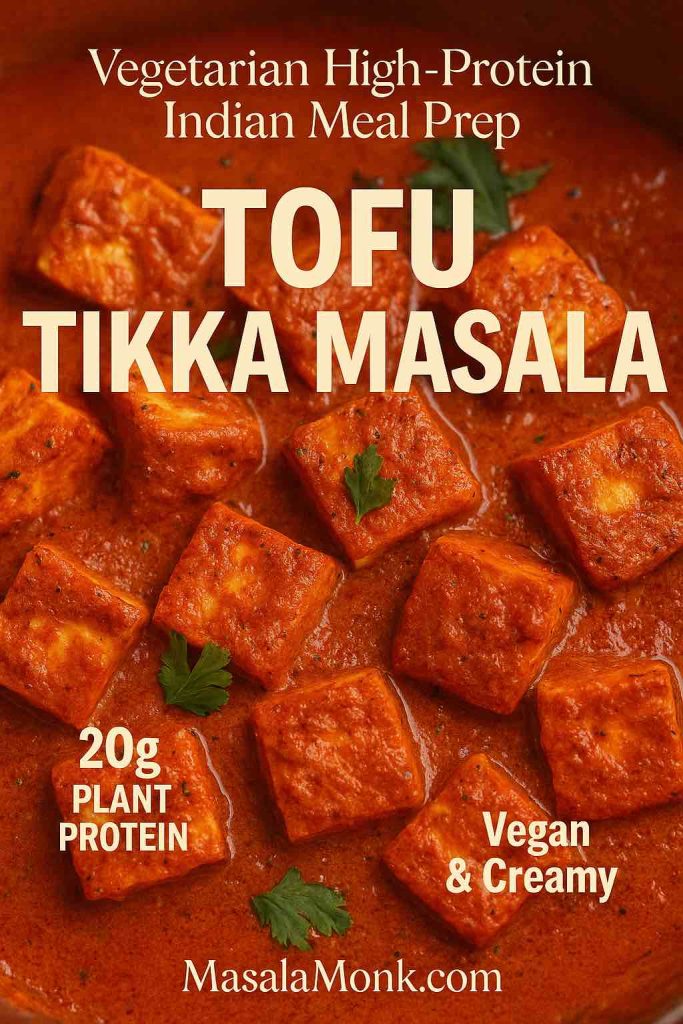
Tofu tikka masala works best when the tofu and sauce are treated as two jobs. Brown or bake the tofu until the edges have some character, make the tomato-based sauce separately, and combine them close to serving. Leave the tofu soaking in sauce for days and you trade away the texture you worked for.
What Tofu Brings to Meal Prep
Firm tofu provides all nine essential amino acids and is easy to portion. Protein varies by brand and water content, so a 200g serving may land anywhere from the high teens into the 20s in grams. When you are counting closely, trust the label on the pack.
For texture-first lunch ideas beyond Indian curry, see MasalaMonk’s tofu meal-prep guide.
Press, Brown & Store the Sauce Separately
- Press firm or extra-firm tofu until the surface is no longer wet.
- Bake or pan-brown it before adding sauce.
- Keep the sauce slightly looser for storage; it will thicken in the refrigerator.
- Use cashews or a plant cream for richness if you want a dairy-free finish.
Storage: Keep the browned tofu and sauce separate in the refrigerator. If freezing, the sauce keeps its texture better than cooked tofu. Reheat the sauce first and add the tofu near the end.
Use one batch two ways: curry with rice or quinoa first, then turn the remaining browned tofu into a wrap or grain bowl without the sauce.
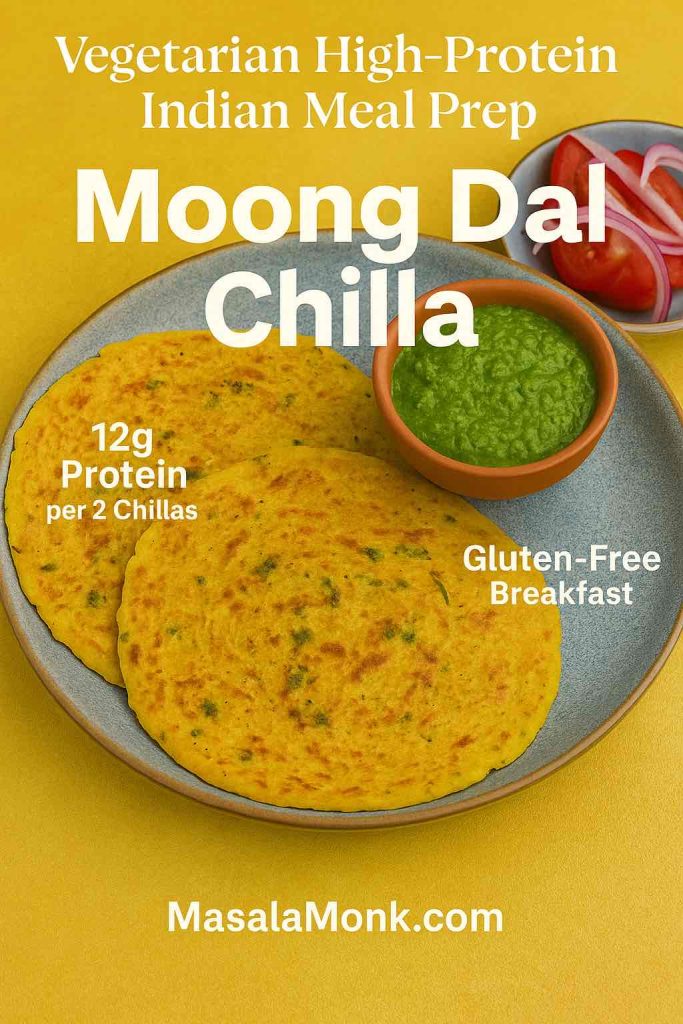
6) Moong Dal Chilla — Prep the Batter, Cook Fresh
Moong dal chilla solves a different problem from the curries here: prep the batter now, cook the food later. Keep it chilled, then make fresh chillas in minutes for breakfast, a tiffin box or a light dinner.
Protein Depends on How Much Dal Is in the Batter
Two chillas can land around the low-to-mid teens in grams of protein when the batter contains a generous amount of moong dal, but diameter and batter thickness change the number quickly. If you need more, stuffing the chillas with paneer or tofu is an easier fix than making them enormous.
Keep the Batter Simple Until Cooking Time
- Soak moong dal until softened, then grind with ginger, chilli and just enough water for a pourable batter.
- Refrigerate in a clean covered container for up to 2–3 days; stir before cooking.
- Add chopped vegetables close to cooking time if you want the batter to stay fresher and less watery.
Storage: Keep the batter refrigerated for 2–3 days and cook only what you need. Cooked chillas are best the same day; if you do refrigerate them, a hot dry tawa or skillet restores the edges better than a microwave.
For a fuller meal, serve the chillas with green chutney and cucumber, stuff them with paneer bhurji or seasoned tofu, or roll them around leftover dry sabzi.
7) Paneer Tikka Salad — Pack the Crunch Separately
The hard part of paneer tikka salad is not cooking the paneer; it is keeping Sunday’s prep from becoming Tuesday’s wet salad. Cool the paneer first, keep the vegetables dry, and hold the dressing back until lunch.

A High-Protein Salad Needs a Real Paneer Portion
Four paneer cubes scattered over lettuce will not carry a high-protein lunch. Give paneer a real, measured portion, then let the vegetables do what they do best: add volume, crunch and freshness. When you are counting closely, use the package value because paneer varies with moisture and brand.
Homemade paneer can be pressed firmer for grilling; MasalaMonk’s paneer pressing guide shows the difference between tender curry cubes and tikka-ready blocks.
Build It for Day Three, Not Just Day One
- Grill or pan-sear paneer in a batch and cool before packing.
- Store cucumber, tomato and greens separately from warm paneer until everything has cooled.
- Keep dressing and chutney in a small jar.
- Add roasted chickpeas only at serving time if you want them crunchy.
Storage: Keep cooked paneer covered in the refrigerator. Prep sturdy vegetables ahead, refresh delicate greens midweek, and keep the dressing separate until lunch.
At lunch, finish with lemon, chaat masala and black pepper; mint-coriander chutney thinned into a dressing; or roasted chickpeas, pumpkin seeds or peanuts for crunch.
8) Quinoa Vegetable “Biryani” — A Base That Needs a Protein Partner
Quinoa brings a nuttier flavor and a different texture from basmati, but it still carries whole spices well. It also cooks quickly and pairs easily with chickpeas, tofu or paneer when you want more protein.

Quinoa Is a Base, Not the Whole Protein Strategy
A cooked cup of quinoa contributes about 8g protein. That is a contribution, not the whole high-protein lunch. Add chickpeas, tofu, paneer or a side of dal when protein is the point of the meal.
MasalaMonk’s quinoa meal-prep ideas give you more ways to use the grain without repeating the same biryani bowl.
Cook for Separate Grains, Not Soft Quinoa
- Toast rinsed, well-drained quinoa briefly with whole spices before adding liquid.
- Use vegetables that hold their shape — carrots, beans, peas and peppers all work well.
- Fold in cooked chickpeas, tofu or paneer after the quinoa is done; extra liquid at that stage can soften the grains.
Storage: Cool promptly and refrigerate for 3–4 days. Freeze portions for about 1 month for best texture. To reheat, sprinkle with a little water, cover, and heat until steaming.
A cool or sharp side keeps the bowl lively: cucumber raita or soy-yogurt raita, mint chutney and lemon, or a small bowl of dal when you want more substance.
9) Soya “Keema” — Budget-Friendly and Easy to Repurpose
Soya keema is one of the easiest dishes here to repurpose. Today it can be a bowl; tomorrow it can fill a wrap, paratha or pav, or land on a baked potato or pasta. Textured vegetable protein is inexpensive and shelf-stable before cooking; the onion-tomato masala and final squeeze of lemon do the flavor work.

Check the Pack for Protein — TVP Varies a Lot
Textured soy protein is concentrated because much of the water has been removed before you buy it. Labels may report dry or prepared weight, and products differ enough that “one cooked cup” is not a useful universal protein unit. Use the pack you actually bought.
Hydrate, Squeeze, Season & Store
- Soak or simmer the granules according to the package directions.
- Drain and squeeze out excess water so the masala does not taste diluted.
- Cook the onion-tomato base until concentrated before adding the soy.
- Finish with lemon and coriander; TVP benefits from that last bit of brightness.
Storage: Keep cooked soya keema covered in the refrigerator; freeze later portions for about 1–2 months for best quality. Reheat with a splash of water so the granules do not dry out.
For the next serving, change the format instead of the recipe: millet or rice for a bowl, pav for something quick, or a wrap when you need lunch to travel.
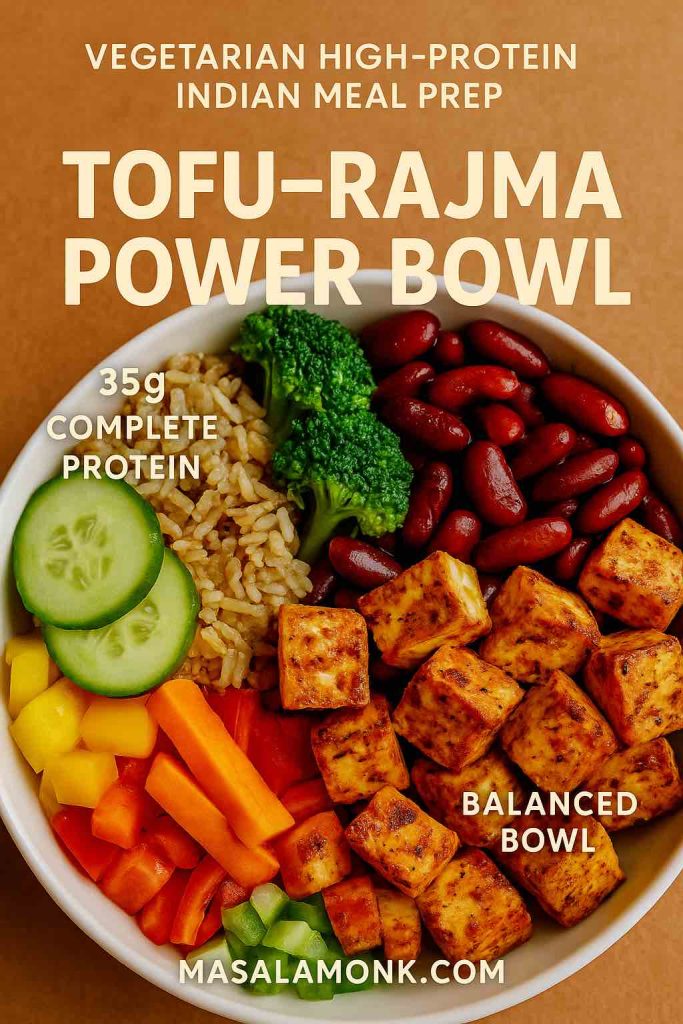
10) Tofu–Rajma Power Bowl — Two Proteins, One Flexible Lunch
Rajma brings the saucy part of lunch; browned tofu brings a second substantial protein. Build the grain and vegetables around those two, and the same components can become a warm bowl one day and a salad-style lunch the next.
How the Protein Adds Up
A 200g tofu serving often contributes somewhere from the high teens into the 20s in grams of protein, depending on the brand. Add a cooked cup of rajma at roughly 13–15g, and the two can put the bowl in the low-to-mid 30s before the grain or seeds are counted. Use your actual tofu label when precision matters.
Store the Parts for Different Textures
- Make rajma in a batch.
- Bake or pan-brown tofu separately.
- Store cucumber, onion or leafy vegetables cold and dry.
- Combine only what you plan to eat so the same components can become a warm bowl one day and a salad-style lunch the next.
Storage: Rajma is the better freezer candidate; keep tofu refrigerated if its original texture matters. Warm the rajma gently and re-crisp the tofu in a skillet or air fryer when you want firmer edges.
Finish each bowl at serving time with quick-pickled onions or lemon, pumpkin or sesame seeds, and a spoon of mint chutney, tahini-lemon dressing, yogurt or soy yogurt.
A 1-Week Vegan Meal-Prep Plan Built From Four Core Batches
For a vegan week, batch four things: one bean curry, one dal, browned tofu and one dry soy main. Add a grain, vegetables and a few fresh finishes, then change how you assemble them through the week.
Batch These Once
- One bean curry: Chana Masala or Rajma Masala, about 4 portions.
- One dal: about 4 portions; keep it slightly loose for reheating.
- One firm protein: browned tofu, about 4 portions; keep some dry and sauce only what you need.
- One dry main: Soya Keema, about 3–4 portions for bowls, wraps and stuffed breads.
Add one cooked grain, one tray of vegetables, and a small set of fresh finishes — cucumber, coriander, lemon, chutney, quick-pickled onion, seeds. Those supporting pieces are what keep the four batches from tasting like four identical leftovers.
| Day | Lunch | Dinner |
|---|---|---|
| Mon | Bean curry + quinoa + cucumber, lemon & coriander | Dal + rice + browned tofu |
| Tue | Soya keema wrap + mint chutney | Tofu tikka-style curry + rice |
| Wed | Bean-curry salad bowl + quick-pickled onion | Dal + quinoa + roasted vegetables |
| Thu | Soya keema + millet or rice + seeds & lemon | Bean curry + tofu two-protein bowl |
| Fri | Browned-tofu salad or wrap | Dal + rice + fresh garlic-cumin tadka |
| Sat | Bean-curry wrap + cucumber & chutney | Soya keema stuffed into roti or served as a bowl |
| Sun | Freezer/leftover mix-and-match bowl | Cook one fresh dish or use the last prepared portion |
That is the difference between a meal-prep system and seven unrelated recipes: most of the work happens once, while the meals keep changing.
Prep-Day Workflow: Sequence the Jobs, Don’t Race the Clock
A good prep session is less about speed than shared work. Let the slow jobs create time for the others: while legumes cook, press tofu, chop onions and tomatoes, or start a grain. One well-cooked onion-tomato masala can feed more than one curry. Storage is part of the workflow too: keep grains away from wet curries, fresh toppings dry, and later portions of bean or lentil dishes ready for the freezer.
Skip the universal 90-minute promise. Canned beans, soaked beans, cooker size, batch size and equipment all change the clock. If you are using dried rajma or chickpeas, soak them ahead or start them first.
- Start first: soak or pressure-cook legumes, or begin with already-cooked beans when that fits your week.
- While that cooks: chop onions and tomatoes, press tofu, prep paneer, and get the onion-tomato masala started.
- Next: cook one grain, roast vegetables, and finish the dal or bean curry while the first jobs are already moving.
- Cool & portion: keep grains away from wet curries, let hot food cool promptly, and keep salad components cold and dry.
- Freeze later portions: dal, rajma and chana are the easiest candidates; keep tofu or paneer refrigerated when their original texture matters.

Storage & Reheating Guide for Indian Meal Prep
Food safety is the one part of meal prep where “it still smells fine” is not a useful system. Cool cooked food promptly, refrigerate within two hours, and plan to use most cooked leftovers within 3–4 days. USDA’s leftovers guidance also recommends reheating leftovers to 165°F / 74°C.
- Dal, rajma and chana: refrigerate 3–4 days. For this guide, use about 1–2 months as a conservative best-quality freezer target for later portions.
- Rice, quinoa and millet: cool promptly, refrigerate within two hours, and use about 1 month as a best-texture freezer target.
- Paneer and tofu: store cooked portions covered. They can be frozen, but texture changes are more noticeable, so refrigeration is the better default when texture matters.
- Raw salad components: keep dry and separate from hot food, dressings and chutneys.
About the freezer windows: these are quality targets for this meal-prep system, not claims that food becomes unsafe the moment the date passes. Label and date what you freeze, keep the freezer at 0°F / −18°C or below, and use your best judgment about quality after thawing.

Gluten-Free High-Protein Indian Meal Prep (Easy Swaps)
A gluten-free week can use almost the same menu. Most of the work is choosing a different base and checking the few packaged ingredients that can hide wheat.
- Replace wheat roti with rice, quinoa, jowar, bajra, foxtail millet or barnyard millet.
- Naturally gluten-free picks here include Moong Dal Chilla, Quinoa Vegetable Biryani, Chana Masala with quinoa, Rajma bowls, and Tofu–Rajma Power Bowls.
- For office lunches, rajma + rice, chana + quinoa, tofu tikka + rice, and soya keema + millet all pack well.
- If you are highly sensitive, check labels on compounded hing, sauces, spice blends and packaged soy products.
For more on the grains themselves, see MasalaMonk’s guide to millets.
Portion Guide: Change the Plate Before You Change the Recipe
The same curry can work for different goals. The main levers are the protein portion, grain portion, vegetables and added fats. Do not attach a universal 30g, 40g or 50g badge to a plate unless the actual quantities support it; use the protein-math table above when the number matters.
| Goal | Build the plate | Useful adjustment |
|---|---|---|
| Weight-loss focused | Meaningful serving of dal, beans, tofu or paneer + generous vegetables + a deliberate grain portion | Measure ghee, cream, nuts and dressings when they add up quickly. |
| Maintenance | Satisfying protein + comfortable rice, quinoa, millet or roti serving + vegetables | Add yogurt, chutney or another side that makes the plate feel complete. |
| Higher-energy / muscle-gain focused | Add a second protein and increase grain or roti according to training and appetite | Nuts, seeds, yogurt or paneer can raise energy without doubling the entire curry. |

7-Day Vegetarian Rotation: Pick Four Mains, Not Ten Sunday Recipes
The ten dishes above are a rotation bank. A normal prep week does not require all ten. Pick roughly four mains, cook enough for repeats, and use the other dishes next week. The sample below uses Chana Masala, Dal Tadka, Palak Paneer and Tofu Tikka Masala as the four prepared mains, with one fresh-cooked chilla meal at the weekend.
Give yourself one small midweek reset too: move a frozen portion into the refrigerator, chop fresh cucumber or herbs, and make a quick tadka, chutney or lemony dressing. That little burst of freshness is often what separates Thursday lunch from “the same thing again.”
This is a lunch-and-dinner rotation, not a promise of a fixed daily protein total. Your breakfast, snacks and serving sizes will change the day’s total, so use the protein-builder above when you need meal-level arithmetic.
| Day | Lunch | Dinner |
|---|---|---|
| Mon | Chana Masala + quinoa + cucumber, coriander & lemon | Palak Paneer + roti |
| Tue | Tofu Tikka rice bowl + mint chutney | Dal Tadka + dry vegetable sabzi |
| Wed | Chana wrap + onions + greens | Palak Paneer + rice + pickle or cucumber salad |
| Thu | Browned tofu salad/grain bowl | Dal + tofu two-protein plate + fresh tadka |
| Fri | Chana + tofu power bowl + quick-pickled onion | Palak Paneer + millet |
| Sat | Fresh Moong Dal Chilla + chutney, cucumber & lemon | Tofu Tikka wrap |
| Sun | Freezer/leftover mix-and-match bowl | Cook one dish from the rotation bank that you did not make this week |
Prefer rajma, soya keema or paneer tikka salad? Swap one into the rotation. The structure matters more than the exact dishes.

One-Week Shopping List for 2 Adults Choosing 4 Mains
This baseline is designed for two adults preparing roughly five work lunches and four dinners each, using four mains, so you are not cooking every dish in the guide. It is a planning range, not a requirement to buy every protein below. Choose the rows that match the four mains you are actually making.
Choose Your Protein Batches
| If you are making… | Buy approximately | Planning note |
|---|---|---|
| Chana Masala | 300–350g dry chickpeas | Enough for a multi-meal batch after soaking and cooking. |
| Rajma Masala | 300–350g dry kidney beans | Soak ahead; freeze later portions after the first 3–4 refrigerator days. |
| Dal Tadka | 300g dry lentils/dal | Choose one dal or split the amount between two varieties. |
| Tofu main | 700–800g firm tofu | Gives several 175–200g portions; use the label for protein math. |
| Paneer main | 500–600g paneer | Enough for several substantial portions; brand and moisture change protein density. |
| Soya Keema | 200–250g dry soy granules/TVP | Dry-weight labels vary; follow the pack for hydration and protein values. |
| Moong Dal Chilla | 250g dry moong dal | Enough for one or two fresh-cooked breakfast/lunch sessions. |
A Budget-Friendly Four-Main Mix
If cost matters, make two of the four mains from dal or dried beans, add Soya Keema as the concentrated soy option, and use tofu or paneer for the fourth. That keeps the more expensive ingredient from carrying every meal while still giving the week different textures and flavors. Seasonal vegetables and one or two grains are usually easier to use up than a long list of specialty ingredients.
Shared Bases, Vegetables & Finishes
- Dry grains/bases: about 700–900g total across rice, quinoa and/or one millet; buy only the bases you will actually use.
- Whole-wheat atta: about 500g if roti or wraps are part of the week.
- Yogurt: about 750g–1kg if you use dairy raita, marinades or sides; choose soy yogurt for a vegan week.
- Onions: about 1.2–1.5kg; tomatoes: about 1–1.5kg for curry bases, salads and finishing.
- Other vegetables: roughly 2.5–3kg mixed across cucumber, carrots, peppers, peas, leafy greens and roasting vegetables; add 500–700g spinach if palak is one of your mains.
- Fresh flavor: 6 lemons, 2 bunches coriander, 1 bunch mint, about 150g ginger, 2 bulbs garlic, green chillies, plus chutney or pickle if you use them.
- Spices: cumin, coriander powder, turmeric, garam masala, chilli powder and kasuri methi; top up only what is running low.
Cooking for one? Start by halving these ranges. If your week includes fewer prepared dinners, cut them further. The point is to shop for the four mains you chose, not to stock every recipe in the article at once.
For extra protein and crunch without another cooked dish, MasalaMonk’s nuts and seeds protein guide can help you choose sensible add-ons.

Buying a tiffin instead? Use the same logic: look for a substantial serving of dal, beans, tofu, paneer or soy; enough vegetables or other fiber-rich foods; and a grain portion that suits your needs. Bean- and soy-based curries generally travel and reheat better than delicate fried foods or already-dressed salads.
FAQs — Vegetarian High-Protein Indian Meal Prep
Common Meal Prep Questions
1. How much protein should I aim for in each meal?
There is no single meal target that fits everyone. Daily needs vary with body size, age, activity, goals and overall diet. Use the 30g/40g/50g builder as a planning tool, then adjust portions to your own daily target.
2. Do I need to combine beans and grains at every meal for a “complete protein”?
No. A varied diet across the day matters more than perfectly pairing amino acids in every individual meal. Beans with rice or dal with roti are convenient combinations, but they are not a biochemical deadline.
3. Can I replace paneer with tofu?
Usually, yes—especially in palak-style gravies, tikka bowls and salads. Press and brown tofu when you want firmer edges, and remember that its flavor and texture will still be different from paneer.
4. How do I raise the protein without making the whole meal larger?
Add a second protein. Tofu with rajma, paneer with chickpeas, dal with tofu, or roasted chana on a paneer salad usually raises protein more efficiently than simply adding another cup of grain.
5. Are these dishes kid-friendly?
Many can be adjusted by reducing chilli, keeping sharper chutneys on the side, and serving familiar components separately. Dal + rice + cucumber may be easier for a child than the same ingredients mixed into a large bowl.
6. What is the easiest vegan setup for beginners?
Start with chana or rajma, browned tofu, one grain, and a fresh crunchy side such as cucumber, onion and lemon. Make two mains, then rotate them through bowls, wraps and plated meals.
7. Can I use canned chickpeas or kidney beans for meal prep?
Yes. Drain and rinse them, then simmer them in the masala long enough to absorb flavor. Canned beans save the soaking and pressure-cooking step; dried beans usually give you more control over texture and cost.
8. What if I do not have much freezer space?
Cook smaller batches and plan a midweek refresh. A bean curry, dal, tofu or paneer component and one grain can cover the first few days; make a smaller second batch or fresh chilla later in the week instead of storing seven days of food at once.
The Week Should Get Easier, Not More Repetitive
The best meal-prep system is the one you still want to eat on Thursday. Cook the components that reward batching, protect fresh textures until serving, and give yourself one small midweek reset — a new tadka, chopped herbs, a chutney, a different grain, or simply a squeeze of lemon.
That is enough structure to save time without turning seven days of food into seven identical boxes.









[…] Also Read: 10 Vegetarian And High Protein Meal Prep Ideas from Indian Cuisine […]
[…] In addition, these soups are excellent for batch cooking. Making a double batch and freezing half ensures that you’ll always have a healthy, high-protein, and fiber-rich meal ready to go — a lifesaver on busy days. For step-by-step planning (portioning, reheating, macro ideas), see our Plant-Based High-Protein Meal Prep Ideas: Using Lentils Instead of Chicken and 10 Vegetarian And High Protein Meal Prep Ideas from Indian Cuisine. […]
[…] For quick ideas, see Plant-based protein sources (quick list) and, if you prefer local flavors, High-protein Indian meal-prep (vegetarian). […]
[…] make your journey easier, here are some vegetarian high protein meal prep ideas that fit beautifully into a structured weight gain meal […]
[…] so your defaults are strong: try high-protein vegetarian meal prep or vegan meal prep ideas to save time during the […]
[…] plant-based cooking, it’s worth browsing MasalaMonk’s various veggie-forward ideas—like their high-protein meal prep concepts or grain-based recipes—and simply adding chimichurri as the finishing […]
[…] you enjoy batch cooking and turning one protein into multiple meals, our meal prep framework on vegetarian and high-protein meal prep ideas is a natural read here, because the principles—balanced add-ons, smart storage, mix-and-match […]
[…] pita wraps, and meal prep routines. If you like this lighter direction, it pairs naturally with high-protein vegetarian meal prep ideas and plant-based protein meal prep inspiration, where chickpeas already play a valuable […]
[…] a broader vegetarian meal-prep perspective, MasalaMonk’s guide to high-protein Indian meal prep ideas is a strong internal […]
[…] companion. Likewise, for more weekday-friendly inspiration through a different flavor lens, these high-protein Indian meal prep ideas are worth bookmarking […]