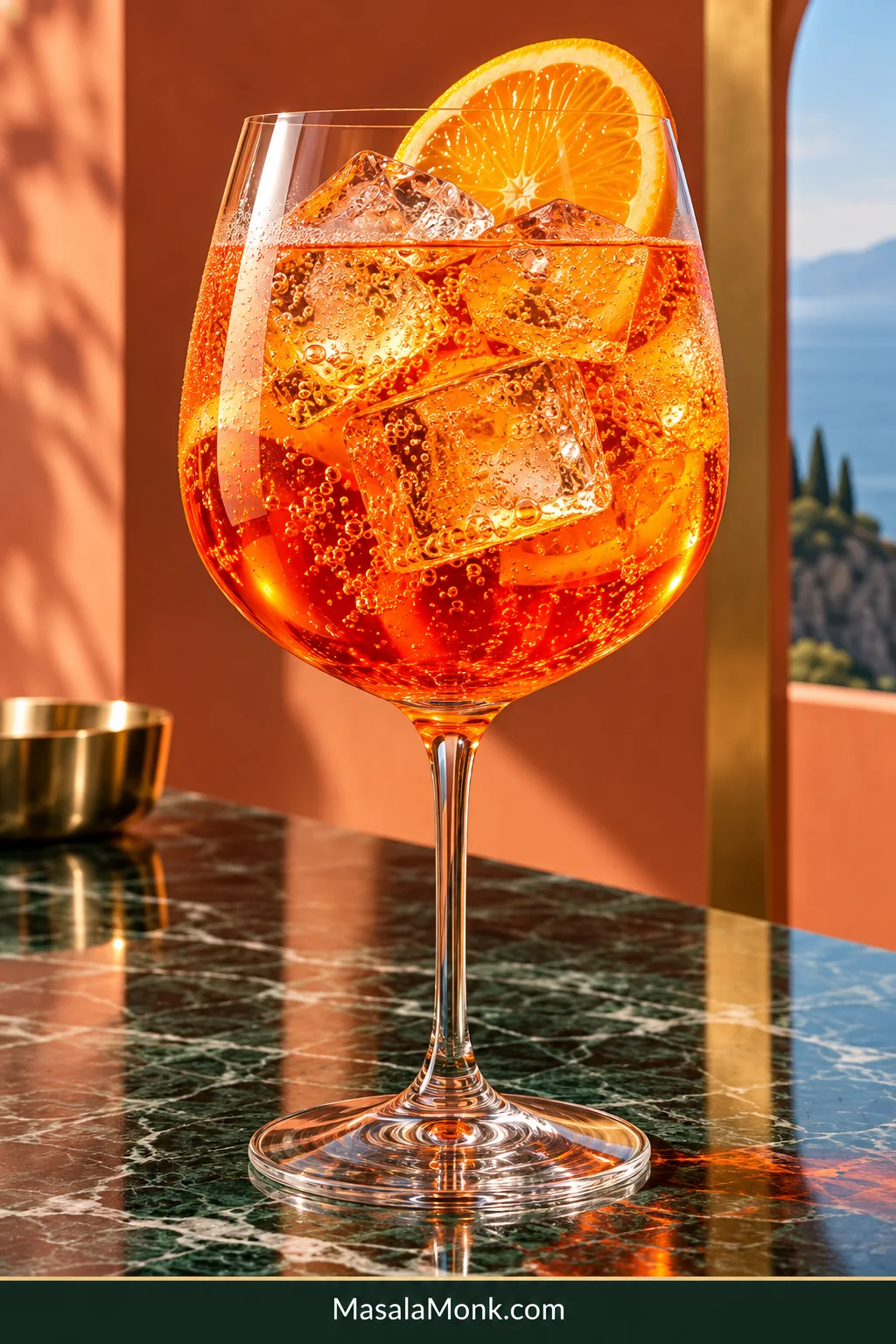
A good Aperol Spritz arrives cold and lively, with bittersweet orange, dry sparkling wine, fresh bubbles and the citrus aroma of an orange slice over plenty of ice. It is the kind of drink that makes sense before dinner: bright, lightly bitter and especially good with something salty nearby.
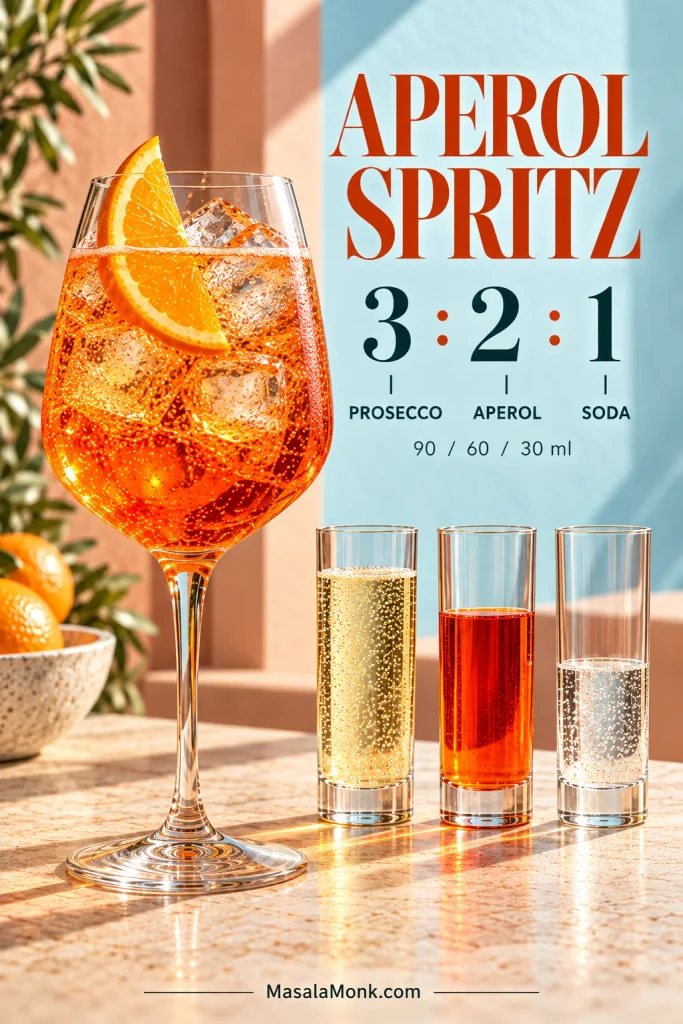
This Aperol Spritz recipe starts with the easy classic formula: 3 parts Prosecco, 2 parts Aperol and 1 part soda water. For one glass, that means 3 fl oz / 90 ml Prosecco, 2 fl oz / 60 ml Aperol and 1 fl oz / 30 ml soda.
Use well-chilled Brut Prosecco, fill the glass generously with ice and disturb the bubbles as little as possible.
Start 3-2-1. Keep it cold. Taste before you adjust.
Classic Aperol Spritz Recipe
The classic build combines dry sparkling wine with Aperol, the bittersweet Italian aperitivo behind the drink’s orange and herbal notes, plus a little soda for lift and fizz.
Makes 1 cocktail
Prep 3 minutes
Total 3 minutes
Ratio 3 : 2 : 1
Method Built directly in the glass
Glass Large wine glass
Equipment
Large wine or balloon glass · jigger or tablespoon measure · long spoon · small knife for the orange.
Aperol Spritz Ingredients
The classic Aperol Spritz ingredients are Prosecco, Aperol and soda water, plus ice and an orange slice.
3 fl oz / 90 ml Prosecco DOC Brut, well chilled
2 fl oz / 60 ml Aperol, preferably chilled
1 fl oz / 30 ml plain club soda or soda water, well chilled and freshly opened
Large, solid ice cubes, enough to fill the glass generously
1 orange slice
For the soda, use something plain, cold and strongly carbonated. Fresh bubbles matter far more than the brand on the bottle.
How to Make It
Fill the glass generously with large, solid ice cubes.
Pour in the Prosecco. Add 3 fl oz / 90 ml chilled Prosecco.
Add the Aperol. Slowly pour in 2 fl oz / 60 ml.
Add the soda. Pour in 1 fl oz / 30 ml chilled soda water.
Mix very gently. Give the drink one soft bottom-to-top lift with a long spoon, or one or two light turns.
Garnish and serve. Add the orange slice and serve immediately.
Quick Notes
Prefer a punchier Spritz? Reduce the soda to ½ fl oz / 15 ml or use a small splash.
No jigger? Use 6 tbsp Prosecco + 4 tbsp Aperol + 2 tbsp soda.
Measuring bubbly: pour Prosecco slowly into the jigger and read the liquid level beneath the foam.
Do not shake it. Once Prosecco and soda are involved, shaking costs you bubbles and creates unnecessary pressure.
Serve immediately. The fizz is part of what makes the drink feel crisp.
What you’re looking for: the first sip should feel cold and fizzy, then bittersweet and orange-led. You should still taste the Prosecco; the soda should open the drink rather than make it taste thin.
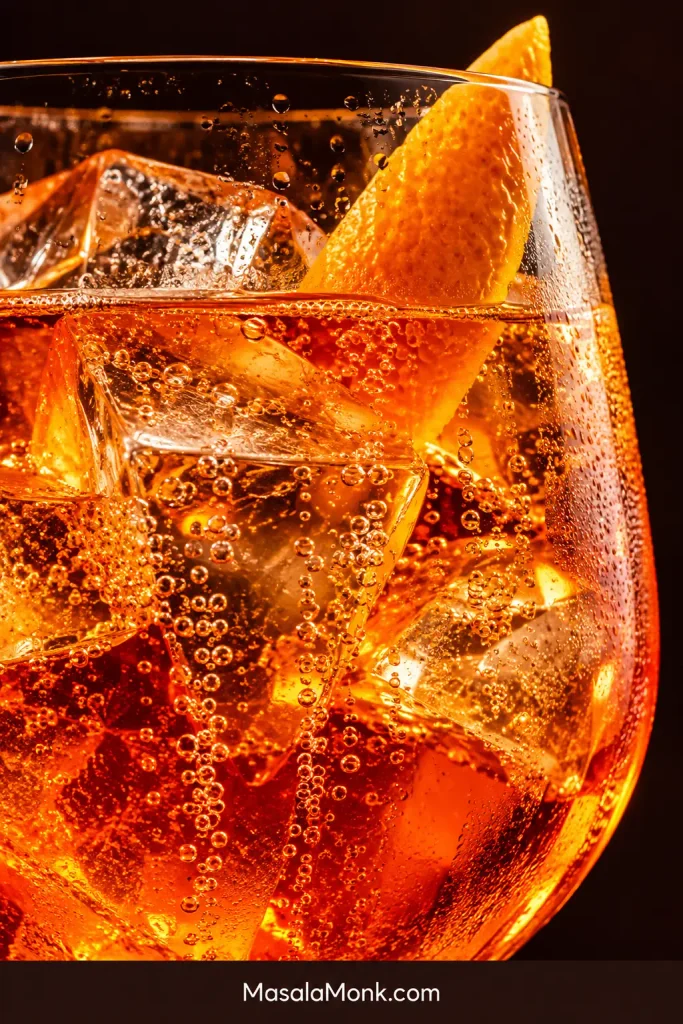
Fine bubble trails around the ice are a better sign of lively carbonation than a foamy surface. Meanwhile, sharp-edged cubes show that the ice is still holding up rather than quietly turning into meltwater.
The easiest Aperol Spritz ratio to remember is 3 parts Prosecco, 2 parts Aperol and 1 part soda. It gives you a dependable first glass and keeps the arithmetic simple.
The IBA’s current Spritz recipe lists 90 ml Prosecco, 60 ml Aperol and a splash of soda, so treat the soda as the flexible part of the formula.
Any consistent measure works for 3-2-1; the proportion matters more than whether you use a jigger, tablespoon or small cup.
You want…
Prosecco
Aperol
Soda
Classic first glass
90 ml / 3 fl oz
60 ml / 2 fl oz
30 ml / 1 fl oz
Punchier, less diluted
90 ml / 3 fl oz
60 ml / 2 fl oz
15 ml / ½ fl oz
Less bitter, more wine-forward
120 ml / 4 fl oz
45 ml / 1½ fl oz
15–30 ml / ½–1 fl oz
Italian bars vary too. One may use a generous splash of soda while another barely adds any, and the sparkling wine may be leaner or fruitier. The Spritz has more room to move than one fixed formula suggests.
Make one measured glass and taste it while it is still cold and bubbly. There is no prize for making your glass match somebody else’s exactly.
Best Prosecco for Aperol Spritz: Start With Brut
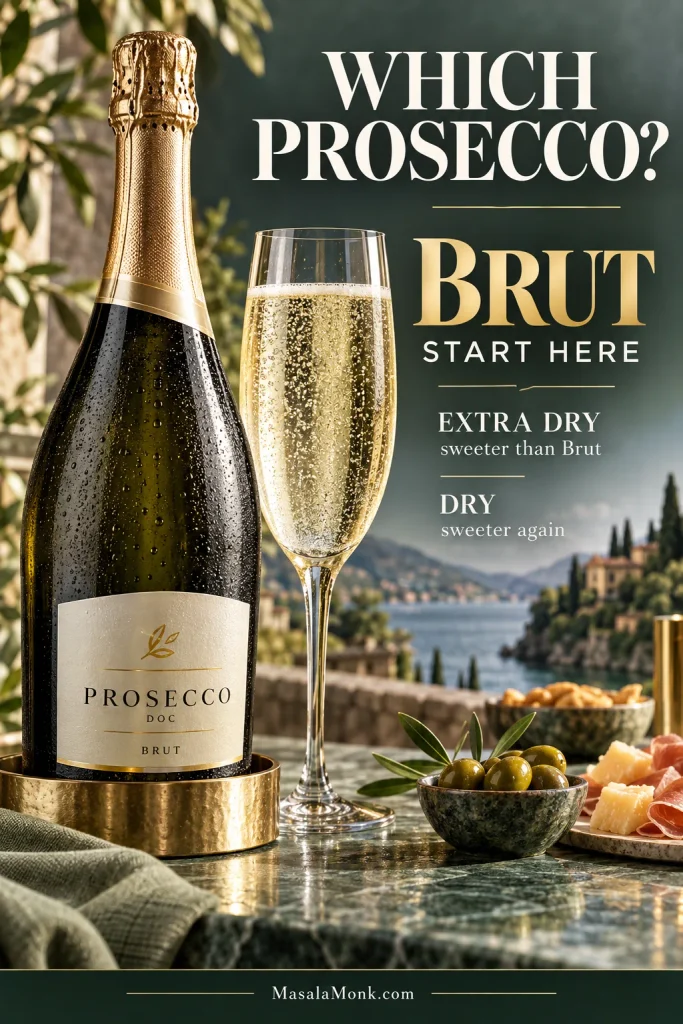
Use Prosecco DOC Brut for an Aperol Spritz. It is drier than Extra Dry and helps keep Aperol’s sweetness in check.
The labels are slightly counterintuitive. The Prosecco DOC Consortium classifies Extra Dry as sweeter than Brut, while a bottle labeled Dry is sweeter again.
Label
Residual sugar
In the Spritz
Brut
Under 12 g/L
Crisp; a reliable starting point.
Extra Dry
12–17 g/L
A little sweeter despite the name.
Dry
17–32 g/L
Sweeter again; the drink can feel heavier.
An everyday Prosecco DOC Brut is enough. Freshness and good bubbles matter more here than buying the most expensive bottle on the shelf.
Aim to have the Prosecco around 43–46°F / 6–8°C before you pour. Starting well chilled means the ice has less cooling work to do once the drink is in the glass.
On a Prosecco label, Brut tells you the sweetness style, while DOC identifies the denomination. When shopping for this Spritz, look for both rather than treating the terms as alternatives.
Keep the Glass Cold and Lively
For a cold, fizzy Aperol Spritz, chill all three liquids, fill the glass generously with ice and stir only once or twice. That is almost all the bar technique it needs.
Use more ice, not a few lonely cubes
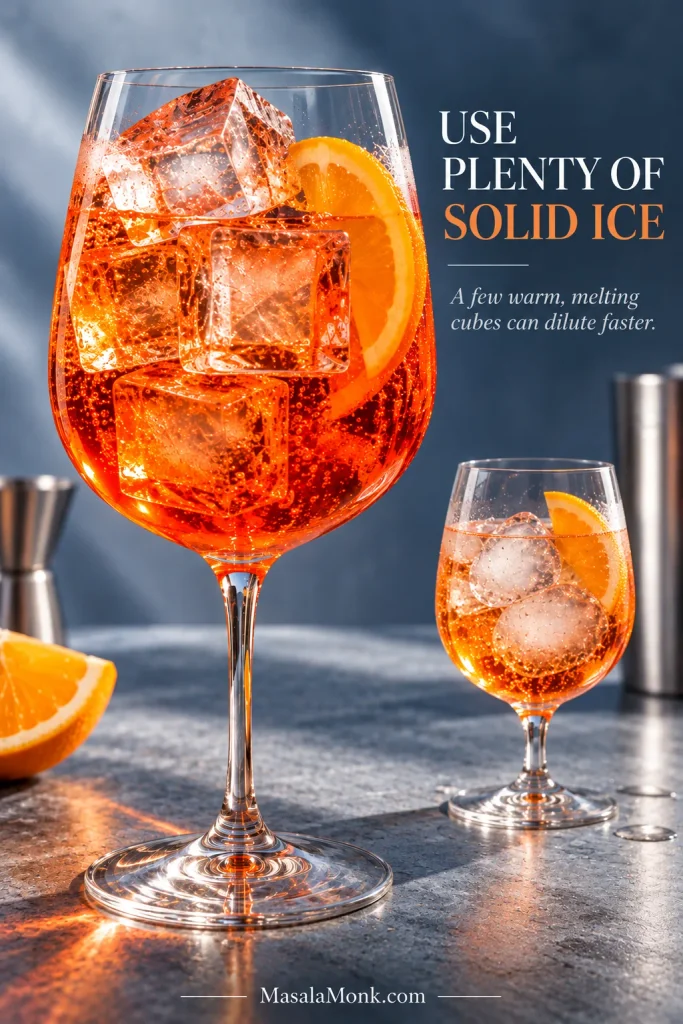
Fill the glass generously with solid ice. A few cubes dropped into warmer ingredients melt faster because they have to chill the whole drink. Use cubes that haven’t already begun melting in the ice bucket.
Look at the edges of the cubes, not just how many are in the glass. Solid ice stays angular, while wet, rounded edges show that melting has already started—and that water is already joining the drink.
Give the drink some room
A large stemmed wine or balloon glass gives the ice, liquid and orange room without crowding everything to the rim. A roomy rocks glass works too. You do not need branded Aperol glassware to make a good Spritz.
Mix as little as necessary
At home, Prosecco first, Aperol second and soda last works especially well. Pouring the Aperol into the Prosecco starts combining the two for you, so very little stirring is needed. One gentle lift with a spoon is usually enough.
If a denser orange layer settles low in the glass, one bottom-to-top lift is usually enough to even it out without beating out the bubbles.
Keep the Orange Above the Ice
Set the orange partly above the rim instead of burying it under the ice. Its peel releases citrus oils close to your nose as you drink, strengthening Aperol’s orange aroma.
Then taste it. If something still feels off, the first sip usually tells you where to look.
Fix the First Sip
Taste before you add anything else. Decide what feels off, then change one thing at a time.
The drink tastes…
Check first
Try this
Too sweet
Prosecco
Use Brut; if already dry, use slightly less Aperol next glass.
Too bitter
Aperol
Add more dry Prosecco or reduce Aperol next glass.
Thin or watery
Soda
Cut it to 15 ml / ½ fl oz or a splash.
Still watery
Ice melt
Start colder and use solid, unmelted ice.
Flat or lifeless
Carbonation
Open fresh Prosecco and soda; stir less.
Weak
Dilution or lost fizz
Check both before adding more Aperol.
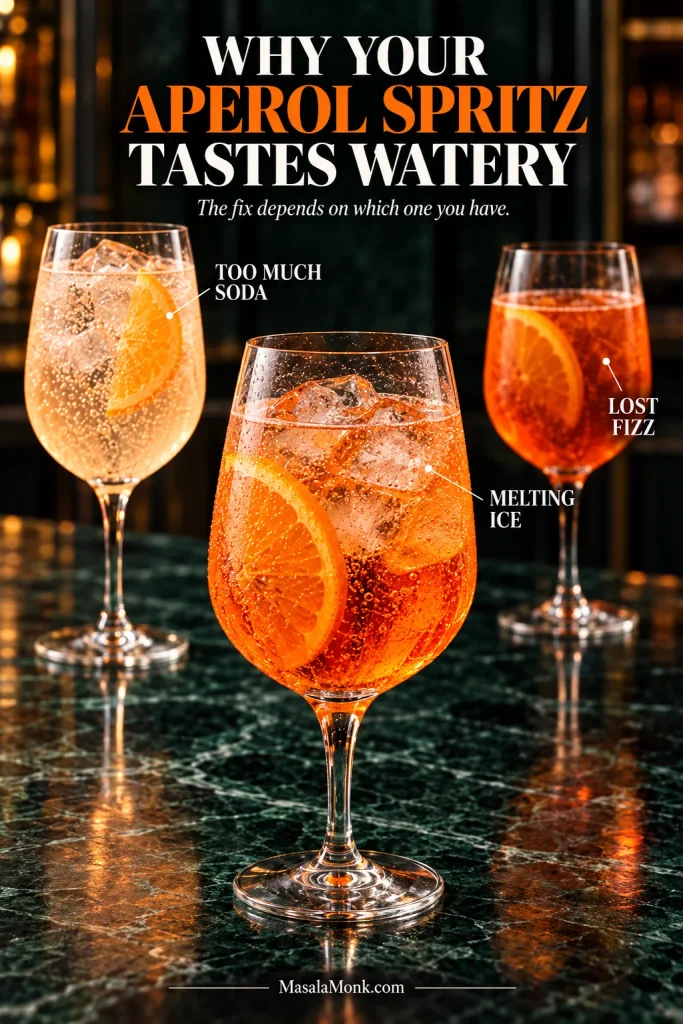
“Watery” can mean three different things
An Aperol Spritz usually tastes watery for one of three reasons: too much soda, too much melted ice or lost carbonation.
Pale but still bubbly can suggest excess soda, while wet, rounded ice points to meltwater. For lost carbonation, watch the surface: few rising bubbles matter more than the drink’s color.
Too much soda: if 30 ml / 1 fl oz washes the drink out, try 15 ml / ½ fl oz next time.
Too much meltwater: usually the ingredients were warm, the ice had already begun melting or there wasn’t enough of it.
Lost carbonation: a flat drink feels softer and weaker even when the proportions haven’t changed.
Why doesn’t mine taste like the Spritz I had in Italy?
The glass you remember may genuinely have been different. Bars vary in Prosecco, soda, Aperol quantity, glass size, ice and temperature. And if you simply ordered a Spritz rather than specifically an Aperol Spritz, it may have used another Italian aperitivo such as Select or Campari.
If the firmer bitterness of Campari is what you remember or prefer, you may simply prefer a Campari-based drink; a classic Negroni takes that bitterness in a completely different direction.
Sometimes the drink is not wrong; you simply want a different sparkling wine, mixer or garnish.
Prosecco, Soda and Orange Substitutions
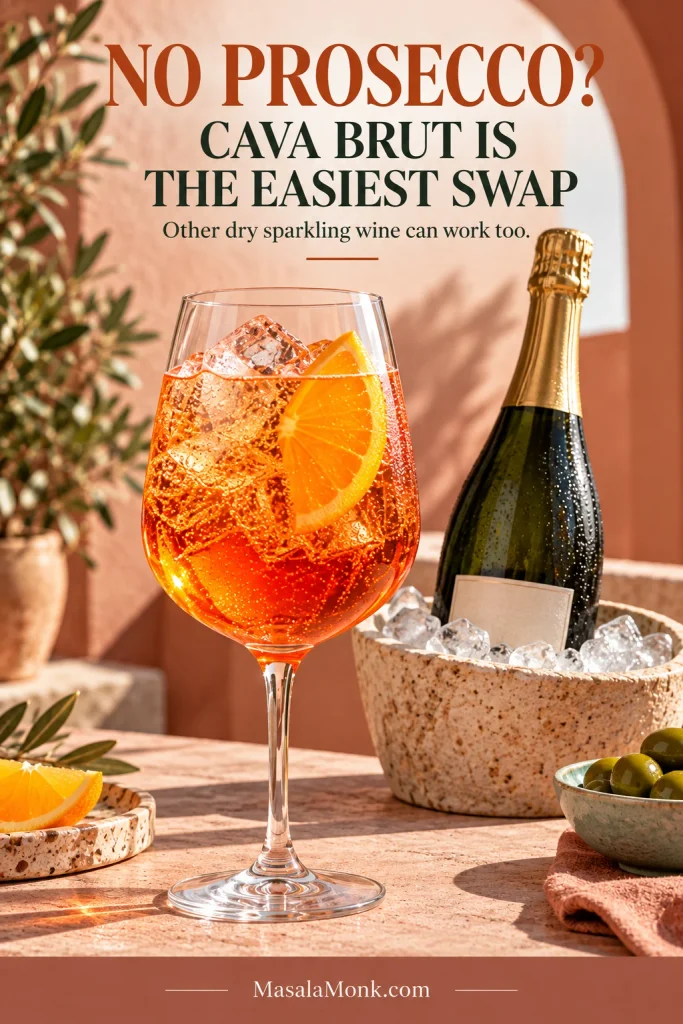
Cava Brut is the easiest substitute for Prosecco: dry, sparkling and often a little more savory. Brut Champagne works beautifully too, although it is usually an expensive bottle to mix with Aperol and soda; other dry sparkling wines can work as well. The drink will change with the wine you choose—sweeter bottles make it softer, while leaner ones keep it crisper.
When substituting Cava Brut for Prosecco, keep the Aperol and soda unchanged for the first glass. Holding the other variables steady makes it easier to tell what the new sparkling wine changed.
Plain seltzer or sparkling water can stand in for club soda without changing the basic structure of the drink; choose something neutral with plenty of fizz. Tonic water is different—it brings its own sweetness and quinine bitterness, so the result will no longer taste quite like the classic drink.
An orange peel works too when you want the fragrant citrus oils but not the fruit itself. Want a different direction altogether? A Limoncello Spritz keeps the Prosecco-and-soda framework but trades bittersweet orange for lemon.
Aperol Spritz for a Crowd: Build It Fresh
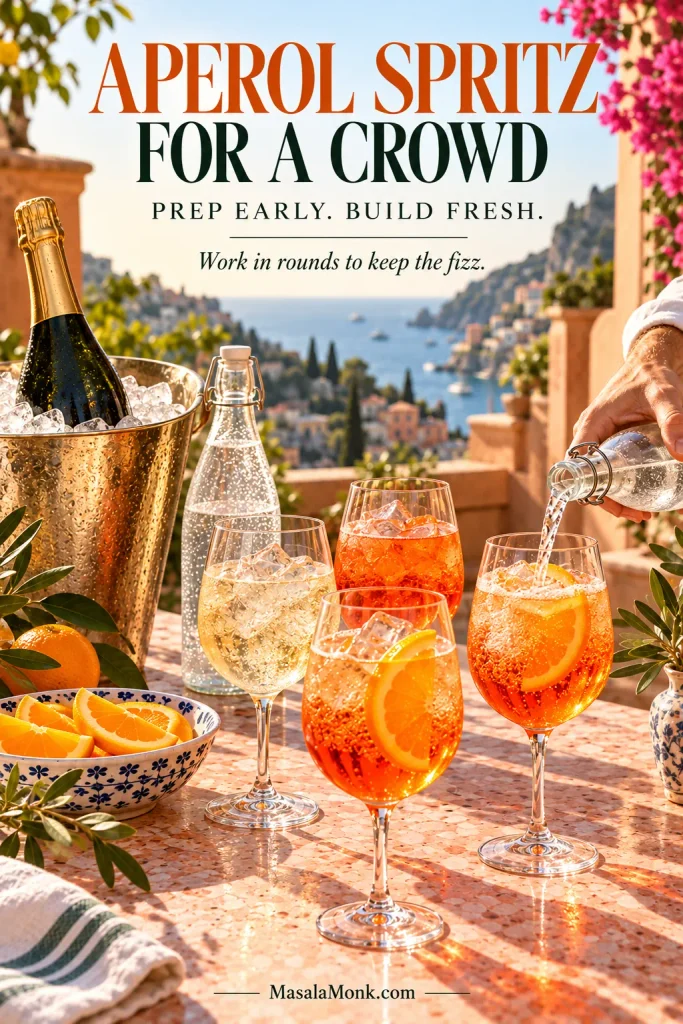
For a party, prep early and leave the bubbles until the last minute. Keep the Prosecco and soda sealed until you are ready to serve.
The quantities scale easily; carbonation doesn’t. Build individual glasses close to serving time.
Drinks
Prosecco
Aperol
Soda at 3-2-1
1
90 ml / 3 fl oz
60 ml / 2 fl oz
30 ml / 1 fl oz
4
360 ml / 12 fl oz
240 ml / 8 fl oz
120 ml / 4 fl oz
8
720 ml / 24 fl oz
480 ml / 16 fl oz
240 ml / 8 fl oz
US and metric measures are rounded independently for easy pouring, so scaled totals will not convert exactly between systems.
Prefer the splash-style build? Halve the soda column. Eight drinks need about 120 ml / 4 fl oz soda rather than 240 ml / 8 fl oz.
One standard 750 ml bottle of Prosecco gives you eight full 90 ml pours, with about 30 ml left.
Before people arrive
Chill the Prosecco, Aperol and soda thoroughly.
Slice the oranges.
Have enough solid ice ready.
Pre-measure the Aperol if you want faster rounds.
When it is time to serve
Line up the glasses and make a round at once: ice, Prosecco, Aperol, soda, one gentle mix, orange. Keep the ice in individual glasses; don’t add it to a waiting pitcher. This is faster, and nobody gets the Spritz that has been sitting around losing its fizz.
For a smoother party round, move across the row one ingredient at a time: ice in every glass, then Prosecco, Aperol and soda. That rhythm makes a missed pour or accidental double easier to spot.
For a larger gathering, work in smaller rounds and leave the next bottle cold and sealed until you need it.
Serve It Like an Aperitivo
Aperitivo doesn’t need much ceremony. A cold glass, something salty and a little time before dinner are enough. The Spritz fits that moment well because it refreshes without asking for much attention.
A good glass brings sweet orange, citrus-peel bitterness, light herbal notes, dry sparkling wine and a crisp fizzy finish. People perceive Aperol’s bitterness differently, so your ideal pour may not be identical to the person sitting beside you.
With Aperol and Prosecco both around 11% ABV, the classic 3-2-1 build works out to roughly 9% ABV before further dilution from the ice. A stronger Prosecco or a different ratio will change it.
What to Eat With an Aperol Spritz
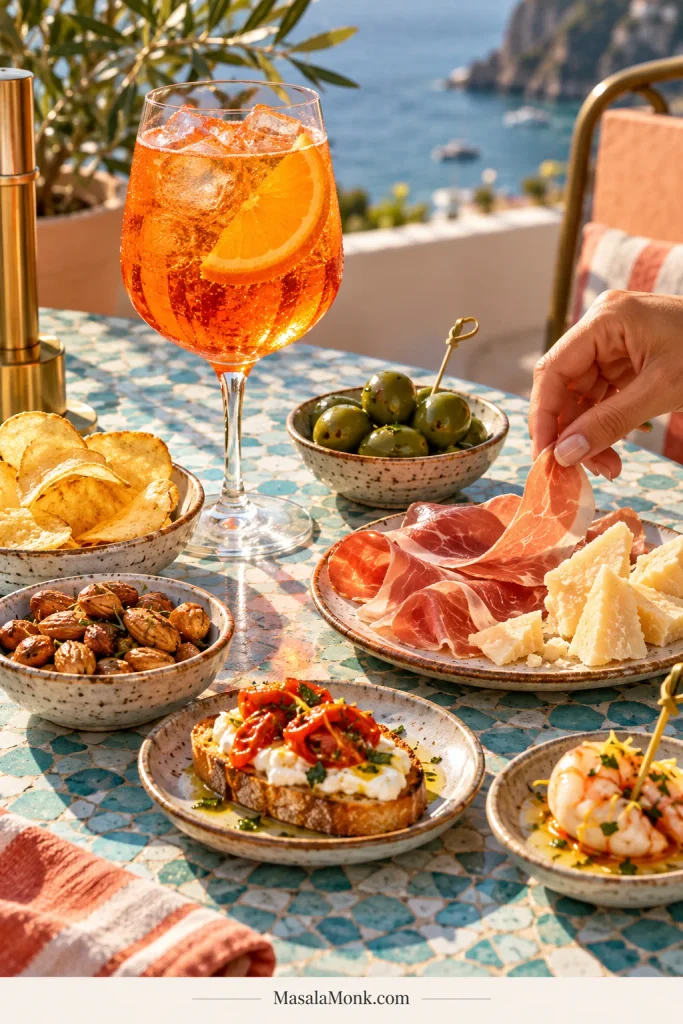
Salty, savory food is where this drink feels most at home: Parmesan, prosciutto, potato chips, salted nuts, crostini or light seafood. Salt and richness soften Aperol’s bitter edge, while the bubbles keep richer bites feeling fresh.
To lean a little more Venetian, think cicchetti: small, salty bites such as crostini, seafood, meatballs or egg-based snacks served before dinner. The same easy grazing idea is why a simple charcuterie board works so well beside a round of Spritzes.
The most useful Aperol Spritz food pairings are easy to eat in one or two bites. That keeps the food in its pre-dinner role instead of quietly turning aperitivo into a full meal.
A green olive is another savory garnish worth trying. Alongside the orange, its salty bite plays especially well against Aperol’s bittersweet citrus.
Once the glass is made, put it on the table while it is still at its best and let the rest of the moment be unhurried.
Aperitivo works best when the drink stays part of the moment rather than becoming the whole event: one cold Spritz, a few small bites and an unhurried pause before dinner.
The good version announces itself before the first sip: the glass is cold, the orange smells fresh and bubbles are still climbing around the ice. Once it tastes right to you, write it down—that is your Spritz.
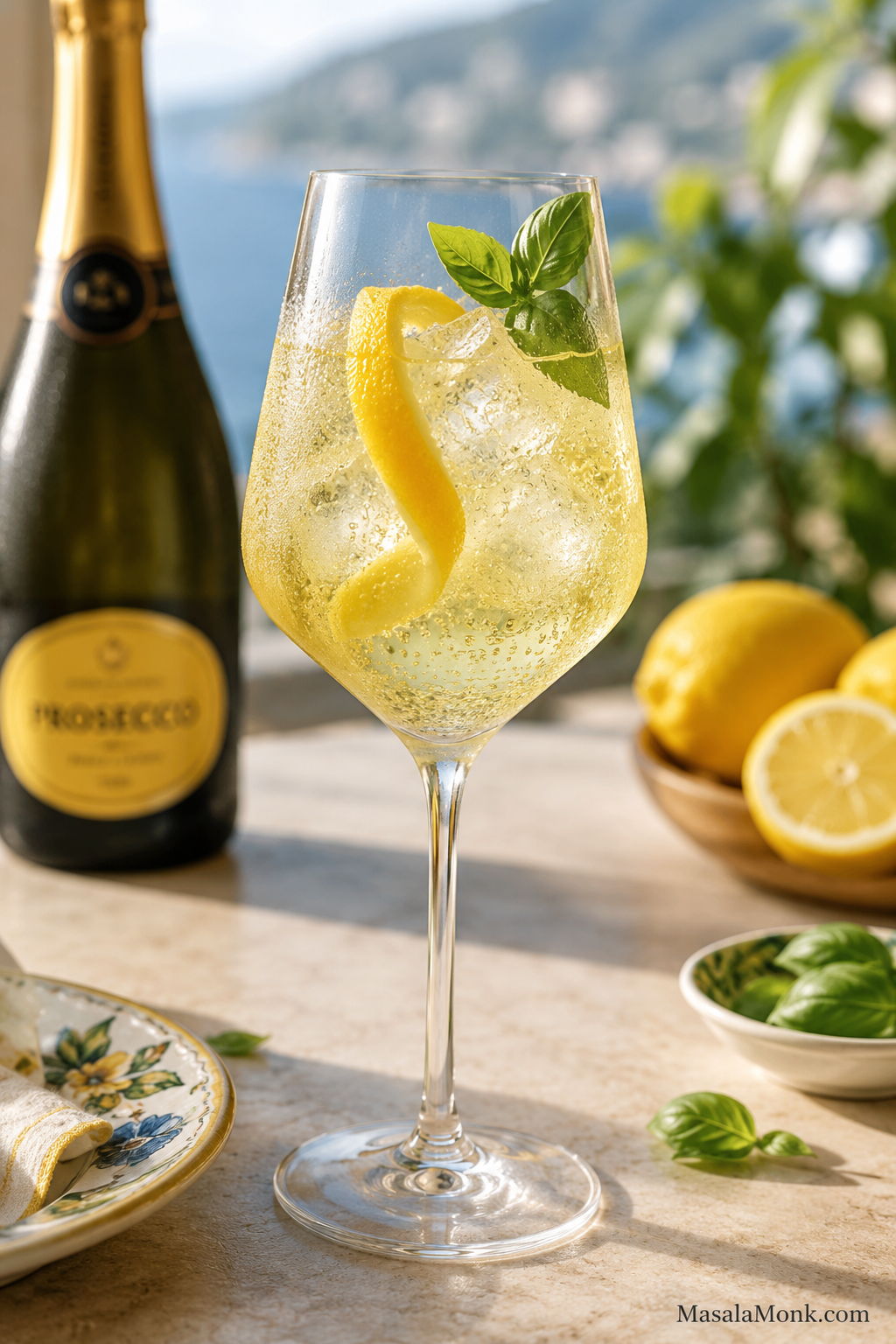
This limoncello spritz recipe makes a cold, bubbly Italian lemon cocktail with limoncello, prosecco, soda water, ice, and lemon. It is the kind of drink that feels right in a sunlit glass: bright lemon, lively bubbles, plenty of ice, and a fresh citrus aroma before the first sip.
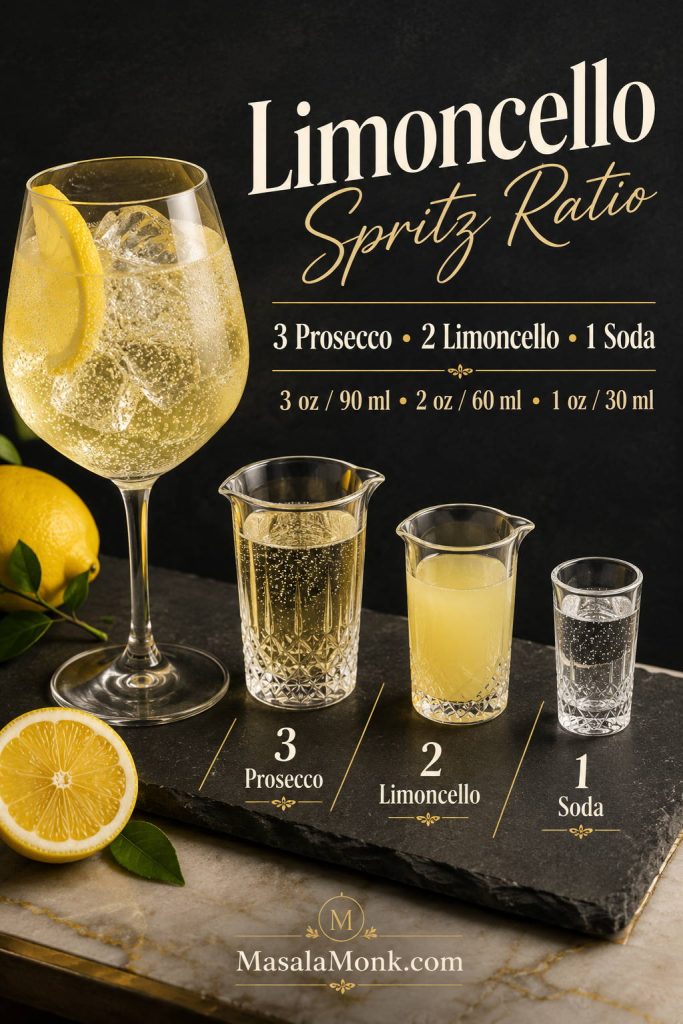
The best balanced starting ratio is 2 oz / 60 ml limoncello, 3 oz / 90 ml prosecco, and 1 oz / 30 ml soda water. That gives you a spritz that tastes sweet-tart and lemony without becoming heavy, flat, or syrupy.
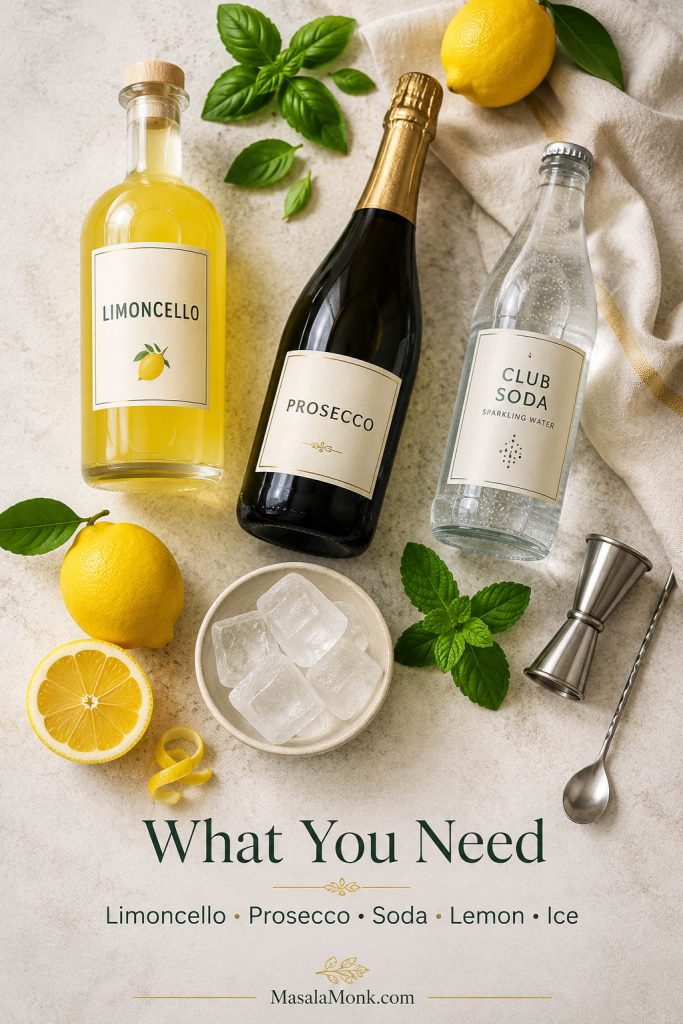
At its simplest, it is a 3-ingredient cocktail: limoncello, prosecco, and soda water. Ice and lemon make it colder and brighter, but the drink itself stays beautifully simple.
The trick is keeping the glass lemony without letting it turn sticky. Because limoncello is already sweet and prosecco can range from crisp to slightly sweet, soda water decides how light the drink feels. Start with the classic pour, then adjust it drier, stronger, lighter, less sweet, or pitcher-friendly depending on your bottle and your mood.
Already know the basics? Go straight to the ratio guide if you want it drier, lighter, or more lemon-forward, or jump to the pitcher version if you are making it for guests.
It is especially good before dinner, when you want something lighter than a full cocktail but more celebratory than plain prosecco.
Best first pour: 2 oz / 60 ml limoncello, 3 oz / 90 ml prosecco, 1 oz / 30 ml soda water
Taste: lemony, lightly sweet, crisp, bubbly, and not syrupy
No jigger? Use 4 tbsp limoncello, 6 tbsp prosecco, and 2 tbsp soda water
Best bubbles: chilled brut prosecco
Best mixer: club soda or plain sparkling water
Best glass: large wine glass, spritz glass, or tumbler filled with ice
Ready in: 5 minutes
Biggest mistakes: shaking it, using warm prosecco, or batching the bubbles too early
The 3-2-1 limoncello spritz ratio gives you the best first pour: prosecco for lift, limoncello for lemon, and soda water for a lighter finish.
The classic limoncello spritz formula is 3 parts prosecco, 2 parts limoncello, and 1 part soda water. In one glass, that works out to:
Measure style
Limoncello
Prosecco
Soda water
Ounces
2 oz
3 oz
1 oz
Milliliters
60 ml
90 ml
30 ml
Tablespoons
4 tbsp
6 tbsp
2 tbsp
Parts
2 parts
3 parts
1 part
The 3-2-1 ratio works because it gives each ingredient enough room: limoncello for lemon, prosecco for lift, and soda for a lighter finish.
Very sweet limoncello usually needs the drier version in the ratio guide. For a bolder lemon drink, increase the limoncello slightly and keep the soda low.
The finished glass should feel sunny and cold, with lemon aroma first, bubbles second, and sweetness in the background.
If your bottle tastes especially sweet, use the ratio guide before adding more limoncello.
Limoncello Spritz Recipe
Classic 3-2-1 Limoncello Spritz
This limoncello spritz is a 5-minute Italian lemon cocktail built over ice with limoncello, prosecco, soda water, and lemon. The 3-2-1 formula keeps it bubbly, sweet-tart, and refreshing without turning heavy.
Yield1 drink
Prep time5 minutes
Cook time0 minutes
Total time5 minutes
Equipment
Large wine glass, spritz glass or tumbler
Jigger or small measuring cup
Bar spoon or long spoon
Knife or peeler for garnish
Ingredients
2 oz / 60 ml / 4 tbsp limoncello, chilled
3 oz / 90 ml / 6 tbsp brut prosecco, chilled
1 oz / 30 ml / 2 tbsp club soda or sparkling water, chilled
Ice, enough to fill the glass
Lemon peel or lemon wheel
Mint or basil, optional
Instructions
Fill a large wine glass with ice.
Pour in the chilled limoncello.
Add the chilled prosecco slowly.
Top with club soda or sparkling water.
Stir gently once or twice.
Garnish with lemon and mint or basil.
Serve immediately.
Notes
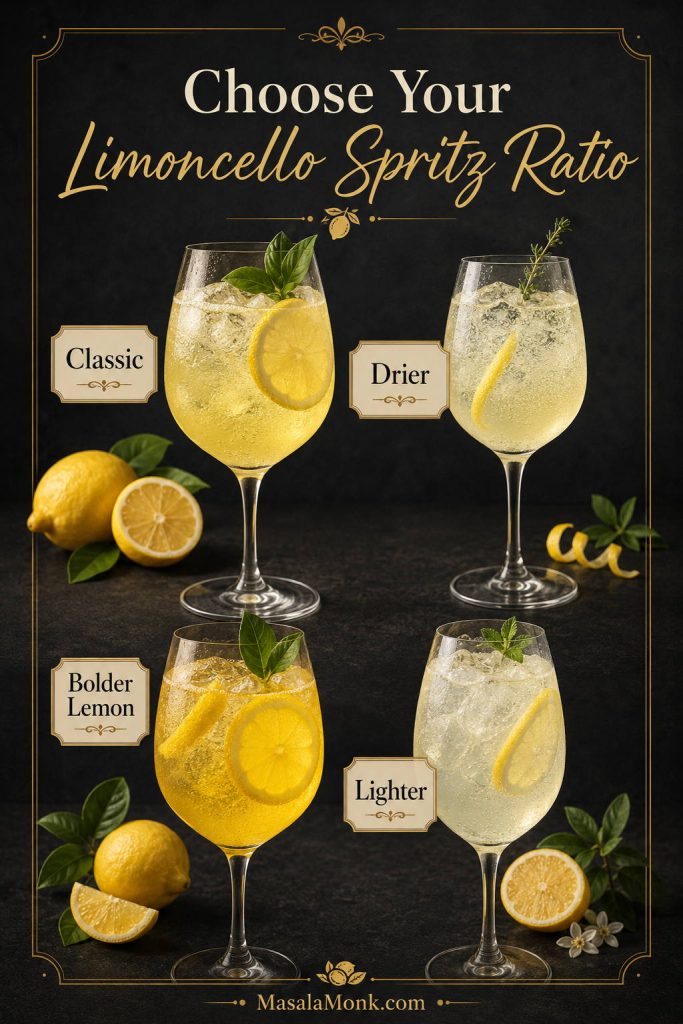
Drier spritz: use 1.5 oz / 45 ml limoncello and 4 oz / 120 ml prosecco.
Bolder lemon flavor: use 2.5 oz / 75 ml limoncello and reduce the soda slightly.
Lighter drink: add an extra splash of soda water and use a little less limoncello.
Better aroma: twist lemon peel over the glass before adding it.
Pitcher timing: combine limoncello and garnish ahead, but add prosecco and soda right before serving.
Estimated calories: usually about 180–270 per drink, depending on limoncello brand, prosecco sweetness, and pour size. Treat this as an estimate rather than a lab-tested nutrition value.
What Is a Limoncello Spritz?
A limoncello spritz is a bubbly Italian-style cocktail made with limoncello, prosecco, soda water, ice, and lemon. It is usually built directly in the glass, so there is no shaker, no strainer, and no complicated technique.
Think of it as a lighter, bubblier way to enjoy limoncello. The liqueur brings sweet lemon flavor, prosecco adds bubbles and a dry wine backbone, and soda water lightens everything so the drink does not feel syrupy. It is the spritz you make when you want the Aperol spritz feeling without the bitter-orange edge.
The prosecco matters. A classic limoncello spritz uses both prosecco and soda water. If you skip the prosecco and mix limoncello only with sparkling water or club soda, the drink is better described as a limoncello spritzer. It is still delicious, but it is lighter, less wine-like, and less of a traditional spritz.
The Prosecco DOC limoncello spritz recipe also builds the drink directly in the glass, uses a splash of soda, and emphasizes lemon zest for aroma. That is a good reminder that this drink should smell bright before it tastes sweet.
Why This Limoncello Spritz Recipe Works
A good limoncello spritz follows the classic spritz idea — liqueur, sparkling wine, and soda — but the balance has to account for limoncello’s sweetness. The drink should taste clearly lemony while still feeling cold, crisp, and easy to sip.
The 3-2-1 formula is easy to remember. Three parts prosecco, two parts limoncello, and one part soda gives you a reliable first pour.
Brut prosecco keeps the drink from turning sticky. Limoncello brings sugar as well as lemon flavor, so the bubbles need some dryness.
Soda makes the finish lighter. It lengthens the drink without adding more sweetness or alcohol.
Cold ingredients protect the texture. Warm prosecco melts ice quickly and makes the glass taste flatter sooner.
Lemon peel adds aroma without more sugar. It makes the spritz smell brighter before you add another splash of liqueur.
Limoncello Spritz Ingredients
A limoncello spritz only needs three main ingredients — limoncello, prosecco, and soda water — but every detail shows up in the glass. Cold bubbles, plenty of ice, and a good lemon garnish are what make the drink feel crisp instead of sticky or flat.
Since this cocktail has only a few ingredients, chilled prosecco, cold soda, fresh lemon, and plenty of ice matter more than extra garnish.
Limoncello
Limoncello is the sweet lemon liqueur that gives the spritz its color, aroma, and citrus flavor. Store-bought and homemade limoncello both work, but they do not all taste the same. Some bottles are syrupy and very sweet; others are sharper, stronger, or more lemon-zest-forward.
Taste a small sip before mixing. If it tastes like lemon candy, use the drier ratio with less limoncello and more prosecco. If it tastes bright but not overly sweet, the classic 2 oz / 60 ml pour will work well.
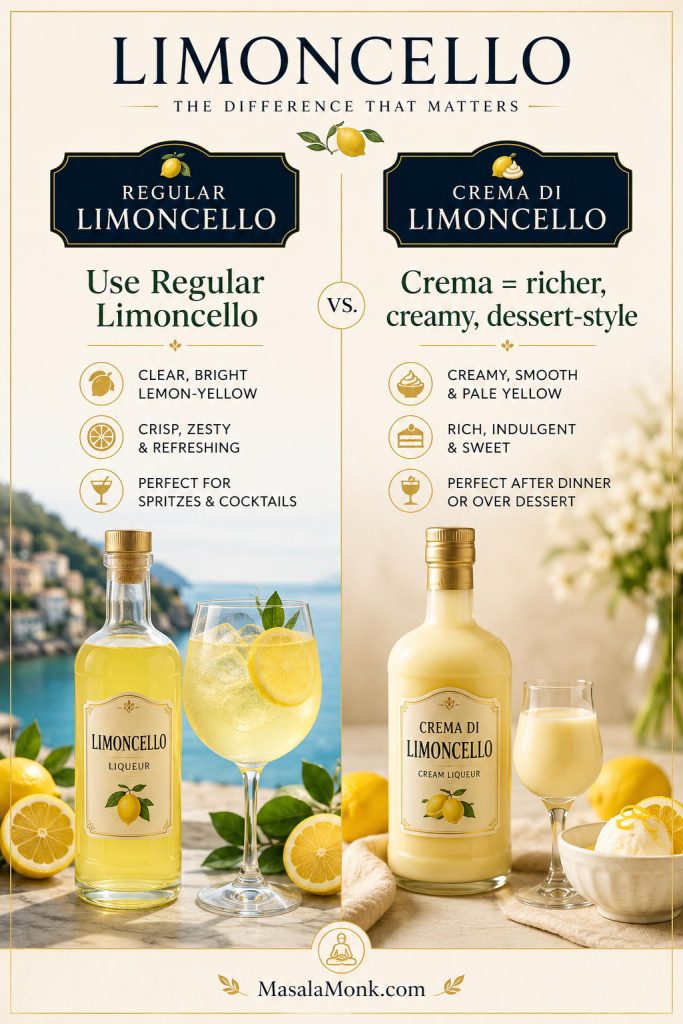
Use regular clear limoncello for this recipe, not crema di limoncello. Creamy limoncello is richer, softer, and dairy-based, so it does not give the same crisp spritz texture with prosecco and soda. Save it for dessert-style drinks or serve it chilled on its own.
Choose regular limoncello for a crisp spritz; crema di limoncello is richer, creamier, and better suited to dessert-style drinks.
If your limoncello tastes more like lemon candy than lemon peel, the fixes section shows how to brighten the drink without making it sweeter.
Prosecco
Brut prosecco is the easiest first bottle because it keeps the lemon liqueur from tasting sticky. Chill it well before mixing; warm bubbles make the drink feel dull faster. Cava, champagne, or another dry sparkling wine can work, but prosecco gives the soft, fruity, easy spritz style most people expect.
Still, very sweet sparkling wine is not the best starting point. If that is the bottle you have, reduce the limoncello to 1.5 oz / 45 ml and add a little extra soda water.
Club Soda or Sparkling Water
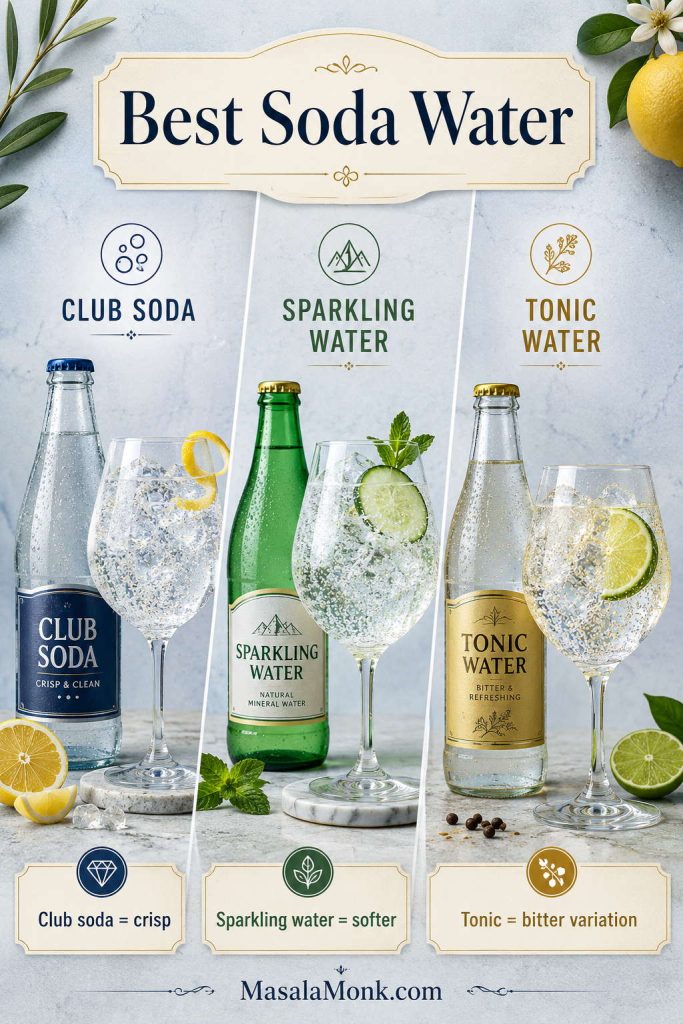
Club soda gives the cleanest classic finish. Plain sparkling water also works and tastes slightly softer. Seltzer is fine too, especially plain or lemon. Tonic water is more bitter and sweet, so it changes the drink instead of simply lengthening it. Lemon soda can be fun, but it makes the spritz much sweeter and more dessert-like.
Ice
A generous glass of ice is part of the drink, not just a way to chill it. Full ice keeps the spritz colder, slows dilution, and helps the bubbles stay lively longer. Large cubes are better than crushed ice because they melt more slowly.
Lemon and Herbs
A lemon wheel looks pretty, but a lemon peel gives stronger aroma because the citrus oils live in the peel. Twist the peel over the glass, rub it lightly around the rim, then drop it into the drink. Mint is cooling, basil feels more Italian and summery, thyme is elegant, and rosemary gives a stronger herbal aroma.
How to Make a Limoncello Spritz
Once your ingredients are cold, this limoncello spritz recipe is built directly in the glass. Adding limoncello first lets it chill around the ice before the bubbles go in. Some spritz recipes add prosecco first; either order works as long as the drink is cold, bubbly, and stirred gently.
Think cold glass first, bubbles second, garnish last. The finished drink should still sound lively when you lift it, with lemon aroma coming from the peel before the first sip.
Step-by-Step Glass Build
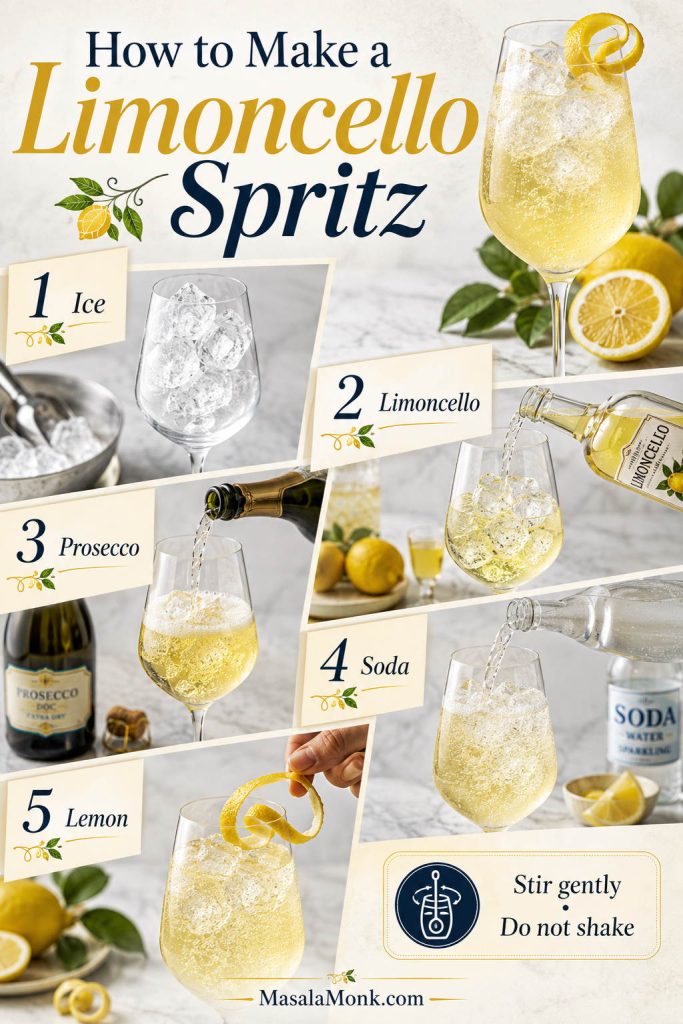
Build the drink in the glass, not a shaker; once the prosecco and soda go in, a gentle stir keeps the limoncello spritz lively.
Fill the glass with ice. Use a large wine glass, spritz glass, or tumbler and fill it generously. A full glass of ice keeps the drink colder and slows dilution.
Add the limoncello first. Pour in 2 oz / 60 ml chilled limoncello so it starts cooling around the ice.
Add the prosecco slowly. Pour in 3 oz / 90 ml chilled brut prosecco. Pour gently so the bubbles stay lively.
Top with soda water. Add 1 oz / 30 ml club soda or sparkling water for lift and freshness.
Stir only once or twice. Use a bar spoon or long spoon. You want the drink combined, not flattened.
Finish with lemon. Twist lemon peel over the glass for aroma, or add a lemon wheel for the easiest garnish. Add mint or basil if using.
Serve immediately. This spritz tastes best while the prosecco and soda are still cold and fizzy.
Take one small sip before serving. A little more soda makes it lighter, a little more prosecco makes it drier, and lemon peel adds brightness without more sugar.
Stir Gently and Skip the Shaker
Do not shake a limoncello spritz. Prosecco and soda are carbonated, so shaking will flatten the drink and make a mess. Build it over ice and stir gently.
If the first sip tastes flat, watery, or too sweet, check the troubleshooting guide before rebuilding the drink.
Limoncello Spritz Ratio Guide
If this is your first limoncello spritz, make the balanced classic. After that, adjust based on your bottle of limoncello and your taste. A syrupy limoncello needs more prosecco or soda. A sharper homemade limoncello may need the full 2 oz pour. Meanwhile, a very hot day may call for a lighter spritz with more soda.
Choose the version based on the moment, not just the bottle. Lighter works best for hot afternoons, drier works best with sweeter limoncello, and the balanced classic is the safest first round for guests. More prosecco makes the drink drier and bubblier; more limoncello makes it sweeter and more lemon-forward; more soda makes it lighter.
Choose the Version That Fits the Moment
The guide below turns the ratio into practical choices: balanced for a first round, drier for sweet limoncello, bolder for more lemon flavor, and lighter for hot weather.
Once the classic ratio makes sense, use the drier, bolder, or lighter version to match your limoncello, the weather, and the moment.
Version
Limoncello
Prosecco
Soda
Best for
Balanced classic
2 oz / 60 ml
3 oz / 90 ml
1 oz / 30 ml
Best first version
Drier / less sweet
1.5 oz / 45 ml
4 oz / 120 ml
1 oz / 30 ml
Very sweet limoncello
Bolder lemon
2.5 oz / 75 ml
3 oz / 90 ml
0.5–1 oz / 15–30 ml
More lemon liqueur flavor
Lighter spritz
1.5 oz / 45 ml
3 oz / 90 ml
2 oz / 60 ml
Hot weather or a lighter drink
Smaller aperitivo style
40 ml
60 ml
Splash
A smaller pre-dinner drink
Pitcher for 8
16 oz / 480 ml
24–25 oz / 720–750 ml
8 oz / 240 ml
Crowd serving
How to Adjust After the First Glass
For most people, the balanced classic is the best place to start. After one glass, you will know whether you want it drier, sweeter, lighter, or more lemon-forward.
Once the basic ratio makes sense, the next biggest choice is the bottle of bubbles. Prosecco does more than add fizz; it decides whether the drink tastes crisp, soft, or too sweet.
Best Prosecco for a Limoncello Spritz
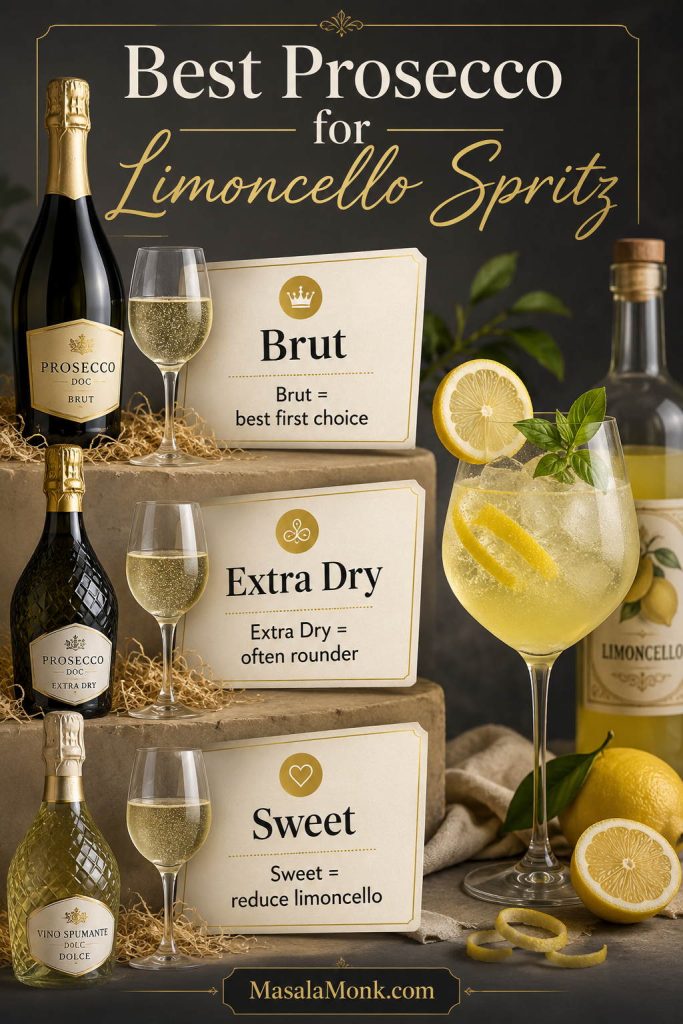
Use brut prosecco for the first glass, especially if your limoncello is sweet. Extra dry can work, but it often tastes rounder. Avoid Moscato or very sweet sparkling wine unless you intentionally want a dessert-style spritz.
Brut prosecco is the safest first bottle because limoncello already brings sweetness, while extra dry prosecco can taste rounder than the name suggests.
The label can be confusing: extra dry prosecco is usually not drier than brut. When you are choosing a bottle, the Prosecco DOC types guide is helpful for decoding labels like Brut, Extra Dry, Dry, and Demi-sec.
Sparkling wine
Verdict
Brut prosecco
Best first choice for balance.
Extra dry prosecco
Works, but may taste sweeter than expected.
Cava
A good drier substitute if you do not have prosecco.
Champagne
Works, but tastes sharper and costs more.
Sweet sparkling wine
Usually too sweet unless you reduce the limoncello.
Non-alcoholic sparkling wine
Works for a lower-alcohol variation, but regular limoncello still contains alcohol.
After prosecco, the final splash matters too. The soda is small, but it changes the finish of the whole glass.
Best Soda Water for a Limoncello Spritz
The bubbly mixer changes the drink more than people expect. Club soda and sparkling water are the safest choices. However, tonic water, lemon soda, and flavored mixers move the drink away from the classic version.
Club soda gives the crispest finish, sparkling water tastes softer, and tonic works only when you want a more bitter variation.
If you use only limoncello and sparkling water, the drink becomes more of a limoncello spritzer. It is lighter and lower in alcohol, but it will not have the wine-like body or soft fruitiness that prosecco brings to a classic spritz.
Mixer
Best use
Club soda
Cleanest classic finish; crisp and bubbly.
Sparkling water
Softer than club soda and still very good.
Seltzer
Fine, especially plain or lemon.
Tonic water
More bitter and sweet; not the best first version.
Lemon soda
Sweeter and more dessert-like.
Limoncello spritzer
Limoncello with sparkling water or club soda, usually without prosecco.
For the cleanest limoncello spritz, use plain club soda or plain sparkling water. If you want a sweeter party drink, lemon soda can work, but reduce the limoncello slightly so the glass does not become too sugary.
How to Fix a Limoncello Spritz
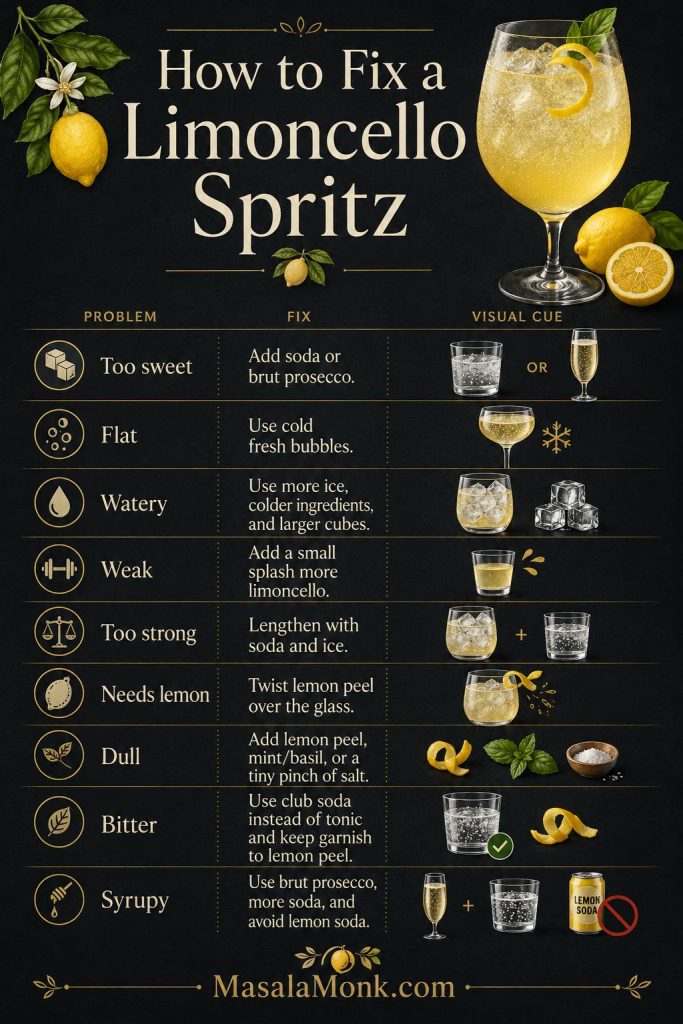
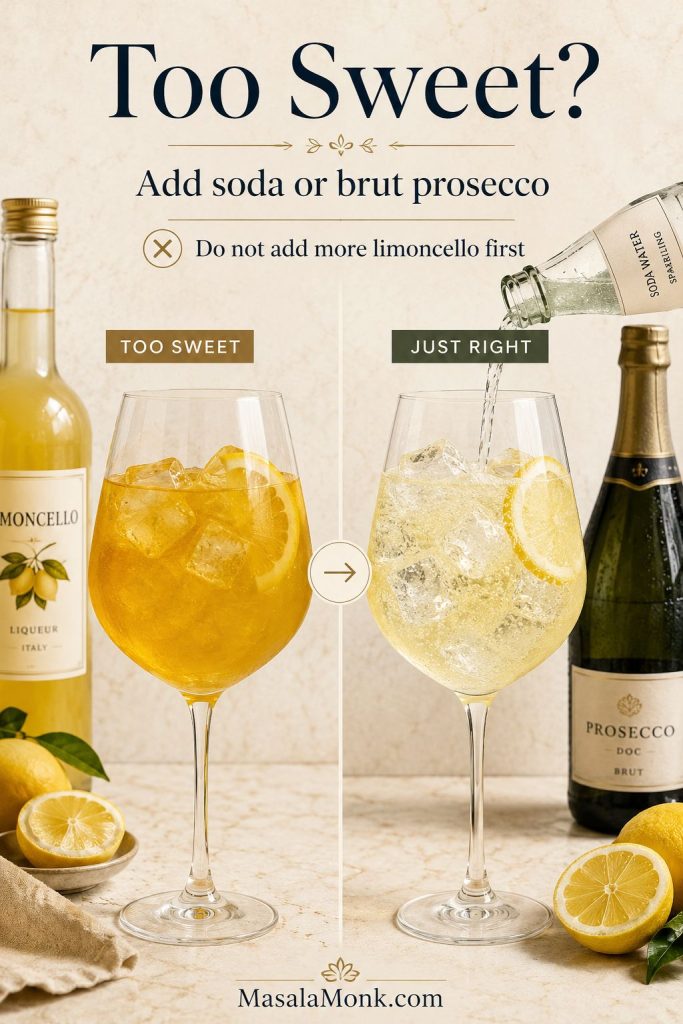
The first sip should taste cold, lemony, and lively. If it tastes syrupy, flat, watery, or too strong, the drink usually does not need a full redo. Instead, it needs one small adjustment.
Most problems come from one of three things: the limoncello is sweeter than expected, the bubbly ingredients are not cold enough, or the drink has been stirred or left sitting too long. Before adding more alcohol, fix the balance first. Often, the answer is more brut prosecco, more soda, colder ingredients, or lemon peel aroma — not another splash of limoncello.
Before adding more liqueur, fix a limoncello spritz with colder bubbles, more soda, lemon peel, better ice, or brut prosecco.
Quick Fixes for Common Limoncello Spritz Problems
Problem
Fix
Overly sweet
Top with extra brut prosecco or soda. Next time, reduce the limoncello to 1.5 oz / 45 ml.
Flat bubbles
Open a fresh, colder bottle of prosecco and stir only once or twice.
Watery finish
A fuller glass of ice, colder ingredients, and larger cubes will slow dilution.
Weak flavor
Pour in another 0.25–0.5 oz / 7–15 ml limoncello, then taste again.
Stronger than expected
Lengthen the drink with more soda and ice instead of adding more prosecco.
Needs more lemon
Twist lemon peel over the glass before reaching for more liqueur.
Dull taste
A lemon peel, mint or basil, or a tiny pinch of salt can brighten the glass.
Bitter edge
Use club soda instead of tonic, add a little more prosecco, and keep the garnish to lemon peel rather than strong herbs.
Syrupy texture
Switch to brut prosecco, increase the soda slightly, and avoid lemon soda.
Adjust the Flavor Without Making It Sweeter
This is the fix to use when the drink needs more lift or lemon brightness, but already tastes sweet enough.
When the drink tastes too sweet, lengthen it with soda or brut prosecco first, because extra limoncello adds sugar as well as lemon flavor.
If the drink tastes wrong, do not automatically add more limoncello, because that adds both lemon flavor and sugar. Instead, use lemon peel or a few drops of fresh lemon juice for brightness without sweetness. For lift without extra alcohol, add soda water. When you want a drier finish, use more brut prosecco.
A tiny pinch of salt may sound unusual, but it can make a citrus drink taste brighter without adding more sugar. Use a very small pinch only if the spritz tastes dull but already sweet enough.
Limoncello Spritz Pitcher for a Crowd
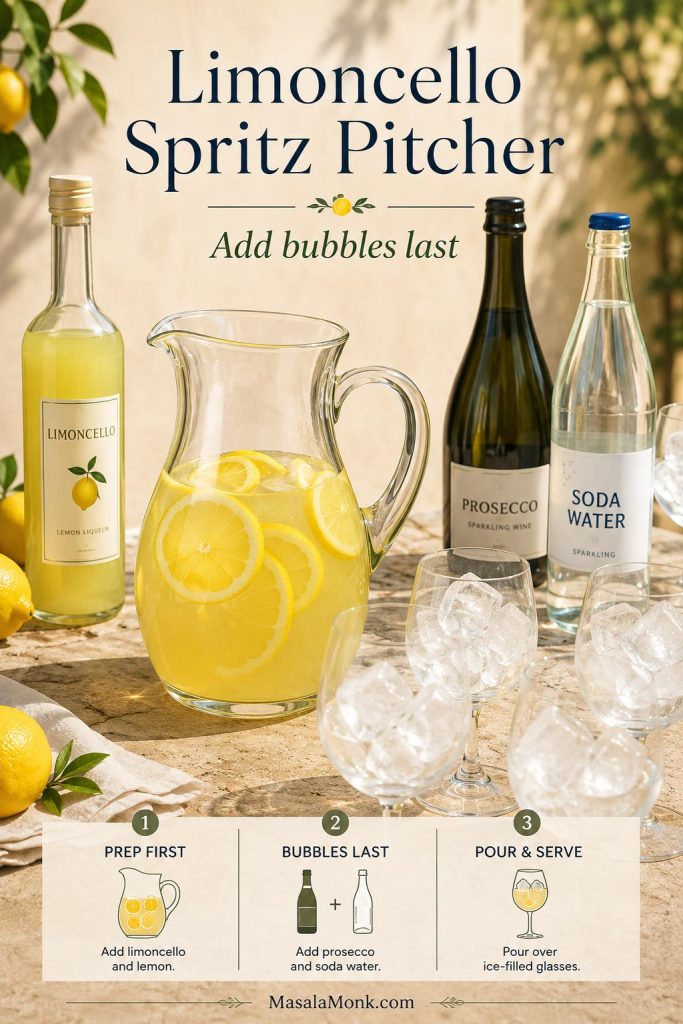
This limoncello spritz recipe is easy to scale, but the timing matters. Although you can chill the limoncello and prep the garnish ahead, do not add prosecco or soda until serving time. Because the bubbles are the drink, you want to protect them.
This is the version to use when guests are arriving soon and you want the drink to feel freshly mixed, not pre-made and flat.
For a pitcher, prep the limoncello and lemon first; then add prosecco and soda right before serving so the bubbles stay fresh.
You can prep the lemon garnish and chill the limoncello several hours ahead. You can also place the glasses in the fridge if you have space. Once prosecco and soda are added, serve the pitcher soon after mixing. The first 30–60 minutes will taste freshest because the bubbles are still lively.
Pitcher Ingredients for 8 Drinks
16 oz / 480 ml limoncello, chilled
24–25 oz / 720–750 ml brut prosecco, chilled
8 oz / 240 ml club soda or sparkling water, chilled
Lemon wheels or lemon peels
Mint, basil, thyme, or rosemary
Ice for glasses
How to Batch It
Chill the limoncello, prosecco, soda, and serving glasses if possible.
Add limoncello and lemon garnish to a pitcher.
Refrigerate until serving time.
Add prosecco and soda right before serving, then stir gently once with a long spoon.
Pour into ice-filled glasses and garnish with herbs.
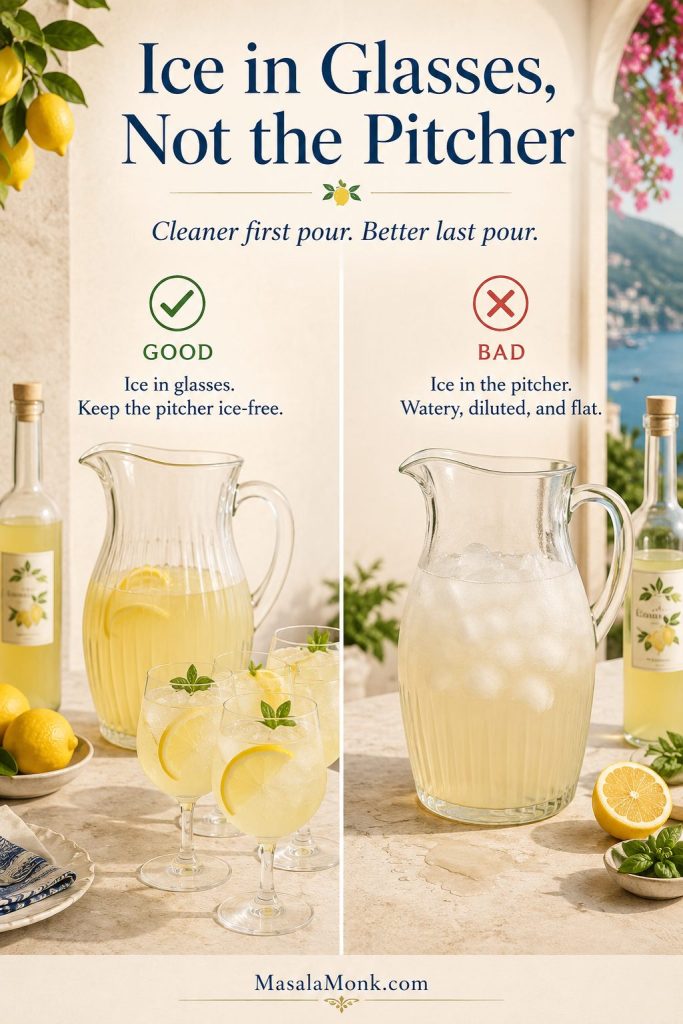
Keep Ice in the Glasses, Not the Pitcher
This small hosting detail keeps the pitcher fresh and protects the last pours from tasting weak.
Keep ice in the glasses rather than the pitcher, so the first pour stays cold and the last pour does not turn weak or watery.
Do not put ice in the pitcher unless you are serving it immediately outdoors. Ice in the pitcher makes the last pours weaker. Keep the pitcher cold and pour over ice-filled glasses instead.
Do not fully batch a limoncello spritz hours ahead. Prosecco and soda lose bubbles, so the drink tastes flatter if it sits too long. Add the bubbly ingredients at the last minute.
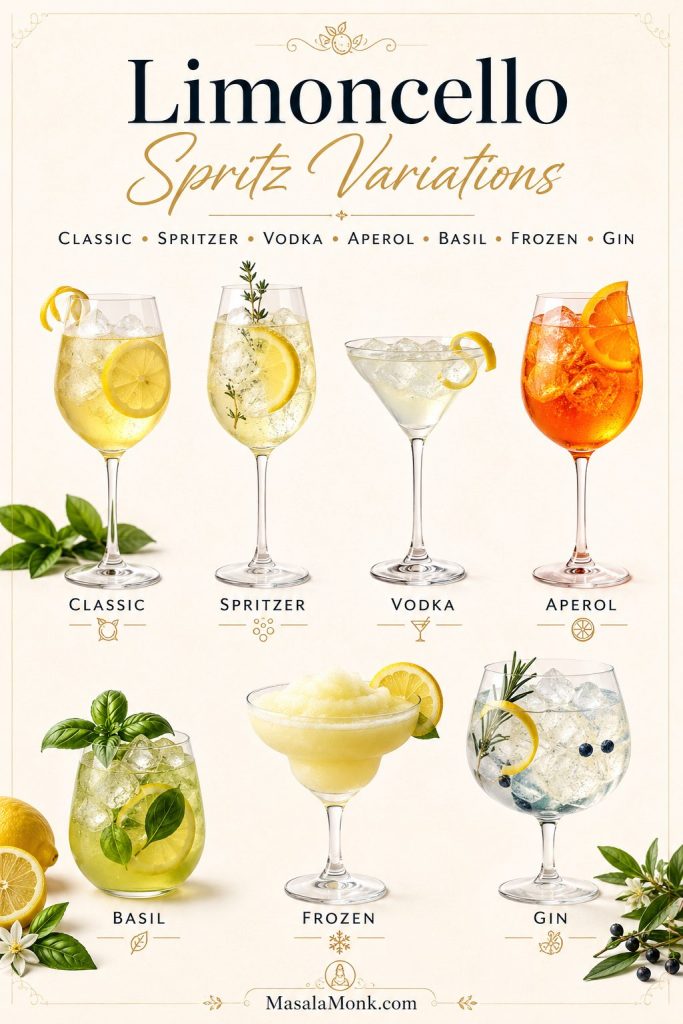
Limoncello Spritz Variations
Start with the classic version first. Once you know that cold, lemony baseline, these variations let you make the drink lighter, stronger, more herbal, or more party-friendly without losing the spritz feel.
After making the classic limoncello spritz, use these variations to take the drink lighter, stronger, herbal, frozen, or bitter-orange-forward.
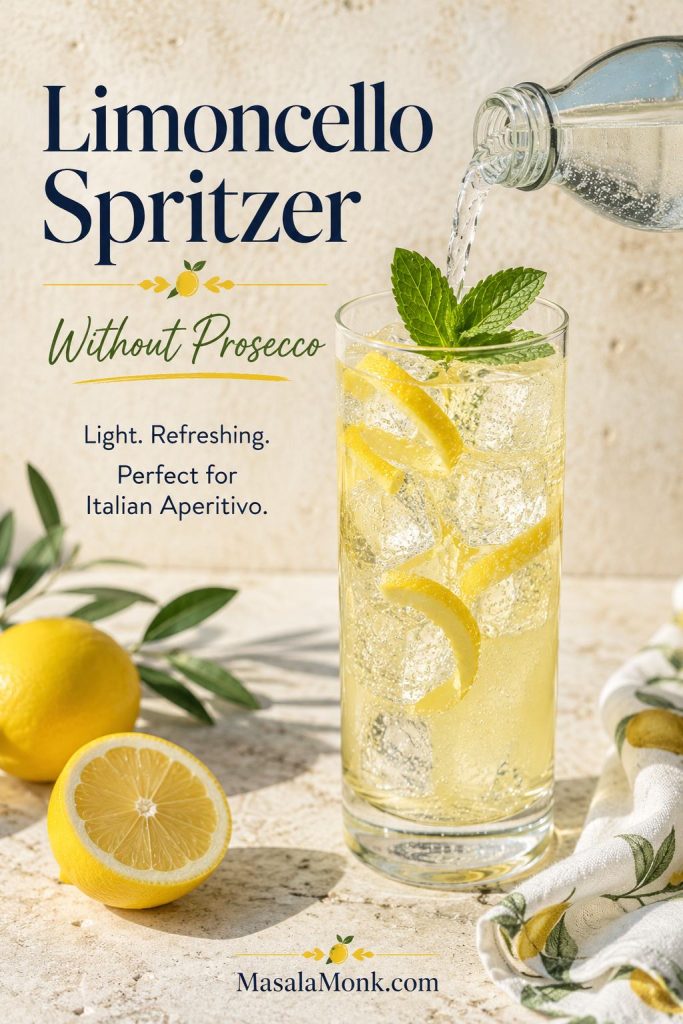
For a lighter version, skip the prosecco and use sparkling water or club soda.
Without prosecco, the drink becomes a lighter limoncello spritzer, which is useful when you want refreshment without the wine-like body.
2 oz / 60 ml limoncello
4–5 oz / 120–150 ml club soda or sparkling water
Ice
Lemon peel or wheel
Mint or basil
This is closer to a limoncello spritzer than a classic limoncello spritz, but it is refreshing, lighter, and lower in alcohol than the prosecco version. For a drier spritzer, start with 1.5 oz / 45 ml limoncello and 5 oz / 150 ml sparkling water.
Stronger Limoncello Spritz with Vodka
Add vodka when you want the spritz to feel more like a cocktail and less like a light aperitivo. It makes the drink stronger without adding much extra flavor, so reduce the limoncello slightly to keep the glass balanced.
1.5 oz / 45 ml limoncello
1 oz / 30 ml vodka
3 oz / 90 ml prosecco
1 oz / 30 ml soda water
Because vodka adds alcohol without sweetness, this version tastes cleaner and stronger. Label it clearly if you batch it for guests.
If you want to explore the vodka-and-lemon side further, this Vodka with Lemon guide covers more crisp lemon vodka drinks, including limoncello-style ideas.
Limoncello Aperol Spritz
For a lemon-bitter-orange version, use a smaller amount of Aperol with limoncello. Start with 1.5 oz / 45 ml limoncello, 0.5 oz / 15 ml Aperol, 3 oz / 90 ml prosecco, and 1 oz / 30 ml soda. The drink will be slightly more bitter, more orange-toned, and less purely lemony.
Do not use equal parts Aperol and limoncello at first. Aperol can quickly take over and turn the drink into a different cocktail.
Basil Limoncello Spritz
Basil gives the drink a fresh, garden-like aroma that works beautifully with lemon. It is especially good when the spritz is served with seafood, tomatoes, mozzarella, or simple salty snacks.
Lightly slap or rub the basil before adding it. Do not muddle it hard, or the flavor can turn grassy.
Frozen Limoncello Spritz
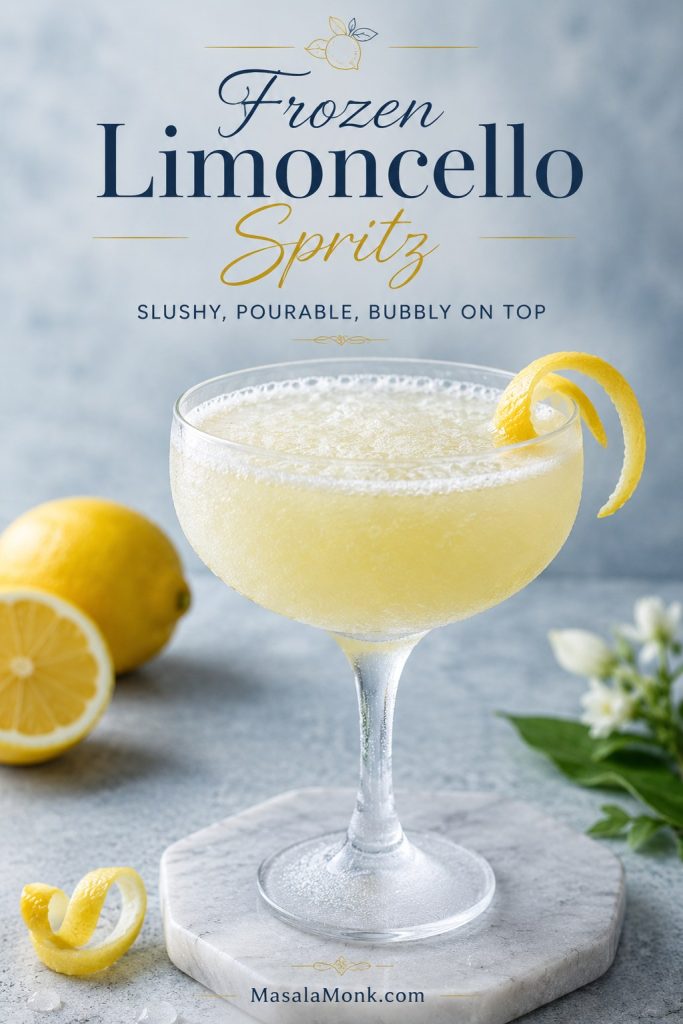
The goal is a cold lemon slush that still feels like a spritz, not a frozen dessert.
A frozen limoncello spritz should stay slushy and pourable; therefore, add prosecco gently at the end to keep some sparkle.
For a frozen limoncello spritz, blend 2 oz / 60 ml limoncello with 1/2 cup lemon sorbet and a small handful of ice until slushy. Pour into a chilled glass, then gently top with 2–3 oz / 60–90 ml prosecco. Do not blend the prosecco for long, because it will lose its bubbles.
Because lemon sorbet is sweet, use brut prosecco here and taste before adding any extra limoncello. Keep the texture slushy and pourable, not sorbet-stiff, and serve it immediately.
For a more botanical glass, use 1 oz / 30 ml gin, 1 oz / 30 ml limoncello, 3 oz / 90 ml prosecco, and 1 oz / 30 ml soda. Choose a clean, citrus-friendly gin rather than a heavy juniper-forward one.
What to Serve with a Limoncello Spritz
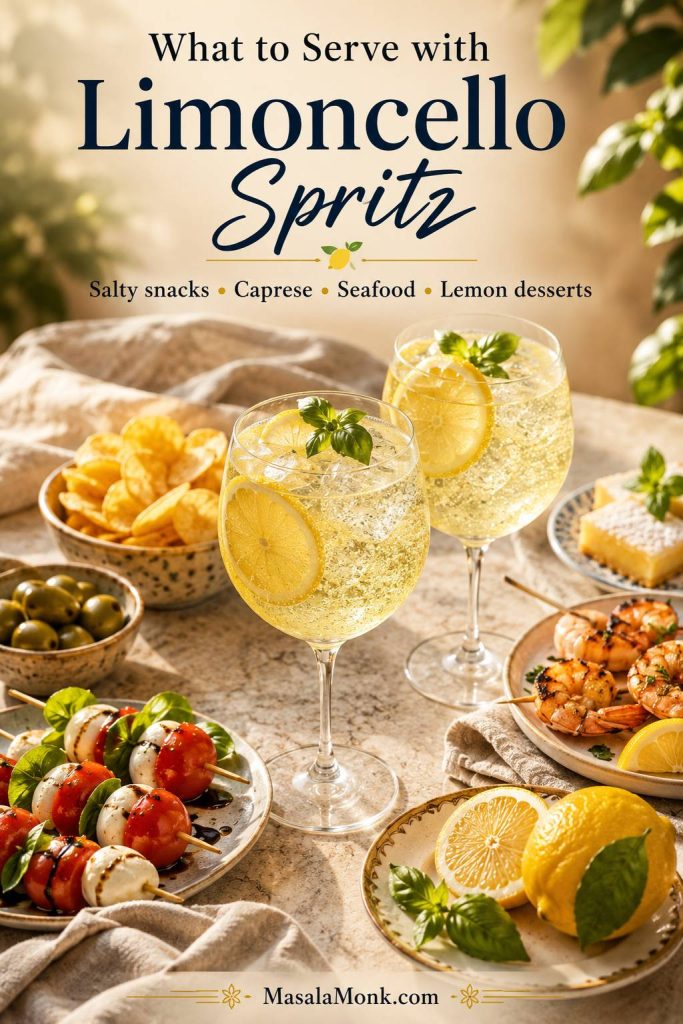
A limoncello spritz belongs with food that makes the lemon feel brighter: salty snacks, creamy cheese, seafood, herbs, and simple summer plates. Think olives before dinner, caprese on the table, grilled shrimp, or a bowl of chips while the glasses are still cold.
Salty snacks, caprese, seafood, and lemony desserts balance the sweetness of a limoncello spritz and make it feel like a proper aperitivo.
Desserts: lemon cake, panna cotta, shortbread, berries, vanilla gelato
For something more filling, keep the same bright-salty logic. These fish tacos work well because the lemony bubbles cut through fried or grilled fish, while this chickpea salad stays in the fresh, herb-heavy, Mediterranean-style lane.
For a pre-dinner drink, keep the snacks salty and light. If you serve it with dessert, choose something lemony, creamy, buttery, or fruit-forward rather than a very sweet frosted cake.
Limoncello Spritz FAQs
What is in a limoncello spritz?
A limoncello spritz is made with limoncello, prosecco, soda water, ice, and lemon. Mint, basil, thyme, or rosemary can be added as optional herbs.
What is the best limoncello spritz ratio?
The classic formula is 3 parts prosecco, 2 parts limoncello, and 1 part soda water. For one glass, use 3 oz / 90 ml prosecco, 2 oz / 60 ml limoncello, and 1 oz / 30 ml soda.
Should limoncello be chilled for a spritz?
Yes, chilled limoncello makes a better spritz. Cold limoncello, prosecco, and soda keep the drink crisp and slow down ice melt. Warm ingredients make the spritz taste watery faster.
Can I use homemade limoncello?
Homemade limoncello can be excellent here. Taste it before mixing, because homemade batches vary widely. A very sweet batch needs more prosecco or soda; a sharper, zestier batch may be perfect at the full 2 oz / 60 ml pour.
Can I use crema di limoncello in a limoncello spritz?
Regular limoncello is better for a classic spritz. Crema di limoncello is creamy and richer, so it does not mix as cleanly with prosecco and soda. Use it for dessert-style drinks instead of this crisp spritz.
Is limoncello spritz the same as limoncello and prosecco?
They are closely related, but a classic limoncello spritz also includes soda water or club soda. Limoncello and prosecco alone tastes richer and heavier, while soda makes the drink lighter and more refreshing.
Club soda or sparkling water — which is better?
Club soda gives the cleanest classic finish. Sparkling water also works and tastes slightly softer. Tonic water is more bitter and sweet, so save it for a variation.
What prosecco should I use?
Use chilled brut prosecco if possible. It keeps the drink crisp because limoncello already has sweetness. Extra dry prosecco can work, but it may taste sweeter than expected.
How many calories are in a limoncello spritz?
A classic limoncello spritz is usually around 180–270 calories per drink, depending on the limoncello brand, prosecco sweetness, and pour size. Sweeter or larger versions will be higher, so treat the number as an estimate.
How do I make a limoncello spritz less sweet?
Use brut prosecco, reduce the limoncello to 1.5 oz / 45 ml, and add a little more soda. A lemon peel garnish also makes the drink taste brighter without adding more sugar.
Can I make a pitcher ahead of time?
Prep the lemon garnish and chill the limoncello ahead, but wait to add prosecco and soda until serving time. Once the bubbles go in, the pitcher is best served soon after mixing.
What is a limoncello spritzer?
A limoncello spritzer is usually limoncello mixed with sparkling water or club soda, often without prosecco. It is lighter and less boozy than a classic limoncello spritz.
Final Tips for the Best Limoncello Spritz
For the best limoncello spritz, keep the glass cold, use brut prosecco, and start with the 3-2-1 formula: 3 parts prosecco, 2 parts limoncello, and 1 part soda. If the drink tastes too sweet, lengthen it with soda or drier bubbles. If it needs more lemon, use lemon peel before adding more liqueur.
The goal is simple: a sunny lemon spritz that smells fresh, stays bubbly, and feels light enough for another slow sip.