
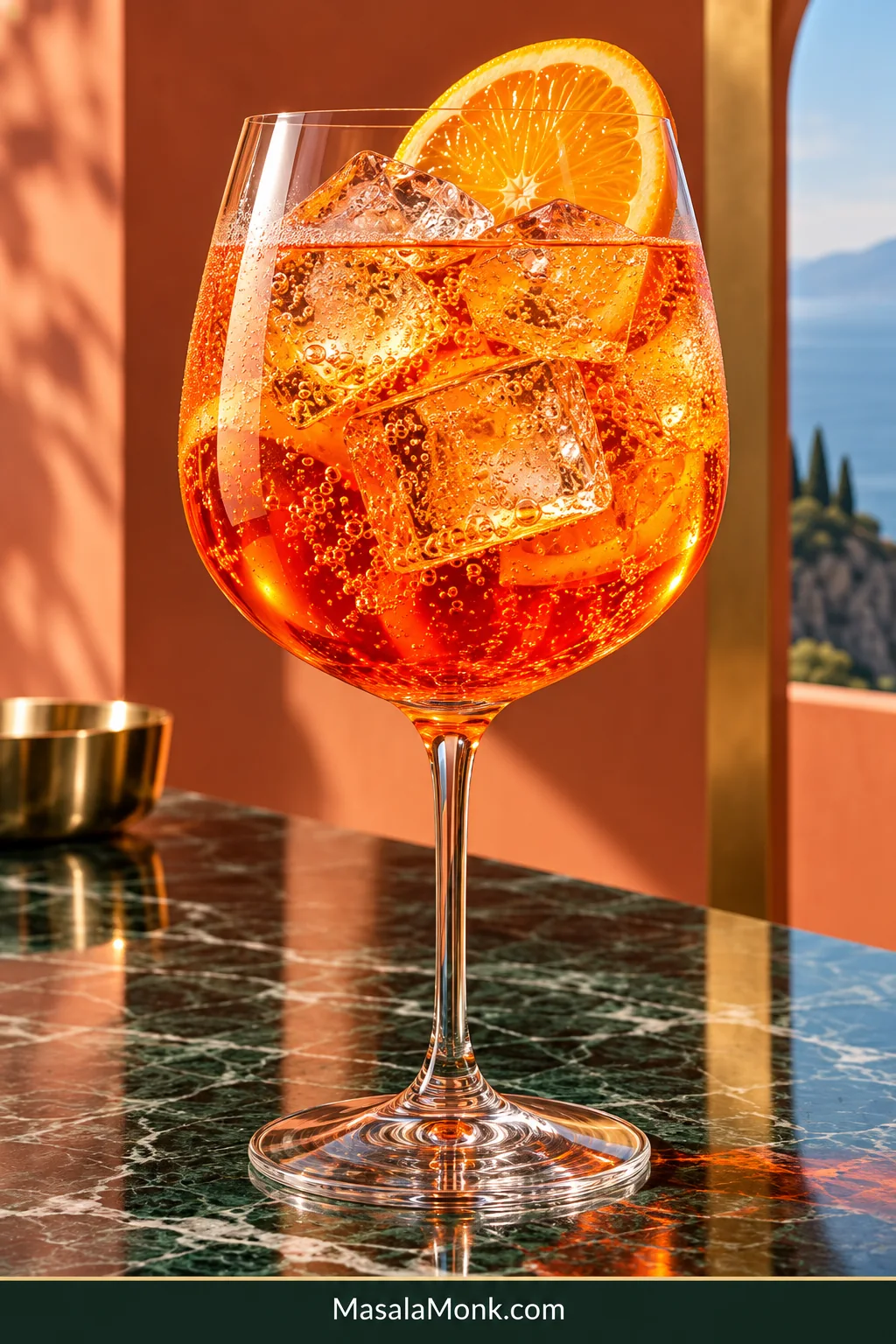
A good Aperol Spritz arrives cold and lively, with bittersweet orange, dry sparkling wine, fresh bubbles and the citrus aroma of an orange slice over plenty of ice. It is the kind of drink that makes sense before dinner: bright, lightly bitter and especially good with something salty nearby.
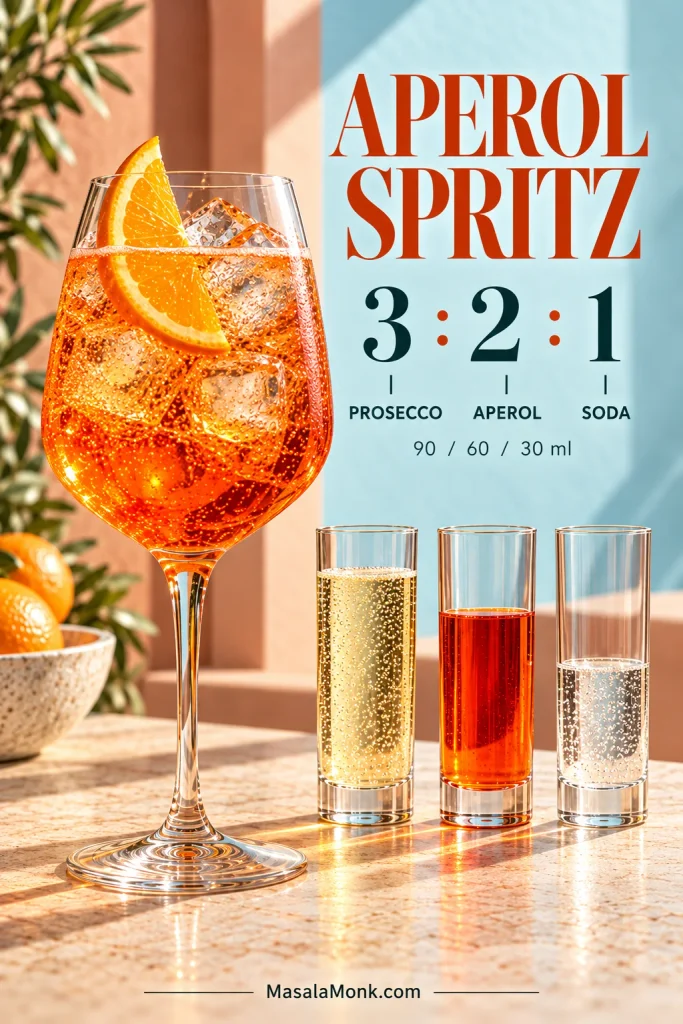
This Aperol Spritz recipe starts with the easy classic formula: 3 parts Prosecco, 2 parts Aperol and 1 part soda water. For one glass, that means 3 fl oz / 90 ml Prosecco, 2 fl oz / 60 ml Aperol and 1 fl oz / 30 ml soda.
Use well-chilled Brut Prosecco, fill the glass generously with ice and disturb the bubbles as little as possible.
Start 3-2-1. Keep it cold. Taste before you adjust.
Classic Aperol Spritz Recipe
The classic build combines dry sparkling wine with Aperol, the bittersweet Italian aperitivo behind the drink’s orange and herbal notes, plus a little soda for lift and fizz.
Equipment
Large wine or balloon glass · jigger or tablespoon measure · long spoon · small knife for the orange.
Aperol Spritz Ingredients
The classic Aperol Spritz ingredients are Prosecco, Aperol and soda water, plus ice and an orange slice.
- 3 fl oz / 90 ml Prosecco DOC Brut, well chilled
- 2 fl oz / 60 ml Aperol, preferably chilled
- 1 fl oz / 30 ml plain club soda or soda water, well chilled and freshly opened
- Large, solid ice cubes, enough to fill the glass generously
- 1 orange slice
For the soda, use something plain, cold and strongly carbonated. Fresh bubbles matter far more than the brand on the bottle.
How to Make It
- Fill the glass generously with large, solid ice cubes.
- Pour in the Prosecco. Add 3 fl oz / 90 ml chilled Prosecco.
- Add the Aperol. Slowly pour in 2 fl oz / 60 ml.
- Add the soda. Pour in 1 fl oz / 30 ml chilled soda water.
- Mix very gently. Give the drink one soft bottom-to-top lift with a long spoon, or one or two light turns.
- Garnish and serve. Add the orange slice and serve immediately.
Quick Notes
- Prefer a punchier Spritz? Reduce the soda to ½ fl oz / 15 ml or use a small splash.
- No jigger? Use 6 tbsp Prosecco + 4 tbsp Aperol + 2 tbsp soda.
- Measuring bubbly: pour Prosecco slowly into the jigger and read the liquid level beneath the foam.
- Do not shake it. Once Prosecco and soda are involved, shaking costs you bubbles and creates unnecessary pressure.
- Serve immediately. The fizz is part of what makes the drink feel crisp.
What you’re looking for: the first sip should feel cold and fizzy, then bittersweet and orange-led. You should still taste the Prosecco; the soda should open the drink rather than make it taste thin.
Beyond the Basic Pour
Build the Balance
Pour & Serve
Start With 3-2-1, Then Taste
The easiest Aperol Spritz ratio to remember is 3 parts Prosecco, 2 parts Aperol and 1 part soda. It gives you a dependable first glass and keeps the arithmetic simple.
The IBA’s current Spritz recipe lists 90 ml Prosecco, 60 ml Aperol and a splash of soda, so treat the soda as the flexible part of the formula.
| You want… | Prosecco | Aperol | Soda |
|---|---|---|---|
| Classic first glass | 90 ml / 3 fl oz | 60 ml / 2 fl oz | 30 ml / 1 fl oz |
| Punchier, less diluted | 90 ml / 3 fl oz | 60 ml / 2 fl oz | 15 ml / ½ fl oz |
| Less bitter, more wine-forward | 120 ml / 4 fl oz | 45 ml / 1½ fl oz | 15–30 ml / ½–1 fl oz |
Italian bars vary too. One may use a generous splash of soda while another barely adds any, and the sparkling wine may be leaner or fruitier. The Spritz has more room to move than one fixed formula suggests.
Make one measured glass and taste it while it is still cold and bubbly. There is no prize for making your glass match somebody else’s exactly.
Best Prosecco for Aperol Spritz: Start With Brut
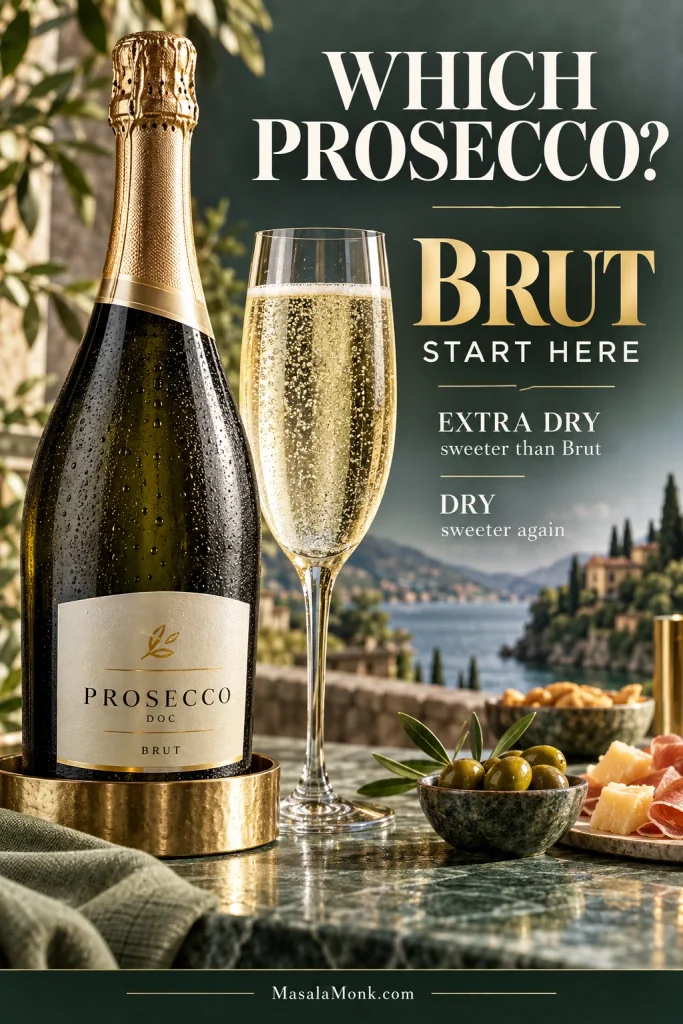
Use Prosecco DOC Brut for an Aperol Spritz. It is drier than Extra Dry and helps keep Aperol’s sweetness in check.
The labels are slightly counterintuitive. The Prosecco DOC Consortium classifies Extra Dry as sweeter than Brut, while a bottle labeled Dry is sweeter again.
| Label | Residual sugar | In the Spritz |
|---|---|---|
| Brut | Under 12 g/L | Crisp; a reliable starting point. |
| Extra Dry | 12–17 g/L | A little sweeter despite the name. |
| Dry | 17–32 g/L | Sweeter again; the drink can feel heavier. |
An everyday Prosecco DOC Brut is enough. Freshness and good bubbles matter more here than buying the most expensive bottle on the shelf.
Aim to have the Prosecco around 43–46°F / 6–8°C before you pour. Starting well chilled means the ice has less cooling work to do once the drink is in the glass.
Keep the Glass Cold and Lively
For a cold, fizzy Aperol Spritz, chill all three liquids, fill the glass generously with ice and stir only once or twice. That is almost all the bar technique it needs.
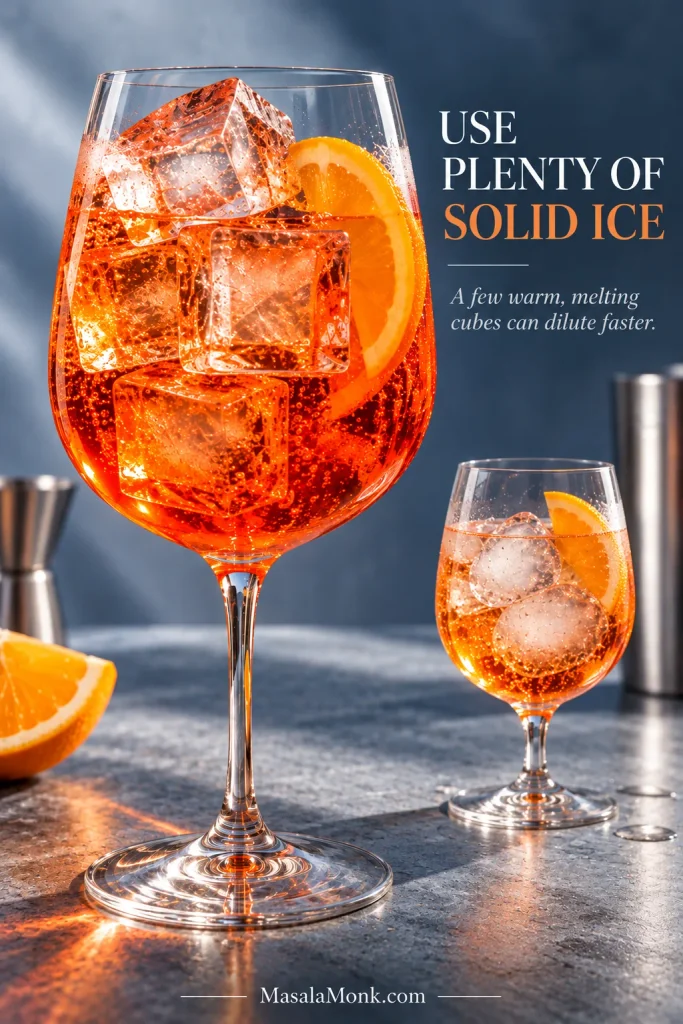
Use more ice, not a few lonely cubes
Fill the glass generously with solid ice. A few cubes dropped into warmer ingredients melt faster because they have to chill the whole drink. Use cubes that haven’t already begun melting in the ice bucket.
Give the drink some room
A large stemmed wine or balloon glass gives the ice, liquid and orange room without crowding everything to the rim. A roomy rocks glass works too. You do not need branded Aperol glassware to make a good Spritz.
Mix as little as necessary
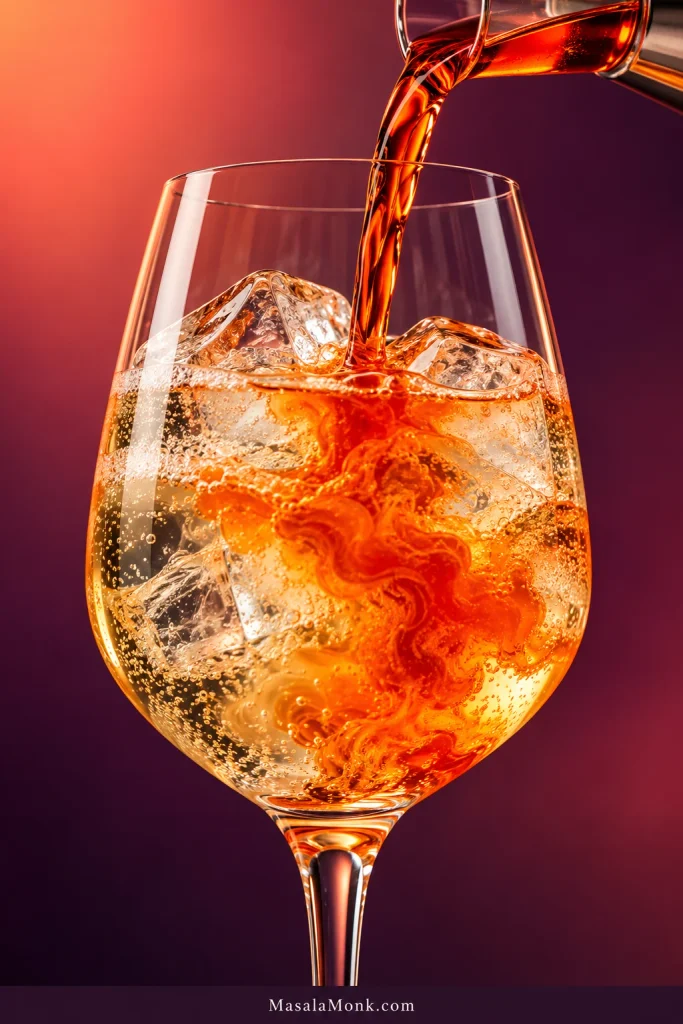
At home, Prosecco first, Aperol second and soda last works especially well. Pouring the Aperol into the Prosecco starts combining the two for you, so very little stirring is needed. One gentle lift with a spoon is usually enough.
Keep the Orange Above the Ice
Set the orange partly above the rim instead of burying it under the ice. Its peel releases citrus oils close to your nose as you drink, strengthening Aperol’s orange aroma.
Then taste it. If something still feels off, the first sip usually tells you where to look.
Fix the First Sip
Taste before you add anything else. Decide what feels off, then change one thing at a time.
| The drink tastes… | Check first | Try this |
|---|---|---|
| Too sweet | Prosecco | Use Brut; if already dry, use slightly less Aperol next glass. |
| Too bitter | Aperol | Add more dry Prosecco or reduce Aperol next glass. |
| Thin or watery | Soda | Cut it to 15 ml / ½ fl oz or a splash. |
| Still watery | Ice melt | Start colder and use solid, unmelted ice. |
| Flat or lifeless | Carbonation | Open fresh Prosecco and soda; stir less. |
| Weak | Dilution or lost fizz | Check both before adding more Aperol. |
“Watery” can mean three different things
An Aperol Spritz usually tastes watery for one of three reasons: too much soda, too much melted ice or lost carbonation.
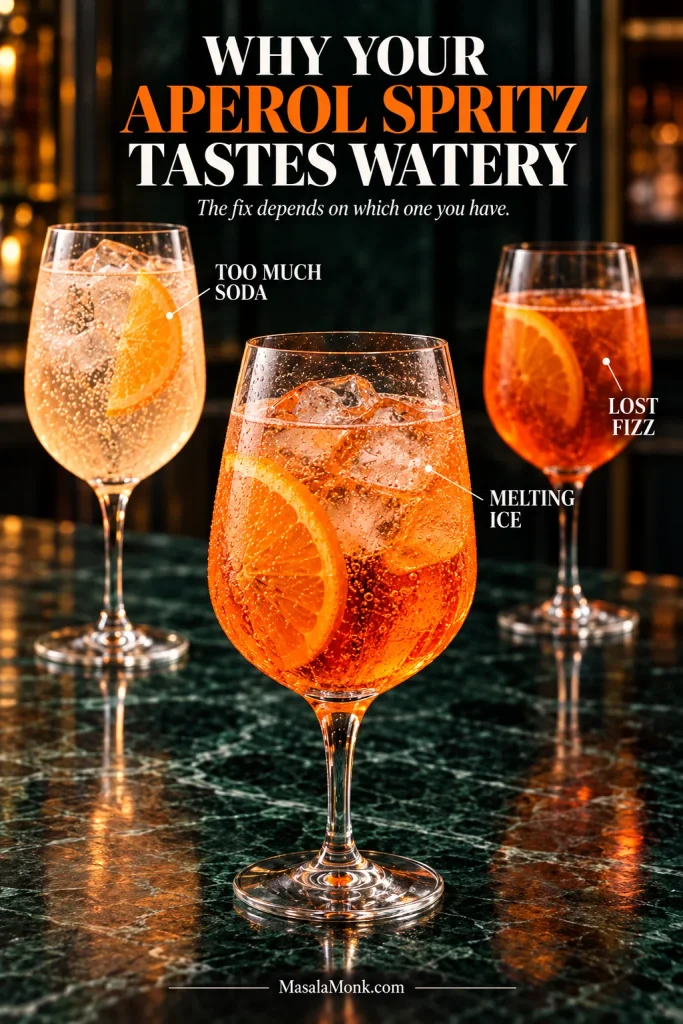
Too much soda: if 30 ml / 1 fl oz washes the drink out, try 15 ml / ½ fl oz next time.
Too much meltwater: usually the ingredients were warm, the ice had already begun melting or there wasn’t enough of it.
Lost carbonation: a flat drink feels softer and weaker even when the proportions haven’t changed.
If meltwater or flatness is the problem, revisit how to keep the glass cold and lively before changing the ratio.
Why doesn’t mine taste like the Spritz I had in Italy?
The glass you remember may genuinely have been different. Bars vary in Prosecco, soda, Aperol quantity, glass size, ice and temperature. And if you simply ordered a Spritz rather than specifically an Aperol Spritz, it may have used another Italian aperitivo such as Select or Campari.
If the firmer bitterness of Campari is what you remember or prefer, you may simply prefer a Campari-based drink; a classic Negroni takes that bitterness in a completely different direction.
Sometimes the drink is not wrong; you simply want a different sparkling wine, mixer or garnish.
Prosecco, Soda and Orange Substitutions
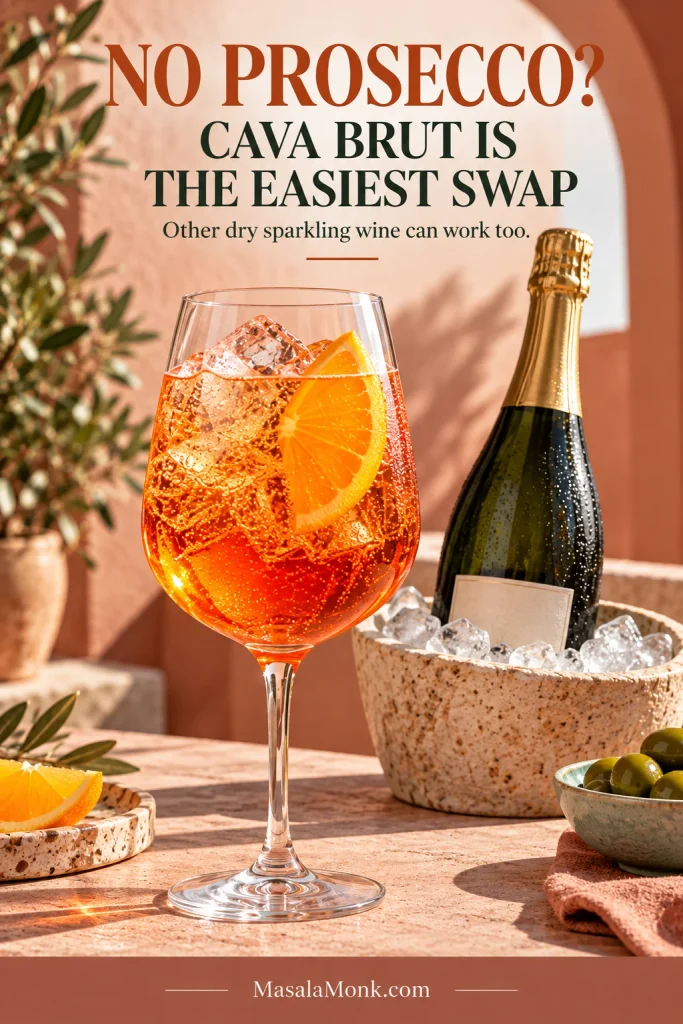
Cava Brut is the easiest substitute for Prosecco: dry, sparkling and often a little more savory. Brut Champagne works beautifully too, although it is usually an expensive bottle to mix with Aperol and soda; other dry sparkling wines can work as well. The drink will change with the wine you choose—sweeter bottles make it softer, while leaner ones keep it crisper.
Plain seltzer or sparkling water can stand in for club soda without changing the basic structure of the drink; choose something neutral with plenty of fizz. Tonic water is different—it brings its own sweetness and quinine bitterness, so the result will no longer taste quite like the classic drink.
An orange peel works too when you want the fragrant citrus oils but not the fruit itself. Want a different direction altogether? A Limoncello Spritz keeps the Prosecco-and-soda framework but trades bittersweet orange for lemon.
Aperol Spritz for a Crowd: Build It Fresh
For a party, prep early and leave the bubbles until the last minute. Keep the Prosecco and soda sealed until you are ready to serve.
The quantities scale easily; carbonation doesn’t. Build individual glasses close to serving time.
| Drinks | Prosecco | Aperol | Soda at 3-2-1 |
|---|---|---|---|
| 1 | 90 ml / 3 fl oz | 60 ml / 2 fl oz | 30 ml / 1 fl oz |
| 4 | 360 ml / 12 fl oz | 240 ml / 8 fl oz | 120 ml / 4 fl oz |
| 8 | 720 ml / 24 fl oz | 480 ml / 16 fl oz | 240 ml / 8 fl oz |
US and metric measures are rounded independently for easy pouring, so scaled totals will not convert exactly between systems.
Prefer the splash-style build? Halve the soda column. Eight drinks need about 120 ml / 4 fl oz soda rather than 240 ml / 8 fl oz.
One standard 750 ml bottle of Prosecco gives you eight full 90 ml pours, with about 30 ml left.
Before people arrive
- Chill the Prosecco, Aperol and soda thoroughly.
- Slice the oranges.
- Have enough solid ice ready.
- Pre-measure the Aperol if you want faster rounds.
When it is time to serve
Line up the glasses and make a round at once: ice, Prosecco, Aperol, soda, one gentle mix, orange. Keep the ice in individual glasses; don’t add it to a waiting pitcher. This is faster, and nobody gets the Spritz that has been sitting around losing its fizz.
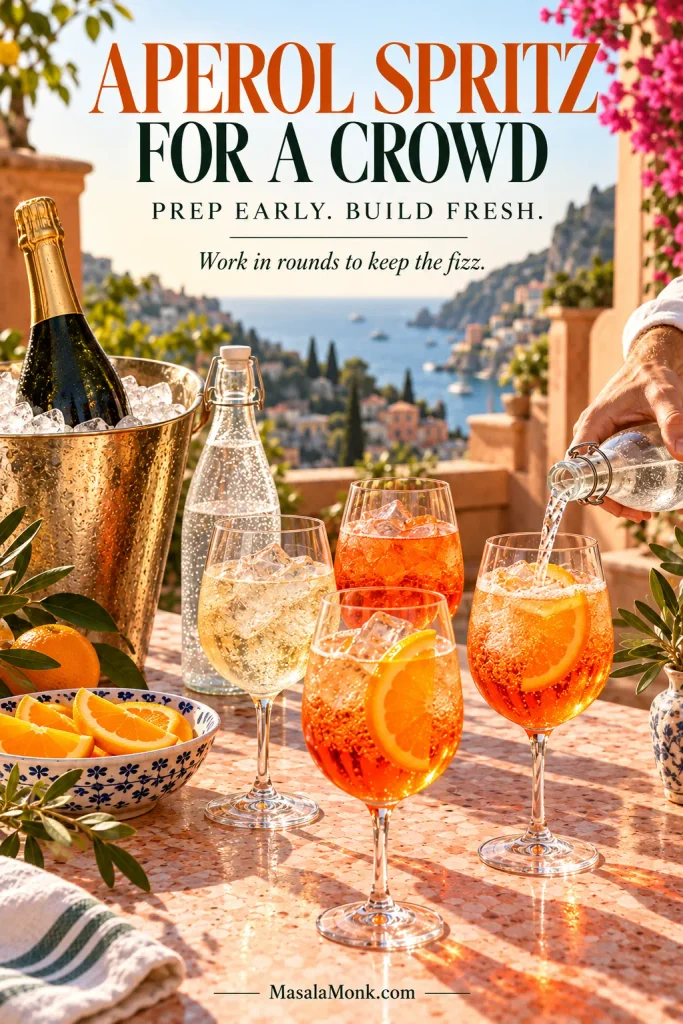
For a larger gathering, work in smaller rounds and leave the next bottle cold and sealed until you need it.
Serve It Like an Aperitivo
Aperitivo doesn’t need much ceremony. A cold glass, something salty and a little time before dinner are enough. The Spritz fits that moment well because it refreshes without asking for much attention.
A good glass brings sweet orange, citrus-peel bitterness, light herbal notes, dry sparkling wine and a crisp fizzy finish. People perceive Aperol’s bitterness differently, so your ideal pour may not be identical to the person sitting beside you.
With Aperol and Prosecco both around 11% ABV, the classic 3-2-1 build works out to roughly 9% ABV before further dilution from the ice. A stronger Prosecco or a different ratio will change it.
What to Eat With an Aperol Spritz
Salty, savory food is where this drink feels most at home: Parmesan, prosciutto, potato chips, salted nuts, crostini or light seafood. Salt and richness soften Aperol’s bitter edge, while the bubbles keep richer bites feeling fresh.
To lean a little more Venetian, think cicchetti: small, salty bites such as crostini, seafood, meatballs or egg-based snacks served before dinner. The same easy grazing idea is why a simple charcuterie board works so well beside a round of Spritzes.
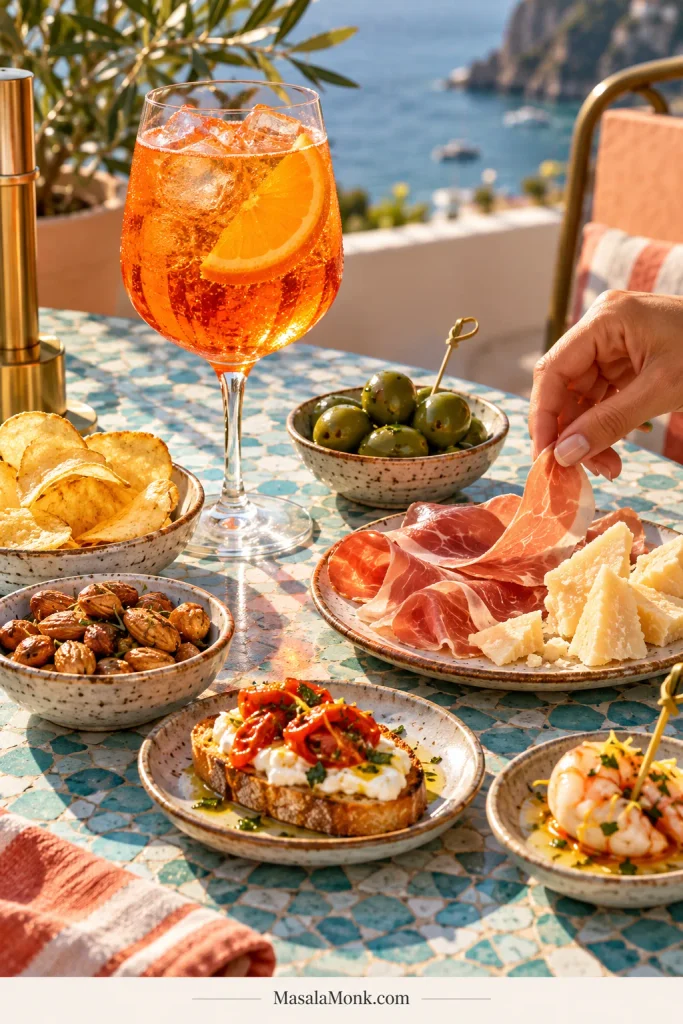
A green olive is another savory garnish worth trying. Alongside the orange, its salty bite plays especially well against Aperol’s bittersweet citrus.
Once the glass is made, put it on the table while it is still at its best and let the rest of the moment be unhurried.
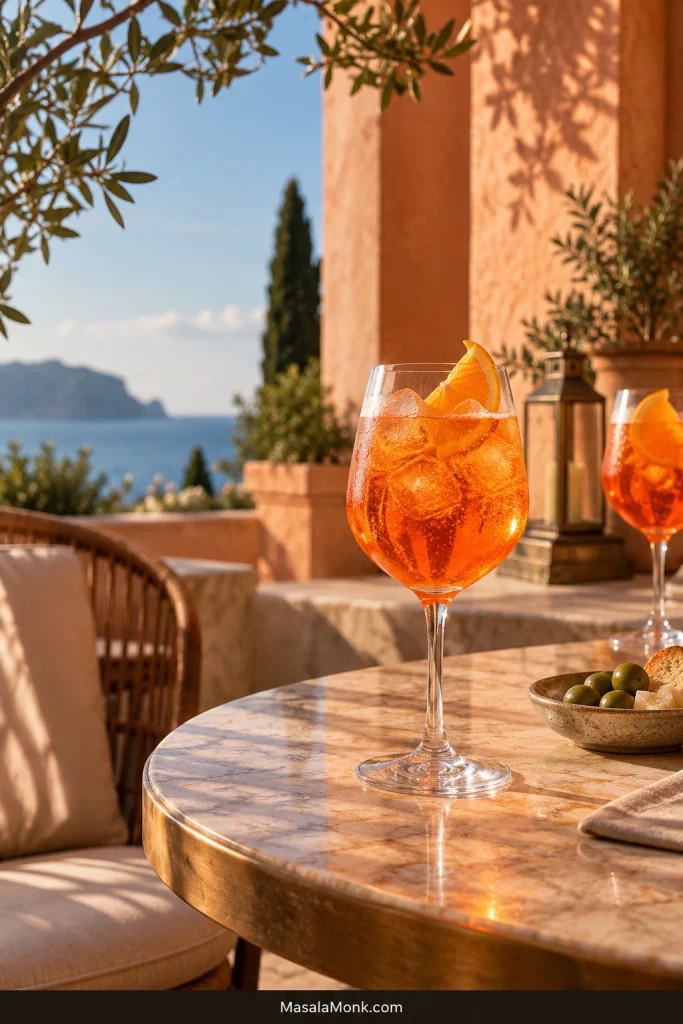
The good version announces itself before the first sip: the glass is cold, the orange smells fresh and bubbles are still climbing around the ice. Once it tastes right to you, write it down—that is your Spritz.








