In an age of gut health obsessions and detox trends, fruit juices have carved out a loyal following. But how effective are they really? Can a glass of vibrant juice reset your gut, reduce bloating, and support digestion—or are we just sipping on sweet delusions?
Let’s dive into five powerful, research-backed juice recipes that actually support your digestive health—and unpack what latest science has to say about juicing in 2025.
🍏 The Digestive Equation: Enzymes, Inflammation & Microbiome
Healthy digestion depends on a delicate symphony:
- Digestive enzymes to break down food
- Anti-inflammatory agents to calm the gut lining
- A diverse and resilient microbiome to ferment fiber and regulate immunity
Fruit juices can help—if used strategically.
The right blend of fruits and botanicals can:
- Activate bile and enzyme secretion
- Ease bloating and sluggishness
- Deliver antioxidants that protect gut cells
- Aid hydration, essential for smooth bowel function
But juicing is also a double-edged sword. Overdo it—especially with juice-only “cleanses”—and you could trigger inflammation, blood sugar spikes, and microbiome disruption.
⚠️ What Recent Research Says (2025)
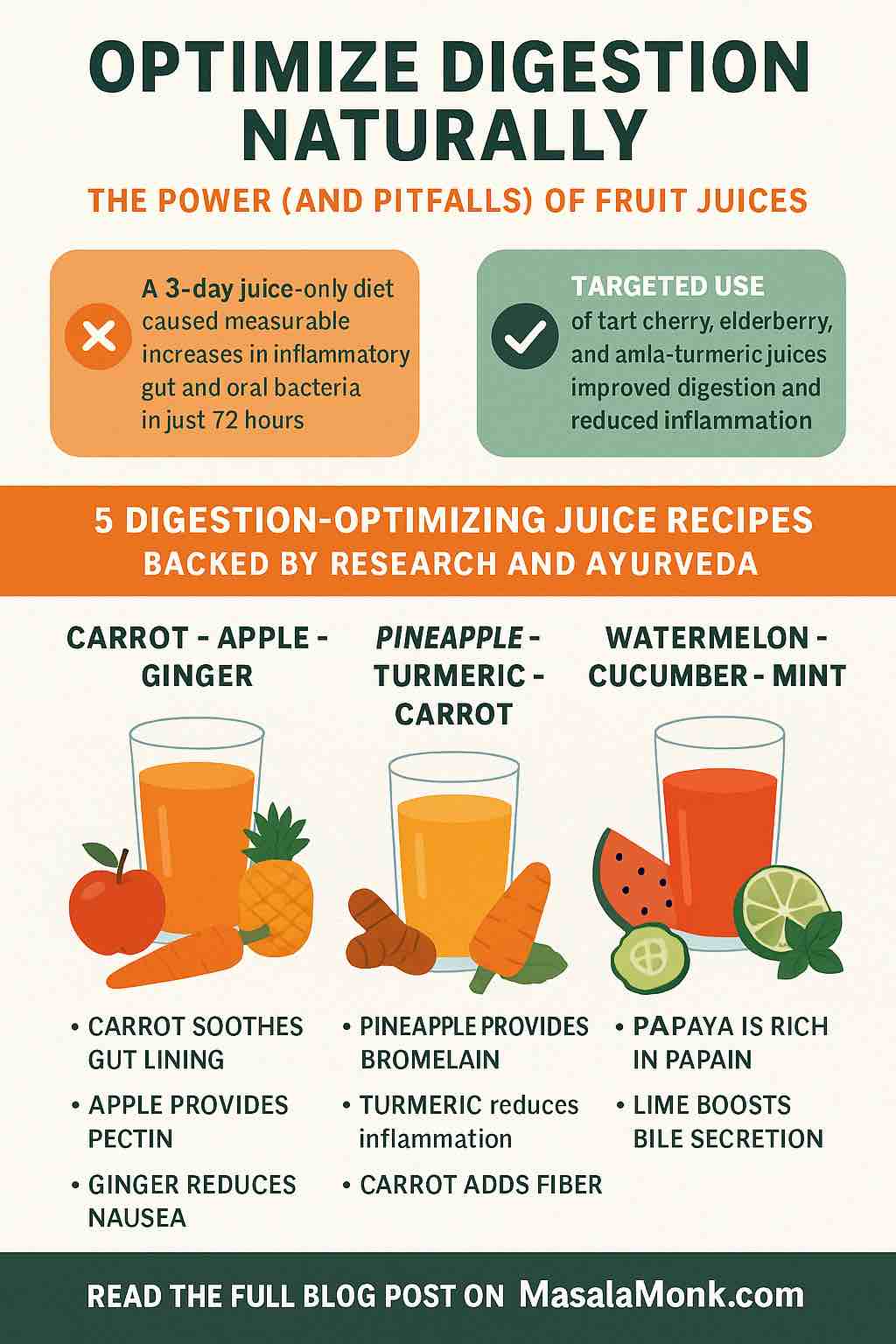
📉 A 3-day juice-only diet caused measurable increases in inflammatory gut and oral bacteria in just 72 hours—and some shifts persisted two weeks later (Nutrients, Jan 2025).
🧪 In contrast, targeted use of tart cherry, elderberry, and amla-turmeric juices improved digestion, reduced inflammation, and even enhanced metabolic markers in clinical trials.
💡 Bottom line: Juices are tools, not magic bullets. Use them to support digestion—not to replace meals or fiber.
🥤 5 Digestion-Optimizing Juice Recipes (Backed by Research & Ayurveda)
1. 🥕 Carrot–Apple–Ginger Digestive Booster
Why it works:
- Carrot soothes gut lining and provides beta-carotene
- Apple contains pectin for prebiotic support
- Ginger stimulates digestion and reduces nausea
Recipe:
- 3 medium carrots
- 1 apple (preferably green)
- 1-inch fresh ginger
- Juice of ½ lemon
👉 Drink 20–30 minutes before meals to enhance digestive secretions.
2. 🥒 Green Detox Juice: Cucumber–Spinach–Apple–Lemon
Why it works:
- Cucumber hydrates and flushes toxins
- Spinach provides magnesium (for bowel motility)
- Apple and lemon enhance gut motility and liver function
Recipe:
- 1 cup spinach
- ½ cucumber
- 1 green apple
- Juice of ½ lemon
- Optional: 5 mint leaves
👉 Best taken in the morning to cleanse the system and hydrate cells.
3. 🍍 Pineapple–Turmeric–Carrot Anti-Bloat Elixir
Why it works:
- Pineapple contains bromelain, a protein-digesting enzyme
- Turmeric reduces inflammation and supports bile flow
- Carrot adds fiber and sweetness
Recipe:
- 1 cup pineapple
- 1 large carrot
- 1-inch turmeric root (or ½ tsp powder)
- Juice of ½ lime
👉 Use after heavy meals or protein-rich dishes to aid digestion.
4. 🍉 Watermelon–Cucumber–Mint Hydration Juice
Why it works:
- Watermelon and cucumber provide electrolytes and fluid
- Mint relaxes the intestinal muscles
Recipe:
- 1 cup watermelon
- ½ cucumber
- 10 mint leaves
- Juice of ½ lime
👉 Drink during hot weather or after exercise to support gut motility.
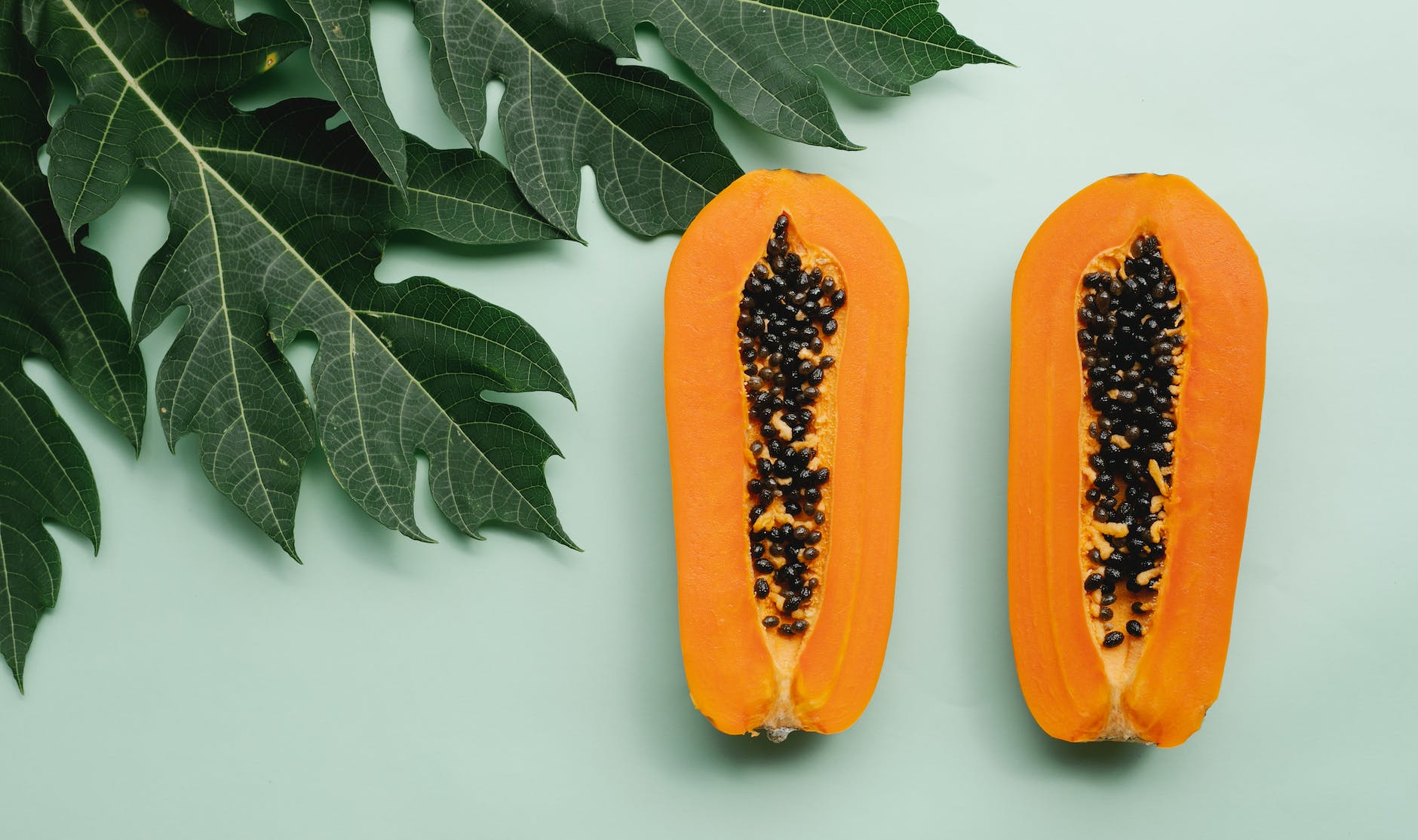
5. 🥭 Papaya–Lime Smooth Juice
Why it works:
- Papaya is rich in papain, another key digestive enzyme
- Lime boosts bile secretion and balances the flavor
Recipe:
- 1 cup ripe papaya
- Juice of ½ lime
- ½ cup water to blend
- Optional: pinch of black salt or cumin
👉 Ideal for people with sluggish digestion or mild constipation.
🧠 Pro Tips: How to Juice Smart (Not Just Sweet)
- Avoid juice-only cleanses. Even a 3-day fast can disrupt your gut flora and blood sugar balance.
- Include pulp or pair with fiber. Add chia seeds, psyllium, or have a fiber-rich snack alongside.
- Rotate your juices. Don’t overdo high-fructose fruits (e.g., mango, grapes); mix with vegetables.
- Drink mindfully: 20–30 minutes before meals is ideal for enzyme-rich juices. Avoid large amounts post-meal.
- Go cold-pressed when possible. Heat and oxidation degrade sensitive compounds like vitamin C and anthocyanins.
📅 Sample Daily Juice Integration Plan
| Time | Juice Recipe | Purpose |
|---|---|---|
| Morning | Green Detox Juice | Hydration + gut priming |
| Pre-Lunch | Carrot–Apple–Ginger | Stimulate digestion |
| Afternoon | Watermelon–Cucumber–Mint | Cool + refresh + support bowel |
| Evening | Papaya–Lime Juice | Soothe gut, prep for rest |
⚖️ Final Word: Juice With Intention, Not Obsession
In 2025, the science is clear: juices can support digestion—but only when thoughtfully integrated into a balanced, fiber-rich diet.
They’re not miracle cures or quick fixes. They’re potent tools—especially when packed with enzymes (papaya, pineapple), anti-inflammatory botanicals (ginger, turmeric), and supportive fruits (apple, cucumber, mint).
So skip the hype, honor your microbiome, and juice with intention, not obsession.
🧠 FAQs
1. Can I drink these juices every day?
Yes, most of these juices can be consumed daily in moderate amounts (100–250 mL). Just rotate ingredients, include fiber-rich meals, and avoid relying solely on juice for nutrition.
2. Are juice-only cleanses good for digestive health?
No. Studies in 2025 show that even 3-day juice cleanses may disrupt gut and oral microbiota, reduce beneficial fiber-feeding bacteria, and increase inflammation. Juices are better as supplements—not replacements.
3. What’s the best time of day to drink digestive juices?
The ideal times are:
- Morning (empty stomach) for hydration and detox support
- 20–30 minutes before meals to stimulate enzymes and bile
- Mid-afternoon to refresh digestion without spiking insulin
4. Should I strain my juices or leave the pulp?
Leaving in some pulp is better—it retains fiber, which supports the microbiome and slows sugar absorption. If using a juicer, pair the juice with a fibrous snack like nuts, oats, or chia pudding.
5. Can juices help with bloating and constipation?
Yes. Papaya, pineapple, ginger, cucumber, and mint have shown mild laxative or bloat-reducing properties. Juices rich in water and enzymes can support smoother digestion—especially if constipation is mild or occasional.
6. Do these juices spike blood sugar?
Fruit juices can spike blood glucose—especially when high in natural sugars (e.g., watermelon, mango). To reduce the glycemic load:
- Add greens, chia, lemon/lime
- Dilute with water or coconut water
- Consume with or after high-fiber meals
7. Are these juices safe for people with IBS or sensitive guts?
Most of them are—if low-FODMAP fruits are used (e.g., pineapple, spinach, cucumber, papaya). Avoid apples and watermelon if you’re sensitive to fructose or polyols. Always test new ingredients gradually.
8. Can I make these juices in a blender?
Yes. You can blend the ingredients with a little water and strain if desired. Blending retains fiber, which is great for digestion. Just be mindful of texture and taste preferences.
9. How long can I store fresh juice?
Fresh juice should be consumed within 24–48 hours, ideally stored in a sealed glass jar in the fridge. Add lemon juice to slow oxidation. Cold-pressed juices last slightly longer than centrifugal ones.
10. Can kids or seniors benefit from these juices?
Yes—but with adjustments. Reduce ginger/turmeric for young children or those with sensitive stomachs. Avoid over-sweet or citrus-heavy juices for seniors prone to acid reflux. Always balance with meals.