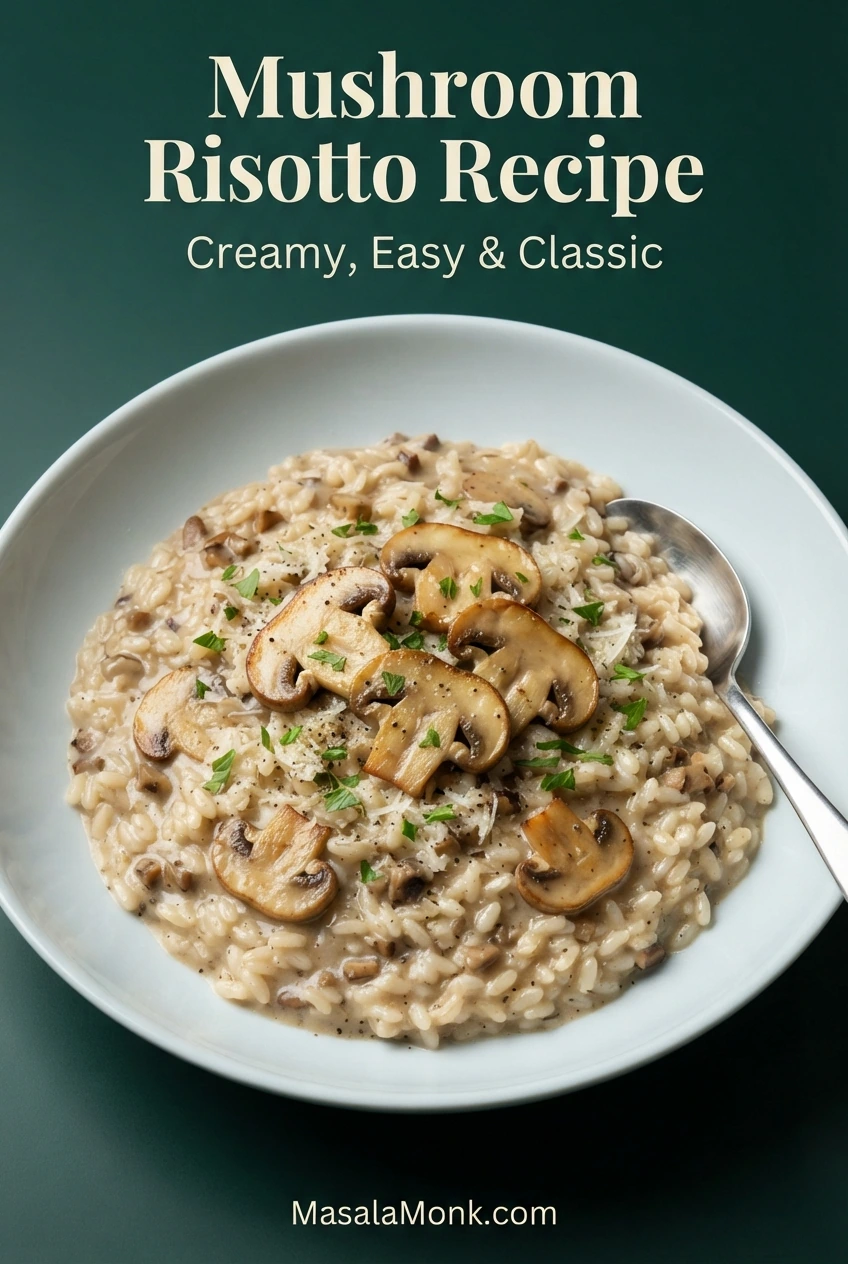
A good mushroom risotto starts with the mushrooms, not the rice. Even ordinary button mushrooms develop golden edges and a deep, roasted flavor when you give them enough time in a hot pan.
In this mushroom risotto recipe, finely chopped mushrooms simmer with the rice, while most of the larger pieces go in near the end. Save the best browned slices for the topping, where their buttery edges contrast with the soft, flowing Parmesan risotto beneath them.
You don’t need heavy cream, expensive wild mushrooms or constant stirring. Give the mushrooms time to brown, keep some hot stock beside the stove and taste the rice as it cooks.
Allow extra time for additional mushroom batches, soaking dried porcini or preparing mushroom-enriched stock.
Find What You Need
Make the Risotto
Classic Mushroom Risotto Recipe
For an easy mushroom risotto, start with cremini or white button mushrooms, Arborio rice and a mild vegetable stock. Thyme and dried porcini are optional, and you can replace the wine with extra stock.
Cooking for two? Use the smaller-batch ingredients and cooking adjustments.
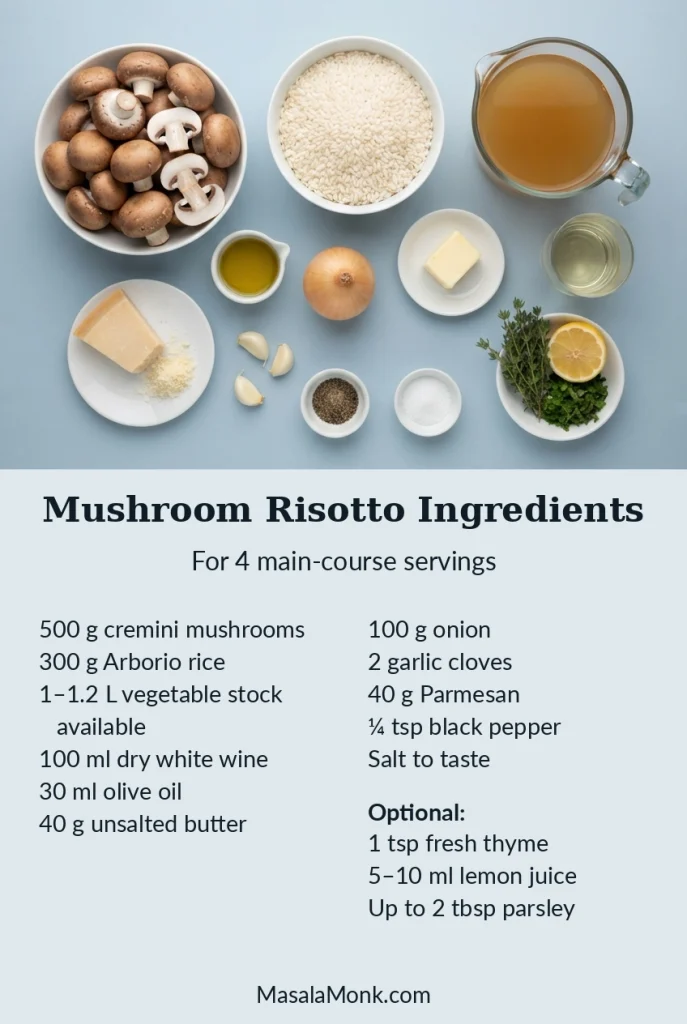
Ingredients for Four Servings
These quantities make four main-course portions. Measure the rice and stock before cooking, and set aside the finishing butter and cheese.
- 300 g (about 1½ US cups) Arborio rice — Carnaroli also works. Measure the rice dry and leave it unrinsed.
- 500 g (about 1.1 lb) fresh cremini mushrooms — cleaned and trimmed. White button mushrooms or a mixture of varieties work too.
- 1–1.2 liters (about 4¼–5 US cups) mild, low-sodium vegetable stock — mushroom or chicken stock are alternatives.
- 100 ml (3.4 US fl oz) dry white wine — an ordinary Pinot Grigio or Sauvignon Blanc is fine. Avoid sweet or heavily salted cooking wine. For a wine-free version, use 100 ml extra stock instead.
- 30 ml (2 tbsp) olive oil — 20 ml for the mushrooms and 10 ml for the onion and rice.
- 40 g (scant 3 tbsp) unsalted butter — 10 g for the mushrooms, 10 g for the onion and rice, and 20 g for finishing.
- 100 g onion (about 1 small onion) — peeled and finely chopped. Shallots work too.
- 2 garlic cloves — finely chopped.
- 40 g (about 1½ oz) Parmesan — finely grated.
- ¼ tsp freshly ground black pepper — plus more to taste.
- Salt — to taste.
- 1 tsp fresh thyme leaves — optional.
- 5–10 ml (1–2 tsp) lemon juice — optional, to balance the richness.
- Up to 2 tbsp chopped fresh parsley — optional, for serving.
Ingredient Notes and Substitutions
The 500 g refers to trimmed mushrooms, but there’s no need to make up every gram if your packet comes up slightly short. Buy a little extra when choosing mushrooms with substantial woody stems. For the rice, weighing is preferable because cup measurements vary between varieties.
A small wedge of Parmesan grated just before cooking will generally give you a smoother sauce than packaged grated cheese. See the differences between Parmesan, Parmigiano Reggiano and other hard cheeses when deciding what to buy.
Making it vegetarian? Use suitable vegetable or mushroom stock and hard cheese made with non-animal rennet. Choose vegetarian-friendly white wine or replace the 100 ml wine with extra stock. See the vegetarian adaptation.
For extra mushroom flavor: Prepare 10–15 g dried porcini or make a mushroom-enriched stock with spare trimmings before starting.
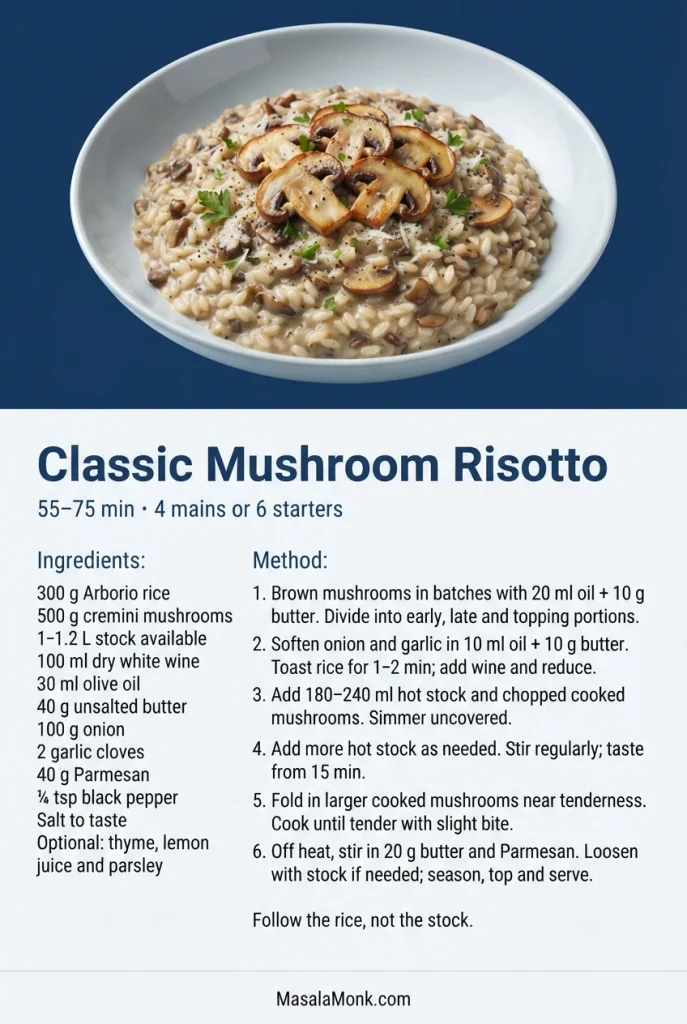
Classic Mushroom Risotto at a Glance
Once you’ve measured the ingredients, use this condensed cooking guide to follow the sequence from mushroom browning to the final Parmesan finish. The detailed method explains how to judge each stage.
Equipment You’ll Need
Choose a heavy-bottomed sauté pan or deep skillet with a wide, flat cooking surface, ideally around 28–30 cm (11–12 inches) across the top. A 24–26 cm (9½–10 inch) Dutch oven works too, although you may need smaller mushroom batches.
You’ll also need a 2-liter (about 2 US quarts) saucepan for the stock, a ladle, a spoon or spatula, a knife, a chopping board and a fine grater.
How to Make Mushroom Risotto Step by Step
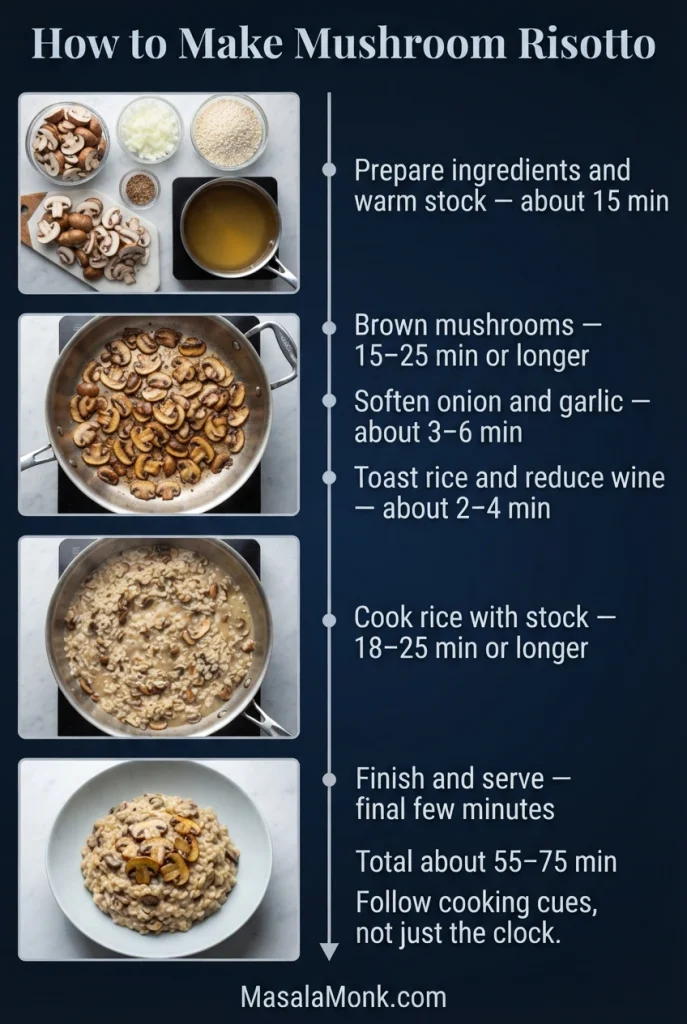
The sequence matters: prepare and brown the mushrooms first, then build the risotto in the same pan. Use the roadmap to estimate the timing before you begin the individual steps.
Step 1: Prepare the Mushrooms and Warm the Stock
Taste the stock, including any strained porcini soaking liquid you’ve already added. If it tastes too salty, dilute it with water before measuring out the cooking supply. Heat the stock to a gentle simmer, then lower the heat to keep it hot while you prepare the mushrooms. Have extra hot water available.
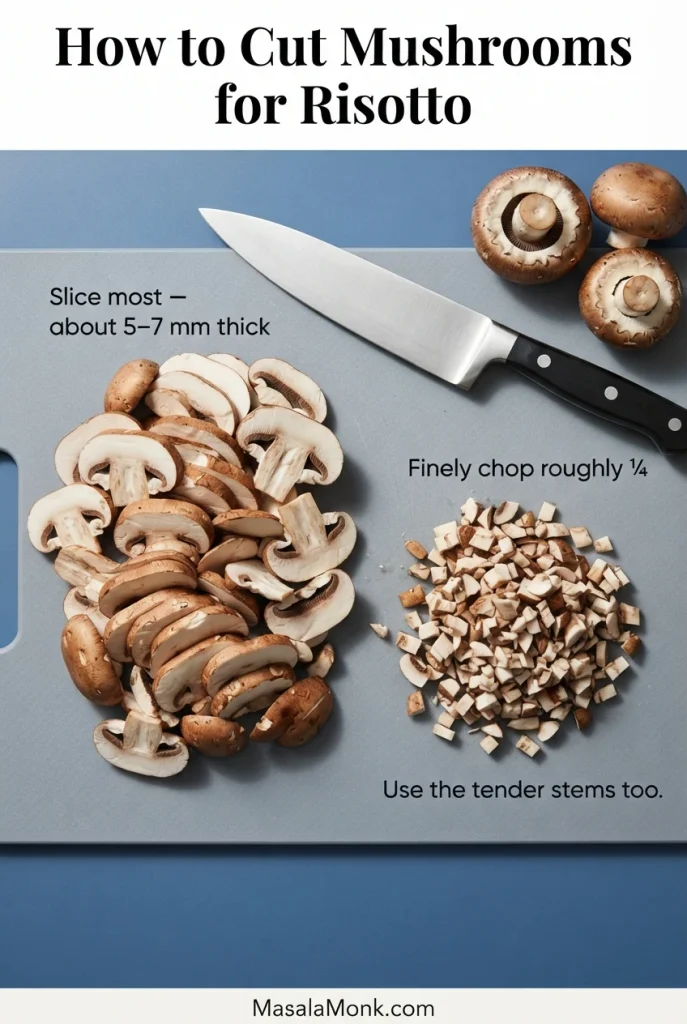
Brush away loose dirt or rinse the mushrooms briefly, then dry them thoroughly. For button or cremini mushrooms, finely chop roughly a quarter, including the tender stems, and slice the rest about 5–7 mm (roughly ¼ inch) thick. See the fresh mushroom selection and preparation guide for other varieties.
Chop the onion and garlic, grate the Parmesan and measure the remaining ingredients. Set aside the 20 g finishing butter and have your serving bowls ready.
Step 2: Brown the Mushrooms in Batches
Heat the main pan over medium-high heat. Use the 20 ml oil and 10 g butter set aside for the mushrooms. Save about a teaspoon of oil (or bacon fat, for that variation) and a small piece of butter for the chopped mushrooms. Share the rest between the sliced batches.
Add some of the cooking oil or fat and enough mushroom slices to cover the pan in a loose single layer. At first, they may look as though they’re boiling rather than frying. Stir occasionally while their water bubbles away.
Listen for the frying sizzle to return. Once it does, let the mushrooms sit against the hot pan briefly between turns. Their surfaces will begin to brown and develop that unmistakable roasted mushroom aroma.
Add the butter for each batch and a pinch of salt toward the end. Transfer the browned, thoroughly cooked slices to a plate and repeat. Finally, cook the chopped mushrooms in the remaining cooking fat and butter, adding the optional thyme during the last minute so its flavor carries into the rice. Cook shiitake thoroughly if using them.
Allow about 15–25 minutes overall, or longer for additional batches.
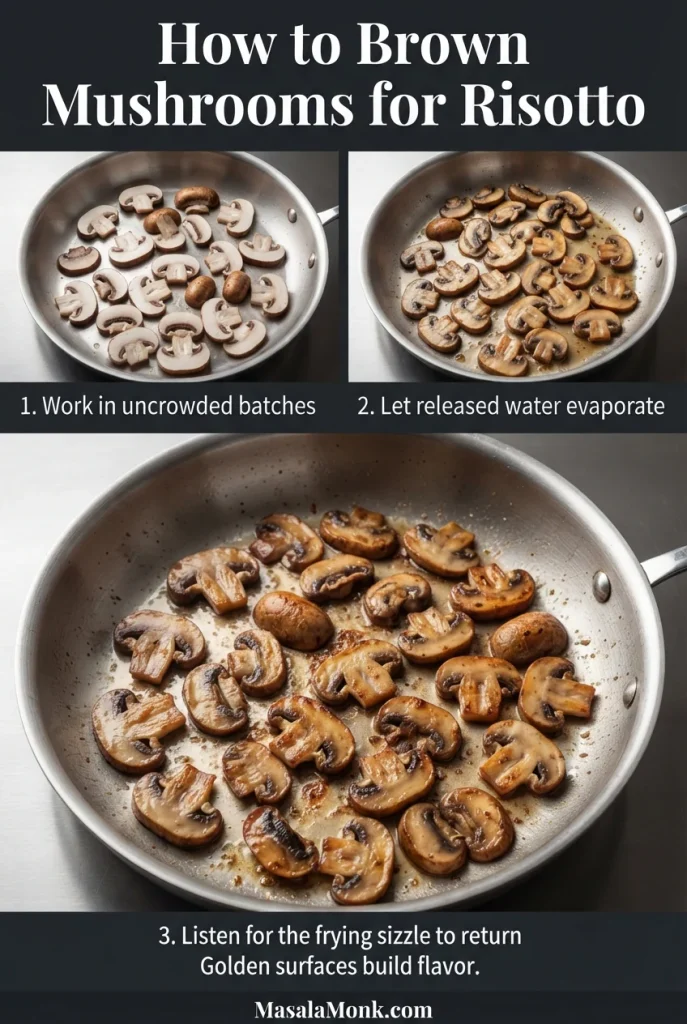
Too much mushroom liquid? Lift out the mushrooms, reduce their juices in the pan and return the pieces to finish browning.
Save the Browned Mushroom Fond, Not Burnt Residue
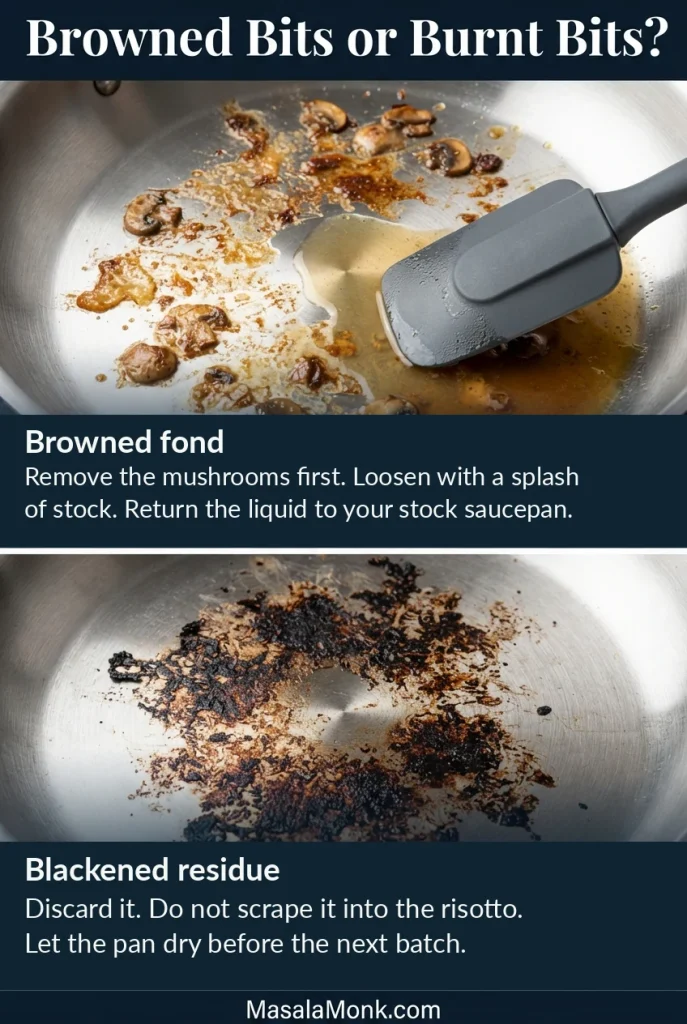
Browned bits getting too dark? Between batches, with the mushrooms removed, lower the heat and loosen the unburnt bits with 15–30 ml (1–2 tbsp) of the measured stock. Return that liquid to the stock saucepan and let the skillet dry before continuing. If deposits have burnt, take the pan off the heat, discard the burnt residue and clean the affected surface before resuming cooking.
Divide the Browned Mushrooms for Three Additions
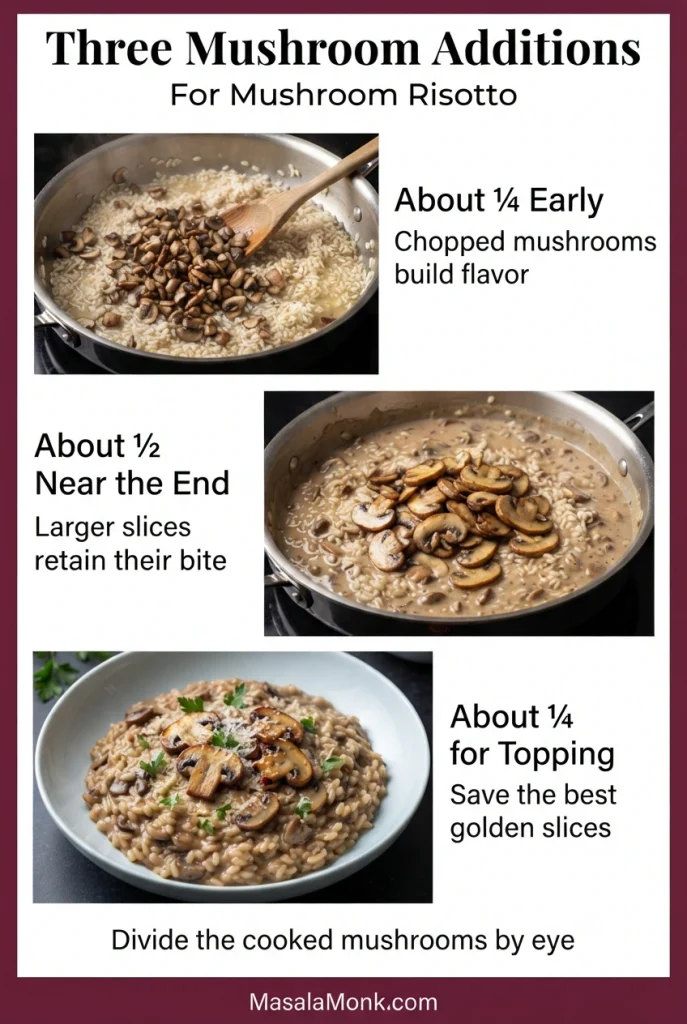
Divide the cooked mushrooms by eye into three portions:
- About one-quarter: Mostly chopped pieces to simmer with the rice.
- About half: Larger browned pieces to fold in near the end.
- The remaining quarter: A handful of the best slices for serving.
Keep the topping loosely covered while you cook the rice. For mushrooms prepared in advance, follow the make-ahead instructions.
Step 3: Soften the Onion and Garlic
Reduce the heat to medium-low or medium. Add the remaining 10 ml (2 tsp) olive oil and 10 g butter, followed by the onion or shallots.
Cook for 3–5 minutes, until the onion is soft and translucent. Next, stir in the garlic for 30–60 seconds, just until fragrant.
Step 4: Toast the Rice and Deglaze the Pan
Add the 300 g dry rice and stir for 1–2 minutes to coat the grains in the buttery onion mixture. Their edges may begin to turn translucent.
Pour in 100 ml white wine, or 100 ml extra stock in addition to the regular cooking supply for a wine-free risotto. Scrape up the savory browned bits left in the pan and let the liquid bubble down until very little remains, usually another 1–2 minutes.
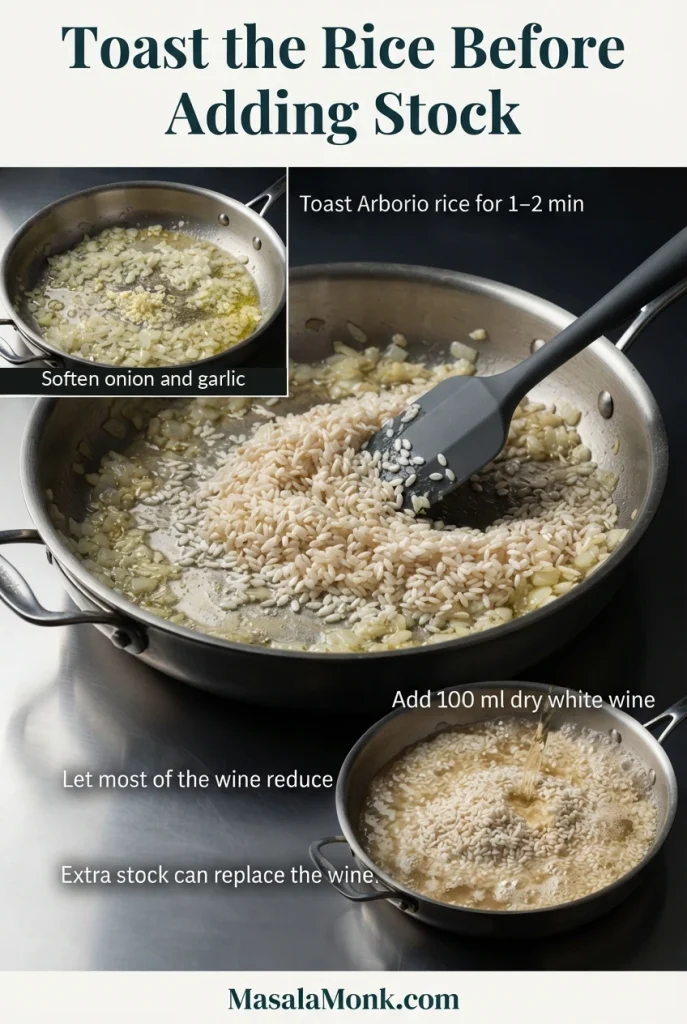
Step 5: Add Stock and the First Portion of Mushrooms
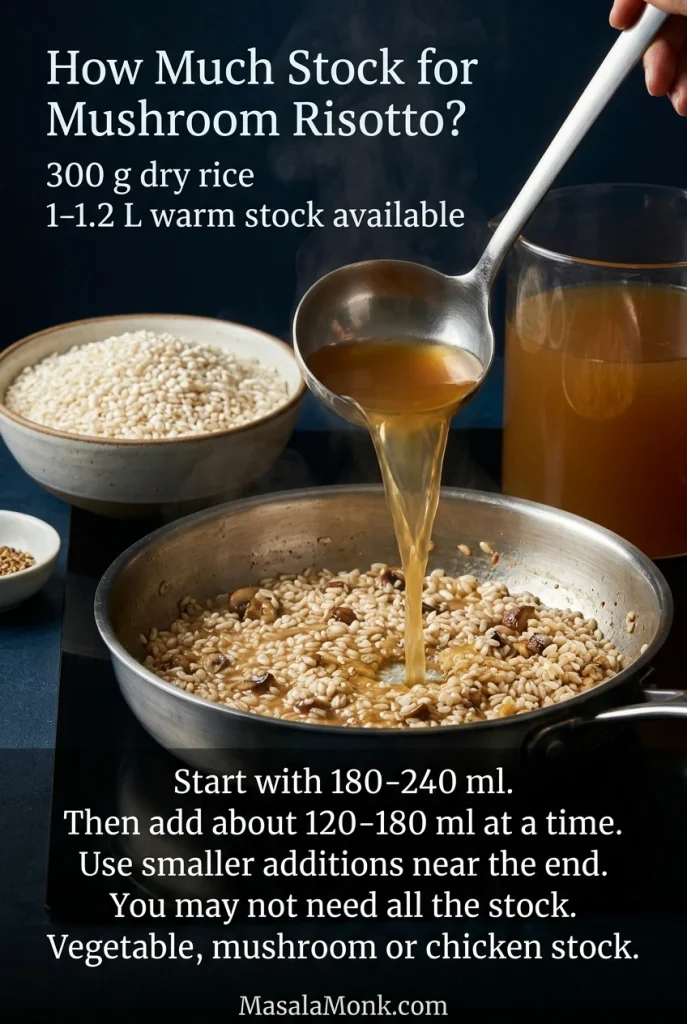
Pour in 180–240 ml (¾–1 US cup) hot stock and stir in the first of the three cooked mushroom portions, mostly the finely chopped pieces.
Cook uncovered over a gentle simmer, with small bubbles regularly breaking the surface.
As the liquid reduces, draw a spoon through the rice. When the bottom of the pan becomes briefly visible and the rice is still moist, add about 120–180 ml (½–¾ US cup) hot stock.
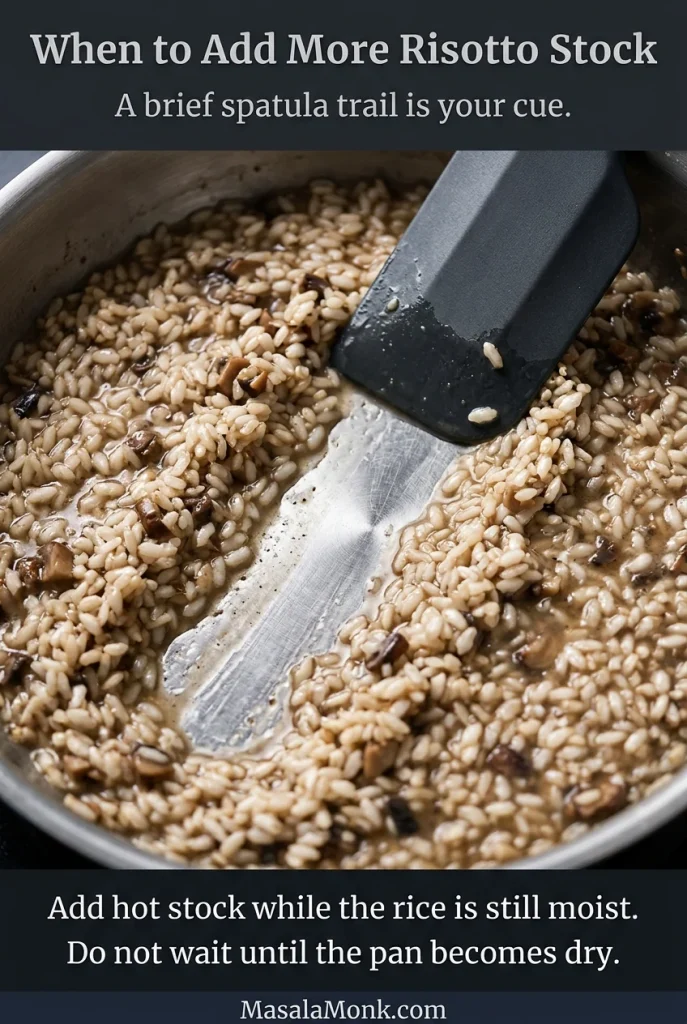
Stir after each addition and check the pan every minute or so, stirring more often as the liquid gets low. Regular stirring spreads the hot stock and released starch around the grains and helps prevent sticking.
Gradually, the thin stock will take on a creamy appearance. Use smaller additions as the rice approaches tenderness. If the risotto already tastes salty enough, switch to hot water for any further cooking liquid.
Step 6: Taste the Rice and Return More Mushrooms
Begin tasting the rice after about 15 minutes of simmering. It usually takes 18–25 minutes of simmering in total to become tender, although some batches take longer. Once the grains are nearly ready, fold in the larger portion of freshly browned mushrooms and let them heat through. If using refrigerated mushrooms prepared ahead, reheat them until steaming hot throughout before folding them in.
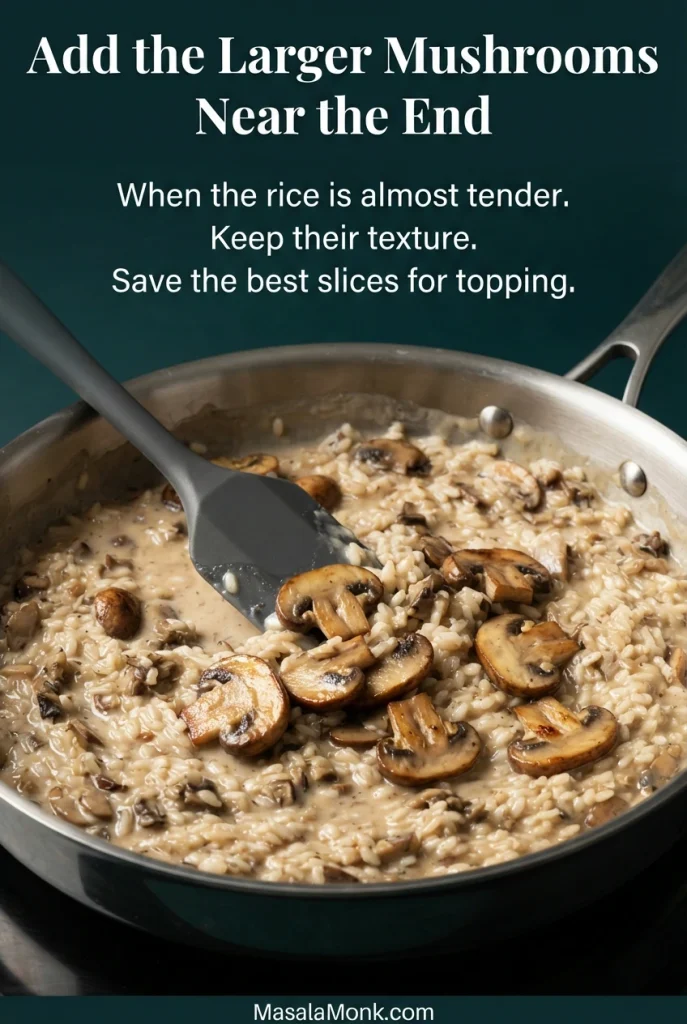
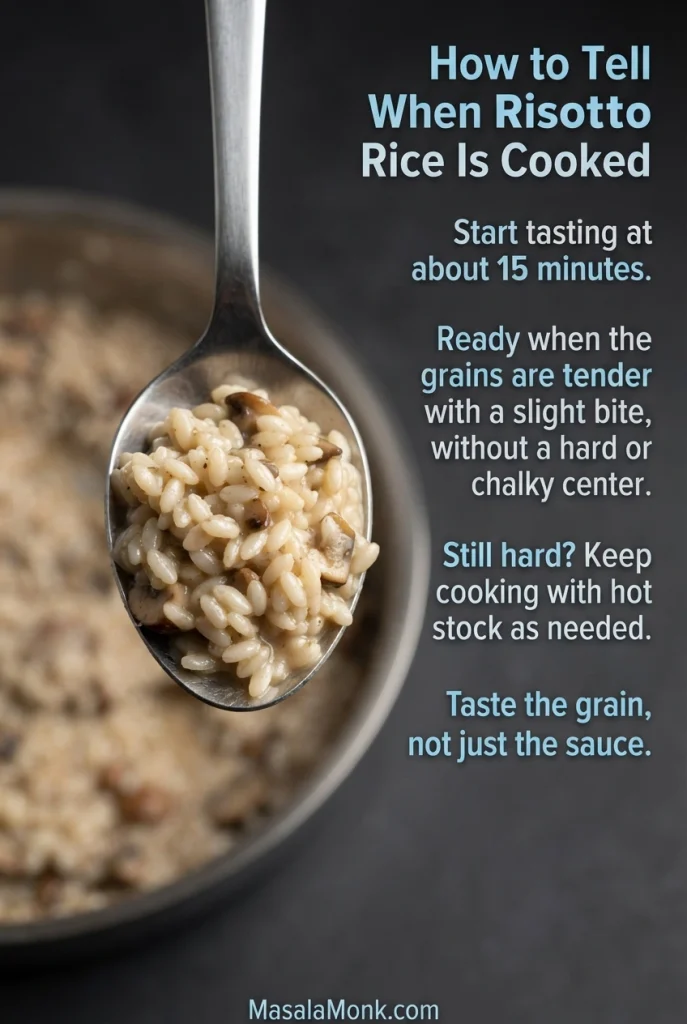
Bite into a grain. It should be tender with a slight firmness, but no hard or chalky center. If you are unsure, see how to tell when risotto rice is cooked.
Still crunchy? If the pan is nearly dry, add 60–120 ml (¼–½ US cup) hot stock or water. When plenty of liquid already surrounds the grains, simply continue simmering and taste again after a few minutes.
Follow the rice, not the stock. You may have some liquid left over. Stop simmering when the grains are tender and still surrounded by creamy liquid. Keep some hot stock for finishing, or use hot water if you’ve run out.
Have the topping ready before the rice reaches tenderness. Briefly warm freshly browned slices if they have cooled, or reheat previously refrigerated mushrooms until steaming hot throughout.
Step 7: Finish With Butter and Parmesan
Take the pan off the heat. If the rice looks stiff, loosen it with a splash of warm stock.
Stir in the reserved 20 g butter, followed by the 40 g finely grated Parmesan. Add the cheese gradually, tasting for saltiness before adding the rest. As you stir, the butter and cheese blend with the starchy liquid to form a glossy sauce around the grains. This finishing technique is central to making creamy risotto without cream.
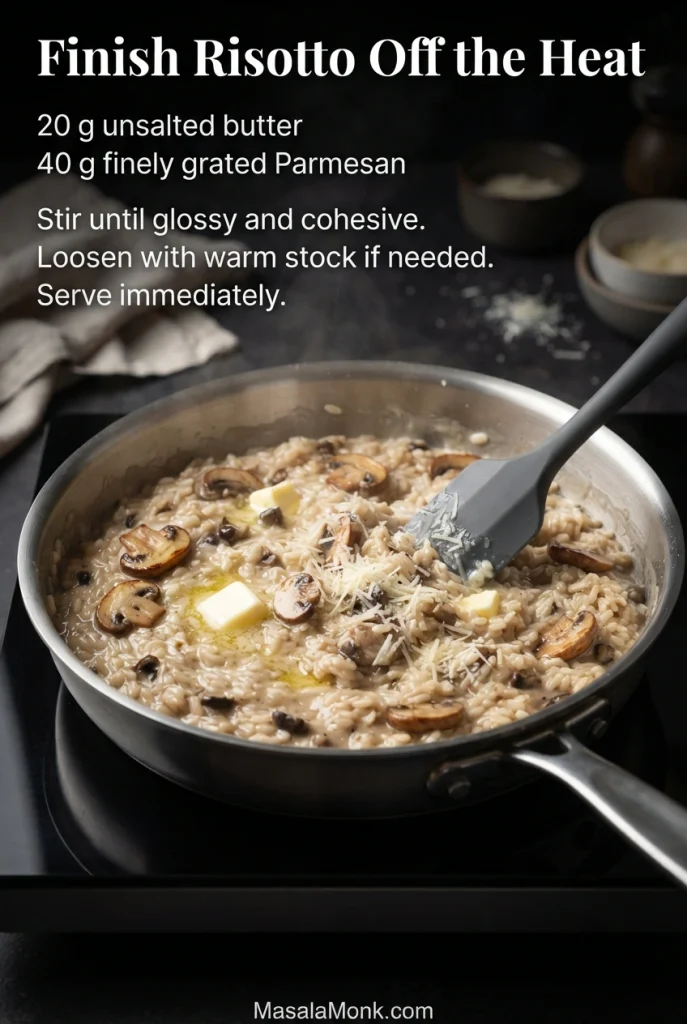
Finish the risotto slightly looser than you want it at the table. If it’s holding its shape in a mound, stir in 30–60 ml (2–4 tbsp) warm stock, adding only as much as you need.
Add the black pepper and adjust the salt. If the risotto tastes too rich, add 5 ml (1 tsp) lemon juice, taste and add another teaspoon if needed. The wine may already provide enough acidity.
Step 8: Check the Consistency and Serve
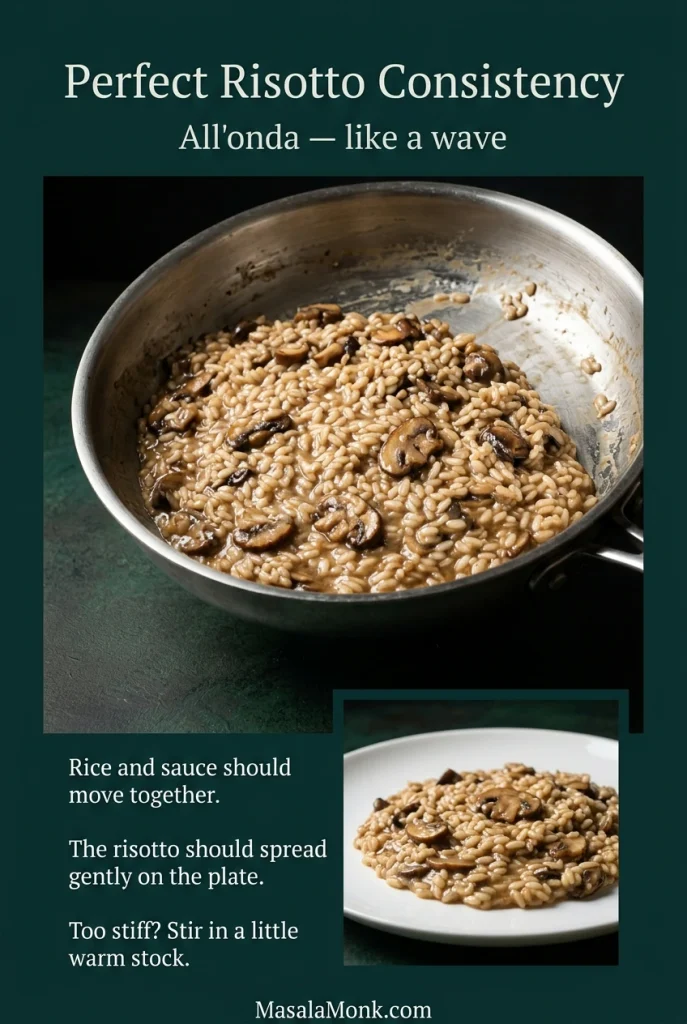
Gently tilt the pan. The rice and sauce should move together in a soft wave, without a stiff mound or separate pool of broth.
Ladle the risotto into warm, shallow bowls and divide the browned slices between them. Finish with parsley and freshly ground pepper, if using.
Bring the bowls straight to the table, before the sauce has time to thicken.
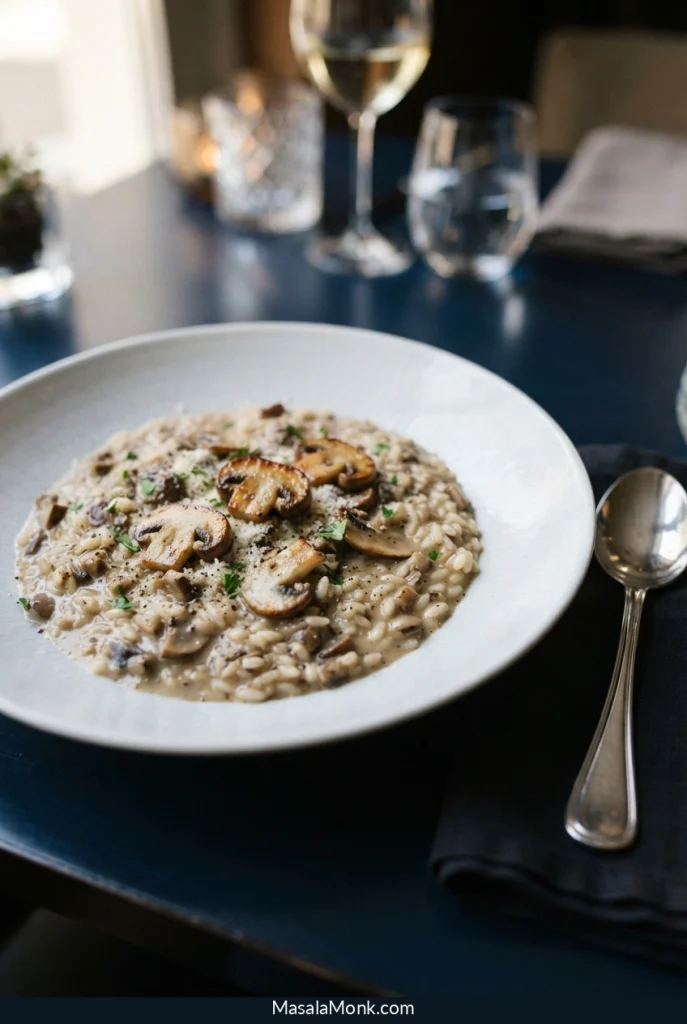
Still adjusting the texture? Check the finished consistency or go straight to the risotto troubleshooting guide.
Best Mushrooms for Risotto
Cremini have a fuller, earthier flavor than white button mushrooms, though either makes a good everyday risotto. Dried porcini are worth trying when you want a more pronounced mushroom aroma. A mixture of fresh varieties offers something different: tender oyster mushrooms, meaty portobello pieces or the natural chew of shiitake within the same bowl.
Choosing Fresh Mushrooms
| Mushroom | Flavor and texture | Preparation and cooking |
|---|---|---|
| White button | Mild and tender | Brown well to develop a deeper flavor. |
| Cremini / brown chestnut | Earthy, firm bite | Both caps and tender stems are usable. |
| Portobello | Large, meaty pieces | Cut into bite-sized pieces. Dark gills can color the rice. |
| Shiitake | Intensely savory and naturally chewy | Remove woody stems and cook thoroughly. |
| Oyster | Tender caps with delicate edges | Tear into pieces and brown without crowding. |
| Porcini | Distinctive woodland aroma | Use fresh when available, or dried to enrich the stock. |
| Chanterelle | Delicate texture and fruity aroma | Choose mild stock and restrained seasoning. |
Cremini are often sold as brown chestnut mushrooms in UK supermarkets. White button mushrooms, cremini and portobellos belong to the same species, with differences in strain, size and maturity.
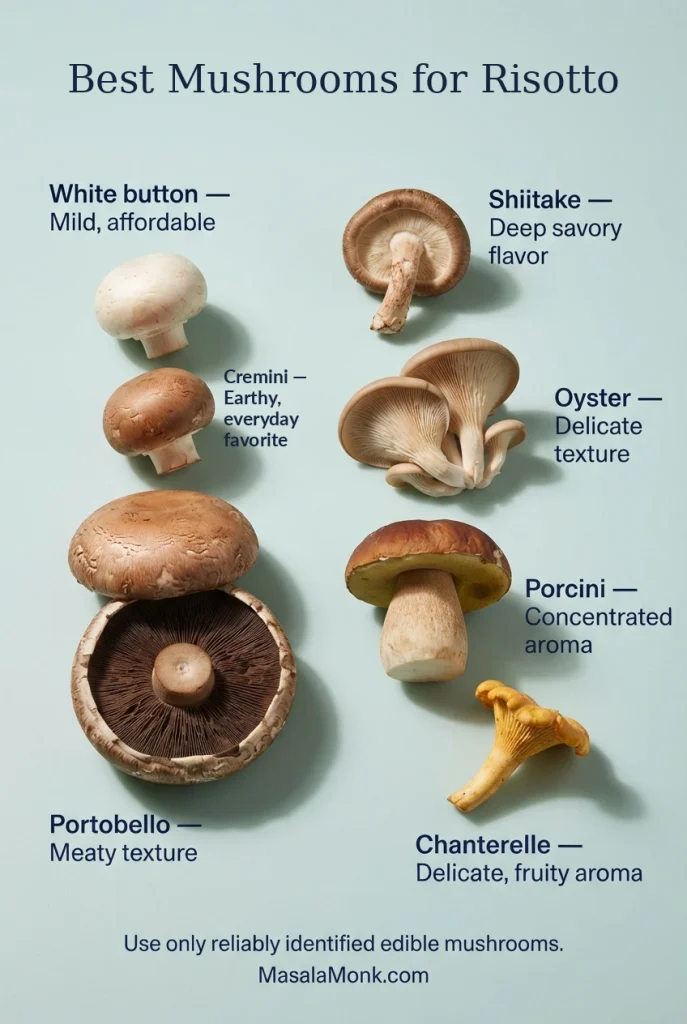
When mixing varieties, chop some cremini finely for the rice and leave oyster mushrooms in larger torn pieces, for example. Keep everything small enough to fit comfortably on a spoon. Cook delicate varieties separately when the thicker pieces need more time.
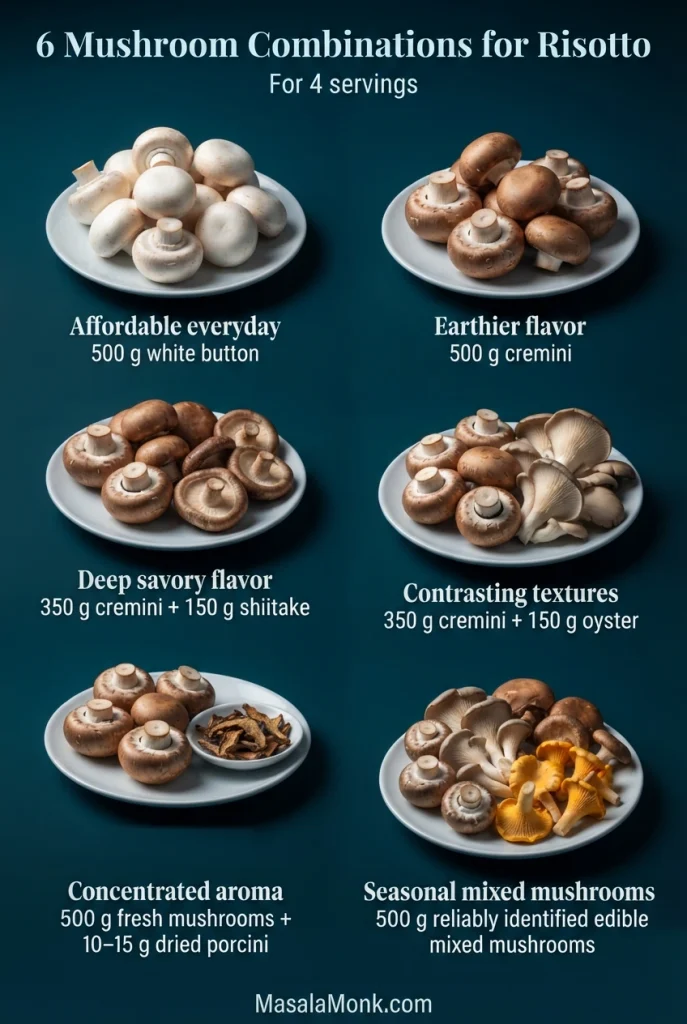
Mushroom Combinations for Four Servings
For four servings, keep the base ratio of 500 g usable fresh mushrooms to 300 g dry rice.
- Budget-friendly: 500 g (about 1.1 lb) white button mushrooms.
- Earthy everyday risotto: 500 g cremini or brown chestnut mushrooms.
- Deep savory flavor: 350 g (about 12 oz) cremini and 150 g (about 5 oz) shiitake.
- Mixed mushroom risotto: 350 g cremini and 150 g oyster mushrooms for contrasting textures.
- Porcini mushroom risotto: 500 g fresh mushrooms plus 10–15 g (about ⅓–½ oz) dried porcini.
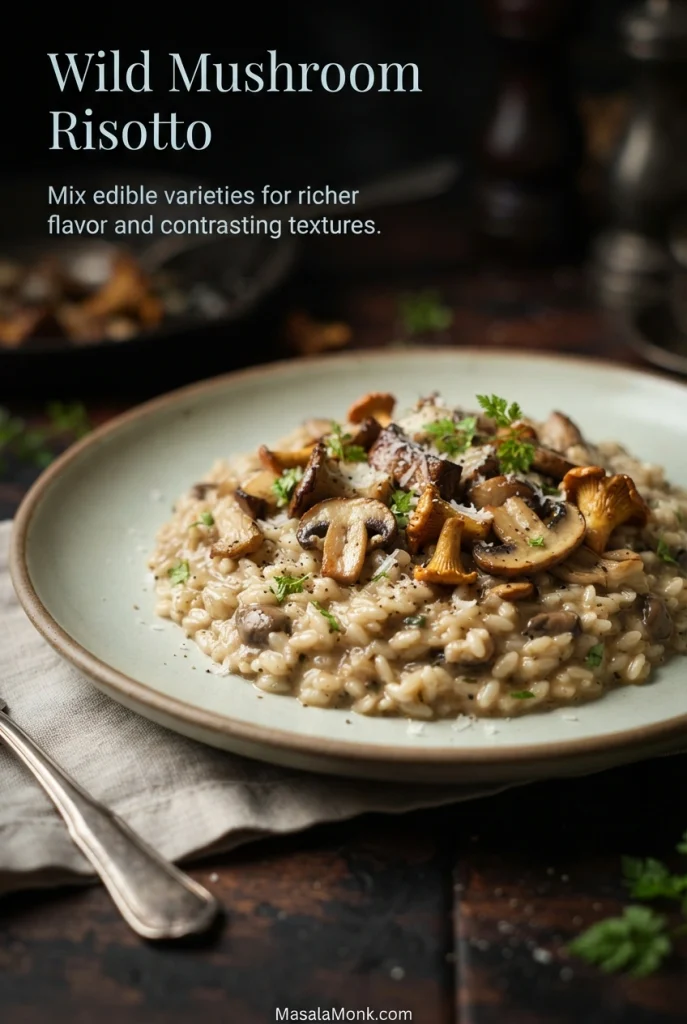
- Wild mushroom risotto: 500 g mixed edible wild and cultivated mushrooms, chosen according to seasonal availability.
Making Wild Mushroom Risotto
Only use wild mushrooms identified as edible by a qualified expert or obtained from a reliable supplier. Never cook mushrooms of uncertain identity.
Use the same 500 g total of usable fresh mushrooms and the main risotto method. Brown different varieties separately when their thickness or moisture differs.
How to Use Dried Porcini in Mushroom Risotto
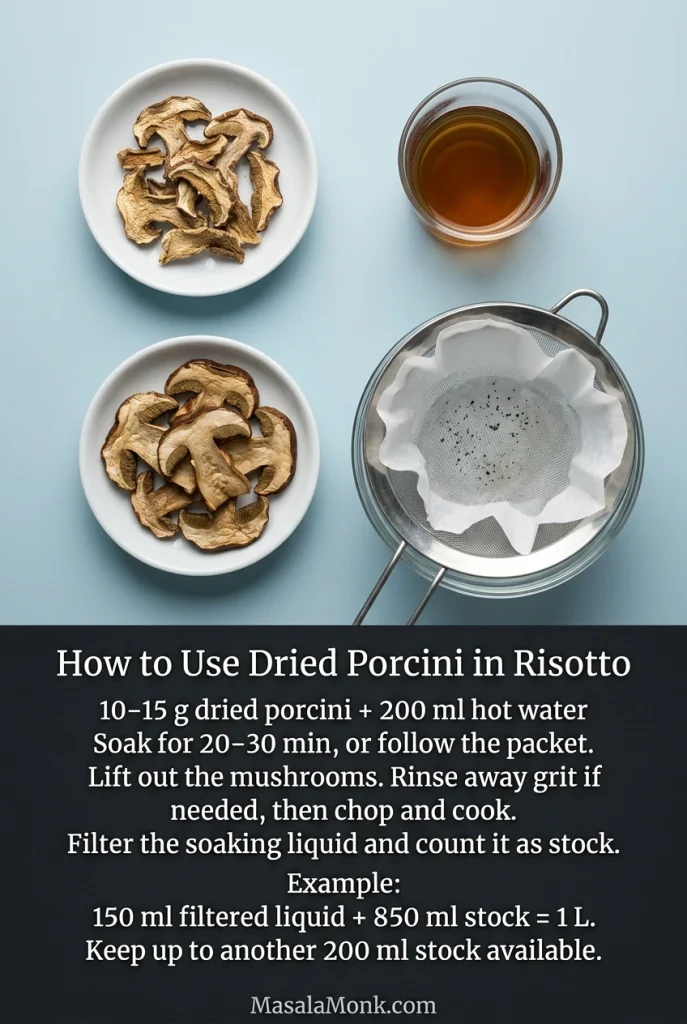
With dried porcini, the soaking water is almost as useful as the mushrooms themselves. It takes on a deep aroma that can flavor the entire pan of rice. For four servings, start with 10–15 g dried porcini in addition to the fresh mushrooms.
- Cover the dried porcini with 200 ml (6.8 US fl oz) hot water.
- Soak for 20–30 minutes, or according to the package directions. Meanwhile, prepare the other ingredients.
- Lift out the softened mushrooms, leaving the sediment behind. Check for grit, rinse briefly if necessary and chop.
- Filter the soaking liquid through a paper coffee filter or a fine sieve lined with clean cheesecloth.
- Combine the filtered liquid with the stock and warm it in Step 1.
- Cook the rehydrated porcini thoroughly with the chopped fresh mushrooms in Step 2, following the package’s cooking directions. Work in a separate small batch if needed to avoid crowding.
Count the soaking liquid as part of the stock. For example, 150 ml filtered porcini liquid plus 850 ml ordinary or mushroom-enriched stock gives you 1 liter. Have up to another 200 ml stock available, keeping the combined supply at 1–1.2 liters.
Can You Use Frozen or Canned Mushrooms?
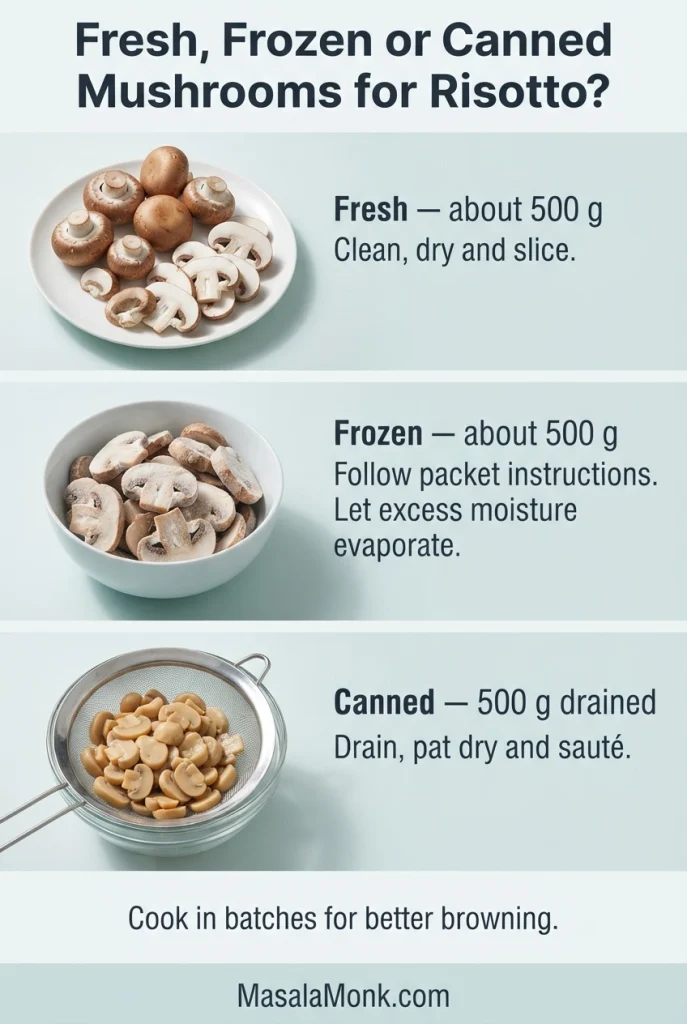
Frozen mushrooms: Substitute 500 g plain frozen mushrooms for fresh. Follow the package’s cooking directions and allow their extra water to evaporate before browning. They tend to be softer, so using some fresh mushrooms for the topping helps. Keep the combined quantity around 500 g.
Canned mushrooms: Use 500 g drained canned mushrooms, or combine canned and fresh mushrooms to make about 500 g in total. Pat dry before sautéing. Expect softer pieces and less roasted flavor; mushroom stock or prepared dried porcini can deepen the mushroom flavor.
Oil-preserved mushrooms work better as a small addition. Strongly pickled or vinegared mushrooms can make the whole risotto too acidic.
Getting More Mushroom Flavor From Cooking Juices
When mushrooms release a surprising amount of water, pouring it away may seem like the quickest route to browning. But that liquid contains flavor worth keeping, as do the browned bits left on the pan.
- Fresh mushroom juices: Reduce them in the pan so their flavor becomes concentrated and the mushrooms can brown.
- Stock used to deglaze the pan: Save the liquid from loosening fragrant, unburnt browned bits. Return it to the cooking stock.
- Dried mushroom soaking water: Filter out the sediment and use the liquid as part of the stock.
The same principle of reducing mushroom juices before adding other liquids helps build flavor in a creamy mushroom sauce.
Cooking mushrooms and cooking rice require almost opposite approaches to moisture. The mushrooms need to lose their excess water before they brown. By contrast, the rice needs a steady supply of liquid to soften and create the sauce.
Back to ingredients · Return to mushroom browning
Best Rice and Stock for Mushroom Risotto
Arborio, Carnaroli and Other Rice Choices
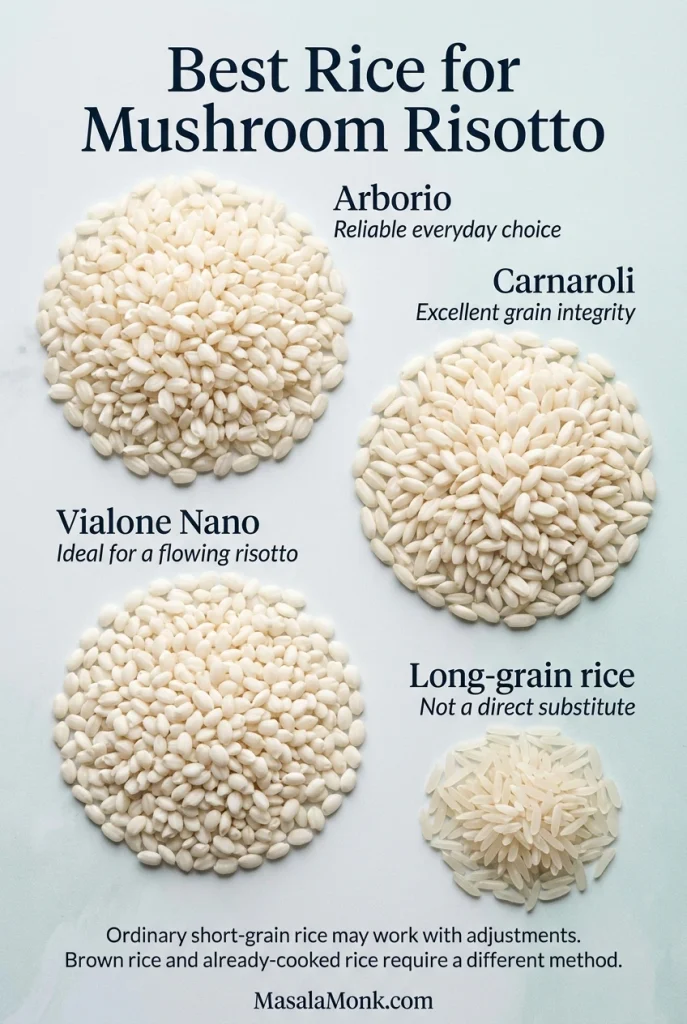
The right rice matters more than an expensive bottle of wine. Arborio is easy to find and gives you a creamy risotto. Carnaroli tends to retain its bite for longer as it cooks, giving you more room to judge when the rice is ready.
| Rice variety | Suitability for risotto |
|---|---|
| Arborio | Widely available; produces a creamy sauce around plump grains. |
| Carnaroli | Retains its shape well and is relatively forgiving. |
| Vialone Nano | A traditional Italian choice for loose, flowing risotto. |
| Ordinary short-grain or sushi rice | Can produce a creamy rice dish, but tends to be stickier and may need different liquid quantities. |
| Basmati or jasmine | Not a direct substitute for classic risotto rice. |
| Brown rice | Requires a different liquid ratio and longer cooking method. |
Leave the rice unrinsed for this stovetop recipe. The starch helps thicken the cooking liquid, though proper cooking and finishing matter more than rinsing alone.
For the traditional technique without mushrooms, see the classic Italian risotto recipe. If all you have is ordinary long-grain rice, consider a mushroom stroganoff served over that rice instead.
How Much Stock Do You Need, and Which Kind?
Have 1–1.2 liters of stock ready for 300 g dry risotto rice. You may not use it all. A wider pan can lose moisture faster, and different rice varieties absorb different amounts.
Choose a savory stock that lets the mushrooms stand out. A broth dominated by strong herbs or sweet vegetables can overpower even well-browned mushrooms.
- Vegetable stock: The everyday choice. Look for a mild, balanced flavor.
- Mushroom stock: Deepens the flavor of mild mushrooms.
- Chicken stock: Adds savory richness. Choose a mild one.
- Beef stock: Suits robust, meaty mushrooms but may overwhelm delicate varieties.
Ready-made stock, homemade broth and bouillon are all fine. Taste your stock before cooking: as water evaporates, the salt becomes more concentrated.
A Simple Mushroom-Enriched Stock
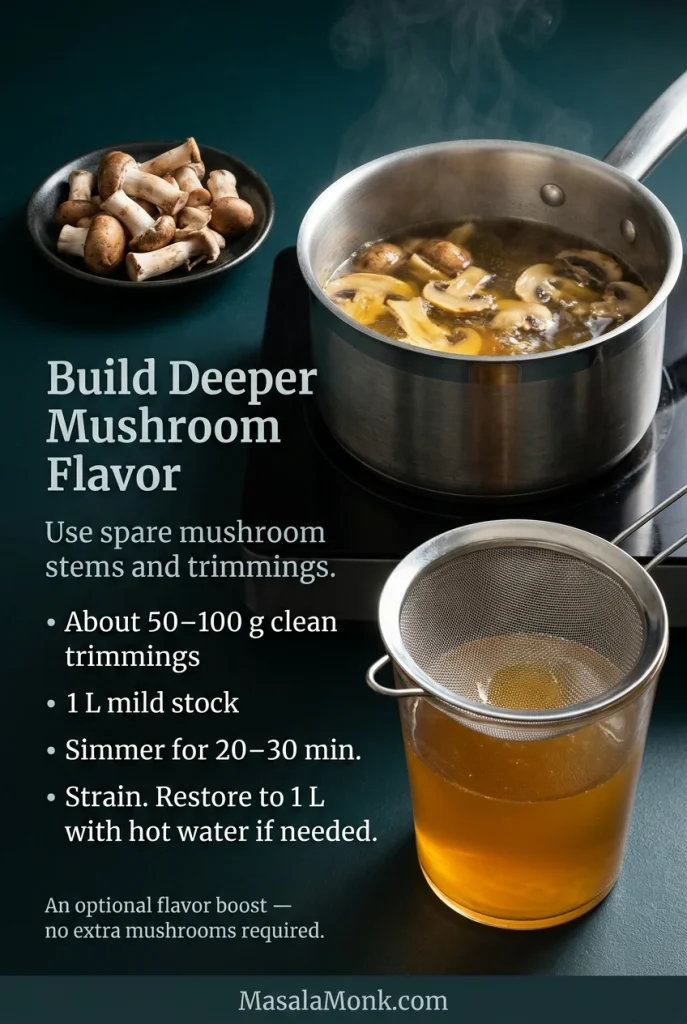
Those woody shiitake stems that are too tough to eat can still flavor a broth. If you have 50–100 g (about 2–3½ oz) clean mushroom stems or spare trimmings, simmer them in 1 liter low-sodium stock for 20–30 minutes, with an optional sprig of thyme.
Strain and top up with hot water to restore the volume to about 1 liter. Have up to another 200 ml stock available for cooking and finishing.
Use spare trimmings here, keeping your full 500 g mushrooms for the risotto. There’s no need to buy additional mushrooms specifically for stock.
How to Make Mushroom Risotto Creamy Without Cream
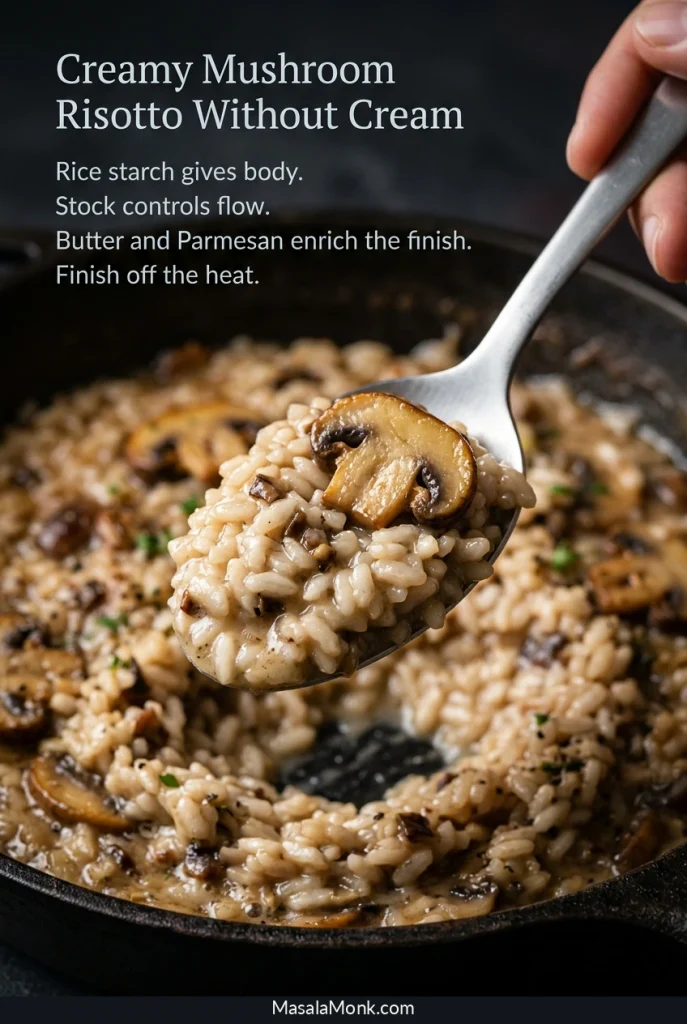
As the rice cooks, its starch gradually thickens the stock. That’s the foundation of creamy risotto, long before any butter or Parmesan goes in. Once the grains are tender, enough liquid needs to remain for the sauce to flow around them.
Stirring butter and cheese into the hot rice off the heat is an Italian finishing technique called mantecatura. The fat enriches the starchy liquid, helping bring everything together into a glossy, cohesive sauce. More dairy alone won’t create that texture.
How to Tell When Risotto Rice Is Cooked
A properly cooked grain feels tender when you bite into it, but still offers slight resistance. This is al dente. A hard, chalky center needs more cooking, while grains that break easily and collapse into a soft paste have gone too far.
What Finished Risotto Should Look Like
The Italian expression all’onda means in a wave. Tilt the pan and the rice should move with its sauce. Spoon some onto a shallow plate and it should spread and settle under its own weight.
Loose risotto isn’t the same as watery risotto. A good sauce coats the grains and moves with them, leaving no separate pool of thin broth around the edges.
Back to recipe · Review the finishing step
Mushroom Risotto Troubleshooting and Fixes
Taste the grain before trying to fix the sauce. Hard rice needs more cooking; tender rice in a stiff sauce may just need a splash of stock.
These rescue quantities are for four servings. For two servings, start with half as much liquid.
Hard Rice, Gluey Risotto or Too Much Liquid?
| What you see or taste | What to do now |
|---|---|
| Hard rice in a dry or thick sauce | Add 60–120 ml hot stock or water. Simmer and taste again. |
| Hard rice with plenty of liquid | Continue simmering before adding more stock. |
| Tender, distinct grains in a thick sauce | Take off the heat and gradually add 30–60 ml warm stock. |
| Tender rice with pooled thin broth | Stop adding stock. Reduce briefly if the grains can tolerate more cooking. |
| Gluey, soft or breaking grains | Stop cooking. Overcooked grains won’t regain their bite. |
| Rice beginning to stick | Lower the heat, add a splash of warm liquid and gently release the grains. |
| Rice scorching on the bottom | Transfer unaffected rice to a clean pan without scraping the burnt layer. A burnt taste throughout the dish may not be recoverable. |
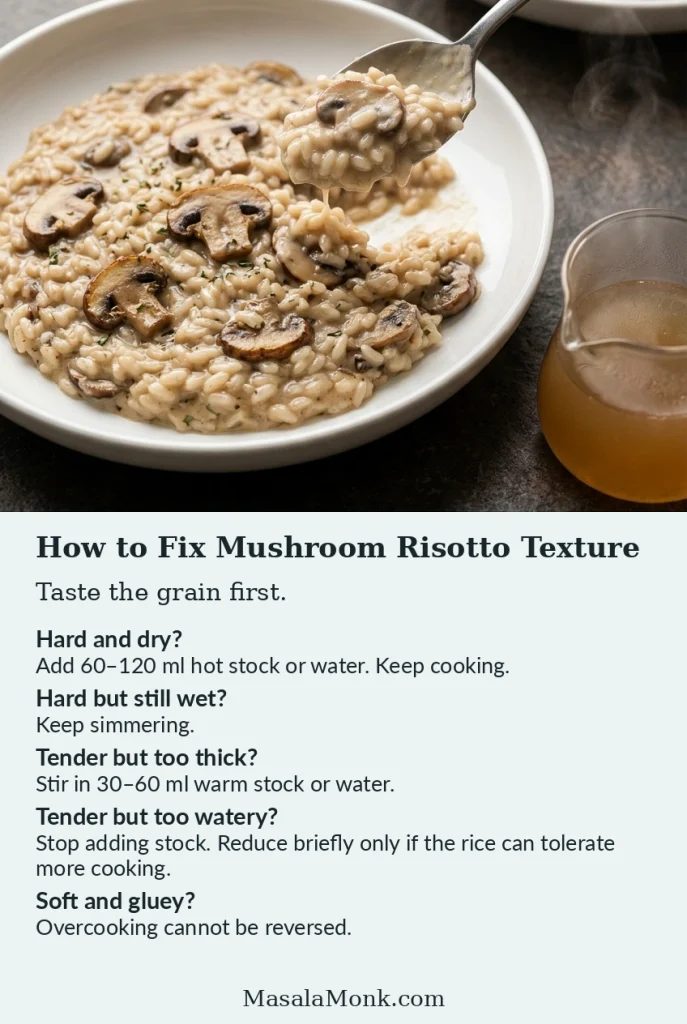
Still crunchy after 30 minutes? Keep cooking. Check that enough liquid surrounds the grains and that it’s gently simmering. A barely bubbling pan may need more heat, while a vigorous boil can evaporate the stock too quickly.
When the grains are already tender but thin broth remains pooled around them, further simmering may overcook the rice. As a last resort, spoon away some excess broth, leaving the creamy liquid behind.
Slightly overcooked risotto that still tastes good can be served as it is. Alternatively, cool and store it safely for rice cakes the following day if its texture is suitable.
Watery, Chewy or Gritty Mushrooms
Too much water in the pan: Some released moisture is normal. If the mushrooms are swimming in liquid, lift them out, reduce their juices and finish browning in smaller batches.
Rubbery or tough mushrooms: Shiitake naturally have more chew than many other varieties. Cook genuinely underdone pieces further in a separate pan. Woody stems and already shriveled, overcooked pieces are unlikely to improve.
Gray or brown risotto: Portobello gills, mushroom juices and browned bits from the pan naturally color the rice. A darker mushroom risotto can taste just as good. Judge it by flavor and texture, not by whether it matches a photograph.
Gritty dried mushrooms: Grit is difficult to remove once mixed into the rice. Next time, lift the softened mushrooms away from the sediment and carefully filter their soaking liquid.
How to Fix Mushroom Risotto Flavor and Seasoning
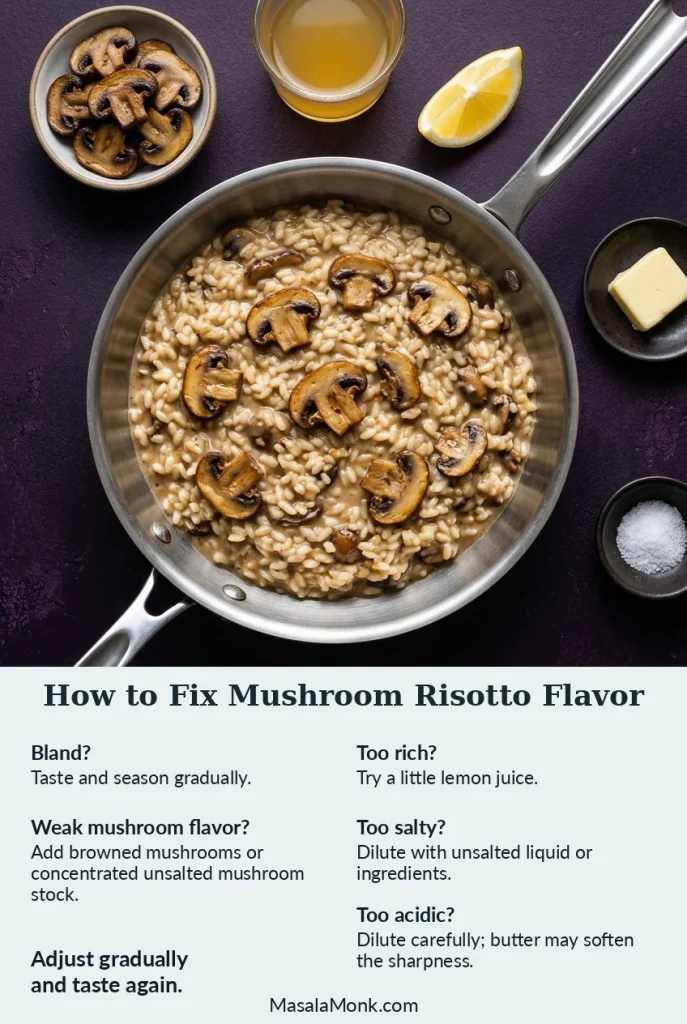
Weak mushroom flavor: Fold in extra well-browned mushrooms or a little concentrated, unsalted mushroom stock if the sauce isn’t already too loose. Next time, try cremini with shiitake or dried porcini. Cream adds richness, not more mushroom flavor.
| Problem | Practical fix |
|---|---|
| Flat or underseasoned | Check the salt first. Parmesan adds savory depth if the rice isn’t already salty enough. |
| Too rich or heavy | Start with a teaspoon of lemon juice to balance the richness. |
| Too salty | Use unsalted liquid for further cooking, or fold in unsalted cooked mushrooms or rice. |
| Wine or lemon tastes too sharp | Unsalted stock can dilute the acidity. Butter can soften the sharp taste but won’t remove the acid. |
| Parmesan forms clumps | Remove from the heat and gently stir in warm stock. Severe clumping may not reverse. |
| Butter or oil separates | Off the heat, stir in a splash of warm stock to help bring the sauce together. |
Severely oversalted risotto may need to be combined with a separately prepared unsalted portion. Excess water can spoil the texture, while boiling it down again concentrates the salt. A potato won’t selectively remove the excess salt, either.
Easy Mushroom Risotto Without Wine
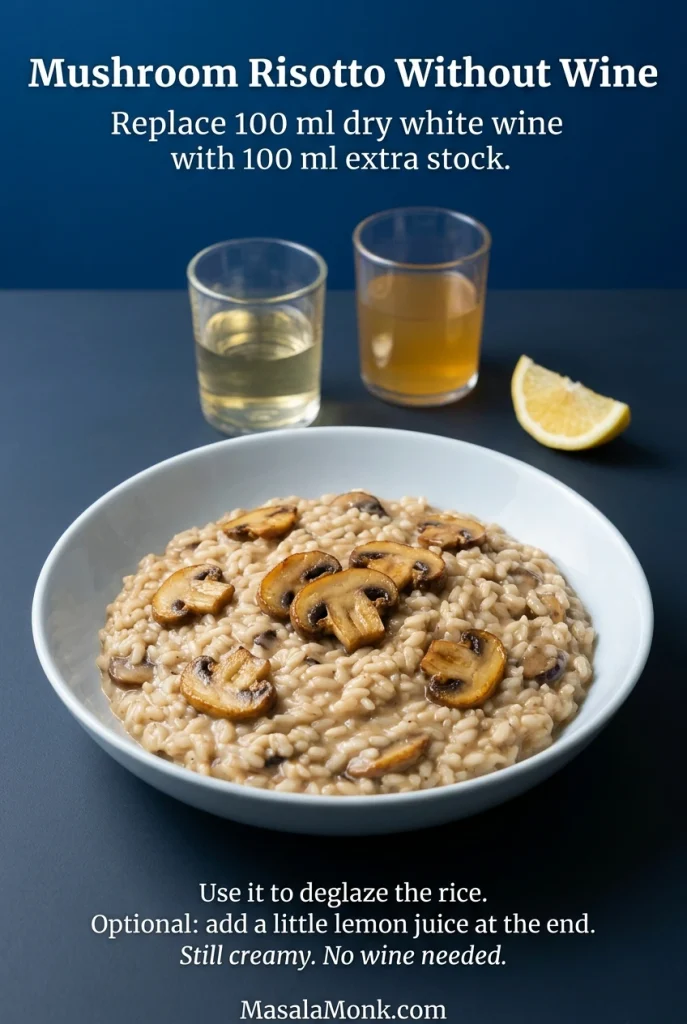
To make this mushroom risotto recipe without wine, replace the 100 ml white wine with 100 ml extra low-sodium stock. Add it after toasting the rice to loosen the browned bits. This is in addition to the regular 1–1.2 liters of cooking stock.
Wine brings aroma and acidity, but you don’t need to open a bottle just to make dinner. After finishing with butter and Parmesan, taste the risotto. Start with 5 ml (1 tsp) lemon juice if it needs brightness, then add another teaspoon if needed.
If you’re avoiding alcohol completely, use the extra stock instead of wine from the beginning. Cooking doesn’t guarantee that all the alcohol in wine disappears.
Mushroom Risotto Recipe Variations
The quantities below are for four servings. Keep the main rice-to-mushroom ratio and cooking method unless otherwise specified, adjusting the stock and seasoning to suit the additional ingredients.
Mushroom Risotto With Peas, Spinach or Asparagus
Adding vegetables near the end of cooking helps preserve their color and texture. Peas and baby spinach can cook in the risotto, whereas asparagus benefits from a quick sauté beforehand.
Mushroom and Pea Risotto
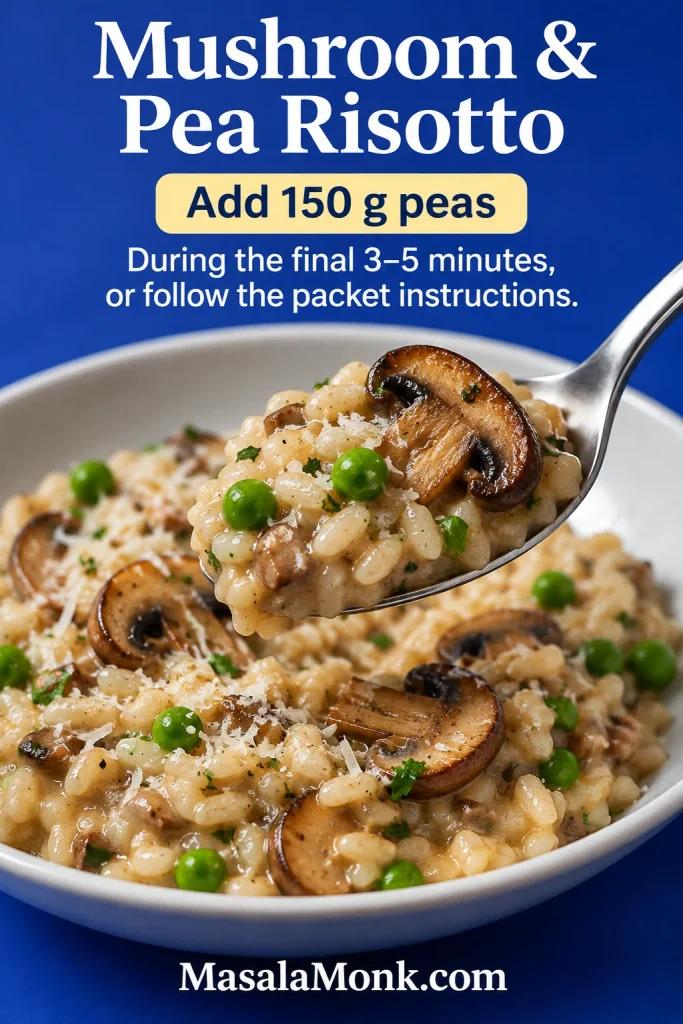
Peas bring little bursts of sweetness to the savory rice and are especially good with shiitake. Add 150 g (about 1 US cup) fresh or frozen peas during the final 3–5 minutes of simmering. Cook until hot and tender. If frozen peas require longer according to the package directions, cook them separately beforehand and fold them in near the end.
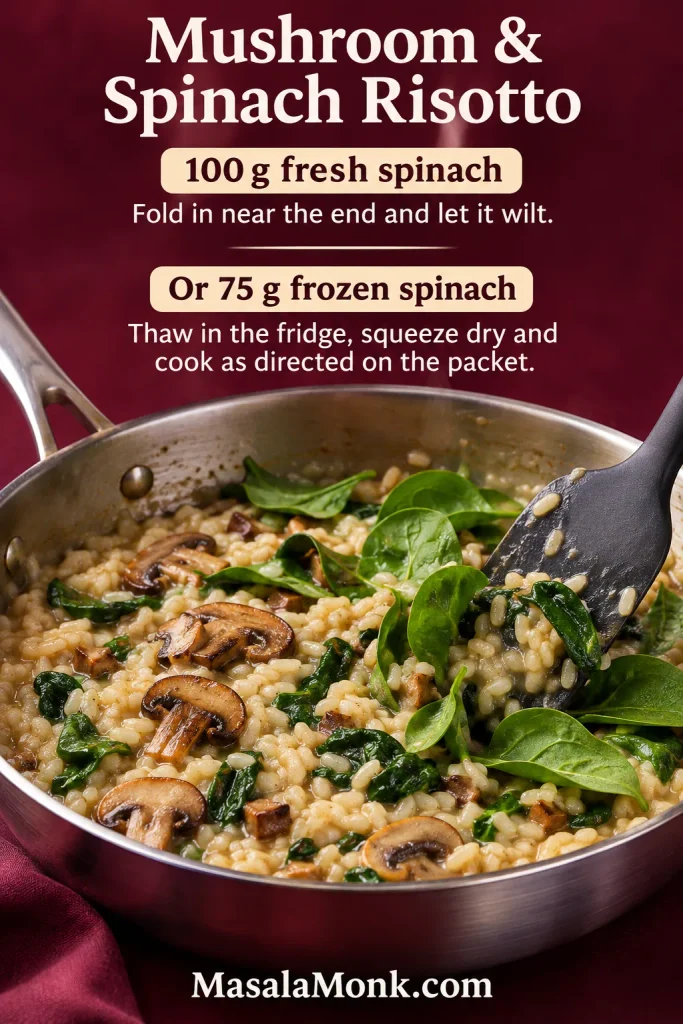
Mushroom and Spinach Risotto
Fold 100 g (about 3½ oz) fresh baby spinach into the rice during its final 1–2 minutes. Let the leaves wilt before adding the butter and cheese.
For frozen spinach, use 75 g (about 2½ oz), weighed before thawing. Thaw in the refrigerator, squeeze out excess water and cook according to the package directions before starting the rice. Fold in near the end and heat through.
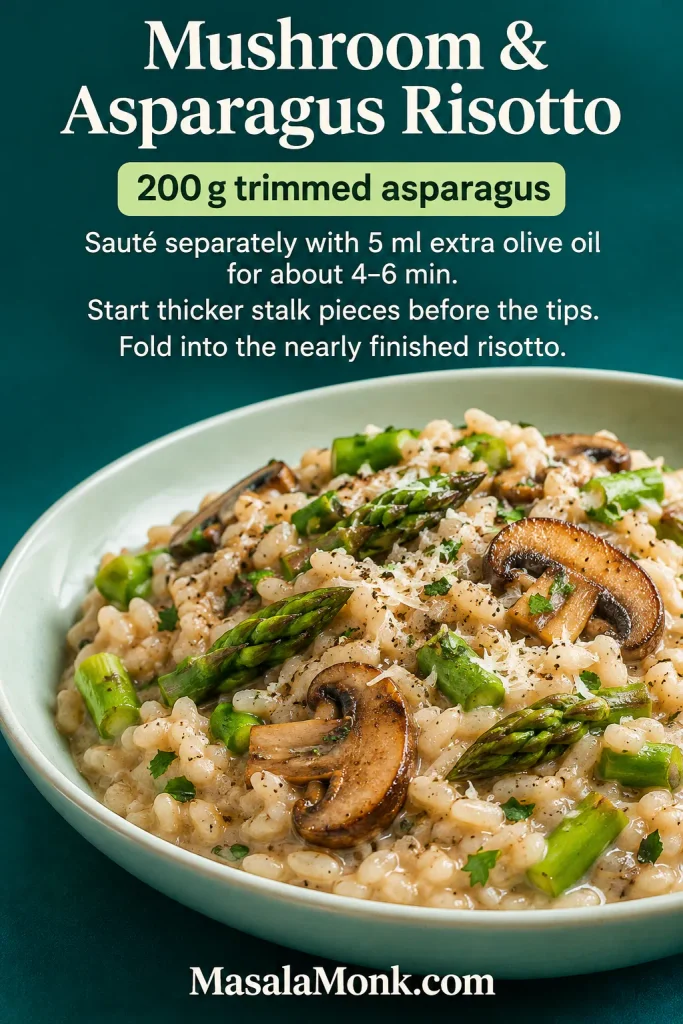
Mushroom and Asparagus Risotto
Trim 200 g (about 7 oz) asparagus and cut the stalks into 3 cm (1¼ inch) pieces. Before starting the rice, sauté them in 5 ml (1 tsp) extra olive oil for 4–6 minutes. Check thin stalks early and add the tips once the thicker pieces begin softening.
Keep the asparagus slightly crisp. Set it aside, then fold it into the nearly tender rice and heat through.
Leek, Bacon and Truffle Variations
For a different flavor rather than extra vegetables, change the aromatic base, introduce smoky or savory bacon, or add a little truffle oil at the finish.
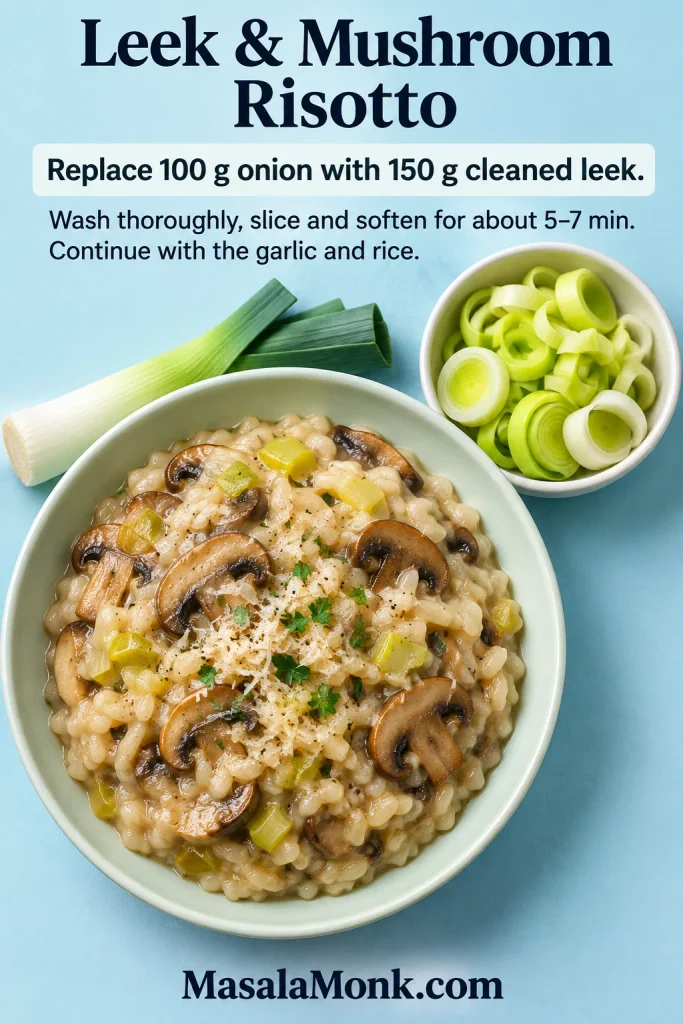
Leek and Mushroom Risotto
Leeks give the rice a gentler, sweeter onion flavor that suits delicate mushrooms. Replace the onion with 150 g (about 5 oz) cleaned, thinly sliced leek, using the white and tender pale-green parts. Wash away any grit between the layers and soften gently for 5–7 minutes before adding the garlic and rice.
To make risotto without onion, leek or garlic, omit whichever ingredient you need to avoid. Check packaged stock and seasonings if avoiding these ingredients for dietary reasons.
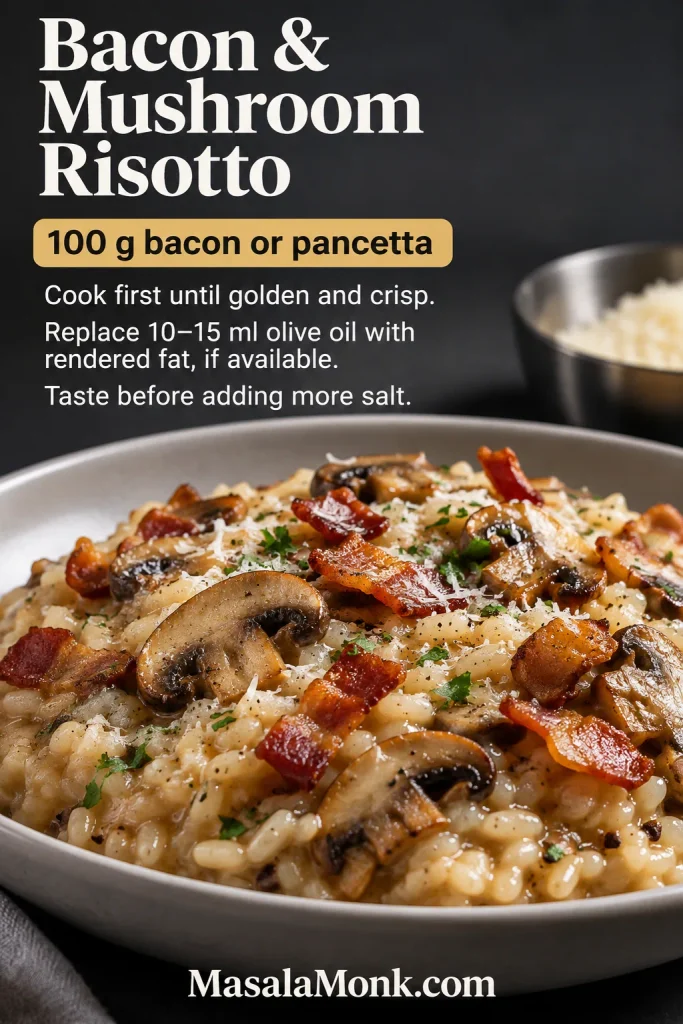
Bacon and Mushroom Risotto
Cook 100 g (about 3½ oz) chopped bacon or pancetta until crisp before browning the mushrooms. Remove the bacon and keep 10–15 ml (2–3 tsp) rendered fat, or less if that’s all it releases. Use it in place of an equal amount of the oil for browning the mushrooms. Drain the surplus and remove any burnt residue.
Fold some bacon into the rice near the end and scatter the rest over the bowls. Between the bacon and Parmesan, you may already have enough salt.
Truffle Mushroom Risotto
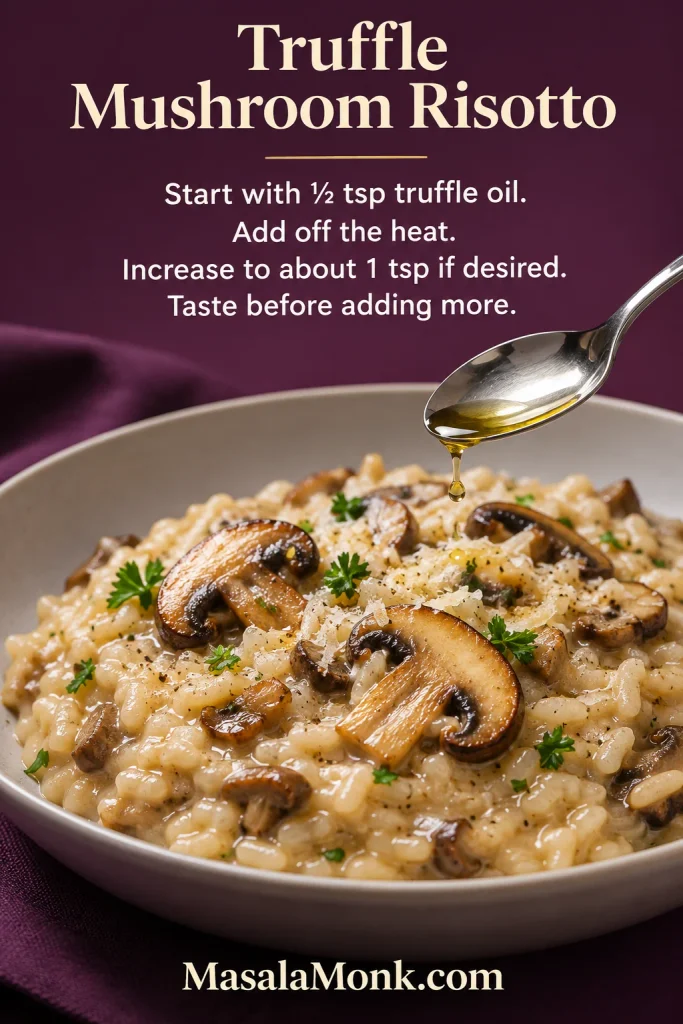
Make the main mushroom risotto recipe, then add ½ tsp truffle oil off the heat after finishing with butter and Parmesan. Taste before increasing to about 1 tsp for the whole batch, since the strength of truffle oil varies considerably.
Alternatively, replace some or all of the 20 g finishing butter with truffle butter. Cremini and porcini make a good foundation, although you can also use one of the other mushroom combinations.
Vegetarian and Vegan Mushroom Risotto Options
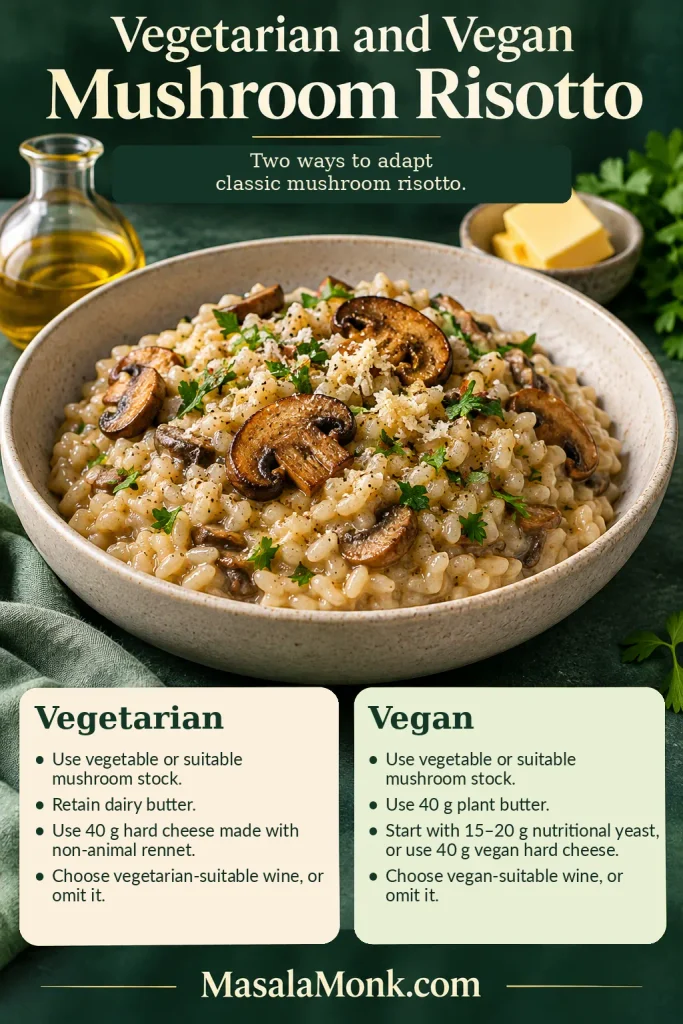
The rice and mushroom technique works for both vegetarian and vegan risotto. The main differences concern the stock, cooking fat, cheese and wine. Choose suitable ingredients before starting, replacing the wine with extra stock if necessary.
Vegetarian Mushroom Risotto
Use vegetable or mushroom stock and replace the Parmesan with 40 g finely grated hard cheese made with non-animal rennet. Traditional Parmigiano Reggiano contains animal rennet, as explained in the official product information.
Check that the wine is suitable for vegetarians, or replace it with 100 ml extra stock. Otherwise, the ingredient quantities and cooking method remain the same.
Vegan Mushroom Risotto
Choose vegan vegetable or mushroom stock and vegan-friendly wine, or follow the wine-free stock substitution. Then make these two dairy replacements:
- Instead of butter: Use 40 g plant-based butter suitable for cooking, divided into 10 g for the mushrooms, 10 g for the onion and rice, and 20 g for finishing.
- Instead of Parmesan: Stir in 15–20 g (about ½–¾ oz) nutritional yeast during finishing, starting with the smaller amount. Alternatively, try about 40 g grated vegan hard cheese.
Nutritional yeast adds savoriness but won’t melt like Parmesan. Vegan cheeses vary in flavor and melting behavior too. Check the seasoning before adding salt, and loosen with warm stock until the sauce flows around the grains. Dried porcini make a useful flavor addition here.
Back to recipe · Step-by-step method
Serving Mushroom Risotto
A generous bowl of mushroom risotto can be dinner in itself. If you’re serving something alongside it, choose an accompaniment that can be ready when the rice is. Crisp vegetables and fresh acidity are welcome contrasts to its richness.
What Goes Well With Mushroom Risotto?
- A simple salad: Lemon-dressed greens or a tangy cucumber salad. Prepare it before starting the rice.
- A meat-free dinner: Serve smaller portions of vegetarian or vegan risotto with a Mediterranean chickpea salad. The chickpeas add protein, while the crisp vegetables contrast with the rice. Omit the dairy from the salad for a vegan meal.
- Vegetable sides: Lightly charred asparagus, roasted broccolini or crisp green beans with lemon and olive oil. Start roasted vegetables before cooking the rice.
- A larger dinner: Smaller bowls of risotto alongside grilled chicken, pan-seared salmon or garlic butter steak bites. If someone is helping in the kitchen, let them handle the last-minute frying while you finish the risotto.
- Garlic bread: Serve crisp garlic bread alongside a smaller portion of risotto when you want a more indulgent dinner.
A crisp dry white wine or a lighter red such as Pinot Noir complements the earthy mushrooms. Sparkling water with lemon works well too.

How to Make Mushroom Risotto for Two
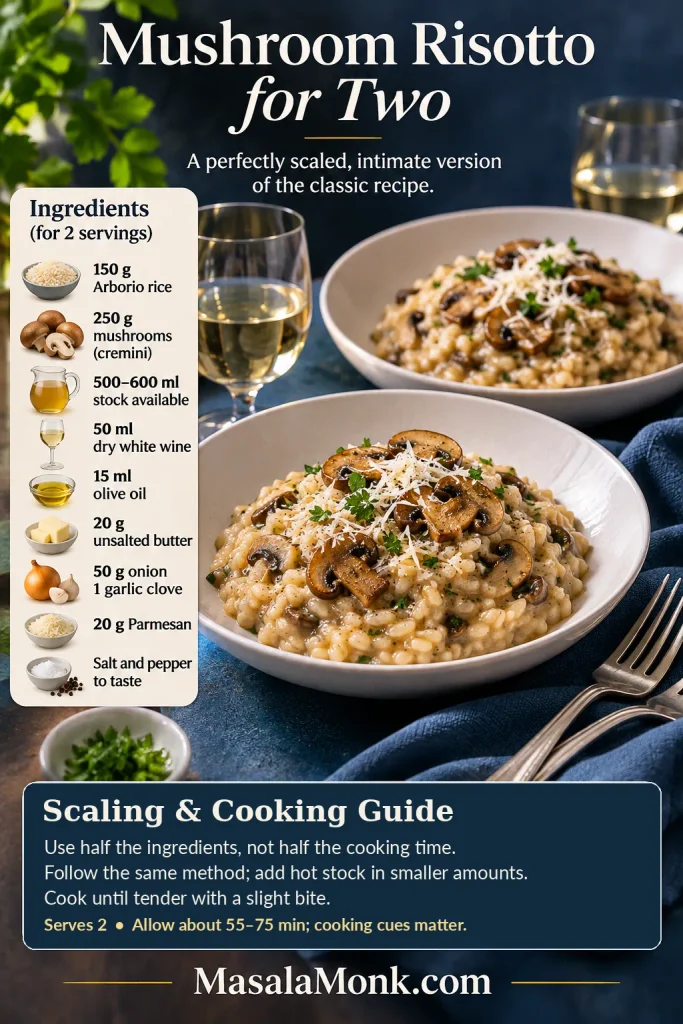
For two freshly made main-course bowls, halve the mushroom risotto recipe. Browning the smaller quantity of mushrooms may be quicker, but the rice itself still needs roughly the same simmering time.
Use a 22–24 cm (9–9½ inch) sauté pan. In a much wider pan, the stock may evaporate too quickly.
| Ingredient | 2 servings | 4 servings |
|---|---|---|
| Dry rice | 150 g (about ¾ US cup) | 300 g (about 1½ US cups) |
| Mushrooms | 250 g (about 9 oz) | 500 g (about 1.1 lb) |
| Stock supply | 500–600 ml (about 2⅛–2½ US cups) | 1–1.2 L (about 4¼–5 US cups) |
| White wine | 50 ml (1.7 US fl oz) | 100 ml (3.4 US fl oz) |
| Olive oil | 15 ml (1 tbsp) | 30 ml (2 tbsp) |
| Butter | 20 g (about 1½ tbsp) | 40 g (scant 3 tbsp) |
| Parmesan | 20 g (about ¾ oz) | 40 g (about 1½ oz) |
| Onion | 50 g (½ small onion) | 100 g (1 small onion) |
| Garlic | 1 clove | 2 cloves |
| Black pepper | ⅛ tsp | ¼ tsp |
| Fresh thyme, optional | ½ tsp | 1 tsp |
| Lemon juice, optional | ½–1 tsp | 1–2 tsp |
| Parsley, optional | Up to 1 tbsp | Up to 2 tbsp |
| Salt | To taste | To taste |
Cooking Adjustments for Two Servings
- Brown the mushrooms with 10 ml (2 tsp) olive oil and 5 g butter in total. Save about ½ tsp of the oil and a small piece of that butter for the chopped mushrooms.
- Use 5 ml (1 tsp) olive oil and 5 g butter for the onion and rice.
- Start with 90–120 ml (about ⅜–½ US cup) hot stock, then add about 60–90 ml (¼–⅜ US cup) at a time.
- For hard rice in a nearly dry pan, begin with another 30–60 ml (2–4 tbsp) hot liquid.
- Finish with 10 g butter and 20 g Parmesan. Start with 15–30 ml (1–2 tbsp) warm stock if the sauce looks thick.
Keep the same approximate cooked mushroom portions: one-quarter for the early addition, half near the end and one-quarter for topping. Half the rice won’t always need exactly half the stock, so have extra hot water available.
Without wine: Replace the 50 ml white wine with 50 ml extra stock, in addition to the regular 500–600 ml supply.
With dried porcini: Add approximately 5–8 g dried porcini, soaked in 100 ml hot water. Count the filtered soaking liquid toward the smaller stock supply, following the porcini preparation method.
Follow the main cooking method using the smaller quantities above in place of the four-serving amounts.
Cooking Mushroom Risotto for Eight
Double the ingredients and consider two four-serving batches, ideally with someone to help manage the second pan. A larger, wide pan is another option, but a deep layer of rice is harder to cook evenly. Judge the liquid additions and timing by the rice rather than simply doubling them.
Make-Ahead, Storage and Leftovers
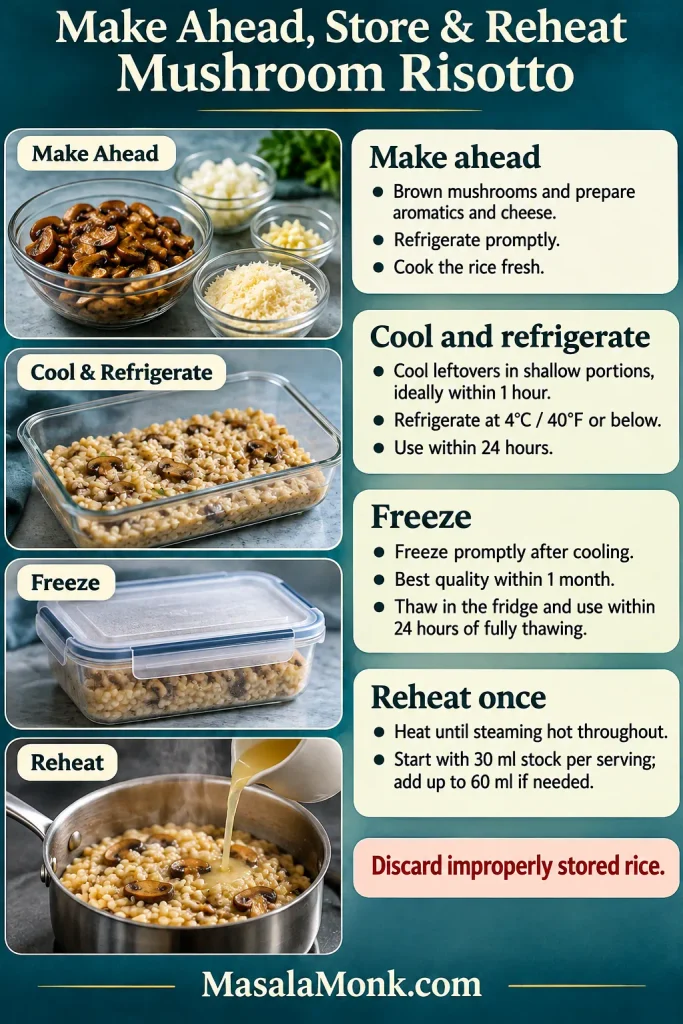
Risotto is best served immediately, but you can prepare several ingredients ahead. If you have cooked rice left over, follow the cooling, storage and reheating guidance below.
Making Mushroom Risotto Ahead for Guests
When friends are coming for dinner, get the chopping, mushroom browning and cheese grating out of the way before they arrive. Make the salad ahead, too. Leave the rice uncooked until closer to dinner.
Refrigerate the cut mushrooms and other perishable ingredients until needed. Cool previously browned mushrooms promptly and refrigerate them. Reheat them until steaming hot throughout when incorporating them into the risotto. Warm the topping separately until it is steaming hot throughout, too.
With everything prepared, allow about 30–40 minutes to cook and finish the risotto, including any necessary reheating of the mushrooms.
For a brief serving delay, keep the risotto hot and loosen it with warm stock before plating. The grains will continue softening, however. For a longer wait, postpone cooking the rice rather than leaving finished risotto at lukewarm temperatures.
How Long Does Mushroom Risotto Last in the Fridge?
Cool leftover mushroom risotto quickly in shallow portions, ideally within one hour, then refrigerate promptly at 4°C (40°F) or below. Use it within 24 hours of cooking and reheat only once, until steaming hot throughout.
Bacterial spores can survive rice cooking. Leaving cooked rice warm for too long allows bacteria to multiply and potentially produce toxins that reheating cannot reliably remove.
These conservative storage recommendations follow the Food Standards Agency’s guidance on cooked rice. Discard improperly stored rice rather than relying on its smell or appearance.
How to Reheat Mushroom Risotto
Cold risotto can look almost solid after a night in the refrigerator. Warm it with a little stock or water to loosen the sauce.
On the stovetop: Start with 30 ml (2 tbsp) stock or water per serving. Heat gently, stirring and adding more liquid as needed, up to about 60 ml (4 tbsp) or enough to restore a creamy texture. Continue until steaming hot throughout.
In the microwave: Add a splash of stock and cover with a vented microwave-safe lid. Heat in short intervals, stirring between them to avoid cold spots, until the entire portion is steaming hot.
Reheat only what you intend to eat. The sauce can become creamy again, although the grains will usually be softer than when freshly cooked.
Can You Freeze Mushroom Risotto?
Yes. Divide into shallow, freezer-safe portions to cool quickly, ideally within one hour, then freeze promptly. For the best eating quality, use within about one month.
Defrost in the refrigerator, use within 24 hours of fully defrosting and reheat thoroughly only once. Both the rice and mushrooms may become softer after freezing.
What to Do With Leftover Mushroom Risotto
Yesterday’s creamy risotto can become today’s crisp rice cakes or Italian-style arancini. Once chilled, the rice firms up enough to shape into patties or balls, ready for a golden crust.
Only use safely cooled and stored risotto that hasn’t already been reheated, since cooking the rice cakes or balls counts as reheating.
For mushroom risotto arancini: Shape chilled risotto into small balls, optionally enclosing a small piece of cheese. If the mixture is too soft, mix in a little dry breadcrumbs. Roll in beaten egg, then breadcrumbs. Fry in small batches at about 170–175°C (340–350°F) until golden, crisp and steaming hot throughout. Overcrowding the pan can cause the oil temperature to drop sharply.
For crispy mushroom rice cakes: Form chilled risotto into flat patties about 1–1.5 cm (roughly ⅜–⅝ inch) thick, mixing in a little dry breadcrumbs if needed. Pan-fry in a little oil, turning carefully until both sides are golden and the center is steaming hot.
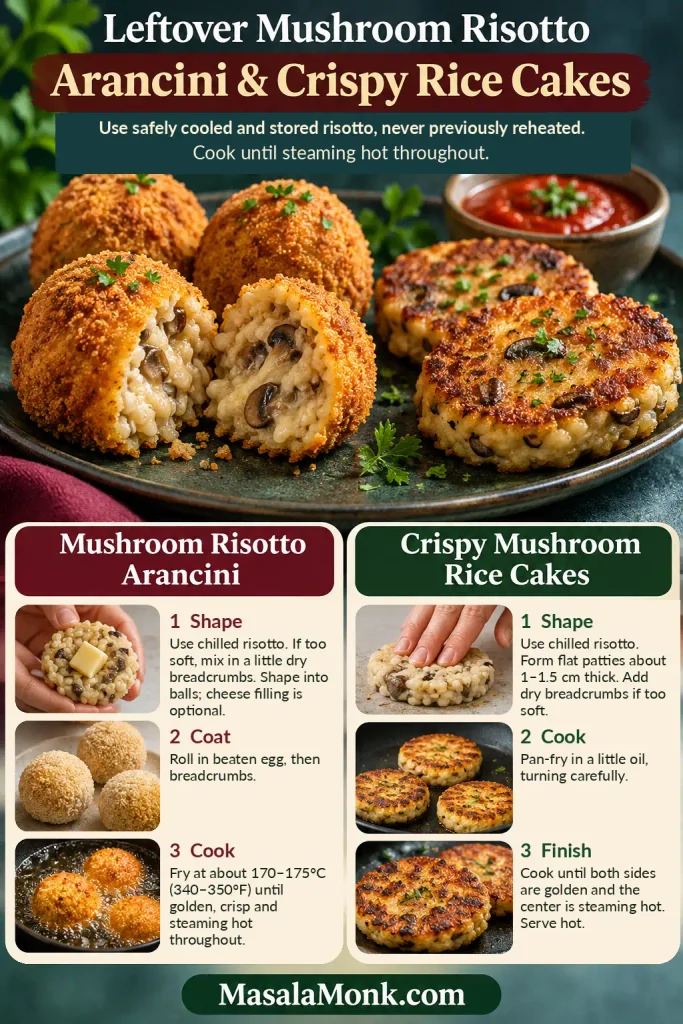
See this arancini-inspired leftover rice balls recipe for additional shaping, filling and coating ideas. Very watery or severely overcooked rice may not hold together.
Back to recipe · Table of contents
Frequently Asked Questions About Mushroom Risotto
Can You Use Pre-Grated Parmesan?
Yes, though some packaged grated cheeses remain grainier than freshly grated Parmesan. Add the cheese gradually off the heat.
Can You Make Mushroom Risotto Without Parmesan?
Yes. Start with 40 g Grana Padano or another finely grated hard cheese, adjusting for saltiness. Like Parmigiano Reggiano, Grana Padano uses animal rennet. For vegetarian risotto, choose a hard cheese made with non-animal rennet, or follow the vegan adaptation for a dairy-free dish.
Can You Add Cream to Mushroom Risotto?
For additional richness, stir in 30–60 ml (2–4 tbsp) heavy cream near the end of cooking, then finish with butter and Parmesan. Use less finishing stock if the sauce already flows easily.
Can You Make Mushroom Risotto With Red Wine?
Use 100 ml light, dry red wine instead of white wine for four servings. Expect darker rice with a stronger wine flavor. White wine is the more neutral choice when you want the mushrooms to stand out.
Can You Use Dried Thyme Instead of Fresh?
Replace 1 tsp fresh thyme with ¼–⅓ tsp dried thyme, adding it while softening the onion. Thyme is optional, so you can also leave it out.
Can You Make Mushroom Risotto With Leftover Cooked Rice?
Cooked rice can make a creamy mushroom rice dish, but it requires much less liquid and a different method. It isn’t a direct substitute for dry Arborio or Carnaroli. Use safely stored rice that hasn’t already been reheated and heat until steaming hot throughout, following the rice storage guidance.
Is Mushroom Risotto Gluten-Free?
The basic ingredients are naturally gluten-free. However, check packaged stock, seasonings, cheese alternatives and other prepared ingredients for gluten and cross-contact warnings when cooking for someone with celiac disease.
Can You Make Mushroom Risotto in an Instant Pot or in the Oven?
Yes. Pressure cooking and covered oven cooking retain more moisture than an uncovered stovetop pan. Use a recipe developed for that method rather than assuming you’ll need the same amount of stock.
Which mushrooms did you end up using? If you’ve found a combination worth making again, share it in the comments.