Onions — those humble, layered bulbs — have been a kitchen staple for centuries, revered for their unique aroma, flavor, and versatility. From sautéed bases in hearty stews to crisp additions in fresh salads, onions elevate countless dishes worldwide. But if you’re following a ketogenic (keto) diet, you might wonder: Are onions keto-friendly? Can they fit into a low-carb lifestyle without knocking you out of ketosis?
In this deep dive, we’ll explore onions’ nutritional profile, carb content, their role in a keto diet, practical tips for enjoying them wisely, and keto-friendly alternatives. Whether you’re a keto beginner or a seasoned low-carb enthusiast, this guide will help you make informed choices about incorporating onions in your meal plans.
The Keto Diet in a Nutshell
Before we peel back the layers on onions, let’s briefly revisit what the keto diet is all about. The ketogenic diet emphasizes very low carbohydrate intake—usually between 20 to 50 grams of net carbs per day—moderate protein, and high fat consumption. The goal? To shift your body into ketosis, a metabolic state where fat, instead of carbs, becomes the primary fuel source.
Because the daily carb allowance is tight, every gram counts. That’s why understanding the carb content in commonly used foods like onions is crucial.
Onions and Their Carb Content: What You Need to Know
Onions contain carbohydrates, primarily in the form of natural sugars and fiber. The net carb count—the total carbs minus fiber—varies slightly depending on the onion type:
| Onion Type | Net Carbs (per 100g) |
|---|---|
| Yellow Onion | 5.9g |
| Red Onion | 5.96g |
| White Onion | 6.48g |
| Sweet Onion | 6.65g |
| Green Onion (Scallions) | 4.7g |
To put that into perspective, a ¼ cup of chopped onions (about 40g) contains roughly 2 to 2.5 grams of net carbs. That might not sound like much, but if you’re aiming for a strict 20g daily carb limit, those grams can add up quickly.
Are Onions Keto-Friendly?
The answer is: Yes, but with moderation.
Because onions do have carbs, unrestricted consumption can potentially disrupt ketosis. However, their natural sugars and fiber, combined with the relatively small amounts typically used for seasoning or flavoring, mean that small portions of onions fit comfortably into most keto meal plans.
Why You Shouldn’t Cut Onions Out Completely
- Flavor Boost: Onions add depth, sweetness, and complexity to dishes, reducing the need for extra sauces or sugar-laden condiments.
- Nutrient Profile: Onions provide vitamins C and B6, antioxidants, and compounds with anti-inflammatory benefits.
- Digestive Health: The fiber in onions, especially in green onions, supports gut health, which is vital for overall well-being.
Tips for Including Onions in Your Keto Diet
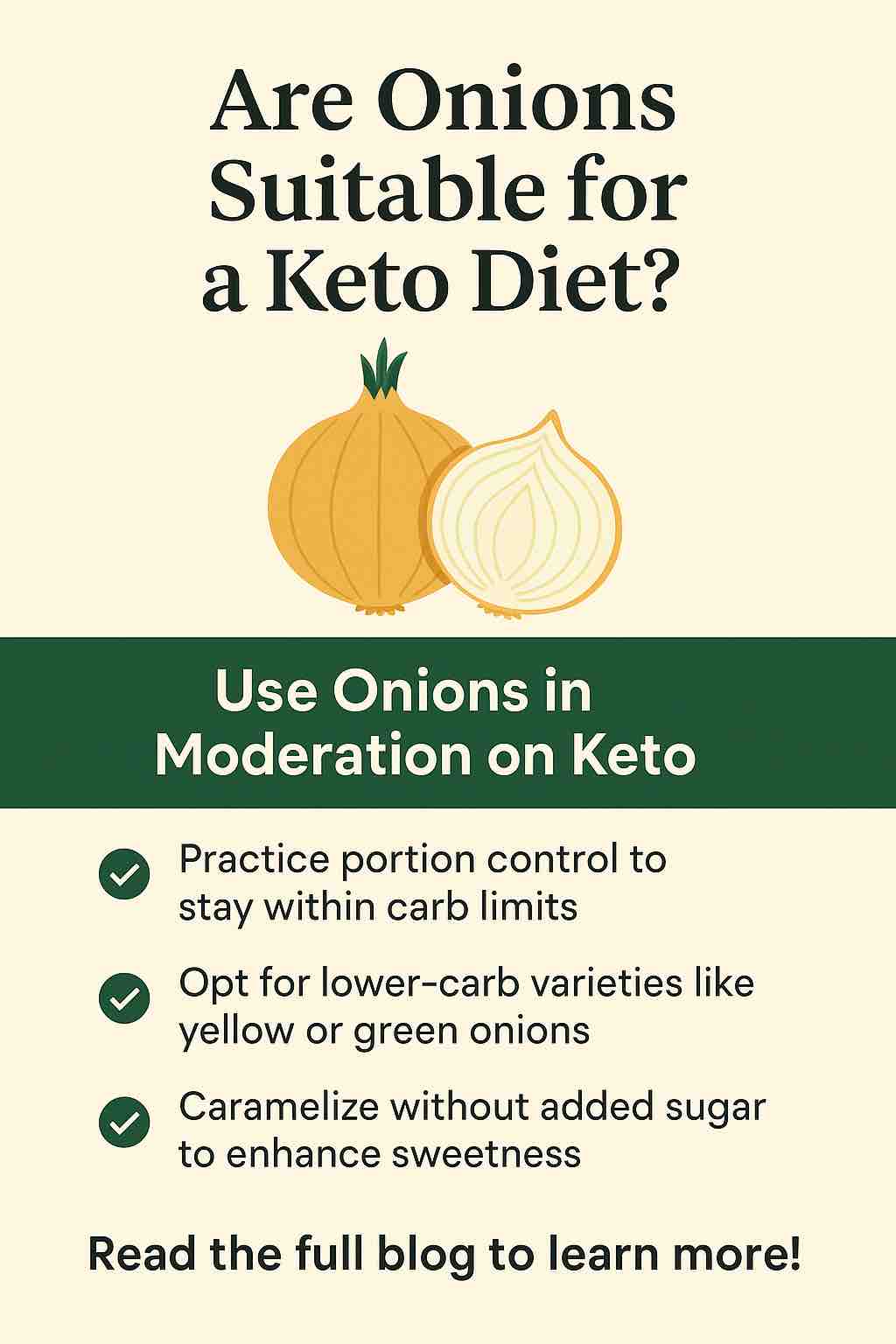
1. Practice Portion Control
Use onions as a flavor enhancer rather than the main ingredient. Sticking to ¼ cup or less per serving keeps carb intake manageable.
2. Choose Lower-Carb Varieties
Green onions (scallions) are your keto-friendly champions, with slightly fewer carbs than yellow or white onions. Sweet onions, while delicious, pack more carbs and should be used sparingly.
3. Use Cooking Techniques Wisely
Caramelizing onions can naturally bring out their sweetness without adding sugar, making your dishes richer without extra carbs. Avoid recipes that add sugary sauces or breading.
4. Try Onion Powders and Flakes Sparingly
These concentrated forms can be carb-dense, so a little goes a long way. Use them mainly to add flavor without bulk.
Potential Downsides to Consider
While onions are beneficial, a couple of considerations are worth noting:
- FODMAP Sensitivity: Onions are high in FODMAPs, certain fermentable carbs that can cause digestive upset in sensitive individuals, especially those with IBS.
- Carb Creep: It’s easy to underestimate the carbs from onions if you use them liberally. Track servings carefully.
Keto-Friendly Onion Alternatives
If you want the flavor but want to cut carbs even more, try these substitutes:
- Chives: Mild onion flavor, very low in carbs.
- Leeks: Use sparingly; they have a subtle taste but still contain carbs.
- Shallots: A delicate onion flavor in moderation.
- Garlic: Adds a robust, pungent flavor; use small amounts.
Delicious Keto Recipes Featuring Onions
If you’re ready to experiment, here are some keto-friendly recipes where onions shine:
- Keto French Onion Soup: Rich beef broth with caramelized onions and a touch of cheese.
- Keto Onion Rings: Made with almond flour or crushed pork rinds as breading.
- Shrimp Fajitas: Sautéed onions and bell peppers with shrimp and spices.
Final Thoughts
Onions are a flavorful, nutritious ingredient that can fit into a ketogenic lifestyle when used mindfully. By controlling portions, choosing the right varieties, and cooking without added sugars, you can enjoy the taste and benefits of onions without compromising your ketosis.
Remember, every keto journey is unique. Monitoring your carb intake and how your body reacts to onions will help you fine-tune your diet for optimal results.
FAQs: All About Onions and Keto
1. Are onions allowed on a keto diet?
Yes, onions can be included in a keto diet but in moderation due to their carbohydrate content. Small portions, like a quarter cup of chopped onions, usually fit within daily carb limits.
2. Which type of onion is best for keto?
Green onions (scallions) and yellow onions tend to have the lowest net carb counts and are better keto choices compared to sweet or white onions.
3. How many carbs are in onions?
On average, onions contain about 5 to 6.5 grams of net carbs per 100 grams. A small serving like 40 grams (¼ cup chopped) contains roughly 2 to 2.5 grams of net carbs.
4. Can eating too many onions kick me out of ketosis?
Yes, consuming large amounts of onions can add up in carbs and potentially disrupt ketosis. Portion control is essential to stay within your carb limits.
5. Are onion powders keto-friendly?
Onion powder is more concentrated than fresh onions, so it can add carbs quickly if used excessively. Use sparingly for flavor without adding bulk carbs.
6. What are good onion substitutes on keto?
Chives, garlic, shallots, and leeks are popular low-carb alternatives that provide onion-like flavors with fewer carbs.
7. Do onions have health benefits on keto?
Yes, onions provide antioxidants, vitamins, and prebiotic fiber, which support digestion and overall health, making them a nutritious addition when consumed appropriately.
8. Can onions cause digestive issues on keto?
Some people with IBS or FODMAP sensitivities may experience digestive discomfort from onions due to their fermentable carbs, so they should monitor their reactions.
9. Is caramelizing onions keto-friendly?
Yes, caramelizing onions without adding sugars or high-carb ingredients is keto-friendly and enhances their natural sweetness.
10. How can I track onion intake on keto?
Use a food scale or measure chopped onions by volume and check nutritional info to keep carb intake within your daily limit.