If you’ve ever tried to gain weight or bulk on “clean” food alone, you already know the struggle: the appetite just runs out before the calories do. Eating yet another bowl of rice or another handful of nuts feels like a chore. That’s where high calorie protein shakes come in. You drink them instead of chewing through another plate of food, you control exactly what goes in, and you can quietly add 400–900 calories in a single glass using real, nutrient-dense ingredients.
In this guide you’ll find:
- A simple way to build high calorie protein shakes without junk
- Ten shake and smoothie recipes for bulking & healthy gains
- Ideas to tweak each recipe for your goals and taste
Along the way, you’ll also find a few helpful resources if you want to go deeper into healthy weight gain and smart use of protein.
Why High Calorie Protein Shakes Work So Well
To gain weight, your body needs one thing above all: a consistent calorie surplus. You have to take in more energy than you burn, not just once, but day after day. At the same time, if you’d like that gain to be mostly muscle instead of just belly fat, you also need enough protein and some form of resistance training.
Eating more sounds easy on paper, yet in real life it’s often the opposite. A lot of people who are naturally lean get full very quickly. Big, high-fibre meals can actually make it harder to squeeze in the extra calories you need.
High calorie protein shakes solve several of those problems at once:
- They are easy to drink, even when you’re not very hungry
- They can be packed with calories from milk, nut butters, oats, dried fruit and healthy fats
- They deliver plenty of protein in a compact form
- They are quick to make and easy to carry
While you can gain weight on anything – including soda and junk food – most dietitians still push people toward nutrient-dense, high-calorie foods such as nuts, seeds, dairy, whole grains and healthy oils. For a deeper overview of those kinds of foods, you can explore this guide to high calorie foods that support healthy weight gain.
If you happen to be the classic “hardgainer” with a fast metabolism and skinny frame, it also helps to understand your body type better. You may find it useful to read up on the ectomorph body type and weight gain strategies, especially if you’ve been under-eating without realising it.
Also Read: The Science of Protein: Maximizing Muscle Growth and Recovery
How to Build High Calorie Protein Shakes (The Simple Formula)
Instead of thinking in terms of “recipes you must follow perfectly”, it’s much more powerful to think in terms of a flexible formula. Once you understand the structure, you can create countless high calorie protein shakes from whatever you have in the kitchen.
A basic weight gain or bulking shake usually contains:
Protein (20–40 grams)
- Whey protein, plant-based protein, Greek yogurt, milk, or a mix
- For a bigger-picture view of how much protein you might need in a day, you can check this evidence-based overview of optimal protein intake.
Energy-dense carbohydrates
- Banana, mango, dates, oats, cooked rice, granola, honey or jaggery
- Fruits like mango both sweeten and thicken shakes, which is why they’re often recommended in discussions about using mango for healthy weight gain.
Healthy fats
- Peanut, almond or cashew butter
- Whole nuts and seeds (chia, flax, pumpkin, hemp, sunflower)
- Coconut milk, avocado, ghee or a splash of good-quality oil
- If you are curious about how powerful nuts and seeds can be for adding calories and protein, you might enjoy this breakdown of protein-packed nuts and seeds.
Liquids
- Whole milk, full-fat yogurt plus water, coconut milk, or fortified plant milks
- Water works too, but for high calorie protein shakes you usually want milky bases.
Flavour boosters
- Cocoa powder, instant coffee, cinnamon, cardamom, vanilla extract, spices
- A pinch of salt almost always makes chocolate and nut-based shakes taste better.
Many hospital and clinic dietitians use this same logic when they design high-calorie, high-protein smoothies for underweight patients. For instance, Mayo Clinic shares a simple high-calorie, high-protein smoothie recipe built around milk, nut butter and yogurt. When you look closely, it’s just the same formula with slightly different ingredients.
The recipes below follow this framework. You can copy them exactly or use them as templates to create personalised high calorie protein shakes that match your taste and dietary needs.
Also Read: How to Eat 100 Grams of Protein a Day
How Much Protein and Calories Should Your Shakes Have?
Before you get into ingredient lists, it helps to have rough targets.
Most active people trying to gain muscle while gaining weight land somewhere around 1.6 to 2.2 grams of protein per kilogram of body weight per day, according to several reviews summarised in guides like the one from Examine. That doesn’t have to come only from shakes; it includes everything you eat – eggs, dal, chicken, paneer, beans, tofu and so on.
As for calories, safe and sustainable weight gain is usually about 0.25–0.5 kg per week. To achieve that, you often need a surplus of 250–500 calories per day above maintenance. Healthy weight gain resources from organisations such as the Academy of Nutrition and Dietetics emphasise gradual increases and nutrient-dense choices, rather than stuffing yourself with junk.
That’s where high calorie protein shakes shine: one drink can contribute 400–900 calories and 25–40 grams of protein without making you feel uncomfortably full.
Also Read: ‘Tofu’ Instead of ‘Eggs’: 5 High Protein Plant-Based Breakfast Ideas
Now, let’s get into the delicious part.
10 High Calorie Protein Shakes & Smoothies for Healthy Weight Gain
Each recipe below makes one generous serving. You can always scale ingredients up or down depending on appetite and your daily calorie target.
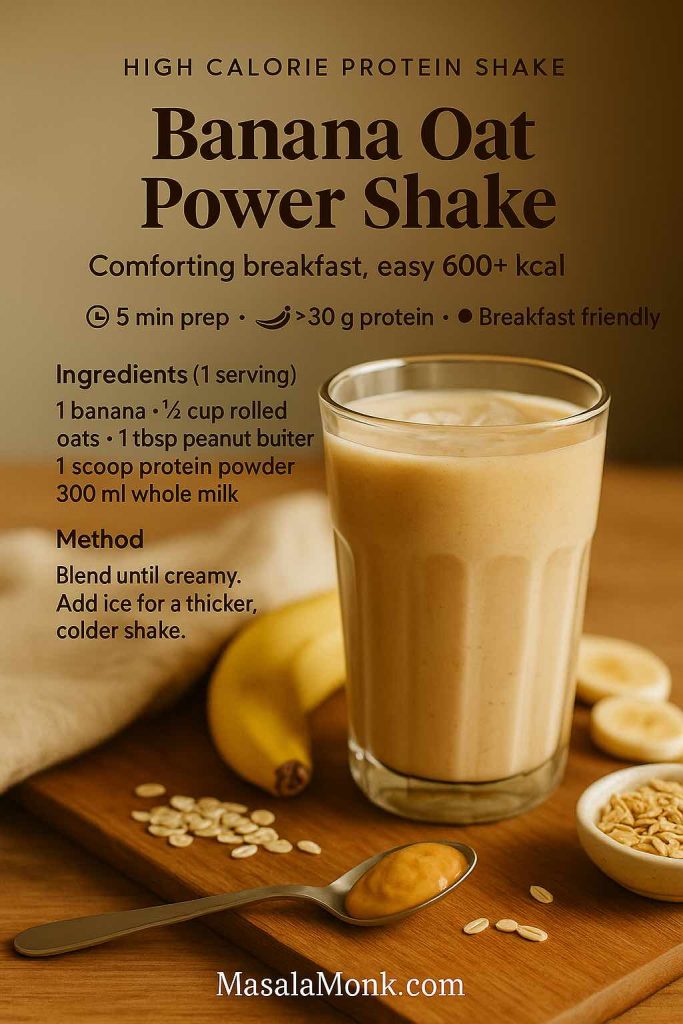
1. Banana Oat High Calorie Protein Shake
This is the classic weight gain shake: simple ingredients, comforting flavour and plenty of calories.
Ingredients
- 1 scoop vanilla or unflavoured protein powder
- 1 large ripe banana (fresh or frozen)
- ½ cup rolled oats
- 1 tablespoon peanut butter or almond butter
- 300 ml whole milk (or a rich plant milk like soy or oat)
- 1–2 teaspoons honey or jaggery (optional)
- A pinch of cinnamon (optional but lovely)
- Ice cubes as needed
Method
- Pour the milk into your blender first.
- Add banana, oats, peanut butter, protein powder and any sweetener.
- Blend until the oats disappear and everything turns creamy.
- Throw in some ice and blend again if you prefer it thicker and colder.
For even more calories, add an extra spoon of nut butter or a little cream. If you’d like ideas for what else you can eat alongside this shake, the list of high calorie foods that support healthy weight gain can give you easy add-ons like nuts, seeds and full-fat yogurt.
Also Read: How Much Potassium Is in a Banana? Nutrition Facts, Comparisons & Benefits
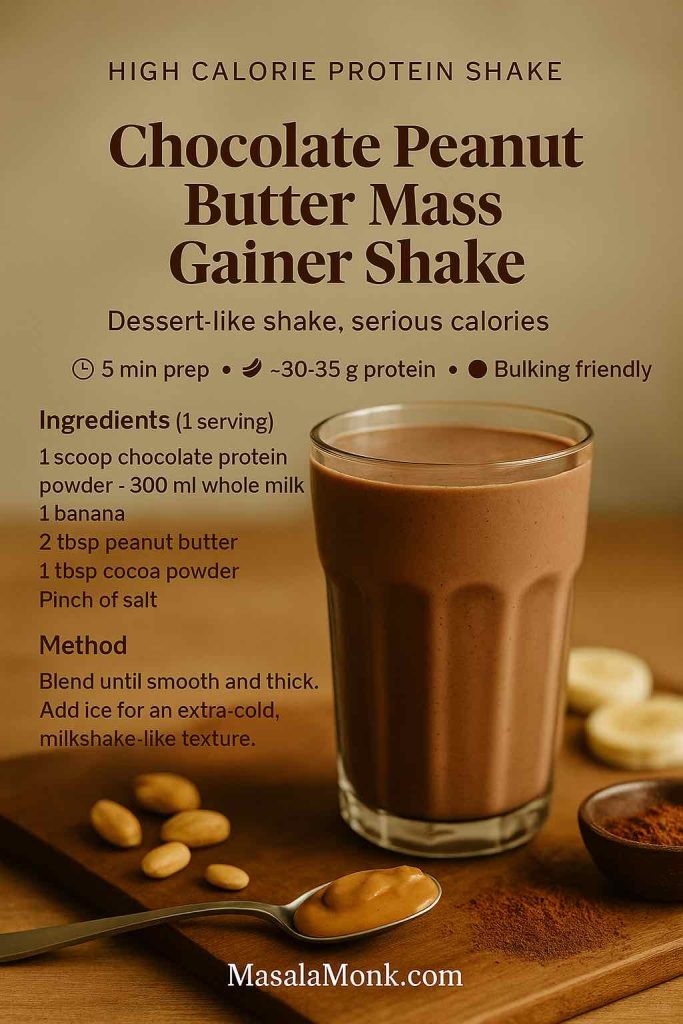
2. Chocolate Peanut Butter Mass Gainer Shake
This one tastes like a milkshake you’d order at a café, yet it can easily deliver 600–900 calories depending on how generous you are with the peanut butter.
Ingredients
- 1 scoop chocolate protein powder
- 300 ml whole milk
- 1 medium banana
- 2 tablespoons peanut butter
- 1 tablespoon unsweetened cocoa powder
- A small pinch of salt
- Ice cubes
Method
- Add milk, banana, peanut butter and chocolate protein powder to your blender.
- Spoon in the cocoa powder and drop in the pinch of salt.
- Blend until velvety smooth; add ice and blend again for a thicker shake.
If you enjoy peanut butter, you might also want to understand how it fits into a full day of eating. This breakdown of peanut and peanut butter benefits for weight management explains how just two tablespoons can add over 180 calories, which is exactly what makes this kind of high calorie protein shake so effective.
Also Read: Homemade Hot Chocolate with Cocoa Powder Recipe
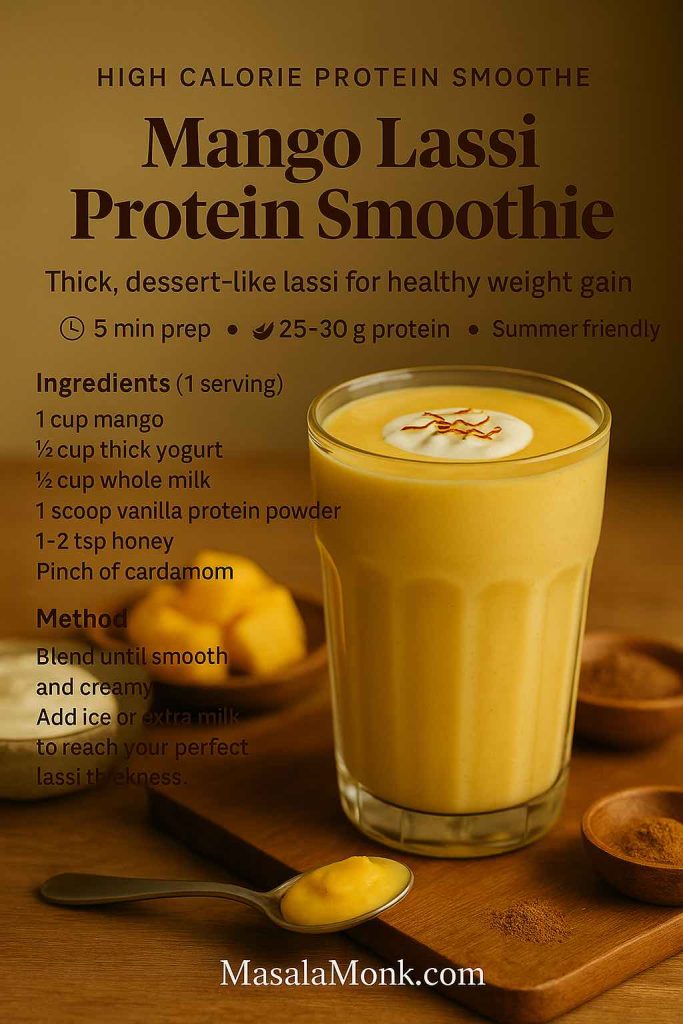
3. Mango Lassi High Calorie Protein Smoothie
Mango naturally turns smoothies into thick, dessert-like treats. Combined with yogurt and milk, it becomes a powerful tool for healthy weight gain.
Ingredients
- 1 cup ripe mango chunks (fresh or frozen)
- ½ cup thick yogurt (Greek yogurt or hung curd)
- ½ cup whole milk (or water if you prefer it slightly lighter)
- 1 scoop vanilla protein powder
- 1–2 teaspoons honey or sugar (adjust to taste)
- A pinch of cardamom powder
- Ice cubes
Method
- Add mango, yogurt, milk and protein powder to the blender.
- Blend until smooth and creamy.
- Sprinkle in the cardamom, add ice and blend briefly again.
- Taste and tweak the sweetness if necessary.
If mango is one of your favourite fruits, you may want to explore more detailed guidance on using mango for weight gain in a healthy way. You can also experiment with mango shakes of different types – classic, vegan and sugar-free – using ideas from this collection of mango shake variations.
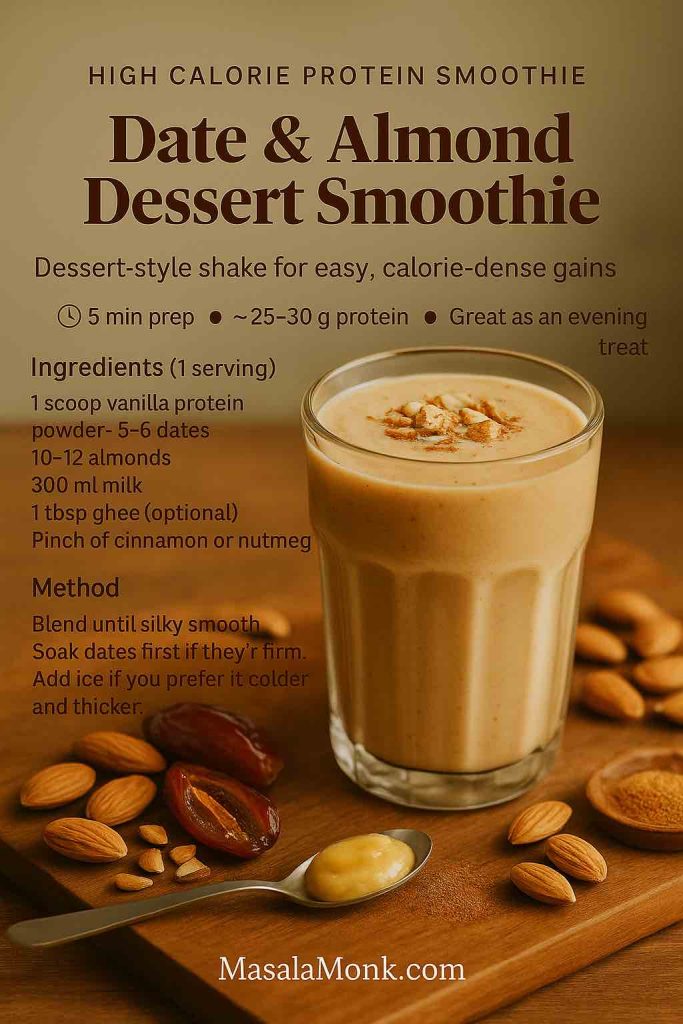
4. Date & Almond Dessert Smoothie for Bulking
Dates and almonds make this high calorie protein shake taste like a milk-based dessert you’d eat at a festival, yet it remains surprisingly easy to digest for most people.
Ingredients
- 1 scoop vanilla or caramel-flavoured protein powder
- 5–6 soft dates, pitted
- 10–12 almonds (ideally soaked overnight and peeled)
- 300 ml milk (dairy or fortified plant milk)
- 1 tablespoon ghee or coconut oil (optional calorie booster)
- A pinch of cinnamon or nutmeg
Method
- If your blender is not very powerful, soak the dates in warm water for 10–15 minutes.
- Add milk, dates, almonds, protein powder and ghee/oil to the blender.
- Sprinkle in the cinnamon.
- Blend until the mixture turns silky, with no visible bits of dates or nuts.
Dates and almonds are not only energy-dense; they also provide minerals like iron, magnesium and calcium. If you’re interested in shakes that help with micronutrients as well as calories, you may like browsing a set of high-iron shakes and smoothie ideas that use similar ingredients such as dates, seeds and leafy greens.
Also Read: Almonds Nutrition Facts 100g & Glycemic Index Impact
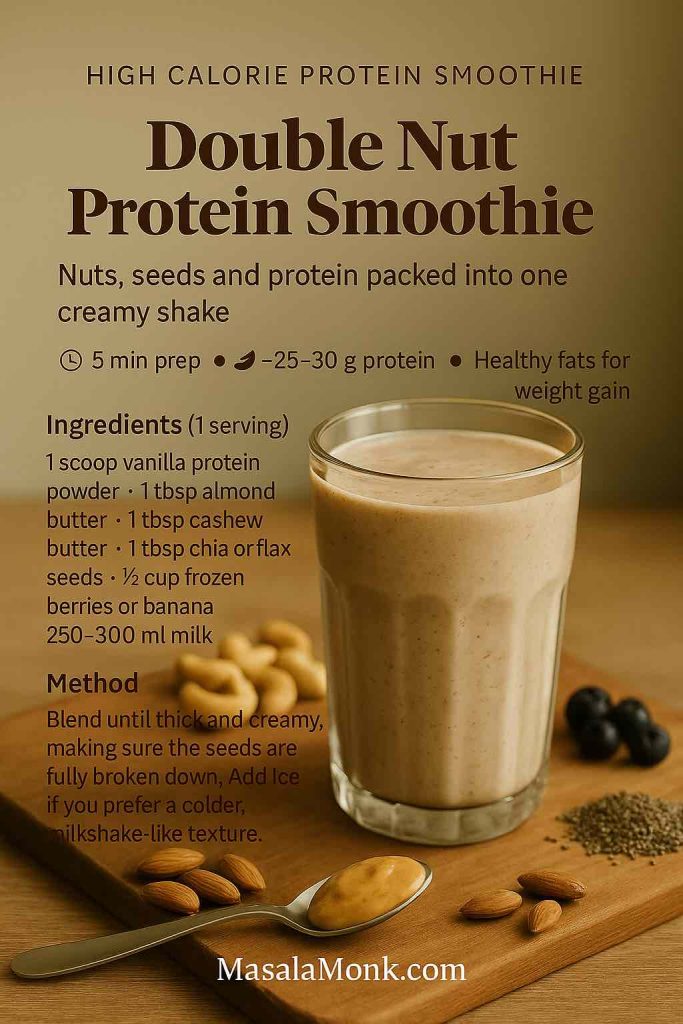
5. Double Nut High Calorie Protein Smoothie
If you want a balance of protein, carbs and healthy fats in a glass, nut-based high calorie protein shakes are the way to go. This one combines two nut butters plus seeds.
Ingredients
- 1 scoop vanilla protein powder
- 1 tablespoon almond butter
- 1 tablespoon cashew butter (or extra almond/peanut butter)
- 1 tablespoon chia seeds or ground flax seeds
- ½ cup frozen berries or banana slices
- 250–300 ml milk, soy milk or oat milk
- Ice cubes
Method
- Add your choice of milk to the blender.
- Scoop in the nut butters and protein powder.
- Add the chia or flax seeds and the fruit.
- Blend until the seeds disappear and everything is thick and creamy.
Nuts and seeds are such powerful tools for bulking and weight gain that it’s worth learning a few more ways to use them. If you enjoy this style of shake, take a look at these nut-infused smoothie recipes for more combinations using cashews, walnuts and other crunchy add-ins.
Also Read: 10 Creative Chia Pudding Recipes for Every Taste
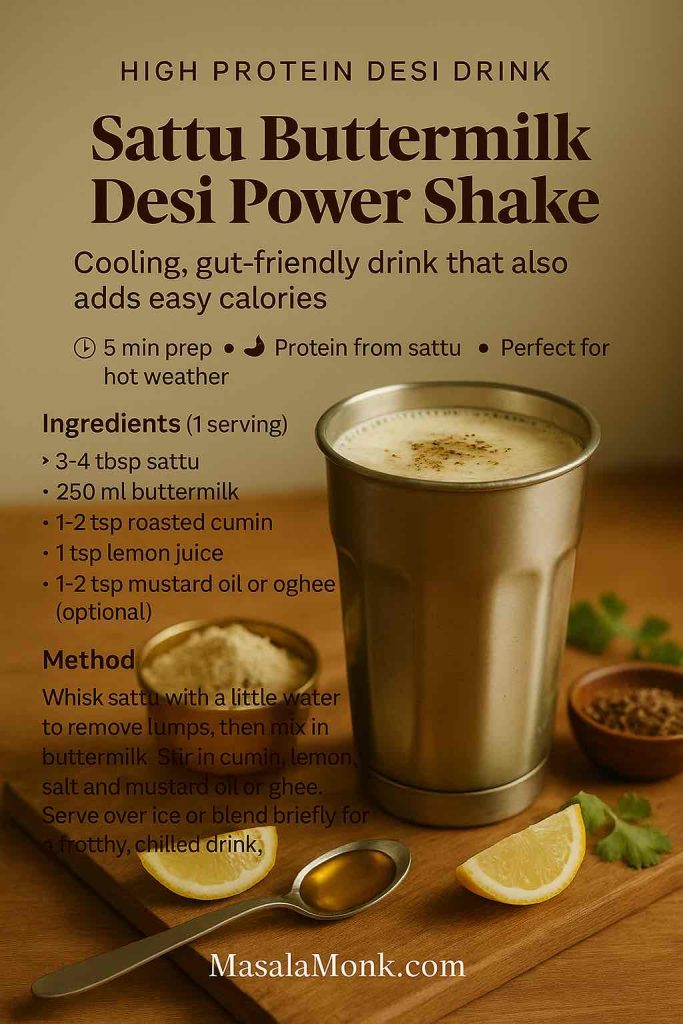
6. Sattu Buttermilk Desi Power Shake
Not all high calorie protein shakes need whey or imported ingredients. This sattu-based drink draws on traditional Indian wisdom and works especially well in hot weather.
Ingredients
- 3–4 tablespoons sattu powder (roasted chana flour)
- 250 ml thin buttermilk or chaas
- 1–2 teaspoons roasted cumin powder
- 1 teaspoon lemon juice
- ½–1 teaspoon salt, to taste
- 1–2 teaspoons mustard oil or ghee (optional but adds calories and flavour)
- A few ice cubes
Method
- In a bowl or jug, mix sattu with a little water to form a smooth paste with no lumps.
- Slowly whisk in the buttermilk until fully combined.
- Stir in the cumin, lemon juice, salt and optional mustard oil or ghee.
- Pour over ice or blend briefly for a frothier texture.
For a deeper dive into this traditional ingredient, including benefits and variations, you can check out a dedicated write-up on buttermilk sattu as a protein-packed summer drink. It’s a great example of how local foods can be turned into effective weight gain drinks with just a few tweaks.
Also Read: Chickpeas’ Instead of ‘Sardines’: 5 High Protein Plant-Based Meal Prep Ideas
7. Tropical Coconut Mango High Calorie Protein Shake
If you want something that feels like a holiday in a glass while still doing the job of a weight gain & bulking shake, this tropical combination is hard to beat.
Ingredients
- 1 scoop vanilla or unflavoured protein powder
- ½ cup mango chunks
- ½ cup pineapple pieces
- 200 ml coconut milk (the thicker, the richer)
- 50–100 ml water to adjust consistency
- 1 tablespoon desiccated coconut (optional)
- Ice cubes
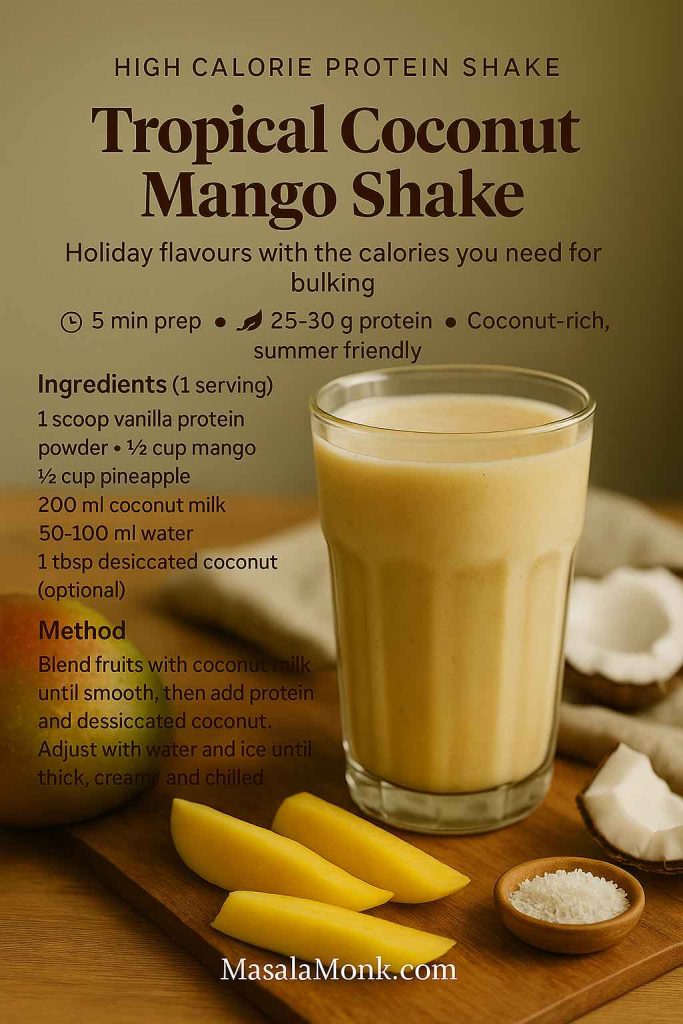
Method
- Blend mango, pineapple and coconut milk until smooth.
- Add the protein powder and desiccated coconut, then blend again briefly.
- Adjust with a little water and ice until you reach your ideal texture.
Fruits, nuts and seeds appear together in many high calorie protein smoothies because they provide both calories and a wide range of vitamins, minerals and phytonutrients. If you’re curious about how seeds like pumpkin or chia can be used creatively in smoothies, you may enjoy a set of pumpkin seed smoothie ideas – they’re written with weight management in mind, but the combinations work just as well when your goal is weight gain, as long as you increase portions.
Also Read: Coconut Milk Nutrition Facts & Glycemic Index Impact
8. Overnight Oat Breakfast High Calorie Protein Smoothie
Some days, the easiest way to ensure you actually drink your calories is to prepare most of the work the night before. This breakfast smoothie does exactly that.
Ingredients (to soak overnight)
- ½ cup rolled oats
- 200 ml milk
- ½ medium banana, sliced
Add in the morning
- 1 scoop protein powder (vanilla, coffee or chocolate)
- 1 tablespoon nut butter of choice
- 1 tablespoon chia seeds
- 1–2 teaspoons honey or other sweetener (optional)
- A handful of ice cubes
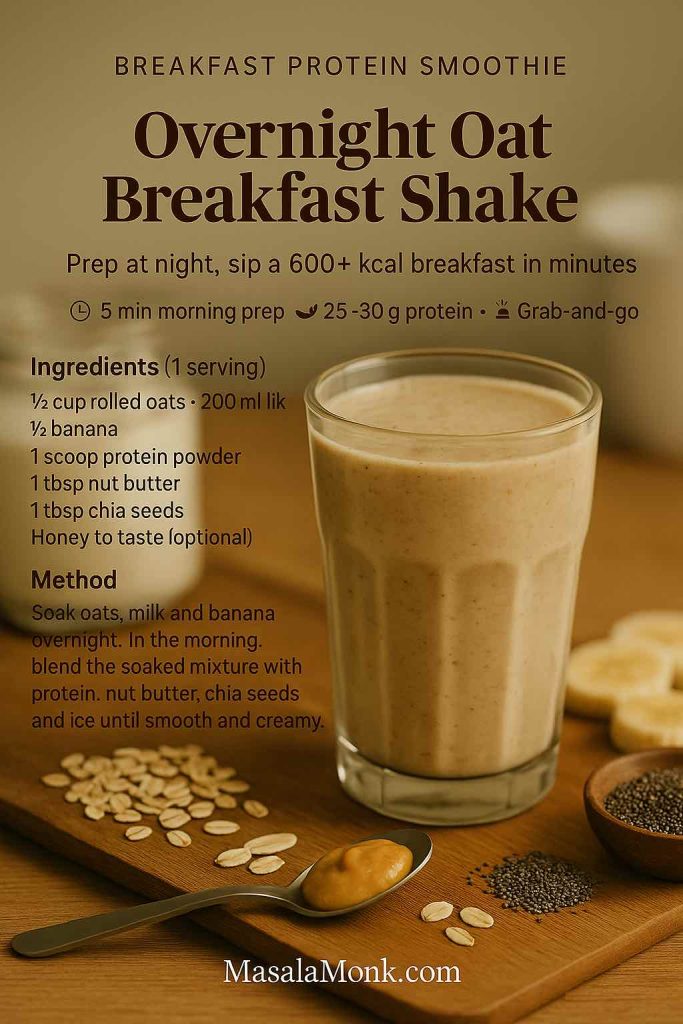
Method
- In a jar or container, combine oats, milk and banana. Cover and refrigerate overnight.
- In the morning, tip the mixture into your blender.
- Add the protein powder, nut butter, chia seeds and ice.
- Blend until completely smooth and enjoy straight away.
This type of smoothie works very well as a complete breakfast when you don’t have time to cook. If you’d like more variations that use breakfast-style ingredients like nuts, seeds and fruit, the nut-infused smoothie recipes mentioned earlier are worth revisiting with a breakfast lens.
Also Read: Guide to Oats: Types, Nutrition, and Differences Explained
9. Avocado Vanilla High Calorie Protein Shake
Avocado turns high calorie protein shakes into thick, pudding-like drinks with a very mild flavour that pairs beautifully with vanilla and can help in bulking.
Ingredients
- ½ ripe avocado
- 1 scoop vanilla protein powder
- 250 ml milk or enriched plant milk
- ½ banana or 2–3 soft dates
- ½ teaspoon vanilla extract
- A pinch of salt
- Ice cubes
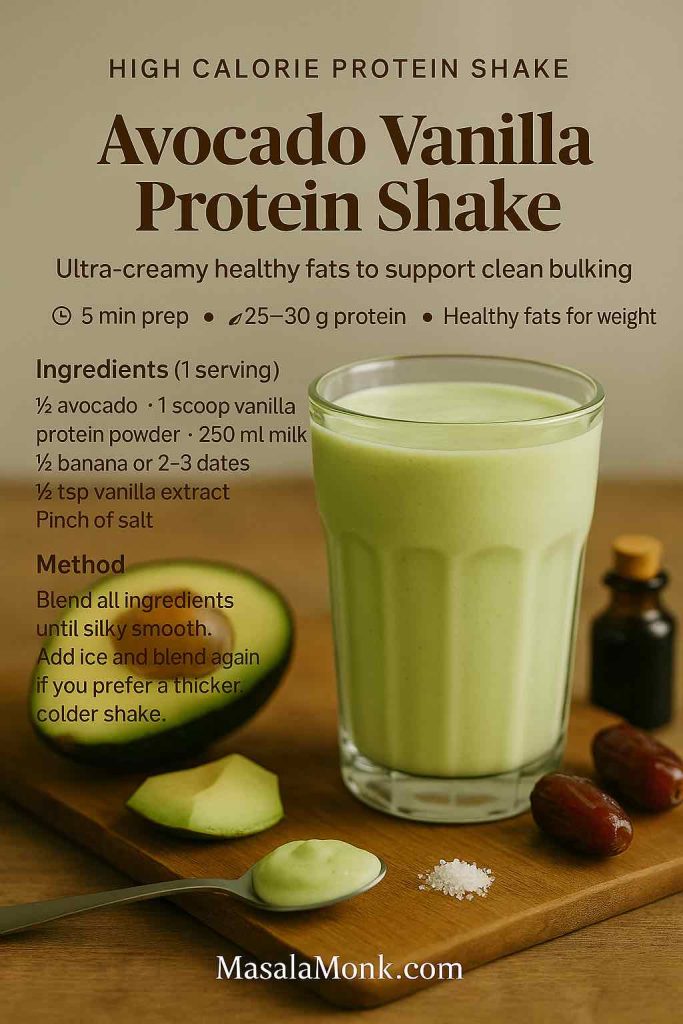
Method
- Scoop the avocado flesh into your blender.
- Add milk, banana or dates, protein powder, vanilla extract and salt.
- Blend on high until everything turns smooth and pale green.
- Add ice and blend again if you’d like a thicker, colder shake.
If you prefer to get more of your protein from whole foods instead of powders, you can easily replace part of the protein powder here with thick Greek yogurt or even silken tofu. For more ideas that use whole-food protein in smoothies, it’s useful to read roundups like this Healthline article on protein shakes for weight gain, which shows how common pantry ingredients can work just as well as supplements.
Also Read: Avocado: A Superfood for Your Skin
10. Bedtime Banana Peanut Butter High Calorie Protein Shake
Ending your day with one last high calorie protein shake can be the difference between hitting and missing your surplus, especially if you struggle with appetite earlier in the day.
Ingredients
- 1 scoop casein protein (or regular whey if that’s what you have)
- 1 medium banana
- 1–2 tablespoons peanut butter
- 250–300 ml milk
- A pinch of cinnamon
- 1–2 teaspoons honey (optional)
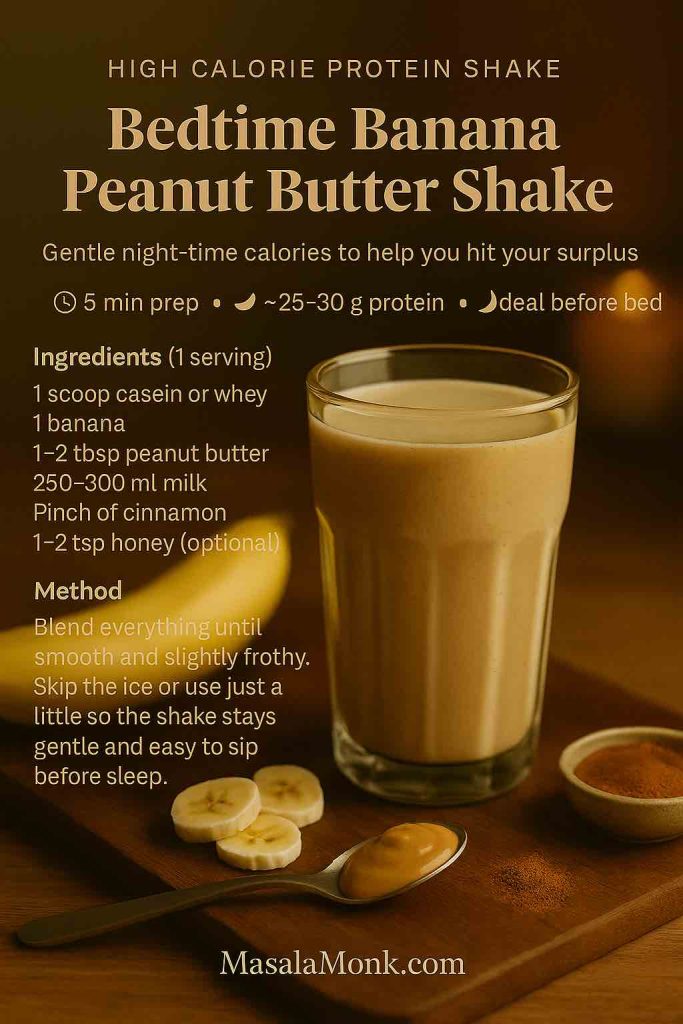
Method
- Add milk, banana, peanut butter and protein powder to your blender.
- Sprinkle over the cinnamon and add honey if using.
- Blend until completely smooth and slightly frothy.
Because this shake is meant for the evening, most people find it more comfortable slightly warm or at room temperature rather than ice-cold. You can simply skip the ice and use milk that isn’t straight from the fridge if your stomach prefers it.
Also Read: Ghee vs. Butter: How are they different?
Putting It All Together for Bulking & Healthy Weight Gain
High calorie protein shakes are tools, not magic. They make it easier to tip the calorie balance in your favour, yet they work best as part of a wider plan that also includes:
- A general focus on calorie-dense whole foods such as nuts, seeds, full-fat dairy and healthy oils
- A structured strength training routine to turn those extra calories into muscle
- Adequate sleep and recovery, so your body can repair and grow
If you have been underweight for a while or you’re recovering from illness, pairing these shakes with guidance on healthy ways to gain weight is a smart move. For those who prefer a more fitness-focused angle, you can also explore overviews on how much protein per day you may need to build muscle and adjust your shake recipes accordingly.
From here, a simple way to start is to pick two or three favourite high calorie protein shakes from this list and rotate them through the week:
- Use one as a breakfast smoothie on busy mornings.
- Sip another as a mid-afternoon snack when appetite is low.
- Keep a richer one, like the bedtime banana peanut butter shake, as a night-time top-up if you’re still short on calories.
As your body gets used to the increased intake, you can slowly increase portion sizes or add a third shake on heavy training days. Meanwhile, you can keep exploring more ingredient combinations – mangoes, nuts, seeds, dates, yogurt and local favourites like sattu – using resources such as the mango weight gain guide and the protein-packed nuts and seeds overview.
The key is consistency. With the right mix of high calorie protein shakes, solid meals and training, healthy weight gain becomes far more achievable – and a lot more enjoyable.
Also Read: Beginner’s Guide to the Gym
FAQs About High Calorie Protein Shakes for Healthy Weight Gain
1. What are high calorie protein shakes?
High calorie protein shakes are blended drinks that combine a concentrated source of protein with calorie-dense ingredients like milk, nut butters, oats, fruits, seeds and healthy fats. Instead of just supplying a scoop of protein powder and water, these shakes are deliberately designed to deliver extra energy along with protein so you can create the calorie surplus needed for healthy weight gain. In other words, they function as compact meals or substantial snacks rather than light post-workout drinks.
2. Are high calorie protein shakes good for weight gain?
High calorie protein shakes are one of the most effective tools for gaining weight in a controlled way. Because they are easy to drink, they allow you to take in more calories without feeling as stuffed as you might after another large plate of food. At the same time, they provide enough protein to support muscle growth when paired with strength training. When you base them on whole ingredients—such as milk, yogurt, oats, nuts, seeds, fruits and quality protein powder—they can be far healthier than relying on random fast food or sugar-heavy snacks.
3. How many high calorie protein shakes should I drink per day?
That depends on how big your calorie gap is. Some people only need one high calorie protein shake a day to move into a small surplus, while others might benefit from two shakes—perhaps one as a breakfast smoothie and another as an evening weight gain shake. As a general rule, it’s better to start with one shake and monitor your weight and digestion for a couple of weeks. If the scale is still not moving and you feel fine, you can gradually add a second high calorie protein shake or make your existing recipe more energy-dense by increasing nut butter, oats or healthy fats.
4. Can I use high calorie protein shakes as meal replacements?
High calorie protein shakes can replace a meal as long as they are built like a balanced plate. That means they should contain protein, carbohydrates, healthy fats and some micronutrients from fruits or vegetables. A weight gain shake with just protein powder and water is not a complete meal; however, a blend that includes milk or yogurt, oats or fruit, nut butter or seeds and perhaps a handful of greens can easily stand in for breakfast or lunch. Even so, keeping some solid meals in your day is still wise, both for digestion and for overall enjoyment of food.
5. What ingredients should I put in high calorie protein shakes for weight gain?
For weight gain, you want ingredients that are calorie-dense and nutritious. Great bases for high calorie protein shakes include whole milk, full-fat yogurt, coconut milk, nut milks and fruit juice in small amounts. To raise the calorie count further, you can add bananas, mangoes, dates, honey, cooked oats, granola, peanut butter, almond butter, cashews, walnuts, chia seeds, flax seeds, pumpkin seeds, avocado, ghee or a drizzle of healthy oil. Finally, combine these with a scoop of whey, casein or plant-based protein powder so your high calorie protein shake also hits a solid protein target.
6. When is the best time to drink a high calorie protein shake for healthy weight gain?
You can fit high calorie protein shakes anywhere in your day; the “best” time is when you are most likely to drink them consistently. Many people find a calorie-dense breakfast smoothie easier than a large morning meal, so that slot works well. Others prefer a high calorie protein shake right after training, when appetite is still decent and muscles are primed for recovery. Another useful window is late afternoon or before bed, especially if you realise you’re short on calories for the day and want a gentle way to top up without cooking a heavy meal.
7. Are high calorie protein shakes better than solid food for bulking & weight gain?
High calorie protein shakes are not automatically better than solid food; they are simply more convenient in some situations. Solid meals often provide more fibre and require chewing, which can help with satiety and digestive health. Nevertheless, if you struggle to eat enough to gain weight, liquid calories offer a practical workaround. A balanced approach works best: use high calorie protein shakes to fill the gap when appetite dips or time is short, and rely on whole-food meals the rest of the day to keep your diet varied and satisfying.
8. Do high calorie protein shakes make you gain fat or muscle?
High calorie protein shakes contribute to both muscle and fat gain; the ratio depends on your training, overall diet quality and total calorie surplus. If you simply add several very large weight gainer shakes to a sedentary lifestyle, more of the gain is likely to be stored as fat. On the other hand, if you combine moderate high calorie protein shakes with a progressive strength training programme, you encourage your body to channel those extra calories into muscle repair and growth. The goal is a modest surplus, not an extreme one, so that the weight you gain is as lean as possible.
9. Can high calorie protein shakes be healthy for women as well as men?
High calorie protein shakes can be beneficial for women and men alike, provided the recipes match individual needs. Women who are underweight, recovering from illness, dealing with poor appetite, training hard, breastfeeding or trying to build muscle may all find calorie-dense shakes helpful. The principles are the same: build your high calorie protein shakes with real foods, keep added sugars reasonable and adjust portion sizes according to your body size and goals. As always, anyone with medical conditions or specific hormonal concerns should check in with a health professional before making big dietary changes.
10. Is whey protein necessary for high calorie protein shakes, or can I use other options?
Whey protein is popular because it mixes easily and is rich in essential amino acids, yet it is not mandatory. High calorie protein shakes can be built with a wide variety of protein sources. You can use plant-based protein powders made from pea, rice, soy or blends if you are vegetarian or vegan. You may also rely on whole-food proteins such as Greek yogurt, paneer, tofu, milk powder or even sattu to raise the protein content. Ultimately, the best choice is the one you digest well, enjoy drinking and can afford to use regularly in your weight gain shakes.