
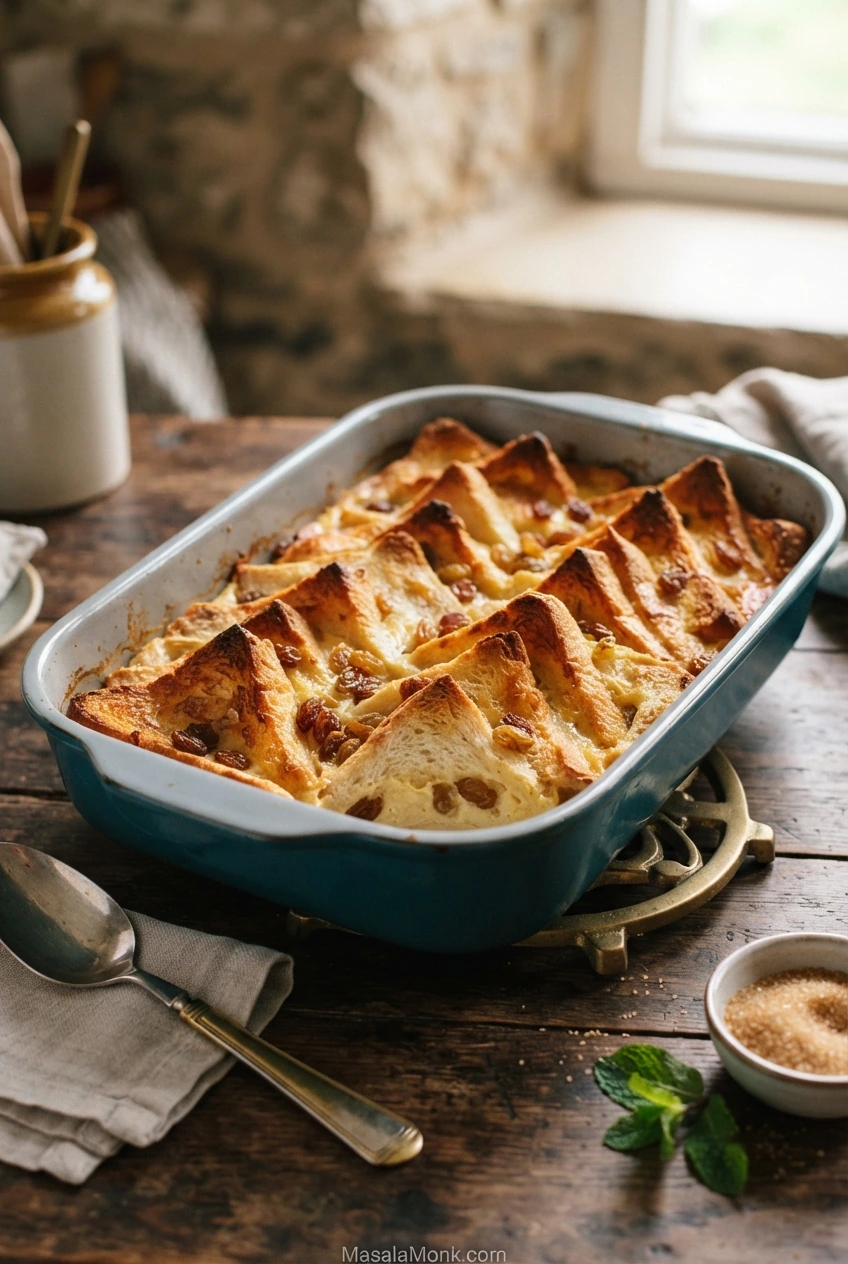
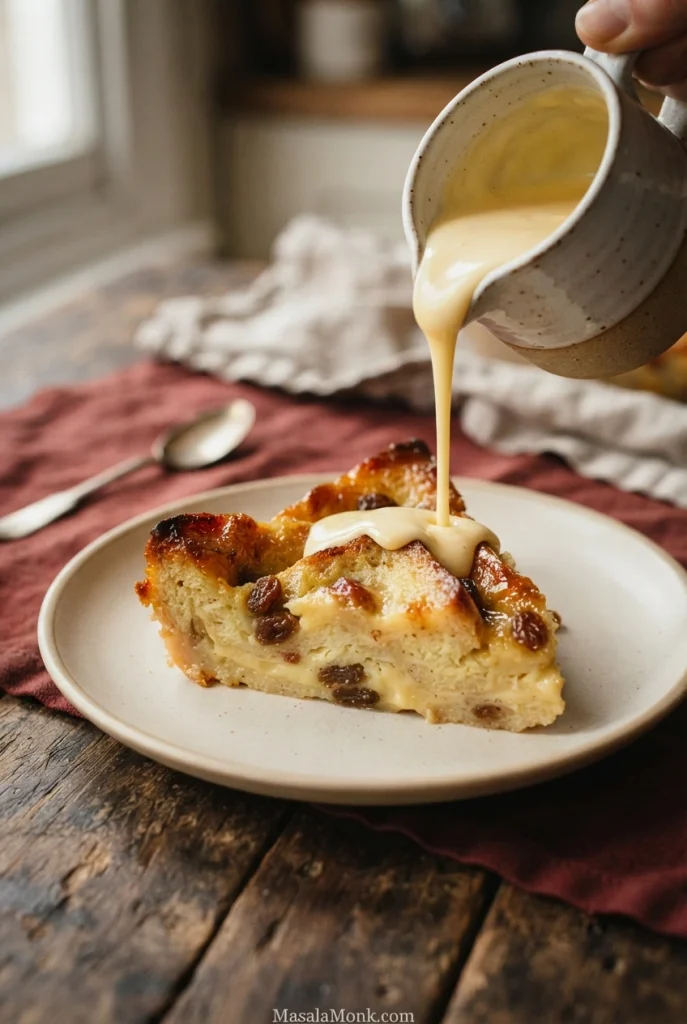
The best part of bread and butter pudding is often the bit that looks almost too exposed: a buttered corner of bread standing above the custard, deep gold at the edge and lightly caramelised with sugar.
Underneath, the same slice should be completely different—soft with vanilla custard, tender enough for a spoon to pass through, but still recognisable as bread. That contrast is what separates a good pudding from dry toast sitting over custard at one extreme or wet, collapsed bread at the other.
The ingredients are wonderfully ordinary: slightly stale white bread, butter, milk, a little cream, eggs, sugar, sultanas or golden raisins, vanilla and nutmeg. It is the sort of dessert that makes very little look generous.
Explore this guide
Bread and Butter Pudding Recipe
At a Glance
| Difficulty | Easy |
|---|---|
| Serves | 6 |
| Hands-on time | About 20 minutes |
| Soak | 30 minutes |
| Bake | About 35–40 minutes |
| Rest | 10 minutes |
| Total | About 1 hour 35–40 minutes |
| Dish | About 20 × 25 × 5 cm / 8 × 10 × 2 in |
| Oven | 180°C conventional / 160°C fan / 350°F conventional / Gas 4 |
The total includes soaking and resting. If the bread needs drying first, allow extra time for that and for cooling.
Ingredients
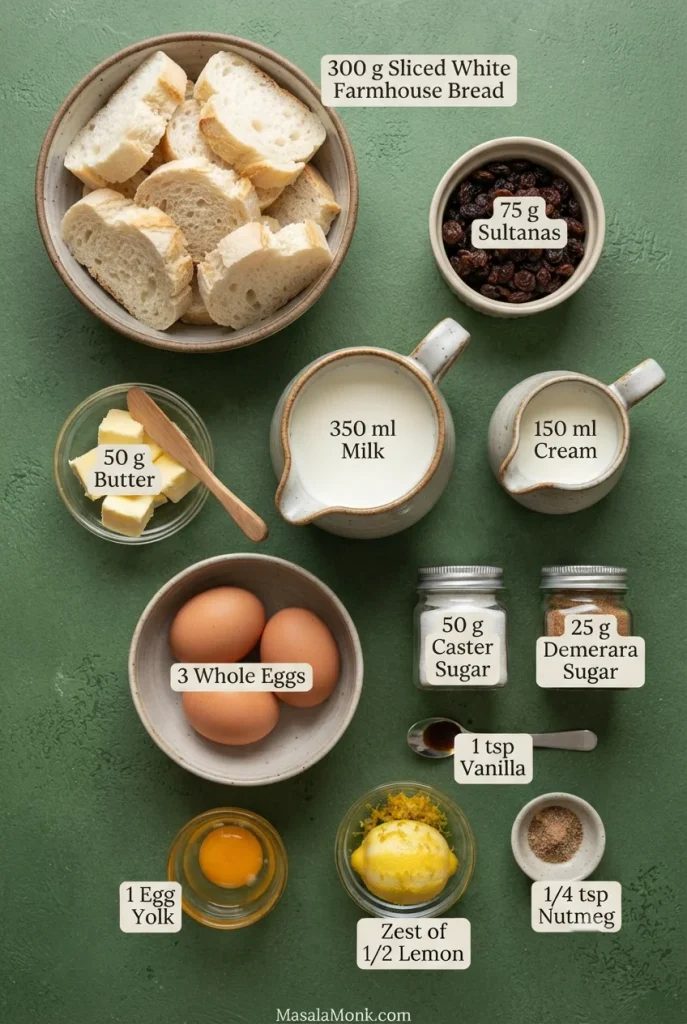
- 300 g / 10½ oz slightly stale white farmhouse or sandwich bread, about 8–10 slices, roughly 1–1½ cm / ⅜–⅝ in thick
- 50 g / 1¾ oz unsalted butter, softened, plus a little extra for greasing the dish
- 75 g / 2⅔ oz sultanas or golden raisins
- 350 ml / about 1½ US cups whole milk
- 150 ml / ½ US cup plus 2 tablespoons cream — double cream gives a fuller, richer custard; heavy or whipping cream also works
- 3 large eggs (about 150 g without shells; use the weight if egg sizes differ)
- 1 egg yolk (about 18 g)
- 50 g / ¼ US cup caster or superfine sugar
- 1 teaspoon vanilla extract
- Finely grated zest of ½ lemon; orange zest also works
- ¼ teaspoon freshly grated nutmeg, plus a little extra for finishing
- 25 g / about 2 tablespoons demerara sugar, for the top
Before You Start: Dish and Bread
Equipment: a shallow ovenproof dish about 20 × 25 × 5 cm / 8 × 10 × 2 in, a mixing bowl, whisk and jug. A kitchen scale and instant-read thermometer are useful.
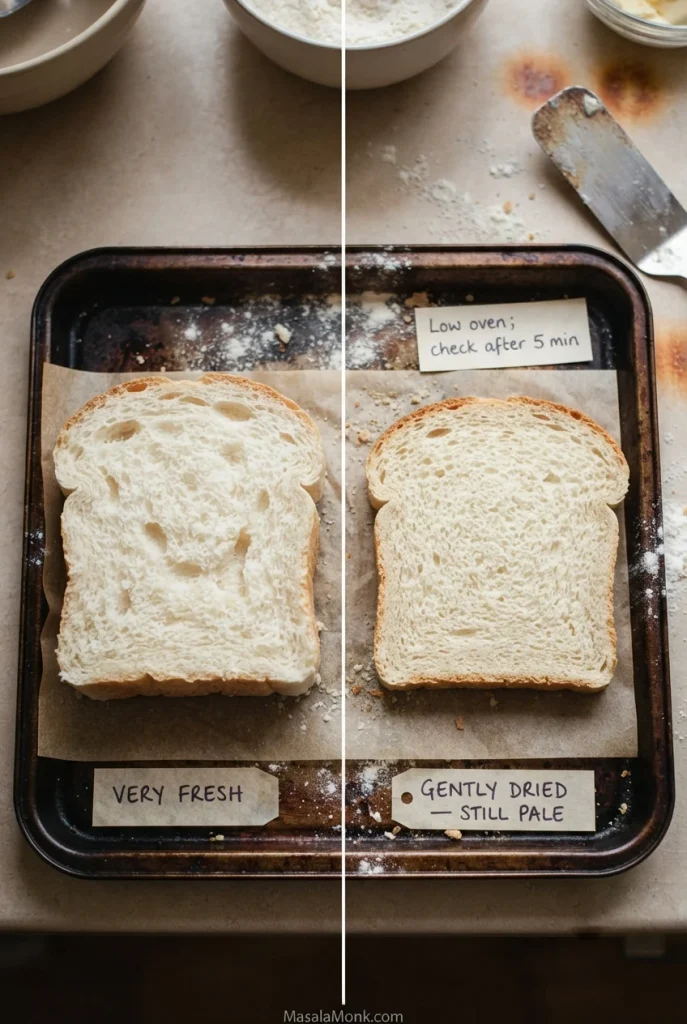
Using very fresh bread? If the slices are extremely soft and floppy, spread them on a tray in a low oven at 120°C conventional / 100°C fan / 250°F. Start checking after 5 minutes; they should feel slightly firmer and drier on the surface while remaining pale and flexible. Cool before buttering. You are not trying to make toast. If you’re considering a different loaf, consult the bread-choice guide before substituting.
1. Butter and Arrange the Bread
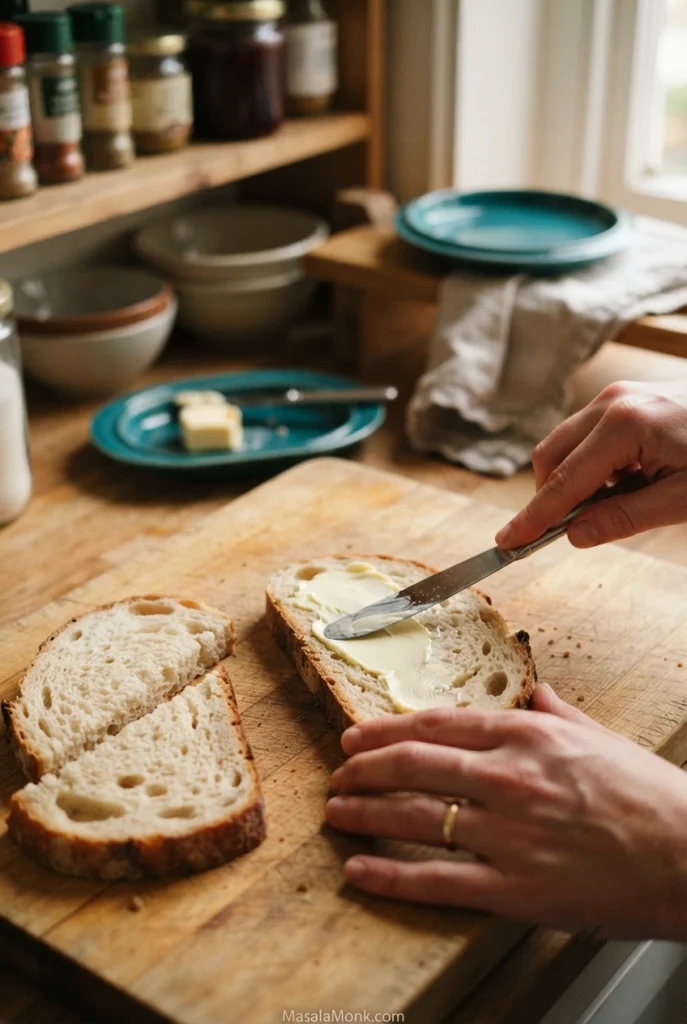
Butter the baking dish, including the corners and lower sides. Spread the 50 g softened butter over one side of each bread slice, then cut into triangles or broad halves. Leave ordinary soft crusts on; trim only unusually thick or tough edges.
Arrange about half the bread buttered-side up, overlapping the pieces at a slight angle. Tuck most of the sultanas or golden raisins between them, then add the remaining bread. Keep most of the fruit below the exposed surface so it doesn’t scorch.
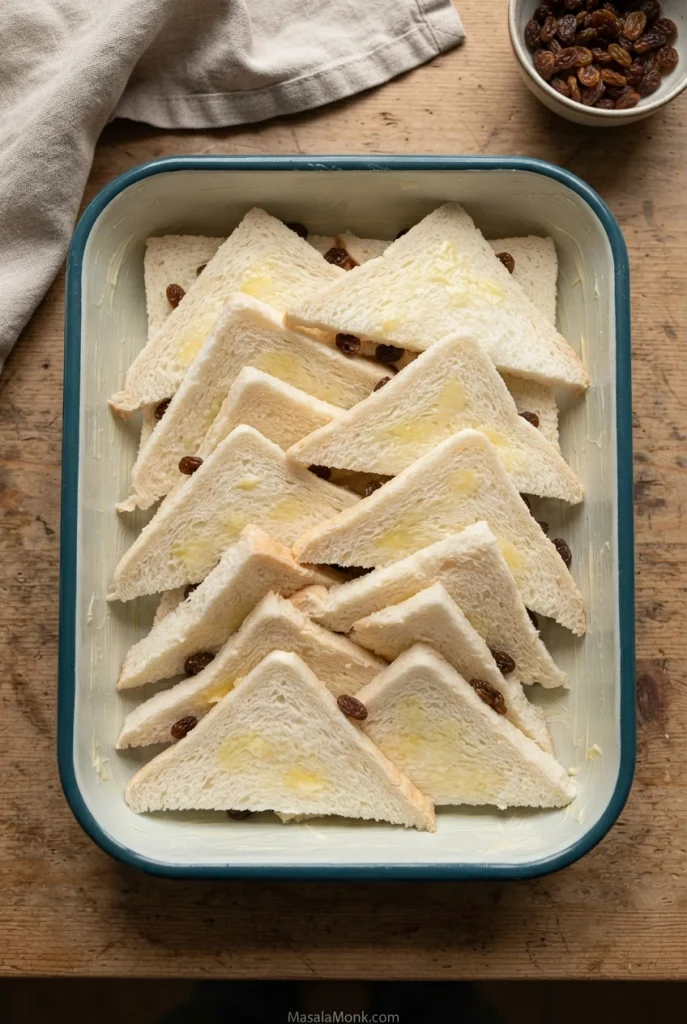
Leave a few buttered corners standing above the lower layers. They’ll turn golden and lightly crisp in the oven while the bread underneath stays tender with custard. Custardy valleys underneath, golden peaks above.
2. Mix the Custard
Whisk the 3 whole eggs, 1 yolk and 50 g caster sugar until evenly combined. Add the vanilla, lemon zest and ¼ teaspoon nutmeg, followed by the 350 ml milk and 150 ml cream. Whisk until smooth.
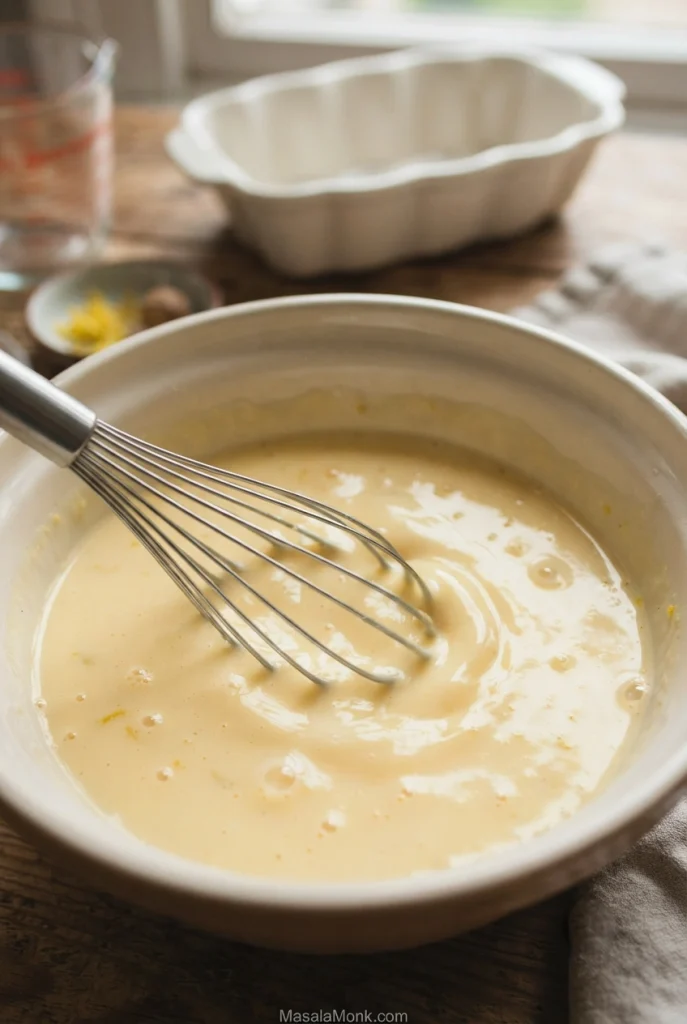
Lemon zest brightens the rich custard, while nutmeg adds a gentle warmth. There’s no need to heat the milk or cook the custard separately.
3. Pour the Custard Over the Bread
Pour the custard slowly over the dish, moving around the overlapping slices so it can run between them. Gently press down with the back of a spoon to help the lower layers absorb it, then let the bread spring back instead of flattening the arrangement.
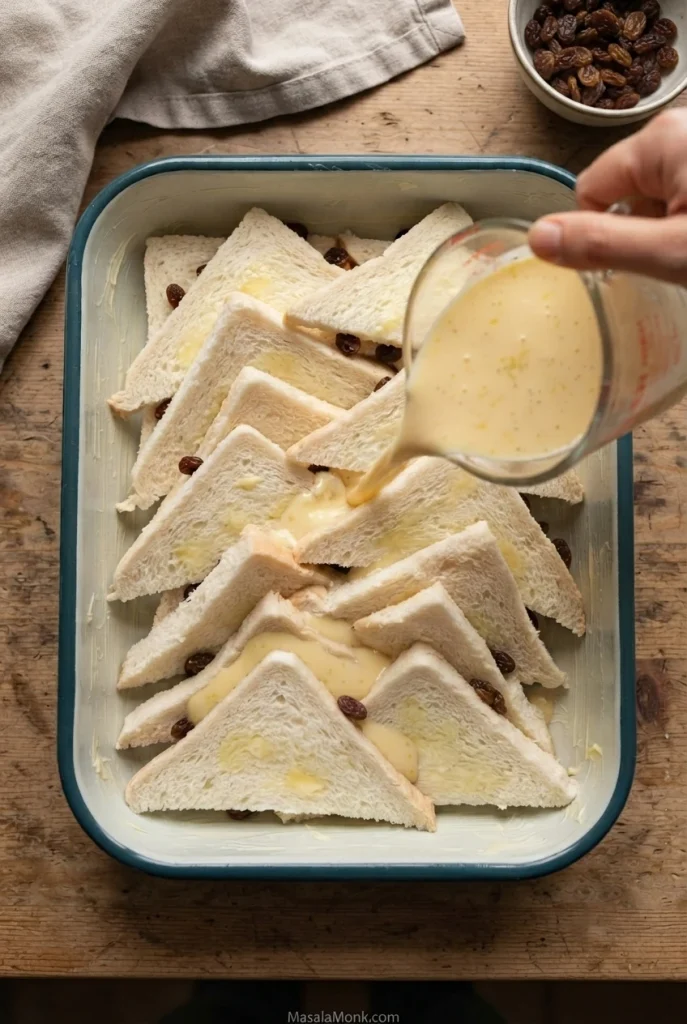
The dish may look almost too wet at first. That’s fine—the bread has only just started drinking.
4. Soak for 30 Minutes
Leave the pudding to soak for 30 minutes. After about 10–15 minutes, put a rack in the middle of the oven and preheat to 180°C conventional / 160°C fan / 350°F conventional / Gas 4.
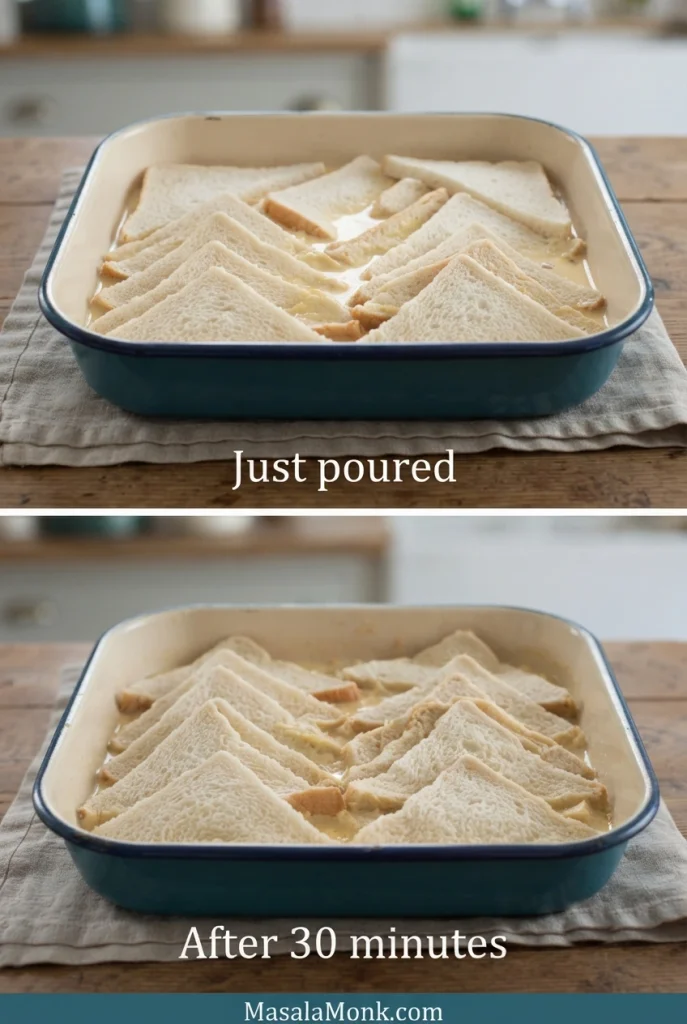
Halfway through, briefly press any completely dry bread into the custard, then let the upper corners rise again. They should have some contact with custard but don’t need to remain submerged. By the end, the bread should feel heavier and softer while keeping its shape.
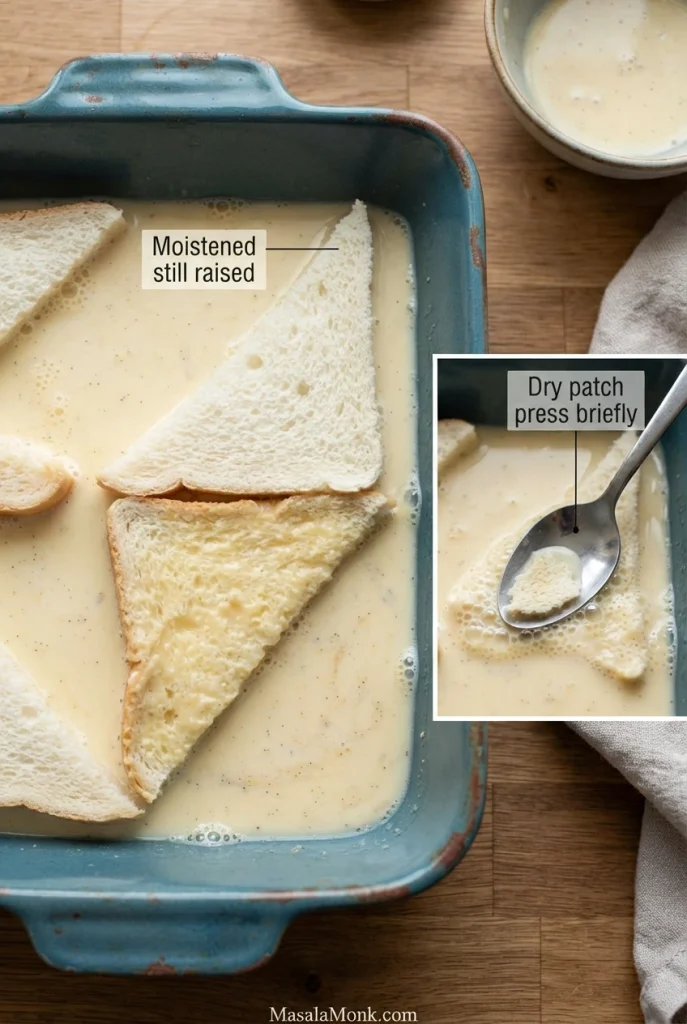
If a deep pool of custard remains under bread that’s still dry, give those pieces another gentle press and a little more soaking time. In a particularly hot kitchen, soak the pudding in the refrigerator instead; a chilled dish may need longer to bake.
5. Sugar, Bake and Check for Doneness
Sprinkle over the 25 g demerara sugar and a little extra grated nutmeg. Bake for about 35–40 minutes, starting to check after 30 minutes. The exposed bread should be golden and the custard at the edges set.
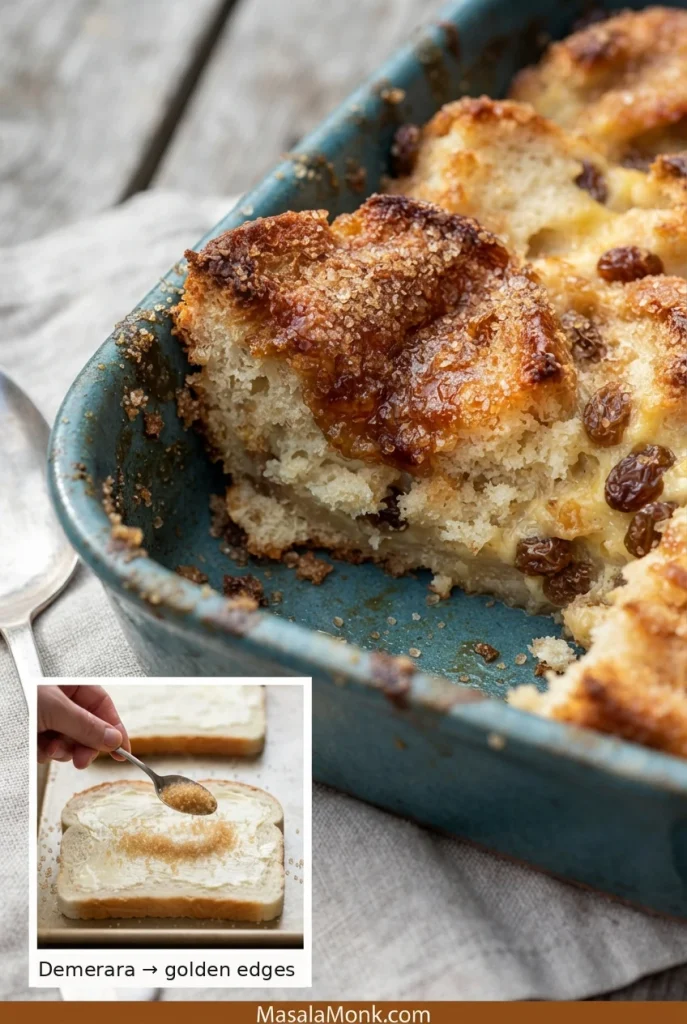
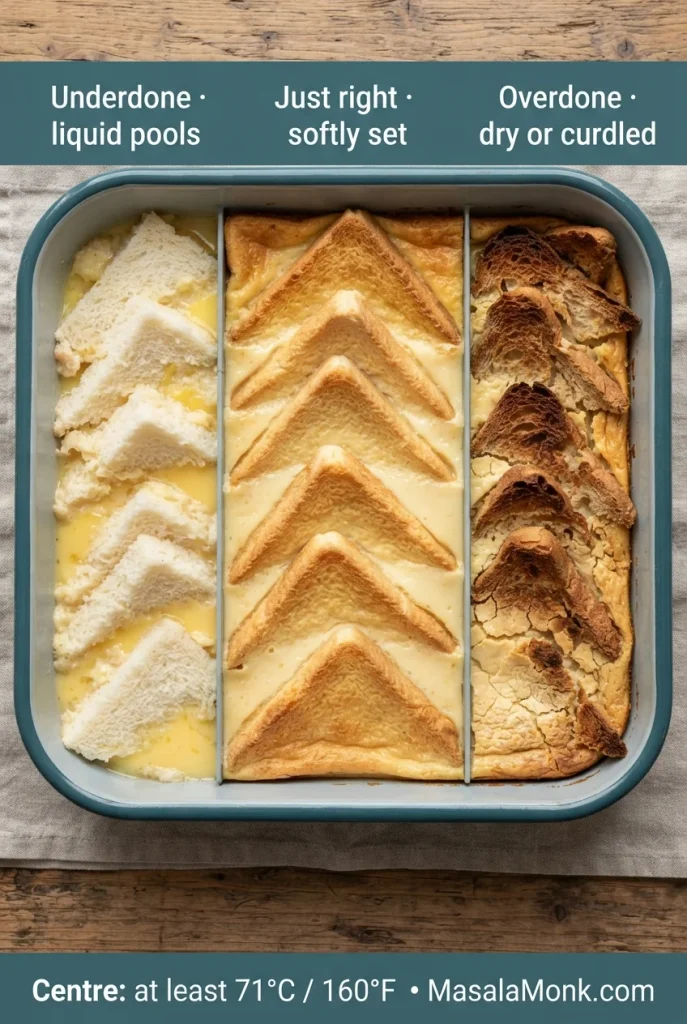
The smell of warm butter, vanilla and nutmeg can make it tempting to take the pudding out early. Check the middle first: when you gently nudge the dish, it may wobble softly, but liquid custard shouldn’t slosh between the slices. If you’re unsure, compare the underdone, just-right and overdone examples below.
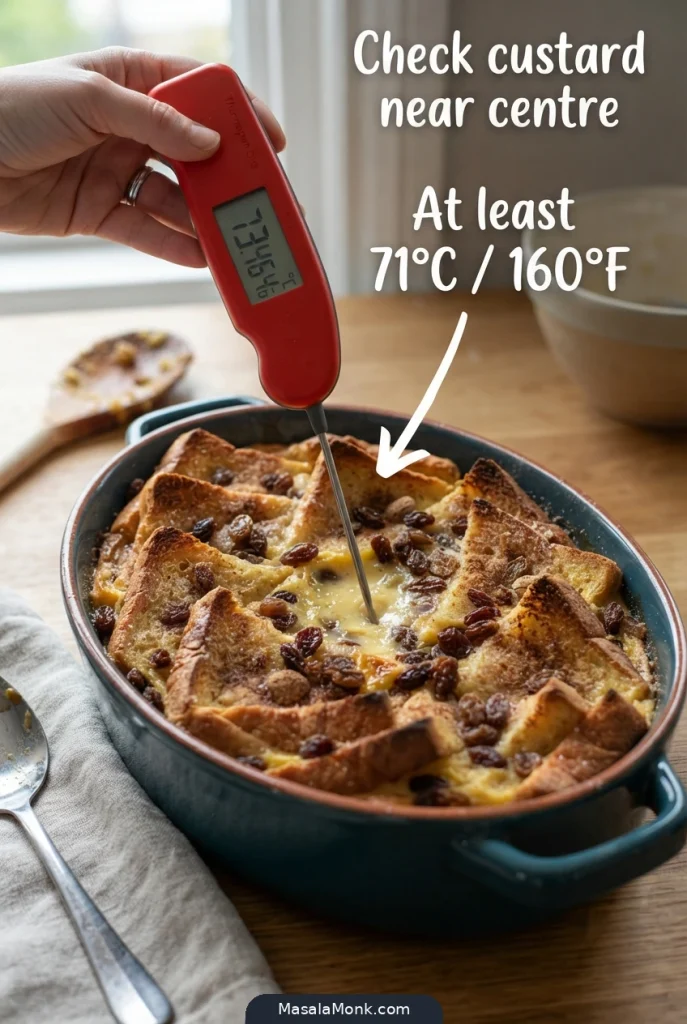
Insert an instant-read thermometer into a custard-rich area near the centre, avoiding the baking dish and exposed bread peaks. The centre should reach at least 71°C / 160°F, the FDA’s recommended temperature for egg dishes.
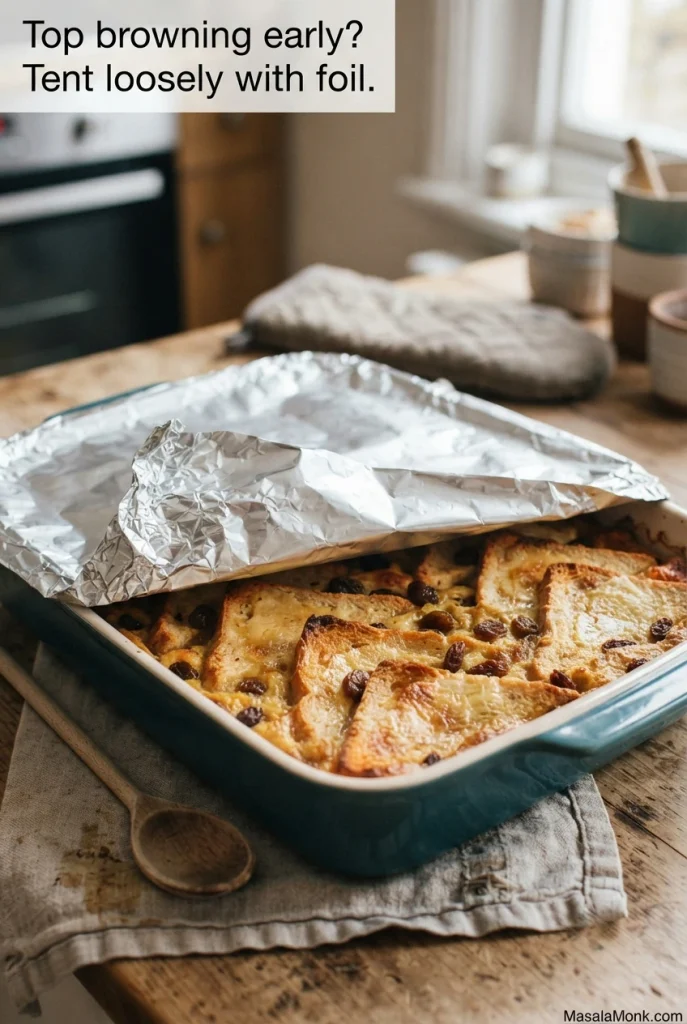
If the top browns too quickly: Cover the dish loosely with foil and continue baking until the custard has reached a safe temperature and is softly set. Don’t wait for a rigid middle.
6. Rest for 10 Minutes and Serve
Rest the pudding for 10 minutes. The custard settles slightly, so it becomes easier to spoon while remaining creamy.
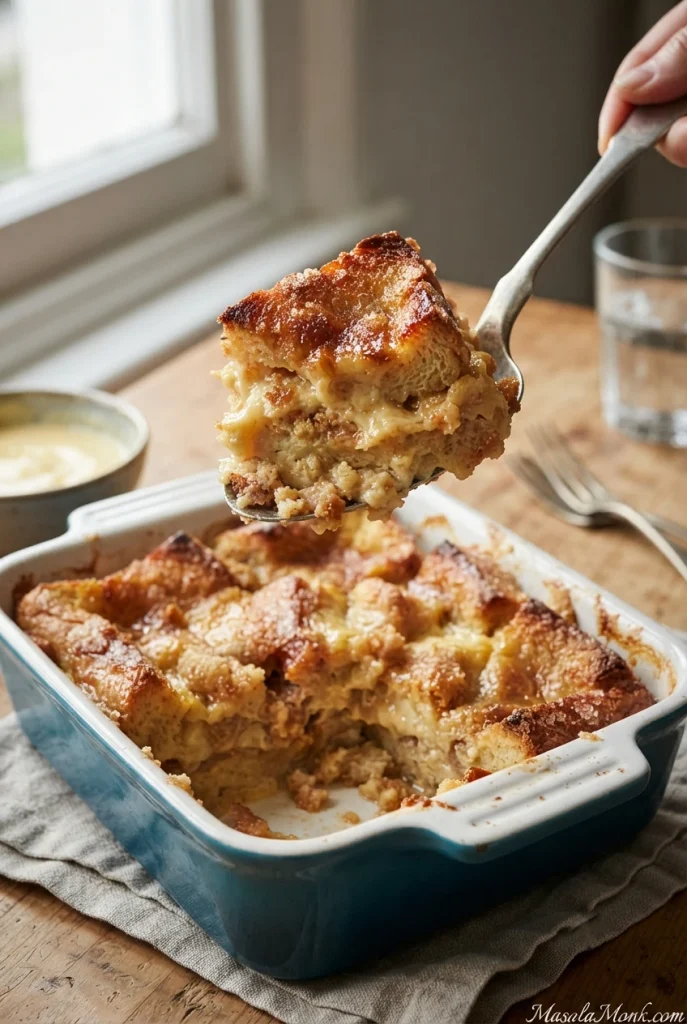
Try to give each portion a little of the golden top and the softer bread underneath. It’s lovely plain, when the contrast is most obvious. Warm pouring custard makes the pudding softer and richer; vanilla ice cream adds a cool contrast, and lightly whipped cream is another good choice.
How to Tell When Bread and Butter Pudding Is Done
Underdone: liquid custard moves or pools separately between the bread slices. Continue baking and check the centre temperature, shielding a dark top with foil if necessary.
Just right: the centre has reached at least 71°C / 160°F and is softly set, with a gentle, cohesive wobble rather than sloshing liquid. Remove from the oven and rest.
Overdone: the custard looks curdled or rubbery, or the bread is drying through. Next time, begin checking earlier and remove the pudding once it has safely set.
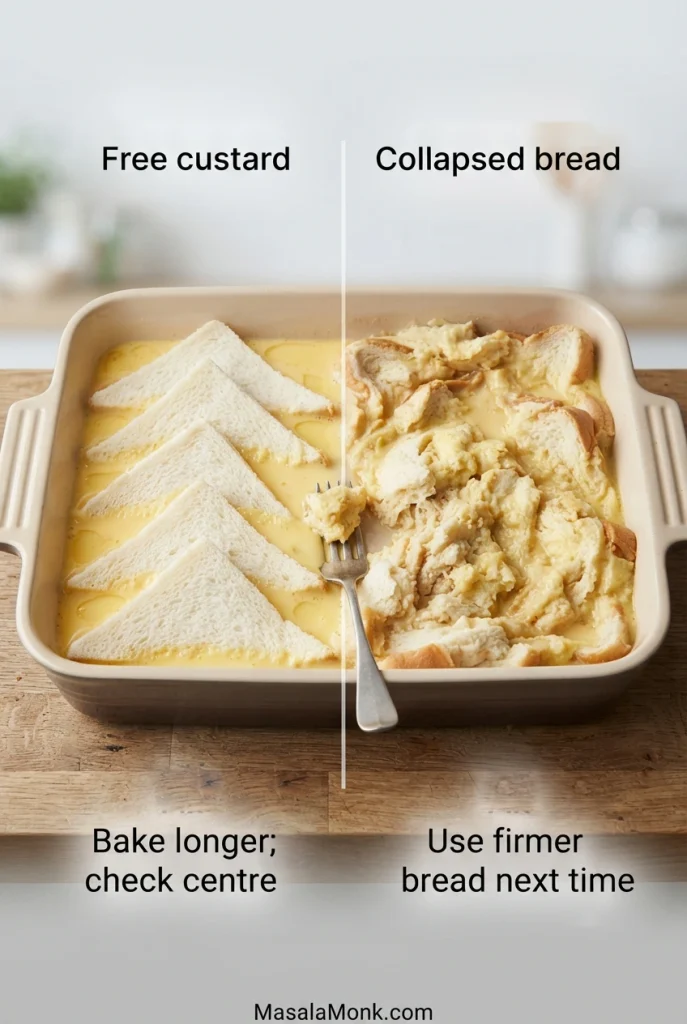
Troubleshooting: Wet, Mushy, Dry or Eggy Pudding
Free custard and collapsed bread are different problems. A little softness is normal; thin liquid that hasn’t set may need more baking, while bread that’s broken down into paste won’t be repaired by extra time in the oven.
More Troubleshooting Checks
- Liquid custard remains between the bread: the centre may need longer, especially in a deeper dish or when baking straight from the refrigerator. Continue baking and check the internal temperature.
- The bread has turned mushy: very soft bread, an overly long soak or a delicate loaf may have caused the layers to collapse. Try slightly firmer bread or a shorter soak next time.
- The upper bread is dry or tough: large sections may not have absorbed enough custard. Briefly wet them during the soak next time, leaving some corners exposed.
- Strong egg flavour but smooth custard: check the egg weights and flavouring. Larger eggs change the balance, and overbaking may make the egg flavour more pronounced.
- Rubbery custard or cooked-egg streaks: excessive heat can firm or curdle the custard; distinct egg streaks can also follow inadequate mixing. Whisk thoroughly and check the bake earlier.
- Burnt sultanas or raisins: keep most of the fruit between the bread layers rather than on top.
↑ Back to the recipe · ↑ Back to top
Choosing the Best Bread for Bread and Butter Pudding
Slightly stale soft white farmhouse or sandwich bread is the best starting point for this classic version. It keeps the buttered layers distinct without adding much sweetness or richness of its own.
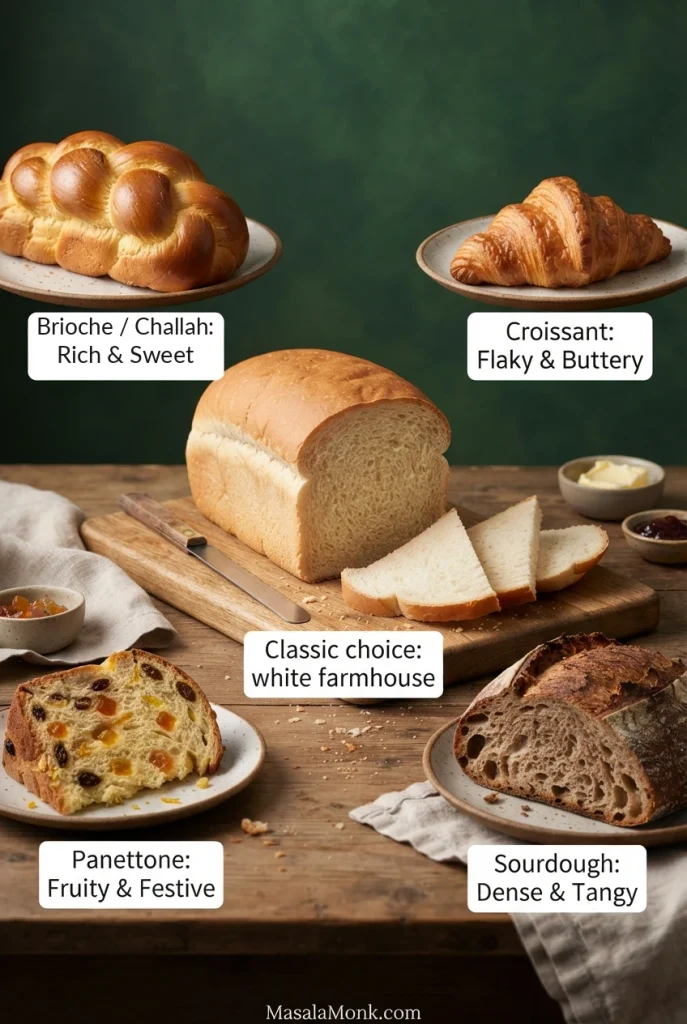
Use the 300 g weight as your reference rather than relying on slice count. Eight thin supermarket slices and eight thick farmhouse slices aren’t the same amount of bread.
| Bread | What to expect |
|---|---|
| White farmhouse or sandwich bread | The classic choice: tender crust, neutral flavour and distinct, custardy lower layers with browned edges above. |
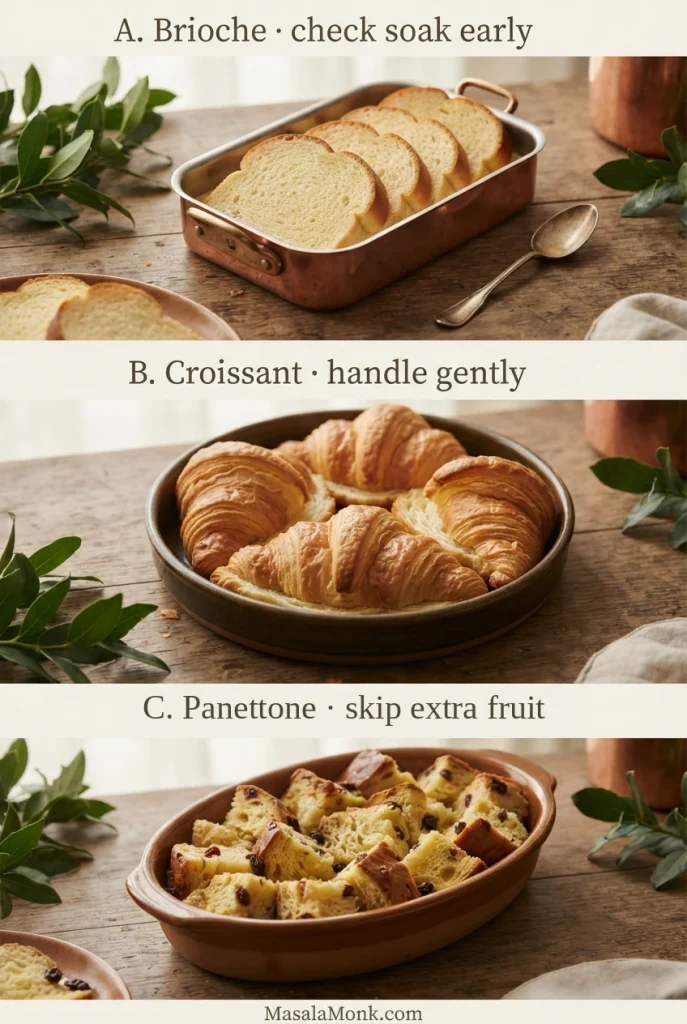
| Brioche or challah | Richer and often softer; some loaves are sweeter, and very fresh slices can lose structure more quickly. |
| Croissants | Very buttery and delicate, producing a richer, softer pudding with less obvious bread layers. |
| Panettone or hot cross buns | Already contain sugar, fruit or spice, so fewer sweet additions are needed. |
| Dense sourdough or crusty artisan bread | Can work, but a tight crumb and thick crust may stay chewy. |
Fresh vs Slightly Stale Bread
Slightly stale bread has firmed up a little but should still bend without crumbling. Very soft fresh bread may turn pasty in custard, while rock-hard bread can remain chewy.
You don’t have to wait a full day to make the pudding. Fresh bread with a reasonably firm crumb can work tonight. For extremely soft slices, use the low-oven drying instructions before the method.
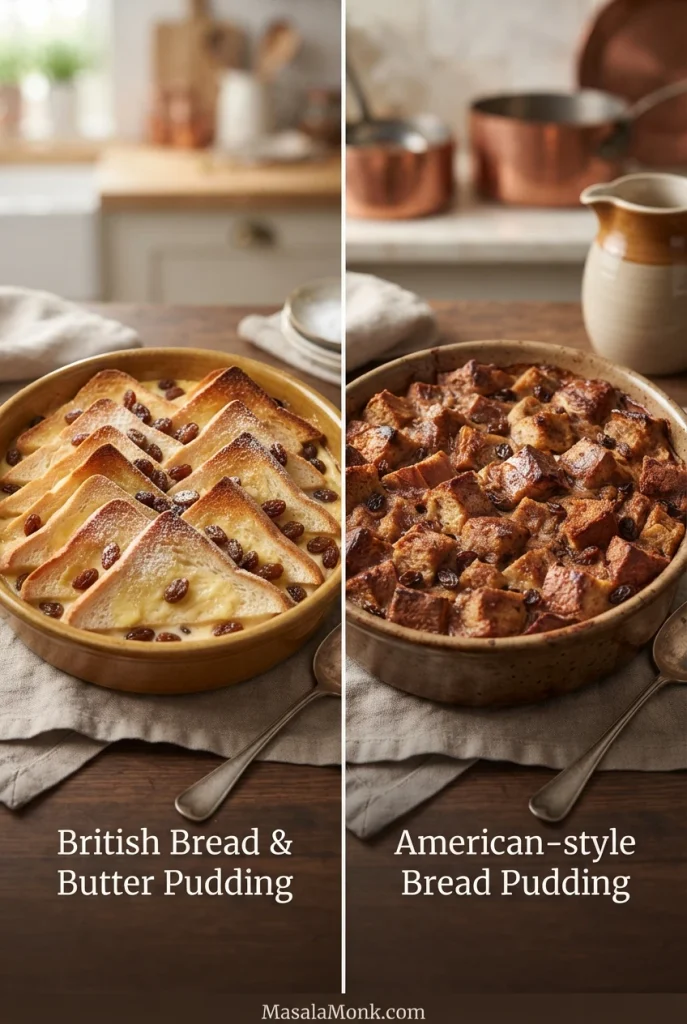
Bread and Butter Pudding vs Bread Pudding
British bread and butter pudding traditionally uses buttered slices or triangles arranged in overlapping layers, with custard poured around them.
In American-style bread pudding, bread is more often cut into cubes or chunks before soaking. Both can have creamy centres and browned edges, but the arrangement and eating texture are different. Traditional British bread pudding is another related dessert, generally denser and more sliceable than either custardy version.
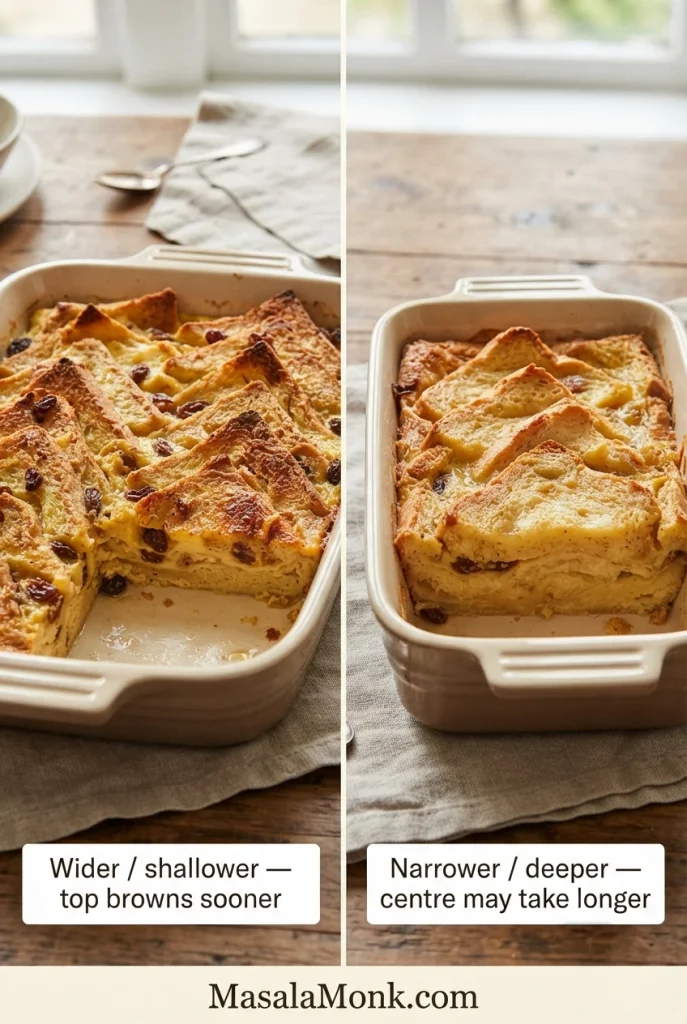
Dish Size and Scaling: Keep the Pudding Depth Similar
A wide, shallow dish exposes more bread to the oven, so the top browns faster. In a narrower, deeper dish, the centre takes longer to cook, even when the top looks finished.
When doubling the recipe, two dishes similar to the original are easier to manage than one very deep casserole. If you’re using a larger dish, keep the pudding depth about the same. Start checking around the usual baking time, then judge the centre by its temperature and texture.
Substitutions and Variations
The milk-only swap is simple. With different breads and flavourings, use the main recipe as a starting point and pay attention to how the loaf behaves during soaking.
Can You Make Bread and Butter Pudding Without Cream?
Yes. Replace the 150 ml cream with another 150 ml whole milk. The pudding will taste lighter and less rich, but the eggs will still set the custard.
Unsweetened evaporated milk can make part of the dairy taste richer. Sweetened condensed milk adds a great deal of sugar, so it isn’t a direct replacement for ordinary milk in this formula.
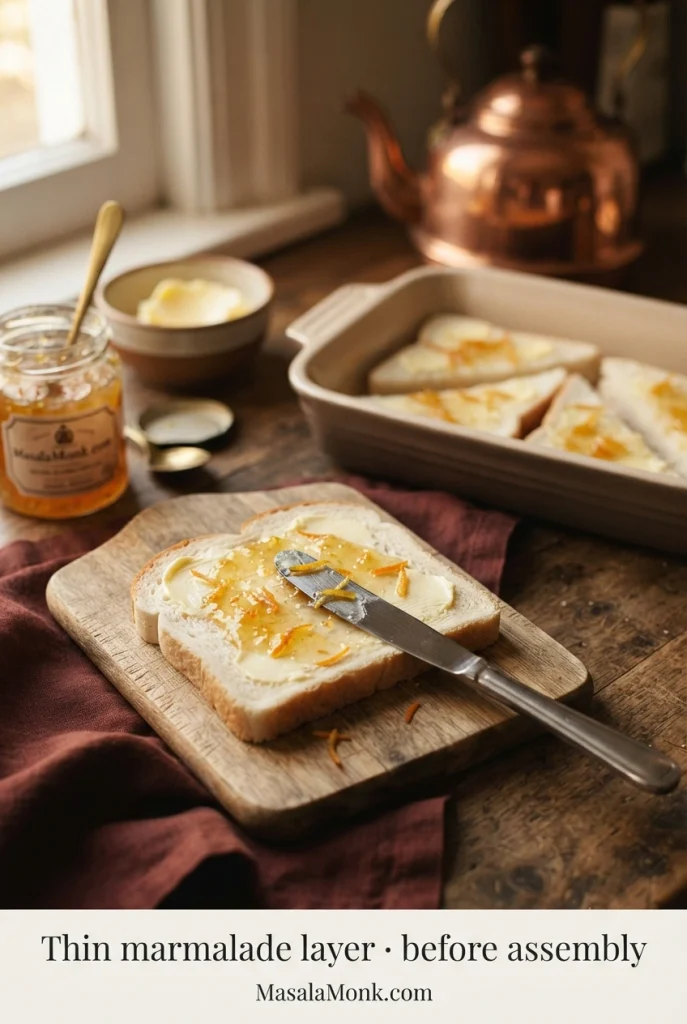
Orange Marmalade
Spread a thin layer of orange marmalade over the buttered bread before arranging it. The peel brings a pleasant bitterness as well as sweetness. Use orange zest instead of lemon and reduce the added sugar a little if the marmalade is particularly sweet.
Brioche or Croissants
Both make a richer pudding. Use the same bread weight as a starting point, but check during soaking rather than assuming they need the full 30 minutes. Reduce the sugar if the bread is already sweet, and handle delicate croissants gently.
Panettone or Hot Cross Buns
These already bring fruit, sugar and spice. Reduce the added sugar and skip the extra sultanas unless you want a particularly sweet, fruit-heavy pudding.
Make Ahead, Store, Reheat and Freeze
Can You Assemble It the Night Before?
Yes. Assemble the pudding, cover it and refrigerate promptly, then bake the following day. The longer soak produces softer, more uniformly custardy bread than the standard 30-minute version.
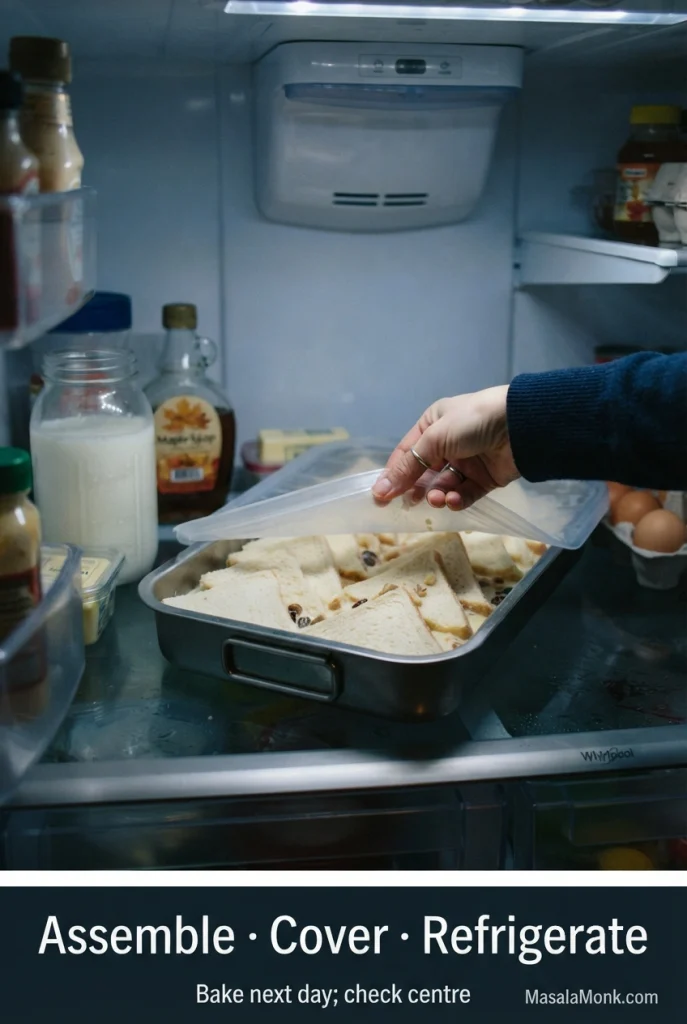
Keep it chilled until you’re ready to bake. A cold pudding may need longer in the oven, so follow the centre-temperature and texture checks rather than the clock alone. If you’d prefer a dish designed around an overnight soak from the start, try our French toast casserole.
Check your baking dish: some glass and ceramic dishes can crack when moved directly from the refrigerator to a hot oven. Follow the manufacturer’s instructions. A suitable oven-safe metal dish can simplify overnight preparation.
Leftovers and Reheating
Refrigerate leftovers promptly in covered, preferably shallow portions so they cool quickly: within 2 hours of cooking, or within 1 hour when the surrounding temperature is above 32°C / 90°F. Aim to eat them within about 3 days.
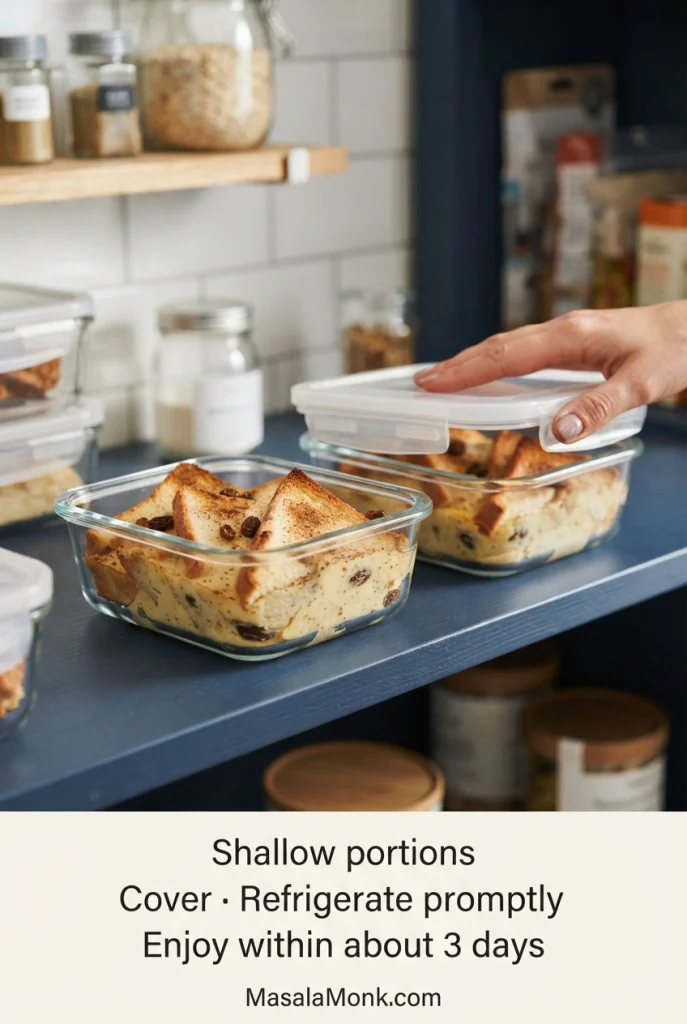
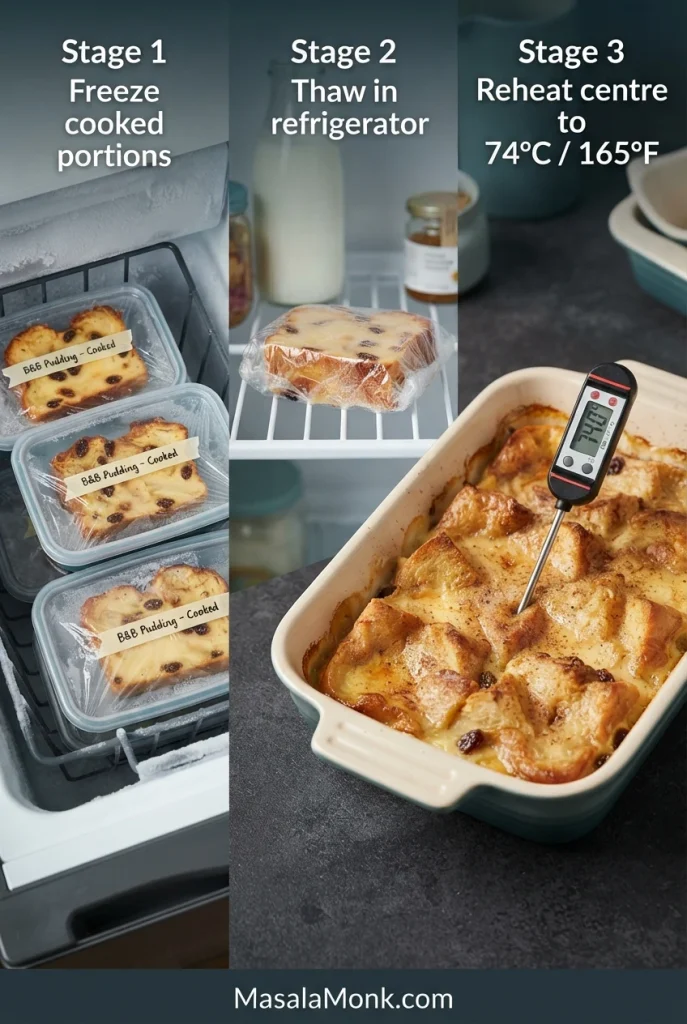
Reheat several portions loosely covered in a moderate oven, or warm individual servings in the microwave (the top will soften). Heat the centre to 74°C / 165°F, in line with FDA guidance for reheating egg dishes.
Freezing
For more predictable texture, freeze cooked portions rather than the uncooked, custard-soaked pudding. Bread and custard may soften and release some moisture after thawing.
Chill cooked portions promptly, wrap well and freeze. Thaw in the refrigerator, then reheat throughout to 74°C / 165°F.
Serve it from the dish rather than worrying about perfect squares. Some people will go straight for the crisp, buttery corners; others will want the softest spoonful from the middle.
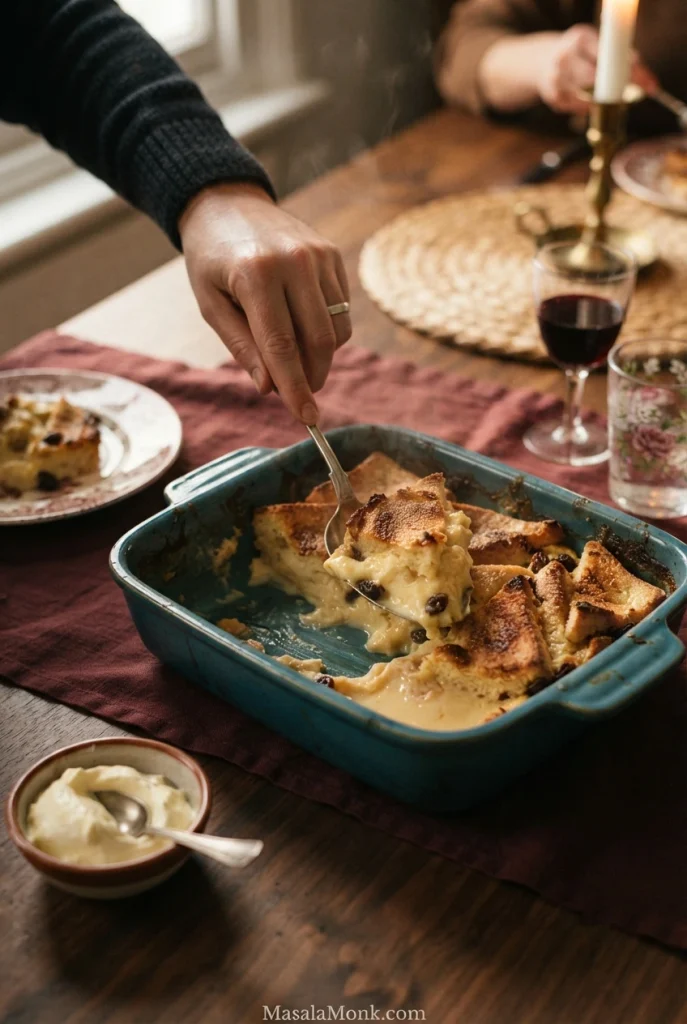
Which part would you choose—the golden corners or the custardy middle? If you make it, tell us what bread you used and how yours turned out.








