Posted on 3 Comments

Side Effects of Turmeric – 10 Risks of Powder, Tea & Supplements

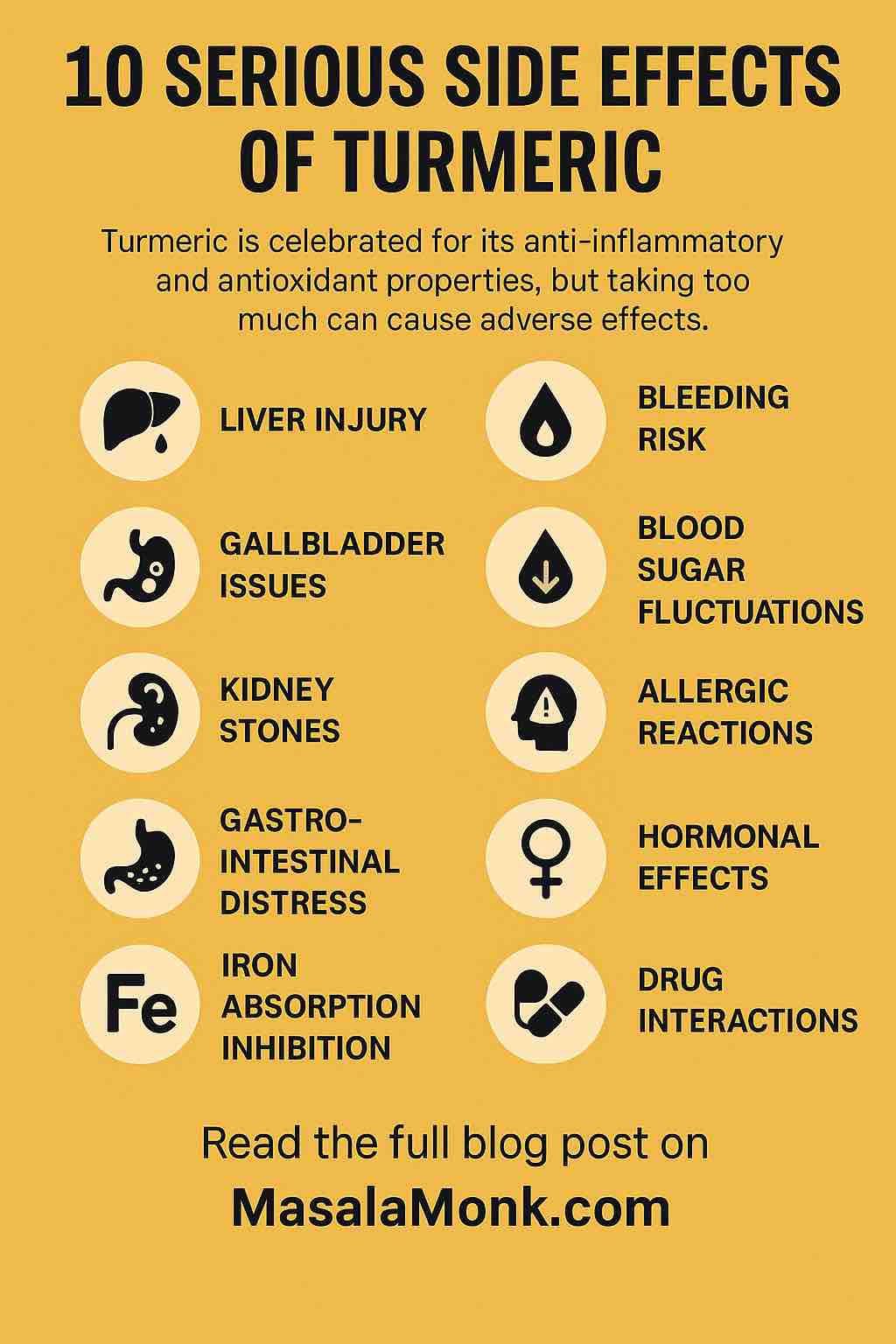
10 SERIOUS SIDE EFFECTS OF TURMERIC YOU SHOULD KNOW

The side effects of turmeric are not something most people think about when they sprinkle the spice on food or sip it in a golden latte. After all, turmeric has built a reputation as one of the world’s healthiest superfoods. From teas and powders to capsules and gummies, this vibrant yellow root is marketed everywhere as a natural remedy for inflammation, joint pain, and even chronic disease. Much of the hype comes from curcumin, the active compound in turmeric that researchers often highlight for its antioxidant and anti-inflammatory powers.

However, while the benefits of turmeric often make headlines, its risks rarely get the same attention. And that’s where balance matters. Just like too much of a “good thing” can backfire, consuming turmeric in excess — especially in concentrated supplements, teas, or powders — can lead to problems. In fact, studies and case reports have linked turmeric overuse to issues ranging from mild digestive distress to more serious health risks such as liver damage, kidney stones, and dangerous drug interactions.

The good news? You don’t need to avoid turmeric entirely. When used in normal food amounts, it can be both safe and beneficial. The key is knowing when turmeric helps and when it harms. By understanding its side effects, you can enjoy turmeric as part of your lifestyle without putting your health at risk.

In this guide, we’ll walk through the 10 most important side effects of turmeric and curcumin. Along the way, you’ll also find practical tips on safe use, so you can make the most of turmeric’s benefits — without falling into the trap of overuse.


10 Serious Side Effects of Turmeric and Curcumin

1. Liver Damage from Turmeric Supplements

Let’s start with the most worrying one: liver damage. While turmeric as a spice in food is safe, things change when it’s concentrated into pills or powders. Several case studies have linked turmeric supplements to hepatotoxicity — liver injury marked by symptoms like jaundice, fatigue, and abnormal blood tests.
Man clutching liver area – turmeric liver damage side effect.
Although turmeric supports liver health in moderation, too much turmeric extract or curcumin supplements may have harmful side effects on the liver, leading to toxicity or damage.

In fact, the issue became so concerning that Italy banned health claims on turmeric supplements due to safety fears.

If you’re wondering whether turmeric is truly good or bad for your liver, you might want to read this deep dive: Is Turmeric Good for Your Liver? What the Latest Research Really Says.

👉 If you have liver problems or take medication that already stresses your liver, avoid turmeric supplements and stick to small food-based amounts.


2. Increased Bleeding Risk with Turmeric Use

Here’s another hidden risk: turmeric naturally acts as a blood thinner. While this might sound like a bonus for heart health, it can be dangerous when combined with blood-thinning medications such as aspirin, warfarin, or clopidogrel.
Hand bleeding – blood thinning side effect of turmeric.
One of the dangerous side effects of turmeric is blood thinning. Turmeric and curcumin may increase bleeding risk, especially when taken with blood-thinning medications like warfarin or aspirin.

The problem is simple — if your blood doesn’t clot properly, even small cuts can bleed longer, and surgical procedures can become riskier. That’s why doctors typically recommend stopping turmeric supplements at least two weeks before surgery.


3. Gallbladder Pain & Gallstones as Turmeric Side Effects

Turmeric stimulates bile production, which is helpful for digestion. But there’s a catch: for people with gallstones or bile duct blockages, this can trigger painful gallbladder spasms.

Woman holding stomach in pain – gallstone pain as a side effect of turmeric.
One of the serious side effects of turmeric is its ability to worsen gallstone pain. Excess turmeric or curcumin can stimulate bile production, leading to painful spasms in people with gallstones.

So while a little turmeric sprinkled on food is fine, those with gallbladder issues should avoid turmeric supplements unless cleared by their doctor.


4. Kidney Stones Caused by Turmeric Powder

Turmeric is high in oxalates, compounds that bind to calcium and form crystals. Over time, these crystals can grow into kidney stones — especially the common calcium oxalate stones.

Man with kidney pain illustration – turmeric's effect on Kidney Stone.
A negative effect of turmeric is its high oxalate content, which may contribute to kidney stone formation. Overuse of turmeric capsules or curcumin pills increases this risk.

To put this in perspective, just one tablespoon of turmeric powder contains up to 60 mg of oxalates. If you’re prone to kidney stones, cutting back on turmeric supplements or powders may save you a lot of pain.


5. Digestive Side Effects of Turmeric (Nausea, Bloating, Diarrhea)

Ironically, while many people take turmeric for digestive health, high doses often cause the opposite effect.

Common complaints include:

  • Nausea
  • Acid reflux
  • Bloating
  • Diarrhea
Woman with stomach upset – gastrointestinal side effects of turmeric.
Taking too much turmeric can cause digestive side effects such as nausea, bloating, or diarrhea. Curcumin supplements in high doses may irritate the stomach lining and cause discomfort.

The reason? Concentrated curcumin supplements can irritate the stomach lining. If you notice these symptoms, it may be a sign that you’re taking too much.

If you’d still like to enjoy turmeric in a soothing way, try pairing it with herbs like moringa. Here are some safe, refreshing ideas: 5 Health-Boosting Turmeric and Moringa Tea Recipes.


6. How Turmeric Interferes with Iron Absorption

Another less-discussed problem is how turmeric affects iron absorption. Studies show that turmeric can reduce the body’s ability to absorb non-heme iron (the kind found in plant-based foods).
Tired woman – side effect of turmeric blocking iron absorption.
Another adverse effect of turmeric is reduced iron absorption, which may cause or worsen anemia. People with low iron should avoid excess turmeric or curcumin supplements.

This might not affect everyone, but for vegetarians, women with heavy periods, or anyone with existing anemia, it could worsen iron deficiency. If iron is already a struggle for you, it’s worth limiting turmeric capsules and powders.


7. Turmeric and Blood Sugar Crashes in Diabetics

Turmeric is often praised for lowering blood sugar, which sounds great — until it drops too low. Combined with diabetic medications, turmeric can lead to hypoglycemia (dangerously low blood sugar).

Woman dizzy at table – turmeric low blood sugar side effect.
Turmeric curcumin side effects include lowering blood sugar levels, which can be dangerous for diabetics. Combining turmeric supplements with diabetes medication may cause hypoglycemia.

Symptoms include dizziness, confusion, sweating, and fainting. If you’re diabetic, turmeric might still have a place in your diet, but you’ll need to monitor your levels carefully when adding supplements.


8. Allergic Reactions to Turmeric and Curcumin

Although uncommon, turmeric allergies do happen. Reactions may range from mild rashes and itching to more severe issues like hives or difficulty breathing.

Woman with skin rash – turmeric allergy adverse effect.
While uncommon, turmeric side effects can include allergic reactions. Some people experience skin rashes, itching, or redness after using turmeric powder, supplements, or curcumin capsules.

People who are allergic to ginger or yellow food dyes (such as tartrazine) may be more likely to react. If you’re new to turmeric supplements, it’s always safest to start with small doses and watch for reactions.

If you’re exploring turmeric with ginger — another common combo — make sure you understand both the benefits and risks. Here’s a science-backed breakdown: Turmeric and Ginger for Effective Weight Loss.


9. Hormonal Side Effects of Turmeric (Cancer & Estrogen Concerns)

Curcumin behaves like a phytoestrogen, a plant compound that mimics estrogen in the body. For some, this could pose risks — especially those with hormone-sensitive conditions such as breast cancer, ovarian cancer, uterine fibroids, or endometriosis.

Woman thinking seriously – turmeric estrogen mimic side effect.
A lesser-known side effect of curcumin is its estrogen-like activity. This may worsen hormone-sensitive conditions such as breast cancer, endometriosis, or fibroids.

The research is mixed: while some studies suggest anticancer effects, others highlight potential hormonal stimulation. Until clearer evidence emerges, it’s best to be cautious if you have hormone-related conditions.

For a balanced perspective, check out 5 Reasons to Eat Turmeric for PCOS, which shows how turmeric can both support and complicate hormonal health depending on the context.


10. Dangerous Turmeric Drug Interactions You Must Know

Finally, turmeric can affect the enzymes in your liver that metabolize medications. This means drugs may either become too weak to work — or too strong, leading to side effects.
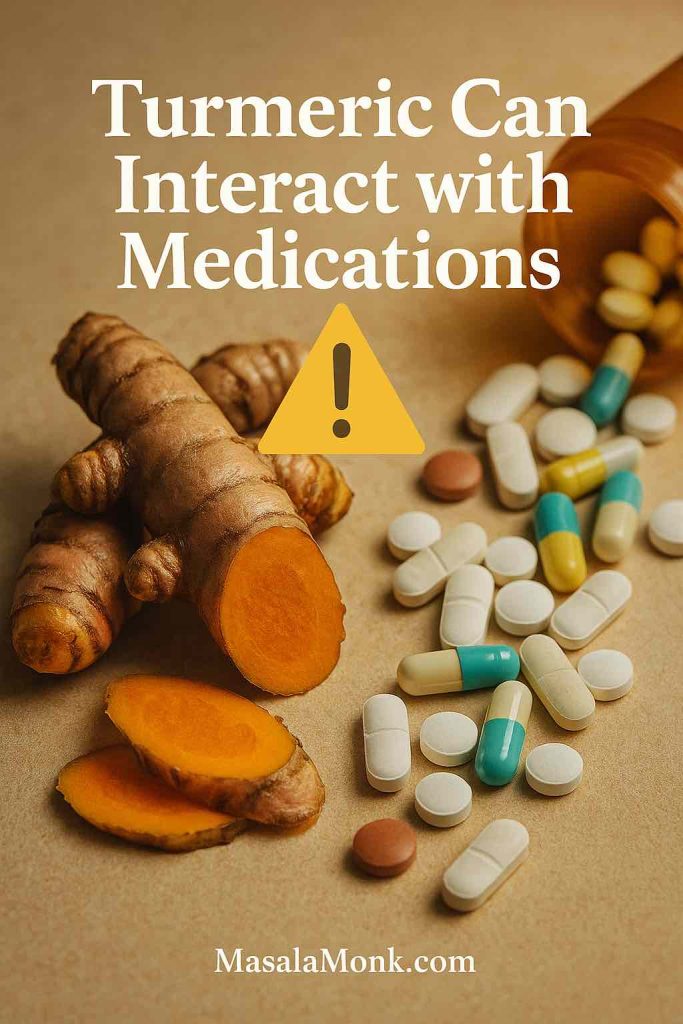
Turmeric roots and pills – turmeric drug interaction adverse effect.
One of the most important side effects of turmeric is its interaction with medications. Curcumin may interfere with blood thinners, diabetes drugs, chemotherapy, and more.

Some of the medications that can interact with turmeric include:

  • Antidepressants
  • Antibiotics
  • Chemotherapy drugs
  • Immunosuppressants

The tricky part is that these interactions aren’t always obvious at first. But over time, they can cause serious complications. Always check with your healthcare provider before mixing turmeric supplements with prescription drugs.

If you’re curious about turmeric combined with black pepper — often marketed as “enhanced absorption” — it’s important to know that while it boosts curcumin’s bioavailability, it can also magnify side effects. Here’s a full breakdown: Health Benefits of Turmeric with Black Pepper.


Other Reported Side Effects of Turmeric

Beyond these 10 major risks, there are a few other side effects worth mentioning:

  • Headaches and dizziness with very high doses
  • Constipation or stomach pain in sensitive individuals
  • Skin rashes from applying turmeric topically
  • Low blood pressure for those already prone to drops

They may not be as common, but they’re a reminder that moderation is key.

If you prefer drinking turmeric in teas, you can enjoy it safely by sticking to mindful recipes like this Turmeric Ginger Cinnamon Tea.


Side Effects of Turmeric in Different Forms

Not all turmeric is consumed the same way — and each form carries its own risks.

FormCommon UsePotential Side Effects
Turmeric PowderCooking, golden milkKidney stones, digestive upset
Turmeric TeaHerbal drinkNausea, acid reflux
Turmeric SupplementsCapsules, tabletsLiver damage, drug interactions
Topical TurmericFace masks, creamsAllergic rashes, skin irritation

How to Reduce the Side Effects of Turmeric

The goal isn’t to avoid turmeric altogether, but to use it wisely. Here are some simple tips:

  • ✅ Stick to culinary amounts in food and drinks
  • ✅ Avoid high-dose supplements unless prescribed
  • ✅ Stop supplements before surgery or medical procedures
  • ✅ Buy from reputable brands to reduce contamination risks
  • ✅ Pair turmeric with black pepper and healthy fats for better absorption — but only in safe doses
  • ✅ Pay attention to how your body reacts and adjust accordingly

For example, pairing turmeric with black pepper and healthy fats can help absorption — but should be done carefully. To understand why, see this guide: Turmeric & Curcumin Absorption and Bioavailability.


Final Thoughts on Turmeric Side Effects

Turmeric is powerful — and that’s exactly why it must be used with care. In the right amounts, it can support health and well-being. But in excess, or when taken without medical guidance, it can cause more harm than good.

Think of turmeric like medicine: helpful at the right dose, risky if overused. By being aware of its side effects, you can make smarter choices, protect your health, and still enjoy the benefits of this ancient spice.


FAQs on the Side Effects of Turmeric

1. Can you overdose on turmeric?

Yes. Taking very high doses of turmeric — especially in supplements — can cause serious problems such as liver damage, nausea, dizziness, or kidney stones. Symptoms of a turmeric overdose may include stomach pain, yellowing of the skin (jaundice), or unusual fatigue.


2. Is turmeric safe to take every day?

Turmeric is generally safe in food-level amounts, like curries, teas, or turmeric milk. However, daily high-dose supplements increase the risk of side effects of turmeric such as digestive distress, bleeding issues, or drug interactions.


3. What are the side effects of turmeric tea?

Turmeric tea is soothing for many, but in excess it may cause acid reflux, bloating, diarrhea, or nausea. These side effects of turmeric tea are more likely if you drink it on an empty stomach or consume more than 1–2 cups per day.


4. Can turmeric cause headaches or constipation?

Yes. While less common, some people experience headaches, dizziness, or constipation after using turmeric, especially in capsule form. If you notice these side effects of turmeric supplements, it’s best to reduce your intake or stick to food-based turmeric.


5. What are the side effects of turmeric with black pepper?

Turmeric with black pepper (piperine) improves curcumin absorption but also intensifies side effects of turmeric, such as nausea, bleeding risk, and low blood sugar. If you take medications — particularly blood thinners or diabetes drugs — this combination should be avoided unless your doctor approves.


6. Is turmeric milk (haldi doodh) safe?

Yes, turmeric milk is safe in moderation. But drinking too much haldi doodh can cause constipation, stomach upset, or excess calorie intake. These side effects of turmeric in milk are rare when limited to one small cup daily.

If you love haldi doodh, here’s the right way to prepare it without overdoing it: Know the Right Way of Consuming Turmeric Milk.


7. Does turmeric affect the liver?

Yes. Turmeric supplements have been linked to liver toxicity in rare cases. These side effects of turmeric are more common in people with pre-existing liver disease or those who take medications that already stress the liver.


8. Can turmeric lower blood sugar too much?

Yes. Turmeric may amplify the effects of diabetes medications, leading to hypoglycemia (low blood sugar). Symptoms include dizziness, confusion, shaking, or fainting. If you’re diabetic, watch for these side effects of turmeric and monitor your levels closely.


9. What are signs of a turmeric allergy?

Turmeric allergies are uncommon but possible. Look out for rashes, itching, hives, or swelling. Severe allergic reactions to turmeric can cause shortness of breath or anaphylaxis, which require immediate medical help.


10. Who should avoid turmeric supplements?

Turmeric supplements should be avoided by people with gallstones, kidney stones, or liver problems. They are also risky for those on blood thinners, antidepressants, chemotherapy, or diabetes medications, as well as pregnant or breastfeeding women and individuals with hormone-sensitive cancers.


Further Reading & Research on the Side Effects of Turmeric

If you’d like to dive deeper into the science behind the side effects of turmeric and curcumin, here are some trusted resources and studies worth exploring. These go beyond the headlines and offer real-world medical cases, safety alerts, and expert guidance.

  • NCBI: LiverTox – Turmeric-Associated Liver Injury
    The U.S. National Institutes of Health maintains this resource, which includes case studies of hepatotoxicity (liver damage) caused by turmeric supplements. It’s a must-read if you’re curious about why some countries, like Italy, have restricted health claims on turmeric products.
    👉 Read more on NCBI
  • Australian Therapeutic Goods Administration (TGA): Safety Alert on Turmeric & Curcumin
    This government safety warning highlights 18 cases of liver injury, some severe, linked to turmeric and curcumin products — particularly those designed for “enhanced absorption” (often combined with black pepper).
    👉 See the full safety alert
  • The American Journal of Medicine: Case Series on Turmeric-Related Liver Injury
    A clinical case report published in 2023 documenting how turmeric supplements led to hospitalization and, in one case, acute liver failure. It reinforces why moderation is so important when it comes to turmeric pills.
    👉 Read the case series
  • PubMed: Anticoagulant Effects of Curcumin
    A peer-reviewed study confirming that curcumin has a blood-thinning effect, which validates the risk of increased bleeding when combined with medications like warfarin or aspirin.
    👉 Explore the study
  • Johns Hopkins Medicine: Turmeric Benefits and Risks
    A balanced medical guide from one of the most respected hospitals in the U.S. It covers both the health benefits of turmeric and the potential side effects, including drug interactions.
    👉 Visit Johns Hopkins Medicine

Why These Resources Matter

When it comes to health, research-backed evidence is essential. While turmeric is safe and beneficial in food-level amounts, these studies and reports show why supplements, teas, and powders in excess can trigger real side effects — from liver injury to bleeding risks.

By exploring the resources above, you’ll see how experts and regulatory bodies around the world are tracking the risks of turmeric, ensuring that consumers stay safe while enjoying its potential benefits.
Posted on 4 Comments

Fight Anemia and Boost Hemoglobin: 10 High Iron Shakes & Smoothie Ideas

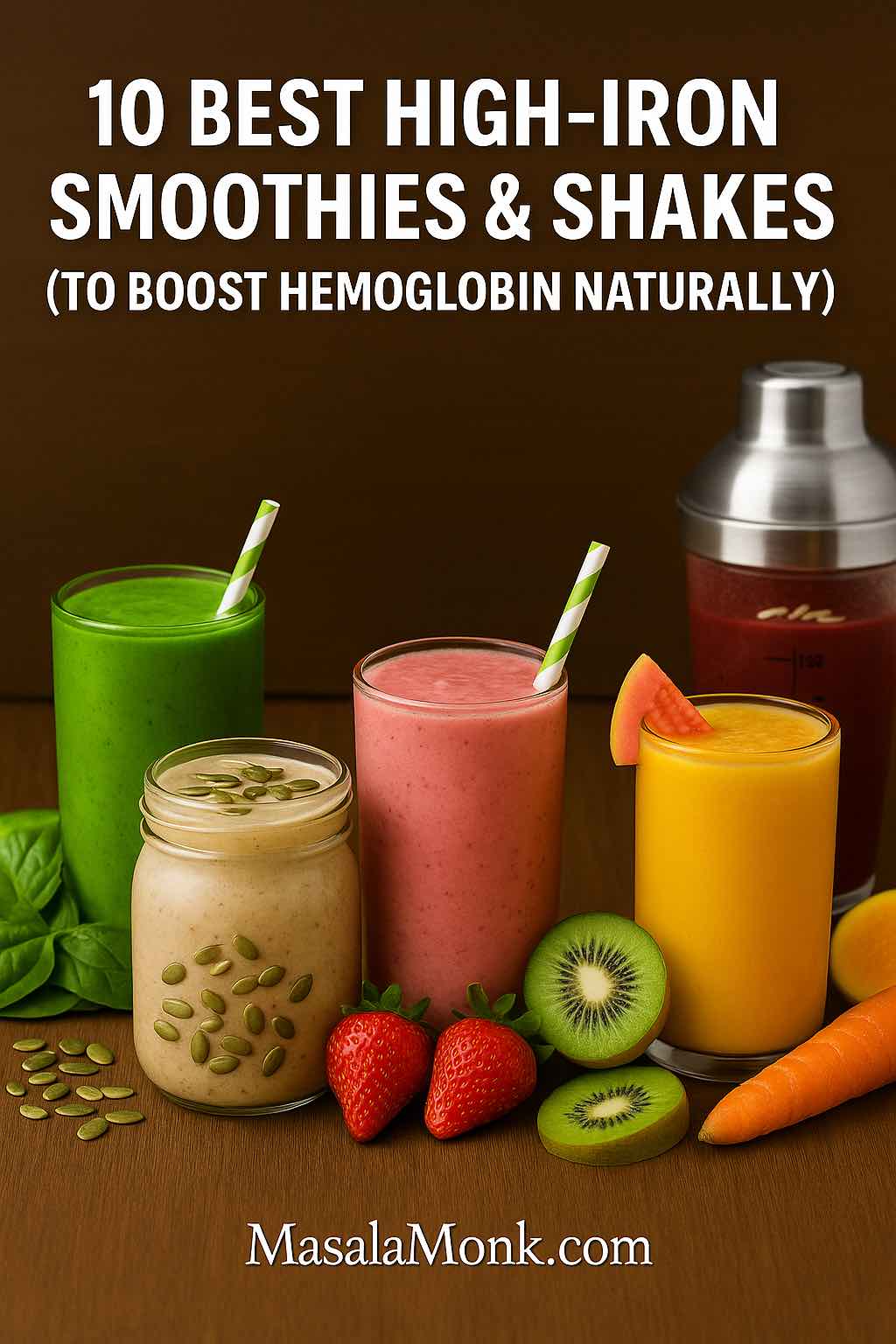
10 BEST HIGH-IRON SMOOTHIES & SHAKES (TO BOOST HEMOGLOBIN NATURALLY)

If you’ve ever felt drained, dizzy, or low on energy, you probably know just how much iron matters. High Iron Smoothies & Shakes are a great way to get Iron, which is the mineral your body needs to produce hemoglobin — the protein responsible for carrying oxygen through your blood. When iron levels dip too low, anemia can set in, leaving you feeling constantly fatigued, foggy, and even breathless after the simplest tasks. Read more about it in Iron: Mineral for Vitality and Health

Now, here’s the good news: you don’t have to depend only on heavy iron supplements or bland iron tablets to fix the problem. You can actually sip your way to stronger iron levels. With the right blend of iron-rich fruits, leafy greens, seeds, and vitamin C-packed ingredients, smoothies and shakes become not only refreshing but also powerful tools for boosting hemoglobin naturally.

In this guide, we’ll share 10 of the best high-iron smoothie recipes. Some are energizing breakfast blends, others work as protein-packed shakes, and a few are soothing, everyday anemia smoothies that can fit seamlessly into your lifestyle. Each one is delicious, practical, and easy to prepare at home.

But before we dive into recipes, let’s first understand why smoothies are one of the smartest ways to fight iron deficiency and how you can maximize their benefits.


Why Choose Smoothies or Shakes for Iron Deficiency?

Unlike pills or supplements, smoothies give you nutrients in their natural form. When you combine plant-based iron sources (like spinach, pumpkin seeds, and beets) with vitamin C-rich fruits (such as oranges, guava, or strawberries), you create the perfect environment for your body to absorb iron more efficiently. This is something iron tablets alone can’t always achieve.

Smoothies are also:

  • Quick & convenient — You can whip one up in under 5 minutes.
  • Customizable — From fruity blends to protein shakes with iron, there’s a recipe for every taste.
  • Gentle on digestion — Unlike some supplements that can cause constipation or stomach issues, smoothies use whole foods that are easier on the gut.
  • Versatile — They can double up as breakfast, post-workout fuel, or even a mid-day pick-me-up.

This makes them a sustainable daily habit rather than a chore. Plus, when you rotate different ingredients — think green smoothies one day and fruit-based iron shakes the next — you cover a wider spectrum of nutrients while keeping things exciting for your taste buds.

Also Read: Iron Deficiency Anemia Symptoms: 15 Signs You Are Iron Deficient

🍹 10 Best High-Iron Smoothies & Shakes to Boost Hemoglobin Naturally

Before we jump into the actual recipes, it’s worth mentioning that High Iron Smoothies & Shakes aren’t just one type of drink. Some blends are green and leafy, others lean on iron-rich fruits, while a few are designed as protein shakes with iron to keep you fuller for longer. By mixing and matching these styles, you can enjoy variety while making sure you’re supporting your iron levels every single day.

In the list below, you’ll find a mix of:

  • High iron smoothies for anemia — gentle, nourishing blends to fight fatigue.
  • Protein shakes with iron — perfect post-workout or as a meal replacement.
  • Iron-rich fruit smoothies — naturally sweet, family-friendly options.
  • Green iron smoothies — packed with leafy greens and vitamin C for better absorption.

Each recipe has been designed to be practical, tasty, and nutrient-rich, so you can actually enjoy the process of building your iron levels instead of dreading it. Do not miss reading Top 10 Iron Rich Vegetables to Help Cure Anemia & Boost Hemoglobin

Now, let’s get blending!

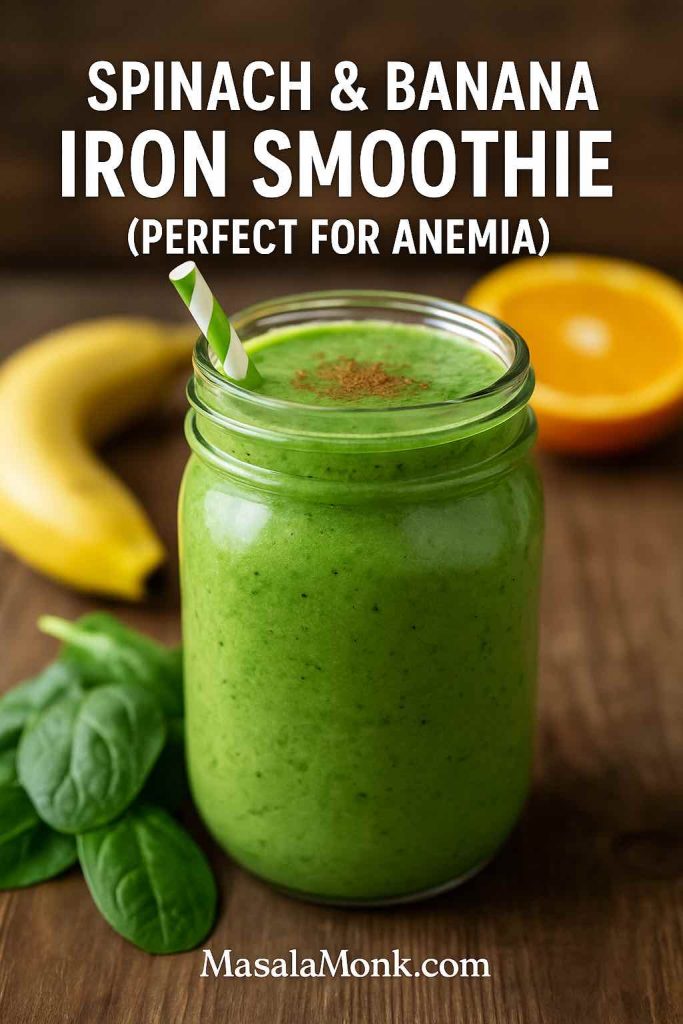
1. Spinach & Banana Iron Smoothie Recipe (Perfect for Anemia)

If you’ve ever been told to “eat more spinach” for iron, you’re not alone. However, eating endless bowls of greens isn’t always exciting. That’s why turning spinach into a creamy, sweet smoothie can be a game-changer. This recipe balances the earthy notes of spinach with banana’s natural sweetness and citrus for better absorption. Moreover, it’s quick enough to blend in the morning before work.

Spinach and banana iron smoothie with orange juice, perfect for anemia and boosting hemoglobin - MasalaMonk High Iron Smoothies & Shakes Recipe Ideas
Feeling low on energy? Try this spinach & banana smoothie — rich in iron and vitamin C for anemia recovery. Creamy, refreshing, and perfect for mornings! Save this recipe to boost hemoglobin naturally.

Ingredients:

  • 1 cup fresh spinach (iron + folate to support hemoglobin production)
  • 1 ripe banana (creamy texture, plus potassium for energy)
  • ½ cup orange juice (vitamin C, which helps your body absorb iron more effectively)
  • ½ cup water or almond milk (for a smoother consistency)

Method:

  1. Start by adding spinach and your liquid base to the blender — this prevents the leaves from sticking.
  2. Next, toss in the banana and pour in the orange juice.
  3. Blend until silky smooth.
  4. Finally, pour over ice and enjoy immediately.

Why this works:
Spinach delivers a strong dose of non-heme iron. However, without vitamin C, your body struggles to absorb it. That’s where orange juice comes in. As a result, this simple smoothie doesn’t just give you nutrients — it helps your body actually use them.

Pro Tips & Variations:

  • Add 1 tablespoon pumpkin seeds to increase protein and iron naturally.
  • Swap banana with pear or apple if you prefer a lighter flavor.
  • Freeze spinach in small portions — it makes the smoothie colder and doesn’t lose much nutrition.

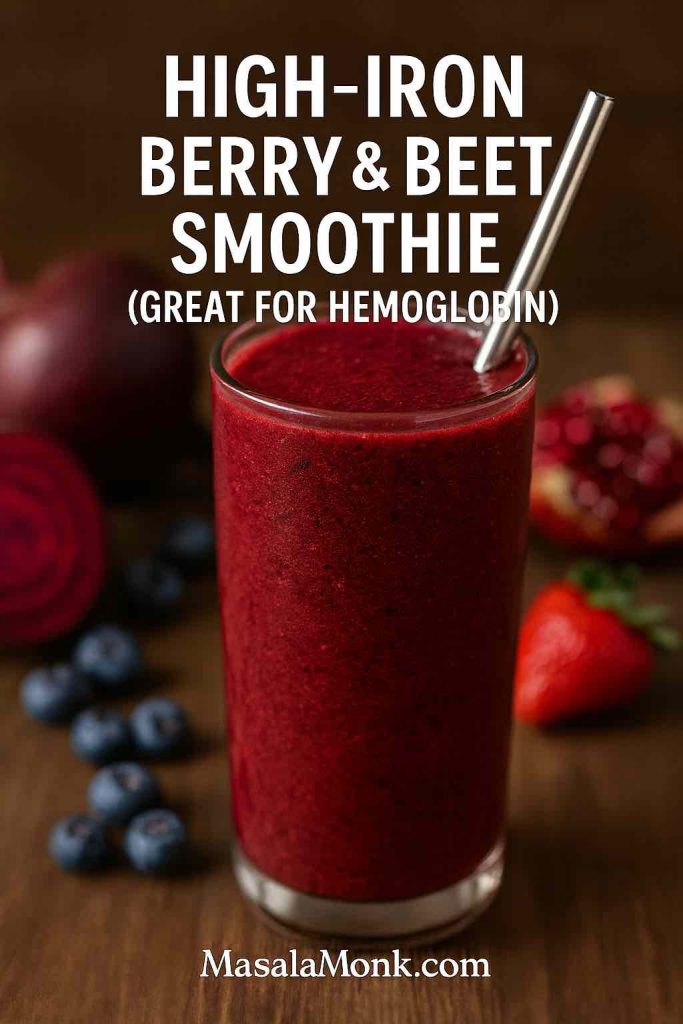
2. High-Iron Berry & Beet Smoothie (Great for Hemoglobin)

If you’re struggling with low iron levels or anemia, beets should be your best friend. They’re not only rich in folate but also help your body regenerate red blood cells. When combined with vitamin C–rich berries, you get a smoothie that’s not only delicious but also highly effective. Furthermore, the deep red color makes it feel indulgent, almost like dessert.

High-iron berry and beet smoothie recipe rich in antioxidants and great for hemoglobin - MasalaMonk High Iron Smoothies & Shakes Recipe Ideas
A vibrant red smoothie made with beets, berries, and pomegranate — packed with folate and vitamin C to boost hemoglobin. Perfect for anemia support and energy. Pin this beet smoothie recipe today!

Ingredients:

  • 1 small beetroot, cooked and chopped
  • ½ cup strawberries
  • ½ cup blueberries
  • ½ cup pomegranate seeds
  • 1 cup water or coconut water
  • 1 tsp chia seeds (extra iron + fiber)

Method:

  1. Place chopped beetroot into your blender.
  2. Add strawberries, blueberries, and pomegranate.
  3. Pour in water or coconut water, then sprinkle in chia seeds.
  4. Blend until smooth and creamy.

Why this works:
Beets support red blood cell production, while berries and pomegranate add vitamin C to maximize iron absorption. As a result, you’re not just getting iron, but also ensuring it’s bioavailable.

Pro Tips:

  • Chill beets before blending for a refreshing drink.
  • Add a date for sweetness if needed.
  • This doubles up as a smoothie for anemia recovery — it’s both energizing and gentle on digestion.

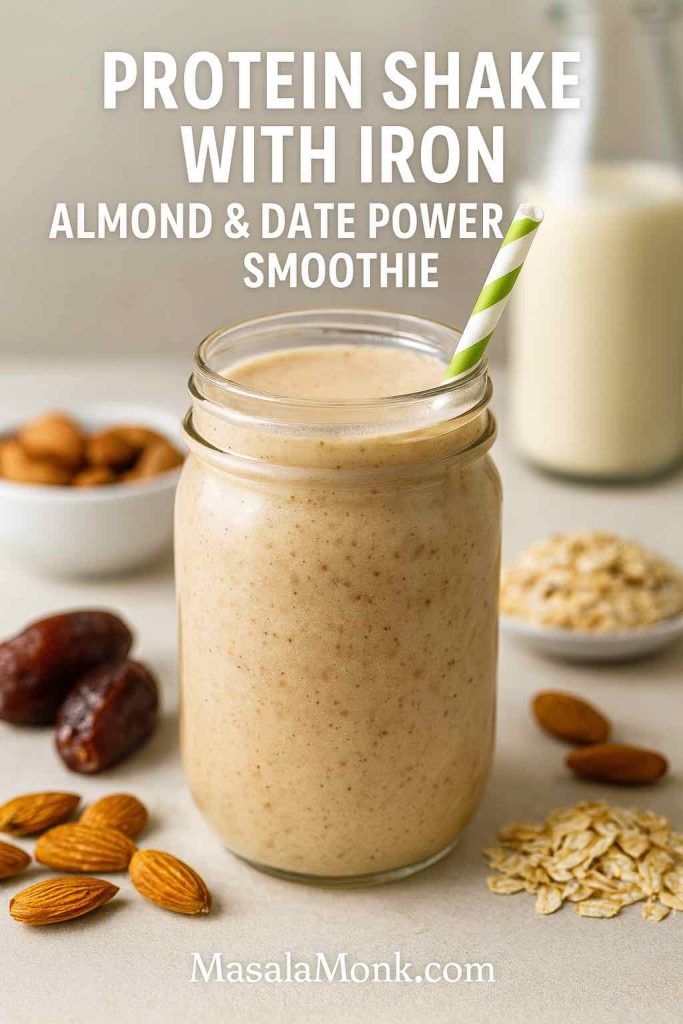
3. Protein Shake with Iron: Almond & Date Power Smoothie

If you’re looking for a protein shake with iron, this recipe is a winner. Unlike processed powders, it uses almonds, oats, and dates for natural protein and iron. Additionally, it’s filling enough to replace breakfast or post-workout snacks.

Protein shake rich in iron made with almonds, dates, oats, and soy milk for anemia and energy - MasalaMonk High Iron Smoothies & Shakes Recipe Ideas
Skip powders — blend almonds, oats, and dates for a natural protein shake high in iron. Great for post-workout or breakfast. Save this protein + iron smoothie for healthy energy!

Ingredients:

  • 10 soaked almonds (iron + plant protein)
  • 2 Medjool dates (natural sweetness + iron)
  • 2 tbsp oats
  • 1 cup soy milk (protein + calcium)
  • ½ tsp cinnamon (adds warmth and balances blood sugar)

Method:

  1. Blend almonds with soy milk first to create a smooth base.
  2. Add dates, oats, and cinnamon.
  3. Blend until thick and creamy.

Why this works:
Almonds, dates, and oats all bring iron to the table. Combined with soy milk, this shake has both iron and protein, making it perfect for those looking for a high iron protein shake without powders.

Pro Tips:

  • Soak almonds overnight for better digestion.
  • Add flax seeds for more omega-3s and iron.
  • If you’re not vegan, you can replace soy milk with cow’s milk, though plant-based versions have added benefits.

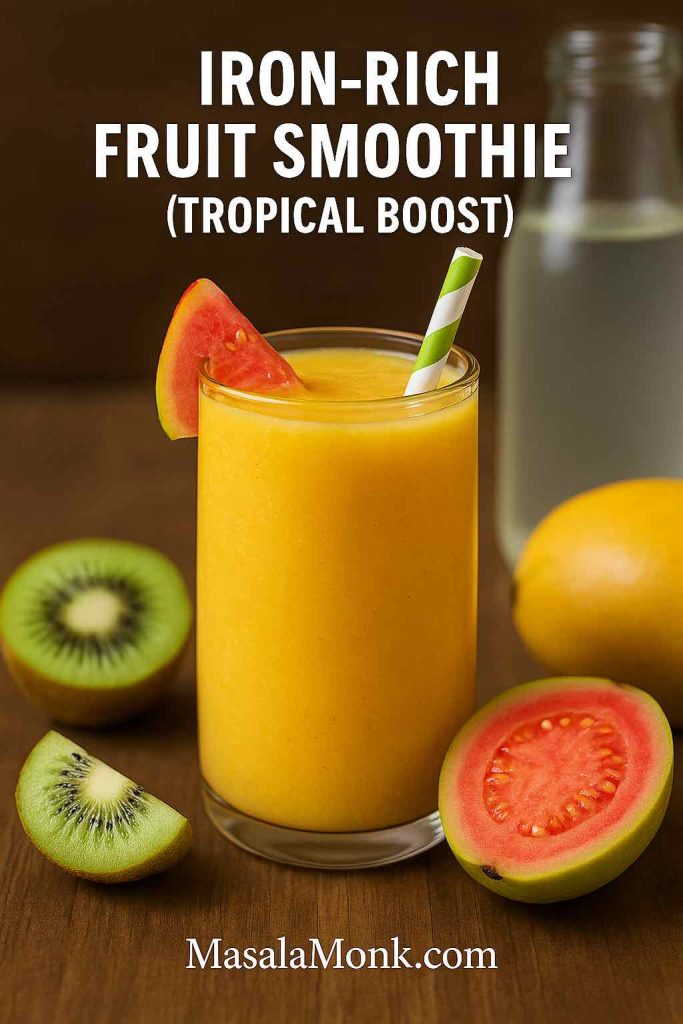
4. Iron-Rich Fruit Smoothie (Tropical Boost)

Sometimes, the best way to get iron is through fruits. Mangoes, guava, and kiwi are surprisingly good sources. Moreover, when combined with vitamin C, their iron becomes more bioavailable, making this a tasty iron-rich fruit smoothie.

Iron-rich tropical fruit smoothie with mango, guava, and kiwi for natural hemoglobin boost - MasalaMonk High Iron Smoothies & Shakes Recipe Ideas
Mango, guava, kiwi & orange juice combine in this refreshing fruit smoothie loaded with iron and vitamin C. Sweet, energizing, and perfect for anemia recovery. Save this tropical smoothie!

Ingredients:

  • 1 ripe mango, chopped
  • 1 guava, chopped
  • 1 kiwi, peeled
  • ½ cup orange juice
  • ½ cup water or coconut water

Method:

  1. Add mango, guava, and kiwi to the blender.
  2. Pour in orange juice and water.
  3. Blend until smooth and enjoy chilled.

Why this works:
This smoothie covers multiple nutrient bases: iron, vitamin C, fiber, and antioxidants. It’s also lighter than spinach-based versions, so it works perfectly as a mid-day snack.

Pro Tips:

  • Blend with ice cubes for a slushie-style version.
  • Pair with nuts or seeds for added protein.

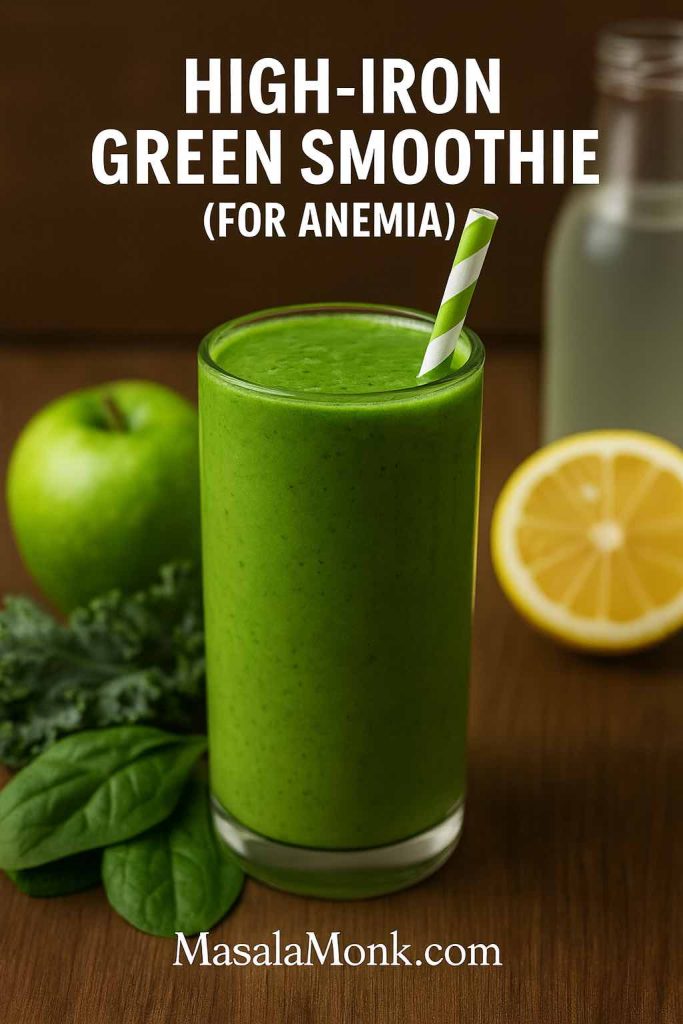
5. High-Iron Green Smoothie for Anemia

Green smoothies are trendy for a reason. They pack tons of nutrients, especially iron. This green iron smoothie combines spinach, kale, and parsley with apple and lemon for a refreshing anemia-fighting blend.

Green iron smoothie with spinach, kale, and apple to support anemia recovery and hemoglobin boost - MasalaMonk High Iron Smoothies & Shakes Recipe Ideas
Spinach, kale, parsley, apple, and lemon create this high-iron smoothie that supports hemoglobin naturally. Refreshing, energizing, and perfect for daily wellness. Pin this green iron smoothie!

Ingredients:

  • 1 cup spinach
  • ½ cup kale
  • 2 tbsp fresh parsley
  • 1 green apple
  • Juice of ½ lemon
  • 1 cup water

Method:

  1. Start with greens and water in your blender.
  2. Add apple slices and lemon juice.
  3. Blend until smooth and vibrant green.

Why this works:
Leafy greens are iron powerhouses, but they need vitamin C for proper absorption. Lemon provides that boost, while apple balances the earthy taste.

Pro Tips:

  • Add cucumber for extra hydration.
  • If you’re new to green smoothies, start with more apple and less kale until you adjust.

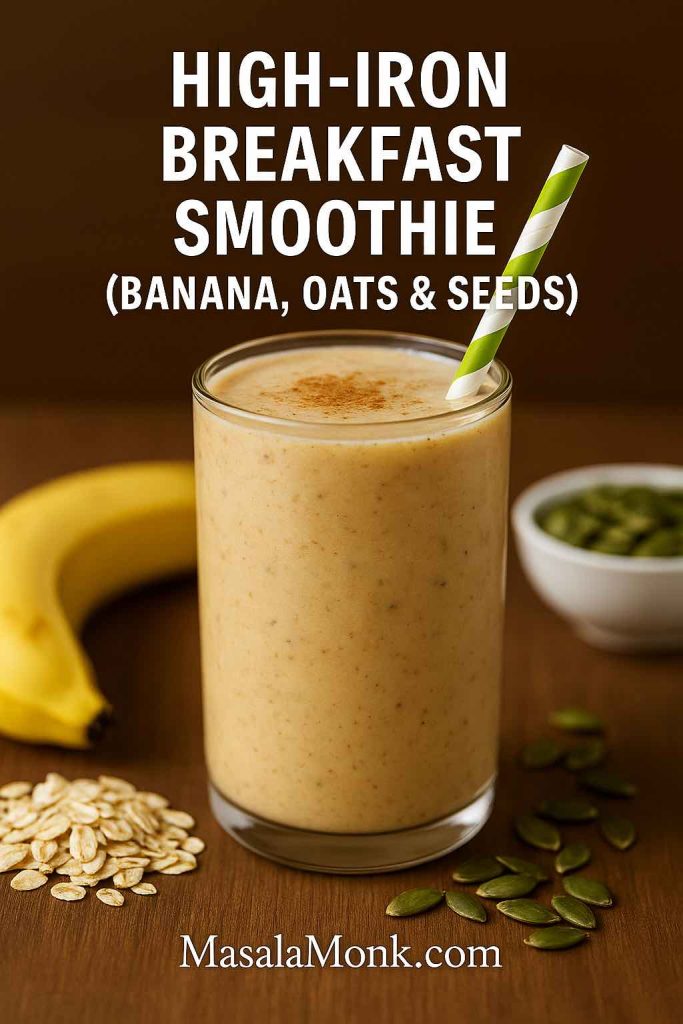
6. High-Iron Breakfast Smoothie (Banana, Oats & Seeds)

Mornings are hectic, but that doesn’t mean you need to skip iron. This iron-rich breakfast smoothie combines oats, pumpkin seeds, and banana for an energizing start to your day.

High-iron breakfast smoothie with banana, oats, and pumpkin seeds for energy and anemia support - MasalaMonk High Iron Recipe Ideas
Start your day with banana, oats, and pumpkin seeds for a filling, iron-rich smoothie. Perfect quick breakfast that fuels your morning and fights anemia. Save this energizing recipe!

Ingredients:

  • ½ banana
  • ¼ cup oats
  • 2 tbsp pumpkin seeds
  • 1 tsp flax seeds
  • 1 cup almond milk
  • A pinch of cinnamon

Method:

  1. Blend oats and almond milk until smooth.
  2. Add banana, pumpkin seeds, and flax seeds.
  3. Sprinkle cinnamon and blend again.

Why this works:
Pumpkin seeds are one of the richest plant-based iron sources. Combined with oats and banana, they create a smoothie that’s both filling and iron-dense.

Pro Tips:

  • Roast pumpkin seeds for a nuttier flavor.
  • Add dates if you want it sweeter.

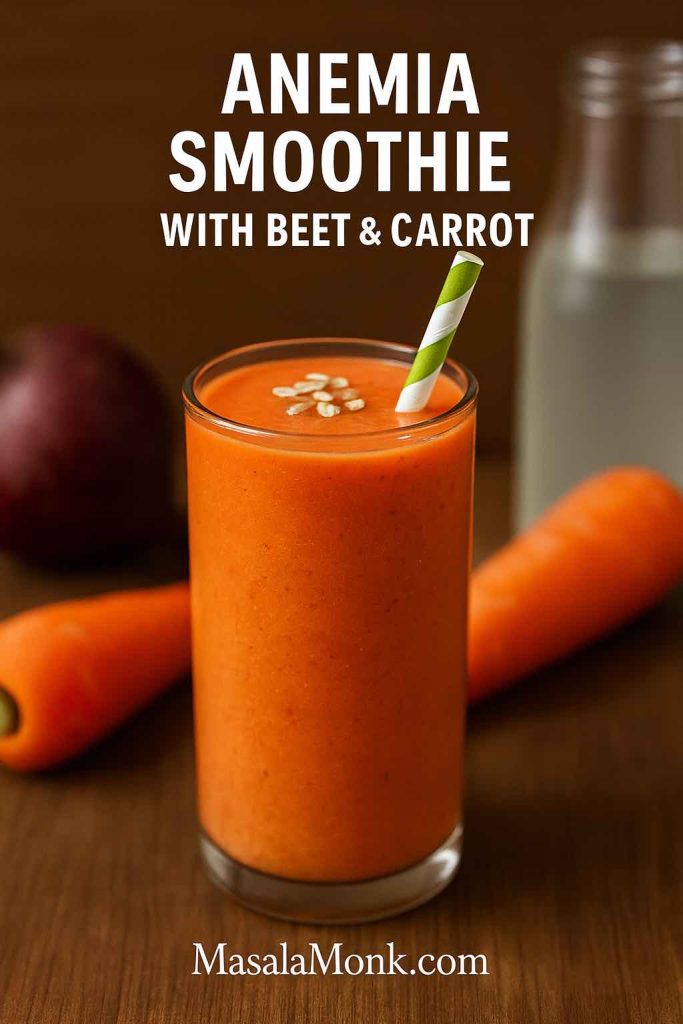
7. Anemia Smoothie with Beet & Carrot

If fatigue has been dragging you down, this anemia smoothie might be your fix. Beets and carrots help improve blood quality, while orange juice ensures better iron absorption.

Anemia smoothie with beet and carrot for boosting hemoglobin and fighting fatigue naturally - MasalaMonk Recipe Ideas
Boost hemoglobin with this beet & carrot smoothie blended with orange juice and sunflower seeds. Delicious, energizing, and perfect for anemia support. Pin this natural blood-boosting recipe!

Ingredients:

  • 1 small beet, cooked
  • 1 carrot, peeled
  • ½ cup orange juice
  • ½ cup water
  • 1 tsp sunflower seeds

Method:

  1. Blend beet and carrot with orange juice.
  2. Add water to adjust consistency.
  3. Sprinkle sunflower seeds on top before drinking.

Why this works:
Beet + carrot + vitamin C = a natural hemoglobin booster. On top of that, sunflower seeds add a crunchy iron kick.

Pro Tips:

  • You can juice beet and carrot first for a smoother texture.
  • Add ginger for extra warmth and digestion support.

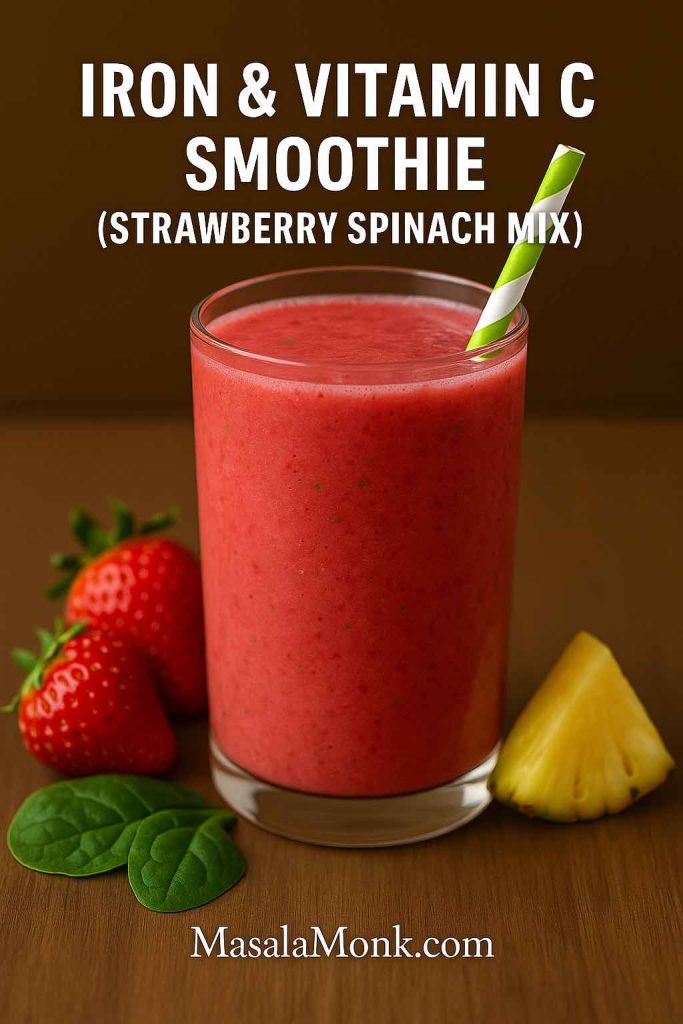
8. Iron & Vitamin C Smoothie (Strawberry Spinach Mix)

One of the smartest combinations for iron absorption is pairing spinach with strawberries. This iron and vitamin C smoothie is proof that nutrition can also taste like dessert.

Iron and vitamin C smoothie with strawberries, spinach, and pineapple for better iron absorption - MasalaMonk High Iron Smoothies & Shakes Recipe Ideas
Spinach + strawberries + pineapple = the ultimate iron & vitamin C combo! A refreshing pink smoothie that helps your body absorb iron better. Save this dessert-like iron smoothie!

Ingredients:

  • 1 cup spinach
  • 1 cup strawberries
  • ½ cup pineapple chunks
  • 1 cup coconut water

Method:

  1. Add spinach and coconut water to the blender.
  2. Toss in strawberries and pineapple.
  3. Blend until smooth and vibrant pink.

Why this works:
Strawberries and pineapple are packed with vitamin C, which boosts the iron in spinach. As a result, you get a smoothie high in iron and vitamin C that your body actually uses efficiently.

Pro Tips:

  • Freeze strawberries ahead for a thicker smoothie.
  • Sprinkle chia seeds for fiber and added iron.

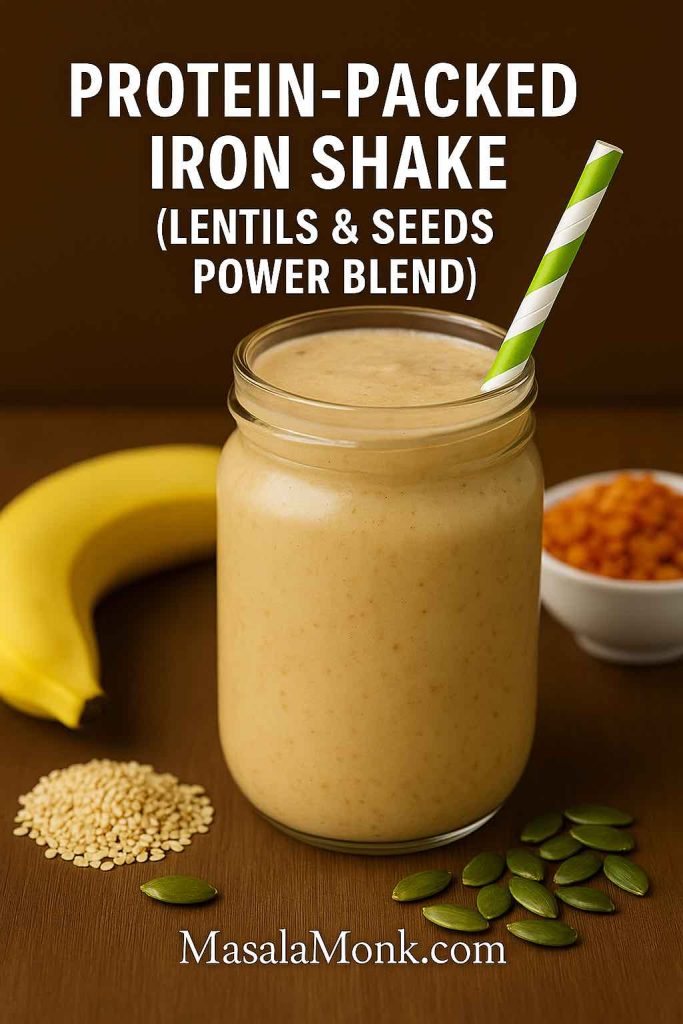
9. Protein-Packed Iron Shake (Lentils & Seeds Power Blend)

Yes, you read that right — lentils in a smoothie. Cooked red lentils are mild in taste but extremely high in protein and iron. When blended with fruits, they make an unexpectedly delicious iron protein shake.

Protein-packed iron shake with lentils, banana, pumpkin seeds, and sesame seeds - MasalaMonk Recipe Ideas
Cooked red lentils, banana, and seeds blend into a protein-packed smoothie rich in iron. Creamy, nourishing, and surprisingly tasty. Pin this unique anemia-friendly shake today!

Ingredients:

  • ½ cup cooked red lentils (cooled)
  • 1 banana
  • 1 tbsp pumpkin seeds
  • 1 tbsp sesame seeds
  • 1 cup almond milk
  • ½ tsp vanilla extract

Method:

  1. Blend cooked lentils with almond milk.
  2. Add banana, seeds, and vanilla.
  3. Blend until smooth and creamy.

Why this works:
Lentils provide both iron and protein, while pumpkin and sesame seeds boost iron content further. Banana masks the taste of lentils, so you won’t even notice them.

Pro Tips:

  • Add cocoa powder for a chocolate twist.
  • Use dates instead of banana if you want less sugar.

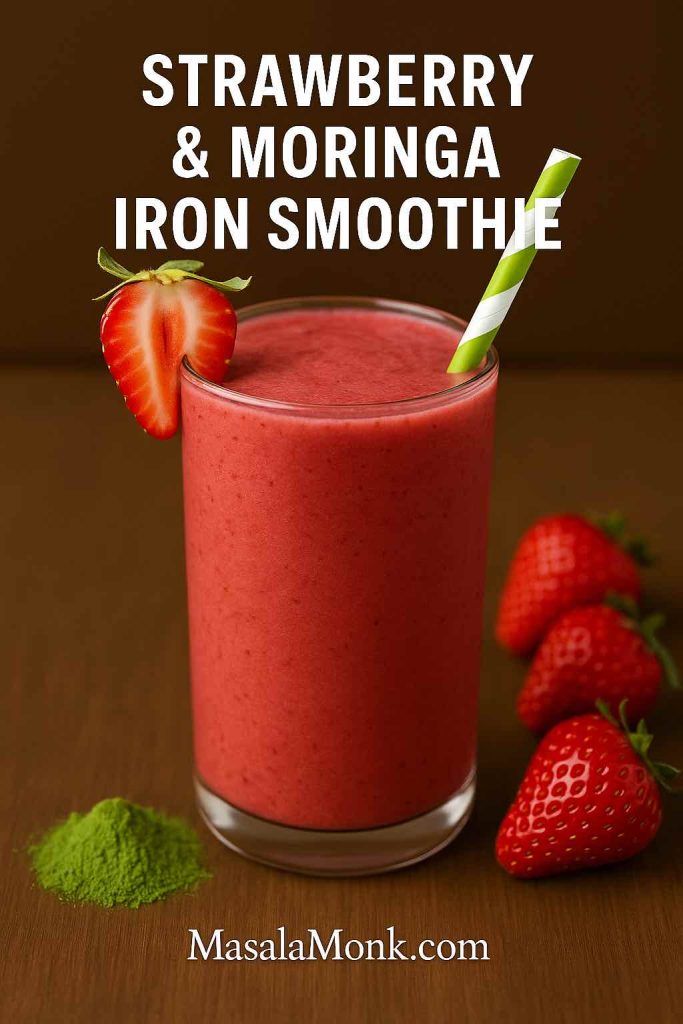
10. Strawberry & Moringa Iron Smoothie

Moringa leaves are an underrated superfood. They’re iron-rich, protein-packed, and full of antioxidants. Blending them with strawberries creates a tangy, energizing iron boosting smoothie.

Strawberry and moringa iron smoothie rich in vitamin C and plant-based iron for energy and anemia - MasalaMonk Smoothies & Shakes Recipe Ideas
Moringa leaves + strawberries make a tangy, iron-boosting smoothie full of antioxidants. A superfood blend for energy and hemoglobin support. Save this powerful moringa smoothie!

Ingredients:

  • 1 tsp moringa powder (or fresh leaves if available)
  • 1 cup strawberries
  • 1 banana
  • 1 cup water or coconut water

Method:

  1. Blend moringa powder with water first.
  2. Add strawberries and banana.
  3. Blend until creamy and bright pink.

Why this works:
Moringa is one of the highest plant-based iron sources, while strawberries add vitamin C to maximize absorption. This combination results in an High Iron Smoothie or Shake that tastes far better than it sounds.

Pro Tips:

  • Don’t overdo moringa — it’s strong in flavor.
  • Add pineapple if you want more sweetness.

Which High Iron Smoothie or Shake Is Best for You?

  • Looking for a high iron green smoothie? Try #1 (Spinach & Citrus) or #8 (Kale & Apple).
  • Want an iron rich fruit smoothie? #3 (Strawberry & Guava) is perfect.
  • Need a protein shake with iron? Go for #2 (Oats & Seeds) or #4 (Banana & Sesame).
  • Searching for anemia smoothie recipes? #5 (Beetroot & Carrot) and #7 (Lentil & Mango) are your best friends.
  • Want an iron smoothie recipe that doubles up as breakfast? #9 (Figs & Almonds) is the answer.

Also Read: Iron Deficiency Symptoms & Top 10 Vegan Iron Rich Foods That Can Help

Iron Powder for Smoothies: Do You Really Need It?

Many people search for iron powder for smoothies or iron smoothie powders online. Truth is, most are just processed blends of greens and seeds. Instead of spending money, while making High Iron Smoothies & Shakes – use natural ingredients like pumpkin seeds, sesame, flax, or moringa. These whole foods act like a natural “iron powder” while giving you fiber and freshness.


High Iron Smoothies for Pregnancy (Side Note)

If you’re pregnant and exploring iron-rich smoothies for pregnancy, it’s always safest to rely on whole, natural foods rather than processed shortcuts. Ingredients like spinach, beets, dates, dried apricots, and guava not only provide iron but also come packed with fiber, vitamin C, and other nutrients that help your body absorb iron more effectively.

On the other hand, avoid depending on unregulated iron powders or supplements marketed online. These can sometimes be inconsistent in quality and may not be safe during pregnancy. Instead, focus on blending fresh fruits and vegetables, seeds, and nuts into your smoothies. This way, you’re nourishing both yourself and your baby with safe, natural, and wholesome ingredients.

For detailed pregnancy-friendly recipes, check our posts 👉

Final Thoughts on High Iron Smoothies & Shakes

If you’ve been searching for high-iron smoothies for anemia, protein shakes with iron, or simply an easy smoothie recipe for low iron, this guide has given you 10 delicious and practical options you can start blending today. Each recipe is built from natural, whole ingredients that not only provide iron but also deliver fiber, vitamins, and antioxidants that your body craves.

The best part? You don’t have to rely only on processed powders or supplements. Instead, your own kitchen can become the ultimate wellness hub. By combining leafy greens, seeds, fruits, and natural plant proteins, you’re creating drinks that are not just tasty but also highly nourishing. With every sip, you’re supporting your blood health, boosting hemoglobin, and giving yourself steady, natural energy.

Moreover, these smoothies are versatile. For instance, you might prefer a refreshing green iron smoothie in the morning, a creamy iron protein shake after your workout, or even a vibrant fruit-based iron-rich smoothie as an afternoon pick-me-up. No matter your routine, there’s a recipe here that fits seamlessly into your lifestyle.

It’s also worth remembering that small, consistent changes make the biggest difference. Rather than looking for a miracle cure, think of these smoothies as daily habits that gently and steadily improve your iron levels. Over time, you’ll likely notice less fatigue, better focus, and a natural lift in your overall energy.

So the next time you feel tempted to walk down the supplement aisle, pause for a moment. Instead, grab your blender, toss in some spinach, berries, nuts, or seeds, and whip then into your favorite blend.


❓ FAQs on High-Iron Smoothies & Shakes

1. Can smoothies really help with iron deficiency anemia?
Yes, absolutely. Smoothies made with iron-rich vegetables, fruits, seeds, and vitamin C ingredients can significantly improve iron absorption and hemoglobin levels. While they may not replace supplements in severe cases, they are an effective, natural daily support.

2. Which smoothie is best for anemia recovery?
Beet-based smoothies (like beet + berries or beet + carrot blends) are excellent for anemia because they support red blood cell production and combine well with vitamin C–rich fruits for better iron absorption.

3. Can I replace iron supplements with smoothies?
For mild iron deficiency, smoothies can often provide enough support, especially when consumed regularly. However, in moderate to severe anemia, it’s best to follow your doctor’s advice and use smoothies as a natural complement to supplements.

4. What fruits are highest in iron for smoothies?
Guava, pomegranate, strawberries, and dried fruits (like apricots or dates) are excellent fruit options for boosting iron in smoothies.

5. Do I need to use iron powder for smoothies?
Not at all. Whole foods like pumpkin seeds, flax seeds, moringa, spinach, and beets provide natural iron plus fiber, antioxidants, and freshness — making powders unnecessary for most people.

6. Can kids drink these iron-rich smoothies?
Yes, but keep portions smaller and avoid strong ingredients like excess moringa powder. Kid-friendly options include spinach + banana, beet + strawberry, or pumpkin seed + mango smoothies.

7. What is the best protein shake with iron?
Almond + date + oats blended with soy or almond milk makes a great natural protein shake with iron. Lentil-based smoothies are another excellent high-iron, high-protein option.

8. Can smoothies increase hemoglobin fast?
With consistent intake of iron-rich smoothies combined with vitamin C, hemoglobin levels can start to improve within 4–6 weeks. For best results, drink them regularly and vary the ingredients.

9. Are green smoothies good for low iron?
Yes, green smoothies with spinach, kale, or parsley are excellent for iron. Just make sure to pair them with vitamin C sources (like lemon or pineapple) to enhance absorption.

10. What’s the best time to drink an iron smoothie?
Morning or mid-day is ideal. Avoid drinking them with tea or coffee, as tannins can block iron absorption. Pairing them with breakfast or as a mid-day snack works best.

📚 Reading & References

We don’t just share recipes — we back them with science. If you’d like to dive deeper into how iron and vitamin C work together to fight anemia, here are some credible sources:

  • Dietary Iron — StatPearls (2024)
    A comprehensive overview of iron’s roles in the body, from oxygen transport to energy metabolism, and how non-heme iron (plant-based) is absorbed.
    👉 Read on NCBI
  • Interaction of Vitamin C and Iron (Lynch, 1980)
    Landmark research showing how vitamin C dramatically enhances non-heme iron absorption, even in the presence of inhibitors like calcium or tannins.
    👉 Read on PubMed
  • Effectiveness of Dietary Interventions to Treat Iron-Deficiency Anemia in Women (Skolmowska et al., 2022)
    A systematic review confirming that combining iron-rich foods with vitamin C leads to improved hemoglobin and anemia outcomes.
    👉 Read on PMC
  • Iron & Vitamin C Absorption — Cleveland Clinic (2023)
    Practical guidance on why pairing foods like spinach with citrus or strawberries helps your body actually use the iron you consume.
    👉 Read on Cleveland Clinic
  • 7 Drinks High in Iron — Healthline (2021)
    Nutritionists’ recommendations for iron-rich beverages, many of which use the same fruit and veggie combinations featured in our smoothie recipes.
    👉 Read on Healthline
  • 3 Vitamins and Minerals You Should Be Pairing Up — EatingWell (2025)
    Explains how vitamin C increases iron absorption (from 0.8% to 7.1% in one study), reinforcing the importance of smoothie pairings.
    👉 Read on EatingWell
  • Vitamin C Improves Iron Absorption — Health.com (2023)
    A quick explainer on the synergy of vitamin C and non-heme iron for better absorption and practical diet tips.
    👉 Read on Health.com
  • 7 Best Iron-Rich Foods — Times of India (2025)
    Highlights top vegetarian iron sources like spinach, lentils, and pumpkin seeds — the very ingredients featured in our smoothies.
    👉 Read on TOI
Posted on 4 Comments

Tabs Chocolate: Potential Side Effects

TABS CHOCOLATE Side Effects

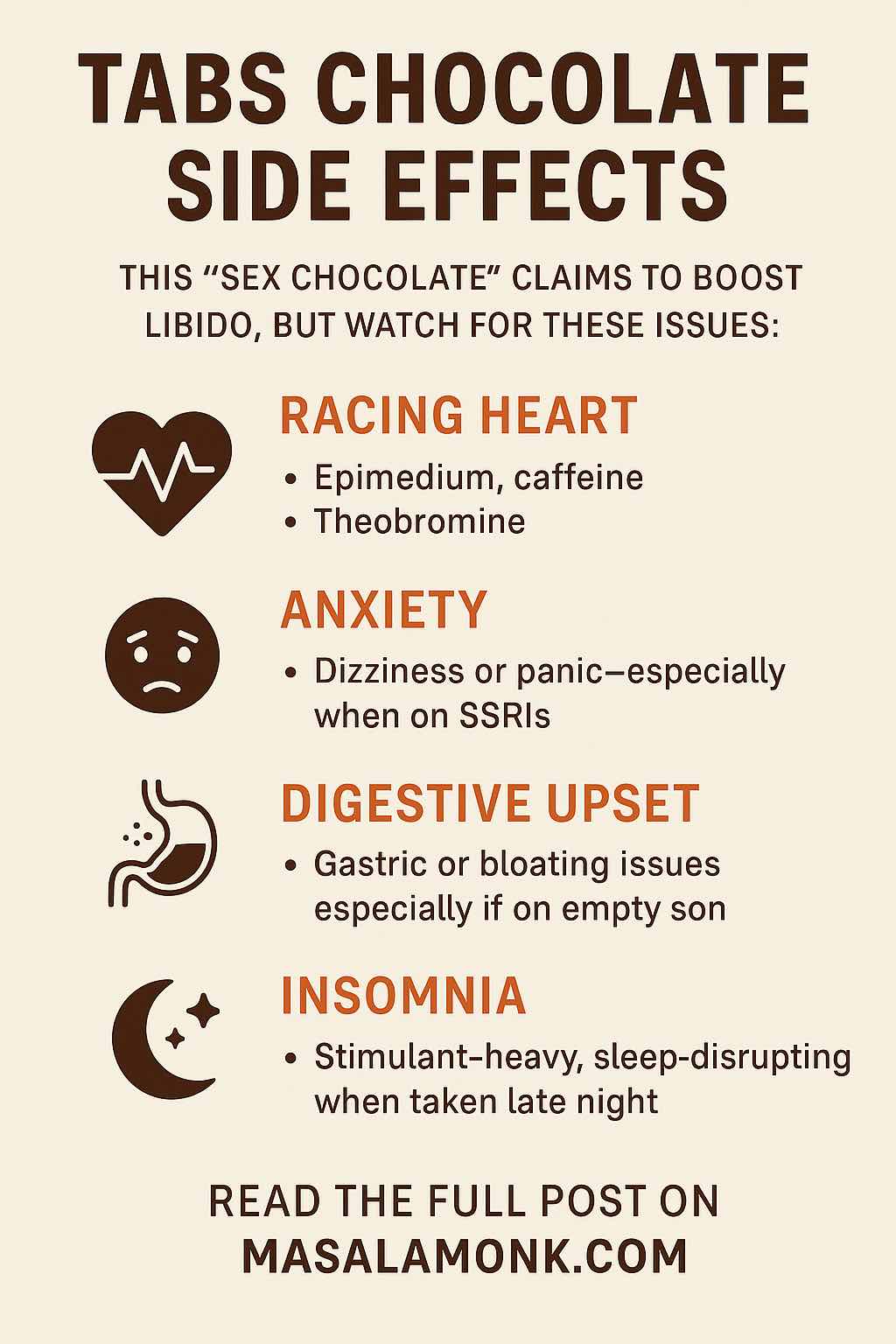
Tabs Chocolate Side Effects have quickly become a hot topic in 2025. From influencer reels to Reddit threads and even casual café conversations, this so-called sex chocolate is everywhere. Marketed as an indulgence-meets-intimacy treat, it combines premium dark cocoa with herbs that claim to lift mood, boost libido, and make connection feel effortless.

However, the reality is mixed. While some users report a gentle warmth and enhanced intimacy, others experience unwanted reactions such as a racing heartbeat, sweaty palms, or restless nights. As a result, many are asking the same question: is this functional chocolate a sweet idea or a risky experiment?

This updated guide brings you everything you need to know about Tabs Chocolate safety, ingredients, real experiences, and possible side effects — so you can make an informed choice before trying it.


Tabs Chocolate Ingredients and Side Effects Explained

One important thing about functional aphrodisiac chocolates: formulas can shift, and online ingredient lists aren’t always accurate. As of 2025, here’s what’s typically inside Tabs Chocolate — and why each matters for your safety.


Epimedium (Horny Goat Weed) in Tabs Chocolate

Why it’s included: Epimedium, commonly known as horny goat weed, is a traditional Chinese medicine herb often used as a natural libido booster. Today, it’s a popular addition in many so-called aphrodisiac chocolates to enhance intimacy and circulation.

Possible benefits:

  • May improve blood flow and circulation
  • Can support sexual arousal and energy
  • Sometimes used to reduce fatigue

However, the side effects cannot be ignored. Consuming horny goat weed chocolate has been linked to:

  • Heart palpitations or rapid heartbeat
  • Dizziness or lightheadedness
  • Blood pressure fluctuations
  • Increased bleeding risk when combined with anticoagulants

Bottom line: While some users enjoy a mild boost in energy and intimacy, horny goat weed in Tabs Chocolate carries clear risks. Therefore, if you are on blood thinners, have unstable blood pressure, or deal with heart-related conditions, this ingredient can be especially unsafe.

📖 Read more: What Is Horny Goat Weed and Does It Work?


Maca in Tabs Chocolate: Benefits & Side Effects

Why it’s included: Maca root has a long history in traditional medicine for boosting energy, mood, and libido. This makes it a common addition to functional or aphrodisiac chocolates that promise stamina and better connection.

Potential benefits:

  • May increase stamina and physical energy
  • Can lift mood and support emotional balance
  • Sometimes linked to improved sexual desire

However, side effects are possible. Some people report:

  • Gas, bloating, or digestive upset
  • Hormonal effects — caution for those with hormone-sensitive conditions
  • Mild insomnia if consumed too late in the evening

Bottom line: For most healthy adults, Maca chocolate side effects are mild. Nevertheless, if you are prone to bloating, have hormonal imbalances, or struggle with sleep, it’s best to start with a very small portion and see how your body reacts.

📖 Learn more: Maca Root Benefits and Side Effects


Cocoa in Tabs Chocolate: The Stimulant You Might Forget About

The caffeine factor: Each serving of Tabs Chocolate contains about 50–60 mg of caffeine — roughly the same as a small cup of coffee. Although this may seem mild, it can still have noticeable effects on sensitive individuals.

Why it matters: Cocoa’s natural stimulants (caffeine and theobromine) can trigger:

  • Jitteriness or nervous energy
  • Anxiety or restlessness
  • Heart palpitations in caffeine-sensitive people

Tip for timing: If you struggle to drink coffee after 4 pm without losing sleep, then it’s best to avoid Tabs Chocolate late at night. Early evening is usually a safer window.


Possible Add-Ons in Some Batches

  • Kanna – May lift mood, but dangerously interacts with antidepressants, increasing the risk of serotonin syndrome.
  • DHEA – A hormone precursor that can influence mood, skin health, and cholesterol levels.

Note: Not every batch of Tabs Chocolate contains these extras. Therefore, always check the label carefully, since their presence can add extra safety considerations.


Real Experiences: Tabs Chocolate Side Effects vs Benefits

Through Reddit threads, personal blogs, and direct consumer feedback, a few consistent patterns have emerged:


The Positive Camp

  • Descriptions include a “gentle warmth”, “a light, happy buzz”, and “feeling more present and connected”.
  • Couples say it can turn an ordinary evening into something more playful, with effects that are subtle rather than overpowering.
  • Some users find the mood lift helpful even outside of intimacy contexts — more relaxed socializing, for example.

The Negative Camp

  • Cardiovascular spikes: Rapid heartbeat, a pounding chest, sweaty palms, flushed skin.
  • Anxiety reactions: Heightened restlessness or panic-like sensations, especially in those already prone to anxiety or on mood medication.
  • Digestive upset: Bloating, stomach cramps, occasional nausea — more common on an empty stomach.
  • Sleep disruption: Effects lingering into the night if consumed late.
  • One memorable Reddit account described being unknowingly given Tabs while on anxiety meds: “Within 20 minutes my heart was racing, my hands were shaky, I was sweaty, and I couldn’t control my breathing. I ended up in a cold shower just trying to calm down.”

Why the Difference?

Your personal reaction depends on:

  • Baseline sensitivity to caffeine or herbal actives.
  • Current medications — especially anything affecting serotonin, blood pressure, or heart rhythm.
  • Underlying health conditions — cardiovascular, hormonal, or psychiatric.
  • Dose and timing — full square vs. half, early evening vs. late night.

2025 Safety Landscape

  • No FDA recalls specific to Tabs Chocolate.
  • The functional chocolate category has seen other recalls — mostly for undeclared allergens or unlisted active substances (a reminder to trust but verify).
  • Scientific evidence for chocolate as a libido enhancer remains weak — most benefit likely comes from the botanicals, not the cocoa itself.
  • Maca and ginseng show some promise in controlled trials, but horny goat weed and kanna have more variable effects and clearer interaction risks.

Common Tabs Chocolate Side Effects and Causes

Side EffectLikely IngredientHigher Risk In…
Heart palpitations / racing heartCocoa, epimediumCaffeine-sensitive, stimulant use, arrhythmia
Anxiety, sweatingCocoa, kannaOn SSRIs/SNRIs, anxiety-prone
Dizziness / faintnessEpimediumOn BP meds, low baseline BP
Bloating, stomach upsetMaca, cocoaEmpty stomach, high dose
Hormonal changesMaca, DHEAHormone-sensitive medical history
Increased bleedingEpimediumOn anticoagulants/antiplatelets
Side Effects of Tabs Chocolate

Is Tabs Chocolate Safe for You?

The short answer is: it can be safe, but only for the right person. If you are a healthy adult, not on interacting medications, and you stick to a small dose, you may enjoy Tabs Chocolate without major issues.

However, safety depends on your health and lifestyle. You should avoid it or consult a doctor first if you:

  • Take antidepressants, tramadol, or MAOIs
    These medications affect serotonin. As a result, combining them with certain herbs in functional chocolates may raise the risk of serotonin syndrome.
  • Have heart rhythm disorders or unstable blood pressure
    The caffeine and epimedium (horny goat weed) in Tabs Chocolate can trigger palpitations or pressure swings. Therefore, those with heart conditions must be cautious.
  • Use blood thinners or have bleeding disorders
    Epimedium may increase bleeding risk. Because of this, Tabs Chocolate can be unsafe if you’re already on anticoagulant medication.
  • Manage hormone-sensitive conditions
    Ingredients like maca and DHEA may interfere with hormone balance. Consequently, people with hormone-sensitive cancers or endometriosis should avoid it.

In conclusion, Tabs Chocolate safety is highly personal. If you fall into any of these categories, it’s better to consult a healthcare professional before experimenting.


Practical Tips for Enjoying Tabs Chocolate Without Side Effects

If you want to try Tabs Chocolate but reduce the risk of unwanted reactions, these practical steps can help. By following them, you can enjoy the experience while staying safe.

  1. Start Small
    Instead of eating a full piece, begin with just half a square. This way, you can test how your body reacts before deciding if more is right for you.
  2. Eat It With Food
    Taking Tabs Chocolate on an empty stomach may trigger caffeine jitters or digestive upset. Therefore, it’s best to pair it with a light meal or snack.
  3. Avoid Mixing Stimulants
    Combining aphrodisiac chocolate with coffee, energy drinks, or pre-workout supplements can amplify side effects like a racing heartbeat. For this reason, skip other stimulants on the same day.
  4. Choose the Right Timing
    Caffeine and herbal actives may interfere with sleep if taken too late. That’s why early evening is the safest time to enjoy Tabs Chocolate without restlessness at night.
  5. Listen to Your Body
    If you notice unusual symptoms such as heart palpitations, dizziness, or anxiety, stop immediately. Your body gives clear signals, and respecting them helps avoid unnecessary risks.

When to Skip Tabs Chocolate Entirely

Although some people can enjoy it safely, there are situations where the risks of Tabs Chocolate side effects outweigh the benefits. In these cases, it’s best to avoid it completely:

  • If you’re taking antidepressants, tramadol, or MAOIs
    These medications already affect serotonin levels. As a result, combining them with herbs like kanna in aphrodisiac chocolates can raise the risk of serotonin syndrome.
  • If you have unstable heart conditions or are recovering from cardiac events
    The caffeine and horny goat weed may cause racing heartbeat or blood pressure spikes. Therefore, anyone with arrhythmia, chest pain, or recent heart problems should avoid it.
  • If you have bleeding disorders or use blood thinners
    Epimedium (horny goat weed) can increase bleeding risk. Because of this, Tabs Chocolate may interact dangerously with anticoagulants or antiplatelet medications.
  • If you are managing hormone-sensitive conditions
    Ingredients like maca or DHEA can affect hormone balance. Consequently, individuals with hormone-sensitive cancers, endometriosis, or similar conditions should skip aphrodisiac chocolates entirely.

Safer Alternatives to Aphrodisiac Chocolate

If you’re intrigued by the idea but wary of aphrodisiac chocolate side effects:


Final Take

Tabs Chocolate may feel fun and indulgent, but it is more than “just chocolate.” It falls into the category of functional foods — and like many functional products, it comes with certain risks and side effects.

To reduce the chances of unwanted reactions, the best approach is to know your body, start with a small portion, and avoid mixing it with other stimulants or medications. In fact, simple changes like eating it with food or choosing the right timing can make a big difference.

If you are generally healthy and mindful, you may experience the gentle warmth and mood lift that many users describe. However, if you have heart conditions, hormone-sensitive issues, or take antidepressants or blood thinners, the potential side effects of aphrodisiac chocolates like Tabs should not be ignored.

Ultimately, the decision comes down to balance. When enjoyed responsibly, Tabs Chocolate can add playfulness and connection. On the other hand, if you are sensitive to stimulants or on certain medications, exploring safer natural alternatives might be the wiser choice.


Further Reading on MasalaMonk:

FAQs about Tabs Chocolate side effects

1. What are the most common Tabs Chocolate side effects?

The most frequently reported Tabs Chocolate side effects include increased heart rate, anxiety, sweating, dizziness, digestive upset, and even insomnia. These reactions are usually linked to the caffeine in cocoa, the circulation effects of horny goat weed, or the hormonal activity of maca root. Therefore, if you are caffeine-sensitive or on heart medication, the risks are higher.


2. How long do the effects of Tabs Chocolate last?

Most people begin to notice the impact within 30–45 minutes. In general, the effects may last up to 3 hours, although this varies depending on your metabolism, whether you ate beforehand, and the amount consumed. As a result, smaller portions and earlier timing reduce the chance of lingering restlessness.


3. Can Tabs Chocolate cause heart palpitations?

Yes, it can. The caffeine, theobromine, and horny goat weed inside Tabs are stimulants that may increase heart rate. Consequently, those with arrhythmia, high blood pressure, or existing cardiovascular issues should be especially cautious.


4. Is Tabs Chocolate safe with antidepressants?

Not always. If the batch contains kanna or similar herbs, combining Tabs Chocolate with SSRIs, SNRIs, MAOIs, or tramadol may increase the risk of serotonin syndrome. Because of this, anyone on antidepressants should consult a healthcare professional before trying functional or aphrodisiac chocolates.


5. Can I take Tabs Chocolate with alcohol?

It is best to avoid this combination. Alcohol can mask the early warning signs of side effects and, in some cases, intensify dizziness or blood pressure changes. Therefore, if you choose to experiment, skip alcohol altogether.


6. Is Tabs Chocolate safe for people with high blood pressure?

Not necessarily. Horny goat weed can lower or fluctuate blood pressure, while cocoa’s caffeine may raise it temporarily. For this reason, people with hypertension or those on blood pressure medication should seek medical advice before consuming Tabs Chocolate.


7. Does Tabs Chocolate help everyone’s libido?

No, it doesn’t. While some users report a gentle mood lift and improved connection, others feel little to no change. Ultimately, the response depends on your sensitivity to ingredients, overall health, and current stress levels.


8. Can I take Tabs Chocolate every day?

Daily use is not recommended. The herbs and stimulants inside functional chocolates can build tolerance or interact with other daily supplements. Instead, occasional use is considered safer and helps avoid long-term side effects.


9. Will Tabs Chocolate keep me awake at night?

Yes, it might. The caffeine and theobromine in cocoa can trigger restlessness if consumed too close to bedtime. Therefore, it is better to enjoy it in the early evening rather than late at night.


10. Is aphrodisiac chocolate safe in pregnancy or breastfeeding?

No. Due to its caffeine, herbal actives, and possible hormonal effects, Tabs Chocolate is not considered safe during pregnancy or while breastfeeding. In fact, most healthcare experts recommend avoiding all functional or aphrodisiac chocolates in these stages.

📖 Further Reading & References

Posted on 5 Comments

Sip and Sparkle: Apple Juice Mocktails for Every Occasion

Sip and Sparkle: Apple Juice Mocktails for Every Occasion

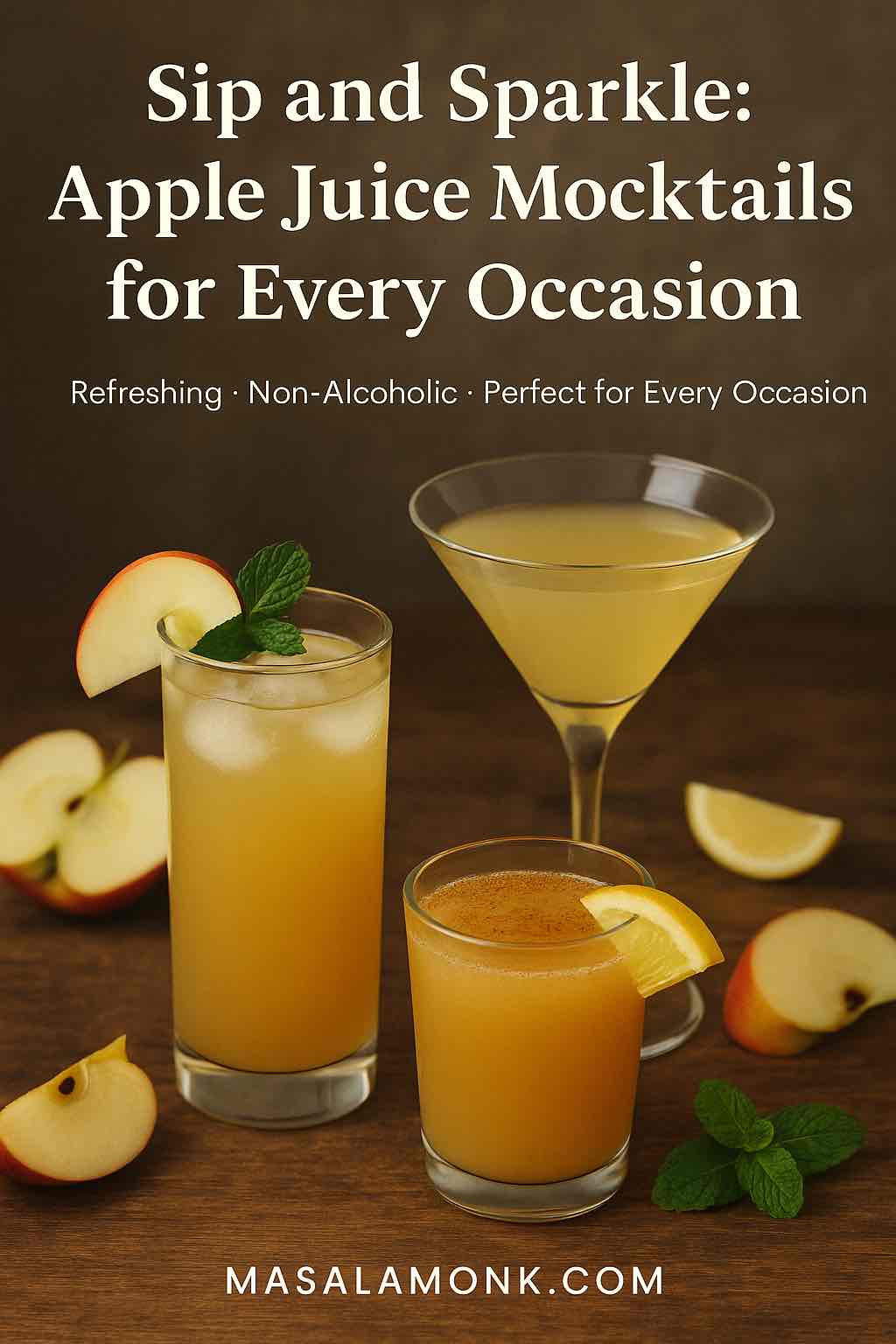
There’s something magical about a drink that sparkles in your glass, catches the light, and makes you feel like you’re celebrating — even when it’s just a Tuesday evening. That’s exactly what an apple juice mocktail brings to the table.

Apple juice might seem simple, but when you give it a little twist — a splash of soda, a squeeze of citrus, or a hint of spice — it transforms into a drink that feels both special and approachable. It’s naturally sweet, universally loved (kids and adults alike), and pairs beautifully with everything from herbs to ginger to exotic spices.

Whether you’re planning a family get-together, a classy dinner party, or just want to treat yourself to something refreshing without alcohol, these apple juice mocktails are your ticket to sip and sparkle.

So grab a glass, add some ice, and let’s dive in.


Refreshing Everyday Apple Mocktails

These are the drinks you make when the sun is out, the mood is light, and you want something easy but satisfying. Perfect for brunches, lazy afternoons, or when friends drop by.

🍏 Classic Apple Juice Mocktail Recipe

Sometimes, simple is perfect. This recipe is crisp, clean, and refreshing — a true ode to apple juice.

Why you’ll love it: It’s fast, foolproof, and needs only three main ingredients. Plus, it tastes like sunshine in a glass.

Ingredients:

  • 1 cup chilled apple juice
  • ½ cup sparkling water (or soda water if you want extra fizz)
  • 1 tsp fresh lemon juice
  • Ice cubes
  • Apple slices and mint leaves for garnish

Instructions:

  1. Fill your favorite glass with ice cubes — the clink alone sets the mood.
  2. Pour in apple juice and lemon juice.
  3. Top with sparkling water just before serving to lock in the bubbles.
  4. Stir gently and garnish with apple slices and a sprig of mint.

Pro Tip: For an autumn touch, rim the glass with sugar mixed with a pinch of cinnamon.


✨ Sparkling Apple Fizz

Imagine sitting on your porch on a warm afternoon, the air buzzing softly, and in your hand is a tall glass fizzing with life. That’s the Sparkling Apple Juice Fizz Mocktail.

Ingredients:

  • 1 cup apple juice
  • ½ cup ginger ale (or soda water if you prefer it lighter)
  • 1 tsp lime juice
  • Ice cubes
  • Thin lime wheel for garnish

Instructions:

  1. Fill a tall glass with ice.
  2. Pour in apple juice and lime juice.
  3. Top with ginger ale for that golden sparkle.
  4. Garnish with a lime wheel.

👉 If you’re after more refreshing, light alternatives, check out 7 Low-Sugar Summer Mocktails.


Sophisticated Party-Ready Apple Mocktails

These mocktails are made for when you want to impress — a dinner party with friends, a celebration where cocktails would normally shine, or simply those evenings when you want to sip something grown-up.

🌿 Apple Mojito Mocktail

This is where crisp apple meets refreshing mint and zesty lime — a mocktail that feels like a holiday.

Ingredients:

  • 1 cup apple juice
  • ½ lime (cut into wedges)
  • 5–6 fresh mint leaves
  • Sparkling water
  • Ice cubes

Instructions:

  1. In a sturdy glass, muddle lime wedges and mint leaves to release their oils and juices.
  2. Add a handful of ice.
  3. Pour in apple juice.
  4. Top with sparkling water.
  5. Stir gently and garnish with more mint.

Why it works: The mint and lime balance the natural sweetness of apple juice, making it feel refreshing yet sophisticated.


🍸 Apple Martini Mocktail (Non-Alcoholic)

For when you want that martini glass moment — stylish, elegant, and Instagram-worthy.

Ingredients:

  • ¾ cup apple juice
  • ¼ cup white grape juice
  • 1 tsp lemon juice
  • Ice cubes
  • Apple slice for garnish

Instructions:

  1. Add apple juice, grape juice, and lemon juice to a cocktail shaker with ice.
  2. Shake until chilled and slightly frothy.
  3. Strain into a martini glass.
  4. Garnish with a thin apple slice on the rim.

👉 Love experimenting with stylish mocktails? Don’t miss 10 Creative Mocktail Ideas Inspired by Margaret Josephs.


🌶️ Masala Apple Mocktail

This one’s bold, fragrant, and full of character. Inspired by Indian flavors, it’s a conversation starter at any gathering.

Ingredients:

  • 1 cup apple juice
  • ¼ tsp roasted cumin powder
  • Pinch of black salt
  • ½ tsp lemon juice
  • Soda water
  • Ice cubes

Instructions:

  1. Mix apple juice with cumin powder, black salt, and lemon juice in a shaker.
  2. Pour into a glass filled with ice.
  3. Top with soda water and stir.
  4. Garnish with a lemon wedge or mint sprig.

Flavor note: The spices cut through the sweetness of apple juice, leaving you with a savory, layered experience.


Family-Friendly & Fun Apple Mocktails

Mocktails are at their best when everyone can enjoy them — kids included. These versions are playful, colorful, and perfect for brunch tables, birthday parties, or cozy nights with family.

🍹 Apple Spritzer

A bubbly, fruity Apple Juice Mocktail that kids and adults will both adore.

Ingredients:

  • 1 cup apple juice
  • ½ cup sparkling grape juice
  • Splash of soda water
  • Ice cubes

Instructions:
Mix everything in a tall glass, stir lightly, and serve chilled. Garnish with apple wedges for a festive touch.


🌟 Apple Sparkle (with Ginger Ale)

This is the drink that makes kids feel fancy at a party and adults nostalgic. The cinnamon sprinkle gives it just the right amount of warmth.

Ingredients:

  • 1 cup apple juice
  • ½ cup ginger ale
  • Pinch of cinnamon powder
  • Apple slice garnish

Instructions:
Combine all ingredients over ice, stir gently, and garnish with an apple slice dusted with cinnamon.


🍊 Apple & Orange Juice Fusion

Sunny, tangy, and cheerful — this one’s like bottled happiness.

Ingredients:

  • ½ cup apple juice
  • ½ cup orange juice
  • Splash of soda water
  • Ice cubes
  • Orange wedge for garnish

Instructions:
Shake juices with ice, pour into a tall glass, and finish with soda water. Garnish with an orange wedge.


Apple Mocktail Names for Inspiration

Because drinks should be as fun to name as they are to sip. Here are some ideas you can use when serving:

  • Golden Glow – apple juice with ginger ale and lemon
  • Autumn Sparkle – apple with cinnamon and soda
  • Orchard Breeze – apple + mint + lime
  • Apple Sunset – apple + orange juice, layered for a sunset effect

Names add personality and make your mocktails feel special — perfect for party menus or even a kids’ mocktail bar.


Final Thoughts

Apple juice mocktails aren’t just drinks — they’re little experiences in a glass. They can be simple or sophisticated, fizzy or spiced, playful or party-ready. The best part? They’re non-alcoholic, so everyone gets to join in the fun.

So whether you’re raising a glass to celebrate something big or just making your Tuesday night a little more special, remember: it only takes a splash of apple juice and a few creative touches to make every sip sparkle.

Cheers to your next apple-inspired creation! 🍏✨

📌 10 FAQs for Sip and Sparkle: Apple Juice Mocktails for Every Occasion

1. What is a mocktail with apple juice?
A mocktail with apple juice is a non-alcoholic drink made using apple juice as the base, often mixed with soda, sparkling water, citrus, herbs, or spices for added flavor.

2. Can I use fresh apple juice instead of packaged juice?
Yes! Freshly pressed apple juice makes your mocktails taste more vibrant and less sweet compared to packaged varieties. Just strain it before mixing.

3. What are the best occasions for serving apple juice mocktails?
Apple juice mocktails are versatile — serve them at brunches, family dinners, birthdays, kids’ parties, festive celebrations, or as a sophisticated alcohol-free option at gatherings.

4. How do I make my apple juice mocktail sparkling?
Simply top apple juice with soda water, club soda, or ginger ale. The bubbles make it refreshing and party-worthy.

5. Can apple mocktails be made ahead of time?
You can pre-mix apple juice with citrus or spices, but always add sparkling water or soda just before serving to keep the fizz alive.

6. What spices pair well with apple juice mocktails?
Cinnamon, nutmeg, cardamom, clove, and cumin (for a savory twist) all complement apple juice beautifully.

7. How do I reduce the sweetness of apple mocktails?
Balance sweetness by adding lemon or lime juice, herbs like mint, or soda water. You can also use unsweetened apple juice.

8. Are apple juice mocktails healthy?
They can be! Apple juice contains antioxidants and vitamins. Choose fresh or low-sugar juice, add herbs or spices, and avoid too many sugary mixers for a healthier drink.

9. Can I serve apple mocktails to kids?
Absolutely — they’re non-alcoholic and loved by kids. Sparkling apple mocktails with fun garnishes like apple slices or colorful straws make them extra kid-friendly.

10. How can I garnish apple juice mocktails?
Great garnishes include apple slices, orange wedges, lime wheels, mint sprigs, cinnamon sticks, sugared rims, or even edible flowers for a sophisticated look.

Posted on 2 Comments

Exploring the Science Behind Turmeric and Ginger for Effective Weight Loss

Turmeric and Ginger for Effective Weight Loss

If you’ve ever stepped into an Indian kitchen, you’ve likely been greeted by the warm aroma of turmeric and ginger. They’re not just flavors—they’re traditions. Generations before us added them to curries, teas, and remedies, often without knowing the precise science, but trusting the results.

Fast forward to today, and scientists are catching up. From reducing inflammation to improving metabolism, these two humble roots are now at the center of serious research on weight management.

But the question remains: Can turmeric and ginger actually help with weight loss, or are they simply wellness buzzwords?


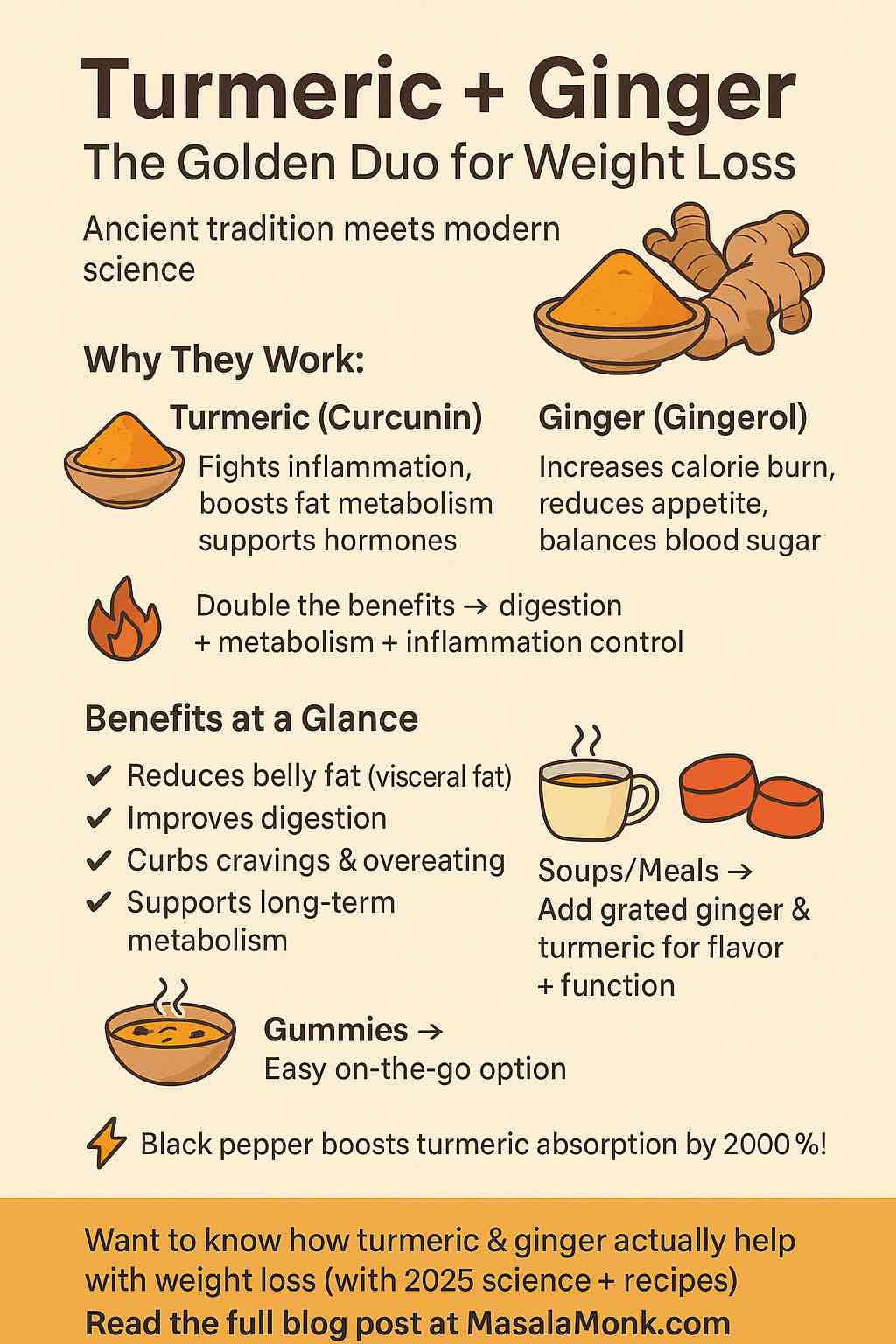
Turmeric: The Golden Root With Hidden Strength

Turmeric, known as haldi in India, has long been used for healing—from skin remedies to gut health. Its star compound, curcumin, is what gives turmeric its vibrant yellow color and its potent health effects.

Recent research is starting to confirm what ancient traditions always suspected: turmeric might help manage weight.

  • A 2023 meta-analysis of clinical trials found that curcumin supplementation led to small but measurable reductions in body weight, BMI, and waist circumference.
  • Scientists believe it works in several ways:
    • By calming chronic inflammation, which makes it harder to lose weight.
    • By supporting the liver and bile flow, helping the body digest and break down fats.
    • By regulating hormones like adiponectin, which signals your body how to store or burn fat.

But here’s the catch: turmeric on its own doesn’t absorb well in the body. That’s why in Indian cooking, it’s almost always paired with black pepper. The pepper’s compound, piperine, can increase curcumin absorption by an incredible 2000%. Our ancestors figured this out through practice, long before labs confirmed it.

📖 Want to see how they’re combined? Check out this Turmeric, Ginger & Black Pepper Tea.


Ginger: The Root That Warms and Balances

If turmeric is the golden healer, ginger is the fiery booster. Known for its zesty heat, ginger has always been used to soothe digestion and fight nausea. But modern science is discovering something else: it may play a role in managing weight.

A 2024 review of 27 randomized trials found that ginger supplementation helped people lose body weight, lower BMI, and reduce fat percentage.

Here’s how ginger is thought to help:

  • It creates a gentle thermogenic effect—essentially raising your body’s calorie burn slightly.
  • It improves satiety, making you feel fuller and less likely to overeat.
  • It supports blood sugar control, which reduces energy crashes and cravings.

Think of ginger as a natural spark—it doesn’t “melt fat” overnight, but it nudges your metabolism in the right direction, while also calming your digestion.

📖 Curious about practical ways to use it? Here’s a Masala Monk deep dive: Exploring the Weight Loss Benefits of Ginger and Honey.


Why Turmeric and Ginger Work Better Together

Turmeric reduces inflammation. Ginger boosts metabolism and curbs appetite. When paired, they form a dynamic duo that makes your body more balanced, less inflamed, and better at processing food.

Many traditional remedies already combine the two—be it teas, soups, or tonics. Today, researchers suggest that the synergy of anti-inflammatory (turmeric) + thermogenic (ginger) creates a more powerful effect than either alone.

📖 Learn more: The Benefits of Turmeric Ginger Cinnamon Tea.


Practical & Delicious Ways to Use Them

Here’s where science meets everyday life.

🌅 Morning Kickstart

Start your day with a warm glass of water infused with:

  • ½ tsp grated ginger
  • ½ tsp turmeric powder
  • squeeze of lemon
  • pinch of black pepper

This simple ritual not only supports digestion but also sets your metabolism in motion.

🍵 Golden Ginger Tea

Boil ginger slices in water, add turmeric powder, a dash of black pepper, and a spoon of honey. Sip in the evening to calm your system and fight inflammation.

🥤 Smoothie Booster

Blend frozen pineapple, spinach, ginger, turmeric, and coconut water for a refreshing metabolism-friendly drink.

🍲 Soups and Broths

Add grated ginger and turmeric to lentil soups or chicken broth—it makes them both healing and satisfying.
📖 See: Comfort in Every Spoonful – Turmeric & Moringa Soups.

🍬 Gummies & Snacks

Don’t have time to brew teas? Turmeric-ginger gummies are an easy way to integrate these roots into your day.
📖 Try: Turmeric & Ginger Gummies.


A Gentle Word on Expectations

It’s important to stay grounded: turmeric and ginger aren’t miracle cures. You won’t drop 5 kilos in a week by adding them to your tea. What they do is support your body—calm inflammation, improve digestion, regulate cravings, and subtly nudge metabolism.

When paired with balanced eating, exercise, and good sleep, these small nudges add up. Think of them as supportive companions on your wellness journey, not the entire path.


Safety & Precautions

  • Stick to moderate doses: about 2 g of ginger daily or 800 mg of curcumin extract.
  • Safe in food form; supplements should be taken with guidance.
  • Pregnant or breastfeeding women, or those on blood thinners, should consult a doctor.

Final Thoughts: Ancient Roots, Modern Wellness

Turmeric and ginger connect the wisdom of our grandmothers with the evidence of modern science. They may not be magic bullets, but they’re powerful, natural allies that can make your weight-loss journey more balanced and sustainable.

✨ At Masala Monk, we celebrate this harmony—crafting turmeric-ginger blends, teas, and snacks that fit seamlessly into modern life while staying true to tradition.

📖 Explore our collection of blogs here: Masala Monk Turmeric & Ginger Wellness Articles.

❓ 10 FAQs for Turmeric & Ginger Weight Loss Blog

1. Does turmeric and ginger really help with weight loss?
Yes, studies suggest both turmeric (curcumin) and ginger may support modest reductions in body weight, BMI, and waist circumference. They work best alongside a balanced diet and regular exercise.

2. How do turmeric and ginger help with weight loss?
Turmeric reduces inflammation and regulates fat metabolism, while ginger boosts thermogenesis (calorie burning), improves satiety, and helps control blood sugar. Together, they support a healthier metabolic environment.

3. Can turmeric and ginger reduce belly fat?
Evidence shows they may help reduce visceral fat (belly fat) by lowering inflammation and improving hormone balance. They’re not quick fixes, but they can complement diet and lifestyle changes.

4. What’s the best way to take turmeric and ginger for weight loss?
The most effective ways are teas, smoothies, soups, and cooking with them daily. Supplements are also used in studies, but food-based forms are safer and easier for long-term use.

5. Do I need black pepper with turmeric?
Yes. Curcumin (turmeric’s active compound) has very low absorption on its own. Pairing with black pepper (piperine) can boost absorption by up to 2000%.

6. How much turmeric and ginger should I consume daily?
Clinical studies suggest around 2 grams of ginger and 500–800 mg of curcumin extract daily. In home cooking, ½–1 tsp turmeric powder and ½–1 inch fresh ginger root are safe starting points.

7. When should I drink turmeric and ginger tea?
Morning on an empty stomach (to boost metabolism) or in the evening (to calm digestion and inflammation). Consistency matters more than timing.

8. Are turmeric and ginger safe for everyone?
Generally safe in food amounts. However, those who are pregnant, breastfeeding, or taking blood thinners should consult a doctor before using supplements or high doses.

9. How long does it take to see results?
Don’t expect overnight changes. Research shows benefits appear over 8–12 weeks of consistent use, especially when combined with healthy eating and exercise.

10. Can I combine turmeric and ginger with other weight-loss ingredients?
Yes. They work well with cinnamon (blood sugar control), cayenne pepper (thermogenesis), and honey or lemon for flavor and added benefits.