
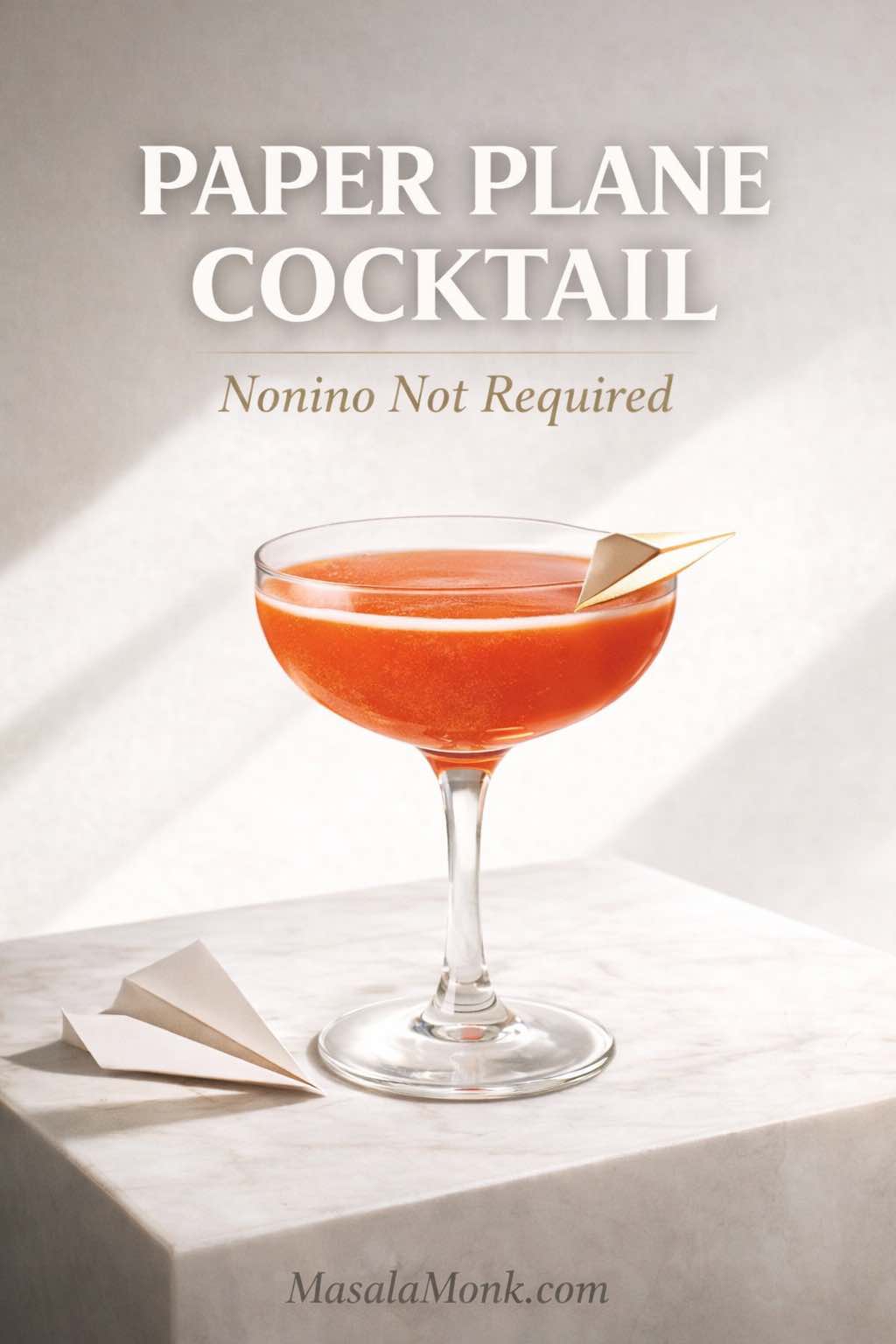
The Paper Plane Cocktail has a funny way of disappearing from the glass. You make it because you want something balanced—bright, bittersweet, and a little grown-up—then you take a sip and realize you’ve already started planning a second one. It’s lively without being loud, and it’s complex without making you work for it.
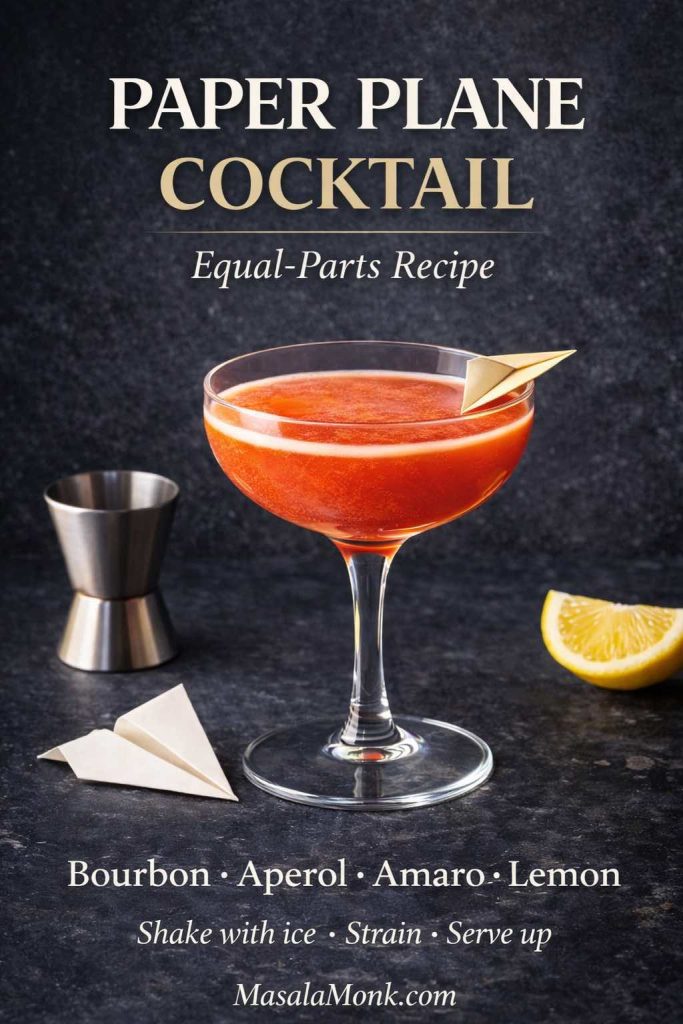
Part of the charm is the build itself. This paper plane drink is famously equal-parts: bourbon, Aperol, amaro, and fresh lemon juice, shaken hard and served straight up. No syrup to measure, no bitters to count, no garnish to fuss over unless you feel like it. Despite the simplicity, the flavor moves in layers: lemon first, then orange-bitter sweetness, then a longer herbal finish that makes the whole thing feel “finished.”
If you’ve heard it called the paper airplane drink, the airplane cocktail, or even the aeroplane cocktail, you’re still in the same neighborhood. Names wobble. The idea stays steady: a modern whiskey sour–style cocktail built to taste bright and warm at the same time.
For the classic specification in black-and-white, the IBA Paper Plane recipe is the cleanest reference. If you like a straightforward home-bar walkthrough, Liquor.com’s Paper Plane cocktail recipe lays out the method clearly. And if you’re the kind of person who enjoys a little backstory with a good drink, PUNCH’s story on how the Paper Plane became a modern classic makes the cocktail feel even more alive.
Now let’s make one—then make it yours.
Also Read: Sandwich for Breakfast: Breakfast Sandwich Recipe + 10 Variations
Paper Plane Cocktail recipe (classic equal-parts build)
The “best paper plane recipe” is the one you can remember without reaching for your phone. This is that recipe.
Ingredients
- Bourbon
- Aperol
- Amaro (traditionally Amaro Nonino)
- Fresh lemon juice
Equal-parts ratio (single drink)
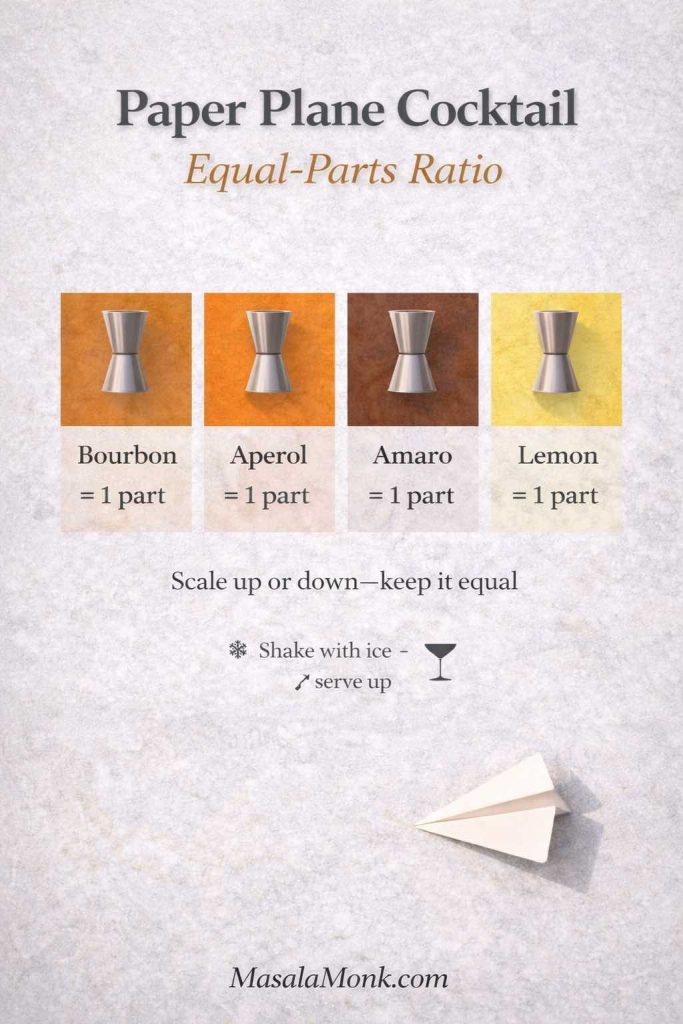
Use equal parts of each ingredient. Many people default to 1 ounce each at home, but any equal measure works.
Method
- Chill a coupe or cocktail glass.
- Add bourbon, Aperol, amaro, and fresh lemon juice to a shaker.
- Fill with ice.
- Shake until the shaker turns frosty and your hands feel the cold bite through the metal.
- Strain into the chilled glass.

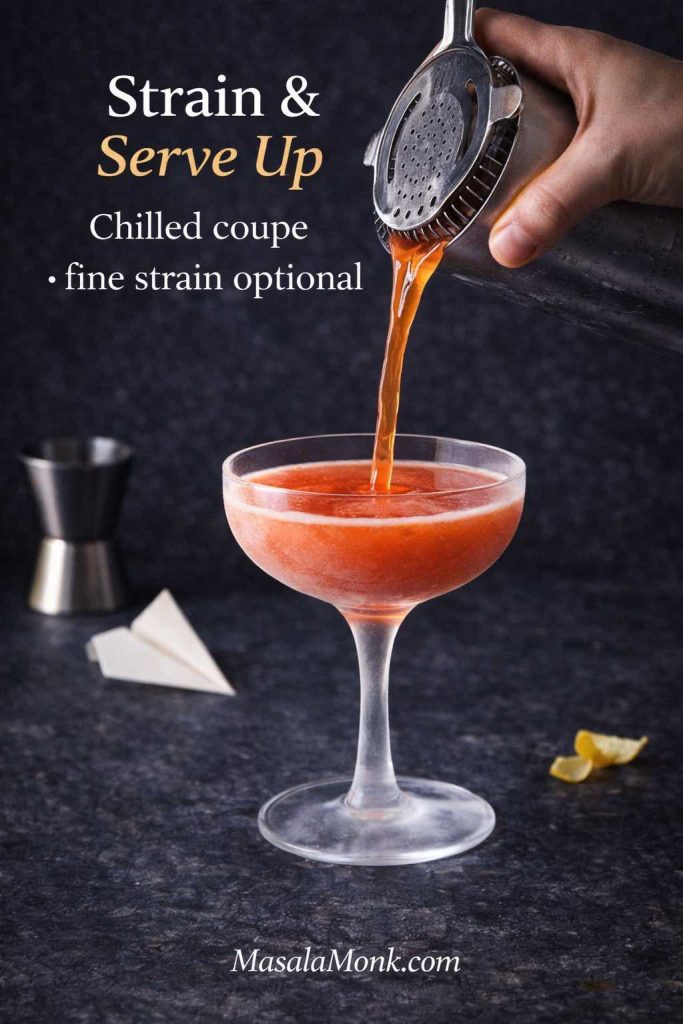
That’s the paper plane cocktail recipe at its core: quick, clean, and repeatable.
Also Read: Strawberry Smoothie Recipes (12 Easy Blends + Bowls & Protein Shakes)
Paper Plane Cocktail ingredients: what each one is really doing
It’s tempting to treat this drink like a simple checklist—four bottles, one lemon, done. Still, the Paper Plane is one of those cocktails where a small change in one ingredient can shift the entire personality. Once you understand what each element contributes, you’ll know exactly how to adjust it, how to substitute, and how to build a version that fits your palate without losing what makes it a Paper Plane.
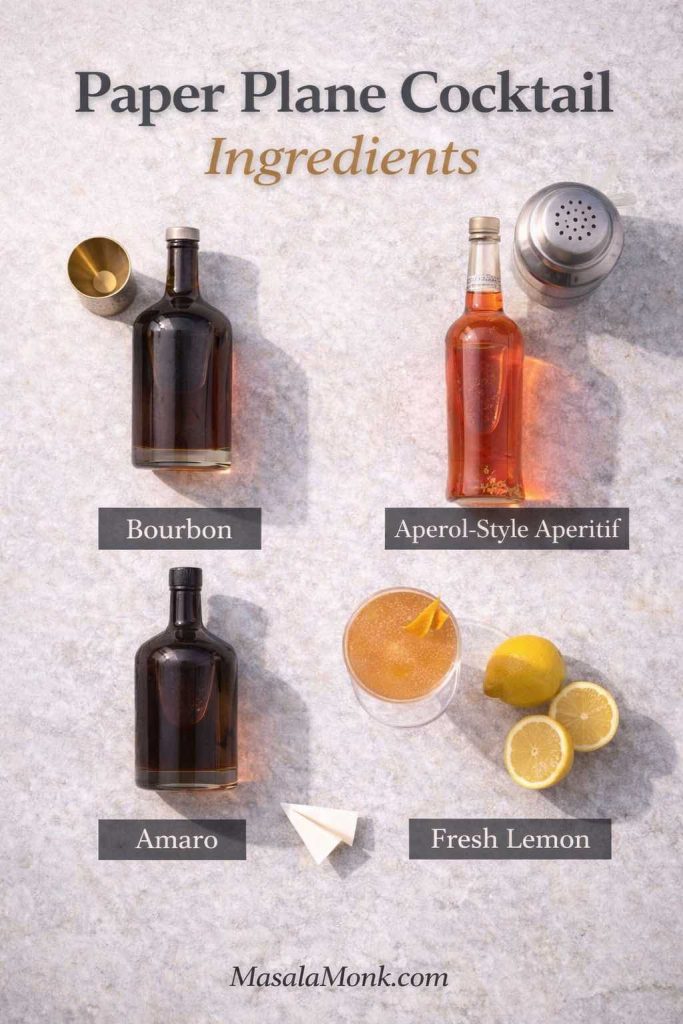
Bourbon: the warm spine of the drink
Bourbon is the base, so it sets the tone. In a bourbon paper plane, you’re looking for warmth, gentle vanilla, and enough structure to stand up to citrus and bitterness.
A mid-proof bourbon tends to work beautifully here. Too soft and the drink leans sharply lemony; too hot and it can feel aggressive. Somewhere in the middle, the Paper Plane Cocktail becomes what it’s meant to be: bright on the front end, mellow at the back.
If you enjoy thinking about bourbon as an ingredient—not just a spirit—MasalaMonk’s guide on what to mix with Jim Beam is a useful way to understand how bourbon behaves with citrus, sugar, and other mixers. That kind of perspective helps you choose confidently even when you’re staring at an imperfect home bar selection.
Aperol: the orange-bitter bridge
Aperol is the drink’s sunny center. It brings orange-peel bitterness and a gentle sweetness that keeps the cocktail from feeling austere. Without it, the Paper Plane would tilt too sharp and too herbal. With it, everything lifts.
If you’re already fond of bourbon and Aperol together, the Paper Plane Cocktail is one of the most satisfying ways to combine them because neither tastes like an afterthought. The Aperol doesn’t just sweeten—rather, it shapes the drink’s whole arc.
Amaro: the signature herbal finish
This is where the Paper Plane becomes unmistakable. Amaro adds depth, bitterness, and the kind of lingering complexity that makes you want another sip. Traditionally, that amaro is Amaro Nonino, which sits in a sweet spot: aromatic and bittersweet without feeling syrupy or medicinal.
That said, many people don’t keep Nonino around, and not every store carries it. Fortunately, the cocktail’s structure welcomes substitutions, especially when you know what you’re aiming for.
Lemon juice: brightness and definition
Fresh lemon juice draws the lines. It gives the Paper Plane Cocktail its clarity and its “snap.” Bottled lemon can work in a pinch, but it often tastes flatter and slightly cooked, which dulls the drink’s brilliance. With fresh lemon, the cocktail feels alive.
If you love citrus-forward whiskey drinks beyond this one, MasalaMonk’s Whiskey Sour recipe is a great companion because it shows how tiny changes in acid and sweetness can completely reshape a whiskey sour–style drink. The Paper Plane is in that same family, even though it uses liqueurs instead of simple syrup.
Also Read: Classic Rum Punch + 9 Recipes (Pitcher & Party-Friendly)
Paper Plane Cocktail taste: what to expect in the first sip
The Paper Plane tends to taste “complete.” The lemon hits first—clean and bright—then Aperol slides in with orange-bitter sweetness, and finally the amaro stretches the finish into something herbal and quietly luxurious. Meanwhile, bourbon provides a steady warmth underneath, like a bass note holding the melody together.
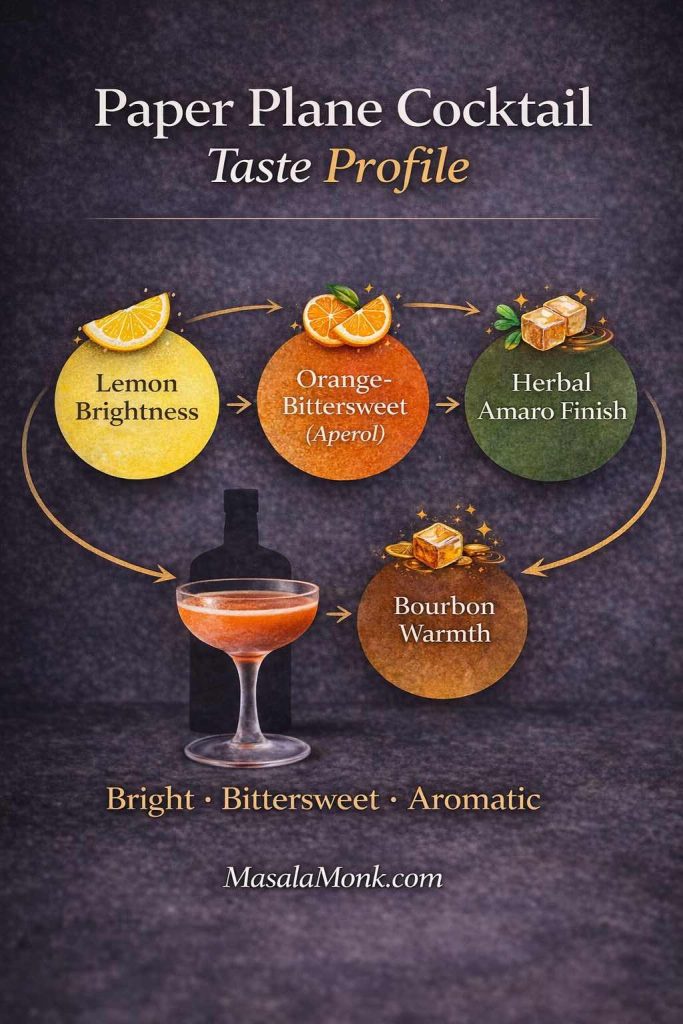
If you’re trying to picture it: it’s more bracing than an Old Fashioned, less sugary than many modern whiskey cocktails, and more aromatic than a straightforward sour.
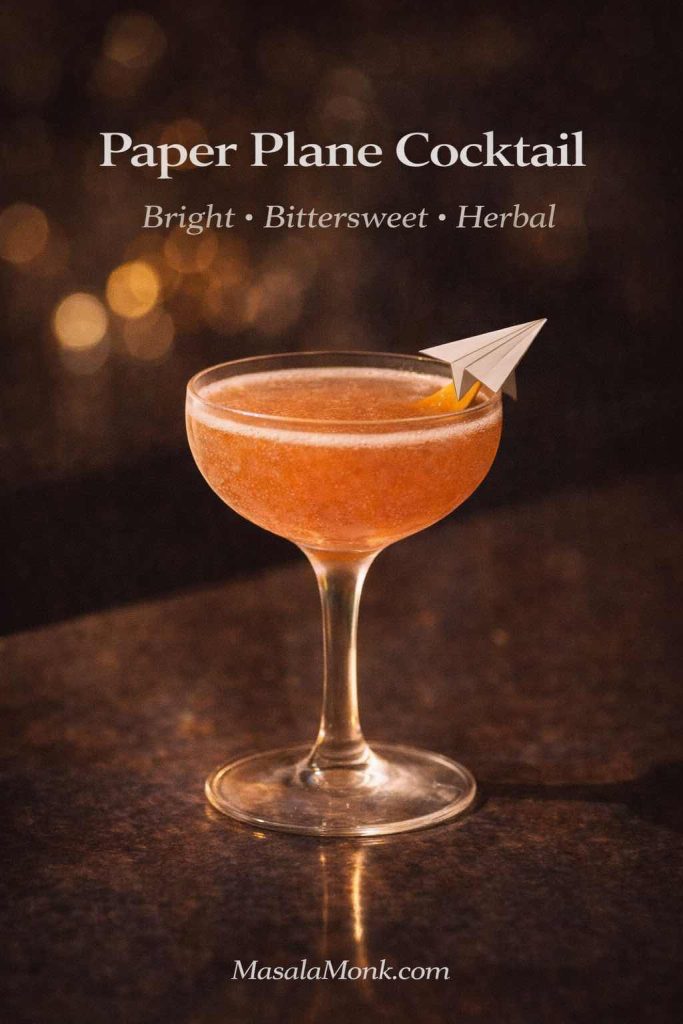
Just as important, the drink’s balance makes it friendly at different moments. On a hot evening, it’s refreshing. On a cool night, it’s comforting. That flexibility is a big reason you’ll see the Paper Plane cocktail on so many menus: it earns its spot.
Also Read: 7 Pizza Sauce Recipes | Marinara, White Garlic, Alfredo, Buffalo, BBQ, Vodka & Ranch
The Paper Plane Cocktail and the whiskey question: bourbon, rye, and beyond
Bourbon is classic, yet the Paper Plane Cocktail also shows up as a whiskey paper plane in plenty of bars and home kitchens. Once you start swapping the base spirit, you get a whole new set of expressions while keeping the same equal-parts architecture.
Bourbon for Paper Plane: choosing a bottle that behaves
A dependable, mid-proof bourbon with balanced sweetness is usually the safest choice. You want enough flavor to hold the center without taking over.
- If your bourbon is very sweet and dessert-like, the cocktail can feel heavier.
- If it’s extremely oaky, the bitterness can skew woody.
- If it’s too delicate, lemon and Aperol will dominate.
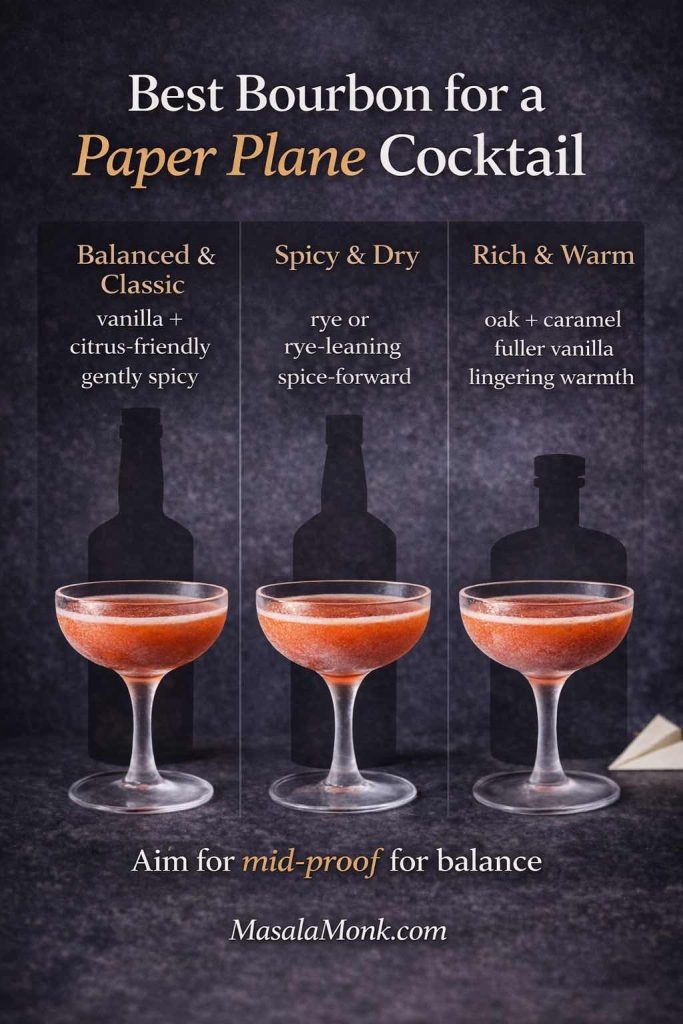
When you land on a bourbon that works, you’ll understand why “paper plane bourbon” shows up so often in conversation. It’s not about chasing a single “right” bottle; it’s about finding a bourbon that lets the drink stay bright while still tasting like bourbon.
Paper Plane whiskey drink: what happens if you use rye?
Rye makes the drink drier and spicier. The lemon feels sharper, the finish feels snappier, and the whole cocktail can read more “brisk” than “warm.” For some people, that’s perfection—especially if they already enjoy more bitter, less sweet classics.
Can you use other whiskey styles?
You can, though it starts to drift away from the core personality. Irish whiskey will soften everything and make it gentler. Scotch introduces smoke or malt that can clash with Aperol, depending on the bottle. None of these are wrong, yet bourbon remains the version that most reliably delivers the “bright and warm” promise.
Also Read: Vodka Pasta (Penne alla Vodka) + Spicy Rigatoni, Chicken, and Gigi Recipes
Paper Plane Cocktail history: where it came from and why it stuck
The Paper Plane’s story is part of its appeal. It’s credited to bartender Sam Ross and tied to the craft-cocktail era that re-popularized balanced sours, amaro, and modern riffs on classics. The drink also famously nods to M.I.A.’s song “Paper Planes,” which gave it a name that feels playful instead of precious.
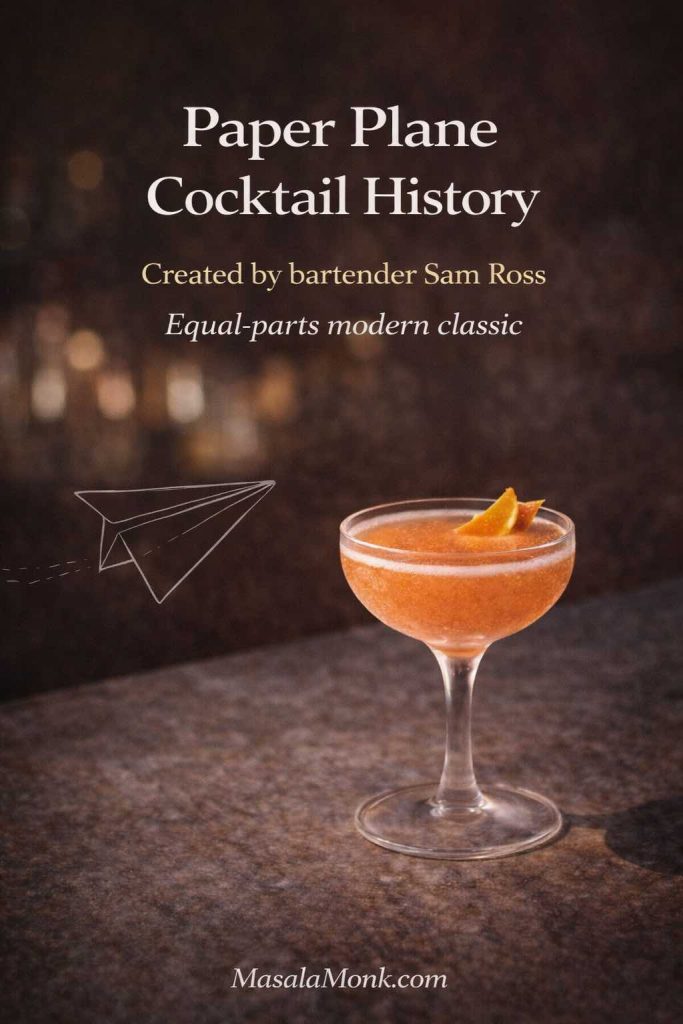
If you want the deeper thread—how early versions used different bitter components, how it moved through bars, and how it became a modern standard—PUNCH’s deep dive on the Paper Plane’s rise is the most engaging overview.
There’s something telling about how quickly the cocktail spread. The formula is memorable. The ingredient list feels approachable. The payoff is immediate. Once a drink hits those three points, it doesn’t need gimmicks to survive. It becomes a habit.
Also Read: Moscow Mule Recipe (Vodka Mule): The Master Formula + 9 Variations
Paper Plane Cocktail served style: glass, temperature, and that “straight up” feel
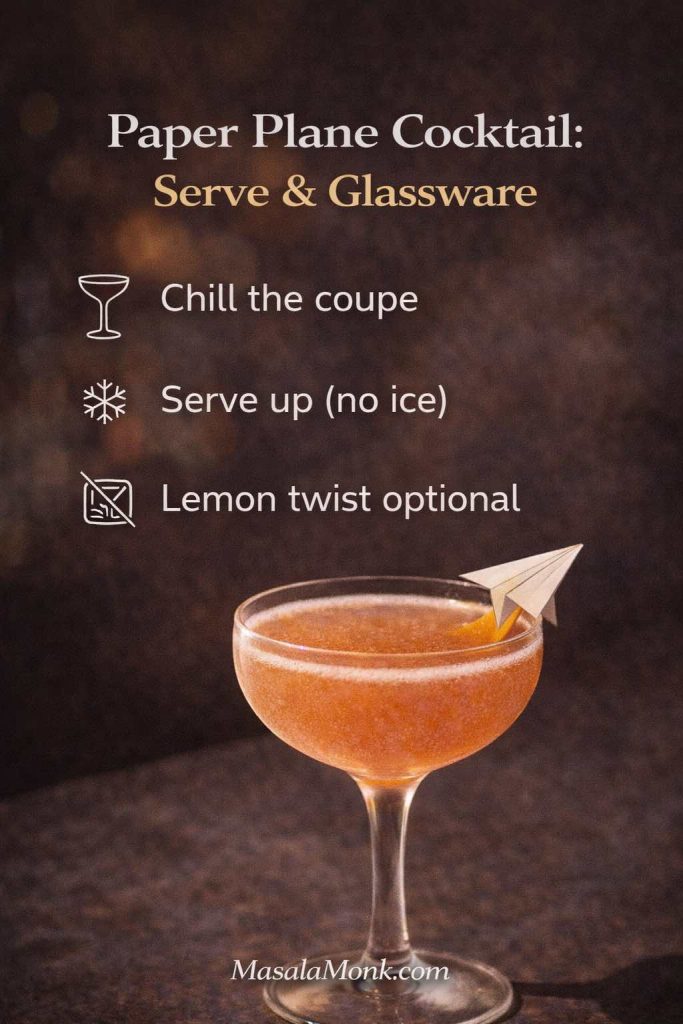
The Paper Plane Cocktail is usually served straight up—strained into a chilled glass without ice. That choice is not just aesthetics. It keeps the drink’s texture smooth and its flavors focused.
Glass choice
A coupe or cocktail glass is ideal. The stem keeps your hand from warming the drink too quickly, and the open rim helps the aromatics rise. If you’ve ever seen “paper plane cocktail glass” mentioned, that’s what’s being pointed at: a chilled, stemmed vessel that keeps the drink crisp.
Shake like you mean it
Shaking isn’t busywork here. It chills the cocktail rapidly and adds the right amount of dilution, which softens bitterness and makes the lemon feel integrated rather than sharp.
When the Paper Plane tastes “too tight” or overly intense, it’s often because it wasn’t shaken long enough. On the flip side, if you shake forever with half-melted ice, you can dilute it into a whisper. Aim for cold, confident, and decisive.
Garnish: optional, but a lemon twist is a smart choice
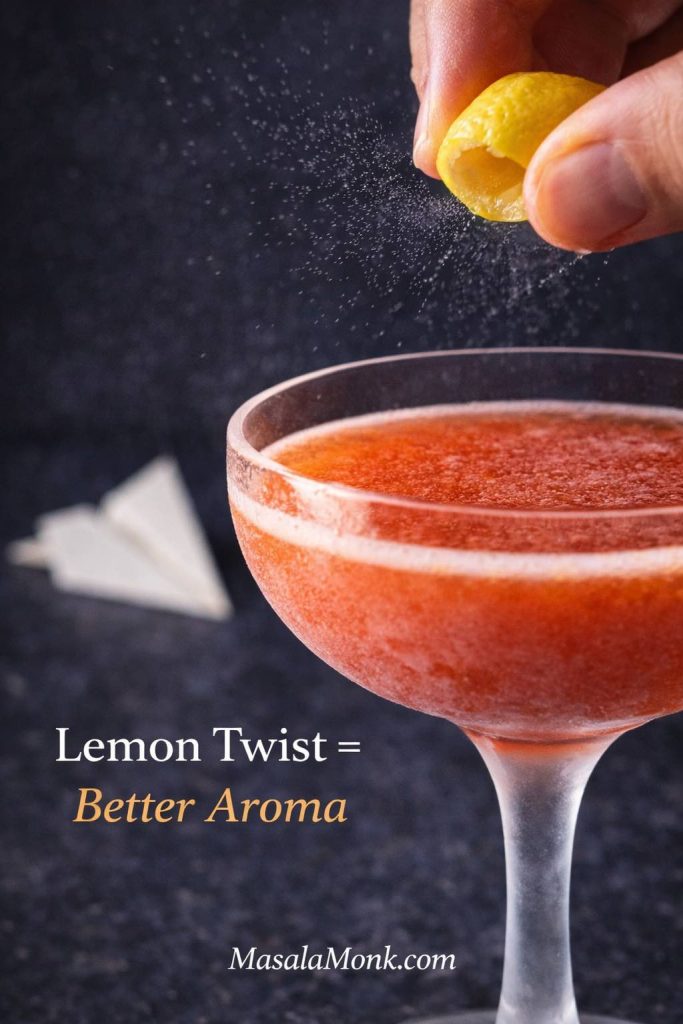
The IBA spec lists no garnish. Even so, a lemon twist can be lovely because it perfumes the drink without altering its balance. If you’re the type who enjoys aroma as much as taste, it’s worth the three seconds it takes.
Also Read: Oat Pancakes Recipe (Healthy Oatmeal Pancakes)
Paper Plane Cocktail ingredients when you don’t have Nonino
This is where the drink becomes especially home-bar friendly. Amaro Nonino is the traditional choice, but it’s not the only way to make a satisfying Paper Plane Cocktail. In fact, swapping the amaro is one of the easiest ways to customize the drink.
Instead of chasing a perfect replica, think in terms of direction:
- Do you want brighter and lighter?
- Or do you want deeper and richer?
- Do you want more bitterness?
- Or a softer, rounder finish?
Once you answer that, the right substitution becomes obvious.
Also Read: Double Chocolate Chip Cookies – Easy Recipe with 7 Variations
Best amaro for Paper Plane Cocktail: the most satisfying substitutes
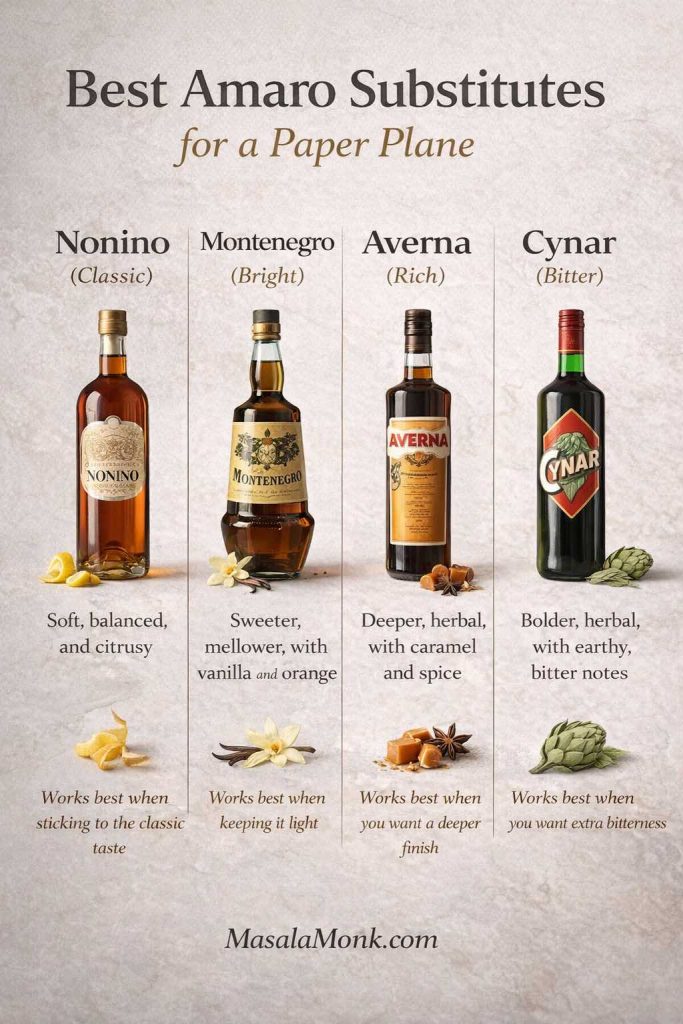
A Paper Plane without Amaro Nonino can still be excellent. The cocktail’s equal-parts structure gives you a sturdy frame; the amaro simply changes the color of the painting.
Amaro Montenegro Paper Plane: bright and aromatic
Montenegro is a popular substitute because it stays friendly with Aperol. It keeps the drink fragrant and lively, so the result still feels like a paper plane drink rather than a heavier amaro cocktail.
If you love the way Aperol tastes and you want the orange-bitter note to remain prominent, Montenegro is often the smoothest path.
Amaro Averna Paper Plane: deeper, darker, rounder
Averna brings more richness—caramel, cola-like depth, and a warmer kind of bitterness. With Averna, the cocktail feels cozier, and the bourbon seems to glow a little more.
This is a wonderful direction when you want your bourbon paper plane to feel like an evening drink rather than an aperitif.
More assertive amari: for people who genuinely like bitterness
Some amaros will push the drink into bolder territory. That can be fantastic if you already enjoy classics like the Negroni. It can also surprise someone expecting the Paper Plane’s usual softness.
If you go this route, start with the equal-parts structure, taste, then adjust gradually. Often the drink doesn’t need a full overhaul—just a tiny nudge.
Also Read: Whole Chicken in Crock Pot Recipe (Slow Cooker “Roast” Chicken with Veggies)
Paper Plane Cocktail with gin: a bright riff that’s worth trying
A gin Paper Plane sounds like it shouldn’t work, yet it often does. By replacing bourbon with gin, you get a version that’s more botanical and more citrus-lifted, with less warmth and more perfume.
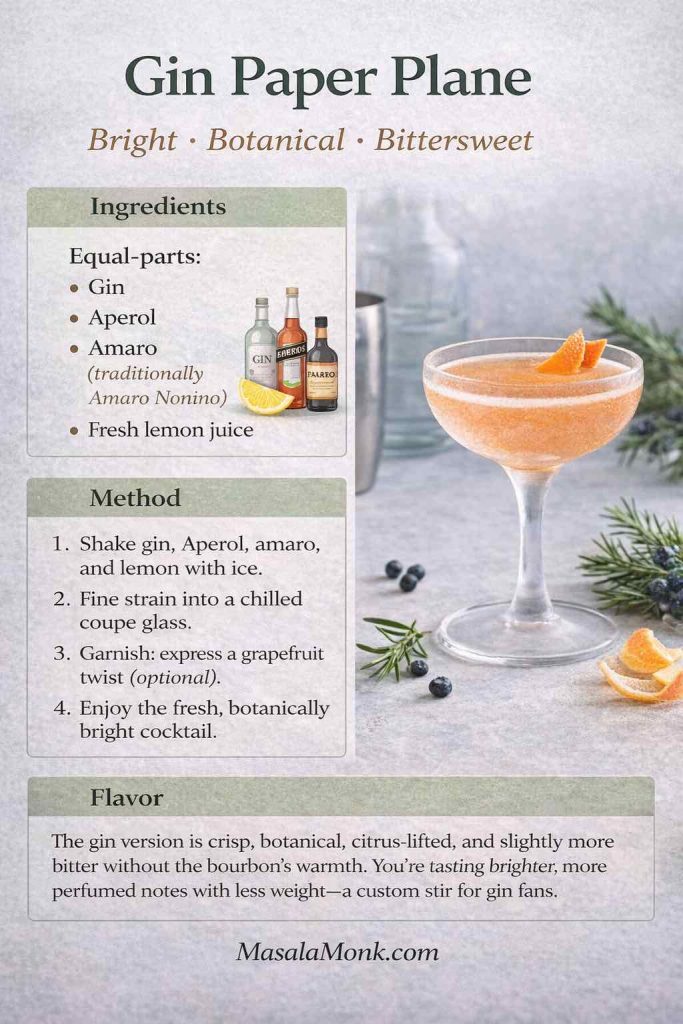
Here’s what changes:
- The finish becomes sharper and more aromatic.
- The drink feels lighter on the tongue.
- The bitterness can read more pronounced because bourbon’s round sweetness is gone.
If you enjoy this direction, MasalaMonk’s gin cocktail recipe roundup is a fun next step because it explores how gin behaves in sour-style builds and fruit-forward twists without losing structure.
Also Read: Katsu Curry Rice (Japanese Recipe, with Chicken Cutlet)
Paper Plane Cocktail batch method: how to make it for a crowd without shaking all night
The Paper Plane is easy for one person. It becomes tedious for twelve. That’s where batching turns the cocktail into a host’s best friend.
A batch paper plane cocktail works beautifully because the drink is already equal-parts and shaken. Scaling it up is straightforward; the only real trick is accounting for dilution.
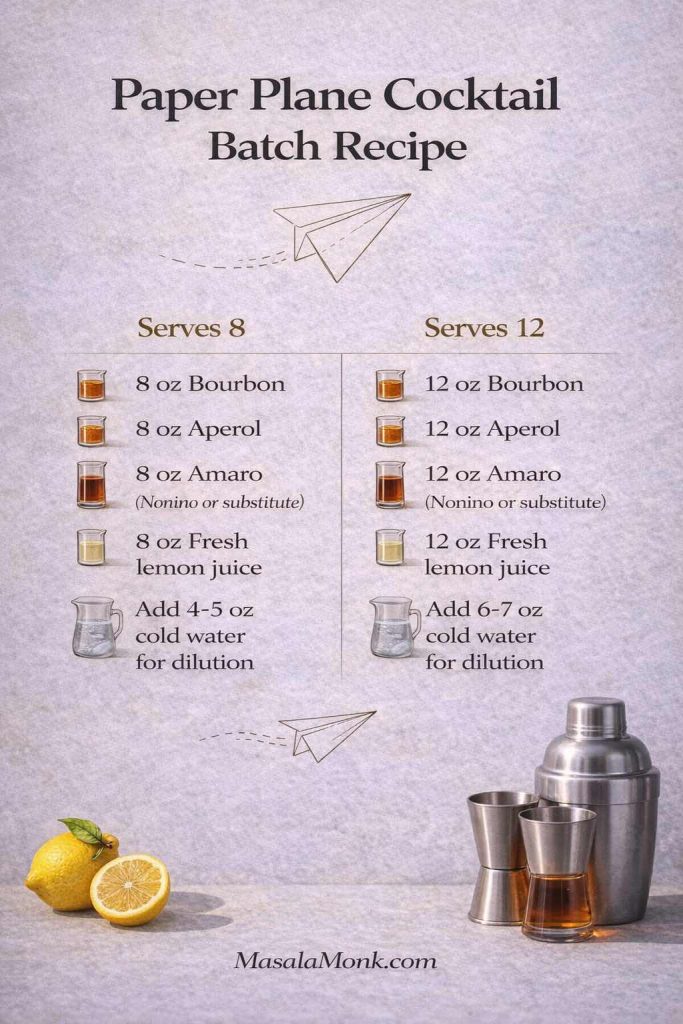
When you shake a cocktail, you’re adding water. That water is not a mistake—it’s part of the drink. Without it, a batched Paper Plane can taste too strong and too sharp.
A helpful reference here is Bon Appétit’s Paper Fleet recipe, which is essentially Paper Planes for a crowd with built-in logic for chilling and dilution. It’s a reassuring blueprint if you want to batch with confidence.
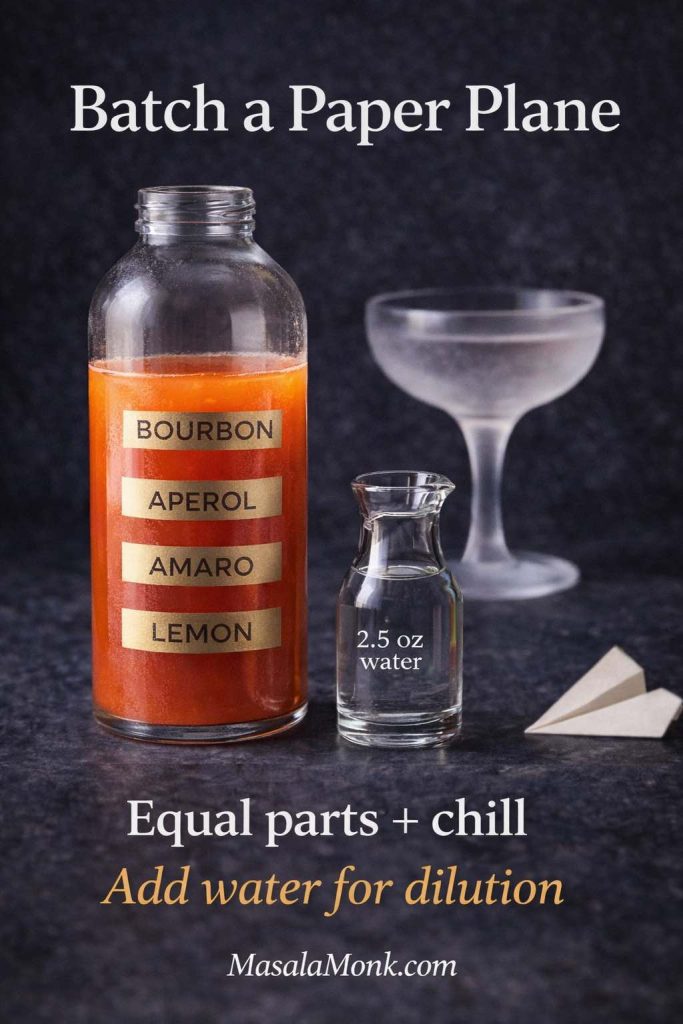
A simple batching approach that keeps the flavor balanced
- Combine bourbon, Aperol, amaro, and lemon juice in equal parts in a large container.
- Add a measured amount of cold water to mimic shake dilution.
- Chill the batch thoroughly.
- Serve it straight up in chilled glasses.
Once the batch is cold, the experience becomes almost effortless: pour, garnish if you like, and get back to your guests.
Turning it into a pitcher-style Paper Plane punch
If you want a “paper plane punch drink” vibe, treat it like a festive pitcher cocktail. Keep it very cold, serve in smaller glasses, and garnish more generously so the table feels celebratory.
If you like the broader hosting mindset—big-batch logic, party-friendly ratios, and how to keep flavors bright—MasalaMonk’s rum punch recipe is a great read. It’s a totally different flavor world, but the approach to crowd-serving is transferable.
Also Read: Crock Pot Lasagna Soup (Easy Base + Cozy Slow-Cooker Recipes)
Paper Plane Cocktail and ice: small details that make a noticeable difference
Because the Paper Plane Cocktail is shaken and served up, ice matters mostly during the shake. Clean, hard ice chills faster and dilutes more predictably. Softer, wet ice melts quickly and can water down the drink before it ever reaches the glass.
If you enjoy the “little upgrades” side of home bartending—how to make drinks look and feel more intentional—MasalaMonk’s post on cocktail ice ideas is a fun rabbit hole. Even when you’re serving a drink without ice in the glass, better ice in the shaker can make everything smoother.
Also Read: Baked Jalapeño Poppers (Oven) — Time, Temp & Bacon Tips
Paper Plane Cocktail vs. other bittersweet classics
One reason the Paper Plane Cocktail feels so instantly likable is that it connects to flavors people already enjoy—citrus, orange bitterness, herbal depth—without requiring an acquired taste. Once you’re into it, though, you may start craving other drinks that live in a similar lane.
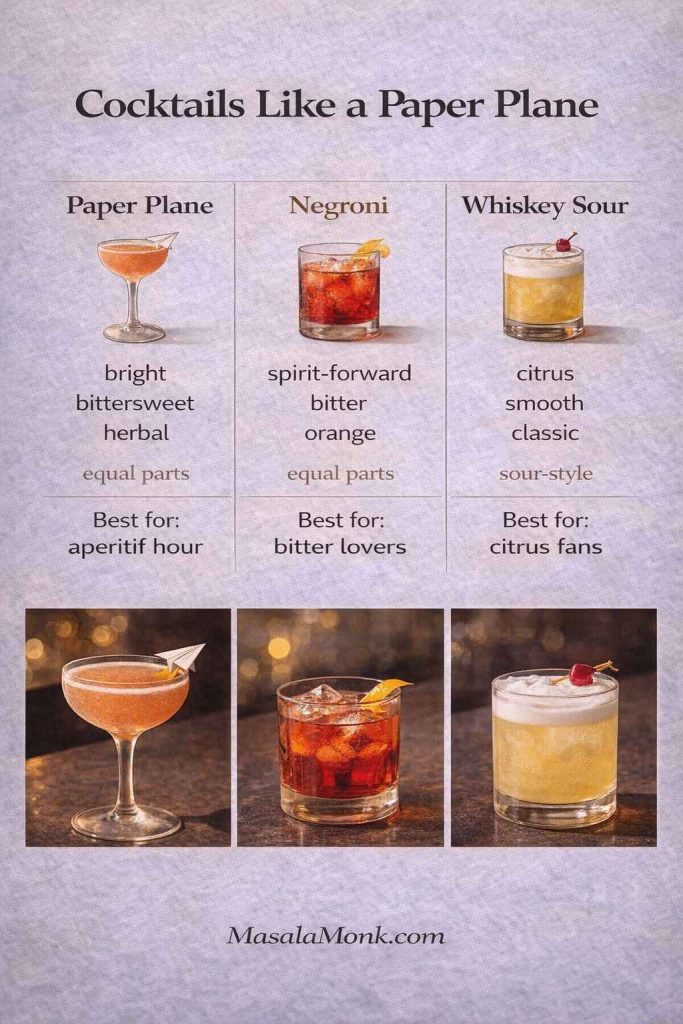
If you love the bitter-orange side
The Negroni is the obvious cousin: equal parts, bitter-forward, iconic. It’s more spirit-driven and less citrusy than the Paper Plane, yet the flavor family overlaps enough that many people love both. If you want a solid foundation and thoughtful riffs, MasalaMonk’s Negroni recipe is a great guide.
If you love the citrus structure
A whiskey sour sits closer to the Paper Plane’s “bright and balanced” backbone, even though it usually relies on simple syrup rather than Aperol and amaro. If you want to explore that world, MasalaMonk’s Whiskey Sour recipe is a reliable starting point for ratios, whiskey choices, and variations.
If you want sparkle and celebration
The French 75 scratches a different itch—bright lemon, bubbles, and a clean finish—yet it still appeals to people who like citrus-driven cocktails with structure. MasalaMonk’s French 75 cocktail recipe is especially useful because it covers classic builds and variations, including a bourbon-leaning French 95 twist that can feel like a playful bridge from whiskey sours toward lighter, sparkling territory.
Also Read: How to Cook Bacon in the Oven (Crispy, No-Mess, Crowd-Ready Recipe)
Paper Plane Cocktail pairings: what to serve so the drink tastes even better
A Paper Plane Cocktail loves salty snacks, creamy textures, and a little heat. The bitterness and citrus cut through richness, while spicy foods make the drink feel even brighter. If you’re pouring this cocktail at home, pairing it with the right bites turns a simple drink into a full evening.
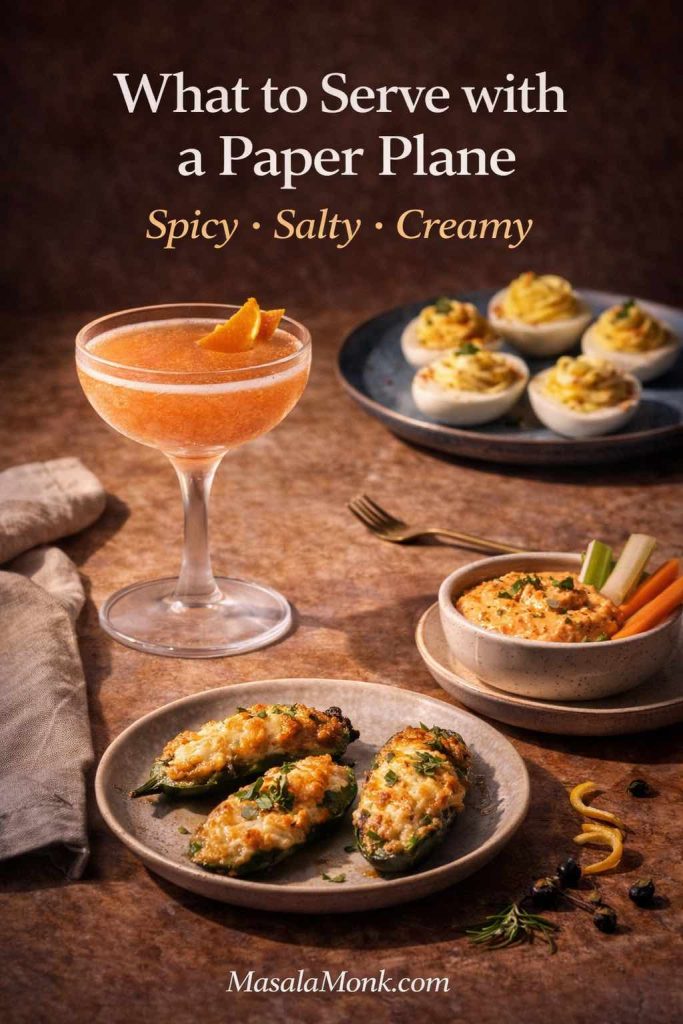
Spicy, creamy, crunchy: the easiest win
Jalapeño poppers are practically made for this moment. The filling is rich, the pepper brings heat, and the Paper Plane’s lemon-and-bitter profile keeps everything from feeling heavy. If you want a dependable, oven-friendly version, MasalaMonk’s baked jalapeño poppers are a perfect companion.
Crispy potato snacks that disappear fast
Potatoes have a way of making cocktails feel like a party even when it’s just a few people in the kitchen. For a big spread with plenty of options, MasalaMonk’s potato appetizers ideas give you plenty of directions—crispy, cheesy, spicy, and everything in between. The Paper Plane’s bitterness is especially good with salty potato edges.
Make-ahead, neat, and quietly perfect
Deviled eggs feel almost too simple, yet they’re one of the best matches for a bittersweet cocktail. Creamy filling meets citrus and bitterness in a way that’s unexpectedly elegant. MasalaMonk’s deviled eggs recipe is a great option if you want something you can prep ahead and plate quickly.
Dips that work with the Paper Plane’s sharpness
If you want something bold and crowd-pleasing, buffalo chicken dip is hard to beat. It’s spicy, rich, and deeply snackable—and the Paper Plane’s lemon resets your palate after each bite. MasalaMonk’s buffalo chicken dip recipe fits beautifully on the same table.
For a cooler, fresher option, tzatziki is a smart contrast. Yogurt, cucumber, garlic, and herbs bring a clean, tangy bite that plays nicely with citrus. MasalaMonk’s Greek tzatziki sauce recipe is perfect when you want something creamy without feeling heavy.
A dessert pairing that makes the evening feel planned
Churros and the Paper Plane Cocktail might not be an obvious match until you try it. Cinnamon sugar loves orange bitterness, and warm fried dough makes chilled citrus taste even brighter. If you want to do it properly at home, MasalaMonk’s guide on how to make churros is a fun way to end the night on a high note.
Also Read: Steel Cut Oats vs Rolled Oats: Nutrition, Taste, Cooking & More
Paper Plane Cocktail naming quirks: Paper Airplane, airplane cocktail, aeroplane cocktail
You’ll see a few different names floating around for the same idea. Some people lean into “paper airplane” as a playful synonym. Others shorten it to airplane cocktail, air plane cocktail, or aeroplane cocktail. On menus, it may even show up as a plane cocktail or plane drink.
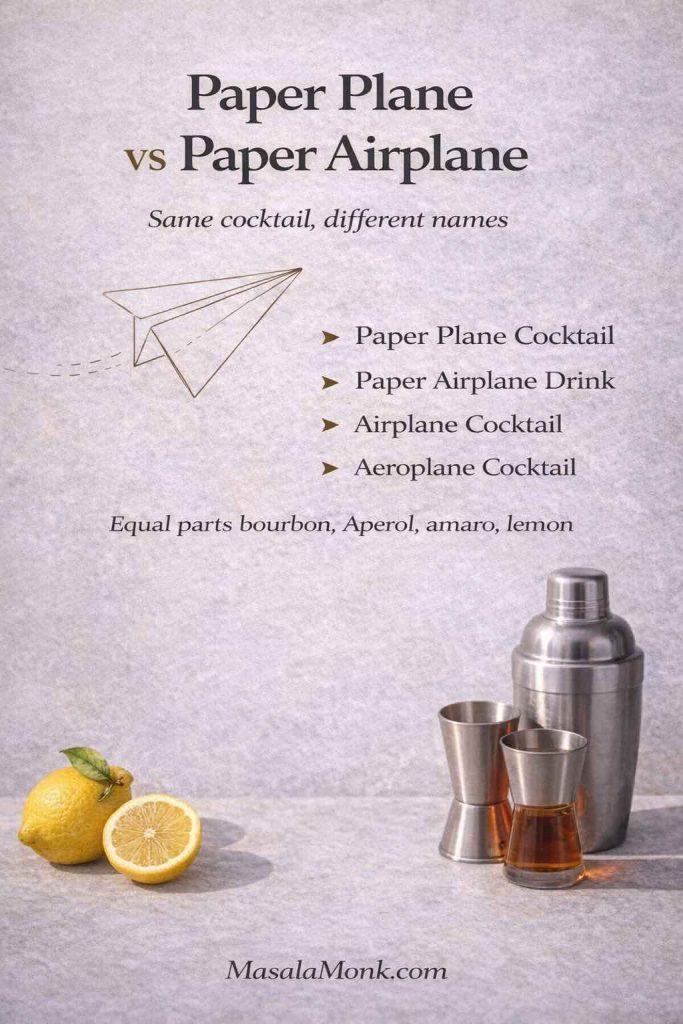
In practice, what matters is the structure: bourbon (or another base spirit), Aperol, amaro, and lemon, built as an equal-parts drink and served up. Once you know that, you can recognize the Paper Plane even when the wording shifts.
Also Read: Blueberry Pancakes (6 Recipes) + Homemade Pancake Mix
A few thoughtful ways to make the Paper Plane Cocktail feel personal
The Paper Plane Cocktail is famous for being easy. Still, “easy” doesn’t have to mean generic. With a few deliberate choices, the drink can feel tailored to you.

You can lean brighter
- Choose a lighter, more citrus-friendly bourbon.
- Use a brighter amaro substitution like Montenegro.
- Express a lemon twist over the glass.
Lean warmer
- Choose a richer bourbon.
- Use Averna for a deeper amaro tone.
- Keep the drink very cold so warmth comes from flavor, not heat.
Lean more bitter
- Pick an amaro with more bite.
- Keep the equal-parts build at first, then adjust slowly.
- Pair it with something rich and salty so bitterness feels elegant rather than harsh.
Also Read: Cheesy Chicken Broccoli Rice – 4 Ways Recipe (One Pot, Casserole, Crockpot & Instant Pot)
A quick set of reliable external references for the Paper Plane Cocktail
If you like checking the classics against trusted sources, these are worth bookmarking:
- The canonical proportions and method are listed on the IBA Paper Plane recipe.
- A clear, home-friendly walkthrough is on Liquor.com’s Paper Plane cocktail recipe.
- The story of how it took hold as a modern standard is told beautifully in PUNCH’s Paper Plane history piece.
- For a crowd version that respects dilution and chilling, Bon Appétit’s Paper Fleet is one of the most practical big-batch references.
Also Read: Punch with Pineapple Juice: Guide & 9 Party-Perfect Recipes
Paper Plane Cocktail: the kind of recipe you end up memorizing
Some drinks are fun once, then you forget them. The Paper Plane Cocktail is the opposite. It’s the sort of recipe that sneaks into your muscle memory because it’s so easy to repeat—and because it always feels like a little reward.
It’s also flexible in the ways that matter. You can keep it classic with bourbon and Nonino. Also, you can make a paper plane bourbon drink that’s warmer and richer with a deeper amaro. Then, you can try a gin Paper Plane when you want something more botanical. You can batch it when friends come over. Through all those versions, the cocktail still tastes like itself: lemon-bright, orange-bitter, herbal, and clean.
Make one. Then, when the glass is suddenly empty, you’ll understand why this equal-parts drink became a modern classic in the first place.
Also Read: Sheet Pan Chicken Fajitas Recipe (Easy One-Pan Oven Fajitas)
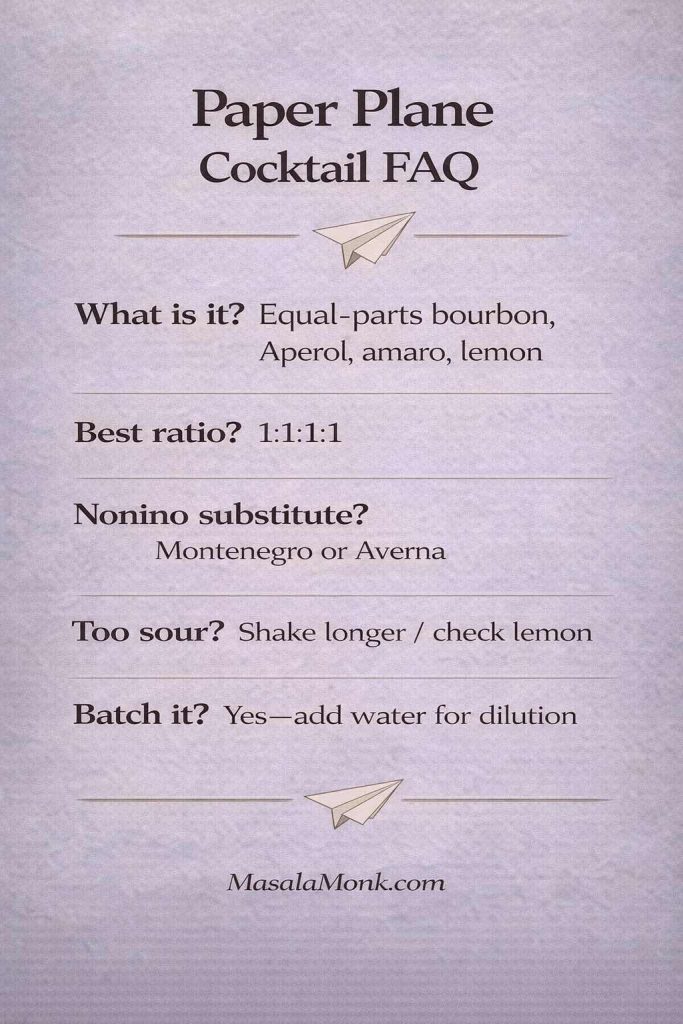
FAQs
1) What is a Paper Plane Cocktail?
A Paper Plane Cocktail is a modern equal-parts drink made with bourbon, Aperol, amaro, and fresh lemon juice. It’s shaken with ice and served up, giving you a bright citrus start, a bittersweet orange middle, and a long herbal finish.
2) What’s the classic Paper Plane Cocktail recipe ratio?
The classic ratio is equal parts bourbon, Aperol, amaro, and lemon juice. Many home versions use 1 ounce of each, although you can scale the same proportion up or down depending on your glassware and preference.
3) Is “paper airplane drink” the same as the Paper Plane Cocktail?
In most cases, yes. “Paper airplane drink” is a common alternate way people refer to the Paper Plane Cocktail, especially online. The ingredient structure remains the same: whiskey (usually bourbon), Aperol, amaro, and lemon.
4) What are the Paper Plane Cocktail ingredients?
The standard Paper Plane Cocktail ingredients are bourbon, Aperol, amaro (traditionally Amaro Nonino), and fresh lemon juice. That four-part structure is what makes the drink memorable and easy to repeat.
5) Which bourbon is best for a Paper Plane Cocktail?
Look for a bourbon with a balanced profile—vanilla, gentle spice, and moderate oak—so it won’t disappear behind lemon and bitterness. A mid-proof bottle often works nicely, because it keeps the Paper Plane Cocktail tasting warm and structured without getting harsh.
6) Can I make a Paper Plane Cocktail with whiskey instead of bourbon?
You can. Many people make a whiskey Paper Plane using rye, which usually produces a drier, spicier cocktail. If you use a softer whiskey style, the drink can become smoother and less punchy, but it will still follow the Paper Plane template.
7) What amaro is used in the original Paper Plane Cocktail?
The classic choice is Amaro Nonino. It’s known for a polished, aromatic bitterness that pairs well with Aperol and lemon while letting bourbon stay present.
8) What are the best amaro substitutes for a Paper Plane Cocktail?
If you need a Paper Plane without Amaro Nonino, two popular substitutes are Amaro Montenegro (brighter, more aromatic) and Averna (deeper, richer). Each swap changes the personality slightly, yet the cocktail still works well within the equal-parts framework.
9) How does an Amaro Montenegro Paper Plane taste compared to the classic?
With Montenegro, the drink often feels lighter and more perfumed, with a softer bitter edge. It’s a good direction if you want the Paper Plane Cocktail to stay fresh and citrus-forward.
10) How does an Averna Paper Plane taste compared to the classic?
Averna tends to make the cocktail rounder and darker, with more caramel-leaning depth. It can feel cozier and more dessert-adjacent, especially alongside a rich bourbon.
11) Can I use Aperol alternatives in a Paper Plane Cocktail?
You can swap Aperol, but the drink will drift from the classic Paper Plane flavor. If you change the orange-bitter liqueur, expect the cocktail to become either more bitter or more sweet depending on what you choose.
12) Can I make a Paper Plane Cocktail with gin?
Yes. A gin Paper Plane keeps the equal-parts structure but shifts the flavor toward botanicals and brighter aromatics. The result usually tastes lighter and more citrus-lifted than the bourbon version.
13) What’s the best garnish for a Paper Plane Cocktail?
Many versions skip garnish entirely, since the drink is already aromatic. Even so, a lemon twist is a popular option because it adds fragrance without altering the balance.
14) What glass should I use for a Paper Plane Cocktail?
A coupe or cocktail glass is a common choice. Since the drink is served up, a chilled stemmed glass helps keep it cold and crisp while you sip.
15) What does the Paper Plane Cocktail taste like?
It’s bright and lemony at first, then bittersweet and orange-tinged, finishing with herbal bitterness from the amaro. Overall, it lands as refreshing yet complex, with bourbon warmth underneath.
16) Why is my Paper Plane Cocktail too sour?
Often it comes down to lemon intensity or low dilution. If your lemons are especially sharp, the drink may taste more tart than expected. A slightly longer shake can also help by adding a touch more water to soften the edges.
17) Why is my Paper Plane Cocktail too bitter?
The most common reason is an amaro substitution that’s more bitter than Nonino, or a heavier pour of aperitif/amaro. In that case, try a gentler amaro next time, or reduce the amaro slightly while keeping the drink balanced.
18) Can I make a batch Paper Plane Cocktail for a party?
Absolutely. A batch Paper Plane cocktail works well because the drink is equal-parts. The main thing to remember is dilution: add a bit of water to the batch so it drinks like a shaken cocktail once served cold.
19) How far ahead can I batch a Paper Plane Cocktail?
If you’re batching, you can prep it a few hours ahead and keep it chilled until serving. For best results, add fresh lemon close to serving time if you’re making it well in advance, since citrus brightness fades gradually.
20) Is there an “airplane cocktail recipe” that’s different from a Paper Plane Cocktail?
Sometimes “airplane cocktail” is used as shorthand for the Paper Plane, and sometimes it’s simply a naming variation (aeroplane, air plane). When the ingredient list is bourbon, Aperol, amaro, and lemon, you’re looking at the Paper Plane Cocktail recipe—even if the wording changes.
21) What drinks are similar to a Paper Plane Cocktail?
Other bittersweet classics can scratch the same itch, especially cocktails that combine spirit, bitterness, and balance. If you enjoy the Paper Plane Cocktail, you’ll likely also enjoy other aperitif-and-amaro style drinks with citrus or equal-parts structure.
22) What does “Paper Plane Cocktail IBA” mean?
It refers to the International Bartenders Association listing for the Paper Plane, which standardizes the core ingredients and method. When a recipe cites the IBA spec, it usually means it’s sticking closely to the classic equal-parts template.
23) Can I make a “Paper Plane punch drink” version?
Yes—treat it like a scaled-up batch. Keep the same proportions, chill it thoroughly, and serve it in smaller portions. With a pitcher-style approach, the drink stays bright and consistent while making hosting easier.
24) Is the Paper Plane Cocktail strong?
It’s moderately strong. Even though it includes citrus, it’s still built from spirits and liqueurs, so it drinks like a real cocktail—smooth, balanced, and deceptively easy to finish.









[…] For another balanced modern classic that delivers the same “this just works” satisfaction, the Paper Plane cocktail guide is a smart next pour. When the mood shifts toward something brighter and more celebratory, the […]
[…] Also Read: Paper Plane Cocktail Recipe + Best Amaro Substitutes & Tips […]
[…] Also Read: Paper Plane Cocktail Recipe + Best Amaro Substitutes & Tips […]
[…] Also Read: Paper Plane Cocktail Recipe + Best Amaro Substitutes & Tips […]
[…] Also Read: Paper Plane Cocktail Recipe + Best Amaro Substitutes & Tips […]
[…] Also Read: Paper Plane Cocktail Recipe + Best Amaro Substitutes & Tips […]
[…] Also Read: Paper Plane Cocktail Recipe + Best Amaro Substitutes & Tips […]