
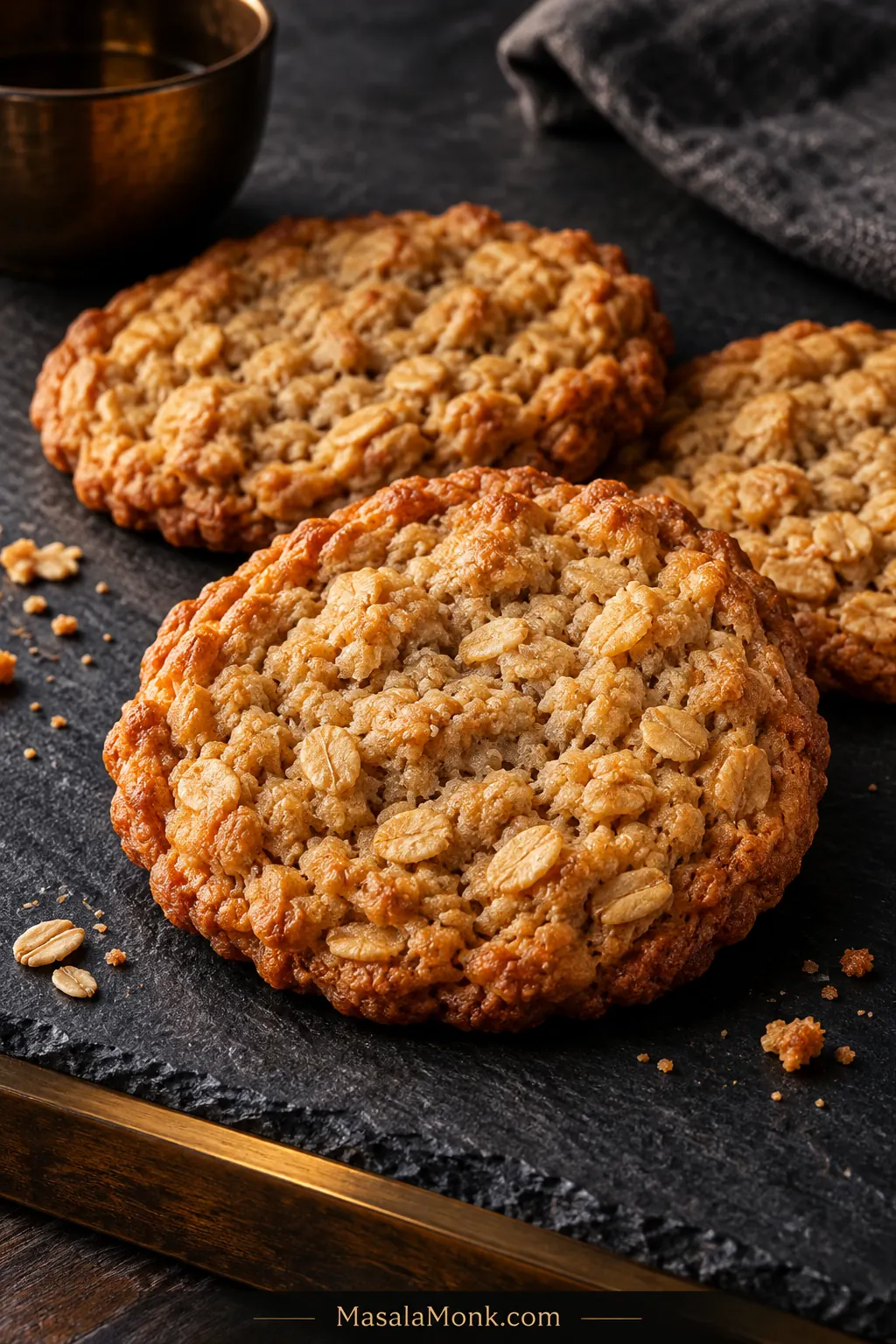
A good oatmeal cookie shouldn’t need raisins or chocolate to make it interesting. On its own, it should have a lightly golden edge, a soft middle that bends before it breaks, and enough rolled-oat chew to give every bite some substance instead of a cakey crumb.
The tricky part is getting all three at once. Too much flour or too many oats can leave the cookies thick and dry; let them spread too far and they turn thin and crisp. Melted butter means no mixer and no waiting for butter to soften. A short rest lets the oats take up moisture before you judge the dough, and most batches won’t need a long chill.
Before the first tray: use regular old-fashioned rolled oats, give the mixed dough 15–20 minutes before deciding it looks too soft, and pull the cookies while the edges are set but the centers still look tender. Chill only if the rested dough still slumps.
Oatmeal Cookies Recipe
Soft-centered oatmeal cookies with chewy rolled oats, lightly crisp edges and warm brown-sugar cinnamon flavor. The dough comes together with a whisk and rests briefly before portioning.
What You’ll Need
A large mixing bowl, a medium bowl, whisk, flexible spatula, cookie scoop or tablespoon measure, two large baking sheets, ideally light-colored half-sheet pans (about 13 × 18 inches / 33 × 46 cm), parchment paper and a cooling rack. For more consistent flour, oat and portion measurements, a digital kitchen scale is especially useful.
Ingredients
- 1¼ cups (150 g) all-purpose flour, spooned and leveled if measuring by cups
- ½ teaspoon baking soda
- ¼ teaspoon baking powder
- 1 teaspoon ground cinnamon
- ½ teaspoon fine sea salt
- 10 tablespoons (142 g) unsalted butter
- 135 g light brown sugar (about ⅔ cup, lightly packed)
- ¼ cup (50 g) granulated sugar
- 1 large egg
- 1 large egg yolk
- 2 teaspoons (10 ml) vanilla extract
- 2 cups (170 g) regular old-fashioned rolled oats, not steel-cut or extra-thick
Melted butter skips the aeration that comes from creaming softened butter, which suits the denser, chewier texture here. Brown sugar and the extra yolk help keep the middle tender. A little granulated sugar encourages spread and browning at the edge, while rolled oats supply the chew.
For the most predictable dough, use the 170 g oat weight; cup volume can vary with flake size and brand. The short rest gives both the flour and oats time to absorb moisture before baking.
Instructions
Mix the Dough
- Melt the butter and let it cool slightly. Leave it for about 10 minutes while you measure the other ingredients. It should remain liquid and warm, but the bowl should no longer feel hot in your hand.
- Mix the dry ingredients. Whisk the flour, baking soda, baking powder, cinnamon and salt together.
- Mix the wet ingredients. In the large bowl, whisk the melted butter, brown sugar and granulated sugar for about 30 seconds. Add the egg, egg yolk and vanilla, then whisk until smooth and glossy.
Rest, Portion & Bake
Check the First Cookie
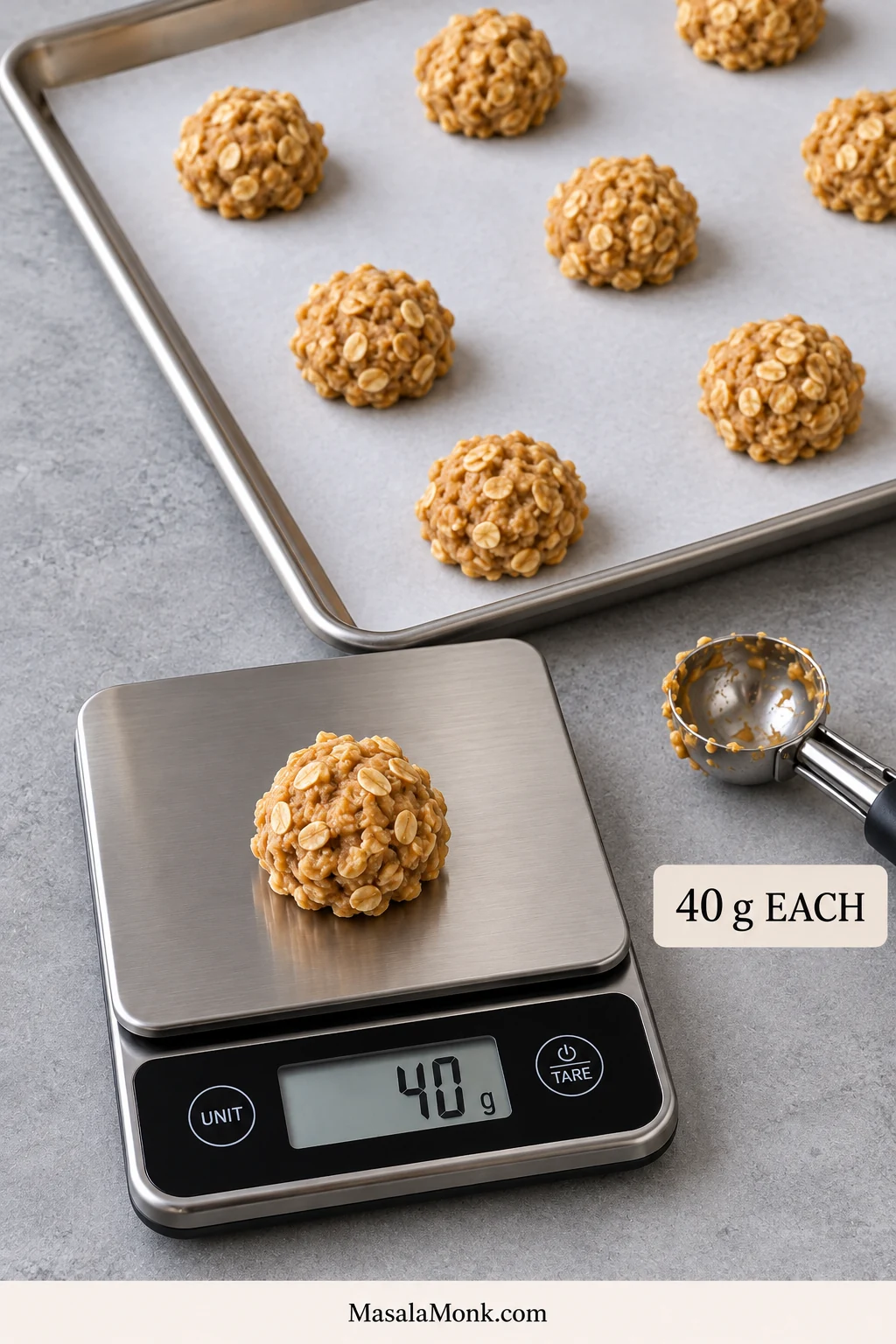
Unsure about the dough? Bake one 40 g test cookie first. Too much spread calls for a brief chill. If it barely spreads and the remaining dough feels cold or firm, let it warm slightly or press the next portions down a little. One odd cookie gives you information; it doesn’t mean the whole batch is lost.
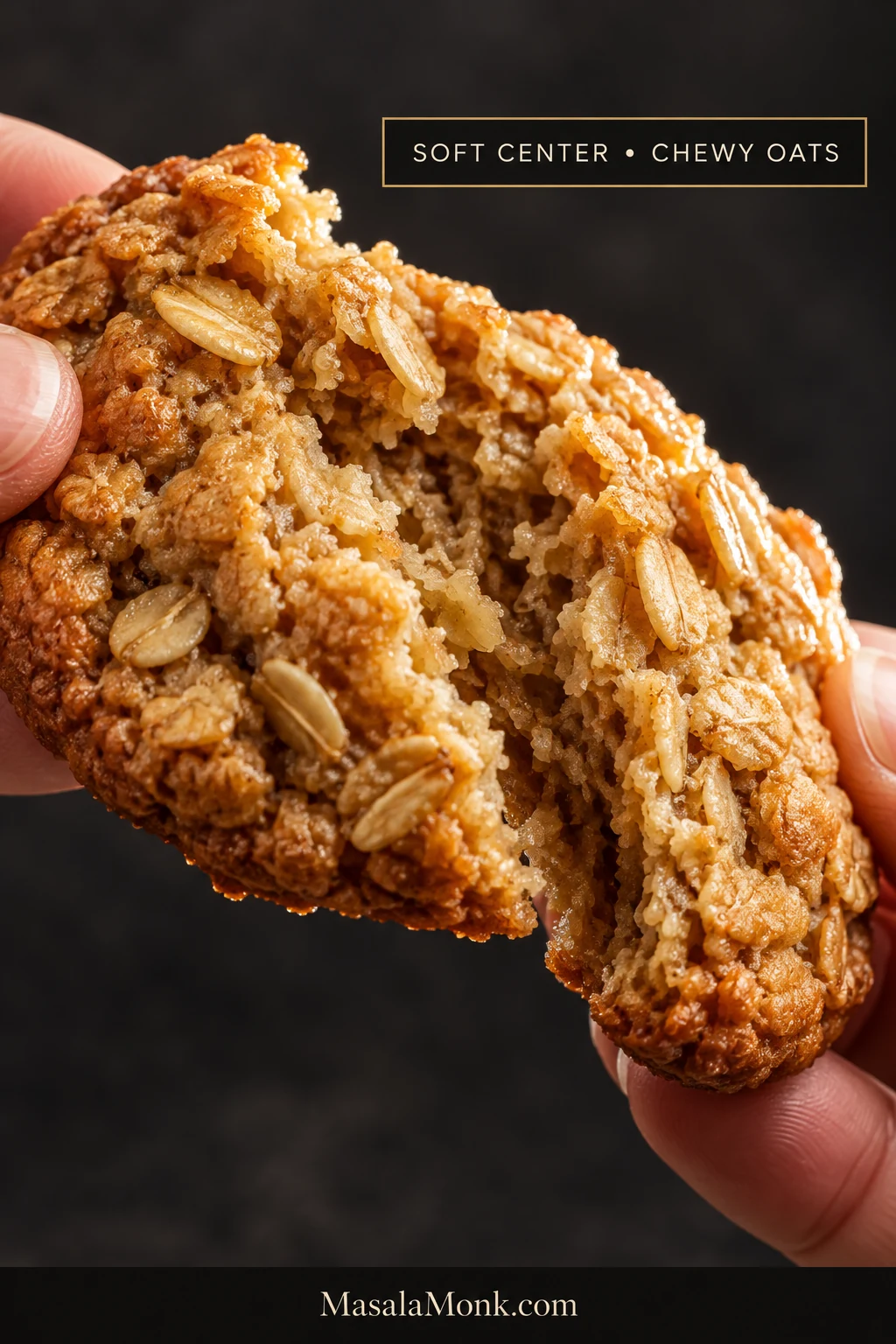
Use a cooled cookie as the final texture check. Its middle should be cohesive enough to lift and bend, with visible oats through the crumb; it should not look wet or paste-like.
Need Help With This Batch?
Which Oats Should You Use for Oatmeal Cookies?
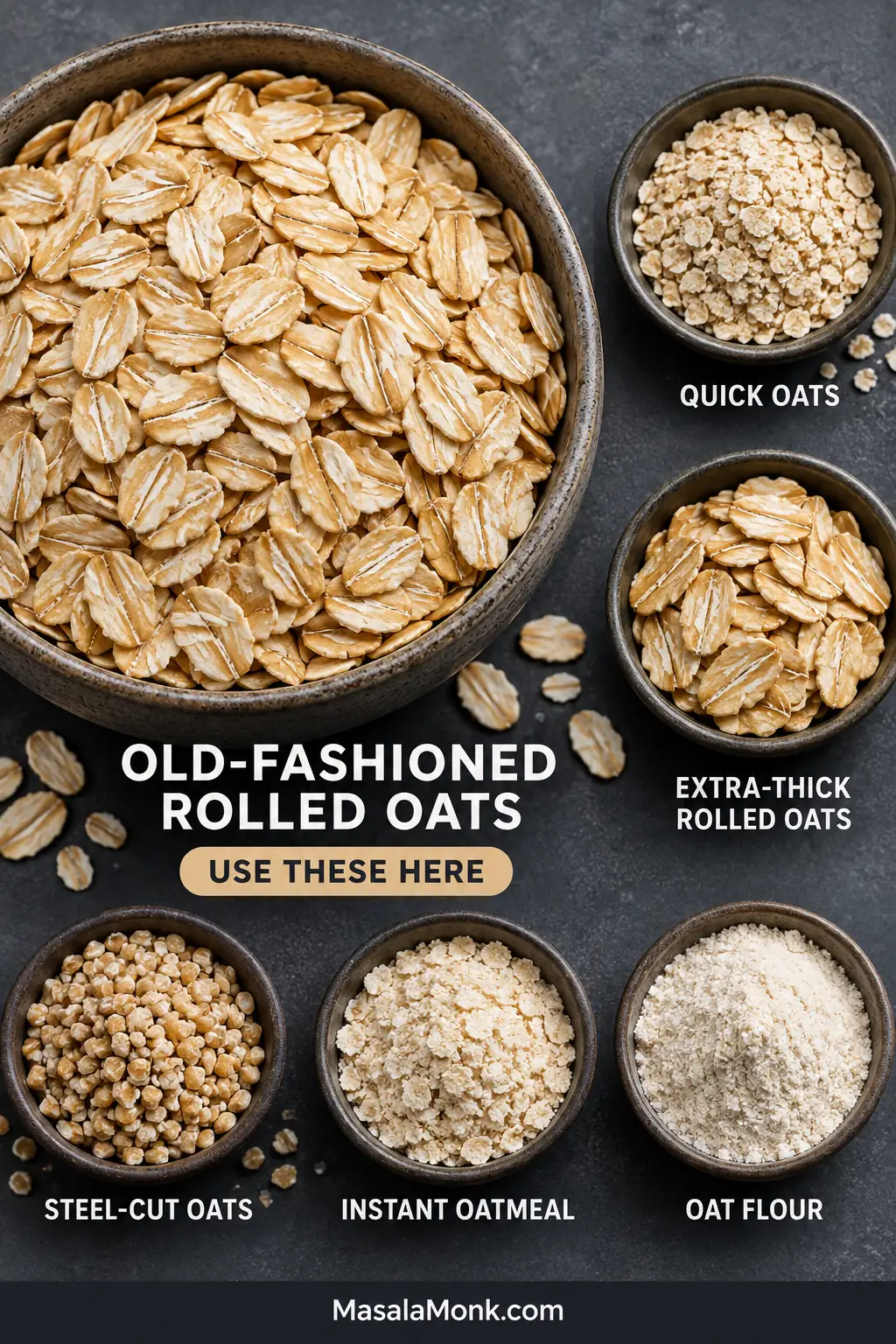
Use regular old-fashioned rolled oats here. Their flakes stay visible after baking, giving each bite a distinct oat chew against the softer center. If the names on the package are confusing, our guide to oats vs oatmeal and the different oat styles explains the broader differences.
| Oat | What to expect |
|---|---|
| Regular old-fashioned rolled oats | Preferred. Visible flakes and a pronounced chewy oat texture. |
| Quick rolled oats | Finer and softer, with less obvious oat chew. |
| Extra-thick rolled oats | Firmer and sometimes more absorbent; not the best fit here. |
| Steel-cut oats | Too coarse for this quick cookie bake. |
| Instant oatmeal packets | Too fine and often already sweetened or flavored. |
| Oat flour | A flour, not an intact oat flake; not interchangeable with the rolled oats. |
Can You Use Quick Oats in Oatmeal Cookies?
Yes—quick oats can work in oatmeal cookies, but they give you a finer, softer cookie with less distinct oat chew. Their smaller flakes soften sooner and disappear more completely into the dough.
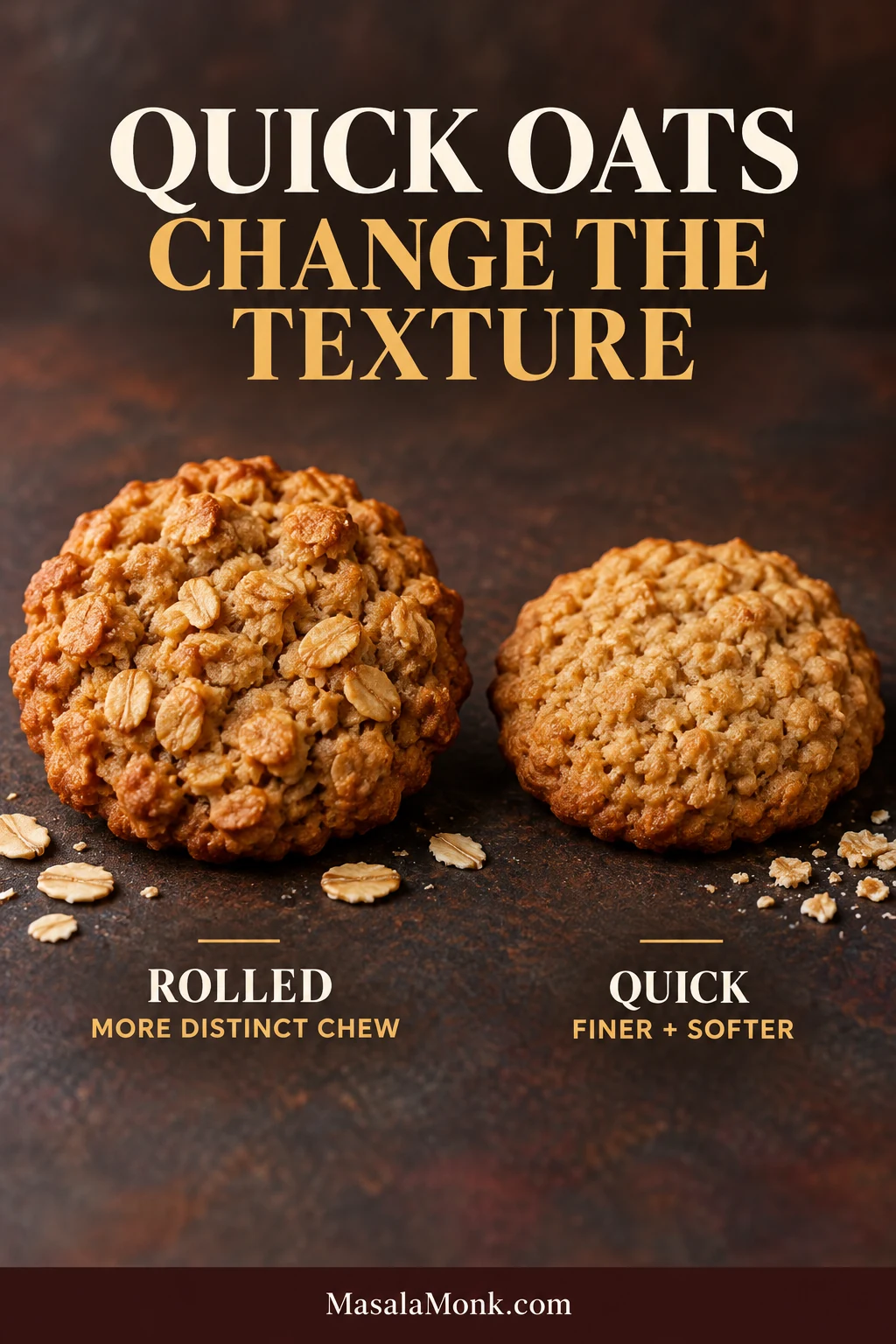
Quick oats are what we use in our oatmeal cream pies, where a softer, more bendable cookie is exactly what you want.
This dough is written for rolled oats, so quick oats are a variation, not an identical swap. Check the dough earlier during the 15–20 minute rest and use a test cookie before committing the whole batch. For a finer oat texture, you can also pulse rolled oats a few times; stop while small flakes are visible instead of grinding them into flour.
Why Oatmeal Cookie Dough Gets Thicker While It Rests
Give oatmeal cookie dough 15–20 minutes to rest. As the flour and oats absorb moisture and the melted butter cools, the mixture becomes thicker and much easier to judge. Freshly mixed dough can look surprisingly soft, so don’t rush to correct it.
Don’t add more flour yet. Judge the dough after the rest.
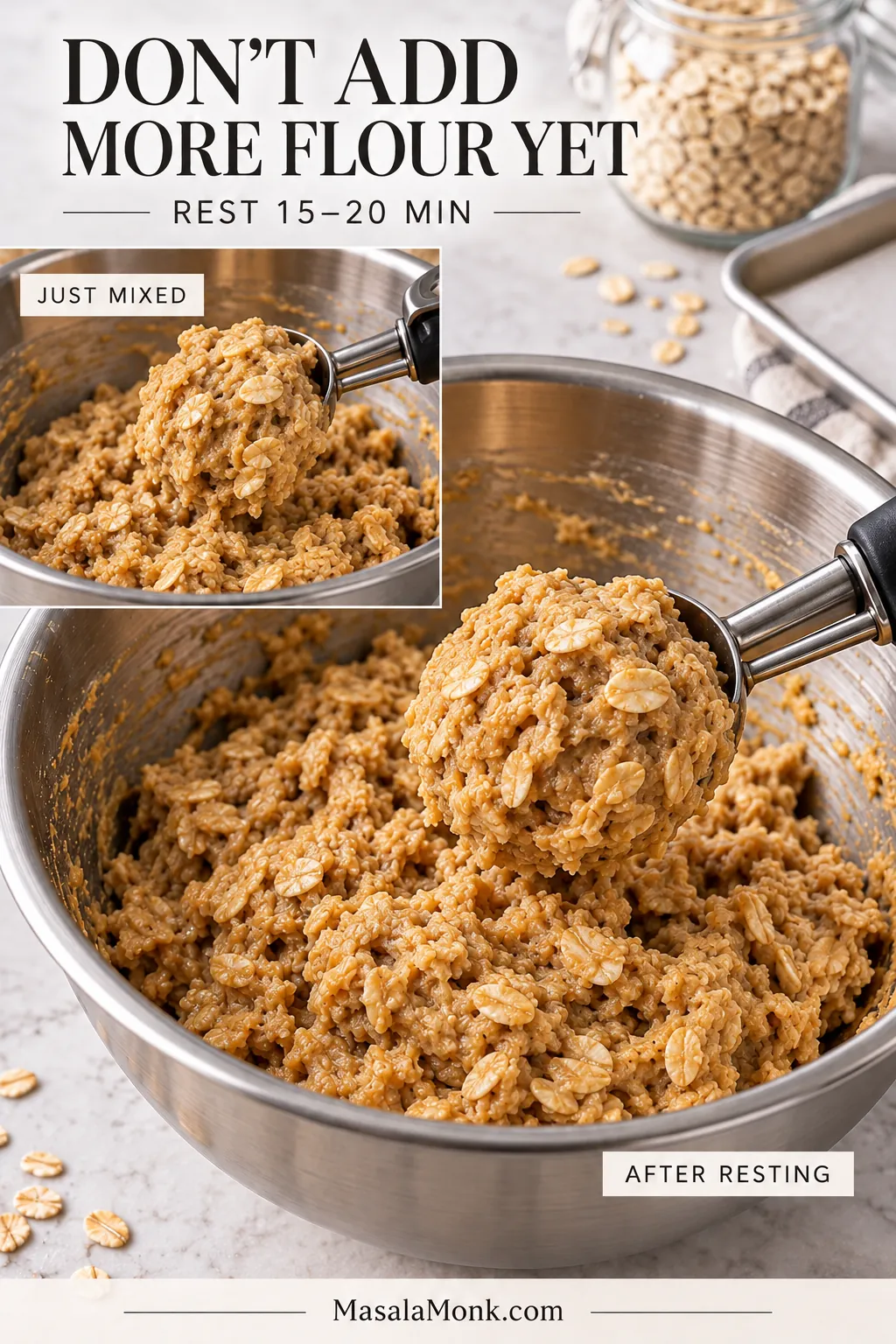
Press a scoop gently. A mound that slowly flows outward needs a short chill. Cracks or unexpected dryness point back to the flour, oat amount or oat type.
Distinct oat flakes should remain visible throughout the dough. After baking, they give the cookie a little resistance before you reach the tender middle.
Keep the first tray at 40 g per cookie so the comparison means something. Equal portions remove one variable, making any differences in spread or browning easier to interpret.
Read the First Tray
Before you change the bowl of dough, look at what the first tray is actually telling you.
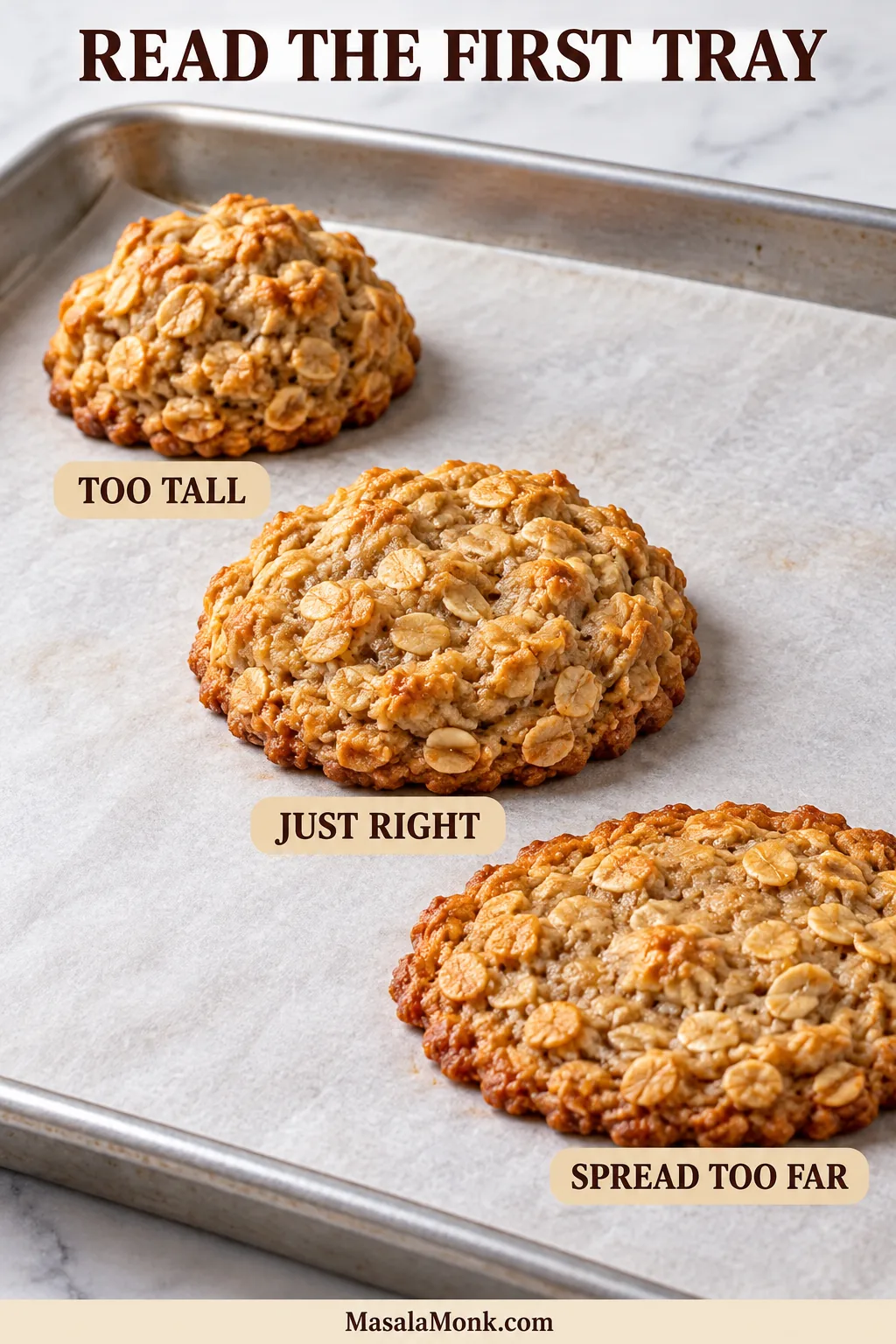
Cookies Spread About Right
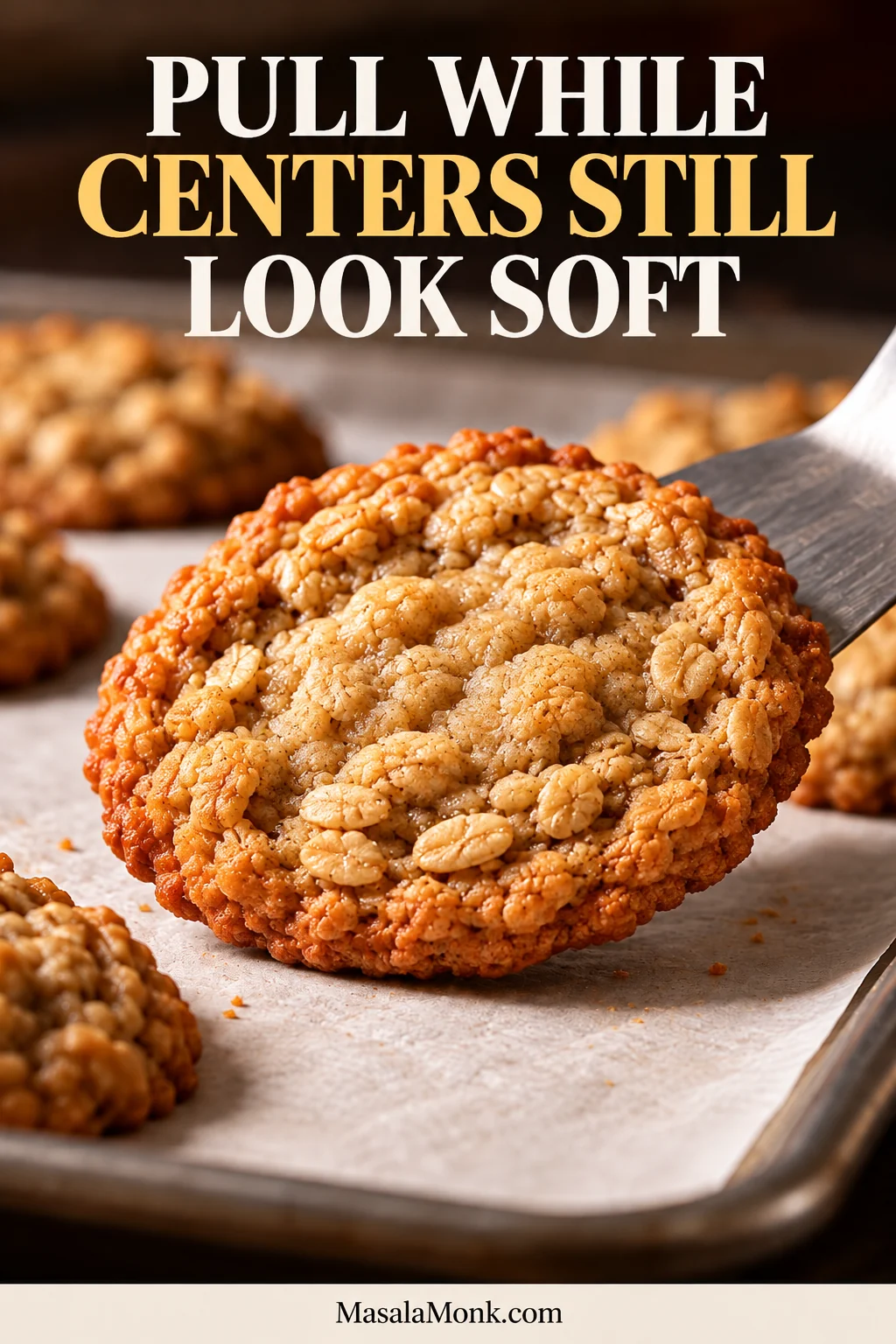
Carry on with the second tray. You want a distinct set edge and a thicker, softer middle, not one uniformly thin disk. Give a warm cookie a few minutes on the pan and it should lift cleanly with a little bend left through the center.
To judge doneness, look at the edge before the center. The perimeter should be set and lightly golden even while the middle looks softer and paler.
Cookies Stay Too Tall
Oatmeal cookies usually stay too tall when the dough is too cold or contains too much flour or too many oats. When the measurements are right and the dough is simply cold, let it warm for a few minutes or press the next portions down slightly.
Don’t add liquid to the whole bowl because one test cookie stayed thick. Letting cold dough warm is a much smaller correction.
Cookies Spread Too Far
Oatmeal cookies usually spread too far because the dough is too warm, the dry ingredients were undermeasured, the baking sheet is warm, or the oven is running cool. Start with the dough itself. If it is loose or warm, give it a short chill.
Then confirm the flour and oats were measured accurately and the next portions are going onto a cool sheet. The baking surface matters too; King Arthur’s pan-lining test shows how parchment and other surfaces can change cookie spread. Using parchment every time gives you one less variable to worry about.
Dough can look right and still run wide on every tray; in that case, check the oven. A cool-running oven gives the butter more time to melt before the cookie sets.
If a brief chill doesn’t change the next cookie, stop refrigerating the bowl. Recheck the flour and oats, make sure the baking sheet is cool, and verify that the oven is actually reaching 350°F / 175°C.
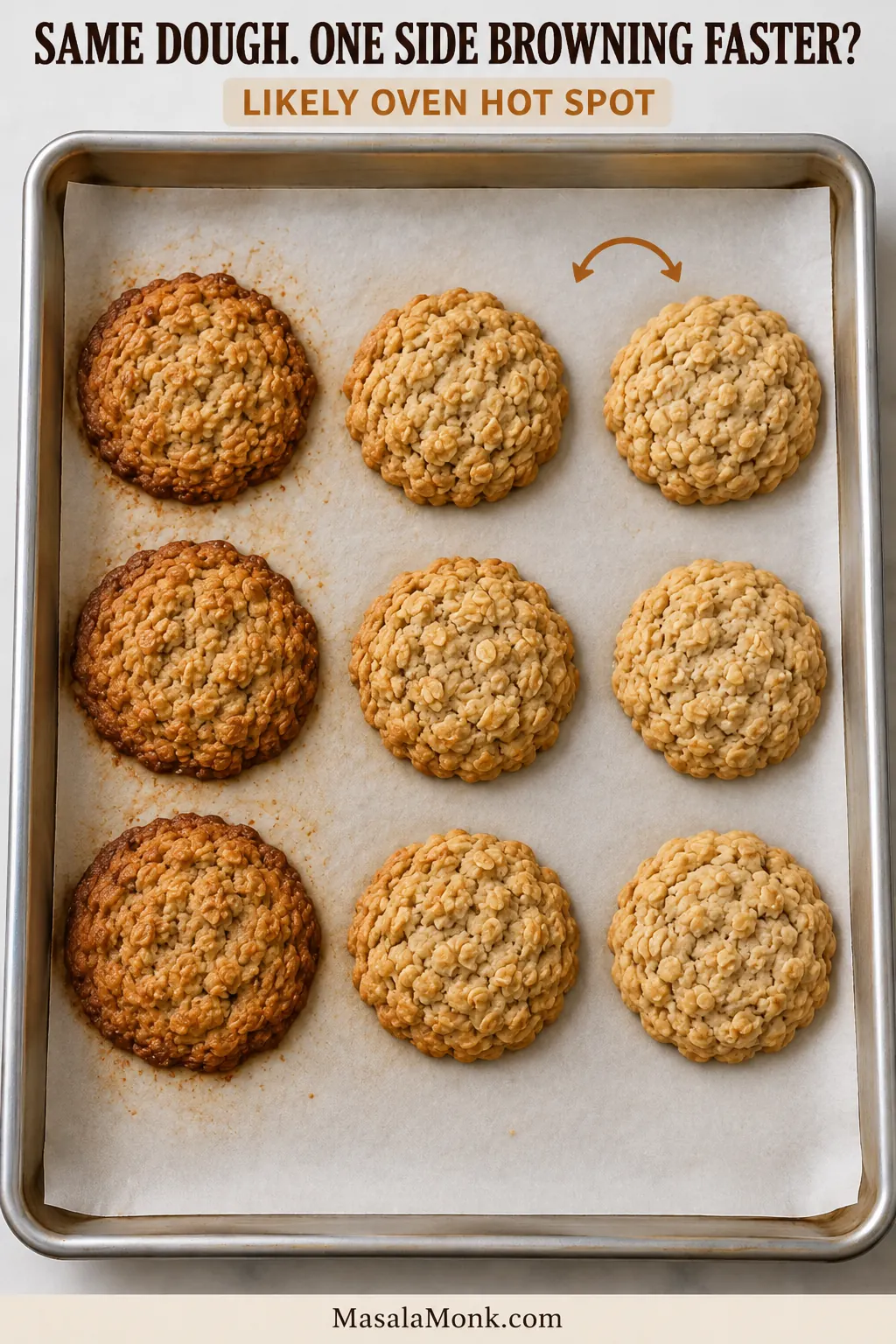
One Side Spreads or Browns Differently
That points toward the oven rather than the mixing bowl. When the same side repeatedly spreads or browns faster, an oven hot spot is a likely culprit. On the next tray, rotate the pan 180° around halfway through baking; don’t change the dough.
Fix the Batch in Front of You
If spread isn’t the problem, start with the symptom that actually matches your batch. Changing three things at once makes the next tray harder to read.
| What you see | What to check or change |
|---|---|
| Cookies are dry or cakey | Recheck the flour and oat measurements, then pull the next tray while the center still looks soft. |
| Cookies look greasy or lacy | Look at the butter amount, dough temperature and actual oven temperature before changing anything else. |
| Later trays spread more | The dough may have warmed, or a reused sheet may still be hot. Keep both away from oven heat and cool the pan completely. |
| Oats stay hard | Steel-cut or very thick oats are the usual culprit. Confirm the package before changing the rest of the recipe. |
| Bottoms burn before the centers are ready | A light-colored pan on the center rack helps; also check whether the oven is running hot. |
| Cookies crumble when moved | Give them the full 5 minutes on the baking sheet. Persistent crumbling after cooling points back to the flour and oats. |
| Cookies are crisp all the way through | The most likely problem is too much oven time. Pull the next tray while the middle looks softer than the edge. |
If dry cookies are a recurring problem and you measure flour by cups, your measuring method is worth checking. King Arthur’s flour-measuring guide shows how easily a cup can become heavier than intended.
Raisins, Chocolate Chips & Other Changes
Try the cookies plain once if you can. That gives you a clear reference for how far the dough normally spreads and how the center should feel.
Raisins: fold in about ¾ cup / 110–120 g. Very dry raisins can be soaked briefly in warm water, then drained and patted thoroughly dry.
Chocolate chips: add about ¾ cup / 120 g semisweet chips. If you’d rather make chocolate-chip cookies the main event, our brown butter chocolate chip cookies take that route from the start.
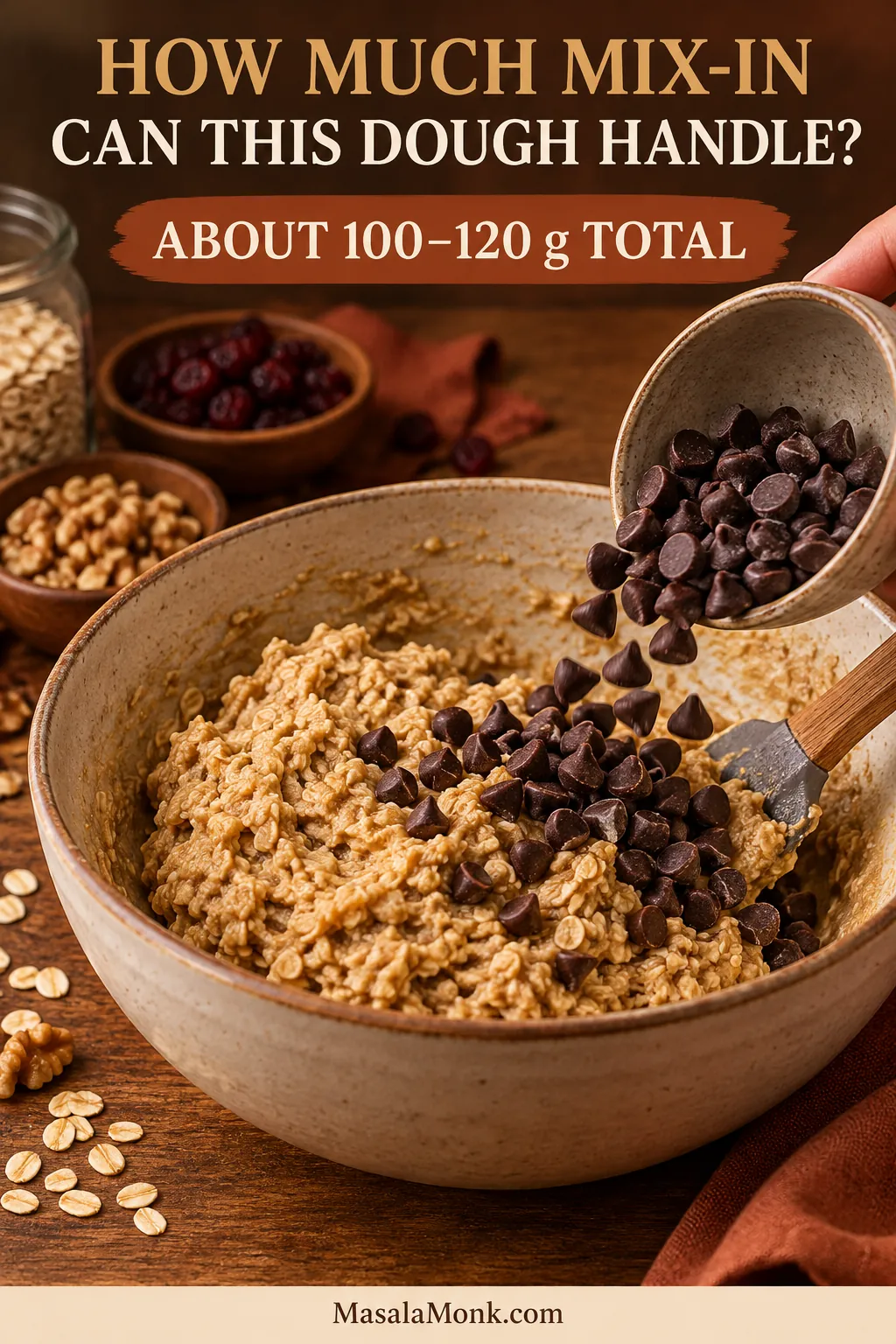
Nuts or dried cranberries: use about ½–¾ cup / 60–90 g chopped walnuts or pecans, or around ¾ cup / 90–100 g dried cranberries. Keep total additions around 100–120 g when possible to avoid crowding the dough.
Yield note: if you add around 100–120 g of raisins, chocolate or other mix-ins, expect roughly 20–21 cookies when you keep each portion at 40 g.
Changes That Need More Than a Simple Swap
- Peanut butter: it changes both fat and spread. Our peanut butter cookies include an oatmeal version made for that combination.
- No butter: liquid oil behaves differently from butter, so a 1:1 swap will not give you the same cookie.
- Egg-free: the egg contributes structure as well as moisture, so simply leaving it out changes the dough substantially.
- No baking soda: do not replace it 1:1 with baking powder. The two affect spread and browning differently.
- Oat flour: ground oats cannot simply replace either the rolled oats or all-purpose flour here. It changes the structure of the dough and needs a recipe designed for it.
- Much less sugar: sugar affects moisture, browning and spread as well as sweetness.
- Banana, pumpkin, applesauce or fresh berries: those ingredients bring enough moisture to need a dough designed around them.
If you’re specifically after an oat cookie without butter, refined sugar or refined flour, our date-sweetened oat cookies are made that way from the beginning.
Make Ahead, Freeze & Keep Them Soft
Make-Ahead Oatmeal Cookie Dough
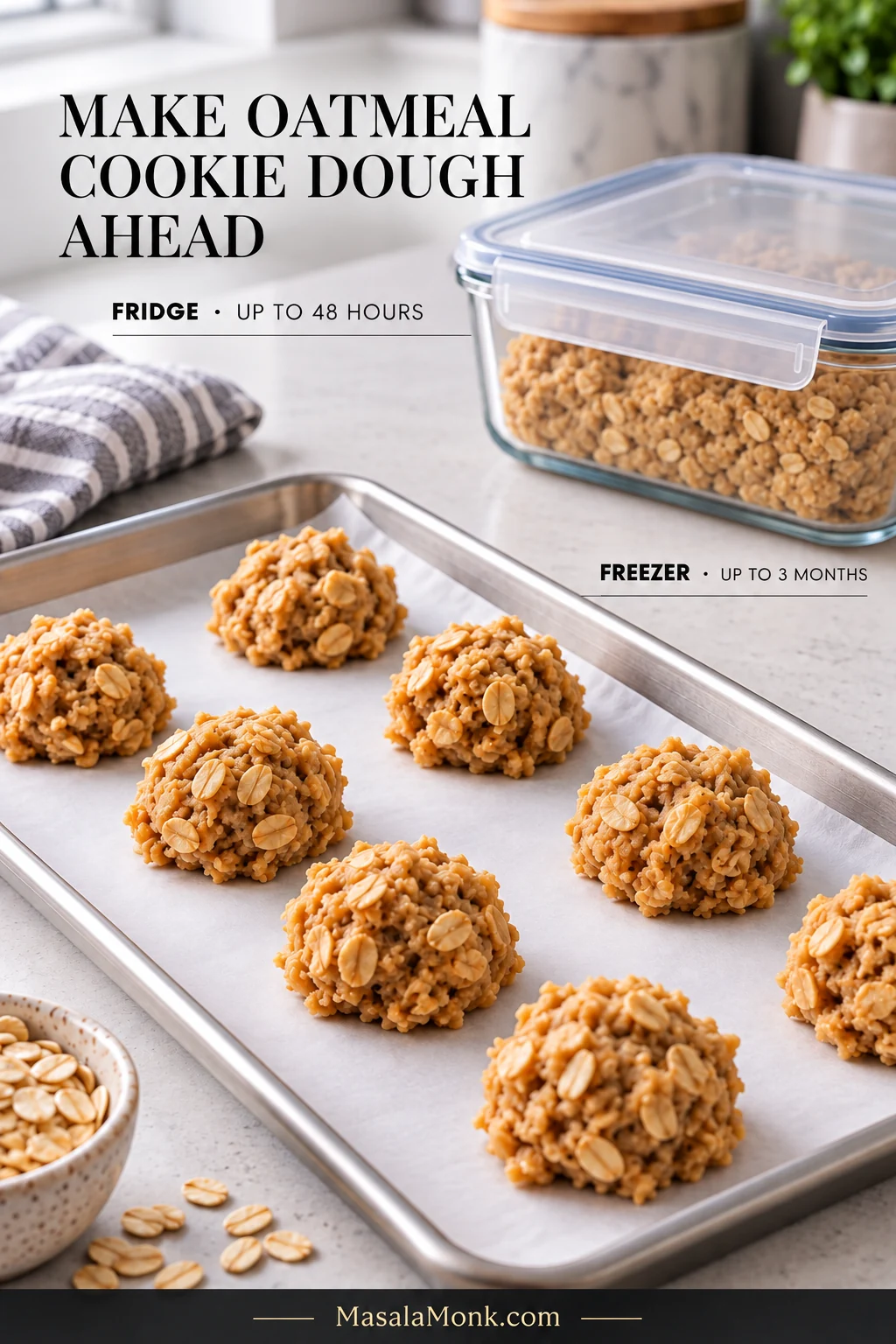
You can cover the dough well and refrigerate it for up to 48 hours. It will become firmer as it sits.
Let very firm dough stand at room temperature for about 10–15 minutes before baking. Cold dough spreads less, so bake one test cookie and read the result before deciding whether the remaining portions need flattening.
How to Freeze Oatmeal Cookie Dough
Scoop the dough into 40 g portions and freeze them on a tray until firm. Transfer the portions to an airtight freezer bag or container and keep for up to 3 months.
When you’re ready to bake, let the frozen portions sit out while the oven heats, just until the outside has lost its rock-hard chill. Bake at 350°F / 175°C and expect them to need a little longer than fresh dough; use the center as your cue rather than relying only on the clock.
How to Store Oatmeal Cookies & Keep Them Soft
Once completely cool, store the cookies in an airtight container at room temperature.
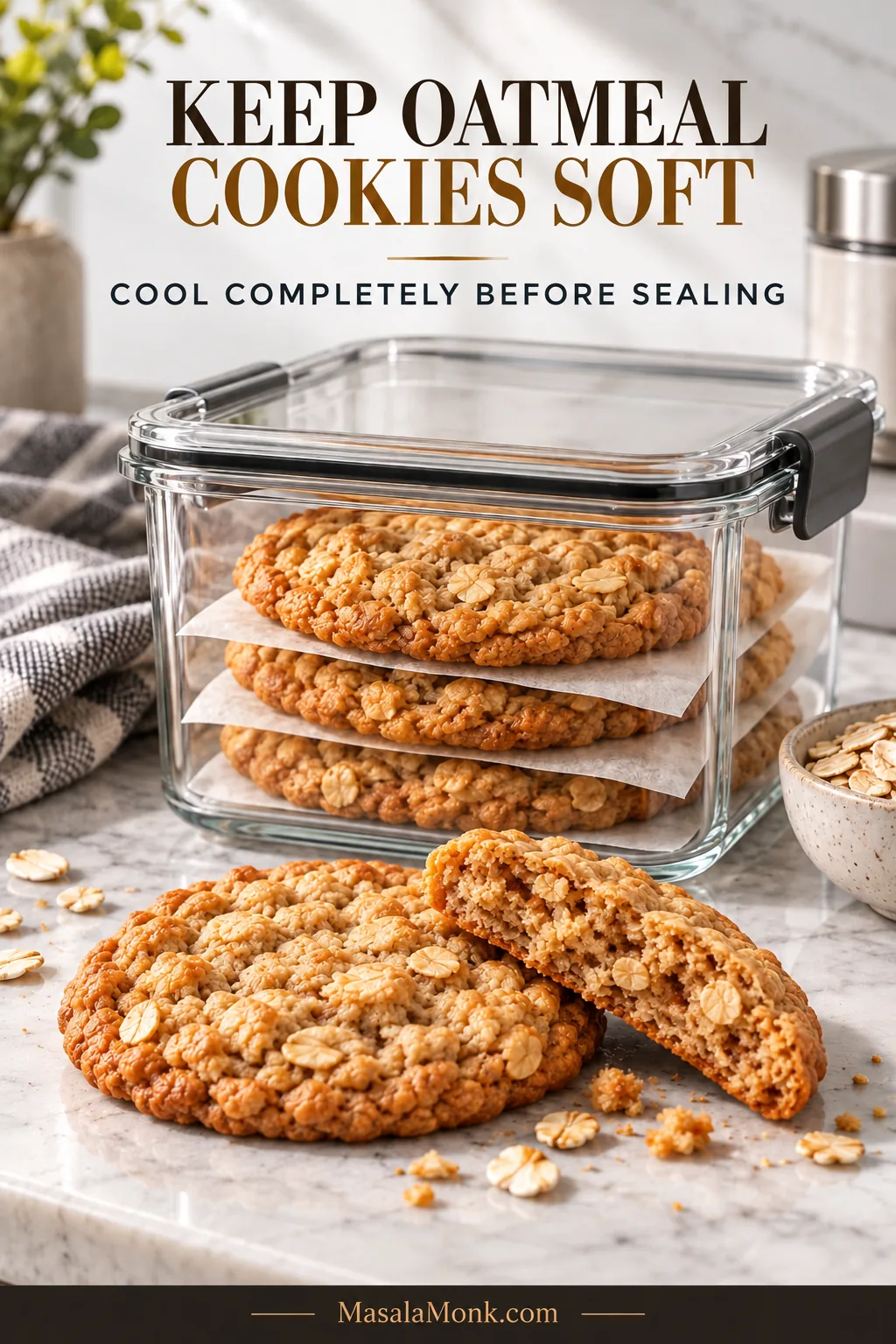
They keep well for about 4–5 days and are especially good during the first few, when the lightly crisp edge still contrasts with the softer middle. Airtight storage slows moisture loss, but it cannot put tenderness back into an overbaked cookie; if that keeps happening, revisit the doneness cues.
For longer storage, freeze the cooled cookies in an airtight container with parchment between layers for about 2–3 months, then thaw them at room temperature.
Once the cookies have cooled enough to handle but the middle is still tender, try one plain. Brown sugar, cinnamon and chewy rolled oats have enough going on that the raisins and chocolate really are optional.








