
Protein ice cream sounds perfect until you make a bad batch. One turns chalky. Another freezes so hard it barely gives way to a spoon. A third tastes less like dessert and more like cold protein powder with ambition.
The good news is that homemade protein ice cream can be genuinely enjoyable. The mistake is expecting one formula to cover every goal. A fast blender bowl, a scoopable vanilla tub, a tangy Greek yogurt version, a dairy-free chocolate batch, and a lighter low-calorie option are not trying to deliver the same experience. Once you stop treating them as the same dessert, the category becomes much easier to understand and much easier to get right.
This guide is built to do exactly that. It helps you choose the right method, start with the strongest all-around recipe, and then move into the version that actually suits the kind of frozen dessert you want to eat. If you want something that tastes good enough to make again, not just once for the macros, this is the way to do it.
If You Want the Short Version
- Want something cold and fast? A blender version is your best bet.
- Planning to keep a tub in the freezer? Go with no-churn.
- After the closest thing to a classic homemade scoop? Use an ice cream maker.
- Need the best place to begin? Start with classic vanilla homemade protein ice cream.
- Nervous about chalky flavor? Chocolate is the safest route.
- Prefer something fresher and tangier? Greek yogurt protein ice cream fits best.
- Looking for more body and fullness? Reach for peanut butter or cottage cheese.
- Keeping it plant-based? Make sure the dairy-free or vegan base is rich enough to support the texture.
- Want something ready in minutes? Start with protein soft serve in a blender.
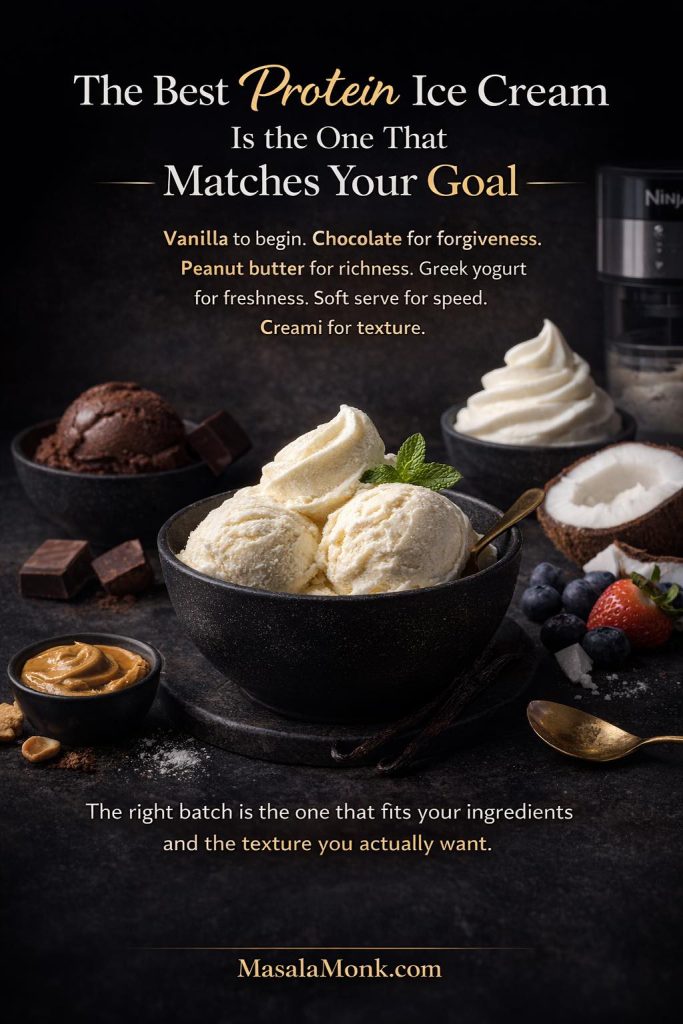
- Using a Ninja Creami? Most of these bases can also become Ninja Creami protein ice cream.
That is the whole category in miniature. The rest of the guide shows you how to make each one work.
What Is Protein Ice Cream?
Protein ice cream is a frozen dessert made with extra protein-rich ingredients such as protein powder, Greek yogurt, cottage cheese, ricotta, higher-protein dairy, or plant-based bases paired with vegan protein powder.
That broad definition matters because this category can lead to very different results. Some versions are fast, soft, and blender-based. Others are built for a scoopable freezer tub. Some feel lighter and tangier, while others lean richer and more dessert-like. It is not automatically creamy, and it is not automatically a better dessert choice just because it has more protein. The best version depends on the texture, method, and eating experience you actually want. For broader context on protein itself, Harvard Nutrition Source’s guide to protein is a useful reference.
Also Read: Homemade Mango Ice Cream Recipe
Protein Ice Cream vs Regular Ice Cream: What Changes?
The biggest difference is not just the protein count. It is the structure. Regular ice cream usually relies more heavily on sugar, fat, and traditional dairy richness to create softness and body. Protein ice cream often asks protein powder, Greek yogurt, cottage cheese, or plant-based ingredients to do more of that work.
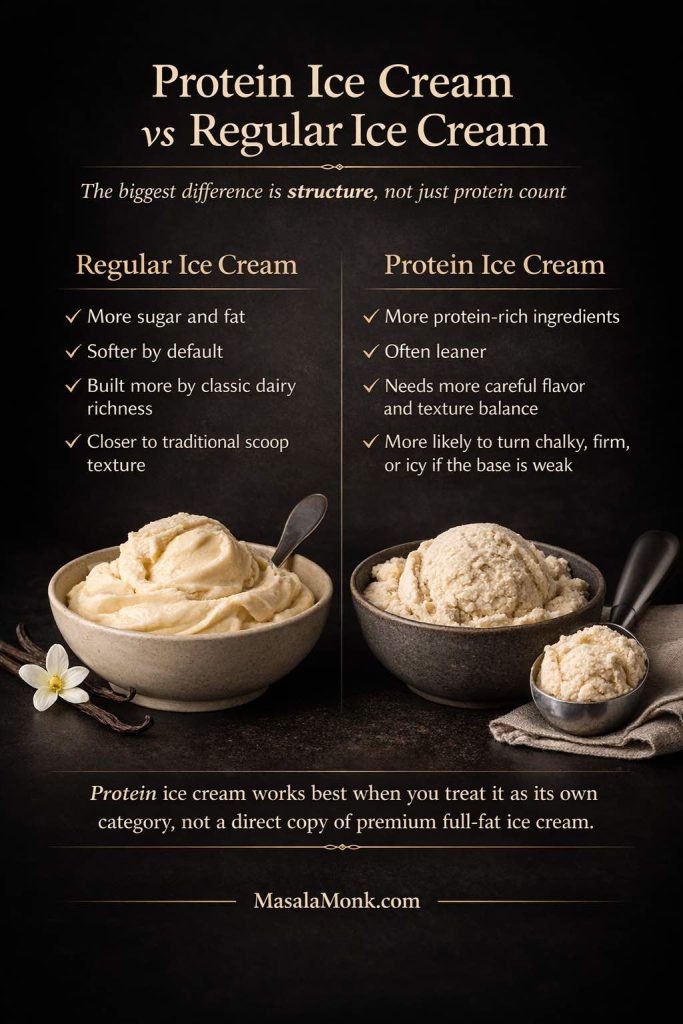
That changes both texture and flavor. High protein ice cream can be thick, satisfying, and genuinely good, but it also has more ways to go wrong. It can turn chalky if the powder is too aggressive. It can freeze too hard if the base is too lean. And then it can taste flat if the flavor is not built strongly enough before freezing.
That is why homemade protein ice cream should be treated as its own category rather than judged as a direct one-to-one copy of premium full-fat ice cream. Some versions land closer to frozen yogurt. Some land closer to soft serve. And then some are best thought of as lighter frozen desserts with a higher-protein profile rather than replicas of classic custard.
How to Make Protein Ice Cream: Choose the Right Method
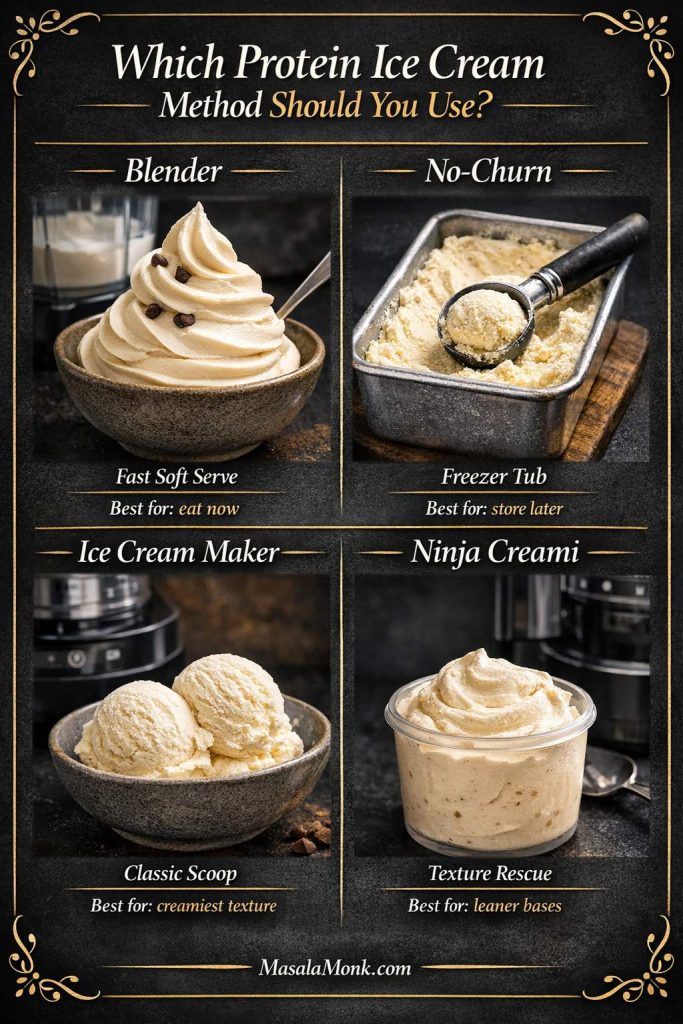
Before you decide on vanilla, chocolate, fruit, or peanut butter, decide how you want the finished dessert to behave. This is where many homemade recipes go off course. People want a soft blender bowl to scoop like a freezer tub, or they want a lean no-churn mix to eat like a richer churned ice cream.
Blender Protein Ice Cream for a Fast Soft-Serve Texture
A blender method is the quickest path. It is best when you want something thick, cold, and immediate rather than something to store for several days. This style suits frozen fruit, Greek yogurt, cottage cheese, and softer protein-based mixtures that taste best right away.
Its weakness is storage. Fresh from the blender, the texture can be lush and spoonable. After deep freezing, many versions turn firmer and lose their easy soft-serve appeal. That does not make them bad. It simply means they are built for speed rather than long freezer life. This is the best method when you want protein soft serve rather than a freezer tub.
No-Churn Protein Ice Cream for a Scoopable Freezer Tub
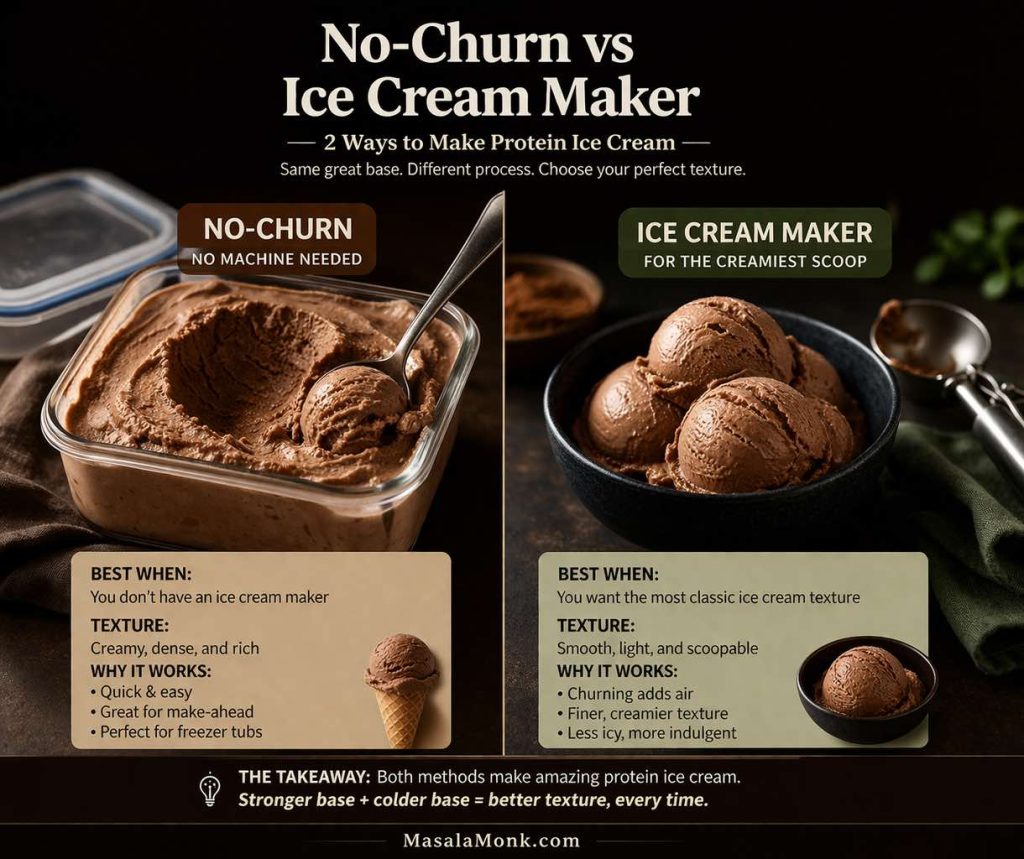
No-churn makes more sense when you want a proper freezer dessert that can sit in a container and still feel worth revisiting later. It is also the most useful option if you do not own an ice cream maker. MasalaMonk’s guide to homemade ice cream without a machine is a helpful companion if you want a broader no-machine foundation.
This method needs a stronger base. If the mixture is too lean, too watery, or overloaded with powder, it usually freezes hard or icy. When the structure is right, though, a no-churn tub can feel far more like a real stored dessert than a quick frozen shake.
Ice Cream Maker Protein Ice Cream for the Most Classic Texture
An ice cream maker gives the best chance of producing a batch that feels closest to traditional homemade ice cream. Constant movement as it freezes improves body and helps avoid the one-block problem that plagues many freezer-only recipes. This matters most with richer versions such as vanilla, chocolate, peanut butter, or cottage cheese-based styles. For a fuller churn workflow, MasalaMonk’s guide on how to make ice cream with a KitchenAid mixer is worth reading.
One thing is non-negotiable: the base has to be thoroughly chilled first. A properly cold mixture churns more smoothly, thickens more evenly, and lands much closer to the creamy finish most readers are hoping for.
Also Read: Cookie Pie Recipe: 10 Best Flavors, Fillings and Variations
Healthy Protein Ice Cream: What Makes It Actually Work
Healthy protein ice cream is not just regular ice cream with protein powder stirred in, and it is not automatically a success because the macros look better on paper. The versions that actually work are the ones that balance protein with enough body, sweetness, and flavor to remain enjoyable after freezing.
That is the real tension in this category. Push too hard toward lean, low-fat, ultra-high-protein formulas and you often end up with something dry, icy, or strangely joyless. Build with more care and you can get a homemade frozen dessert that feels lighter or more balanced without becoming a punishment.
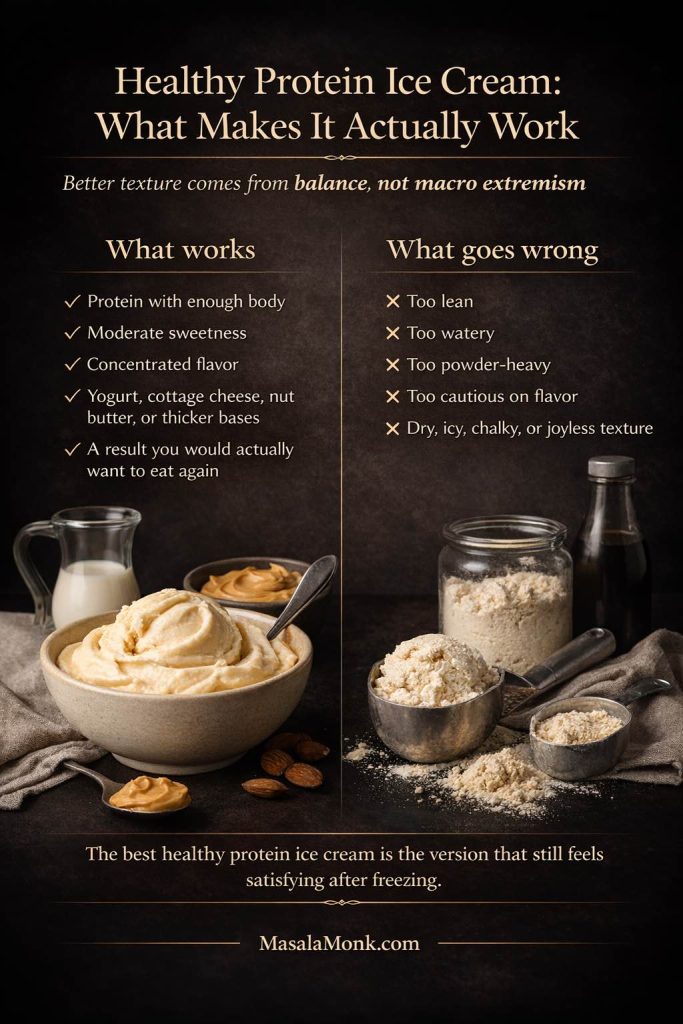
Greek yogurt, cottage cheese, well-chosen protein powder, concentrated fruit, nut butter, and moderate sweetness often do more for healthy protein ice cream than macro extremism ever will. The best version is not the one making the loudest promise. It is the one you would actually want to eat again.
Best Homemade Protein Ice Cream Recipe: Classic Vanilla
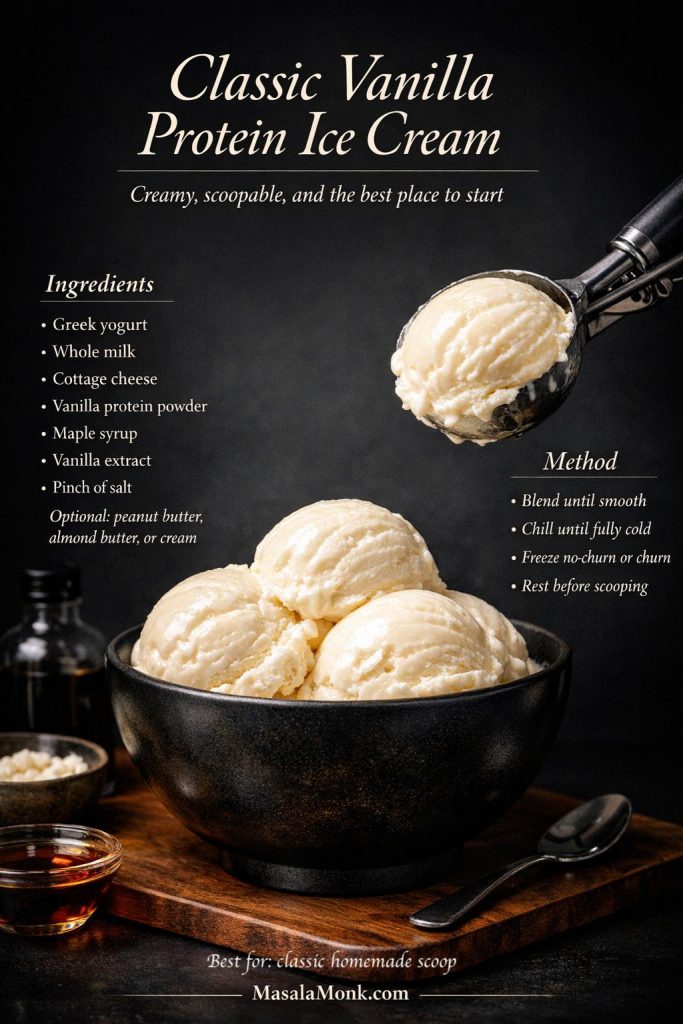
If you make only one version from this guide, make this first. It is the strongest all-around starting point for most readers because it balances texture, flavor, and practicality better than the leaner or more extreme versions. It is also the recipe that makes the rest of the guide easier to understand, because so many variations build from the same logic.
Best for: a classic scoopable homemade protein ice cream
Method: no-churn or ice cream maker
Texture: creamy, balanced, and softer than leaner versions
Why This Vanilla Protein Ice Cream Works
This version works because no single ingredient is forced to do all the heavy lifting. Greek yogurt brings brightness and protein. Cottage cheese adds body. Milk keeps the mixture workable. A little optional cream or nut butter rounds off the dry edge that protein powder can create.
Balance is what matters here. A lot of homemade recipes are too thin, too lean, or too powder-heavy, so they freeze into something dull and stubborn. This one is built to stay softer, fuller, and more dessert-like than those shortcut versions. It is not identical to custard ice cream, but it gets much closer to that direction than a simple milk-and-powder formula ever will.
Ingredients
- 1 cup Greek yogurt
- 3/4 cup whole milk
- 1/2 cup cottage cheese
- 1 scoop vanilla protein powder
- 2 to 3 tablespoons maple syrup or another preferred sweetener
- 1 teaspoon vanilla extract
- 1 pinch salt
- 2 tablespoons peanut butter, almond butter, or cream, optional but recommended
Method
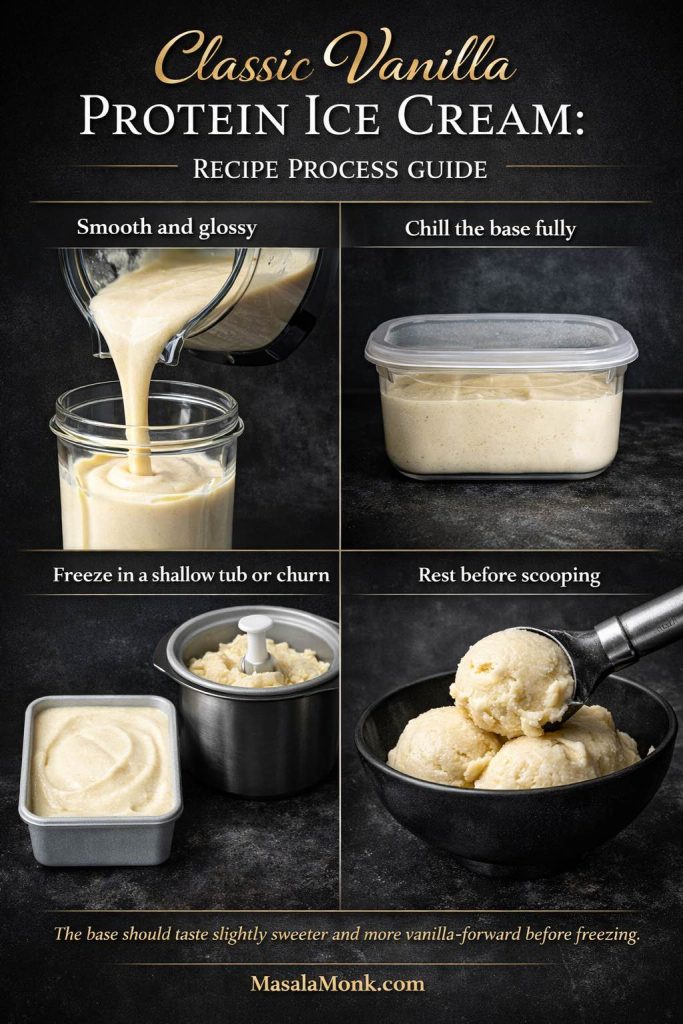
Blend everything until completely smooth and glossy. The base should look silky, not grainy or dull. Taste before chilling. At this point it should seem slightly sweeter and slightly more vanilla-forward than necessary, because both will soften once frozen.
Chill the mixture until fully cold, ideally for 2 to 4 hours. For a no-churn version, freeze it in a shallow container for about 4 to 6 hours, stirring once or twice during the early freezing stage if convenient.
For the most classic texture, churn the cold base in an ice cream maker until it reaches a thick soft-serve stage, then freeze it for another 1 to 2 hours for a firmer scoop. Let it stand for 5 to 10 minutes before serving.
What to Expect
This vanilla version should feel smoother, rounder, and more complete than the leaner recipes in the post. It lands between rich frozen yogurt and classic homemade ice cream, which is exactly why it works so well as the hero version. If you are making homemade protein ice cream for the first time, this is the one most likely to convince you the effort is worth it.
Also Read: Punjabi Mutton Bhuna – Amritsari Village-Style Gosht Recipe
Best High Protein Ice Cream Base by Goal
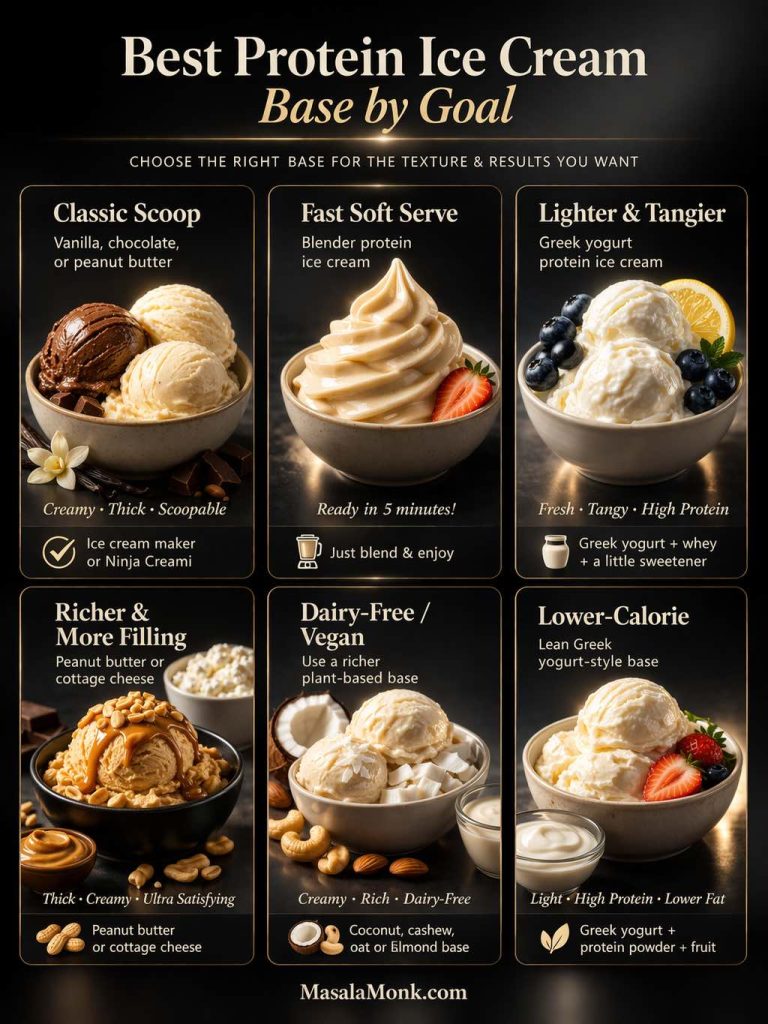
If you match the recipe style to the dessert you actually want, the whole category becomes easier.
Best for a Classic Scoop
Classic vanilla, chocolate, and the richer peanut butter version are your best options if you want something closest to a true homemade scoop. These styles have the most support from dairy, body-building ingredients, and overall balance. An ice cream maker improves the odds even more.
Best for a Fast Soft-Serve Bowl
A blender-style version is the right fit when speed matters more than storage. Choose this route when you want something thick, cold, and satisfying within minutes instead of waiting half a day for a freezer tub to set.
Best for a Lighter, Tangier Dessert
Greek yogurt is the clearest winner when you want something fresher, cleaner, and less heavy on the palate. Strawberry also fits naturally here when the fruit is concentrated properly.
Best for a Richer, More Filling Spoonful
Peanut butter and cottage cheese are the strongest choices when you want more body. Peanut butter gives richness and softness, while cottage cheese gives the dessert a denser, more substantial spoonful.
Best for Dairy-Free or Vegan Needs
Choose a dairy-free base when you want a plant-based route with some flexibility around the rest of the formula. Move into a vegan version when both the base and the protein source need to stay plant-based. In both cases, richer ingredients and stronger flavor directions usually give the best results.
Best for Lower-Calorie Goals
Low calorie protein ice cream is the most direct fit when keeping the dessert lighter matters most. Sugar-free versions can also work well, but they ask more from the flavor structure and usually freeze more firmly.
Best for Freezer Storage
Richer no-churn versions and churned versions usually hold up best if you want to keep a batch in the freezer and return to it later. Quick blender bowls are usually the weakest at long storage.
Also Read: Peach Cobbler with Canned Peaches (Dessert Recipe)
How to Make Protein Ice Cream Creamy Instead of Chalky or Icy
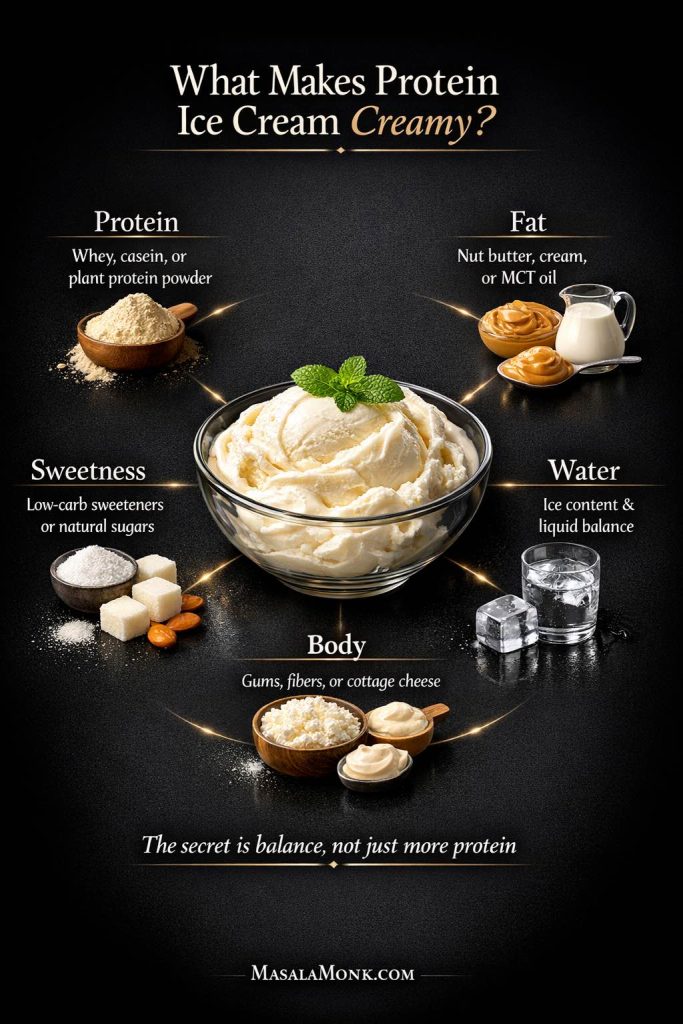
Homemade protein ice cream gets much better once you understand one simple truth: protein alone does not make frozen dessert creamy. Texture depends on balance, not just macros.
Protein Alone Does Not Make Good Ice Cream
Protein powder can help build the dessert you want, but it cannot do every job at once. It adds protein, some flavor, and some thickness, but it can also make the base drier, grittier, or more artificial if used too aggressively. That is why homemade batches go downhill so quickly when people keep adding extra scoops to chase bigger numbers.
Greek yogurt, cottage cheese, ricotta, and thicker dairy ingredients often help because they bring protein with body and texture, not just powder. That is one reason some high protein frozen desserts feel naturally creamy while others feel dry and strange.
Fat, Sweetness, and Body Matter More Than People Think
Creaminess depends on more than protein. Fat softens texture. Sweetness matters because frozen desserts always taste less sweet once cold. Body matters too. Thick yogurt, cottage cheese, nut butter, and even a little cream can make the difference between a spoonable dessert and a disappointing frozen mass.
Very lean formulas often underperform for exactly that reason. They are light on softness, light on flavor support, and easy to freeze too firmly.
Too Much Water Is What Breaks Many Homemade Batches
If there is one silent problem behind weak results, it is excess water. Thin milk, watery fruit, unbalanced plant milk, and diluted bases all raise the risk of iciness. Fruit can be wonderful here, but it often needs reducing or concentrating first. Dairy-free versions can also be excellent, but thin plant milk alone rarely gives enough support.
The real secret is balance: enough richness, enough sweetness, enough solids, and not too much water.
Also Read: Avocado Chocolate Mousse Recipe
Chocolate Protein Ice Cream
Chocolate is one of the easiest flavors to make convincingly, and that is part of its charm.
Why This Chocolate Protein Ice Cream Works
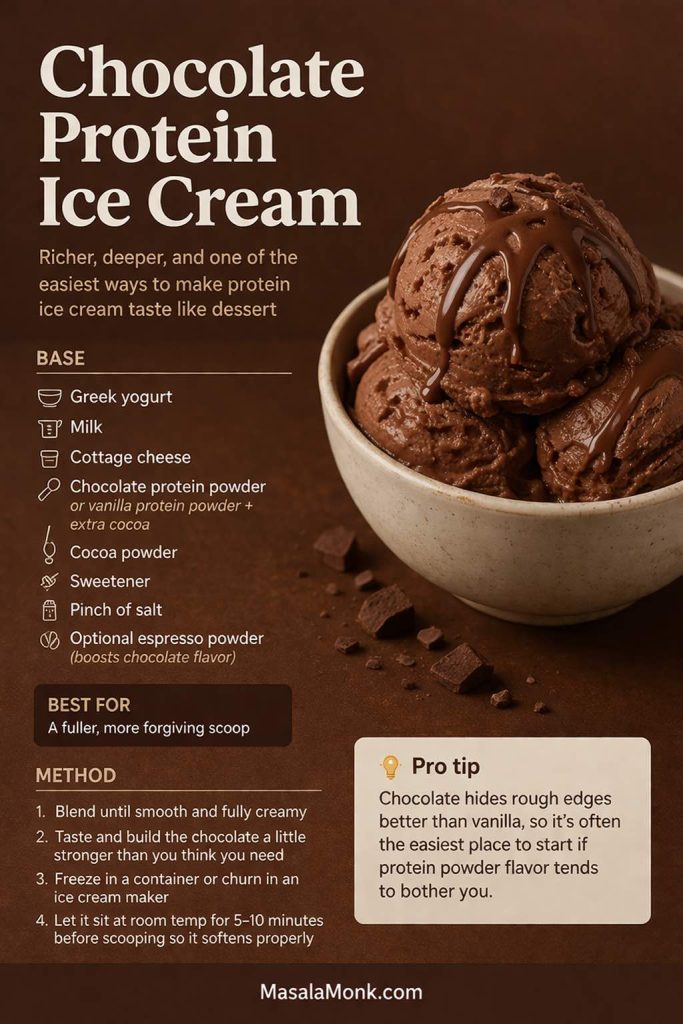
Chocolate works because it hides rough edges. A powder that would feel exposed in vanilla often becomes much easier to enjoy once cocoa, bitterness, and salt enter the picture.
That makes this one of the safest choices for readers who want their dessert to feel unmistakably like dessert.
Ingredients
- 1 batch classic vanilla protein ice cream base
- 2 tablespoons cocoa powder
- 1 teaspoon espresso powder, optional
- 1 tablespoon melted dark chocolate or 1 tablespoon peanut butter, optional
Method
Blend the cocoa into the vanilla base until smooth. Add espresso powder if you want more depth. For a darker finish, add the melted chocolate or peanut butter too.
If the base warms during blending, chill it again before freezing. Then either freeze it in a shallow container for 4 to 6 hours or churn it until thick and soft, followed by a short freezer rest. Taste before freezing and make sure the chocolate feels a touch stronger than you think it should.
What to Expect
Chocolate usually feels deeper, richer, and more forgiving than vanilla. If you already know you prefer intense chocolate desserts, MasalaMonk’s avocado chocolate mousse is another natural direction.
Also Read: Falafel Recipe: Crispy Homemade, Air Fryer and Baked Falafel
Peanut Butter Protein Ice Cream
Peanut butter is one of the most effective ingredients in the whole category because it improves flavor and texture in the same move.
Why This Peanut Butter Protein Ice Cream Works
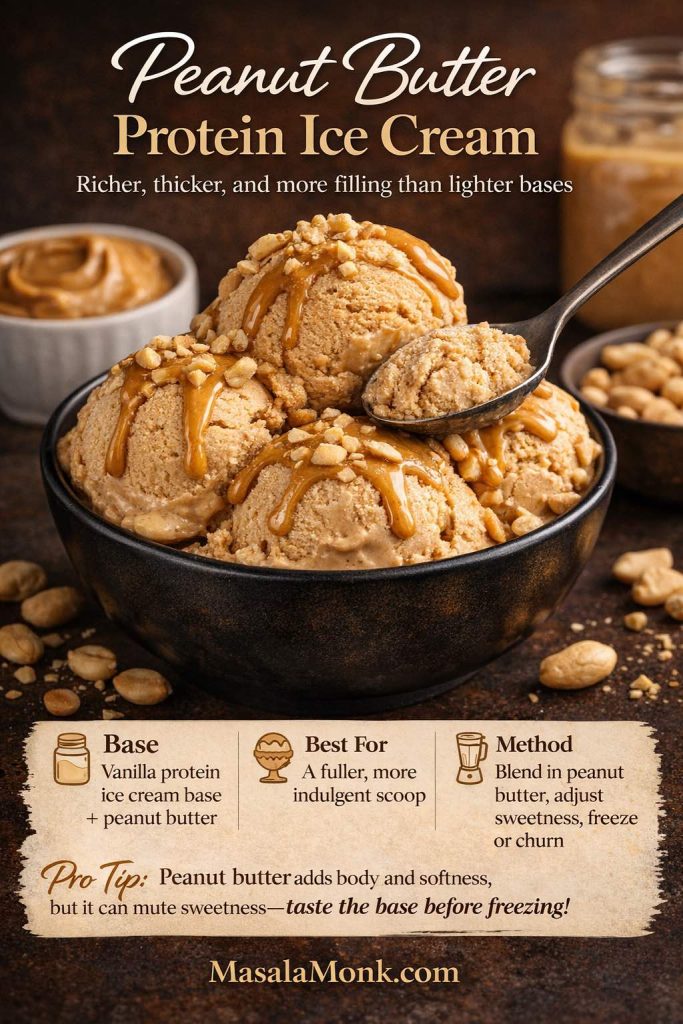
Peanut butter adds fat, softness, and body while also giving the dessert a fuller personality. Instead of feeling light or overly functional, the finished scoop tends to feel rounded, thick, and more indulgent.
Biggest Mistake to Avoid
Do not assume peanut butter automatically makes the base balanced. It improves texture, but it can also mute sweetness and make a weak vanilla base seem flatter. Taste after blending and adjust before freezing if needed.
Ingredients
- 1 batch classic vanilla protein ice cream base
- 2 to 3 tablespoons peanut butter
- Chopped roasted peanuts, optional
- Dark chocolate shards or chips, optional
Method
Blend the peanut butter into the base until fully smooth. If it thickens more than you want, add a splash of milk to loosen it. Taste and adjust sweetness if needed because peanut butter can quiet the sweetness slightly.
Freeze in a shallow container for 4 to 6 hours or churn and then firm briefly in the freezer. Fold in chopped peanuts or chocolate near the end if you want more texture.
What to Expect
This version should feel thicker and more substantial than the vanilla base. It is one of the easiest styles to make feel satisfying in a classic dessert sense.
Also Read: Mango Margarita Recipe (Frozen or On the Rocks)
Strawberry Protein Ice Cream
Strawberry is appealing in theory, but it only works well when the fruit flavor is treated seriously.
Why This Strawberry Protein Ice Cream Works
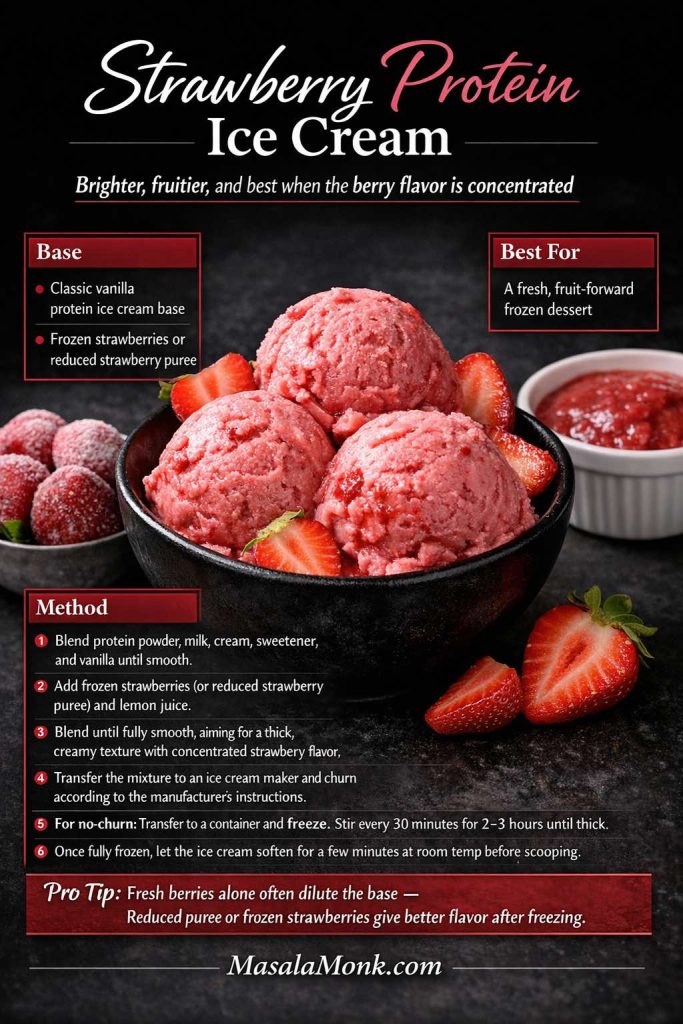
The weakness of many strawberry versions is dilution. Fresh berries blended straight into the base often make the dessert colder and pinker without making it truly taste like strawberry.
Using frozen berries or reduced strawberry puree creates a more concentrated fruit flavor that still shows up clearly after freezing.
Best Method for This Version
This is one of the variations where fruit concentration matters more than equipment. A churned version can be smoother, but even the best machine cannot rescue a watery berry base. If the strawberry flavor is weak before freezing, the finished dessert will be weaker still.
Ingredients
- 1 batch classic vanilla protein ice cream base
- 3/4 cup frozen strawberries or reduced strawberry puree
- Extra 1/2 teaspoon vanilla extract, optional
Method
Blend frozen strawberries or cooled reduced puree into the base until smooth. If starting with fresh strawberries, cook them down first until they are thicker and less watery, then cool before blending.
Taste before freezing. The fruit should taste stronger than seems necessary at room temperature. Freeze in a shallow container for 4 to 6 hours or churn if you prefer a smoother finish. For more fruit-forward ideas, MasalaMonk’s strawberry smoothie recipe with healthy variations is a useful related read.
What to Expect
This strawberry protein ice cream should feel bright, softly tangy, and properly strawberry-forward rather than pale and watery. When the fruit is concentrated well, it becomes one of the freshest styles in the guide.
Also Read: Sourdough Pizza Dough Recipe (Crispy Crust & Easy Pizza Base)
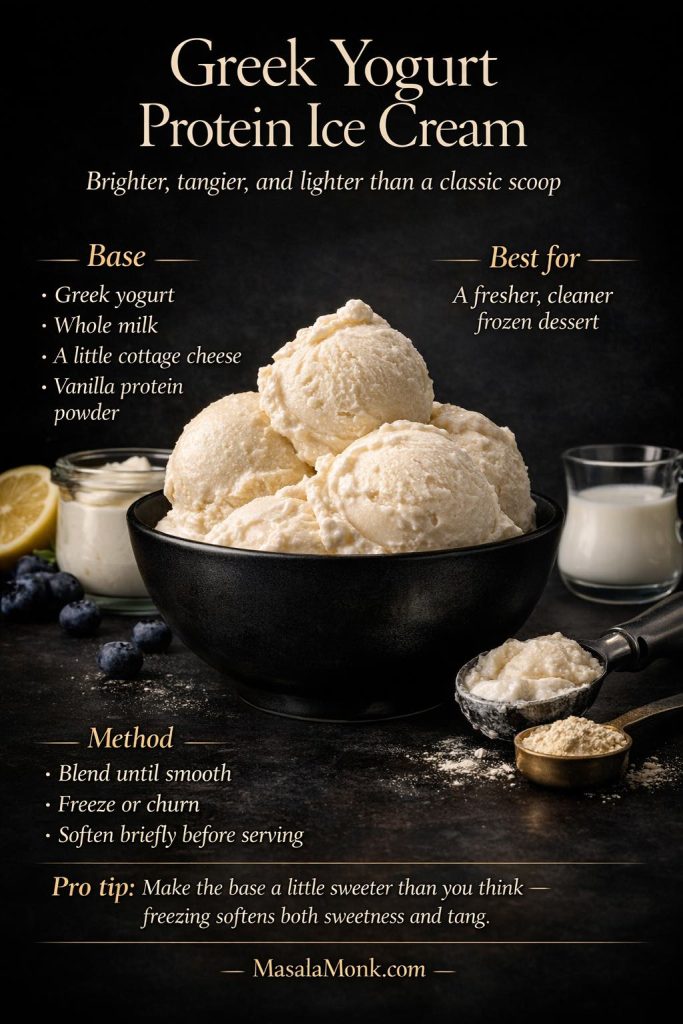
Greek Yogurt Protein Ice Cream
This is the cleaner, tangier style in the article, and it deserves to be treated as its own category rather than a weaker version of vanilla.
Why This Greek Yogurt Protein Ice Cream Works
Greek yogurt changes the character of the dessert. It makes the scoop fresher, more lively, and more refreshing. Instead of chasing richness above all else, it gives the whole thing a cooler, lighter, almost frozen-yogurt identity.
That is why Greek yogurt and protein powder ice cream can be so appealing when you want something cleaner and brighter than a fuller vanilla tub. A good Greek yogurt protein powder ice cream should taste deliberate, not like a compromised vanilla.
How This Differs From the Base Recipe
The hero vanilla version aims for a broader, softer, more classic dessert feel. This one is deliberately sharper and brighter. If you want something that tastes clean rather than plush, this is the better fit.
Ingredients
- 1 1/4 cups Greek yogurt
- 3/4 cup whole milk
- 1/4 cup cottage cheese
- 1 scoop vanilla protein powder
- 2 to 3 tablespoons sweetener
- 1 teaspoon vanilla extract
- Pinch of salt
Method
Blend until fully smooth. Taste carefully before chilling and make sure the base is sweet enough to carry the yogurt’s tang after freezing.
Freeze in a shallow container for about 4 to 5 hours, stirring once or twice early if desired, or churn until it thickens into a soft frozen texture. Let it soften briefly before serving if stored overnight.
What to Expect
Expect something brighter and cleaner than the hero vanilla version. This lands closer to premium frozen yogurt than to rich custard-style ice cream, which is exactly its strength.
Also Read: Mojito Recipe (Classic) + Ratios, Pitcher, Mocktail & Easy Variations
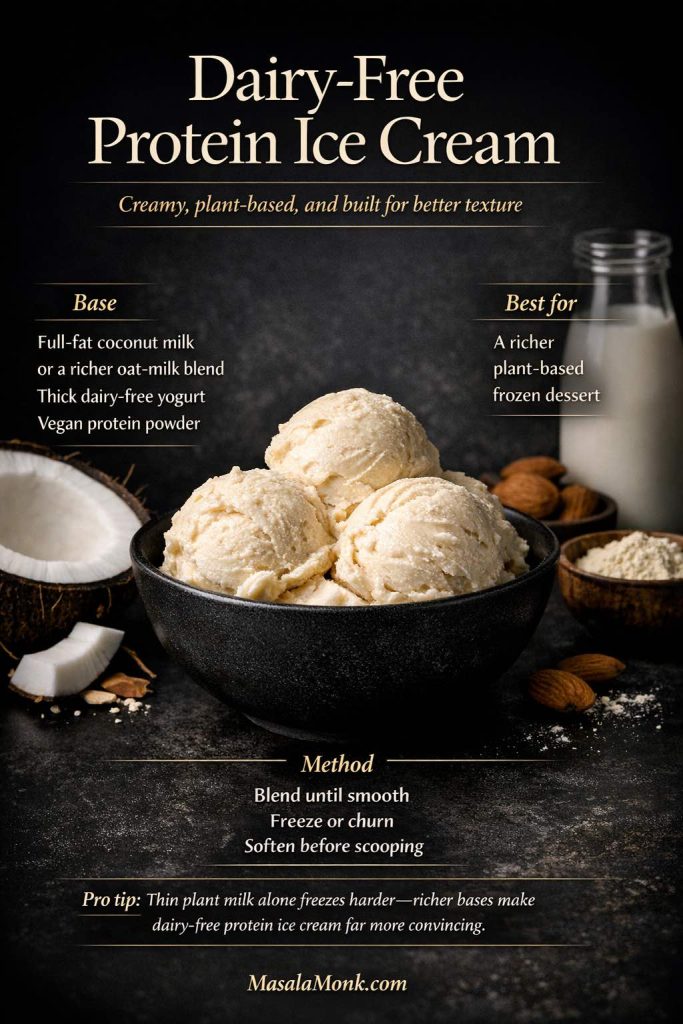
Dairy-Free Protein Ice Cream
Dairy-free versions do not succeed by acting like dairy is irrelevant. They succeed by replacing some of dairy’s lost richness and body intelligently.
Why This Dairy-Free Protein Ice Cream Works
Without dairy solids and creaminess, a plant-based base can freeze brittle or icy surprisingly fast. That is why full-fat coconut milk, thick dairy-free yogurt, and nut butter matter so much here. They bring back some of the softness and body that thin plant milk cannot provide on its own. Chocolate is often the safest default direction here because it helps the dairy-free base feel fuller and more convincing.
Best Method for This Version
For a dairy-free batch, the best method depends on how rich the base is. Coconut-forward versions handle no-churn storage better than thinner oat-based ones. If the base feels lean, churning helps. If the base is already rich and well-built, either route can work.
Ingredients
- 1 cup full-fat coconut milk or a rich oat-milk blend
- 1/2 cup thick dairy-free yogurt or extra rich plant milk
- 1 scoop vegan or neutral protein powder
- 2 to 3 tablespoons sweetener
- 1 teaspoon vanilla extract
- Pinch of salt
- 1 tablespoon peanut butter or almond butter, optional
- 1 to 2 tablespoons cocoa powder, recommended for a fuller flavor
Method
Blend everything until smooth. If the base feels too thin, add a little more thick yogurt or a spoon of nut butter. Taste before chilling and make sure the flavor is confident enough to survive freezing.
Freeze for about 4 to 6 hours in a shallow container or churn if your machine handles plant-based mixtures well. Give it a little extra time on the counter before scooping if the base is on the lighter side.
What to Expect
Coconut-forward versions usually feel richer and softer. Oat-based versions tend to be lighter and less lush. Both can work well, but neither benefits from being too thin. A chocolate-led version usually feels more convincing than a delicate vanilla one.
Also Read: Balti Paneer Gravy (Restaurant-Style, Creamy + Bold Recipe)
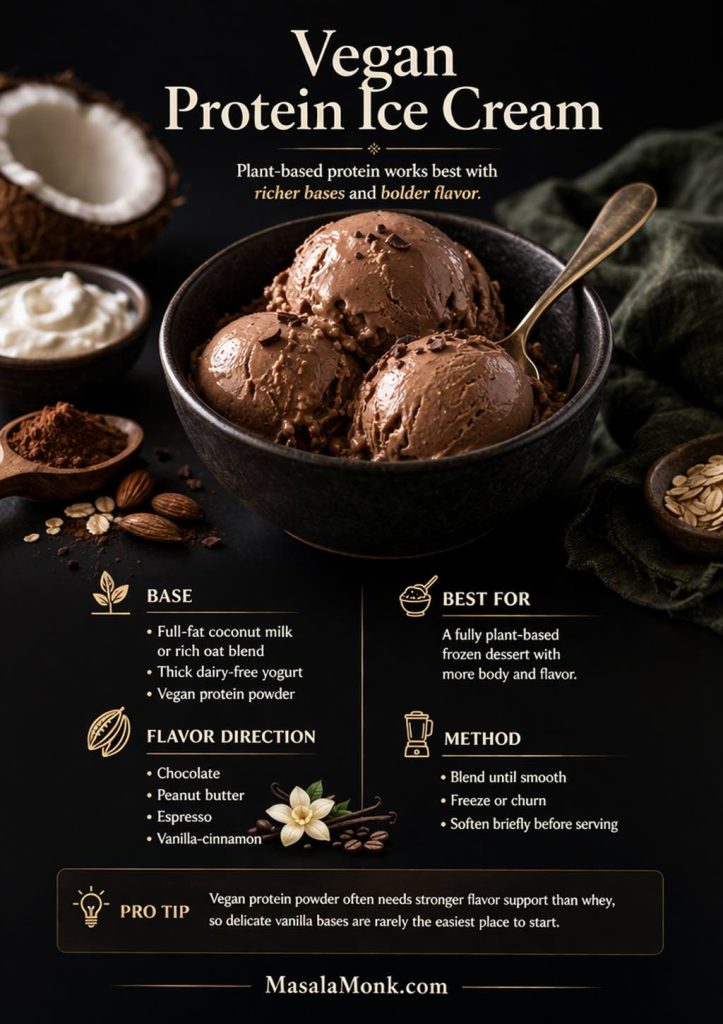
Vegan Protein Ice Cream
A vegan version is not just dairy-free with a label change. It has its own behavior because the protein itself changes the dessert.
Why This Vegan Protein Ice Cream Works
Plant-based protein powders often finish drier, flatter, or more noticeable than whey once frozen. That means this style needs a bolder flavor strategy from the start. Chocolate, peanut butter, coffee, and warm vanilla-cinnamon all tend to perform better than delicate flavors that leave the powder exposed. For most readers, chocolate-peanut-butter is the strongest first version because it gives plant-based powders more support and a more complete dessert feel.
Best Flavor Direction to Choose First
If this is your first homemade vegan batch, start with chocolate or peanut butter. They are more forgiving, they support plant-based powders better, and they give the whole dessert a fuller personality.
Ingredients
- 1 batch dairy-free protein ice cream base
- Extra cocoa, peanut butter, espresso, or vanilla-cinnamon, depending on the flavor direction you want
Method
Start with the dairy-free base, then choose one strong direction. Blend in cocoa for a darker finish, peanut butter for a fuller texture, espresso for depth, or cinnamon with extra vanilla for warmth.
Taste before freezing and adjust while the base still feels easy to correct. Freeze in a shallow container for 4 to 6 hours or churn if you prefer. A short counter rest before serving usually improves the texture noticeably.
What to Expect
The best vegan version feels cohesive and intentional, not like a plant-based compromise. Strong flavor choices are what make that happen.
Also Read: Paloma Recipe: 12 Paloma Cocktail Drinks
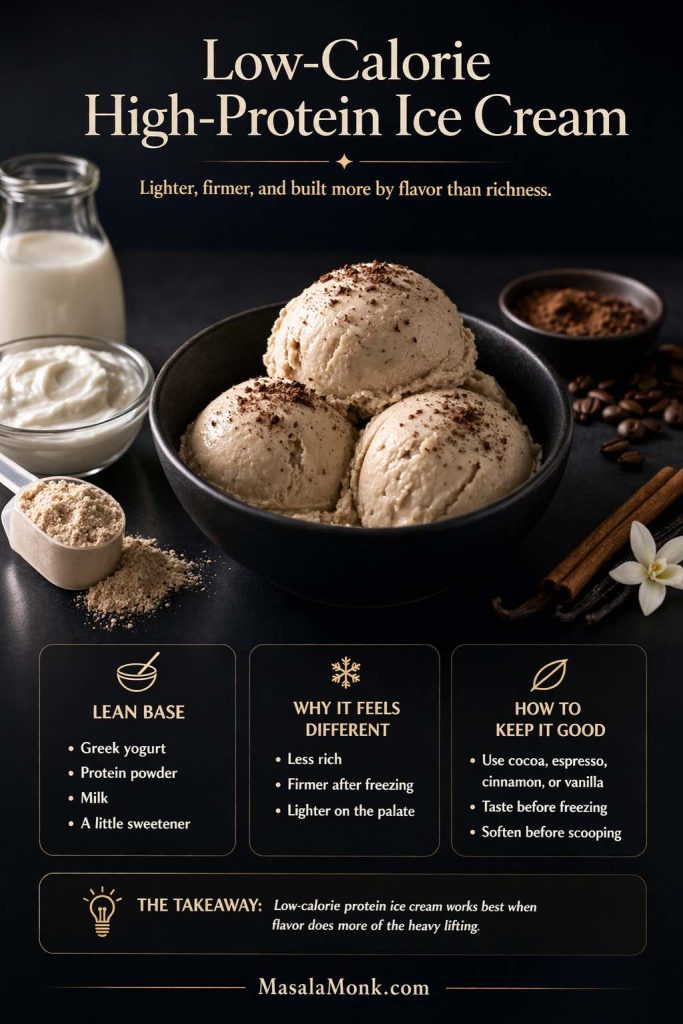
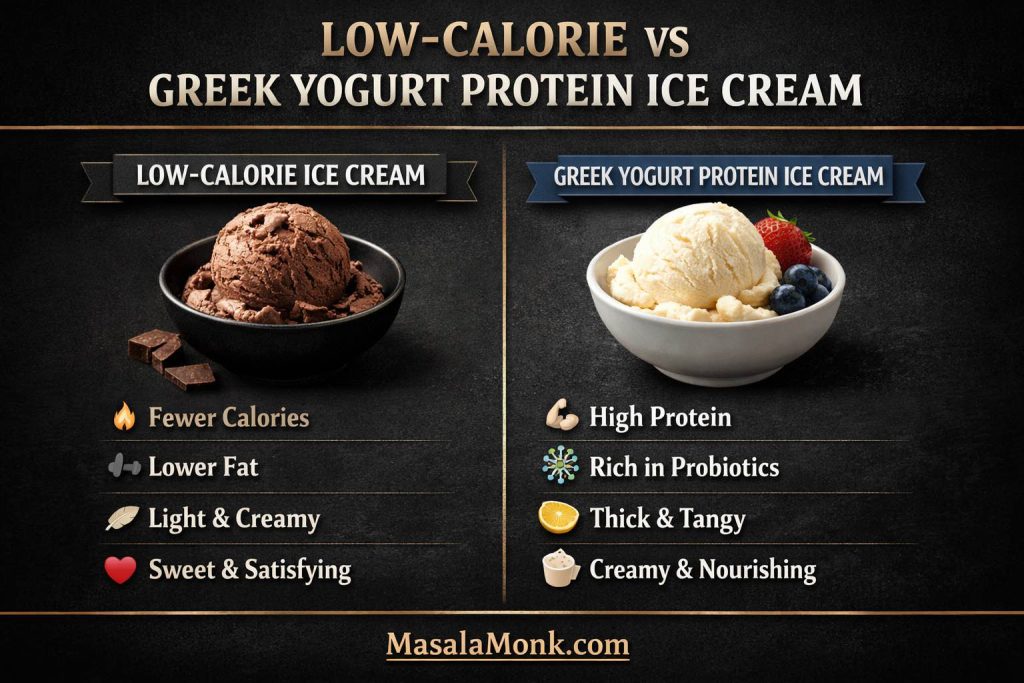
Low-Calorie High-Protein Ice Cream
This is one of the most commercially attractive directions in the category, but it only works when the expectations are realistic.
Why This Low-Calorie High-Protein Ice Cream Works
This version succeeds by aiming for a lighter frozen dessert that still feels worth repeating, not by pretending to be premium full-fat ice cream. Once that is clear, the recipe becomes much easier to enjoy on its own terms.
Biggest Mindset Shift for This Version
Do not judge this one by whether it matches premium ice cream spoon for spoon. Judge it by whether it gives you a lighter dessert that still tastes deliberate, satisfying, and worth keeping in the freezer.
A chocolate-espresso direction usually works better than a shy vanilla one because leaner formulas need stronger flavor support.
Ingredients
- 1 1/4 cups Greek yogurt
- 1 scoop vanilla or chocolate protein powder
- 1/2 cup milk
- 1 to 2 tablespoons sweetener
- Pinch of salt
- 1 teaspoon vanilla extract
- Cocoa, espresso, or cinnamon, optional
Method
Blend until smooth and taste carefully before chilling. If the flavor feels underbuilt, add cocoa, espresso, or cinnamon rather than relying on extra powder.
Freeze in a shallow container for 4 to 5 hours or churn if you want a more refined finish. Let it soften for several minutes before scooping because this style usually freezes firmer than richer versions.
What to Expect
This version should feel lighter, firmer, and less plush than the richer recipes. Its strength is not decadence. Its strength is that it can still feel satisfying without becoming heavy.
Also Read: Pork Tenderloin in Oven (Juicy, Easy, 350°F or 400°F) Recipe
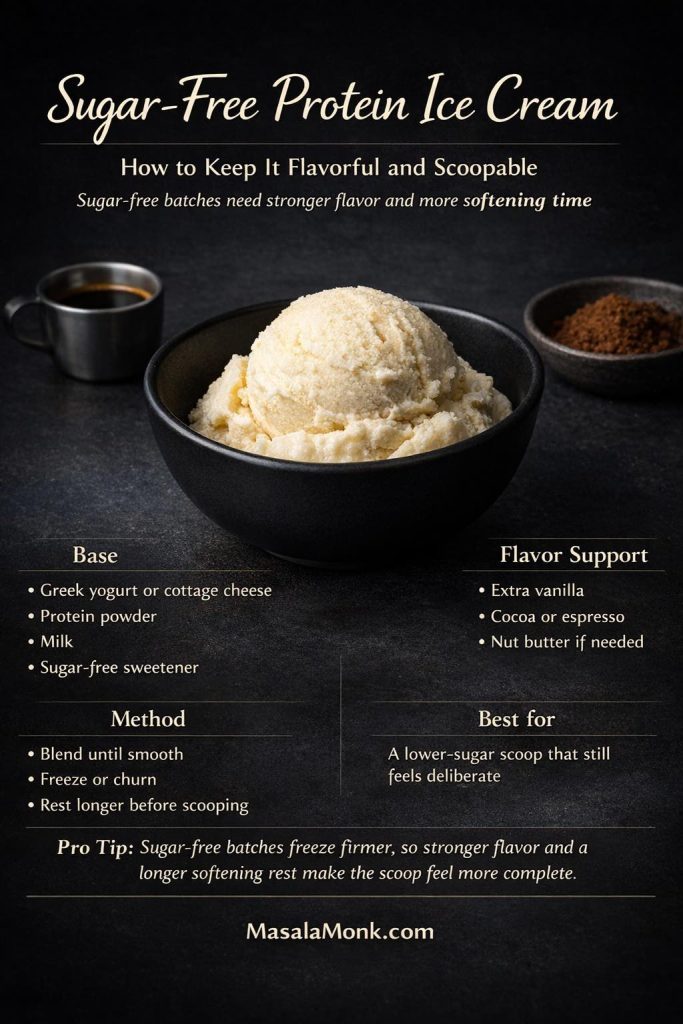
Sugar-Free Protein Ice Cream
Sugar-free versions can be rewarding, but they are one of the clearest examples of why sweetness affects more than taste.
Why This Sugar-Free Protein Ice Cream Works
Sugar contributes softness and body. Once you remove it, you lose more than sweetness. That is why this style needs stronger help from vanilla, cocoa, nut butter, espresso, and overall balance.
Biggest Mistake to Avoid
Do not make this version too delicate. A sugar-free base needs a confident flavor direction. A timid vanilla mix that might survive with regular sweetener often feels flat and severe without it.
The easiest way to make this style satisfying is to lean into bolder flavors like chocolate, peanut butter, or warm vanilla-cinnamon rather than keeping the base too delicate.
Ingredients
- 1 batch classic vanilla protein ice cream base
- Sugar-free sweetener in place of maple syrup or other liquid sweetener
- Extra vanilla, cocoa, espresso, or nut butter, optional but often helpful
Method
Blend the base with your chosen sweetener and taste before chilling. If it feels thin in flavor, strengthen it now with more vanilla, cocoa, espresso, or nut butter.
Freeze for about 4 to 6 hours if using the no-churn route, or churn and then firm briefly if using a machine. Let it rest a little longer on the counter before serving because sugar-free versions often set up more firmly.
What to Expect
Expect a firmer, more direct texture than the standard sweetened versions. When the flavor is built properly, though, it can still feel complete and satisfying rather than austere.
Can You Make Low Carb Protein Ice Cream at Home?
Yes, but the easiest path is not always the most obvious one. If you want low carb protein ice cream, skip the banana-heavy blender route and focus instead on vanilla, chocolate, peanut butter, Greek yogurt, cottage cheese, or richer dairy-free bases with a lower-carb sweetener.
The same logic applies to high protein low sugar ice cream. You are looking for enough protein and enough body to make the dessert satisfying without relying on a lot of sugar or higher-carb fruit. That can work very well, but it works best when the flavor is bold and the structure is supportive.
Also Read: Chicken Pesto Pasta (Easy Base Recipe + Creamy, One-Pot, Baked & More)
Cottage Cheese Protein Ice Cream
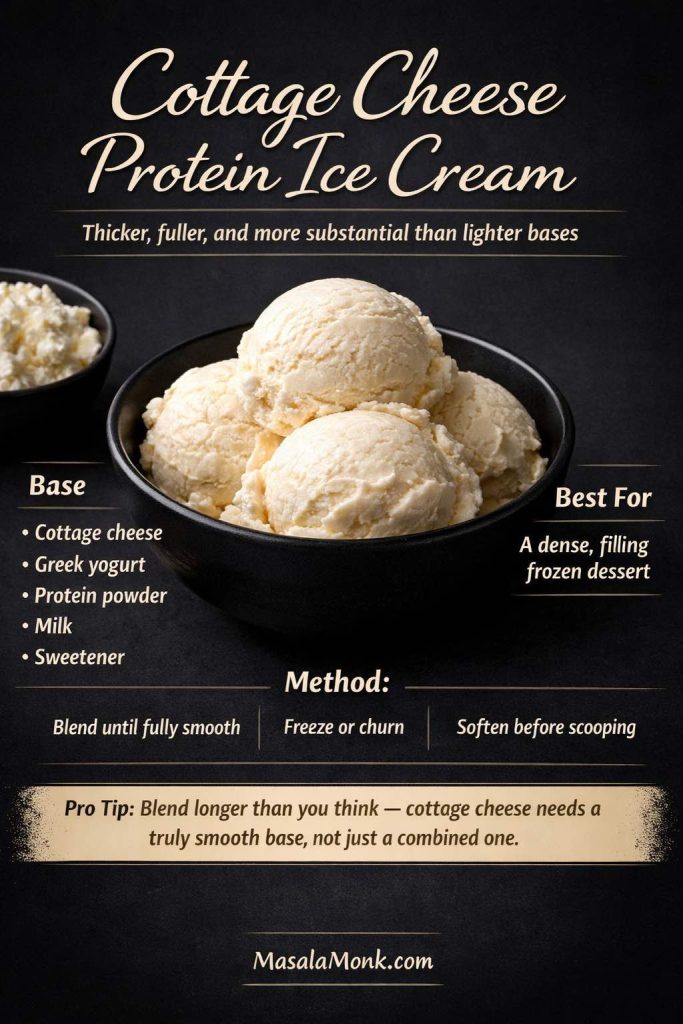
This is the thickest, most substantial style in the guide, and that density is exactly why some readers will love it.
Why This Cottage Cheese Protein Ice Cream Works
Cottage cheese brings protein, body, and a more grounded texture than Greek yogurt. Instead of tasting bright and cool, this style tends to feel heavier, rounder, and more filling.
Biggest Mistake to Avoid
Do not stop blending too early. In this version, well combined is not enough. It has to be truly smooth, or the texture will never feel finished.
Ingredients
- 3/4 cup cottage cheese
- 3/4 cup Greek yogurt
- 1 scoop protein powder
- 3/4 cup milk
- 2 to 3 tablespoons sweetener
- Pinch of salt
- 1 teaspoon vanilla extract
Method
Blend longer than you think you need to. The mixture should look completely smooth, not merely combined. Taste, adjust sweetness or vanilla, then chill thoroughly.
Freeze for about 4 to 6 hours in a shallow container or churn if preferred. Chocolate and peanut butter both suit this base especially well if you want a deeper, more dessert-like finish.
What to Expect
This version gives the fullest spoonful in the guide. It is not the lightest or freshest option. It is the most substantial.
Also Read: Slow Cooker Pork Tenderloin (Crock Pot Recipe) — 3 Easy Ways
Protein Soft Serve: How to Make Protein Ice Cream in a Blender
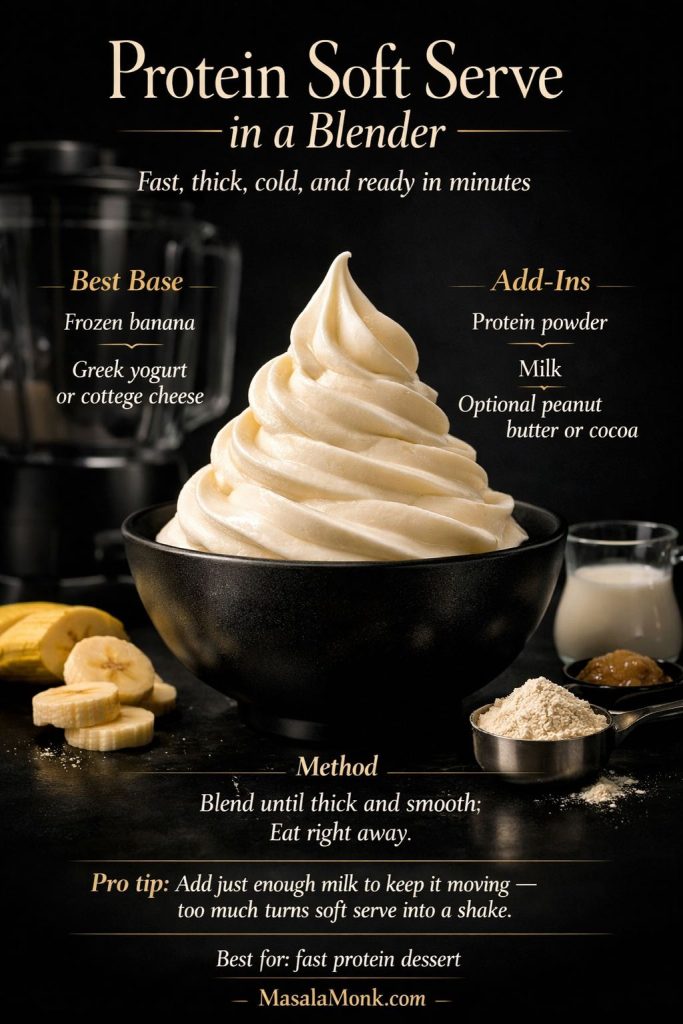
A blender version is the fastest way to make protein ice cream at home when you want something thick, cold, and ready right away. This style works best when you are after protein soft serve rather than a freezer tub you plan to revisit days later.
Banana is one of the easiest ways to make this method work because it adds body, sweetness, and immediate soft-serve texture. Greek yogurt, cottage cheese, milk, and protein powder can all support it. Peanut butter and cocoa are especially useful here because they help the bowl feel fuller and more dessert-like.
Why This Blender Version Works
Unlike a stored tub, blender protein ice cream is built for immediate texture. Frozen fruit gives it bulk, dairy or dairy-free support ingredients smooth it out, and protein powder adds substance without having to carry the whole dessert on its own.
Best Ingredients for Fast Protein Soft Serve
Frozen ripe banana is the easiest base. Greek yogurt makes it tangier and lighter. Cottage cheese makes it thicker and more filling. A splash of milk helps the blender move. Peanut butter, cocoa, or vanilla give it a more complete dessert flavor.
This is also the clearest answer to how to make protein ice cream in a blender. You are building for immediate softness, not for long-term freezer storage.
Ingredients
- 2 frozen ripe bananas
- 1/2 cup Greek yogurt or cottage cheese
- 1/4 to 1/3 cup milk
- 1 scoop vanilla or chocolate protein powder
- 1 tablespoon peanut butter or 1 tablespoon cocoa powder, optional
- Pinch of salt
Method
Blend until thick and smooth, stopping to scrape down as needed. Add just enough milk to keep the mixture moving. Eat right away for the best soft-serve texture.
What to Expect
This version is colder, softer, and more immediate than a freezer tub. It is ideal when you want a fast protein dessert in minutes, not a scoopable batch for later.
Also Read: Keto Mocktails: 10 Low Carb, Sugar Free Recipes
Why Homemade Protein Ice Cream Disappoints and How to Fix It
Most failures come down to mismatched structure. The base is too lean, so it freezes hard. The powder is too aggressive, so the dessert turns chalky or oddly sweet. The flavor tastes acceptable before freezing, then weak and lifeless once cold.
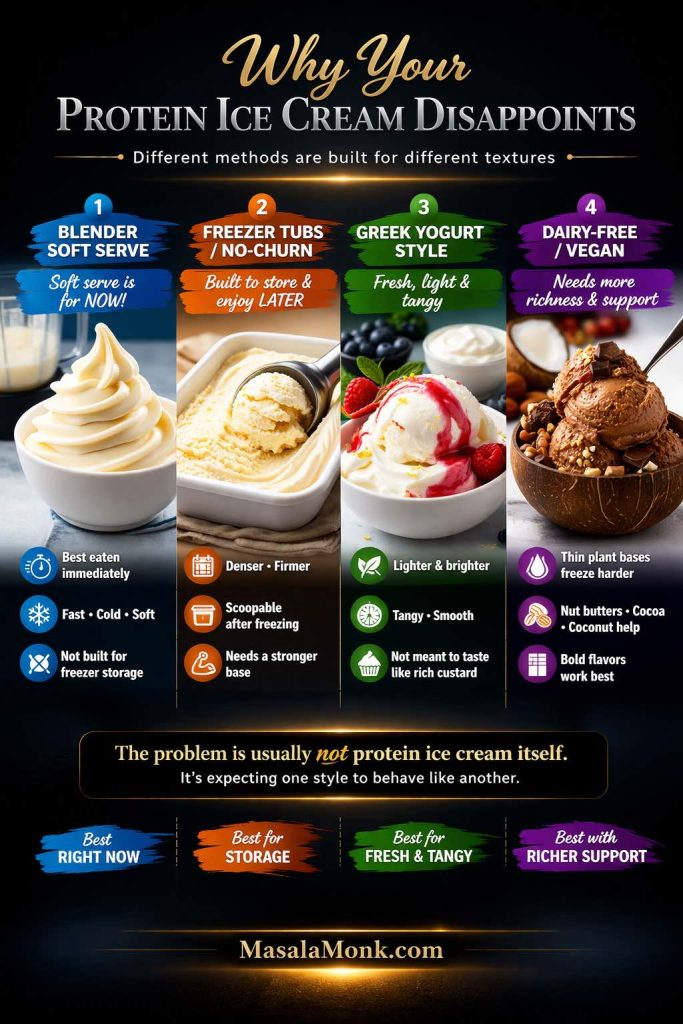
A fruit-heavy blender bowl is not meant to behave like a scoopable freezer tub. A tangy Greek yogurt version is not trying to imitate rich custard. A dairy-free batch can be smooth and satisfying, but it usually needs more support than a dairy-based version to stay that way.
Once you understand that this topic is really a family of desserts rather than one fixed formula, the failures start making much more sense.
Best Ingredients for Homemade Protein Ice Cream
A good base is not about piling in healthy ingredients. A few ingredients do most of the real work.
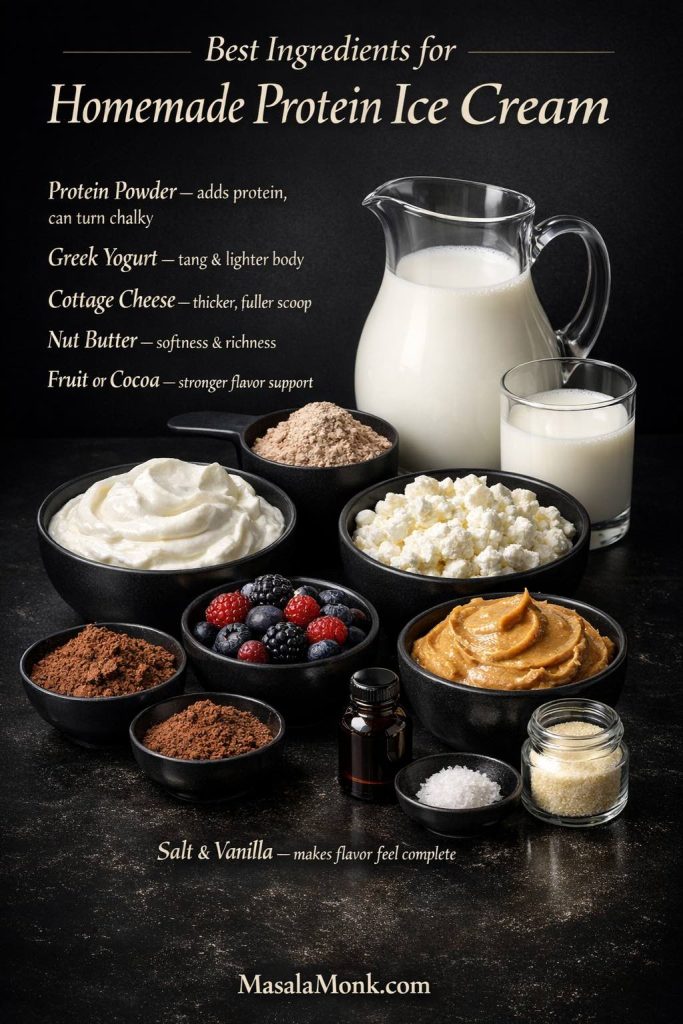
Protein Powder
Protein powder changes flavor, thickness, and final texture very quickly. Some powders stay smooth and cooperative. Others turn chalky, grainy, or strangely sweet once cold. One scoop is often enough for a home batch. More than that can make the dessert feel processed faster than it makes it feel better.
Whey-based powders and plant-based powders often behave differently in homemade protein ice cream, especially once the dessert is fully frozen. That is one reason broad rules about protein powder do not always travel well from one recipe to another.
Greek Yogurt and Cottage Cheese
Greek yogurt lifts the dessert. It adds tang, brightness, and a lighter feel. Cottage cheese grounds it. It adds body, weight, and a more substantial spoonful. Both are useful, but they create very different personalities.
Milk, Cream, Nut Butter, and Sweetener
Milk keeps the base blendable. Cream softens the result and makes it feel closer to classic homemade ice cream. Nut butter adds body and softness at the same time. Sweetener matters because frozen desserts always taste less sweet once cold, so the base has to taste stronger before freezing than many people expect.
Fruit, Cocoa, Vanilla, and Salt
These are what bring the dessert back to life. Fruit often needs concentrating. Cocoa usually needs enough salt and sweetness behind it. Vanilla needs more presence than people think. A pinch of salt, a little espresso, or a touch of cinnamon can make a huge difference in how complete the final scoop tastes.
Also Read: Crock Pot Pork Chops and Sauerkraut (No Dry Chops Recipe)
Best Protein Powder for Ice Cream
Once brands are out of the conversation, the real question becomes behavior. What kind of powder actually works well once the dessert is cold, thick, and fully frozen?
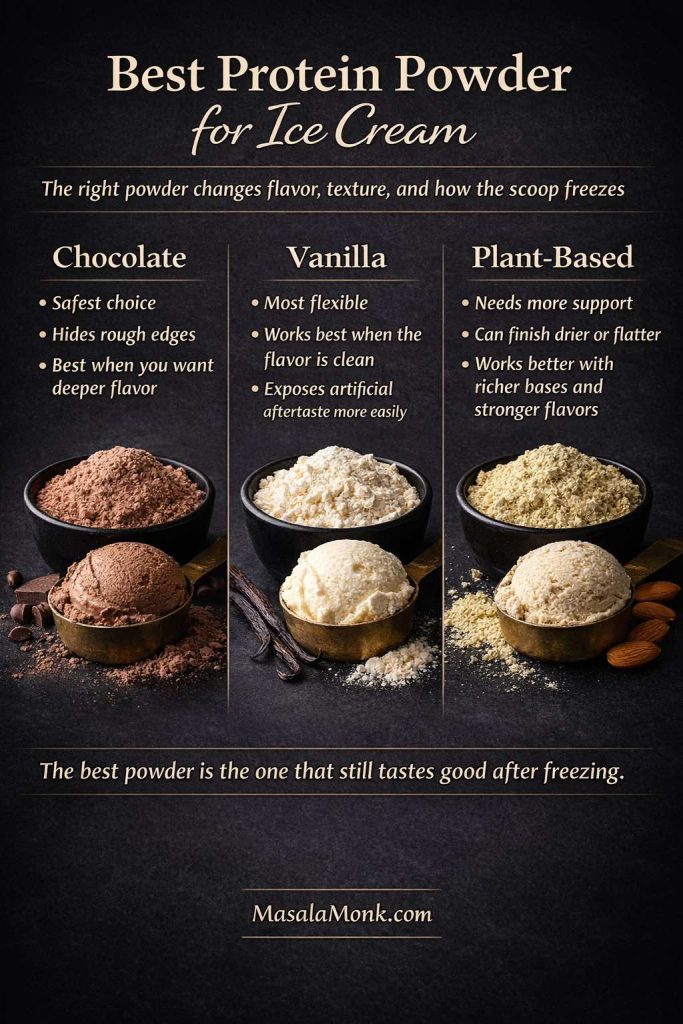
What Makes a Protein Powder Work Better in Ice Cream
The best choice blends in smoothly, tastes pleasant before freezing, and still behaves well after freezing. It should support the dessert rather than sit on top of it. A powder that already tastes tiring, gritty, or oddly sweet in a shake rarely becomes more enjoyable in frozen form.
The best powder for homemade protein ice cream is usually one that tastes good before freezing and still behaves well after freezing.
Chocolate Protein Powder Is Usually the Safer Choice
Chocolate is usually the safer route because cocoa hides flaws. It covers mild chalkiness, softens a harsh sweetener edge, and gives the dessert more depth right away. If someone has had disappointing protein desserts before, chocolate often gives them the best chance of a result that still feels like dessert.
Vanilla Protein Powder Works Best When the Flavor Is Clean
Vanilla can be excellent, but only when the powder itself is clean, rounded, and not overly artificial, because vanilla itself leaves very little room to hide. If the powder has an aftertaste, the frozen dessert will expose it. The upside is flexibility. A good vanilla powder can move into strawberry, cinnamon, peanut butter, honey-style, or classic vanilla directions very naturally.
Plant-Based Protein Powder Needs More Help
Plant-based powder can absolutely work here, but it often needs more support from the rest of the recipe. Vegan powders are more likely to finish dry, flat, or slightly dusty unless the base has enough richness and the flavor direction is strong enough to carry them.
What to Avoid
Avoid powders that leave a strong aftertaste, turn sandy in cold mixtures, or taste aggressively sweet in a way that feels processed rather than dessert-like. Also avoid trying to fix a weak recipe by adding more and more powder. That usually makes the texture worse, not better.
If your goal is protein ice cream with protein powder, the smartest route is usually to let the powder support the dessert rather than dominate it. That same rule applies whether you are trying to make ice cream from protein powder in a blender, a no-churn tub, or an ice cream maker.
Also Read: Masterclass in Chai: How to Make the Perfect Masala Chai (Recipe)
Why Protein Ice Cream Needs Stronger Flavor Than You Think
One of the easiest ways to ruin a batch is to underbuild the flavor. Cold mutes sweetness and aroma, and protein powder often mutes them further. Vanilla needs to be louder. Chocolate needs more depth. Fruit needs concentration instead of extra water.
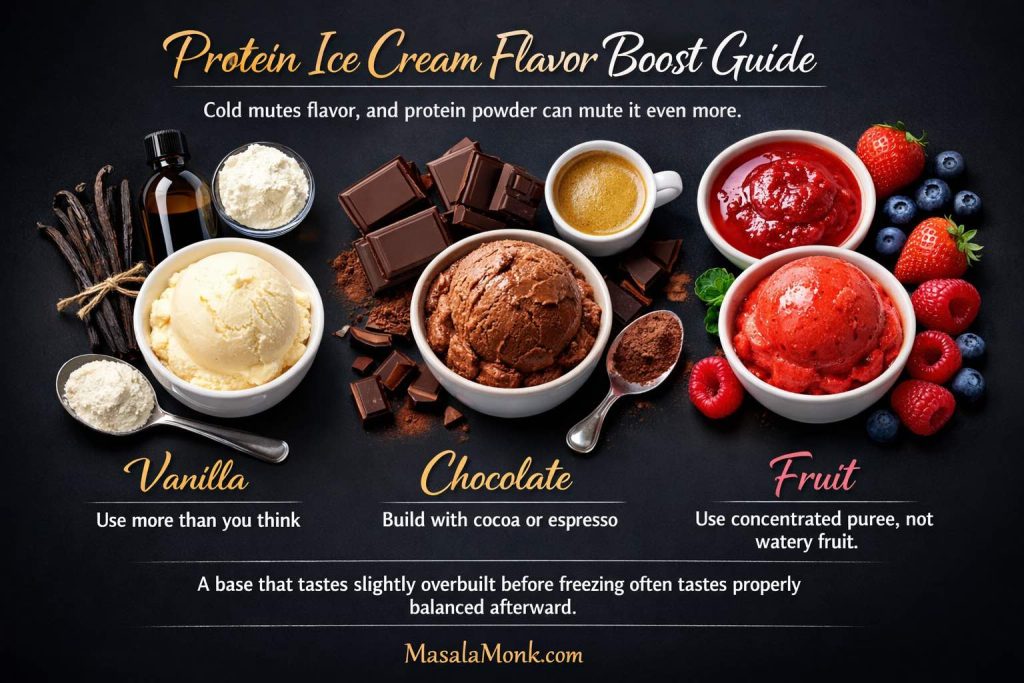
That is why so many homemade versions feel technically fine but emotionally disappointing. The texture may be acceptable, yet the flavor lands flat. The sweetness is too cautious. The cocoa is too timid. The fruit is too diluted. For stronger chocolate thinking, MasalaMonk’s homemade hot chocolate with cocoa powder and this guide to cacao vs chocolate vs dark chocolate are both useful related reads.
A base that tastes slightly overbuilt before freezing often tastes properly balanced afterward.
Can You Make Protein Ice Cream in a Ninja Creami?
Yes, and that is one reason Ninja Creami protein ice cream recipes are so popular. The machine works especially well with leaner or higher-protein frozen bases because spinning after freezing can dramatically improve texture.
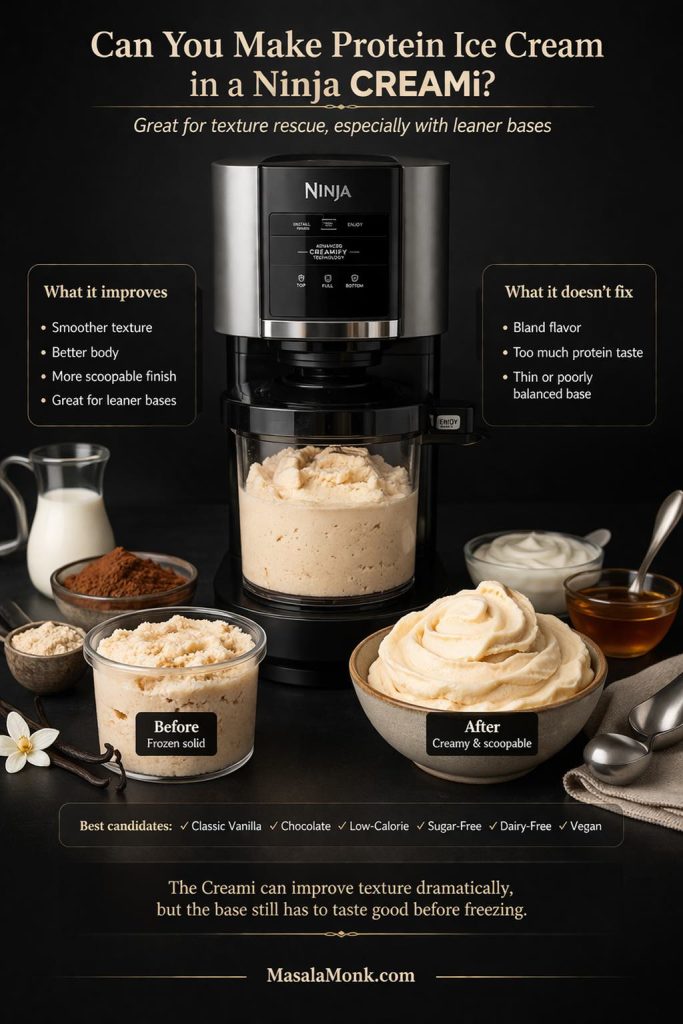
What it helps with is body. It can make a firmer, more restrained base feel smoother, softer, and more scoopable. What it does not fix is a weak formula. A bland base will still taste bland. An overly powdery base can still taste too much like protein powder. A thin base can still feel less satisfying than one built with better richness and balance.
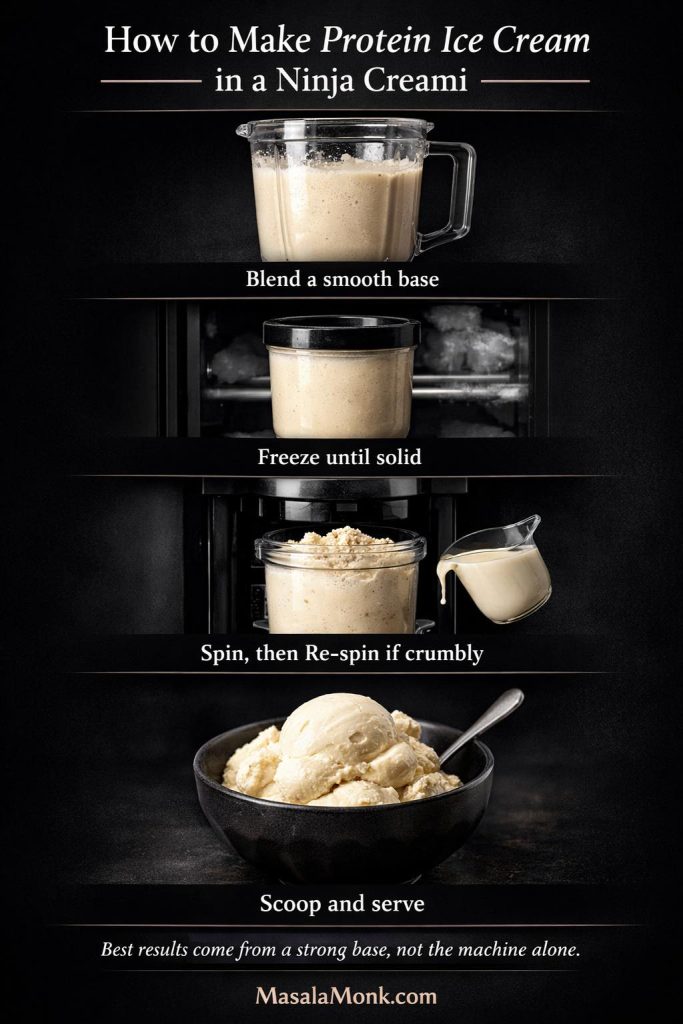
The best candidates from this article for Creami-style adaptation are the classic vanilla, chocolate, low-calorie, sugar-free, dairy-free, and vegan versions. In other words, the machine is excellent for texture rescue, but it is not a substitute for building a good base in the first place.
Also Read: Air Fryer Salmon Recipe (Time, Temp, and Tips for Perfect Fillets)
Protein Ice Cream Troubleshooting
Most bad batches fail in familiar ways, which is good news because familiar problems are easier to fix.
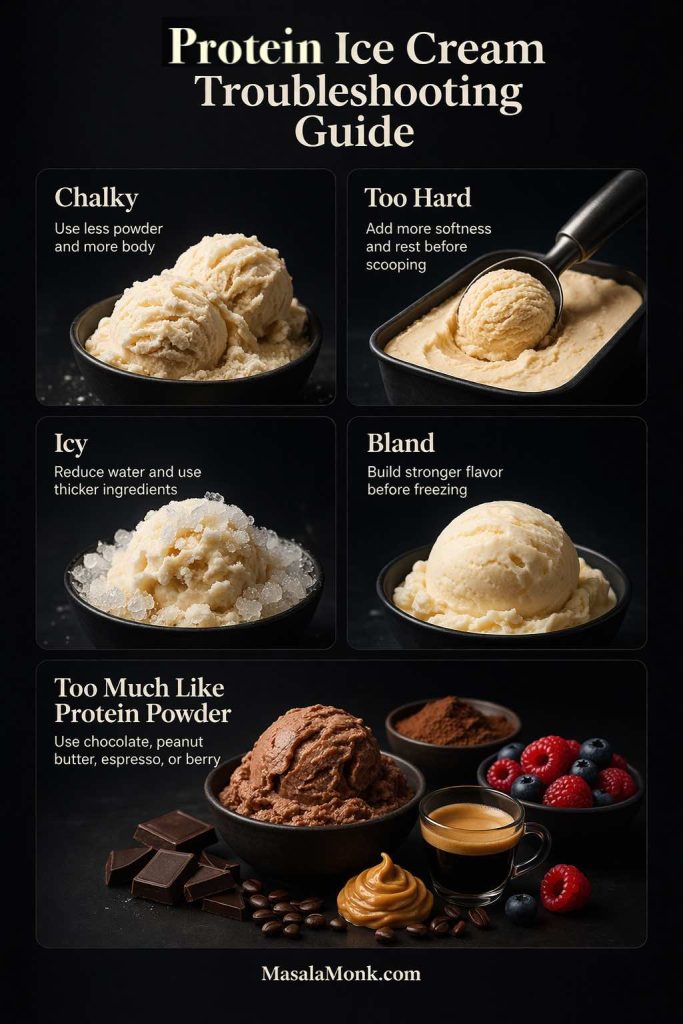
Why Protein Ice Cream Turns Chalky
Chalkiness usually comes from too much powder, a powder that behaves badly in the cold, or a base that is too lean to support it. Reduce the powder slightly next time and build more body through yogurt, nut butter, cottage cheese, or a little cream.
Why Protein Ice Cream Freezes Too Hard
This usually means the formula is short on softness. Too little sugar, too little fat, or too much water can all make the dessert set up like a brick. A richer base and a short softening rest before serving usually help.
Why Protein Ice Cream Turns Icy
Iciness is most common in fruit-heavy, dairy-free, or low-fat versions because there is too much water relative to the rest of the base. Reduce fruit purees, use thicker plant ingredients, or add more structure through yogurt or nut butter.
Why Protein Ice Cream Tastes Bland Once Frozen
Cold mutes flavor. If the unfrozen base tastes merely pleasant, the frozen version will usually taste weak. Increase vanilla, salt, cocoa, espresso, cinnamon, sweetness, or concentrated fruit before freezing the next batch.
Why Protein Ice Cream Tastes Too Much Like Protein Powder
That usually means the rest of the dessert is underbuilt. Instead of adding more powder, choose a stronger direction such as chocolate, peanut butter, espresso, or berry and let those flavors carry more of the load.
Also Read: Tapas Recipe With a Twist: 5 Indian-Inspired Small Plates
How to Store Protein Ice Cream So It Stays More Scoopable
Storage matters more than people often realize. A batch can taste excellent on the day it is made, then feel much firmer and less appealing after a night in the freezer. That does not always mean the recipe failed. It often means the storage setup or the expectations were off.
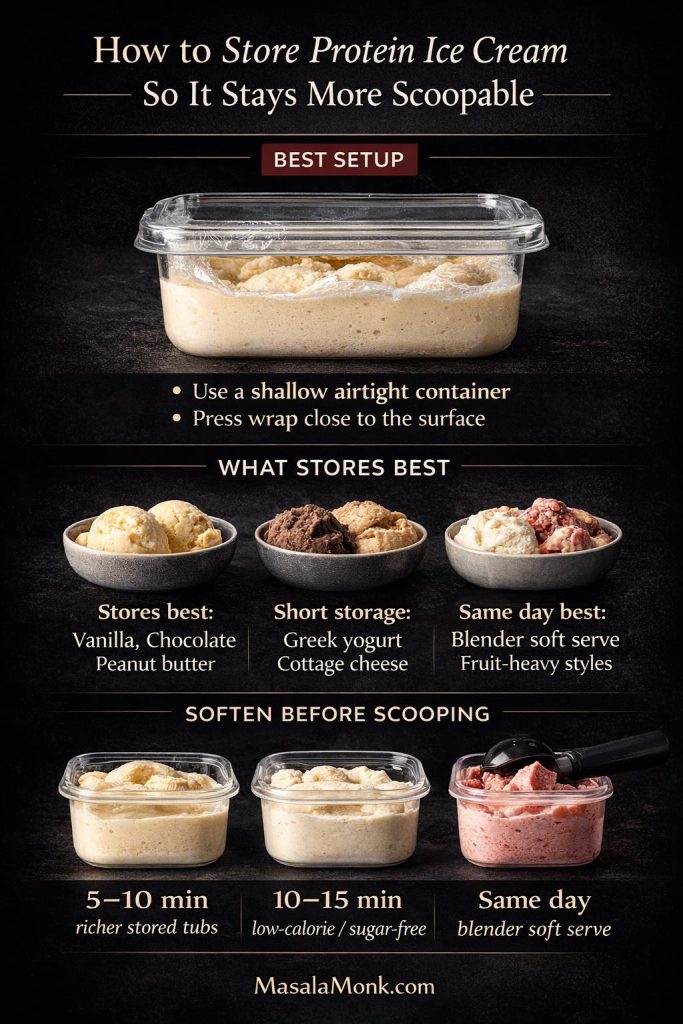
The Best Container Setup for Homemade Protein Ice Cream
Use a shallow airtight container rather than a deep, narrow one. A flatter layer freezes more evenly, is easier to scoop from, and gives you more control over the final texture. Press wrap or parchment close to the surface if you want to reduce freezer crystals and keep the top from drying out.
If you know the batch is a lighter or lower-sugar version, shallow storage matters even more because those styles tend to firm up faster.
How Long Different Protein Ice Cream Styles Keep Their Best Texture
Most homemade protein ice cream is best within the first couple of days, when the texture still feels relatively fresh and the flavor has not gone dull from deep freezing. Richer no-churn or churned versions usually store the best. The hero vanilla recipe, chocolate protein ice cream, and peanut butter protein ice cream all hold up better than quick blender bowls.
Greek yogurt protein ice cream and cottage cheese protein ice cream can still store well for a short time, but both benefit from a little softening before serving. Fruit-heavy and soft-serve-style versions are usually best eaten the same day.
How Long to Soften Protein Ice Cream Before Serving
Most versions improve with 5 to 10 minutes on the counter before scooping. Leaner, lower-calorie, or sugar-free styles may need a little longer because they freeze firmer. The goal is not to melt the dessert. The goal is to let the structure relax enough that the scoop becomes smoother, more pleasant, and much closer to what you intended when you made it.
Also Read: Air Fryer Donuts Recipe (2 Ways): Glazed Homemade Donuts + Biscuit Donuts
Final Thoughts on Making Protein Ice Cream at Home
Protein ice cream can absolutely be worth making at home, but only when the recipe matches the goal. If you want the best all-purpose place to begin, start with the classic vanilla version. From there, chocolate is the easiest forgiving variation, peanut butter gives the richest comfort, Greek yogurt offers the lightest easy win, and dairy-free or vegan versions become much more successful once you build in enough body from the start.
If speed matters most, the blender soft-serve section is the clearest shortcut. If you already own a Creami, it can help smooth out leaner or firmer bases, but it still cannot rescue a weak flavor structure on its own.
That is the real key to the whole category. The best version is not the one making the loudest promise. It is the one that fits your ingredients, respects the texture you actually want, and still tastes good enough that you would choose to make it again.
Also Read: 19 Essential Kitchen Tools That Make Cooking Easier
Protein Ice Cream FAQs
1. Can you make protein ice cream without an ice cream maker?
Yes. A no-churn version works when you want a freezer tub to scoop later, while a blender version is better when you want a soft-serve-style bowl to eat immediately.
2. Do you need protein powder to make protein ice cream?
No. Greek yogurt, cottage cheese, ricotta, and other protein-rich ingredients can all help build a higher-protein frozen dessert, though protein powder is still one of the easiest ways to push the protein level higher.
3. Can you make protein ice cream without banana?
Yes. Banana is especially helpful for blender-style protein soft serve, but plenty of no-churn, cottage cheese, dairy-free, and Ninja Creami versions skip it completely.
4. What protein powder works best in protein ice cream?
The best protein powder is one that tastes good before freezing and still behaves well after freezing. Chocolate is often the safest choice, while vanilla works best when the flavor is clean and not overly artificial.
5. Is whey or plant-based protein better for protein ice cream?
Neither is automatically better, but they behave differently. Whey is often easier to work with, while plant-based powders usually need more help from richer ingredients and stronger flavors.
6. Why does protein ice cream turn chalky?
It usually turns chalky because there is too much protein powder, the powder behaves badly in the cold, or the base is too lean to support it.
7. Why does protein ice cream freeze so hard?
It usually freezes hard because the formula is too lean, too watery, or too low in sugar and fat for the style you are trying to store.
8. How long should protein ice cream soften before serving?
Usually 5 to 10 minutes is enough, though leaner, lower-sugar, and lower-fat versions may need a little longer.
9. How long does homemade protein ice cream last in the freezer?
Most homemade protein ice cream is at its best within the first few days, especially if texture matters as much as flavor.
10. Can you make protein ice cream in a Ninja Creami?
Yes. A Ninja Creami can improve body and scoopability, especially with leaner or higher-protein bases, but it cannot fix a bland or poorly balanced formula.
11. Why is my Ninja Creami protein ice cream crumbly after the first spin?
That is common. The usual fix is to re-spin, and sometimes add a very small splash of milk first if needed.
12. What is the easiest protein ice cream version for beginners?
For most readers, the easiest good first batch is either a balanced vanilla freezer tub, a forgiving chocolate version, or a banana-based blender soft serve.









[…] Also Read: Protein Ice Cream Recipe: 10 Creamy Homemade Recipes […]
[…] Also Read: Protein Ice Cream Recipe: 10 Creamy Homemade Recipes […]
[…] Also Read: Protein Ice Cream Recipe: 10 Creamy Homemade Recipes […]
[…] Also Read: Protein Ice Cream Recipe: 10 Creamy Homemade Recipes […]
[…] Also Read: Protein Ice Cream Recipe: 10 Creamy Homemade Recipes […]
[…] Also Read: Protein Ice Cream Recipe: 10 Creamy Homemade Recipes […]
[…] a higher-protein version, use MasalaMonk’s protein ice cream recipe as the base and adapt it with mint extract plus chopped dark chocolate. If you only want a slightly […]
[…] it before eating so the texture firms up. If you like high-protein desserts, MasalaMonk’s protein ice cream goes deeper into protein powder, Greek yogurt, dairy-free, low-calorie, and sugar-free frozen […]
[…] another higher-protein dessert, you may also like this protein ice cream recipe, which uses Greek yogurt, cottage cheese, and protein powder options without making the texture […]
[…] and mini chocolate chips bring it closer to a real cookie dough bite. If you like this kind of high-protein dessert, this dough gives you the same treat-like feeling without needing a freezer or […]