
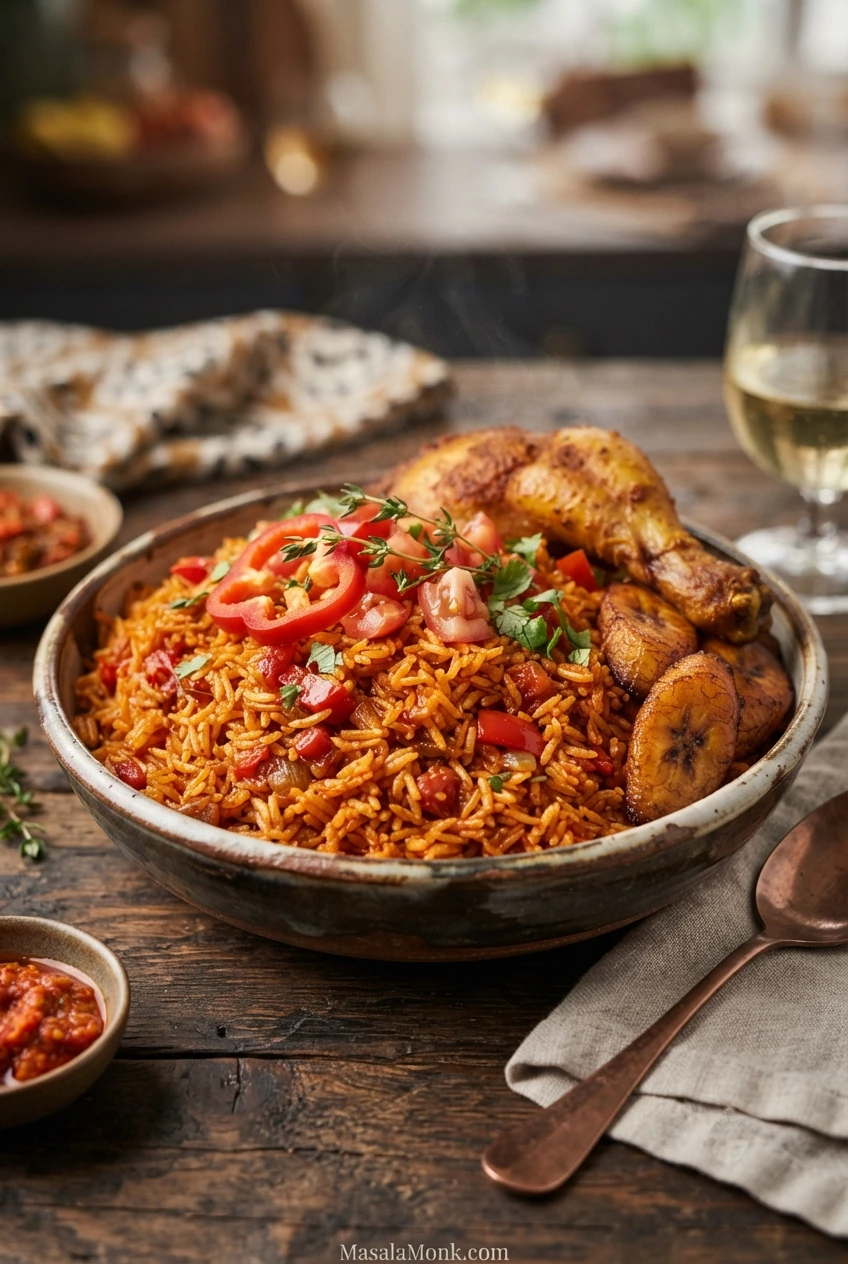
Nigerian jollof gets much of its flavour before the rice goes into the pot. Tomatoes, red peppers and onions cook down into a rich pepper base, while tomato paste fried in oil brings a deeper, savoury note. The rice then steams in the seasoned stew until the grains are tender and coated in orange-red sauce.
Serve it with sweet fried plantains, chicken or fish for a satisfying meal. In Nigeria, jollof is also closely associated with weddings, birthdays and other celebrations. Some party versions have a smoky character that comes from their cooking method—not from simply burning the rice.
This stovetop recipe uses commercially parboiled long-grain rice. Keep three things in mind as you cook: reduce the pepper sauce, maintain gentle steam and taste the grains for tenderness. The steps also explain how to respond when the rice is firm, wet or cooking unevenly.
Jump to the Nigerian jollof rice recipe
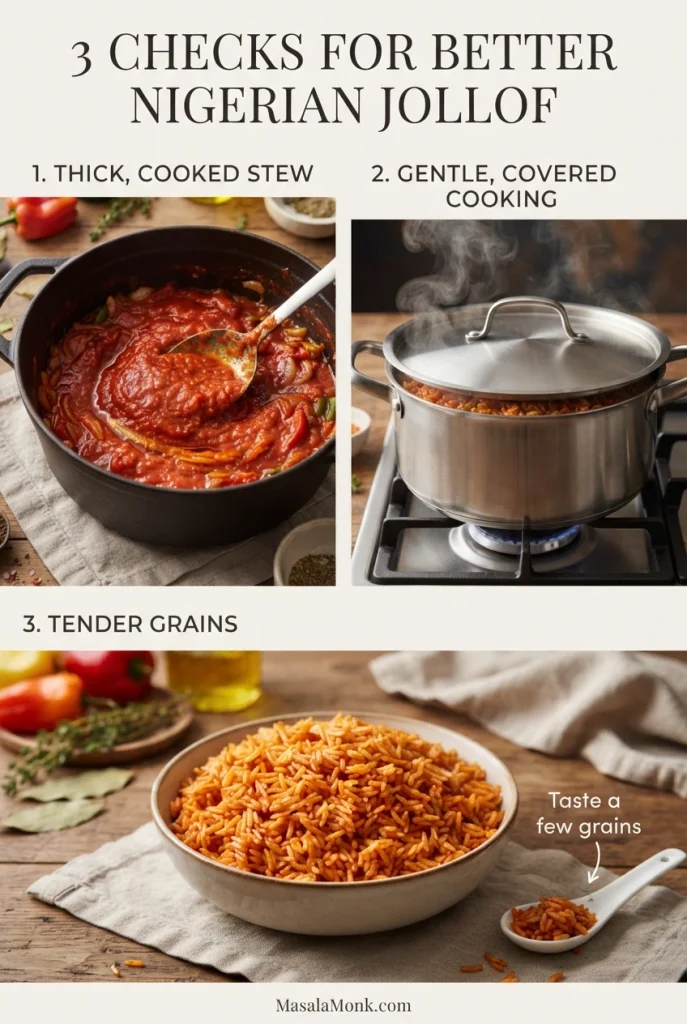
Three Checks for Better Nigerian Jollof
The sauce should be thick before the rice is added; the covered pot should cook gently; and the finished grains should taste tender.
Find What You Need
- Ingredients and step-by-step recipe
- Nigerian peppers and make-ahead sauce
- Choosing the best rice for jollof
- Substitutions and variations
- Troubleshooting hard, mushy or burnt rice
- Where jollof rice comes from
- Nigerian party jollof
- What to serve with jollof
- How much jollof rice per person
- Storage and reheating
- Frequently asked questions
Nigerian Jollof Rice Recipe: Ingredients and Method
| Servings | 4 generous or 6 moderate |
|---|---|
| Preparation | About 20 minutes |
| Cooking | Approximately 65–95 minutes |
| Resting | 10 minutes |
| Total | Approximately 1 hour 35 minutes to 2 hours 5 minutes |
| Method | Stovetop |
| Equipment | Blender, wide saucepan, sieve, measuring jug and heavy-bottomed pot with a well-fitting lid |
A heavy-bottomed pot of around 4–5 litres suits this batch if its base fits the burner and the lid seals well. Use a separate wide saucepan to reduce the vegetables. Watery tomatoes and slower-cooking rice can extend the times above. If the lid has a large gap, use a better-fitting lid or another suitable pot rather than loose material near a flame.
Before you start: Prepare 200 g onion in total—roughly chop 100 g for blending and slice the remaining 100 g for frying. Keep them separate.
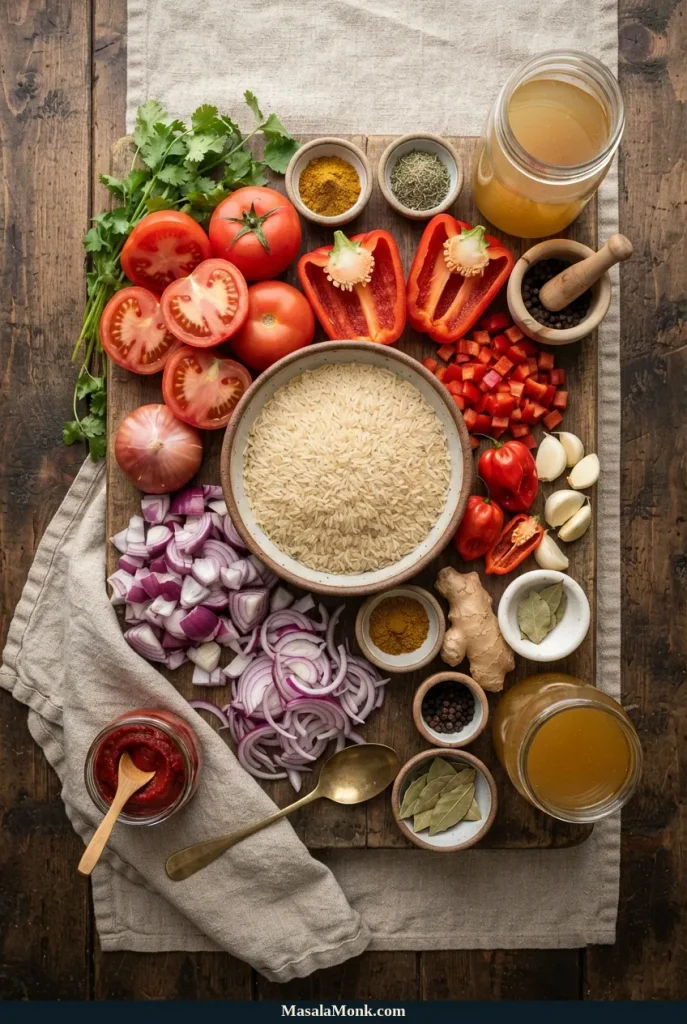
Ingredients for the Tomato-Pepper Base
- Ripe plum or Roma tomatoes — 300 g (10.6 oz), trimmed and chopped
- Red bell peppers — 250 g (8.8 oz), weighed after removing stems and seeds
- Onion for blending — 100 g (3.5 oz), roughly chopped, from the 200 g total
- Scotch bonnet — a small sliver, around 1–2 g as a cautious starting amount; omit for mild jollof
Red bell pepper stands in for Nigerian tatashe here, though the flavours are not identical. Scotch bonnet brings fruity heat similar to ata rodo. Increase it in the initial blend if you want hotter rice, or keep the pot mild and serve extra pepper sauce separately. Chilli strength varies; wash your hands after handling it.
Ingredients for the Jollof Stew
- Neutral oil — 60 ml (¼ US cup or 4 tablespoons), such as sunflower, vegetable or groundnut oil
- Onion for frying — 100 g (3.5 oz), finely sliced, from the 200 g total
- Concentrated tomato paste — 45 g (1.6 oz), approximately 3 tablespoons depending on the product
- Garlic — 9 g, about 3 medium cloves, minced
- Fresh ginger — 12 g, about 1 tablespoon finely grated
- Nigerian-style curry powder — 2 teaspoons
- Dried thyme — 1 teaspoon
- Dried bay leaves — 2
- Ground white or black pepper — ¼ teaspoon
- Fine salt — 4 g to start, roughly ⅔ teaspoon of fine table salt depending on the product, when using unsalted stock
Salt and bouillon: The 4 g starting salt assumes unsalted stock. If your stock is salted, begin with less salt—or none—and taste the stew before adding rice. Optional Maggi or other bouillon goes in with the spices in Step 5; reduce salt accordingly. Nigerian curry powders vary, and a mild Caribbean or West Indian-style blend can work, although the flavour will differ.
Rice and Finishing Ingredients
- Dry commercially parboiled long-grain rice — 400 g (14.1 oz), around 2 US cups for some products; weight is more reliable
- Hot unsalted chicken stock — 350 ml (11.8 US fl oz), initial addition
- Extra stock or water — 150 ml (5.1 US fl oz), held separately and heated only if needed
- Unsalted butter — 10 g (about 2 teaspoons), optional, to finish
Liquid guidance: Add 350 ml stock initially. Keep up to 150 ml extra aside, but do not pour it in automatically. Heat a little of the reserve only if the rice is still hard and the pot is drying out. The reduced pepper stew contributes moisture, so the cooking checks matter more than a fixed water-to-rice ratio.
How to Make Nigerian Jollof Rice
The key moments are sauce reduction, the consistency before covering, and the first taste of the rice. Use those cues alongside the approximate times.
Step 1: Rinse and drain the rice
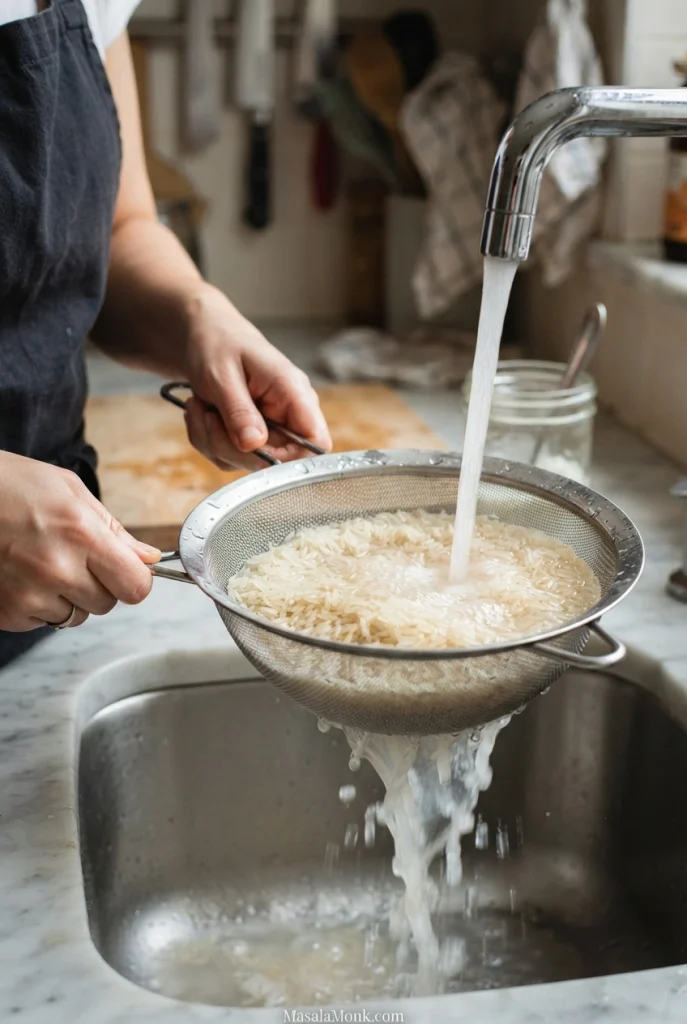
Rinse the 400 g commercially parboiled rice in a sieve under cool running water until the runoff is less cloudy. Leave it to drain while you prepare the stew; do not soak or partly boil it for this method.
Step 2: Blend the vegetables
Blend the tomatoes, red bell peppers, 100 g roughly chopped onion and Scotch bonnet until smooth. Add only a splash of water if the blender needs help moving the mixture.
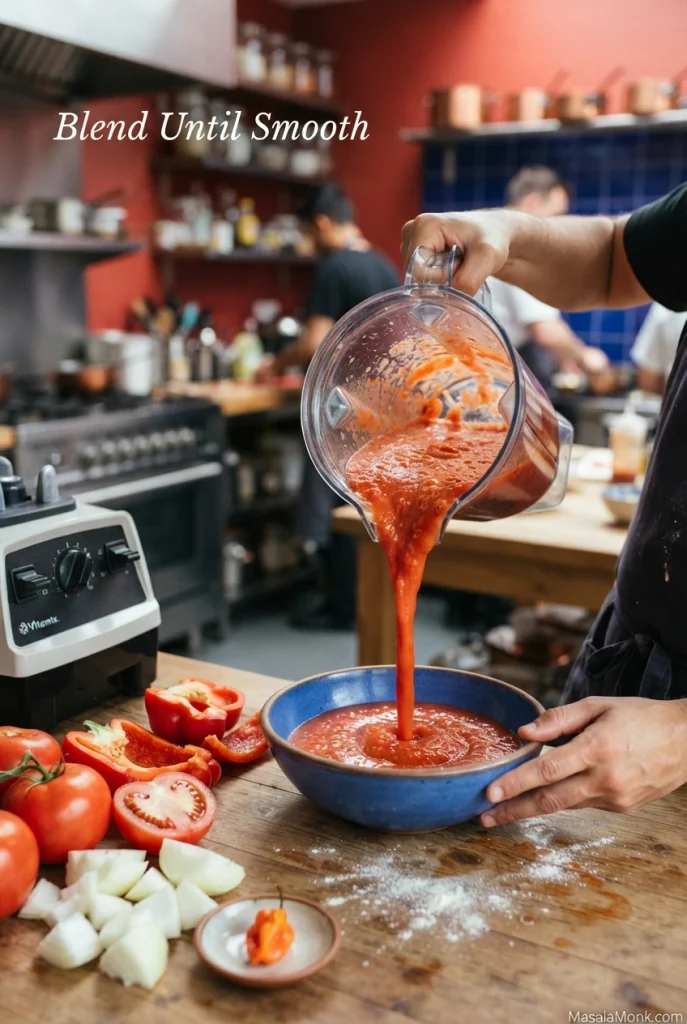
For a different pepper blend, see how tatashe, shombo and ata rodo contribute sweetness, colour and heat.
Step 3: Reduce the puree
Pour into a wide saucepan and bring to a steady simmer over medium heat. Reduce the heat slightly and cook for about 20–30 minutes, stirring more often as it thickens; very watery tomatoes may need longer. Ready when: the puree is thick and spoonable, a spoon drawn through it leaves a brief trail, and the harsh fresh-tomato aroma has mellowed. Using a wide saucepan speeds evaporation and leaves the main heavy pot free for frying the tomato paste.
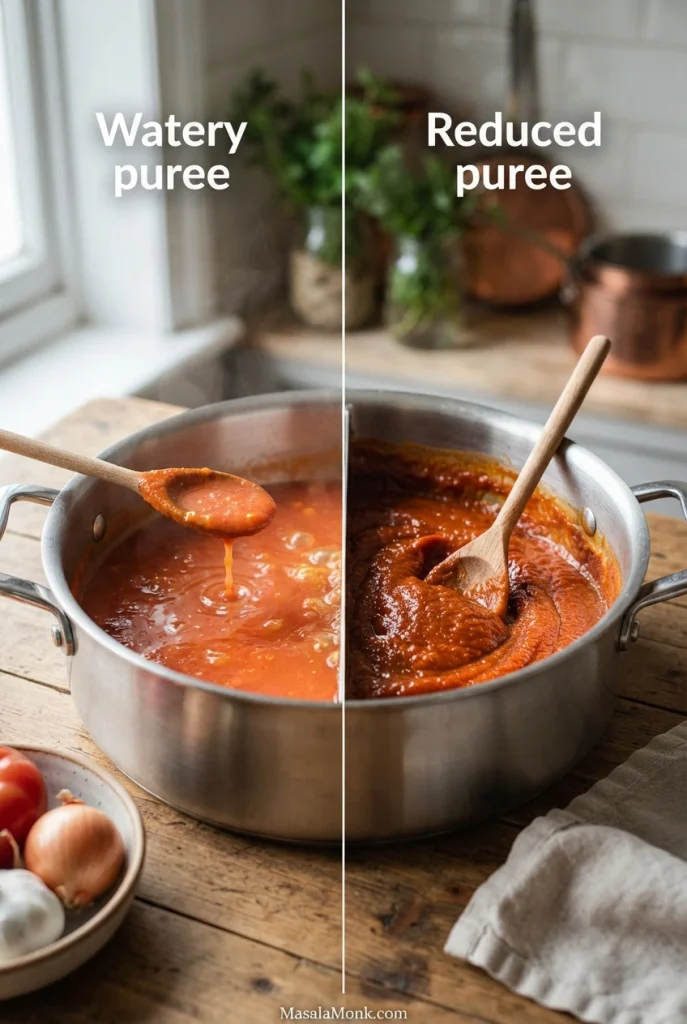
Step 4: Fry the onion and tomato paste
Heat the oil in the heavy pot over medium heat. Add the remaining 100 g sliced onion and soften for 3–4 minutes. Add the tomato paste and fry for 3–5 minutes, stirring regularly, until it deepens toward brick-red and smells less sharp. Keep it from turning black.
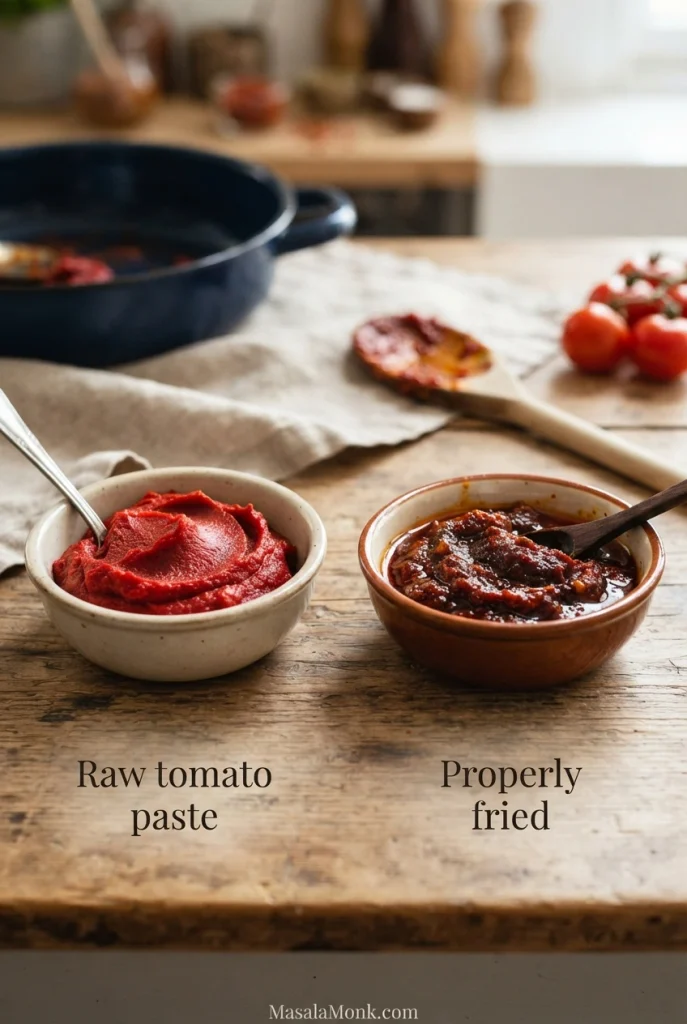
Step 5: Finish and taste the stew
Stir in the garlic and ginger for 30–60 seconds. Carefully add the reduced puree; it may splutter against the hot oil. Add curry powder, thyme, bay leaves, ground pepper, salt as appropriate and optional bouillon. Simmer gently for 5–10 minutes, stirring occasionally. Taste before adding rice: the harsh edge of raw tomato should have softened, the pepper sweetness should come through and the seasoning should taste balanced. Adjust salt now; allow a little more cooking time if the sauce still tastes raw.
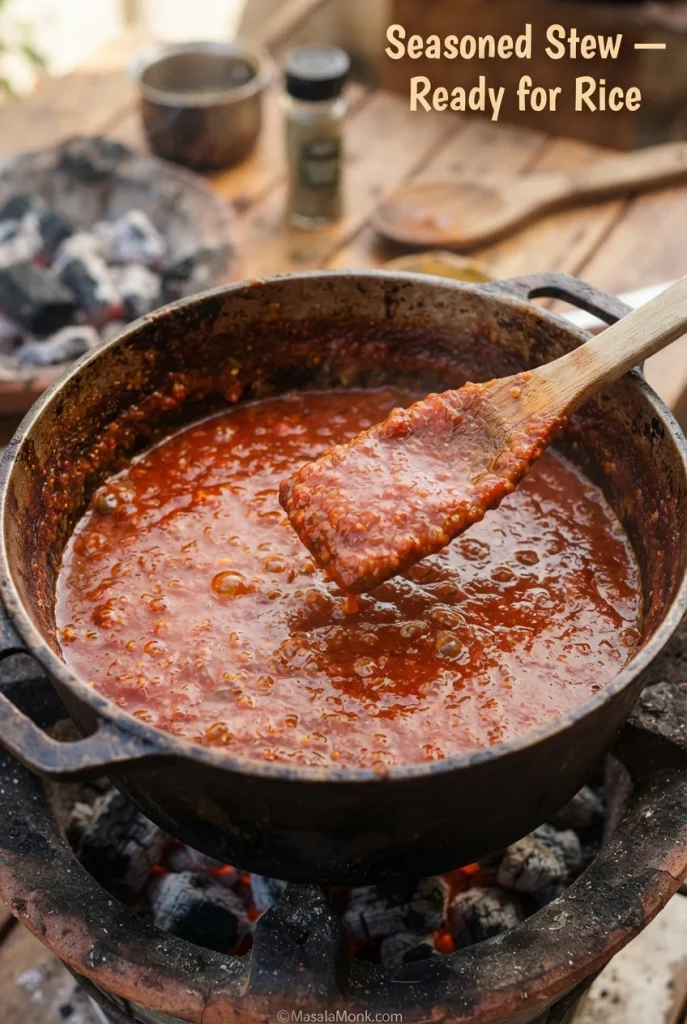
Step 6: Coat the rice and add stock
Fold the drained rice through the stew until coated. Add the initial 350 ml hot stock, stir once and bring the pot back to a gentle simmer. Before covering: the grains should sit in moist, bubbling sauce, without a deep pool of clear liquid. If the mixture is already catching because it is too stiff, add a small splash of hot stock from the reserve.
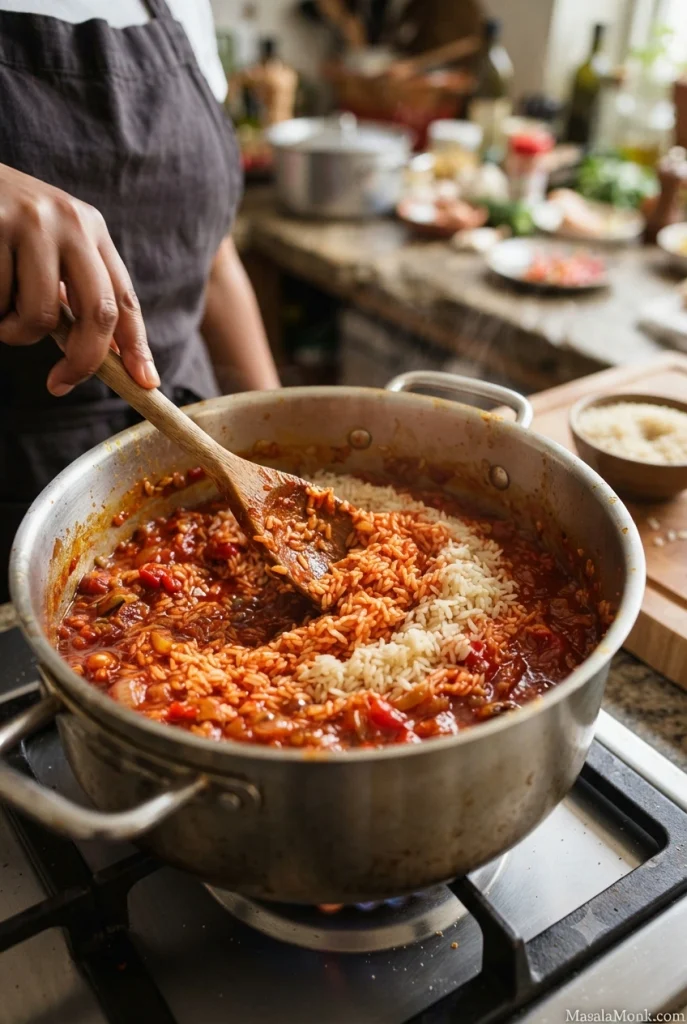
Moisture before covering: If the top looks dry, part the rice gently near one edge. There should still be moist sauce between the grains.
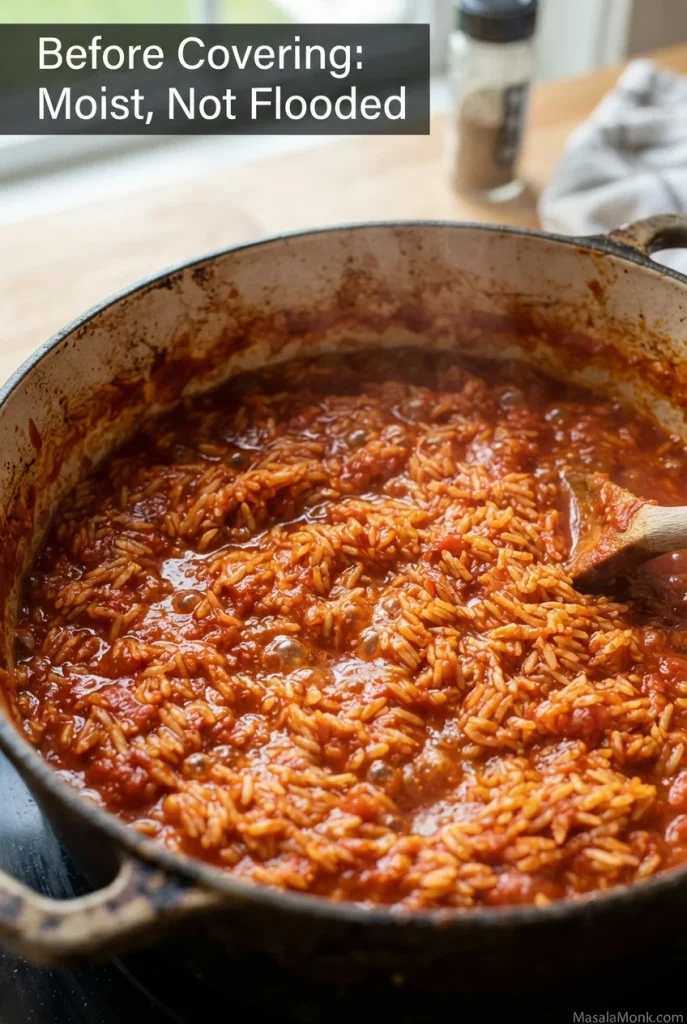
Step 7: Cover and steam gently
Fit the lid closely and lower the heat to maintain gentle cooking rather than a vigorous boil. Leave covered for about 20 minutes before the first check. Visible bubbling becomes quieter as liquid is absorbed; that alone does not mean the burner needs turning up. If you hear fierce sizzling or smell burning, reduce the heat and assess the pot promptly.
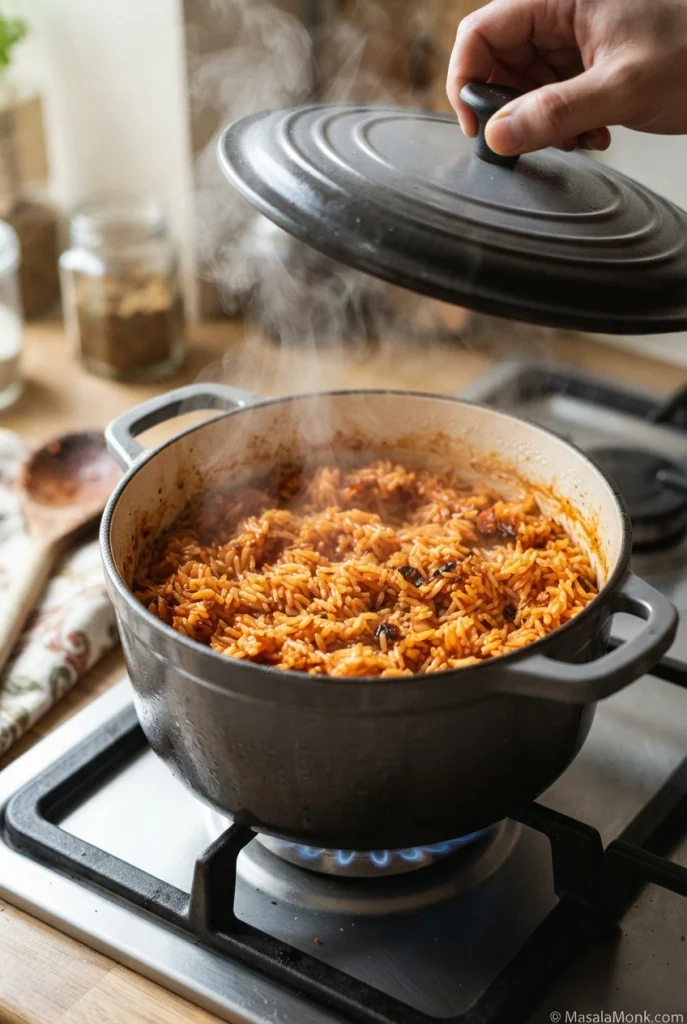
Step 8: Check grains and moisture
After about 20 minutes, lift the lid briefly and taste a few grains. If the moisture level is unclear, part the rice gently at one edge with a spoon; avoid scraping the bottom or stirring the whole pot. If grains are hard and the pot is dry: heat 2–4 tablespoons (30–60 ml) stock or water, add it, cover and check after 5–8 minutes. When the grains are firm but still moist: keep the lid on for another 5–10 minutes. With plenty of liquid remaining: continue gentle covered cooking without adding more stock.
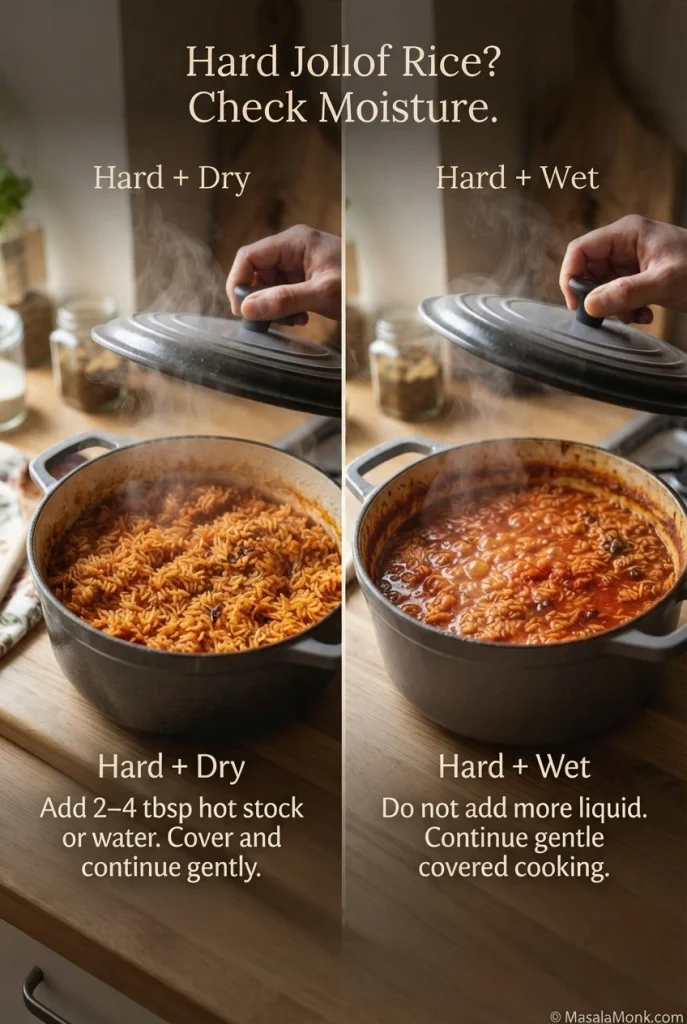
Step 9: Finish when the grains are tender
Check again at roughly 5–10-minute intervals as necessary, tasting grains from the centre and an edge. Covered cooking often takes around 30–40 minutes in total, but the rice—not the clock—sets the endpoint. It is done when the centres are tender, the grains are reasonably distinct and no watery pool remains. Use the moisture guidance in Step 8 if more cooking is needed.
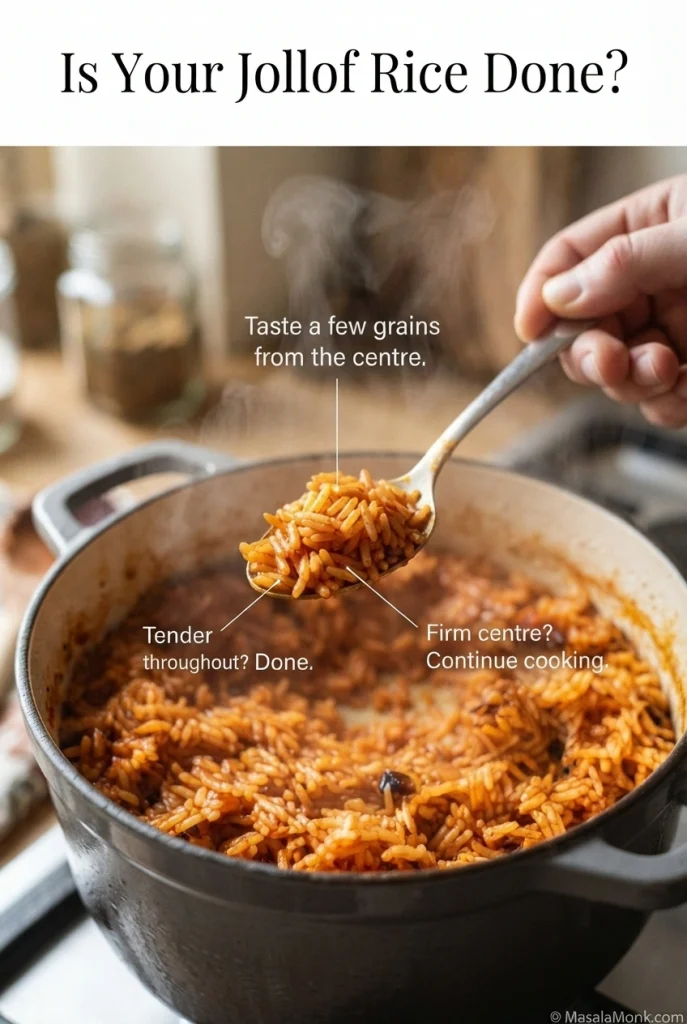
If the rice remains hard or cooks unevenly, use the jollof troubleshooting guide to choose the next step.
Step 10: Rest and serve
Turn off the heat, add the optional butter and replace the lid for 10 minutes. Remove bay leaves as you encounter them, then gently lift and fluff the rice with a broad spoon or fork. Serve hot.
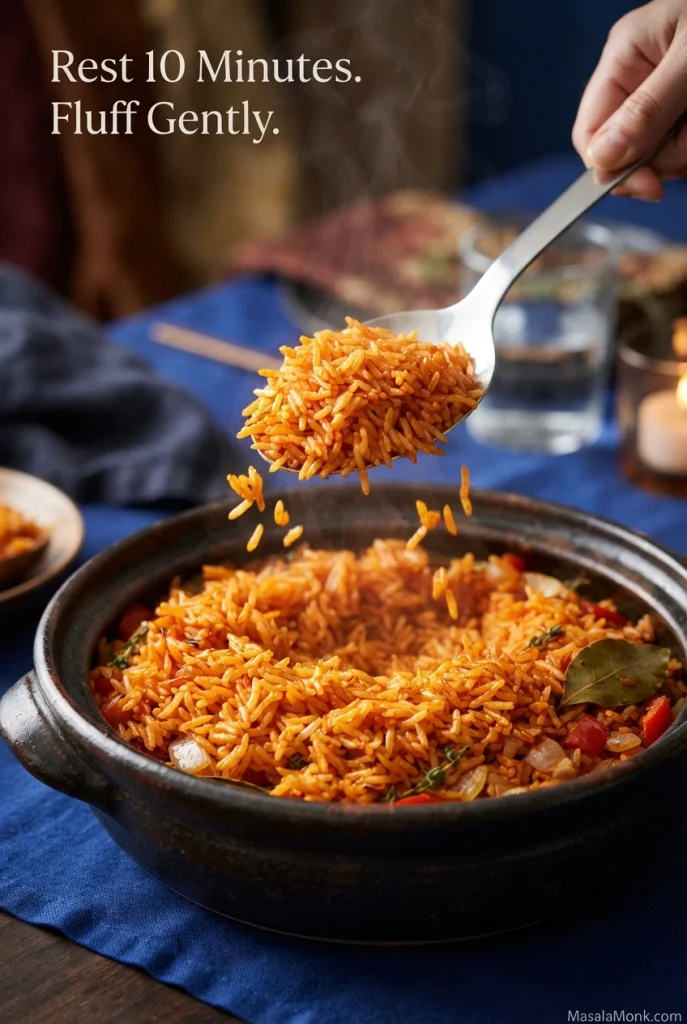
Finished Jollof Rice: Grain Texture
Finished jollof should show tender, reasonably distinct grains with pepper stew clinging to them—not a watery layer collecting underneath.
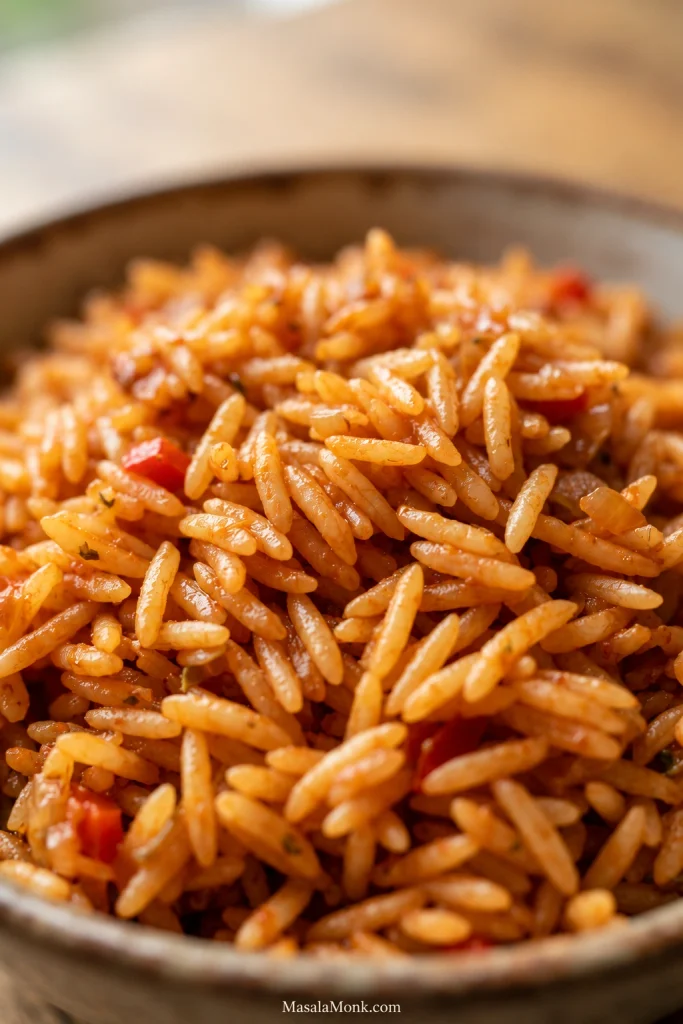
Nigerian Jollof Rice Recipe at a Glance
The reference card condenses the ten cooking steps into seven visual stages. Use the full method above for sauce-readiness and moisture decisions.
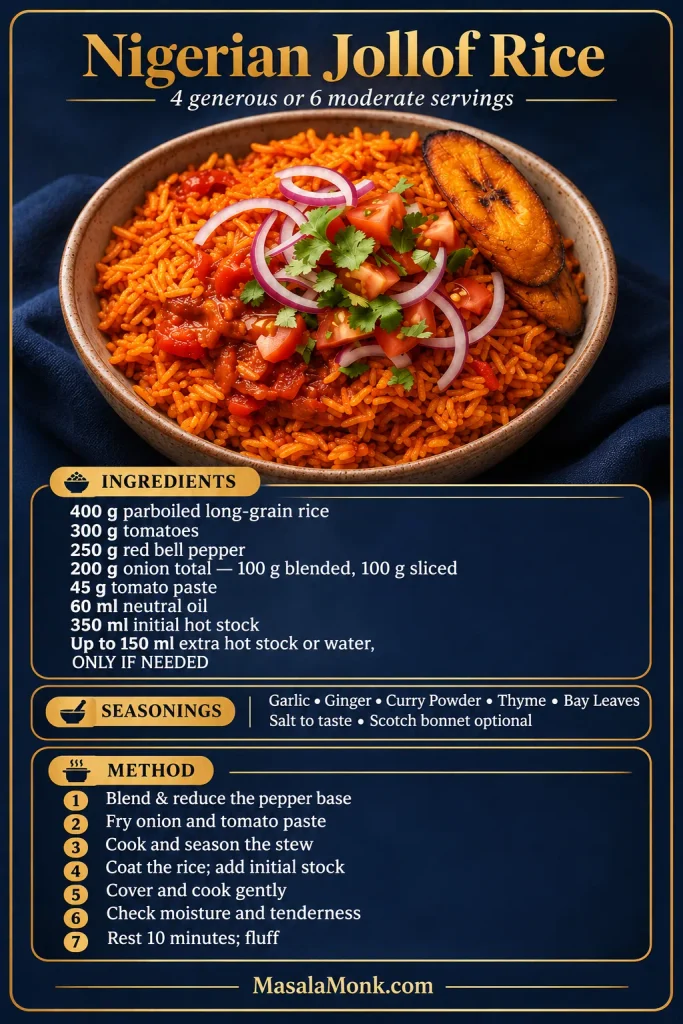
Nigerian Peppers: Tatashe, Shombo and Ata Rodo
Nigerian pepper blends are shaped by more than heat. Tatashe brings sweetness, colour and body; shombo contributes its own red-pepper character and can add heat; ata rodo provides the powerful fruity heat. Market names and the intensity of individual peppers vary.
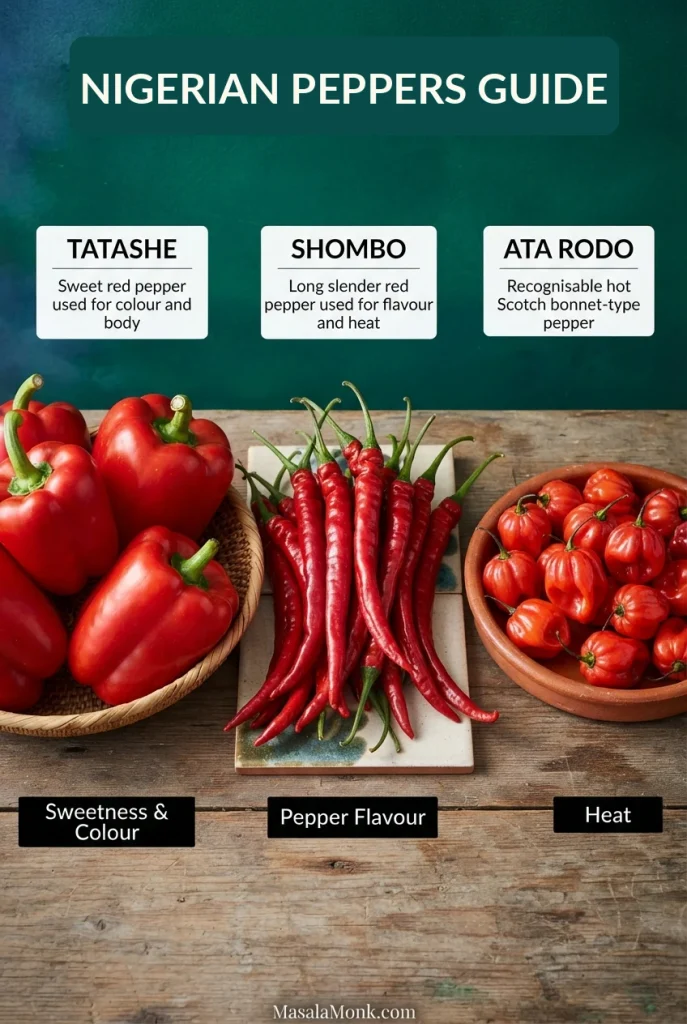
| Pepper | Role in the stew | Possible alternative |
|---|---|---|
| Tatashe | Sweetness, red colour and body | Red bell pepper or sweet red shepherd pepper |
| Shombo | Red-pepper flavour, colour and variable heat | A long red pepper chosen for the heat you want |
| Ata rodo | Fruity, strong chilli heat | Scotch bonnet or habanero |
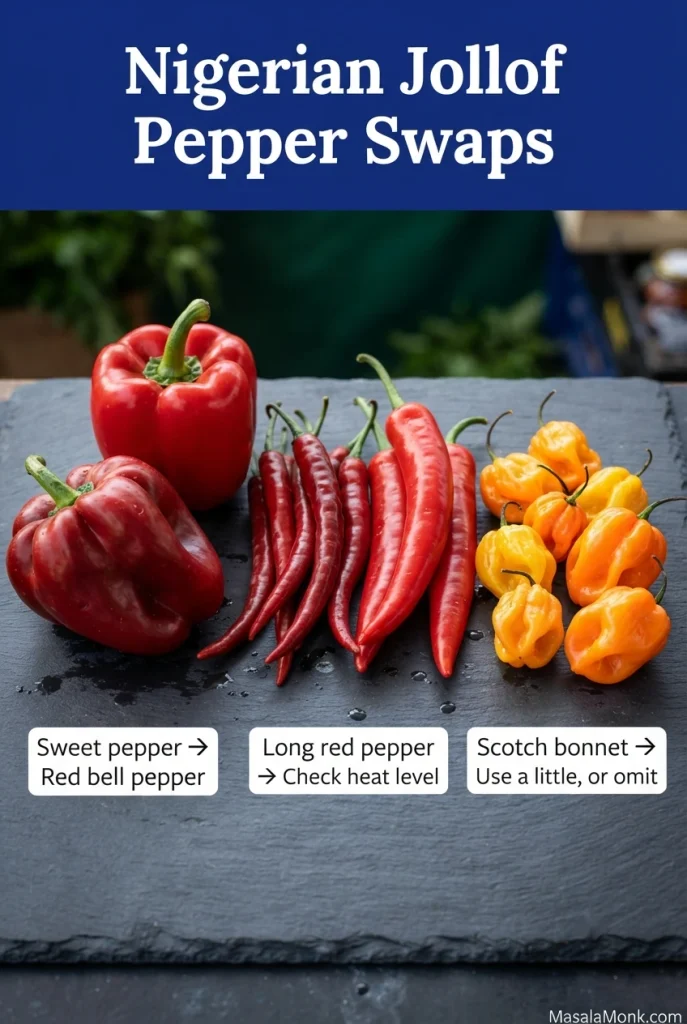
The main recipe uses red bell pepper for sweet body. If using a hot long red chilli instead of shombo, add it according to its heat rather than swapping it gram for gram.
Choosing Pepper Substitutes
When shopping outside Nigeria, choose substitutes by what they contribute: sweetness and sauce body, a red-pepper note, or chilli heat.
Why Cook the Pepper Base Before Adding Rice?
A watery pepper blend makes both seasoning and rice hydration harder to judge. Simmering off excess moisture concentrates the vegetables; frying tomato paste in oil develops the deeper cooked-tomato flavour before the rice arrives.
Make the Pepper Base Ahead
For a gathering, blend and reduce the peppers and tomatoes ahead of time. Cool the puree promptly, refrigerate it in a covered container for use the next day, or freeze portions for longer storage. When ready to cook, fry onion and tomato paste, add the prepared puree and proceed with the stew. If liquid has separated, stir and reduce the mixture again as needed.
For a lightly charred variation, roast some of the sweet red peppers until the skins blister, then cool and peel them before blending. This changes the flavour of the base but is not required for the stovetop recipe.
Best Rice for Jollof: Parboiled Long-Grain, Golden Sella or Basmati?
Choose commercially parboiled long-grain rice for this Nigerian jollof rice recipe. Look for the words parboiled or converted on the packet, rather than ordinary white or instant rice. This rice generally holds its shape well in the thick stew.
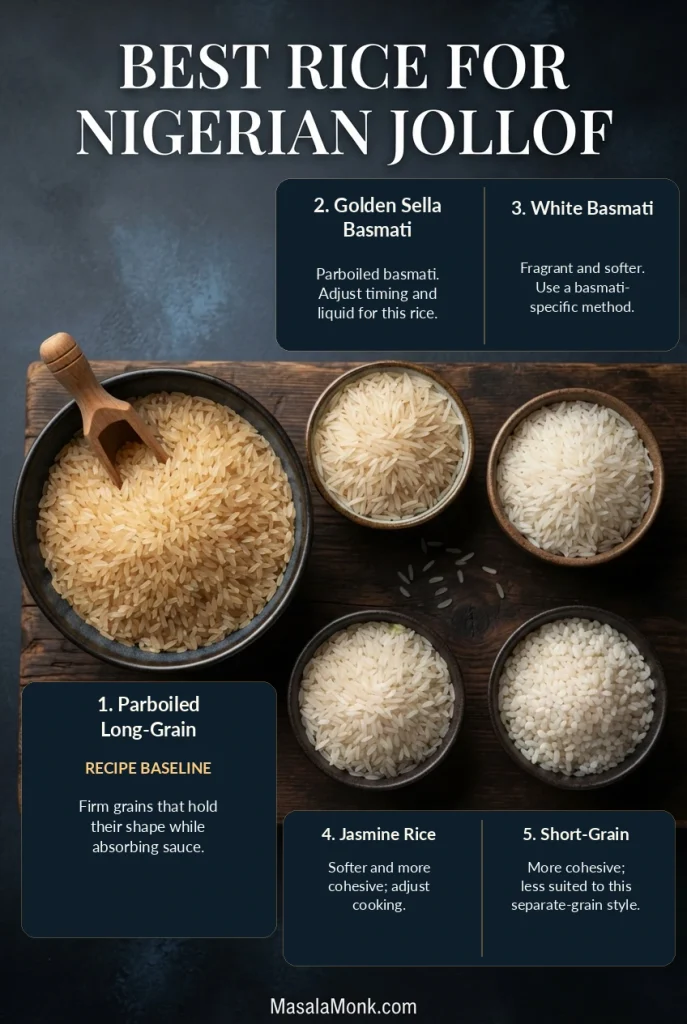
| Rice type | Typical texture | Cooking approach |
|---|---|---|
| Parboiled / converted long-grain | Firm, reasonably separate grains | Main recipe |
| Golden Sella basmati | Very long, firm parboiled basmati grains | Allow for variety-specific timing and liquid |
| Ordinary white basmati | Fragrant, quicker to soften | Use a basmati jollof method |
| Jasmine rice | Softer, more cohesive | Use adjusted cooking guidance |
| Short-grain rice | Clings together more readily | Less suited to this grain texture |
For more about different varieties, see our guide to cooking rice. Jollof is different from plain rice because the sauce supplies part of the cooking moisture.
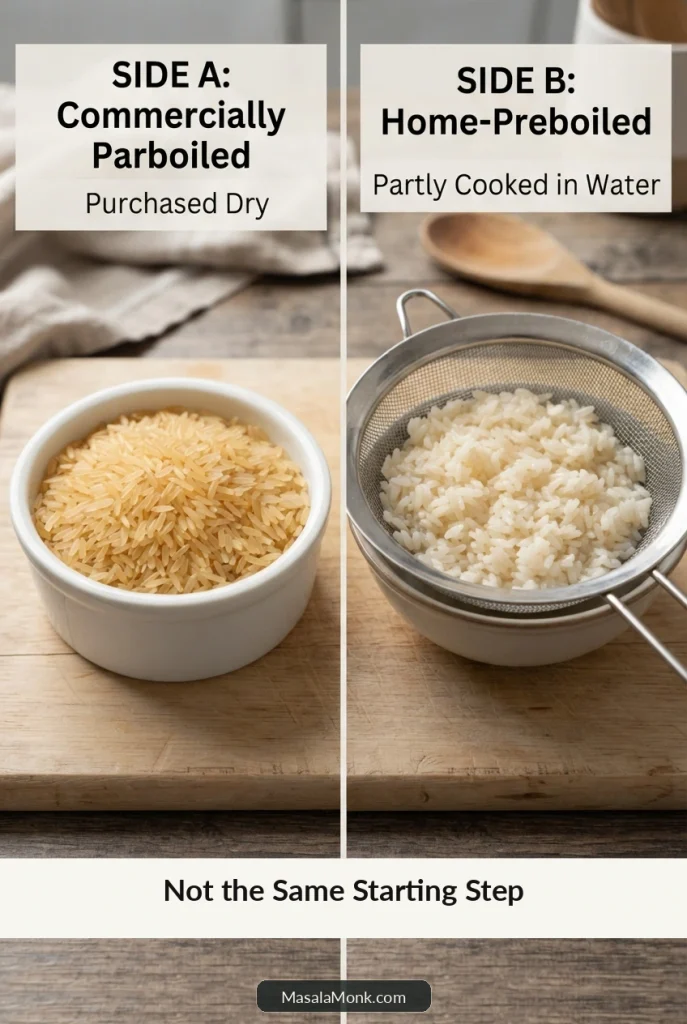
Do You Need to Parboil Rice Before Making Jollof?
Not when the packet already says parboiled or converted. That describes processing completed before the dry rice was packaged; you still need to cook the rice. Rinse, drain and add it to the stew. Some Nigerian methods partly boil ordinary rice at home before adding it, but that rice has already absorbed water and calls for a different liquid allowance.
Can You Use Golden Sella Basmati?
Yes. Golden Sella is parboiled basmati, not ordinary white basmati. It can make excellent long-grain jollof, but brands and cooking requirements vary. Use a Golden Sella-specific starting method when available; look for tenderness and enough remaining moisture rather than automatically applying the stock quantity above.
Golden Sella needs its own starting guidance; during cooking, the grain-and-moisture check still tells you when to adjust.
Ingredient Substitutions and Variations
A substitution can change sweetness, heat or the amount of moisture in the stew. Keep the same cooking checkpoints even when you switch ingredients.
Adjusting Chilli Heat, Curry and Stock
Mild jollof: Omit Scotch bonnet and keep the sweet red peppers. Set out extra hot pepper sauce for people who prefer more heat.
Different curry powder: A mild Caribbean or West Indian-style blend can work when Nigerian curry powder isn’t available. Start with less, taste the stew and adjust. Heavily cumin-forward blends and garam masala will take the flavour in another direction.
Vegetarian or vegan: Use a flavourful vegetable stock and leave out the optional butter, or replace it with a plant-based alternative. Check packaged bouillon for animal-derived ingredients.
Tomatoes, No-Blender Method and Chicken
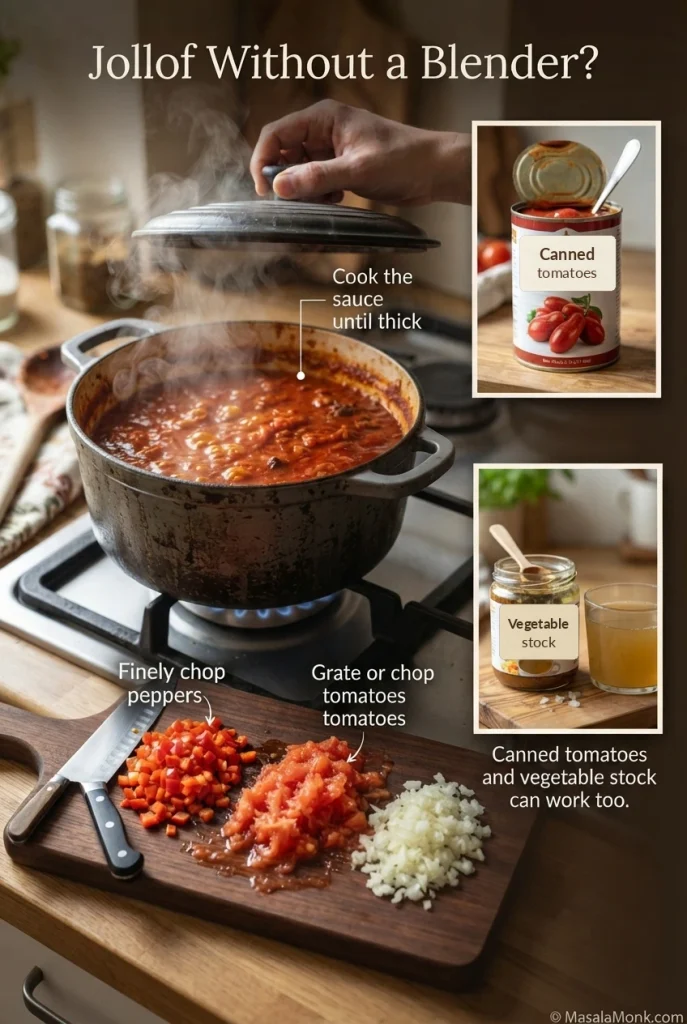
Canned tomatoes: Replace the 300 g fresh tomatoes with 300 g canned whole peeled tomatoes and their juice. Reduce the blended mixture to the same thick, spoonable endpoint; canned products vary in water content and acidity.
No blender: Use a food processor for a slightly coarser puree. Without either appliance, finely chop the peppers, finely chop or grate the tomatoes, and mince the onion. Cook until everything softens, using a potato masher if helpful. Expect more texture and potentially longer reduction time than with a smooth blend.
Chicken: Cook it separately to keep the rice method straightforward. Our baked chicken breast recipe is one accompaniment. Cooking raw chicken with rice, or switching to an oven or rice cooker, changes the heat and liquid requirements and calls for its own cooking method.
Jollof Rice Troubleshooting: Hard, Mushy, Wet or Burnt
When jollof does not turn out as expected, first taste a few grains and check how much moisture remains. A dry pot with firm rice needs a different response from a wet pot with firm rice.
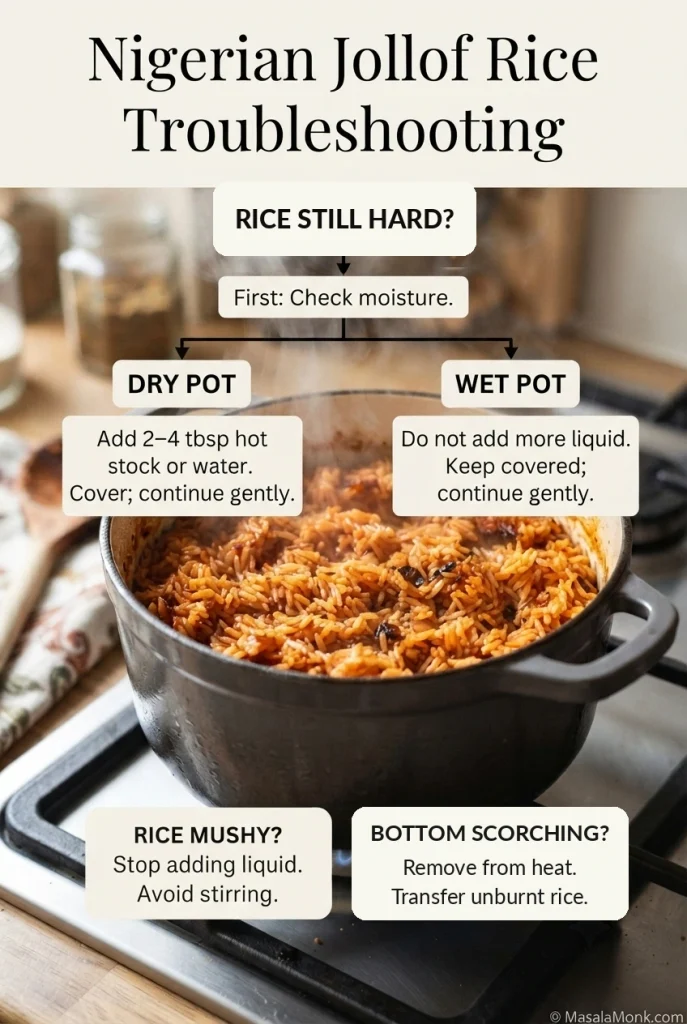
Diagnosing Hard Rice: Wet Pot or Dry Pot?
Part the rice gently at the edge if moisture is unclear. Then use the appropriate row below; adding more stock to already-wet rice can make the final texture worse.
| Problem | What to do |
|---|---|
| Hard rice, dry pot | Add 2–4 tbsp (30–60 ml) hot stock or water; cover and check after 5–8 minutes. |
| Hard rice, wet pot | Keep covered and maintain gentle heat. Allow more time without adding liquid. |
| Some grains hard, others soft | Check lid fit and heat distribution. Let firmer areas steam; avoid stirring soft grains aggressively. |
| Mushy rice | Remove from heat and stop stirring. If free moisture remains, stand uncovered briefly. Broken grains won’t become firm again. |
| Scorched bottom | Remove from heat and transfer unaffected rice to a clean pot, leaving the burnt layer behind. |
| Raw tomato flavour | Serve with well-seasoned accompaniments if needed; reduce and cook the stew more thoroughly next time. |
| Bland jollof | Adjust servings with suitable seasoning; next time taste the stew before adding rice. |
| Too salty or spicy | Pair with mild, unsalted sides. Severe over-seasoning may not be fully reversible. |
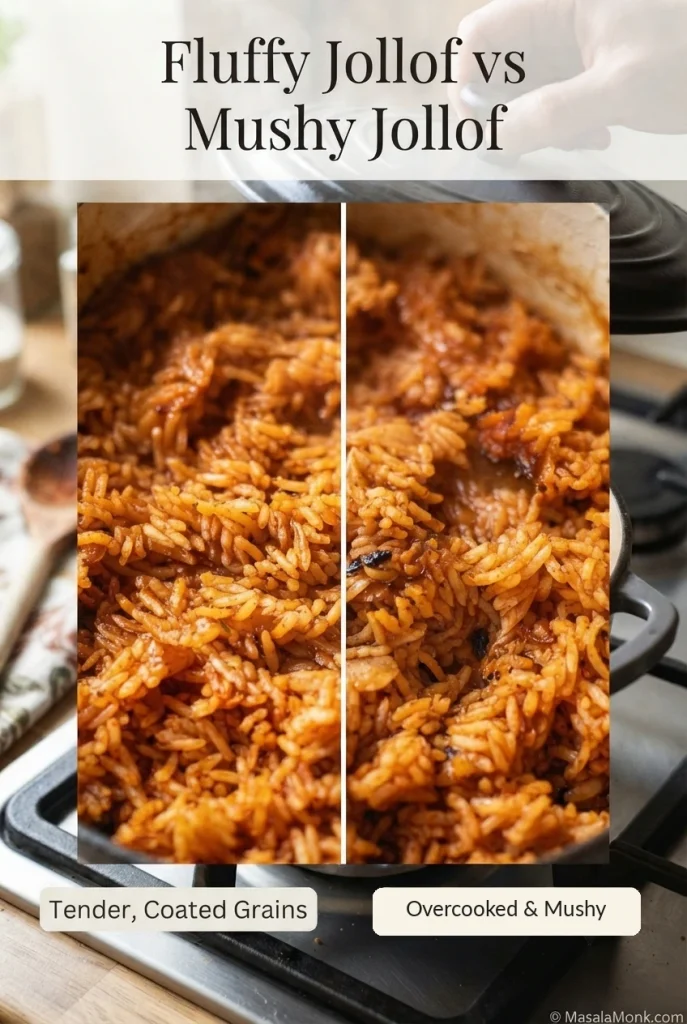
Tender Grains Versus Mushy Jollof
Tender jollof can hold together slightly without becoming mushy. Overcooked grains swell, split and collect into wet clumps, especially after heavy stirring.
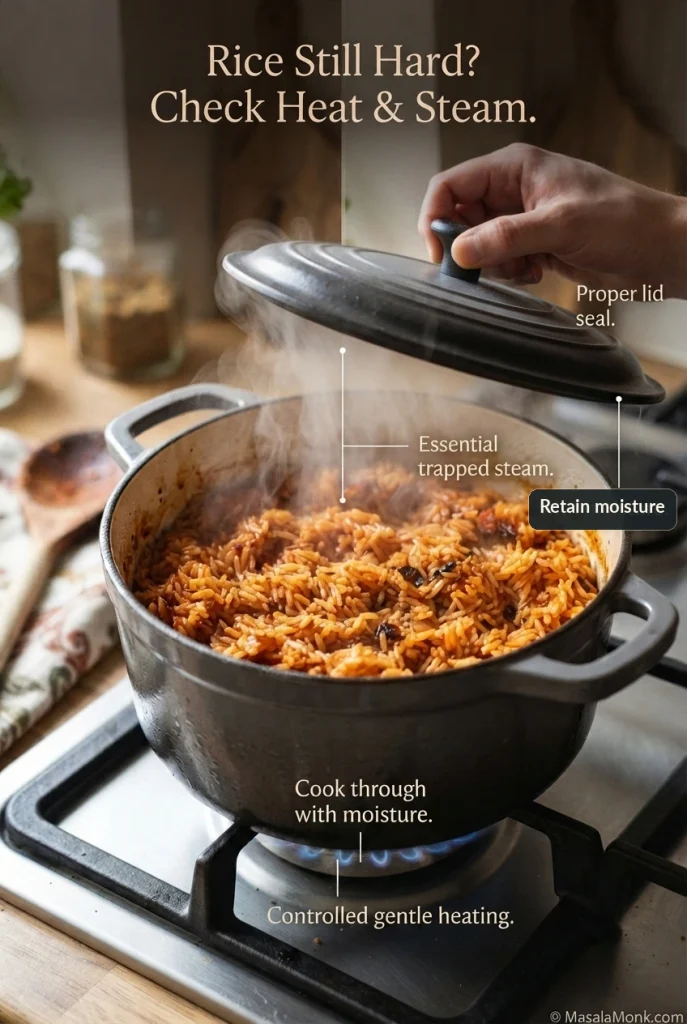
Why Is My Jollof Still Hard After Adding Water?
Enough liquid doesn’t help if the heat is too low or steam keeps escaping. Check for steady gentle cooking and a properly fitted lid. An oversized pot on a small burner may cook the centre faster than the edges. If uneven heating continues, choose a better-matched pot or cook smaller batches next time.
Why Are Some Grains Soft and Others Hard?
Taste rice from the centre and from nearer the edge. If some grains are still firm and moisture remains, cover and let them steam gently; avoid repeatedly stirring the soft rice through the hard rice.
How Can I Avoid Burning the Bottom?
Use a heavy-bottomed pot that fits the burner, establish the simmer before lowering the heat, and listen for fierce sizzling as moisture decreases. Strong burning smells call for immediate action. For a badly scorched base, transfer only the unaffected rice to another pot; scraping up the burnt layer spreads bitterness.
Why Does Jollof Taste Like Plain Tomato Rice?
A watery pepper base, under-fried paste or weakly seasoned stock can leave the flavour flat. Fry the tomato paste until its raw edge mellows, concentrate the pepper blend and taste the stew before adding rice. Adding extra curry powder at the end will not recreate the same flavour development.
For the next batch, revisit the stew-tasting checkpoint before adding the rice.
Where Does Jollof Rice Come From?
Jollof belongs to a wider West African rice tradition associated with the Wolof people and the historic Jolof kingdom of the Senegambian region. Senegalese thieboudienne, traditionally cooked with fish and vegetables, is part of that broader history of seasoned rice dishes. Nigerian and Ghanaian jollof have distinct modern traditions and preparations.
In Nigerian versions, rice commonly cooks in a tomato-pepper stew with onions, stock and seasonings such as curry powder and thyme. The details vary from kitchen to kitchen. Nigerian food writer Ozoz Sokoh explores the dish and its history in her Nigerian jollof rice guide at Serious Eats.
Nigerian Party Jollof: Smoky Flavour and Bottom Pot
Nigerian party jollof is known for generous portions, deeply seasoned rice and, in some preparations, an unmistakable smoky aroma. Large pots and firewood cooking are part of that tradition, though the home recipe above does not require either.
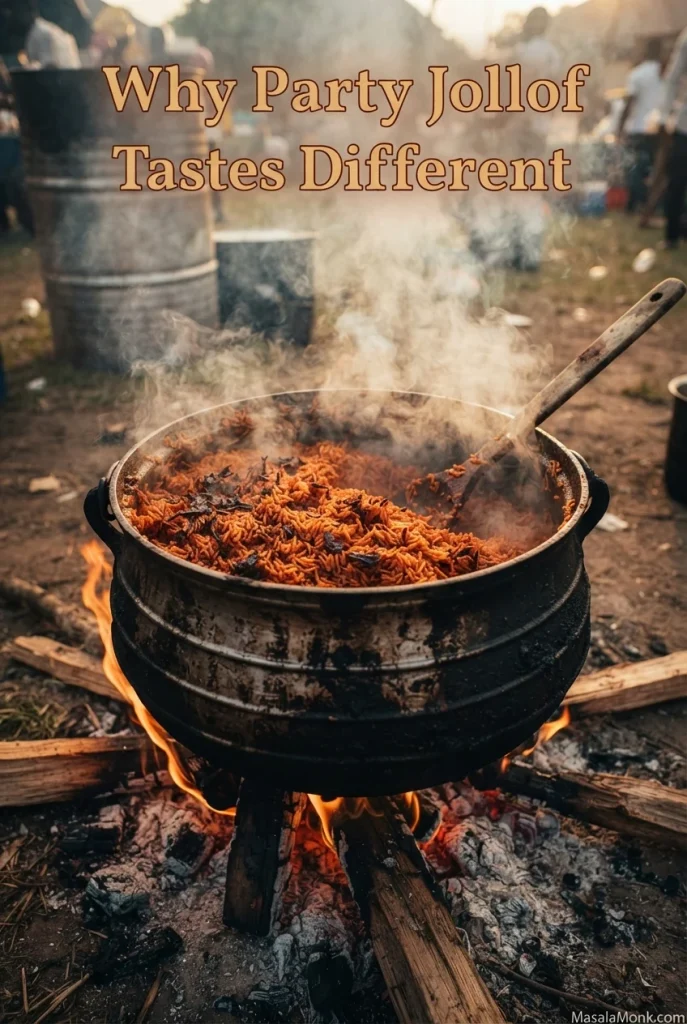
A home stove can still produce richly flavoured jollof. What it cannot automatically reproduce is the combination of large-pot conditions, firewood smoke and the toasting sometimes associated with party cooking. Cooking longer alone is not the answer.
Toasted Versus Burnt Bottom-Pot Rice
The lightly toasted portion from the bottom of the pot is sometimes called bottom pot. A gently browned layer can be enjoyable, but blackened tomato sauce tastes bitter. Firewood smoke is also different from the flavour of a browned crust.
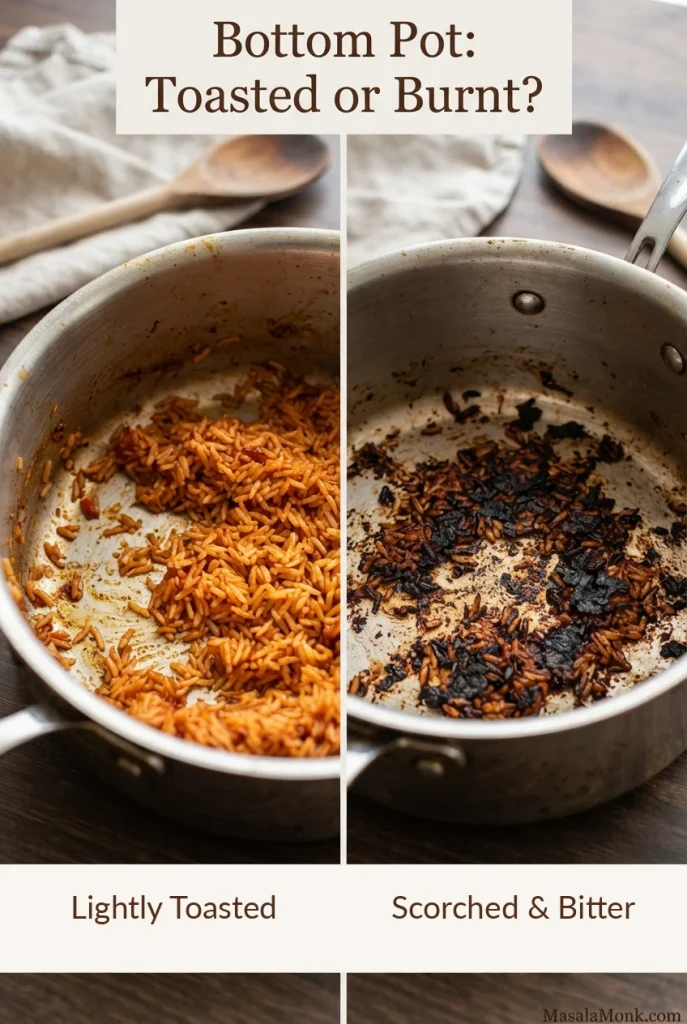
The stovetop method above aims for tender rice and a concentrated pepper flavour, without deliberately burning the bottom. A little roasted-pepper char is a possible variation, but it is not the same as firewood smoke. Crisp chicken, such as our fried chicken recipe, makes a fitting accompaniment.
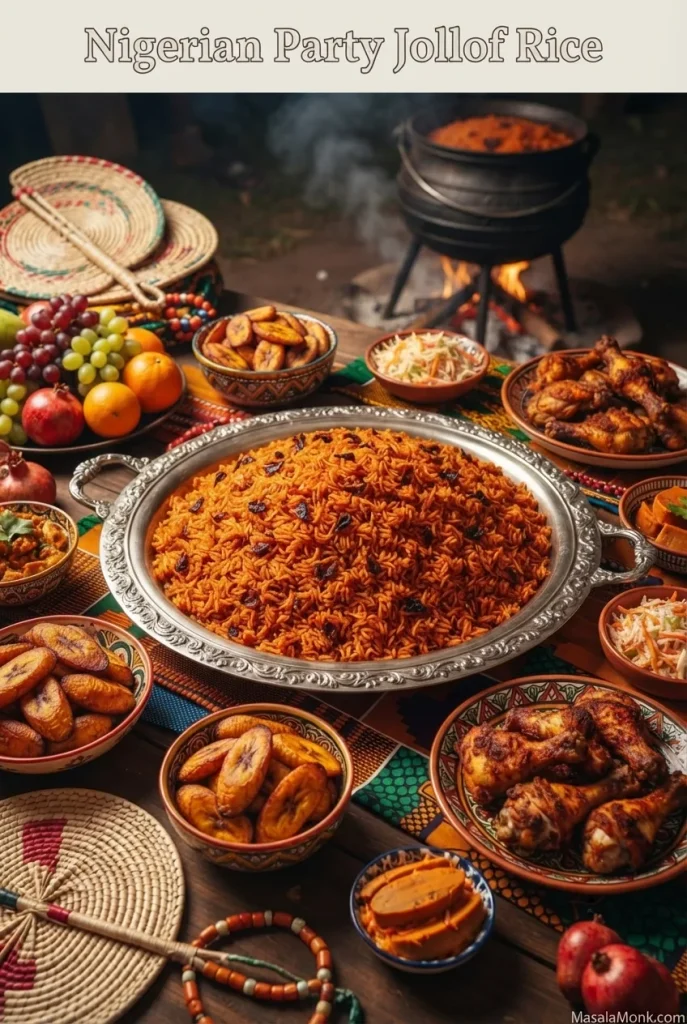
A Nigerian Party Jollof Serving Platter
For a celebration, serve jollof from a large central platter, with chicken and dodo alongside so guests can choose their portions.
What to Serve With Nigerian Jollof Rice
Fried ripe plantains, known as dodo, bring caramelised sweetness against the peppery rice. Chicken, grilled or fried fish, beef, goat meat and moin moin—a savoury steamed bean pudding—are also familiar Nigerian accompaniments.
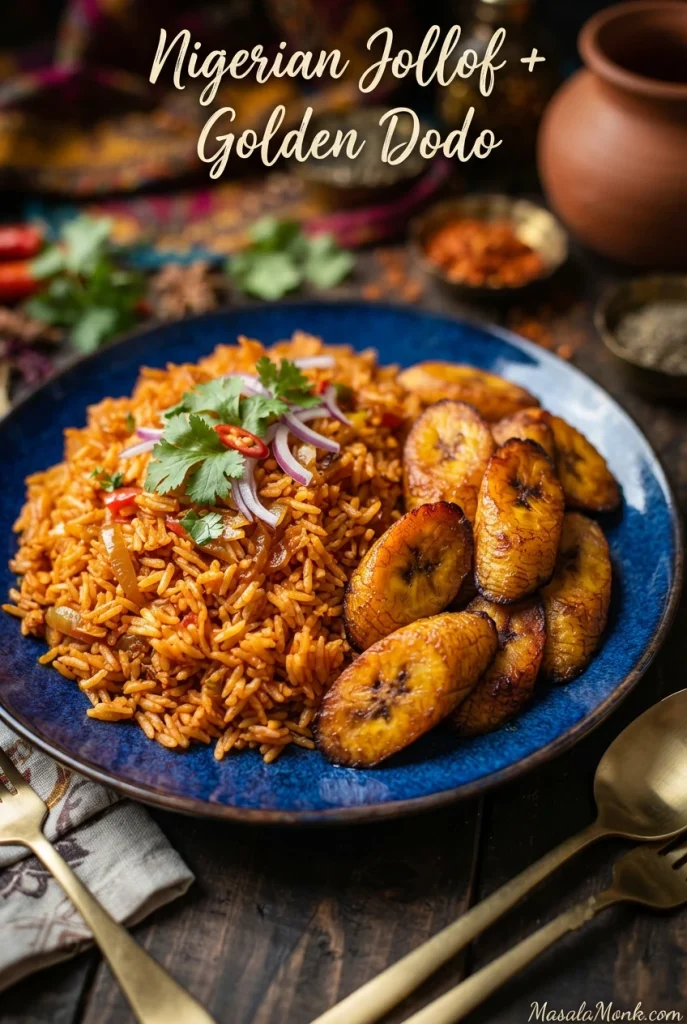
For a cool, crunchy contrast, add a simple salad or homemade coleslaw. A plate of seasoned rice, dodo and one savoury accompaniment makes a generous meal.
Chicken, Fish, Moin Moin and Fresh Sides
Choose a protein, something sweet or starchy if you like, and a fresh side to balance the peppery rice. The accompaniments can be served separately at the table.

How Much Jollof Rice Per Person?
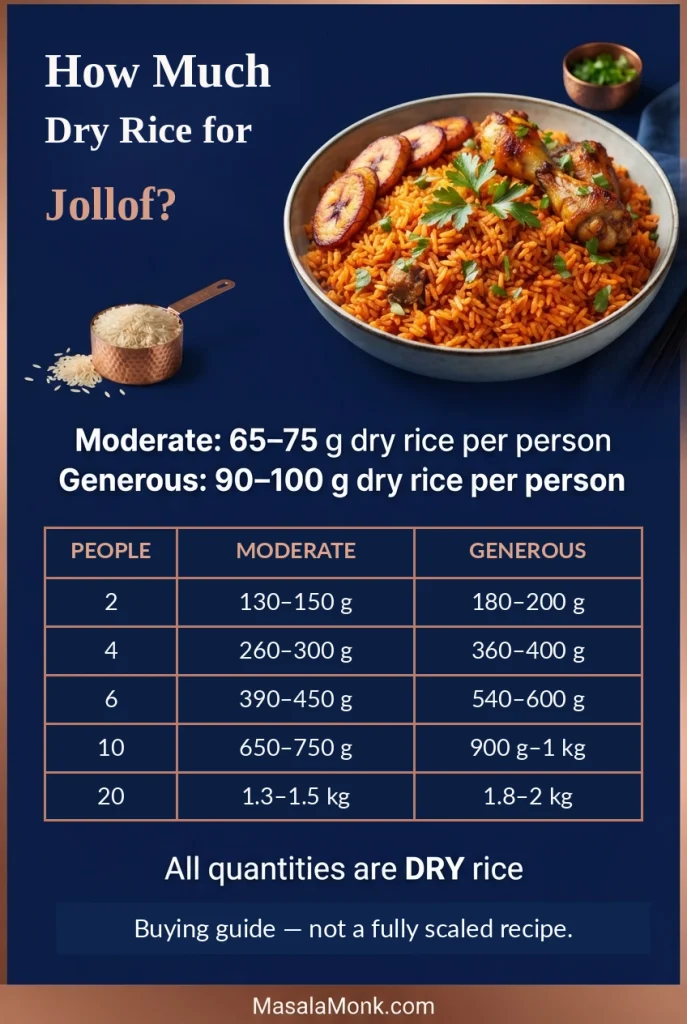
Allow around 65–75 g dry rice per adult when several sides are served, or 90–100 g if jollof is the main part of the meal.
| People | Moderate portions | Generous portions |
|---|---|---|
| 2 | 130–150 g | 180–200 g |
| 4 | 260–300 g | 360–400 g |
| 6 | 390–450 g | 540–600 g |
| 10 | 650–750 g | 900 g–1 kg |
| 20 | 1.3–1.5 kg | 1.8–2 kg |
The chart gives dry-rice shopping amounts for two to twenty adults; it does not scale the full stew recipe.
The main recipe uses 400 g rice. For a crowd, prepare the pepper base ahead and cook manageable batches: doubling quantities in a much deeper pot changes how heat and steam travel, so cooking times will not necessarily double or stay the same.
How to Store, Freeze and Reheat Jollof Rice
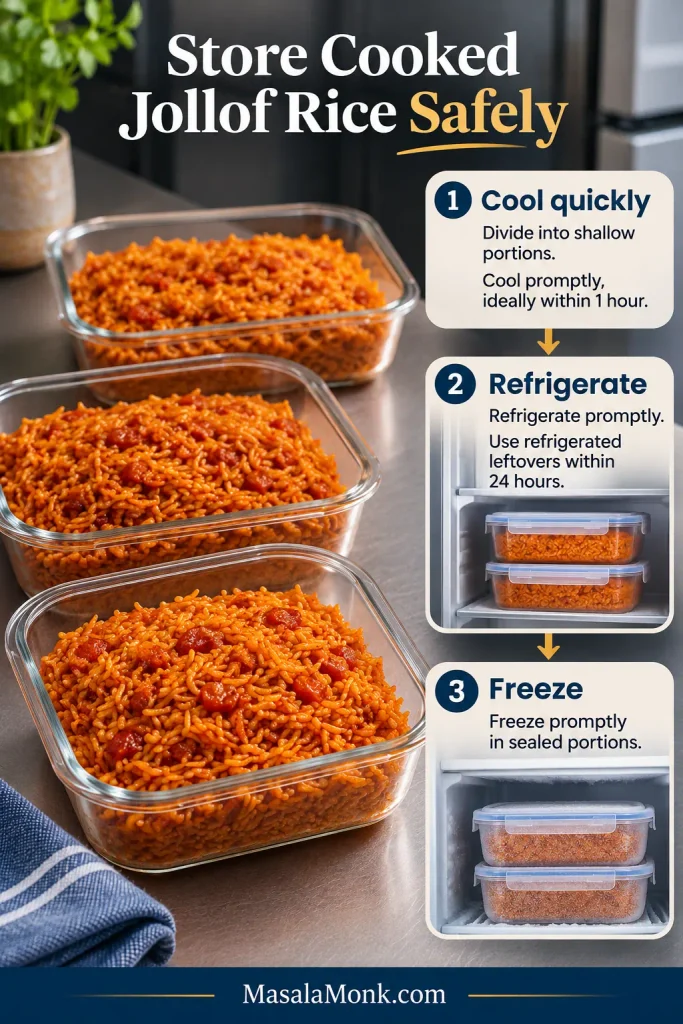
Cool leftover jollof quickly by dividing it into shallow portions rather than leaving a deep pot of rice to stand on the stove.
Uncooked rice may contain Bacillus cereus spores that survive cooking. When cooked rice sits warm for too long, bacteria or toxins can develop; reheating does not reliably make badly stored rice safe.
The UK Food Standards Agency’s rice-safety guidance recommends cooling rice quickly, ideally within one hour, refrigerating it and consuming refrigerated leftovers within 24 hours. Reheat only once, until steaming hot throughout.
- Cool: Divide leftovers into shallow containers rather than leaving a large pot on the stove.
- Refrigerate: Chill promptly and use within 24 hours under this conservative guidance.
- Freeze: Cool rapidly and freeze promptly in sealed portions.
- Defrost: Thaw in the refrigerator before reheating.
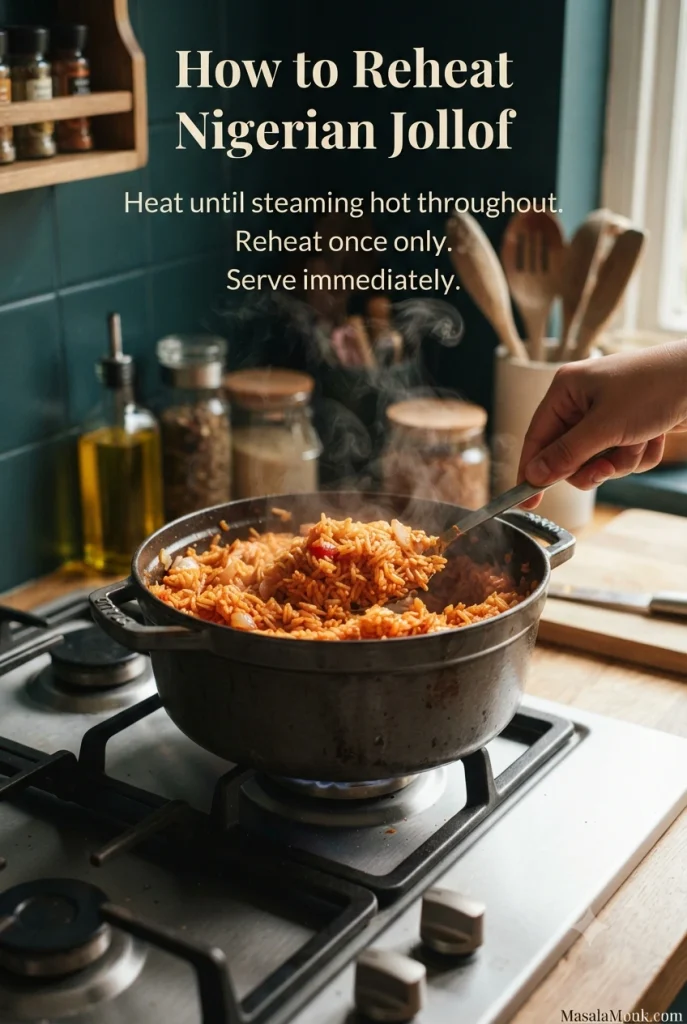
- Reheat: Heat until steaming hot throughout and serve immediately; reheat once only.
Discard rice left at room temperature overnight.
Reheating Refrigerated Jollof Rice
Reheat only promptly cooled and refrigerated rice. On the hob, add a small splash of water if the rice is dry, cover and warm gently, turning it to heat evenly. In the microwave, use a covered microwave-safe dish and stir partway through. Whichever method you choose, heat until steaming hot throughout and serve immediately.
Back to the main recipe · Back to contents
Nigerian Jollof Rice FAQs
How Do I Make My Jollof Rice Redder?
Choose ripe red tomatoes and peppers, fry the tomato paste properly and avoid over-diluting the stew. Finished jollof can range from orange-red to deep red. Colour alone isn’t a reliable measure of flavour or doneness.
Can I Make Nigerian Jollof a Day Ahead?
Making the pepper base a day ahead saves most of the hands-on work without requiring you to reheat the cooked rice. If making the entire dish ahead, cool and refrigerate promptly, then follow the rice storage and one-time reheating guidance. Cooking the rice closer to serving gives you more control over texture.
Which rice do you prefer for Nigerian jollof—and why? Do you use parboiled long-grain, Golden Sella or something else? Share your favourite in the comments.








