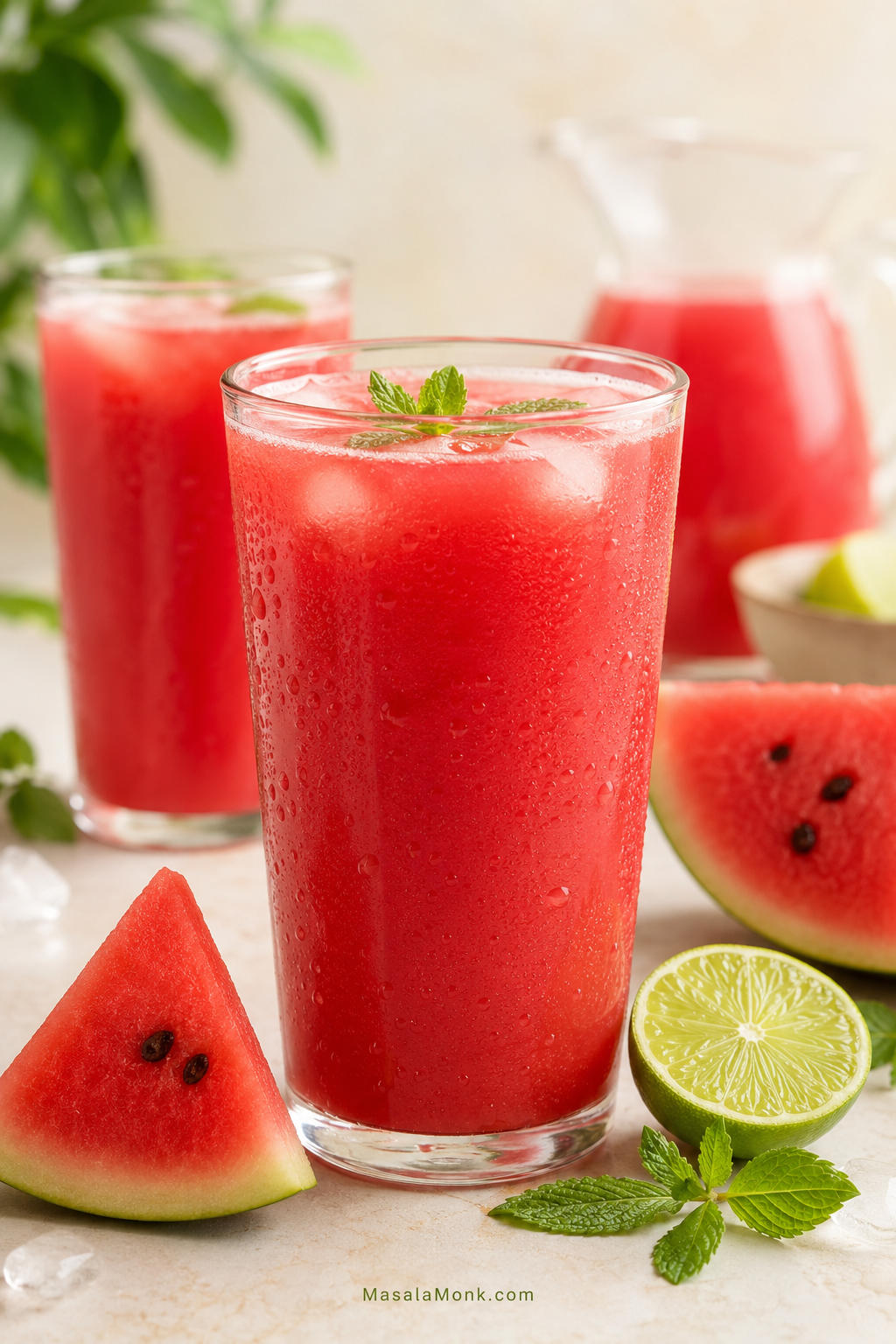
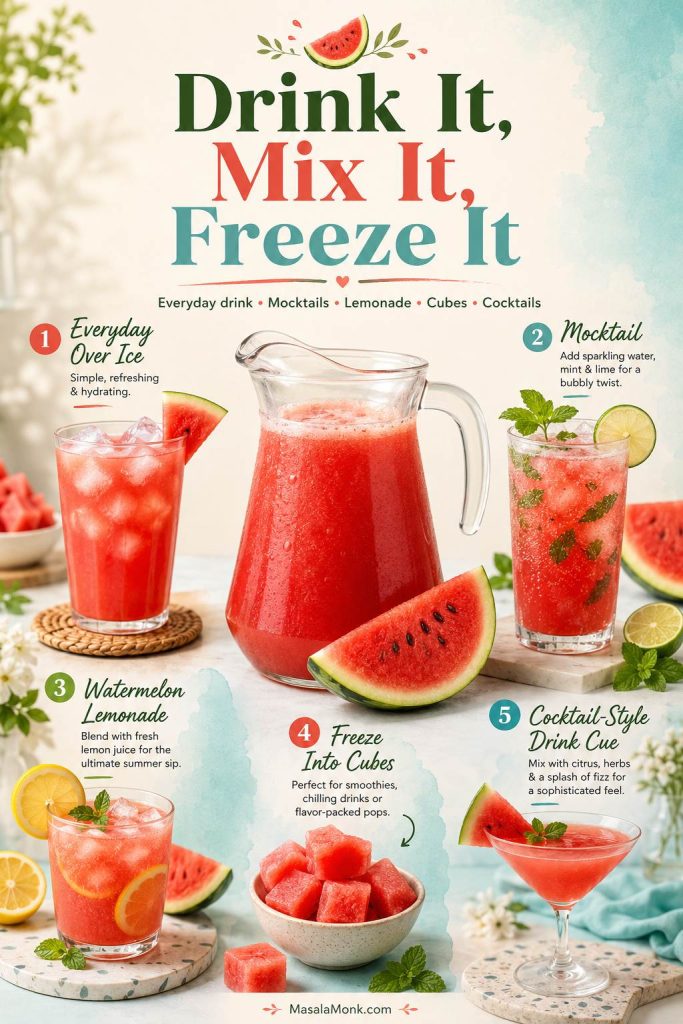
There are days when a cold glass of watermelon juice feels better than dessert: icy, ruby-red, naturally sweet, and bright enough to wake you up in a few sips. The only catch is that it can turn flat or watery if you blend it the wrong way.
This watermelon juice recipe keeps the flavor bold by blending cold watermelon without added water, then balancing it with lime or lemon and a small pinch of salt. You do not need a juicer, and you can leave it pulpy, strain it smooth, or turn the same base into watermelon cucumber juice, watermelon pineapple juice, mint watermelon juice, or Indian-style tarbooz juice with black salt.
The best glass should taste like biting into cold watermelon, not like watermelon-flavored water. That is why this method starts with chilled fruit, skips added water, and adjusts only after you taste: citrus for lift, a tiny pinch of salt for brightness, and more cold fruit for body.
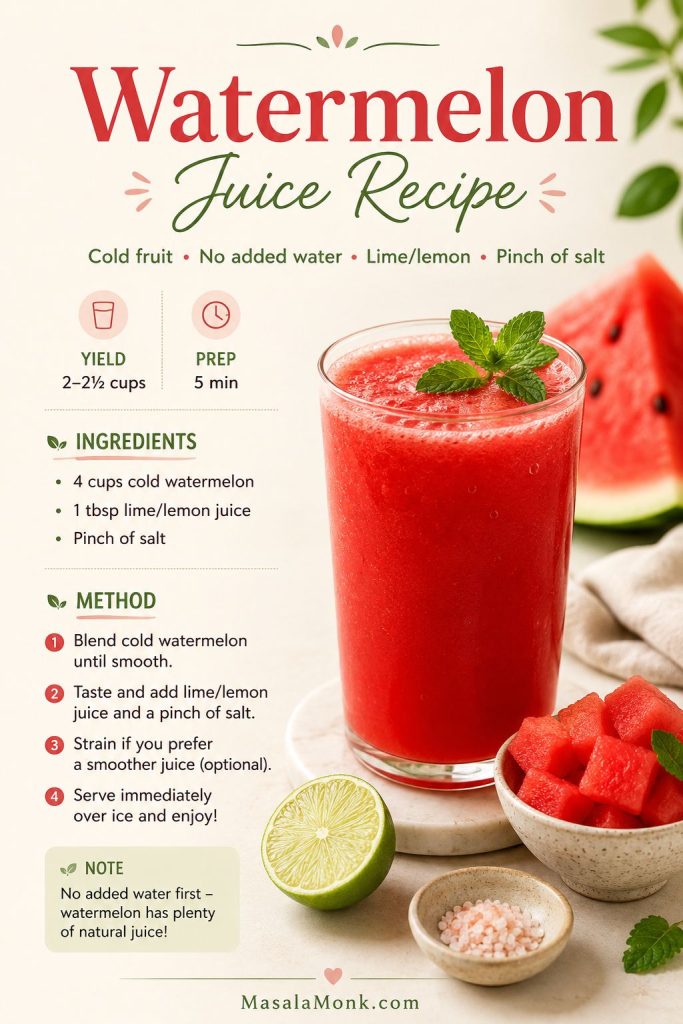
Blend 4 cups cold seedless watermelon cubes with 1 tablespoon fresh lime or lemon juice and a small pinch of salt. Do not add water at first. Strain the juice if you want it smooth, or leave it unstrained for a thicker, pulpy, fresh-fruit texture. Serve it over ice right away, or chill it briefly and stir before pouring.
Sweet watermelon needs very little help. Bland fruit is where the lime-and-salt trick matters most. That small adjustment is what turns watery blended fruit into a bright, cold glass that actually tastes alive.
Blend cold watermelon first, then taste before adding anything else. That small pause helps you fix the fruit you actually have instead of diluting the glass too early.
If your juice tastes flat, thin, or pulpy after blending, use the flavor fixes before adding more ice or sugar.
Why This Watermelon Juice Works
The best version should taste like cold, ripe watermelon first: clean, juicy, and bright. Everything else in this recipe is there to protect that flavor, not cover it up.
No juicer needed: Watermelon blends easily because it is naturally full of juice.
No added water: The drink stays sweet, fresh, and concentrated instead of diluted.
Lime or lemon wakes it up: A little acidity lifts even average watermelon.
A small pinch of salt helps: Regular salt sharpens the sweetness; black salt gives an Indian-style summer cooler flavor.
Straining is optional: Keep the pulp for body, or strain the juice for a cleaner pitcher-style drink.
Because the base is so clean, you can use it for everyday drinking, mocktails, brunch drinks, popsicles, or cocktails like a watermelon margarita.
Ingredients for Watermelon Juice
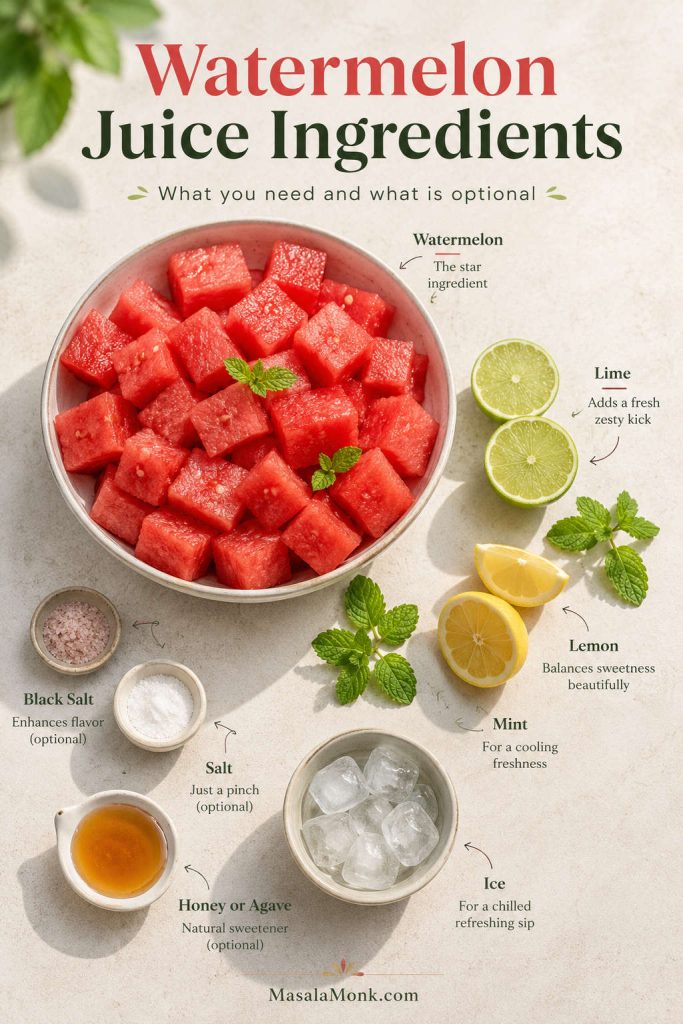
You only need watermelon for the simplest version, but lime or lemon and a little salt make the drink taste much more alive.
Watermelon does most of the work, while the small additions shape the flavor. Lime or lemon adds lift, salt sharpens sweetness, and mint or black salt changes the mood.
Ingredient
US Measure
Metric
Why It Matters
Cold seedless watermelon cubes
4 cups
About 600 g
The main body, sweetness, and color of the drink.
Fresh lime or lemon juice
1 tablespoon
15 ml
Lifts the flavor and fixes flat-tasting fruit.
Fine salt or black salt
Small pinch, up to 1/8 teaspoon
About 0.5 g
Makes the fruit taste sweeter and more refreshing.
Fresh mint leaves
6–10 leaves
Optional
Adds a cooling summer flavor.
Honey, sugar, or agave
1–2 teaspoons
Optional
Use only if the watermelon is not sweet enough.
Ice
As needed
Optional
Serve over ice, but avoid blending in too much ice because it waters down the flavor.
Seedless vs Seeded Watermelon
Seedless watermelon is easiest because you can cube and blend it quickly. If you have seeded watermelon, remove as many black seeds as possible before blending. A few small white seeds are usually fine in a blender, especially if you plan to strain the juice.
Lime or Lemon?
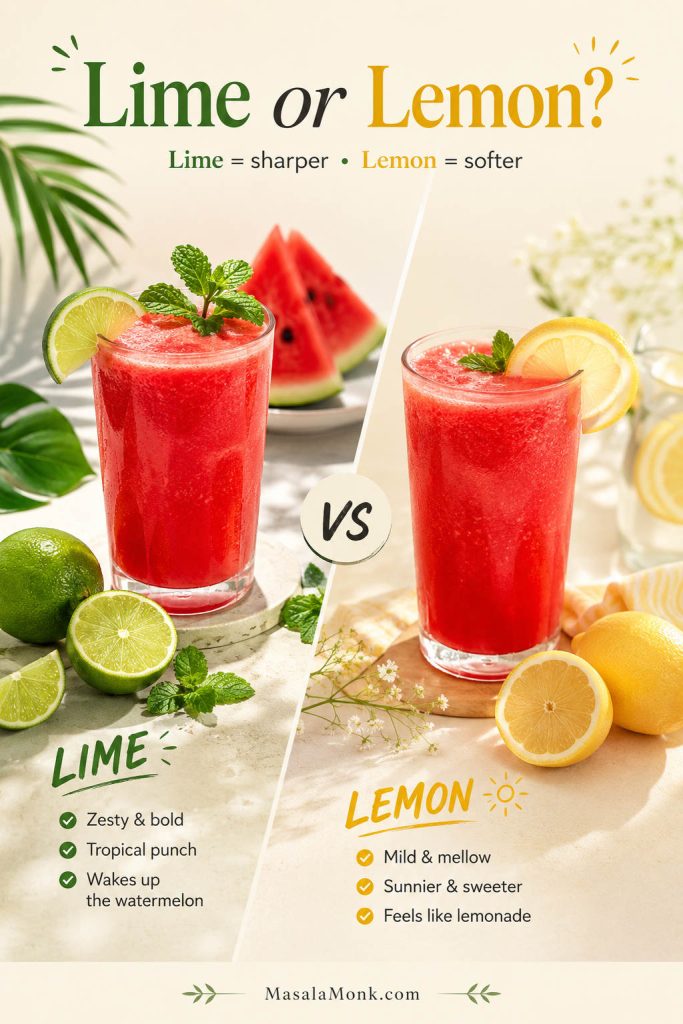
Lime gives the drink a sharper, more tropical edge. Lemon tastes softer and more familiar, especially if you are making watermelon lemonade or Indian-style tarbooz juice. Either works, so use what you have.
Lime gives the glass a sharper, cleaner edge, while lemon makes it softer and more lemonade-like. Choose lime for crispness and lemon for a gentler summer drink.
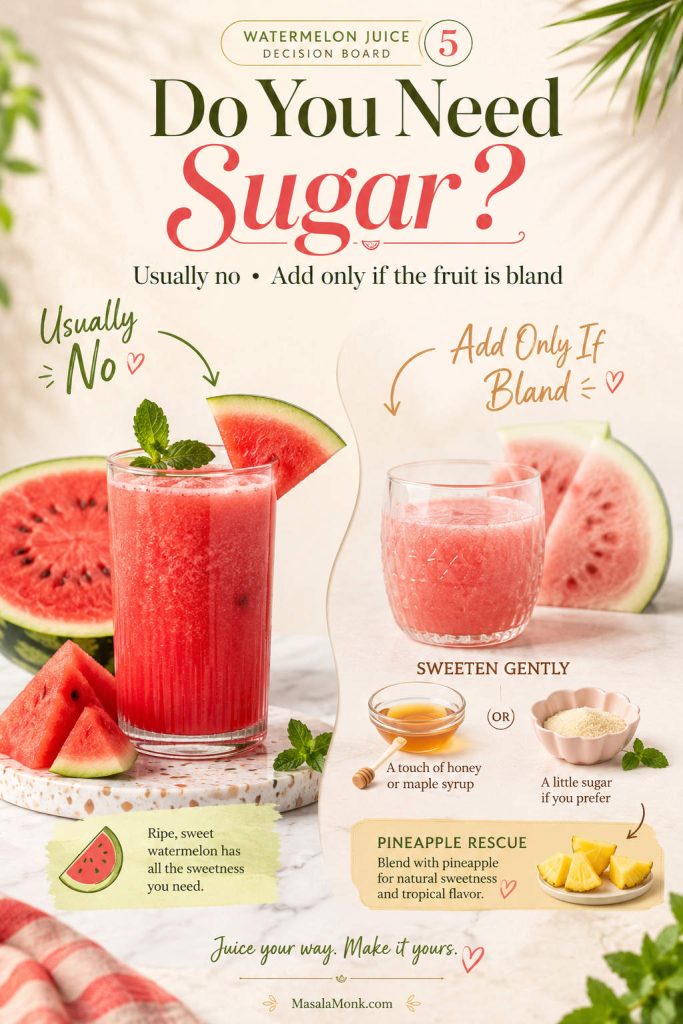
Do You Need Sugar?
Usually, no. A ripe watermelon should be sweet enough. However, if the fruit is pale, bland, or not fully ripe, add 1–2 teaspoons of honey, sugar, simple syrup, or agave. Start small because the drink should still taste fresh, not syrupy.
Ripe watermelon usually needs no sugar. When the fruit tastes pale or flat, pineapple or a tiny amount of sweetener can rescue the juice without making it syrupy.
If your watermelon needs help but you do not want to lean on sugar, pineapple is one of the easiest fruit fixes. For another naturally sweet tropical drink, this pineapple mango juice follows the same fruit-forward idea.
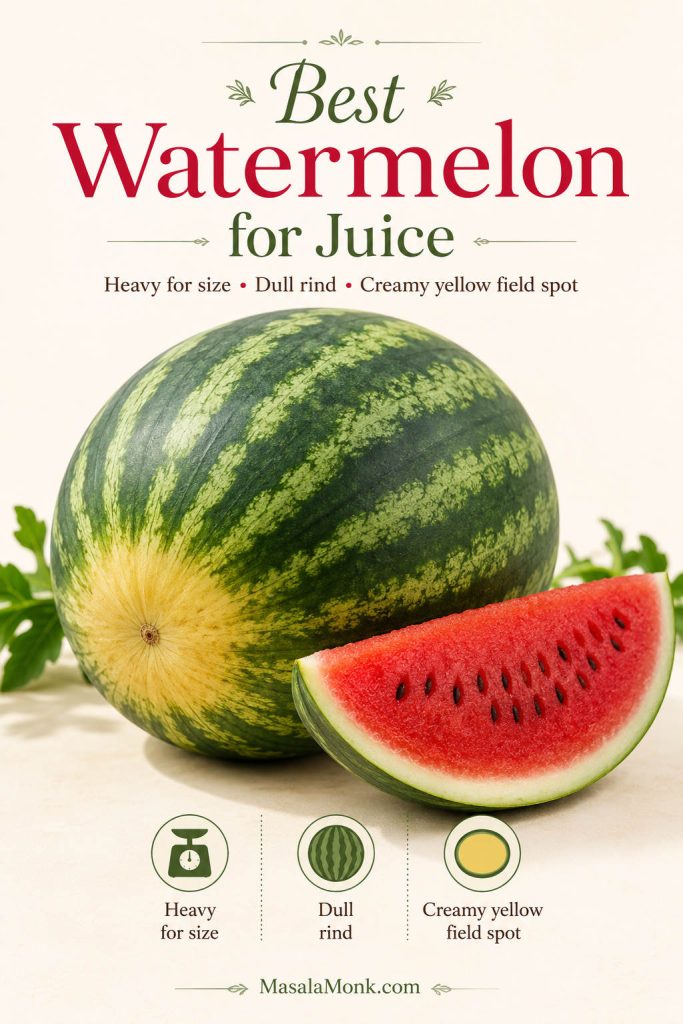
How to Pick a Sweet Watermelon
The best juice starts before the blender. If the melon is sweet and ripe, the recipe needs almost no help. If you only check two things, choose one that feels heavy for its size and has a creamy yellow field spot.
Better juice starts with better fruit. Choose a watermelon that feels heavy for its size and has a creamy yellow field spot for the best chance at sweetness.
Heavy for its size: A juicy watermelon should feel heavier than it looks.
Dull rind: A shiny rind can mean the fruit is underripe.
Creamy yellow field spot: This is where the melon rested on the ground. A deeper yellow spot usually suggests better ripeness.
Symmetrical shape: Avoid oddly dented or misshapen fruit when possible.
No soft spots or sour smell: Once cut, the flesh should smell fresh and sweet, not fermented.
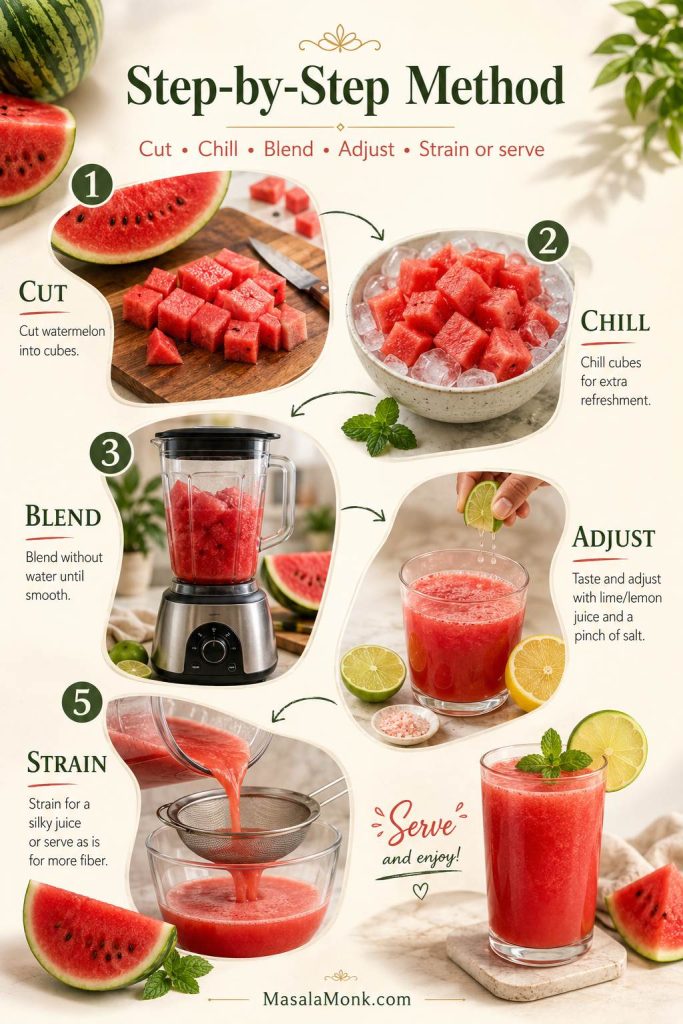
How to Make Watermelon Juice in a Blender Without a Juicer
This is the easiest clean method because it is fast, low-effort, and does not require special equipment. You do not need a perfect watermelon for it to work. A great melon needs almost nothing; an average one can still become a good drink with citrus, salt, cold temperature, or a little pineapple.
The method is simple, but the order matters. Chill and blend the fruit first, then adjust the flavor before deciding whether to strain or serve.
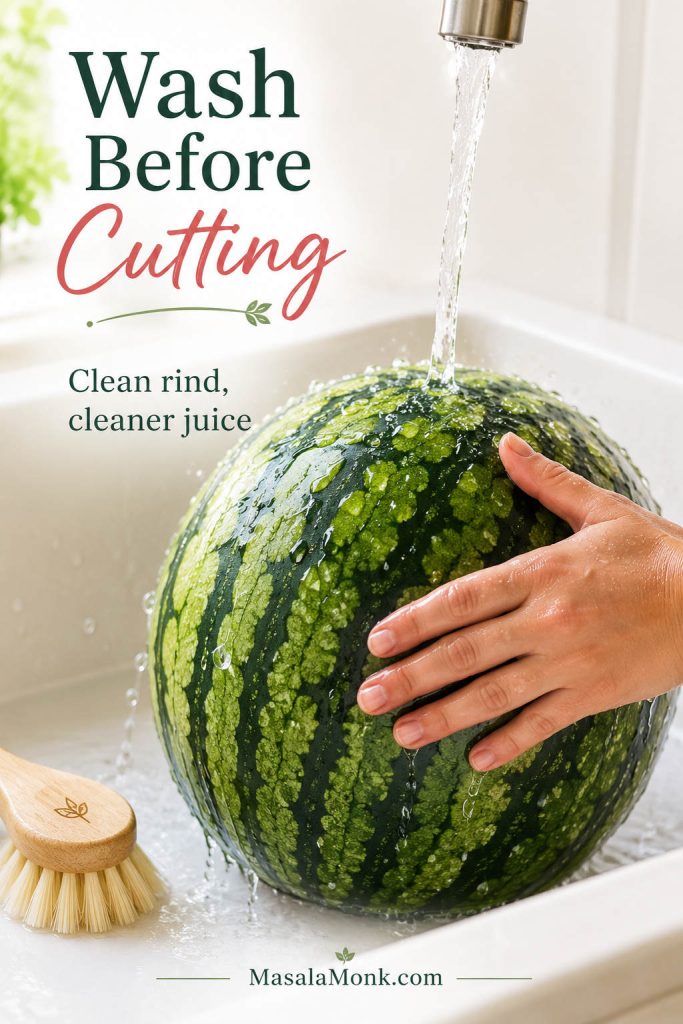
Wash the Watermelon Before Cutting
Rinse the outside before cutting, and scrub the rind under running water if it feels dusty or dirty. You do not eat the rind, but the knife passes through it into the fruit, so a clean outside matters. Food-safety guidance also recommends washing produce before cutting, even when you do not eat the skin.
Wash the rind before cutting, even though you will not eat it. As the knife passes through the outside into the flesh, a clean rind helps keep juice prep cleaner.
Chill the Watermelon
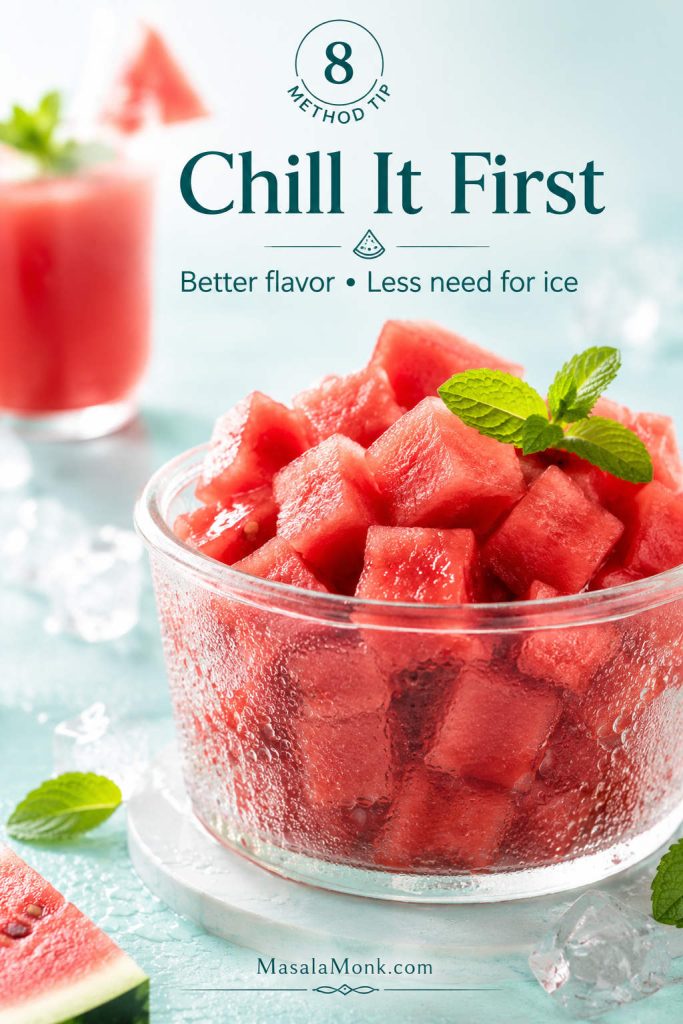
Cold fruit makes better juice. If the watermelon is already cold, you can serve the drink right away without blending in extra ice. If it is room temperature, cube it and chill the pieces for 30 minutes before blending, or chill the finished pitcher briefly before serving.
Cold fruit gives the drink better body and a cleaner first sip. It also reduces the need for blended ice, which can make the juice taste watery.
Cut Away the Rind
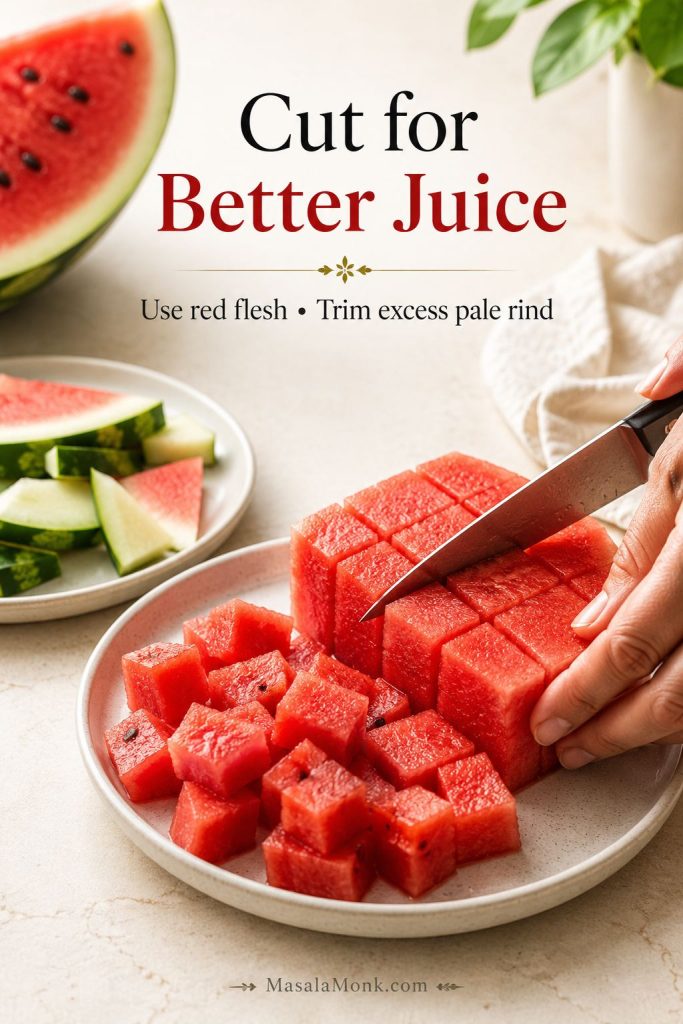
Slice off the green rind and the pale white part underneath it. A little pale edge will not ruin the drink, but too much white rind can make it taste grassy or thin.
Use mostly the red flesh for the cleanest flavor. Too much pale rind can make fresh watermelon juice taste grassy, thin, or less naturally sweet.
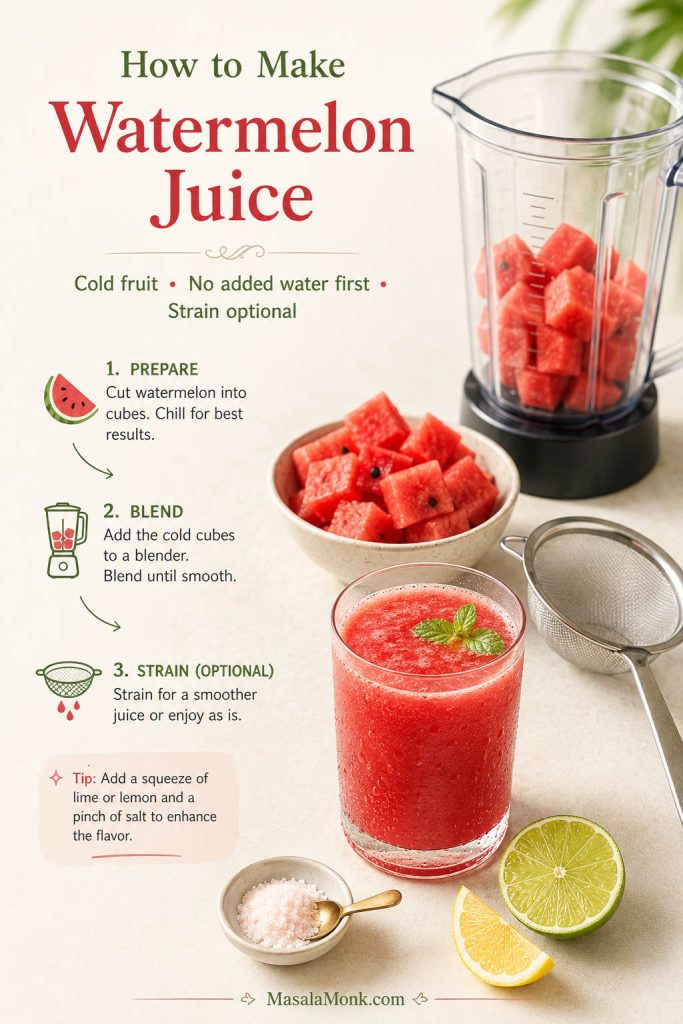
Blend Without Water
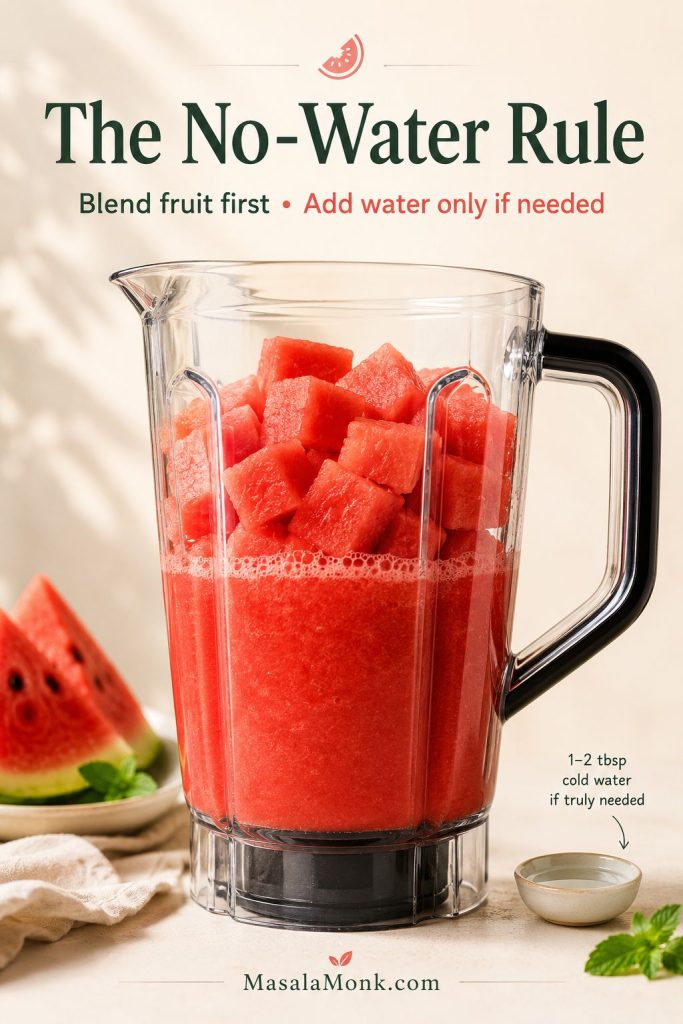
Add the watermelon cubes to a blender and blend for 30–60 seconds, until smooth. Do not add water at first. The fruit releases plenty of liquid as it blends.
The No-Water Rule
Blend the watermelon by itself first. Extra water makes the drink thinner before you know whether it needs help. If the blender struggles, pulse a few times, press the fruit down with a tamper if your blender has one, or add only 1–2 tablespoons cold water to get the blades moving.
Watermelon releases plenty of liquid once the blades catch. Start without water and use only the smallest splash of cold water if your blender refuses to move.
If the first blend tastes weak or watery, taste and adjust before adding ice or extra water.
Taste, Then Adjust
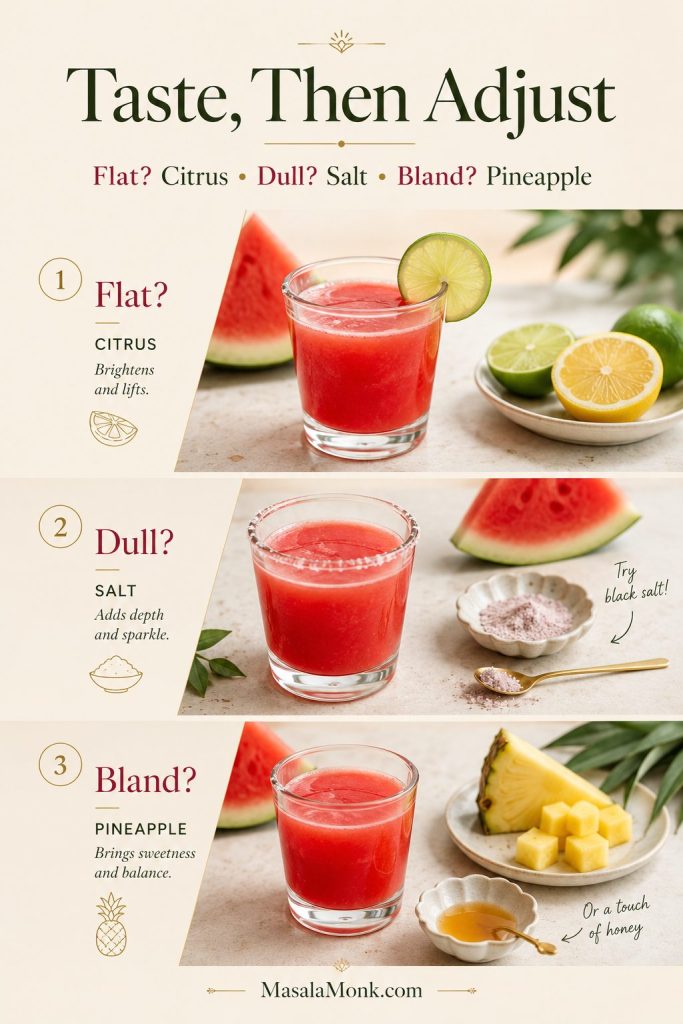
Taste before adding anything else. Sweet but flat? Add lime or lemon. Dull? Try a tiny pinch of salt or black salt. Not sweet enough? Add a teaspoon or two of honey, sugar, agave, or a little pineapple.
A quick taste tells you what the glass needs. Citrus brightens, salt sharpens, and pineapple adds sweetness plus acidity when the melon tastes weak.
Strain If You Want It Smooth
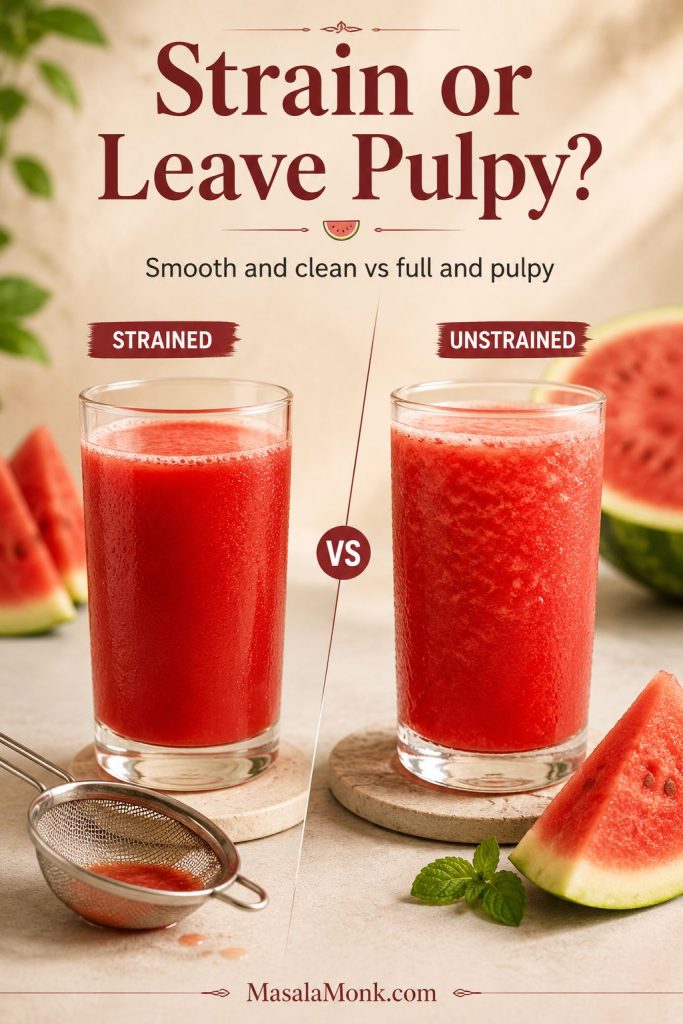
Pour the juice through a fine-mesh strainer for a clean, smooth glass. Leave it unstrained if you like a thicker, pulpy, fresh-fruit texture.
Serve Cold
Pour into glasses over ice and enjoy soon after blending. Garnish with mint, lime, lemon, or small watermelon wedges if you want it to look more polished.
Should You Strain Watermelon Juice?
Straining is optional. The right choice depends on the texture you want and how you plan to serve the drink.
If you want a juice-bar-style glass, strain it. If you want more body and less waste, leave it pulpy.
For a pitcher or mocktail, strained juice looks cleaner. When you are drinking it right away, the pulp adds body and keeps more of the fruit in the glass.
Style
Texture
Best For
Unstrained
Thicker, pulpy, more body
Everyday drinking, less waste, a fuller fruit texture
Fine-mesh strained
Smooth but still fresh
Pitchers, guests, cleaner glasses
Cheesecloth or nut milk bag
Very smooth and polished
Mocktails, cocktails, party drinks, or extra-smooth juice
For a quick glass at home, unstrained is perfectly fine. For a pitcher, mocktail, or cocktail, straining gives a cleaner finish.
Still not sure about texture? See the texture guide for thin, just-right, and pulpy juice.
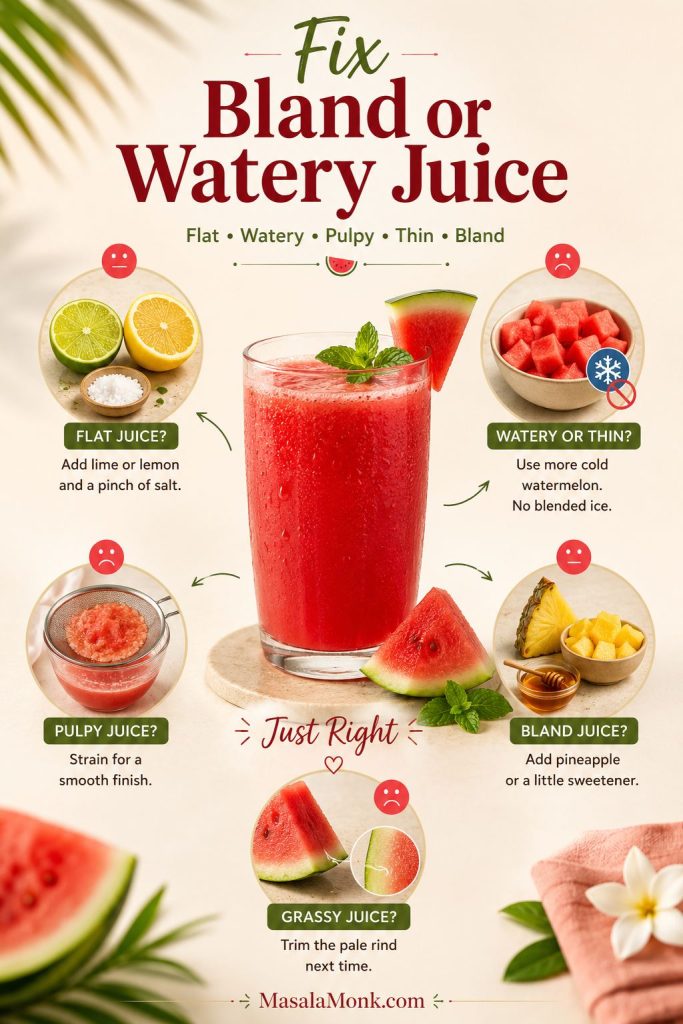
How to Fix Bland, Watery, or Pulpy Watermelon Juice
This is where homemade watermelon juice either becomes excellent or stays forgettable. Watermelon changes from fruit to fruit, so taste the blended juice before adding anything. Then fix the exact problem instead of dumping in ice, sugar, or water.
If the first sip is not right, do not panic and do not add more ice. Flat juice needs citrus and salt, thin juice needs more cold fruit, and pulpy juice needs straining.
Do not rescue a dull batch with more ice. Instead, fix the actual problem: brighten the flavor, rebuild the body, or strain the texture until the glass tastes balanced.
Problem
Best Fix
Tastes flat
Add 1 tablespoon lime or lemon juice and a small pinch of salt.
Not sweet enough
Add 1–2 teaspoons honey, sugar, or agave. Pineapple also helps.
Too sweet
Add lime, lemon, cucumber, or sparkling water.
Too watery
Chill it, stir it, and serve over ice instead of blending ice into it. For more body, blend in extra cold watermelon.
Too pulpy
Strain through a fine-mesh sieve, cheesecloth, or nut milk bag.
Too thin after straining
Blend in more cold watermelon, not more ice.
Separated in the fridge
Stir or shake before serving. Separation is normal.
Slightly grassy
Use less of the pale white part near the rind next time.
What not to do: Do not fix thin, bland juice by blending in a lot of ice or water. That makes the flavor even weaker. Use lime or lemon for brightness, a small pinch of salt for lift, pineapple for sweetness, or more cold watermelon for body.
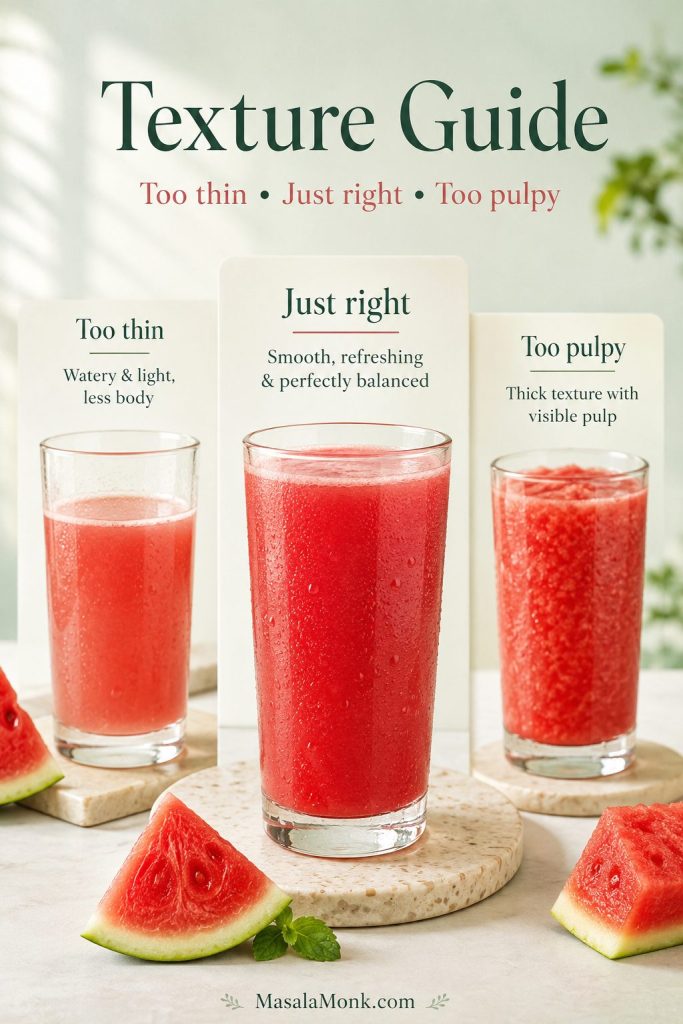
What the Right Texture Looks Like
The ideal texture is bright and full without becoming thick. Use this guide after blending or straining, especially if the juice tastes thin or feels too pulpy.
The best texture is bright and full without feeling thick. If the juice is too thin, blend in more cold watermelon; if it is too pulpy, strain it.
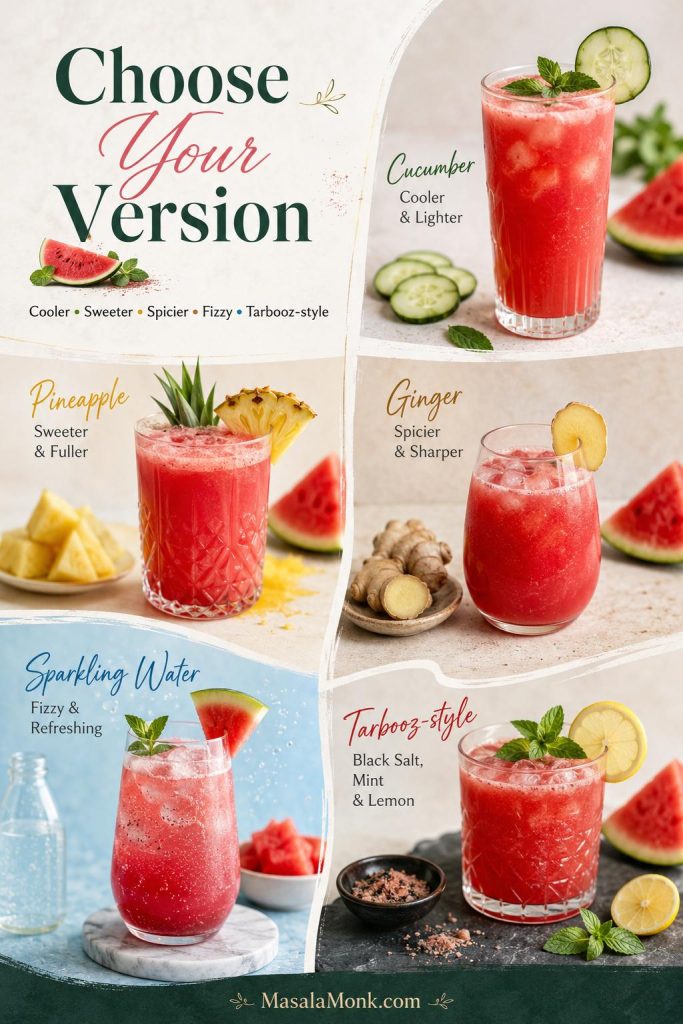
Watermelon Juice Variations
Once the basic glass tastes bright, choose the variation by mood: cucumber for cooler and lighter, pineapple for sweeter and fuller, ginger for bite, sparkling water for a mocktail feel, and black salt for Indian-style tarbooz juice.
Once the basic glass tastes balanced, choose the variation by mood. Cucumber cools it down, pineapple adds sweetness, ginger gives bite, and black salt makes it tarbooz-style.
What You Want
Make This Version
Bright, crisp, and classic
Watermelon lime juice
Cooler and less sweet
Watermelon cucumber juice
Sweet-tart and tropical
Watermelon pineapple juice
A little bite
Watermelon ginger juice
Light, fizzy, and mocktail-like
Sparkling watermelon juice
Tangy Indian summer-cooler flavor
Tarbooz juice with black salt, mint, and lemon
If you are making a pitcher or party batch, check the yield guide before scaling any variation.
Watermelon Lime Juice
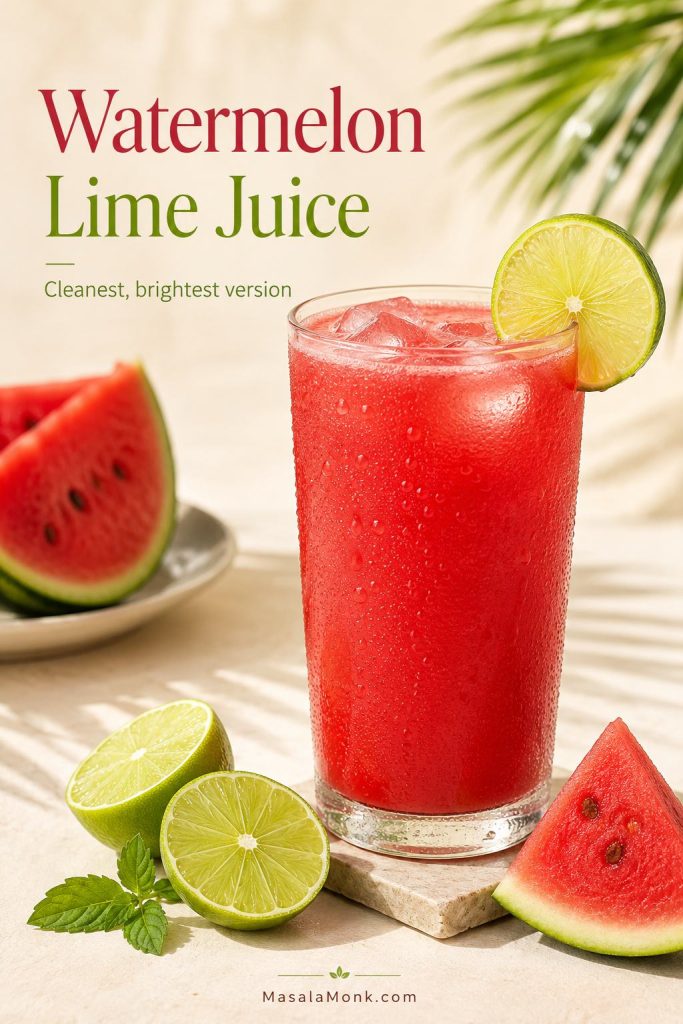
Choose this when you want the cleanest, brightest glass. Blend 4 cups watermelon with 1 tablespoon lime juice and a small pinch of salt. It tastes crisp, cold, and not too sweet.
Choose watermelon lime juice when you want the crispest version. Lime cuts through the sweetness quickly, so the glass tastes clean, bright, and not too heavy.
Watermelon Lemon Juice
Lemon gives the base a softer, lemonade-like brightness. Use 1 tablespoon lemon juice instead of lime. This is the simplest version of watermelon and lemon juice, and it works especially well with mint or black salt.
Lemon gives the drink a softer kind of brightness. Because it tastes gentler than lime, this version works well when you want a watermelon lemonade feel.
Watermelon Mint Juice
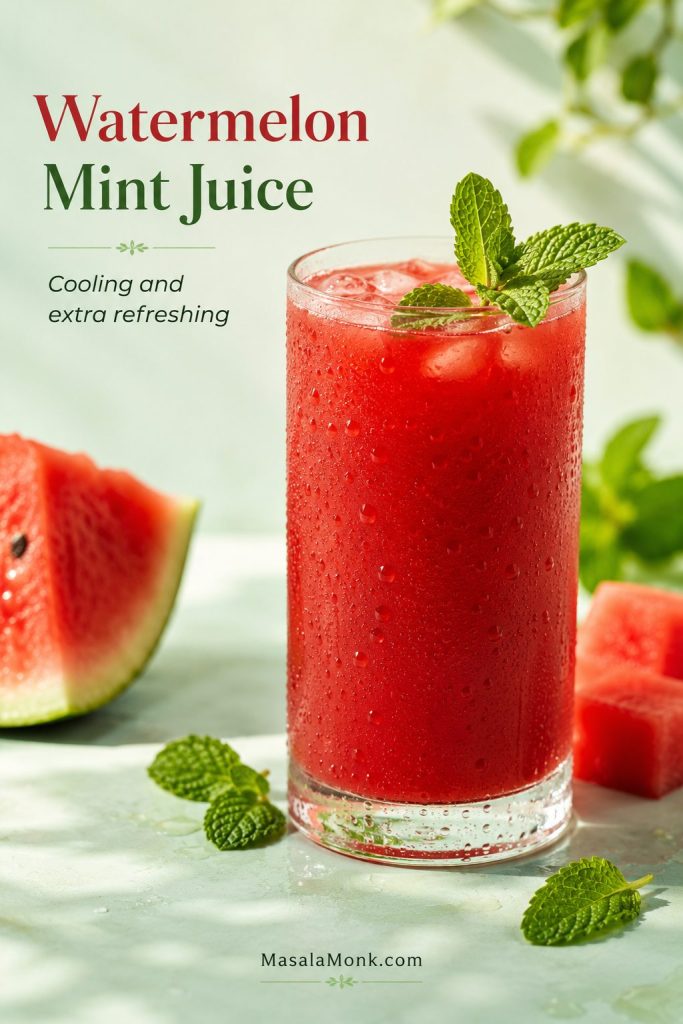
Mint makes the drink taste colder and more refreshing, especially on very hot days. Blend 4 cups watermelon with 6–10 fresh mint leaves and 1 tablespoon lime juice. Start with fewer leaves if your mint is strong, because too much can turn the flavor herbal instead of fresh.
Mint makes the drink feel cooler without adding sweetness. Start with a few leaves first, then add more only if you want a stronger herbal finish.
If mint and lime are your favorite part of the glass, you may also like this mojito recipe for the same cooling, citrusy direction.
Watermelon Cucumber Juice
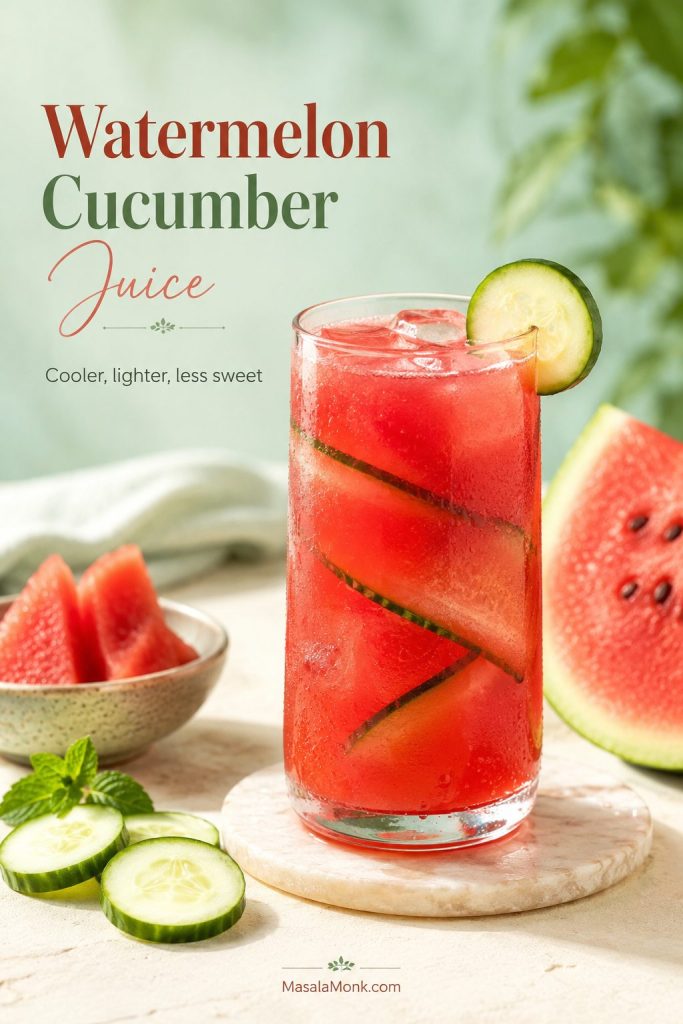
When you want something cooler and less sweet, add cucumber. Blend 4 cups watermelon with 1/2 to 1 cup peeled cucumber, 1 tablespoon lime or lemon juice, and a small pinch of salt. This also covers the same idea people search for as watermelon and cucumber juice.
Cucumber makes the juice lighter and less sweet, which helps when the watermelon is very ripe. It also gives the glass a cleaner, spa-water-style finish.
Watermelon Pineapple Juice
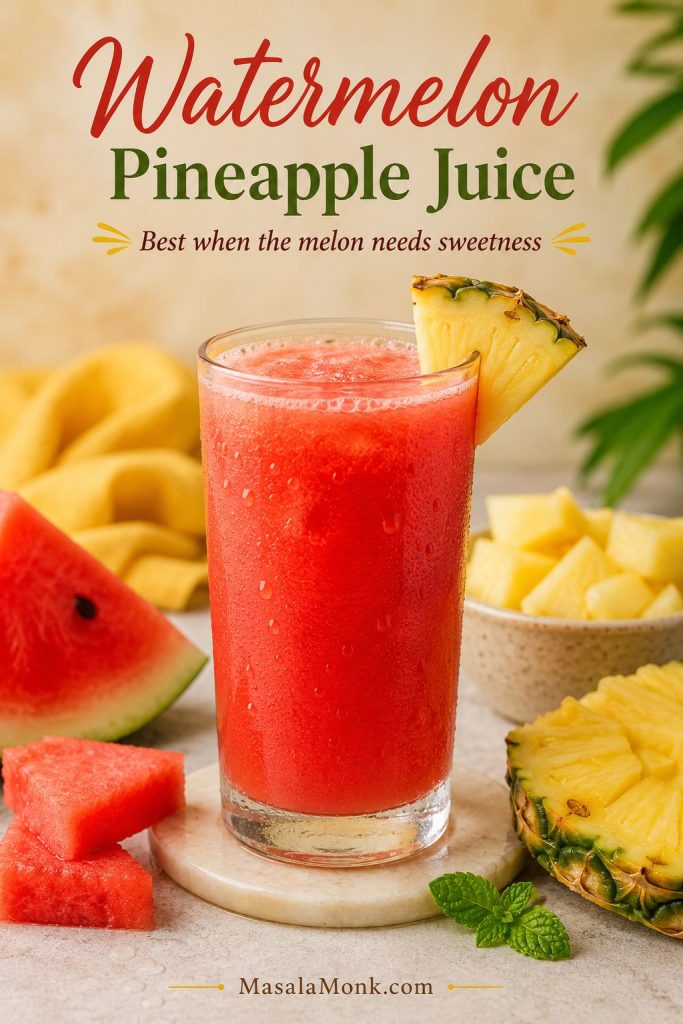
For bland watermelon, pineapple is the easiest rescue. It brings both sweetness and acidity, so the blend tastes fuller without needing much added sugar. Use 2 cups watermelon with 1 cup pineapple, then add lime if you want more sharpness. If you are looking for watermelon and pineapple juice, this 2:1 fruit ratio is the easiest place to start.
Pineapple is the easiest fruit fix when watermelon tastes bland. It adds both sweetness and acidity, so the juice tastes fuller without needing much added sugar.
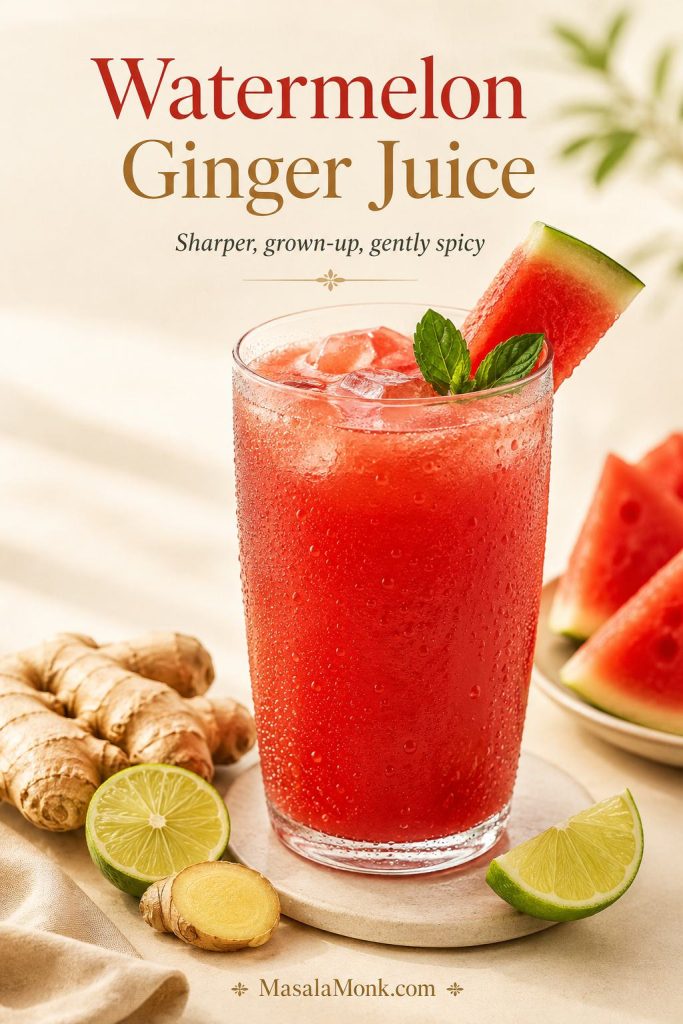
Watermelon Ginger Juice
For a sharper, more grown-up glass, add fresh ginger. It cuts through the sweetness and gives the juice a warm little kick. Blend 4 cups watermelon with 1 to 2 teaspoons fresh grated ginger and 1 tablespoon lemon or lime juice.
Fresh ginger gives the drink a sharper, more grown-up finish. Start small because ginger can quickly overpower watermelon’s clean sweetness.
Watermelon Coconut Water
For a softer, slightly tropical version, blend 3 cups watermelon with 1/2 cup coconut water, lime, and mint. Use less coconut water at first because it thins the drink quickly.
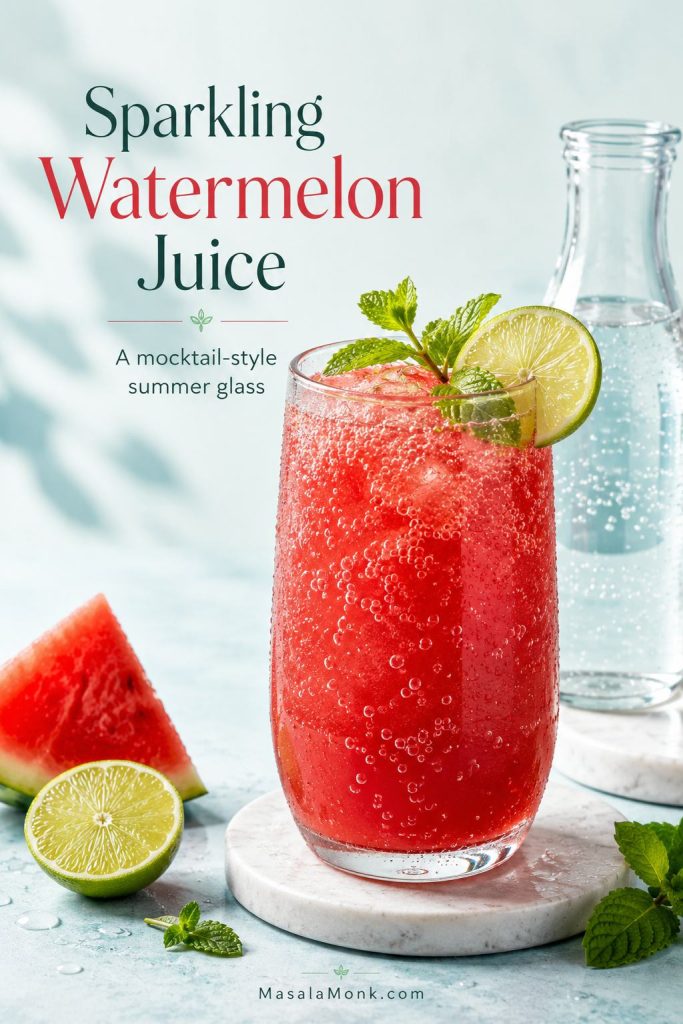
Sparkling Watermelon Juice
For a mocktail-style glass, fill a cup about two-thirds full with cold watermelon juice, then top with chilled sparkling water. Add lime and mint for a cleaner finish.
Add sparkling water right before serving so the bubbles stay lively. This turns fresh watermelon juice into an easy mocktail-style summer drink.
For more non-alcoholic summer drink ideas, use this juice as a base for watermelon mocktails, especially versions with lime, mint, coconut water, or bubbles.
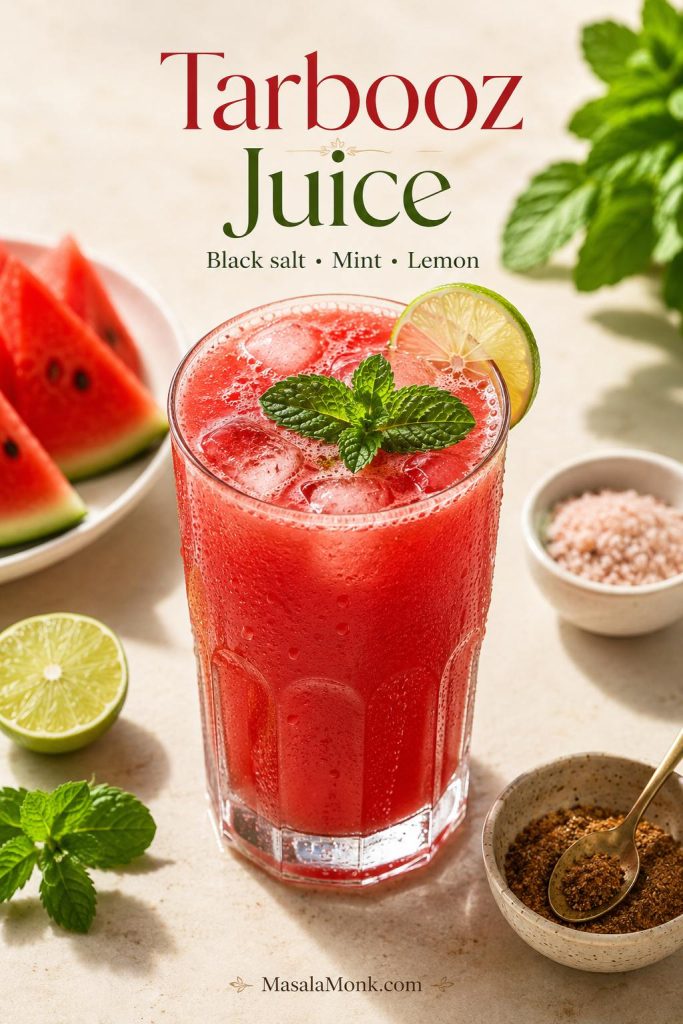
Indian-Style Tarbooz Juice
For an Indian summer-cooler flavor, blend watermelon with lemon or lime, mint, and a small pinch of black salt. Add only a tiny pinch of roasted cumin, black pepper, or chaat masala if you want that street-style edge. Keep the seasoning light so the fruit tastes cooler and brighter, not salty.
Black salt gives tarbooz juice its tangy Indian summer-cooler edge. Keep the seasoning light, though, so the drink still tastes like cold watermelon first.
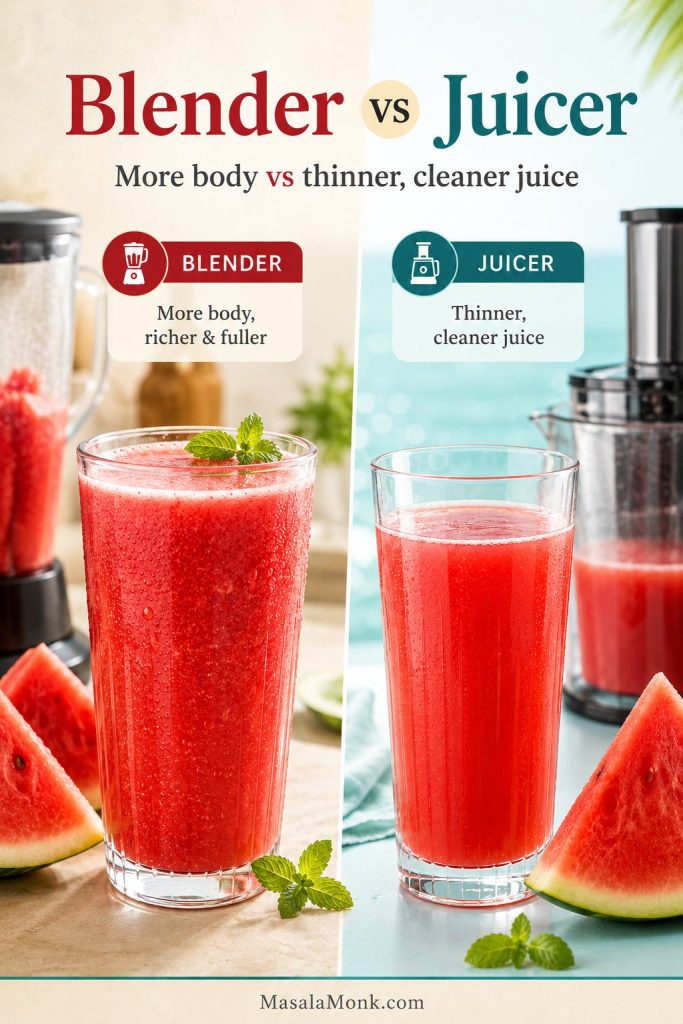
Juicing Watermelon: Blender vs Juicer Method
For watermelon, a blender is usually the better first choice because the fruit is already soft, juicy, and easy to break down. A juicer can work, but it often gives you a thinner, cleaner drink rather than the cold, full-bodied glass most people want at home.
A blender gives watermelon juice more body, while a juicer makes it thinner and cleaner. For most home batches, blending first is easier and more satisfying.
Method
Result
Best For
Blender, unstrained
Thicker juice with more body
Everyday drinking and less waste
Blender, strained
Smooth, clean juice
Pitchers, guests, mocktails, cocktails
Juicer
Thinner, clearer juice
People who already own a juicer and prefer a lighter drink
If you use a juicer, remove the rind and feed the pieces through slowly. If you use a blender, you can decide after blending whether you want to strain the juice or keep the pulp.
For a more filling drink, unstrained blended juice has an advantage because it keeps more of the fruit’s body. Mayo Clinic notes that juicing is not healthier than eating whole fruits and vegetables, and that blending edible parts can retain more fiber and plant compounds than extracting juice alone. You can read their general juicing guidance for more context.
How Much Juice Does One Watermelon Make?
The exact yield depends on ripeness, juiciness, and whether you strain. These estimates will help you plan.
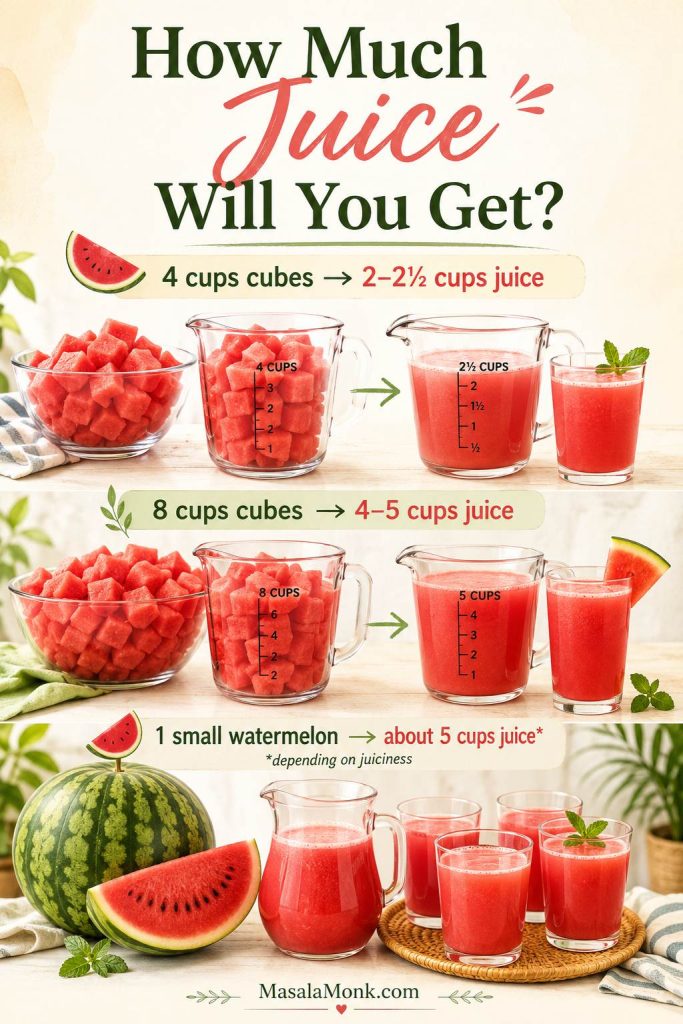
Watermelon yield changes with ripeness and juiciness, but 4 cups of cubes usually gives about 2 to 2½ cups of juice. Use this guide when scaling for a pitcher.
Watermelon Amount
Approximate Juice Yield
4 cups cubed watermelon / about 600 g
About 2–2½ cups / 480–600 ml
8 cups cubed watermelon / about 1.2 kg
About 4–5 cups / 950 ml–1.2 L
1 small watermelon, about 6–6.5 lb
About 5 cups, depending on juiciness
If you are making a pitcher for a group, start with 8 cups of cold cubed watermelon. That usually gives enough for about 4 glasses, especially if you serve it over ice or top some glasses with sparkling water.
How to Store Watermelon Juice
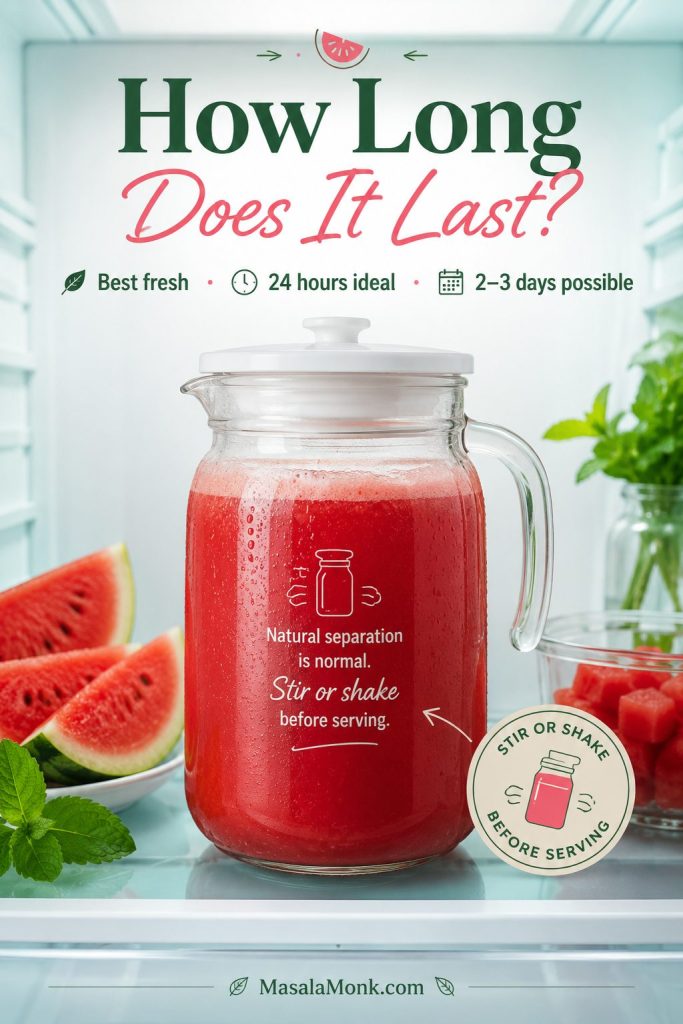
This drink tastes best right after blending. The flavor is brightest, the color is freshest, and the texture has not had time to settle.
Fresh is the peak, but a short fridge rest can still work. Keep the jar covered, serve it cold, and stir well before pouring because the pulp naturally settles.
Storage Rule
For the best make-ahead flavor, refrigerate watermelon juice in a clean covered jar for up to 24 hours. It can keep for 2–3 days if properly chilled, but the flavor fades and the juice naturally separates. Stir or shake before serving.
If you are serving guests, blend it the same day if possible. If you make it ahead, keep it covered and cold, then stir well and taste again before pouring.
Best: drink it right away.
Best make-ahead window: up to 24 hours in the fridge.
Possible: 2–3 days in a clean airtight jar, if kept cold.
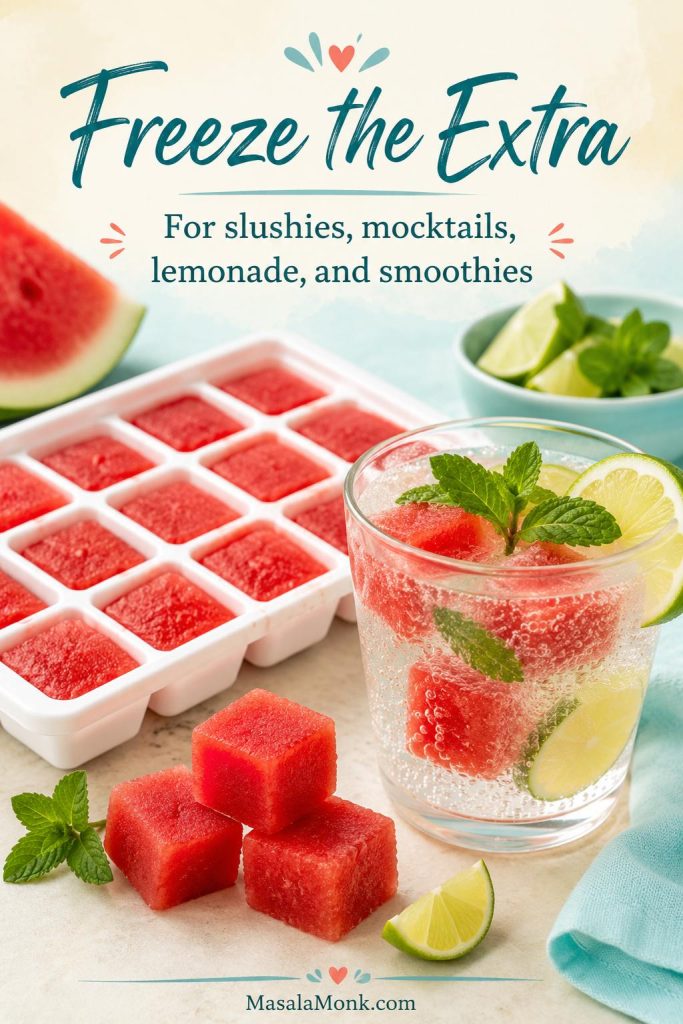
Freeze: pour into ice cube trays for smoothies, mocktails, lemonade, or slushies.
Do not leave it out: fresh fruit juice should not sit at room temperature for long.
Separation is normal. It does not mean the juice has gone bad unless it smells sour, tastes fizzy, looks spoiled, or has been stored too long.
Freeze Extra Juice Into Cubes
Freezing is the best option when you have extra juice but do not want to drink it plain later. The cubes work better as a mixer than as thawed juice.
Freeze extra juice into cubes instead of wasting it. Later, use the cubes in lemonade, sparkling water, smoothies, slushies, or mocktails.
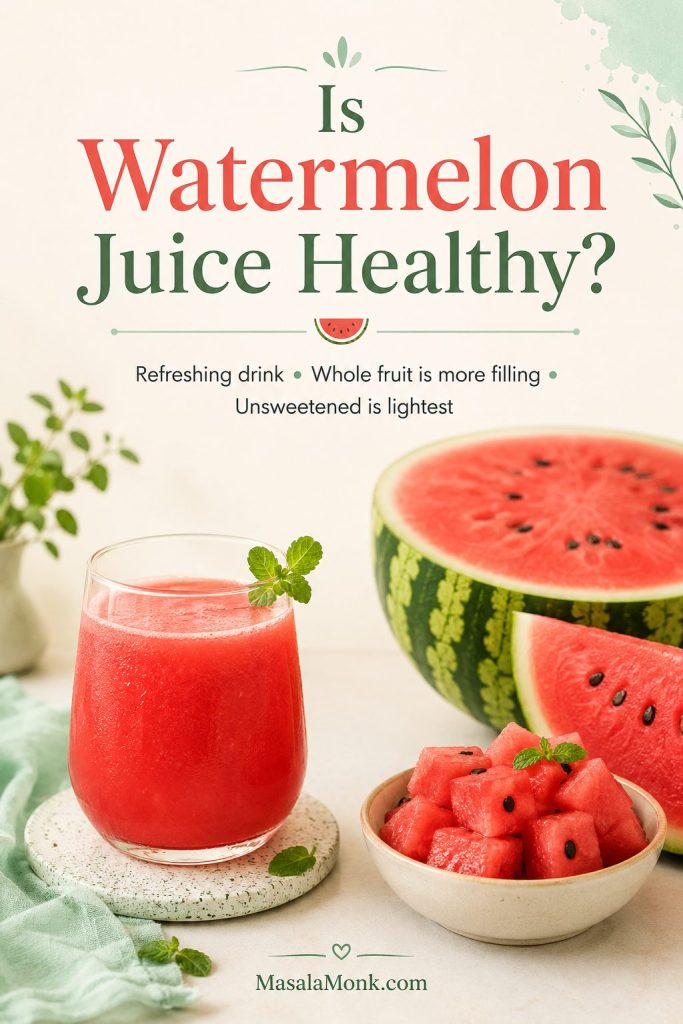
Think of watermelon juice as a fresh summer drink, not a health shortcut. You do not have to turn it into a wellness claim for it to be worth making; a cold, unsweetened glass can simply taste like real fruit and feel better than soda.
Unsweetened watermelon juice can be a refreshing fruit drink, but whole watermelon is usually more filling. So, enjoy the juice, but keep portions in mind.
It is naturally sweet, colorful, and hydrating. However, it is still fruit juice, so whole watermelon is usually more filling because you chew it and keep more of the fruit’s natural structure. Unstrained blended juice keeps more body than fully strained juice, but it is still easier to drink quickly than eating watermelon pieces.
A modest glass of unsweetened watermelon juice is mostly blended fruit, so the calories and natural sugars depend on how much watermelon you drink. The main practical point is portion size: it is easier to drink several cups of juice than to slowly eat the same amount of fruit.
If you want a lighter drink, keep it unsweetened and add lime, mint, cucumber, or sparkling water instead of extra sugar. For a deeper nutrition-focused read, see our guide to watermelon juice benefits.
It can fit into a balanced diet, especially if it replaces soda or heavily sweetened drinks. However, it does not cause weight loss by itself. For fullness, whole watermelon is usually better because it contains more intact fiber and takes longer to eat.
If weight management is your goal, keep the drink unsweetened, avoid oversized portions, and treat it as one refreshing glass within the rest of your day.
Ways to Use Watermelon Juice
Once there is a cold pitcher in the fridge, it disappears quickly. Drink it plain, stretch it with bubbles, freeze it into cubes, or use it as the base for summer drinks.
A pitcher can do more than fill one glass. Use it for everyday drinks, sparkling mocktails, watermelon lemonade, frozen cubes, or summer cocktails.
Everyday drink: serve cold over ice with lime.
Mocktail base: top with sparkling water, mint, cucumber, or coconut water.
Watermelon lemonade: mix with lemon juice and a little sweetener if needed.
Frozen cubes: use in lemonade, slushies, smoothies, and summer pitchers.
Cocktails: strain first for cleaner margaritas, mojitos, and daiquiris.
If you are making cocktails, strained juice usually works better because it gives a cleaner texture. For a frozen cocktail direction, strained watermelon juice also works well in a watermelon daiquiri.
Make the simple version once: cold watermelon, lime or lemon, and a pinch of salt. After that first bright, icy glass, you will know exactly how to adjust the cucumber, pineapple, mint, ginger, and black salt versions by taste.
Watermelon Juice Recipe Card
Here is the quick-reference version of the recipe, with the no-water rule and taste-before-adjusting step built in.
This is the formula to remember: cold fruit first, no added water first, citrus for lift, and a tiny pinch of salt only after you taste the blended juice.
Watermelon Juice Recipe
Fresh watermelon juice made in a blender with cold fruit, no added water, lime or lemon, and a small pinch of salt for a bright, not-watery glass.
Prep Time5 minutes
Cook Time0 minutes
Total Time5 minutes
Yield2–2½ cups / 480–600 ml
Equipment
Blender
Knife and cutting board
Measuring cup
Fine-mesh strainer, optional
Pitcher or jar
Ingredients
4 cups cold seedless watermelon cubes, about 600 g
1 tablespoon fresh lime or lemon juice, 15 ml
Small pinch fine salt or black salt, up to 1/8 teaspoon
6–10 fresh mint leaves, optional
1–2 teaspoons honey, sugar, or agave, only if needed
Ice, for serving
Instructions
Rinse the outside of the watermelon before cutting.
Chill the watermelon if possible. Cold fruit makes better juice and reduces the need for extra ice.
Cut away the rind and pale white part, then cube the red flesh.
Add the cubes to a blender. Blend for 30–60 seconds, until smooth. Do not add water at first.
Taste the juice. Add lime or lemon juice and a small pinch of salt or black salt. Add mint if using.
Blend briefly again. If the fruit is not sweet enough, add 1–2 teaspoons honey, sugar, or agave.
Strain through a fine-mesh sieve if you want smooth juice, or leave it unstrained for a thicker texture.
Serve immediately over ice, or chill for 30 minutes and stir before serving.
Notes
Do not add water unless your blender truly cannot move. Add only 1–2 tablespoons if needed.
For watermelon cucumber juice, add 1/2 to 1 cup peeled cucumber.
For watermelon pineapple juice, use 2 cups watermelon and 1 cup pineapple.
For watermelon ginger juice, add 1–2 teaspoons fresh grated ginger.
For Indian-style tarbooz juice, use lemon or lime, mint, black salt, and a tiny pinch of roasted cumin or chaat masala.
The juice naturally separates. Stir or shake before serving.
Storage
Watermelon juice is best fresh. Refrigerate it in a clean covered jar for up to 24 hours for best flavor, or up to 2–3 days if properly chilled. Stir before serving.
No. A blender is enough because watermelon is soft and naturally juicy. Blend the cubes until smooth, then strain only if you want a cleaner texture.
Should watermelon juice be strained?
Only if you want a smoother glass. Unstrained juice has more body; strained juice looks cleaner in pitchers, mocktails, and cocktails.
Can I make watermelon juice without sugar?
Usually, yes. Ripe watermelon is sweet enough on its own, especially when lime or lemon and a tiny pinch of salt brighten the flavor.
Why does watermelon juice separate?
Fresh blended fruit naturally separates as it sits because the pulp and liquid settle at different rates. Stir or shake before serving. Separation alone does not mean the juice has spoiled.
How long does fresh watermelon juice last?
It tastes best immediately. For the best make-ahead flavor, refrigerate it in a clean covered jar for up to 24 hours. It may keep for 2–3 days if properly chilled, but the flavor fades and separation increases.
Can I freeze watermelon juice?
Yes. Freeze it in ice cube trays, then use the cubes in lemonade, sparkling water, smoothies, mocktails, or slushies. The texture changes after thawing, so frozen cubes are better for mixing than drinking plain.
Can I use lemon instead of lime?
Yes. Lime tastes sharper and more tropical, while lemon gives a softer lemonade-style brightness. Use 1 tablespoon lemon or lime juice for every 4 cups of watermelon.
Can I make watermelon juice with seeds?
You can use seeded watermelon, but remove as many black seeds as possible before blending. A few small white seeds are usually fine, especially if you plan to strain.
What can I mix with watermelon juice?
The easiest mixers are lime, lemon, mint, cucumber, pineapple, ginger, coconut water, sparkling water, black salt, and a little roasted cumin. For mocktails and cocktails, strain it first so the drink tastes cleaner.
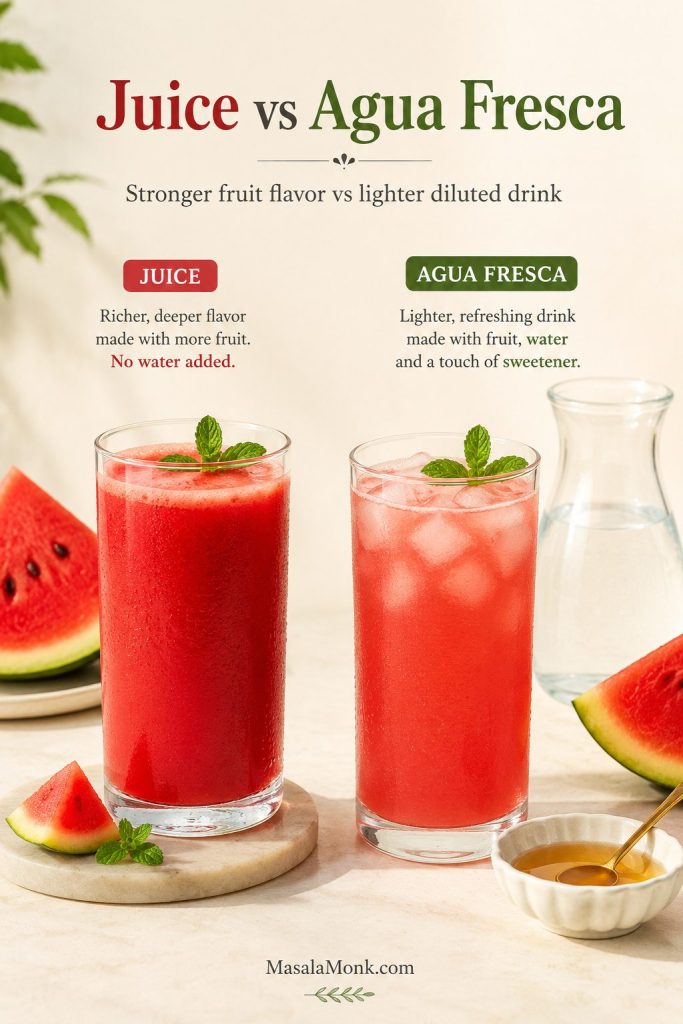
Is watermelon juice the same as watermelon agua fresca?
Not exactly. Watermelon juice is usually mostly blended watermelon, sometimes with citrus or salt. Watermelon agua fresca is usually lighter because it is diluted with water and often sweetened. For stronger fruit flavor, use this recipe without added water; for a lighter Mexican-style agua fresca, dilute and sweeten to taste.
Choose undiluted juice when you want stronger watermelon flavor. Choose agua fresca when you want a lighter, softer drink that is usually diluted and gently sweetened.
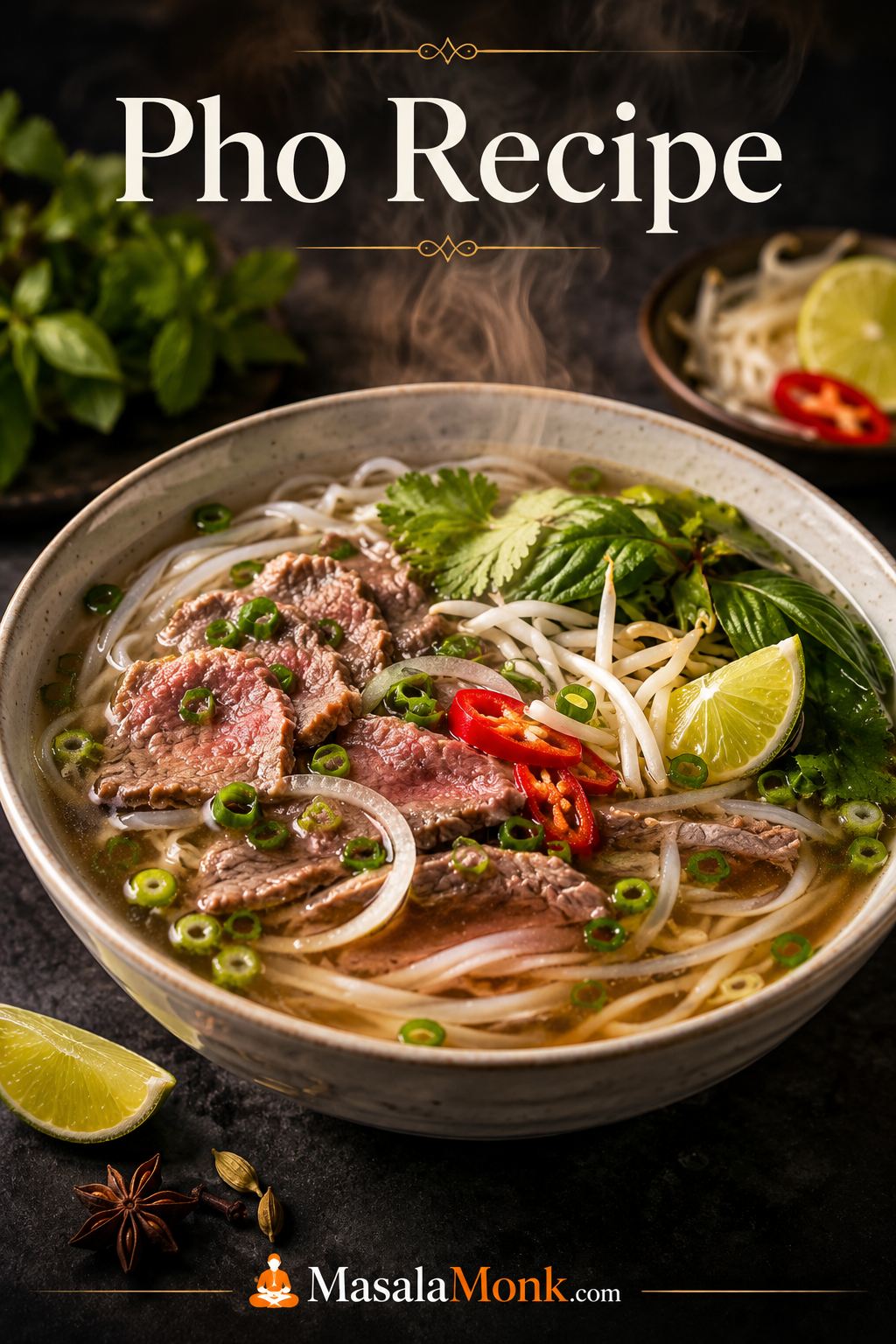
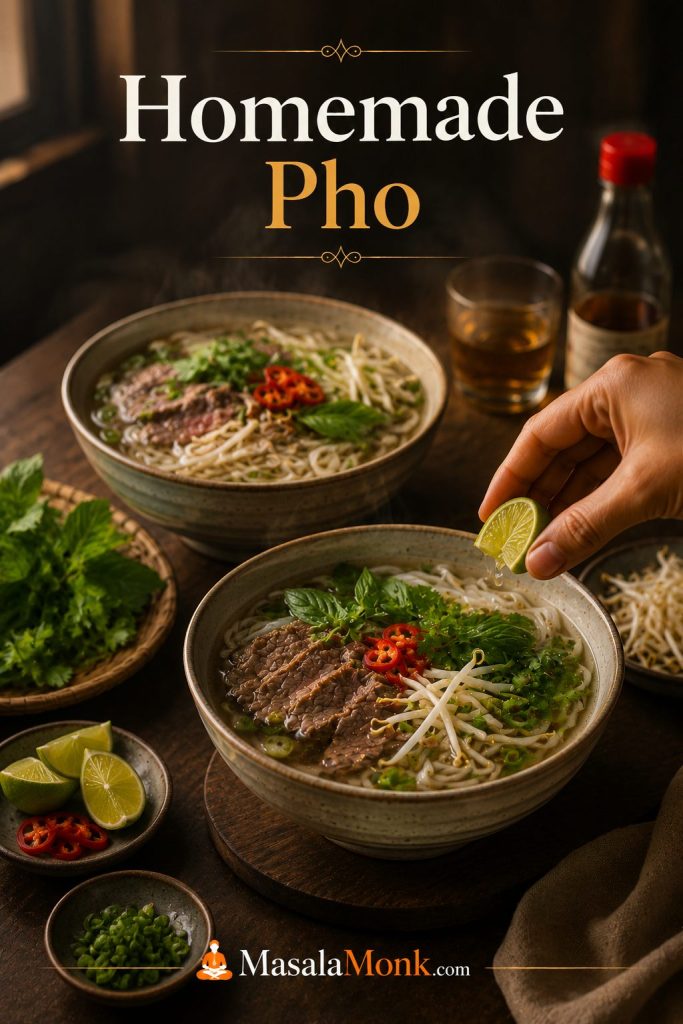
This pho recipe is for the day you want the comfort of a real Vietnamese noodle soup at home, but do not want to get lost in bones, spices, noodles, and conflicting broth advice. The process is easier once you stop treating pho as one giant task and start seeing it as four smaller jobs: build a clean aromatic broth, cook the noodles separately, prepare the beef and toppings, then assemble everything while the broth is steaming hot.
This is a home-style beef pho recipe built for a serious homemade pot, without pretending you need a restaurant setup. You get clear broth, real beef flavor, whole spices, proper rice noodles, and practical fixes for the mistakes that usually make pho taste flat.
Use the full beef version when you want broth depth, the quick pho section when you want a weeknight bowl, and the chicken or vegan notes when those fit your kitchen better. The method changes, but the goal stays the same: clean aroma, balanced broth, separate noodles, fresh toppings, and hot assembly.
Start with the version that fits your day, then use the broth, noodle, topping, and troubleshooting sections to build a bowl that tastes clean, aromatic, and satisfying.
To make pho at home, start with a broth made from beef bones, a flavorful simmering cut such as brisket or chuck, browned onion, ginger, whole spices, fish sauce, salt, and a little rock sugar. Simmer it gently until the broth tastes deep and aromatic, then strain it and season it slightly stronger than a normal soup.
Next, cook the rice noodles separately, divide them into bowls, add sliced cooked beef and paper-thin raw beef if using, then ladle very hot broth over the top. Finish with herbs, bean sprouts, lime, chili, onion, scallions, and optional sauces on the side.
The two biggest mistakes are boiling the broth too hard and letting the noodles cook directly in the broth. Keep the broth at a gentle simmer while it cooks, then bring it back to a full boil only when you are ready to assemble the bowls.
Best first version: make the beef pho below if you want the clearest lesson in how pho works. Once you understand the broth, noodles, and bowl assembly, chicken pho, quick pho, and plant-based pho become much easier to adapt.
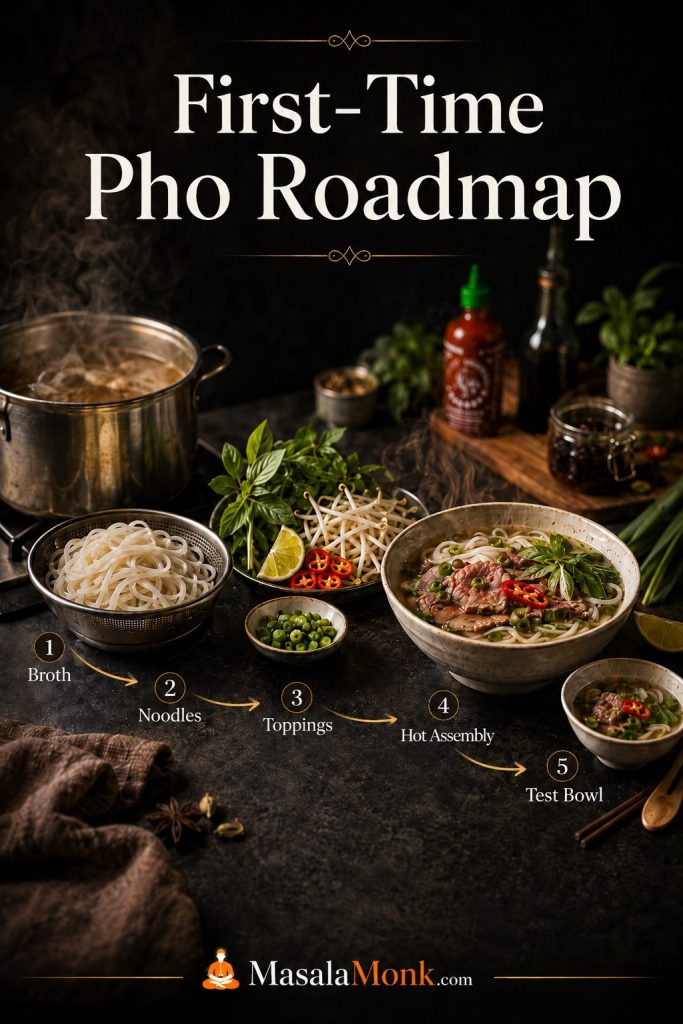
First-Time Pho Recipe Roadmap
If you are making the full beef version, give yourself a few unrushed hours. Homemade pho is not difficult, but it rewards calm timing. You do not want to be slicing beef, washing herbs, boiling noodles, and fixing broth seasoning all at the same time.
If pho feels overwhelming, divide it into four jobs instead: make the broth, prepare the noodles, set up the toppings, and assemble at the end. That rhythm keeps the recipe manageable.
Step
What to do
Why it helps
1
Make the broth on a day when you are not rushed.
The simmer is simple, but it needs time and attention.
2
Prepare noodles and toppings only when the broth is nearly ready.
Noodles stay better, herbs stay fresh, and the final bowl feels cleaner.
3
Taste the broth before assembly.
It should be a little bolder than sipping soup because noodles soften the flavor.
4
Bring the strained broth to a full boil only at serving.
The long simmer should be gentle, but the final pour should be hot.
5
Assemble one test bowl first.
If it tastes flat, you can fix the broth before serving the rest.
Choose Your Pho: Beef, Chicken, Quick, or Vegan
Pho does not have to mean the same thing every time. It can be a slow weekend broth, a lighter chicken soup, a practical shortcut, or a plant-based bowl with serious flavor. The trick is not to pretend every version is the same.
Beef pho gives the deepest flavor, chicken pho is lighter, quick pho suits busy nights, and vegan pho depends on mushroom depth. Pick the version that fits your day, not the one that sounds most ambitious.
Which Pho Recipe Should You Make?
Choose the path that fits your time and ingredients, then build the bowl with the same basic logic: aromatic broth, rice noodles added at the end, fresh toppings, and hot broth to bring everything together.
Version
Best for
What changes
Time expectation
Traditional beef pho
Deep broth, classic beef noodle soup flavor, weekend cooking
Uses beef bones, brisket or chuck, roasted aromatics, whole spices, and a long gentle simmer
About 4–5 hours
Chicken pho
An easier first pho, lighter broth, fewer hard-to-find ingredients
Uses chicken, chicken broth or a whole-chicken base, similar aromatics, and a shorter simmer
About 45–90 minutes
Quick pho
Weeknight cravings when you want a pho-style bowl without a full broth project
Uses good store-bought broth, roasted aromatics, warm spices, fish sauce, and fresh toppings
About 30–60 minutes
Vegetarian or vegan pho
Plant-based bowls that still need depth and aroma
Uses mushrooms, browned onion and ginger, whole spices, tamari or soy sauce, and tofu or vegetables
About 45–75 minutes
Instant Pot pho
Faster extraction from bones and meat
Uses pressure cooking, then careful straining, skimming, and final seasoning
About 2–3 hours with pressure release
The Best First Pho Recipe to Try
If you have the time, beef pho is the best version for understanding how pho gets its depth. If you are rushed, start with chicken pho or quick pho instead. A calm, well-seasoned shortcut bowl is better than a stressed full beef version.
After you understand the broth, noodles, and bowl assembly, the other versions are not confusing anymore. They are simply different ways of building aroma, body, salt, sweetness, freshness, and heat.
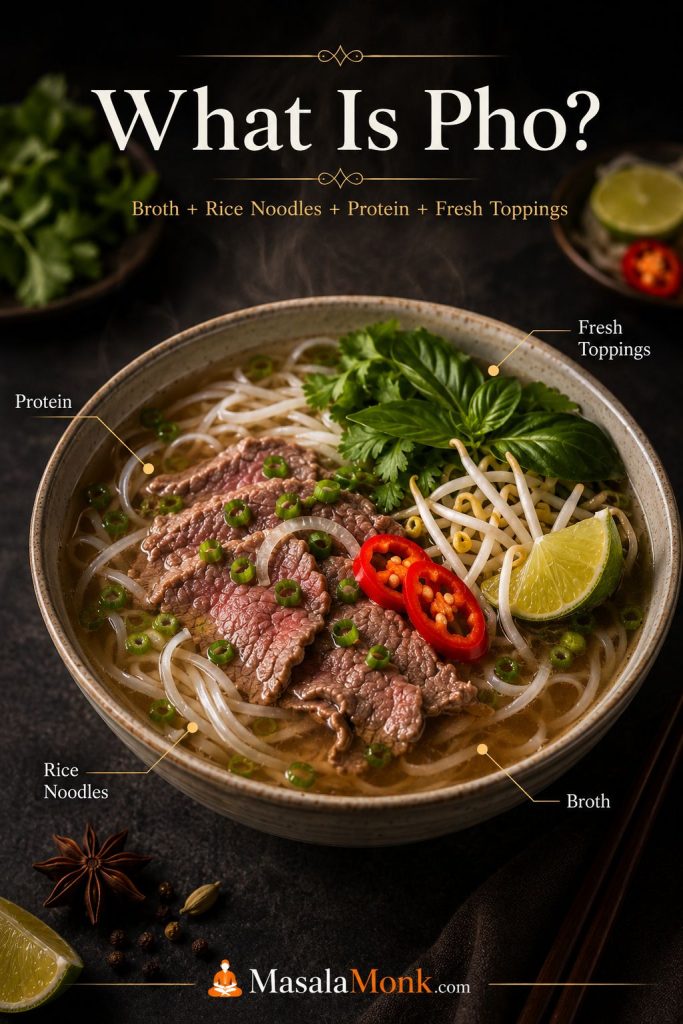
What Is Pho?
Pho, or phở, is a Vietnamese noodle soup built around aromatic broth, flat rice noodles, meat or another protein, and fresh toppings. Beef pho is often called phở bò, while chicken pho is called phở gà. A good bowl tastes savory, fragrant, lightly sweet in the background, and fresh from herbs and lime.
Pho works in layers: the broth carries the bowl, the flat noodles give it body, the protein adds substance, and herbs, lime, sprouts, and chili wake everything up at the table.
In every version, the broth does most of the work. Bones or chicken give body, onion and ginger bring warmth, whole spices create the unmistakable aroma, fish sauce and salt build savoriness, and fresh toppings brighten the finished bowl. If you want a light background read on pho’s place in Vietnamese food culture, Vietnam Travel has a useful overview of the story of Vietnamese pho.
A quick note on style: Pho varies by region, family, restaurant, and personal habit, so this is not the only “correct” way to make it. This version is a practical home-style beef pho built around the core moves that matter most: clean broth, roasted aromatics, whole spices, rice noodles, hot assembly, and fresh toppings.
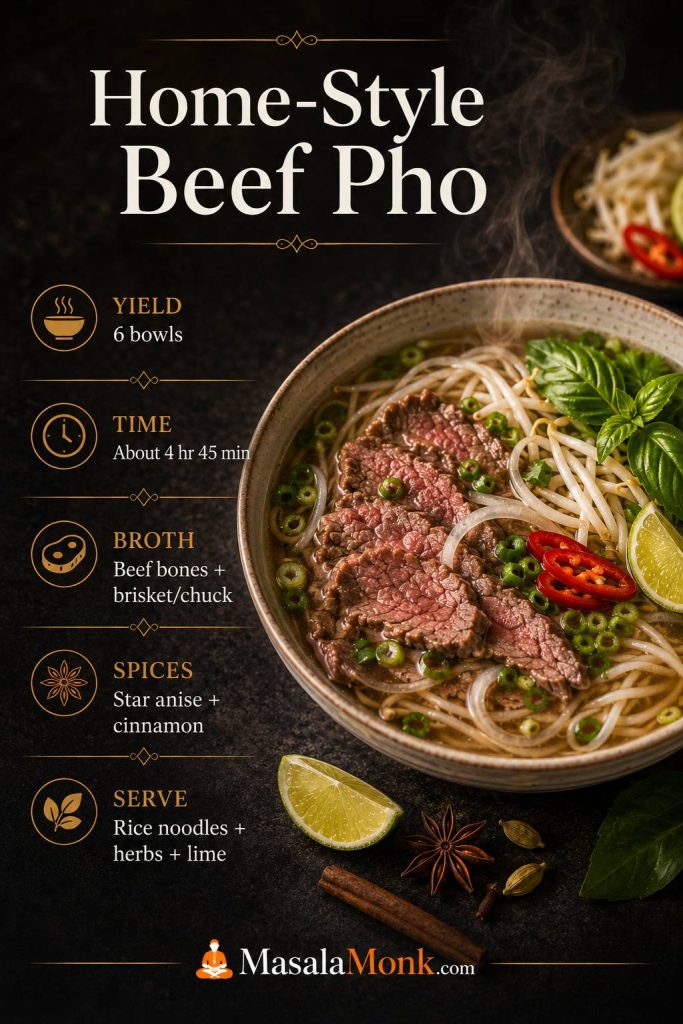
Pho at a Glance
Recipe type
Home-style beef pho / Vietnamese noodle soup
Yield
6 large bowls
Starting water
4.5 L / 19 cups
Finished broth
About 3.5–4 L / 3.7–4.2 quarts, depending on evaporation
Prep time
45 minutes
Cook time
About 4 hours
Total time
About 4 hours 45 minutes
Pot size
9–10 L / 10-quart stockpot is ideal
Broth temperature while simmering
Gentle simmer, roughly 85–95°C / 185–203°F, not a rolling boil
Noodles per bowl
50–80 g dried banh pho noodles, or about 120 g fresh noodles
Broth per bowl
500–650 ml / 2–2¾ cups hot broth
The starting water is higher than the final broth yield because some liquid evaporates during the long simmer. If the pot reduces too far, add hot water near the end and adjust the seasoning before serving.
Why This Recipe Works
This pho recipe uses both beef bones and a flavorful simmering cut because bones and meat do different jobs. Bones give body, richness, and depth. Brisket, chuck, or shank makes the broth taste more rounded and gives you tender cooked beef for the bowls.
Parboiling keeps the broth cleaner. Browned onion and ginger add roasted aroma, while the toasted spice bundle gives the broth its pho fragrance without leaving grit behind. A gentle simmer keeps the broth clearer instead of greasy and muddy.
The broth is seasoned slightly stronger than a regular soup because rice noodles, herbs, sprouts, beef, and lime will soften the flavor once the bowl is assembled. That one detail is why a broth that tastes bold in the pot can taste balanced at the table.
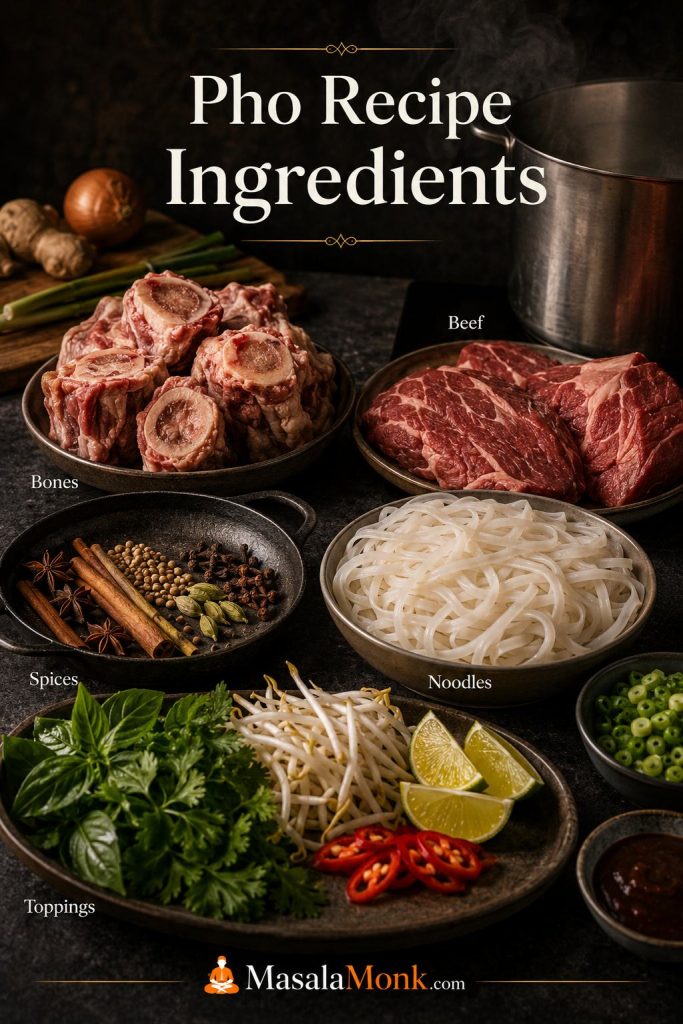
Pho Recipe Ingredients
Good pho does not need a huge list of fancy ingredients, but each ingredient has a job. The broth needs bones or chicken for body, meat for savoriness, onion and ginger for aroma, spices for warmth, fish sauce and salt for depth, sugar for balance, and noodles that stay silky after hot broth is poured over them.
The ingredient list looks long at first, yet each part has a clear job: bones add body, onion and ginger add warmth, spices build fragrance, and herbs and lime sharpen the final bowl.
Broth Ingredients
Beef bones: marrow, knuckle, leg, neck, oxtail, or meaty soup bones help build flavor and body.
Brisket, chuck, or shank: this seasons the broth and becomes the cooked sliced beef for serving.
Onion and ginger: browning them gives the broth a deeper, lightly smoky aroma.
Water: start with 4.5 L / 19 cups so you end with enough broth for 6 bowls after simmering.
Fish sauce: adds savory depth. Add it near the end so the final seasoning stays controlled.
Salt: seasons the broth itself, not just the toppings.
Rock sugar or regular sugar: rounds the broth without making it taste sugary.
Whole Spices
The classic pho aroma comes from whole spices, not powdered seasoning dumped into the pot. Star anise is the most recognizable note, while cinnamon, cloves, coriander, fennel, and black cardamom add warmth and depth.
Star anise: the signature sweet-spiced aroma.
Cinnamon: warm backbone. Use sticks, not ground cinnamon.
Cloves: powerful and easy to overdo, so use a small amount.
Coriander seeds: gentle citrusy lift.
Fennel seeds: optional, with a sweet herbal edge.
Black cardamom: optional, smoky, and strong. One pod is enough.
Pho Noodles
Use banh pho, the flat rice noodles made for pho. Dried noodles are easier to find and work very well when soaked or cooked separately. Fresh noodles need only a quick blanch. For a deeper noodle guide, Andrea Nguyen’s Viet World Kitchen has a helpful explanation of banh pho flat rice noodles.
If rice-based cooking often gives you texture trouble, MasalaMonk’s guide on how to cook rice perfectly is a useful companion for understanding rinsing, soaking, resting, and why starch control matters.
Beef, Chicken, or Plant-Based Protein
For beef pho, use two kinds of beef: one cut for simmering in the broth and one tender cut for the bowl. Brisket, chuck, or shank are good for simmering. Eye of round, sirloin, tenderloin, or flank can be sliced paper-thin and cooked by the hot broth in the bowl.
For chicken pho, use bone-in chicken, chicken thighs, or a whole-chicken base. For vegetarian or vegan pho, build body with mushrooms, roasted aromatics, whole spices, tamari or soy sauce, and tofu or vegetables.
Toppings, Herbs, and Condiments
Toppings should brighten the bowl, not cover up the broth. Bean sprouts add crunch, herbs add aroma, lime adds lift, chili adds heat, and sauces add sweetness or spice. Hoisin and sriracha are optional. To preserve the broth’s clean flavor, try sauces on the side for dipping meat instead of stirring a lot into the whole bowl.
Bean sprouts
Thai basil, mint, cilantro, or a mix
Lime wedges
Sliced chili or jalapeño
Thinly sliced onion
Scallions
Hoisin sauce, optional
Sriracha or chili sauce, optional
If you want something cool and crunchy on the side, this easy cucumber salad recipe has Asian-style and spicy cucumber variations that work well beside hot, aromatic noodle bowls.
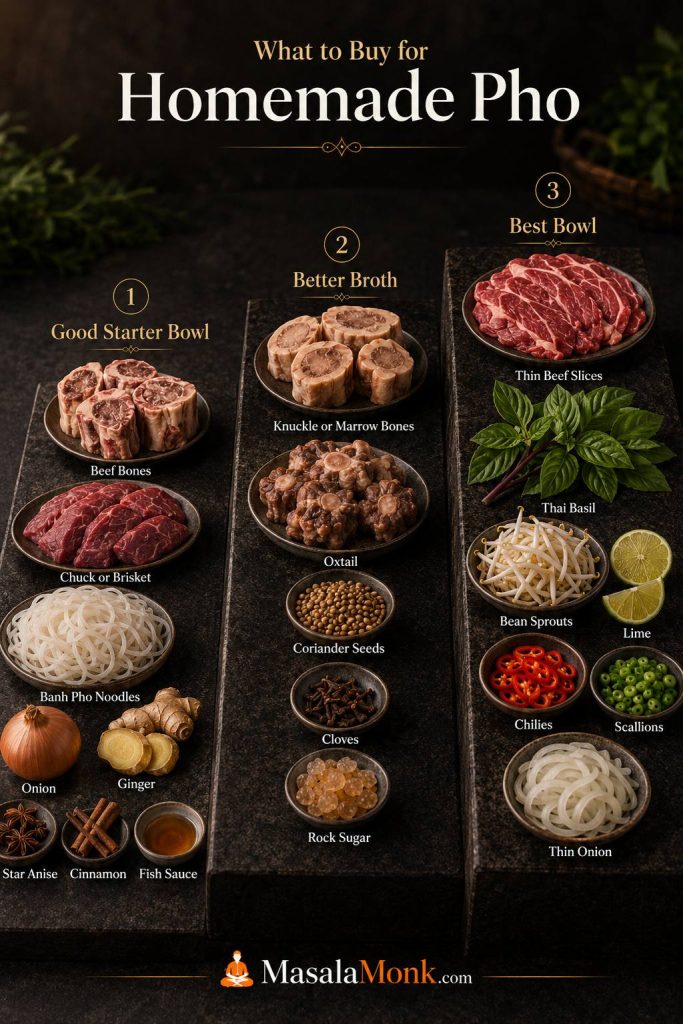
What to Buy for Homemade Pho
If this is your first time making pho, do not worry about buying every possible beef cut, herb, or spice. Focus on the ingredients that change the broth most: bones, one flavorful simmering cut, onion, ginger, whole spices, fish sauce, and proper flat rice noodles.
You do not need every possible cut or garnish to make good pho at home. Start with the essentials, then add better bones, deeper flavor builders, and more toppings when you want a fuller bowl.
Level
Buy this
What it gives you
Minimum good beef pho
Meaty beef bones, chuck or brisket, banh pho noodles, onion, ginger, star anise, cinnamon, fish sauce
A satisfying homemade bowl with real broth character
Better broth
Add knuckle bones, marrow bones, oxtail, coriander seed, cloves, and rock sugar
More body, deeper aroma, and better balance
Best topping setup
Add eye of round or sirloin, Thai basil, bean sprouts, lime, chilies, scallions, and thin onion
A fresher, more complete restaurant-style bowl
Shortcut version
Low-sodium broth, onion, ginger, whole spices, fish sauce, rice noodles, herbs, and lime
A good weeknight bowl, but not the same body as long-simmered beef pho
Think of the shopping list for this pho recipe as a ladder. The first level can still make good pho. The higher levels add body, aroma, and freshness, but they are not worth stressing over if they keep you from cooking.
Best Bones and Beef Cuts for Pho
Great beef pho usually needs both bones and meat. Bones bring body and depth, but meat makes the broth taste more rounded and satisfying. A pot made only with bones can taste thin or hollow, while a pot with only meat can lack the gelatin-rich texture that makes pho broth feel complete.
Good beef pho depends on using the right cut for the right purpose: bones bring body, simmering cuts add richness, and paper-thin beef gives the bowl its classic finishing touch.
Beef or bone
Best use
What it adds
Marrow bones
Broth base
Richness and beef flavor, though they can add fat that needs skimming
Knuckle or leg bones
Broth base
Gelatin and body
Neck bones or oxtail
Broth base
Meatiness and depth
Brisket
Simmered meat and topping
Classic cooked beef slices with rich flavor
Chuck
Simmered meat and topping
Beefy, affordable, and forgiving
Shank
Simmered meat and topping
Deep flavor and a slightly firmer texture
Eye of round, sirloin, tenderloin, or flank
Raw thin-sliced topping
Tender slices that cook in very hot broth
For the easiest home version, use a mix of meaty bones, marrow or knuckle bones, and brisket or chuck. If your butcher has oxtail or neck bones, they are excellent, but you do not need every cut to make a strong homemade bowl.
Thin beef tip: place the raw beef for topping in the freezer for 15–25 minutes before slicing. It should firm up, not freeze solid. This makes it much easier to cut paper-thin slices.
How Thin to Slice Beef for Pho
For raw beef topping, thickness matters more than the exact cut. The slices should be thin enough that hot broth can warm them quickly in the bowl. If the beef is cut too thick, it may stay cold or raw-looking even after the broth is poured.
Chill the beef briefly before slicing, then cut across the grain with a sharp knife. Aim for flexible, paper-thin slices rather than steak-like strips. For a fully cooked bowl, dip the slices into simmering broth first, then add them to the noodles.
Chilled beef slices far more cleanly than warm beef. As a result, it is easier to get the paper-thin slices that hot broth can quickly warm in the bowl.
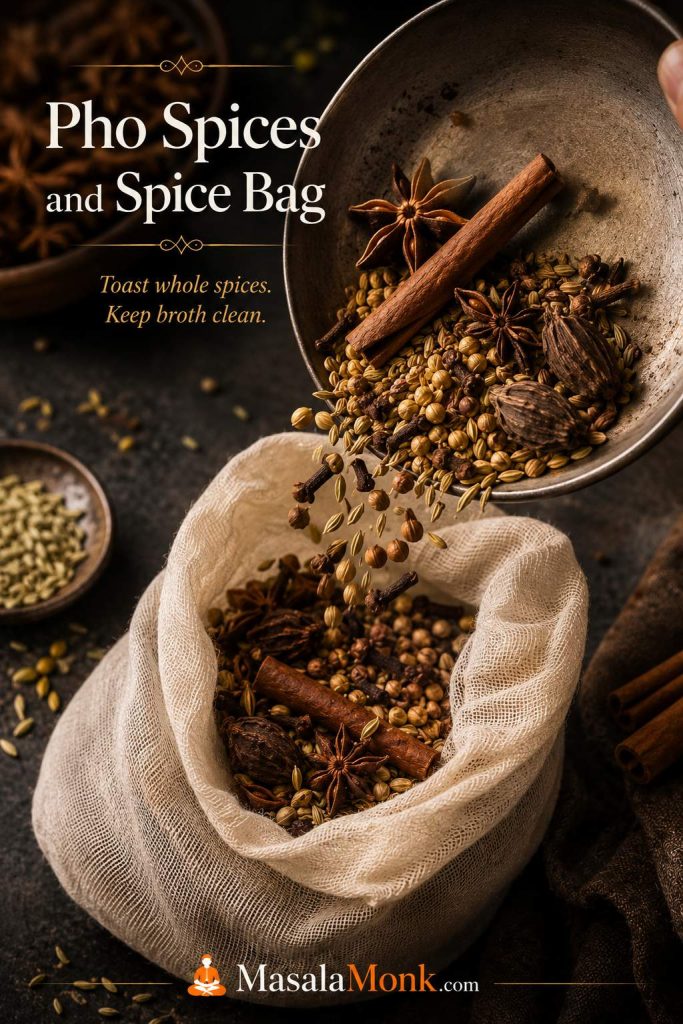
Pho Spices and Spice Bag
Use whole spices and toast them briefly before they go into the broth. Toasting wakes up the aroma, while a spice bag keeps the broth cleaner and makes it easier to remove the spices before they become too strong.
Whole spices should perfume the pot, not muddy it. A spice bag gives pho its signature fragrance while helping you control when the spices have given enough.
Ground spices are not ideal for the main broth because they can cloud the liquid and leave grit at the bottom of the bowl. If you only have ground spices, use them very sparingly in a shortcut broth, then strain carefully through a fine-mesh strainer lined with cheesecloth.
Spice
Amount for this recipe
Role
Star anise
6–8 pods
Signature pho aroma
Cinnamon sticks
1–2 sticks
Warmth and sweetness
Cloves
4–6 whole cloves
Deep spice; use carefully
Coriander seeds
1 tablespoon
Citrusy lift
Fennel seeds
1–2 teaspoons, optional
Sweet herbal note
Black cardamom
1 pod, optional
Smoky depth
Add the spice bag during the later part of simmering instead of leaving it in for the entire cook. If the broth starts smelling more like a spice cabinet than beef soup, remove the bag early. The spices should support the broth, not take over the bowl.
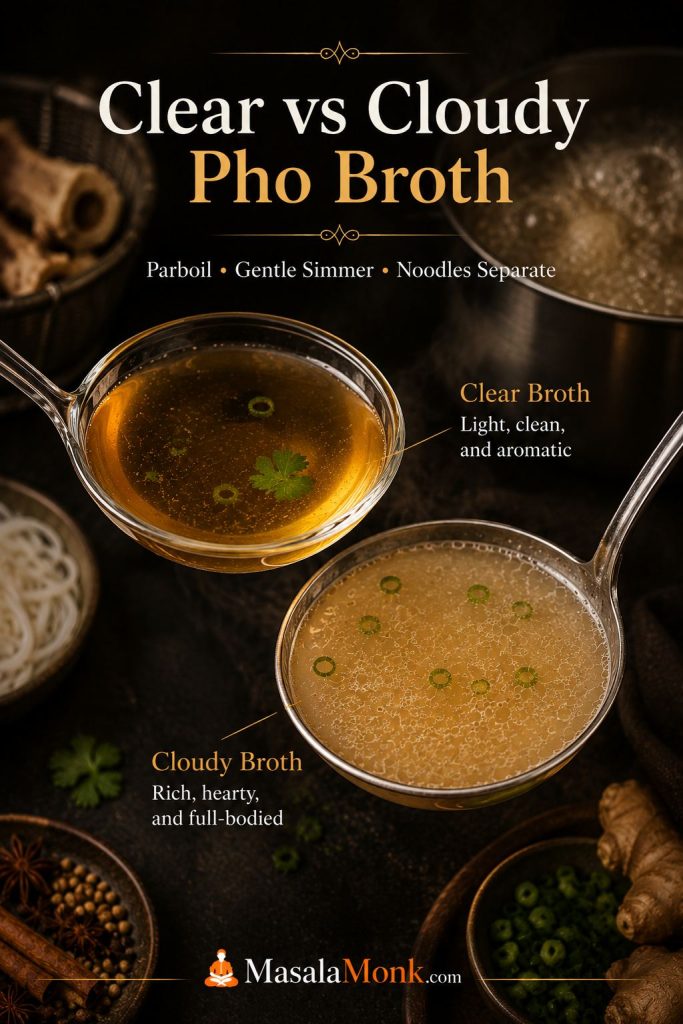
How to Make Clear Pho Broth
Clear broth comes from good preparation and gentle heat. The goal is not a weak broth; it is a broth that tastes deep but looks clean. Parboil the bones, rinse them well, brown the aromatics, simmer gently, skim when needed, and strain before serving.
The broth should smell warm from the spices, roasted from the onion and ginger, and savory before you ever add noodles. When it is right, it tastes bold on its own but not harsh, with enough salt and fish sauce to carry the plain rice noodles.
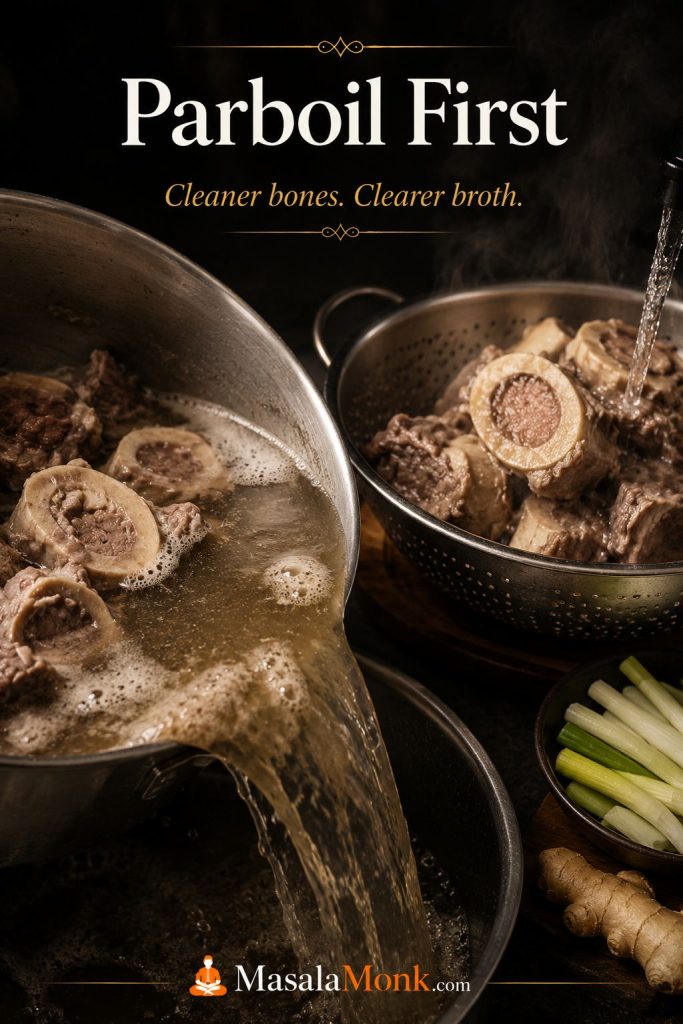
Why You Parboil the Bones First
Parboiling removes surface impurities, blood, and loose proteins before the real broth begins. Add the bones and simmering beef to a pot, cover with water, bring to a hard boil for 5–10 minutes, then drain. Rinse the bones and meat under warm water and scrub the pot before starting the actual broth.
This step feels annoying, but it is one of the biggest differences between clear broth and a murky pot. You are not throwing away the good flavor. You are removing the material that would cloud the broth later.
Parboiling may feel like extra work; however, it is one of the best ways to improve pho broth clarity. Once the bones are rinsed and the pot is reset, the real simmer starts much cleaner.
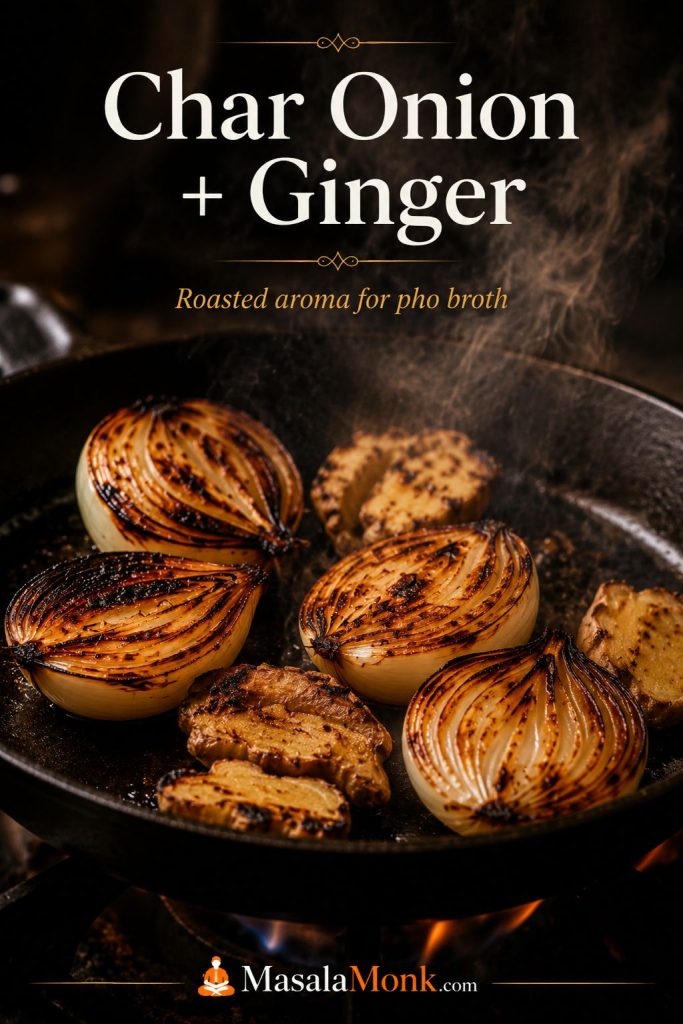
Why You Char the Onion and Ginger
Charring onion and ginger gives pho broth a roasted, lightly smoky aroma. You can do this over a gas flame, in a dry skillet, under a broiler, or on a grill pan. The cut sides should be deeply browned in spots, not just lightly warmed.
Charred onion and ginger add roasted depth that plain raw aromatics cannot match. Because of that, the broth tastes warmer, rounder, and more like pho instead of generic beef soup.
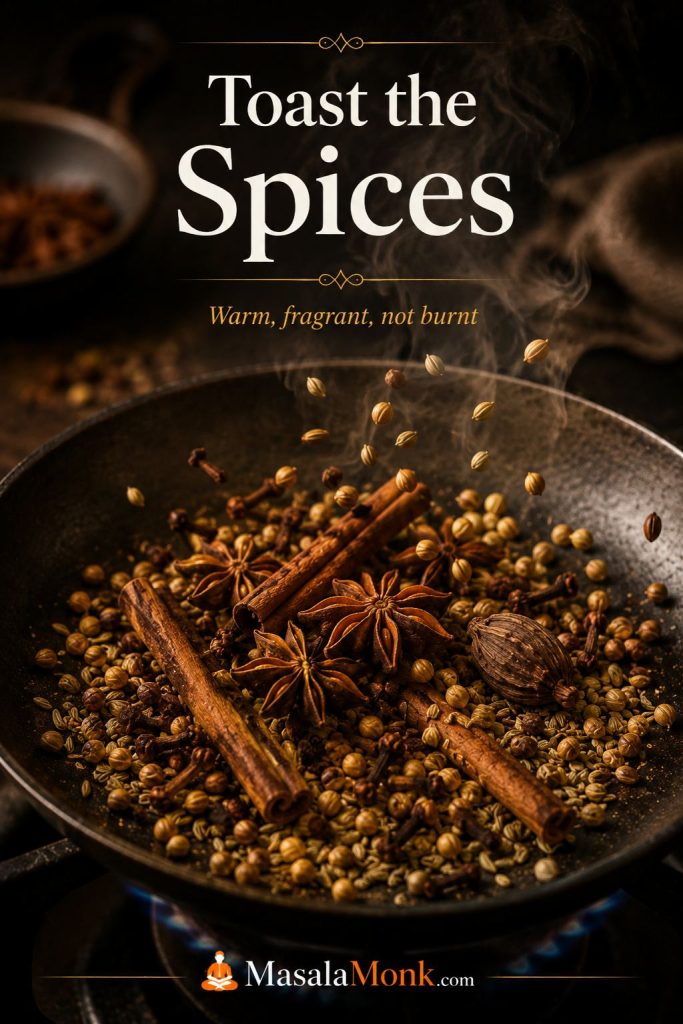
Why You Toast the Spices
Toasting whole spices for 3–5 minutes makes them more fragrant. Use medium heat and keep them moving so they smell warm and aromatic, not burnt. After toasting, tie them in cheesecloth or place them in a spice bag.
Toasting wakes up the spices before they go into the broth. Even a short toast helps star anise, cinnamon, and coriander smell fuller and more alive in the finished pot.
How Long to Simmer Pho Broth
For this beef pho, plan on about 4 hours of gentle simmering after the parboil step. Keep the broth at a quiet simmer, roughly 85–95°C / 185–203°F. You should see small, steady bubbles and gentle movement, not a rolling boil that shakes the whole pot.
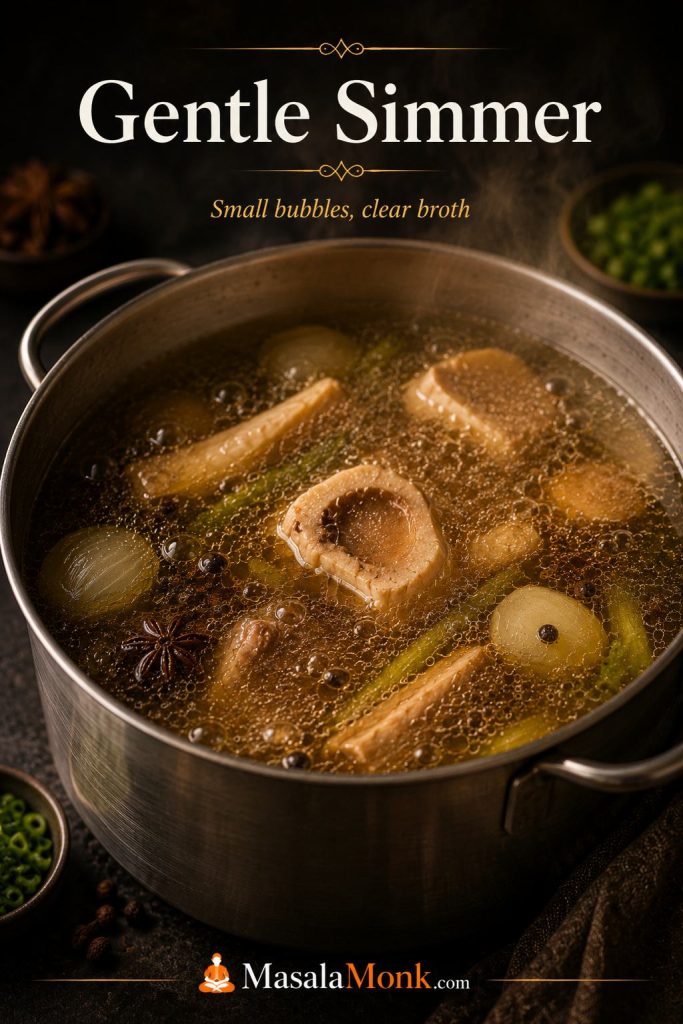
A rolling boil can pull fat and loose particles into the broth, which makes it cloudy and greasy. A calm simmer extracts flavor from the bones and meat while keeping the broth cleaner.
Small steady bubbles are the sweet spot for pho broth. The pot should look alive, not violent, so flavor develops without shaking fat and sediment through the liquid.
How to Season Pho Broth
Pho broth should taste slightly stronger than a normal sipping soup before it goes into the bowl. The noodles, meat, herbs, sprouts, and lime will soften the seasoning. If the broth tastes perfect in the pot, it may taste a little flat once the bowl is assembled.
Season near the end with fish sauce, salt, and a little rock sugar or sugar. Look for savory first, gentle sweetness in the background, warm spice in the aroma, and enough clarity that lime and herbs can brighten the bowl at the table.
When the broth is right, it should smell like roasted onion and warm spice first, then taste savory, clean, and slightly rounded. It should not taste like plain beef stock with noodles waiting nearby.
How Pho Broth Should Taste Before Serving
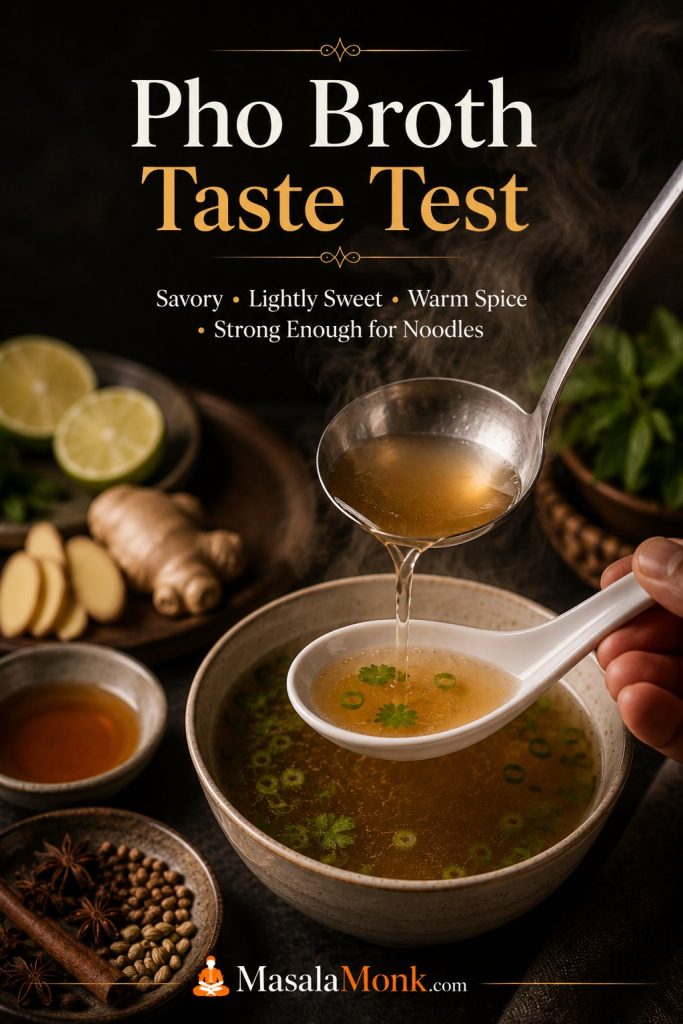
Before serving, taste the strained broth before it hits the bowl. It should feel a little too bold by itself: savory first, lightly sweet in the background, warm with spice, and strong enough to carry plain rice noodles. If it tastes perfect as a sipping soup, it may taste quiet once the noodles, beef, herbs, sprouts, and lime are added.
The broth for this pho recipe is on track when it smells roasted from onion and ginger, warm from star anise and cinnamon, and savory before any noodles are added. It should not smell muddy, greasy, burnt, or aggressively sweet.
Taste the broth before serving, not after the bowls are built. It should seem a little assertive on its own, or it may fade once the noodles and toppings go in.
What you taste
What it means
How to adjust
Thin or watery
The broth needs more concentration or seasoning
Simmer uncovered a little longer, or add fish sauce in small amounts
Salty but flat
It has salt, but not enough aroma or balance
Add a tiny pinch of sugar, more ginger aroma, or brighten later with lime
Sweet but weak
The sugar or onion is louder than the savory base
Add fish sauce or salt gradually
Too spiced
The spice bag stayed in too long
Remove the spices, dilute slightly, and simmer with onion or ginger
Good in the pot but weak in the bowl
The broth was seasoned like soup, not like pho broth
Season the next bowls slightly stronger before ladling
How to Fix Pho Broth Before Serving
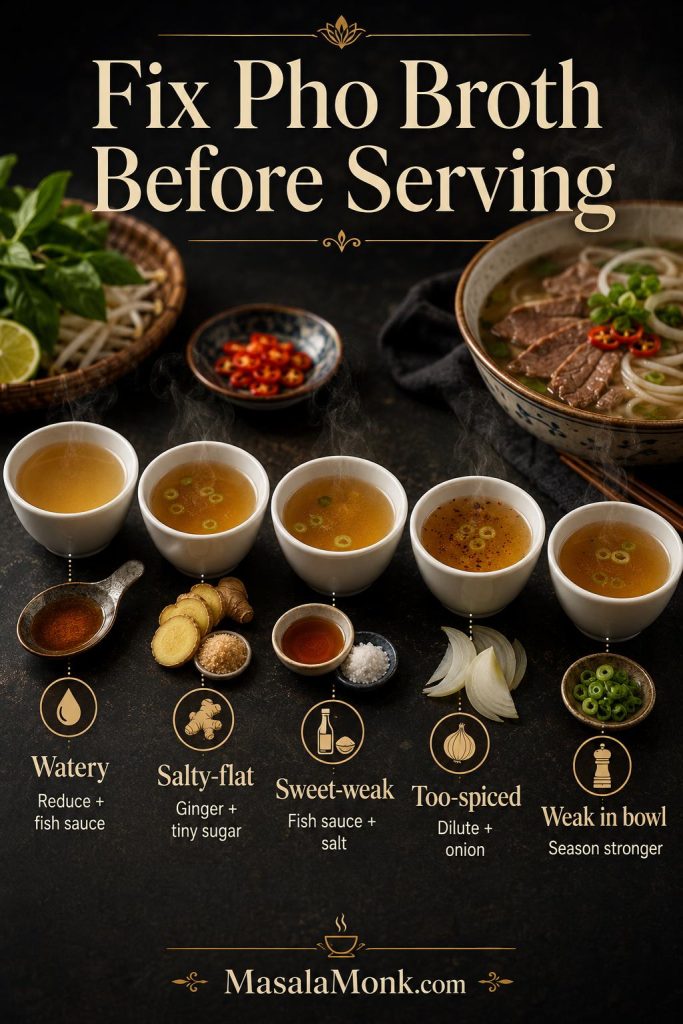
Do the final broth check before you assemble the bowls, not after everyone has started eating. At this point, the broth should taste slightly stronger than a normal soup because plain noodles, beef, herbs, sprouts, and lime will soften the flavor once they land in the bowl.
Thin broth should be reduced briefly before you add more seasoning. For sweet but weak broth, add fish sauce or salt in small amounts. When the broth smells too spiced, remove the spice bag and dilute it slightly. Fixing the pot now is much easier than trying to rescue six finished bowls later.
The smartest time to fix pho broth is right before serving. Watery broth often needs reducing, sweet broth needs savory balance, and a quiet-tasting broth usually needs stronger seasoning.
Best Noodles for Pho
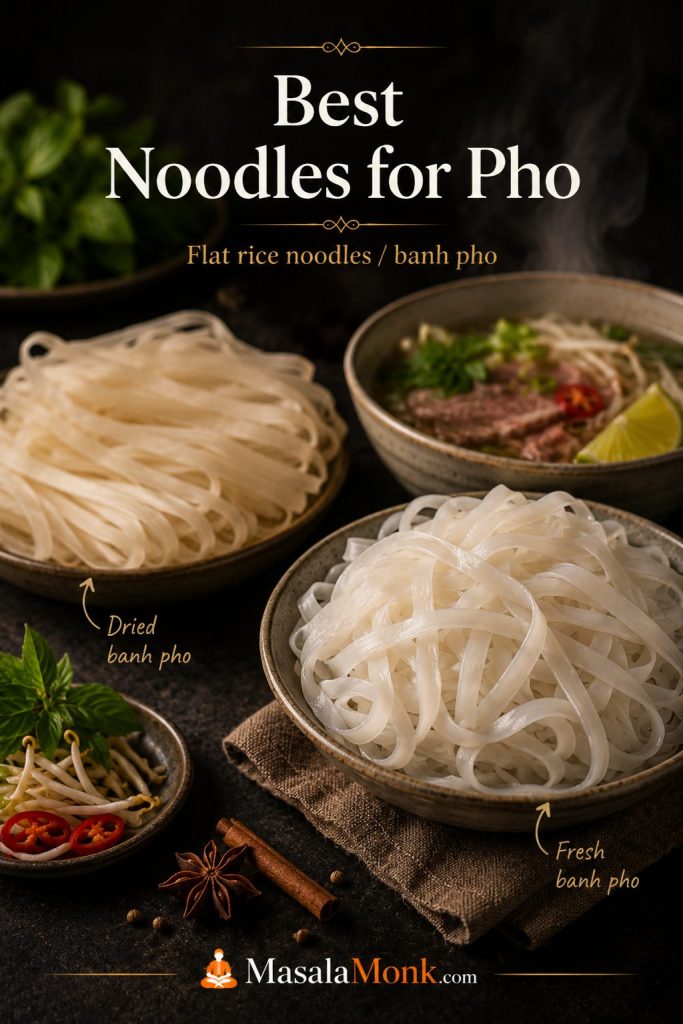
The best noodles for pho are banh pho, flat rice noodles. They may be sold dried or fresh. Dried noodles are usually easier to find, and they hold up well when soaked or cooked separately. Fresh noodles are softer and usually need only a quick blanch.
Banh pho, the classic flat rice noodle, gives pho the right texture. It stays tender and slippery without turning the bowl heavy or chewy like the wrong noodle can.
Dried vs Fresh Pho Noodles
Noodle type
Best use
How to handle
Dried banh pho
Most home cooks; easy to store and find
Soak or cook according to the package, drain well, and add to bowls just before serving
Fresh banh pho
Best texture when available
Blanch briefly to loosen and warm; do not boil aggressively
Very wide rice noodles
Better for stir-fry than classic pho bowls
Use only if that is what you have, but expect a heavier bowl
Rice vermicelli
Not ideal for pho
Save it for other Vietnamese noodle bowls rather than using it as the first choice here
What Width of Rice Noodles to Use
Small to medium flat rice noodles are best for pho soup. They should be wide enough to feel silky and satisfying, but not so wide that they dominate the bowl. Very wide noodles are more common in stir-fries and can make pho feel heavy.
How to Cook Pho Noodles Without Making Them Mushy
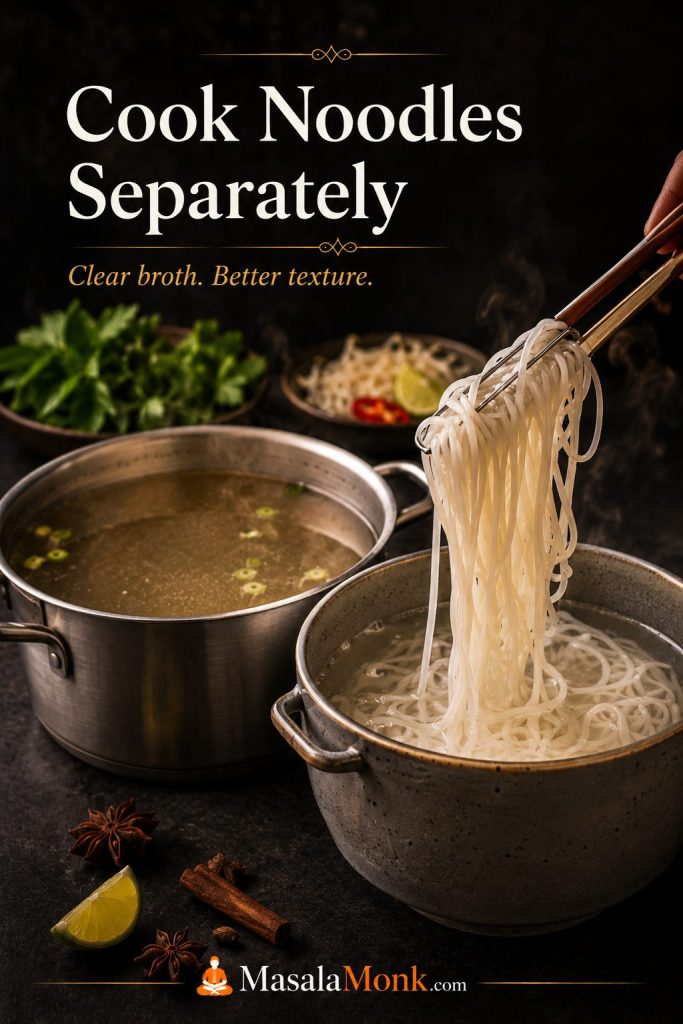
Cook pho noodles away from the broth. That one habit keeps the liquid clearer and gives the noodles a better texture in the finished bowl. The noodles should meet the broth only at the very end.
Keep the noodles out of the broth pot until serving. This one habit helps the soup stay cleaner and prevents the rice noodles from sitting too long and going soft.
Common mistake: adding noodles to the broth pot. Rice noodles release starch and keep absorbing liquid. Cook them separately, drain them well, and add them to bowls only when serving.
Do not simmer noodles in the broth. They release starch and make the broth cloudy.
Do not store noodles in broth. They keep absorbing liquid and turn mushy.
Do not cook them too early. Prepare them close to serving time when possible.
Use 50–80 g dried noodles per bowl. Use the lower end for lighter bowls and the higher end for noodle-heavy bowls.
Refresh clumped noodles with hot water. Drain again before adding them to bowls.
Pho Noodle Texture Guide
Noodle texture can make a good broth feel better or worse. The goal is not a soft pile of rice noodles that breaks apart, and it is not a stiff noodle that fights the broth. Good pho noodles should bend easily, feel slippery, and still hold their shape when lifted with chopsticks.
If the noodles feel too firm, give them a little more time or refresh them with hot water. If they are already tearing, clumping, or collapsing before they reach the bowl, they have gone too far. Cook them close to serving time whenever possible.
Pho noodles should bend easily and feel silky, yet they still need enough structure to hold their shape once the hot broth is poured over them.
The noodles should be soft and slippery, but still have enough bite that they do not collapse in the hot broth.
How to Assemble Pho Bowls
Once the broth is strained and seasoned, the rest of the recipe moves quickly. Have the noodles cooked, herbs washed, beef sliced, broth hot, and bowls ready before you start assembling.
Bring the final broth to a full boil when it goes into the bowl, especially if you are using raw thin-sliced beef. Keep the simmering stage gentle, but make the serving stage hot and fast.
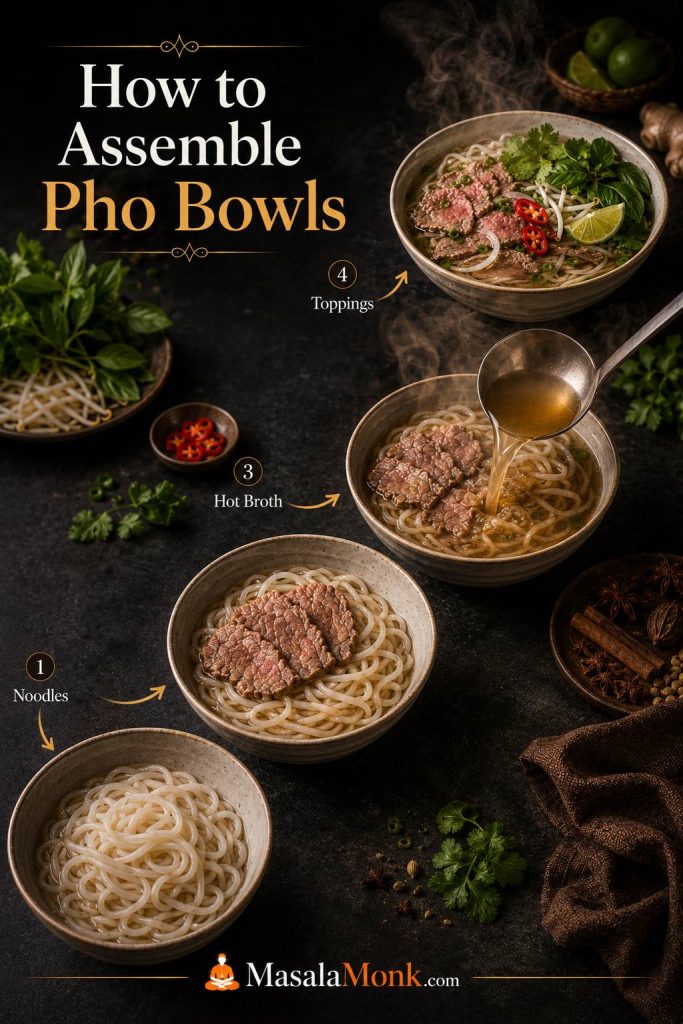
The bowl is built in layers so each part keeps its texture. Noodles stay silky, beef gets the heat it needs, and herbs and lime stay fresh until the last second.
Add cooked rice noodles to each bowl.
Layer in slices of cooked brisket, chuck, or shank.
Tuck in paper-thin raw beef slices if using.
Ladle very hot broth directly over the beef and noodles.
Top with onion, scallions, herbs, sprouts, chili, and lime.
Serve immediately with optional hoisin and sriracha on the side.
Why the Final Broth Pour Must Be Hot
The long broth simmer should stay calm, but the final pour should be very hot. That last burst of heat warms the noodles, releases the aroma from the broth, and helps thin beef soften or cook in the bowl.
If the broth is only warm, the bowl can taste dull and the beef may not change texture properly. Bring the strained broth back to a full boil right before serving, then ladle it over the noodles and beef immediately.
Hot broth matters most at the final pour. If the liquid is not hot enough, the beef stays too raw and the whole bowl loses some of its aroma and lift.
Raw beef note: the topping beef must be very fresh, kept cold, sliced paper-thin, and covered with boiling-hot broth right away. For children, pregnant guests, older adults, immunocompromised guests, or anyone uncomfortable with rare beef, use cooked beef only or dip the slices directly into simmering broth until fully cooked before adding them to the bowl.
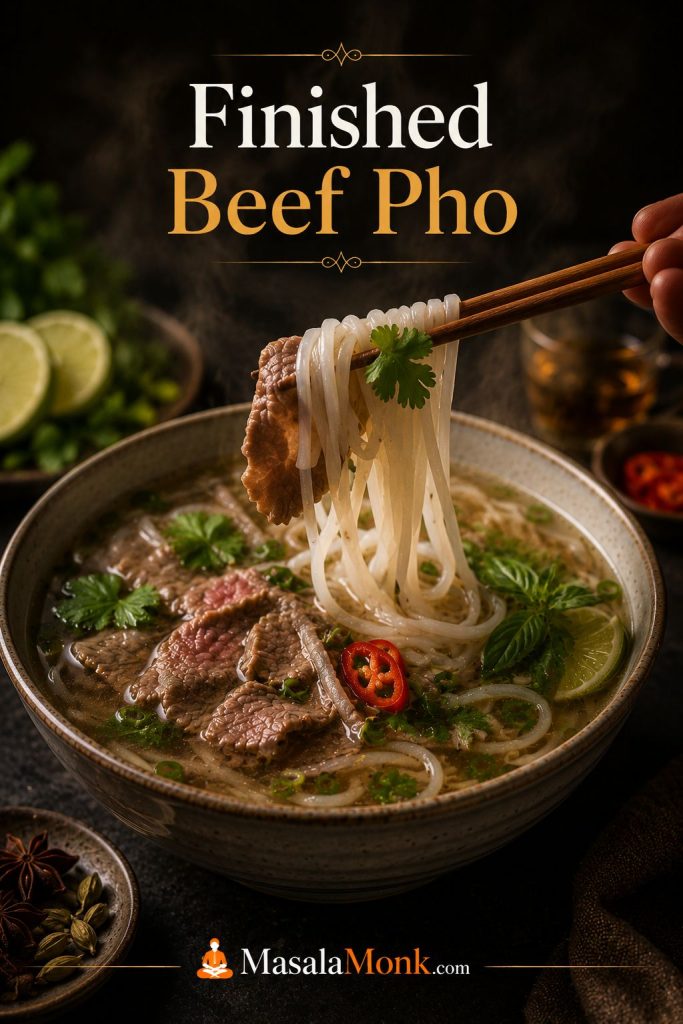
What a Finished Beef Pho Bowl Should Feel Like
A finished beef pho bowl should not feel heavy, muddy, or overloaded. It should taste balanced: savory broth first, then soft noodles, tender beef, fresh herbs, sharp lime, and a little crunch from sprouts or onion.
If the first bowl tastes flat, do not keep assembling the rest. Add more seasoning to the broth, brighten the bowl with lime, or bring the broth back to a stronger boil before serving the next one. One test bowl can save the whole pot.
A finished beef pho bowl should feel balanced rather than heavy: savory broth, tender beef, soft noodles, bright herbs, fresh lime, and just enough crunch from onion or sprouts.
Suggested Pho Cooking Timeline
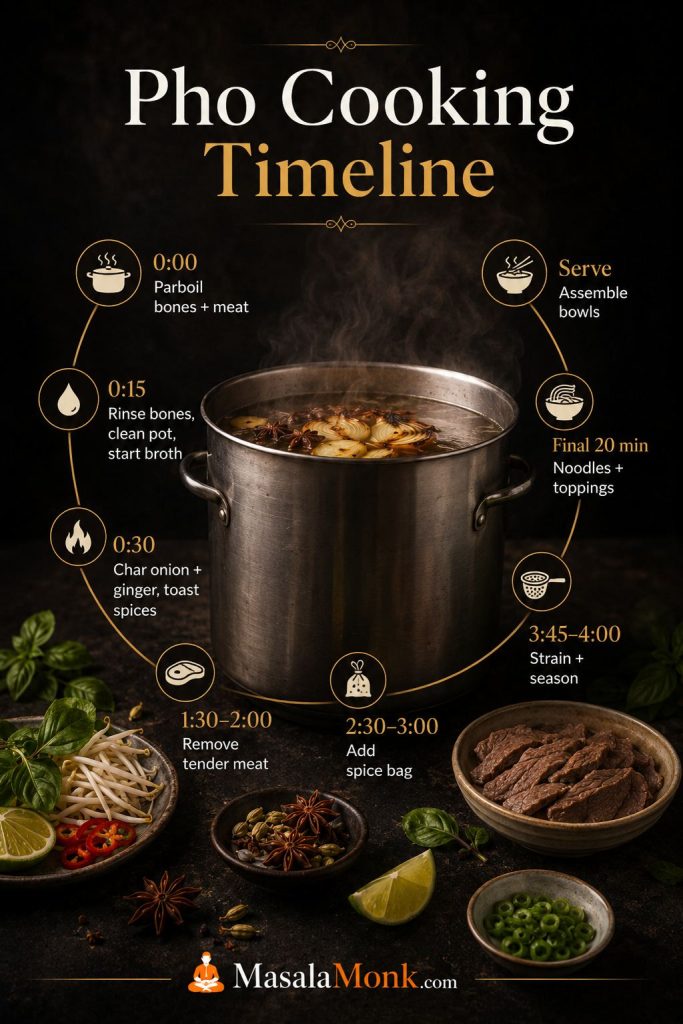
This timeline keeps the long recipe from feeling chaotic. The exact minutes do not have to be perfect; use it as a rhythm for the pot.
A timeline turns pho from a guessing game into a sequence. Once the broth is underway, you can time the meat, spices, noodles, and toppings without crowding the final 20 minutes.
Time
What to do
0:00
Parboil bones and meat.
0:15
Rinse bones and meat, clean the pot, and start the fresh broth.
0:30
Char onion and ginger, then toast the spices.
1:30–2:00
Remove brisket, chuck, or shank once tender enough to slice later.
2:30–3:00
Add the spice bag for the final stretch of simmering.
Bring broth to a full boil and assemble bowls immediately.
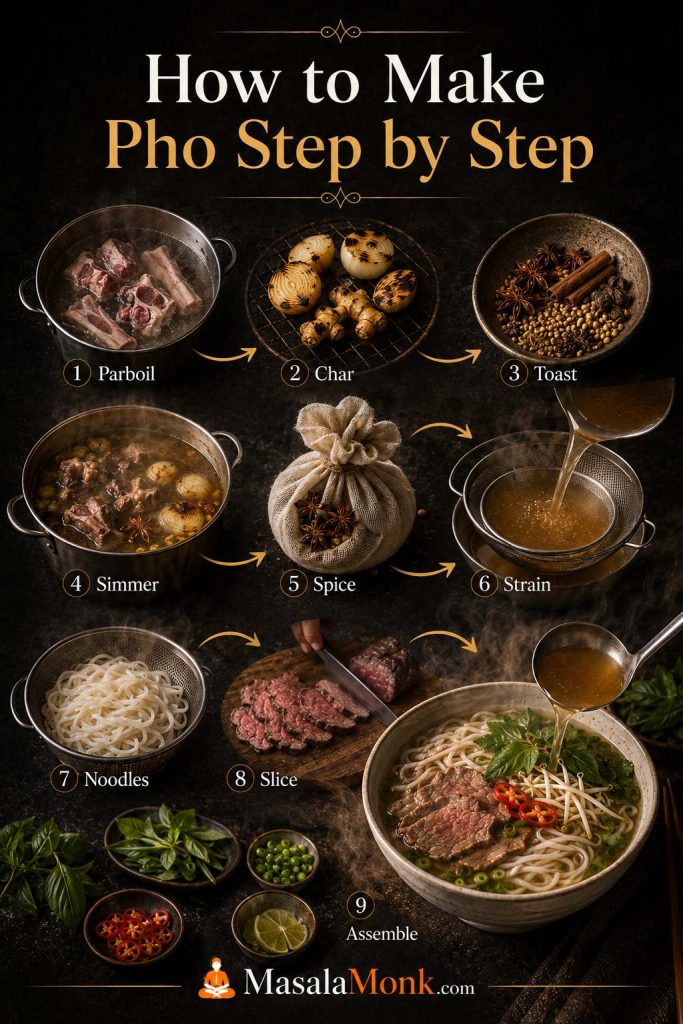
How to Make Pho Step by Step
Every step protects either flavor, clarity, or texture. Parboiling cleans the base, charring builds aroma, straining refines the broth, and separate noodles keep the final bowl clean.
1. Parboil the Bones and Meat
Place the beef bones and brisket, chuck, or shank in a large pot. Cover with water, bring to a hard boil, and boil for 5–10 minutes. Drain everything, rinse the bones and meat under warm water, and scrub the pot clean.
2. Char the Onion and Ginger
Halve the onions and split the ginger lengthwise. Char them over a gas flame, in a dry skillet, under a broiler, or on a grill pan until the surfaces are browned and fragrant. This usually takes 8–12 minutes depending on your heat source.
3. Toast the Spices
Add the star anise, cinnamon, cloves, coriander, fennel, and black cardamom if using to a dry skillet. Toast over medium heat for 3–5 minutes, shaking the pan often. Transfer to a spice bag or wrap in cheesecloth.
4. Start the Broth
Return the rinsed bones and simmering beef to the clean pot. Add 4.5 L / 19 cups fresh water, the charred onion, charred ginger, salt, and rock sugar. Bring to a boil, then immediately lower to a gentle simmer.
5. Simmer Gently
Simmer gently for about 1½–2 hours, skimming the surface when needed. When the brisket, chuck, or shank is tender, remove it from the broth, cool slightly, wrap, and refrigerate until slicing. Continue simmering the bones, keeping them mostly submerged; add hot water if the broth reduces too aggressively.
6. Add the Spice Bag
Add the toasted spice bag for the final 60–90 minutes of simmering. This gives the broth a clear pho aroma without letting the spices become bitter or too dominant. Remove the spice bag early if the broth smells strong enough before the time is up.
7. Strain and Season
Strain the broth through a fine-mesh strainer. Skim excess fat. Season with fish sauce, more salt, and a little sugar if needed. The broth should taste slightly stronger than a normal soup because the noodles and toppings will soften it.
8. Cook the Noodles
Cook or soak the banh pho noodles according to the package directions. Drain well. If they are ready before the broth, rinse lightly and keep them separate, then refresh briefly with hot water before serving.
9. Slice the Beef and Prepare Toppings
Slice the cooked brisket, chuck, or shank against the grain. Thinly slice the raw beef topping if using. Wash the herbs, cut the lime, slice the chilies, and prepare sprouts, scallions, and onion.
10. Assemble and Serve
Bring the strained broth back to a full boil. Divide noodles among bowls, add cooked beef and raw beef slices, then ladle hot broth over the top. Add toppings and serve immediately.
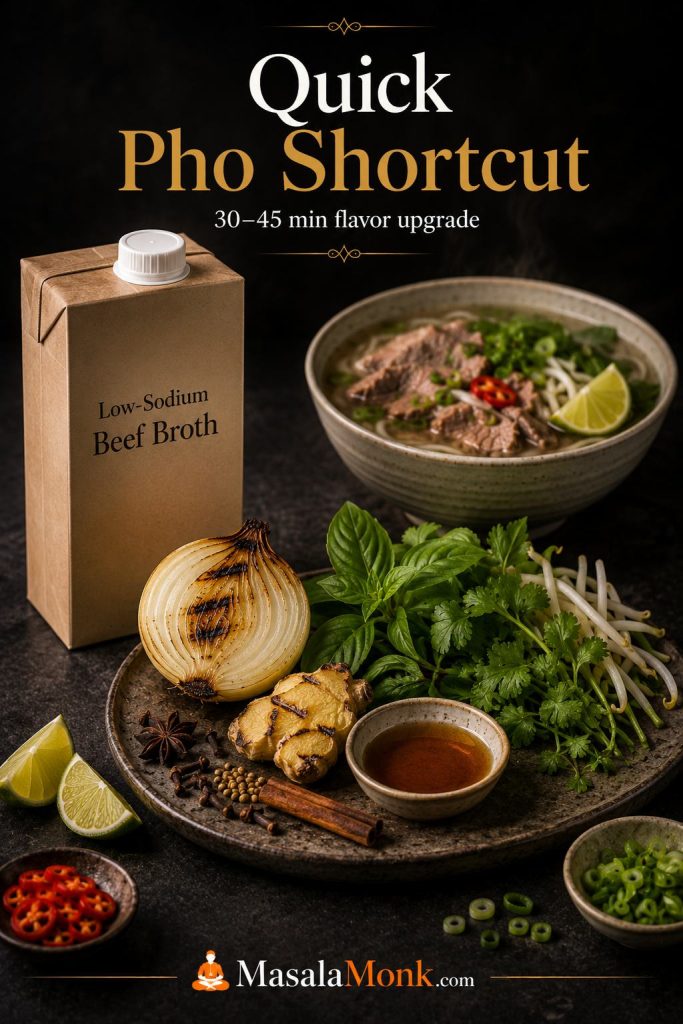
Quick Pho Recipe Shortcut
Shortcut honesty: quick pho is best when you want the aroma and comfort of pho without a full stockpot project. It will not have the same body as long-simmered bone broth, so do not judge it by the same standard. Use it for weeknights; use the full beef version when broth depth matters most.
A quick pho shortcut can still make a good pho-style bowl if you build aroma properly. The key is to improve the broth instead of simply heating stock and adding noodles.
A quick pho shortcut still needs time to build character. Otherwise, it tastes like broth with noodles rather than a proper pho-style bowl with depth and aroma.
How to Upgrade Broth for Quick Pho
The shortcut version should still taste built, not rushed. Give the broth enough time with charred aromatics and whole spices before you season it, then use fresh herbs and lime at the end to make the bowl feel complete.
A fast pho recipe works best when you still give the broth 30–45 minutes with aromatics and spices. Simmer 1.5–2 L / 6–8 cups good low-sodium beef or chicken broth with 1 charred onion, a 2–3 inch piece of charred ginger, 2–3 star anise pods, 1 small cinnamon stick, 2 cloves, and 1 teaspoon coriander seeds. Strain, then season with fish sauce, salt, and a little sugar.
Shortcut pho should still smell like pho before it reaches the bowl. If it only tastes like boxed broth, give the onion, ginger, and spices more time.
Use good low-sodium broth so you can control the final seasoning.
Brown the onion and ginger instead of adding them raw.
Toast the spices before simmering.
Keep the simmer short but focused: 30–45 minutes is enough to perfume the broth.
Keep the noodles out of the broth until serving and finish with fresh herbs, lime, sprouts, and chili.
For a better shortcut beef pho, simmer a piece of brisket, chuck, or shank in store-bought broth for 1½–2½ hours with the aromatics and spices. It is still much faster than a full bone broth, but it gives the bowl more body and real beef flavor.
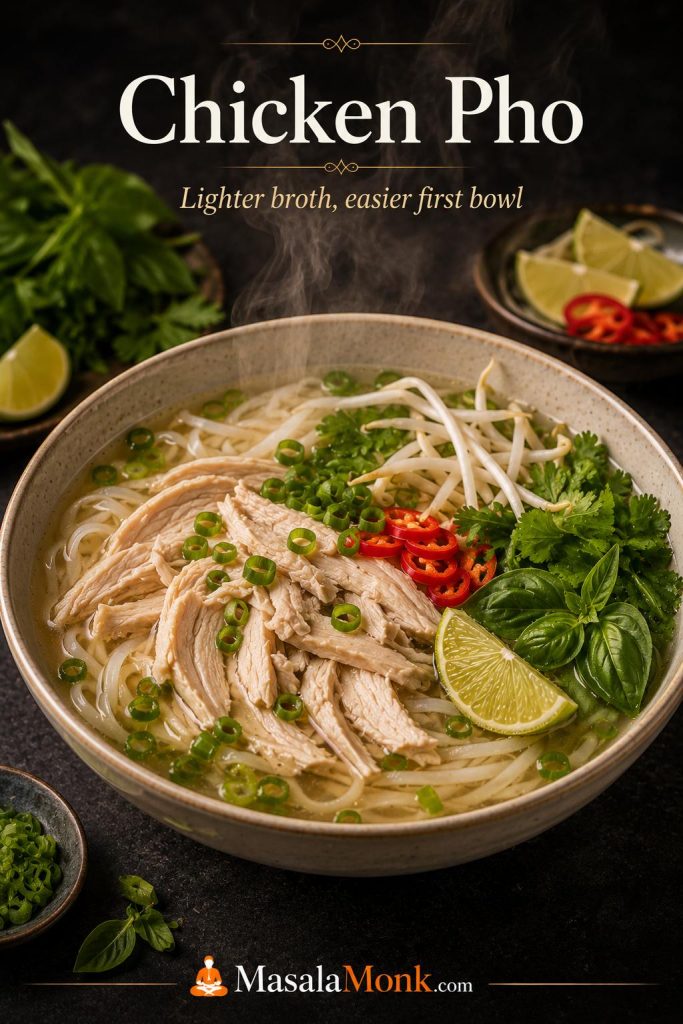
Chicken Pho Recipe Option
Chicken pho is often the easiest first pho to make at home. It needs less time than beef pho and does not require the same hunt for beef bones. The bowl should taste lighter, cleaner, and brighter than beef pho, not like a forced beef-style broth.
Chicken pho is often the easiest first version to make at home. It cooks faster than beef pho, yet it still rewards good broth, proper noodles, and bright finishing herbs.
For a simple chicken pho, simmer 1.5–2 L / 6–8 cups chicken broth with 1 charred onion, a 2–3 inch piece of charred ginger, 2–3 star anise pods, 1 small cinnamon stick, 2 cloves, and 1 teaspoon coriander seeds. Add 450–700 g / 1–1½ lb chicken thighs, chicken breasts, or bone-in chicken pieces and simmer gently until cooked through. This amount makes about 3–4 bowls, depending on how much broth you like in each bowl.
Remove the chicken, shred or slice it, strain the broth, and season with fish sauce, salt, and a small amount of sugar. Serve with banh pho noodles, herbs, sprouts, lime, chili, onion, and scallions. If you want a richer chicken version, use bone-in chicken and simmer closer to 75–90 minutes.
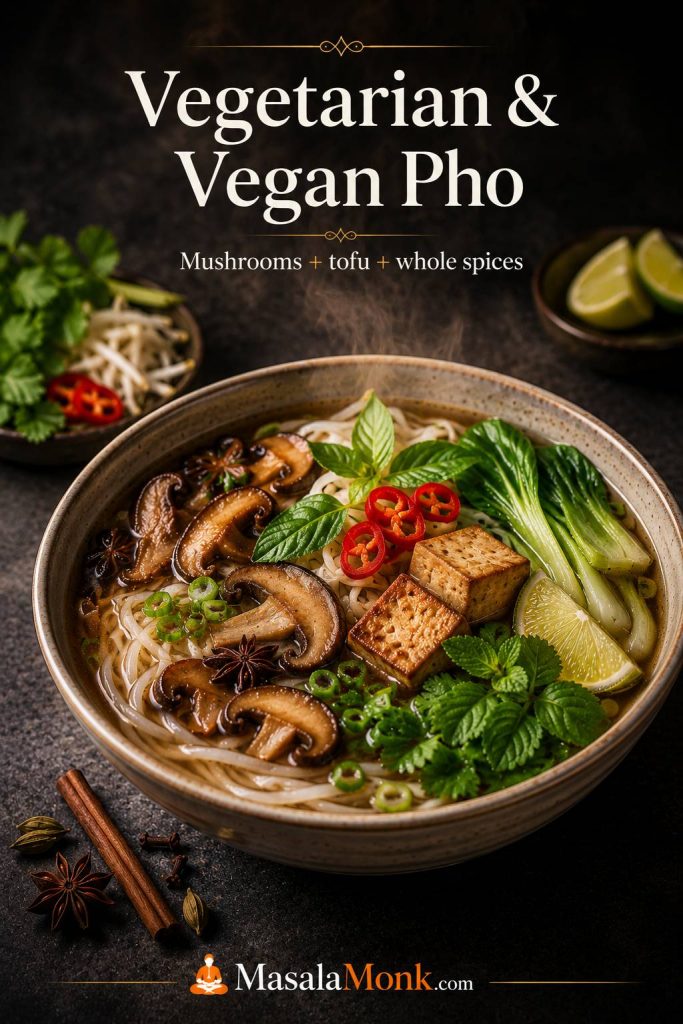
Vegetarian and Vegan Pho Recipe Options
Vegetarian pho and vegan pho need more than plain vegetable broth. Without bones, meat, or fish sauce, you need to build umami from mushrooms, roasted aromatics, whole spices, and a salty-savory seasoning such as tamari or soy sauce.
Vegetarian and vegan pho need real savory depth to feel satisfying. Mushrooms, tofu, roasted aromatics, and soy or tamari help the broth taste layered instead of thin.
Build a Vegan Pho Broth Base First
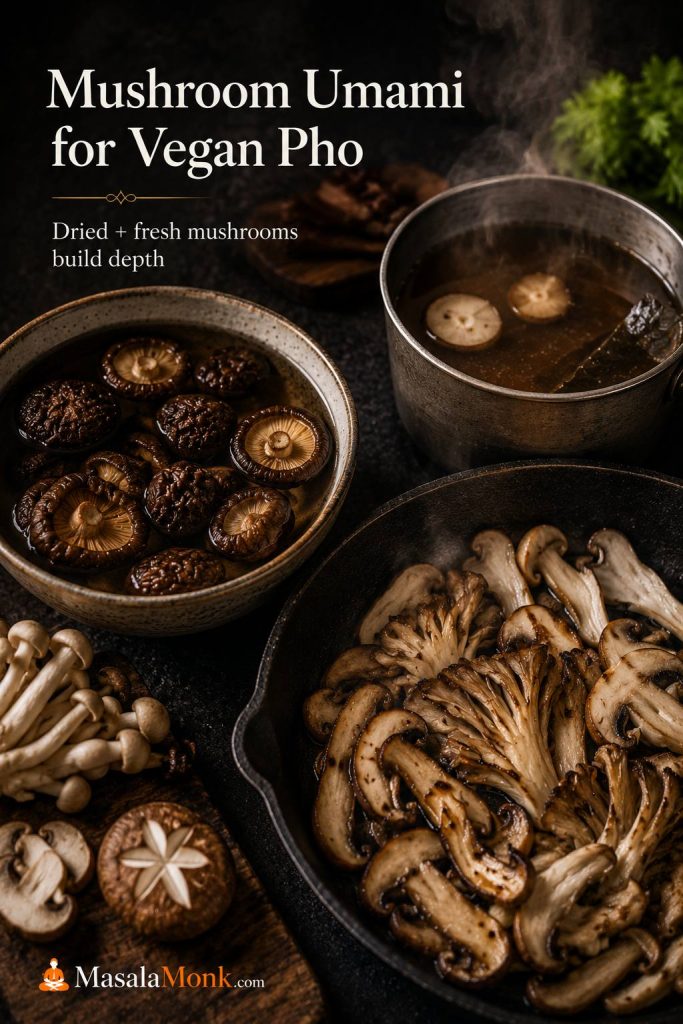
A plant-based broth needs extra umami, so start with 1.5–2 L / 6–8 cups vegetable broth or water, charred onion, charred ginger, toasted pho spices, 20–30 g dried shiitake or mixed dried mushrooms, and 225–300 g / 8–10 oz fresh mushrooms. Season with tamari or soy sauce, a little sugar, and salt to taste. Add tofu, bok choy, sautéed mushrooms, or other vegetables to the finished bowl.
Dried mushrooms deepen the broth, while fresh mushrooms improve the bite of the finished bowl. Using both gives vegan pho a fuller, more convincing flavor.
For another simple way to make mushrooms feel satisfying rather than watery, MasalaMonk’s skillet mushroom and zucchini stir fry is a useful side or topping-style idea; just cook the vegetables drier if you want to add them to a noodle bowl.
Flavor Fixes for Vegetarian and Vegan Pho
Use mushrooms: shiitake, cremini, oyster mushrooms, or dried mushrooms add depth.
Keep the charred onion and ginger: they still matter in plant-based pho.
Use whole spices: star anise, cinnamon, cloves, coriander, and fennel still create the pho aroma.
Replace fish sauce: use tamari, soy sauce, or a vegan fish sauce alternative.
Add protein: tofu, mushrooms, bok choy, or other vegetables work well.
Do not overdo sweetness: plant-based broth can become sweet quickly if the vegetables dominate.
Dried mushrooms are especially helpful because they add a deeper savory base and keep the broth from tasting like plain vegetable soup. Strain out the dried mushrooms if they are tough, or slice them thinly and return them to the bowl if they are tender enough to eat.
If soy sauce or tamari starts making the broth taste too salty, dilute gently and rebuild flavor with ginger, herbs, chili, and lime instead of adding more salt. Lower-sodium soy sauce or tamari gives you more room to adjust.
If you use miso or kombu, keep them subtle so the bowl still tastes like pho rather than a different noodle soup.
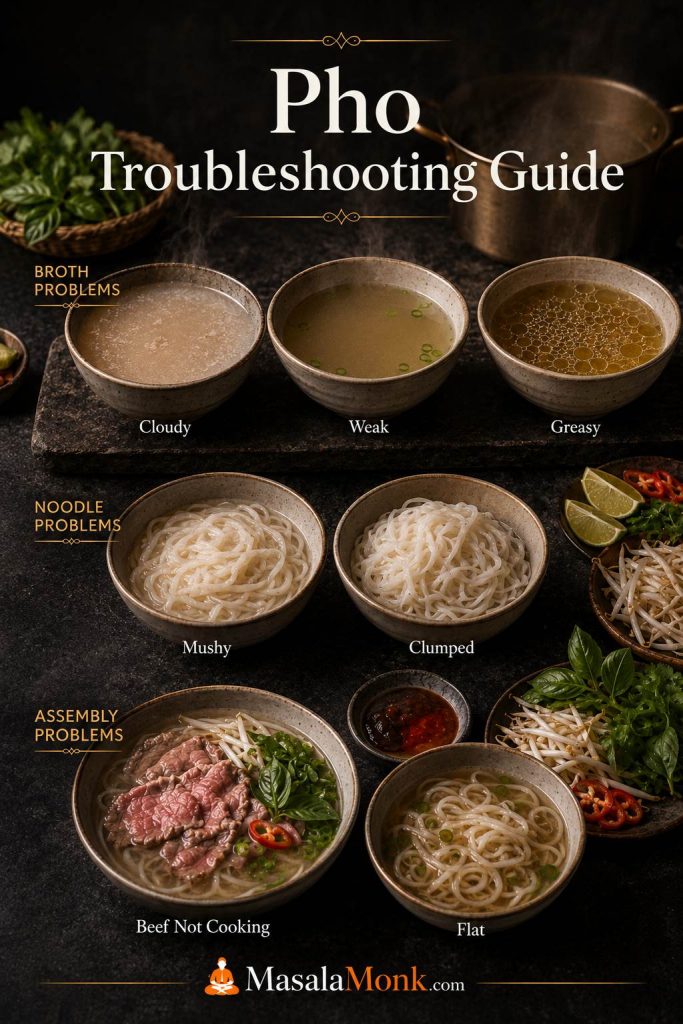
Pho Troubleshooting: Broth, Noodles, and Beef
Most pho problems come from one of four places: the broth boiled too hard, the seasoning was not balanced, the noodles were handled like pasta in soup, or the final broth was not hot enough for assembly.
Before fixing pho, identify what failed. Cloudy broth points to heat or starch, mushy noodles point to timing, and flat flavor usually points to under-seasoned broth.
Broth Problems in This Pho Recipe
Use this table to fix broth issues before they affect every bowl.
Clear pho broth does not mean weak broth. Instead, it usually means the bones were cleaned well, the simmer stayed gentle, and the noodles were kept out of the pot.
Problem
What probably happened
How to fix it
Cloudy broth
Bones were not parboiled, the pot boiled too hard, or noodles were cooked in the broth
Strain well, avoid stirring aggressively, and simmer gently next time. Cook noodles separately.
Weak broth
Too much water, not enough meat or bones, too short a simmer, or under-seasoning
Simmer longer, reduce slightly, and adjust with fish sauce, salt, and a little sugar.
Greasy broth
Fat from marrow or meat was not skimmed
Skim with a ladle, use a fat separator, or chill the broth and remove the solid fat.
Too salty
Too much fish sauce or salt, or broth reduced more than expected
Dilute with hot water or unsalted broth, then rebalance with aromatics and a tiny amount of sugar if needed.
Too sweet
Too much rock sugar or naturally sweet vegetables
Add fish sauce or salt in small amounts. Brighten the bowl with lime at serving.
Too spice-heavy
The spice bag stayed in too long or the spices were too strong
Remove the spice bag, dilute with broth or water, and simmer with extra onion or ginger if needed.
Noodle and Bowl Problems in This Pho Recipe
Use this table when the broth is good, but the final bowl still feels off.
Problem
What probably happened
How to fix it
Mushy noodles
Noodles were overcooked or sat in hot broth too long
Cook noodles separately and add them to bowls right before serving.
Noodles clumped
Cooked noodles sat too long after draining
Rinse or refresh briefly with hot water, loosen with chopsticks or tongs, then divide into bowls.
Raw beef did not cook in the bowl
Broth was not hot enough or beef slices were too thick
Bring broth to a full boil and slice beef paper-thin. Dip slices in simmering broth first if needed.
Broth tastes flat after assembling
The broth was seasoned perfectly in the pot but diluted by noodles and toppings
Season broth slightly stronger before serving. Add lime, herbs, fish sauce, or chili at the table.
Test One Bowl Before Serving the Pot
If your first bowl tastes flat, fix the broth before assembling the rest. One test bowl can save the whole pot.
The easiest way to avoid most of these issues is to keep the broth and noodles separate until the last moment. Store them separately, reheat them separately, and assemble only as many bowls as you plan to eat right away.
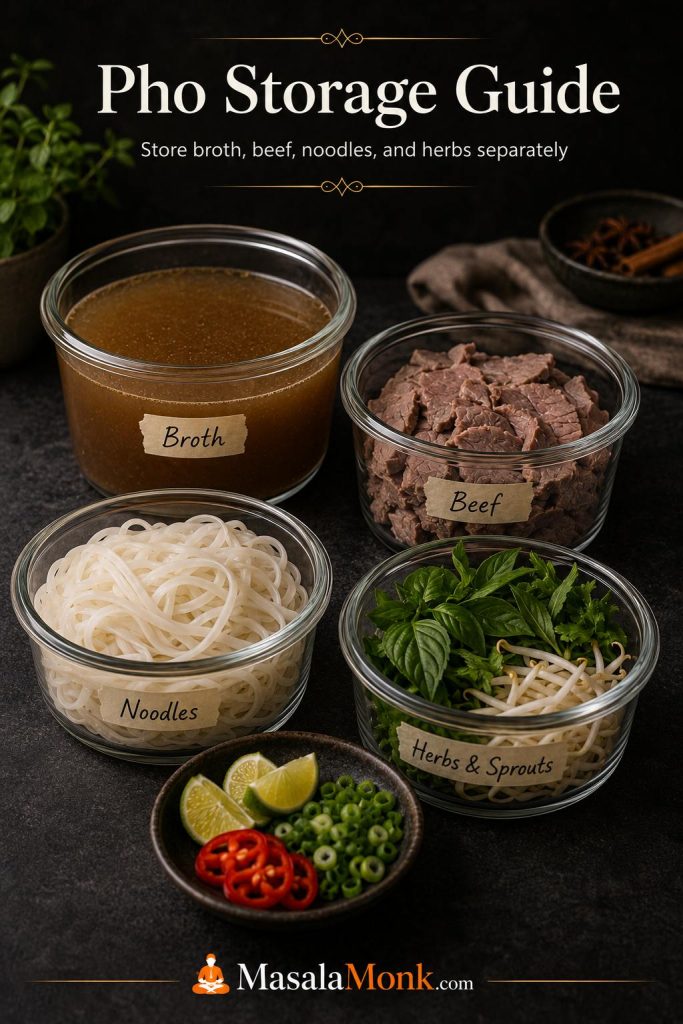
Make-Ahead, Storage, Freezing, and Reheating
Pho is one of the best make-ahead soups if you store the components separately. The broth can be made ahead, chilled, skimmed, and reheated. The noodles and herbs should be prepared close to serving.
Leftover pho works best when it is stored like separate parts, not one finished soup. Keep broth, beef, noodles, herbs, and sprouts apart so the next bowl still tastes fresh.
Broth: refrigerate for 3–4 days, or freeze for about 3 months for best quality.
Cooked beef: refrigerate separately and slice before serving.
Noodles: best cooked fresh. If needed, store separately and refresh with hot water.
Herbs and sprouts: wash and dry, but add only at serving.
Reheating: bring broth back to a boil before assembling bowls.
If the broth tastes too concentrated after refrigeration or reheating, add a little hot water and adjust the seasoning. Reheat only the amount you plan to serve, bring it back to a full boil for assembly, and keep the noodles, herbs, sprouts, and beef stored separately until you build fresh bowls.
Before You Start the Recipe Card
Before starting, read the broth timing, noodle timing, and raw beef note once. The recipe is easiest when the broth is treated as the main project and the noodles, toppings, and bowl assembly happen at the end.
Use this recipe card as a quick memory guide for the full beef pho method: long-simmered broth, whole spices, banh pho noodles, thin beef, fresh herbs, lime, and a hot final pour.
Home-Style Beef Pho Recipe Card
This beef pho recipe makes clear, aromatic Vietnamese-style noodle soup with beef bones, brisket or chuck, roasted onion and ginger, toasted whole spices, rice noodles, thin-sliced beef, herbs, and lime.
Yield6 large bowls
Prep Time45 minutes
Cook Time4 hours
Total Time4 hours 45 minutes
Equipment
9–10 L / 10-quart stockpot
Large skillet, broiler, grill pan, or gas flame for charring
Fine-mesh strainer
Cheesecloth, muslin, or spice bag
Ladle and tongs
Large serving bowls
Sharp knife
Optional: fat separator
Broth Ingredients
1 kg / 2 lb meaty beef bones, such as neck bones, oxtail, or meaty soup bones
1 kg / 2 lb marrow, knuckle, leg, or other beef bones
1.25–1.5 kg / 2¾–3⅓ lb beef brisket, chuck, or shank
4.5 L / 19 cups fresh water, plus more if needed
2 large onions, halved
150 g / 5 oz fresh ginger, split lengthwise
1 tablespoon salt, plus more to taste
25–40 g yellow rock sugar, or 1–2 tablespoons regular sugar
45–60 ml / 3–4 tablespoons fish sauce, plus more to taste
Spice Bag
6–8 star anise pods
1–2 cinnamon sticks
4–6 whole cloves
1 tablespoon coriander seeds
1–2 teaspoons fennel seeds, optional
1 black cardamom pod, optional
For Each Bowl
50–80 g dried banh pho rice noodles, or about 120 g fresh pho noodles
30–45 g / 1–1½ oz raw eye of round, sirloin, tenderloin, or flank, sliced paper-thin
A few slices cooked brisket, chuck, or shank
500–650 ml / 2–2¾ cups boiling-hot broth
Bean sprouts
Thai basil, mint, cilantro, or a mix
Lime wedges
Sliced chili or jalapeño
Thinly sliced onion and scallions
Hoisin and sriracha, optional
Instructions
Build the broth
Parboil the bones and meat. Place the beef bones and brisket, chuck, or shank in a large pot. Cover with water, bring to a hard boil, and boil for 5–10 minutes. Drain, rinse the bones and meat, and clean the pot.
Char the aromatics. Char the halved onions and split ginger over a gas flame, in a dry skillet, under a broiler, or on a grill pan until browned and fragrant.
Toast the spices. Toast the star anise, cinnamon, cloves, coriander, fennel, and black cardamom if using for 3–5 minutes over medium heat. Transfer to a spice bag or cheesecloth bundle.
Start the broth. Add the rinsed bones and meat back to the clean pot. Add 4.5 L / 19 cups fresh water, charred onion, charred ginger, salt, and rock sugar. Bring to a boil, then reduce to a gentle simmer.
Simmer gently. Simmer for 1½–2 hours, skimming as needed. Remove the brisket, chuck, or shank once tender, cool slightly, then refrigerate until slicing. Continue simmering the bones, keeping them mostly submerged; add hot water if the broth reduces too aggressively.
Add the spice bag. Add the toasted spice bag for the final 60–90 minutes of simmering. Remove it earlier if the broth smells strongly spiced.
Strain and season. Strain the broth through a fine-mesh strainer. Skim excess fat. Season with fish sauce, more salt, and a little sugar if needed. The broth should taste slightly stronger than a normal soup.
Finish the bowls
Cook the noodles separately. Cook or soak the banh pho noodles according to package directions. Drain well and keep separate from the broth.
Prepare the beef and toppings. Slice the cooked beef. Slice the raw beef paper-thin. Wash herbs, prepare sprouts, cut lime wedges, and slice onion, scallions, and chili.
Assemble the bowls. Bring the broth back to a full boil. Add noodles, cooked beef, and raw beef slices to bowls. Ladle boiling-hot broth over the top, then finish with herbs, sprouts, lime, chili, onion, scallions, and optional sauces.
Notes
Keep the broth at a gentle simmer, not a rolling boil, for a clearer finish.
Cook noodles separately. Do not simmer them in the broth.
For raw beef topping, slice the beef very thin and use boiling-hot broth. For a fully cooked option, use cooked beef only or dip the slices directly into simmering broth before serving.
Broth should taste slightly stronger in the pot because noodles and toppings dilute the seasoning.
Store broth, noodles, meat, and herbs separately for best leftovers.
Final Adjustments Before Serving Pho
The final adjustment is where homemade pho starts to feel personal. Once the bowl is built, taste it the way you will actually eat it: with noodles, beef, herbs, lime, sprouts, and hot broth together.
A quiet bowl may need more fish sauce or salt in the broth. When the flavor feels heavy, lime and herbs can lift it. Thin-tasting pho usually needs more broth concentration or a stronger simmer before the next bowl. This last check is what turns a good pot of pho into a bowl that tastes right to you.
The final adjustment is where homemade pho becomes personal. A little more lime, fish sauce, salt, or aroma can turn a good bowl into one that tastes exactly right to you.
FAQs
What Pho Tastes Like
Pho tastes savory, aromatic, lightly sweet, and fresh at the same time. The broth should be beefy or chicken-forward, with warm spice from star anise and cinnamon, brightness from herbs and lime, and a clean finish from rice noodles and fresh toppings.
How to Pronounce Pho
Pho is usually pronounced closer to “fuh” than “foe.” The written Vietnamese word is phở.
The Best Noodles for Pho
Flat rice noodles called banh pho are best. Use small or medium-width noodles for soup. Dried banh pho is easy to store and works well; fresh banh pho only needs a quick blanch before serving.
How to Make Pho Without Beef Bones
Use good low-sodium beef broth, charred onion and ginger, toasted pho spices, fish sauce, and a flavorful cut like brisket or chuck if you still want beef depth. The broth will be lighter than bone broth, but it can still make a satisfying shortcut bowl.
When a Pho Spice Packet Works
A whole-spice pho packet can work well, especially for a first batch. Toast the spices briefly if they are loose enough to toast, then simmer them in the broth inside the packet or a spice bag. Powdered seasoning packets are better treated as shortcut helpers, not the whole flavor base.
Why Pho Broth Turns Cloudy
Cloudy pho broth usually comes from skipping the parboil step, boiling the pot too aggressively, stirring too much, or cooking noodles directly in the broth. Parboil and rinse the bones, keep the broth at a gentle simmer, and cook noodles separately.
How Long This Pho Recipe Should Simmer
This pho recipe should simmer for about 4 hours after the parboil step. Some traditional-style beef pho recipes go longer, especially with large bones, while chicken pho and shortcut pho need less time.
The Spices That Give Pho Its Aroma
The most common pho spices are star anise, cinnamon, cloves, coriander seeds, and sometimes fennel seeds or black cardamom. Use whole spices, toast them briefly, and keep them in a spice bag for a cleaner broth.
How to Handle Raw Beef Topping Safely
The beef used as a topping should be very fresh, kept cold, sliced paper-thin, and covered with boiling-hot broth right before serving. For a fully cooked option, use cooked beef only or dip the slices directly into simmering broth until they are no longer raw, then add them to the bowl.
Why Pho Tastes Flat
Flat pho usually needs better seasoning or more balance. Add fish sauce or salt in small amounts, check for a little sweetness, and brighten the finished bowl with lime and herbs. If the finished bowl tastes quiet, the broth was probably seasoned for sipping rather than for noodles.
Where Hoisin and Sriracha Belong
Hoisin and sriracha are optional. They can be delicious with pho, but adding too much directly to the broth can cover the clean flavor you worked to build. Try using them on the side as dipping sauces for the meat.
Beef Pho vs Chicken Pho
Beef pho is usually deeper, richer, and built around beef bones and beef cuts. Chicken pho is lighter, faster, and often easier for a first homemade version. Both use aromatic broth, rice noodles, herbs, and fresh toppings.
The Best Way to Make Pho Ahead
Make the broth ahead, then store the broth, cooked beef, noodles, herbs, and sprouts separately. Chilling the broth also makes it easier to remove excess fat. Reheat the broth until very hot and assemble fresh bowls when ready to eat.
How to Store Pho Leftovers
Store the broth, noodles, beef, and herbs separately. Refrigerate broth for 3–4 days, or freeze it for about 3 months for best quality. Reheat the broth until hot, then assemble fresh bowls with noodles and toppings.
How to Keep Pho Gluten-Free
Pho is often easy to make gluten-free because the noodles are rice-based, but the sauces and packaged ingredients still need a label check. Check fish sauce, hoisin sauce, soy sauce, broth cartons, seasoning packets, and any store-bought sauces before using them.
This pineapple jam recipe turns fresh pineapple or canned crushed pineapple into a glossy, golden spread that tastes bright, tropical, and properly homemade. Make it smooth and spoonable for toast, leave it chunkier for pineapple preserves, or cook it down further when you need a thick filling for tarts, cookies, and pastries.
The main version is a simple no-pectin pineapple jam for the fridge or freezer. Pineapple, sugar, lemon or lime juice, and a pinch of salt cook down into a sweet-tart fruit spread that thickens as it cools and stays soft enough to spread.
Once you know what the bubbles, spoon trail, and cold-plate test should look like, the recipe becomes very forgiving. Use crushed pineapple for jam, diced pineapple for preserves, canned pineapple for a quick pantry batch, or a wider pan and longer cooking time for pineapple tart filling.
The best part is that the recipe does not fall apart if your pineapple is extra juicy, your can is a little watery, or you want a softer spoonable finish instead of a firm jar. The texture tests below will tell you when to stop.
Use this guide to choose between smooth pineapple jam, chunkier pineapple preserves, a quick canned pineapple batch, or a thicker filling for tarts and pastries.
For an easy pineapple jam recipe, simmer crushed pineapple with sugar, lemon or lime juice, and a pinch of salt until it turns shiny, golden, and thick enough to mound softly on a spoon. If you want pineapple preserves instead, use diced pineapple and stop cooking while the fruit pieces are still visible in a thick syrup.
The easiest no-pectin ratio is 3 cups crushed pineapple, 1½ cups sugar, and 1–2 tablespoons lemon or lime juice. Cook for about 25–35 minutes. The jam is ready when it leaves a brief trail in the pan, passes the cold-plate test, or reaches about 220°F / 104°C at sea level.
However, do not worry if it looks a little loose while hot. Pineapple jam thickens as it cools, so the goal is glossy and spreadable rather than stiff or rubbery. For the safest first batch, make the crushed pineapple version and refrigerate it.
Best first batch: Start with the no-pectin pineapple jam made with crushed pineapple. After that, try diced preserves, canned pineapple jam, or a thicker filling for tarts and pastries.
Start with the simple no-pectin pineapple jam ratio, then let the pan tell you when it is done. As the fruit reduces, the bubbles slow down and the mixture turns shiny instead of watery.
Pineapple Jam Recipe at a Glance
This pineapple jam recipe can go in four useful directions: soft-set jam, chunkier preserves, quick canned pineapple jam, or a much thicker tart filling. Start with the version that matches how you plan to serve it.
One pineapple jam recipe can become a breakfast spread, chunky preserve, canned-pineapple batch, or tart filling. As a result, choosing the route first helps you cook toward the right texture.
Pineapple tarts, pastry filling, thumbprint cookies
Choose your version: Use crushed pineapple for soft, spreadable jam; diced pineapple for chunkier preserves; canned crushed pineapple for the quickest small batch; and finely pulsed pineapple cooked much longer for tart or pastry filling. For pantry storage, do not use the flexible recipe as written — follow a tested canning method instead.
Pineapple Jam vs Pineapple Preserves
Although pineapple jam and pineapple preserves use similar ingredients, they do not eat the same way. This pineapple jam recipe gives you both paths, so you can choose the texture that fits how you plan to use it.
A smoother jam is easier to spread because the fruit is crushed, finely chopped, pulsed, or mashed as it cooks. Choose this version for toast, scones, thumbprint cookies, cake layers, yogurt bowls, and everyday spooning.
Meanwhile, preserves are chunkier. The fruit is usually diced into small, even pieces and cooked until tender in a thick syrup. Choose this version when you want visible pineapple pieces on biscuits, pancakes, waffles, cheesecake, ice cream, cheese boards, or savory glazes.
Another easy way to think about it: jam should glide across toast, while preserves should give you soft little pineapple pieces in each spoonful.
Pineapple jam and pineapple preserves are separated by texture more than ingredients. Crushed pineapple gives a smoother spread, while diced pineapple keeps soft fruit pieces in the finished preserve.
You only need a few ingredients, but each one has a job. Pineapple brings the fruit and acidity, sugar helps the mixture thicken and shine, citrus keeps the flavor lively, and salt balances the sweetness. Because this pineapple jam recipe is flexible, the fruit cut matters as much as the ingredient list.
Pineapple, sugar, citrus, and salt are enough for a flexible refrigerator jam. However, pectin can help when you want a firmer set, a faster cook, or a tested canning-style formula.
Pineapple
Fresh ripe pineapple gives the brightest flavor and color. Canned crushed pineapple works well when you want a faster batch. For jam, crush or finely chop the fruit. For preserves, cut it into small even pieces so everything softens at the same rate.
Choose pineapple that smells sweet and fruity, not fermented. Very underripe pineapple can taste sharp, while overripe pineapple may make the jam darker and softer. A very sweet pineapple gives a rounder jam; a sharper one may need the higher end of the sugar range. If the fruit tastes flat, lime juice usually wakes it up better than more sugar.
Ripe pineapple gives homemade pineapple jam the brightest color and flavor. Meanwhile, underripe fruit can taste sharp, and overripe pineapple may cook down darker and softer.
Sugar
Sugar does more than sweeten the jar. It helps create body, improves the glossy finish, and supports the spreadable texture. For the main no-pectin version, start with 1½ cups sugar for 3 cups crushed pineapple. Use up to 2 cups if you prefer a firmer, sweeter jam.
Lemon or Lime Juice
Lemon juice gives a clean, classic fruit-spread flavor. Lime juice tastes a little more tropical and works especially well if you plan to use the jam with coconut desserts, pineapple tart filling, or drink-inspired pairings.
Salt
A small pinch of salt will not make the jam salty. Instead, it rounds out the sugar and helps the pineapple taste brighter.
Pectin, Optional
You can make pineapple jam without pectin, but pectin is useful when you want a quicker set, a firmer jar, or a lower-sugar method designed for that purpose. Different pectin types need different sugar levels and cooking steps, so follow the instructions on the package if you use it.
Fresh vs Canned Pineapple
Fresh pineapple gives the brightest aroma and color, but canned pineapple is not a failure shortcut. It is fast, consistent, available year-round, and especially useful for a small-batch pineapple jam recipe. In fact, canned crushed pineapple is the easiest beginner version because the fruit is already evenly cut. The only real adjustment is moisture: if the can looks watery, cook a few minutes longer before judging the set.
Fresh pineapple gives the most vivid aroma, but canned crushed pineapple makes the easiest small-batch pineapple jam. Since the fruit is already evenly cut, it reduces with less prep work.
How to Prep Fresh Pineapple for Jam
When using fresh pineapple, peel, core, and chop the fruit first. Then, pulse it in a food processor for jam or dice it by hand for preserves. Try not to leave large pieces of tough core in the mixture because they can stay fibrous even after cooking.
Best Canned Pineapple to Use
For canned pineapple jam, choose crushed pineapple or pineapple chunks packed in juice rather than heavy syrup. Drain only if the can is extremely watery. Some juice helps the fruit cook down evenly and keeps the sugar from catching too early.
Canned pineapple jam can look loose at first because some cans carry more juice than others. Instead of adding thickeners too soon, simmer a little longer and wait for a glossy, reduced texture.
Pineapple Type
Best For
How to Use It
Fresh pineapple
Brightest flavor, best color, homemade preserves
Peel, core, chop, then crush or dice depending on texture
Canned crushed pineapple in juice
Quick pineapple jam, small batches, pantry version
Use with juice unless very watery; simmer longer if needed
Canned pineapple chunks
Preserves or jam after chopping
Chop smaller or pulse briefly before cooking
Pineapple in syrup
Last-resort option
Reduce added sugar and expect a sweeter final jam
If you are working with extra pineapple juice, save it for drinks, smoothies, marinades, or a tropical party bowl like this punch with pineapple juice.
Small-Batch Pineapple Jam
A small batch is perfect when you have one can of pineapple or a little fresh fruit left after cutting a whole pineapple. Since this is a small flexible batch, keep it chilled instead of treating it as pantry-stable.
Small batches are also helpful when you are learning the texture cues. They reduce faster, are easier to stir, and give you a low-pressure way to understand how pineapple changes as it cooks. If you are standing in the kitchen with one 20-ounce can of crushed pineapple, this is the easiest place to start.
A 20-ounce can of crushed pineapple is a practical shortcut for small-batch pineapple jam. Because the fruit is already crushed, the key is reducing the juice until the spread looks shiny and spoonable.
Tiny 8-Ounce Can Version
1 can / 8 oz / 227 g crushed pineapple in juice
⅓–½ cup / 65–100 g sugar
1–2 teaspoons lemon or lime juice
Small pinch of salt
Simmer everything in a small saucepan for 15–25 minutes, stirring often, until shiny and jammy. This makes roughly one small jar, depending on how much you reduce it.
The 8-ounce can version is a smart tiny batch when you only want one small jar. It also gives you a low-risk way to practice the cold-plate test before making more.
20-Ounce Can Version
1 can / 20 oz / 567 g crushed pineapple in juice
¾–1 cup / 150–200 g sugar
1 tablespoon / 15 ml lemon or lime juice
Pinch of salt
Cook for 20–30 minutes, or until the bubbles look slower and the fruit has reduced into a soft-set spread. If the canned pineapple is very juicy, the batch may need a few extra minutes.
Pineapple Jam Without Pectin
This no-pectin pineapple jam recipe is all about patience, not complicated technique. As the pineapple simmers, excess moisture cooks off, the sugar concentrates, and the mixture slowly changes from juicy fruit sauce into a glossy spread.
Because pineapple is not naturally high in pectin, the mixture needs enough time to reduce. A heavy-bottomed saucepan helps prevent scorching, while a wider pan speeds up evaporation.
A wide pan speeds up pineapple jam because more surface area lets moisture evaporate. At the same time, a heavy bottom helps protect the sugar and fruit from scorching.
No-pectin pineapple jam sets by reduction rather than by a strong natural pectin gel. That means the finished texture is usually softer and more spoonable than commercial jam, but the flavor is more concentrated because the fruit cooks down slowly.
No-pectin pineapple jam thickens by reduction rather than a strong commercial-style gel. Therefore, the texture should move from juicy fruit sauce to glossy spread as water cooks off.
The method is simple: combine crushed pineapple, sugar, lemon or lime juice, and salt. Bring the mixture to a boil, then simmer and stir often. As it cooks, the fruit will look less watery, the bubbles will become slower and shinier, and the jam will start leaving a brief trail when you drag a spatula across the bottom of the pan.
Texture tip: Pineapple jam thickens more as it cools. Therefore, stop when it is slightly looser than the final texture you want.
How to Make Pineapple Preserves
Make preserves when you want little golden pieces of pineapple in every spoonful. They are chunkier than jam, a little more syrupy, and especially good over biscuits, waffles, yogurt, ice cream, or cheesecake.
Pineapple preserves should keep visible fruit pieces in a thick syrup. For the best result, dice the fruit evenly and avoid mashing it so much that it turns into smooth jam.
Think of this as the pineapple preserve recipe path: diced fruit, less mashing, and a syrupy finish with visible golden pieces instead of a smoother spread.
Then, cut the fruit into small pieces, about ¼–½ inch. Pieces that are too large can feel chewy or slide off toast; however, pieces that are too small will collapse into jam.
Even pineapple pieces cook more predictably. Aim for ¼–½ inch dice so the preserves stay spoonable, tender, and chunky without becoming chewy or collapsing completely.
Do not pulse preserves too finely unless you want jam. The whole point is to keep small pineapple pieces visible.
For a fruit-forward batch, use less sugar than the classic no-pectin jam. A good starting point is 5½–6 cups diced pineapple, ⅔–1 cup sugar, 2 tablespoons lemon juice, and a pinch of salt.
Cook the mixture in a wide pan for about 30–40 minutes, stirring often, until the pineapple turns tender and golden and the liquid reduces to a thick syrup. If the fruit starts breaking down too much, lower the heat and stir more gently.
For a middle texture, mash only part of the fruit. As a result, you get preserves with body: chunky enough for biscuits and waffles, but still thick enough to spoon over yogurt, cheesecake, or ice cream.
How to Tell When Pineapple Jam Is Done
Because hot jam looks looser than cooled jam, the most common mistake is stopping too early. Instead of relying only on the clock, use the texture cues below.
If this is your first time making pineapple jam, judge it by texture rather than time alone. Some pineapples are juicier than others, and canned pineapple can vary from can to can, so a batch may need a few extra minutes.
Doneness at a glance: Fast watery bubbles mean it is too early. Slower glossy bubbles mean it is close. A soft mound on a cold plate means it is ready. If the jam slides like syrup, cook it a few minutes longer.
Stage
Visual Cue
What It Means
Early
Fast, watery bubbles
Keep cooking; too much moisture remains
Middle
Thicker fruit sauce
Stir more often so the bottom does not catch
Almost done
Slow, glossy bubbles
Start testing with a spoon trail or cold plate
Done
Soft mound on a cold plate
Jar and cool; it will thicken more as it chills
Too far
Sticky, dark, stiff texture
Loosen gently with a splash of pineapple juice or water
Doneness is easier to judge by texture than by minutes alone. Watery bubbles mean keep cooking, slow glossy bubbles mean start testing, and a soft mound means the jam is ready.
Spoon Trail Test
Drag a spatula or wooden spoon across the bottom of the pan. If the jam leaves a clean trail for a moment before slowly filling in, it is close. If liquid rushes back immediately, keep cooking.
When a spoon or spatula leaves a brief trail across the pan, the pineapple jam is close. However, the mixture should still look glossy and spreadable, not dry or paste-like.
Cold Plate Test
Place a small plate in the freezer before you start cooking. When the jam looks thick, spoon a little onto the cold plate and wait 30–60 seconds. Then, push it with your finger. It should thicken, wrinkle slightly, or hold a soft mound instead of running like juice.
The cold-plate test shows how pineapple jam will behave after cooling. If the sample runs like syrup, continue cooking; if it mounds softly, stop before it turns sticky.
Thermometer Cue
A classic jam-style set usually lands around 220°F / 104°C at sea level. This is a useful guide, but it should not be your only test. Pineapple type, pan width, sugar level, and altitude can all affect the final texture.
If you live at a higher elevation, the finishing temperature can be slightly lower. Therefore, use the cold-plate test and spoon trail along with the thermometer.
Bubble Cue
At the beginning, the mixture bubbles quickly and looks watery. Near the end, the bubbles become larger, slower, and glossier. The jam will look more like a thick fruit spread than a simmering fruit sauce.
Texture
What It Looks Like
What to Do
Too runny
Liquid rushes back after stirring; cold-plate sample runs
Cook 5–10 minutes longer, stirring often
Just right
Shiny, soft-set, spoonable, gentle mound on cold plate
Remove from heat and jar while warm
Too thick
Stiff, sticky, hard to spread, darkening quickly
Stir in 1–2 tablespoons water or pineapple juice and warm gently
Use this quick visual recipe card as a saveable reminder before the full method below.
Use the base pineapple jam recipe first, then adjust the fruit cut to match your final texture. Crushed pineapple gives a smooth spread, while diced pineapple creates chunkier preserves.
Pineapple Jam Recipe Card: No-Pectin Jam or Chunky Preserves
This base pineapple jam recipe makes soft-set no-pectin jam. Use crushed pineapple for jam or diced pineapple for chunkier preserves.
YieldJam: about 2½–3 cups / about three 8-ounce jars; preserves: about 3–4 cups
StorageFridge or freezer
Ingredients for Pineapple Jam
3 cups / about 680 g crushed pineapple, fresh or canned in juice
1½ cups / 300 g granulated sugar
1–2 tablespoons / 15–30 ml lemon or lime juice
⅛ teaspoon fine salt, or a small pinch
For a firmer, sweeter jam: increase sugar up to 2 cups / 400 g.
For Pineapple Preserves Instead
Use 5½–6 cups small diced pineapple, about ¼–½ inch pieces
Use ⅔–1 cup sugar, depending on sweetness
Use 2 tablespoons / 30 ml lemon juice
Add a pinch of salt
Equipment
Heavy-bottomed saucepan or wide pan
Food processor, blender, knife, or potato masher
Silicone spatula or wooden spoon
Measuring cups or digital scale
Jam thermometer, optional
Small freezer plate for testing
Clean jars with lids
Method
Prepare the pineapple. For jam, crush or finely chop the pineapple. For preserves, dice it into small even pieces.
Combine the ingredients. Add pineapple, sugar, lemon or lime juice, and salt to a heavy saucepan.
Start cooking. Bring to a boil over medium-high heat, stirring often so the sugar dissolves evenly.
Simmer and reduce. For jam, cook for 25–35 minutes, stirring frequently. For preserves, cook for 30–40 minutes, or until the pineapple pieces are tender and suspended in thick syrup. Scrape the bottom and sides of the pan so the mixture does not scorch.
Check the texture. Jam is ready when it looks shiny, thickened, and spoonable. It should leave a brief trail in the pan, mound softly on a cold plate, or reach about 220°F / 104°C at sea level. Preserves should look syrupy with visible fruit pieces.
Jar and cool. Spoon the hot jam or preserves into clean jars. Let cool, then cover and refrigerate. The mixture will thicken more as it chills.
Notes
This flexible no-pectin recipe is intended for refrigerator or freezer storage.
For shelf-stable canning, follow a tested preservation method and proper processing instructions.
If using canned pineapple packed in syrup, reduce the sugar and taste as it cooks.
For a smoother jam, use an immersion blender briefly before the jam gets too thick.
Avoid doubling the batch in the same pan the first time. Larger batches take longer to reduce and are easier to scorch, so make two separate batches if you need more.
Pineapple Jam With Pectin
If you want a firmer version of this pineapple jam recipe, pectin can help you get there without cooking the fruit as long. It can also help if you are using a lower-sugar method designed for pectin.
However, pectin is not one-size-fits-all. Regular powdered pectin, liquid pectin, low-sugar pectin, and calcium-activated pectin all behave differently. Some require a high sugar ratio, while others are designed for lower-sugar spreads.
Pectin is useful when you want a faster, firmer pineapple jam, but it is not always necessary. For a softer homemade spread, the no-pectin method gives a more spoonable finish.
Pectin versions are not automatically better; they are simply faster and firmer. If you use pectin, follow the specific package instructions for fruit amount, sugar amount, boiling time, and jar processing. Otherwise, the jam may turn too stiff, too loose, overly sweet, or unsuitable for pantry storage if you are trying to can it.
Fresh pineapple note: Some pectin methods recommend boiling fresh pineapple first because fresh pineapple contains enzymes that can interfere with gel formation. If your pectin brand gives pineapple-specific instructions, follow them.
Canning Pineapple Jam and Preserves Safely
Important: The recipe card above is written for refrigerator or freezer storage. Do not treat it as a shelf-stable canning recipe unless you switch to a tested canning formula and follow the exact fruit, acid, sugar, pectin, jar size, headspace, and processing time.
Pineapple jam can be canned, but pantry storage needs a tested method, not a flexible refrigerator-jam formula. The amount of sugar, acid, pectin, fruit, headspace, jar size, and processing time all matter.
Because this is a flexible pineapple jam recipe, treat the main batch as a refrigerator or freezer pineapple jam. If you want pantry storage, use a tested preservation method and follow the jar size, headspace, and processing time exactly.
Be especially careful with low-sugar or sugar-free pineapple jam. Reducing sugar can affect set, texture, and storage safety. If you want a lower-sugar version, use a pectin and method designed for low-sugar jam, then refrigerate, freeze, or process only according to the instructions for that exact style.
Lower-sugar pineapple jam often sets softer because sugar helps with body and preservation. Unless you are using a tested low-sugar method, store it in the refrigerator or freezer.
Pineapple Jam for Tarts and Filling
You can also adapt this pineapple jam recipe into a thicker filling for tarts, cookies, and pastries. Unlike spreadable jam, tart filling cooks until most of the liquid evaporates and the mixture becomes sticky, concentrated, and paste-like.
Tart Filling Ratio
For a small tart-filling batch, start with about 4 cups finely pulsed or grated pineapple, ½–¾ cup sugar, 1 tablespoon lemon or lime juice, and a pinch of salt. Add sugar after some of the pineapple liquid has cooked off, then keep reducing until the filling is thick, sticky, and no longer watery.
How Thick Tart Filling Should Be
Cook it in a wide pan so moisture evaporates quickly. Then, continue cooking over medium-low heat until the mixture is darker, concentrated, and able to hold its shape when cooled.
For tart filling, the mixture should not slide around the pan like jam. It should move as a sticky mass, leave the pan bottom visible for longer, and hold its shape once cooled.
Pineapple tart filling needs to be thicker than breakfast jam. Cook it until it moves as one sticky mass, holds its shape, and no longer releases watery juice around the edges.
Near the end, stir more often and lower the heat if the filling starts catching on the bottom. Tart filling is ready when it looks darker, moves together as one sticky mass, and no longer releases watery juice around the edges.
This can take much longer than jam for toast. Depending on pineapple quantity and juiciness, tart filling may need 1–2½ hours. It is ready when a cooled spoonful holds its shape and does not leak liquid. For rolled pineapple tarts, the cooled filling should be thick enough to portion and shape.
Flavor Options for Pineapple Tart Filling
Finally, optional spices such as cinnamon, clove, star anise, ginger, or vanilla can make pineapple filling warmer and more dessert-like. Use them lightly so the fruit stays the main flavor.
How to Store Pineapple Jam and Preserves
After cooking, let the jam cool before sealing and storing. It will thicken as it cools, so do not judge the final texture while it is still boiling hot.
Because this pineapple jam recipe is written as a flexible refrigerator or freezer method, storage depends on sugar level, cleanliness, and how the jars are handled after cooling.
Storage Method
How Long
Best For
Refrigerator
For best quality, use within about 2 weeks. Higher-sugar batches handled only with clean utensils may last longer.
Everyday no-pectin pineapple jam and preserves
Freezer
About 2–3 months for best texture
Small batches, lower-sugar versions, extra jars
Shelf-stable pantry storage
Only with a tested canning method
Properly processed jam using safe canning instructions
Use clean jars and utensils every time. If the jam smells fermented, looks moldy, becomes fizzy, or changes in a way that feels off, discard it.
Ways to Use Pineapple Jam and Preserves
The fun of pineapple jam is that it moves easily between breakfast, dessert, and savory food. It can be the bright layer in a cake, the glossy topping on cheesecake, or the sweet-tart glaze that wakes up grilled chicken or pork.
Pineapple jam works beyond toast because its sweet-tart flavor cuts through rich foods. Try it with cheesecake, waffles, coconut ice cream, cheese boards, or a quick glaze for chicken, pork, shrimp, or tofu.
Spread on toast, biscuits, English muffins, or scones.
Spoon over pancakes, waffles, French toast, yogurt, or oatmeal.
Use as a filling for thumbprint cookies, sandwich cookies, cakes, cupcakes, or tart shells.
Spoon over chilled cheesecake, especially a simple no bake cheesecake where the bright pineapple cuts through the creamy filling.
Serve chunky pineapple preserves with vanilla ice cream, yogurt, or a scoop of homemade coconut ice cream.
Brush over grilled chicken, pork chops, ham, shrimp, or tofu as a sweet-tart glaze.
Pair with cream cheese, goat cheese, or brie for a quick appetizer.
Use a spoonful in tropical mocktails, cocktails, or fruit punches when you want pineapple sweetness and texture.
Best Version for Each Use
Use
Best Version
Why It Works
Toast, scones, biscuits
Soft-set pineapple jam
Spreads easily without large fruit pieces falling off
Waffles, pancakes, ice cream
Pineapple preserves
Chunky fruit pieces feel more generous as a topping
Thumbprint cookies or tart shells
Thicker jam
Holds better and does not run as much during serving
Pineapple tarts and pastry filling
Tart filling
Cooked longer until sticky, concentrated, and shape-holding
Pork, chicken, shrimp, or tofu glaze
Preserves or looser jam
Melts into a sweet-tart glaze with visible fruit if desired
Cheesecake or coconut desserts
Jam or preserves
Bright pineapple cuts through rich, creamy desserts
Troubleshooting Pineapple Jam
Pineapple jam is forgiving. However, the texture can shift depending on pineapple ripeness, water content, pan size, sugar level, and cooking time.
If your batch does not look right at first, do not panic. Most texture issues can be fixed by cooking a little longer, adding a splash of liquid, or balancing the sweetness with citrus and salt.
Quick Fixes for Common Problems
Problem
Likely Cause
Fix
Jam is runny
Not cooked long enough, pineapple was very juicy, or sugar was reduced too much
Return to the pan and simmer 5–10 minutes longer. Test on a cold plate before jarring again.
Jam is too thick
Over-reduced or cooked at too high a heat
Warm gently with 1–2 tablespoons water, pineapple juice, or lemon juice until spreadable.
Jam tastes too sweet
Pineapple was very ripe or canned in syrup
Add a little more lemon or lime juice and a tiny pinch of salt. Next time, reduce sugar slightly.
Jam tastes flat
Not enough acid or salt
Add lemon or lime juice in small amounts, then taste again.
Preserves are tough or chewy
Pineapple pieces were too large or included too much core
Chop smaller next time. For this batch, cook gently with a splash of water until softer.
Jam is browning too fast
Heat is too high or pan bottom is too thin
Lower the heat, stir more often, and use a heavier pan next time.
Canned pineapple flavor tastes dull
Pineapple was packed in syrup or tasted muted from the can
Add lime juice, lemon zest, ginger, or a small splash of pineapple juice to brighten it.
Most pineapple jam problems are fixable. Cook runny jam longer, loosen an overly thick batch with a splash of juice, and brighten flat flavor with citrus plus a tiny pinch of salt.
The Most Common Texture Mistake
The easiest mistake is judging the jam while it is still hot. If it slides across the cold plate like syrup, give it another few minutes. If it mounds softly and looks shiny, stop before it turns sticky or overly firm.
Pineapple Jam Variations
Once you have the basic method, this recipe is easy to adapt. Keep the first batch simple, then try one of these variations.
Pineapple Lime Jam
Use lime juice instead of lemon juice and add ½–1 teaspoon lime zest near the end. This gives the jam a brighter tropical finish.
Pineapple Ginger Jam
Add 1–2 teaspoons freshly grated ginger while the fruit cooks. Ginger works especially well if you plan to use the jam as a glaze for chicken, pork, shrimp, or tofu.
Pineapple Vanilla Jam
Stir in ½–1 teaspoon vanilla after removing the jam from the heat. This makes it softer and more dessert-like, especially for pancakes, yogurt, cakes, or thumbprint cookies.
Pineapple Coconut Jam
Add 2–4 tablespoons finely shredded coconut near the end of cooking, or stir in toasted coconut after the jam cools. This leans into a piña colada-style flavor, especially if you like the pineapple-coconut pairing in these piña colada variations.
Pineapple Jalapeño Jam
Add 1–2 tablespoons finely minced jalapeño for a sweet-hot condiment. This is excellent with cream cheese, grilled meats, tacos, sandwiches, and cheese boards. For a shelf-stable spicy jam, use a tested canning method rather than improvising the acid and pepper ratio.
Brown Sugar Pineapple Preserves
Replace 2–4 tablespoons of the white sugar with brown sugar for a deeper caramel flavor. This version works especially well as a glaze for ham, pork, or grilled pineapple desserts.
Thicker Pineapple Pastry Filling
Cook the jam longer over low heat until it is thick enough to hold its shape. This is the better version for pineapple tarts, filled cookies, pastry pockets, and cake layers that need a firmer filling.
FAQs
Jam or preserves: what is the real difference?
The difference is mostly texture. Pineapple jam is smoother because the fruit is crushed or finely chopped. Pineapple preserves are chunkier, with small pieces of fruit suspended in syrup.
Do you need pectin for pineapple jam?
No, not for a refrigerator or freezer version. Pineapple, sugar, and citrus can cook down into a soft-set jam on their own. However, pectin is helpful if you want a firmer set, a quicker recipe, a lower-sugar method, or a canning formula designed for that purpose.
When is pineapple jam safe for pantry storage?
Pineapple jam is safe for pantry storage only when you follow a tested canning method with the correct sugar, acid, pectin if required, jar size, headspace, and processing time. The flexible no-pectin recipe on this page should be treated as refrigerator or freezer jam unless you switch to a tested canning formula.
What is the safest way to make lower-sugar pineapple jam?
Use a lower-sugar pectin method or keep the jam refrigerated or frozen. Reducing sugar in a regular no-pectin batch can make the texture softer, and it should not be treated as shelf-stable unless the recipe is designed for that kind of storage.
What changes when you use canned pineapple?
Canned pineapple is usually softer and wetter than fresh pineapple, so it may cook down faster or need a few extra minutes depending on how much juice is in the can. Use pineapple packed in juice when possible, and simmer until it becomes shiny, reduced, and spoonable.
What is the best pineapple for jam?
Fresh ripe pineapple gives the brightest flavor. Canned crushed pineapple in juice is the easiest option and works well for small-batch pineapple jam. Avoid syrup-packed pineapple unless you are prepared to reduce the sugar.
Should you use crushed pineapple or chunks for preserves?
Use chunks or diced pineapple for preserves because you want visible fruit pieces. Crushed pineapple is better for a smoother jam. If using canned chunks, cut them smaller so they soften evenly and spoon easily over biscuits, waffles, yogurt, or ice cream.
Why is my pineapple jam runny?
Runny pineapple jam usually needs more cooking time. Pineapple can release a lot of liquid, especially if it is very ripe or canned with juice. Return the jam to the pan and simmer until it looks reduced, shiny, and spoonable. Then test it on a cold plate before jarring again.
How long does homemade pineapple jam last?
For best quality, use refrigerator pineapple jam within about 2 weeks. Higher-sugar batches handled only with clean utensils may last longer, but discard the jar if you see mold, fizzing, fermentation, off smells, or any change that feels unsafe.
How do you make pineapple jam thicker for tarts?
Cook it longer in a wide pan over medium-low heat until most of the moisture evaporates. Tart filling should be much thicker than spreadable jam. It should move as a sticky mass, leave the pan bottom visible for longer, and hold its shape once cooled.
Where does pineapple jam taste best besides toast?
Pineapple jam is excellent with biscuits, scones, pancakes, waffles, yogurt, ice cream, cheesecake, thumbprint cookies, cakes, pork, chicken, shrimp, cheese boards, and tropical desserts. Chunkier pineapple preserves are especially good when you want visible fruit pieces.
The best pineapple jam tastes like concentrated pineapple: bright, tropical, sweet-tart, and just thick enough to spoon generously over whatever needs a little sunshine. Start with crushed pineapple for the easiest jam, switch to diced fruit when you want preserves, and cook it longer when you need a sturdy filling for tarts or pastries.
Once you understand the texture cues, pineapple jam becomes easy to customize. Keep it smooth for breakfast toast, or leave it chunkier when you want a dessert-style preserve.
After one batch, the texture cues become much easier to recognize. The bubbles slow down, the color deepens, the spoon leaves a trail, and the jam turns shiny enough to jar. That is the moment to stop, cool it, and decide where the first spoonful is going.
If you make it, notice whether you preferred fresh pineapple, canned crushed pineapple, or diced preserves. That one choice changes the texture more than anything else, and it is usually the difference between a smooth breakfast jam and a chunkier dessert-style preserve.
A good mango habanero sauce recipe should taste fruity, fiery, tangy, and balanced. The mango should come through clearly, the habanero should bring real heat, and the vinegar, lime, salt, garlic, and onion should keep the sauce sharp enough for wings, tacos, grilled chicken, shrimp, fish, paneer, tofu, burgers, wraps, fries, and rice bowls.
The useful part is that this homemade mango habanero sauce starts with one flexible base. From there, you can thin it into hot sauce, finish it with butter for wings, reduce it into a glaze, stir it into a creamy dip, or push it toward a BBQ-style sauce. Instead of locking you into one narrow version, it shows you how to control heat, texture, sweetness, acidity, and storage.
Here, the sauce starts as a cooked blender mango habanero sauce: mango, habanero, onion, garlic, vinegar, water, and salt simmer first, then everything is blended smooth and finished with lime juice and sweetener. As a result, the finished sauce tastes rounder than a raw blend, smoother than a salsa, and more useful than a plain vinegar hot sauce.
It is also easy to make. The base simmers in one pan, then blends into a smooth, pourable sauce without special hot sauce equipment. For that reason, you can make a bold homemade hot sauce at home without fermenting, canning, or buying specialty tools.
The one thing to respect is the habanero itself. It is seriously hot, so this recipe gives you a clear heat guide before you cook. Start with one pepper for a medium-hot mango habanero sauce, use two for a properly hot version, and only go beyond that if you already know you love very spicy sauces.
Mango habanero sauce is a sweet-spicy homemade sauce made with ripe mango, habanero peppers, vinegar, lime juice, garlic, onion, salt, and a little sweetener. In this recipe, the sauce is cooked and blended, so it becomes smooth, bright orange, fruity, tangy, and hot.
Unlike mango mustard sauce, this mango habanero sauce recipe is hotter and more chili-forward. Where mango salsa stays chunky and fresh, this sauce is cooked, blended, and pourable. Amba sauce, by contrast, leans more sour and pickle-like, while mango habanero sauce is sweeter, fruitier, and built around habanero heat.
Its biggest advantage is flexibility. For example, you can drizzle it over tacos and eggs, toss it with wings, brush it onto grilled shrimp or salmon, serve it with fries, or spread it inside burgers and wraps.
At a glance: This homemade mango habanero sauce recipe makes about 1¾ cups / 420 ml. Use 1 habanero for medium-hot, 2 for hot, and 3+ only if you love serious heat. The base sauce is cooked, smooth, fruity, tangy, and pourable. Increase the vinegar for a thinner hot sauce, or finish the sauce with butter for a glossy wing sauce.
This version is best for readers who want a homemade mango habanero sauce that is hot but still usable, not a sauce so fiery that it only works a few drops at a time.
One homemade mango habanero sauce can go several directions. Thin it with vinegar for hot sauce, finish it with butter for wings, reduce it with honey for a glaze, stir it into mayo or yogurt for a creamy dip, or loosen it with lime and oil for a quick marinade.
Why This Mango Habanero Sauce Recipe Works
The balance starts with the mango. It gives the sauce body, color, and natural sweetness. The habanero brings the heat, but it also adds a floral, fruity aroma. Meanwhile, vinegar and lime keep everything sharp, while salt makes the mango and chili taste complete.
Cooking the base first also matters. It softens the onion, garlic, mango, and habanero before blending, so the finished sauce tastes rounder instead of raw or harsh. As a result, the cooked base tastes smoother, while the lime added at the end keeps the sauce bright.
That balance makes the sauce flexible at home. For example, keep it medium-thick for dipping, thin it with extra vinegar for hot sauce, finish it with butter for wings, or reduce it into a glaze for grilled food.
What Does Mango Habanero Sauce Taste Like?
At first, mango habanero sauce should taste fruity and bright. After a few seconds, the habanero heat should build. The mango gives the recipe ripe tropical sweetness, the vinegar and lime keep the sauce tangy, and the habanero adds a floral heat that lingers.
A good batch should not taste like mango jam, and it should not taste like plain vinegar hot sauce either. Instead, the best version lands in that sweet and spicy middle ground: fruity enough for dipping, sharp enough for tacos, and bold enough for wings.
A good mango habanero sauce should land in the middle: fruity from mango, hot from habanero, bright from vinegar and lime, savory from garlic, onion, and salt, and rounded with just enough sweetener.
When one flavor takes over, adjust the sauce in stages. First, fix flatness with salt. Next, use lime or vinegar when the sauce tastes too sweet. Finally, when the habanero heat is running the show, bring the sauce back into balance with more mango or a little honey.
Ingredients for This Mango Habanero Sauce Recipe
Think of the ingredients in roles, not just measurements. Mango gives body, sweetness, and color. Habanero gives heat and aroma. Vinegar gives sharpness, lime gives freshness, garlic and onion give depth, and sweetener rounds the edges.
The table below gives you a balanced starting point. Once the sauce is blended, you can adjust sweetness, heat, acid, salt, and thickness to match how you want to use it.
Each ingredient has a job in mango habanero sauce: ripe mango gives body and sweetness, habanero brings heat, vinegar and lime keep it tangy, garlic and onion add depth, and honey or sugar rounds the edges.
Ingredient
US Amount
Metric Amount
Why It Matters
Ripe mango, diced
1½ cups
250 g / 8.8 oz
Sweetness, body, color, and fruit flavor
Fresh habanero peppers
1–2 peppers
about 10–20 g / 0.35–0.7 oz
Heat and floral chili aroma
Onion, chopped
¼ cup
40 g / 1.4 oz
Savory body and depth
Garlic
2 cloves
6 g / 0.2 oz
Sharpness and backbone
Apple cider vinegar or white vinegar
⅓ cup
80 ml / 2.7 fl oz
Tang and hot-sauce character
Fresh lime juice
2 tbsp
30 ml / 1 fl oz
Fresh brightness
Water
¼ cup
60 ml / 2 fl oz
Helps the sauce simmer and blend
Honey, sugar, or maple syrup
1–2 tbsp
20–40 g honey/maple or 12–25 g sugar
Balances heat and acid
Fine sea salt
¾ tsp
4–5 g
Makes the sauce taste complete
Optional flavor additions include ½–1 teaspoon grated ginger for tropical warmth, ¼ teaspoon cumin for earthiness, ¼ teaspoon smoked paprika for a BBQ-style direction, or a tiny pinch of allspice for a Caribbean-style note. However, for a first batch, keep the sauce simple before adding too many extra spices.
Best Mango to Use: Fresh, Frozen or Mango Pulp
For the brightest fresh mango flavor, use ripe mango that smells sweet before you cut it. Since mango is the body of this sauce recipe, the fruit should taste good before it goes into the pan.
Fresh mango gives mango habanero sauce the brightest flavor, thawed frozen mango is the easiest year-round option, and mango pulp or puree makes the sauce extra smooth. If using sweetened pulp, start with less honey or sugar and adjust after blending.
Meanwhile, mango habanero sauce with frozen mango can also taste excellent when fresh mango is out of season. Thaw frozen mango first, then use it like fresh diced mango. It often blends smoothly and gives the sauce a consistent color and texture.
Mango pulp or mango puree can also work, especially when you want a very smooth sauce. However, the one thing to watch is sweetness. Many mango pulps are already sweetened, so start with little or no honey or sugar and adjust after blending.
On the other hand, underripe mango will make the sauce sharper and less fruity. Very fibrous mango can also make the finished sauce harder to blend smooth, so strain it through a fine mesh sieve if needed.
Can You Use Mango Pulp or Mango Puree?
Yes, mango pulp or mango puree can work well in this mango habanero sauce recipe. Use about 1 cup / 250 g mango pulp in place of the diced mango. If the pulp is sweetened, skip the honey or sugar at first and adjust only after the sauce has simmered and blended.
Heat Guide for This Mango Habanero Sauce Recipe
This is the section to read before cutting the peppers. Habaneros are much hotter than jalapeños; the Chile Pepper Institute lists orange habanero at around 250,000 Scoville Heat Units. That kind of habanero pepper heat can take over a mango sauce quickly.
For that reason, one seeded habanero is the best first batch for most people. After blending, you can always add more heat in small amounts. Once too much habanero is blended into the whole sauce, though, it is much harder to fix.
Start lower when making mango habanero sauce. One seeded habanero is the safest first batch for most people, while two peppers make it hot and three or more should be saved for serious heat lovers.
Use the table below to make a mild mango habanero sauce, medium-hot sauce, hot sauce, or extra hot mango habanero sauce without guessing.
Heat Level
Habanero Amount
Prep Method
Best For
Gentle but still spicy
½ pepper
Seeds and membrane removed
First-time habanero users
Medium-hot
1 pepper
Mostly seeded
Best first batch
Hot
2 peppers
Some membrane left
Wings, tacos, spicy bowls
Very hot
3 peppers
Some seeds and membrane included
Hot sauce lovers
Extreme
4+ peppers
Use with caution
Serious heat lovers only
Heat tip: Start with less habanero than you think. You can always blend in more heat later, but you cannot remove it once the whole batch is too hot.
Wear gloves when cutting habaneros, avoid touching your face, and remove some of the white membrane if you want better heat control. The membrane carries much of the pepper’s heat, so removing it makes the mango habanero sauce easier to manage.
Before cutting the peppers, wear gloves. In addition, avoid touching your eyes, nose, lips, or face after handling habaneros. The white membrane inside the pepper carries a lot of the heat, so removing it gives this sauce recipe more control.
Equipment You Need
You need a small saucepan, a blender or immersion blender, gloves for handling habaneros, a spoon or spatula, and a clean jar or bottle for storing the finished sauce. A high-speed blender gives the smoothest mango habanero sauce, but an immersion blender works if you do not mind a slightly thicker texture. For a very smooth, bottle-friendly hot sauce, keep a fine mesh sieve nearby so you can strain the sauce after blending.
How to Make This Mango Habanero Sauce Recipe
The method is simple, but the order matters: cook first, blend second, brighten last. First, simmering softens the mango, onion, garlic, and habanero. Next, blending turns them into a smooth sauce. Finally, lime juice and sweetener go in near the end so the finished sauce tastes bright instead of dull.
The order matters for smooth mango habanero sauce: simmer the mango, habanero, onion, garlic, vinegar, and water first, blend the softened mixture until smooth, then finish with lime juice and sweetener for brightness.
1. Prep the habaneros safely
First, put on gloves. Remove the stems from the habaneros. For less heat, cut the peppers open and scrape out most of the seeds and white membrane.
2. Simmer the mango and habanero base
Next, add the mango, habanero, onion, garlic, vinegar, water, and salt to a small saucepan. Bring the mixture to a visible boil over medium heat, then reduce it to a gentle simmer.
Simmer for 10–15 minutes, stirring often, until the mango and onion are soft. This cooking step rounds out the onion, garlic, and habanero, so the finished sauce tastes smoother and less raw.
3. Cool slightly and blend
After that, let the mixture cool for about 5 minutes. Blend until completely smooth. If using a blender, vent the lid slightly and cover it with a towel so steam does not build pressure.
4. Finish the sauce
At this point, return the sauce to the pan. Stir in lime juice, honey or sugar, and any optional spices. Then, simmer for another 2–5 minutes, until the mango habanero sauce looks glossy and unified.
5. Taste and adjust
Finally, taste carefully, using only a tiny spoon at first. Habanero heat builds as you eat, so the sauce may feel hotter after a few seconds.
If the sauce tastes flat, add salt.
If the mango habanero sauce tastes too sweet, add lime juice or vinegar.
If the recipe tastes too sharp or too hot, add mango or honey.
If the sauce is too thick, add water a spoonful at a time.
If the sauce is too thin, simmer uncovered until it reduces.
Common mistakes to avoid: Do not add all the habaneros at once if you are unsure about heat. Also, do not skip the salt, because the sauce will taste flat. Do not over-thin the sauce before blending; you can always add water later. Finally, do not assume this homemade mango habanero sauce is shelf-stable just because it contains vinegar.
Use the mango habanero sauce recipe below as the master version. From there, adjust the thickness and finish depending on whether you want hot sauce, wing sauce, glaze, dip, marinade, or BBQ-style sauce.
Mango Habanero Sauce Recipe
This homemade mango habanero sauce recipe makes a cooked blender sauce that is fruity, fiery, tangy, smooth, and flexible enough for wings, tacos, chicken, shrimp, fish, paneer, tofu, fries, burgers, wraps, and bowls.
YieldAbout 1¾ cups / 420 ml / 14 fl oz
Prep Time10 minutes
Cook Time15–20 minutes
Total Time25–30 minutes
Ingredients
1½ cups / 250 g ripe mango, diced
1–2 habanero peppers, stemmed
¼ cup / 40 g chopped onion
2 garlic cloves / 6 g, roughly chopped
⅓ cup / 80 ml apple cider vinegar or white vinegar, preferably 5% acidity
¼ cup / 60 ml water
¾ tsp / 4–5 g fine sea salt
2 tbsp / 30 ml fresh lime juice
1–2 tbsp honey, sugar, or maple syrup
Optional: ½–1 tsp grated ginger
Optional: ¼ tsp cumin
Optional: ¼ tsp smoked paprika
Optional: tiny pinch to ¼ tsp allspice
Instructions
Wear gloves before handling the habaneros. Remove the stems. For less heat, remove seeds and most of the white membrane.
Add mango, habanero, onion, garlic, vinegar, water, and salt to a small saucepan.
Bring to a visible boil over medium heat, then reduce to a gentle simmer.
Simmer for 10–15 minutes, stirring often, until the mango and onion are soft.
Cool for 5 minutes, then blend until completely smooth.
Return the sauce to the pan. Stir in lime juice, sweetener, and any optional spices.
Simmer for 2–5 minutes more, until glossy and slightly thickened.
Taste carefully. Adjust salt, lime/vinegar, sweetener, or water as needed.
Cool the mango habanero sauce and store it in a clean jar or bottle in the refrigerator.
Recipe Notes
Use 1 habanero for a medium-hot sauce and 2 habaneros for a hotter version.
For a thinner homemade mango habanero hot sauce, increase the vinegar to ½ cup / 120 ml and strain after blending.
For a thicker glaze, simmer uncovered for a few extra minutes.
For wing sauce, use the butter-finished conversion below.
This is a refrigerator sauce recipe, not a tested shelf-stable canning recipe.
Use the master mango habanero sauce as a base, then adjust the texture for the job: add vinegar for hot sauce, butter for wing sauce, honey for glaze, mayo or yogurt for dip, lime and oil for marinade, or tomato and smoke for a BBQ-style sauce.
Homemade Mango Habanero Hot Sauce Version
Choose this version when you want something bottle-friendly. More vinegar makes the sauce thinner, sharper, and easier to drizzle over tacos, eggs, grilled food, bowls, and roasted vegetables.
Element
All-Purpose Sauce
Hot Sauce Version
Vinegar
⅓ cup / 80 ml
½ cup / 120 ml
Water
¼ cup / 60 ml
¼ cup / 60 ml, plus more if needed
Sweetener
1–2 tbsp
1 tbsp to start
Final simmer
2–5 minutes
5 minutes
Texture
Medium-thick
Thin and pourable
Optional step
Usually no strain
Strain for bottle-smooth sauce
Compared with the all-purpose sauce, this hot sauce version tastes sharper, thinner, and more vinegar-forward. Therefore, use it when you want a real hot sauce texture rather than a thicker dipping sauce.
For a thinner mango habanero hot sauce, add extra vinegar, blend until smooth, and strain if you want a bottle-friendly texture. This version is sharper and more pourable than the thicker all-purpose sauce.
Mango Habanero Wing Sauce
For wings, the sauce needs to cling. Butter gives it gloss, honey helps it stick, and gentle heat brings everything together. In other words, this is the sweet heat version to use when you want glossy mango habanero sauce for wings.
This wing version works for chicken wings, boneless wings, tenders, cauliflower wings, paneer bites, or crispy tofu. For best results, warm the sauce first, then toss it with hot cooked wings just before serving.
Turn the base mango habanero sauce into a glossy wing sauce by warming ½ cup sauce with butter and a little honey. The butter helps the sauce cling, while the honey gives the wings a sweet, sticky finish.
For 2 lb / 900 g Wings
Ingredient
US Amount
Metric Amount
Mango habanero sauce
½ cup
120 ml / 4 fl oz
Butter
1–2 tbsp
14–28 g / 0.5–1 oz
Honey or brown sugar
1–2 tsp
7–14 g honey or 4–8 g sugar
Lime juice or vinegar, optional
1 tsp
5 ml
Salt
Pinch
To taste
First, warm the mango habanero sauce in a small pan over low heat. Next, whisk in the butter until glossy. If you want a stickier wing sauce, add honey or brown sugar. Finally, if the sauce tastes too sweet, add lime juice or vinegar before tossing it with hot cooked wings.
Optional Baked Wings
For a simple oven version, use 2 lb / 900 g chicken wings, 1 tbsp / 10–12 g aluminum-free baking powder, ¾ tsp / 4 g kosher salt, ½ tsp garlic powder, and ½ tsp smoked paprika. First, pat the wings very dry. Then, toss them with the seasoning, arrange them on a rack, and bake at 425°F / 220°C for 45–50 minutes, flipping halfway.
After the wings are cooked, toss them with warm mango habanero wing sauce. For food safety, chicken wings should reach 165°F / 73.9°C internally, following USDA poultry temperature guidance.
Toss hot cooked wings with warm mango habanero wing sauce just before serving so the buttery, sweet-spicy glaze clings instead of sliding off. The sauce should look glossy, sticky, and bright orange once it coats the wings.
Mango Habanero Glaze
For a glaze, reduce the sauce instead of thinning it. A few extra minutes in the pan makes it thicker, shinier, and better for brushing onto grilled chicken, salmon, shrimp, pork, paneer, tofu, roasted vegetables, or skewers.
Ingredient
Amount
Mango habanero sauce
¾ cup / 180 ml
Honey
1 tbsp / 20 g
Lime juice or vinegar
1 tsp / 5 ml
Butter or oil, optional
1 tbsp / 14 g butter or 1 tsp / 5 ml oil
Simmer for 5–8 minutes, until the glaze lightly coats the back of a spoon. Then, brush it onto food near the end of cooking so the sugars do not burn.
Use mango habanero sauce as a glaze, marinade, or finishing sauce depending on texture. Brush sweet glazes near the end of cooking so they do not burn, thin the sauce with lime and oil for a marinade, or spoon it over cooked shrimp, chicken, paneer, tofu, or vegetables just before serving.
Mango Habanero Sauce Variations
Once the master sauce is balanced, the variations are easy. In fact, you can keep the same mango-habanero base, then change the texture, sweetness, smokiness, or cooking method depending on how you want to serve it.
For your first batch, however, keep the sauce simple. It is easier to learn your preferred heat and acid level before adding extra spices or turning the sauce into BBQ sauce, salsa, aioli, or a fermented hot sauce.
Once the base mango habanero sauce is balanced, you can take it in several directions. Add more mango for a milder sauce, more habanero for extra heat, pineapple for tropical tang, tomato and smoke for BBQ-style sauce, or mayo and yogurt for a creamy dip.
Mild Mango Habanero Sauce
For a milder sauce, use ½ seeded habanero and remove most of the white membrane. After blending, add extra mango if the heat still feels too sharp. You can also add a small amount of cooked orange bell pepper for body and color, but keep mango as the main flavor.
Extra Hot Mango Habanero Sauce
For an extra hot mango habanero sauce, use 3 or more habaneros only if you already enjoy very spicy sauces. Even then, add the extra pepper gradually so the sauce stays usable.
Mango Habanero BBQ Sauce
For a smoky, thicker version, simmer 1 cup / 240 ml mango habanero sauce with 2 tbsp / 30 g tomato paste, 1 tbsp / 12–14 g brown sugar, 1 tbsp / 15 ml apple cider vinegar, ½ tsp smoked paprika, ¼ tsp cumin, and 1 tsp / 5 ml Worcestershire sauce if you use it. As a result, the sauce becomes darker, thicker, and smoky-sweet after 8–10 minutes.
Pineapple Mango Habanero Sauce
For a brighter tropical variation, replace ½ cup / 80–90 g of the mango with pineapple. This version tastes sharper, juicier, and especially good with grilled shrimp, fish, chicken, tacos, and pork.
No-Cook Mango Habanero Sauce
For a faster, fresher version, blend the mango, habanero, vinegar, lime juice, garlic, salt, and sweetener without simmering. However, use less onion, or skip the onion, because raw onion can become sharp in a no-cook sauce.
This version tastes brighter and fruitier. However, it also tastes sharper and less rounded than the cooked sauce. Use the no-cook version within 2–3 days, and keep it refrigerated the whole time.
Mango Habanero Salsa
For a chunky salsa-style version, mix 1½ cups / 250 g diced mango with ½–1 very finely minced habanero, ¼ cup / 40 g red onion, 2 tbsp / 30 ml lime juice, 2 tbsp chopped cilantro, ½ tsp / 3 g salt, and optional tomato, cucumber, or pineapple. Then, rest the salsa for 10 minutes before serving.
For a chunkier mango topping with onion, cilantro, lime, and optional tomato or cucumber, see the full mango salsa recipe.
Mango Habanero Aioli or Creamy Dip
For a creamy dip, stir 1–2 tbsp cooled mango habanero sauce into ¼ cup mayonnaise, Greek yogurt, sour cream, or vegan mayo. Then, use it as a dip or sandwich spread for fries, burgers, wraps, tacos, nuggets, and roasted vegetables.
Fermented Mango Habanero Hot Sauce
Fermented mango habanero hot sauce is a different process from this quick cooked sauce. Instead of simmering first, the peppers, mango, onion, and garlic are usually fermented in a salt brine or mash before being blended with vinegar or lime.
Fermentation changes the safety and storage rules, so this quick cooked recipe should not be treated as a fermented sauce. If you want a fermented version, follow a dedicated fermented hot sauce method and pay attention to acidity, cleanliness, gas buildup, refrigeration, and pH if storing longer.
How to Use Mango Habanero Sauce
This is where the sauce earns its place in the fridge. For example, you can keep it medium-thick for dipping, thin it for drizzling, reduce it for glazing, or loosen it into a quick marinade.
Use this mango habanero sauce for chicken, shrimp, salmon, fish tacos, rice bowls, burgers, wraps, roasted vegetables, paneer, tofu, and fries. In other words, it works anywhere you want sweet heat with a bright mango finish.
Mango habanero sauce works as a dip, drizzle, glaze, or finishing sauce. Use it with wings, tacos, shrimp, salmon, fries, paneer, tofu, burgers, wraps, bowls, or roasted vegetables whenever you want sweet heat with a bright mango finish.
As a hot sauce
As a hot sauce, it works best when the texture is thin and pourable. Drizzle it on tacos, eggs, nachos, rice bowls, grilled vegetables, beans, burritos, wraps, and roasted potatoes. For a thinner hot sauce texture, use the extra-vinegar version above.
As a wing sauce
For wings, warm it first so it coats evenly. Toss it with chicken wings, boneless wings, tenders, nuggets, cauliflower wings, paneer bites, or crispy tofu just before serving.
As a glaze
When using it as a glaze, brush it on grilled chicken, shrimp, salmon, pork, paneer, tofu, roasted carrots, sweet potatoes, or skewers near the end of cooking. Otherwise, the sugars in the mango and honey can scorch if they cook too long.
As a marinade
For a quick mango habanero marinade, thin the sauce with a little extra lime juice, vinegar, or oil. Use it for chicken, shrimp, fish, paneer, tofu, or vegetables. However, avoid marinating delicate seafood for too long because the acid can change the texture.
As a dip
For dipping, keep the texture thicker. This works as a mango habanero dipping sauce for fries, potato wedges, onion rings, pakoras, chips, crackers, chicken tenders, nuggets, vegetable sticks, or roasted cauliflower. If the sauce feels too hot, mix a spoonful into mayo or yogurt.
As a sandwich sauce
Inside sandwiches and wraps, a little goes a long way. Use it on burgers, fried chicken sandwiches, grilled cheese, wraps, rolls, spicy mayo-style spreads, and grilled paneer sandwiches. The sweet, spicy, tangy flavor works especially well with rich or crispy fillings.
Mango Habanero Sauce vs Hot Sauce vs Wing Sauce vs Salsa
The names can get confusing because mango and habanero show up in several forms. However, the difference is mostly texture and use: hot sauce is thinner, wing sauce is buttery, glaze is reduced, salsa is chunky, marinade is looser, and BBQ sauce is smoky-sweet.
Mango habanero sauce can take several forms. Keep it smooth and pourable as an all-purpose sauce, thin it into hot sauce, finish it with butter for wings, reduce it into a sticky glaze, loosen it for marinade, make it chunky as salsa, or push it smoky and thick for BBQ-style sauce.
Version
Texture
Main Flavor
Best Use
Mango habanero sauce
Smooth, medium-thick, pourable
Sweet, fruity, tangy, hot
Wings, tacos, chicken, shrimp, dipping
Mango habanero hot sauce
Thinner and more vinegar-forward
Sharper, brighter, hotter
Tacos, eggs, bowls, grilled food
Mango habanero wing sauce
Glossy, buttery, clingy
Sweet-hot and slightly sticky
Chicken wings, tenders, cauliflower wings
Mango habanero marinade
Loose, tangy, lightly sweet
Bright, spicy, acidic
Chicken, shrimp, fish, paneer, tofu
Mango habanero salsa
Chunky or roasted
Fresh, juicy, spicy
Chips, tacos, fish, bowls
Mango habanero BBQ sauce
Thicker, smoky, sticky
Sweet, smoky, spicy
Grilled chicken, ribs, burgers, sandwiches
Sauce Texture Guide
After blending, texture is the easiest thing to change. For example, a spoonful of vinegar can turn the base into a hot sauce, while a few extra minutes of simmering can turn it into a glaze. Use this guide to adjust the sauce for the way you want to serve it.
Version
Texture
Best Use
How to Adjust
Mango habanero hot sauce
Thin, pourable
Tacos, eggs, bowls, grilled food
Add more vinegar or water; strain if needed
All-purpose mango habanero sauce
Medium-thick, pourable
Chicken, tacos, fish, dipping
Use the master recipe
Mango habanero wing sauce
Glossy, clingy
Wings, tenders, cauliflower wings
Add butter and simmer briefly
Mango habanero glaze
Thick, lacquered
Grilled chicken, shrimp, salmon, paneer
Add honey and reduce
Mango habanero dipping sauce
Thick, spoonable
Fries, tenders, pakoras, nuggets, vegetables
Simmer slightly longer or stir into mayo/yogurt
Mango habanero marinade
Loose, pourable
Chicken, shrimp, fish, paneer, tofu
Thin with lime, vinegar, or oil
Mango habanero BBQ sauce
Thick, smoky-sweet
Grilling, ribs, burgers
Add tomato paste, brown sugar, and smoked paprika
How to Fix Mango Habanero Sauce
Sauces are adjustable, especially before serving. Because mango sweetness, vinegar sharpness, and habanero heat can vary from batch to batch, taste the sauce after blending and fix it while it is still warm.
Mango habanero sauce is easy to adjust while it is still warm. Add mango and honey if it is too hot, lime, vinegar, and salt if it is too sweet, water or vinegar if it is too thick, and simmer uncovered if it is too thin.
Problem
Likely Cause
Fix
Too hot
Too much habanero or membrane
Add more mango first; then round it with honey, lime, or butter if making wing sauce
Too sweet
Very ripe mango plus too much sweetener
Add vinegar, lime, and salt
Too sharp
Too much acid or not enough simmering
Simmer 3–5 minutes more; add mango or honey
Too thin
Too much water or juicy mango
Simmer uncovered until reduced
Too thick
Dense mango or over-reduction
Add water, vinegar, or lime 1 tbsp / 15 ml at a time
Bitter
Burned garlic/onion or too much pepper pith
Add mango and sweetener; avoid browning garlic next time
Flat
Not enough salt or acid
Add salt first. If it still tastes dull, add lime or vinegar
Not mango-forward
Mango was bland or underripe
Add ripe mango, thawed frozen mango, or mango pulp
Grainy or fibrous
Fibrous mango or weak blender
Blend longer, strain, or use smoother mango/frozen mango
Scaling the Recipe
Scaling is easy for mango, vinegar, lime, garlic, onion, sweetener, and salt. However, habaneros are the exception. Their size and heat vary so much that they should be scaled by taste, not strict multiplication.
If you double the mango and liquid, you can usually double the garlic, onion, vinegar, lime, sweetener, and salt. With habaneros, start lower, blend, taste carefully, and increase only if the sauce needs more heat.
Scale mango habanero sauce by weight when possible, but add the habaneros more carefully than the mango, vinegar, lime, salt, and aromatics. Pepper heat varies, so start with fewer habaneros, taste after blending, and add more only if needed.
Ingredient
Small Batch: ~¾ cup / 180 ml
Standard: ~1¾ cups / 420 ml
Double: ~3½ cups / 840 ml
Mango
125 g / ¾ cup
250 g / 1½ cups
500 g / 3 cups
Habanero
½–1 pepper
1–2 peppers
2–4 peppers, added carefully
Onion
20 g / 2 tbsp
40 g / ¼ cup
80 g / ½ cup
Garlic
1 clove / 3 g
2 cloves / 6 g
4 cloves / 12 g
Vinegar
40 ml / 2 tbsp + 2 tsp
80 ml / ⅓ cup
160 ml / ⅔ cup
Lime juice
15 ml / 1 tbsp
30 ml / 2 tbsp
60 ml / ¼ cup
Water
30 ml / 2 tbsp
60 ml / ¼ cup
120 ml / ½ cup
Honey
10–20 g
20–40 g
40–80 g
Salt
2–2.5 g
4–5 g
8–10 g
Storage, Freezing, and Canning Safety
Storage is the one place where homemade hot sauce should stay conservative. After the sauce cools, store it in a clean glass jar or bottle in the refrigerator. For best flavor and freshness, use it within 1–2 weeks. For longer storage, freeze small portions instead.
Treat this homemade mango habanero sauce as a refrigerator sauce. Cool it completely, store it in a clean jar or bottle, refrigerate for 1–2 weeks, or freeze small portions for longer storage. Do not can this recipe as written unless you are using tested canning guidance.
Even though the sauce contains vinegar and lime juice, it also contains mango, onion, garlic, and fresh peppers. Therefore, it should be treated as a refrigerator sauce, not a shelf-stable canned hot sauce, unless you are following tested preservation guidance.
For hot sauce safety, SDSU Extension explains that hot sauce should have a pH below 4.6 and include acid such as vinegar. For canning-style recipes, use vinegar labeled 5% acidity; Illinois Extension notes that tested USDA and National Center for Home Food Preservation recipes are built around that acidity level.
Canning note: Do not water-bath can this sauce as written. For shelf-stable preservation, use a tested canning recipe and proper acidity controls.
The National Center for Home Food Preservation has separate tested mango sauce canning guidance. In other words, do not treat this refrigerator mango habanero sauce recipe as a shelf-stable canning recipe.
FAQs
Is mango habanero sauce very spicy?
Yes, it can be. Because habaneros are very hot peppers, this mango habanero sauce recipe can become intense quickly. Use ½ to 1 seeded habanero for a more controlled first batch, or 2 habaneros for a properly hot sauce.
Can I make this mango habanero sauce recipe less spicy?
Yes. First, use fewer habaneros. Next, remove the seeds and membrane before cooking. If the finished sauce is still too hot, add more mango, honey, lime, or butter if you are turning it into wing sauce.
Is this mango habanero sauce easy to make?
Yes. This is an easy cooked blender sauce: simmer the mango, habanero, onion, garlic, vinegar, water, and salt, then blend and finish with lime juice and sweetener.
Can I make mango habanero sauce at home without special equipment?
Yes. You only need a saucepan, blender, gloves, spoon or spatula, and a clean jar or bottle. For a smoother homemade hot sauce, however, a high-speed blender and fine mesh sieve are helpful.
Can I use frozen mango?
Yes. Frozen mango works well in this sauce recipe. Thaw it before cooking so the mango simmers evenly and blends smoothly with the habanero, vinegar, garlic, and onion.
Can I use mango pulp or mango puree?
Yes. Use about 1 cup / 250 g mango pulp or mango puree instead of diced mango. If the pulp is sweetened, skip the honey or sugar at first, then adjust the sauce after blending.
Should mango habanero sauce be cooked?
For this style, yes. Cooking the mango, habanero, onion, and garlic before blending makes the sauce smoother, rounder, and more versatile. A raw blender version can taste fresher, but it will also taste sharper and less polished.
How do I make mango habanero hot sauce thinner?
Increase the vinegar to ½ cup / 120 ml, add water as needed, blend very smooth, and strain if you want a bottle-friendly texture. This gives the mango habanero sauce a thinner, sharper hot sauce consistency.
How do I make mango habanero wing sauce?
Warm ½ cup / 120 ml mango habanero sauce with 1–2 tbsp / 14–28 g butter, plus a little honey if you want it stickier. Then, toss hot cooked wings in the warm sauce just before serving.
Can I make mango habanero sauce without sugar?
Yes. If your mango is ripe and sweet, you can skip the honey, sugar, or maple syrup. However, the sauce will taste sharper and more hot-sauce-like, so adjust with extra mango or a little more salt if needed.
Can I make mango habanero sauce without vinegar?
You can reduce the vinegar and use more lime juice for a fresher flavor. However, the sauce will taste less like hot sauce and should still be refrigerated. For storage and hot-sauce character, vinegar is the better choice.
Is habanero mango sauce the same as mango habanero sauce?
Yes. Habanero mango sauce and mango habanero sauce usually mean the same thing: a sweet-hot sauce made with mango and habanero peppers. Mango habanero sauce is the more common way to describe it because the mango gives the sauce its body, color, and sweetness.
Is mango habanero sauce the same as mango habanero salsa?
No. Mango habanero sauce is usually smooth, cooked, and pourable. Mango habanero salsa is usually chunky, fresher, and made for chips, tacos, fish, shrimp, and bowls.
What vinegar is best for mango habanero sauce?
Apple cider vinegar gives the sauce a rounder, fruitier tang. White vinegar tastes sharper and more classic for hot sauce. Either works, but use vinegar labeled 5% acidity if you are following preservation-style guidance.
What can I use instead of habanero peppers?
Scotch bonnet peppers are the closest substitute because they have a similar fruity heat. Use the same cautious approach: start with ½ to 1 pepper, then increase only after tasting. For a milder sauce, use jalapeño, serrano, or Fresno peppers. The recipe will not have the same floral habanero punch, but it will still make a good spicy mango sauce.
Does mango habanero sauce need to be refrigerated?
Yes. This homemade mango habanero sauce should be refrigerated because it contains mango, onion, garlic, and fresh peppers. Store it in a clean jar or bottle and use it within 1–2 weeks for best flavor and freshness.
How long does mango habanero sauce last?
Store this mango habanero sauce recipe in the refrigerator and use it within 1–2 weeks for best flavor and freshness. For longer storage, freeze small portions instead of leaving the sauce at room temperature.
Can you freeze mango habanero sauce?
Yes. Freeze it in small portions, then thaw only what you need. The texture may loosen slightly after thawing, so shake, stir, or blend it again before serving.
Can I can mango habanero sauce?
Do not can this recipe as written. It is a refrigerator sauce, not a tested shelf-stable canning recipe. Use a tested canning recipe and proper pH controls if you want shelf-stable preservation.
Save this mango habanero sauce recipe for the next time you want a sweet, spicy, tangy sauce for wings, tacos, bowls, grilled food, or dipping.
This mango habanero sauce recipe makes a sweet, spicy, tangy sauce for wings, tacos, bowls, dipping, glazing, and drizzling. The mango gives body and sweetness, while habanero, lime, vinegar, and garlic keep it bright and fiery.
Bloating after meals is common. The feeling is tight, pressurised, and distracting. Fortunately, relief rarely requires a complicated plan. Small shifts work first. Gentler foods, calmer drinks, and steadier habits often ease pressure quickly. In this guide, you’ll see what to eat when bloated with gas, which drinks soothe best in the morning, how to pick fibre that helps rather than hurts, and where food intolerances fit in. You’ll also learn how to use targeted helpers wisely, not endlessly.
If you notice red flags—weight loss, persistent vomiting, blood in stool, fever, or anaemia—please speak with a clinician. Otherwise, let’s get practical and calm things down.
Quick Relief Foods and Drinks: What to Eat When Bloated with Gas
To begin, keep your plate simple. Choose a low-fermentation base like plain rice or quinoa. Add eggs or firm tofu. Pair with soft greens such as spinach, zucchini, lettuce, or cucumber. This gentle trio digests more quietly.
Portion size still matters. Even friendly foods can stack up. The Monash FODMAP team explains how FODMAP stacking can tip a meal over your comfort line. They also show why serving size is crucial. During a flare, keep portions moderate. Afterwards, increase gradually.
Next, swap fizz for warmth. Ginger tea and peppermint tea are classics for good reason. Ginger shows human data for faster gastric emptying in functional dyspepsia, which many experience as less “stuck” heaviness. See the 2023 review. Peppermint, especially as enteric-coated oil, has clinical support for global IBS symptoms. The American College of Gastroenterology highlights peppermint in its guideline summary and full text: ACG overview and ACG PDF.
Morning Drinks That Help: What to Eat When Bloated with Gas at Breakfast
Mornings set the tone. Start with warm water. It is basic yet gentle. Then pour ginger or mint. Ginger’s evidence on gastric emptying is mixed but encouraging. It remains a sensible first cup on unsettled mornings. Here’s the evidence overview.
Peppermint helps differently. It relaxes intestinal smooth muscle. Many notice less cramping and pressure. The ACG guideline supports peppermint for IBS-type symptoms. Here’s the link for ease: ACG guideline. If reflux bothers you, test timing and dose. Adjust as needed.
Prefer a culinary path? Our practical tour of the best tea for digestion covers fennel, cardamom, chamomile, and ginger blends. If mint is your favourite, see the guide on peppermint tea for IBS and bloating. It shows how to brew and use it consistently.
Low-FODMAP in Real Life: What to Eat When Bloated with Gas Without Staying Restrictive
A low-FODMAP approach often cuts gas and pressure. It helps many with IBS-type bloating. Still, the goal isn’t lifelong elimination. Instead, it’s to discover your personal tolerance and then re-expand variety. During flares, keep plates smaller. Avoid stacking several “green” foods in one sitting. The Monash explainers on stacking and serving size make this clear.
Which greens are easier? Spinach, lettuce, cucumber, and zucchini are common wins at moderate serves. Which tend to bloat? Broccoli heads, cabbage, and kale stems can be gassier for some. Cook well. Keep portions measured. Pair with rice or quinoa to dilute fermentable load.
On calmer days, keep variety exciting. Our list of foods that help you debloat covers snacks and produce that many find comfortable. You’ll see kiwi, banana, cucumber, fennel, ginger, and pumpkin. Use it for quick ideas when you’re busy.
Fibre, Re-thought: The Kind That Won’t Blow You Up
Fibre is essential for long-term gut health. Yet type matters. Soluble, viscous, relatively poorly fermentable fibres are friendlier during flares. Psyllium (ispaghula) is the classic choice. In contrast, highly fermentable prebiotic fibres—inulin and FOS—can raise gas when symptoms are active.
The ACG specifically recommends soluble fibre for global IBS symptoms. Here is the ACG overview. For a bite-sized recap, their slide deck is handy: ACG 2021 slides.
What does this look like at breakfast? Swap the raw, dense smoothie for oats or chia. If using psyllium, start low. Stir a small dose into water. Increase slowly. Hydrate well. Keep it steady
Prebiotics vs Probiotics: When to Use Them If You’re Already Bloated
Prebiotics feed beneficial microbes. That’s good over time. However, they often increase gas at the start. If you’re mid-flare, wait. Introduce prebiotics later, in tiny steps. Build slowly once symptoms calm.
Probiotics are more variable. Some strains help IBS-type symptoms. Others do little. Benefits, when they appear, usually show within 4–8 weeks. Run a short trial. Track your response. Stop if you feel worse. For balanced expectations, the ACG guideline covers the evidence landscape: ACG 2021.
Beans, Crucifers, and Workarounds: What to Eat When Bloated with Gas After Dal or Broccoli
Legumes and crucifers are nutritious. They can also be windy. Preparation helps a lot. Soak and rinse legumes. Cook them thoroughly. Cook crucifers well. Keep portions moderate. Pair with rice or quinoa to dilute fermentables.
There’s also a targeted helper. α-galactosidase (e.g., Beano) can reduce gas formation from oligosaccharides. Timing is key. Take it with the first bites of the meal. Randomised crossover work showed fewer flatulence episodes after fermentable loads. Effects vary by person and dose, but many notice a clear difference. See the PubMed abstract and the J Fam Pract trial PDF.
Dairy Dilemmas: Lactose, Lactase, and Friendlier Choices
If dairy makes you bloated, lactose is a likely reason. Many tolerate yogurt and hard cheeses better than milk. Fermentation helps. Lactose content is lower. Lactose-free options and lactase tablets widen choices when dining out.
While you experiment, you might prefer a mint routine. A gentle tea after lunch. Capsules with dinner if appropriate. For a clear how-to, see peppermint tea for IBS and bloating. Keep it flexible. Match the plan to your day.
“Gluten Bloat,” or Wheat Fructans? Read This Before You Cut a Food Group
Outside coeliac disease, gluten often gets blamed for post-meal tightness. The real issue, for many, is fructans. Fructans are FODMAPs. They are concentrated in wheat and some related grains. In a controlled crossover trial, adults with self-reported gluten sensitivity reacted more to fructans than to gluten. Symptoms included bloating. Skim the research here: PubMed record and the ScienceDirect abstract.
What does that mean for everyday eating? Try a low-FODMAP grain strategy first. Properly fermented sourdough can also feel easier for some. This distinction preserves variety. It prevents unnecessary, long-term restriction.
Pace, Posture, and Breath: Small Habits With Big Payoffs
Food choices matter. So does pace.
Eat slowly. Chew well. Fast meals push extra air into the gut.
Sit tall while eating. Then take a relaxed 10–15-minute walk.
Try a few calming breaths. Inhale through the nose. Exhale longer than you inhale. Gentle parasympathetic tone supports motility.
Leave space before bed. Very late dinners can feel heavy.
Schedule “calm” meals. A quiet, unhurried breakfast can change the whole day.
Consistency beats intensity. A small, steady plan prevents the next flare more than a strict week ever will.
Lunch and Dinner Templates: What to Eat When Bloated with Gas
Here are easy templates. Rotate them across the week.
Template 1: Rice bowl. Warm rice. Eggs or firm tofu. Spinach or zucchini. A spoon of yoghurt if tolerated. A squeeze of lemon if you like it. Sip ginger tea.
Template 2: Quinoa plate. Quinoa. Grilled fish or paneer if tolerated. Cucumber and lettuce. A drizzle of olive oil. Mint tea after.
Template 3: Khichdi comfort. Moong dal khichdi with ginger. A side of sautéed zucchini. A pinch of roasted cumin. Fennel tea later.
Template 4: Soup + toast. Blended carrot or pumpkin soup. Sourdough slice if you do well with it. A pat of butter if tolerated. Peppermint tea for dessert.
Template 5: Stir-fry light. Soft-cooked zucchini, bell pepper, and spinach. Tofu for protein. Rice on the side. Ginger-garlic if you tolerate it; otherwise ginger only.
Whenever beans or crucifers feature, consider α-galactosidase with the first bites. Evidence suggests fewer gas events after fermentable loads: PubMed and trial PDF.
This is a pattern, not a strict plan. Adjust portions to your hunger and schedule.
Day 1–2. Keep meals small and steady. Rice or quinoa with eggs or tofu. Soft greens like zucchini or spinach. Ginger tea with breakfast. Peppermint tea later. A short walk after lunch.
Day 3–4. Add oats or chia at breakfast. Consider a small dose of psyllium if stools are hard. Hydrate well. Test a yoghurt portion if dairy is unclear. Use lactase with meals out if needed. See NHS guidance for practical swaps: lactose intolerance and dairy and alternatives.
Day 5–6. Re-introduce one higher-FODMAP item in a small amount. Note your response. If beans or crucifers are on the menu, consider α-galactosidase with the first bites. Evidence summary here: PubMed.
Day 7. Review. Which foods felt fine? Which portions were too large? Adjust the coming week. If “gluten” seemed troublesome, remember the fructans story. Many non-coeliac folks react more to fructans than gluten itself. The crossover trial is here: PubMed and ScienceDirect.
Peppermint oil (enteric-coated). Use during IBS-type flares. It is supported by the ACG and meta-analyses for global symptom relief. Monitor reflux. Adjust timing as needed. Details here: ACG guideline.
α-galactosidase. Reserve for bean or crucifer-heavy meals. Take with the first bites. Expect fewer gas events, not perfection. Evidence: PubMed and trial PDF.
Simethicone. Safe and widely used. Evidence for chronic bloating alone is mixed. Some feel less pressure in specific contexts. Consider a short, personal trial. Keep it simple. The ACG touches on this in the broader therapy view: ACG page.
Bringing It Together: What to Eat When Bloated with Gas Today, Tomorrow, and Next Week
Let’s pull the pieces into a plan you can repeat with confidence.
Today. Keep it calm. Plate rice or quinoa with eggs or firm tofu. Add a soft green like zucchini or spinach. Sip warm ginger or peppermint tea. If breakfast tends to slow you down, consider psyllium rather than a highly fermentable fibre. The ACG highlights soluble fibre as the smarter first move in IBS: ACG overview.
This week. Re-introduce foods methodically. Increase portions a little at a time. Note responses. If dairy brings pressure, try lactose-free milk. Test yogurt or hard cheese in small amounts. Use lactase when eating out. For practical tips, see NHS Inform on lactose intolerance and the NHS page on dairy and alternatives.
Dining out. Beans or crucifers on the menu? Consider α-galactosidase with the first bites. Evidence shows fewer gas events after fermentable loads. Read the details: PubMed abstract and trial PDF. If you think “gluten” is the trigger, remember the fructans story. Many non-coeliac folks react more to fructans than gluten itself. The crossover trial is here: PubMed and ScienceDirect.
Rituals. Routine helps more than perfection. Sip a calming blend in the evening. Rotate flavours so the habit sticks. For inspiration, see our best tea for digestion guide. And keep a short list of easy foods on hand. Our page on foods that help you debloat is a quick reference when you are tired or travelling.
Lastly, remember the heart of it. The phrase what to eat when bloated with gas is not a trick. It’s about balance, portions, warmth, and timing. It’s about fibre type and not just fibre grams. And then it’s about cooking methods, pace, posture, and steady routines. Most of all, it’s about testing small changes and keeping the ones that work.
FAQs
1. What to eat when bloated with gas right now?
Choose gentle, low-fermentation foods: plain rice or quinoa, eggs or firm tofu, and soft greens like spinach or zucchini. Moreover, keep portions modest and chew slowly so you reduce air intake and “stacking” effects.
2. What’s the best morning drink for bloating?
Start with warm water; then, consider a small cup of ginger or mint. Additionally, sip slowly rather than gulping—pace often matters as much as the drink itself.
3. Which greens help with bloating, and which can worsen it?
Typically, spinach, lettuce, cucumber, and zucchini feel easier in moderate portions. Conversely, broccoli heads, cabbage, and kale stems can be gassy for some, especially when under-cooked.
4. I’m low FODMAP but still bloated—why?
Portions can add up across a meal or a day, even with “safe” foods. Furthermore, carbonation, sugar alcohols, and eating too fast can trigger symptoms regardless of FODMAP load.
5. What to eat when bloated with gas after beans or crucifer vegetables?
Pair small portions with rice or quinoa; cook thoroughly; and, if needed, use an enzyme product with the first bites. Consequently, you’ll often notice fewer gas events and less pressure.
6. Do prebiotics help or hurt when I’m already bloated?
Prebiotics can support gut health long-term; however, they commonly increase gas early on. Therefore, delay them during flares or start with very small amounts and build slowly.
7. Which fiber doesn’t cause gas?
Psyllium (a soluble, viscous fiber) is usually the first choice during bloated phases. Likewise, oats and chia tend to feel friendlier than highly fermentable inulin or FOS.
8. Does Metamucil help with bloating?
It can, because it is psyllium-based; nonetheless, begin with a low dose and increase gradually. In addition, drink enough water to improve tolerance and stool form.
9. What drink is good to debloat fast?
Warm, non-fizzy options—such as ginger or mint infusions—are simple go-tos. Notably, avoid large carbonated servings during flares since bubbles add volume instantly.
10. What to drink in the morning for bloating and slow digestion?
Try warm water on waking, then a modest cup of ginger or mint with breakfast. Next, add a relaxed 10–15-minute walk to nudge motility without strain.
11. Does dairy make you bloated—and what can you do?
If lactose is the issue, many people tolerate yogurt and hard cheeses better than milk. Alternatively, choose lactose-free options or use lactase when dining out.
12. Is “gluten bloat” really about gluten?
Often it’s the wheat fructans (a FODMAP) causing trouble rather than gluten itself. Consequently, some feel better with low-FODMAP grains or properly fermented sourdough.
13. Do fermented foods cause gas?
They can, especially when added quickly or in large portions. Even so, many people do fine with small amounts once symptoms settle and portions are steady.
14. Are peppermint oil capsules useful for bloating?
They may help IBS-type discomfort and tightness for some adults. However, if you’re reflux-prone, adjust timing and dose, and monitor how you feel.
15. Are over-the-counter options like simethicone or digestive enzymes worth trying?
Sometimes, yes. Simethicone has mixed benefit for chronic bloat yet is safe for short trials, while alpha-galactosidase can reduce gas from beans and crucifers when taken with the first bites.
16. What to eat when bloated with gas after high-carb meals?
Choose simpler starches such as plain rice or potatoes; add eggs, tofu, or fish; and keep sauces light. Additionally, limit sugar alcohols and big fizzy drinks that can amplify discomfort.
17. Do fennel seeds help with bloating?
They’re a classic after-meal ritual and many people find them soothing. Still, use a small pinch and notice your personal response.
18. Are smoothies good for constipation and bloating?
They can be, if built with calmer ingredients—ripe banana, oats, chia, and water. Yet, avoid large portions of raw crucifers or high-inulin add-ins during flares.
19. What can I eat for bloating when I also suspect food intolerance?
Test one change at a time: smaller portions, lactose-free swaps, or low-FODMAP grains. Then, track results for a week so you can judge each tweak clearly.
20. How do I prevent bloating after eating?
Eat slowly, chew thoroughly, and keep meal sizes steady. Additionally, walk briefly after meals, space fruit portions, and save heavy spice or fat for calmer days.
21. What to eat when bloated with gas at lunch or dinner?
Think “calm templates”: rice with eggs and sautéed spinach; quinoa with tofu and cucumber; moong dal khichdi with ginger and zucchini. Moreover, keep condiments light and portions measured.
22. Do “drinks for digestion and bloating” work better than food changes?
Drinks can help, but food patterning usually leads the way. Ultimately, combine both: gentle meals, warm non-fizzy sips, and consistent routines.
23. Does apple cider vinegar reduce bloating?
Evidence is limited for bloating relief. Even so, if you enjoy it, dilute thoroughly and keep quantities small, especially if you have reflux.
24. What to eat when bloated with gas first thing in the day?
Begin with easy foods: oats or rice porridge, ripe banana, or eggs with sautéed zucchini. Afterward, add a brief walk to encourage movement without jostling.
25. Can bone broth help with bloating?
It’s gentle, warm, and simple, which many people appreciate during flares. Nevertheless, it’s not a cure; pair it with portion control and slower eating.
26. How do I stop bloating after eating out?
Order smaller plates, choose still water, and skip heavy raw piles. Likewise, consider an enzyme with first bites if beans or crucifers are likely.
27. What to eat when bloated with gas if I’m also constipated?
Lean on soluble fiber: oats, chia, kiwi, and small doses of psyllium with adequate fluids. Meanwhile, keep carbonated drinks and large raw salads for calmer days.
28. Why does bloating happen after every meal?
Often it’s a mix of speed-eating, portion size, and fermentable carbs. Therefore, slow down, reduce stacking, and trial simpler menus for a week.
29. What’s the best “debloating drink” before bed?
Choose a warm, non-fizzy beverage in a modest cup and sip unhurriedly. Above all, leave enough time between dinner and bedtime for comfortable digestion.
30. When should I see a doctor about chronic bloating?
Seek care promptly with red flags such as weight loss, rectal bleeding, persistent vomiting, fever, or anaemia. Otherwise, if symptoms persist despite careful changes, book a review to rule out other causes.