Posted on Leave a comment

Pea and Ham Soup Recipe: Split Pea Soup with Ham Bone, Ham Hock or Gammon

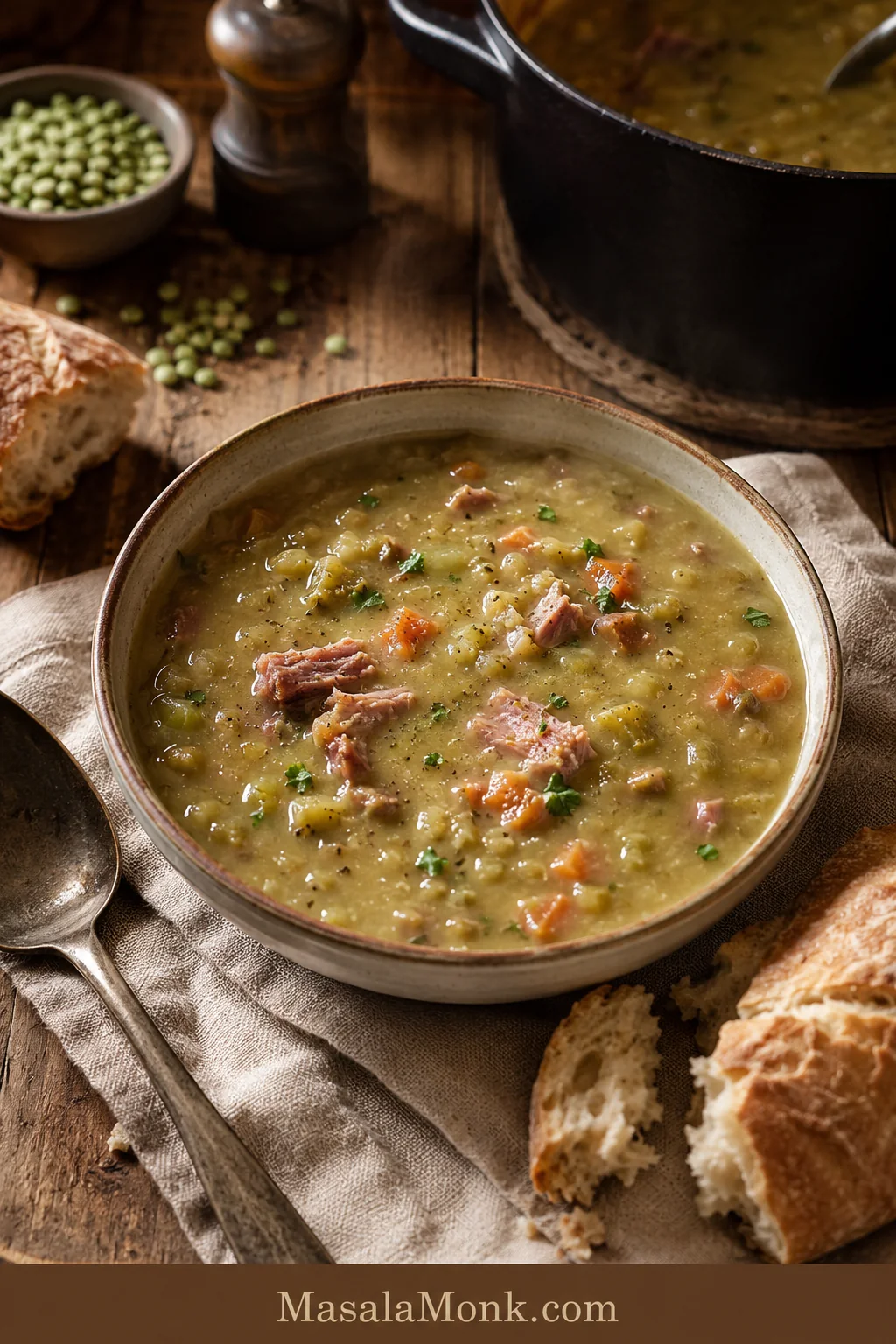
Bowl of thick pea and ham soup with shredded ham, black pepper, parsley, crusty bread, and a spoon on a rustic table.

This pea and ham soup recipe is for the ham bone in the fridge — the one you almost tossed, then kept because it still had one good meal left in it. A smoked hock, gammon joint, ham hough, or diced leftovers can get you there too.

The main recipe is the classic dried split pea version: green split peas, ham, vegetables, water or stock, and enough time for the peas to collapse into a thick, comforting bowl. This recipe is built around the ham you actually have — a leftover bone, smoked hock, ham hough, gammon joint, or diced cooked ham — so you can get the salt, timing, and texture right the first time.

Start with the ham you have. The soup follows from there.

It will not stay bright green, and it does not need to. This is a smoky, spoonable, bread-dipping soup that gets its comfort from time, not flash.

Quick Answer

Best default formula

For classic pea and ham soup, simmer 500g / 1 lb dried green split peas with 1.2–1.5kg / 2.5–3 lb ham bone, smoked ham hock, ham hough, or gammon, plus 2 litres / about 8 cups water or low-sodium stock. Cook until the peas lose their shape, the broth coats a spoon, and the ham is soft enough to shred.

Split peas usually do not need soaking. Salt only after the ham has cooked into the broth. If the soup gets too thick, loosen it with hot water or stock; if it is too thin, simmer uncovered or blend a small portion after removing bones and bay leaves.

Before you cook: Use this as the quick mental map: split peas build body, ham seasons the broth, vegetables balance the pot, and time does the thickening.
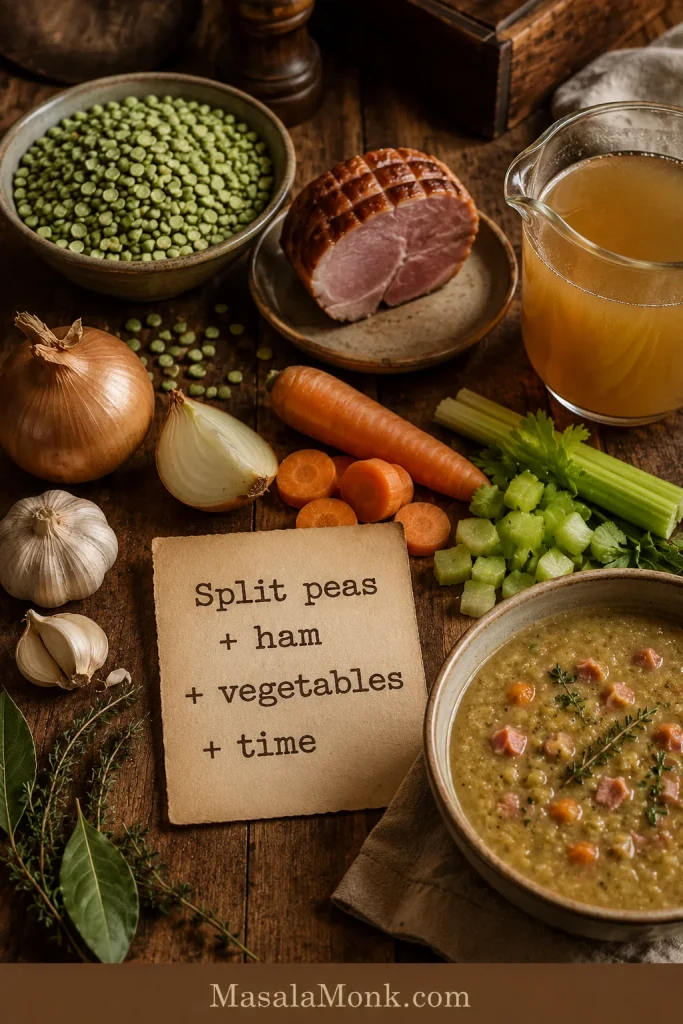
Pea and ham soup ingredients arranged with the text “Split peas + ham + vegetables + time.”
Before the pot goes on, think of the soup in four parts: split peas for body, ham for seasoning, vegetables for sweetness, and time for the thick, spoonable finish.

Choose Your Ham Route

First, identify the ham before you worry about the exact method. A meaty bone gives depth, a smoked hock gives smoke, gammon gives a UK-style pot, and diced ham needs stock behind it. Use this table as a quick matchmaker for the ham in front of you.

Route cue: Choose the ham before the method.
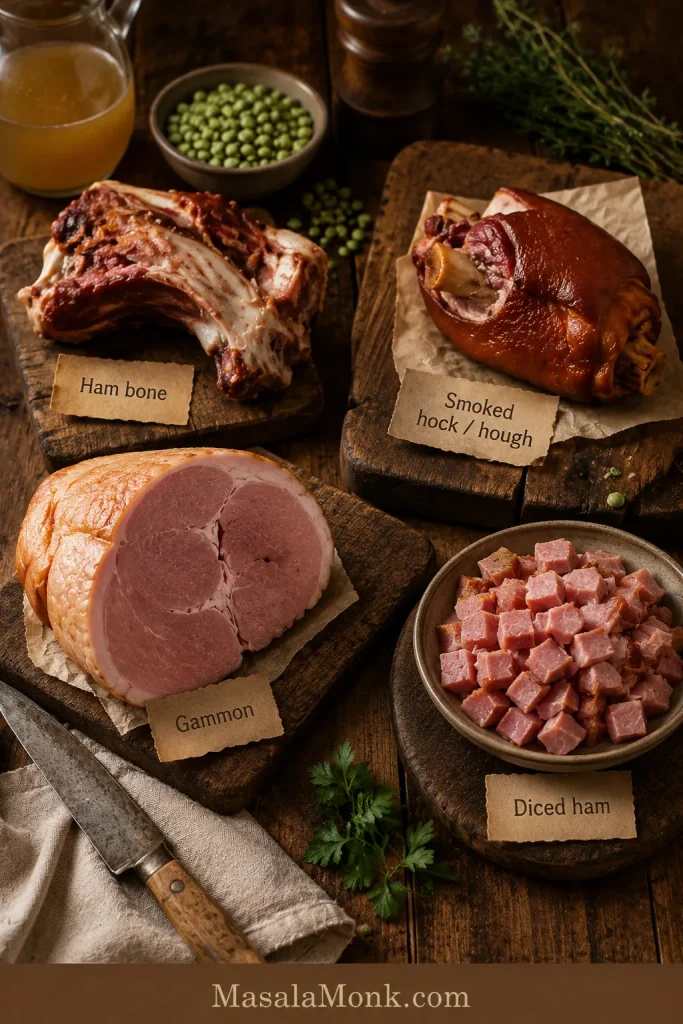
Four ham options for pea and ham soup labeled ham bone, smoked hock or hough, gammon, and diced ham.
Your ham choice sets the path. A bone, smoked hock, ham hough, gammon joint, or diced leftover ham changes how salty, smoky, and long-cooked the soup needs to be.
You haveBest routeKey tip
Meaty ham boneClassic stovetop soupSimmer from the start, then shred any attached meat.
Smoked ham hock or ham houghTraditional slow-simmer soupCook until the meat pulls away easily; remove skin and excess fat.
Gammon jointClassic soup with careful salt controlIf raw, cook fully until tender before shredding. Rinse or soak first if very salty.
Leftover diced ham onlyFaster split pea soupUse low-sodium stock and add the ham near the end so it stays tender.

Most pots start with one of these four ham situations. Frozen peas, yellow split peas, and no-ham versions can still work, but they move away from the classic dried split pea pot. Extra cooked ham is also perfect for ham and cheese quiche if you have more than this soup needs.

Next: cook the soup or check cook time by ham type.

Pea and Ham Soup Recipe Card

Pea and Ham Soup Recipe with Ham Bone, Ham Hock or Gammon

Servings: 6–8
Prep time: 15 minutes
Cook time: 2 hours 15 minutes
Total time: About 2 hours 30 minutes
Method: Stovetop
Equipment: 5–6 qt / 5–6 L Dutch oven or heavy soup pot

Done when: the peas have collapsed, the broth coats a spoon, and the ham pulls away easily from the bone, hock, hough, or gammon.

Pot size note: do not use a small saucepan. Split pea soup foams, thickens, and needs room to simmer. A 5–6 qt / 5–6 L pot gives the peas and ham enough space.

Ingredients

  • 500g / 1 lb dried green split peas, about 2¼ cups, rinsed and sorted
  • 1.2–1.5kg / 2.5–3 lb ham bone, smoked ham hock, ham hough, or gammon joint
  • 2 litres / about 8 cups water or low-sodium chicken stock, plus more as needed
  • 1 large onion, finely chopped, about 180–220g
  • 2 medium carrots, diced, about 150g
  • 2 celery ribs, diced, about 80–100g
  • 3 garlic cloves, minced, about 1 tablespoon
  • 1 tablespoon olive oil or butter
  • 2 bay leaves
  • 1 teaspoon dried thyme, or 1 tablespoon fresh thyme leaves
  • ½ teaspoon black pepper, plus more to taste
  • Fine salt, to taste after cooking, added in small pinches
  • Fresh parsley or mint, optional, for finishing

If using leftover diced ham instead of a bone or hock: use 300–450g / 10–16 oz diced cooked ham and choose low-sodium stock instead of plain water for better flavor. Add the diced ham near the end.

If using raw gammon: cook it until fully cooked and tender before shredding, following the package guidance if needed. Use a meat thermometer if needed and follow the package’s safe-cooking guidance. For very salty gammon, rinse it or soak it according to the package directions before adding it to the soup.

Instructions

Build the Base
  1. Rinse the split peas. Place the split peas in a sieve, rinse well under cold water, and remove any small stones or damaged peas.
  2. Soften the vegetables. Heat the oil or butter in a large Dutch oven or heavy soup pot over medium heat. Add the onion, carrot, and celery. Cook for 6–8 minutes, stirring often, until the vegetables soften.
  3. Stir in the aromatics. Add the garlic, bay leaves, thyme, and black pepper. Cook for 30 seconds, just until fragrant.
  4. Combine peas, ham, and liquid. Add the rinsed split peas, your chosen ham, and 2 litres / about 8 cups water or stock. The ham does not have to be fully underwater, but it should be mostly submerged. Add a little extra water if your pot is wide or the ham sits too high.
  5. Bring to a boil. Increase the heat and bring the pot to a boil. Skim off any foam if needed.
  6. Simmer gently. Reduce the heat to low, partly cover the pot, and simmer for 2 to 2½ hours, stirring occasionally, until the split peas have softened, the soup has thickened, and the ham is tender.
Shred, Adjust and Finish
  1. Stir more often near the end. Once the split peas begin breaking down, keep the heat low and stir from the base of the pot so the soup does not catch.
  2. Remove the ham and bay leaves. Lift out the ham bone, hock, hough, or gammon. Remove and discard the bay leaves. Let the ham cool slightly.
  3. Shred the meat. Remove the meat from the bone. Discard bone, tough skin, and excess fat. Shred or chop the ham.
  4. Return the meat to the soup. Stir the shredded ham back into the pot.
  5. Adjust the thickness. For a too-thick soup, add hot water or stock, ½ cup / 120ml at a time. When it is too thin, simmer uncovered for 10–20 minutes or blend a small portion after the bones and bay leaves have been removed.
  6. Taste before salting. Add salt in small pinches only after the ham has seasoned the broth. Finish with parsley, mint, extra black pepper, or a small squeeze of lemon if desired.

Recipe Notes

  • Cook time varies by ham size, pea age, and whether the ham is raw, smoked, cured, or already cooked.
  • A glazed ham bone makes a slightly sweeter soup; smoked hock gives the pot a deeper smoky edge.
  • For a smoother soup, blend only part of it so you still keep some shredded ham and texture.
  • Always remove bones and bay leaves before blending.
  • This soup thickens as it cools, so expect to loosen leftovers with water or stock.

If you remember only three things: salt late, cook until the peas collapse, and adjust the thickness after the ham is shredded back in.

While it simmers: Keep these guardrails in mind, especially before adding salt, blending, or thinning the soup.
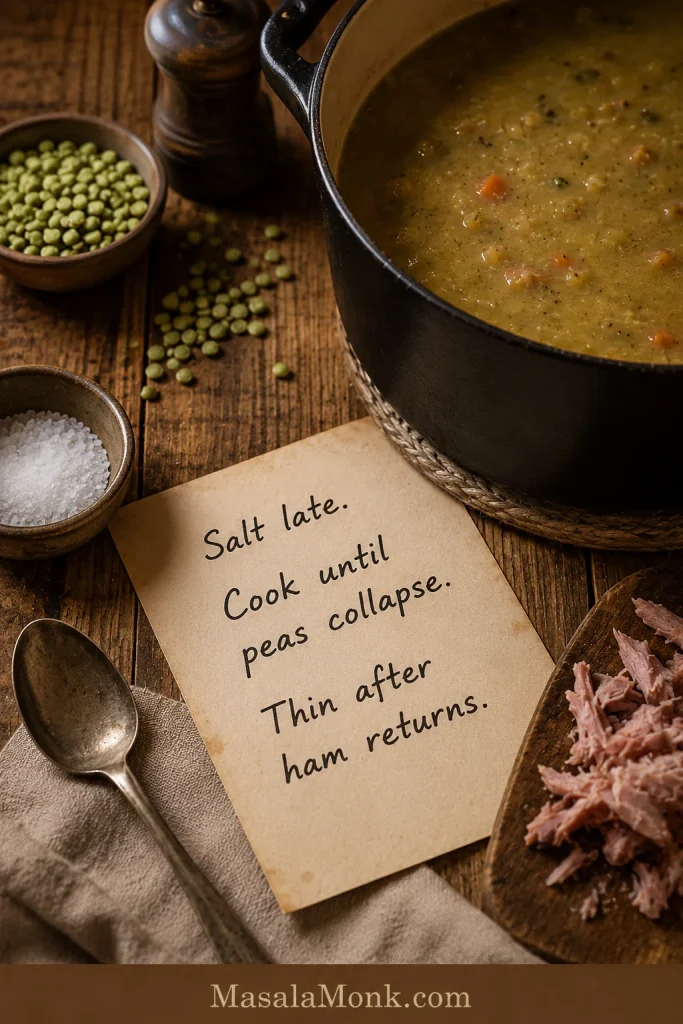
Rustic note card beside soup ingredients with the rules “Salt late. Cook until peas collapse. Thin after ham returns.”
Use these as your guardrails while cooking: season near the end, wait for the split peas to break down, then judge the final thickness after the ham returns.

Pea and Ham Soup: Key Cooking Cues

The finished soup should be thick enough to coat the spoon, soft enough to settle back into the bowl, and loose enough that it does not sit like paste. Use these cues before you decide it is done.

Texture cue: Do not stop at the clock alone; check whether the split peas have broken down and the soup coats a spoon.
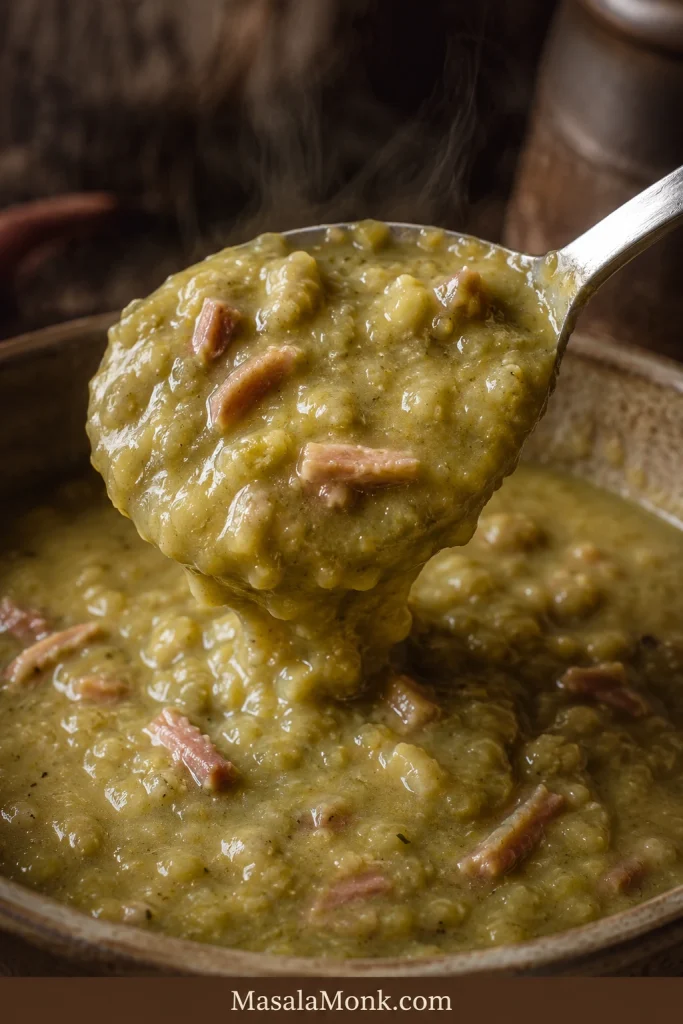
Spoon lifting thick pea and ham soup with collapsed split peas, shredded ham, and steam rising from the bowl.
Once the split peas stop looking like firm little discs and the soup coats the spoon, the pot is ready for final seasoning, thinning, or serving.
CueWhat it means
Peas still look like little discsKeep simmering. They need to collapse for the soup to thicken properly.
Soup is olive green or khakiNormal for dried split peas cooked with ham. Do not judge the pot by frozen-pea color.
Ham does not shred easilyIt needs more time, especially if using hock, hough, or gammon.
Soup coats the spoonGood sign. It should be thick but still spoonable.
Soup stands up too stifflyThin it after cooking with hot water or stock.
Broth tastes salty earlyWait before adding more salt; the flavor changes as the pot cooks.
Bottom starts catchingLower the heat and stir from the base of the pot.

Cook’s note: do not judge the soup before the ham is shredded back in. The broth, salt, color, and thickness all settle after the peas collapse and the meat returns to the pot.

Need help? Jump to troubleshooting or fix the thickness.

Why This Recipe Works

Every part of the pot has a job: ham seasons the broth, split peas build body, and vegetables add sweetness. Wait until the ham has flavored the liquid before you decide how much salt the soup needs.

  • Split peas thicken the soup naturally. They soften, collapse, and create a creamy texture without cream.
  • Bone-in ham builds the broth. Simmering a bone, hock, hough, or gammon piece from the beginning gives the soup depth that diced ham alone cannot provide.
  • The recipe follows texture, not just time. The soup is ready when the peas lose their shape and the ham shreds.
  • It works with real-life leftovers. Use the ham you have, then adjust the method and timing around it.

Make This Soup When

This is the kind of soup that makes leftovers feel intentional.

  • Leftover ham bone is waiting after Christmas, Easter, Thanksgiving, a Sunday roast, or honey glazed ham.
  • Smoked ham hock sounds right because you want an old-fashioned soup with deep flavor.
  • Ham hough is what you have, and a Scottish-style pea and ham soup makes sense.
  • Gammon is in the fridge, and you want a UK-style pot that is hearty, thrifty, and freezer-friendly.
  • The slow cooker would help because dinner can simmer gently while you do other things.
  • Only diced leftover ham is left, and you need stock to make the broth taste deeper.

What Is Pea and Ham Soup?

Pea and ham soup is a hearty soup made by cooking peas with ham until the peas soften and the ham flavors the broth. In the UK and Australia, it is often called pea and ham soup. Across the US and Canada, many people search for the same style of soup as split pea soup with ham, ham bone split pea soup, or ham hock split pea soup.

The names change by region, but the comfort is the same: peas, ham, vegetables, and time turning into a bowl that feels bigger than its ingredients.

For the classic version, dried split peas are the usual base. Frozen peas make a brighter, lighter soup, but they do not thicken the pot in the same way. The old-fashioned spoonable version needs dried split peas for body.

Ingredients for Pea and Ham Soup

Ingredient cue: This base gives the soup body, smoke, sweetness, and balance without needing cream, flour, or complicated extras.
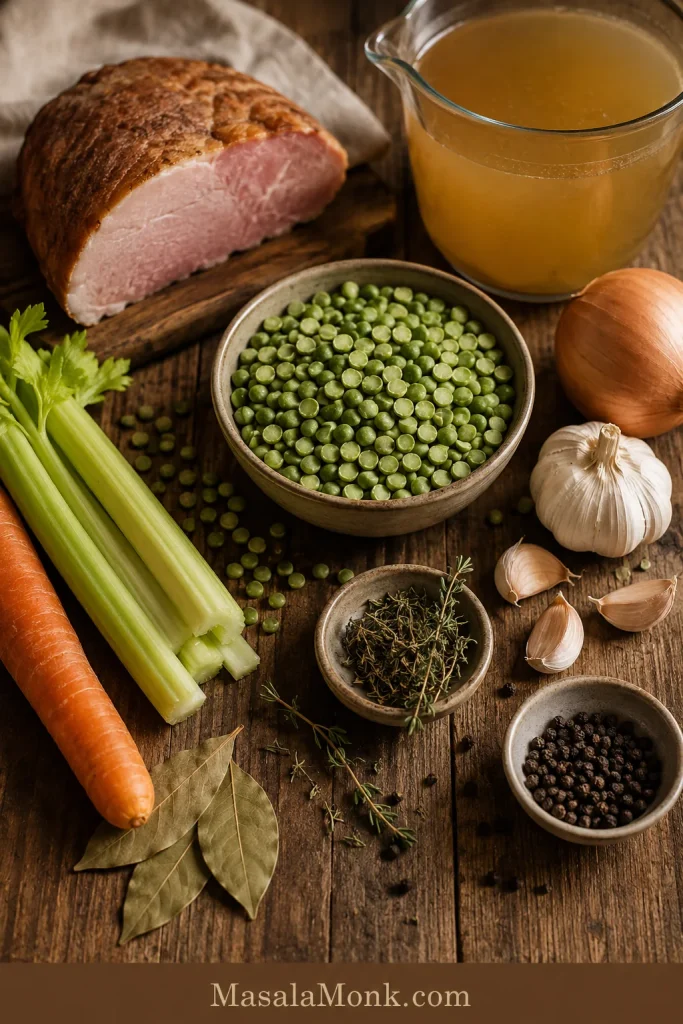
Dried green split peas, ham, onion, carrot, celery, garlic, herbs, black pepper, and stock arranged on a rustic surface.
Each ingredient has a job. Split peas thicken the soup, ham flavors the broth, vegetables round out the base, and herbs keep the pot from tasting flat.

Green Split Peas

Dried green split peas are the best choice for classic pea and ham soup. They start dry and plain, then slowly melt into the broth until the soup turns creamy without cream. Rinse them well before cooking and quickly sort through them for small stones or dry, damaged pieces.

Freshness matters. A very old bag of split peas can take longer to soften. If your pot looks dull and khaki halfway through, do not judge it yet; dried split pea soup deepens as it cooks.

Ham Bone, Ham Hock, Ham Hough, Gammon or Leftover Ham

The ham choice changes the flavor, salt level, and cook time. A meaty ham bone is excellent after a roast, while a smoked hock or hough gives deeper flavor.

Gammon works well for a UK-style soup, but it can be salty and may be raw depending on how it is sold. Leftover diced ham is the fastest option, but it needs stock because it will not flavor the broth as strongly as a bone-in piece.

A hock or hough is a tough, bony cut with skin, fat, connective tissue, and deep flavor. Even a bare ham bone can give more flavor than it looks like it should. After cooking, keep the tender meat and discard tough skin or any fat you do not want in the bowl.

Onion, Carrot, Celery and Garlic

This simple vegetable base gives the soup sweetness and balance. The vegetables should not shout in the bowl; they should melt into the background and make the ham and peas taste rounder. A leek can also be added if you want a slightly sweeter UK-style flavor.

Bay, Thyme and Black Pepper

Bay leaf and thyme are classic with split peas and ham. Black pepper cuts through the richness. Parsley gives a clean finish, while mint works especially well if you add frozen peas for a brighter green variation.

Water or Stock

If you are using a strong ham bone, smoked hock, or gammon joint, water can be enough because the ham will create a rich broth as it cooks. With diced leftover ham only, use low-sodium chicken stock or vegetable stock so the pot does not taste flat.

Best Ham for Flavor: Bone, Hock, Hough or Gammon?

Here, the ham is not just an ingredient; it is the seasoning. The best ham for this soup is the piece that can flavor the broth while the peas soften. Bone-in pieces build the pot slowly; diced cooked ham is faster, but it needs good stock behind it so the soup still tastes full.

If you are buying ham just for this soup, choose a smoked ham hock for deeper flavor, or ask for a meaty ham bone if you want more shredded ham in each bowl. This is where the soup starts tasting like more than peas and water.

Ham Options at a Glance

Ham optionBest forHow to use it
Ham boneLeftover holiday ham or roast ham flavorSimmer from the start, then remove and shred any attached meat.
Meaty ham boneBest leftover optionGives broth, meat, and body. Add extra diced ham only if needed.
Smoked ham hockDeep smoky flavorSimmer until tender, then remove skin, excess fat, and bone before shredding the meat.
Ham houghScottish-style pea and ham soupUse like ham hock. Cook until the meat pulls away easily.
Gammon jointUK-style pea and ham soupIf raw, simmer until fully cooked and tender. Taste carefully before adding salt.
Leftover diced hamQuick split pea soup with hamAdd near the end so it does not dry out. Use stock for better flavor.
Smoked turkey legSmoky non-pork optionUse like a ham hock if it fits your diet, then adjust seasoning at the end.
BaconExtra smoky flavorUse with stock and, if possible, diced ham. Bacon adds flavor but does not replace the body of a bone or hock.

Ham stock upgrade: for extra-deep hock flavor, simmer a ham hock or ham hough first, strain the cooking liquid, then use that ham stock as the soup liquid. It adds time, but the broth tastes rounder and more deeply hammy. Shred the cooked meat and add it back near the end. Taste the ham stock before adding salt, because it can be very salty.

What if the Ham Bone Has Barely Any Meat?

Use it anyway if it has good flavor. Simmer the bone with the split peas and vegetables, then add diced cooked ham near the end. The bone gives the broth body, while the diced ham makes sure every bowl still has enough meat.

If you like the smoky beans-and-meat direction, red beans and rice is another slow-simmer comfort meal where seasoning, bean age, and final texture matter.

What if the Gammon Is Very Salty?

Check the package first. Some gammon should be soaked or rinsed before cooking. If yours is very salty, soak or rinse it as directed, use water or unsalted stock, and do not add salt until the soup is finished.

Best Peas to Use for Pea and Ham Soup

The peas decide the texture, which is why split peas and frozen peas should not be treated as the same soup. Green split peas are the classic choice because they break down and thicken the broth. Frozen peas are sweeter and brighter, but they make a different bowl.

Pea choice: Pick the pea by the texture you want: dried split peas for the classic thick soup, frozen peas for a brighter variation.
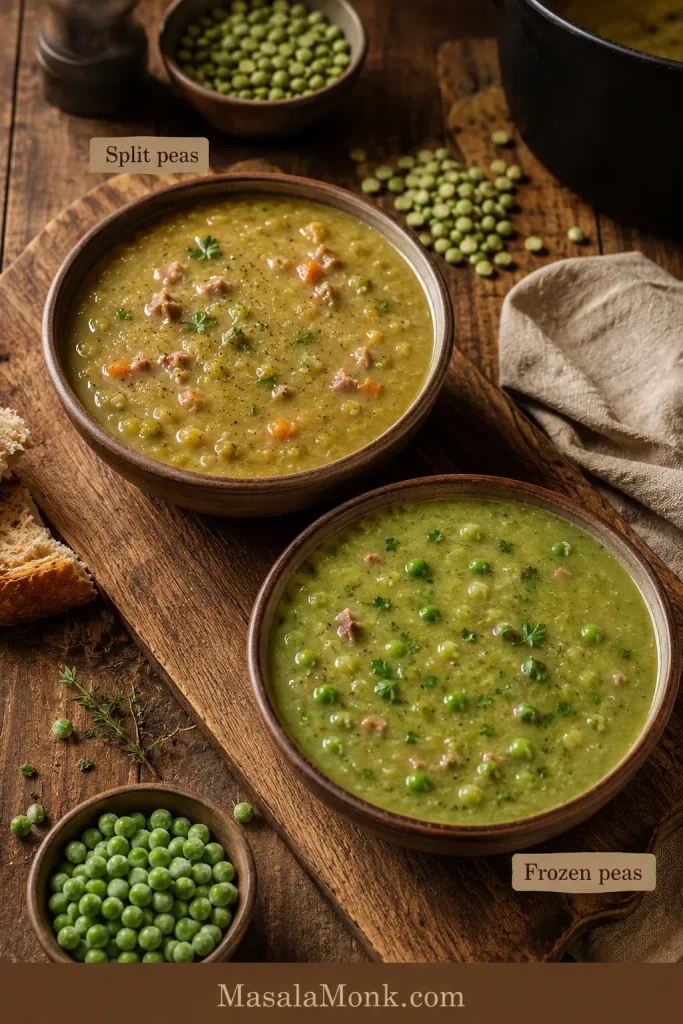
Dried split peas and frozen peas shown with two different pea and ham soups for comparison.
Split peas and frozen peas do not behave the same way. Dried split peas make the classic thick soup, while frozen peas create a brighter, lighter variation.
Pea typeResultBest use
Green split peasSpoonable, classic, earthy soupBest for this main recipe.
Yellow split peasThick, milder, earthier soup with yellow colorGood variation, especially with gammon or smoked ham.
Frozen peasBright green, sweeter, lighter soupBest for a quick cooked-ham variation, not the classic version.
Fresh peasSweet and delicateBetter for a light spring soup than a ham bone soup.

Important: frozen peas and split peas are not a direct swap. Split peas break down and thicken the soup. Frozen peas stay sweet and bright, but they need potato, cream, or blending for body.

Using frozen peas? See the quick variation. Ready to cook? Go to the method.

How to Make Pea and Ham Soup with a Ham Bone or Hock

The method is simple: soften the vegetables, add split peas, ham, herbs, and liquid, then simmer until the peas collapse and the ham turns tender. As it cooks, the broth goes from thin and separate to cloudy, then creamy.

Method cue: Early simmering looks loose and separate; the creamy texture comes later as the split peas soften and collapse.
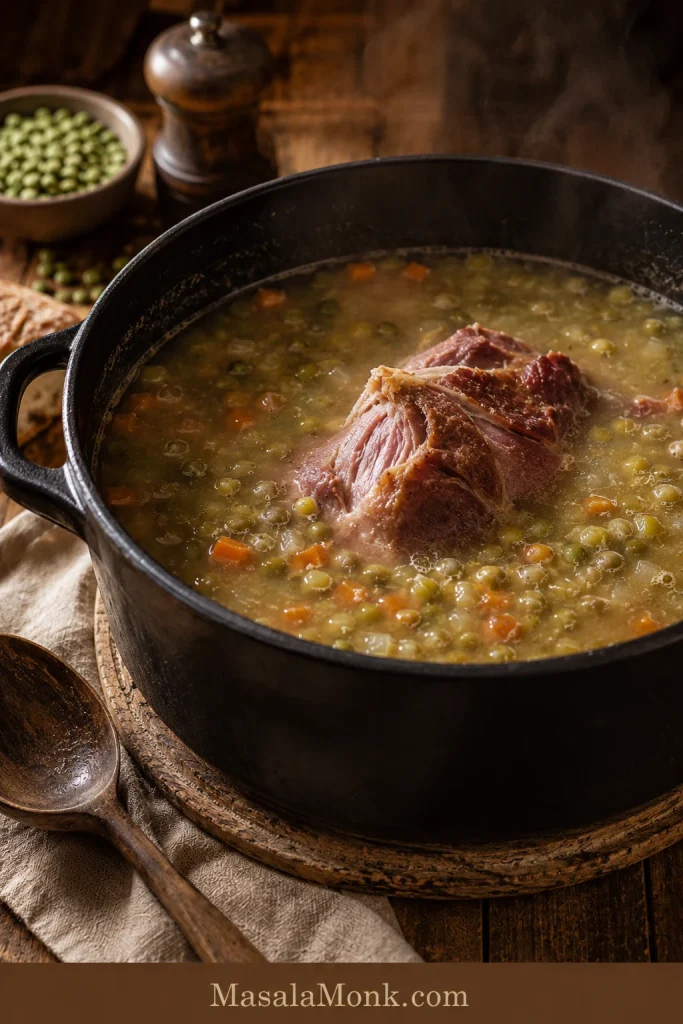
Pea and ham soup simmering in a Dutch oven with ham, split peas, carrots, celery, and broth visible.
At first, the soup may look thin and separate. As it simmers, the split peas soften, the ham seasons the broth, and the texture slowly turns creamy.
  1. Rinse the split peas. This removes dust and gives you a chance to check for small stones.
  2. Soften the vegetables first. Onion, carrot, and celery taste better when cooked before the liquid is added.
  3. Stir in herbs and garlic. Bay, thyme, black pepper, and garlic create the classic soup base.
  4. Add the ham and liquid. Bone-in ham, hock, hough, or gammon should go in early so it can flavor the broth.
  5. Simmer slowly. Keep the heat gentle once the pot has boiled. Hard boiling can make thick pea soup stick.
  6. Remove bones and bay leaves before blending. This is the one step not to skip.
  7. Shred the ham. Return only the tender meat to the pot.
  8. Finish by texture and taste. Adjust thickness, then season after tasting.

Shredding cue: After the ham is tender, remove the bones and bay leaves first, then return only the edible shredded meat to the pot.
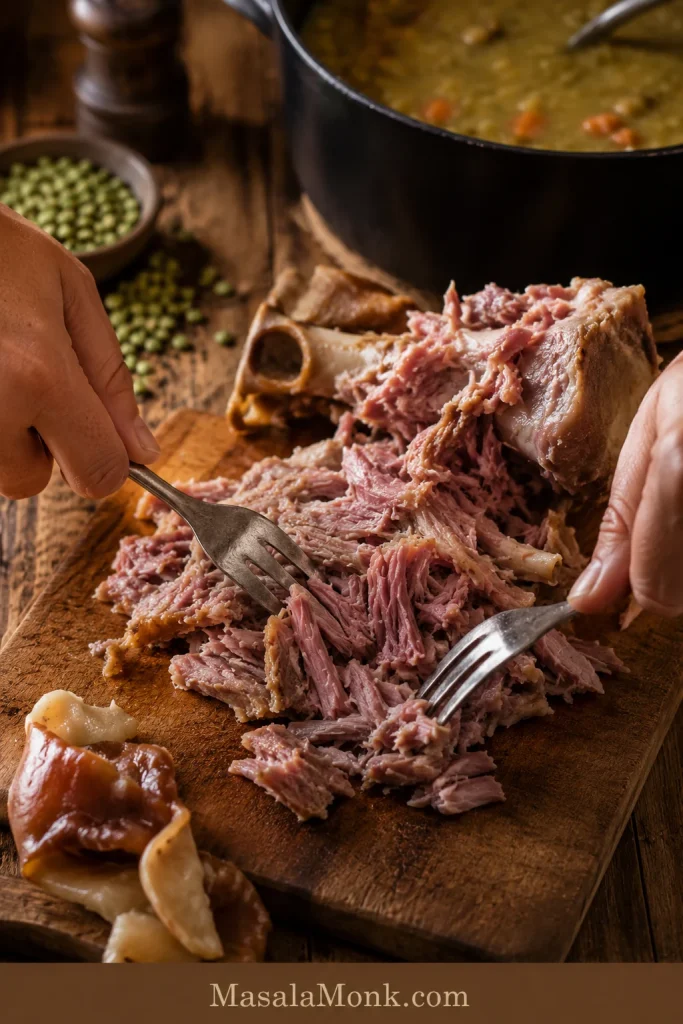
Tender ham being shredded from a bone on a wooden board with a soup pot in the background.
After simmering, lift out the ham bone, hock, hough, or gammon before shredding the tender meat. Keep the meat, but discard bones, bay leaves, tough skin, and excess fat.

By the end, the ham should be soft, the broth settled, and the finish peppery.

Pea and Ham Soup Cook Time by Ham Type

This is the part where patience pays you back. Diced leftover ham is already tender. A ham bone, hock, hough, or gammon joint needs longer because it has to flavor the broth and soften enough to pull apart.

MethodApproximate timeBest for
Stovetop with diced leftover ham1 hour 30 minutes to 1 hour 45 minutesQuickest split pea soup with ham.
Stovetop with ham bone2 to 2½ hoursLeftover roast ham bone soup.
Stovetop with ham hock or ham hough2 to 2½ hours, sometimes longerTraditional pea and ham soup, smoky if the ham is smoked.
Stovetop with gammon2 to 2½ hours, depending on sizeUK-style pea and ham soup.
Slow cooker on low8–10 hoursHands-off ham hock or ham bone soup.
Slow cooker on high5–6 hoursFaster crockpot version.
Instant Pot with diced ham or small bone15–25 minutes high pressure + natural releaseFast pressure-cooker version.
Instant Pot with large ham hock, hough, or gammon45–75 minutes high pressure + natural releaseLarge pieces that need time to become shreddable.

If the peas still look firm or the ham does not pull away easily, keep cooking. Trust the pot, not just the clock.

Changing method? See slow cooker notes or see Instant Pot notes.

Do You Need to Soak Split Peas?

No, split peas usually do not need soaking for pea and ham soup. Soaking is mainly useful if the peas are old or you want to shorten the cook time.

Most split peas can go straight into the pot. They are small enough to cook without soaking, which is why this soup can start straight from the bag.

If you add lemon, vinegar, wine, or tomatoes as a variation, wait until the split peas are soft. Acidic ingredients can slow softening when added too early.

Slow Cooker Pea and Ham Soup Notes

The slow cooker is especially good for bone-in ham, smoked hocks, ham houghs, and gammon because the long, gentle heat gives the meat time to soften. It is also the version that makes the kitchen smell like dinner long before anyone asks what is cooking.

Slow-cooker cue: For a hands-off version, give ham hock, ham hough, gammon, or a meaty bone enough time to soften gently.
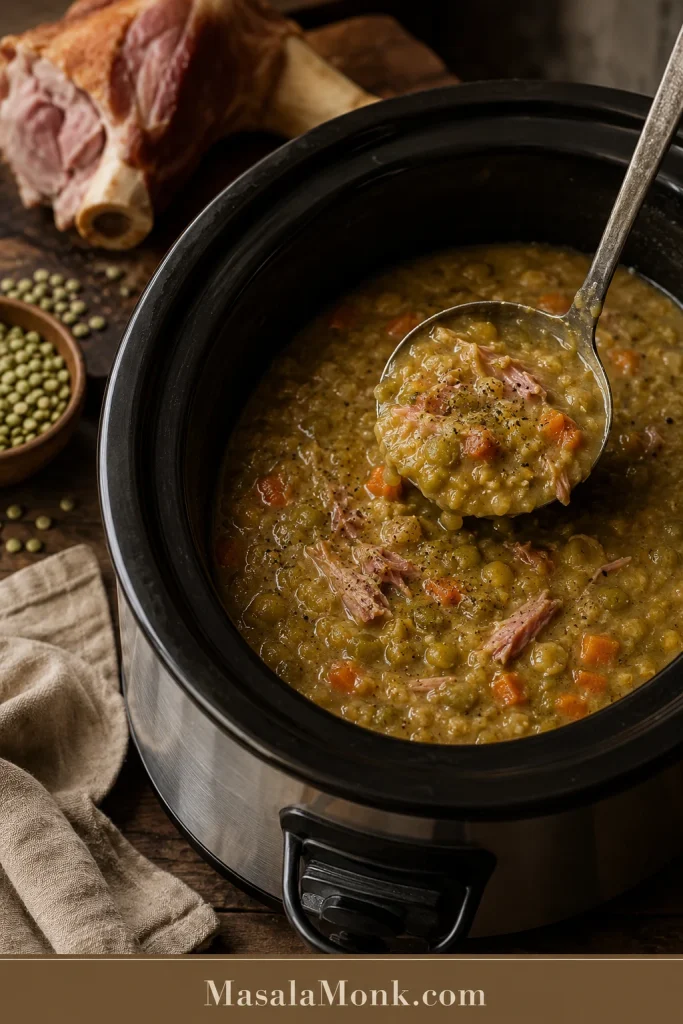
Slow cooker filled with thick pea and ham soup, shredded ham, carrots, split peas, and a ladle.
The slow cooker works especially well for ham hock, ham hough, gammon, or a meaty ham bone because the meat softens slowly as the split peas thicken the broth.
  • Add the split peas, onion, carrot, celery, garlic, bay, thyme, ham, and liquid to a 6 qt / 5.7 L slow cooker.
  • Cook on low for 8–10 hours or high for 5–6 hours.
  • Remove the ham and bay leaves when the soup is done.
  • Shred the meat and stir it back into the soup.
  • Let the soup rest for a few minutes before judging the thickness.
  • Taste before adding salt.

If the soup looks too thick near the end, stir in hot water or stock before serving. Slow cooker split pea soup often thickens more after it rests.

For another busy-day soup, this slow cooker broccoli cheese soup goes creamy and cheesy instead of smoky and hearty.

Instant Pot Pea and Ham Soup Notes

Use the pressure cooker when you want the split peas softened faster, but do not expect it to cheat a tough hock into tenderness without enough time. Large hocks, houghs, and raw gammon need a longer cook; diced leftover ham and small cooked bones are much faster.

A 6 qt or larger pressure cooker is best because split pea soup foams, thickens, and leaves starchy residue.

Pressure-cooker cue: Pressure cooking speeds up the split peas, but tough ham pieces still need enough time and natural release.
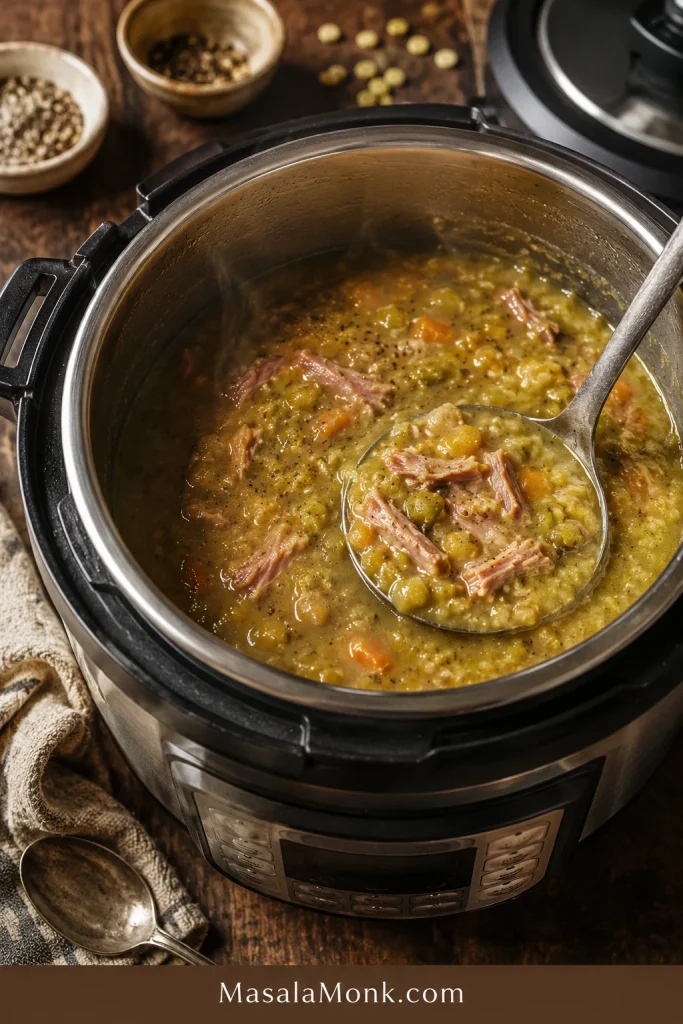
Instant Pot filled with pea and ham soup, shredded ham, split peas, carrots, steam, and a ladle.
Pressure cooking softens split peas faster, but large ham hocks, houghs, and gammon still need enough time to become tender. Use natural release for a better final texture.
Pressure cooker versionSuggested timingNote
Diced leftover ham15 minutes high pressure + 10–15 minutes natural releaseFastest version; use stock for flavor.
Small ham bone20–25 minutes high pressure + natural releaseGood when the bone is already from cooked ham.
Large smoked ham hock or ham hough45–75 minutes high pressure + natural releaseNeeds longer to become tender enough to shred.
Raw gammon joint45–75 minutes high pressure + natural release, depending on sizeMust be fully cooked and tender before shredding.

Use the longer end of the range for large, tough, or raw pieces, and the shorter end for smaller cooked bones or diced ham. Keep the soup below your pressure cooker’s max-fill line for beans, grains, or foamy foods if your model has one.

Let the pressure release naturally, and clean the lid, gasket, and valve after cooking because split pea soup can leave starchy residue.

Quick Frozen Pea and Ham Soup Variation

This is not the classic split pea version, but it is useful when you want a brighter green soup in about 30 minutes. Use frozen peas with leftover ham or cooked gammon for a lighter, fresher bowl.

Cook onion and garlic in butter, add diced potato if you want extra creaminess, then pour in stock and simmer until the potato is tender. Add frozen peas near the end and cook just until bright green. Blend the soup, then stir in diced ham or shredded gammon. Finish with mint, parsley, black pepper, or a little cream.

Avoid These Pea and Ham Soup Mistakes

Before you blend: Most problems start before the final simmer, so scan this checklist before you salt, blend, or swap the peas.
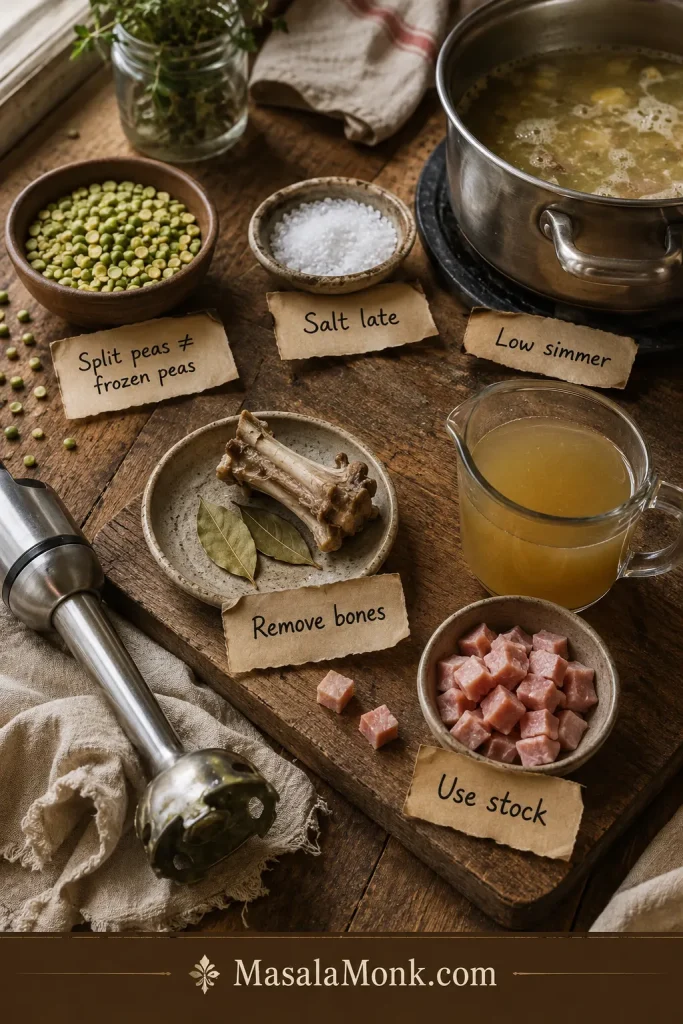
Pea and ham soup mistake board with labels for salting late, removing bones, using split peas, low simmer, and stock.
Most pea and ham soup mistakes happen early. Salt near the end, remove bones before blending, keep the simmer gentle, and use stock when diced ham cannot flavor the broth alone.
  • Salting before the ham has simmered. Ham can season the whole pot as it cooks.
  • Judging the soup before the peas collapse. Split peas need to lose their shape for the broth to thicken.
  • Blending before removing bones and bay leaves. Take them out first every time.
  • Using water with diced ham only and expecting deep broth. Diced ham needs stock behind it.
  • Boiling hard once the soup thickens. A low simmer protects the bottom of the pot.
  • Assuming frozen peas behave like split peas. Frozen peas make a different, lighter soup.

Already happened? Go to the fix-it section.

How to Thicken Pea and Ham Soup

To thicken pea and ham soup, simmer it uncovered, mash some peas, or blend a small portion after removing the bones and bay leaves.

  • Need it thicker? Simmer uncovered for 10–20 minutes.
  • Want it smoother? Blend a small portion with an immersion blender after removing bones and bay leaves.
  • Prefer it rustic? Mash some peas against the side of the pot.
  • Did it thicken too much? Add hot water or stock, ½ cup / 120ml at a time.

You usually do not need flour, cornstarch, or potato flakes. Split pea soup is supposed to thicken from the peas themselves.

Troubleshooting Pea and Ham Soup

This is a forgiving soup, but it does have moods: sometimes the peas take longer, sometimes the ham is saltier, and sometimes yesterday’s perfect soup turns into a thick block in the fridge. None of that means the pot is ruined.

Quick Texture and Salt Fixes

Fix-it cue: Use this section when the pot is already cooked but the texture, thickness, or salt level still needs fixing.
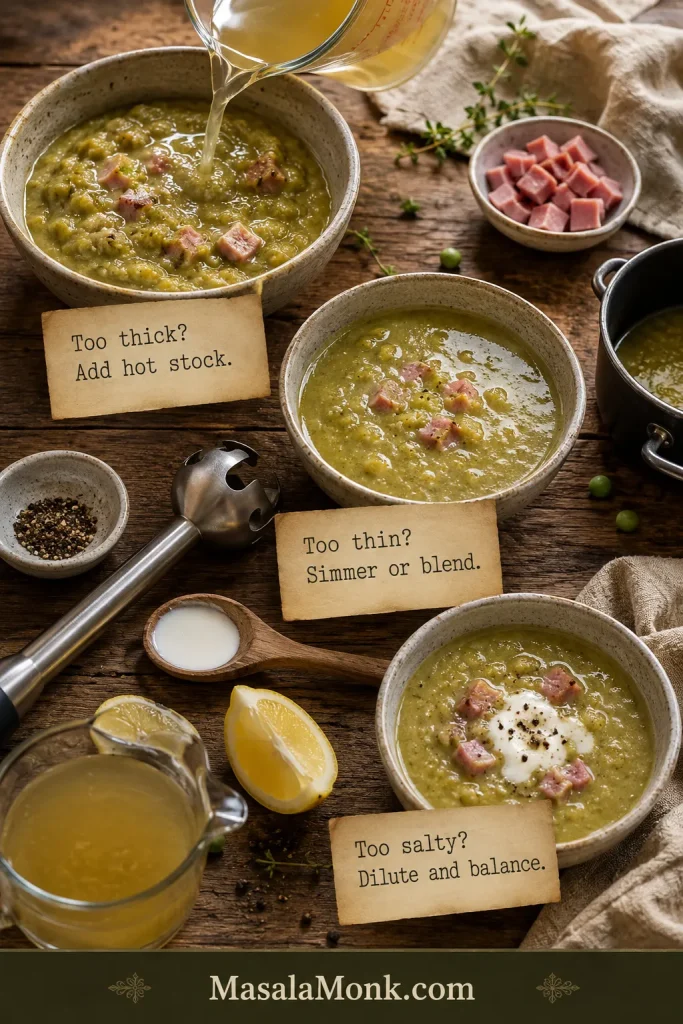
Troubleshooting board for pea and ham soup with bowls labeled too thick, too thin, and too salty.
If the pot goes wrong, it is usually fixable. Add hot stock when the soup is too thick, simmer or blend when it is too thin, and dilute carefully when it tastes too salty.
ProblemUrgencyWhat to do
Split peas are still hardNeeds timeKeep simmering and add hot water if needed. Old peas, hard water, salt too early, or acidic ingredients can slow softening.
Too saltyFix carefullyAdd unsalted water or stock, more cooked peas, diced potato, cream, or a little lemon for balance.
Too thinEasy fixSimmer uncovered, blend a portion, mash some peas, or let the soup rest.
Too thickEasy fixAdd hot water or stock, ½ cup / 120ml at a time, until it loosens.
Bland brothEasy fixAdd black pepper, thyme, parsley, bay, a little lemon, or more ham. If using diced ham only, use stock instead of water.
Bottom starts catchingAct nowLower the heat and stir from the base of the pot before it burns.
Ham hock is fattyNormalRemove skin and excess fat before returning the shredded meat to the soup.
Solid after chillingNormalReheat gently with water or stock until spoonable again.
Too smokyBalance itAdd more stock, a little cream, parsley, black pepper, or a small squeeze of lemon.
Too sweetBalance itThis can happen with a glazed ham bone. Balance with black pepper, herbs, lemon, and unsalted stock.

Most imperfect pots need only one thing: more time, more liquid, or a better final balance.

Once fixed: serve the soup or store and freeze leftovers.

What to Serve with Pea and Ham Soup

This is a bread-dipping soup, not a delicate starter. Serve it with something crisp, buttery, or slightly sharp to balance the bowl.

Serving cue: Serve the soup with something sturdy and crisp enough to balance the thick split pea texture and smoky ham.
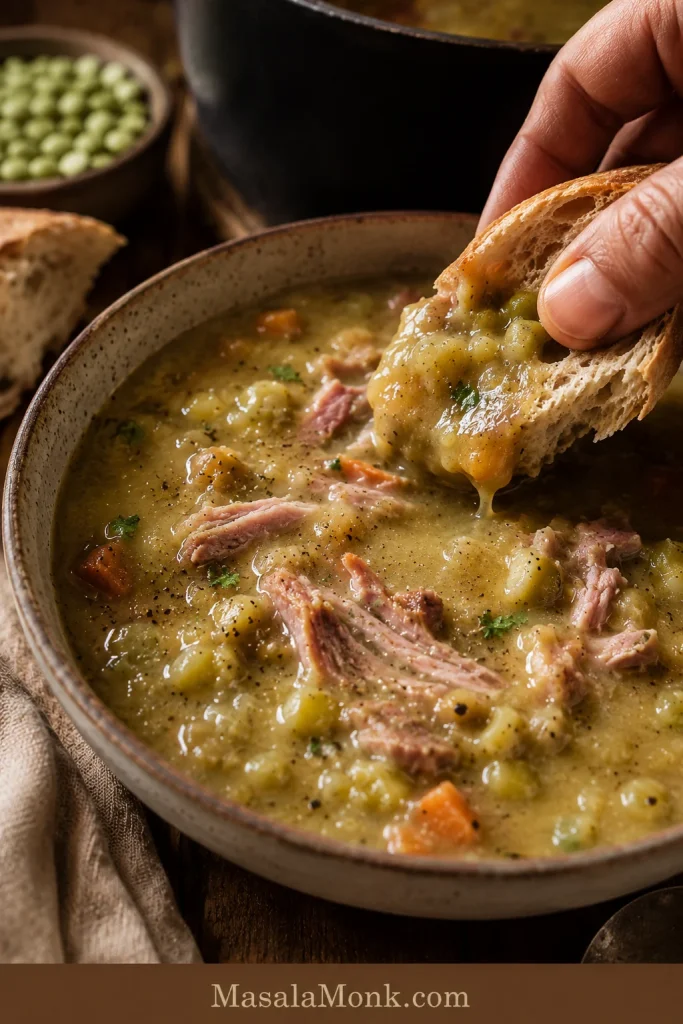
Thick pea and ham soup served with crusty bread dipping into the bowl.
Choose bread that can handle dipping. The thick split pea texture, smoky ham, and crusty edges make this bowl feel like dinner, not just a starter.
  • Crusty bread or sourdough
  • Buttered toast
  • Garlic croutons
  • Soda bread
  • Grilled cheese
  • A simple green salad
  • Pickles or mustard on the side
  • Extra black pepper, parsley, or mint

For bread that can stand up to a thick bowl, sourdough focaccia is especially good because the crisp edges and airy center can handle dipping.

Later in the week, French onion soup goes in a completely different direction with caramelized onions, savory broth, toast, and melted cheese.

How to Store, Freeze and Reheat Split Pea Soup with Ham

Leftovers are one of the reasons to make the full pot. This is a good make-ahead soup because it thickens and deepens after a night in the fridge. The next-day bowl is often even better, especially with extra black pepper and a splash of stock to loosen it.

  • Fridge: Store in an airtight container for 3–4 days.
  • Freezer: Freeze in portions for up to 3 months for best quality.
  • Cooling: Cool the soup before storing it, and divide large batches into smaller containers so they chill faster.
  • Reheating: Warm gently on the stovetop or in the microwave, stirring often, until steaming hot throughout.
  • Thinning after storage: Add water or stock until the soup returns to the texture you like.

For safe leftover timing, the USDA recommends using refrigerated leftovers within 3–4 days; freeze extra soup if you want to keep it longer.

Back to Recipe Card · Back to Table of Contents

Frequently Asked Questions

These are the doubts that usually come up once the pot is already on the stove.

Is a ham bone enough for pea and ham soup?

Yes, especially if it still has some meat attached. Simmer it with the split peas, then remove the bone, shred any meat, and stir the meat back in.

Ham hock or ham bone: which tastes better?

A smoked ham hock is usually smokier and richer, while a ham bone tastes more like the roast it came from. Both work well. Choose smoked hock for smoke and ham bone for leftovers.

What is ham hough?

Ham hough is another name for ham hock, commonly used in Scotland. Use it the same way: simmer until tender, then remove the skin, excess fat, and bone before shredding the meat.

How salty is gammon in soup?

Gammon can be quite salty, depending on how it is cured. Use water or low-sodium stock, follow any soaking or rinsing guidance on the package, and season only after tasting near the end.

How much diced ham do I need without a bone?

Start with 300–450g / 10–16 oz diced cooked ham. Add it near the end and use stock instead of plain water so the broth has enough flavor.

Do split peas really need soaking?

No, not usually. Split peas can cook directly in the soup. Soaking can help if your peas are old or you want to shorten the cook time.

Why did my split peas stay hard?

They may be old, the water may be hard, or acidic ingredients may have gone in too early. Keep simmering and add hot water as needed.

Why did my soup turn khaki instead of green?

That is normal. Dried split peas cooked with ham usually turn olive green, khaki, or golden-green. Bright green pea soup is usually made with frozen or fresh peas.

Should pea and ham soup be smooth or chunky?

Either works. For the best texture, blend only part of the soup so it stays creamy but still has shredded ham and a little body.

Can I use yellow split peas?

Yes. Yellow split peas still make a thick, comforting soup, but the flavor is a little earthier and the color will be golden instead of green.

Can I use frozen peas instead of split peas?

You can, but it becomes a different soup. Frozen peas make a brighter, sweeter, lighter bowl; split peas make the old-fashioned thick version.

Can I use the water from cooking ham hock?

Yes, if it tastes good and is not too salty. Strain it first, then use it as part or all of the soup liquid.

Best way to fix pea and ham soup that is too salty?

Add unsalted water or stock, more cooked peas, diced potato, or a splash of cream. A small squeeze of lemon can help balance the flavor.

Can I make pea and ham soup the day before?

Yes. It is an excellent make-ahead soup. Chill it, then reheat gently with extra water or stock until it loosens back to a spoonable texture.

Can I make it in a slow cooker?

Yes. Use a 6 qt / 5.7 L slow cooker and cook on low for 8–10 hours or high for 5–6 hours. Remove and shred the ham at the end.

Can I make it in an Instant Pot?

Yes, but timing depends on the ham. Diced leftover ham or a small cooked ham bone can work in about 15–25 minutes at high pressure, plus natural release. Large hocks, ham hough, or raw gammon need longer, often 45–75 minutes.

What if I need a no-ham version?

Use vegetable stock, onion, carrot, celery, garlic, bay, thyme, smoked paprika, and olive oil or butter for richness. For a vegetable-heavy soup instead, try minestrone soup.

Best way to freeze pea and ham soup?

Freeze it in portions for up to 3 months for best quality. Thaw, then reheat with a splash of water or stock because the soup thickens after freezing.

Final Recipe Notes

The best pea and ham soup starts with the ham in front of you. Once you know whether it is a bone, hock, hough, gammon, or diced leftovers, the rhythm is simple: simmer until the peas collapse, shred the tender meat, and adjust the final texture.

It is humble food, but that is the point: peas, ham, vegetables, water, time, and patience becoming a pot that feeds people well.
Back to Table of Contents

Posted on Leave a comment

Stuffed Red Pepper Recipe

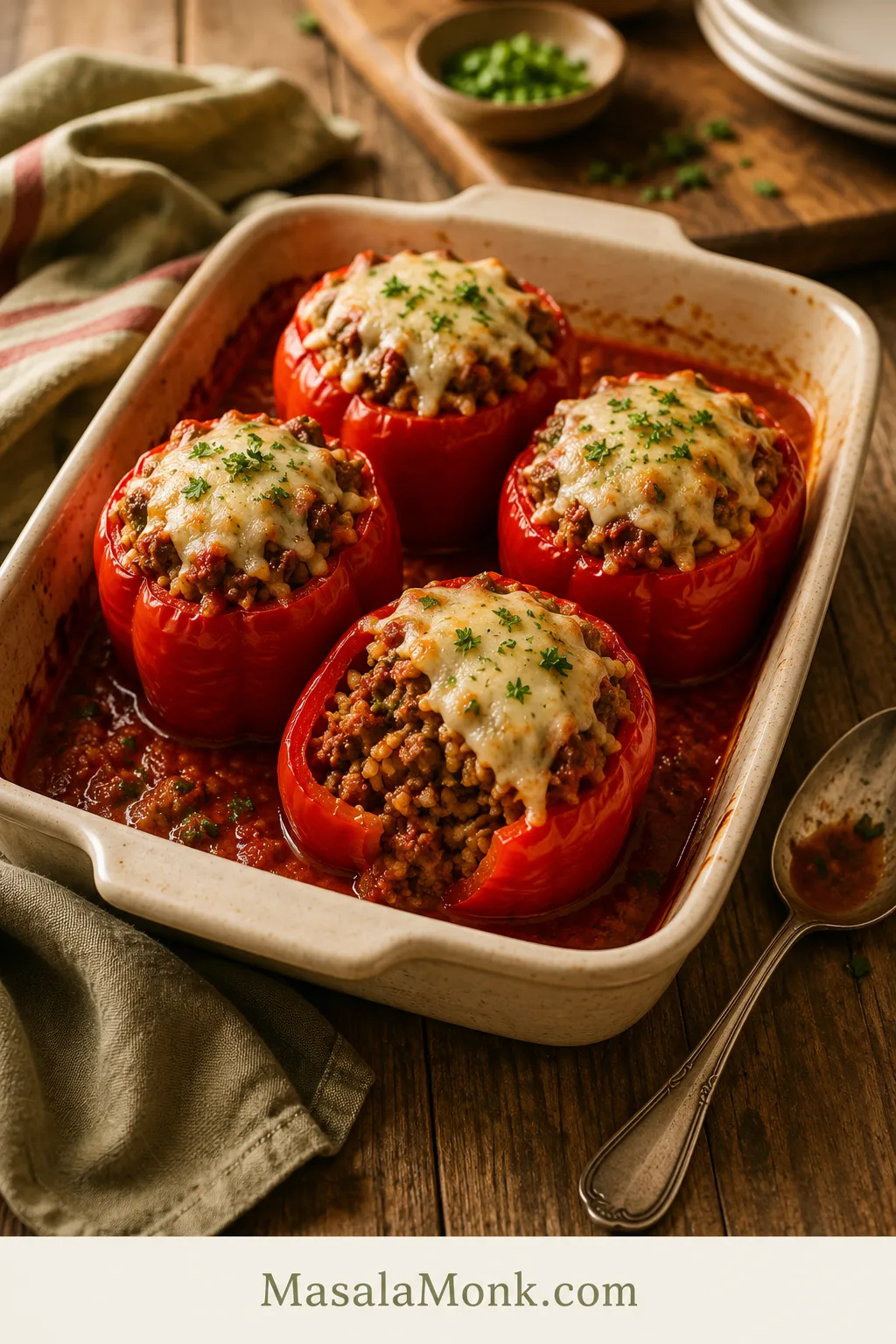
Baked red bell peppers stuffed with ground beef, rice, tomato sauce, and melted cheese in a cream ceramic baking dish

Stuffed red peppers should feel like dinner is handled: sweet pepper walls, savory beef-and-rice filling, tomato sauce, and melted cheese all baked together in one cozy dish. The only catch is that small details matter. If the peppers stay too firm, the rice tastes bland, the filling turns watery, or the cheese browns too early, the whole dish feels less comforting than it should.

This is the no-guesswork version built to avoid those problems. The filling is cooked and seasoned before it ever goes into the peppers, the sauce stays underneath instead of drowning the dish, and the peppers bake covered first so they soften before the cheese goes on. By the time the foil comes off, the dish should smell like tomato sauce, garlic, roasted peppers, and melting cheese.

Think of this as classic baked stuffed bell peppers tuned specifically for red peppers: sweeter, softer in flavor, and especially good with tomato sauce, ground beef, cooked rice, and cheese. You get the old-fashioned dinner feeling, but with clear cues for what the filling, sauce, peppers, and cheese should look like at every step.

The promise

These stuffed red peppers bake up tender, saucy, and full of flavor, with a seasoned beef-and-rice center that holds together instead of turning loose and watery.

Quick Answer: How to Make Stuffed Red Peppers

To make stuffed red peppers, cut the tops off large red bell peppers and remove the seeds. Brown ground beef with onion, garlic, tomato paste, salt, pepper, and herbs, then stir in cooked rice and diced tomatoes. Spread tomato sauce or marinara in a baking dish, fill the peppers, cover with foil, and bake at 375°F / 190°C for 30 to 35 minutes. Uncover, add cheese, and bake for another 10 to 15 minutes, until the peppers are fork-tender, the sauce is bubbling, and the cheese is melted.

Remember the order: filling first, sauce underneath, foil first, cheese last. The key is not to rush the cheese; let the peppers soften under foil before finishing them uncovered.

Make This Version When

Make this version when you want classic stuffed bell peppers, but you do not want to gamble on the texture. The red peppers soften without collapsing, the beef-and-rice filling tastes seasoned before it goes into the oven, and the cheese goes on late enough to melt instead of drying out. It is hearty enough to count as dinner without needing much else, but still flexible enough for turkey, sausage, vegetarian, vegan, no-rice, or halved-pepper versions.

What the Finished Stuffed Red Pepper Should Look Like

Use this as the visual target before you start: the pepper should soften around the edges, while the rice, beef, sauce, and cheese still read as one generous filling.

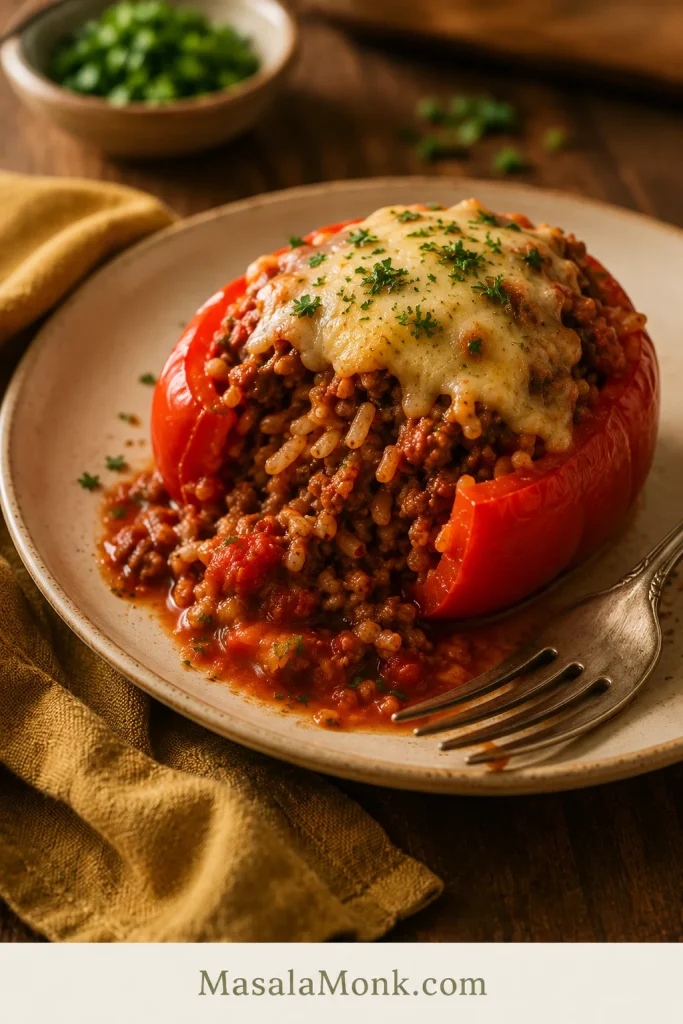
Cut-open stuffed red pepper on a plate with visible beef, rice, tomato sauce, and melted cheese inside
A cut-open stuffed red pepper shows what matters inside: tender rice, seasoned beef, enough sauce to keep the filling juicy, and melted cheese in every forkful.

Stuffed Red Pepper Recipe Card

Easy Baked Stuffed Red Peppers

Whole red bell peppers filled with seasoned ground beef, cooked rice, tomato sauce, and melted cheese. A reliable baked stuffed peppers recipe that turns tender, saucy, and comforting without becoming watery.

Prep Time20 minutes
Cook Time50 minutes
Total Time1 hour 10 minutes
Servings6 stuffed red peppers
Oven Temperature375°F / 190°C
Baking Dish13×9-inch / 33×23 cm dish
Main MethodBake covered first, then finish uncovered with cheese

Ingredients

IngredientAmount
Large red bell peppers6
Olive oil2 tablespoons / 30 ml
Yellow onion, finely chopped1 medium / about 150 g
Garlic, minced3 cloves
Tomato paste2 tablespoons / about 30 g
Ground beef1 lb / 450 g
Cooked white or brown rice1½ cups / about 240 to 260 g
Diced tomatoes, with juices1 can, 14.5 oz / 411 g
Tomato sauce or marinara1½ cups / 360 ml
Italian seasoning or dried oregano1½ teaspoons
Salt1 teaspoon, plus more to taste
Black pepper½ teaspoon
Shredded mozzarella, Monterey Jack, cheddar, or a blend1 cup / about 110 g, or up to 1½ cups / 170 g for a cheesier top
Fresh parsleyOptional, for serving

Instructions

Build the Filling

  1. Preheat the oven. Heat the oven to 375°F / 190°C.
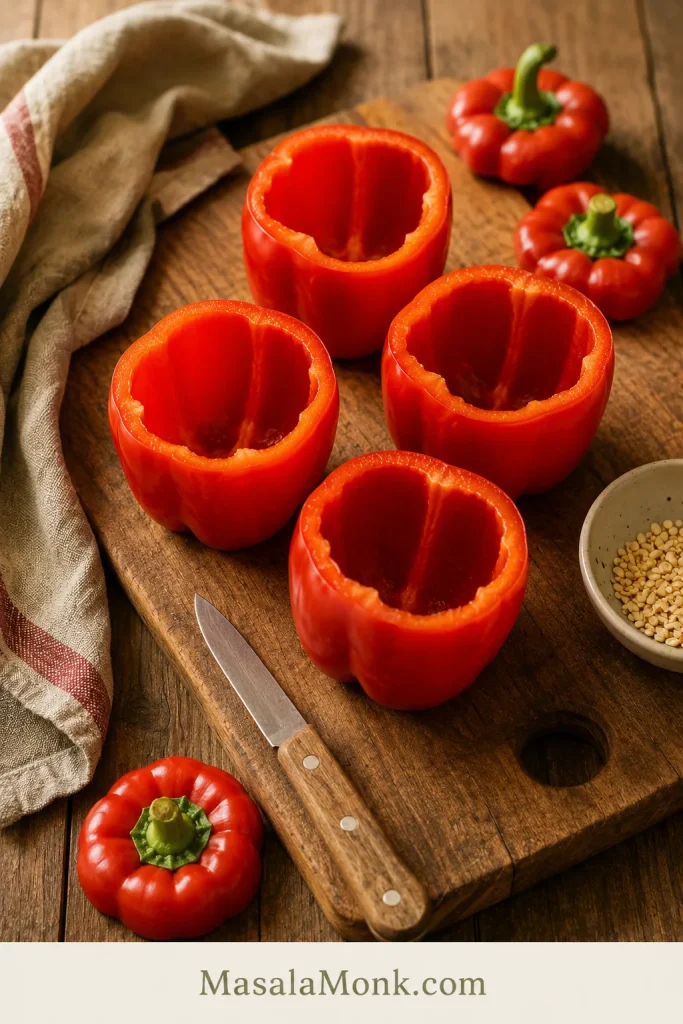
  2. Prepare the peppers. Slice the tops off the red bell peppers. Remove the seeds and membranes. If needed, trim a very thin slice from the bottom so the peppers stand upright, but do not cut through into the hollow center.
  3. Soften the onion. Warm the olive oil in a large skillet over medium heat. Add the onion and cook for 3 to 4 minutes, until softened.
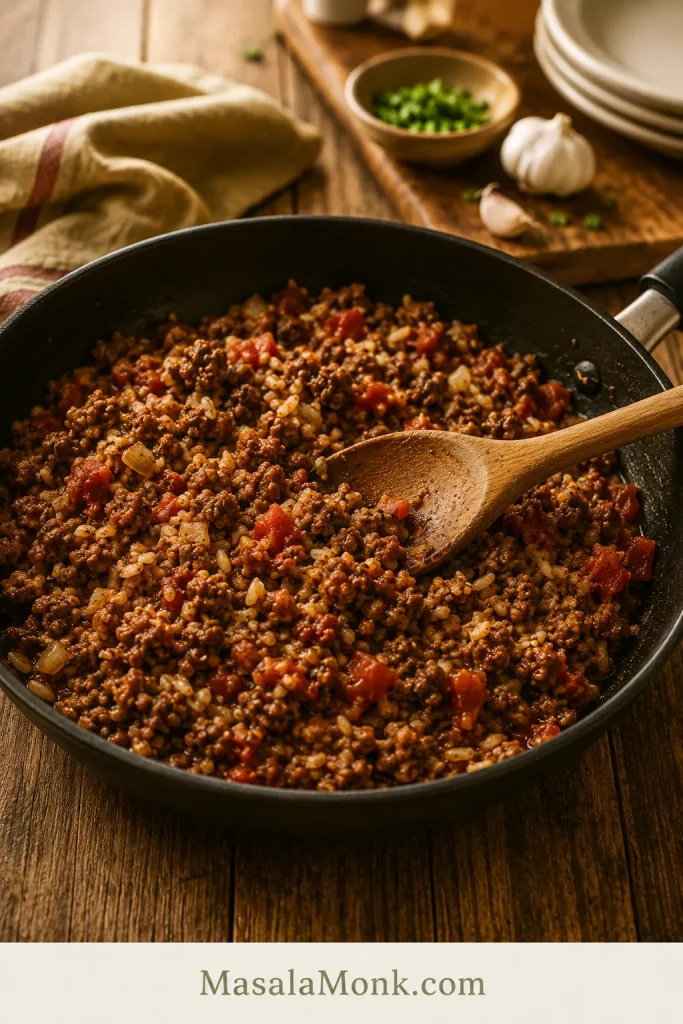
  4. Build the flavor base. Add the garlic and tomato paste. Stir for about 1 minute, until the tomato paste darkens slightly and the garlic smells fragrant.
  5. Brown the beef. Add the ground beef, salt, black pepper, and Italian seasoning. Cook until the beef is browned and no longer pink, breaking it up as it cooks. Drain excess fat if the skillet looks greasy.
  6. Add rice and tomatoes. Stir in the cooked rice and diced tomatoes with their juices. Simmer for 3 to 5 minutes, until the mixture is moist but not soupy. Taste and adjust salt if needed.

Fill, Bake, and Finish

  1. Add sauce to the dish. Spread the tomato sauce or marinara in a shallow layer in the bottom of a 13×9-inch / 33×23 cm baking dish.
  2. Stuff the peppers. Spoon the beef and rice mixture into the peppers. Fill generously, but do not press it down hard.
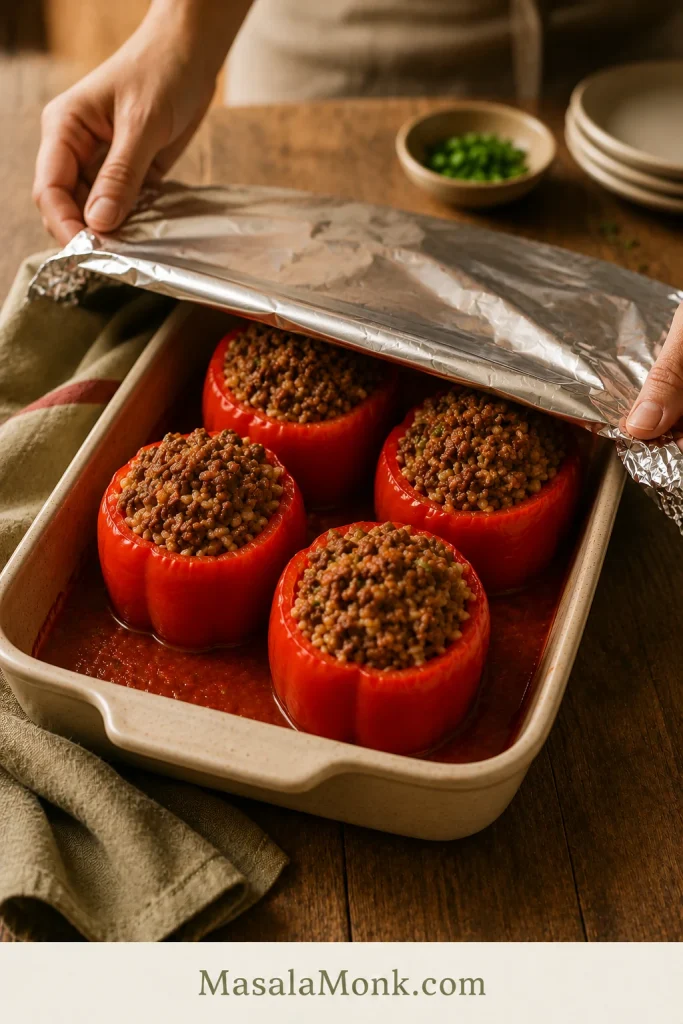
  3. Bake covered. Place the peppers upright in the baking dish. Cover tightly with foil and bake for 30 to 35 minutes, until the pepper walls are starting to soften.
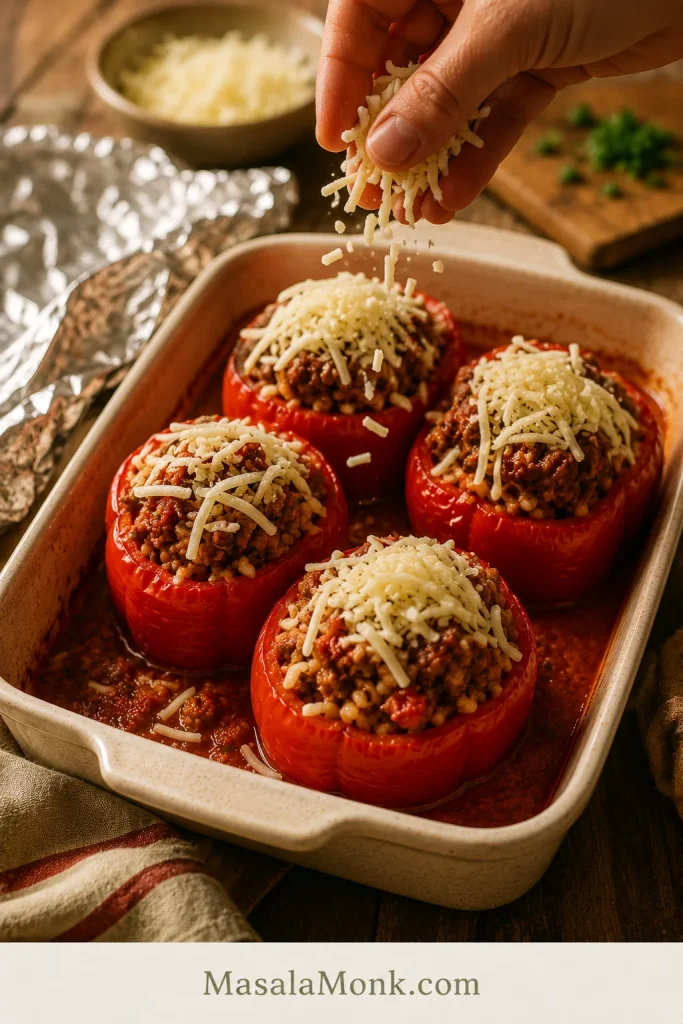
  4. Add cheese and finish uncovered. Remove the foil. Spoon a little sauce over the peppers if they look dry, then top with shredded cheese. Bake uncovered for 10 to 15 minutes, until the cheese is melted and the peppers are tender.
  5. Check doneness. The peppers are done when they are fork-tender but still holding their shape, the sauce is bubbling around the edges, the center is hot, and the cheese is melted.
  6. Rest before serving. Let them rest for 5 minutes. Spoon extra sauce from the dish over the top and finish with parsley if using.

Recipe Notes

  • Cooked rice gives the most reliable texture. Leftover rice works well.
  • Taste the filling before stuffing the peppers. It should taste slightly bold in the skillet because the pepper and rice will soften the flavor once baked.
  • If your marinara, canned tomatoes, or cheese are salty, start with ¾ teaspoon salt and adjust after the rice goes in.
  • For ground turkey or very lean beef, add an extra spoonful or two of sauce to keep the filling moist.
  • Very large peppers may need 5 to 10 extra minutes of covered baking time.
  • Let the peppers rest before serving so the filling settles instead of spilling out immediately.

Before You Start: The Stuffed Red Pepper Rules

Use these as your quick mistake-prevention cues, and your stuffed peppers with ground beef and rice are much less likely to turn watery, bland, undercooked, or dry on top.

RuleWhy It Matters
Use cooked riceIt prevents crunchy grains and makes the filling easier to season.
Cook the beef firstBrowning builds flavor and lets you drain excess fat.
Keep the filling thickThe mixture should mound slightly, not run across the skillet.
Use a shallow sauce layerSauce should cushion the peppers, not boil them.
Bake covered firstSteam softens the pepper walls before the top dries out.
Add cheese lateThe cheese melts cleanly instead of drying out while the peppers finish.
Rest before servingThe filling settles, and the peppers are easier to lift from the dish.

Table of Contents

What This Recipe Is Built Around

This is the classic baked stuffed bell pepper dinner, but tuned for red peppers: sweeter pepper walls, a thicker beef-and-rice filling, sauce underneath instead of too much liquid inside, and cheese added only once the peppers are nearly tender.

It is practical comfort food, not a fancy project. The dish works because the filling is seasoned well, the sauce is in the right place, and the covered bake gives the peppers enough time to soften before the top is finished.

If you like this kind of saucy, cheesy covered-bake dinner, these baked stuffed shells follow the same comfort-food logic with pasta, filling, sauce, and cheese.

Choose Your Stuffed Red Pepper Path

The main recipe is the classic stuffed bell peppers with ground beef and rice version. Use this table if you already know what style you want.

If You WantUse This Approach
Classic stuffed red peppersUse ground beef, cooked rice, tomato sauce, and melty cheese.
Softer peppersBake covered 5 to 10 minutes longer before adding cheese.
No boil stuffed peppersSkip boiling and let the covered bake soften the peppers.
Saucier peppersAdd a little extra marinara to the dish and spoon sauce over before serving.
Less watery peppersSimmer the filling until thick and finish the bake uncovered.
Ground turkey versionReplace beef with turkey and add a little extra oil or sauce.
Vegetarian versionUse beans, lentils, mushrooms, quinoa, vegetables, and cheese.
Vegan versionUse beans or lentils, rice or quinoa, tomato sauce, herbs, and vegan cheese or no cheese.
No-rice versionUse cauliflower rice, mushrooms, eggplant, extra meat, lentils, or beans.
Faster weeknight bakeUse halved peppers instead of whole peppers.

Why This Stuffed Red Pepper Recipe Works

The trick is not a special ingredient. It is timing and moisture. These stuffed red bell peppers work because the rice is already cooked, the beef is browned first, the sauce stays shallow, and the cheese goes on only after the peppers have started to soften.

  • Cooked rice prevents crunchy grains. The filling bakes evenly instead of waiting for dry rice to soften inside the pepper.
  • Browned beef gives better flavor. It also lets you drain extra fat before the rice and tomatoes go in.
  • Tomato paste deepens the skillet mixture. One minute in the pan makes the filling taste more rounded.
  • A shallow sauce layer prevents boiling. The sauce keeps the peppers moist without turning the dish soupy.
  • Foil softens the peppers first. The covered bake gives the pepper walls time to relax before the cheese is added.
  • A short rest helps the filling settle. The peppers lift from the dish more neatly after a few minutes.

Ingredients You’ll Need

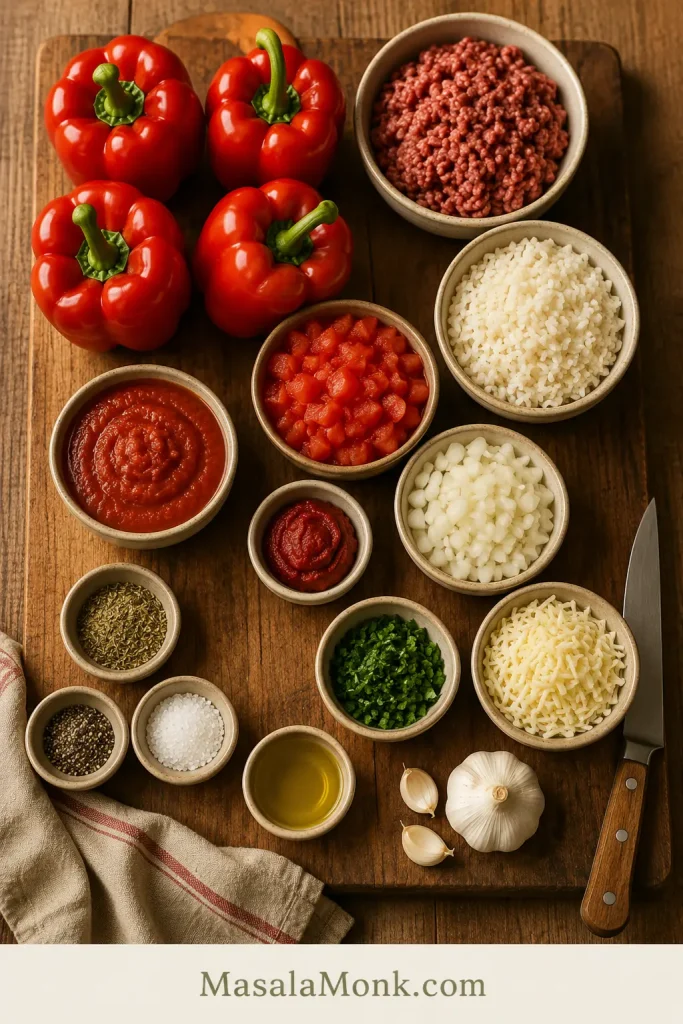
The ingredients are familiar, which is exactly why the balance matters. A little tomato paste makes the beef taste deeper, cooked rice keeps the texture steady, and tomato sauce in the dish makes the peppers feel finished instead of dry.

Stuffed red pepper ingredients arranged on a board, including red bell peppers, ground beef, cooked rice, tomato sauce, cheese, onion, garlic, and herbs
The ingredients are simple, but each one has a job: peppers hold the filling, cooked rice gives structure, tomato sauce adds moisture, and cheese finishes the baked top.

Red Bell Peppers

Use large red bell peppers for this recipe. Red peppers are sweet, colorful, and mild, which makes them especially good with beef, rice, tomato sauce, and cheese. In some countries, red bell peppers are sold as red capsicum. Choose the large sweet kind, not small hot red peppers.

Ground Beef

Ground beef gives the filling its classic flavor. Beef that is around 85% to 90% lean works well because it has enough richness without making the dish greasy. The beef should taste a little bold in the skillet because the rice, pepper, and sauce will mellow it once everything bakes together.

Cooked Rice

Cooked rice is the most reliable choice for baked stuffed peppers. White rice, brown rice, basmati, jasmine rice, or leftover rice can all work. The important part is that the rice should already be cooked before it goes into the filling.

Tomato Paste, Diced Tomatoes, and Sauce

Tomato paste adds depth, diced tomatoes bring moisture and texture, and tomato sauce or marinara keeps the baking dish saucy. Together, they stop the filling from tasting flat or dry.

Cheese

Mozzarella gives a mild, stretchy melt. Monterey Jack melts smoothly and tastes creamy. Cheddar adds sharper flavor. Add the cheese near the end, when the peppers are almost tender, so it melts into the top instead of drying out while the peppers catch up.

Seasoning

Italian seasoning or oregano keeps the flavor classic. Paprika, chili flakes, basil, parsley, or a little cumin can also work depending on the version you want. Season the beef before adding the rice, because rice softens the flavor once it goes in.

Best Red Peppers to Use

Choose large, firm, glossy red bell peppers that are close to the same size. Similar-sized peppers bake more evenly, and flat-bottomed peppers are easier to stand upright in the dish.

  • Use: large red bell peppers.
  • Good backup: yellow or orange bell peppers.
  • For a sharper flavor: green bell peppers can work, but they taste less sweet.
  • Not ideal for this main recipe: mini peppers, cherry peppers, pimento peppers, long hot red peppers, or red jalapeños.

Mini peppers and pimento peppers are delicious, but they behave differently. They need different filling amounts and shorter cooking times, so save them for appetizer-style stuffed pepper recipes.

No Boil Stuffed Peppers: Do You Need to Boil or Pre-Bake?

You do not need to boil red peppers before stuffing them for this recipe. This no-boil method uses the covered bake to create enough steam to soften the peppers while the filling stays moist.

For very soft peppers, blanch the empty peppers in boiling water for about 5 minutes, then drain and dry them before stuffing. When you prefer peppers that hold their shape and keep a little bite, skip boiling and let the oven do the work.

With halved peppers, pre-baking is more useful than boiling. Bake the empty halves for 10 minutes, tip out any liquid, then add the filling. This helps prevent watery halves and shortens the final bake.

MethodUse It WhenWhat to Know
No boilingYou want classic whole stuffed red peppersGood balance of tenderness and shape
Blanch 5 minutesYou like very soft peppersDrain and dry well before stuffing
Pre-bake 10 minutesYou are using halved peppersTip out liquid before adding filling

Equipment

You need a large skillet for the filling and a snug 13×9-inch / 33×23 cm baking dish for the peppers. A snug dish helps the peppers support each other instead of tipping into the sauce.

  • 13×9-inch / 33×23 cm baking dish
  • Large skillet
  • Cutting board and sharp knife
  • Spoon for stuffing
  • Foil
  • Optional baking sheet under the dish to catch bubbling sauce

Cooked Rice or Uncooked Rice?

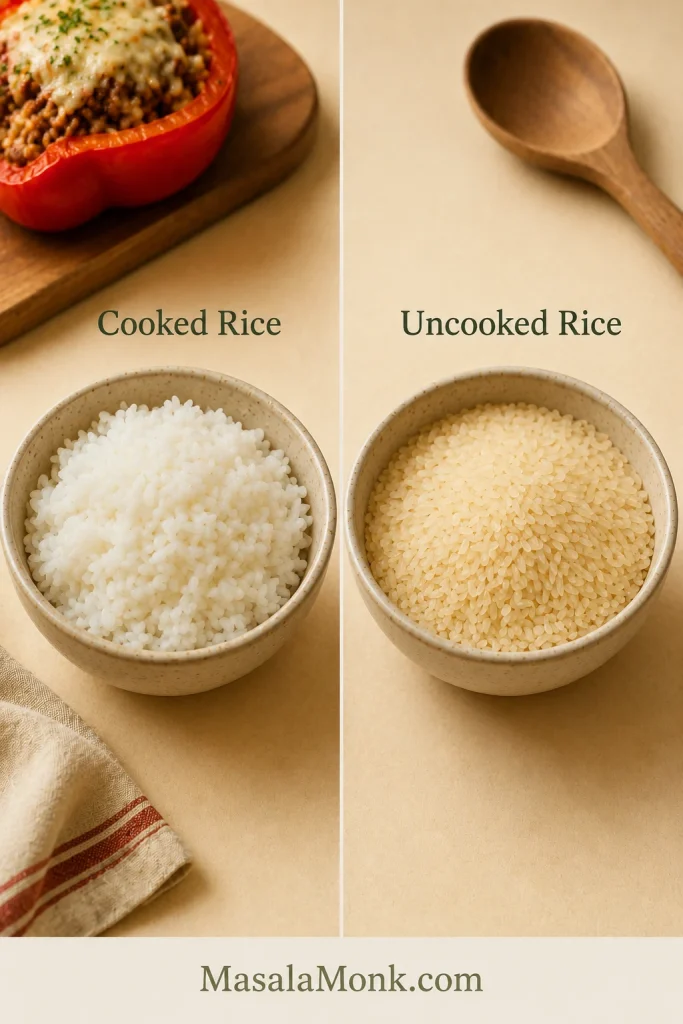
Use cooked rice for this stuffed red pepper recipe. Cooked rice lets you control the texture before the dish goes into the oven, so you are not guessing whether the grains will soften in time.

Side-by-side bowls of fluffy cooked rice and dry uncooked rice used to compare rice texture for stuffed peppers
For stuffed red peppers, cooked rice gives a more reliable texture because the grains are tender before baking. In contrast, uncooked rice needs extra liquid and can stay firm inside the peppers.

If rice texture is the part that usually trips you up, this guide on how to cook rice is useful before you make the filling.

Uncooked rice can work in some stuffed peppers with tomato sauce, but it needs more liquid, more time, and closer control. Without enough liquid, the rice can stay hard. With too much liquid, the peppers can become watery.

Cooked rice also makes the filling easier to taste and adjust. Rice absorbs seasoning, so the mixture may need a final pinch of salt after the grains go in.

Leftover rice tip: leftover rice is excellent here. Break up any clumps before stirring it into the beef and tomato mixture.

Leftover rice can do double duty: use some here, then save the rest for this shrimp fried rice recipe later in the week.

For uncooked rice, do not add it dry straight into the peppers. Simmer the grains with the meat, tomatoes, and extra liquid until they are mostly tender, then stuff the peppers and bake.

Do You Cook the Meat First?

Yes. Cook the beef first. It is one of the simplest ways to make stuffed peppers with ground beef and rice taste deeper and bake more evenly.

Browning the meat first helps the onion and garlic cook properly, gives you a chance to season the filling, and lets you drain off excess fat. It also makes the final bake more predictable because the oven’s job is to soften the peppers, heat the filling through, and melt the cheese — not cook raw meat hidden inside a pepper.

For a thermometer check, USDA guidance lists ground beef at 160°F / 71°C. Since the beef is browned before stuffing, the oven is mainly heating the filling through and finishing the peppers.

Red Sauce for Stuffed Peppers

The best red sauce for stuffed peppers is tomato sauce or marinara. Use about 1½ cups / 360 ml for six peppers, spread in a shallow layer under the peppers, then spoon the sauce over the top after baking.

How Much Sauce to Add First

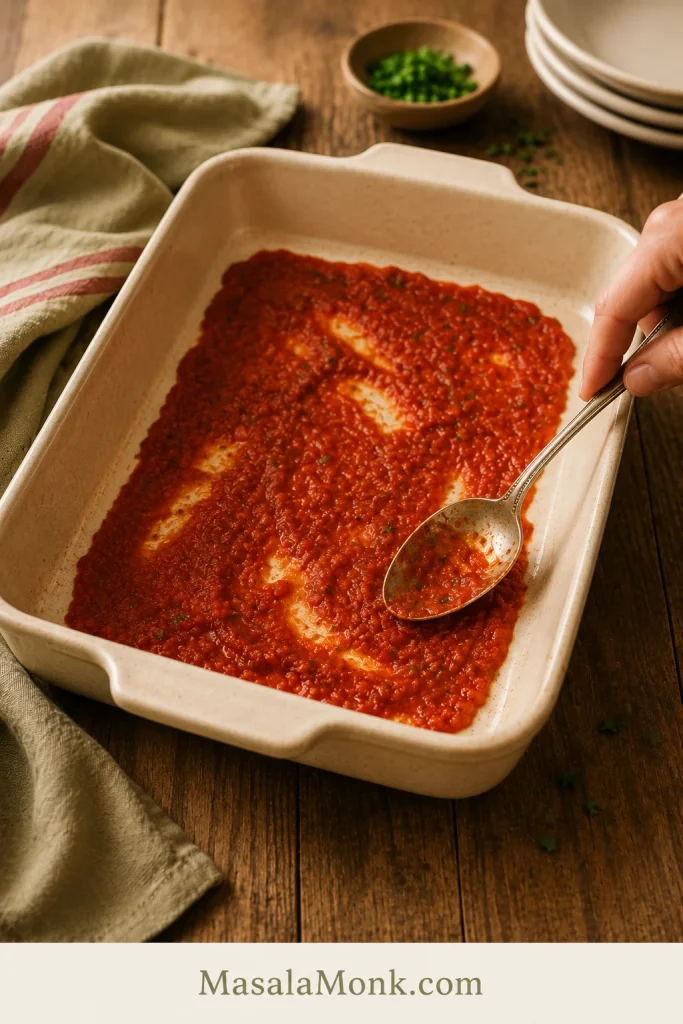
Start with a thin layer across the bottom of the dish. That gives the peppers moisture from below without turning the baking dish into a pot of sauce.

Shallow tomato sauce layer spread across the bottom of a cream baking dish for stuffed red peppers
Next, spread tomato sauce or marinara in a thin, even layer. You need enough sauce to keep the peppers juicy, but not so much that they sit in a deep pool.

Think of the sauce as the cushion under the peppers, not a soup for them to sit in. You want enough to keep the dish moist and give every serving extra tomato flavor, but not so much that the peppers boil in liquid.

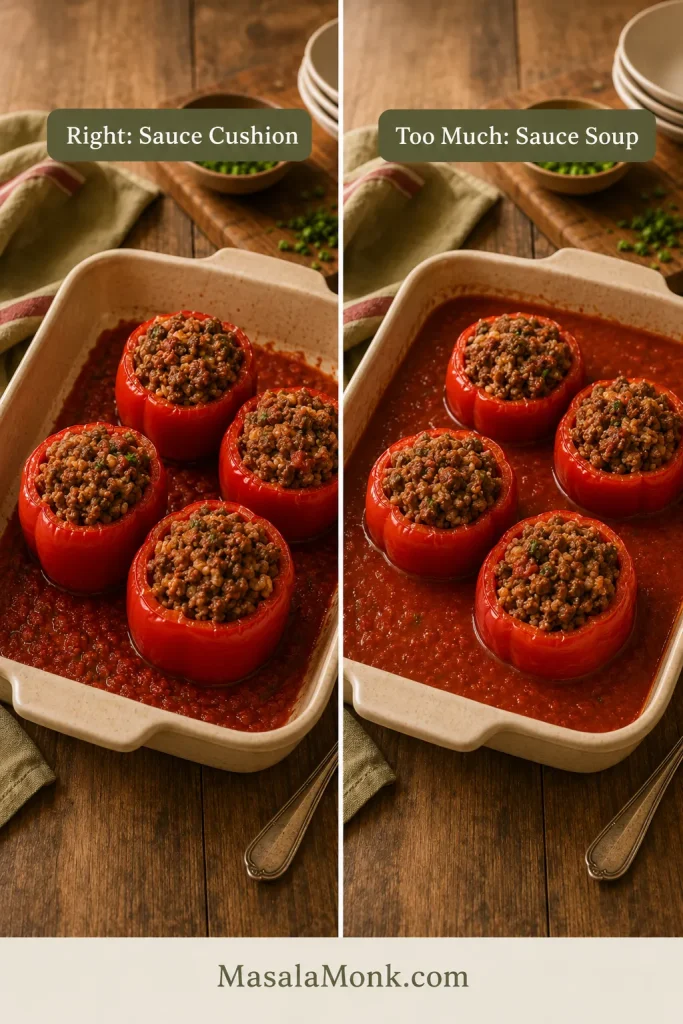
Sauce Cushion, Not Soup

This is the main sauce mistake to avoid. A shallow layer supports the peppers; a deep pool can make them taste more boiled than baked.

Comparison image showing stuffed peppers in a shallow tomato sauce layer beside peppers sitting in too much sauce
Too much sauce can turn stuffed peppers watery. Instead, use a shallow tomato sauce layer that keeps the peppers moist without making them taste boiled.

A good sauce layer should show up when you cut into the pepper, without making the pepper taste boiled.

The sauce in the dish is also your finishing sauce. Spoon it over the peppers at the table so the rice and beef taste juicy all the way through.

Jarred sauce is fine, but if you want the dish to feel more homemade, use this marinara sauce recipe as the base.

Sauce StyleUse It For
Plain tomato sauceClassic stuffed red peppers with a clean tomato flavor
MarinaraAn easy shortcut when you want more flavor
Slightly sweet red sauceOld-fashioned stuffed pepper flavor
Spicy red sauceAdd chili flakes, cayenne, or chopped jalapeño

When tomatoes are in season, this tomato sauce from fresh tomatoes can also become the base sauce for the baking dish.

For very thick sauce, loosen it with a splash of broth or water before adding it to the dish. With thin sauce, use a little less and let the peppers finish uncovered so excess moisture can reduce.

How to Make Stuffed Red Peppers

The recipe card gives the exact steps. This section is the visual walkthrough: what you should see, smell, and check as the peppers move from raw ingredients to a finished baked dinner.

1. Prep the Red Peppers

After trimming, the peppers should look like little cups and stand upright on their own. Keep the walls intact and avoid cutting through the bottom, because any hole in the base lets filling and sauce escape into the dish.

Hollowed red bell peppers standing upright on a wooden cutting board with pepper tops, seeds, and a knife nearby
First, trim the red bell peppers into sturdy cups. Keeping the bottoms intact helps the beef-and-rice filling and tomato sauce stay inside instead of leaking into the dish.

2. Cook the Tomato Paste and Beef

The tomato paste should darken slightly before the beef goes in. That quick minute makes the filling taste deeper and less raw-tomato sharp. Once the beef is browned, the skillet should smell savory, garlicky, and tomato-rich, not flat or boiled.

Ground beef, rice, tomatoes, onion, and garlic cooking together in a skillet for stuffed red pepper filling
Browning the ground beef before stuffing builds deeper flavor, cooks off extra moisture, and lets you season the filling before it gets tucked into the peppers.

3. Bring the Filling Together

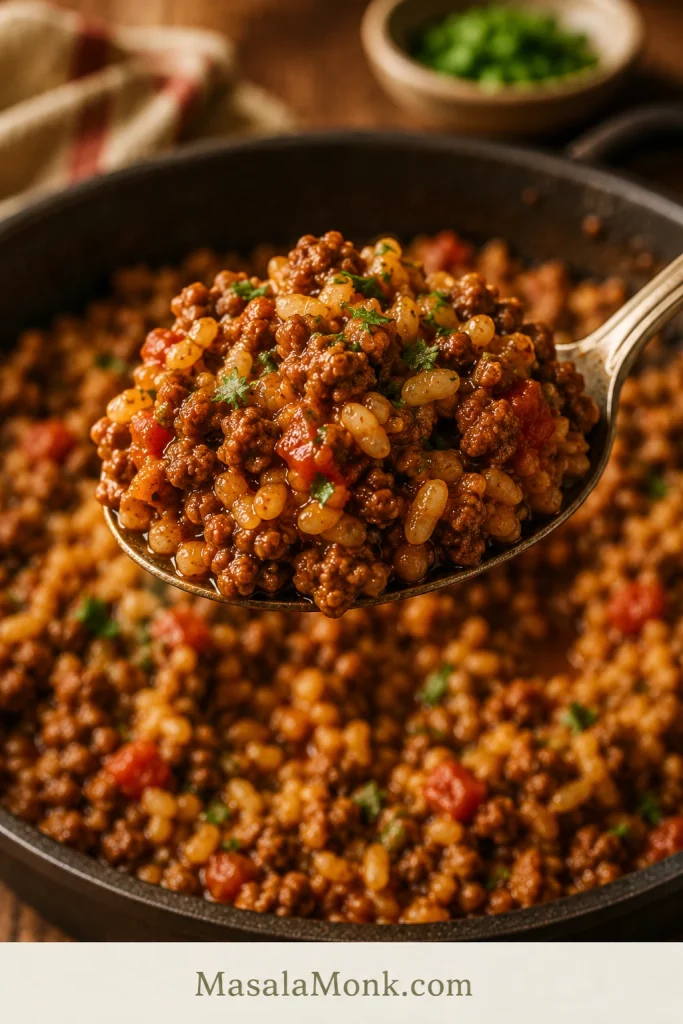
After the cooked rice and diced tomatoes go in, look for a skillet mixture that is moist, glossy, and thick enough to mound slightly. If it looks wet enough to pour, keep simmering. It should sit on the spoon, not run off it.

Thick beef and rice filling holding its shape on a spoon above a skillet with no visible liquid pooling
Before stuffing, check the filling texture. It should mound on the spoon instead of running across the skillet, which is one of the easiest ways to prevent watery stuffed peppers.

4. Fill Without Packing Too Hard

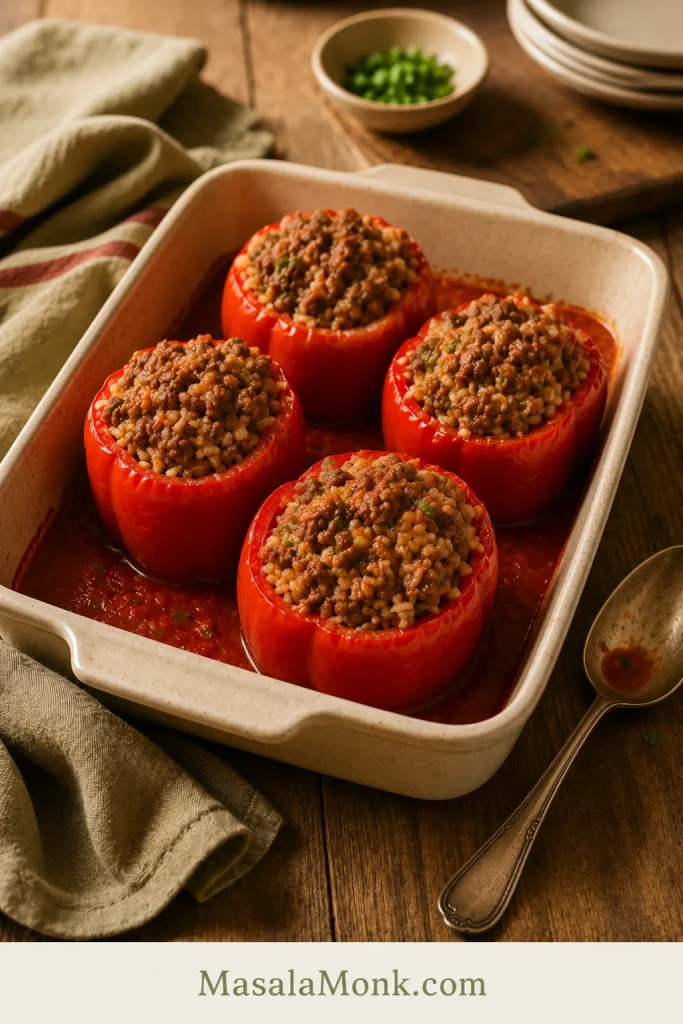
Fill each pepper generously, but keep the beef-and-rice mixture loose enough that a spoon can still move it. Pressing too hard makes the center heat less evenly and can cause the filling to spill out when served.

Red bell peppers filled with beef and rice in a baking dish before baking and before cheese is added
Once the filling is ready, spoon it into the peppers generously but gently. A looser beef-and-rice filling heats more evenly than one packed down too tightly.

5. Bake Covered Before Adding Cheese

Before the cheese goes on, the pepper walls should already be starting to soften. If they still feel stiff when pierced with a fork, cover the dish again and give them a few more minutes. The cheese should finish the dish, not wait in the oven while the peppers catch up.

Hands placing foil over a baking dish of stuffed red peppers before baking
Cover the stuffed red peppers for the first part of baking so steam can soften the pepper walls before the cheese is added.

6. Add Cheese Near the End

Once the peppers have softened under foil, add the cheese and return the dish to the oven uncovered. The cheese should finish the top, not sit in the oven while firm pepper walls catch up.

Hand sprinkling shredded cheese over stuffed red peppers after the covered baking stage
After the peppers begin to soften, add the cheese. This timing gives you a melted, creamy top without leaving the cheese in the oven long enough to dry out.

7. Rest and Spoon Sauce Over the Top

When the stuffed peppers come out of the oven, the sauce should be bubbling around the base and the cheese should be melted into the top. Let them rest for 5 minutes, then spoon sauce from the dish over each pepper before serving.

Bake Time and Temperature

For whole stuffed red peppers, 375°F / 190°C is the sweet spot. It is hot enough to soften the peppers in a reasonable time, but gentle enough that the filling stays moist and the sauce does not burn.

StepTimeWhat Happens
Bake covered30 to 35 minutesPeppers soften and filling heats through
Bake uncovered with cheese10 to 15 minutesCheese melts and the top finishes
Rest5 minutesFilling settles and serving gets easier

Bubbling Sauce and Melted Cheese Cues

At the end of baking, look at the sauce and the pepper walls before you rely on the clock. The dish should look hot and settled, not dry or collapsed.

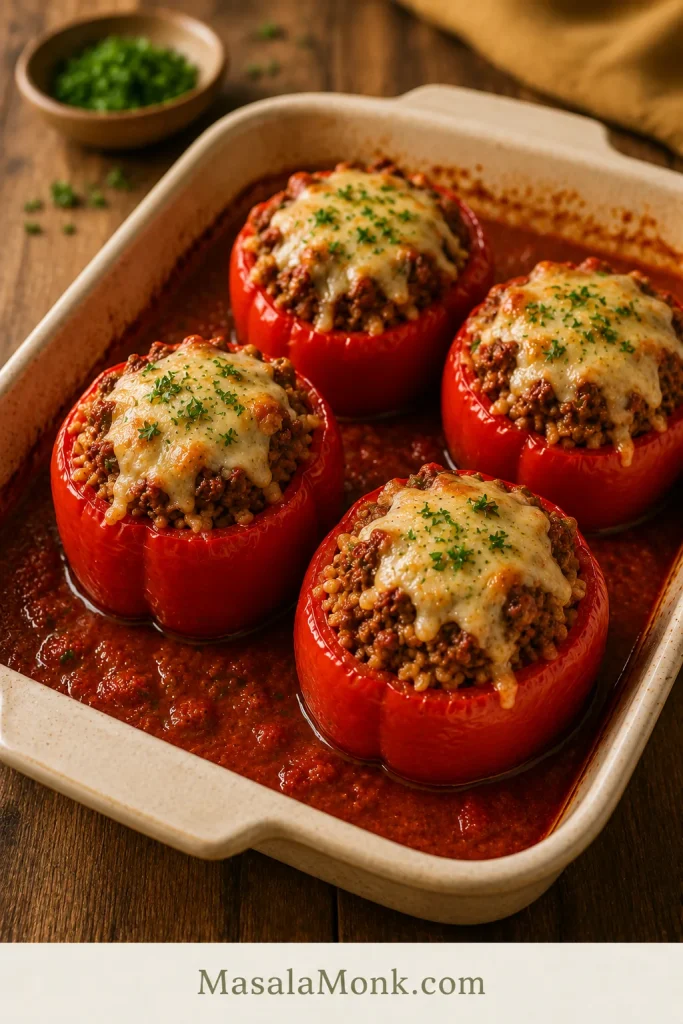
Finished baked stuffed red peppers with melted cheese and bubbling tomato sauce in a cream ceramic dish
Look for the real doneness signs: bubbling tomato sauce, melted cheese, hot filling, and red peppers that are tender but still standing. These cues matter more than the timer alone.

Total baking time is usually 40 to 50 minutes. Start checking around 40 minutes if your peppers are small, and closer to 50 minutes if they are large and thick-walled. The fork test matters more than the clock.

When the foil comes off, the peppers should look relaxed around the edges, not collapsed.

The peppers are ready when they are tender enough to pierce with a fork but still hold their shape. If they are still too firm, cover the dish again and bake a little longer before adding more uncovered time.

The Fork-Tender Test

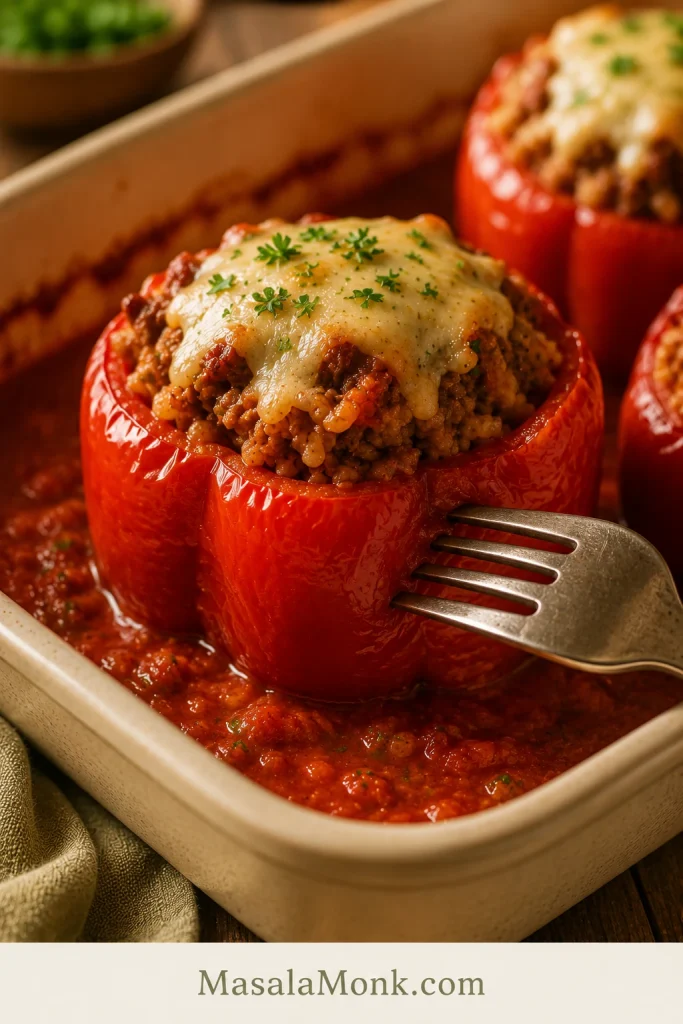
For the final check, pierce the side of a pepper instead of judging only by the cheese. Tender but upright is the goal.

Fork piercing the side of a baked stuffed red pepper with melted cheese, beef filling, and tomato sauce
Use the fork test near the end of baking. The pepper wall should feel tender when pierced, but the stuffed pepper should still hold its shape in the sauce.

Should Stuffed Peppers Be Baked Covered or Uncovered?

Stuffed peppers should be baked covered first, then uncovered at the end. The covered bake softens the peppers; the uncovered finish melts the cheese and reduces extra moisture.

If you bake whole stuffed peppers uncovered from the beginning, the cheese and top of the filling can dry before the pepper walls become tender. Covering first and uncovering late makes the difference between peppers that taste baked and peppers that taste boiled.

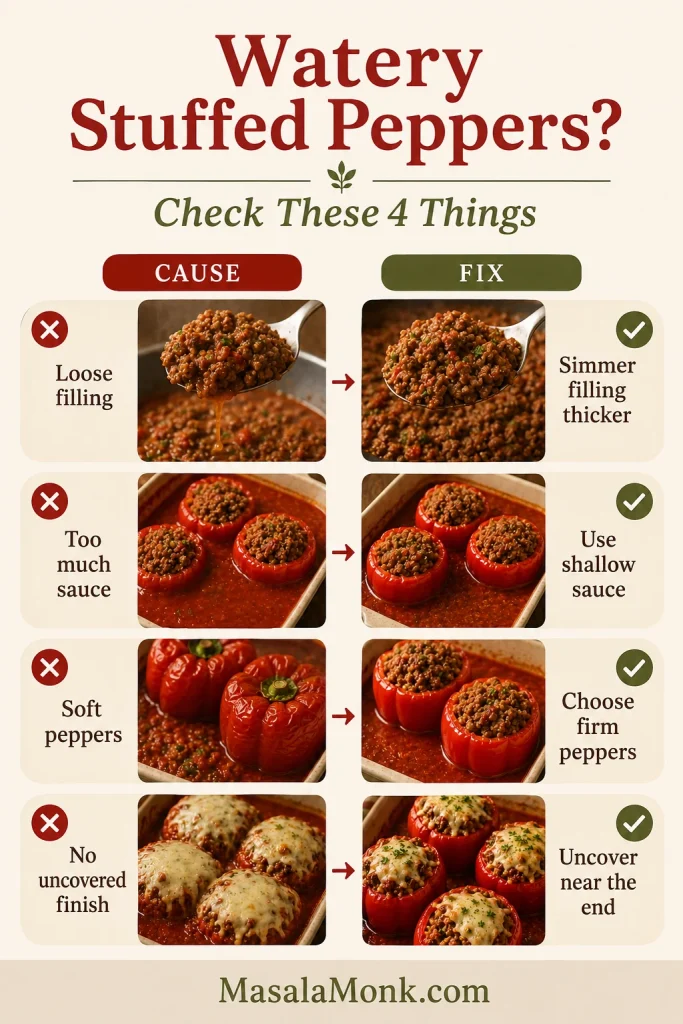
How to Keep Stuffed Red Peppers From Getting Watery

Watery stuffed peppers usually happen for one of three reasons: the filling was too loose, the peppers released a lot of liquid, or the dish had too much sauce. The fix is not complicated, but you need to control moisture before and during baking.

Infographic showing four causes and fixes for watery stuffed peppers, including loose filling, too much sauce, soft peppers, and no uncovered finish
For better texture, check the four usual trouble spots: loose filling, too much sauce, soft peppers, and skipping the uncovered finish.
  • Use cooked rice. It absorbs flavor without needing extra liquid inside the pepper.
  • Brown and drain the beef. Excess fat can make the filling feel greasy and loose.
  • Cook the filling until it is thick enough to mound. Let extra tomato liquid simmer off before stuffing.
  • Do not flood the baking dish. Use a shallow layer of sauce, not a deep pool.
  • Bake covered first, then uncovered. Covered baking softens; uncovered baking lets extra moisture reduce.
  • Use firm peppers. Older, softer peppers collapse and release more liquid.
  • Rest before serving. Five minutes helps the filling settle.
  • For halved peppers, pre-bake and tip out liquid. Halved peppers can release moisture quickly.

Texture cue: the filling should look glossy before stuffing, but not loose enough to run across the skillet. If it looks soupy, simmer it a few minutes longer.

Freezer note: for the best texture, freeze cooked stuffed peppers rather than raw stuffed peppers. Raw peppers can release more water after thawing.

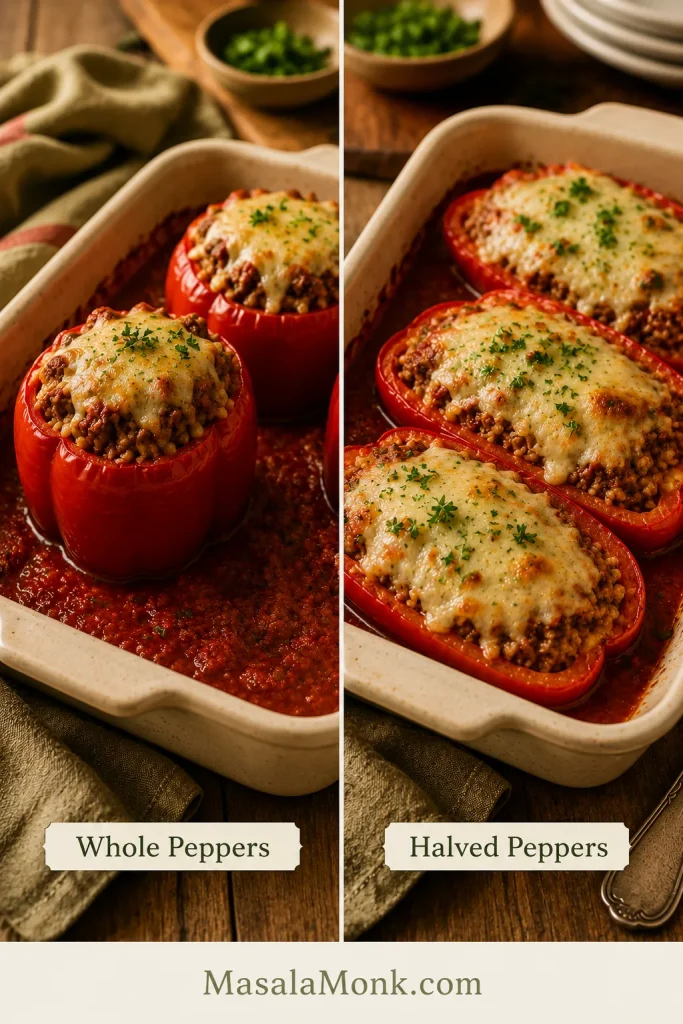
Whole vs Halved Stuffed Red Peppers

This recipe uses whole upright peppers because they give the classic stuffed pepper presentation and hold a generous amount of filling. They need a longer bake and a snug dish, but they look beautiful on the plate.

Halved peppers are better when you want a faster weeknight bake. They cook faster, are easier to portion, and give you more surface area for cheese. Because the cut sides release moisture quickly, a short pre-bake helps.

Side-by-side comparison of whole stuffed red peppers and halved stuffed red peppers topped with cheese
Whole stuffed red peppers give you the classic upright presentation and hold more filling. Meanwhile, halved peppers cook faster and create more surface area for melted cheese.

How to Make Halved Stuffed Red Peppers

To use halved peppers, slice them from stem to base, remove the seeds, and place them cut-side up in the dish. Pre-bake the empty halves at 375°F / 190°C for 10 minutes, then tip out any pooled liquid.

Add the filling, cover the dish, and bake for 15 to 20 minutes. Finish uncovered with cheese for another 5 to 10 minutes, until the cheese melts and the peppers are tender. Halved peppers cook faster than whole peppers, so start checking early.

Easy Variations

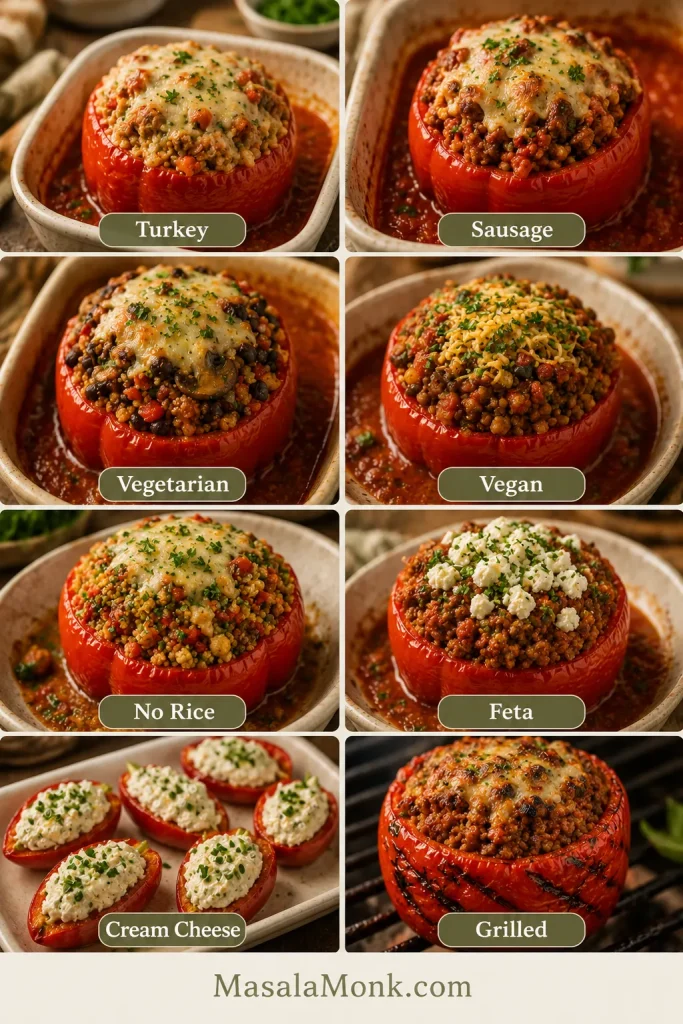
Once you know the base method, the filling can change without the whole recipe falling apart. Keep the mixture thick, keep the sauce shallow, bake covered first, and add cheese near the end.

Guide board with stuffed red pepper variations labeled turkey, sausage, vegetarian, vegan, no rice, feta, cream cheese, and grilled
Once the base method works, you can change the filling without losing the texture logic. Turkey, sausage, vegetarian, vegan, no-rice, feta, cream cheese, and grilled versions all follow the same core cues.

Ground Turkey Stuffed Red Peppers

Ground turkey works well when you want a lighter filling. Since turkey is leaner than beef, add a little extra olive oil or a few extra spoonfuls of tomato sauce so the center does not turn dry. Season well, because turkey needs more help than beef.

Sausage Stuffed Red Peppers

For a richer, more seasoned filling, use half ground beef and half Italian sausage. Because sausage brings salt and flavor, reduce the added salt at first and adjust after tasting.

Vegetarian Stuffed Red Peppers

For a vegetarian version, replace the beef with black beans, pinto beans, lentils, mushrooms, quinoa, or extra vegetables. Beans and lentils make the peppers hearty; mushrooms add savory depth if you cook off their moisture first.

Vegan Stuffed Red Peppers

For a vegan version, use beans, lentils, mushrooms, rice, quinoa, or vegetables cooked down with tomato sauce and herbs. Skip the cheese or use vegan cheese. Keep the mixture moist and well-seasoned so it does not taste like plain rice and vegetables.

Stuffed Red Peppers Without Rice

For no-rice stuffed red peppers, use cauliflower rice, chopped mushrooms, cooked eggplant, extra ground beef, ground turkey, lentils, or beans. If you use watery vegetables like zucchini, mushrooms, or eggplant, cook them first so they release moisture before going into the peppers.

Feta Stuffed Red Peppers

For a Mediterranean-style version, use feta, herbs, lemon, olives, chickpeas, couscous, or rice. Because feta is salty, taste the filling before adding extra salt. This version works especially well with halved peppers.

Cream Cheese Stuffed Red Peppers

Cream cheese stuffed red peppers are usually more of an appetizer than a full dinner. For that style, mini red peppers or small sweet peppers work better than large whole bell peppers. Mix cream cheese with herbs, garlic, cheddar, chives, smoked paprika, or crispy breadcrumbs, then bake or air fry until warm.

Grilled Stuffed Red Peppers

Grilled stuffed red peppers work best with a fully cooked filling. Place the stuffed peppers over medium heat, close the grill, and cook until the pepper walls soften and the center is hot. Add cheese near the end so it melts without burning.

What to Serve With Stuffed Red Peppers

This dish can be a full meal on its own because it already has vegetables, protein, rice, sauce, and cheese. On a busy night, choose one simple side based on the kind of plate you want.

  • Fresh and crisp: a cucumber salad for something cold and tangy
  • Starchy and cozy: roasted potatoes or warm bread
  • Sauce-friendly: homemade garlic bread for catching extra tomato sauce
  • Light and vegetable-heavy: steamed broccoli, green beans, or a simple green salad
  • For spicy versions: plain yogurt or sour cream

If you want a soup-and-peppers dinner, a bowl of minestrone soup keeps the meal vegetable-heavy without making it feel too rich.

Make Ahead, Storage, Freezing, and Reheating

Make Ahead

You can make the filling 1 to 2 days ahead and store it in the fridge. You can also stuff the peppers several hours ahead, cover the dish, and refrigerate until ready to bake. If baking straight from the fridge, add about 5 to 10 extra minutes to the covered baking time.

For the cleanest make-ahead stuffed peppers, keep a little extra sauce ready. Cold filling can feel drier when it goes into the oven, so spooning sauce into the dish before baking helps everything heat more evenly.

Storage

Store leftovers in an airtight container in the fridge for 3 to 4 days. Keep extra sauce with the peppers if possible, because it helps them reheat without drying out.

That timing also matches USDA leftover guidance, which recommends keeping cooked leftovers in the refrigerator for 3 to 4 days.

Freezing

These peppers freeze best after they are cooked. Let them cool completely, then wrap them well or store them in freezer-safe containers. Freeze for up to 2 to 3 months.

Raw stuffed peppers can be frozen, but the texture is usually softer and wetter after thawing. For the best result, bake first, cool, then freeze.

Reheating

To reheat in the oven, place the peppers in a baking dish with a spoonful of sauce, cover, and warm at 350°F / 175°C until the center is hot. The microwave is faster, but the peppers will be softer. Add a little sauce before reheating if the filling looks dry.

Troubleshooting

Most stuffed red pepper problems come down to moisture, timing, or seasoning. Use this table if something feels off.

ProblemLikely CauseFix
Peppers are wateryLoose filling, too much sauce, or peppers released liquidSimmer filling longer, use less sauce, bake uncovered at the end, and rest before serving
Peppers are still firmNot enough covered baking timeCover again and bake 5 to 10 minutes longer
Rice is undercookedUncooked or partly cooked rice was addedUse fully cooked rice for this recipe
Filling tastes blandNot enough seasoning before rice was addedSeason the beef well and use tomato paste, garlic, herbs, and enough salt
Filling is dryVery lean meat or not enough sauceAdd extra tomato sauce or a splash of broth
Peppers collapsedOverbaking or very soft peppersUse firm peppers and bake only until tender
Cheese browned too fastCheese was added too earlyAdd cheese during the last 10 to 15 minutes only
Filling spills out when servedPeppers were overfilled or served immediatelyPack gently and rest 5 minutes before lifting from the dish
Peppers will not stand uprightUneven bottoms or dish is too largeTrim a tiny slice from the bottom or use a snugger dish

FAQ

Do you cook rice before adding it to stuffed red peppers?

Yes. Cooked rice gives the most reliable texture and keeps you from finding hard grains inside an otherwise tender pepper. Leftover rice works well.

Can I use uncooked rice in stuffed red peppers?

You can, but cooked rice is easier. If using uncooked rice, simmer it with the filling and extra liquid until mostly tender before stuffing the peppers.

Should the ground beef be cooked before stuffing peppers?

Yes. Brown the beef first so the filling tastes deeper, releases excess fat in the skillet, and heats more predictably in the oven.

Do you have to boil red peppers before stuffing them?

No. This recipe uses a no-boil method. Baking the peppers covered gives enough steam to soften them.

How long do stuffed red peppers take in the oven?

Whole peppers usually take 40 to 50 minutes at 375°F / 190°C: 30 to 35 minutes covered, then 10 to 15 minutes uncovered with cheese.

What temperature is best for baking stuffed red peppers?

375°F / 190°C works well because it gives whole peppers time to soften while keeping the filling moist.

How do I know when stuffed red peppers are done?

The peppers should be fork-tender but still holding their shape. Around the edges, the sauce should bubble, the filling should be hot, and the cheese should be melted.

Why are my stuffed peppers watery?

They can turn watery if the filling is loose, the meat was not drained, the dish had too much sauce, or the peppers released liquid. Simmer the filling until thick and finish the bake uncovered.

Do stuffed peppers need to be covered while baking?

Yes, for the first part of baking. Covering traps steam and helps the peppers soften; uncover near the end for melted cheese and reduced moisture.

Is it better to make stuffed peppers whole or halved?

Whole peppers look classic and hold more filling. Halved peppers cook faster, are easier to eat, and give more surface area for cheese.

What sauce goes with stuffed red peppers?

Tomato sauce or marinara is the easiest choice because it keeps the peppers moist and gives you sauce to spoon over the finished dish.

Which cheese melts best on stuffed peppers?

Mozzarella, Monterey Jack, cheddar, or a blend all work. For the final texture, mozzarella is mild and stretchy, Monterey Jack is creamy, and cheddar tastes sharper.

How do you make stuffed red peppers without rice?

Replace the rice with cauliflower rice, mushrooms, eggplant, extra meat, lentils, beans, or quinoa. Cook watery vegetables first so they do not loosen the filling.

What is a good vegetarian filling for red peppers?

Beans, lentils, mushrooms, quinoa, rice, corn, tomatoes, onions, garlic, herbs, and cheese all work well. Keep the filling hearty and well-seasoned.

Can I make stuffed red peppers ahead of time?

Yes. Make the filling 1 to 2 days ahead or stuff the peppers several hours ahead. If baking from cold, add 5 to 10 extra minutes to the covered bake.

Do stuffed red peppers freeze well?

Yes. They freeze best after baking. Cool completely, wrap or store airtight, and freeze for up to 2 to 3 months.

How do you reheat stuffed red peppers without drying them out?

Reheat them covered with a spoonful of sauce in the dish. Use a 350°F / 175°C oven until the center is hot, or microwave gently for a softer result.

Can I use red capsicum for this recipe?

Yes. Red capsicum is another name for red bell pepper in many countries. Use large sweet red capsicum, not small hot red peppers.

Are red peppers better than green peppers for stuffed peppers?

Red peppers are sweeter and milder, which works especially well with tomato, beef, rice, and cheese. Green peppers still work if you prefer a sharper flavor.

Final Bite

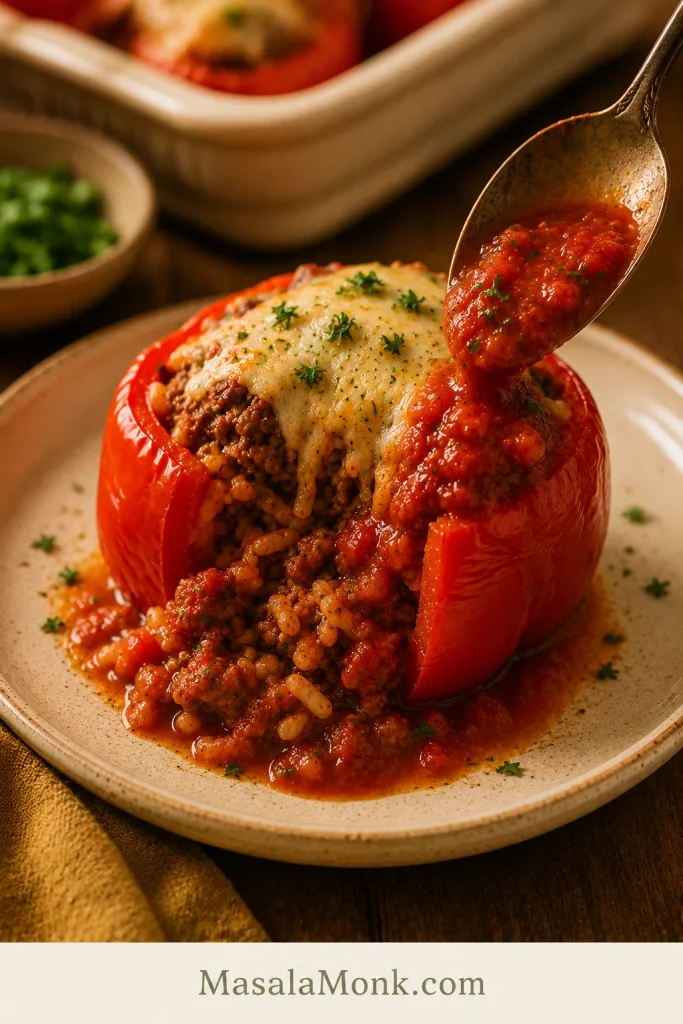
The best part is cutting into the pepper while the sauce is still warm enough to slip into the rice and beef. That is when the dish stops feeling like separate parts and becomes the comfort food it is supposed to be: soft red pepper, savory filling, tomato sauce, and melted cheese in one forkful.

Tomato sauce being spooned over a cut-open stuffed red pepper with beef, rice, and melted cheese
Finally, spoon extra tomato sauce over the stuffed red peppers before serving. That last spoonful brings the rice, beef, pepper, and cheese together in the first bite.

Let the peppers rest just long enough for the first forkful to hold together, then serve while the sauce is still warm and glossy.

Posted on Leave a comment

Butternut Squash Soup Recipe

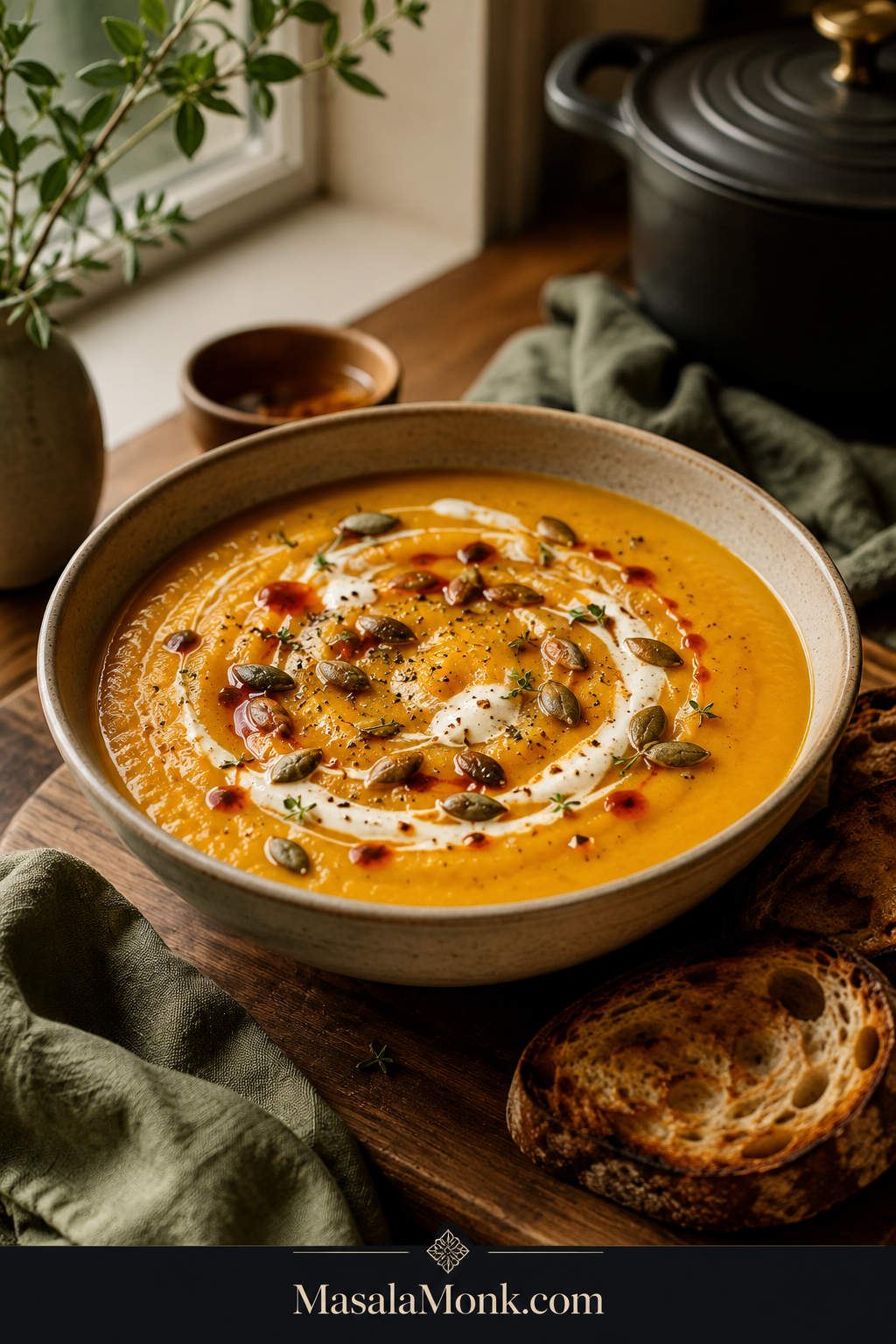
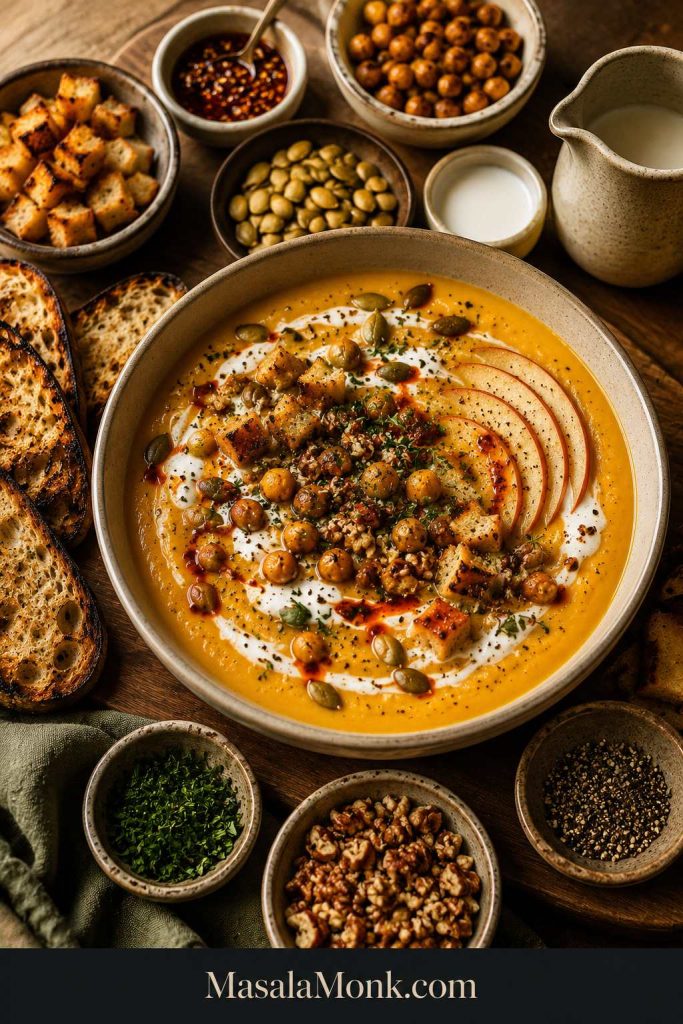
Creamy butternut squash soup in a matte ceramic bowl with pumpkin seeds, chili oil, herbs, black pepper, a cream swirl, and toast on the side.

This is the butternut squash soup for the nights when you want something creamy and comforting, but still balanced rather than heavy — sweet from the squash, savory from onion and garlic, and bright enough at the end that the bowl never tastes flat.

Butternut squash soup can easily go watery, bland, baby-food sweet, or too heavy if the liquid, salt, and finish are not handled carefully. This version avoids that with one simple idea: cook the squash until tender, blend first, thin later, then brighten the pot at the end.

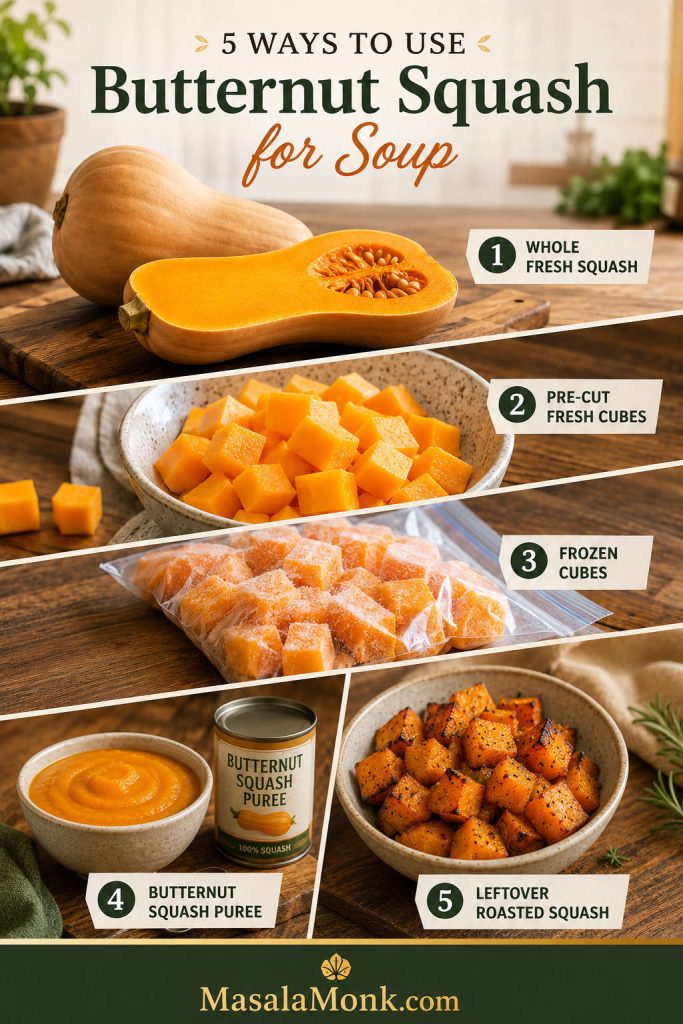
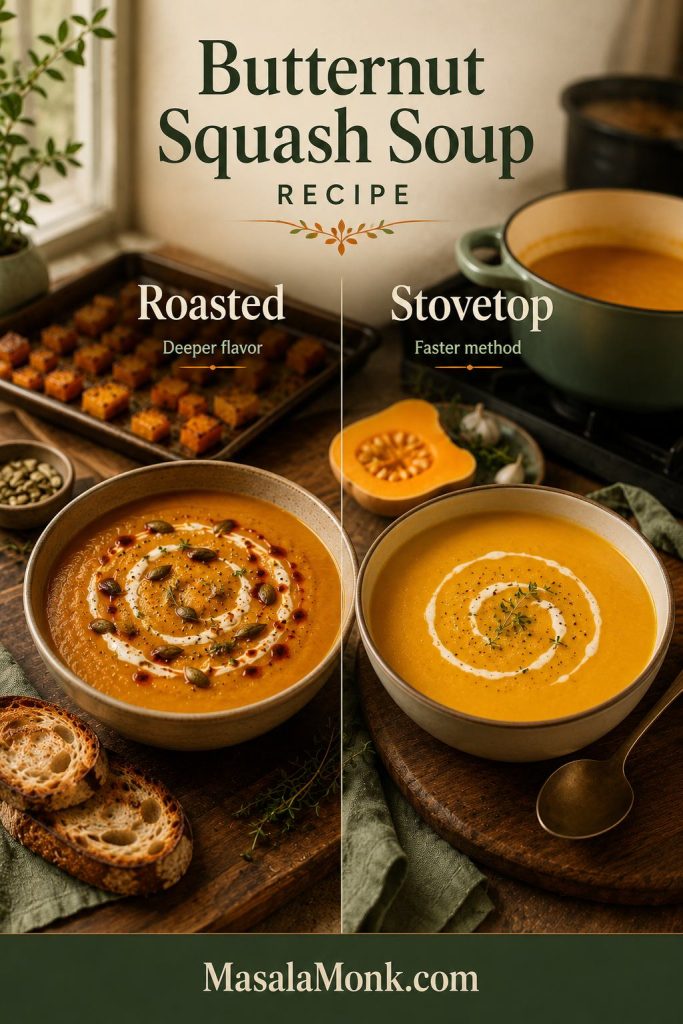
You can roast the squash for deeper caramelized flavor, or make the whole soup on the stovetop when you want something faster. It also works with fresh squash, pre-cut cubes, frozen squash, canned puree, or leftover roasted squash — and you can finish it with cream, coconut milk, olive oil, butter, or no cream at all.

Here is the goal: a smooth, cozy bowl that does not turn watery, bland, or too sweet. At the finish, the soup should coat a spoon, taste savory before it tastes sweet, and end with just enough brightness to make you want the next bite. It is the kind of bowl that makes a piece of toast feel like dinner, especially when the top has something crunchy, creamy, or a little spicy.

Jump to Recipe · Quick Answer · Make It Now · Less-Broth-First Method · Roasted vs Stovetop · Cream, Coconut Milk, or No Cream · Fix Bland or Thin Soup

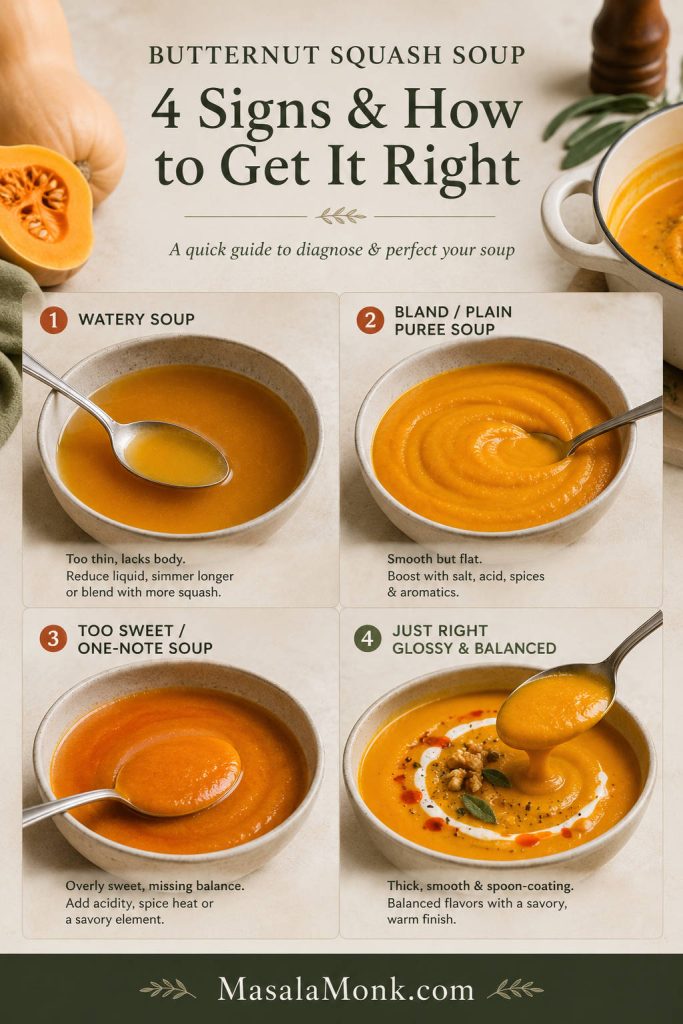
Use this quick visual check before you adjust the pot: watery, bland, and overly sweet butternut squash soup each need a different fix.

Four-panel comparison showing watery butternut squash soup, bland puree-style soup, overly sweet soup, and a thick glossy finished soup.
Before fixing the pot, identify the real problem: thin soup needs body, flat soup needs seasoning, and overly sweet soup needs acid, heat, or savoriness.

Quick Answer: How to Make Butternut Squash Soup

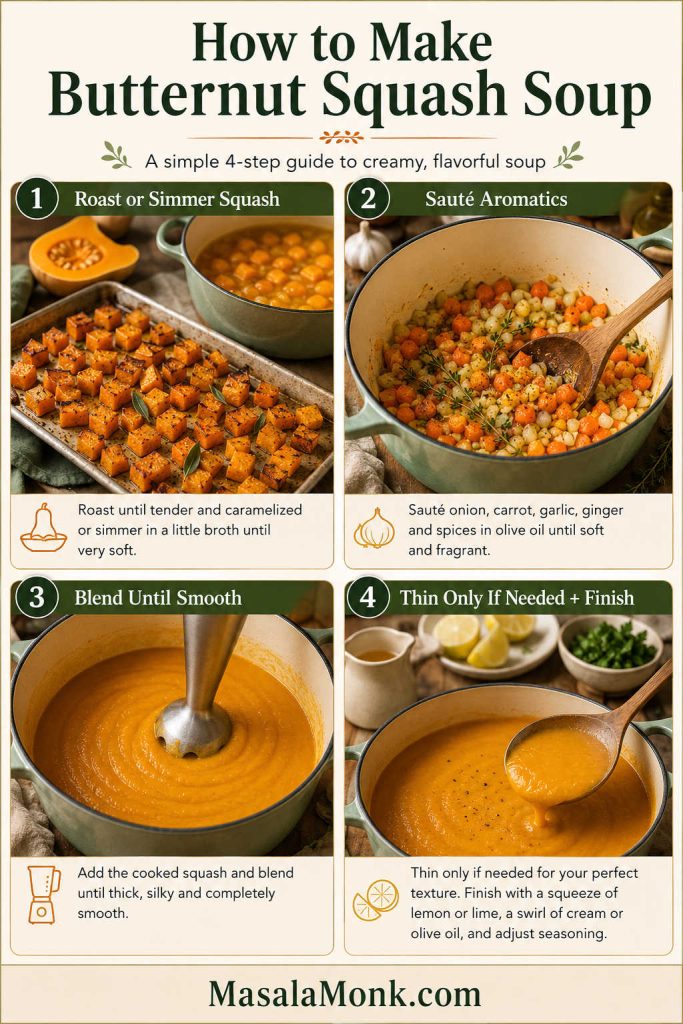
To make butternut squash soup, cook butternut squash until very tender, then blend it with sautéed onion, garlic, carrot, broth, herbs, and seasoning until smooth. Roast the squash at 425°F / 220°C when you want the deepest flavor. When speed matters, simmer peeled squash cubes directly in the pot with broth until soft.

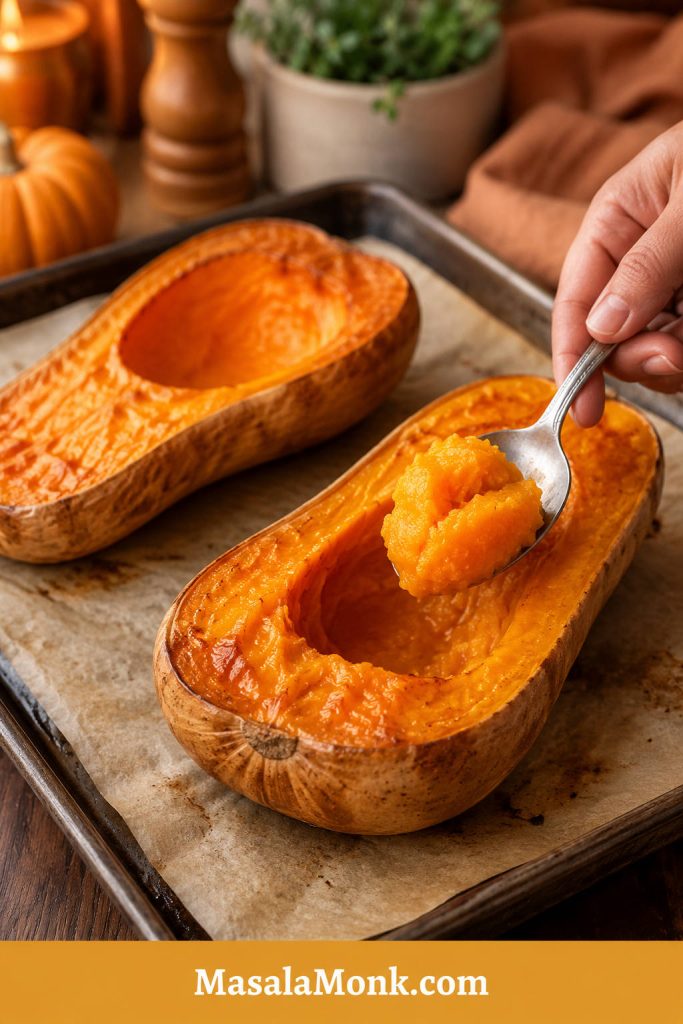
If peeling raw squash feels annoying, roast the halves first and scoop the soft flesh out later. That gives you deeper flavor and skips the hardest part of squash prep.

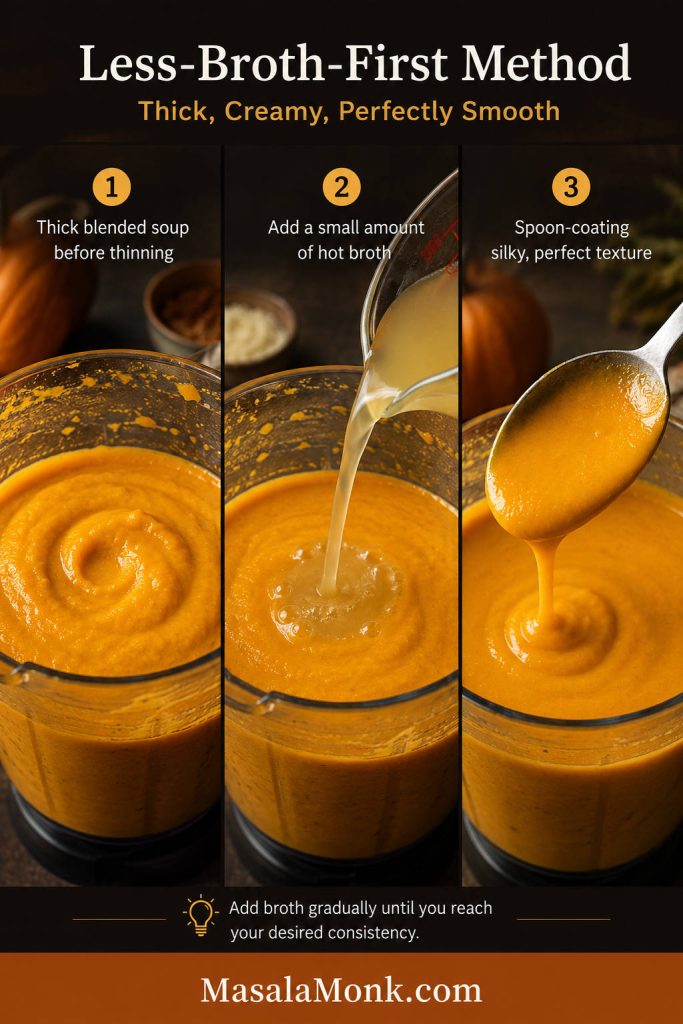
The most important technique is to use less liquid at first. Start with 3 cups / 720 ml broth, blend the soup, then loosen it only once the texture is clear. That keeps the bowl creamy instead of watery, whether you finish it with cream, coconut milk, olive oil, butter, or no cream at all.

Before serving, taste once and wake the pot with lemon juice, lime juice, or apple cider vinegar. A small acidic finish keeps the squash from tasting dessert-sweet.

Need exact amounts? Go straight to the recipe card. Still choosing a method? Compare roasted vs stovetop, or check the fresh, frozen, pre-cut, and canned squash guide.

Make It Now: The Best Default Version

Do not overthink the versions yet. When in doubt, make the MasalaMonk default: roasted squash, a simple onion-carrot-garlic base, herbs, 3 cups / 720 ml broth, and the creamy finish that fits your bowl — cream, coconut milk, butter, or olive oil.

For the safest, most flavorful bowl tonight, roast one large butternut squash, sauté the onion, carrot, garlic, and herbs in a soup pot, add the roasted squash and broth, then blend until silky. Finish with either ½ cup / 120 ml cream, 1 cup / 240 ml coconut milk, or 1–2 tablespoons butter or olive oil.

Before serving, taste the soup and add a small splash of lemon juice, lime juice, or apple cider vinegar. That simple order keeps the soup thick, smooth, and balanced instead of watery, grainy, or too sweet.

NeedBest Choice
Best flavorRoast the squash first
Fastest methodUse the stovetop method with peeled cubes
No raw peelingRoast squash halves, then scoop the flesh
Dairy-free creamy soupUse full-fat coconut milk
No-cream soupBlend well and finish with olive oil, butter, lemon, or lime
Thicker soupStart with less broth and adjust the body at the end

Butternut Squash Soup Recipe Card

Creamy Butternut Squash Soup

This creamy butternut squash soup is smooth, comforting, and easy to adjust. Roast the squash for deeper flavor, or make it fully on the stovetop for a faster weeknight soup. Finish it with cream, coconut milk, butter, olive oil, or a simple splash of lemon or lime for a lighter version.

Prep Time15 minutes
Cook Time45 minutes roasted / 30 minutes stovetop
Total TimeAbout 1 hour roasted / 45 minutes stovetop
Servings6
YieldAbout 8 cups / 1.9 L soup
Main MethodRoasted or stovetop
Diet NotesVegetarian; gluten-free if using gluten-free stock; vegan and dairy-free options included

Timing note: the roasted total assumes you prep and sauté the aromatics while the squash finishes roasting.

Ingredients

  • 1 large butternut squash, about 3 lb / 1.3–1.4 kg whole, or about 8 cups / 1.1–1.2 kg peeled cubes
  • 2 tablespoons / 30 ml olive oil, plus a little more if roasting cubes
  • 1 large yellow onion, about 200 g, chopped
  • Carrot: 1 large, about 150 g, chopped
  • 3–4 garlic cloves, minced
  • 1 teaspoon grated fresh ginger, optional
  • 3 cups / 720 ml vegetable broth to start, plus up to 1 cup / 240 ml more as needed
  • 1 teaspoon fine salt, plus more to taste
  • ½ teaspoon black pepper
  • ½ teaspoon smoked paprika or ⅛ teaspoon ground nutmeg
  • 1 teaspoon dried thyme, sage, or rosemary, or 1 tablespoon chopped fresh herbs
  • Finish with 1–2 teaspoons lemon juice, lime juice, or apple cider vinegar

Choose One Creamy Finish

  • Classic creamy soup: ½ cup / 120 ml heavy cream
  • Dairy-free creamy soup: 1 cup / 240 ml full-fat coconut milk
  • Creamy soup without cream: 1–2 tablespoons butter or olive oil
  • Lighter soup: skip the creamy finish and use lemon, lime, herbs, and black pepper to brighten the bowl

Equipment

  • Large baking sheet, if roasting
  • Parchment paper, optional
  • Sharp chef’s knife
  • Vegetable peeler, if making the stovetop cube version
  • Large spoon for removing seeds
  • Dutch oven or heavy-bottomed soup pot
  • Immersion blender or countertop blender
  • Ladle
  • Measuring cups and spoons
  • Kitchen scale, optional but helpful

Roasted Method

  1. Heat the oven to 425°F / 220°C.
  2. Cut the butternut squash in half lengthwise and scoop out the seeds. For faster roasting, peel and cube the squash instead.
  3. Rub the squash with 1 tablespoon olive oil and a pinch of salt. If roasting cubes, use enough oil to lightly coat them.
  4. Roast cut-side down on a baking sheet for 40–50 minutes, or until the flesh is very tender and the edges smell sweet and nutty. If using cubes, roast for 35–40 minutes, tossing once, until lightly caramelized.
  5. Heat the remaining 1 tablespoon olive oil in a Dutch oven or soup pot over medium heat.
  6. Add the onion and carrot. Cook for 6–8 minutes, stirring occasionally, until softened.
  7. Add garlic, ginger if using, herbs, smoked paprika or nutmeg, black pepper, and salt. Cook for 30–60 seconds, just until fragrant.
  8. Scoop the roasted squash flesh into the pot. Add 3 cups / 720 ml broth.
  9. Simmer for 5–10 minutes so the flavors come together.
  10. Blend until completely smooth using an immersion blender or countertop blender.
  11. Thin the soup in small splashes until it reaches your preferred texture.
  12. Stir in your chosen creamy finish, if using.
  13. Finish with lemon juice, lime juice, or apple cider vinegar. Taste and adjust salt, pepper, and acidity before serving.

Stovetop Method

  1. Peel, seed, and cube the butternut squash.
  2. Heat 2 tablespoons olive oil in a Dutch oven or soup pot over medium heat.
  3. Add onion and carrot. Cook for 6–8 minutes, until softened.
  4. Add garlic, ginger if using, herbs, smoked paprika or nutmeg, salt, and pepper. Cook for 30–60 seconds.
  5. Add the squash cubes and 3 cups / 720 ml broth.
  6. Bring to a boil, then reduce to a simmer.
  7. Cover and cook for 20–30 minutes, or until the squash is very soft.
  8. Blend until smooth.
  9. Loosen the soup only if it needs more liquid.
  10. Stir in your chosen creamy finish, if using.
  11. Finish with lemon juice, lime juice, or apple cider vinegar, then adjust seasoning.

Important texture note: start with 3 cups / 720 ml broth, not the full amount. Squash size and water content can vary. It is much easier to thin the soup after blending than to fix a watery pot later.

Vegan note: use vegetable broth, olive oil, and coconut milk or cashew cream instead of butter or heavy cream.

Now tune the bowl: texture method · creamy finish · toppings · troubleshooting.

What’s Inside

The recipe above gives you the main bowl. From there, the guide below helps you tune it to your kitchen — the squash you have, the method you prefer, the finish you want, and the fixes that save the pot if something tastes off.

Start Here

Choose Your Version

Serve, Store, Fix

The Less-Broth-First Method

This recipe uses the Less-Broth-First Method: start with 3 cups / 720 ml broth, blend the cooked squash until smooth, then thin only after you know the soup’s real texture.

That one method is what makes the recipe flexible. If your squash is huge, watery, frozen, canned, or already roasted, the soup still works because the final thickness is adjusted after blending, not guessed before cooking.

The finished soup should feel velvety on the spoon, not loose like broth and not stiff like puree. Once the texture is right, salt, richness, herbs, and a little acid make the flavor complete.

Three-panel guide showing thick blended butternut squash soup, a small amount of broth being added, and a spoonful of smooth soup with spoon-coating texture.
Because squash varies in moisture, blend the soup thick first; then loosen it gradually so it stays creamy instead of turning watery.

Why This Butternut Squash Soup Works

This soup tastes complete when the squash’s sweetness has something savory, rich, and bright around it. Onion, garlic, carrot, herbs, spice, salt, fat, and acidity all help the bowl taste full instead of flat.

Roasting brings out deeper, caramelized flavor. The stovetop method is faster and still gives you a smooth, comforting result, especially when the onion, garlic, carrot, and spices are cooked properly before the broth goes in.

When the cut side comes out deeply golden and the kitchen smells sweet and nutty, you know the soup already has a head start. Those roasted edges are where the bowl gets its deeper, almost nutty sweetness.

Seasoning the aromatics before the broth goes in keeps the soup from tasting diluted later. Carrot helps the soup taste rounder and look brighter, while ginger, herbs, black pepper, smoked paprika, or nutmeg add warmth. Lemon juice, lime juice, or apple cider vinegar keeps the final spoonful lively.

Ingredient Notes: What Each One Does

None of the ingredients are here just for show. Squash brings body and sweetness. Onion, garlic, and carrot make the soup savory. Herbs, ginger, and spices add warmth. Broth controls thickness. Your creamy finish decides how rich the final bowl feels.

Ingredients for butternut squash soup arranged on a wooden board, including squash, onion, carrot, garlic, ginger, herbs, broth, cream, olive oil, lime, salt, and pepper.
Notice the balance before cooking: squash brings body, aromatics build depth, broth controls texture, and citrus wakes up the final flavor.

Butternut Squash

Butternut squash is naturally sweet, creamy when blended, and perfect for soup. One large squash, about 3 lb / 1.3–1.4 kg, is usually enough for 6 servings.

Whole fresh squash, peeled cubes, frozen squash, canned puree, and leftover roasted squash can all work. The method changes slightly depending on what you have, but the same rule stays true: cook it until very tender before blending.

Onion, Garlic, and Carrot

Onion and garlic give the soup its savory base. Carrot is part of the default version because it rounds out the flavor and deepens the color. You can skip it if you do not have one, but the bowl may taste slightly less full.

Ginger, Herbs, and Spices

Fresh ginger adds warmth and keeps the soup from tasting heavy. Sage, thyme, rosemary, nutmeg, smoked paprika, curry powder, garam masala, and black pepper all work well here.

Classic version: use sage, thyme, rosemary, or nutmeg. For a warmer spiced bowl, add ginger with a little curry powder or garam masala and finish with lime.

Broth

Vegetable broth keeps the recipe vegetarian and works well with the natural sweetness of the squash. Chicken broth can also be used if you are not keeping the soup vegetarian.

Think of broth as an adjustment, not the whole base. The soup should coat a spoon, not pour like thin broth. Add more only after blending if the texture needs it.

Cream, Coconut Milk, Butter, or Olive Oil

You do not need heavy cream to make this soup creamy. Creaminess comes from fully cooked squash, controlled broth, and thorough blending first. The blender should turn the squash glossy before any cream goes in.

Cream, coconut milk, butter, or olive oil can add richness, but they should not be doing all the work. Coconut milk is the easiest dairy-free finish. For more ways to use it in cooking, see this guide to coconut milk benefits and uses.

Lemon, Lime, or Apple Cider Vinegar

This is the small step that makes the soup taste finished. Use lemon juice for a clean finish, lime juice for a spiced or coconut version, and apple cider vinegar for a warmer fall-style bowl.

Fresh, Frozen, Pre-Cut, or Canned Squash

Fresh, frozen, pre-cut, canned, and leftover roasted squash can all make a good soup. The handling changes, but the method stays forgiving: cook the squash until fully soft, blend, then adjust the texture and flavor.

Guide showing whole fresh butternut squash, pre-cut squash cubes, frozen squash cubes, butternut squash puree, and leftover roasted squash.
Whether you use fresh, frozen, pre-cut, canned puree, or leftover roasted squash, adjust the liquid after blending because moisture levels change.

Choose the Squash You Have

What You HaveAmount for This RecipeWhat to Adjust
Whole fresh butternut squash1 large squash, about 3 lb / 1.3–1.4 kgBest flavor. Roast halves or cubes, or peel and simmer on the stovetop.
Pre-cut fresh squashAbout 8 cups / 1.1–1.2 kg cubesGreat shortcut. Roast for flavor or simmer for speed. Check that the cubes are firm and fresh.
Frozen butternut squash cubesAbout 8 cups / 1.1–1.2 kg cubesAdd directly to the pot. Frozen cubes may release extra water, so start with less broth.
Canned or packaged squash pureeAbout 4 cups / 900–950 g pureeSauté onion, garlic, and spices first. Then whisk in the puree and broth slowly.
Frozen squash pureeAbout 4 cups / 900–950 g pureeWarm gently, then blend with cooked aromatics and hot broth.
Leftover roasted squashAbout 4 cups mashed or scooped fleshFastest option. Blend with sautéed onion, garlic, and hot broth.

Frozen squash may look watery at first. Let it simmer until very soft, blend well, then adjust the body after blending.

Canned or packaged puree can taste flatter than roasted squash, so give the onion, garlic, and spices time to bloom before adding it. A small splash of lemon juice or apple cider vinegar at the end helps wake up the flavor.

Leftover roasted squash makes this almost instant. Since the squash is already cooked, focus on building a good onion-garlic base, then blend with hot broth and finish with salt, fat, and acidity.

Once you know your squash type, compare roasted vs stovetop or move into how to make the soup.

Roasted vs Stovetop Butternut Squash Soup

Both methods work. Pick based on the night you are having: the oven when you want deeper flavor, the stovetop when you want dinner faster.

Side-by-side comparison of roasted butternut squash soup and stovetop butternut squash soup served in two bowls.
For deeper caramelized flavor, choose roasted squash; for a faster butternut squash soup with a softer taste, use the stovetop method.
MethodBest ForFlavorTime
Roasted squashBest overall flavorSweet, caramelized, deepLonger
StovetopFast weeknight soupSmooth, clean, lighterFaster
Pre-cut or frozen squashConvenienceGood if seasoned wellFastest
Leftover roasted squashQuickest rich soupDeep and already cookedVery fast

Use the roasted method when you want the best flavor. Roasting concentrates the squash and adds caramelized edges, which makes the final soup taste richer.

The stovetop method is better when you want a faster, simpler dinner. It will still be smooth and cozy, but it may need a little more seasoning, spice, or acidity at the end.

Pre-cut or frozen squash is for the nights when convenience matters. The bowl can still be very good, especially if you build flavor with onion, garlic, ginger, herbs, and enough salt.

Chosen your route? Go to how to make butternut squash soup, or return to the recipe card.

How to Make Butternut Squash Soup

Use this quick method guide as the visual map for the full process: cook the squash, build the savory base, blend until smooth, then thin only if needed.

Four-step guide showing roasted or simmered squash, sautéed aromatics, blended smooth soup, and finished soup thinned only if needed.
First cook the squash, then build the flavor base, blend until silky, and adjust thickness only once you can see the final texture.

1. Prepare the Squash

For roasted soup, cut the squash in half lengthwise and scoop out the seeds. Roast it cut-side down, then scoop out the soft flesh later. This route avoids peeling raw squash.

Roasted butternut squash halves on parchment paper with soft orange flesh being scooped from the skin using a spoon.
Instead of peeling raw squash, roast the halves first; once tender, the flesh scoops out cleanly and blends into a smoother soup.

With the stovetop method, peel the squash, remove the seeds, and cut it into cubes. Smaller pieces cook faster. Pre-cut or frozen cubes can go straight into the pot with only small broth adjustments.

2. Roast or Simmer Until Very Tender

In the roasted method, cook the squash at 425°F / 220°C until the flesh is soft and the edges have some color. This usually takes 40–50 minutes for halves or 35–40 minutes for cubes.

Close-up of roasted butternut squash cubes with browned edges, caramelized spots, black pepper, and steam on a baking sheet.
After roasting, look for browned edges and caramelized spots; that color is what gives roasted butternut squash soup deeper, rounder flavor.

On the stovetop, simmer the cubes with broth for 20–30 minutes, until they are soft enough to mash with a spoon. Do not rush this step. Undercooked squash can make the soup taste grainy instead of silky.

3. Build the Flavor Base

Cook onion and carrot in olive oil until softened. Add garlic, ginger, herbs, and spices only after the onion has softened. Garlic and ground spices can burn if they cook too long over dry heat.

This base is what keeps the soup from tasting like plain squash puree.

Onion, carrot, garlic, ginger, herbs, spices, and bay leaf sautéing in a green Dutch oven with a wooden spoon.
Meanwhile, soften the onion, carrot, garlic, ginger, and herbs before adding broth so the soup starts savory instead of turning flat later.

4. Add Broth Carefully

Add 3 cups / 720 ml broth first. After blending, add more only if the soup is too thick. If too much liquid goes in early, simmer uncovered or blend in more cooked squash, sweet potato, carrots, lentils, or beans.

5. Blend Until Smooth

An immersion blender lets you blend directly in the pot. A countertop blender usually gives the silkiest finish, especially after roasting.

If using a countertop blender, blend in batches and do not fill the jar too high. Hot soup expands when blended. Start on low speed and protect your hand with a towel if steam can escape from the lid.

Blend longer than you think you need to. That extra time helps the squash turn glossy and silky instead of pulpy.

Smooth orange butternut squash soup being poured from a blender into a Dutch oven on the stove.
Once blended, the soup should pour in a smooth ribbon with a glossy surface; that is the cue that it is silky, not grainy.

6. Finish and Balance

After blending, choose your finish: heavy cream for classic richness, coconut milk for dairy-free creaminess, butter or olive oil for no-cream richness, or lemon/lime for brightness.

A good batch tastes mellow first, then bright at the end. If it feels sleepy, add salt before adding more spice, then finish with a small splash of lemon, lime, or vinegar.

Instant Pot, Slow Cooker, and Blender Notes

For after-work soup, use the stovetop or Instant Pot method. When you have a little more time, roast the squash and let the oven do the flavor work.

MethodHow to Do ItBest Tip
Instant PotSauté onion, carrot, garlic, ginger, and spices. Add peeled squash cubes and 3 cups / 720 ml broth. Pressure cook on high for 10 minutes, let it naturally release for 5 minutes, then quick release, blend, and finish.Add cream or coconut milk after pressure cooking.
Slow cookerFor best flavor, sauté the onion, carrot, garlic, and spices first. Add them to the slow cooker with peeled squash cubes, broth, herbs, salt, and pepper. Cook on high for 3–4 hours or low for 6–8 hours, until very soft. Blend and finish.Use less broth at first; slow-cooked vegetables release liquid.
High-speed blenderRoast or simmer the squash first, then blend with hot broth and cooked aromatics. Use a heated soup cycle only if your blender is designed for it.Hot soup expands, so blend carefully and never overfill.
Immersion blenderBlend directly in the pot after the squash is fully cooked.Easy and safe, but may not be as silky as a countertop blender.

A countertop blender gives the smoothest result. An immersion blender is less fussy and easier to clean, so use whichever one makes the soup more likely to happen tonight.

If the slow cooker is your favorite route for cozy soups, this slow cooker broccoli cheese soup follows the same gentle-finish idea for keeping creamy soups smooth.

How to Make Butternut Squash Soup Creamy

Creaminess does not have to mean heavy cream. It comes from fully tender squash, careful broth, and enough blending. Once the base is smooth, you can make the bowl rich, dairy-free, light, or extra silky with one finishing choice.

Four bowls of butternut squash soup showing cream, coconut milk, olive oil or butter, and no-cream finishing options.
With a smooth base, choose your finish: cream adds richness, coconut milk softens it, olive oil adds gloss, and no cream keeps it lighter.
Creamy OptionBest ForHow to Use It
Heavy creamClassic creamy soupStir in ½ cup / 120 ml after blending. Do not boil hard.
Coconut milkDairy-free or vegan soupAdd 1 cup / 240 ml after blending. Great with ginger, curry, chili, and lime.
ButterCreamy without creamBlend in 1–2 tablespoons at the end.
Olive oilLighter no-cream versionDrizzle in after blending or blend in 1 tablespoon.
Cashew creamVegan richnessBlend soaked cashews with water, then stir in.
Sweet potato or potatoThicker bodyReplace part of the squash or add a small amount while simmering.
No creamLightest versionBlend very well and finish with lemon/lime and a little olive oil.

A coconut milk version works best with full-fat coconut milk. Light coconut milk is fine, but the soup will be thinner and less silky.

For a vegan bowl, use vegetable broth, olive oil, coconut milk or cashew cream, and plant-based toppings like pumpkin seeds, roasted chickpeas, herbs, or chili oil.

Add cream, coconut milk, or cashew cream near the end, after blending. This keeps the texture smoother and prevents dairy from boiling too hard.

After choosing your finish, try a flavor variation or use troubleshooting if the soup tastes flat, thin, or too sweet.

Butternut Squash Soup Variations

Think of the variations as small turns, not separate recipes. The soup stays familiar; only the mood changes.

Six small bowls of butternut squash soup variations labeled classic, curried, coconut ginger, spicy, apple, and lentil.
Start with the same base, then shift the mood: curry adds warmth, ginger adds brightness, lentils add body, and apple brings autumn sweetness.
VersionWhat to Add
Classic butternut squash soupSage, thyme, rosemary, black pepper, and a little nutmeg
Curried butternut squash soupCurry powder or garam masala, ginger, coconut milk, and lime
Spicy butternut squash soupChili flakes, chili oil, chipotle, or black pepper
Coconut ginger soupCoconut milk, fresh ginger, lime, and cilantro
Apple autumn soup1 peeled apple, cinnamon, nutmeg, and a small drizzle of maple syrup
Sweet potato butternut soupReplace 2 cups of squash with sweet potato cubes
Carrot butternut soupAdd 2–3 carrots and ½ cup extra broth if the soup gets too thick
Lentil butternut soupAdd ½ cup red lentils and 1–1½ cups extra broth for a thicker, meal-style soup
Roasted garlic soupRoast garlic with the squash and blend it in
No-cream light soupSkip cream and finish with lemon, herbs, and olive oil

For a warm spiced version, add ginger, a little curry powder or garam masala, coconut milk, black pepper, and lime juice. It gives the soup depth without making it heavy.

Lentils are the easiest way to turn this into a heartier vegetarian meal. This guide to vegan lentil soup recipes has more ideas for using lentils in cozy, filling bowls.

For the apple-autumn version, a small pinch of homemade pumpkin pie spice can bring cinnamon, ginger, nutmeg, allspice, and clove notes without needing several jars on the counter.

When the flavor lane is set, finish the bowl with toppings or turn it into dinner with serving ideas.

Best Toppings for Butternut Squash Soup

Once the soup is blended and balanced, toppings are where the bowl stops feeling like plain puree and starts feeling like dinner. A silky soup needs something that crunches, swirls, snaps, or wakes it up — seeds, herbs, chili oil, cream, yogurt, roasted chickpeas, or crisp toast.

Bowl of butternut squash soup surrounded by pumpkin seeds, chili oil, herbs, croutons, roasted chickpeas, apple slices, nuts, black pepper, and toast.
Because creamy soup is soft by nature, toppings should add contrast: crunch, heat, herbs, pepper, toast, or something bright.
What the Soup NeedsGood Toppings
CrunchToasted pumpkin seeds, croutons, roasted chickpeas, toasted almonds, walnuts, or pecans
Creamy contrastCream swirl, coconut milk, yogurt, sour cream, or cashew cream
HeatChili oil, chili crisp, red pepper flakes, black pepper, sambal, or hot sauce
FreshnessCilantro, parsley, chives, scallions, basil, or dill
Sweet-salty contrastDiced apple, crispy bacon, blue cheese, feta, or dried cranberries
Meal upgradeRoasted chickpeas, cooked lentils, beans, grilled cheese cubes, or toasted bread

Think of toppings as balance. Sweeter batches need heat, salt, herbs, or acidity. For a fuller meal, add chickpeas, lentils, beans, seeds, or toast.

Easy Topping Combos

StyleUse This Combo
ClassicCream swirl + black pepper + toasted pumpkin seeds
VeganCoconut milk + chili oil + cilantro + roasted chickpeas
Fall dinnerToasted pecans + diced apple + thyme
SpicedLime + chili oil + toasted seeds + cilantro
Protein boostLentils or roasted chickpeas + yogurt or coconut milk
Simple lunchCroutons + olive oil + black pepper + parsley

A swirl of cream softens the edges, pumpkin seeds snap against the silky soup, and chili oil or lime keeps the sweetness awake.

To make the bowl feel more like lunch, serve it with a scoop of chickpea salad on the side. Chickpeas add protein and texture without making the meal feel heavy.

What to Serve With Butternut Squash Soup

This soup can be a starter, lunch, or light dinner. To make it more filling, serve it with something crisp, toasted, or protein-rich.

Butternut squash soup served with garlic toast, cucumber salad, chickpea salad, and rustic bread on a cozy table.
Turn butternut squash soup into dinner by pairing the bowl with crisp toast, garlic bread, chickpea salad, or cucumber salad.
  • Crusty bread
  • Garlic bread
  • Grilled cheese
  • Cheese toast
  • Simple green salad
  • Roasted chickpeas
  • Lentil salad
  • Quinoa bowl
  • Baked potato
  • Sandwiches
  • Roasted vegetables

Bread turns this into the kind of meal people linger over. A warm slice of homemade garlic bread loaf works especially well because it adds crunch, butteriness, and something sturdy to dip.

Cucumber salad keeps the meal from feeling too soft or sweet. The vinegar, dill, and onion cut through the squash’s natural sweetness.

If you love cozy soup dinners, try this French onion soup next. For tonight, keep this butternut squash soup as the main bowl with toast, salad, and crunchy toppings.

Storage, Freezing, and Reheating

This soup is excellent for meal prep because it stores and reheats well. It may look thicker the next day, but that is normal; a splash of broth, water, cream, or coconut milk brings it back.

Four-panel guide showing butternut squash soup in a storage container, thick reheated soup, liquid being stirred in, and smooth soup on a spoon.
As the soup chills, it thickens. Reheat gently and stir in a small splash of broth, water, cream, or coconut milk until smooth again.
Storage MethodGuidance
FridgeStore in an airtight container for up to 4 days.
FreezerFreeze for up to 3 months for best texture and flavor.
Reheating on stoveWarm gently over medium-low heat, stirring often.
Reheating in microwaveHeat in short intervals, stirring between each one.
If too thick after chillingAdd broth, water, cream, or coconut milk a little at a time.
If separated after freezingWhisk well or blend briefly after reheating.

For general food safety, the USDA leftover safety guidance recommends using refrigerated leftovers within 3–4 days.

Cream-based soup can sometimes separate slightly after freezing. It is still fine to eat, but the texture may need whisking or blending.

Coconut milk versions usually freeze well, though they may also need stirring after reheating.

For the smoothest freezer results, freeze the soup before adding cream, then add cream or coconut milk after reheating.

Need to rescue leftovers or a tricky batch? Jump to fixes for thick, thin, bland, grainy, or separated soup.

Avoid These Common Mistakes

Most problems are easy to avoid if you control the liquid, cook the squash fully, and balance the flavor at the end.

  • Do not add all the broth at once. Start with 3 cups / 720 ml and thin after blending.
  • Do not blend undercooked squash. The squash should be soft enough to mash easily with a spoon.
  • Do not skip salt and acid. Butternut squash is sweet, so it needs seasoning and brightness.
  • Do not boil hard after adding cream. Add cream or coconut milk near the end and heat gently.
  • Do not rely only on sweetness. Use onion, garlic, herbs, ginger, spice, or acidity for balance.
  • Do not judge the texture before blending. The soup often looks chunky or loose before it turns smooth.

Troubleshooting Butternut Squash Soup

If the pot is already made and something feels off, do not start over. A bland or thin soup is not a failure — it usually just needs salt, acid, time, or a little more body.

Why is my butternut squash soup bland?

Most bland soup needs salt first, then acid. Add salt gradually, then wake it up with lemon juice, lime juice, or apple cider vinegar. Still flat? Add black pepper, smoked paprika, curry powder, ginger, or a small amount of butter or olive oil.

Why does my soup taste like plain puree?

If the soup tastes like plain puree or too sweet and one-note, it usually needs contrast. Add salt first, then try lemon, lime, vinegar, black pepper, chili oil, toasted seeds, herbs, roasted chickpeas, or crisp toast on top.

Why is my soup too sweet?

Butternut squash is naturally sweet. Balance it with lemon juice, lime juice, vinegar, black pepper, chili flakes, curry powder, or a little extra broth. Savory toppings like roasted chickpeas, pumpkin seeds, yogurt, or herbs also help.

How do I fix soup that is too thick?

Add hot broth ¼ cup / 60 ml at a time, blending or stirring after each addition, until the soup reaches the texture you want.

How do I fix soup that is too thin?

Simmer it uncovered until some liquid evaporates. You can also blend in more roasted squash, cooked sweet potato, cooked carrots, red lentils, or beans.

Why is my soup grainy?

The squash may not have cooked long enough, or the soup may need more blending. Simmer until the squash is very soft, then blend thoroughly. A countertop blender usually gives the smoothest texture.

Why did my soup separate after freezing?

Cream and coconut milk can separate slightly after freezing and reheating. Warm the soup gently and whisk well. If needed, blend it briefly to bring the texture back together.

How do I make the soup richer without cream?

Blend in 1–2 tablespoons butter, a drizzle of olive oil, coconut milk, cashew cream, or a small amount of cooked sweet potato. Roasting the squash first also gives the soup deeper flavor without needing extra cream.

Is Butternut Squash Soup Healthy?

It can be a nourishing, vegetable-heavy soup, but the final nutrition depends on broth, cream, toppings, and serving size. The base is naturally smooth, so you do not need a lot of cream to make it satisfying.

A lighter version still feels satisfying because the squash does the creamy work before any cream goes in. For the lightest bowl, use broth, olive oil, lemon, herbs, and crunchy seeds.

A more filling vegetarian version can use lentils, beans, chickpeas, Greek yogurt, or pumpkin seeds. Richer cream-or-butter versions work best in smaller bowls.

If you are not keeping it vegetarian, grilled chicken or turkey also works. For lower sodium, use low-sodium broth and adjust salt at the end.

To check ingredient-level nutrition details, search for raw or cooked butternut squash in USDA FoodData Central.

For a low-carb or keto-style approach, butternut squash needs more care because it is naturally starchy. This guide to butternut squash on keto explains that angle in more detail.

Frequently Asked Questions

Do you need to peel butternut squash for soup?

If you are roasting the squash in halves, you do not need to peel it first. Roast it until soft, then scoop the flesh out of the skin. If you are making the stovetop version with cubes, peel it before cooking.

Is roasted butternut squash soup better than stovetop?

Roasting usually gives deeper flavor because the squash caramelizes in the oven. The stovetop version is faster and easier, but it may need a little extra seasoning, spice, or acidity to taste as rich.

What makes butternut squash soup creamy?

Butternut squash itself becomes creamy when cooked until soft and blended well. Cream, coconut milk, butter, olive oil, cashew cream, sweet potato, or potato can make it richer, but good blending and broth control matter most.

How do you make butternut squash soup without cream?

Skip the cream and blend the soup very well. Use less broth at first, then thin only as needed. Finish with olive oil, butter if not vegan, coconut milk, cashew cream, or a splash of lemon or lime juice for balance.

Does coconut milk work in butternut squash soup?

Yes — especially with ginger, curry powder, chili, lime, and cilantro. Full-fat coconut milk gives the creamiest texture.

When should you add cream or coconut milk?

Add cream or coconut milk after the squash is cooked and the soup is blended. Warm it gently after adding. Avoid boiling hard once cream has been added because the texture can become less smooth.

Why does my butternut squash soup taste bland?

Most bland soup needs salt first, then acid. Add salt gradually, then brighten it with lemon juice, lime juice, or apple cider vinegar. For more flavor, add ginger, black pepper, smoked paprika, curry powder, sage, thyme, or chili oil.

How do you thicken butternut squash soup?

Simmer it uncovered, or blend in more cooked squash, sweet potato, carrots, lentils, beans, or potato. For best results, avoid adding too much broth before blending.

What spices go well with butternut squash soup?

Sage, thyme, rosemary, nutmeg, black pepper, smoked paprika, ginger, curry powder, cinnamon, chili flakes, and garam masala all work well here.

Can frozen butternut squash be used for soup?

Yes — use about 8 cups / 1.1–1.2 kg frozen cubes for this recipe. Add them directly to the pot and simmer until very soft. Start with less broth because frozen squash can release extra water.

How much butternut squash puree equals one squash for soup?

For this recipe, use about 4 cups / 900–950 g puree in place of one large 3 lb / 1.3–1.4 kg squash. Sauté the onion, garlic, carrot, and spices first, then whisk in the puree and broth slowly.

Can you make butternut squash soup in an Instant Pot or slow cooker?

Yes. For Instant Pot soup, sauté the aromatics, add squash and broth, pressure cook on high for 10 minutes, naturally release for 5 minutes, then blend and finish. Slow cooker soup takes 3–4 hours on high or 6–8 hours on low, until the squash is very soft. Add cream or coconut milk after cooking.

How long does butternut squash soup last?

It lasts up to 4 days in the fridge when stored in an airtight container. You can also freeze it for up to 3 months. For the best texture, freeze the soup before adding cream, then add cream or coconut milk after reheating.

Back to Recipe Card · Back to Top

Final Tips for the Best Butternut Squash Soup

Use roasted squash when you have time and the stovetop method when dinner needs to happen faster. Start with less broth, blend until the soup turns glossy, then loosen it only if needed.

Before serving, taste once. If the bowl feels flat, add salt first, then a small splash of lemon, lime, or vinegar. Too thick? Loosen it gently. Too sweet? Give it herbs, heat, crunch, or acidity.

That is the bowl you want: creamy without being dull, sweet without being sugary, warm without being heavy, and easy enough to make again next week — especially with toast, seeds, or a little chili oil on top.

Posted on Leave a comment

Pork Leg Roast Recipe with Crackling and Cooking Time per kg

Roast pork leg with blistered golden crackling, carved slices, gravy, roasted apples, potatoes, and vegetables on a wooden board.

Pork leg roast is easy to love once it is cooked, but confusing before it goes into the oven. The label may say pork leg, leg of pork, pork joint, rolled pork leg, boneless roast, or bone-in joint. Then every timing chart seems to disagree.

It is one of those cuts that feels simple at the butcher and suddenly complicated at home. The joint is big, the rind has to crackle, the meat can dry out, and dinner still needs to happen on time.

That confusion is normal. Once you know the cut, the timing, and how to keep the skin dry, the roast becomes much easier.

This is a big roast, but it does not need to feel like a gamble. The secret is the two-job rule: crisp the rind first, then protect the meat. This guide gives you the full method for juicy sliceable pork, crisp crackling, cooking time per kg, internal temperature, and notes for boneless, bone-in, rolled, slow cooker, and air fryer pork leg.

The goal is simple: juicy sliceable pork, crisp crackling, and no guessing at the oven door.

Already cooking? Use the quick answer first, then check the cooking time chart and internal temperature guide before you roast.

Quick Answer: Pork Leg Roast Time and Temperature

For pork leg roast with rind, start hot at 240°C / 465°F or 220°C fan for 30–40 minutes to begin the crackling. Then reduce to 180°C / 350°F or 160°C fan and cook for about 30–40 minutes per kg, depending on the size and shape of the roast.

Use the time chart to plan, but use a thermometer to finish. For juicy sliceable pork, aim for 63–65°C / 145–149°F in the thickest part, then rest before carving. Prefer a firmer traditional roast? Cook closer to 70–71°C / 158–160°F.

Think of the roast as two separate jobs: dry heat for the skin, gentler heat for the center. If one finishes before the other, separate the jobs instead of overcooking the whole joint.

Jump to: Recipe · Choose Your Path · Cooking Time per kg · Internal Temperature · Timing Plan · Hot Start vs Final Blast · Crackling · Oven Method · Troubleshooting · Serving · Leftovers · FAQs

Choose Your Path Before You Follow the Chart

Before you choose a timing, check three things: whether your pork is fresh pork leg, whether it has rind, and whether it is boneless, rolled, or bone-in. Those details decide the cooking plan.

  • Fresh pork leg with rind: use the main oven method.
  • Boneless rolled pork leg: use the same method, but start checking early.
  • Bone-in pork leg: allow extra time and check the thickest meat away from the bone.
  • No rind: skip the crackling steps and focus on internal temperature.
  • Ham, gammon, cured leg, or smoked leg: pause and use ham-specific instructions.
  • Meat done but crackling soft: rest the pork and crisp the rind separately.

If the roast suddenly feels too big for the pan and too important to mess up, pause here. Dry skin, a hot oven, and a thermometer will do more for you than any complicated marinade.

Decision guide showing different pork leg roast paths for rind-on pork, boneless rolled pork, bone-in pork, skinless pork, ham, gammon, and soft crackling.
Before you use a pork leg cooking time per kg chart, identify the cut because rind, bone, shape, and curing change the safest cooking path.

Next: Once you know the cut, go to the recipe card, cooking time per kg chart, or pork leg label guide.


Pork Leg Roast with Crackling

This recipe uses a 2.5 kg pork leg roast with rind. It works for boneless rolled pork leg, deboned pork leg roast, or a bone-in pork leg roast of a similar size. Adjust the timing using the chart below.

You do not need a complicated marinade here. The magic is in a dry rind, enough salt, a fully preheated oven, a hot start for crackling, and a lower oven temperature for the meat.

Recipe Details

Prep Time20 minutes active, plus optional drying time
Cook TimeAbout 2 hours for a 2.5 kg roast
Rest Time15–20 minutes
Total TimeAbout 2 hours 30 minutes, plus optional overnight drying
Servings6–8
Main Cut2.5 kg pork leg roast, rind on, boneless rolled or bone-in
Doneness63–65°C / 145–149°F in the thickest part for juicy slices
Crackling SignDry, salted rind that bubbles, blisters, and turns crisp during the hot start

No overnight drying? You can still make this today. Pat the rind dry several times, leave it uncovered while the oven preheats, salt it well, and use the hot-start oven stage. Overnight drying helps, but it is not mandatory.

Cooking a smaller roast? If your joint is closer to 1 kg, start checking much earlier than the default 2.5 kg timing. Small pork leg joints dry faster, especially when they are narrow, boneless, or rolled tightly.

Before you start, gather the few things that make this roast easier. The thermometer and a rack or trivet are the two most useful helpers.

Equipment You’ll Need

ToolWhy it helps
Roasting trayHolds the pork, aromatics, and pan juices
Wire rack or onion-and-apple trivetKeeps the pork lifted so the rind stays exposed
Paper towelsDry skin is the first step to good crackling
Sharp knife or utility bladeScores the rind cleanly without tearing it
Meat thermometerPrevents dry pork and removes guesswork
FoilUseful for shielding dark crackling patches or resting meat loosely
Serrated knifeCuts through crackling more cleanly
Carving boardGives the roast space to rest and slice neatly

If you only add one tool, make it the thermometer. It turns this from a timing gamble into a controlled roast.

Ingredients

  • 2.5 kg pork leg roast, rind on, boneless rolled or bone-in
  • 1½–2 tablespoons sea salt flakes
  • 1½–2 tablespoons olive oil or neutral oil
  • 1 teaspoon black pepper
  • 1–2 teaspoons fennel seeds, lightly crushed, optional
  • 4–6 garlic cloves, lightly crushed
  • 2 large onions, thickly sliced
  • 2–4 apples, halved or quartered, optional
  • 2–3 sprigs rosemary or sage
  • 250–500 ml stock, cider, or water for the tray and gravy
  • 1–2 tablespoons flour or cornflour, optional, for gravy
  • 1 teaspoon mustard or a splash of apple cider vinegar, optional

Salt note: Most of the salt is for the rind and crackling, not for heavily salting the meat. Rub it in after the rind is dry, not while it is still wet from packaging. If you are using fine table salt instead of flaky sea salt, use less.

Before the Pork Goes in the Oven

This quick check helps prevent the two biggest problems: soft crackling and dry pork.

  • Rind looks dry and matte, not wet or glossy.
  • Scoring cuts through the skin, but not deep into the meat.
  • Salt is rubbed into the scored cuts.
  • Oven is fully preheated before the pork goes in.
  • The joint sits rind-side up.
  • Skin is as level as you can make it.
  • Liquid stays in the bottom of the tray, below the pork.
  • The roast is not sitting deep in liquid.

Method

  1. Dry and score the rind. Pat the skin very dry. Score through the skin and some fat if needed, but do not cut deep into the meat.
  2. Bring the pork out briefly. Let the joint sit out for 45–60 minutes while the oven heats, but do not leave raw pork at room temperature for hours.
  3. Season the meat side only. Rub the meat side with pepper, fennel if using, garlic, herbs, and a little oil. Keep wet seasonings away from the rind.
  4. Oil and salt the rind. Rub the skin lightly with oil, then massage sea salt into the scored cuts.
  5. Set up the tray. Place onions, garlic, apples, and herbs in a roasting tray. Set the pork rind-side up on a rack or onion-and-apple trivet.
  6. Roast hot for crackling. Cook at 240°C / 465°F or 220°C fan for 30–40 minutes, until the rind starts to bubble, blister, and turn golden.
  7. Lower the heat. Reduce to 180°C / 350°F or 160°C fan. Add stock, cider, or water to the tray if making gravy, keeping it below the pork and away from the rind.
  8. Cook to temperature. Roast until the thickest part reaches 63–65°C / 145–149°F for juicy slices, or 70–71°C / 158–160°F for a firmer roast.
  9. Rest without steaming the crackling. Give the pork 15–20 minutes. Leave crisp crackling exposed so steam cannot soften it.
  10. Rescue, gravy, and carve. If the meat is done but the crackling is soft, remove the rind and crisp it separately. Make gravy from the pan juices, then carve the pork across the grain.

The full oven method below explains each step in more detail. First, make sure the cut you have matches the path you are following.

Quick Cut Check

Still not sure what kind of pork leg you bought? Use this table before you worry about exact timing.

Raw skin-on pork leg roast on butcher paper with labels for rind, fat layer, meat side, rolled seam or bone area, and tied joint.
Once the rind, fat layer, meat side, and rolled shape make sense, pork leg roast labels stop feeling like butcher-counter guesswork.
What you haveBest approach
Boneless pork leg roastUse the main recipe and start checking early
Rolled pork leg jointKeep the rind level, roast as directed, and check the center of the roll
Bone-in pork legUse the time chart, allow extra time, and check away from the bone
Whole pork legUse the chart only as a guide; check more than one spot
Skin-on pork legBest choice for crackling
Fresh ham, uncookedTreat it like fresh pork leg, but use the thermometer and allow extra time for large pieces
Skinless pork legUse the roast method, but skip the crackling steps
Slow cooker pork legCook gently first, then crisp the rind separately
Pork leg for pulled porkPossible, but pork shoulder is usually better
Ham or gammonUse a ham-specific recipe, not this method

Once you know which version you have, the rest becomes much easier. Skin-on pork leg is for crackling. Boneless rolled pork leg is for neat slices. Bone-in pork leg is for a bigger centerpiece. Ham is a different recipe altogether.

Now plan the roast: use the pork leg cooking time per kg chart, then check the internal temperature guide before you finish.

Why This Pork Leg Roast Works

This method works because it stops forcing the skin and the meat to behave the same way. Bold heat helps the top blister. Gentle cooking keeps the center juicy. Once you separate those jobs, pork leg stops feeling like a gamble.

  • A hot start wakes up the crackling. Dry skin needs a blast of high heat to puff, blister, and crisp.
  • Lower heat protects the meat. After the skin has had its heat, the center can cook through without drying out.
  • The chart gets you close; the thermometer tells you when to stop. That keeps timing useful without making it the final judge.
  • Dry heat stays on top. Apples, onions, herbs, garlic, and stock sit under or around the roast, not over the crackling layer.
  • The method adapts to the cut. Boneless, bone-in, rolled, and pork leg joint versions all work when you adjust timing and check the center properly.
  • Leftovers stay useful. This cut slices cleanly for roast dinners, sandwiches, wraps, and next-day meals.

Pork Leg Labels Explained

The quick cut check above helps you choose a path. This section explains the labels you may see at the butcher or supermarket.

Fresh Pork Leg, Fresh Ham, Ham, and Gammon

Pork leg is sold under several names. The same basic roasting method works for most fresh pork leg roasts, but the timing changes with size, shape, bone, and whether the rind is attached.

A rind-on joint with an even fat layer is usually easier to crackle than a patchy, thin-skinned piece. You can still cook an uneven roast well, but you may need to level the skin or rescue a softer patch separately at the end.

Comparison chart showing fresh pork leg, uncooked fresh ham, cured ham or leg, and gammon or smoked leg labels.
Fresh pork leg and uncooked fresh ham can follow this roast method; however, cured ham, smoked leg, and gammon need separate instructions.

Pork Leg Label Table

Cut or labelWhat it meansWhat changes
Boneless pork leg roastThe bone has been removed, and the meat may be rolledEasier to carve and cooks evenly, but can dry faster
Rolled pork legBoneless leg rolled and tied into a jointGreat for neat slices; check the center early
Deboned pork leg roastAnother name for boneless pork legUse boneless timing guidance
Bone-in pork leg roastPork leg with the bone still attachedMay take longer; check away from the bone
Whole pork legA large full-leg roastBest for gatherings; check more than one spot
Pork leg jointCommon UK-style name for a roasting pieceUse the weight-based chart below
Skin-on or rind-on pork legThe rind is still attachedBest choice for crackling
Skinless pork legThe rind has been removedCan be roasted, but it will not make crackling
Fresh pork legUncured raw pork legCorrect for this recipe
Fresh ham, uncookedUS-style label for uncured pork legCan be roasted like fresh pork leg, but large pieces need extra time and thermometer checks
Ham, gammon, or cured pork legPork leg that has been curedNeeds a different cooking or glazing method

Labels such as fresh pork, pork leg, leg joint, roasting joint, rolled leg, rind-on pork leg, or fresh ham uncooked usually mean you are in the right place. Gammon, ham, cured leg, smoked leg, or leg ham need ham-specific instructions instead.

When Pork Leg Is Not the Right Cut

Pork loin and pork tenderloin need cut-specific methods because they are smaller, leaner, and shaped differently. Compare with this pork tenderloin in oven guide or this slow cooker pork loin recipe if that is the cut you bought.

This cut is also different from shoulder. Choose shoulder when you want soft, fall-apart meat. Pick leg when you want neat roast slices and crisp crackling.

Pork Leg Cooking Time per kg

This is the chart to use when you are trying to work backward from dinner time. It will help you plan the meal, but it does not need to be perfect down to the minute.

If you came here with a label in one hand and a dinner time in mind, this is the section that matters most. These times are deliberately given as a range because shape matters as much as weight.

Pork leg roast cooking time per kilogram chart with hot-start timing, lower roasting ranges, resting time, and internal temperature reminder.
Use the pork leg cooking time per kg chart for planning, then confirm doneness with internal temperature instead of trusting the clock alone.

Pork Leg Time Chart by Weight

Pork leg sizeHot crackling stageLower roasting stageApprox total oven time
1 kg30–40 minutes30–40 minutes1 hour–1 hour 20 minutes
1.5 kg30–40 minutes45–60 minutes1 hour 15 minutes–1 hour 40 minutes
2 kg30–40 minutes60–80 minutes1 hour 30 minutes–2 hours
2.5 kg40 minutes75–90 minutes1 hour 55 minutes–2 hours 10 minutes
3 kg40 minutes90–120 minutes2 hours 10 minutes–2 hours 40 minutes
4 kg40 minutes2 hours–2 hours 40 minutes2 hours 40 minutes–3 hours 20 minutes
5 kg40 minutes2 hours 30 minutes–3 hours 20 minutes3 hours 10 minutes–4 hours

The simplest planning formula is 30–40 minutes hot for crackling, then about 30–40 minutes per kg at the lower temperature.

For a 1 kg pork leg joint: check the center temperature as soon as the hot crackling stage ends. Small boneless roasts can move from juicy to dry quickly, especially if they are narrow or rolled tightly.

A boneless rolled joint can cook a little faster because it is more even. Larger bone-in roasts and whole legs can take longer. Start checking before the earliest time in the chart so you do not accidentally push the meat too far.

Before you stop roasting: check the internal temperature. The chart organizes dinner, but the thermometer decides doneness.

Pork Leg Cooking Time per Pound

The kg chart is the main one. Use this next table only if your label is in pounds.

These totals include the hot crackling stage. After that first blast of heat, estimate about 15–20 minutes per pound at the lower roasting temperature.

Pork leg sizeApprox total oven timeNotes
3 lb1 hour 20 minutes–1 hour 45 minutesCheck early; small roasts dry quickly
4 lb1 hour 40 minutes–2 hoursCommon small family roast
5 lb1 hour 55 minutes–2 hours 20 minutesClose to the default recipe size
6 lb2 hours 10 minutes–2 hours 45 minutesBone-in may need longer
8 lb2 hours 45 minutes–3 hours 30 minutesCheck more than one spot

Timing gets dinner organized. The thermometer decides when the pork is actually ready.

Example Timing Plan for a 2.5 kg Pork Leg Roast

The charts tell you how long the pork may take. This timing plan shows how to work backward from serving time for the 2.5 kg roast used in this recipe.

Time before servingWhat to do
Night before or morningLeave the rind uncovered in the fridge if you can
About 3 hours before servingTake pork out, dry the rind, and check the scoring
About 2½ hours before servingPreheat the oven fully and prepare the tray
About 2¼ hours before servingStart the hot crackling stage
About 1½ hours before servingLower the oven and continue roasting
About 30 minutes before servingStart checking the center temperature
About 20 minutes before servingRest the pork and finish crackling separately if needed
Just before servingCarve, make gravy, and serve

Do not chase the exact minute. The point is to give yourself enough room for resting, gravy, and a crackling rescue if the rind needs it.

A roast that reaches temperature early is a good problem. Rest it. If the crackling needs help after the meat is done, crisp the rind separately.

Why Pork Leg Cooking Times Differ So Much

If you have checked a few pork leg roast recipes already, you have probably seen different timing formulas. One chart may say 30–35 minutes per kg. Another may suggest 40 minutes per kg. Pound-based recipes often use 20–30 minutes per pound, while supermarket labels sometimes build in extra time.

That does not mean everyone is wrong. It means the joint is affected by more than just weight. Two good recipes can give different times and still both make sense.

  • Shape matters. A short, thick roast cooks differently from a long, narrow one.
  • Boneless and bone-in are not identical. Rolled pork leg often cooks more evenly, while bone-in pork may need extra time.
  • Small joints dry faster. A 1 kg roast can overcook quickly if you follow a timing formula blindly.
  • Large whole legs are uneven. A 4–5 kg pork leg needs temperature checks in more than one place.
  • The rind adds a separate job. Crackling needs high heat, but the meat underneath still needs controlled cooking.
  • Ovens vary. Fan ovens, older ovens, and crowded roasting trays can all change the timing.

This is the moment where many roasts go wrong: the crackling looks behind schedule, so the cook keeps roasting everything. Don’t. Check the meat first. If the center is ready, save the skin separately instead of drying out the whole joint.

This is why the thermometer is not a fancy extra here. It is the simplest way to protect the roast you paid for.

Best Oven Temperature for Pork Leg Roast

A good roast usually needs two stages because the top and the center are asking for different things.

If your oven uses convection or fan-forced heat, use the fan temperature. Roast in the center or upper-middle of the oven so the rind gets strong heat without sitting too close to the element. Aggressive ovens need a little watching, so shield dark patches with foil if they brown before the rest of the skin catches up.

StageConventional ovenFan ovenPurpose
Crackling start240°C / 465°F220°C fanBlisters and crisps the rind
Main roast180°C / 350°F160°C fanCooks pork through gently
Crackling rescue220–240°C / 430–465°F200–220°C fanFinishes soft rind patches

Very high heat for the whole cook can make the crackling look good but leave the meat dry. Low heat from the start can cook the meat gently but leave the rind chewy. The two-stage method gives you the best balance.

Hot Start or Final Blast for Pork Leg Crackling?

Both methods can work, which is why roast pork advice can look contradictory. Some recipes begin with high heat. Others roast lower first and finish with a final blast to crisp the skin.

This recipe uses a hot start because pork leg is leaner than shoulder and the rind benefits from early dry heat. The first blast gets the crackling moving; the lower stage then protects the center of the roast.

Side-by-side guide comparing hot start and final blast methods for pork crackling, with heat cues for skin and meat.
Hot start and final blast can both work for pork crackling; therefore, choose the method that protects the meat while drying and blistering the rind.

A final blast can also work, especially with fattier cuts, but it is not a reason to overcook the meat. For pork leg, the safest rule is this: give the rind enough high heat, cook the center gently, and separate the rind at the end if the crackling and meat do not finish together.

Do not judge the crackling too early. You are looking for signs of progress: dry-looking skin, bubbling, blistering, and golden patches. That blistered surface is what will later break into crisp shards instead of bending like chewy skin.

Need visual cues? See what good crackling progress looks like before deciding whether the rind needs more heat.

What Internal Temperature Should Pork Leg Roast Be?

The easiest way to stop guessing is to check the center with a thermometer. Insert it into the thickest part of the pork, away from the bone and away from the rolled seam if the roast is tied.

The center temperature can rise a little as the roast rests, especially in larger joints, so start checking early rather than waiting until the very last minute. Pork leg is lean enough that a few extra minutes can matter; the thermometer is not just about safety, it is how you protect juiciness.

Pork leg roast with thermometer inserted into the thickest part, beside doneness ranges for juicy slices, firmer pork, and resting.
After the timing chart gets you close, the thermometer tells you whether the center is juicy, firmer, or ready to rest.

Choose Your Pork Leg Result

What you wantAim forWhat it means
Juicy sliceable pork63–65°C / 145–149°FTender slices for roast dinner, sandwiches, and leftovers
Firmer traditional roast70–71°C / 158–160°FLess pink, firmer texture, but it can be drier
Shredded pork legLonger moist cookingPossible for saucy sandwiches, though pork shoulder is better
Best cracklingDry rind + hot startNeeds a skin-on roast with dry, salted rind

Food safety guidance commonly lists whole cuts of fresh pork at 145°F / 63°C with a rest. The National Pork Board pork temperature guide gives the same 145°F guidance for fresh pork roasts, chops, loin, and tenderloin.

The useful rule is simple: let the timing chart guide the day, then let the thermometer decide when the pork is ready.

How to Get Crisp Pork Leg Crackling

Crackling looks dramatic, but the rules are simple: dry the rind, salt it well, and give it enough heat. Seasoning on the meat is flexible. The skin is the part that needs discipline.

Crackling is also the part you can rescue if the meat finishes first, so do not panic if everything is not perfect at the same moment. The meat and rind do not have to finish together.

What good crackling progress looks like

Good crackling does not need to look perfect halfway through. Look for dry-looking skin, small bubbles, blistered patches, golden edges, and a surface that looks tighter than when it went in. It just needs to be moving in the right direction.

Four-stage pork crackling guide showing dry salted rind, early bubbles, blistered patches, and crisp golden crackling.
As the roast cooks, look for progress rather than perfection: dry rind, early bubbles, blistered patches, then crisp pork crackling.

If the meat and crackling are not finishing together, jump to the separate-rind rescue.

Dry the rind properly

Pat the rind dry with paper towels. If you have time, leave the pork uncovered in the fridge for several hours or overnight. The surface should look dry and matte before roasting, not wet or glossy.

Side-by-side comparison of wet glossy pork rind and dry matte pork rind before roasting.
The rind should look matte before roasting because glossy surface moisture becomes steam, and steam is the enemy of crisp pork crackling.

No hours to spare? Dry it as well as you can, leave it uncovered while the oven preheats, then salt it generously. You can still get good crackling without overnight drying, but you have to remove as much surface moisture as possible.

Score the rind without cutting into the meat

If your pork leg is not already scored, use a very sharp knife to cut lines through the rind and fat. You are cutting through the skin and some fat, not making deep cuts into the pork itself. Deep cuts into the meat can release juices onto the rind and make crackling harder.

Close-up of pork leg rind being scored through the skin and fat, with labels showing rind, fat, and meat below.
Score the pork rind to open the fat layer for salt and heat, but stop before the meat so juices do not soften the crackling.

Already scored by the butcher? Do not keep cutting deeper. You only need channels for salt and heat to reach the fat.

Optional: use the boiling-water trick

Some cooks pour boiling water over scored pork rind to tighten the skin before roasting. If you do this, dry the rind completely afterward before adding oil and salt.

Do this before the final drying stage, not right before the pork goes into the oven. The trick only helps if the skin becomes dry again. Wet rind will steam, not crackle.

Keep wet seasonings away from the top

Garlic, herbs, mustard, cider, stock, and vegetables are all good with pork leg, but keep them under or around the roast. Avoid spreading wet marinades over the rind if you want crisp crackling.

Use oil lightly

A thin rub of oil helps salt stick and encourages even heat. You do not need to drown the rind.

Salt generously

Massage sea salt into the cuts after the rind is dry. Salt helps draw out moisture and season the crackling. If there are huge clumps sitting on top, brush off the excess before roasting.

Flaky salt rubbed into the scored cuts of dry pork rind before roasting.
After the rind is dry, work salt into the cuts so the surface seasons evenly and sheds moisture before the hot oven stage.

Start hot and avoid steam

The first 30–40 minutes are important. Keep the pork uncovered and avoid opening the oven repeatedly. During this stage, the skin should start to bubble, blister, and turn golden in patches.

If you are worried about steam, add tray liquid after the hot crackling stage, not before. Keep that liquid in the bottom of the tray and away from the rind.

Keep the rind as level as possible

If one side of the rind sits much lower, juices can pool there. Use onions, apples, or a small piece of foil under the roast to level the surface if needed.

Know the crackling rescue rule

When the pork is done but the crackling is not crisp, stop cooking the meat and finish the rind separately while the pork rests.

Cooked pork resting on a board while removed pork rind sits separately on a tray or air fryer basket to crisp.
If the meat finishes before the crackling, protect the roast first and crisp the rind separately as a controlled rescue.

To rescue crackling separately, lift off the rind, place it on a tray, salt lightly again if needed, and blast it in a hot oven, under the grill/broiler, or in an air fryer until hard and crisp. Check often because it can go from perfect to burnt quickly.

This one move can save both the meat and the crackling. You are not failing the roast; you are just separating the two jobs.

By this point, you do not need to know every possible pork label. You only need the weight, whether the joint has rind, and where to put the thermometer. The oven method below brings those pieces together.

How to Cook Pork Leg Roast in the Oven

The steps look long on paper, but most of the work is simple: dry the skin, salt it well, start hot, then let the thermometer guide the finish.

At this point, you only need four things: a dry scored top, a hot first stage, a lower second stage, and a thermometer in the thickest part. Everything else is there to help those four things work.

Step 1: Dry the pork

Remove any packaging and pat the pork dry, especially the rind. Overnight fridge drying helps when you have time. Even 30–60 minutes uncovered while the oven heats is better than roasting a wet rind.

Standing at the counter with the roast already unwrapped? Start with the skin. Dry it first, then move on to seasoning and tray setup.

Step 2: Bring it closer to room temperature

Take the pork out of the fridge about 45–60 minutes before roasting, usually while the oven heats and you prepare the tray. Do not leave raw pork sitting out for hours.

Step 3: Score the rind

Score the rind in narrow lines if it has not already been done. Cut through the skin and fat, but avoid cutting into the meat.

Step 4: Season the meat side

Rub the meat side with pepper, crushed fennel seeds if using, and a little oil. Tuck garlic, rosemary, sage, onions, and apples under the roast for aroma.

Step 5: Salt the rind

Rub a thin layer of oil over the rind, then massage salt into the scores. This gives crackling its flavor and crunch.

Step 6: Set up the roasting tray

Place sliced onions, garlic, apples, and herbs in the tray. Set the pork on top, rind facing up. A rack is ideal, but a thick bed of onions and apples also works as a trivet. The pork should sit above the liquid, not in it.

Pork leg roast sitting rind-side up on a rack above onions, apples, garlic, herbs, and liquid in a roasting tray.
Meanwhile, the tray setup matters: aromatics flavor the juices below while the pork rind stays lifted in dry oven heat.

Step 7: Roast hot for crackling

Make sure the oven is fully preheated. Roast in the center or upper-middle of the oven at 240°C / 465°F or 220°C fan for 30–40 minutes. The rind should begin to bubble, blister, puff, and turn golden.

The crackling does not need to look perfect halfway through. Look for progress: bubbling, blistering, dry-looking skin, and golden patches. That blistered surface is what will later break into crisp shards instead of bending like chewy skin.

When the rind still looks pale, flat, and soft after the hot stage, it needs more heat. A roast that is nowhere near done can continue cooking. If the center is already close, save that final heat for the skin separately later.

Step 8: Lower the oven

Reduce the oven to 180°C / 350°F or 160°C fan. If you want gravy, add stock, cider, or water to the bottom of the tray. Keep the liquid below the pork so the roast does not steam.

Step 9: Cook to temperature

Continue roasting until the thickest part reaches your preferred internal temperature. For juicy sliceable pork, aim for 63–65°C / 145–149°F. Prefer a firmer, more traditional roast? Aim for 70–71°C / 158–160°F.

If the meat reaches temperature before the crackling is perfect, you have not failed. That is exactly what the separate-rind rescue is for.

Step 10: Rest before carving

Rest the pork for 15–20 minutes. Resting is not just waiting; it helps keep the juices from running out as soon as you carve.

Rest the meat, not the steam. Leave crisp crackling exposed so steam cannot soften it. If you need to keep the meat warm, tent foil loosely around the sides but leave the top uncovered.

When the pork has rested properly, the slices should look moist rather than wet, with enough structure to hold together on the plate.

Step 11: Make gravy from the tray

Spoon off excess fat from the roasting tray. Stir flour or cornflour into the pan juices, then add stock, cider, or water and simmer until the gravy thickens. A little mustard or apple cider vinegar sharpens the flavor and balances the richness.

The gravy should taste savory, slightly sweet from the onions or apples, and sharp enough to cut through the richness of the pork.

Step 12: Slice and serve

Use a serrated knife to cut through the crackling, then carve the pork into slices. Slice across the grain when you can. If the grain changes direction as you carve around the roast, turn the meat and keep slicing across the lines of the muscle.

The best slices hold together but still look juicy at the center, with crisp pieces of crackling on the side for anyone who reaches for them first.

Sliced pork leg roast with moist meat, crisp golden crackling pieces, gravy, roasted apples, potatoes, and vegetables.
Proper resting shows in the slices: the pork holds together, stays moist in the center, and still gives crisp crackling for contrast.

Once you understand the oven method, the variations are easier. Boneless, bone-in, slow cooker, and air fryer versions all follow the same basic rule: protect the rind, then cook the center gently.

Need a specific version? Jump to boneless pork leg, bone-in pork leg, slow cooker pork leg, or air fryer pork leg.

Boneless Pork Leg Roast

Boneless pork leg roast is one of the easiest forms to cook because it is usually rolled into a neat shape and tied. It slices cleanly and fits well in a normal roasting tray.

The main thing to watch is dryness. Because the bone has been removed, a boneless or rolled pork leg can go from juicy to dry if it is roasted too long. It is convenient, but because it is lean and evenly shaped, it can give you less margin for error than a fattier cut.

  • Use the same hot-start crackling method.
  • Keep the rind facing up and as level as possible.
  • Check the center early.
  • Do not rely only on the label timing if the roast is small.
  • Rest before slicing so the juices settle.

A 1–1.5 kg joint needs earlier checking than the chart may suggest. Smaller rolled roasts cook faster than many people expect.

Bone-In Pork Leg Roast

A bone-in pork leg roast is larger, more dramatic, and excellent for a centerpiece meal. It can also take longer than a boneless roast of the same weight because the shape is less even.

  • Use the same high-heat start for crackling.
  • Check the temperature in the thickest meaty part, not touching the bone.
  • Allow extra time for large roasts.
  • Rest at least 20 minutes for bigger pieces.
  • Carve around the bone with a sharp knife.

If you are cooking a whole pork leg or a very large bone-in leg, use the chart only as a guide. Large roasts vary too much in shape for timing alone to be reliable.

Can You Cook Pork Leg in the Slow Cooker?

Yes, you can cook pork leg in the slow cooker, but there is one important catch: the slow cooker will not make crisp crackling by itself.

Use the slow cooker when tenderness matters more than oven-roast texture. It is helpful for gentle cooking, but not helpful if you expect the skin to crackle inside the cooker.

Slow cooker pork leg will taste more like tender sliced or chunked pork than classic oven roast pork. The meat can be good, but the rind needs a separate crisping step.

Slow cookers create steam and moist heat. That is good for tender meat, but bad for dry, blistered rind. If you want slow cooker pork leg with crackling, cook the meat gently first, then crisp the rind separately in a hot oven, under the grill/broiler, or in an air fryer.

Basic slow cooker pork leg method

  • Use a 1.5–2.5 kg pork leg joint, preferably skin-on if you want crackling.
  • Season the meat side with salt, pepper, garlic, herbs, onions, and apples.
  • Add a small amount of stock, cider, apple juice, or water to the slow cooker.
  • Keep the liquid below the rind if the skin is still attached.
  • Cook on low for about 7–8 hours, or on high for about 4–5 hours, until tender.
  • Remove the pork and pat the rind very dry.
  • Rub the rind with salt and crisp it in a hot oven at 220–240°C / 430–465°F until crackled.

When the meat is already perfectly cooked but the skin is rubbery, remove the rind in one piece and crisp it separately. That protects the pork from drying out while the crackling finishes.

If your real goal is classic shredded pork, pork shoulder is still the better cut. Pork leg can work, but it needs more moisture and is less forgiving. For a dedicated shredded method, use this slow cooker pulled pork recipe.

Can You Use Pork Leg for Pulled Pork? Only If You Have To

You can use pork leg for pulled pork, but it is not usually the best cut.

Pork leg can shred if cooked low and slow with enough moisture, but it will not be as rich, juicy, or forgiving as shoulder. If you already have this cut and want to pull it, cook it until very tender, add moisture such as stock, cider, apple juice, or sauce, then shred while warm.

Mix the shredded meat with cooking juices or sauce so it does not taste dry. If you are turning leftover roast pork into sandwiches, this BBQ sauce for pulled pork can help bring back moisture and flavor.

Can You Cook Pork Leg Roast in an Air Fryer?

Yes, but air fryer pork leg works best with smaller boneless joints. A 1–1.5 kg roast is usually more realistic than a large bone-in leg, unless you have a very large air fryer.

  • Dry and salt the rind the same way as the oven method.
  • Start hot to help the skin crisp.
  • Reduce the temperature to cook the meat through.
  • Use a thermometer, because air fryer models vary a lot.
  • Do not crowd the basket; air needs to circulate around the rind.

With many small joints, a hot start around 200–210°C / 400–410°F for about 20 minutes can help the rind. Then lower the heat to around 160–180°C / 320–350°F and cook until the center reaches your target temperature.

A roast that sits too close to the air fryer element is better cooked in the oven. If fat begins smoking in your air fryer, pause, drain excess fat from the drawer if your model allows, and continue at a slightly lower temperature.

If your pork has been sliced into chops rather than kept as a roast, use a chop-specific guide instead. This air fryer pork chops recipe is a better fit for individual pieces.

For larger pork leg roasts, the oven is usually easier and more reliable.

Is Pork Leg the Same as Ham?

Fresh pork leg and ham come from the same general part of the pig, but they are not the same thing in the kitchen.

Fresh pork leg is uncured raw pork. That is what this recipe uses. It can be roasted with rind to make crackling. In some US labels, you may also see fresh ham, uncooked, which means uncured pork leg rather than ready-to-eat ham.

Ham is cured pork leg. It may be smoked, salted, brined, or partially cooked depending on the product. Ham usually needs a different method, often with soaking, glazing, gentle reheating, or baking.

Labels such as fresh pork leg, fresh ham uncooked, pork leg roast, leg of pork, pork joint, boneless pork leg, rolled pork leg, or bone-in pork leg mean this guide is for you. Ham, gammon, cured pork leg, or leg ham need ham-specific cooking instructions instead.

Troubleshooting Pork Leg Roast

Most pork leg problems are fixable. The key is not to keep cooking the meat just because the rind needs more time.

Do not panic if the meat and crackling are not ready at the same moment. That happens often, and it is fixable.

Emergency Crackling Check

Use this check before you keep roasting. It helps you decide whether the meat needs more time, the crackling needs protection, or the rind should be finished separately.

Troubleshooting chart showing what to do when pork meat is done or not done and crackling is pale, dark, soft, or crisp.
Use this emergency crackling check beside the oven when the pork and rind are moving at different speeds.
SituationBest move
Meat not done, crackling paleKeep roasting and check again soon
Meat not done, crackling darkLower the oven and shield dark patches with foil
Meat done, crackling softRemove the rind and crisp it separately
Meat done, crackling crispRest uncovered and leave the crackling exposed
Meat nearly done, rind still palePlan a separate crackling finish while the pork rests

If guests are waiting, this is where the separate-rind rescue saves dinner. Rest the pork, crisp the skin, and bring both back together on the board.

Common Pork Leg Roast Problems and Fixes

ProblemWhy it happenedWhat to do
Crackling is softThe rind was wet, the oven was not hot enough, or steam built upIncrease the heat, or remove the rind and crisp it separately
Meat is done but crackling is not crispThe pork cooked faster than the rind crackledRest the meat and crisp the rind separately in a hot oven, grill/broiler, or air fryer
Crackling is burning in spotsThe oven heat is uneven or one patch is too exposedCover dark spots loosely with foil and keep cooking the pale areas
Rind is pale, flat, and softIt has not had enough dry heat yetGive the rind more heat; if the meat is done, crisp the rind separately
Rind is chewyNot enough drying, salt, or high heatDry longer next time; for now, give it a hot final blast
Pork is dryIt cooked too long or too hot after the crackling stageSlice thinly and serve with gravy; next time check the center earlier
Boneless roast cooked unevenlyThe rolled joint was uneven or loosely tiedCheck more than one spot and rotate the tray if needed
Slow cooker rind is rubberySteam softened the skinPat it dry, salt it again, and crisp it separately
Skin is crisp but meat is not doneThe hot stage worked before the center finished cookingReduce the oven and continue roasting; shield crackling if needed

The Rescue Rule to Remember

The best rescue trick is this: if the pork meat is done but the crackling is not, stop cooking the meat. Remove the rind and crisp it separately. That gives you better crackling without turning the roast dry.

That is the real secret of pork leg roast: do not punish the meat while trying to save the crackling.

Back on track? Return to serving ideas or go back to the quick answer.

What to Serve with Pork Leg Roast

Once the crackling is crisp and the pork has rested, keep the sides simple and let the roast be the center of the plate.

The best plate has contrast: crisp crackling, tender slices, hot gravy, and sides that either catch the sauce, soften the plate, or cut through the richness with something sharp and fresh.

  • Roast potatoes
  • Apple sauce
  • Mustard gravy
  • Roasted apples and onions
  • Carrots and parsnips
  • Peas or green beans
  • Red cabbage or braised cabbage
  • Yorkshire puddings or dinner rolls
  • Simple green salad with a sharp vinaigrette

For a classic roast dinner plate, serve the pork with a soft potato side like this mashed potatoes recipe. If you want something crisp and cold beside the rich pork, a wedge salad works well, especially with sharp honey mustard dressing.

For a bigger holiday-style roast, add eggless Yorkshire pudding or a cozy green side like green bean casserole. Keep the sides simple if the pork has strong crackling and gravy.

Leftover Pork Leg Ideas

Pork leg is one of the better roasts for leftovers because it slices neatly instead of falling apart. This is one of the quiet benefits of pork leg: even after the roast dinner, you still have useful slices for tomorrow.

Tomorrow’s pork should not feel like leftovers you have to use up. Cold slices should feel useful, not sad: ready for mustardy sandwiches, quick pork-and-gravy rolls, hash, or bowls that are already halfway made.

Store the pork and crackling separately if you can. The meat likes moisture; the crackling does not.

Split image showing sliced leftover pork stored separately from crackling and a roast pork sandwich with sauce and crisp crackling pieces.
Finally, store pork and crackling separately: the meat needs moisture, while crisp pieces need dryness for sandwiches, rolls, hash, or bowls.
  • Roast pork sandwiches with mustard or apple sauce
  • Pork and gravy rolls
  • Tacos or wraps
  • Pork hash with potatoes and onions
  • Soup with vegetables and stock
  • Salad bowls with apples, cabbage, and mustard dressing
  • Quick BBQ pork sandwiches with sauce

For leftover roast pork sandwiches, a little garlic aioli or BBQ sauce keeps the meat from tasting dry. If you want a cold side for next-day lunches, these potato salad recipes are a natural match.

Small chopped pieces of pork leg can also go into hash, pies, or croquettes. If you have leftover mashed potatoes too, this croquettes recipe is a useful next-day idea.

Cool leftovers and refrigerate them promptly. Store sliced pork in shallow airtight containers in the fridge for 3–4 days. For longer storage, freeze sliced pork with a little gravy or pan juice so it reheats more gently. Keep crackling separate and re-crisp it in a hot oven or air fryer.

For best texture, reheat sliced pork gently with a splash of gravy, stock, or water so it does not dry out. Reheat crackling separately until crisp again.


FAQs

How long does pork leg take to roast?

A pork leg roast usually takes 30–40 minutes at high heat for crackling, then about 30–40 minutes per kg at a lower roasting temperature. For a 2.5 kg roast, expect around 2 hours, plus resting time.

How long do you cook pork leg per kg?

After the hot crackling stage, cook pork leg for about 30–40 minutes per kg at 180°C / 350°F or 160°C fan. Start checking near the early end of the range.

What temperature should pork leg roast be cooked to?

For juicy sliceable pork, aim for 63–65°C / 145–149°F in the thickest part, then rest before carving. Prefer a firmer well-done roast? Cook closer to 70–71°C / 158–160°F.

Should pork leg be pink inside?

Pork leg can be slightly pink inside if it has reached the correct internal temperature. For juicy slices, cook the thickest part to 63–65°C / 145–149°F and rest before carving. If you prefer a firmer, less pink roast, cook closer to 70–71°C / 158–160°F, but it may be drier.

Is pork leg good for roasting?

It is, especially when it has the rind attached for crackling. Treat it as a slicing roast with a hot start for the skin and controlled heat for the meat.

Is boneless pork leg roast different from bone-in?

Yes. Boneless pork leg roast is easier to carve and often cooks more evenly. Bone-in pork leg may take longer and should be checked away from the bone.

How do I get crackling on pork leg?

Dry the rind well, score it if needed, rub with oil and salt, and start the roast in a hot oven. Keep liquid and wet seasonings away from the skin.

Do I put water in the roasting tray?

You can add a small amount of stock, cider, or water after the hot crackling stage if you want gravy. Keep it below the pork and away from the rind. Too much liquid creates steam, and steam softens crackling.

Can I roast pork leg without rind?

Yes. Roast skinless pork leg using the same internal-temperature guidance, but skip the crackling steps. Because there is no rind to protect the top, check early and avoid overcooking.

Should I pour boiling water over pork rind?

You can, but only before the final drying stage. Boiling water can tighten scored rind, but the skin must be dried completely afterward or it will steam instead of crackle.

Can I cook pork leg in the slow cooker?

Yes, but the rind will not crackle in the slow cooker. For crackling, finish the rind separately in a hot oven, grill/broiler, or air fryer.

Can I make pulled pork with pork leg?

You can, but pork leg is not the easiest cut for classic pulled pork. It needs slow cooking and enough moisture, while pork shoulder is usually richer and more forgiving.

Is pork leg the same as ham?

No. Fresh pork leg is uncured raw pork and can be roasted with crackling. Ham is cured pork leg and needs a different cooking or glazing method. In some US labels, uncured pork leg may also be called fresh ham.

Why is my pork leg roast dry?

Usually because it cooked too long after the crackling stage. Slice it thinly and serve it with gravy or pan juices; it is still usable. Next time, start checking the center earlier.

What should I do if the crackling is not crisp?

You have not ruined the roast. If the meat still needs time, increase the oven heat near the end. Once the meat is already done, remove the rind and crisp it separately.

Can I cook pork leg roast in an air fryer?

Small boneless joints can work in an air fryer. Start hot for the rind, then lower the temperature and cook until the center reaches the correct internal temperature.

Should I cover pork leg while roasting?

Not during the crackling stage. Steam is the enemy of crisp rind. Later, you can loosely shield parts of the roast if they are browning too fast.

How long should pork leg rest before carving?

Let pork leg rest for at least 15–20 minutes before carving. Larger bone-in roasts can rest a little longer.

What size pork leg roast do I need?

As a rough guide, allow 250–350 g raw pork leg per person if bone-in, or about 200–250 g per person if boneless. Add extra if you want leftovers.


The Simple Rule for Pork Leg Roast

The whole recipe comes back to the two-job rule: crisp the rind first, then protect the meat. Make the skin dry, salty, and hot enough for crackling. Then lower the oven and cook the meat gently until the center reaches the right temperature.

Use the chart to plan the meal, but let the thermometer decide when the pork is ready. When the knife gets through the crisp top and the pork underneath still slices cleanly, the method has done its job.

Once you have made it this way once, pork leg stops feeling like a risky centerpiece. You know what the skin needs, what the meat needs, and when to stop cooking. That is how you get crisp crackling, juicy slices, and a roast that feels calm from oven to carving board.

Keep a quick note of the weight, whether the roast was boneless or bone-in, and when it reached temperature. That one note makes the next pork leg roast much easier.

Posted on Leave a comment

Easy Chicken Enchilada Recipe: Saucy, Cheesy, and Weeknight-Friendly

Baked red chicken enchiladas in a cream ceramic dish with melted cheese, cilantro, saucy edges, and one enchilada lifted to show shredded chicken filling.

You want chicken enchiladas that taste like a real dinner, not dry chicken wrapped in tortillas and hidden under cheese. This easy chicken enchilada recipe keeps the filling juicy, the sauce generous but controlled, and the tortillas soft enough to roll without turning the whole pan soggy.

It is the pan for nights when cooked chicken is already handled and you just need it to become dinner. Store-bought sauce, rotisserie chicken, and flour tortillas are not shortcuts to apologize for here. They are what make this a dinner you can actually cook tonight.

The best version gives you soft tortillas, juicy chicken, melted cheese, and saucy edges without a wet bottom. A simple trick makes that possible: the ½-½-1½ no-soggy sauce split, with a thin layer under the enchiladas, a little sauce in the chicken, and most of the sauce on top.

Quick Answer: Easy Chicken Enchiladas

Easy chicken enchiladas are made by filling warm tortillas with shredded chicken, cheese, spices, and enchilada sauce, then rolling them into a 9×13-inch baking dish. Top with more sauce and cheese, then bake at 350°F / 175°C for 22–25 minutes, until the cheese is melted and the sauce bubbles around the edges.

For one family-size pan, use 3 cups / 375–425 g cooked shredded chicken, 2½ cups / 600 ml enchilada sauce, 8 medium tortillas or 10 small corn tortillas, and 2½ cups / about 285 g shredded cheese. Let the pan rest for 5–10 minutes before serving.

The shortcut version uses rotisserie chicken and store-bought sauce, so most of the work is filling, rolling, topping, and baking. To keep the pan saucy but not soggy, use ½ cup sauce underneath, ½ cup in the chicken, and 1½ cups on top.

  • Fastest chicken: rotisserie chicken.
  • Main sauce: red enchilada sauce.
  • Beginner-friendly tortilla: flour tortillas.
  • More classic texture: warmed corn tortillas.
  • Best texture clue: saucy edges, melted cheese, and tortillas that lift instead of collapse.

Serving Chicken Enchiladas

This plate shows the finished texture you are aiming for: saucy edges, melted cheese, and enough structure to serve with toppings instead of collapsing into the dish.

Two chicken enchiladas on an off-white plate with red sauce, melted cheese, sour cream, cilantro, lime, and guacamole.
After baking, add cooling toppings like sour cream, lime, cilantro, or guacamole so each serving tastes rich, fresh, and balanced.

Make This Now If You Have

  • Rotisserie chicken, leftover chicken, or any cooked shredded chicken
  • Red enchilada sauce or green enchilada sauce
  • Flour or corn tortillas
  • A cheese that melts well
  • A 9×13-inch baking dish
  • About 45 minutes

You do not need homemade sauce, freshly cooked chicken, or perfect tortillas to make this work. The recipe is built around cooked chicken, ready sauce, and a few small choices that keep the pan from turning heavy or soggy.

This is the kind of pan that still works even if one tortilla tears, the sauce came from a can, and the chicken came from last night’s dinner. Choose flour tortillas if you are worried about cracking. Pick corn tortillas if you want a more classic enchilada bite.

Make the card version first. The sections after it are there for the moments that usually cause trouble: dry chicken, cracked tortillas, too much sauce underneath, and messy first servings.

Easy Chicken Enchilada Recipe Card

Start here for the classic version: red chicken enchiladas with shredded chicken, warm tortillas, enchilada sauce, and melty cheese.

Recipe Details

Prep time15 minutes
Cook time22–25 minutes
Rest time5–10 minutes
Total time45–50 minutes
Servings4–6
Yield8 medium enchiladas or 10 smaller corn-tortilla enchiladas
Oven temperature350°F / 175°C
Baking dish9×13-inch / 23×33 cm

Equipment

  • 9×13-inch / 23×33 cm baking dish
  • Large mixing bowl
  • Measuring cups and spoons
  • Spoon or spatula
  • Skillet, microwave-safe plate, or clean towel for warming tortillas
  • Foil, optional

Ingredients

  • 3 cups cooked shredded chicken / about 375–425 g
  • 2½ cups red enchilada sauce / about 600 ml, divided
  • 8 medium flour or corn tortillas, or 10 small 6-inch corn tortillas
  • 2½ cups shredded cheese / about 285 g, divided
  • 1 can diced green chiles / 4 oz / 113 g, optional but recommended
  • ½ teaspoon ground cumin
  • ½ teaspoon garlic powder
  • ¼ teaspoon onion powder, or ¼ cup finely chopped onion
  • ½ teaspoon salt, adjust depending on the sauce
  • ¼ teaspoon black pepper
  • Oil or cooking spray, for the baking dish

For topping: chopped cilantro, sour cream, diced onion, avocado, guacamole, jalapeños, lime wedges, pico de gallo, or crumbled cotija.

The ½-½-1½ Sauce Split

  • ½ cup / 120 ml sauce for the bottom of the baking dish
  • ½ cup / 120 ml sauce mixed into the chicken filling
  • 1½ cups / 360 ml sauce poured over the top

This is the no-soggy rhythm: a little underneath so nothing sticks, a little inside so the chicken stays moist, and most on top where it can bubble into the cheese.

Instructions

  1. Preheat the oven. Heat the oven to 350°F / 175°C. Lightly grease a 9×13-inch / 23×33 cm baking dish.
  2. Add the bottom sauce. Spread ½ cup / 120 ml enchilada sauce across the bottom. The dish should be coated, not flooded.
  3. Make the filling. Mix the shredded chicken with ½ cup / 120 ml sauce, green chiles, cumin, garlic powder, onion powder, salt, pepper, and 1 cup / about 115 g shredded cheese.
  4. Warm the tortillas. Heat them until flexible. Use a skillet, microwave them wrapped in a damp towel for 20–30 seconds, or briefly warm corn tortillas with a little oil.
  5. Fill each tortilla. Spoon about ⅓ cup filling down the center of each medium tortilla. Use 2–3 tablespoons for small corn tortillas.
  6. Roll and arrange. Work snugly, then place each enchilada seam-side down in the baking dish.
  7. Add the top sauce and cheese. Pour the remaining 1½ cups / 360 ml sauce over the enchiladas. Sprinkle with the remaining 1½ cups / about 170 g cheese.
  8. Bake. Leave the pan uncovered for 22–25 minutes, until the cheese melts, the sauce bubbles at the edges, and the center is hot.
  9. Rest. Let the pan rest for 5–10 minutes before serving.
  10. Finish. Add cilantro, sour cream, avocado, lime, jalapeños, or your favorite toppings.

Recipe Notes

  • Use 2½ cups chicken for lighter enchiladas or up to 4 cups for very full enchiladas.
  • If using small corn tortillas, use about 2–3 tablespoons filling per tortilla and expect about 10 smaller enchiladas.
  • When the chicken filling is steaming hot, let it cool for 3–5 minutes before rolling so the tortillas do not soften too quickly.
  • Bake uncovered for the best texture. Cover loosely for the first 15 minutes only if you prefer very soft enchiladas.
  • If your enchilada sauce is already salty, reduce the added salt in the filling.
  • Dry filling needs 1–2 extra tablespoons of sauce. Loose filling needs a little more chicken or cheese.
  • For an 8×8-inch / 20×20 cm pan, halve the recipe and bake until the sauce bubbles and the center is hot.

Need help before rolling? Jump to the no-soggy sauce split, corn vs flour tortillas, or troubleshooting.

At a Glance

What mattersBest choice for this recipe
Oven temperature350°F / 175°C
Pan size9×13-inch / 23×33 cm baking dish
Chicken3 cups / 375–425 g cooked shredded chicken
Sauce split½ cup bottom, ½ cup filling, 1½ cups top
Tortillas8 medium tortillas or 10 small corn tortillas
Cheese2½ cups / about 285 g shredded cheese
Yield8 medium enchiladas or 10 smaller corn-tortilla enchiladas
Bake time22–25 minutes, uncovered, until bubbling
Rest time5–10 minutes
Total time45–50 minutes

In This Recipe

Back to top

Why This Recipe Works

This recipe works because it fixes the three places chicken enchiladas usually go wrong: dry filling, cracked tortillas, and a soggy bottom.

Sauce, spices, green chiles, and cheese go into the chicken before rolling, so the filling tastes seasoned instead of plain. Warm tortillas bend instead of splitting, and the thin bottom sauce layer keeps the underside coated without turning mushy.

Most of the comfort lands on top, where the sauce and cheese bubble together. Give the pan a few minutes to rest, and the first serving has a much better chance of lifting cleanly.

The ½-½-1½ No-Soggy Sauce Split

Soggy enchiladas usually come from too much sauce underneath, watery filling, cold tortillas, very hot filling, or steam trapped in the pan for too long. Instead, aim for better placement, not less sauce.

The split is easy to remember: ½ cup underneath, ½ cup inside, 1½ cups on top.

Three-part no-soggy sauce split guide showing sauce under the enchiladas, sauce mixed into chicken filling, and sauce poured over rolled enchiladas.
In practice, the ½-½-1½ split means a little sauce underneath, a little in the filling, and most on top where it can bubble into the cheese.

Rule of thumb: light sauce underneath, moist chicken inside, generous sauce on top, warm tortillas, uncovered bake, and a short rest before serving.

  • Underneath: a thin sauce layer keeps the enchiladas from sticking without soaking the bottom.
  • Inside: a little sauce in the chicken keeps the filling juicy.
  • On top: most of the sauce bubbles into the cheese where it belongs.
  • Very hot filling: let it cool for a few minutes before rolling so trapped steam does not soften the tortillas too quickly.
  • Extra sauce: serve it warm at the table instead of drowning the baking dish.

Use a Thin Sauce Layer Underneath

A light base layer protects the rolls from sticking, but the bottom of the dish should still look shallow and controlled.

A spoon spreading a thin layer of red enchilada sauce across the bottom of a cream ceramic baking dish.
First, spread only a thin layer of enchilada sauce in the baking dish; this prevents sticking without turning the bottom soggy.

Do not chase perfect rolls here. Warm tortillas, seam-side down, sauce and cheese on top — that is enough. The first enchilada out of the pan is always the most likely to look a little rough, so let the dish sit while everyone grabs plates, sour cream, lime, and whatever toppings are already in the fridge.

Next decision: choose corn or flour tortillas, or go back to the recipe card.

Pan Notes That Matter

These small choices make the difference between a pan that tastes good and a pan that serves cleanly.

  • A 10-minute rest gives cleaner servings than cutting into the pan immediately.
  • Flour tortillas are easiest for beginners, but corn tortillas give a more classic enchilada bite.
  • Extra sauce works better at the table than poured into the bottom of the dish.
  • Monterey Jack melts smoother than sharp cheddar alone.
  • A torn tortilla is not a failure; place it seam-side down and cover it with sauce and cheese.
  • The corner pieces usually get the best saucy edges.
  • If the first enchilada comes out messy, serve that one to the cook and let the rest settle another minute.

Choose Your Chicken Enchilada Path

Keep the red-sauce version as the base. From there, you can make the dish brighter, creamier, lighter, or skip the rolling entirely.

What you wantBest move
Classic easy chicken enchiladasUse red enchilada sauce, shredded chicken, tortillas, and Monterey Jack or Mexican-blend cheese.
Fastest weeknight versionUse rotisserie chicken and store-bought enchilada sauce.
Green chicken enchiladasSwap red sauce for green enchilada sauce or salsa verde.
Creamier enchiladasAdd sour cream, cream cheese, or a small amount of creamy sauce.
Milder family panUse mild sauce, Monterey Jack, and keep jalapeños or hot sauce for the table.
No rollingLayer the same chicken, sauce, tortillas, and cheese as a casserole.
Less heavy versionUse chicken breast, corn tortillas, less cheese, and beans or vegetables.

Ingredients You Need

Because the ingredient list is short, the few choices you make matter: use chicken that is not watery, sauce you actually like, tortillas that bend, and cheese that melts.

Overhead ingredient board with shredded chicken, red enchilada sauce, tortillas, shredded cheese, green chiles, spices, sour cream, cilantro, and lime.
Simple ingredients do the work here: cooked chicken, red enchilada sauce, tortillas, cheese, green chiles, and seasonings for a complete filling.

Chicken

Use cooked shredded chicken that is moist but not watery. Rotisserie chicken is the easiest choice, but leftover chicken, poached chicken breast, cooked thighs, or slow cooker shredded chicken all work.

If the chicken tastes good before rolling, the enchiladas will taste good after baking. Mix it with sauce, spices, green chiles, and cheese so every bite has flavor.

Enchilada Sauce

Pick a red enchilada sauce you would happily spoon over the finished pan, because it carries a lot of the flavor here. Store-bought sauce works well for a weeknight version; homemade sauce gives more depth if you already have it.

You will use 2½ cups / 600 ml sauce total. For extra-saucy servings, warm more sauce separately and add it at the table.

Using store-bought sauce? Warm it first and taste it before adding salt to the filling. When it tastes flat, add a pinch of cumin or garlic powder. If it tastes too sharp, stir in a small spoon of sour cream after warming. Want more heat? Add hot sauce, chipotle, or jalapeños at the table instead of making the whole pan spicy.

Tortillas

Corn tortillas taste more classic. Flour tortillas are softer and easier to roll. Both work, but cold tortillas crack and over-sauced tortillas get heavy.

Cheese

Cheese is not just topping here. It helps the filling hold together and gives the pan that melted, bubbling finish.

  • Monterey Jack: smoothest melt.
  • Mexican blend: easiest everyday option.
  • Cheddar-Jack: more flavor with good melt.
  • Oaxaca: mild, stretchy, excellent if available.
  • Cotija or queso fresco: better as a finishing topping than the main melting cheese.

Green Chiles

Diced green chiles are optional, but they make the filling taste more complete without adding much heat. They bring mild chile flavor, moisture, and a little brightness to the chicken.

Best Chicken for Chicken Enchiladas

Start with whatever cooked chicken you already have. The only real rule is that it should be cooked, shredded, and not watery.

Shredded rotisserie chicken in a cream bowl with a fork pulling strands, with part of a roasted chicken in the background.
For the fastest pan, rotisserie chicken gives you cooked, tender meat that shreds easily and soaks up sauce and spices.
Best forChicken choice
Fastest dinnerRotisserie chicken
Juiciest fillingCooked chicken thighs
Leanest versionPoached or cooked chicken breast
Meal prepSlow cooker shredded chicken
Pantry emergencyCanned chicken, drained well

If you need a simple batch of shredded chicken before making enchiladas, the same basic method from Crock Pot Chicken Breast Recipes can be used here. Keep the chicken simply seasoned so the enchilada sauce still leads the flavor.

One medium rotisserie chicken usually gives about enough shredded meat for this recipe, depending on size. If you only have 2½ cups chicken, the enchiladas will still work. With closer to 4 cups, use large tortillas or make the filling a little fuller.

Only have canned chicken? Drain it very well, break it up gently, and season it with sauce, cumin, garlic powder, green chiles, and cheese before rolling. It will not taste as rich as rotisserie chicken, but it can still save dinner when the pantry is what you have.

Corn Tortillas vs Flour Tortillas

Tortillas are where many enchiladas go wrong. The filling can be perfect, the sauce can be good, and one cold tortilla can still split open before it reaches the pan.

Mini rule: do not use cold tortillas. Warm tortillas bend. Cold tortillas crack.

Warm Tortillas Before Rolling

Whether you choose corn or flour, warmth matters because a flexible tortilla rolls cleanly and is less likely to split at the center.

Hands gently bending a warm flour tortilla without cracking, with a stack of tortillas and enchiladas in the background.
A quick warm-up makes tortillas flexible enough to roll cleanly, while cold tortillas are more likely to crack or tear.
TortillaBest forWatch out for
Corn tortillasClassic flavor and better enchilada textureThey can crack if cold or dry
Flour tortillasEasy rolling and softer textureThey can become too soft if over-sauced
Small corn tortillasTraditional-style smaller enchiladasUse less filling so they do not tear
Large flour tortillasBigger, fuller enchiladasDo not overstuff or the pan becomes heavy
Corn and flour tortillas compared side by side, each topped with a small rolled chicken enchilada, red sauce, and shredded cheese.
For texture, corn tortillas give enchiladas a more classic bite, while flour tortillas are softer, larger, and easier for beginners to roll.

Once you pick the tortilla, check how much filling to use so the rolls close without tearing.

For corn tortillas, wrap them in a damp towel and microwave for 20–30 seconds, adding a few seconds more if they are still stiff. You can also heat them one by one in a skillet, or warm them quickly with a little oil.

Flour tortillas are more forgiving, but they still need sauce control. Keep the bottom layer thin and let most of the sauce sit on top, where it can bubble into the cheese instead of soaking the underside.

How Much Filling Goes in Each Tortilla?

  • Small corn tortilla: 2–3 tablespoons filling
  • Medium tortilla: about ⅓ cup filling
  • Large flour tortilla: ⅓–½ cup filling, depending on size

A good roll should close without strain. If you have to force it shut, use less filling.

Filling amount guide showing small corn, medium, and large flour tortillas with different portions of shredded chicken enchilada filling.
Smaller tortillas need less filling and large flour tortillas can hold more; either way, each roll should close without strain.

Sauce Options and Easy Variations

Keep the same rolling and baking approach, then change the sauce, filling, or toppings to match the dinner you want. Pick the sauce based on what sounds good, not because one version is more correct.

VersionHow to make it
Classic red chicken enchiladasUse red enchilada sauce, shredded chicken, green chiles, and Monterey Jack or Mexican-blend cheese.
Green chicken enchiladasSwap red sauce for green enchilada sauce or Salsa Verde. Finish with cilantro, lime, and sour cream.
White chicken enchiladasUse a creamy white sauce with chicken broth, sour cream, green chiles, and cheese.
Sour cream chicken enchiladasStir ½ cup / 120 g sour cream into the filling, or spoon sour cream over the baked enchiladas.
Cream cheese chicken enchiladasAdd 4 oz / 113 g softened cream cheese for a gentle creamy version, or up to 8 oz / 226 g for a heavier pan.
Pantry creamy enchiladasStir ½–1 can condensed cream of chicken soup into the filling or sauce.
Mild chicken enchiladasUse mild sauce, Monterey Jack, and keep spicy toppings at the table.
Spicy chicken enchiladasAdd pepper Jack, jalapeños, chipotle, cayenne, hot sauce, or spicy enchilada sauce.
Lighter chicken enchiladasUse chicken breast, corn tortillas, a lighter cheese layer, and beans or vegetables to make the filling feel generous.

Red feels cozy, green feels brighter, and creamy versions feel softer and richer. The same basic recipe gives you a very different dinner depending on the sauce.

How to Make Chicken Enchiladas

The recipe card gives you the measurements. Think of this as your texture checklist while the pan comes together.

Mix a Moist, Not Soupy, Filling

The filling should look seasoned and cohesive before you roll it. If it looks dry, add a little sauce; if it drips, add more chicken or cheese.

Shredded chicken filling mixed with red enchilada sauce, cheese, green chiles, and spices in a bowl, with a spoon lifting the mixture.
Next, mix the shredded chicken with enough sauce, cheese, green chiles, and seasoning to make the filling juicy, but not loose or dripping.
  1. Coat the dish lightly. The bottom should look sauced, not flooded.
  2. Mix a filling that holds together. It should look moist and seasoned, not loose or dripping.
  3. Warm the tortillas until bendable. A flexible tortilla rolls more cleanly.
  4. Fill without forcing. If the tortilla strains to close, use less filling.
  5. Place seam-side down. This hides rough edges and keeps the rolls in place.
  6. Top generously, not deeply. The tortillas should be covered, but not swimming.
  7. Bake until bubbling. The cheese should melt into the seams, and the sauce should thicken slightly at the edges.
  8. Rest before serving. The sauce settles, and the first serving has a better chance of lifting cleanly.

Roll Enchiladas Seam-Side Down

A snug roll helps, but the real insurance is placing the rough edge underneath so the filling stays tucked in while the sauce heats.

Hands rolling a tortilla around chicken enchilada filling beside a cream baking dish with rolled enchiladas arranged seam-side down.
Seam-side down keeps the filling tucked in place as the sauce and cheese bake around the rolls.

Add Sauce and Cheese on Top

Keep most of the sauce above the rolls, where it can thicken around the cheese instead of soaking the bottom of the pan.

Rolled chicken enchiladas in a cream baking dish topped with red enchilada sauce and shredded cheese before baking.
Once the rolls are in the dish, cover them with red sauce and cheese while keeping the pan coated, not flooded.

Before serving, check the doneness cues and why the pan needs to rest.

How to Know the Enchiladas Are Done

Chicken enchiladas use cooked chicken, so you are not waiting for raw meat to cook through. You are looking for heat, bubbling sauce, melted cheese, and a pan that has had a few minutes to settle.

Close-up of baked chicken enchiladas in a cream dish with bubbling red sauce and melted golden cheese on top.
Look for bubbling red sauce around the edges and cheese melted into the seams with a few golden spots.
  • Sauce bubbles around the edges of the dish.
  • Cheese is fully melted on top and settling into the seams.
  • A knife inserted into the center comes out hot to the touch.
  • The tortillas look soft but not drowned.
  • You can hear a little bubbling at the edges when the dish comes out of the oven.
  • After resting, the first enchilada lifts out without falling apart completely.

The best bite is usually from the edge of the pan, where the sauce has thickened into the cheese. Spoon any saucy edges over the top of each serving.

Rest Before Serving for Cleaner Pieces

Resting is not just a waiting step. It gives the sauce and cheese time to settle so the first piece comes out cleaner.

A spatula lifting one saucy chicken enchilada from a baking dish, with melted cheese stretching and shredded chicken visible inside.
A short rest helps the sauce settle, the cheese grip, and the first piece lift more cleanly from the pan.

What If I Only Have…

This is where the recipe gets flexible, because dinner rarely starts with a perfect fridge.

You only haveWhat to do
Flour tortillasThey are fine here. Keep the sauce layer underneath thin so they stay soft without turning heavy.
Corn tortillasWarm them well before rolling. Use less filling if they are small.
Store-bought sauceUse it. Taste before adding salt to the filling.
2 cups chickenMake slightly lighter enchiladas, or add black beans, corn, sautéed peppers, or extra cheese.
No green chilesSkip them, or add a little extra cumin, garlic, onion, or jalapeño.
Only cheddarUse it, but mix with Monterey Jack next time for a smoother melt.
Taco seasoningUse a small amount in place of the cumin, garlic powder, and onion powder. Taste before adding extra salt.

Dry filling needs sauce. Loose filling needs chicken or cheese. Cracking tortillas need warmth. Enchiladas are forgiving once the sauce and cheese settle in.

Want the Same Flavor Without Rolling?

If rolling tortillas feels like too much on a busy night, make the same chicken-sauce-cheese idea as a layered bake. This Chicken Enchilada Casserole Recipe gives you the flavor of chicken enchiladas without filling and rolling each tortilla.

The casserole version is also useful when your tortillas are tearing, when you need a scoopable dinner, or when you want enchilada flavor with less assembly.

What to Serve with Chicken Enchiladas

This is a rich, saucy, cheesy dish, so the best sides and toppings bring freshness, creaminess, crunch, or acidity.

  • Fresh: cilantro, lime wedges, pico de gallo, diced onion, simple green salad
  • Creamy: sour cream, Greek yogurt, avocado, Guacamole
  • Hearty: Mexican rice, cilantro lime rice, black beans, refried beans
  • Crunchy: tortilla chips, pickled onions, shredded lettuce
  • Sweet-fresh: Mango Salsa
  • Snack-table side: 7 Layer Dip

For a spicy pan, cool the plate down with sour cream, avocado, or salad. With a milder pan, bring heat at the table with jalapeños, hot sauce, pickled onions, or lime.

Make Ahead, Storage, Freezing, and Reheating

Make Ahead

You can assemble chicken enchiladas up to 24 hours ahead. Cover the dish and refrigerate until ready to bake. For the best texture, keep a little sauce and cheese aside and add them just before baking.

If baking straight from the fridge, add 5–10 extra minutes to the bake time. The center should be hot, the cheese should be melted, and the sauce should bubble around the edges.

Storage

Store leftover chicken enchiladas in an airtight container in the fridge for 3–4 days. The tortillas will soften as they sit, but the flavor usually gets even better by the next day. For general leftover timing and safe reheating guidance, see the USDA leftovers guidance.

Freezing

Chicken enchiladas freeze well. You can freeze them unbaked or freeze baked leftovers. Wrap the dish tightly, or freeze individual portions in airtight containers for easier reheating. For best texture, use frozen portions within 2–3 months.
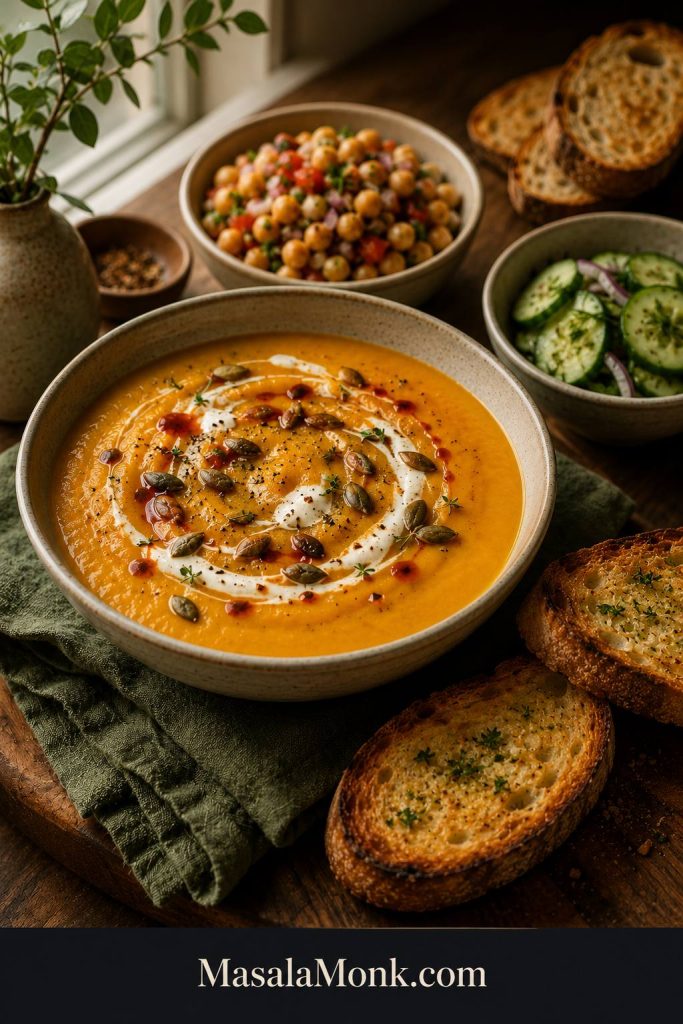
Thaw overnight in the fridge before baking or reheating for the cleanest texture. If baking from frozen, keep the dish covered at first so the center heats through, then uncover near the end so the top does not stay wet.

For another freezer-friendly tortilla meal, these Meal Prep Breakfast Burritos use similar moisture-control logic: keep wet toppings out, cool the filling, and reheat with texture in mind.

Reheating

Reheat a larger portion covered in a 350°F / 175°C oven until hot. Reheat individual portions in the microwave. If the enchiladas look dry, spoon a little extra sauce over the top before reheating.

Troubleshooting Chicken Enchiladas

A cracked tortilla or messy first serving does not ruin the pan. Enchiladas are forgiving once the sauce and cheese settle in.

Four-panel chicken enchilada troubleshooting guide showing fixes for cracked tortillas, soggy bottoms, dry chicken filling, and enchiladas falling apart.
When enchiladas crack, turn soggy, taste dry, or fall apart, the fix usually comes down to warmer tortillas, controlled sauce, moist filling, and rest time.

Why did my tortillas crack?

The tortillas were probably cold, dry, or overfilled. Warm them before rolling, and use less filling if you are working with small corn tortillas. If one tortilla tears, tuck it seam-side down and let the sauce and cheese cover the rough edges.

What makes chicken enchiladas soggy?

Usually too much sauce on the bottom, watery filling, cold tortillas, very hot filling, or a pan that was covered too long. Use the ½-½-1½ sauce split, let steaming filling settle briefly, bake uncovered, and rest before serving.

Why is the chicken dry?

The chicken may have been dry before it went into the filling, or it may not have been mixed with enough sauce. Stir sauce, green chiles, spices, and cheese into the chicken before rolling.

Why did the enchiladas fall apart?

They may have been overfilled, over-sauced, or served too soon after baking. If the first enchilada comes out messy, the pan probably needed a few more minutes to rest.

What if my filling tastes bland?

Add a little more salt, cumin, garlic powder, green chiles, or enchilada sauce before rolling. The filling should taste good on its own before it goes into the tortillas.

What if my enchiladas look dry after baking?

Spoon warm enchilada sauce over the top before serving. Next time, mix a little more sauce into the chicken filling and check that the top is fully covered before baking.

Why did the cheese get oily?

Some cheese blends release more oil when baked. Use Monterey Jack, a good Mexican blend, or a cheddar-Jack mix, and avoid overbaking once the cheese has melted.

Fixed the issue? Go back to the recipe card, review the sauce split, or return to the top.

FAQ

Rotisserie chicken or cooked chicken breast — which is better?

Rotisserie chicken is fastest because it is already tender and seasoned. Cooked chicken breast works too; mix it well with sauce and spices so the filling does not taste plain.

Are corn or flour tortillas better for chicken enchiladas?

Corn tortillas are more classic and slightly firmer. Flour tortillas are softer and easier to roll. Both work if they are warm and not over-sauced.

How do you keep chicken enchiladas from getting soggy?

Use the ½-½-1½ sauce split: ½ cup under the enchiladas, ½ cup in the chicken, and 1½ cups on top. Warm the tortillas, avoid overfilling, bake uncovered, and rest before serving.

Should enchiladas be covered while baking?

Bake this pan uncovered unless you specifically want very soft enchiladas. For softer enchiladas, cover for the first 15 minutes, then uncover to finish.

Do tortillas have to be fried for enchiladas?

No, but corn tortillas benefit from a quick warm in a lightly oiled skillet. It makes them more flexible and helps them hold up better in sauce.

How much filling should go in each tortilla?

Use about ⅓ cup filling for medium tortillas, 2–3 tablespoons for small corn tortillas, and up to ½ cup for large flour tortillas.

What cheese melts best for chicken enchiladas?

Monterey Jack, Mexican blend, cheddar-Jack, and Oaxaca all melt well. Cotija and queso fresco are better as finishing toppings.
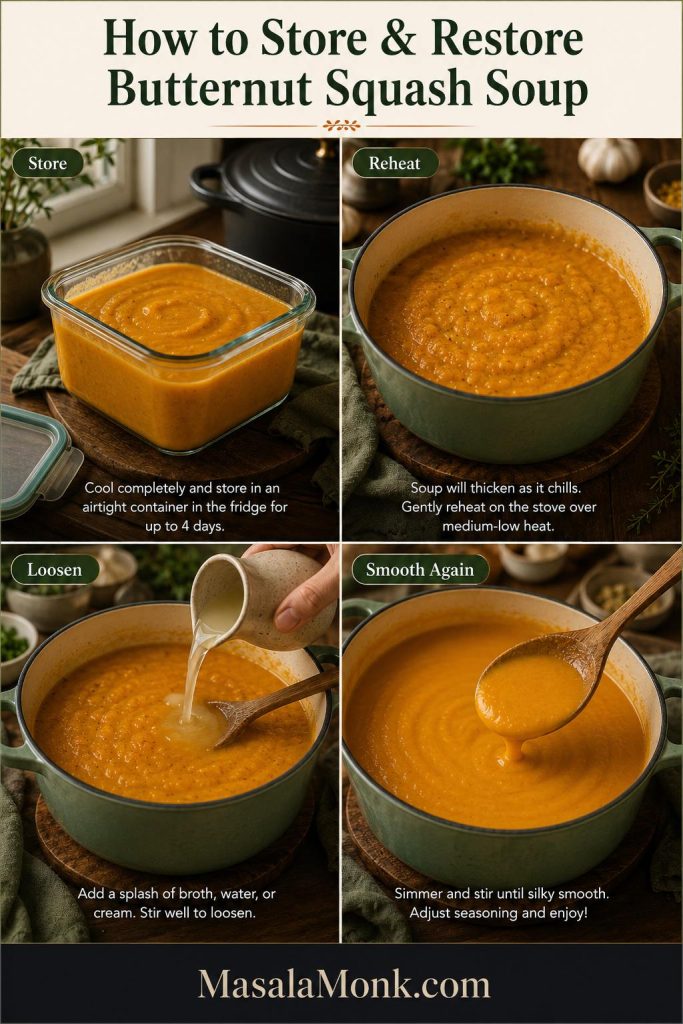
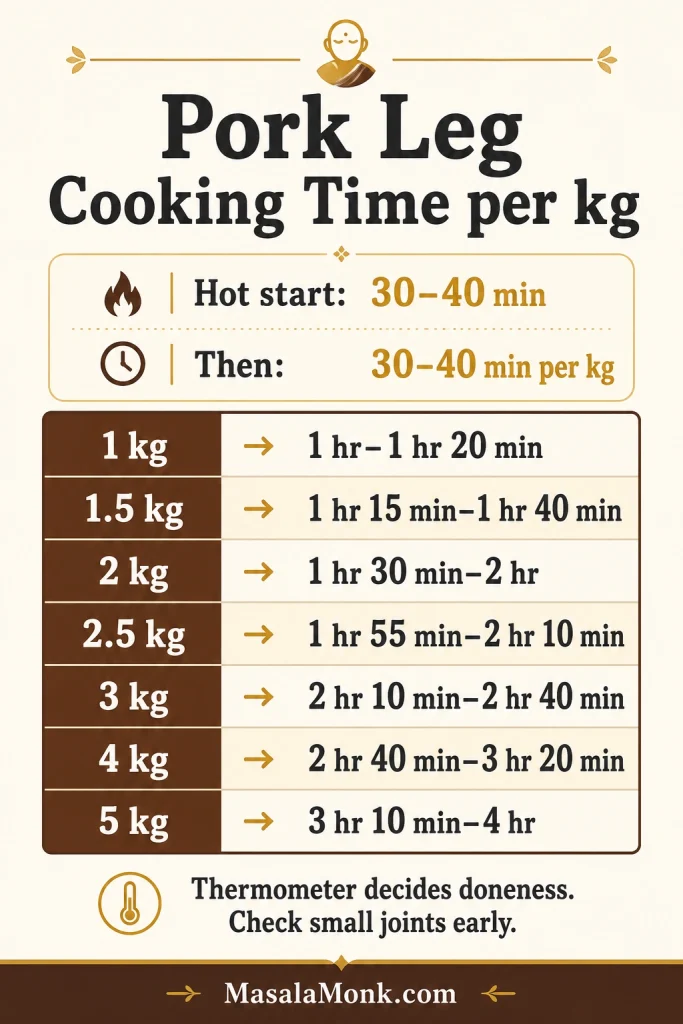
Is red or green enchilada sauce better with chicken?

Both are good. Red sauce tastes cozy and classic. Green sauce is brighter and tangier, especially with lime, cilantro, sour cream, and Monterey Jack.

How far ahead can chicken enchiladas be assembled?

Assemble them up to 24 hours ahead and keep them covered in the fridge. For the best texture, hold back some top sauce and cheese until just before baking.

Do chicken enchiladas freeze well?

Yes. Freeze them unbaked or freeze baked leftovers. Wrap tightly and reheat with a little extra sauce if they seem dry.

What is the difference between chicken enchiladas and chicken enchilada casserole?

Rolled enchiladas are filled and tucked seam-side down. Chicken enchilada casserole uses similar ingredients but layers them in a dish instead of rolling each tortilla.

Next Time You Want an Easy Tortilla Dinner

Once you have the tortillas out, it is easy to stay in that dinner lane. These Sheet Pan Chicken Fajitas keep the same weeknight rhythm: seasoned chicken, warm tortillas, and simple toppings.

For another tortilla meal, try this Breakfast Burrito Recipe. Need something quicker and lighter? The Shrimp Tacos Recipe keeps the same fresh-topping energy in a faster format.

Final Thought

Good chicken enchiladas do not need perfect tortillas, homemade sauce, or freshly cooked chicken. They need moist filling, warm tortillas, controlled sauce, and a few minutes of patience after baking.

Let the pan sit while the toppings hit the table, then spoon the saucy edges over each serving.

Do that, and the pan gives you what you came for: soft tortillas, juicy chicken, bubbling cheese, and saucy edges worth scooping from the dish.

Back to top