Posted on 1 Comment

Potential Side Effects of Lion’s Mane Mushroom

Lion's Mane Side Effects

Lion’s Mane (Hericium erinaceus) has rapidly gained popularity for its reputed benefits on brain health, cognition, mood, and even nerve regeneration. But as interest surges, so do questions about its safety profile: Does Lion’s Mane have side effects? Are Lion’s Mane supplements safe? Can Lion’s Mane cause digestive issues, headaches, or anxiety? In this comprehensive guide, we’ll explore what both science and real users report about Lion’s Mane side effects.


What Is Lion’s Mane?

Lion’s Mane is a medicinal mushroom traditionally used in East Asian medicine. Its active compounds—including hericenones and erinacines—are believed to stimulate the growth of nerve growth factor (NGF), which plays a vital role in maintaining neurons. Modern research is investigating its potential for neuroprotection, cognitive enhancement, and mood stabilization.


Documented Side Effects in Scientific Studies

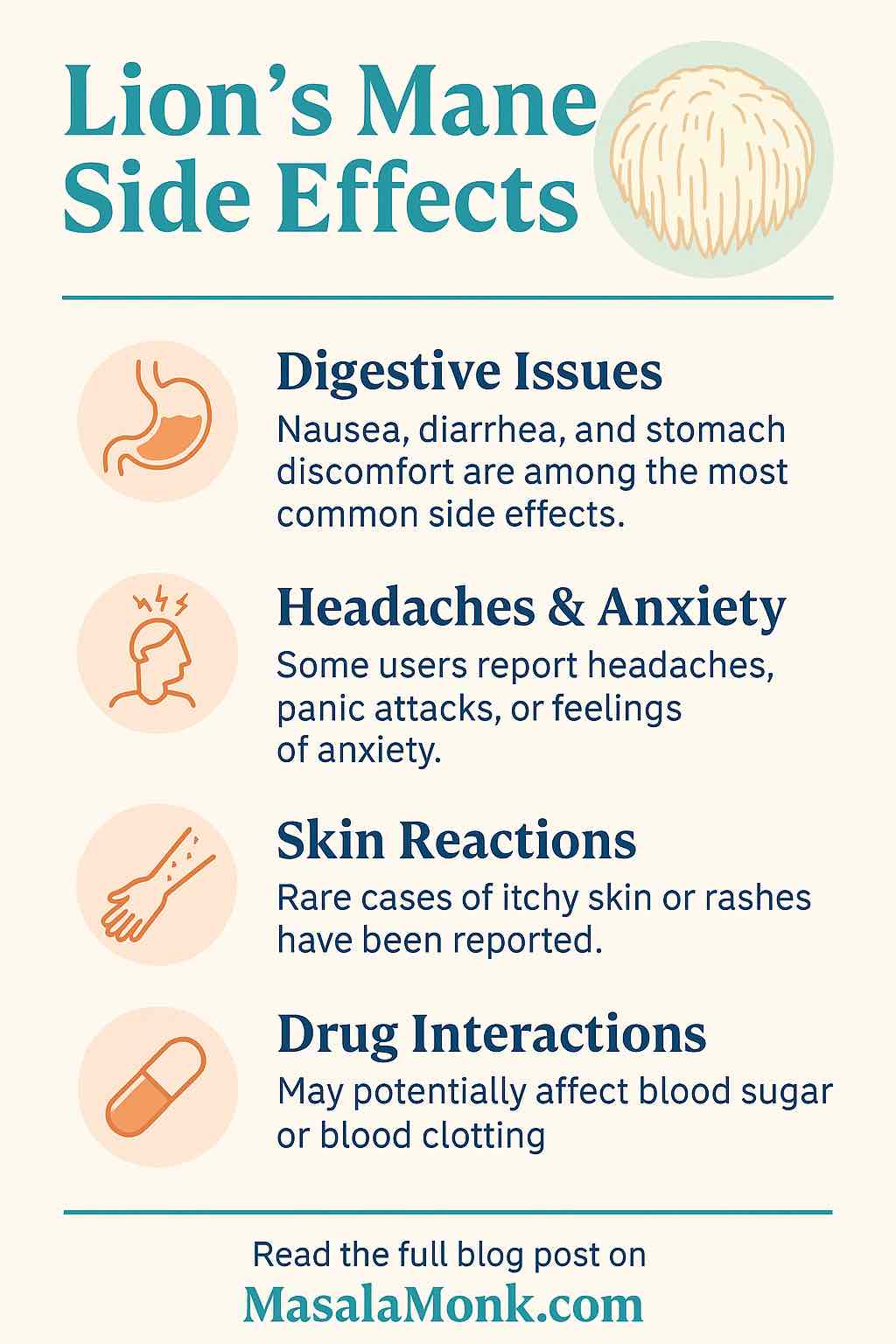
1. Gastrointestinal Disturbances

Clinical trials show that mild gastrointestinal issues are the most commonly reported side effects of Lion’s Mane supplementation. Symptoms may include:

  • Nausea
  • Diarrhea
  • Abdominal discomfort
  • Bloating

These effects typically occur in less than 10% of users and often resolve without discontinuation.

2. Allergic Reactions

Though rare, some individuals report allergic responses including:

  • Skin rashes
  • Itchy skin
  • Respiratory distress (extremely rare)

These symptoms may result from mushroom sensitivities and should prompt immediate medical attention if severe.

3. Metabolic Considerations

Lion’s Mane has been shown to potentially lower blood sugar levels, making it necessary for diabetics or individuals on glucose-lowering medications to monitor their blood sugar closely.

4. Blood Clotting and Coagulation

Some animal studies suggest that Lion’s Mane may have mild anticoagulant properties. If you’re taking blood thinners or have clotting disorders, consult your healthcare provider before starting supplementation.

5. Pregnancy and Breastfeeding

Currently, there is insufficient research to guarantee safety for pregnant or breastfeeding individuals. Avoid use unless advised by a qualified healthcare professional.


Real User Experiences: Insights from the Community

While clinical studies offer controlled data, anecdotal reports provide a window into how Lion’s Mane affects people in everyday life. Let’s examine what users are saying on forums like Reddit, WebMD, and other platforms.

1. Digestive Issues: Beyond the Clinical Data

One WebMD user shared:

“After a few days, my mom puked and was bleeding from her colon while my sister had diarrhea.”

While severe digestive issues are rare, some individuals may experience significant GI upset, especially if starting at high doses or if sensitive to mushrooms.

2. Anxiety and Mood Changes

In forums like r/mycology, multiple users reported heightened anxiety and even panic attacks:

“Many users have been experiencing negative side effects such as panic attacks, severe anxiety, and depression after starting Lion’s Mane.”

These effects seem to be highly individual. Some users experience improved mood and reduced anxiety, while others report worsening symptoms.

3. Headaches and Cognitive Symptoms

On r/ADHDUK, one user noted:

“Upon taking it, I had a massive headache. Then one day I forgot to take it, and it was an absolutely awful day.”

Headaches may occur initially, possibly related to neurochemical changes. Some users also report withdrawal-like symptoms upon discontinuation.

4. Skin Reactions and Itchiness

A contributor to Gene Food shared:

“I experienced a brief racing feeling and itchy skin after a small dose via tincture.”

This suggests a possible histamine reaction in sensitive individuals.

5. Skeptical Perspectives

Not all users are convinced of Lion’s Mane’s benefits:

“Lion’s Mane supplementation is not going to give you any noticeable benefits outside of a lighter wallet.”

While some report transformative cognitive improvements, others experience no noticeable benefits.


The Science Behind the Side Effects

Lion’s Mane contains several bioactive compounds that influence the nervous system and immune function:

  • Hericenones and Erinacines: Promote NGF production, potentially influencing mood, cognition, and neuroplasticity.
  • Beta-glucans: Support immune modulation, but may also trigger allergic responses in sensitive individuals.
  • Polysaccharides: Could influence gut flora and digestive processes, sometimes causing GI disturbances.

Who Should Be Cautious?

GroupReason for Caution
Pregnant/BreastfeedingInsufficient research
DiabeticsPotential blood sugar effects
Blood Thinner UsersPossible anticoagulant effect
Allergy-Prone IndividualsRisk of allergic reaction
Individuals with Anxiety DisordersPotential for mood disturbances

🧩 Patterns & Considerations

Side EffectNatureFrequency
GI upset (nausea, diarrhea)Mild to severe (rare)<10%, anecdotal outliers
Headaches/migrainesOccasionally reportedSingle case in ADHD context
Anxiety/panicRare but possibleReddit anecdotes
Skin itch/rash, histamineMild allergic reactionsRare, environment-linked
Mood disturbancesConflicting—both worsening and improvingAnecdotal

How to Safely Use Lion’s Mane

1. Start Low and Go Slow

Begin with a small dose (e.g., 250-500 mg per day) and monitor how your body reacts. Gradually increase if well-tolerated.

2. Choose Reputable Brands

Select high-quality supplements that use fruiting body extracts rather than mycelium grown on grain. Look for third-party testing and transparent sourcing.

3. Monitor Symptoms

Keep a journal to track any side effects, mood changes, or digestive symptoms, especially during the first few weeks.

4. Consult a Healthcare Provider

If you have existing health conditions or take medications, always consult a healthcare professional before starting Lion’s Mane.


The Bottom Line

Lion’s Mane (Hericium erinaceus) is generally well-tolerated by most individuals and offers promising benefits for cognitive and neurological health. However, side effects can occur, ranging from mild digestive discomfort to rare allergic or mood-related issues.

The key is personalization: monitor your body’s responses, start with a low dose, and always prioritize quality when selecting a supplement. With informed use, many people find Lion’s Mane to be a valuable addition to their wellness regimen.


Disclaimer: This article is for informational purposes only and does not substitute for medical advice. Always consult a qualified healthcare professional before starting any new supplement.

Frequently Asked Questions (FAQs)

1. Does Lion’s Mane have side effects?

Yes, while generally well-tolerated, some users experience mild side effects like digestive upset (nausea, diarrhea, bloating), headaches, skin itchiness, and rarely, mood changes such as anxiety or panic. Severe reactions are uncommon but possible.

2. Can Lion’s Mane cause digestive issues?

Digestive disturbances are among the most frequently reported side effects. Symptoms may include stomach cramps, nausea, bloating, and diarrhea, especially when starting at high doses.

3. Can Lion’s Mane cause anxiety or panic attacks?

Although many people report improved mood and reduced anxiety, some users have experienced heightened anxiety, panic attacks, or mood disturbances. These effects seem highly individual and may depend on dosage and personal sensitivity.

4. Does Lion’s Mane cause headaches?

Some users report headaches, especially during the initial days of supplementation. This may be due to changes in neurochemical activity related to nerve growth factor stimulation.

5. Is Lion’s Mane safe during pregnancy or breastfeeding?

There is not enough scientific data to confirm its safety for pregnant or breastfeeding individuals. It’s best to avoid use during these periods unless approved by a healthcare professional.

6. Can Lion’s Mane affect blood sugar levels?

Yes. Lion’s Mane may lower blood sugar, so individuals on diabetes medication or those prone to hypoglycemia should monitor their blood sugar closely and consult a healthcare provider before use.

7. Does Lion’s Mane interact with medications?

Potential interactions exist with medications affecting blood sugar, blood clotting, or the immune system. Always consult a healthcare provider if you’re on prescription medications before starting Lion’s Mane.

8. How long does it take to see benefits from Lion’s Mane?

Some users report cognitive or mood benefits within days, while others may require several weeks of consistent use. Response time varies greatly between individuals.

9. What is the safest Lion’s Mane dosage to start with?

Begin with 250–500 mg daily to assess tolerance. If well-tolerated, the dose can be gradually increased based on product guidelines and individual goals.

10. How do I choose a high-quality Lion’s Mane supplement?

Look for products using fruiting body extracts (not just mycelium), with clear labeling, third-party testing, and certifications for purity and potency. Avoid unverified brands or products with proprietary blends lacking transparency.
Posted on Leave a comment

Heart Rate Zones by Age & Gender

HEART RATE ZONES BY AGE & GENDER

When it comes to cardio training, one-size-fits-all doesn’t work. Your heart rate zones shift based on your age, gender, fitness level, and physiology. Understanding how your heart rate zones by age and gender evolve is the key to smarter workouts, better results, and reduced risk of injury or burnout.

In this detailed guide, we’ll break down exactly how to personalize your heart rate training zones based on your individual profile.


🔬 Why Heart Rate Zones Change With Age

As you age, your maximum heart rate (HRmax) naturally declines. This affects all your training zones. The formula most people start with is:

Max HR = 220 − Age

While simple, this formula doesn’t account for individual variation. Factors like genetics, fitness level, and gender play a major role in your actual heart rate performance.

As your Max HR lowers, your zone ranges also shift downward — meaning your Zone 2 heart rate at 50 won’t be the same as it was at 30.


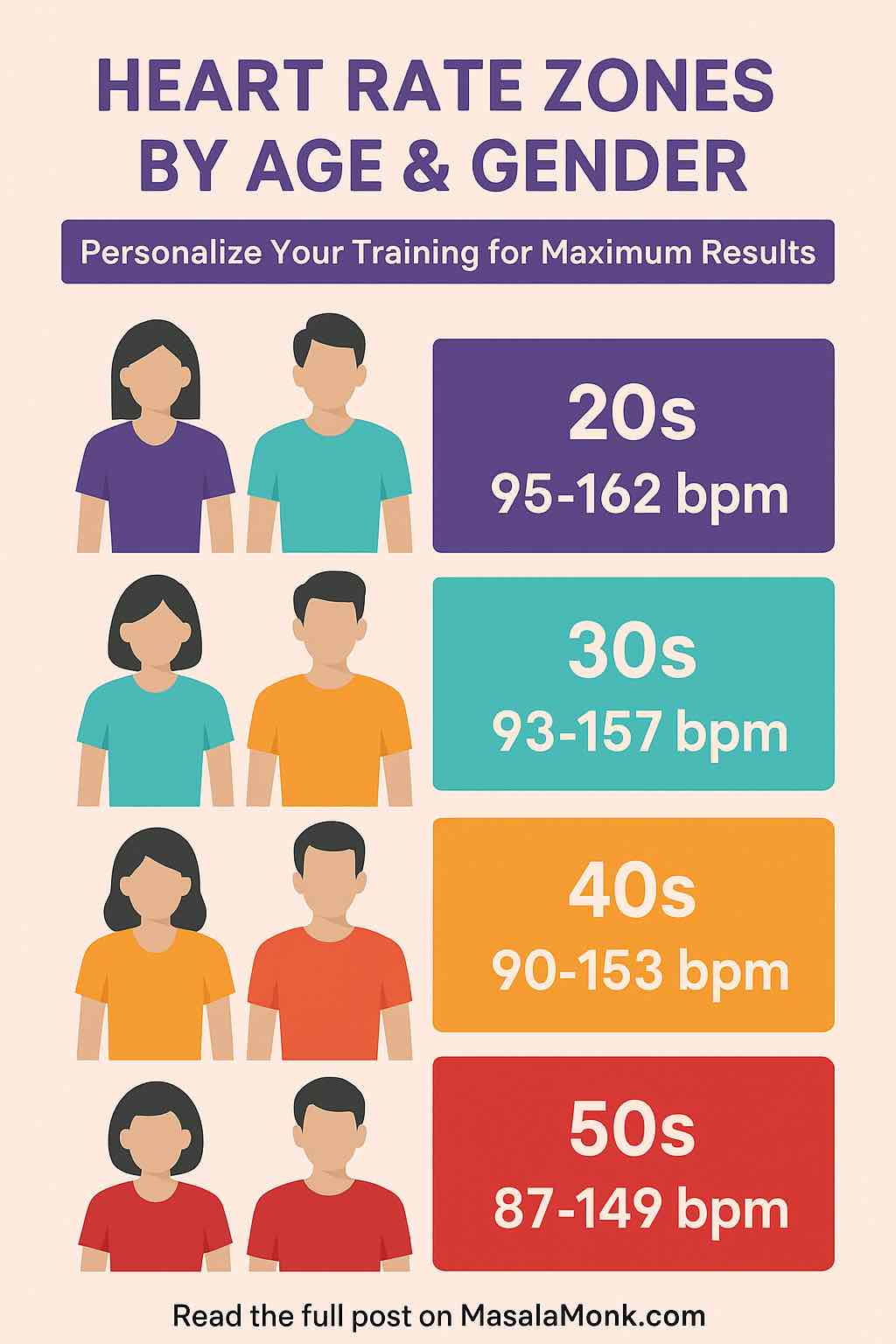
🧮 Heart Rate Zones By Age (General Chart)

AgeMax HRZone 1 (50–60%)Zone 2 (60–70%)Zone 3 (70–80%)Zone 4 (80–90%)Zone 5 (90–100%)
20200100–120120–140140–160160–180180–200
3019095–114114–133133–152152–171171–190
4018090–108108–126126–144144–162162–180
5017085–102102–119119–136136–153153–170
6016080–9696–112112–128128–144144–160
7015075–9090–105105–120120–135135–150

Note: Use these as starting points. Lab testing, wearables, and real-world data can fine-tune your exact zones.


🧬 Gender Differences in Heart Rate Zones

While men and women both benefit from heart rate training, some gender differences exist:

FactorMenWomen
Resting Heart RateSlightly lowerSlightly higher
Max HR Formula AdjustmentSlightly lower in some formulasOften higher for same age
HRV (Heart Rate Variability)Lower overall HRVTypically higher HRV
Recovery Heart RateFaster HR drop-offSlightly slower

🧮 More accurate Max HR formulas:

For Women (Gulati Formula):
Max HR = 206 − (0.88 × Age)

Example for 40-year-old woman:
206 − (0.88 × 40) = 170.8 bpm

This provides a more precise starting point than the traditional 220−age formula for women.


🎯 Why Personalizing Heart Rate Zones Matters

  • ✅ Prevents overtraining & burnout
  • ✅ Optimizes fat burning (especially in Zone 2)
  • ✅ Maximizes endurance adaptations
  • ✅ Enhances VO2 max development
  • ✅ Protects heart health long-term
  • ✅ Makes every minute of training more efficient

🔍 How Wearables Help Personalize Zones

Modern fitness trackers like Garmin, WHOOP, Polar, COROS, Fitbit, and Apple Watch analyze:

  • Resting HR
  • HRV (Heart Rate Variability)
  • VO2 max estimates
  • Lactate thresholds
  • Recovery readiness

They help fine-tune your zones in real-time as your fitness improves.


🏋️‍♂️ Sample Personalized Zone 2 Heart Rates

AgeMale Zone 2Female Zone 2
30114–133 bpm110–129 bpm
40108–126 bpm102–122 bpm
50102–119 bpm98–115 bpm
6096–112 bpm92–110 bpm

👉 Key takeaway:
Your Zone 2 will likely sit lower as you age or depending on your gender — but its importance never fades.


🔬 Should You Test Your Zones?

Yes. If you want true precision:

  • VO2 max lab testing
  • Lactate threshold testing
  • Metabolic cart tests
  • Professional coaching assessments

If that’s not practical, a good wearable + consistent tracking will still get you 80% of the way there.


🧘 Final Thought: Smarter, Not Harder

Heart rate zones are your personal blueprint for sustainable, science-backed training.

  • Younger? Build a strong base now.
  • Older? Focus on longevity and metabolic health.
  • Male or female? Personalize your formula and listen to your data.

The right intensity for you changes with age, gender, and fitness — and that’s exactly why heart rate zone training works so well.

10 FAQs for Heart Rate Zones by Age & Gender


1️⃣ How does age affect heart rate zones?

As you age, your maximum heart rate naturally decreases. This lowers all your training zones, meaning your target heart rate for fat burning or endurance shifts downward as you get older.


2️⃣ How do you calculate heart rate zones by age?

Use the formula:
Max HR = 220 − Age.
Then apply zone percentages (e.g., Zone 2 is 60–70% of Max HR). For more accuracy, adjust for gender and use heart rate reserve (HRR) calculations.


3️⃣ Do men and women have different heart rate zones?

Generally, women have slightly higher resting heart rates and HRV scores, while men may have slightly lower max heart rates. Formulas like Gulati’s (206 − 0.88 × age) are more accurate for women.


4️⃣ What is the best zone for fat burning?

Zone 2 (60–70% of Max HR) is optimal for fat burning and endurance building, as your body primarily burns fat for fuel in this range.


5️⃣ How does gender affect recovery heart rate?

Men often experience a slightly faster drop in heart rate after exercise. Women typically have higher resting HR but may show more stable HRV patterns.


6️⃣ Can wearables personalize my heart rate zones?

Yes. Devices like Garmin, Whoop, Polar, Coros Pace 2, and Apple Watch use continuous heart rate data, VO2 max estimates, HRV, and recovery metrics to fine-tune your zones.


7️⃣ Should I retest my zones as I get fitter?

Yes. As your fitness improves, your zones may shift. Retesting every 3–6 months ensures your training stays effective and individualized.


8️⃣ What happens if I use generic heart rate formulas?

Generic formulas give a starting point but may not reflect your true zones. Personalized data from wearables or lab tests provides better results.


9️⃣ Why is Zone 2 training emphasized for longevity?

Zone 2 improves mitochondrial health, metabolic flexibility, fat burning, and cardiovascular efficiency — all essential for long-term health and performance.


🔟 What is the Karvonen formula for heart rate zones?

Target HR = [(Max HR − Resting HR) × %Intensity] + Resting HR.
This formula personalizes zones by incorporating your resting heart rate.

Posted on 1 Comment

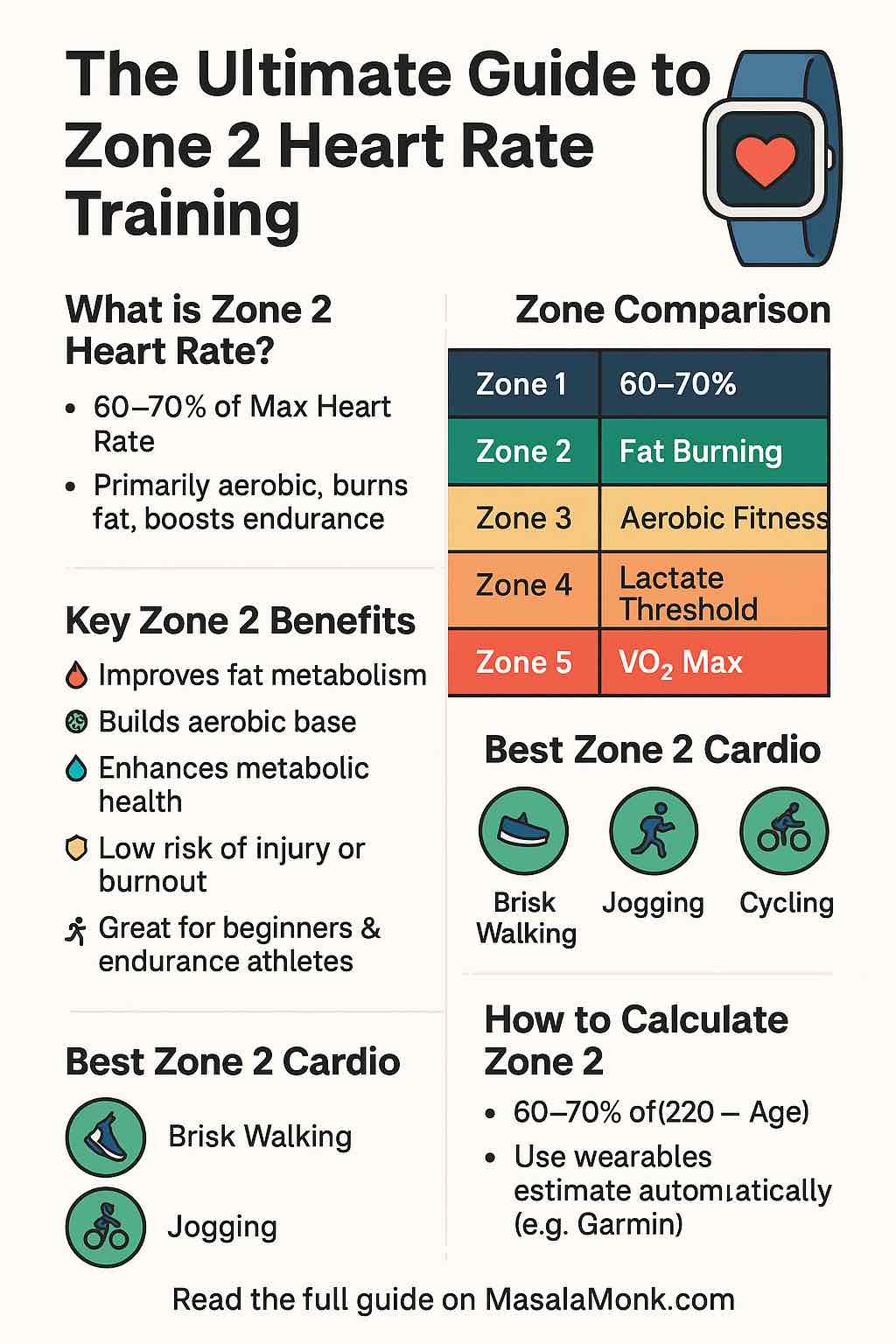
Zone 2 Heart Rate Training: Burn Fat, Build Endurance, and Maximize Performance

Guide to Zone 2 Heart Rate Training

In the world of cardio training, few topics are receiving as much attention as Zone 2 heart rate training. Endurance athletes, fitness experts like Peter Attia, and even medical professionals are emphasizing the powerful metabolic, cardiovascular, and fat-burning benefits of spending more time in Zone 2 cardio.

In this ultimate guide, you’ll learn exactly what Zone 2 heart rate is, how to calculate your personal Zone 2 heart rate by age, which exercises work best, and how it compares to Zone 1, Zone 3, Zone 4, and Zone 5 training.


🔬 What Is Zone 2 Heart Rate?

Heart rate training zones divide your exercise intensity into five levels based on your maximum heart rate (HRmax) or heart rate reserve (HRR).

Zone% Max HRTraining Focus
Zone 150–60%Very light, recovery, mobility
Zone 260–70%Aerobic base, fat-burning, endurance
Zone 370–80%Tempo, mixed aerobic/anaerobic
Zone 480–90%Anaerobic threshold, speed, lactate tolerance
Zone 590–100%VO2 max, sprint capacity

Zone 2 training sits right in your aerobic zone — high enough to stimulate fat oxidation and cardiovascular adaptations but low enough to minimize stress and fatigue.


🧮 How to Calculate Your Zone 2 Heart Rate

1️⃣ The Simple Formula:

Max HR = 220 – your age
Zone 2 = 60%–70% of Max HR

Example for 40-year-old:

  • Max HR = 220 − 40 = 180 bpm
  • Zone 2 = 108–126 bpm

2️⃣ The More Accurate Karvonen Formula:

Heart Rate Reserve (HRR):
Max HR − Resting HR = HRR

Target HR = (HRR × %Intensity) + Resting HR

Example for 40-year-old with RHR 60 bpm:

  • HRR = 180 − 60 = 120 bpm
  • Zone 2 (60–70%):
    • Low end: (120×0.60) + 60 = 132 bpm
    • High end: (120×0.70) + 60 = 144 bpm

This method provides a better zone 2 heart rate formula for most people.

3️⃣ Wearable Technology:

Devices like Coros Pace 2, Garmin, Polar, Whoop, Peloton, and Apple Watch automatically estimate your zone 2 heart rate range using advanced algorithms based on your real-time data.


📊 Zone 2 Heart Rate Chart by Age

AgeEstimated Zone 2 HR Range
20120–140 bpm
30114–133 bpm
40108–126 bpm
50102–119 bpm
6096–112 bpm
7090–105 bpm

👉 Keep in mind: these are general estimates. Individual testing is always better.


🚀 The Science-Backed Benefits of Zone 2 Training

  • 🔋 Fat Oxidation: Improves your body’s ability to burn fat as fuel.
  • 🏃 Aerobic Capacity: Increases mitochondrial density and oxygen delivery.
  • ❤️ Cardiovascular Health: Supports heart function, lowers resting HR, improves VO2 max.
  • 🧬 Metabolic Flexibility: Helps control blood sugar and improve insulin sensitivity.
  • 🧘 Recovery Friendly: Less joint stress and cortisol compared to high-intensity work.
  • 📉 Longevity: Associated with reduced inflammation and better long-term health.

Peter Attia’s zone 2 training focuses heavily on these long-term benefits for healthspan.


🔥 Zone 2 vs Zone 4 Training

ZoneFocusUse Case
Zone 2Aerobic base, fat burn, enduranceDaily training, beginners, fat loss
Zone 4Lactate threshold, performance gainsIntervals, racing, advanced fitness

Both are important. But Zone 2 training for beginners and weight loss builds the foundation.


🏋️‍♂️ Best Zone 2 Cardio Exercises

✅ Classic Zone 2 Cardio Examples:

  • Brisk walking
  • Jogging or slow running
  • Cycling (road, indoor, Peloton)
  • Rowing
  • Swimming
  • Elliptical training
  • Hiking with a light pack
  • Zone 2 cardio on treadmill

✅ Zone 2 Cardio for Beginners:

  • Start with walking and gradually increase pace.
  • Use heart rate monitors to stay in your target zone.
  • Avoid pushing into Zone 3 (the gray zone) too often.

✅ Zone 2 Strength & Hybrid Options:

  • Zone 2 kettlebell carries
  • Low-intensity circuit training
  • Rucking (walking with weight)

🔥 Zone 2 Training for Weight Loss

Because Zone 2 burns fat directly, it’s highly effective for:

  • Long-duration fat loss
  • Reducing visceral fat
  • Improving metabolic syndrome markers
  • Supporting sustainable calorie burn without hormonal burnout

You’ll often hear:
👉 “Zone 2 fat-burning heart rate = your metabolic sweet spot.


💡 How Long Should You Train in Zone 2?

  • 30–60 minutes per session
  • 3–5 days per week minimum
  • 80% of total weekly cardio volume for endurance athletes
  • Consistency matters more than intensity

This is where Peter Attia’s zone 2 heart rate training emphasizes longevity over instant results.


🏃‍♂️ Zone 2 Heart Rate for Running

  • Slower than your typical pace — likely 1–3 min/mile slower than race pace.
  • Conversation pace: you can speak full sentences without gasping.
  • Use running watches to monitor real-time HR.

❓ Common Zone 2 Training Mistakes

  • Training too hard (slipping into Zone 3)
  • Skipping low-intensity entirely for HIIT
  • Relying only on age-based formulas
  • Ignoring wearable data trends (HRV, recovery readiness)
  • Being impatient — Zone 2 benefits compound over time

🔬 VO2 Max and Zone 2 Connection

  • VO2 max = maximum oxygen your body can use.
  • Zone 2 training indirectly improves VO2 max by increasing mitochondria and aerobic efficiency.
  • Elite athletes combine zone 2 and zone 4 training for optimal VO2 max gains.

⚖️ The 80/20 Rule

Endurance experts recommend:
👉 80% of training volume in Zone 2
👉 20% in high-intensity Zones 4–5

This model maximizes adaptation while minimizing injury risk.


✅ Summary Cheat Sheet

  • Zone 2 = 60–70% of Max HR
  • Burns fat, improves endurance, boosts metabolism
  • Calculate using HRmax or HR Reserve formulas
  • Best for weight loss, beginners, longevity, and base building
  • Monitor with heart rate monitors or wearables like Coros Pace 2, Garmin, Polar, Peloton

🌐 Conclusion: Why Zone 2 Is The Most Underrated Cardio Zone

Zone 2 heart rate training offers unmatched benefits for beginners, professionals, and anyone focused on long-term health and sustainable fitness. It’s low-risk, science-backed, and surprisingly enjoyable when you see the results over time.

If you want better fat loss, stronger endurance, healthier metabolism, and greater resilience — you need to spend more time in Zone 2 cardio.

📌 10 FAQs with Answers


1️⃣ What is Zone 2 heart rate?

Zone 2 heart rate refers to exercising at 60–70% of your maximum heart rate, which keeps you in an aerobic state where your body efficiently burns fat for fuel while building endurance and cardiovascular fitness.


2️⃣ How do I calculate my Zone 2 heart rate?

Use the formula:
Max HR = 220 − Age, then take 60–70% of that value.
For better accuracy, use the Karvonen formula, which factors in your resting heart rate for a more personalized Zone 2 range.


3️⃣ What are the best Zone 2 cardio exercises?

Brisk walking, jogging, cycling, rowing, swimming, elliptical training, and treadmill walking are excellent Zone 2 cardio exercises. The key is to stay in your Zone 2 heart rate range throughout the session.


4️⃣ Is Zone 2 cardio good for fat loss?

Yes. Zone 2 cardio is highly effective for fat loss because it trains your body to burn fat as its primary fuel source while minimizing stress hormones, making it sustainable for longer sessions.


5️⃣ How long should I train in Zone 2?

Aim for 30–60 minutes per session, 3–5 times per week. Endurance athletes often spend 80% of their training time in Zone 2 for optimal results.


6️⃣ Why is Zone 2 training recommended for beginners?

Zone 2 is low-impact, builds your aerobic base, improves metabolic flexibility, and carries a low risk of injury or burnout — making it ideal for beginners and those returning to fitness.


7️⃣ What is the difference between Zone 2 and Zone 4 training?

Zone 2 focuses on fat metabolism and aerobic endurance (lower intensity), while Zone 4 targets lactate threshold, speed, and anaerobic performance (higher intensity). Both are important but serve different goals.


8️⃣ Can I use wearables to track my Zone 2 heart rate?

Yes. Devices like Garmin, Polar, Coros Pace 2, Whoop, and Apple Watch accurately estimate Zone 2 based on your heart rate, VO2 max, and heart rate variability (HRV).


9️⃣ What happens if I accidentally train above Zone 2?

Occasionally slipping into Zone 3 or 4 is normal, but consistently training above Zone 2 can shift your workouts into “junk miles,” where neither aerobic nor anaerobic adaptations occur efficiently. Staying in Zone 2 builds long-term endurance.


🔟 Is Zone 2 training effective for improving VO2 max?

Yes — indirectly. Zone 2 training improves mitochondrial density and aerobic efficiency, which are essential components of VO2 max. Combining Zone 2 with occasional high-intensity Zone 4 or 5 sessions provides the best VO2 max improvements.

Posted on 1 Comment

Guide to Heart Rate Zones

Guide to HEART RATE ZONES

In today’s fitness landscape, few metrics are as powerful, actionable, and widely misunderstood as heart rate zones. Whether you’re training for fat loss, endurance, metabolic health, or peak athletic performance, heart rate zone training provides a simple yet highly personalized roadmap to achieving your goals.

Thanks to advances in wearable technology, data science, and exercise physiology, 2025 offers better insights than ever before into how your heart rate responds to exercise. In this comprehensive guide, we break down everything you need to know about heart rate zones — backed by the latest research.


What Are Heart Rate Zones?

Heart rate zones are specific ranges of your heart rate that correspond to different levels of exercise intensity. Each zone triggers different physiological responses in your body — from fat burning and aerobic conditioning to anaerobic capacity and maximal performance.

Your heart rate rises as you increase exercise intensity, but your body’s energy systems shift along the way. Understanding where you are on that continuum allows you to train smarter, avoid burnout, and maximize results.

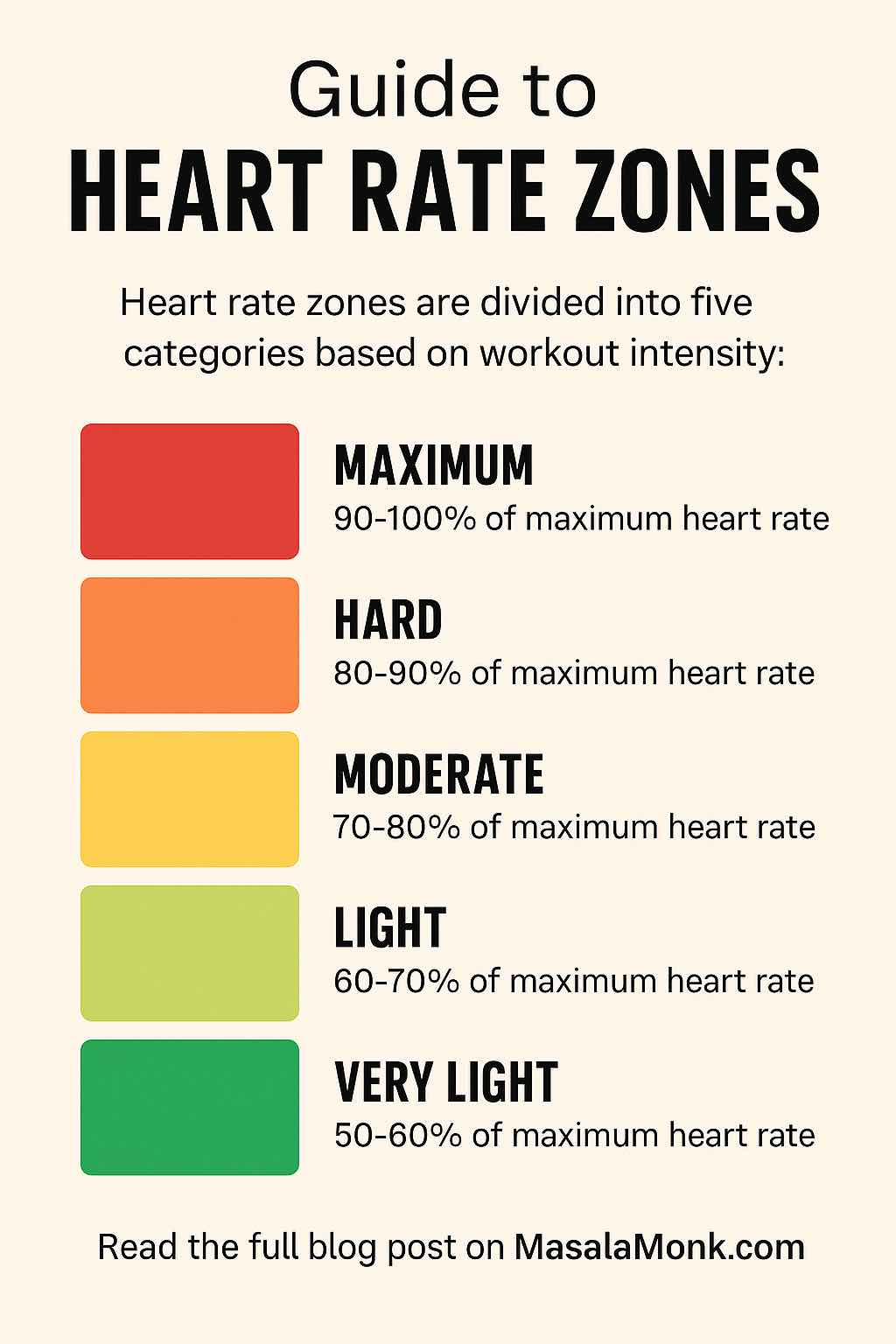
The 5 Standard Heart Rate Zones

Zone% Max HRDescriptionPrimary Benefits
Zone 150–60%Very LightRecovery, warm-up, mobility
Zone 260–70%Light/AerobicFat metabolism, endurance, mitochondrial health
Zone 370–80%ModerateFitness maintenance, mixed fuel usage
Zone 480–90%Hard/AnaerobicSpeed, power, lactate threshold
Zone 590–100%PeakMaximal output, VO₂max development, sprint performance

Each zone has a distinct purpose. Your long-term results depend on how you balance time spent in each.


Why Heart Rate Zone Training Works

At lower intensities (Zones 1–2), your body primarily burns fat for fuel, improving cardiovascular efficiency and metabolic flexibility. As intensity rises (Zones 3–5), carbohydrates take over, lactate builds, and anaerobic systems dominate.

Zone training allows you to:

  • Target specific adaptations based on your fitness goals
  • Balance intensity and recovery to avoid overtraining
  • Maximize workout efficiency by spending more time at the right intensities
  • Personalize your training based on your physiology

How to Calculate Your Heart Rate Zones

The Simple Formula (220 − Age)

The easiest way to estimate your maximum heart rate (HRmax) is:

220 − your age = Max HR

Example for a 50-year-old:
220 − 50 = 170 bpm

While widely used, this formula can vary by ±10–15 bpm for individuals.

The Karvonen Formula (More Accurate)

By incorporating your resting heart rate (RHR), you personalize your zones:

Target HR = [(Max HR − RHR) × %Intensity] + RHR

Example for 50-year-old with RHR of 60 bpm:
Max HR = 170 bpm
Zone 2 (60–70%):

  • Lower end: [(170−60)×0.60] + 60 = 126 bpm
  • Upper end: [(170−60)×0.70] + 60 = 137 bpm

So Zone 2 would be ~126–137 bpm.

Lab Testing & Wearable Estimates

  • VO₂max and lactate threshold testing give precise zone definitions.
  • Modern wearables (Garmin, Polar, WHOOP, Apple Watch) estimate these values using advanced algorithms, continuous heart rate tracking, and HRV data.

Personalized Heart Rate Zones by Age

Since HRmax decreases with age, your zones shift over time:

AgeMax HRZone 2 (60–70%)Zone 4 (80–90%)
30190 bpm114–133 bpm152–171 bpm
40180 bpm108–126 bpm144–162 bpm
50170 bpm102–119 bpm136–153 bpm
60160 bpm96–112 bpm128–144 bpm
70150 bpm90–105 bpm120–135 bpm

Individual testing always provides greater accuracy.


Zone 2 Training: The 2025 Game Changer

One of the biggest breakthroughs in fitness in recent years has been the growing recognition of Zone 2 training as foundational for both health and performance.

Benefits of Zone 2 Training

  • Boosts mitochondrial density and metabolic health
  • Improves fat oxidation and insulin sensitivity
  • Builds aerobic endurance without excessive fatigue
  • Lowers chronic inflammation markers
  • Supports long-term cardiovascular health and longevity

Why Top Athletes Use the 80/20 Rule

Endurance athletes now widely adopt the 80/20 rule:
80% of training time in Zone 2; 20% in high-intensity Zones 4–5.

This balance allows athletes to accumulate large training volumes without chronic stress, while still building peak performance capabilities.


Resting Heart Rate & Recovery Zones

Your resting heart rate (RHR) and recovery data offer insight into your cardiovascular health and readiness to train.

Resting Heart Rate

  • Elite athletes: 40–50 bpm
  • Fit adults: 50–60 bpm
  • Average: 60–80 bpm
  • Elevated RHR may signal stress, fatigue, overtraining, dehydration, or illness.

Recovery Heart Rate

After exercise, your heart rate should drop quickly:

  • A 20 bpm drop in the first minute is a positive indicator.
  • Slower recovery suggests reduced fitness or overtraining.

Heart Rate Variability (HRV)

HRV measures the variation in time between heartbeats. In general:

  • Higher HRV = better recovery, parasympathetic dominance.
  • Lower HRV = fatigue, stress, or illness.

In 2025, HRV-guided training is used by elite athletes, corporate wellness programs, and recreational fitness enthusiasts to optimize training loads.


Devices for Tracking Your Heart Rate Zones

Accurate heart rate data makes zone training effective. Not all devices are created equal.

Chest Straps

  • Direct ECG measurement (gold standard for real-time data)
  • Excellent for interval, cycling, and high-intensity training
  • Brands: Polar H10, Garmin HRM-Pro

Wrist-Based Wearables

  • Convenient for 24/7 monitoring (RHR, HRV, sleep)
  • Less accurate during high-intensity or dynamic movement
  • Leading 2025 models: Garmin Forerunner 965, Apple Watch Ultra 2, WHOOP 4.0, Polar Vantage V3

Optical Armbands

  • Good accuracy with better motion stability than wrist devices
  • Popular options: Polar Verity Sense, Scosche Rhythm+

Modern wearables also estimate VO₂max, lactate threshold, recovery scores, and sleep metrics, making heart rate zone training more precise than ever.


Common Heart Rate Training Mistakes

Even with data at your fingertips, many people fall into these traps:

  • Training too hard too often: Overreliance on Zone 3 (“junk miles”)
  • Ignoring recovery needs: Skipping rest days and neglecting HRV signals
  • Basing zones only on formulas: Personalized testing improves precision
  • Chasing wearables metrics without understanding limitations
  • Inconsistency: Results require consistency, not occasional bursts of effort

Heart Rate Zone Quick Reference

Zone% Max HRKey Focus
Zone 150–60%Recovery, warm-up
Zone 260–70%Fat burning, endurance
Zone 370–80%Fitness maintenance
Zone 480–90%Lactate threshold, performance
Zone 590–100%VO₂max, peak power

Conclusion: Mastering Heart Rate Zones for Smarter Training

Heart rate zone training offers the most accessible, affordable, and evidence-based approach to personalized fitness. It empowers you to target specific goals, avoid overtraining, and build long-term resilience.

Whether you’re an elite athlete, weekend warrior, or simply someone striving for better health, understanding your heart rate zones will optimize your efforts and deliver superior results.

In 2025, with advanced wearables and better science, zone training is no longer guesswork — it’s precision fitness for everyone.

📌 10 FAQs with Answers

1️⃣ What are heart rate zones?

Heart rate zones are specific ranges of your maximum heart rate that correspond to different levels of exercise intensity. Each zone targets a different training effect — from fat burning and endurance (Zone 2) to peak performance (Zone 5).


2️⃣ How do I calculate my heart rate zones?

You can estimate your maximum heart rate using:
220 minus your age.
For better accuracy, use the Karvonen Formula, which includes your resting heart rate:
Target HR = [(Max HR − Resting HR) × %Intensity] + Resting HR.


3️⃣ What is the best heart rate zone for fat burning?

Zone 2 (60–70% of your max heart rate) is optimal for fat metabolism and building aerobic endurance. This zone improves mitochondrial function, metabolic health, and long-term fat utilization.


4️⃣ Why is Zone 2 training so popular in 2025?

Zone 2 training is backed by strong research showing its benefits for endurance, fat burning, longevity, and metabolic health — all with minimal stress and faster recovery. It’s now widely used by elite athletes and everyday fitness enthusiasts.


5️⃣ How do wearables calculate heart rate zones?

Modern wearables use continuous heart rate tracking, heart rate variability (HRV), sleep data, and activity profiles to estimate your VO₂max, lactate threshold, and personalized zones. Devices like Garmin, WHOOP, Polar, and Apple Watch have become highly advanced in 2025.


6️⃣ What is resting heart rate and why does it matter?

Resting heart rate (RHR) measures your heartbeats per minute at complete rest. Lower RHR generally reflects better cardiovascular fitness and recovery. Elevated RHR may indicate stress, illness, or overtraining.


7️⃣ What is HRV and how does it affect training?

Heart Rate Variability (HRV) measures the variation in time between heartbeats. High HRV typically indicates good recovery and nervous system balance, while low HRV suggests fatigue or stress. Many athletes now use HRV to adjust daily training loads.


8️⃣ Is heart rate training better than just running by pace?

Yes. Heart rate training reflects your body’s actual workload rather than external pace, which can fluctuate due to fatigue, heat, stress, or illness. It’s more individualized and adaptable to real-time fitness levels.


9️⃣ How can I improve my heart rate recovery?

Consistent aerobic training (especially in Zone 2), proper hydration, sleep, stress management, and adequate recovery all contribute to faster heart rate recovery after workouts.


🔟 How often should I train in each heart rate zone?

General guidelines suggest:

  • ~80% in Zone 2 (low intensity)
  • ~20% in higher zones (Zone 4-5 for performance)
    This approach builds endurance while minimizing injury and burnout.
Posted on 2 Comments

Side Effects of Creatine: What You Need to Know

CREATINE SIDE EFFECTS

Creatine has long held the spotlight in the fitness and sports nutrition world, hailed for its ability to enhance muscle mass, strength, and performance. But as its popularity has surged among both athletes and everyday fitness enthusiasts, so too have concerns about its potential side effects. Is creatine really as safe as claimed? Or are there hidden downsides masked by its benefits?

In this detailed blog post, we’ll examine the most up-to-date clinical research as of 2025, compare that with real user experiences, and offer practical strategies to safely supplement creatine while minimizing risks. Whether you’re already taking creatine or just considering it, this guide will give you the nuanced understanding you need.


🔬 The Scientific Verdict: Creatine Is Largely Safe

A sweeping 2025 meta-analysis encompassing 685 clinical trials and over 25,000 participants has added significant weight to the scientific consensus: creatine is safe for healthy adults when used at recommended doses. In this landmark review, the incidence of side effects among creatine users (13.7%) was nearly identical to that of placebo users (13.2%).

This mirrors decades of smaller studies and expert opinions, such as those from the International Society of Sports Nutrition (ISSN), which affirm creatine’s safety profile across multiple health markers—especially when consumed as creatine monohydrate at 3–5 g/day.

However, “safe” doesn’t mean free from all side effects—particularly in individuals with certain sensitivities or preexisting health conditions. Let’s break this down in more detail.


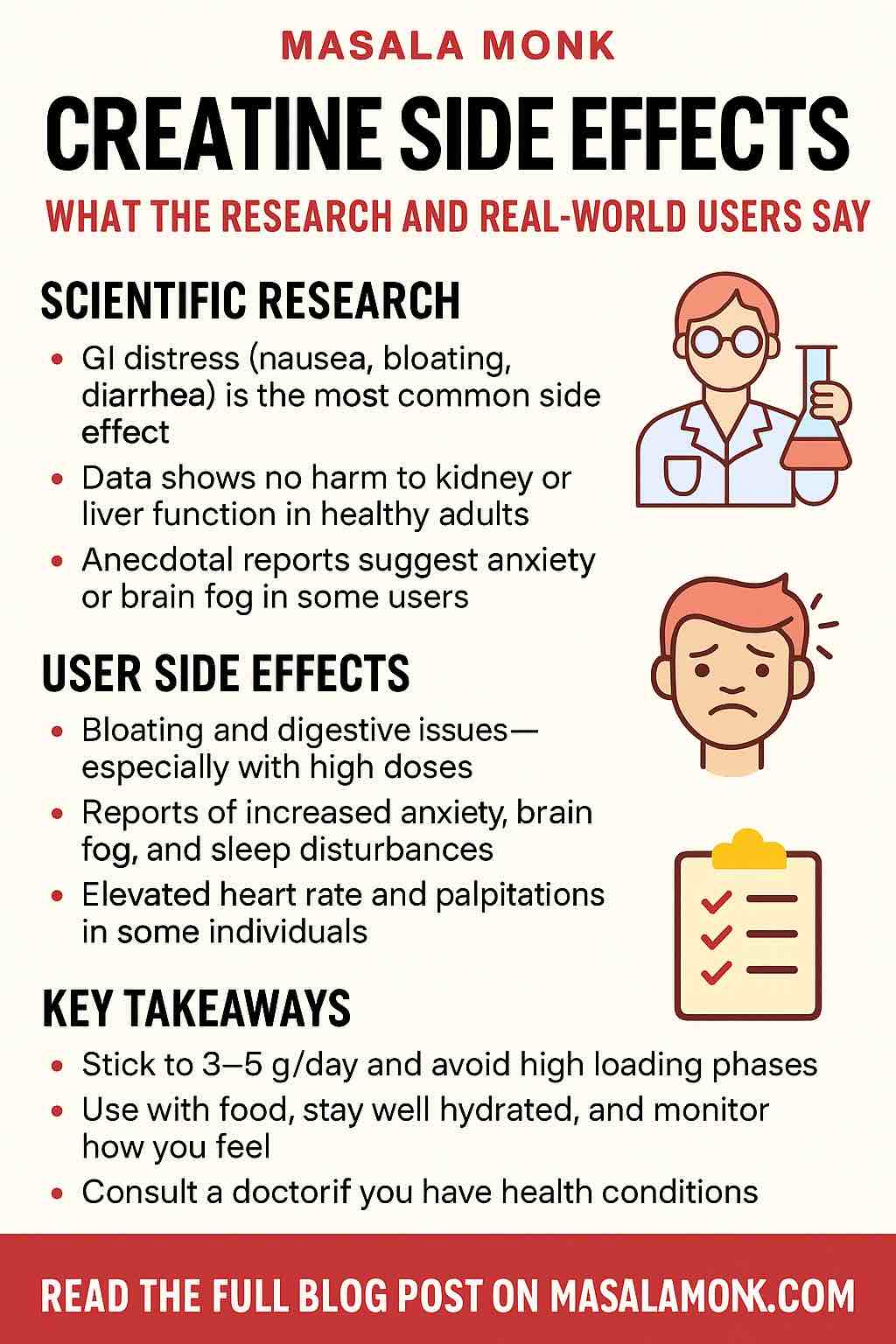
🫰 Commonly Reported Side Effects (and What Science Says)

1. Gastrointestinal Discomfort

Clinical finding: Mild bloating, cramping, or diarrhea is the most frequently reported side effect, especially during high-dose loading phases (20 g/day).

User experience: Many Reddit and forum users report upset stomachs, gas, and nausea—particularly when taking creatine on an empty stomach.

Prevention tips:

  • Stick to 3–5 g/day; skip the loading phase.
  • Take with meals to improve tolerance.
  • Use micronized creatine monohydrate for better solubility.

2. Water Retention and Temporary Weight Gain

Clinical finding: Creatine draws water into muscle cells, leading to an initial weight increase of 1–2 kg. Long-term studies find no impact on total body water balance.

User experience: Many users report feeling “puffy” or bloated early in supplementation, but often note this dissipates over time.

Reality check: This is intramuscular water, not fat gain, and often enhances muscle fullness.

3. Sleep Disturbances and Night Sweats

Clinical finding: Largely anecdotal, with no confirmed link in clinical trials.

User experience: A noticeable subset report insomnia, vivid dreams, or night sweats—especially when dosing late in the day.

Prevention tips:

  • Take creatine earlier in the day.
  • Stay well hydrated.

4. Mood Effects, Anxiety, and Brain Fog

Clinical finding: Some evidence suggests creatine may help with cognitive function and mood in depression, but there are mixed reports in otherwise healthy users.

User experience: Some users describe brain fog, emotional dullness, or worsened anxiety—potentially linked to creatine’s role in brain energy metabolism or methylation pathways.

Caution: Those with a history of anxiety or bipolar disorder should consider starting with lower doses and consulting a healthcare provider.

5. Heart Rate & Palpitations

Clinical finding: No reliable evidence of cardiovascular stimulation.

User experience: A few individuals report increased heart rate or mild palpitations, which may be secondary to dehydration or anxiety rather than creatine itself.

Tip: Ensure proper hydration and evaluate for other confounding factors like caffeine intake.


🧬 The Most Debunked Myths About Creatine

  • Kidney Damage: No evidence supports kidney damage in healthy users at standard doses—even in long-term studies up to 5 years.
  • Liver Damage: Similarly, liver enzymes remain stable in clinical evaluations.
  • Hair Loss & Acne: No direct mechanistic link exists, though speculation around increased DHT remains unproven.
  • Cramping & Dehydration: In fact, some studies show fewer cramps due to enhanced muscle hydration.
  • Rhabdomyolysis: Creatine is not linked to rhabdomyolysis in healthy users; risk is more associated with extreme training or other medications.

🧰 Who Should Be Cautious?

  1. Individuals with Preexisting Kidney Conditions: Always consult a physician.
  2. Those with Bipolar Disorder or Mood Instability: Some case studies link creatine to manic episodes.
  3. Adolescents: Safe use is possible, but long-term data is still emerging.
  4. Pregnant or Breastfeeding Individuals: Insufficient evidence for safety.

⚡ Best Practices to Minimize Side Effects

  • Use a pure, micronized creatine monohydrate with third-party certification (e.g., NSF, Informed Sport).
  • Stick to 3–5 g/day—no need to load unless under guidance.
  • Take with a carb-rich meal to aid absorption and minimize GI issues.
  • Hydrate consistently, especially during workouts.
  • Avoid combining with stimulants if you’re sensitive to heart rate changes.

📊 Summary: Creatine Is Effective and Mostly Safe, But Not for Everyone

Creatine remains one of the most well-researched and effective supplements available—offering real benefits for muscle growth, performance, and even cognitive health. The risks? Generally mild and avoidable for most people, particularly when used responsibly. But it’s clear from both research and user reports that some individuals may experience side effects—especially when underlying health issues or poor supplementation practices are at play.

As with any supplement, personalization is key. Start low, monitor how you feel, and adjust as needed.


Have you experienced side effects from creatine, or found a strategy that worked for you? Share your insights in the comments—we’d love to hear from real users and keep the conversation evidence-informed and grounded in real-world use.

🔍 10 Frequently Asked Questions (FAQs)

1. Is creatine safe for long-term use?
Yes, long-term studies (up to 5 years) show no adverse effects in healthy individuals when taking recommended doses (3–5 g/day). Kidney and liver function remain unaffected.

2. What are the most common side effects of creatine?
The most frequently reported side effects are bloating, mild stomach discomfort, and temporary water retention—mostly during loading phases or when taken without food.

3. Can creatine cause anxiety or brain fog?
While rare, some users report increased anxiety or mental cloudiness. There’s limited scientific evidence, but people with anxiety disorders should start with lower doses and monitor their response.

4. Does creatine affect sleep or cause night sweats?
Clinical data doesn’t support a link, but anecdotal reports suggest it might in some individuals. Taking it earlier in the day and staying hydrated may help.

5. Is creatine bad for your kidneys?
No. Numerous studies confirm that creatine does not harm kidney function in healthy users. Those with pre-existing kidney issues should consult a healthcare provider first.

6. Can creatine worsen acid reflux or heartburn?
There’s no strong evidence, but a few users report increased reflux. Taking creatine with food and avoiding high doses may reduce this possibility.

7. Is it necessary to do a loading phase with creatine?
No. While loading (20 g/day for 5–7 days) saturates muscles faster, daily intake of 3–5 g reaches the same levels within 3–4 weeks and has fewer side effects.

8. Will creatine make me gain fat or look bloated?
Creatine increases water content in muscle cells, not fat. Some early bloating may occur, but it typically subsides and muscle definition often improves.

9. Are there differences in side effects between creatine monohydrate and other forms?
Creatine monohydrate is the most studied and generally best tolerated. Other forms (e.g., HCL, ethyl ester) claim better absorption but lack robust data and may not reduce side effects.

10. Can teenagers safely use creatine?
Some research supports safe use in adolescents involved in supervised athletic programs, but long-term safety data is limited. Parental guidance and medical consultation are advised.