
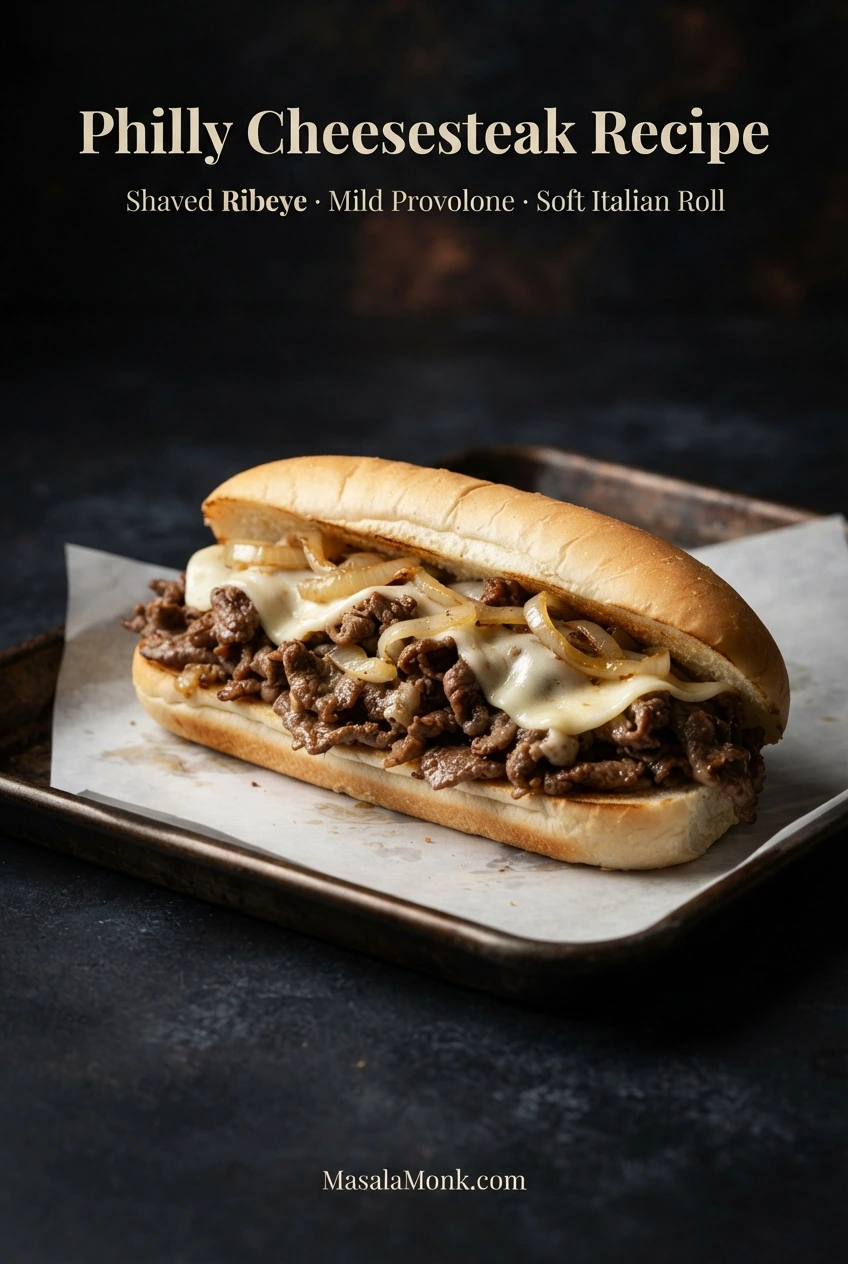
A good Philly cheesesteak recipe is generous with beef and cheese, but surprisingly particular about the bread. Thinly shaved ribeye develops browned edges in a hot skillet, fried onions turn soft and sweet, and mild provolone settles into the folds of the meat. Everything goes into a warm Italian roll. It’s a wonderfully juicy sandwich, and a napkin is part of the experience.
You don’t need restaurant equipment or complicated seasoning to make one at home. The cut, the thickness of the slices, the room in the pan, and the way the cheese melts matter much more. This recipe makes four substantial cheesesteaks with 170 g (6 oz) raw ribeye apiece, followed by clear advice on choosing ingredients, avoiding watery beef, and adapting the method to a griddle.
In This Guide
- Classic Philly Cheesesteak Recipe — ingredients and timing
- Jump to the Cooking Steps
- What Makes a Philly Cheesesteak Authentic?
- Best Beef, Cheese, and Bread
- Troubleshooting Common Problems
- Blackstone and Flat-Top Griddle Method
- Variations and Substitutions
- Make-Ahead, Storage, and Reheating
- Frequently Asked Questions
Classic Philly Cheesesteak Recipe
For the easiest preparation, buy butcher-shaved ribeye. Ask for thin slices cut across the grain. If you buy packaged shaved steak, check the named cut and its cooking instructions first.
| Makes | 4 generously filled cheesesteaks |
| Prep time | 15–20 minutes with pre-shaved beef |
| Cook time | About 25–35 minutes |
| Total time | About 40–55 minutes |
| Using whole ribeye? | Allow extra time to firm and slice it |
| Beef per sandwich | 170 g (6 oz) raw ribeye |
| Equipment | Heavy 12-inch (30-cm) skillet, wide spatula, lid, and a suitable food thermometer |
Serving four: One beef portion at a time gives the most reliable browning in a 12-inch skillet, so sandwiches finish in succession. Serve them as they’re made for the best texture. Two skillets shorten the gap; a spacious flat-top griddle makes simultaneous serving easier.
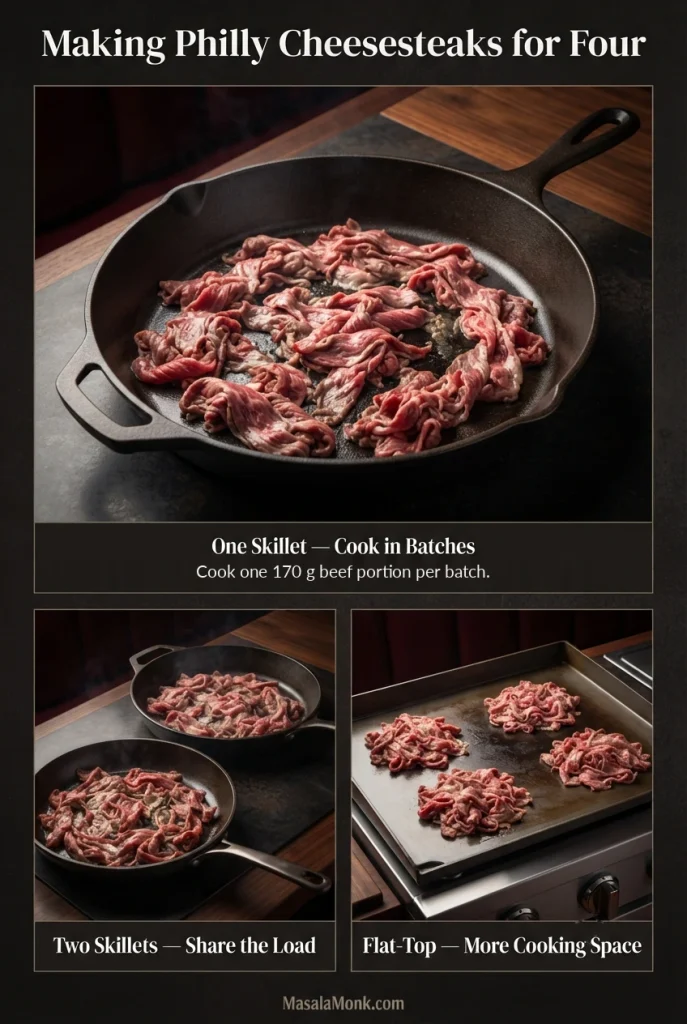
Using a larger cooking surface instead? The Blackstone and flat-top method explains how to manage several portions at once.
Ingredients for Four Philly Cheesesteaks
- 680 g (1½ lb) boneless ribeye steak, shaved very thinly
- 200 g (7 oz) yellow onion, about 1 large onion, thinly sliced
- 160 g (about 5½ oz) mild provolone, thinly sliced
- 4 soft Italian-style hoagie or steak rolls, about 8 inches (20 cm) long
- 15 ml (1 tbsp) neutral cooking oil, plus more if the pan needs it
- 3 g fine table salt, about ½ tsp, as a starting amount
- ¼ tsp freshly ground black pepper
Divide the raw ribeye into four 170 g (6 oz) portions and the cheese into four 40 g (about 1½ oz) portions. Divide the cooked onions four ways after frying. The salt and pepper amounts are for the entire recipe; season each batch lightly and adjust after tasting the first cooked portion. Provolone contributes salt too.
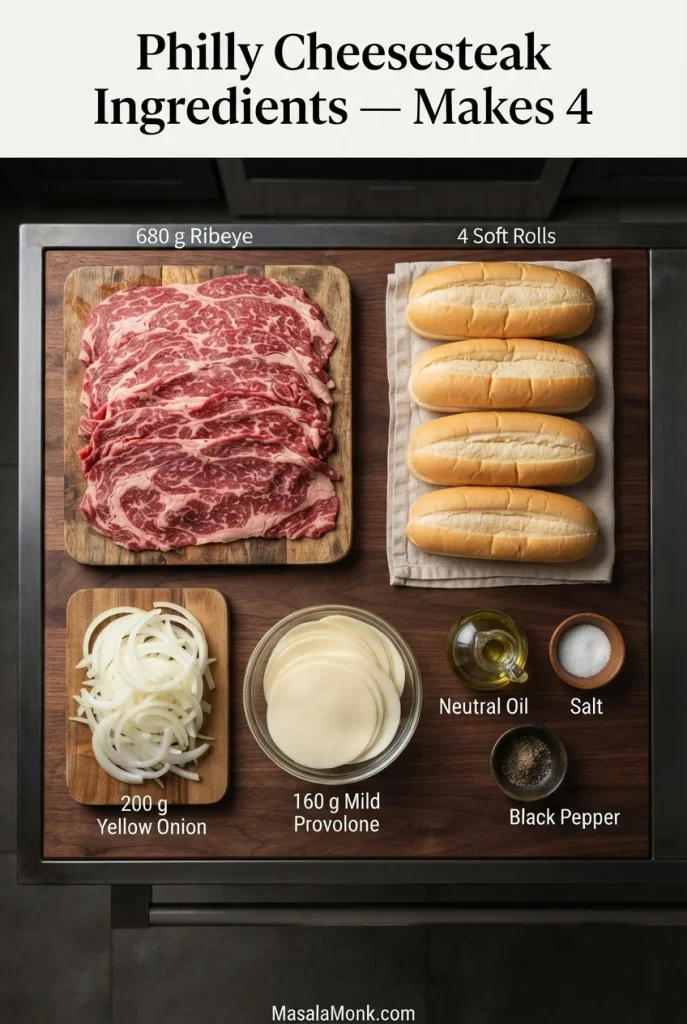
Still choosing what to buy? Compare beef cuts, cheeses, and rolls before starting the skillet method.
Beef Safety Before Cooking
Choose intact ribeye shaved from a whole-muscle cut, or follow the instructions on packaged shaved steak. US guidance for intact beef steaks is 145°F (63°C) measured with a food thermometer, followed by a three-minute rest. Loose, paper-thin slices are difficult to probe reliably; browning, sizzling and the estimated cooking time do not establish safe doneness. Do not treat a stack of slices as a reliably measurable steak. Mechanically tenderized, formed or otherwise processed beef may have different requirements, so follow its specific label directions. See FoodSafety.gov’s minimum-temperature chart.
How to Make Philly Cheesesteak in a Skillet
Prepare the Beef and Onions
- Prepare the beef. Keep pre-shaved beef refrigerated while you prepare the other ingredients. For whole ribeye, chill it briefly in the freezer until firm enough to slice thinly, often 20–45 minutes, but not frozen hard. Slice across the grain into flexible 1–2 mm pieces (roughly 1/16 inch). Gently loosen any refrigerated slices that are stuck together.
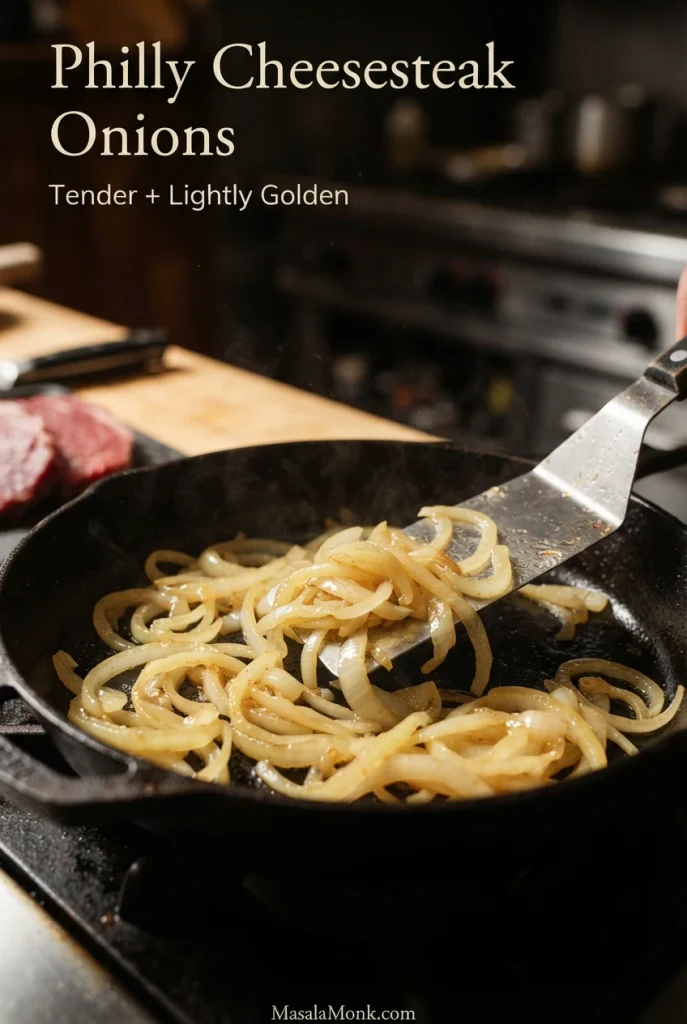
- Fry the onions. Heat 10 ml (2 tsp) oil in the skillet over medium heat. Add the sliced onion and cook for 10–15 minutes, stirring occasionally, until tender and lightly golden. The raw onion’s sharp aroma should turn sweeter. Lower the heat if the edges brown before the centers soften. Taste an onion strand before removing the pan from the heat; if it still tastes sharply raw, cook a little longer. Transfer the onions to a bowl and divide them into four portions.
Warm the Roll and Prepare the Pan
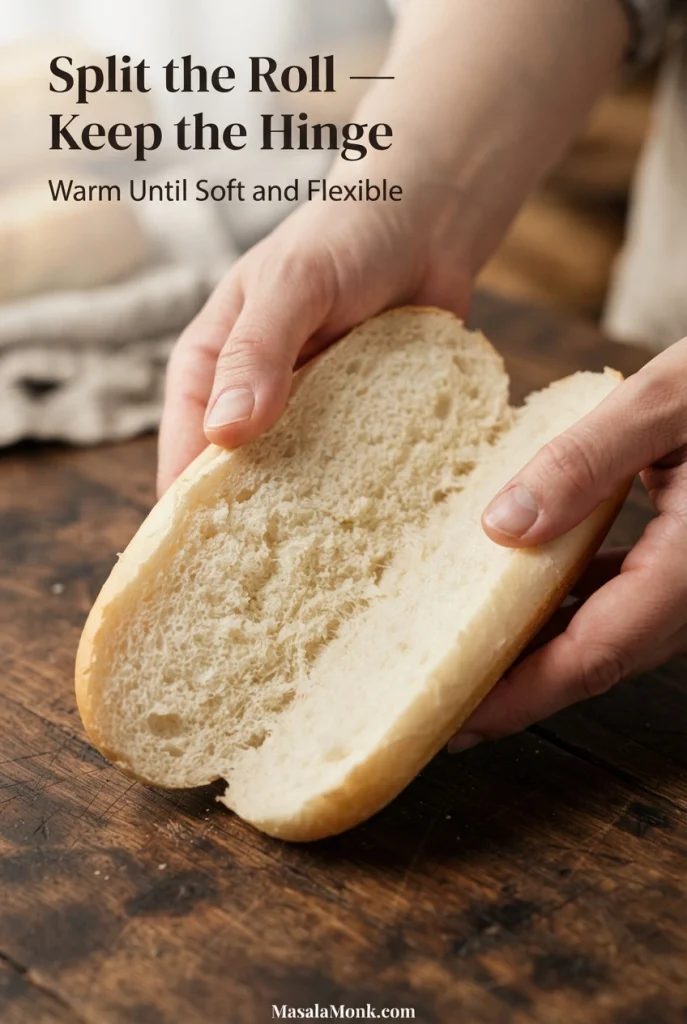
- Prepare the rolls. Split each roll lengthwise, keeping one side attached as a hinge. Leave all four ready but warm only the roll you’re about to fill. To coordinate with the beef, start warming the first one as you heat the skillet; a loose foil wrap in a 300°F (150°C) oven usually needs about 4–6 minutes. Warm later rolls as their batches approach completion. The bread should bend around the filling, not turn hard or brittle.
- Heat the skillet. Raise the heat to medium-high. Add the remaining 5 ml (1 tsp) oil and spread it across the pan. A small piece of beef should sizzle on contact. Well-marbled ribeye renders fat, so use that for subsequent batches and add a little more oil only if the surface becomes dry. Let the pan regain heat between portions.
Sear the Shaved Ribeye
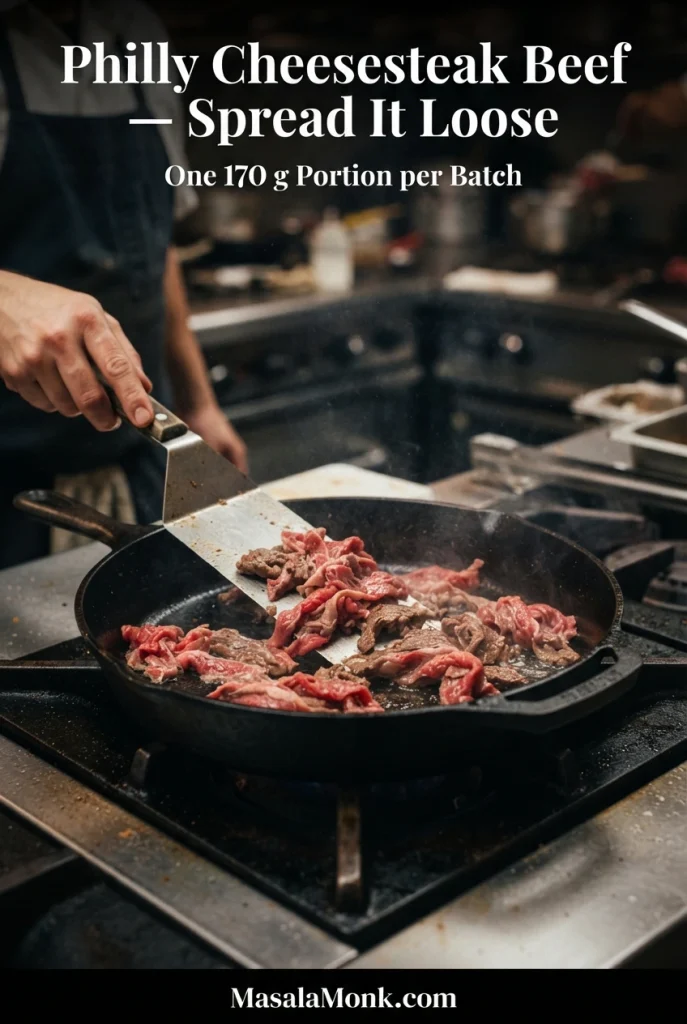
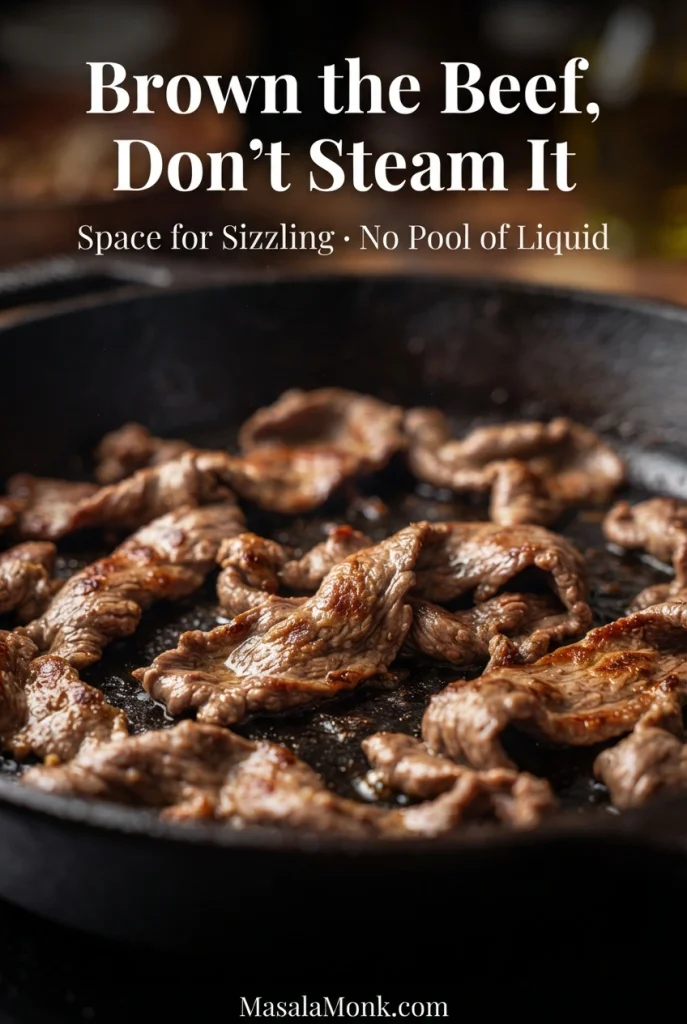
- Sear one portion. Spread 170 g (6 oz) shaved ribeye loosely across the hot skillet. Let the first surfaces begin to brown, then turn and separate the slices with a wide spatula. Sprinkle over roughly one-quarter of the salt and pepper. Thin slices may cook in about 2–4 minutes, depending on the product and pan; this is a workflow estimate, not a doneness test. Follow the product’s applicable safe-cooking requirements. If liquid pools, avoid repeatedly frying already-cooked beef to force browning. Give the next batch more space or a hotter recovered pan.
The next image shows the exposed pan surface between the separated pieces of beef as browning develops. Compare the arrangement with the first-sear photograph above.
Combine the Beef, Onions, and Cheese
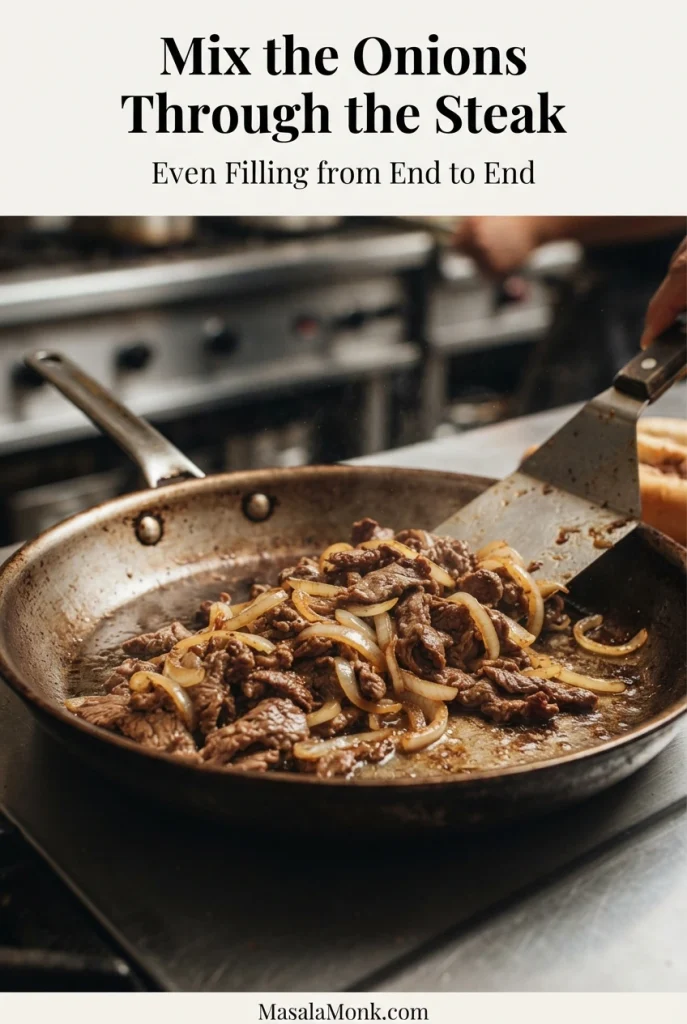
- Mix in the onions. Once the beef has met its applicable cooking requirements, add one portion of fried onions. Fold them through the slices so the onion is distributed along the sandwich, then gather the mixture into a loose mound as long as the roll. Leave excess rendered fat in the skillet.
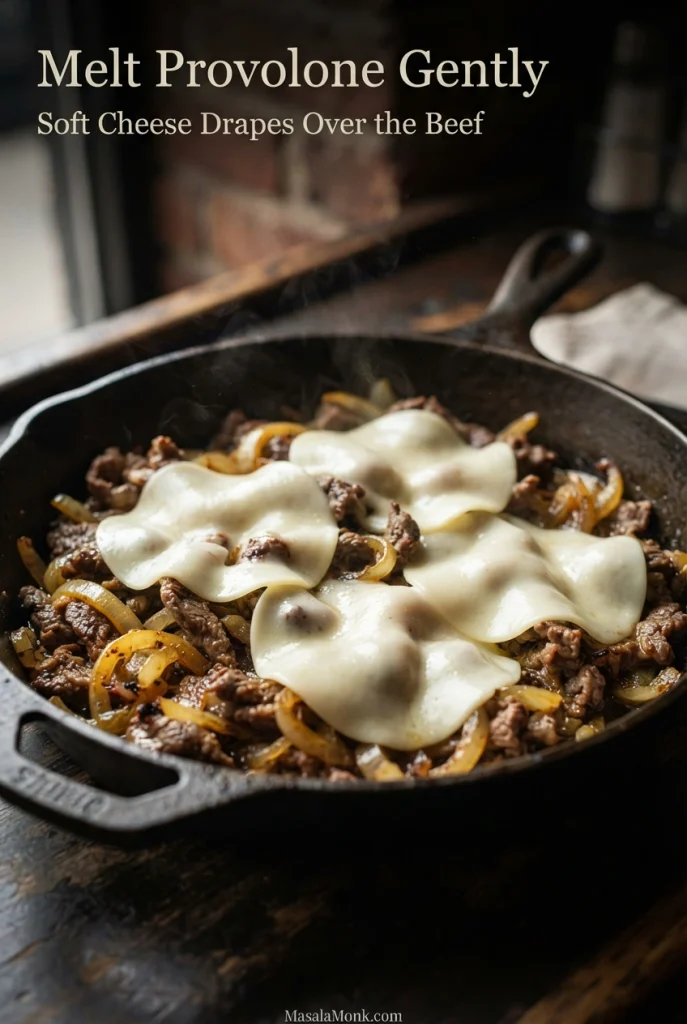
- Melt the provolone. Lay one prepared portion of cheese over the beef and onions. Turn the heat off and cover, checking after 30–90 seconds. If thick or cold slices remain stiff, use a little gentle heat rather than searing the beef again. The cheese should soften and follow the folds of the meat. Complete any required rest off the heat.
Fill the Hoagie Roll and Serve
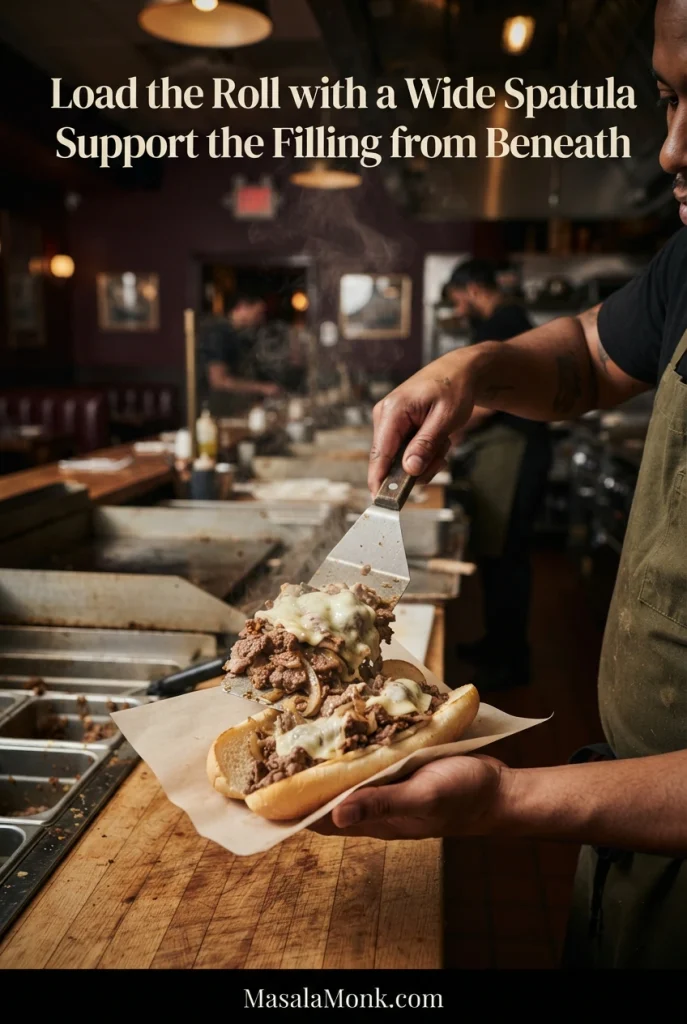
- Fill and serve. Slide a wide spatula under the mound and transfer it into the warm hinged roll. Spread the filling from end to end, then close the bread gently. Serve after the product’s applicable resting requirement is complete. Repeat with the remaining portions, bringing the skillet back up to heat each time.
What the Finished Philly Cheesesteak Should Look Like
A good cheesesteak gives you beef, onion, and melted cheese in every bite. The roll should hold the filling without cracking, and the cheese should coat the steak instead of sitting on it in stiff slices. A little meat juice is welcome; a puddle of grease isn’t.
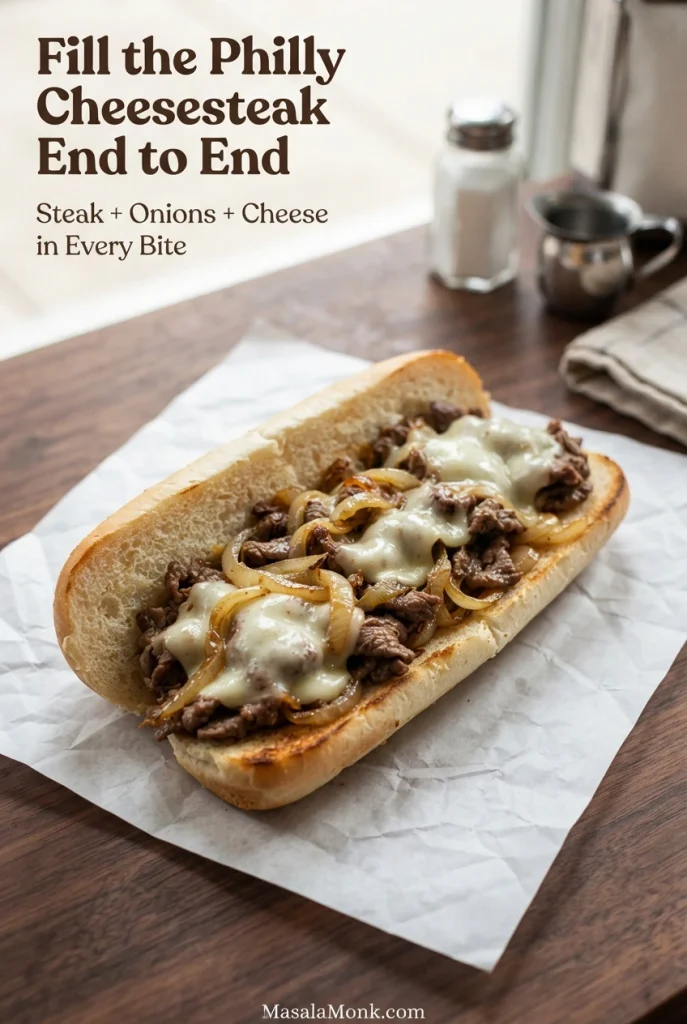
In the finished sandwich, the cheese nestles among the beef and onions while the soft roll still closes easily.
If the beef turned watery or the cheese stayed stiff, see the troubleshooting guide before cooking another batch.
What Makes a Philly Cheesesteak Authentic?
A traditional Philadelphia cheesesteak brings thinly sliced beef and melted cheese together in a long Italian-style roll. Fried onions are common but optional. Provolone, American cheese, and Cheez Whiz are all familiar Philadelphia choices.
The sandwich traces its roots to Philadelphia’s steak-sandwich tradition in the 1930s. Cheese was added later, and different shops developed their own preferences. Some chop the steak finely on the cooking surface; others leave more distinct slices. Cooper Sharp is another regional cheese choice.
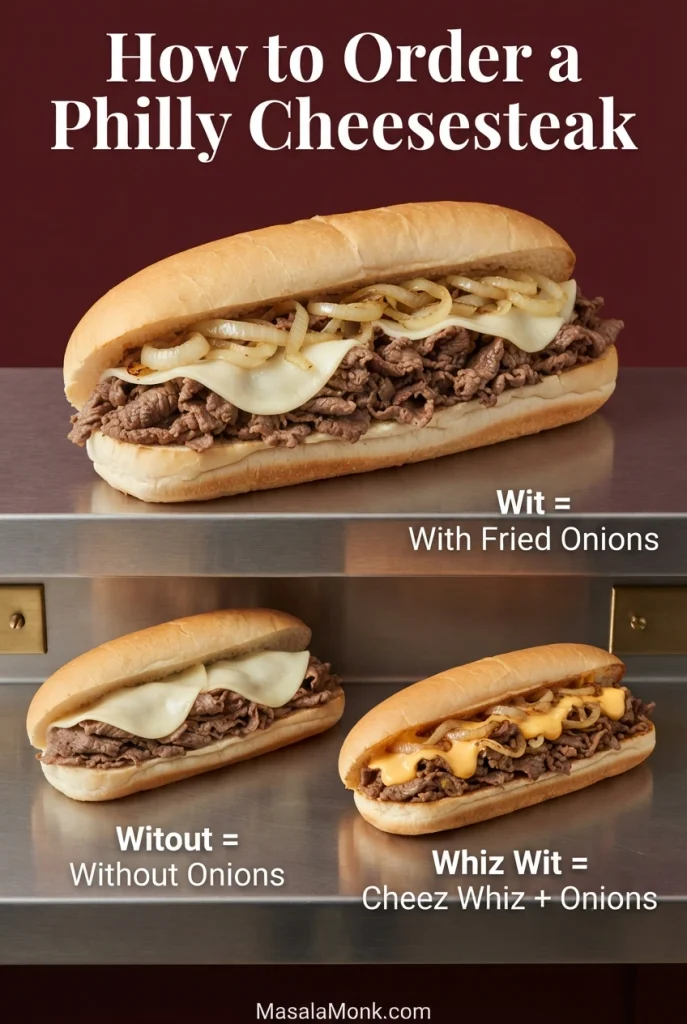
At a Philadelphia steak shop, “wit” means with fried onions and “witout” means without them. A “Whiz wit” comes with Cheez Whiz and onions. Peppers, mushrooms, mayonnaise, and garlic butter are possible additions, not requirements of the classic sandwich. For more local context, see Visit Philadelphia’s cheesesteak guide.
Choosing the Best Beef, Cheese, and Bread
Best Meat for Philly Cheesesteak: Ribeye, Sirloin, or Shaved Steak?
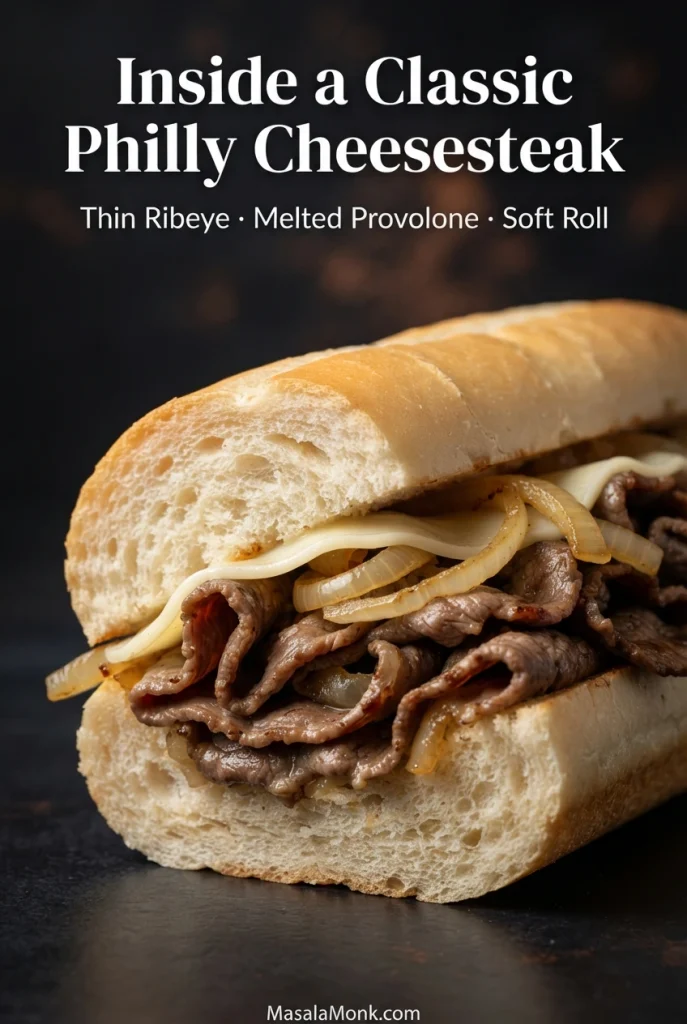
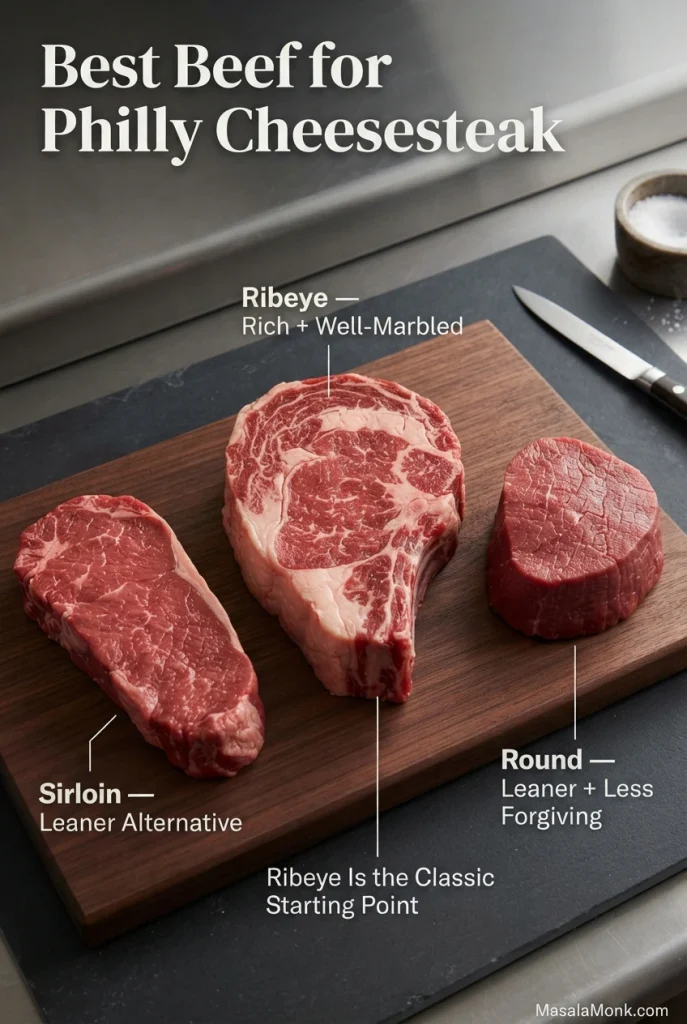
Ribeye is the best starting point for a classic Philly cheesesteak. Its marbling gives the beef rich flavor and helps the thin slices stay juicy during quick cooking. Sirloin is a leaner, often more economical alternative; round is less forgiving.
| Beef cut | What to expect |
|---|---|
| Ribeye | Well-marbled, flavorful, and tender when shaved thinly. |
| Sirloin | Leaner and often less expensive; it can dry out with prolonged heating. |
| Round | Usually leaner and firmer; careful cross-grain slicing matters. |
Buying Packaged Shaved Steak
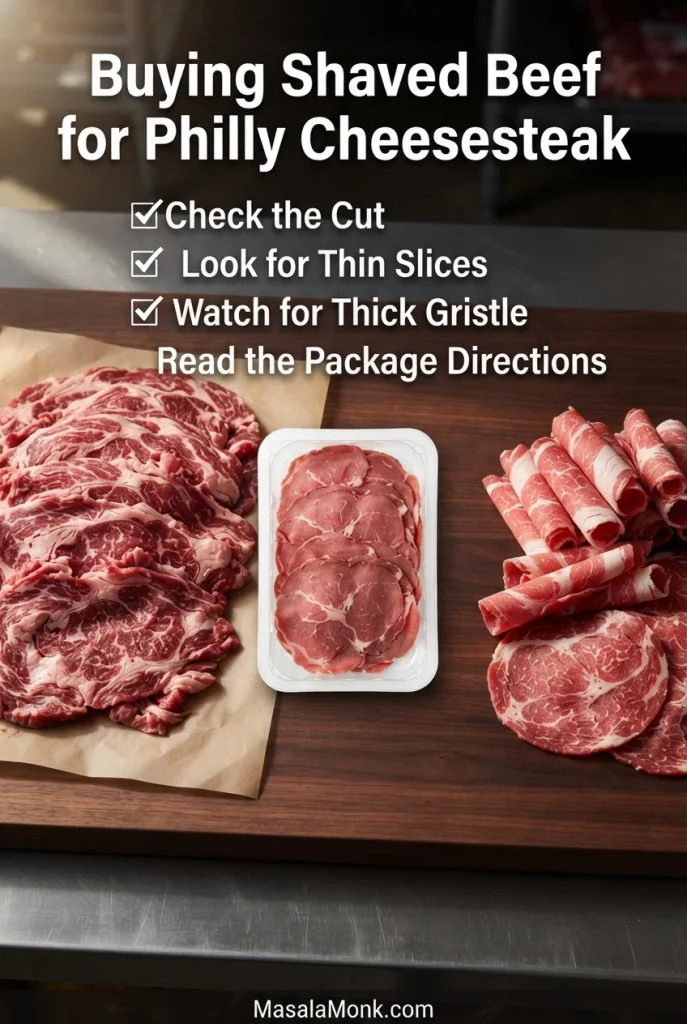
You don’t have to shave ribeye yourself. Ask a butcher to slice a piece you’ve chosen, or find packaged shaved steak that identifies the cut. Look for reasonable marbling, even slices, and little thick gristle. Thin hot-pot-style beef can also work when the cut and product instructions fit this preparation. Between similarly priced options, clearly labeled shaved ribeye is generally preferable to an unidentified mix simply called “shaved beef.”
How Thin Should Cheesesteak Meat Be?
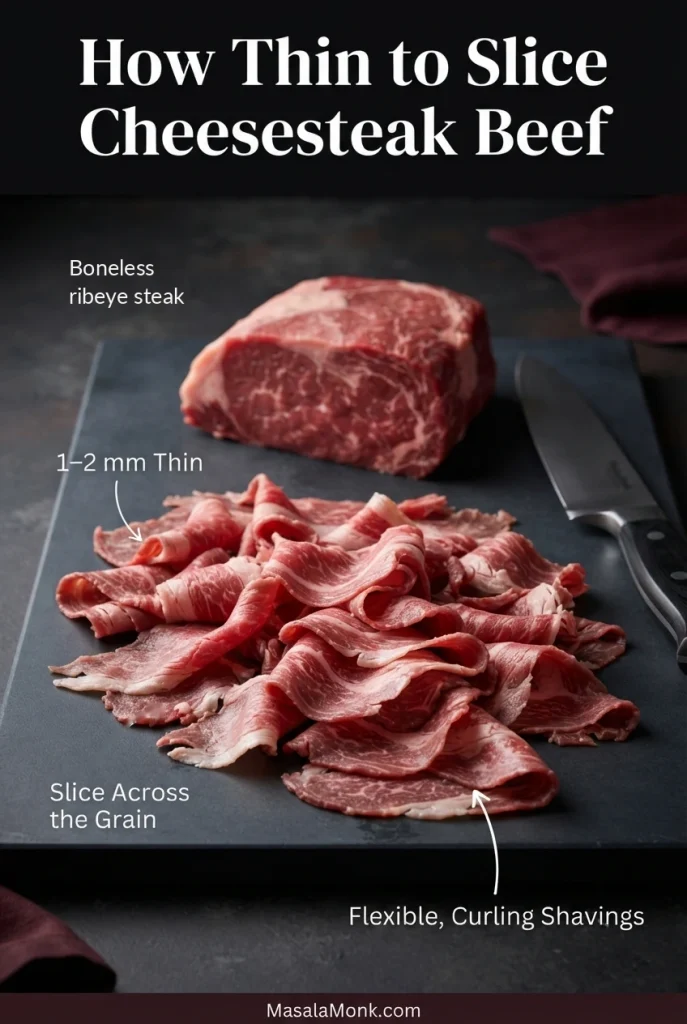
Thin and flexible is the goal. Aim for 1–2 mm slices, using roughly 1/16 inch as a reference. They needn’t be perfectly uniform; thick strips behave more like steak in a sandwich than shaved cheesesteak filling.
If your beef is already shaved and ready, head back to the skillet method.
Cut across the grain to shorten muscle fibers and make the cooked beef easier to chew. It’s the same technique used for thin strips in beef and broccoli stir-fry.
Follow the package directions for frozen shaved beef. Some products can be cooked from frozen; others need refrigerator thawing. Don’t pry solidly frozen pieces apart with a sharp knife or use an ordinary vegetable mandoline to shave raw beef.
Best Cheese for Philly Cheesesteak: Provolone, American, or Whiz?
Mild provolone lets the ribeye and onions lead. American cheese gives you a creamier, more cohesive filling, while warm Cheez Whiz delivers a saltier, sauce-like finish. All three are familiar Philadelphia choices, but the difference in the finished sandwich is substantial.
| Cheese | What it brings to the sandwich |
|---|---|
| Mild provolone | Savory, balanced flavor and a gentle, slightly stretchy melt. |
| White American | A smooth, creamy coating; folds easily through the filling. |
| Cheez Whiz | A salty, pourable cheese sauce; warm separately and spoon on. |
| Cooper Sharp | A more pronounced cheese flavor with rich melting qualities. |
| Low-moisture mozzarella | Mild and stretchy, although unlike the more familiar Philadelphia choices. |
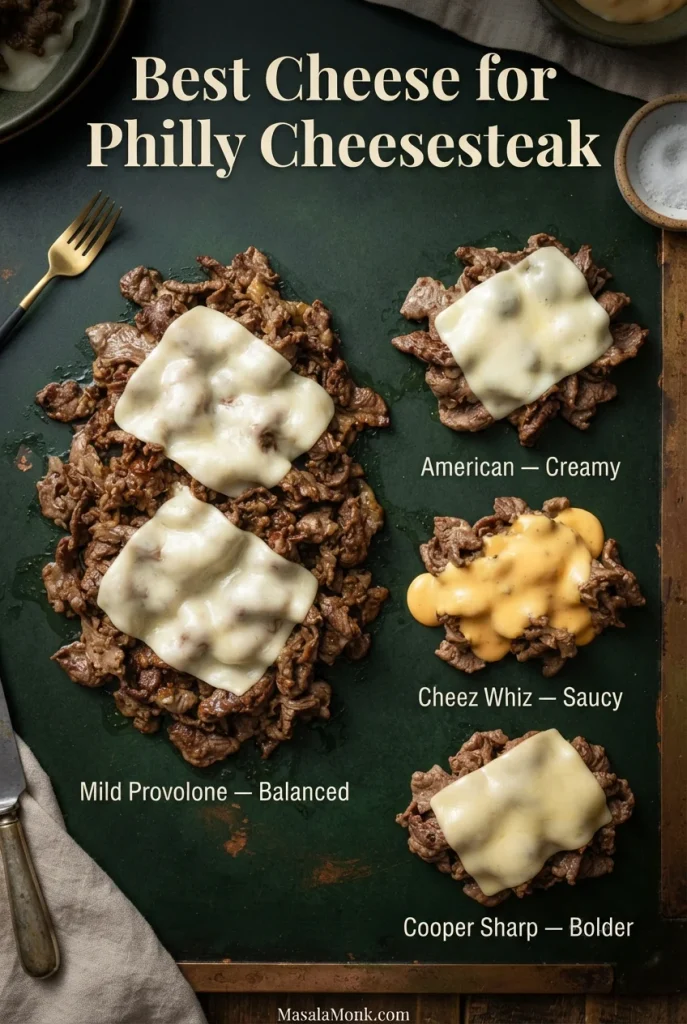
Aged provolone tastes considerably sharper than the mild cheese in the main recipe. For a quick melt over shaved steak, buy thin rather than thick slices.
Best Bread for Philly Cheesesteak
The most impressive-looking crusty loaf isn’t necessarily the best cheesesteak bread. Choose a soft Italian-style roll that yields when you bite it. Give it a light squeeze: the crust should give without cracking, while the interior still has enough structure to support hot steak and cheese.
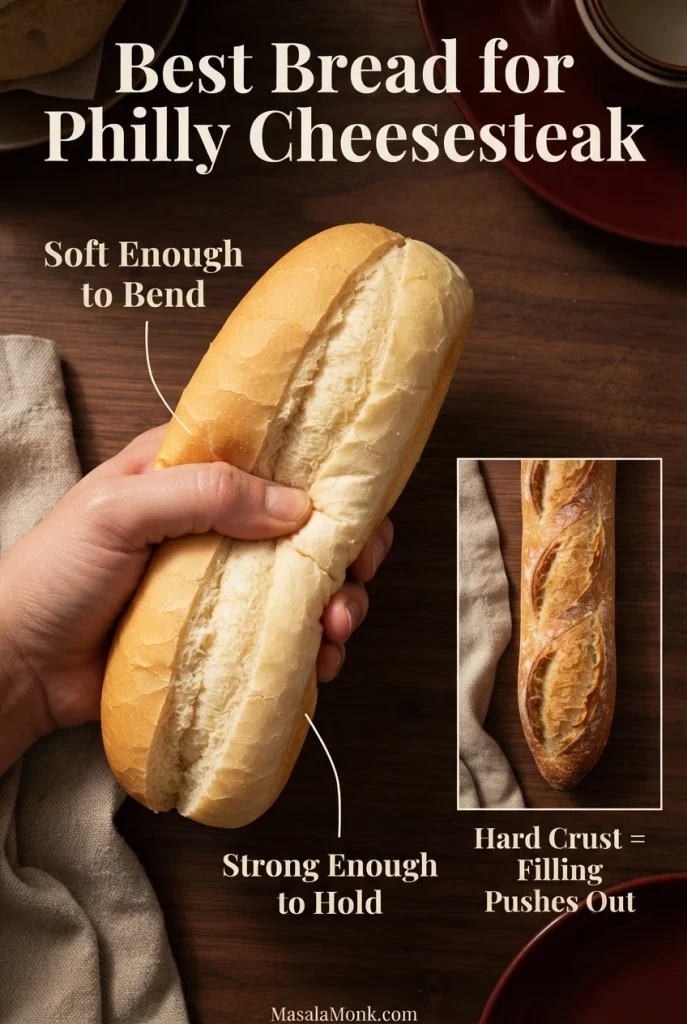
Philadelphia Italian rolls, including Amoroso-style rolls, are familiar choices. Elsewhere, a soft hoagie or sub roll works well. Fresh bread needs little warming; a very delicate packaged roll may benefit from briefly toasting just the cut surface to resist sogginess. A rigid baguette can push the meat out with every bite.
For homemade rolls, our sourdough bread guide includes hoagie and sub-roll ideas, though their flavor differs from traditional Philadelphia bread. An approximately 8-inch (20-cm) roll suits this filling; interior space matters as much as length.
Once your bread is ready, see how to transfer the filling into the warm hoagie roll without losing the melted cheese.
Troubleshooting Tough Beef, Watery Filling, and Soggy Rolls
| Problem | What to check or change |
|---|---|
| Grey, watery beef | Pan too crowded or too cool. Separate clumps and use smaller portions. |
| Chewy beef | Check the cut, gristle, grain direction, and slice thickness. |
| Dry beef | Lean cuts and prolonged heating are less forgiving. |
| Bland filling | Check salt, browning, and cheese before reaching for more sauce. |
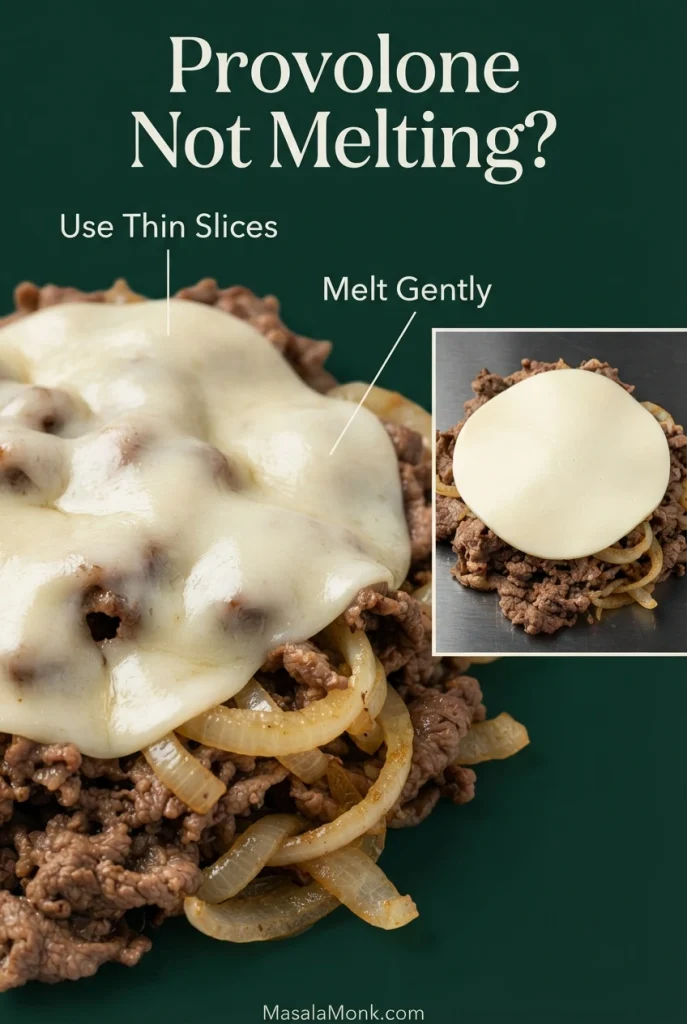
| Cheese won’t melt | Thin slices and gentle covered warmth work better than a second hard sear. |
| Greasy roll | Leave pooled rendered fat in the skillet. |
| Gluey cheese | Stop heating and stirring when the cheese has melted. |
| Soggy roll | Control unwanted filling moisture and assemble close to serving. |
| Hard roll | Choose softer bread and warm without heavy toasting. |
| Underfilled sandwich | Use a smaller roll or increase the beef portion. |
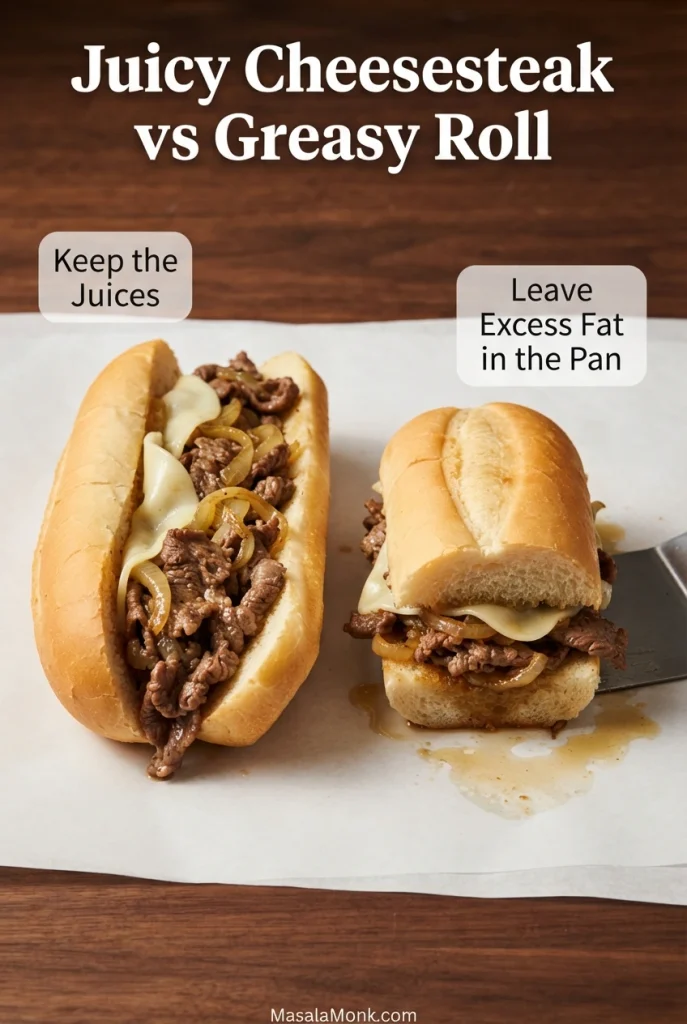
Juicy Cheesesteak or Greasy Roll?
A little moisture makes a cheesesteak pleasant to eat, but a spreading oil stain under the roll signals excess rendered fat. The comparison below shows the difference; lift the filling with a wide spatula and leave pooled fat in the pan.
Why Does Cheesesteak Beef Turn Watery?
If your beef is sitting in a puddle, finish that batch safely rather than cooking it endlessly to force browning. You may not get the seared edges you wanted this time. Repeated heating can make the thin pieces tougher and drier.
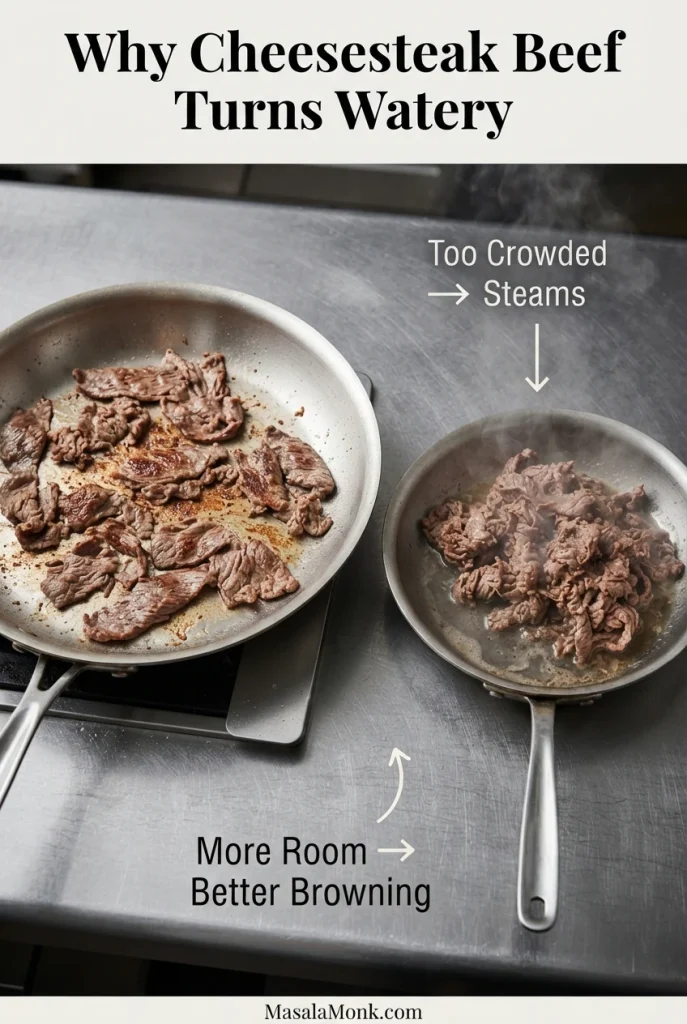
Too much cold meat drops the skillet’s surface temperature. Moisture then collects faster than it can evaporate, and the beef steams. Frozen or tightly clumped slices compound the problem. For the next portion, let the pan recover and give the slices more space.
Why Isn’t the Cheese Melting?
Cold or thick provolone takes longer to soften. Cover the filling and give it another short interval over gentle heat. The cheese should drape around the meat rather than sit on top like a stiff lid. American cheese melts more smoothly; Cheez Whiz is easiest to warm separately. There is no need to turn the burner back to high when the beef is already cooked.
Philly Cheesesteak on a Blackstone or Flat-Top Griddle
Start around 400–425°F (204–218°C) at the griddle surface. That’s a cooking-surface range, not the beef’s internal temperature. It’s a useful starting point, but the sizzling and browning tell you how the griddle responds when cold meat hits it.
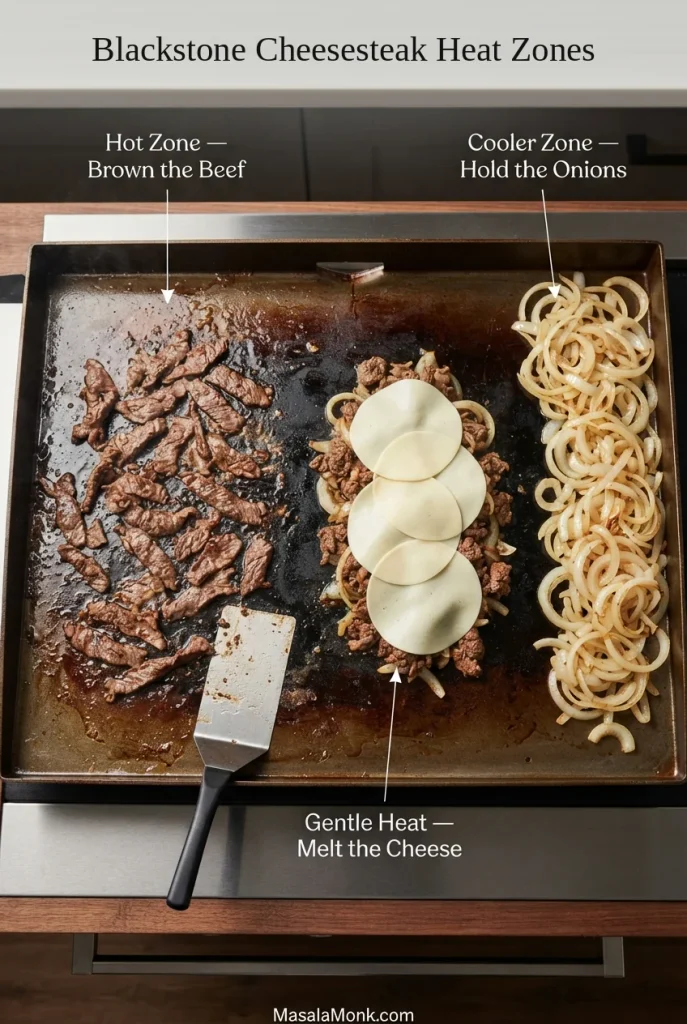
Cook and Assemble Cheesesteaks on the Griddle
Cook the onions first, then move them to a cooler zone. Spread four beef portions on the hotter surface with space between them. Weak sizzling and pooled liquid suggest the griddle is too cool for the load or the meat is crowded; quick scorching calls for less heat or a cooler zone.
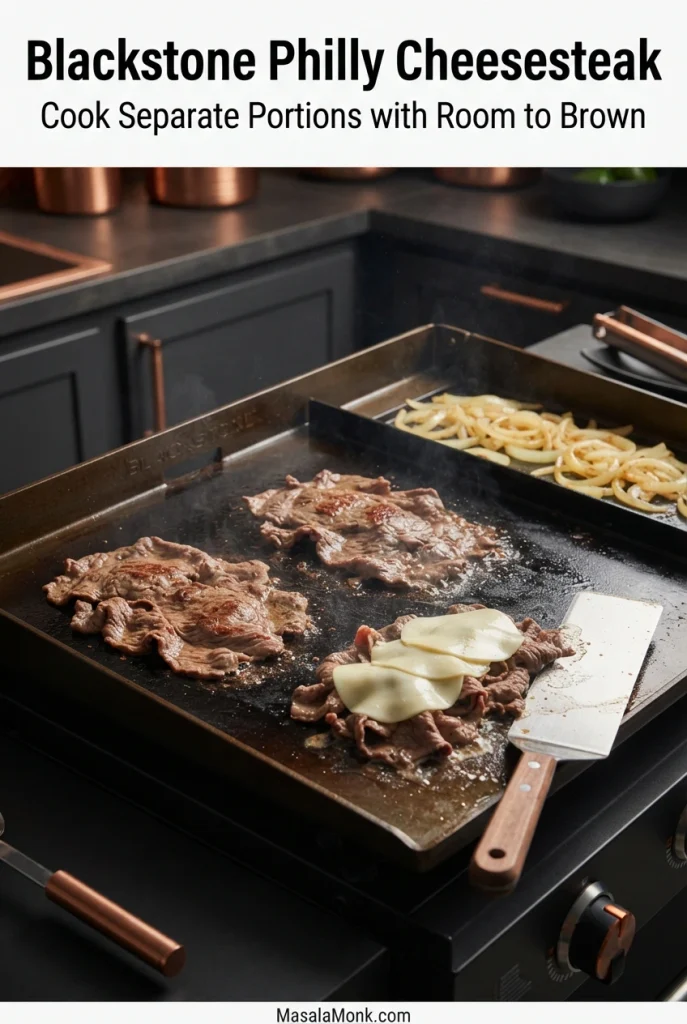
Turn and separate the beef, cooking it in accordance with the product’s applicable safety directions. Fold onions into each portion, lay cheese over the top, and cover with a griddle dome. A tiny splash of water on an empty spot under the dome can help the cheese melt; keep it away from the beef and bread. Transfer the filling into warm rolls once it is ready to serve, including any applicable resting time.
Cooking without a griddle? Use the skillet cooking method instead.
Philly Cheesesteak Variations and Substitutions
Keep the classic beef-and-roll method, then change one topping at a time. If people want different fillings, keep peppers and mushrooms separate until the sandwiches are assembled.
Vegetable Variations: Peppers and Mushrooms
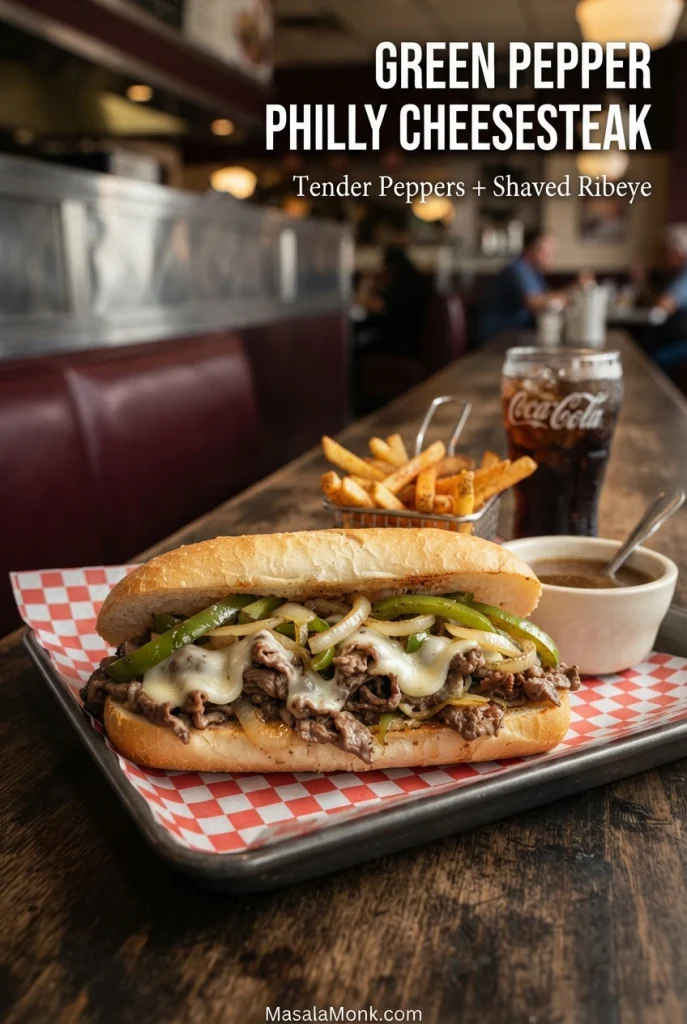
- Green pepper cheesesteak: Add 150 g (5 oz) thinly sliced green bell pepper for four sandwiches. Cook with the onions until tender and excess moisture has evaporated.
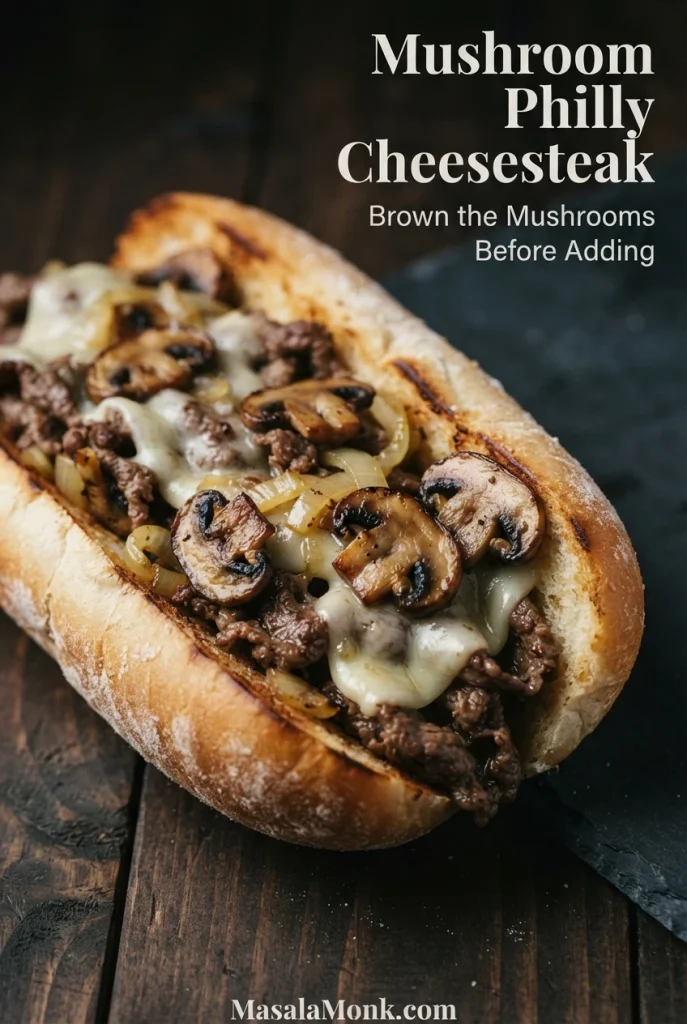
- Mushroom cheesesteak: Brown 150 g (5 oz) sliced mushrooms separately until much of their released moisture has evaporated. Add with the onions for a deeper, earthier flavor.
Cheese Variations: American and Cheez Whiz
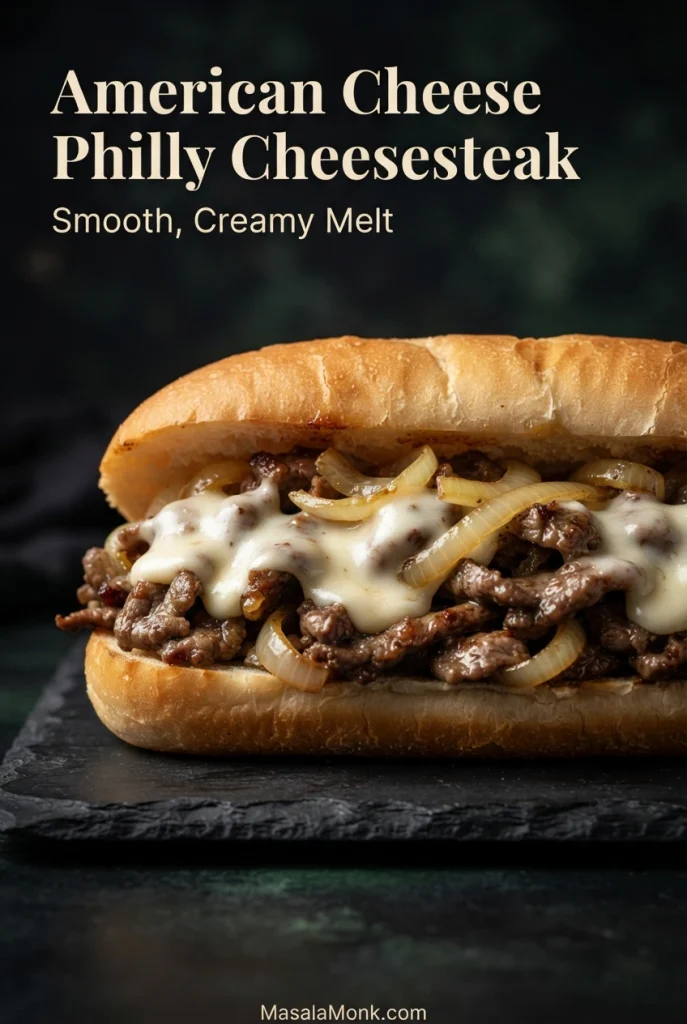
- American cheese cheesesteak: Replace provolone with 160 g (about 5½ oz) white American cheese. Melt over the beef or gently fold through for a creamier coating.
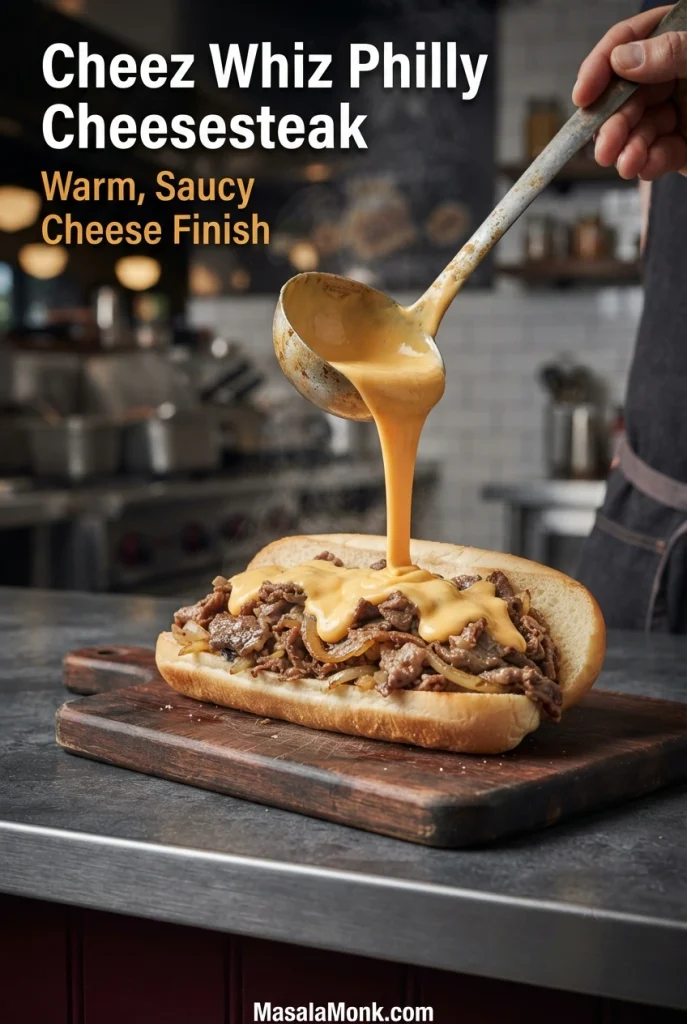
- Cheez Whiz cheesesteak: Warm according to the package directions and spoon 30–40 g (about 1–1½ oz) onto each filled sandwich.
Bread, Beef Portions, and Onion Styles
- Garlic-butter rolls: Blend 15 g (1 tbsp) softened butter with a little grated garlic or garlic powder; spread lightly on the cut sides of four rolls and toast just enough to warm.
- Sirloin cheesesteak: Use 680 g (1½ lb) thinly shaved sirloin instead of ribeye. Because it has less marbling, avoid holding it over heat once appropriately cooked.
- Extra-large cheesesteaks: Use 225 g (8 oz) raw beef per sandwich, or 900 g (about 2 lb) for four. Increase cheese or onions as desired and choose rolls with room for the filling.
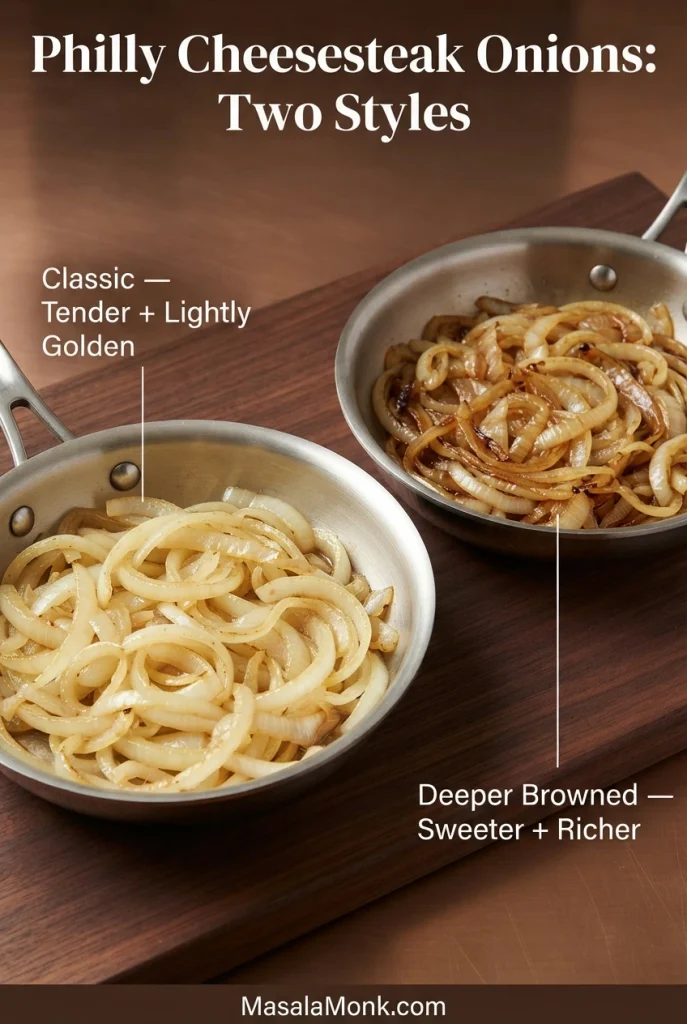
- Deeper, sweeter onions: Cook the onions longer over gentle heat until richly golden. They’re sweeter than the lightly fried version; our French onion soup recipe explains the slower browning technique.
Crisp, salted fries are a natural side. Our homemade French fries recipe covers golden exteriors, fluffy centers, and several methods.
Ready to cook the version you chose? Back to the classic Philly cheesesteak recipe.
Make-Ahead, Storage, and Reheating
What Can You Prepare Ahead?
Slice onions ahead and refrigerate them covered, or cook them in advance and rewarm just before making the sandwiches. You can portion shaved raw beef ahead too; keep it refrigerated until cooking. For freezing, package beef in sandwich-sized portions with food-safe parchment between layers if helpful, and thaw in the refrigerator when required by the product directions.
How Long Does Cooked Cheesesteak Filling Last?
Properly refrigerated cooked cheesesteak filling keeps for 3–4 days. Transfer it promptly to shallow, covered containers and refrigerate at 40°F (4°C) or below. Keep the rolls separately to preserve their texture.
Refrigerate perishable cooked food within two hours, or within one hour when the surrounding temperature exceeds 90°F (32°C).
How to Reheat a Philly Cheesesteak
Reheat cooked beef-and-onion filling to 165°F (74°C), then transfer it into a freshly warmed roll. Use a covered skillet over moderate heat, with a small splash of water if the filling needs moisture to prevent sticking. Add cheese once the filling is hot, let it melt, and assemble. A microwave works too if the filling heats evenly to the required temperature.
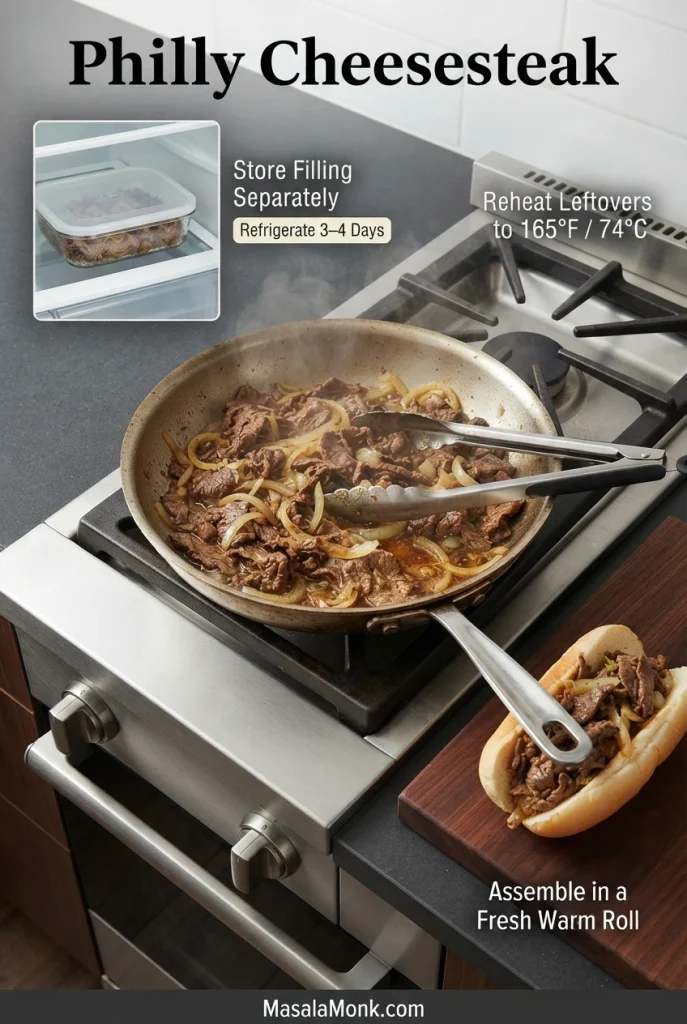
Reheating an assembled cheesesteak is harder because the bread may turn wet or rubbery before the center heats through. For packed lunches, keep the filling safely chilled in transit and reheat before assembly when possible. Wrapping a hot sandwich traps steam but doesn’t replace safe temperature control.
Making a fresh batch instead? Return to the ingredients for four cheesesteaks.
Frequently Asked Questions
Does Philly Cheesesteak Need Worcestershire Sauce?
No. Worcestershire appears in some homemade versions, but classic cheesesteak flavor comes from beef, fried onions, salt, and cheese. A little can add tang, though it also contributes salt and moisture.
Do You Have to Chop Philly Cheesesteak Meat?
No. Some Philadelphia shops chop the steak finely, while others leave distinct slices. Separating and turning shaved beef is enough for this method; further chopping is optional if you prefer smaller pieces.
Can You Make Philly Cheesesteak Without Cast Iron?
Yes. A heavy stainless-steel skillet, a suitable nonstick pan, or a flat-top griddle can work. Match the heat to the cookware, follow any nonstick temperature limits, and give the beef enough space to brown.








