
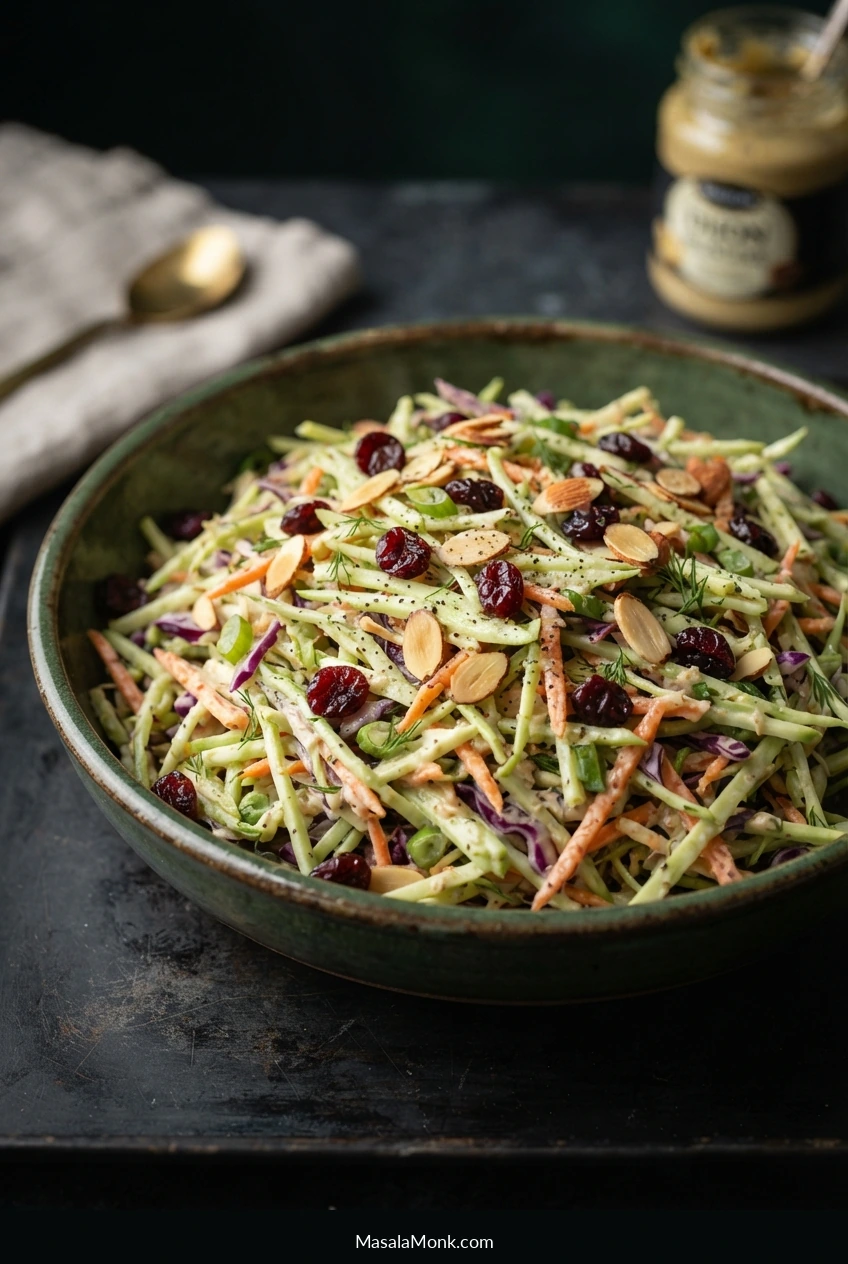
Broccoli stalks make excellent slaw once you peel away their tough outer skin. This broccoli slaw recipe combines their crisp, juicy centers with carrots, red cabbage, and creamy Dijon dressing for the familiar tang of coleslaw with a firmer bite.
Start with whole broccoli and allow about 25–35 minutes, or use a ready-shredded bag for a 5–10-minute shortcut. Serve the slaw with barbecue or grilled chicken, or tuck it into a crispy sandwich.
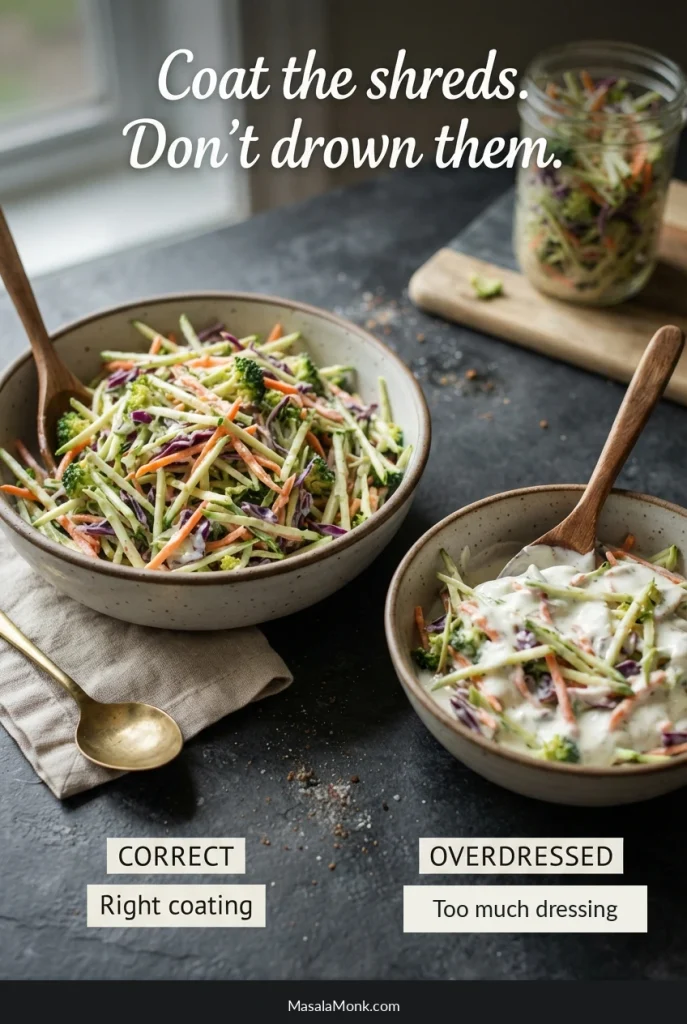
The goal is a light coating that lets the vegetables remain distinct. Dried cranberries and toasted almonds bring an optional sweet-crunchy finish; leave them out for a savory version.
Jump to: Complete recipe · Bagged shortcut · Shredding broccoli · Dressing fixes · No-mayo dressings · Troubleshooting · Make-ahead & storage
Easy Broccoli Slaw Recipe
Unlike classic creamy cabbage coleslaw, this version relies on peeled broccoli stalks for its bite. Slice them thinly enough to chew comfortably; thick, stringy pieces are the texture to avoid.
Servings: 6 small sides
Prep time: About 25–35 minutes from whole broccoli (closer to the faster end with efficient shredding or a food processor)
Cook time: None for the slaw; optional 3–5 minutes to toast toppings
Optional chilling: 30 minutes
Total time: About 25–35 minutes without chilling or toasting
Broccoli Slaw Ingredients
- 300 g prepared broccoli — mostly peeled, shredded stalks, with finely chopped florets if desired
- 100 g carrots — coarsely grated or cut into thin matchsticks
- 75 g red cabbage — finely shredded
- 20 g scallions — thinly sliced
- 40 g dried cranberries — optional
- 35 g sliced almonds or sunflower seeds — optional
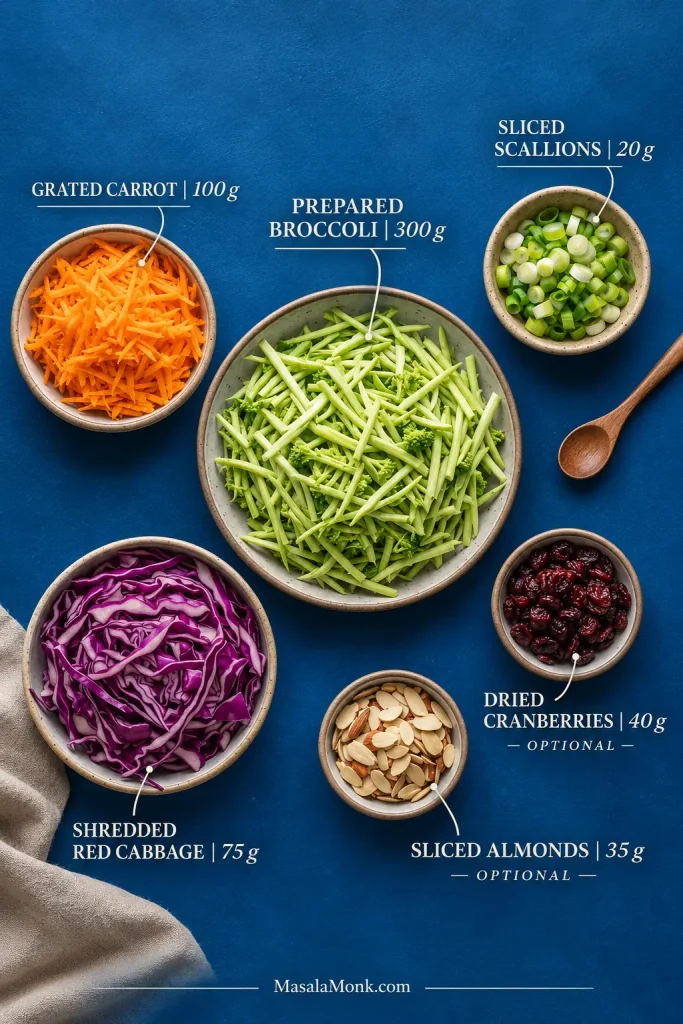
The vegetables weigh 495 g (17.5 oz) before dressing and optional toppings. Once dressed, the recipe makes approximately six small side servings, generally around 100–120 g each depending on how much dressing and which toppings you use.
Buying broccoli: The 300 g is the prepared weight, after removing woody ends and fibrous skin, not the weight of whole heads at the store. Choose broccoli with thick, substantial stalks and allow extra for trimming. You can include tender florets in that 300 g if you chop them finely; there’s no need to buy several stalk-heavy heads if you have florets to use as well. For the cutting method, see how to peel and shred broccoli stalks.
Creamy Broccoli Slaw Dressing
- 120 g mayonnaise — approximately ½ US cup
- 15 ml apple cider vinegar — 1 tablespoon
- 10 g Dijon mustard — approximately 2 teaspoons
- 10 g honey — approximately 1½ teaspoons
- ¼ teaspoon fine salt — start with less if your mayonnaise is salty
- ¼ teaspoon black pepper
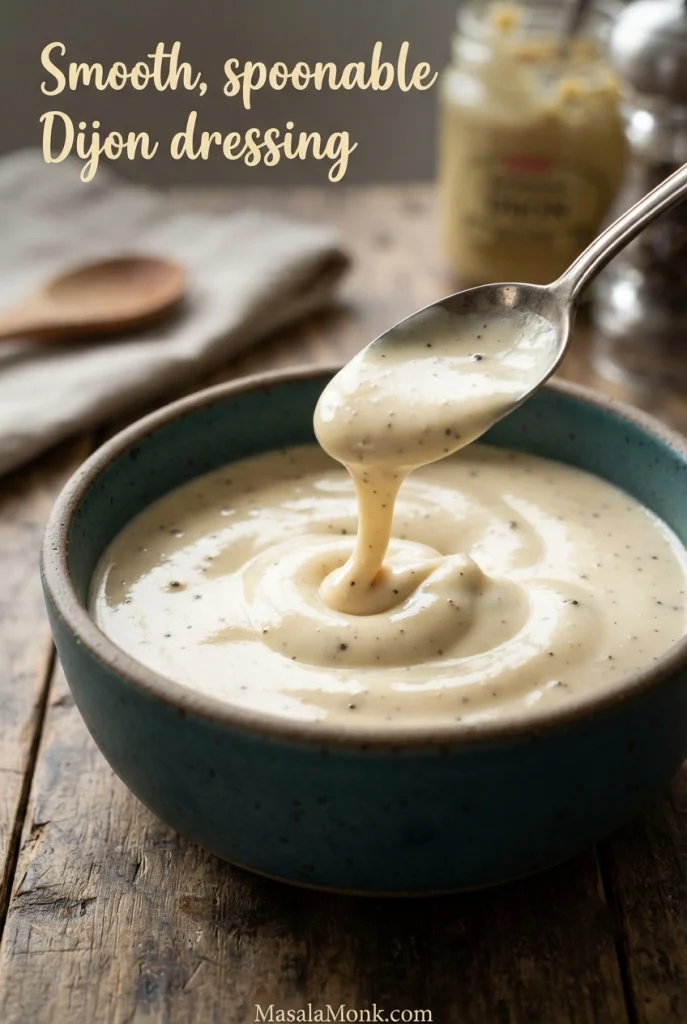
Recommended coating: Whisk the full dressing batch, then start with about two-thirds (roughly 100 g). Add more after tossing only if needed. For flavor adjustments, see the dressing correction guide.
Commercial mayonnaise is convenient here. You can also make homemade mayonnaise; if it contains uncooked egg, use pasteurized eggs or egg products.
Simple swaps: Fresh lemon juice works instead of cider vinegar. Yellow mustard can stand in for Dijon, though it may taste milder or sweeter. If you’re adding fruit or prefer a less sweet slaw, use 5 g honey instead of 10 g.
Equipment
A sharp knife, vegetable peeler, cutting board, large mixing bowl, small bowl, and whisk are enough. For shorter shreds, use a box grater; for larger batches, try a food processor with a shredding or julienne disc.
How to Make Broccoli Slaw
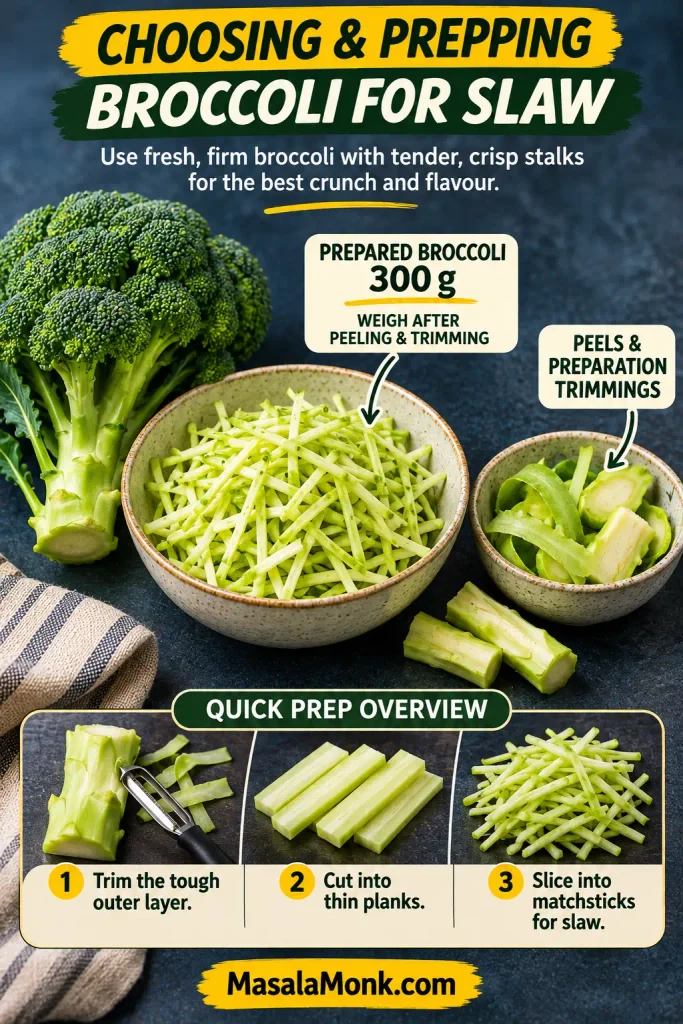
- Prepare the broccoli. Wash and dry it. Trim the woody ends and peel off the thick, fibrous outer layer. Cut the tender centers into narrow matchsticks, roughly 2–3 mm wide, or coarsely grate them. Finely chop any florets you’re using. Weigh out 300 g of prepared broccoli.
- Shred the other vegetables. Grate the carrots, slice the cabbage thinly, and chop the scallions. Combine them with the broccoli in a large bowl. Pat away extra water from washing.
- Whisk the dressing. Mix the mayonnaise, cider vinegar, Dijon mustard, honey, salt, and pepper until smooth. Taste it: the dressing should seem slightly sharper than you want the finished salad, because the raw vegetables soften its flavor.
- Toss. Add about two-thirds of the dressing, lifting and turning the shreds with tongs or two large spoons. Check the coating after a thorough toss. If the vegetables still look dry, add another tablespoon of dressing.
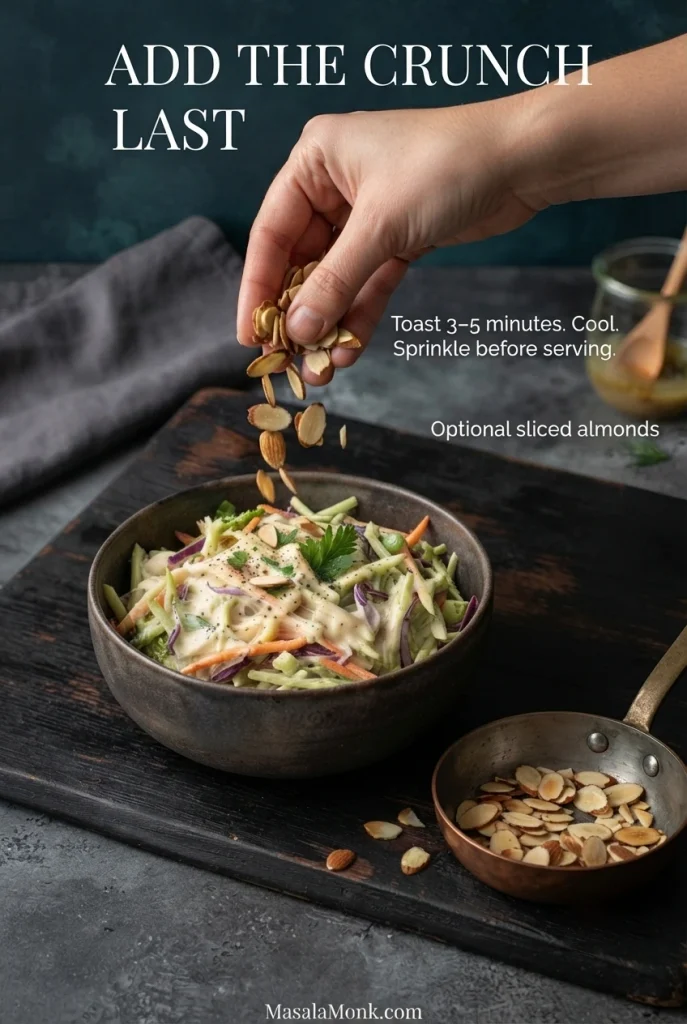
- Add optional extras. Fold in the cranberries if using. Hold the toasted almonds or sunflower seeds back until serving.
- Serve or chill. Serve now for the crispest texture, or refrigerate covered for about 30 minutes for a slightly more settled flavor. Toss again, then add the nuts or seeds just before serving.
Check the Coating and Finish the Slaw
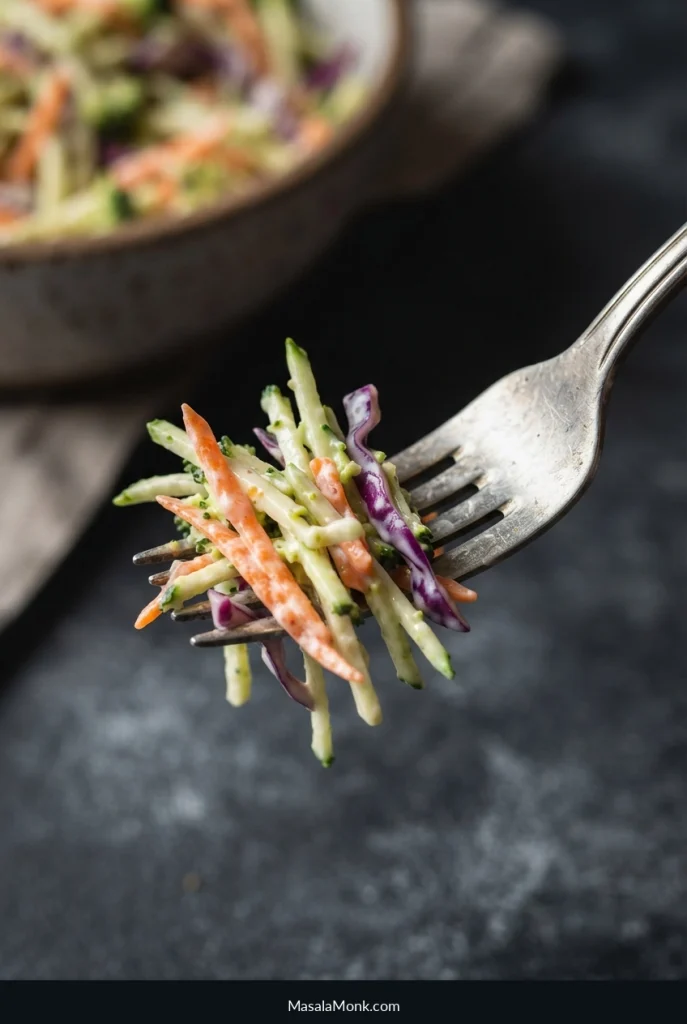
The coating check: Lift a forkful. You should see individual broccoli shreds with dressing clinging to them, not a heavy pool of mayonnaise at the bottom of the bowl. A large puddle means you’ve probably added too much. Stop adding dressing and fold in more undressed vegetables if available.
The finished slaw should be mildly tangy, gently sweet, and noticeably crisp. Dijon should be noticeable, but it shouldn’t overpower the broccoli.
If you want the optional toppings toasted, stir them in a dry skillet over medium-low heat for about 3–5 minutes until lightly golden, then cool before using.
Making a larger batch? Double the vegetables and dressing ingredients for approximately 12 small side servings. Shred with a food processor if you’re working with several stalks.
Broccoli Slaw With a Bagged Mix: 5–10-Minute Shortcut
Got a 12-oz bag of broccoli slaw in the fridge? That’s the chopping done. The mix usually contains shredded broccoli stems and carrots, sometimes with cabbage. One bag makes about four small side servings.
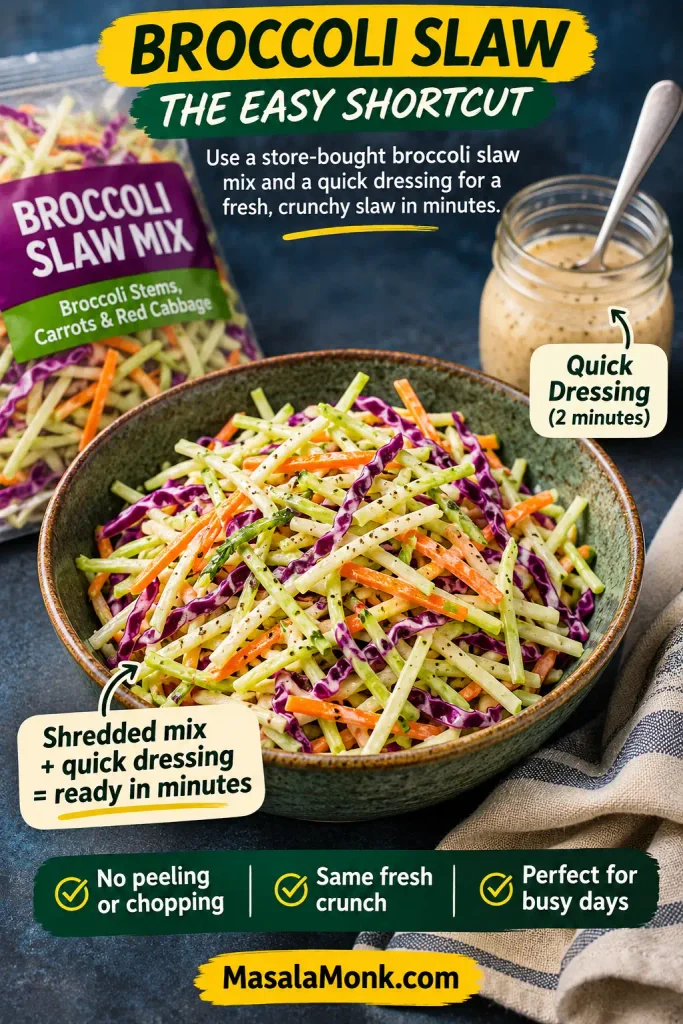
Quick Dressing for a 12-oz Bag
- 80 g mayonnaise — approximately ⅓ cup
- 10 ml cider vinegar — 2 teaspoons
- 7 g Dijon mustard — approximately 1½ teaspoons
- 7 g honey — approximately 1 teaspoon
- ⅛ teaspoon fine salt and a pinch of black pepper
Three-Step Bagged Broccoli Slaw
- Whisk the dressing ingredients together until smooth.
- Toss the 12-oz (340 g) bag with ¼ cup (60 ml) of dressing for a light coating. Add another tablespoon or two if you prefer a creamier result.
- Serve immediately, or chill briefly. Add any scallions, dried cranberries, or toasted seeds just before serving.
The dressing formula intentionally makes extra for a creamier coating. You don’t need to use it all.
How Much Dressing for Different Bag Sizes?
| Bagged slaw | Start with |
|---|---|
| 12 oz / 340 g | ¼ cup / 60 ml |
| 16 oz / 454 g | ⅓ cup / 80 ml |
| 18 oz / 510 g | 6 tbsp / 90 ml |
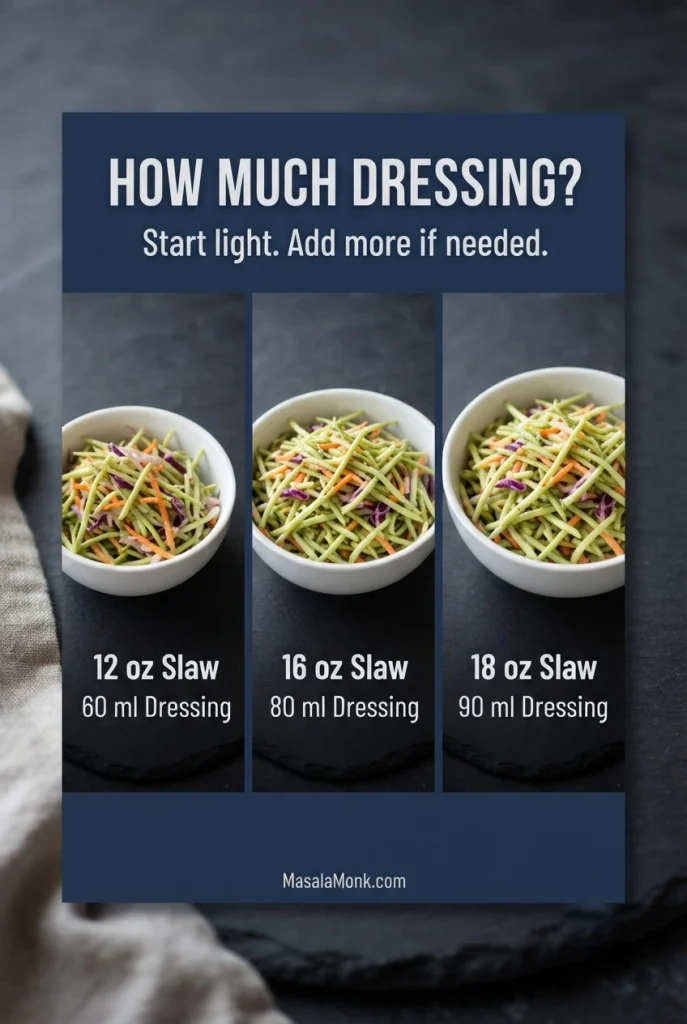
These are starting amounts for lightly dressed slaw, not strict maximums. For the larger bags, the full-size dressing recipe gives you room to add more.
Saving unused dressing: Refrigerate it promptly in a clean, covered container at 4°C (40°F) or colder. When made with commercially prepared mayonnaise and handled safely, use it within 3–4 days as a conservative leftovers guideline. Homemade mayonnaise may need more restrictive handling; follow its recipe’s guidance, especially if eggs are involved.
Check the package before washing the slaw. Produce labeled pre-washed or ready-to-eat can be used without washing again; otherwise follow its directions. See the FDA’s fresh-produce handling guidance.
Only using part of the bag? Keep the rest undressed and refrigerated according to its packaging. For storage, see how long broccoli slaw lasts. The shreds work in wraps or sandwiches, including the lentil-and-white-bean option in our high-fiber sandwich ideas.
How to Peel and Shred Broccoli Stems
Most of a broccoli stalk is edible. It’s the fibrous outer skin and sometimes the dry bottom that need removing. If a stalk looks too woody to eat raw, don’t discard it before checking the center.
Cut across the bottom of a thick stalk. You’ll often see a paler inner section surrounded by a firmer outer ring.

Trim the base and peel away the outside with a vegetable peeler or knife. Cut a thin slice from the peeled center and check it: if it still feels stringy or difficult to chew, peel deeper or remove that hard section.
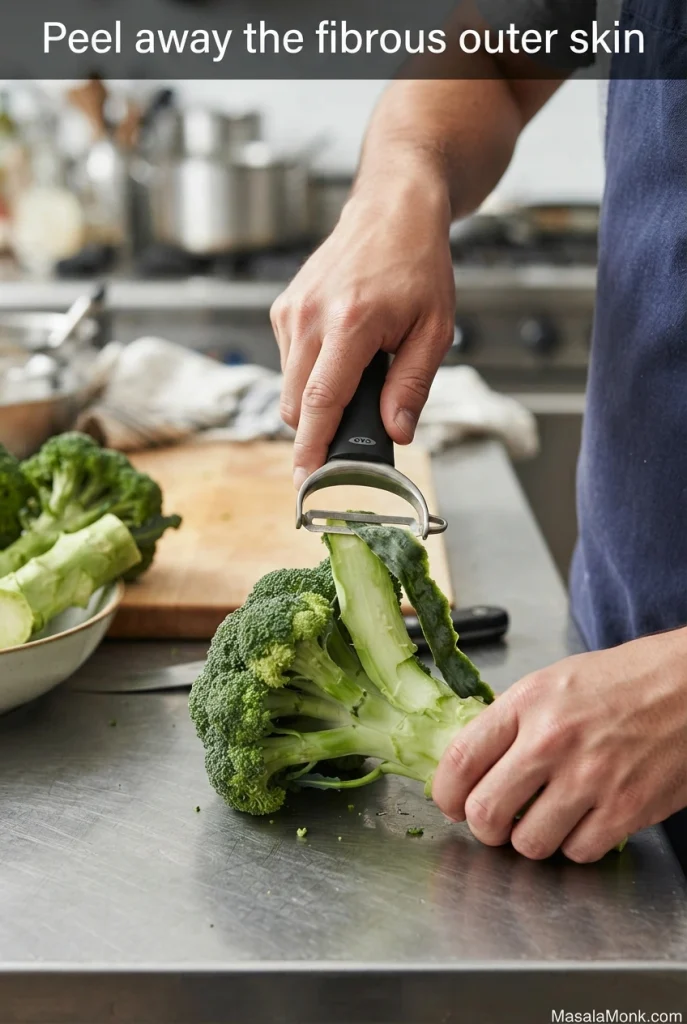
Cut Broccoli Stems Into Matchsticks or Grate Them
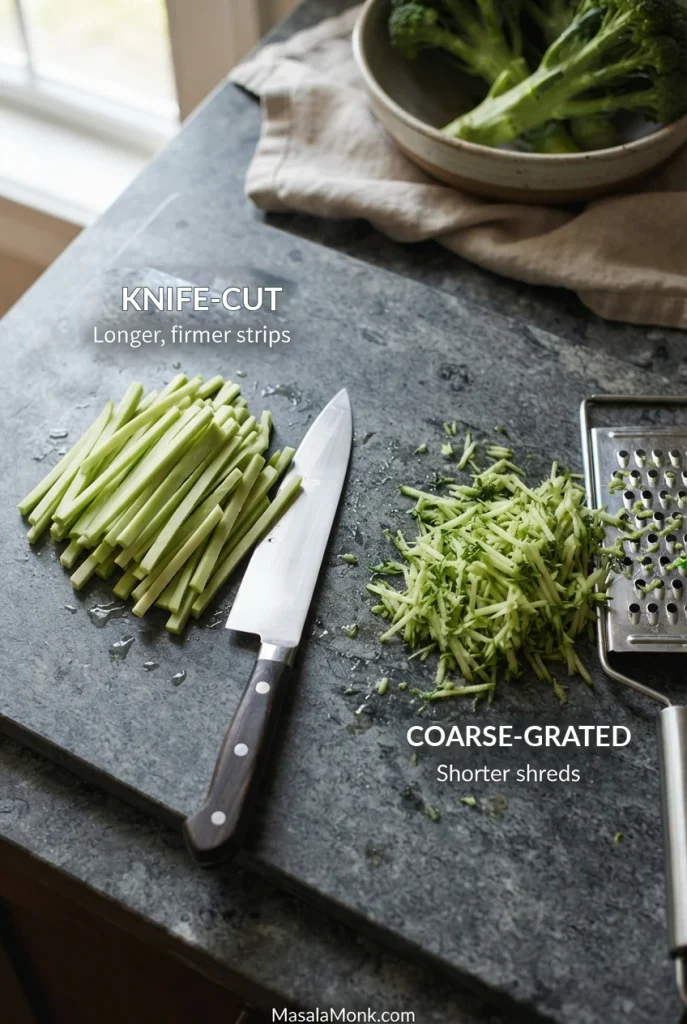
Cut the tender stalk lengthwise into thin planks, stack a few, and slice into matchsticks about 2–3 mm wide. This gives the slaw longer, firm shreds.
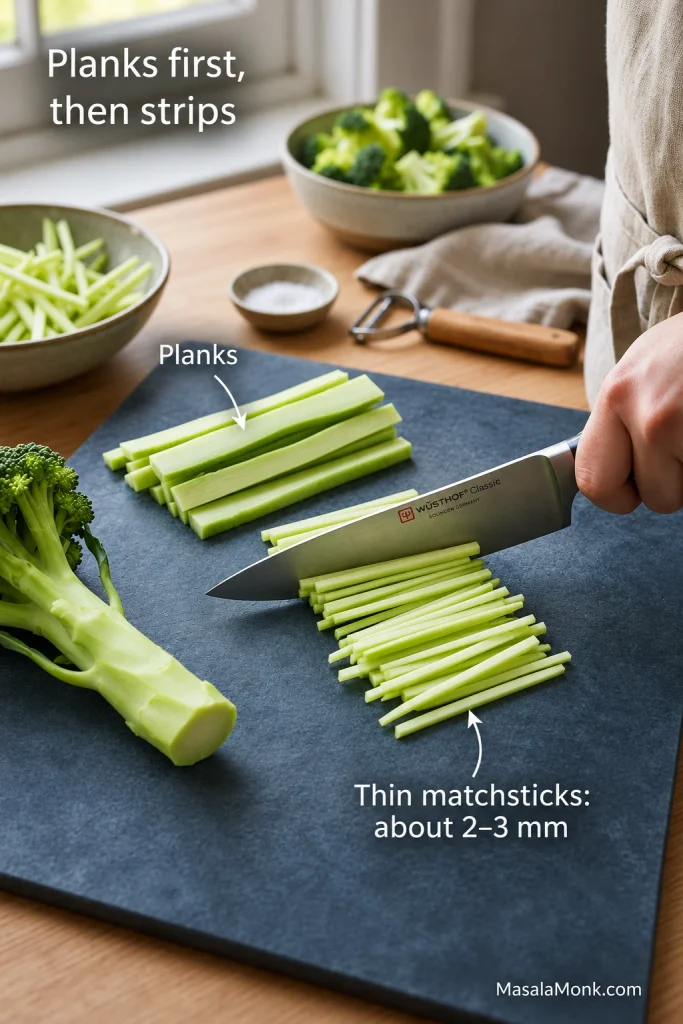
A coarse grater produces shorter, somewhat softer pieces, while a food processor makes quick work of a bigger batch. You don’t need to measure the cuts precisely; keep them reasonably thin and even.
Finely chopped florets are welcome too, but they won’t have the same shredded bite. For a dish using larger broccoli pieces, try our broccoli salad with florets, made with bacon, cheddar, and creamy dressing.
Do You Need to Blanch Broccoli for Slaw?
No. Raw broccoli gives this slaw its signature crunch. If you prefer it softer, briefly blanch the prepared shreds in boiling water, starting with about 30 seconds, then cool promptly in cold water. Drain and dry thoroughly before dressing. Blanching won’t fix woody skin, so peel first.
Return to the complete broccoli slaw recipe once you have prepared the stalks.
Broccoli Slaw Dressing: How to Fix the Flavor
Whenever possible, adjust the dressing in its own bowl before adding it to the vegetables.
| If it tastes… | Try this |
|---|---|
| Too sour | Whisk in 1 tablespoon mayonnaise |
| Too sweet | Add ½ teaspoon cider vinegar |
| Too bland | Add a small pinch of salt |
| Too thick | Add 1 teaspoon cold water |
| Too thin | Whisk in 1 tablespoon mayonnaise |
| Too much mayonnaise flavor | Add ½ teaspoon vinegar and taste again |
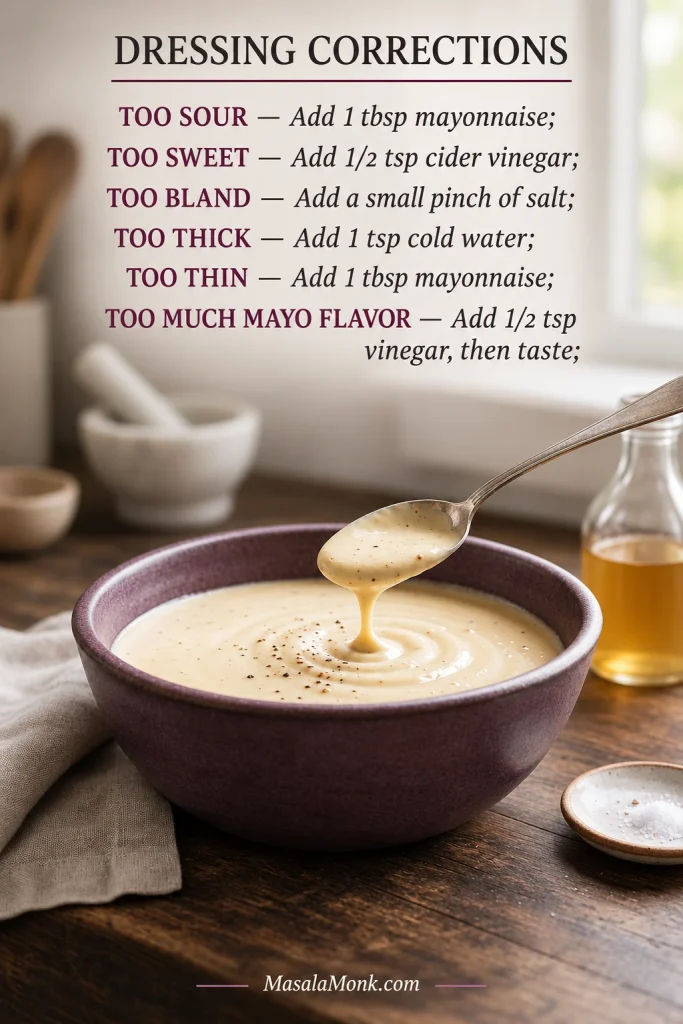
If the finished slaw seems underseasoned, toss thoroughly first. For more mustard emphasis, you can use honey mustard dressing in place of the standard dressing.
Why Is My Broccoli Slaw Tough, Watery, or Soft?
| Problem | What helps |
|---|---|
| Tough, stringy broccoli | Remove hard pieces; peel the stalks more thoroughly next time |
| Water collecting below | Drain excess liquid, toss again, and check the seasoning |
| Too much dressing | Add undressed shredded vegetables if available |
| Slaw seems dry | Add a little reserved dressing |
| Scallions overpower everything | Use fewer next time or substitute chopped parsley |
| Vegetables softened overnight | Add fresh shreds or crunchy toppings; lost crunch won’t fully return |
| Soft almonds or seeds | Add freshly toasted, cooled toppings at serving time |
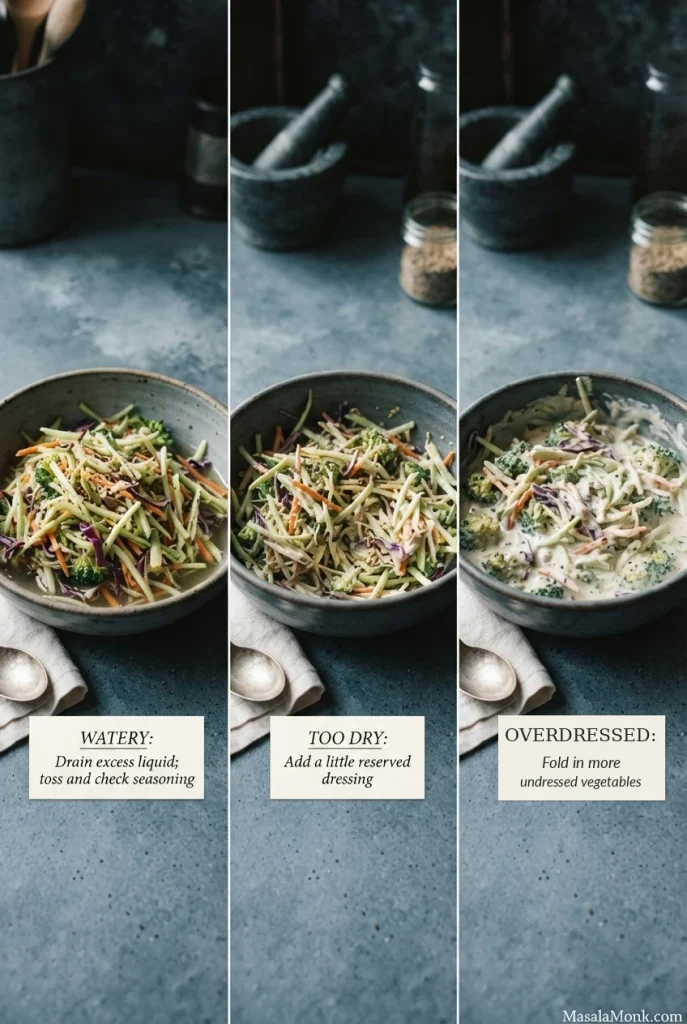
Should you salt and drain the broccoli first? Usually not for this recipe. Salting releases water but softens the shreds too. Dry the vegetables after washing and dress near serving time for the firmest result. If the seasoning is off rather than the texture, go to the dressing fixes.
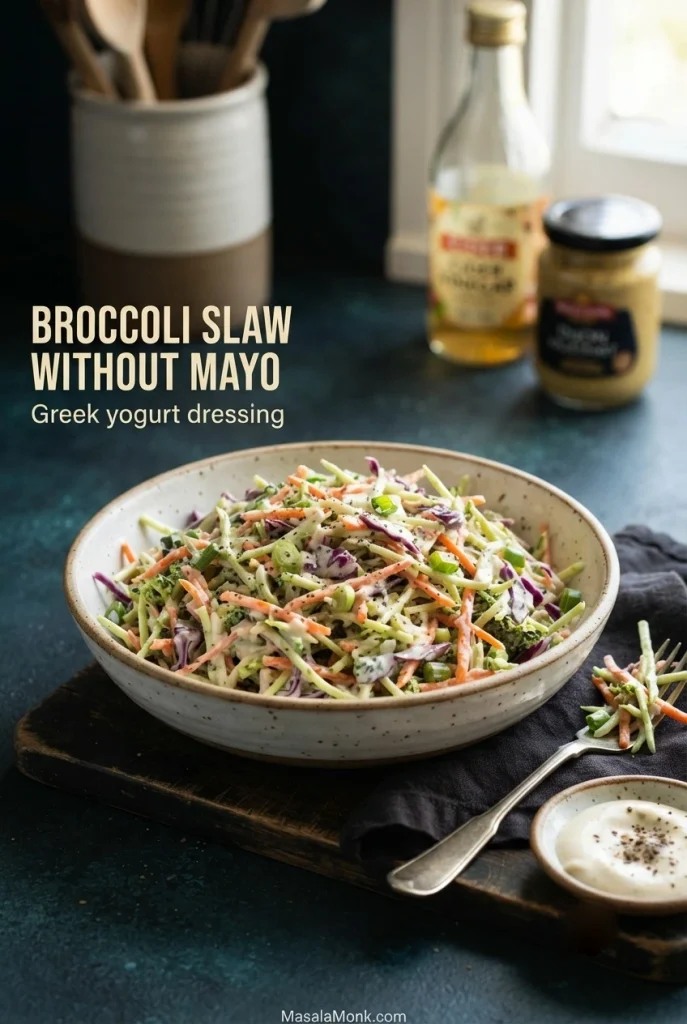
Broccoli Slaw Without Mayo: Greek Yogurt & Vinaigrette Dressings
The classic Dijon-mayonnaise dressing is the default. For a creamy option without mayonnaise, use plain Greek yogurt. Prefer something sharper without mayonnaise or dairy? Choose the cider vinaigrette.
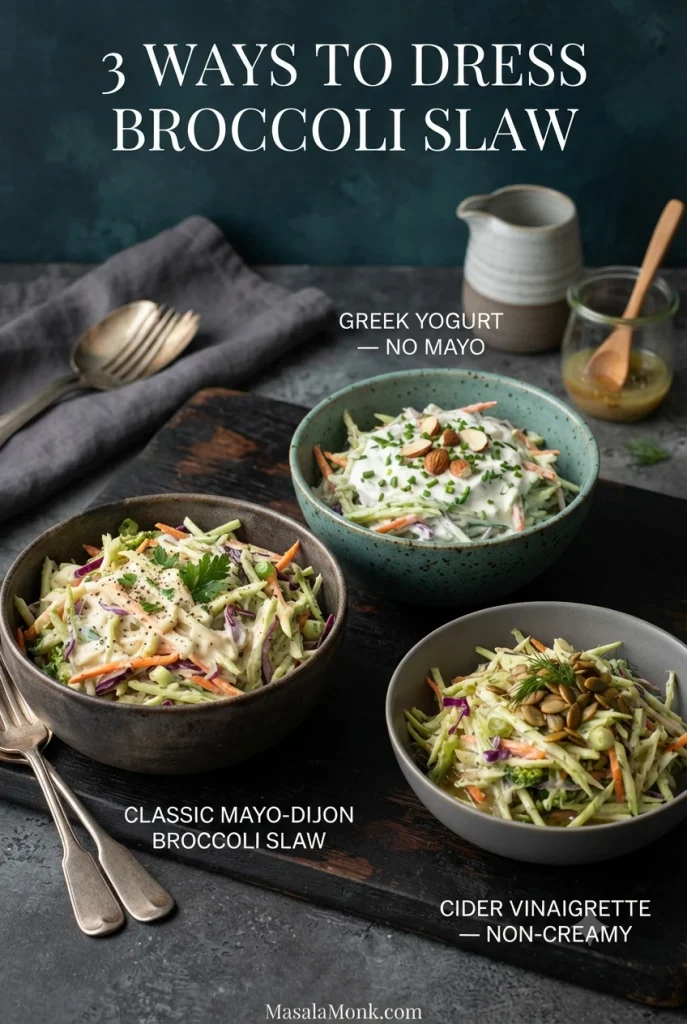
Creamy Greek Yogurt Broccoli Slaw Without Mayo
For roughly 450–500 g (16–18 oz) shredded vegetables:
- 120 g plain, unsweetened Greek yogurt — approximately ½ cup
- 5 ml apple cider vinegar — 1 teaspoon to start
- 10 g Dijon mustard — approximately 2 teaspoons
- 5 g honey — approximately ¾ teaspoon
- Fine salt and black pepper, to taste
Whisk until smooth. Some Greek yogurts are quite tangy, so taste before adding more vinegar. Start by coating the vegetables with about two-thirds of the dressing. If the yogurt is particularly thick, loosen it with a teaspoon of cold water.
For a richer yogurt-mayo dressing: Use 80 g yogurt and 40 g mayonnaise in place of the 120 g yogurt; increase vinegar to 10 ml (2 teaspoons) if needed. If you need an egg-free mayonnaise option, see our eggless mayonnaise recipe. Egg-free doesn’t necessarily mean dairy-free.
Broccoli Slaw Dressing Without Mayo or Yogurt
This cider vinaigrette tastes brighter, sharper, and less creamy than the classic dressing. It isn’t automatically lower in calories or fat simply because it contains no mayonnaise.
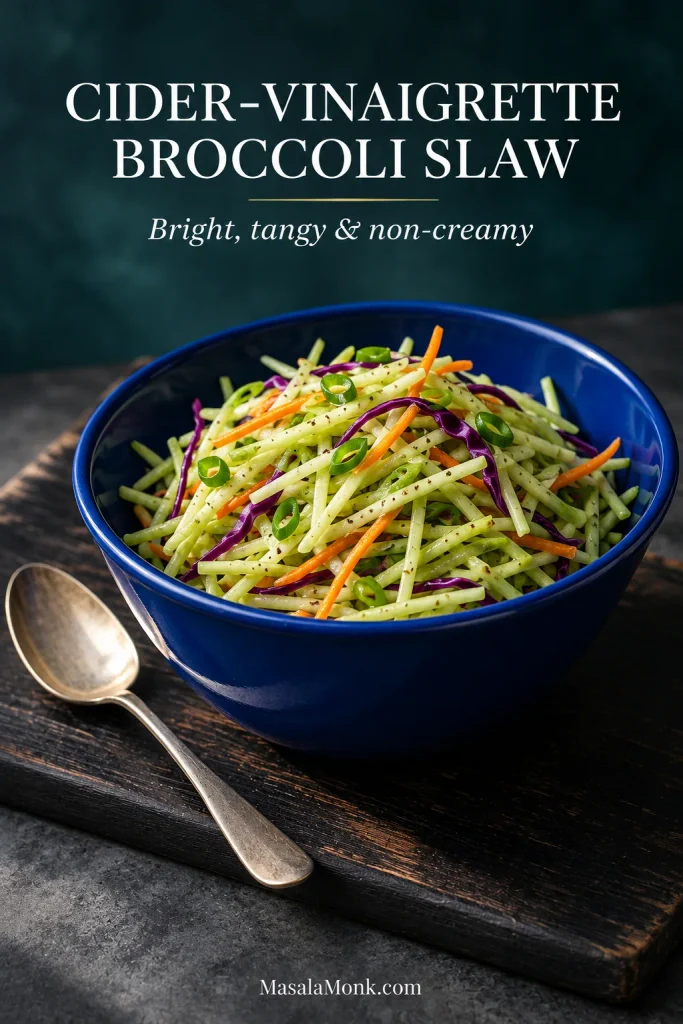
- 60 ml olive oil — ¼ US cup
- 30 ml apple cider vinegar — 2 tablespoons
- 10 g Dijon mustard — approximately 2 teaspoons
- 10 ml maple syrup — 2 teaspoons
- ¼ teaspoon fine salt
- ¼ teaspoon black pepper
Whisk the vinegar, mustard, maple syrup, salt, and pepper, then slowly whisk in the oil. For 450–500 g slaw, start with half the vinaigrette and add more only if needed. Rewhisk if it separates.
Chosen a dressing? Return to the main broccoli slaw method for preparing and tossing the vegetables.
Easy Broccoli Slaw Variations
Apple and Cranberry Broccoli Slaw
Add one crisp apple cut into matchsticks (about 120 g after coring) to the standard vegetable mix.
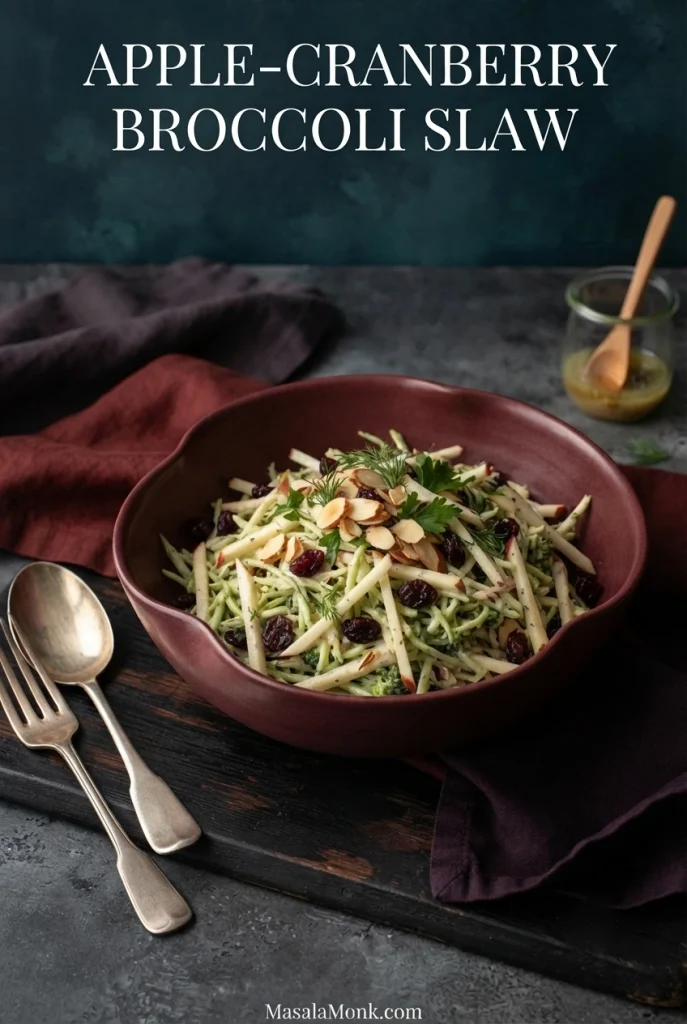
Use 20–40 g dried cranberries in total, not on top of an already-added 40 g from the base recipe. Reduce the honey in the creamy dressing to 5 g. A tart apple such as Granny Smith works well; add it shortly before serving to limit browning. Toasted almonds are a good finish.
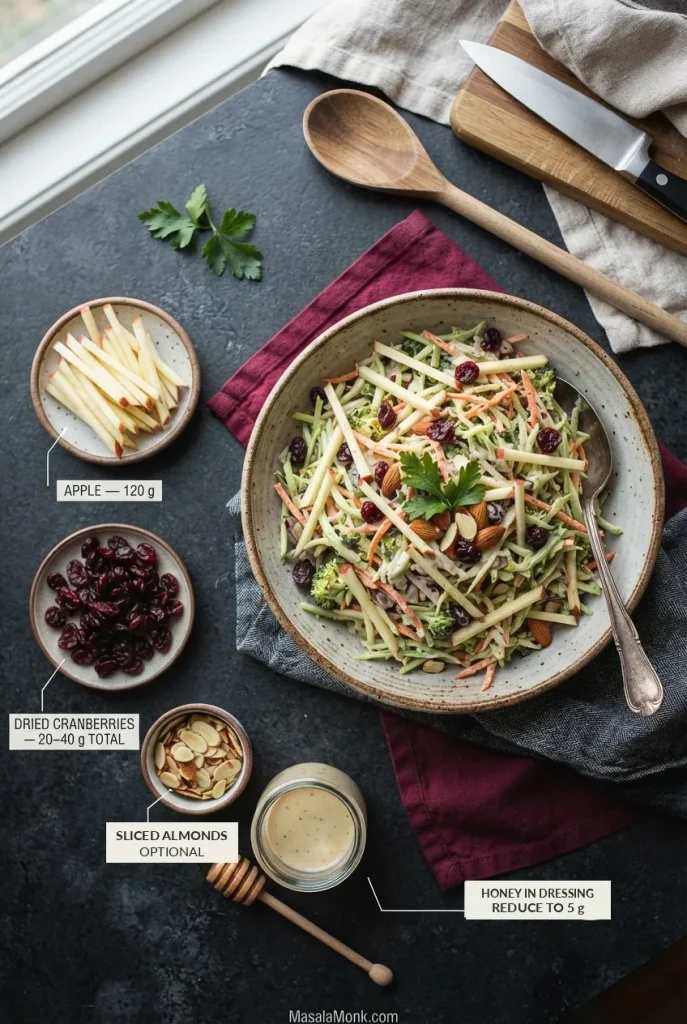
Prefer a savory slaw? Omit the cranberries and nuts, reduce the honey to 5 g, and add 2 tablespoons chopped parsley or a little extra scallion.
Sesame-Ginger Broccoli Slaw
Use the standard 495 g vegetable mixture without the optional cranberries or almonds.
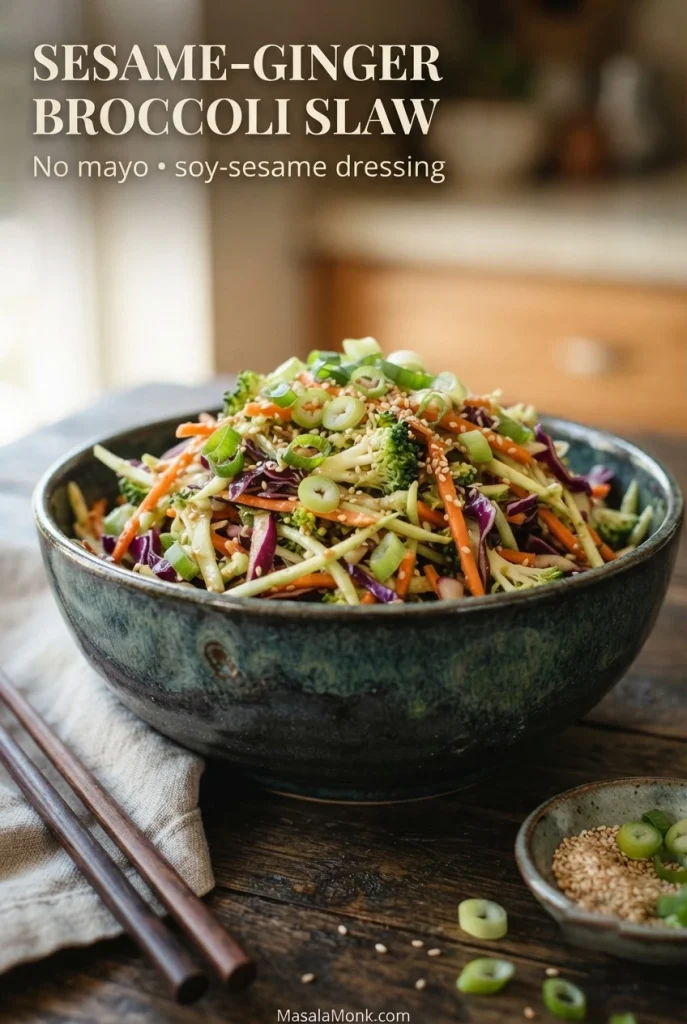
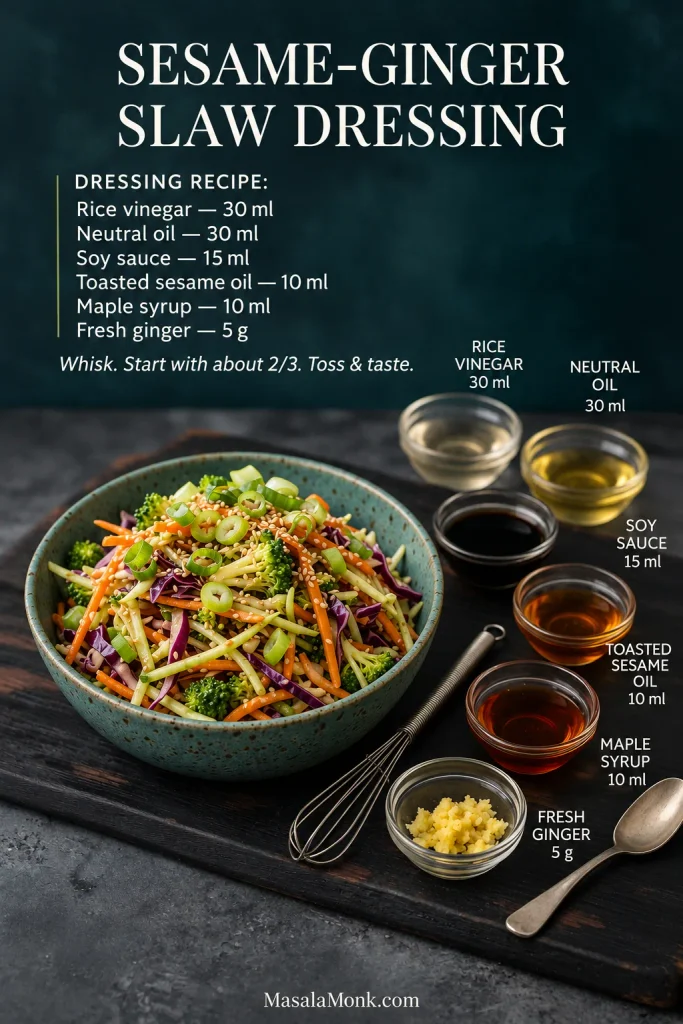
Instead of the creamy dressing, whisk together 30 ml rice vinegar, 30 ml neutral oil, 15 ml soy sauce, 10 ml toasted sesame oil, 10 ml maple syrup, and 5 g finely grated ginger. Toss the vegetables with about two-thirds of this dressing, then finish with sliced scallions and toasted sesame seeds. Taste before adding salt; soy sauce may provide enough.
If you’d prefer a thicker, savory-sweet dressing, use a little peanut sauce, thinned with water so it spreads evenly through the shreds.
Can You Make Broccoli Slaw Ahead of Time?
Yes. You can do almost all the work before guests arrive. Shred the vegetables, whisk the dressing, and refrigerate them separately. Toss near serving time so the broccoli keeps its firm bite.
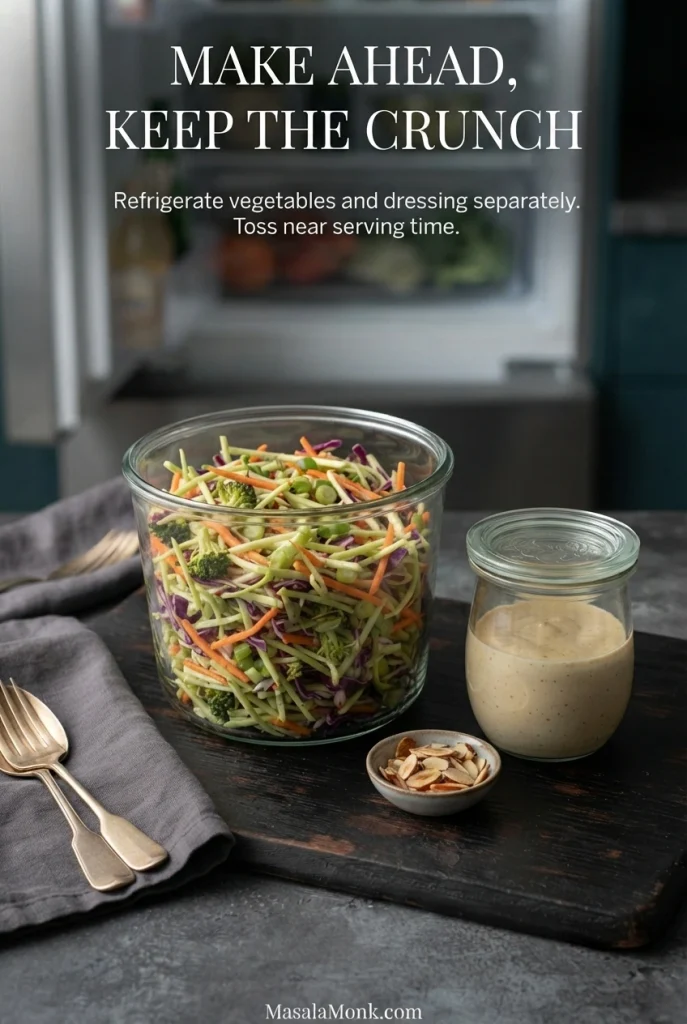
For a barbecue or potluck, transport the vegetables and dressing in separate chilled containers. Add the almonds or seeds when you’re ready to serve. Already dressed the slaw? Refrigerate it covered; it will soften by the next day, but a fresh topping can improve its texture. If it becomes watery or heavy, see the broccoli slaw troubleshooting guide.
How Long Does Broccoli Slaw Last in the Fridge?
As a general leftovers guideline, use properly handled, refrigerated broccoli slaw within 3–4 days, or sooner if the ingredients or package instructions require it. It usually tastes and feels best earlier. Keep it covered at 4°C (40°F) or colder.
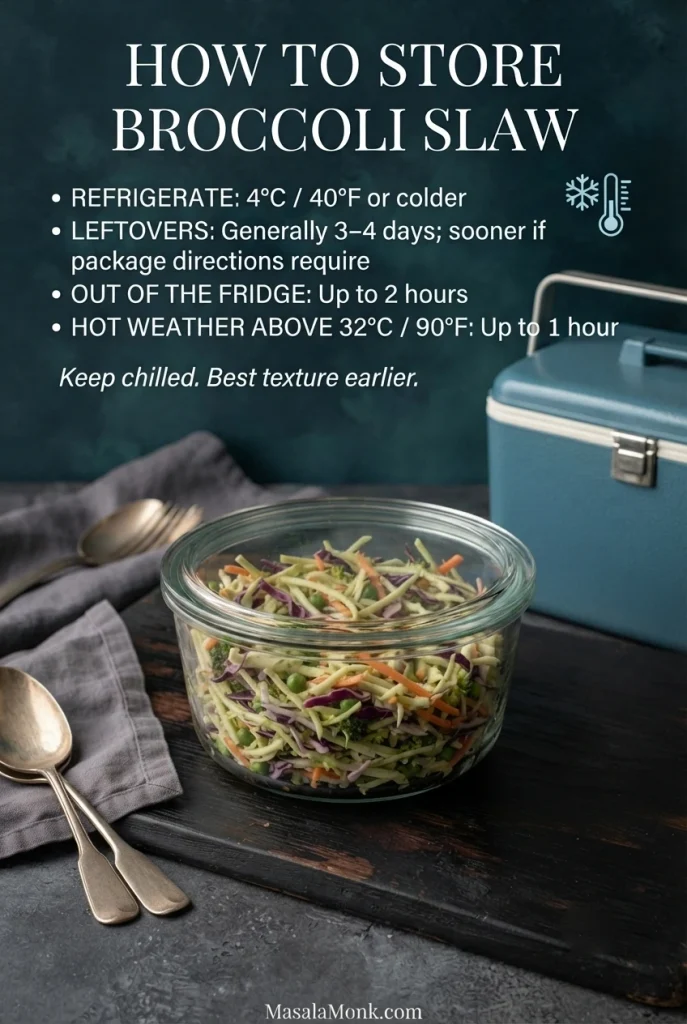
An already-open bag doesn’t get a new storage window just because you mix it with dressing. Follow the package guidance, and discard slaw that has spent too long unrefrigerated even if it still looks and smells normal.
At picnics, keep the slaw chilled. Perishable food shouldn’t remain unrefrigerated for more than two hours, or one hour when the temperature is above 32°C (90°F). See the USDA’s guidance on handling leftovers safely.
Can You Freeze Creamy Broccoli Slaw?
Freezing the finished creamy slaw isn’t recommended if you want to preserve its texture. Raw shreds soften and release water when thawed, and mayonnaise dressing may separate. Undressed broccoli slaw mix is more useful cooked in a stir-fry or sauté.
What to Serve With Broccoli Slaw
- Barbecue and pulled pork: Serve it beside ribs or tuck a lightly dressed scoop into a pulled-pork sandwich.
- Burgers and wraps: Use lightly dressed slaw to avoid soaking the bread or tortilla.
Grilled Chicken With Broccoli Slaw
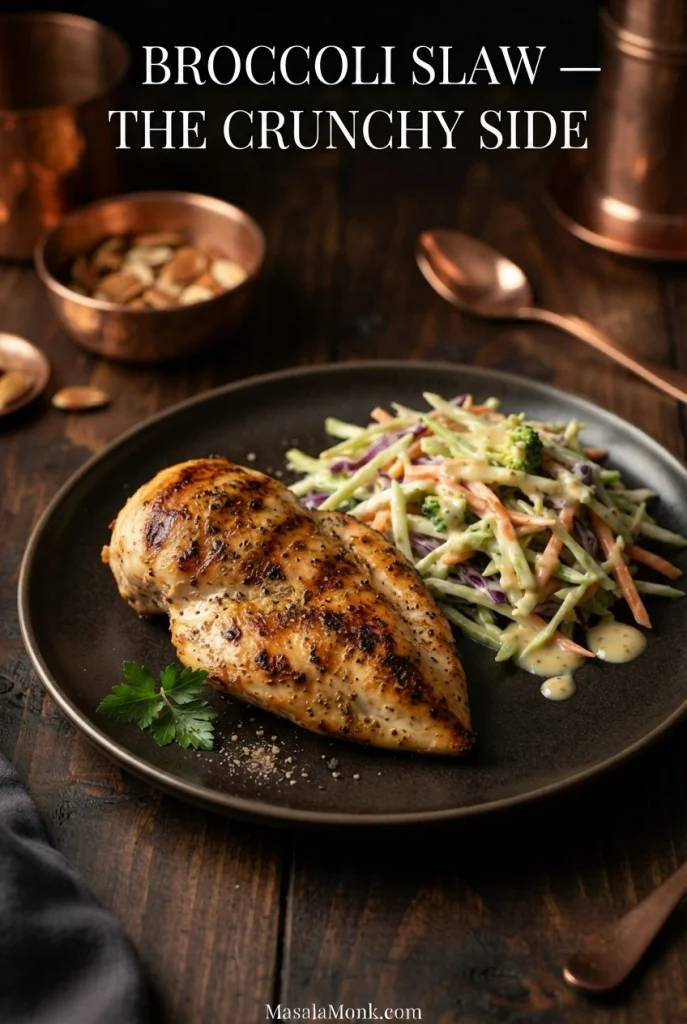
Broccoli slaw pairs well with grilled chicken seasoned with lemon, black pepper, or smoky spices. If the chicken carries a sweet barbecue glaze, consider the sharper cider-vinaigrette slaw for contrast.
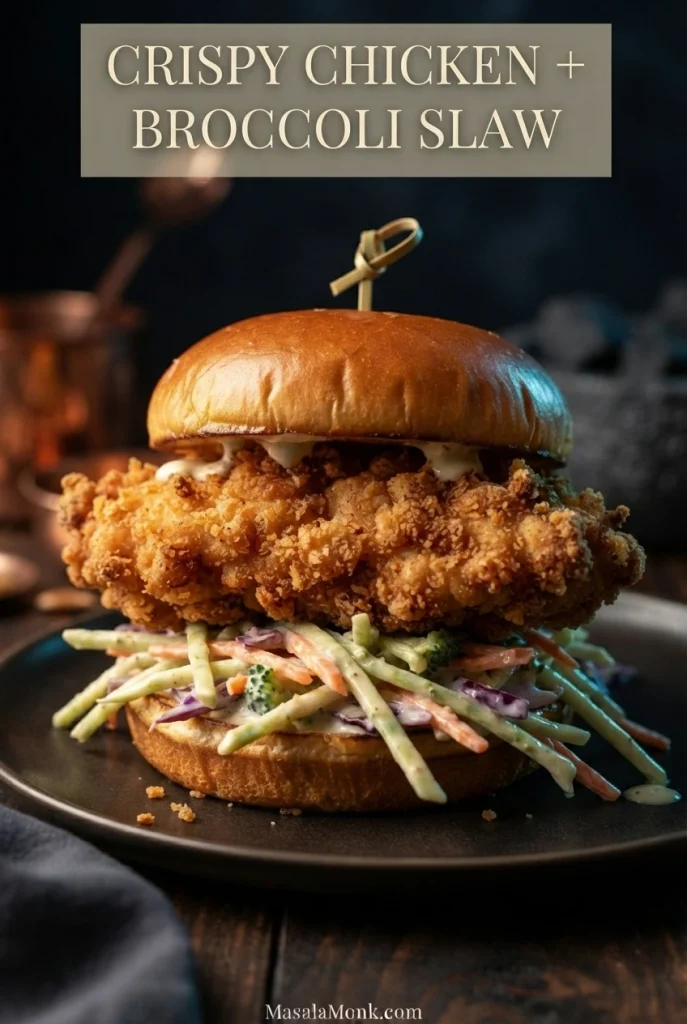
Crispy Chicken Sandwiches With Broccoli Slaw
Thin broccoli-stem matchsticks fit into a toasted bun more neatly than bulky vegetable pieces. If the sandwich already has a rich sauce, keep the slaw lightly dressed. Find more ideas in our chicken sandwich recipes.
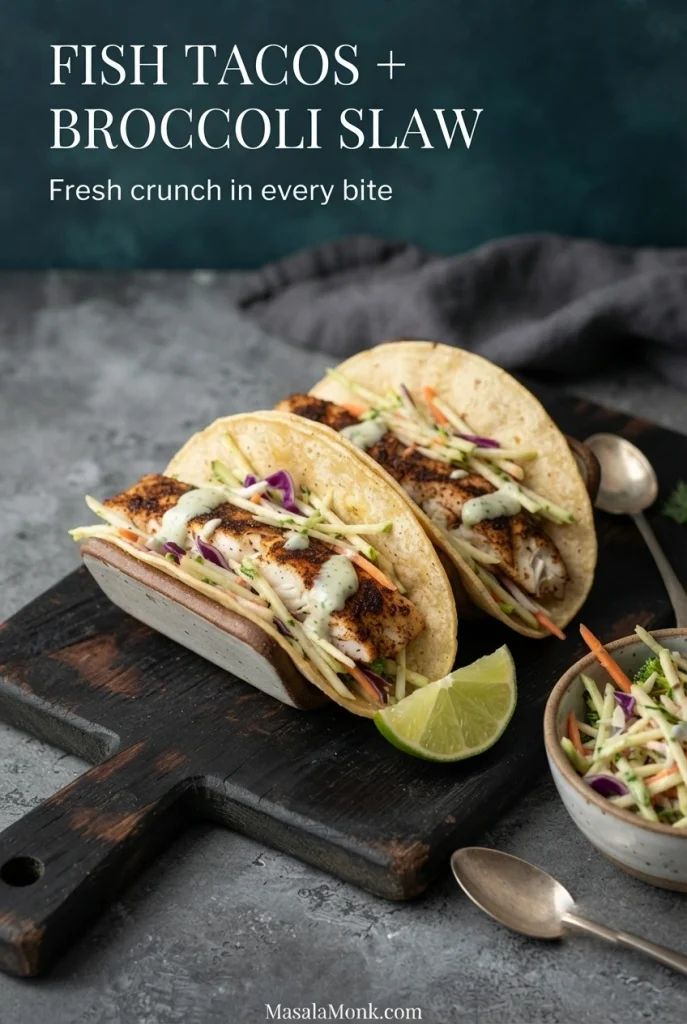
Fish Tacos With Broccoli Slaw
For smaller tortillas, use shorter broccoli shreds so the filling stays tucked inside. A light cider-vinaigrette slaw balances richer fried fish, while a modest creamy scoop suits spiced grilled fish. See our fish tacos with crunchy slaw.
Any undressed broccoli left in the bag can go into tomorrow’s stir-fry, fried rice, or sandwich.
How do you make your broccoli slaw? Do you prefer the creamy Dijon dressing, Greek yogurt, or a vinaigrette? Share your favorite additions in the comments.








