
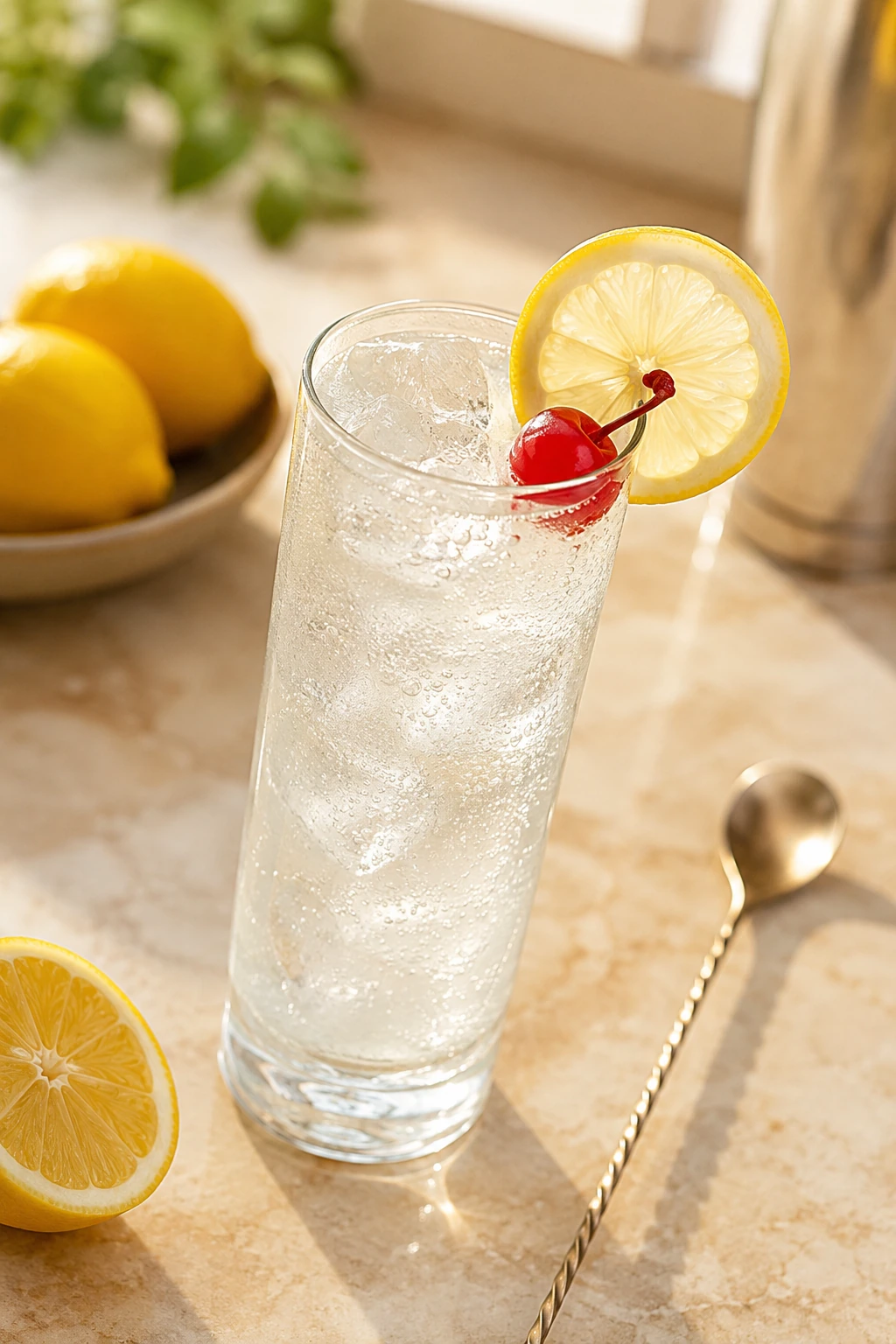
A good Tom Collins feels cold before you even finish the first sip: lemon on the nose, bubbles lifting the glass, just enough sweetness to soften the gin, and no heavy aftertaste.
The drink is simple — gin, lemon juice, simple syrup, club soda, and ice — but the balance matters. Lemon sharpens it, syrup softens it, soda lifts it, and ice keeps it honest. Get those four things right and the glass tastes bright instead of sticky, flat, or watery.
This Tom Collins recipe is built for home bartenders. You get the classic ratio first, then ounce, milliliter, and tablespoon measurements, a no-shaker method, an optional shaken method, mix guidance, pitcher amounts, easy variations, and fixes for drinks that turn too sour, too sweet, too weak, or too flat.
You do not need a full bar setup. If you can measure, stir, taste, and top with soda, you can make this drink well.
Tom Collins at a Glance
- Taste: lemon-first, lightly sweet, sparkling, and dry on the finish.
- Best first gin: London dry gin for a crisp modern glass.
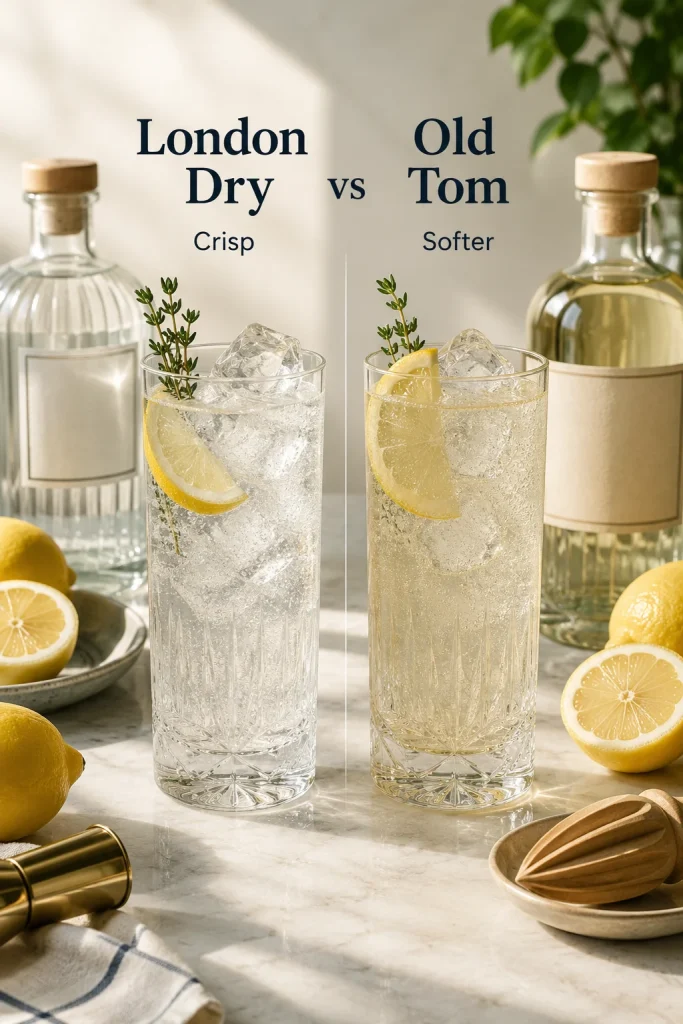
- Classic-style gin: Old Tom gin for a softer, slightly sweeter version.
- Sweetness level: crisp at ½ oz syrup, softer at ¾ oz.
Quick Definition
A Tom Collins is a tall gin cocktail made with gin, fresh lemon juice, simple syrup, club soda, and ice. Think sparkling lemonade with a dry gin finish: citrusy, lightly sweet, crisp, and gently botanical.
Gin makes it a Tom Collins. Vodka gives you a Vodka Collins. Whiskey or bourbon gives you the version many home bartenders call a John Collins.
Quick Answer: Best Tom Collins Ratio
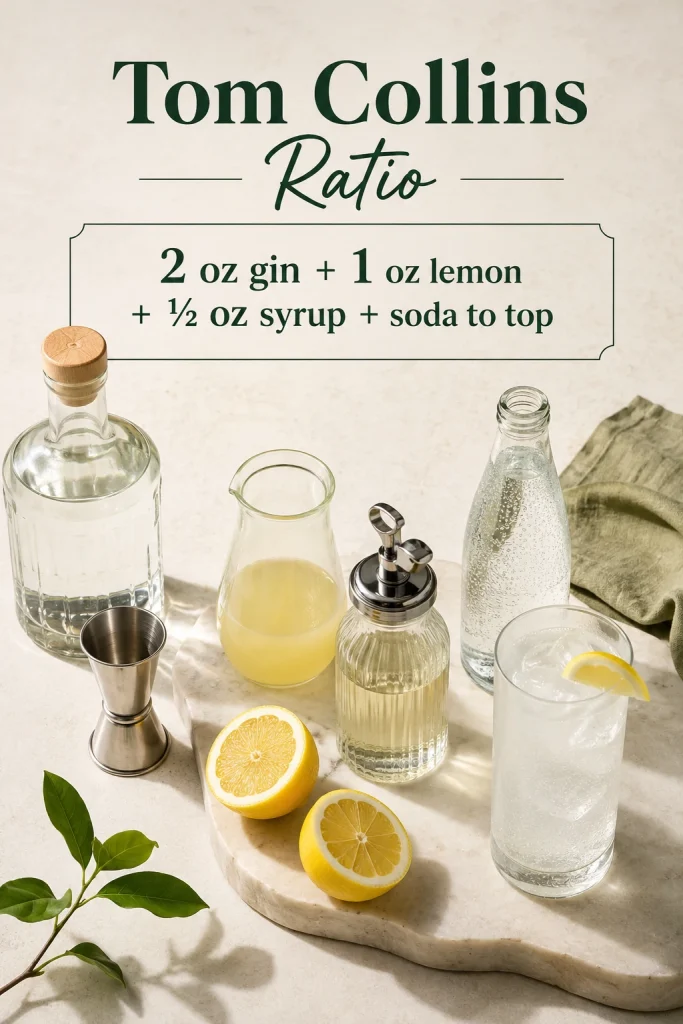
For one classic Tom Collins, use 2 oz gin, 1 oz fresh lemon juice, ½ oz simple syrup, and 2–4 oz cold club soda. Build it over plenty of ice in a Collins or highball glass, then garnish with lemon and a cherry.
Tom Collins Ratio at a Glance
This visual gives you the baseline before you adjust sweetness, lemon, or soda for your own glass.
| Ingredient | Amount for 1 drink | What it does |
| Gin | 2 oz / 60 ml | Gives the cocktail its botanical base. |
| Fresh lemon juice | 1 oz / 30 ml | Sharpens the drink and gives it citrus snap. |
| Simple syrup | ½ oz / 15 ml | Softens the sour edge without making it sticky. |
| Cold club soda | 2–4 oz / 60–120 ml | Adds bubbles, length, and lift. |
| Ice | Enough to fill the glass | Keeps the drink cold and slows dilution. |
| Garnish | Lemon wheel and cherry | Adds classic aroma and presentation. |
This version starts crisp on purpose. Many Tom Collins drinks drift sweeter, but ½ oz syrup keeps the first glass bright and gives you room to adjust. Move to ¾ oz if you want a softer lemonade-style Collins. Use 1 oz only if your lemons are especially sharp or you already know you like a sweeter drink.
Make the first glass exactly this way. Then adjust the second one if you want it sweeter, sharper, stronger, or longer.
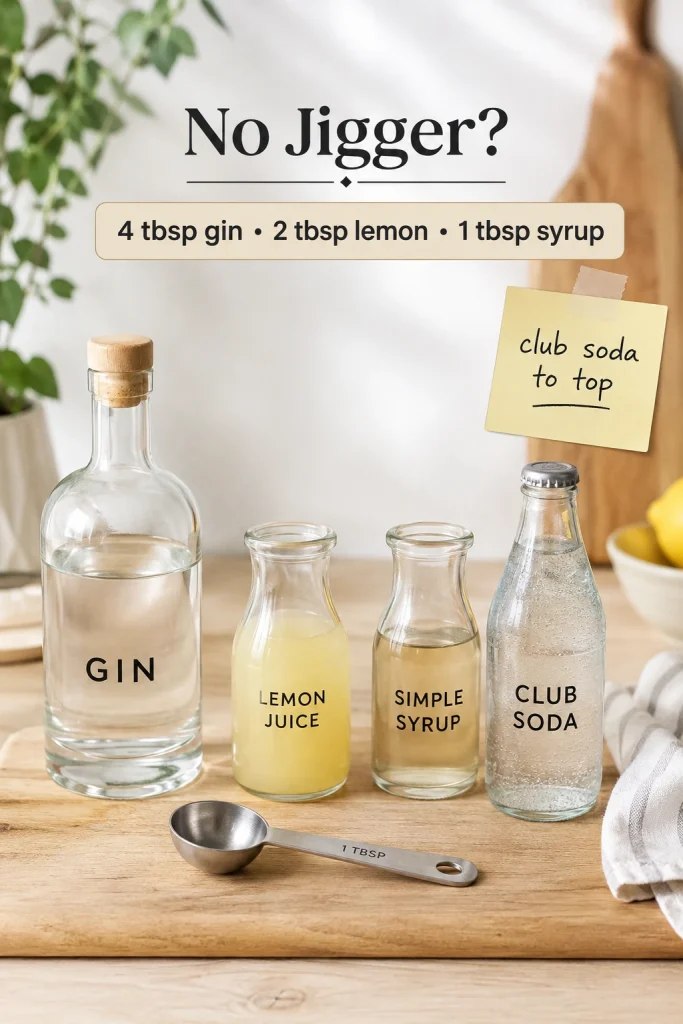
No jigger? Use tablespoons: 2 oz gin = 4 tablespoons, 1 oz lemon juice = 2 tablespoons, and ½ oz simple syrup = 1 tablespoon.
No-Jigger Tom Collins Measurements
Use this when you are making the cocktail with kitchen spoons instead of bar tools.
Classic Tom Collins Recipe
Make this version first. It gives you the clean baseline: gin, fresh lemon, simple syrup, chilled soda water, and enough ice to keep the drink crisp from the first sip to the last.
Equipment
- Collins glass or highball glass
- Jigger or tablespoon measure
- Bar spoon or long spoon
- Citrus juicer
- Cocktail shaker and strainer, optional
Ingredients
- 2 oz / 60 ml gin
- 1 oz / 30 ml fresh lemon juice
- ½ oz / 15 ml simple syrup
- Ice, enough to fill the glass
- 2–4 oz / 60–120 ml cold club soda, to top
- Lemon wheel, for garnish
- Maraschino cherry or cocktail cherry, optional but classic
Lemon note: one medium lemon often gives enough juice for one Tom Collins, with a little extra for adjusting if the glass needs more citrus.
Method
- Add the gin, lemon juice, and simple syrup to a Collins or highball glass.
- Stir briefly so the lemon and syrup combine.
- Fill the glass with ice.
- Top with cold club soda.
- Stir gently once or twice. Do not over-stir or the drink will lose fizz.
- Garnish with a lemon wheel and cherry. Serve right away.
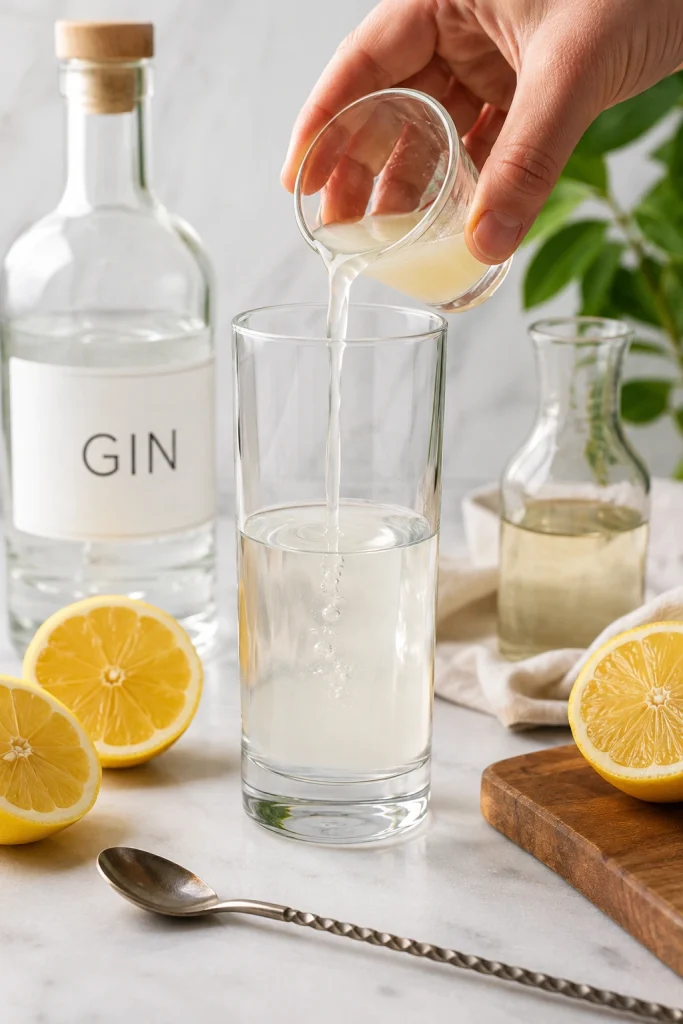
Mix the Gin, Lemon, and Syrup First
The lemon and syrup need a moment with the gin before ice and bubbles enter the glass.
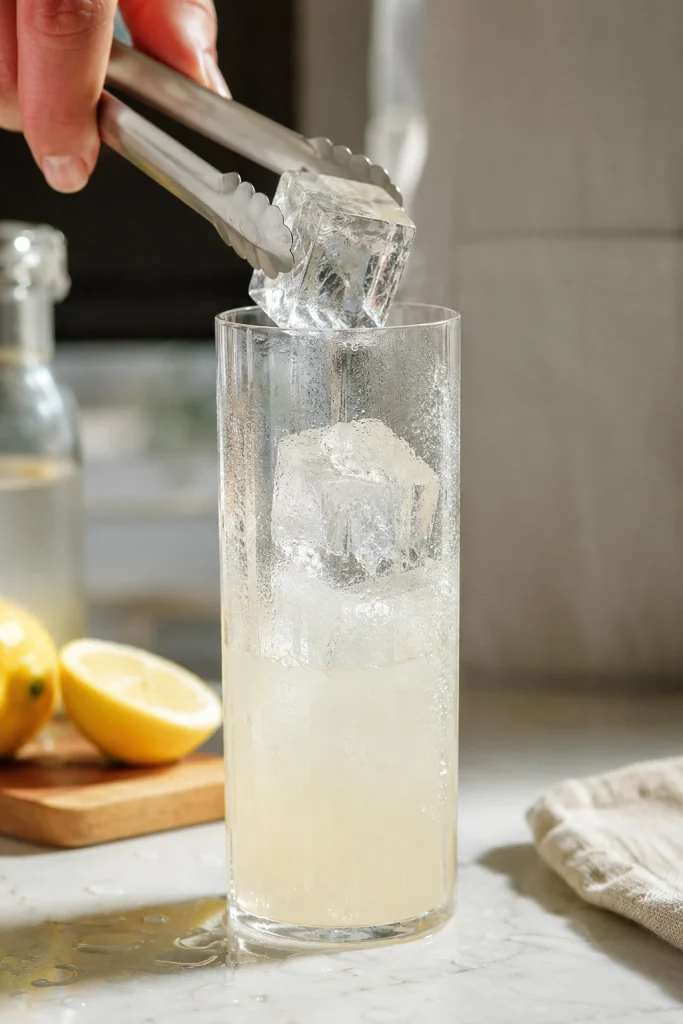
Fill the Glass with Ice
A full ice fill is part of the method, not just presentation.
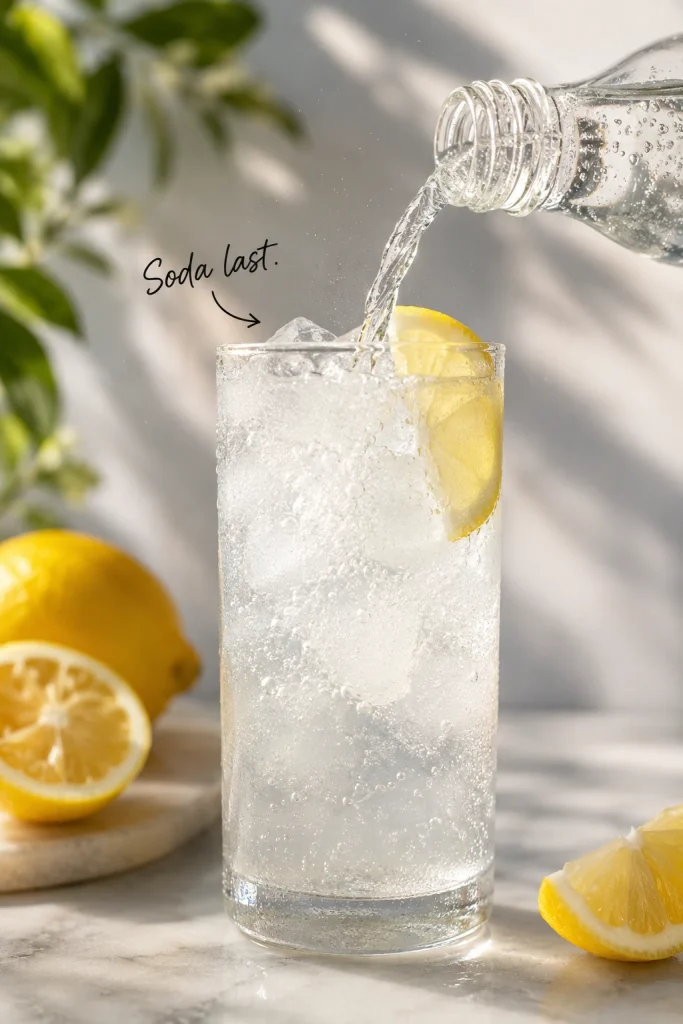
Add Club Soda Last
This is the step that protects the fizz, so keep the soda cold and add it at the end.
Optional Shaken Method
Shake only the gin, lemon juice, and simple syrup with ice for 5–10 seconds. Strain into an ice-filled Collins glass, top with cold club soda, stir gently, and garnish. Never shake the soda.
Taste cue: before adding soda, the gin-lemon-syrup mix should taste a little stronger and sharper than the final drink. Ice and bubbles will soften it.
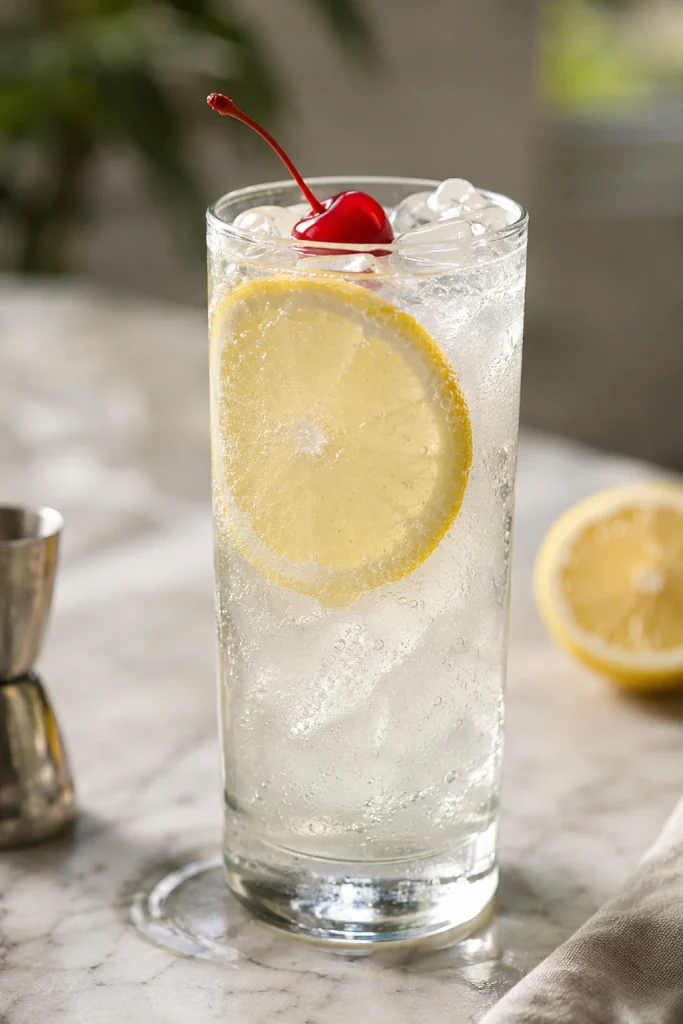
Finished glass cue: the final drink should taste lemon-first, lightly sweet, and sparkling, with gin in the background rather than alcohol heat up front.
The goal is not the sweetest Collins or the strongest Collins. It is the one that still tastes alive after a few minutes on the table: lemon first, gin behind it, bubbles still moving, and no syrupy finish at the bottom of the glass.
Finished Glass Cue
Use the finished drink as a quick quality check before serving or adjusting the next glass.
Choose Your Style
Make the classic version once. After that, the drink is easy to steer. Change one thing at a time: syrup for softness, soda for length, lemon for sharpness, or the spirit for a different Collins.
- Crisp classic: 2 oz gin, 1 oz lemon, ½ oz syrup, and 2–3 oz soda.
- Softer lemonade-style: increase the syrup to ¾ oz.
- Lighter highball: use 3–4 oz soda for a longer, easier sip.
- Stronger and sharper: use only 2 oz soda so the gin and lemon stay more present.
- Shortcut mix version: use Tom Collins mix instead of the lemon juice and syrup.
Most people land between crisp classic and softer lemonade-style. For guests, start crisp and leave extra syrup nearby so each glass can be adjusted without remaking the drink.
From here, the small details do the work: the gin you choose, how fresh the soda is, how much syrup you like, and whether you are making one glass or a pitcher.
In This Guide
Make It Right
Why This Recipe Works
A Tom Collins works because nothing has to shout. The lemon wakes it up, the syrup rounds the edge, the soda gives it lift, and the ice keeps that balance cold while you sip.
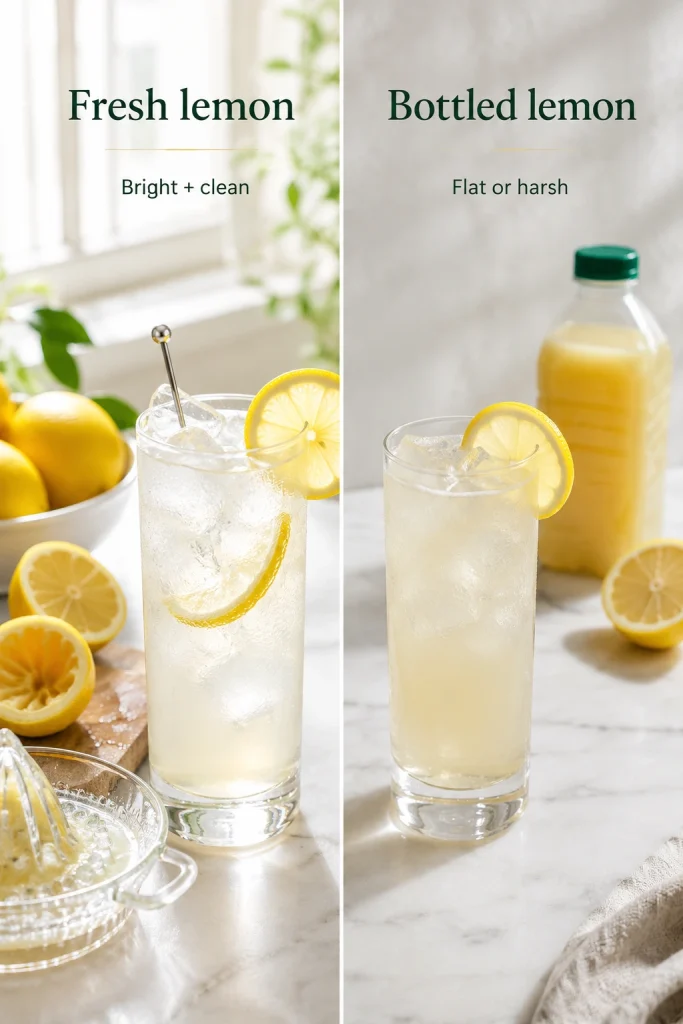
- Fresh lemon gives the snap. Bottled lemon can taste dull or harsh in a cocktail this simple.
- Start with ½ oz syrup. It keeps the drink crisp while leaving room to sweeten the next glass.
- Use cold, freshly opened soda. That is what gives the drink real lift.
- Fill the glass with ice. More ice keeps the drink colder and helps it stay bright instead of watery.
Start here: make the crisp version once before changing the syrup, soda, or gin. Once that baseline tastes right, every variation becomes easier to judge.
Tom Collins Ingredients
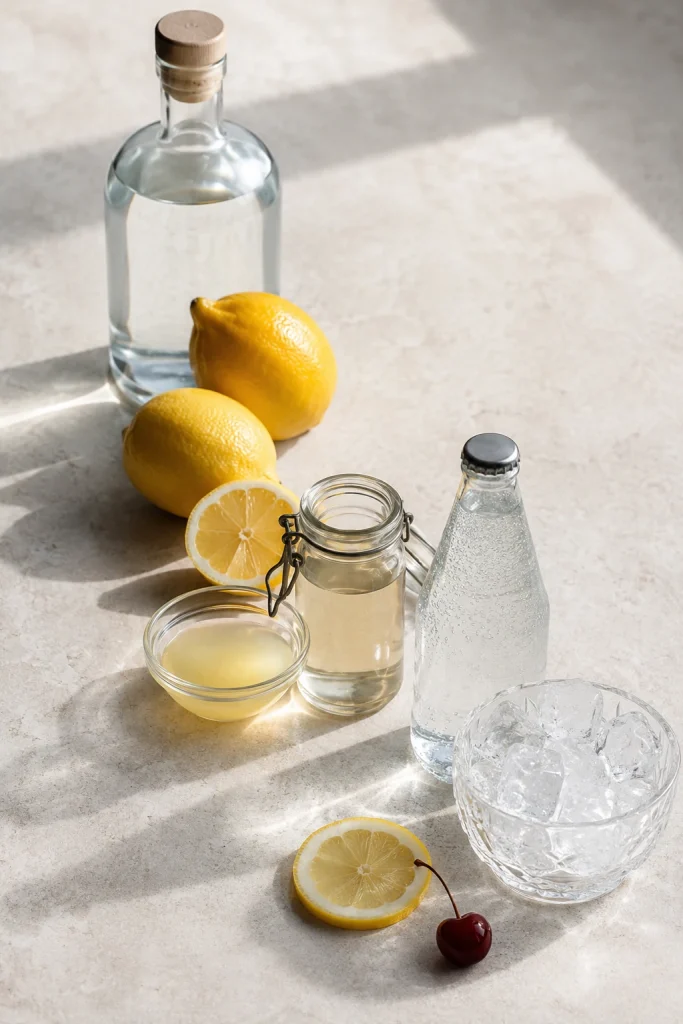
With a drink this simple, there is nowhere for dull lemon, flat soda, or gritty sugar to hide. Choose a clean gin, squeeze fresh lemon if you can, dissolve the sugar first, and treat the soda like the final lift rather than a filler.
Tom Collins Ingredients, Laid Out
Gin
A Tom Collins does not need rare or expensive gin. It needs a gin that stays clean with lemon, syrup, soda, and ice. London dry gin is the easiest modern choice because it stays crisp without adding sweetness. Old Tom gin gives the drink a rounder, slightly sweeter old-school feel.
Classic gin note: if you use Old Tom gin, start with a little less syrup because the gin already brings softness. If your gin tastes very dry or sharp, the full ½ oz syrup will help round out the lemon.
London Dry vs Old Tom Gin
Fresh Lemon Juice
Lemon is where the drink wakes up. Fresh juice gives you that clean citrus snap; bottled lemon can make the whole glass taste flat or harsh.
One medium lemon often gives around 2–3 tablespoons of juice, so one lemon is usually enough for one drink. Keep a wedge nearby if you like to adjust the first sip.
Fresh Lemon vs Bottled Lemon
Simple Syrup
This is the quiet fixer in the drink. It smooths the lemon without leaving sugar at the bottom of the glass. Loose sugar can make the first sip sharp and the last sip too sweet.
No simple syrup made? Dissolve sugar in warm water first. Do not add dry sugar straight to the cold glass unless you are willing to stir longer and accept some grit.
Club Soda
The soda is where many Tom Collins drinks lose their lift. Chilled, freshly opened club soda or soda water keeps the glass bright; warm or half-flat soda makes even a good ratio taste dull.
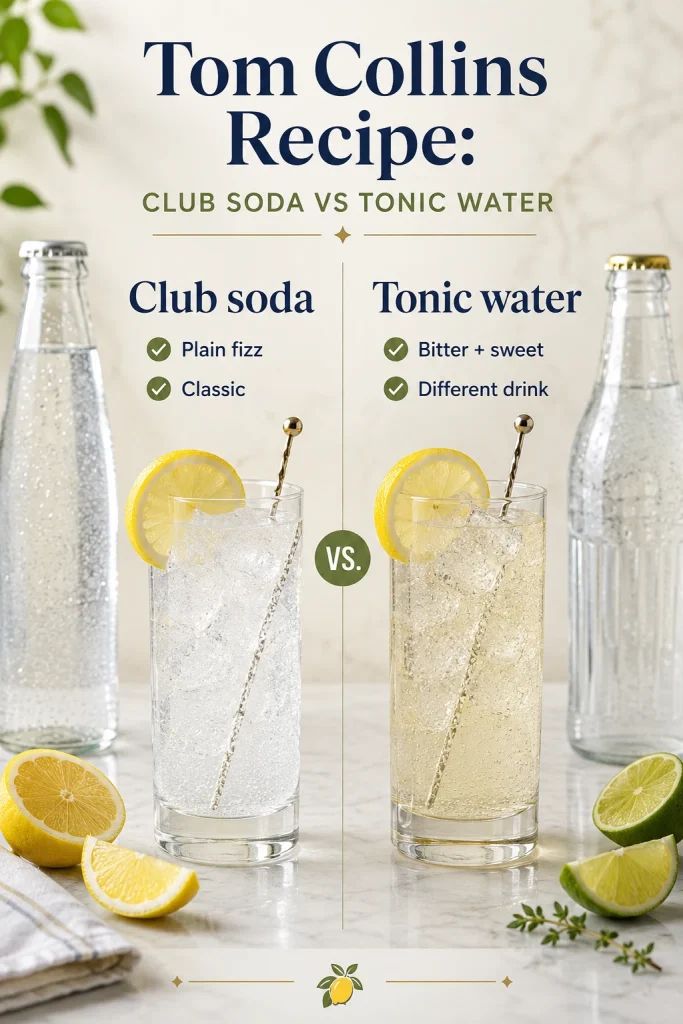
For this recipe, club soda and soda water work the same practical way: plain carbonated water for fizz. Do not use tonic water unless you want a different drink; tonic is bitter and sweet, while club soda is plain and sparkling.
Club Soda vs Tonic Water
Ice and Garnish
Fill the glass with ice. A full glass stays colder and usually dilutes more slowly than a glass with only a few cubes. A lemon wheel and cherry are classic; a lemon wedge is fine if that is what you have.
How to Make Simple Syrup
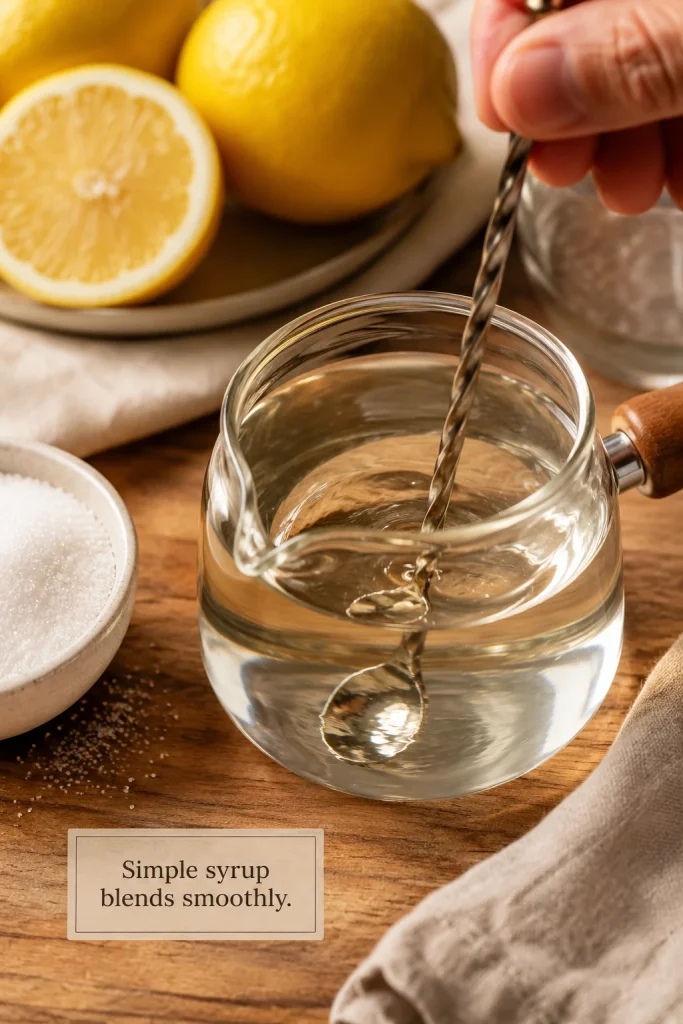
Simple syrup is just sugar dissolved in water. It blends smoothly into a cold cocktail, which is why it works better here than loose sugar.
Why Simple Syrup Works Better
- Add ½ cup sugar and ½ cup water to a small saucepan.
- Warm gently and stir until the sugar dissolves.
- Cool completely before using.
- Store covered in the refrigerator.
For a one-drink shortcut, stir 1 tablespoon sugar with 1 tablespoon warm water until dissolved, cool briefly, then measure 1 tablespoon / 15 ml of that syrup for the drink. Save any extra for adjusting.
Measurements: Ounces, ML, Tablespoons, and Grams
Bar tools are nice, but they are not the point here. A tablespoon measure and a clear ratio will get you much farther than fancy gear and flat soda.
| Measure style | Gin | Lemon juice | Simple syrup | Club soda |
| Ounces | 2 oz | 1 oz | ½ oz | 2–4 oz |
| Milliliters | 60 ml | 30 ml | 15 ml | 60–120 ml |
| Tablespoons | 4 tbsp | 2 tbsp | 1 tbsp | 4–8 tbsp |
| Approx. grams where useful | Use volume | About 30 g | About 18–20 g | Use volume |
The soda amount is a range because glass size, ice size, and personal taste all matter. Start with 2 oz / 60 ml for a stronger, more lemon-forward drink. Use 3–4 oz / 90–120 ml for a lighter highball.
Built vs Shaken
Both methods work. Build it in the glass when you want the easiest version. Shake the gin, lemon juice, and syrup first when you want the drink extra cold and slightly more blended.
Built vs Shaken Tom Collins
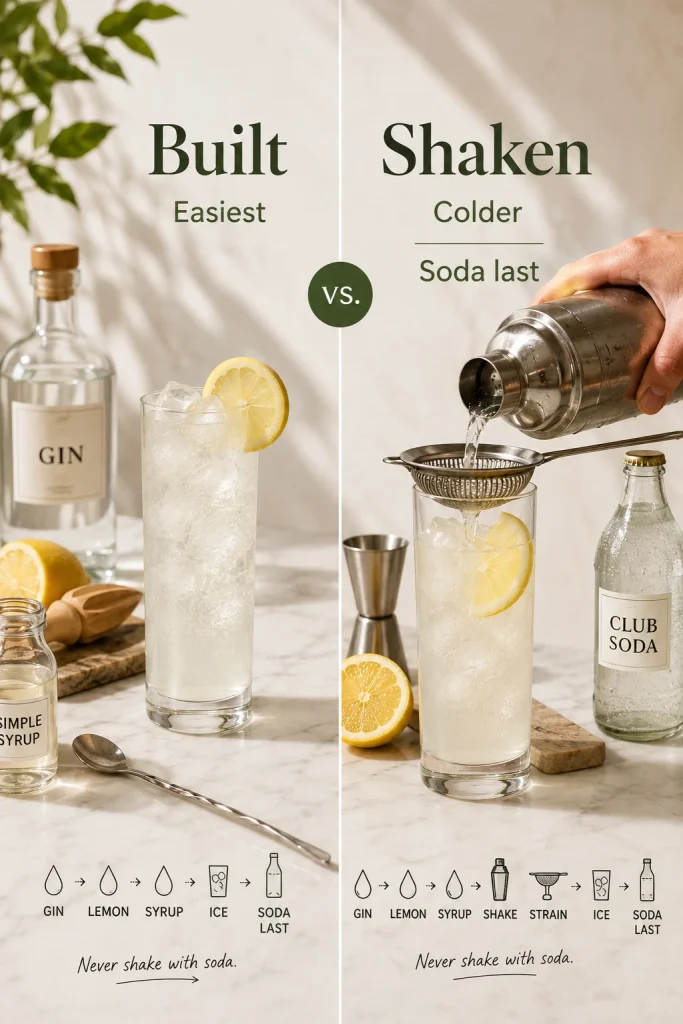
The fizz rule: mix the gin, lemon, and syrup first; add ice after the base is blended; pour cold soda last; stir once or twice. Extra stirring after soda makes the drink go flat faster.
- Built in the glass: stir gin, lemon, and syrup in the glass, add ice, then top with soda. This is fast, simple, and does not need a shaker.
- Shaken first: shake gin, lemon, and syrup with ice, strain over fresh ice, then top with soda. This gives a colder, more polished drink.
One rule does not change: never shake the soda. It should always go in after stirring or shaking, right before serving.
For another sharper lemon-and-sugar cocktail, the Lemon Drop Martini uses a similar citrus balance in a colder, served-up drink.
Back to recipe card · Glass, ice, and soda tips · Back to top
Glass, Ice, Soda, and Garnish
A Tom Collins should still feel alive ten minutes into sitting on the table: cold glass, lemon scent, bubbles still moving, not a sweet yellow drink melting into weak lemonade.
Collins Glass vs Highball
The glass and ice choice controls how much soda you need and how quickly the drink dilutes.
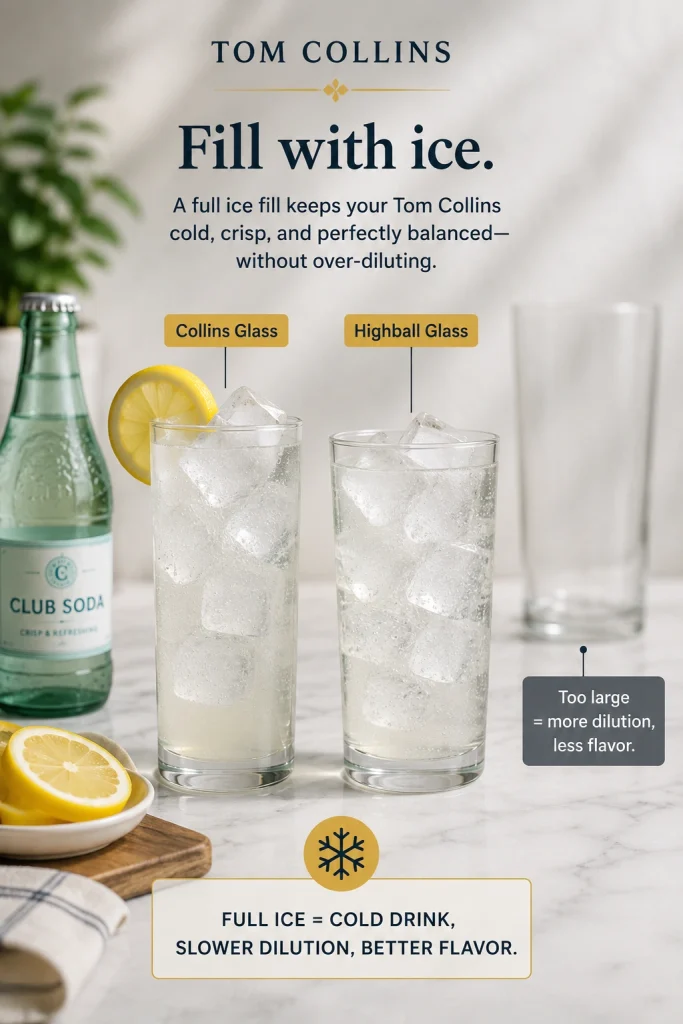
Soda: use a cold, freshly opened bottle or can if you can. Pour slowly down the side of the glass or over the back of a spoon if you want a gentler top-up.
Glass: a 12–14 oz Collins or highball glass works well. A very large glass can trick you into adding too much soda, which weakens the lemon and gin flavor.
Ice: do not be stingy. Plenty of ice keeps the drink cold and helps it stay crisp instead of watery.
Garnish: a lemon wheel and cherry are classic. A lemon wedge also works if that is what you have. Choose an orange slice only when you want a softer citrus aroma.
The same ice-first, soda-last habit also matters in a Mojito, where lime, mint, rum, and bubbles need the same fresh lift.
Fix a flat or watery drink · Back to recipe
Can You Use Tom Collins Mix or Sour Mix?
Yes, but fresh lemon juice and simple syrup give you more control. Mix is convenient, but it locks the sour and sweet parts together. Using separate lemon and syrup lets you fix the drink one direction at a time.
Fresh Ingredients vs Tom Collins Mix
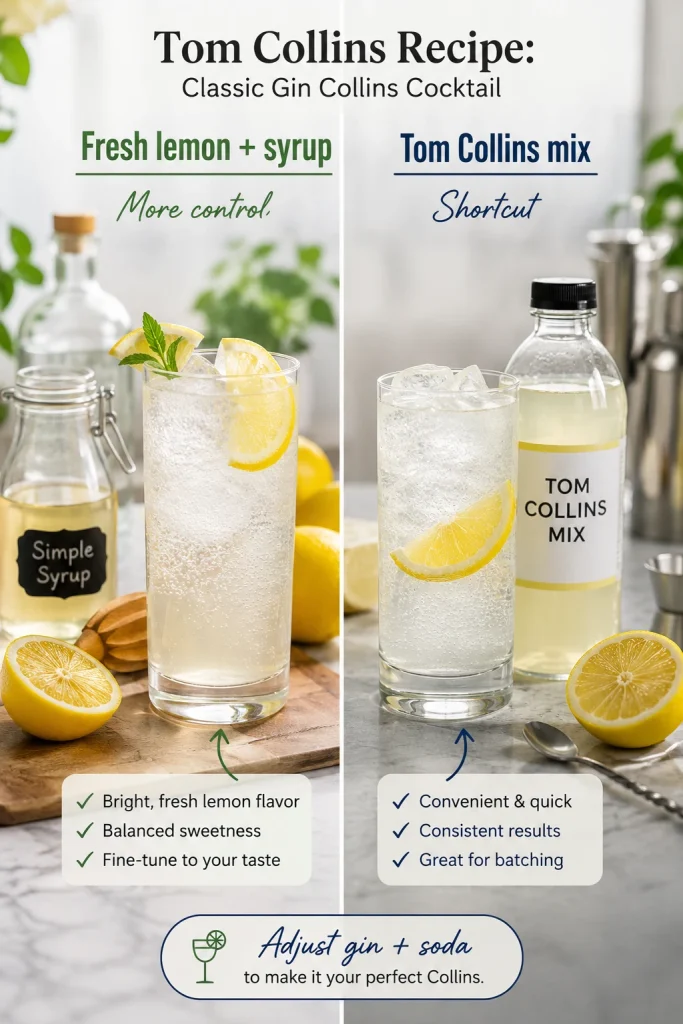
With mix, treat the bottle as both the sour and sweet part of the drink. Do not add extra syrup until you taste the glass.
For a shortcut version with mix, use:
- 2 oz gin
- 2–3 oz Tom Collins mix or sour mix
- Ice
- 2–3 oz cold club soda
- Lemon and cherry for garnish
Start with 2 oz mix if the bottle tastes sweet. Use closer to 3 oz if it tastes tart, but skip extra syrup until the glass is mixed and tasted. Add soda last, then adjust gently.
Fresh vs mix: fresh lemon and syrup make the drink taste more alive. Mix is useful for speed, but it can make the cocktail sweeter and flatter if you pour too much.
Pitcher Version for a Crowd
This is where the drink becomes especially useful for hosting: the gin-lemon-syrup base can wait in the fridge, but the bubbles should not. Mix the base ahead, keep the soda cold and unopened, then top each glass right before serving so every drink tastes freshly made.
Pitcher Base First, Soda Last
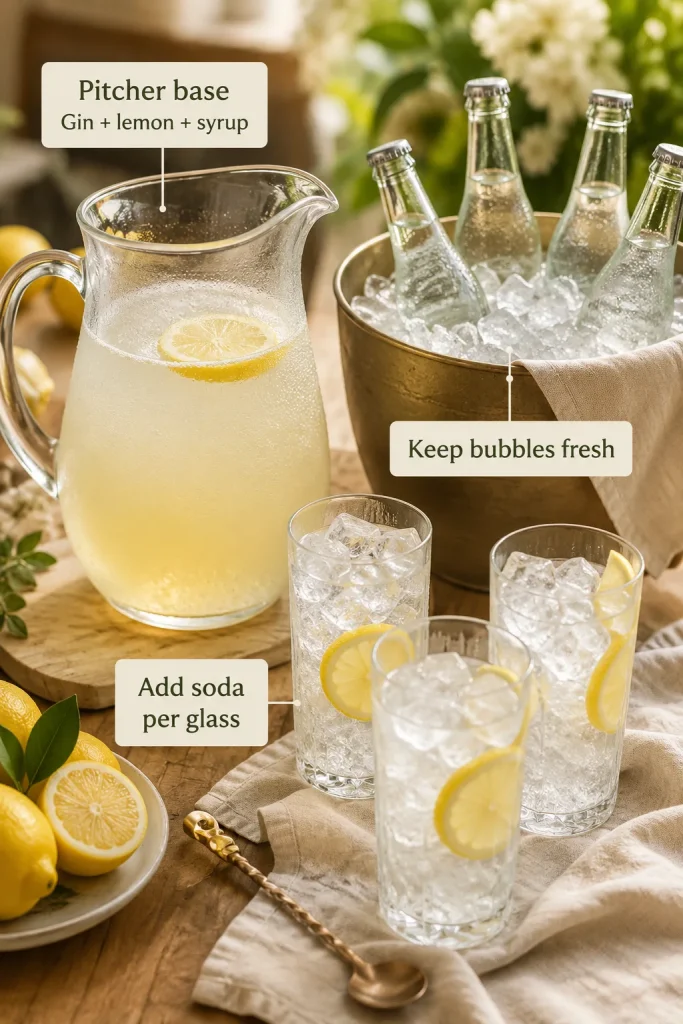
| Servings | Gin | Lemon juice | Simple syrup | Club soda |
| 4 drinks | 8 oz / 240 ml | 4 oz / 120 ml | 2 oz / 60 ml | 8–16 oz / 240–480 ml |
| 6 drinks | 12 oz / 360 ml | 6 oz / 180 ml | 3 oz / 90 ml | 12–24 oz / 360–720 ml |
| 8 drinks | 16 oz / 480 ml | 8 oz / 240 ml | 4 oz / 120 ml | 16–32 oz / 480–960 ml |
For each drink, use 3½ oz / 105 ml of the chilled base. Pour that over ice, top with club soda, stir gently, and garnish. Let guests add soda themselves if you want every glass to taste freshly made.
What to serve with it · Make-ahead tips · Back to top
Variations
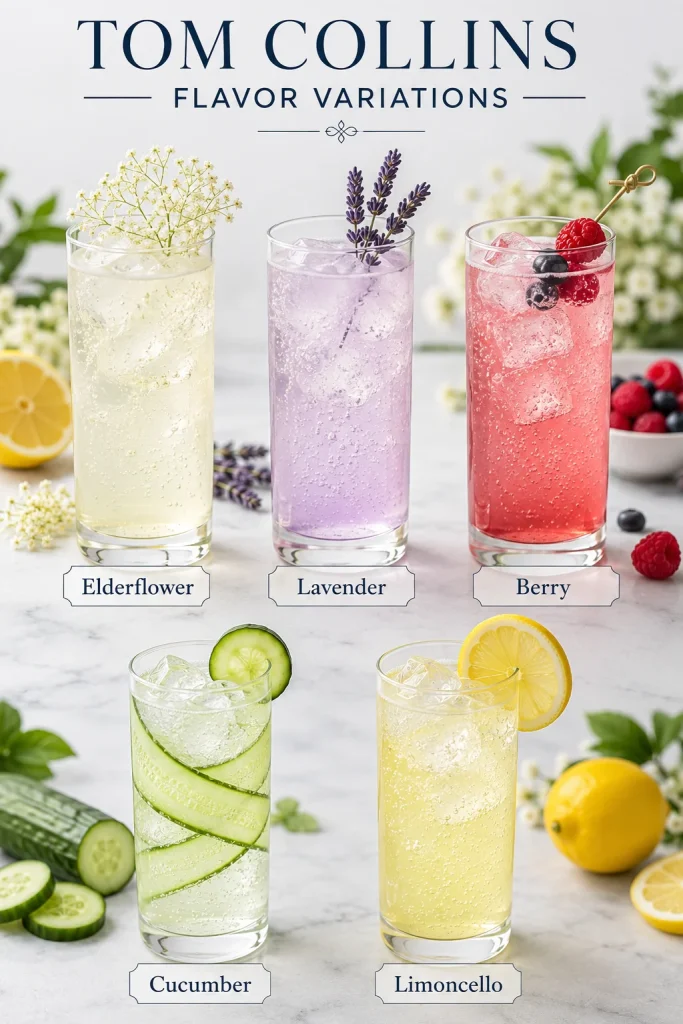
Start with Vodka Collins or John Collins if you want a spirit swap. Try elderflower, cucumber, berry, lavender, or limoncello when you want a flavor twist. To make lighter or playful versions, adjust the syrup, skip the gin, or blend the drink with ice.
Tom Collins Flavor Variations
Spirit Swaps
- Vodka Collins: use 2 oz vodka, 1 oz lemon juice, ½ oz simple syrup, and club soda to top. The glass tastes cleaner and less botanical, closer to sparkling lemon vodka than a gin highball.
- John Collins: use 2 oz whiskey or bourbon, 1 oz lemon juice, ½ oz simple syrup, and club soda to top. Whiskey takes the Collins in a warmer, deeper direction.
MasalaMonk’s vodka with lemon cocktails guide stays in the same crisp, easy-mixing direction.
Flavor Twists
- Elderflower Collins: use 2 oz gin, 1 oz lemon juice, ½ oz elderflower liqueur or cordial, ¼ oz simple syrup, and soda to top. Skip the extra syrup at first if the elderflower ingredient is very sweet.
- Lavender Collins: replace plain simple syrup with ½ oz lavender syrup. Go light; lavender should whisper, not take over.
- Berry Collins: muddle 2–3 strawberries or raspberries with the lemon juice and syrup before adding gin, ice, and soda. If using berry syrup, reduce or skip the plain syrup.
- Cucumber Collins: add 3–4 thin cucumber slices before the gin, lemon, and syrup. Stir gently, add ice, then top with soda.
- Limoncello Collins: use 2 oz gin, ¾ oz lemon juice, ½ oz limoncello, ¼ oz simple syrup, and soda to top.
Lighter and Fun Versions
- Low-sugar Collins: use ¼ oz simple syrup instead of ½ oz, then add a little more soda. Taste before cutting the syrup too aggressively.
- Frozen Collins: blend 2 oz gin, 1 oz lemon juice, ½ oz simple syrup, and 1 cup ice until slushy. Finish with a small splash of club soda. Fun, but not the version to judge the classic by.
- Non-alcoholic Collins-style lemon soda: skip the gin and use 1 oz lemon juice, ½–¾ oz simple syrup, lots of ice, and cold club soda. Add a few drops of non-alcoholic bitters or strong brewed tea if you want more depth.
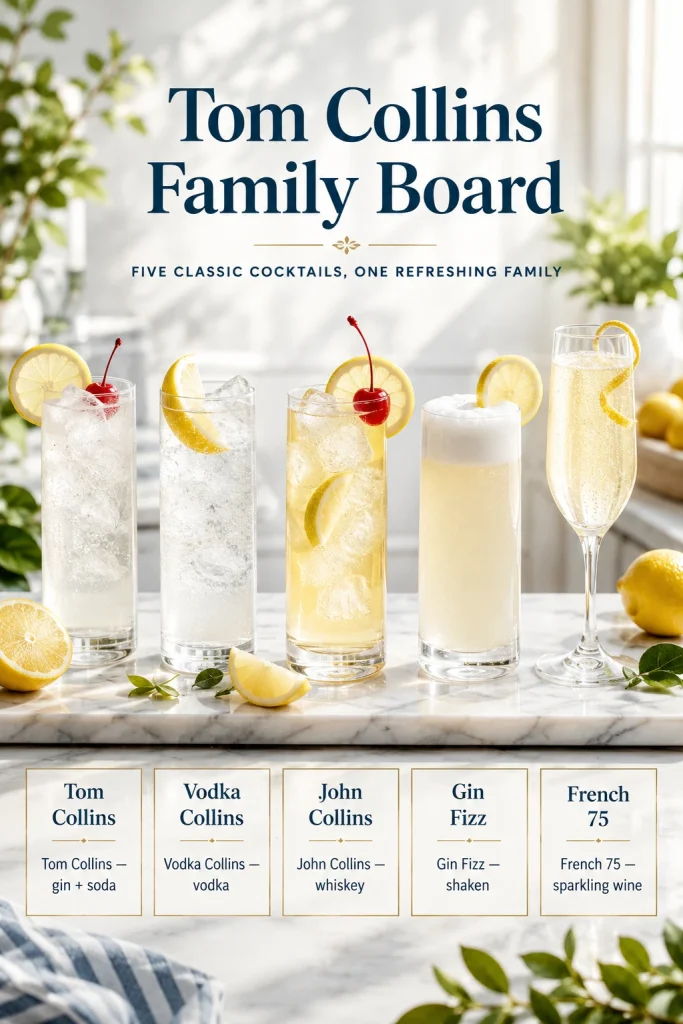
Tom Collins vs Vodka Collins, John Collins, Gin Fizz, and French 75
Think of a Tom Collins as a gin sour made tall: gin, lemon, sugar, ice, and soda. Change the spirit and you get another Collins. Shake it shorter and serve it differently, and you move closer to a fizz. Swap club soda for sparkling wine, and you move toward a French 75.
Tom Collins and Related Drinks
If you like the wider cocktail-family side of things, Difford’s has a helpful overview of Collins cocktails.
| Drink | Base | Main difference |
| Tom Collins | Gin | Classic gin, lemon, syrup, and club soda drink served tall over ice. |
| Vodka Collins | Vodka | Cleaner and less botanical than a Tom Collins. |
| John Collins | Often whiskey or bourbon in modern home-bar usage | Warmer and deeper, with the same Collins structure. |
| Gin Fizz | Gin | Usually shaken and often served shorter, sometimes without ice. |
| French 75 | Gin and sparkling wine | Uses Champagne or sparkling wine instead of club soda. |
Older cocktail references do not always use the Tom Collins and John Collins names the same way. The International Bartenders Association’s John Collins listing notes Old Tom gin for Tom Collins, so for everyday mixing, the simple gin-versus-whiskey distinction is the easiest way to choose your glass.
Love the gin, lemon, and bubbles combination? The French 75 takes that same bright idea in a sparkling-wine direction.
How to Fix a Drink That Tastes Off
When the drink tastes wrong, do not dump it immediately. A Tom Collins is forgiving because most problems have a small correction: sweetness with syrup, strength with soda, freshness with lemon, and lift with fresh bubbles.
Troubleshooting at a Glance
Use the smallest correction first, then taste again before changing the drink in another direction.
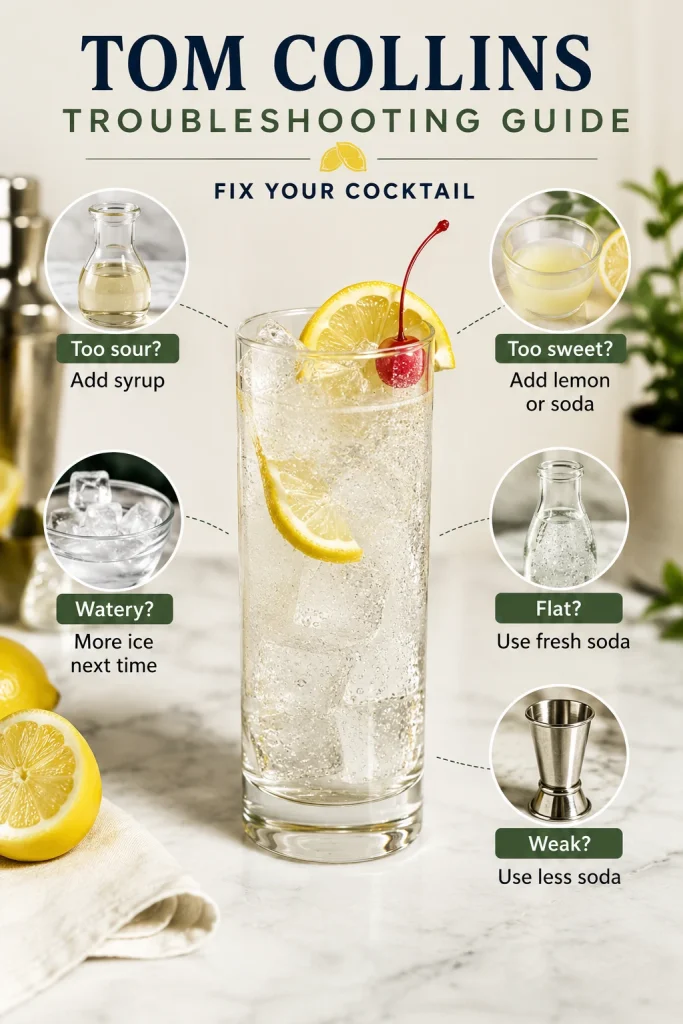
| Problem | Fix now | Prevent next time |
| Too sour | Add ¼ oz simple syrup or 1–2 teaspoons, then stir gently. | Start with ½ oz syrup and adjust by teaspoons. |
| Too sweet | Add a small squeeze of lemon or a splash of club soda. | Do not add more syrup before tasting. |
| Flat | Add a splash of fresh cold club soda. | Use freshly opened soda and add it last. |
| Watery | Add a small splash of gin and lemon if needed. | Use more ice and avoid over-stirring. |
| Too weak | Add less soda next time. | Start with 2 oz soda, then lengthen only if needed. |
| Too harsh | Add a little more soda or a tiny touch of syrup. | Use a softer gin or reduce lemon slightly. |
| Grainy | Stir longer, though it may not fully fix. | Use simple syrup instead of undissolved sugar. |
Common mistakes to avoid: warm soda, too much soda, too little ice, dry sugar in the glass, bottled lemon juice, and shaking the soda. Each one can make an otherwise good Tom Collins taste flat, harsh, weak, or messy.
The easiest balance test: taste the gin, lemon, and syrup before adding soda. It should taste slightly too bright and strong because the ice and soda will soften it.
Make the recipe again · Check ice and soda tips · Back to top
What to Serve with a Tom Collins
A Tom Collins is made for salty, lemon-friendly snacks: pakoras, masala fries, grilled paneer, olives, chips, fried chicken bites, shrimp, and anything with herbs or chutney on the side. The bubbles refresh the palate, the citrus cuts richness, and the light sweetness softens salty or spicy bites.
Snack Table Pairing Ideas
Salty snacks make the citrus and bubbles feel brighter, especially with fried or spiced food.
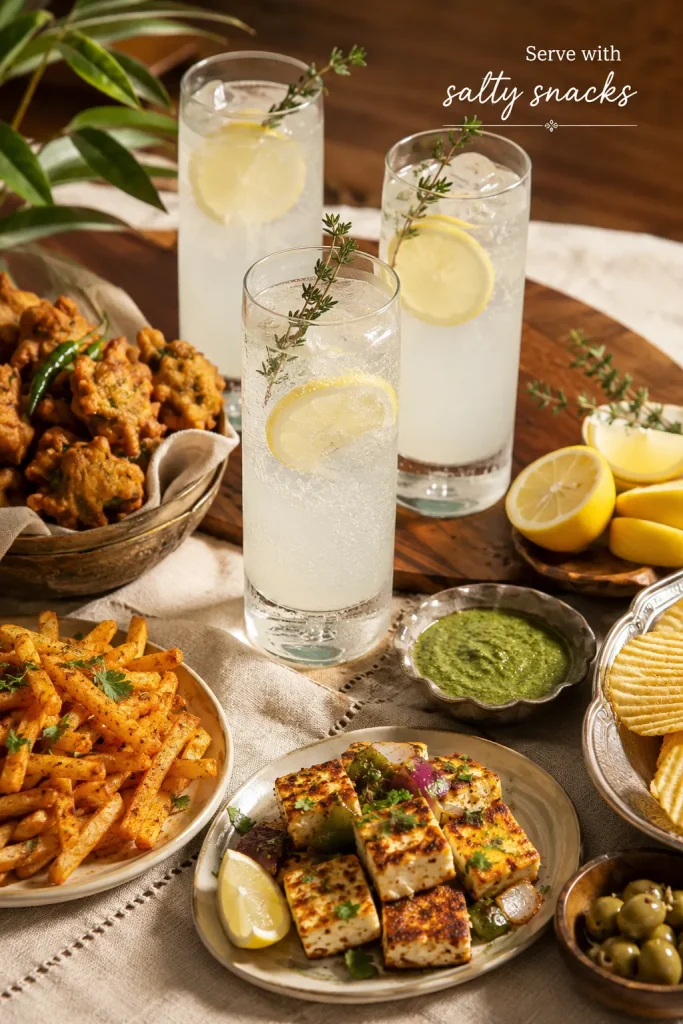
- Salty snacks: spiced nuts, olives, chips, crackers, and popcorn work because the drink is cold and citrusy.
- Fried appetizers: fries, fritters, pakoras, tempura, and fried chicken bites work because lemon and soda cut through richness.
- Seafood and chicken: grilled shrimp, crab cakes, lemony fish, grilled chicken, and lightly spiced chicken skewers pair well without overpowering the drink.
- Cheese boards and fresh salads: mild cheeses, salty crackers, nuts, fruit, cucumber, herbs, and citrus dressing keep the table easy and party-friendly.
MasalaMonk’s Green Chutney keeps a snack table fresh, herby, and citrusy. For a hot, crunchy pairing, MasalaMonk’s Mozzarella Sticks recipe also works well with the lemon-and-bubbles profile.
Very sweet desserts are not the best first pairing because the cocktail already has lemon and syrup. If serving dessert, keep it light: lemon cookies, shortbread, fruit, or a not-too-sweet citrus cake.
Make-Ahead Tips
Do not fully make a Tom Collins ahead with soda. The bubbles fade and the drink loses its lift.
For make-ahead prep, mix the gin, lemon juice, and simple syrup together and chill that base. When ready to serve, pour it over ice and top with cold club soda. Fresh lemon juice tastes best the same day, so avoid making the base too far ahead.
At party time, place the chilled base, cold soda, ice, lemon wheels, and cherries next to each other so each drink can be topped fresh. That keeps every glass lively instead of serving a flat pitcher.
Tom Collins FAQ
These quick answers cover the most common questions about the drink, the ingredients, and the Collins family.
What is in a Tom Collins?
A Tom Collins is made with gin, fresh lemon juice, simple syrup, club soda, ice, and usually a lemon wheel and cherry for garnish.
What alcohol is in a Tom Collins?
The classic alcohol is gin, which gives the drink its dry, botanical edge.
Is it made with gin or vodka?
Gin makes it a Tom Collins. Vodka gives you a Vodka Collins: same lemon-soda structure, cleaner flavor, less botanical edge.
What does it taste like?
A Tom Collins tastes like sparkling lemonade with a dry gin finish: lemony, lightly sweet, crisp, and not heavy.
Is a Tom Collins a strong cocktail?
It uses a standard 2 oz pour of gin, but the tall glass, ice, lemon, and soda make it feel lighter and more refreshing than a spirit-forward cocktail. Use 2 oz soda for a stronger glass or 3–4 oz for a longer, lighter highball.
What gin is best for a Tom Collins?
London dry gin is the easiest choice for a crisp modern Tom Collins. Old Tom gin gives a softer, slightly sweeter classic-style drink; if you use it, reduce the syrup slightly and taste before adding more.
Should it be shaken or stirred?
Either method works. The easiest method is to build it in the glass. For a colder drink, shake only the gin, lemon juice, and syrup, then strain over ice and top with soda. Never shake the soda.
Do you need a shaker?
No shaker is needed. You can build a Tom Collins directly in the glass by stirring gin, lemon juice, and simple syrup, adding ice, topping with club soda, and garnishing.
Does sour mix work?
Yes, but fresh lemon juice and simple syrup usually taste better. If using sour mix, treat it as a replacement for the lemon juice and syrup, then add gin, ice, and club soda.
Can you use tonic water instead of club soda?
You can use tonic water, but it will not taste like a classic Tom Collins. Tonic water is bitter and sweet, while club soda is plain and fizzy.
What is the difference between Tom Collins and Vodka Collins?
A Tom Collins uses gin. A Vodka Collins uses vodka. The lemon, sweetener, soda, and ice structure stays similar, but the vodka version tastes cleaner and less botanical.
How is John Collins different?
In many modern home-bar recipes, a John Collins is made with whiskey or bourbon instead of gin. It has a warmer, deeper flavor, though the naming history is more complicated in older cocktail references.
Can you make a pitcher?
Yes. Mix gin, lemon juice, and simple syrup ahead, then chill. Add club soda only when serving so the pitcher does not go flat.
Can you make it non-alcoholic?
You can make a Collins-style lemon soda by skipping the gin and using lemon juice, simple syrup, ice, and cold club soda. It will not be a classic Tom Collins, but it gives you the same cold, fizzy lemon feel.
Final Tips
Make the classic version once, then use the first sip as your guide. If it tastes too sharp, soften it with syrup. When it feels weak, use less soda next time. Dull flavor usually means the glass needs fresh lemon, fresh bubbles, or more ice.
Did you make it crisp and classic, softer like sparkling lemonade, or sharper with extra lemon? Tell us your Collins style in the comments — your note may help the next reader choose their first glass.
Enjoy responsibly. The recipe is written for one cocktail; for a group, batch only the gin-lemon-syrup base and let each glass get fresh soda.








