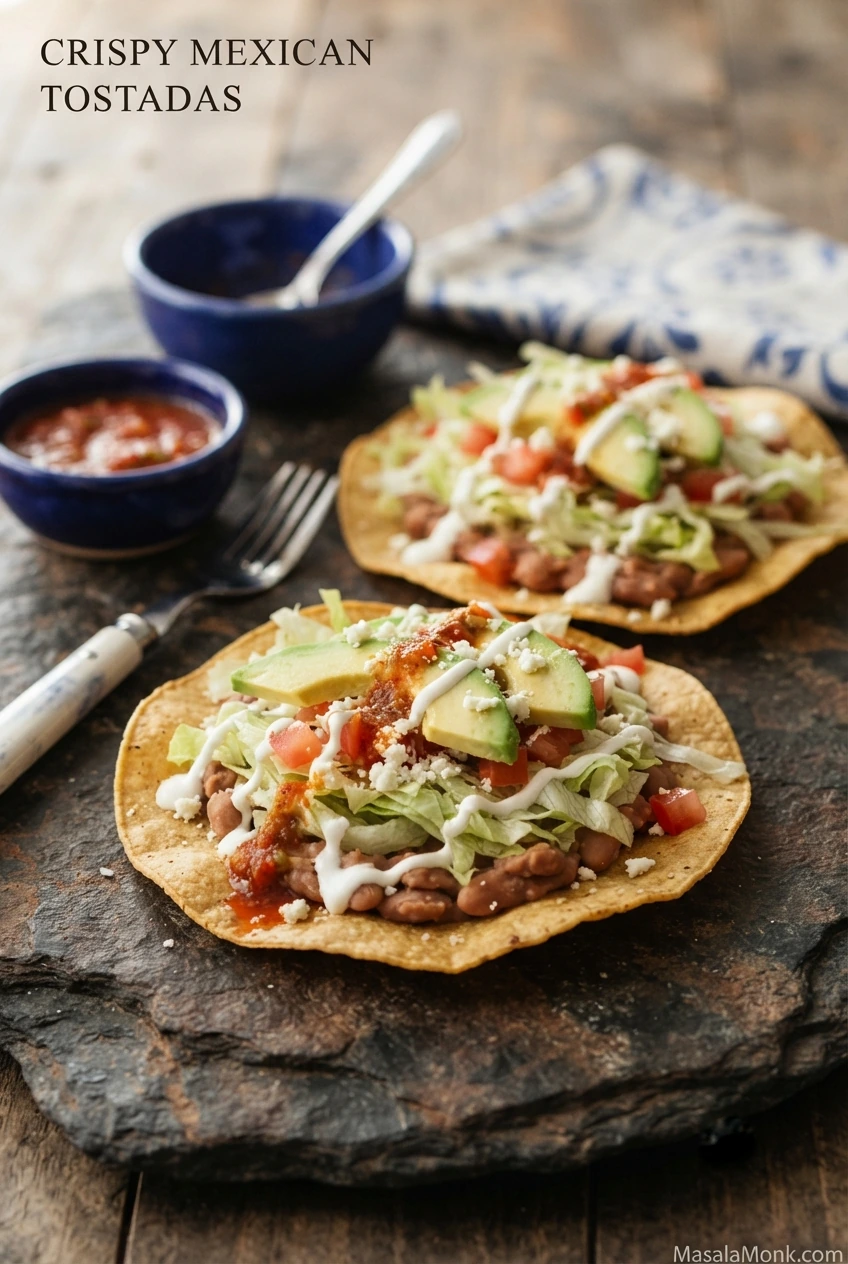
A tostada dinner starts with a stack of crisp corn tortillas and a few bowls of toppings. Warm refried beans go on first; lettuce, tomato, avocado, cheese and salsa follow. Each shell is assembled as you eat, so the last tostada can be every bit as crunchy as the first.
The fun is in the contrast. The tortilla cracks beneath the beans, the vegetables stay cool, and a little salsa brings heat or acidity. A few crumbs will land on your plate; that is part of the experience.
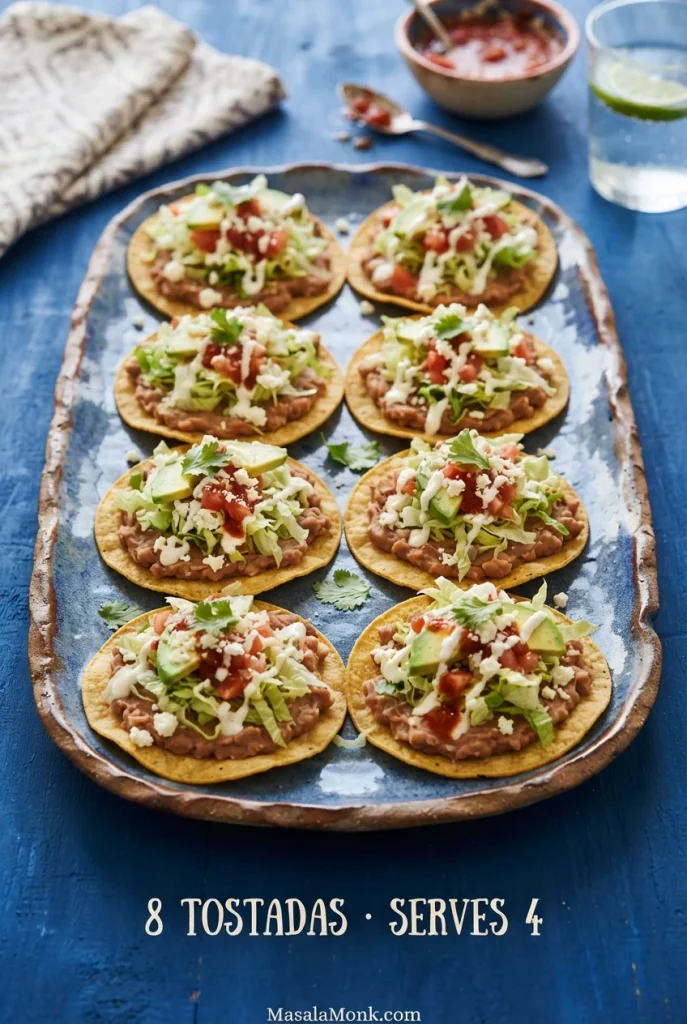
This tostadas recipe makes eight Mexican-style tostadas with lightly oiled, oven-baked corn shells and a refried-bean filling. Allow about 35 minutes when using fully cooked tortillas and prepared beans. Baking works especially well for a dinner-sized batch; further down, you can compare frying, air frying and oil-free baking, or choose a different filling.
Ready to cook? Jump to the recipe, compare the shell methods, or go directly to troubleshooting.
Easy Tostadas Recipe with Crispy Corn Tortillas and Refried Beans
This is the baked bean-and-avocado version. The amounts below make eight moderately topped six-inch tostadas; keep the fillings separate until serving so each shell stays crisp.
| Yield | 8 tostadas |
|---|---|
| Servings | 4 people, approximately 2 tostadas each |
| Preparation | 15–20 minutes |
| Baking | About 9–13 minutes for the shells |
| Total | About 35 minutes, with oven preheating and preparation overlapping |
| Oven | 400°F / 200°C |
| Method | Lightly oiled corn tortillas, baked until firm through the center |
Equipment: Two large baking sheets, a pastry brush, spatula or tongs, small saucepan, knife, chopping board, spoon and serving bowls. A cooling rack is useful but not essential.
Work efficiently: Turn on the oven first. While it preheats, wash and thoroughly dry the lettuce, dice and drain the tomatoes, and gather the toppings. Oil the tortillas and put them in the oven; warm the beans while they bake. Slice the avocado close to serving. The 35-minute estimate assumes prepared beans, two trays or enough oven space for the shells, and overlapping tasks. A single small tray, raw meat, dried beans or uncooked tortillas will add time.
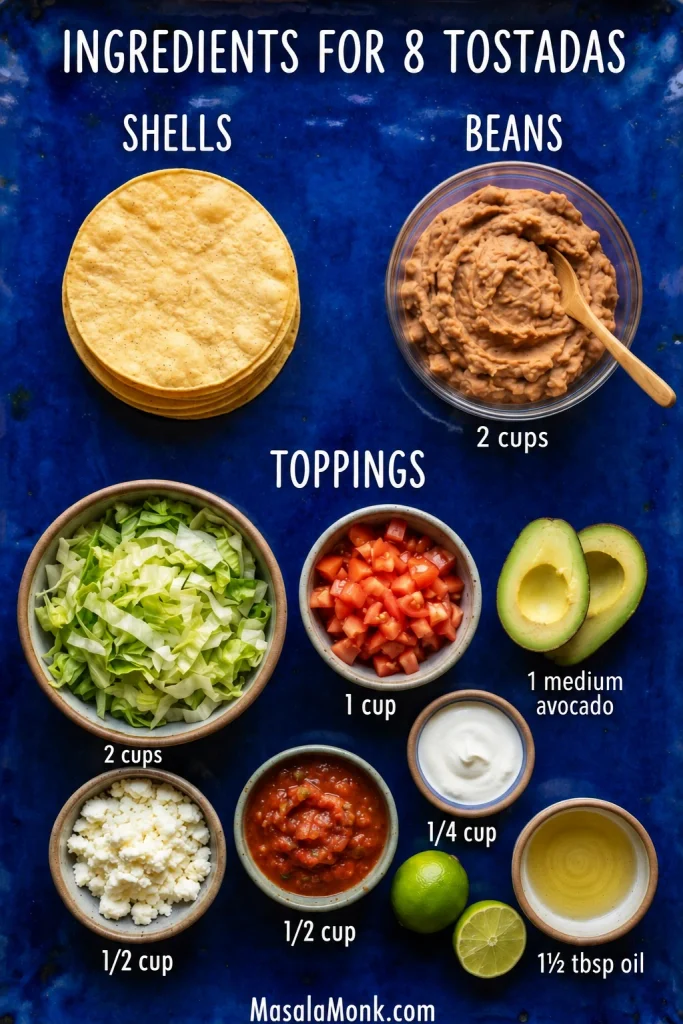
Ingredients for 8 Tostadas
Prepared refried beans keep this version quick. If you have canned whole beans instead, see how to mash them into a tostada filling before you start.
Corn Tortillas and Oil for Tostada Shells
- 8 fully cooked corn tortillas, about 6 inches / 15 cm across
- 1½ tablespoons / 22 mL neutral cooking oil, such as sunflower or canola
- Pinch of fine salt, optional
Refried Bean Filling
- 2 cups prepared refried pinto beans (about 480 g, depending on consistency); refried black beans also work
- 1 teaspoon / 5 mL neutral oil, optional
- ¼ cup / about 40 g finely chopped white onion, optional
- 1 garlic clove, minced, optional
- ¼ teaspoon ground cumin, optional
- Up to 4 tablespoons / 60 mL water or unsalted bean cooking liquid, only if needed
- Fine salt, to taste
Fresh Tostada Toppings and Finishes
- 2 cups loosely packed shredded romaine or iceberg lettuce (about 75–90 g)
- 1 cup finely diced, drained tomato (about 150–180 g)
- 1 medium ripe avocado
- ½ cup crumbled queso fresco (about 75 g)
- ¼ cup / 60 mL Mexican crema
- ½ cup / 120 mL salsa roja or salsa verde, plus extra to serve if desired
- 1–2 limes, cut into wedges
- 2 tablespoons chopped fresh cilantro, optional
Ingredient choices: Use two cups of finished refried beans, not two cups of dry beans. Taste your chosen salsa before seasoning the beans further: a salty, acidic or spicy salsa may be all the finishing flavor you need. Drain thin, watery salsa before adding it to the shells.
How to Make Tostadas Step by Step
Step 1: Prepare the tortillas
Preheat the oven to 400°F / 200°C. Position two oven racks near the middle if baking two sheets together. Brush both sides of each tortilla with a thin, even layer of oil.
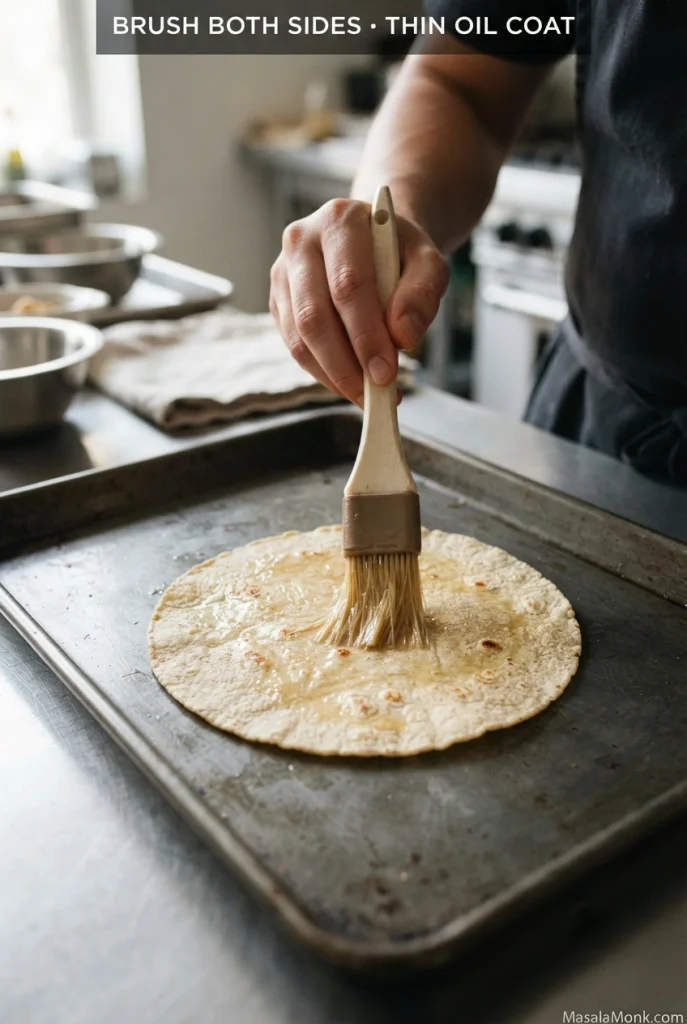
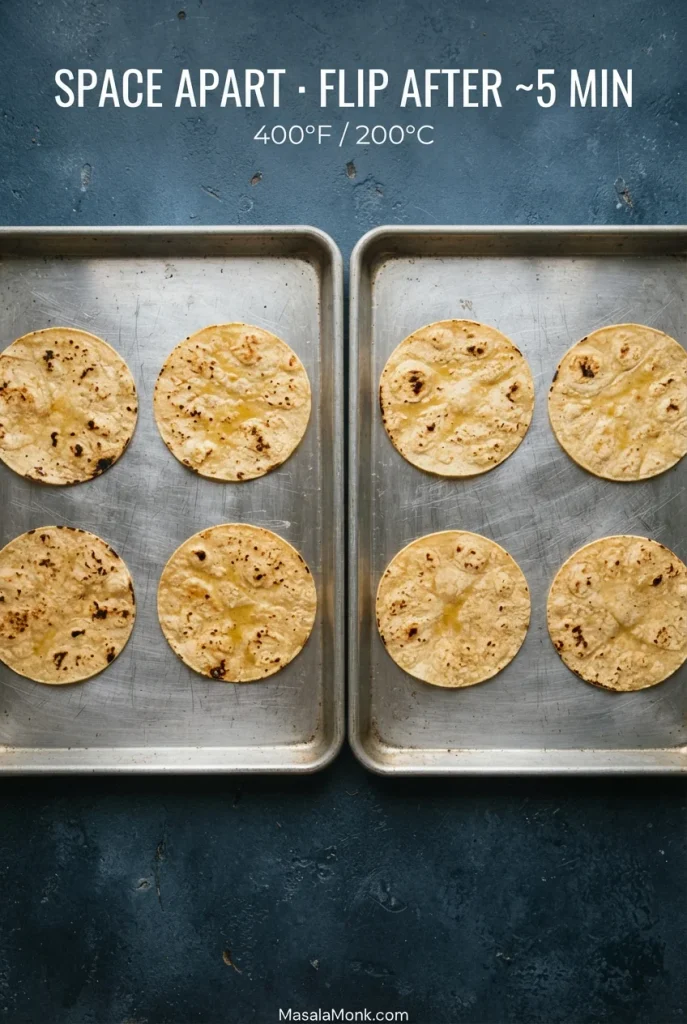
Lay the tortillas flat, with space between them, and sprinkle lightly with salt if you like. Do not overlap; bake in batches if necessary.
Step 2: Bake the shells until crisp
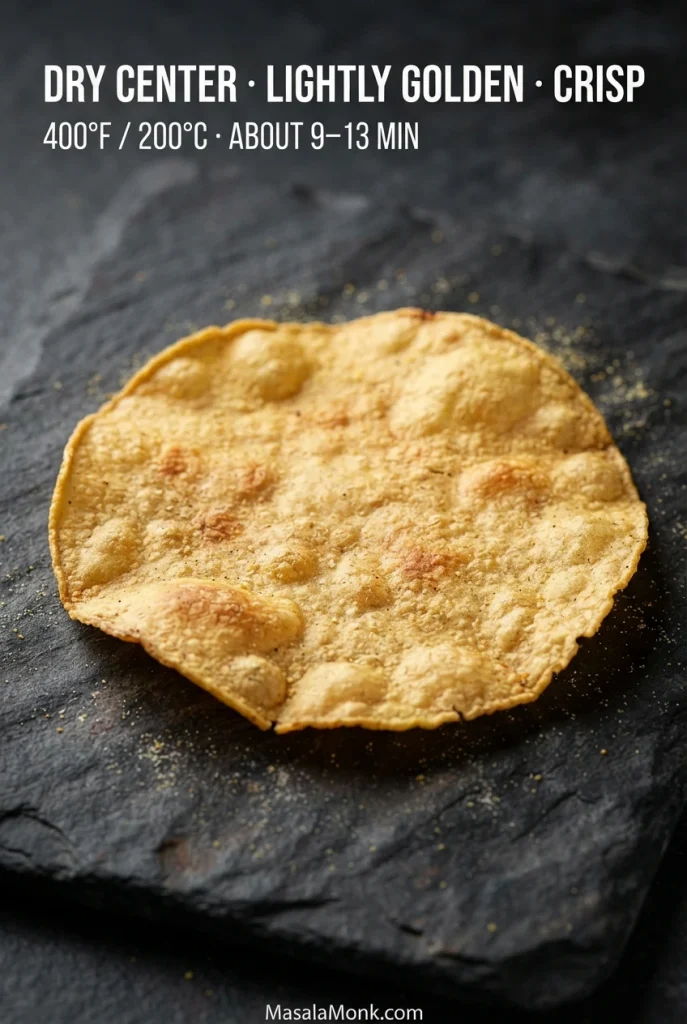
Bake for about 5 minutes, then flip the tortillas. If using two racks, swap the sheets’ positions. Bake another 4–8 minutes, checking frequently toward the end. Many standard corn tortillas crisp in 9–13 minutes total, although thickness, moisture and oven differences matter.
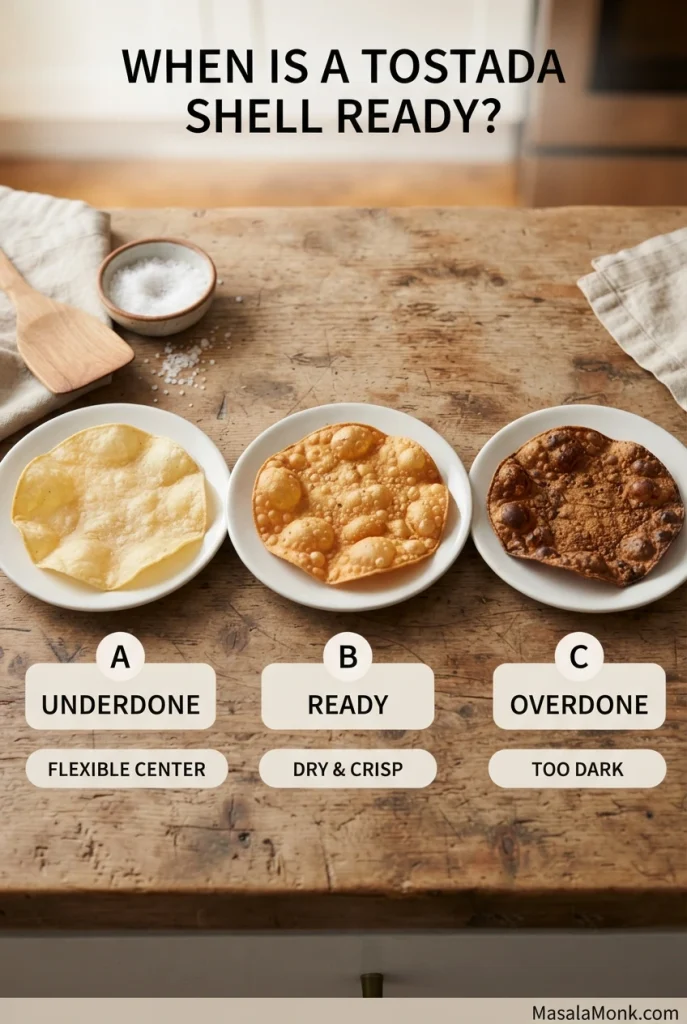
Look for a dry surface, light golden patches and a firm center. Remove individual shells as soon as they finish rather than overbrowning the whole batch. Cool on a rack or uncovered plate for 1–2 minutes. They may firm slightly as they cool, but a center that remains leathery needs more oven time if its edges are not already too dark.
Step 3: Warm the refried beans
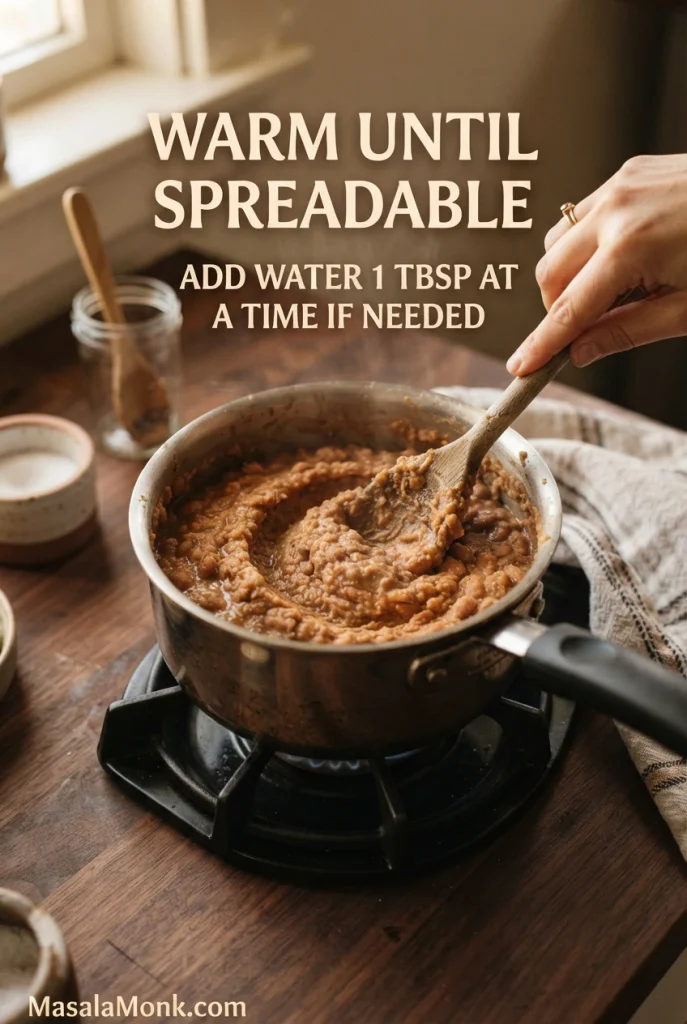
While the shells bake, warm the beans over medium-low heat. For the optional onion-and-garlic version, soften the onion in 1 teaspoon oil for 3–4 minutes; add the garlic for about 30 seconds, then stir in the beans and cumin. Otherwise, warm the prepared beans directly, stirring occasionally.
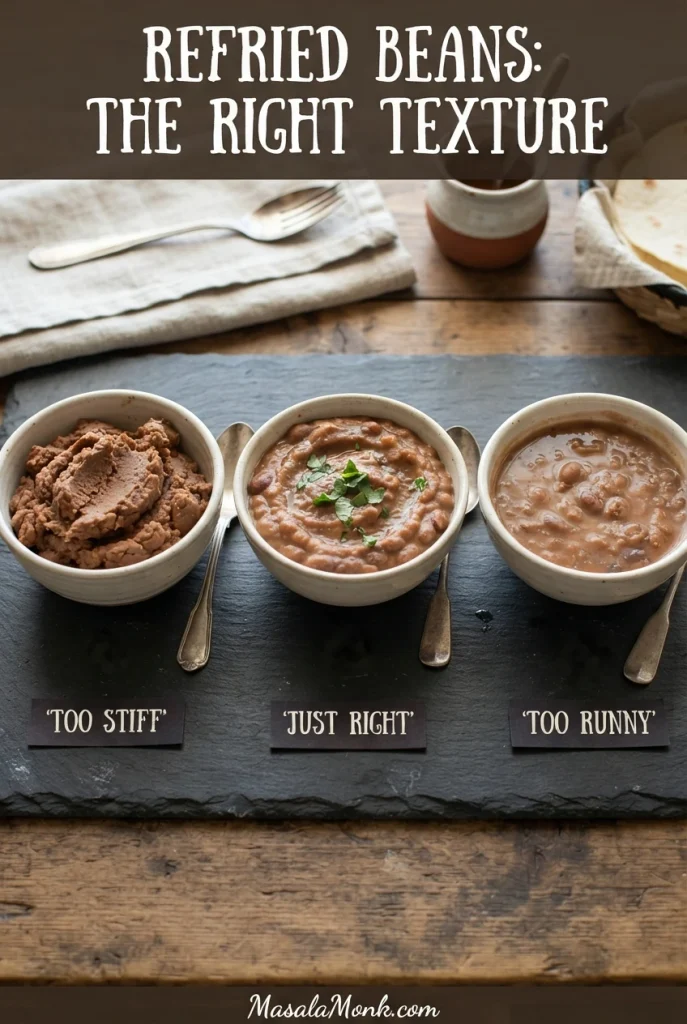
They should spread under a spoon without running off the shell. If stiff, stir in water or unsalted bean liquid 1 tablespoon / 15 mL at a time. If runny, simmer uncovered until thickened. Taste the beans alongside your salsa before adding extra salt or seasoning.
Step 4: Finish the toppings
Finish preparing the toppings while the beans warm. Shred and thoroughly dry the lettuce if you have not already; drain the diced tomatoes, crumble the queso fresco and set out the salsa and crema. Cut the limes into wedges. Slice the avocado just before assembly and divide it into eight portions.
For a tomato topping with onion, cilantro and lime already mixed in, replace some of the diced tomato with fresh pico de gallo. Lift it out with a slotted spoon if there is plenty of juice.
Step 5: Assemble one tostada at a time
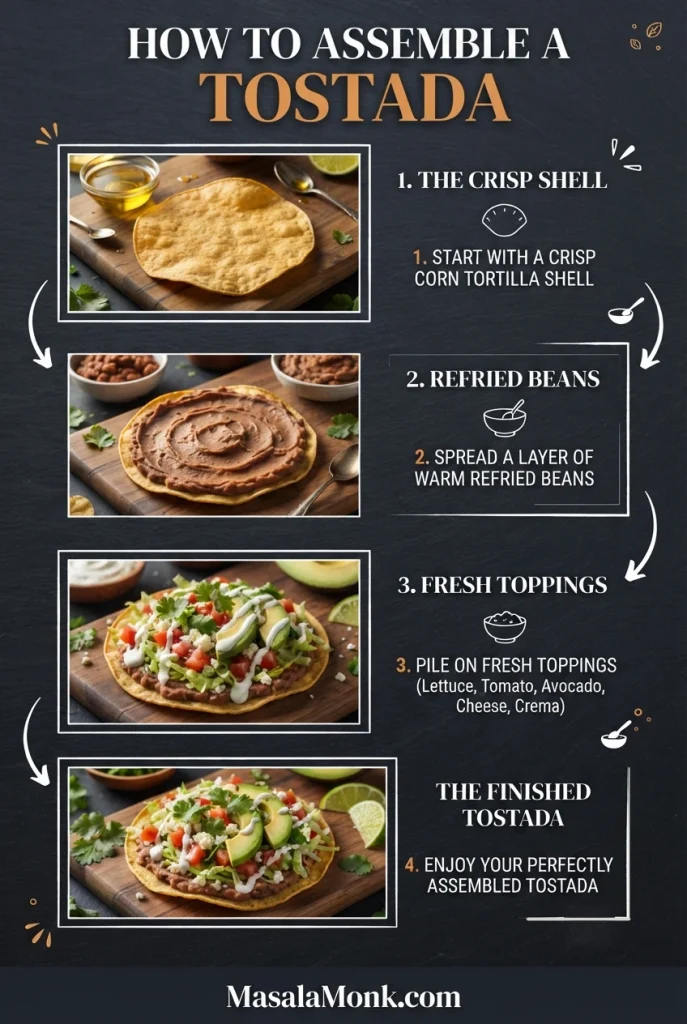
Place a shell on a plate. Gently spread ¼ cup / 4 tablespoons warm refried beans across most of its surface, leaving a narrow edge. Top with approximately ¼ cup lettuce, 2 tablespoons tomato, one-eighth of the avocado and 1 tablespoon queso fresco. Add about 1½ teaspoons crema and 1 tablespoon salsa, with cilantro and lime to taste.
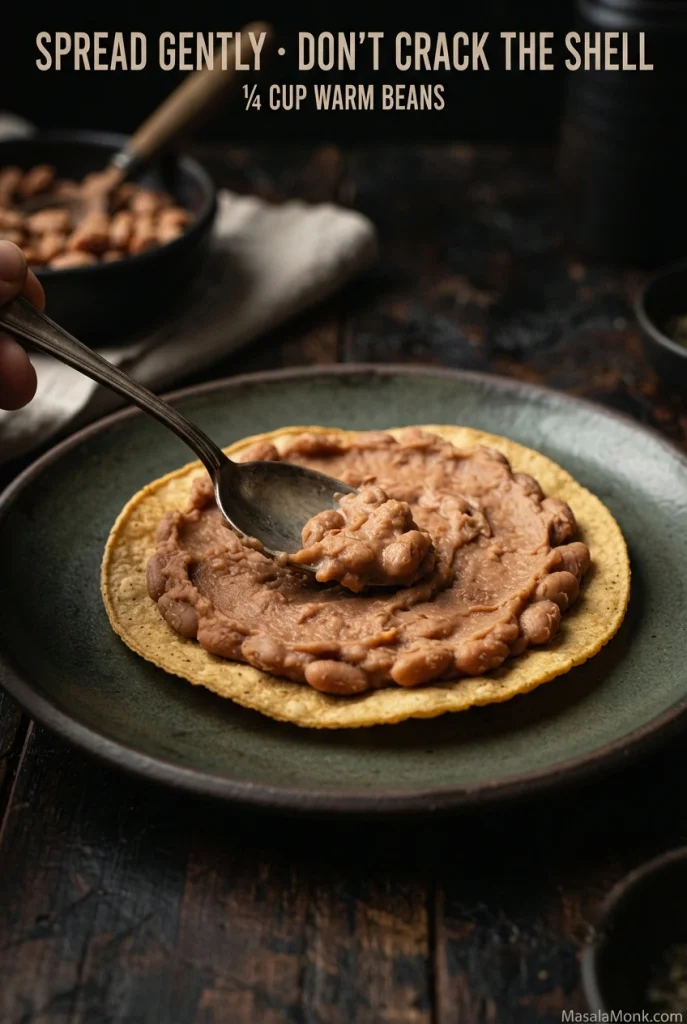
Spread the toppings over the shell rather than building a tall mound in the center. Eat straight away; leave the remaining shells untopped. The rule worth remembering is simple: crisp shell, thick filling, drained toppings, last-minute assembly.
Helpful Recipe Notes
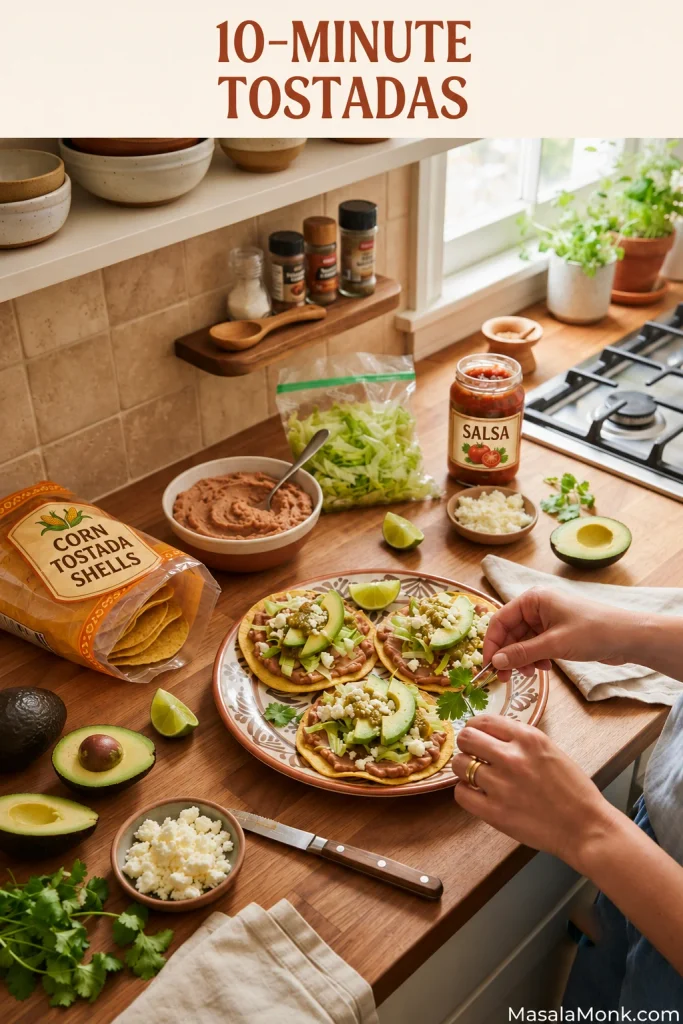
- Fastest version: Use packaged, ready-to-eat tostada shells and prepared beans. With the toppings already ready, the meal can come together in about 10 minutes.
- Adding cooked chicken or beef: Use a smaller portion of beans per shell to leave space for the protein and vegetables. Cooking raw meat adds time.
- Vegan version: Check canned refried beans for lard or animal stock; omit or replace the cheese and crema.
- Gluten-free needs: Pure corn tortillas can be wheat-free, but check tortillas, beans, sauces and seasonings for gluten ingredients or cross-contact.
- Serving different heat preferences: Set out mild salsa and a hotter salsa or jalapeños separately.
Make Tostadas Your Way: Shells, Beans and Fillings
- What is a tostada?
- Choosing tortillas
- Four shell-cooking methods
- Refried-bean options
- Fillings and topping combinations
- Serving and eating
- Troubleshooting
- Storage, shortcuts and sides
- Frequently asked questions
What Is a Tostada? How Is It Different from a Taco?
A tostada is a Mexican dish built on a flat, crisp tortilla—usually corn—with toppings such as beans, shredded meat, seafood, vegetables, cheese or salsa. Unlike a taco, its tortilla stays open-faced rather than folding around the filling.
Tostada means toasted in Spanish and can describe either the crisp tortilla or the finished dish. There is no single universal topping: preparations across Mexico include shredded meats, chicken tinga, seafood, avocado and regional sauces. Fried shells are familiar in traditional cooking; this recipe offers a practical baked version for home.
For a different Mexican preparation using corn tortillas and salsa, see chilaquiles. Chilaquiles use tortilla pieces coated with sauce, while a tostada keeps its flat, crisp shell to carry the toppings.
What Are the Best Tortillas for Tostadas?
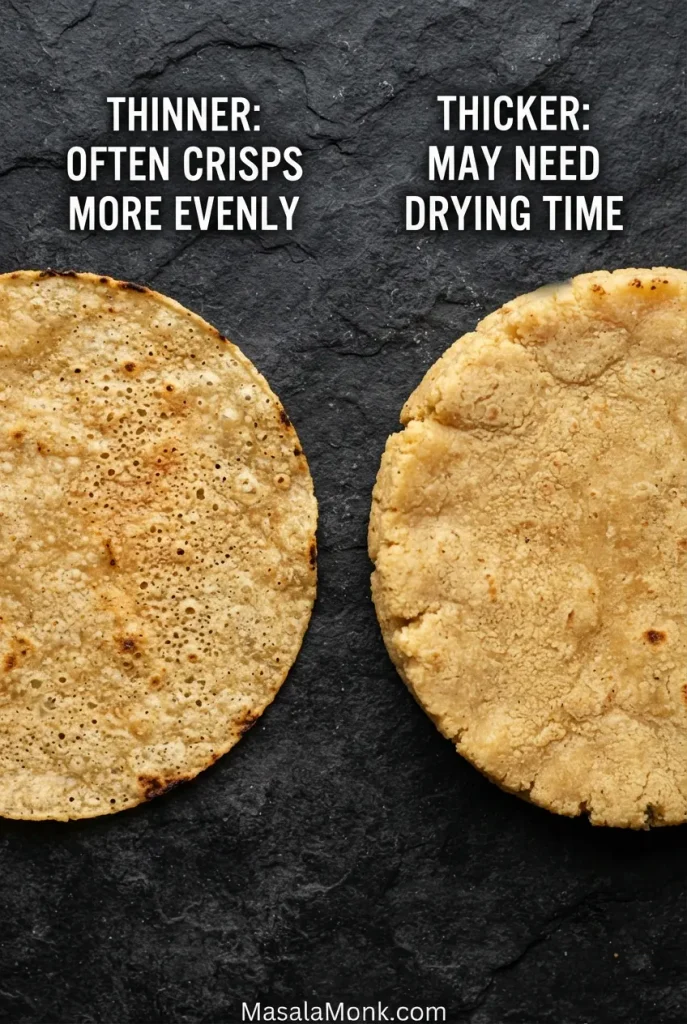
For this tostadas recipe, choose fully cooked corn tortillas about 5–6 inches / 13–15 cm across. Thin tortillas generally crisp more evenly than thick, moist ones. Tortillas made with nixtamalized corn or masa harina provide the familiar toasted-corn taste.
Can You Use Flour Tortillas?
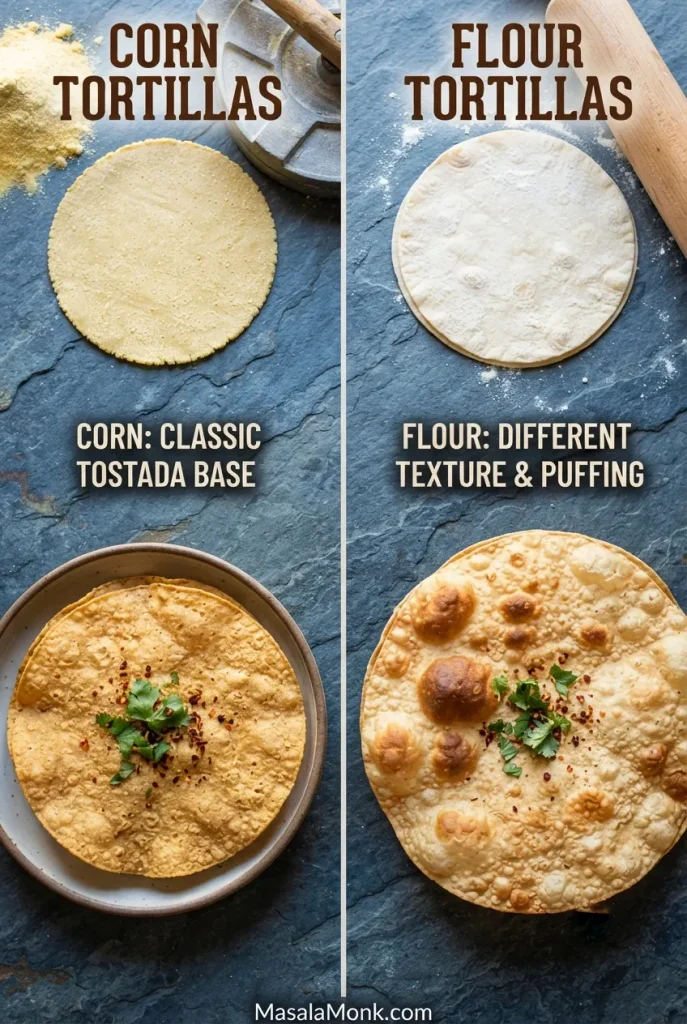
Yes, but the result is different. Flour tortillas tend to puff and blister, sometimes making a lighter, flakier shell. The baked timing in the main recipe is for corn tortillas; watch flour tortillas closely and judge by texture rather than assuming they will finish at the same time.
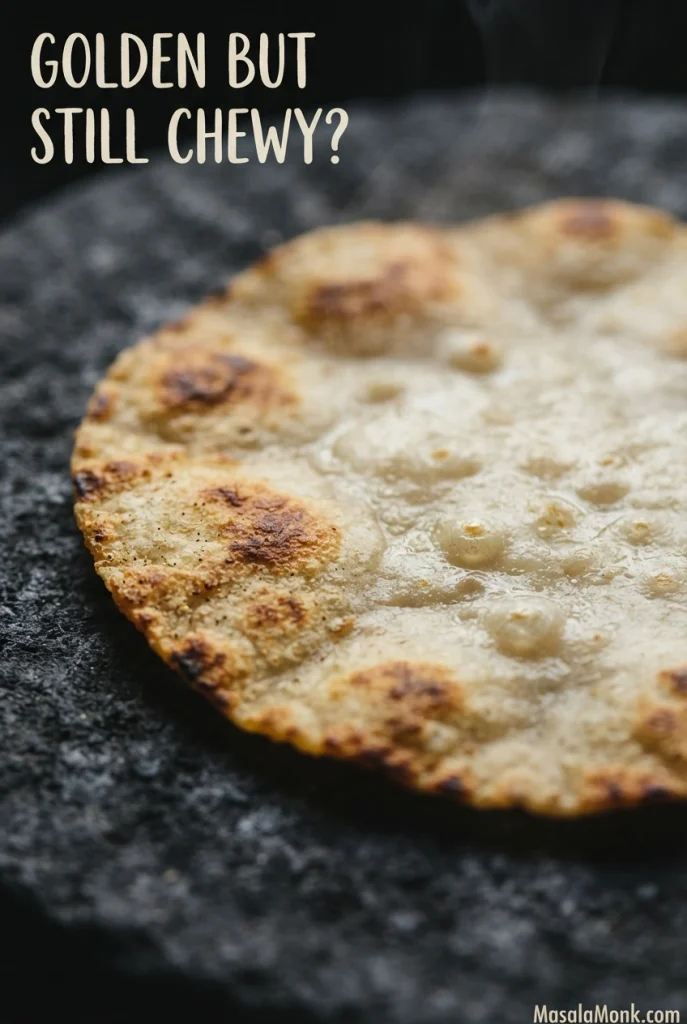
Why Can a Golden Tortilla Still Be Chewy?
The edges may brown while the center still contains moisture. That is particularly common with thick tortillas or ones cooked very recently. Chef Rick Bayless explains the benefit of relatively dry tortillas in his guide to crisp-fried tostadas. A finished shell should feel firm through the middle after brief cooling; it need not be dark brown.
Using Fresh Homemade Corn Tortillas
Our homemade corn tortilla recipe covers mixing masa, pressing tortillas and cooking them on a skillet or comal. Cook homemade tortillas completely, then let excess steam escape before crisping them into shells. Fresh tortillas often need more drying time than packaged ones.
If you already have fully cooked corn tortillas, you can return to the main baked tostadas recipe for the quantities and assembly steps.
Four Ways to Make Crispy Tostada Shells
Making eight tostadas for dinner? Bake the shells. You can handle the batch while getting the fillings ready. Fry when the traditional fried texture is the priority; use an air fryer only if it can safely hold lightweight tortillas in place. Oil-free baking gives a drier, firmer result.
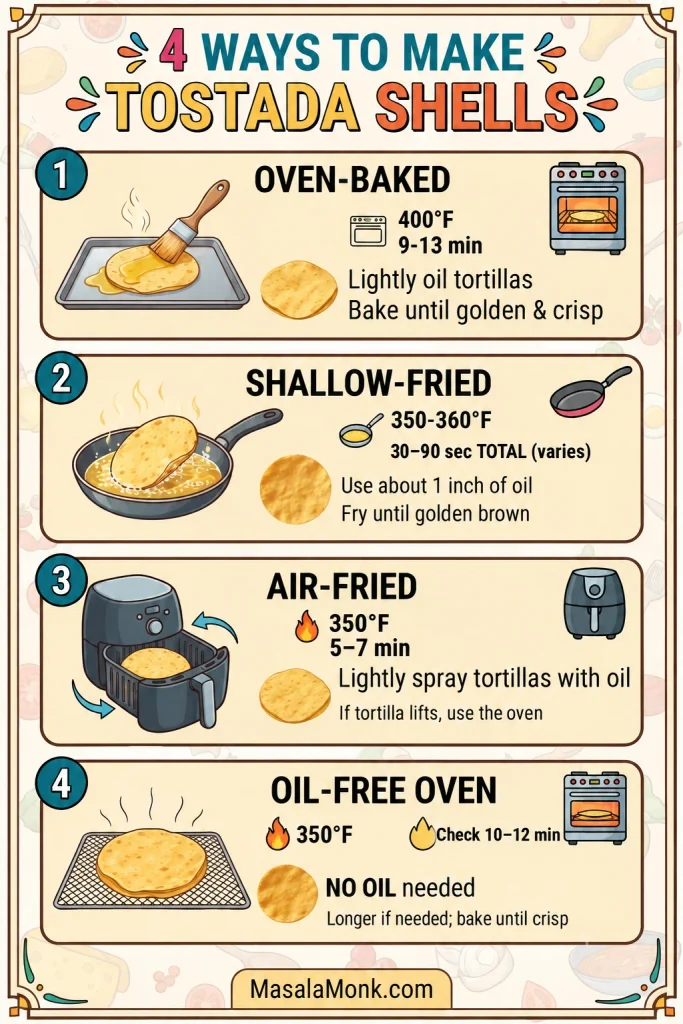
| Method | Best for | Temperature | Timing guide |
|---|---|---|---|
| Lightly oiled oven | Full batch | 400°F / 200°C | Usually 9–13 min |
| Frying | Fried texture | 350–360°F / 177–182°C | Varies; thin, dry tortillas may take 30–90 sec |
| Air fryer | 1–2 shells | 350°F / 175–180°C | Often 5–7 min; watch closely |
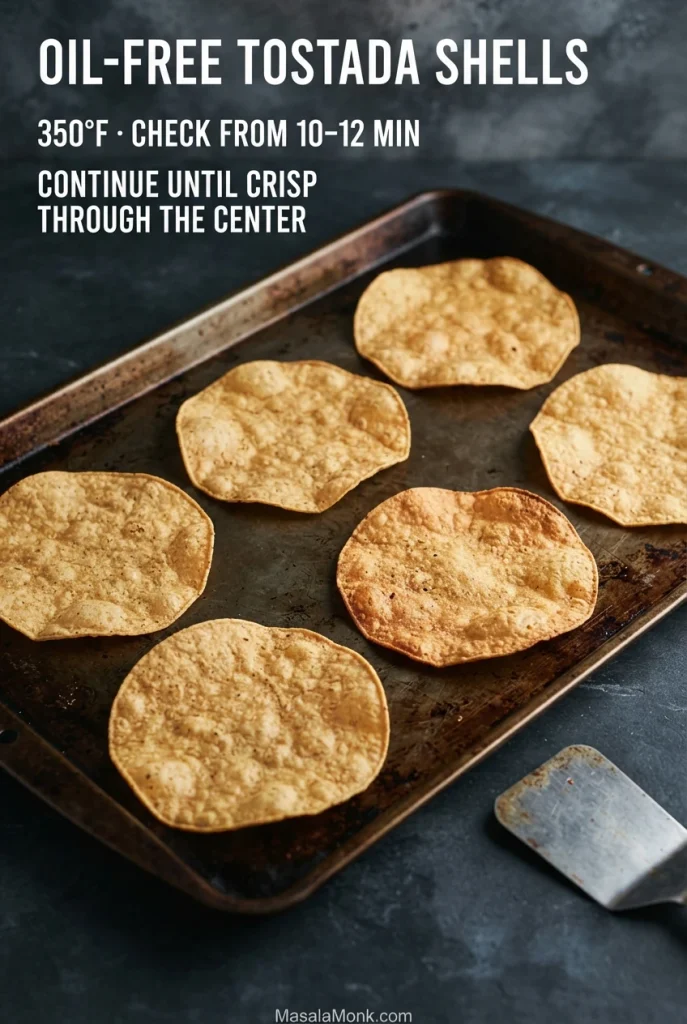
| Oil-free oven | No added oil | 350°F / 175–180°C | Check after 10–12 min; thicker shells may need 25–30 min |
How to Fry Tostada Shells
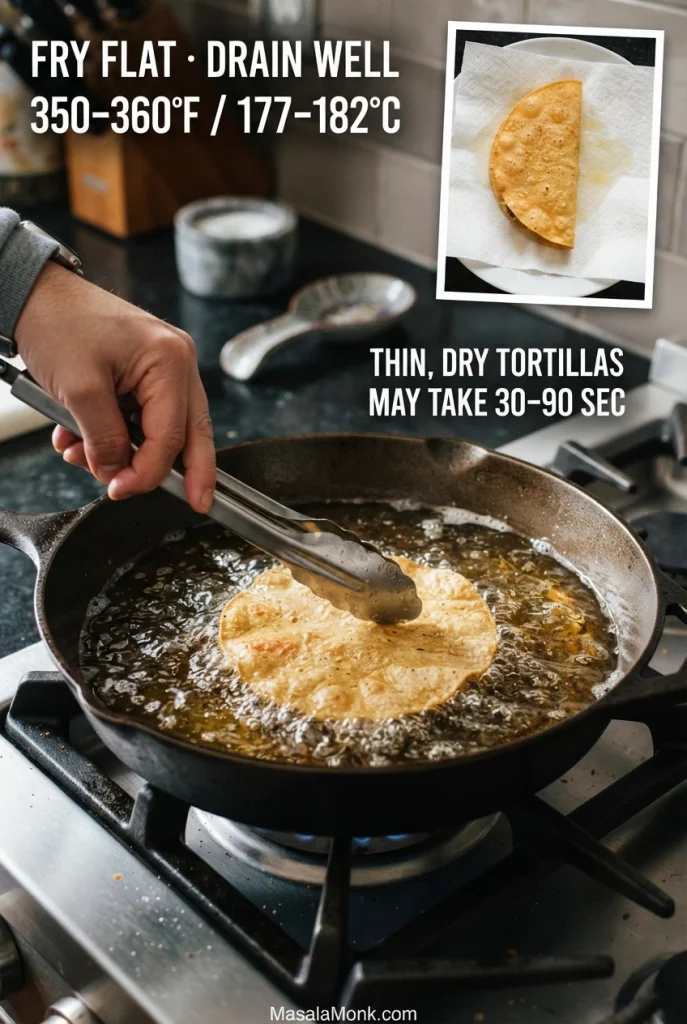
Choose a stable, deep-sided pan wide enough to hold a tortilla flat, with generous space above the oil. Add neutral oil to approximately 1 inch / 2.5 cm depth and heat it to 350–360°F / 177–182°C. A frying thermometer is useful.
Carefully lower one fully cooked tortilla into the oil, away from your body, with suitable tongs or a slotted utensil. Keep it flat and turn as needed. Bubbling will slow as moisture escapes. A thin, relatively dry tortilla may crisp in 30–90 seconds total, whereas thicker, moister tortillas can take considerably longer.
Remove when lightly golden and firm, then drain on a rack or paper towels and let cool briefly. If the outside darkens while the center stays soft, stop frying; change the heat or use a thinner, drier tortilla next time. Keep water away from hot oil, check its temperature between tortillas and never leave the pan unattended.
How to Make Air-Fryer Tostada Shells
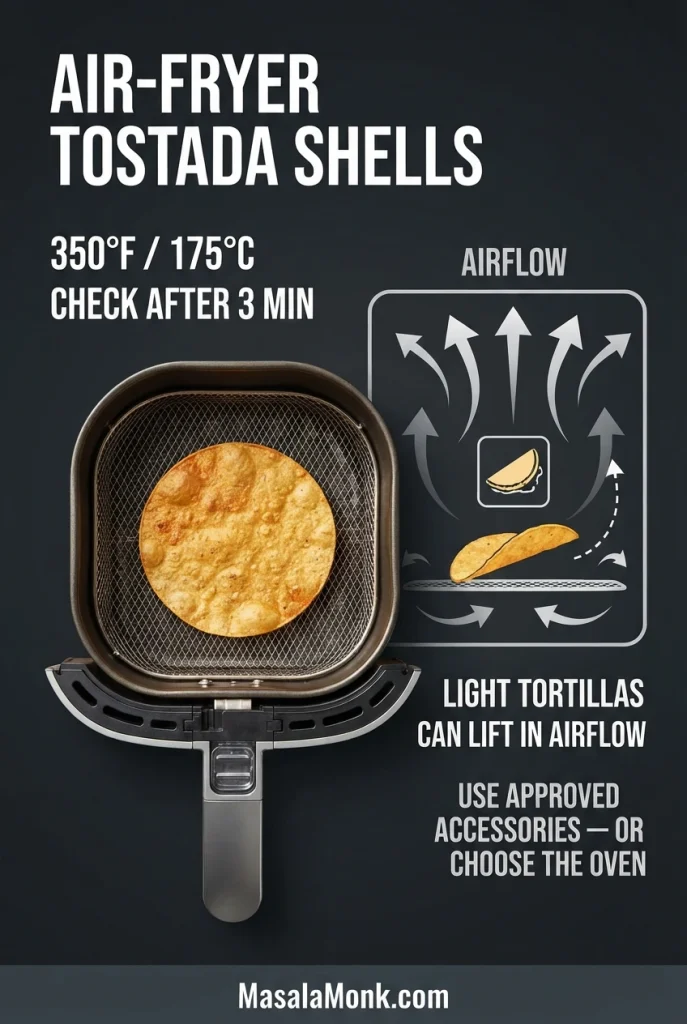
Use this method only if your appliance can safely keep lightweight tortillas away from its heating element. Brush one or two corn tortillas with oil and arrange them flat. Cook at about 350°F / 175–180°C, checking after 3 minutes; they may crisp in approximately 5–7 minutes. Turn only when safe.
Airflow can lift or curl a tortilla. Stop immediately if it moves toward the heating element. Follow manufacturer instructions for approved accessories. Do not improvise with loose paper, foil or weights; use the oven instead.
How to Bake Tostada Shells Without Oil
Lay fully cooked corn tortillas flat on baking sheets and bake at 350°F / 175–180°C, without added oil. Check after 10–12 minutes. If still flexible, turn around the 12–15-minute mark and continue until crisp. Thin tortillas may finish much sooner than thick, moist ones, which can take 25–30 minutes overall.
Oil-free shells often have a firmer, drier bite. If the edges brown before the middle is crisp, lower the oven temperature slightly and check in short intervals.
Want dinner ready with less preparation? See the ten-minute shortcut, which uses packaged crisp shells and prepared beans.
Choosing and Preparing Refried Beans for Tostadas
Pinto beans taste mild; black beans give a more earthy flavor. Both work. The bigger decision is whether to start with ready-made refried beans or mash cooked whole beans yourself.
Using Prepared Refried Beans
Packaged refried beans vary widely in salt, seasoning and thickness. Choose a flavor you like and adjust only after warming. For a more developed seasoning method, see our refried beans recipe from a can. For tostadas, keep the beans thicker than a spoonable side dish.
Making the Filling from Whole Canned Beans
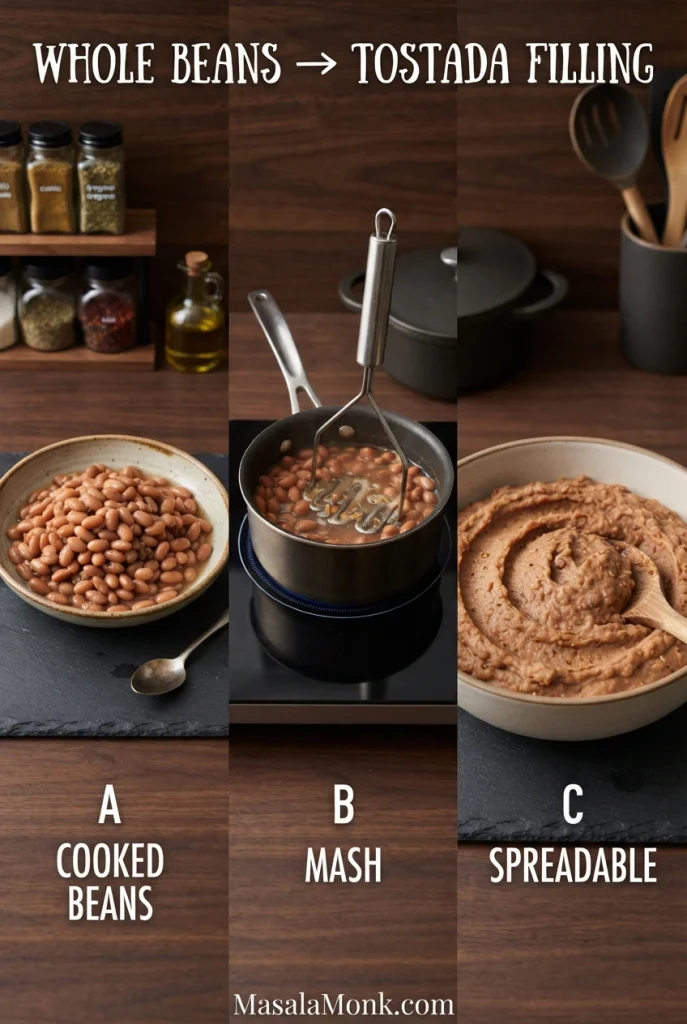
Start with about two standard 15-ounce / 425 g cans of cooked pinto or black beans. This is intentionally generous; the finished recipe requires two cups, so you may have leftovers. Drain the beans, reserving some liquid. Warm them with a little oil and softened onion or garlic if desired, mash with a fork or potato masher, and add reserved liquid gradually until creamy. Simmer off excess moisture, season, then measure two cups for eight tostadas.
What Are the Best Tostada Toppings?
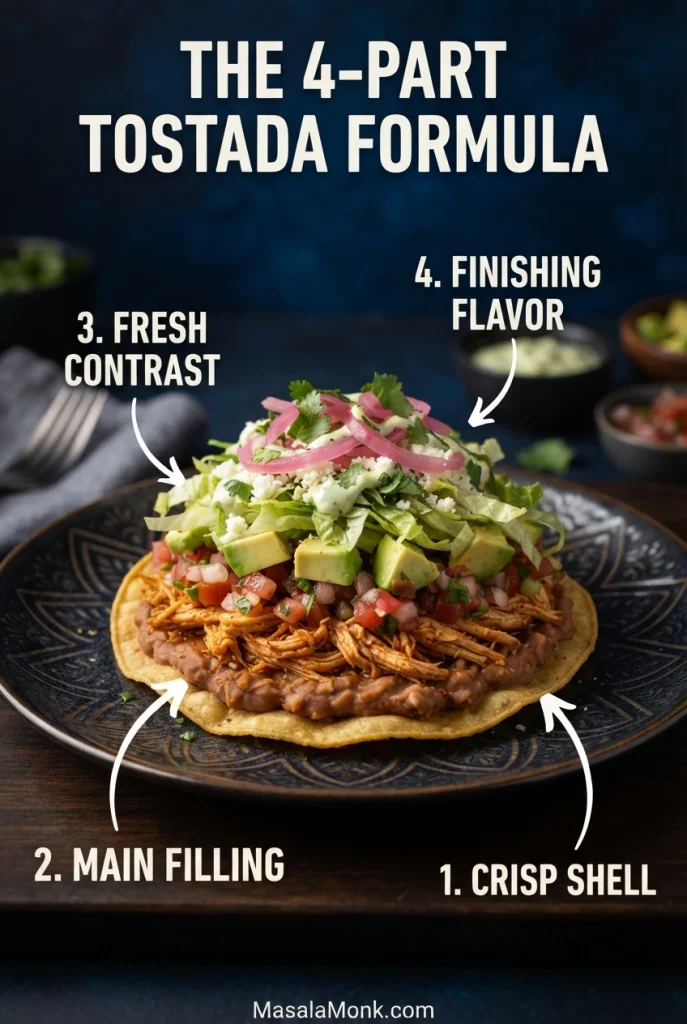
Popular toppings include refried beans, shredded chicken, seasoned beef, lettuce, tomato, avocado, queso fresco, crema and salsa. A good combination follows four parts: crisp shell, main filling, something fresh, finishing flavor. Choose a few elements that complement each other; the tortilla should still be part of every bite.
Start with the bean-and-avocado tostadas recipe, then change the filling to suit your meal. Chicken tinga brings smoky heat, seasoned beef makes a heartier version, roasted vegetables add a meatless option, and eggs work for breakfast.
Bean and Avocado Tostadas
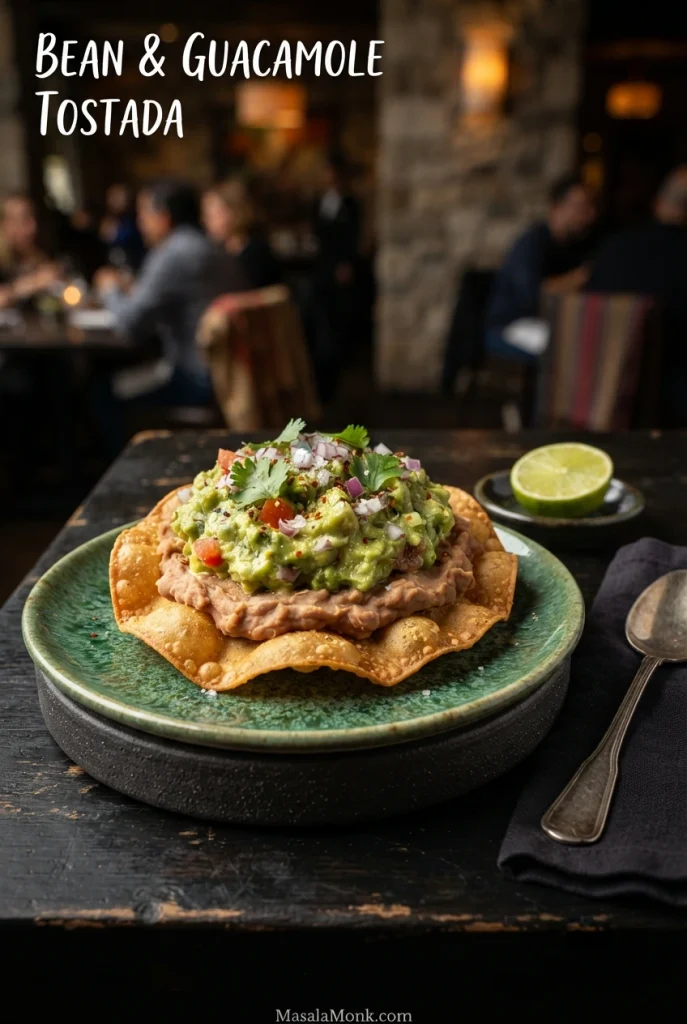
The main bean-and-avocado tostadas are vegetarian when the refried beans contain no lard or meat stock. For a creamier topping, replace the avocado slices with a little homemade guacamole; the onion and lime bring extra contrast.
Shredded Chicken Tostadas
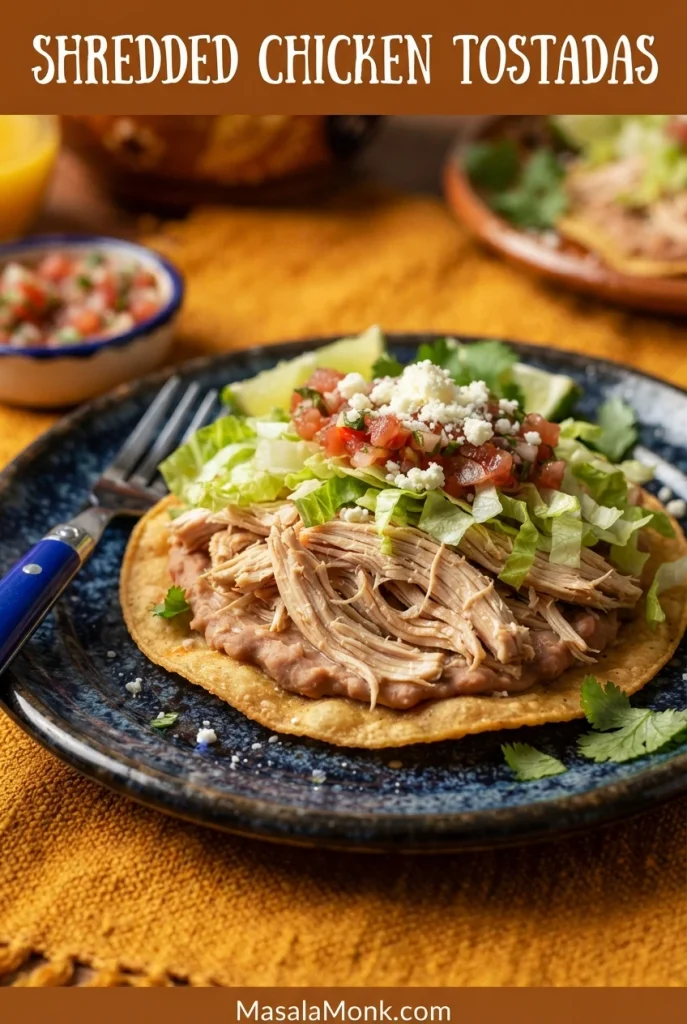
Use 2 cups / about 250–300 g cooked shredded chicken for eight shells. Warm it in a skillet with 1 minced garlic clove, ¼ teaspoon cumin and 2–3 tablespoons salsa. Stir until thoroughly heated and the salsa coats the chicken; simmer away any pooling liquid.
Starting from raw chicken? Use the method in our baked chicken breast recipe and cook poultry to 165°F / 74°C internally. Rest briefly, shred and season. Reheat leftover chicken to 165°F / 74°C before serving. Divide over a thinner bean layer and finish with lettuce, cheese and lime.
Chicken Tinga Tostadas
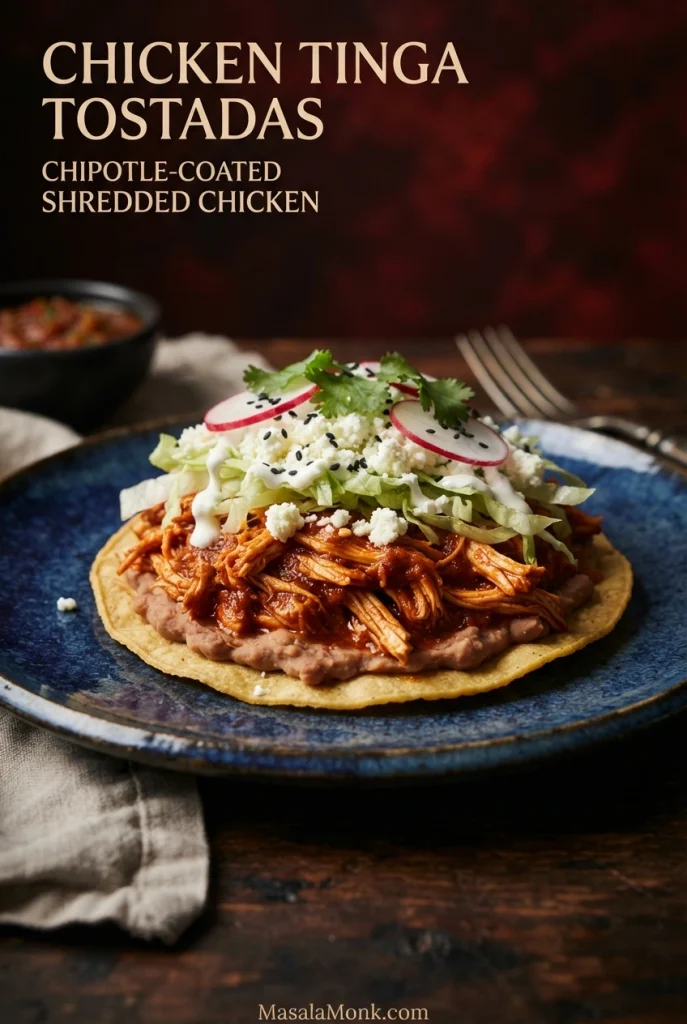
Chicken tinga brings tomato, onion and chipotle together in a sauce that should cling to the shredded chicken. Start with 2 cups of prepared chicken tinga for eight tostadas. Warm in a skillet and reduce any loose sauce until little liquid collects at the bottom; that keeps the tortilla from softening immediately.
Divide the warm chicken tinga across the shells, then add lettuce, queso fresco and crema. Beans are optional. If your tinga is not already prepared, cook the chicken and tomato-chipotle sauce first and allow extra time beyond the main recipe’s 35 minutes.
Ground Beef Tostadas
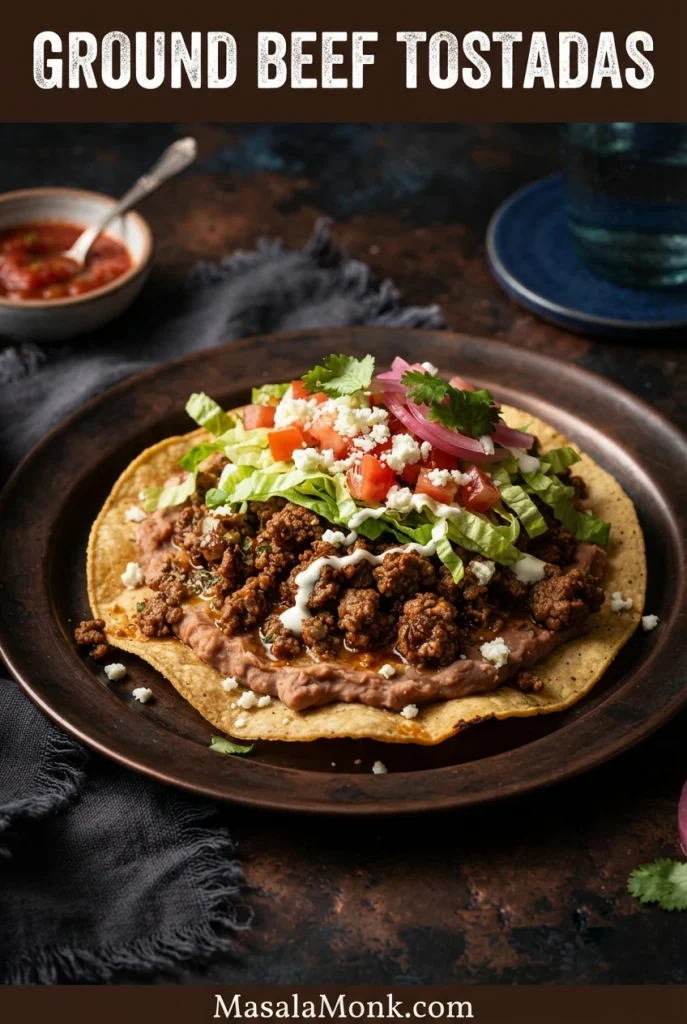
Use 12–16 oz / 350–450 g raw ground beef for eight tostadas. Brown over medium heat, breaking it into small crumbles, and drain excess fat if needed.
For a simple seasoning blend for 1 lb / 450 g beef, add 1 teaspoon ground cumin, 1 teaspoon mild chili powder or a mild ground chile blend, ½ teaspoon dried oregano, ½ teaspoon garlic powder and ½ teaspoon fine salt, then adjust to taste. Stir in 2–4 tablespoons water to distribute the spices, and simmer until the moisture evaporates. Chili powders differ widely in heat and salt, so begin cautiously if yours is a seasoned blend. If using only 350 g beef, reduce the seasoning slightly.
Cook ground beef to 160°F / 71°C internally. Divide into eight modest portions; use less beans underneath if adding both fillings. For a more elaborate blend and additional seasoning choices, see our taco seasoning for one pound of ground beef. Finish with lettuce, tomato, queso fresco and lime.
Black Bean and Roasted Vegetable Tostadas
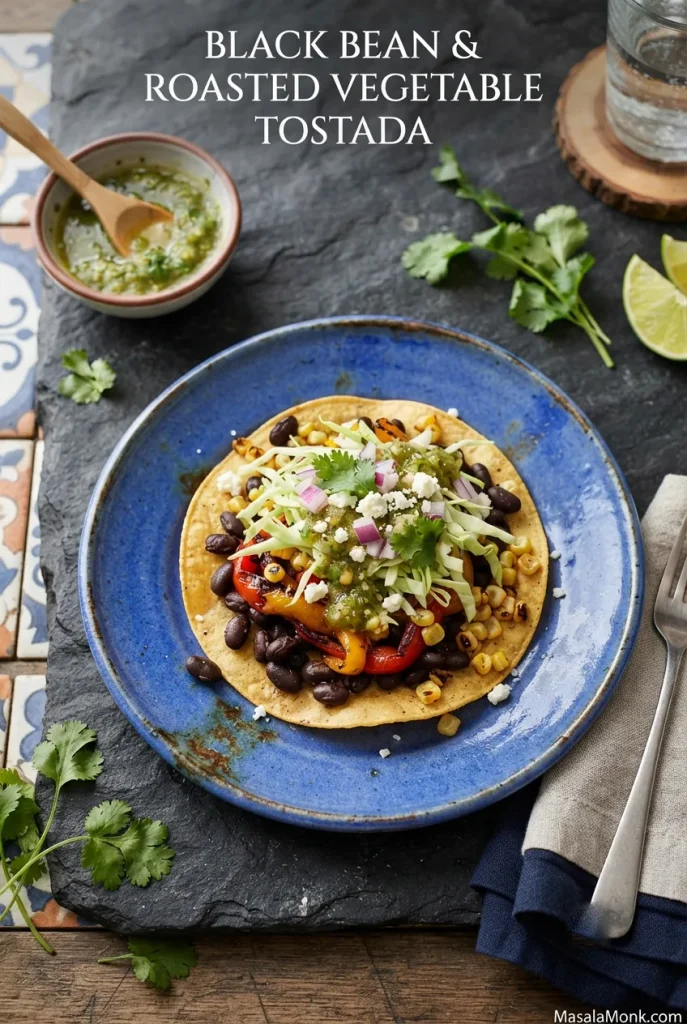
Roasted corn and small-diced bell peppers pair well with either refried black beans or cooked whole black beans, as shown in the photograph. The vegetables taste better when their edges brown instead of steaming in their own liquid. For eight tostadas, combine 1–1½ cups of corn kernels and diced bell peppers with 1 teaspoon oil and a pinch of salt. Spread them in an uncrowded layer; thaw and drain frozen corn first.
Roast at 425°F / 220°C for roughly 15–20 minutes, stirring once, until the peppers soften and some edges color. If using one oven, roast the vegetables first, then lower it to 400°F / 200°C for the tostada shells. Keep the vegetables warm or prepare them earlier. This variation takes longer than the basic 35-minute meal unless the vegetables are already cooked.
Spread up to ¼ cup warm refried black beans on each shell, or use 2–3 tablespoons well-drained cooked whole black beans per shell for the pictured version. Divide the roasted corn and peppers over the beans, then add shredded cabbage and roasted tomatillo salsa verde. Add avocado if you like; the photograph also shows a little white cheese, which is optional. For a vegan tostada, use beans without animal fat and omit the cheese and other dairy toppings.
Breakfast Tostadas with Eggs
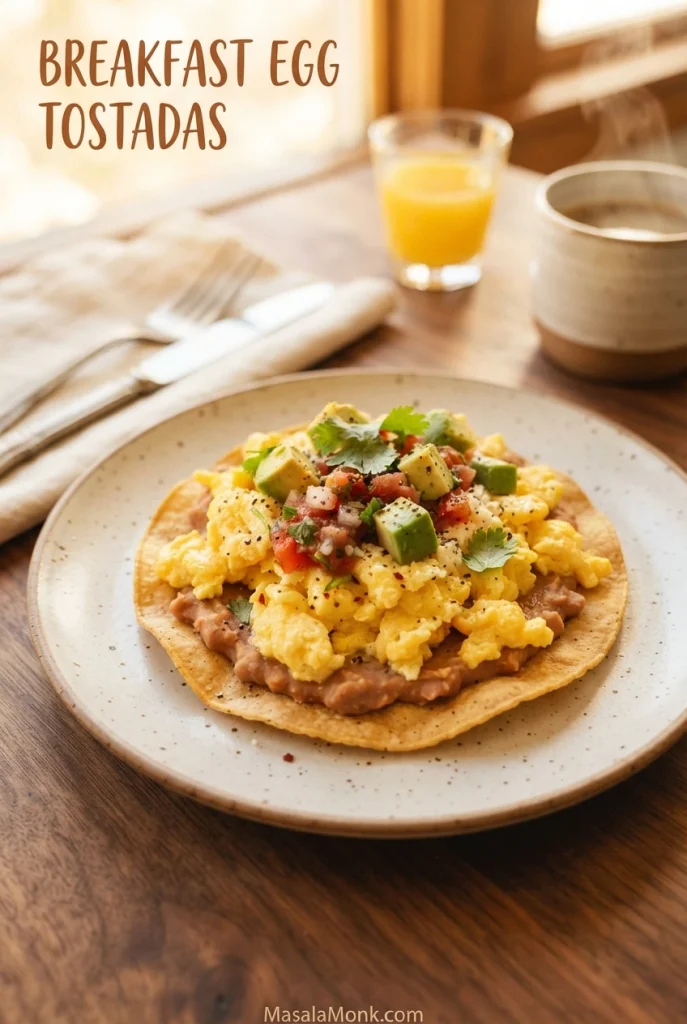
For eight breakfast tostadas, use 8 large eggs or fewer for a lighter topping. Beat with a pinch of salt. Heat roughly 1 teaspoon oil in a nonstick skillet over medium-low heat and cook, stirring gently, until set with no visible liquid egg. Use batches if the skillet is small.
Divide the eggs among eight shells spread with a modest amount of warm beans. Add avocado, queso fresco and salsa just before eating. For individual servings, a fully cooked fried egg can replace the scrambled egg portion.
Shrimp, Fish and Seafood Tostada Ideas
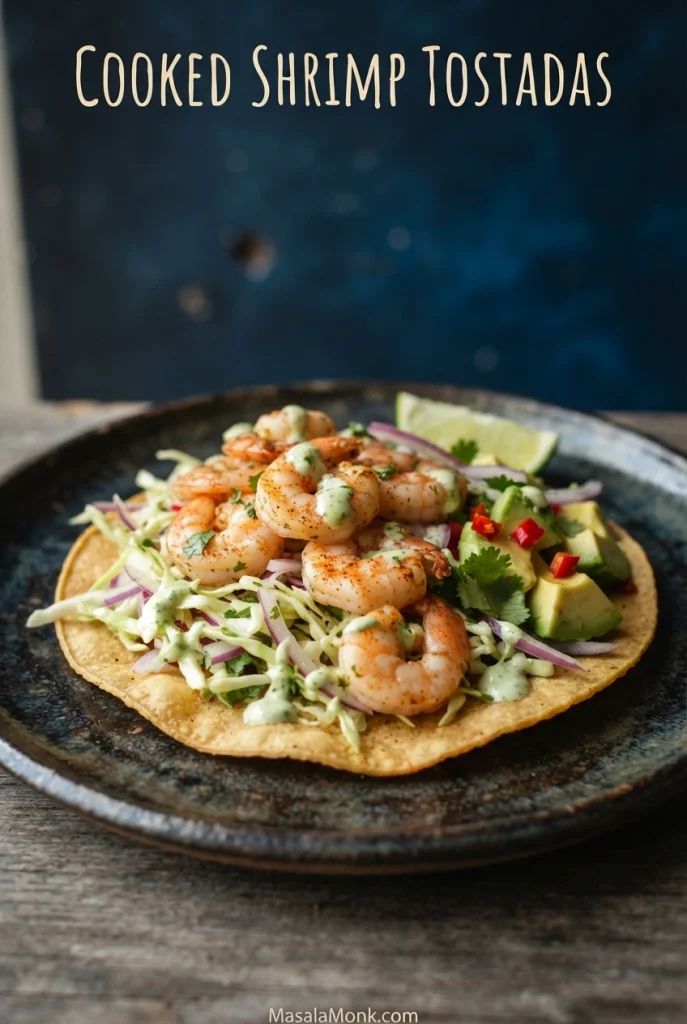
Seafood tostadas take different forms in Mexican coastal cooking, including shrimp, fish, tuna and ceviche preparations. For an easy cooked-shrimp adaptation, prepare the seasoned shrimp and cabbage slaw from our shrimp tacos with cilantro-lime sauce, then serve them on crisp shells with avocado and a restrained drizzle of sauce.
Raw or citrus-marinated seafood needs its own handling precautions. Lime juice changes texture and flavor, but does not make raw seafood equivalent to thoroughly cooking it with heat.
Easy Tostada Ingredient Substitutions
- Queso fresco: Mild feta is an alternative, but often saltier and more tangy; begin with less.
- Mexican crema: Use sour cream, thinned slightly if you want to drizzle it.
- Sour cream: Unsweetened plain Greek yogurt is thicker and tangier.
- Lettuce: Finely shredded cabbage holds its crunch well.
- Pinto beans: Refried black beans or seasoned mashed whole beans work.
- Fresh jalapeños: Pickled jalapeños add both acidity and heat.
- Homemade tostada shells: Packaged ready-to-eat corn shells save time.
If you want to return to the familiar bean-and-avocado combination, go back to the eight-tostada base recipe.
How to Assemble, Serve and Eat Tostadas
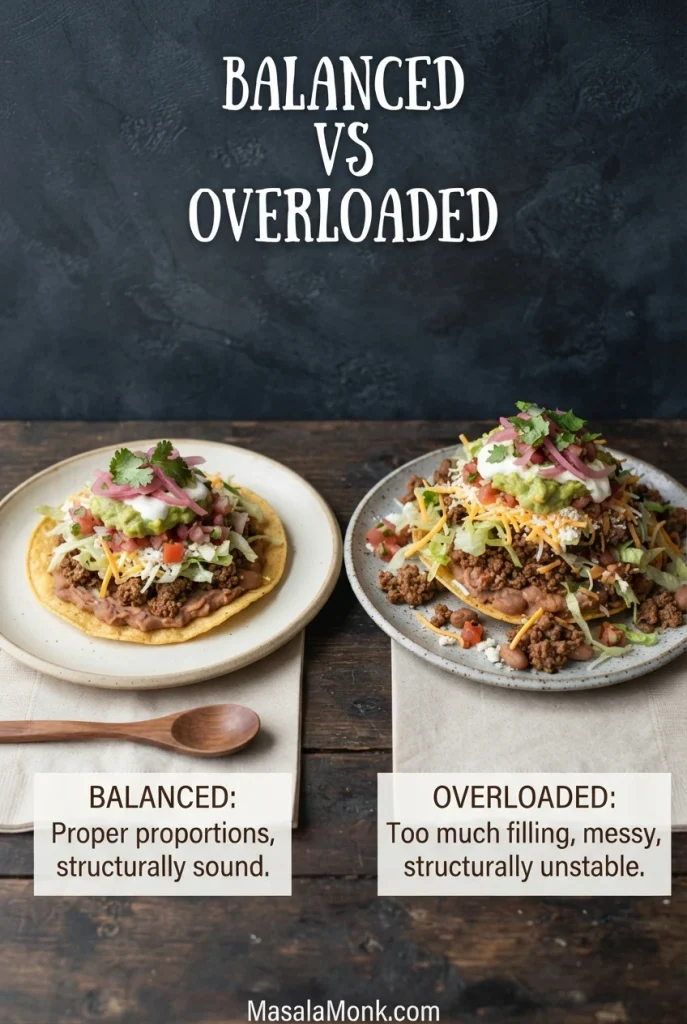
Heavier toppings such as beef or chicken tinga fit better over a thinner layer of beans. Chop vegetables and meat into manageable pieces so they stay on the flat shell when you lift it.
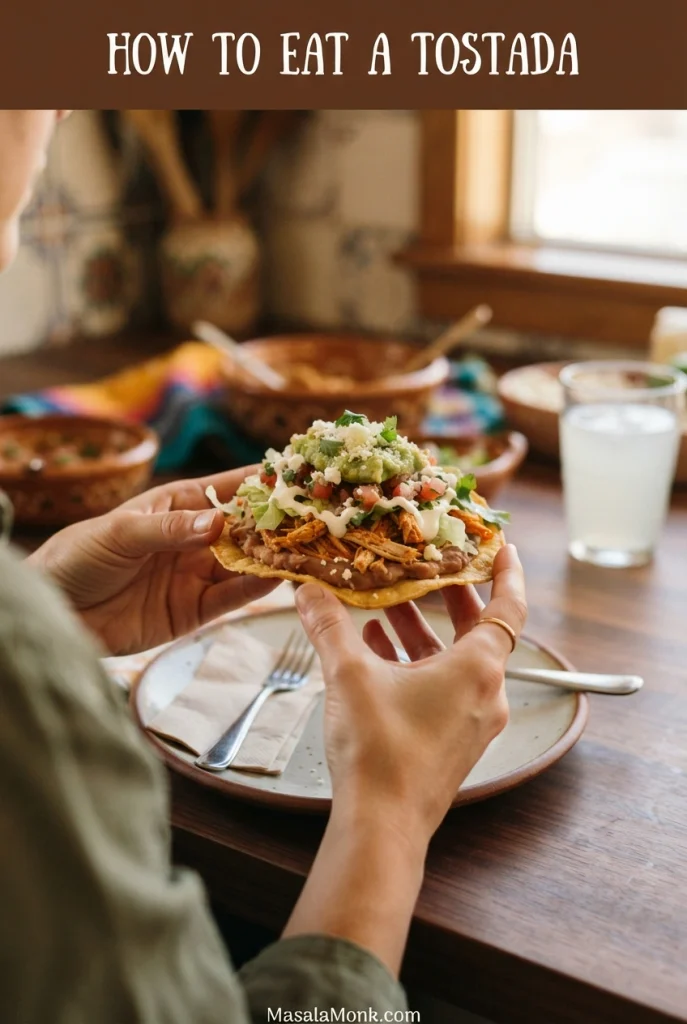
How Do You Eat a Tostada?
Hold the tostada with both hands, support the underside and take small bites from the edge. Keep a plate underneath; a fork will handle whatever falls. Some cracking is normal.
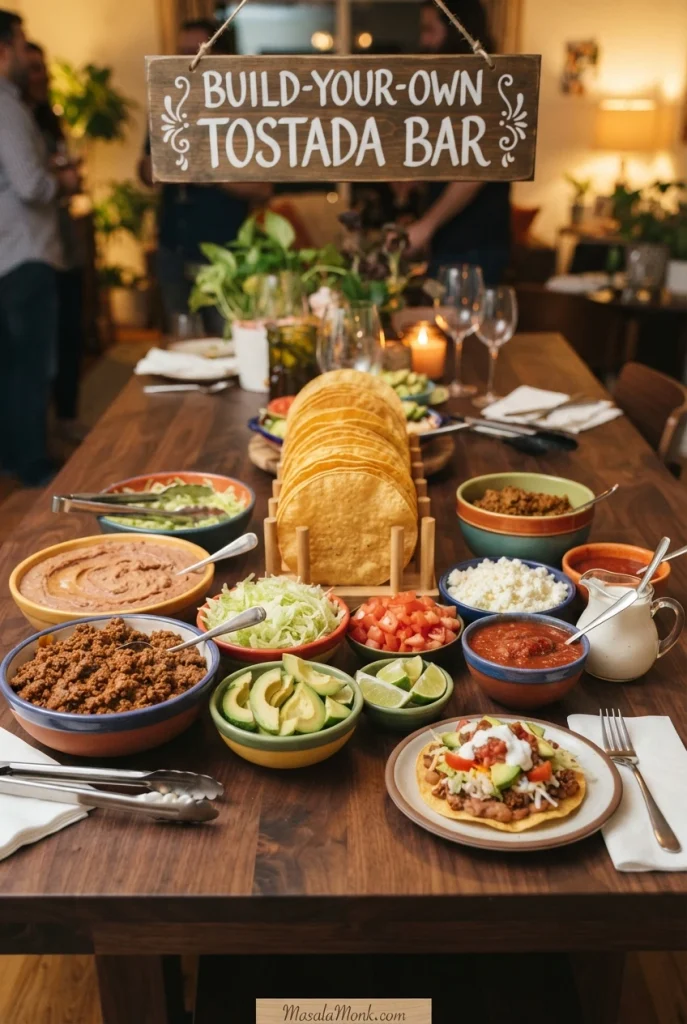
Serve Tostadas as a Make-Your-Own Dinner
Put warm beans and cooked fillings together in serving bowls, with lettuce, cheese and avocado nearby. Keep the shells in a separate stack, give everyone a plate and use a spoon for each filling. Arrange salsa and crema at the end so the wet toppings go on last. Guests can eat one tostada and assemble another when ready, without leaving a dressed platter to soften.
Planning a meal in advance? See how to store the shells and fillings separately so the next serving stays crisp.
Tostada Troubleshooting: Chewy, Hard, Greasy or Soggy Shells
Different tostada problems require different fixes: identify whether the trouble began while crisping the corn shell, frying it, preparing the beans or adding moist toppings.
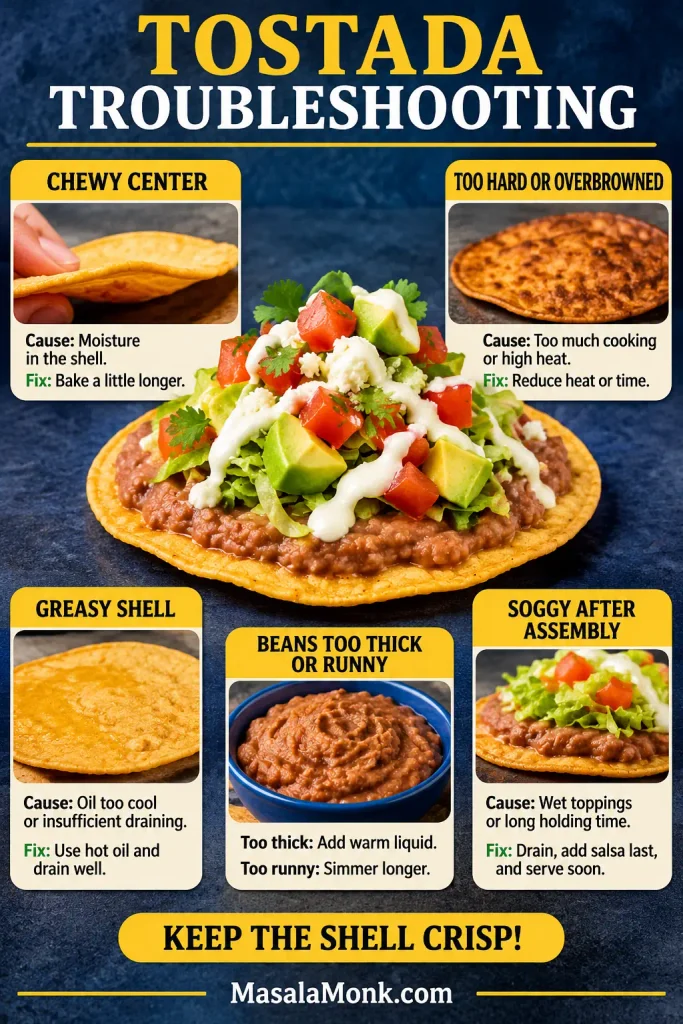
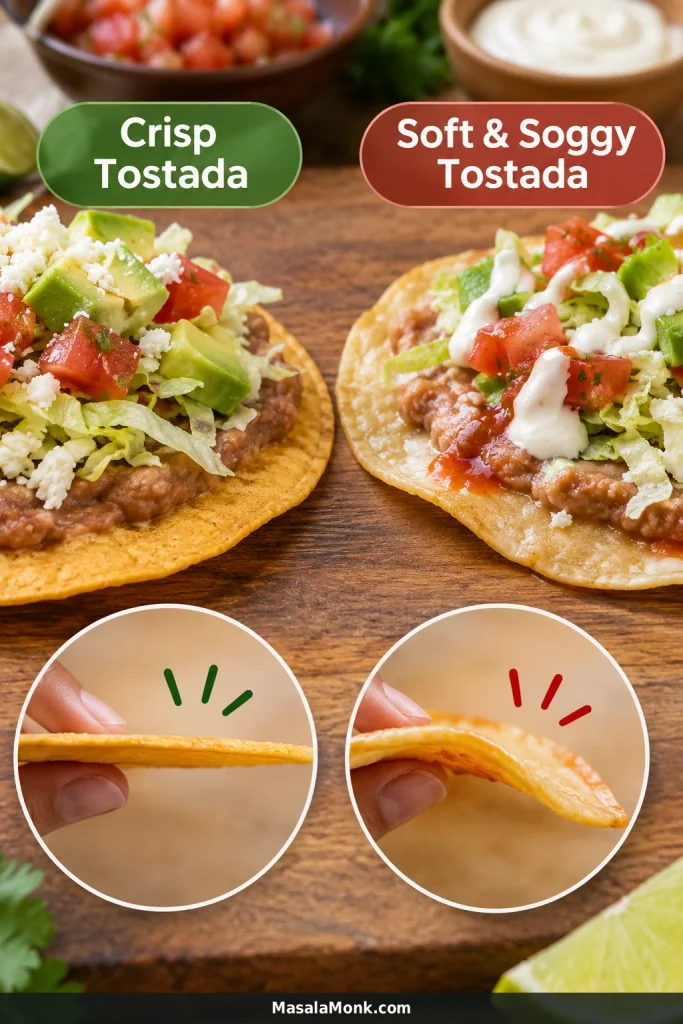
Why Are My Tostada Shells Chewy in the Middle?
Moisture remains in the center. If the edges are not too dark, return the shell to the oven briefly. On the next batch, use thinner tortillas or gentler heat if the edges brown before the middle dries.
Why Are Homemade Tostadas So Hard?
Check tortilla thickness and cooking time. Very thick tortillas or excessive time at high heat can create a rigid shell. Further baking will not improve one that is already hard or burnt.
Why Are My Fried Tostadas Greasy?
Check oil temperature and draining. Oil that cools too much can contribute to a heavy result. Fry manageable batches at the recommended temperature, then drain well.
How Do I Spread Beans Without Breaking the Shell?
Loosen stiff beans before spreading. Warm them with a splash of water, place a few spoonfuls across the shell and gently connect them with the back of a spoon. Do not press hard in one spot.
What If My Refried Beans Are Too Thick or Runny?
Too thick: Stir in warm water or bean liquid, 1 tablespoon at a time. Too runny: Simmer uncovered over low heat, stirring until the beans thicken and hold their shape on a spoon.
How Do You Keep Tostadas from Getting Soggy?
Dry the toppings and assemble at the last moment. Water clinging to lettuce and juice collected around diced tomatoes can soften the shell even with thick beans. Drain them and add salsa last.
What If an Air-Fryer Tortilla Curls or Lifts?
Stop cooking if it moves toward the heating element. Follow manufacturer directions for approved accessories or switch to the oven; do not use loose paper, foil or improvised weights.
If the shells still turn out wrong, revisit the cooking-method comparison. Otherwise, head back to the main recipe.
Make-Ahead Tostadas, Storage and Easy Weeknight Dinners
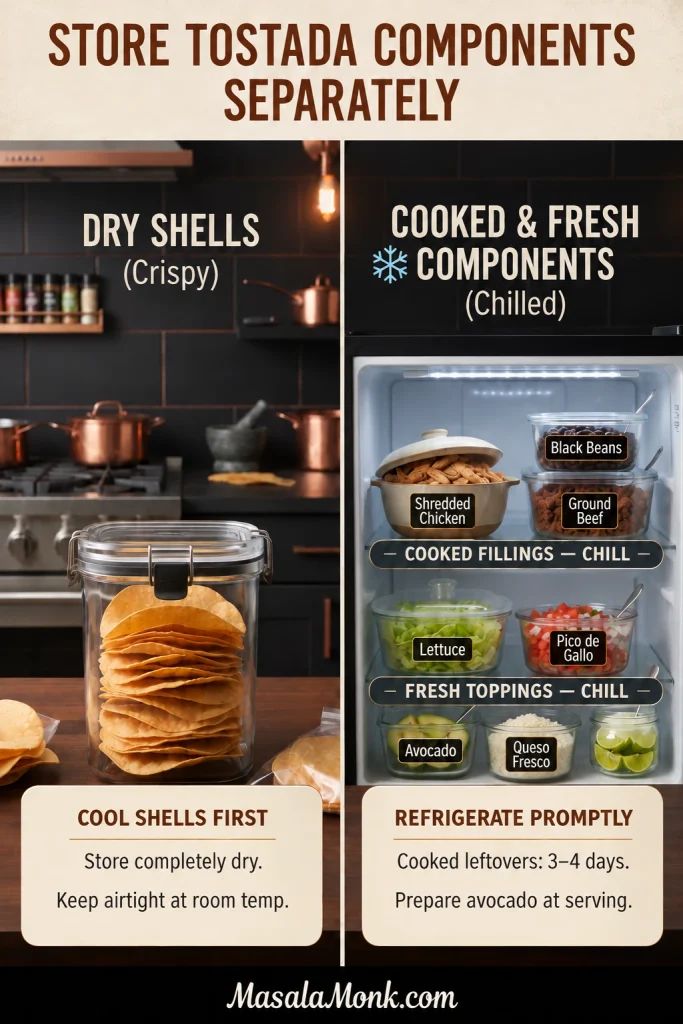
This tostadas recipe is easy to prepare in stages: leftover beans and a few corn tortillas are enough to get another dinner started. Store crisp shells, cooked fillings and fresh toppings separately.
How to Store Tostada Shells and Fillings
- Homemade crisp shells: Cool completely and store airtight in a cool, dry place. For the best crunch, use within a day or two, particularly in humid conditions. Brief warming in a moderate oven may help slightly softened shells.
- Refried beans: Refrigerate promptly in a covered container; properly handled cooked leftovers generally keep for 3–4 days.
- Cooked chicken or beef: Refrigerate promptly in shallow covered containers and generally use within 3–4 days.
- Fresh toppings: Refrigerate prepared vegetables, cheese, crema and salsa as appropriate. Slice avocado shortly before serving.
Refrigerate perishable food within two hours, or within one hour when temperatures exceed 90°F / 32°C. Use properly refrigerated cooked leftovers within 3–4 days and reheat them to 165°F / 74°C. Consult the FoodSafety.gov cold food storage chart for recommended refrigerator times.
How to Make Tostadas in About 10 Minutes
Use packaged ready-to-eat tostada shells, prepared refried beans, prewashed lettuce, ready-made salsa, queso fresco and avocado. Warm the beans while you set out everything else. With the toppings prepared, dinner can come together in about ten minutes.
What to Serve with Mexican Tostadas
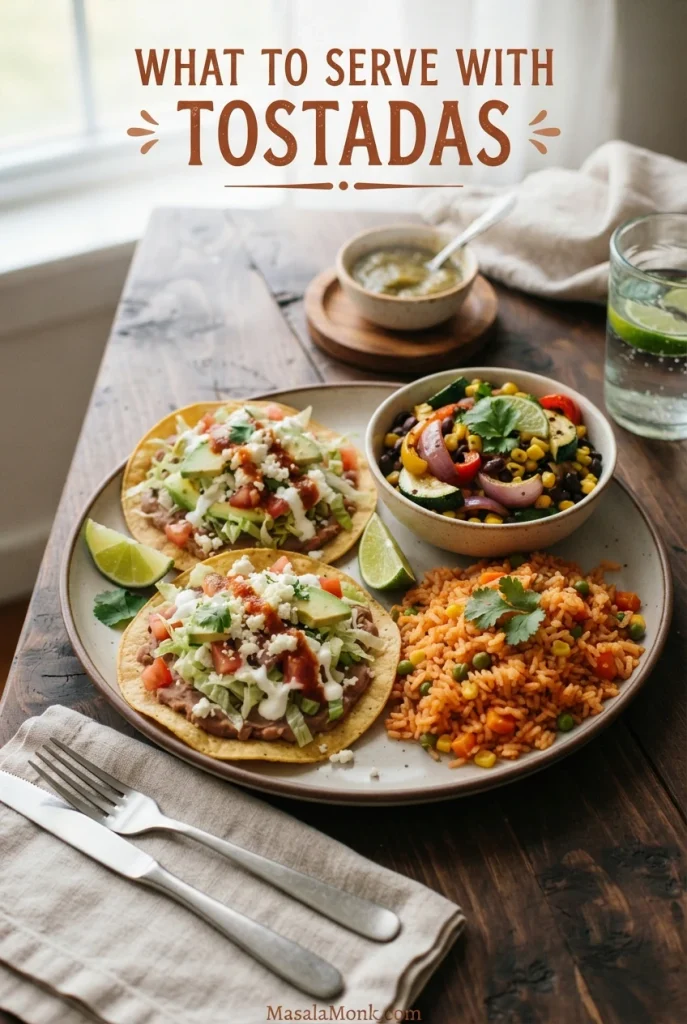
Two generously topped tostadas are a reasonable starting point for a main meal. For a larger dinner, serve Mexican rice (arroz rojo), grilled vegetables, a cabbage salad or extra lime wedges. For a party, a homemade 7 layer dip makes a separate appetizer with some of the same flavors.
Frequently Asked Questions About Tostadas
Do Store-Bought Tostada Shells Need Heating?
Most packaged corn tostada shells are fully cooked and ready to eat. Serve straight from the package or warm briefly according to the package directions.
Can You Make Tostadas Without Refried Beans?
Yes. Mexican tostadas can use meat, seafood, vegetables, guacamole and other fillings. Beans are the base of this particular recipe, not a universal requirement.
Should Tostadas Be Served Hot or Cold?
It depends on the filling. Here, warm beans meet cool vegetables and crema. Some seafood tostadas use chilled toppings. Assemble near serving time for the best shell texture.
How Many Tostadas Should You Make Per Person?
Two six-inch tostadas with beans and generous toppings are a reasonable starting portion for an adult main meal. Serve fewer as appetizers or offer extras for larger appetites.
Can You Prepare Tostadas the Night Before?
Prepare the components separately. Refrigerate perishable fillings promptly, keep cooled shells dry and airtight, and assemble close to eating.
What Can You Do with Broken Tostada Shells?
Clean, edible pieces can become a nacho-style plate with beans, cheese, salsa and avocado or be served with dip. Discard burnt or contaminated shells.
Once you know how to get the corn shell crisp and the filling spreadable, it becomes much easier to use what you have: leftover chicken, roasted peppers, a spoonful of beans or a good salsa. The method stays familiar; the next dinner can taste quite different.
Did you bake or fry your shells? What went on top—beans and avocado, chicken tinga, seasoned beef or something else? Share the combination in the comments, especially if you found one worth making again.