
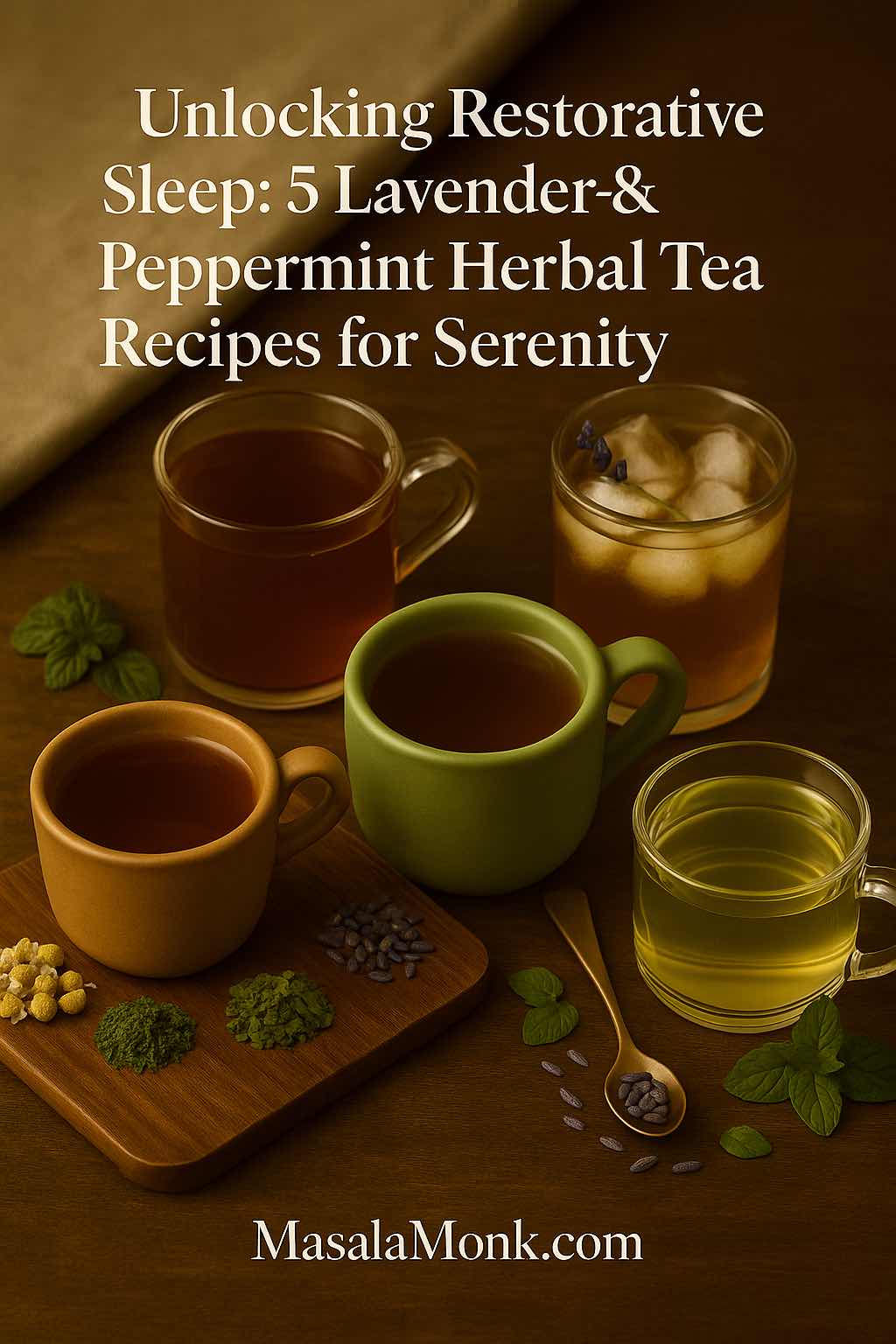
Why Sleep Feels So Elusive Today
If you’ve ever lain in bed, staring at the ceiling, wondering why your body won’t shut down even though you’re exhausted — you’re far from alone. Modern life has made sleep one of the most sought-after luxuries. Stress from work, endless notifications, evening caffeine habits, heavy meals, and blue light from screens all conspire to keep us awake.
Insomnia isn’t just about not feeling tired. It’s about a restless mind and body that refuse to let go. And while medical solutions exist, many of us are rediscovering the quiet power of ancient herbal remedies — not as a cure-all, but as gentle nudges toward the restorative rest our bodies crave.
The Power of Ritual: More Than Just Tea
One of the most underrated sleep aids isn’t a plant or pill — it’s ritual. The body responds to signals. Dimming the lights, turning off screens, washing your face, or slipping into soft pajamas are all cues to your nervous system: it’s time to rest.
Herbal teas amplify this effect beautifully:
- Taste & Warmth: A soothing, caffeine-free infusion slows you down and signals comfort.
- Aroma: Steam carries calming essential oils straight to the brain’s limbic system — the seat of emotions and relaxation.
- Touch: Cradling a warm mug in your hands is grounding and reassuring.
Tea, then, is not just a drink. It’s a ritual in a cup, one that gently prepares both body and mind for rest.
👉 If you love the ritual of brewing, you might also enjoy our masterclass in masala chai — a spiced, invigorating daytime cousin to bedtime teas.
Lavender: Nature’s Gentle Sleep Aid
Lavender (Lavandula angustifolia) is one of the most researched herbs for sleep. And the science is compelling.
- In clinical trials, lavender aroma has consistently improved sleep quality in students, heart patients, and midlife women with insomnia.
- As tea, lavender shows promise too. In one study with older adults, those who drank 2 grams of lavender daily reported better sleep than those given half the dose.
- How it works: Compounds like linalool and linalyl acetate interact with neurotransmitters such as GABA — helping quiet the nervous system and reduce anxiety.
Lavender doesn’t just help you fall asleep — it can reduce the stress and mental chatter that often make sleep so hard in the first place.
👉 For another gentle combination, try our lavender & chamomile blends.
Peppermint: Comfort for Digestion and Calm
Peppermint (Mentha × piperita) may be better known for refreshing breath than inducing sleep, but it brings its own quiet strengths to the evening table.
- Digestive ease: Peppermint relaxes the smooth muscles of the gut, easing bloating and discomfort that can keep you awake.
- Muscle relaxation: Menthol, its main active compound, has a cooling, tension-releasing effect.
- Stress soothing: Though not directly sedative, peppermint helps the body unwind, especially when part of a nightly ritual.
⚠️ A note of caution: peppermint can sometimes worsen reflux (GERD) by relaxing the lower esophageal sphincter. If you’re prone to heartburn, try substituting lemon balm, another calming herb, instead.
👉 Want to dive deeper into peppermint’s digestive powers? See our post on peppermint tea for IBS & bloating.
Lavender + Peppermint: Better Together
Together, lavender and peppermint make a dream team for bedtime. Lavender calms the mind; peppermint soothes the body. One helps with mental restlessness, the other with physical tension.
A fascinating clinical study in cardiac patients found that both lavender and peppermint aromas improved sleep quality. When sipped as tea, the combination doesn’t just relax you — it comforts digestion, lifts tension, and turns into a ritual that engages all your senses.
This is why lavender–peppermint blends are so popular in bedtime teas: floral serenity meets refreshing ease.
Other Herbs in the Bedtime Circle
While lavender and peppermint shine, they’re not alone. Other herbs often find their way into nighttime blends:
- Chamomile: The world’s most famous bedtime herb, often used to reduce mild anxiety. (Caution: avoid if allergic to ragweed.)
- Lemon balm: A citrusy herb with promising evidence for calming anxiety and improving sleep.
- Passionflower: Small studies suggest it may improve subjective sleep quality.
- Holy basil (Tulsi): A staple of Ayurveda, known for balancing stress and supporting calm.
👉 Want to explore more? Browse our complete guide to teas for sleeping.
Till now in this post we have explored the why — the science of how lavender calms the mind, how peppermint soothes the body, and why nightly rituals matter for better sleep.
Now, let’s move from theory to your teacup. Here are five research-backed, easy-to-make recipes you can brew tonight to invite relaxation and restorative rest.
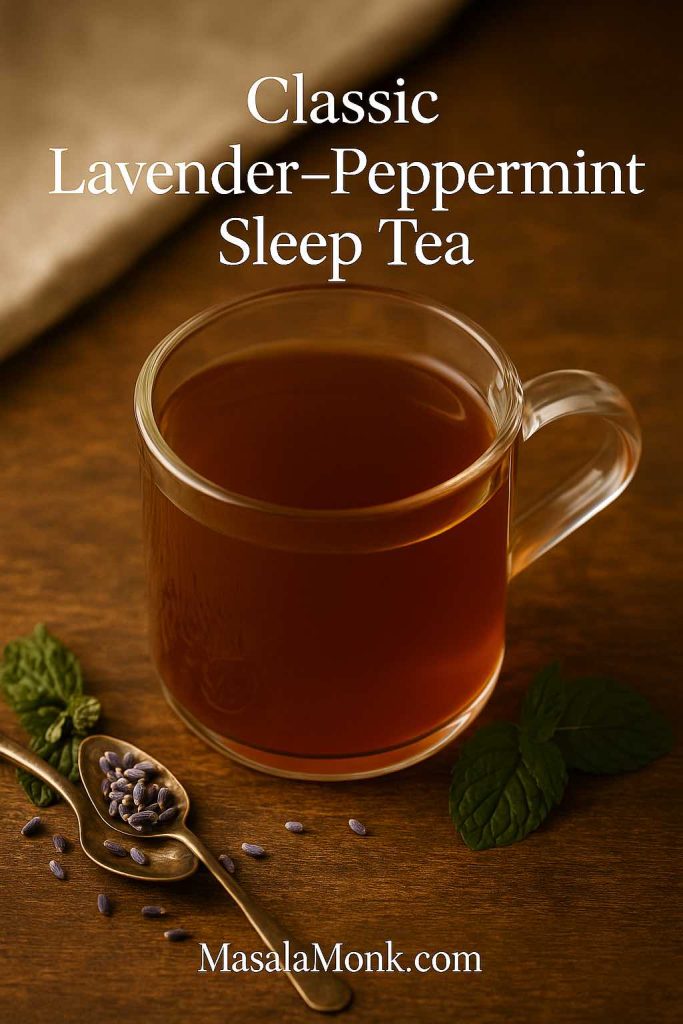
🌿 1. Classic Lavender–Peppermint Sleep Tea
Ingredients (for 1 cup)
- 2 g dried lavender buds (≈ 1½–2 tsp)
- 0.5–1 g dried peppermint leaves (≈ ¾–1 tsp)
- 250 mL boiling water (95–100 °C)
Method
- Place lavender and peppermint in a cup or teapot.
- Pour boiling water over the herbs.
- Cover and steep for 7 minutes.
- Strain and sip slowly.
💡 Why it works: Lavender has the strongest evidence for improving sleep quality at around 2 g per cup. Peppermint adds digestive comfort and a cooling freshness — perfect after dinner.
👉 Curious about other minty blends? Try our lemon verbena & spearmint recipes for tranquil sleep.
🌼 2. Lavender–Chamomile–Peppermint Calm Trio
Ingredients
- 1.5 g dried lavender
- 1.5 g dried chamomile flowers
- 0.5 g dried peppermint
- 250 mL boiling water

Method
- Combine herbs in a cup.
- Steep covered for 5–8 minutes.
- Strain, inhale the aroma, and enjoy warm.
⚠️ Note: Chamomile is gentle but avoid it if you have ragweed allergies.
👉 Want to explore this combo more deeply? See our lavender & chamomile sleep blends.
🍋 3. Lavender–Lemon Balm–Peppermint Digestif (GERD-Friendly option: omit peppermint)
Ingredients
- 1.5 g dried lavender
- 1.5 g dried lemon balm
- 0.5 g dried peppermint (optional if reflux-prone)
- 250 mL boiling water

Method
- Add lavender, lemon balm, and peppermint to a cup.
- Steep covered for 7–10 minutes.
- Strain and sip slowly.
💡 Why it works: Lavender calms, lemon balm reduces anxiety, and peppermint soothes digestion — unless you’re reflux-prone, in which case you can leave it out.
👉 For more on lemon balm’s calming powers, explore our passionflower & lemon balm sleep recipes.
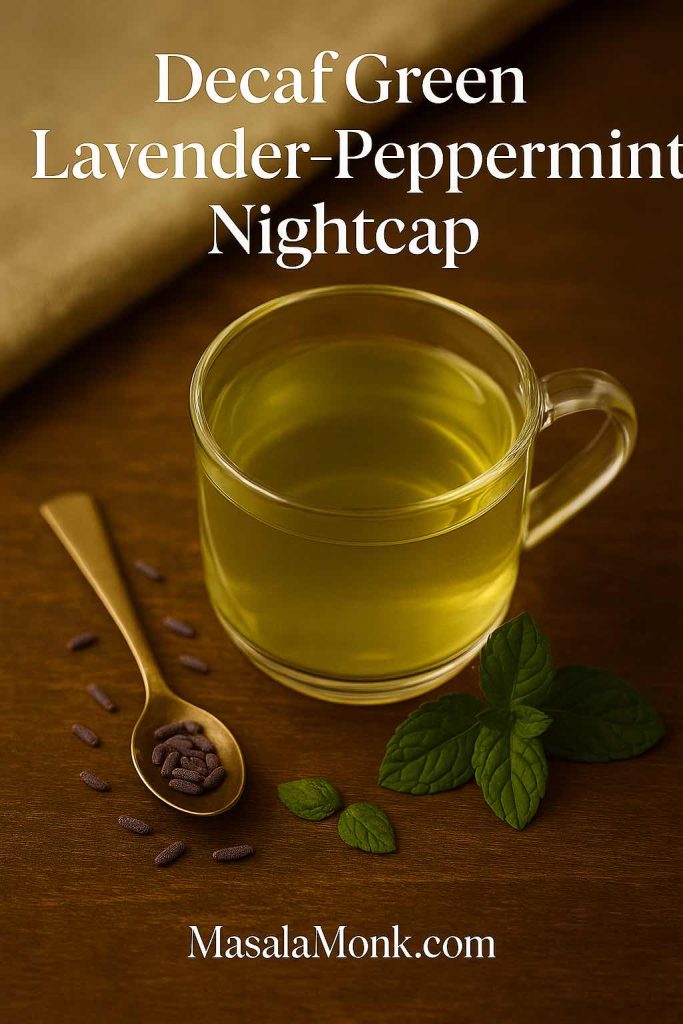
🍵 4. Decaf Green Lavender–Peppermint Nightcap
Ingredients
- 2 g decaf green tea
- 1 g dried lavender
- 0.5 g dried peppermint
- 250 mL water at 75–80 °C
Method
- Brew green tea with lavender and peppermint.
- Steep 2–3 minutes only.
- Strain and enjoy.
⚡ Tip: Choose decaf green tea at night — regular green tea still has enough caffeine to delay sleep. Peppermint balances the grassy green tea notes with a cooling calm.
👉 For energizing daytime options, see our turmeric & moringa teas.
❄️ 5. Iced Lavender–Peppermint Wind-Down
Ingredients
- 3 g dried lavender
- 1 g dried peppermint
- 250 mL boiling water
- Ice + 100–150 mL cool water

Method
- Brew lavender and peppermint in hot water for 8–10 minutes, covered.
- Let cool to room temperature.
- Pour over ice and top up with cool water.
💡 Why it works: Perfect for warm nights — hot steeping extracts the benefits, then chilling gives you a refreshing evening tonic.
👉 For more cool twists, check out our vanilla-cinnamon iced tea indulgence.
Brewing Tips: How to Get the Best from Your Herbs
Even the best herbs won’t work if they’re not brewed properly. Here’s how to get the most out of every cup:
- Use enough herb: Aim for 2 grams per cup — that’s about 1½–2 tsp of dried lavender buds.
- Steep long enough: 7–10 minutes allows aromatic oils and polyphenols to fully infuse.
- Cover your cup: Traps steam — and the calming essential oils that travel with it.
- Watch the water temp: Herbal infusions love boiling water (95–100 °C). If using green tea as a base, stick to 75–80 °C.
- Make it mindful: Don’t just gulp. Hold the cup. Inhale the steam. Sip slowly. Let it be a signal to your body: the day is done.
For contrast, you might enjoy starting your day with energy-boosting blends like our turmeric & moringa teas.
Safety First
Herbal teas are gentle, but not one-size-fits-all:
- Lavender: Avoid ingesting essential oils; stick to tea or dried herbs. Limited safety data in pregnancy — consult your doctor.
- Peppermint: May worsen reflux; swap for lemon balm if needed.
- Chamomile: Avoid if you have ragweed/daisy-family allergies.
- General: If you’re on sedatives or under medical care, check with your healthcare provider before daily use.
📖 Research Spotlight
Modern science is slowly catching up with what ancient traditions have always known — that herbs can gently shift the body into a calmer state.
- In a clinical trial with older adults, participants who drank 2 g of lavender tea daily for two weeks reported significantly better sleep quality compared to those given half the amount.
- Peppermint aromatherapy has also shown benefits for sleep in patients recovering from heart surgery — suggesting its calming properties extend beyond digestion.
- Lemon balm and chamomile both have emerging evidence in reducing anxiety and restlessness, making them perfect allies in evening blends.
These studies don’t promise miracles, but they reinforce what many tea drinkers experience: a gentle, steady nudge toward peace and rest.
👉 Curious about how herbs are being studied for other health benefits? You may enjoy our deep dive on turmeric & moringa teas for energy or our refreshing vanilla–cinnamon iced teas.
🌙 Conclusion: A Cup That Signals Rest
Sleep will never come from force — it arrives when the body feels safe to let go. What lavender and peppermint (and their herbal companions) offer is not a knockout punch, but a whisper: “It’s okay to rest now.”
By pairing their aromas and flavors with nightly ritual — dimming the lights, closing the laptop, cradling a warm mug — you create a personal sanctuary. Over time, the body learns: this moment, this tea, this stillness means the day is done.
So tonight, brew one of these blends. Breathe in the steam. Sip slowly. Let it be more than tea — let it be your invitation to deeper, more restorative sleep.
👉 Explore more of our curated herbal tea collections for better sleep or discover calming blends for overall well-being, like our Better Lungs tea.
🌿 FAQs on Lavender & Peppermint Herbal Teas for Sleep
1. Can lavender tea really help me sleep better?
Yes. Clinical studies show that lavender can improve sleep quality by calming the nervous system and reducing anxiety. Drinking 2 g of lavender tea daily has been shown to help with insomnia and restlessness.
2. Does peppermint tea make you sleepy?
Peppermint isn’t sedative, but it relaxes muscles and soothes digestion, which helps you feel more comfortable and relaxed at bedtime. When combined with lavender, it enhances the overall calming effect.
3. Is it safe to drink lavender and peppermint tea every night?
For most healthy adults, yes. Herbal teas are generally safe in moderate amounts. Stick to 1–2 cups nightly. If you are pregnant, breastfeeding, or on medication, consult your doctor first.
4. Can peppermint tea cause acid reflux (GERD)?
Yes, in some people. Peppermint relaxes the lower esophageal sphincter, which may worsen reflux. If you experience heartburn, swap peppermint with lemon balm for similar calming benefits.
5. What’s the best time to drink lavender–peppermint tea for sleep?
Drink your tea 30–60 minutes before bedtime. This gives your body enough time to relax and your mind to associate the ritual with winding down.
6. How much lavender should I use per cup?
Research suggests around 2 g of dried lavender buds (≈ 1½–2 teaspoons) per cup is effective. Always steep for at least 7 minutes to release the beneficial compounds.
7. Can kids drink lavender and peppermint tea?
Small amounts (half strength) are usually safe for older children, but avoid giving herbal teas to infants and toddlers. Always check with a pediatrician before making it a habit.
8. Are there any side effects of lavender or peppermint tea?
- Lavender: Limited data in pregnancy; avoid concentrated essential oils.
- Peppermint: May worsen GERD.
- Chamomile (if blended in): Avoid if allergic to ragweed/daisy family.
9. Can I use fresh herbs instead of dried?
Yes, fresh lavender and peppermint can be used, though you’ll need larger amounts (2–3x more) since fresh herbs have higher water content and lighter flavor.
10. What other herbs pair well with lavender and peppermint for sleep?
- Chamomile: Reduces anxiety and promotes calm.
- Lemon balm: Eases restlessness and digestive upset.
- Passionflower: Supports better sleep cycles.
- Tulsi (Holy Basil): Balances stress and enhances relaxation.








