When you’re pregnant, hydration is more than just a health tip — it’s a daily necessity. Your body needs extra fluids to support increased blood volume, amniotic fluid, and the growth of your baby. But sometimes, plain water isn’t enough. That’s when the best electrolyte drinks for pregnancy can help keep you energized, balanced, and feeling your best.
Electrolytes like sodium, potassium, magnesium, and calcium play a vital role in muscle function, fluid balance, and even nerve health. The challenge? Not every electrolyte drink is pregnancy-safe. Many popular sports drinks are packed with sugar, caffeine, or artificial sweeteners, which may not be ideal for expecting mothers.
Pregnancy is a time to care for yourself with intention, and hydration plays a central role. For a broader overview of balanced nutrition, you can also explore our pregnancy nutrition guide.
In this guide, we’ll explore safe, natural, and effective electrolyte drinks that you can enjoy during pregnancy. From traditional remedies like buttermilk to modern options like Pedialyte, this is your go-to resource for pregnancy-safe hydration.
Why Electrolytes Matter in Pregnancy
Pregnancy often brings new challenges: morning sickness, fatigue, heat intolerance, or even dizziness. These are times when water alone may not be enough. Electrolytes step in to:
Restore hydration after vomiting or sweating.
Prevent muscle cramps (especially in legs and back).
Support healthy blood pressure.
Maintain energy levels and reduce fatigue.
Think of electrolytes as tiny helpers that allow your body to use the water you drink more efficiently. In fact, hydration is especially crucial in the first trimester when nausea and fatigue are common. Pairing electrolyte support with first trimester nutrition basics can make a real difference.
According to Verywell Health, dehydration during pregnancy can even lead to complications like low amniotic fluid and preterm contractions — making electrolyte balance all the more important.
The 5 Best Natural Electrolyte Drinks for Pregnancy
1. Coconut Water: Nature’s Hydration Choice
Coconut water is often called “nature’s sports drink” — and for good reason. It’s naturally rich in potassium and magnesium, which help restore balance and fight fatigue.
Why it helps: Light, refreshing, and gentle on the stomach.
How to use: Drink fresh tender coconut water whenever possible. Packaged versions should be unsweetened and preservative-free.
Pregnancy tip: Keep a coconut handy for hot afternoons — it cools you down while providing essential minerals.
2. Homemade Electrolyte Drink: Safe and Simple
A homemade electrolyte drink is one of the safest choices, because you control exactly what goes in.
Easy Recipe:
2 cups of water
Juice of half a lemon
A pinch of pink Himalayan salt
1–2 teaspoons honey or jaggery
Why it helps: Sodium and potassium from the salt restore balance, while lemon adds vitamin C. Honey provides quick, natural energy.
Pregnancy tip: Carry it in a flask for long days — it’s a clean, affordable alternative to packaged drinks.
3. Buttermilk (Chaas): Traditional Hydration
Buttermilk, or chaas, is a timeless Indian drink perfect for cooling down and staying hydrated.
Electrolyte benefits: Calcium, sodium, and potassium.
Why it helps: Soothes digestion, prevents acidity, and keeps the body cool.
How to use: Blend curd with water, add salt, roasted cumin powder, and coriander leaves.
Pregnancy tip: If bloating is a concern, thin it with extra water for easier digestion.
4. Fresh Fruit-Infused Water
Plain water can feel boring, which often makes it hard to drink enough. Fruit-infused water solves that problem while boosting electrolyte content.
Best fruits to try: Orange slices, watermelon, cucumber, strawberries.
Why it helps: These fruits provide potassium and magnesium naturally.
Pregnancy tip: Prepare a jug in the morning, sip all day. It encourages hydration without extra calories or sugar.
If you’d like fun, refreshing variations, try these hydrating electrolyte mocktails made with cucumber and mint — perfect for pregnancy-safe sipping.
5. Fresh Juices with a Pinch of Salt
Fresh fruit and vegetable juices — such as orange, pomegranate, or carrot juice — can double as electrolyte drinks when prepared smartly.
Why it helps: Adds potassium, magnesium, and natural sugars.
How to use: Always dilute juices with water and add a tiny pinch of salt to boost electrolyte value.
Pregnancy tip: Stick to fresh, homemade juices — packaged juices often hide added sugars.
For another delicious twist, explore folate-rich pregnancy mocktails that combine hydration with essential prenatal nutrients.
Use caution with: Packaged sports drinks. Many contain caffeine, high sodium, or artificial sweeteners.
Rule of thumb: If you can make it at home or choose a clean-label brand, it’s more likely to be safe.
Always consult your doctor before adding electrolyte powders or supplements to your daily routine.
Popular Packaged Electrolyte Drinks — Are They Pregnancy-Safe?
Many women wonder about popular electrolyte brands. Here’s a quick breakdown:
Pedialyte – Often recommended for dehydration and morning sickness. Usually safe in moderation.
LMNT Electrolytes – Very high in sodium; not recommended unless prescribed by your doctor.
Liquid I.V. Hydration Multiplier – Convenient, but check sweeteners and sodium levels. Use sparingly.
Ultima Replenisher – Sugar-free, clean-label, and often considered one of the safer packaged options.
⚠️ Important: Always check ingredients. Avoid anything with caffeine, artificial sweeteners (like aspartame or sucralose), or added stimulants.
Homemade vs. Store-Bought Electrolyte Drinks
Homemade: Customizable, natural, and safe. You know exactly what you’re drinking.
Store-bought: Convenient for emergencies or travel, but requires careful label checks.
For everyday hydration, homemade and natural sources like coconut water or buttermilk are your best bets. Save packaged options for when you really need them.
When Should You Use Electrolyte Drinks in Pregnancy?
Electrolyte drinks aren’t necessary every day, but they can be a lifesaver in specific situations:
After morning sickness or vomiting.
On hot, humid days when you’re sweating more.
During prenatal workouts or yoga.
If you’re feeling dizzy, weak, or unusually tired.
Think of electrolyte drinks as your hydration backup plan — not a replacement for water, but a complement when you need an extra boost.
Electrolytes are especially helpful after morning sickness episodes. You might also find relief from these morning sickness-friendly foods that support hydration and digestion.
Electrolyte Drinks During Labor & Recovery
Labor can be long and physically draining. Many women find that sipping on light electrolyte drinks helps them stay energized and hydrated through contractions.
Best options for labor: Coconut water, diluted fresh juice, or Pedialyte.
Why it matters: Electrolytes help maintain energy, support muscle contractions, and aid recovery.
After delivery, especially if you’re breastfeeding, electrolyte-rich drinks can continue to support hydration and milk production.
Alongside fluids, many women prefer light meals like third-trimester nourishing soups for comfort and sustained energy as labor approaches.
Conclusion
Pregnancy is a time when every choice you make for your body also impacts your baby. Hydration is one of the simplest ways to support both your health and your little one’s development. Choosing the best electrolyte drinks for pregnancy means focusing on safe, natural, and nourishing options.
💧 Stay hydrated, listen to your body, and keep your choices simple. When in doubt, go natural — because sometimes the best solutions really are the simplest.
Further Reading & References
Staying hydrated during pregnancy is about finding balance — choosing drinks that are safe, natural, and nourishing. If you’d like to explore more expert guidance and practical ideas, here are some trusted resources:
Pregnancy hydration and dehydration risks — Verywell Health explains why hydration is so important during pregnancy, from preventing fatigue to reducing complications like low amniotic fluid. (Verywell Health)
Electrolytes explained — What are electrolytes, and why do they matter for pregnancy wellness? This guide breaks down sodium, potassium, magnesium, and calcium in simple terms. (Verywell Health)
Choosing safe electrolyte drinks — Not all sports drinks are created equal. Vogue highlights how to pick electrolyte drinks that are low in sugar and free from additives. (Vogue)
Electrolyte powders and sodium caution — Some powders contain more sodium than you need. Health.com breaks down what to watch out for before adding them to your routine. (Health.com)
Liquid I.V. and pregnancy safety — Healthline discusses whether Liquid I.V. and similar hydration multipliers are safe during pregnancy. (Healthline)
Electrolytes while pregnant — The Mother Runners share practical insights into why electrolytes are essential for energy, nausea relief, and overall pregnancy health. (The Mother Runners)
💡 For more natural, wellness ideas, check out our dedicated pregnancy collection on MasalaMonk.com.
Have you ever felt unusually tired, low in energy, or struggled with brain fog even after getting a full night’s sleep? Many people immediately think of stress, busy schedules, or poor sleep habits as the culprit. But sometimes, the real issue is hidden deep within your diet — a lack of Vitamin B12 and foods rich in the same.
Vitamin B12, also known as cobalamin, is one of those nutrients that doesn’t always get the spotlight, but it quietly powers some of the most important functions in your body. From supporting your nervous system to fueling your red blood cells, it’s like the behind-the-scenes engine that keeps everything running smoothly (NIH Vitamin B12 fact sheet).
The problem? Your body cannot make Vitamin B12 on its own. That means every ounce of this essential vitamin has to come from the foods you eat or supplements you take. And here’s another twist: if you’re vegetarian, vegan, or even over the age of 50, your risk of being low in Vitamin B12 is much higher. To see the bigger picture, here’s a guide to understanding micronutrients and vitamins in your diet.
That’s why this guide is here: to help you confidently understand where to find foods high in Vitamin B12, how to add them into your daily routine, and when to consider supplements. We’ll look at rich animal-based sources, vegetarian and vegan options, the reality of B12 in fruits and vegetables, and how this vitamin works in harmony with other nutrients like folate and iron. And since practicality matters, you’ll also get a Vitamin B12 foods chart to quickly reference whenever you’re planning meals.
So let’s dive in — starting with what makes this nutrient so special in the first place.
What is Vitamin B12 and Why Is It Essential?
Vitamin B12, or cobalamin, belongs to the family of B vitamins, which are often described as “energy vitamins.” While each B vitamin has its own role, B12 is unique because it contains a trace element called cobalt — that’s actually where the “cobalamin” name comes from.
But what makes Vitamin B12 truly remarkable is the sheer range of critical tasks it performs in your body:
Energy production → Without B12, your body struggles to convert food into usable energy. That’s why fatigue is one of the earliest signs of deficiency.
Red blood cell formation → B12 works with folate to make healthy red blood cells. Low B12 leads to fewer but larger blood cells, a condition known as megaloblastic anemia.
Nervous system health → B12 helps form the protective covering around your nerves called myelin. Without it, nerve signals slow down, leading to tingling, numbness, or even memory problems.
DNA synthesis → Every cell in your body relies on DNA. B12 plays a role in building and repairing this genetic material.
Low Vitamin B12 leads to fatigue, brain fog, and mood swings, while getting enough B12 restores energy and clarity.
And here’s the kicker: Vitamin B12 is water-soluble, which means it doesn’t get stored in your body the same way fat-soluble vitamins (like A, D, E, and K) do. Instead, it’s stored mainly in your liver, but you need a regular supply from food to keep levels steady.
Signs You Might Be Low in Vitamin B12
Before we move into the foods, it helps to understand what deficiency looks like. Some of the most common symptoms include:
Constant tiredness and weakness
Pale skin or feeling lightheaded
Tingling or numbness in hands and feet
Mood swings, irritability, or depression
Difficulty concentrating or memory lapses
Loss of appetite or unexplained weight loss
These symptoms can creep in gradually, making them easy to dismiss at first. But left unchecked, B12 deficiency can lead to serious neurological issues and chronic anemia. Do read more on Symptoms of Vitamin B12 Deficiency.
This is why regularly eating Vitamin B12 rich foods — or taking the right supplements — is one of the best gifts you can give your body.
Foods High in Vitamin B12: Best Animal-Based Sources
Now that you know why Vitamin B12 is so vital, the next question is simple: where do you actually get it? The richest and most natural sources of Vitamin B12 come from animal-based foods.
Unlike some nutrients that can be found in a wide range of fruits, vegetables, and grains, Vitamin B12 is almost exclusively stored in animal tissues. That means seafood, meat, poultry, dairy, and eggs are where you’ll find the most concentrated amounts.
Let’s walk through these categories one by one, so you can see exactly which foods deliver the biggest B12 boost.
Seafood Rich in Vitamin B12: Fish and Shellfish Sources
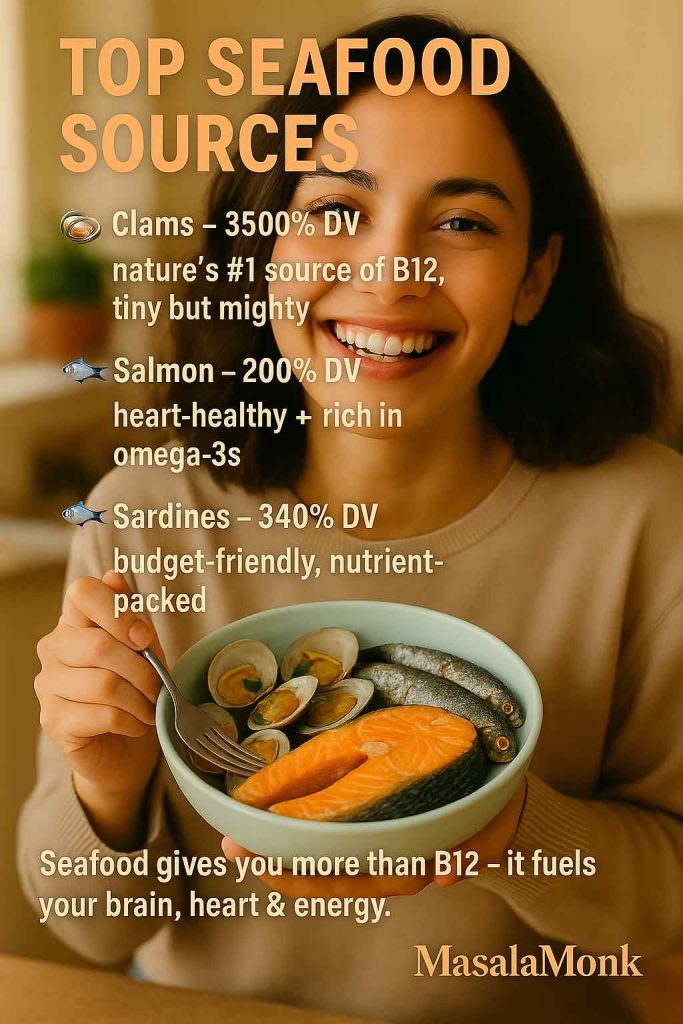
When it comes to Vitamin B12, seafood wears the crown. In fact, some shellfish contain more than 3,000% of your daily requirement in just a single serving. Seafood like clams, sardines, and trout are among the top foods high in Vitamin B12 (Healthline; Harvard Health).
Seafood
Serving Size
Vitamin B12 (mcg)
% Daily Value*
Clams
3 oz (cooked)
84 mcg
3,500%
Sardines
3 oz (canned)
8.2 mcg
340%
Trout
3 oz (cooked)
5.4 mcg
225%
Salmon
3 oz (cooked)
4.8 mcg
200%
Tuna
3 oz (cooked)
2.5 mcg
104%
Seafood High in Vitamin B12: Clams, Salmon, Trout, Sardines, and Tuna as Rich Sources of B12
*Based on 2.4 mcg daily recommended intake.
Seafood like clams, salmon, and sardines are the richest natural sources of Vitamin B12 for daily nutrition.
What’s beautiful about seafood is that it’s not just about B12. Alongside this powerful vitamin, you also get high-quality protein, omega-3 fatty acids, and vitamin D — a nutrient trio that supports your brain, heart, and immune system.
👉 Imagine this: enjoying a simple dinner of grilled salmon with roasted vegetables doesn’t just taste good — it gives you almost double your daily Vitamin B12 needs without even trying.
Meat and Poultry: Reliable Vitamin B12 Rich Food Sources
If seafood isn’t your favorite, meat and poultry are still strong players in the Vitamin B12 game. Organ meats, in particular, are like nature’s multivitamins.
Meat & Poultry
Serving Size
Vitamin B12 (mcg)
% Daily Value
Beef Liver
100 g
83 mcg
3,450%
Beef (lean cuts)
3 oz (cooked)
1.3 mcg
54%
Chicken
3 oz (cooked)
0.3 mcg
13%
Turkey
3 oz (cooked)
0.5 mcg
21%
Meat and Poultry Rich in Vitamin B12: Beef Liver, Lean Beef, Chicken, and Turkey for Daily B12 Needs
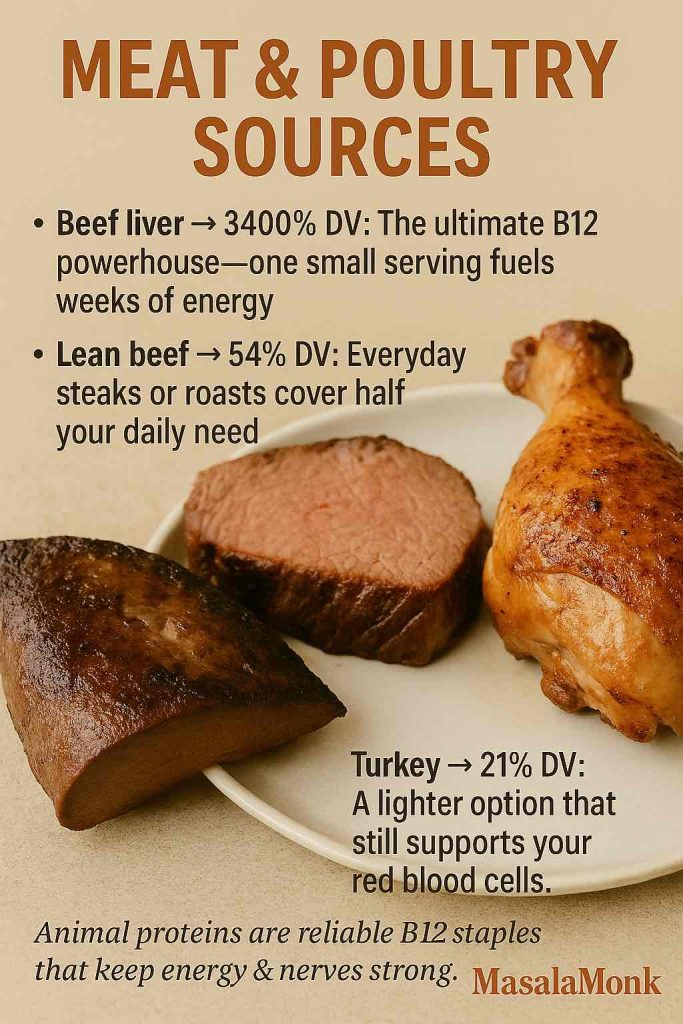
Beef liver, lean beef, and turkey are excellent meat and poultry sources of Vitamin B12.
Beef liver is the undisputed superstar, packing more than 3,000% of your daily needs in just 100 grams. But even lean cuts of beef give you a decent boost, and adding turkey or chicken to your diet can help diversify your protein sources while still contributing to your B12 intake.
👉 If you enjoy traditional dishes like liver and onions, you’re not just indulging in comfort food — you’re giving your body one of the most nutrient-dense meals on earth.
Dairy Foods Rich in Vitamin B12: Milk, Cheese, Yogurt
For those who enjoy milk, cheese, or yogurt, dairy foods offer a gentle but steady stream of Vitamin B12. They may not be as concentrated as seafood or liver, but because they’re easy to include daily, they add up. Interestingly, B12 from dairy may be more bioavailable than from meat (NIH Fact Sheet).
Dairy
Serving Size
Vitamin B12 (mcg)
% Daily Value
Milk (whole)
1 cup
1.2 mcg
50%
Yogurt (plain)
1 cup
1.1 mcg
46%
Cheddar Cheese
1 oz
0.9 mcg
38%
Dairy Foods High in Vitamin B12: Milk, Yogurt, and Cheese as Everyday B12 Sources
👉 Think of your morning latte, a serving of Greek yogurt with fruit, or a slice of cheese with whole grain bread — each of these little moments is a small but meaningful contribution to your daily B12 needs.
Eggs as a Food Source Rich in Vitamin B12
Eggs might be small, but they carry a surprising punch of nutrition. Most of the B12 is concentrated in the yolk, so if you’re eating only egg whites, you’re missing out on this vital nutrient.
Food
Serving Size
Vitamin B12 (mcg)
% Daily Value
Egg (whole)
1 large
0.6 mcg
25%
Eggs as a Source of Vitamin B12: Nutrition Benefits and B12 Content per Serving
👉 A two-egg omelet at breakfast could cover half of your daily B12 requirement while also giving you protein, healthy fats, and choline — another nutrient that supports brain health.
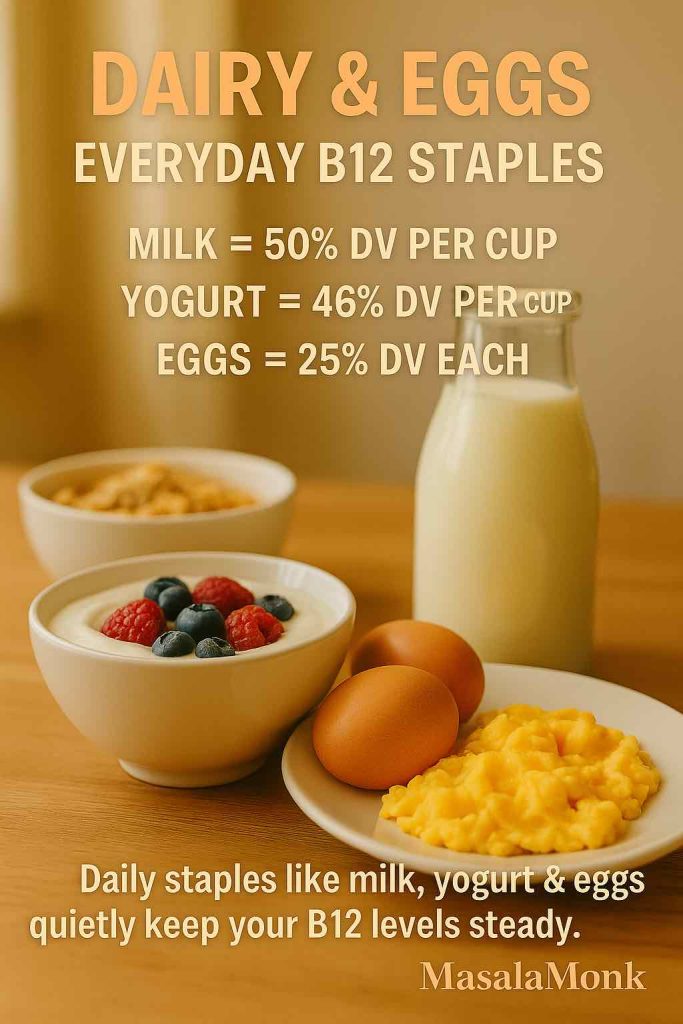
Daily staples like milk, yogurt, and eggs provide steady Vitamin B12 for healthy energy levels.
Now that we’ve looked at the most powerful animal-based Vitamin B12 rich foods — from clams and salmon to liver and eggs — you might be wondering: what about those who don’t eat meat or fish?
This is where it gets tricky, because plant-based sources are far more limited. But don’t worry — the good news is that food manufacturers and nutrition science have created reliable ways for vegetarians and vegans to get enough B12.
Let’s explore those next.
Vitamin B12 Rich Vegetarian and Vegan Foods
Now that we’ve explored seafood, meat, and dairy, let’s pause for a moment. What if you don’t eat these foods? Maybe you’re vegetarian, vegan, or simply cutting back on animal products for health or ethical reasons. Does that mean Vitamin B12 deficiency is inevitable?
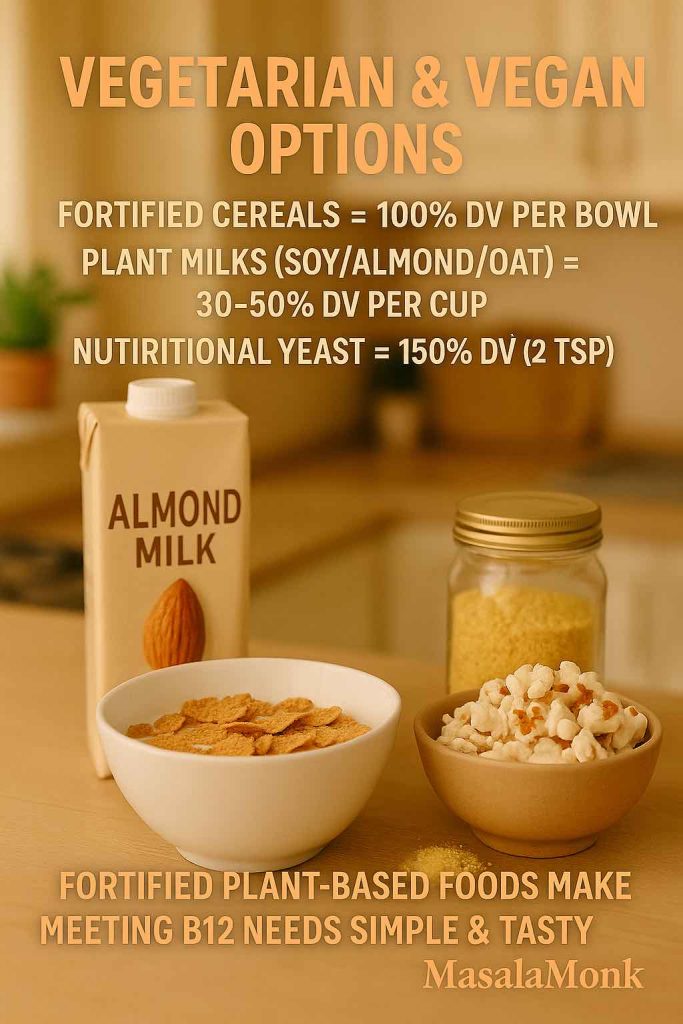
The answer is no — but it does mean you need to be more intentional. Unlike protein or iron, which can be found in a wide range of plant-based foods, Vitamin B12 doesn’t naturally occur in plants in meaningful amounts. That;s why fortified cereals, plant-based milks, and nutritional yeast are excellent vegetarian and vegan sources (Medical News Today; Vegan Society).
Let’s look at the best plant-friendly ways to get your daily dose of B12.
Fortified Cereals as Foods Rich in Vitamin B12
If you start your morning with a bowl of cereal, you may already be getting a solid dose of B12 without realizing it. Many breakfast cereals are fortified, meaning Vitamin B12 is added during processing.
Food
Serving Size
Vitamin B12 (mcg)
Notes
Fortified Cereal
1 cup
~6.0 mcg
Often 100% of daily value
Fortified Cereal is Vitamin B12 Rich Food
👉 Imagine this: a bowl of fortified cereal topped with almond milk can give you your entire day’s worth of B12 before you’ve even finished breakfast. It’s quick, convenient, and especially helpful for kids, busy adults, and anyone who struggles to remember supplements.
Fortified Plant Milks are Rich Food Sources of Vitamin B12
With more people choosing dairy-free lifestyles, fortified plant milks have become one of the easiest and most reliable vegetarian-friendly sources of Vitamin B12.
Food
Serving Size
Vitamin B12 (mcg)
Notes
Soy Milk (fortified)
1 cup
2.6 mcg
Excellent vegan choice
Almond Milk (fortified)
1 cup
2.5 mcg
Dairy-free alternative
Oat Milk (fortified)
1 cup
2.3 mcg
Creamy, versatile option
Plant-Based Milks Fortified with Vitamin B12 are a Good Source.
👉 Whether you use them in coffee, smoothies, or cooking, these plant-based milks can easily cover 30–50% of your daily B12 needs per cup.
Fortified cereals, almond milk, soy milk, and nutritional yeast are key vegetarian and vegan Vitamin B12 sources.
Nutritional Yeast Fortified with Vitamin B12
If you’ve ever heard a vegan friend rave about “nooch,” they’re talking about nutritional yeast. It’s a deactivated yeast that has a nutty, cheesy flavor and is often fortified with Vitamin B12.
Food
Serving Size
Vitamin B12 (mcg)
Notes
Nutritional Yeast (fortified)
2 tbsp
4.0 mcg
Adds cheesy flavor to dishes
Nutritional Yeast is Vitamin B12 Rich Food for Vegans
👉 Sprinkle it on popcorn, mix it into pasta, or blend it into sauces — not only does it taste amazing, but just two tablespoons can give you more than 150% of your daily B12.
Yeast Extract Spreads: Marmite and Vegemite
These savory spreads are popular in the UK, Australia, and beyond, and they’re often fortified with Vitamin B12.
Food
Serving Size
Vitamin B12 (mcg)
Notes
Marmite / Vegemite (fortified)
1 tsp
0.5–1.0 mcg
Strong taste, used sparingly
Marmite / Vegemite has some B12.
👉 Just a teaspoon on toast may not seem like much, but it adds a steady B12 boost to your diet.
Putting It All Together: A Plant-Based Day of B12
To see how easy it can be, imagine this plant-based menu:
Breakfast → Fortified cereal + soy milk (8.6 mcg B12)
Lunch → Avocado toast with a thin layer of Marmite (1 mcg B12)
Dinner → Vegan mac and cheese with nutritional yeast (4 mcg B12)
That’s a total of 13+ mcg of Vitamin B12 in one day — more than 5 times the recommended daily intake — all without animal products.
As you can see, even if you’re vegetarian or vegan, you don’t have to miss out on Vitamin B12. Fortified foods like cereals, plant milks, and nutritional yeast make it surprisingly simple to meet your needs.
But what about the idea of getting Vitamin B12 directly from fruits and vegetables? You might have heard claims about mushrooms, seaweed, or even algae being good sources. Let’s unpack that next, because the truth is a little more complicated.
Are there any Fruits and Vegetables as Vitamin B12 Rich Foods?
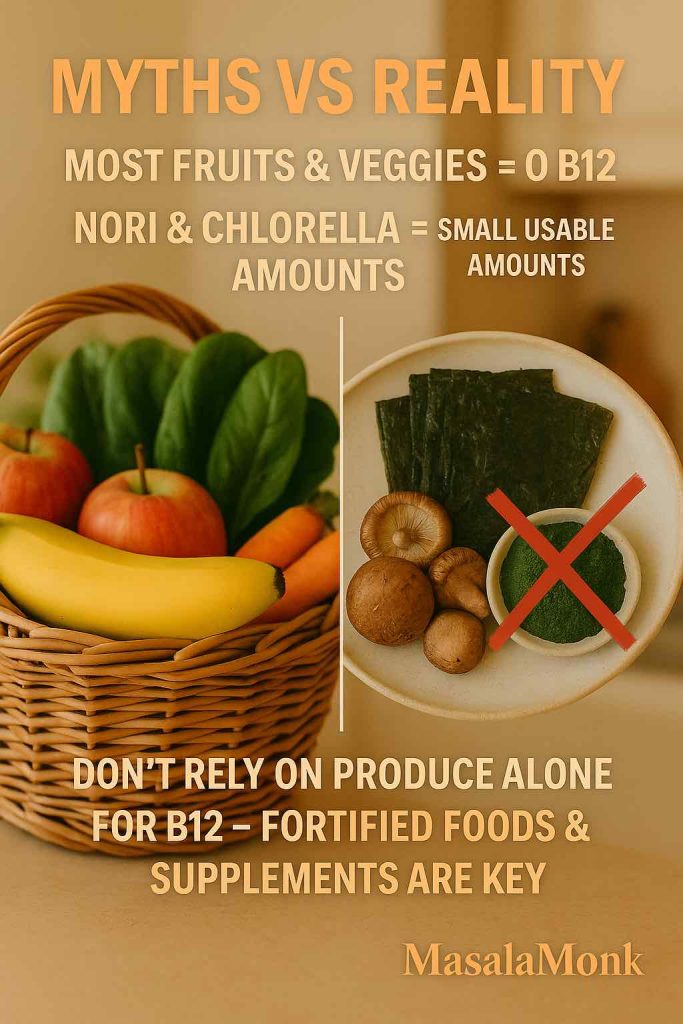
At this point, you might be wondering: “Can’t I just eat more fruits and vegetables to get my Vitamin B12?” After all, they’re packed with vitamins, minerals, and fiber. But here’s the reality: most fruits and vegetables contain little to no Vitamin B12 since plants don’t naturally produce it (NIH).
That might sound surprising, but it makes sense once you understand where B12 comes from. This vitamin is made by bacteria found in soil and in the digestive tracts of animals. Over time, animals store it in their tissues, which is why seafood, meat, dairy, and eggs are so rich in B12. Plants, on the other hand, don’t naturally produce or store Vitamin B12 in significant amounts.
So does that mean fruits and vegetables are completely useless for B12? Not exactly. There are a few exceptions and special cases worth knowing about.
Mushrooms: Trace Amounts of B12
Some mushrooms, particularly shiitake mushrooms, have been found to contain small amounts of Vitamin B12.
Food
Serving Size
Vitamin B12 (mcg)
Notes
Shiitake Mushrooms
100 g (cooked)
~1.5 mcg
Absorption may vary
Mushrooms have a some amount of Vitamin B12.
While this is a fascinating discovery, it’s not enough to rely on mushrooms alone for your daily B12 needs. You’d need to eat large amounts every single day just to meet the minimum requirement. As Medical News Today notes, these provide only trace amounts and can’t replace fortified foods or supplements.
👉 Still, if you love stir-fries or soups with mushrooms, think of them as a little bonus boost on top of fortified foods or supplements.
Seaweed: Nori and Other Algae can be Rich Sources of Vitamin B12
You may have heard claims that seaweed, spirulina, or chlorella are “superfoods” rich in Vitamin B12. There’s some truth to this, but it comes with important caveats. Again as Medical News Today notes, these provide only trace amounts and can’t replace fortified foods or supplements.
Food
Serving Size
Vitamin B12 (mcg)
Notes
Nori (dried seaweed)
4 g
2.4 mcg
Some studies show good absorption
Chlorella (algae supplement)
3 g
1.0–2.0 mcg
Often used as powder/tablet
Spirulina (algae)
—
Contains “B12 analogs”
Not usable by the body
Seaweed and Algae as Vitamin B12 Sources: Nori, Chlorella, and Spirulina Compared
👉 While nori and chlorella may offer some usable B12, spirulina mostly contains “pseudo-B12” — a form your body cannot absorb. That means relying on spirulina could actually make deficiency worse by giving a false sense of security of consuming Vitamin B12 Rich Food.
Fortified Fruit Juices as a Food High in Vitamin B12
Some brands of orange juice and other fruit juices are fortified with Vitamin B12.
Food
Serving Size
Vitamin B12 (mcg)
Notes
Fortified Orange Juice
1 cup
1.0–2.0 mcg
Only fortified versions
Fortified Fruit Juices with Vitamin B12: Easy Vegan-Friendly B12 Options
This can be a convenient way to sneak in extra B12, especially for children or people who don’t like taking supplements. But as always, it’s important to read the nutrition label — not all juices are fortified.
Fruits and Vegetables: The Honest Truth
Apart from these rare cases, the average fruits and vegetables you find in the produce aisle — apples, bananas, carrots, spinach, and so on — simply do not contain meaningful amounts of Vitamin B12.
👉 This is why vegetarians and vegans are encouraged to focus on fortified foods and supplements instead of relying on fresh produce alone.
Most fruits and vegetables contain zero Vitamin B12, but nori seaweed, chlorella, and mushrooms provide small amounts.
Fruits and vegetables will always be cornerstones of a healthy diet. They give us vitamins, minerals, antioxidants, and fiber. But when it comes to Vitamin B12, they play only a supporting role.
Now that we’ve sorted out the plant-based confusion, let’s move on to something just as important: the nutrient partnerships. Did you know Vitamin B12 works hand in hand with folate and iron to keep your blood healthy? In the next section, we’ll explore which foods provide this powerful trio together, so you can plan meals that do double — even triple — duty for your health.
Foods High in Vitamin B12 and Iron/Folate
By now, we’ve seen how Vitamin B12 keeps your nerves sharp and your energy steady. But here’s something many people don’t realize: B12 doesn’t work alone. It has a few trusted “teammates” that it partners with to keep your body thriving — especially your blood and brain.
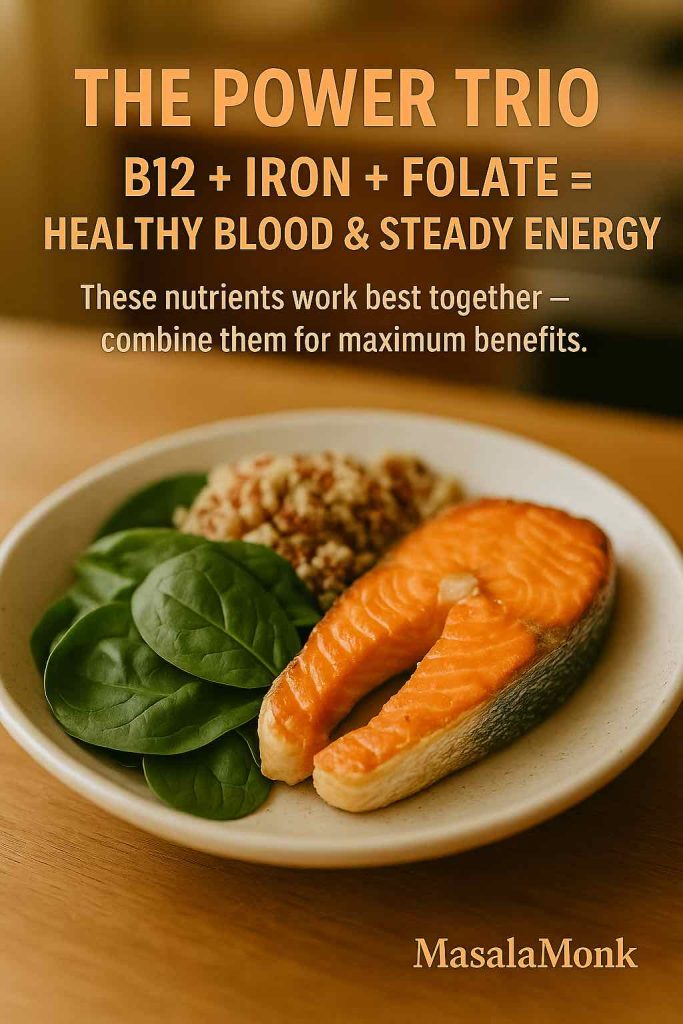
The most important partners are folate (Vitamin B9) and iron. Together, these three nutrients are like the ultimate trio for healthy red blood cells and oxygen transport. Without them, your blood can’t deliver enough oxygen to your tissues, leaving you feeling weak, pale, or out of breath. That’s why foods rich in both B12 and iron/folate are so powerful (NHS Resource).
So instead of thinking of B12 in isolation, it helps to focus on meals and foods that bring these nutrients together naturally. Let’s look at some of the best examples.
Combining Vitamin B12 with iron and folate foods like salmon, spinach, and quinoa supports healthy blood and energy.
Salmon: Omega-3s Plus B12 and Folate
Salmon is already a superstar when it comes to Vitamin B12 — one fillet can give you nearly 200% of your daily needs. But here’s the bonus: salmon also provides folate and omega-3 fatty acids, which support brain function, reduce inflammation, and keep your heart healthy.
👉 Picture this: a dinner of baked salmon with a side of leafy greens (rich in folate) and quinoa (packed with iron) creates a meal that delivers a perfect blend of B12, folate, and iron.
Eggs: The Everyday Multitaskers
Eggs are one of the most versatile foods out there. Beyond being a steady source of Vitamin B12, they also contain folate, choline (important for brain health), and high-quality protein.
Food
Serving Size
Nutrients
Eggs (whole)
2 large
B12, Folate, Protein, Choline
Besides Vitamin B12, Eggs also contain folate, choline
👉 Starting your day with scrambled eggs and spinach (a folate-rich green) is a quick way to give your body this powerful nutrient combo.
Spinach with Fortified Cereal: A Plant-Based Power Pair
On their own, spinach is rich in folate and iron but lacks Vitamin B12. Fortified cereals, on the other hand, often contain 100% of your daily B12. Pair them together, and you have a nutrient-packed meal that supports your blood health, even if you don’t eat meat.
👉 Imagine a spinach smoothie paired with a bowl of fortified cereal and soy milk — a fully plant-based breakfast that still covers all three nutrients.
Lean Beef: B12 Meets Iron
Beef is often highlighted as a source of iron, but it’s also a good source of Vitamin B12. Together, these nutrients help produce red blood cells and prevent anemia.
Food
Serving Size
Vitamin B12 (mcg)
Iron (mg)
Lean Beef
3 oz (cooked)
1.3 mcg
2.7 mg
Lean Beef is a Dual Source of B12 and Iron
👉 A small portion of lean beef, served with a lentil salad (for extra folate and plant-based iron), creates a meal that ticks all the boxes.
Lentils with Yogurt: A Vegetarian-Friendly Combo
For vegetarians, pairing foods is key. Lentils provide iron and folate, while yogurt adds Vitamin B12 and protein. Combined, they create a balanced and satisfying meal.
👉 A warm bowl of lentil curry served with a side of plain yogurt not only tastes comforting but also delivers a blend of nutrients that work beautifully together.
When you think of nutrition this way — in combinations instead of single nutrients — it becomes much easier to build meals that truly support your health. Whether it’s salmon with greens, eggs with spinach, or lentils with yogurt, these pairings bring B12, folate, and iron together in delicious ways.
Now that we’ve explored the power of food combinations, let’s turn to another important question: what if diet alone isn’t enough? For many people, especially seniors, vegans, or those with absorption issues, food isn’t the whole story. This is where Vitamin B12 supplements come in — and choosing the right one can make all the difference.
Best Vitamin B12 Supplements: Choosing the Right One for Your Needs
So far, we’ve looked at how to get Vitamin B12 through food. But what if that isn’t enough? Some people — especially vegans, seniors, and those with absorption problems — need supplements. That’s because Vitamin B12 deficiency is often caused by malabsorption, not just poor diet (Times of India).
Certain groups are more likely to need extra help:
Vegans and vegetarians → because plant foods don’t naturally contain B12.
Seniors → since absorption decreases with age.
People with digestive conditions → such as celiac, Crohn’s disease, or low stomach acid.
Those recovering from anemia or chronic fatigue → where higher doses are needed to restore levels.
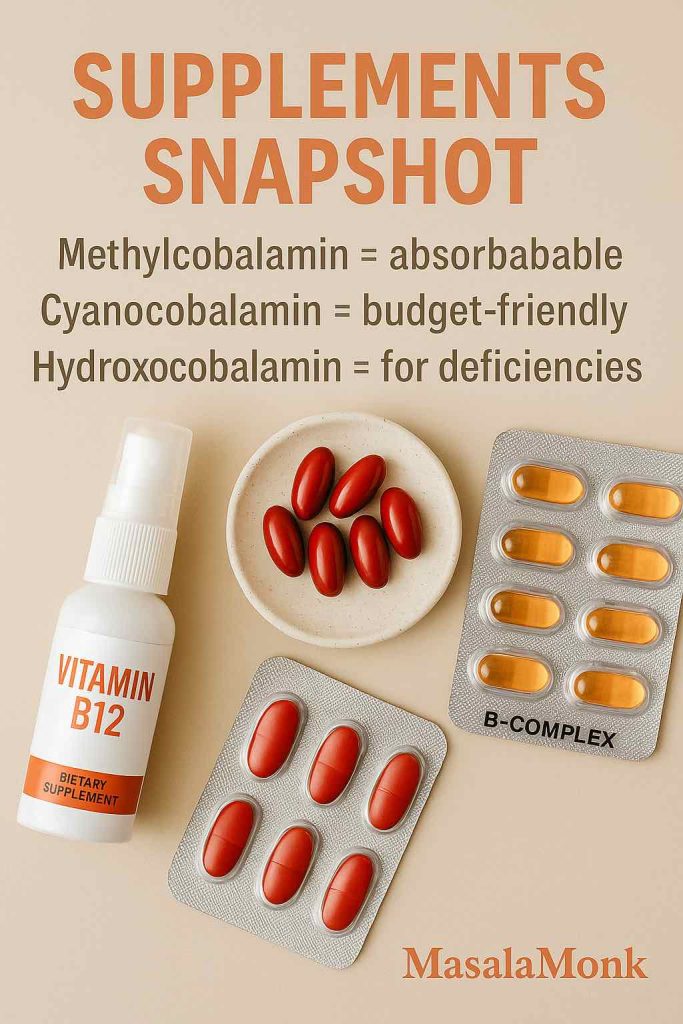
Vitamin B12 supplements include methylcobalamin for absorption, cyanocobalamin as a budget-friendly option, and hydroxocobalamin for deficiencies.
The good news? There’s no shortage of options when it comes to Vitamin B12 supplements. But not all forms are created equal. Let’s walk through the most common types and when to use them.
Methylcobalamin is often considered the gold standard of B12 supplements. It’s the form your body naturally uses, which means it’s highly bioavailable and easy to absorb.
Best for: Most people looking for a daily boost.
Why choose it: It supports energy, nerve health, and cognitive function.
Common forms: Tablets, lozenges, sprays.
👉 Imagine you’re a busy professional struggling with fatigue — a daily methylcobalamin lozenge under the tongue could help restore your energy levels without needing complicated routines.
Adenosylcobalamin: Energy and Mitochondrial Support
Adenosylcobalamin is another bioactive form of Vitamin B12, working deep in the mitochondria — the “powerhouses” of your cells.
Best for: People needing extra energy support.
Why choose it: Helps with cellular energy production and muscle function.
Common forms: Capsules, sublingual drops.
👉 Athletes or those recovering from fatigue often find adenosylcobalamin gives them that extra edge for stamina and performance.
Cyanocobalamin: Affordable and Reliable
Cyanocobalamin is a synthetic form of Vitamin B12. It’s widely available, inexpensive, and effective for most people. The body converts it into active forms (methylcobalamin and adenosylcobalamin) once ingested.
Best for: Budget-friendly supplementation.
Why choose it: Cost-effective, stable, and easy to find in multivitamins.
Common forms: Tablets, capsules, gummies.
👉 If you’re just starting with supplements and want a simple option, cyanocobalamin is a great first step.
Hydroxocobalamin: Long-Lasting Option
Hydroxocobalamin is typically used in medical settings, especially for treating severe B12 deficiencies. It lasts longer in the body, which makes it especially useful for injections.
Best for: Severe deficiencies, under medical supervision.
Why choose it: Longer storage in the body; effective for injections.
Common forms: Intramuscular injections prescribed by doctors.
👉 For someone with advanced B12 deficiency symptoms like numbness or severe fatigue, hydroxocobalamin injections can make a dramatic difference.
Best Vitamin B12 Supplements by Situation
For absorption issues (seniors, digestive problems): Sublingual methylcobalamin or adenosylcobalamin.
For anemia: Hydroxocobalamin injections or high-dose oral supplements (doctor guided).
For vegans and vegetarians: Daily methylcobalamin tablets, sprays, or fortified foods.
For budget-conscious users: Cyanocobalamin tablets or multivitamins.
For all-round coverage: B-complex supplements containing B12, folate, and B6.
Supplements can be life-changing, but they’re not a one-size-fits-all solution. The right choice depends on your lifestyle, your health status, and even how your body absorbs nutrients.
Now that we’ve covered the best supplements, let’s step back and look at the bigger picture. Vitamin B12 doesn’t work in isolation — it’s part of a family of B vitamins that support one another. In the next section, we’ll explore how B12 teams up with vitamins like B6 and folate to boost your energy, mood, and overall well-being.
How Vitamin B12 Works with Other B Vitamins
By now, you’ve seen how important Vitamin B12 is on its own. But here’s something fascinating: B12 rarely acts alone in the body. It’s part of a larger family — the B vitamins — that work together like a team. When one is missing, the others can’t perform at their best.
Think of them as musicians in an orchestra. Each plays a different instrument, but together, they create harmony. In the same way, Vitamin B12 partners with vitamins like B6, folate (B9), and even B1, B2, and B3 to keep your body energized, your nerves calm, and your blood healthy.
Let’s explore how these partnerships work in practice.
Vitamin B6 and Vitamin B12: Partners in Energy and Nerve Health
Vitamin B6 (pyridoxine) and Vitamin B12 (cobalamin) are both deeply involved in your nervous system and metabolism.
B6 helps the body make neurotransmitters like serotonin and dopamine, which regulate mood.
B12 supports the protective myelin sheath around your nerves.
Together, they help convert food into glucose, stabilize your mood, and keep your nervous system strong.
👉 Example: A meal of grilled salmon (rich in both B6 and B12) with roasted potatoes (a good source of B6) is not just satisfying — it’s a perfect example of nutrient teamwork. (Find more about Vitamin B6 in Foods)
Folate (Vitamin B9) and Vitamin B12: Essential for Blood and DNA
Folate (also known as folic acid in supplement form) and B12 are inseparable partners when it comes to blood and DNA health.
B9 and B12 together help produce red blood cells and prevent anemia.
They also support DNA synthesis and repair — critical for growth, fertility, and pregnancy health.
👉 Example: A breakfast of scrambled eggs (B12) with avocado toast (folate) shows how easy it is to combine these nutrients in everyday meals.
The Broader B Vitamin Family: B1, B2, B3, B5 with B12
While B6 and folate are the closest partners, other B vitamins also play a role alongside B12:
Vitamin B1 (Thiamine): Supports energy metabolism and nerve function.
Vitamin B2 (Riboflavin): Helps release energy from food and supports eye health.
Vitamin B3 (Niacin): Important for brain health and cholesterol balance.
Vitamin B5 (Pantothenic Acid): Supports hormone production and energy release.
Together with Vitamin B12, these nutrients turn food into energy, maintain a healthy nervous system, and keep your brain sharp.
B-Complex Supplements: A Balanced Approach
Because B vitamins are so interconnected, many people choose to take a B-complex supplement, which contains all eight B vitamins in one capsule or tablet.
Best for: People with restricted diets, chronic stress, or increased energy needs.
Why it helps: Ensures you’re not missing one vitamin that could throw off the balance of the others.
👉 Think of it like having the whole orchestra in tune. With a B-complex, you’re not just supporting B12 — you’re supporting the entire family.
Understanding how Vitamin B12 works with its fellow B vitamins helps you see the bigger picture: nutrition is about synergy, not isolation. When you eat balanced meals that combine these nutrients, you get more energy, better focus, and stronger overall health.
Now that we’ve explored the teamwork of the B vitamins, let’s bring everything together. In the final section, we’ll look at how to incorporate Vitamin B12 into your daily life, with simple strategies and practical meal ideas you can start using right away.
Adding Vitamin B12 to Life: Foods, Supplements, and Lifestyle Tips
Learning about Vitamin B12 rich foods is one thing — but the real power comes when you put that knowledge into action. The good news is that weaving B12 into your everyday meals doesn’t need to be complicated. With a little planning, you can create a diet that supports your energy, memory, mood, and long-term health.
Eating balanced diet daily, including b12 foods – fuels energy, protects brain function, and supports long-term vitality.
Here are some simple strategies to make Vitamin B12 a natural part of your lifestyle.
Build a Balanced Plate
Instead of obsessing over one “superfood,” think about balance. Each meal is an opportunity to combine sources of Vitamin B12 with other nutrients your body needs.
Seafood lovers: Try salmon with quinoa and roasted vegetables.
Meat eaters: Enjoy lean beef with lentil salad for B12 + iron + folate.
Vegetarians: Scrambled eggs with spinach and whole grain toast.
Vegans: A bowl of fortified cereal with soy milk and a sprinkle of nutritional yeast.
👉 Over time, these small, consistent choices add up to a big impact on your energy and well-being.
Use Fortified Foods Wisely
If you’re vegetarian or vegan, fortified foods can be your best friend. Fortified cereals, plant milks, and nutritional yeast are not only practical but also versatile.
Add fortified almond milk to smoothies.
Sprinkle nutritional yeast on popcorn or pasta.
Choose cereals that list Vitamin B12 on the label.
👉 This way, you can easily meet your daily B12 needs without overthinking it.
Consider Supplements When Needed
Sometimes food isn’t enough — and that’s perfectly okay. For seniors, people with absorption issues, or anyone following a fully plant-based diet, B12 supplements are a safe and reliable choice.
Daily sublingual tablets or sprays work well for most people.
Injections may be necessary for severe deficiencies (doctor guided).
B-complex supplements can ensure you’re covering all bases.
👉 Remember: supplements aren’t a weakness — they’re a smart tool to protect your health.
Your body often sends signals when something is off. If you’re feeling unusually tired, weak, or forgetful, it could be your way of saying: “I need more B12.” Read more on Symptoms of Vitamin B12 Deficiency.
👉 Regular check-ups and simple blood tests can confirm your B12 status. Catching a deficiency early means you can correct it before it leads to bigger problems like anemia or neurological symptoms.
Lifestyle Tips to Maximize B12
Beyond just diet, here are a few extra habits that support healthy B12 levels:
Cook smart: Steaming or grilling retains more nutrients than boiling.
Plan variety: Rotate between fish, dairy, eggs, or fortified foods to avoid monotony.
Stay consistent: Aim for daily intake — your body absorbs B12 better in smaller, regular amounts.
Vitamin B12 Rich Foods Chart: Best Sources of B12 for Meat Eaters, Vegetarians, and Vegans
Conclusion: Nourish Your Body, Protect Your Energy
At the end of the day, Vitamin B12 is more than just a nutrient — it’s the spark that keeps your body’s engine running. As Vogue highlights, modern diets can absolutely support your B12 needs — whether through animal foods, fortified vegan options, or supplements. From protecting your nerves to producing healthy red blood cells, from boosting your memory to supporting your mood, this vitamin touches nearly every corner of your health.
The best part? Getting enough B12 is absolutely doable, no matter what kind of diet you follow. Whether it’s through seafood and dairy, vegetarian staples like eggs and cheese, or vegan-friendly fortified foods and supplements, you have plenty of Vitamin B12 Rich Foods to choose from.
👉 Think of B12 not as a chore, but as a daily act of self-care. With every meal, you have a chance to fuel your body with energy, protect your brain, and safeguard your future health.
So, the next time you enjoy a plate of salmon, a bowl of fortified cereal, or even just sprinkle a little nutritional yeast on your dinner, remember: you’re not just eating — you’re investing in your energy, your vitality, and your well-being.
FAQs on Vitamin B12 Rich Foods
1. What are the top foods rich in Vitamin B12?
The richest natural sources of Vitamin B12 are clams, liver, salmon, trout, tuna, sardines, milk, yogurt, cheese, and eggs. These foods provide far more than your daily needs in small portions, making them easy to include in your weekly diet.
2. Which vegetarian foods contain Vitamin B12?
Since plant foods don’t naturally provide B12, vegetarians can rely on eggs, dairy products (milk, cheese, yogurt), and fortified foods like cereals or nutritional yeast. Together, these offer a reliable way to prevent deficiency without eating meat.
3. Are there vegan foods high in Vitamin B12?
Naturally, very few plant-based foods contain B12. However, fortified cereals, plant milks (soy, almond, oat), nutritional yeast, and fortified juices are vegan-friendly sources that can help meet your needs.
4. Do fruits contain Vitamin B12?
Most fruits do not naturally contain Vitamin B12. However, fortified fruit juices, such as some brands of orange juice, may provide B12 if added during processing. Always check the label to be sure.
5. Can vegetables be a good source of Vitamin B12?
Not really. Most vegetables contain no usable Vitamin B12. Exceptions include shiitake mushrooms and seaweed (nori, chlorella), which have small amounts. However, relying on vegetables alone is not enough to meet your daily B12 needs.
6. Which fish are the best sources of Vitamin B12?
Fish like salmon, trout, sardines, and tuna are excellent choices. Not only are they high in B12, but they also provide omega-3 fatty acids and protein, making them one of the healthiest all-in-one foods.
7. What are the best Vitamin B12 rich foods for anemia?
If you are managing anemia, foods like beef liver, clams, salmon, eggs, fortified cereals, and lean beef are particularly helpful. They supply both Vitamin B12 and iron, which work together to support healthy red blood cell production.
8. Can Vitamin B12 deficiency be reversed with food alone?
In mild cases, yes — eating B12 rich foods daily can correct low levels. But in more serious deficiencies (especially with neurological symptoms), you may need supplements or injections prescribed by a doctor.
9. What is the daily requirement of Vitamin B12?
Most adults need 2.4 mcg per day. Pregnant or breastfeeding women may need more. To put this in perspective: one serving of clams or beef liver provides more than 1000% of your daily requirement, while a cup of milk covers about half. Know more about What are Methylated Prenatal Vitamins?
10. Should I take a Vitamin B12 supplement if I eat B12 rich foods?
Not always. If you regularly eat animal-based foods, you likely get enough naturally. However, vegans, vegetarians, seniors, or people with absorption issues often benefit from B12 supplements to stay healthy.
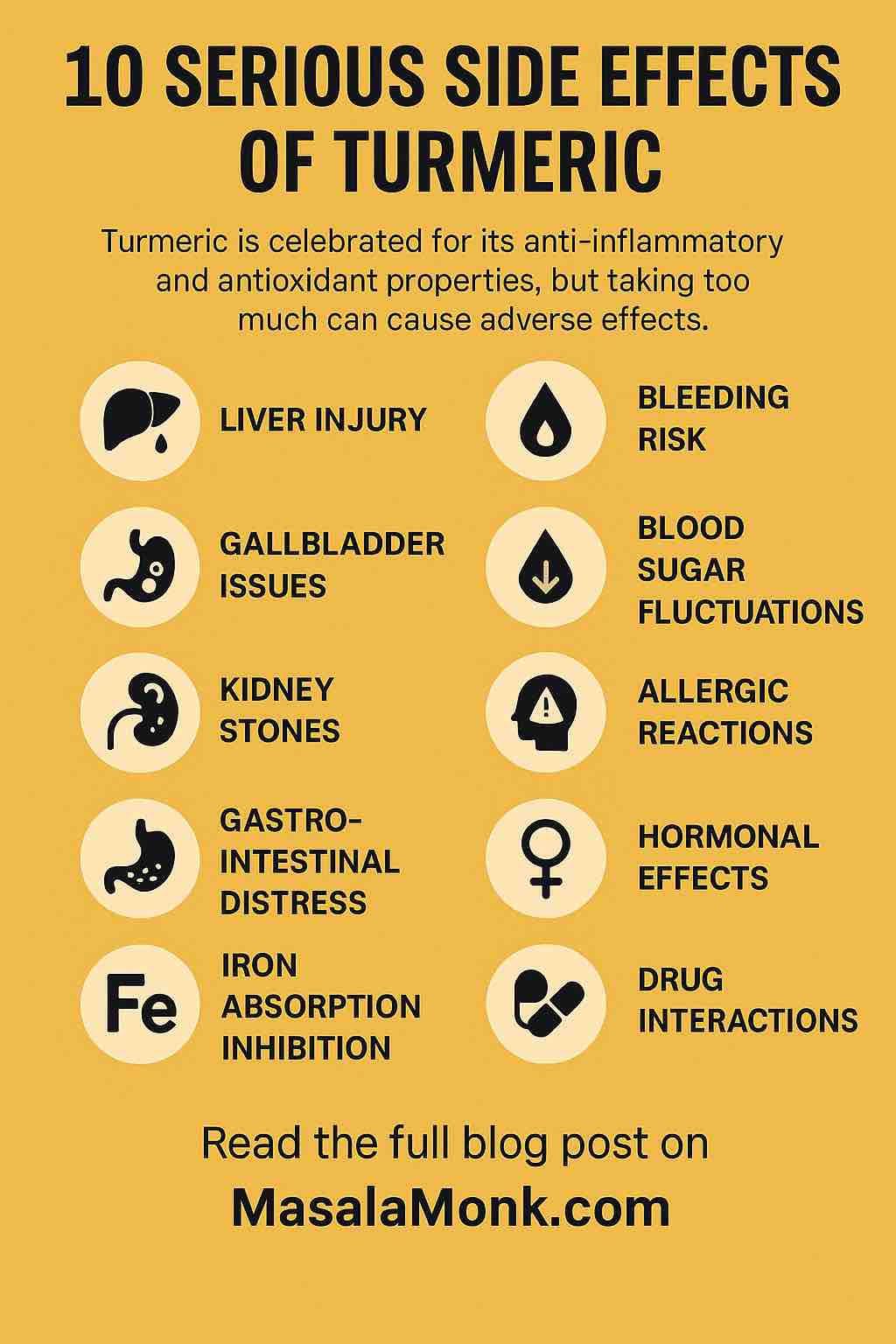
The side effects of turmeric are not something most people think about when they sprinkle the spice on food or sip it in a golden latte. After all, turmeric has built a reputation as one of the world’s healthiest superfoods. From teas and powders to capsules and gummies, this vibrant yellow root is marketed everywhere as a natural remedy for inflammation, joint pain, and even chronic disease. Much of the hype comes from curcumin, the active compound in turmeric that researchers often highlight for its antioxidant and anti-inflammatory powers.
However, while the benefits of turmeric often make headlines, its risks rarely get the same attention. And that’s where balance matters. Just like too much of a “good thing” can backfire, consuming turmeric in excess — especially in concentrated supplements, teas, or powders — can lead to problems. In fact, studies and case reports have linked turmeric overuse to issues ranging from mild digestive distress to more serious health risks such as liver damage, kidney stones, and dangerous drug interactions.
The good news? You don’t need to avoid turmeric entirely. When used in normal food amounts, it can be both safe and beneficial. The key is knowing when turmeric helps and when it harms. By understanding its side effects, you can enjoy turmeric as part of your lifestyle without putting your health at risk.
In this guide, we’ll walk through the 10 most important side effects of turmeric and curcumin. Along the way, you’ll also find practical tips on safe use, so you can make the most of turmeric’s benefits — without falling into the trap of overuse.
10 Serious Side Effects of Turmeric and Curcumin
1. Liver Damage from Turmeric Supplements
Let’s start with the most worrying one: liver damage. While turmeric as a spice in food is safe, things change when it’s concentrated into pills or powders. Several case studies have linked turmeric supplements to hepatotoxicity — liver injury marked by symptoms like jaundice, fatigue, and abnormal blood tests.
Although turmeric supports liver health in moderation, too much turmeric extract or curcumin supplements may have harmful side effects on the liver, leading to toxicity or damage.
In fact, the issue became so concerning that Italy banned health claims on turmeric supplements due to safety fears.
👉 If you have liver problems or take medication that already stresses your liver, avoid turmeric supplements and stick to small food-based amounts.
2. Increased Bleeding Risk with Turmeric Use
Here’s another hidden risk: turmeric naturally acts as a blood thinner. While this might sound like a bonus for heart health, it can be dangerous when combined with blood-thinning medications such as aspirin, warfarin, or clopidogrel.
One of the dangerous side effects of turmeric is blood thinning. Turmeric and curcumin may increase bleeding risk, especially when taken with blood-thinning medications like warfarin or aspirin.
The problem is simple — if your blood doesn’t clot properly, even small cuts can bleed longer, and surgical procedures can become riskier. That’s why doctors typically recommend stopping turmeric supplements at least two weeks before surgery.
3. Gallbladder Pain & Gallstones as Turmeric Side Effects
Turmeric stimulates bile production, which is helpful for digestion. But there’s a catch: for people with gallstones or bile duct blockages, this can trigger painful gallbladder spasms.
One of the serious side effects of turmeric is its ability to worsen gallstone pain. Excess turmeric or curcumin can stimulate bile production, leading to painful spasms in people with gallstones.
So while a little turmeric sprinkled on food is fine, those with gallbladder issues should avoid turmeric supplements unless cleared by their doctor.
4. Kidney Stones Caused by Turmeric Powder
Turmeric is high in oxalates, compounds that bind to calcium and form crystals. Over time, these crystals can grow into kidney stones — especially the common calcium oxalate stones.
A negative effect of turmeric is its high oxalate content, which may contribute to kidney stone formation. Overuse of turmeric capsules or curcumin pills increases this risk.
To put this in perspective, just one tablespoon of turmeric powder contains up to 60 mg of oxalates. If you’re prone to kidney stones, cutting back on turmeric supplements or powders may save you a lot of pain.
5. Digestive Side Effects of Turmeric (Nausea, Bloating, Diarrhea)
Ironically, while many people take turmeric for digestive health, high doses often cause the opposite effect.
Common complaints include:
Nausea
Acid reflux
Bloating
Diarrhea
Taking too much turmeric can cause digestive side effects such as nausea, bloating, or diarrhea. Curcumin supplements in high doses may irritate the stomach lining and cause discomfort.
The reason? Concentrated curcumin supplements can irritate the stomach lining. If you notice these symptoms, it may be a sign that you’re taking too much.
Another less-discussed problem is how turmeric affects iron absorption. Studies show that turmeric can reduce the body’s ability to absorb non-heme iron (the kind found in plant-based foods).
Another adverse effect of turmeric is reduced iron absorption, which may cause or worsen anemia. People with low iron should avoid excess turmeric or curcumin supplements.
This might not affect everyone, but for vegetarians, women with heavy periods, or anyone with existing anemia, it could worsen iron deficiency. If iron is already a struggle for you, it’s worth limiting turmeric capsules and powders.
7. Turmeric and Blood Sugar Crashes in Diabetics
Turmeric is often praised for lowering blood sugar, which sounds great — until it drops too low. Combined with diabetic medications, turmeric can lead to hypoglycemia (dangerously low blood sugar).
Turmeric curcumin side effects include lowering blood sugar levels, which can be dangerous for diabetics. Combining turmeric supplements with diabetes medication may cause hypoglycemia.
Symptoms include dizziness, confusion, sweating, and fainting. If you’re diabetic, turmeric might still have a place in your diet, but you’ll need to monitor your levels carefully when adding supplements.
8. Allergic Reactions to Turmeric and Curcumin
Although uncommon, turmeric allergies do happen. Reactions may range from mild rashes and itching to more severe issues like hives or difficulty breathing.
While uncommon, turmeric side effects can include allergic reactions. Some people experience skin rashes, itching, or redness after using turmeric powder, supplements, or curcumin capsules.
People who are allergic to ginger or yellow food dyes (such as tartrazine) may be more likely to react. If you’re new to turmeric supplements, it’s always safest to start with small doses and watch for reactions.
If you’re exploring turmeric with ginger — another common combo — make sure you understand both the benefits and risks. Here’s a science-backed breakdown: Turmeric and Ginger for Effective Weight Loss.
9. Hormonal Side Effects of Turmeric (Cancer & Estrogen Concerns)
Curcumin behaves like a phytoestrogen, a plant compound that mimics estrogen in the body. For some, this could pose risks — especially those with hormone-sensitive conditions such as breast cancer, ovarian cancer, uterine fibroids, or endometriosis.
A lesser-known side effect of curcumin is its estrogen-like activity. This may worsen hormone-sensitive conditions such as breast cancer, endometriosis, or fibroids.
The research is mixed: while some studies suggest anticancer effects, others highlight potential hormonal stimulation. Until clearer evidence emerges, it’s best to be cautious if you have hormone-related conditions.
For a balanced perspective, check out 5 Reasons to Eat Turmeric for PCOS, which shows how turmeric can both support and complicate hormonal health depending on the context.
10. Dangerous Turmeric Drug Interactions You Must Know
Finally, turmeric can affect the enzymes in your liver that metabolize medications. This means drugs may either become too weak to work — or too strong, leading to side effects.
One of the most important side effects of turmeric is its interaction with medications. Curcumin may interfere with blood thinners, diabetes drugs, chemotherapy, and more.
Some of the medications that can interact with turmeric include:
Antidepressants
Antibiotics
Chemotherapy drugs
Immunosuppressants
The tricky part is that these interactions aren’t always obvious at first. But over time, they can cause serious complications. Always check with your healthcare provider before mixing turmeric supplements with prescription drugs.
If you’re curious about turmeric combined with black pepper — often marketed as “enhanced absorption” — it’s important to know that while it boosts curcumin’s bioavailability, it can also magnify side effects. Here’s a full breakdown: Health Benefits of Turmeric with Black Pepper.
Other Reported Side Effects of Turmeric
Beyond these 10 major risks, there are a few other side effects worth mentioning:
Headaches and dizziness with very high doses
Constipation or stomach pain in sensitive individuals
Skin rashes from applying turmeric topically
Low blood pressure for those already prone to drops
They may not be as common, but they’re a reminder that moderation is key.
If you prefer drinking turmeric in teas, you can enjoy it safely by sticking to mindful recipes like this Turmeric Ginger Cinnamon Tea.
Side Effects of Turmeric in Different Forms
Not all turmeric is consumed the same way — and each form carries its own risks.
Form
Common Use
Potential Side Effects
Turmeric Powder
Cooking, golden milk
Kidney stones, digestive upset
Turmeric Tea
Herbal drink
Nausea, acid reflux
Turmeric Supplements
Capsules, tablets
Liver damage, drug interactions
Topical Turmeric
Face masks, creams
Allergic rashes, skin irritation
How to Reduce the Side Effects of Turmeric
The goal isn’t to avoid turmeric altogether, but to use it wisely. Here are some simple tips:
✅ Stick to culinary amounts in food and drinks
✅ Avoid high-dose supplements unless prescribed
✅ Stop supplements before surgery or medical procedures
✅ Buy from reputable brands to reduce contamination risks
✅ Pair turmeric with black pepper and healthy fats for better absorption — but only in safe doses
✅ Pay attention to how your body reacts and adjust accordingly
For example, pairing turmeric with black pepper and healthy fats can help absorption — but should be done carefully. To understand why, see this guide: Turmeric & Curcumin Absorption and Bioavailability.
Final Thoughts on Turmeric Side Effects
Turmeric is powerful — and that’s exactly why it must be used with care. In the right amounts, it can support health and well-being. But in excess, or when taken without medical guidance, it can cause more harm than good.
Think of turmeric like medicine: helpful at the right dose, risky if overused. By being aware of its side effects, you can make smarter choices, protect your health, and still enjoy the benefits of this ancient spice.
FAQs on the Side Effects of Turmeric
1. Can you overdose on turmeric?
Yes. Taking very high doses of turmeric — especially in supplements — can cause serious problems such as liver damage, nausea, dizziness, or kidney stones. Symptoms of a turmeric overdose may include stomach pain, yellowing of the skin (jaundice), or unusual fatigue.
2. Is turmeric safe to take every day?
Turmeric is generally safe in food-level amounts, like curries, teas, or turmeric milk. However, daily high-dose supplements increase the risk of side effects of turmeric such as digestive distress, bleeding issues, or drug interactions.
3. What are the side effects of turmeric tea?
Turmeric tea is soothing for many, but in excess it may cause acid reflux, bloating, diarrhea, or nausea. These side effects of turmeric tea are more likely if you drink it on an empty stomach or consume more than 1–2 cups per day.
4. Can turmeric cause headaches or constipation?
Yes. While less common, some people experience headaches, dizziness, or constipation after using turmeric, especially in capsule form. If you notice these side effects of turmeric supplements, it’s best to reduce your intake or stick to food-based turmeric.
5. What are the side effects of turmeric with black pepper?
Turmeric with black pepper (piperine) improves curcumin absorption but also intensifies side effects of turmeric, such as nausea, bleeding risk, and low blood sugar. If you take medications — particularly blood thinners or diabetes drugs — this combination should be avoided unless your doctor approves.
6. Is turmeric milk (haldi doodh) safe?
Yes, turmeric milk is safe in moderation. But drinking too much haldi doodh can cause constipation, stomach upset, or excess calorie intake. These side effects of turmeric in milk are rare when limited to one small cup daily.
Yes. Turmeric supplements have been linked to liver toxicity in rare cases. These side effects of turmeric are more common in people with pre-existing liver disease or those who take medications that already stress the liver.
8. Can turmeric lower blood sugar too much?
Yes. Turmeric may amplify the effects of diabetes medications, leading to hypoglycemia (low blood sugar). Symptoms include dizziness, confusion, shaking, or fainting. If you’re diabetic, watch for these side effects of turmeric and monitor your levels closely.
9. What are signs of a turmeric allergy?
Turmeric allergies are uncommon but possible. Look out for rashes, itching, hives, or swelling. Severe allergic reactions to turmeric can cause shortness of breath or anaphylaxis, which require immediate medical help.
10. Who should avoid turmeric supplements?
Turmeric supplements should be avoided by people with gallstones, kidney stones, or liver problems. They are also risky for those on blood thinners, antidepressants, chemotherapy, or diabetes medications, as well as pregnant or breastfeeding women and individuals with hormone-sensitive cancers.
Further Reading & Research on the Side Effects of Turmeric
If you’d like to dive deeper into the science behind the side effects of turmeric and curcumin, here are some trusted resources and studies worth exploring. These go beyond the headlines and offer real-world medical cases, safety alerts, and expert guidance.
NCBI: LiverTox – Turmeric-Associated Liver Injury The U.S. National Institutes of Health maintains this resource, which includes case studies of hepatotoxicity (liver damage) caused by turmeric supplements. It’s a must-read if you’re curious about why some countries, like Italy, have restricted health claims on turmeric products. 👉 Read more on NCBI
Australian Therapeutic Goods Administration (TGA): Safety Alert on Turmeric & Curcumin This government safety warning highlights 18 cases of liver injury, some severe, linked to turmeric and curcumin products — particularly those designed for “enhanced absorption” (often combined with black pepper). 👉 See the full safety alert
The American Journal of Medicine: Case Series on Turmeric-Related Liver Injury A clinical case report published in 2023 documenting how turmeric supplements led to hospitalization and, in one case, acute liver failure. It reinforces why moderation is so important when it comes to turmeric pills. 👉 Read the case series
PubMed: Anticoagulant Effects of Curcumin A peer-reviewed study confirming that curcumin has a blood-thinning effect, which validates the risk of increased bleeding when combined with medications like warfarin or aspirin. 👉 Explore the study
Johns Hopkins Medicine: Turmeric Benefits and Risks A balanced medical guide from one of the most respected hospitals in the U.S. It covers both the health benefits of turmeric and the potential side effects, including drug interactions. 👉 Visit Johns Hopkins Medicine
Why These Resources Matter
When it comes to health, research-backed evidence is essential. While turmeric is safe and beneficial in food-level amounts, these studies and reports show why supplements, teas, and powders in excess can trigger real side effects — from liver injury to bleeding risks.
By exploring the resources above, you’ll see how experts and regulatory bodies around the world are tracking the risks of turmeric, ensuring that consumers stay safe while enjoying its potential benefits.
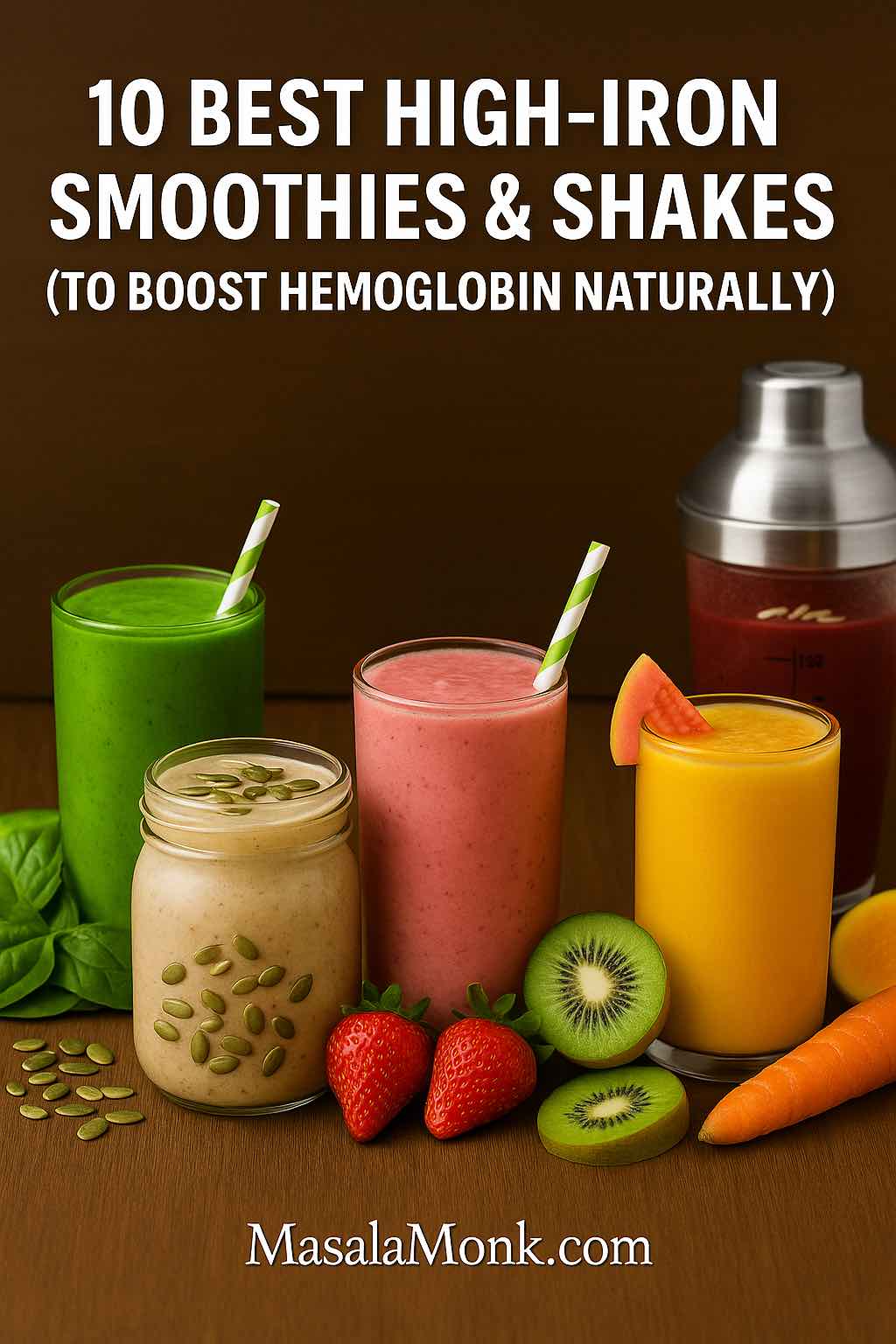
If you’ve ever felt drained, dizzy, or low on energy, you probably know just how much iron matters. High Iron Smoothies & Shakes are a great way to get Iron, which is the mineral your body needs to produce hemoglobin — the protein responsible for carrying oxygen through your blood. When iron levels dip too low, anemia can set in, leaving you feeling constantly fatigued, foggy, and even breathless after the simplest tasks. Read more about it in Iron: Mineral for Vitality and Health
Now, here’s the good news: you don’t have to depend only on heavy iron supplements or bland iron tablets to fix the problem. You can actually sip your way to stronger iron levels. With the right blend of iron-rich fruits, leafy greens, seeds, and vitamin C-packed ingredients, smoothies and shakes become not only refreshing but also powerful tools for boosting hemoglobin naturally.
In this guide, we’ll share 10 of the best high-iron smoothie recipes. Some are energizing breakfast blends, others work as protein-packed shakes, and a few are soothing, everyday anemia smoothies that can fit seamlessly into your lifestyle. Each one is delicious, practical, and easy to prepare at home.
But before we dive into recipes, let’s first understand why smoothies are one of the smartest ways to fight iron deficiency and how you can maximize their benefits.
Why Choose Smoothies or Shakes for Iron Deficiency?
Unlike pills or supplements, smoothies give you nutrients in their natural form. When you combine plant-based iron sources (like spinach, pumpkin seeds, and beets) with vitamin C-rich fruits (such as oranges, guava, or strawberries), you create the perfect environment for your body to absorb iron more efficiently. This is something iron tablets alone can’t always achieve.
Smoothies are also:
Quick & convenient — You can whip one up in under 5 minutes.
Customizable — From fruity blends to protein shakes with iron, there’s a recipe for every taste.
Gentle on digestion — Unlike some supplements that can cause constipation or stomach issues, smoothies use whole foods that are easier on the gut.
Versatile — They can double up as breakfast, post-workout fuel, or even a mid-day pick-me-up.
This makes them a sustainable daily habit rather than a chore. Plus, when you rotate different ingredients — think green smoothies one day and fruit-based iron shakes the next — you cover a wider spectrum of nutrients while keeping things exciting for your taste buds.
🍹 10 Best High-Iron Smoothies & Shakes to Boost Hemoglobin Naturally
Before we jump into the actual recipes, it’s worth mentioning that High Iron Smoothies & Shakes aren’t just one type of drink. Some blends are green and leafy, others lean on iron-rich fruits, while a few are designed as protein shakes with iron to keep you fuller for longer. By mixing and matching these styles, you can enjoy variety while making sure you’re supporting your iron levels every single day.
In the list below, you’ll find a mix of:
High iron smoothies for anemia — gentle, nourishing blends to fight fatigue.
Protein shakes with iron — perfect post-workout or as a meal replacement.
Iron-rich fruit smoothies — naturally sweet, family-friendly options.
Green iron smoothies — packed with leafy greens and vitamin C for better absorption.
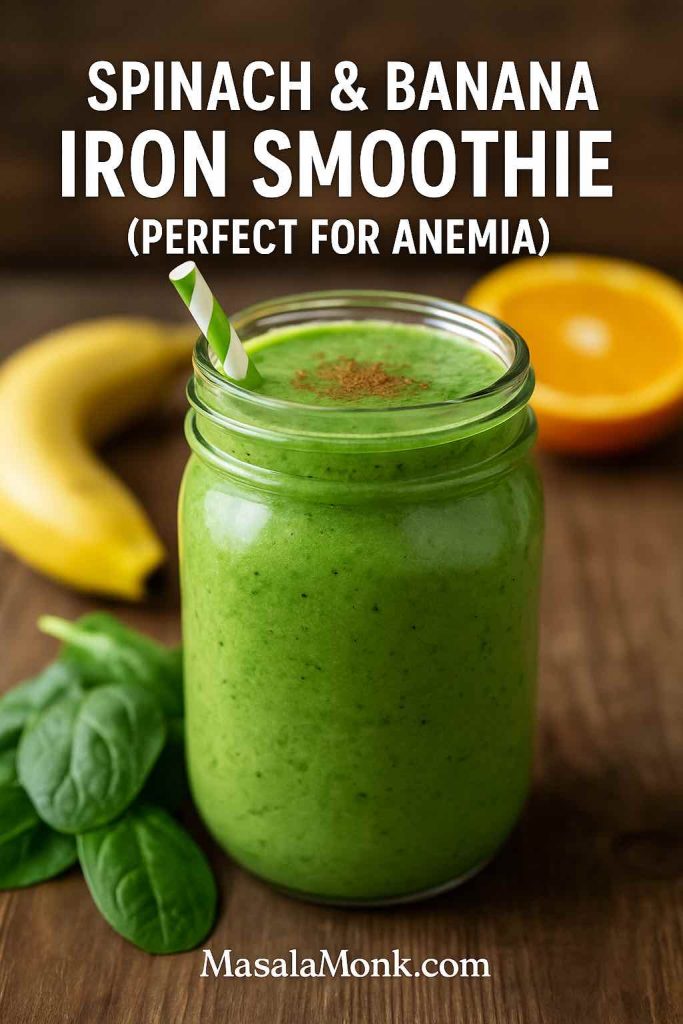
1. Spinach & Banana Iron Smoothie Recipe (Perfect for Anemia)
If you’ve ever been told to “eat more spinach” for iron, you’re not alone. However, eating endless bowls of greens isn’t always exciting. That’s why turning spinach into a creamy, sweet smoothie can be a game-changer. This recipe balances the earthy notes of spinach with banana’s natural sweetness and citrus for better absorption. Moreover, it’s quick enough to blend in the morning before work.
Feeling low on energy? Try this spinach & banana smoothie — rich in iron and vitamin C for anemia recovery. Creamy, refreshing, and perfect for mornings! Save this recipe to boost hemoglobin naturally.
Ingredients:
1 cup fresh spinach (iron + folate to support hemoglobin production)
1 ripe banana (creamy texture, plus potassium for energy)
½ cup orange juice (vitamin C, which helps your body absorb iron more effectively)
½ cup water or almond milk (for a smoother consistency)
Method:
Start by adding spinach and your liquid base to the blender — this prevents the leaves from sticking.
Next, toss in the banana and pour in the orange juice.
Blend until silky smooth.
Finally, pour over ice and enjoy immediately.
Why this works: Spinach delivers a strong dose of non-heme iron. However, without vitamin C, your body struggles to absorb it. That’s where orange juice comes in. As a result, this simple smoothie doesn’t just give you nutrients — it helps your body actually use them.
Pro Tips & Variations:
Add 1 tablespoon pumpkin seeds to increase protein and iron naturally.
Swap banana with pear or apple if you prefer a lighter flavor.
Freeze spinach in small portions — it makes the smoothie colder and doesn’t lose much nutrition.
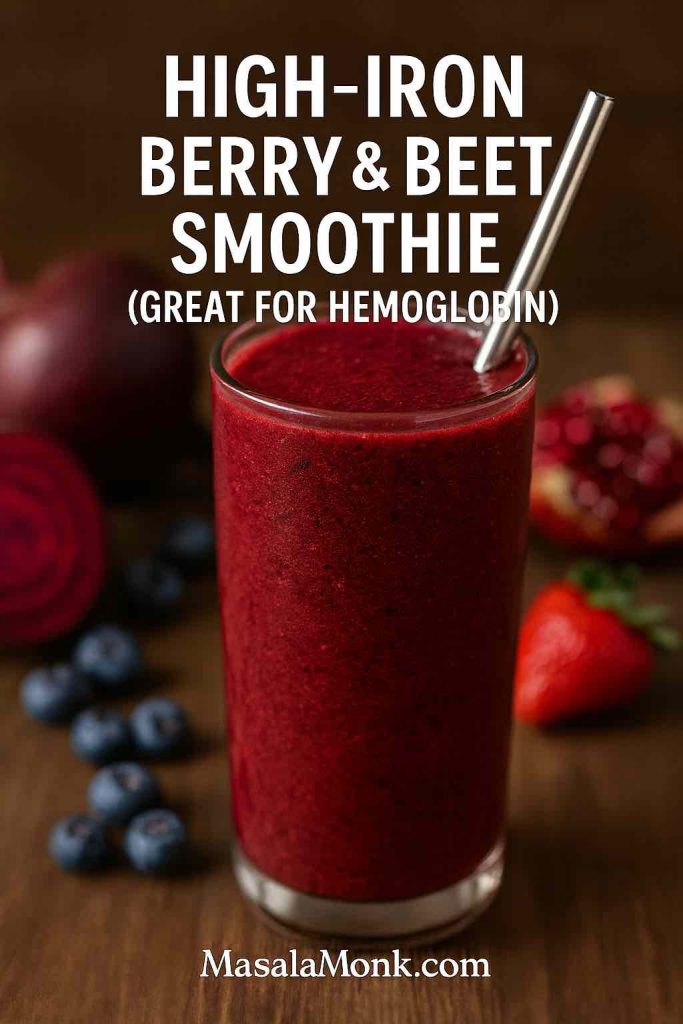
2. High-Iron Berry & Beet Smoothie (Great for Hemoglobin)
If you’re struggling with low iron levels or anemia, beets should be your best friend. They’re not only rich in folate but also help your body regenerate red blood cells. When combined with vitamin C–rich berries, you get a smoothie that’s not only delicious but also highly effective. Furthermore, the deep red color makes it feel indulgent, almost like dessert.
A vibrant red smoothie made with beets, berries, and pomegranate — packed with folate and vitamin C to boost hemoglobin. Perfect for anemia support and energy. Pin this beet smoothie recipe today!
Ingredients:
1 small beetroot, cooked and chopped
½ cup strawberries
½ cup blueberries
½ cup pomegranate seeds
1 cup water or coconut water
1 tsp chia seeds (extra iron + fiber)
Method:
Place chopped beetroot into your blender.
Add strawberries, blueberries, and pomegranate.
Pour in water or coconut water, then sprinkle in chia seeds.
Blend until smooth and creamy.
Why this works: Beets support red blood cell production, while berries and pomegranate add vitamin C to maximize iron absorption. As a result, you’re not just getting iron, but also ensuring it’s bioavailable.
Pro Tips:
Chill beets before blending for a refreshing drink.
Add a date for sweetness if needed.
This doubles up as a smoothie for anemia recovery — it’s both energizing and gentle on digestion.
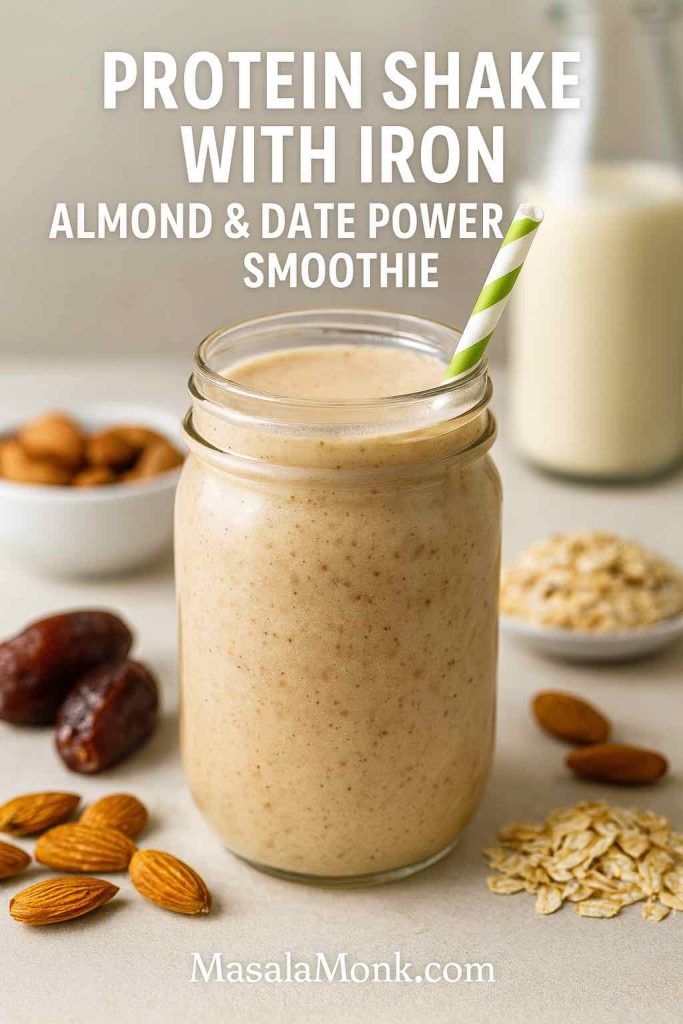
3. Protein Shake with Iron: Almond & Date Power Smoothie
If you’re looking for a protein shake with iron, this recipe is a winner. Unlike processed powders, it uses almonds, oats, and dates for natural protein and iron. Additionally, it’s filling enough to replace breakfast or post-workout snacks.
Skip powders — blend almonds, oats, and dates for a natural protein shake high in iron. Great for post-workout or breakfast. Save this protein + iron smoothie for healthy energy!
Ingredients:
10 soaked almonds (iron + plant protein)
2 Medjool dates (natural sweetness + iron)
2 tbsp oats
1 cup soy milk (protein + calcium)
½ tsp cinnamon (adds warmth and balances blood sugar)
Method:
Blend almonds with soy milk first to create a smooth base.
Add dates, oats, and cinnamon.
Blend until thick and creamy.
Why this works: Almonds, dates, and oats all bring iron to the table. Combined with soy milk, this shake has both iron and protein, making it perfect for those looking for a high iron protein shake without powders.
Pro Tips:
Soak almonds overnight for better digestion.
Add flax seeds for more omega-3s and iron.
If you’re not vegan, you can replace soy milk with cow’s milk, though plant-based versions have added benefits.
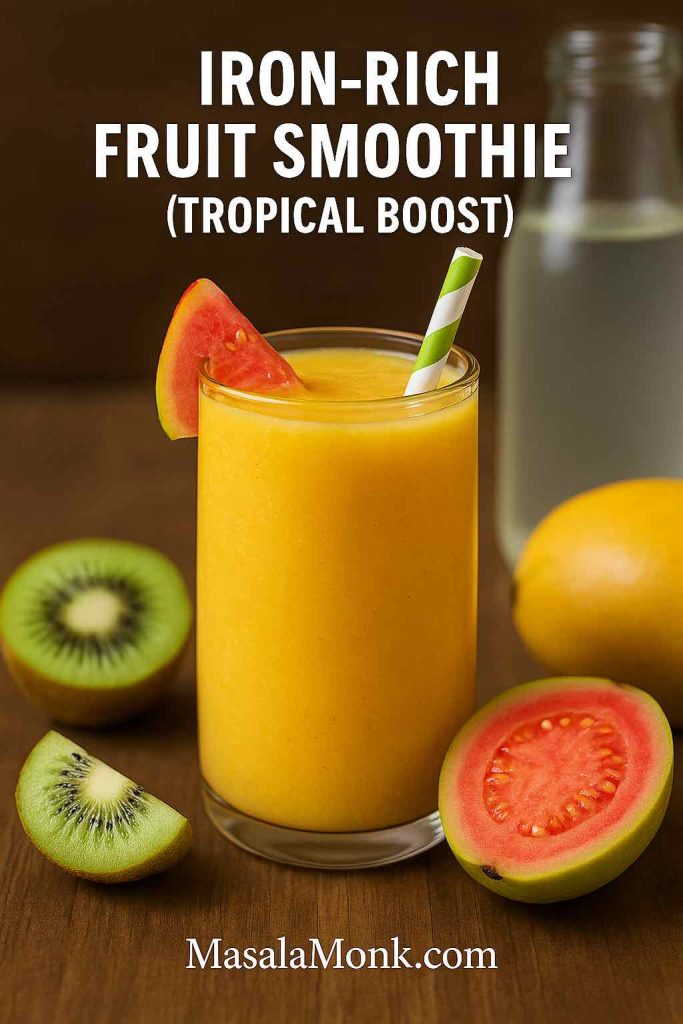
4. Iron-Rich Fruit Smoothie (Tropical Boost)
Sometimes, the best way to get iron is through fruits. Mangoes, guava, and kiwi are surprisingly good sources. Moreover, when combined with vitamin C, their iron becomes more bioavailable, making this a tasty iron-rich fruit smoothie.
Mango, guava, kiwi & orange juice combine in this refreshing fruit smoothie loaded with iron and vitamin C. Sweet, energizing, and perfect for anemia recovery. Save this tropical smoothie!
Ingredients:
1 ripe mango, chopped
1 guava, chopped
1 kiwi, peeled
½ cup orange juice
½ cup water or coconut water
Method:
Add mango, guava, and kiwi to the blender.
Pour in orange juice and water.
Blend until smooth and enjoy chilled.
Why this works: This smoothie covers multiple nutrient bases: iron, vitamin C, fiber, and antioxidants. It’s also lighter than spinach-based versions, so it works perfectly as a mid-day snack.
Pro Tips:
Blend with ice cubes for a slushie-style version.
Pair with nuts or seeds for added protein.
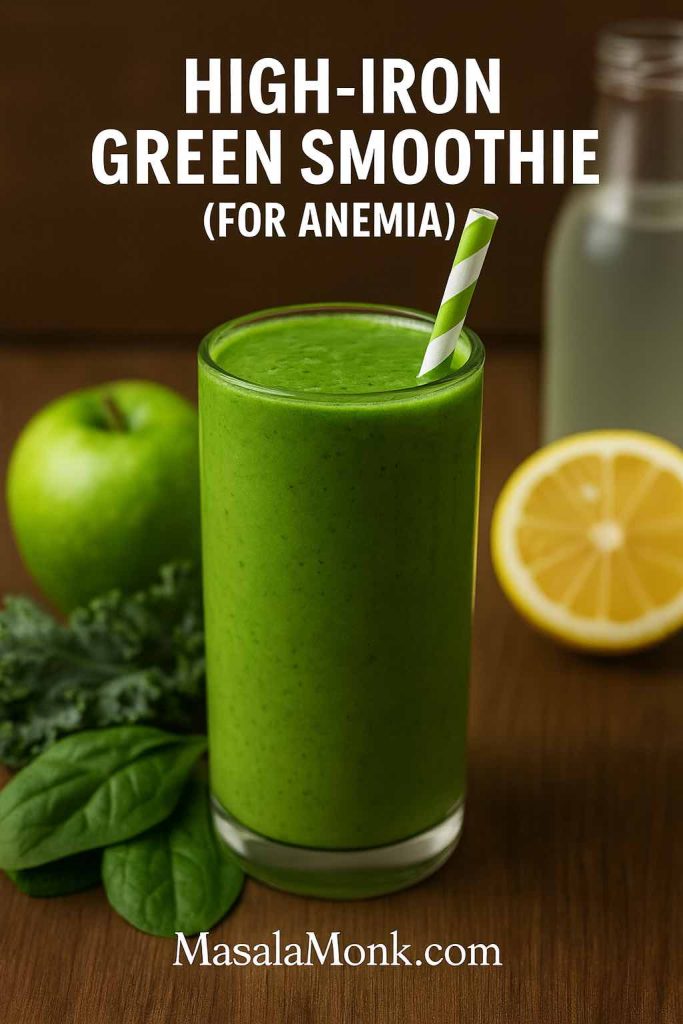
5. High-Iron Green Smoothie for Anemia
Green smoothies are trendy for a reason. They pack tons of nutrients, especially iron. This green iron smoothie combines spinach, kale, and parsley with apple and lemon for a refreshing anemia-fighting blend.
Spinach, kale, parsley, apple, and lemon create this high-iron smoothie that supports hemoglobin naturally. Refreshing, energizing, and perfect for daily wellness. Pin this green iron smoothie!
Ingredients:
1 cup spinach
½ cup kale
2 tbsp fresh parsley
1 green apple
Juice of ½ lemon
1 cup water
Method:
Start with greens and water in your blender.
Add apple slices and lemon juice.
Blend until smooth and vibrant green.
Why this works: Leafy greens are iron powerhouses, but they need vitamin C for proper absorption. Lemon provides that boost, while apple balances the earthy taste.
Pro Tips:
Add cucumber for extra hydration.
If you’re new to green smoothies, start with more apple and less kale until you adjust.
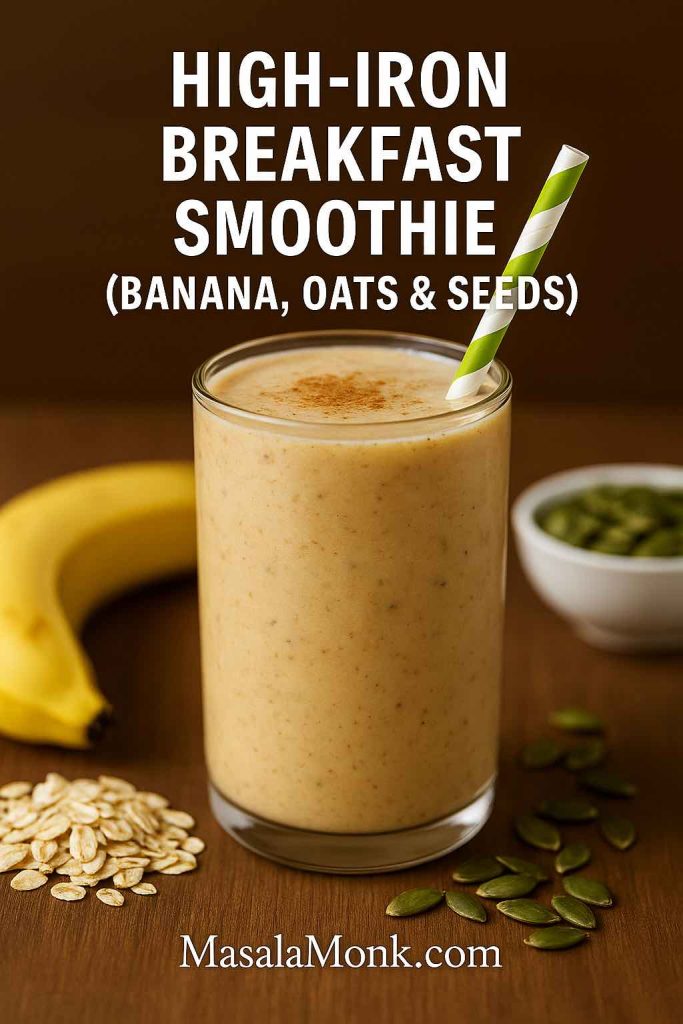
Mornings are hectic, but that doesn’t mean you need to skip iron. This iron-rich breakfast smoothie combines oats, pumpkin seeds, and banana for an energizing start to your day.
Start your day with banana, oats, and pumpkin seeds for a filling, iron-rich smoothie. Perfect quick breakfast that fuels your morning and fights anemia. Save this energizing recipe!
Ingredients:
½ banana
¼ cup oats
2 tbsp pumpkin seeds
1 tsp flax seeds
1 cup almond milk
A pinch of cinnamon
Method:
Blend oats and almond milk until smooth.
Add banana, pumpkin seeds, and flax seeds.
Sprinkle cinnamon and blend again.
Why this works: Pumpkin seeds are one of the richest plant-based iron sources. Combined with oats and banana, they create a smoothie that’s both filling and iron-dense.
Pro Tips:
Roast pumpkin seeds for a nuttier flavor.
Add dates if you want it sweeter.
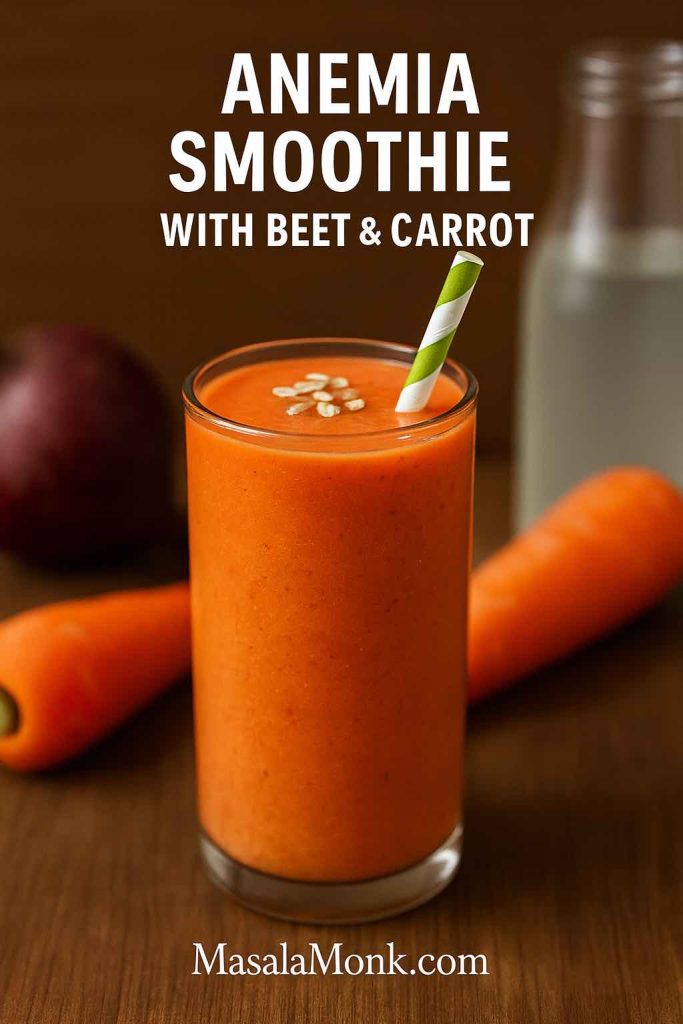
7. Anemia Smoothie with Beet & Carrot
If fatigue has been dragging you down, this anemia smoothie might be your fix. Beets and carrots help improve blood quality, while orange juice ensures better iron absorption.
Boost hemoglobin with this beet & carrot smoothie blended with orange juice and sunflower seeds. Delicious, energizing, and perfect for anemia support. Pin this natural blood-boosting recipe!
Ingredients:
1 small beet, cooked
1 carrot, peeled
½ cup orange juice
½ cup water
1 tsp sunflower seeds
Method:
Blend beet and carrot with orange juice.
Add water to adjust consistency.
Sprinkle sunflower seeds on top before drinking.
Why this works: Beet + carrot + vitamin C = a natural hemoglobin booster. On top of that, sunflower seeds add a crunchy iron kick.
Pro Tips:
You can juice beet and carrot first for a smoother texture.
Add ginger for extra warmth and digestion support.
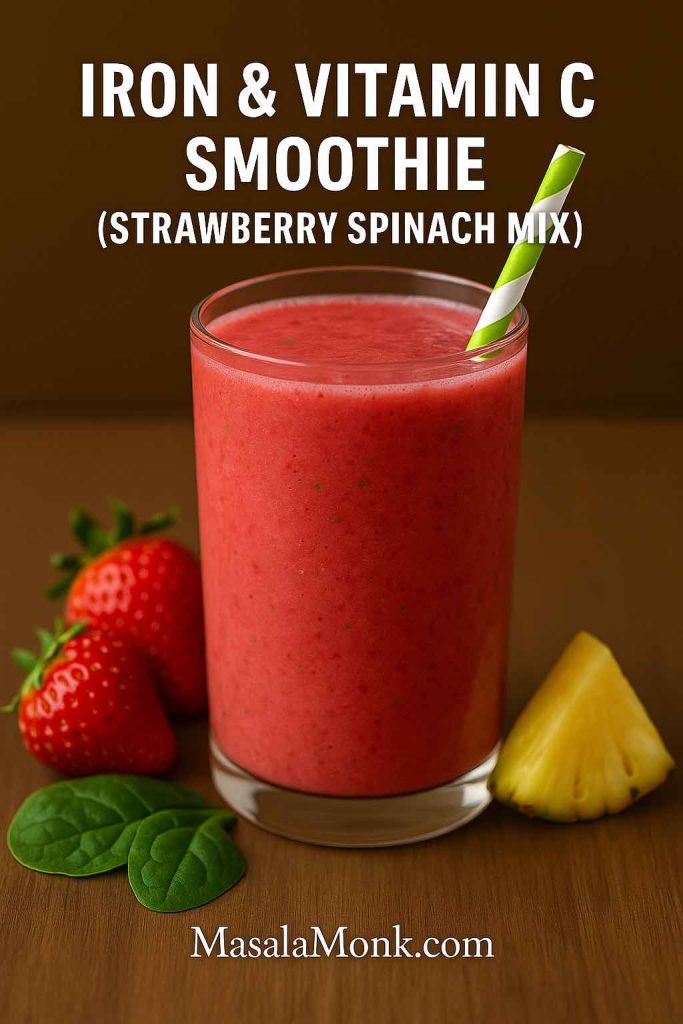
8. Iron & Vitamin C Smoothie (Strawberry Spinach Mix)
One of the smartest combinations for iron absorption is pairing spinach with strawberries. This iron and vitamin C smoothie is proof that nutrition can also taste like dessert.
Spinach + strawberries + pineapple = the ultimate iron & vitamin C combo! A refreshing pink smoothie that helps your body absorb iron better. Save this dessert-like iron smoothie!
Ingredients:
1 cup spinach
1 cup strawberries
½ cup pineapple chunks
1 cup coconut water
Method:
Add spinach and coconut water to the blender.
Toss in strawberries and pineapple.
Blend until smooth and vibrant pink.
Why this works: Strawberries and pineapple are packed with vitamin C, which boosts the iron in spinach. As a result, you get a smoothie high in iron and vitamin C that your body actually uses efficiently.
Pro Tips:
Freeze strawberries ahead for a thicker smoothie.
Sprinkle chia seeds for fiber and added iron.
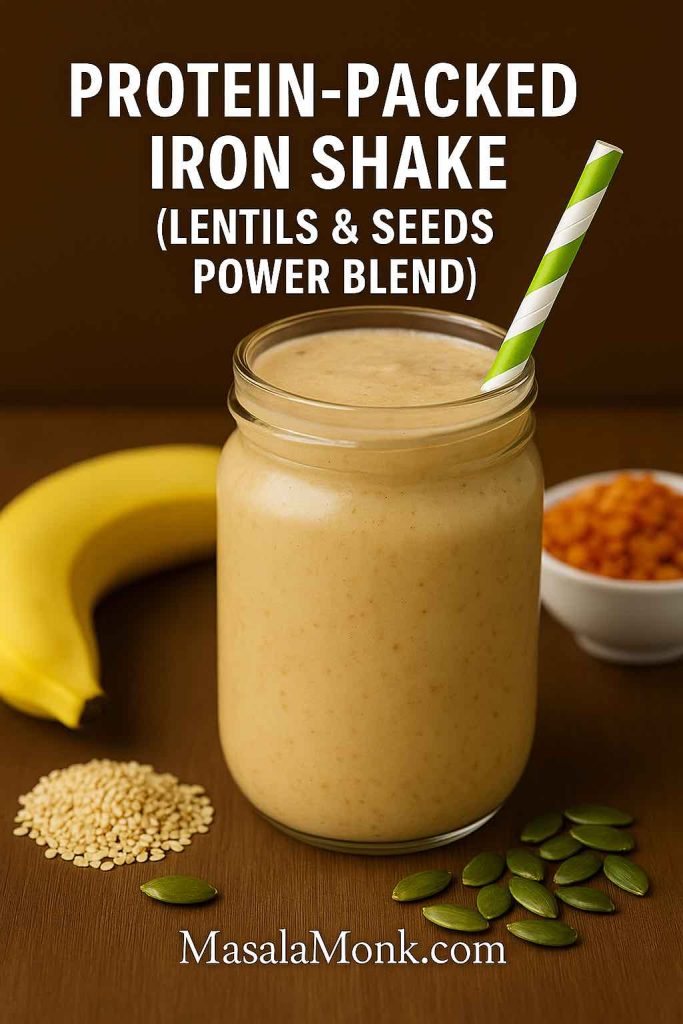
9. Protein-Packed Iron Shake (Lentils & Seeds Power Blend)
Yes, you read that right — lentils in a smoothie. Cooked red lentils are mild in taste but extremely high in protein and iron. When blended with fruits, they make an unexpectedly delicious iron protein shake.
Cooked red lentils, banana, and seeds blend into a protein-packed smoothie rich in iron. Creamy, nourishing, and surprisingly tasty. Pin this unique anemia-friendly shake today!
Ingredients:
½ cup cooked red lentils (cooled)
1 banana
1 tbsp pumpkin seeds
1 tbsp sesame seeds
1 cup almond milk
½ tsp vanilla extract
Method:
Blend cooked lentils with almond milk.
Add banana, seeds, and vanilla.
Blend until smooth and creamy.
Why this works: Lentils provide both iron and protein, while pumpkin and sesame seeds boost iron content further. Banana masks the taste of lentils, so you won’t even notice them.
Pro Tips:
Add cocoa powder for a chocolate twist.
Use dates instead of banana if you want less sugar.
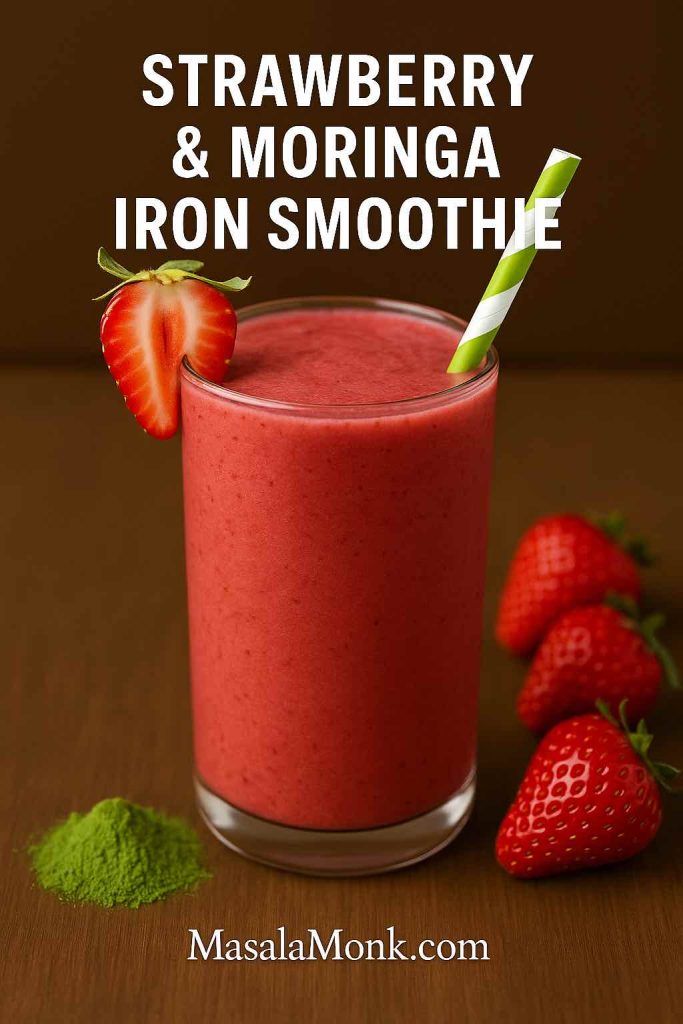
10. Strawberry & Moringa Iron Smoothie
Moringa leaves are an underrated superfood. They’re iron-rich, protein-packed, and full of antioxidants. Blending them with strawberries creates a tangy, energizing iron boosting smoothie.
Moringa leaves + strawberries make a tangy, iron-boosting smoothie full of antioxidants. A superfood blend for energy and hemoglobin support. Save this powerful moringa smoothie!
Ingredients:
1 tsp moringa powder (or fresh leaves if available)
1 cup strawberries
1 banana
1 cup water or coconut water
Method:
Blend moringa powder with water first.
Add strawberries and banana.
Blend until creamy and bright pink.
Why this works: Moringa is one of the highest plant-based iron sources, while strawberries add vitamin C to maximize absorption. This combination results in an High Iron Smoothie or Shakethat tastes far better than it sounds.
Pro Tips:
Don’t overdo moringa — it’s strong in flavor.
Add pineapple if you want more sweetness.
Which High Iron Smoothie or Shake Is Best for You?
Looking for a high iron green smoothie? Try #1 (Spinach & Citrus) or #8 (Kale & Apple).
Want an iron rich fruit smoothie? #3 (Strawberry & Guava) is perfect.
Need a protein shake with iron? Go for #2 (Oats & Seeds) or #4 (Banana & Sesame).
Searching for anemia smoothie recipes? #5 (Beetroot & Carrot) and #7 (Lentil & Mango) are your best friends.
Want an iron smoothie recipe that doubles up as breakfast? #9 (Figs & Almonds) is the answer.
Many people search for iron powder for smoothies or iron smoothie powders online. Truth is, most are just processed blends of greens and seeds. Instead of spending money, while making High Iron Smoothies & Shakes – use natural ingredients like pumpkin seeds, sesame, flax, or moringa. These whole foods act like a natural “iron powder” while giving you fiber and freshness.
High Iron Smoothies for Pregnancy (Side Note)
If you’re pregnant and exploring iron-rich smoothies for pregnancy, it’s always safest to rely on whole, natural foods rather than processed shortcuts. Ingredients like spinach, beets, dates, dried apricots, and guava not only provide iron but also come packed with fiber, vitamin C, and other nutrients that help your body absorb iron more effectively.
On the other hand, avoid depending on unregulated iron powders or supplements marketed online. These can sometimes be inconsistent in quality and may not be safe during pregnancy. Instead, focus on blending fresh fruits and vegetables, seeds, and nuts into your smoothies. This way, you’re nourishing both yourself and your baby with safe, natural, and wholesome ingredients.
For detailed pregnancy-friendly recipes, check our posts 👉
If you’ve been searching for high-iron smoothies for anemia, protein shakes with iron, or simply an easy smoothie recipe for low iron, this guide has given you 10 delicious and practical options you can start blending today. Each recipe is built from natural, whole ingredients that not only provide iron but also deliver fiber, vitamins, and antioxidants that your body craves.
The best part? You don’t have to rely only on processed powders or supplements. Instead, your own kitchen can become the ultimate wellness hub. By combining leafy greens, seeds, fruits, and natural plant proteins, you’re creating drinks that are not just tasty but also highly nourishing. With every sip, you’re supporting your blood health, boosting hemoglobin, and giving yourself steady, natural energy.
Moreover, these smoothies are versatile. For instance, you might prefer a refreshing green iron smoothie in the morning, a creamy iron protein shake after your workout, or even a vibrant fruit-based iron-rich smoothie as an afternoon pick-me-up. No matter your routine, there’s a recipe here that fits seamlessly into your lifestyle.
It’s also worth remembering that small, consistent changes make the biggest difference. Rather than looking for a miracle cure, think of these smoothies as daily habits that gently and steadily improve your iron levels. Over time, you’ll likely notice less fatigue, better focus, and a natural lift in your overall energy.
So the next time you feel tempted to walk down the supplement aisle, pause for a moment. Instead, grab your blender, toss in some spinach, berries, nuts, or seeds, and whip then into your favorite blend.
❓ FAQs on High-Iron Smoothies & Shakes
1. Can smoothies really help with iron deficiency anemia? Yes, absolutely. Smoothies made with iron-rich vegetables, fruits, seeds, and vitamin C ingredients can significantly improve iron absorption and hemoglobin levels. While they may not replace supplements in severe cases, they are an effective, natural daily support.
2. Which smoothie is best for anemia recovery? Beet-based smoothies (like beet + berries or beet + carrot blends) are excellent for anemia because they support red blood cell production and combine well with vitamin C–rich fruits for better iron absorption.
3. Can I replace iron supplements with smoothies? For mild iron deficiency, smoothies can often provide enough support, especially when consumed regularly. However, in moderate to severe anemia, it’s best to follow your doctor’s advice and use smoothies as a natural complement to supplements.
4. What fruits are highest in iron for smoothies? Guava, pomegranate, strawberries, and dried fruits (like apricots or dates) are excellent fruit options for boosting iron in smoothies.
5. Do I need to use iron powder for smoothies? Not at all. Whole foods like pumpkin seeds, flax seeds, moringa, spinach, and beets provide natural iron plus fiber, antioxidants, and freshness — making powders unnecessary for most people.
6. Can kids drink these iron-rich smoothies? Yes, but keep portions smaller and avoid strong ingredients like excess moringa powder. Kid-friendly options include spinach + banana, beet + strawberry, or pumpkin seed + mango smoothies.
7. What is the best protein shake with iron? Almond + date + oats blended with soy or almond milk makes a great natural protein shake with iron. Lentil-based smoothies are another excellent high-iron, high-protein option.
8. Can smoothies increase hemoglobin fast? With consistent intake of iron-rich smoothies combined with vitamin C, hemoglobin levels can start to improve within 4–6 weeks. For best results, drink them regularly and vary the ingredients.
9. Are green smoothies good for low iron? Yes, green smoothies with spinach, kale, or parsley are excellent for iron. Just make sure to pair them with vitamin C sources (like lemon or pineapple) to enhance absorption.
10. What’s the best time to drink an iron smoothie? Morning or mid-day is ideal. Avoid drinking them with tea or coffee, as tannins can block iron absorption. Pairing them with breakfast or as a mid-day snack works best.
📚 Reading & References
We don’t just share recipes — we back them with science. If you’d like to dive deeper into how iron and vitamin C work together to fight anemia, here are some credible sources:
Dietary Iron — StatPearls (2024) A comprehensive overview of iron’s roles in the body, from oxygen transport to energy metabolism, and how non-heme iron (plant-based) is absorbed. 👉 Read on NCBI
Interaction of Vitamin C and Iron (Lynch, 1980) Landmark research showing how vitamin C dramatically enhances non-heme iron absorption, even in the presence of inhibitors like calcium or tannins. 👉 Read on PubMed
Effectiveness of Dietary Interventions to Treat Iron-Deficiency Anemia in Women (Skolmowska et al., 2022) A systematic review confirming that combining iron-rich foods with vitamin C leads to improved hemoglobin and anemia outcomes. 👉 Read on PMC
Iron & Vitamin C Absorption — Cleveland Clinic (2023) Practical guidance on why pairing foods like spinach with citrus or strawberries helps your body actually use the iron you consume. 👉 Read on Cleveland Clinic
7 Drinks High in Iron — Healthline (2021) Nutritionists’ recommendations for iron-rich beverages, many of which use the same fruit and veggie combinations featured in our smoothie recipes. 👉 Read on Healthline
3 Vitamins and Minerals You Should Be Pairing Up — EatingWell (2025) Explains how vitamin C increases iron absorption (from 0.8% to 7.1% in one study), reinforcing the importance of smoothie pairings. 👉 Read on EatingWell
Vitamin C Improves Iron Absorption — Health.com (2023) A quick explainer on the synergy of vitamin C and non-heme iron for better absorption and practical diet tips. 👉 Read on Health.com
7 Best Iron-Rich Foods — Times of India (2025) Highlights top vegetarian iron sources like spinach, lentils, and pumpkin seeds — the very ingredients featured in our smoothies. 👉 Read on TOI
The Indian omega-3 supplement market is overflowing with options, and most brands promise big numbers without delivering real results. Tata 1mg Fish Oil Capsules stand out in this crowded space. Backed by the trusted Tata 1mg pharmacy network, these Triple Strength Omega 3 capsules (check on Amazon) provide a potent dose of 560 mg EPA and 400 mg DHA in just one softgel. Thanks to the enteric coating, they are designed for smooth digestion and no fishy burps.
Moreover, Tata Fish Oil Capsules combine clinical-strength omega-3 levels with the credibility of a pharmacy-backed brand. This makes them an attractive choice for anyone focused on heart, joint, brain, or recovery benefits.
So, are Tata 1mg Triple Strength Omega 3 Fish OilFish Oil Capsules really the best option among India’s omega-3 supplements? In this review, we’ll explore their ingredients, absorption science, pros and cons, real user feedback, and comparisons with other top fish oils in India.
When compared with many other fish oil supplements in India, Tata 1mg Triple Strength Omega 3 Capsules offers several unique advantages:
High-dose EPA and DHA in a single capsule Unlike standard fish oil softgels where you may need two or three pills, here you get 560 mg EPA + 400 mg DHA in just one serving. Therefore, it is highly convenient for anyone aiming for clinical-strength anti-inflammatory or joint support.
Superior triglyceride (TG) form Moreover, Tata 1mg uses the TG form of omega-3, which is easier to absorb than the cheaper ethyl ester (EE) form. This is especially beneficial if your goal is long-term heart, brain, and cognitive health.
Enteric-coated softgels for comfort Many high-strength fish oils cause reflux or “fish burps.” In contrast, the enteric coating of these capsules minimizes aftertaste, making it far more user-friendly.
Pharmacy-backed credibility Another major advantage is Tata 1mg’s pharmacy reputation. While generic fish oil brands often raise concerns about counterfeits or poor storage, Tata 1mg ensures quality control and reliable sourcing.
Strong value for money Finally, despite being premium, the cost typically ranges between ₹11–₹16 per capsule. Per mg of EPA/DHA, it often works out cheaper than imported omega-3s marketed as “clinical grade.”
Real-World User Experience: Pros, Cons & Unique Feedback
⭐ What Users Love about Fish Oil Capsules from Tata 1mg
“No fishy burps—really works!” Enteric coating gets frequent praise. “No aftertaste, even if I take it without breakfast.”
“Trusted brand—prefer it over unknown supplements.” Users who buy allopathy or prescription items say they trust 1mg and Tata more than new fitness brands.
“Noticeable difference in joint pain and energy.” Users with arthritis or heavy gym routines cite less morning stiffness, quicker recovery, and improved skin glow within weeks.
“Easy once-a-day solution.” Many users switched from lower-strength fish oils that needed 2–3 capsules for the same EPA/DHA.
❗ What Some Dislike about Tata Fish Oil Capsules
Although Tata 1mg Triple Strength Omega 3 Fish Oil Capsules are highly effective, a few drawbacks have been noted by real users:
Capsule firmness The enteric coating, while excellent for reducing fishy burps, also makes the capsule slightly harder than standard softgels. As a result, some users find it tough to swallow unless taken with plenty of water.
Occasional freshness issues In some cases—especially during hot Indian summers—customers have reported a mild rancid smell or capsule hardening. This is likely due to heat exposure or old stock. Therefore, it is always advisable to check packaging dates and store the supplement properly.
Not suitable for vegetarians or flavor-seekers Since these capsules use fish oil and gelatin, they are not vegetarian or vegan-friendly. Furthermore, unlike brands such as Neuherbs or MuscleBlaze Gold, Tata Fish Oil does not include lemon or vanilla flavoring. Instead, it sticks to a classic, pharma-grade formula.
To get the best results from Tata 1mg Triple Strength Omega 3 (560 mg EPA + 400 mg DHA) – find on amazon, follow these simple steps:
Take one capsule daily with a fat-containing meal (such as milk, nuts, ghee, or paneer). This helps improve absorption of omega-3 fatty acids.
Swallow with plenty of water and do not chew or crush the capsule. Because of its enteric coating, it feels slightly firmer than regular softgels.
Store in a cool, dry place, away from direct sunlight or excessive heat. During summer months, refrigeration can help maintain freshness.
Stay consistent, since the benefits of omega-3 build gradually. Most people notice improvements in joint comfort, recovery, or skin health within 4–6 weeks.
Who Should Choose Tata 1mg Fish Oil Capsules?
If you are looking for a reliable and high-potency omega-3 supplement, Tata 1mg Triple Strength Fish Oil Capsules are a smart choice.
Adults aiming for specific health goals In particular, these capsules are suitable for people focusing on heart health, joint comfort, muscle recovery, or even skin wellness. Each softgel delivers a clinical-strength dose of 560 mg EPA and 400 mg DHA in just one pill, which means you don’t need multiple capsules to meet your daily needs.
Health-conscious individuals who value trust Moreover, the supplement comes from a pharmacy-backed brand, so you get the reassurance of transparent labeling and quality standards—something not all fish oil brands in India provide.
Those sensitive to aftertaste Finally, if you’ve struggled with fishy burps or reflux from other omega-3 brands, the enteric coating in Tata 1mg capsules provides noticeable comfort and taste control.
When to look elsewhere:
If you prefer lemon/vanilla flavor or a softer capsule (try Neuherbs or MB Gold).
If you need a vegetarian or vegan product (this is fish-based with gelatin).
If you struggle with swallowing harder capsules.
Expert Tip: Why Triglyceride (TG) Form Matters
Most cheap fish oils in India use ethyl ester (EE) form—harder to absorb, requiring more dietary fat for effect. Tata 1mg uses natural TG-form, which research shows is absorbed up to 50% better in the body—making every mg of EPA/DHA go further.
Final Verdict: Are Tata 1mg Fish Oil Capsules Worth It?
If you are looking for an honest, pharmacy-grade omega-3 supplement, then Tata 1mg Triple Strength Omega 3 Fish Oil is one of the most trustworthy choices in India. In fact, it delivers high EPA and DHA in just one enteric-coated capsule, which makes it convenient and reliable.
Moreover, it works well for everyday heart, brain, and joint support, especially if you have struggled with unpleasant “fishy burps” from other brands. Because of the enteric coating, most users find it easier on the stomach and free from aftertaste.
Of course, it is not the cheapest per capsule; however, when you consider the cost per mg of EPA+DHA, it offers strong value for a premium and well-absorbed formula.
Finally, for best results, always shop from trusted sellers, check the expiry date, and be careful during peak summer since heat can affect capsule freshness.
This review is for educational purposes. Consult your physician before starting any new supplement, especially if you have a medical condition or are on medication.
FAQs for Tata 1mg Triple Strength Omega 3 Fish Oil Capsules
1. What is the EPA and DHA content in Tata 1mg Triple Strength Omega 3?
Each capsule provides 560 mg EPA and 400 mg DHA, delivering a clinical-strength dose in just one pill. This high potency sets it apart from standard omega-3 supplements in India.
2. Is this Tata Omega 3 fish oil Capsule in triglyceride (TG) or ethyl ester (EE) form?
Importantly, Tata uses the triglyceride (TG) form, which is absorbed better than the cheaper ethyl ester (EE) form. As a result, your body makes better use of every milligram of EPA and DHA.
3. What is the recommended dosage for Tata Fish Oil Triple Strength?
The usual dosage is 1 capsule daily, ideally with a meal containing fat such as milk, ghee, paneer, or nuts. Taking it this way maximizes absorption of omega-3s.
4. Does the enteric coating prevent fishy burps?
Yes. Thanks to its enteric-coated softgel, this omega-3 supplement dissolves in the intestine, not the stomach. Therefore, most users report no burps or aftertaste when using Tata 1mg Triple Strength Fish Oil.
5. Is Tata 1mg Omega 3 vegetarian or vegan?
No. These softgels are derived from deep-sea fish oil and use gelatin. Vegetarians and vegans should instead consider algal oil DHA supplements.
6. Does this Tata Omega-3 contain preservatives or artificial flavors?
No artificial colors or flavors are added. It is purified using molecular distillation. Nevertheless, you should always check the label for the latest formulation updates.
7. How should Tata 1mg Fish Oil be stored?
Keep the capsules in a cool, dry place, away from sunlight. During hot Indian summers, refrigeration may help maintain freshness and prevent capsule hardening.
8. When will I start noticing results from Tata Omega 3?
Benefits such as improved joint flexibility, faster muscle recovery, or better skin glow are usually seen in 3–6 weeks. On the other hand, cardiovascular and cognitive benefits build gradually over long-term use.
9. Can seniors or children use Tata Fish Oil (Triple Strength)?
This supplement is formulated for adults. Seniors or children should only take it after consulting a healthcare professional, especially if they are on regular medication.
10. Can Tata 1mg Triple Strength Omega 3 be taken with other supplements?
Yes, it usually pairs well with multivitamins, protein, or vitamin D. However, if you are on blood thinners or have a medical condition, consult your doctor before combining it with other supplements.