
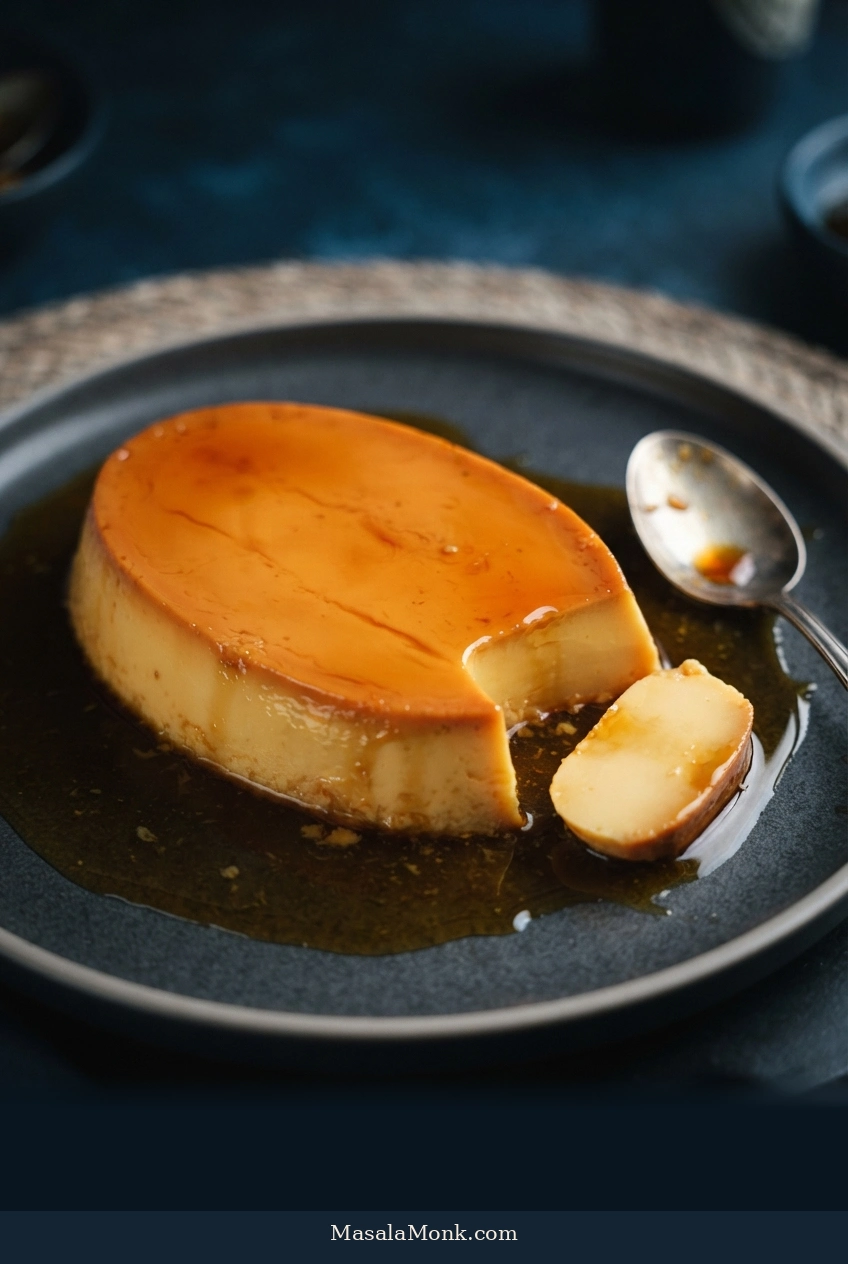
Leche flan is a Filipino caramel custard made with egg yolks, sweetened condensed milk, and evaporated milk. It is often prepared a day ahead for birthdays, fiestas, and holiday meals, then chilled in a llanera, the shallow oval metal mold traditionally used for it. Turn it out and amber caramel runs over golden custard that holds a slice but gives easily to a spoon.
This leche flan recipe uses ten yolks for a rich, tender custard. Make the caramel and custard once, then choose steaming or baking in a water bath. You’ll also find practical help with molds, doneness, and common problems.
Leche Flan Recipe: Ingredients and Instructions
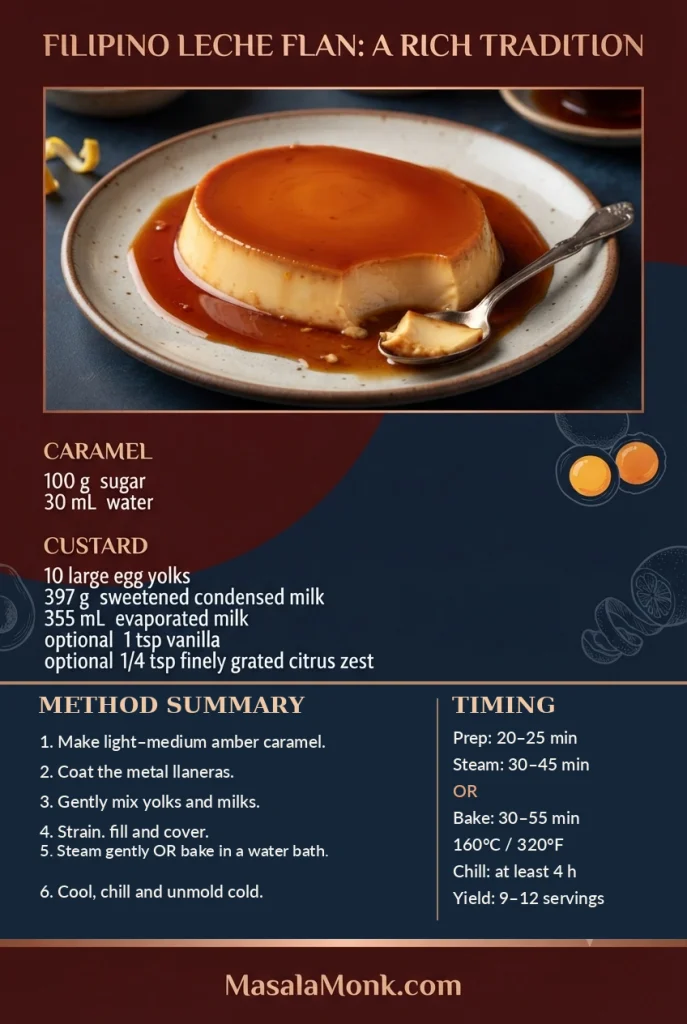
- Prep: about 20–25 minutes, including caramel and custard mixing
- Steam: about 30–45 minutes once the steamer is ready; check from 25–30 minutes
- Or bake: about 30–55 minutes at 160°C / 320°F, not counting preheating; check from 25–30 minutes
- Chill: at least 4 hours, preferably overnight; refrigerate promptly after cooking
- Yield: approximately 800–900 mL of custard, usually enough for three shallow llaneras (a fourth may be needed)
- Serves: 9 modest portions or up to 12 small slices
Plan ahead: Allow roughly 5–6 hours before serving, potentially longer with deeper molds or oven preheating. Most of that time is hands-off chilling. Making it the day before is often easiest.
Equipment
- Three shallow metal llaneras (or other suitable heat-safe molds), plus aluminum foil
- A heavy-bottomed saucepan, bowl, fork or spatula, fine-mesh sieve, measuring jug, and kitchen scale
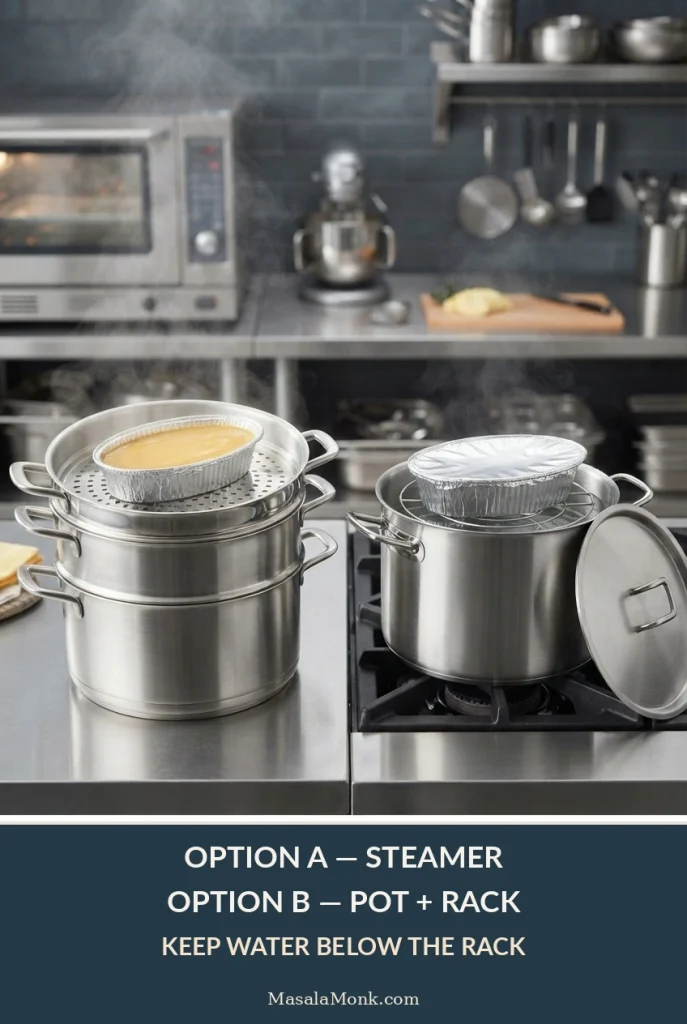
- For steaming: a covered steamer with a rack, or a large covered pot with a stable heat-safe trivet that keeps the molds above the water
- For baking: a conventional oven, oven-safe molds, and a deep roasting pan for the water bath
- Heatproof gloves, a thin knife, and a serving plate with a rim
- A thin-probe food thermometer to verify the center temperature; appearance alone cannot confirm a precise safe temperature
Before starting: Not sure what your molds hold? Fill one with water to the level you plan to fill with custard, then measure that water in a jug. Check that you have enough molds before heating the sugar. The mold guide gives suggested sizes.
If baking: Start preheating the oven to 160°C / 320°F before mixing the custard, so it is ready when the molds are filled. A nearby 325°F dial setting is reasonable if 320°F is unavailable; check the custard early.
Hot caramel and molds: The caramel-coating method below is written for metal llaneras or cookware specifically suitable for molten sugar. Oven-safe glass or ceramic is not automatically resistant to sudden contact with very hot caramel; check the manufacturer’s guidance. Never place glass or ceramic directly over a flame.
Ingredients
For the Caramel
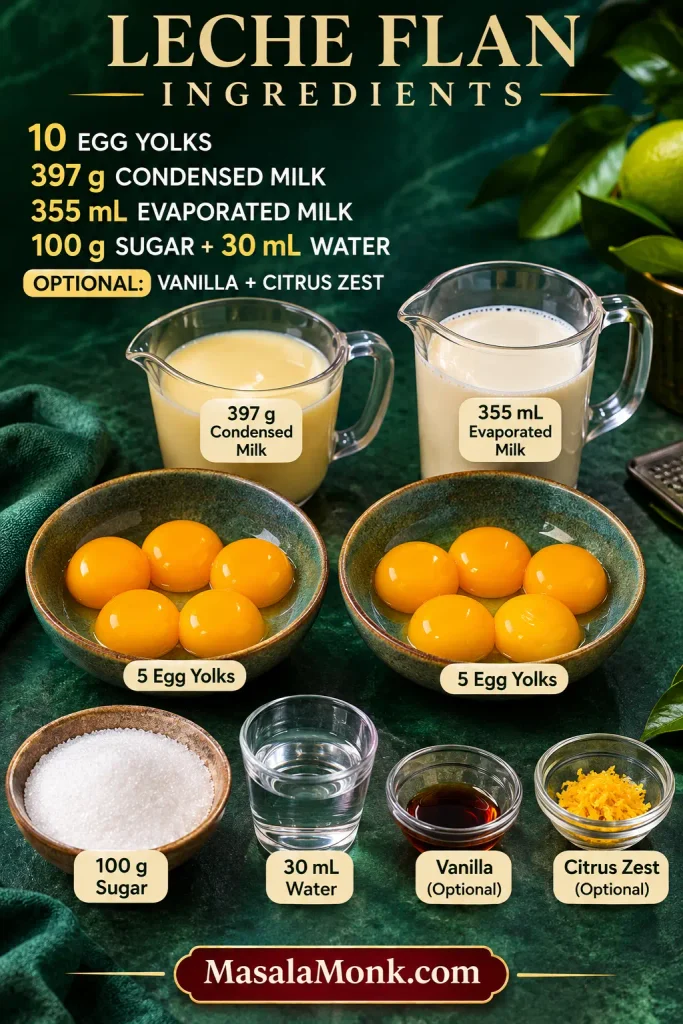
- 100 g (½ US cup) white granulated sugar
- 30 mL (2 US tablespoons) water
For the Custard
- 10 large egg yolks (approximately 170–190 g after separation, depending on egg size)
- 397 g (14 oz by weight) sweetened condensed milk
- 355 mL (12 US fluid ounces) evaporated milk
- 1 teaspoon (5 mL) vanilla extract, optional
- ¼ teaspoon finely grated calamansi, dayap, or lime zest, optional
Check the cans: The 14 oz on condensed milk is a weight, while 12 fl oz of evaporated milk is a volume. Use 397 g and 355 mL if your packages are labeled differently. A 390 g condensed-milk can is close enough; adding another can would change the custard balance. A little citrus zest adds fragrance without extra juice or bitter white pith.
Shared Preparation: Make the Caramel and Custard
These four steps come before either cooking method. Set three clean, dry llaneras on a heat-safe surface by the stove before you begin; hot caramel needs to be poured while it is fluid.
Make the Caramel and Coat the Molds
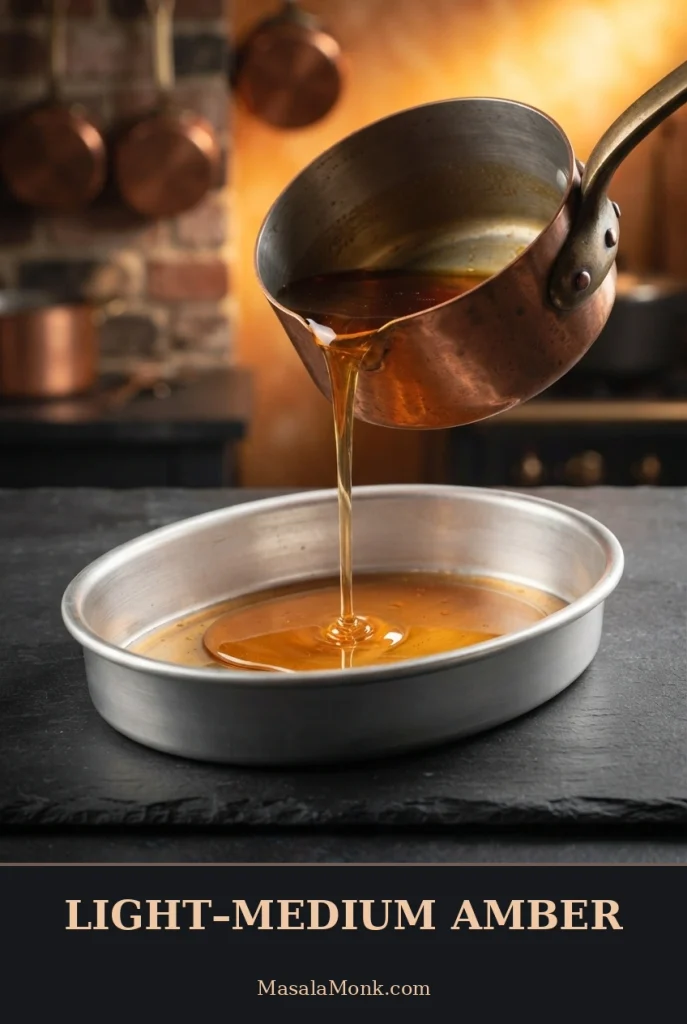
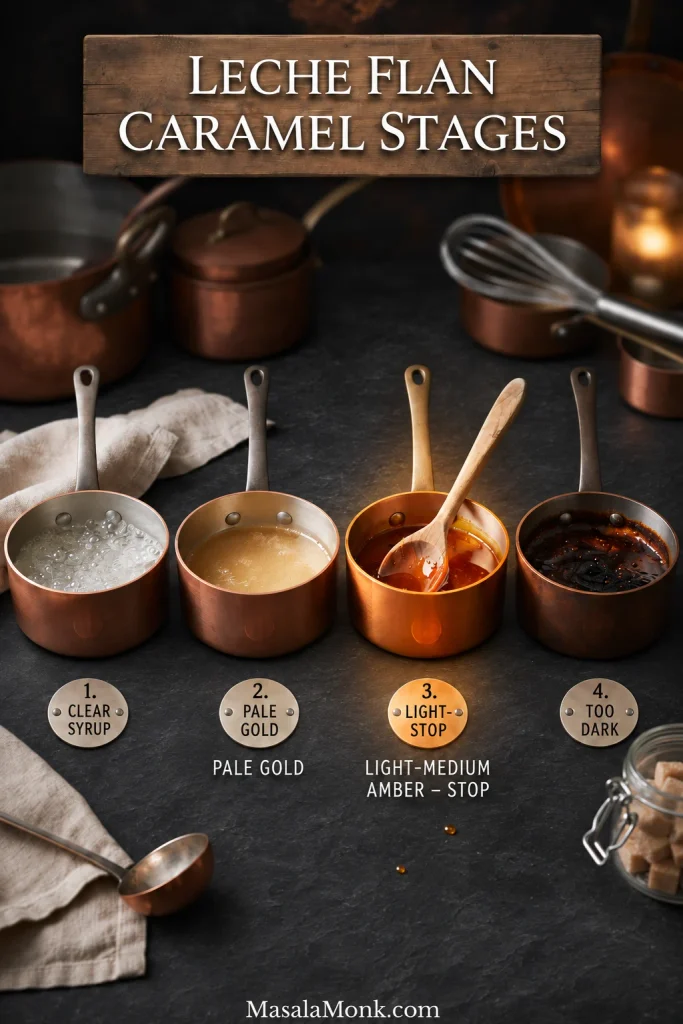
- Make the caramel. Put the sugar and water in a heavy-bottomed saucepan over medium heat. Stir gently until the sugar dissolves. Once the syrup begins bubbling, stop stirring. If one side colors faster, swirl the pan gently. Remove the caramel at light-to-medium amber, before it smells scorched; it will darken slightly off the heat.
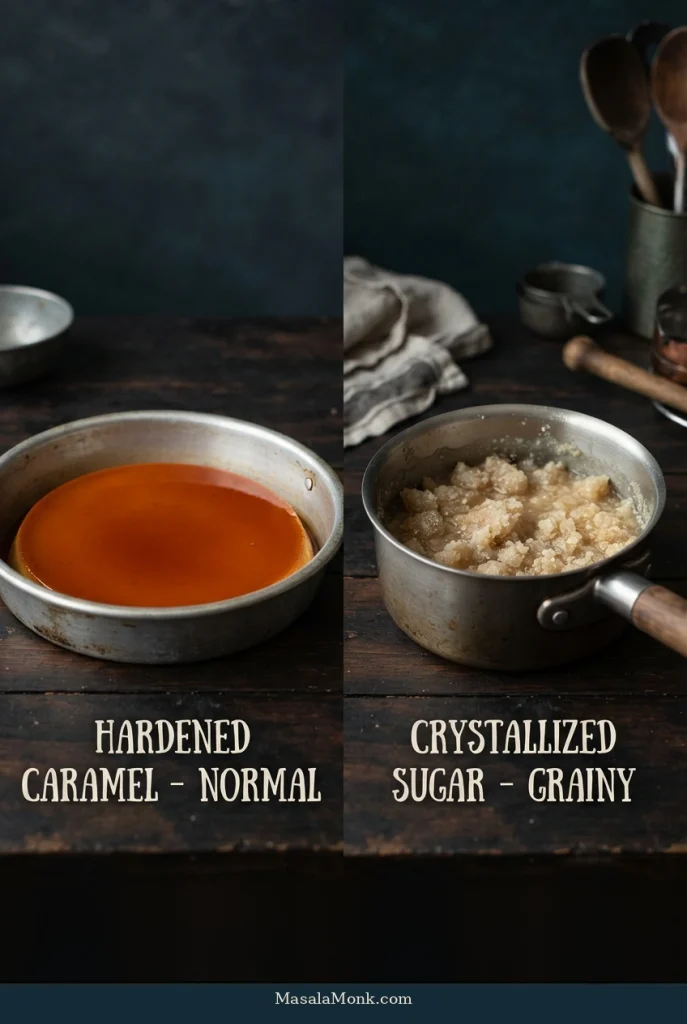
- Coat the molds. Carefully divide the fluid caramel among the prepared metal llaneras, tilting each to coat the bottom. Protect your hands—molten sugar causes serious burns. The caramel will harden as it cools, which is normal.
Mix, Strain, and Cover the Custard
- Mix the custard. Break up the ten yolks gently in a bowl with a fork or spatula. Stir in the condensed milk, then add the evaporated milk gradually. Mix in the optional vanilla and zest until combined. Avoid vigorous whisking, which traps air in the custard.
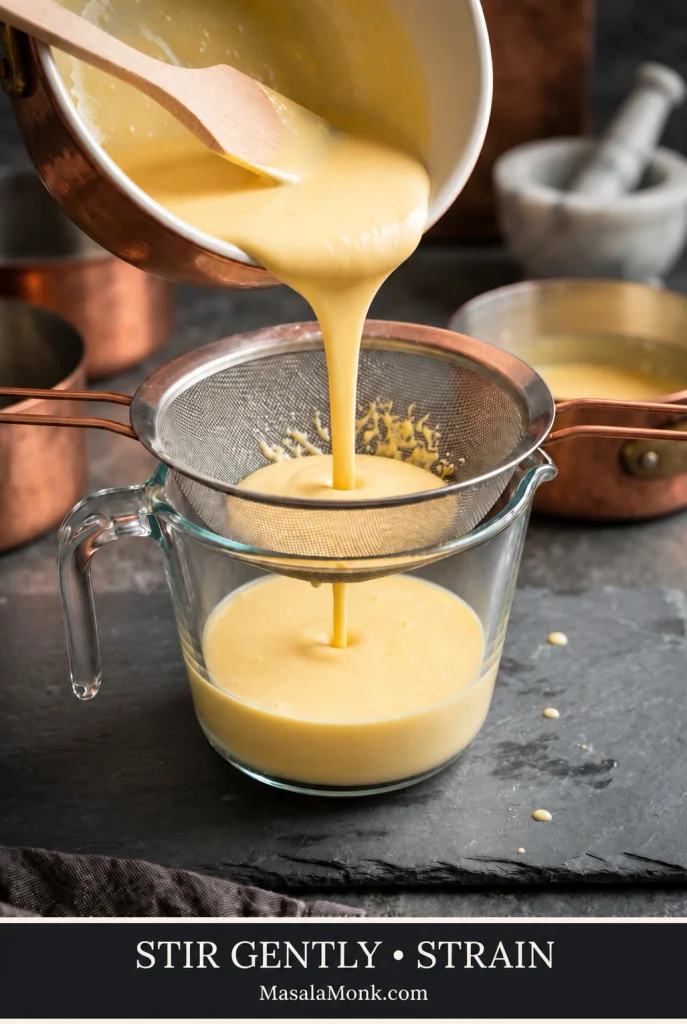
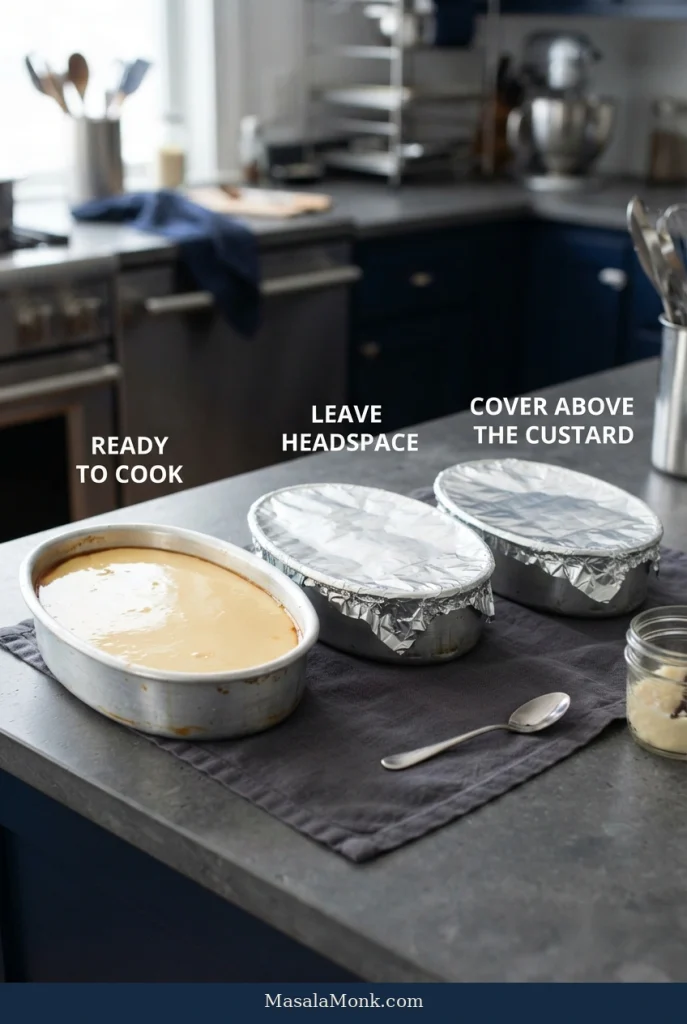
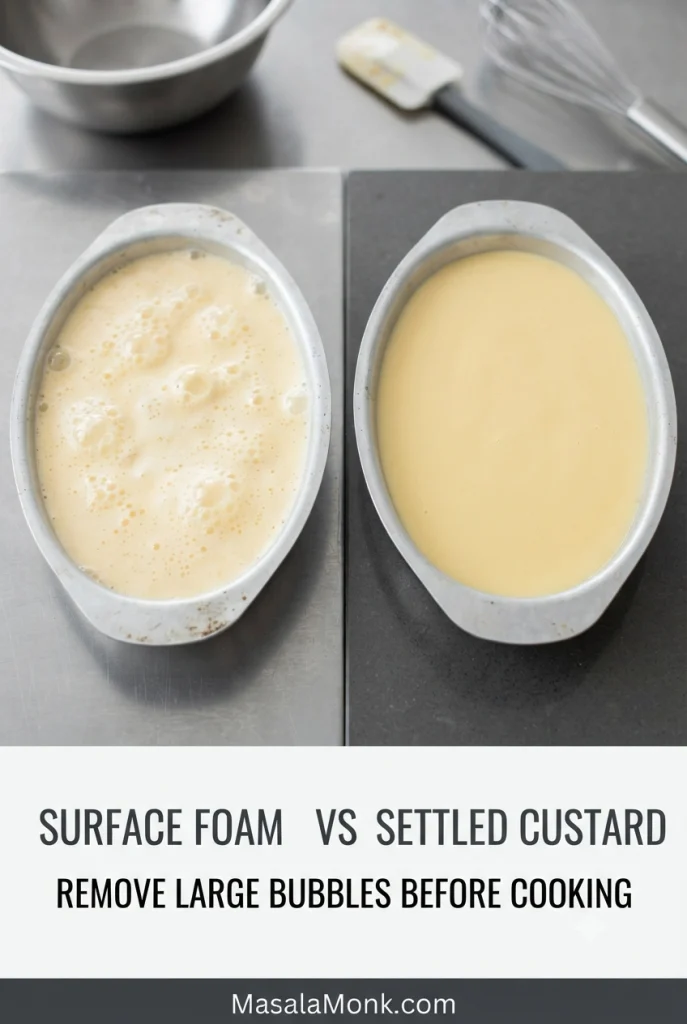
- Strain, fill, and cover. Pour the custard through a fine-mesh sieve into a jug to remove egg strands. Let any foam settle and skim it off. Then divide the mixture among the caramel-lined molds, leaving headspace. If large bubbles remain, tap each filled mold very lightly on a protected surface. Cover with foil, keeping the foil above the custard.
Before cooking: Crimp the foil securely around each llanera’s outer rim, leaving it clear of the custard surface. A loose cover can shift when the mold is moved into the steamer or water bath.
How to Steam Leche Flan
For shallow, foil-covered llaneras, steaming generally takes 30–45 minutes over a quiet simmer. Start checking at 25–30 minutes; the clock is a guide, not a substitute for checking the center.
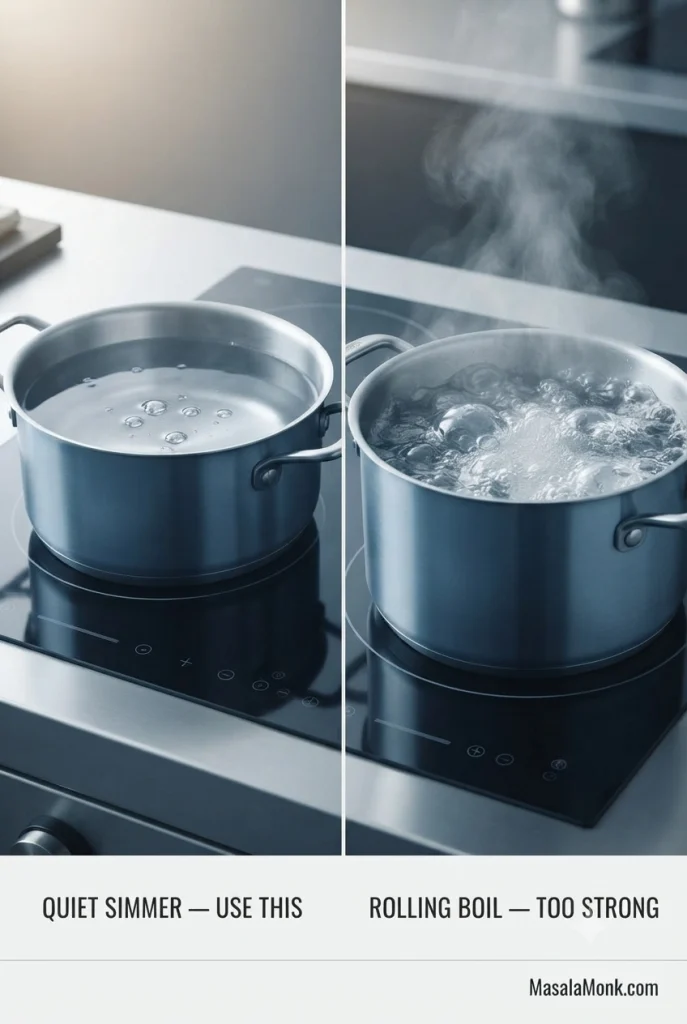
- Set up the steamer. Bring water to a boil beneath a raised rack, then lower it to a gentle simmer. Set the covered molds on the rack in one layer, above the water, and close the lid. Add hot water carefully if the steamer runs low. Keep uncooked custard refrigerated while waiting for another batch.
- Steam and check. From 25–30 minutes, lift the lid away from your face. Carefully peel back the hot foil so any droplets drain away from the custard, then check a mold. The edges should be set and the center should jiggle together, not slosh. Check the center with a thin thermometer probe, avoiding the metal. 71°C / 160°F is the egg-dish safety minimum; 77–79°C / 170–175°F is a conventional flan finishing guide. If it is below the minimum or still liquid, steam gently for another five minutes and recheck. Remove when safely cooked and softly set.
Steaming? Once the flan is set, go directly to cooling, chilling, and serving. The oven method below is an alternative, not an extra cooking step.
How to Bake Leche Flan in the Oven
Prefer baking? Use the filled, foil-covered molds from the shared preparation. Set them in a water bath; shallow molds often take 30–55 minutes, although deeper dishes take longer.
- Preheat. Use a conventional oven at 160°C / 320°F, with a rack in the middle. If you started preheating before mixing, it should be ready now. For a convection oven, follow the manufacturer’s temperature adjustment.
- Arrange the molds. Set the filled, foil-covered oven-safe molds in a deep roasting pan, leaving space between them.
- Add the bath. Place the roasting pan on the oven rack, then carefully pour hot water into the outer pan until it reaches roughly halfway up the molds. Do not splash water into the custard.
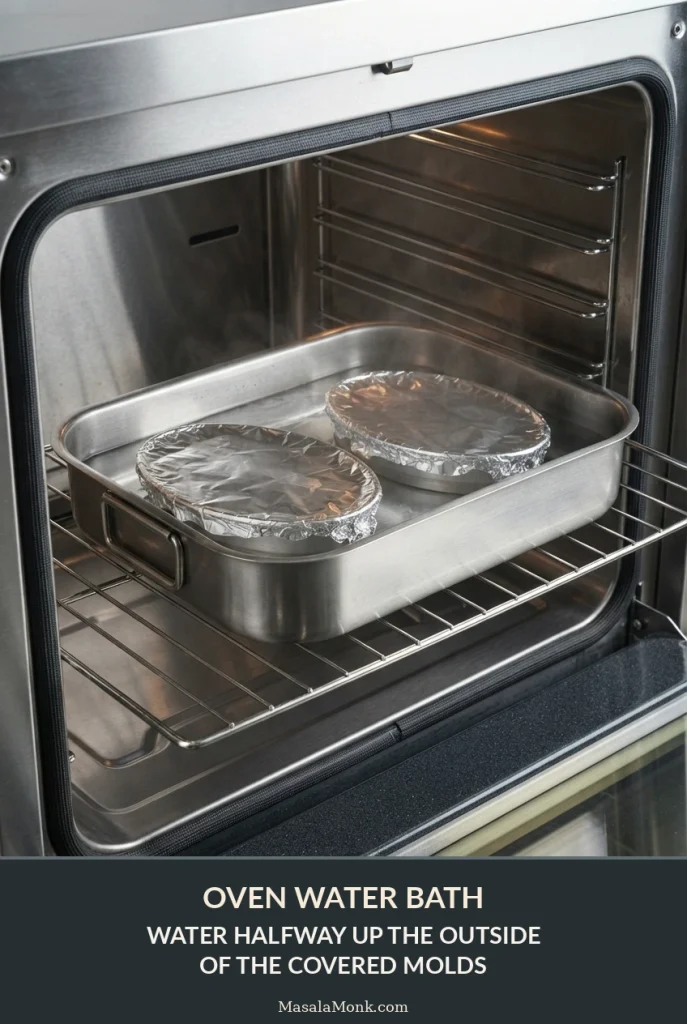
- Bake and check. Begin checking after 25–30 minutes. Look for set edges and a soft, unified jiggle in the center. Check with a thin thermometer probe: 71°C / 160°F is the egg-dish safety minimum, and roughly 77–79°C / 170–175°F is a conventional flan finishing reference. If the center is below the minimum or still liquid, bake for another five minutes and recheck. Remove each mold when safely cooked and softly set.
Hot-water safety: Leave the roasting pan on the oven rack while removing the molds. Allow the remaining water to cool before moving or emptying the pan.
Cool, Chill, Unmold, and Serve
- Cool and refrigerate promptly. Transfer the molds to a rack. Let the strongest heat subside until the molds are safe to handle. Cover and refrigerate promptly at 4°C / 40°F or colder; chill for at least four hours, preferably overnight.
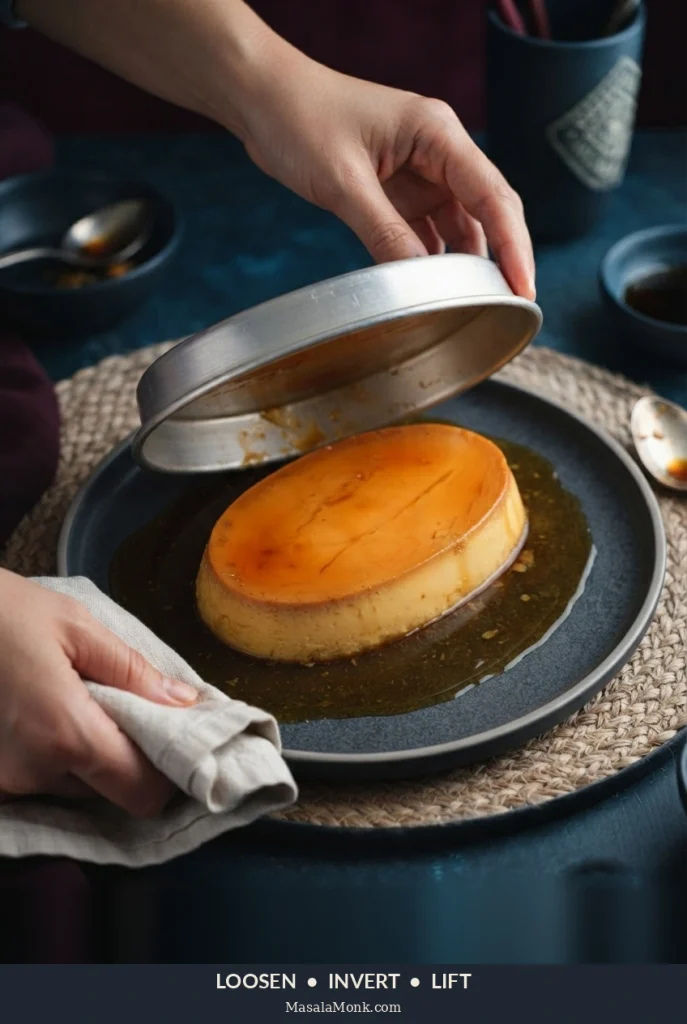
- Unmold cold. Loosen the inner edge with a thin knife. Put a rimmed serving plate over the llanera, hold both securely, and invert in one motion. Lift the mold slowly. If it sticks, see how to release a stubborn flan.
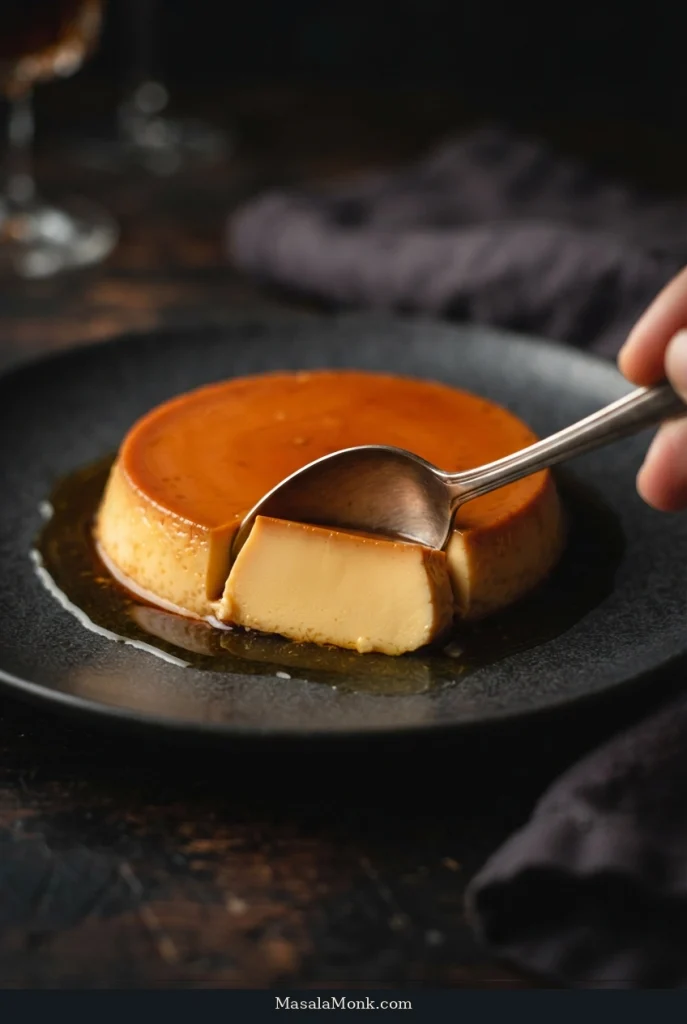
- Serve. Slice the chilled custard into modest portions and spoon on some caramel sauce. The slice should hold its shape, yet give softly under a spoon; the caramel’s bittersweet flavor balances the sweet, yolk-rich custard.
Not the texture you expected? The troubleshooting guide helps distinguish bubbles, watery separation, and curdling before your next batch.
Choosing a Llanera or Another Mold
Measure usable capacity with water: Fill an empty llanera to the intended custard level and tip the water into a measuring jug. It is more reliable than assuming that every mold labeled “medium” is the same size.
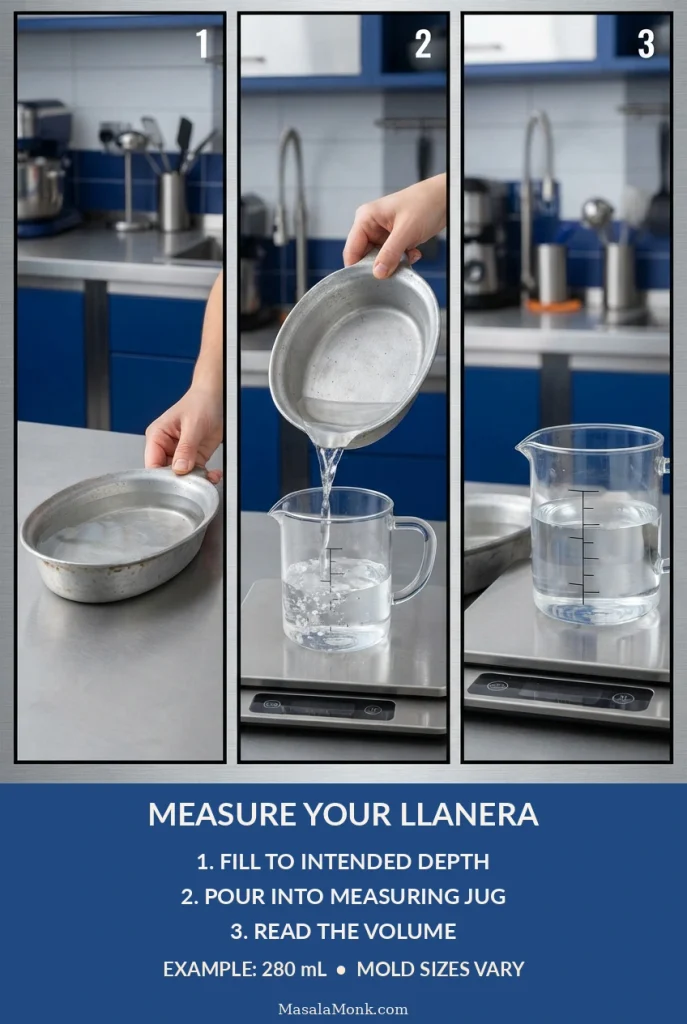
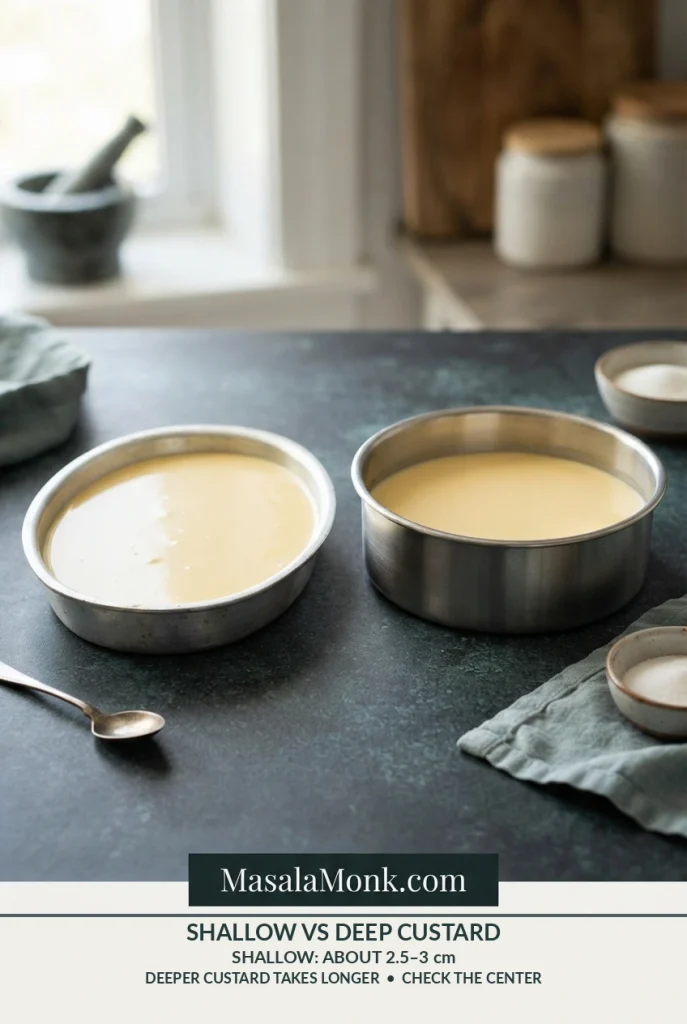
For this formula, three shallow oval metal llaneras measuring roughly 15 × 10 cm (6 × 4 inches) and holding about 350–400 mL to the brim are a starting point. Expect roughly 270–300 mL of custard in each, sometimes about 2.5–3 cm (1–1¼ inches) deep. These are guides because the internal shape and taper vary. Use a fourth mold if needed.
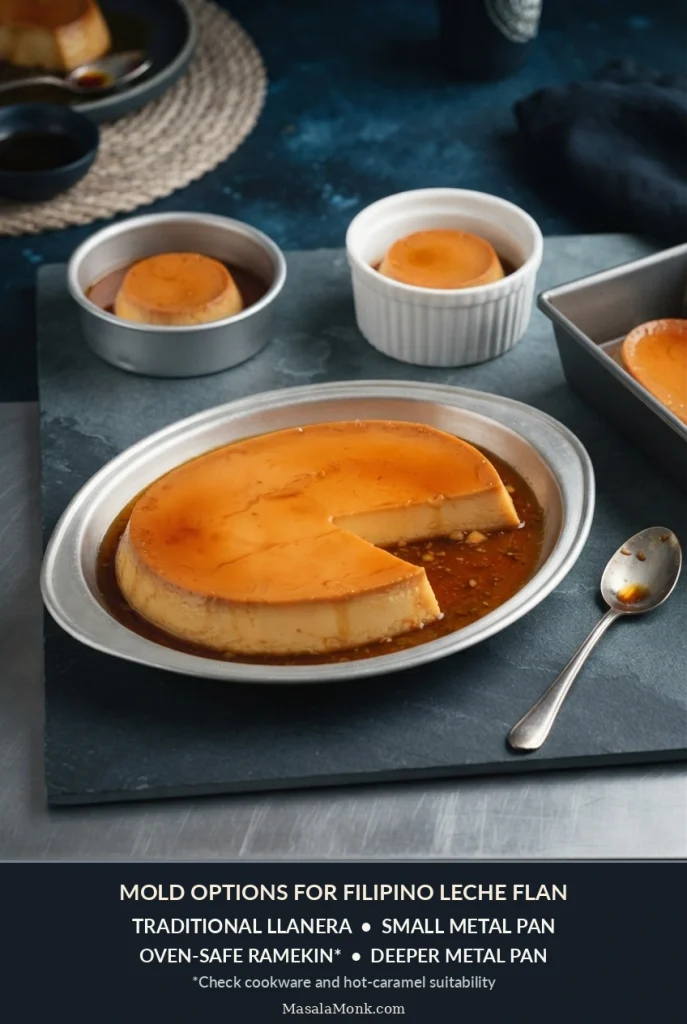
| Mold choice | What to know |
|---|---|
| Shallow metal llanera | Best match for this steamed recipe; suitable for the oven if rated for oven use. |
| Small heat-safe metal pans | Suitable when they fit securely in the steamer or water bath. |
| Oven-safe ceramic ramekins | Use only when the manufacturer permits the intended hot-caramel exposure and water-bath cooking; no direct flame. |
| Deep cake or loaf pan | Potentially suitable if rated for the heat, but the deeper center often needs longer cooking. |
Why Mold Depth Changes Cooking Time
A shallow layer heats through more evenly than a deep one. One large loaf pan can work with a suitable formula and heat-safe setup, but its cooking time can be substantially different; do not apply the shallow-llanera timing unchanged.
Molds sorted? Return to making the caramel and custard with your measured fill levels in mind.
Getting the Caramel Right
Choose the Method and Color
This recipe uses a little water with the sugar and melts it in a saucepan before dividing it among the molds. In some Filipino kitchens, cooks caramelize sugar directly in a metal llanera instead. Either can produce the familiar sauce; a separate saucepan is convenient when you have several molds.
Pale gold gives milder caramel; medium amber adds a pleasantly bittersweet contrast to the condensed-milk custard. Watch the color, not the clock. If the syrup becomes very dark or smells scorched, make a fresh batch. Never taste molten caramel.
Why Caramel Hardens—and What if It Crystallizes?
The caramel solidifies as it cools in the llanera. During cooking and chilling, moisture from the custard dissolves some of it into sauce. A little hardened sugar may remain behind after you unmold the flan.
This is different from crème brûlée, where the caramelized sugar forms a crisp lid on top instead of sauce underneath.
To help prevent grainy caramel, avoid scraping sugar crystals from the saucepan walls back into the syrup. You can briefly cover the pan so steam dissolves crystals on the sides; uncover before the color changes too far. If the batch crystallizes badly, let it cool safely before starting over. Do not pour water into dangerously hot caramel. For a fresh attempt, return to the caramel-making step.
How to Keep Leche Flan Smooth and Creamy
Mix without whipping in air, strain out egg strands, and keep the cooking heat gentle. Those choices help the custard set evenly rather than turning bubbly or rubbery.
Why Egg Yolks Matter
The ten yolks give this flan a rich, tender set. Condensed milk supplies sweetness and body; evaporated milk contributes the liquid. Whole-egg versions are also familiar in Filipino home cooking, but their additional whites produce a different texture. The variation guide explains which changes need a different formula.
Use the extra egg whites in another dish, such as an omelet or pavlova. They can also be frozen for later use.
Bubbles Before Cooking, Holes After Cooking
Foam on the raw mixture comes mainly from mixing or pouring. Resting, skimming, and an optional gentle tap help the largest bubbles rise. Straining removes egg strands; it will not eliminate every tiny bubble.
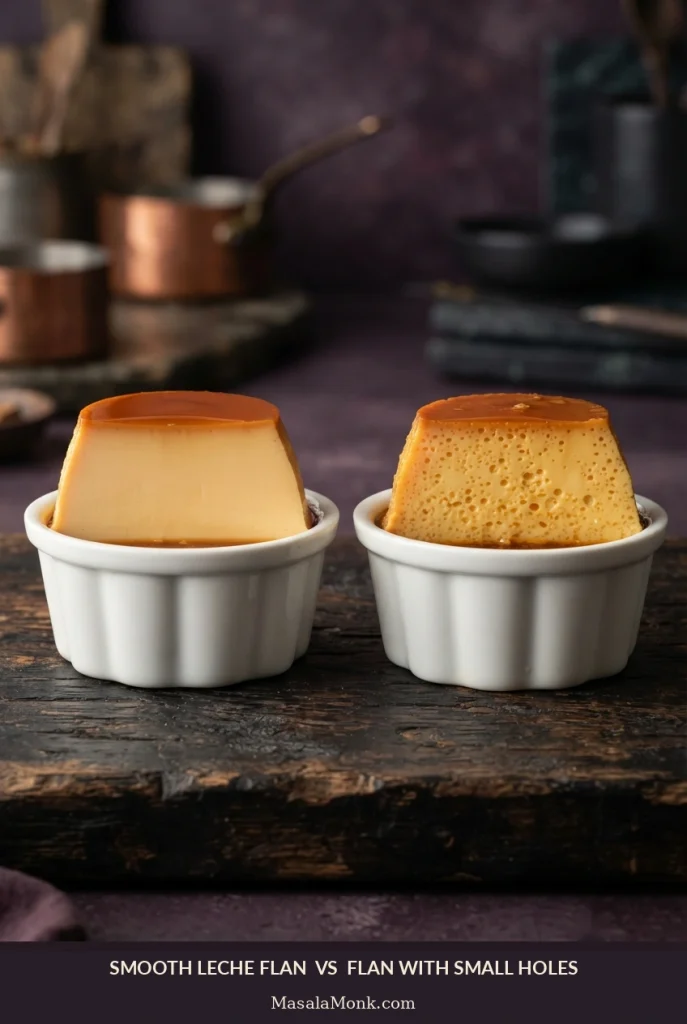
Holes or rubbery edges in finished flan may point to strong heat, prolonged cooking, trapped air, or a combination. A few tiny holes are not a disaster if the custard is tender and slices cleanly. For your next batch, revisit the straining and filling step before cooking.
How to Know When Leche Flan Is Done
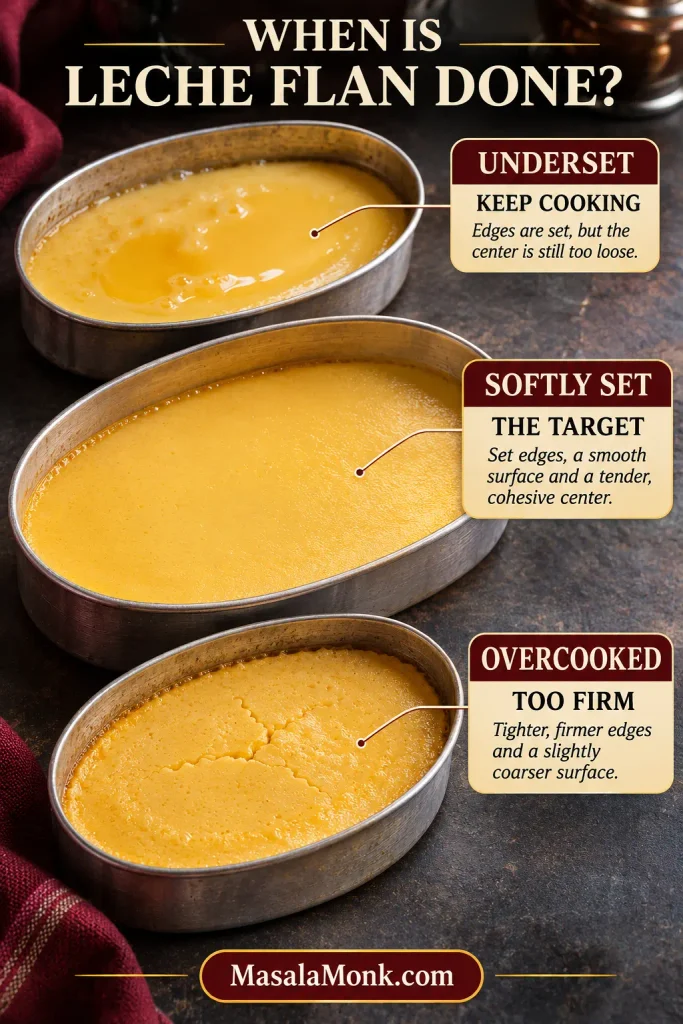
Look for set edges and a center that jiggles gently as one piece—not a watery wave. The custard will firm further as it chills. Use a thin-probe thermometer to verify the internal temperature rather than relying on appearance alone for food safety.
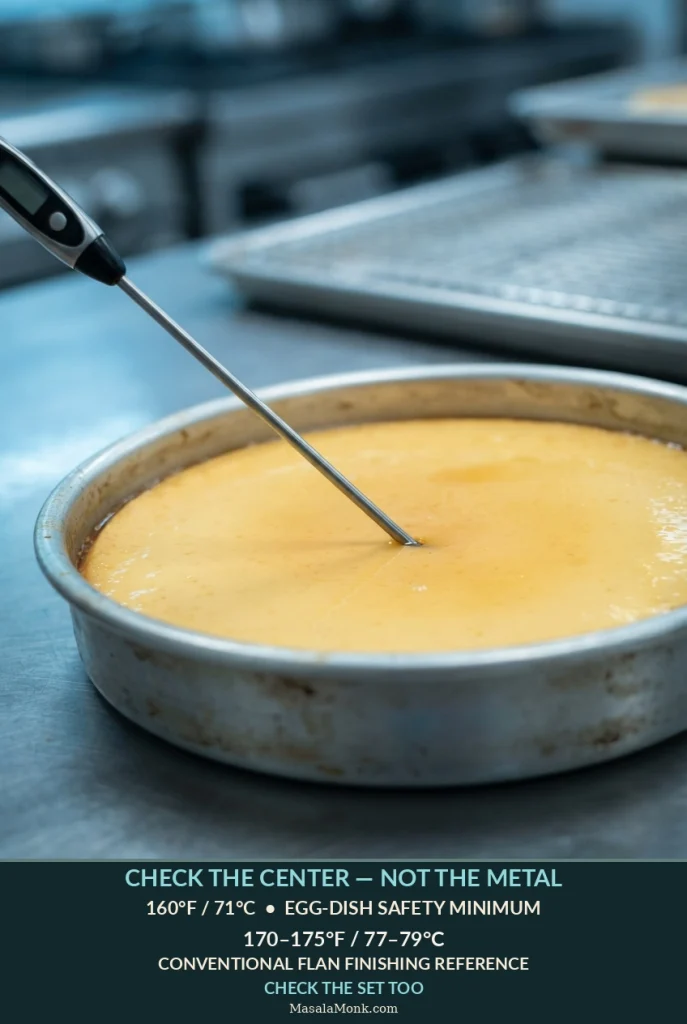
- 71°C / 160°F: The FoodSafety.gov minimum for egg dishes. It is a safety benchmark, not a promise that every flan is fully set.
- Approximately 77–79°C / 170–175°F: A conventional finishing range for flan and milk-rich baked custards in ThermoWorks’ custard guidance. It is a reference rather than a separately validated endpoint for this exact ten-yolk formula.
Decision: If the center is below 71°C / 160°F or visibly sloshes, keep cooking gently and check again. Once it is safely cooked and softly set, remove it rather than waiting for a rigid center. The conventional flan temperature range can help judge progress; read it alongside the custard’s movement, not as a stand-alone guarantee. Checking a batch right now? Return to the steaming check or oven-baking check for your method.
Leche Flan Troubleshooting: Common Problems and Fixes
Start with what you can see. Clear caramel sauce, surface droplets, and liquid custard have different explanations.
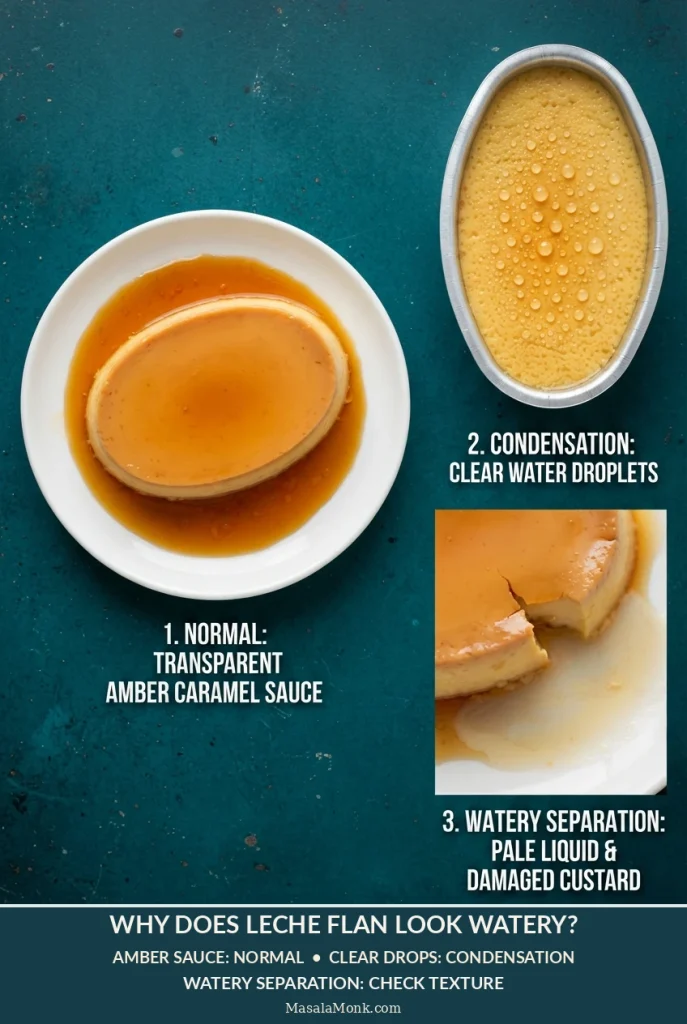
Before Cooking
- Foam on the raw custard: Let it settle, then skim. Mix more gently next time.
- Caramel hardened in the mold: Normal. Add the custard and continue.
- Caramel turned almost black or smells scorched: Make a fresh batch; do not taste hot sugar.
During Cooking
- The center is liquid or taking much longer than expected: Continue in short intervals over gentle heat. Check the measured fill depth, simmer or oven heat, and center temperature. Ingredient errors can also prevent a predictable set.
- The edges are setting much faster than the center: Lower the heat if necessary and use a shallower layer next time.
After Cooking or Chilling
- Clear amber liquid surrounds a properly set flan: Usually normal dissolved caramel sauce.
- Water droplets sit on top: Condensation may have entered the mold. Cover securely and keep steamer drips away from the foil.
- Firm custard leaks watery liquid: Moisture separation can follow overcooking or a damaged custard structure; coarse texture alongside it makes high heat more likely.
- Many tiny holes: Strong heat, extended cooking, or incorporated air may have contributed. Mix gently and keep the water at a quiet simmer.
- Rubbery edges: The outside likely cooked more aggressively than the center. Reduce heat or use shallower molds.
- Scrambled or grainy texture: The custard has likely curdled. Cooking cannot turn it silky again.
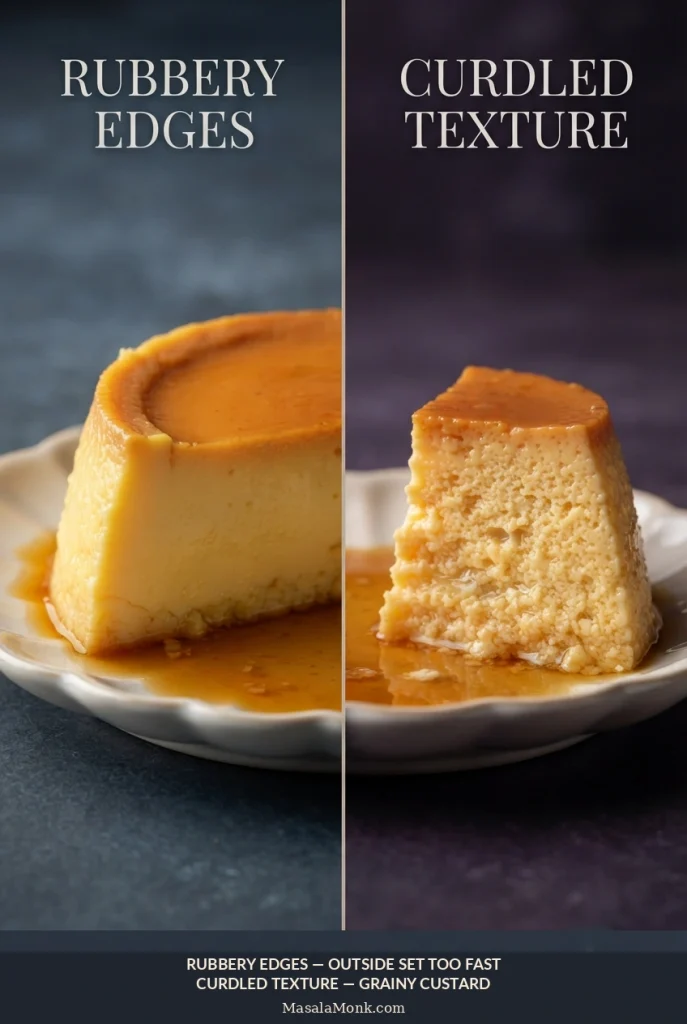
- Strong egg flavor: Ten yolks produce noticeable richness. An unpleasant sulfurous note can be associated with overcooking.
- Flan breaks or sticks: Chill fully, loosen the edge, and see the unmolding tips.
An under-set flan may need a few more minutes while still cooking. A chilled flan with uncertain cooking or storage safety should not be left out or simply chilled longer in an attempt to make it safe; discard it if safety is in doubt.
Back to the recipe instructions · Back to the top
Leche Flan Variations and Substitutions
Easy Changes
Optional citrus variation: Grate calamansi, dayap, or lime over a plate before adding the zest to the custard. That way, any stray seeds or bitter white pith can be removed before mixing.
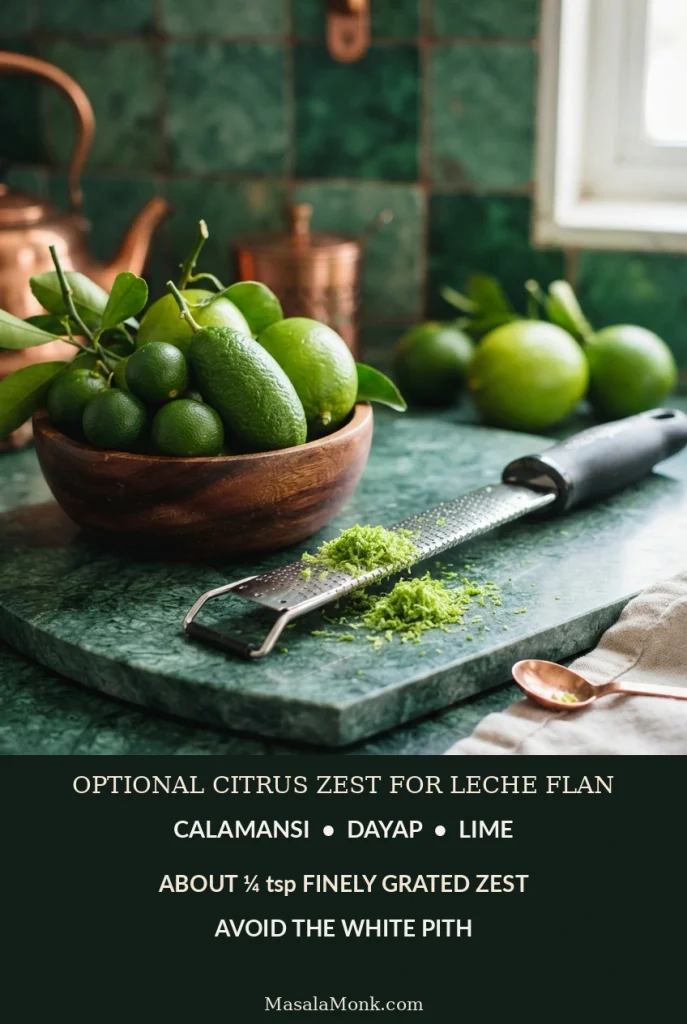
- Caramel darkness: Pale-to-medium amber is milder; darker amber adds bitterness. Stop before scorching.
- Vanilla: Use the optional teaspoon or omit it.
- Dayap, calamansi, or lime zest: A little finely grated zest adds fragrance; avoid substituting extra acidic juice.
- Less caramel sauce: Coat the molds more thinly or serve less sauce without changing the custard formula.
- Mini flans: Use smaller suitable molds and check earlier if the custard layer is shallower.
- Individual serving plates: Unmold each prepared llanera separately; one much deeper flan is a different cooking setup.
Changes That Need a Different Formula
Whole eggs, fresh milk, and substantially less condensed milk all affect setting as well as flavor. Instead of replacing one major ingredient in this ten-yolk version, choose a recipe formulated around the change.
- Whole eggs: The extra whites add protein and liquid, producing a different set; ten whole eggs are not a direct swap for ten yolks.
- Fresh milk: It has a different water and milk-solids balance from evaporated milk.
- Much less condensed milk: It changes sweetness, liquid balance, and how the custard sets.
Unmolding, Making Ahead, and Storing Leche Flan
Release a Stubborn Flan
Chill the flan thoroughly, loosen the whole inner edge with a thin knife, and invert onto a rimmed plate. If the metal llanera still holds on, briefly warm only its outside base in warm water, dry it, and try again. Avoid shaking hard enough to tear the custard, and avoid sudden temperature changes with glass or ceramic dishes.
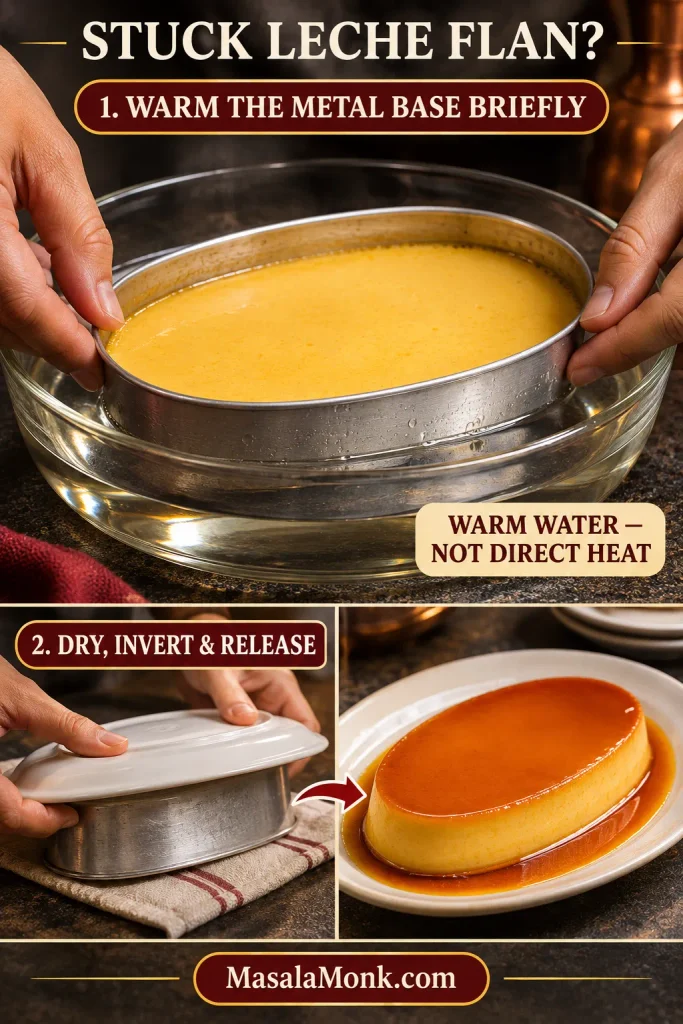
To clean the llanera afterward, add warm water and let any remaining hardened caramel dissolve instead of scraping at it.
Make Ahead and Transport
Leche flan is convenient for a gathering because it can be cooked the previous day. Leave it covered in its mold until serving. If you are taking it elsewhere, carry it chilled with ice packs and unmold it at the destination—much easier than transporting a platter of loose caramel sauce. Serve cold in small slices; leche flan is also a familiar topping for Filipino halo-halo.

Refrigerator Life and Food Safety
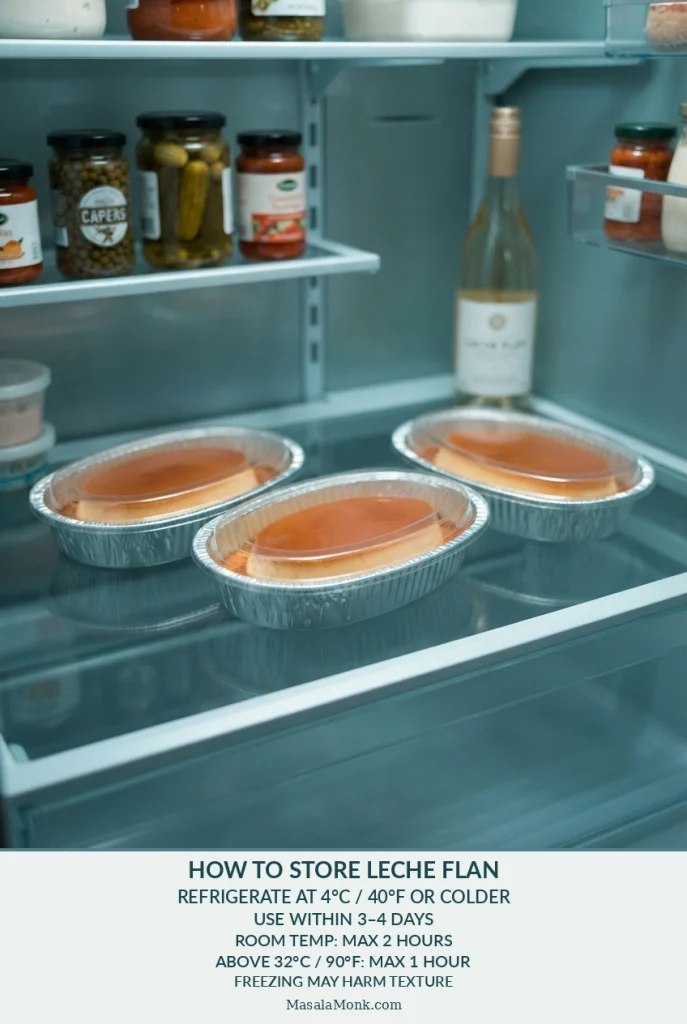
Refrigerate promptly at 4°C / 40°F or below and use cooked leche flan within approximately 3–4 days. Do not leave it unrefrigerated longer than 2 hours, or longer than 1 hour in temperatures above 32°C / 90°F. See FoodSafety.gov’s cold-storage guidance.
Can You Freeze Leche Flan?
Freezing is not ideal for its smooth texture: thawed egg-and-milk custard may weep or turn grainy. FoodSafety.gov likewise advises against freezing comparable custard pies for quality. For the neatest slice, prepare and refrigerate a fresh batch ahead of time.
Leche Flan FAQs
Is Filipino leche flan the same as crème caramel?
Both are caramel custards served cold with caramel sauce. Filipino leche flan often uses condensed milk, evaporated milk, and many yolks, giving it a rich texture; other crème caramel recipes often use fresh milk and whole eggs.
Can I mix the raw leche flan custard the day before cooking?
Yes. Refrigerate the raw egg mixture promptly in a covered container at 4°C / 40°F or colder, and cook it within 24 hours. But cooking the flan a day ahead is usually easier because the finished custard benefits from chilling. Never leave raw egg custard on the counter overnight.
Do you prefer a lighter caramel or a more bittersweet amber sauce? If you make this leche flan, share whether you steamed or baked it and which mold you used.








