
There’s a reason a good cup of masala chai feels so complete. It isn’t just tea. It isn’t only a spice drink. And it’s definitely not just “tea with milk.” When it’s made well, masala chai has structure: the tea gives it backbone, the spices create layers, the milk softens and rounds the edges, and the sweetener pulls everything into one smooth, deeply comforting sip.
Even so, plenty of homemade chai ends up disappointing. Sometimes it tastes watery. Other times it turns too bitter, too sharp, or strangely flat. In many cases, the ingredients are fine—the problem is the order, the ratio, or the simmering.
That’s exactly what this guide is designed to fix.
Instead of giving you one narrow recipe and leaving the rest to luck, this masala chai masterclass gives you a dependable base recipe, a practical chai masala blend, and ten fully explained variations you can actually use in everyday life. The goal is simple: once you make the base cup properly, you should be able to create a classic masala chai, a ginger masala chai, a tulsi masala chai, a vegan masala chai, or even an iced masala chai without having to “start over” each time.
Along the way, you’ll also get a better feel for what each ingredient is doing, which makes customization easier and far more satisfying. In other words, you won’t just have a recipe—you’ll know how to steer it.
If you enjoy exploring chai more broadly, MasalaMonk’s Chai Map of India is a wonderful companion for the cultural side of tea traditions, while Monsoons and Masala Chai makes a lovely follow-up once you’re in the mood for more cozy tea directions.
What a Great Masala Chai Recipe Actually Needs
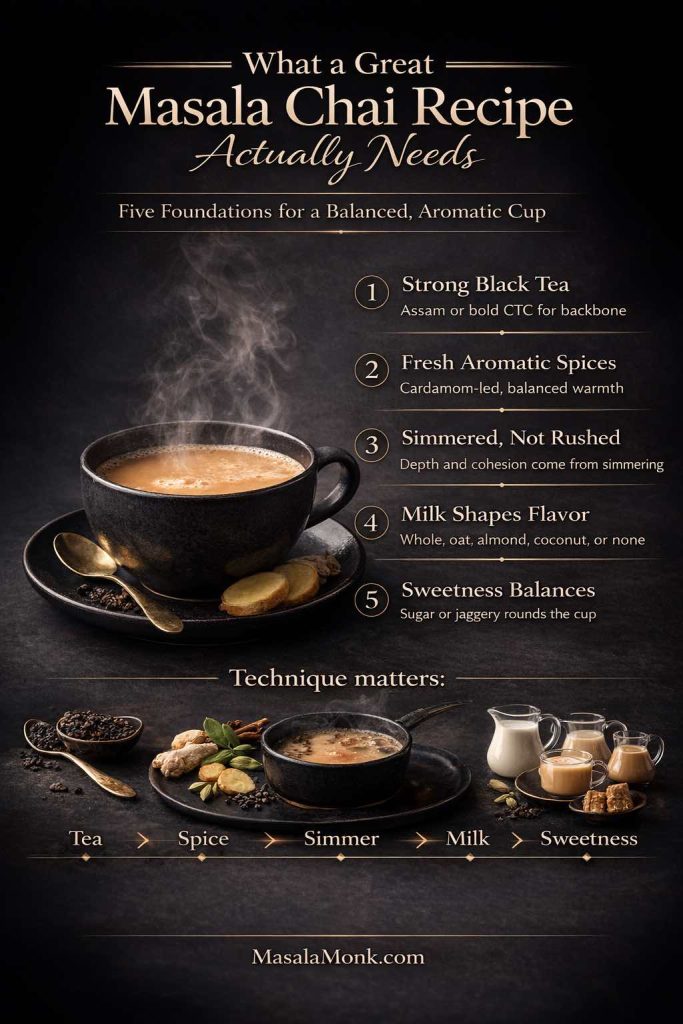
People often talk about “authentic chai” as if there’s one fixed version, but the truth is more interesting. Traditional masala chai has many expressions, and households vary their chai blends all the time. Still, the best cups tend to share the same foundations:
- a black tea strong enough to stand up to milk and spice
- fresh, aromatic spices used with restraint
- a simmered brew, not a rushed steep
- enough sweetness to balance bitterness and spice
- a texture that matches the style of chai you want
So although ingredients matter, technique matters just as much.
Tea gives the cup its shape
The tea is not a background ingredient. In a proper masala chai recipe, tea should still taste like tea after milk and spices are added. That’s why strong black tea works best, especially Assam or a bold CTC blend. Loose leaf can be beautiful, but it should be a tea with enough character to stay present.
Serious Eats talks about this balance well in their chai coverage, especially when they discuss strong tea and focused spice choices instead of overloaded blends (their chai recipe is a useful reference).
Spice doesn’t mean “more spice”
A common mistake is assuming more spices equals better chai. Usually, the opposite happens. The cup turns muddy, clove-heavy, or medicinal. What you want instead is clarity: cardamom should smell bright, ginger should taste alive, cinnamon should feel warm, and clove should stay in the background unless you intentionally want a stronger clove note.
Simmering is where chai becomes chai
This matters more than almost anything else. A quick steep may produce a spiced tea, but simmering builds depth. It lets the ginger infuse, gives the cardamom time to open, and blends the milk and tea so the final cup tastes cohesive instead of layered in an unfinished way.
Milk changes flavor, not just texture
Milk doesn’t simply make chai creamy. It also softens spices and reduces perceived bitterness. As a result, the same tea-and-spice base can taste completely different depending on whether you use whole milk, oat milk, almond milk, coconut milk, or no milk at all.
Sweetness creates harmony
A little sweetness is what makes masala chai feel round. Without it, spices can taste sharp and tea can feel tannic. With too much, the drink loses definition. The sweetener should support the cup, not dominate it.
Also Read: Crock Pot Pork Chops and Sauerkraut (No Dry Chops Recipe)
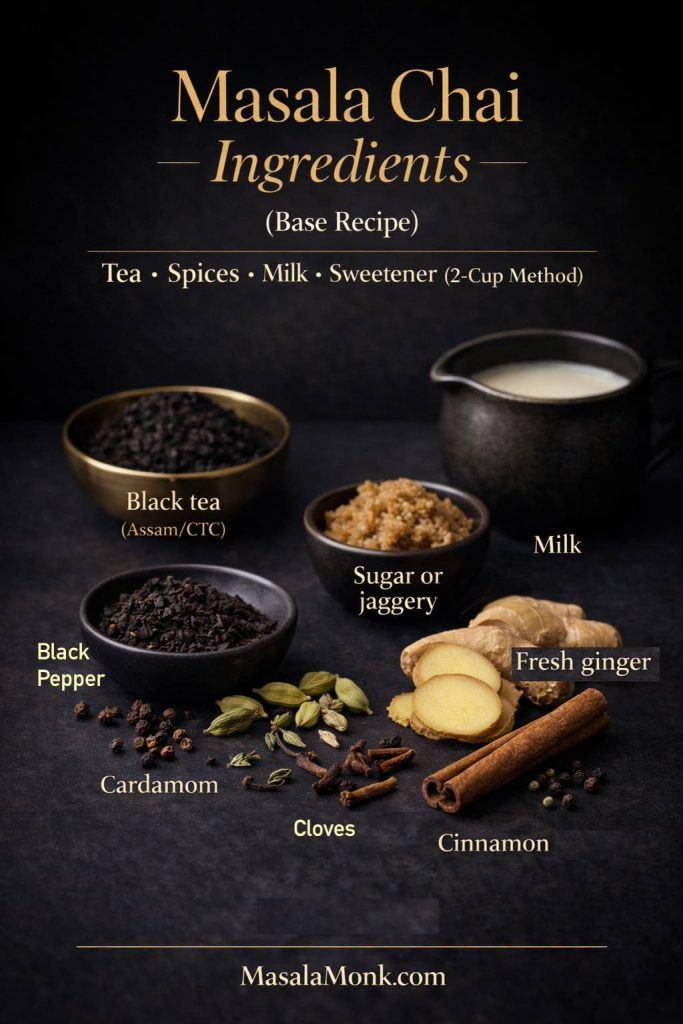
Masala Chai Recipe Ingredients
Before we get into the base method, let’s build a clear ingredient foundation. This section is intentionally detailed because once you understand these choices, every variation later in the post becomes easier.
Tea for masala chai: what works best
If you’ve ever asked yourself what the best tea leaves for masala chai are, the short answer is: strong black tea.
Here are the best options for a home kitchen:
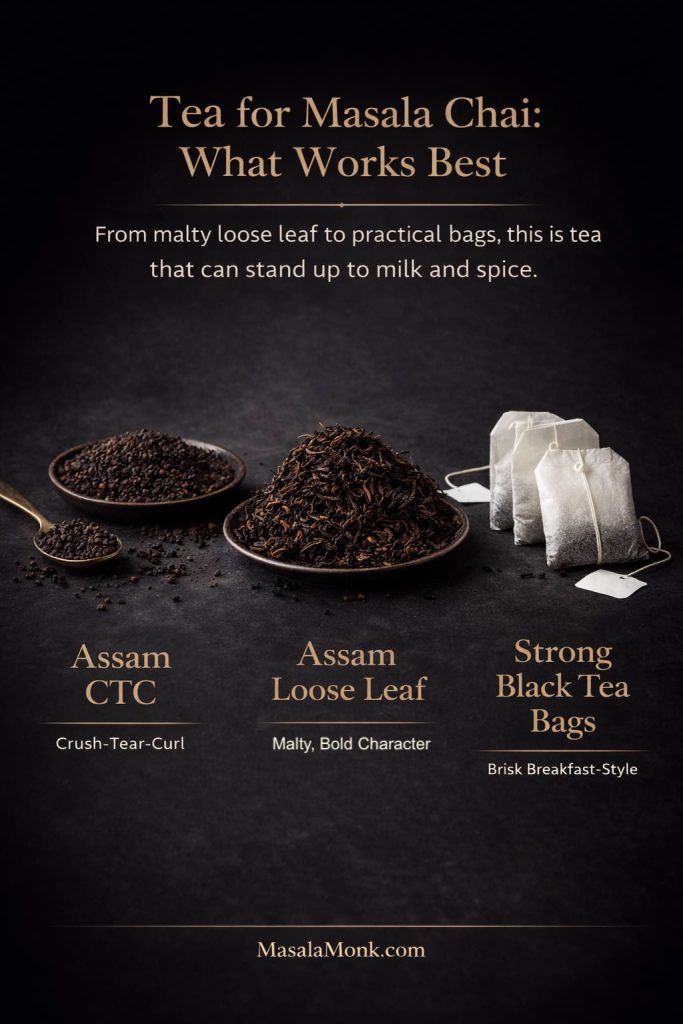
1) Assam CTC tea (great for everyday chai)
CTC tea (crush-tear-curl) is commonly used for chai because it brews quickly and strongly. It gives you deep color, a bold flavor, and the kind of sturdy tea backbone that holds up beautifully to milk and spice.
2) Assam loose leaf tea (more nuanced, still bold)
Loose leaf Assam often has a little more texture and complexity than CTC, yet it still gives you that malty body a masala chai recipe needs.
3) Strong black tea bags (very practical)
If tea bags are what you have, they can still make an excellent masala tea. The key is to use enough tea and avoid weak blends. A brisk breakfast-style black tea is better than a delicate one here.
Epicurious also points out that CTC tea is especially useful for chai-style brewing, particularly when ginger is involved and you want bold extraction without a long steep (their fresh ginger masala chai notes that clearly).
Masala chai spices: the core blend
The classic spice set is simple, and that simplicity is part of what makes it so adaptable.
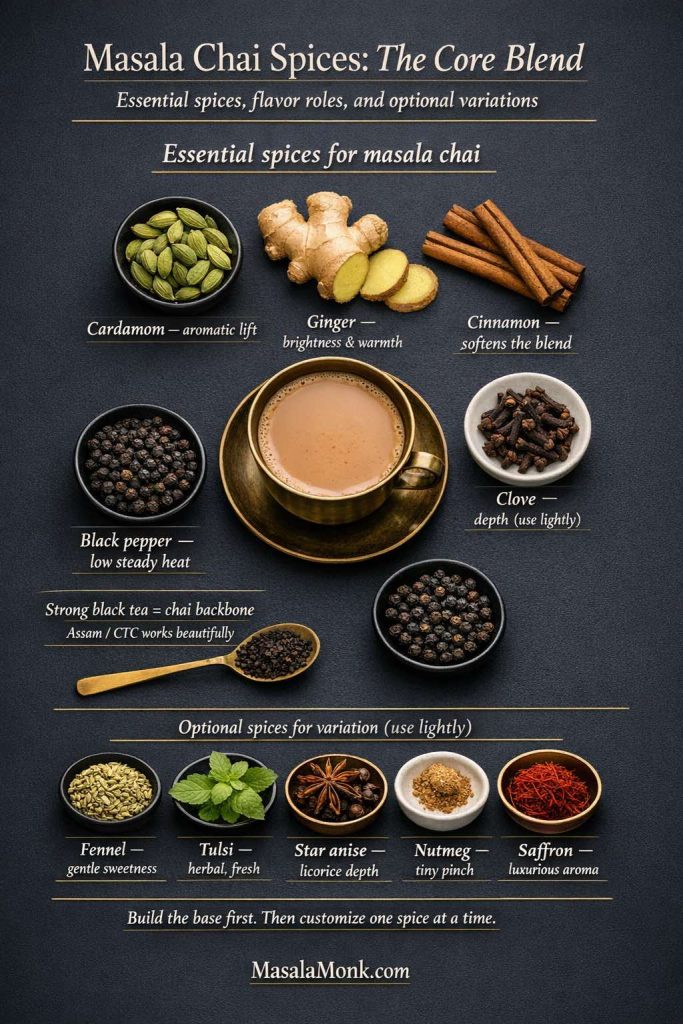
The essential spices
- green cardamom
- fresh ginger
- cinnamon
- cloves
- black peppercorns
Each one plays a different role:
- Cardamom creates the signature aromatic lift.
- Ginger adds brightness and warmth.
- Cinnamon softens and rounds the blend.
- Clove adds depth and intensity.
- Black pepper brings a low, steady heat.
If you’re especially interested in cardamom’s flavor behavior, MasalaMonk’s cardamom guide is a great read because it explains why cardamom has that unmistakable perfume in hot drinks.
Optional spices for variation
These are not required for a classic masala chai recipe, but they’re very useful once you start customizing:
- fennel seeds (gentle sweetness, softer finish)
- tulsi (herbal, fresh note)
- star anise (licorice-like depth, use lightly)
- nutmeg (tiny pinch only)
- saffron (subtle, luxurious aroma)
The key is to add one optional element at a time so the cup stays balanced.
Milk options for masala chai, masala milk tea, and vegan masala chai
Milk shapes both flavor and body. Even a small change in milk can move the cup from traditional and hearty to lighter and more delicate.
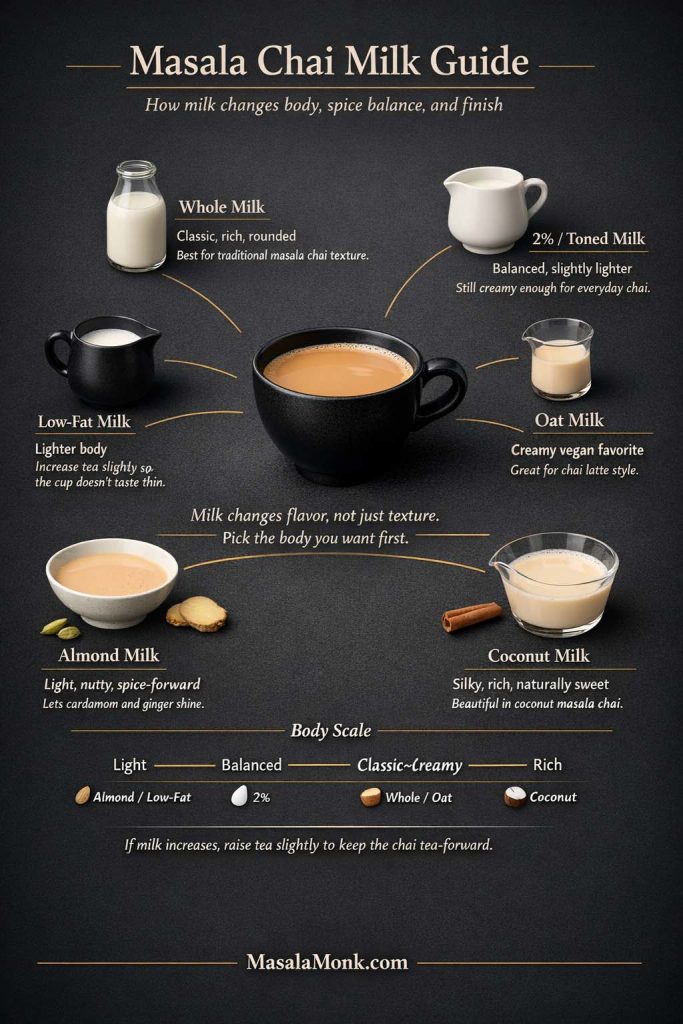
Dairy milk options
- Whole milk: richest, creamiest, most classic feel
- 2% or toned milk: still balanced, slightly lighter
- Low-fat milk: workable, but the chai may feel thinner unless tea strength is increased a little
Dairy-free options for vegan masala chai
- Oat milk: creamy and neutral, excellent for chai latte style
- Almond milk: lighter and nutty, better for cleaner spice expression
- Coconut milk: rich, naturally sweet, beautiful in coconut masala chai
For a globally friendly chai routine, it’s useful to think of these as flavor choices rather than “replacements.” That shift makes vegan masala chai feel intentional, not compromised.
Sweeteners for masala tea and masala chai latte versions
Different sweeteners create different finishes.
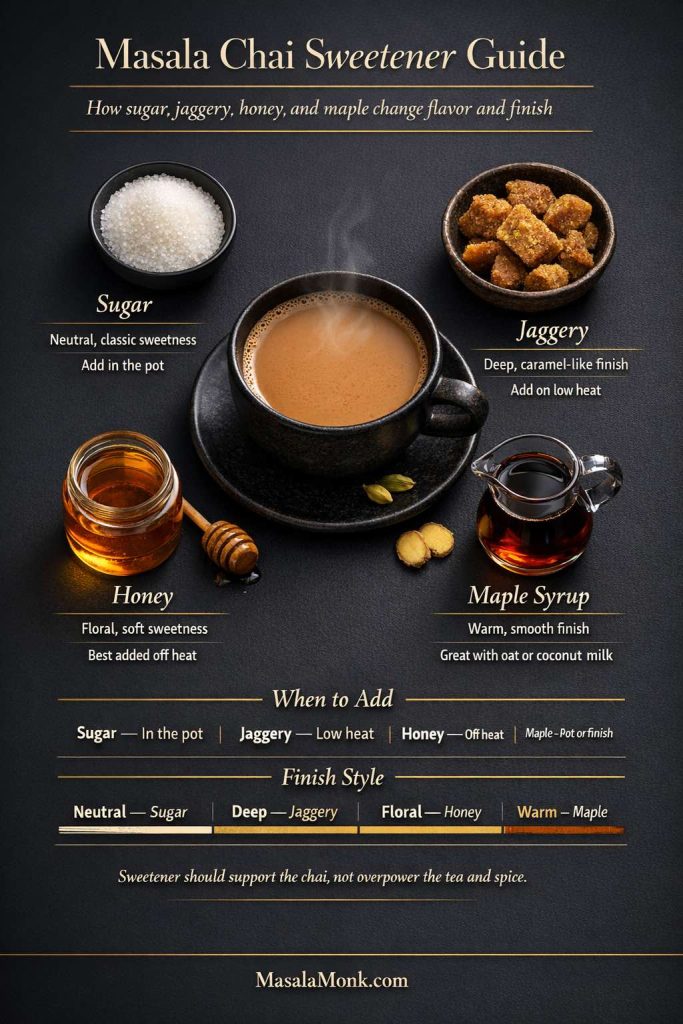
- Sugar: neutral, classic, reliable
- Jaggery: deep, caramel-like sweetness, earthy warmth
- Honey: floral, but best added off heat
- Maple syrup: especially nice with oat or coconut milk
If you like experimenting with sweetened hot drinks more broadly, MasalaMonk’s keto hot chocolate recipe is another cozy reference point for how sweetness and body work together in a cup.
Also Read: Keto Mocktails: 10 Low Carb, Sugar Free Recipes
The Base Masala Chai Recipe (Your Everyday Foundation)
This base recipe is the center of the entire post. Once you’re comfortable with it, the variations will feel natural instead of complicated.
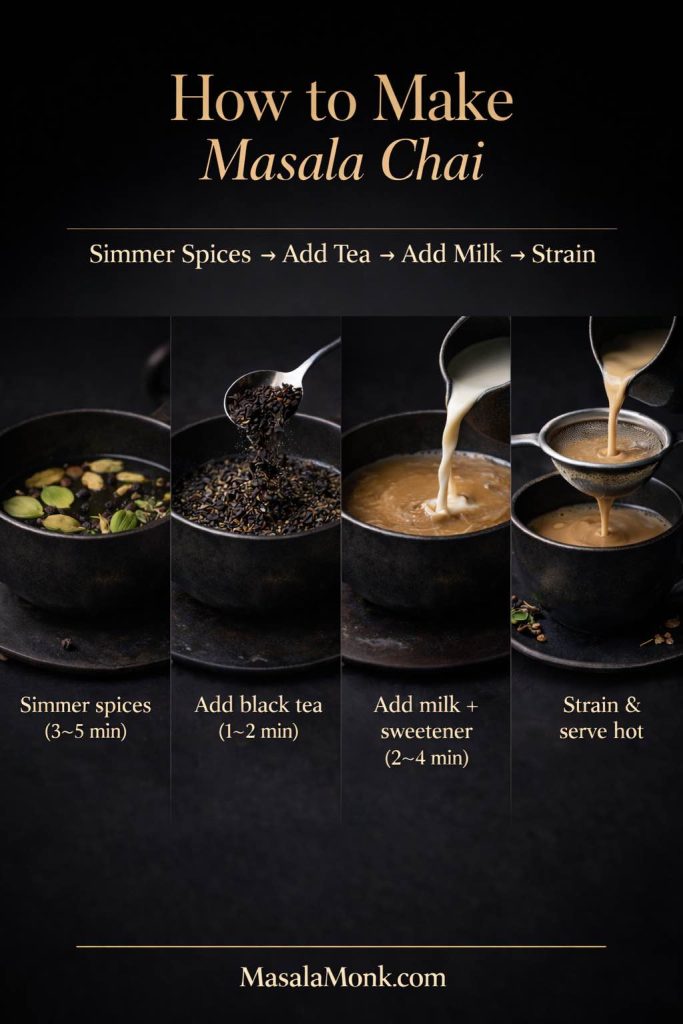
Base Masala Chai Recipe (makes 2 generous cups)
Ingredients
- 1 1/2 cups water
- 1 cup milk (whole milk, 2%, oat milk, almond milk, or a mix)
- 2 to 2 1/2 teaspoons black tea (Assam loose leaf or CTC), or 2 strong black tea bags
- 1 inch fresh ginger, lightly crushed or sliced
- 3 green cardamom pods, lightly crushed
- 1 small cinnamon stick (or 1-inch piece)
- 2 cloves
- 2 black peppercorns
- 2 to 4 teaspoons sugar (or to taste)
Method
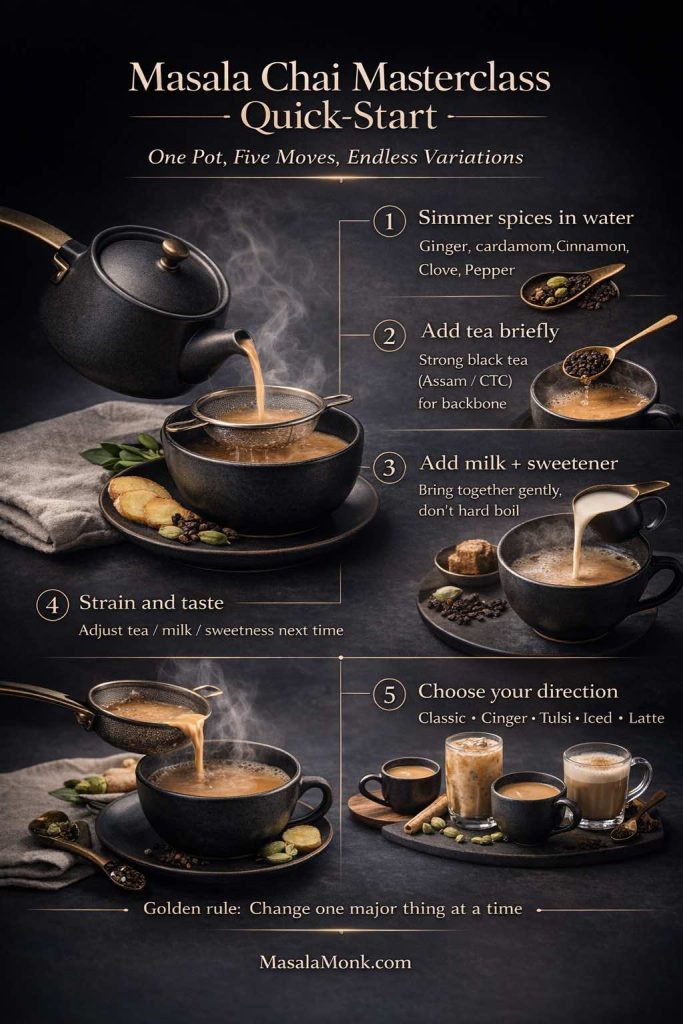
Step 1: Start with the spices in water
Pour the water into a saucepan and add ginger, cardamom, cinnamon, cloves, and peppercorns. Bring it to a boil over medium heat, then lower the heat and let it simmer for 3 to 5 minutes.
At this stage, don’t rush. The simmer is doing the important work: it extracts aroma from the spices and starts building the flavor structure of the chai.
Step 2: Add the tea and let it deepen
Add the black tea (or tea bags). Simmer gently for 1 to 2 minutes.
You’re looking for a rich amber-brown color. If the tea is already very strong (especially with CTC), stay closer to 1 minute. If it’s loose leaf and a little gentler, 2 minutes may be better.
Step 3: Add milk and sweetener
Add the milk and sugar. Raise the heat until the chai reaches a gentle boil, then lower it again and simmer for another 2 to 4 minutes.
This is where the cup becomes smooth and rounded. The milk softens the tannins, the sweetness supports the spices, and the aromas start to feel unified.
Step 4: Strain and serve hot
Strain the chai into cups and serve right away.
The first sip should feel balanced: tea first, spice second, creaminess last. If it tastes sharply spicy but weak on tea, use more tea next time. If it tastes milky but flat, simmer spices a little longer.
Also Read: Slow Cooker Pork Tenderloin (Crock Pot Recipe) — 3 Easy Ways
Chai Masala Mix for Daily Use
If you make chai regularly, a small chai masala mix saves time and improves consistency. Instead of crushing spices every day, you can use a measured spoon and still get a fragrant cup.
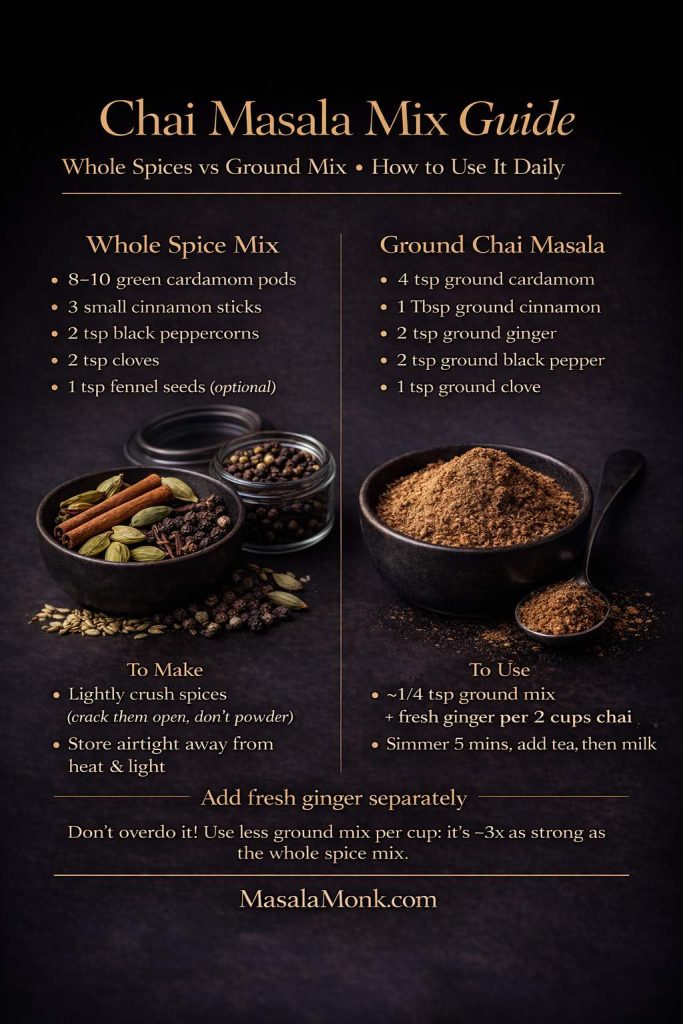
Whole Spice Chai Masala Mix (small batch)
Ingredients
- 2 tablespoons green cardamom pods
- 1 tablespoon black peppercorns
- 8 to 10 cloves
- 3 small cinnamon sticks
- 1 teaspoon fennel seeds (optional)
Method
Lightly crush the spices using a mortar and pestle or pulse them briefly in a grinder. You want them cracked open, not powdered.
Store in an airtight jar away from light and heat.
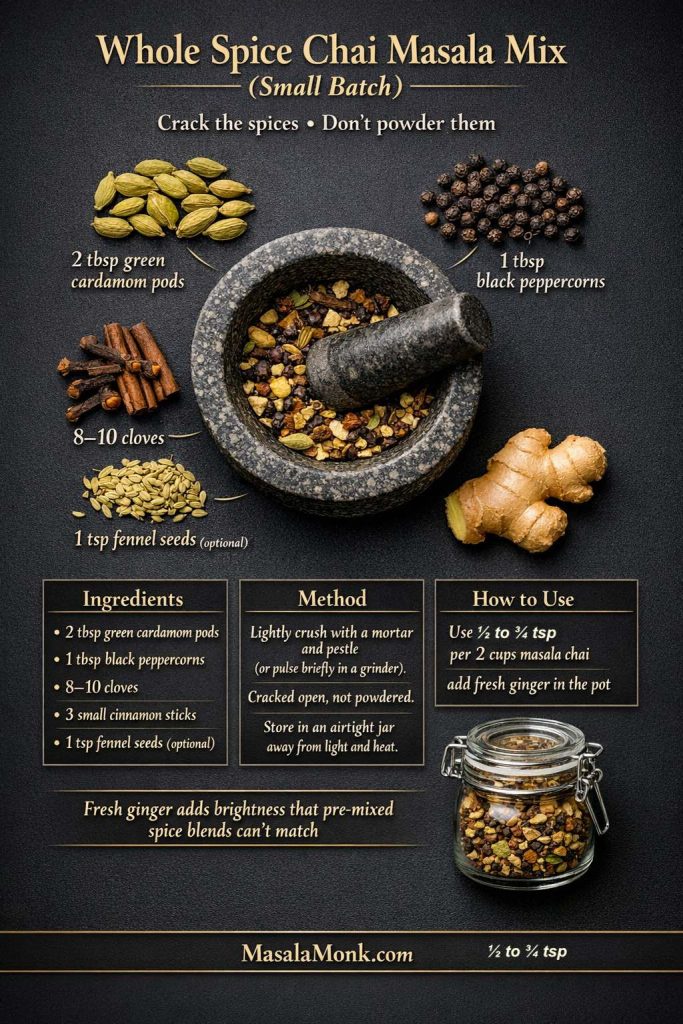
How to use
Use 1/2 to 3/4 teaspoon of this chai masala mix per 2 cups of masala chai, plus fresh ginger in the pot.
Fresh ginger is still worth adding separately because it gives brightness that pre-mixed spice blends usually can’t match.
Also Read: Chicken Pesto Pasta (Easy Base Recipe + Creamy, One-Pot, Baked & More)
Ground Chai Masala Mix (for quick cups)
If you prefer a fine tea masala mix, grind the whole spices into a powder.
Use a lighter hand
Ground spices are more intense by volume, so start small:
- 1/4 teaspoon for 2 cups = balanced
- slightly less for a lighter cup
- slightly more if you want a stronger masala tea
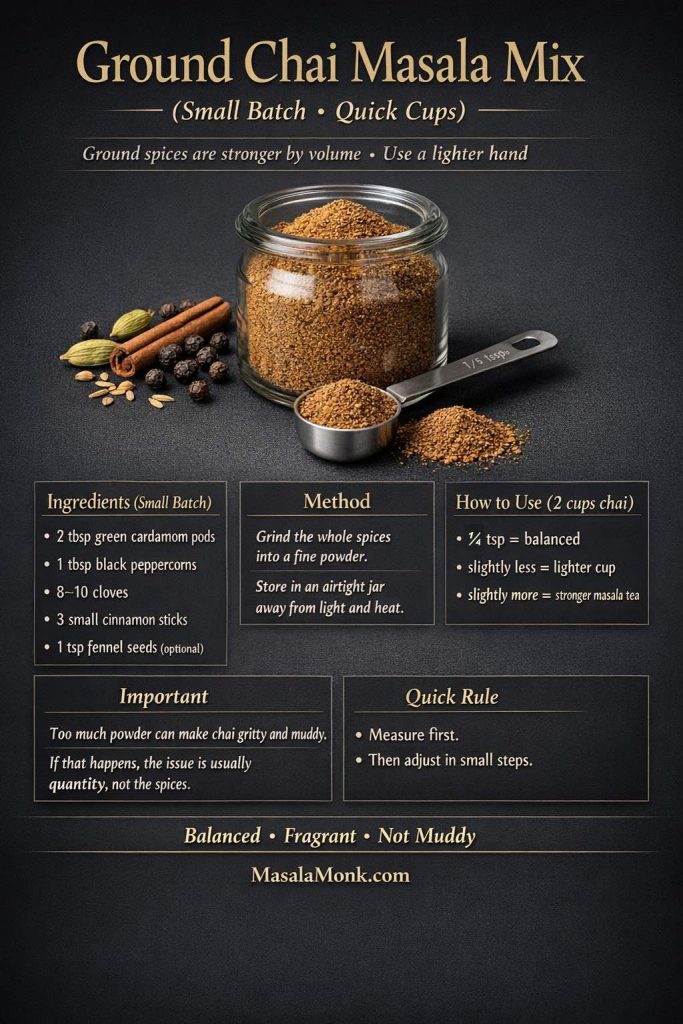
Too much powder can make chai gritty and muddy. If that happens, it doesn’t mean the spices are wrong—it usually means the quantity was too high for the liquid.
MasalaMonk’s homemade pumpkin pie spice is a nice accompanying read here because it shows the same principle: spice blends work best when they’re balanced, not overloaded.
Also Read: How to Make a Flax Egg (Recipe & Ratio for Vegan Baking)
10 Masala Chai Variations With Full Recipe Details
Now that the base is set, here are the ten variations. Each one includes ingredient tweaks, ratio guidance, and a more detailed method so it feels like a proper recipe card—not just a quick note.
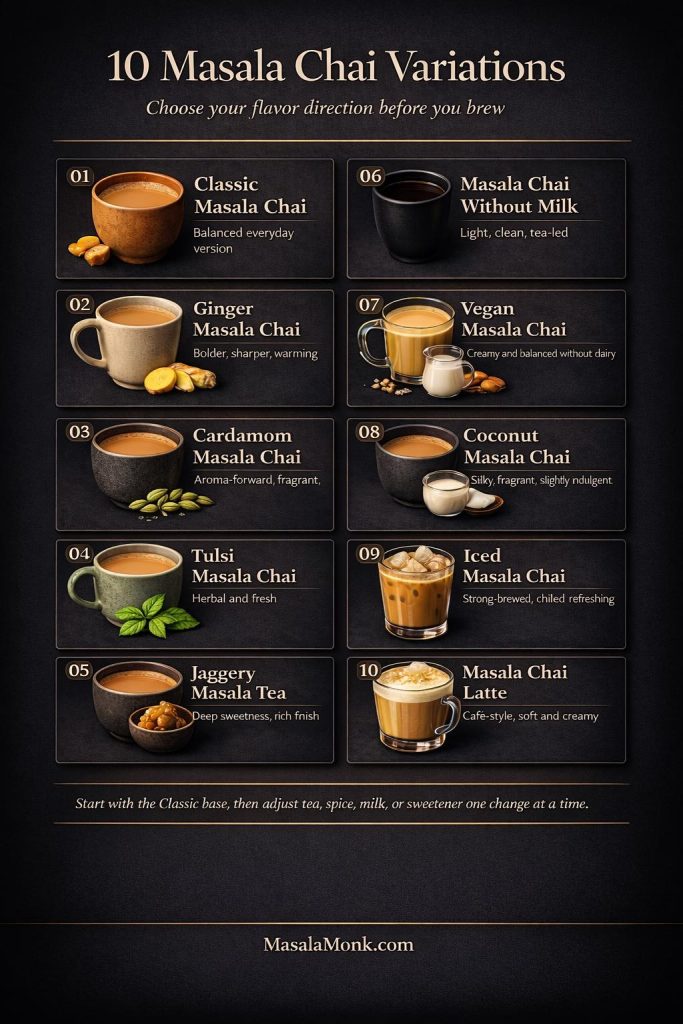
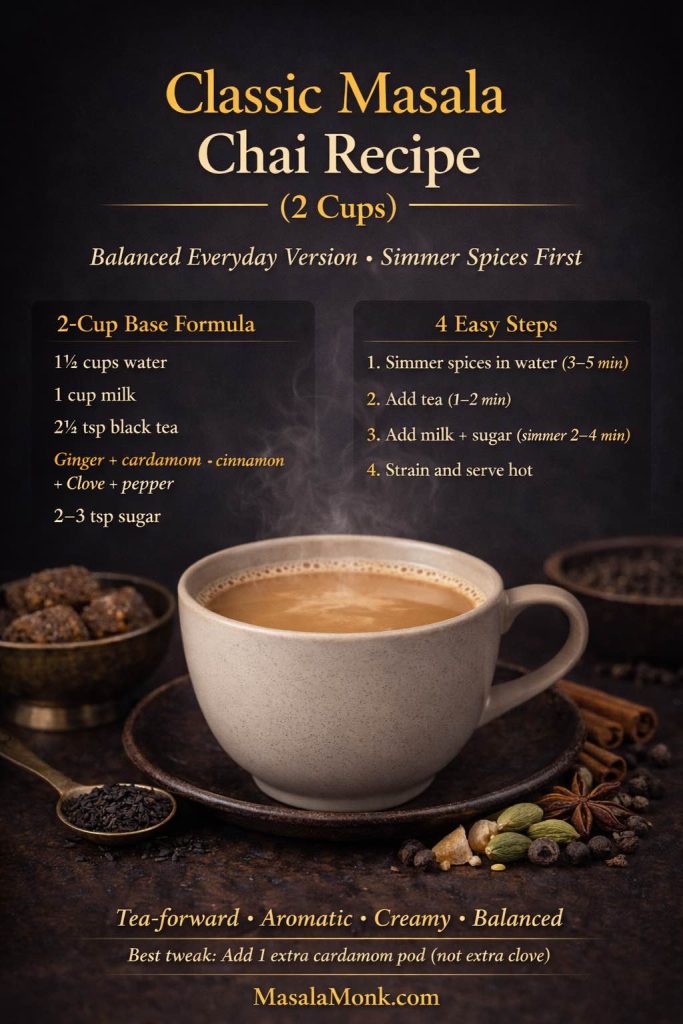
1) Classic Masala Chai Recipe (Balanced Everyday Version)
This is the baseline cup: bold, aromatic, and creamy without being too heavy. It’s the version you can make on repeat and still look forward to.
Ingredients (2 cups)
- 1 1/2 cups water
- 1 cup whole milk (or 2%)
- 2 1/4 teaspoons Assam tea or CTC tea
- 1 inch fresh ginger, lightly crushed
- 3 green cardamom pods, crushed
- 1 small cinnamon stick
- 2 cloves
- 2 black peppercorns
- 2 to 3 teaspoons sugar
Method
Add water and all spices to a saucepan and bring to a boil. Lower the heat and simmer for 4 minutes. Then add the tea and simmer 1 to 1 1/2 minutes, just until the color turns deep amber.
Next, add milk and sugar. Bring it back up gently, then reduce heat and simmer for 3 minutes. Strain into two cups.
How it tastes
The aroma is led by cardamom, ginger sits right behind it, and the finish is warm rather than sharp. Cinnamon softens the middle of the sip, while clove and pepper stay in the background.
If you want to adjust it
- More tea-forward: increase tea to 2 1/2 teaspoons
- More creamy: increase milk to 1 1/4 cups and reduce water slightly
- More aromatic: add 1 extra cardamom pod, not extra cloves
If you want another comforting spin afterward, MasalaMonk’s Monsoons and Masala Chai is a natural next stop.
Also Read: Pork Tenderloin in Oven (Juicy, Easy, 350°F or 400°F) Recipe
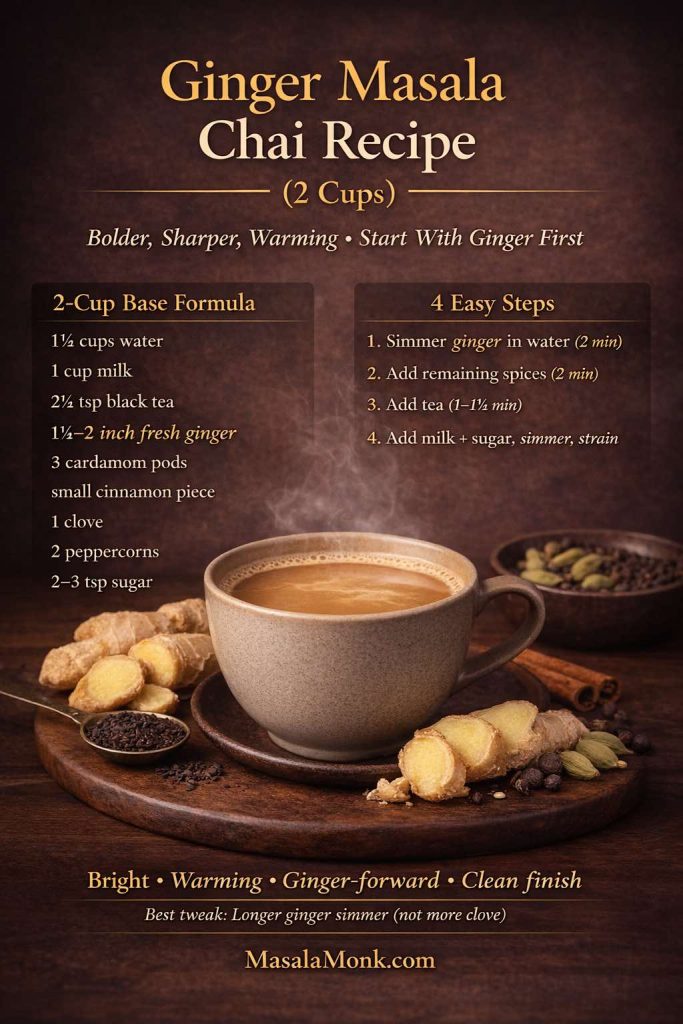
2) Ginger Masala Chai Recipe (Bolder, Sharper, Warming)
Ginger masala chai is for days when you want the cup to feel more awake. It’s still balanced, but the ginger comes forward and gives the chai extra brightness.
Ingredients (2 cups)
- 1 1/2 cups water
- 1 cup milk
- 2 1/4 teaspoons strong black tea
- 1 1/2 to 2 inches fresh ginger, crushed
- 3 green cardamom pods, crushed
- 1 small cinnamon piece
- 1 clove (instead of 2)
- 2 black peppercorns
- 2 to 3 teaspoons sugar
Method
Start with the water and ginger only. Bring to a boil, then simmer for 2 minutes before adding the remaining spices. This extra time pulls out more ginger flavor without making the cup rough.
Add cardamom, cinnamon, clove, and peppercorns, and simmer another 2 minutes. Then add tea and simmer 1 to 1 1/2 minutes.
Pour in milk and sugar, bring it to a gentle boil, and simmer 2 to 3 minutes. Strain and serve hot.
How it tastes
The first impression is bright ginger warmth, followed by strong tea and a clean cardamom finish. Because clove is reduced, the cup feels livelier and less “dark.”
Better balance tip
If the ginger tastes too sharp, add a touch more milk or simmer the ginger base one minute longer before adding tea. Longer ginger simmering often tastes rounder than simply adding more ginger.
Serious Eats’ broader chai writing is also a nice read if you enjoy the history and texture of everyday chai drinking (their chai history piece is here).
Also Read: Ravioli Recipe Reinvented: 5 Indian-Inspired Twists on the Italian Classic
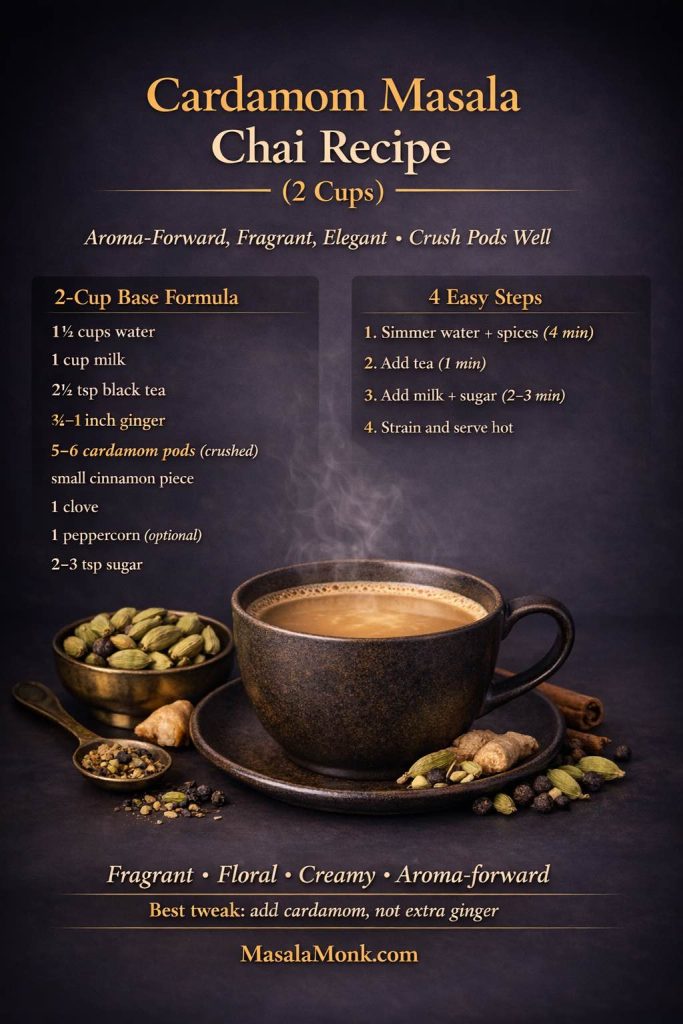
3) Cardamom Masala Chai Recipe (Aroma-Forward, Fragrant, Elegant)
This variation is less about heat and more about aroma. If you love opening the cup and getting that unmistakable cardamom fragrance before the first sip, this is your version.
Ingredients (2 cups)
- 1 1/2 cups water
- 1 cup milk
- 2 1/4 teaspoons black tea
- 3/4 to 1 inch ginger (less than the classic version)
- 5 to 6 green cardamom pods, crushed
- 1 small cinnamon piece
- 1 clove
- 1 black peppercorn (optional)
- 2 to 3 teaspoons sugar
Method
Simmer water, ginger, cardamom, cinnamon, clove, and pepper for 4 minutes. Since cardamom is the star, make sure the pods are well crushed so the seeds are exposed.
Add tea and simmer gently for 1 minute. Then add milk and sugar, bring to a soft boil, and simmer 2 to 3 minutes before straining.
How it tastes
This chai smells floral and almost sweet before you even drink it. The body is still rich, but the spice profile is lighter and more aromatic than ginger-heavy or clove-heavy chai blends.
Ratio option for a lighter cardamom cup
If you want a more delicate version:
- use 4 cardamom pods instead of 6
- reduce tea slightly to 2 teaspoons
- keep milk at 1 cup
MasalaMonk’s cardamom in coffee article pairs nicely with this cup because it highlights how cardamom transforms hot drinks without overpowering them.
Also Read: Croquettes Recipe: One Master Method + 10 Popular Variations
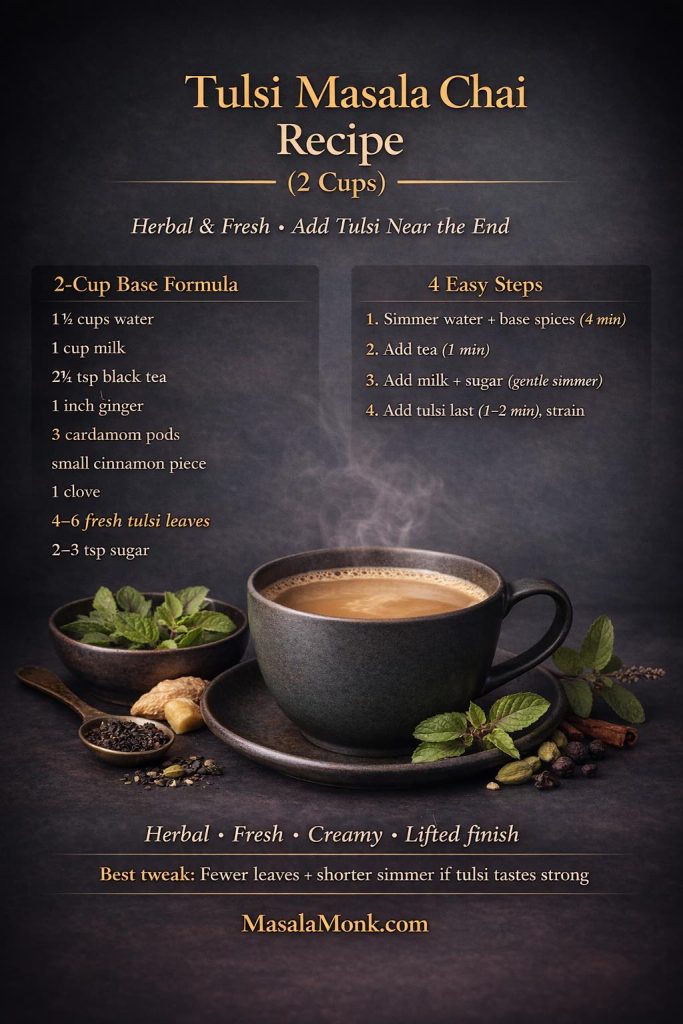
4) Tulsi Masala Chai Recipe (Herbal and Fresh)
Tulsi masala chai keeps the familiar base of black tea, ginger, and cardamom, then adds an herbal note that lifts the whole cup.
Ingredients (2 cups)
- 1 1/2 cups water
- 1 cup milk
- 2 1/4 teaspoons black tea
- 1 inch ginger
- 3 green cardamom pods
- 1 small cinnamon piece
- 1 clove
- 4 to 6 fresh tulsi leaves (or 1/2 teaspoon dried tulsi)
- 2 to 3 teaspoons sugar
Method
Simmer water, ginger, cardamom, cinnamon, and clove for 4 minutes. Add tea and simmer 1 minute.
Then add milk and sugar. Once the chai comes to a gentle boil, lower the heat and add tulsi leaves. Simmer another 1 to 2 minutes—just enough for the tulsi to perfume the chai without turning dull.
Strain and serve.
How it tastes
The herbal note comes in at the end of the sip. It doesn’t replace the chai flavor; instead, it gives the cup a fresher edge and a slightly green lift.
Small tweak if tulsi tastes too strong
Use fewer leaves and add them for only the last minute of simmering. Tulsi can become intense quickly, especially in smaller pots.
Also Read: Fish and Chips Reimagined: 5 Indian Twists (Recipe + Method)
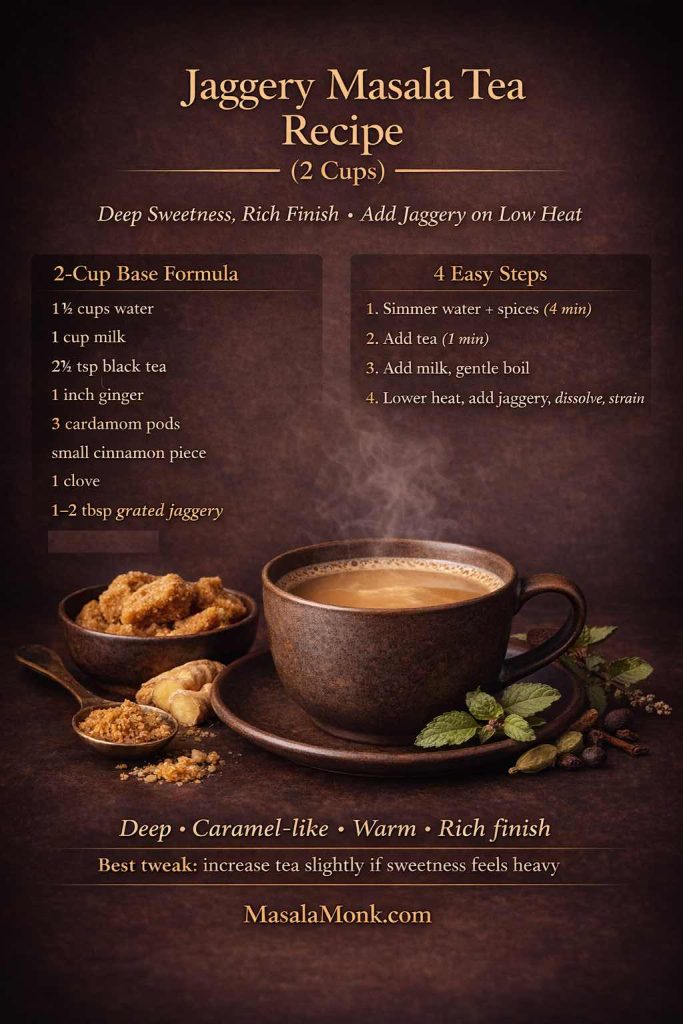
5) Jaggery Masala Tea (Deep Sweetness, Rich Finish)
Jaggery masala tea has a different personality from sugar-sweetened chai. The sweetness feels fuller, and the spices sit inside that sweetness differently—especially ginger and cinnamon.
Ingredients (2 cups)
- 1 1/2 cups water
- 1 cup milk
- 2 1/4 teaspoons black tea
- 1 inch ginger
- 3 cardamom pods
- 1 small cinnamon piece
- 1 clove
- 1 to 2 tablespoons grated jaggery (start smaller and adjust)
Method
Simmer the water and spices for 4 minutes. Add tea and simmer 1 minute. Then add milk and bring the chai to a gentle boil.
Now reduce the heat to low. Add jaggery slowly, stirring until fully dissolved. Let the chai simmer very gently for another minute, then strain.
How it tastes
Compared with sugar, jaggery gives this masala tea a more rounded, almost caramel-like sweetness. The cup feels deeper and a little more rustic, especially with ginger-forward spice blends.
Important balance note
Jaggery sweetness can easily dominate if the tea is weak. If the cup tastes sweet but not tea-forward, increase the tea slightly next time.
Also Read: Dirty Martini Recipe (Classic, Extra Dirty, No Vermouth, Spicy, Blue Cheese, Tequila + Batched)
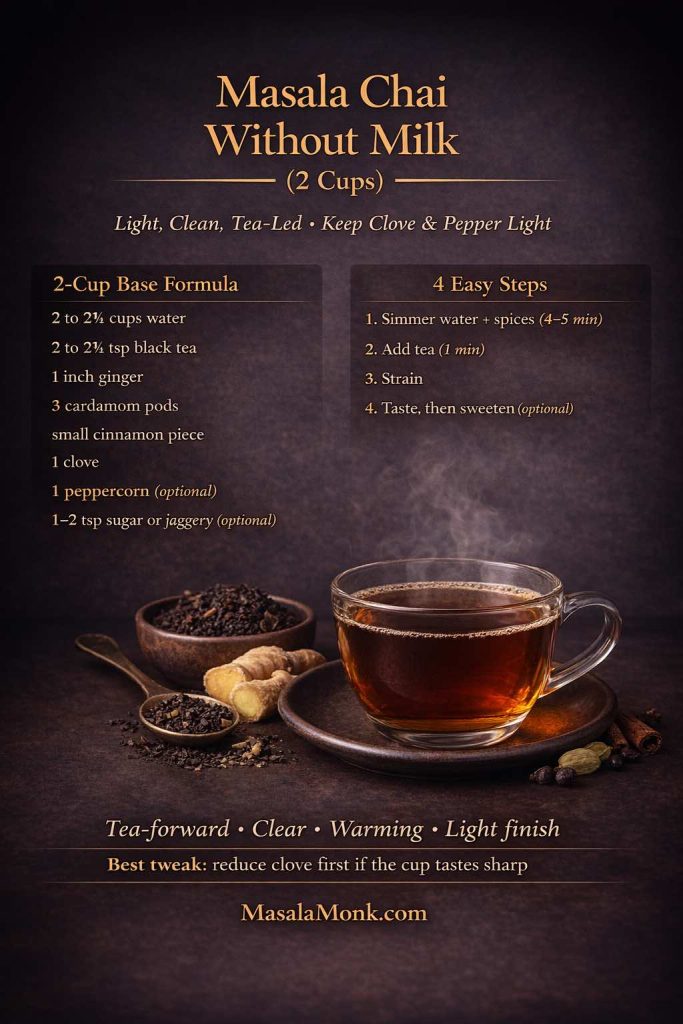
6) Masala Chai Without Milk (Light, Clean, Tea-Led)
Masala chai without milk is one of the most overlooked versions, yet it can be excellent—especially when you want a lighter drink that still feels warming and aromatic.
Ingredients (2 cups)
- 2 to 2 1/4 cups water
- 2 to 2 1/4 teaspoons black tea
- 1 inch ginger
- 3 cardamom pods
- small cinnamon piece
- 1 clove
- 1 black peppercorn (optional)
- 1 to 2 teaspoons sugar or jaggery (optional)
Method
Add water and spices to the saucepan and simmer for 4 to 5 minutes. Add tea and simmer 1 minute, then strain.
Taste before sweetening. Since there’s no milk, the spices are more direct and the tea tannins are more noticeable, so even a small amount of sugar can make a big difference.
How it tastes
This version is brighter, sharper, and more tea-forward than masala milk tea. The spices are clearer, and the finish is cleaner.
Better results tip
Keep clove and pepper light. Without milk, they show up more strongly. Cardamom and ginger usually make a cleaner flavor pair here.
Also Read: Keto Hot Chocolate Recipe (Sugar-Free Hot Cocoa) + Best Homemade Mix
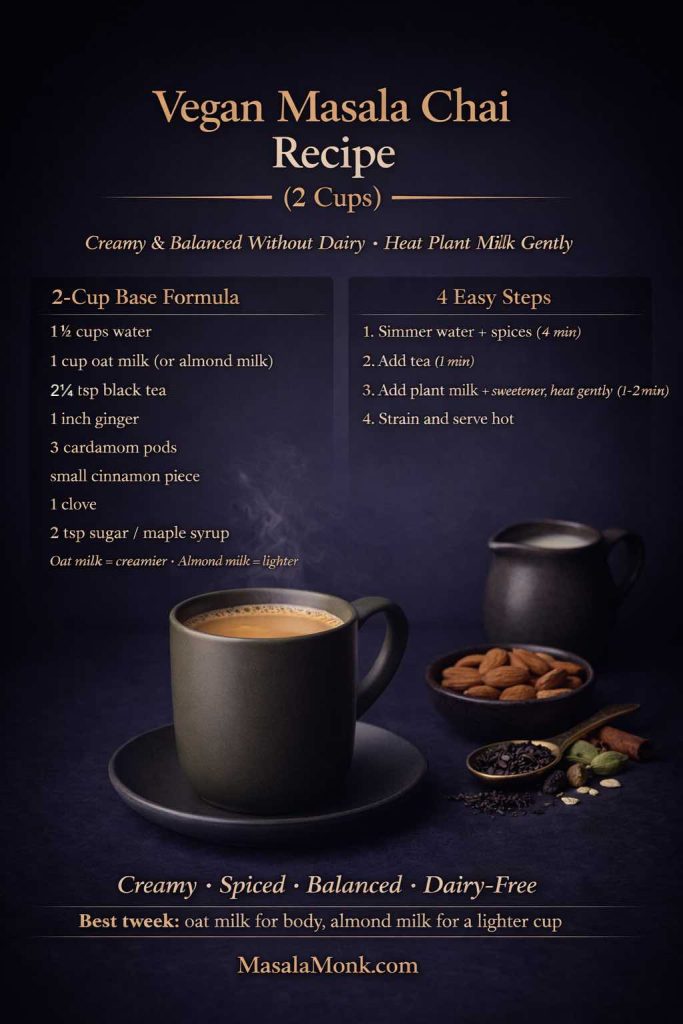
7) Vegan Masala Chai Recipe (Creamy and Balanced Without Dairy)
Vegan masala chai works beautifully when the plant milk is chosen with intention. Oat milk gives the most classic creamy feel, while almond milk creates a lighter cup.
Ingredients (2 cups)
- 1 1/2 cups water
- 1 cup oat milk (or almond milk)
- 2 1/4 teaspoons black tea
- 1 inch ginger
- 3 cardamom pods
- 1 small cinnamon piece
- 1 clove
- 2 teaspoons sugar, maple syrup, or to taste
Method
Simmer water and spices for 4 minutes. Add tea and simmer 1 minute.
Add the oat milk (or almond milk) and sweetener. Heat gently until the chai is steaming and just reaches a soft boil, then lower the heat immediately. Simmer 1 to 2 minutes and strain.
How it tastes
With oat milk, this vegan masala chai is creamy and rounded, very close in texture to a dairy version. With almond milk, the chai feels lighter and slightly nutty, and the spices taste more defined.
Ratio option for a richer vegan cup
Try:
- 3/4 cup oat milk + 1/4 cup light coconut milk
This gives extra body without tipping into heavy coconut flavor.
Minimalist Baker’s blog post on Masala Chai is another good reference for approachable dairy-free chai directions.
Also Read: 10 Low Carb Chia Pudding Recipes for Weight Loss (Keto, High-Protein, Dairy-Free)
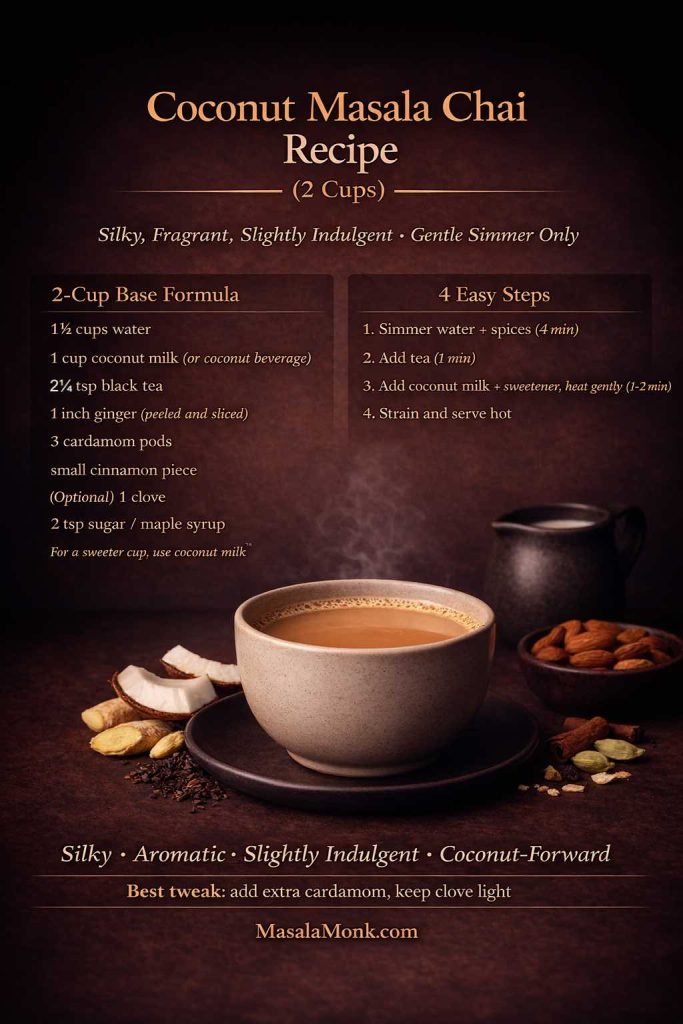
8) Coconut Masala Chai Recipe (Silky, Fragrant, Slightly Indulgent)
Coconut masala chai deserves a proper slot because it behaves differently from a standard vegan chai. The coconut adds body and gentle sweetness, so the spice balance needs a small adjustment.
Ingredients (2 cups)
- 1 1/2 cups water
- 3/4 cup light coconut milk + 1/4 cup oat milk (or 1 cup light coconut milk for a richer version)
- 2 1/4 teaspoons black tea
- 1 inch ginger
- 4 cardamom pods
- small cinnamon piece
- 1 clove (or none, if you want a cleaner coconut profile)
- 1 to 2 teaspoons sugar or maple syrup (optional, coconut milk is often naturally sweet)
Method
Simmer water and spices for 4 minutes. Add tea and simmer 1 minute.
Pour in the coconut milk (and oat milk, if using) and bring to a gentle simmer. Keep the heat moderate; avoid a hard boil. Let it simmer 2 minutes, then taste. Sweeten lightly if needed and strain.
How it tastes
This cup is creamy, aromatic, and very smooth. Cardamom and coconut are especially lovely together, and the ginger keeps the chai from feeling too rich.
If it feels too heavy
Use half coconut milk and half regular milk (or oat milk), and reduce cinnamon slightly.
Also Read: Garlic & Paprika Cabbage Rolls (Keto-Friendly Recipes) – 5 Bold Savory Twists
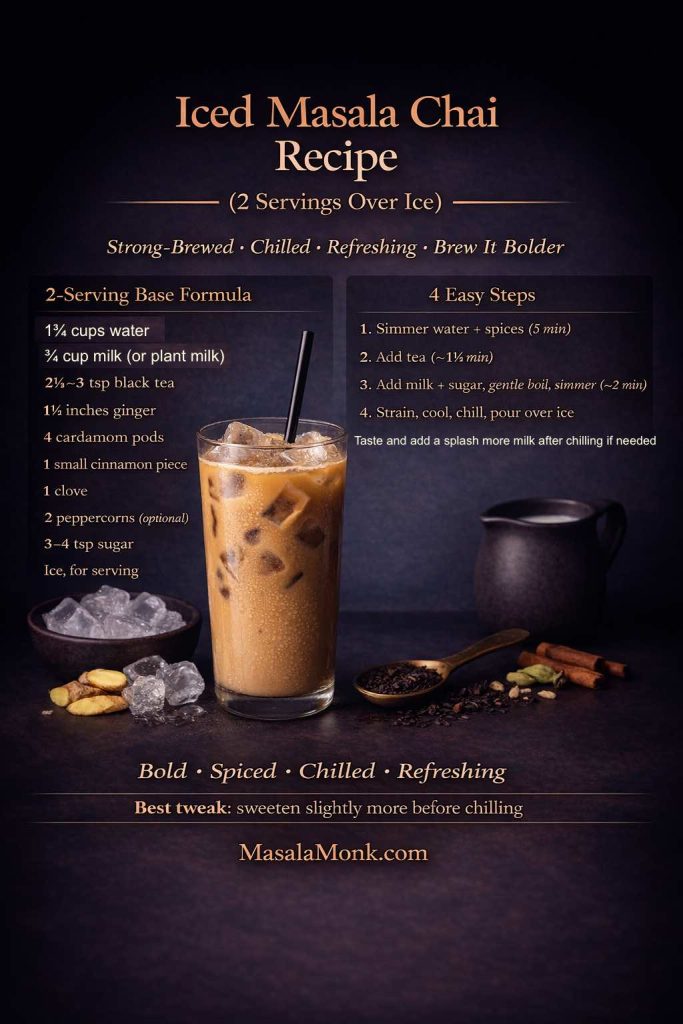
9) Iced Masala Chai Recipe (Strong-Brewed, Chilled, Refreshing)
A good iced masala chai starts with a stronger hot brew. Cold temperatures mute both sweetness and spice, so the concentrate needs more intensity than a hot cup.
Ingredients (2 servings over ice)
- 1 3/4 cups water
- 3/4 cup milk (or plant milk), plus more to adjust after chilling
- 2 1/2 to 3 teaspoons black tea
- 1 1/2 inches ginger
- 4 cardamom pods
- 1 small cinnamon piece
- 1 clove
- 2 black peppercorns (optional)
- 3 to 4 teaspoons sugar
- ice, for serving
Method
Simmer water and spices for 5 minutes to build a stronger base. Add tea and simmer 1 1/2 minutes.
Add milk and sugar, bring to a gentle boil, then simmer 2 minutes. Strain and let the chai cool. Once cooled, chill it in the refrigerator.
Serve over a tall glass of ice. Taste and add a splash more milk if needed.
How it tastes
Iced masala chai feels brighter than hot chai, especially if ginger and cardamom are slightly increased. The sweetness needs to be just a bit higher than usual so the flavors stay rounded over ice.
Epicurious’ notes on iced chai are especially helpful on brew strength and chill method (their iced chai article is here).
For a broader cold-drink detour, MasalaMonk’s iced coffee recipe collection is a fun post because it includes café-style drink ideas that pair naturally with a chilled chai routine.
Also Read: Sweetened Condensed Milk Fudge: 10 Easy Recipes
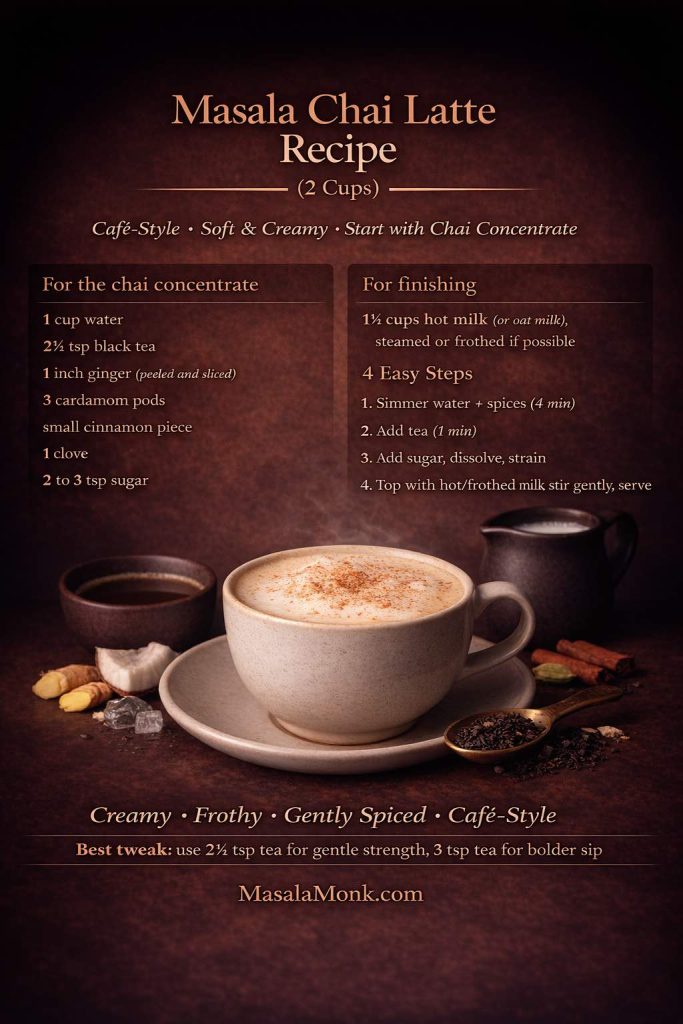
10) Masala Chai Latte (Café-Style, Soft and Creamy)
Masala chai latte is the milkier cousin of traditional stovetop chai. The spices are still present, but the texture is softer and the overall feel is more café-like.
Ingredients (2 cups)
For the chai concentrate
- 1 cup water
- 2 1/2 teaspoons black tea
- 1 inch ginger
- 3 cardamom pods
- small cinnamon piece
- 1 clove
- 2 to 3 teaspoons sugar
For finishing
- 1 1/2 cups hot milk (or oat milk), steamed or frothed if possible
Method
Make the concentrate first. Simmer water and spices for 4 minutes. Add tea and simmer 1 minute. Add sugar and stir until dissolved, then strain.
Separately, heat the milk until hot and lightly frothy. Divide the chai concentrate between two cups, then top with hot milk.
Stir gently and serve immediately.
How it tastes
This version is softer, creamier, and more café-style than traditional masala chai. The spice profile feels smoother because the milk ratio is higher.
For a stronger latte
Increase the tea in the concentrate slightly rather than adding more clove or pepper. Tea strength gives structure; extra clove just makes the cup darker and harsher.
If you like the idea of making spice-forward drink mixes for quick café-style drinks, Minimalist Baker’s instant chai latte mix is a fun format reference.
Also Read: Chicken Adobo — Step-by-Step Recipe — Classic Filipino Adobong Manok
A More Precise Way to Adjust Ratios (Without Overthinking It)
Now that you’ve seen the variants, here’s a practical way to tune your cup with better precision. Instead of changing everything at once, use these ratio patterns.
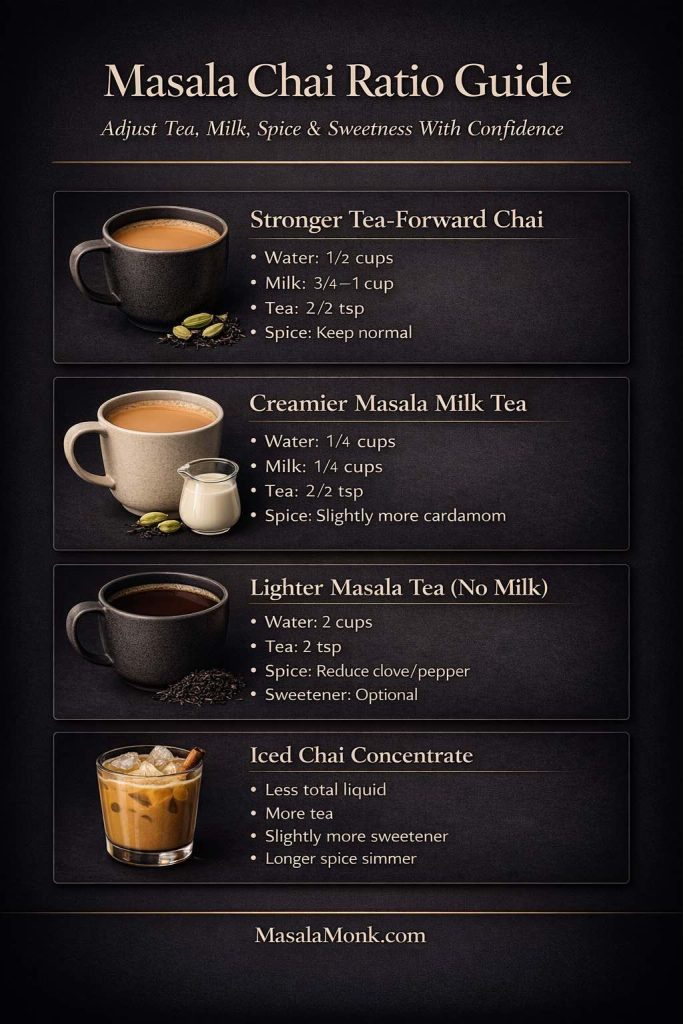
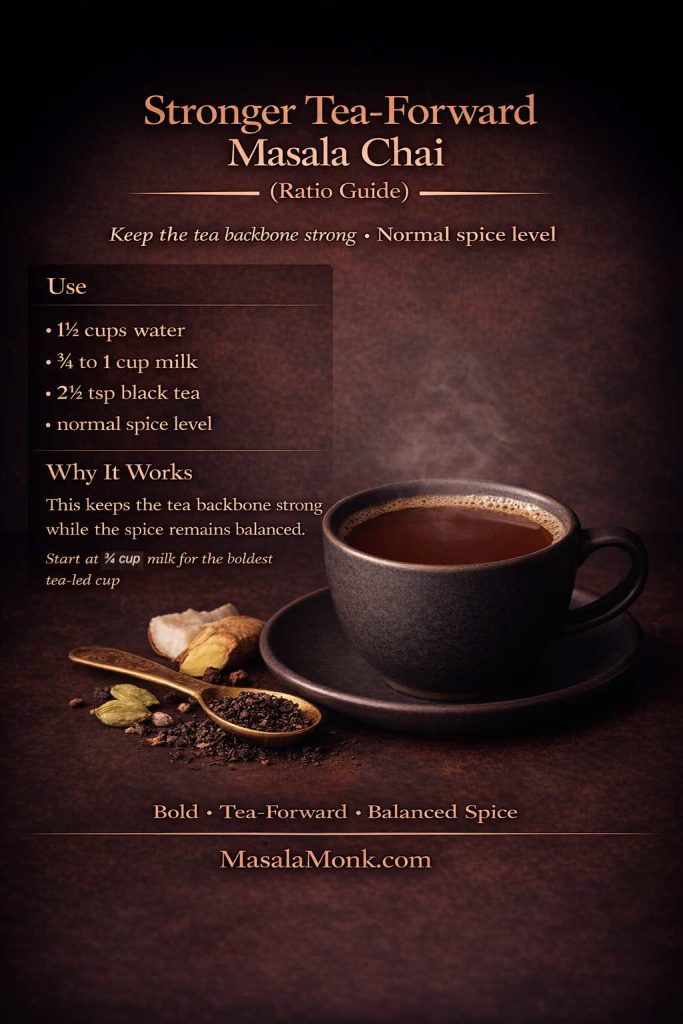
For a stronger tea-forward masala chai
Use:
- 1 1/2 cups water
- 3/4 to 1 cup milk
- 2 1/2 teaspoons tea
- normal spice level
This keeps the tea backbone strong while the spice remains balanced.
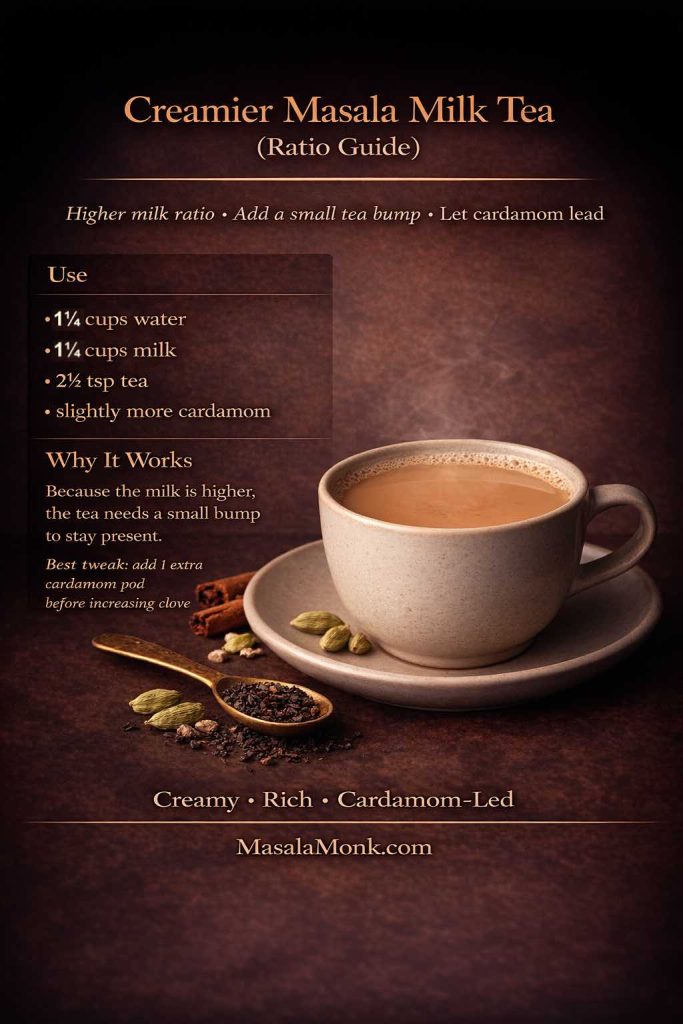
For a creamier masala milk tea
Use:
- 1 1/4 cups water
- 1 1/4 cups milk
- 2 1/2 teaspoons tea
- slightly more cardamom
Because the milk is higher, the tea needs a small bump to stay present.
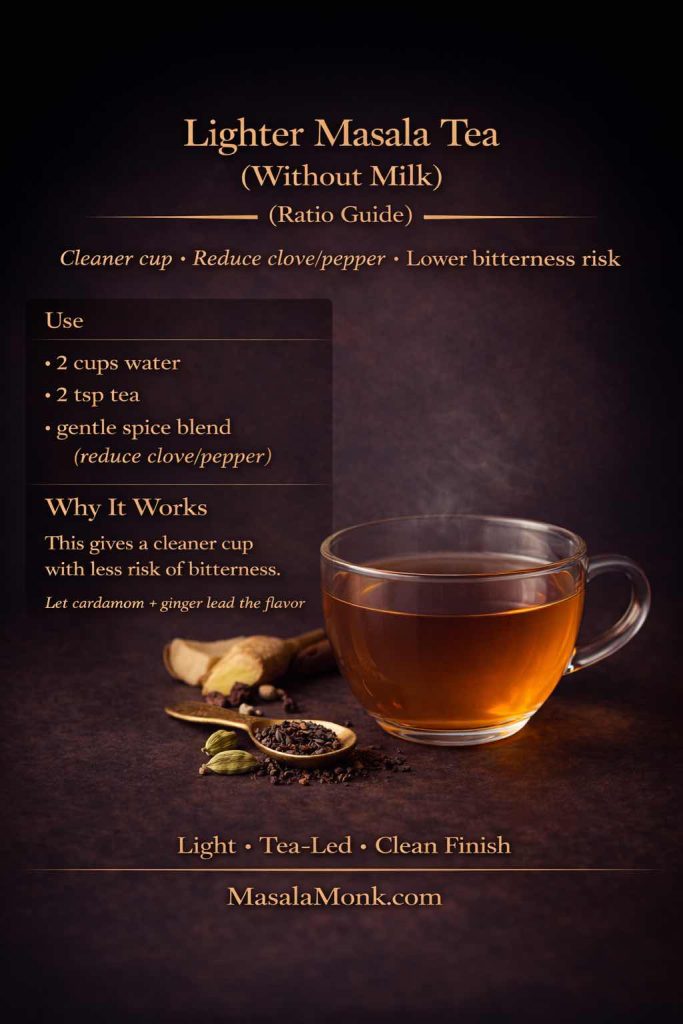
For a lighter masala tea (without milk)
Use:
- 2 cups water
- 2 teaspoons tea
- gentle spice blend (reduce clove/pepper)
This gives a cleaner cup with less risk of bitterness.
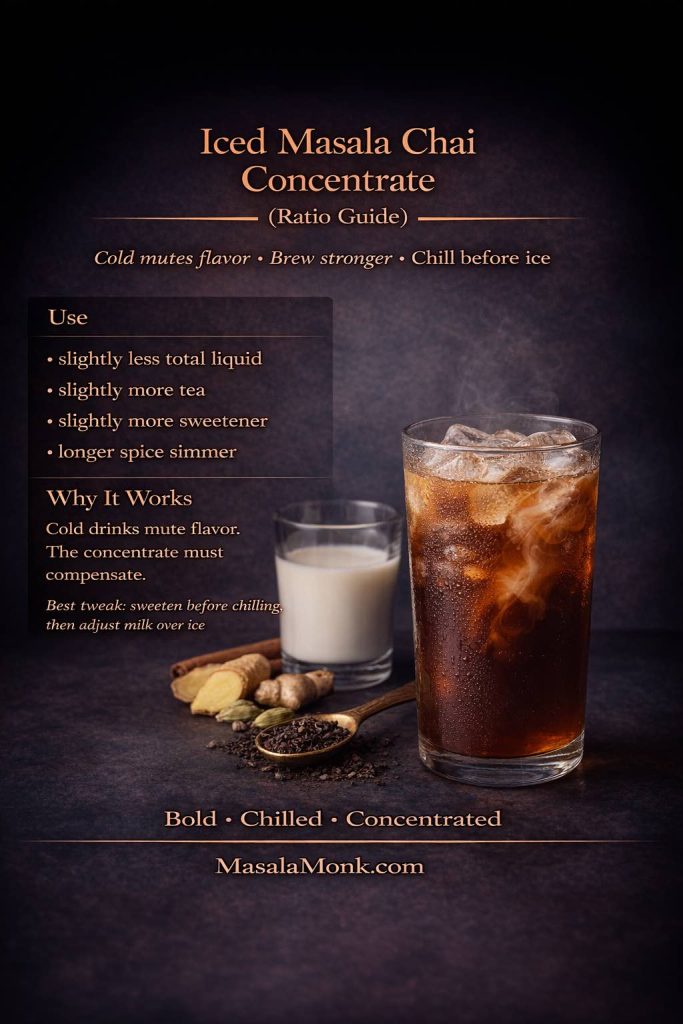
For iced masala chai concentrate
Use:
- slightly less total liquid
- slightly more tea
- slightly more sweetener
- longer spice simmer
Cold drinks mute flavor. The concentrate must compensate.
Also Read: How to make No-Bake Banana Pudding: No Oven Required Recipe
Common Chai Problems, Fixed Properly
A masala chai recipe becomes dependable when you know how to recover from mistakes. Here’s a more detailed troubleshooting section so your next cup improves immediately.
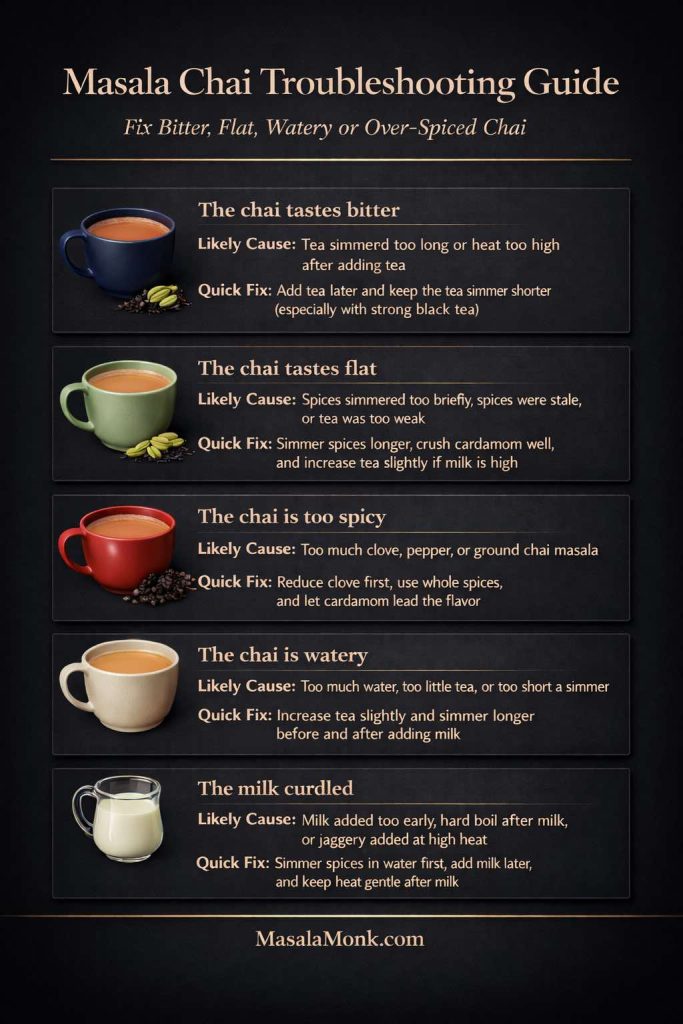
Problem: The chai tastes bitter
Why it happens:
Tea simmered too long, or the heat stayed too high after adding tea.
How to fix it next time:
- Add tea later in the process, after the spices have already simmered.
- Keep the tea simmer to 1 minute if using strong CTC.
- Increase milk slightly if you want a softer finish.
Quick rescue if it’s already made:
Add a small splash of milk and a little sweetener. It won’t erase bitterness, but it can rebalance the cup.
Problem: The chai tastes flat
Why it happens:
Spices weren’t simmered long enough, or the spices were stale. Sometimes the tea is simply too weak.
How to fix it next time:
- Simmer spices 4 to 5 minutes before adding tea.
- Crush cardamom pods properly.
- Increase tea slightly if milk is high.
MasalaMonk’s spice-forward electrolyte infusions also illustrate how whole spices extract more clearly than ground spice-heavy blends.
Problem: The chai tastes too spicy
Why it happens:
Usually too much clove or pepper. Sometimes too much ground chai masala.
How to fix it next time:
- Reduce clove first (this fixes most “too spicy” chai)
- Use whole spices instead of powder
- Let cardamom lead the aroma instead of clove
Quick rescue:
Add a little more milk and a small pinch of sugar. That often softens the sharpness.
Problem: The chai tastes watery
Why it happens:
Too much water relative to tea and milk, or too short a simmer.
How to fix it next time:
- Increase tea slightly
- Simmer spices longer before tea goes in
- Simmer 2 to 3 minutes after milk is added
A watery chai rarely needs more spice first; it usually needs more tea strength or more simmer time.
Problem: Milk curdled in the pot
Why it happens:
Ginger and milk interacted at the wrong stage or the milk was boiled too hard.
Epicurious explains this well in their fresh ginger masala chai notes, especially around ginger’s effect on milk under certain heat conditions (their recipe notes are useful here).
How to avoid it:
- Simmer ginger and spices in water first
- Add milk later
- Use gentle heat after milk is added
- Add jaggery on low heat, not a hard boil
Also Read: Sourdough Starter Recipe: Make, Feed, Store & Fix Your Starter (Beginner Guide)
How to Build Your Own House Chai (Without Losing the Plot)
Once you’ve made a few versions, you’ll notice you naturally prefer a certain style. Maybe you like a strong ginger masala chai in the morning and a softer cardamom masala chai in the evening. Maybe you want a vegan masala chai on weekdays and a richer masala chai latte on weekends.
That’s exactly how a home chai routine should evolve.
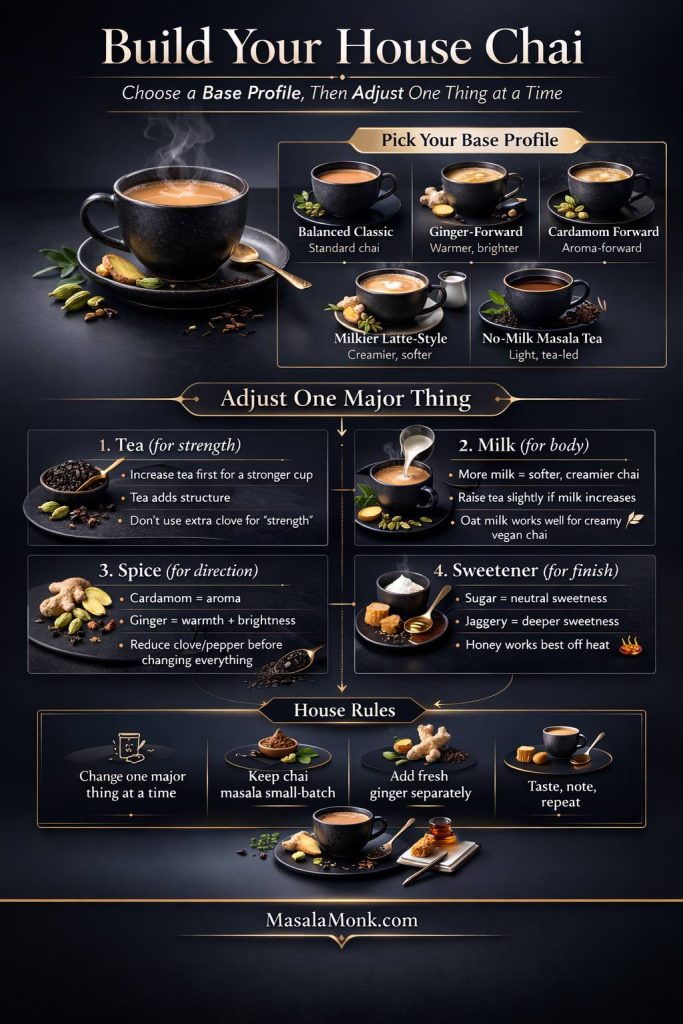
Pick your default profile
Start by choosing your “base personality”:
- Balanced classic (best all-around)
- Ginger-forward (warmer, brighter)
- Cardamom-forward (aromatic, lighter-feeling)
- Milkier latte-style (café comfort)
- No-milk masala tea (clean and light)
Once you know your default, tweaks become easier.
Change one major thing at a time
If you want a richer chai, change the milk ratio first. If you want a stronger chai, change tea quantity first. And if you want a more aromatic chai, change cardamom first.
Changing tea, milk, sugar, and spice all at once usually creates confusion because you can’t tell what improved the cup.
Keep your spice blend small and fresh
A small jar of chai masala that gets used quickly will always taste better than a huge jar that sits for months. The same principle shows up in spice blend cooking more broadly, and MasalaMonk’s garam masala recipe captures that balance-first mindset beautifully.
Masala Chai and Chai Latte: Both Belong in the Same Kitchen
A lot of people treat masala chai and chai latte as completely separate drinks, but they’re closely related. The difference is mostly in texture and ratio.
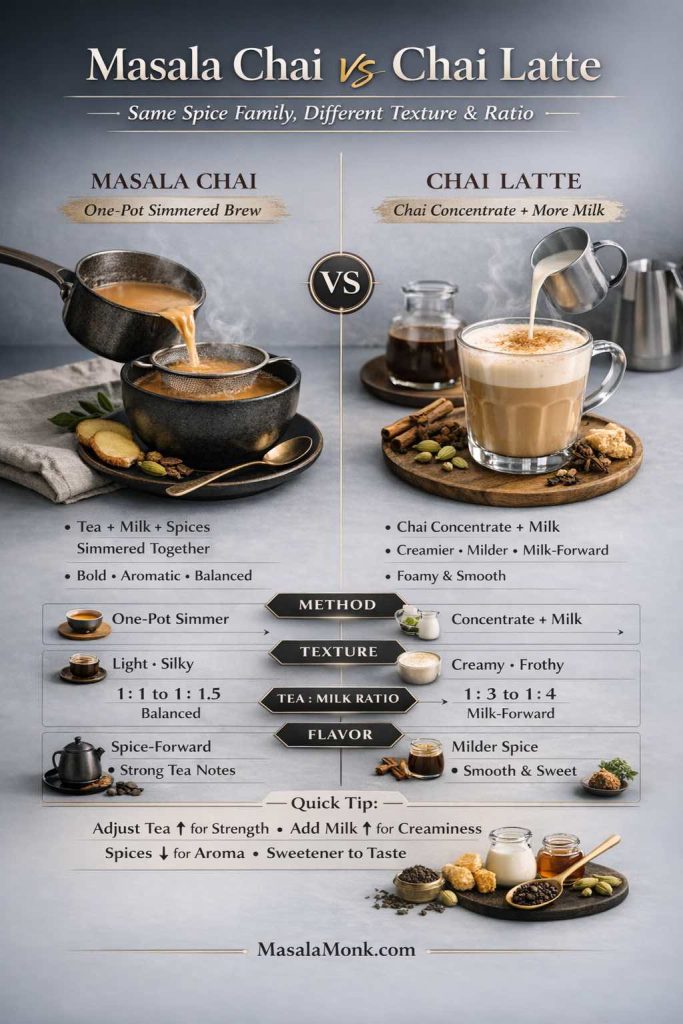
- Traditional masala chai is brewed together in one pot, with tea, spices, milk, and sweetener simmered into one drink.
- Masala chai latte starts with a stronger chai base or concentrate and adds more milk (often frothed) for a softer, café-style cup.
Both are valid. Both are delicious. And once you know the base masala chai recipe, you can move between them easily without buying anything special.
Also Read: Crock Pot Chicken Breast Recipes: 10 Easy Slow Cooker Dinners (Juicy Every Time)
A Final Word Before the Kettle Goes On
The best masala chai recipe is not the one with the most ingredients or the most dramatic method. It’s the one that gives you a cup you can repeat, trust, and adjust with confidence.
Start with the classic. Then try the ginger masala chai on a cooler day, the tulsi masala chai when you want something more herbal, or the jaggery masala tea when you want a deeper sweetness. On warmer afternoons, brew a stronger pot and pour it over ice for an iced masala chai. When you want a softer, café-like finish, turn the same base into a masala chai latte.
That flexibility is the beauty of chai. One foundation. Many moods.
And when you feel like exploring beyond the cup in front of you, MasalaMonk’s Chai Map of India and Monsoons and Masala Chai are there to keep the journey going.
Frequently Asked Questions
1. What is the difference between masala chai and masala tea?
In most everyday usage, masala chai and masala tea usually refer to the same drink: black tea brewed with spices, and often finished with milk and sweetener. That said, some people use “masala tea” more loosely for a spiced tea made without milk, while “masala chai” often implies the fuller, milk-based version. Either way, the heart of the drink is the same: tea plus a chai masala-style spice blend.
2. What is the best tea for a masala chai recipe?
For a strong, balanced masala chai recipe, bold black tea works best. Assam tea is a favorite because it stays rich and malty even after milk and spices are added. Likewise, CTC black tea is excellent for a stronger cup, especially if you want a more classic chai-shop style result. If needed, a sturdy breakfast-style black tea bag also works well.
3. What spices are used in a traditional masala chai recipe?
A traditional masala chai recipe usually includes cardamom, ginger, cinnamon, cloves, and black pepper. From there, many versions also add tulsi, fennel, or other warming spices. Even so, the best masala chai spices are not about quantity—they’re about balance. Cardamom gives aroma, ginger adds brightness, cinnamon adds warmth, while clove and pepper should be used with a lighter hand.
4. Can I make masala chai without milk?
Yes, absolutely. Masala chai without milk is a great option if you prefer a lighter, cleaner cup. In that case, the tea and spices taste more direct, so it helps to reduce cloves and black pepper slightly. Meanwhile, keeping cardamom and ginger as the main flavor notes often produces a more balanced masala tea without milk.
5. How do I make a vegan masala chai recipe taste creamy?
To make a vegan masala chai recipe taste creamy, use oat milk for the best texture. Almond milk works too, though it gives a lighter, nuttier cup. Coconut milk can also be used for a richer version, especially in a coconut masala chai variation. In addition, brew the tea and spices in water first, then add the plant milk later for a smoother finish.
6. Can I use a chai masala mix instead of whole spices?
Yes, a chai masala mix is a very practical way to make masala chai at home, especially if you drink it often. However, powdered tea masala mix is stronger by volume than whole spices, so start with a smaller amount and adjust gradually. Otherwise, the chai can turn muddy or overly intense. Fresh ginger is still worth adding separately, since it brings a brighter flavor than most dry mixes.
7. How much chai masala should I use per cup?
A good starting point for ground chai masala is about 1/8 teaspoon per cup for a mild chai, or 1/4 teaspoon per cup for a stronger masala chai recipe. If you’re using a whole spice blend, you can use a little more because the flavor extracts more gently. Instead of adding too much clove or pepper, it’s often better to simmer the chai slightly longer for a stronger result.
8. Why does my masala chai taste bitter?
Usually, bitterness comes from boiling the tea too long or too hard. Once black tea is overcooked, it can become harsh, especially in a smaller pot. To fix this, simmer the spices first, then add the tea later and keep the tea simmer short. Also, adding milk at the right stage helps soften the tannins and keep the cup smooth.
9. Why did my milk curdle in masala chai?
Milk can curdle if it’s added too early, especially when fresh ginger is boiling strongly in the pot. Because of that, it’s best to simmer the spices in water first and add milk afterward. Another common cause is adding jaggery during a hard boil. Instead, lower the heat before adding jaggery so the chai stays silky.
10. What is the difference between masala chai and chai latte?
Masala chai is traditionally brewed in one pot with tea, spices, milk, and sweetener simmered together. By contrast, a chai latte is usually made with a stronger chai concentrate and topped with more milk, often frothed or steamed. As a result, masala chai tastes more integrated and spice-forward, while a masala chai latte feels creamier and more café-style.
11. Can I make iced masala chai from the same masala chai recipe?
Yes, and it works very well if you brew it stronger. Since cold temperatures soften both sweetness and spice, iced masala chai needs a more concentrated base than hot chai. For that reason, use a little more tea, simmer the spices a bit longer, and sweeten slightly more than usual before chilling and pouring over ice.
12. Is masala chai caffeinated?
Yes, masala chai is usually caffeinated because it is made with black tea. The caffeine level depends on the tea used and how long it is simmered. If you want a lighter option, use less tea or brew it for a shorter time. Alternatively, you can use a decaf black tea and still make a flavorful masala chai recipe with the same spices.
13. Can I make masala chai with tea bags instead of loose leaf tea?
Definitely. Tea bags are a convenient way to make masala chai at home, especially for quick cups. The main thing is to use a strong black tea bag so the flavor holds up to the milk and spices. If the chai tastes weak, increase the tea slightly or reduce the milk a little next time.
14. What sweetener is best for masala chai?
Sugar is the most classic choice because it sweetens the cup without changing the flavor profile too much. Jaggery, on the other hand, gives a deeper, caramel-like sweetness and works beautifully in jaggery masala tea. Honey and maple syrup can also work, though they’re best added after the chai is taken off the heat so their flavor stays clear.
15. How do I make my masala chai stronger without making it too spicy?
To make masala chai stronger, increase the tea first—not the cloves or pepper. That keeps the drink bold and tea-forward instead of overly sharp. You can also simmer the spices a little longer before adding tea, which builds depth without making the chai taste aggressive. For extra aroma, add one more cardamom pod rather than more clove.
16. Can I make masala chai in advance?
Yes, you can make masala chai in advance, especially if you plan to serve it iced or reheat it later. For the best flavor, brew the chai slightly stronger, strain it well, and store it in the refrigerator. When reheating, warm it gently rather than boiling it again, so the tea doesn’t turn bitter.
17. What is the best milk ratio for a masala chai recipe?
A balanced starting point is about 1 1/2 cups water to 1 cup milk for a 2-cup masala chai recipe. If you prefer a creamier masala milk tea, increase the milk slightly and bump the tea up a little too. Conversely, for a lighter cup, reduce the milk and let the tea stay more prominent.
18. Can I add tulsi to masala chai?
Yes, tulsi masala chai is a popular variation and tastes wonderful when added at the right time. Instead of boiling tulsi for too long, add it near the end of the simmer so the herbal note stays fresh. Tulsi pairs especially well with cardamom and ginger, and it adds a lovely lift to the overall cup.
19. What is a good beginner masala chai recipe if I don’t like very strong spices?
A beginner-friendly masala chai recipe should focus on cardamom, ginger, and a small amount of cinnamon, with very little clove and pepper. This keeps the chai aromatic and warm without making it feel intense. After a few cups, you can slowly adjust the spices and build your own preferred chai blends.
20. Can I make masala chai without sugar?
Yes, masala chai without sugar is possible, though the cup may taste sharper because sweetness helps round out the tea and spices. If you prefer no sugar, try using a little more milk for softness or choose a naturally sweeter milk like oat milk. Another approach is to make a spiced black masala tea without milk and keep the spice blend lighter for a cleaner finish.








