
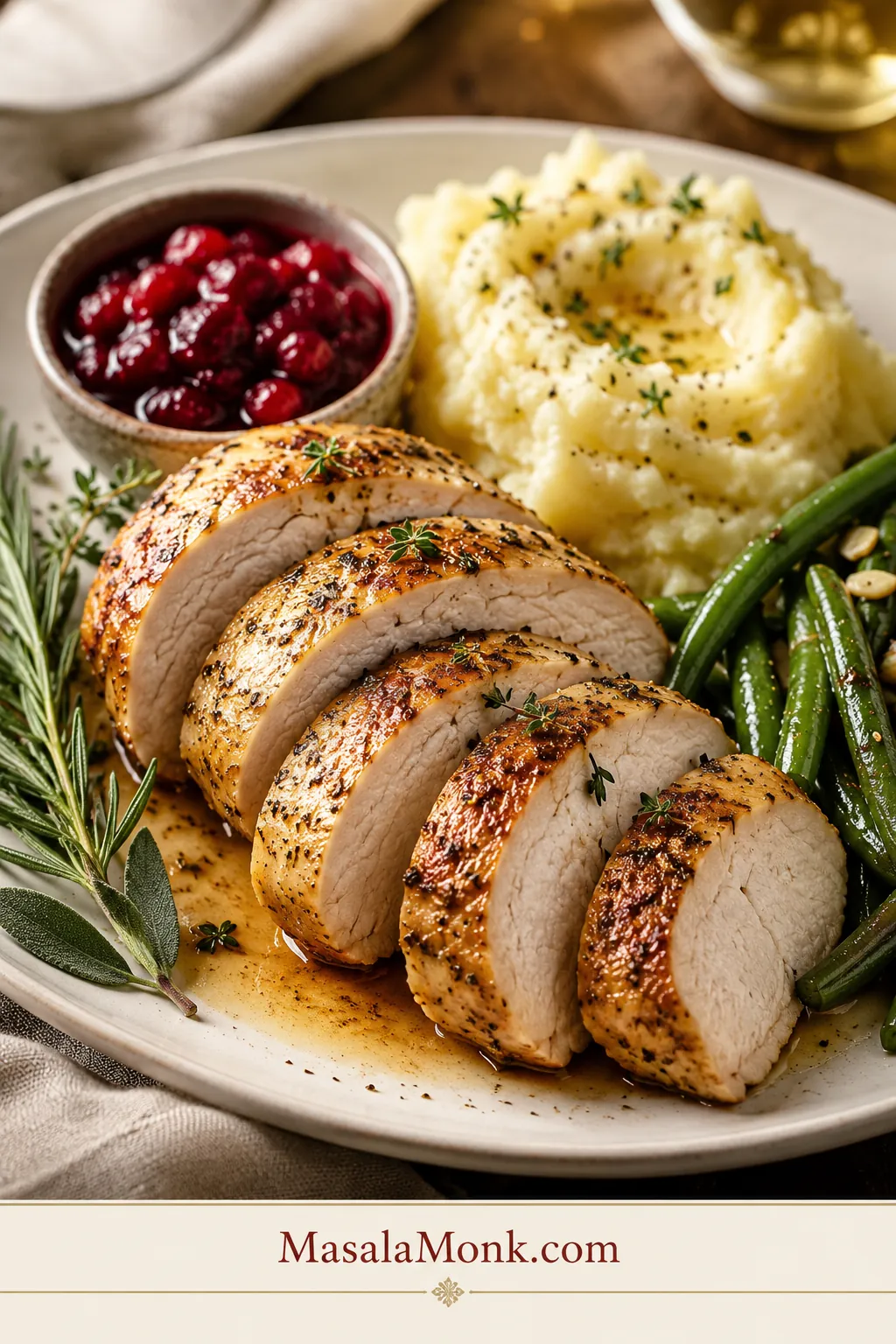
Turkey tenderloin gives you the cozy comfort of a turkey dinner without the giant bird, the carving stress, or the oven being occupied for hours. It cooks quickly, slices into tender medallions, and feels special enough for a small holiday meal while still being easy enough for a weeknight dinner.
The only catch is that it is lean. Guess the timing, and it can turn dry. Season it well, check it with a thermometer, let it rest, and it becomes one of the easiest turkey dinners you can make.
This oven-baked turkey tenderloin recipe starts with garlic, herbs, Dijon, olive oil, and a touch of maple or brown sugar for flavor and browning. Done right, you get lightly browned edges, juicy slices, and savory pan juices to spoon over potatoes, rice, vegetables, or whatever else is on the plate.
It is especially helpful when your package directions, another recipe, and your own oven all seem to disagree. The method below is written for a common 1.5 lb / 24 oz / 680 g package, but it also shows you how to adjust when your tenderloins are larger, pre-marinated, uneven, or labeled with a lower oven temperature.
Jump to: Quick Answer | Recipe | How to Cook | Cook Time Chart | Internal Temperature | Package Tips | Meal Ideas | Leftovers | FAQ
Quick Answer: How to Cook Turkey Tenderloin
To cook turkey tenderloin in the oven, season or marinate about 1.5 lb / 680 g turkey tenderloins, bake at 400°F / 204°C for about 20 to 30 minutes, and check the thickest part with an instant-read thermometer. The turkey is done when it reaches 165°F / 74°C. Rest it for 5 to 10 minutes before slicing into medallions.
| Best oven temperature | 400°F / 204°C |
| Approximate cook time | 20 to 30 minutes for 1.5 lb / 680 g |
| Safe internal temperature | 165°F / 74°C in the thickest part |
| Rest time | 5 to 10 minutes |
| Prep note | Pat dry with paper towels; do not rinse raw turkey |
| Best tool | Instant-read thermometer |
| Best texture tip | Rest first, then slice across the grain |
Once you make it once with a thermometer, turkey tenderloin stops feeling like a mystery package and starts feeling like one of the easiest ways to get a real turkey dinner on the table.
Turkey Tenderloin Quick Guide
Use this visual after the table as a quick confidence check. The clock gets you close; the thermometer confirms dinner.
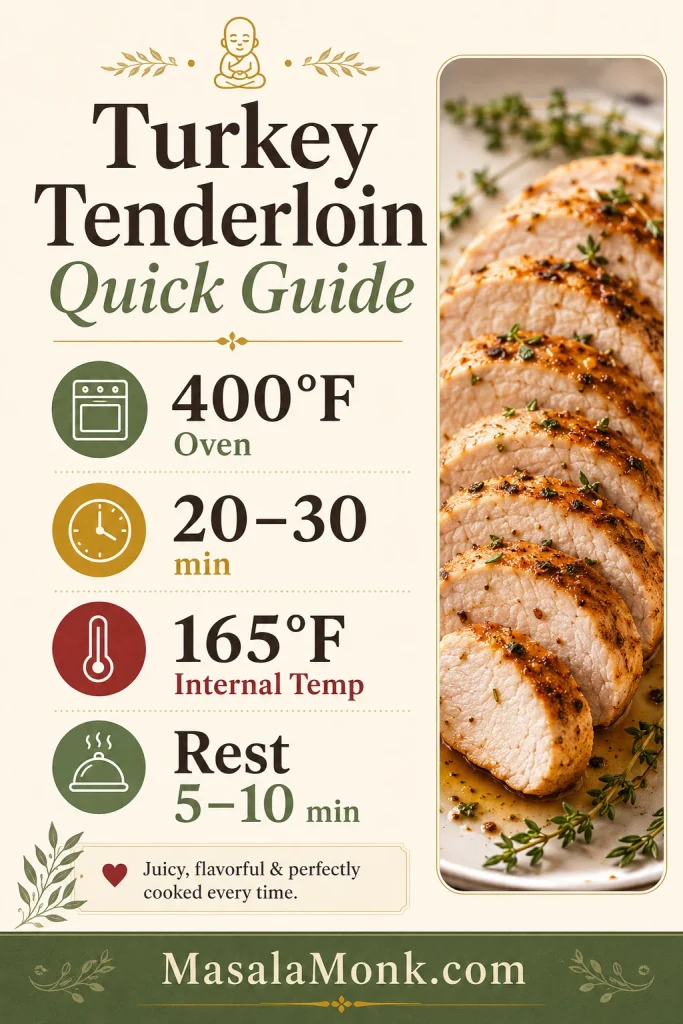
If your package contains two pieces, give them a little room in the pan. The smaller one may finish first, and that is normal.
Make This Turkey Tenderloin When
This is the recipe for when you want turkey dinner energy without roasting a whole turkey, wrestling with carving, or eating dry leftovers for days.
- You brought home turkey tenderloins and do not want to guess what the label means.
- You want turkey dinner comfort without roasting a whole bird.
- You need a small holiday-style main dish for 2 to 4 people.
- You want lean protein that still slices juicy and feels like a real dinner.
- A full turkey breast feels too big, but chicken feels too ordinary.
- You want leftovers for sandwiches, wraps, salads, bowls, or meal prep.
Juicy Oven-Baked Turkey Tenderloin Recipe
Juicy Oven-Baked Turkey Tenderloin
A juicy oven-baked turkey tenderloin with garlic, herbs, Dijon, a little maple or brown sugar, and savory pan juices you can spoon over the slices. It is quick enough for weeknight dinner but cozy enough for mashed potatoes, gravy, cranberry sauce, roasted vegetables, or a small holiday meal.
Recipe Snapshot
| Recipe | Juicy Oven-Baked Turkey Tenderloin |
| Servings | 4 |
| Prep time | 10 minutes |
| Optional marinade time | 30 minutes to 4 hours |
| Cook time | 20 to 30 minutes |
| Rest time | 5 to 10 minutes |
| Total time | 35 to 50 minutes, excluding longer marination |
| Main method | Oven baked |
Ingredients
This recipe is written for a common 1.5 lb / 24 oz / 680 g package of turkey tenderloins, usually sold as two pieces.
| Ingredient | Amount |
|---|---|
| Turkey tenderloins | 1.5 lb / 24 oz / 680 g |
| Olive oil | 2 tablespoons / 30 ml |
| Apple cider vinegar or lemon juice | 1 tablespoon / 15 ml |
| Dijon mustard | 1 tablespoon / 15 g |
| Brown sugar or maple syrup | 1 tablespoon / about 12 to 15 g or 15 ml |
| Garlic | 2 to 3 cloves, minced |
| Kosher salt | ¾ to 1 teaspoon / about 4 to 6 g |
| Black pepper | ½ teaspoon |
| Paprika or smoked paprika | 1 teaspoon |
| Dried thyme | 1 teaspoon |
| Dried rosemary or rubbed sage | ½ teaspoon |
| Butter, optional | 1 to 2 tablespoons / 14 to 28 g |
| Chicken or turkey broth, optional | ¼ to ½ cup / 60 to 120 ml |
Instructions
- Pat the turkey dry. Remove the tenderloins from the package and pat them dry with paper towels. Do not rinse raw turkey.
- Mix the seasoning. In a small bowl, stir together olive oil, vinegar or lemon juice, Dijon mustard, brown sugar or maple syrup, garlic, salt, pepper, paprika, thyme, and rosemary or sage.
- Season or marinate. Rub the mixture all over the turkey. For deeper flavor, cover and refrigerate for 30 minutes to 4 hours. For a quick dinner, bake right away.
- Preheat the oven. Heat the oven to 400°F / 204°C.
- Arrange the tenderloins. Place them in a baking dish, on a rimmed sheet pan, or in an oven-safe skillet. Leave space between the pieces. Dot with butter if using. Add a splash of broth to the pan if you want extra pan juices.
- Bake. Bake for 20 to 30 minutes, depending on thickness. Start checking at 20 minutes if the pieces are small or thin.
- Check the temperature. Insert an instant-read thermometer into the thickest part. The turkey is done when it reaches 165°F / 74°C.
- Rest. Move the turkey to a cutting board and rest for 5 to 10 minutes.
- Slice and serve. Slice across the grain into medallions. Spoon the pan juices over the top.
The slices should look moist and clean, with enough garlicky pan juice to gloss the top instead of drowning it.
Cook’s note: If the top browns too quickly before the center is done, loosely tent the pan with foil. For more color at the end, uncover during the last few minutes.
Package note: Larger, thicker, or heavily marinated tenderloins may need more time. If your label gives a lower oven temperature, you can follow it and expect a longer cook time. Either way, check the center before serving.
Key Cooking Cues
You do not need to babysit turkey tenderloin, but you do need to know what success looks like. The win is not just that the turkey is cooked; it is slicing into moist medallions that still look tender instead of chalky.
| Cue | What to look for |
|---|---|
| Surface | Lightly browned, seasoned, and glossy, not dark or sticky-burned. |
| Thickest part | 165°F / 74°C on an instant-read thermometer. |
| Pan juices | Amber, spoonable, and savory, not blackened or fully dried out. |
| Rest | 5 to 10 minutes before slicing. |
| Slice | Moist medallions that hold together cleanly, not stringy or chalky. |
Slice Turkey Tenderloin Into Medallions
Clean medallion slices show what the finished texture should look like: tender, tidy, and moist rather than chalky.
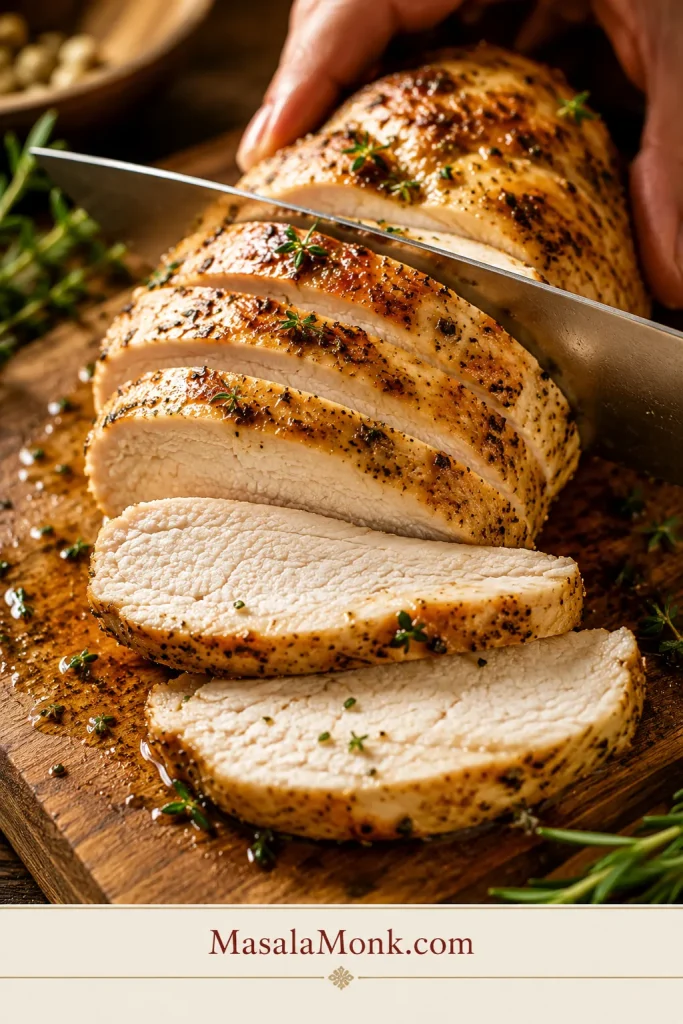
If you remember only three things: do not rinse the raw turkey, do not guess the internal temperature, and do not slice it the second it comes out of the oven.
What Is Turkey Tenderloin?
If the label on your package feels a little confusing, you are not alone. Turkey tenderloin is usually a lean, boneless cut from the turkey breast area, sold in long, narrow pieces that cook much faster than a whole turkey breast.
What Raw Turkey Tenderloins Look Like
The shape is a useful clue. Long, narrow tenderloins cook differently from a larger roast-style turkey breast, even when both come from the breast area.
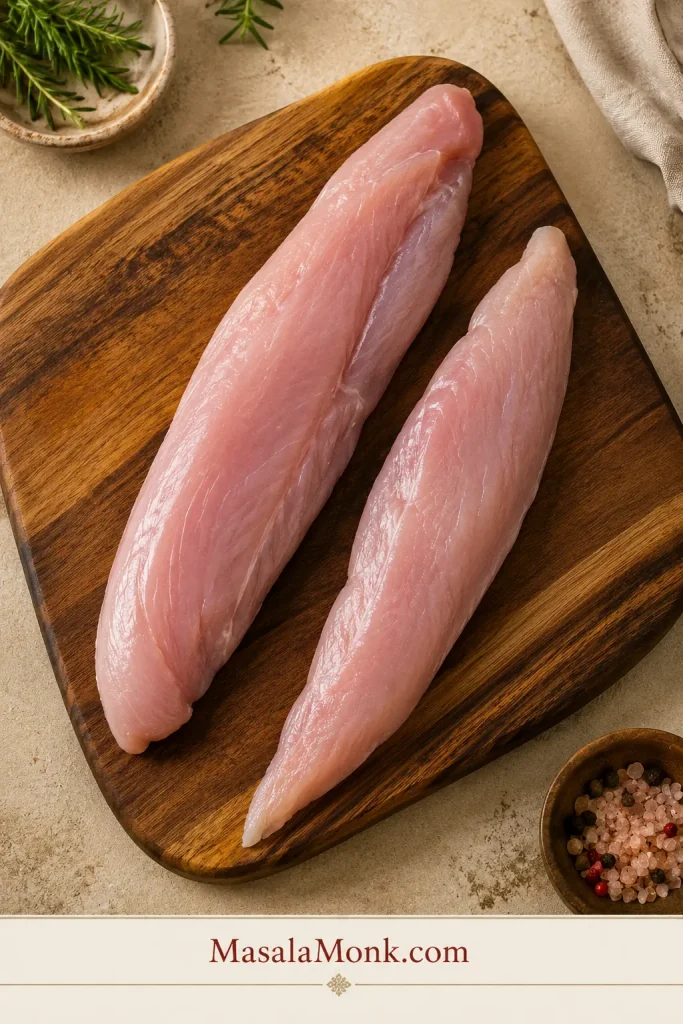
Most packages include two pieces. In stores and recipes, you may also see names like turkey loin, turkey breast tenderloin, turkey fillet, turkey breast fillet, turkey tenders, or turkey medallions. The labels can vary, so weight, shape, and thickness matter more than the exact wording.
The short version: check the shape and weight more than the exact name. A narrow 1 to 1.5 lb package will cook very differently from a larger roast-style turkey breast.
Turkey Tenderloin vs Turkey Breast
This cut comes from the breast area, but it is not the same as a whole turkey breast. A whole breast is larger and takes longer to cook. Tenderloins are smaller, leaner, and usually cook in under 30 minutes in a hot oven.
Turkey Tenderloin vs Turkey Loin
“Turkey loin” is often used as a shorter name for the same cut or for turkey breast tenderloin. If the package is boneless, narrow, and around 1 to 1.5 lb, this oven method should work well. A much larger package will need more time, so check the thickest part before serving.
Turkey Tenderloin vs Turkey Medallions
Medallions are usually slices cut from tenderloin. They cook faster because they are smaller and thinner. When cooking raw medallions, start checking much earlier than you would for whole tenderloins.
Turkey Tenderloin vs Pork Tenderloin
They can look similar, but they are different meats with different cooking rules. For turkey, cook the center to 165°F / 74°C. If you are actually cooking pork, use this pork tenderloin in oven guide instead.
Why This Recipe Works
- A hot oven gives the outside color before the lean center dries out. That is why 400°F / 204°C works so well for the main method.
- Dijon, garlic, herbs, and a little sweetness make mild turkey taste fuller. The seasoning creates a savory, lightly glossy surface instead of plain white meat.
- It works whether you planned ahead or not. Marinate when you have time, or use the same mixture as a quick wet rub while the oven heats.
- The thermometer matters because package sizes vary more than people expect. The clock gets you close; the reading gives you confidence.
- A short rest protects the slices. Resting keeps the juices from running all over the cutting board the moment you slice.
- The pan juices finish the plate. Spoon them over the sliced turkey, potatoes, rice, or vegetables so the meal feels complete.
Ingredients and Smart Swaps
The ingredient list is short, but each piece has a job. Think of the seasoning as backup for a lean cut: oil for moisture, Dijon for depth, garlic and herbs for comfort, and a touch of sweetness for browning.
Turkey Tenderloin Marinade Ingredients
Before mixing, notice the balance: oil for coating, Dijon and acid for brightness, herbs and garlic for flavor, and a little sweetness for browning.
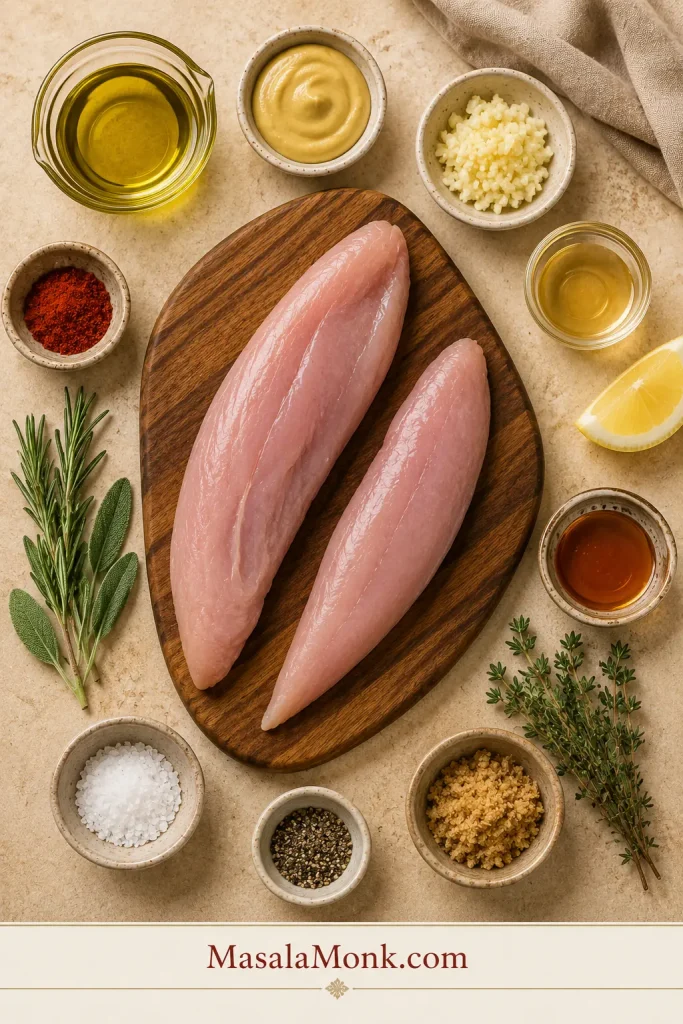
- Turkey tenderloins: A 1.5 lb / 680 g package usually feeds 4 people. If your package is much larger, use the same flavoring but expect a longer cook time.
- Olive oil: Helps the seasoning coat the meat and protects the surface in the oven. Avocado oil also works.
- Apple cider vinegar or lemon juice: Adds brightness. Use a modest amount because too much acid can make the outside texture less pleasant.
- Dijon mustard: Adds savory depth and helps the seasoning cling. Whole-grain mustard also works. If you skip mustard, add a little extra olive oil so the rub still spreads easily.
- Brown sugar or maple syrup: Helps the outside brown and balances the acid. You can skip it, but the surface may look less glossy and caramelized.
- Garlic: Fresh garlic gives the best flavor. Garlic powder works for a faster dry-rub version.
- Salt and pepper: Essential for a lean cut. Use less salt if the turkey is already seasoned, brined, or pre-marinated.
- Paprika: Adds color and mild warmth. Smoked paprika gives a deeper, slightly smoky flavor.
- Thyme, rosemary, or sage: Classic turkey herbs. If using dried herbs, crush them lightly between your fingers before adding them so they smell fresher.
- Butter: Optional, but it makes the pan juices richer.
- Broth: Optional. A splash in the pan helps create juices for spooning over the sliced turkey.
If your turkey is already packaged in a sweet or salty marinade, reduce the added salt and sugar. You can still use the oven method, but let the label guide how much extra seasoning you add.
Equipment That Actually Matters
The thermometer is the one tool that turns this from a guessing game into a calm dinner. Everything else is simple.
- Instant-read thermometer: The best way to avoid undercooked or dry turkey.
- Baking dish, rimmed sheet pan, or oven-safe skillet: Any of these will work for the oven method.
- Small bowl: For mixing the marinade or wet rub.
- Tongs: For moving the turkey without piercing it repeatedly.
- Foil: For loose tenting if the top browns too quickly.
- Cutting board and sharp knife: For clean medallion slices after resting.
Marinade or Dry Rub: Which Is Better for Turkey Tenderloin?
Both work. The marinade is nice when you have time, but the dry-rub version is not a compromise. It is the version you make when dinner needs to happen now.
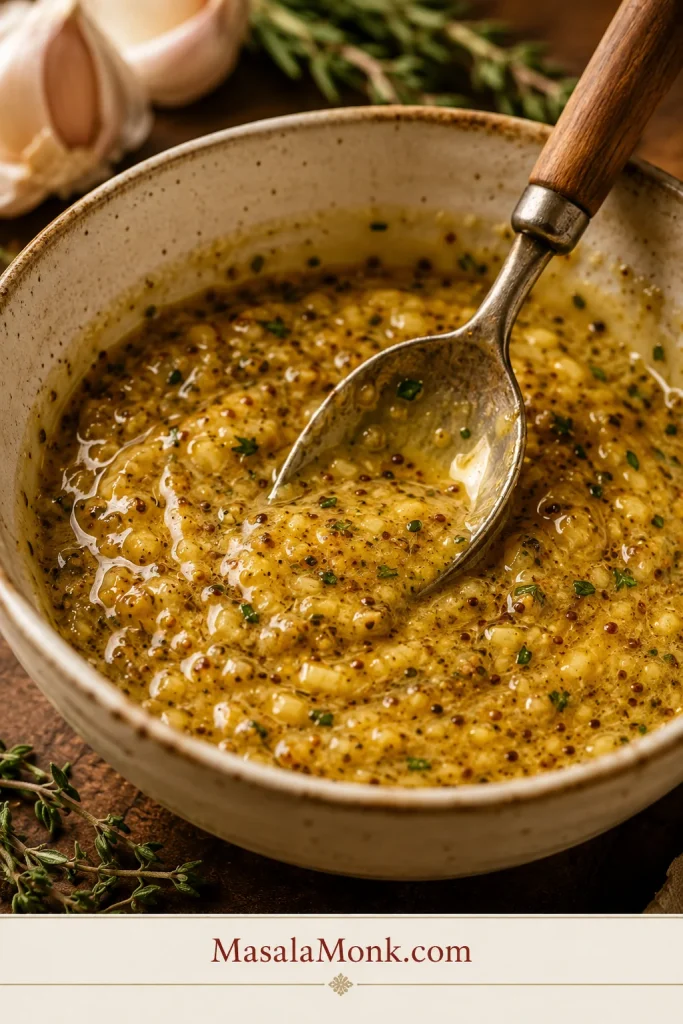
Mix the Garlic Herb Dijon Marinade
For the wet-rub version, stop when the mixture is glossy and spoonable. It should cling to the turkey, not pool in the pan.
- Garlic herb marinade: Best for classic juicy oven-baked turkey. Marinate for 30 minutes to 4 hours.
- Dry rub: Best for a fast weeknight dinner. Season and bake right away.
- Maple mustard: Best for cozy fall or holiday flavor with mashed potatoes, sweet potatoes, or cranberry sauce.
- Cajun or BBQ: Best for a bolder dinner with rice, roasted potatoes, slaw, or corn.
- Balsamic rosemary: Best for a deeper, slightly sweeter dinner flavor with roasted vegetables.
For this lemon or vinegar-style marinade, 30 minutes to 4 hours is enough. Longer is not always better, especially with a lean cut.
How to Cook Turkey Tenderloin in the Oven
The oven method is simple: dry the surface, season well, give the pieces room, and let the reading tell you when dinner is ready.
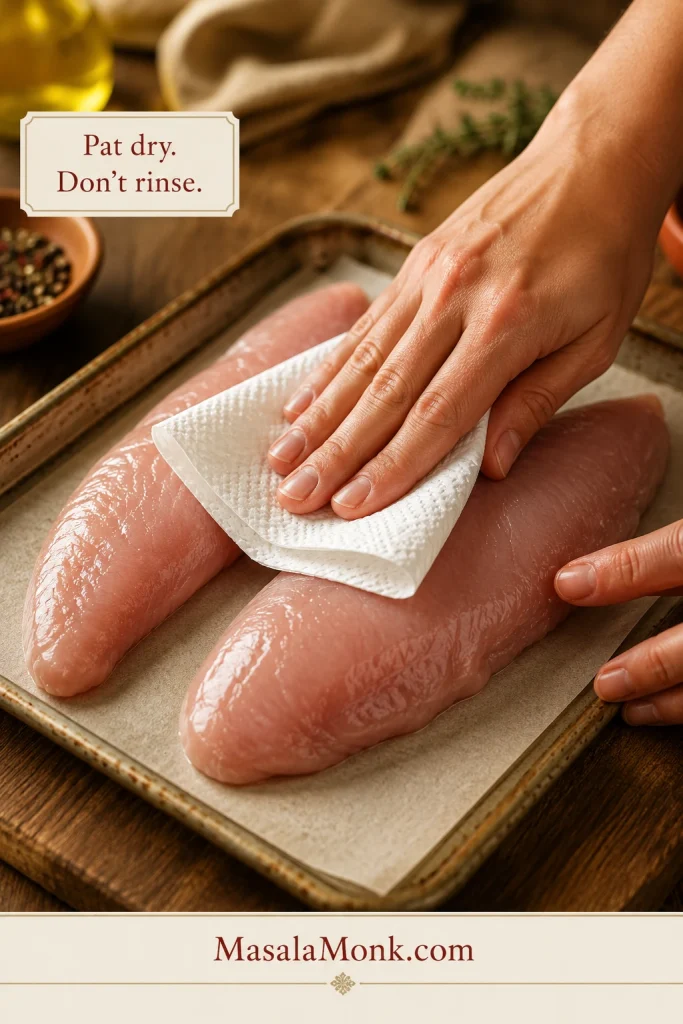
1. Pat the turkey dry
Remove the tenderloins from the package and pat them dry with paper towels. Do not rinse raw turkey. A dry surface helps the seasoning stick and the outside brown better.
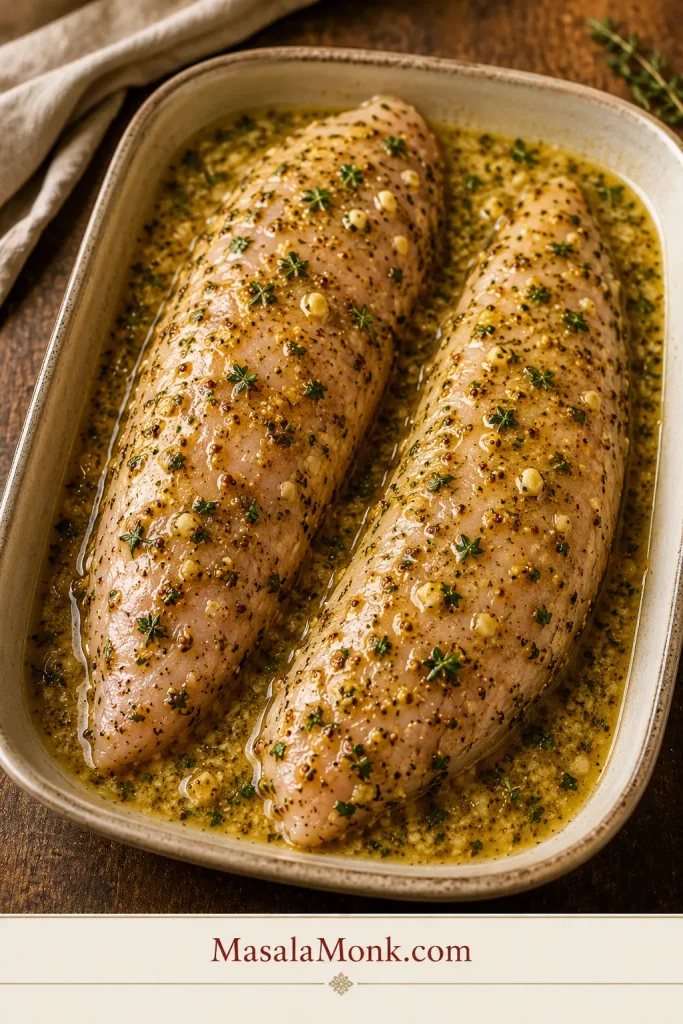
2. Season or marinate
Coat the turkey with the garlic herb mixture. If there is time, refrigerate it for 30 minutes to 4 hours. For a same-day dinner, let the seasoned turkey sit only while the oven preheats.
3. Preheat the oven
Heat the oven to 400°F / 204°C. This gives the surface a better chance to brown before the lean center dries out.
4. Arrange the tenderloins
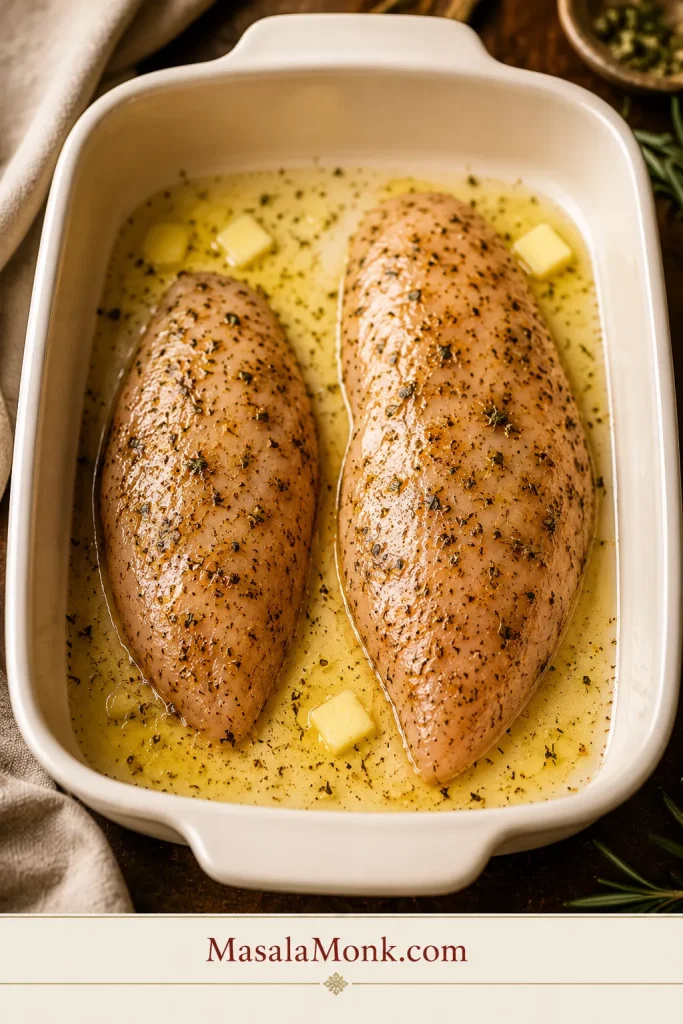
Place the pieces in a baking dish, on a rimmed sheet pan, or in an oven-safe skillet. Leave space between them. Add butter on top or a small splash of broth around the turkey if you want extra pan juices.
5. Bake until almost there
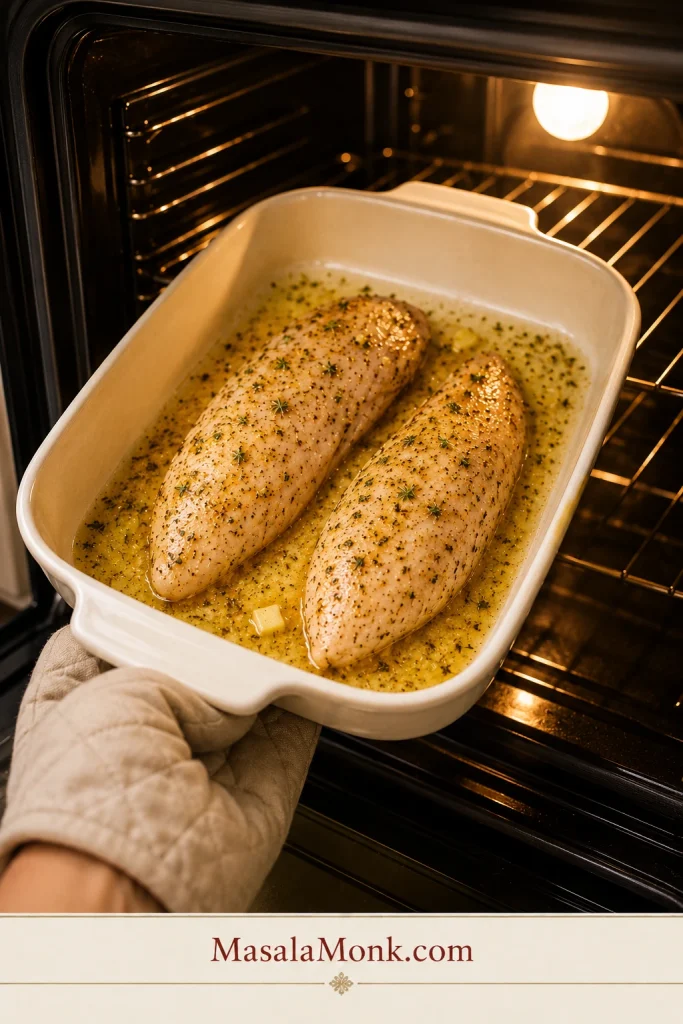
Bake for about 20 to 30 minutes, depending on thickness. Start checking at 20 minutes for smaller pieces. For common two-piece packages, check the smaller piece first; it often finishes before the thicker one.
6. Check the thickest part
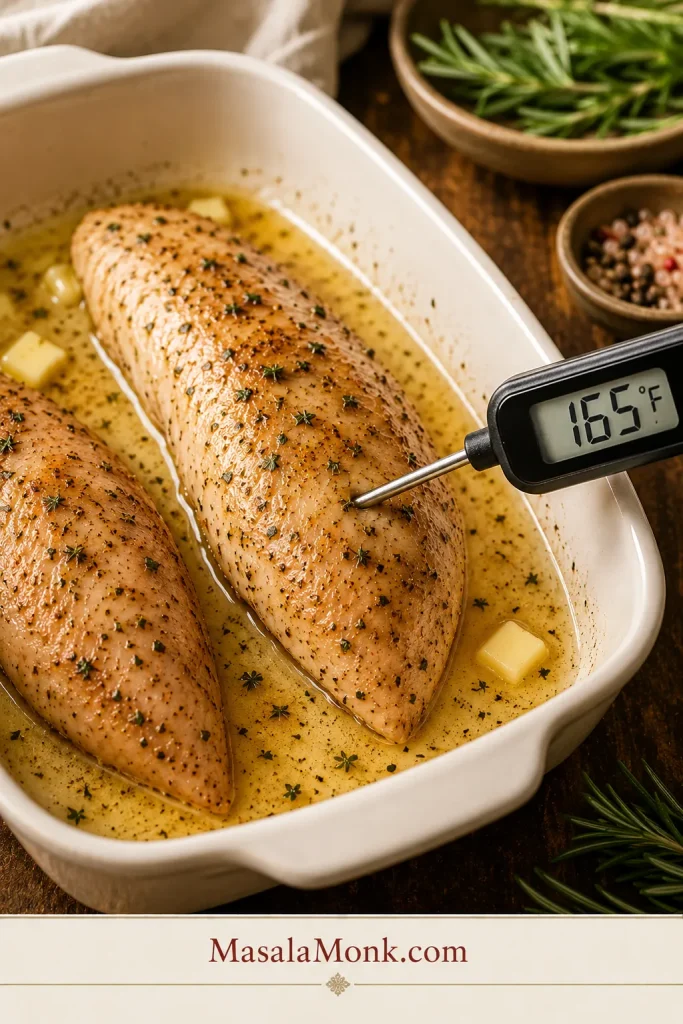
Use an instant-read thermometer in the thickest part. The safe final internal temperature for turkey is 165°F / 74°C. Do not rely only on color because turkey can look slightly pink even when it is safely cooked.
7. Rest and slice
Move the turkey to a cutting board and rest for 5 to 10 minutes. Then slice across the grain into medallions and spoon over any pan juices.
If you have seen lower oven temperatures on packages or other recipes, this is where the confusion usually starts.
Why This Recipe Uses 400°F, Even If Your Package Says 325°F or 350°F
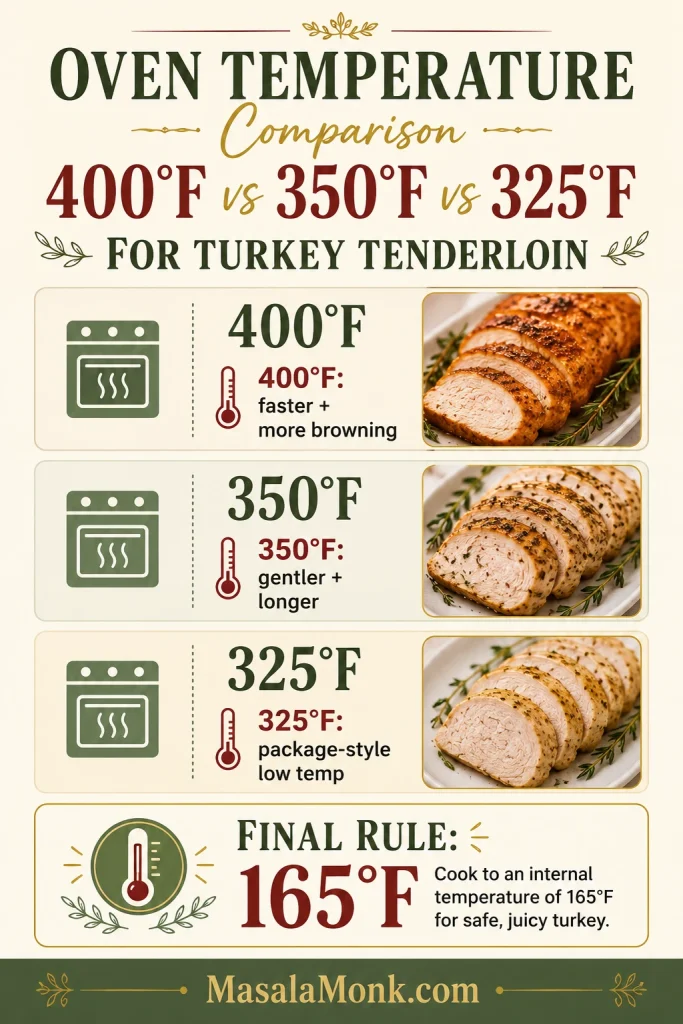
This recipe uses 400°F / 204°C because turkey tenderloin is small and lean. A hotter oven cooks it quickly, helps the outside brown, and keeps the method simple for weeknight cooking.
You may see other recipes or package directions use 350°F / 177°C or 325°F / 163°C. Those temperatures can work too, especially for larger packaged tenderloins, pre-marinated pieces, covered pans, or brand-specific instructions. They usually take longer and may brown less.
Package rescue: If your label says 325°F or 350°F, you can follow it and expect a longer cook time. If you use this 400°F method instead, start checking earlier. Either way, the middle should reach 165°F / 74°C before serving.
400°F vs 350°F vs 325°F for Turkey Tenderloin
This is the package-confusion checkpoint: lower ovens can work, but 400°F gives faster browning for a common 1.5 lb package.
When it works, the slices should feel tender but not fragile, with a garlicky, lightly sweet edge and enough savory pan juice to make the plate feel finished.
Turkey Tenderloin Cook Time and Temperature Chart
This is the part that makes turkey tenderloin feel less fussy: you only need a close time range and one good temperature check.
Turkey Tenderloin Cook Time Guide
This chart helps you choose a method, but it does not replace the thermometer. Package size and appliance strength still matter.
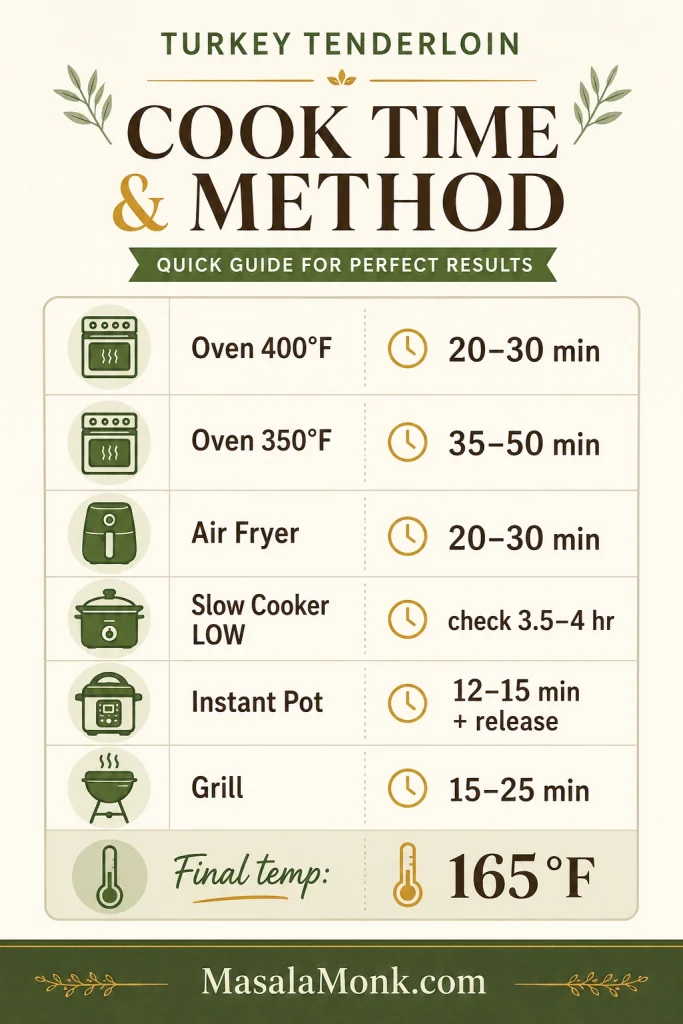
| Method | Temperature or setting | Approximate time | Best for |
|---|---|---|---|
| Oven, no sear | 400°F / 204°C | 20 to 30 minutes | Easiest main method |
| Oven, seared first | Sear, then 400°F / 204°C | Sear 2 to 3 minutes per side, then bake 15 to 22 minutes | Best browning and deeper flavor |
| Gentle oven | 350°F / 177°C | 35 to 50 minutes, longer for large packages | Packaged or pre-marinated tenderloins |
| Covered bake | 375°F to 400°F / 190°C to 204°C | 25 to 35 minutes | Tenderloin with vegetables or broth |
| Air fryer | 360°F to 400°F / 182°C to 204°C | 20 to 30 minutes | Fastest method |
| Slow cooker | LOW | Start checking around 3.5 to 4 hours | Hands-off cooking |
| Instant Pot | High pressure | 12 to 15 minutes, plus release time | Moist turkey and easy gravy |
| Grill | Medium heat, about 350°F / 177°C | 15 to 25 minutes | Smoky flavor |
Important: Time is only an estimate. Thickness, starting temperature, marinade, pan size, oven accuracy, and appliance strength all change the cook time.
The goal is not just “done.” The goal is tender slices, a lightly browned outside, and enough pan juice to spoon over every bite.
Internal Temperature for Turkey Tenderloin
Turkey tenderloin should reach a final internal temperature of 165°F / 74°C. Insert the thermometer into the thickest part and avoid touching the pan. If you have two pieces of different sizes, check both.
Turkey Tenderloin Internal Temperature Guide
This is the safety checkpoint for the whole recipe. Times change, but the thickest part still needs to reach 165°F.
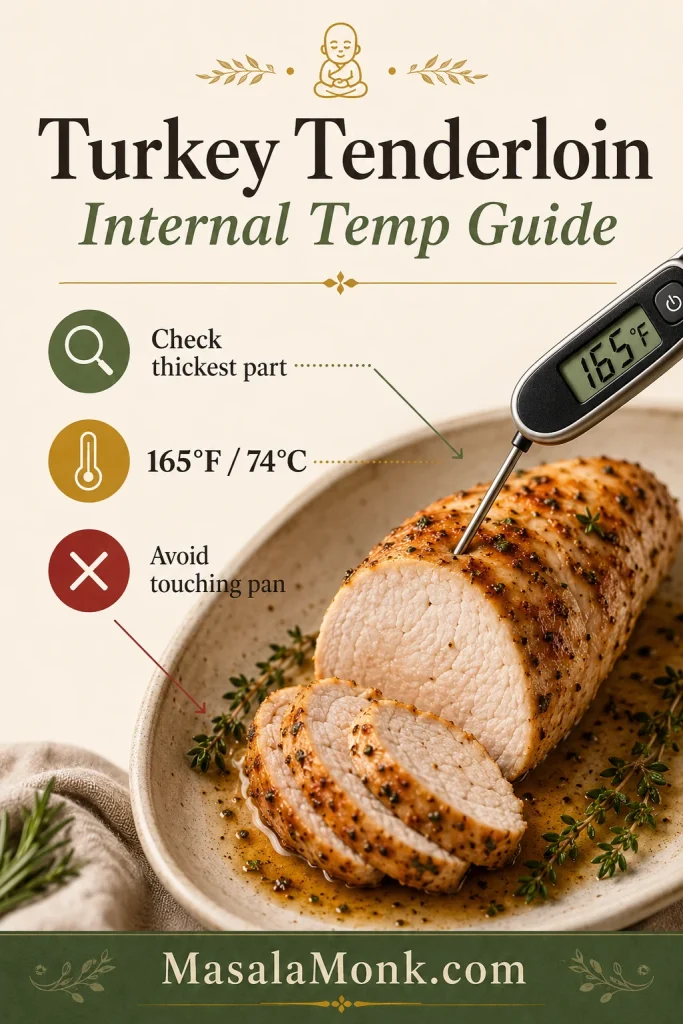
A thermometer is better than judging by color. Turkey can sometimes stay slightly pink even when cooked safely, and lean turkey can turn dry if you keep baking it only because it does not look the way you expected.
For home cooking, the simplest safe target is 165°F / 74°C before serving. You can read more about safe poultry temperatures from the USDA FSIS safe minimum internal temperature chart.
One more safety note: pat raw turkey dry with paper towels instead of rinsing it. Rinsing raw poultry can spread bacteria around the sink and nearby surfaces. The USDA explains more in its guidance on washing meat and poultry.
How to Keep Turkey Tenderloin Juicy
The main reason turkey tenderloin turns dry is overcooking. It is a lean cut, so it does not have much fat to protect it. A few small habits make the difference between juicy medallions and dry white meat.
Rest Turkey Tenderloin Before Slicing
Resting is not an optional delay. It is the pause that helps the juices stay in the turkey instead of running onto the cutting board.
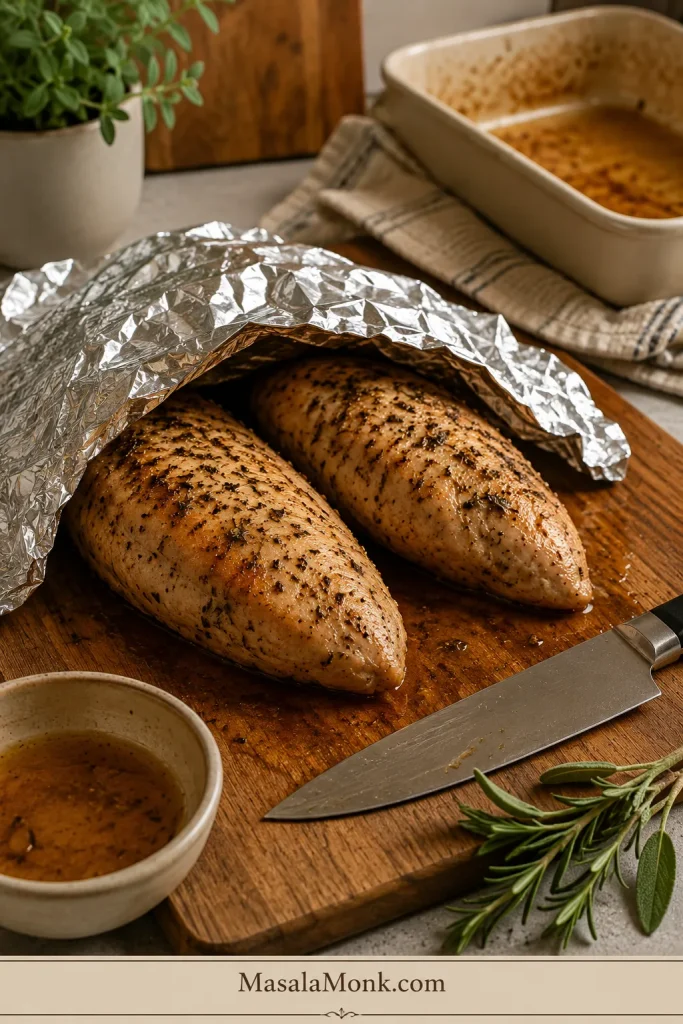
- Stop on time. Pulling the turkey at the right temperature matters more than any marinade.
- Add oil, butter, or marinade. A little fat helps the surface stay moist and flavorful.
- Rest before slicing. Give the tenderloin 5 to 10 minutes so the juices settle.
- Avoid cutting into it repeatedly. Check with a thermometer instead of slicing open the meat while it bakes.
- Watch smaller pieces. Thin tenderloins, medallions, and tenders cook faster than large pieces.
- Use moisture when reheating. A splash of broth, gravy, or pan juices helps leftovers stay tender.
Juicy turkey tenderloin is not about luck. It is about stopping on time, resting before slicing, and saving every bit of pan juice.
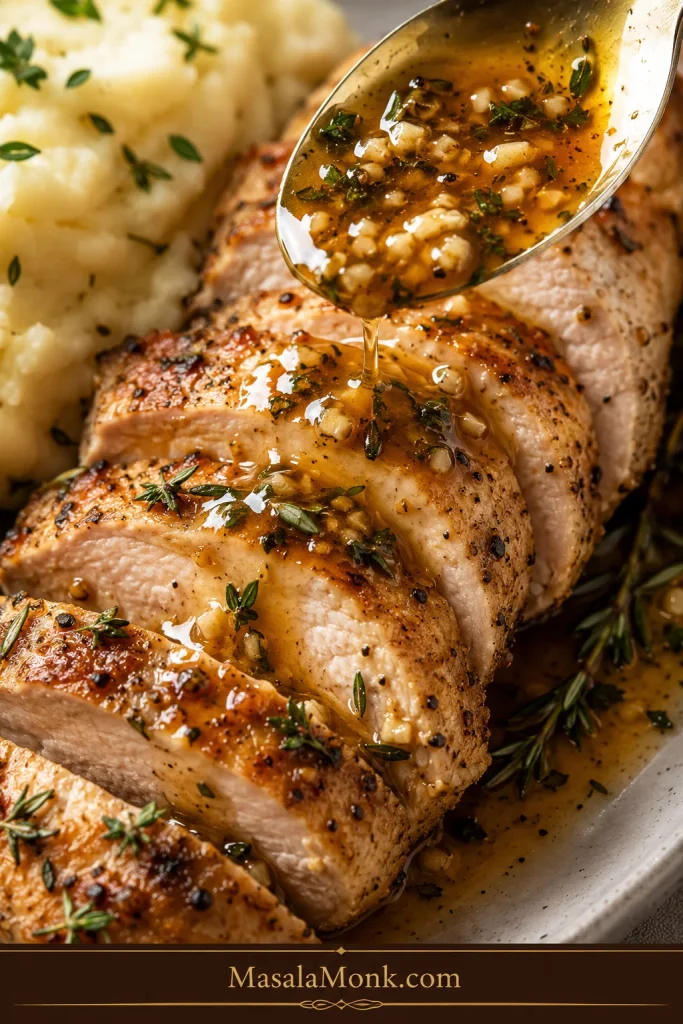
Spoon the Pan Juices Over the Turkey
Do not leave the pan juices behind. They add the richness that lean turkey tenderloin needs on the plate.
Should You Bake Turkey Tenderloin Covered or Uncovered?
Bake it uncovered if you want better browning. This is the best choice for the main recipe because the oven heat can reach the seasoned surface directly.
Cover the pan loosely with foil if the outside is browning too fast before the center is fully cooked. You can also cover it when baking with vegetables, broth, or a sauce. For more color at the end, remove the foil for the last few minutes.
Do You Need to Sear Turkey Tenderloin First?
No, you do not have to sear it first. The no-sear oven method is easier and still gives you a very good dinner. Choose it when you want fewer dishes and a simple weeknight meal.
Searing is worth it when you want deeper browning and a more savory crust. To sear first, heat a little oil in an oven-safe skillet, sear the tenderloins for 2 to 3 minutes per side, then transfer the skillet to the oven and bake until done.
| Method | Choose it when |
|---|---|
| No sear | You want the easiest, cleanest oven method. |
| Sear first | You want more browning, more crust, and deeper pan flavor. |
If you sear first and have browned bits in the pan, those juices can become the start of a simple sauce. For a richer dinner, a spoonable creamy mushroom sauce also works beautifully with sliced turkey and potatoes.
Packaged and Pre-Marinated Turkey Tenderloin Tips
This is where turkey tenderloin becomes easier than a whole bird: once you know how to read the package and check the center, the rest is simple.
The label is not there to scare you; it is there to give you clues. Packaged tenderloins are convenient, but they are not all seasoned the same way. A quick label check can save you from dry, salty, or overly browned turkey.
Read the Package Clues Before Cooking
Before adding seasoning, check whether the turkey is plain, brined, sweet-marinated, frozen, oversized, or packed as two uneven pieces.
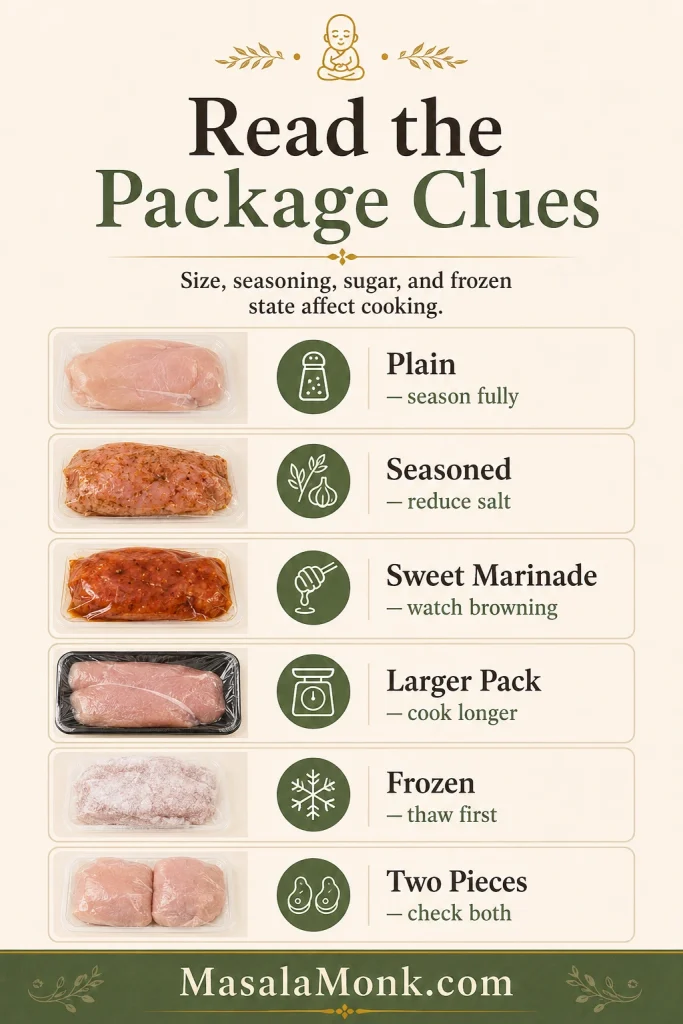
In real kitchens, the two pieces in the package are not always the same thickness. If one is clearly smaller, treat it like its own piece of meat and check it first.
Check Two-Piece Packages Separately
One package can contain two different cooking timelines. Check the smaller piece first, then let the thicker one finish if needed.
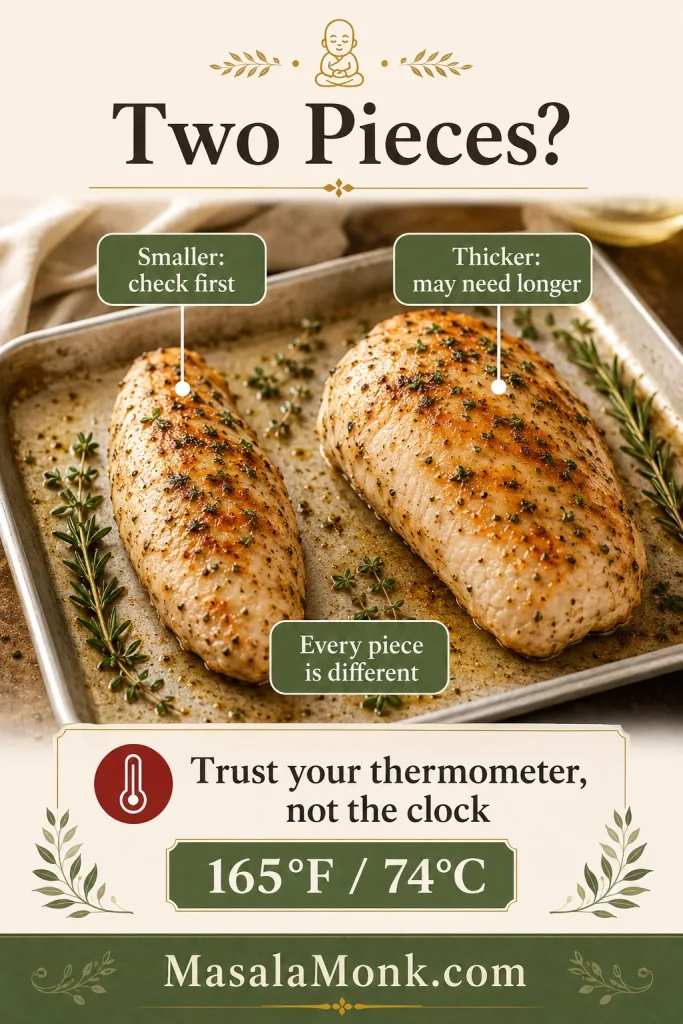
This applies whether the package is plain, store-brand, already marinated, herb-seasoned, rotisserie-flavored, or from a brand like Butterball or Jennie-O. The basic oven method still works, but small adjustments help the turkey cook and taste better.
| If your package says… | What to do |
|---|---|
| Plain or unseasoned | Use the full seasoning or marinade in this recipe. |
| Herb, rotisserie, lemon garlic, or seasoned | Reduce the added salt and taste the pan juices before adding more seasoning. |
| Teriyaki, honey, maple, or sweet marinade | Watch browning closely because sugar can darken fast. Tent loosely with foil if needed. |
| Two tenderloins in one package | Separate them in the pan so heat can circulate around each piece. |
| Larger than 24 oz / 680 g | Expect a longer cook time and check the largest piece. |
| Already brined | Use less salt in the recipe and avoid adding salty sauces too early. |
| Frozen | Thaw first for this oven method so the turkey cooks evenly and seasons properly. |
The label can guide you, but the thermometer protects dinner. When in doubt, season lightly, check early, and let the turkey rest before slicing.
- Check the package weight. A 24 oz / 680 g package may cook differently from a 32 oz / 900 g package.
- Watch uneven pieces. If one tenderloin is smaller, it may finish before the larger one.
- Respect seasoning already in the package. Pre-marinated tenderloins can contain more salt, sugar, or ingredients that may matter to your household.
Other Ways to Cook Turkey Tenderloin
The oven method is the best place to start. Once you know how your usual package behaves, the air fryer, slow cooker, Instant Pot, grill, and skillet versions become easier to judge.
Use the notes below as quick starting points when you are not baking it in the oven. Appliances vary, so start checking early.
Air Fryer Turkey Tenderloin
Cook at 360°F to 400°F / 182°C to 204°C for about 20 to 30 minutes, flipping once. Leave space around the pieces so air can circulate.
Crock Pot Turkey Tenderloin
Add a little broth, sauce, or gravy base so the lean meat has moisture around it. Cook on LOW and start checking around 3.5 to 4 hours for smaller tenderloins. Larger packages and cooler-running slow cookers may take longer.
Instant Pot Turkey Tenderloin
Use about 1 cup / 240 ml broth or water and a trivet. Cook on high pressure for about 12 to 15 minutes, then allow a natural release before checking. This method is especially good if you want to turn the cooking liquid into gravy.
Grilled Turkey Tenderloin
Grill over medium heat, around 350°F / 177°C. Keep the grill covered and turn the tenderloins as needed so the outside does not burn before the center is done. Most pieces take about 15 to 25 minutes.
Turkey Tenderloin Medallions
To make turkey medallions, slice the tenderloin crosswise into thick rounds before cooking. Medallions cook much faster than whole tenderloins and are great for skillet dinners, gravy, Marsala-style sauces, or quick meal prep.
Turkey Tenderloin Flavor Variations
Once the basic method is set, the flavor can go cozy, bright, smoky, sweet, or spicy. Choose the version that fits the meal you want.
- Classic garlic herb: Garlic, thyme, rosemary, sage, olive oil, mashed potatoes, gravy, and green beans.
- Maple mustard: Dijon, maple syrup, garlic, and thyme for a cozy fall or holiday plate.
- Lemon pepper: Lemon juice, lemon zest, black pepper, and garlic for rice, salad, or roasted vegetables.
- Cajun or BBQ: Cajun seasoning, smoked paprika, garlic powder, BBQ rub, or sauce near the end for bolder weeknight flavor.
- Cranberry herb: Rosemary, sage, garlic, and cranberry glaze when you want the meal to feel holiday-ready.
- Balsamic rosemary: Balsamic vinegar, rosemary, garlic, and olive oil for a deeper dinner flavor with roasted vegetables.
- Brown sugar garlic: Brown sugar, garlic, paprika, and butter for rice bowls, roasted vegetables, sandwiches, or leftovers.
For bowls, wraps, and leftovers, a spoonful of honey mustard dressing works especially well with garlic herb, maple mustard, and lemon pepper versions.
Turkey Tenderloin Meal Ideas
Turkey tenderloin can be a classic comfort meal, a lean protein dinner, or a meal-prep base. It is not only for Thanksgiving-style plates.
Small Holiday Turkey Tenderloin Dinner
This is the cozy version: turkey tenderloin with classic sides when you want the feeling of a holiday plate without cooking a whole bird.
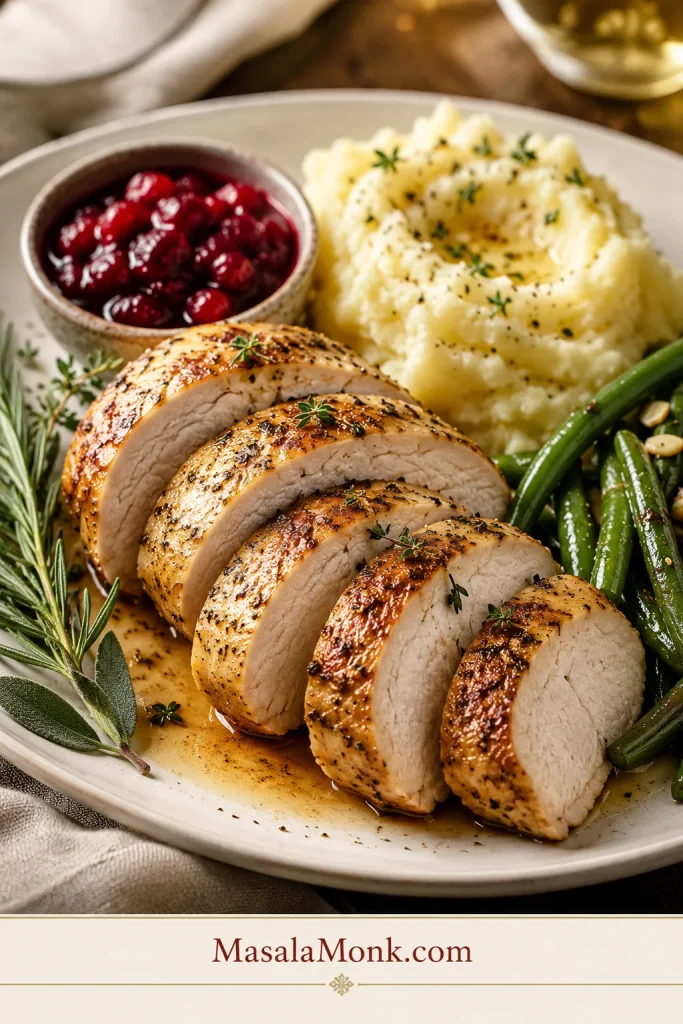
| Mood or occasion | Make this meal |
|---|---|
| Classic comfort | Turkey tenderloin, mashed potatoes, gravy, green bean casserole, and cranberry sauce. |
| Small holiday dinner | Turkey tenderloin, stuffing-style side, sweet potato casserole, roasted Brussels sprouts, and cranberry sauce with orange juice. |
| Easy weeknight | Turkey tenderloin, ranch roasted potatoes, steamed vegetables, and pan juices. |
| Sheet pan dinner | Turkey tenderloin with carrots, onions, potatoes, or Brussels sprouts. |
| Meal prep | Sliced turkey, rice or quinoa, roasted broccoli, and mustard sauce or pan juices. |
| Lunch leftovers | Turkey sandwiches, wraps, salads, rice bowls, or open-faced turkey with gravy. |
| Lighter dinner | Turkey tenderloin, wedge salad, roasted vegetables, apple slaw, or cauliflower mash. |
For the first night, serve the slices warm with pan juices, potatoes, rice, or vegetables. For the next day, keep the leftovers simple: sandwiches, wraps, salad bowls, rice bowls, or an open-faced turkey plate with gravy.
Best Sides for Turkey Tenderloin
If you already know the main dish, sides are where you decide whether dinner feels cozy, light, or holiday-ready. For a cozy starter, a bowl of butternut squash soup makes the meal feel fuller without needing a whole turkey.
Classic Comfort Sides
- Garlic mashed potatoes
- Turkey gravy or pan gravy
- Cranberry sauce
- Stuffing or dressing
- Green bean casserole
- Dinner rolls or biscuits
Easy Weeknight Sides
- Roasted carrots
- Roasted potatoes
- Steamed green beans
- Rice pilaf
- Simple salad
- Homemade garlic bread
Lighter Sides
- Quinoa
- Cauliflower mash
- Apple slaw
- Roasted Brussels sprouts
- Cucumber salad
- Leafy green salad
Storage, Reheating, and Freezing
How to Store Leftovers
Store leftover slices in an airtight container in the refrigerator. For best texture, use them within 3 to 4 days. Keep any pan juices or gravy separately, or spoon them over the turkey before refrigerating.
How to Reheat Without Drying It Out
The trick with leftovers is moisture. Add a splash of broth, water, gravy, or pan juices before warming. Cover loosely and heat only until warmed through. Aggressive microwaving without moisture can make lean turkey dry and rubbery.
Can You Freeze Cooked Turkey Tenderloin?
Yes. Freeze cooked turkey tenderloin whole, sliced, or portioned for meals. Wrap well and place in a freezer-safe container or bag. Thaw in the refrigerator before reheating gently with a little broth or gravy.
Leftover Turkey Tenderloin Ideas
Leftover slices are one of the best reasons to make a little extra. They are easy to use in lunches and quick dinners.
Leftover Turkey Tenderloin Meal Prep
Think beyond one dinner. Cooked tenderloin slices are easy to reuse in lunches, bowls, wraps, salads, and quick plates.
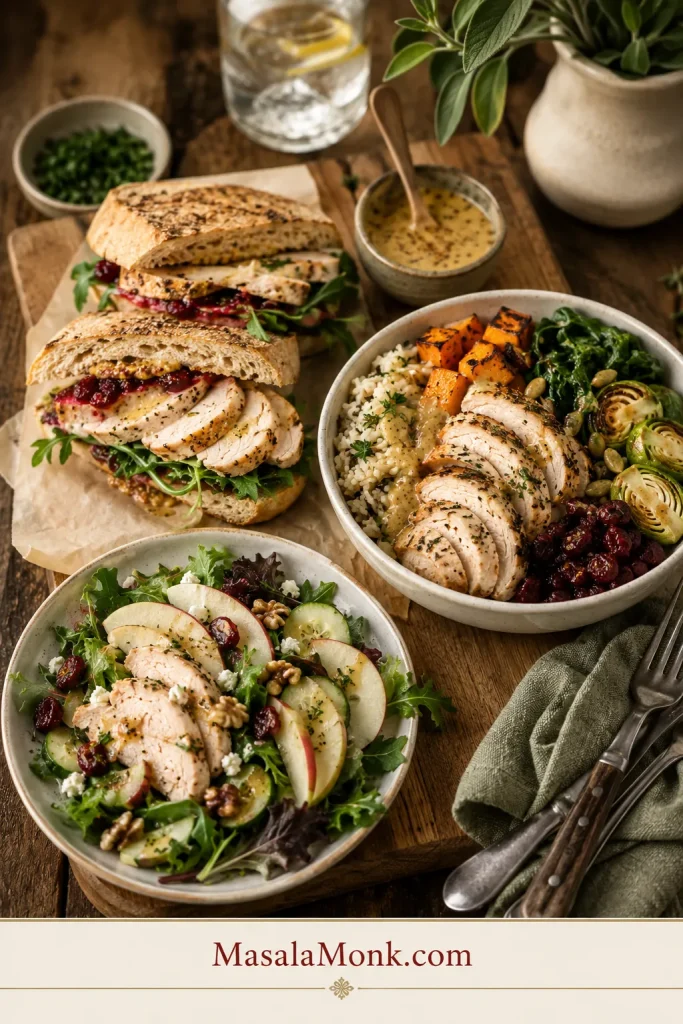
- Turkey sandwiches with mustard or cranberry sauce
- Turkey wraps with lettuce, tomato, and cheese
- Turkey rice bowls with roasted vegetables
- Turkey salad with apples, cranberries, and nuts
- Open-faced turkey sandwich with gravy
- Turkey quesadillas
- Turkey noodle soup
- Cold turkey slices with potato salad for an easy lunch plate
Troubleshooting Turkey Tenderloin
Most problems come down to timing, salt, or moisture. Here is how to read what happened and fix it next time.
Juicy vs Dry Turkey Tenderloin
When turkey turns dry, the fix is usually simple: check earlier, rest before slicing, and reheat leftovers with moisture.
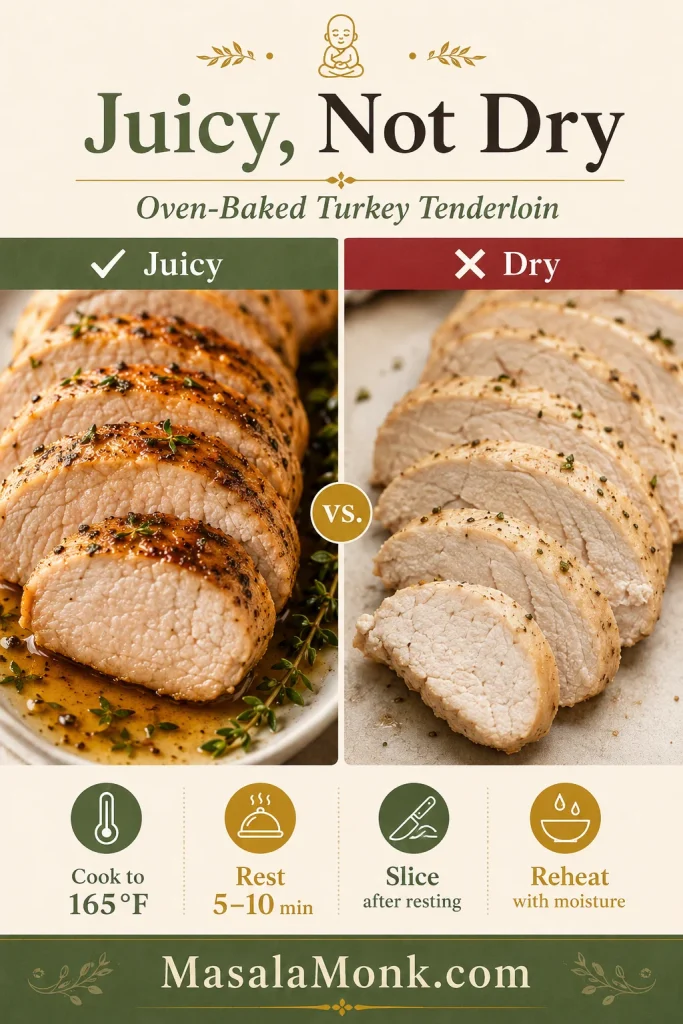
| Problem | Likely reason | How to fix it next time |
|---|---|---|
| Turkey turned dry | It was overcooked, sliced too soon, or reheated without moisture. | Use a thermometer, rest before slicing, and reheat with broth or gravy. |
| Turkey cooked faster than expected | The tenderloin was small, thin, or started closer to room temperature. | Start checking early, especially around the 20-minute mark. |
| Outside browned too fast | The marinade had sugar, the oven ran hot, or the pan was too close to the heat source. | Tent loosely with foil and continue cooking until the center is done. |
| Turkey still looks pink | Color is not always a reliable doneness test. | Use the thermometer reading in the center. |
| Turkey tastes too salty | The package may have been pre-seasoned or brined. | Reduce added salt when using pre-marinated or seasoned tenderloins. |
| Vegetables are undercooked | The vegetables were cut too large for the short cook time. | Cut vegetables smaller, par-cook dense vegetables, or roast them separately. |
| Pan juices burned | There was not enough liquid or the sugar browned too quickly. | Add a small splash of broth and watch sweet marinades closely. |
Frequently Asked Questions
How long does turkey tenderloin take in the oven?
At 400°F / 204°C, a 1.5 lb / 680 g package usually takes about 20 to 30 minutes. Thicker pieces may take longer, while smaller pieces can finish sooner.
What temperature should turkey tenderloin be cooked to?
Turkey tenderloin should reach 165°F / 74°C in the thickest part before serving.
Can I bake turkey tenderloin at 350°F instead of 400°F?
Yes. A 350°F / 177°C oven works, especially for larger or pre-marinated packages, but it usually takes longer and may brown less.
Can I use this recipe for Butterball or Jennie-O turkey tenderloin?
Yes, if the package is a similar size. Reduce added salt if it is already seasoned or brined, and use the package timing as a clue if the pieces are larger.
Is turkey tenderloin the same as turkey breast?
No. It comes from the breast area, but it is smaller and faster-cooking than a whole turkey breast.
Is turkey tenderloin the same as pork tenderloin?
No. They may look similar in shape, but they are different meats with different cooking rules. Turkey should be cooked to 165°F / 74°C.
Should turkey tenderloin be covered while baking?
Bake it uncovered for better browning. Use loose foil if the top darkens too quickly or if you are baking it with broth, vegetables, or sauce.
Do you need to marinate turkey tenderloin?
No. A marinade adds deeper flavor, but a dry rub also works well for a fast dinner.
Why did my turkey tenderloin turn out dry?
It was probably overcooked, sliced too soon, or reheated without moisture. Next time, stop on time, rest before slicing, and reheat with broth or gravy.
How do you cook pre-marinated turkey tenderloin?
Use the same oven method, but reduce extra salt and watch the browning, especially if the marinade is sweet, sugary, or already brined.
Can you cook turkey tenderloin from frozen?
For this oven recipe, thaw it first so it cooks evenly and seasons properly.
What sides go well with turkey tenderloin?
Mashed potatoes, gravy, roasted vegetables, green beans, cranberry sauce, rice pilaf, sweet potatoes, stuffing-style sides, and salads all work well.
How do you reheat turkey tenderloin without drying it out?
Reheat gently with a splash of broth, water, pan juices, or gravy. Cover while warming and heat only until warmed through.
Can you freeze cooked turkey tenderloin?
Yes. Freeze it whole, sliced, or portioned. Wrap it well, thaw in the refrigerator, and reheat gently with a little moisture.
Once you make turkey tenderloin this way, it becomes one of those small, reliable dinners you can dress up with mashed potatoes and gravy or slice cold into sandwiches the next day. Season it well, bake it hot enough to brown, check the temperature, rest before slicing, and spoon those pan juices over the top. No giant bird, no carving stress, just tender turkey that fits the night you are actually having.








