Posted on 10 Comments

10 Delicious Plant-Based Protein Sources for High-Protein Meal Prep

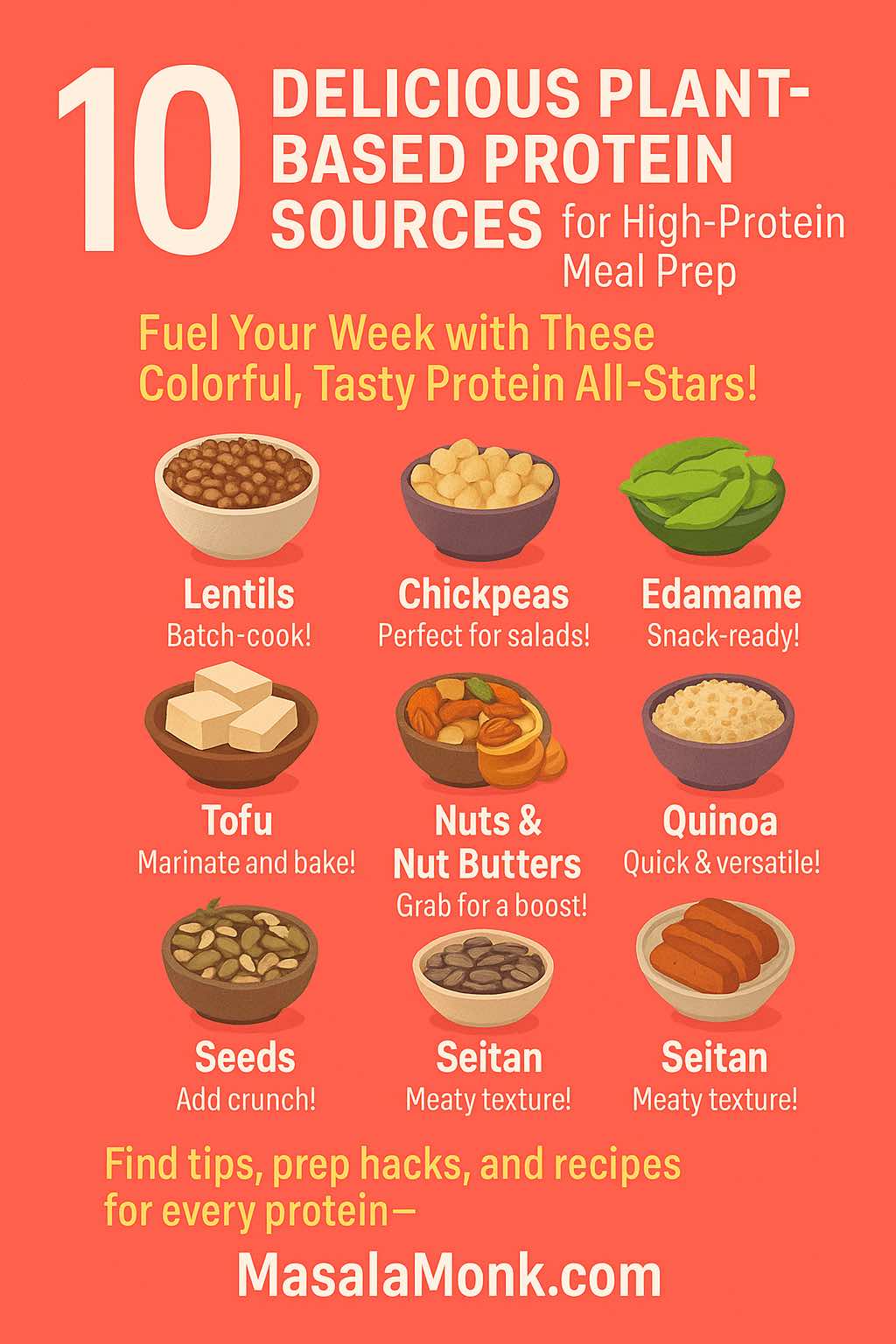
Plant-Based Protein Sources for High-Protein Meal Prep

Why Plant-Based Protein? Because Food Should Fuel and Delight You

Let’s be real: figuring out what to eat every week—especially when you want more protein and less animal stuff—can feel overwhelming. Most of us aren’t training for a bodybuilding competition, but we still want to feel energized, satisfied, and maybe even impress ourselves (or our friends!) with how good plant-based meals can taste.

The truth? Plant protein isn’t just “good enough”—it’s powerful, varied, and, honestly, pretty fun once you know your options. Whether you’re a meal prepper, a busy parent, a fitness buff, or just egged out from food sensitivities, this guide is here to spark new ideas and keep your meals hearty, high-protein, and stress-free.

If you’re new to all this, you’ll love our explainer: What Is Protein? (It’s not as intimidating as it sounds!)


The 10 Best Plant-Based Protein Sources for Meal Prep

These aren’t just “swap this for that” suggestions. We’re talking about whole foods that deliver on flavor, nutrition, and convenience—plus, ways to actually use them without getting bored.


1. Lentils: The Weeknight Wonder

  • Protein: About 18g per cooked cup
  • Why they rock: Lentils are affordable, easy to cook in big batches, and come in varieties (green, brown, red, black) for any recipe mood.
  • How to use: Whip up a comforting dal, a French-style lentil salad, or simply stir into soups for extra heft.
  • Meal Prep Magic: Cook a large pot and use it for salads, bowls, and wraps all week.
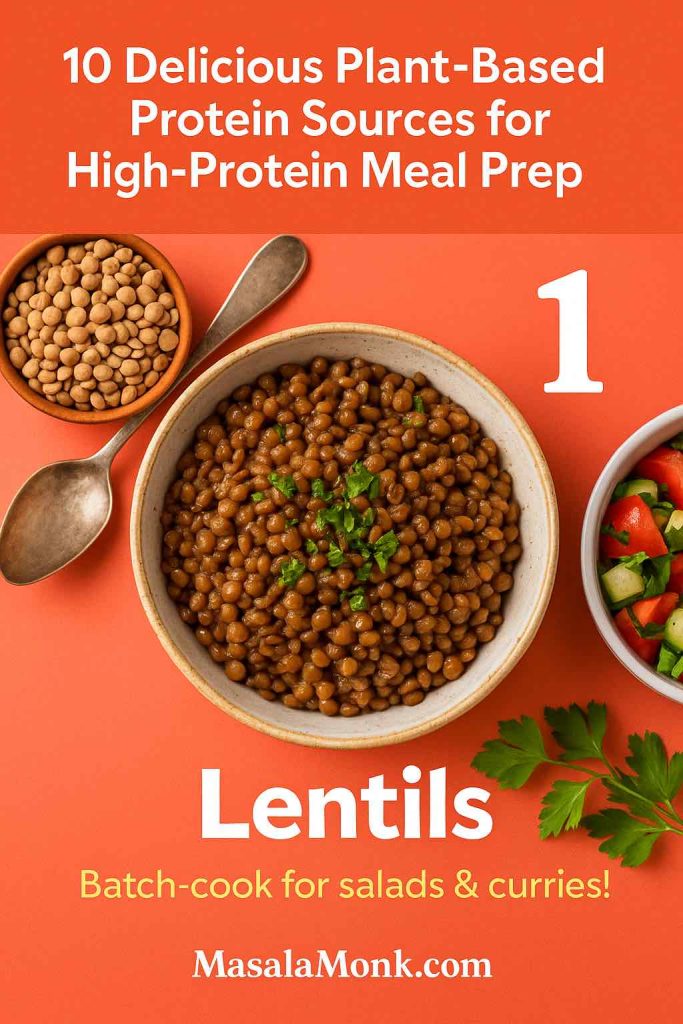
Lentils: The ultimate plant-based protein for meal prep! Batch-cook for hearty salads, curries, and nourishing bowls. High in protein and fiber, perfect for vegetarians and vegans. | Find more at MasalaMonk.com

Love lentils? Try: Plant-Based High-Protein Meal Prep Ideas Using Lentils Instead of Chicken


2. Chickpeas: The All-Rounder

  • Protein: About 15g per cooked cup
  • Why they rock: Nutty, filling, and versatile. Perfect for curries, hummus, or crispy roasted snacks.
  • How to use: Mash for “tuna” salad, blend into creamy dips, or add whole to grain bowls.
  • Meal Prep Magic: Batch-cook and freeze portions for quick meals or salads.
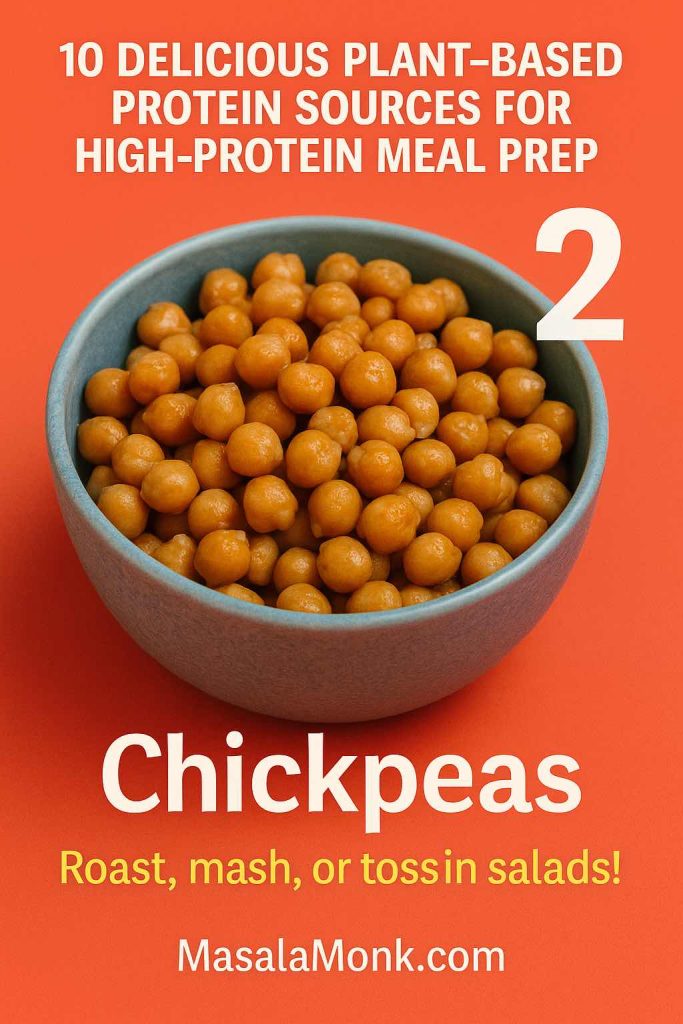
Chickpeas: A high-protein vegan staple you can roast, mash, or toss in salads. Versatile, satisfying, and a favorite for healthy meal prep. | See more plant-based meal ideas at MasalaMonk.com

Bonus pasta hack: High-Protein Pasta Dishes: 10 Plant-Based Meal Prep Ideas


3. Black Beans & Kidney Beans: The Pantry Heroes

  • Protein: Black beans ~15g/cup, Kidney beans ~13g/cup
  • Why they rock: Hearty, satisfying, packed with fiber and iron.
  • How to use: Chili, burritos, salads, even brownies (yes, really!).
  • Meal Prep Magic: Simmer a big batch and portion out for the freezer.
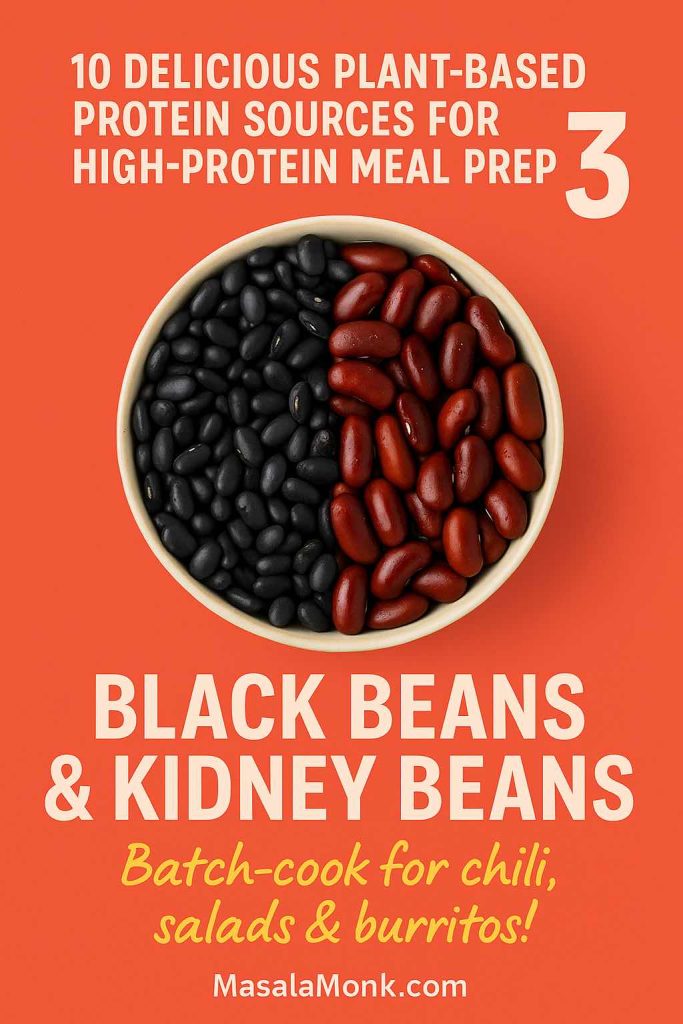
Black Beans & Kidney Beans: Batch-cook these plant-based proteins for protein-packed chili, salads, and burritos. Rich in fiber and flavor, ideal for vegetarian meal prep. | Get inspired at MasalaMonk.com

4. Tofu: The Chameleon

  • Protein: About 10g per half-cup (firm tofu)
  • Why it rocks: Takes on any flavor—think crispy baked, silken in smoothies, or scrambled like eggs.
  • How to use: Marinate and bake, stir-fry, or blend for creamy sauces.
  • Meal Prep Magic: Press, cube, and marinate tofu on Sunday for quick meals all week.
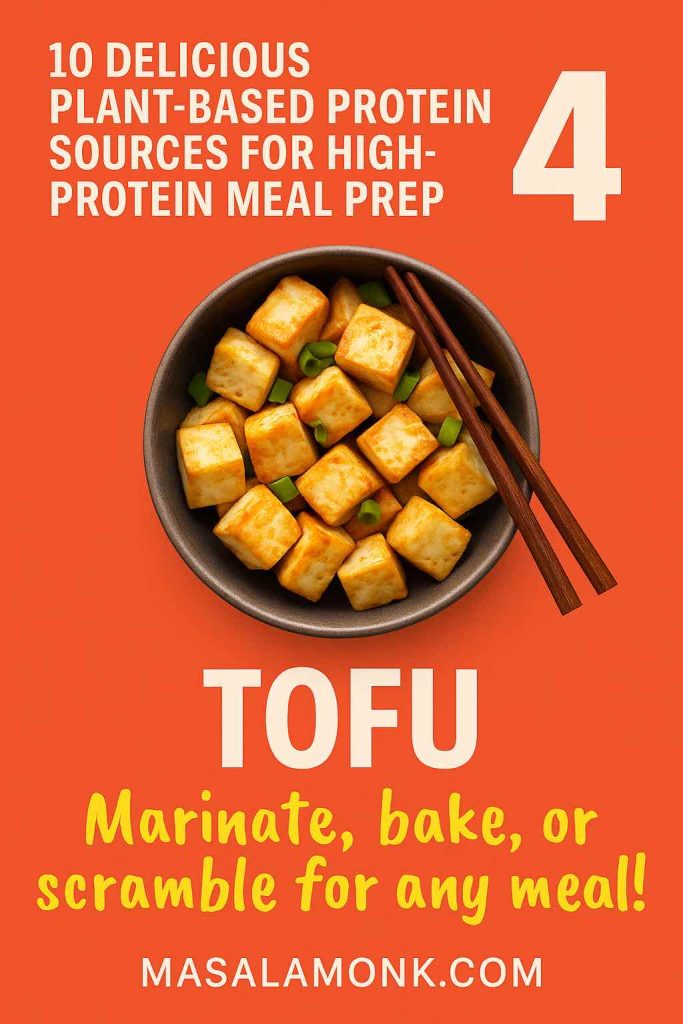
Tofu: The chameleon of vegan meal prep! Marinate, bake, or scramble tofu for any high-protein plant-based meal. | Discover delicious tofu recipes at MasalaMonk.com

Go deeper: The Power of Tempeh: 10 High-Protein Plant-Based Meal Prep Ideas as an Alternative to Pork


5. Tempeh: The Gut-Friendly Powerhouse

  • Protein: About 16g per 3 ounces
  • Why it rocks: Firm, nutty, and fermented for easy digestion and gut health.
  • How to use: Sauté, grill, crumble in tacos, or toss into stir-fries.
  • Meal Prep Magic: Slice and marinate for easy lunchbox sandwiches or quick Buddha bowls.
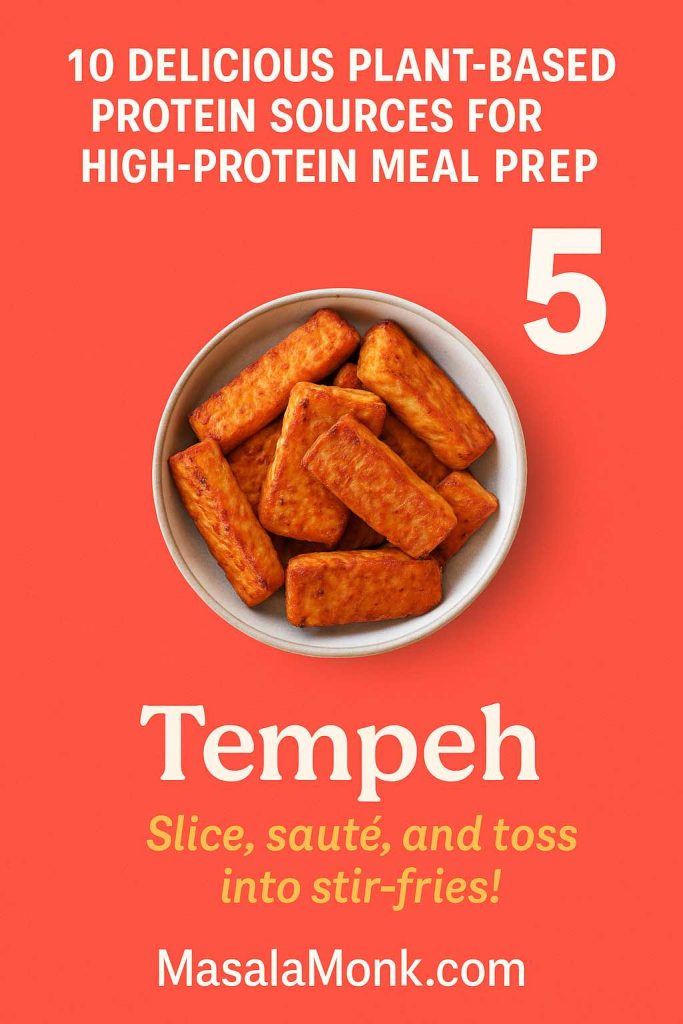
Tempeh: The gut-friendly, protein powerhouse. Slice, sauté, and toss into stir-fries or bowls for easy vegetarian meal prep. | Explore tempeh ideas at MasalaMonk.com

Need more inspiration? Tempeh Instead of Shrimp: 5 High-Protein Plant-Based Meal Prep Ideas


6. Edamame: The Snack You Didn’t Know You Needed

  • Protein: About 17g per cooked cup (shelled)
  • Why it rocks: Sweet, bright, and fun to eat. Perfect for salads, stir-fries, or solo snacking.
  • How to use: Toss on salads, blend into dips, or stir into grain bowls.
  • Meal Prep Magic: Keep bags of frozen edamame on hand—boil or microwave in minutes.
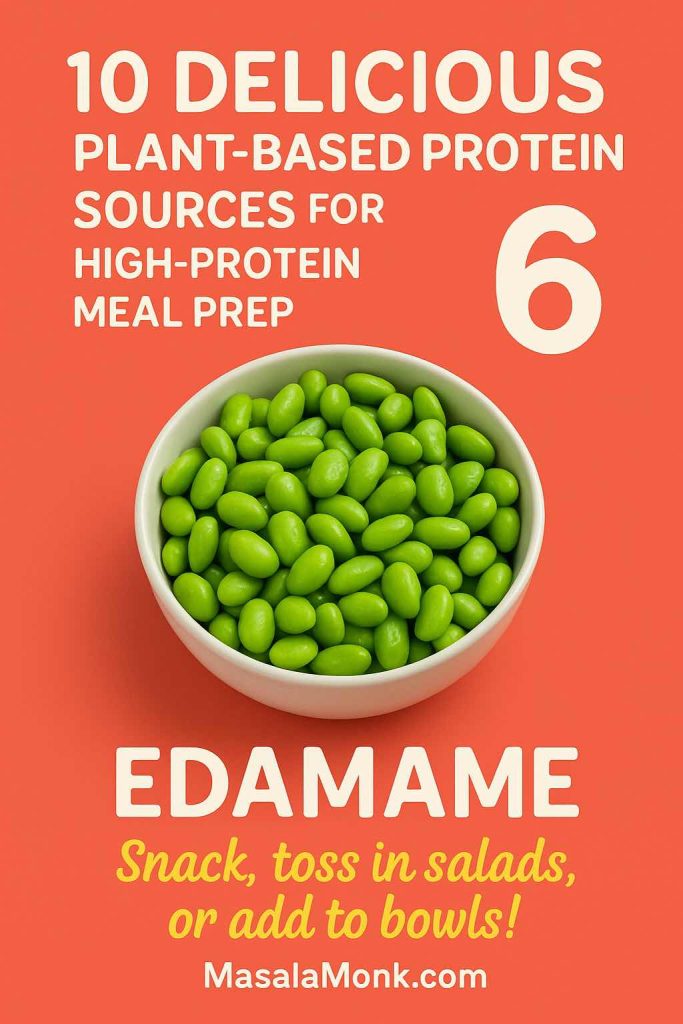
Edamame: Snack, toss in salads, or add to bowls for a fresh, high-protein, plant-based boost. Perfect for healthy, easy meal prep! | More protein inspiration at MasalaMonk.com

7. Quinoa: The Tiny-but-Mighty Grain

  • Protein: About 8g per cooked cup
  • Why it rocks: A rare complete plant protein, cooks fast, and works in sweet or savory meals.
  • How to use: Breakfast porridge, salads, veggie burgers, or as a side.
  • Meal Prep Magic: Make a double batch and use in everything from lunch bowls to morning oats.
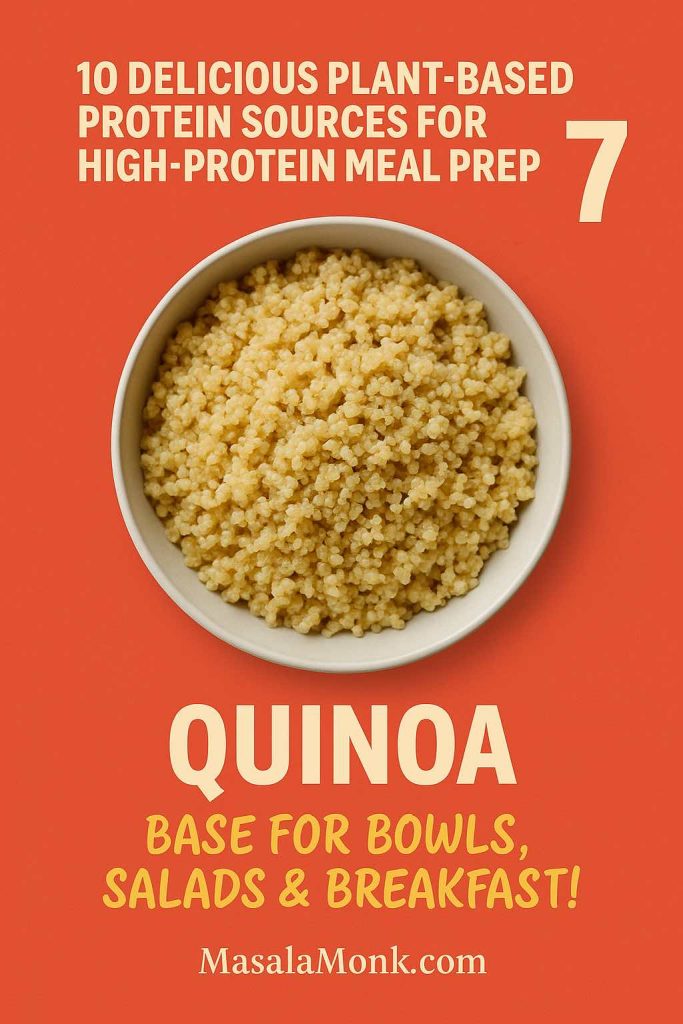
Quinoa: The tiny-but-mighty grain and complete plant protein. Use as a base for bowls, salads, and breakfast meal prep. | Find quinoa recipes at MasalaMonk.com

More ways to use it: 10 Plant-Based Meal Prep Ideas Using Quinoa as a Protein Source
Or try: Quinoa Instead of Chicken: 5 High-Protein Plant-Based Meal Prep Ideas


8. Nuts & Nut Butters: The Satisfying Snackers

  • Protein: Almonds ~6g/oz, Peanut butter ~8g/2 Tbsp
  • Why they rock: Portable, craveable, and loaded with healthy fats.
  • How to use: Snack packs, breakfast toppers, or creamy sauces for noodles.
  • Meal Prep Magic: Portion nut butter in small jars for quick snacks, or sprinkle chopped nuts on meals for crunch and extra protein.
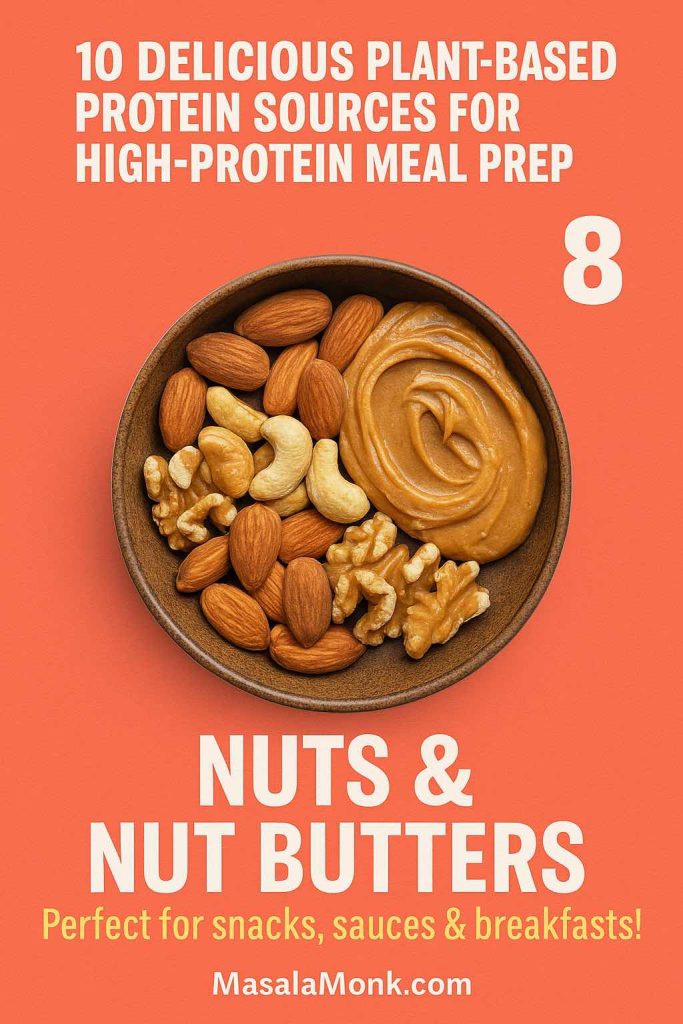
Nuts & Nut Butters: Satisfying, protein-rich snacks and breakfast toppers. Perfect for sauces and plant-based meal prep. | Healthy recipe ideas at MasalaMonk.com

Learn more: Benefits of Nuts and Seeds – Protein-Packed Superfoods


9. Seeds: Tiny Titans of Nutrition

  • Protein: Hemp ~10g/3 Tbsp, Chia ~5g/2 Tbsp, Flax ~3g/2 Tbsp
  • Why they rock: High in protein, fiber, and essential fats. Great for gut and brain.
  • How to use: Add to overnight oats, smoothies, or homemade energy bars.
  • Meal Prep Magic: Make a week’s worth of chia pudding, or keep a “super seed mix” in the fridge to add to any meal.
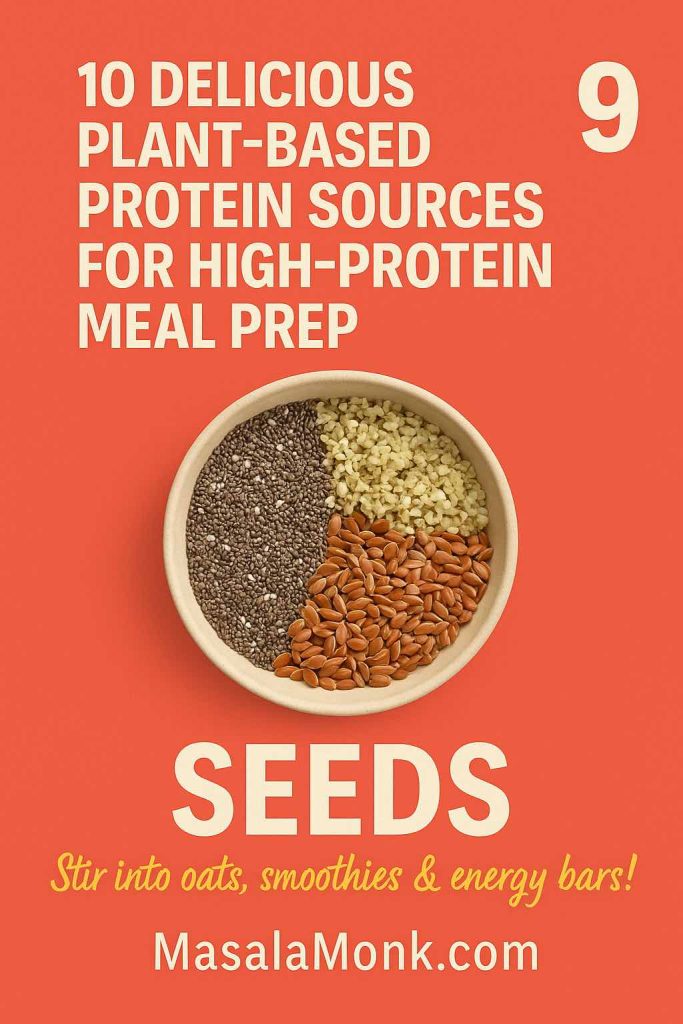
Seeds (Hemp, Chia, Flax): Stir into oats, smoothies, and energy bars for an easy, high-protein vegan boost. | More superfood meal prep tips at MasalaMonk.com

Deep dive: The Power of Chia Seeds: 5 Plant-Based High-Protein Meal Prep Ideas


10. Seitan: The Secret to Meatiness (for Gluten Lovers)

  • Protein: About 21g per 3 ounces
  • Why it rocks: Made from wheat gluten, seitan is unbelievably high in protein and has a chewy, meaty texture.
  • How to use: Stir-fry, grill, skewer, or add to hearty stews.
  • Meal Prep Magic: Sauté a big batch in your favorite marinade and use in wraps or power bowls.
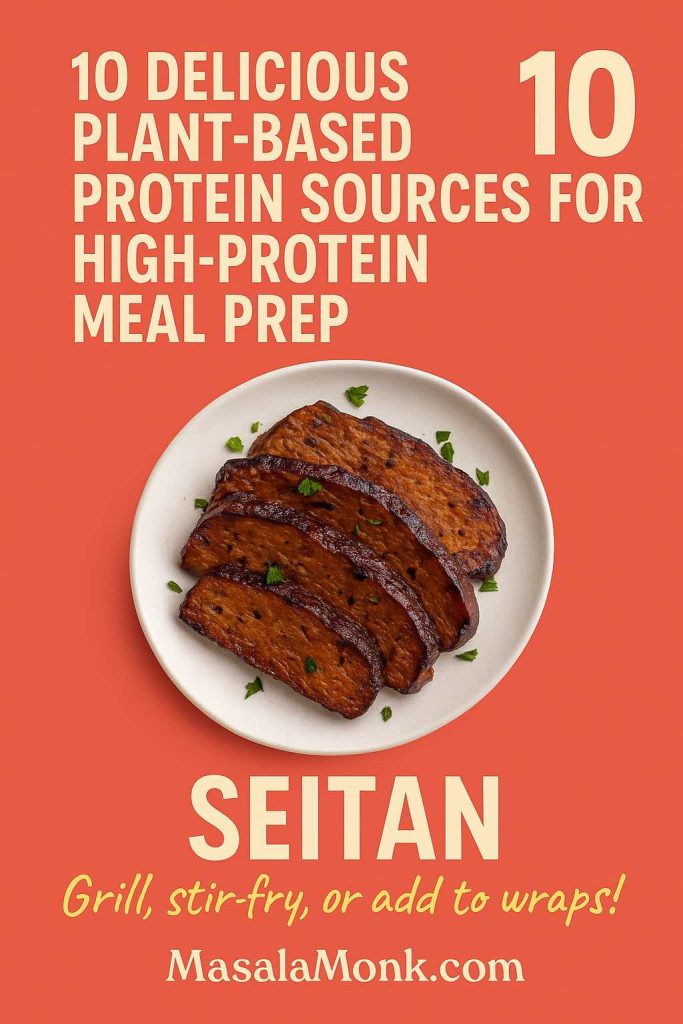
Seitan: The secret to meatiness for plant-based protein lovers! Grill, stir-fry, or add to wraps for hearty vegan meals. | Explore high-protein recipes at MasalaMonk.com

Honorable Mentions & New Favorites


How to Meal Prep Like a Plant-Based Pro

  • Batch cooking is your best friend.
    Cook lentils, beans, quinoa, and tofu in large amounts and freeze or refrigerate in portioned containers.
  • Mix and match.
    Rotate protein sources each week to keep meals exciting and nutritionally balanced.
  • Invest in seasoning.
    Spices, herbs, citrus, and bold dressings keep things far from boring. Your taste buds deserve variety!
  • Snack smart.
    Make your own trail mixes, roasted chickpeas, or chia seed pudding for high-protein snacks you can grab anytime.
  • Be flexible.
    Forgot to cook beans? Tofu, tempeh, or edamame to the rescue—quick and easy!
  • Cultural inspiration.
    Explore protein-rich Indian dishes: 10 Vegetarian and High-Protein Meal Prep Ideas from Indian Cuisine

Let’s Talk Protein Quality and Variety

Don’t let the “complete/incomplete protein” myth stress you out. Most plant foods offer all essential amino acids in some amount, and variety ensures you get what you need. Want to geek out? The Science of Protein: Maximizing Muscle Growth and Recovery has you covered.

Goal tip: Spread your protein throughout the day (aim for 20–30g per meal if you’re active).


Real-Life Meal Prep Ideas (You’ll Actually Want to Eat!)

  • Chickpea salad wraps (chickpeas, crunchy veg, tahini)
  • Lentil & quinoa bowls (bulk cooked, add greens and roasted veggies)
  • Spicy tofu stir-fry (with edamame and brown rice)
  • Tempeh tacos (crumbled tempeh, spices, salsa, slaw)
  • Breakfast chia pudding (chia seeds, plant milk, berries, nuts)

Smoothie lover? Try: 5 Turmeric and Moringa Smoothies for Weight Loss


Why Plant-Based Protein Meal Prep is a Life-Changer

It’s not just about protein grams—it’s about feeling nourished, saving money, and genuinely enjoying your food. Plant-based meal prep can help you:

  • Save time during busy weeks
  • Reduce food waste
  • Hit your protein goals without animal products
  • Get creative in the kitchen and discover new favorites

For even more protein strategies: How to Eat 100 Grams of Protein a Day


Final Thoughts: Build Your Own Protein-Packed Plate

It doesn’t matter if you’re a lifelong vegan, an adventurous omnivore, or just protein-curious—these plant-based foods belong in every kitchen. High-protein meal prep isn’t about perfection. It’s about showing up for yourself, one delicious meal at a time.

What’s your favorite plant protein hack? Drop a comment, tag us in your meal prep creations, and let’s keep inspiring each other to eat well—together.


Hungry for more? Browse our meal prep and protein archives, and don’t be afraid to try something new next week. Your future self (and your taste buds) will thank you.

FAQs: Plant-Based Protein for High-Protein Meal Prep

1. Can I get enough protein on a plant-based diet?
Yes! With variety and a little planning, you can easily meet your protein needs using foods like beans, lentils, tofu, tempeh, nuts, seeds, quinoa, and more. Many athletes and active individuals thrive on plant-based protein sources.

2. Which plant foods are complete proteins?
Quinoa, soy products (tofu, tempeh, edamame), hemp seeds, chia seeds, and amaranth are all complete proteins, meaning they contain all nine essential amino acids.

3. How much protein do I need each day?
Most adults need 0.8–1.2 grams of protein per kilogram of body weight, but active people may require more. That’s about 50–80g for most. Spreading intake across meals helps with absorption and muscle maintenance.

4. What’s the best way to meal prep plant-based proteins?
Batch-cook staples like lentils, beans, and quinoa. Roast chickpeas or tofu, and make sauces or dressings ahead. Freeze portions for quick meals all week.

5. Do I need protein powder on a plant-based diet?
Not necessarily! Whole foods usually provide plenty, but protein powder is a convenient option if you struggle to meet your needs or have higher protein goals.

6. Can I combine different plant proteins for better nutrition?
Yes—combining foods like rice and beans, or hummus with whole-grain pita, can create a complete protein profile, but variety over the day is usually enough.

7. Are there plant-based protein options for people with soy or gluten allergies?
Absolutely. Lentils, beans, quinoa, nuts, seeds, and buckwheat are all soy- and gluten-free options rich in protein.

8. Will eating more plant protein help with weight loss?
Plant-based proteins are often lower in calories and higher in fiber, which can help you feel fuller for longer and support healthy weight loss.

9. What about iron and B12 on a plant-based diet?
Beans, lentils, seeds, and greens are great iron sources, but plant iron isn’t as easily absorbed. Pair with vitamin C-rich foods. B12 needs to come from fortified foods or supplements, since plants don’t provide it.

10. Are there quick plant-based high-protein snacks I can prep?
Yes! Try roasted chickpeas, nut butter with fruit, chia pudding, trail mix, or protein balls made from oats, seeds, and dried fruit.

Posted on Leave a comment

is Quinoa safe for Pregnancy?

IS QUINOA SAFE DURING PREGNANCY?

Pregnancy is a season of anticipation, joy, and—let’s be honest—constant curiosity about food. “Is this safe?” “Will this help my baby grow?” “What if I crave something healthy… and also a little adventurous?” Enter quinoa: a superfood that’s popped up in salads, bowls, and baby food aisles worldwide. But should it have a place on your pregnancy menu?

If you’re expecting, here’s a comprehensive, science-backed, and totally practical guide to eating quinoa during pregnancy.


What Is Quinoa, Anyway?

Quinoa (pronounced KEEN-wah) isn’t actually a grain—it’s a seed from the plant Chenopodium quinoa. Native to South America and cultivated for thousands of years, quinoa is celebrated for its:

  • Complete protein profile (all nine essential amino acids)
  • Rich supply of fiber, folate, magnesium, iron, and more
  • Naturally gluten-free status

But that’s not the whole story. Let’s unpack what matters most when you’re eating for two.


Is Quinoa Safe During Pregnancy? (Short Answer: YES, with Smart Prep)

YES—quinoa is safe to eat during pregnancy when it’s rinsed, cooked, and eaten as part of a balanced diet.

Here’s Why:

1. Nutritional Powerhouse

Pregnancy increases your need for protein, iron, folate, and other nutrients. Quinoa checks many of these boxes:

  • Protein: Supports fetal tissue growth.
  • Folate: Helps prevent neural tube defects.
  • Iron: Fights anemia and supports increased blood volume.
  • Magnesium, Zinc, Phosphorus: Support healthy bones, immune system, and more.
  • Fiber: Can help ease pregnancy constipation.

2. Complete Protein for Plant-Based Eaters

Unlike most plant foods, quinoa is a complete protein—making it ideal for vegetarians, vegans, or anyone limiting animal products.

3. Gluten-Free Goodness

For those with celiac disease or gluten intolerance, quinoa is a nutritious and safe choice.


The Practical Side: Precautions and Real-World Concerns

1. Rinse, Rinse, Rinse!

Quinoa seeds have a coating called saponin, which can taste bitter and sometimes cause digestive discomfort (think: bloating, cramping). Most quinoa sold in stores is pre-rinsed, but it’s still wise to rinse it yourself until the water runs clear.

2. Cook Thoroughly

Never eat raw or undercooked quinoa. Cooking not only makes it easier to digest but also further reduces antinutrients like saponins and phytic acid.

3. Watch for Rare Allergies

Quinoa allergies are rare but possible. If you notice hives, itching, digestive upset, or any unusual symptoms after eating, stop and consult your healthcare provider.

4. Moderation Is Key

No single food should crowd out a diverse diet. Most guidelines suggest 2–4 servings (about ½ cup cooked per serving) per week as a healthy baseline.


Blood Sugar & Digestion: User Stories You Should Know

Gestational Diabetes? Test Quinoa First!

Some moms-to-be with gestational diabetes found that quinoa spiked their blood sugar more than expected—even more than some white breads! Everyone is different, so test your blood sugar after your first serving to see how your body responds.

Real Quote:
“Quinoa made my blood sugar shoot up to 170. I thought it was a low-GI superfood. Test, test, test!”
— Reddit user, r/GestationalDiabetes

Digestive Sensitivity? Start Small

Most people digest quinoa easily, but a few experience bloating, cramping, or “brain fog.” If you’re new to quinoa, start with small servings, chew well, and pair it with gentle foods (like avocado or roasted veggies).

Real Quote:
“I love quinoa for breakfast with eggs and avocado—keeps me full and regular!”
— r/BabyBumps user


International Views: Why Some Countries Caution

Some European sources, like in Germany, advise caution with quinoa during pregnancy due to lingering concerns about saponin. In North America, quinoa is generally considered safe, especially when rinsed and cooked. Always check your country’s dietary guidelines and trust your healthcare team.


Maximizing Benefits: How to Prepare Quinoa for Pregnancy

  1. Rinse under running water in a fine mesh sieve.
  2. (Optional) Soak for 30 minutes to further reduce antinutrients.
  3. Boil with double the amount of water (e.g., 1 cup quinoa + 2 cups water). Bring to a boil, cover, and simmer for 15 minutes, or until all water is absorbed and quinoa looks translucent.
  4. Fluff with a fork.
  5. Combine with vitamin C–rich foods (like bell peppers or citrus) to boost iron absorption.

Quinoa Meal Ideas for Pregnancy

  • Quinoa Power Bowls: Toss with roasted sweet potatoes, spinach, chickpeas, and tahini dressing.
  • Breakfast Quinoa: Simmer with cinnamon and almond milk, top with berries and chopped walnuts.
  • Quinoa Stuffed Peppers: Mix cooked quinoa with ground turkey or lentils, tomatoes, and herbs—bake until bubbling.
  • Salmon & Quinoa Salad: Pair cooked quinoa with baked salmon, arugula, and citrus vinaigrette for an iron-rich meal.

Frequently Asked Questions

Can quinoa cause miscarriage?

No. There is no scientific evidence linking properly prepared quinoa to miscarriage. Concerns about saponins are relevant only in high, unwashed, or raw quantities—never in cooked, rinsed portions.

Is it safe in the first trimester?

Yes! In fact, folate and protein from quinoa are especially valuable in early pregnancy.

Can I eat quinoa if I have celiac disease?

Absolutely. Quinoa is naturally gluten-free.


Key Takeaways

  • Quinoa is safe and nutritious during pregnancy—with proper rinsing, cooking, and in moderation.
  • Monitor your response if you have gestational diabetes or sensitive digestion.
  • Allergies are rare but possible—listen to your body.
  • Pair quinoa with diverse foods for a well-rounded, satisfying pregnancy diet.

Your Pregnancy, Your Plate

Pregnancy isn’t about a single superfood—it’s about variety, balance, and making choices that make you feel strong and supported. Quinoa can be part of that, whether it’s in a savory bowl or a sweet breakfast.

Have you tried quinoa during pregnancy? What was your experience? Share your tips or questions in the comments below!


References:

FAQs: Quinoa and Pregnancy

1. Is quinoa safe to eat during all trimesters of pregnancy?
Yes. Quinoa is safe and beneficial throughout pregnancy, including the first trimester when folate and protein are especially important for early fetal development.


2. How much quinoa is safe to eat during pregnancy?
Most nutritionists recommend 2–4 servings per week (about ½ cup cooked per serving), as part of a varied, balanced diet.


3. Should quinoa be rinsed before cooking? Why?
Yes! Rinsing removes saponins, a natural coating that can cause bitterness and, for some people, digestive discomfort.


4. Can quinoa cause high blood sugar or spikes if I have gestational diabetes?
While quinoa is lower on the glycemic index than most grains, some people with gestational diabetes have reported unexpected blood sugar spikes. It’s best to check your response by testing blood sugar after your first meal containing quinoa.


5. Are there any allergy concerns with quinoa?
Quinoa allergies are rare, but can occur. Symptoms include hives, swelling, digestive upset, or difficulty breathing. Discontinue and consult your doctor if you experience these.


6. Can I eat quinoa if I have celiac disease or gluten intolerance?
Yes! Quinoa is naturally gluten-free and considered safe for people with celiac disease or gluten sensitivity.


7. Does cooking quinoa remove all antinutrients like saponins and phytic acid?
Cooking, especially after thorough rinsing and optional soaking, removes most saponins and significantly reduces antinutrients, making quinoa safe and nutritious.


8. Are there any foods I should avoid mixing with quinoa during pregnancy?
No foods are strictly off-limits with quinoa, but pairing it with vitamin C–rich foods (like bell peppers or citrus) can boost iron absorption. Avoid excessive salt or fatty toppings if monitoring blood pressure or weight.


9. What are easy ways to include quinoa in my pregnancy diet?
Try quinoa in salads, as a base for power bowls, mixed into soups, as a breakfast porridge with fruit and nuts, or stuffed in vegetables like bell peppers.


10. Is quinoa safe for pregnant vegetarians or vegans?
Absolutely! Quinoa is an excellent complete protein and iron source for plant-based diets. Pair with a variety of plant foods and supplement vitamin B12 as needed.


Posted on Leave a comment

6 benefits of adding Quinoa to your diet

Introduction: Embracing the Quinoa Revolution

Welcome to this quinoa guide, where we delve deep into the world of this ancient superfood that’s capturing the hearts (and stomachs) of health enthusiasts globally. From its humble beginnings to its current status as a nutritional powerhouse, this guide covers everything you need to know about quinoa.

1. Quinoa Demystified: More Than Just a Grain

  • What is Quinoa?: Quinoa, pronounced ‘KEEN-wah’, is a seed from the Chenopodium quinoa plant, often mistaken as a grain. It belongs to the same family as spinach and beets.
  • Historical Roots: Revered by the Incas as the “mother of all grains,” quinoa has been a dietary staple in South American cultures for over 5,000 years. Its resilience to harsh growing conditions made it a reliable crop for Andean civilizations.

2. The Varied World of Quinoa: Colors and Types

  • White Quinoa: The most common type, white quinoa is praised for its fluffy texture and mild flavor, making it a versatile ingredient in a myriad of dishes.
  • Red Quinoa: Slightly chewier with a nuttier taste, red quinoa holds its shape better after cooking. Ideal for cold salads or dishes where texture is key.
  • Black Quinoa: Known for its earthy taste and slightly crunchy texture, black quinoa is perfect for adding depth to salads and bowls.
  • Tri-color Quinoa: A visually appealing blend of white, red, and black quinoa, offering a combination of textures and flavors.

3. Nutritional Breakdown: The Power of Quinoa

  • Protein Content: Quinoa is a complete protein source, containing all nine essential amino acids, a rarity in plant-based foods.
  • Rich in Fiber: High in dietary fiber, quinoa promotes digestive health and can aid in weight management.
  • Vitamin and Mineral Rich: Abundant in vitamins (B1, B2, B6, and E) and minerals (magnesium, iron, zinc, potassium, and calcium), quinoa is a nutritional powerhouse.
  • Low-Calorie, High Energy: Despite its low calorie count, quinoa is high in complex carbohydrates, providing sustained energy throughout the day.

4. Health Benefits: Why Quinoa Stands Out

  • Heart Health: The fiber and healthy fats in quinoa can contribute to cardiovascular health.
  • Blood Sugar Regulation: Its low glycemic index makes it a favorable option for blood sugar management.
  • Anti-Inflammatory Properties: Contains phytonutrients with anti-inflammatory benefits.
  • Gluten-Free: An ideal substitute for gluten-containing grains, suitable for those with gluten intolerance or celiac disease.

5. Cooking with Quinoa: Tips and Techniques

  • Rinsing Quinoa: Rinse under cold water to remove saponins, which can impart a bitter taste.
  • Cooking Method: Combine 1 part quinoa to 2 parts water. Bring to a boil, then simmer for 15-20 minutes.
  • Flavorful Ideas: Cook quinoa in broth for added flavor; add herbs, spices, or citrus zest to enhance taste.

6. Quinoa in Global Cuisine: From Traditional to Modern

  • Traditional Uses: In South America, quinoa is used in soups, stews, and as a side dish. Quinoa flour is used in baking.
  • Modern Twists: Quinoa has gained international fame, appearing in salads, bowls, veggie burgers, and even in desserts.

7. Buying and Storing Quinoa: Maximizing Freshness

  • Purchasing Tips: Look for pre-rinsed quinoa to save time. Bulk buying can be more economical.
  • Storage: Uncooked quinoa should be stored in an airtight container in a cool, dry place. Cooked quinoa can be refrigerated for up to a week or frozen for longer storage.

8. Ethical Considerations: The Impact of Quinoa’s Popularity

  • Economic Effects: Quinoa’s global popularity has both uplifted and strained the economies of traditional quinoa-growing countries.
  • Sustainable Practices: Choosing fair-trade and organic quinoa can support sustainable and ethical farming practices.

Conclusion: Quinoa – A Superfood for All

Quinoa’s versatility, nutritional profile, and delicious taste make it a must-have in any kitchen. Whether you’re a health enthusiast, a culinary explorer, or simply someone looking for nutritious food options, quinoa offers something for everyone.

FAQs

  1. What exactly is quinoa? Quinoa is a seed from the Chenopodium quinoa plant. It’s often mistaken for a grain but is closely related to spinach and beets. It’s been a staple in South American diets for thousands of years.
  2. How does quinoa benefit my health? Quinoa is a complete protein, containing all nine essential amino acids. It’s also high in fiber, vitamins (B1, B2, B6, and E), and minerals like magnesium, iron, and zinc. It’s beneficial for heart health, digestion, and blood sugar regulation.
  3. Can people with gluten intolerance eat quinoa? Yes, quinoa is naturally gluten-free, making it a safe and nutritious alternative for those with gluten sensitivities or celiac disease.
  4. What are the different types of quinoa? The three main types are white, red, and black quinoa. White is the most common, with a mild flavor and fluffy texture. Red quinoa is nuttier and firmer, while black quinoa is crunchier and has an earthier flavor.
  5. How do I cook quinoa? Rinse quinoa under cold water to remove saponins. Then, cook it in a two-to-one ratio of water to quinoa, bringing it to a boil and simmering for about 15-20 minutes until it’s fluffy.
  6. Can quinoa be used in place of rice or pasta? Absolutely! Quinoa is a fantastic substitute for rice, pasta, and other grains. It’s versatile and can be used in a variety of dishes, from salads to stir-fries.
  7. Is quinoa good for weight loss? Quinoa can be a helpful part of a weight loss diet due to its high fiber and protein content, which can promote fullness and reduce appetite.
  8. How should I store quinoa? Store uncooked quinoa in an airtight container in a cool, dry place. Cooked quinoa can be refrigerated for up to a week or frozen for longer storage.
  9. Is quinoa environmentally sustainable? Quinoa is generally considered a sustainable crop as it requires less water than many grains. However, its rising popularity has raised concerns about sustainable farming practices in traditional growing regions.
  10. Where can I buy quinoa? Quinoa is widely available in supermarkets, health food stores, and online. Look for organic and fair-trade options to support sustainable practices.

Blog Tags:

Quinoa, Superfood, Healthy Eating, Gluten-Free, Vegan, Vegetarian, Whole Grains, Nutritional Benefits, Cooking Tips, Sustainable Eating

Posted on 2 Comments

10 Exotic Superfoods for a Healthy Pregnancy

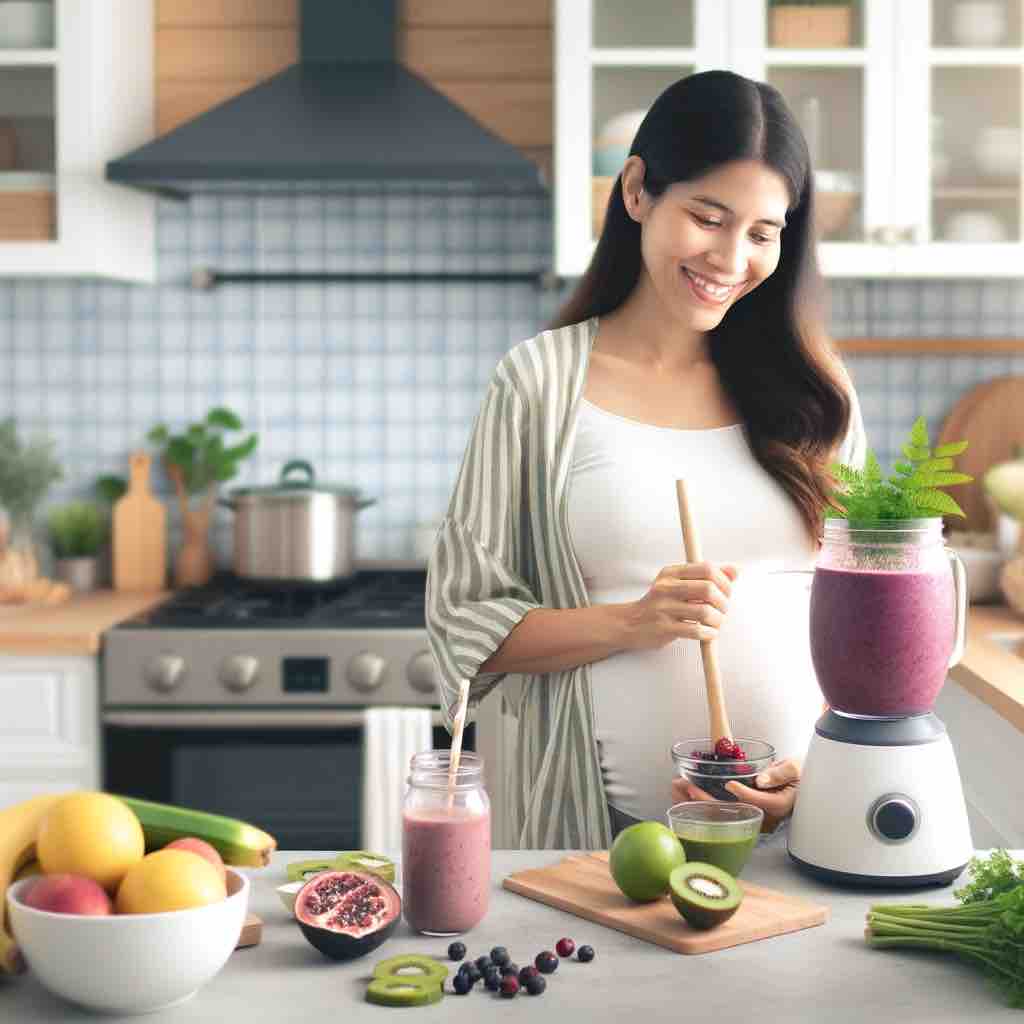
Pregnancy is a time when nutrition takes center stage, and what better way to nourish both mother and baby than with some exotic superfoods? These nutrient-packed foods not only add variety and excitement to your prenatal diet but also come loaded with essential vitamins, minerals, and antioxidants. Let’s explore ten exotic superfoods that can contribute to a healthy and vibrant pregnancy.

1. Quinoa: The Protein-Packed Ancient Grain

Quinoa, often hailed as a ‘super grain,’ is a complete protein, providing all nine essential amino acids vital for both mother and baby’s health. It’s also high in fiber, iron, and magnesium, making it a fantastic alternative to traditional grains, especially for those following a gluten-free diet.

2. Chia Seeds: Tiny Seeds with Mighty Nutrients

Don’t let their size fool you; chia seeds are a nutritional powerhouse. They’re an excellent source of omega-3 fatty acids, crucial for fetal brain development. Plus, their high fiber content can help combat pregnancy-induced constipation.

3. Acai Berries: The Antioxidant Rich Berry

Acai berries are bursting with antioxidants, which protect cells from damage and boost energy levels. They’re also rich in vitamins and minerals, supporting overall health during pregnancy.

4. Kefir: The Probiotic Wonder

Kefir, a fermented milk drink, is brimming with probiotics, essential for maintaining a healthy gut. A healthy gut can enhance digestion and absorption of nutrients, crucial during pregnancy.

5. Moringa: The Miracle Tree

Moringa leaves are known for their impressive nutritional profile. High in vitamins A, C, and E, as well as calcium and iron, moringa is a great supplement to a prenatal diet, especially in regions where these nutrients might be lacking in the diet.

6. Edamame: The Green Powerhouse

Edamame, or young soybeans, are not only delicious but also a fantastic source of protein, fiber, and vitamins. They are particularly beneficial for vegetarian and vegan diets during pregnancy.

7. Matcha: A Healthier Caffeine Alternative

Matcha, a type of green tea powder, is an antioxidant-rich food that can offer a gentle energy boost. While caffeine intake should be limited during pregnancy, matcha provides a healthier alternative with added health benefits.

8. Kimchi and Fermented Foods: For Gut Health

Fermented foods like kimchi are rich in probiotics, which are vital for maintaining healthy gut flora. A balanced gut microbiome is essential for optimal nutrient absorption and immune function.

9. Turmeric: The Anti-Inflammatory Spice

Turmeric is known for its anti-inflammatory properties. Adding turmeric to meals can help reduce inflammation and joint pain, which can be particularly beneficial during the later stages of pregnancy.

10. Goji Berries: The Nutrient-Dense Snack

Packed with antioxidants, vitamins, and minerals, goji berries are a great snack option. They support immune health and provide a natural energy boost, which can be helpful during pregnancy.


Conclusion:
Incorporating these exotic superfoods into your pregnancy diet can provide a wealth of health benefits. However, it’s important to remember that while these foods are nutritious, they should complement a balanced diet. Always consult with your healthcare provider before introducing new foods into your pregnancy diet, especially if you have any dietary restrictions or health concerns.

Enjoy the journey of pregnancy with these flavorful, nutrient-rich superfoods on your plate!

FAQs

  1. Can I consume quinoa every day during pregnancy? Yes, quinoa can be a daily part of your diet. It’s a complete protein and rich in other nutrients, making it ideal for pregnancy nutrition.
  2. Are chia seeds safe throughout pregnancy? Absolutely! Chia seeds are safe and beneficial throughout pregnancy, offering omega-3s, fiber, and calcium.
  3. How do acai berries benefit pregnancy? Acai berries are rich in antioxidants, which support immune health and provide energy, both of which are beneficial during pregnancy.
  4. Can kefir help with pregnancy digestion? Yes, kefir’s probiotics can improve gut health, aiding digestion and nutrient absorption, which is crucial during pregnancy.
  5. Is moringa safe for all stages of pregnancy? Moringa is generally safe but consult with a healthcare provider first, especially if you have specific health conditions.
  6. How much edamame can I eat while pregnant? Edamame is safe in moderation. A serving or two per day can provide you with protein, fiber, and vitamins.
  7. Is matcha a good alternative to coffee during pregnancy? Matcha is a healthier caffeine alternative, but it should be consumed in moderation due to its caffeine content.
  8. Can kimchi help with pregnancy-related gut issues? Yes, kimchi is rich in probiotics, which can help maintain a healthy gut microbiome, aiding in digestion during pregnancy.
  9. Does turmeric have specific benefits for pregnant women? Turmeric’s anti-inflammatory properties can help reduce inflammation and joint pain, which can be beneficial during pregnancy.
  10. Are goji berries a good snack option during pregnancy? Definitely! Goji berries are packed with nutrients and antioxidants, making them a great snack choice for energy and immune support.

Blog Tags: Pregnancy Superfoods, Exotic Foods in Pregnancy, Prenatal Nutrition, Healthy Eating During Pregnancy, Quinoa, Chia Seeds, Acai Berries, Kefir, Moringa, Edamame, Matcha, Kimchi, Turmeric, Goji Berries, Gestational Health

Posted on 4 Comments

Fiber in Food

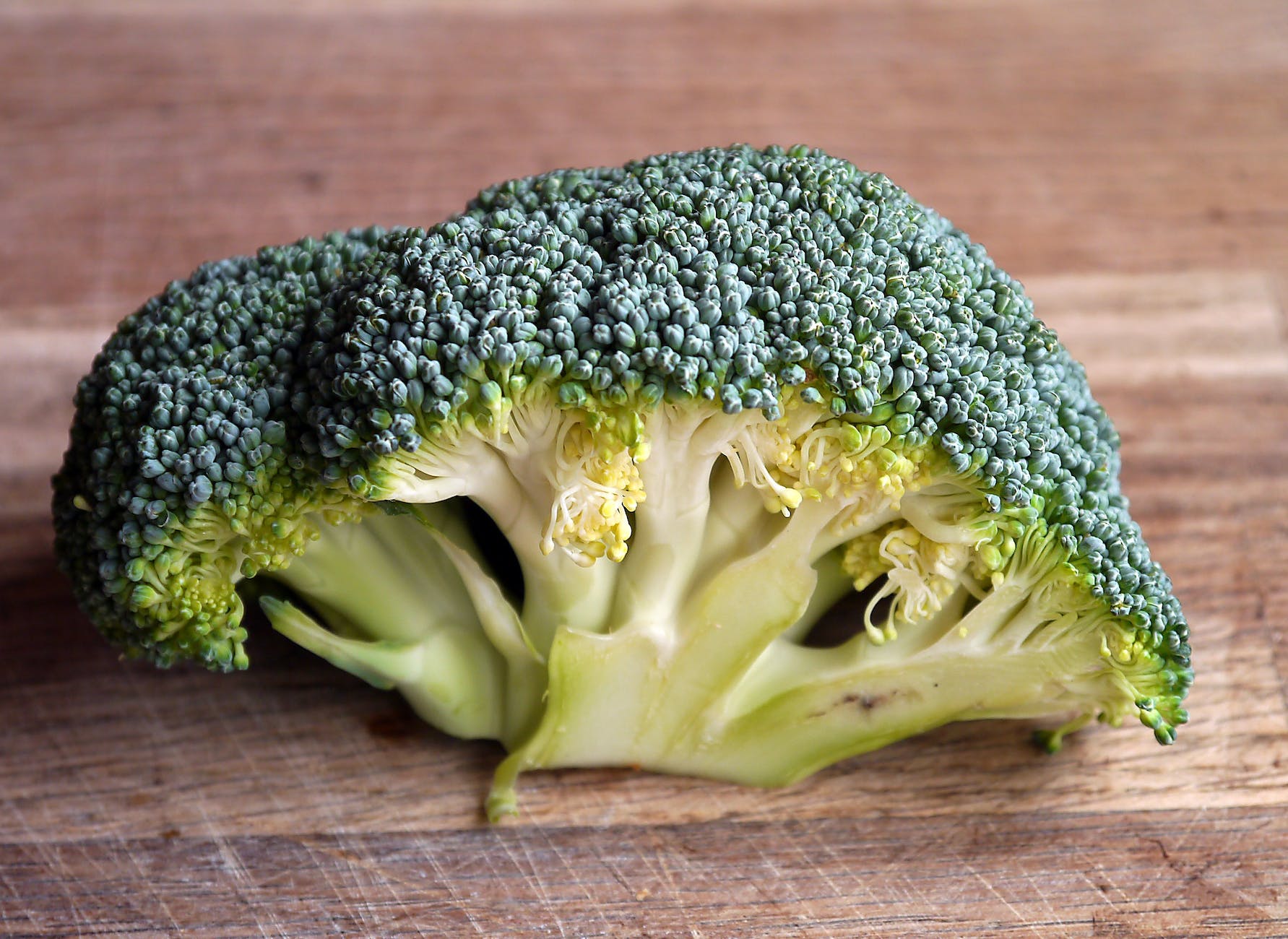
green broccoli vegetable on brown wooden table

Dietary fiber, a type of carbohydrate that our bodies cannot digest, plays a crucial role in maintaining our health. Unlike other carbs that are broken down into sugars, fiber passes through the body undigested, aiding in digestion, helping to keep our blood sugar levels stable, and making us feel full. The importance of dietary fiber cannot be overstated. From promoting healthier gut bacteria to lowering the risk of heart disease, a high-fiber diet is key to maintaining good health.

Types of Fiber: Soluble vs Insoluble

There are two types of dietary fiber: soluble and insoluble. Each type functions differently and provides different health benefits.

Soluble fiber dissolves in water and forms a gel-like substance in the stomach. It can help lower blood cholesterol and glucose levels. Soluble fiber is found in foods like oats, peas, beans, apples, and citrus fruits.

Insoluble fiber does not dissolve in water. It adds bulk to the diet and can help prevent constipation. Insoluble fiber is found in foods like whole-wheat flour, wheat bran, nuts, beans, and vegetables like cauliflower and potatoes.

Fiber in Foods: What You Need to Know

Let’s take a closer look at the fiber content in lists of various foods and how they can contribute to a high-fiber diet.

Fiber in Fruits

Fruits are a delicious way to add fiber to your diet. Here are some fruits that are particularly high in fiber:

Kiwi

A medium-sized kiwi has about 2.1 grams of fiber. This includes both soluble and insoluble fiber, making it a great choice for overall digestive health. Kiwi is also rich in vitamin C and antioxidants.

Raspberries

One cup of raspberries contains about 8 grams of fiber. Raspberries are a great source of soluble fiber and are also rich in antioxidants. They can help control blood sugar and fight inflammation.

Pear

One medium-sized pear contains about 5.5 grams of fiber. Pears are a good source of soluble fiber and are also rich in vitamin C.

Apple

One medium-sized apple contains about 4.4 grams of fiber. Apples are a good source of both soluble and insoluble fiber and are also high in vitamin C.

Banana

One medium-sized banana contains about 3.1 grams of fiber. Bananas are a good source of soluble fiber and are also high in vitamin C and potassium.

Orange

One medium-sized orange contains about 3.1 grams of fiber. Oranges are a good source of soluble fiber and are also high in vitamin C.

Tomatoes

Tomatoes are a good source of dietary fiber, providing about 1.5 grams per average-sized tomato. Most of the fibers in tomatoes are insoluble, including cellulose, hemicellulose, and lignin. This can aid in digestive health.

Strawberries

Strawberries are a good source of fiber. One cup of strawberries provides about 3 grams of fiber. This makes them a great choice for a healthy dessert or snack.

Blueberries

Blueberries are a good source of fiber. A 100-gram serving of raw blueberries has 2.4 grams of fiber. This makes them a great choice for a healthy dessert or snack.

Grapefruit

Grapefruit is a good source of fiber. One-half grapefruit provides 2 grams of fiber. This makes it a great choice for a healthy breakfast or snack.

Fiber in Vegetables

Vegetables are another excellent source of fiber. Here are some vegetables that are particularly high in fiber:

Broccoli

One cup of cooked broccoli contains about 5.1 grams of fiber. Broccoli is high in insoluble fiber and is also a powerhouse of vitamins and minerals like vitamin C and potassium.

Sweet Potato

One medium-sized sweet potato contains about 4 grams of fiber. Sweet potatoes are a great source of soluble fiber and are also high in vitamin A, vitamin C, and potassium.

Spinach

One cup of cooked spinach contains about 4.3 grams of fiber. Spinach is high in insoluble fiber and is also rich in many essential nutrients like calcium, iron, and vitamin A.

Carrots

One medium-sized carrot contains about 1.7 grams of fiber. Carrots are a good source of both soluble and insoluble fiber and are also high in vitamin A.

Peas

One cup of cooked green peas contains about 8.8 grams of fiber. Peas are a great source of both soluble and insoluble fiber. They are also a good source of protein, making them a great choice for vegetarians and vegans.

Mushrooms

Mushrooms are a good source of fiber, particularly the soluble fiber beta-glucan. This makes them a great choice for a healthy side dish or addition to meals.

Beets

Beets are a good source of fiber, with 2 grams per 100 grams. This makes them a great choice for a healthy side dish or addition to meals.

Fiber in Grains and Seeds

Grains and seeds are often high in fiber. Here are some that are particularly high in fiber:

Whole Wheat Bread

One slice of whole wheat bread contains about 2 grams of fiber. Whole grains like whole wheat are a great source of both soluble and insoluble fiber. They can help reduce the risk of heart disease and aid in weight management.

Quinoa

One cup of cooked quinoa contains about 5.2 grams of fiber. Quinoa is a good source of insoluble fiber and is also a complete protein, meaning it contains all nine essential amino acids.

Brown Rice

One cup of cooked brown rice contains about 3.5 grams of fiber. Brown rice is a good source of insoluble fiber and is also high in vitamins and minerals like magnesium and selenium.

Chia Seeds

One ounce of chia seeds contains about 10.6 grams of fiber. Chia seeds are a great source of soluble fiber and are also high in omega-3 fatty acids.

The fiber in Nuts and Legumes

Nuts and legumes are also high in fiber. Here are some that are particularly high in fiber:

Lentils

One cup of cooked lentils contains about 15.6 grams of fiber. Lentils are a great source of both soluble and insoluble fiber. They are also a good source of protein, making them a great choice for vegetarians and vegans.

Chickpeas

Chickpeas, also known as garbanzo beans, are an excellent source of dietary fiber. They provide 7.6 grams of fiber per 100 grams. This makes them a great addition to any high-fiber diet.

Almonds

One ounce of almonds contains about 3.5 grams of fiber. Almonds are a good source of both soluble and insoluble fiber. They are also high in healthy fats, protein, and vitamin E.

Walnuts

One ounce of walnuts contains about 1.9 grams of fiber. Walnuts are a good source of both soluble and insoluble fiber. They are also high in healthy fats and omega-3 fatty acids.

Peanuts

Peanuts are an excellent source of dietary fiber. They contain 8.5 grams of fiber per 100 grams, which can help in maintaining a healthy digestive system.

Roots

Chicory Root

Fresh chicory root is composed of 68% inulin by dry weight. Inulin is a type of fiber known as a fructan or fructooligosaccharide. This makes chicory root a great choice for those looking to boost their fiber intake.

Remember, the daily recommended intake of fiber for men is 38 grams and for women is 25 grams. Incorporating a variety of these high-fiber foods into your diet can help you meet your daily fiber needs and provide a host of other health benefits as well.

Blog Tags: Fiber, High-Fiber Diet, Soluble Fiber, Insoluble Fiber, Digestive Health, Heart Health, Weight Management, Blood Sugar Control, Kiwi, Whole Wheat Bread, Raspberries, Broccoli, Almonds, Sweet Potato, Blueberries, Lentils, Avocado, Quinoa, Spinach, Brown Rice, Pear, Apple, Banana, Orange, Sweet Potato, Spinach, Carrots, Peas, Whole Wheat Bread, Quinoa, Brown Rice, Chia Seeds, Almonds, Lentils, Walnuts.