Posted on — 17 Comments

Pesto Recipe: Classic Basil Pesto Sauce & 10 Variations

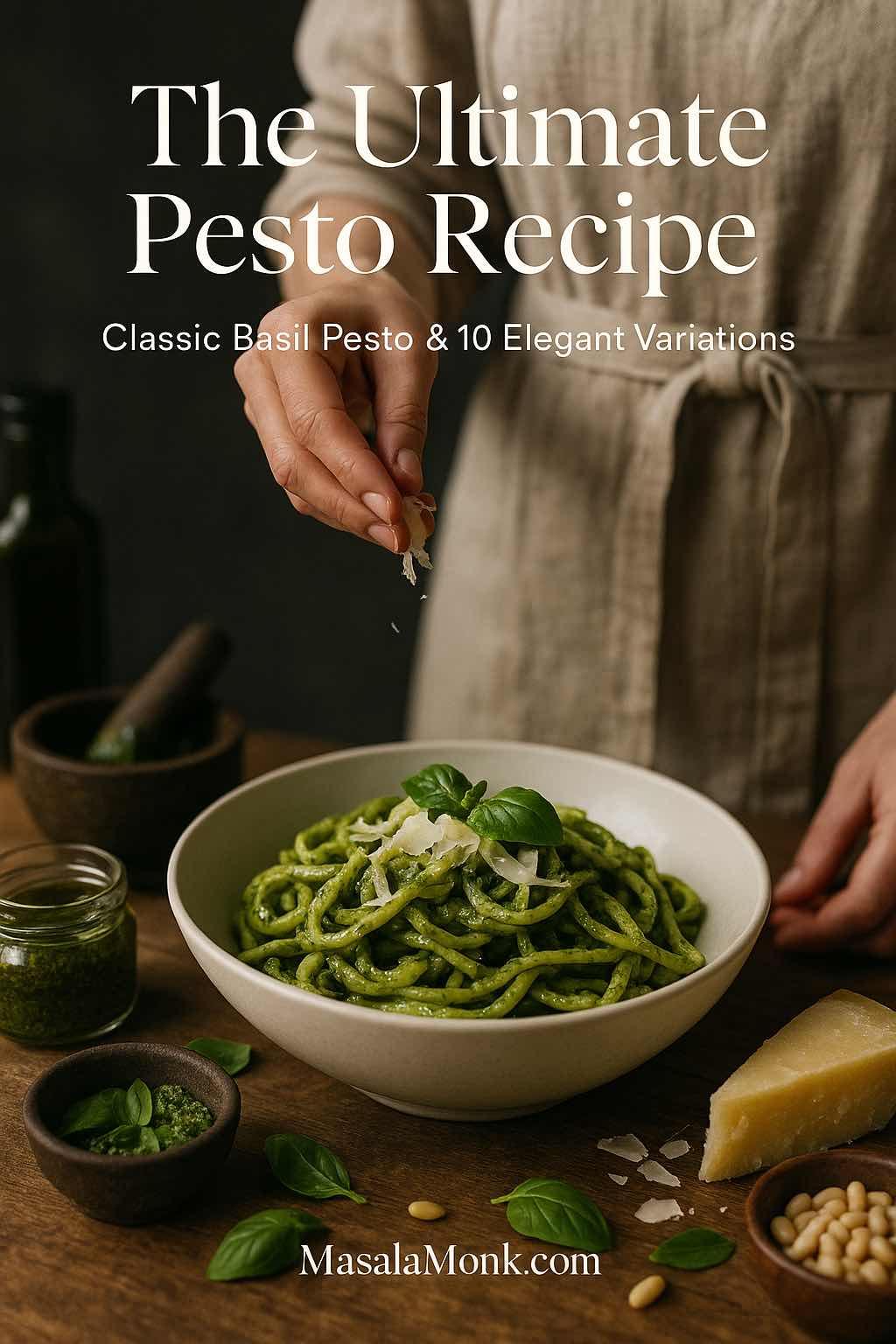
Hand sprinkling Parmesan over a bowl of basil pesto pasta on a wooden table with fresh basil, pine nuts and pesto sauce.

There are days when dinner looks like plain boiled pasta, some grilled chicken, maybe a tired bag of salad leaves. And then there are days when a spoonful of emerald-green pesto sauce hits the plate and suddenly everything looks intentional. Pesto is one of those sauces that seems fancy when it comes from a jar, but becomes shockingly simple once you learn how to make it yourself. A handful of basil, a little garlic, a nut or two, good olive oil, a salty cheese – that’s all it takes for a classic pesto recipe.

From learning basic – How to make Pesto, you can move in countless directions: vegan pesto, nut free pesto, red pesto with sun dried tomato, pistachio pesto, smooth creamy pesto sauce for pasta, pesto butter for steaks, pesto salad dressing, pesto dip for snacks and pesto mayo for sandwiches. This guide starts with a solid basil pesto sauce you can rely on every time. After that, we’ll move into ten useful variations, then finish with practical ways to use them in everyday cooking: pesto pasta, pesto pizza, pesto pasta salad, chicken pesto pasta, pesto salmon, pesto sandwich ideas and more.


What pesto actually is

At its core, pesto is a raw Italian sauce. The name comes from the Italian verb pestare, “to pound” or “to crush,” because the original method uses a mortar and pestle. A traditional pesto is made with:

  • Basil or another soft leafy herb
  • A nut, usually pine nuts
  • A hard, salty cheese
  • Garlic
  • Olive oil
  • Salt, and sometimes a touch of acidity

The most iconic version, pesto alla Genovese, comes from Liguria in northern Italy. Classic recipes from that region use only fresh basil, garlic, pine nuts, Parmigiano Reggiano, Pecorino, olive oil and salt.
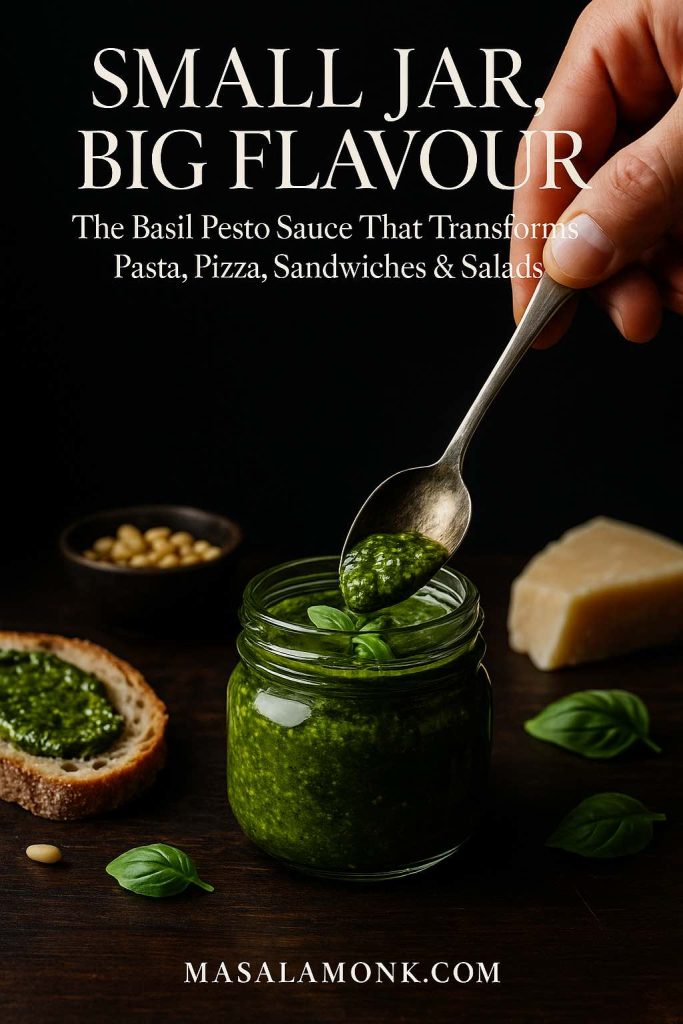
Spoon dipping into a small glass jar of basil pesto sauce with bread, cheese and basil on a dark wooden table.
A single jar of basil pesto sauce can turn simple bread, pasta or vegetables into something worth lingering over.

Modern cooks bend the rules a bit. Walnuts often replace pine nuts. Some recipes use almonds or pistachios. Others lean on kale or rocket instead of all basil. In some kitchens, cheese is omitted completely in favour of nutritional yeast, turning it into a vegan pesto sauce. Even so, the structure stays the same: a rich, thick, uncooked herb sauce that can be thinned to make pesto pasta sauce or used thick as a pesto spread.

Because it’s based on olive oil, nuts, basil and cheese, pesto also sits in that rare category of condiments that feel indulgent but can still support a fairly balanced way of eating. Nutrition writers often point out that it’s rich, yes, but mostly in unsaturated fats and antioxidants.

So if you’ve only met pesto in the form of a slightly dull jar that lives at the back of the fridge, it’s worth meeting it again, properly fresh.

Also Read: Healthy Tuna Salad – 10 Easy Recipes (Avocado, Mediterranean, No Mayo & More)


Classic Basil Pesto Recipe (Base Pesto Sauce)

This is your baseline pesto recipe. Every variation later either starts from here or uses the same ratio logic.

Ingredients (about 1 cup)

  • 2 packed cups fresh basil leaves
  • ¼ cup pine nuts (walnuts or almonds also work)
  • ½ cup finely grated Parmesan, or a mix of Parmesan and Pecorino
  • 1–2 small garlic cloves, smashed
  • ½ cup extra virgin olive oil, plus more to cover for storage
  • ½–1 tablespoon lemon juice (optional but brightening)
  • ½ teaspoon fine salt, or to taste
  • A pinch of black pepper

You can swap quantities slightly to taste – more cheese for a saltier pesto, more nuts for a richer pesto, more olive oil for a looser pesto sauce – but this is a reliable starting point.
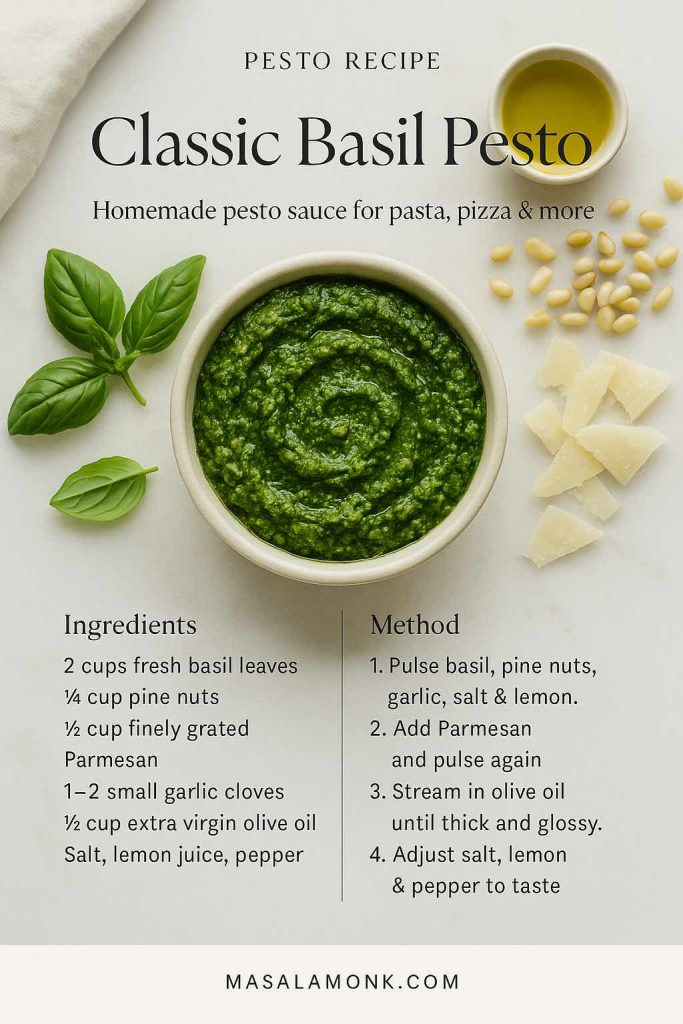
Classic Basil Pesto recipe card showing ingredients and method on a luxe marble background with a bowl of green pesto – MasalaMonk.
Classic Basil Pesto – a quick reference card you can save or pin. Keep this homemade pesto sauce ratio handy for pasta, pizza, salads and more.

How to make basil pesto (processor method)

Although the traditionalists might side-eye the blender, most home cooks will use one. Used gently, it still makes excellent pesto.

  1. Build the flavour base
    Tip the basil leaves, pine nuts, garlic, salt and lemon juice into a food processor. Pulse in short bursts until everything is finely chopped. You want a moist, finely minced mixture, not a purée yet.
  2. Fold in the cheese
    Add the grated Parmesan. Pulse again a few times to mix it through.
  3. Stream in the olive oil
    With the processor on low, slowly pour in the olive oil. Watch the texture: once it turns into a thick, glossy paste that loosens slightly as the blade moves, you’re there. Scrape down the sides once or twice.
  4. Taste and balance
    Now check what you’ve got. Too heavy? Add a little more lemon. Too sharp? Round it out with a spoonful more olive oil or a sprinkle of cheese. Lacking intensity? A tiny pinch of extra salt usually wakes everything up.

That’s it: a classic homemade pesto sauce that works in basil pesto pasta, spooned onto grilled vegetables, folded into grain bowls, spread under cheese on toast, or served as a pesto dip with raw vegetables and crackers.

Mortar and pestle option for Pesto Recipe

If you ever feel like going fully traditional, making pesto in a mortar and pestle is worth experiencing at least once. Many Italian cooks swear the flavour and colour are better, because crushing releases oils without the same heat and aeration you get from fast blades. Recent tests from cooking writers also suggest the mortar method gives a silkier, more stable emulsion that clings beautifully to pasta.

The order matters:

  1. Pound garlic and salt to a smooth paste.
  2. Add basil in handfuls, crushing and twisting until it collapses into a thick green paste.
  3. Add the nuts and smash until they mostly disappear into the basil.
  4. Work in the grated cheese.
  5. Finally, drizzle in olive oil and stir until you have a cohesive sauce.

The flavour will be softer, less grassy, and the colour often stays more vivid.

How to store pesto safely

Homemade pesto is raw and includes fresh basil, garlic and oil, so storage isn’t something to wing.

Guidance from the National Center for Home Food Preservation is very clear: pesto should be made fresh, kept in the refrigerator for no more than three days, and frozen for any longer storage.

A practical approach at home:

  • Spoon pesto into a clean jar.
  • Smooth the top and pour a thin layer of olive oil over the surface.
  • Close and refrigerate for up to 2–3 days.
  • For longer, portion into ice cube trays or small containers and freeze.

Food preservation experts repeatedly stress that pesto should not be canned; there are no safe, tested canning times for an oil-rich, low-acid mixture like this, and freezing is the recommended method instead.

With the base recipe and storage sorted, the fun part begins.

Also Read: Double Chocolate Chip Cookies – Easy Recipe with 7 Variations


Ten useful pesto variations & their recipe

Instead of thinking of each variation as a completely new pesto recipe, it helps to treat the classic version as a template:

  • Greens or herbs
  • Nuts or seeds
  • Cheese or a savoury substitute
  • Garlic or a more gentle flavour base
  • Olive oil
  • Salt, with optional lemon or vinegar

Every variation below changes one or more of those slots: sometimes to accommodate dairy-free, nut-free or low FODMAP needs, and sometimes simply to chase a different flavour.
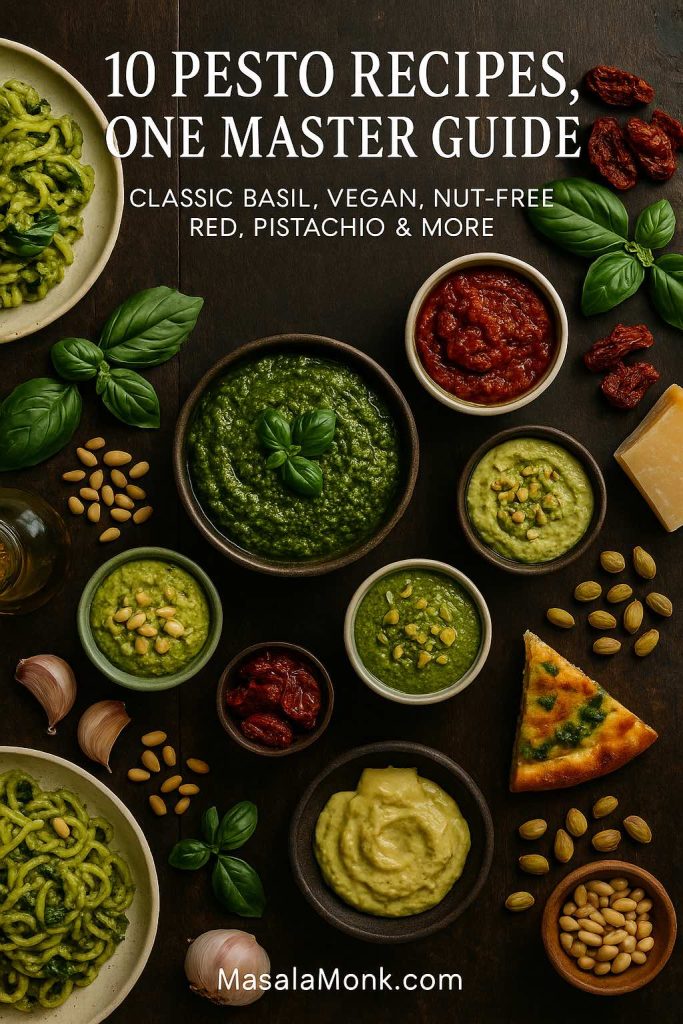
Top view of classic basil pesto surrounded by bowls of red pesto, vegan pesto, nut-free pesto and pistachio pesto with pasta and pizza.
Classic basil, red, vegan, nut-free, pistachio and more – this board of pesto variations shows how one master recipe branches into ten different sauces.

1. Vegan Pesto Recipe (Dairy Free Basil Pesto Sauce)

When you take cheese out of pesto, you have to put savouriness back somehow. Luckily, that’s exactly what nutritional yeast is good at.

A very simple vegan pesto looks like this:

  • 2 cups basil (or basil plus a little parsley)
  • ¼ cup nuts or seeds – cashews, walnuts, pine nuts or pumpkin seeds
  • 3–4 tablespoons nutritional yeast, instead of Parmesan
  • 1–2 cloves garlic
  • Olive oil, lemon juice, salt and pepper
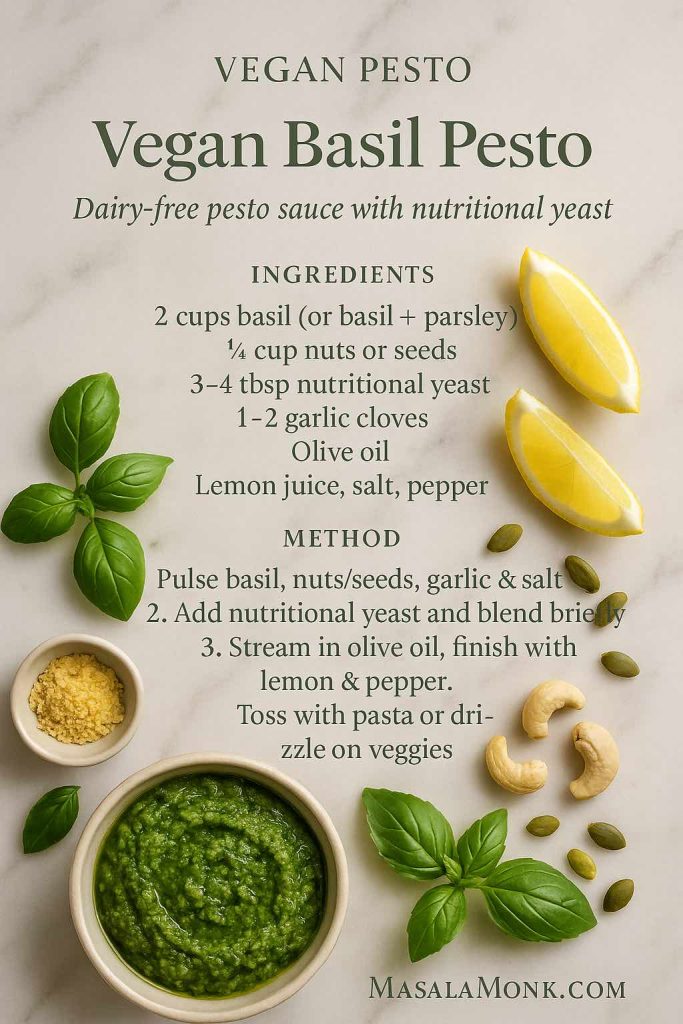
Vegan Basil Pesto recipe card with dairy-free pesto ingredients and method on a marble background, showing basil, lemon, cashews and nutritional yeast – MasalaMonk.
Vegan Basil Pesto – a dairy-free pesto sauce made with nutritional yeast instead of cheese. Save this quick-reference card for easy vegan pesto pasta, salads and roasted veggies.

The method is identical to the classic pesto recipe. The taste is a little different – more nutty, slightly cheesy from the nutritional yeast – but it does everything you’d want a basil pesto sauce to do: coat pasta, dress salads, work as a pesto dip, even stand in as a pesto spread on toast.

If you prefer a tested version with exact measurements, you can also look at MasalaMonk’s own fresh basil vegan pesto, which uses basil, cashews, pumpkin seeds and lemon to create a rich dairy-free sauce.

This style works beautifully with vegan pesto pasta, as a base for vegan pesto pizza, or even stirred into a pot of vegetable soup just before serving.

Also Read: Vegan French Toast: 6 Easy Recipes (Pan, Air Fryer, GF & High-Protein)

2. Nut free pesto recipe (no nuts, no pine nuts)

For nut allergies, the simplest fix is to keep basil and olive oil the same and replace pine nuts with seeds. Sunflower seeds, pumpkin seeds and hemp hearts all blend well and give a creamy pesto without nuts.
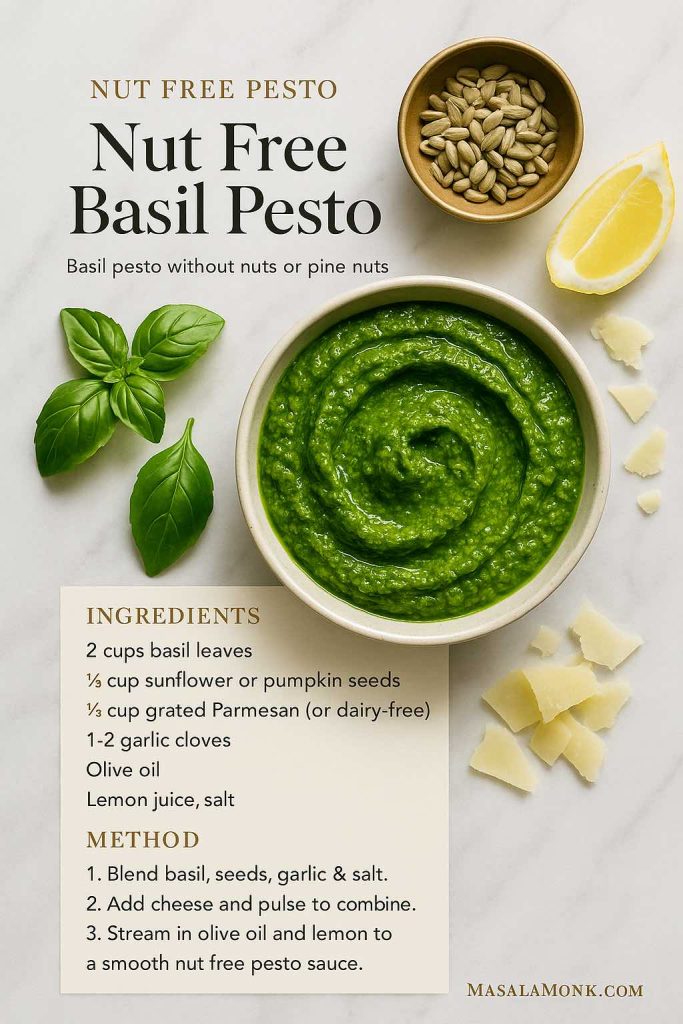
Nut Free Basil Pesto recipe card on marble with a bowl of green pesto, basil leaves, sunflower seeds, lemon wedge and printed ingredients and method – MasalaMonk.
Nut Free Basil Pesto – a basil pesto recipe made with sunflower or pumpkin seeds instead of nuts or pine nuts. Pin this card for a quick, allergy-friendly pesto sauce you can use with pasta, salads and sandwiches.

A nut free pesto base might be:

  • 2 cups basil
  • ¼ cup sunflower or pumpkin seeds
  • ½ cup grated Parmesan (or a dairy-free alternative if needed)
  • 1–2 garlic cloves
  • Olive oil, lemon, salt

You can also skip seeds completely and rely on basil, cheese and olive oil for body. That gives you a smooth, slightly lighter pesto sauce that works in pesto pasta and pesto noodles while staying safe in nut-free homes and lunchboxes.

Also Read: French 75 Cocktail Recipe: 7 Easy Variations

3. Red Pesto Recipe (Sun Dried Tomato Pesto Rosso)

Red pesto – sometimes called pesto rosso – swaps out most of the basil for tomatoes and peppers. It’s richer, deeper and a little sweeter, and it loves grilled meats, toasted breads and hearty pasta shapes.
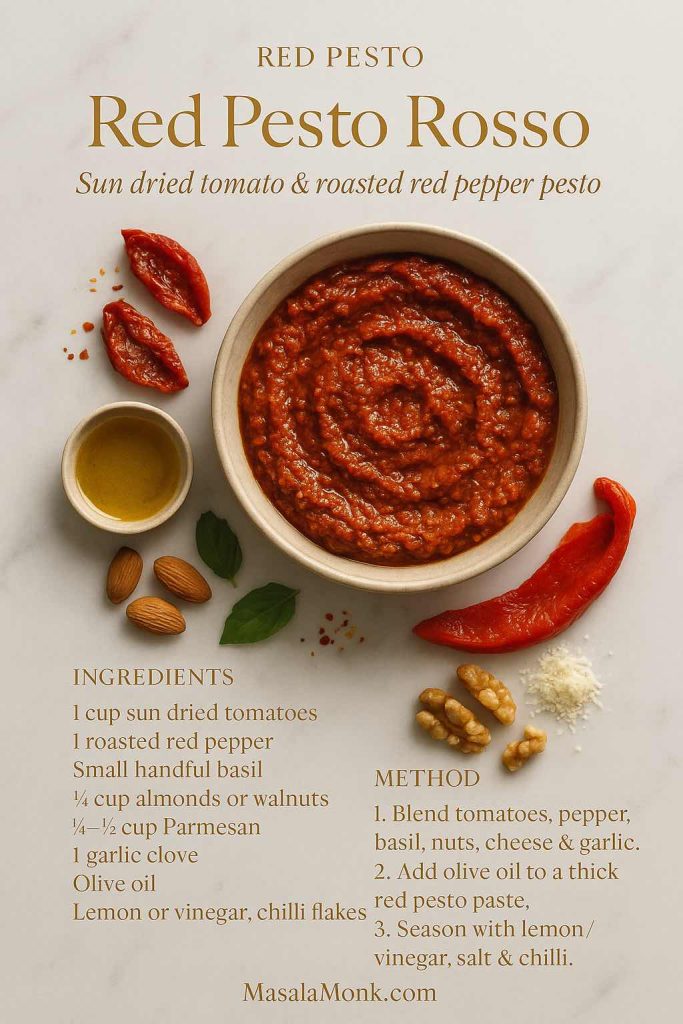
Red Pesto Rosso recipe card on marble showing a bowl of sun dried tomato and roasted red pepper pesto with almonds, walnuts, Parmesan and printed ingredients and method – MasalaMonk.
Red Pesto Rosso – a bold pesto made with sun dried tomatoes and roasted red pepper. Save this card for quick red pesto pasta, crostini, grilled chicken or roasted vegetable bowls.

A flexible red pesto pattern:

  • 1 cup drained sun dried tomato halves (oil-packed or rehydrated)
  • 1 roasted red pepper (jarred or homemade)
  • Small handful fresh basil leaves
  • ¼ cup toasted almonds or walnuts
  • ¼–⅓ cup grated Parmesan
  • 1 garlic clove
  • Olive oil as needed
  • A spoon of red wine vinegar or lemon juice
  • Optional pinch of dried chilli flakes

Blend everything except the oil first, then add oil until it turns into a thick, glossy paste. Use this red pesto with penne for a punchy red pesto pasta, toss it through warm potatoes, spread it inside a pesto grilled cheese, or spoon it over roast chicken.

To make a slightly sharper version, you can lean more on roasted red pepper, a little chilli pesto style heat, and less on tomatoes. Either way, this lives firmly in the “fast weeknight pasta” category.

Also Read: Whole Chicken in Crock Pot Recipe (Slow Cooker “Roast” Chicken with Veggies)

4. Pistachio Pesto Recipe (How to Make Pistachio Pesto)

Pistachio pesto feels fancy, but it’s just a simple swap: pistachios instead of pine nuts. However, the effect is dramatic. The sauce becomes silkier and a touch sweeter, pairing beautifully with seafood, chicken and grilled vegetables.
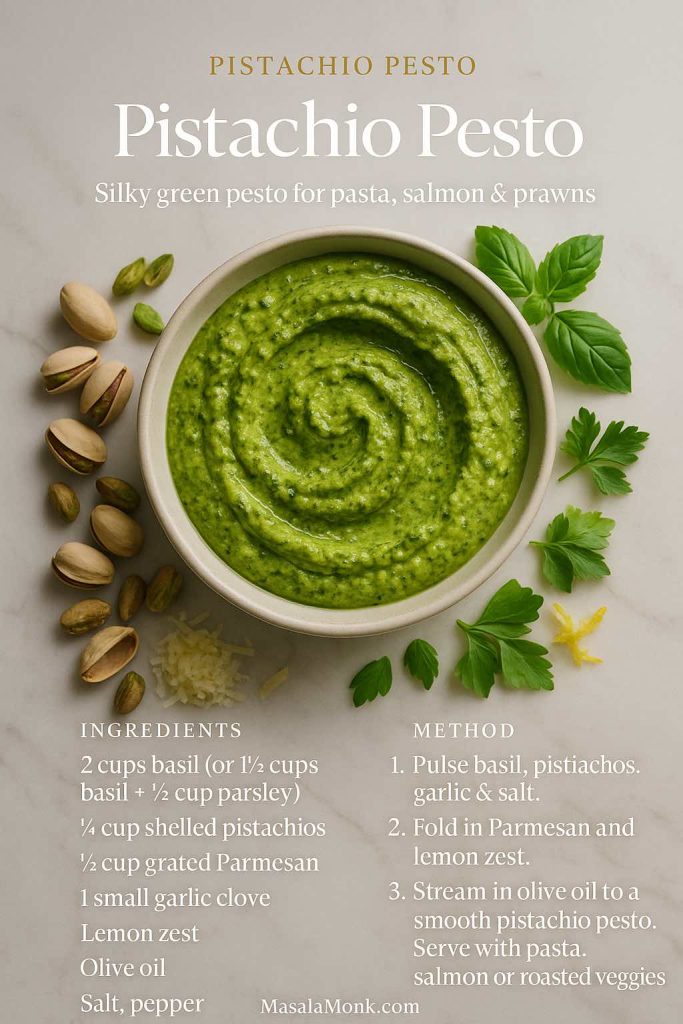
Pistachio Pesto recipe card on white marble with a bowl of silky green pesto, scattered pistachios, basil, parsley, lemon zest and printed ingredients and method – MasalaMonk.
Pistachio Pesto – a silky, slightly sweet pesto that’s perfect with pasta, salmon or prawns. Save this recipe card so you always have the pistachio-to-basil ratio handy for an instant gourmet pesto sauce.

A good starting ratio:

  • 2 cups basil (or 1½ cups basil + ½ cup flat-leaf parsley)
  • ¼ cup pistachios, shelled
  • ½ cup grated Parmesan
  • 1 small garlic clove
  • Finely grated lemon zest
  • Olive oil, salt and pepper

This pistachio pesto is wonderful tossed with spaghetti, folded into a pistachio pesto pasta salad, spooned over pesto salmon, or drizzled onto roasted cauliflower and carrots.

For an even greener effect, you can blend in a few spinach leaves or rocket with the basil. It’s not necessary, but it does make a bowl of pasta look restaurant-ready.

Also Read: 10 Spinach Dip Recipes: Cold, Baked, Artichoke & More

5. Healthy / Lighter Pesto Recipe (low fat, lower calorie, lower sodium)

Pesto isn’t a low-calorie sauce; most of its calories come from olive oil, nuts and cheese. That said, those calories aren’t empty. Several nutrition write-ups describe pesto as energy-dense but also rich in unsaturated fats and antioxidants from olive oil and basil, and suggest it can absolutely fit into a balanced diet in reasonable portions.
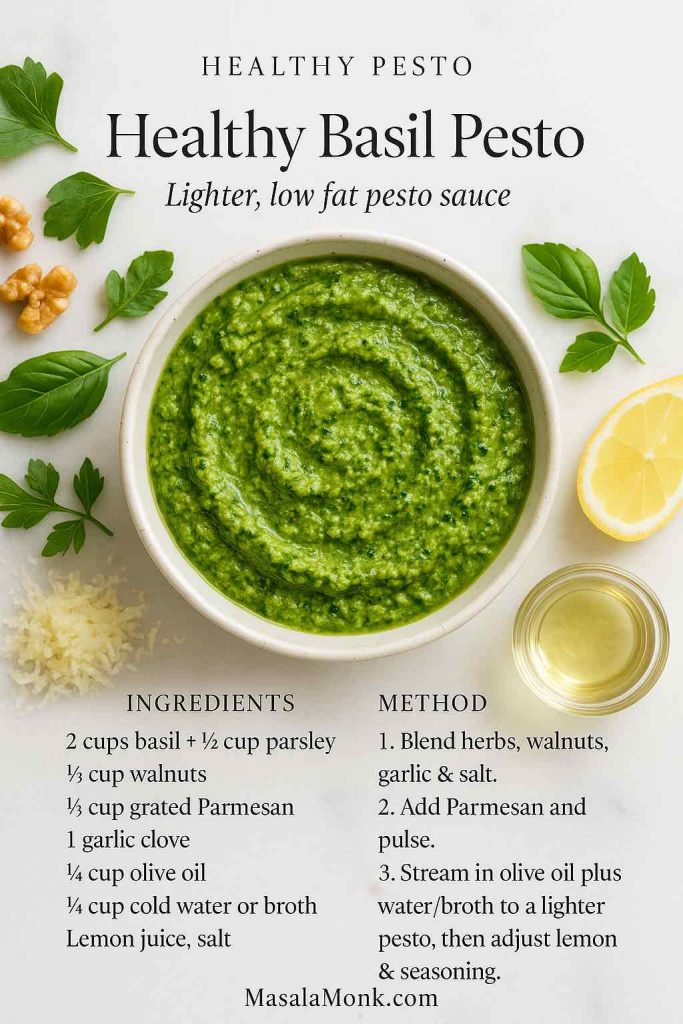
Healthy Basil Pesto recipe card on white marble with a bowl of bright green low fat pesto, basil and parsley leaves, walnuts, Parmesan, lemon wedge and printed ingredients and method – MasalaMonk.
Healthy Basil Pesto – a lighter, low fat pesto sauce made with extra herbs, walnuts and a mix of olive oil plus water or broth. Save this card for days when you want pesto flavour with a gentler calorie hit for your pasta, salads and grain bowls.

If you’d like a lighter pesto for everyday use, there are a few gentle tweaks:

  • Replace part of the olive oil with cold water or vegetable broth.
  • Use slightly less cheese and bump up the basil and parsley instead.
  • Add a spoonful of yogurt or soft ricotta to create a creamy pesto sauce that feels rich but uses less oil.
  • Season with a lighter hand if you’re watching sodium.

One simple “healthy pesto” approach is:

  • 2 cups basil + ½ cup parsley
  • ¼ cup walnuts
  • ⅓ cup grated Parmesan
  • 1 garlic clove
  • ¼ cup olive oil + ¼ cup cold water
  • Lemon juice and salt to taste

This still coats pasta nicely, yet feels less heavy. You can also thin it further into a pesto salad dressing for grain bowls built from whole wheat pasta, brown rice or quinoa. As you experiment with those bases, it’s handy to keep guides like Quinoa vs Rice: Nutrition, Glycemic Index, and When to Choose Each nearby if you like number-driven decisions.

6. How to make Pesto – Low-FODMAP and no-garlic

For anyone with a sensitive gut, raw garlic can be a problem. Yet most of the character in classic pesto comes from garlic and basil together, so the trick is to soften the impact without losing all of the aroma.
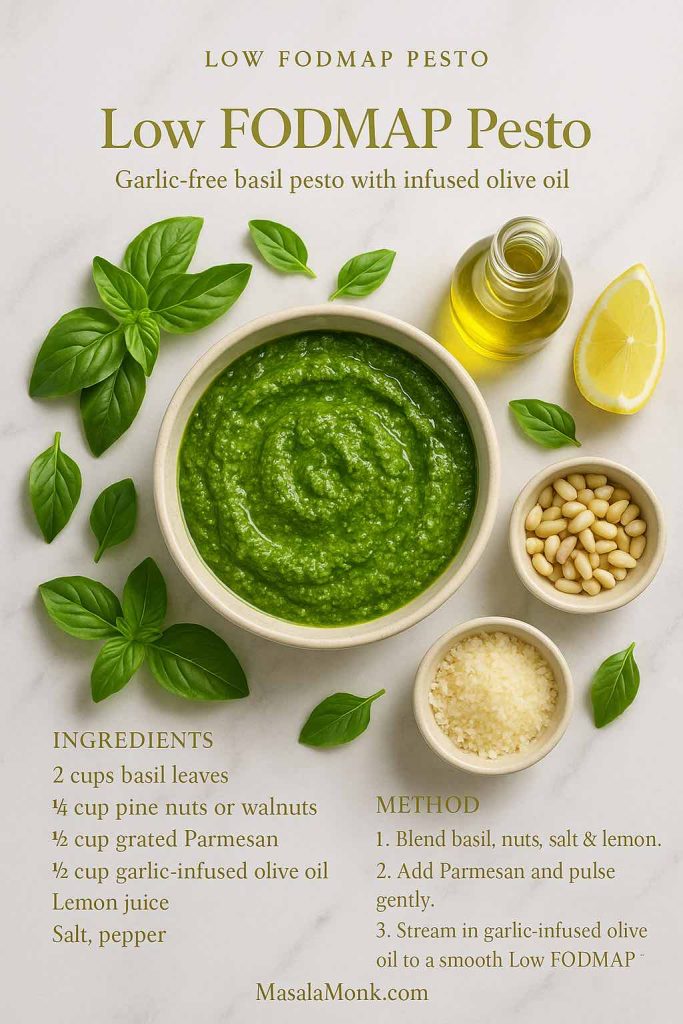
Low FODMAP Pesto recipe card on white marble with a bowl of garlic-free basil pesto, fresh basil leaves, pine nuts, garlic-infused olive oil, Parmesan, lemon wedge and printed ingredients and method – MasalaMonk.
Low FODMAP Pesto – a garlic-free basil pesto made with garlic-infused olive oil so you keep the flavour without the FODMAP load. Save this card if you need a gentler pesto option for sensitive stomachs, pasta, salads or grain bowls.

Two easy strategies:

  • Skip garlic entirely and balance the flavour with more lemon zest, basil and cheese.
  • Use garlic-infused olive oil in place of both garlic and some of the plain oil.

A low-FODMAP-friendly pesto might look like this:

  • 2 cups basil
  • ¼ cup pine nuts or walnuts
  • ½ cup Parmesan
  • ½ cup garlic-infused olive oil
  • Lemon juice, salt and pepper

You can make the same kind of adjustments to red pesto, pistachio pesto and kale pesto. The result won’t be identical to the garlicky classic, but it still gives you herby, savoury richness for pesto pasta, pesto macaroni salad, pesto and chicken, pesto and salmon or even a simple pesto dip for roasted vegetables.

Also Read: Easy Lemon Pepper Chicken Wings (Air Fryer, Oven & Fried Recipe)

7. Green pesto recipe variations: rocket, kale and wild garlic

Sometimes you simply don’t have enough basil. Other days you have a bag of kale that needs using, or a bunch of rocket that’s about to wilt. Pesto is kind to those situations.
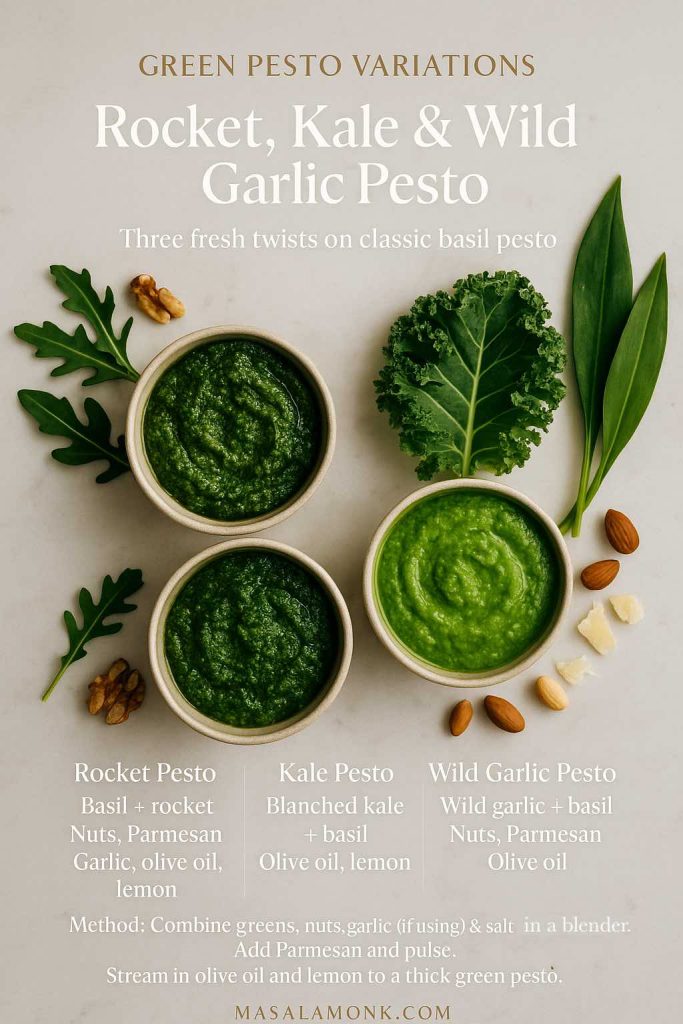
Recipe card for Rocket, Kale and Wild Garlic pesto variations on white marble, showing three bowls of green pesto with rocket leaves, kale, wild garlic, nuts, Parmesan and simple ingredient lists and method – MasalaMonk.
Rocket, Kale & Wild Garlic Pesto – three fresh twists on classic basil pesto. Use this card as a quick guide to swap in rocket, blanched kale or wild garlic when you’re short on basil but still want a big, herby pesto flavour for pasta, pizza or veggies.

Rocket pesto (arugula pesto)

Rocket has a peppery bite that cuts nicely through pasta cream sauces and rich cheeses.

  • 1 cup basil + 1 cup rocket
  • ¼ cup walnuts or almonds
  • ½ cup Parmesan
  • Garlic, olive oil, lemon and salt

This rocket pesto works well in pasta and on pizza, and it’s especially good with grilled courgettes or roasted beetroot.

Kale pesto

As we know, Kale is sturdier than basil, so blanching it briefly helps tame bitterness and gives a smoother texture.

  • Blanch 2 cups kale leaves in boiling water for 30–40 seconds, then shock in ice water and squeeze dry.
  • Blend with 1 cup basil, ¼ cup nuts, ½ cup cheese, garlic, olive oil and lemon.

Pesto made from Kale is great in everything from warm pasta to cold pesto pasta salad and even as a pesto spread on sandwiches.

Wild garlic and garlic scape pesto

In spring, wild garlic and garlic scapes give you a short window to make some very special pesto. This is where herb-only pestos really shine: wild garlic leaves or scapes, olive oil, nuts and a little cheese turn into an intensely aromatic sauce that can make even boiled potatoes taste like something from a restaurant.

Because these greens are powerful, they often work best when combined with a little basil, spinach or parsley.

Also Read: Katsu Curry Rice (Japanese Recipe, with Chicken Cutlet)

8. Creamy pesto sauce recipe

On some evenings, what you really want is a large bowl of creamy pesto pasta. Not a thin coating, not a light drizzle – a proper comfort-bowl, almost like an Alfredo, but green.
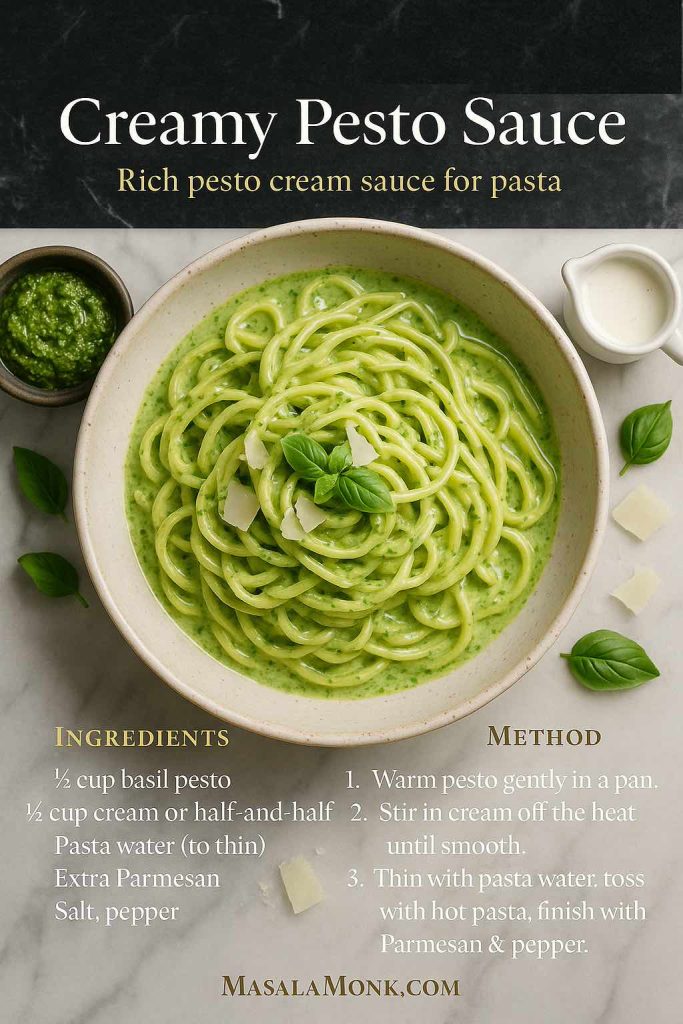
Creamy Pesto Sauce recipe card with a bowl of pasta coated in rich green pesto cream sauce, fresh basil, Parmesan shavings, small bowls of pesto and cream, plus printed ingredients and method – MasalaMonk.
Creamy Pesto Sauce – a rich pesto cream sauce for nights when you want full comfort. Save this card to remember the simple ratio of pesto to cream, then toss it with hot pasta, add Parmesan and you’ve got an instant green Alfredo-style bowl.

There are a few different ways to get there:

  • Stir a splash of cream into warm pesto and toss quickly with hot pasta off the heat.
  • Whisk pesto with ricotta, mascarpone or Greek yogurt to make a thicker, tangier sauce.
  • Fold pesto into a simple white sauce or béchamel for baked dishes.

For an easy creamy pesto pasta sauce:

  • Warm ½ cup of basil pesto gently in a pan.
  • Add ½ cup of cream or half-and-half and whisk until smooth.
  • Thin with a little pasta water if needed.
  • Toss with cooked pasta, then finish with extra Parmesan and black pepper.

If you enjoy playing with cream-based sauces generally, it’s fun to line this up alongside guides like Classic vs. Authentic Alfredo: 5 Essential Recipes and Chicken Alfredo Pasta, 5 Ways and use similar techniques to control thickness, gloss and richness.

9. Recipe for Pesto butter and pesto dip

Pesto isn’t only a sauce. Once you realise it can behave like a compound butter or flavoured cream cheese, the number of quick upgrades you can pull off on a weeknight multiplies.
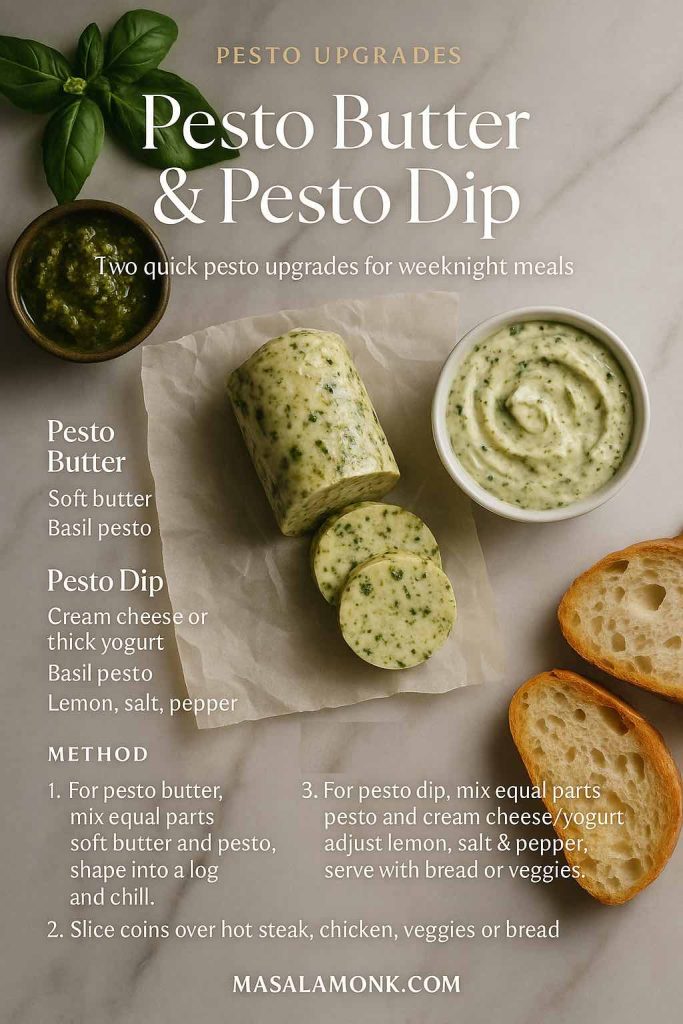
Pesto Butter and Pesto Dip recipe card on marble with a log of sliced pesto butter on parchment, a bowl of creamy pesto dip, fresh basil, crusty bread and printed ingredients and method – MasalaMonk.
Pesto Butter & Pesto Dip – two fast upgrades that turn a jar of pesto into something special. Save this card so you can slice pesto butter over hot steak, chicken or veggies, and whip up a creamy pesto dip for bread, crackers or snack boards in minutes.

Pesto butter

  • Mix equal parts soft butter and pesto.
  • Shape into a log in baking paper and chill.
  • Slice coins of pesto butter onto grilled steak, roast chicken, steamed vegetables, jacket potatoes or warm focaccia.

The heat melts the butter, spreading basil, garlic and Parmesan over everything without any extra effort.

Pesto dip

  • Mix equal parts pesto and cream cheese, labneh or thick yogurt.
  • Adjust with lemon and pepper to taste.

This pesto dip works as a snack with vegetable sticks and crackers, or as an easy spread inside chicken pesto sandwiches, pesto grilled cheese or even a simple pesto breakfast sandwich.

Also Read: Cheesy Chicken Broccoli Rice – 4 Ways Recipe (One Pot, Casserole, Crockpot & Instant Pot)

10. Pesto mayo and pesto salad dressing recipe

Finally, the condiments. A spoonful of pesto can transform plain mayonnaise into something special, and turns basic vinaigrettes into basil pesto salad dressing that feels like it came from a café.
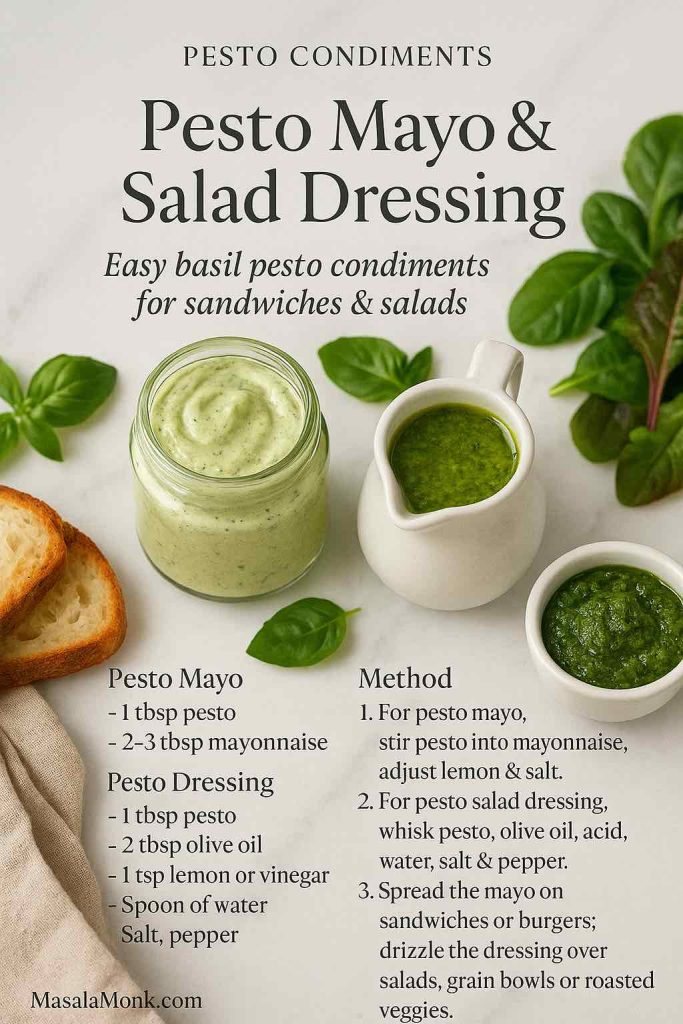
Pesto Mayo and Salad Dressing recipe card on white marble with a jar of creamy pesto mayo, a small jug of pesto salad dressing, fresh basil, toast, salad greens and printed ingredients and method – MasalaMonk.
Pesto Mayo & Salad Dressing – easy basil pesto condiments that turn simple sandwiches and salads into café-style plates. Save this card to remember the basic pesto-to-mayo and pesto-to-oil ratios for quick spreads and dressings.

Pesto mayo and pesto aioli

  • Stir 1 tablespoon pesto into 2–3 tablespoons mayonnaise (or vegan mayo).
  • Taste and adjust salt and lemon.

That’s it. Use it as a spread on pesto sandwich combinations with mozzarella and tomato, or smear it over toasted bread before layering roasted vegetables or grilled chicken. It’s also excellent as a dip for potato wedges and crisp fries.

Pesto salad dressing

  • Whisk together:
    • 1 tablespoon pesto
    • 2 tablespoons olive oil
    • 1 teaspoon vinegar or lemon juice
    • A spoon of water, to thin
    • A pinch of salt and pepper

Shake everything in a jar until smooth. This dressing slips easily over green salads, cold pesto pasta salad, tomato and mozzarella plates, grain bowls, even leftover roasted vegetables.

In lists of “better-for-you condiments”, pesto often shows up alongside salsa and hummus, because it packs a lot of flavour into a small spoon and uses ingredients like olive oil, basil and nuts that contribute useful fats and micronutrients.

Also Read: Crispy Homemade French Fries From Fresh Potatoes (Recipe Plus Variations)


How to use pesto in everyday cooking

Once you have a jar of pesto – classic, vegan, nut-free, red, pistachio or any other – the simplest way to make it earn its keep is to use it across multiple meals. It’s not just for pesto pasta.
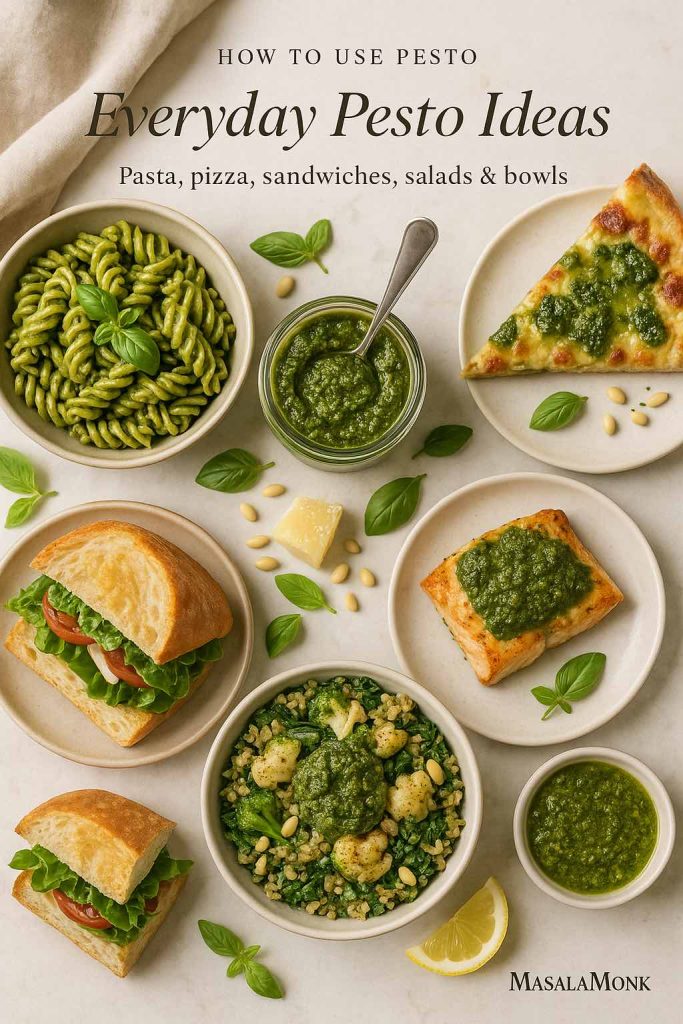
Everyday pesto ideas photo showing a jar of basil pesto surrounded by pesto pasta, pesto pizza slice, pesto sandwich, pesto grain bowl and salmon with pesto on a white marble surface – MasalaMonk.
Everyday Pesto Ideas – a jar of basil pesto can turn into pesto pasta, pesto pizza, sandwiches, salmon and grain bowls in minutes. Use this visual guide to spark quick weeknight pesto meals.

Pesto pasta and pesto noodles

A basic pesto pasta follows the same pattern almost every time:

  1. Cook pasta in well-salted water until al dente.
  2. Scoop out a cup of the cooking water.
  3. Drain the pasta, return it to the pot (off the heat).
  4. Add a generous spoonful of pesto and a splash of cooking water.
  5. Toss until each strand or shell is coated in a glossy pesto pasta sauce.

That works with spaghetti, fusilli, penne, shells and even zucchini noodles or chickpea pasta. For creamy pesto pasta, finish with a little cream, ricotta or cashew cream.

You can also take pesto pasta in different directions. For example, MasalaMonk’s Pesto Pasta: Adding 5 Delightful Indian Twists to the Italian Classic plays with coriander pesto pasta, mint pesto pasta, curry leaf pesto pasta, spinach pesto pasta and even tomato-sesame pesto, showing how flexible the basic idea is.

Pesto pasta salad

Cold pesto pasta salad is just as easy:

  • Cook short pasta (fusilli, farfalle, macaroni) until just tender.
  • Rinse briefly under cold water to stop cooking, then drain very well.
  • Toss with pesto, a drizzle of olive oil or yogurt, chopped vegetables and optional protein like chickpeas or cubed chicken.
  • Chill until serving.

You can lean creamy, with a little mayo or yogurt, or keep it sharp and light, close to a pesto dressing. Either way, it works alongside barbecues, picnics and big bowls of other sides like the potato salad variations MasalaMonk already explores.

Pesto pizza

Pesto pizza is the sort of idea that sounds like a restaurant trick but becomes a home staple once you try it.

  • Spread a thin layer of basil pesto over your pizza base instead of tomato sauce.
  • Scatter mozzarella, cherry tomatoes, olives, maybe some sliced red onion.
  • Add cooked chicken if you’re heading towards a chicken pesto pizza.
  • Bake until the cheese is bubbling and golden.

You can do the same on naan, pita breads, thin flatbreads or even thick toast for a fast pesto pizza toastie.
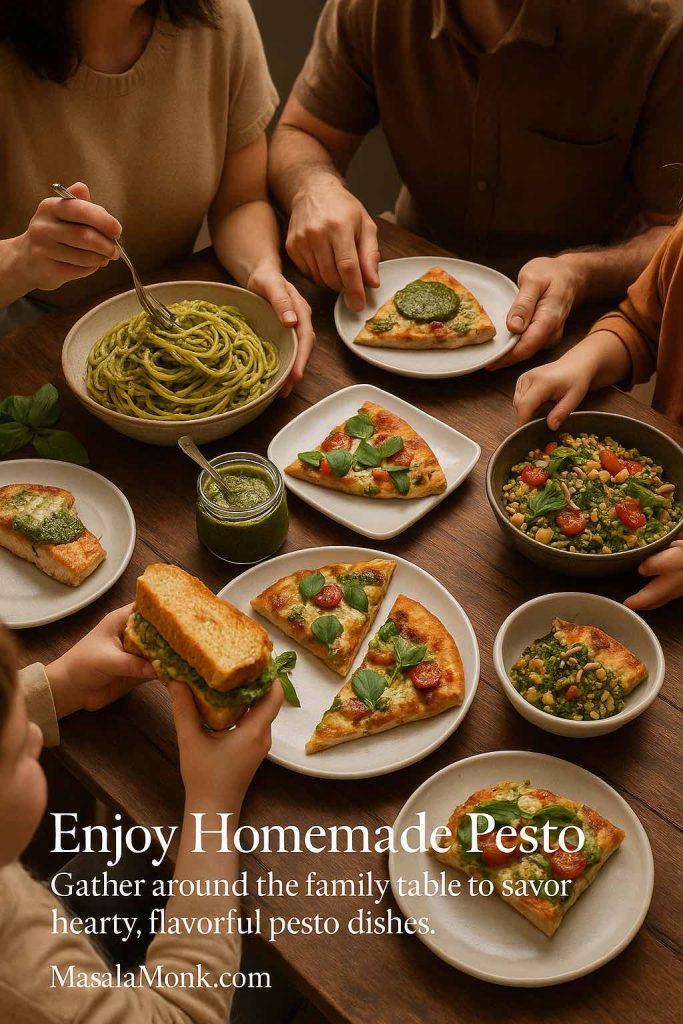
Family gathered around a wooden table sharing homemade pesto dishes including pesto pasta, pesto pizza, pesto sandwiches and a grain salad, with a jar of basil pesto in the centre – MasalaMonk.
Enjoy Homemade Pesto – from pasta and pizza to sandwiches and grain bowls, a jar of basil pesto can turn an everyday family meal into something you look forward to sharing around the table.

Pesto sandwiches, breakfast and snacks

Pesto behaves extremely well as a spread. It cuts through richness and gives instant character.

Some ideas:

  • Spread pesto or pesto mayo onto toasted sourdough, add mozzarella, tomato and a little salt for a simple mozzarella pesto sandwich.
  • Stir pesto into scrambled eggs and tuck them into a soft roll for an egg pesto sandwich or a pesto breakfast sandwich.
  • Layer leftover roast vegetables, pesto and cheese into a grilled sandwich or panini and toast until crisp.

Even a spoon of pesto on a piece of warm bread next to a bowl of soup can make a simple lunch feel finished.

Pesto and protein: chicken, salmon, tuna and shrimp

Pesto also loves protein.

  • Toss hot pasta with chicken strips and basil pesto for a quick chicken pesto pasta.
  • Spoon pistachio pesto or classic basil pesto over baked salmon fillets just after they come out of the oven.
  • Fold pesto into tuna with a little yogurt or mayo for an upgraded tuna salad to stuff into sandwiches, wraps or baked potatoes.
  • Stir pesto into hot spaghetti with garlic prawns or shrimp for a spaghetti pesto shrimp bowl.

On days when you’re already cooking something creamy like Alfredo, pesto can even step in for a swirl of colour and flavour, or sit alongside recipes like Chicken Alfredo Pasta, 5 Ways as a “green cousin” that shares similar comfort but a very different flavour profile.

Pesto with grains, beans and vegetables

Pasta doesn’t get all the fun. Pesto is just as happy with grains and beans:

  • Toss cooked quinoa, farro or brown rice with a spoonful of pesto and roasted vegetables for an easy lunch bowl.
  • Stir pesto into warm white beans and serve on toast.
  • Mix pesto with a little extra olive oil and lemon juice and drizzle over roasted potatoes, grilled courgettes or steamed green beans.

If you enjoy building high-fibre, gut-friendly plates, those kinds of bowls also sit nicely next to pieces like Top 10 Foods for Gut Health or your quinoa comparison posts – pesto adds flavour while the base and vegetables carry most of the nutrition work.


Bringing it all together

At this point, “pesto” should feel less like a single sauce and more like a family:

  • A classic basil pesto recipe made from basil, pine nuts, garlic, cheese and olive oil.
  • A set of practical variations: vegan and dairy-free pesto, nut free pesto, red pesto, pistachio pesto, lighter healthier pesto, low-FODMAP pesto without garlic, kale and rocket pesto, creamy pesto sauce, pesto butter, pesto dip, pesto mayo and basil pesto salad dressing.
  • A long list of easy uses: pesto pasta and pesto noodles, pesto pasta salad, pesto pizza, pesto sandwiches, pesto chicken and pesto salmon, pesto potato salad and pesto grain bowls.
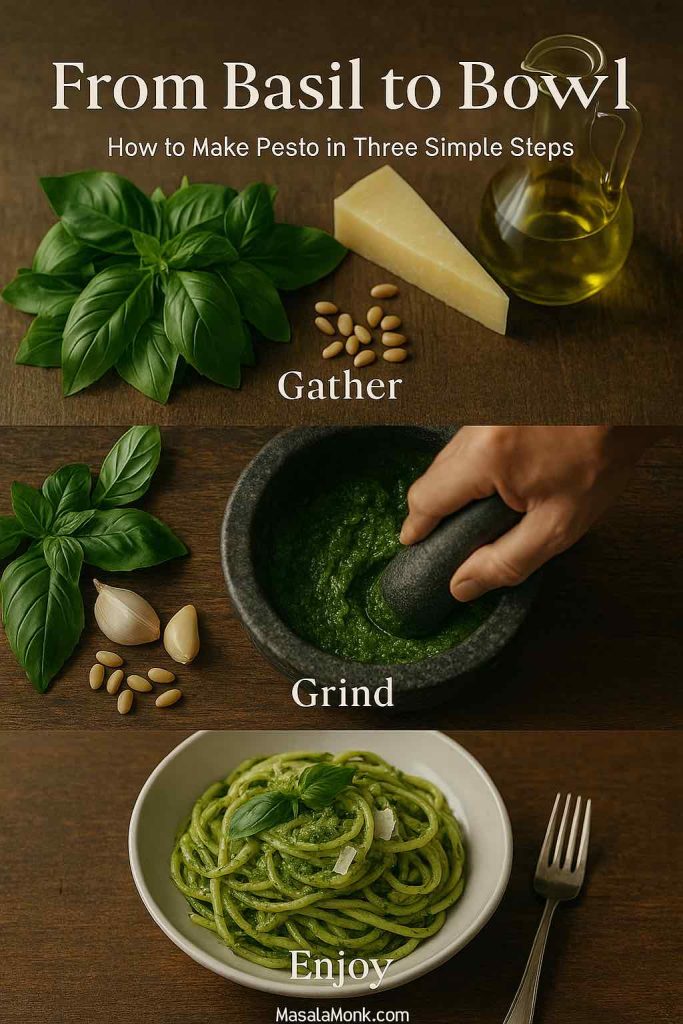
Vertical collage showing basil, pine nuts and Parmesan, then pesto being ground in a mortar, and finally a plate of pesto pasta with the words Gather, Grind and Enjoy.
From basil and pine nuts to a finished bowl of pesto pasta, this three-step collage shows how quickly a classic pesto recipe comes together: gather, grind and enjoy.

Once you treat the base pesto recipe as a template rather than a fixed law, it becomes much easier to work with what you have. Basil low today? Stretch it with spinach. Out of pine nuts? Use walnuts. Cooking for vegans? Swap cheese for nutritional yeast and use a recipe like the vegan basil pesto on MasalaMonk. Keeping an eye on calories? Thin the olive oil with water or broth and lean harder on herbs.

In the end, a jar of pesto – whether classic green, sun dried tomato red pesto, pistachio pesto or a dairy-free basil pesto – is simply a way to put a lot of flavour into a small spoon. Once you know how to make pesto sauce yourself, you can keep that spoon working, from pesto pizza on Friday nights to chicken pesto pasta on Mondays, and everything in between.

FAQs

1. What is pesto made of?

Most classic pesto recipes use fresh basil, pine nuts, Parmesan or Pecorino, garlic, extra virgin olive oil, salt and sometimes a little lemon juice. Together they create a thick, uncooked green sauce with a strong basil flavour.


2. What is the basic pesto recipe ratio?

A simple starting point is 2 cups basil, ¼ cup nuts, ½ cup cheese, 1–2 cloves garlic and about ½ cup olive oil. Then you can adjust salt, lemon and pepper to taste.


3. How do I make pesto sauce for pasta?

Blend your basil pesto fairly thick, then cook pasta and save some cooking water. Toss the hot pasta with pesto off the heat, adding splashes of the starchy water until it becomes a smooth pesto pasta sauce that coats every piece.


4. Can I make pesto without pine nuts?

Yes, you can swap pine nuts for walnuts, almonds, cashews or pistachios. Each nut changes the flavour slightly, but the pesto sauce still works exactly the same.


5. How do I make nut free pesto?

For nut free pesto, use sunflower seeds, pumpkin seeds or hemp hearts instead of nuts, or skip them entirely. Just rely more on basil, cheese and olive oil to give body to the pesto recipe.


6. How can I make dairy free or vegan pesto?

To make vegan pesto, remove the cheese and stir in nutritional yeast for a savoury kick. You keep basil, nuts, garlic and olive oil, so the sauce still feels like classic basil pesto.


7. What is red pesto?

Red pesto, or pesto rosso, usually combines sun dried tomatoes, roasted red pepper, a little basil, nuts, cheese, garlic and olive oil. It tastes richer and sweeter than green pesto and is great with red pesto pasta, toast and grilled meats.


8. What is pistachio pesto best for?

Pistachio pesto is creamier and slightly sweeter than regular pesto, so it pairs beautifully with pasta, prawns, salmon and roasted vegetables. It also makes a lovely spread for crostini.


9. Is pesto healthy?

Pesto is high in calories but mainly from olive oil and nuts, which contain mostly unsaturated fats. When you use modest amounts over vegetables, whole grains and lean proteins, it can fit into a healthy eating pattern.


10. How do I make light or low fat pesto?

You can make a lighter pesto by reducing the oil, using a bit more basil and parsley, and slightly cutting down the cheese and nuts. Adding a spoon of water, broth or yogurt thins the sauce without adding too much extra fat.


11. How long does homemade pesto last in the fridge?

Homemade pesto is best used within 3 days in the refrigerator. Cover the surface with a thin layer of olive oil to slow browning and always keep it chilled.


12. Can I freeze pesto?

Yes, pesto freezes very well. Spoon it into ice cube trays or small containers, freeze solid, then store the cubes in a bag and drop them straight into hot pasta or soup later.


13. Why did my pesto turn dark or brown?

Pesto darkens when basil oxidises after contact with air or heat. To limit this, blend briefly, avoid very hot blades and cover the finished pesto with olive oil before storing.


14. Why does my pesto taste bitter?

Bitterness usually comes from overworked basil, too much raw garlic or a very sharp olive oil. Next time, pulse gently, use smaller cloves and taste the oil before adding; a squeeze of lemon and a bit more cheese can also soften bitterness.


15. Can I make pesto without garlic?

Yes, you can skip garlic completely or use garlic-infused olive oil. In that case, add a bit more basil, lemon zest and cheese so the pesto sauce still tastes full and balanced.


16. What greens can I use instead of basil?

Rocket (arugula), kale, spinach, coriander, parsley and wild garlic all work well in pesto recipes. Often a mix of basil plus one of these greens gives the best flavour and colour.


17. What pasta shapes work best with pesto?

Short shapes with ridges or curves, like fusilli, rotini, farfalle and shells, grab pesto pasta sauce very nicely. Long strands such as spaghetti and linguine also work well if you loosen the pesto a bit more.


18. How do I use pesto beyond pasta?

Pesto is great on pizza instead of tomato sauce, in pesto sandwiches, stirred into soups, spread under cheese on toast, mixed into potato salad, brushed onto roasted vegetables and spooned over chicken, tuna or salmon.


19. How do I make creamy pesto sauce?

To make creamy pesto sauce, warm a few spoonfuls of pesto and gently stir in cream, ricotta or Greek yogurt off the heat. Then thin with a little pasta water until it coats the back of a spoon.


20. Can I use jarred pesto in these recipes?

You can use jarred pesto anywhere you would use homemade pesto, although the flavour is usually milder. Often it helps to add a little extra fresh basil, lemon juice or grated cheese to brighten a store-bought pesto sauce.
Posted on — 3 Comments

Indian Falafel: 6 Masala, Palak, Aloo, Paneer & Curry Leaf Twists

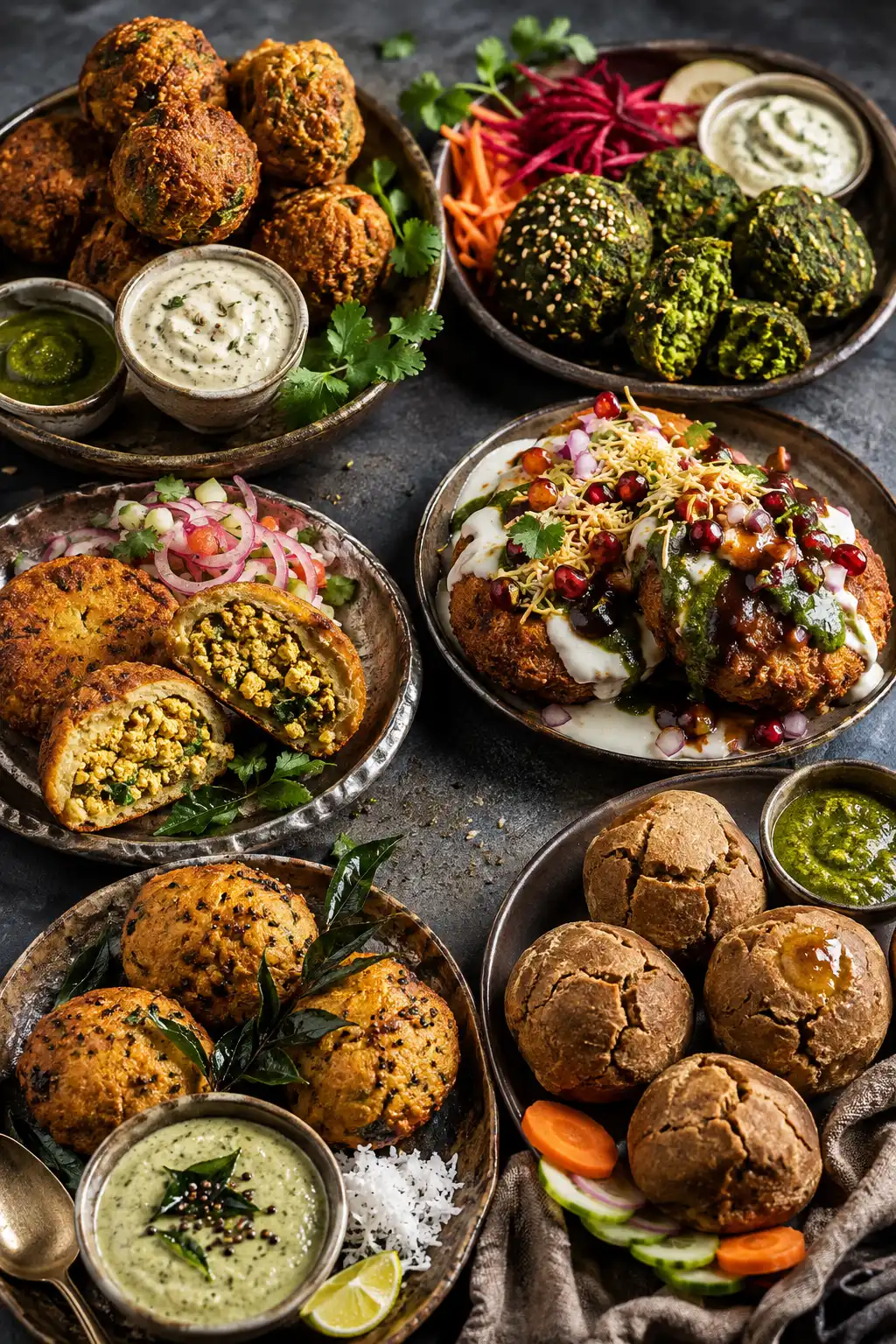
Six Indian falafel variations including Masala Chana, Methi-Palak, Aloo Tikki Chaat, Paneer Bhurji-Stuffed, Curry Leaf and Daal Bati Falafel.

At its most familiar, falafel starts with soaked chickpeas, herbs and spices, pulsed to a coarse crumb and cooked until the outside turns crisp while the middle stays tender. That basic idea fits surprisingly well into an Indian kitchen, where cumin, coriander, green chilli, ginger, amchur, chaat masala and chutneys already feel at home.

The recipes here take that starting point in six different directions. Masala Chana stays closest to classic falafel; Methi-Palak goes greener and softer; Aloo Tikki turns flat and chaat-ready; Paneer Bhurji becomes a filling rather than part of the shell; Curry Leaf brings mustard, ginger and coconut chutney into the picture; and Daal Bati deliberately leaves chickpea falafel furthest behind.

You do not need to cook them all the same way, either. Some want hot oil, one wants the broad crust of a frying pan, two sit happily in an appe/paniyaram pan, and the Daal Bati version belongs in the oven.

Table of Contents

Choose Your Indian Falafel

If you already know what sounds good, use the first column to jump straight to that recipe. If not, the texture and cooking method usually make the decision easier.

FalafelWhat it is likeBest methodBest with
Masala ChanaWarm, tangy and crisp, with a coarse chickpea centreFry or air-fryGreen chutney, cumin yogurt, pav or pita
Methi-PalakGreen, herbaceous and tender with a sesame crustAppe/paniyaram pan or air fryerCreamy dip, beet-carrot salad
Aloo TikkiCrisp outside, soft inside and built for chaatShallow-fryYogurt, green chutney, tamarind, sev
Paneer Bhurji-StuffedCrisp chickpea shell with a soft spiced paneer centreFryKachumber, pickled onion, roti
Curry LeafFragrant, peppery and coarse, with ginger and mustardFry or appe/paniyaram panCoconut-coriander chutney
Daal BatiEarthy, firm and rustic with a cracked bati-like crustBakeGreen chutney, onion, lemon, ghee

What Makes a Good Falafel Base?

For the Masala Chana, Methi-Palak, Paneer-Stuffed and Curry Leaf recipes, begin with dried chickpeas soaked in plenty of cold water for 8–12 hours or overnight in the refrigerator. Drain and rinse well before using. The Aloo Tikki version is different on purpose: cooked chickpeas suit the softer potato-based texture we want there.

Dry ingredients before adding more flour. Wet chickpeas or greens lead to more besan, and more besan can make falafel dense. This matters most with spinach: squeeze blanched palak until it feels almost surprisingly dry.

Pulse; do not purée. Falafel mixture should resemble coarse crumbs rather than hummus. A small handful may look loose in the bowl but should hold when firmly compressed.

Add besan cautiously. Start small and adjust only when the mixture genuinely needs help holding together.

For traditional falafel technique, classic serving ideas, baking and deeper air-fryer guidance, see our complete homemade falafel recipe.


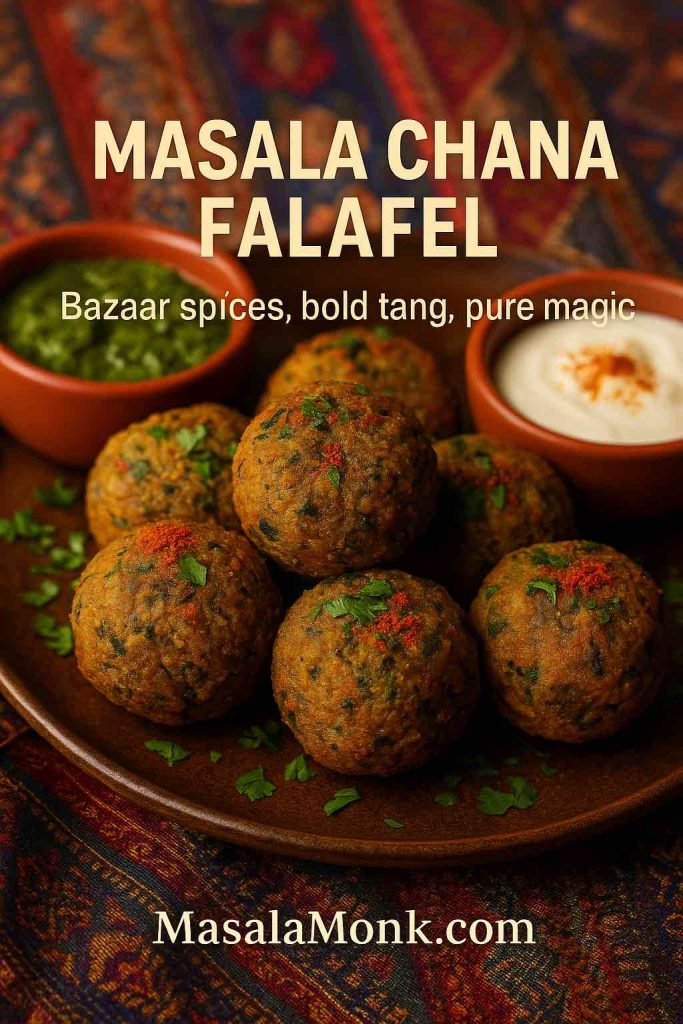
1. Masala Chana Falafel

Masala Chana stays closest to familiar falafel: crisp outside, coarse within, but warmer with garam masala and cumin and a little sharper from amchur. Keep the garam masala measured so the chickpeas, coriander and garlic still come through.

Golden Masala Chana falafel balls with green chutney and cumin yogurt

Yield: about 14–16 falafel
Soaking: 8–12 hours or overnight in the refrigerator
Active prep: about 20 minutes
Chilling: 30 minutes
Cooking: about 15 minutes total, 4–5 minutes per fried batch

Ingredients

  • 1 cup (about 200 g) dried chickpeas
  • ½ medium onion, roughly chopped
  • 3 garlic cloves
  • ¾ cup loosely packed fresh coriander
  • 1 green chilli
  • 1 teaspoon ground cumin
  • 1 teaspoon ground coriander
  • ¾ teaspoon garam masala
  • ½ teaspoon amchur
  • ¼ teaspoon Kashmiri chilli powder, optional
  • 1 teaspoon fine salt, or to taste
  • 1 tablespoon besan, plus more only if needed
  • ½ teaspoon baking powder
  • Neutral oil, for frying

Method

  1. Soak the chickpeas as described above, then drain, rinse and pat away obvious surface moisture.
  2. Add chickpeas, onion, garlic, coriander and green chilli to a food processor. Pulse in short bursts until the mixture resembles coarse crumbs.
  3. Transfer to a bowl and mix in cumin, ground coriander, garam masala, amchur, chilli powder if using, salt and 1 tablespoon besan.
  4. Squeeze a spoonful firmly in your palm. It should hold together. If it is genuinely wet or still breaks after compression, add a little more besan.
  5. Cover and refrigerate for 30 minutes.
  6. Stir in the baking powder, then shape into 14–16 compact balls.
  7. Heat frying oil to about 170–175°C / 340–350°F. Fry one test falafel first. If it holds, cook the remaining falafel in small batches for about 4–5 minutes, until deeply golden and crisp.

Air-Fryer Option

Shape the falafel slightly flatter than perfect spheres, brush or spray the surfaces with oil and air-fry at 190°C / 375°F for about 12–15 minutes, turning halfway. Start checking early toward the end rather than relying only on the clock.

Serve with: coriander-mint green chutney and cumin yogurt. These also work beautifully in pav, pita or on a mezze plate with homemade hummus.


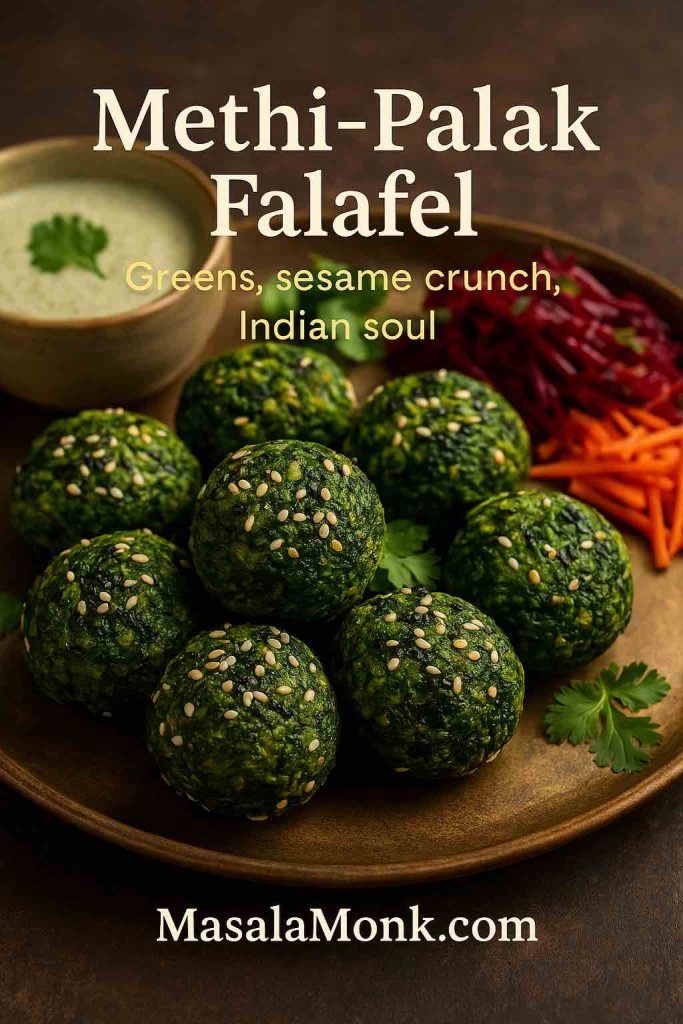
2. Methi-Palak Falafel with Mint & Coriander

Spinach turns these falafel unmistakably green, but methi is what gives them character. Mint and coriander keep the flavour fresh, while sesame adds nuttiness and a light crust around the outside.

The important step is simple: squeeze the spinach properly dry. Not casually dry. Not “I shook the colander twice” dry. Properly dry.

Green Methi-Palak falafel balls with sesame seeds, beetroot and carrot salad

Yield: about 14 small falafel
Soaking: 8–12 hours or overnight in the refrigerator
Active prep: about 25 minutes
Chilling: 30 minutes
Cooking: about 12 minutes

Ingredients

  • 1 cup (about 200 g) dried chickpeas
  • 60 g fresh spinach
  • ½ cup loosely packed fresh methi leaves
  • ½ cup fresh coriander
  • ¼ cup mint leaves
  • ¼ small onion
  • 2 garlic cloves
  • 1 green chilli
  • ¾ teaspoon ground cumin
  • ½ teaspoon ground coriander
  • ½ teaspoon amchur
  • Tiny pinch of nutmeg, optional
  • 1 teaspoon fine salt
  • 1 tablespoon besan, plus more only if required
  • ½ teaspoon baking powder
  • 2 tablespoons white sesame seeds
  • Oil, for cooking

Method

  1. Soak, drain and rinse the chickpeas as described above.
  2. Blanch the spinach for about 30–60 seconds, just until wilted. Cool immediately, then squeeze firmly until very little liquid comes out.
  3. Add chickpeas, squeezed spinach, methi, coriander, mint, onion, garlic and green chilli to a food processor. Pulse to a coarse green mixture rather than a paste.
  4. Mix in cumin, ground coriander, amchur, nutmeg if using, salt and 1 tablespoon besan.
  5. Chill for 30 minutes, then stir in the baking powder. Add a little more besan only if a firmly compressed portion will not hold.
  6. Shape into small round falafel and lightly roll or press each one in sesame seeds.

Appe/Paniyaram Pan Method

Brush the cavities lightly with oil. Add one falafel per cavity and cook over medium to medium-low heat, rotating as each surface firms. Cook until the falafel feels firm through the centre and no longer looks wet or pasty when one is broken open, usually around 10–12 minutes for small falafel.

Air-Fryer Option

Brush or mist lightly with oil and air-fry at 190°C / 375°F for about 12–14 minutes, turning once. Check early toward the end: small green falafel can dry out quickly.

Serve with: a creamy yogurt or coconut-yogurt dip, shredded beetroot, shredded carrot, coriander and lemon. That presentation also stays true to the vivid green falafel already shown in the article.


3. Aloo Tikki Falafel Chaat

Aloo tikki pulls this variation away from classic falafel in exactly the right direction. Cooked chickpeas keep the connection, potato gives the centre its softness, and ajwain, cumin, amchur and chaat masala take it straight toward North Indian street food.

Aloo Tikki falafel chaat with yogurt, green chutney, sev and pomegranate

Yield: 8 medium tikkis
Prep: about 25 minutes
Optional chilling: 20–30 minutes
Cooking: about 16 minutes total, around 8 minutes per batch

Ingredients for the Tikkis

  • 300 g boiled potatoes, cooled completely
  • 150 g cooked chickpeas, drained and dried well
  • 1 green chilli, finely chopped
  • 3 tablespoons chopped fresh coriander
  • ¾ teaspoon roasted cumin powder
  • ½ teaspoon ground coriander
  • ¾ teaspoon chaat masala
  • ½ teaspoon amchur
  • ¼ teaspoon ajwain, lightly crushed
  • ¼–½ teaspoon Kashmiri chilli powder, optional
  • ¾ teaspoon salt, or to taste
  • 2 tablespoons cornflour/cornstarch or rice flour
  • 1–2 tablespoons besan only if additional binding is needed
  • Oil, for shallow-frying

Method

  1. Use completely cooled potatoes. Coarsely crush the cooked chickpeas and mash the potatoes until mostly smooth but not gluey.
  2. Combine potatoes and chickpeas with green chilli, coriander, cumin, ground coriander, chaat masala, amchur, ajwain, chilli powder if using, salt and cornflour.
  3. Mix gently until the mixture holds together. Divide into eight portions and shape into broad patties about 1.5 cm thick.
  4. If the tikkis feel very soft, refrigerate for 20–30 minutes. If they are still too fragile after chilling, work a small amount of besan into the mixture.
  5. Heat a thin layer of oil in a heavy frying pan over medium heat.
  6. Cook the tikkis for about 3–4 minutes on the first side without constantly moving them. Flip once a proper crust has formed, then brown the second side.

Turn Them into Falafel Chaat

For all eight hot tikkis, have ready:

  • 1 cup plain yogurt, whisked smooth
  • 6 tablespoons green coriander-mint chutney
  • 4–6 tablespoons tamarind chutney
  • ½ small red onion, finely chopped
  • 4–6 tablespoons fine sev
  • 4 tablespoons pomegranate arils
  • Chaat masala
  • Chopped coriander

Arrange the hot tikkis on a plate, spoon over yogurt, then add green chutney and tamarind chutney. Finish with onion, sev, pomegranate, chaat masala and coriander. Serve immediately, while the tikki is still hot and crisp underneath the cool, tangy toppings.

Air-fryer option: brush both sides with oil and air-fry at 190°C / 375°F, turning once, until browned and firm. Start checking around 12 minutes. Shallow-frying still gives the more characteristic tikki crust.


4. Paneer Bhurji-Stuffed Falafel

Paneer works better here as a surprise in the centre than blended through the chickpea mixture. Keep the shell coarse and chickpea-heavy, then tuck a dry, fragrant paneer bhurji inside so the contrast is obvious when you cut one open.

Paneer bhurji-stuffed falafel cut open to show the spiced paneer filling

Yield: about 10–12 stuffed falafel
Soaking: 8–12 hours or overnight in the refrigerator
Active prep: about 30 minutes
Chilling: 30 minutes
Cooking: about 12 minutes total, 5–6 minutes per fried batch

For the Falafel Shell

  • 1 cup (about 200 g) dried chickpeas
  • ½ small onion
  • 3 garlic cloves
  • ½ cup fresh coriander
  • 1 green chilli
  • ¾ teaspoon ground cumin
  • ½ teaspoon ground coriander
  • ½ teaspoon garam masala
  • ¾ teaspoon fine salt
  • 1 tablespoon besan, plus more only if required
  • ½ teaspoon baking powder

For the Paneer Bhurji Filling

  • 100 g paneer, finely crumbled
  • 1 teaspoon oil or ghee
  • 1 teaspoon finely grated ginger
  • ½ green chilli, finely chopped
  • ¼ teaspoon turmeric
  • ½ teaspoon garam masala
  • ½ teaspoon kasuri methi, crushed
  • Small pinch of salt
  • 1 teaspoon lemon juice

Method

  1. Heat 1 teaspoon oil or ghee in a small pan. Add ginger and green chilli and cook briefly until aromatic.
  2. Add paneer, turmeric, garam masala, kasuri methi and salt. Cook for a few minutes until fragrant and deliberately fairly dry. Remove from the heat, stir in lemon juice and cool completely.
  3. Soak, drain and rinse the chickpeas as described above. Pulse them with onion, garlic, coriander and green chilli until coarse and crumbly.
  4. Mix in cumin, ground coriander, garam masala, salt and 1 tablespoon besan. Refrigerate for 30 minutes.
  5. Stir in the baking powder. If the shell mixture will not hold when firmly compressed, add a little more besan.
  6. Take roughly 2 tablespoons of falafel mixture and flatten it in your palm. Put about 1½–2 teaspoons of cooled paneer filling in the middle.
  7. Bring the chickpea mixture completely around the filling. Pinch any cracks closed and shape into a thick ball or slightly flattened oval. Keep the paneer completely enclosed.
  8. Fry at about 170–175°C / 340–350°F for roughly 5–6 minutes, until the shell is deeply golden and crisp.

Serve with: soft whole-wheat roti, kachumber, pickled red onion, coriander and lemony yogurt. If you want to make the filling from scratch, our guide to making paneer at home is useful here.


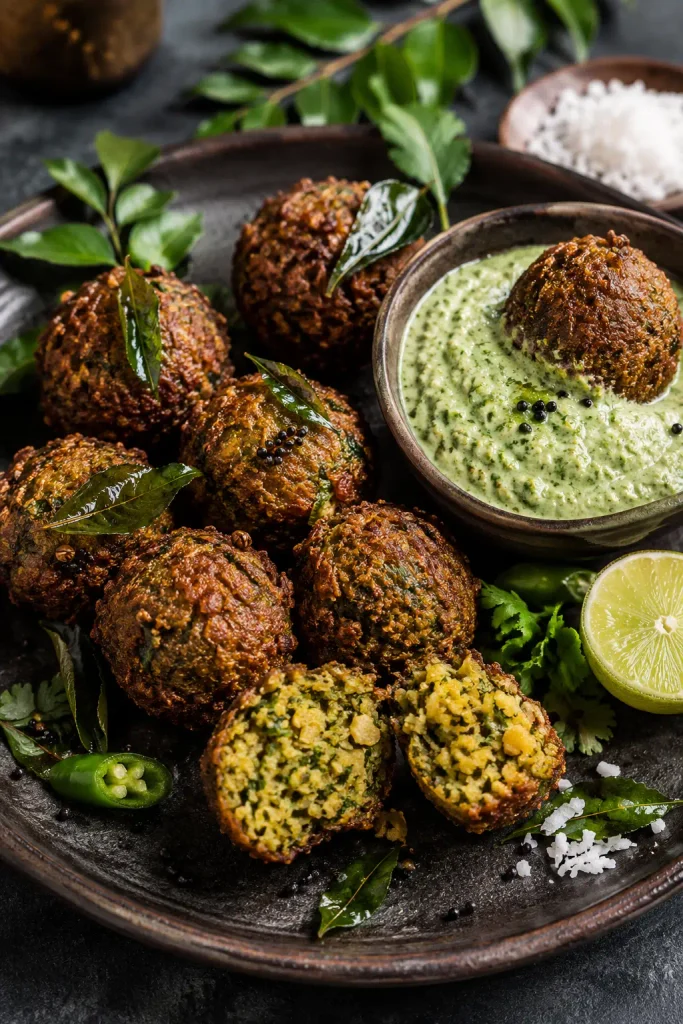
5. Curry Leaf Falafel with Mustard, Ginger & Green Chilli

Curry leaves change the aroma immediately. Ginger and green chilli bring a very different sort of heat from garam masala, while cumin, coriander and a small mustard tempering push the flavour toward South Indian pulse snacks without turning the recipe into a renamed vada.

Curry leaf falafel with crisp curry leaves, mustard seeds and coconut-coriander chutney

Yield: about 14 falafel
Soaking: 8–12 hours or overnight in the refrigerator
Active prep: about 20 minutes
Chilling: 30 minutes
Cooking: about 10 minutes total, 4–5 minutes per fried batch

Ingredients

  • 1 cup (about 200 g) dried chickpeas
  • ½ small onion
  • 3 garlic cloves
  • 2.5 cm / 1 inch fresh ginger
  • 1–2 green chillies
  • 15 fresh curry leaves
  • ½ cup fresh coriander
  • ½ teaspoon cumin seeds
  • ½ teaspoon coriander seeds
  • ¼ teaspoon black mustard seeds
  • 1 teaspoon neutral oil, for tempering the mustard
  • ¼ teaspoon freshly ground black pepper
  • Small pinch of hing, optional
  • 1 teaspoon fine salt
  • 1 tablespoon besan, plus more only if needed
  • ½ teaspoon baking powder
  • 2 tablespoons desiccated coconut, optional
  • Neutral oil, for cooking

Method

  1. Soak, drain and rinse the chickpeas as described above.
  2. Toast the cumin and coriander seeds briefly in a dry pan until aromatic. Cool, then crush roughly.
  3. Heat 1 teaspoon neutral oil in the same small pan. Add the mustard seeds and let them crackle. Remove from the heat and cool.
  4. Add chickpeas, onion, garlic, ginger, green chilli, curry leaves and coriander to a food processor. Pulse until coarse.
  5. Mix through the toasted spices, cooled mustard tempering, black pepper, hing if using, salt, 1 tablespoon besan and desiccated coconut if using.
  6. Chill for 30 minutes, then stir in baking powder. Add a little more besan only if a compressed portion will not hold.
  7. Shape into about 14 compact falafel.
  8. Fry at 170–175°C / 340–350°F for about 4–5 minutes, until golden and crisp.

Appe/paniyaram pan option: oil the cavities lightly and cook over medium to medium-low heat, rotating the falafel as each side firms and browns.

Serve with: coconut-coriander chutney, lemon and a few crisp fried curry leaves. The creamy coconut softens the chilli and mustard without hiding the curry-leaf aroma.


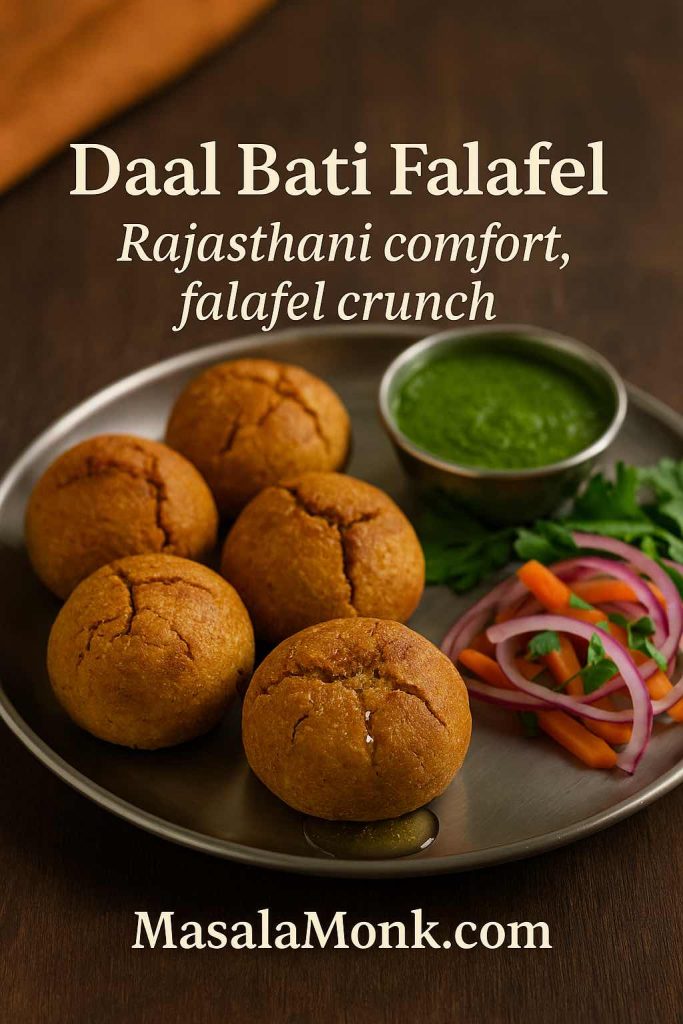
6. Daal Bati Falafel

Daal Bati is the outlier of the six, and it should be. Instead of copying the coarse chickpea interior of classic falafel, it leans into lentils, atta, ajwain and ghee. The result is firmer and more rustic, with the cracked golden surface of a tiny bati.

Baked Daal Bati falafel with cracked golden crust, green chutney and onion salad

Yield: about 10–12 small bites
Prep: about 25 minutes
Resting: 15 minutes
Baking: about 25 minutes

Ingredients

  • ½ cup total dry dal, using roughly equal amounts moong dal, masoor dal and urad dal; cook and drain well, then measure 1 cup for the dough
  • 1 cup (about 120 g) whole-wheat flour, plus more if required
  • 2 tablespoons fine semolina/sooji
  • 2 tablespoons melted ghee or mustard oil
  • ½ teaspoon ajwain, lightly crushed
  • ¼ teaspoon cumin
  • Small pinch of hing
  • 1 green chilli, very finely chopped
  • ½ teaspoon grated ginger
  • ¼ teaspoon turmeric
  • ¾ teaspoon salt, or to taste
  • Water only if required
  • A little additional ghee for brushing, optional

Method

  1. Cook the ½ cup mixed dry dals until tender but not watery. Drain very thoroughly, then measure 1 cup of cooked dal for the dough. Reserve any extra.
  2. Mash the drained dal coarsely.
  3. Add whole-wheat flour, semolina, ghee or mustard oil, ajwain, cumin, hing, green chilli, ginger, turmeric and salt.
  4. Bring everything together into a firm dough. If sticky, add whole-wheat flour 1 tablespoon at a time. If too dry to hold, add water 1 tablespoon at a time.
  5. Rest for 15 minutes while the oven heats to 200°C / 400°F.
  6. Divide into 10–12 small balls. Leave a slightly rugged surface rather than smoothing every crack away.
  7. Arrange on a baking tray, brush lightly with ghee or oil and bake for 22–28 minutes, turning once, until browned and firm outside.
  8. If desired, brush the hot bites very lightly with ghee as soon as they leave the oven.

Serve with: green chutney, sliced onion, carrot or cucumber and lemon wedges. Because this recipe contains atta, it is not gluten-free. If finished with ghee, it is not vegan either; mustard oil keeps the bites themselves plant-based.


Which Cooking Method Works Best?

The best cooking method changes with the mixture. A chickpea ball wants something different from a soft potato tikki or an atta-and-dal bite.

MethodBest forWhat to expect
Deep-fryingMasala Chana, Paneer-Stuffed, Curry LeafDeepest colour and crispest falafel-style crust
Shallow-fryingAloo TikkiBroad golden crust with a soft potato-chickpea centre
Air fryerMasala Chana, Methi-Palak, Aloo TikkiGood browning with less oil; slightly drier than frying
Appe/paniyaram panMethi-Palak, Curry LeafSmall rounded bites with low oil and good support while cooking
OvenDaal BatiFirm, rustic, bati-like crust rather than a fried falafel shell

For the chickpea-heavy versions, frying gives the clearest contrast between crisp exterior and coarse interior. For Aloo Tikki, broad contact with a hot pan is the point. Methi-Palak benefits from the support of an appe/paniyaram pan, while Daal Bati belongs in the oven. Use the method that suits the texture of each variation rather than forcing every recipe into every appliance.

More Indian Ways to Serve Falafel

Falafel Chaat

Put several hot Masala Chana or Methi-Palak falafel on a plate and lightly crack them open. Add whisked yogurt, green chutney, tamarind chutney, finely chopped red onion, chaat masala, sev, pomegranate and coriander. Assemble just before eating so the base keeps some crunch.

Falafel Pav

Split and toast pav with a little butter or oil. Spread one side with green chutney and the other with tamarind chutney. Add a slightly flattened Masala Chana Falafel, sliced onion and something crisp such as cucumber or cabbage. A little chaat masala over the filling ties it together.

Paneer-Stuffed Falafel Roti Roll

Warm a soft roti and add sliced Paneer Bhurji-Stuffed Falafel, kachumber, pickled onion, coriander and lemony yogurt. Because the paneer is already inside, the wrap does not need another heavy filling.

Indian-Style Mezze Plate

Try Masala Chana Falafel with hummus, cucumber, kachumber, pickled onions, green chutney, lemon and warm flatbread. If you are making the bread too, use our homemade pita bread recipe. For a sharper mango-pickle note, a spoonful of amba sauce fits naturally beside falafel and hummus.

Falafel Bowl

Start with rice, millet, couscous or chopped salad. Add falafel, cucumber, tomato, onion and something creamy such as hummus or yogurt. Then choose one strong Indian accent—green chutney, tamarind, achar, chaat masala or coconut chutney—rather than using every condiment at once.

Fixing These Indian Falafel Variations

ProblemLikely causeFix
Masala or Curry Leaf falafel breaks in oilMixture too wet, too loose or oil too coolDrain thoroughly, compress firmly, fry one tester and add a little besan only if needed
Methi-Palak falafel is soggySpinach retained too much waterSqueeze blanched spinach much more thoroughly before processing
Paneer falafel cracks openWet filling, too much filling or paneer too close to the surfaceCook bhurji drier, cool completely and use a smaller amount
Aloo Tikki sticks or breaks when flippedTurned before the crust formedLeave it undisturbed longer and flip only when it releases more easily
Air-fried green falafel is dryToo little surface oil or too much cooking timeLightly oil and begin checking earlier
Daal Bati mixture is stickyCooked dal retained too much waterDrain longer and add atta gradually rather than dumping in a large amount

If the first chickpea falafel disintegrates, stop there. One tester is enough to tell you whether the mixture needs drying, firmer shaping or hotter oil.

Make Ahead, Store & Freeze

Masala Chana and Curry Leaf: the mixture can be prepared ahead and refrigerated, with baking powder stirred in shortly before shaping and cooking.

Methi-Palak: shorter holding is better because fresh greens continue releasing moisture as they sit.

Paneer-Stuffed: prepare the dry paneer bhurji and chickpea shell mixture separately, refrigerate them, then stuff closer to cooking.

Aloo Tikki: shape the patties, freeze in a single layer until firm, then transfer to a freezer-safe container with parchment between layers if stacking.

Daal Bati: bake, cool and refrigerate. Reheat in a hot oven or air fryer to restore the firmer exterior.

For broader freezing and reheating guidance for classic chickpea falafel, see the full falafel guide.

Indian Falafel FAQs

Can you put garam masala in falafel?

Yes. Classic falafel already uses spices such as cumin and coriander, so a restrained amount of garam masala fits naturally. In the Masala Chana version, it adds an Indian finish without masking the chickpeas and fresh herbs.

Which Indian chutney goes best with falafel?

Coriander-mint green chutney is the most versatile choice for Masala Chana, Methi-Palak and Paneer-Stuffed Falafel. Tamarind works particularly well with Aloo Tikki Falafel Chaat or falafel pav, while coconut chutney makes the most sense beside Curry Leaf Falafel.

Can I make falafel in an appe or paniyaram pan?

Yes. It is particularly useful for Methi-Palak and Curry Leaf Falafel because the cavities support the mixture while each surface cooks. Brush the cavities with a little oil and rotate the falafel as they firm and brown.

Why is my spinach falafel soggy?

Usually because the spinach contains too much water. After blanching, cool it and squeeze aggressively before adding it to the chickpeas. Removing moisture is preferable to compensating later with a large amount of besan.

Can falafel be made with moong dal?

Yes, but replacing chickpeas with another pulse changes both texture and technique. Whole or split moong can make excellent falafel-inspired fritters and patties, but it should be treated as its own formulation rather than a blind one-for-one substitution.

How do you make falafel chaat?

Put hot falafel or Aloo Tikki Falafel on a plate and add whisked yogurt, green chutney, tamarind chutney, onion, chaat masala, sev, pomegranate and coriander. Assemble just before serving so some of the crust stays crisp.

Can paneer be added to falafel?

Yes. Stuffing works particularly well because the paneer remains a distinct soft centre rather than changing the texture of the entire chickpea mixture. Keep the bhurji fairly dry and cool it completely before stuffing.

Which Indian falafel works best in an air fryer?

Masala Chana is the easiest starting point. Methi-Palak also works well, but check it early because small green falafel can dry out. Aloo Tikki can be air-fried, although shallow-frying gives the more characteristic crust. Daal Bati belongs in the oven, and frying remains the most reliable method for the stuffed paneer version.

Posted on — 1 Comment

Pudding Palooza: 5 Indian-Inspired Dessert Ideas

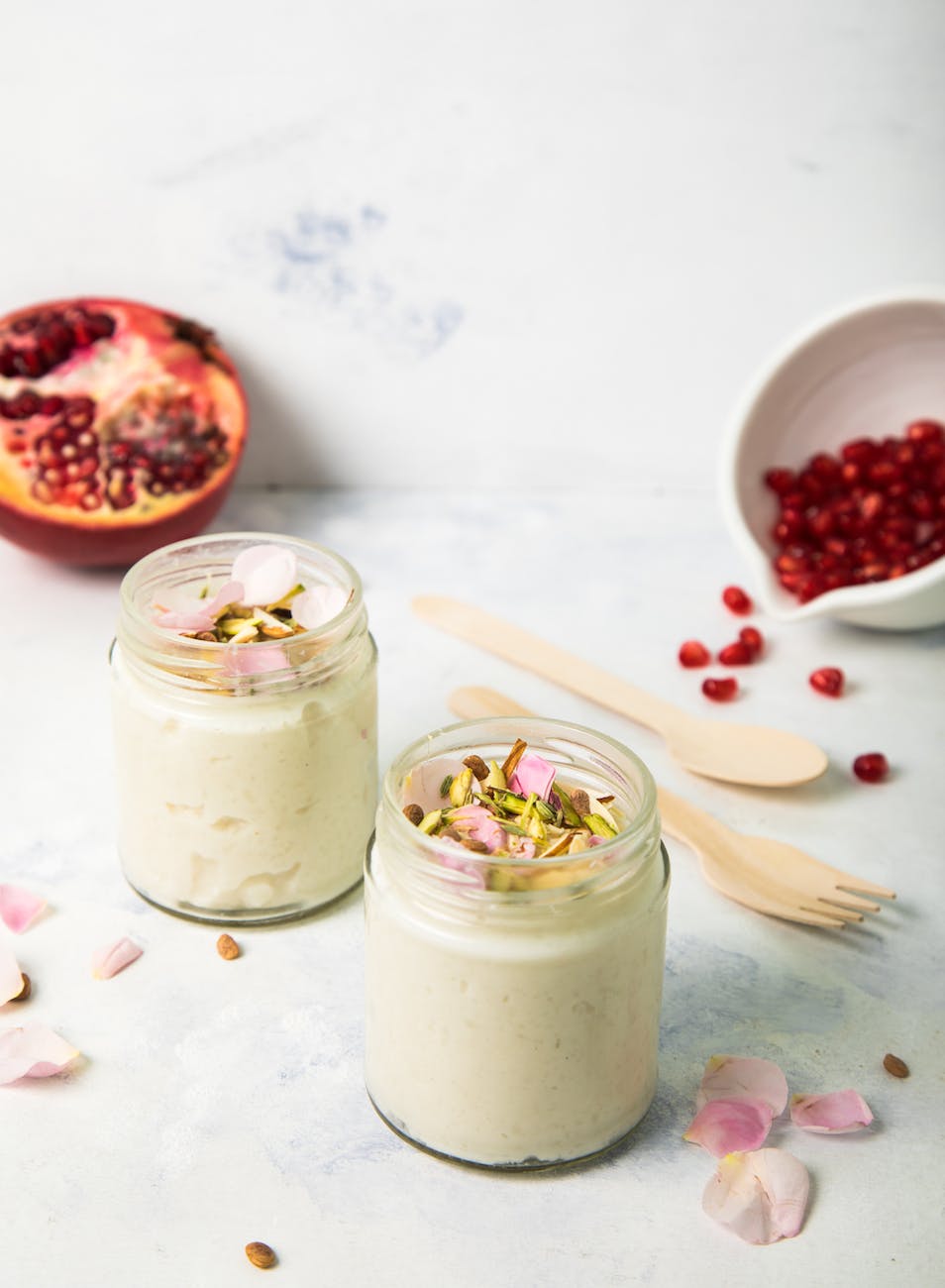
two jars fruit shake

Hello, Dessert Enthusiasts! 👋

Get ready for a delightful treat for your taste buds as we delve into the world of pudding! Puddings have been a beloved dessert for centuries, offering a luscious and creamy texture that satisfies any sweet tooth. But today, we’re taking puddings to new heights by infusing them with the aromatic spices and ingredients that define Indian cuisine. Brace yourself for a pudding palooza that will leave you craving for more! 🌍🍮

Pudding: A Brief Introduction 🍮🌶️

Puddings come in various forms, from classic custard-based puddings to creamy rice and tapioca variations. These desserts have long been enjoyed around the world for their comforting and indulgent qualities. However, today, we’re going to give our puddings an Indian-inspired twist by infusing them with the vibrant flavors and fragrant spices of India. Prepare to savor a fusion of flavors that will elevate your pudding experience to new heights! 🌶️🍮

So, let’s explore five Indian-inspired variations of the classic pudding:

1. Cardamom Rice Pudding 🌱🍚

Take traditional rice pudding and infuse it with the aromatic flavors of cardamom. Begin by cooking rice with milk until it becomes soft and creamy. Add a touch of ground cardamom for its unique citrusy and herbal notes. Sweeten the pudding with sugar or jaggery and garnish with chopped pistachios or almonds. This cardamom rice pudding is a comforting dessert that will transport you to the streets of India, where the fragrance of cardamom permeates the air.

2. Mango Saffron Pudding 🌼🥭

Celebrate the king of fruits by incorporating mango into a creamy saffron-infused pudding. Begin by blending ripe mangoes into a smooth puree. In a separate saucepan, heat milk with saffron strands until the milk turns a vibrant golden color. Combine the saffron-infused milk with sugar and cornstarch to thicken the pudding. Once the mixture has thickened, stir in the mango puree and let it cool. The result is a luscious and tropical mango saffron pudding that captures the essence of Indian summers.

3. Pistachio and Rosewater Pudding 🥜🌹

Indulge in the delicate flavors of pistachio and rosewater in a creamy pudding. Begin by blending pistachios into a fine powder. In a saucepan, heat milk and sugar until it starts to simmer. Whisk in cornstarch and continue cooking until the mixture thickens. Stir in the ground pistachios and a splash of rosewater for a floral touch. Pour the mixture into individual serving dishes and let it set in the refrigerator. The result is a pistachio and rosewater pudding that offers a delightful blend of flavors and a hint of elegance.

4. Chai-Spiced Chocolate Pudding ☕🍫

Infuse your chocolate pudding with the cozy flavors of chai for a delightful fusion dessert. Begin by melting dark chocolate and stirring in a mixture of cocoa powder, sugar, and a blend of chai spices like cinnamon, cardamom, cloves, and ginger. In a separate saucepan, heat milk until steaming and whisk it into the chocolate mixture. Continue cooking until the pudding thickens. Pour the pudding into serving dishes and let it chill in the refrigerator until set. This chai-spiced chocolate pudding is a decadent treat that combines the richness of chocolate with the comforting flavors of Indian chai.

5. Gulkand Custard Pudding 🌹🥛

Discover the sweet and floral flavors of gulkand in a creamy custard pudding. Gulkand, a sweet preserve made from rose petals, adds a unique and fragrant element to this dessert. Begin by preparing a classic custard base by heating milk, sugar, and vanilla extract. Once the mixture is warm, whisk in egg yolks and cornstarch to thicken the custard. Stir in gulkand for its sweet and rosy flavors. Let the pudding cool and set in the refrigerator. This gulkand custard pudding is a delightful fusion of textures and tastes, offering a unique twist on the traditional custard.

As you indulge in these Indian-inspired puddings, don’t forget to share your culinary creations with us and our community of food lovers at EatLo. Let’s celebrate the joy of fusion cooking and inspire each other with our sweet delights!

Experience the fusion of flavors and textures with each spoonful of these Indian-inspired pudding variations. It’s a pudding palooza that marries the best of both worlds and will leave you with a satisfied and happy sweet tooth! 😜👊

Posted on — 1 Comment

Churros with a Twist: 5 Indian-Inspired Variations to Sweeten Your Day

appetizer bake bakery baking

Hello, Sweet Tooths! 👋

Get ready to embark on a delectable journey of crispy, sugary goodness as we dive into the world of churros! These delightful fried pastries have captured hearts around the globe with their irresistible texture and heavenly taste. But today, we’re taking churros to new heights by infusing them with the vibrant and aromatic flavors of Indian cuisine. Get ready for a churro fiesta like never before! 🌍🍩

Churros: A Brief Introduction 🍩🌶️

Originating from Spain, churros are a beloved treat often enjoyed with a cup of hot chocolate or dipped in various sauces. Traditionally, they are made from a simple dough, deep-fried until golden and crispy, and coated in cinnamon sugar. However, today, we’re going to infuse these delectable treats with the bold and aromatic spices that characterize Indian cooking. Brace yourself for a churro experience that will tantalize your taste buds and leave you craving for more! 🇪🇸🍩

So, let’s explore five Indian-inspired variations of the classic churro:

1. Cardamom Sugar Churros 🌱🍩

Give your churros an Indian twist by adding a touch of cardamom to the traditional cinnamon sugar coating. Cardamom, with its warm and citrusy flavor, adds a delightful aromatic note to the churros. Begin by preparing the churro dough using a combination of flour, water, butter, and a pinch of salt. Once fried to perfection, roll the churros in a mixture of sugar, cinnamon, and a pinch of ground cardamom. The result is a fusion of flavors that will transport you to the bustling streets of India, where the fragrance of cardamom permeates the air.

2. Saffron Churros with Pistachio Dust 🌼🥜

Infuse your churros with the golden hue and delicate flavor of saffron. Begin by dissolving a pinch of saffron threads in warm water and adding it to the churro dough. The saffron will lend a beautiful color and a subtle floral note to the churros. Fry them until golden and crispy, and dust them with a mixture of ground pistachios and powdered sugar for a nutty and vibrant twist. These saffron churros with pistachio dust are a celebration of flavors and colors inspired by Indian sweets.

3. Coconut Curry Churros with Mango Dipping Sauce 🌴🍛

Experience a fusion of flavors with coconut curry churros paired with a tangy mango dipping sauce. Begin by adding shredded coconut and a hint of curry powder to the churro dough, infusing it with a tropical twist. Fry the churros until golden and crispy, and serve them with a luscious mango dipping sauce. To make the sauce, puree ripe mangoes with a touch of lime juice and a pinch of red chili powder for a delightful balance of sweetness and tanginess. The combination of the savory coconut curry churros and the sweet-tangy mango sauce will transport you straight to the sunny beaches of India.

4. Jaggery and Cardamom Churros with Ghee Drizzle 🍯🌱

Indulge in the rich and caramel-like flavor of jaggery in your churros. Begin by replacing the traditional sugar in the dough with jaggery, a traditional Indian sweetener made from sugarcane or palm sap. Add a pinch of ground cardamom for an aromatic touch. Fry the churros until golden and coat them in a mixture of jaggery and cinnamon. To elevate the experience, drizzle them with ghee (clarified butter) for a rich and decadent finish. These jaggery and cardamom churros with ghee drizzle are a celebration of Indian flavors and comforting sweetness.

5. Chai-Spiced Churros with Chocolate Chai Dipping Sauce ☕🍫

Immerse yourself in the cozy flavors of chai with chai-spiced churros and a chocolate chai dipping sauce. Begin by adding warm and aromatic spices like cinnamon, cloves, ginger, and cardamom to the churro dough. Fry them until golden and coat them in a mixture of sugar and chai spices. For the dipping sauce, prepare a velvety chocolate ganache infused with chai spices, such as cinnamon and cardamom. The combination of the chai-spiced churros and the indulgent chocolate chai sauce is a match made in dessert heaven!

As you embark on your churro adventure, don’t forget to share your culinary triumphs with us and our community of food lovers at EatLo. Let’s celebrate the joy of fusion cooking and inspire each other with our churro creations!

Indulge in the fusion of flavors and textures with each delectable bite of these Indian-inspired churros. It’s a churro fiesta that brings together the best of both worlds and will leave you wanting more! 😜👊

Posted on — 3 Comments

Pesto Pasta: Adding 5 Delightful Indian Twists to the Italian Classic

pesto paste on ceramic bowl

Namaste, Pasta Aficionados! 👋

Prepare to embark on a pasta voyage like never before. Picture this – your favourite Pesto Pasta decides to take a well-deserved vacation to the land of spices, India. The result? An unthinkably scrumptious fusion that would leave even the Italian Nonnas scratching their heads in amazement! Are you ready to witness this flavoursome spectacle? Then buckle up, and let’s hit the spice road! 🌍🔥

Pesto Pasta: A Quick Recap 🍝🌶️

First, let’s address the pasta in the room. Pesto Pasta, an Italian darling, has wormed its way into global hearts with its exquisite simplicity. Its traditional version, hailing from Genoa, is a brilliant concoction of fresh basil, pine nuts, Parmigiano-Reggiano, garlic, coarse salt, and olive oil. It’s hard to resist, we agree, but our beloved pasta has packed its bags and is all set for an Indian adventure! 🇮🇹🍝

And guess what? This isn’t just a riot of flavours that’ll make your taste buds dance the Bhangra. Our Indian twists are also loaded with nutritious elements. Here’s presenting Pesto Pasta’s crazy, funny, and incredibly delicious Indian saga:

1. Coriander Pesto Pasta or ‘Dhania Pesto Pasta’ 🌿

Think of this as Pesto Pasta trying out the Indian green carpet look! Substitute basil with fresh dhania (coriander), and you’ve got yourself a green sauce that screams ‘desi’. Toss it with whole wheat spaghetti (because, hey, we’re health-conscious too!) and crown it with a sprinkle of roasted jeera (cumin) and crushed peanuts. It’s like our pasta just walked the ramp at a fashion week in Delhi!

2. Mint Pesto Pasta or ‘Pudina Pesto Pasta’ 🍃

This one’s like Pesto Pasta’s beach vacation in Goa. Fresh pudina (mint) replaces the traditional basil, giving the pesto a fresh, tropical twist. Blend it with almonds (pine nuts, who?), garlic, lime juice, and olive oil, and what you get is a pesto sauce that’s ready to party. Add some fusilli or penne to the mix and top it off with grated coconut. It’s like sipping a margarita on an Indian beach, but in pasta form!

3. Curry Leaf Pesto Pasta or ‘Kadi Patta Pesto Pasta’ 🍛

Picture Pesto Pasta trying out the traditional South Indian lungi dance – hilarious, right? This variation is exactly that! Replace the basil with kadi patta (curry leaves), and blend it with walnuts to get an aromatic pesto. Toss your pasta in this for an unforgettable taste and top it off with a sizzling tadka (tempering) of mustard seeds and dry red chillies. This dish is ready to do the lungi dance on your plate!

4. Spinach Pesto Pasta or ‘Palak Pesto Pasta’ 🥬

Inspired by the famous Indian dish Palak Paneer, this version sees our Pesto Pasta trying out Bollywood-style romance. Make a pesto using blanched palak (spinach) and let your pasta sway in this green, nutrient-rich sauce. Throw in some paneer (Indian cottage cheese) cubes, and voila! Your pasta is ready to serenade you, Bollywood style!

5. Tomato and Sesame Pesto Pasta or ‘Tamatar Til Pesto Pasta’ 🍅

Think of this as Pesto Pasta’s rendezvous with Rajasthan’s vibrant culture. Sun-dried tamatar (tomatoes) and til (sesame seeds) give a flavourful twist to the traditional pesto. Add a sprinkle of fresh dhania (coriander), and you have a pasta dish that’s as colourful and tangy as a Rajasthani folk dance!

So, here’s the thing, folks. These Indian spins on Pesto Pasta are not just hilarious to imagine, they’re also incredibly delicious to devour! And remember, in the realm of fusion cooking, there are no rules. Only the wild, wild joy of experimentation.

As you create these laugh-out-loud funny pasta dishes, do share your culinary stories and pictures with us and our community of food lovers at EatLo. Let’s laugh, cook, experiment, and celebrate our love for food, one pasta dish at a time!

After all, who knew Pesto Pasta’s Indian vacation would be this hilarious and mouth-watering? But hey, that’s the beauty of food fusion! 😜👊