
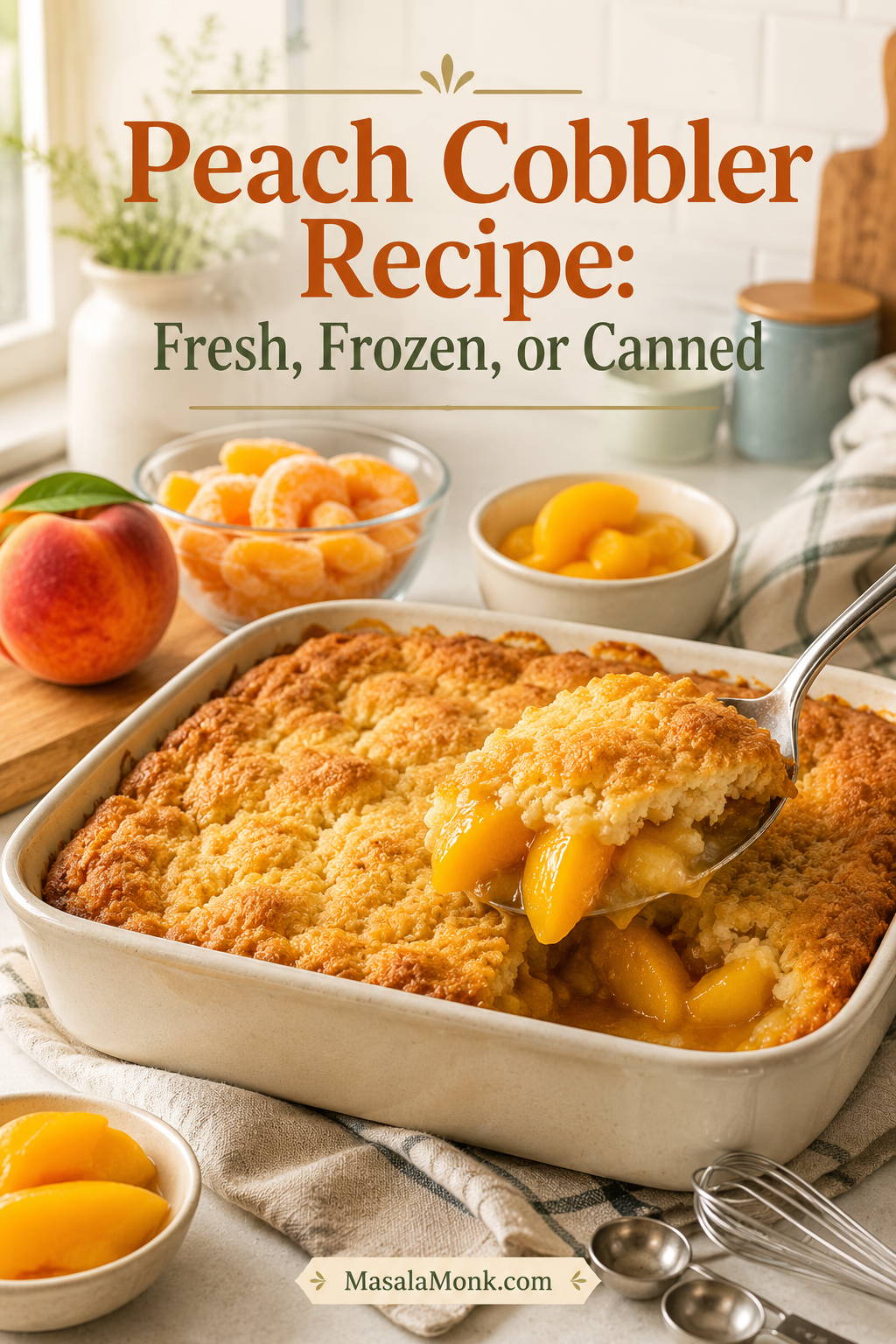
Peach cobbler sounds simple until the peaches start changing the rules. Fresh peaches can be fragrant and juicy one day, firm and tart the next. Frozen peaches are wonderfully convenient, but they can release enough water to thin the filling. Canned peaches make cobbler possible from the pantry, yet their juice or syrup can quickly make the dessert too sweet or too loose if you pour it all in without adjusting anything.
This peach cobbler recipe is built for real-life peaches: ripe summer fruit in July, frozen slices in January, or pantry cans on a weeknight. The base stays easy and old-fashioned: melted butter in the pan, a simple pourable batter, peaches spooned over the top, and a golden cobbler topping that rises around the fruit as it bakes.
The trick is not treating every peach the same. Fresh peaches need a quick ripeness check. Frozen peaches need thawing and blotting. Canned peaches need syrup and sugar control. Once that part is handled, the recipe feels relaxed: warm fruit, buttery edges, soft topping, and enough peach syrup to make the first scoop messy in the best way.
This is an easy batter-rise peach cobbler, not a biscuit cobbler, pie-crust cobbler, Bisquick cobbler, or peach dump cake. It is for the moment when you want homemade cobbler that still feels simple, whether your peaches are perfect, almost too ripe, pulled from the freezer, or waiting in the pantry.
What You’ll Find in This Guide
Make the Cobbler
Quick Answer: Can You Make Peach Cobbler with Fresh, Frozen, or Canned Peaches?
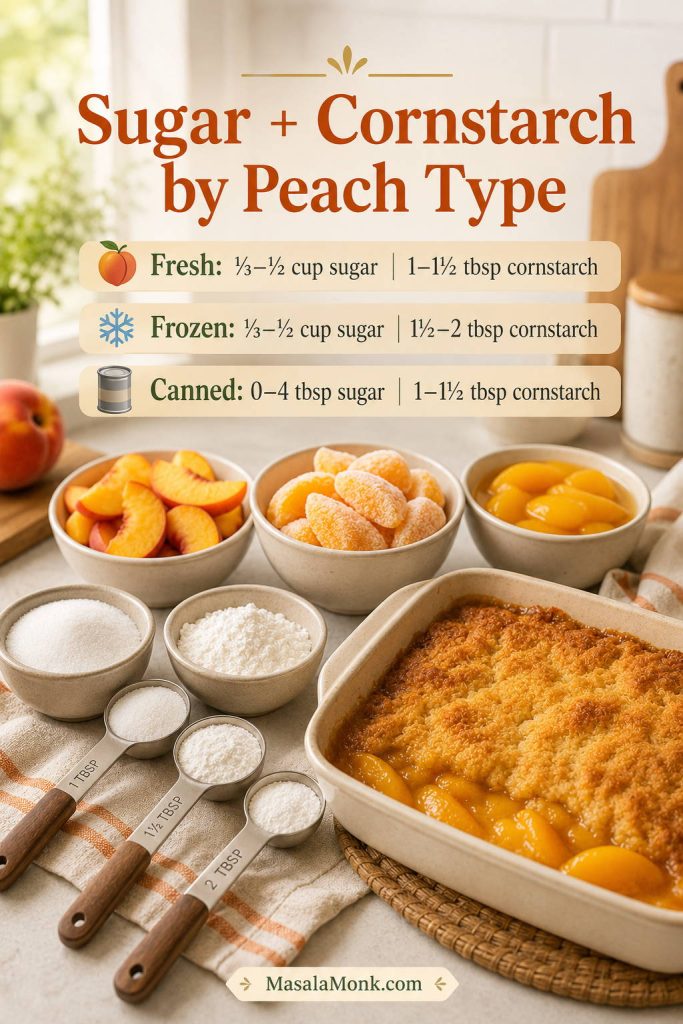
Yes. You can make peach cobbler with fresh, frozen, or canned peaches, but the best version changes the sugar, liquid, and thickener based on the fruit. Fresh peaches usually need ⅓ to ½ cup sugar and 1 to 1½ tablespoons cornstarch. Frozen peaches should be thawed, drained, blotted, and usually thickened with 1½ to 2 tablespoons cornstarch. Canned peaches should be drained or partly drained, with very little added sugar if they are packed in syrup. For the fastest decision, use the Choose Your Peach Path table before you mix the filling.
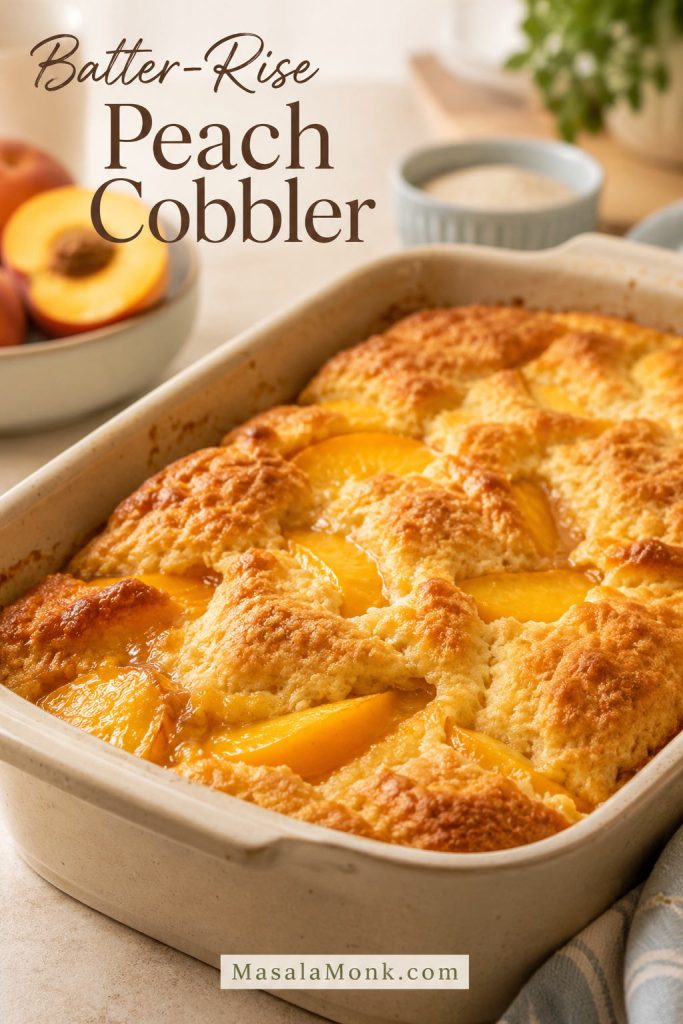
Bake the cobbler until the top is browned and the peach juices are bubbling around the edges, then rest it for about 15 minutes before serving. That short rest turns hot, thin peach juice into a warm, spoonable syrup.
The key idea: the batter can stay the same, but the peaches cannot. Adjust the fruit first, then the cobbler stays easy.
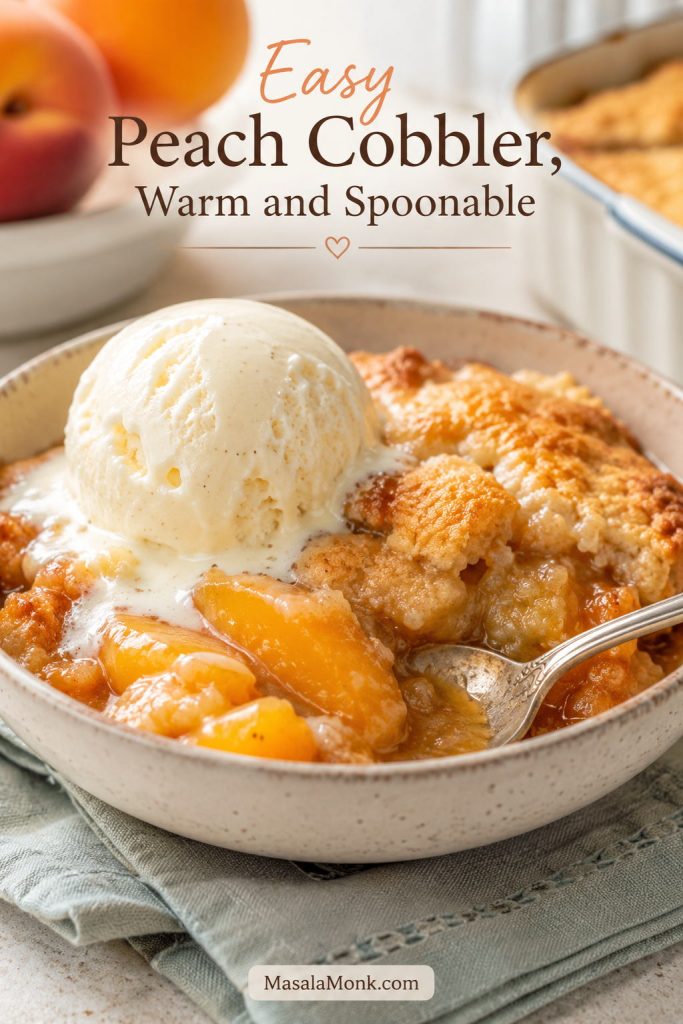
Serving cue: let the cobbler rest briefly before the first scoop so the peach syrup settles instead of running straight across the bowl.
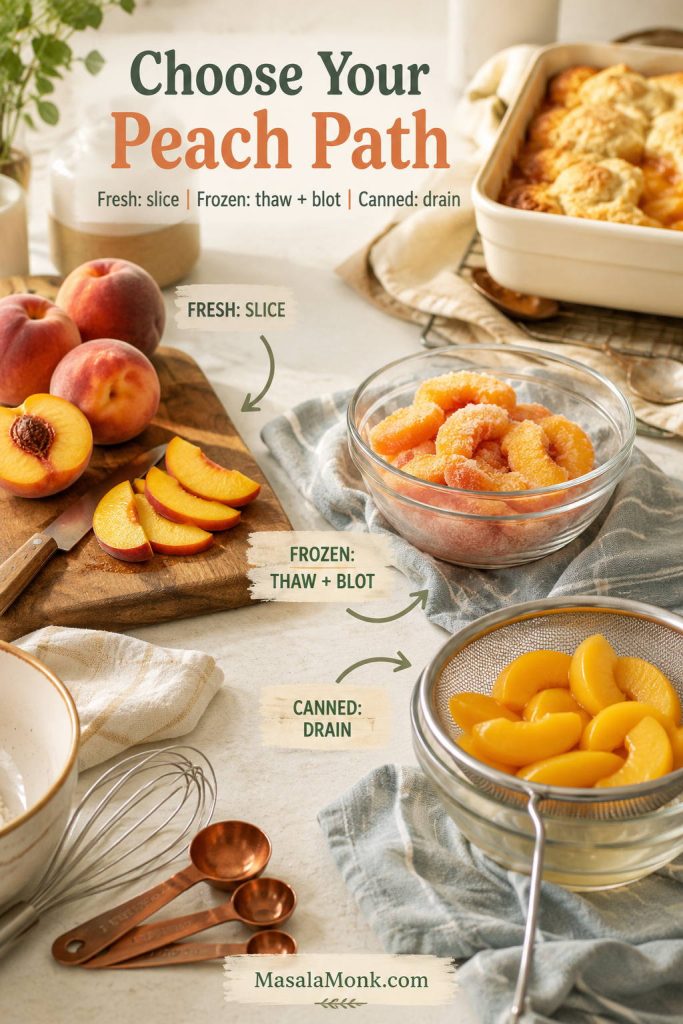
Choose Your Peach Path
Start here if you already know what peaches you are using. This table gives you the main adjustment, so you do not have to keep guessing about sugar, syrup, or thickener while you bake.
Peach Type Adjustments
Use these quick tables as your control panel before the fruit goes into the pan.
Fresh and Frozen Peaches
| You have | Do this first | Sugar for filling | Cornstarch |
|---|---|---|---|
| Fresh ripe peaches | Slice evenly; peel only if you want a softer filling. | Usually ⅓–½ cup | 1–1½ tbsp |
| Very sweet fresh peaches | Use less sugar so the filling still tastes like fruit. | Start with ¼–⅓ cup | 1–1½ tbsp |
| Very juicy fresh peaches | Keep the sugar moderate and use a little more thickener. | Keep at ⅓–½ cup | 1½–2 tbsp |
| Slightly firm fresh peaches | Slice a little thinner so they soften before the topping is done. | Use ⅓–½ cup | 1–1½ tbsp |
| Frozen peaches | Thaw fully, drain, then blot dry. | Usually ⅓–½ cup | 1½–2 tbsp |
Canned Peaches
| You have | Do this first | Sugar for filling | Cornstarch |
|---|---|---|---|
| Canned peaches in juice | Drain, reserve juice, and add back only a few tablespoons if needed. | Use 2–4 tbsp | 1–1½ tbsp |
| Canned peaches in light syrup | Drain at least half the syrup. | Try 1–3 tbsp | 1–1½ tbsp |
| Canned peaches in heavy syrup | Drain very well. | Often 0–2 tbsp | 1–1½ tbsp |
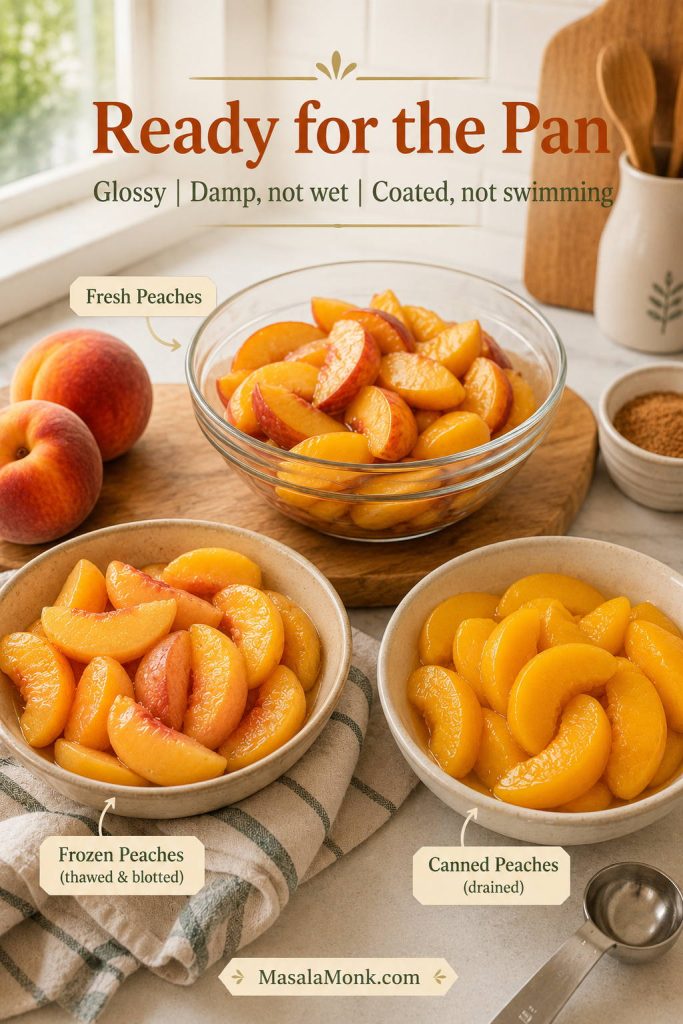
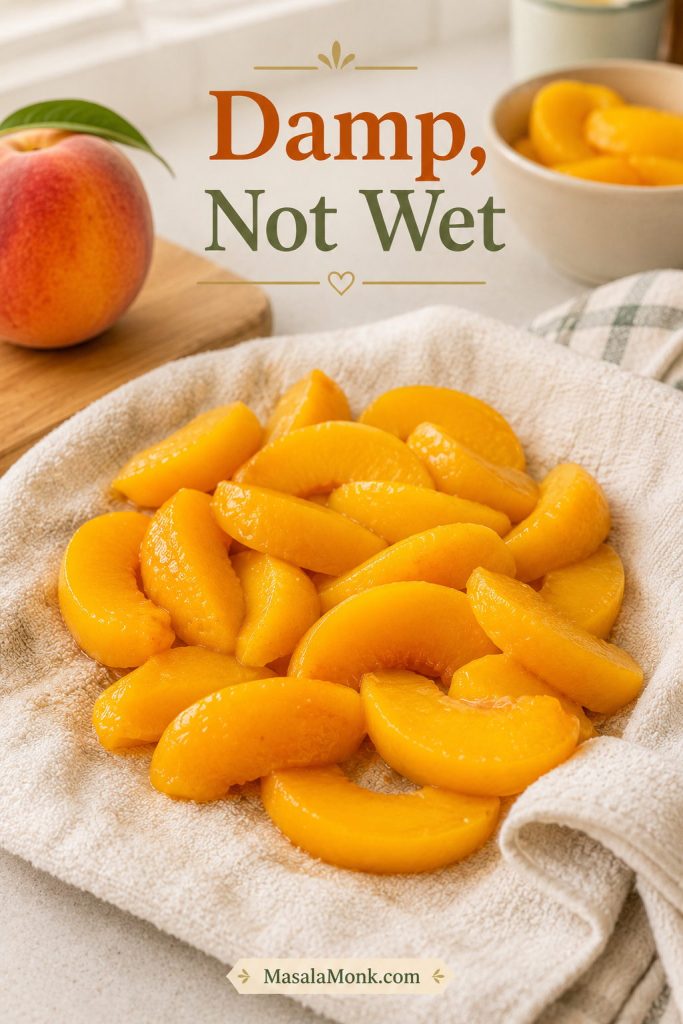
This is the cobbler to make when the peaches are not perfect but dessert still needs to feel generous. A freezer bag, a bowl of ripe fruit, or two cans from the pantry can all work once the fruit is ready for the pan. Fresh peaches should look glossy, frozen peaches should feel damp rather than wet, and canned peaches should be coated rather than sitting in syrup. Once your fruit is ready, you can jump to the recipe card.
Peach Cobbler at a Glance
| Style | Easy batter-rise peach cobbler |
|---|---|
| Pan | 9×13-inch / 3-quart baking dish |
| Serves | 8–10 |
| Prep time | 15–20 minutes |
| Bake time | 40–45 minutes |
| Rest time | 15 minutes |
| Total time | About 1 hour 10 minutes to 1 hour 20 minutes |
| Peaches | Fresh fruit, frozen slices, or canned peaches |
| Texture target | Juicy peaches, softly thickened filling, golden cakey top, buttery edges |
| Before you mix | Choose your peach path first. |
What Kind of Peach Cobbler Is This?
This is a batter-rise cobbler. Melted butter goes into the pan, a pourable batter goes over the butter, and the peaches are spooned over the batter. As it bakes, the topping rises around the fruit and forms soft golden patches with buttery edges.
That makes it different from biscuit cobbler, pie-crust cobbler, Bisquick cobbler, and cake-mix dump cake. Those styles can all be delicious, but they behave differently in the pan.
| Cobbler style | What it means |
|---|---|
| Batter-rise cobbler | A pourable batter rises around the peaches and butter; this is the style used here. |
| Biscuit cobbler | A thicker biscuit dough is spooned or dropped over fruit. |
| Pie-crust cobbler | Peaches bake with pastry, sometimes with top and bottom crust. |
| Cake-mix cobbler | Usually canned peaches, dry cake mix, and butter; closer to peach dump cake. |
| Bisquick cobbler | A shortcut cobbler where baking mix replaces the homemade flour and baking powder base. |
Recipe Card: Peach Cobbler with Fresh, Frozen, or Canned Peaches
This easy peach cobbler starts with one buttery batter base, then adjusts sugar, liquid, and thickener to match the fruit. The filling stays juicy and softly thickened, the topping bakes golden and buttery, and the cobbler rests just long enough to become scoopable instead of runny.
Fruit adjustment note: Fresh peaches usually use ⅓–½ cup sugar and 1–1½ tablespoons cornstarch. Very juicy fresh peaches or thawed frozen peaches usually need 1½–2 tablespoons cornstarch. Canned peaches should be drained first and usually need only 0–4 tablespoons sugar, depending on syrup sweetness. For more confidence before baking, see the fresh, frozen, and canned peach notes.
Equipment
- 9×13-inch / 3-quart baking dish
- Mixing bowls
- Whisk or fork
- Spatula or large spoon
- Measuring cups and spoons
- Colander and towel, especially for frozen peaches
- Small saucepan, optional for very juicy frozen peaches
- Rimmed baking sheet, optional for catching bubble-over
Ingredients
For the Peach Filling
- 6 cups sliced peaches, about 850–900 g prepared fruit
- 0 to ½ cup granulated sugar for the filling, adjusted by peach type
- 1 tbsp lemon juice
- 1 to 2 tbsp cornstarch, adjusted by peach juiciness
- ½ tsp ground cinnamon
- ¼ tsp fine salt
- 1 tsp vanilla extract, optional
- Pinch of nutmeg, optional
- ⅛ tsp almond extract, optional; use only if you enjoy a stronger bakery-style peach flavor
For the Batter Topping
- 6 tbsp / 85 g unsalted butter
- 1 cup / 120 g all-purpose flour
- ¾ cup / 150 g granulated sugar for the topping, or up to 1 cup / 200 g for a sweeter cobbler
- 2 tsp baking powder
- ¼ tsp fine salt
- ¾ cup / 180 ml milk
- 1 tbsp coarse sugar or cinnamon sugar for the top, optional
Instructions
Prepare the Pan and Peach Filling
- Heat the oven. Preheat the oven to 350°F / 177°C.
- Melt the butter. Add the butter to a 9×13-inch baking dish. Place the dish in the oven for a few minutes, just until the butter melts. Remove carefully and set aside.
- Prepare the peaches. Slice fresh peaches evenly. For frozen peaches, thaw, drain, and blot. For canned peaches, drain first and reserve a little juice or syrup only if the fruit looks dry.
- Season the filling. Add sugar, lemon juice, cinnamon, salt, vanilla if using, optional nutmeg, and optional almond extract. Add cornstarch and toss gently until the peaches are evenly coated.
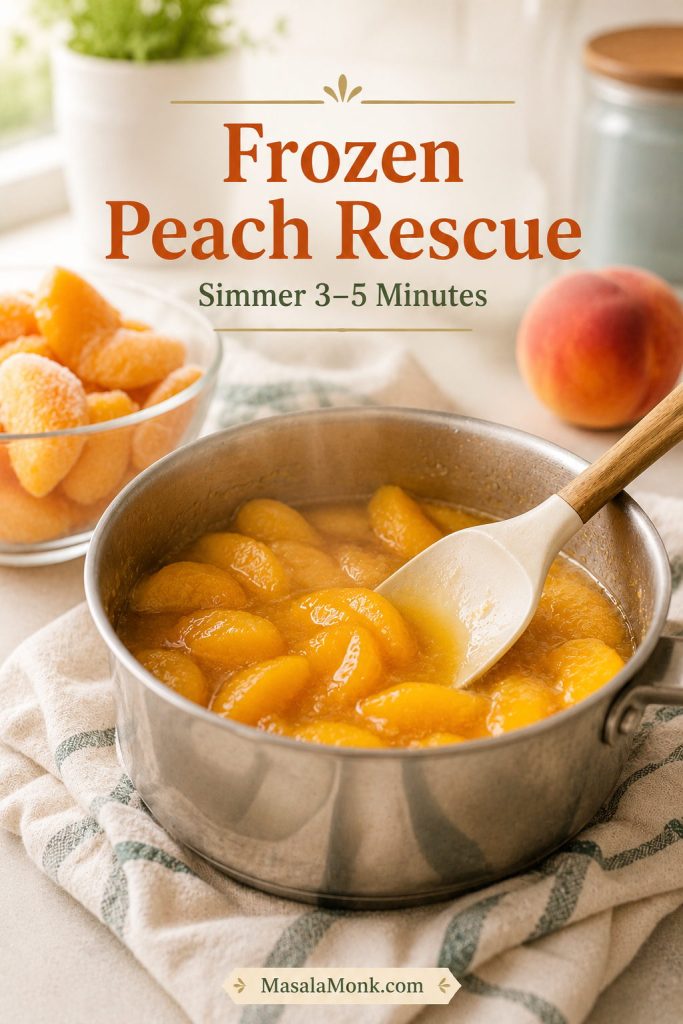
- Use the frozen-peach rescue if needed. If thawed frozen peaches still release a lot of liquid, simmer the peaches with the sugar, lemon juice, cinnamon, salt, vanilla if using, optional nutmeg, and optional almond extract for 3–5 minutes. Stir the cornstarch with 1–2 tablespoons peach liquid or water to make a slurry, add it to the saucepan, and cook for 30–60 seconds until slightly glossy. Cool for about 5 minutes before continuing.
Mix, Layer, Bake, and Serve
- Mix the batter. In another bowl, whisk flour, topping sugar, baking powder, and salt. Add milk and stir until smooth. Do not overmix.
- Layer without stirring. Pour the batter evenly over the melted butter. Spoon the peach mixture evenly over the batter. Do not stir the layers together.
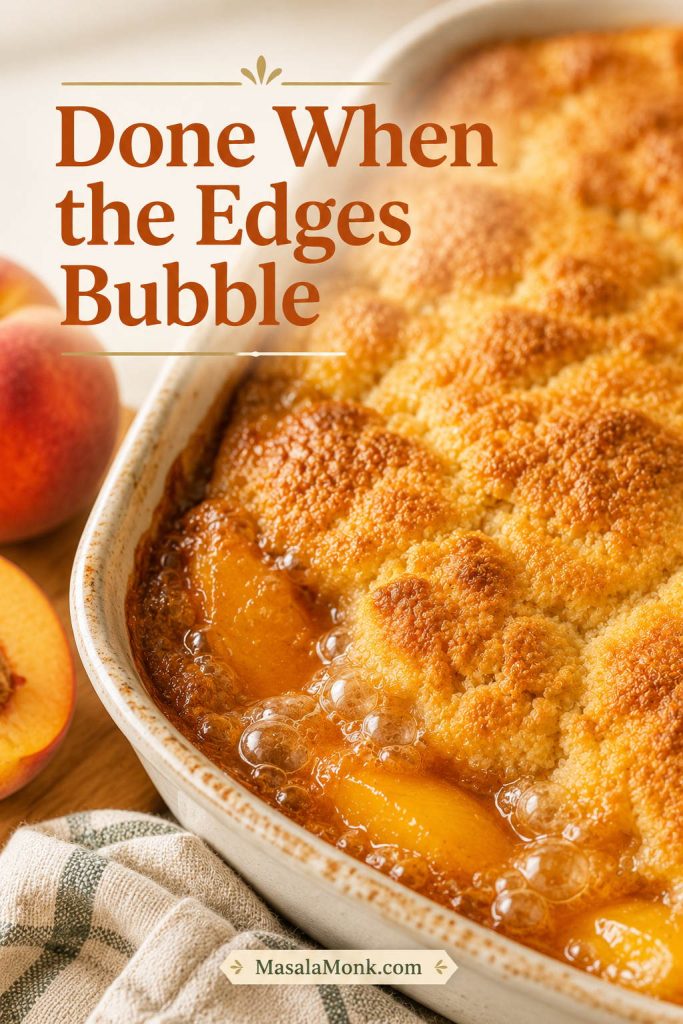
- Bake. Bake for 40–45 minutes, or until the top is golden brown and the peach juices are bubbling around the edges. If the top browns before the center looks set, tent loosely with foil and continue baking.
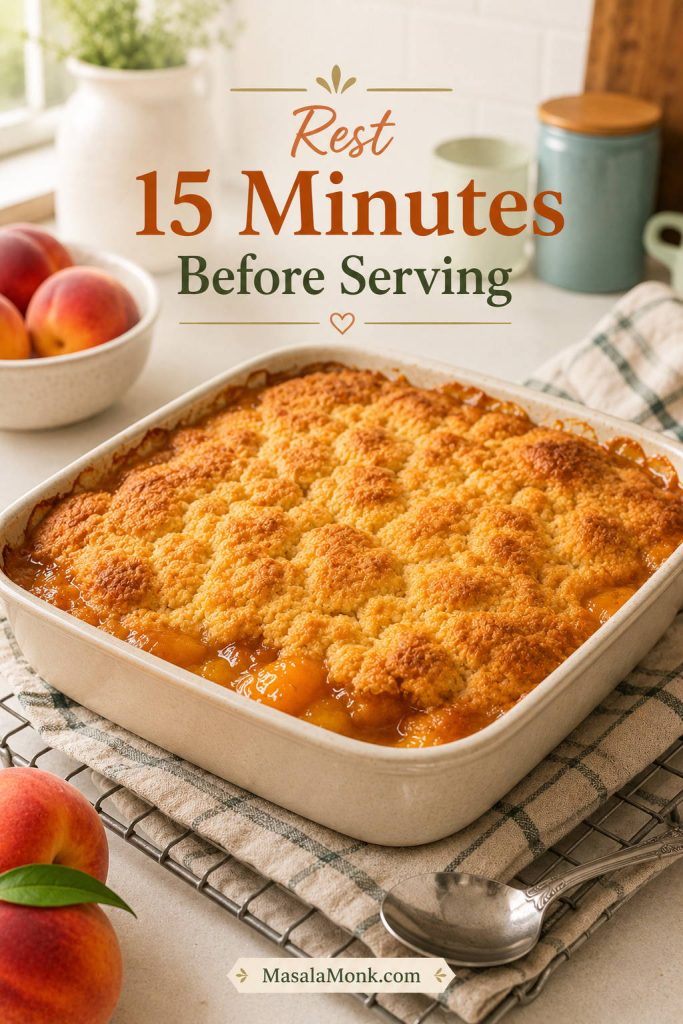
- Rest. Let the cobbler rest for 15 minutes before serving. The filling thickens as it cools from piping hot to warm.
- Serve. Serve warm, plain or with vanilla ice cream, whipped cream, custard, Greek yogurt, or plant-based vanilla ice cream.
Recipe Notes
- Do not stir the layers: The batter needs to stay over the butter and under the peaches so it can rise around the fruit as it bakes.
- Taste fresh peaches first: Ripe sweet peaches need less sugar; tart peaches need more.
- Slice firm peaches thinner: This helps them soften by the time the topping is done.
- Drain syrupy canned peaches well: Heavy syrup can make the cobbler too sweet and too loose.
- Blot thawed frozen peaches: If the bowl still looks wet, use the quick stovetop rescue before baking.
- Use a rimmed baking sheet if needed: It catches bubbling syrup if the pan is very full.
- Store leftovers well: Refrigerate for 3–4 days and reheat uncovered for the best topping texture.
Once the cobbler goes into the oven, the recipe stops feeling technical. The butter begins to brown at the edges, the peaches bubble into the batter, and the whole dish starts to smell like dessert is about to happen.
Why This Peach Cobbler Works
This recipe keeps the cobbler base steady and lets the fruit do the adjusting. Butter gives the edges richness, the pourable batter rises into a soft topping, and the peaches bake into a syrupy filling without needing a separate crust.
- Butter goes in first so the edges bake up rich, golden, and slightly crisp.
- A pourable batter can rise around the peaches instead of sitting on top like a biscuit.
- Handling the fruit before baking keeps fresh, frozen, and canned peaches from behaving like the same ingredient.
- Cornstarch follows the peach liquid, so the filling stays softly thickened.
- Rest time finishes the texture by helping the peach juices settle into syrup instead of running across the plate.
The best scoop is never the neatest one. It is the one with peach syrup, soft cake, and a little browned edge clinging to the spoon.
Ingredients and Why They Matter
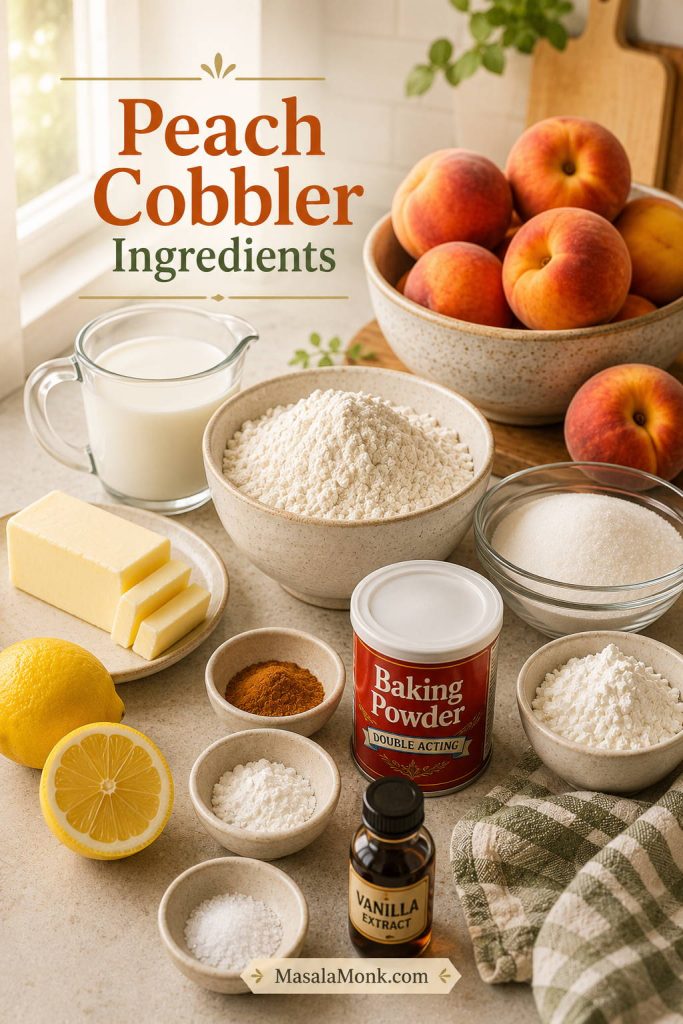
The ingredient list is simple, but each piece has a job. Because peaches vary so much, good cobbler is not only about measuring. It is about tasting the fruit, noticing how much juice is in the bowl, and baking until the filling has time to bubble and thicken.
Peaches
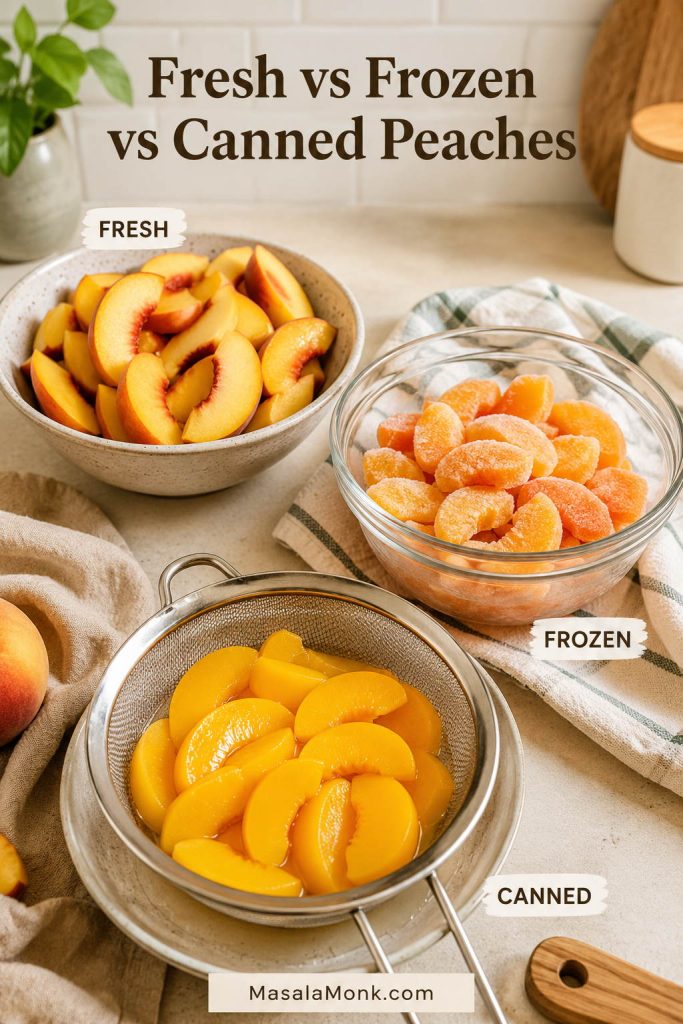
Fresh peaches give the brightest flavor, especially when they smell sweet near the stem and give slightly when pressed. Frozen peaches are convenient outside peach season, but they need thawing and draining. Canned peaches make cobbler possible any time, but syrup or juice must be handled so the filling does not become too sweet or too loose.
For simple peach buying and storage tips, the USDA SNAP-Ed peaches guide is helpful, especially if you are ripening firm peaches on the counter before baking.
Sugar
Sugar sweetens the peaches and helps create syrup, but the amount changes with the fruit. Tart fresh peaches may need up to ½ cup in the filling. Sweet fresh peaches need less. Canned peaches in syrup may need almost none. The filling should taste peachy first, sweet second.
Cornstarch
Cornstarch turns peach juices into a softly thickened filling. Use less for firm fresh peaches and more for very juicy fresh peaches, thawed frozen peaches, or canned peaches that still carry extra liquid. The goal is not stiff pie filling; it is fruit that spoons cleanly while still feeling juicy. If runny cobbler is your usual problem, go straight to the watery cobbler fixes.
Sugar and cornstarch cue: use the peach type to decide how sweet and how thick the filling should be before it goes into the oven.
If you like seeing how cooked fruit fillings behave as they cool, MasalaMonk’s apple pie filling recipe uses the same kind of balance: enough body to hold together, but not so much thickener that the fruit turns stiff.
Lemon Juice, Spice, Vanilla, and Salt
Lemon juice keeps sweet peaches from tasting flat. Cinnamon adds warmth, a tiny pinch of nutmeg gives an old-fashioned bakery note, vanilla rounds out fruit that is not peak-season fresh, and salt keeps the cobbler from tasting one-dimensional.
Butter, Flour, Baking Powder, and Milk
Melted butter gives the cobbler its rich edges. Flour, baking powder, and milk create the soft topping. The batter should be pourable, not stiff like biscuit dough, so it can rise around the peaches and soak up a little buttery peach syrup as it bakes.
That corner scoop — the one with buttery edge, warm peach, and soft topping — is the reason this style of cobbler is worth making.
Fresh, Frozen, and Canned Peach Adjustments
The peach path table near the top gives you the quick numbers. Use these notes when you want a little more confidence before baking.
Fresh Peach Cobbler
Use fresh peaches when they are fragrant, ripe, and still able to hold their shape. A ripe peach should smell sweet near the stem and give a little when pressed. Very hard peaches will not soften enough in the oven, while overripe fruit can collapse into a loose filling.
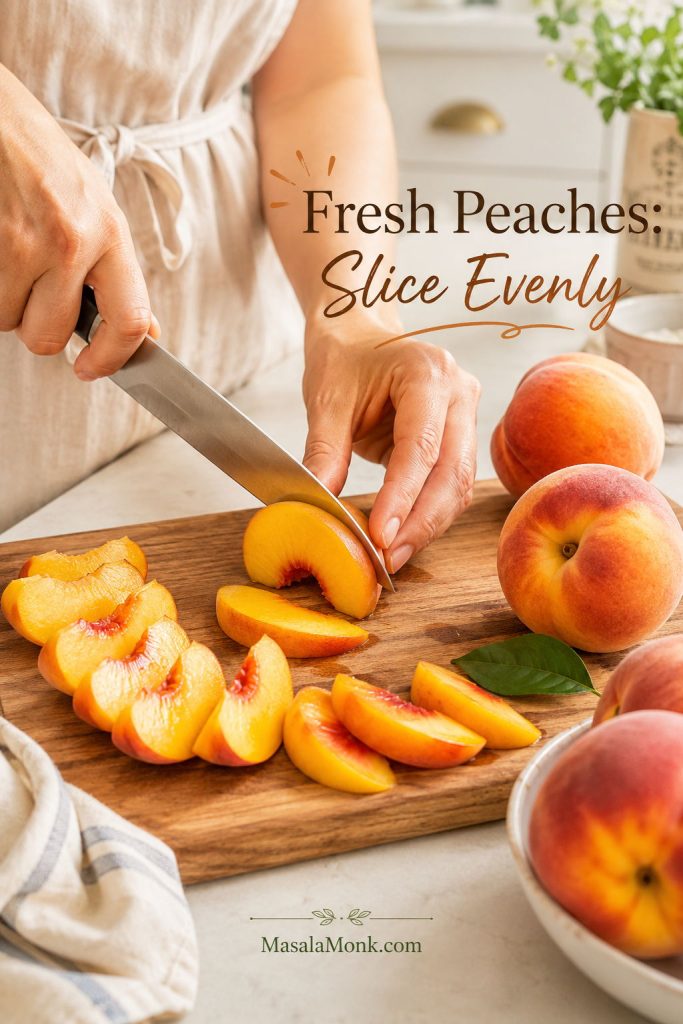
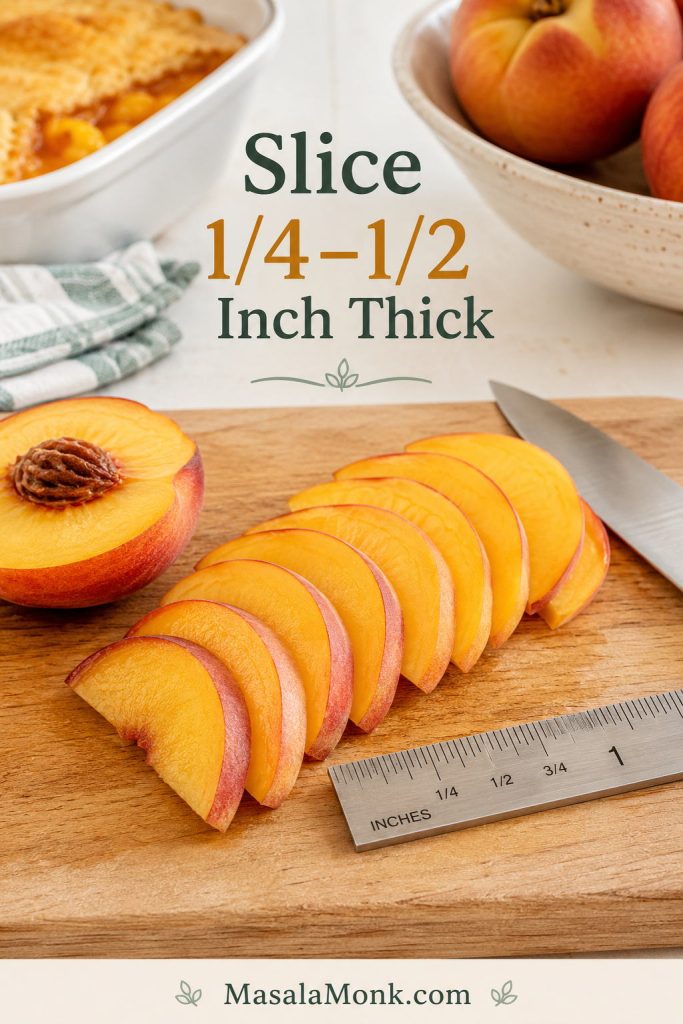
You do not have to peel fresh peaches unless the skins bother you. Peeled peaches melt more softly into the filling, while unpeeled peaches give the cobbler a more rustic feel. After mixing, the bowl should look glossy and juicy, not like the slices are drowning. Slice peaches about ¼ to ½ inch thick, or a little thinner if they are sweet but still firm.
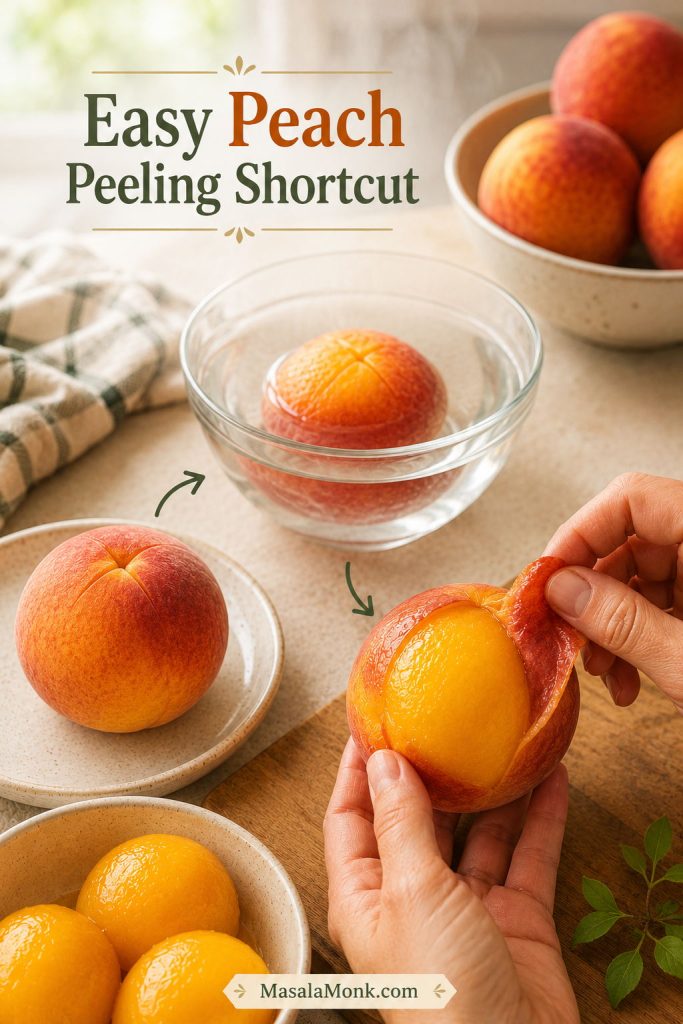
Easy peeling shortcut: Score a small X on the bottom of each peach, dip the peaches in boiling water for 30–45 seconds, then transfer them to ice water. The skins should slip off more easily once the peaches are cool enough to handle.
Frozen Peach Cobbler
Frozen peaches are a gift when fresh peaches are out of season. Thaw them fully, drain them in a colander, and blot them before mixing the filling. After blotting, the fruit should feel damp, not wet. If the bowl still looks very loose after mixing, use the frozen-peach rescue so the topping bakes instead of steaming.
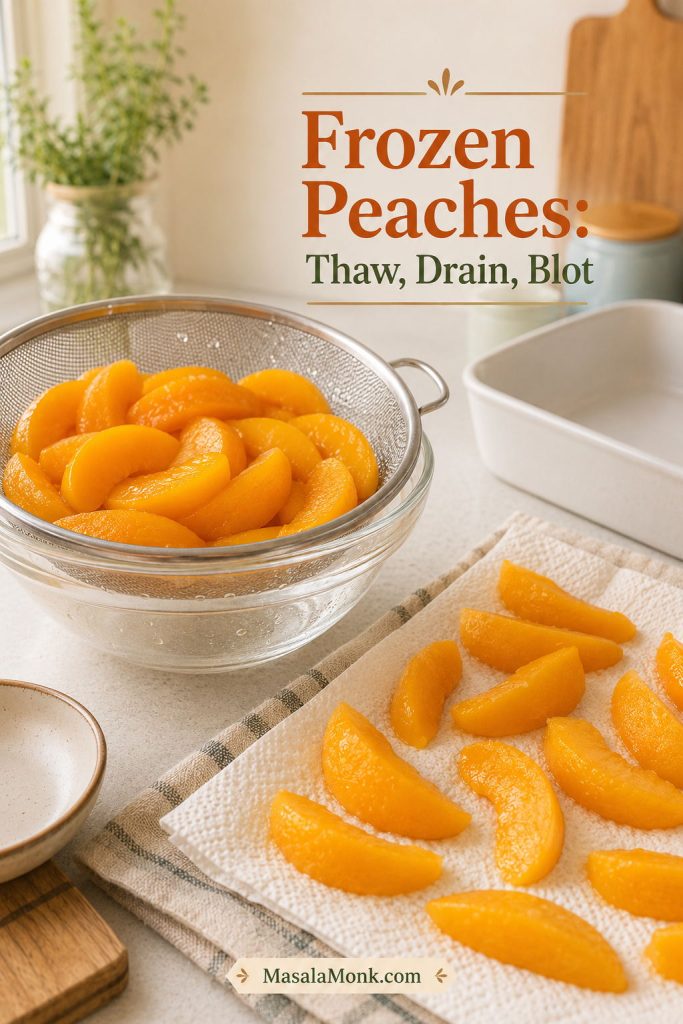
A weeknight freezer bag of peaches can absolutely become cobbler. The only thing it asks for is that one extra minute of draining and blotting.
Frozen-peach rescue: if thawed peaches still look loose after draining and blotting, simmer them briefly so the extra water starts becoming filling before the cobbler goes into the oven.
Canned Peach Cobbler
Canned peaches are already softened, so the main job is keeping the filling from becoming syrupy-sweet. Drain first, then add back only 2 to 4 tablespoons juice or syrup if the fruit looks dry. Once mixed, the peaches should look coated, not like they are sitting in syrup.
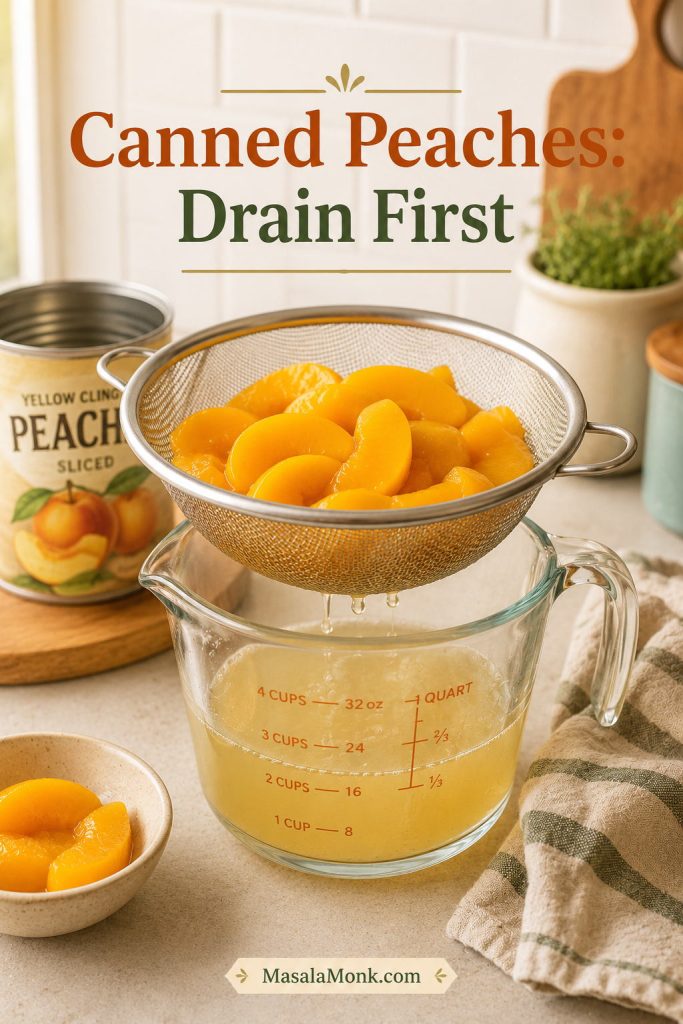
Canned syrup cue: reserve the syrup, but add it back only by the spoonful so the filling stays peachy instead of loose and overly sweet.
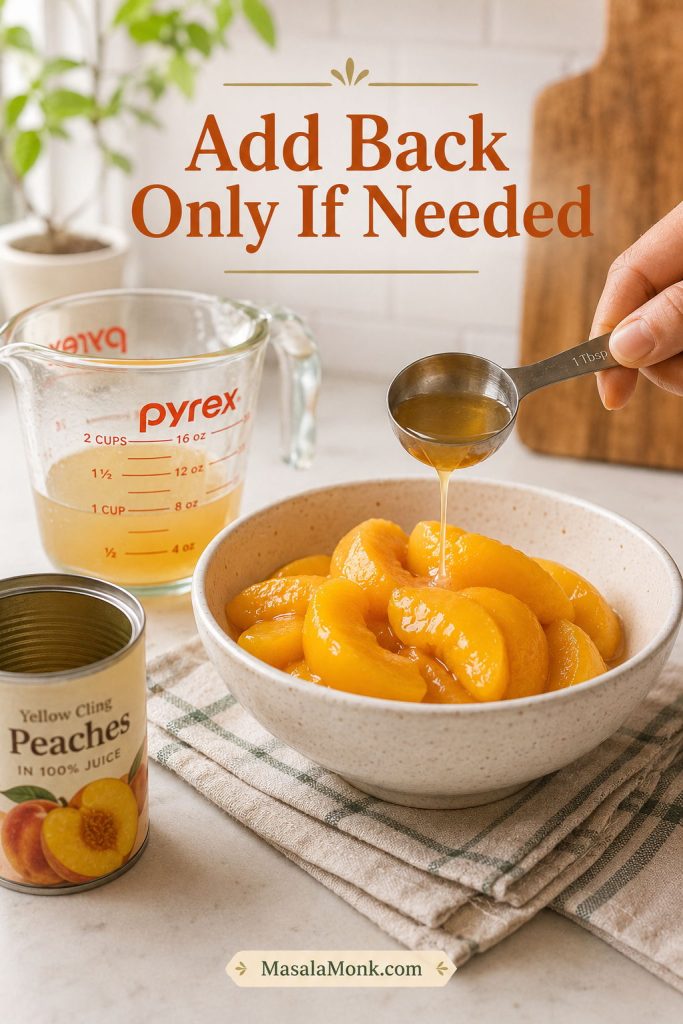
For a full pantry-style version with deeper canned-peach details, use the dedicated Peach Cobbler with Canned Peaches recipe. This master recipe is for all peach types; that one is the canned-peach deep dive.
Small Flavor Choices That Make It Taste More Homemade
The base recipe is intentionally simple, but a few small choices make the cobbler taste more rounded without covering the peaches.
- Use white sugar for a cleaner peach flavor. This is best when the fruit is ripe and fragrant.
- Swap in 2 tablespoons brown sugar for part of the white sugar if you want a warmer, deeper syrup.
- Use vanilla if your peaches need rounding out. It is especially helpful with canned or frozen peaches that are not peak-season fresh.
- Keep nutmeg tiny. A pinch is enough to make the cobbler taste old-fashioned without taking over.
- Use almond extract carefully. Add only ⅛ teaspoon if you enjoy a stronger bakery-style peach flavor.
- Do not skip lemon juice. It keeps sweet peaches from tasting flat.
How Peach Cobbler Comes Together
The method is simple, but the order matters. Keep the layers separate so the butter can enrich the edges, the batter can rise, and the peaches can bubble into the topping instead of being stirred through it.
Butter and Batter Cues
Butter-first cue: start with melted butter in the dish so the batter can bake into a rich base and browned edges.
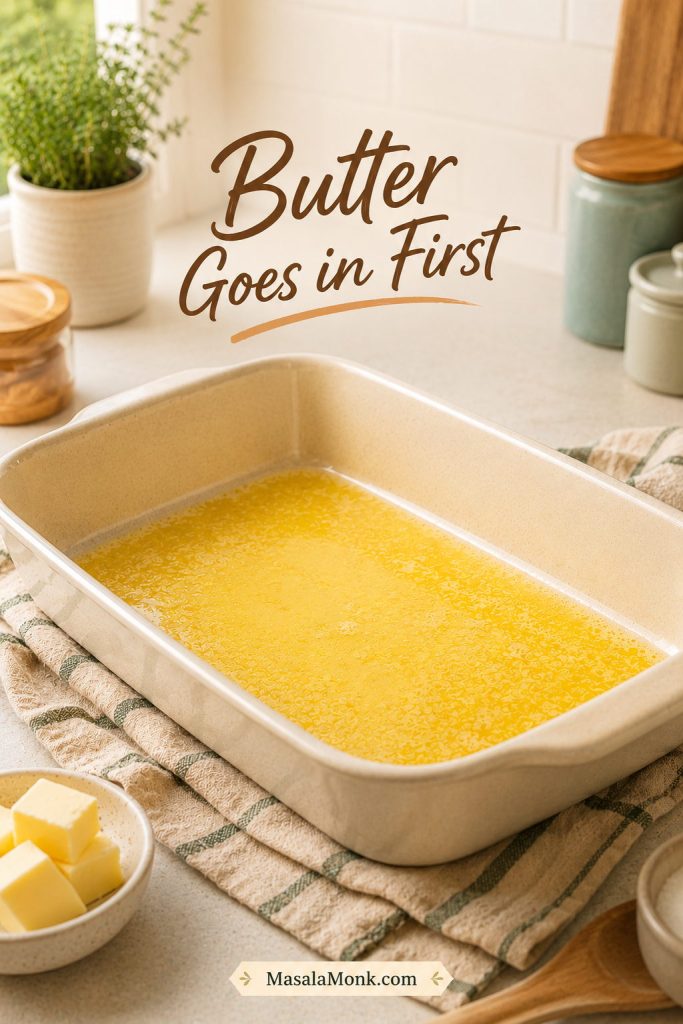
- Melt the butter in the baking dish.
- Prepare the peaches according to the fruit type.
- Season and thicken the filling with sugar, lemon, spice, salt, and cornstarch.
- Pour batter over butter, then spoon peaches over batter. Do not stir.
- Bake until browned and bubbling, then rest so the filling settles.
Batter consistency cue: the batter should pour easily; if it looks stiff, the cobbler will bake more like a biscuit topping than a batter-rise cobbler.

Layering cue: spoon the peaches over the batter without stirring so the oven can pull the batter up around the fruit.
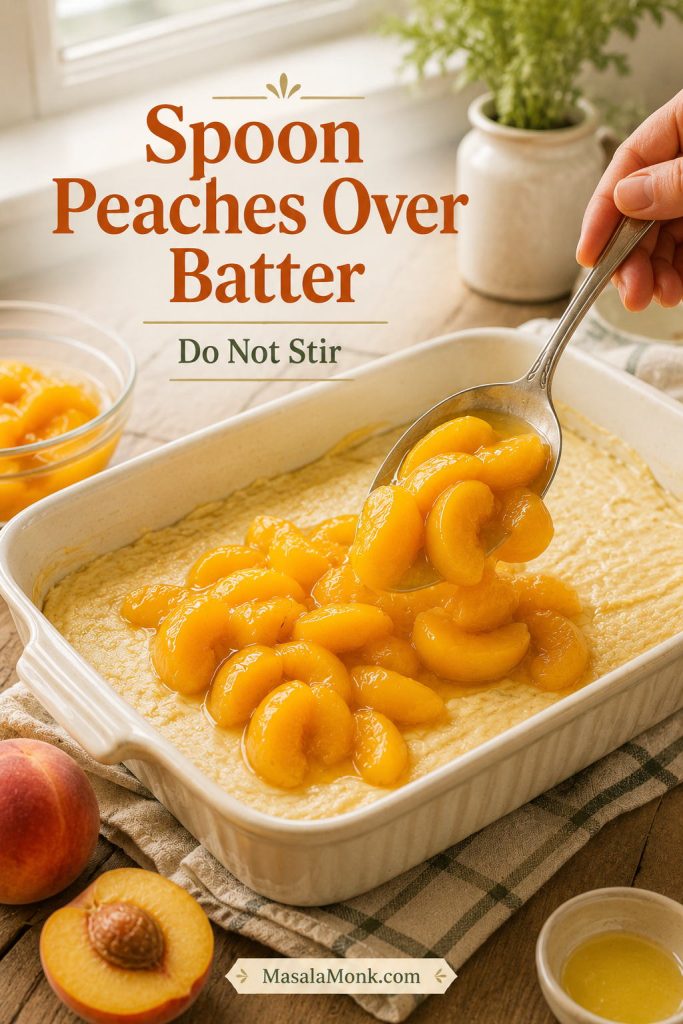
Before-and-after cue: the pan may look uneven before baking, but that uneven layering is what creates the golden cobbler surface.
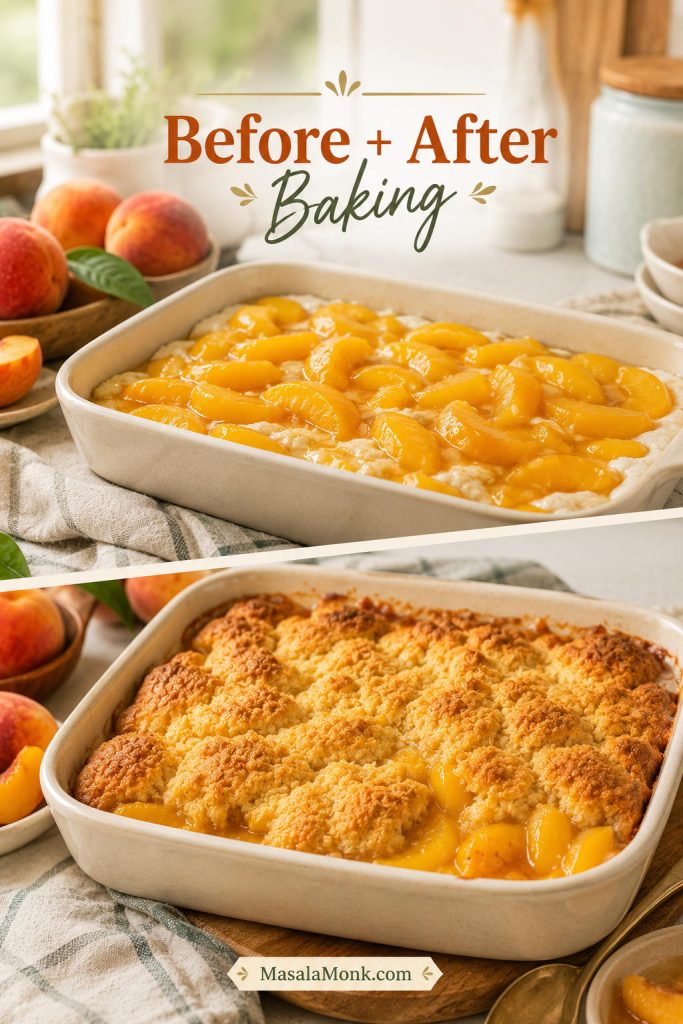
Your Cobbler Is Done When
- the top is golden brown, not pale or wet-looking
- peach juices are bubbling thickly around the edges
- the center looks set rather than milky, raw, or jiggly
- a toothpick inserted into a cakey part comes out without raw batter
- after resting, the filling settles into a shiny, saucy layer
If the top is browned but the middle still looks loose, tent the dish loosely with foil and bake a little longer. The peach juices need to bubble so the cornstarch can do its job. If texture is still worrying you, use the watery cobbler troubleshooting guide.
How to Keep Peach Cobbler from Getting Watery
If peach cobbler turns watery, do not panic. It is usually not because the whole recipe failed. Most of the time, the fruit brought too much liquid, the filling needed a little more thickener, the cobbler came out too early, or it was served before the juices had time to settle.
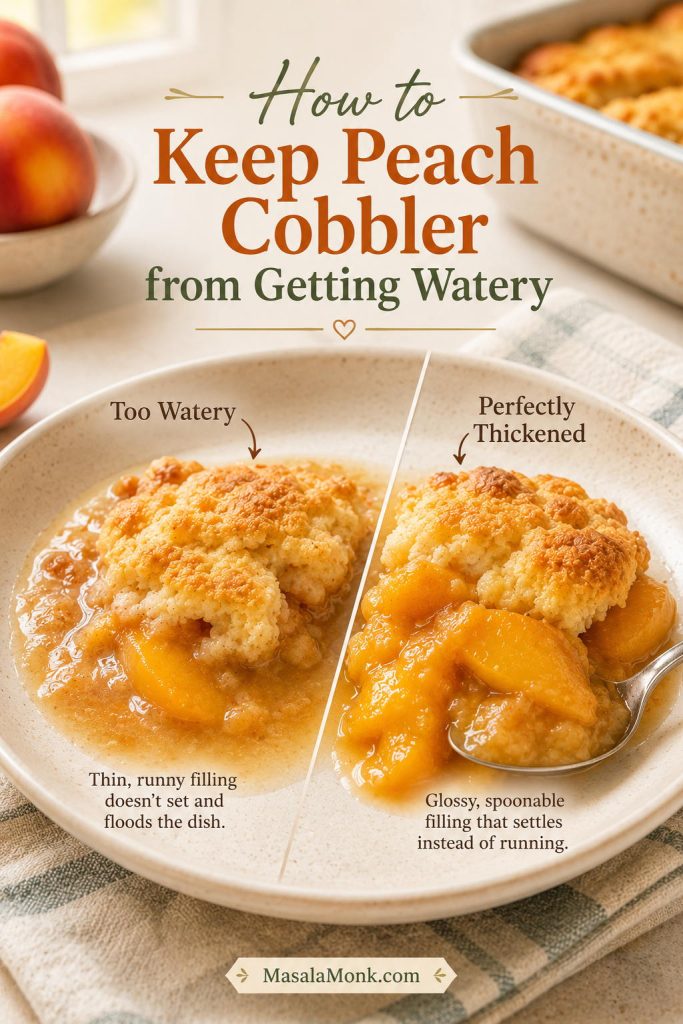
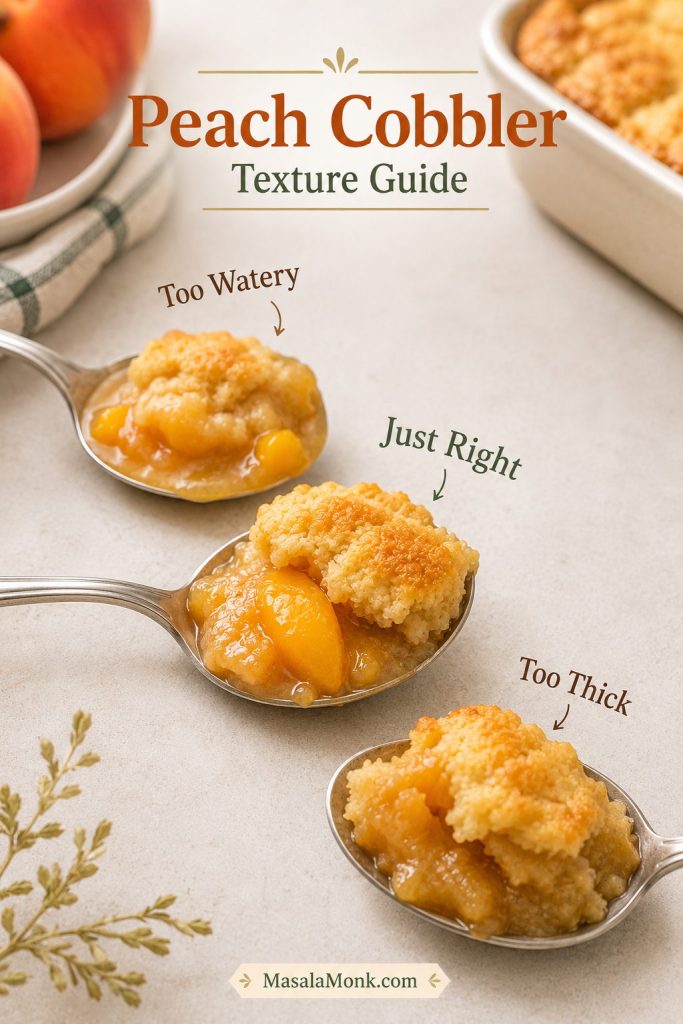
Hot peach juices are thinner than rested peach juices. Give the cobbler about 15 minutes before judging the final texture; that pause is often what turns a loose-looking filling into warm syrup.
Cobbler is meant to be scooped, not sliced. A little syrup in the dish is part of the charm; the problem is only when the filling is thin enough to run like juice.
The easiest texture rule is simple: fresh peaches can be juicy, frozen peaches should be damp rather than wet, and canned peaches should not bring all their syrup into the pan unless the recipe is specifically built for that much liquid.
Common Texture Problems and Fixes
Use the texture guide first, then match the problem to the fix table below.
Fix Now, Fix Next Time
Runny, Soggy, or Gummy Texture
| Problem | Likely cause | Fix now | Fix next time |
|---|---|---|---|
| Watery filling | Too much peach juice, syrup, or thawed frozen-peach water. | Let it rest longer; serve with a spoon. | Drain, blot, and use more cornstarch next time. |
| Soggy topping | Fruit was too wet or the pan was too deep. | Reheat uncovered to drive off surface moisture. | Use a wider pan and control the peach liquid before baking. |
| Gummy middle | Batter layer was too thick or the center was underbaked. | Bake longer; tent loosely with foil if the top is already brown. | Use a 9×13 pan and avoid overcrowding the fruit. |
Sweetness, Dryness, and Fruit Texture
| Problem | Likely cause | Fix now | Fix next time |
|---|---|---|---|
| Too sweet | Canned syrup plus full added sugar. | Serve with unsweetened cream, yogurt, or a squeeze of lemon over the fruit. | Drain syrup and reduce sugar for canned peaches. |
| Dry topping | Not enough butter coverage or overbaking. | Serve warm with ice cream, cream, or extra peach syrup. | Use the full butter amount and bake only until golden and bubbling. |
| Mushy peaches | Overripe fresh peaches or very soft canned peaches. | Serve as a saucy cobbler dessert. | Use firmer peaches or bake slightly less next time. |
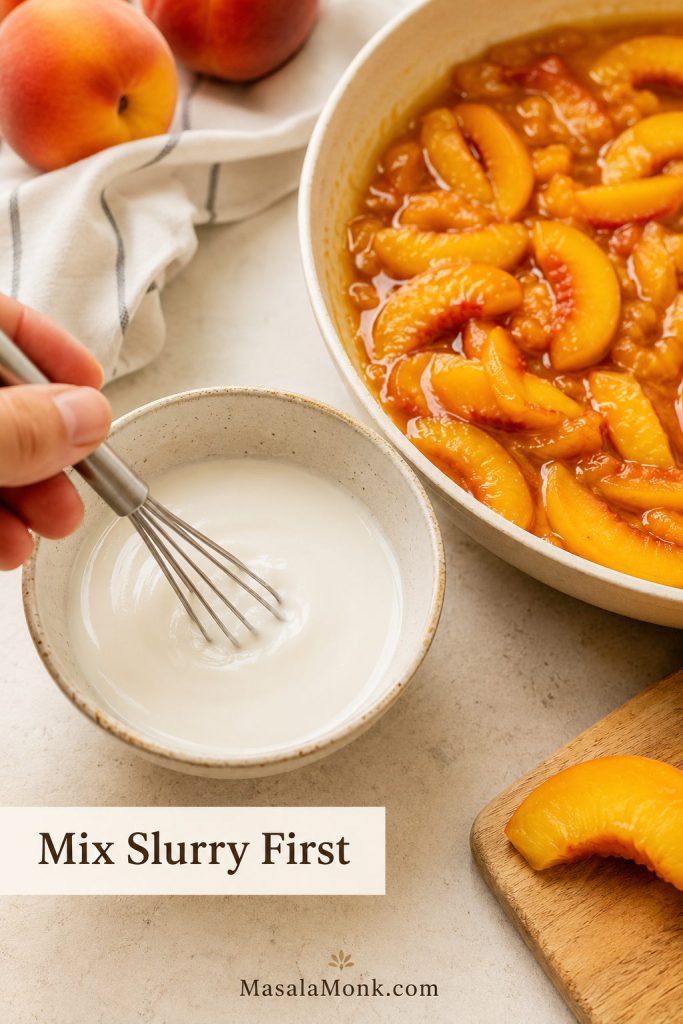
Cornstarch slurry cue: when a filling needs help, mix cornstarch with cold liquid first so it can thicken smoothly instead of clumping.
Rest-before-serving cue: if the cobbler looks loose when it leaves the oven, give it time before judging; hot juices thicken as they cool.
Pan Size and Scaling
A 9×13-inch dish is the best default because it gives the peaches room to bubble and the batter room to bake through. If the pan is too deep, the center can stay soft while the top browns. If the pan is very full, place it on a rimmed baking sheet to catch bubbling syrup. Once your pan is chosen, you can return to the recipe card.
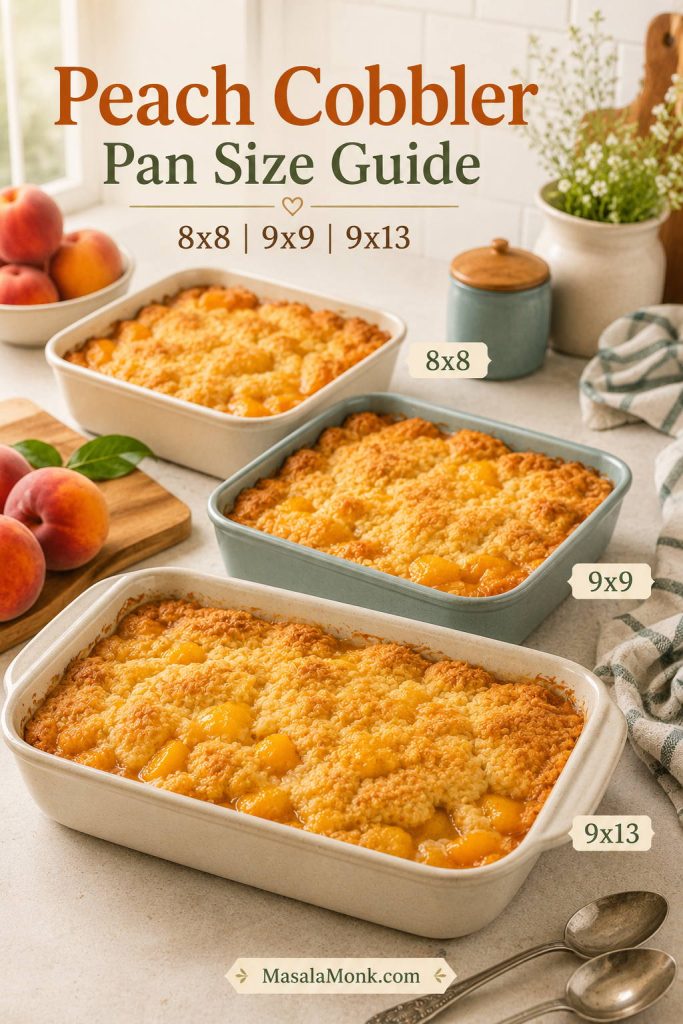
| Pan | Peach amount | Best use |
|---|---|---|
| 8×8-inch pan | 3–4 cups peaches | Smaller batch; center may need a few extra minutes if thick. |
| 9×9-inch pan | 4 cups peaches | Good small family cobbler. |
| 9×13-inch pan | 6 cups peaches | Best default for this recipe. |
| 2-quart baking dish | 4–5 cups peaches | Better for biscuit-topped cobblers than this full batter-style batch. |
| Cast iron skillet | 4–6 cups peaches | Good browning and rustic serving; watch bubbling around edges. |
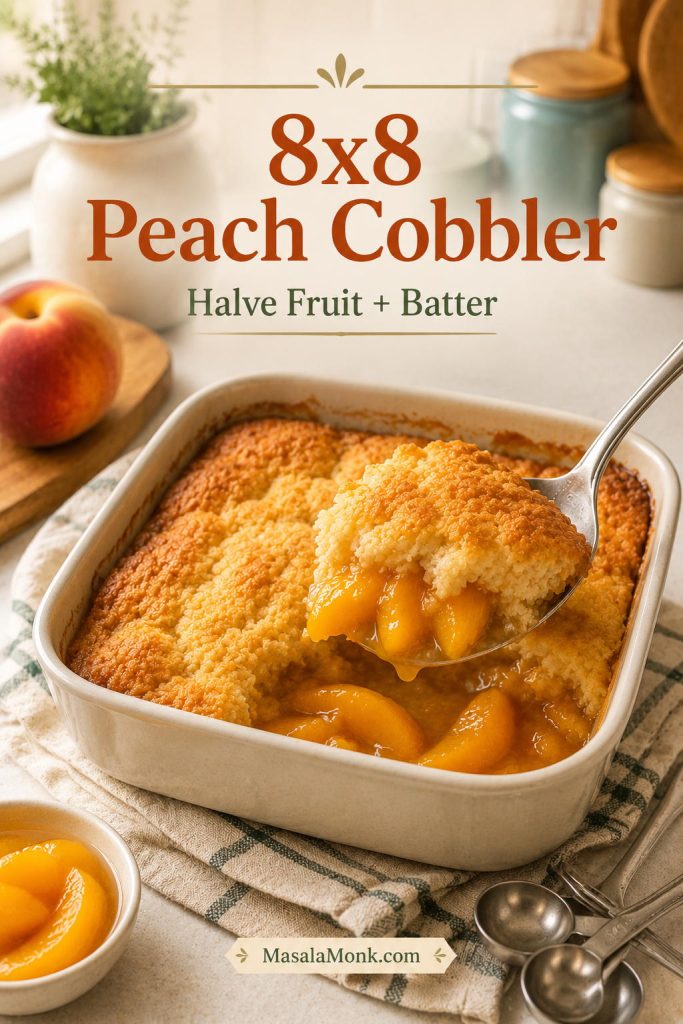
For an 8×8-inch cobbler, halve the batter as well as the fruit. Use about 3 to 4 cups peaches, half the butter, half the topping ingredients, and start checking early because smaller pans can bake a little faster or slower depending on depth.
Topping Styles and Shortcuts
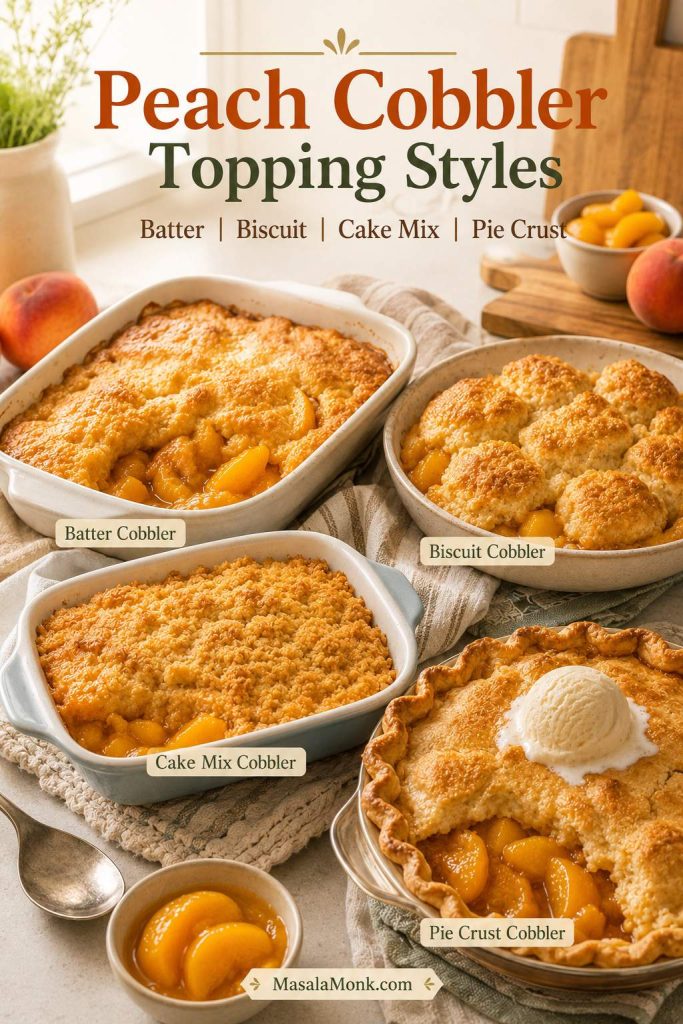
Cobbler is one of those desserts where people often mean different things by the same word, usually because they grew up with a specific pan on a specific table. This recipe uses a homemade batter topping, but here is how the common swaps compare.
Biscuit Topping
Biscuit topping is thicker and is usually spooned or dropped over fruit. It gives more texture and a rustic look, but it does not rise through the fruit the same way this pourable batter does. If you like biscuit-style fruit desserts, MasalaMonk’s classic strawberry shortcake is a useful texture comparison.
Bisquick Topping
Bisquick can make a shortcut cobbler, but the proportions change because the mix already contains leavening, salt, and fat. Drain canned peaches and thaw frozen peaches before using it so the topping has a better chance to bake through.
Cake Mix Cobbler
Cake mix works too, although the result is usually closer to peach dump cake than classic cobbler. It works best with canned peaches because the syrup helps hydrate the dry cake mix.
Pie Crust Cobbler
Pie crust creates a richer Southern-style or deep-dish cobbler. It can have a top crust, bottom crust, or both. For a pastry-style fruit dessert, MasalaMonk’s flaky homemade pie crust guide is a useful starting point.
Peach Cobbler Variations
Once the base recipe is working, small variations are easy. Keep the fruit amount and liquid control in mind, especially when adding berries or extra juicy fruit.
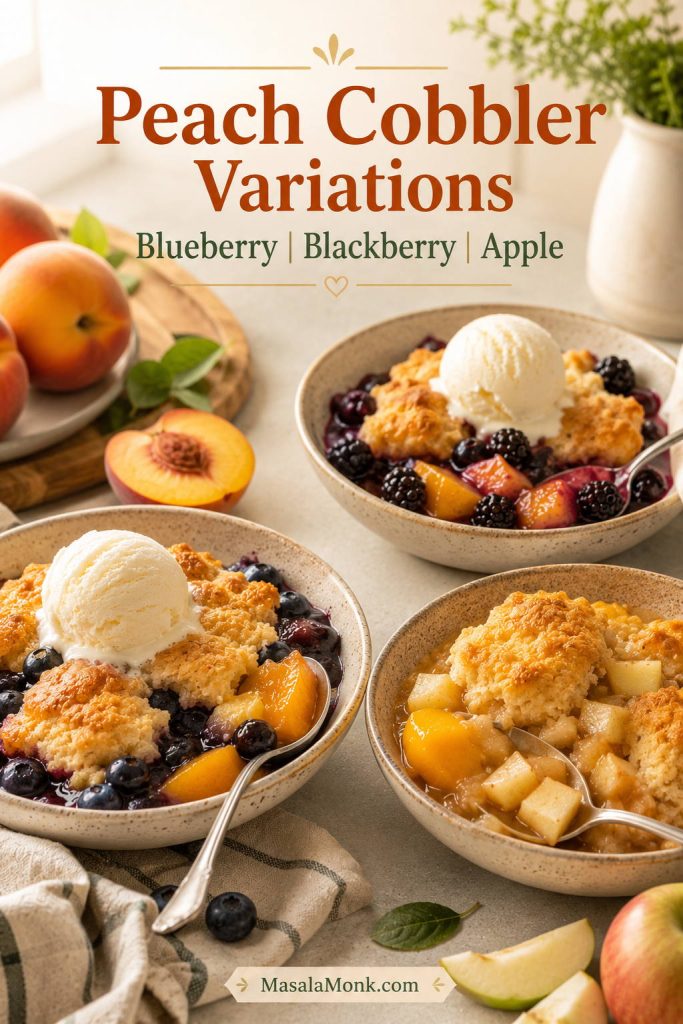
- Blueberry peach cobbler: Replace 1 to 1½ cups peaches with blueberries. Add a little extra cornstarch if the berries are very juicy.
- Blackberry peach cobbler: Add blackberries for a deeper, jammy filling. Taste before increasing sugar because berries can be tart.
- Apple peach cobbler: Replace 1 to 2 cups peaches with thinly sliced apples. Slice apples thin enough to soften in the same bake time.
- Cinnamon sugar top: Sprinkle a little cinnamon sugar over the batter before baking for a lightly crisp, fragrant top.
- Less-sweet peach cobbler: Use the lower end of the sugar range, especially with ripe fresh peaches or canned peaches in syrup.
- Gluten-free note: A good 1:1 gluten-free flour blend can usually replace the all-purpose flour in the batter. Let the batter sit for 5 minutes before layering if the blend feels gritty, and expect a slightly more tender topping.
- Dairy-free note: Use plant-based butter and unsweetened non-dairy milk. Choose a neutral milk, such as oat or almond, so the peach flavor stays clear.
What to Serve with Peach Cobbler
Warm peach cobbler is classic with vanilla ice cream because the cold cream melts into the hot peach syrup. Whipped cream is lighter, custard is richer, and Greek yogurt is a nice option if you want something tangy against the sweet fruit.
If you want something lighter than ice cream, a spoonful of homemade whipped cream keeps the dessert soft, creamy, and not too heavy. For a dairy-free serving, use plant-based vanilla ice cream or serve the cobbler warm with a spoonful of peach syrup from the pan.
Serve it when it is still warm enough to melt ice cream at the edges, but not so hot that the peach syrup runs everywhere. That is when the first spoonful gives you the best mix of fruit, soft topping, and buttery edge. If you are planning ahead, the storage and reheating notes will help keep leftovers useful too.
Serve now, store smart: cobbler tastes best warm, but leftovers keep better when they are cooled, covered, and reheated uncovered.

Make-Ahead, Storage, Freezing, and Reheating
Peach cobbler is best the day it is baked, when the topping still has the most texture. You can prepare the peach filling a few hours ahead and refrigerate it, but mix the batter just before baking so the topping rises properly. If you are serving it right away, jump back to what to serve with peach cobbler.
When the filling releases extra liquid while it sits, stir it before using. For a very loose bowl, drain off a little excess liquid. Still thin? Mix ½ teaspoon cornstarch with 1 teaspoon cold water, then stir that slurry into the peaches before baking.
If you are putting away ripe peaches for cobblers later in the year, Oregon State University Extension’s peach preservation guide is a useful reference for freezing and preserving them safely.
| Storage need | What to do |
|---|---|
| Make ahead | Prepare the peach filling a few hours ahead; keep it chilled. Mix the batter only when ready to bake. |
| After baking | Let the cobbler cool until warm and scoopable before serving. |
| Refrigerator | Cover and refrigerate leftovers for 3–4 days. |
| Freezer | Freeze portions if needed, but expect the topping to soften after thawing. |
| Best reheating method | Reheat uncovered in the oven or toaster oven until warm. |
| Microwave | Works for quick portions, but the topping will be softer. |
When the cobbler is right, it will not look like a neat slice of pie. It will look like something better: warm peaches, soft golden topping, buttery edges, and just enough syrup to catch a melting spoonful of cream.
FAQs About Peach Cobbler
A few last questions come up often, especially when you are switching peach types, changing the topping, or trying to avoid a runny pan.
Canned peaches: drained or undrained?
Drain canned peaches first. Add back only 2 to 4 tablespoons juice or syrup if the fruit looks dry. Heavy syrup should be drained especially well because it can make the cobbler too sweet and runny.
Frozen peaches: thaw first or bake from frozen?
Thaw frozen peaches first for this batter-rise cobbler. Once drained and blotted, they bake more evenly and are less likely to steam the topping.
Why peach cobbler turns watery
It usually has too much fruit liquid, too little thickener, or not enough resting time. Let the edges bubble well, then rest the cobbler for about 15 minutes before judging the filling.
How to thicken peach cobbler filling
Use cornstarch with the peaches before baking. For 6 cups peaches, use 1 to 1½ tablespoons for most fresh peaches and up to 2 tablespoons for very juicy fresh peaches or thawed frozen peaches.
Peeling fresh peaches
You do not have to peel fresh peaches unless the skins bother you. Peeled peaches give a softer filling, while unpeeled peaches make the cobbler feel more rustic.
Bottom crust or no bottom crust?
This recipe does not use a bottom crust. It uses batter that rises around the peaches. Some Southern-style cobblers use pie crust on the bottom, top, or both.
Cake mix vs cobbler batter
Cake-mix peach cobbler is usually closer to peach dump cake. Homemade cobbler batter gives a softer, more classic batter-rise texture.
Peach cobbler, peach crisp, and peach crumble
Peach cobbler usually has a batter, biscuit, or crust topping. A peach crisp usually has oats in the topping, while a peach crumble has a crumb topping that may or may not include oats. Cobbler is softer and more spoonable. For a crumb-topped fruit dessert that leans more pie-like, MasalaMonk’s Dutch apple pie recipe is a useful comparison.
If you want clean slices instead
Choose pie when you want clean slices and a firmer filling. Cobbler is softer and meant to be spooned warm from the dish. This apple pie with apple pie filling guide shows how pie structure and cooling time work differently.
How long to rest before serving
Rest peach cobbler for about 15 minutes. The juices thicken as the cobbler cools from piping hot to warm, but it will still be soft enough to serve with a spoon.
Making peach cobbler ahead
You can make the peach filling a few hours ahead and refrigerate it, but mix the batter just before baking. If the filling releases extra liquid while it sits, drain off a little excess or stir in a tiny cornstarch slurry before baking.
Freezing peach cobbler
Peach cobbler can be frozen, especially in portions, but the topping will soften after thawing. Thaw in the refrigerator and reheat uncovered for the best texture.
Reheating without making it soggy
Reheat peach cobbler uncovered in the oven or toaster oven until warm. The microwave is faster, but it steams the topping and makes it softer.
However you make it, let the peaches guide the sugar and liquid, give the cobbler time to rest, and serve it while the topping is still warm at the edges — messy, spoonable, and exactly the way peach cobbler should be.








